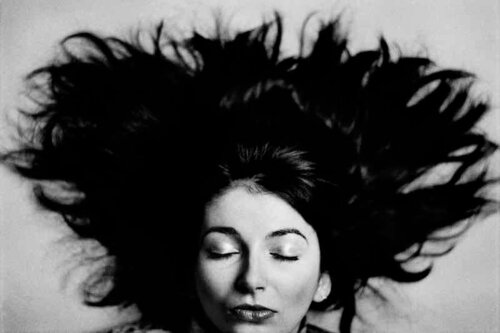
FEATURE: Death by Sound: Kate Bush’s Experiment IV

FEATURE:


Death by Sound

Kate Bush’s Experiment IV

___________

THERE are few songs in the Kate Bush cannon…

that I have neglected to cover but, for this feature, I want to explore Experiment IV. Many people might not be aware of the song as it did not appear on a studio album. I am always fascinated by artists who release a greatest hits album and put a new song on. There is an argument that there’s a danger of missing out on a classic in favour of something new, but many artists have the odd song left over that they want to include. That is not to say that the songs are throwaway; I think it is fine having a packed greatest hits album with one new song. Kate Bush’s The Whole Story turns thirty-five next year (on 10th November). Released a year after Hounds of Love, there was this feeling from EMI that Bush has gained a whole new audience – including a lot of attention from the U.S. – and it was the right time to put out a greatest hits. After five studio albums, one gets a nice spread of tracks. It is singles that we get in The Whole Story so, at twelve tracks, one does not get too many deeper cuts. There is subjectiveness as to what constitutes the best songs of artists, but there is a lot of variation and quality on the album. Experiment IV appears near the end between Sat in Your Lap, and The Dreaming (both from The Dreaming). I am not sure whether

Bush intended Experiment IV to appear on Hounds of Love but, as it is similar in places to Mother Stands for Comfort, perhaps it was kept aside for that reason. The single was released on 27th October, 1986 and it was a great launch of The Whole Story. With this new song in the world, fans had this treat and could look forward to an album that, unsurprisingly, sold really well – The Whole Story reached number-one on the U.K. album charts and has sold well over one-million copies to date. Experiment IV was also included on The Other Sides last year. The track concerns a secret military plan to create a sound that is horrifying enough to kill people. It is a typically unique perspective and story from Kate Bush, and I really love the star-packed video – which I shall get to soon. Experiment IV peaked at twenty-three in the singles chart in the U.K., simultaneously with Don't Give Up (Bush's duet with Peter Gabriel, which reached number-nine). I recently talked about Bush’s amazing duet with Peter Gabriel, and I love the fact that Bush was involved with two successful songs not included on any of her studio albums. After the huge success of Hounds of Love in 1985, I am not surprised that The Whole Story performed so well. It would be a further three years before Bush released The Sensual World, but I really love her greatest hits album and the fact there was this exciting new song.
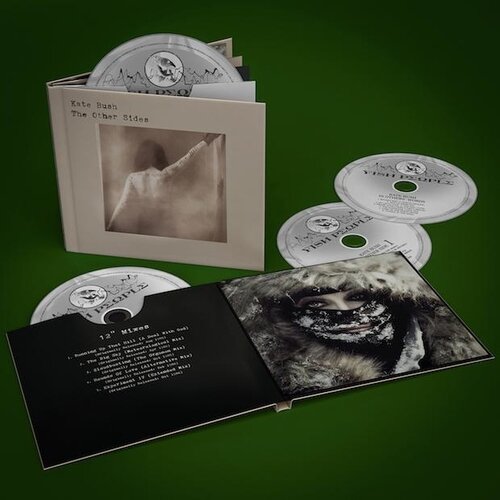
Last year, Kate Bush herself gave her recollections of Experiment IV:

“This was written as an extra track for the compilation album The Whole Story and was released as the single. I was excited at the opportunity of directing the video and not having to appear in it other than in a minor role, especially as this song told a story that could be challenging to tell visually. I chose to film it in a very handsome old military hospital that was derelict at the time. It was a huge, labyrinthine hospital with incredibly long corridors, which was one reason for choosing it. Florence Nightingale had been involved in the design of the hospital. Not something she is well known for but she actually had a huge impact on hospital design that was pioneering and changed the way hospitals were designed from then on.

The video was an intense project and not a comfortable shoot, as you can imagine - a giant of a building, damp and full of shadows with no lighting or heating but it was like a dream to work with such a talented crew and cast with Dawn French, Hugh Laurie, Peter Vaughn and Richard Vernon in the starring roles. It was a strange and eerie feeling bringing parts of the hospital to life again. Not long after our work there it was converted into luxury apartments. I can imagine that some of those glamorous rooms have uninvited soldiers and nurses dropping by for a cup of tea and a Hobnob.

We had to create a recording studio for the video, so tape machines and outboard gear were recruited from my recording studio and the mixing console was very kindly lent to us by Abbey Road Studios. It was the desk the Beatles had used - me too, when we’d made the album Never For Ever in Studio Two. It was such a characterful desk that would’ve looked right at home in any vintage aircraft. Although it was a tough shoot it was a lot of fun and everyone worked so hard for such long hours. I was really pleased with the result. (KateBush.com, February 2019)”.

On the B-side of Experiment IV (the U.K. single) is Wuthering Heights with a new vocal. Although I much prefer the original Wuthering Heights, I think that it is cool that we got these two new recordings. Although there are one or two quite intense songs on The Sensual World, and The Red Shoes, I think Experiment IV is one of her last songs that has the same sort of experimental and eerier quality of tracks on The Dreaming, and Hounds of Love.

Maybe Experiment IV was the last throw of that dice, or it was a bridge between where Bush was and where she was heading. I want to finish off by sourcing from an article on the Behind the Couch website (from 2013), where we get some more detail about its video:

“Throughout the song the listener is fed snippets of exactly what has gone into creating this devastating sound – From the painful cries of mothers, To the terrifying scream... We recorded it and put it into our machine. The dark subject matter of both the lyrics and the video - sinister music that can harm and kill the listener, coupled with the strange technology the scientists use to create it (most hauntingly of all it’s never revealed why) - calls to mind the work of British sci-fi/horror writer Nigel Kneale, who frequently blended science and supernaturalism with anti-authoritarian undertones. In works such as Halloween III and The Woman in Black – and indeed John Carpenter’s homage to the work of Neale, Prince of Darkness – technology is presented as a quasi-magical force with severely sinister connotations.

Dawn French and Hugh Laurie provide a little comic relief as two scientists ensconced in the dubious research, and the reluctant Professor overseeing the research is named Jerry Coe; perhaps a reference to Jericho, the walls of which crumbled at the sound of the Israelites’ trumpets at the end of a war, as described in the biblical book of Joshua.

The horrific effects of the scientists’ research is featured throughout the video, as various test-subjects are shown writhing around in straitjackets after hearing the sound. Finally, when the sound is 'unveiled', it appears as a spectral siren which suddenly takes on the form of a terrifying winged ghoul, which then proceeds to wreck havoc in the lab, slaughtering the scientists and test-subjects alike. The camera then assumes the role of the creature and pursues various scientists along the starkly lit and increasingly chaotic corridors of the facility, eventually tracking outside to reveal the rather apocalyptic aftermath of the incident – pre-empting ‘contagion horrors’ such as 28 Days Later etc. A cordoned-off vicinity around a music shop (revealed to be a front for the shady government project) – in which the shopkeeper is displaying copies of Experiment IV – is strewn with the bodies of the dead. Lastly, we see Ms Bush hitch-hiking on a nearby stretch of road and clambering into a van, but before she does, she turns to wink at us knowingly, suggesting this is only the beginning of her deadly mission… It could sing you to sleep, But that dream is your enemy! Incidentally, the sound of the helicopter heard at the end of the song as the military make a hasty retreat, is the very same helicopter sound heard in Pink Floyd's The Happiest Days of Our Lives from The Wall. Dave Gilmour and Kate are good friends”.

I will write some more features about The Whole Story as it gets nearer to its thirty-fifth anniversary, but I was keen to dig deep into a song that many people might not be aware of. I think Experiment IV is one of Kate Bush most-underrated songs…its video is startling, scary and amazing. It shows that there are truly…

NO limits to Kate Bush’s talent.

FEATURE: The Lockdown Playlist: A Ma Rainey-Inspired Blues-Fest

FEATURE:


The Lockdown Playlist

eeee.jpg

IN THIS PHOTO: Ma Rainey 

 A Ma Rainey-Inspired Blues-Fest

___________

ALTHOUGH the tone is not too Christmas-like….

ffff.jpg

 IN THIS PHOTO: A promotional image from the play, Ma Rainey’s Black Bottom

I wanted to put out a Lockdown Playlist inspired by Ma Rainey. She is the subject of a new Netflix drama, Ma Rainey’s Black Bottom (a film adaptation of August Wilson’s play starring Viola Davis and the late Chadwick Boseman). She has been called the ‘Mother of the Blues’, and she has inspired a lot of other artists. The Guardian have provided more details about Ma Rainey:

“Rainey – pioneering as a blues singer, businesswoman and liberated bisexual – grew up in the Jim Crow south in the late 19th century. By her own account, she was born Gertrude Pridgett in Columbus on 26 April 1886, although other records suggest she was born in Alabama in September 1882.

She married singer, dancer and comedian William Rainey when she was 18 and, billed as Ma and Pa Rainey, they toured as performers for minstrel shows that travelled towns setting up their own tents and stages. After the couple separated in 1916, Rainey launched her own touring performance company, Madam Gertrude Ma Rainey and Her Georgia Smart Set.

She joined a wave of African Americans who quit the south to pursue dreams in desegregated northern cities such as Chicago. She signed with Paramount, a furniture company in Wisconsin that had got into the recording business, and became one of the first recorded blues musicians. Between 1923 and 1928 she made nearly a hundred records – one such recording session forms the basis of Wilson’s play – and had numerous hits.

Rainey, who wrote her own songs, was a mentor to singer Bessie Smith and worked with the likes of Louis Armstrong and Thomas Dorsey, who was musical director on some of her recordings. Her full-throated vocals have inspired singers from Dinah Washington to Janis Joplin”.

In honour of the pioneering Ma Rainey and her incredible life, this Lockdown Playlist includes a couple of her best tracks, but it also features other great Blues/Blues-Rock tracks. I will make the next Lockdown Playlist a bit cheerier but, to salute a Blues great, here are some great songs from…

AN underrated and underplayed genre.

FEATURE: Coming Strongly into Focus: Awesome Music Videos from 2020

FEATURE:


Coming Strongly into Focus

IN THIS PHOTO: Moses Sumney/PHOTO CREDIT: Pari Dukovic

Awesome Music Videos from 2020

___________

WHILST there is always a lot of attention….

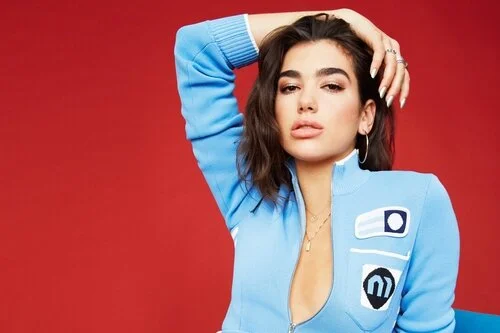
 IN THIS PHOTO: Dua Lipa/PHOTO CREDIT: Erik Madigan Heck

this time of year regarding albums and singles, fewer sites and people mention music videos. This year has been an especially tough one when it comes to filming ambitious videos and, whilst some managed to complete theirs before the pandemic struck, others have had to make do with limitations and social distancing. It is hard whittling down the best videos of the year so, instead, I have selected some particularly brilliant ones that differ in terms of why they are standout – whether it is the simplicity or the sheer colour and vibrancy of it (Thanks to Insider, Billboard, and Paste, and Pitchfork for their descriptions and thoughts on each). I feel sorry for artists putting music out this year, as they have had to deliver videos and do their very best under tough conditions. Here are some incredible videos that prove that, even in a bleak year, artists have managed to…

 IN THIS PHOTO: Rina Sawayama/PHOTO CREDIT: Jess Farran

PRODUCE some ace visuals!

_______________

HAIM - I Know Alone (Director: Jake Schreier)

“Of all the beloved dance-focused videos Haim has made, none offer a better marriage of moves and subject matter than the accidental quarantine anthem "I Know Alone," written about by pre-COVID depression and isolation. With co-choreographer Francis and the Lights, the sisters created a routine that's both strikingly literal -- standing six feet apart, they mime aimlessly swiping on through their phones -- and subtly layered: Este, Danielle and Alana give a performance about going through the motions of life without actually going through the motions on camera. The fact that the sisters never interact despite their proximity also gives the video a surreal feeling, as if they could have been spliced together in post-production -- simultaneously together and apart, like all of us in 2020” - Billboard

 Ariana Grande – positions (Director: Dave Meyers)

“For the video to the title track from Ariana Grande’s sixth album, the pop star tries to relieve the nation’s collective anxiety around the presidential election by gifting us a blissful fever-dream version of the White House. Grande swans around in Jackie Kennedy outfits as the commander-in-chief (with a gilded portrait of her chihuahua Toulouse in the cabinet room), with a fabulous group of aides that includes regular collaborators Victoria Monét and Tayla Parx. She even awards a Medal of Freedom to USPS workers, another anti-Trump jab in a clip full of them” - Pitchfork

 Christine & The Queens - La vita nuova (Director: Colin Solal Cardo)

 “Earlier this year, Christine and the Queens released a surprise EP with an accompanying short film titled La vita nuova. The film was shot by Colin Solal Cardo at the Palais Garnier and features Caroline Polachek, who appears on one of the EP’s tracks. Choreography for the film was handled by Ryan Heffington, known for his work with Maddie Ziegler for Sia’s “Chandelier” video, as well as Arcade Fire’s “We Exist.” The film has a luscious, glittery sheen and bodily, primeval dancing reminiscent of Luca Guadagnino’s recent Suspiria remake. Chris (or Héloïse Letissier) struggles with her feelings for a horned creature credited as “The Fauna” (Félix Maritaud). There’s several gorgeous shots of the famed Parisian opera house, with styling that reflects the eclectic blend of baroque, classic and renaissance architecture present within the building” - Paste

 Rico Nasty - Own It (Director: Philippa Price)

 “When it comes to pulling off decadent, eccentric looks, Rico Nasty remains in a league of her own. For the swaggering “Own It,” her best video yet, she struts through a series of eye-popping sets, each one more stylishly freakish than the next. Pushing a stroller of ducklings while wearing acrylics and a neon gimp mask with icicles sticking out of it? Sure. Swaying on a swing set strung up with taxidermied opossums? Of course. Did I mention the dangling eyebrow piercings and inexplicable, oversized feet? Each visual oddity bears out Rico’s over-the-top vision with a tongue-in-cheek sense of humor, making the video as delightful as it is bizarre” - Pitchfork

 Arca – Nonbinary (Director: Frederik Heyman)

 “Arca’s very existence defies conventions—not to mention the challenging experimental soundscapes that brought her fame. Several of the visuals for her latest album KiCk i portray the Venezuelan-born electronic artist as an androgynous cyborg, and they are subversive, sensory explosions. The start of the video for “Nonbinary” finds a human Arca presumably mortally wounded before she’s gradually revived by highly-advanced cyborgs and gracefully reemerges from a shell. In the final scene, two identical Arcas appear while arguing—one dressed in black, and one in white—amid violently shaky cameras and raging flames. It’s full of contradictions and cloaked in symbolism, both subtle and overt. We see a dramatic, mythical tug-of-war between organic matter and machines, masculinity and femininity, heaven and hell—plus the “thorn” in her side, and the lyrics displayed on screen which alternate between lowercase and uppercase letters” - Paste 

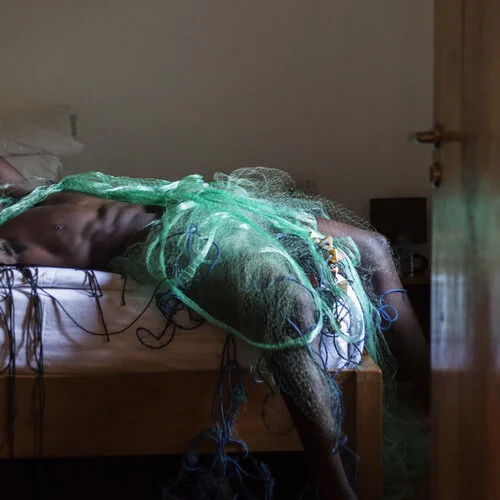
 Moses Sumney - Me in 20 Years (Director: Allie Avital)

 “When crafting the visuals to accompany sophomore album græ, Moses Sumney took creative control into his own hands to communicate the sense of yearning at the core of the album. In his latest clip, for “Me in 20 Years,” Sumney cakes on old-age makeup and creeps around a dilapidated apartment in Kyiv, Ukraine, rendering the song’s loneliness in very literal terms. “With your imprint in my bed/A pit so big I lay on the edge,” he sings, a lyric that comes to life here in the form of an ominous space of darkness on his empty bed, festering like an open wound. Throughout the clip, Sumney seems as if he’s tending to this black hole, perhaps eventually succumbing to it entirely” - Pitchfork

 Perfume Genius - Describe (Director: Mike Hadreas)

 "Can you describe them for me?" When it comes to Perfume Genius' self-directed music videos, the answer is never accurately or really appropriately -- they manage to be moving and tactile and memory-searing without ever cooperating with easy summarization. The "Describe" visual feels part barn-raise, part cult ritual, part theatrical workshop, but more importantly, it feels as earthy, sensual and poetic as the grunge-pop lurcher it accompanies, a world entirely of its own making” - Billboard

 Kate NV - Plans (Directors: Kate NV & Pavel Kling)

 “Moscow pop experimentalist Kate NV is a collector of unusual inspirations, from ’80s Japanese pop music to ’70s Russian children’s shows. Together they form a tuneful, unconventional vision of pop music, with dreamy lyrics in French, Russian, and English. The video for “Plans,” the upbeat latest single from Kate NV’s forthcoming third album Room for the Moon, is her best yet. In a screwy take on public-access television, she creates “Kate TV,” a station where she’s the lead news anchor (in a suit and severe makeup that channels both Laurie Anderson and Christine and the Queens). The clip takes full, cheeky advantage of its green-screen conceit, with a miniature version of Kate dancing on her own gloved hand, a dance sequence in front of a weather map that catches fire, and a cast of confused reporters who reappear in increasingly ridiculous outfits. The joyously absurdist clip leads up to an ecstatic, confetti-showered climax that perfectly channels Kate NV’s winsome charm” - Pitchfork

Beyoncé, Shatta Wale, Major Lazer – Already (Director: Joshua Kissi)

 “Of course, "Already" is better when it's consumed within the greater framework of "Black Is King." But even on its own, this video is a painstakingly styled and deeply impressive enterprise. You can pause "Already" at literally any moment and it will look like a painting. In fact, it's more performance art than music video.

On top of its sheer beauty, "Already" features countless details that pay homage to pan-Africanism, including West African symbolism, Ghanaian excellence, and Nigerian fashion.

Not to mention: Beyoncé nailing the Gbese and sticking out her tongue? That two-second clip alone would be enough to land at No. 1 on this list” - Insider

 FKA twigs - sad day (Director: Hiro Murai)

“While touring behind 2019’s MAGDALENE, FKA twigs performed the martial art of wushu, which involves a jian sword and incredible self-control. She puts those skills to use in the video to the album’s crushing centerpiece, “sad day,” helmed by “This Is America” and Atlanta director Hiro Murai. The short film captures a clash between twigs and a man sitting in a café—their connection is left unspoken, but as the two launch into a sword fight that crashes out onto the streets and rooftops, it’s obvious something much more intense is going on. All of twigs’ videos for MAGDALENE have been cinematic and emotionally wrenching, but here she and Murai craft a surprising spin on Crouching Tiger, Hidden Dragon that perfectly fits the song’s cutting depiction of a breakup” - Pitchfork

Rina Sawayama – XS (Director: Ali Kurr)

  “Japanese-British force Rina Sawayama blessed us with her debut album this year, and one of the highlights was obviously "XS." (Or rather, “excess.” Get it?) The video is huge in scope, as Sawayama appears on an HSN-style network and hawks “RINA Water” products over slammin' guitars, all between exaggerated choreography. But things start to deteriorate when we get a look at the factory workers bottling a product that just might be toxic -- and which is extracted from a pitiful jailed creature -- and Sawayama’s shiny television personality malfunctions. It’s entirely over the top, and a clever commentary on glitzy consumerism to boot. Oh me, oh my!” - Billboard

 Cardi B (ft. Megan Thee Stallion) – WAP (Director: Colin Tilley)

  “As Stereogum's Tom Breihan writes: "In a summer that's been hopelessly devoid of crowd-pleasing spectacle, the 'WAP' video is the closest thing we have to a new 'Avengers' movie."

"WAP" is precisely the kind of music video that elevates a song from catchy to iconic. The song is unabashedly, gloriously filthy, and only a video that appropriately celebrates Cardi B and Megan Thee Stallion — meaning both their talent and their curves — could have done it proper justice.

But the genius of "WAP" doesn't stop there. For the price of one video, you are also blessed with a Normani dance break and the endless amusement of angry, horny conservative pundits voluntarily exposing their utter lack of interest in female pleasure” - Insider

 Kelly Lee Owens - On (Director: Kasper Häggström)

“A man and his adorable golden retriever go on a seemingly mundane road trip in the video for “On,” from electronic artist Kelly Lee Owens’ forthcoming second LP Inner Song. Filmed with the gloss of a car commercial, the clip follows them on a long drive through the countryside, watching from the backseat as they stop to play catch and run along the beach. The sentimental journey raises questions about where they’re headed and why, with those answers ultimately revealed in a sequence at a ferry landing that’s both crushing and oddly hopeful. Its simple visual concept is delivered with a clear, compassionate touch” - Pitchfork

Crack Cloud - Ouster Stew (Director: Self-directed)

 “In comparison to the tightly-coiled, guitar-driven post-punk of Crack Cloud’s self-titled release, “Ouster Stew” is more colorful and eccentric—adding synths and saxophone into the mix. Lead singer Zach Choy’s (the group are adamant not to call him a frontman, doubling down on their decentralized model) vocals are positively waggish as their guitars squawk with an art-rock-meets-funk vivacity. Perhaps most unexpected is the bare, pronounced, mid-song drum solo, during which chaos breaks out in the song’s dramatic, high-concept video. Their visuals and sonic ambition recall the aesthetics of U.K. outfit HMLTD, whose 2020 debut album, West of Eden, also infused militaristic, high art, gothic and theatrical imagery” - Paste

 Phoebe Bridgers - I Know the End (Director: Alissa Torvinen)

 “Crescendoing closer “I Know the End” is one of the most stunning moments on Phoebe Bridgers’ Punisher, and the video captures that same anthemic quality. It finds the singer in her now-trademark skeleton onesie as she endures various states of instability: sunken in an overflowing bathtub, fleeing on the back of a pickup truck, running through an empty football stadium in the dark. Then, just when it seems like things couldn’t get more surreal, the clip climaxes with one of the most unexpected makeout sessions in recent music video history” - Pitchfork

 Lady Gaga - 911 (Director: Tarsem Singh)

 “The most conceptual video of the Chromatica era so far is a feat of COVID-era filmmaking — nothing about Gaga's or director Tarsem Singh's vision feels compromised by the realities of the pandemic. And what a vision it is: The "911" video resembles a turducken of metaphors, telling the story of a mental health crisis through the story of a car crash and the imagery of the 1969 Soviet Armenian film The Color of Pomegranates. Like Gaga's best videos, there's a certain je-ne-sais-WTF element, at least until the big reveal. But like any good psychological thriller, the "911" video more than earns its twist. Gaga and Singh create a world so rich with symbolism that decoding it doesn't feel like the end — it's an invitation to dive back in” - Billboard

 Slowthai - BB (BODYBAG) (Directors: THE REST)

 “slowthai’s “BB (BODYBAG)” is a pure shot of adrenaline, with rapid-fire threats delivered over a relentlessly rolling beat by Mount Kimbie’s Dom Maker. Its video ups the ante by dropping us into a tense game of Russian roulette in a parking garage, and it never eases up on the dread: The Bajan-British rapper sports a mask made of cigarette butts, raps through the POV of an open mouth like the dentist in Little Shop of Horrors, and plays a knife game with his hand as flames rise behind him. Menace runs deep in slowthai’s feverish rap, and here he amps up the imagery to brutal new highs” - Pitchfork

 Halsey - you should be sad (Director: Colin Tilley)

  “On an album full of courage, chaos, and bare honesty, "You Should Be Sad" is a particularly bold highlight.

With cutting lyrics like "I'm so glad I never ever had a baby with you / 'Cause you can't love nothing unless there's something in it for you" — largely inspired by country music's history of petty and powerful breakup bops — this song always deserved an equally splashy, dauntless visual. Thankfully, Halsey delivered just that.

The music video doubles as a sexy hoedown and a salute to some of Halsey's female idols, including Christina Aguilera, Carrie Underwood, and Lady Gaga.

Every detail is deliciously on target, from the dark, fiery tear-stains painted onto Halsey's face to the cheetah-clad reference to Shania Twain's "That Don't Impress Me Much” - Insider 

CHAI - Donuts Mind If I Do (Director: Hideto Hotta)

 “The Japanese rock band CHAI have a stellar track record for unexpected, creative videos, whether popping their arms and heads through bright-pink paper backdrops or smearing frosted icing on each other’s faces in a parking garage. For their breezy new song “Donuts Mind If I Do,” the band’s easygoing camaraderie is given a literally timeless portrayal. Set at a tea party on a bucolic hillside, the band eat colorful, plate-sized donuts. Then everything time-jumps to the same location years later, with CHAI dressed in old-age makeup, complete with headwraps and clunky eyeglasses. They’re still eating their donuts and enjoying each other’s company, lounging on trees and reading books together. It’s a charming testament to enduring friendship” - Pitchfork

 Dua Lipa - Break My Heart (Director: Henry Scholfield)

 "I've always been the one to say the first goodbye," Dua Lipa laments at the top of "Break My Heart," and the video fittingly finds her slipping in and out of various scenes, Inception-style, without breaking a sweat. We see her plummeting through the pink-purple sky until an airplane constructs itself around her; dropping into a bubble bath only to reappear floating in a fizzy cocktail; and dominating a dancefloor until the camera pulls back, revealing it was just one small dot on a domino – which another Dua Lipa, naturally, knocks over” - Billboard

FEATURE: In the Arms of the Angel Gabriel… The Spine-Tingling Impact of Kate Bush’s Vocal on Don’t Give Up

FEATURE:


In the Arms of the Angel Gabriel…

 The Spine-Tingling Impact of Kate Bush’s Vocal on Don’t Give Up

___________

I do get a bit annoyed…

when people refer to Don’t Give Up as ‘a Kate Bush song’, as it was written by Peter Gabriel and appears on his 1986 album, So. I guess, as it is a duet, one can say that it is sort of half-and-half, but it is very much a Gabriel song. I will come to the track in a bit, but there is a whole new feature waiting that explores the influence of Peter Gabriel on Kate Bush. When it comes to breakthroughs in music, Peter Gabriel introducing Kate Bush to the wonders and layers of the Fairlight C.M.I. counts as one of the most important. Bush used the Fairlight C.M.I. on Never for Ever in 1980 but more fully from The Dreaming (1982) onwards. The two worked together on Gabriel’s third self-titled album of 1980, and one can feel Bush adding something special to Games Without Frontiers, and No Self Control. Those vocal parts were backing parts, but she incorporated something special to each song! Although Gabriel never appeared on a Kate Bush studio album, his impact on her was big. He featured on Bush’s Christmas special of 1979; introduced as ‘the Angel Gabriel’, the two performed a haunting duo on Roy Harper’s Another Day. Gabriel also appeared on stage with Kate Bush and Steve Harley to cover The Beatles’ Let It Be at a benefit concert for Bill Duffield (a lighting engineer that died during Kate Bush’s The Tour of Life) in 1979.

The most complete and astonishing collaboration between Peter Gabriel and Kate Bush arrived on 1986’s Don’t Give Up. This article from the Kate Bush Encyclopaedia provides more details:

“Song written by Peter Gabriel. Originally released on his fifth studio album 'So' in 1986. Also released as a single from the album in October 1986. Gabriel originally wrote the song from a reference point of American roots music and he approached entertainer Dolly Parton to sing the song with him. However, Parton turned him down, so his friend Kate Bush took her place. She recorded her vocals in February 1986 at Peter Gabriel's home studio in Ashcombe House. Peter had already recorded his vocals, so she followed his lead. After this recording, she felt she had "messed it up" and so she returned later to sing it again.

Peter Gabriel has performed 'Don't Give Up' live various times, amongst others during his Secret World live tour in 1993. Kate Bush performed the song with him just once, when she was a surprise guest on Peter Gabriel's concert on 28 June 1987 at Earl's Court, London”.

The track was recorded during 1985 – which was a remarkably fertile period for Kate Bush -, and it reached number-nine in the U.K. I love to think of these two major artists enjoying some real highs getting together in the studio. Bush released Hounds of Love in 1985, whilst So was the first Gabriel album in four years. In terms of Kate Bush and her sound, there is a leap from the songs on Hounds of Love and what we hear on Don’t Give Up.

I don’t think Bush had been as heart-breaking and heart-warming up until this point. The sheer emotion and passion she put into the song is incredible - and I wonder whether Don’t Give Up inspired the direction of The Sensual World (1989) and songs like This Woman’s Work. I wanted to talk about this song, not only to show that Bush was a wonderful collaborator and there was this close harmony between her and Gabriel, but to prove how important the track is in 2020. In such a tough year, a song about a man losing his job and trying to keep his head above water sounds especially stirring and moving. I love the reassurance from Bush and what her voice does in the chorus. Don’t Give Up is one of Gabriel’s greatest songs, and I like the fact he was generous regarding giving Bush enough spotlight and a big role. It is one of those classic duets where the two have their own verses and then combine when needed. It is this conversation where Gabriel, as the hero, looks around and realises he is not the same man…then we have Bush providing a shoulder and reassurance. Right from the first verse, the emotions performed (by Gabriel) are so powerful: “No fight left or so it seems/I am a man whose dreams have all deserted/I've changed my name, I've changed my face/But no one wants you when you lose”. Gabriel is bereft and is searching for a new lease whilst Bush, as his lover/friend, gives these beautiful words of comfort: “Rest your head/You worry too much/It's going to be alright/When times get rough/You can fall back on us/Don't give up/Please don't give up”.

nnn.jpg

IN THIS PHOTO: Peter Gabriel and Kate Bush in 1987/PHOTO CREDIT: Dave Hogan/Getty Images

When Gabriel is at his most troubled – “Got to walk out of here/I can't take anymore/Going to stand on that bridge/Keep my eyes down below/Whatever may come/And whatever may go/That river's flowing/That river's flowing” –, Bush gives him this stability and knowledge that he has friends and is not alone. There have been songs before and since with similar themes, but I don’t think any have quite matched the intensity and sheer emotional impact of Don’t Give Up! Peter Gabriel is one of the most underrated singers ever, and he brings so much to the song. His vocal has a roughness and rawness to it, whereas Bush offers something sweeter. I know she was not happy with the first go she had at the song, but I love what is on the record as Bush sounds concerned-yet-strong; she provides this soft and sweet vocal, but there is also this real sadness and heaviness that seamlessly combines. Both are at their very best on the song and, in a rotten year, I think many people have taken a lot from this track and can relate to it. I think it is a song that people should listen to should they find themselves in a very bleak place. For Bush, this was her stepping into someone else’s world and adding something incredible; for Gabriel, Don’t Give Up was a standout on the So album. Sitting alongside songs like Sledgehammer, and In Your Eyes, he was in tremendous form as a songwriter! If you need some wisdom and words to give you strength, then consider Kate Bush’s in the final moments of Don’t Give Up: “Don't give up/'Cause I believe there's a place…

THERE’S a place where we belong”.

FEATURE: Too Good to Be Forgotten: Songs That Are Much More Than a Guilty Pleasure: Carly Rae Jepsen – Call Me Maybe

FEATURE:


Too Good to Be Forgotten: Songs That Are Much More Than a Guilty Pleasure

Carly Rae Jepsen – Call Me Maybe

___________

LIKE many songs that I highlight…

in this feature, there are two different schools of thought regarding Carly Rae Jepsen’s 2012 superhit, Call Me Maybe. On the surface, it is a great Pop song with a catchy chorus, thought there are many people who think it is throwaway, sugary and embarrassing. Some Pop songs are very much aimed for a demographic and can alienate people but, like all classic Pop, Call Me Maybe is not restrictive and it welcomes everyone in. I have seen the track included in lists of songs that should be seen as a guilty pleasure and, whether you believe in guilty pleasures, there are plenty of people who are not hot on Carly Rae Jepsen’s anthem. She is an artist who we have not heard a lot from lately. Her current studio album, Dedicated, came out last year and critics noted how her vocals are less impassioned and belting, but the passion and sheer commitment to the material Jepsen shows is amazing. It is a brilliant album but, heading back to 2012, Kiss got some praise from various corners. Many noted how Jepsen’s voice is one of the most powerful and expressive (despite not having a huge range), whereas others observed there were some big hits but some filler too. I should cover Kiss for Second Spin as it is a great album that has been overlooked by some. In September 2011, Jepsen released the first single from the album a full year before Kiss arrived.

If you are going to put out a single and try and build intrigue and excitement, then Call Me Maybe was a pretty good choice! Actually, Call Me Maybe was released first as part of the Curiosity E.P. of 2012. To deliver a solid and excellent E.P. and album in the same year is amazing! As her debut album, Tug of War, came out in 2008, I guess there was a big demand for new music. Call Me Maybe is a brilliant Bubblegum Pop song; it is one that provides energy and fun without taxing you too much. That sounds dismissive, but I mean modern Pop has become more complex and layered - and it does also lack a sense of fun. Call Me Maybe has maturity, but it is also quite teenage in its lyrics and feel. Maybe that is a reason why some people do not like the song: they feel it is a bit juvenile and does not have the same depth and quality as some of the best Pop. Call Me Maybe reached number-one in many countries – including Canada, the U.S. and U.K. -, and it reached the top of the Canadian Hot 100 (the British Columbia-born artist became only the fifth Canadian to achieve this feat in their home nation since 2007). I want to bring in a segment from Wikipedia, where we learn about the critical reception of Call Me Maybe:

“The song received critical acclaim. Rolling Stone journalist Melody Lau considered "Call Me Maybe" "a sugary dance-pop tune ... about hoping for a call back from a crush," while Kat George of VH1 described it as a "guilty pop pleasure."

Emma Carmichael of Gawker did a long review on the track, which she described as the "new perfect pop song."  Carmichael further added that the song is "flawless" and that "we will be virtually incapable of escaping the song and its strident disco strings and that horribly catchy hook." Nicole James of MTV revealed that "Call Me Maybe" is probably the catchiest song she has ever heard, and added that "I don't even want to tell you what the play count is in my iTunes for that song, but the moment you press play you're sucked in."

The Village Voice's Maura Johnston deemed it as an "utterly earwormy" song. RedEye's Emily Van Zandt began her review of the track saying, "screw you, Internet. Thanks to a couple of posts on blogs that I refuse to own up to following, my afternoon has been dedicated to Carly Rae Jepsen's 'Call Me Maybe'." Van Zandt continued to state that "all I know is that I have co-dependency issues when it comes to my music. When it's sad, I'm sad. When it's angry, I'm angry. And when it's ridiculously over-produced, up-tempo bubblegum pop with terrible lyrics on a beautiful day in Chicago when I'm wearing pink pants, I just kind of want to start skipping around handing my number out to random bros, you know?" Jim Farber of the New York Daily News said, "In lyrical construction, melodic flourish and instrumental arrangement, 'Maybe' has the urgency and sweep of the greatest teen pop songs ever recorded."

Pitchfork Media named "Call Me Maybe" the 29th best song of 2012, while Rolling Stone named it the 50th greatest single of that year.  It was voted the best single of 2012 by The Village Voice's 40th annual Pazz & Jop critics' poll. As of April 2017, Billboard ranked at number 1 on list "The Best Chorus of the 21st Century”.

I guess a ‘guilty pleasure’ implies a satisfaction in addition to a bit of an embarrassing love, but one cannot say Call Me Maybe is a guilty pleasure!

The Curiosity E.P. and Kiss album are fantastic, as they showcase a versatile and brilliant artist who could deliver a big and bright Pop classic in addition to being more sensitive and taking things down. Perhaps now, at thirty-five, Jepsen cannot write songs like Call Me Maybe, so perhaps that track was capturing a moment; also, after a relatively successful debut album, a bid for greater awareness and popularity. Whereas the song could have been quite cynical and paint-by-numbers, there is ample nuance and personal meaning behind a song that clearly connected with so many people. As someone who does not necessarily seek out and embrace Pop like Call Me Maybe, it is a song that provides a real rush and still sounds good nearly a decade after its release! If you have not heard the track, then go and take a moment to spin Call Me Maybe. I can guarantee that it will get lodged in the head. If Kiss did not contain another song quite as big and popular as Call Me Maybe, songs like This Kiss, and Curiosity showed that Jepsen had plenty of ammunition! One of the problems with Kiss is that it has so many producers credited and was recorded at a load of different studios - which can make it fill disjointed and incohesive at points. That said, it is stronger than it has been given credit for. Call Me Maybe is a song Jepsen wrote with Josh Ramsay and Tavish Crowe – Ramsay produced the song, so it is quite focused and streamlined in that sense, whereas a song like Turn Me Up is a bit busier. I think those who sniffed at Call Me Maybe should give it another try, because it is a…

PRETTY decent and memorable track!

FEATURE: A Buyer’s Guide: Part Thirty-Four: Eels

FEATURE:


A Buyer’s Guide

cv.jpg

PHOTO CREDIT: Gus Black 

Part Thirty-Four: Eels

___________

I have been a fan of Eels….

 PHOTO CREDIT: Getty Images/Ringer illustration

since the debut album, Beautiful Freak, arrived in 1996. Eels was formed in Los Angeles in 1991 by singer/songwriter and multi-instrumentalist Mark Oliver Everett, known by the stage name E. Band members have changed across the years, both in the studio and on stage, making Everett the only official member for most of the band's work. The latest album, Earth to Dora, was released earlier this year and is fantastic. In this edition, I am recommending the four essential albums of Eels; an underrated album that is worth checking out; the latest studio album, in addition to a book that is a useful companion. If you need some guidance to the work of Eels, then I hope that you get some…

 PHOTO CREDIT: Gus Black 

GOOD guidance below.

_____________

The Four Essential Albums


Beautiful Freak

Release Date: 13th August, 1996

Label: DreamWorks

Producers: Jon Brion/E/Mark Goldenberg/Michael Simpson

Standout Tracks: Susan’s House/Beautiful Freak/Your Lucky Day in Hell

Buy: https://www.discogs.com/sell/list?master_id=111487&ev=mb

Stream: https://open.spotify.com/album/7sqwuxORaCogFGgygafdSt

Review:

““Beautiful Freak”, the album’s title song, features electric piano and very somber vocals by Everett, While the lyrics are a little weak on this track, the surreal and sad mood makes up for this deficiency. Co-written by guest guitarist Jon Brion, “Not Ready Yet” is a sad tune about recovering from disaster and feeling the isolation of that situation. The longest track on the album, this song leaves plenty of room for musical grooves as it is bass and rhythm-driven with several guitar overdubs. “My Beloved Monster” with a very slight banjo before the electric guitar-driven song proper begins and, during the second verse and beyond a bouncy bass and feedback effects add a real edge to the sonic qualities of this song. Co-written by Keyboardist Jim Jacobsen who provides a cool  synthesized choir, “Flower” may be the highlight of the entire album. Melodically and lyrically this track works very well as a sad slacker creed with the clever refrain; “everyone is trying to bum me out…”

The later part of the album has more solid tracks which remain within the spirit of the overall album while also introducing some nice new methods. “Guest List” is built on funky, descending bass while “Mental” features an upbeat bass/key riff by Walter and some hard rock chording in the choruses. “Spunky” has a lyrical sense of reserved enthusiasm which matches the song’s title as “Your Lucky Day in Hell” is soulful with cool rhythms, effects and high-registered vocals. The album wraps “Manchild”, the most traditional, “lover’s lament” ballad on the album, co-written by Jill Sobule, with a long, surreal fade-out with sound effects to usher out the album” – Classic Rock Review

Choice Cut: Novocaine for the Soul

Electro-Shock Blues

cc.jpg

Release Date: 21st September, 1998

Label: DreamWorks

Producers: E/Jim Jacobsen/Mickey Petralia/Michael Simpson

Standout Tracks: 3 Speed/Last Stop: This Town/Climbing to the Moon

Buy: https://www.discogs.com/Eels-Electro-Shock-Blues/master/111500

Stream: https://open.spotify.com/album/6SZeOhypPklZ2oLywHluyS

Review:

“The Eels' second release, Electro-Shock Blues, is a much darker album than their underrated debut, 1996's Beautiful Freak, but just as rewarding. Singer/guitarist/songwriter E experienced many upheavals in his personal life between albums (the passing of several family members and close friends), and decided to work his way through life's tribulations via his music. The result is a spectacular epic work, easily on par with such classic albums cut from the same cloth -- Neil Young's Tonight's the Night, Lou Reed's Magic and Loss. For some of the most introspective and haunting tunes of recent times, look no further than the title track, "Last Stop: This Town," and "Elizabeth on the Bathroom Floor." And although the lyrics deal almost entirely with mortality, the music for "Hospital Food," "Cancer for the Cure," and "Going to Your Funeral, Pt. 1" is comparable to Beck's funky noise, while "Efils' God," "The Medication Is Wearing Off," and "My Descent Into Madness" are all ethereal, soothing compositions. One of the finest and fully realized records of 1998, a must-hear” – AllMusic

Choice Cut: Cancer for the Cure

Daisies of the Galaxy

Release Date: 28th February, 2000

Label: DreamWorks

Producer: E

Standout Tracks: Grace Kelly Blues/Flyswatter/Jeannie’s Diary

Buy: https://www.discogs.com/sell/list?master_id=111503&ev=mb

Stream: https://open.spotify.com/album/1myZZzfBVfMo7t4yvgAXte?si=WULEaFkQQU-gykPLPUgHXg

Review:

“This would be wonderful, life-enriching stuff even as it stands, but the psychodrama that underlies it all is even more compelling. So while 'Electro-Shock Blues' was the sound of raw wounds, 'Daisies...' is a more profound rumination upon beauty and mortality. There's a song called 'It's A Motherfucker', which, in the kind of deadpan twist that E relishes, is a beautifully restrained shrug of the shoulders at the nature of loss. It could be dedicated to a former lover or to the memory of his recently deceased mother (E's a lucky fellow) - it doesn't matter. 'Selective Memory' is much more explicit, as E effects a childlike falsetto and intones, "If I lay my head down I will see you in my dream". He is racking his brains, reaching for one defining conscious memory of his mum that will compensate for her death. It doesn't come; it won't come. Time to leave that love behind and carry on.

The stellar NME Single Of The Week, 'Mr E's Beautiful Blues', is casually dumped as a hidden track right at the end and thus 'Daisies Of The Galaxy' peters out. Only in such illustrious company could the song fail to shine. For here is an album that, in its wit, humility and calmness in the face of a firing squad of terrors, justifies the existence of pop albums. In almost every respect a masterpiece” – NME

Choice Cut: Mr. E’s Beautiful Blues

Blinking Lights and Other Revelations

Release Date: 26th April, 2005

Label: Vagrant

Producer: E

Standout Tracks: Blinking Lights (For Me)/Theme for a Pretty Girl That Makes You Believe God Exists/I'm Going to Stop Pretending That I Didn't Break Your Heart

Buy: https://www.discogs.com/Eels-Blinking-Lights-And-Other-Revelations/master/117734

Stream: https://open.spotify.com/album/4wDi8zECGQLpG8PlyB250b

Review:

“The backdrop to Eels' sixth album lies in the suicide of frontman E's sister, parents' deaths and a cousin's role as a flight attendant on a fatal 9/11 aeroplane. The record company must have similarly feared for the band's career when E spent eight years between projects working on a hefty 33 tracks, but this may be one of the best albums to have arisen out of grief.

Resisting the urge to wallow, he has had the insight to weld some harrowing lyrics to tunes which recall the childlike, hallucinogenic melodies of Brian Wilson at his peak. Contrarily, the singer's voice has been ravaged to a Tom Waits-style croak. In between lie pianos, strings, desolation, drama and revelation.

The first disc of this double CD jangles nerves with pop songs which dissect personal issues through wider problems facing America, but the stunning second finds meaning to it all in a series of supernaturally beautiful ballads. By then, E is insisting: "If I had to do it all again, well, it's something I'd like to do" - perfect advice for the listener” – The Guardian

Choice Cut: Hey Man (Now You're Really Living)

The Underrated Gem


Hombre Lobo (12 Songs of Desire)

Release Date: 2nd June, 2009

Labels: E Works/Vagrant

Producer: E

Standout Tracks: Prizefighter/Tremendous Dynamite/All the Beautiful Things

Buy: https://www.discogs.com/Eels-Hombre-Lobo-12-Songs-Of-Desire/master/121214

Stream: https://open.spotify.com/album/5qbb1FBWnws45S6eMUvo2D

Review:

“Mark Oliver Everett takes his latest album title quite literally, unleashing predatory howls over distortion-ridden stompers like “Fresh Blood,” only to awake as an innocent mensch. The gentler E distances himself from his lycanthropic alter ego, searching for Ms. Right backed by a familiar arsenal of winsome melodies and elegant string arrangements. The album doesn’t declare an outright winner in the “hopeless romantic versus beast” showdown, but its catchiest track is a bouncy marriage proposal (“Beginner’s Luck”) complete with church bells” – SPIN

Choice Cut: Fresh Blood

The Latest Album


Earth to Dora

Release Date: 30th October, 2020

Label: E Works/PIAS

Producer: E

Standout Tracks: Earth to Dora/The Gentle Souls/I Got Hurt

Buy: https://www.discogs.com/Eels-Earth-To-Dora/master/1831199

Stream: https://open.spotify.com/album/2PtZABAnPwyVF8KquMWPnG

Review:

“Revisiting the fertile emotional ground of Eels’ earliest albums, where naive simplicity met life-worn melancholy, ‘Earth To Dora’ is structured to trace the rise and fall of a relationship (but not, E has been at pains to point out, as an open diary of his recent, short-lived marriage). Opener ‘Anything For Boo’ finds this renowned romantic punchbag sidling cautiously and reluctantly into love, laying such winning lines on his new partner as “I learned the hard way to be prepared” and “given the options, I’d rather be alone”.

Predictably, it doesn’t work out. On the gorgeously deflated ‘Dark And Dramatic’, he notes: “She’s beautiful, but she doesn’t fight fair… Maybe something in her past makes her sure it won’t last”. The bluesy ‘Are You Fucking Your Ex’ finds them at the relationship crunch point, while collegiate soft rock of ‘The Gentle Souls’ soundtracks the final collapse. The comes a glimmer of hope: ‘Baby Let’s Make It Real’ and ‘Waking Up’ begin the romantic cycle back at its first tentative, cynical steps again; he’s even harder-bitten but helpless to resist another round.

All of which makes for Eels’ most complete and self-contained record, arguably the epitome of their ouvre and a record that places E – in his own gruff, xylophone-toting way –alongside the great downtrodden romantics: Cohen; Rufus Wainwright; Stephin Merritt of Magnetic Fields; Nick Cave. Just the sort of bullheaded optimism we need, in fact, to see us through the cold winter ahead” – NME

Choice Cut: Baby Let’s Make It Real

The Eels Book


Things the Grandchildren Should Know

Author: Mark Oliver Everett

Publication Date: 2nd July, 2009

Publisher: Little, Brown Book Group

Synopsis:

“How does one young man survive the deaths of his entire family and manage to make something worthwhile of his life? In Things The Grandchildren Should Know Mark Oliver Everett tells the story of what it's like to grow up the insecure son of a genius in a wacky Virginia Ice Storm-like family. Left to run wild with his sister, his father off in some parallel universe of his own invention, Everett's upbringing was 'ridiculous, sometimes tragic and always unsteady'. But somehow he manages to not only survive his crazy upbringing and ensuing tragedies; he makes something of his life, striking out on a journey to find himself by channelling his experiences into his, eventually, critically acclaimed music with the Eels. But it's not an easy path. Told with surprising candour, Things The Grandchildren Should Know is an inspiring and remarkable story, full of hope, humour and wry wisdom” – Waterstones

Order: https://www.waterstones.com/book/things-the-grandchildren-should-know/mark-oliver-everett/9780349120843

FEATURE: The Lockdown Playlist: Heartbreaker: Dionne Warwick’s Best Tracks

FEATURE:


The Lockdown Playlist

PHOTO CREDIT: Marcus Ingram/Getty Images

Heartbreaker: Dionne Warwick’s Best Tracks

___________

IT may seem random putting Dionne Warwick…

and her music into a Lockdown Playlist, but she has been owning Twitter recently, so I thought it would be a nice nod to the legend. Not only is she working with Chance the Rapper and The Weeknd for a charity single, but she thought that Billie Eilish was called ‘William Eyelash’! You have to respect her and, as we head into 2021, I wonder whether Warwick will release a new album. Her thirtieth studio album, Dionne Warwick & the Voices of Christmas, was released in October last year, and I know there is going to demand for more material from her! Because Dionne Warwick is one of the most successful female artists ever – she ranks second to Aretha Franklin as the most-charted female vocalist with sixty-nine singles making the Billboard Hot 100 during the Rock era (1955–1999). Warwick has sold over seventy-five million singles and twenty-five million albums worldwide -, I thought it was only right to pull together some of her best songs to show what…

AN icon she is.

FEATURE: Room for the Life: Kate Bush and Vegetarianism

FEATURE:


Room for the Life

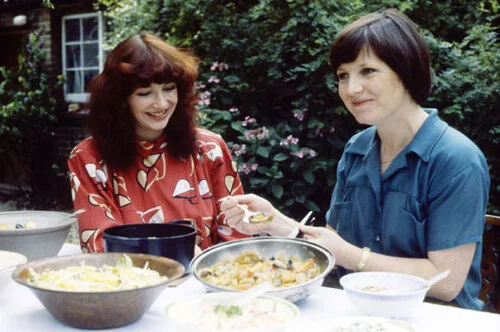
IN THIS PHOTO: Kate Bush met with Delia Smith in 1979/1980 (the episode aired on 29th February, 1980) for her T.V. show, Delia Smith’s Cookery Course (which, at that time, was something of a novelty) - “Our future will not contain as much meat”, Delia said in the introduction

Kate Bush and Vegetarianism

___________

ALTHOUGH the title (the first part) of this feature…

refers to a song Bush recorded for The Kick Inside concerning pregnancy and human life, I am applying this to animals and eating meat. I am going to include a little bit about Kate Bush’s vegetarianism, as it is a side to her that I really like. I will bring in an article from Far Out Magazine as they covered the subject back in July. I think that diet, actually, is quite important when it comes to artists. Through reading various interviews and testimonies, I know that Bush is a wonderful host. Musicians who have worked with her have said how she offers tea (and snacks) regularly - she wants to make sure everyone is well looked after. Maybe that stems from her mother, Hannah, who was a legendary host. At the childhood home, East Wickham Farm, guests would be excellently catered for and there was this warmth ands geniality that brimmed from the mother Bush. Taking from her mum and Kate Bush, whether she was busy recording or rehearsing, wanted to ensure that people around her were happy. I have discussed before how Bush’s diet took a turn towards the unhealthy when she was making The Dreaming. She recorded that album between 1980 and 1982 (and I will talk about her meeting Delia Smith in 1979/1980 very soon). I think the reason why Bush indulged in takeaways, chocolate and less healthy food when making that album was the stress and fact she was keeping so busy.

Barely emerging from the studio and spending much time cooking healthy meals, she was more reliant on quick fixes and handy snacks. This did change when she set up to make Hounds of Love; Bush overhauled her diet and, as such, I think that improved her psychological state and inspired her to take up dance again. I am just trying to think of any famous music vegetarians in 1979/1980 – Paul McCartney is the only one who leaps to mind! Whilst one cannot directly link vegetarianism to better music and fitness, when Bush was immersed preparing The Tour of Life, she was subsiding on this lighter and healthier diet. I will bring in a video below where one can see (from 15:42) how important food was to ensuring Bush was fuelled but not weighed down. There, her sister-in-law was making the meals, and I think that, if Bush was a meat-eater, then that might have impacted her physical regime and energy levels. The Nationwide documentary of 1979 gave us a look at the interesting dishes that Bush and her team were eating whilst putting together this immense tour. I think a balanced and nutritious diet can influence mental-health and creativity in addition to physical well-being. I am going to end with a bit of a cheeky/strange video of Kate Bush preparing cups of tea – that got some reaction when someone shared it on social media earlier this year -, but I think of her recording and immersing herself in work and being kept energised by these vegetarian meals and a good old cup of tea!

I want to bring in an interesting article before I get to Far Out Magazine - where we hear Bush discuss her vegetarianism and approach to animals being killed:

“If vegetarians are against the killing of animals for food, why don't they object to them being killed for leather?

I think there are a lot of vegetarians who are against animals being killed to make leather, and they do go out of their way to wear rubber and plastic shoes and belts, but I think that there is a practical side to it, as well. Leather is very warm, and it's nice to look at, but it does require a lot of effort for most of us to make a different choice from the normal, and I find myself that I do wear quite a few leather shoes. Not that I consciously buy them because they're made of leather, but I do have a few, and I think it's something to do with the tradition of leather being used in clothing. But there's no excuse for the mass production of leather, and I think it comes down to effort and how far you really want to go. It's up to you in the long run.

You are a vegetarian and yet you wear fur coats. Why?

I don't wear fur coats. I haven't got one. I don't own one and I don't believe in wearing them - I may have occasionally been in photos with one, but it wouldn't have been mine. It would have been one that I'd borrowed because it was very cold; for instance in Switzerland, when I did the Abba special. [In fact, as far as I know, that was the only time Kate has ever been seen in a fur. - IED] But I don't believe in people wearing fur coats, I think it's very extravagant and again, I think people don't tend to associate the clothes with the animals they come from, especially the rare animals that some of the coats are made of. You can get incredibly good imitation ones now - I've seen ones that I thought were real fur and they weren't. They're really fantastic, and they cost less, too.

Do you follow vegetarian recipes from books, or do you make up your own?

I do follow recipes from books, but I find that normally I don't stick to them, especially if I haven't got all the ingredients, and I tend to substitute different vegetables. If I'm feeling really brave, occasionally I base a meal on a recipe and make the rest up. Cooking is quite a logical thing, really, and you soon learn the things that go together - what works and what doesn't.

You say in interviews that you don't eat meat because you don't believe in eating life. But you eat plants, and they are living things. Why?

I do eat plants, and I know they're living, and I'm fond of them, but I think you have to find your own level. I could live on pills, but I don't think it's very human to do that - that is something we dream of in the space age: food without texture or mass. I don't think plants mind being eaten, actually. I think they'd be really sad if no-one paid that much attention to them. I appreciate them very much for the things they give me. I'd be very sad if there weren't any vegetables, and normally it isn't the actual plant that's killed - it's the fruit or vegetable that's taken off. I think this is the purpose of plants, that they grow to be eaten. The only problem is that it has become a very mass-produced market, again, and that the really natural, unchemicalised environment doesn't really exist. Too many chemicals are used on plants, but while there is a demand for brightly coloured food in pretty packets, that's how it will carry on. But you can get fresh, organically grown vegetables. You can grow them yourselves, and if you look around and ask, you'll find that there are a few shops and some local farms that sell vegetables that have not been grown in chemically fertilised ground. (1980, KBC 5)”.

This takes me to a wonderful video where Kate Bush met with Delia Smith to discuss her vegetarianism - where she also talked about some of the dishes that she particularly likes. Far Out Magazine provide us with some background:

“It would follow a run of genius moves for Bush who, in 1980, was one of the world’s most creative and captivating artists. In 1978, her debut single ‘Wuthering Heights’ had become the first self-written number one by a female artist.

In support of that traction, Bush went out on tour. Her 1979, ‘Tour of Life’ had been met with a fever pitch of exclamations on her talent. In 1980, she was crowned as the first British female solo artist to top the UK album charts, and the first female solo artist ever to enter the UK album chart straight in at No.1 for her album Never For Ever. Kate Bush was a bonafide pop star.

That fact makes it all the more surreal to see Kate Bush talking Delia Smith through her favourite salad recipes. But then again, should we be surprised, this is British television, after all, an institution built on the most awkward of foundations.

Clearly, though, Bush was a rather welcomed guest, despite Delia’s consternation, as she offers some vital tips for any Waldorf Salad-lovers out there. “I notice you’ve left the skins on the apples and I like that,” says Delia. “Yes, there’s so much natural goodness in the skins,” the wise Bush responds, offering up her cooking knowledge.

The cooking tips don’t end there either as Bush also offers up some top tips for vegetarians looking for some extra protein: “There are things that I think people miss out on because they think there’s a very select area where you use nuts but I think you can use them in anything.” She continues: “You can just sprinkle them over salads, which is fantastic,” Delia still a little bemused adds.

Bush offers another idea too “in fact it’s quite nice by itself. It makes you feel a bit like a parrot.”

The tips come after Kate starts the section with a view on her new-found vegetarianism confessing that “I didn’t have a clue you know, I had no idea what I could eat”. While this sentiment may feel quite alien to us now 40 years on, in 1980, vegetarianism was still an unusual concept and Bush’s knowledge and education was probably largely the first time much of the public had been introduced to the concept outside of the McCartneys”.

I opened by saying that, in addition to her vegetarian diet, Kate Bush also is a big tea fan. In any case, she always offers people a cup and, as a terrific host, people who work with and visit her are provided with this warmth. I have not heard of anyone complaining of her tea-making abilities but, earlier in the year, I saw a video shared online of an old interview/documentary where Bush was being followed…and we sort of got a glimpse into her daily life. The video below, perhaps, shows how not to make tea – but, her being her, she does it in this sort of magic and wonderful way! Really, I wanted to talk about Bush’s vegetarianism and how it not only changed her energy levels and health…but it showcases her wider humanity and ethical stance. I think Bush might have turned other people onto the benefits of a vegetarian diet and revealed something interesting about herself. It is just one more reason to love…

THE incredible Kate Bush.

FEATURE: The Lockdown Playlist: Spies and Espionage

FEATURE:


The Lockdown Playlist

IN THIS PHOTO: John le Carré 

Spies and Espionage

___________

THIS Lockdown Playlist reflects the sad news…

 PHOTO CREDIT: Jude Edginton for The Wall Street Journal

that legendary British author, John le Carré, died last weekend from pneumonia. Among other classics, he penned The Spy Who Came in From the Cold, and Tinker, Tailor, Soldier, Spy. Because of his great spy novels, this Lockdown Playlist is about spying, espionage, secret agents and deceit. I know it is a bit of a tenuous link to the great author, but I wanted to put something out that honours him and is related to his work. If you require some addition energy and motivation this weekend then I hope that this Lockdown Playlist can help out. It is a difficult time right now and, with only a few days before Christmas, there is a lot of unhappiness and tension around. Let’s hope that 2021 provides more in the way of…

 PHOTO CREDIT: @sergiunista/Unsplash

POSITIVITY and promise.

FEATURE: In Memory of... Artists We Have Lost in 2020

FEATURE:


In Memory of…

IN THIS PHOTO: Bill Wither in 1976 (he died on 30th March aged eighty-one) 

Artists We Have Lost in 2020

___________

I am going to put a playlist out…

dddd.jpg

 IN THIS PHOTO: Country legend Charley Pride

at the end of this feature of the artists we have lost in 2020. With COVID-19, we have seen more needless deaths of beloved musicians than normal - it has been a very tough year regarding losses. Charley Pride, the Country legend, is the most recent loss we suffered (on 12th December). He is a legend who The Guardian paid tribute to:

“Pride was a gifted athlete who tried to escape poverty with baseball, but it was his voice that catapulted him to fame and the top of the charts with hits including Kiss an Angel Good Mornin’, Is Anybody Goin’ to San Antone and Mountain of Love.

He won the Country Music Association’s entertainer of the year award in 1971, its top male vocalist prize in 1971 and 1972, and was awarded the lifetime achievement prize in 2020.

His final performance came weeks before his death, when he sang Kiss an Angel Good Mornin’ during the CMA awards show at Nashville’s Music City Center on 11 November. It was a duet with Jimmie Allen, a rising black star in country music, and was watched by a TV audience of millions.

Pride made 52 Top 10 country hits, including 29 No 1s, and was the first African American performer to appear on the Grand Ole Opry stage since DeFord Bailey made his debut in the 1920s. Pride became an Opry member in 1993”.

IN THIS PHOTO: Eddie Van Halen/PHOTO CREDIT: Daniel Knighton 

Very young artists like King Von (who died on 6th November) and Nikki McKibbin (who died on 31st October) caused a lot of shock with their premature deaths and, on 19th October, we said goodbye to the iconic Spencer Davis. The death of Eddie Van Halen on 6th October was a huge blow for the music industry. As a member of Val Halen, he was a hugely inspiring musician whose incredible gifts were taken to heart by so many musicians. I am a big fan of his music and I have always been blown away by his insanely wonderful guitar chops! Legacy provided a few words about the sadly-departed guitar god:

“Eddie Van Halen was one of the greatest rock guitarists in history and a major influence on up-and-coming guitarists. Many decided to take up learning guitar because of him. Eddie and his drummer brother Alex formed a band in the early 1970s that would become Van Halen in 1974. The original classic line-up included David Lee Roth on vocals and Michael Anthony on bass. Van Halen would become hard rock superstars with hit songs including “Jump” and “Hot for Teacher.” The band continued to record hits when Sammy Hagar took over for Roth in 1985. Van Halen was known for his tapping technique where he played with both hands on the neck of the guitar. Outside of Van Halen, he performed the iconic guitar solo on Michael Jackson’s “Beat It.” Van Halen was married previously to actor Valerie Bertinelli, and they have one son, Wolfgang. He is survived by his current wife Janie and Wolf”.

 IN THIS PHOTO: Helen Reddy

American-Australian singer Helen Reddy left us on 29th September. Her death was a big shock too. Reddy's song, I Am Woman, played a significant role in popular culture, becoming an anthem for second-wave feminism. She came to be known as a ‘feminist poster girl’ and a feminist icon. We also lost Pamela Hutchinson of The Emotions on 18th September, and another huge loss occurred when Frederick 'Toots' Hibbert died on 11th September. The Guardian published an obituary to reflect on Hibbert’s life and incredible music:

“In the years before Bob Marley shot to worldwide fame, Toots Hibbert, who has died aged 77, was one of the main global faces of reggae music – or at least of its predecessors, ska and rock steady.

As singer and songwriter with the Maytals, later to become Toots and the Maytals, Hibbert was responsible for a number of Jamaican classics that were not only hits in their own right but were given vibrant second lives by admiring artists in Britain and elsewhere.

Among those songs was Pressure Drop, a 1969 composition about the daily strains of ghetto life in Jamaica that came to worldwide attention when it appeared in the 1972 film The Harder They Come and was also given a popular run-through by the Clash. Hibbert’s other big tune of that year, Monkey Man, in which he expressed the jealous thoughts of a spurned lover, became a UK hit and was later covered by the Specials and Amy Winehouse, while 54-46 Was My Number – written after Hibbert had experienced a spell in jail during the mid 1960s – became a defining rock steady/reggae tune when it appeared in 1968. It was also later revived – by Aswad in 1984.

IN THIS PHOTO: Toots Hibbert/PHOTO CREDIT: Hugh Wright

Other Hibbert songs such as Never You Change, Bam Bam, Fever, Sweet and Dandy and Funky Kingston also stand high in the Jamaican canon, and he had the further distinction of having been the first artist to have used the word reggae in a song title, albeit spelt in now-unfamiliar fashion, with his 1968 composition Do the Reggay.

Hibbert was born into a large household in the town of May Pen in Jamaica and was given the nickname Little Toots by an older brother. Both of his parents had died by the time he was 16 and after he had married his childhood sweetheart, Doreen, at the age of 18, he moved in the early 1960s to the Trenchtown area of Kingston, landing a job in a barber shop and, in 1962, putting together a vocal harmony trio with two new Kingston friends, Jerry Matthias and Raleigh Gordon”.

Another giant lost was Ronald ‘Khalis’ Bell of Kool & The Gang. He passed on 9th September; he was part of a legendary band who recorded nine number-one R&B singles in the 1970s and 1980s. It was such a shame learning of his sudden death. The wonderful Betty Wright died on 10th May, and another two big names who we lost in 2020 were Peter Green and Little Richard. As a massive fan of Fleetwood Mac, I was moved and upset when he died on 29th October. As the founder of Fleetwood Mac, he was inducted into the Rock and Roll Hall of Fame in 1998.

 IN THIS PHOTO: Peter Green/PHOTO CREDIT: George Wilkes Archive/Getty Images

Green's songs, such as Albatross, Black Magic Woman, Oh Well, The Green Manalishi (With the Two Prong Crown), and Man of the World were signature tunes. He really was one of the greatest musicians ever, and his loss will be felt for years to come. Little Richard died on 9th May. This was another huge shock. Rolling Stone wrote a touching obituary to a musical pioneer. I have selected a few sections:

“Little Richard’s stage persona – his pompadours, androgynous makeup, and glass-bead shirts — also set the standard for rock & roll showmanship; Prince, to cite one obvious example, owed a sizable debt to the musician. “Prince is the Little Richard of his generation,” Richard told Joan Rivers in 1989, before looking at the camera and addressing Prince. “I was wearing purple before you was wearing it!”

“If you love anything about the flamboyance of rock & roll, you have Little Richard to thank,” says the Black Keys’ Dan Auerbach, a longtime fan. “And where would rock & roll be without flamboyance? He was the first. To be able to be that uninhibited back then, you had to have a lot of not-give-a-fuck.”

Born Richard Wayne Penniman on December 5th, 1932, in Macon, Georgia, he was one of 12 children and grew up around uncles who were preachers. “I was born in the slums. My daddy sold whiskey, bootleg whiskey,” he told Rolling Stone in 1970. Although he sang in a nearby church, his father Bud wasn’t supportive of his son’s music and accused him of being gay, resulting in Penniman leaving home at 13 and moving in with a white family in Macon. But music stayed with him: One of his boyhood friends was Otis Redding, and Penniman heard R&B, blues, and country while working at a concession stand at the Macon City Auditorium”.

 IN THIS PHOTO: Florian Schneider

On 6th May, we said goodbye to Kraftwerk’s Florian Schneider. So many artists have been inspired by Schneider, so his death sent shockwaves right through the music industry. Again, I have selected a few words from The Guardian - who were keen to show their respects to a musical great:

“Schneider played the flute, violin and guitar, though often filtered through electronic processing. His interest in electronic music grew. “I found that the flute was too limiting,” he later said. “Soon I bought a microphone, then loudspeakers, then an echo, then a synthesiser. Much later I threw the flute away; it was a sort of process.”

Known for his enigmatic, somewhat faraway smile, Schneider worked on all of the group’s studio albums, including The Man-Machine, which yielded their biggest hit: The Model, a melancholy synthpop song which topped the UK charts in 1982.

Following their final studio album to date, Tour De France Soundtracks in 2003, and a return to touring, Schneider left the group in 2008.

No reason was given for his departure, and he has maintained a mostly low profile since. Hütter told the Guardian in 2009 that Schneider “worked for many, many years on other projects: speech synthesis, and things like that. He was not really involved in Kraftwerk for many, many years,” and in 2017 said that the pair had “not really” spoken since Schneider left”.

 IN THIS PHOTO: John Prine/PHOTO CREDIT: Charlie Gillett Collection/Getty Images

Other artists lost in 2020 include Cady Groves, Chynna Rogers, Adam Schlesinger of Fountains of Wayne, and the remarkable John Prine. Prine died on 7th April due to complications from COVID-19, and that was another massive sadness. Rolling Stone said the following when they paid tribute:

“As a songwriter, Prine was admired by Bob Dylan, Kris Kristofferson, and others, known for his ability to mine seemingly ordinary experiences  — he wrote many of his classics as a mailman in Maywood, Illinois — for revelatory songs that covered the full spectrum of the human experience. There’s “Hello in There,” about the devastating loneliness of an elderly couple; “Sam Stone,” a portrait of a drug-addicted Vietnam soldier suffering from PTSD; and “Paradise,” an ode to his parents’ strip-mined hometown of Paradise, Kentucky, which became an environmental anthem. Prine tackled these subjects with empathy and humor, with an eye for “the in-between spaces,” the moments people don’t talk about, he told Rolling Stone in 2017.  “Prine’s stuff is pure Proustian existentialism,” Dylan said in 2009. “Midwestern mind-trips to the nth degree”.

The astonishing Kenny Rogers died on 20th March, as did Genesis P-Orridge on 14th March. We tragically lost Barbara Martin of The Supremes on 4th March, and we also had to process the death of Andy Gill on 1st February – he was the lead guitarist for the British Rock band, Gang of Four, which he co-founded in 1976.

 IN THIS PHOTO: Dave Greenfield

The Stranglers’ Dave Greenfield left us on 3rd May at the age of seventy-one. He was an artist who had a big impact on many other musicians. There are three more artists I want to mention before ending this. Bill Withers died on 30th March…that was another one of those deaths that nobody saw coming that really rocked us. The BBC wrote the following in their feature:

“Bill Withers, the acclaimed 1970s soul singer behind hits Ain't No Sunshine and Lean On Me has died from heart complications aged 81, his family said.

The singer died on Monday in Los Angeles, the family told the Associated Press.

They described him in a statement as a "solitary man with a heart driven to connect to the world".

"He spoke honestly to people and connected them to each other," the statement said.

Known for his smooth baritone vocals and sumptuous soul arrangements, he wrote some of the 70s best-remembered songs, including Just The Two Of Us, Lovely Day and Use Me.

On Lovely Day, he set the record for the longest sustained note on a US chart hit, holding a high E for 18 seconds.

Although he stopped recording in 1985, his songs remained a major influence on R&B and hip-hop.

His track Grandma's Hands was sampled on Blackstreet's No Diggity, and Eminem reinterpreted Just The Two Of Us on his hit 1997 Bonnie And Clyde”.

 IN THIS PHOTO: Neil Peart/PHOTO CREDIT: Igor Vidyashev/Rex/Shutterstock

Rush’s titanic drummer, Neil Peart, passed away on 7th January. NME wrote a wonderful obituary of one of the greatest musicians ever. I have taken a bit from it:

“I’m not physically or musically capable, but thanks for the offer,” said Dave Grohl when it was suggested he replace Neil Peart in Rush after the legendary drummer – who died after a three-year battle with brain cancer on January 7 – retired from the group in 2015. “That’s a whole other animal,” Grohl continued, “another species of drummer.”

There can be no greater testament and tribute to Peart’s mastery of his art than one of the best drummers in the world considering himself so far his inferior. Peart was nick-named The Professor thanks to his meticulous, intricate, firebrand drum work in all manner of exotic time signatures, which was key in making Rush one of the most renowned bands of classic rock and inspired countless drummers to take to the sticks in awe of his skills. That he was also the band’s primary lyricist, developing his themes of fantasy, science fiction and mythology to take in philosophy and humanitarian issues over the decades, added to his standing as one of the most talented backbones in rock”.

I always associate the biggest deaths with those that have occurred during the pandemic, but Peart died beforehand – before lockdown -, as did Andrew Weatherall. He died on 17th February…and I want to end with him. Aged only fifty-six when he died due to a pulmonary embolism, so many people were stunned and numb hearing the news.

 IN THIS PHOTO: Andrew Weatherall/PHOTO CREDIT: John Barrett

Weatherall remixer of tracks by the likes of Happy Mondays, New Order, Björk, The Orb, The Future Sound of London, and My Bloody Valentine. His epic production work on Primal Scream's album, Screamadelica, helped the record win the first-ever Mercury Music Prize in 1992. In a feature from The Guardian, David Holmes shared memories of his friend:

“Andrew was one of the most intelligent people I’ve ever known: naturally very bright but also very curious. He was always reading because he spent so much time on planes. He would devour information so quickly and remember it all. He was also a great wordsmith. I tried to encourage him to write a novel. The last book he turned me on to was Kevin Barry’s Night Boat to Tangier. Three days later, a friend of mine, a film producer, said: “We just bought the rights.” I said: “Look, it would be a dream if the two of us worked on the music together.” I’m still going to try and compile the soundtrack from his record collection. Even though Andrew’s not with us, I really want to capture his spirit in this film.

This sums up his friendship: I sent him a text last New Year’s Eve and he got back to me with two quotes. One from Anthony Wilson: “Rarely there when you want me, always there when you need me.” And one from Jim Dickinson: “Take reassurance in the glory of the moment and the forever promise of tomorrow.” Then he said: “Proud to count you as a friend. Happy new year to you and yours”.

It has been a tragic year in terms of losses, where so many hugely respected and important artists have left us. I am writing this on 14th December, so I hope that 2020 is not preparing to take any other musicians! I will end by combining songs from many of the artists I have mentioned, but I wanted to write and reflect on a year that has not only been tough on individuals, but the music industry has had to say goodbye to so many great people. It has been so sad losing them but, for all they have given to the world of music, we thank them…

 IN THIS PHOTO: Betty Wright

WITH passion and love.

FEATURE: I'm Still Waiting: Kate Bush and America

FEATURE:


I'm Still Waiting

Kate Bush and America

___________

IN other Kate Bush features…

aaaa.jpg

I have discussed her experience with Japan during 1978. She did a promotional jaunt there and performed live in front of thousands of people; she did interviews, in addition to filming a watch advert for Seiko! Various singles have been released especially for particular countries, including Ireland, Japan and Brazil. I have sort of talked about Bush and the reception she got in America. I am going to bring in (a somewhat mean) article as to why America has not fully embraced Bush - but I think this was especially true in the earliest years. I think that, now, there is love for her in America - but there might be some who are new to her music or are not aware of her first couple of albums. By the time The Dreaming arrived in 1982, there was more love and awareness arriving from America. Although that album was not a chart success, many critics noted its incredible variety and originality. American critic Robert Christgau commented how The Dreaming was dense and demanding – so very different to what others were producing in 1982, perhaps. Hounds of Love did much better in America. Perhaps it is the accessibility of that album that meant it was more acclaimed (it reached number-thirty on the U.S. Billboard chart). Subsequent albums have done well in the U.S.; 2011’s 50 Words for Snow reached number-seven on the US Independent Albums chart.

I think a new wave of artists has helped bring Bush’s work to others because they are inspired by her. I am not sure what U.S. radio is like compared to the U.K. when it comes to playing Bush’s songs and which ones are selected, but I assume that some of her better-known singles are favoured to the deep cuts. I guess the fact she does fewer promotional interviews for U.S. media signals she is less popular there, but I think it is just the case she does not fly there and, when she does speak to American press, it is via phone or the Internet. I would be interested to hear from American folk how Bush is perceived in the country and whether she has a huge fanbase there. There is a definite awareness of her music, and I know that many people who saw her perform during her Before the Dawn residency in 2014 hailed from America. If things are better now regarding Bush and her music being taken to heart there then it was slow to begin with. The Kick Inside didn’t get a whole lot of popularity in America. Wuthering Heights, her debut single, did nothing in the U.S., whereas The Man with the Child in His Eyes got to number-eighty-five on the Billboard chart. I can only imagine what the Americans must have thought of Bush when her music reached ears there! A different video of Wuthering Heights was released for American audiences – where she wore a red dress – as the original (her in a white dress) was considered too out-there and intense!

American critics and listeners have become more daring, open-minded and diverse with their listening since 1978 - I am surprised they did not take to Kate Bush right away. Bush did promote Hounds of Love in the U.S. in 1985 and she conducted a signing at Tower Records in Los Angeles. She has done promotion there through the years but, as she developed a dislike of flying and travel early on, cracking America was not on her radar. That is another to consider. For most artists, breaking America is their goal and ultimate dream. This is because there is a massive market and a lot of money there. Commerciality and mainstream success was not a big draw for Bush. She did develop a big fanbase in other parts of the world early on – including Australia -, but America took a while to catch up. It is clear that Bush has a lot of love for her American fans and wants her music to be played there. The relatively lack of promotional junkets and no big live gigs there has not helped, but I feel there has been some snobbishness and dismissal from some U.S. sources. This NPR article from 2011 (just before Bush released Fifty Words for Snow) outlined some reasons why Americans ‘don’t care’ for Bush:

“Kate Bush turned 53 recently. If you're like most Americans, that means nothing to you.

At least, that's the claim set forth by Lee Zimmerman of the Broward/Palm Beach New Times. In a blog post published on Bush's birthday, he laments the lack of traction that the British singer/songwriter has experienced in the United States.

She's too British. It's true that Bush, whose hometown has the veddy English name of Bexleyheath, never toned down her Britishness to universalize her appeal. Her music was cognizant (in ways obvious and not so much) of English music hall, sharp Romantic and Victorian streaks ran through her lyrics and she occasionally delivered her songs in a panoply of accents and vernacular. (See, for instance, the Cockney gangster narrating "There Goes A Tenner.") But if explicit Britishness alone were enough to sink a musical career in the United States, the following list would be nothing but gibberish to all but the most concerted Anglophile music fans: the Smiths, the Cure, Blur, Oasis, Pulp, the Clash, the Sex Pistols, the Kinks. Some carved out successful, sustained American careers. Some just had a hit or two. But all of them were super-British in one way or another, and all of them achieved a level of cultural visibility greater than Kate Bush.

The clear and powerful impact Bush has had on musicians, actors, artists and so many people across America has done a lot to redress some imbalance and ensure that her music is being preserved - but it is a huge market that she never really jumped into and considered to be vital. Maybe her music is a little esoteric, but I feel that is an American perception rather than universal truth. We in the U.K. have always ‘got’ her, so maybe it is a case of the American music market being very different to ours and other nations (from 1978 until fairly recently). It would be interesting to hear if anyone else has any perceptions and truth regarding Kate Bush and the U.S. but, to this date, she is still much more popular in the U.K. – even if her fanbase in America has risen in the last few years/decades. It is clear Bush will never promote her music physically in the U.S. or do any dates there, but she will still do telephone interviews. I think radio stations and word-of-mouth is the way her music will reach new generations and spread wider. I think it is a case of America’s loss if some have not been able to get behind her; perhaps the absence of touring there has been a factor. I, like her, don’t’ think American domination has been the be-all-and-end-all, as it is evident that Kate Bush has…

 IN THIS PHOTO: Kate Bush in 1978/PHOTO CREDIT: Jill Furmanovsky

CONQUERED most of the rest of the world!

FEATURE: The December Playlist: Vol. 3: Help Me Find My Way

FEATURE:


The December Playlist

IN THIS PHOTO: Paul McCartney/PHOTO CREDIT: Mary McCartney 

Vol. 3: Help Me Find My Way

__________

ALTHOUGH there are fewer new standout tracks…

 IN THIS PHOTO: Pale Waves

out in the world, Paul McCartney released McCartney III yesterday – so I have taken a track from that. I am also including new music from Maggie Rogers, slowthai, Ghetts, Eminem, Pale Waves, Clap Your Hands Say Yeah, Caroline Polachek, Hayley Williams, Lady Leshurr, Foo Fighters, Lauran Hibberd, Courtney Marie Andrews, Molly Sarlé, Liz Cooper & the Stampede, LeAnn Rimes, Charly Bliss (ft. PUP), and Good Charlotte (among others). It is a great (if quieter) week with plenty to keep us entertained. I am not sure whether there will be many new songs coming out before the start of next year, so this might be the last week of the year when we get a fair few new songs. I hope that the selections below help give you some energy as we head…

 IN THIS PHOTO: Lauran Hibberd

THROUGH the weekend.

ALL PHOTOS/IMAGES (unless credited otherwise): Artists

__________

 PHOTO CREDIT: Sonny McCartney

Paul McCartney – Find My Way

PHOTO CREDIT: Jeremy Deputat

Eminem – Gnat

Ghetts – Proud Family

Clap Your Hands Say Yeah – Where They Perform Miracles

Pale Waves – She’s My Religion

Caroline Polachek  - Breathless

eeed.jpg

PHOTO CREDIT: Tara Thomas Photography

Denise Chaila, Jafaris - Anseo (Single Mix)

Little Dragon & Moses Sumney - The Other Lover

Michael Kiwanuka - Interlude (Loving the People)

PHOTO CREDIT: Tim Barber for The New York Times

Hayley Williams – Find Me Here

Foo Fighters – Run Run Rudolph (Amazon Music)

cccc.jpg

PHOTO CREDIT: @officialroyce

Samantha Mumba – Process

Good Charlotte – Last December

Olivia Holt – talk me out of it

PINS - Merry Christmas (I Don’t Want To Fight Tonight)

slowthai - Thoughts

Maggie Rogers – Celadon & Gold

Lauran Hibberd - Rockin’ Around The Christmas Tree

cupcakKe - Gum

PHOTO CREDIT: Norman Seeff

LeAnn Rimes - Throw My Arms Around the World

The Coronas – Half Awake

PHOTO CREDIT: Lauren Joy Kennett

Holly Macve – Wonder

Another Sky – Sun Seeker

PHOTO CREDIT: Fredrik Bengtsson

Viagra Boys (with Amy Taylor) - In Spite Of Ourselves

Lady Leshurr - D.I.V

PHOTO CREDIT: Alexa Viscius

Courtney Marie Andrews, Molly Sarlé, Liz Cooper & the Stampede - America

Charly Bliss (ft. PUP) - It's Christmas and I Fucking Miss You

FEATURE: Music Technology Breakthroughs: Part Two: The Roland TR-808 Drum Machine

FEATURE:


Music Technology Breakthroughs

ccc.jpg

Part Two: The Roland TR-808 Drum Machine

___________

THIS is a bit of a cheat…

 IN THIS PHOTO: The chief engineer of the Roland TR-808 drum machine, Tadao Kikumoto

this week, as I have taken the lead from BBC Radio 6 Music. Mary Anne Hobbs recently presented 808 at 40 – The Drum Machine That Changed Music Forever, as an iconic piece of kit celebrated a big anniversary! It was fascinating to see how influential and used the Roland TR-808 is in music! It is amazing it took until 1980 for someone to harness technology that could produce a realistic-sounding drum sound…so the Roland TR-808 was a revolution! I want to bring in an article that discusses the legacy of the technological innovation but, first, this article gives us some background:

“In the late 1970s, no one knew how to get realistic-sounding drums out of a machine, so a team of engineers at the Japanese company Roland, led by Tadao Kikumoto, began using analog synthesis—a process that manipulates electrical currents to generate sounds—to create and store sounds that mimicked hand-claps and bass notes and in-studio drums, creating catchy percussion patterns. Unlike most drum machines at the time, the 808 gave musicians remarkable freedom: You weren’t limited to pre-programmed rhythms or orchestrations, which meant you could fashion sounds and stack them on top of one another until you’d created something that had never been heard before. The TR-808 was in many ways a living and breathing studio unto itself.

Ironically, it was the commercial failure of the 808 that would fuel its popularity: As established musicians began to unload their 808s at secondhand stores, the machine dipped below its initial $1,200 sticker price; by the mid-1980s, used 808s were selling for $100 or less, and the 808 became more accessible to young musicians, just as hip-hop and electronic dance music were preparing to make important leaps in their respective evolutions. Today, the 808’s legacy is most entrenched in Southern rap, where it is now nearly ubiquitous, thanks to the machine’s thundering bass, which comes alive in songs such as OutKast’s 2003 “The Way You Move.”

 The 808 briefly sounded like the future, then briefly seemed to have no future. But it has provided beats for hundreds of hits, from Whitney Houston’s 1987 “I Wanna Dance With Somebody” to Drake’s 2018 “God’s Plan,” winning the affections of beatmakers across genres and generations, many of whom build their beats with 808s, or by remixing older 808-driven songs. If you want to get that classic 808 feel without buying the machine, just use the web-based software iO-808, released in 2016. With a few keystrokes, you can summon those analog 808 sounds that changed the world”.

Even if the Roland TR-808 did not burn bright commercially for long, it was transformative for many artists and songs. Like all great technology introductions the price was too steep, which meant that the Roland TR-808 did not sell in massive quantities. Some complained that the machine did not sound like real drums, but it was clear that the sound was authentic enough for many artists. It meant they could get a good beat without hiring a session musician and, if you look through the songs that has used the Roland TR-808, then you can see how diverse and malleable it is! I am going to drop in a playlist that Roland constructed that includes songs where the Roland TR-808 is in the mix – it is quite interesting listening! The Roland TR-808 spawned a load of copycat machines and programmes, as people love that original sound and wanted to make their own version.  

Whilst one does not hear the Roland TR-808 so much these days - as software has evolved and there are more choices for electronic percussion -, many Hip-Hop artists still use it for their music. It is amazing that something so simple (although it was quite a breakthrough in 1980) has transformed music to such a degree! The Verge talked about the legacy of the Roland TR-808 shortly after its chief engineer, Ikutaro Kakehashi, died:

“The emergence of the drum machine was crucial to the formation of entire areas of music — especially hip-hop, but also subgenres like Miami bass, acid house, and Detroit techno. Before the 808, producers would dig for drum samples and meticulously loop them to create original drum patterns. With the arrival of drum machines, samples and live drummers became unnecessary. Producers were able to tweak their own patterns out of the 808’s “robotic” and “toy-like” sounds, which made it possible for nearly anyone to produce music. Drum machines like the 808 spawned the era of “bedroom producers” such as Rick Rubin (who used an 808 in his NYU dorm) and Pete Rock. Afrika Bambaataa was the first hip-hop act to put the machine on the map with his seminal 1982 record “Planet Rock.” It also hit mainstream success with Marvin Gaye’s 1982 hit “Sexual Healing.”

The 808 became a fixture in hip-hop culture, not only as a tool for producers but as a defining sound of the genre. When the New York epicenter of hip-hop started to move toward other machines in the 1990s, the 808 held its roots in Southern hip-hop with artists like Lil Jon (who has even been accused of overusing the handclap sound). It’s still as crucial as ever, and has spawned the creation of production groups such as 808 Mafia (Southside & Lex Luger), who are often credited with creating Atlanta’s “trap” sound, with one of the signature elements being the 808 bass drum. Trap producers Metro Boomin and Sonny Digital also rely heavily on the 808 sound, and they’re responsible for 90 percent of today’s most popular Migos and Future records — “Mask Off” being the most recent. Most, if not all, chart-topping hip-hop records today and in the past 30 years have probably used some element of an 808.

Step outside of hip-hop, and the 808 legacy can be found elsewhere, particularly in pop music. Starting as early as Cybotron’s “Clear,” and heard as recently as Jamie XX’s “Gosh,” the 808 brought a new level of power into pop’s sound. It also became heavily used in present-day EDM, with artists such as Diplo and David Guetta championing its elements in singles and collaborations.

The 808 broke down the walls between genres, and spawned collaborations between some of the biggest acts from different spaces. Because the 808 was so adaptable, it was like the first open-sourced sound, with artists building on each other’s interpretations and making it their own. Lil Jon and Usher’s “Yeah” was an unlikely collaboration that showcased an R&B singer on an 808 and made Usher instantly relevant again. Marvin Gaye’s “Sexual Healing” is nowhere near a hip-hop or techno record, yet it relied entirely on the 808. The 808 is like the not-so-secret sauce of hit records — sprinkle in an 808 drum, and your song instantly sounds better”.

Every music fan has to salute the Roland TR-808, as it offered new possibilities to artists across so many different genres. From Hip-Hop innovators to Soul legends; to Electronic pioneers, that distinct sound has made its way all across the music map! Forty years after it came onto the market, I wanted to add my nod and give thanks to an extraordinary and hugely influential technology. Those in 1980 who felt the Roland TR-808 offered novelty and little realism could not have envisaged how it would take off and be taken to heart. As you can hear from the playlist below, the Roland TR-808 creates…

SUCH a wonderful sound.

FEATURE: The Lockdown Playlist: Christina Aguilera’s Best Cuts

FEATURE:


The Lockdown Playlist

lll.jpg

 PHOTO CREDIT: Dennis Leupold for L’Officiel Italia

Christina Aguilera’s Best Cuts

___________

AS today (18th December) is the fortieth birthday…

ttt.jpg

 PHOTO CREDIT: Charles Sykes/Invasion/AP

of Christina Aguilera, I wanted to put out a Lockdown Playlist of some of her best songs. As of 2018, Aguilera had sold over seventy-five-million albums and singles worldwide. She has won multiple awards (including five Grammy Awards). Not only that, but several high-profile artists cite Aguilera as an influence; among them are Ariana Grande, Tinashe, Lady Gaga, and Sam Smith. To mark a very successful career and tip a cap to an artist whose videos have helped empower women and other artists; whose music has moved so many people and, on her fortieth birthday, will be getting so much love from fans around the world, I am pleased to put out a Lockdown Playlist that collects some of the best cuts from…

 PHOTO CREDIT: Zoey Grossman/Paper Magazine

A hugely admired and talented artist.

FEATURE: High in the Mix: Jesy Nelson and the Artists Putting Their Mental-Health First

FEATURE:


High in the Mix

IN THIS PHOTO: Jesy Nelson (who announced her departure from Little Mix after nine years)/PHOTO CREDIT: Karwai Tang 

Jesy Nelson and the Artists Putting Their Mental-Health First

___________

I am a little late to a story….

that broke on Monday. Rather than give my reaction to the fact Jesy Nelson left Little Mix, I wanted to use her as an example of something we may see more of in years to come. Before I get to that, the BBC reported the news of Nelson leaving Little Mix:

“Jesy Nelson has left Little Mix, saying being part of the pop group had "taken a toll on my mental health".

She explained: "I find the constant pressure of being in a girl group and living up to expectations very hard."

Writing on Instagram, the 29-year-old said being in the band had been "the most incredible time" but it was now time to "embark on a new chapter".

Her former bandmates said it was "an incredibly sad time for all of us but we are fully supportive of Jesy".

The news comes a month after Nelson said she was taking an "extended" break from the pop group for "private medical reasons".

Leigh-Anne Pinnock, Perrie Edwards and Jade Thirlwall performed as a trio on Strictly Come Dancing at the weekend.

In her statement, Nelson said she had made her decision "after much consideration and with a heavy heart".

"I need to spend some time with the people I love, doing things that make me happy," the singer continued.

The remaining members added: "We know that Jesy leaving the group is going to be really upsetting news for our fans.

"We love her very much and agree that it is so important that she does what is right for her mental health and well-being".

The group will continue without her, but I can only imagine how tough it has been for her for a while now. I think there is so much pressure on artists to keep producing and promoting and, when trying to balance that with normal life, the impact on mental-health can be devastating. Little Mix are one of the most successful groups in the world, and they have legions of fans. It couldn’t have been easy for Nelson to announce her departure, as she will be aware of how many fans idolise her. Nelson put out a documentary where she discussed how she has labelled and insulted when in Little Mix – being judged on her weight and the way she looked. I can only imagine how stressful and harrowing it must have been at times (as she revealed in an interview with The Guardian in 2019), so she will have time to put her emotional health first and see where she goes from here. It is clear she can have a successful solo career, but I would not be surprised if she took a long time to come back into music and have a think about her career plans. There was a lot of sadness when Nelson said she was leaving Little Mix, but many noted how brave it was and the impact it will have on others. There are artists around the world who must be going through a lot of what Jesy Nelson has experienced in terms of bullying, stress levels and the general toxicity of social media - even though there is a lot of love out there for her. The Guardian published a feature on Tuesday that called Nelson one of Pop’s unfiltered voices who was very real and relatable. It is sad, therefore, that the abuse she received was so relentless and unjustified (she has come out and thanked fans for their well wishes and support).

It is clear that music (for now) has lost a genuine article and someone who was a role model to many women. I just want to source from The Guardian’s article, as the final passages really stood out:

“And yet there’s a sad inevitability about Monday’s announcement that Nelson is leaving. In a pop culture where misogyny is still rife, with a woman’s very silhouette given such narrow parameters for acceptance, if you stand out a target is placed over you. During her time on the X Factor live shows, when she wasn’t fine-tuning her trademark husky vocal on stage, she was often shown in tears, the face of bullying at the hands of online trolls who marked her out as different, ie not pop-star thin. In last year’s Bafta-winning documentary, Jesy Nelson: Odd One Out, she was disarmingly honest about her resulting mental health issues, recalling how on the day the band won the show she was in tears, having read a Facebook message referring to her as ugly and suggesting she deserved to die. In 2013, she attempted to kill herself shortly after returning to the X Factor stage, her new slimmed-down appearance causing another wave of online abuse. In 2018, having tried to own and celebrate her body via the band’s Strip single and its accompanying video showing the band naked, daubed in the insults they’d endured, Piers Morgan used his national TV show to dismiss the move as a publicity stunt.

Nelson would refer to him as a “twat” live on BBC Radio 1 days later, but you can only puff out your chest and pretend it doesn’t hurt for so long. The abuse came in waves from all directions, and was often repeated back at Nelson for a quote, because fighting against poisonous trolls had become her default stance since she became famous. Nelson helped make the dialogue around mental health much clearer, much more honest, but when you become a symbol the person underneath can sometimes get lost. “I find the constant pressure of being in a girl group and living up to expectations very hard,” read Nelson’s typically honest departure statement. “There comes a time in life when we need to invest in taking care of ourselves rather than focusing on making other people happy.”

• In the UK and Ireland, Samaritans can be contacted on 116 123 or email jo@samaritans.org or jo@samaritans.ie. In the US, the National Suicide Prevention Lifeline is 1-800-273-8255. In Australia, the crisis support service Lifeline is 13 11 14. Other international helplines can be found at www.befrienders.org.”.

 PHOTO CREDIT: @benwhitephotography/Unsplash

I wonder how much support there is from big labels regarding their artists’ wellbeing and whether that is ever factored in to any plans. This is not something that only applies to groups, but it can be hard for members of a group to have their voice heard as they (a group) are often seen as an entity. Such is the commercial expectation and slog of touring and recording that it can have this immense toll that many do not realise. This year has been especially tough for all artists, and I do think that many out there have been battling with mental-health issues and they have found things a bit heavy. Maybe there was a bit of trepidation from Jesy Nelson to leave Little Mix before, as she may have been worried about backlash or judgement. Perhaps there are fellow artists in the same position, but I do think that we will see others make the same sort of hard decision and put their mental-health and happiness first. I have talked about mental-health and the sort of abuse artists have to face online. Even if you are not the recipient of pressure and negativity, I don’t think the stability and welfare of artists is considered that much by labels and management. That may sound all-sweeping, but there are countless artists who have to keep going and push their music out when they are struggling.

 PHOTO CREDIT: @ionass86/Unsplash

I think 2021 should be a year where the health and happiness of artists is placed first, rather than the sales and streaming figures. Venues will reopen next year, and many artists will be thrust out there to sort of make up for some lost time. I do worry that there is going to be even more pressure imposed on some musicians and, from rising acts to global megastars, changes need to be made. Maybe other artists will not quit music or depart from a band, but I do feel that there needs to be more awareness and care; not just how we treat artists and interact but the sort of workrate that is on their shoulders. Everyone wishes Jesy Nelson well - and we know that she had to face a lot of crap. That situation is neither unique to her or the norm, so I do hope that artists who are going through some tough times or feel the strain take some time out. That can be hard when all artists rely on the income they make and keeping busy, but the damage of keeping going and absorbing all the strain around can lead to some big problems. Whilst there will not be a massive wave of artists taking time away or going on a hiatus, there are going to be more discussions around artists (especially women) and some of the awful treatment they receive. It is pleasing to see that there are organisations and support channels opening up to help artists and those struggling. Steps are being made and there are improvements, but I worry about artists who might be keeping their heads down or feel like they cannot get this support as it may compromise their career. It can be very hard speaking out, but more and more artists are talking about their mental-health. It must have been tough for Jesy Nelson to leave such a high-profile group and make such a big decision, but I know her brave step will…

STRIKE a chord with many other artists.

FEATURE: Second Spin: Billie Marten – Writing of Blues and Yellows

 FEATURE:


Second Spin

Billie Marten – Writing of Blues and Yellows

___________

A year ago today…

I named Billie Marten’s debut album, Writing of Blues and Yellows, as my album of the decade. Released on 23rd September, 2016, this is an album (as I have said before) that hit me when I first heard it. In terms of voices, I don’t think there is anyone who quite has the same contours and blend of sweetness and huskiness that Billie Marten does! That album was released when she was seventeen. I could feel aspects of her home and daily life, but there was so much bravery and honesty from someone who was writing these beautiful Folk/Acoustic numbers. Many artists like her obfuscate and create these gorgeous tapestries without getting to who they really are and subjects that might create some tension. I will not go through the entire album like I have done before, but I think Writing of Blues and Yellows is one which got some love when it was released but I don’t hear many of the songs on the radio. The original release of the album contains thirteen tracks, and they range in length from 2:14 (It’s a Fine Day) to 6:11 (Untitled). I like how the longest track is the penultimate number, and we get the shortest track at the end. Writing of Blues and Yellows has so many fascinating stories and vocal performances by Marten. I am not sure whether the majority of the album was recorded at home or in a professional studio, as we get this warm and very intimate sound like the teenage Marten is in her bedroom and delivering these songs with the Yorkshire countryside out of her window – Marten lived in Ripon at the time but has since moved to London.

La Lune, and Bird are exquisite openers where we are treated to the real beauty and breadth of Marten’s voice. The guitar work is delicate-yet-powerful; Marten manages to infuse something sensuous, vulnerable and wary together in these songs…and one falls helplessly for them. Emily is my favourite track, as there is a darkness in the vocals and some ominous electric guitar that is met with some ghostly backing vocals by Marten. I sort of think of Marten as a cross between Joni Mitchell and Kate Bush, in that she can write wonderful character songs that are ethereal and unusual; she also pens these heartfelt and raw songs about herself that reminds me of Blue-era Mitchell. Green has some lovely percussion and a nice moment where Marten sort of tees the song up and there is wonderful flow and energy rush. Live is a sense of a teenage Marten wanting to explore and see more of the world whereas, conversely, Teeth, is her hiding depression and anxiety and saying in the song, how she tells people she is fine and is lying through her teeth. I like the fact we end with a cover song: Marten took on Opus III’s 1992 hit, It’s a Fine Day (providing it a more wistful and homemade sound; I think we can hear Marten’s dad mowing the lawn in the background!). There is a simplicity in the songwriting. Most of the song titles are either one or two-worded; the compositions are never too layered, but we get so much nuance from Marten’s storytelling and incredible voice.

Marten’s second album, Feeding Seahorses by Hand, was released last year. There is a bit of a shift where we get more of a political angle in some songs. Marten had moved to London by this time, and one can feel the weight and ups and downs of the city reflected in some of the songs. I go back to Writing of Blues and Yellows as there seems to be this innocence and sense of warmth, but Marten is also very frank in terms of her lyrics and never shies away from tougher topics and deeper conversation. Heavy Weather is one of those songs that sort of catches the breath and gets to the heart! Alongside Emily, Heavy Weather is among my favourite tracks – placed near the centre of the album, it provides a nice pivot and is beautifully sequenced between Green, and Unaware. There is not a weak moment on Writing of Blues and Yellows- none of the tracks that are only for a certain mood and place. Every track wins you over for a different reason, which makes me wonder why there were not more reviews for it - and, at the end of 2016, why no music sites and polls placed Writing of Blues and Yellows in the best of the year! I was not overly-aware of Billie Marten’s music before her debut album arrived. She had already put out two E.P.s – Ribbon in 2014; As Long As in 2015 -, but it is amazing to hear what talent and ability she had at such a tender age!

Despite the fact that one does not hear too many Writing of Blues and Yellows songs on the radio now, there were some great reviews for the album; it is pleasing to hear that Marten is working on new material and she is creating the foundations of a third album. This is what CLASH wrote when they reviewed her debut:

“If there is any requirement we must advise before playing ‘Writing Of Blues And Yellows’, it is that you shut yourself away in a room and just listen. And hope for no background noise.

Billie Marten’s thoughtfully crafted debut is a collection of tales, retrospect and self-examination. Candidly honest about her periods of mental health, ‘Teeth’ places you in the centre of her overwrought mind: “I’m writing this in a bad way, no one can hear what my head says.” Her vocals are infused with a fragility that drills down into your consciousness, whether you want it to or not. Full of contradictions, ‘Lionhearted’ highlights the songwriter’s desire to be braver, yet she fails to acknowledge that she has achieved exactly this through her overt lyrical sincerity, which is intrinsic to the success of this record.

‘Writing Of Blues And Yellows’ manages to be flawlessly delicate in terms of instrumentals and tone, drawing on inspirations from her quaint upbringing in her home-town of Ripon just near the Yorkshire Dales. Fixating upon the wilderness and nature, this is a theme that is inter-weaved throughout songs ‘La Lune’, ‘Heavy Weather’ and ‘Hello Sunshine’; later on ‘Live’, she explores her close relationship with her family, versus her yearning to explore and find some adventure.

Billie Marten delivers a pragmatic album that explores the equilibrium between her positive and negative outlooks on life, whilst confirming that being preoccupied with our own contemplation is and will forever be an ongoing process of the human condition”.

If you have not heard Writing of Blues and Yellows then do so, as it is a majestic and wonderfully enriching album that signalled a confident debut from an exceptional young songwriter. I wonder whether a third album will find Marten sticking with a more acoustic-driven sound, or whether she will go more electric. Will the themes shift from the personal to the political more? Not to compare Marten to other people, but Laura Marling released Song for Our Daughter – my album of the year – earlier this year near the start of the pandemic. So many people were made to feel safe and strong listening to the album at a very difficult time. This is what Billie Marten can do with her songs. I will leave things there, but I think many more people should be aware of the beauty of Writing of Blues and Yellows. So many of the songs deserve airtime, and one should not assume that a lack of urgency and volume denotes songs that are light and pass you by. The music on Writing of Blues and Yellows carries a lot of weight and strain at some moments, whereas one is in an open field looking down at a river in the sunshine the next It is a hugely impressive work from one of the U.K.’s most-underrated songwriters. Some prefer Marten’s second album to her debut – I have a very soft spot for Writing of Blues and Yellows (as much as I admire Feeding Seahorses by Hand). Back in 2016, Writing of Blues and Yellows provided me with direction and comfort when I needed it a lot. I am always thankful to the album for helping me during…

A pretty tough time.

FEATURE: Kate Bush In the Dunce’s Cap: Sat in Your Lap from The Dreaming

FEATURE:


Kate Bush In the Dunce’s Cap

Sat in Your Lap from The Dreaming

___________

I wanted to highlight one of Kate Bush’s…

r.jpg

 IN THIS PHOTO: Kate Bush in 1981/PHOTO CREDIT: Janette Beckman

best singles - that was released a year before her album, The Dreaming, arrived. The Dreaming was released on 13th September, 1982 whereas the first single, Sat in Your Lap, came out way before on 21st June, 1981. I am not sure why there was this gap between Never for Ever being released in 1980, to the first single from The Dreaming coming out, to the album itself appearing. I guess Bush and EMI needed a single out as there was a two-year gap between records and, as Sat in Your Lap was a song she wrote after seeing Stevie Wonder perform (and she had this rush of inspiration), perhaps she was keen for people to hear it first. I suppose the recording of The Dreaming was quite tense and it took a while to complete, so many might have wondered what happened to Bush if she had left it until 1982 to release a new single. Before moving on, this article from the Kate Bush Encyclopaedia sources interviews where Bush discussed Sat in Your Lap:

“I already had the piano patterns, but they didn't turn into a song until the night after I'd been to see a Stevie Wonder gig. Inspired by the feeling of his music, I set a rhythm on the Roland and worked in the piano riff to the high-hat and snare. I now had a verse and a tune to go over it but only a few lyrics like "I see the people working", "I want to be a lawyer,'' and "I want to be a scholar,'' so the rest of the lyrics became "na-na-na"' or words that happened to come into my head. I had some chords for the chorus with the idea of a vocal being ad-libbed later. The rhythm box and piano were put down, and then we recorded the backing vocals. "Some say that knowledge is...'' Next we put down the lead vocal in the verses and spent a few minutes getting some lines worked out before recording the chorus voice. I saw this vocal being sung from high on a hill on a windy day. The fool on the hill, the king of the castle... "I must admit, just when I think I'm king."

The idea of the demos was to try and put everything down as quickly as possible. Next came the brass. The CS80 is still my favourite synthesizer next to the Fairlight, and as it was all that was available at the time, I started to find a brass sound. In minutes I found a brass section starting to happen, and I worked out an arrangement. We put the brass down and we were ready to mix the demo.

I was never to get that CS80 brass to sound the same again - it's always the way. At The Townhouse the same approach was taken to record the master of the track. We put down a track of the rhythm box to be replaced by drums, recording the piano at the same time. As I was producing, I would ask the engineer to put the piano sound on tape so I could refer to that for required changes. This was the quickest of all the tracks to be completed, and was also one of the few songs to remain contained on one twenty-four track tape instead of two! (Kate Bush Club newsletter, October 1982)

'Sat In Your Lap' is very much a search for knowledge. And about the kind of people who really want to have knowledge but can't be bothered to do the things that they should in order to get it. So they're sitting there saying how nice it would be to have this or to do that without really desiring to do the things it takes you to get it. And also the more you learn the more ignorant you realize you are and that you get over one wall to find an even bigger one. [Laughs] (Interview by J.J. Jackson for MTV, 1985)”.

There are a couple of reasons why I really like Sat in Your Lap. It is one of her most urgent and propulsive singles to that date and, although Breathing from Never for Ever is quite heavy, Sat in Your Lap incorporates some of the darkness and weirdness of Breathing…but the song is faster and has this whole different sound. It sort of nodded to the more experimental and confident writer/producer Bush had become by that point. The song contains one of my favourite verses from her – “In my dome of ivory/A home of activity/I want the answers quickly/But I don't have no energy/I hold a cup of wisdom/But there is nothing within/My cup, she never overfloweth/And 'tis I that moan- and groaneth” – and Bush’s vocal performance is incredible! The Dreaming found her putting in more characters and accents into the music and, on Sat in Your Lap, there are these layers and shifts that takes your breath. It is a bit of a pity that was such a long gap between the release of Sat in Your Lap and The Dreaming, as people had to wait a long time until they got another taste from such an intriguing and unusual album. Another wonderful thing about Sat in Your Lap is its video. By 1981, Bush’s videos were becoming more inventive and fuller. I love the earlier videos where there is emphasis on dance and choreography but, from Never for Ever onwards, Bush was thinking more about casting herself more as an actor than a dancer, I think. She was inhabiting these roles and adopting new guises for each video. Sat in Your Lap is one of her very finest videos.

Returning to the Kate Bush Encyclopaedia, and we get some great information regarding the composition and realisation of the video:

“According to Kate, "The video was filmed over two days, one part at a video studio, the other at the audio studios. The former provided the quick, easy technical sides to be performed, the latter provided the space and presence. The large parquet floor was to be a feature, and Abbey Road's past, full of dancing and singing spirits, was to be conjured up in the present day by tapping feet to the sound of jungle drums - only to be turned into past again through the wonder of video-tape. The shots were sorted into a logical order: all long shots were audio studio, all others were video studio. A storyboard was drawn up and was very closely worked to, being hung on the wall on days of shootings. The editing was a long, difficult job, as it was comprised of many sections which had to be edited together (just like the big musical one). The editor worked all day and into the next morning with great skill and patience, and only when someone told us did we find out it had been his birthday and he'd worked it all away. One of the exciting things about making the video was the "accessories" we used, such as the lovely costumes and props. The jerk-jacket which we used in 'Army Dreamers' was used again for a short sequence, and although there's a silver wire, it feels like flying. Out of the harness and into the light of a timeless tunnel, as a little magician's box springs to life and the room is filled with laser and skaters"


With some great support from her musicians - drums: Preston Heyman, bass: Jimmy Bain, piano and Fairlight: Kate Bush, sticks: Paddy Bush and Preston Heyman, backing vocals: Ian Bairnson, Gary Hurst, Stewart Arnold, Paddy Bush, and CMI trumpet section: Geoff Downes –, Sat in Your Lap is a very bold and wonderful lead single from The Dreaming. Also, as it is the first track on the album, Bush wasted no time in letting people know that she had ascended to a whole new creative plain! The song reached number-eleven in the singles chart; it was her most successful single from The Dreaming – by choosing songs that were less accessible and less instantaneous than Sat in Your Lap resulted in some extremely low chart positions for other singles from the album. It is amazing to think that Bush demoed Sat in Your Lap in September 1980 (the month Never for Ever was released) and she hade so many different tones and ideas running around her head so soon after her debut album (The Kick Inside, 1978). Bush battled writer’s block whilst creating The Dreaming, so I can sort of understand why there was a big gap between single release and the album arriving. The single version is different to the one she demoed - the vocals were raised higher and the backing track altered significantly - ; what she put out in 1981 was amazing! It is one of my favourite Kate Bush tracks, as it is so different to anything she had released before. I also have a lot of affection for the remarkable video. I wonder how many people, experiencing Sat in Your Lap in 1981, could predict The Dreaming and had any notion or realisation of just…

PHOTO CREDIT: Anton Corbijn

WHAT was to come.

FEATURE: An Endless Sky of Honey: What Is Left in the Kate Bush Archives?

FEATURE:


An Endless Sky of Honey

eeee.jpg

IN THIS PHOTO: Kate Bush in 1978 

What Is Left in the Kate Bush Archives?

___________

THIS is another feature that is inspired….

by a recent Record Collector edition focusing on Kate Bush. I was interested in the section, The Unreleased Kate, which is about music that has not been released yet. I have discussed this subject before; asked whether we may see some demos come out or anniversary editions of her albums. Maybe that is unlikely but, as I read the pages of this feature, it would be tantalising to have some of these unheard recordings out in the world! It seems that there were plans to have expanded editions of her albums come out prior to Aerial being released in 2005. That idea was laid out in 2000 and, with these new editions out, many might have guessed that a new album was on its way. I would have loved to have seen that and, as there is such a swell of love for her music in 2020, many people would love to see expanded releases of her albums – perhaps with demos, outtakes or conversations from the studio included to give weight and wider story to these incredible works. There has been some greatest hits packages such as The Whole Story in 1986 and This Woman’s Work of 1990. The 2018 Remastered series brought in some B-sides and covers but, with Humming being the only rarity that people might not have heard, it does seem that there are a lot of gold left in the vaults! It is appropriate that Record Collector covered the subject of unreleased Kate Bush music, as there is something inherently collectable and desirable about her work.

 IN THIS PHOTO: A young Kate Bush/PHOTO CREDIT: John Carder Bush

If there was to be plans for expanded albums, then they would not necessarily need to be tied to anniversaries. The Kick Inside, her debut, is forty-five in 2023, so it is still a long way until that release could come out. That said, 50 Words for Snow is ten next November, whilst The Dreaming is forty in 2022. It would be a bit of a headache releasing albums on anniversaries, as they would be out of sequence and there would be notable gaps between them. I think a campaign in 2021 to get expanded editions would be a treat for fans and it would introduce Bush’s work to new people. James R Blandford was writing in Record Collector and he took us back to 1972-1973 for some of the earliest unreleased pearls. I have heard The Cathy Demos and some stuff that was recorded around then and, whilst many of the songs are great, the sound quality is not at its best. It is not surprising that there are these recordings when Bush was in her early-teens. She was raised in a very musical household where conventional and untraditional music was shared. She listened to T. Rex, Roxy Music, Elton John, Captain Beefheart, The Beatles and others, whilst her brother Paddy - who played violin and carried a love of folklore - had an influence. By 1972, Bush had written sixty songs, so it was clear that she had this incredible talent and impressive work rate! There was an L.P. that was pressed by a German label in 1986.

Tapes were sent to distributors back in 1982, and this mini-album of piano recordings was eventually released as Kate Bush – The Early Years. White labels were prepared for distribution but, when Bush’s family got wind, legal action was threatened and a warehouse full of these albums was destroyed. Two of the songs that would have appeared on that album, Something Like a Song, and The Gay Farewell, were found on The Cathy Demos. New to this collection were songs such as You Were the Star, and Atlantis. A pressing of The Cathy Demos did appear on eBay in 2004, but there has not been a wide release. I think it would make a fascinating addition to The Kick Inside - hearing these earlier recordings would allow one to see how Bush progressed by the time of her debut; we could hear some of the songs that could have made it onto her debut album. In 1973 – around the time of The Cathy Demos -, David Gilmour visited Bush at her home and he was there to hear her play and sing. Of course, he put up the money so that she could record professionally and, spotting her unique talent, he was instrumental when it came to bringing her to a record company. It is possible that there are some recordings from those visits, though it is unlikely the quality would be good - would anyone in Bush’s circle want the recordings out into the world? Bush did record in August 1973 at Gilmour’s sixteen-track home studio in Essex.

Between ten-twenty songs were recorded during that visit, and Passing Through Air was one of the songs recorded then (it would appear as a B-side to Army Dreamers in 1980). There was not a lot of activity between 1973 and 1975 but, in 1975, Bush did record three songs professionally for EMI producer Andrew Powell. The songs were The Saxophone Song (tiled Berlin at the time), The Man with the Child in His Eyes, and Maybe. Recorded at AIR Studios, all three tracks have made their way to the public. There are contentious claims from a former boyfriend of Bush’s, Steve Blacknell, that he inspired songs such as The Man with the Child in His Eyes, The Saxophone Song, and Frightened Eyes. A version of The Man with the Child in His Eyes exists from when Bush was fifteen, so there is doubt as to whether Blacknell was the real inspiration behind the song. Regardless, there was this period between 1973-1975 where some songs were recorded and released, and others which might not have been released in any form. In 1989, a batch of demos from 1976-1977, The Phoenix Recordings, were leaked. The recordings were played on Phoenix radio station, KSTM, by a former EMI employee, John Dixon. That broadcast was in 1982, so there is confusion as to why it took seven years to surface. Dixon helped plug The Kick Inside in the U.S. and, again, having those as an appendix to The Kick Inside would be something! On that collection were fourteen unique songs, in addition to others which was later heard on albums or appeared somewhere else.

The first set of songs appeared on cassettes but suffered from terrible sound quality. A series of bootleg E.P.s, The Cathy Demos, were issued as five 7”, where the sound quality was greatly improved. This is the best collection of recordings from that broadcast, but there are several C.D. bootleg compilations which vary in quality. Bush was asked in 1993 about the possibility of releasing these songs and, whilst she was against it then, I wonder whether her viewpoint has shifted in the intervening years? It would be wonderful to have an expanded release of The Kick Inside with these rarer songs included. Bush performed as part of The KT Bush Band in 1977, and there were recordings of some songs from the band on a tape called Fiddle. Recorded at London’s De Lane Lea Studios – as recalled by band member Brian Bath -, there are some interesting tracks on there. One, Scares Me Silly, is a gem that has never featured on an album or a B-side, but it would be eaten up by fans! There have been various sets of The Kick Inside demos, and it makes me wonder whether there are embryonic versions of songs that appeared on that album (and Lionheart). A 2009-released set of demos was put into the world with some studio banter included. It would be perfect to have the demos and studio chat included on an expanded release of The Kick Inside – as Blandford noted in his feature.

There was not a lot of opportunity for many new recordings after the release of The Kick Inside, as promotional engagements were heavy. Bush and The KT Bush Band did start work on Lionheart at Bush’s childhood home East Wickham Farm. Included in the songs performed were Hammer Horror, and Wow (at different tempos). It would be interested to see those recordings come out as part of an expanded Lionheart set. One song from the album, Don’t Push Your Foot on the Heartbrake, was played on a radio station in 1982, but Bush was not happy with the version – feeling that a lot of raw energy required for such a song was lacking. Ten tracks were included on Lionheart in 1978, but there were two other tracks recorded. One of these was Never for Ever. That would be the title of Bush’s follow-up album, and it is a mystery why a possible title track was not released. The song itself is very beautiful, so it would be awesome to hear it on a new release! 1979’s The Tour of Life was filmed (but a full-length version of the show was never released) and it would be good to hear recordings from that tour on a release – maybe as part of a Lionheart set or as part of a Never for Ever one. The On Stage E.P. turned up in 1979, and there were four songs from the tour that featured. 2014’s Before the Dawn is available on C.D. and vinyl, so I am curious whether The Tour of Life will ever get such treatment.

Various demos from Never for Ever are known – including two versions of Babooshka -, and there are many who would love for them to get a proper release. One song from summer 1979, Kidnapped on a Building Site, has never been included in any album or single. A particularly elusive song, The Magician, was recorded for the film, The Magician of Lublin, but, as no soundtrack has been released, we are not sure whether that song will ever come out. I think there must be some demos and various version of songs that appeared on 1982’s The Dreaming, but we know little of any. Bush’s productivity did dip a bit and, as she worked on the demos and album in a more private manner, perhaps there is less chance that sufficient extras can be exhumed and organised for an expanded release of The Dreaming. Although this album would have been quite challenging to record and there would be have been various takes recorded, it is hard to say how much Bush kept and whether she has archived them. The same can be said of Hounds of Love. Few outside of Bush’s circle knew about the album recording and what was happening. There doesn’t seem to be a lot of known demos and unreleased material from The Dreaming in 1982 through to Aerial in 2005. There are bits and pieces from that period but, compared to the output from 1978-1980/1981, it is quite scant. Bush set up her Fish People label and has put out the Remastered albums, so she is not averse to retrospection and looking back. I wonder whether her revisionism stance will change and she will yield to allow expanded albums to come out. James R Blandford also noted how there are videos and a whole archive there that needs to come out in a new form, which makes me wonder whether the next couple of years will see new sets arrive with these lesser-known songs. 2020 has been such a crappy year, so any glimmer of hope in that respect would be wonderful. It seems, when we look back on the material that Bush recorded but never released, it is…

 IN THIS PHOTO: Kate Bush performing Suspended in Gaffa in 1982

QUITE a treasure trove!

FEATURE: Spotlight: GRACEY

FEATURE:


Spotlight

GRACEY

___________

FOR this outing of Spotlight…

I am shining a light on Grace Baker, a.k.a. GRACEY. The Brighton-born artist is one of the most promising Pop acts around, and I think she will be very big in 2021. At this time of year, many people are listing their names to watch in 2021. I think GRACEY is going to among those you need to keep an eye out for. I think it is best to introduce some interview segments, just so we can get a better idea of who GRACEY is and why she is such a fantastic talent. Her fanbase is growing all of the time and, with music that is both personal but able to be absorbed and felt by everyone who listens, her work is getting a lot of love. I want to start by quoting from an interview GRACEY conducted with The Line of Best Fit last year. The interview was conducted just before her E.P., Imposter Syndrome, was about to come out – and she expressed her feelings regarding putting her introduction statement into the world:

 “I’m actually quite scared to release it because it's a part of me that I'm not really used to talking about with my closest friends, let alone random people that might actually hate it.” London-based artist GRACEY is airing her anxieties about releasing her debut EP Imposter Syndrome.

It’s a leap for the 21-year-old who until now has had a fruitful career writing songs for other artists (Jonas Blue, RAYE, Olly Murs). Discovered at the age of 16 by Xenomania—the UK-based pop factory whose writers have penned songs for Kylie, Pet Shop Boys, Cher, Sugababes and others—GRACEY became accustomed to “putting myself in someone else's shoes” instead of fronting her own creations. Now, she’s about to face the world solo.

Imposter Syndrome, however, is GRACEY’s proper introduction. The title, she explains, arose amid the transition from writing songs for other people to writing songs for herself. “It was way harder than I thought it was going to be,” she admits. “It's really hard when you’re writing songs for closure. Usually, my songs will be fronted by someone so I can be outside of them. But when you're singing about yourself and the video is essentially you crying and being rained on by a watering can,” she says in reference to the video for the EP’s heartbreak lead single “Different Things”, “it's pretty hard to then go, 'I'm not into you, literally I'm fine.' That’s what I always say.”

Her mother, she reveals, is one of the reasons she’s so driven. “I grew up in a household where my mum and my dad both earned the same—if not my mum was the breadwinner [her mother has worked in production at the BBC, her father in advertising]. I have two older brothers. My mum taught me that I should never be submissive to a guy because my ideas are equally as good.”

“Now, I'm way more like, 'Nope, this is how it is’ and I hope that with my artist career I can be like that too and stop having imposter syndrome. But I'm not quite there yet. I'm still a bit like, 'Eeeeeeee!' It's still early on”.

I would urge people to listen to Imposter Syndrome, as E.P.s don’t get as much acclaim and focus as albums. I feel there is a lot of great music on Imposter Syndrome. One of GRACEY’s key strengths is her voice. It carries so much experience and age, despite the fact she is still very young. As this interview from the BBC highlights, GRACEY’s voice was under threat just as her career was getting started:

“Pop singer Gracey had always had a rasp in her voice - a distinctive, leonine quality that brought her songs of heartache and unrequited love to vivid life.

But then something went wrong.

This time last year, she was in Los Angeles writing new music when her larynx locked up.

"I didn't speak the entire trip unless I was in a writing session and I still lost my voice," says the 22-year-old.

"I remember being with my manager at breakfast, and nothing she could say could make it better. And I just cried my eyes out because I was like, 'I'm gonna have to get surgery.'"

The Brighton-born singer, whose full name is Grace Barker, was quickly diagnosed with vocal nodules - small hard growths on the vocal cords - and went under the surgeon's knife.

For the next two months she was forbidden from speaking and singing. For a natural chatterbox, it was an intensely uncomfortable experience.

"I mean, I was such a mess," she says. "I'm someone that would just talk for days - but imagine if you're at the dinner table and everyone's cracking jokes and you can't join in because you're trying to write out a joke on your whiteboard - and then you're dyslexic, so no-one can read it”.

Empty Love is one of this year’s best Pop songs - and it features Australian singer, Ruel. I have been converted to a style of Pop that I am not an overly-big fan of by GRACEY’s skills and vocal prowess! I have been compelled to dig deeper into her catalogue and discover an artist that is very much on a route to stardom. I want to bring in an interview feature from MTV, who asked her about musical influences; the subject of Empty Love came up:

“3) who inspired you to start a career in music?

I always think I first fell in love with music in the backseat of the car on long journeys when I was a kid, and I’d say I was inspired a lot from those memories. It just fascinated me how quickly time would pass when listening to my favourite artists/albums and I think that made me realise how much I loved it. In terms of actually going for it myself, I really have to thank my family for not straight up laughing at all my horrendous first attempts of songwriting and for also never telling me to ‘get a real job’… well yet haha.

4) who are your biggest musical influences?

Any artist that makes me FEEL. Music is such a powerful tool - I think it’s so special that someone who might be on the other side of the world, who you may have never met before, can write a song and so perfectly articulate how you’re feeling. For me those artists are Joni Mitchell, Lorde, Sia, Robyn, The 1975 (to name a few)! I also absolutely adore how these artists create such worlds around them - when you’re listening to their music/going to their live shows, I feel like you’re really seeing the world through their lens. I’d love for my fans to feel that way about me!

5) tell us about the writing and recording process for your new single/album…

I actually just released my next single since being in isolation! It was a song I began writing back in October, after having to take a three months off due to a surgery on my vocal cords. It was a pretty rough time - I wasn’t allowed speak or sing, which felt so alien after four years of writing five/six days a week. However, it didn’t really give me time to look in the mirror and understand myself more. I realised how much I was letting other people’s opinions define me and how frivolous the online world is. I wasn’t okay, yet there I was posting selfies, smiling pretending that everything was dandy, something I think a lot of us do now a days. So the song surrounds that - it’s called ‘Empty Love’, and I’m really excited about it! And it’s also featuring the lovely Ruel, who is an amazing Australian artist I’ve written with before - I think he just elevated it to a new level!’

Last month, GRACEY released the new E.P., The Art of Closure (where Empty Love is taken from), and it is another terrific listen. This is what Music Talkers wrote about the E.P. and its strengths:

“Brighton-born Gracey is clearly enjoying her breakout year. After the runaway success of her collaboration with 220 Kid on the single Don’t Need Love, which reached a peak of number nine for two weeks in the UK singles chart, as well as songwriting credits for the likes of Sub Focus, Lorde, and Kylie Minogue and another smash collaboration with Alexander 23, the young singer-songwriter is back with her new seven-track EP The Art Of Closure.

It’s an incredibly confident and varied collection. 99% comes screaming out of the gates, a minimalist slice of industrial pop with the first chance here to savour Gracey’s stunning vocals, which she unleashes to maximum effect on the song’s verses, while Empty Love is a sweet and sparse affair that discusses social media and it’s addictive nature.

On Don’t, she showcases her lyrical skill further as she sings: “You’re just telling me lies and lies to try and get back in my sheets / Careful what you say cause babe I might believe / You come inside we don’t need the conversation or the coffee / Don’t say you miss me if you don’t / Don’t say you’ll love me when you won’t / I always know when you lie to me / So please, let me go”.

Like That raises the tempo, the smooth project she completed with fellow rising star Alexander 23 that has racked up the streams, before Care Less slows things down again, an almost acoustic little interlude in the middle of The Art Of Closure. Alone In My Room (Gone) is another great example of Gracey’s vocal prowess, while closing track Don’t Need Love is the blistering number that sparked so much of her success to date and has already racked up almost fifty million streams on Spotify”.

99%, and Care Less are among my favourite tracks of the year; I wonder whether there are any plans to put out a debut album next year. It is clear that, between E.P.s, GRACEY has grown and has incorporated more into her music. It has been a hard time for GRACEY regarding her voice and the fact she has not been able to perform and record as she might have liked this year. I am sure she will be keen to get back on the road and to the fans when things start to open up. I am glad things are better for her and she is still putting music out. I wonder whether a GRACEY album might come out in 2021 because, with some hotly-tipped artists planning their debut albums for next year, I am certain that she is concocting and plotting. Her sound is malleable enough to appeal to a wide demographic and, whilst some of her lyrical content is downbeat and lost, I don’t think the music makes you feel low or exhausted. There is plenty of physicality and energy in her music, and one can easily become engrossed in her words. Go and investigate GRACEY, as I think she will grow next year. She is one of the freshest and best voices in the modern Pop landscape. Although 2020 has provided some hurdles and bleak days, I do feel that 2021 will be a…

MUCH brighter one.

___________________

Follow GRACEY

FEATURE: Vinyl Corner: Otis Redding – Otis Blue/Otis Redding Sings Soul

FEATURE:


Vinyl Corner

Otis Redding – Otis Blue/Otis Redding Sings Soul

___________

FOR this Vinyl Corner…

I am investigating one of the best Soul albums ever released. Otis Blue/Otis Redding Sings Soul (often referred to simply as Otis Blue) is the third studio album by American Soul singer Otis Redding. It was first released on 15th September, 1965. Although the album largely comprises cover versions, there are some originals in the pack. It is amazing to think that, apart from one track, the album was recorded over twenty-four hours at Stax Recording Studios in Tennessee! The album became a huge hit, and it was his first to reach the top of the Billboard chart – it got to number-six in the U.K. Even though the majority of the album was other people’s work, some of the best songs were the ones Redding wrote himself – Ole Man Trouble, Respect, and I’ve Been Loving You Too Long are exceptional and delivered with incredible passion. Redding covered three Sam Cooke tracks, including A Change Is Gonna Come – Cooke sadly died a few months before Redding recorded his album. With superb backing by Booker T. & the M.G.'s, a horn section consisting members of The Mar-Keys and The Memphis Horns, and pianist Isaac Hayes, one feels a real richness and sense of physicality from the players. I think this is Otis Redding’s greatest work, and his voice is unbelievable throughout! My favourite cuts are My Girl, and Respect, but I also really love I’ve Been Loving You Too Long. Otis Blue/Otis Redding Sings Soul is a magnificent album, and one that people should get on vinyl.

I want to bring in a couple of reviews for Otis Blue/Otis Redding Sings Soul. It is an album that has gained so much respect from critics through this year. This is what AllMusic said when they tackled the album:

“Otis Redding's third album, and his first fully realized album, presents his talent unfettered, his direction clear, and his confidence emboldened, with fully half the songs representing a reach that extended his musical grasp. More than a quarter of this album is given over to Redding's versions of songs by Sam Cooke, his idol, who had died the previous December, and all three are worth owning and hearing. Two of them, "A Change Is Gonna Come" and "Shake," are every bit as essential as any soul recordings ever made, and while they (and much of this album) have reappeared on several anthologies, it's useful to hear the songs from those sessions juxtaposed with each other, and with "Wonderful World," which is seldom compiled elsewhere. Also featured are Redding's spellbinding renditions of "(I Can't Get No) Satisfaction" (a song epitomizing the fully formed Stax/Volt sound and which Mick Jagger and Keith Richards originally wrote in tribute to and imitation of Redding's style), "My Girl," and "You Don't Miss Your Water." "Respect" and "I've Been Loving You Too Long," two originals that were to loom large in his career, are here as well; the former became vastly popular in the hands of Aretha Franklin and the latter was an instant soul classic. Among the seldom-cited jewels here is a rendition of B.B. King's "Rock Me Baby" that has the singer sharing the spotlight with Steve Cropper, his playing alternately elegant and fiery, with Wayne Jackson and Gene "Bowlegs" Miller's trumpets and Andrew Love's and Floyd Newman's saxes providing the backing. Redding's powerful, remarkable singing throughout makes Otis Blue gritty, rich, and achingly alive, and an essential listening experience”.

I think there are a lot of people out there who have heard of Otis Redding but are not aware of Otis Blue/Otis Redding Sings Soul. It is an album that anyone can appreciate and feel moved by. When they reviewed the album, Rolling Stone said the following (they reviewed the Collector’s Edition):

“This two — cd set doubles the pleasure of Otis Redding’s third album with B sides, outtakes, period live tracks and the entire record in mono and stereo versions. But Otis Blue was already perfect in its original 11 — song edition when released in September 1965 — an achievement that is even more remarkable because all but one of the tracks were recorded inside 24 hours, in two lightning sessions at the Stax studio in Memphis, on July 9th and in the early morning of the 10th. The reason for the intermission: The house band — including Booker T. and the MG’s, and the Memphis Horns — had to cut out for local gigs. The haste is evident: In his Dixie — heat treatment of the Rolling Stones’ “Satisfaction,” Redding sings “satis — fashion.” But the urgency is all — natural. He barks and grunts in excited polyrhythm with Al Jackson’s off — the — beat drum breaks in Sam Cooke’s “Shake” and takes Southern — church liberties with the refined ecstasies of Cooke’s “A Change Is Gonna Come.” Redding had only two new originals ready for this record, the deep — wound blues “Ole Man Trouble” (with its great sobbing — brass lick) and the male — pride strut “Respect.”

A third included on the album, the majestic surrender of “I’ve Been Loving You Too Long” (written with Jerry Butler), was cut earlier and was already Redding’s biggest single to date. But amid R&B — gig standards like the Temptations’ “My Girl,” the melodic invention in Redding’s songs and the emotional investment in his performances mark the point at which he stopped merely singing soul music. He now created his own, at a high speed reflected in the stereo rerecording of “I’ve Been Loving You Too Long.” Done at the July sessions, it is slower in tempo, magnificent in its anguish and even closer to genius”.

There are some albums that are beyond fault and deserve nothing but love and appreciation - Otis Blue/Otis Redding Sings Soul is one such album! It would have been easy enough for Redding to splice together a selection of songs by others and make them his own. It is the way Redding selected the tracks and their importance that makes Otis Blue/Otis Redding Sings Soul so compelling. In an article from September, Albumism  discuss the importance of the cover versions and the legacy of the album:                                 

“The choice of songs and artists to cover is a very interesting point—he manages to tip his hat to both the architects of soul music but also to those other strands of Black music that contributed to its development. It is almost as if he is providing a summation of the ingredients of soul music. By taking these ingredients and adding his own unique voice to them he further melds them together and reinforces what constitutes soul music.

Solomon Burke’s “Down In The Valley” is a case in point. By choosing another of those rock & roll originators, Redding places himself firmly in the tradition of black music. But whereas it takes Burke a minute or two to showcase the more soulful, gritty edge to his voice, Redding lets it go from note one. His voice is already at the point of emotional breakdown and it doesn’t let up. It is, as Booker T Jones said, as if he wrings emotion from every single syllable. He treats each of them as precious and none are wasted on anything less than his best.

Of course, beyond the music, Redding is most associated with his tragic early death, but he also provides a great example of an artist who was equally adept at the business side of the game. He was able to secure his legacy and his family’s future through a series of shrewd deals—in a business filled with tales of woe and financial mismanagement (to put it extremely kindly), he was able to navigate a way to succeed despite being a Black man in a highly racist society.

The lasting legacy of Otis Blue is the way that Redding embraces the past while creating a future with his unique set of talents. His voice has become synonymous with the very word “soul” and that has happened to very few artists—it's a fitting honor for someone with a voice as raw and gritty as his.

Anyone who can take a B.B. King song and make it their own has to be special and nowhere is it truer than with Redding’s cover of “Rock Me Baby.” The combination of Cropper’s sharp yet restrained guitar and Redding’s scandalously indecent sexual roar is perfection—Redding is both the voice of dominant masculinity and a soulful plea to a partner. Once again, by choosing a blues man’s tune, he casts himself as the past, present and future all in one moment”.

If you have not got the album already then go and buy it, as Otis Blue/Otis Redding Sings Soul is one of the most important of the 1960s. So long after its release and it still sound amazing and untouched! It just goes to show that Otis Redding was a…

TRUE master of any song he took on.