FEATURE: Spotlight: Sarah Close

FEATURE:


Spotlight

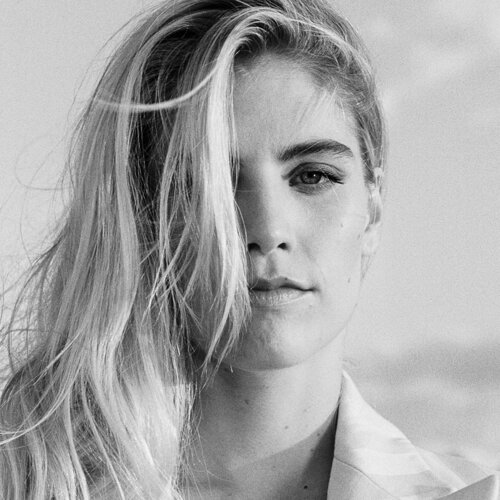
Sarah Close

___________

I am going pretty hard on the Spotlight features…

because there are a lot of great artists that warrant focus. I have been following Sarah Close for a while - and I will finish with a review of her exceptional album, And Now’ We’re Shining. There aren’t too many interviews with Close from the last year or two, so I have taken from interviews a bit further back. Go and follow Sarah Close and check out her music – I have put all the links at the very end -, as she is another artist that I feel is going to expand in 2021 and reach new people. It is a shame the London-based artist will not be able to tour more this year. Let’s hope summer looks better and we can see Close in action! I want to start by quoting from an interview from The National Student from 2018. We learn more about Close’s earlier life, taking inspiration from Taylor Swift, and frustrations she has with the industry:

Growing up on the small island of the Isle Of Wight, Sarah has admitted that the size of her hometown limited her options creatively; "I think feeling so isolated was one of the reasons I got into music, I didn't have other kids in my village to hang with so I had to find things to keep me busy! I don't think my home area has an obvious influence on my songs and writing, but I do have a couple songs that explore growing up and feeling like a bit of an outsider because of a different childhood to other people".

Fantasising about a what life could be past the small island, Sarah got light of the idea of putting herself out there through by pure coincidence from her covers rival Taylor Swift. "I was hugely inspired when I found out that Taylor Swift wrote and performed her own songs, that made me believe that I could do the same! That and 'Naive' by the Kooks is what made me pick up a guitar and start teaching myself."

Sarah was inspired to follow in Swift's tracks but found herself held back by a feeling we all know a little too well. "I'd known I wanted to do it for a while, I'd been watching other singers on YouTube and saw that they were doing what I wanted to do. What worried me most was people at school finding out and teasing me for it, I told a friend what I wanted to do and she encouraged me so much that I just did it. People at school found out about my channel earlier than I expected them to, but luckily everyone was super nice and supportive which only spurred me on more!"

As an individual that has explored the industry in all its glory, Sarah does not shy away from being vocal about her frustrations within the belly of the beast. "I think the industry is lacking in diversity, especially in the behind the scenes roles. I'd love to meet more women and POC working as A&R's and managers." However, that's not to discredit her experiences to date - having worked alongside Parlophone Records and now coming back to a point where she's in full control of her own music. Releasing independently through The Kodiak Club and self-directing her own music videos can be intimidating, but Sarah takes it all in her stride. "At the end of the day no one really knows what song is going to bang or not, so trust your gut and put out songs that feel right to you!”.

I love Sarah Close’s songs, as they are really accessible and instant. I can hear something like If It Was Me, or Cool, and they will burrow in my head. She has an exceptional voice and songwriting talent, and I feel she will be a huge name of the future! Her fanbase is already huge. One can expect it to grow and explode as she puts out more music. Apologies to go back in time, but I am fascinated by a deep interview from Golden Plec of 2019. We learn a lot about one of Britain’s finest young artists:

Sarah Close has built up a name for herself as a talented and versatile singer-songwriter. Having started her career by uploading covers to YouTube, the Isle of Wight native has also studied songwriting, signed to a label and become independent again, learning a lot about the music industry along the way. We sat down with her to talk about her career thus far, being able to make decisions for herself and the murky area between music and YouTube.

Recently, Close released 'London' a song that tells the tales of her love-hate relationship with the city, a feeling that has resonated with a lot of her fans, "'London' was a song that I wrote back in 2015. And it's always just been a song that I love. I was talking to some friends who have just moved to London we were saying about how tough it is to acclimatise, and to get used to people being like, "hey, let’s meet up" and never hearing from them again and just how lonely it is."

 Close studied songwriting for two years before dropping out, a move which she sticks by as she thinks it was the right decision at the time. "I came to London knowing I wanted to do music but I didn’t know anyone in the city. My parents really encouraged me to enrol in some kind of course so I could have a student loan and have a bit of the student lifestyle and go out and meet friends. So I went on a songwriting course."

Close had it in mind that she wouldn't make it the whole way through the course from the outset, "I kind of made it my goal that I wouldn’t have to make it the whole way through. That I would work hard enough that halfway through my career outside of uni would be so busy that I could have the opportunity to drop out. So I worked really hard, saved money so I could quit uni and be okay.

"by the end of second year it wasn’t really giving me anything any more. I don’t think you can teach music, I think you have to have passion and drive - you can be taught to write a song but unless you’re going to go out and practice, what’s the point? So I was just like, this course isn’t doing anything for me and left."

By this point her online presence had grown dramatically, and the music industry started taking notice, "I started getting interest from labels. So I decided I wanted to make an EP and get that out then I signed my record deal with Parlophone in  2017."

Adjusting to a label life was another learning curve for Close who was unsure of others taking over her previous responsibilities, "I had never had a team before - I had made everything myself. All of sudden there’s a group of people that are like “hey, you need tour posters? We’ll make them!” And it was amazing… but it was also hard for me to not have to do everything because I was so used to it."

She also notes how she found it to be another part of the industry that she could now understand a little bit more, "I feel like labels are still like a locked door that everyone kind of knows what’s going on but you don’t really know until you’re in it."

There is a side of her that is annoyed by those who jump on the music bandwagon simply because they have a big audience on social media, "100% yes. Because I sat there as a 5 year-old like "I want to be a singer, I want to write songs" and I’ve spent hours and hours working and trying to make it happen. But also, everyone is entitled to do whatever the hell they want so who am I to talk shit on them, like, you do your thing."

Part of what made her departure from the label easier to take was that she was now in control of what she could release, so what exactly does that entail? "What you see is what you get with me - I’m an idiot on Instagram stories and I post videos with no makeup on and in my pyjamas and I always want to keep things very intimate and not too polished, but I definitely want my music to go in a slightly more intimate manner. I think that my covers online were just my voice and my piano and I really enjoy the songs in my set where it’s just me and the piano, so I would love to strip things down a bit more. But then I really love the big pop songs so it’s kind of finding the space between”.

I know I took rather heavily from that interview but, as it is one of the more recent ones, it has given us insight into the brilliant Sarah Close. I will end with a review of her latest work, but there is another interview that I saw from 2018 that gives us a little more information about Close. She spoke with The Student Pocket Guide in 2018:

Q4. What are you biggest aspirations in life? (career and lifestyle wise)

I want to play shows around the world, there’s no better feeling than being on stage for me (apart from maybe fresh bed sheets…) and I’d love to be able to make music and keep writing my songs for years to come. I’m super interested in business too, I’d love to develop my record label The Kodiak Club and one day sign and help other artists out, especially any aspiring musicians from where I grew up- the Isle Of Wight. Whilst I love London and this city, I want to end up living back by the sea, and I also want a dog.

Q5. Have you always been passionate about music since a young age?

Yes. I recorded my first ‘album’ age 5/6  on a cassette tape of songs ‘I had written’ (I made them up on the spot), but no seriously, my parents always had music playing and are musical themselves and very early on I knew I wanted to pursue singing.

Q9. If there’s anyone you’d want to collaborate with who would it be, and why?

Shawn Mendes, because I love his voice and I think he’s so cute. Amine, I love everything about him and think he would be so fun to work with. Charli XCX, she’s a mega babe and I reckon we’d made something awesome and then finally SZA, who wouldn’t want to work with her?”.

Go and visit Sarah Close’s official website, where one can purchase the amazing And Now, We’re Shining. It was one of last year’s finest releases; it shows that Close is one of the most interesting and strongest artists we have in the country right now. I want to bring in a great review for And Now, We’re Shining:

UK artist Sara Close’s first album And Now We’re Shining perfectly showcases all of Close’s talents. The album features a bedroom pop genre with one song combining popular 80’s music trends with 2000’s trends. Sarah Close’s vocals are phenomenal. The entire album, she shows off her range, adding multiple harmonies into each of the songs. Her harmonies are so incredible and add so much depth to each song. Every single song on this album is so catchy. Her album is also versatile– you can listen to it while you lay in bed avoiding online work or while on a run.

One thing I loved about her album was how different each song sounded compared to one another. Each one had a different tone and vibe that made her album more relatable. Just like we go through different moves and feelings every day, this album mirrored that.

Some of my favorite songs were “If It Was Me” and “Almost”. Both of these songs, although sound different, focus around the same boyfriend who is always late and very conceited. It follows the idea of wanting to say something and cutting the relationship off but not saying anything.

I am obsessed with “Stay”. It is easily my favorite song on this album. Listening to the song the first time brought chills and tears to my eyes. The emotion is felt so clearly in her voice and it connects Close to the listener. The dynamics of the song adds so much depth to the meaning of the song. It starts off slow and picks up, but it does it so subtly that I didn’t even realize how much the dynamic changed until the last couple seconds of the songs.

Especially during the pandemic, And Now We’re Shining is the perfect album to listen to. The vocals encapture the listener and easily distract from the craziness that is going on. Whether it be for three minutes or thirty, this album is definitely a pick-me-up. I currently use the songs Almost, If It Was Me, Crazy Kind and You Say in my run playlist”.

I have a lot of love and respect for Sarah Close as an artist, but I also admire what she says in interviews and how inspiring she is. If you are thinking about which artists to follow this year, make sure Sarah Close is near the top of your list. She is an amazing talent and, as we look ahead to brighter times, I do feel like she will tour the world and play at some massive shows! I will leave it there but, in a sea of promising artists, Sarah Close is one of the very best. I have been aware of her music for a couple of years and she always produces simply amazing music! There is no denying that she is…

AN incredible talent.

_______________

Follow Sarah Close

FEATURE: The January Playlist: Vol. 2: Don’t Lose Your Head When The Bandit Is Near  

FEATURE:


The January Playlist

IN THIS PHOTO: Kings of Leon

Vol. 2: Don’t Lose Your Head When The Bandit Is Near  

__________

IT is good to see so many big…

 IN THIS PHOTO: Hannah Reid of London Grammar

songs released this week! I would have thought it would take a bit of time for 2021 to warm up but, in the second week of the year, there has been this explosion of great new tracks. Among this week’s new cuts is music from Kings of Leon, London Grammar, Nao (ft. Adekunle Gold), Slowthai (ft. A$AP Rocky), Vagabon (ft. Courtney Barnett), shame, Alice Glass, Jazmine Sullivan, David Bowie (two new songs were released on his birthday yesterday), Virginia Wing, Black Honey, and Nubiyan Twist (ft. K.O.G.). This is a big week for music so, if you need a kick to get the weekend off to a good start, then have a listen to the tracks below. I am excited to see what the rest of January holds and whether we will get the same sort of quality and quantity. Even though 2021 has started a bit poorly in some ways, when it comes to music, things have got off to…

IN THIS PHOTO: shame/PHOTO CREDIT: Sam Alexander-Gregg

A great start!

ALL PHOTOS/IMAGES (unless credited otherwise): Artists

__________

King of Leon The Bandit

London GrammarLose Your Head

Nao (ft. Adekunle Gold) - Antidote

David Bowie - Tryin’ to Get to Heaven

slowthai (ft. A$AP Rocky) - MAZZA

PHOTO CREDIT: Cameron McCool for Interview Magazine

Alice Glass SUFFER AND SWALLOW

PHOTO CREDIT: Ashley Verse

Tom Grennan Little Bit of Love

Jazmine Sullivan - Girl Like Me

Taylor Swift - it’s time to go

PHOTO CREDIT: Tonje Thilesen for Notion

Vagabon (ft. Courtney Barnett) - Reason to Believe

PHOTO CREDIT: Ingrid Renan

Tamar AphekRussian Winter

Saweetie (ft. Doja Cat)Best Friend

Virginia Wing St. Francis Fountain

PHOTO CREDIT: Holly Whitaker

shame - Nigel Hitter

Saint Agnes Repent

TV Priest - Press Gang

PHOTO CREDIT: Emma Swann

Black HoneyBeliever

Rhye Come in Closer

PHOTO CREDIT: Carla Mundy

Lonely the Brave Keeper

Nubiyan Twist (ft. K.O.G.) If I Know

ZAYN Vibez

Charlotte Lawrence - Talk You Down

IN THIS PHOTO: Bill Callahan/PHOTO CREDIT: AveThirtyFour

Bill Callahan & Bonnie Prince Bill (ft. George Xylouris) - Rooftop Garden

Casper Clausen Dark Heart

PHOTO CREDIT: Rachel Dray

Odette Amends

Zara Larsson (ft. Young Thug) - Talk About Love  

Steve Earle Lone Pill Hill

PHOTO CREDIT: Jonathan Vivaas Kise

Emelie Hollow - Don't Leave Me Now

Olivia Rodrigo - drivers license

PHOTO CREDIT: Linda Nylind/The Guardian

Bugzy Malone (ft. CHIP) - Notorious

PHOTO CREDIT: Scott Irvine

A Winged Victory for the Sullen - So That The City Can Begin To Exist

FEATURE: Modern Heroines: Part Twenty-Six: Kelly Lee Owens

FEATURE:


Modern Heroines

PHOTO CREDIT: Kim Hiorthøy 

Part Twenty-Six: Kelly Lee Owens

___________

FOR this instalment of Modern Heroines…

I am heading from New Zealand (where I focused on Lorde previously) to Wales, and to the door of the remarkable Kelly Lee Owens. She is one of my favourite artists of the moment, and I have loved her Inner Song – one of the best albums of last year. Not to discard her earlier work but, as Inner Song is her biggest album to date (her 2017 debut, Kelly Lee Owens, is terrific and well worth listening to), I am going to focus more on that. As usual with these features, I will introduce some interviews and a couple of reviews too. Rather than me share my thoughts regarding an artist and ramble a lot, I think that the information from interviews especially gives us more detailed and honest answers and background. Inner Song was included in many people’s best albums of 2020 and, as we are in a new year, I am interested to see where Owens goes next. She has not been able to tour Inner Song and do as much as she would have wished, so I hope that this year provides her with greater opportunity and exposure. I was interesting in learning more about the Electronic musician and producer. In an interview from The Guardian from May last year, we learn more about her move from London to Wales; we also discover more about some big themes that appear through Inner Song:

When Owens moved from Wales to London in her 20s, she worked at Pure Groove records, where she met many DJs who encouraged her to pursue music. She had always been Team Indie, with a stint in the shoegaze band the History of Apple Pie, but the sessions for her former co-worker Daniel Avery’s Drone Logic album, on which she provided her hypnagogic vocals, turned her on to techno. Watching her friend in the studio with her future engineer, Ghost Culture, she says, “it seemed like they were crafting magic”.

Owens decided to craft magic of her own, ditched her band and started performing as a one-woman Berghain with synths and guitar. But as her popularity grew, her personal life started going south and she wasn’t enjoying her breakthrough success. “A relationship that I was in was quite destructive,” she says. “Me being me, I just powered through.” But then, “there were times when I was in bed, and I couldn’t move,” she admits. “I was trying to juggle lots of things to keep different people happy, and neglecting myself.” It’s a familiar story for women, putting others’ happiness ahead of our own. “We’re actually taught to do that, I think,” Owen agrees.

She recently dedicated a playlist of calming tracks to care workers, some of whom she is still in touch with from her hospital days, and who she is understandably concerned about. “The PPE [shortage] is absolutely huge,” says Owens. “I know a lot of doctors who are refusing to work, and I fully support them in that. The government is putting it as a war, so we have ‘heroes’, and actually all they’re doing is what they’d normally do with wars, which is to sacrifice people.”

Death crops up a little on Inner Song, including the destruction of the planet on the climate-crisis banger Melt!. But the album is also concerned with finding your way back to yourself. In a way, the making of it has been preparation for a scenario like the current moment: many of her lyrics suggest finding strength in solitude, atop kosmische soundscapes and 2-step beats. Owens’s voice is front and centre this time, instead of acting as another instrument, and we hear a lone male voice, too, on “psychedelic lullaby” Corner of My Sky: that of John Cale, whom she had asked to read a poem. It’s still rare to hear a lone male vocal on a piece of electronic music produced by a woman. “That’s quite bizarre, isn’t it,” ponders Owens, “but I think you’re right”.

I am interesting in sticking on the themes of Owens’ background and the themes she explores on Inner Song, as I love to see where artists came from and how they have developed. As Inner Song is such a beautiful and important album, it does require some deep consideration and exposure. Apologies if, like these features sometimes can do, there is a little bit of back and forth and a lack of rigid structure, but I have been scouring through interviews Owens conducted last year and some really fascinating information has come up. I want to bring in a few sections from an in-depth interview from NME, where we get a bit more of Kelly Lee Owens’ upbringing, and why trauma and death are areas that intrigue her:

Kelly Lee Owens grew up, in her own words, as a typical “Virgo loner” in Flintshire on the north coast of Wales. She’d find comfort and joy in the musical world as opposed to “smoking on a wet pavement” with friends. In her bedroom, she’d play CDs and sing her own melodies atop, and came to master the bass, drums and more. Radiohead, The Cocteau Twins and New Order are key influences and she lauds their abilities to embrace melancholy but never abandon the rave.

Owens’ unflinching approach to empathy and inquisition has manifested itself in all parts of her career. At one point, she worked as an auxiliary nurse in a cancer ward, lending a helping hand to patients close to the end. She doesn’t consider death a taboo – she wants people to be educated in the complex emotions of mortality and grief in the same way that life is supported at birth. In the past year, more than 42,000 people are expected to have died from COVID-19 or associated illnesses.

 “There’s trauma in knowing there’s a sense of isolation in death,” she says. “Something I’m interested in, and seems to come naturally, is supporting someone through the last moments of their lives. When my Nan died, she was being held and I was talking to her through this moment. A family friend recently passed and I recorded voice notes to play to him as he passed. There’s huge fear and stigma around death, but we need to think about this more in general to support people through these times so it’s less traumatic”.

The record explores our connection and behaviour towards the natural world and the accelerating climate crisis. Initial reports suggested that a reduction in air and car travel domestically and internationally had led to a substantial drop in carbon emissions, but it’s now considered that lockdown has had a negligible impact on halting global warming. During these isolated periods, green spaces have nurtured healing emotions for some, while others reconsider the value of outdoor space”.

I want to introduce one more interview before I move on and bring in some reviews for Inner Song but, as I look ahead and see which artists are going to make real impressions, Kelly Lee Owens is in my thoughts. I think that she will be an artist who we hear a lot more from; someone who will grow stronger and more incredible with each album – someone who will go on to influence a lot of other artists coming through.

Inner Song is a beautiful immerse and fascinating album that not only provides some phenomenal musical moments, but we also learn quite a lot and are made aware of some very big and important issues. Rather than the album being preachy and heavy-handed. When she spoke with FADER last year, Owens was asked about the themes on the record and, again, how nature and the natural world plays a crucial role:

Why do you think it took you until now to get to that place of understanding what you need?

Because none of this stuff is taught in educational systems. There's no emotional education. You find that often from specific people in your life, good friends or people who come into your life, or mentors. I had to discover it for myself through books, other things. One of them was actually sound and healing. But, yeah, the support systems just aren't really there. I believe that that's for a reason — I feel when you're able to deal with your traumas in life, you can actually thrive, and I feel like this society, these systems, don't necessarily want you to thrive — they want you to stay in survival mode.

I think it's just something that has to, unfortunately, be self taught, because we've lost the art of storytelling. We've lost the art of community. And we've lost the art of interconnectedness with all things. There’s this individualism which, I think, has created a lot of loneliness and disconnection. And it's not about that. Let’s hope that we can now have more conversations, and there's more places that people feel like they can go to. People always need a place to be, and sometimes that place can be music.

A lot of the record focuses on nature in quite an interesting way. Why did you want to grab at the hugeness of it all? It seems to focus on how consequential the world is beyond the human perspective.

I think the bigger perspective has always helped me. The collective experience is always something that I've tried to tap into. I do feel interconnected to everything else, I don't believe in the separation of anything. I think [the separation of humanity and nature has] been the greatest trickery of our existence. Well, it’s classic divide and conquer, hey? ‘Let's go beyond each other, let's go as far as nature, let's disconnect [indigenous peoples] from themselves, which is also the land, and everything.’ I'm trying to dismantle that [idea], also, which I feel is important, and connect to the collective experience — understanding that what I do affects you, what you do affects me, and affects nature. I'm talking about [nature] as a separate entity, but I do feel we are it.

These concepts of reconnecting with nature and slowing down one’s life might be seen by some as New Age-y. What grounds these ideas for you?

I hate that label, I fucking hate that shit. [That label is] another tool. It's another tool to make people out to be mad or have their ideas invalidated or say that it's not real. It's such bullshit. This is what's sad to me: all of this stuff, that's so basic, has been mocked for a long time. Maybe that's one of the trickeries in itself: making someone out to be a hippie, giving things bad names and bad labels so that people rubbish it. That’s one form of trickery in itself. I am a grounded person. All I'm saying is, I want people to be able to deal, to thrive, to not be in survival mode. To feel a sense of community and home. And if that's New Age-y and hippie and mocked in a bad way, so be it. That shit's real. Sorry, I've gotten a bit on my high horse here. People are just so quick to mock stuff, but I look at someone's life, whether it's, you know, [someone] working nine-to-five in a job that they hate, who is completely disconnected from themselves and other people. Surely that's not it. We're understanding that fundamentally that doesn't work”.

I really love what Kelly Lee Owens is producing right now and, whilst I have brought in interviews where we learn more about her process and what goes into Inner Song, I have not sourced any reviews to show what critics made of it. I really love the album and I think it was one of 2020’s very best. The reviews for the album were amazingly positive, and one only needs to listen to Inner Song for a few minutes to understand why. Here is what Loud and Quiet wrote when they praised such an incredible record:

In 2017, Kelly Lee Owens emerged with her self-titled debut, determined to prove that she was more than just a voice you heard on other artists’ albums. She more than succeeded, with tracks like ‘Bird’ and ‘Arthur’ demonstrating that she too could craft the kind of undulating rhythms and mesmeric techno that peers Daniel Avery and Ghost Culture were gaining recognition for.

Fast forward a few years, and it seems that this time around the battle has been proving something to herself. “I wasn’t sure if I could make anything anymore,” she’s admitted, “and it took quite a lot of courage to get to a point where I could create again.”

The result of that struggle is stunning. On Inner Song, she’s stepped on, not away, from the dreamy pop and techno influences that had informed her output so far, and pushed them to places she can definitively call her own.

It’s not to say her previous work debut didn’t have anything to say, but it takes a heady mix of confidence, purpose and ambition to spin samples of melting glaciers and people skating on thin ice, and convert it into a juddering comment on climate change as she does on ‘Melt’. Even if you take that track without that context, it still stands as a bona fide banger with its thudding car-door-slamming bass battering you to a point of screwed-face, techno-fist satisfaction.

Elsewhere, Owens’ vocal tendrils wisp and twirl in the downtempo electronic haze of ‘Re-wild’, ‘Jeanette’ starts off in the world of Aphex Twin’s ‘On’ before reaching for the lasers without breaking stride, and ‘Night’ hits like an ice-cold version of Jon Hopkins’ ‘Open Eye Signal’.

The points of reference abound, but make no mistake, Inner Song is a showcase of Owens’ rich repertoire that sheds dream pop layers for deep, progressive house and barging techno. The subaqueous rhythms of her debut have evolved, and melodic spoken word intensity is explored on the John Cale collaboration ‘Corner of My Sky’.

Whatever she needed to exorcise to reach this point, it was worth it: this album is a leap in artistry that sees Kelly Lee Owens return fully-formed, hopefully more fulfilled, and damn near flawless”.

I have been listening back to Inner Song a fair bit over the past couple of weeks and I am being struck by songs that, maybe, had a lesser effect on my before. It is one of those albums that really does blossom and throw surprises at you the more you listen. If you have not bought Inner Song, then it is worth getting.

I will end with one more review – this time from NME. They gave the album five stars and were blown away when listening to such a masterful and memorable work:

Elsewhere, Owens draws on the climate crisis and her love of nature: incorporating samples of melting glaciers and people literally skating on ice, ‘Melt!’ is a call for action, her clipped vocal disappearing into the distance. ‘Corner Of My Sky’, a collaboration with Owens’ homeland hero, the Welsh artist and former Velvet Underground member John Cale, tells the story of the land where they grew up via spoken-word, poetry and song. Carrying a cinematic atmosphere, it paints a vivid picture of why we should appreciate the natural world’s intricacies.

The poignantly instructive repetition of polysemic lullaby-like closer ‘Wake-Up’ stretches this idea, pondering the importance of stopping for a moment: “losing our minds for the short-term gain, short term everything; never pausing to take it in, always avoiding your sense of dread,” Owens sings, her timely lyrics documenting how easy it is to lose touch with what really matters in life.

By allowing her songs to breathe, leaving space for contemplation, ‘Inner Song’ is a perfectly-arranged album where each track has a part to play: an emotive-yet-euphoric collection that’s made for late-night reflection, Kelly Lee Owens has made one of the most beautiful records of the year”.

I shall stop there but, after two studio albums, and Kelly Lee Owens has established herself as one of the finest artists in the world. I think the next few years will be really successful and busy for her. As we begin to slowly move towards normality, she will get the chance to take Inner Song on the road and make up for some lost time. Kelly Lee Owens is a hugely inspiring human and…

A treasure of the current music scene.

FEATURE: The Lockdown Playlist: Songs from Great Albums Turning Twenty This Year

FEATURE:


The Lockdown Playlist

Songs from Great Albums Turning Twenty This Year

___________

I am enjoying putting together anniversary playlists…

and getting to think about some loved albums that we will spotlight this year. I am now focusing on the year 2001 and all of the very best albums from an amazing year for music. As these huge records celebrate their twentieth anniversary this year, I hope people who are not familiar with them pick them up and give them a spin. I think 2001 is one of the very best musical years and, as someone who grew up at that time and still in my teens, it was a period of revelation and discovery. To mark a wonderful year, here are songs from albums celebrating twenty years this year. I really like all of the albums, so it has been a pleasure to put together this…

LOCKDOWN playlist.

FEATURE: The Lockdown Playlist: Looking Ahead to the Release of Spare Ribs: The Best of Sleaford Mods

FEATURE:


The Lockdown Playlist

IMAGE CREDIT: Rough Trade 

Looking Ahead to the Release of Spare Ribs: The Best of Sleaford Mods

___________

I have not put together a feature…

 IN THIS PHOTO: Andrew Fearn (left) and Jason Williamson of Sleaford Mods

regarding the best albums to buy this month – as there are not that many -, but I have done for February. One of the two albums I am really looking forward to this month (aside from Arlo Parks’ Collapsed in Sunbeams) is Sleaford Mods’ eleventh studio album, Spare Ribs. It is out on the 15th of this month and I would urge people to grab it. This is what Rough Trade say:

Poised to blow the cobwebs off life and unleash some much-needed wit and charm upon us, Sleaford Mods announce the forthcoming release of their astonishing 6th studio album, entitled ‘Spare Ribs’, on 15th January 2021.

Recorded in lockdown in a furious three-week studio blitz at JT Soar in July, the polemical Jason Williamson and dexterous producer Andrew Fearn kick against the pricks with unrivalled bite, railing against hypocrisy, inequality and apathy with their inimitable, scabrous sense of humour.   And ‘Spare Ribs’, featuring Amy Taylor of Melbourne punks Amyl and the Sniffers and the British newcomer Billy Nomates, finds the duo charged with ire at the UK Government’s sense of entitlement, epitomized by its devil-may-care approach to the coronavirus crisis.

Commenting on the new album Jason says, “'Our lives are expendable under most governments, secondary under a system of monetary rule. We are stock if you like, parts on a shelf for the purposes of profit, discarded at any moment if fabricated or non-fabricated crisis threatens productivity. This is constant, obviously and notably in the current pandemic. The masses cannot be present in the minds of ill-fitting leaders, surely? Or else the realisation of their catastrophic management would cripple their minds. Much like the human body can still survive without a full set of ribs we are all 'spare ribs’, preservation for capitalism, through ignorance and remote rule, available for parts”.

The album is out on a range of great formats – including cassette and MP3 -, and I think Spare Ribs is already going to be one of this year’s very best! Formed in 2007, Sleaford Mods features vocalist Jason Williamson and, since 2012, musician Andrew Fearn. To honour one of the most-anticipated albums of this year, this Lockdown Playlist collects together the best cuts from Sleaford Mods (their earliest album on Spotify is 2013’s Austerity Dogs (their sixth studio album), so I am only including songs from then onwards). Regardless, I think the songs on the playlist provide ample proof that Sleaford Mods are one of the most consistently brilliant and engaging acts in music. I am excited about Spare Ribs arriving so, in preparation, here are some golden gems from…

A mighty force.

FEATURE: Strictly Confidential: The Power and Pleasure of Dance as Therapy and a Way to Improve Your Mental-Health

FEATURE:


Strictly Confidential

PHOTO CREDIT: @dihrosa/Unsplash 

The Power and Pleasure of Dance as Therapy and a Way to Improve Your Mental-Health

___________

THERE are a couple of reasons why…

 IN THIS PHOTO: Comedian Bill Bailey won the latest series of the BBC’s Strictly Come Dancing/PHOTO CREDIT: BBC

I am mentioning dance and focusing on it now. On BBC Radio 6 Music, there is a show on the schedule where a single song is spun to provide ‘dance therapy’: everyone listening can get down and lose themselves to a proper banger! Rather than it being glib or a throwaway thing, the intent is to show how one can feel better and rejuvenated by dance. Of course, it takes more than a single song to properly elevate the mood, but the power of music and dance is proven. This year’s Strictly Come Dancing has been one of the most-discussed and, in a year when they have had to change things and it has been a bit strange, so many people were connecting over it and being affected by the impact dance had on the contestants! I am not much of a dancer myself but, as we are practically locked down and there is no opportunity to dance socially, many people are doing it in their own homes. I think 2020 was pretty  hard for many - and the toll that has taken on their mental-health is huge. Exercise is a great way of assisting with that, but I think that dance offers that extra boost of endorphins and, at the same time, you are physically connecting with music. I can well imagine, when people can go out and dance at clubs and gigs again, there will be this swell, as one of the most frequent things I have seen on social media is how people miss seeing live music and being able to get sweaty (and have that connection with the music).

 PHOTO CREDIT: @omgitsmattyvee/Unsplash

I am not suggesting that people exert that much energy when it comes to dancing, but if you are struggling with any range of mental-health issues, then dance can help. Maybe it is not possible to use dance professionally as therapy, but the idea of dance therapy is to help you think differently about your body. It can help when it comes to a lack of social connection; if you are living with low self-esteem, depression or some form of trauma, then movement is very beneficial. Here is some information regarding dance therapy (this is a useful organisation that can help) and what it can entail:

According to the Association for Dance Movement Psychotherapy, dance therapy is “founded on the principle that movement reflects a person’s pattern of thinking and feeling.” The aim of this approach is therefore to use dance and movement to facilitate emotional, mental, spiritual and social growth.

In dance therapy, the body is considered the main form of communication and can be especially helpful for those who find it difficult to put how they feel into words.

Within sessions, a dance therapist will encourage you to communicate how you’re feeling using both verbal and nonverbal communication (like movement). Music may be included to help with this, alongside props such as fabrics and balls.

Dance therapy can be offered in a one-to-one setting (just you and the therapist) or in a group. Whichever format you choose, the relationship between yourself and your therapist will be key. Building rapport and trust will help the process, allowing you to be more open within sessions.

aaaa.jpg

PHOTO CREDIT: @rainierridao/Unsplash 

That both body and mind are interconnected.

That physical movement can express aspects of our personality.

That non-verbal means can be used to communicate part of the therapeutic relationship.

That the movements we make can represent our unconscious processes.

That improvisation and experimentation can help to bring about changes and new ways of being”. 

There are obvious heath benefits to dance. One can do it recreationally or as part of a class. I have seen so many people express distress during this very dark time. Maybe they would feel inhibited or strange dancing at home – even if it is private -, so it might seem quite embarrassing. I can appreciate that. For those who want to take a class, there are articles that recommend good dance classes online (those you can do virtually). For me, the benefits of even simple dance – no more than a bit of a jig when there is a quiet moment – can really help out. When it comes to depression, the positives of dance are clear:

One of the main reasons people dance is to modify their emotional state; typically, they strive to feel more joy and happiness and to reduce stress and anxiety. Since its inception dance therapy, similar to somatic psychotherapies, has emphasized the reciprocal interaction between body and mind, and the ability to regulate emotions via changes in body postures and movements.

PHOTO CREDIT: @aditya_ali/Unsplash 

The exploration of new movements can evoke novel perceptions and feelings. It may also facilitate seeing a wider range of possibilities in a given situation. Some new or old movement patterns may evoke repressed material and enhance better understanding of oneself and one’s environment and history.

One of the most compelling studies supporting this idea examined complex improvised movements, and identified unique sets of movement components that can elicit the feelings of happiness, sadness, fear or anger. The associations between emotions and specific motor components have been used in the past for diagnosis or emotion recognition. This study goes further and proposes specific techniques for modifying emotions”.

Online gigs/events like Dua Lipa’s Disco 2054 have really got people involved and dancing along; if you have been keeping abreast of Sophie Ellis-Bextor’s Kitchen Discos, then I would recommend you watch them. She has shown that you can create a mini-party in the home without too much effort – although she does crack the disco ball out! Everyone is going to be different regarding whether they feel comfortable being more exuberant and visible about their dancing or whether they want to do it in private. Even a little boogie at the desk can be nourishing. There are great playlists suggesting the best dance songs, and there is also a mix if you want to dance alone. Things will get better this year but, as so many of us have been living with mental-health problems and finding it hard to get motivated and see the positives, I feel that dance is a very good (temporary) solution. Whether dancing as therapy or doing it as a form of exercise, it will not take too long until you…

 PHOTO CREDIT: @mrakityanskiy/Unsplash

REAP the rewards.

FEATURE: I Can't Give Everything Away: David Bowie’s Final Masterpiece: Inside the Stunning Blackstar

FEATURE:


I Can't Give Everything Away

 David Bowie’s Final Masterpiece: Inside the Stunning Blackstar

___________

THE name of the final track on…

David Bowie’s Blackstar, I Can’t Give Everything Away, seems to define the album as a whole. Released on 8th January, 2016, not only did people not know much about the album and what it would sound like, but we lost Bowie only two days later from cancer. There was no announcement of his illness so, when he was making this album knowing his cancer was terminal, it must have been devastating knowing people would receive this phenomenal album and, after brief celebration, there would be worldwide devastation. The album was largely recorded in secret between the Magic Shop and Human Worldwide Studios in New York City with Bowie's long-time co-producer, Tony Visconti, and a group of local Jazz musicians – comprising saxophonist Donny McCaslin, pianist Jason Lindner, bassist Tim Lefebvre and drummer Mark Guiliana. For his twenty-fifth and final studio album, Bowie wanted to get away from Rock and styles that he had covered before. He and producer Visconti were listening to Kendrick Lamar’s To Pimp a Butterfly and were inspired by the fact that album is not a conventional Hip-Hop release – and they must have been intrigued by its deployment of Jazz sounds throughout. Although Blackstar is very much the work of David Bowie, I think the different genres he splices together is amazing. There is still Rock to be heard on Blackstar, but it is more experimental and industrial in its sound.

Together with some incredible Jazz, it is another case of the ever-changing Bowie being influenced by new sounds and directions. It is a shame that we will never get a follow-up to this amazing album. With musical elements of Boards of Canada, Death Grips, and D’Angelo, Blackstar was one of Bowie’s most experimental album in years. I think another tragedy about the bittersweet nature of Blackstar is that Bowie was on a fine run of form. 2013’s The Next Day was another surprise-released album and it got some incredible reviews. I can imagine Bowie in his seventies still making music and maybe trying something completely different. Rather than wonder what could have been and lament his loss, let us concentrate on one of Bowie’s most emotional and affecting albums. We can read some of the lyrics about him accepting death and mortality; there is a lot of foreboding through the songs but, even though he was very ill whilst recording, I think we get some truly incredible vocal performances. With seven tracks on the album, there are no wasted moments - and each song is over four minutes in length (the title track, which opens the album, is nearly ten minutes long). I am going to bring in a couple of reviews for Blackstar in a minute. The album gained a positive reaction and, whilst most critics were judging the album upon its release and prior to Bowie’s death, I wonder whether they would upgrade their scores when that news hit. I think Blackstar is an album that reveals itself across multiple listens and, since 2016, I have been spinning it a lot.

On 10th January, it will be five years since Bowie died - and I want to put out five features that address a different album/aspect of him. The BBC are celebrating the icon’s work in a series of shows, Bowie Five Years On, and it will bring his music to new people – it will also be sad to know that he is not with us anymore. I am going to finish off with a couple of reviews – one from 2016, and the other written last year. When they assessed the magnificent Blackstar, this is what Entertainment Weekly had to say:

Nearly every track on Blackstar is strange and unnerving, almost wraithlike, but beautiful too; threaded through with elements of elegantly skronked-out jazz, serrated guitar lines, and swooning orchestral flourishes. (Longtime collaborator Tony Visconti is billed as coproducer, and a cadre of young jazz-world luminaries appear, including Donny McCaslin, Ben Monder, and Mark Guiliana.) The dreamy, multilayered “Lazarus” sounds like some gorgeous song-Frankenstein strung together from disparate but oddly complementary scraps of history: part smoky Weimar cabaret circa 1933, part Tortoise studio session circa 1993. “Sue or In a Season of Crime” is galloping and urgent, a cracked domestic dream of determined reassurances (“I’ve got the job/We’ll buy the house”; “The clinic called/The X-ray’s fine”) that turn desperate and vaguely murderous when Sue leaves the narrator for another man. “Girl Loves Me” is a slow, delicious spiral into nonsense and stomping melody whose only clear lyrical takeaway is the indignant refrain: “Where the f— did Monday go?” (Anyone looking for a little Victorian storytelling with their sadomasochism might like the arch, giddy, and wildly saxophoned“’Tis a Pity She Was a Whore” even more).

PHOTO CREDIT: Jimmy King 

Lines can be drawn from Blackstar back to Space Oddity and Aladdin Sane, the three-piece-suit-on-MTV ’80s and the industrial darkness and moody experiments of the ’90s and ’00s. But Bowie has never been much of a nostalgic or a self-mythologizer; he can’t be, really, when his vision beams so consistently in one direction: forward. Maybe that’s why Blackstar feels so vital, and arguably better than anything he’s done in years. There are more than enough narratives to follow down the rabbit hole here, and themes and imagery so dense they could probably be dissected for days or even weeks. Most of all, though, it’s the kind of album that works beautifully as a physical experience — an all-senses headphone surrender to the sound of an artist who is older and almost definitely wiser but still fantastically, singularly himself”.

I think, when the BBC and other celebrate the life of David Bowie and look back on his enormous legacy, albums like Blackstar will play a very big part. I will explore Bowie’s influence on the music industry and his different personnas in days to come but, to finish off, I want to bring in an AllMusic review from last year:

David Bowie died within days after the January 8, 2016 release of Blackstar, an event that immediately shaped perceptions of his 25th album. Unbeknownst to all but his inner circle, Bowie wrote and recorded Blackstar after receiving word that he had liver cancer, so the album was certainly shaped through the prism of this diagnosis. A close listen reveals how the album is littered with references to dying -- indeed, it concludes with a note of acceptance in "I Can't Give Everything Away" -- but Bowie's remarkable achievement with Blackstar is how it's an album about mortality that is utterly alive, even playful.

Unlike its predecessor, 2013's The Next Day, Blackstar doesn't carry the burden of ushering a new era in Bowie's career. Occasionally, the record contains a nod to his past -- two of its key songs, "Sue (Or in a Season of Crime)" and "'Tis a Pity She Was a Whore," were even aired in 2014 as a supporting single for the Nothing Has Changed compilation (both are revamped for this album) -- but Bowie and producer Tony Visconti are unconcerned with weaving winking postmodern tapestries; now that they've shaken free their creative cobwebs, they're ready to explore. Certainly, the luxurious ten-minute sprawl of "Blackstar" -- a two-part suite stitched together by string feints and ominous saxophone -- suggests Bowie isn't encumbered with commercial aspirations, but Blackstar neither alienates nor does it wander into uncharted territory. For all its odd twists, the album proceeds logically, unfolding with stately purpose and sustaining a dark, glassy shimmer. It is music for the dead of night but not moments of desolation; it's created for the moment when reflection can't be avoided. Fittingly, the music itself is suspended in time, sometimes recalling the hard urban gloss of '70s prog -- Bowie's work, yes, but also Roxy Music and, especially, the Scott Walker of Nite Flights -- and sometimes evoking the drum'n'bass dabbling of the '90s incarnation of the Thin White Duke, sounds that can still suggest a coming future, but in the context of this album these flourishes are the foundation of a persistent present.

PHOTO CREDIT: Jimmy King 

This comfort with the now is the most striking thing about Blackstar: it is the sound of a restless artist feeling utterly at ease not only within his own skin and fate but within his own time. To that end, Bowie recruited saxophonist Donny McCaslin and several of his New York cohorts to provide the instrumentation (and drafted disciple James Murphy to contribute percussion on a pair of cuts), a cast that suggests Blackstar goes a bit farther out than it actually does. Cannily front-loaded with its complicated cuts (songs that were not coincidentally also released as teaser singles), Blackstar starts at the fringe and works its way back toward familiar ground, ending with a trio of pop songs dressed in fancy electronics. This progression brings Blackstar to a close on a contemplative note, a sentiment that when combined with Bowie's passing lends the album a suggestion of finality that's peaceful, not haunting”.

Blackstar is one of my favourite albums of the 2010s and, having been a fan of David Bowie for many years, I think enough time has passed so that I can appreciate the album on its own terms - rather than associating it with a musician who was close to death and this was his last gift to us. As we remember David Bowie on the fifth anniversary of his death (10th January), I know a lot of people will be highlighting various albums and sharing their thoughts regarding a musical genius. Although Bowie may have released better albums than Blackstar, I think his twenty-fifth studio album…

IS among his absolute finest.

FEATURE: Golden Years and Modern Love: Why David Bowie Is One of the Most Influential and Important Artists Ever

FEATURE:


Golden Years and Modern Love

PHOTO CREDIT: Masayoshi Sukita 

Why David Bowie Is One of the Most Influential and Important Artists Ever

___________

I am going to bring together…

 PHOTO CREDIT: Jimmy King

a few different articles because, as we mark the fifth anniversary of David Bowie’s death on 10th January, people will be remembering the great man and what he gave to the world. There are certain artists where it is so difficult to narrow things down to the music alone. When we think of David Bowie, the way he changed between albums and could easily adopt different genres and styles and mould them to fit his music is amazing! Whether The Thin White Duke, Aladdin Sane, Ziggy Stardust or David Bowie, this is a man who has transformed music and inspired so many musicians – not just artists we hear today but many in the 1960s onwards. I think many people think of Bowie’s musical influence in terms of specific artists and the fact that so many people in general cite him as an influence. Do we break things down by genre and consider his impact that way? Because Bowie stepped into so many different genres and made them his own, his influence has spread through the decades and resonated with musicians right across the sonic map. Before I dove deeper, I want to highlight the Los Angeles Times’ article of 2016. They provide us some background to a masterful artist:

Born David Robert Haywood Jones in Brixton, London, on Jan. 8, 1947, Bowie shared his birthday (albeit 12 years later) with the king of rock ‘n’ roll, Elvis Presley, to whom many critics often compared Bowie for his barrier-breaking influence on popular music.

He was a fan of early American rock and R&B performers such as Little Richard, Fats Domino and Frankie Lymon, and he began recording folk music with a range of bands in the 1960s. As his own career began to take off, he changed his surname to Bowie, largely to avoid confusion with Davy Jones of the Monkees.

In 1969 he released the album “Space Oddity,” whose title song became his first British top 10 hit. Under the influence of T-Rex’s Marc Bolan, Bowie formed a short-lived band called Hype with guitarist Mick Ronson and bassist Visconti, who became a Grammy-winning producer with Bowie through his final album. A version of that group would evolve into the musicians behind some of Bowie’s groundbreaking work at the beginning of the ‘70s, starting with “The Man Who Sold the World.”

In 1976 he played the alien visitor in Nicolas Roeg’s “The Man Who Fell to Earth.” The same year he released “Station to Station,” which included the top 10 single “Golden Years.” He moved to Berlin and began working with producer-songwriter Brian Eno on a trilogy of albums (“Low,” “Heroes” and “Lodger”) that often featured brooding electronics.

In 1977 he appeared in another film, “Just a Gigolo,” alongside Marlene Dietrich and Kim Novak. He also starred with Catherine Deneuve in the 1983 supernatural thriller “The Hunger,” after having starred in a Broadway production of “The Elephant Man” in 1980”.

I want to lean heavily on an article from Billboard. It posits that Bowie influenced more genres than any other Rock artist – even someone as important as Paul McCartney. It is fascinating seeing ways in which David Bowie has put his mark on so many different genres:

Actually, it's more than formidable. While many late rock stars are rightly saluted for their influence and impact, Bowie occupies a higher historical tier entirely. He's not just an influential rocker. He's not merely one of the most influential rockers. Among rock stars, Bowie influenced more musical genres than anyone else, living or dead. He is, in that respect, the most influential rock star.

Let's run through this. Obviously, no one is going to question how essential he was to glam rock. While The Rise and Fall of Ziggy Stardust and the Spiders From Mars and Aladdin Sane ensured his long-term career and infamy, glam rock as a genre owes him just as much. If Bowie hadn't gone glam, history would remember it as a goofy, cute curiosity -- a sub-genre full of wacky fashion and frothy pop songs, but producing no serious content (apart from one or two T. Rex albums, depending on your taste). Most glam rockers are remembered as that -- glam rockers. Bowie, however, produced two albums squarely within the style while simultaneously transcending it. The aforementioned titles aren't simply glam classics -- they're rock classics. They're singer-songwriter classics. They are, simply put, works of art.

 And then there's folk. With "Space Oddity" alone, his importance to folk-rock (and what would later be known as freak folk) was forever sealed. But that wasn't it -- songs on Hunky Dory and The Man Who Sold the World only furthered his impact on the folkie singer-songwriter realm.

Bowie's importance to electronic music, however, is far more direct. With Low, Heroes and, to a lesser extent, Lodger, the Berlin Trilogy gave electronic music its first major rock world crossover. No, Bowie didn't invent anything new -- even before Kraftwerk, Silver Apples had been experimenting with synths and electronics in the late '60s, and classically trained composers started recording in that realm as far back as the '50s.

But Bowie took the icy, arty electronics of Kraftwerk and brought them to a comparatively mainstream audience. That's not to say Bowie ripped them off, though -- he and Brian Eno brought a new level of sonic cohesiveness to what Kraftwerk started. Trans-Europe Express is a pioneering classic, but certain songs on side one have dated. On the other hand, there isn't a note on Low that's aged since it dropped in 1977. It's not a timeless record -- it seems to exist almost entirely apart from time. His greatest artistic achievement, Low's impact wouldn't be fully felt for a generation -- it wasn't until Radiohead's Kid A that rock and electronic would once again meet and move forward in such a mature fashion.

But what, you ask, of hip-hop? Surely that's an example of a major genre Bowie had no discernible impact on. As odd as it seems, that's not true. Among rock stars who did impact rap, Bowie is an important name. His post-Ziggy soul/R&B period -- which produced the sax-y white soul LP Young Americans and the super-funky No. 1 single "Fame" -- actually had an immediate impact upon the R&B scene at the time. By 1975, no one was more important to funk music than George Clinton, and on Parliament's immortal Mothership Connection, Bowie not only gets a shout-out, but even served as the inspiration for its centerpiece, "Give Up the Funk (Tear the Roof Off the Sucker)."

As for jazz, Bowie did work with Pat Metheny in the '80s, and he recruited a jazz backing band for his final effort, the experimental Blackstar. But even though Bowie dabbled in jazz, he didn't exactly impact new jazz music that came out after him. Then again, he was vital to the progressive expansion of rock in the '70s, which has inspired a number of jazz musicians since then”.

Bowie was inducted into the Rock and Roll Hall of Fame in 1996 and won a Lifetime Achievement Grammy Award in 2006. His stunning 1972 album, The Rise and Fall of Ziggy Stardust and the Spiders from Mars, was inducted into the Grammy Hall of Fame in 1999. The icon has sold over one-hundred-million records worldwide, making him one of the best-selling music artists. In addition, five of Bowie's albums appear on Rolling Stone's list of the 500 Greatest Albums of All Time; four of Bowie's songs appear on the Rolling Stone list of the 500 Greatest Songs of All Time. Not only that, but four of his songs are included in The Rock and Roll Hall of Fame's 500 Songs that Shaped Rock and Roll!

ffff.jpg

 PHOTO CREDIT: Masayoshi Sukita

There seems to be no end to David Bowie’s importance and impact on the music world! I will take from a few more articles before wrapping up, as I was not aware of the sheer breadth of Bowie’s legacy. I know that Kate Bush saw Bowie perform for the last time as Ziggy Stardust in 1973 but, as this article explores, another huge artist got a taste of Bowie at a young age – it also outlines ways in which Bowie influenced wider society:

David Bowie was the first concert Madonna ever attended. He was a collaborator of the Rolling Stones and Iggy Pop. He produced Lou Reed and sang with Bing Crosby. He sang with Queen and composed for The Flaming Lips. In fact, the list of artists Bowie has collaborated with in some form or fashion is hundreds of entries long. It’s a staggering body of work.

Moving away from music though, Bowie is considered a fashion icon and David Bowie’s influence is still being felt. Clothes fit him well and his constantly changing persona allowed him to wear whatever caught his fancy but his style was his own, no matter how many times it changed. People noticed and their work was influenced by him. Go to any fashion show, be it the work of Dries Van Noten, Jean Paul Gaultier, or Emilio Pucci, and you’re bound to see some piece that oozes with Bowie’s style and stature.

Bowie influenced art as well, both as a performer and a visual artist. His appearances always walked the line between a musical concert and a performance art piece featuring pink poodles with TV’s imbedded in their bellies or giant puppet costumes just to name a few. As an artist himself his work has gained quite a bit of attention. His show “David Bowie Is” shattered attendance records at the Chicago Museum of Contemporary Art”.

Forgive me for going back and forth regarding themes and such but, as there is so much to cover regarding Bowie’s influence on the world, some form of structure may go out of the window! Even though Bowie inspired so many L.G.B.T.Q.I.A.+ artists with his different personas and revolutions, he had a hard time convincing people that he was a different person away from the stage. I can imagine it must have been hard for him to get people to see David Jones rather than Ziggy Stardust or one of many different personalities that we saw through music or on the screen. Bowie’s impact on the music world in pure sonic terms is obvious, but I want to quote from an article that shows how his exploration of gender and gender roles influenced culture and is still influencing artists today. In Kirsty Diana Smith’s article of 2018, we learn more:

Before Bowie’s famous showcase of defying gender norms, Ziggy Stardust, came to be, he was already causing shock with the cover of his third album in 1971, The Man Who Sold the World. Bowie’s long hair and silk dress contradict the typical expression of the rock and roll genre of the album. Due to the controversy it caused this cover was quickly changed, and was never released in the United States. Around this time period, Bowie would also leave the house dressed in women’s clothes (Odhn Rimbaud, online video, 2013) demonstrating how he was unafraid to go against social norms: in fact, he deliberately tried to. In 1972 Bowie released his concept album The rise and fall of Ziggy Stardust and the Spiders from Mars, introducing the world to his creation: the androgynous alien who had come to earth in human form. Ziggy was drawn from Bowie’s time in New York spent with Andy Warhol and The Velvet Underground.

IN THIS PHOTO: Lady Gaga

Bowie’s influence on culture is incomparable when it comes to the advancement of discussions and attitudes towards sexuality and gender. In an era when it was still looked down upon to to come out as gay, Bowie remained unashamed in his exploration of his sexuality: announcing labels to the world; contradicting them; changing them, and taking them back (Bell, website, 2016). His openness to the possibility of not being heterosexual and his eagerness to express himself in unconventional ways impacted on many people’s personal acceptance of themselves.

The influence Bowie, particularly his Ziggy Stardust phenomenon, has had on music can be traced throughout the decades. It is likely a lot of the music released since the 1970s, along with the artist’s performance techniques, would not be the same if it hadn’t been for Bowie (Odhn Rimbaud, online video, 2013). The release of Bowie’s 1980 music video for Ashes to Ashes marked the arrival of new wave and new romanticism where boys could wear make-up and the weirder your clothes were, the better (Fletcher, interview, 2016). The impact of his gender fluid performances on modern day music can be seen perhaps most notably in Lady Gaga.

Although it is impossible to know for sure exactly what art and culture would exist today if the spotlight had never found Bowie, it is clear that a lot of what we know today; stretching from music to fashion to cultural acceptance, would not be the way it is if it were not for the creative bravery of David Bowie”.

It will be sad to celebrate David Bowie’s seventy-fourth birthday on 8th January and then, two days later, mark five years since we lost him. Other people will go into more depth regarding the sheer scope of Bowie’s influence: from his incredible liver work and changing faces, through to his constant musical innovation and curiosity, to his way of being able to predict the future – no less his views (in 1999) of how the Internet would change the world (and not necessarily always for the good). I just want to bring in one more article. This one from The Observer in 2017 argues that David Bowie is the most influential artist ever – something that is hard to argue against! I just want to bring in a few different segments:

Even when he was charging headlong into the future, Bowie embraced the classic, the traditional, the appeal of history. He wasn’t politicized, although many have co-opted his image and his messages for political purpose, the heavy burden of advocacy was not there. Here was the radical honoring Marlene Dietrich, transforming into the Thin White Duke while wearing her famous tuxedo. Here was the avant-gardist singing a “Little Drummer Boy” medley with Bing Crosby on his “Merrie Olde” Christmas special.

What other rock star could do that without looking like he’d been tamed?

Here was the freaky provocateur turning to big swelling instrumentals at the end of “Life on Mars,” or bluesy jazz at the end of “Changes.”

For those on the fringes he was a standard bearer. He gave the audiophiles a magical complexity. But for the rest of us—or maybe just me—one year later and for always, what matters are the “boring” bits of Bowie. The variety of sound. The act of giving meaning to glamour. The grit amidst the glitter. A black star in the sky shining down on us all”.

On the fifth anniversary of his death, we will remember a legend who left us too soon. Even though he is no longer with us, his influence is everywhere! From mainstream artists through to ordinary teenagers struggling to find themselves and who they are, he has transformed society and music. It is clear that David Bowie has left…  

SUCH an untouchable legacy.

FEATURE: The Lockdown Playlist: Songs from Great Albums Turning Thirty-Five This Year

FEATURE:


The Lockdown Playlist

Songs from Great Albums Turning Thirty-Five This Year

___________

IN this next part of Lockdown Playlists…

that unite songs from albums who have a big anniversary this year, I am looking back to 1986. I was born in 1983, and I think my earliest memories of music were from that sort of time. I grew up around albums and songs from that time so, thirty-five years later, it is nice to listen back to these amazing albums! Some say that album anniversaries are arbitrary and it does not really make them any better or more relevant. I would disagree, as we get to celebrate albums that had a big impact when they were released; we get to see how they have affected people through the years and, if we are lucky, these albums will reach a whole new generation. To mark big albums of 1986, this Lockdown Playlist is a collection of some songs that…

zzz.jpg

TAKE me right back.

FEATURE: You’re the One: Kate Bush in Front of the Camera

FEATURE:


You’re the One

IN THIS PHOTO: Kate Bush in 1982

Kate Bush in Front of the Camera

___________

A little earlier this year…

 IN THIS PHOTO: Kate Bush in 1993/PHOTO CREDIT: Guido Harari

I wrote a feature regarding two excellent Kate Bush photograph books: Gered Mankowitz’s WOW!, and Guido Harari’s The Kate Inside. Both are excellent volumes that are worth getting but, as they are a bit on the pricey side, I want to relaunch a question that I recently asked: Will we see a new volume of Kate Bush photographs in 2021? I know this is a subject that I have investigated a bit over the last year or so, but I am always stunned by the sheer variety and wealth of photographs featuring her. Whilst a lot of the photographs online are owned by press agencies, there are many from various photographs that people would love to see! I know that Bush’s publicity drive decreased after 1993’s The Red Shoes, so there are fewer press images and photoshoots of her from that time onwards. I have also previously mentioned how the definitive photobook out there, KATE: Inside the Rainbow by John Carder Bush, is a must-own. With photos taken by her brother from childhood through to 2011, we get to see Kate Bush through the years. The reason for reigniting the theme of photographs is to highlight the way Bush can bring the best from photographers. Although, by her own admission, she is quite shy and private, I have sourced countless photos through the years when putting together features about her.

cc.jpg

IN THIS PHOTO: Kate Bush in 1979/PHOTO CREDIT: Gered Mankowitz 

Whether it is a simple press shot or a more creative concept, there are so many wonderful images of Bush. I do wonder whether we will get more volumes and books in future years. I have mooted this before, but a new book of photography need not be the work of a single photographer: I feel a wider collection from several sources would be hugely popular. When I am writing different features about Kate Bush, I look for images that are related to a particular year – if I am discussing a particular album or song -, or it might tie into a particular theme – if I am investigating her love of literature and film, I’ll seek images where there is a more filmic concept. Although I have written recently about how the media often sexualised Bush and there was this idea of her as a ‘sex symbol’, I think it is just her innate beauty and versatility in front of the camera that is one of her biggest assets. With her brother, John, being a photographer, I guess the childhood household was a very comfortable and natural space where she could have photos taken by someone she trusted. Not to say that Bush was well-trained when it came to working with other photographers, but I think that this early exposure helped. Whether it was working with Gered Mankowitz in 1978/1979 or Guido Harari through her career – there are some especially fine images from the filming of The Line, the Cross and the Curve in 1993 -, we got to see Bush provide so many iconic shots and wonderful moments.

rrrr.jpg

 PHOTO CREDIT: Mondadori Portfollio/Getty Images

I think a lot of the biggest artists are hugely engaging when they are photographed, I guess, because they have a lot of experience and it is a big part of promoting their music. I feel, when Bush decided to wind down promotion and came to dislike that side of things, it was more to do with interviews and traveling as opposed to photoshoots. I think we get the best shots of Bush when she worked with trusted photographers like her brother and Guido Harari, thouigh one only need to do a Google search for images to see phenomenally engaging photos through the years. In terms of period, I really like some of the images around 1982 – when she released The Dreaming -, but I am a big fan of the promotional images from 1993 – both for The Red Shoes, and The Line, the Cross and the Curve. I guess it can be hard defining why some artists are particularly striking in front of camera…whether it is their smile, the well-chosen photographers they work with, or a natural ability to convey a range of emotions without much provocation. Maybe a lot of the photos of Kate Bush from 1978 – when her debut album, The Kick Inside, was released – are a little reliant on her sexuality and youthfulness, but I can see that she was exploring a range of guises and looks that early on; an ability that she had as a songwriter too.

PHOTO CREDIT: John Carder Bush

I will wrap it up soon, but I think I take for granted photographs of Kate Bush when I use them for various features. Whether it is an image of her engaged in a dance move or displaying huge physicality or something more classic and subtle, she never fails to fascinate me! The same can be said of so many people around the world because, as I often see photos of Bush shared, there is such a huge reaction. It does sort of put back to mind the idea of collating images that have not already been published into a handsome book. I am not sure whether it would be an expensive and implausible thing to realise, but I am often stumbling on images I have ever seen of Kate Bush that tells a story. I think people underestimate how powerful and important photography is in general. I feel a great photo can reveal so much mystery and truth; there are so many contrasting and broad emotions that can be elicited from the photographer. I love how a photo can paint so many words and provoke so much discussion - but it can also leave questions in the mind and a sense of mystique. I guess a more vivid and moving representation of Kate Bush’s photographic quality can be seen through her videos. I keep coming back to Kate Bush as a photographic subject and why she is so captivating. Maybe I shall explore it in more depth further down the line, but I have stopped and thought about all the images I have used for my Kate Bush features and the sheer sense of beauty, fascination and variety that is abundant. From her earliest shoots at the start of her career, to her more recent images for 50 Words for Snow (2011), Kate Bush is…

 IN THIS PHOTO: Kate Bush in 1979/PHOTO CREDIT: Claude Vanheye

A dream for any photographer.

FEATURE: Spotlight: Pa Salieu

FEATURE:


Spotlight

qqqq.jpg

PHOTO CREDIT: Zek Snaps

Pa Salieu

___________

AS we are now in 2021…

zzxzzxzxxz.jpg

 IMAGE CREDIT: The New York Times

many people are offering up suggestions as to which artists are going to dominate the year - those that we really need to look out for. I think Pa Salieu is someone poised to strike big! Late last year, he released the superb album, Send Them to Coventry – I shall quote a couple of glowing reviews for that album later. Before I get there, I want to bring in interviews…because it is important to not only learn a bit of background regarding Salieu, but how he is looking to the future. The twenty-two-year-old Gambian-British rapper from Coventry has been tipped by the BBC in their Sound of 2021 longlist; I would not be surprised if he were in the winner’s position very soon. The first interview I want to bring in is from DAZED. We get to learn more about Pa Salieu’s heritage and what life was like in Coventry when he was at school:

The Gambian-British rapper has many reasons to be happy, despite everything. In the last 12 months, he has become one of the most hyped new musicians in the country, with everyone from FKA twigs to Virgil Abloh tapping his talent. Things really took off with “Frontline”, a gritty and urgent tale of “block life” set against twisting and colliding beats, which became Radio 1Xtra’s most-played song of 2020 to date and amassed more than three million views on YouTube. From there, his tracks only got weirder and darker, with “Bang Out” sampling the silky and ghostly jams of UK jungle favourite, Japan’s “Ghosts”.

Born in Slough, Salieu moved to The Gambia to live with his grandparents for five years, before returning to the UK to join his mum and younger brother and sister in Hillfields, a deprived area of Coventry (his brother, Tee, joined him for this shoot). Salieu’s lyrics don’t sugarcoat his experiences of hardship and violence growing up (several bullets remain lodged in his skull today after he was shot at last year), and yet, there are slickly playful moments that permeate the darkness. Where “My Family” depicts the grit of Hillfields, “Betty”, his other smash track, is richly melodic; club-ready and dancehall-tinged.

Do you think it’s harder for British rappers coming up from outside of London?

Pa Salieu: Take hip hop; it started in (the Bronx), but it spread across New York, then there’s a scene in LA, in Atlanta. You know what I’m saying? Now that’s what’s happening here too. There’s more than just a UK scene; it’s London, Manchester, Liverpool, Birmingham – seeing (Manchester rapper) Aitch, that makes my heart go... It’s mad. If you’re in the hood, you’re in the hood, wherever you are. Coventry is not like London; there’s less opportunity. The only part I loved about it is the culture. I know Urdu words, Afghan words, I know Somali words. There would be 50 different nationalities just in Hillfields, you know? That’s the good thing, the culture.

How did you adapt to life back in the UK? What were you like at school in Coventry?

Pa Salieu: I was a cheeky kid. I wasn’t a troublemaker, but I always ended up getting excluded. School failed me. I’m dark, my African accent is strong but it was even stronger back then. In those times it wasn’t ‘cool’ to be African – well, it was always cool to me. I was very proud of who I was, that’s what Gambia did to me. I’ve lived in a place where nobody gives you dirty looks because everybody looks like you. You’re not going to take the piss out of me. So when people at school dissed me about being African, I wasn’t gonna let it go. I didn’t take any of it; I stood my ground. I always fought back.

Do you feel hopeful about the future?

Pa Salieu: Yeah. Our generation ain’t a joke! You saw how racist this country is, I feel like we’re very stubborn now and nothing’s going to pass us like that, you know? I see it. This is about unity. I went to the Black Lives Matter protests – it was mad seeing the unity of everyone, I feel strong on it. Music is one of the keys to that and I think it’s going to be a big key in uniting Africa, I’m telling you. Look at (Hackney group) NSG; they’re building a studio in Ghana. I’m so proud of all this stuff going on. We’re all building”.

It has been amazing seeing Salieu rise and reach so many people. I am not sure whether he would have predicted he would be in this position, even as early as the start of last year. His album has made a big impression, but I think his consistency and incredible passion and talent has made most of the waves! Even though I said that Salieu himself would not believe how far he has come, as we discover from an interview with CLASH, there was a certain degree of inevitability to his formidable rise:

Today, a career in music is allowing Pa to secure his family’s future. “There’s no plan B. This is a gateway. I can help my mumsy. I can make some generational wealth while I have the chance, doing something I love. The energy you put towards this world, in some way or form it’s gonna come back to you. If music is gonna make sure my mum’s calm, my descendants are calm, then it is what it is.”

Perhaps it was written that Pa would flourish as an artist; music is in his blood. “My auntie is a Gambian folk singer. She goes around the world, and she always used to come to my house every year. So I used to be around music, just not in it. I’ve always felt intrigued. I love what she does, I love the feeling she gave at naming ceremonies, weddings, I admire it.”

Of the circumstances that led him towards “doing mazza inna frontline” Pa is beautifully succinct. “I was around life, real life. You just gotta survive innit. You gotta eat.” But perhaps fate intervened. “If it wasn’t for being on road I probably wouldn’t even go to a studio. I went to a friend's house to do whatever and there was a studio there. The whole idea of putting down my story and my message and then listening back to it. I fell in love with it. I still feel the same way now. Everything happens for a reason.”

Pa rediscovered the freedom and space he’d known in Gambia, within the confines of the recording booth. “It’s something special, it’s not a joke innit. When I go studio I feel free. It’s a different feeling. That’s why I don’t believe in genre”.

I am going to finish off by sourcing positive reviews for the incredible Send Them to Coventry album soon but, before then, I was captured by an interview in The Standard from the summer. The Black Lives Matter protests last year was one of the most important social and political movements in recent memory; ignited by the murder of George Floyd in the U.S., Pa Salieu was very much involved in voicing is support for change and equality:

He has been vocal on the Black Lives Matter movement and attended protests in London. Last month he posted a long essay on his Instagram profile: “We need to start explaining why our lyrics contain so much pain. Why violence was dropped upon us. This was never our nature,” he wrote.

“I think it will change. This generation ain’t having it,” he tells me. “Here’s an example: if I’m running through my street and I see someone walking ahead, I’ll cross the road. I don’t want them to get scared. I’m a dark guy, I’ve got a hoodie on. They’ll get shook. This is all normal. I know people are afraid of me. It shouldn’t be like this.”

He continues: “I had a friend that died. We called him ‘the hood representative’. Since he died, that’s me. I’m the hood’s representative. I’ve seen everything. There’s so much in my head. I need to speak out. I’m not going home, just kicking back. I’m taking this serious. I know there’s a power you can use with this music thing. I’m just getting myself ready for greatness”.

If you have not heard Salieu’s music, then I think that his Send Them to Coventry album is a good place to start – though many would advise one to his earliest work to get a real sense of how he has grown and where he started. 2020 was a terrific and busy year in terms of albums that stunned the senses. I think that Send Them to Coventry is among the very best of the year. This is what Pitchfork wrote when they tackled the album:

Combining elements of dancehall, Afrobeats, hip-hop, and grime are now par for the course in the UK’s saturated rap scene, which can make it difficult to innovate. Pa Salieu makes it look easy. On “Over There,” he bends the pitch of his voice to inhabit a cast of characters and skips from trap trills to baile breakdowns without missing a beat. “Betty” packs all the lyrical braggadocio of road rap, but the track’s lean, skittish drum rolls, and Salieu’s playful delivery—dancing between a half-sung flow and full-throated proclamation—round off the sharp edges and transform it into something else entirely. On “More Paper,” he mourns the death of his best friend over gentle rimshots and a synth line that could have been lifted from Clint Mansell’s score for Black Mirror’s “San Junipero.” He channels Youssou N’Dour’s rich harmonies on “Flip, Repeat”; the offbeat stabs of “No Warnin’” and picked guitar on “Block Boy” nod to canonical West African pop.

This is an extraordinarily assured first offering from a young artist capable of surprising at every turn. The result is not so much a foreboding portrait of a forgotten, boom-and-bust city, but an invitation to a place and people unduly ignored—and an introduction to an artist who won’t be. Not so much sent to Coventry, then, as visiting voluntarily”.

There has been a lot of love for Pa Salieu’s Send Them to Coventry. I think The Guardian’s observations are especially important:

Salieu has pulled off his breakthrough largely through carving out a musical space entirely of his own in a crowded market. You can see where the comparisons to J Hus have come from – there’s a distinct note of Afroswing about the beats – but Salieu’s music is largely devoid of Hus’s lush melodicism. The most obviously hooky of his 2020 singles, Bang Out, which sampled Japan’s Ghosts, is absent; the closest he leans to pop comes on More People, with its 80s soft-rock synths, and Energy, decked out with limber bass and vocals from UK soul singer Mahalia. Instead, he taps into the ominous atmospherics of grime and the minimalism of dancehall, the latter particularly noticeable on No Warnin’, featuring a vocal from Trinidad’s Boy Boy. On Frontline and Flip, Repeat, Auto-Tuned vocals are marooned over a bleak landscape of ghostly, high synth lines, minor chords, murky bass tones and dubby echo; Betty has an insidiously catchy chorus, but it’s set against a backdrop that’s creepy and muted, the electronics churning in the distance.

The overall effect is to spotlight Salieu’s voice, which is fantastic and, like the music, seems to exist in a space between genres, his delivery slipping naturally between rap flow and dancehall toast, between understatement and imposing bellow. His lyrics lurch between thoughtful considerations of his African heritage and its place in what he calls “the wild west”, and grimly unflinching reportage from the “frontline” of Hillfields. The macho swagger of the gun talk is undercut, lent a hollow, desperate tone, both by the music and his willingness to shift from boasts to sudden moments of stark clarity and introspection: “All I’ve known is patience”; “I never saw my power”.

It’s smart, original, raw and occasionally cathartic listening. Perhaps the success of a track like My Family – a raucous, unrepentantly aggressive collaboration with BackRoad Gee, another UK rapper audibly in touch with their African heritage – does have something to do with the events of the last eight months: rather than escapism, it feels like a release of pent-up emotions. But Send Them to Coventry sounds like it would have been successful at any time, regardless of extraneous circumstances: it’s too fresh and inventive to ignore”.

There are going to be a lot of great artists breaking through this year; so many potential idols of the future making some very big moves. I feel Salieu will have a very successful year and, when we can all get out and see live music again, he will get a chance to bring his latest release to the masses. There is a huge fanbase behind him already but, as his music and name gets out there even more, I think he will…

ASCEND to new heights.

______________

Follow Pa Salieu

FEATURE: The Lockdown Playlist: Alex Turner at Thirty-Five

FEATURE:


The Lockdown Playlist

Alex Turner at Thirty-Five

___________

AS tomorrow (6th January) is the birthday…

 PHOTO CREDIT: K.C. Alfred/San Diego Union-Tribune

of the Arctic Monkeys’ lead, Alex Turner, this Lockdown Playlist is dedicated to some of his best songs. It is also the thirty-fifth birthday of Turner, so it seems like an extra-big celebration! He is one of the greatest songwriters this country has produced and I think we will see him develop - and continue to pen these observational and very relatable songs for decades more (I have included some of Turner’s work with The Last Shadow Puppets (the duo he is in with Miles Kane); some songs from the Submarine soundtrack, and the odd cover version and some rarer tracks). I admire Turner’s wordplay and delivery and, in this playlist, you will see that ability and agility in spades! To nod ahead to Alex Turner’s thirty-fifth birthday tomorrow, here are some exceptional songs from…

 IN THIS PHOTO: Alex Turner with the Arctic Monkeys

A modern-day genius.

FEATURE: Spotlight: Chloe Rodgers

FEATURE:


Spotlight

Chloe Rodgers

___________

IN my opinion….

 PHOTO CREDIT: Lucia Garcia

Chloe Rodgers is one of the finest new artists coming through. I love the dreaminess of her voice and how immersive her songs are! I have been listening to a fairly new cut, Faces, and it is as beautiful song that one really dives into and can be swept away by! There is a sweetness and mellow vibe, but her songs are packed with nuance so that one keeps coming back. On the first listen, you will pick up a lot, but you’ll keep listening to the tracks and new things unfurl and shine. I will bring in a few interviews soon - just so that we can be introduced to Rodgers properly and get an idea of where she is heading. I am not sure whether she is releasing an E.P. this year, but there is a lot of demand for her stunning music. Whilst her social media numbers are climbing, I feel that it might be the summer of this year when we see a real surge from her – as she might be able to gig and get her music to a bigger audience. There are a lot of fantastic new artists around right now, each offering something different. I don’t think there is anyone truly like Chloe Rodgers. I have seen she has shared posts where publications and various sites have backed her music and tipped her to be one to watch this year.

 PHOTO CREDIT: @whoistiani

It is all richly deserved from an artist who has made a hugely strong start in her career! Although my favourite song from her is A Delphian Lullaby, I love Faces, and The Algae, and I can feel these songs slotting together nicely on an E.P. I also think that, when it comes to touring, there are these small and intimate venues where fans can feel the full effect and spine-tingling sounds of Rodgers’ songs. I am going to quote from a number of interviews as there is a lot to discover about Rodgers regarding her background, ambitions and musical influences. The first one I want to bring in is from CLOUT:

HOW LONG HAVE YOU BEEN MAKING MUSIC?

Literally since I learned to talk. When I was learning to read at nursery I used to get feedback from the teachers saying I was learning but needed to just speak the words rather than sing them – I shit you not. And my papa always used to make up songs with me about the stories he’d read to me so I quickly learnt to do that on my own too. I’ve got lyrics in folders somewhere that I wrote at 4/5 years old that are just hilariously terrible. Stuff like “I’m sitting on the floor, it’s sparkly as well, it’s like my bestest friends, have cast a lovely spell”

WHY DO YOU MAKE MUSIC?

Because I love it. It’s been brought to my attention recently that music is just how we decorate time. For people who genuinely enjoy your music, it’s like you’re making those few minutes a bit more meaningful, colourful, emotional or just more nice for them, the same way an artist makes a little bit of space nicer or more thought-provoking for people. Even if it just gives them a catalyst for an emotion they’ve been needing to let out. & I want to do that for myself too.

WHAT WOULD YOU SAY HAS BEEN YOUR BEST MOMENT SO FAR?

If you mean the best moment of my music career, I’d probably say when I supported a lovely and crazily talented American band called the Harmaleighs at The Bodega in Notts and in the middle of their set one of them announced through the mic that they had been nervous to approach me after I played because they thought I was so good! Hearing that from them just made my year.  If you meant the best moment of life in general, I wouldn’t know what to tell ya. Maybe it was the time my papa was at our house & I took him for a nap (it wasn’t long after he came out of hospital after a brain op that went wrong so he wasn’t really himself anymore). I sang to him and I thought he was asleep, but then when I finished the song he poked his little head up and said “can you play me another one chlobo?” And that was really special.

 PHOTO CREDIT: @duckgarnham

If you have not heard of Chloe Rodgers before, then I think you will hear a lot from her this year. Although 2021 has just begun, I think that she will be one of the brightest artists; a lot of people will turn into her music for the first time. Under the Radar shone a spotlight on Rodgers when she released her debut single, A Delphian Lullaby, back in September:

Hotly tipped Nottingham based singer, songwriter and musician Chloe Rodgers releases her debut solo single today. Entitled "A Delphian Lullaby", the single is out via Crowds And Power on all streaming platforms.

Having carved out a reputation as one of the brightest emerging talents on the East Midlands music scene in recent years, Rodgers has spent the past few months working with Scandinavian production outfit Twenty Committee.

That association came to fruition after producer and composer Anders Källmark spotted her on You Tube. "She was so effortlessly talented," says Källmark, "that we thought she must be performing a series of covers. But she wasn't!" Kallmark subsequently included her as the main vocal component in Twenty Committee, an innovative project featuring a rotating cast of songwriters and performers that's been compared to 4AD collective This Mortal Coil. "Chloe is absolutely integral to Twenty Committee and puts her own spin on everything we do together," adds Källmark.

Since first collaborating with Källmark and Twenty Committee, Rodgers has laid down a number of tracks culminating in a string of releases for the project such as the haunting single "Bones", which came out earlier this summer.

Born and raised in Nottingham, Chloe cites Thom Yorke as her biggest inspiration. "You know immediately that his lyrics have hidden depths," she suggests, "but the deeper you dig, the further you are from getting to what they might mean".

I am fascinates in learning more about Chloe Rodgers. Her voice is so full of textures and colours that are so powerful and stirring. Her compositions and lyrics demand repeated listens and, when you put all of this together, you get an immense hit! I want to introduce an interview with Wonderland. - they spoke with Rodgers about her single, Faces, and what she hopes to achieve this year:

Chloe Rodgers is the youthful face of alt-pop you should already be getting to know. The singer got her start in music biz after accidentally winning Nottingham’s answer to X Factor whilst she was interning at a record label. Unbeknownst to her, her boss had entered her in the competition, but she still charged forth and became an instant fan favourite. When local fame soon followed, a cocktail of live performances and her rising presence on YouTube lead her to producer Anders Källmark – who originally thought her songs were so perfect they had to be covers – and record label Crowds And Power.

Hi Chloe, how have you been during this uncertain time? How has it impacted your music and creativity?

Hey how’re you doing! It’s been a bit up and down for me but mostly down to be honest. I was ill with something that may have been the virus (coughing, rattly chest, lost my voice & energy etc) for a good few months starting in March so I was unable to sing for that entire time apart from the odd day here and there where it would temporarily clear up. So I didn’t get much writing done at all and just didn’t have the energy for it. It’s obviously a lot harder to find a job with the current crisis so it’s hard to find time for what I really want to do which is music! But there won’t be any gigs for a long time anyway. Really hope the live music industry survives this.

COVER DESIGN: @howiewonder 

How did growing up in Nottingham influence you sonically? Who are your musical heroes?

Growing up here has definitely inspired me to want to be alternative. There’s such a varied music scene here and it’s made me want to explore so many different paths of music. So far my releases have been ethereal and cinematic sounding but this isn’t the only sound I want to create in the long run. At the minute I’d say my musical heroes are Radiohead, Whisky Moon Face and Billie Eilish. All completely different artists that inspire me in different ways. I’m always harping on about how beautiful I find Thom Yorke’s lyrics, but with Whisky Moon Face it’s completely different. They make a blend of like Russian folk and french jazz (I think?) with lyrics like “I wish I was the lice in your hair” and “there’s a dead dog in your bed, you can’t sleep in your bed” which is just such a quirky and strange way to say “I really fancy you, come and share my bed if you like!” & I completely adore it. Their singer also does things with her voice that I’ve never heard anywhere else and it’s just so brilliant.

The music video for “Faces” is really haunting and ethereal – where was it shot and what did you want to convey with it?

I can’t take any credit for the music video at all. The ideas and locations were all thought up by Kate Lomas & Anna Tiani from Autonomy and by Jack Davies from Friction Collective. We shot in some lovely places in the Bath/Bristol area. We wanted to convey the passing of time with Bonnie as a sort of younger version of myself and the contrast between the lighter & darker sides of the mind; peace and ease (walking with the flow of the river, running happily in the fields) VS struggle and turmoil (wading against the flow of the river, being lost in the dark, being trapped in the tall grass).

What do you want fans to take from your music?

I just want to make people feel something. If I could make people feel the way I feel when I listen to “No Surprises” by Radiohead or “Everything I Wanted” by Billie Eilish, where my heart just swells and I want to hug everyone then I’d be so happy. I always try to put the kind of imagery into my lyrics that I loved analysing when we studied poetry in A-level English so it would be really awesome if anyone took the time to think about those parts of my songs too. I never understood why we never studied song lyrics as a part of learning about poetry.

What’s next for you? What are you looking forward to in 2021?

I have 2 more singles to release in the coming months and videos to work on for those and we’ll work on the album after that. With the pandemic it’s hard to predict what is even going to be possible. Hopefully when the restrictions ease a bit it will give me chance to rehearse with the band to get my set perfected for when the live music industry is resurrected (fingers crossed)”.

I shall wrap up soon, but there is one final interview that I need to bring in that reveals some interesting information. Even though Chloe Rodgers is just starting out, I think a lot of heads are turning her way.

aaaa.jpg

PHOTO CREDIT: Paul Boast 

The last interview I am going to source is from Mystic Sons. They asked her (among other things) which current artists she is connecting to:

Can you remember the first song that made you want to pursue a life in music?

I don’t think there really was any one song really. If I had to pick one it would probably be Complicated by Avril Lavigne, I had such a massive crush on her when I was little! But it was mainly my papa (grandad) that made me want to be a singer, he was always singing and making up songs for me. He had such a gorgeous voice.

Who are your favourite artists you have found yourself listening to at the moment?

I’m currently listening to lots of Whisky Moon Face and Billie Eilish. Whisky Moon Face are a stunning combination of french jazz, & Russian & Irish folk I’d say? They’re absolutely incredible musicians and the singer does such unique things with her voice that I’ve never heard anywhere else, ‘When These Bones’ and ‘Dead Dog’ by them are some of my favourite songs ever. They deserve so much more recognition than they get. & Billie Eilish just has the most heavenly tone I’ve ever heard and her lyrics bring me to tears. Bloody stunning!

How many of your songs have you written about people in your life?

Ooooo quite a lot. I’ve written a good few songs about love interests and one about losing my papa. I’d say the song I’m happiest with that is about people in my life is one I have written recently about two of my best friends, Yana and Ella. It’s basically about how much I love them and want them to be happy. Hopefully I’ll be able to record it soon!

Outside of music, what is your biggest passion?

People. I think trying to make my friends feel loved & sticking up for the little guy is probably what most of my energy goes into besides music. I do love drawing & calligraphy as well though”.

Go and follow Chloe Rodgers (all the links are below) and check out her amazing music. I do feel we will get a physical release this year, and I know Rodgers will have a very successful and long career! It only takes a few moments of Rodgers’ music before you are…

COMPLETLEY hooked and in love!

______________

Follow Chloe Rodgers

FEATURE: Tune In: Looking Back on What Radio Provided Us All in 2020 – and What Hopes I Have Going Forward

FEATURE:


Tune In

IN THIS PHOTO: Lauren Laverne (BBC Radio 6 Music, BBC Radio 4)/PHOTO CREDIT: BBC  

Looking Back on What Radio Provided Us All in 2020 – and What Hopes I Have Going Forward

___________

WHEN news broke of the pandemic….

 PHOTO CREDIT: @ocv_photo/Unsplash

early last year, I think a lot of us started to turn to radio in order to provide some form of company and distraction. Not only has the sheer range of radio stations – both AM/FM and digital – lured more people and provided that choice; many have bonded with presenters and tune in because it is almost like they are hearing from a family member! That may seem like an exaggeration, but it is clear that many radio stations have welcomed in their listeners like a family lately. Given that we are all going through the same struggles, radio has responded and so many of us have been kept uplifted and hopeful because of that important lifeline. The first weeks of lockdown meant that many more people were turning to the radio. This article reports on some of the positive news that came through:

Radio stations are reinventing themselves during the coronavirus pandemic and being rewarded with record online listening figures as a result.

And a number of local commercial and BBC stations across the UK are stepping up their game with extra local content and interactivity with listeners.

Some stations are reporting double-digit increases in online listening in recent weeks.

Global says that there has been a significant increase in connected radio listening, with daily reach up 15% and hours up 9%, between 9-17 March. LBC displayed the most notable growth, with its daily reach growing 43% and listening hours increasing 17%.

 Figures for Bauer a week later also show an average daily reach increase of 15%, and average daily hours up 13% week-on-week. The broadcaster also reported a record daily reach for Bauer Radio streaming on Friday 20 March.

Some of the biggest increases have been especially noted across morning programming – which suggests that people are keeping devices on when they would normally be heading out to work.

These increases come on top of significant growth in online listening over the past year. The most recent RAJAR figures for Q4 2019 showed that online listening was the fastest growing method in the UK, up 33% year-on-year.

Meanwhile, BBC Local Radio, which standardised all programme schedules to protect the workforce and limit footfall into the studios is also going above and beyond to keep communities together.

More than 100,000 people have contacted BBC Local Radio’s coronavirus helpline since it was set up two weeks ago and has seen the biggest response the BBC has ever had to a Local Radio campaign”.

Although some stations have been hit and advertising revenue has dropped, I do feel like radio in general has played a vital role over the course of the past year. Broadcasters are deemed as essential workers. And rightly so! I feel like we have all been lonely and isolated, so being able to tune into our favourite station every day has been such a relief and sense of warmth.

 IN THIS PHOTO: Craig Charles (BBC Radio 6 Music/BBC Radio 2)/PHOTO CREDIT: BBC

I think radio’s important role will continue through this year and, as we are not out of the woods and will be struggling for quite a while to come, that invaluable sonic balm and hug is more important now than ever. Even when we come through the other side and things are markedly better, I don’t think people will abandon radio and spend more time outside/engaged in other forms of entertainment. All of us who listen to the radio owe the stations and broadcasters a huge debt…and I would like to think that listener figures will climb through this year. I listen to BBC Radio 6 Music, and BBC Radio 2. On BBC Radio 2, I tune into Ken Bruce’s weekday morning show. He is one of the best and most recognisable voices on the radio. I also listen in to Jo Whiley, and Sara Cox: everyone at the station has been brilliant when it comes to making us feel better and less alone. BBC Radio 6 Music is my station of choice and, from Chris Hawkins first thing, through to Lauren Laverne’s breakfast show, over to Mary Anne Hobbs, Shaun Keaveny and everyone on the weekday schedule, I have been made to feel a lot safer and more positive because of these people. I also listen to Craig Charles, Radcliffe and Maconie, and Steve Lamacq frequently; all at the station are simply brilliant! Everyone has worked hard and had to come into buildings and studios that are a lot quieter than normal! I can only imagine how strange it has been for everyone, though I never get the sense of that when I listen to BBC Radio 6 Music (and other stations).

 IN THIS PHOTO: Angela Scanlon (BBC Radio 2)/PHOTO CREDIT: Angela Scanlon

In terms of other things this year, I hope that there is continued work regarding gender disparity at various stations. I know things have improved the past couple of years, and stations like BBC Radio 2 have made quite big strides moving female broadcasters to more prominent timeslots. From Ana Matrronic, to Zoe Ball; to Vanessa Feltz, through to Elaine Paige…there are some phenomenal female broadcasters on the station. Angela Scanlon is one of my favourite broadcasters on BBC Radio 2, so it would be great if she got more airtime this year. I also loved Cat Deeley’s broadcast on 2nd January on BBC Radio 2, and she is someone else I would love to hear from more from. On BBC Radio 6 Music, we have phenomenal women like Lauren Laverne, Mary Anne Hobbs, and Cerys Matthews on their schedule - I do think there needs to be a bit of a move this year to bring in more women. I am a big fan of Gemma Cairney. She stepped in for Lauren Laverne over Christmas, and she has proven herself to be a very popular choice. She is so bubbly, passionate and uplifting; having her in a more permanent setting on the station, I feel, would be welcomed by many. Similarly, music news reporter Georgie Rogers is someone I have been lobbying for regarding getting her own show. I think that she could bring something exciting and fresh to the station. In terms of gender and racial equality, I feel many radio stations need to make a pledge to create balance going forward.

 IN THIS PHOTO: Gemma Cairney (BBC Radio 6 Music)/PHOTO CREDIT: Katherine Anne Rose/The Observer

Even though there do need to be more women on BBC Radio 6 Music, it is not a problem so big that it affects me listening – just something I hope will be rectified and addressed in the next couple of years. In general, radio has been such a pillar and fountain of comfort for those who need us – which is pretty much all of us! I do feel like we will see some line-up changes on some stations this year. Regardless, I wanted to salute all radio stations really, as they have provided their audiences with so much. These very key workers have been brilliant and, as we look ahead this year to some brighter possibilities, the broadcasters who have joined us in our darkest days will be right alongside us! I have so much respect and appreciation for the broadcasters and teams who have done such sterling work over 2020. Let us hope that the army of listeners who have tuned in and discovered new radio wonders lately stick firm and understand the power and importance of radio. For all the good things about T.V. and podcasts, I do think that radio offers something more personal and enriching. My 2020 was so much better because of stations like BBC Radio 6 Music and BBC Radio 2 – I know many others feel the same way and have felt like their favourite presenters have been talking directly to them every day. It goes to show that, even in such a modern age, that radio remains such…

 IN THIS PHOTO: Ken Bruce (BBC Radio 2)/PHOTO CREDIT: Andrew Crowley

AN important and invaluable format.

FEATURE: The Lockdown Playlist: Songs from Great Albums Turning Fifty This Year

FEATURE:


The Lockdown Playlist

 Songs from Great Albums Turning Fifty This Year

___________

THIS is going to be the furthest back…

I head when assembling album anniversary playlists. I am now heading back to 1971 and albums that turns fifty this year. I think a fiftieth anniversary is a huge deal and, as you will hear in the playlist at the end, there are some truly wonderful albums included. I think the 1970s is one of the best decades for music and, even though 1971 was not the strongest year of the ‘70s (even though it is pretty damned good!), there was still some real genius being released. I have been enjoying sifting through the archives and selecting tracks from the very best albums of 1971. If you have not heard some of the albums included in this Lockdown Playlist, then I hope that this selection…

PROVIDES some nice surprises.

FEATURE: Vinyl Corner: Monie Love – Down to Earth

FEATURE:


Vinyl Corner

Monie Love – Down to Earth

___________

THIS is an album that I have been eager to include…

for some time now. In 1990, I was listening to a lot of great Pop music that incorporated Hip-Hope elements. Not that I would call Monie Love a Pop artist, but there is that accessibility together with something a bit cooler. Betty Boo was another artist who was coming through strong at that time and, looking back thirty years, I think the music still gets to me and makes me feel this real rush. Down to Earth is an album I recall listening to when it came out. It is the debut of the Battersea-born artist who scored a minor hit in the U.S. with the album – the singles, Monie in the Middle, and Down 2 Earth fared better on the R&B and Hip-Hop charts. I think 1990 was such a big and competitive year that it would have been easy for someone as talented and fresh as Monie Love to not get her just dues. You can get Down to Earth on vinyl for a very small cost, and it is one that I would recommend people investigate. Even if you want a nice blast from the start of the 1990s, then this record has you sorted! I will bring in a couple of reviews for the album soon – one positive and the other more mixed – but, at eighteen tracks and running in at over an hour, Down to Earth is an ambitious debut album – it seems that its title is slightly ironic, in the sense Monie Love is putting it all out there.

Of course, most of us have heard the big tracks like It’s a Shame. That song features a sample of It's a Shame by The Spinners (and there are additional vocals by Ultra Naté). Monie in the Middle is a great opening track, and we get a few interesting samples – including I Wouldn't Change a Thing by Coke Escovedo. I do love how there are these great samples sprinkled into songs. They help give these original tunes some familiarity and new contour. 1990 was right in the middle of the golden age for Hip-Hop, where artists were uniting various samples and sounds. If Down to Earth is not as political as some of the Hip-Hop of the time, critic Robert Cristgau noted: “(Monie Love) radiates sisterhood even though she concentrates on the guys, and positivity and tradition”. He also noted: “Set loose on a saturated market, female rappers must overcome overproduction--like the indie rockers before them, they're competing for a store of compelling musical ideas that's clearly diminishing even though its limits will never be determined. But rhymewise--contentwise--they're just getting started. Connected to the street and her family's front steps, Monie's shtick is proud rather than hostile, as in "R U Single," where she sees through a casanova's bullshit to what's "cute and smart" about him: "And don't you getta attitude when I speak straight and blunt/It simply shows you ma brother that I don't front…And she finds way more than her statistical share of beats. Cute and smart--also tough”.

I will introduce a couple more review soon, but I have really fond memories of Down to Earth - released on 30th October, 1990 -; it is one of my favourite releases from that period. At the 33rd Grammy Awards, Monie in the Middle was nominated for Best Rap Solo Performance, but lost to MC Hammer's U Can't Touch This. The following year, at the 34th Grammy Awards, she was nominated for Best Rap Solo Performance (again) for It's a Shame (My Sister) but she lost to LL Cool J's Mama Said Knock You Out. I should have put Down to Earth in Second Spin, as there are some that are not overly-effusive regarding the album. This is what AllMusic wrote in 2014:

Few British rappers have enjoyed much recognition among American hip-hop audiences. Perhaps the British MC who has received the most attention in the U.S. is the highly talented Monie Love, whose Down to Earth is one of the few British rap efforts released by a major label. With Earth, she managed to convert some American hip-hoppers while maintaining the strong respect she enjoyed in British rap circles. If a comparison to Love's American counterparts is needed, she has more in common with Queen Latifah than MC Lyte -- Love is aggressive and outspoken, but not quite as hard as Lyte. There are some definite classics here, including "It's a Shame (My Sister)" and the wildly infectious "Monie in the Middle." But like so many American rappers, Love spends too much time boasting and not enough time telling meaningful stories. Nonetheless, her strong and interesting technique and her overall musicality make this album enjoyable, though not outstanding”.

In a review that is truer to the quality and appeal of Down to Earth, this is what Entertainment Weekly observed in 1990:

Everyone’s out to get Monie Love. According to this devastating young rapper’s album, guys in high school hit on her, record producers try to exploit her, and other women have the hots for her boyfriend. But Monie’s no victim. Bristling with confidence, the charismatic British émigré drops her adversaries with ego-crushing insults.

Although Monie’s irritability occasionally curdles the mood, Down to Earth is rooted in positive values: self-respect, self-reliance, independence, and ambition. Her advice to an abused friend is solid; her put-down of promiscuity ends with a warning about AIDS. When she grills a date in ”R U Single,” which holds out the affection of a strong woman as a prize worth earning, her withering inquisition is tempered with praise.

In contrast, her harangue against eating pork may be based in the Muslim faith, but her disgust makes it funny, more like a defiant teen wrinkling her nose at supper. Facing the album’s diverse musical menu — hard hip-hop, sensuous ’70s soul, guitar rock — Monie handles it all, indelibly stamping each track with her spirited personality”.

Perhaps some feel Down to Earth has not aged as well as it could but, as I heard it as a child in 1990 and am listening to it now, I think the songs still crackle and hit hard! I really love the album. It sounds great hearing it as a single experience: listening to every track and enjoying all the different sounds and rhymes being delivered. It us a wonderful album that sounds perfect on vinyl.

I want to finish off by quoting from a feature on Back Seat Mafia, who gave praise to a brilliant debut record:

The nineties were an interesting time for music in general. The cheesiness of the eighties were going out of fashion, and everyone was talking about Mad-chester. Hip hop was changing too. Whilst in the eighties it was all about the gangs and the guns, a collective of rappers called The Native Tongues were making music with a more positive message. Amongst them were De La Soul, Tribe Called Question and The Jungle Brothers. There was also a couple of ladies in amongst the primarily male gang. Queen Latifa is, who is better known now as an actress and a talk show host, was releasing music of her own. And then there was her protégé Monie Love.

Monie went out on her own with her single ‘Grandpa’s Party’. It was followed up by her debut album ‘Down To Earth’. At last hip hop had some female icons (Neneh Cherry and Salt n Pepa were also having big chart hits) . It would be easy to say that the album was released at the perfect time. But in reality, it was part of the reason that hip hop moved the way it did.

Recently Nicki Minaj sampled female-liberation-nightmare anthem ‘Baby Got Back,’ but turned the sexism in the message to her own advantage. It would no doubt never have happened without the groundwork being laid ‘Down To Earth’ was part of that groundwork. But it wasn’t just the girls she was representing. Whilst she was a woman taking control in a man’s business, she was also a British artist making her way to the top in an American dominated market.

The album spawned a handful of singles. ‘It’s A Shame (My Sister)’ was a huge cross-over pop hit. Whilst on ‘Ring My Bell’ she teamed up with the huge vocals of Adeva to create a more house-influenced floor filler. House music and rap seemed to go hand in hand in the nineties, and Monie was at the forefront of it again, mixing the two styles to create huge chart hits.

Monie is still huge in the states as a radio show host. But this album is no doubt what she will be remembered for. It is a great collection of songs that still stands up today”.

If you can’t grab it on vinyl, then go and listen to it on streaming platforms. Thirty years after its release, Down to Earth remains a stunning album! Some people then and now haven’t really appreciated the wonders of the album. If one cannot truly bond with such a remarkable album then, well…

IT’s a shame (sorry).

FEATURE: The Lockdown Playlist: Songs from Great Albums Turning Twenty-Five This Year

FEATURE:


The Lockdown Playlist

Songs from Great Albums Turning Twenty-Five This Year

___________

IN a run of Lockdown Playlists…

that collates songs from albums celebrating big anniversaries this year, I am heading back twenty-five years to 1996. It was another hugely impressive year for music and, as Britpop was sort of fading and there was a sense of change in the air, we saw so many terrific and original albums come through that provided fresh directions and possibilities. I think some of the finest albums of the 1990s arrived in 1996 so, to show that, I have chosen a song from each of the biggest albums of that year. These are important records that are going to turn twenty-five this year and, with that, there will be new attention - and people who may not have heard the albums before will discover them. Enjoy prime cuts from magnificent albums that celebrate their twenty-fifth anniversary…

THIS year.

FEATURE: The Lockdown Playlist: Winter Songs

FEATURE:


The Lockdown Playlist

PHOTO CREDIT: @jannerboy62/Unsplash 

Winter Songs

___________

AS we are in 2021…

 PHOTO CREDIT: @spencerbackman/Unsplash

and the weather is not exactly ideal, I wanted to combine some wintery songs to help warm the blood. As we all look forward to spring and warmer weather, I thought it was appropriate to have a winter-themed collection of songs. Although last year was a pretty rough one, things are going to be better this year, and I feel things will start to come back to some sense of normality by the time the summer arrives. If you need some form of comfort or calm, then I think these tracks should do the job. Rather than brave the elements and endure the winter’s worst, stay put and listen to some tracks that either summon up images of the season or can provide…

cccc.jpg

 PHOTO CREDIT: @stephanejuban/Unsplash

A warmer feeling inside.

FEATURE: The Lockdown Playlist: Songs from Great Albums Turning Thirty This Year

FEATURE:


The Lockdown Playlist

Songs from Great Albums Turning Thirty This Year

___________

I may do a few anniversary Lockdown Playlists…

as there are some important albums celebrating big birthdays this year. 1991 was an incredibly rich and great musical year! I think 1990 was a strong in terms of classic albums, but you look at the following year and things got even better – maybe 1991 was one of the best years of the decade (behind 1994). As we will mark the thirtieth anniversary of some truly staggering albums this year, I wanted to put together a playlist of cuts from some of the very finest albums of that time. It is a bit of a nostalgia blast for me but, if you are not a big fan of the 1990s for some reason, then surely this collection of songs should change your mind! I will do a few more anniversary/year-specific Lockdown Playlists over the next few weeks or so but, first, here are songs from albums that demonstrates why 1991 was…

SUCH a sensational one for music.

FEATURE: I’ve Always Been a Coward: Kate Bush’s Hounds of Love

FEATURE:


I’ve Always Been a Coward

IN THIS PHOTO: Kate Bush in 1985/PHOTO CREDIT: John Carder Bush

 Kate Bush’s Hounds of Love

___________

I have been looking through my archives…

to see if I have done a feature specifically about Hounds of Love’s title track. I have covered so many Kate Bush tracks, but I don’t think I have detailed this one – I wrote about The Big Sky, Running Up That Hill (A Deal with God), Mother Stands for Comfort, and Cloudbusting previously. If I have already featured Hounds of Love then forgive repetition. The Hounds of Love album turned thirty-five back in September, and I was eager to explore it from a number of different angles and get behind individual songs. The title track was the third single from the album. Released on 24th February, 1986, it reached number-eighteen in the U.K. With the single’s thirty-fifth anniversary occurring relatively soon, I may come back to the song and take a more specific look at it. Now, I want to give an overview of a truly moment in Kate Bush’s career. When people rank the songs on Hounds of Love’s first side – the second side, The Ninth Wave, is a conceptual suite -, they normally put Running Up That Hill (A Deal with God) first, and then Cloudbusting might come next. I will discuss how various magazines and sites have ranked the song but, first, I want to draw from the Kate Bush Encyclopaedia, where we get some background to the song:

['Hounds Of Love'] is really about someone who is afraid of being caught by the hounds that are chasing him. I wonder if everyone is perhaps ruled by fear, and afraid of getting into relationships on some level or another. They can involve pain, confusion and responsibilities, and I think a lot of people are particularly scared of responsibility. Maybe the being involved isn't as horrific as your imagination can build it up to being - perhaps these baying hounds are really friendly. (Kate Bush Club newsletter, 1985)

The ideas for 'Hounds Of Love', the title track, are very much to do with love itself and people being afraid of it, the idea of wanting to run away from love, not to let love catch them, and trap them, in case the hounds might want to tear them to pieces and it's very much using the imagery of love as something coming to get you and you've got to run away from it or you won't survive. (Conversation Disc Series, ABCD012, 1985)

When I was writing the song I sorta started coming across this line about hounds and I thought 'Hounds Of Love' and the whole idea of being chasing by this love that actually gonna... when it get you it just going to rip you to pieces, (Raises voice) you know, and have your guts all over the floor! So this very sort of... being hunted by love, I liked the imagery, I thought it was really good. (Richard Skinner, 'Classic Albums interview: Hounds Of Love'. BBC Radio 1 (UK), 26 January 1992)

In the song 'Hounds Of Love', what do you mean by the line 'I'll be two steps on the water', other than a way of throwing off the scent of hounds, or whatever, by running through water. But why 'two' steps?

Because two steps is a progression. One step could possibly mean you go forward and then you come back again. I think "two steps" suggests that you intend to go forward.

But why not "three steps"?

It could have been three steps - it could have been ten, but "two steps" sounds better, I thought, when I wrote the song. Okay. (Doug Alan interview, 20 November 1985)”.

In October 2004, Q magazine placed this song at number-twenty-one in its list of the fifty greatest British songs of all-time. In a recent MOJO Collectors’ Series about Kate Bush, they ranked the song at number-one. They observed the following:

In its unstoppable forward thrust, it has the inaugural logic of a dream, although not the way meant by Rolling Stone magazine in its cold review of the album: “Still a precocious, coddled child at 27, Kate Bush loses herself in daydreams and then turns them into songs.” But it is a mature, womanly voice that ruins out of Hounds of Love, not a fey or elfin one, ands certainly not one that asks to be patronised. Neither is it a song that ignores the way of the world. (Coincidentally, the album pushed Madonna’s Like a Virgin from atop the UK charts, another record named after a single that wasn’t quite as otherworldly as it seemed.) The line “I’ve always been a coward/And I don’t know what’s good for me” speaks of experience, but not as much as the delirious cry of “Here I go…” uttered in full awareness that the ground is about to give way, that this is the very second before the falling begins”.

The Guardian named Hounds of Love as Kate Bush’s fifth-best single…and it is a song that means a lot to very many people. In the U.K., the single had the B-side of The Handsome Cabin Boy – a very good and underrated song -, and I hope that there is plenty of attention for Hounds of Love (the single) in February when it turns thirty-five.

On an album that has nothing but brilliance, I think the title track is one of the most extraordinary songs that Bush ever created. The video, which she directed, was inspired by Alfred Hitchcock's film, The 39 Steps - and a Hitchcock lookalike also features in the video (a nod to the director's famous cameo appearances in his films). I think that Bush delivers one of her most remarkable vocals on Hounds of Love, and one can dive into the lyrics and pick them apart. Certainly, there are many lines that make you stand back and think. With so much emotion and urgency in her voice, I first get affected when Bush sings: “Hiding in the dark/Hiding in the street/And of what was following me...”. Whether one gets literal visions of her running and hiding in the street or takes it as a metaphor, these are powerful words that are delivered perfectly. The fact that Bush admits that she’s always been a coward – and doesn’t know what’s good for her – is such a bold and honest line that really does take your breath away. There are exclamations as she runs from the hounds of love and this darker spirit that is chasing her. “Take my shoes off/And throw them in the lake/And I'll be/Two steps on the water”. I love that imagery and how she emphasis and elongates ‘throw’ and then underlines the word ‘two’.

The entire song is a masterclass in delivery and storytelling. Every line is important and quote-worthy; the incredible maturity that Bush displays is moving indeed. My favourite section of the song comes near the end when Bush sings: “I found a fox/Caught by dogs/He let me take him in my hands/His little heart/It beats so fast/And I'm ashamed of running away/From nothing real/I just can't deal with this/But I'm still afraid to be there”. I sort of see the ‘fox’ as a wounded lover or a victim of a bad breakup (rather than a literal fox), but one cannot help but envisage Bush holding this dying fox and being affected. Hounds chase foxes, so I think it is more about a relationship and fighting; the way people are hurt without us meaning to or, as Bush (or a character in the song) has admitted to a sense of timidity, maybe there is this sense of miscommunication and reluctance. The idea of someone running away might indicate a love that is getting too real or too heavy to handle. One can spend hours investigating the lyrics and coming to their own conclusions. In a career of masterpieces, Hounds of Love’s title track is very near the top! Before the single celebrates thirty-five years, I wanted to shine a spotlight on it and uncover this remarkable work. From its beautiful and haunting lyrics to its remarkable video, Hounds of Love is a song that will be…

REMEMBERED forever.