FEATURE: Kate Bush: The Iconic Shots: ‘Into the Habit’, Brian Griffin (1983)

FEATURE:


Kate Bush: The Iconic Shots

PHOTO CREDIT: Brian Griffin 

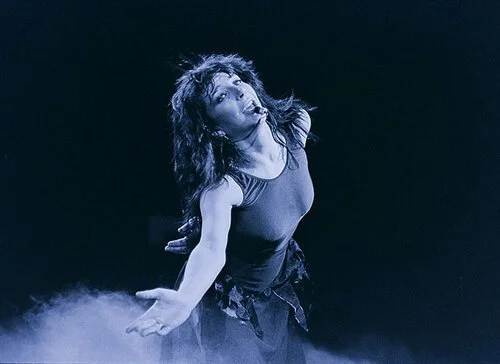
‘Into the Habit’, Brian Griffin (1983)

___________

IN 1983…

Brian Griffin took a series of Kate Bush photos. You can see them on his website. Bush had seen his cover for Depeche Mode’s A Broken Frame, and she wanted something similar. That album was released the year before. Griffin notes, in his recollections of the photos, that the shots were taken near his home in Frieth, Buckinghamshire. That would not have been too far from where Bush lived, so the idea of doing an interesting shoot so close would have won her quickly. The fact that she had a vision in mind would have given Brian Griffin impetus and inspiration. The final shots are incredible! Although my favourite is one of her in colour, the shot I am highlighting is Griffin’s personal favourite. A gorgeous and almost classic black-and-white shot, this is Bush as you had never seen her. In the early years, Bush was portrayed as sexual and that element was emphasised. As a nun, this was almost a commentary and reversal of that. There is no particular title for the photos, so I have chosen one. It is wonderful seeing Bush in this guide, looking comfortable and serious. It is clear that she was very much into the idea and, as a result, the photos produced were among the best of her. Bush was driven to Griffin’s location. He said how Bush was waiting on the basement at 6:30 one morning on the pavement outside of his studio in Rotherhithe Street. Being so close to where Bush lived (she would have split her time between South London and her family home in Kent). In 1983, Bush was emerging into a new phase.

She released her fourth studio album, The Dreaming, in 1982. The first album of hers she produced solo, the work and intense time she put into its layers, experimentation and sound took a lot out of her. She was exhausted after it, and the long days meant that she did not have much leisure time or opportunity to eat healthily. In 1983, she overhauled her diet, reconnected with dance, allowed herself some time with family and her boyfriend (Del Palmer) to just be normal and unwind. She built a bespoke and huge studio near her family home at East Wickham Farm, Welling. Bush began demos and the workings for what would be 1985’s Hounds of Love. 1983 was a pivotal year where Bush’s music and happiness took a step up. She was preparing her most-acclaimed album and accomplished album. The fact that she was in a better position and looking ahead might have led to her being very responsive and interested working with Griffin. In terms of promotion, there was not a lot out that Bush would have needed to be photographed for. She released The Single File (a video compilation and box set) in November. The same month, she released the last single from The Dreaming, Night of the Swallow (only released in Ireland). Brian Griffin was struck by Kate Bush’s beauty and talent. It must have been exciting but nerve-wracking composing these shots and trying to make them as good as possible!

 PHOTO CREDIT: Brian Griffin

I am picturing the scenes of Bush dressing as a nun and where that happened! Being in a field, there would have been very few people near, so it was a fairly intimate shoot. Usually, Bush would be in a studio or surrounded by people when getting photographed. Here, there was a bit more room to manoeuvre and not feel self-conscious. The actions and physicality of the shots shows that Bush was taking up dance again and was also seemingly refreshed and reinvigorated. Sometimes, when artists do dress as religious figures or as a nun, it can cause offence. 1983 was a time when Madonna was breaking through. She is someone who would both inspire and cause offence with some of her imagery. I wonder whether she saw Brian Griffin’s photos or knew about Kate Bush in 1983. In any case, what we have is a series of six photos that cast Bush as a nun. Remarkably striking and compelling, this is a shoot that I would have loved to have observed! Almost forty years after they were taken, they have not aged or look like they were shot in the 1980s. By that, there is none of the big hair and ‘80s fashion. Instead, this is more like a work of art of something from a film. That is another reason why I love the photos. I can see why Brian Griffin was particularly keen on the shot at the very top. It is beautifully lit. Bush has this expression on her face where you wonder if she is deep in thought or listening out for something.

Why is she in a cornfield? Why would a nun be there? You get all this mystery and sense of intrigue. It is a shame that none of the photos made their way onto an album cover or anything from Bush. Maybe she was thinking of these photos when she was recording Hounds of Love. It would have been interesting seeing a video where Bush portrayed this nun figure and we got some context around the shot – maybe action that took Bush there as she was on the run or searching for something. One of my favourite shots of Kate Bush, this 1983 session has such an interesting story and context. Seemingly not related to any pressure from her label, EMI, maybe it was a way for Bush to stay in the public eye or to announce the bones of what would become her fifth studio album. Whatever the reasoning, what we have are exceptional and hugely memorable shots. Brian Griffin’s notes and words about the shots shows what an impression Kate Bush made on him. This, I feel, is…

THE experience of so many.

FEATURE: A Buyer’s Guide: Part Eighty-Five: Aimee Mann

FEATURE:


A Buyer’s Guide

Part Eighty-Five: Aimee Mann

___________

IN this outing…

of A Buyer’s Guide, I am recommending the best work of Aimee Mann. She is a Virginia-born artist who released her tenth studio album, Queens of the Summer Hotel, in November. A remarkable and intelligent songwriter, I am keen to explore her work. Prior to that, here is some biography from AllMusic:

A singer/songwriter of perceptive intelligence who possesses a refined sense of craft, Aimee Mann sustained a long, successful career that ran from the twilight of new wave until the height of adult alternative pop. Mann first came to prominence as the leader of 'Til Tuesday, a stylish pop outfit who had a Top Ten hit with "Voices Carry" in 1985. 'Til Tuesday didn't manage to score a second big hit, but by their last album, Everything's Different Now, in 1988, Mann was collaborating with Jules Shear and Elvis Costello, a sign of how respected she was by her songwriting peers. Mann launched her solo career in 1993 with Whatever, landing an alternative rock hit with "I Should've Known," but it was its 1995 sequel, I'm with Stupid," that was instrumental in building the loyal audience that would stick with her through the decades. Mann consolidated that cult success with her soundtrack to Paul Thomas Anderson's 1999 epic Magnolia, work that led to an Academy Award nomination for Best Song for "Save Me." Bachelor No. 2 or, the Last Remains of the Dodo arrived in its wake, the first of many albums she released on her indie label SuperEgo. Mann's consistency -- every few years, she'd release a new set of originals -- overshadowed her artistic hunger, as she complemented her regular albums by appearing in films, collaborating with Ted Leo in the Both, and working in musical theater, including writing music for a musical adaptation of Girl, Interrupted that turned into her 2021 album, Queen of the Summer Hotel.

Mann led 'Til Tuesday from 1983 through 1990. Her first solo album, Whatever, was a more introspective, folk-tinged effort than 'Til Tuesday's records, and received positive reviews upon its release in the summer of 1993. The album was a modest hit, spending seven weeks on the American charts, where it peaked at 127.

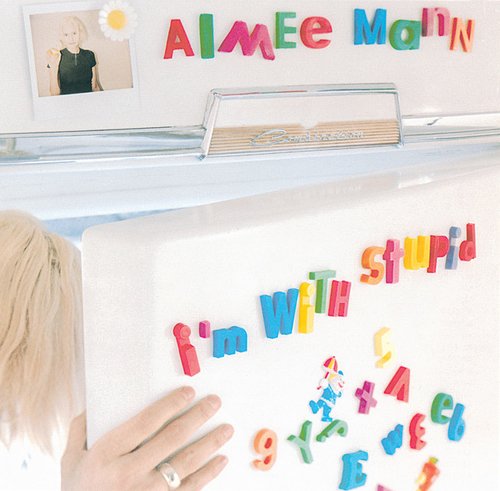
Early in 1995, Mann had a minor hit with "That's Just What You Are," a song included on the soundtrack to the television series Melrose Place. Following the success of the single, Mann was set to release her second solo album in the first half of 1995, but her record label, Imago, filed for bankruptcy before its release. She signed a contract with Reprise Records after Imago went under, but Imago prevented her from releasing any records. For most of 1995, Mann battled Imago in an attempt to free herself from the label, eventually winning her independence at the end of the year. After her dispute with Imago was settled, she signed with DGC Records. Mann's second album, I'm with Stupid, was released in England in late 1995 and in January of 1996 in America. Again, it was greeted with positive reviews yet weak sales.

Mann's career got a kick-start in early 2000, however, when she released her soundtrack for the critically acclaimed film Magnolia; the song "Save Me" was later nominated for an Academy Award. Originally available only at live dates, the solo Bachelor No. 2 received a national release in May. In mid-2002, Mann returned to the forefront with the self-released Lost in Space.

Late 2004 saw the release of Live at St. Ann's Warehouse, a CD/DVD package recorded during her summer tour. It was followed in 2006 by the critically acclaimed Forgotten Arm, a concept album built around the return from Vietnam of a drug-addicted boxer. Mann released a collection of Christmas songs called One More Drifter in the Snow in 2006. @#%&! Smilers followed in 2008.

Mann spent the next few years working on adapting The Forgotten Arm into a musical, a project that was ultimately abandoned. She remained in the spotlight through semi-regular concerts and a memorable cameo on the IFC comedy series Portlandia before finally returning in September 2012 with Charmer, her first album in four years. In 2013, Mann started performing with Ted Leo in a project that was eventually named Both; the duo released an album, also called Both, in 2014. Following that, Mann turned her attention to her ninth solo album, recording the deliberately slow and sad Mental Illness with producer Paul Bryan. The record appeared in March 2017.

In 2018, Mann began working on a musical adaptation of Girl, Interrupted, the 1993 memoir from Susanna Kaysen that turned into a 1999 film starring Winona Ryder and Angelina Jolie. By 2021, the musical had yet to appear, but Mann recorded her songs for 2021's Queens of the Summer Hotel, which was produced by Paul Bryan”.

If you have not heard of Aimee Mann or are slightly new to her work, this A Buyer’s Guide highlights the four essential studio albums, the underrated gem, and her latest release. There is also an interesting book that makes for useful reference. Here is my guide to the best work…

OF the incredible Aimee Mann.

_______________

The Four Essential Albums


Whatever

Release Date: 11th May, 1993

Labels: Imago Records (original release)/Geffen (reissue)

Producers: Tony Berg/Jon Brion/Michael Hausman/Aimee Mann

Standout Tracks: I Should've Known/4th of July/Stupid Thing

Buy: https://www.discogs.com/sell/list?master_id=88957&ev=mb

Stream: https://open.spotify.com/album/2V6NgriUw7DSFLceZjp0xM?si=SZdwA_luTMuwD8GfitBxDQ

Review:

On her solo debut Whatever, the former vocalist for Til Tuesday cements her position as a center-stage artist and top-notch songwriter, and Aimee Mann's blend of wit, smarts, cynicism, and downright humability make for a wonderfully pleasing collection of catchy songs. Musically, the jangle-pop feel of Whatever harkens back to the Beatles and the Byrds but without forsaking its contemporary origin. Lyrically, it is often hard to know whether Mann is spilling her guts out over a love or a deal gone bad. In fact, it is often a combination. But the seamless ease with which she tells the tales, moving from her head to her heart and back again, exposes her mighty talent. Teaming with some of her former bandmates, including longtime collaborator Jon Brion, gives Mann a comfort and a sure footing from which to climb and stretch, which she does with certainty. "I Should've Known," "Could've Been Anyone," and "Say Anything" get the heads bobbing, while the more somber "4th of July" and "Stupid Thing" will beckon forth even the loneliest of hankies. And how many artists pay tribute to Charles Dickens? (Witness "Jacob Marley's Chain.") Talk about literate songwriters and you have to speak of Aimee Mann. The dismissive tone of the title belies the time that was put into this album, for even after its recording, it took Mann quite a long while to find a home. Initially released on Imago Records, Whatever was later reissued by Geffen Records” – AllMusic

Choice Cut: Jacob Marley's Chain

I'm with Stupid

Release Date: November 1995

Label: Geffen

Producer: Jon Brion

Standout Tracks: Choice in the Matter/Par for the Course/That’s Just What You Are

Buy: https://www.discogs.com/sell/list?master_id=107203&ev=mb

Stream: https://open.spotify.com/album/0N3PbNuwko4aAMnJ19W3iM?si=r0YhSnXkRWKyDPxpPoPonQ

Review:

Most of the folks who’ve worn a T-shirt with the deathlessly popular slogan ”I’m With Stupid” over the years were, presumably, kidding. Aimee Mann, who borrows it for her new album title, isn’t. If you never got past the former ‘Til Tuesday leader’s deceptive porcelain looks and pretty, disaffected murmur to discover the misanthrope within, you may be shocked at just how vitriolically well I’m With Stupid lives up to its promising title. She administers scoldings to ex-boyfriends, ex-record labels, and other alleged nincompoops with a degree of indignation Alanis Morissette probably has yet to imagine in her young life. Yet, for the liberal amount of times Mann resorts to the F-word while raking these rakes over the coals, she remains one of rock’s most elegantly gifted melodic and lyrical writers, with a well-attuned psychological acuity to her catchy kiss-offs that any angry young woman would envy. Bitterness, regret, and recrimination never sounded any sweeter, or smarter.

Mann’s first solo album, 1993’s cult-attracting Whatever, was an odd, frequently brilliant mix of buoyant Beatles-isms and weary post-breakup resignation. I’m With Stupid is a consistently tougher number, employing fewer fab flourishes in favor of a big, cranky, buzzing bottom end that anchors her broadsides closer to the gut whence they hail. And she sounds prouder as well as louder. In tender moments she might own up to her own codependent culpability in these quagmires (”And all that stuff I knew before/Just turned into ‘Please love me more,’ ” she admits in an unusually vulnerable couplet). Mostly, though, Mann is the model of resilience, blaming it on the other guy and — as in ”That’s Just What You Are,” where an ex’s lazy declaration of independence is deftly turned back into an insult — making a damn good case why. Hail the once and future queen of kiss-and-tell-off” – Entertainment Weekly

Choice Cut: Long Shot

Bachelor No. 2 or, the Last Remains of the Dodo

Release Date: 2nd May, 2000

Labels: SuperEgo/V2

Producers: Jon Brion/Mike Denneen/Buddy Judge/Aimee Mann/Brendan O'Brien

Standout Tracks: Nothing Is Good Enough/Red Vines/Driving Sideways

Buy: https://www.discogs.com/sell/list?master_id=107206&ev=mb

Stream: https://open.spotify.com/album/2oAh7vprZx8iSqoyNxQASX?si=HLZuvLSAT9KRoGq849eYbA

Review:

Mann has said that Bachelor No. 2 could’ve come out as early as 1998, but a combination of label gridlock and the marketing cycle around Magnolia, whose soundtrack hit stores just before the film’s December 1999 theatrical debut, delayed its release until the following May. In the meantime, on tour, an impatient Mann sold homemade EPs of her new music, in what she has characterized as a “real DIY fuck-you-record-company-I’m-selling-it-myself” gesture. And after the no-confidence vote from Iovine, she bought back her masters from Interscope, founded the label SuperEgo, and put out Bachelor No. 2 on her own. That courageous move presaged a future where artists with dedicated fan bases wouldn’t need corporate middlemen to access them.

With a boost in name recognition from Magnolia and the Oscars, sales of the album soared past 200,000—easily outperforming I’m With Stupid. (This was an especially decisive victory for Mann: In 1999, then-Sony VP Gail Marowitz had told the Times that “if Aimee sold 70,000 records independently, she would be making more money than if she sold 300,000 on a major label.”) It was in collaborating with Anderson on a movie that eventually played in more than 1,000 theaters that Mann finally found a wider audience primed to appreciate her pithy, disenchanted songs.

Largo’s is the rare story of a small, independently owned music venue that has a happy ending. Flanagan and friends left the original venue for a larger one, Largo at the Coronet, in 2008. Eleven years later, Brion maintains a monthly Friday-night residency, and in December, Mann and Ted Leo are scheduled to play three nights of Christmas shows. “For a while there,” Mann once said, “I was actually going to call the record Underdog Day.” Bachelor No. 2 or, the Last Remains of the Dodo probably makes a grander, more elegant name for a contemporary classic. But the alternate title certainly would have fit” – Pitchfork

Choice Cut: Calling It Quits

Mental Illness

Release Date: 31st March, 2017

Label: SuperEgo

Producer: Paul Bryan

Standout Tracks: Lies of Summer/Patient Zero/Knock It Off

Buy: https://www.discogs.com/sell/list?master_id=1158451&ev=mb

Stream: https://open.spotify.com/album/1YRaL8DFmYsu52szGJWO9t?si=JXNuPtXmTJWVvZCl_1jgqg

Review:

Slyly referencing the perceived fragility of the melancholic singer-songwriter with the title of her new solo album – her ninth – Aimee Mann is making a relevant point: falling in love, falling out of love, being with someone, being alone, can drive some people seriously demented.

Mann has been a solo chronicler of such altered states since her 1993 debut, Whatever, yet she takes it up a notch here with her strongest collection of songs since 2000’s Bachelor No. 2. This time around – sensing, perhaps, that her precise, character-driven lyrics required extra sensitivity – Mann replaces pop/rock crunch with the warmest of Laurel Canyon acoustics.

The results are silky earworms of the highest order, with Mann admirably making solitude and sadness entities that should be inhabited instead of spurned” – The Irish Times

Choice Cut: Goose Snow Cone

The Underrated Gem


Charmer

Release Date: 17th September, 2012

Label: SuperEgo

Producer: Paul Bryan

Standout Tracks: Labrador/Soon Enough/Gamma Ray

Buy: https://www.discogs.com/sell/list?master_id=473855&ev=mb

Stream: https://open.spotify.com/album/0FAifNXe3C8AHqTe25ggcg?si=4mJzqMArTTWHiFiyf8qgoQ

Review:

On first listen, Charmer plays like Mann’s most superficial outing. It’s certainly her breeziest, least thorniest and easiest to swallow. Yet closer inspection reveals this to be a thematically unified collection of songs exploring superficiality in all its guises. Against a polished backdrop, Mann acerbically dissects vanity, physical beauty, and social status in track after track, as the characters that populate the album use their appearances and reputations to manipulate and barter their ways through life. The charmer of the title track is ruled by self-hatred and hidden agendas, a friend amicable enough to earn the nickname “Gumby” is actually a wayward father and on “Labrador,” a callous lover makes a pet of the narrator.

Mann has chosen to score her words with music that borrows from Harry Nilsson, Fleetwood Mac’s mid-‘70s work, and Joni Mitchell’s hit singles – in short, intelligent yet radio-ready masterstrokes of studio craft that cloaked insightfully cynical messages in primary colored pop bouquets. The trouble here is, while Mann’s words often sting, Charmer is stuck in a sort of sonic purgatory that’s competently, unadventurously spacey and twangy.

For the album to be a total success, its broad strokes would have to be the kinds that burn themselves into listeners’ memories. Unfortunately, Mann lacks the sort of extroverted dynamism to sell material this compact and direct. Problematically, the songs also frequently fail to slowly worm their way into your subconscious in the expected ways. The album lacks the unassuming, artisanal quality that’s always been so integral to the singer’s work, even during her most accessible moments. At Charmer’s lowest points, she almost seems to be tempering her edge and wit to be congruent with the innocuous arrangements, as on the surprisingly dim “A girl who lives in crazytown/Where craziness gets handed down” chorus of the overly slick “Crazytown.”

Charmer is at its finest during the most subdued, quietly detailed stretches, which veer closer to what we’ve heard from Mann on past efforts. While “Slip And Roll” finds her reverting back to the boxing fascination that was so apparent on The Forgotten Arm, the song’s unadorned yet careful composition makes it a highlight, while the bouncy but haunting “Soon Enough” favorably recalls Mann’s collaborations with Jim O’Rourke.

Likewise, the less varnished, James Mercer-assisted “Live A Lie” is a looser detour, a touch earthier than the songs that surround it, though still tuneful and in keeping with Charmer’s core lyrical concerns. “You can see yourself in the side mirror/Tossing your hair/If no one is there/Then why do you care?” wonders the Shins’ frontman as he begins to trade barbs with Mann, none sharper than the latter singer’s piercingly offhand “No one bares a grudge like a boy genius/Just past his prime/Gilding his cage a bar at a time.”

With such winning moments, it’s hard not to wonder what kind of album Charmer could have been had Mann spent more of the record in her comfort zone, admirable as her will to toy with vibrant, synth-dominated arrangements is” – American Songwriter

Choice Cut: Charmer

The Latest Album


Queens of the Summer Hotel

Release Date: 5th November, 2021

Label: SuperEgo

Producer: Scott Bryan

Standout Tracks: Give Me Fifteen/Burn It Out/I See You

Buy: https://www.discogs.com/sell/release/20865229?ev=rb

Stream: https://open.spotify.com/album/7b9VCvOsMz0N4oFD9YUgHo?si=yg_HvbtxTEeaRh_1gd8U0A

Review:

Despite the heavy subject matter—and arrangements largely hewing to piano, strings, and acoustic guitar, with the occasional horns and drums—Mann often counterposes lighter melodies and rhythms with the downbeat material. It’s a trick she’s often employed (think “Nothing Is Good Enough” off of Bachelor No. 2), and it works again here, as the bleak lyricism of “Robert Lowell and Sylvia Plath” employs a gently loping waltz. Even more effective is “Give Me Fifteen,” a song that details the danger inherent in a misogynistic ’60s medical process, with its doctor breezily announcing, “In the time it takes to walk around the block / I can have you scheduled for electroshock.” The musical accompaniment to this darkness? A bouncy rhythm and hooky melodies, not unlike her cover of “One” from the Magnolia soundtrack.

In some ways, the imposition of shorter song lengths necessitated by the musical format juices her songs, lending a Guided By Voices-like sense of get-in-and-get-out brevity, leaving the listener wanting more. “Home By Now” and “Little Chameleon,” with their simple piano intros and drawn-out strings, both come in well under the two-minute mark, but are all the more impactful for it. And “You Could Have Been A Roosevelt,” a Beatles-esque composition, barely crosses that time threshold, yet is stunning—not just one of the best tracks on the record, but able to hold its own against her finest work.

The overall vibe created by the record, though, is mellow, with swaying rhythms and quiet compositions that take advantage of her talent for softer, low-register delivery. Opener “You Fall” sets the tone well, with her backing vocals and brushed drums establishing a vibe apropos for a smoky lounge, maybe even from the era in question. And the one-two punch of mid-album tracks “You Don’t Have The Room” and “Suicide Is Murder” make for a musical and thematic core to the record, the former a mournful rejoinder blended with elegantly swooning strings and the latter an aching ballad of regret, but both containing her not-quite-staccato piano playing opening up into something grander.

The most stage-indebted of the numbers do come with a slight asterisk, however. “At The Frick Museum,” with its sing-song melody and repetition, feels like it’s meant to be heard in an off-Broadway setting, and “12 In Mexico,” with its 3/4 stroll and declamatory statements about “I’m the crazy one they can point to,” doesn’t quite pop on its own. Between those and the “Check” reprise, some instrumentation comes across a little too much like filler.

But even with a few forgettable numbers, Queens Of The Summer Hotel makes an impact. No knowledge of its origin story in a theatrical production is needed to make these narratives of longing and tragedy sing, just as no electric guitar is required to showcase Mann’s ace knack for songwriting. It may fall on the more mellow and restrained side of her catalogue, but this is a record to be savored—mining beauty (and yes, some humor) from pain is an Aimee Mann specialty, and this record serves as further testament to that fact. It’s been nearly four decades since she founded ’Til Tuesday, but the musician has never sounded more confident” – The A.V. Club

Choice Cut: Suicide Is Murder

The Aimee Mann Book


Aimee Mann On Track: Every Album, Every Song (On Track)

Author: Jez Rowden

Publication Date: 1st April, 2021

Publisher: Sonicbond

Synopsis:

Any consideration of the song writing craft would be incomplete without the inclusion of American singer/songwriter Aimee Mann. From her first steps as singer and bass player with '80s synth pop band 'Til Tuesday, who scored a massive MTV hit with 'Voices Carry' in 1985, she has continually produced starkly autobiographical and often ironically melodic songs that cut through the emotional detail. With a career now spanning almost forty years, she has built a catalogue of nine studio albums since going solo in the early 1990s and, via a series of record label frustrations, has developed into a fiercely independent recording artist, flying outside the mainstream. Her critical acclaim has never wavered, and whilst happy to work in a niche market, her soundtrack for the film Magnolia and the accompanying Oscar nomination raised her profile considerably, adding to her stalwart army of fans. This book gives an overview of Aimee Mann's career from her earliest days, making it big with 'Til Tuesday and onward through her solo career to date, investigating every recorded track in a comprehensive guide for fans and new listeners keen to investigate a true original and double Grammy winner whose songs should be much more widely recognised” – Amazon.co.uk

Order: https://www.amazon.co.uk/Aimee-Mann-Track-Every-Album/dp/1789520363/ref=sr_1_1?keywords=aimee+mann&qid=1638955981&s=books&sr=1-1

FEATURE: Second Spin: She & Him - Volume 3

FEATURE:


Second Spin

She & Him - Volume 3

___________

PERHAPS a new name…

on this blog, She & Him is a collaboration between M. Ward and actor Zooey Deschanel. They have released a series of albums (the latest, Christmas Party, came out in 2016). One of my favourite albums of theirs, Volume 3, was released in 2013. It contains three cover songs and eleven tracks written by Deschanel. The chemistry between Deschanel and Ward is terrific. I love Deschanel as a songwriter and singer. Volume 3 got a lot of positive reviews, though there were a few that were more mixed. I am going to bring in a couple of contrasting reviews. I think that it is an album full of joyfulness, nostalgia, breeziness and terrific simplicity. Songs like Never Wanted Your Love are instantly memorable and likeable. One does not hear too many songs from She & Him on the radio. I do wonder if we will get another studio album from the duo. Maybe not their most celebrated album, Volume 3 has a lot to recommend and love. I do not feel there is a weak song on the album. In a more mixed review, this is what Sputnikmusic had to say:

It’s hard to tell whether She & Him have moved past the point of novelty or remain tarnished by it. On the one hand, the group’s collection of records has had nary a “bad” song on it. Forgettable, at times? Yes. Uninspiring, at others? Almost certainly, but throughout Volume One and Volume Two and now Volume Three the pair have maintained a reliable pop professionalism that has occasionally created sparks of black-and-white brilliance, an unerring portrait of a time when “I could’ve been your girl / you could’ve been my four-leaf clover,” was all that was needed for one starry-eyed girl to tell the heartbreaker in his varsity jacket.

Few artists have recreated (and, arguably, mastered) a specific sound as lovingly as She & Him. The playful pop instincts of the Beach Boys rub shoulders with the wistfulness of ‘60s girl groups; doo-wop meshes imperceptibly with Brill Building melodies and hints of Nancy Sinatra sass; sweeping Phil Spector symphonics unfurl like a velvety blanket next to carefree fingerpicking and aw-shucks guitar pop. At their best, She & Him transport you to somewhere else, where Zooey Deschanel isn’t a star and M. Ward is just the man behind the curtain, another in a long line of faceless studio hired hands. It’s a place where the magic is in the simplicity of the songs and the everyday romance they conjure, effortlessly and innocently. But, shit – a Christmas album? And now Volume Three, a record so tightly and painstakingly circumscribed by its period sounds and M. Ward’s polite production that it loses any mild sense of personality She & Him have managed to acquire in the past few years, just at a time when Deschanel should be staking her own artistic identity loudly and firmly.

Here, M. Ward indeed becomes that man behind the curtain, his signature blues touch only a faint whisper among the carefully manicured jazz inflections and retro indie pop tailor-made for a summer Sunday – preferably spent down at the local soda fountain. When things are spiced up, as on the faux-disco of “Together” or on the rumbling cover of Blondie’s “Sunday Girl,” it barely registers a notch above the rest of Volume Three’s flawlessly produced, entirely inoffensive sounds, lest Ward disturb the neighbors. Previous records reveled in these same sounds, true, yet they did it with some vigor, a certain punchiness and spice that kept them bouncing around in your head far longer than they rightfully should have.

Volume Three prefers to keep the focus on Deschanel, and while the melodies remain, they too often seem like just another part of the tapestry, not the selling point. Yet where Volume Three might have been picked up accordingly by a more prominent performance by Deschanel, the singer remains just as suppressed by the strict adherence to this genre exercise as Ward. Deschanel has never had trouble sounding wounded, but her voice here rarely jumps out at you – she prefers to just play the role rather than live it. Even when she’s obviously having fun, as she does on the whimsical “Sunday Girl” or the quintessential torch song (“Hold Me, Thrill Me, Kiss Me”), it inevitably feels rote, a meticulous tastefulness that is pretty and nostalgic, yet largely uninteresting.

It’s unclear whether this is a result of Ward’s unusually subdued production or Deschanel’s own limitations as a songwriter, but this is where She & Him’s self-imposed restraints tend to sabotage their artistic growth. Deschanel writes fine pop songs, but at this point, the tired ‘50s tropes and Grease-styled romantic calamities unfairly handicap her palette and diminish her talents. As a result, Volume Three can’t flourish under the force of her considerable personality or Ward’s craftsmanship, because the latter has been deadened and the former is unwilling to break the illusion. Until one or the other makes a change, it seems doubtful that She & Him will ever become more than a particularly well-credentialed homage”.

I do feel that Volume 3 is a very strong album that warrants more airplay. More people should know about it. AllMusic were a lot more positive when they sat down with the album:

Always looking backward to the sunny sounds of the '60s, She & Him often feel like a band out of time, a pair of pop dreamers born too late to be a part of the musical scene they've painstakingly crafted a pastiche of with their third album, Volume 3. Like the previous two volumes, the album finds collaborators Zooey Deschanel and M. Ward diving headfirst into the sunny, lovestruck sounds of Brill Building pop with a splash of country twang for good measure. While this means the album doesn't do a lot to distinguish itself from the pair's early efforts, it certainly doesn't diminish its effortlessly enjoyable sound. In a way, this kind of anonymity seems like a part of the bands M.O. Sure, both of the players here are famous in their own right, but rather than slap their names on the album, they gave the project a perfectly pleasant, albeit generic name. And rather than giving the albums a cute title, they're given the archival title of "Volume." All this speaks to a desire to simply let the music exist on its own, classically pop, terms, allowing listeners to get swept up in a song like "I Could've Been Your Girl" not because it has that lady from the movies in it, but because it's the kind of breezy, melancholy pop that's really easy to fall in love with. Three albums (plus a Christmas record) in, you're either on board with what She & Him are doing or you aren't, and if you're stone-hearted enough to not be into the band by now, Volume 3 isn't likely to sway you. However, for those of you already caught in the band's spider web of eternal summer, this album delivers the goods”.

If you have not heard of She & Him or are not certain whether you will like them, I can recommend an album like Volume 3. An incredibly satisfying and complete album that will have you dipping back in long after you have first spun it, go and check of the 2013-released album from…

THE amazing M. Ward and Zooey Deschanel.

FEATURE: The Lockdown Playlist: Billie Eilish at Twenty

FEATURE:


The Lockdown Playlist

 Billie Eilish at Twenty

___________

THERE is not a great deal…

happening at this time of year regarding music. Apart from the best of lists, not much is brewing in terms of news and new stuff. I wanted to use this feature to celebrate the upcoming twentieth birthday (on 18th December) of modern-day superstar Billie Eilish. One of the most accomplished artist of this age, she released her second studio album, Happier Than Ever, in July. Prior to ending with a playlist of her best songs to date, I want to source some biography from AllMusic:

California-bred singer/songwriter Billie Eilish crafts genre-blurring outcast anthems that bridge the gap between ethereal indie electronic and dark alternative pop. With angsty, introspective lyrics that don't shy away from issues of mental health, she endeared herself to a devoted audience during her breakthrough years in the late 2010s when she was still just a teenager. On the heels of a sold-out headlining tour, she issued her chart-topping, Grammy-winning debut album, 2019's When We All Fall Asleep, Where Do We Go? In 2021, she returned to the top of the charts with her sophomore set, Happier Than Ever.

Born and raised in Los Angeles, Eilish grew up in a household of actors and musicians and was home-schooled along with her brother Finneas O'Connell (the Slightlys). At the age of eight, she joined the Los Angeles Children's Choir, developing the soulful vocals that would later appear on her early singles.

After the release of the pop-leaning "Six Feet Under" and "Fingers Crossed," Eilish made her breakthrough with "Ocean Eyes," produced and co-written with her brother Finneas and released by Interscope. It surpassed 14 million online streams and spawned a number of remixes with Astronomyy, Blackbear, and Goldhouse. Eilish followed up in February 2017 with "Bellyache," then landed another track, "Bored," on the Netflix series 13 Reasons Why. An EP, don't smile at me, featuring the singles "Copycat" and "watch," followed later that summer.

In 2018, Eilish contributed a track to the second season of 13 Reasons Why, collaborating with Khalid on the hit single "Lovely," which charted globally. Later that year, she issued a pair of singles, "You Should See Me in a Crown" and "When the Party's Over," which both landed on her full-length debut, When We All Fall Asleep, Where Do We Go? Issued in March 2019, the breakthrough effort showcased her hybrid blend of pop, electronic, and hip-hop textures with a rock edge. Debuting at number one on the Billboard 200, the LP quickly became a worldwide smash and one of the most critically lauded efforts of 2019. Meanwhile, the pulsing single "Bad Guy" topped the Hot 100 and even got the remix treatment with Eilish's childhood idol, Justin Bieber.

While an international tour kept Eilish on the road into 2020, she released a stand-alone single, "Everything I Wanted" -- a bittersweet reflection on her meteoric rise to fame -- and became the youngest artist to be nominated in the four major Grammy categories (Record and Song of the Year for "Bad Guy," Album of the Year, and Best New Artist). At the award ceremony in 2020, she made history by sweeping those main fields, becoming the second person -- and first since 1981 -- to pull off such a feat. On the heels of her win, Eilish premiered "No Time to Die," her theme song to the 25th James Bond film of the same name.

Later that summer, Eilish released the R&B-washed "My Future," which became a Top Ten hit on the Hot 100. That August, her 2019 acoustic set Live at Third Man Records received wide release for Record Store Day, rising to number 55 on the Billboard 200 and topping the U.S. Vinyl Albums chart. The single "Therefore I Am" closed out the year, topping charts across the globe. Both tracks landed on her sophomore album, 2021's Happier Than Ever. Released in July, the set also featured "Your Power," an indictment of exploitation disguised as an acoustic ballad, and the trip-hop-inflected kiss-off "Lost Cause." With Finneas again handling production, the album unveiled a matured perspective for the artist and added fresh genres to her arsenal, from the aptly titled "Billie Bossa Nova" to the '90s alternative rock edge of the title track. Happier Than Ever went straight to number one in the U.S., U.K., and several other territories”.

To mark the upcoming twentieth birthday of the remarkable Billie Eilish, below is a selection of her best tracks. An idol and future legend who is one of the best artists and live performers in the world, I know that 2022 will be a very busy one for.  A very happy birthday to Billie Eilish…

FOR 18th December.

FEATURE: Second Spin: Skylar Grey - Don't Look Down

FEATURE:


Second Spin

Skylar Grey - Don't Look Down

___________

THIS have is quite a new album to me…

even though it was released back in 2013. Skyler Grey is an artist that I am aware of and like very much. An amazing artistwho has written songs for peopleincluding Kehlani, G-Eazy, Alicia Keys, Christina Aguilera, Zedd, Nick Jonas, Céline Dion, and CeeLo Green, her music is amazing and deserves more attention. Her second studio album, Don’t Look Now, got mixed reaction. Some felt that the album hinted at Grey’s Hip-Hop potential but was too Pop-focused. Maybe a little less edgy than it could have been or not entirely sure of its sound, balance and convictions, I think that the 2013 album is well worth another spin. Although Don’t Look Now features guest spots from Big Sean, Eminem, Travis Barker and Angel, it is Grey’s force and talent that comes to the front and is the most impressive. I will quote a couple of mixed reviews for the album, in order to outline what critics have said about the L.P. I feel that it is a lot stronger than it was given credit for. Tis is SLANT’s take on Skylar Grey’s second studio album:

Holly Brook Hafermann, a.k.a. Skylar Grey, is best known as the brains behind Eminem and Rihanna’s “Love the Way You Lie,” and Marshall Mathers has been grooming the singer-songwriter for a splashy Interscope debut ever since. Don’t Look Down is the sound of an artist negotiating with her own MC impulses, of a talented lyricist whose pop instincts tell her to abridge herself. Complicating matters further, executive producer Eminem allows far too many cooks in the kitchen, a reflexive inclusivity that leaves the album feeling over-processed. At heart, Don’t Look Down is a vaguely hip-hop-inflected homage to ‘90s pop, not so much uninteresting as underwhelming and repetitive in its orchestration. Grey writes a great abortion song, but you’d be forgiven if you confused it with her song about the weather.

Grey’s voice is a versatile instrument, capable of channeling various pop idioms while only sometimes disappearing into them (à la Vanessa Carlton). Her default setting is a curious midpoint between Shakira and Shania Twain. She performs her vocal flips with a savvy precision (again, rather too cleanly), but can also bring in darker tones, as on the boozy “Wear Me Out,” an Amy Winehouse-style midtempo song of erotic defiance. When she’s having fun you can tell: “C’mon Let Me Ride,” featuring Eminem, is a high-camp glory of a song, as Grey expresses her libido through the usual perverse childish metaphors and Mathers apes Freddy Mercury’s “Bicycle” before dropping a zig-zagging verse that turns the beat on its head. It’s the funniest fuck song of the year so far.

Grey’s influences can lead her to sound like a China doll at times, too polished and coy and pure. Yet throughout, she’s forthright about her sexual standards, exhorting an ex to improve his cunnilingus technique, if only for the next girl’s sake. On “Shit Man!,” which features an excellent, Nicki-Minaj-once-removed verse from Angel Haze, Grey rocks out over some heavy-ass questions: “So now what happens if I choose/To have this child with you?” More to the point, she answers them: “We don’t even have a ring yet/We’re gonna need a bigger house,” she reasons during the chorus, “And you say you’re not ready/I don’t believe in abortions.” What could be more jarring than this near-conservative sense of purpose, this unrepentant ultimatum? It’s an awesome celebration of choice, and an object lesson in Grey’s impulse to baffle expectations in her songs”.

Before coming to another review for Don’t Look Down, there is an interview from 2013 that is worth exploring. The Hollywood Reporter asked Grey about the album and working with the likes of Eminem on such an important release (as it was her major label debut):

Don’t Look Down comes via producer Alex da Kid’s KIDinaKORNER imprint, housed under the Interscope Records banner, with Eminem serving as executive producer of the album and appearing on its first single, “C’Mon, Let Me Ride.” It’s a testament to the rapper-producer’s faith in the 27-year-old Wisconsin native whose first true solo effort is a confident, fully realized effort.

The Hollywood Reporter recently sat down with Grey at L.A. hotspot Sayers Club to discuss her songwriting, high-powered relationships, new album and what took so long.

The Hollywood Reporter: Anticipation for the record has been high, and attaching Eminem’s name to it adds even more excitement. It seems there’s still a mystique to him. Would you agree?

Skylar Grey: He does have a mystique. It’s an intense curiosity. It’s not just, “Oh, there’s this new artist.” It’s, “There’s this new artist that Eminem is working with and supporting, so that makes it even more interesting.” I definitely see that.

THR: The album’s release date has been pushed back several times. Can you talk about why?

Grey: One of my biggest problems is I get bored too easily, and I like to experiment too much, to the point where I confuse myself and I confuse my fans. So it just took me some time to figure out exactly what I wanted this album to sound like because I had worked with so many types of people and tried so many different things. I had to wait for the right batch of songs to come together and feel like a whole piece.

THR: And it feels that way to you now?

Grey: It does — finally.

THR: As a complete work, what does it represent to you?

Grey: Lyrically, I’m talking about my life, from being a kid to struggling financially and struggling in the music industry — not directly about that, but the emotions that I went through. So it’s all very real stuff that I’ve experienced. To me, the album is all about growing up, coming into your own and accepting the challenges that you face in life.

THR: Can you give an example using a song?

Grey: There’s a song called “Glow in the Dark” [about] when you’re facing all these different challenges and you don’t know where to go, [how] it can weaken you because you’re just uncertain. I write a lot about the past because I really see things clearly in hindsight — obviously everybody does, so there are morals in every song. Then, once I’ve learned all those things and gotten through the hard times, I come out feeling really powerful and “Glow in the Dark,” to me, is that powerful song on the album”.

To round off, there is another review that I want to source. AllMusic were mixed in their reaction to an album that, I think, has a lot to recommend about it:

After nearly a decade of toiling away on the margins of the music industry, the former Holly Brook became Skylar Grey and scored a massive hit as a songwriter with Eminem and Rihanna's duet "Love the Way You Lie." On that song, Grey's melodies functioned like Dido's did on "Stan," but after spending years and years as a sensitive singer/songwriter, Skylar Grey takes great pains to signify as tough on her 2013 debut, Don't Look Down. Heavy on stylish accouterments -- everything from echoed pianos and tightly rolling loops to cameos from Angel Haze and Big Sean -- Don't Look Down deliberately trades in bad-girl glamour, with Grey singing innuendoes and explicit profanities with ease, luxuriating in minor-key melodies and haunting, immaculately textured productions. Grey is clever enough to allow herself some measure of silliness -- there is absolutely no other way to describe the Queen-quoting "C'mon Let Me Ride" -- a move that reveals the seams in her goth-princess persona and makes a good chunk of Don't Look Down come across as nothing more than bubblegum Lana Del Rey. What saves Skylar Grey is what brought her fame: her finely honed songcraft, how she knows how to sculpt a melody so it cuts through the clutter and sinks into the subconscious. Try as she may to distract with her strut and style as Skylar Grey, what resonates is the same kind of melodic turn of phrase that was apparent back when she was calling herself Holly Brook”.

Rather unfairly overlooked and underrated upon its release in 2013, Skylar Grey’s Don’t Look Down is a great album. Wear Me Out and Final Warning are singles that makes the first half of the album so strong. The second half is not as strong, through songs such as Clear Blue Sky are pretty decent. If you have not heard of Skylar Grey or the Don’t Look Down album, then take some time to play a…

GREAT album.

FEATURE: The Most Impressive Debut Album of 2021: Olivia Rodrigo - SOUR

FEATURE:


The Most Impressive Debut Album of 2021

Olivia Rodrigo - SOUR

___________

ALTHOUGH there was close competition…

from Arlo Parks’ Collapsed on Sunbeams (one of the best albums of 2021), and girl in red’s if I could make it go quiet, I think the best debut album of this year comes from Pop superstar Olivia Rodrigo. Even though one of my favourite albums of the year, Joy Crookes’ Skin, is a debut album and I really love it, I wanted to single out another album (even though London-based Crookes is exceptional). In terms of its confidence, width and quality, SOUR is my choice for the most impressive and bold introduction album of 2021. The Californian-born eighteen-year-old Rodrigo is an exciting Pop proposition primed for big things. I am not a huge fan of modern Pop, but I think Rodrigo is an inventive and fresh talent that is worthy of the hype and acclaim. She explained how SOUR explores her discoveries as a seventeen-year-old, with its title referring to the ‘sour’ emotions young people experience but are often criticised for, such as anger, jealousy, and unhappiness. Spanning balladry and Emo-spiked bangers, SOUR is an accomplished album where Rodrigo is credited as songwriting on each of the eleven tracks (she even wrote enough for you and happier solo). Reaching number one in the U.K. and U.S., SOUR is a remarkable album that anyone can pick up with no prior knowledge and enjoy. I am keen to get to some positive reviews for a mighty debut. Prior to that, NYLON interviewed Olivia Rodrigo earlier in the year about her breakthrough period and the arrival of her debut studio album:

I’m so excited!” says the 18-year-old, leaning in towards the computer monitor the way you might IRL. She is excited to be in the U.K., excited to perform at the 2021 BRIT Awards, excited to meet her hero Taylor Swift, excited to release her first album, SOUR, out May 21, excited that her music career has brought her here, to this moment.

And why wouldn’t she be? Nobody is having a better year. In January, “drivers license” debuted at the top of the Billboard Hot 100 and eviscerated Spotify’s record for the most song streams in a week. Her first ever performance of the song was on The Tonight Show With Jimmy Fallon. Her follow-up single, the psychedelic pop “deja vu,” scored 20.3 million streams in the U.S. in the first week of release. Then there was the Saturday Night Live sketch where the show’s male talent (Kenan Thompson, Pete Davidson, Bowen Yang, and crew) were moved to tears by “drivers license.” Less than three months later, and she’s the show’s musical guest, performing her third song as a soloist, the dance-y pop-punk barn-burner “good 4 u.”

You could call it quick, but you can’t say it’s without merit. Rodrigo’s talent as a songwriter is so apparent, it has nearly eclipsed the teen star drama that accompanied her debut. (In short: Rodrigo’s costar and rumored ex, Joshua Bassett, was spotted with fellow teen star Sabrina Carpenter, who sounds a lot like the older blonde of “drivers license”; Bassett and Carpenter released what fans believed were rebuttal songs.) Although Rodrigo sings about her insecurities, during our Zoom interview she talks about her craft and production with the self-assurance of someone who knows we’re going to be talking about it for years to come. “There are therapeutic benefits to songwriting,” she tells me. “Whenever I’m feeling upset, I go to the piano. I go to the piano before I call a friend.” But she still marvels at the power that music — her music! — holds: “You can literally create a whole song in your bedroom, and it can affect millions of people.”

Let’s talk songs: "deja vu" compares your ex’s new relationship to your own without pitting two women against each other.

I am obsessed with the concept of déjà vu. I had in my Notes app, "When she's with you, do you get déjà vu?" My producer and collaborator Dan Nigro and I were sitting at the piano; we were writing a sadder, or more down-tempo song. He was like, "Eh, this is not very good. Let's try something else." I was scrolling through my Notes app and that [line] came up, and we were like, "Oh, that's a clever play on déjà vu." And so we built this whole world. [Pitting women against each other] is just not something I subscribe to or think about in my daily life. Ever. It's not something that I'm like, "Oh, I can't write songs about that because that's bad." I really don't genuinely feel that way. I mean, obviously I compare myself to people all the time, and lots of my songs are about that, but it's never a competition. So yeah, I'm really happy with it. I'm also really happy with how much of a departure it is from the "drivers license" world, both in attitude and in sonics. I hope that I can keep showing versatility in my songwriting.

A lot of social psychologists think déjà vu is common with people who are stressed-out or anxious.

Really? That makes so much sense for me. It's just the coolest, weirdest experience ever. It's so trippy, the song itself.

PHOTO CREDIT: AB+DM

It’s so trippy, and so is “jealousy, jealousy.” The bass intro, the harmonies with yourself, the fact that you sing the word “slowly” slowly, the Fiona Apple-esque alternative piano — you shout!

That song was one of the first songs that I wrote on the record with this wonderful writer named Casey Smith. In this time period, I was super obsessed with social media. I would look for things that would hurt my feelings all the time and compare myself to everyone. I felt like my life was only what I showed to others. I didn't feel like my life was any deeper than my Instagram feed. That’s a really troubling mindset to be in as a teenager. And so I guess I wanted to write a song about that. It isn't sad or "Oh, I don't feel like I'm enough,” it’s "Oh, God, I'm so jealous." It’s tongue-in-cheek, and a little funny to me. But the sonics on the song are the reason why we put it on the record. There’s this piano in the bridge that's so convoluted and almost atonal. Sometimes it just doesn't go with the music and it's so chaotic. And I love Fiona Apple. I'm obsessed with her new record and she is definitely a big inspiration of mine. I remember thinking that I wanted to make jazzy music like her when I was younger, so I would play these jazz chords, and be like, "Nobody can do it like her. I'm not going to be able to do anything even half as good as [1996’s] Tidal was." But yeah, she's so incredible. I'm obsessed with her lyricism. She has such a good vocabulary, too. She wrote Tidal when she was 19, which is crazy to me. Just the words that she uses, she's like, "sullen girl." I'm obsessed with her.

In that 2000s era you’re referencing, the Disney stars were Miley, Demi, and Selena. They acted and made music, but it always seemed like their music careers were tethered to their Disney work. Your music feels very separate. Like, you curse on songs, and they could never! Is this a new era of pop stardom?

I’m very aware of that classic “Disney pop girl” archetype. My music is definitely separate from my acting in a way I always dreamed would happen. When “drivers license” came out, everyone was like, "I have no idea who this Olivia Rodrigo girl is, but I love this song." That is the absolute dream for me, because I've always wanted to be taken seriously as a songwriter. Being an actor can interfere with that, just because being an actor is based on telling lies, and being a songwriter is based on telling the absolute, whole truth. And people always ask me, "Oh, did you say fuck in ‘drivers license’ to show that you aren't just a Disney star?" It’s cool that people might think that, but I’m just making music that I love and that I feel passionate about. It’s who I am. I have a dirty mouth. It was what felt natural and good to me, and people resonated with that. If I am ushering in a new generation of pop stars that aren't afraid to speak their mind, that's so cool. I'm just doing my thing, though.

You are so busy! What do you do when you have some downtime?

I actually hung out with Conan [Gray] a couple days ago. Conan's the best ever. It’s really fun to start getting more artist friends who really understand the weird niche parts of being a young person in the music industry. But when I get time off, I sleep, do school, normal teenage things. I don't know. I talk to my friends a lot. My best friend in the world, her name's Madison [Hu], and I did a show with her [Disney’s Bizaardvark] when I was 14. We're just soul mates”.

Although drivers license was the song that everyone was talking about, SOUR has a lot more to it. Some of my favourite tracks – jealousy, jealousy and favorite crime – are non-singles. I feel that Rodrigo will bring out a second album within the next year. AllMusic noted the following in their review:

Olivia Rodrigo became the brightest new pop star of 2021 with "Driver's License," the single that broke streaming records and kicked off a string of number one hits. It's easy to hear why the song was so popular: As she sang about the plans that fall apart in the wake of a breakup and the sheer magnitude of her very first heartbreak, the rawness in Rodrigo's voice and lyrics spoke to those her own age and provided some potent flashbacks for those a little -- or a lot -- older than her. On the rest of her debut album Sour, she delivers on the potential of that blockbuster single and then some. Rodrigo nails what it's like to be 17, heartbroken, and frustrated, and updates the traditions of the sharp-eyed and sharp-tongued songwriters before her for Generation Z. Like her hero Taylor Swift, she's got a flair for details and a willingness to share every aspect of her heartache, even (or especially) the bitter side of it; on "Happier," she sings to her ex, "I hope you're happy/But don't be happier."

Her ability to pair a sizeable amount of disdain with equally big hooks recalls Lorde on the slinky self-loathing of "Jealousy, Jealousy," and there are even shades of Alanis Morissette's jagged, jilted younger woman in "Deja Vu"'s hyper-literate litany of tarnished memories. Rodrigo expands on "Driver's License" with similarly barbed and self-aware power ballads like "Traitor," which captures the pain when an ex rebounds more quickly than expected, and with the folky introspection of "Favorite Crime," where she reflects on how her desperation to hang onto a relationship made her culpable in her own pain. However, Sour might be even more vital when Rodrigo lashes out on the album's rock-tinged songs. She revels in her anger on "Good 4 U"'s sneering verses and pogo-ing choruses, letting the drum rolls build up a head of steam that the riffs unleash, and begins the album with a surprisingly punky blast of angst on "Brutal," where she tears down the idealization of teenage years ("I'm so sick of seventeen/Where's my fuckin' teenage dream?") over guitars that are the musical equivalent of an eyeroll. Moments like these lend another exciting dimension to her music, even if she takes a few steps beyond the rest of the album's fury on the tender closing track "Hope Ur OK." Rodrigo wants to be taken seriously as a songwriter, and she should be -- her combination of sweet melodies and bitter moods, her conversational flow, and her self-awareness are all skills many songwriters twice her age would love to call their own, and they make Sour a well-rounded emotional journey and strong debut album”.

Prior to finishing things off, I would urge people to go and buy SOUR. It is a really fantastic album. There is another review that I want to bring in. CLASH stated how Rodrigo has grown from a Disney star to a rising Pop artist in such a short period of time:

If the past 12 months have been the weirdest in memory, then spare a thought for pop riser Olivia Rodrigo. This time last year she was a Disney star – fast forward and she’s a global icon three singles in, a teen voice already being touted as one of Gen Z’s finest.

Debut album ‘Sour’ arrives weighed down with hype and expectation, an 11 track song cycle that aims to make its mark. The banner headline of this review, then? ‘Sour’ exceeds the hype and smashes those expectations to pieces – lyrically strong, her bold, revealing, and punchy songwriting produces 11 potential smash hit singles, with each one feeling like a readymade anthem.

‘Brutal’ is a stabbing, succinct opener, recalling everyone from Garbage to Paramore via Elastica with its three chord minimalism. ‘Traitor’ opens out her pop palette a little, before the majestic, instant-classic ‘Drivers Licence’ arrives to make you fall in love with her calm, assured heartbreaker all over again.

‘Déjà vu’ sits close to the centre of the album, and Rodrigo’s heart – the buzzing digi-pop palette feels off kilter, breaking the rules because she’s too damn young to know them. ‘Good 4 U’ remains the exceptional, surging, stadium-throbbing monster it became on its release, but placed in this context her lyrical introspection becomes ever-more apparent.

‘Enough For You’ is a gorgeous hymn, perhaps the closest Olivia comes to echoing heroine – and now friend – Taylor Swift, with its ‘folklore’ esque acoustic chords. Indeed, Taylor is actually named on the credits, with ‘1 Step Forward, 3 Steps Back’ acting as a bridge between two incredibly potent female pop voices.

Indeed, what’s revelatory on ‘Sour’ is the sheer breadth Olivia Rodrigo can occupy. Only three singles deep into her career, she’s able to move from the glorious torch song atmospherics of ‘Happier’ – a piano-pounding song of regret – to the blunt, half-spoken slacker pop of ‘Jealousy, Jealousy’.

Brought to a close with the demo-like intimacy of ‘Hope UR OK’, this is a bravura pop experience. Marked by excellence from front to back, ‘Sour’ is the sound of a bold talent operating on their own terms – potent in its execution, revealing in its lyricism, it’s a record that finds Olivia Rodrigo effortlessly claiming her status as pop’s newest icon, and one of its bravest voices”.

A stunning debut album from the American Pop artist, I wanted to spend some time extolling SOUR. It will appear in many critics’ end-of-year lists when it comes to the very best of 2021. Although it is not one of my five favourite albums of this year – Joy Crookes’ debut album, Skin, is a better album in my eyes -, SOUR is the most impressive and interesting debut album of the year. A teenage artist with so many years ahead of her, if you have not heard SOUR, then listen to it now and let it get…

UNDER your skin.


FEATURE: Kate Bush: The Iconic Shots: ‘Hollywood’, 1979 (Gered Mankowitz)

FEATURE:


Kate Bush: The Iconic Shots
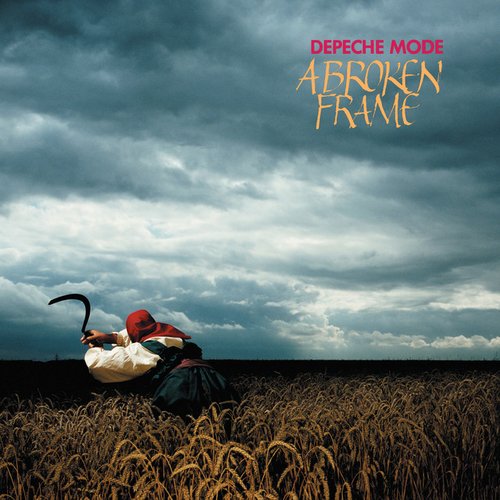
PHOTO CREDIT: Gered Mankowitz 

‘Hollywood’, 1979 (Gered Mankowitz)

___________

I am not going to…

 IN THIS PHOTO: Gered Mankowitz

repeat photographers too much in this feature but, as Gered Mankowitz was responsible for more than a few iconic Kate Bush photos, I wanted to highlight another one. There is debate and contrast when it comes to deciding which photo of Bush is the most striking. I think few summon as much awe as his stunning 1979 shot. It is Kate Bush looking like a Hollywood star. It is hard to put my finger on who Bush resembles in the photo, though there is that attempt to replicate the classic portraits of actresses from the 1940s and 1950s. It is a black-and-white photo that is very different to other shots of Kate Bush. Look at other Gered Mankowitz images he took of Bush in 1978 and 1979 and there is a marked change. Earlier photos of her are in colour, where she tends to be youthful and teenage. The 1979 is more mature and almost classic. Maybe trying to cast her in a more serious light, it shows the range of moods and expressions that Bush was capable of summoning. I am not sure whether Mankowitz himself regards his ‘Hollywood’ shot as the best one with Kate Bush. Maybe, before the series ends, I will select another one of his photos for inclusion. I feel the best photographers can get something very special from their subjects. In this case, there is a smoky and elegant expression that helps lodge the photo in your mind.    

There are so many reasons to love the 1979 photo. It was taken at a time when Bush was popular but still rising. She had released two studio albums – The Kick Inside and Lionheart of 1978 -, and I think the media had a particular image of her. Maybe there was a feeling that she was quite kooky or strange. Some saw her as the singer of Wuthering Heights: strange, high-pitched and a slight novelty. Some press photos of 1978 sort of cast Bush as an ingenue; that or they played up to that perception of her as someone who was easy to ridicule. I hate reading any article or interview where Bush is cast condescending or mocking tones. As we can see from the Gered Mankowitz photo, she was someone who should be taken seriously. Capturing something classy, beautiful and timeless, here is a photographer who showed a vast range and imagination. Matching Kate Bush’s maturing and evolving sound and the fact that she was complex and hard to peg, one can look at the ‘Hollywood’ photo for ages! It is so indelible and classy. I love the composition and the pose Bush gives. She would be involved with a lot of wonderful photos through her career, but I think the bond and trust she had in Gered Mankowitz is clear. He managed to get something special from her. His 1979 ‘Hollywood’ shot is proof of that. To me, it is one of the greatest photos of Kate Bush…

THERE has ever been.

FEATURE: Vinyl Corner: Martha Wainwright - Goodnight City

FEATURE:


Vinyl Corner

Martha Wainwright - Goodnight City

___________

WHEN thinking about an album…

 PHOTO CREDIT: Carl Lessard

to include in Vinyl Corner this week, I realised that I had not included Martha Wainwright before. I wanted to include this album, because it is one of her more underrated albums. Guest contributors include novelist Merrill Garbus, Glen Hansard, Michael Ondaatje, Beth Orton, and members of the McGarrigle and Wainwright families. Goodnight City is an album that I would recommend people get on vinyl. It is a terrific listen that got some good reviews. Even though not everyone was on board, the general vibe from people was positive. I like the fact that there are other writers on the album. It doesn’t make Goodnight City less personal or fractured. Instead, you do get this nice blend of sounds and directions that hangs together well. I have been listening back to Goodnight City a bit lately, and it is an album that contains some of Martha Wainwright’s best songs. She has said how the other writers did seem to tap into her life. Wainwright changed bits here and there so, essentially, it seems like the songs were written by her. There is a lot to enjoy and recommend when it comes to Goodnight City. As I do with albums I feature in Vinyl Corner, I want to bring in a couple of reviews for Goodnight City. The first review I want to bring in is from The A.V. Club. This is what they had to say in their review:

There have long been two sides to Martha Wainwright’s musicality: the singer-songwriter of her own distinction and the master interpreter of song. In the four years since her last solo effort, she’s seemingly emphasized the latter, playing the standards as a lounge singer in the Emmy-winning Olive Kitteridge; covering the work of Canadian songwriters (even translating her own) for the TV series Trauma; and releasing an album of family lullabies and folk covers with sister Lucy Wainwright Roche. Her latest, Goodnight City, merges these two sides, with inspired performances of both her own new work and contributions by writers as diverse as author Michael Ondaatje and Tune-Yards’ Merrill Garbus.

Goodnight City starts off in familiar enough fashion. Lead single “Around The Bend” is the kind of raw folk Wainwright is known for, with frank admissions—“I used to do a lot of blow”—delivered in her beautifully unruly vocal style. But by the second song, Wainwright reveals this record’s life force, its tonal departure from past work. “Franci” is a downright buoyant declaration of love for her youngest son: “Everything about you is wonder,” she sings, relishing in simply repeating his name. Goodnight City, while every bit as emotionally cathartic and complex as previous records, is markedly lighter and more outward looking. And almost everything comes back to Wainwright’s children.

Her two young boys seem to have helped Wainwright move through the loss of her mother in 2010, a devastation that understandably dominated 2012’s Come Home To Mama. The theme of motherhood inevitably carries through to Goodnight City, but much of its anguish has been replaced by optimism. On the affecting “Traveller,” her sons bridge the two: “You’re alive / You’re alive,” Wainwright sings of her mother, “In those children’s eyes.”

A great deal of Goodnight City’s lightness comes from Wainwright’s dauntless experimentation with genre. Fevered rocker “So Down” rages with full-on New York glam, while the dark, cosmic twang of Beth Orton contribution “Alexandria” calls to mind Wrecking Ball-era Emmylou Harris. The lively, bass-driven shuffle of “Take The Reins” nods to its writer (Garbus) while offering Wainwright fresh territory to explore with a stirring falsetto. With few missteps (the clichéd “One Of Us”), Wainwright and her band have found interesting arrangements to showcase her incredible range as a performer. She gives herself over to each challenge completely, inhabiting a variety of aesthetics and personas that deserve album-length explorations all their own.

But these are less personas than they are very real aspects of a multifaceted artist. The many perspectives on Goodnight City add up to a dynamic record that speaks to the power of letting others—be they family, friends, idols, alter egos—help pull us out of and realize fuller versions of ourselves. The cover of Goodnight City shows the artist looking two ways at once, clearly in transition, and Wainwright’s experimental spirit here suggests an exciting way forward”.

The Line of Best Fit note how, even though there are a few missteps on Goodnight City, the album is a definite step in a positive direction for Martha Wainwright:

Her debut EP, Bloody Mother Fucking Asshole, dealt in the intensely personal and the viscerally emotional, but when she followed it up with a self-titled full-length in 2005, things were poppier, airier and palpably more mellow. It was her second LP three years later that felt like the point at which she’d properly matured, setting the wit and insight of her earlier work against lusher production and sharper arrangements. Far from continuing in the same vein, though, Wainwright took a left turn, following I Know You’re Married But I’ve Got Feelings Too with a tastefully-done live album of Edith Piaf covers a year later.

As terrific a showcase for Wainwright’s vocal ability as that record was, the beginnings of an identity crisis seemed to be manifesting themselves on her third album proper, Come Home to Mama, a wildly diverse piece of work that swung from deep intimacy - the title was plucked from “Proserpina”, a version of the last song Wainwright’s mother wrote before she died - to ill-advised electro-pop (“Black Sheep”, “Can You Believe It”). The intervening years - as well as last year’s pleasantly breezy collaborative effort with her half-sister, Lucy Wainwright Roche - seem to have served as a palate cleanser; LP4, Goodnight City, harks back to the accomplished tone of I Know You’re Married But...

Not that Wainwright’s done things by the book. Only half of the 12 songs on the record are her own compositions; the rest have been written by or with close collaborators, including brother Rufus, Beth Orton and Glen Hansard. The album’s triumph lies in its cohesion, especially given the disjointed nature of Come Home to Mama; you get the sense that Wainwright was happy, here, to bend the songs she didn’t write to her own specification rather than run with the blueprint she was handed. “Look Into My Eyes”, a co-write with her aunt, Kate McGarrigle, and cousin, Lily Lanken, is a case in point, taking a slew of different ideas that shouldn’t really work together - fluttering synths, smoky saxophone and lyrics that flit between English and French - and melding them together to dramatic effect. Similar ideas are in play on Orton’s contribution, “Alexandria”; snatches of sinister brass and a consistently ominous piano generate a stormy atmosphere that Wainwright matches all the way with a swaggering vocal turn.

There are missteps, particularly “Take the Reins”, a weirdly subdued blues-folk turn that proves not even Wainwright can shine much light on the baffling acclaim that the track’s writer, Merrill Garbus of Tune-Yards, seems to garner from all corners. Those moments are few and far between, though, and most promising on Goodnight City is what a leap forward it represents from Come Home to Mama in terms of Wainwright nailing stylistic variation on her own cuts, from the gorgeous, country-flecked opener “Around the Bend” to the simmering tension of “Window”. Her most polished record to date, in every sense of the word”.

Maybe not the very best Martha Wainwright album (perhaps her 2005 eponymous album takes that honour), 2016’s Goodnight City is a really interesting and engaging album with some excellent tracks. If you have not heard of Martha Wainwright or are not sure where to start, I feel Goodnight City is a fine place to begin. I would recommend people check out Goodnight City on vinyl, as it is…

A brilliant album.

FEATURE: Spotlight: Katherine Priddy

FEATURE:


Spotlight

PHOTO CREDIT: Neash Photo/Video

Katherine Priddy

___________

I was keen to spotlight…

the Birmingham-based singer-songwriter, Katherine Priddy, as her debut album, The Eternal Rocks Beneath, is one of the most beautiful and impressive of the year. Drawing comparisons to Nick Drake and John Martyn, her music has this warmth and intoxicating spirit that lodges in the heart and lingers in the mind. As I do in these features, I am going to bring a couple of interviews in. I will finish with a great review of Priddy’s fantastic debut album, The Eternal Rock Beneath (one which beautifully spin on the mythological). In an interview with Belles & Gals, we find out more about Katherine Priddy’s musical tastes growing up, in addition to what life in lockdown was like earlier in the pandemic:

When did you first become interested in music, and who were your musical influences growing up?

I have always enjoyed listening to music and grew up in a household where music was often on the stereo, though it took me a long time to realise I could actually make it myself and even longer to realise I could become an actual musician. My parents listened to a really eclectic mix of music, from Irish folk music like Planxty and Christy Moore, through to English folk artists such as Nick Drake and John Martyn, then a whole heap of strange progressive rock and metal to boot. I think the common thread throughout the music I enjoyed most as a child was the storytelling aspect – I have always focused in on the lyrics when I listen to songs. I think its important to listen to a wide variety of music in order to really feed your creativity.

Could you tell us a bit about your journey as a musician so far?

As I said, I’ve always enjoyed listening to music and was in the school choir and school orchestra as a child, but it was in my pre-teens that I began teaching myself guitar and first started trying to write my own songs. My school encouraged me to enter The Next Brit Thing competition, despite the horror I felt at singing in front of people, and I ended up getting to the finals in the 02 arena – that was my first gig outside of my village. After that, I started supporting artists such as Vashti Bunyan, Scott Matthews and John Smith, before heading off to University to focus on studying English. It wasn’t until I finished my studies that I began to take my music really seriously and headed into the studio for the first time to release my debut EP ‘Wolf.’ The release went so much better than I could have hoped for, and things have been growing since then really in terms of gigs and festival performances. I am now very excited to be releasing my debut album, after 2 years of recording and waiting, and feel very ready to take on this next chapter.

What has life been like in lockdown? What opportunities and challenges have you faced as a musician in particular?

It has definitely been difficult, though there have been some really positive and hopeful moments that have shone through for me. I was actually hoping to release this record last year, but I chose not to put it out at the start of the pandemic as that wasn’t how I wanted to remember my debut album release and I wanted to feel like I had given it the best chance possible.

The waiting was hard, and losing a year’s worth of gig bookings and carefully laid plans was heartbreaking, but I made the decision to focus on building my online audience through a series of live streams, online festival performances and collaborations with other musicians. Despite shielding my Dad and being in total lockdown, I was able to perform as part of Philadelphia Folk Festival Online, which is not something that would have come about otherwise, and my Nick Drake collaboration with Jon Wilks, Lukas Drinkwater and Jon Nice was played on BBC Radio 2. I was also totally blown away by the outpouring of support from those who follow my music – it made a huge difference to my morale. It doesn’t look as though we’re quite out of the woods yet, but I’m really hoping for the return of some live music this summer. Live performance is my favourite part of this job and it seems there’s still an appetite for it!

Finally, if you could pick one female Folk/Americana/Country music artist to write a song with, who would it be and why?

Ahhhh you’ve saved the hardest question ‘til last! I think if I had to chose, it would be Joan Baez. I grew up listening to her music and her lyrics and songwriting are just beautiful. It would be a dream come true to write and sing a duet with a voice that has been such a constant in my life”.

I have been listening to Katherine Priddy’s music for a little while now, and it always sends me somewhere otherworldly. It has been played on stations like BBC Radio 6 Music. She has such a gorgeous voice and lyrics that are transformative and almost spiritual. Folk Radio chatted with Priddy in the summer. She discussed her songwriting process:

Have you forgotten what we were like then / when we were still first rate / and the day came fat with an apple in its mouth” whispers Katherine Priddy over the opening crossfire of Eurydice. Deliberate like Joan Shelley, yet with the fluid weave of Brigid Mae Powers; the only thing more haunting than the Birmingham based songwriter’s crystalline voice is her lyrics. However, in this instance we find Katherine quoting Animals by Frank O’Hara. It would seem the New York poet’s allusions to heady yesterdays are not too far removed from Priddy’s own meditations on time and love though. Her stunning debut The Eternal Rocks Beneath (reviewed here) is a haze of nostalgia, cast in the shifting light of passing seasons. As the world around us continues to change at an alarming rate, we caught up with the rising talent to discuss the finer details of her songcraft, how she’s withstood the recent highs and lows, and why she should never be left alone with your mum’s finest china.

“When I listen to music, I hear the words first and foremost, before the melody,” Priddy begins. Perhaps we should expect as much from an English Literature graduate, but still, it’s compelling to hear how her creative process hangs on this love of language. She offers one of the most valuable insights into her thoughts around songwriting when discussing O’Hara’s book Lunch Poems: “I like the way he uses names, places and moments, and never explains them. So, you feel like you’re either looking at him through a window or walking behind him down the street for five minutes, capturing fragments of conversation. There’s something about that almost voyeuristic style that I really like. I think that’s what songs should be like, just a brief little insight into something. It doesn’t all have to be explained.”

Although she has a trad repertoire, Priddy’s been wholly embraced by the folk scene on the grounds of the remarkable strength of her originals. “I don’t necessarily sing traditional folk, but what I really like is how it’s often used to tell stories. It became a voice for either passing on a tale or a moral teaching and I think that has influenced the way I write” she says. Adopting this time-honoured form of storytelling, Priddy then applies some of the introspection songwriters like Nick Drake and Joni Mitchell are famed for. “[Drake] was a very important artist for me when I was younger. His lyrics are so heartfelt. I saw something the other day about how his songs are seen as very autobiographical, but I think he was often the observer, the shy man in the corner. His songs tell other people’s stories, just as much as they tell his own.” Of the latter, she says, “Joni paints incredible characters and moments that I find totally captivating. Cactus Tree (from Song to a Seagull) is one of my favourite songs. I just want to know the woman that the song’s about.”

Pressing Katherine further about writers that may have informed her debut, she reveals lines from The Book Thief by Markus Zusak and Everything is Illuminated by Jonathan Safran Foer are penned in her lyrics notebook. When I ask whether these novels might in some way be tied in with the transient elements of childhood she mentioned in her Indigo blog, she responds, “Possibly. A lot of the songs on the album have little images and moments that will mean something to me, but might be lost on someone else, but that’s the joy of writing music. For me, it’s always for myself, as well as for the audience. The blackbird for example, that starts and finishes the album, is the most evocative sound of childhood for me as it was always the last thing I’d hear before I went to bed in the summer and the first thing I’d hear when I woke up. Whenever I hear blackbirds on warm evenings, I am immediately transported back to my childhood bedroom (and my Hedwig pyjamas).”

It then comes as something of a surprise to learn Ring O’Roses, the record’s moodiest moment, is one of Priddy’s earliest songs; “It’s perhaps the oldest song on the album. Again, perhaps it ties into my love of mythology, fairy tales and nursery rhymes. There’s a real dark history to a lot of the stories and rhymes you learn as a child, even though you’re often not made aware of it at the time. Anyway, I just wanted to use something ever so slightly familiar and comfortable and take it out of context to make it a bit unsettling. Melody wise, I learnt guitar on my Dad’s guitar and one day I picked it up and he had it tuned down to DADGAD, so I started messing about and the Ring O’Roses melody came out.”

Priddy started performing in her late teens, playing support slots and the odd headline show, before moving to Brighton for university. “Again, I did quite a few gigs whilst I was there,” she recounts, “I supported Martin Carthy & Dave Swabrick, that was a really lovely gig. In fact, I actually choked onstage, mid-song and had to stop; you know when it’s not just a tickle, it’s a full-on choke. Then when Carthy & Swabrick went up, Dave did this really big dramatic fake cough and said ‘I think there must be something in the air up here tonight’ and gave me a little wink. So, that was very sweet of him.” There have been plenty of brushes with folk’s finest since, having opened for the likes of Vashti Bunyan, John Smith, The Chieftains and Richard Thompson, her time on tour with the latter being a real standout.

“The entire experience was amazing but one of the main things that stood out to me was how supportive the Irish audiences were. I mean I see music as a valid career, but you’re not always made to feel as though it is. But gigs in Galway and Cork, the audiences out there, they’re just so into live music. I’ve never fed off a crowd as I did on that tour.

The queues for merch afterwards and the people who wanted to tell you who’s Aunty lives here, and where you can stay if you ever play a gig here. I was given money to go and get Fish & Chips after a gig! I absolutely loved touring Ireland and the fact that I was with Richard Thompson made it a hundred times more exciting.”

I’m sure much like many artists out there, Priddy’s keen to move the narrative away from the pandemic and these past fifteen months. However, distressing as it was, it did seem to reinforce the importance of artistic expression and community.

“When it all kind of went wrong and the diary was emptied it was obviously pretty devastating. I did a lot of head-in-hands, banana bread baking and gardening, all those things that people were doing. With the collaborations though it was a really unique opportunity where we were all suddenly sat at home, because normally artists have projects constantly on the go or they’re touring. You only see each other once or twice a year at festivals. So, it was really nice to see the music community pulling together and people working with each other in a way that we might not have been able to do otherwise”.

Go and follow the magnificent Katherine Priddy. She is a sensational and hugely talented artist that we all need to know more about. The Eternal Rocks Beneath is one of this year’s best albums. The Arts Desk provided their take on Priddy’s unforgettable debut album:

The folk world is slowly coming out of its long pandemic slumber, with Sidmouth’s month-long festival starting in the midst of Storm Evert’s high-summer arrival, and tours from the likes of fiddler extraordinaire Sam Sweeney, Eliza Carthy, and acclaimed newcomer, singer, songwriter and finger-picking guitarist Katherine Priddy, whose debut album is one of the most striking in British folk for some time.

The folk genre remains in good health, despite crippling lockdowns and the touring impact of Brexit on artists whose incomes tend to rely as much on gigging among our European neighbours as around the UK. Some of Priddy’s perfectly turned, articulate and emotive songs first appeared in 2018, on her Wolf EP, which came garlanded with fulsome praise from one Richard Thompson. She’s since played the stages of Cambridge, Towersey, Shambala and Underneath the Stars, released a Valentine’s single, and supported Thompson himself on a tour of Ireland. After her debut at Cambridge, she won the Christian Raphael Award for developing artists, granting her financial support and advice for the next 12 months.

She’s obviously used that advice and support to its maximum advantage, because The Eternal Rocks Beneath ("rocks" here is a verb) is a striking, and strikingly beautiful set of powerful and vivid songs, performed with an assurance and maturity that is all the more remarkable given that some of them, such as opener “Indigo”, were written when the 25-year-old was still a teenager. It’s an unshadowed childhood pastoral, her fine, clear and resonant voice and adept musical setting steering it into a lush lyricism that reduces the distances between childhood and adulthood so that they are not so wide as to be insurmountable.

Two songs from the Wolf EP are also included here, the title song’s probing lyric addressing the figure of the wolf’s dark allure, at once repellent and compelling. It’s vivid, concise and revealing. You can see why Thompson admired this song so much. "Ring A Roses", with its ominous, drone-like opening, is one of the darker highlights, the deadly old nursery rhyme exhaled in layered vocals, as Priddy expands on the terror of the Black Death to create a taste of lingering folk horror. When it was first recorded, COVID-19 wasn’t even a glint in the microscopic eye of the coming storm.

Elsewhere, with “The Spring Never Came”, emotional leave-takings and the metaphors of the turning seasons coalesce into reflections on separation and heartbreak, studded with images that don’t fade: “Your whispers come creeping, from my dreams they drip down my spine” – while musically it moves from spare fingerpicking to string section to a sort of chanson, fuelled by flares of accordion and driven by brush drums.

"Letters from a Travelling Man", the album’s single, is a brilliant character song, complete with great pop hooks and a lean Americana setting, while at the heart of the record there are imagistic songs about the Greek myth of Icarus, that eternal over-reacher, and Eurydice, each rising from intimate, breathy vocals to big choruses and an epic, big-ballad reach as Priddy reaches, finds and brings out – here and across the album – the compelling stories within”.

One of this country’s most noteworthy and fine singer-songwriters, I wonder what comes next in 2022. If you get to see Katherine Priddy perform live, then make sure that you do (check out her website for details). This wonderful songwriter is…

A name to watch closely.

_____________

Follow Katherine Priddy

FEATURE: (25th) December Will Be Magic Again: The Kate Bush Christmas Gift Guide

FEATURE:


(25th) December Will Be Magic Again

PHOTO CREDIT: John Carder Bush 

The Kate Bush Christmas Gift Guide

___________

IF you need some late (or not)…

Christmas gift guides for the Kate Bush fan in your life, I wanted to recommend some ideas. Rather than select particular albums, there are some awesome sets of vinyl, in addition to books and some merchandise that can bulk up a stocking or look pretty tantalising under the tree! If you prefer vinyl or C.D.s, there is some choice when it comes to Kate Bush. I am going to post links to either, though when it comes to a Christmas gift that gives you a good overview of Bush’s work, the Remastered series from 2018 is a good investment. As her more obscure and rare tracks are as revealing and interesting as her albums tracks, Remastered in Vinyl IV is a treat. Alternatively, you can get The Other Sides. Here, we get remixes, some B-sides and cover versions that are well worth owning! Getting the first, second and third boxset gives you all of the studio albums. I would especially recommend the first part, as you get Bush’s The Kick Inside (1978), Lionheart (1978), Never for Ever (1980) and The Dreaming (1982). I feel that we see the biggest transition and change between these albums. If you are limited in terms of budget, that is the one to start with. You can pick the boxsets up for £50 on vinyl from HMV. Quite pricey but, as you get four studio albums, that is good value. As the third boxset included the double album, Aerial (2005), the cost is a little more. To complete the audio/vinyl/C.D. section of this guide, there is a purchase that every fan would love. In 2016, Bush released the live album of her 2014 residency, Before the Dawn. This is something that I can personally recommend. I have that set and, not having been at any of the gigs, I do get a sense of what it must have been like. If you have not got it or are looking for a lead regarding a Kate Bush-related gift, this is one that should be in your mind!

Prior to coming to books, there is a bit of a market when it comes to merchandise and Kate Bush goods. There is official merchandise that offers plenty of choice. The T-shirts are pretty cool! If you want some T-shirts and other cool (unofficial) merchandise, then Red Bubble is a good site to check out. I like what they have to offer, and I have bought from them before. Maybe complimenting a vinyl boxset with a Kate Bush T-shirt or print would be a nice bundle? Another side with a wide array of options is Etsy.  They list prints, totes and a load of Kate Bush-related produce that is perfect as stocking fillers or a main present. I am looking at it now and am tempted to order myself a couple of gifts there! In addition to some rarer items, eBay provide some interesting and diverse options regarding merchandise and memorabilia. There is so much to pick from so, no matter if you have a new Kate Bush convert or a life-long fan in your life…they should be catered for pretty well!

Aside from a calendar for 2022 there are more than enough books on Kate Bush that are a perfect starting point for fans. The past year or two have been especially fertile regarding books about her. There are books out of print that would have been great to get, so having new releases is pleasing. It means that people can get a better insight into Bush. I would say getting Kate Bush: All The Top 40 Hits from Craig Halstead is a good buy. It pretty much does what it says on the cover regarding looking at all of her top forty tracks. There are a couple of track-by-track guides that, like the book above, goes into more detail regarding her songs. I have this one, Kate Bush On Track: Every Album, Every Song (On Track), and I can say that Bill Thomas does a good job providing details about her songs and some personal opinions. It is a just over a tenner - so it makes for a nice stocking filler. Released in February, Kate Bush: Song by Song from John Van der Kiste is the same sort of thing. There are differences between the two books, so buy both for the hardcore fan. For the more casual or new fan, I would point you towards Thomas’ book. That said,  both are excellent and offer passion and great research. Laura Shenton released two great books about Kate Bush last year. They dove deep into two very different albums. Her take on The Kick Inside is fascinating. That is my favourite album, so I am a little biased. I would urge anyone looking for a good starter book to buy that, as we get feel what it was like for Bush recording her 1978 debut album; the impact that album had cannot be underestimated!

Bush’s fourth studio album, The Dreaming is also explored and dissected. Both books are around the £10 mark, so they make for good presents. I think both are equally good - although Shenton’s writing on The Kick Inside is particularly good. There is a ‘holy trinity’ of affordable books (I will end with a  few that are a little dear) that everyone needs to ponder when deciding which Kate Bush books are worth buying. The first is her book of lyrics, How to Be Invisible, that presents some choice lyrics spanning forty years of a wonderful career. The fact that the book arrived forty years after her debut album was timely. It also allowed Bush plenty of choices when it came to selecting which songs to include for selection! Graeme Thomson’s excellent biography, Under the Ivy: The Life & Music of Kate Bush is a book I have bought several times and read so many times! It is a brilliant book that would be the one above all I would recommend if you want to know about Kate Bush from her childhood to 2014 (the book takes us up to her residency at Hammersmith). A book that is a bit more expensive (£40) is John Carder Bush’s – Kate’s brothers – KATE: Inside the Rainbow. This is another that is an absolute essential purchase! The great photos and commentary from Carder Bush mean we get to see this aspiring artist as a child. Through her album cover shoots and single artwork, it works up to 2011. Carder Bush’s recollections, notes and the pride he has for his sister makes it an emotional, informative and delightful read! WOW! Kate Bush by Gered Mankowitz is a selection of his photos of Kate Bush from 1978 and 1979 (many of which are previously unpublished) in a huge volume. It is £395 (plus shipping for international orders), so it is more of a luxury item. If you are a huge Kate Bush fan, this is a rare item that is more of an investment. The same can be said of The Kate Inside by Guido Harari. He photographed Bush between 1982 and 1993. His snaps are among the very best. I hope that the suggestions above are helpful if you know a Kate Bush fan and are wondering what to get. Even though there has been no music from her for a while, when it comes to vinyl, books, merchandise and other Kate Bush-related treats, there is…

 PHOTO CREDIT: Mike Forster/ANL/REX/Shutterstock

NO shortage of choice!

FEATURE: Modern Heroines: Part Eighty-Two: WILLOW

FEATURE:


Modern Heroines

 Part Eighty-Two: WILLOW

___________

I am always keen to…

 PHOTO CREDIT: Dana Trippe

promote and spotlight the strongest and most amazing women in music. In this feature, I nod to those who I feel are going to be icons of the future. In this part, I wanted to spend some time highlighting the amazing WILLOW (Willow Smith). I am going to come to some interviews that Smith has conducted. I think that her latest album, lately I feel EVERYTHING, is stunning. The twenty-one-year-old is the daughter of Will Smith and Jada Pinkett Smith – though she has forged her own career and not had to rely om her famous parents. WILLOW’s latest album, one of the year’s best, sported notable appearances from Travis Barker, Avril Lavigne, Tierra Whack, Cherry Glazerr, and Ayla Tesler-Mabe. In their review, AllMusic had the following to say:

Brushing genre boundaries aside once again, multi-hyphenate Willow Smith makes another stylistic pivot on her fourth studio album Lately I Feel Everything. Having excelled on her R&B, pop, and alternative singer/songwriter forays, Willow straps on a guitar for this potent rock blast that bridges pop-punk and '90s alt-rock with an unpolished messiness that is unapologetic, youthful, and a pure thrill. Initially thought to be a purely pop-punk exercise, Lately reveals itself as something more moody and angsty, the cathartic outburst of a young artist letting off some steam in a crazy world where she has to navigate regular human emotions and relationship woes against a backdrop of fame and privilege. Those darker moments -- "Don't Save Me," "Naive," and "Lipstick" being the best of the bunch -- are a time warp to the '90s, when distorted guitars, crunchy riffs, and atmospheric swirls dredged up plenty of anxiety, pain, and confusion. The lush rocker "4ever" links Willow's eras, sounding like an introspective outtake from The 1st backed by a studio band. In addition to guests Ayla Tesler-Mabe, Tierra Whack, and Cherry Glazerr, Willow recruits a pair of famous genre predecessors to inject some cred to this project with their high-profile co-signs. As the go-to drummer for the 2020s crop of pop-punk revivalists (see Yungblud, MGK, and KennyHoopla), Travis Barker lends his trademark delivery on a trio of tracks, including the hit single "Transparent Soul" and album standout "Grow," a bright romp that features pop-punk big sister Avril Lavigne on vocals. That latter track is worth the price of admission alone, but the rest of this brief set is such an unexpected surprise that it's worth the nearly half-hour investment. There seems to be nothing that Willow can't do as she adds rock to her résumé with ease”.

If you have not heard WILLOW’s lately I feel EVERYTHING, I would definitely recommend it. An album with plenty of energy and attitude. There is a great mix of sounds, though the overall tone is anthemic. This is what The Line of Best Fit offered in their assessment:

An obvious and instinctive departure from the sound on her debut album Ardipithecus (2015), this new offering sees the 20 year old musician collaborate with some of the scene’s biggest stars as she ricochets between apathy and euphoria via raucous guitar riffs and yearning vocals.

Born from a desire to make a record that would allow her to “have fun, be young and not be so existential and worrying all the time,” WILLOW is embracing her enduring love for My Chemical Romance, Paramore and Avril Lavigne and channelling their collective energy. This isn’t an ambiguous, introspective collection of songs that beg for intense analysis. Lately I feel EVERYTHING is a healthy rush of adrenaline designed to blitz away alienation and existential dread - like all quality pop punk albums should.

It helps that WILLOW has collaborated with two of the scene’s biggest stars on this record to achieve this. It's Blink-182 drummer Travis Barker who features heaviest: on introductory emo banger “T r a n s p a r e n t S o u l”, the brief but explosive “Gaslight”, and “Grow” - along with iconic touchstone Avril Lavigne. “Grow” in particular feels like a “full circle” moment for pop punk, three generations of the genre colliding to create a buoyant new anthem for the outcasts.

Like many of her contemporaries, WILLOW isn’t afraid to mix things up within the genre too - doing so alongside the likes of Canadian songwriter Ayla Tesler-Mabe and American rapper Tierra Whack. Ayla’s softer vocals compliment the heavy riffs and yearning lyrics on “Come Home” whilst Tierra’s slick rap verse on “Xtra” give the record a stylish shake up. When pairing with rockers Cherry Glazerr on “Breakout”, WILLOW opts for a more abrasive, garage-punk style - the same going for her solo efforts “Lipstick” and the angsty mini skit “F__k You”.

As carefree as it is frustrated, as playful as it is temperamental, WILLOW’s lately I feel EVERYTHING is a straight up lively hit of jaded emo bangers that will have a new generation of listeners whipping their hair back and forth”.

A strong and inspiring artist, I am utterly compelled by WILLOW and her path. I feel that it is relevant sourcing interviews with her. Before arriving at a recent NME feature, there is an interview with THE FACE, where we learn more about lately I feel EVERYTHING and WILLOW’s (Willow Smith) musical background:

Lately I Feel EVERYTHING is therefore Willow plunging straight into her mind’s deep sea. “[The album is] a direct response in a way of like, ​‘Damn, I don’t want to look at this in a negative way’,” she says. Recording started just after she’d voluntarily locked herself in the box, while involuntarily locked up at home during lockdown. ​“A lot was happening and I was just,” as per the album’s title, ​“feeling everything that you could possibly imagine.”

On t r a n s p a r e n t s o u l, ​“everything that you could possibly imagine” manifests itself as two minutes and 48 seconds of headbanging angst, as she directs cutting digs to the target of her lyrics over emotive pop-punk power chords and Barker’s typically furious drums. On her latest single, Lipstick, her own emotions pull focus over grungier, more metal production, as she looks ​“at pain like my old close friend.” And on the much-teased, hotly-anticipated Avril Lavigne collab Grow, Willow and the OG sk8er girl deliver the kind of optimistic, upbeat pop-punk that wouldn’t seem out of place in a Bring It On montage scene.

“Travis and Avril know pop-punk more than anyone,” says Willow of the album’s most high-profile features. ​“To see them be so proficient in their art was just so inspiring. Travis listened to [t r a n s p a r e n t s o u l] one time and played it perfectly. Like, that’s crazy!” She’s in full gush mode now. ​“The fact that Avril can just do one idea and there’s no questions, that’s what we’re going to do, that’s the most fire… They’re just so in tune and they know it’s going to be great.”

As a teen, Willow soaked in the likes of Paramore, My Chemical Romance and, of course, Avril Lavigne, soundtracking her adolescent angst with the thrashing melodrama of emo. And as a child, she could be found headbanging on the shoulders of security guards at Wicked Wisdom gigs, the 2000s metal band that her mum, Pinkett Smith, founded and fronted.

“They would take me to the back of the venue and I would just put my little horns up,” says Willow, looking back wistfully. Lapping it up in clubs that wouldn’t typically let a 16-year-old in, let alone a small child aged seven, these were the experiences that birthed her inner rockstar. ​“There were specific moments when I felt like she was just performing to me. It felt so beautiful and so inspiring. I knew that that’s what I wanted to do with my life.”

Yet while her mother’s band has had an undeniable impact on Willow’s musical trajectory, she’s not ready to take on Wicked Wisdom’s genre just yet. She dipped her toes through a touching performance with the band for a Mother’s Day episode of Red Table Talk, the online talk show helmed by the Smith women. Looking as though she’d been plucked straight out of 2004 in a Mastodon raglan top and baggy jeans, Willow performed Wicked Wisdom’s Bleed All Over Me in her garden, as Pinkett Smith watched on, beaming and gently headbanging with pride. But Willow’s official metal era is still waiting in the wings. The stage lights will go up when she’s ready to fully embrace womanhood.

 “[Pop-punk and metal] are like sisters. Metal is the mature musician sister and pop-punk is, like, that little sister who was really inspired by their big sister and started playing the guitar but doesn’t spend as much time on it,” she says with a self-deprecating laugh. ​“I definitely felt like pop-punk spoke to my youthful soul and metal kind of spoke to the woman within me. I’m planning on doing a metal album in the future, but I need to hit that pop-punk steez first.”

“Black people created rock music. But we have been so indoctrinated to believe that we only thrive in certain categ

If Willow’s punk-pop revolution is driven primarily by a genuine love for the music, coming in a close second is her determination to break stereotypes within the industry. You don’t need to be an expert to notice that mainstream rock music has been historically dominated by white men. And you only need to read testimonies from Black women in the industry to understand how hard it was for anyone who looks different to not only break in, but also to persevere and thrive. Jada Pinkett-Smith received death threats while touring with Wicked Wisdom. Alexis Brown, singer of the metalcore band Straight Line Stitch, was heckled by Neo-Nazis. For a long time, rock was a space that some white men felt they owned – and they didn’t like it when their dominance felt threatened.

“I think that a lot has changed and, honestly, even if it hasn’t, I’m just going to continue doing the work,” says Willow of current attitudes. ​“That’s what I’m here for.” She nonchalantly dismisses the opinions of older rock fans who have directed negativity her way, particularly comments under a video of her playing a System of a Down riff, which the band’s bassist, Shavo Odadjian, reposted on Instagram. ​“I wish I could understand [them], but because I’m not in their mindset, it’s kind of hard. There’s a reason that me doing this must cause them pain, so I have compassion for that, but I’m not gonna change what I’m doing.”

For Willow, it’s about striking a balance between being defiant in the face of racism while keeping it at a distance. She’s making a statement, not retaliating. ​“I try not to look too deep into it because I don’t want to get attached to those negative emotions. There’s no reason for me to get attached to them. But I still don’t want to shy away from it.”

The idea that white men ever ​“owned” rock music is inherently false regardless. As Willow notes, ​“Sister Rosetta Tharpe was shredding on the electric guitar in the ​’40s!”. Little Richard, Chuck Berry and Bo Diddley pioneered the rock ​’n’ roll phenomenon of the 1950s (itself deeply rooted in blues music), although they never got quite as much airplay or mainstream acclaim as Elvis Presley.

“Black people created rock music,” says Willow. ​“But we have been so indoctrinated, so conditioned to believe that we only thrive in certain categories of creativity and entertainment. And that’s just not OK”.

I want to end with an illustrative and fantastic interview that NME conducted recently. One of the most intriguing artists in the world at the moment, WILLOW is someone whose music will continue to evolve and strengthen:

The artist knows a thing or two about speaking to a global audience. Famous since before she could walk, she soon appeared alongside her dad, rap and big screen megastar Will Smith in Hollywood blockbusters I Am Legend (2007) and Madagascar 2: Escape To Africa (2008) before she released 2010’s global pop-rap hit ‘Whip My Hair’ at the age of nine. The attitude-ridden track was a phenomenon, establishing Willow as a star in her own right – if a little too soon.

Now 11 years later, just like her brother the rapper, actor and viral sensation Jaden Smith, Willow stands fearlessly in the spotlight. As well as boasting a back catalogue of raw, confessional music that dabbles in everything from glitzy art-pop to socially-conscious R&B, she also co-hosts the Red Table Talk – a show that sees her sit down and discuss everything from sexuality and mental health to her own childhood with her mother, the actor and former rockstar Jada Pinkett Smith, and her grandmother Adrienne Banfield-Norris.

Given how comfortable she is speaking on behalf of herself and her generation on the “many historical shifts in the perception of humanity and the zeitgeist”, it’s little wonder Willow has become a Gen Z icon. She even wrote the perfect soundtrack to her status with 2021’s ‘Lately I Feel Everything’, a swaggering alt-rock album that she’s currently bringing to enraptured audiences – next week, she’ll play a one-off show at London’s Electric Ballroom.

Willow admits that it is tough to be vulnerable when she is so exposed. Her battles with self-harm, her run-ins with cyber stalkers and even trivial matters like changes in hairstyle are broadcast online for the whole world to see and judge her by. However, she knows you can’t be a role model if you aren’t seen as human.

“You need to show that life is hard for everyone,” she explains today from a restaurant in Los Angeles. “We’re all going through our own struggles. We’re all trying to figure out the most healthy ways to cope with the parts of ourselves that don’t make us the most comfortable or that are that are scary to us.”

The young star, now 21, knows that other people in her privileged position might shy away from being so open, but as she explains: “Sharing the human experience is what makes life worth it.” Speaking of the media’s constant glare, she admits: “It’s an insane world out there, but you can’t focus on that.”

The record pays homage to ’00s guitar music, but she isn’t afraid to take the genre to new places to speak to where she and the world are at right now. ‘Grow’, her easycore anthem of self-acceptance, features scene legend Avril Lavigne and sees Willow sing: “No one ever truly knows just who they are / And I feel closer knowing I don’t have to hide my scars.” Meanwhile, the slow-burning ‘Naïve’ finds her wide-eyed in the face of political turmoil: “We got shot by rubber bullets at a protest in the Bronx / And I never notice when the night goes sour.” On tracks the thundering ‘Lipstick’ and the dreamy ‘Xtra’, she’s frank about her struggles with mental health.

PHOTO CREDIT: Dana Trippe 

Some may have been shocked by former child star Willow Smith returning with a rousing rock album, but she’s always dabbled with heavier music – and teamed up with producer Tyler Cole in 2020 to create side-project The Anxiety. Their self-titled record was a 10-track indie collection that came alongside a 24-hour art installation which saw Willow and Cole lock themselves in a glass box and work through the stages of anxiety: paranoia, rage, sadness, numbness, euphoria, strong interest, compassion and acceptance. Earlier in her career, there was the bass-driven ‘RandomSong’ on ‘Ardipithecus’ while ‘The 1st’ featured ‘Human Leech’, a snarling grunge track.

In fact, Willow’s been a fan of heavy music since childhood. She’d regularly sit side-of-stage, watching her mum Jada front heavy-metal group Wicked Wisdom. This introduced her to that world, but also to seeing her mother subjected to racist, sexist abuse when she took to the stage. In the ’00s, metal was very much a white, male space.

Willow says of her mother’s influence: “She showed me what being a woman is really all about. There are literally no words to describe having to get up in front of people who literally hated her, every night. She did it with such grace and power. And at every single show, she won them over. By the end of the show, the people who were calling her racial slurs and throwing things at her were like, ‘Actually, they kinda went off’. That made it really worth it.”

 Earlier this year, after appearing on Red Table Talk, she made headlines when she revealed she was polyamorous (engaging in multiple romantic and sexual relationships at once). “With polyamory, I think the main foundation is the freedom to be able to create a relationship style that works for you and not just stepping into monogamy because that’s what everyone around you says is the right thing to do,” she explained to her mother and grandmother while the whole world was listening.

Today, Willow tells us how she’s open about her sexuality in the hopes of normalising it: “So many people live [in] so many different kinds of ways. The one thing that humans have never been good at is accepting that people are different. It’s about time we started getting good at that, though. As long as people are being honest and compassionate, how they live has nothing to do with you.”

Likewise, she sings in-depth about her struggles with mental health and anxiety. “At first it was to get my emotions out, because otherwise I might explode and have a panic attack,” she explains, “but the after-effect of that is that it can help others, which I’m so glad about”.

An artist that is already inspiring so many others, I would encourage everyone to listen to WILLOW’s music. I have put a playlist at the bottom with some of her very best tracks to date. A remarkable and fascinating talent, we are going to hear a lot more…

FROM the amazing WILLOW.

FEATURE: The Lockdown Playlist: The Best of Big Mama Thornton

FEATURE:


The Lockdown Playlist

The Best of Big Mama Thornton

___________

I have not featured the legendary…

 PHOTO CREDIT: Michael Ochs Archive

Blues artist Big Mama Thornton on my site before. She is one of the more underrated (yet important) artists from the genre, as she did not have a lot of hits – just the one in fact! As she would have turned ninety-five today (11th December), I wanted to recognise her legacy and the great music that she left behind. Prior to that, AllMusic’s biography gives us more detail about a remarkable artist:

Willie Mae "Big Mama" Thornton only notched one national hit in her lifetime, but it was a true monster. "Hound Dog" held down the top slot on Billboard's R&B charts for seven long weeks in 1953. Alas, Elvis Presley's rocking 1956 cover was even bigger, effectively obscuring Thornton's chief claim to immortality.

That's a damned shame, because Thornton's menacing growl was indeed something special. The hefty belter first opened her pipes in church but soon embraced the blues. She toured with Sammy Green's Hot Harlem Revue during the 1940s. Thornton was ensconced on the Houston circuit when Peacock Records boss Don Robey signed her in 1951. She debuted on Peacock with "Partnership Blues" that year, backed by trumpeter Joe Scott's band.

But it was her third Peacock date with Johnny Otis' band that proved the winner. With Pete Lewis laying down some truly nasty guitar behind her, Big Mama shouted "Hound Dog," a tune whose authorship remains a bone of contention to this day (both Otis and the team of Jerry Leiber and Mike Stoller claim responsibility), and soon hit the road a star.

But it was an isolated incident. Though Thornton cut some fine Peacock follow-ups -- "I Smell a Rat," "Stop Hoppin' on Me," "The Fish," "Just like a Dog" -- through 1957, she never again reached the hit parade. Even Elvis was apparently unaware of her; he was handed "Hound Dog" by Freddie Bell, a Vegas lounge rocker. Early-'60s 45s for Irma, Bay-Tone, Kent, and Sotoplay did little to revive her sagging fortunes, but a series of dates for Arhoolie that included her first vinyl rendition of "Ball and Chain" in 1968 and two albums for Mercury in 1969-1970 put her back in circulation (Janis Joplin's overwrought but well-intentioned cover of "Ball and Chain" didn't hurt either). Along with her imposing vocals, Thornton began to emphasize her harmonica skills during the 1960s.

Thornton was a tough cookie. She dressed like a man and took no guff from anyone, even as the pounds fell off her once-ample frame and she became downright scrawny during the last years of her life. Medical personnel found her lifeless body in an L.A. rooming house in 1984”.

To mark the ninety-fifth birthday of a terrific artist whose music never quite got the acclaim it deserved. Even though she did not trouble the hit parade much, that is not to say her impact and influence is small. Quite the opposite. I have selected a few of her tracks to show what a force she was! It leaves me to wish the late legend Big Mama Thornton…

A happy ninety-fifth birthday.

FEATURE: Vinyl Corner: David Bowie – Hunky Dory

FEATURE:


Vinyl Corner

David Bowie – Hunky Dory

___________

NOT that a reason is needed…

to include David Bowie in any feature but, on 17th December, Hunky Dory turns fifty. One of Bowie’s most important albums, it is one that is well worth getting on vinyl. It is an album that contains some of his best songs. It features Changes, Life on Mars?, and Kooks. There are few artists who could complete with Bowie in the 1970s. The incredible run of albums he released in the decade showed he was one of the most innovative and original artists ever! Whereas 1970’s The Man  Who Sold the World is a harder and grittier album, Hunky Dory is softer, more melodic and a different direction – Bowie choosing to write on the piano more compared with the guitar for the previous album. I know that there will be a lot of celebration and remembrance of Hunky Dory on its anniversary. It is over five years since we lost David Bowie. He left us with so many genius albums. Hunky Dory ranks alongside his very best. I will source a review of the album – I am yet to find one that is not overwhelmingly positive – that shows what a pioneer Bowie was. Before that, on its forty-ninth anniversary, LOUDER produced a lengthy and detailed feature about how Hunky Dory was made and why it was such an important release for Bowie. I have selected a few sections that interested me. Bassist Trevor Bolder and drummer Mick Woodmansey (and others) provided their recollections and memories:

Sessions began at Trident Studios in London’s Soho in early June 1971. In the world outside, US president nixon ended a 21-year-old trade embargo on China; Russia launched the Soyuz 11 craft for the first-ever rendezvous with a space station; Frank Sinatra announced his retirement; and topping the pop chart in Britain was Tony Orlando & Dawn’s Knock Three Times.

Inside Trident, however, none of that registered. Working from 2pm to midnight, Monday to Saturday, with quick breaks for tea, sandwiches and the occasional bottle of wine, the band were swept up in a colourful world of bipperty-bopperty hats, Garbo’s eyes and homo superiors (the album’s recurring theme of children ch-ch-changing into enlightened beings was influenced by Bowie’s love of the occult writings of Aleister Crowley, and sci-fi novels by Arthur C Clarke).

Bolder recalls the excitement: “Hunky Dory was the first recording session I ever did in my life, and just to be in a studio was amazing. Our approach was very off-the-top-of-our-heads. We’d go in, David would play us a song – often one we hadn’t heard – we’d run through it once and then take it. no time to think about what you’re going to play, you’d have to do it there and then. In some respects it’s nerve-racking, but it gives a certain feel. If you play a song too many times in the studio it can become stale, and I think David wanted to capture the energy of it being on the edge.”

Woodmansey agrees: “There was incredible pressure in getting a track recorded right. Many times, we’d go in with a track to record, and at the last minute David would change his mind and we’d do one we hadn’t rehearsed! We would be panicking, as he didn’t like doing more than three takes to get it. nearly every track I recorded with David was first, second or third take, usually second. he knew when a take was right.”

This was a change from the sessions for the previous album, where Bowie was reportedly distracted and undisciplined. Tony Visconti later complained that during the recording of The Man Who Sold The World David had spent more time in the lobby cuddling with Angie than worrying about finishing the tracks. But the Bowie on Hunky Dory was a man with a mission

Ken Scott: “With David, unlike the Beatles sessions, it was very much him knowing what he wanted right from the get-go. I think he knew all along what was going to happen, but he didn’t always tell you. you had to be ready. and with David almost all of the lead vocals are one take.”

A late addition to the team was keyboard virtuoso Rick Wakeman, who had played Mellotron on Space Oddity and was now drafted in to dress up Bowie’s piano parts. “he told me to make as many notes as I wanted,” Wakeman once said. “The songs were unbelievable – Changes, Life On Mars?, one after another. he said he wanted to come at the album from a different angle, that he wanted them to be based around the piano. So he told me to play them as I would a piano piece, and that he’d then adapt everything else around that.”

If Wakeman was a featured performer so too was the 100-year old Beckstein piano he played. Scott: “It was the same piano used on Hey Jude, the early Elton John albums, Nilsson, Genesis and Supertramp, among many others. That was one of Trident’s claims to fame – the piano sound. It was an amazing instrument.”

Nowhere was that piano better featured than on the kitchen-sink ballad Life on Mars? The song has often compared to Sinatra’s My Way (the album liner notes even say: “Inspired by Frankie”), and for good reason. In 1968 Bowie was asked by a publisher to submit English lyrics to a popular French chanson, Comme D’Habitude. his version, titled Even A Fool Learns To Love, was rejected in favour of another by former teen idol Paul Anka.

Bowie: “There was a sense of revenge in that, because I was so angry that Paul Anka had done My Way. I thought I’d do my own version. There are clutches of melody in that [Life On Mars?] that were definite parodies.”

A week before the sessions began, on May 30, Duncan Haywood ‘Zowie’ Jones was born, cracking his mother’s pelvis in the delivery. Bowie greeted his boy with Kooks, a charming ditty meant as both a paternal tribute and a warning. In the 1971 press release for Hunky Dory, he explained: “The baby looked like me and it looked like Angie and the song came out like, ‘If you’re gonna stay with us you’re gonna grow up bananas.’”

Actually, Zowie (now known as Duncan Jonesand an acclaimed film director) turned out fine, despite a mostly absentee father and being raised by a revolving cast of nannies and grandparents. Bowie confesses: “I might have written a song for my son, but I certainly wasn’t there that much for him. I was ambitious, I wanted to be a real kind of presence. and I had Joe very early. and with that state of affairs, had I known, it would’ve all happened a bit later. Fortunately everything with us is tremendous. But I would give my eye teeth to have that time back again, to have shared it with him as a child.”

Drawing on the “collision of musical styles” idea, Hunky Dory ricochets playfully through its 11 songs. From the lounge-meets-boogaloo gear shifts of Changes and the glam-ragtime stride of Oh, You Pretty Things, through the Tony newley-does- the-blues of Eight Line Poem to psyche-Dylan swirl of The Bewlay Brothers, it’s a thrilling hybrid.

“It was like, ‘Wow, this is no longer rock’n’roll. This is an art form. This is something really exciting!’” says Bowie. “I think we were all very aware of George Steiner and the idea of pluralism, and this thing called post-modernism which had just cropped up in the early 70s. We kind of thought, cool, that’s where we want to be at. Fuck rock’n’roll! It’s not about rock’n’roll any more, it’s about how do you distance yourself from the thing that you’re within? We got off on that. I think certain things had been done that were not dissimilar, but I don’t think with the sensibility that I had.”

That sensibility was abetted by the album’s secret weapon: guitarist and creative foil Mick Ronson. “What I’m good at is putting riffs to things, and hook-lines, making things up so songs sound more memorable,” the guitarist (who died in 1993) once said. and the proof abounds: his spare, searing licks on Eight Line Poem; the explosive acoustic on Andy Warhol; the nasally distorted power blast on Queen Bitch. all electrifying moments.

“I would put him up there with the best I’ve ever worked with,” said Ken Scott. “I think Ronno was better than any of The Beatles as a guitarist. his playing was much more from a feel point or melodic point of view.”

Woodmansey: “Mick didn’t really know how good he was. he would do a solo, first take, never played it before, and it would blow us away. David would always get Ken to push the record button without Mick knowing. he would do another six solos, but it was always the first or second one that we kept.”

Ronson’s gifts extended beyond his guitar playing. In the months prior to the sessions, he had been studying music theory and arranging with a teacher back in Hull. That bit of knowledge, combined with his innate musicality, made for the stunning string arrangements on songs like Life On Mars? and Quicksand.

“Ronno was great the way he’d go down to just one or two violins, then have the others come slowly but surely,” says Scott. “he didn’t quite know what he was supposed to do, so he was much freer. Much like The Beatles. he would do things other arrangers would never do.”

Angie Bowie says of the communication between her ex-husband and Ronson: “They were two Yorkshireman chatting away. Very full of respect for each other. They were young and very sweet, well-mannered, trying to be as professional as they could. I know that sounds boring, but it’s the truth. There were no drugs. They were just doing this wonderful album and everyone was thrilled at having a chance to participate instead of having to work horrible jobs.”

Side Two of the album featured a trio of “hero songs” inspired by Bowie’s visit to America. Queen Bitch was an exhilarating nod to the Velvet underground (Lou reed later said he “dug it”). Bowie says he had been fixated on the Velvets since the first time he heard their single Waiting For The Man. “It was like, ‘This the future of music! This is the new Beatles!’ I was in awe. For me it was a whole new ball game. It was serious and dangerous and I loved it”.

If Hunky Dory was David Bowie’s first masterpiece, it definitely wasn’t his last! It is an album that gave him a wider audience and seemed to open his horizons. Bowie recalled how people came up to him after the album came out and provided compliments (the first real time that has happened to him). If you do not own Hunky Dory on vinyl, then now is a perfect time to get it. In their review, this is what AllMusic observed:

After the freakish hard rock of The Man Who Sold the World, David Bowie returned to singer/songwriter territory on Hunky Dory. Not only did the album boast more folky songs ("Song for Bob Dylan," "The Bewlay Brothers"), but he again flirted with Anthony Newley-esque dancehall music ("Kooks," "Fill Your Heart"), seemingly leaving heavy metal behind. As a result, Hunky Dory is a kaleidoscopic array of pop styles, tied together only by Bowie's sense of vision: a sweeping, cinematic mélange of high and low art, ambiguous sexuality, kitsch, and class. Mick Ronson's guitar is pushed to the back, leaving Rick Wakeman's cabaret piano to dominate the sound of the album. The subdued support accentuates the depth of Bowie's material, whether it's the revamped Tin Pan Alley of "Changes," the Neil Young homage "Quicksand," the soaring "Life on Mars?," the rolling, vaguely homosexual anthem "Oh! You Pretty Things," or the dark acoustic rocker "Andy Warhol." On the surface, such a wide range of styles and sounds would make an album incoherent, but Bowie's improved songwriting and determined sense of style instead made Hunky Dory a touchstone for reinterpreting pop's traditions into fresh, postmodern pop music”.

Fifty years after its release, Hunky Dory is still being played and studied. Such a wonderful album with huge hits such as Changes sitting alongside deep cuts like Fill Your Heart. It is a truly visionary and remarkable work from a legend we all miss very much. Produced by Ken Scott and David Bowie and released on 17th December, 1971, David Bowie’s Hunky Dory is…

AN unquestionable masterpiece.

FEATURE: Inspired By… Part Forty: Fiona Apple

FEATURE:


Inspired By…

PHOTO CREDIT: Kevin Hayes

Part Forty: Fiona Apple

___________

I have featured Fiona Apple in various features…

and compiled a playlist of her best tracks. In this feature, I get to turn things around and look at artists influenced by an icon. Fiona Apple is someone who has her own style and is hard to compare with anyone, though she has influenced so many other artists. Before ending with a playlist of songs from artists who either cite Apple as an influence or are similar to her, I want to bring in some biography. AllMusic provide some background and great information about a truly spectacular artist:

Fiona Apple never quite belonged to a specific scene. The closest she came was at the dawn of her career, when her debut album Tidal arrived as the alternative rock wave reached its crest in 1996. Apple spent her time in MTV's Buzzbin and on tour with Sarah McLachlan's Lilith Fair revue, earning a hit single ("Criminal") and platinum certification along the way, but she wasn't a folkie or a punk rocker. Her roots lay in jazz, show tunes, and classic '70s singer/songwriters, an idiosyncratic blend that came into sharper focus on her second album, When the Pawn. Upon its release in 1999, When the Pawn drew attention for its emotional intensity, unconventional arrangements, and eccentric flair, elements that were central to her appeal in the next decades when she worked steadily and rigorously. As her output slowed -- it took her six years to deliver her third album, Extraordinary Machine, and another seven for its sequel, The Idler Wheel, to appear -- her reputation as a daring artist grew. The Idler Wheel and its 2020 successor Fetch the Bolt Cutters confirmed Apple took aural risks without abandoning her strengths as a singer/songwriter, a combination that helped her maintain a devoted cult following.

Born to singer Diane McAfee and actor Brandon Maggart in 1977, Fiona Apple started playing and writing songs at the age of 12 in an effort to work out a traumatic childhood that included rape at the age of 11. Apple continued to write, leaving high school for Los Angeles at the age of 16. She cut a demo tape that eventually earned her a contract with Sony Music in 1995. Teamed with producer Andrew Slater, she cut her debut, Tidal, releasing the album in the summer of 1996.

Tidal was a slow build, earning critical acclaim and a cult that exploded when the controversial video for "Criminal" turned the single and album into a hit. Mark Romanek's seedy, suggestive clip was overtly sexual -- a path Apple notably avoided afterward -- but it did the trick, helping the album reach the Top Ten and earning Apple a Grammy. Despite this titillation, Tidal appealed to middle of the road listeners, a path Apple definitively rejected with her next album, 1999's When the Pawn Hits the Conflicts He Thinks Like a King.... The entire title was a 90-word poem, a fair indication of the artistic ambition that lay within. Produced by Jon Brion, the album was dense, literate, and melodic, not matching the commercial success of the debut but deepening her cult. Despite a romance with director Paul Thomas Anderson -- she contributed to the soundtrack of his 1999 magnum opus Magnolia -- Apple retreated from the spotlight, fostering an element of mystery that only grew when her next album experienced a series of delays.

By 2003, the lack of a sequel became a sensation among some music message boards, where rumors swirled that Sony rejected her newest music for being uncommercial. Within the next year, unfinished mixes leaked onto the Internet and the saga of the album spilled over into the mainstream, earning ink in The New York Times. All this helped usher the album to completion in the fall of 2005, when the original Brion productions were tweaked and expanded with producer Mike Elizondo, who helped Extraordinary Machine reach its final shape. The album was greeted by generally positive reviews -- some compared it not entirely favorably to the leaked album -- and the record received healthy sales. In its wake, Apple maintained a moderate presence, touring with Nickel Creek in 2007 and appearing with the Watkins Family at times during their residency at the Largo in Los Angeles. In 2012, Apple previewed three songs from her fourth studio album (which boasted a typically enigmatic title in The Idler Wheel Is Wiser Than the Driver of the Screw and Whipping Cords Will Serve You More Than Ropes Will Ever Do) to a wildly enthusiastic audience at the South by Southwest music festival in Austin, Texas. Produced by Apple with her touring drummer, Charley Drayton, the album earned excellent reviews upon release in June 2012.

Apple spent the next few years contributing songs to movies and television shows, including writing "Container," which was the theme to the Showtime series The Affair. In 2015, she contributed to Watkins Family Hour, the first album by Sean and Sara Watkins' Los Angeles-based collective, and the following year she appeared on Andrew Bird's Are You Serious album. Apple released her fifth solo album, Fetch the Bolt Cutters, in April 2020”.

To recognise and celebrate an artist who is among the very best, the playlist at the end is tracks from artists who definitely allude to Apple or have some of her sound and personality in their own work. Like other artists in this feature, you can see how wide her influence has stretched. I love Fiona Apple’s music, as it leaves a lasting impression. Her brilliant albums…

ALWAYS offer some extraordinary.

FEATURE: How Amazing, This Woman’s Work! Kate Bush: The Five Best Award Wins

FEATURE:


How Amazing, This Woman’s Work!

IN THIS PHOTO: Kate Bush being presented with a South Bank Sky Arts Award for 50 Words for Snow by Tom Jones in 2012/PHOTO CREDIT: Richard Young/Rex Features

Kate Bush: The Five Best Award Wins

___________

EVEN though I have dedicated a feature…

 IN THIS PHOTO: Kate Bush at the Capital Radio Awards. During the ceremony on 6th March, 1979 (at the Grosvenor Hotel in London), she won two awards: for Best British Female Singer and Best British Newcomer

to Kate Bush and her award wins, I wanted to narrow it down to the best five awards. I was watching a video of Bush collecting an award in 1978. Bush has won multiple awards through her career, though there are a few that are especially meaningful; ceremonies that were more interesting then others. The first award that I want to mention is the Edison Award. This was the one that Bush won in 1978 – the video that I was mentioning earlier. I am going to lean on the Kate Bush Encyclopaedia when it comes to providing information about these awards. I incorrectly said, in the previous award feature, that she won the Edison Award in 1979. It was actually November 1978. This article gives us some context:

On 15 August 1978 a jury consisting of Meta de Vries, Jim van Alphen, Henk van Gelder, Ruud Kuyper and Jan Maarten de Winter announced the winners of Edison awards for that year. Kate won the award for 'best international single' for Wuthering Heights. The awards were presented to Dutch artists on 28 September 1978 in Wassenaar, the Netherlands. International artists weren't present on that day. Kate was presented with her award in early November, during a party at castle Ammersoyen during which her second album Lionheart was presented”.

One reason why I love this is because it came so early in her career. Wuthering Heights was honoured and Bush, when you see her collect the award, looks genuinely chuffed and humbled! Up until that point, her music had not been widely garlanded. It must have been quite a daunting and hectic year in 1978. As she was promoting her second album that year, the sense of confusion and fatigue would have been evident. That makes the Edison win especially gratifying and deserved.

One of my favourite Kate Bush award-winning moments was when she won The South Bank Sky Arts Award in 2012 for 50 Words for Snow (2011). Even though this was late in her career, Bush was still nervous and was grateful. The Kate Bush Encyclopaedia provides more details:

The South Bank Sky Arts Award (originally The South Bank Show Award) is an accolade recognizing British achievements in the arts. The awards have been given annually since 1996. They originated with the long-running British arts programme The South Bank Show. The last South Bank Show Awards ceremony to be broadcast by ITV was in January 2010. After the network had announced that The South Bank Show would be cancelled at the end of the 2009 season, the award ceremony continued to be broadcast by Sky Arts and was eventually renamed the South Bank Sky Arts Award. Sky Arts revived The South Bank Show itself in 2012.

There are awards in the following categories: Literature, Theatre, Visual Art, Film, Opera, Classical music, Pop Music, Dance, Comedy, TV Drama, Times Breakthrough Award, Outstanding Achievement in the Arts.

In 2012, Kate Bush won the award in the Pop Music category for her album 50 Words For Snow”.

I felt 50 Words for Snow deserved more awards and acclaim. I am glad that Bush made that public appearance, as she could easily have sent someone else to collect it. Like in 1978, she was bowled over and really pleased to get an award. Those in attendance gave her great warmth and applause. I am sure that we will see more awards coming the way of Kate Bush.

The third award that, I feel, is among the most important, is the 2001 Q win. One would think the magazine would have put more awards her way! As the Kate Bush Encyclopaedia outlines, Bush should have won another award in 2014:

The Q Awards were first organized in 1990. Since then, the Q Awards have become one of Britain's biggest and best publicised music awards. During her career, Kate has received one Q Award for 'Classic Songwriter' in 2001. She attended the ceremony, too, receiving the award from Midge Ure. After her Before the Dawn shows in 2014, she controversially didn't win a Q Award, becoming runner up behind the band Kasabian instead”.

I love how Bush approached her acceptance speech. She was cheeky and wonderfully surprised. It is only right that she should have won an award for songwriting. One of the best songwriters in musical history, it was another year (2001) where Bush was not making too many public appearances. Bush was also photographed with John Lydon at the ceremony. They have this friendship and connection. It sounds like it was a good night in 2001! Lydon actually talked about his respect for Kate Bush in an interview with Q . One can see the awards Bush has won through the year. I feel getting a nod from Q must rank alongside the very best. I think it is in her top five for sure!

The penultimate award I want to spotlight is the Best Female Singer win at the BPI Awards in 1980. That was the second year in a row Bush had won. The fact that her album, Lionheart (1978), did not get overly-great press was rectified by awards like this. Bush did take The Tour of Life through Europe and the U.K. in 1979. The popularity she had acquired and the sort of acclaim bodies like the BPI (British Phonographic Industry) shows that she was one of our best stars. I like the acceptance speech again, as Bush did not take it lightly. She was thanking people and wanted to make sure that she mentioned everyone! After her win in 1979, she cemented her position as one of the U.K.’s biggest female artists. 1980 saw the release of Never for Ever – with Bush taking her music and voice to new places. I am going to finish with one last award in a minute. Some of the videos of her collecting awards through the years have been removed from YouTube. I am glad that so many have survived, where we get this documentation of Bush winning prizes and showing her appreciation. Of course, she would say the work is the most important thing to her, though she never looked down her nose at awards (some of her peers certainly would have).
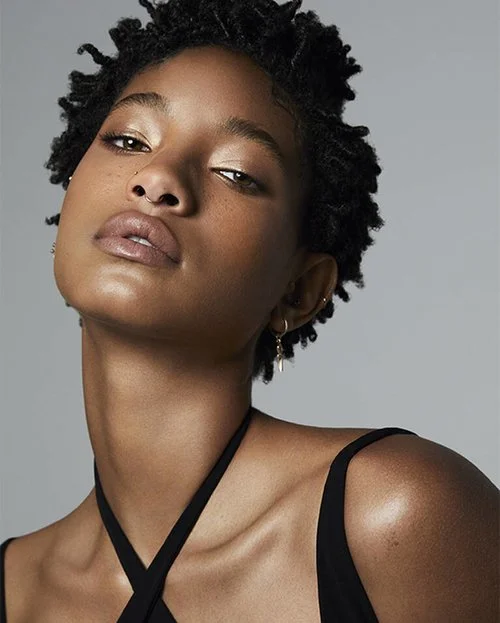
The final selection when it comes to the finest and most impressive awards Bush has won, it takes me to 1987 and a BRIT for Best British Female. Formerly the BPI awards, the BRIT win was a good one. It is remarkable, because this was her first win at the BRITs! In 1986, she was nominated three times (including Best British Album for Hounds of Love). After that, she was nominated a further seven times. She was nominated for Best British Female in 2012 but lost out. Ray Davies presented her with the 1987 award for Best British Female. At the ceremony, Bush got to present Peter Gabriel with the Best British Male Award. He released the incredible So in 1986. The two performed on that album’s duet, Don’t Give Up, and they were great friends. Bush provided vocals for several Gabriel songs for his third eponymous album in 1980. It was great that she got to receive an award and also give one to someone who helped change her music. Gabriel introduced Bush to the Fairlight CMI and opened her eyes to new worlds; ones that she would explore on albums like Hounds of Love. I look back at photos and videos of Bush collecting awards in 1978 and forward that to 1987. Whilst she has changed in terms of her appearance and voice, the pleasure (and shock) that she shows is so charming and wonderful! As I say, we have not seen the last of Bush winning awards. Let’s hope that, with new music possible in the future, it gets plaudit. I wanted to highlight five award-winning occasions that marked particular highs in Kate Bush’s career.  On these occasions, and all the rest, she emphatically proved that she…

DESERVED every one of them.

FEATURE: A Buyer’s Guide: Part Eighty-Four: Duran Duran

FEATURE:


A Buyer’s Guide

PHOTO CREDIT: John Swannell

Part Eighty-Four: Duran Duran

___________

I have not included these legends yet…

so I thought it was about time that I included Duran Duran in this A Buyer’s Guide. Before recommending the four essential albums from the band, the underrated gem, the latest album and a selected book, it is worth bringing in some biography about one of the most iconic and legendary bands ever:

Duran Duran epitomized the sleek, fashionable side of new wave, specializing in danceable, synthesized pop delivered with visual flair -- a talent crystallized in a series of groundbreaking music videos from the early 1980s. The group had the good fortune to deliver their debut album in 1981, the same year MTV began broadcasting, and their success was intertwined: Duran Duran gave the network clever, cinematic clips for "Rio" and "Hungry Like the Wolf," which MTV played ceaselessly, helping to turn the Birmingham, England-based band into global superstars. Between 1982 and 1985, the band were fixtures on the British and American charts, with "Is There Something I Should Know?," "Union of the Snake," "The Wild Boys" and the James Bond theme "A View to A Kill" reaching the Top Ten on both sides of the Atlantic. Unlike many of their new wave peers, Duran Duran managed to sustain a career that lasted for decades, withstanding a shifting lineup -- the duo of keyboardist Nick Rhodes and vocalist Simon Le Bon were the only two members to stay with the group throughout the years -- and changes in musical fashion. The group forged an alliance with Chic's Nile Rodgers for 1986's funky Notorious, then refashioned themselves as mature balladeers in 1993 and landed one of their biggest hits with "Ordinary World." The original lineup from the New Romantic era reunited for 2004's Astronaut, a move that helped revive the band's profile. Over the next decade, they collaborated with a number of prominent modern hitmakers, including Timbaland, Justin Timberlake, Mark Ronson, and Blur's Graham Coxon, who featured prominently on their 2021 album Future Past.

Inspired by David Bowie and Roxy Music, as well as post-punk and disco, schoolmates Nick Rhodes (keyboards) and John Taylor (guitar) formed Duran Duran in 1978 with their friends Simon Colley (bass, clarinet) and Stephen Duffy (vocals). Taking their name from a character in Roger Vadim's psychedelic sci-fi film Barbarella, the group began playing gigs in the Birmingham club Barbarella, supported by a drum machine. Within a year, Duffy and Colley both left the group -- Duffy would later form the Lilac Time -- and were replaced by former TV Eye vocalist Andy Wickett and drummer Roger Taylor. After recording a demo, John Taylor switched to bass and guitarist Alan Curtis joined the band, only to leave within a matter of months. The group placed an ad in Melody Maker, which drew the attention of Andy Taylor, who became their guitarist. However, Duran Duran were still having trouble finding a vocalist. Following Wickett's departure in 1979, a pair of singers passed through the group before Simon LeBon, a former member of the punk band Dog Days and a drama student at Birmingham University, joined in early 1980.

By the end of 1980, Duran Duran had become popular within the burgeoning new romantic circuit in England and had secured a record contract with EMI. "Planet Earth," the band's first single, quickly rose to number 12 upon its spring 1981 release. Immediately, Duran Duran became the leaders of the new romantic movement, and media sensations in the British music and mainstream press. The group's popularity increased through its cutting-edge music videos, especially the bizarre, racy clip for "Girls on Film." Although the BBC banned the Godley & Creme-directed video, the single became the group's first Top Ten hit, setting the stage for the fall release of its eponymous debut album. Duran Duran reached number three upon its release and stayed in the charts for 118 weeks. The band quickly followed the album with Rio in the spring of 1982. Rio entered the charts at number two, and its singles -- "Hungry Like the Wolf" and "Save a Prayer" -- became Top Ten hits. By the November release of the remix EP Carnival, the bandmembers were superstars in Europe, but only just beginning to make headway in America. Their exposure in the U.S. was helped greatly by the emergence of MTV, which put the group's stylish videos into heavy rotation. MTV's constant playing of the videos paid off, and "Hungry Like the Wolf" became a Top Ten hit early in 1983. Rio followed that single into the Top Ten, eventually selling over two million copies.

Duran Duran mania was in full swing across America, with "Is There Something I Should Know" reaching the Top Ten -- it became the group's first English number one that summer -- and the group's first album climbing its way to number ten. Duran Duran capitalized on their popularity by releasing Seven and the Ragged Tiger in time for 1983's holiday season. The record hit number one in the U.K. and number eight in the U.S., spawning the hit singles "Union of the Snake" and "The Reflex," their first number one U.S. hit and their second British chart-topper. The band took an extended break after completing its year-and-a-half-long international tour in the spring of 1984. In November, the group released the non-LP single "Wild Boys," which reached number two in the U.K. and the U.S., where it was added to the live album Arena.

By 1985, Duran Duran fever was beginning to cool off, and after completing the title track for the James Bond film A View to a Kill, the group went on hiatus. Andy and John Taylor formed the supergroup the Power Station with vocalist Robert Palmer and former Chic drummer Tony Thompson in January, releasing their eponymous debut album in the spring; it spawned the Top Ten singles "Some Like It Hot" and "Get It On (Bang a Gong)." The remaining members of Duran Duran -- Nick Rhodes, Simon LeBon, and Roger Taylor -- responded with their own side project, Arcadia, releasing an album called So Red the Rose in the fall of 1985; the album launched the Top Ten hit "Election Day." Early in 1986, Roger Taylor announced he was taking a yearlong sabbatical from the group; he never returned. Several months later, Andy Taylor also left, reducing Duran Duran to a trio. Late in 1986, the band released Notorious, its first album in nearly three years. While it was relatively successful, going platinum in the U.S. and generating a Top Ten hit with the title track, it was noticeably less popular than their earlier records. For the remainder of the decade, Duran Duran's popularity continued to decline, with 1988's Big Thing producing "I Don't Want Your Love," their last Top Ten single for five years.

The greatest-hits album Decade was released late in 1989, followed several months later by Liberty, the first Duran Duran album to fail to go gold. By that point, former Missing Persons guitarist Warren Cuccurullo had become a permanent member of the group. In 1993, the band returned from a prolonged hiatus with Duran Duran [The Wedding Album], a mature, layered record of lite funk and soulful adult contemporary pop that became a surprise hit. "Ordinary World" and "Come Undone" became Top Ten hits in America and the U.K. as well; the album itself climbed into the Top Ten on both continents and went platinum in America. Not only did the record restore their commercial status, but it earned them some of their best reviews of their career. The group followed the album with one of its poorest-received efforts, 1995's all-covers Thank You, which managed to go gold in America despite negative reviews. While Duran Duran were recording the follow-up to Thank You in 1996, John Taylor left the band to pursue a solo career, leaving the group a trio of LeBon, Rhodes, and Cuccurullo. That follow-up, Medazzaland, was released in 1997 but failed to produce any major hits. Released in 2000, Pop Trash suffered a similar fate.

In March 2001, the three Taylors -- Andy, John, and Roger -- met up in Wales and worked with each other for three weeks. Around this time, rumors of a five-member reunion began to circulate. Two months after Rhodes and LeBon denied the rumors, the reunion was confirmed. Duran Duran recorded on and off for a new album over the next three years and also toured sporadically. After signing with Epic, they released Astronaut in October 2004. Red Carpet Massacre, produced by Timbaland and without Andy Taylor, followed in 2007. In 2011, Duran Duran delivered their 13th studio album, the Mark Ronson-produced All You Need Is Now; it was greeted with positive reviews and debuted at 11 on the U.K. charts and 29 in the U.S.

Duran Duran began recording for their 14th album in 2013 and worked on it over the next two years. When it finally materialized in September 2015, Paper Gods bore tracks produced by both Mark Ronson and Nile Rodgers, alongside additional contributions in this area from Mr. Hudson and the band's engineer of choice, Josh Blair. The album also included vocals from Janelle Monáe, Kiesza, and Mew's Jonas Bjerre, as well as guitar from former Red Hot Chili Pepper John Frusciante. The record was their first to be issued through Warner Bros. and its release date coincided with a headline slot at Rob da Bank's Bestival event on the Isle of Wight.

Duran Duran supported Paper Gods with an extensive tour, then turned their attention to recording its sequel in 2019. The COVID-19 pandemic delayed the release of the ensuing Future Past until October 2021. Largely produced by DJ Erol Alkan and featuring Blur's Graham Coxon on guitar, Future Past was their first record for BMG”.

To honour Duran Duran’s continued popularity and influence, I will recommend the four albums that I think are must-own, the latest studio effort from them, in addition to one that is lesser-celebrated. I have also chosen a book that is worth getting. If you need a guide regarding the legendary Duran Duran, then I hope that my guide is…

OF some use.

_________________

The Four Essential Albums


Duran Duran

Release Date: 15th June, 1981

Label: EMI

Producer: Colin Thurston

Standout Tracks: Planet Earth/Careless Memories/Sound of Thunder

Buy: https://www.discogs.com/sell/list?master_id=79018&ev=mb

Stream: https://open.spotify.com/album/2Tc7ILGF89w1PWOhzuZlqB?si=imiUK9-aTB2wy7sbeCDt5A

Review:

Duran Duran's eponymous debut artfully coalesced the sonic and stylistic elements of the burgeoning new romantic movement they were soon to spearhead: pumping synths, glossy production, and seemingly impossible haircuts. Ultra-smart singles like "Girls on Film" and "Planet Earth" became instant smash hits both in the U.K. and America, and other fine pop gems such as "Anyone Out There" and "Careless Memories" rounded out the album's stellar first side. Side two was a far more experimental and revealing affair, with primary songwriter Nick Rhodes leading the band through atmospheric mood-pieces like "Night Boat," "Sound of Thunder," and the instrumental "Tel Aviv," all of which are particularly reminiscent of mid-era Roxy Music (clearly one of Duran's biggest influences). The band's groundbreaking music videos would do the rest, securing them a unique standing as forerunners of the first MTV generation and cementing their status as one of the decade's most successful pop music icons. [The band's first U.K. number one, the non-album single "Is There Something I Should Know?," was added to the 1983 U.S. reissue of Duran Duran, which also featured different artwork.]” – AllMusic

Choice Cut: Girls on Film

Rio

Release Date: 10th May, 1982

Label: EMI

Producer: Colin Thurston

Standout Tracks: My Own Way/Hungry Like the Wolf/Save a Prayer

Buy: https://www.discogs.com/sell/list?master_id=79632&ev=mb

Stream: https://open.spotify.com/album/02tfQwJSOLP77oCd9U8bqm?si=0A3YAkykRTaqOVAWwHr5tg

Review:

The album opens with the fourth and final single Rio. Opening with that familiar bassline. Simon Le Bon jumps in with the verse but it’s not really until the chorus that the song really gets going. 80s Obligatory Saxophone joins them for a mid-section instrumental before the track continues to climb up with the chorus, synths, and guitars. The track reached #9 in the UK singles chart, and it’s a belter, that surprisingly didn’t get higher.

This is followed by lead single My Own Way, which swaggers in with a funky bass and some growling guitars. This gave the band a #14 hit single, and it’s definitely a more muted track in comparison to Rio. It’s perhaps a bit catchier though in beats and bass, but lyrically less so.

Lonely In Your Nightmare follows this, easing gently in with synth and twanging guitars. Le Bon’s distinct vocal style soon comes in, and he’s complimented with some lovely vocal harmonies for the chorus. The drums sit back, and we’re treated to a lighter track, allowing those vocals space to shine. This is a much more mellow track.

Hungry Like The Wolf bursts in next, and this track is a perfect gem. The bleeping synth sounds, the growling guitars, the rockier drums, and the harder vocals all combined to give them their #5 hit UK single. This is the best track here so far.

Chugging guitars lead into Hold Back The Rain. Again, it’s an upbeat track with plenty of nice harmonies and backing vocals, giving Le Bon plenty of opportunity to show off his vocal power and range. The track races off at quite a pace, pulsating to the end of Side One.

Side Two opens gently amidst a swirl of synths of New Religion. This is a gentler start to this second side, and unfortunately not particularly a strong track.

Last Chance On The Stairway is next, and this track has the same energy as Hungry Like The Wolf, along with some wonderfully swirling synth-scapes in the background. The result is a great sound, that probably could have made it as a better single than On My Way.

A delicious synth sound brings in the beautifully sounding Save A Prayer which gave them a #2 hit in the summer of 1982, and was their biggest hit so far by that point. The wandering bass, the drifting slower tempo, Simon’s vocals, the gentle percussion, and the choice of synths makes this track a sheer delight to hear. Perfect.

The album closes with The Chauffeur, a song written back in 1978. Again, synths usher this one, and it’s joined by bass and piano in quite a quirky sound. Le Bon’s vocals dominate this slightly weird sounding song, and he really shows off his vocal range here. It’s hypnotically good” – Pop Rescue

Choice Cut: Rio

Duran Duran

Release Date: 11th February, 1993

Label: Parlophone

Producers: Duran Duran/John Jones

Standout Tracks: Too Much Information/Come Undone/Femme Fatale

Buy: https://www.discogs.com/sell/list?master_id=79090&ev=mb

Stream: https://open.spotify.com/album/0PqCkTvKFJxzr9uujq7a3T?si=4Zyh340bTd2DD187S1K_gQ

Review:

Duran Duran came back out of nowhere in early 1993 with a new album and a huge hit, "Ordinary World." The group sounds more relaxed and mature than it did during their glory days, but not all that much has changed; instead of personifying the days of early-'80s synthesized dance-pop, the music is smooth dance pop for the '90s. Taken on its own terms, Duran Duran (The Wedding Album) works every bit as well as Duran Duran, Rio, or Seven and the Ragged Tiger. "Ordinary World" and "Come Undone" are wonderful pop singles that sit between some passable album tracks and the occasional embarrassment, namely the wretched cover of the Velvet Underground's "Femme Fatale." In other words, Duran Duran are back and as good as they ever were” – AllMusic

Choice Cut: Ordinary World

All You Need Is Now

Release Date: 21st December, 2010

Label: Tape Modern

Producers: Mark Ronson/Duran Duran

Standout Tracks: All You Need Is Now/Leave a Light On/Other People's Lives

Buy: https://www.discogs.com/sell/list?master_id=295391&ev=mb

Stream: https://open.spotify.com/album/4wZK4hmMRl3GmGOWu24meb?si=IMJ7zOX6Sm648eaYj2mQPw

Review:

Following massive early success, ego-fuelled side projects, line-up changes and yachting accidents, Duran Duran completed the full rock career trajectory in 1993 with a triumphant comeback. The Ordinary World single and its parent album rekindled public affection and critical acclaim for a band most had consigned to nostalgia shows. Since then the group’s creative flame has flickered fitfully, though 2004’s Astronaut and the Timbaland-assisted follow-up Red Carpet Massacre demonstrated that all was not lost.

For All You Need Is Now, Duran Duran have enlisted another celebrity producer, but this time one who understands them as a fan. Mark Ronson has never been shy about his love for the band, and here he brings out the best in Simon Le Bon’s voice. This is particularly clear on the restrained Leave a Light On; lyrics such as "You ease the lost cause out of me" even brushing the heights of their sublime Come Undone.

They have thankfully stopped seeking credibility, and it suits them. Their calling card here is the garage rock of the title-track (if you can imagine a garage band playing alongside Bentleys), which morphs into a soaring chorus reminiscent of Rio. Scissor Sister Ana Matronic slots perfectly into the disco-flecked Safe, an unashamed return to their original sound. They sound similarly well preserved on the slinky Being Followed, and Girl Panic! also mines their new wave roots.

Unsurprisingly for a band renowned for singles over albums, the 14 tracks include some misfires. Le Bon’s complaint about "glossy lifestyles staring out of magazines," on the plodding Other People’s Lives, particularly riles. Runaway Runaway is throwaway, while the perfunctory funk of Blame the Machines is a heartless grind until its middle eight, reminiscent of Ronson’s recent Record Collection, finds newsreader Nina Hossain telling the listener, "You’re not required to think".

Their Smash Hits days may be as over as Smash Hits itself, and further crossover appeal has probably passed, but their admirable persistence in recording new material has paid off. This album, Mark Ronson’s "imaginary follow up to Rio that never was", is their best for 18 years” – BBC

Choice Cut: Girl Panic!

The Underrated Gem


Seven and the Ragged Tiger

Release Date: 21st November, 1983

Label: EMI

Producers: Alex Sadkin/Ian Little/Duran Duran

Standout Tracks: New Moon on Monday/I Take the Dice/Union of the Snake

Buy: https://www.discogs.com/sell/list?master_id=87609&ev=mb

Stream: https://open.spotify.com/album/0jBIq5EY9zRBZJuCE9iuM1?si=XVVOPErSSEqhGIwW2QTM4w

Review:

Seven and the Ragged Tiger went on to sell millions of copies worldwide and went to number one in several countries including their native England, which was the first and only time the band accomplished this on the album charts.

Simon, Nick, John, Andy and Roger really had something special and, for a two album stretch, they touched something magical that so many bands fail to ever reach.

The sound was helped along by producers Alex Sadkin and Ian Little.  Contributing musicians such as sax player Andy Hamilton, percussionists Raphael DeJesus and Mark Kennedy helped the bands sound evolve.  Another aspect to this album’s sound are back-up singers BJ Nelson and Michelle Cobbs.  Mixed all together, it produced a warm, full sound.

In November of this year, the album turned 35 years old.  While I’ve made new memories with the songs on this album, I will never forget the energy and excitement I felt listening to it back in 1984.  Life is better in so many ways today but there was something simpler back then.  Simpler in that I didn’t feel the need to be connected all of the time or distracted by technology.  Just a pair of hand-me-down headphones and a beat up old record player that had a needle so worn I had to put a stack of quarters on the arm just to make sure the record didn’t skip.

In my world of top tens, Seven and the Ragged Tiger will always have a place on my personal list of all-time favorite albums” – Sound Vapors

Choice Cut: The Reflex

The Latest Album


FUTURE PAST

Release Date: 22nd October, 2021

Labels: BMG/Tape Modern

Producers: Erol Alkan/Joshua Blair/Duran Duran/Kaz Haga/Peter Karlsson/Hannie Knox/Mathieu Kranich/Giorgio Moroder

Standout Tracks: GIVE IT ALL UP (ft. Tove Lo)/ANNIVERSARY/FUTURE PAST

Buy: https://www.discogs.com/sell/list?master_id=2347705&ev=mb

Stream: https://open.spotify.com/album/7GyGHJ1jv0v2Sa0pcgs4fD?si=KN--v4AiS-ehGMZqQnZMKQ

Review:

Duran Duran were a burst of colour amid the cavalcade of negative headlines in the early 80s. The unemployment soaring and inner city riots, their care-free songwriting provided an outlet for escapism, and playful adventure. ‘Future Past’ – their first album in six years – follows in this tradition, reflecting some of the intensity of its surroundings while also offering some of the band’s most direct, and downright catchy songwriting in decades.

Perhaps it helps that ‘Future Past’ is such an outward-looking, communal experience. The production is beefed out by Mark Ronson and Erol Alkan, while hugely experienced disco icon Giorgio Moroder was also brought on board. The guests, too, present a remarkably varied palette – Blur’s Graham Coxon assists on guitar, while vocalists range from pop queen Tove Lo to incendiary rapper Ivorian Doll via Japanese garage-pop outfit CHAI.

The highs are effervescent. The funky opening spell that dominates ‘All Of You’ segues into the delirious disco that drives The Tove Lo enhanced ‘Give It All Up’. ‘Beautiful Lies’ is an unashamed piece of retro dancefloor flair, and CHAI amplify the ecstatic exuberance of ‘MORE JOY!’ to overwhelming levels.

Yet it’s not all incandescent pop bullseye moments. In truth, ‘Tonight United’ is quite cheesy, and the Bond theme ambiance of ‘Wing’ plods along without ever really raising the pulse – granted, it does shows off Simon le Bon’s still impressive chops.

The band’s first album since ‘Paper Gods’ in 2015, ‘Future Past’ is the work of a group resurgent. While many of their peers have opted for merch-stalling fillers as they grind out another Greatest Hits tour, Duran Duran have opted to challenge themselves. Frothy, neon-soaked entertainment, ‘Future Past’ – when it works – is a blast of ridiculous 80s themed fun” – CLASH

Choice Cut: INVISIBLE

The Duran Duran Book


Duran Duran's Rio (33 1/3): 156

Author: Annie Zaleski

Publication Date: 1st July, 2021

Publisher: Bloomsbury Academic

Synopsis:

In the '80s, the Birmingham, England, band Duran Duran became closely associated with new wave, an idiosyncratic genre that dominated the decade's music and culture. No album represented this rip-it-up-and-start-again movement better than the act's breakthrough 1982 LP, Rio. A cohesive album with a retro-futuristic sound-influences include danceable disco, tangy funk, swaggering glam, and Roxy Music's art-rock-the full-length sold millions and spawned smashes such as "Hungry Like the Wolf" and the title track. However, Rio wasn't a success everywhere at first; in fact, the LP had to be buffed-up with remixes and reissued before it found an audience in America. The album was further buoyed by colorful music videos, which established Duran Duran as leaders of an MTV-driven second British Invasion, and the group's cutting-edge visual aesthetic. Via extensive new interviews with band members and other figures who helped Rio succeed, this book explores how and why Rio became a landmark pop-rock album, and examines how the LP was both a musical inspiration-and a reflection of a musical, cultural, and technology zeitgeist” – Waterstones.co.uk

Order: https://www.waterstones.com/book/duran-durans-rio/annie-zaleski/9781501355189

FEATURE: Spotlight: Iraina Mancini

FEATURE:


Spotlight

Iraina Mancini

___________

ONE of my favourite tracks of this year…

came from the wonderful Iraina Mancini. She released the awesome Do It (You Stole the Rhythm). I have followed her music for a while, and she is someone who is going to go on to be very big. A D.J., model and broadcaster. Mancini was born into a musical family. Her father, Warren Peace, was David Bowie's childhood friend; he went on to tour providing backing vocals and writing with Bowie from Aladdin Sane through to Station to Station. It is no wonder that Mancini developed a love of music. She taps into classic Soul and Pop. Her blend is quite retro and super-cool, though there is modern edge, passion and something distinctly hers. Gifted with a wonderful voice and the ability to pen great hooks, she is someone who I always keep an ear out for. I wonder whether there will be an album in 2022. Taking influence from everything from ‘60s French cinema and Psychedelia, here is someone who one suspects spends a lot of her alone time listening to older music. Even though, as a D.J. and broadcaster, she features and interviews new acts, one can feel the music of her childhood more evident in her own songs. I am going to come to a few reviews in. Before then, and borrowing from her website, here is some detail about the incredible multi-talent that is Iraina Mancini:

Iraina Mancini has been writing her own songs and gigging from a young age, fronting bands such as electro pop band ‘Mancini’ and then later with Liverpool’s ‘The Venus Fury’ (ex The Zuton’s and Dead 60s members).

Whilst on the road with these bands, Iraina began digging into the vaults of Northern Soul, Funk, Rhythm and Blues, 60’s Garage and Disco’s rich musical history. Inspired by and building on her father’s 45’s that she had enthused over as a child, she began her passion to DJ and bring back the spirit of these often forgotten but golden musical era’s to dance floors across the globe.

PHOTO CREDIT: Caroline Towning 

Iraina has travelled the world DJ’ing and hosting at major film and fashion events such as Cannes Lion, NME Awards, Toronto Film Festival, and key music festivals; Glastonbury, Wilderness, Secret Garden Party, Bestival and for iconic brands such as GQ, Swarovski, Temperley, Film4 and Pretty Green.

Iraina also presents her own popular cult radio show every Tuesday on the legendary Soho Radio in London, where she teases a taster of her live DJ sets, interviews her favourite bands and serves up a music history lesson and homage to her love of Northern Soul, Funk, vintage R&B, Ska and Garage Rock. Recent guests on the show have included Ecca Vandall, Mike Chapman (Blondie, The Knack), Lee Fields, YAK, PP Arnold, Garret Shider (Parliament, Funkadelic), Babyshambles and Daddy Long Legs.

Inspired by the music she collects and DJ’s, a new solo project has started to form. Collaborating and writing with legendary producer Jagz Kooner (Primal Scream/Oasis) and featuring a stable of the UK’s most talented musicians, Iraina has now put together her live band and is hitting the road in 2020. Her sound is heavily influenced by her favourite music from the 60’s and 70s, French Pop, Psychedelia, Soul and classic artist’s such as the Ye-Ye Girls, Serge Gainsbourg and vintage cinema.

Muse to influential fashion designers, brands and artists due to her striking vintage style and inspired by Francoise Hardy, Bridgette Bardot and Jane Birkin, Iraina is the contemporary reflection of an iconic retro era that can be re-discovered and celebrated through her style and music”.

As a busy and popular D.J. with an incredible taste in music, I think that she brings her musical discoveries and the tracks she spins into her work. There is a connection between her crate-digging and D.J. work and the wonderful music she creates. The first interview that I want to bring in is from this year. Mancini spoke with NINU NINA and, among other topics, was asked about her music influences:

your greatest inspirations or influences?

The records I have collected from my travels always inspire me, I love finding old rare Soul that no one has ever heard before. I get a kick out of introducing old undiscovered artists in my DJ sets or on my radio show. My own music I write is greatly inspired by french YeYe artists of the 60s like Jacquelin Taib, France Gall and Serge Gainsbourg, as well as psychedelia and retro film soundtracks, I love bringing the drama and cinema to my sound.

Tell us a bit about your creative process? How do you describe your music?

My creative process is sampling old records I have found with my producer Jagz Kooner, we find bits we love, cool grooves , guitar riffs and instrumentation and build up vibes/tracks. Then I take them away and write a load of melodies and lyrics on top to create the song, I find it a brilliant way to write and gets me in that cinematic 60s mood. Jagz and I then remove the samples and re-build the music around the new melody I have written with my band of talented musicians. It's such a cool way to work and has been a really fun process.

How has this year changed your creativity or how you see the world changing moving forward?

Like everyone, I have lost a lot since Covid hit, but for me the one amazing thing to come out of it is my creativity. I have been overflowing with ideas and had the time to really focus on my music. I think I have processed a lot mentally and had some huge struggles and music has been an amazing release for me. I hope moving forward we all appreciate the world we live in more and the people around us , seeing beauty in the simple things in life. Slowing down made me release the speed in which I was surviving wasn't healthy and I always felt burnt out”.

Iraina Mancini, apart from being an awesome songwriter, is also a bit of a style icon. She is this complete artist who I hope we hear a lot more from next year. I want to zoom back to a 2019 interview from Blow Out Magazine. The first question I have quoted provoked an interesting artist:

Where are you in 10 years?

I would like to be still making my own music and singing gigs to crowds all over the world. I'd hope I was still spinning records, making people dance and presenting my radio shows. I've always had a secret dream of designing my own vintage inspired clothes line as well..shhh don't tell anyone! I'd like to be in love and have a load of gorgeous crazy kids.

Biggest regret in life?

I know people say you shouldn’t have regrets but there is definitely a couple of things I wish I’d done a little different… Lousy ex boyfriends, that time I decided to cut my own fringe with kitchen scissors ..But the main thing I regret is not having more faith in my abilities and listening too much to what other people said. I would say to anyone young- be fearless and don’t let insecurities hold you back.

What would your 16 say to yourself now?

She would say "wow, what fun you’ve had!"

Best bit of advice you have been given?

I love Eckhart Tolle and all his books..His whole idea of living in the now and not carrying the burden of the past or future was a powerful lesson for me. I certainly did that for a long time and it's a waste of energy, let it go and live in the moment.

What makes you happy?

So many things make me happy! Discovering a new rare soul record I’ve never heard, writing songs and hearing them come alive in the studio”.

There is a final interview that I am keen to include. Last year, in this interview, Mancini was asked about the changing industry. As someone whose father was a pretty big part of David Bowie’s life., she would have heard stories from him about his experiences. As a relatively new artist, she can compare those recollections with her experiences:

How have you seen the music industry evolve since you started out, and where do you see it going?

The music industry has changed so much, I can barely keep up! Its amazing how easily you can push your art out into the world with Spotify, Youtube and all the social media platforms available anyone in the world can listen to your music .. Gone is the time of ‘waiting’ for a record deal, you can have complete control of what you put out. You can make music videos on iPhones, film live sets and stream online and interact instantly with your fans. Its a lot more work but ultimately more satisfying and authentic.

Which three records are you unable to live without?

That is such a difficult question! But if I had to pick 3 records that I never get bored of they would be.

1.       Barrett Strong – Money (thats what I want)

2.       Space Oddity – David Bowie

3.       Bonnie and Clyde – Serge Gainsboug

What do you consider to be music’s golden age?

Im totally stuck in the past. For me the golden age was late sixties early seventies.

Who are your biggest artistic influences?

At the moment i am really influenced by 60s/70s Cinema, French Yeye Girls and Psychedelia. Like most musicians i’m obsessed with Serge Gainsbourg’s Melody Nelson. The music I DJ influences me massively 60s Rhythm and Blues and Northern Soul, I wanted to write music I could incorporate into my DJ sets.

PHOTO CREDIT: Caroline Towning

And your greatest style icons?

Bridgette Bardot , Jane Birkin and Anita Pallenberg have always been favourites of mine. I love the sex kitten look..Big hair and big lashes. I go through different phases with fashion, at the moment I’m wearing a lot of 70s stuff, tailored flares, loose shirts, vintage suits and platforms.

Favourite place you have DJ’d at?

I love DJing music festivals the energy is so unique, everyone is there with exactly the same mission.. to have as much fun as possible and escape their daily lives. Also, visually festivals always look like a fantasy world, especially Glastonbury.. when its not raining! My favourite place to DJ is actually a really small festival called Red Rooster, its in the most beautiful setting and has the best music. Im djing there this summer, Im really looking forward to it”.

With new music out this year and her busy with D.J. work, plus the broadcasting on Soho Radio, I think that we will hear a lot more from Iraina Mancini in 2022. One of the brightest and most interesting young artists in the country, I have always loved her work. I am excited to see what comes next and whether we get more music very soon – let us hope so! In Iraina Mancini, the music world has a varied, evolving and…

INCREDIBLE talent.

_____________

Follow Iraina Mancini

FEATURE: The Lockdown Playlist: The Very Best of Taylor Swift

FEATURE:


The Lockdown Playlist

 The Very Best of Taylor Swift

___________

ON 13th December…

 PHOTO CREDIT: Evan Agostini/Invision, via Associated Press

Taylor Swift turns thirty-two. Perhaps the biggest artist in the world, fans around the world will celebrate her birthday. I am going to end with a playlist containing her very best tracks. I want to start with a biography from AllMusic that I have used before.

Taylor Swift is that rarest of pop phenomena: a superstar who managed to completely cross over from country to the mainstream. Others have performed similar moves -- notably, Dolly Parton and Willie Nelson both became enduring pop-culture icons based on their '70s work -- but Swift shed her country roots like they were a second skin; it was a necessary molting to reveal she was perhaps the sharpest, savviest populist singer/songwriter of her generation, one who could harness the zeitgeist, make it personal and, just as impressively, perform the reverse. These skills were evident on her earliest hits, especially the neo-tribute "Tim McGraw," but her second album, 2008's Fearless, showcased a songwriter discovering who she was and, in the process, finding a mass audience. Fearless wound up having considerable legs not only in the U.S., where it racked up six platinum singles on the strength of the Top Ten hits "Love Story" and "You Belong with Me," but throughout the world, performing particularly well in the U.K., Canada, and Australia. Speak Now, delivered almost two years later, consolidated that success and moved Swift into the stratosphere of superstardom. Her popularity only increased over her next three albums -- Red (2012), 1989 (2014), Reputation (2017) -- and found her moving assuredly into a pop realm where she already belonged. Even when she scaled back her approach with stripped-down sibling releases folklore and Evermore, she maintained her position atop the pop world while delivering the best-selling album of 2020.

This sense of confidence had been apparent in Taylor Swift since the beginning. The daughter of two bankers -- her father, Scott Kingsley Swift, worked at Merrill Lynch; her mother, Andrea, spent time as a mutual fund marketing executive -- Swift was born in Reading, Pennsylvania, and raised in suburban Wyomissing. She began to show interest in music at the age of nine, and Shania Twain wound up as her biggest formative influence. Swift started to work regularly at local talent contests, eventually winning a chance to open for Charlie Daniels. Soon, she learned how to play guitar and began writing songs, signing a music management deal with Dan Dymtrow; her family relocated to Nashville with the intent of furthering her music career. She was just 14 years old but on the radar of the music industry, signing a development deal with RCA Records in 2004. Swift sharpened her skills with a variety of professional songwriters, forming the strongest connections with Liz Rose. Taylor's original songs earned her a deal with Sony/ATV Music Publishing, but not long after that 2004 deal she parted ways with Dymtrow and RCA, all with the intent of launching her recording career now, not later.

Things started moving swiftly once Swift came to the attention of Scott Borchetta, a former DreamWorks Records exec about to launch Big Machine Records. Borchetta saw Swift perform at a songwriters showcase at the Bluebird Cafe and he signed her to Big Machine in 2005; shortly afterward, she started work on her debut with producer Nathan Chapman, who'd previously helmed demos for Taylor. Boasting original song credits on every one of the record's 11 songs (she penned three on her own), Taylor Swift appeared in October 2006 to strong reviews and Swift made sure to work the album hard, appearing at every radio or television event offered and marshaling a burgeoning fan base through the use of MySpace. "Tim McGraw," the first song from the album, did well, but "Teardrops on My Guitar" and "Our Song" did better on both the pop and country charts, where she racked up five consecutive Top Ten singles. Other successes followed in the wake of the debut -- a Grammy nomination for Best New Artist (she lost to Amy Winehouse), stopgap EPs of Christmas songs -- but Swift concentrated on delivering her sophomore set, Fearless.

Appearing in November 2008, Fearless was certified gold by the RIAA in its first week of release, and the record gained momentum throughout 2009, earning several platinum certifications as "Love Story," "White Horse," "You Belong with Me," "Fifteen," and "Fearless" all scaled the upper reaches of the country charts while "You Belong with Me" nearly topped Billboard's Hot 100. Along with the success came some headlines, first in the form of an infamous appearance at the 2009 MTV Video Music Awards where her acceptance speech was interrupted by Kanye West, who burst on-stage to declare that Swift's rival Beyoncé deserved the award more, but her romances also started gaining attention, notably a liaison with Twilight star Taylor Lautner, who appeared with the singer in the 2009 film Valentine's Day.

Her flirtation with the silver screen proved brief, as she then poured herself into her third album, Speak Now. Released in October 2010, Speak Now was another massive first-week smash that refused to lose momentum. Hit singles like "Mine" and "Mean," which won two Grammy Awards, played a big factor in its success not just on the country charts but on pop radio as well. Following a 2011 live album called World Tour Live: Speak Now, Swift turned toward following a pop path on her fourth album, hiring such mainstream musicians as Dan Wilson, Butch Walker, and Britney Spears producer Max Martin. This mainstream pulse was evident on "We Are Never Ever Getting Back Together," the first single from Red. Upon its October 2012 release, Red shattered expectations by selling over a million copies in its first week, a notable achievement that was doubly impressive in an era of declining sales. Once again, Swift's album had legs: it was certified platinum four times in the U.S. and its international sales outstripped those of Speak Now. She supported Red with an international tour in 2013 and more hits came, including "I Knew You Were Trouble" and "22."

As Swift geared up for the release of her fifth album in 2014, she made it clear that 1989 was designed as her first "documented, official" pop album and that there would be no country marketing push for the record. "Shake It Off," an ebullient dance-pop throwback, hit number one upon its August 2014 release. When 1989 appeared in late October 2014, it once again shot to number one and became her third straight album to sell one million copies in its first week (a new record for any artist).

Swift gathered many awards during the subsequent year, including Billboard's Woman of the Year, the Award for Excellence at the American Music Awards, and a special 50th Anniversary Milestone Award from the CMAs. Her 1989 World Tour crossed Asia, North America, and Europe during the last half of 2015, and she won three Grammy Awards at the 2016 ceremonies, including Album of the Year, Best Pop Vocal Album, and Best Music Video for "Bad Blood." At the end of 2016, she released "I Don't Wanna Live Forever," a duet with ZAYN from the soundtrack for Fifty Shades Darker. The single reached the Top Five across the world. Swift returned with her sixth album, Reputation, in November 2017. Preceded by the number one hit single "Look What You Made Me Do," Reputation debuted at number one, and while it didn't replicate the success of 1989, the album did help underscore her popularity while also pushing her toward mature musicality.

Reputation was Swift's final record for Big Machine. In November 2018, she signed with Universal Music Group, which distributed her new albums under its Republic Records banner. The first album in this contract was Lover. Released in August 2019, Lover was preceded by two singles, "Me!" and "You Need to Calm Down," which both reached number two on the Hot 100 and helped push the album to number one. The acclaimed LP and two of its singles received a total of three nominations at the 62nd Grammy Awards.

Swift's plans to support Lover with a tour in 2020 were scrapped due to the COVID-19 pandemic. With some unexpected time on her hands, she wrote and recorded a new set of songs, many in collaboration with Aaron Dessner of the National; Bon Iver and longtime Swift associate Jack Antonoff also contributed. The resulting album, folklore, was released on July 24, 2020, and went straight to the top of the Billboard 200. Less than five months later, Swift released a companion album to folklore called Evermore. Featuring many of the same collaborators as its predecessor, the Grammy-nominated Evermore debuted at number one upon its December 11, 2020 release. Altogether, the sibling LPs planted Swift atop the U.S. charts for a combined 11 weeks, and folklore became the best-selling album of 2020.

In 2021, she began the process of re-recording her back catalog after her Big Machine masters were sold off in 2019, starting with 2008's Fearless. The first of these tracks -- "Love Story (Taylor's Version)" -- arrived that February, with Fearless (Taylor's Version) arriving in April. The new version of Fearless contained cameos from Colbie Caillat, Keith Urban, and Maren Morris, along with several previously unheard tunes originally written during the same time period; it debuted at number one on Billboard upon its release. Swift next revisited Red, releasing Red [Taylor's Version] in November 2021. This revamp of the 2012 album featured new duets with Phoebe Bridgers, Chris Stapleton, and Ed Sheeran, along with a ten-minute version of the ballad "All Too Well”.

Ahead of Taylor Swift’s birthday, the playlist below is a collection of her best songs. She is a phenomenal artist who has been making some wonderful Pop music for years now. I know that this will continue for a long time to come. The amazing Taylor Swift is…

A modern icon.

FEATURE: Kate Bush: The Iconic Shots: The Tour of Life ‘Curtain Call’, 1979 (Max Browne)

FEATURE:


Kate Bush: The Iconic Shots

IN THIS PHOTO: Kate Bush and band during the finale of a Hammersmith date from 1979’s The Tour of Life/PHOTO CREDIT: Max Browne 

The Tour of Life ‘Curtain Call’, 1979 (Max Browne)

___________

I am going back to the late-1970s…

 IN THIS PHOTO: Kate Bush in 1979

for inspiration when it comes to this Kate Bush series. I am interested in spending more time with iconic and mesmeric photos of her through the years. I am going to go into more detail regarding The Tour of Life in 1979. One would think that, as there is so much action and motion, it would be difficult to capture a single shot that is among the very best. Max Browne has released a book of photos he took of Kate Bush and her band when she performed The Tour of Life in Hammersmith over three nights. There are a few shots that he took that I could well of highlighted as especially superb. The one that I have always loved and captures Kate Bush in a special moment is a finale/curtain call from one of her Hammersmith nights. She is taking a bow and looking exhausted, yet happy. That adulation she is receiving as her band are in line behind her looking on. It is a great composition taken only a year after Bush released her debut album, The Kick Inside. It is rare even now for an artist to command such a huge live audience and so much press attention only a year in. Of course, Bush had been recording and known to people prior to 1978, though the leap that was taken by 1979 is amazing!

I will end with my thoughts regarding a remarkable and timeless shot from English photographer Max Browne. First, the Kate Bush Encyclopaedia have some details regarding Bush’s one and only tour:

The Tour of Life, also known as the Lionheart Tour or even the Kate Bush Tour, was Kate Bush's first, and until recently only, series of live concerts. The name, 'Tour of Life', was not coined until after its completion, with all promotional material referring to it simply as the Kate Bush Tour.

Consisting of 24 performances from Bush's first two studio albums The Kick Inside and Lionheart, it was acclaimed for its incorporation of mime, magic, and readings during costume changes. The simple staging also involved rear-screen projection and the accompaniment of two male dancers. The tour was a critical and commercial success, with most dates selling out and additional shows being added due to high demand. Members of the Kate Bush Club were provided with a guaranteed ticket.

Rehearsals

The tour was to become not only a concert, but also incorporating dance, poetry, mime, burlesque, magic and theatre. The dance element was co-ordinated by Bush in conjunction with Anthony Van Laast – who later choreographed the Mamma Mia! movie and several West End smashes – and two young dancers, Stewart Avon Arnold and Gary Hurst. They held morning rehearsals for the tour at The Place in Euston, after which Bush spent afternoons in Greenwich drilling her band. Off stage, she was calling the shots on everything from the set design to the programme art.

Band

The band playing with Kate Bush on stage consisted of Preston Heyman (drums), Paddy Bush (mandolin. various strange instruments and vocal harmonies), Del Palmer (bass), Brian Bath (electric guitar, acoustic mandolin and vocal harmonies), Kevin McAlea (piano, keyboards, saxophone, 12 string guitar), Ben Barson (synthesizer and acoustic guitar), Al Murphy (electric guitar and whistles) and backing vocalists Liz Pearson and Glenys Groves.

Critical reception

As the tour rolled out around the UK the reviews were euphoric: Melody Maker called the Birmingham show "the most magnificent spectacle ever encountered in the world of rock. (...) I hadn't expected to be impressed by her as a singer, both she and the band were nothing short of immaculate". According to Sounds, the show was "so finely realised that it's beyond criticism”.

Consisting of songs from her first two albums – The Kick Inside and Lionheart -, together with some new material, it seems like, to be in that audience, it would have been a once-in-a-lifetime experience! The critical reviews and huge acclaim Bush received was sort of at odds with how some viewed her in 1978. Gaining respect from corners who were dubious, cruel and dismissive, the fact she got to breathe new life into these songs and perform them in such a direct and immediate way meant that you get a completely different experience live than listening to the record. That sense of awakening and transformation. I think it was the terrific sets and costumes that meant audiences and critics got to see Bush in her element. I love a load of the photos Max Browne took in 1979 for The Tour of Life. Of course, you can get a better quality of the photo I have selected if you buy his book. I have chosen the one I have because it marks the end of a show. You cannot see the audience, though one suspects there is frenzy and rapturous applause. Kate Bush looks tired and sweaty, yet there is that look of appreciation from her. There were similar shots taken in 2014 when she returned to Hammersmith for Before the Dawn. That was a massive moment for her, though I feel her performing in London – she took the tour around Europe and the U.K. – for her first tour and huge live commitment is even more special. To have been a photographer there and trying to get those special shots. There is something unforgettable and iconic about the photo Max Browne took. This is what Max Browne said about that particular shot:

Photographer Max Browne recalls: "I have never photographed a more enchanting show or multi-talented performer than Kate Bush at Hammersmith om 1979 - pure magic and such incredible stamina. Almost every number required a costume change, intricate dance choreography whilst singing, and 'The Tour of Life' show lasted over two hours in total. The bar was set so high that she never toured again but what an achievement. Thank goodness the show was recorded for T.V. The shot was taken the night of the recording after the 'Wuthering Heights' finale when Kate's relief and exuberance are palpable. A personal favorite, the focus is spot on too!”.

It is hard to argue with Browne regarding why that particular photo is so wonderful. That relief and happiness you see from Bush’s face is matched by the respect her band have for her. It is definitely one of my favourite Kate Bush photos. This series looks to explore the finest Kate Bush photos. Having worked with a number of great photographer during a career, we are spoilt for choice when it comes to sensational photos…

 IN THIS PHOTO: Kate Bush during the Tour of Life in Hammersmith in May 1979/PHOTO CREDIT: Max Browne

THROUGH the years

FEATURE: My Five Favourite Tracks of 2021: Wolf Alice – The Last Man on Earth

FEATURE:


My Five Favourite Tracks of 2021

PHOTO CREDIT: Jordan Hemingway

Wolf Alice – The Last Man on Earth

___________

THIS is the only instance…

where an album of the year and track of the year from my selected five intersects. I have already named Wolf Alice’s Blue Weekend as one of my favourite albums of this year. One track from it, The Last Man on Earth, is one of the best tracks I have reviewed in a very long time. I reviewed the song back on 28th February. I am going to come back to some reviews for Blue Weekend in a bit – as the album is one of this year’s best and warrants more spotlighting -, but I want to spend a bit of time with The Last Man on Earth. The lead single from their third studio album, there was a lot of excitement when the song was announced. As we can tell from this Wikipedia article, The Last Man on Earth has its roots in some rathe deep literature:

"The Last Man on Earth" was the band's first single in almost 3 years, following an extensive tour through 2018 and early 2019 for their second album, Visions of a Life. Frontwoman Ellie Rowsell said this about the lyrics of the song:

"It's about the arrogance of humans. I'd just read Kurt Vonnegut's Cat's Cradle and I had written the line 'Peculiar travel suggestions are dancing lessons from god' in my notes. But then I thought: 'Uh, your peculiar travel suggestion isn't a dancing lesson from god, it's just a travel suggestion! Why does everything need to mean something more?”.

I will come to the album reviews in a second. The Mancunion were excited when the exceptional and epic The Last Man on Earth was announced earlier in the year:

After a four-year long hiatus and a multitude of tantalising teasers dotted around social media, Wolf Alice are finally making their highly anticipated return to the world of indie music with their latest offering ‘The Last Man On Earth’. Following on from their previous album, ‘Visions Of A Life’, will be no easy feat; but if anyone can do it, I would place my life in the hands of the dazzling Ellie Rowsell. Emailing their fans, the band offered up a quick peak into what the last almost-half-a-decade has entailed

The eerie monochrome visuals, directed by Jordan Hemingway, are the perfect accompaniment. Ellie’s striking, angelic vocals cut through the smoke screen of mystery to introduce a new era of Wolf Alice.

Nothing short of straight out of a indie-teen movie, the flickering screens, kaleidoscopic imagery, and fire-torn backdrop almost signal the end of Wolf Alice as we know them – in fact, we’re worlds away. This new venture is as much a short cinematic feat, as it is a powerful ballad.

Inspired by Kurt Vonnegut’s novel ‘Cat’s cradle’, Ellie carefully plucked the lyrics from a fictitious tale, and added deeper meaning to the words “Peculiar travel suggestions are dancing lessons from God”.

Emotive lyrics and soaring vocals build up to make an escapist’s dream. The delicately layered piano and strings bring a heavenly, divine feel to the track; the orchestral bliss is emphasised by the lyrics “light shining down”.

Pegged by Ellie as the “Musical form of her own existential crisis,” and serving as a majestic dive into the mind of the powerful front woman, the glistening self-confession proves her prowess and demonstrates her evolution as a delightful songwriter.

Talking on the new album with Annie Mac on BBC Radio One: after a post-tour burnout, the band spent a few months apart and re-kindled their love for music in an Air BnB in Somerset, where they began writing their new tracks. Ellie explained that the album title was inspired by a taxi ride of perfectly blue skies. This new, grander, grandeur version of Wolf Alice are the most sonically mature the band has ever been, and I can’t wait for more newness”.

There are many great songs on Blue Weekend. I especially love The Last Man on Earth, as it was the first thing that I heard, and it sort of blew me away! It is a track that provide such an emotional hit. The critical reviews for Blue Weekend have been exceptional. This is what NME said:

There are lines on this record that have the power to transport you to very specific places or feel like Rowsell has extracted your soul from your body, put it under a microscope, then handed you a report on her findings. They are particular in the stories they lay out but, within the details, offer places to find yourself and the tales you could tell. It’s a phenomenon that the singer and guitarist references on the piano-led, emotional epic ‘The Last Man On Earth’: “Every book you take that you dust off from the shelf/Has lines between lines between lines that you read about yourself.” Simultaneously, she analyses a compulsion of the human race and offers another opportunity to indulge in it yourself.

The increased openness in the front woman’s words is perhaps no surprise, given the six years Wolf Alice have had since releasing their debut album ‘My Love Is Cool’. In that time, they’ve grown from buzzy newcomers to a bonafide Big Deal, via milestones of success you can’t help but absorb confidence from: breathless praise for second album ‘Visions Of A Life’, a Mercury Prize win for that record in 2018, selling out their biggest headline show to date at London’s Alexandra Palace. Now, they’re making the step up to riotous festival headliners, leapfrogging from topping the bill at the likes of Truck to taking pole position at this year’s Latitude.

In broad strokes, ‘Blue Weekend’ is a study on relationships – yes, with romantic partners, but also with friends, with yourself and with the world at large. The sparse and minimal heartbreaker ‘No Hard Feelings’ contains evocative scenes within its exploration of a separation. “It’s not hard to remember when it was tough to hear your name,” Rowsell sighs. “Crying in the bathtub to ‘Love Is A Losing Game’.” The song referenced might change for different people, but the feeling that sucker-punches you from within is universal.

If that track takes you into the depths of lovelorn grief, sunkissed album closer ‘The Beach II’ whisks us off to somewhere much calmer. Here, Rowsell is by the shore, drinking lukewarm “liquid rose” with her mates, but in her narration positions herself as an observer looking on fondly. “The tide comes in as it must go out, consistent like the laughter/Of the girls on the beach, my girls on the beach, happy ever after,” she sings softly. Combined with the gently surging guitars and buzzing synths beneath her, the song captures a moment of magic that makes you feel like you’re hovering above your own memories of the tableau it depicts”.

Actually, rather than pull in another review for Blue Weekend, I will end with NME’s reaction to one of Wolf Alice’s best songs. The band could have selected other tracks as lead-off for Blue Weekend, though they clearly felt that The Last Man on Earth would resonate:

Relatability is big currency in pop culture these days and it’s a common phenomenon for us to interpret songs, books, movies and more based on our own experiences. We inject importance into their storylines and lyrics based on how they make us feel about our lives, the lines between whether a piece of art is actually good or just makes us feel seen increasingly blurred. It’s an event that doesn’t escape Rowsell’s of our self-important society: “Every book you take and you dust off from the shelf/ Has lines between lines between lines that you read about yourself,” she observes. “Does a light shine on you?”

It’s sharp, smart songwriting that provides both a critical assessment of humanity’s egotistical impulses and allows us to do the very thing it warns of – finding ourselves in the lyrics and moulding them to fit our worlds. Wolf Alice have long proven themselves to be one of the best and brightest bands in Britain, but here they give us yet more evidence that they’re still setting the standard for UK music and beyond.

Usually, the start of a new era for the four-piece is signalled by a storming, moshpit-inciting banger. Their 2015 debut album ‘My Love Is Cool’ had the sludgy swagger of ‘Giant Peach’ and ‘Yuk Foo’ – the first track from their phenomenal 2017 album ‘Visions Of A Life’ – set fire to everything that had come before in a blaze of urgent rock riffs and guttural screams from Rowsell. Even EPs ‘Blush’ (2013) and ‘Creature Songs’ (2014) introduced themselves with tracks that made you want to throw yourself headfirst into a sweaty mass of strangers.

‘The Last Man On Earth’, though, changes tack. It’s not until midway through the song that we get much more than Rowsell’s vocals and a simple piano line. It’s a different pace for the band – one that puts their singer at the forefront and lets her emotive voice do the work until we enter a grand, powerful second half. As she delivers one of the song’s most cutting lines (“Who are you to ask for anything more/ The only thing you should be asking for is help”), drummer Joel Amey, bassist Theo Ellis and guitarist Joff Oddie enter the stage and gradually lift the track to epic new heights that dip between vintage psych riffs and majestic walls of sound built to fill arenas”.

One of my top five choices for the best track of the year, Wolf Alice’s beautiful masterpiece that is The Last Man on Earth is one everyone needs to hear. There are a lot of other songs vying for a top five place (including Billie Marten’s Human Replacement), though I could not omit this song. It is one that stunned me back in February. It seems Wolf Alice can get even better and bigger. Given the strength and brilliance of Blue Weekend, that is…

QUITE a scary thought!