FEATURE: I Turn to My Computer…. Kate Bush: A Mix of the Modern and Traditional

FEATURE:


I Turn to My Computer….

IN THIS PHOTO: Kate Bush at a Fairlight CMI demonstration 

Kate Bush: A Mix of the Modern and Traditional

__________

AFTER hearing…

 IN THIS PHOTO: Kate Bush in 1979/PHOTO CREDIT: Trinity Mirror/Mirrorpix/Alamy Stock Photo

Kate Bush interviewed by Emma Barnett on Woman’s Hour, it got me thinking about a subject that I have explored before. Bush is this wonderful mix of qualities and people. On the one hand, she is grounded and relatable and very human. Someone that is like us and has this love of home and family. On the other, she is an extraordinary talent who has enjoyed an enormously successful career. When it comes to her music, she fused the otherworldly and heavenly with something rooted in the heart. Quite rightly, Bush is seen as a technological innovator. She was not only exploring new territory and subjects with her lyrics from her debut album, The Kick Inside (1978); Bush was also quick to embrace new technology and use it to stunning effect. At a time when the Fairlight CMI was reserved to a privileged few, she saw the benefits and possibilities of an amazing thing that could offer a world of choice. She could record basic sounds and put them into the Fairlight CMI and utilise it in the music. From the sound of breaking glass in Babooshka (Never for Ever, 1980), to a range of sounds throughout Hounds of Love (1985), this provided her music new levels and layers. Her sense of innovation and forward-thinking extended to her liver work. The Tour of Life in 1979 and 2014’s Before the Dawn were groundbreaking in terms of their concept, scope and how they incorporated so many different elements. Especially in 1979, Pop and Rock concerts were quite basic and similar. Bush brought in mime, magic, theatre, and dance into an experience that was more like a film or theatrical show.

It was wonderful hearing Bush speak to Woman’s Hour about technology. She was recognised as an innovator. Bush talked about the Fairlight CMI and how that helped her. Even though she has a laptop and uses streaming for T.V. (as she binge-watched Stranger Things), she also admitted to having an ancient mobile phone. She was speaking to Emma Barnett on a landline. If her music is renowned for being forward-pushing and innovative, there is something more traditional and oldskool when it comes to the domestic Kate Bush! Maybe it is a generational thing. Bush is not someone who lures after the latest Smartphone and checks it all the time. Wanting to detach and disconnect from technology and constant demand when she is out and about, she is someone who can cope fine with less technology in her pocket. As she observed in her song, Deeper Understanding (first appearing in 1989’s The Sensual World, it was re-recorded for 2011’s Director’s Cut), we are transfixed and obsessed by computers. Almost like friends. In 1989, at a point in history when the Internet was not a thing and computers were basic, Bush was seeing into the future. She knew how they were taking over our lives! It is not a surprise, given that observation and wariness, that she is not a technology nut. Although Deeper Understanding looks at the heroine greeting her computer and staying on it too long, Bush has said in interviews how she is not online a lot and notes how we are too obsessed with computers and social media.

One could say that Bush’s albums post-Hounds of Love were not as innovative as her earlier ones. As a producer, she has always looked at new sounds and ways of recording. Bush is a very experienced, knowing and confident producer who has this warmth and bond with her musicians. She also knows what she wants and has this way of finding possibilities and sounds others would not. A big part of this is her use of the studio and technology. There is that divide between Bush’s curiosity when it comes to technology in music and an apathy and lack of affection when it comes to modern technology (phones, social media etc.). She is not on Twitter or TikTok. One suspects she has an old-version Smartphone, and she is not someone who embraces that side of modern living. If anything, that makes it more appealing, lovable, and mysterious. Because of this, she is not overexposed. There is this constant speculation around new music because Bush is away from social media and works privately at home. Even if she has this very casual relationship with modern technology, she is still someone pushing boundaries. Even when recording to tape (which she prefers to get a warmer sound), one can listen to her albums and marvel at the way she arranges and producers her songs. From the innovative early use of the Fairlight CMI in 1980, through to the awes-inspiring Hounds of Love, the conceptual suite on the double album, Aerial (2005), her embrace of the different, technological, and original has defined her work. This sits alongside someone who would eschew modern technology for communication and remain more rooted in an older way of life. In her homelife, Bush is much more comfortable not having distraction or leaning on technology. Because of that, she is…

A magnificent contradiction!

FEATURE: Too Cool to Spool? Returning to the Sony Walkman: Why Has the Classic Device Not Been Resurrected?

FEATURE:


Too Cool to Spool?

Returning to the Sony Walkman: Why Has the Classic Device Not Been Resurrected?

__________

HAVING watched Stranger Things

and, as it is set in the 1980s, seeing the Walkman feature, once more I am thinking about the classic device. It seems like this throwback to the 1980s and 1990s when there were limited options for listening to music on the move. Now, anyone with a smartphone can hear music when they want. The sheer excitement of being able to play a cassette or C.D. (with a Discman) when moving around cannot be overstated. It was a way to share music and make it mobile. Some may say that, because we do not really use cassettes anymore, the Walkman should stay extinct. The thing is that, not only are people digging up old cassettes. New artists release music to cassette. It is a way to appeal to a wider demographic. I don’t think it is a novelty. Many people will want to listen to an album in a physical form on the move, rather than streaming it. That is perfectly understandable and respectable. C.D.s are great, yet there is something about a cassette that cannot be beaten. They can be a less expensive option when it comes to buying albums. One of the drawbacks is that you cannot skip between tracks and have the same accessibility and ease you get with C.D.s or streaming. That is a minor complaint. The fact that there are more cassettes being produced and people are buying them means there is a need to produce technology they can be played on. I have asked before whether it might be possible to revive an old Sony Walkman design for the modern age.

In terms of profitability and popularity, I think having access to a Walkman (or other device) would help spur and increase cassette sales. I am sure that some people do have means of playing cassettes, though most of us do not. I have been looking online and seeing people discuss how they miss the Walkman and the process of loading in a tape. I am aware, as I have written before, how there are disadvantages. Tapes can become unspooled and come undone in the device. There are a lot of pluses. Having something compact where you can look at the linear notes and details is wonderfully exciting. I also like the fact that cassettes are quite tough and robust in terms of their design. Even though Walkmans were expensive when they were first released, they could be revived with a lower cost. I don’t see why they cannot be sold for less than, say, £70. That may sound expensive but, when you consider the fact they will last many years, it is a great investment. I don’t think we should assume modern music is about the digital and necessarily making things easier and less physical. The boom in vinyl sales shows there is a desire for tangible music. Whilst cassette sales are modest compared to vinyl, they are going to stay steady. Because there is not really anything to play them on, many people are buying them and essentially using them as art. If we want to encourage physical formats like cassettes to survive and remain, we need to make sure people can play them!

I think that getting the Discman going again might be flawed. People can play C.D.s more readily. Many can play them in cars and, if you have an old C.D. player, they work. Many laptops can accommodate compact discs. That is not true when it comes to cassettes. A sleek and durable version of the Sony Walkman – maybe the model that came out in 1986 – in a range of colours with a mixture of classic and modern functionality (the play, pause, stop, rewind, forward, volume functions etc., combined with a digital interface) would prove popular I feel. Given a slight resurgence in cassette sales, perhaps the profit margin would be very thin. I guess that there would need to be a vinyl-like boom to facilitate anything like a new Walkman. If there was a device already, then sales would naturally increase. It is over to manufacturers to recognise that cassettes still have a place and there is a demand. If people are struggling to play them, then they will be confined to the status of artefact or decoration. That is not something we want with cassettes or vinyl. Artists release cassettes now so that people have the option to play them. I will not labour the point too much. I am aware I have discussed this a few times already. It seems a shame that there is not really impetus from any corners to put out a 2022 version of the Sony Walkman. Hopefully series like Stranger Things (set in the 1980s), combined with a revival of the format, will make people act. It would be good to see a cassette-playing device back on the market…

AS soon as possible.

FEATURE: Paradise City: Guns N’ Roses’ Appetite for Destruction at Thirty-Five

FEATURE:


Paradise City

Guns N’ Roses’ Appetite for Destruction at Thirty-Five

__________

A monster of an album…

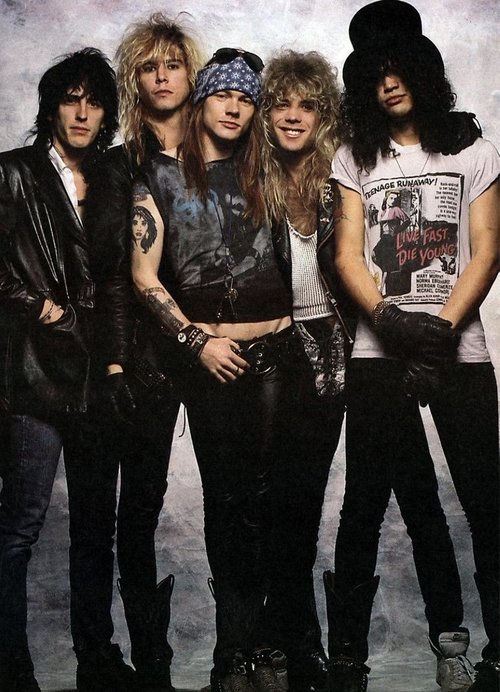
that topped charts, sold huge numbers and is considered one of the best ever, the initial reviews for Guns N’ Roses’ debut, Appetite for Destruction, were not all glowing. A sort of Hair Metal, Rock and Glam mixture from a band led by Axl Rose must have been an unexpected and hard-to-appreciate-at-the-time combination in 1987! Released on 21st July that year, I wanted to spotlight an album that is celebrating a big anniversary soon. Featuring iconic songs like Welcome to the Jungle, Paradise City, and Sweet Child o' Mine, I think that most Guns N’ Roses fans would put Appetite for Destruction at the top of their list. It is a wonderful album that has gone through reappraisal. At the time, some objected to Appetite for Destruction. Whether they felt Guns N’ Roses were a combination of other bands or were a bit cliched, it did take a while for the album to get this huge acclaim. Now seen as a watershed moment and one of the very best albums ever, Appetite for Destruction has won many more positive critical reviews since its initial batch in 1987. In a spectacular year for music – classics from Prince, Michael Jackson, Eric B. & Rakim, INXS, and U2 among them -, Guns N’ Roses debut was quite unlike anything else. I think that one reason why Appetite for Destruction remains so intriguing, durable, and popular is the fact it does not sound dated. Thanks to the varied songwrtiting from the band and excellent production from Mike Clink, here is an album that will be discovered, played and treasured for decades to come.

Like I do with album anniversary features, I am going to end with a couple of reviews of Appetite for Destruction. It is interesting reading all of the reviews for the album, as everybody has their own take on a truly awesome album. Before getting to that, Loudwire wrote about the story of Appetite of Destruction in July 2021. I have highlighted a few parts that are particularly illuminating and helpful:

In an era of bad-boy rockers who weren’t terribly bad and wrote music that sounded too good, Guns N’ Roses were the genuine article. Their songs echoed with the love for rock and roll and the spirit of rebellion. When Geffen Records A&R man Tom Zutaut signed the band he had no idea what he had gotten into. No one else wanted GN’R because they were viewed as a liability, a band as likely to miss the show as perform a gangbuster set. Yet what Zutaut heard from vocalist Axl Rose, guitarists Slash and Izzy Stradlin, bassist Duff McKagan and drummer Steven Adler was inspiring and seemed to have the potential to be a profitable signing if they didn’t all die in an alcohol or drug related mishap.

“There are some bands that just can’t be stopped and you can sense it,” Zutaut says. “No amount of alcohol or drugs will slow them down. Guns N’ Roses were able to consume those things, yet, deliver at a live show and deliver in the studio. I don’t know if that makes them like gorilla glass on a cell phone or what, but there are plenty of bands that probably did less heroin than Guns N’ Roses and drank less alcohol, but imploded. For every Guns N’ Roses or Motley Crue that delivers, there’s probably 10 bands that are great but fall apart before they even become successful.”

Impressed by Guns N’ Roses’ ability to endure under adverse conditions, Zutaut paid producer Spencer Proffer $15,000 to record “Nightrain” and “Sweet Child of Mine,” as a test and if the chemistry was good he would stay on for the debut. He also agreed to record a few extra songs with the band for the EP Live Like a Suicide, which Geffen released in England under a different label to pique interest in the band before they toured there.

“Proffer didn’t produce those songs, his engineer just recorded them,” Canter says. “GN’R recorded those songs in two or three weeks at a time when they were totally out of control. Even Axl wasn’t in the best shape, and he was the cleanest out of all of them. But he was fooling around with whatever they were doing. Once he saw that they were totally spun out, he just stopped. But nobody showed up on time. They’d throw up or pass out in the studio. But they got the songs done. They recorded nine songs in that studio including 'Heartbreak Hotel,' 'Don’t Cry' and 'Welcome to the Jungle.' But they only used those four. And then they used 'Shadow of Your Love' as a b-side.”

The writing sessions for Appetite for Destruction were brief and frantic, largely because they band was aching to get into the studio again and record their first album, but also because they wrote many of the songs on their debut before the band got signed. McKagan had “It’s So Easy,” Stradlin presented “Think About You,” “Anything Goes" was a Hollywood Rose tune and Slash, McKagan and Adler had started “Rocket Queen” when they were in the band Road Crew. “Mr. Brownstone,” a warning of sorts about the allure of heroin, came quickly to Slash and Stradlin, largely because they wrote from experience.

“Slash once told me, ‘You know, you do heroin once and it’s such a high, that you want to do it again,” says the band’s former European publicist Arlett Vereecke. “The problem with that is, the minute you do it a second time, you’re addicted to it. Axl wasn’t really doing drugs because of the medication he was on. He was not a big drinker either. People have a misconception about that, but he was the clean and mostly sober one, really. He wanted to preserve his voice, and he was serious about it”.

I can imagine being a teen in the mid/late-1980s and getting these phenomenal albums out. It must have been exciting learning about a band like Gun N’ Roses arriving with Appetite for Destruction. It is such a confident album; it is impossible to not be affected by it. Even if it was knocked by some in 1987, critics have come around. Even if there is this sense of the lurid and overly-macho on many songs, Appetite for Destruction is more sophisticated and nuanced than it being a low and knuckle-headed album. This is what Pitchfork observed in their review back in 2017 (when the album turned thirty):

From their grimy photo shoots that became Metal Edge pinups to their candid discussions of how they survived before hitting it big (“Strippers were our main source of income. They’d pay for booze, sometimes you could eat...” Slash told Rolling Stone), Guns N’ Roses were often portrayed as a clouded mass of debauchery with insatiable needs to simultaneously consume and destroy. “We are just being ourselves, but at the same time, these ’bad boy’ images tend to sell,” Axl told SPIN in 1988. Slash told Melody Maker something similar that same year: “We’re not mean, we’re not nasty, we’re decent people. We’re just out for a good time, like five teenagers on the loose.”

The Parents Music Resource Center panic that took hold in the mid-’80s helped fuel GNR’s reputation as “bad boys.” The band were open about their vices on record and in interviews, but their wide-ranging appeal, despite the cluck-clucking of reactionary critics, wasn’t merely the result of them wearing their indulgences on their sleeves. They had shrewd ears and wide-ranging influences, resulting in a sound that used bouncing-ball grooves with punk’s economy that vibrated with paranoia and antipathy yet could (very occasionally) settle into romantic bliss. Bassist Duff McKagan came from the Seattle punk scene, drumming for the legendary hyper-power-poppers Fastbacks; he and drummer Steven Adler would hone their rhythm-section camaraderie by listening to Cameo and Prince LPs. Slash, the London-born son of a costumer who designed for Bowie, decided to pick up the guitar when he heard Aerosmith’s 1975 opus Rocks, telling Guitar World that the album’s “drunken, chemically induced powerhouse sound just sold me and changed me forever.” Izzy Stradlin, the band’s chief songwriter who’d escaped Indiana with Axl, had a Charlie Watts air about him, being the coolest guy in the room while he laid down riffs from which Slash’s solos could take flight.

“Welcome to the Jungle,” the album’s opener, is followed by “It’s So Easy”—one of the greatest one-two punches in rock history. A snarling chronicle of the void at the center of any Dionysian orgy, it’s powered by Adler’s butterfly-bee drumming and riffs that sound like they’ve been turned into pistons. The lessons in funk taken by Adler and McKagan make the album’s most harrowing moments roll out of the speakers all throughout—the shimmying that underlies the rancid takedown of a cleaned-up bad girl on “My Michelle,” the musical portrayal of the “West Coast struttin’” by the blotto protagonist of “Nightrain.” Axl’s scorched-earth upper register is at key times doubled not just by his bandmates, but by a low-pitched version of his own voice—detailing that adds another edge to the group’s dystopian reveries.

Even with Appetite’s thick layers of grime, its path to mainstream success was shoved along by songs that reflected a bit of Southern California sunshine. “Sweet Child O’Mine” was the album’s big hit, a mushy love song set aloft by Slash’s thick arpeggiating (which, as he told Rolling Stone, was a “goofy personal exercise” overheard by Axl, who decided to write lyrics to it ) and Axl’s doe-eyed lyrics. It’s not all light-hearted—his initially muttered, eventually yelped, “Where do we go? Where do we go now?” that peppers the bridge reveals his ever-present search for more as the song resolves in a minor key.

The album’s most triumphant moment is the Jock-Jam-in-waiting “Paradise City,” a fever-dream anthem where green grass and lovely women abound, where everyone’s so cheerful that no one will give you shit if you add a synthesizer to the mix. The main riff is one of those so-simple-it’s-criminal melodies that get arenas shaking; when it double-times at the song’s end, with Slash freaking out on a solo and Axl pleading to be taken haaaawwoooooommmmeeee, it’s an invitation to exhume the toxins of the mean streets and the meaner drugs and the even meaner people and to just thrash away their residue”.

Another review I want to highlight is from Louder Sound. Packed with so many great songs and a band (Axl Rose, Slash, Izzy Stradlin, Duff ‘Rose’ McKagan and Steven Adler) so connected and electrifying, I think Appetite for Destruction is an album that will continue to find fans, influence bands, and remain high in the polls of the greatest albums of all-time:

But at the heart of the album was a core of truly great songs: In many ways, Welcome To The Jungle is the definitive Guns N’ Roses song, and an album opener which – from Axl’s opening words, ‘Oh my God’ – warns the listener in no uncertain terms that they better buckle up tight for the road ahead. Detailing Indiana boy Rose’s first wide-eyed, open-mouthed impressions of Los Angeles, this was the first song Slash and Axl ever wrote together, and it remains the ultimate statement of Guns’ fearless, reckless, last-gang-in-town swagger.

It’s So Easy was Guns’ first UK single, a snarling, seething introduction which double-dared you to get closer to these obnoxious, aggressive, misogynist shitbags. It’s hardly the band’s most sophisticated tune, but no other early Guns song carries such bad-boy menace.

And if much of Appetite declares that Los Angeles is a dirty, depraved, dangerous shithole, Paradise City is the album’s kicker – an admission that Guns N’ Roses wouldn’t want to be anywhere else. The quintet’s first UK Top 10 single, its simplistic singalong melody is arguably a little too eager to please, though the song may have had less global appeal had the band not changed its original lyric: ‘Take me down to the paradise city, where the girls are fat and they got big titties’. Slash’s guitar playing, meanwhile, transforms the whole thing into a sleaze-rock Born To Run, all marauding riffs and elegiac solos.

Mr. Brownstone, You’re Crazy, Out Ta Get Me: the album oozes bad attitude and is littered with great lines (‘I used to do a little, but a little wouldn’t do, so the little got more and more’, ‘Some people got a chip on their shoulder/An’ some would say it was me’, ‘Welcome to the jungle it gets worse here everyday/You learn to live like an animal in the jungle where we play’). And in Sweet Child O’ Mine, Guns N’ Roses had a secret weapon: a beautiful rock ballad inspired by Southern rock icons Lynyrd Skynyrd. Slash didn’t much care for the song at first, dismissing it as “sappy” and his own lead guitar melody as “this stupid little riff”. But it topped the US chart for two weeks in September 1988, regularly tops polls to find the greatest guitar solo or riff, and it remains the best-loved song of Guns N’ Roses’ career.

Appetite For Destruction arrived at the height of the hair metal era and was born of the LA rock scene, but its roots lay in the great rock music of the 70s – in Aerosmith, Led Zeppelin, AC/DC and the Sex Pistols. It’s the newest album in the top 10 and understandably so – has anybody made a better rock’n’roll record since its release?”.

On 21st July, Appetite for Destruction turns thirty-five. I was only four when it came out, so I am not sure how people reacted. I know that, through the years, it has been afforded so much praise. It is a mighty album that has (in my view) never been bettered by the band. One of the greatest debut albums, Appetite for Destruction came fully-formed and fierce from…

THE amazing Guns N’ Roses.

FEATURE: The Kate Bush Interview Archive: Maria Montgomery Sarnoff: Option (1990)

FEATURE:


The Kate Bush Interview Archive

Maria Montgomery Sarnoff: OPTION (1990)

__________

ONE of the last parts…

 IN THIS PHOTO: Kate Bush in 1989/PHOTO CREDIT: Guido Harari

of The Kate Bush Interview Archive run, I wanted to look at another one around the release of The Sensual World (1989). The reason it is another one from this period is because that album is not as highly regarded as it should be. In a month or so, I am concentrating on The Kick Inside (her debut album) to mark forty-five years since it was recorded. Now, I wanted to bring in a great interview that Maria Montgomery Sarnoff conducted for OPTION in 1990. The start of a new decade for Kate Bush, there would have been this sense of pride at what she had achieved, in addition to curiosity as to what she would do next. Of course, The Red Shoes arrived in 1993. I think that The Sensual World is an album that was a maturing woman taking a different course. Perhaps more personal and sensual than 1985’s Hounds of Love, it is fascinating hearing how she shifted and changed in the space of a few years. Maybe there was this sense of ensuring The Sensual World was as good and refined as it could be. I have selected a few segments from the interview that caught my eye:

I don't know about being a perfectionist," says Kate Bush, describing her attitude towards creating her unique brand of baroque pop music. Coming from one whose recordings demonstrate utmost control and an immaculate sense of detail, the remark seems practically modest.

Though she might not call herself a prefectionist, Kate Bush's music has achieved, over the course of her career, an unparalleled type of musical chiaroscuro - especially in her latest release, The Sensual World. As her musical development progresses, Kate Bush has found many voices beside the ethereal one featured on her initial hit,"Wuthering Heights." Her first two albums, The Kick Inside and Lionheart, were dominated by Bush's trademark soprano voice set amid finely-crafted, effervescent songs. Since then, her voice has acquired an earthy, sybaritic quality that she exploits in such new songs as "Walk Strait Down the Middle," in which she trills in Brazilian, as she alternately hums and growls to create a more sumptuous aural atmoshpere. Her lyrics are set in richly ornate musical settings which upon first listen can be almost too much to consume. But like other rich comestibles, her work is seductive in its luxuriant excess.

"It's a layered procedure. I take a lot of time writing, and thinking." She emphasizes the latter as she sits back on the couch, describing the process by which she produces her musical strata. "The actual performances from people are got very quickly. So hopefully, there's a tremendous amount of spontaneity performance-wise. But I have taken a lot of time between to change bits of the songs.

"You'll do something with people that works out really well," Bush explains. "And it works out so well it starts taking you somewhere else. You think, `I wish that worked so well that I could do THIS with the song.' Some-times I do that - take the song away and make it become something better. Working with other musicians is often the key. What worries me is that although the process is very spontaneous, I always feel that it sounds com-plicated."

It's a chilly day in Manhattan, so cold that the ice statues by the Plaza are still in their pristime state. The threat of snow hangs in the air. Kate Bush snuggles deeply into her forest green blazer as she looks out into gray sky, soaking in her wintry surrounding. Even from the comfort of the indoors, Bush is one evidently immersed in the world around her. She ponders a question as to whether she is trying to create an aural environment with her densely textured songs.

"Yes," Bush answers. "That's kind of what it feels like and I'd hate that to sound pretentious, because it could. It's like trying to paint a picture. Each song is like a little picture, and you've got to have the hill there, at the right proportion." Her hand motions toward an imaginary landscape. "When you look at a painting, even a simple painting, it's still got to have the proportions and everything that goes with that. Some songs will be so quick and easy to write. Some lyrics will be so quick. And yet on other songs they won't. They are all individual, and each one has a tricky bit.

"I suppose from a production point of view, the main thing I work toward is a sense of texture. When a song starts, you probably want it to be just sometimes quite small. And then you want it to get very big here so that there's a real sense of climax, and then bring it down again or keep it building. All these thing have shape and texture," she continues, as if visualizing her music in front of her. "I suppose that's just how I work. It's like trying to give the song the right proportions so that when it's big, it's really big and not too big and not to small. Instruments, different sounds and flavors, really affect all that.

"I think the voice is very much an instrument. Especially with backing vocals, because you don't have to have the emphasis on trying to carry the whole story. You can really treat it like an instrument. It's fun just experimenting with different sounds and shapes."

Perhaps it is Bush's preoccupation with experimentation which has kept her from breaking through to a mass audience in this country. Fame, on the scale which the English singer and composer has experienced in the United Kingdom and Europe, has so far eluded her here in the states. Despite this, there exists a huge cult following that fosters Kate Bush fan clubs and fanzines, both here and abroad. Her first two albums, The Kick Inside and Lionheart (both 1978), are filled with piano-dominated songs that hold the promise of things to come. On those early works she was already using her voice for unusual effects in the overdubbed backing vocals. Unusual instru-ments such as mandolins, beer bottles, mandocello, and panpipes were being integrated into her songwriting.

Never For Ever (1980), her third album, is in many ways a transitional one for Bush. On that LP she was introduced to the Fairlight synthesizer, which has since become integral to her compositions and arrangments. "The Fairlight was incredibly important," she relates, "because it was really what I had been looking for but had never thought possible. I used to play the piano, and the only instruments I had to work with from that were the piano and my voice. So I used to put a lot of emphasis on backing vocals and arrangements on the piano, because they were - in a way - trying to be violins and trumpets, and my voice was trying to be strings. That's all I had to work with. I was into the CS-80, but I really didn't like synthesizers as such, because they weren't natural sounds, and that's what I really loved. Discovering the Fairlight gave me a whole new writing tool as well as an arranging tool, like the difference between writing a song on a piano or on a guitar. With a Fairlight you've got everything, a tremendous range of things. It completely opened me up to sounds and textures. And I could experiment with these in a way I could never have done without it. It would have cost too much money. The Fairlight gave me a very private experimental instrument."

As an example of Bush's adventurous arrangements, the title track of Bush's latest release, The Sensual World, has a unique blending of both celtic and middle eastern sounds. The song was adapted from a traditional Macedonian piece sent to Bush by a fan, Jan Libbenga. "It was so beautiful that I was completely taken by it. So we used that piece and adapted it." The celtic flourishes are provided by uillean pipes, which Kate has also used on her previous albums The Dreaming (1982) and Hounds of Love (1985).

The text for "The Sensual World" was inspired by a completely different source: the Molly Bloom speech at the end of James Joyce's Ulysses. The lyrics were at first supposed to have been derived directly from the original; when Bush petitioned the Joyce estate, they denied permission. But this road-block, she explains, helped more than hindered the composition. "What was interesting was the fact that through their lack of cooperation, that they wouldn't let me use the lyric, the original piece, the song actually became something else. So I think in many ways them not helping us out turned the song into what it is. The song grew and changed into something more inter-esting. Certainly not lyrically, but as a piece of music."

The album, The Sensual World, is the first time Bush has worked with other female vocalists. Listeners who are surprised by her adaptation of Bulgarian harmonies into her own songs really shouldn't be. On Hounds of Love, the song "The Morning Fog" incorporates a piece of Russian choral music that was featured in the plague scene of Werner Herzog's film Nosferatu. As with "The Morning Fog," Bush is able to adapt and use ethnic music without making the result sound like a pastiche. "Rocket's Tail," on the new album, unites the acclaimed Trio Bulgarka with Bush and audaciously sends them off with a searing David Gilmour guitar solo.

"I think the hardest thing about working with the Trio Bulgarka was just having enough courage to go ahead and do it," says Bush, with charactestically self-effacing bashfulness. "Once I actually did that and I met them I and worked together, it was heaven. It was so easy, we had fantastic communi-cation. You know what the language problem is like. But in terms of music it was no problem. We just communicated emotionally and just kind of cuddled each other and sang to each other. It was just the most incredible experience to meet them as people as well as musicians, and to work with women like that - on a creative level. The whole thing was very exciting.

One of the more unusual aspects of Kate Bush's career is the degree of devotion that some of her fans have for her. "They'd drink her bath water!" was a comment by one record retailer after the release of Hounds of Love. In America and Great Britain, Bush fanzines discuss such probing issues as whether or not the song "Rocket's Tail" is dedicated to her pet cat. There are also testimonials of sorts, letters describing just how Bush has changed someone's life. And it goes far beyond that. In 1985 came the first Kate Bush convention, called a Bushcon. Her fans celebrate her birthday, calling it "Katemas," and spending the day immersed in her recordings, videotapes, and the company of other loyal followers. It's a bit twisted; such fiercely religious devotion might put off a lot of artists, especially in light of the threats that many celebrities receive from deranged fans. But Bush is comp-limented rather than concerned over her rabid following.

"My contact with them has been fantastic," she says, "I get letters, a lot of nice ones. When I'm in the middle of an album and I'm worried because it's taking so long, I'll get a letter that says, `I don't care how long it takes, I just hope you're happy with it.' They're very supportive and enthusi-astic. I'm impressed with them as people. They seem very intelligent and respectful of my privacy. I can't thank them enough for that."

"You do get the odd one or two," quipps Palmer. "But they're usually very discreet. They just want a picture or an autograph. And they're quite patient to wait almost five years for an album with no complaints!"

Privacy is something that is very important to Bush, and it is an aspect of her personality that has found its way into a few of the unauthorized bio-graphies that have come out of England. She is said to be squeamish about interviews because of her private nature, but Bush explains that her lack of interest in interviews has more to do with the manner in which the interview is held than anything else. "In England over the years, I've had alot of trouble with the interviews I've done because they haven't wanted to talk about my music. That's what I don't like. I feel that interviews should talk about my music and not me, not my life. The other thing is that I don't want to publicize myself personally. This is not why I do it. I want to publicize my work and my music. There is a fine line anyway, because obviously a person's work is an expression of what they are as a person. But I don't know if it matters what the person is like. (When I read an interview of an artist,) I don't want to know what they do on weekends, I want to hear and see their work."

Upon meeting Kate Bush, she does not seem as inordinately private so much as she strikes one as fully autonomous in her career. Few major label artists enjoy the measure of creative freedom that she does. Albums come out two to four years apart. From videos to photo shoots, Bush controls all visual images of herself. She refuses to become a star based on an acquired persona, pre-ferring her music to be the focus of her public perception. For someone who had fame thrust upon her at such a young age (she was 20 when "Wuthering Heights" became a hit), she could easily have had her career managed by others. Instead, she has worked steadily and intensely for many years in order to creat music in the manner she wishes, without compromising herself or her work. It's an unusual situation, and she knows it.

"Yeah, I'm tremendously lucky," Bush says. "The amount of creative freedom I have is extraordinary. And yet, it's still not enough. Because I don't think you can ever have enough time to create. You can be creating all the time. But just the way our lives work, the way the system works, there continually have to be big breaks in creating. Do you know what I mean? I would like to be spending even more time than I am just creating music".

I know that is quite a lot of the interview! It is an extensive and fascinating chat that I have to thank this website for archiving and publishing. From 1990, Bush would work on The Red Shoes. There were some song releases between 1989 and 1993 but, like she did after Hounds of Love, it would be four years before Bush released her seventh studio album. That album would be her last before 2005’s double album, Aerial. I think that 1989’s The Sensual World is an underrated Kate Bush album. This 1990 interview for OPTION is illuminating and revealing. It arrived during…

A brilliant period of her career.

FEATURE: Second Spin: Fatboy Slim - Better Living Through Chemistry

FEATURE:


Second Spin

Fatboy Slim - Better Living Through Chemistry

__________

THERE are a couple of reasons…

why I wanted to feature Fatboy Slim’s Better Living Through Chemistry. He recently played Glastonbury and brought his magic music to the masses. Also, I think his 1996 debut is underrated and not talked about much now. People know him more for his 1998 sophomore album, You've Come a Long Way, Baby. A few of the tracks on Fatboy Slim’s debut were from older projects. In a way, Better Living Through Chemistry is a compilation. Despite that, it is an album that hangs together and sounds coherent and flowing. The album's cover features an image of a 3.5-inch floppy disk, paying homage to the cover of New Order's Blue Monday single, which featured a 5.25-inch disk. Not that many people talk about Better Living Through Chemistry much today. You may hear the odd song played on radio, yet there is not too much else featured. I think that every track on the album is interesting and shows this incredible talent. As a producer and D.J., there is this sense of the freestyling alongside the professional and precise. Whether as Norman Cook, Fatboy Slim or part of Beats International, here is someone who is a pioneer and innovator. I love 1996’s Better Living Through Chemistry, and I feel that people should give it another spin. It has received a few mixed reviews. More than that, it is not discussed much as a truly extraordinary and important album. Listening back, and I think that this needs to change. I want to start off with a Pitchfork review from 2004. It is one of the more mixed assessments:

Repetition. It's a integral part of most of the many segments of techno, and hey, and hey, and hey, when it's done right it can be a great way to build tension, give ya a chance to shake yer money maker, and feel the special throbbing in your head that only 10,000 watts of pounding bass can achieve.

Like the proverbial Fatboy hoarding roasted chickens and corn-nuts, Slim isn't wasting any beats. Taking a handful of samples for each track and looping them around and around one another in a decidedly uncommon dance mix, Better Living Through Chemistry is rife with guitar, funk and R&B; samples that come and go. But you're assured that you'll never hear a sample just once. Although Better Living is comparitively down to earth when compared to its Astralwerks stablemates (u-ziq, Photek, Fluke, Chemical Brothers), the closest comparison that I can offer would be Coldcut's less creative numbers on Let Us Play. Rather than trancing us out with space odyssey bloops and bleeps, Better Living prefers to offer us infinite loops of samples mutated far beyond recognition. Admittedly, the repetition can be a little maddening at home, but it's undoubtedly mad dance material. "Give The Po'man A Break" offers us a loop of a sample of someone saying (can you guess?) "Give The Po'man A Break" with every measure, over about four layers of percussive sound from heavy bass throbs to spastic, quick hi-hats and what sounds like an epileptic on a wood block. Periodically, tension builds culminating in a climactic change in aural scenery, lazer zips emerging in a whoosh from the dark to give us a break in the action. Most of the tracks on Better Living follow this general principle, with a few oddities on the mellower side. It's not bad, but it sure ain't in the top 99th percentile of its class”.

I am going to wrap up with a review from AllMusic. They were more positive when it came to an album that was released on 23rd September, 1996. I really love Better Living Through Chemistry and would urge anyone to listen to it:

Fatboy Slim is one of DJ Norman Cook's many aliases, and has proven to be his most popular and successful yet. Although he consistently racks up dance hits in his native England (each under a different surname), he didn't achieve global success until the re-release of Better Living Through Chemistry in 1997. On the insistence of his friends the Chemical Brothers, Cook released the track "Going out of My Head" as the album's first single. Due to its popular video and instantly catchy sample from the Who classic "I Can't Explain," Cook earned his first U.S. hit. Another unlikely sample used to great effect was featured in the track "Michael Jackson," which used a snippet of Negativland's "Negativland." "The Weekend Starts Here" is similar to the Beastie Boys' funk instrumentals, featuring distant organ and lazy harmonica blowing (which sounds an awful lot like the harmonica phrase at the beginning of Black Sabbath's "The Wizard"). Recommended to those who can't get enough of the popular technoid-sampled alternative dance style of the late '90s”.

If you have not heard about Fatboy Slim’s debut album, I would advise people give it a spin. It is a remarkable and timeless album that is not just reserved to the 1990s. Although some songs have been played on the radio, I think that it is a superb and memorable work that…

NEEDS more attention.

FEATURE: Spotlight: Shamir

FEATURE:


Spotlight

Shamir

__________

THIS is a Spotlight feature…

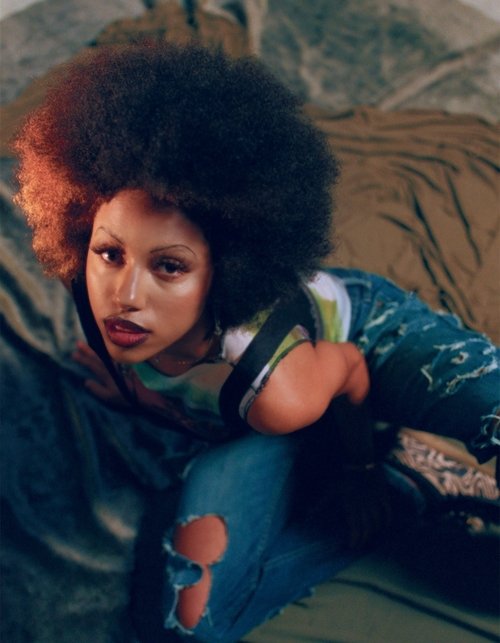
where I am highlighting an artist who has been around a while but warrants a closer look. Shamir might not be known to many. Shamir Bailey is a Las Vegas artist whose debut E.P., Northtown, was released in June 2014. He put out his debut album, Ratchet, the following year. I am going to get to his current album, Heterosexuality, soon. That was released earlier this year to rave reviews. His eighth album, Shamir has this amazing consistency. Following from the brilliant Shamir of 2020, there is no signs of the amazing artist slowing or producing anything less than phenomenal. I am going to come to a recent interview, together with a couple of reviews for the brilliant Heterosexuality. Another Mag interviewed Shamir in 2020. During the worst of the pandemic, it was a strange time to be planning and releasing a new album (Shamir):

AK: I saw a tweet recently that asked the question about what your career would be like if you looked like Troye Sivan. You said that people weren’t ready for that conversation. That was weeks ago and a lot has happened since then. Do you think that things have changed since then that people might be willing to have that conversation?

SB: I was like, maybe I spoke too soon? [Laughs]. The world on the whole is ready to have a lot of conversations. But even then, on the grand scheme of things that seems relatively petty. Look, I toured with Troye. He’s one of my friends. The last thing I want to do is make it look like I’m pitting myself against him. But the fact stands that I do think I’m as talented as Troye. There are parts of my career where I’ve denounced pop, but part of me thinks how much more revered Troye would be if he had gone off to make weird indie-rock records that he played everything on and produced himself and released every year. I can imagine that being received better than it was received for me.


AK: Do you think you’ve become more assertive when it comes to your career in terms of the differences between artists and what you feel you’re entitled to?

SB: I can’t do that. I feel like if I do that it’ll be enough to make me go mad. I do everything just for the sake of art because that’s all I can do. I know that what I put out is always going to be undervalued. It always has been. Even when people look at Ratchet. Ratchet was a success and everything, but look at how much people have taken from that album and are still taking five years later. I made it with pennies! My whole career has been undervalued. That’s something that I’ve had to live with and [now] I put all my energy and focus into making the best possible art that I can.

AK: When Ratchet came out you said you wanted to lead the way for a slew of non-binary Black pop stars. That didn’t happen. What’s it like to still be leading the way in that respect?

SB: It’s deeply frustrating. I thought that releasing Ratchet and leaving would be enough. I really did. And the fact is, I didn’t see enough artists like me being given the platform that I had or higher. But it just didn’t happen and that frustrated me.

Realistically I wanted to be the weirdo indie rockstar making weirdo records for the rest of my life. That is me and that is still apparent in this new record, but I wanted to do whatever I wanted to do and be selfish in a way that my specifically white, specifically male and specifically straight contemporaries get to be. However, when you’re a part of not only one marginalised group but multiple marginalised groups, that weight does fall on you. It’s not fair, but it does. I think had to work through that. It’s not fair and I know it’s not fair. But I have to do this to be the change that I want to see in the world. If anything, me returning to pop and making myself accessible again isn’t for me. It’s for everyone like me.

 AK: When your identity is politicised without you even being born, it has such an impact that people don’t even understand. You can’t move without your life being a statement. You’re an activist because you exist.

SB: It’s not even that. I think that’s how I did feel. I felt like I was cosplaying activism, even though I never viewed myself as one. I was frustrated by that. But like so many things, it’s just another thing to bear: being Black, being queer, being all of these things. But being labelled an activist is put on you because you’re a public person. I have this problem because I have this platform. That is fairly easier than racism, which I’m not sure is every going to go away. As much as I want to be my own person, I think it’s incredibly reckless when people who are in the margins get a platform and don’t use it to lift up other people like themselves. So I take one for the team.

AK: If you can, how would you describe 2020’s energy?

SB: Transformative. It sucks, but transformation is hard. It’s not easy. But things have to die in order for things to be born. When people say abolish the police, we mean that. It’s not reform. You have to get rid of the old to get something new. You can’t keep trying to gloss over the old when it’s literally decaying. Everything has an expiration date. Trying to hold on to things that are past their expiration date prevents the new from coming in. These things are going to continue to happen around the world, but specifically in America. They are going to keep happening until we throw out the old, start over and allow space for the new”.

Although I have not long been a fan of Shamir, I am listening back to his previous work and catching up. I feel Heterosexuality may be his best album so far. Under thew Radar spoke with him earlier in the year about the creation and process of writing the album (among other themes):

Do you ever write from that place of frustration, or is that something you reflect on later?

I don’t write in the heat of the moment. I can’t do that. I’d rather process my feelings first before I blow on them. I talk about that a lot. I think that’s a thing that a lot of artists need to practice, because, like, I notice that it can get really toxic when artists write in the midst of their emotions as opposed to working through their emotions and then creating after.

When and where did you actually compose the songs?

It was a really quick process. To touch on the last question again, I think a lot of my songs touch on queer rage. I think queer rage has always been a thematic throughline through all of my work. And I think anyone who follows me on Twitter knows that I often go on certain rants about that. And it was just a 3 a.m. rant, and then through the midst of that 3 a.m. rant that I was going on on Twitter, that’s when I was hit with the visual concept. I kind of just bookmarked that in my mind. I was just like, okay cool, that’s the concept for another album. I wasn’t even trying to write anything.

This was October [2020], like three weeks after my last album [self-titled] came out. After I had the visual idea, like a day or two later, that’s when Hollow Comet DM’d me about working together. And I just loved his sound so much that I was instantly inspired. I want to say literally the next day I started demo-ing, and then the record was basically written by December.

What about his sound appealed to you?

I was familiar with his band Strange Ranger, but I wasn’t too familiar with his Hollow Comet stuff. The sound of his production stuff with Hollow Comet sounded like what I had been dreaming up for myself for years, but I couldn’t do it myself and couldn’t find other people to do it. I remember just freaking out because I was like, “WHAT!? Here he is, right under my nose, doing it the entire time.” We obviously knew each other, but I think we had only met once in person before he had hit me up. We didn’t even know each other [well]. It was purely just being inspired by the music and the sound.

You’ve said previously that you want to make paths for more queer and POC voices in pop music. Were you surprised by the mainstream success of Lil Nas X’s album last year?

No, of course not. I think Lil Nas X is someone who kicked the door down. I think the door wasn’t open, and it still isn’t open, but I think he kicked it down. It’s clear that he has not had a warm welcome. Yes, he’s highly successful, but again, not without BS. And I think it goes back to what I said earlier about the freedom thing. Yes, you see that he’s living in freedom and truth within himself, but look how much he has to pay.

You said you had some concepts and titles before the record took shape. How did you land on Heterosexuality?

‘Cause I’m a troll! I just think it’s funny. And, you know, it’s not lost on me that despite being a very openly queer artist my entire career…this is my most queer album. And I think that is because there is so much trauma around me being very explicit about my queerness in my music. When I first came out during my first album cycle, I felt like nobody wanted to talk about the music and only wanted to talk about my queerness, and that record wasn’t even specifically about my queerness! So, yeah, there’s a lot of trauma around me being too explicitly queer in my music for fear that that was all that people wanted to talk about. So I think also me calling it Heterosexuality was just like extra measure to make sure that I’m not just talking about my queerness. Plus I think it’s funny. I’m a troll, what can I say?”.

Prior to getting to a couple of positive review for one of this year’s strongest albums, Atwood Magazine wrote why Heterosexuality is such an important and powerful album – from an artist who has faced resistance and oppression from the very start of his career:

26-year-old Shamir Bailey just might be indie’s most beloved underdog. Following the breakout success of his 2015 debut album Ratchet, he struggled against a rigid and racist music industry that could not figure out how to make his unique sense of experimentalism marketable, leading him back to his DIY roots. Writing, recording, producing, and releasing music outside of the world of labels and corporate pigeonholing, he strove to explore his artistic identity with new savvy as he reckoned with his wounds, rediscovering himself in the process. A success in risk-taking, his inimitable 2020 self-titled album was a triumph of his own determination as he showcased his masterful songwriting chops and creative versatility. With his latest record, he delves deeper into the emotional territory he carved out with Shamir, honoring his ongoing transformation as he harnesses the larger-than-life power of his own authenticity.

As part of his transformation, he fashions himself as an androgynous deity of destruction, posing plainly as a display of the inherent beauty of his existence in the face of a transphobic, patriarchal system attempting to stifle and extinguish his flame. In doing so, he reframes this Baphomet-like figure as a mark of growth, rebirth, and resilience, in all its messiness and glory. He stands his ground as a nonbinary person on the bold “Cisgender,” where he doubly refuses genre conformity with crunchy industrial beats, atmospheric synths, distorted guitars, and his soaring vocal range. Tracks like “Gay Agenda” and “Abomination” examine queerness as an act of noncompliance at its core, extending the definition of “queer” to the refusal to comply with the white, cis capitalism that further ensures our collective oppression as a society. Even in his queerness, Shamir pioneers a brave new frontier that only he can.

Boundless and ever-surprising, Heterosexuality shows us a new possible future for indie music and artists—after all, Shamir is a key figure in the new vanguard. Averse to stasis, he’s not interested in being anything other than himself, which he is continuously expanding upon, reinventing, rediscovering. With his devotion to honesty, sonically and otherwise, he presents himself with the gift of being undefinable. It’s perhaps one of the greatest gifts of all”.

I will wrap up with a couple of reviews for Shamir’s Heterosexuality. It is an album that garnered a lot of praise and interest. If you are new to the music of Shamir, I would definitely recommend you check the album out. This is what DIY said in their review:

Vegas-born Shamir has never been one to sit in a box. Breaking through with debut album ‘Ratchet’ in 2015, the multi-instrumentalist quickly parted ways with the sound that made him. A turbulent split with then-label XL, and subsequent battles with his mental health, saw Shamir release six studio albums across four years. Each presented a different facet of his creativity, underpinned by candour and an innate need to experiment.

‘Heterosexuality’, Shamir’s first to delve into his queerness, truly breaks the mould. “You’re just stuck in the box that was made for me,” he offers with both spite and vulnerability on the industrial-laden opener ‘Gay Agenda’. It sets the tone for a record that actively looks to dismantle labels. “I’m just existing on this god forsaken land,” he affirms on ‘Cisgender’, “you can take it or leave it, or you can just stay back.” It cements ‘Heterosexuality’ as an empowering acceptance of trauma largely imposed from the outside. The record bounds between unfaltering self-belief and fundamental pain. The hauntingly spiteful ‘Cold Brew’ gives way to the comparably joyful ‘Marriage’. “I’m married to me,” he exclaims, “I’m sorry to break the news that I’m taken.” At first glance contradictory, together they secure the notion that you don’t have to be fixed to be happy.

In style, Shamir mirrors his stand against the conventional. The furious ‘Abomination’ sees him rap with an otherworldly blend of power and gentleness. Across the record, the industrial tones of the opener part way for sultry R&B and indie guitars, all pulled together by Shamir’s emotive falsetto. It provides space for a poignant message, one that supersedes outdated expectations.

The queer community remains raised on trauma, and hope can only be found by facing its effects head on. With resounding beauty, ‘Heterosexuality’ deconstructs social norms through a powerful freedom of self-expression, yet also acknowledges this pain and struggle. “Things that give us life makes us question if we can take it anymore,” he laments on closer ‘Nuclear’ before defiantly concluding, “but we put up anyway”.

I will end with a review from The Line of Best Fit. Heterosexuality has this narrative cycle that takes in so many different sounds and genres. It is an album that most definitely reaps rewards upon multiple listening. I have come back to Heterosexuality a few times since I first heard it:

Gay Agenda” begins almost like an alarm call, with Shamir’s soft voice in front of ominous strings and a crunchy, palpable beat. Touching on toxic masculinity with lines like “You’re just stuck in the box that was made for me,” the song asserts his identity – completely free to do what he pleases, a running motif though the album.

On the rap “Abomination”, Shamir reclaims slurs used against him while using a skillful strategy – softening his voice to a saccharine playfulness, heightening his ideas even more. “Say my life matters, but it’s just an option,” he tackles on the heavy, industrial beat. His musings on capitalism, exploitation, and race are tight, with only a few clunky missteps (“My words heavy on your mind like a hippopotamus”).

Lyrics from these tracks are insightful glimpses to his mind, but the true power comes from the soaring vocals he employs. On “Cisgender”, after minutes of dense electronic build-up, the words almost explode out of him: “I’m not cisgender, not binary trans / …I’m just existing on this godforsaken land.” He does the same on “Nuclear”, an easier song with a breezy, “Margaritaville” like beat, its final verse a grand finale to an album of sonic expertise and finesse.

Shamir smartly incorporates highs and lows within the album – after the barrage of the first four tracks, complex ideas swirling and evolving, we get some easy pop songs in “Cold Brew”, “Married”, and “Caught Up”. Toying with an ‘80s beat, “Stability” speaks to the anxieties of a new relationship: “I don’t want to squander / This beautiful mess.” “Caught Up” leans into indie rock, but presents a similar statement – “So cut me down, I don’t wanna be this high,” he pleads. These catchy songs pose as a welcome relief from the focused, norm-challenging songs at the front of the album.

Heterosexuality is an interesting title choice for an album for which norm-subverting is wholly within the music; it’d be like Björk titling an album “Disco.” But this album has it all, and listeners who crave forward-thinking, statement-making pop will find homes with “Gay Agenda”, “Cisgender”, and “Abomination”, while those less involved can relax with the jams of “Cold Brew", “Nuclear”, and “Stability”. His future is spread out in a number of artistic directions, but for now, he (rightfully) just wants to be”.

A major talent who I hope will release a lot more albums before his career comes to an end, the spectacular Shamir is someone who should be on everyone’s radar. If you are new or a bit hesitant about diving in, then I would suggest that you…

LISTEN now.

_____________

Follow Shamir

FEATURE: Inspired By… Part Sixty-Eight: Faith No More

FEATURE:


Inspired By…

Part Sixty-Eight: Faith No More

 __________

I am putting two Inspired By… features…

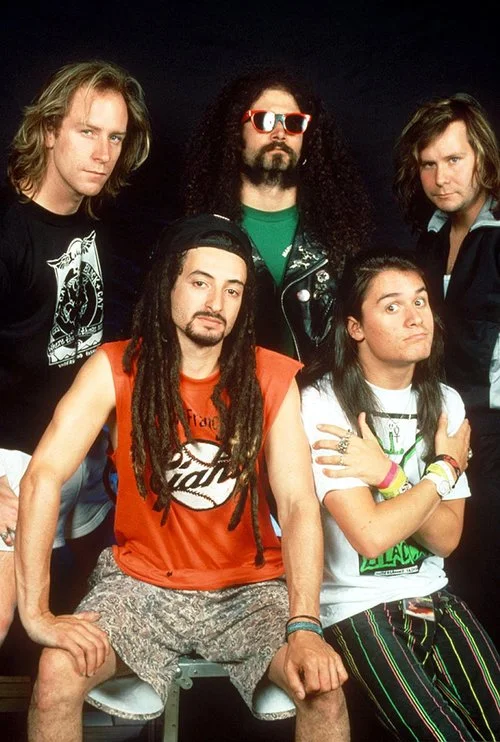
quite close to one another, as I am interested seeing all the varied artists who have been influenced by legendary acts. The previous feature was about Neneh Cherry. Undoubtedly one of the most iconic and important artists ever, I am not tuning my focus to Faith No More. The Californian band formed in 1979 and put out their seventh studio album, Sol Invictus, in 2015. I hope that we hear more from the band. Led by the incredible Mike Patton, one of their most important albums, Angel Dust, turned thirty earlier this month. Before getting to a playlist of songs from artists inspired by Faith No More, AllMusic provided detailed biography about the legends:

With their fusion of heavy metal, funk, hip-hop, and progressive rock, Faith No More have earned a substantial cult following. By the time they recorded their first album in 1985, the band had already had a string of lead vocalists, including Courtney Love; their debut, We Care a Lot, featured Chuck Mosley's abrasive vocals but was driven by Jim Martin's metallic guitar. Faith No More's next album, 1987's Introduce Yourself, was a more cohesive and impressive effort; for the first time, the rap and metal elements didn't sound like they were fighting each other.

In 1988, the rest of the band fired Mosley; he was replaced by Bay Area vocalist Mike Patton during the recording of their next album, The Real Thing. Patton was a more accomplished vocalist, able to change effortlessly between rapping and singing, as well as adding a considerably more bizarre slant to the lyrics. Besides adding a new vocalist, the band had tightened its attack and the result was the genre-bending hit single "Epic," which established them as a major hard rock act.

Following up the hit wasn't as easy, however. Faith No More followed their breakthrough success with 1992's Angel Dust, one of the more complex and simply confounding records ever released by a major label. Although it sold respectably, it didn't have the crossover potential of the first album. When the band toured in support of the album, tensions between the band and Martin began to escalate; rumors that his guitar was stripped from some of the final mixes of Angel Dust began to circulate. As the band was recording its fifth album in early 1994, it was confirmed that Martin had been fired from the band.

Faith No More recorded King for a Day, Fool for a Lifetime with Mr. Bungle guitarist Trey Spruance. During tour preparations he was replaced by Dean Menta. Menta only lasted for the length of the King for a Day tour and was replaced by Jon Hudson for 1997's Album of the Year. Upon the conclusion of the album's supporting tour, Faith No More announced they were disbanding in April 1998.

 Patton, who had previously fronted Mr. Bungle and had avant-garde projects with John Zorn, formed a new band named Fantômas with Melvins guitarist Buzz Osbourne, Mr. Bungle bassist Trevor Dunn, and former Slayer drummer Dave Lombardo. Roddy Bottum continued with his band Imperial Teen, who released their first album, Seasick, in 1996. A posthumous Faith No More retrospective, Who Cares a Lot, appeared in late 1998.

In 2009, after 11 years of dissolution, Faith No More staged a reunion tour, playing festivals in Europe and scattered American dates; Jim Martin did not participate, but Jon Hudson and the rest of the band's 1988 lineup took part. As the band continued to play shows, speculation grew concerning the possibility of a new studio album, and in November 2014, the band confirmed the rumors with the release of a single, "Motherfucker," titled with their typical cheek. In May 2015, Faith No More released their first album since 1997, Sol Invictus, through Reclamation Records, a label distributed by Patton's Ipecac imprint; the band supported the release with an extensive tour of the United States, Europe, and South America”.

To show how influential and important Faith No More are, the playlist below shows which artists they have impacted. Without Faith No More, so many other artists would not exist or be the same. They are an incredibly influential act. The songs below…

PROVE their influence is far and wide-ranging.

FEATURE: Groovelines: The Byrds – Eight Miles High

FEATURE:


Groovelines

The Byrds – Eight Miles High

__________

WRITTEN by…

Gene Clark, Jim (Roger) McGuinn and David Crosby, I often think The Byrds’ Eight Miles High was inspired by The Beatles. Listen back to The Beatles’ work on Rubber Soul (1965) and Revolver (1966), and Eight Miles High sort of fits into that mould. One of the best and defining songs of the 1960s, Eight Miles High was released on 14th March, 1966. One of the first psychedelic Rock tracks, it definitely opened doors and minds for other artists. Eight Miles High did get banned by some radio stations because of the possible drug references in the song. The Byrds denied rumours at the time. Listening to Eight Miles High, and it is impossible to not hear the drug mentions! The title alone makes me think of the band feeling high after smoking weed. It does have this mix of the laidback and the psychedelic that one can easily link to drugs. Because of a ban, the song did struggle to make a big chart impact. It did get to fourteen on the Billboard Hot 100 chart and number twenty-four in the U.K. Appearing on The Byrds’ third studio album, Fifth Dimension, Eight Miles High became their third and final U.S. top twenty hit. It is a classic that still gets played a lot to this day. Although it does evoke the sounds and sights of the 1960s, it has not dated at all. Anyone can put the song on today and connect with it.

There are a couple of features about Eight Miles High that I want to bring together. The first, from Ultimate Classic Rock discusses the story and history of the song. Learning how it came together and was received is really interesting. Its origins are insightful:

When the Byrds kicked off the second phase of their multistage career in March 1966 with the release of "Eight Miles High," they also happened to launch a new chapter in rock history.

The quintet pretty much spent the previous year mining the Bob Dylan songbook, fine-tuning its own collective songwriting talents and perfecting the folk-rock genre with chart-topping singles like "Mr. Tambourine Man" and "Turn! Turn! Turn!" But as their busy 1965 - which included two albums and many live appearances - started to wind down, the Byrds were getting restless.

That fall, the band participated in a tour spearheaded by American Bandstand host Dick Clark. They traveled city to city by bus and kept themselves occupied by listening to music. One day, a friend of David Crosby's played jazz great John Coltrane's 1961 album Africa/Brass, which incorporated Afro-Indian improvisations into a more traditional big-band setting.

The music "seared through the center of my chest like a white-hot poker," noted Roger McGuinn - who, like Crosby, was one of the Byrds' three singers, songwriters and guitarists - in 2006's There Is a Season box set. He recorded the album with a portable cassette deck he recently picked up, filling the other side of the tape with Indian ragas by Ravi Shankar. The band listened to the tape nonstop for the rest of the tour.

When they entered RCA Studios in Los Angeles for a session in late December, they had an idea for a new song inspired by their recent obsession. A first take of "Eight Miles High" - preferred by the group's members - was rejected by the Byrds' record company because it wasn't recorded in one of its studios. So, the band returned to an approved studio a few weeks later on Jan. 25, 1966, and completed the version that was released as a single on March 14.

From the start, the Byrds knew they were getting into something new and significant with "Eight Miles High." In early 1966, there still wasn't much that sounded like it. Even the Beatles, the most forward-thinking band of the era, had just unveiled their first real exploration of Indian music with "Norwegian Wood (This Bird Has Flown)" from Rubber Soul, which came out in December. That classic song's key sitar line was inspired by Shankar, whose music the Byrds were immersed in during their recent tour.

But they took it even further in "Eight Miles High," capping it with a head-spinning guitar solo based on a jazz progression inspired by Coltrane. McGuinn explained in There Is a Season that his solo "wasn't mapped out"; instead, he had a "basic skeleton" borrowed from a four-note Africa/Brass riff he then improvised on”.

One of the greatest songs ever released, I can only imagine how The Byrds felt when they completed the song. It is one of these tracks that, once heard for the first time, will stay in the head. It has that hypnotic quality that you cannot escape from! In a feature for The Guardian, David Crosby and Roger McGuinn talked about writing the majestic Eight Miles High:

Roger McGuinn, singer-songwriter/lead guitar

Eight Miles High has been called the first psychedelic record. It’s true we’d been experimenting with LSD, and the title does contain the word “high”, so if people want to say that, that’s great. But Eight Miles High actually came about as a tribute to John Coltrane. It was our attempt to play jazz.

We were on a tour of America, and someone played us the Coltrane albums Africa/Brass and Impressions. I had just picked up a cassette recorder – it was such a new thing, you couldn’t buy any tapes to play in it. But I had some blank tapes so recorded the Coltrane albums, along with some Ravi Shankar, and took them on tour. It was the only music we had, for the whole time on the bus. By the end of the tour, Coltrane and Shankar were ingrained.

There was one Coltrane track called India, where he was trying to emulate sitar music with his saxophone. It had a recurring phrase, dee da da da, which I picked up on my Rickenbacker guitar and played some jazzy stuff around it. I was in love with his saxophone playing: all those funny little notes and fast stuff at the bottom of the range.

At the same time, Gene Clark [rhythm guitar] had some chords and a vague melody, which went into the more regular structure of Eight Miles High. In later years, Gene started to fantasise that he wrote the whole song. That wasn’t the case: it was a collaborative effort between myself, Gene and David Crosby [vocals, rhythm guitar]. The previous year, 1965, we’d been on a trip to England. It was our first time on a plane, and I had the idea of writing a song about it. Gene asked: “How high do you think that plane was flying?” I thought about seven miles, but the Beatles had a song called Eight Days a Week, so we changed it to Eight Miles High because we thought that would be cooler.

When the song came out, some DJs did the sums and realised that, since commercial airliners only flew at six miles, we must have been talking about a different kind of high. And all the stations stopped playing it. We put out a statement refuting those claims, but it was the end of our commercial success. The Byrds were damaged goods.

Gene left the band the month Eight Miles High was released. He was afraid of flying. We’d get on a plane, and he’d be in a cold sweat, standing up in the aisle, saying: “I can’t stay on this plane, man. I gotta get off.” I remember saying: “You can’t be a Byrd if you can’t fly”.

For this Groovelines, I wanted to look inside a song that remains celebrated and much-played, over fifty-five years since it came out. A timeless slice of Psychedelia from The Byrds, the song was responsible for the naming of the musical subgenre, Raga Rock. Covered by numerous artists; inspirational to many others, it is one of the most important songs released. Its classic status is something that will…

NEVER change.

FEATURE: Music Made for Pleasure, Music Made to Thrill: The Overlooked Wonder of Kate Bush’s Experiment IV

FEATURE:


Music Made for Pleasure, Music Made to Thrill

The Overlooked Wonder of Kate Bush’s Experiment IV

__________

AS part of a run of Kate Bush features…

I am returning to various albums and songs that I feel are underrated. Of course, with the success of Running Up That Hill (A Deal with God) and its continued chart dominance, many people are streaming that track and its sister album, Hounds of Love. That is great! Any attention Bush’s music gets is great, though I wonder how many people are digging deeper and listening to other albums and tracks. One song that many people may not even be aware of is Experiment IV. Released as a single in 1986 to promote her greatest hits album, The Whole Story, here is a song that could easily fit into Stranger Things – the Netflix show that helped propel Running Up That Hill (A Deal with God) to the top of the charts as it featured – because of its tone and video. In fact, many people have noticed a resemblance between Kate Bush dressed as a ghoul/monster for that video and a Stranger Things character, Vecna. In fact, certain parts of the Experiment IV video (which Bush directed) have almost been replicated in Stranger Things. It is clear that the makers know about the song…so I wonder whether it could make an appearance on the show (as there is rumour another Kate Bush song could feature before the finale’s end). Experiment IV is a song that has a darker theme. Scientist building a machine/device that produces sound that could kill people could be lifted from a spy thriller. The video is suitably cinematic and tense! Bush showing what a visual and accomplished director she was. She does make some fleeting appearances in the song, though the likes of Dawn French and Hugh Laurie pop up among the cast!

Before going deeper into the song, the Kate Bush Encyclopedia provided information about Experiment IV. Among them is an interview, where Bush discussed the background to one of her most underrated and best singles:

This was written as an extra track for the compilation album The Whole Story and was released as the single. I was excited at the opportunity of directing the video and not having to appear in it other than in a minor role, especially as this song told a story that could be challenging to tell visually. I chose to film it in a very handsome old military hospital that was derelict at the time. It was a huge, labyrinthine hospital with incredibly long corridors, which was one reason for choosing it. Florence Nightingale had been involved in the design of the hospital. Not something she is well known for but she actually had a huge impact on hospital design that was pioneering and changed the way hospitals were designed from then on.

The video was an intense project and not a comfortable shoot, as you can imagine - a giant of a building, damp and full of shadows with no lighting or heating but it was like a dream to work with such a talented crew and cast with Dawn French, Hugh Laurie, Peter Vaughn and Richard Vernon in the starring roles. It was a strange and eerie feeling bringing parts of the hospital to life again. Not long after our work there it was converted into luxury apartments. I can imagine that some of those glamorous rooms have uninvited soldiers and nurses dropping by for a cup of tea and a Hobnob.

We had to create a recording studio for the video, so tape machines and outboard gear were recruited from my recording studio and the mixing console was very kindly lent to us by Abbey Road Studios. It was the desk the Beatles had used - me too, when we’d made the album Never For Ever in Studio Two. It was such a characterful desk that would’ve looked right at home in any vintage aircraft. Although it was a tough shoot it was a lot of fun and everyone worked so hard for such long hours. I was really pleased with the result. (KateBush.com, February 2019)”.

I love the fact that there is this fourth experiment that the government/scientists have been working on for some secret purpose. Why would they want to kill with sound!? Bush’s voice sounds hushed at certain moments and alluring the next. It is a wonderful performance. Her lyrics discuss the nature of the machine and how, though it can appear to be a great device or breakthrough, it is a nightmare: “They told us/All they wanted/Was a sound that could kill someone/From a distance/So we go ahead/And the meters are over in the red/It's a mistake in the making/It could feel like falling in love/It could feel so bad/But it could feel so good/It could sing you to sleep/But that dream is your enemy”. With such a striking video, production by Kate Bush, and a composition that meant the song could have slotted onto Hounds of Love (her 1985 album), I wonder why Experiment IV does not get more affection, airplay and discussion. I have said before how the composition reminds me a bit of Peter Gabriel. Of course, at the same time Experiment IV was in the charts, she was also in the charts with Gabriel on his song, Don’t Give Up (from his album, So). With great violin work from Nigel Kennedy, Experiment IV is a superb track that so many more people need to know about! Given the attention around Stranger Things and how it has helped to get Running Up That Hill (A Deal with God) to the top of the charts around the world, Experiment IV seems like it is ready-made to feature on a big show like that. Who knows? Maybe it will! If you have not heard the brilliant and epic Experiment IV, go and find it now and…

PLAY it loud! 

FEATURE: Miracle Man: Elvis Costello’s My Aim Is True at Forty-Five

FEATURE:


Miracle Man

Elvis Costello’s My Aim Is True at Forty-Five

__________

PERHAPS his best album…

 IN THIS PHOTO: Elvis Costello in 1977/PHOTO CREDIT: Hulton-Deutsch Collection/CORBIS

Elvis Costello’s debut, My Aim Is True, definitely lived up to its title! A stunning album that was released on 22nd July, 1977, I wanted to look ahead to its forty-fifth anniversary. It is amazing to think that, shortly before he was singed to Stiff through the label's founders Dave Robinson and Jake Riviera, Costello was unsuccessful as a touring artist. His debut album is so complete and accomplished, you wonder what people were hearing and why labels ignored him to that point! With a backing band consisting of members of Clover, a California-based Country Rock act, Costello was working as a data entry clerk when recording – and he still worked at his job throughout recording! It is wonderful to think that Costello was ensuring he had security and balanced a mundane job with recording one of the best albums of the 1970s. There is a romance to this aspiring songwriter working his day job and dreaming up lyrics and melodies. It is hard to think of an artist whose first couple of albums are as impressive as Costello’s. A year after his magnificent debut, he released an album that many consider to be his masterpiece: This Year's Model. Clearly inspired and made for the music industry, My Aim Is True is filled with standout songs; it won enormous critical acclaim from the U.K. and U.S., it reached fourteen on the U.K. album chart. One of the best and most important debut albums in Rock history, the retrospective appraisal and acclaim My Aim Is True has received cements it as a classic. Amazing to hear such confidence and strength from a debut album!

I don’t know if there is a forty-fifth anniversary edition of My Aim Is True planned for next month. It would be nice to think something is happening to mark its birthday. Before getting to a couple of reviews for the immense and staggering My Aim Is True, The Young Folks wrote an article about the album - where they start out by looking at the background to the album being recorded:

While the punk movement raged in the late ‘70s, one British singer-songwriter was channeling his frustrations into a blend of Buddy Holly-style pop music and punk soul to create what would become one of the best known new wave albums out there. Working as a data entry clerk, Elvis Costello called in sick to his day job in order to rehearse and record his debut album, My Aim is True. The album serves as a collection of life’s most relatable frustrations, marked by pretty melodies and what would become Costello’s signature verbal calisthenics.

For an album that is held up as one of the best debuts out there, My Aim is True certainly had a rough start. Since it was initially only released in the UK and available in the US as an import, American fans were slow to come to the record, while lead singles “Less Than Zero” and “Alison” were both released with very little success in the UK. However, the album eventually gained traction and popularity in England. His American fanbase boomed later that year, after a scandalous decision to play the song “Radio Radio” on Saturday Night Live got him banned from the show for twelve years”.

It is hard to find any reviews anything less than blown away and moved by Elvis Costello’s My Aim Is True. Even if you do not know his music, you can pick up My Aim Is True and bond with it. This is what Pitchfork wrote in their review of the album back in 2002:

Once upon a time, being a bitter, frustrated male musician didn't mean being a jerkass. Perpetually wronged and rarely laid men were capable of being intelligent about their bitterness, focusing their anger not on the whole of womankind, but on particular women (usually flirts and teases) and attacking these women with a potent blend of wit and bile. Rather than self-aggrandizement, self-deprecation reigned supreme. More importantly, subtlety won out over blatant self-pity or obnoxiousness. Yeah, these gentlemen were angry, but they were smart enough to know what they were angry at-- and geeky enough to include themselves in that category.

At the helm of this trend towards new-wave geekdom was Stiff Records, a small label operating out of England with a roster including Ian Dury, Nick Lowe, and the mighty Elvis Costello. With his 1977 debut, My Aim Is True, Costello exploded onto the punk/new-wave scene like a mutant hybrid of Buddy Holly and Johnny Rotten. He had the seething contempt of a punk, but a transparent intelligence, sensitivity, and melodic sense that made him much more interesting than many of his contemporaries. Punks didn't give a fuck; Elvis was sensitive enough to not only give a fuck, but smart enough to be pissed off and disturbed by that fuck.


On My Aim Is True, Elvis' raw energy comes through in a way that's never completely recaptured on later records. While the songs range from mellow country twang to full-on, spitting assault, there's a strange cohesiveness to the album simply by virtue of its rough, rushed feel. Although it's a studio album, there's a latent energy to Nick Lowe's production that grants My Aim Is True all the immediacy of a live show.

While Lowe's blunt production certainly enhances the record, the real star here, naturally, is Elvis himself. My Aim Is True is host to some of the best songs Elvis has ever penned. The brief kick in the balls of the opening track, "Welcome to the Working Week," is perhaps the album's perfect mission statement. With poppy ooh's, a catchy melody, and an undeniably sharp edge, the song excellently captures the cyanide-laced slab of peanut brittle that is Elvis. The lyrics are rife with brilliant, subtle innuendo. From the opening line, "Now that your picture's in the paper/ Being rhythmically admired," it's clear that Costello isn't going to stumble into any cheap lyrical traps. A lesser man would have just used some goofy synonym for masturbation; Elvis went and used the phrase "rhythmically admired." It's more subtle, more original, and infinitely cooler. That's why you love him.

"Miracle Man," "No Dancing," and "Blame It on Cain" bring the album down a notch with an off-kilter punky-tonk feel. "No Dancing," the highlight of the three, introduces a Phil Spector-style effect of massive percussion and multitracked vocals. "Blame It on Cain," a typically Costello-ish tale of dissatisfaction, swaggers with twangy country guitar and pained vocals”.

There are going to be those who are new to My Aim Is True or have not heard it for many years. In the run-up to its forty-fifth anniversary on 22nd July, go and spend time with one of the absolute best debut albums. I am going to wrap up with a review from the AllMusic:

Elvis Costello was as much a pub rocker as he was a punk rocker and nowhere is that more evident than on his debut, My Aim Is True. It's not just that Clover, a San Franciscan rock outfit led by Huey Lewis (absent here), back him here, not the Attractions; it's that his sensibility is borrowed from the pile-driving rock & roll and folksy introspection of pub rockers like Brinsley Schwarz, adding touches of cult singer/songwriters like Randy Newman and David Ackles. Then, there's the infusion of pure nastiness and cynical humor, which is pure Costello. That blend of classicist sensibilities and cleverness make this collection of shiny roots rock a punk record -- it informs his nervy performances and his prickly songs. Of all classic punk debuts, this remains perhaps the most idiosyncratic because it's not cathartic in sound, only in spirit. Which, of course, meant that it could play to a broader audience, and Linda Ronstadt did indeed cover the standout ballad "Alison." Still, there's no mistaking this for anything other than a punk record, and it's a terrific one at that, since even if he buries his singer/songwriter inclinations, they shine through as brightly as his cheerfully mean humor and immense musical skill; he sounds as comfortable with a '50s knockoff like "No Dancing" as he does on the reggae-inflected "Less Than Zero." Costello went on to more ambitious territory fairly quickly, but My Aim Is True is a phenomenal debut, capturing a songwriter and musician whose words were as rich and clever as his music”.

One of the greatest introductions in music history, I have been listening back to My Aim Is True quite a bit lately. With songs like Miracle Man, Alison (which features the album’s title in its chorus) and Less Than Zero drawing you in, even the songs people don’t hear often are strong and rich enough that they will stick in your head. Sort of resembling Elvis Presley on My Aim Is True’s cover, I am not sure whether that was a sort of joke; people hearing that same first name and thinking they might be similar somehow. Such an exceptional and complete debut, My Aim Is True proves that Elvis Costello is…

A real miracle man.

FEATURE: Do Enough People Know About One of Kate Bush’s Finest Albums? A Look Back at 2005’s Majestic and Seriously Underrated Aerial

FEATURE:


Do Enough People Know About One of Kate Bush’s Finest Albums?

A Look Back at 2005’s Majestic and Seriously Underrated Aerial

 __________

AN album I have been discussing for a while…

 IN THIS PHOTO: Kate Bush in a publicity shot for 2005’s Aerial/PHOTO CREDIT: Trevor Leighton

I wanted to return to Kate Bush’s Aerial because of Hounds of Love. That album is back in my thoughts as Running Up That Hill (A Deal with God) reached number one in the U.K. (and other countries). It is rightly seen as a masterpiece because of its mix of the more accessible songs on the first half of the album, tied to the conceptual suite on the second, The Ninth Wave. Aerial has a lot of similarities. It is one of Bush’s favourite albums of hers. It is a double album with a conceptual suite, A Sky of Honey, takes up the second disc. It was talked about a lot when it came out in 2005, and yet Aerial is not explored much today. In terms of radio accessibility, there is plenty of it that warrants attention. The songs on the suite can be broken up, even if they are best enjoyed as a single piece. The album’s single, King of the Mountain, gets played now and then, though there are other great tracks that are either never played or very little. Alongside The Ninth Wave from Hounds of Love, Bush did bring to the stage a lot from Aerial. Both albums have a conceptual suite, and yet Hounds of Love is widely known and rising in popularity, whereas Aerial seems more hidden or rarer in people’s thoughts. At sixteen tracks, it is a lot to listen to.

I think Aerial’s strengths come in the same way as Hounds of Love’s. I love the first album, A Sea of Honey, and the songs on there. Bertie, Mrs. Bartolozzi, How to Be Invisible and A Coral Room show Bush’s range of emotions, lyrics and sounds. There is barely a weak moment through Aerial. Maybe Hounds of Love is stronger, though I think Aerial is more detailed and has this richness that should be augmented and known about. I have been thinking about how we can get an album like Aerial more known. Rather than rely on a T.V. show like Stranger Things to get one of its tracks to number one, maybe an album listening party or a podcast about it would help raise its status and boost awareness. I really love Aerial and the fact it was her first album since 1993’s The Red Shoes. Touted as this big ‘return’ after years away, Aerial received a wave of affection. Even so, I still think that some were a little too reserved or did not get to the heart of the album. One very positive review came from The Guardian:

These days, record companies try to make every new album seem like a matter of unparalleled cultural import. The most inconsequential artists require confidentiality agreements to be faxed to journalists, the lowliest release must be delivered by hand. So it's hard not to be impressed by an album that carries a genuine sense of occasion. That's not to say EMI - which earlier this year transformed the ostensibly simple process of handing critics the Coldplay album into something resembling a particularly Byzantine episode of Spooks - haven't really pushed the boat out for Kate Bush's return after a 12-year absence. They employed a security man specifically for the purpose of staring at you while you listened to her new album. But even without his disconcerting presence, Aerial would seem like an event.

In the gap since 1993's so-so The Red Shoes, the Kate Bush myth that began fomenting when she first appeared on Top of the Pops, waving her arms and shrilly announcing that Cath-ee had come home-uh, grew to quite staggering proportions. She was variously reported to have gone bonkers, become a recluse and offered her record company some home-made biscuits instead of a new album. In reality, she seems to have been doing nothing more peculiar than bringing up a son, moving house and watching while people made up nutty stories about her.

Aerial contains a song called How to Be Invisible. It features a spell for a chorus, precisely what you would expect from the batty Kate Bush of popular myth. The spell, however, gently mocks her more obsessive fans while espousing a life of domestic contentment: "Hem of anorak, stem of wallflower, hair of doormat."

Domestic contentment runs through Aerial's 90-minute duration. Recent Bush albums have been filled with songs in which the extraordinary happened: people snogged Hitler, or were arrested for building machines that controlled the weather. Aerial, however, is packed with songs that make commonplace events sound extraordinary. It calls upon Renaissance musicians to serenade her son. Viols are bowed, arcane stringed instruments plucked, Bush sings beatifically of smiles and kisses and "luvv-er-ly Bertie". You can't help feeling that this song is going to cause a lot of door slamming and shouts of "oh-God-mum-you're-so-embarrassing" when Bertie reaches the less luvv-er-ly age of 15, but it's still delightful.

The second CD is devoted to a concept piece called A Sky of Honey in which virtually nothing happens, albeit very beautifully, with delicious string arrangements, hymnal piano chords, joyous choruses and bursts of flamenco guitar: the sun comes up, birds sing, Bush watches a pavement artist at work, it rains, Bush has a moonlight swim and watches the sun come up again. The pavement artist is played by Rolf Harris. This casting demonstrates Bush's admirable disregard for accepted notions of cool, but it's tough on anyone who grew up watching him daubing away on Rolf's Cartoon Club. "A little bit lighter there, maybe with some accents," he mutters. You keep expecting him to ask if you can guess what it is yet.

Domestic contentment even gets into the staple Bush topic of sex. Ever since her debut, The Kick Inside, with its lyrics about incest and "sticky love", Bush has given good filth: striking, often disturbing songs that, excitingly, suggest a wildly inventive approach to having it off. Here, on the lovely and moving piano ballad Mrs Bartolozzi, she turns watching a washing machine into a thing of quivering erotic wonder. "My blouse wrapping around your trousers," she sings. "Oh, and the waves are going out/ my skirt floating up around my waist." Laundry day in the Bush household must be an absolute hoot.

Aerial sounds like an album made in isolation. On the down side, that means some of it seems dated. You can't help feeling she might have thought twice about the lumpy funk of Joanni and the preponderance of fretless bass if she got out a bit more. But, on the plus side, it also means Aerial is literally incomparable. You catch a faint whiff of Pink Floyd and her old mentor Dave Gilmour on the title track, but otherwise it sounds like nothing other than Bush's own back catalogue. It is filled with things only Kate Bush would do. Some of them you rather wish she wouldn't, including imitating bird calls and doing funny voices: King of the Mountain features a passable impersonation of its subject, Elvis, which is at least less disastrous than the strewth-cobber Aussie accent she adopted on 1982's The Dreaming. But then, daring to walk the line between the sublime and the demented is the point of Kate Bush's entire oeuvre. On Aerial she achieves far, far more of the former than the latter. When she does, there is nothing you can do but willingly succumb”.

There are a few Kate Bush albums that have never really been given their fair due. Aerial ranks high when it comes to critical lists. It went to number three in the U.K. It did feature in the top fifty of the U.S. Billboard 200. Maybe it does not pack as many hits and well-known songs as Hounds of Love or another big album, but I think the beauty and real angle of Aerial is these less propulsive and big songs that arrives from an artist who was a relatively new mum (her son, Bertie, was born in 1998). It is a stunning album that unfurls and reveals colours and so many magic moments the more you listen. I think I might do another couple of features where I return to various Kate Bush albums that are not as revered as they should be. After that, I may then get down to some anniversary features around The Kick Inside (this August, it will be forty-five years since the album was recorded). Nearly seventeen years ago, the world was bracing itself for a new album from Kate Bush – something many didn’t think we would ever experience again. Maybe I have Aerial in my thoughts, as we are in a similar position. It has been ten years since 50 Words for Snow came out. With its gorgeous suite, A Sky of Honey, taking us through the course of a summer’s day, there is a lot of potential in terms of translating it to the screen. The songs on the album’s first side/vinyl are wonderful. Aerial does deserve new acclaim and having its profile raised. To me, many more people need to know about…

A simply beautiful double album.

FEATURE: Inspired By… Part Sixty-Seven: Neneh Cherry

FEATURE:


Inspired By…

PHOTO CREDIT: Juergen Teller

Part Sixty-Seven: Neneh Cherry

__________

THIS is quite nicely timed…

 PHOTO CREDIT: Andrew Benge/Redferns

as there is a new album, The Versions, where artists have taken a Neneh Cherry song and made it their own. I am including Cherry in this Inspired By…, and I will include the artists featured on the album in the playlist at the end. I am also including songs from other artists who have been inspired by the fabulous Neneh Cherry – including her own daughter, Mabel. Before adding in some biography, go and buy The Versions:

Neneh Cherry has teamed up with some of today’s most exciting female artists for new album The Versions. The collaborative LP features covers from her expansive catalogue by an all female line-up of musicians, including Sia, Robyn, Anohni, Greentea Peng, Kelsey Lu, Sudan Archives, Tyson and others.

01_Robyn feat Mapei - Buffalo Stance

02_Sia - Manchild

03_Anohni - Woman

04_Greentea Peng - Buddy X

05_Jamilia Woods - Kootchi

06_TYSON - Sassy

07_Sudan Archives - Hearts

08_Seinabo Sey - Kisses On The Wind

09_Kelsey Lu – Manchild

10_Honey Dijon – Buddy X Rework”.

Before coming to a playlist of songs from artists influenced by Neneh Cherry, AllMusic provide some details about one of the greatest artists of all-time. Cherry is someone who will continue to influence artists and leave her mark in the history books:

Neneh Cherry forged a groundbreaking mix of genres in the late '80s that pre-saged the emergence of alternative rap and trip-hop, and has gradually added to a discography filled with similarly unpredictable twists. The singer, songwriter, rapper, and producer got her start in the U.K. post-punk scene before she made a mainstream breakthrough as a solo artist with the global smash hit "Buffalo Stance," which sent her eclectic solo debut, Raw Like Sushi (1989), to the Top Ten of charts in several countries, and led to a Grammy nomination in the category of Best New Artist. Rather than follow the standard path of a commercial musician, Cherry opted instead to record solo albums every few years, and has assisted on material headlined by artists ranging from Peter Gabriel to Gorillaz. In the 2010s, she recorded a series of wildly creative albums, namely The Cherry Thing (2012), Blank Project (2014), and Broken Politics (2018), and in the following decade collaborated with younger artists on new versions of songs from earlier in her career, heard on The Versions (2022).

Born Neneh Mariann Karlsson on March 10, 1964, in Stockholm, Sweden, Neneh Cherry is the daughter of West African percussionist Ahmadu Jah and artist Moki Cherry. Raised by her mother and trumpeter stepfather Don Cherry in Stockholm and New York City, Cherry left school at age 14, and in 1980 relocated to London to sing with the post-punk group the Cherries. Following flings with the Slits and the Nails, she joined the experimental funk/post-punk outfit Rip Rig + Panic and appeared on the group's albums God (1981), I Am Cold (1982), and Attitude (1983). During this period, she also recorded with New Age Steppers and as one-third of the one-off group Raw Sex, Pure Energy. When Rip Rig + Panic broke up, Cherry remained with one of the spin-off groups, Float Up CP, and led them through Kill Me in the Morning (1985). The next year, she was featured on "Slow Train to Dawn," a single off the The's Infected.

In 1987, Cherry and fellow artist Cameron McVey (aka Booga Bear) became long-term creative and personal partners after they met as models for Ray Petri, creator of the Buffalo fashion house. Later that year, Cherry co-wrote and was featured on a B-side version of Morgan/McVey's Stock Aitken Waterman-produced "Looking Good Diving," titled "Looking Good Diving with the Wild Bunch." Signed to the Circa label, Cherry hit the U.K. singles chart as a solo artist in December 1988 with "Buffalo Stance," itself a revamped version of "Looking Good Diving with the Wild Bunch." The Bomb the Bass collaboration reached number three in the U.K. (and performed similarly well in several other territories). Furthermore, the song neatly forecast the eclectic fusion of pop smarts and knowing hip-hop energy showcased throughout the parent album, Raw Like Sushi. A number two (and eventually platinum) U.K. hit issued in June 1989, the LP featured executive production from McVey and additional input from the likes of Will Malone and Nellee Hooper, as well as Mushroom and 3D of Massive Attack. A pair of additional singles, "Manchild" and "Kisses on the Wind," followed "Buffalo Stance," as did a nomination for a Grammy in the category of Best New Artist (won by Milli Vanilli).

After she contributed to the benefit album Red Hot + Blue (with an interpretation of Cole Porter's "I've Got You Under My Skin") and Massive Attack's Blue Lines (as co-writer, arranger, and background vocalist on "Hymn of the Big Wheel"), Cherry returned with her second album, Homebrew, in 1992. A more subdued collection than Raw Like Sushi, the number 27 U.K. chart entry featured cameos from Gang Starr and Michael Stipe, and writing and production assistance from McVey, Jonny Dollar, and Geoff Barrow (pre-dating the latter's emergence with Portishead). Cherry returned to the charts in 1994 as Youssou N'Dour's duet partner on "7 Seconds," another global hit, but was otherwise on child-raising hiatus until 1996, when she resurfaced with Man, a number 16 U.K. hit containing "7 Seconds," an update of Marvin Gaye's "Trouble Man" (featuring piano from half-brother Eagle-Eye), and "Woman," an empowering response to James Brown's "It's a Man's Man's Man's World." A remix version of the album, simply titled Remixes, followed in 1998. Cherry prioritized family life well into the new millennium, raising her daughters Naima, Tyson, and Mabel, and cropped up with intermittent activity, including collaborations with Live's Edward Kowalczyk ("Walk Into This Room"), Peter Gabriel (OVO), and Gorillaz ("Kids with Gunz"), as well as recordings with her band cirKus.

Cherry returned in the 2010s with some of her most progressive recordings yet. For 2012's The Cherry Thing, she fronted the Thing, the experimental Scandinavian jazz trio whose founding mission was to play her stepfather's music. The album mixed originals with imaginative reworkings of songs initially recorded by the likes of Ornette Coleman, the Stooges, Suicide, and indeed, Don Cherry. In 2013, she collaborated with London duo RocketNumberNine on their album MeYouWeYou, and worked with them on her long-awaited fourth proper studio album, Blank Project. Produced by Kieran Hebden (aka Four Tet), the album was released in 2014 and consisted of originals written by Cherry with McVey and Paul Simm. Another set with Hebden on production, the meditative and undaunted Broken Politics, followed in 2018.

A 30th anniversary expanded reissue of Raw Like Sushi was released in 2020. The same year, the first verse of the album's "Buffalo Stance" was included in Dua Lipa's Club Future Nostalgia: The Remix Album (mixed by the Blessed Madonna), and Cherry co-wrote and appeared on the Avalanches' "Wherever You Go." Admiration for Cherry's first three solo albums continued to grow, and in 2022, Cherry partnered with ten artists -- ranging from daughter Tyson and Jamila Woods to Sia and Robyn -- to record The Versions, consisting of updates of highlights from Raw Like Sushi, Homebrew, and Man”.

One of the most loved and respected artists there is, it is no wonder that so many other artists have been compelled by Neneh Cherry’s music and have brought some of her essence and sound into their work. The new album, The Versions, is a fitting tribute and salute to the stunning music of Cherry. The playlist below is a collection of songs from those who I would say definitely draw influence from Neneh Cherry. It is clear that she is…

A true legend.

FEATURE: Spotlight: George Riley

FEATURE:


Spotlight

PHOTO CREDIT: Dan Pipe

George Riley

__________

PLAYING Glastonbury…

pretty much as we speak, the wonderful George Riley is an artist that people need to clock and get involved with. A rising talent who is producing such wonderful music, every song she releases seems to surpass the previous one! I am going to come to her 2021 mixtape, interest rates, a tape, soon. It is something that everyone should listen to; hearing this wonderful young artist deliver such important, instantly brilliant, and original music. With new singles like Sacrifice proving Riley is a talent to watch closely, I wonder whether she has plans for an E.P. or album later in the year. Her time and exposure at Glastonbury will open her to new audiences and give her a career-high (so far) live experience. It must be a treat hearing Riley up close and personal! It is hard to genre-lise her music and describe which other artists she reminds me of. I think that is a good thing. Whilst she does put out important messages about race, the climate, greed, old love, and belonging, the music and vocals are so accessible. A stunning artist who will grace the music industry with her presence for decades more, go and follow her (social media links are below). I cannot see any interviews this year with Riley. Therefore, I will drop a few in from last year. Before that, this quickfire Fred Perry interview provided some background about Riley’s favourite music and upbringing. I have selected a few questions and answers that caught my eye:

Name, where are you from?

George Riley, London, Shepherds Bush.

Describe your style in three words?

Express every day.

If you could spend an hour with anyone from history?

James Baldwin. Just wanna call him up and be like James, my man what the hell do we do!? A friend recommended me 'The Fire Next Time' which is a great short intro to his writing but if you really want to cry go read 'Tell Me How Long The Trains Been Gone'.

A song that defines the teenage you?

'Regulate' by Warren G or 'Doomsday' by the late MF DOOM. That’s summer teenage memories for real.

One record you would keep forever?

I hope I keep every record I have forever but defo 'Water No Get Enemy' by Fela Kuti, the classic.

The song that would get you straight on the dance floor?

'Hangin' On A String' by Loose Ends. Love to aunty dance any place, any time.

A song you wished you had written?

How Can You Mend A Broken Heart' by Al Green. Which I think was originally written by the Bee Gees, but it’s the Al Green version that really gets me going.

Best song to turn up loud?

'A Greater Love' by Yves Tumor”.

I want to come to an interview from CRACK. A truly memorable and brilliant lyricist, George Riley’s videos are equally arresting. Here is an artist that has all the raw talent and arsenal to go as far as she wants in music. It is really exciting to see it all unfold:

The 23-year-old’s artistic subject matter often details society’s fractures and issues pertinent to her generation: the taxing nature of social media, the climate crisis, the grind to make ends meet. Songs like last year’s TRIXXX namechecks Geoffrey Chaucer over ominous, creeping production sitting somewhere between R&B and trip-hop: “Float toward paycheck/ Succeed need safety net,” she asserts. Her visuals are equally imaginative. In her newest video for Power, directed by fellow rising singer Joviale, Riley fashioned herself into a Hilton-esque socialite, complete with a bobbed wig, flashy sports car and miniature white dog, Coco. Moments later, the protagonist is a gleeful purple demon resembling a terranean Ursula. She bludgeons her former self to death; a visual representation of her ego taking over her.

It sounds dark, but Riley is bubbly when explaining her vision. She likes to present serious topics with “a bit of fun” and is eager to reflect the world around her playfully. “I get my inspiration everywhere really,” she beams. “I never studied music; I went down a more academic route because of my parents [her father is a Senior Lecturer at the University of Westminster]. I think that’s pushed me to be in different spaces and think about stuff outside of music. I journal a lot, so I don’t tend to think about lyric writing too much – it kind of comes out naturally.”

PHOTO CREDIT: Ivor Alice 

Power will feature on her upcoming project titled Interest Rates; a tape, due for release at the end of June. It’ll be the first complete body of work in her still minimal discography that began in 2019, with Herstory. Interest Rates, she tells me, is informed by a love for multiple genres – dub, jungle, alternative R&B – and produced with regular collaborator Oliver Palfreyman. The two met by chance at a festival a few years back, hitting it off over a shared love of the underground styles that have come to define their work together. Take Power’s percussion, glitchy with fluttering jungle beats, or the way Cleanse Me spends the majority of its three minutes muted and near-acapella, until Palfreyman’s gong-like synths spring in towards its close. “This is me wanting to show the breadth of sounds that have inspired me,” she says, “because I don’t subscribe to just one thing.”

Now, Riley sees her music as a chance to express her identity, ideas and above all, her independence. “If you’re Black or femme, there is turmoil in being an artist and marketing yourself, and then being on social media that’s subject to all of these politics,” she shares. “It feels like you have to do everything to subscribe to the norm – the colourism, sexism, all of that – to be liked and accepted. It’s not fun.” And in an industry that is so often mentally and financially draining, she wants to keep her creativity safe from outside pressure. “There’s obviously the tangible aspect of surviving off doing what you do. That’s important, but at the same time, you can’t put the onus on art as the only source that pays you – because right now it’s not paying me, but it’s definitely fun. I don’t ever want that feeling to go away”.

 PHOTO CREDIT: Mathias Karl Gontard

Before coming to a review of interest rates, a tape, i-D spoke to the remarkable George Riley last year. A year that was still seeing restrictions because of the pandemic, the London-based artist was, perhaps, hoping that she could play more and deliver these incredible songs to her fans. I am glad she can make up for lost time. I love the final points of the interview:

1. You can call her ‘Grandma George’

“I’m 23 but I honestly feel 83 — I’m very nostalgic. I don’t know what the right time [for me] is but this isn’t it. I’m not very internet. I hate everyone being all up in everyone else’s business… it’s not for me. I like books, good chat, good food, good music, an olive, a glass of wine. That’ll do me.”

2. Songwriting is her emotional outlet

“I’m super emotional and would be so lost without it. I’m very grateful to be able to make something and feel better -- feel relief and feel detached from it. I don’t know that I tell stories as such, not in the way that some of my favourite songwriters do, I just let whatever’s in my head come out and it sounds like that; a bit of a collage.”

3. You basically can’t pigeonhole her or her work

“It spans a lot of genres and I guess I’m nothing but an amalgamation of influences that is very mixed and eclectic. Oliver Palfreyman’s production is the same in that way. But if I had to answer I guess it’s quite ‘future’, quite ‘city’, quite ‘London’, quite ‘soulful’. And I can’t speak for anyone else but it makes me feel good.”
4. George reckons her music would be a good soundtrack for a sci-fi cult classic

The Fifth Element… if there were more Black leads.”

5. She’s built an Afrofuturist world around her forthcoming mixtape

“The aesthetic is based quite heavily on The Fifth Element: great outfits, fabulous colours… a retro-futurist, Afrofuturist kinda vibe. This influencer type girl gets gifted tickets to Soho Moon (Soho House on the moon -- big coloniser energy). Anyway, she goes there and it’s awful. You have to level up into these skins like on Fortnite. I’ve not played, but I hear things. So yeah, they only cater to white people's hair, aesthetics, that kind of thing. But she has to stay to get the content, so she gets really pissed. She’s also mourning an ex, and promptly decides to return to Earth, rescinds her contract with the white influencer mafia and tries to figure out life on Earth. So… let me know if you hear that in the music!”.

I will end up with a positive review for interest rates, a tape. I first heard it very recently, but I was won over and invested the very moment I heard it. This review highlights the multiple strengths and layers of a release from an artist who is going to be a major influencer and star very soon:

George Riley didn’t grow up around instruments or within a family of talented musicians. As a child, the West London native focused on academics leading her to study law. Her music however, is free of restrictions and is created within an emotional place. She uses songwriting as her platform to express her inner thoughts on relationships and the world we live in.

Riley entered the music scene with her 2019 single 'Herstory'. The track is dedicated to those at the crosshairs of racial injustice and sexism.

“My words are empty if you ain’t open”

Her debut album, ‘interest rates, a tape’, finds her having progressed even deeper within her craft. Musically, the project blends the experimental with the pace and rhythms of House and weightlessness of Free Jazz. Her deliberate directness makes the messages crystal clear, empowering some and challenging others to do better.

A standout track for me was ‘say yes’ a collaboration with London’s Joe Armon-Jones. This slow-paced track compliments Riley, as she urges her listeners to take control of their power. As the waterfalls of percussion and keys swing, so Riley moves between melody and spoken word.

"You just have to follow all your feelings,

not be afraid to feel things,

you don’t necessarily need meaning"

Following track 'poomplexed', features an upbeat DIY House percussion arrangement and layered rhythmic loops of harmony. it evolves into a work of pure Acid House, only to return to a diversity of sounds that give Riley the freedom to be daring and show a different side of herself. Despite the range of tempos Riley always dictates the terms and shows complete control.

On the devastatingly short 'hi, how are you?(..)' She shows spectacular poise as she considers rekindling an old love.

“I’ve been trying my best not to think about you”

Riley finds a way to make the listeners feel the weight of the situation by drawing out agonising notes that draw gut wrenching desire. She trusts us to be with her as she contemplates love and loss, leaving us at an emotional standstill.

Towards the project’s close, Riley delivers a rush of energy on 'money', a catchy track dedicated to the all mighty dollar. Its youthful exuberance showcases Riley can sway a crowd as much as she can captivate their hearts. Overall, 'interest rates, a tape' strikes a warm balance between meticulously crafted and playfully experimental. The album’s free-flowing nature feels like a rough sketch that ends up being a detailed portrait”.

Go and properly acquaint yourself with George Riley if you have not heard her music. A genuinely promising artist who is going to enjoy this very varied and busy career, it is going to be great seeing what the rest of this year holds in store. When it comes to new artists who have their own sound and are definitely worth exploring and standing by, the brilliant George Riley is…

ONE of our very best.

_____________

Follow George Riley

FEATURE: Waiting for That Day: George Michael at Fifty-Nine: The Playlist

FEATURE:


Waiting for That Day 

 George Michael at Fifty-Nine: The Playlist

__________

BECAUSE the much-missed George Michael

would have been fifty-nine on 25th June, I wanted to put together a playlist with some of his best solo work. I have done George Michael playlists before but, for his birthday, I will take in a few deeper cuts. We sadly lost Michael in 2016. A new documentary, Freedom Uncut, was released on 22nd June. It is a film that covers a period of Michael's life and career following the release of his 1987 solo debut, Faith, then through the creation and release of his 1990 follow-up, Listen Without Prejudice, Vol.1. If you are a fan, then it is well worth seeing. To celebrate the iconic George Michael, this fifty-ninth birthday playlist contains some solo hits and deeper cuts. Before getting to it, I want to introduce AllMusic’s biography of the great man:

George Michael was the biggest British pop star of the 1980s, spinning a series of infectiously catchy pop singles into global stardom that saw him sell over 100 million albums worldwide. Blessed with a fine voice and a knack for writing engaging melodies that worked well with dance-friendly rhythms, Michael became the rare teen sensation who matured into a respected star as an adult.

Michael was born Georgios Kyriacos Panayiotou on June 25, 1963 in the North London suburb of East Finchley; his father was a Greek Cypriot restaurant owner who changed his name from Kyriacos Panayiotou to Jack Michael when he immigrated to England in the 1950s. Michael's family relocated to Bushey, Hertfordshire when he was in his early teens, and he struck up a friendship with one of his new schoolmates, Andrew Ridgeley. Both Michael and Ridgeley were interested in music, and in 1979 they formed a ska band called the Executive; the group didn't go far, but it gave them a taste for the spotlight, so they took what they learned and in 1981 formed a pop duo called Wham! The early Wham! demos impressed executives at Innervision, an independent record label that signed the group to a contract. By 1982, Wham! had hit the U.K. pop charts with "Wham Rap" and "Young Guns (Go for It)," and scored an American record deal with Columbia.

Michael and Ridgeley soon discovered how unfavorable their deal with Innervision was, though, and they opted out of their contract by forfeiting all future royalties on material from their first album, Fantastic, to sign with Sony worldwide. The choice proved to be shrewd; Wham!'s second album, 1984's Make It Big, transformed them from British hitmakers to a genuine international sensation, as "Wake Me Up Before You Go-Go," "Everything She Wants," "Careless Whisper," and "Freedom" became wildly successful in the U.K., Europe, and the United States. Wham! soon became one of the biggest new acts of the era, and in 1985 they became the first Western pop group to tour the People's Republic of China. But Michael displayed an ambition that went beyond Wham!'s new success, and the "Careless Whisper" single was released with the credit "Wham! Featuring George Michael," setting the stage for him to strike out on his own. In 1986, after Michael had released a proper solo single, "A Different Corner," Wham! announced their breakup and said farewell to their fans with a sold-out concert at London's Wembley Stadium.

Michael wasted no time making his mark, releasing his first solo album, Faith, in 1987. He produced and arranged the album, as well as writing the songs, and it managed to top Wham!'s phenomenal success, spawning a series of major hit singles (including "I Want Your Sex," "Father Figure," "Kissing a Fool," and the title track) and selling over 20 million copies worldwide. Michael promoted the album with a series of stylish, sexy music videos and a concert tour that found him playing 137 shows over the space of 16 months. Faith left no doubt that Michael was one of the new icons of pop music, and after recording successful duets with Elton John ("Wrap It Up" and "Don't Let the Sun Go Down on Me") and Aretha Franklin ("I Knew You Were There [Waiting for Me]"), he proved he had the respect of veteran acts as well as younger audiences.

However, Michael felt reined in by his image as a pop singer, and after taking a break, he released Listen Without Prejudice, Vol. 1 in 1990, a set that was noticeably more somber, sophisticated, and personal than his previous work. Presumably to put the focus on his music rather than his image, Michael refused to appear in any music videos for the album and declined to tour in support; the album fared well commercially, but not as well as Faith, and Michael began expressing dissatisfaction with Sony, declaring his contract was financially inequitable and creatively stifling. Michael sued Sony to end his contract, leading to a long and costly legal battle that ended in 1995, with Michael signing to the newly launched DreamWorks Records label in the United States and Virgin in the rest of the world. (During the interim, Michael released a live EP that included material he performed with the surviving members of Queen at the 1992 Freddie Mercury Tribute Concert.) In 1996, Michael finally released his third solo effort, Older, which followed in the more contemplative vein of Listen Without Prejudice, Vol. 1. While the album went platinum in the United States, it was considered a commercial disappointment considering the success of Michael's previous work, though it fared better in Europe and the U.K.

In 1998, Michael released Ladies and Gentlemen: The Best of George Michael, a two-disc anthology that featured solo material as well as recordings with Wham! It also included a new song, "Outside"; the song and its video were created in response to a widely publicized incident in which Michael was arrested by an undercover officer in Los Angeles for "performing a lewd act" in a public restroom. After the arrest made headlines, Michael publicly acknowledged his homosexuality, and in time it was revealed that the song "Jesus to a Child" from Older was written in tribute to his late partner Anselmo Feleppa, who died of AIDS-related illnesses in 1993. In 1999, Michael released an album of covers, Songs from the Last Century, which was released worldwide by Virgin after Michael parted ways with DreamWorks.

In 2002, Michael signed a new record deal with Polydor and released the single "Freeek," with a new album expected to follow. However, the subsequent full-length release, Patience, didn't arrive until 2004, and in a surprising move, it was issued not by Polydor, but the Sony-affiliated Epic label after Michael returned to the company he'd left nine years earlier. He told journalists that he expected it to be his final commercially released album, adding he hoped to release future material online, with any proceeds going to charity. A second two-disc collection, Twenty-Five, was issued in 2008 and Michael soon launched the Twenty-Five tour, playing North America for the first time in 17 years. Over the next five years, Michael toured regularly, starting the Symphonica tour in 2011. An orchestral pop show, it was captured on record by producer Phil Ramone, although Ramone died before the album could be released. Michael completed the album and issued it under the title Symphonica in March 2014; it reached number one in the U.K. and number 60 in the U.S. His next project was a documentary, Freedom, plus the announcement that he was working on new recordings, but he died before anything was released, succumbing to heart failure on Christmas Day in 2016.

The first posthumous George Michael project was an expanded 2017 reissue of Listen Without Prejudice, Vol. 1, which also featured his 1996 appearance on MTV Unplugged. In 2019, a romantic comedy called Last Christmas featured a selection of songs by Michael and Wham!, including the previously unreleased "This Is How (We Want You to Get High)”.

A legendary and adores artist that left us too young, it would have been interesting seeing what George Michael came up with next in terms of his music. What he did leave is a fantastic body of work. I have been a fan since childhood. I know that his music will be discovered, heard and loved for generations to come. It is clear, when it came to George Michael, he was…

AN artist like no other.

FEATURE: Groovelines: Maxi Priest – Close to You

FEATURE:


Groovelines

Maxi Priest – Close to You

__________

I want to include this song…

in Groovelines, as I think it remains underrated and dismissed a bit. Maxi Priest’s 1990 single, Close to You, is one that sounds amazing to this day. I have heard it so many times, yet I love it every time it appears. I am going to bring in a feature from Stereogum that looked at the song and its background. Released from the English artist’s fifth album, Bonafide (1990), the song reached number one on the US Billboard Hot 100, number two on the Australian ARIA Singles Chart and number seven in the U.K. Whilst not a pure Reggae song, it does have tinges of the genre. It is more of a Pop or R&B song. I do feel that it is a really interesting track that should be reappraised. A timeless track that is played a lot today and being discovered by new listeners, it was written by Max Elliott, Gary Benson and Winston Sela. The Bonafide album is also underrated and worth a listen. A definite classic of the early-1990s, Close to You is the sort of smooth, catchy and soulful R&B that you do not really hear much of now. We still have some songs like it, but I wonder why it is rarer. I am going to wrap up with my thoughts. Before then, Stereogum spotlighted Close to You as part of their series where they look deep inside number one songs:

Close To You” isn’t anywhere near as anthemic as “Back To Life.” Instead, its breezy, improvisatory feel is key to its appeal. “Close To You” scans as a seduction song, and Priest delivers its chorus with a yearning intensity: “I just wanna be close to you and do all the things you want me to.” But on the verses, Priest describes a dangerous temptress: “She was a jezebel, Miss Brixton Queen/ Living her life like a bad sweet dream.” (Americans in the late ’80s and early ’90s loved pop songs about jezebels.) Priest is clearly very into this “devil woman” who spins around like a wheel on fire and walks the tightrope on love’s highwire. He keeps reminding himself that she’s bad news, but he’s drawn in anyway.

Those “Close To You” lyrics don’t exactly hold up to scrutiny. We don’t get a clear picture of this woman, and Priest certainly doesn’t sketch her out as a three-dimensional person. But I kind of like the silliness of the lyrics: “Her blood was hot, she burned so bright/ A neon sign there in the night/ It’s hard to say if I went too far/ My heart still bears a scar.” At any rate, the delivery matters more than the words. Priest sings hard on the chorus, and he half-raps the verses, which might come off as dancehall toasting if Priest had more patois in his voice. Priest sounds a bit like he’s arguing with himself in two different voices, and he also sounds a bit like he’s just making the song up as he goes along.

Recording “Close To You,” Priest returned to Jamaica and worked with a trio of veteran reggae producers: Sly Dunbar, Geoffrey Chung, and Handel Tucker. The track has some skank to it, but it’s definitely not a straight-up reggae song, and Priest knows it. In Fred Bronson’s Billboard Book Of Number 1 Hits, Priest says, “The song was originally more like soul than reggae. I used those producers to swing it back over. I think we got a nice balance between reggae, pop, and soul — it has all three of the elements in there.” He’s right. “Close To You” has a wind-in-your-hair weightlessness to it. The song isn’t hugely memorable, but when it’s on, it floats.

“Close To You” was a global hit, but it was bigger in the US than it was anywhere else. The song crossed radio formats — #2 R&B, #12 Adult Contemporary, #12 Dance Club Songs. That crossover appeal is presumably what took “Close To You” to the top of the Hot 100 for a week. Talking to Songfacts, Priest remembered hearing that he had the #1 song in America: “I was in tears as I called my brothers and sisters, reminiscing about our parents and my brother Osburn that we had lost, wishing they were around to share that news. I was just overwhelmed with joy.”

When “Close To You” topped the Hot 100, reggae hadn’t fully broken through on the American pop charts. UB40, a very different British reggae act, had taken “Red Red Wine” to #1 two years earlier, and a few other reggae-adjacent songs had topped the charts over the years — things like Eric Clapton’s version of “I Shot The Sheriff” or Blondie’s version of “The Tide Is High.” “Close To You” was a lot closer to the London dance-pop hits of the late ’80s — the hits from artists like Soul II Soul and Neneh Cherry and even Fine Young Cannibals. And maybe “Close To You” helped open things up for the Jamaican dancehall songs that would top the Hot 100 in the years ahead”.

I do love Close to You and the fact it was clearly influential and opened up things for others. It is radio friendly, but I also think that it has the potential to be remixed and covered by artists now. A universal and simple message that can be adapted and translated into multiple genres, Close to You is one of my favourite songs from the 1990s. Maxi Priest’s best-known song, it is great revisiting this song. Even if some people feel the song is a bit overrated or watered-down and not hugely important, I think Close to You is…

A true classic

FEATURE: A Change of Fortune: Kate Bush’s The Ninth Wave Reordered

FEATURE:


A Change of Fortune

 Kate Bush’s The Ninth Wave Reordered

__________

I have previously ranked…

 PHOTO CREDIT: John Carder Bush

the tracks on Hounds of Love. That 1985 Kate Bush album is getting a lot of attention, as Running Up That Hill (A Deal with God) reached number one because it featured on Stranger Things. Another Kate Bush song is featuring on Stranger Things soon. I suspect it may be Cloudbusting. It is no surprise that the album has shot up thew charts because of the association. I have ranked the tracks on The Ninth Wave but, because it is a suite that is chronological and follows a story, jumbling them up would skew the narrative and be a bit weird. I want to do so anyway, as there is a definite order of tracks in terms of quality that differs from the album’s running order. Before coming to this, the Kate Bush Encyclopedia brings us some information about one of Bush’s greatest artistic achievements:

The suite consists of the following tracks:

And Dream of Sheep

Under Ice

Waking The Witch

Watching You Without Me

Jig Of Life

Hello Earth

The Morning Fog

Kate about 'The Ninth Wave'

The Ninth Wave was a film, that's how I thought of it. It's the idea of this person being in the water, how they've got there, we don't know. But the idea is that they've been on a ship and they've been washed over the side so they're alone in this water. And I find that horrific imagery, the thought of being completely alone in all this water. And they've got a life jacket with a little light so that if anyone should be traveling at night they'll see the light and know they're there. And they're absolutely terrified, and they're completely alone at the mercy of their imagination, which again I personally find such a terrifying thing, the power of ones own imagination being let loose on something like that. And the idea that they've got it in their head that they mustn't fall asleep, because if you fall asleep when you're in the water, I've heard that you roll over and so you drown, so they're trying to keep themselves awake. (Richard Skinner, 'Classic Albums interview: Hounds Of Love'. BBC Radio 1, 26 January 1992)”.

There are another couple of reasons why I wanted to feature The Ninth Wave. Apart from the fact it is from Hounds of Love, I think people gravitate towards the first side of the album and the hits. Not that many songs from The Ninth Wave are played regularly. When it comes to featuring songs from The Ninth Wave on T.V. and film. There is so much atmospheric potential, I wonder whether people will recognise the beauty of the songs and realise they can be broken up and used outside of the suite. I also think that there should be a cinematic portrayal of The Ninth Wave. Bush performed it during her Before the Dawn residency in 2014, but it would be interesting seeing The Ninth Wave played out, wither as a standalone film, or part of a longer film (maybe the third act). It would be wonderful to see it played out. I previous saw The Ninth Wave as a suite, where you could not break up the songs. Now, I see that each track has its own merit and strengths. Of course, they appear on the album as a story, so, as I say, rearranging them would be disjointed and random. I wanted to have a bit of fun and put the tracks in order of quality. I will start with the track of the seven that I think is the least good, working to the very best. Since I did my track order features (where I included Hounds of Love) my opinions have changed. Here is Hounds of Love’s The Ninth Wave reordered…

IN order of quality.

FEATURE: Renaissance Woman: The Return of Beyoncé: The Essential Mix

FEATURE:


Renaissance Woman

PHOTO CREDIT: Rafael Pavarotti for British Vogue 

The Return of Beyoncé: The Essential Mix

__________

I do sort of loathe the term ‘return’…

when applied to an artist that brings out new music after a gap. It is prevalent in the music press, and that word often accompanies an artist’s new song that comes maybe a matter of months after their last release. Maybe it will be a year or two. In any case, that is not a ‘return’. What it is, instead, is an artist doing their job, and not throwing out music every five minutes! Sure, if a band or artist releases new music after a couple of decades away, I think that we can say that this is a return. Aside from that, that word is liberally added to any track from artists who have not gone anywhere. I have used the word ironically in this feature, as Beyoncé has been working steadily through her career. Her next studio album, Renaissance (alternatively titled act i: RENAISSANCE), is out on 29th July. Since 2016’s Lemonade, Beyoncé has released music and been active. It is not like she has been in the wilderness and disappeared. That said, her upcoming seventh studio album does seem like a new chapter. Now in her forties, I think we are not going to hear something similar to Lemonade or her earlier work. That said, what with gun crime in the U.S., race issues and a world divided, Renaissance will have political elements, in addition to personal ones. The sound of a proud and iconic woman reborn. I am really looking forward to it! Ahead of its release next month, I want to celebrate the new album by compiling a collection of the best Beyoncé solo hits and deeper cuts. To show her evolution, sheer variety and talent as an artist. Before that, I want to introduce an article from Pitchfork and the news of Renaissance:

Beyoncé is back. A new album, Renaissance, is out July 29, a product listing on her website confirms. The record is seemingly subtitled “Act I.” Tweets from streaming services alluded to the album after Beyoncé’s social media bios were updated with the title and date. In keeping with her trademark mysterious release strategies, no further information has been revealed, though an unverifiable tweet from the tireless fan account Beyoncé Legion suggests Renaissance is a 16-song album. Pitchfork has emailed Beyoncé’s publicist for comment and more information.

In a new British Vogue cover story unveiled shortly after the announcement, Edward Enninful, the editor-in-chief of British Vogue, described hearing the album in person: “Instantly, a wall of sound hits me,” Enninful wrote. “Soaring vocals and fierce beats combine and in a split second I’m transported back to the clubs of my youth. I want to get up and start throwing moves. It’s music I love to my core. Music that makes you rise, that turns your mind to cultures and subcultures, to our people past and present, music that will unite so many on the dance floor, music that touches your soul. As ever with Beyoncé, it is all about the intent. I sit back, after the wave, absorbing it all.”

The box set listing confirming Renaissance includes a CD, T-shirt, and a collectible box. The product image will update when campaign artwork is revealed. The box will include a 28-page booklet and mini poster. Yesterday (June 15), after Beyoncé’s profile pictures went blank, fans speculated that a graphic tweeted by her nonprofit, Beygood, cryptically signaled imminent music. In a montage of album covers, only one square showed an unexplained image: a gloved red hand, pointing towards the album cover to its left—Brandy’s B7. We now know that B7, Beyoncé’s seventh album, is Renaissance.

The new era of ceremonious Beyoncé releases began the night of December 13, 2013, when she surprised the world by suddenly releasing her self-titled visual album. One week before she released Lemonade, she shared a teaser trailer for its visual album counterpart; details weren’t revealed until the full album was released. Those albums were filled with star contributors who kept their work secret. Beyoncé featured Frank Ocean, Drake, Jay-Z, and Sia. Lemonade credited Kendrick Lamar, Jack White, the Weeknd, James Blake, Vampire Weekend’s Ezra Koenig, and Father John Misty.

In the time since she released Lemonade, she has teamed with her husband Jay-Z on the 2018 album Everything Is Love. In 2019, she released Homecoming, a live album and concert film that documented her iconic headlining Coachella set. She appeared in the film and soundtrack of Disney’s update of The Lion King and executive produced the companion compilation The Lion King: The Gift. In 2020, she released another accompanying visual album, Black Is King.

Beyoncé kicked off 2021 with a milestone. When “Black Parade” won Best R&B Performance at the 2021 Grammy Awards, she set the record for most Grammys won by a female artist. The record was previously held by Alison Krauss.

At the end of that same year, Beyoncé released “Be Alive”—an Oscar-nominated contribution to the Venus and Serena Williams biopic King Richard. While the song didn’t win the Oscar (which went to Billie Eilish’s James Bond theme), Beyoncé opened the show with a performance of the song at the Compton tennis courts where the Williams sisters practiced as children. Blue Ivy joined her for the performance, which was secretly filmed one week in advance under the code name “Project Red”.

To mark the release of an album that has caused great excitement, below is a selection of the best Beyoncé songs. I can well imagine Renaissance being ranked alongside her very best albums. As her fans hold their breath in anticipation, it is a perfect opportunity to dive back into her solo catalogue (either for studio albums or soundtracks) from Beyoncé. There is no doubting the fact that she is…

A musical icon.

FEATURE: One for the Record Collection! Essential July Releases

FEATURE:


One for the Record Collection!

IN THIS PHOTO: beabadoobee/PHOTO CREDIT: Derek Bremner for DORK

Essential July Releases

__________

THERE are a variety of albums…

 IN THIS PHOTO: She & Him

scheduled for next month (though release dates can change between now and July) that people should investigate and pre-order. The first week of albums to look out for is 8th July. One I am very excited about is Katy J Pearson’s Sound of the Morning. This is an album people should get. One of Britain’s finest and most original young artists, her album is going to win a wave of positive reviews:

If Pearson’s extracurricular activities in recent months have shown that she can dip a toe into a multitude of genres -providing guest vocals on Orlando Weeks’ recent album Hop Up; popping up with Yard Act for a collaboration at End of the Road festival; singing on trad-folk collective Broadside Hacks’ 2021 project Songs Without Authors - then second album Sound of the Morning takes that spirit and runs with it. It’s still Katy J Pearson (read: effortlessly charming, full of heart and helmed by that inimitable vocal), but it’s Katy J Pearson pushing herself musically and lyrically into new waters. Written and recorded in late 2021 after a self-prescribed period of down time spent walking, going on daily cold water swims and “just chillaxing massively”, even the credits on Sound of the Morning profess a new thirst for experimentation from the singer. Joining Return producer Ali Chant on desk duties this time was Speedy Wunderground head honcho Dan Carey, who worked with Pearson on some of the album’s grittier tracks.

The slithering bass riff that underpins ‘Alligator’, offsetting its cathartic chorus is a case in point. “I was in such a bad mood that day because I’d had this huge E.ON bill to pay which was £500. I was on the phone to my dad, like, ‘Dad! I’ve fucked it!’” she recalls. “I walked into the studio and just burst into tears, and Dan was like, ‘Let’s just write a song’. We started writing this really jangly thing and that became the start of ‘Alligator’.”Perhaps the biggest surprise, meanwhile, comes in the tense, Carey-produced ‘Confession’. Written after a conversation with her mum sparked by the #MeToo movement, it’s an anxious rattle of a song that’s both abstract and painfully timeless.

Yes, in this specific instance, “it was a very long time ago when it happened”, but as the song’s repetition seems to suggest, it was happening then, and it’s happening now and it will probably keep on happening. “When I listen to that song, it’s abstract but it feels very personal and strong to me and hopefully to the women around me. I think that song has so much anxiety and tension in it because every day, women are faced with triggering aspects of things that have happened to us -especially in music, I’ll be going to a gig and there’ll be some fucking creep there,” she explains. “It’s completely universal for so many of us, and I’m glad I’ve got a song that represents that because, as I’m getting older as a person and as a woman, I want to sing about this because I’m fucking angry. It’s nice to have an angry and anunnerving song on my album.”That Pearson decides to follow such a dark sonic moment with the sparse, traditional folk lilt of ‘The Hour’ (penned in its stripped back form, she chuckles, because the acrylic nails she was wearing at the time didn’t allow for anything more complex) is typical of Sound of the Morning. It’s an album that’s as comfortable revelling in the more laid-back, Real Estate-esque melodies of lead single ‘Talk Over Town’ -a track that attempts to make sense of her recent experiences, of “being Katy from Gloucester, but then being Katy J Pearson who’s this buzzy new artist” -as it is basking in the American indie pop of ‘Float’, penned with longtime pal Ollie Wilde of Pet Shimmers, or experimenting with the buoyant brass of ‘Howl’, in which Orlando repays the favour with a vocal guest spot.

The record ends with a cover of ‘Willow’s Song’ by Paul Giovanni, taken from the 1973 soundtrack of The Wicker Man. Reinterpreted with a krautrock inflection, it might not have been from her pen but it’s a strangely appropriate way to summarise Katy J Pearson’s appeal: someone who takes classic, timeless ideas and spins them into new forms. It also leaves the door tantalisingly open for what’s to come -as she says herself, “I think it’s really nice to finish the album on something that isn’t mine but is still this ending moment -it’s like it’s saying, ‘What is she going to do next?”.

The second one from 8th July that is worth some money is Laura Veirs’ Found Light. The legendary and iconic American songwriter is readying her twelfth studio album. I would strongly encourage even the slightest fan of Veirs’ work to pre-order Found Light. It is shaping up to be one of her best albums to date:

Found Light may be Laura Veirs’ 12th studio LP, but it also, in many ways, feels like her debut. If 2020’s My Echo - written and mixed just prior to her 2019 split from her longtime husband, her longtime producer, and the father of her two sons - was her divorce album, Found Light is about what comes after.

Found Light is a liberating collection of inquisitive and surprisingly assured snapshots of healing and personal growth, and her very first release with co-production credits. Despite the sadness and suffering that prompted these 14 graceful wonders, the result is a testament to the inspiration of independence, to shaping new possibilities for yourself even after great loss. It is a reminder that we are always capable of something more”.

Skip ahead to 15th July, and there are some great albums due this week well worth some time and money. One is beabadoobee’s Beatopia. The London-based artist’s second album follows 2020’s Fake It Flowers. She has posted short clips of each of the tracks, and it sounds like she is really excited for people to hear an album that is going to be ranked alongside the best of this year. Definitely go and pre-order a magnificent album from a very special artist:

Critically acclaimed Beabadoobee returns with her second studio album Beatopia (pronounced Bay-A-Toe-Pee-Uh). Due for release on Friday 15th July via Dirty Hit, Beatopia is a fantastical yet deeply personal world that was formed in the imagination of a 7 year old beabadoobee and has been carried with her ever since.

Housing Bea's most impressive work to date, Beatopia marks a huge progression, in 14 songs she traverses fuzzy rock, classic singer-songwriter, psychedelia, midwest emo and outright pop whilst remaining undeniably herself throughout”.

An album that has accrued a lot of attention and press the past couple of weeks, Lizzo’s Special is released on 15th July. Do ensure you pre-order the album, as Lizzo is one of the finest artists around. I think Special is going to be her best-reviewed album. One that every fan needs to get a hold of.

A tremendous British Pop talent, Mabel’s About Last Night... is out on 15th July. Maybe you are not a huge fan of her work, but I think that her album will change minds and showcase just what she is made of! Go and pre-order it if you like what you have heard from her so far:

About Last Night… is Mabel’s second studio album by English singer and songwriter Mabel. Mabel worked with artists such as 24kGoldn, Lil Tecca, Jax Jones, Galantis, Joel Corry on this album. A candid, positive and important voice in contemporary pop, the Brit Award winner’s new music emerged not just in the wake of a startling few years in the public eye, but through the life-changing lens of the pandemic. Right at the beginning of lockdown, Mabel and her dogs moved back in with her parents, she threw herself into dance classes, and channelled everything she missed (close friends, the big night out, young love, feeling unafraid) into this brand-new musical chapter. As she continued work on the record in the UK, US and between various lockdowns, Mabel first teased what she had been working on with first single ‘Let Them Know’ – an unapologetic anthem about dressing up with nowhere to go, and projecting confidence for anyone who needs it. Recent single ‘Good Luck’ distilled influences of house, heartbreak and female solidarity into perfectly realised pop – and the empowering song you need, when getting ready to go to the party of ‘Overthinking’. Pulling all these strings and tying them together is Mabel herself, with much more on the project to be revealed soon”.

Before picking up on a few more albums, there is another one from 15th July that I would guide people in the direction of. Superorganism’s World Wide Pop is going to be a colourful, busy and bright album from a music collective that always produce such interesting work. Five years after they first put music out, I think they are creating their very best stuff. Do yourself a favour and pre-order an album that is going to be truly must-hear:

When the first Superorganism music surfaced in 2017, the group’s in-your-face aesthetic — a post-everything mishmash of psychedelic indie pop and fizzy, funky electronica — quickly began to resonate with the likes of Frank Ocean, Vampire Weekend, Jehnny Beth, Gorillaz as well as finding them legions of fans across the world. Superorganism now return with their second album; entitled World Wide Pop, it is their first new music since 2018’s self-titled debut. Superorganism have mutated and are now based around the core of Orono, Harry, Tucan, B and Soul but World Wide Pop also brings in an international set of collaborators including Stephen Malkmus, CHAI, Pi Ja Ma, Dylan Cartlidge as well as legendary musician and actor Gen Hoshino.

Blasting back with thirteen tracks that strike a balance between artifice and earnestness, between sci-fi silliness and existential intensity, World Wide Pop is a showcase for Superorganism’s newly deepened understanding of each other’s interests and impulses, the kind of creative convergence you’d expect when online friends start spending time together IRL (their debut was completed before the whole band had ever been in the same room at the same time)”.

There are three more albums I want to highlight. Moving into 22nd July, and Jack White’s second album of the year, Entering Heaven Alive, is due. Following on from Fear of the Dawn – an album that was quite edgy, eerie, and wild in places –, Entering Heaven Alive is going to be different in terms of sound and mood. Maybe a more tranquil and reflective work. It will be interesting to see what he comes up with on his fifth solo studio album. Keeping it on 22nd July, She & Him Melt Away: A Tribute to Brian Wilson is an album that interests me. Released the month after Wilson turns eighty, it is one that I am looking forward to. I would urge others to pre-order an album paying tribute to one of the greatest songwriters ever:

She and Him, the acclaimed twosome of M.Ward and Zooey Deschanel are known for the stylish arrangements, sophisticated interpretations, and sharply drawn originals they have perfected across their exceedingly fruitful six-album, 14-year collaboration. Now, with Melt Away: A Tribute to Brian Wilson, their seventh full-length release, the duo has crafted a love letter to 60’s-era Southern California-inspired pop that stands on its own as a defining musical achievement.

Produced by M.Ward and mixed by Tom Schick (Wilco, Norah Jones, Iron and Wine), Melt Away: A Tribute to Brian Wilson is the pair’s first in six years and features an abundance of smartly chosen Wilson / Beach Boys compositions, some universally beloved and others a little less familiar. All of them though, whether ingrained in your soul or hearing for the first time, share a flair for the dramatic. Ward and Deschanel bring their uncanny communal musical instincts to these pop-noir confections and re-imagine them for these times.

The inviting, twangy album opener, Brian Wilson and Mike Love’s “Darlin’,” (from the Beach Boys 1967 album Wild Honey) sets a high bar that She and Him meets throughout. The duo’s devoted take on “Wouldn’t It Be Nice” is especially revealing. Most wouldn’t consider touching the stone-cold classic, yet they lean into it with unabashed joy. Elsewhere, the band’s sublime version of Wilson’s mournful “Til I Die” is a three-minute and 22 second marvel. Deschanel’s spectacular vocal turn on the criminally overlooked Wilson solo cut “Melt Away” transforms the original’s lush, string-heavy treatment into a post-modern folk-pop gem. Other highlights include the surf-rock throwback “Do It Again,” featuring vocals from Brian Wilson himself (!) and the graceful “Please Let Me Wonder,” a long-treasured Wilson album cut. Finally, the Beach Boy’s timeless “Don’t Worry Baby” might be the album’s centerpiece and most affecting track. M.Ward’s earthy, laconic lead vocal layered over an exquisite arrangement feels organic and completely new – just like this album, a stunner in every way”.

There are actually two more albums I want to put your way. Sports Team’s Gulp! is an album that a lot of fans will be pre-ordering. They are one of our most exciting bands. It seems like they are on top form on their latest L.P.:

Britain’s most exciting breakthrough band of recent years, Sports Team, release their second studio album Gulp!, via Island Records. The first taste of Gulp! came last night as Clara Amfo premiered the band’s new single ‘R Entertainment’ as her Hottest Record in the World on BBC Radio 1. Gulp! follows Sports Team’s 2020 Mercury Prize nominated debut album Deep Down Happy, which charted at #2 in the UK’s Official Charts, achieving the biggest vinyl sales for a debut British artist in 2020.

Signposting a bold and ambitious new era for the band, Sports Team explain that ‘R Entertainment’ explores “The packaging down of all human experience into entertainment, prompted by the infinite scroll through social feeds and the manic formlessness of the images we are hit with every day. Graphic news interrupted by ads for season 17 of The Bodyguard, news as a rubbernecking, passively waiting for the next drop of horror as we flick through recipes.”

Sports Team are Alex Rice (lead vocals), Rob Knaggs (rhythm guitar + vocals), Henry Young (lead guitar), Oli Dewdney (bass), Al Greenwood (drums) and Ben Mack (keyboard + percussion). Formed in 2016, the band released two EPs Winter Nets and Keep Walking! before sharing their debut album Deep Down Happy in June 2020 to widespread critical acclaim, praised by The Times for their “indomitable spirit and a refusal to take things too seriously” and The Guardian for their “sharply observational lyrics skewering the mores of suburbia”. Sports Team’s vivid vignettes of modern Britain and inspections of the follies, foibles and frustrations of youth have earned them an impassioned fanbase, a real community who come together at the band’s infamously electrifying live shows”.

I am going to end with the standout album from 29th July. Maggie Rogers’ Surrender is going to be sensational! I think it will receive some of the best reviews of the year. Go and pre-order a very special album that you really will want to hear:

Grammy Award-nominated artist / producer / songwriter Maggie Rogers new album, Surrender, released via Polydor Records. Co-produced Kid Harpoon (Florence + the Machine, Harry Styles) and Rogers, Surrender is the follow-up to Heard It in a Past Life, Rogers’ massively beloved 2019 debut album, which entered Billboard’s Top Album Sales chart at No. 1 and debuted at No. 2 on the Billboard 200. Praised by the likes of NPR, The New York Times, Rolling Stone, Pitchfork, TIME Magazine, and many others, Heard It in a Past Life landed Rogers a nomination for Best New Artist and went on to amass over one billion combined global streams”.

There are other great albums out next month that I have missed and you may want to check out. It is up to you. I have chosen a few particularly good ones that I feel most people will want to get. The albums above just go to show what quality is coming our way…

THROUGHOUT July.

FEATURE: Never for Ever, Always in My Heart… Why I Keep Coming Back to Kate Bush’s Sublime 1980 Album

FEATURE:


Never for Ever, Always in My Heart…

Why I Keep Coming Back to Kate Bush’s Sublime 1980 Album

__________

AS there is still a lot of concentration…

 IN THIS PHOTO: Kate Bush in 1980/PHOTO CREDIT: Andy Phillips

on Kate Bush’s Hounds of Love, because Running Up That Hill (A Deal with God) is a chart-topper, I wanted to move away from that album and look back to 1980’s Never for Ever. This is an album I have talked about generally; I have also looked at all the songs on their own. I have asked people on Twitter which albums of hers they feel is underrated. Certainly, Lionheart (1978) makes that list. I think that a hugely impressive album that never really gets a lot of depth and discussion is Never for Ever. Many people can identity its three biggest songs: Babooshka, Army Dreamers and Breathing. It is amazing to think that, only two years after Bush released two studio albums – her debut, The Kick Inside, and Lionheart – there was a sense of wondering whether she would return. A certain impatience and fickleness meant that, then (and now to an extent) artists really did get sidelined if they were not putting albums out regularly. Never for Ever was Bush's second foray into production (her first was for the On Stage E.P. the previous year). Her most personal album, she was producing alongside Jon Kelly and got to have more say and input. I think you can really hear the diversity and broadening sounds on her third album. After a hectic touring schedule with the previous year’s The Tour of Life, Bush’s first album of the 1980s was an artist intent on adopting more influence over her music.

As such, I think Never for Ever is one of her deepest and most rewarding albums. It is the beauty and warmth of some songs, coupled with such exceptional production work and compositional ambition on others that makes me really love Never for Ever. Definitely in my five favourite Bush studio albums, this is me making another pitch to people. I am going to end with more about why Never for Ever is such a treat. Before that, the Kate Bush Encyclopaedia collated interviews and press where Bush discussed Never for Ever. I have chosen a couple that are especially interesting and insightful:

Now, after all this waiting it is here. It's strange when I think back to the first album. I thought it would never feel as new or as special again. This one has proved me wrong. It's been the most exciting. Its name is Never For Ever, and I've called it this because I've tried to make it reflective of all that happens to you and me. Life, love, hate, we are all transient. All things pass, neither good [n]or evil lasts. So we must tell our hearts that it is "never for ever", and be happy that it's like that!

The album cover has been beautifully created by Nick Price (you may remember that he designed the front of the Tour programme). On the cover of Never For Ever Nick takes us on an intricate journey of our emotions: inside gets outside, as we flood people and things with our desires and problems. These black and white thoughts, these bats and doves, freeze-framed in flight, swoop into the album and out of your hi-fis. Then it's for you to bring them to life. (Kate Bush Club newsletter, September 1980)

Each song has a very different personality, and so much of the production was allowing the songs to speak with their own voices - not for them to be used purely as objects to decorate with "buttons and bows". Choosing sounds is so like trying to be psychic, seeing into the future, looking in the "crystal ball of arrangements", "scattering a little bit of stardust", to quote the immortal words of the Troggs. Every time a musical vision comes true, it's like having my feet tickled. When it works, it helps me to feel a bit braver. Of course, it doesn't always work, but experiments and ideas in a studio are never wasted; they will always find a place sometime.

I never really felt like a producer, I just felt closer to my loves - felt good, free, although a little raw, and sometimes paranoia would pop up. But when working with emotion, which is what music is, really, it can be so unpredictable - the human element, that fire. But all my friends, the Jons, and now you will make all the pieces of the Never For Ever jigsaw slot together, and It will be born and It will begin Breathing. (Kate Bush Club newsletter, September 1980)”.

An album that was hugely popular – Never for Ever was released in September 1980 -, Bush went on a record shop signing tour and, when she was at Oxford Street, crowds lined down the street! It reached number one in the U.K. and remained there for one week. Never for Ever was Bush's first to reach the top position on the U.K. album chart - also making her the first female British solo artist to achieve that status. Bush said in interviews how it was the first album to the point where she could sit back and appreciate it. She also was at the start of a progressive run of albums where, with each, Bush was building her sound. The reviews for the album have been a mixed of mixed and positive. From the iconic Babooshka opening the album to the beautiful tracks of Delius (Song of Summer) and Blow (Away for Bill), with her voice so entrancing; the beautiful and short segue of Night Scented Stock, to the more political closing tracks of Army Dreamers and Breathing, it is such an accomplished and broad album. It keeps that more light vocal register – except for Breathing -, but there are more shades and layers to it. The songwriting is more detailed, in respect of its characters and poetry. It is such a wonderful album I keep coming back to because it soothes me, but also makes me think. At eleven tracks, Never for Ever does not outstay its welcome. In fact, you wonder if there was a twelfth track planned that didn’t make it. I put the album on and feel better. As a load of new young fans are discovering Hounds of Love because of Running Up That Hill (A Deal with God) charting high, I hope that Never for Ever reaches…

A new generation.

FEATURE: Revisiting… Anitta - Kisses

FEATURE:


Revisiting…

Anitta - Kisses

__________

THE mesmeric Larissa de Macedo Machado…

 PHOTO CREDIT: John Parra/Getty Images

is a Brazilian artist better known as Anitta. It is quite rare that an artist from South America is embraced into the mainstream. Still, the majority of artists that are most talked about and supported are from North America or Europe. An incredibly intoxicating and innovative artist, Annita’s eponymous album arrived in 2013. This year’s Versions of Me, perhaps her best album, was released to huge critical acclaim. A modern-day artist who mixes Latin, Pop and Reggaeton, I wanted to look at her previous album, 2019’s Kisses. It got some positive reviews upon its release, thought it did not get as much attention as it should have. I think that more people are exploring the album after hearing Versions of Me. Kisses is a really strong album that does not rely on the listener knowing about Anitta or loving the genres covered. It is an album that is instantly accessible and easy to enjoy. Sophisticated, sensual and hugely nuanced, one cannot easily define Kisses or put it into a pigeonhole. I am going to come onto a couple of positive reviews for one of 2019’s strongest albums. Kisses came out on 5th April, 2019 through Warner Brasil. It definitely elevated and augmented Annita’s name and amazing work. Pop Crush published extracts of an interview from Entertainment Tonight with Annita:

The Brazilian singer dropped a new record on Friday (April 5) which features 10 tracks—and accompanying music videos!—and blends all her musical influences, including Mariah Carey and Ariana Grande. In an interview with Entertainment Tonight, Anitta revealed why she thinks her album is "risky" and why she took her time with it.

“This album, I mean, I think it's the most risky [thing] I’ve ever done in my career,” she said. "I'm mixing the three languages that I speak, which is Spanish, Portuguese and English.”

The 26-year-old explained that the whole idea behind her new album was to show the world the different sides of her personality. "I'm a very complex person. I have different people inside me but it's still me,” she continued. “I wanted to show everyone that I can be...romantic one day, I can be sexy the other day, I can be crazy, I can be serious, I can be boss, I can be feminist, and I still don't lose my way to be, you know?”

Anitta also revealed that she worked on Kisses for over a year and that each track has a purpose. "All of the songs are really really good. None of the songs are just to fill the album, just to be there, just to play one more song,” she shared, adding that her collaboration with rapper Becky G was very important to her.

“I definitely wanted women from the Latin world to be with me on this album. I think it's important to [support] women," she said. "And to show everybody that when we are together, we are powerful, we are stronger, and [Becky] has the same thoughts in her mind, so that's why I invited her. I really like her”.

Although a couple of the reviews for Kisses were mixed or had constructive criticism, there were those who were more forthcoming of praise. I think it is a superb album that was deserving of its acclaim. This is what NME wrote in their review for a stunning album that draws you in from the opening track on:

She’s also built enough of a UK fanbase to headline London’s 5,500-capacity Royal Albert Hall last summer, and ‘Kisses’ clearly has one eye on the post-‘Despacito’ English-language market. It features collaborations with Snoop Dogg, Rae Swemmurd’s Swae Lee and Swedish DJ Alesso, as well as Latin pop artists including Ludmilla and Prince Royce. Its 10 tracks – each of which has an accompanying video, Beyoncé-style – are sung in a mix of three different languages. Spanish, Portuguese and English. Anitta has described this as “the most risky [thing] I’ve ever done in my career”.

But thankfully, ‘Kisses’ still sounds and feels like a Latin pop album. The catchy Alesso-produced midtempo jam ‘Get to Know Me’ is the only track sung entirely in English, and Snoop Dogg’s guest verse on ‘Onda Differente’ is enjoyably jarring. “Anitta, Anitta, so glad to meet ya! / I’m big Snoop Dogg, and I’ll be the feature,” he raps, seemingly trying to remind Anitta – who’s previously worked with everyone from Major Lazer to J Balvin – how the whole musical collaboration thing works.

Elsewhere, ‘Kisses’ creates a sleek and cohesive blend of reggaeton bops – such as ‘Atención’ and ‘Tu Y To’ – and aromatic, trap-flecked cuts including ‘Rosa’ and ‘Poquito’. The English-language segments are rarely overdone and won’t cause language tutors Rosetta Stone any loss of business. “Bartender dame otro shot,” Anitta sings on ‘Sin Miedo’, which translates as “Bartender give me another shot” – in fairness, it’s a universal sentiment.

‘Kisses’ ends with its most musically surprising track, ‘Você Mentiu’, a languid, jazzy collaboration with Brazilian pop legend (and leading light of the Tropicália movement) Caetano Veloso. It’s another show of confidence from an album that has no need to break the 30-minute mark: lean and beat-driven; its 10 tracks canter by so infectiously that it’s no surprise Anitta feels like kissing herself”.

I am going to wrap things up in a minute. Idolator were among those who had a lot to say about an album that features ten brilliant songs - performed in English, Spanish and Portuguese. Kisses did reach four on the US Latin Pop Albums (Billboard) chart. I do think that it deserves a lot more success and coverage that it received in 2019. Its songs warrant greater airplay now:

We do have some favorites, however. The Becky G-assisted “Banana” emerges as an instant highlight. Anticipation has been high for the duet since the “Mala Mia” collaborators first teased it. Vibrant and playful, the rip-roaring banger boasts a sing-along chorus and a video that is a literal work of art. With more than 7.5 million views in its first four days, it’s shaping up to be the album’s breakout hit.

The same could be said for streaming sensation “Poquito.” The trap-inspired, mid-tempo track has already amassed more than 1.8 million streams. On it, the “RIP” siren sings about being irresistible to a partner. “Poquito, it only takes a little bit. Just poquito, to get you hooked on all of this,” she coos. Featuring a guest verse from Rae Sremmurd rapper Swae Lee, it could introduce Anitta to a whole new audience. The slinky highlight pairs well with the Chris Marshall-assisted “Tu Y To.” That video features beachside views and plenty of sultry stares.

The seduction continues on “Rosa.” This emerges as a personal favorite with Anitta joining Prince Royce for a passionate fling. The compelling video brings the relationship to life. In it, they come together for a brief interlude amidst a sea of flowers. Later the New York-native watches as his lover serves serious looks in a room overflowing with red roses. Things get a little flirtier on the Alesso-assisted “Get To Know Me.” Over mellow production, the Brazilian goddess challenges a potential fling to earn her attention.

Empowering album opener “Atención” also demands attention. According to a translation on Billboard, it celebrates women. “This Anitta is full of attitude. She’s independent and likes to exalt other women,” the translation reads. “She preoccupies herself with social causes and believes that her vanity and beauty are in her attitude and way of being.” Those themes come across in the inclusive video, which encourages women to perform breast examinations. We stan a humanitarian legend!

If you’re in the mood for a club-ready banger, look no further than “Juego” or “Sin Miedo.” The latter features one of the album’s most danceable productions and guest appearances from Dj Luian and Mambo Kingz. Its video is a wild feast for the eyes. Rebellious and fun, the twists and turns keep you entertained from start to finish. The “Onda Diferente” visual is equally eye-popping. In it, Anitta and collaborator Ludmilla show out in skin-tight bodysuits.

That brings us to the album closer, “Você Mentiu.” Featuring vocals from Brazilian legend Caetano Veloso, the gentle offering is something of a sonic outlier. However, it effectively brings Kisses to a conclusion. And the accompanying video, a black-and-white interlude, works just as well. Lush with potential hits and arresting visuals, Anitta’s ambitious release is a winner from beginning to end. With any luck, it will put the superstar one step closer to global domination. Give the collection a spin below and let us know what you think”.

I only discovered Anitta’s music early last year. I think Versions of Me has brought her into the mainstream – almost a decade after her debut came out. Maybe Kisses was overlooked by some as she was at the start of that trajectory and was not known by a massive audience outside of her native Brazil. Kisses is an album that has very few weak moments and is made essential by Annita’s incredible vocals and personality. The wonderful Kisses still pops, sizzles and swings…

THREE years later.