FEATURE: Groovelines: Dire Straits – Money for Nothing

FEATURE:


Groovelines
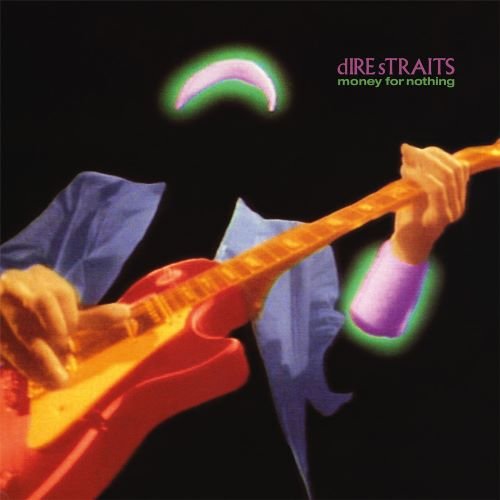
Dire Straits – Money for Nothing

__________

I have not included…
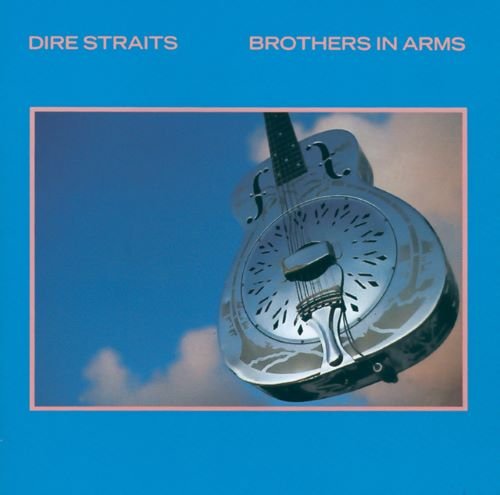
Dire Straits on my site for a while now. I wanted to spotlight one of their biggest hits, Money for Nothing, as it has a significance regarding MTV Europe. On 1st August, 1987, MTV Europe was launched. The first video played being Money For Nothing. It contained the appropriate line “I want my MTV”. The song itself was released on 28th June, 1985. Taken from the band’s legendary fifth studio album, Brothers in Arms (1985), it is a song that will go down in history. Although there are some problematic lyrics (even though it is from the point of view of a character in the song, the word ‘faggot’ is said three times), the song cannot really be faulted easily. Some might feel the track is overproduced (it was produced by Neil Dorfsman and Mark Knopfler). I feel it sounds perfect for what is this big anthem that was very much made for MTV. From its largely animated video (as Knopfler did not like appearing in videos) to the incredible riff by Knopfler, Money for Nothing is a gem! The track is Dire Straits' most commercially successful single. It reached number one for three weeks on both the US Billboard Hot 100 and Top Rock Tracks chart and number four in the U.K. I have seen footage of Dire Straits perform Money for Nothing with Sting (who features on the song delivering the iconic MTV line) at Live Aid. At the 28th Annual Grammy Awards in 1986, Money for Nothing won Best Rock Performance by a Duo or Group with Vocal and was nominated for Record of the Year and Song of the Year as well. At the 1986 MTV Video Music Awards, the music video received eleven nominations, winning Video of the Year and Best Group Video.

I want to go a little deeper into the song before rounding up. It does divide people. Money for Nothing is viewed by some diehard Dire Straits fans as being too commercial or lacking the sound of their earlier work. Yes, the song is a little overproduced and it does sound more mainstream than a lot of the earlier tracks. What is the story behind the classic Money for Nothing? How were the more controversial lyrics perceived? There are a couple of articles I want to source that reveal the details and history of Dire Straits’ 1985 track. Ultimate Classic Rock wrote about Money for Nothing in 2020:

The tune originally began with the guitar riff,” the song’s producer, Neil Dorfsman, explained to Sound on Sound, admitting that the band was “going for a sort of ZZ Top sound.” Still, the “Money for Nothing” guitar part ended up taking on its own life by accident.

"One mic was pointing down at the floor, another was not quite on the speaker, another was somewhere else,” Dorfsman recalled of the recording session. “It wasn't how I would want to set things up — it was probably just left from the night before, when I'd been preparing things for the next day and had not really finished the setup. Nevertheless, whether it was the phase of the mics or the out-of-phaseness, what we heard was exactly what ended up on the record. There was no additional processing on that tune during the mix.”

Dorfsman loved the guitar sound so much, he suggested Knopfler embrace more solos. “He wasn't into that idea,” the producer revealed. “I remember him asking 'Do you mean like a rock guy?' I think he's one of the greatest soloists ever, so I really wanted to hear more of that. He'd kept saying 'ZZ Top, ZZ Top,' and in my mind I imagined that we hadn't nailed the part he was after on the basic track.”

It turns out, Knopfler had actually gone directly to the source for advice. In a 1986 interview with Musician magazine, Billy Gibbons admitted the Dire Straits frontman had asked how to replicate the ZZ Top guitar sound. "He didn't do a half-bad job, considering that I didn't tell him a thing!" the bearded rocker joked.

For lyrics, Knopfler took the perspective of a blue-collar worker. The words were inspired by an actual appliance store employee who was making off-color remarks while staring at a wall of televisions playing MTV.

“I wrote the song when I was actually in the store,” the Dire Straits singer confessed to Bill Flanagan in the book Written in My Soul. “I borrowed a bit of paper and started to write the song down in the store. I wanted to use a lot of the language that the real guy actually used when I heard him, because it was more real. It just went better with the song, it was more muscular.”

Exactly what video the store employee happened to be watching has never been revealed, though at least one rocker believes it was about his band. “Dire Straits’ ‘Money for Nothing’ was about Motley Crue,” bassist Nikki Sixx insisted to Blender magazine in 2007. “‘Money for nothing and the chicks for free … that little faggot got his own jet airplane.’ They were in a store that sells televisions, and there was a row of TVs all playing Motley Crue — and that’s where it came from.”

Knopfler decided to drive home the MTV-ness of his song by actually incorporating the network’s jingle into its lyrics. For the part, he recruited friend and fellow rocker Sting.

“Mark asked him to sing on 'Money for Nothing,' lifting the tune from 'Don't Stand So Close to Me,’ Dorfsman recalled. “I knew Mark had already written the line 'I want my MTV,' but I wasn't sure if he had the melody of 'Don't Stand So Close to Me' in mind. It was one of those things where Sting just sort of did it in three passes, I comped the thing, and then I walked around thinking 'There's something amazing about this.' It was done in about an hour”.

I will wrap up with a feature from Society of Rock. They looked at the song from a couple of angles. Whilst it was a commercial hit (a number one in America is not too shabby!), it is also a controversial songs. Some of its lyrics would not be accepted today, that is for sure! Regardless, Money for Nothing has endured and will continue to be played and celebrated for many decades more:

Commercially Successful But Controversial

The Dire Straits single “Money for Nothing” was a huge success for the band. It topped several charts in the US and was also a hit in the UK and other countries. It earned them a Grammy Award for Best Rock Performance by a Duo or Group with Vocal and MTV VMAs Video of the Year.

In 1985, ZZ Top’s music videos received heavy airplay on MTV and Dire Straits guitarist Mark Knopfler drew inspiration from Billy Gibbons’ trademark guitar tone. In fact, Knopfler actually sought Gibbons’ help. In 1986, Gibbons admitted, “He didn’t do a half-bad job, considering that I didn’t tell him a thing!”

The lyrics were from the POV of two working-class men who watched videos and gave their commentaries. Knopfler got the idea while he was at an appliance store in New York City. They had a bunch of TVs displayed on a wall and tuned in to one channel – MTV. As he stood there and watched, another man dressed in work clothes stood beside him and started commenting on what they saw. Knopfler immediately grabbed a pen and paper to write some of the things he said and used them for the song.

Knopfler told Bill Flanagan in 1984: “The lead character in “Money for Nothing” is a guy who works in the hardware department in a television/​custom kitchen/​refrigerator/​microwave appliance store. He’s singing the song. I wrote the song when I was actually in the store. I borrowed a bit of paper and started to write the song down in the store. I wanted to use a lot of the language that the real guy actually used when I heard him, because it was more real…”

While they were recording in the studio, Sting came to visit and listened to the demo. He was immediately impressed and so Knopfler challenged him to add something. Sting ended up contributing the line “I want my MTV.”

While “Money for Nothing” was commercially successful, it wasn’t without its share of controversy. The lyrics were deemed homophobic and so when they performed it live, Dire Straits would replace some of the words with something less vulgar.

Speaking to Rolling Stone magazine in 1985, Knopfler addressed the issue and said: “I got an objection from the editor of a gay newspaper in London – he actually said it was below the belt. Apart from the fact that there are stupid gay people as well as stupid other people, it suggests that maybe you can’t let it have so many meanings – you have to be direct. In fact, I’m still in two minds as to whether it’s a good idea to write songs that aren’t in the first person, to take on other characters. The singer in “Money for Nothing” is a real ignoramus, hard hat mentality – somebody who sees everything in financial terms. I mean, this guy has a grudging respect for rock stars. He sees it in terms of, well, that’s not working and yet the guy’s rich: that’s a good scam. He isn’t sneering”.

In spite of its more controversial aspects and, maybe, the fact it is a bit overplayed, Dire Straits’ Money for Nothing is a brilliant track that launched MTV Europe on 1st August, 1987. It must have been thrilling to see the video thirty-five years ago! From its singalong lyrics and mighty introduction riff to its relevance to MTV, Dire Straits’ Money for Nothing is…

IMPOSSIBLE to resist.
FEATURE: Kate Bush’s Running Up That Hill (A Deal with God) at Thirty-Seven: Her Most Iconic Video?

FEATURE:


Kate Bush’s Running Up That Hill (A Deal with God) at Thirty-Seven

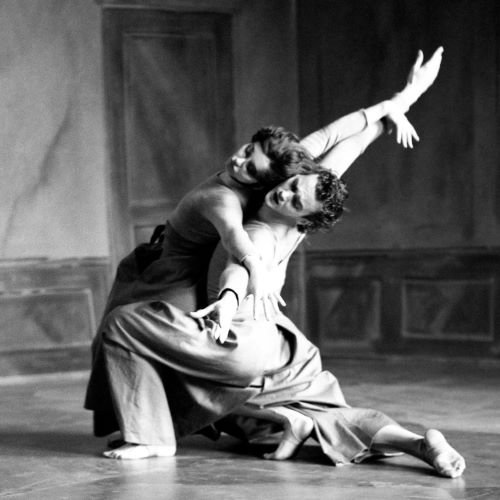
IN THIS PHOTO: Kate Bush and Michael Hervieu in the video for Running Up That Hill (A Deal with God)/PHOTO CREDIT: John Carder Bush 

Her Most Iconic Video?

__________

I have covered…

the video for Kate Bush’s Running Up That Hill (A Deal with God) in a feature before but, as 5th August marks thirty-seven years since the single was released, I wanted to return to it. Of course, the original release saw the song reach number three in the U.K. This year, Running Up That Hill (A Deal with God) went to number one. The song has topped one hundred million views on YouTube. I think one reason because of this is the video itself. Regardless of the exposure the song has got because of Stranger Things – the Netflix show featured the song prominently -, what makes Running Up That Hill (A Deal with God) is the video is so outstanding! I think it may be one of Bush’s very best. I did want to return to it, in small part because of that YouTube milestone. I have seen the video countless times, but I am always impacted. Before getting into the video a bit more, the Kate Bush Encyclopedia (who I will reference again when it comes to the video itself) collected interviews where Bush talked about the meaning behind Hounds of Love’s first (and most successful) singles:

I was trying to say that, really, a man and a woman, can't understand each other because we are a man and a woman. And if we could actually swap each others roles, if we could actually be in each others place for a while, I think we'd both be very surprised! [Laughs] And I think it would be lead to a greater understanding. And really the only way I could think it could be done was either... you know, I thought a deal with the devil, you know. And I thought, "well, no, why not a deal with God!" You know, because in a way it's so much more powerful the whole idea of asking God to make a deal with you. You see, for me it is still called "A Deal With God", that was its title. But we were told that if we kept this title that it wouldn't be played in any of the religious countries, Italy wouldn't play it, France wouldn't play it, and Australia wouldn't play it! Ireland wouldn't play it, and that generally we might get it blacked purely because it had "God" in the title. Now, I couldn't believe this, this seemed completely ridiculous to me and the title was such a part of the song's entity. I just couldn't understand it. But none the less, although I was very unhappy about it, I felt unless I compromised that I was going to be cutting my own throat, you know, I'd just spent two, three years making an album and we weren't gonna get this record played on the radio, if I was stubborn. So I felt I had to be grown up about this, so we changed it to 'Running Up That Hill'. But it's always something I've regretted doing, I must say. And normally I always regret any compromises that I make. (Richard Skinner, 'Classic Albums interview: Hounds Of Love. Radio 1 (UK), aired 26 January 1992)”.

There are so many brilliant Kate Bush videos. From her debut single, Wuthering Heights, to Babooshka (Never for Ever) to Experiment IV (The Whole Story), she has helped create more than her fair share of timeless vids. There is something about the hypnotic dance of Running Up That Hill (A Deal with God) that stays in the mind. Not only has it helped propel the song on YouTube. It stands the test of time and will remains adored and watched for generations more. In its simplicity and power, it beautifully conveys the messages of the song. I always love watching Kate Bush videos where she is dancing. More physical and sensual than, say, the video for Wuthering Heights, David Garfath’s direction for Running Up the Hill (A Deal with God) is wonderful. Here is what the Kate Bush Encyclopaedia said:

Music video

'Running Up That Hill' was intended as a fond farewell to dance, at least as far as Kate's video appearances were concerned. The music video, directed by David Garfath, featured Bush and dancer Michael Hervieu (who won an audition after Stewart Avon-Arnold was not available due to other commitments) in a performance choreographed by Diane Grey. The pair are wearing grey Japanese hakamas. The choreography draws upon contemporary dance with a repeated gesture suggestive of drawing a bow and arrow (the gesture was made literal on the image for the single in which Bush poses with a real bow and arrow), intercut with surreal sequences of Bush and Hervieu searching through crowds of masked strangers. At the climax of the song, Bush's partner withdraws from her and the two are then swept away from each other and down a long hall in opposite directions by an endless stream of anonymous figures wearing masks made from pictures of Bush and Hervieu's faces. MTV chose not to show this video (at the time of its original release) and instead used a live performance of the song recorded at a promotional appearance on the BBC TV show Wogan. According to Paddy Bush, 'MTV weren't particularly interested in broadcasting videos that didn't have synchronized lip movements in them. They liked the idea of people singing songs'”.

I wanted to nod to one of Kate Bush’s greatest songs ahead of its anniversary on 5th August. It is hard to believe that, nearly thirty-seven years ago, people were hearing Running Up That Hill (A Deal with God) for the first time! Now, it seems almost synonymous with Bush. Now her most popular and streamed/viewed songs, many people have gravitated towards YouTube to see the truly iconic video. I wonder whether there is going to be a visual documentary about the song. There might be some rehearsal footage for the video you would imagine. People would love to discuss the song and, as it has been covered so many times, artists could discuss why the song means so much to them. I also think that an HD version of the video could come to YouTube. Also, it surely shows there is a demand for Bush’s videos. Could a long-awaited DVD of her videos see the light of the day?! As the song has taken on new life, there would be an audience waiting if there was to be a documentary. The video we have on YouTube looks great, but many artists re-release HD/remastered versions. I think Running Up That Hill (A Deal with God) could benefit from that. For one thing, Bush and Michael Hervieu are transfixing and wonderfully in-sync through the video. Great videos perfectly represent a song and bring new things from the lyrics. That is the case with Running Up That Hill (A Deal with God). Is its video the most iconic Kate Bush ever released? I used to think that Wuthering Heights is the best and most iconic but, the more I watch Running Up That Hill (A Deal with God), the more it…

INCHES towards the top spot.

FEATURE: The Lockdown Playlist: I’m Like a Bird: The Best of Nelly Furtado

FEATURE:


The Lockdown Playlist

PHOTO CREDIT: Michael Graf

I’m Like a Bird: The Best of Nelly Furtado

__________

I have been listening…

to Nelly Furtado’s amazing 2000 debut album, Whoa, Nelly!, a lot recently - and also dipping further into her catalogue. The Canadian artist is someone with few equals in terms of her songwriting and vocal prowess. An amazing talent who I have been a fan of since her debut arrived, I wanted to put out a playlist featuring her best cuts. Before I get to that, I am keen to include some biography about the wonderful Furtado. For that, I turn to AllMusic:

When Nelly Furtado appeared with her neo-hippie, multiculti debut Whoa, Nelly! in 2001, a dance-diva makeover seemed like an impossibility, but the singer/songwriter revived and sustained her career with the sexually charged Loose in 2006, and in the process, consolidated her position as one of the most unpredictable artists of her decade. Furtado always proudly displayed her Portuguese heritage, a distinction that separated her from legions of emerging female singer/songwriters in the early days of the new millennium, but her uniqueness didn’t end there: she had an ear for elliptical yet memorable melodies, and a taste for Brit-pop balanced by an immersion in modern R&B and hip-hop. All this surfaced on Whoa, Nelly! and its hits "Turn Off the Light" and "I'm Like a Bird," but she really pushed her rhythmic influences to the forefront on Loose, resulting in "Promiscuous" and "Maneater," her biggest hits yet, suggesting that Furtado had many avenues yet to explore.

A native of the Canadian city of Victoria, Furtado was a musically precocious child, learning to play a variety of instruments and singing in choirs, spending as much time listening to modern R&B like Mariah Carey and TLC as she did Brit-pop, eventually winding her way toward hip-hop and Brazilian music. Upon her high school graduation, she headed to Toronto, soon joining the hip-hop duo Nelstar. Not long afterward, the duo of Brian West and Gerald Eaton, core members of the Philosopher Kings, produced the Furtado demo that led to her contract with DreamWorks.

Whoa, Nelly!, her first album, appeared in late 2000 and DreamWorks built the album gradually, capitalizing on strong reviews and a supporting slot for Moby, with the record truly taking off when "I'm Like a Bird" turned into a hit on a road that led to a Grammy for Song of the Year. This was one of four Grammy nominations and several hits including "Turn Off the Light," which displayed her rhythmic roots in a way "I'm Like a Bird" did not.

Furtado had a daughter as she was working on her second album, and her new role as a mother was evident on Folklore. Released in November 2003, it was an ambitious album with a world music aesthetic that garnered some good reviews along with some negative notices, and it failed to generate a hit. The album also suffered from under-promotion due to DreamWorks' acquisition by Universal Music Group, a situation that eventually led to Furtado landing at Geffen Records. Nonetheless, Folklore garnered some positive attention, with the single "Força" used as the theme to the 2004 European Football Championship.

Perhaps the under-performance and troubled release of that album pushed Furtado toward the musical makeover of Loose, the 2006 effort produced largely by hip-hop superstar Timbaland. Heavy on grooves and overtly sexual, Loose had a pair of smash singles: "Promiscuous," which was a chart-topper in the U.S., and "Maneater," which performed the same feat in the U.K. Both singles set the soundtrack for 2006 around the world, helping the album shift seven million copies internationally. Her star status fortified, Furtado took her time delivering a follow-up, releasing her first Spanish-language album, Mi Plan, in September 2009. A collection of remixes from Mi Plan appeared a year later, followed just a few weeks later by The Best of Nelly Furtado.

Her fifth studio album, the largely positive and upbeat The Spirit Indestructible, was released in fall 2012. Executive produced by Furtado, the album also showcased collaborations with a bevy of studio heavy weights, including Darkchild, Salaam Remi, Bob Rock, Fraser T. Smith, John Shanks, Tiësto, and others. The album produced several singles, including "Big Hoops (Bigger the Better)," and while it failed to match the commercial success of Loose, it garnered favorable attention, including a nomination for Pop Album of the Year at the Juno Awards in 2013.

Furtado continued to make live concert appearances over the next several years, including singing the Canadian National Anthem at the 2016 NBA All-Star Game in Toronto. Also in 2016, she severed ties with Interscope, announced her sixth studio album The Ride, and released the moody, synth-inflected single "Pipe Dreams." Produced by John Congleton, The Ride appeared in early 2017”.

To show my appreciation and love for Nelly Furtado’s music, below is a playlist featuring her best tracks. From her incredible 2000 debut album, Whoa, Nelly!, to 2017’s The Ride, she has given thew world so much great music! I hope that she has another album coming along soon. Such an accomplished and amazing artist, Nelly Furtado is…

A true treasure.

FEATURE: Vinyl Corner: Midnight Oil – Diesel and Dust

FEATURE:


Vinyl Corner

Midnight Oil – Diesel and Dust

__________

AS Midnight Oil’s…

 IN THIS PHOTO: Midnight Oil on 29th May, 1988 in Ghent, Belgium (from left: Rob Hirst, Peter Garrett, Martin Rotsey, Bones Hillman and Jim Moginie/PHOTO CREDIT: Gie Knaeps/Getty Images

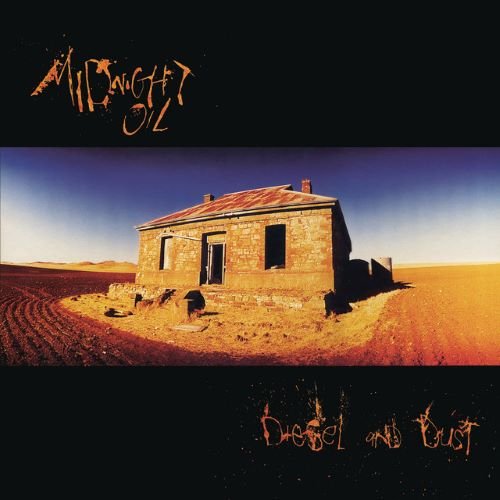
sixth studio album, Diesel and Dust, turns thirty-five on 2nd August, I am featuring it here in Vinyl Corner. You can buy it here. I would recommend that you do pick up a copy, as it is a classic album that everyone needs to hear! The Australian band (Peter Garrett – vocals, Peter Gifford – bass, vocals, Robert Hirst – drums, vocals, Jim Moginie – guitars, keyboards, vocals, string arrangements and Martin Rotsey – guitars) delivered a hugely important work. Diesel and Dust is a concept album about the struggles of Indigenous Australians and environmental causes. These issues were very important to the band. I am going to come to a couple of reviews for the mighty and supreme Diesel and Dust. Undoubtedly one of the greatest albums ever, it will soon celebrate its thirty-fifth anniversary. HAPPY wrote an article last year as to why Diesel and Dust matters:

The band sacrificed nuance yet maintained authenticity, so social concerns like the government’s mistreatment of Indigenous Australians could spark conversation. This is exactly what they achieved on Diesel and Dust, also fulfilling drummer Rob Hirst’s vision to “write Australian music that people overseas could get into and understand, which would enlarge their whole vision of Australia past Vegemite sandwiches and kangaroo hops”.

The LP kicks off with the band’s biggest track to date, Beds Are Burning, a song that was colossal in every conceivable way. The jarring subject matter, the percussive, metallic instrumentation, the silhouetted film clip, Garret’s sporadic dance moves.

The track saw the band break their way into the US charts, an incredible feat for any Australian act at the time, especially one that didn’t pander. From the opening brass to the chugging bassline, a sense of urgency engulfs the listener, perfectly soundtracking Garret’s plea: “It belongs to them. Let’s give it back.”

The anthem’s lyrics have become unanimous with First Australian land rights. Sovereignty is yet to be seeded. The Oils didn’t shroud these lyrics in mysticism, like other political performers of the past, such as Dylan. Instead, they made their intentions crystal clear, performing the hit at the 2000 Sydney Olympics, donning shirts spelling out the cardinal word John Howard wouldn’t say: “Sorry”.

The Dead Heart was another huge moment for the Oils. Its guitar/vocal call and response was pop hook magic, grabbing ears all around the globe. They were commissioned to pen the track for a documentary about Uluru being handed back to the local Pitjantjatjara Aboriginals.

Once more, the band used their musical talents to raise awareness of Australia’s Stolen Generation. The ethereal gallop of Dreamworld was another standout on the record, as the band mourned the loss of Cloudland Dance Hall, a Queensland cultural hotspot that was demolished in favour of an apartment complex.

What do all these tracks (and the rest of Diesel and Dust) have in common? They’re about cultural preservation. The Oils particularly focused on spotlighting the Government’s negligence of First Australians. It didn’t sound out of touch, because it wasn’t. For most of 1986, the band toured the Northern Territory, performing in remote towns for Aboriginal Australians. They explored these settlements with open ears and hearts, learning and listening to the locals.

The band observed harrowing poverty, determination from elders, freezing desert nights, and everything in between. They carried these experiences with them into the studio, resulting in 11 tangible, direct songs straight from the outback.

That’s why Diesel and Dust matters. A practised rock band took their musical strengths and made it a mouthpiece for the neglected. Midnight Oil’s messages still ring true today, stronger than ever”.

I want to finish up with a couple of reviews. An album that raised such important issues, it does so in such a compelling and intelligent way, it is no surprise that Diesel and Dust won huge critical acclaim and went to number one in Australia. A chart success in the U.K. and U.S., Midnight Oil’s 1987 masterpiece remains such a moving listen. Pop Matters wrote this in their review of Diesel and Dust:

In 1987, you simply couldn’t escape U2’s The Joshua Tree. Bono’s croon poured out of college dorm rooms, the band’s videos camped out on MTV, and the album’s songs took turns nesting on the charts, propelling The Joshua Tree to sales of more than ten million copies in the United States and more than twenty million worldwide. It was also, up to that time, the band’s least strident album. Gone was the flag-waving militancy of “Sunday Bloody Sunday” or “New Year’s Day” in favor of soul-searching introspection like “I Still Haven’t Found What I’m Looking For” and “Running to Stand Still”.

Midnight Oil’s Diesel and Dust, however, easily filled the void that, at the time, we didn’t know U2 was permanently leaving. Diesel and Dust found Midnight Oil, like U2, dropping the harder edges from its sound, but without diluting the lyrical venom. So while U2 explored the politics of the self, Midnight Oil frontman Peter Garrett roared about reparations and labor injustice in his native Australia. While U2 added elements of Americana to their sound and dressed like turn-of-the-century immigrants, Midnight Oil looked out across the Australian landscape and saw exploitation so profound that it permeated the soil. It wasn’t just for show, either. By this time, lead singer Peter Garrett had already begun his political career with a Nuclear Disarmament Party bid for a seat in the Australian Senate. Many years later, he’s now Minister for Environment, Heritage and Arts, although the apparent softening (in what some have called a pragmatic compromise, and others have called a betrayal) of his beliefs as a member of the Labor Party has earned him criticism.

Back in ’87, however, there was nothing soft about Garrett’s opinions. Diesel and Dust, inspired by the band’s Blackfella/Whitefella tour of indigenous areas with the Warumpi Band, bluntly calls for reconciliation and reparations over the land rights of indigenous Aborigines. The album’s flagship song, “Beds Are Burning”, immediately establishes itself as an anthem with dirt road rhythms, blaring horns, Garrett’s pointed vocals, and a top-notch singalong chorus. “Sell My Soul” tackles the issue of involvement with America through lyrics like “America’s great now / If you don’t talk back / You hide your face / Crawl in rubble and smile and scorn / At that snail-paced creature / Going up and down walls”. “The Dead Heart”, like much of the album, conveys sentiments that feel all too relevant in today’s globalized economy: “Mining companies, pastoral companies / Uranium companies / Collected companies / Got more right than people / Got more say than people”. In fact, despite the album’s deep Australian roots, much of it comes across like a very modern protest record, applicable to pretty much any modernized country. This Deluxe Edition‘s inclusion of “Gunbarrel Highway”, left off of prior American and Canadian pressings, closes the album with an ominous sense of apocalypse.

It’s all delivered with a punk-informed fire (by way of a little R.E.M. jangle and incredibly catchy choruses) that bears little, if any, hint of the often dated decade from which it came. On this Deluxe Edition, celebrating the album’s 20th anniversary, the songs and the band sound as fresh and vibrant as ever. Garrett’s nasal sneer would seem to offer a sharp counterpoint to the pop sensibilities that Midnight Oil integrated into their sound (the guitar interplay on “Sell My Soul” is worthy of the Church), but the combination actually works to convey the message more effectively than ever.

In addition to restoring “Gunbarrel Highway”, this reissue also includes the Blackfella/Whitefella documentary. The film, which captures the band on their tour of Aboriginal settlements, mixes performance footage with powerful scenes of modern Aboriginal life marked by poverty. More than just a Midnight Oil concert film, Blackfella/Whitefella gives the Warumpi band nearly equal time, presenting them as a bridge between the Aboriginal listeners and the modern rock ‘n’ roll that accompanies Midnight Oil. At a little more than an hour, it’s not able to go into any real detail about the issues at hand, but does convey a sense of how the band came face to face with the realities of the Aboriginal villages. Those experiences and realities would become the lifeblood of Diesel and Dust, which still stands as a watershed moment in the band’s career”.

I am going to end with a review from AllMusic. I hope that Midnight Oil’s Diesel and Dust gets a lot of new coverage on its anniversary on 2nd August. It is an album that I have loved for many years now. It is one I will love for many years to come:

Midnight Oil frontman Peter Garrett has long been active in elective politics in Australia, and like any good politician, he knows that sometimes the most important thing is to get your message out to the masses, even it means speaking with a bit less force than might be your custom. While the hard edges and challenging angles of 10, 9, 8, 7, 6, 5, 4, 3, 2, 1 and Red Sails in the Sunset made Midnight Oil bona fide superstars in Australia, they were little more than a rumor in most of the rest of the world, and for their sixth album, Diesel and Dust, Midnight Oil made some changes in their approach. On Diesel and Dust, there's less in the way of bruising hard rock like "Best of Both Worlds," nothing as eccentric as "Outside World," and very little as esoterically regional as "Jimmy Sharman's Boxers," while the production favors the tuneful side of the band's songwriting (which, truth to tell, was always there) and buffs away some of the group's harsher edges. As a result, Diesel and Dust isn't an album for hardcore Oils fans, but as a bid for a larger audience, it was both shrewd and well executed -- it was the group's first real worldwide success, going platinum in America and spawning a massive hit single, "Beds Are Burning."

While the album lacks the kick-in-the-head impact of their earlier work, Diesel and Dust also makes clear that the bandmembers could apply their intelligence and passion to less aggressive material and still come up with forceful, compelling music, as on the haunting "The Dead Heart" and the poppy but emphatic "Dreamworld." And as always, there was no compromise in the band's forceful political stance -- most of the album's songs deal openly with the issues of Aboriginal rights (hardly an issue pertinent only to Australians), and one of Midnight Oil's greatest victories may well be writing a song explicitly demanding reparations for indigenous peoples, and seeing it top the charts around the world. And the closer, "Sometimes," may be the finest and most moving anthem the band ever wrote ("Sometimes you're beaten to the core/Sometimes you're taken to the wall/But you don't give in"). Diesel and Dust is that rarity, a bid for the larger audience that's also an artistic success and a triumph for leftist politics -- even the Clash never managed that hat trick this well”.

I was keen to include Diesel and Dust in Vinyl Corner because of the approaching thirty-fifth anniversary. Not only one of the best albums of the 1980s, but this is also one of the very best albums ever. If you have never heard Diesel and Dust, then it is the perfect moment to go and explore it. With classic tracks like Beds Are Burning together with exceptional songwriting and performances from the entire band, this is a classic that needs to be cherished! There is no doubt that Midnight Oil’s Diesel and Dust will be preserved and loved…

THROUGH the ages.

FEATURE: It's You and Me Won't Be Unhappy: Kate Bush’s Running Up That Hill (A Deal with God) at Thirty-Seven

FEATURE:


It's You and Me Won't Be Unhappy

PHOTO CREDIT: United Archives GmbH/Alamy

Kate Bush’s Running Up That Hill (A Deal with God) at Thirty-Seven

__________

RELEASED as a single on 5th August, 1985…

it was the first to be taken from Hounds of Love. Now, arguably, Kate Bush’s most famous song, it originally entered the U.K. chart at number nine, before peaking at three. The single also reached thirty in the United States. This year, Running Up That Hill (A Deal with God) became Bush’s second U.K. number one. I think that this is the song of hers that has had the most covers. Given its new chart records, more and more artists are covering the song. Whilst none can match the original and I sort of wish people would cover and expose some of her lesser-known tracks, at least people are interacting with the song. The Guardian report how a Brisbane choir recently received congratulations from Kate Bush after covering Running Up That Hill (A Deal with God):

Brisbane’s Pub Choir founder and director Astrid Jorgensen is used to getting fan mail about the mass amateur choir’s covers of hit songs – but when she was told on Thursday that Kate Bush had emailed about their rendition of Running Up That Hill, she had to call her morning run short and head straight home.

“My manager called me and said, you’ve got to get home, Kate Bush has emailed. I ran straight back – I was literally running up that hill,” she laughs.

“Dear Brisbane Pub Choir,” the message began. “I’ve been so busy that I’ve only just had the chance to watch you all singing RUTH. It’s utterly, utterly wonderful! I love it so much! Thank you everyone. You sing it really beautifully. I’m incredibly touched by your warmth and all your smiling faces. Thank you!”

It was signed: “With lots of love, Kate”.

On its anniversary, I am sure there will be new inspection. Running Up That Hill (A Deal with God) continues to succeed and stay on the charts. It is a hugely popular song on Spotify, and there are going to be even more cover versions of it through the year. If you do not know the story and influence behind the song, the Kate Bush Encyclopedia combines information and interviews with Kate Bush:

Song written by Kate Bush. The song was reportedly written in one evening in the summer of 1983. It was the first song recorded for the subsequent fifth studio album Hounds Of Love. The electronic drums, programmed by Del Palmer, and the Fairlight part were present from the first recording of the song. The lyrics speak of Bush's impossible wish to become her lover, and he her, so that they could know what the other felt. Kate played the first versions of the songs to Paul Hardiman on 6 October 1983. He commented later: "The first time I heard 'Running Up That Hill' it wasn't a demo, it was a working start. We carried on working on Kate and Del's original. Del had programmed the Linn drum  part, the basis of which we kept. I know we spent time working on the Fairlight melody/hook but the idea was there plus guide vocals."

It seems that the more you get to know a person, the greater the scope there is for misunderstanding. Sometimes you can hurt somebody purely accidentally or be afraid to tell them something because you think they might be hurt when really they'll understand. So what that song is about is making a deal with God to let two people swap place so they'll be able to see things from one another's perspective. (Mike Nicholls, 'The Girl Who Reached Wuthering Heights'. The London Times, 27 August 1985)

I was trying to say that, really, a man and a woman, can't understand each other because we are a man and a woman. And if we could actually swap each others roles, if we could actually be in each others place for a while, I think we'd both be very surprised! [Laughs] And I think it would be lead to a greater understanding. And really the only way I could think it could be done was either... you know, I thought a deal with the devil, you know. And I thought, "well, no, why not a deal with God!" You know, because in a way it's so much more powerful the whole idea of asking God to make a deal with you. You see, for me it is still called "A Deal With God", that was its title. But we were told that if we kept this title that it wouldn't be played in any of the religious countries, Italy wouldn't play it, France wouldn't play it, and Australia wouldn't play it! Ireland wouldn't play it, and that generally we might get it blacked purely because it had "God" in the title. Now, I couldn't believe this, this seemed completely ridiculous to me and the title was such a part of the song's entity. I just couldn't understand it. But none the less, although I was very unhappy about it, I felt unless I compromised that I was going to be cutting my own throat, you know, I'd just spent two, three years making an album and we weren't gonna get this record played on the radio, if I was stubborn. So I felt I had to be grown up about this, so we changed it to 'Running Up That Hill'. But it's always something I've regretted doing, I must say. And normally I always regret any compromises that I make. (Richard Skinner, 'Classic Albums interview: Hounds Of Love. Radio 1 (UK), aired 26 January 1992)”.

Not only has the fact Stranger Things featured Running Up That Hill (A Deal with God) meant it has reached a younger audience. The song has always been played on the radio, so it is hardly that obscure and unknown. I think the series gave it a boost and showed how powerful the song is. I think it is the relatability and power of the lyrics that has affected so many people. That idea that there can be hate and misunderstanding in relationships but, if men and women could switch shoes and places, that understanding would make things so much easier and better. Ever since 1985, this amazing track has captivated people. The Quietus discussed Running Up That Hill (A Deal with God) last month. There were some interesting points made that I wanted to highlight:

She performed 'RUTH' on Wogan, bow on back, standing before a lectern, Terry visibly awed. It featured repeatedly on Smash Hits' singles page, entrancing reviewer Ian Cranna. It sailed to No.3 in the UK singles chart, her biggest hit since 'Wuthering Heights'. The video, shot at Hammer Horror HQ, Bray Studios (directed by Terry Gilliam's cameraman, David Garfield), blended modern dance – Bush and partner Michael Hervieu, clad in Japanese Hakama trouser-skirts – and surreal sci-fi.

In September, Hounds Of Love was released to rave reviews, peaking at the summit of the UK albums chart. Bush had managed to have her finger firmly on pop's pulse while serenely floating above it with this music, its silvery, multi-dimensional sonics tailor-made for the beckoning CD age. While others – Billy Bragg, The Smiths, The Style Council, directly challenged Thatcher/Murdoch's Britain, Hounds Of Love circumvented it altogether. It was an unabashedly romantic refuge from the awful, materialist '80s, worming its way into the homes of yuppies and hippies, beloved by everyone from Mel & Kim to John Lydon. Throughout, 'RUTH' is easily matched, from title track to 'Cloudbusting' to the side-long suite 'The Ninth Wave'.

One of the many levels to Bush's genius was a knack of shedding positive light on the darkest of places, turning traditionally negative material inside out. On 'The Ninth Wave', the female archetype of the doomed tragic heroine drowning became a survivor. Bush too, had weathered the stormy seas of the music business and was, at 27, art-pop's eternal grand dame.

It was with 'RUTH' that Bush finally broke America. She'd acquired an ever-growing cult following Stateside; The Dreaming received some of its best reviews there, Lionheart and Never For Ever had finally been released, in January 1984; all groundwork for 'Running Up That Hill''s entry into the top 30. Hounds Of Love did likewise in the album charts. In November 1985, she took a promotional trip to the States, and found lines around the block at Tower Records, on NYC's 4th and Broadway. 'Hello Earth''s choral passages even found their way onto Miami Vice the following year, for the Cold War-themed 'Bushido' episode. Bush had been considered too arty and English for American audiences, and resistant to its radio formats. Yet this was also the home of fellow female outliers; Joni Mitchell, Laura Nyro, Patti Smith, Stevie Nicks, and Laurie Anderson. As far back as 1979, Pat Benatar had covered 'Wuthering Heights'.

Prince was a fan of Hounds Of Love, and future collaborator; in him she even found another male kindred spirit after Peter Gabriel. Like 'RUTH', 'When Doves Cry' had made pop simultaneously eerie and erotic. Like Bush, Prince also sought an artistic omniscience that eroded gender boundaries, speeding his voice up on 'If I Was Your Girlfriend', where Bush would pitch hers down and frequently sing from a man's POV.

'RUTH' and Hounds Of Love’s influence travelled right to the heart of American rock. With Stevie Nicks, she may have shared a witchy romanticism, but it was the wide-open ears of Fleetwood Mac's Lindsey Buckingham that took notes. It's all over 1987's textured, tech-pop classic, Tango In The Night (bigger in the UK than the US) – 'Big Love' virtually sped up 'RUTH''s man/machine-made rhythms; he even sounds like he's trying to sing like her on the title track's demo ("I kept the dream in my pocket" could be a line from 'Cloudbusting').

'Running Up That Hill' has been covered multiple times, by Blue Pearl, Placebo and, recently, Halsey. As with all Bush songs, the original is unbeatable, because like Bowie, Gabriel and Prince, the performance, composition and production are all so impeccably woven into one ecstatic whole.

In 1986, years before Stranger Things, grown-up kids TV embraced 'RUTH' when the BBC's Running Scared not only used it as a theme tune, but featured a title sequence which re-enacted the video. Now, years later, thanks almost entirely to the fourth season of the popular Netflix show, 'RUTH' has climbed higher than ever reaching No.1 in multiple countries, including the UK, and the top 5 in the US. The show oddly mirrors Bush's universe, especially around Hounds Of Love, her fascination with the terror created by scary films, childhood's land of lost content and "grotesque beauty" (a favourite painting of hers at the time updated Millais' Ophelia as a cracked doll floating in a sewer). In the video for 1986's 'Experiment IV', that underrated, final, lone new track for her first ever compilation album The Whole Story, she even became a monster that looked like it could have come straight from the series. If 'RUTH' is, in Bush's words, "a talisman" for the Stranger Things character Max, its creator has long been a life-support for many of us.

This song once more finds itself dropping into a bitterly divided world. But in this world polarised by misunderstanding and division, it's unsurprising that 'Running Up That Hill''s searing pursuit of empathy and understanding still cuts so deep, and resonates so powerfully”.

A hugely popular song that has grown ever bigger this year, I know a lot of Kate Bush fans will be playing and celebrating Running Up That Hill (A Deal with God) on 5th August. I don’t think this amazing track will fade or lose relevance. There will be more cover versions and, who knows, it may well appear on another T.V. series or film. As much as anything, the connection between Stranger Things and Running Up That Hill (A Deal with God) has meant we have heard from Bush in the form of updates on her website and an interview with Woman’s Hour. That has been amazing! All of her fans around the world hope that we…

HEAR a lot more from her.

FEATURE: Spotlight: Big Joanie

FEATURE:


Spotlight

Big Joanie

__________

FOLLOWING the release…

 PHOTO CREDIT: Ellie Smith

of their 2018 debut album, Sistahs, there was a lot of excitement and anticipating around a second album from the marvellous Big Joanie. One of the most important and inspiring groups in the country, Big Joanie are a sensational Punk trio formed in London in 2013. Its members are Stephanie Phillips (guitar and vocals), Estella Adeyeri (bass guitar and vocals), and Chardine Taylor-Stone (drums and vocals). The reason I have not spotlighted Big Joanie before is because I was waiting for some new (2021/2022) interviews to surface online. This week, they announced a new album, Back Home. They put out a brilliant new single, In My Arms. I am going to finish with a couple from this year. First, I want to go back to 2019, when the trio were already turning heads. Being Black, female, and queer, Big Joanie tackled this in their music and personal politics. Prior to me discovering Big Joanie back in 2018, I was not aware of many acts like them. Formed because of a real lack of intersectionality in the scene, a sensational and vital musical force was formed. The Quietus spoke with the trio back in 2019:

Big Joanie formed in London in 2013 around the core of Stephanie Phillips, Chardine Taylor-Stone and original bassist Kiera Coward-Deyell (Estella Adeyeri joined in 2017), in order to play the self-explanatory First Timers gig event.

They have since dropped the SistahPunk EP (2014) and their 2018 debut studio album Sistahs on the Daydream Library series. Merging funk tendencies, with grunge power chords, Sistahs has a range of political, feminist messages. Being your third and fourth generation of black Brits, Big Joanie are reclaiming the ideologies surrounding the means of punk.

Individually putting a shift in their involvement with political poc activism, drummer Chardine Taylor-Stone has been keeping busy with herself established movement London Stop Racism Campaign. While vocalists Stephanie Phillips and Estella both devote free time to panel talks, articles and staying very much involved with today's media coverage.

Is black feminism something that’s always been a part of your lives?

Stephanie Phillips: I don’t know, I think I’ve always thought about feminism but I wasn’t brought up knowing about what it was. I thought about those different aspects [of life] and didn’t really realise there was a word for it. It wasn’t till I was a teenager and learnt about riot grrrl that I learnt about feminism. Then later when I was in my late 20s, I joined a black feminist group, I learnt about the wider ideas about black feminism and what that meant, and how it was a proper practice and what it involved. But I think it takes a while to learn those histories because it was never really taught in the UK, or anywhere else.

Chardine Taylor-Stone: I think I'm sort of the same really. I mean I’ve been involved with activist stuff since I was very young. It’s an interesting question, because you’re aware of yourself and your status as a black woman anyway, so then, when you start reading black feminist work, it’s just articulating what you already know. So, I think in that sense, yes? Because we’ve always had that thing in black women's empowerment in our culture.

Estella Adeyeri: it’s very much the same for me. When I came across black feminist texts, that was when I found there were a lot of women who had written extensively and put names to things that maybe were experiences, I’d recognised but hadn’t really known how to talk about. But I don’t think I came across the term or the concept until I was about 18 and went to uni. I was studying politics and philosophy and we did a module on women’s movements, we looked at a movement that was about women in Nigeria, that was the first thing that got me into looking at other texts in the library. At the same time, it was around the time black feminists were becoming prominent on Twitter. I started following people and learning that way, and reading these discussions of issues that I hadn't heard before, it was kind of putting a name to something I [only] knew a bit about.

What movements other than punk do you think are giving people of colour a place of freedom of expression?

SP: I think there are a lot! I think there are a lot of different ways [for us] to express ourselves and express our politics. I think a lot of people are being more political, a lot more honest about what’s going on in our lives. Big Joanie isn’t one band in a scene, it’s a lot of different bands. Also, it only started because there was [an absence of that type of voice] in black feminism so we thought we have a right to do something about this. There was a lot happening in the black feminist scene so we thought, 'Oh why can’t we have this in punk?'

CT-S: Well it happens in waves doesn’t it? What’s necessary at that time to express ourselves in that way. We’ve always done different genres of music, jungle, grime, etc. But I think what tends to happen is things get commercialised, then they get lost and next thing you know we’ve got some white version of Dizzee Rascal, or something.

SP: I won’t name names, but there’s a very popular white rapper that’s basically Dizzee Rascal.

CT-S: Exactly! You know I think it’s just the time for black punk at the moment and there’s plenty of reasons for that. You know we’re like third or fourth generation black Brits, so in terms of what we’ve grown up around and what we can claim as ours is quite significant.

Has punk always been something apart of your lives?

EA: I got turned onto alternative music when I was around 12 or 13, I got my first guitar at 13 because I had been introduced to that music by my older sister. I had always been into music because there was music being played by my family. But since then it’s just been ten years, getting interested into different alternative scenes, identifying with something angsty or rebellious as you’re growing up.

SP: Yeah, I had a similar upbringing from going from Destiny’s Child to riot grrrl and feminist punk... but obviously not in one week.

Yeah from a time period you explored these different angles?

SP: Yeah, I didn’t understand why no one else was listening to punk, at that time I felt like I really needed it, I really needed that mode of expression. Now looking back, growing up as a black girl going to a very white school and having to use punk to express myself so I could let things out in that way. Since then It’s kind of continuedly stayed in my life for those reasons.

CT-S: Yeah, I feel very much the same really, I think I went to a French exchange or something and someone was playing Nirvana, I remember being like, “Oh what is this?” It was literally a week, we went away and came back and was like, I don’t want this anymore, this thing of being dressed in black all the time.

At point did you realise you could mix the principles of punk with feminism?

SP: It was just a shining moment. It wasn’t an immediate idea, it was a slow progress of thinking, maybe this is something that should happen, maybe it’s something I should do. I guess you’re always thinking someone will do it before you. But yeah, it was suddenly realising, if we wanted that space to happen, I’d have to do what I want to do. But when we saw the advert for First Timers (the event we played our first gig in) It was Rachel Aggs from Sacred Paws, and Trash Kit that shared it, then I thought, why not? Give it a go, you can only fail.

The group’s most recent single is absolutely brilliant. I am looking forward to hearing the new album, Back Home, in November. I did wonder whether we would get a Big Joanie album this year. As you can see from when The Rodeo spoke with them in March, they were putting the finishing touches to their highly-anticipated sophomore album:

So Big Joanie have just finished recording their second album. What can you tell us about it? What can you give away?

S: Oo, what can I give away…I think it sounds really different to our first album, is what I’d say.

E: I think it sounds bigger. If that’s any sort of clue. It’s a bit more ambitious than the last record. We’re experimenting more in terms of our set-up for particular songs, and with different instruments that people maybe haven’t heard us play before. But yeah, “big” seems to make sense to me, haha.

Really putting the “big” in Big Joanie?

E: Yeah, we’re putting the “big” in Big Joanie haha.

S: Yeah, we wanted to have a sound that matched our live sound. We recorded Sistahs like a year before it came out, so even in that year, before the album came out, our sound changed. Throughout the last couple of years of touring, our sound has completely changed and got a lot bigger and more dense and aggressive, I think? That’s something that we really wanted to put into the new album. We want to make people feel a bit scared. You don’t want to be liked, I think haha.

You’ve cited people like Kate Bush, PJ Harvey, and FKA twigs as artists you admire and are inspired by because of the way they approach the album as being an entire, complete body of work. I wondered if when you approach the writing of your own albums, whether you go into it with an initial concept, but perhaps key components that you wanted to achieve so that by the end of it you’re like “Yeah, that is the record there.”

S: So our latest album is made up of a lot of songs written across completely different periods. Some songs were written quite a few years ago and developed recently, whereas some songs were written during the pandemic. So there is that kind of claustrophobic vibe, you know, talking about isolation and that feeling of being separated. But I think when we were bringing the songs together, for me, one of the most important feelings that came from it was any feeling of wanting to be safer at home. That was a big idea that I kept trying to link from each song to another. We don’t always start with a big, expansive plan, but it builds along the way, I think. Would you say that, Estella?

E: Yeah, definitely. Having experienced writing and recording the first album, we realised that we weren’t limited to just our own specific instruments; being in the studio there’s almost limitless possibilities. Therefore we were thinking more broadly in terms of instrumentation, songs, and even structure, being a bit more experimental with it all.

It’s as though the claustrophobia, and the dense and compact place we found ourselves in has resulted in quite the opposite.

S: Yeah, because I guess the last couple of years has taken over every aspect of the way we think about things. You couldn’t not have these thoughts about being confined and being restricted. I think we want to find big, big ways to let it out. We don’t want to have our voices dulled in any way. Even if it’s a sad song, it should be a big sad song.

You just announced that you’re playing Grace Jones’ Meltdown in June at Southbank Centre. How did it feel when you first found out that you were playing a lineup curated by Grace Jones?

S: It’s really amazing that she wanted to bring us along for this festival. I’ve been following Meltdown for years and seeing the different people they bring in so it’s amazing to see a Grace Jones created one.  I mean, it looks so amazing they’ve got Peaches and Skunk Anansie playing. There’s so many amazing artists, it’s just like a bit surreal to be part of that as well.

E: My sister and I actually got tickets for Skunk Anansie so I was planning to go anyway, so it’s quite nice we ended up being on the bill as well! The idea of Grace Jones even having us on her radar is quite exciting, especially for something we’d be wanting to attend anyway. It’s just really exciting!”.

I have dropped a few Big Joanie songs into the mix. I am ending with their social media links etc. I wanted to source some interviews, as it gives more context about them and how they have progressed. Having gained support from stations like BBC Radio 6 Music, their music is reaching a large and very supportive audience. Even though they have been playing together for a while, they are one of my big recommendations and tips for this year. I want to finish with this interesting interview from last month. Big Joanie were interviewed ahead of their appearance at Grace Jones’ Meltdown Festival at London’s Southbank Centre:

Tell us about your newly released song ‘Happier Still’ and its relation to depression. What does it mean to you?

Steph: To me ‘Happier Still’ is like a chant or a mantra you can repeat to yourself when you feel unhappy or if something goes wrong. Repetitively saying “I’ll feel fine” seems like it could do something in the moment. It also seems kind of funny to me to be so desperate to feel happier that you try and trick yourself into it by saying you feel fine.

You have lots of gigs coming up in iconic UK venues including at Southbank Centre, Eventim Apollo and De La Warr Pavilion. What are your favourite venues and crowds to play to?

Estella: We really enjoy playing at Brixton Academy as Brixton is the area where the band formed, where we rehearsed for many years, has been Chardine’s home for years, and Brixton Academy is the venue I grew up going to see some of my favourite bands in. The crowd always seems pretty interactive and welcoming there whichever artist we’re playing with there, though our favourite crowds to play to will of course be those who come to our headline shows – it’s always a diverse audience in terms of gender, race, sexuality and age, and they usually share similar values in terms of looking after each other while still enjoying the show.

What message do you want your audiences to take away with them?

Steph: I think I want our audiences to be inspired to make their own music by watching us. The band started at an event called First Timers that encouraged people to play new instruments and perform their first gig together to encourage more marginalized people into music. I really hope that when people leave our shows they feel like they could do what we do, because they definitely could”.

Go and follow Big Joanie and listen to their music. The rest of this year, no doubt, will see them play more gigs and put out this incredible and anticipated album. It is an exciting time for, genuinely, one of Britain’s most important groups. They are going to be talked about for many more years to come! In spite of the fact their careers started years ago it is clear that, when it comes to their music and dreams, it has only…

JUST begun.

________________

Follow Big Joanie

FEATURE: Second Spin: Jennifer Lopez - On the 6

FEATURE:


Second Spin

Jennifer Lopez - On the 6

__________

BECAUSE Jennifer Lopez recently married…

 IN THIS PHOTO: Jennifer Lopez at her debut album release party in 1999/PHOTO CREDIT: Richard Corkery/NY Daily News Archive via Getty Images

Ben Affleck in Las Vegas, I wanted to revisit her debut album. The reason is that it is one that did not get all the love it deserved first time around. The fact Lopez and Affleck were previously engaged and are now married has got me a bit nostalgic back to the 1990s. Lopez’s albums have never truly been embraced and accepted wholly by critics. There is no denying the fact that On the 6 is a superb introduction. Released on 1st June, 1999, this was an album that came towards the end of a magnificent decade. Many new about Lopez prior to the release of her debut album, but this was a full project where she could expand and build upon the promise of singles like If You Had My Love. It is no surprise that On the 6 was a chart success. As this amazing Latin/Pop artist mixing Spanish and English into her work, Lopez’s audience was large and adoring. It is a shame that critics wee not more on board with On the 6. If You Had My Love is the best track on the album, and maybe there were hoping for more songs the same. Singles Let’s Get Loud and Waiting for Tonight come close. But rather than look for an album of ready-made singles, On the 6 exploits and utilises Lopez’s full personality and range of expressions and sides. Deeper cuts like Should've Never and It's Not That Serious are just as interesting and listenable as the singles.

I am going to finish with a positive review of On the 6. It is interesting learning more about a hugely anticipated debut album. Maybe Lopez was seen more of a celebrity of rich artist trying to enter music. There was a lot of cynicism and criticism levied at her. Lopez proved that she was (and is) a serious artist with a talent and voice very much her own! Even if there are some talented and respected producers who contribute to 1999’s On the 6, t is Lopez’s captivating, sultry, powerful and versatile talent that makes every song come alive. In 2019, on its twentieth anniversary, Billboard looked back at On the 6 and spoke with some of the people involved with it, including Jenifer Lopez. There are a few parts from the feature that particularly caught my eye. I love what Lopez had to say about If You Had My Love:

When former Fly Girl Jennifer Lopez decided she wanted to pursue a proper music career, she was just coming off her starring role as Selena Quintanilla-Pérez in the 1997 musical biopic Selena. But she faced plenty of skeptics — even after landing a record deal with Sony. “She wasn’t hearing it, though,” says longtime manager Benny Medina. “It would be like, wait a minute, don’t you understand? This is a girl that popped off In Living Color to become Selena — why would you ever second guess she couldn’t step out there and be J.Lo?”

Although some were wary, there were early believers – and influential ones. Once former Sony Music Entertainment chief executive Tommy Mottola heard her demo, he immediately brought her in to sign a contract. “I didn’t know what to ask for,” Lopez says now, speaking from a rehearsal in Los Angeles for her upcoming hits-filled It’s My Party summer tour (it kicks off at the Forum on June 7). “I was so young and clueless at the time, so I said, ‘I want an A-list deal like all the big stars,'” she recalls. “There’s something about being that young — there’s a little bit of ignorance that goes with it, because you don’t know what’s going to happen and so you have all these lofty ideas.”

Her naivete paid off. She inked a deal with Mottola at Sony, and her debut album, On the 6 — released 20 years ago this June 1 — was an immediate smash. “We had everybody who was anybody writing for the project,” says Mottola. “It was every great producer and hot writer at the time.”

That included songwriter and producer Rodney Jerkins, fresh off the Billboard Hot 100 No. 1 smash “The Boy Is Mine” by Brandy & Monica. “I didn’t sense any fear in her,” Jerkins recalls. “We knew that if we delivered the right song she could bring it home.”

And she did. J.Lo’s debut single “If You Had My Love” shot to No. 1 on the Hot 100 one month after its release and stayed on top for five weeks. It was also the No. 2 contender for Song of Summer in 1999, behind only Christina Aguilera’s “Genie In A Bottle.” “The whole experience was like a fairytale, watching the princess become a queen,” says “Love” co-writer and On the 6 co-executive producer Cory Rooney. “And I felt like her knight.”

“If You Had My Love” wasn’t the only hit off the album. Her Spanish-language duet with future husband Marc Anthony, “No Me Ames,” topped the Hot Latin Songs chart, and her club classic “Waiting for Tonight” hit the Hot 100’s top 10. On the 6 itself moved 1.9 million units in the U.S. in 1999, according to Nielsen Music, and has since sold another million. “[The album] showed us that Jennifer was going to go way past what our expectations were,” Mottola says. “She was relentless as a worker. Always on time, always pleasant, and unlike a lot of people, very grateful and thankful.”

“The combination of Jennifer Lopez and what was the Sony powerhouse machinery then and the quality of that music — it all hit the marks,” Medina says. “You felt it instantly. Every time she walked on a video set, it felt so magical. The truth of the matter is we’re in a business of magic, and that period in time and that group of people and the intensity and effort were magic. All the stars lined up.”

As for Lopez herself, there was never a doubt in her mind that it would work out. “I just followed my gut,” she says. “It is exactly what it was supposed to be for that moment. I’m proud of it and it set off an amazing journey for me musically that I’m still on today, and I couldn’t be more grateful”.

“If You Had My Love”

Sultry, confident yet vulnerable, the alluring “If You Had My Love” was Jennifer Lopez’s debut single, and a Hot 100 chart-topper. But before it established Lopez as a rising star to watch, the song’s writers almost accidentally gave it to the King of Pop.

Jerkins: [Mottola told me], “I have this artist who I believe will be a superstar really soon,” and he was looking for that breakthrough first single record. And me, at the time, it was like, “I get it. Let me go to the studio and create what I feel.” After studying a little bit and talking to him about it, and him playing me other songs she’d already recorded with Cory, I went into the studio and created. And myself and my team and Cory Rooney wrote this song called “If You Had My Love.”

Lopez: They would play me songs and I would say which ones I like. And luckily, I had an ear for good pop music. The minute I heard “If You Had My Love,” I knew, “I love that, I want to do that.” It was simple.

Jerkins: I started with the music first, because I wanted to make sure Tommy and everyone liked the music first. From what I understand, I wasn’t in that meeting, but the day I sent the track in to Tommy and Cory Rooney, they were in the office with Michael [Jackson].

Rooney: Michael’s listening to [various] tracks, and when he gets to that track I’m crossing my fingers going, “oh my god, I hope he doesn’t like it.” But instead – Rodney wasn’t in the room – but Michael starts going, “Oh, I like this one.” I’m glad because he likes it, but I felt it wasn’t a good Michael song — it was a great Jennifer song. So my heart is sinking. He goes, “Man, I like this one,” but then he looks at me, “But not for me! But man, this will be a great record for somebody.” And I just, I celebrated to myself quietly. Then we ran back to the studio, immediately, and LaShawn Daniels, he and I were in the studio, Jennifer met us that day, and we started putting together those lyrics.

Jerkins: It was always meant for Jennifer. It wasn’t meant for anyone else but Jennifer.

Mottola: We wanted everything to be perfect. I think we did a pretty good job.

Jerkins: It’s a song that forever will be played”.

A truly individual and impressive debut album from Jennifer Lopez, its singles are played on the radio a fair bit. Not many people talk about the album as a whole or explore many of the deeper cuts. I hope that changes. Albumism provided a retrospective take for On the 6 in 2019 too. Whereas many have given little credit and love to the ballads and slower numbers, Lopez is a very accomplished and eclectic singer. She gives her all to every song on her 1999 debut:

Yet, On the 6 excels best when it embraces its composite pop ethos as heard on the electronica and Latin pop fusion of “Waiting for Tonight” or the quirky coalescence of bossa nova accents and light hip-hop rhythms on “Open Off My Love.”

Sweetly tuneful on these songs and throughout the mass of On the 6, Lopez acquits herself accordingly as a singer. In fact, it is a diverse clutch of downtempo compositions—“Should’ve Never,” “(Theme From Mahogany) Do You Know Where You’re Going To?,” and “No Me Ames”—that showcase Lopez’s charismatic and emotive vocal range.

Smooth, amorously charged, but ultimately understated, “Should’ve Never” is a canon highlight for Lopez that could have found wider visibility had it been elected as a single. Whereas “Should’ve Never” is an original cut, “(Theme from Mahogany) Do You Know Where You’re Going To?” and “No Me Ames” are audacious covers Lopez makes her own while remaining respectful to their roots. The former chart-topping selection was firstly rendered by soul icon Diana Ross in 1976 for her second feature film, Mahogany. Only included on the Japanese pressing of On the 6 as its concluding track, Lopez strips her version down and sparsely dresses it in Latin jazz and AC pop effects. Within this arrangement, Lopez’s sensitive reading is the focal point.

The latter track—“No Me Ames” (Don’t Love Me)—began as a duet (“Non Amarmi”) in 1993 courtesy of Italian vocalists Aleandro Baldi and Francesca Alotta. The selection came up in a friendly conversation between Lopez and powerhouse singer (and her eventual third husband) Marc Anthony as a suggestion to partner together on a rendition of the song for Lopez’s first set. She accepted Anthony’s offer and he subsequently assigned Ignacio Ballesteros to translate the lyrics from Italian to Spanish. Recorded in both ballad and uptempo configurations, Lopez and Anthony’s chemistry is obviously apparent on “No Me Ames.” Wildly popular when serviced as a single from On the 6, “No Me Ames” went on to receive two Latin Grammy nominations in 2000 for Best Pop Performance by a Duo/Group with Vocals and Best Music Video.

On June 1, 1999, On the 6 arrived in stores and Lopez was triumphant. Buoyed by its five singles—“If You Had My Love,” “No Me Ames,” “Waiting for Tonight,” “Feelin’ So Good,” and “Let’s Get Loud”—On the 6 instantly established Lopez as a competitive presence in popular music domestically and abroad. In total, On the 6 shifted over eight million copies worldwide and put Lopez on track to release eight more albums over two decades that have collectively moved over 80 million copies globally.

Today, Lopez’s pop culture permanence is so strong that one assumes that it wasn’t a risk for a promising young actress of color to try and branch into another vocation so vastly different than the one she occupied at the time. It was most certainly a risk, but Lopez’s commitment to her music led On the 6 to connect with audiences and level any barrier she might have encountered.  Years later, people still love that vibrant enthusiasm contained within the contents of On the 6, an album that confirmed Lopez’s continued rise as a superstar of her own making”.

Prior to concluding, I wanted to highlight one of the positive reviews for On the 6. A lot of sites and sources gave it a three-star review and were a little mixed with their praise. I think that Jenifer Lopez’s debut is far stronger than many would have you believe. It still stands up in 2022. This is what AllMusic offered in their review for the brilliant On the 6:

Jennifer Lopez's debut album, On the 6, showcases the actress' sultry, versatile voice in a number of settings, including pop ballads, Latin pop, and R&B. Star producers like Sean "Puffy" Combs, Trackmasters, and Emilio Estefan, Jr. lend their talents to the album, making On the 6 a perfectly polished and varied album, which features a musical blend Lopez calls "Latin soul." Smooth ballads such as "Should've Never," "Too Late," "Could This Be Love," and "No Me Ames," a duet with Latin superstar Marc Anthony, dominate the album's first half; while these songs show off the gentler side of Lopez's vocal gifts, they tend to sound too similar. It's on the R&B and Latin-tinged tracks where Lopez really shines. Along with the insistent first single "If You Had My Love," cuts like "Feelin' So Good" and "Let's Get Loud" have a fiery, soulful sound more in keeping with Lopez's public persona. On the 6's second half capitalizes on this spicy, upbeat side, particularly on "Waiting for Tonight" and "Open off My Love," which draws inspiration from rap, R&B, and Latin styles with its sparse arrangement of horns, keyboards, and beats. The tropical remix of "No Me Ames" and "Una Noche Mas," the Spanish version of "Waiting for Tonight," emphasize Lopez's distinctive heritage, which elevates On the 6 from a star's vanity project to an individual but accessible work of pop songcraft by a widely talented performer”.

Even if you are not a big fan of Jennifer Lopez’s music, I would urge you to give some time to her 1999 debut, On the 6. I think a lot of people have cast their mind back to her early career and relationships given her recent marriage to Ben Affleck. I do hope that Lopez’s music career has not ended. Her most recent album, A.K.A., was released in 2014. There would definitely be demand for a nineth studio album. I have been casting my mind back to 1999 and experiencing On the 6. I was aware of songs like If You Had My Love, and I was a little hesitant to buy and dive into the album. I am glad that I overcame that! Twenty-three years later, Jennifer Lopez’s On the 6 remains a…

BRILLIANT album.

FEATURE: Kate Bush at Sixty-Four: Kate Bush at the BBC: Honouring One of the Most Innovative and Important Artists Ever

FEATURE:


Kate Bush at Sixty-Four

PHOTO CREDIT: Alamy

Kate Bush at the BBC: Honouring One of the Most Innovative and Important Artists Ever

__________

THIS Saturday (30th July)…

is the sixty-fourth birthday of the one and only Kate Bush. I have been racking my brains to think of a feature that I could write to celebrate that. Rather than repeat myself, I wanted to look ahead to Saturday and a very exciting evening of television. For a long time, I (and many fans) have been asking when the BBC will dedicate a night to the magnificent and hugely loved Bush. Some might say that Kate Bush is not worthy of a whole evening about her. I would disagree. As an artist she has influenced so many others. She has touched millions of fans around the world and made a huge difference to so many. In terms of her music, it is like nothing else. Given the fact Stranger Things helped propel Running Up That Hill (A Deal with God) to the top of the charts, she is being introduced to a new audience. This line of programmes is a perfect opportunity for new fans to dive deeper into Bush’s work and live performances, in addition to it being a long-overdue tribute and salute to someone who has shaped the music world enormously. The festivities and celebration begin at 7 p.m. on BBC Two when there is a Top of the Pops 1978: Big Hits special. It includes a lot of artists, but it will also include Kate Bush’s Wuthering Heights. This is a good start, as it takes us back to the start of her career and her debut single. From her very first performances on the series, she was captivating and hugely engaging! At a time when performances were quite ordinary and routine, Bush was so different, memorable, and refreshing.

Then there is the must-see Kate Bush at the BBC. In terms of what you can expect, the Radio Times describe it thus: “A compilation of the singer's performances at the BBC's studios between 1978 and 1994. Bush appeared on a variety of programmes, including Top of the Pops, Wogan, Ask Aspel, Saturday Night at the Mill and the Leo Sayer Show. Featuring the hits Wuthering Heights, Babooshka, Running Up That Hill and Hounds of Love, as well as intriguing and lesser-known material”. Spanning quite a few years of her career, it will be fascinating to see those interviews and performances. Bush has been interviewed on BBC shows a lot through her career. It is going to be a great one-hour show. A compilation of her most brilliant moments at the BBC, it is one of these shows that will live through the years. I have seen all of the interviews, but it is going to be awesome seeing them all together. This is something that you will want to watch and get involved with. From the Top of the Pops performances to a collection of chats at the BBC, a perfect introduction to a very busy night for Kate Bush fans!

A documentary that was originally broadcast in 2014, The Kate Bush Story: Running Up That Hill, is on at 9 p.m. Here is the synopsis: “Documentary exploring the singer-songwriter's career and music from her 1978 debut single Wuthering Heights to her 2011 album 50 Words for Snow with testimony from collaborators, fellow artists inspired by her work and fans. Featuring David Gilmour, the guitarist who discovered Bush, as well as Peter Gabriel, Elton John, Stephen Fry, Outkast's Big Boi and Steve Coogan”. I have provided my thoughts on the documentary. I like the fact that it was made, yet it is to short at only an hour. I also think we could do with an updated documentary about her. This being said, the documentary fits nicely into the range of shows featuring Kate Bush. A chance to hear musicians and celebrity fans talk bout Kate Bush and the impact that she has made on her. Importantly, we get to discover more about Bush’s career and what makes her so special. Even if there is not enough depth and expansive investigation of her career, The Kate Bush Story: Running Up That Hill is a great starting point for new fans – and it may well encourage the BBC to commission another documentary about Bush!

The final show about her is Bush’s 1979 Christmas Special. Kate Bush at the BBC 1979 was a Christmas ‘live’ (the vocals were pre-recorded and then mimed during the performances) event in the same year that The Tour of Life brought this new artists to the masses around the U.K. and Europe. This is what we can expect: “A Christmas special from 1979 in which the musician performs songs including Gymnopedie No 1, Symphony in Blue, Them Heavy People, Madrigal, December, Wedding List, Egypt, Ran Tan Waltz, Man with the Child in His Eyes and Don't Push Your Foot on the Heartbreak. Peter Gabriel joins Kate for a rendition of Another Day and sings Here Comes the Flood”. It is a great show that includes some memorable performances from her friend, Peter Gabriel. The routines are brilliant, and it is always so captivating watching Kate Bush perform live. Including songs that would appear on her 1980 album, Never for Ever, it would have been tantalising to watch in 1979! Getting these new songs and renditions of better-known ones was such a treat for fans. Maybe not as striking and essential as The Tour of Life, Bush’s Christmas show is a rare and unique insight into an artist who, so soon into her career was already commanding such respect. This is something that you will need to tune into, as it provides some brilliant moments!  Saturday (30th July) is the sixty-fourth birthday of one of music’s beloved and incredibly special artists. I am glad that there are these shows specially dedicated to her on her birthday. After a year where she has gained new resurgence and fans, it is a perfect time to spotlight her on the BBC. These programmes give great variety and understanding of an amazing human being! Whether you are a new convert to Kate Bush or have been a fan from the very start, cancel any other plans for this Saturday! For her sixty-fourth birthday, the BBC is honouring…

THE Queen of music.

FEATURE: Twelve of the Best… The Mercury Prize Shortlist Playlist

FEATURE:


Twelve of the Best…

The Mercury Prize Shortlist Playlist

__________

TODAY

we found out which twelve albums made the Mercury Prize shortlist. Because of that, I have put together a playlist with a track from each of the dozen albums. Here is some more information about the shortlist and the event itself:

The 2022 Mercury Prize with FREE NOW ‘Albums of the Year’ were announced on Tuesday 26 July.

The 2022 Mercury Prize with FREE NOW ‘Albums of the Year’ are:

Fergus McCreadie: ‘Forest Floor’

Gwenno: ‘Tresor’

Harry Styles: ‘Harry’s House’

Jessie Buckley & Bernard Butler: ‘For All Our Days That Tear the Heart’

Joy Crookes: ‘Skin’

Kojey Radical: ‘Reason to Smile’

Little Simz: ‘Sometimes I Might be Introvert’

Nova Twins: ‘Supernova’

Sam Fender: ‘Seventeen Going Under’

Self Esteem: ‘Prioritise Pleasure’

Wet Leg: ‘Wet Leg’

Yard Act: ‘The Overload’

The Mercury Prize with FREE NOW ‘Albums of the Year’ celebrate and promote the best of British & Irish music recognising artistic achievement across a range of contemporary music genres. The shortlist was chosen by an independent judging panel and was revealed at a launch event, hosted by BBC Music’s Huw Stephens on Tuesday, 26 July 2022.

The shortlist was also announced live at 11am by Nemone on BBC Radio 6 Music as part of a 2022 Mercury Prize shortlist special.

The 2022 Mercury Prize with FREE NOW judges are: Anna Calvi – Musician & Songwriter; Annie MacManus – Broadcaster & DJ; Danielle Perry – Broadcaster & Writer; Hazel Wilde (from Lanterns on the Lake) - Musician & Songwriter; Jamie Cullum - Musician & Broadcaster; Jamz Supernova – Broadcaster & DJ; Jeff Smith - Head of Music, 6 Music & Radio 2; Lea Stonhill – Music Programmer, Radio X; Loyle Carner – Musician & Songwriter; Phil Alexander – Creative Director, Kerrang!/Contributing Editor, Mojo; Tshepo Mokoena – Music Writer & Author; Will Hodgkinson - Chief Rock & Pop Critic, The Times. The Chair of the judging panel is Jeff Smith.

The judges said 'Getting down to 12 albums this year was not easy, simply because there were so many remarkable ones to choose from. That serves as proof that British & Irish music thrives during unsettled periods in history, with the albums chosen covering everything from imaginative pop to pioneering rap to Cornish language folk-rock. We feel that these 12 amazing albums each have something to say artistically and socially, all in their own unique, enriching ways. Now comes the really hard part... choosing only one overall winner’.

The 2022 Awards Show will take place on Thursday 8 September at the Eventim Apollo, Hammersmith. The event will feature live performances from many of the shortlisted artists and the evening will culminate in the announcement of the overall winner of the 2022 Mercury Prize with FREE NOW ‘Album of the Year’. Tickets are available from www.eventimapollo.com

The Prize’s broadcast partner, BBC Music, will be providing coverage of the event across BBC TV, BBC Radio 6 Music, online & social media”.

Below is a playlist of twelve tracks One song from each of the brilliant albums shortlisted. It is hard to be sure when it comes to a winner, but there are albums that are going to be among the favourites. I think Self Esteem and Little Simz will be the two to beat! If you need a taste of each of the albums shortlisted, then below is a song…

FROM a golden twelve.

FEATURE: Vinyl Corner: Gomez – Bring It On (Twentieth Anniversary Edition)

FEATURE:


Vinyl Corner

Gomez – Bring It On (Twentieth Anniversary Edition)

 __________

AN album that is very well known…

 IN THIS PHOTO: Gomez in 2006

but people might not have on vinyl, I wanted to highlight Gomez’s brilliant and adored 1998 debut, Bring It On. Rather than the standard release, I am recommending people spend a little more to get the twentieth anniversary from 2018. Originally released on 13th April, 1998, Gomez entered a very eclectic and fascinating British music scene. Consider the fact it won the 1998 Mercury Music Prize, beating favourites such as Massive Attack's Mezzanine and The Verve's Urban Hymns! Prior to coming to a bit of praise and documentation for Bring It On, Rough Trade have the twentieth anniversary release in stock:

To commemorate the 20th anniversary of Gomez’s Mercury Music Prize winning debut album, Bring It On is re-mastered and reissued. Bring It On is Gomez's half a million selling debut album (UK) that was recently voted the all-time best Mercury Music Prize winner by BBC 6 Music listeners. Twenty years on, the debut album by Gomez sounds not of its time, but ahead of its time. You can hear its echoes in so much of the music that followed it: not just in Elbow, but in any artist who heard Bring it On and realised the possibilities of combining indie and roots music with lo-fidelity electronics: a modern experimental sensibility with a love of the past. Bring It On was an album that synthesised styles in a way that seemed remarkable then, and now sounds utterly unforced and contemporary. Where so many of its contemporaries sound completely of their time, Bring It On sounds as if it could have come out to equal acclaim at any point over the past 20 years”.

Just before arriving at some reviews for one of the defining debuts of the 1990s, NME spoke with guitarist and keyboard player Tom Gray during the band’s tour that celebrated twenty years of Bring It On:

What are your memories of making ‘Bring It On’?

“We were just kids mucking around with tape machines. We were just a group of mates who played music for fun. That’s what we did. We were nerds who liked making music and mucking around with song form and having a laugh really. My memories of it are being in a big social group of friends in which we would just nip off, go and record some music, come back and carry on the party really.”

What were the songs about?

“They were songs about running away, having nights out, going to Mexico. It was pure escapism. It was about 20-year-old kids desperately trying to get out of their small town mentality.”

A lot of my friends have told me over the years that an old school mate of mine inspired the single ‘Whippin’ Piccadilly’. Is it possible we know the same person?

“Ha no way. The story goes, we all went to see Beck at Manchester Academy in 1995 on the ‘Odelay’ tour. Beck was ruling the world at that point in time, he was just incredible and his band were the best band I’d ever seen. The person that was ‘dressed in a suit looking like a lunatic’ in that song was Beck and the other person was our mate who took the string out of the bottom of his coat and he was literally whipping the floor of Piccadilly station that night. He was completely on one that night.”
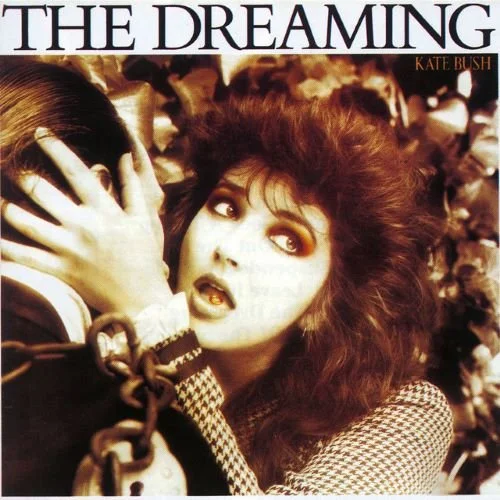
You won the Mercury Prize for ‘Bring It On’ in 1998 ahead of Massive Attack’s ‘Mezzanine’ and The Verve’s ‘Urban Hymns’. Was that ultimately responsible for the record reaching Number 11 in the UK album chart and selling nearly half a million copies?

“To a degree yeah, but the first big thing that happened to us was when we first appeared on Later…With Jools Holland. That was when we were like ‘Oh Lord!’. People leaped on to it very quickly. And then we had two sets at Glastonbury that year. We played in a tent and the gig went so well that we were asked to fill a set on the Main Stage (after Beth Orton pulled out) as well. So on a whim we did a second set on the Main Stage at Glastonbury in the pouring rain and managed to cheer a whole lot of people up. That set off a bit of a fire really and then in September when we won the Mercury Prize it was like a perfect storm. The word of mouth was out there and ready and everyone was excited about it but then when it got this big stamp of approval, it was like boom. Then the record was just flying out. It was crazy”.

If you still need a bit of prodding to go and get a truly brilliant album on vinyl, then perhaps a couple of positive reviews might tip the scales. This is what AllMusic had to say in their review for the mighty and simply perfect Bring It On:

On their debut album, Bring It On, England's Gomez introduce their original take on bluesy roots rock. Unlike Jon Spencer Blues Explosion, this isn't amphetamine-fueled freak-out music but similar at times to Beck's acoustic-based work (One Foot in the Grave), with more going on vocally. The band has a total of three strong vocalists, who can switch from pretty harmonies to gutsy blues outpourings in the blink of an eye. The band manages to cover a lot of ground convincingly on Bring It On, which is unusual, since it commonly takes bands the course of a few releases to hone their sound. The three British singles released from the album are definite highlights -- "Get Myself Arrested," "Whippin' Piccadilly," and "78 Stone Wobble," the latter containing a beautifully haunting acoustic guitar riff similar to Nirvana's unplugged version of the Meat Puppets' "Plateau." All the praise that Gomez's debut received is definitely not hype. The album is consistently great, as proven by such tracks as "Tijuana Lady," "Love Is Better Than a Warm Trombone," and "Get Myself Arrested”.

I am going to wrap it up with an in-depth investigation and love letter from Drowned in Sound. In 2018, they revisited Bring It On as the anniversary edition of the album came out. It makes for pretty interesting reading. I found a new appreciation for Gomez’s debut following my reading of the Drowned in Sound feature/review:

“It was an album that didn’t fit the zeitgeist, but that was part of what made it so appealing. It emerged at the fag-end of Britpop, with This is Hardcore atop the albums chart, another fine record that seems, in retrospect, to have been an antidote to the dominant indie music of the time, rather than a product of it. For one curious 15-year old in small-town Ireland at least, Bring It On represented something completely new. Over the years, conversations amidst the dying embers of many house parties revealed that others also saw Bring It On (along with the likes of the Beta Band’s Three EPs, Radiohead’s OK Computer, which came out the previous year, and the Flaming Lips’ Soft Bulletin (released a year later) as a gateway album of sorts – one that suggested there was more to indie music than the tired, formulaic pastiche that Britpop had become.

Bring It On is endlessly inventive. It fuses delta blues with mariachi guitar, rollicking drinking anthems with paeans to small-time weed dealers. It’s loose in its structure (having three vocalists seemed revelatory at the time) and loaded with ideas, a jam album that arrived fully formed. The crux of the record was seven tracks recorded on an old four-track recorder, in one of the band’s father’s garage. A tape of the tracks had been circulated among the band’s group of friends, finding its way into the hands of numerous A&R men.

As the tape circulated (these were essentially pre-internet days), a minor buzz ensued and Gomez signed to Hut. Because the equipment they’d used to record the songs broke down, the label had to use the garage recordings, with “a little bit of mixing and embellishment”. Had the songs been rerecorded, perhaps this effortless and casual sound would have been lost.

Yet despite this breeziness, Bring It On it is also accomplished beyond its makers’ years. From the hammer-on intro to ‘Here Comes The Breeze’, to the finger-picked outro to ‘Free To Run’, there are moments of real musical beauty. Add to that the dashes of imaginative production (the lo-fi crackles of ‘Tijuana Lady’, the grinding synth that ushers the record in with ‘Get Miles’) and you’ve got a heady brew of sounds.

That it was written and recorded by a bunch of skinny teenagers from Southport was considered phenomenal. The contemporary reviews were glowing, but there was also a general air of bemusement: how could these youngsters come up with something so heterogeneous and “real”? (At the time, much of the media coverage focused on Ben Ottewell’s gravelly drawl.

Bring It On was not a product of its time, rather the crate-digging, audiophilia of its creators. Perhaps for that reason, it has aged remarkably well – better than many of its contemporaries. These songs could have been recorded at any point in the past 30-odd years, but they still sound fresh today. A 20th-anniversary reissue is a chance to toast a record that – if not maligned – doesn’t get the attention it deserves. For those who found this record a formative part of their musical upbringing, take the time to rekindle some old memories, it sounds just as good as you remember. For others, enjoy it for what it is: a melting pot of escapism, stoner jams, and melodies so on point, you could hang your sombrero on them”.

Even if you are new to Gomez or not a superfan, Bring It On is an album that you will find truly engaging and nuanced. You will come back to it with fresh appreciation of various songs. Next year marks twenty-five years of a phenomenal album from Southport’s Gomez. It made a big impression in 1998, especially in the U.K. I am shocked that there are doubting and slightly muted reviews for an album many consider a classic! I wonder whether opinions have changed since then. Regardless, go out and own the twentieth anniversary release of Bring It On

AND cherish its brilliance.

FEATURE: Last Friday Night (T.G.I.F.), Sunday Girl: Celebrating Some New Additions to the BBC Radio 2 Schedule

FEATURE:


Last Friday Night (T.G.I.F.), Sunday Girl

IN THIS PHOTO: DJ Spoony/PHOTO CREDIT: BBC

Celebrating Some New Additions to the BBC Radio 2 Schedule

__________

I love to listen to…

 IN THIS PHOTO: Michelle Visage/PHOTO CREDIT: BBC

Friday evenings and nights on BBC Radio 2. Previously, Gary Davies’ Sounds of the 80s was on Fridays. Fearne Cotton’s Sounds of the 90s was also on Fridays. Both have been moved to Saturdays. Now, on Fridays, there is a new line-up. Sara Cox gets the party started from 5 p.m. with her all-request show. It is the two new D.J.s that follow her that have some great shows that have their own mood. I am going to come onto a great new Sunday night show but, on Friday evenings, Michelle Visage presents her Michelle’s Fabulous Friday at 7 p.m. The first couple of episodes have been fantastic. A mixture of Dance, R&B, Club, and Disco mixes with great Pop. She then follows this with Michelle Visage’s Handbag Hits. The idea is to keep the mood up and uplift the listener. Her stint finishes at 9 p.m. That is what you want on a Friday evening. Other stations have similar things, but Visage has really settled into her role quickly and sounds a natural at the station. Although I listen to a lot of BBC Radio 6 Music, I tune into BBC Radio 2 for Zoe Ball, Ken Bruce, and Sara Cox. I am also now tuning in specifically for the news shows (I also listen to Fearne Cotton’s Saturday show about the ‘90s). Visage’s double is the perfect way to kickstart the weekend!

Keeping the torch lit on a Friday is the brilliant DJ Spoony. He presents The Good Groove. Running until 11 p.m., he has a great selection of uplifting tracks that very much keep the energy going. Similar to Michelle Visage’s shows, there are familiar tunes with a few deeper cuts. Mixing deeper grooves, party tunes and feelgood floor-fillers, it is not just classics that Spoony plays. There are modern tracks and great remixes that provide this brilliant blend. I loved his first show with a 1990s mixture. He then kept the good vibes flowing with a wonderful assortment of the new and classic. Topping it off with his deeper cuts, you would not want to be anywhere else but BBC Radio 2 on a Friday! A couple of weeks in, all the signs show that DJ Spoony, like Michelle Visage, will be on the station for years. Whereas Fearne Cotton and Gary Davies have their decades-specific shows, the two Friday additions are broader and give that great contrast. Such a charismatic and popular personality, DJ Spoony is someone who fits very easily into the BBC Radio 2 line-up. I hope that he continues strong for years to come. Friday is very much about the party and the happy. You need that end of week sensation that gives you a boost into the weekend. It means that you get this in full force with Michelle Visage and DJ Spoony.

There is plenty of energy and mood-boosting music on BBC Radio 2 very much designed to give you a rejuvenating kick. On Sunday, you are unwinding and preparing to face the new week. Angela Griffin is another welcomer addition to the station. Radio 2 Unwinds with Angela Griffin. Is pretty self-explanatory. She is charged with bosting the mood, but doing so in a relaxing, connective and more holistic way. Between 10 and midnight, you can hear Griffin select some great modern-day and older songs that will definitely help you both relax and recharge. I think of Radio 1’s Sian Elleri and her Chilliest Show. It is good to have these themed shows where you get a dedicated mixture of songs that guarantees a certain mood or objective. Many radio playlists are random, and you get pulled and pushed in terms of the happy-sad balance. By having the likes of Angela Griffin ensure that our Sunday nights are going to be the perfect preparation for the new working week, we are in safe hands. Again, I do hope that she is at BBC Radio 2 for years. After a couple of weeks, she sounds comfortable and in her element. I wonder how BBC Radio 2 decided upon the three presenters for its new shows. Whatever metric or method they employed, it has definitely paid off!

 IMAGE CREDIT: BBC

Although many of us will be aware of the songs Michelle Visage, DJ Spoony and Angela Griffin play on their shows, many won’t. That is particularly true of the newer cuts. Not only do you get these great shows that are full of life and joy. There is the more unwinding and, with each of the three broadcasters, they bring so much enthusiasm, passion, and knowledge. You get to find music you might not have been aware of, plus there is that reliance and security that you get the classics. Line-up changes can be quite risky and fail, but BBC Radio 2 have luckily not lost their shows from Gary Davies and Fearne Cotton or banished them to a bad timeslot. Instead, they have added in three presenters who each bring their own style and musical choices to Friday and Sunday evenings/night. Whether you want some Dance and Disco or prefer some remixes and Club classics, or you just need some smoother or softer tracks to ease the stress, then you are covered. Whether you are an exiting fan and listener of BBC Radio 2 or go for other stations, I would advise you to dip into BBC Sounds and catch up on Michelle Visage, DJ Spoony, and Angela Griffin’s shows. Presented by people who really love their music and are naturally suited to their roles, Friday and Sundays have been given fresh injection! Given the recent hot weather and everything else going on in the world, we do need something uplifting and positive. Radio is providing that. I am listening more to BBC Radio 2 now because of their new shows. In my view, these are…

JUST what we need.

FEATURE: No One Does It Better… Why Salt-N-Pepa’s Very Necessary Needs to Be Reissued on Vinyl

FEATURE:


No One Does It Better…

Why Salt-N-Pepa’s Very Necessary Needs to Be Reissued on Vinyl

 __________

WHILST you can get…

Salt-N-Pepa’s 1993 album, Very Necessary, on vinyl, it is very expensive and will probably be out of most people’s reach. Maybe not as known and celebrated as its predecessor, 1990’s Blacks’ Magic, Very Necessary lives up to its title. Salt (Cheryl James), Pepa (Sandra Denton) and DJ Spinderella (Deidra Roper) are phenomenal throughout! Featuring some of Salt-N-Pepa’s best tracks – including Shoop and the cover, Whatta Man, that featured En Vogue - , this is an album that ranks alongside my favourite of the 1990s. I know it is expensive and not viable to put every great album onto vinyl, but it would be great to see Salt-N-Pepa’s full catalogue in record shops. As much as anything, the sheer quality of the Very Necessary album is amazing. Even deeper cuts like No One Does It Better and Big Shot show what an amazing group Salt-N-Pepa are. The importance of Very Necessary should mean it gets a new vinyl pressing. Very Necessary peaked at number four on the Billboard 200. It has been certified five-times platinum by the Recording Industry Association of America (RIAA), denoting sales in excess of five million copies in the United States. Just before coming to a couple of positive reviews for the legendary Very Necessary, I want to bring in parts of a feature Udiscovermusic.com published last year. They wrote why Salt-N-Pepa are such an important Hip-Hop trio:

There are few hip-hop acts who have maintained the kind of longevity and stamina as Salt-N-Pepa did throughout their career. Cheryl James and Sandra Denton started off as the duo Super Nature and recorded a single called “The Showstopper,” which garnered attention from local New York radio stations. Before long, listeners were calling in to request the track. By 1987, the duo recruited Deidre Roper to join as Spinderella, and the three women were prepared to pounce on the hip-hop industry with a new name: Salt-N-Pepa. The same year, they released “Push It,” their first big hit. The single was certified platinum, reaching No. 19 on Billboard, and wrote the group into history as the first female hip-hop act to hit platinum status. Their path to hip-hop royalty had been laid. By the time they released their fourth album, Very Necessary, Salt-N-Pepa had become the most successful hip-hop album by a female act.

Creating a cultural legacy

“Shoop” was the album’s first single. While the group tasted hits before, this became one of their biggest to date. The single sold 1.2 million copies, already indicating that the forthcoming album would be a chart-topper. “Whatta Man,” the album’s second single, featured R&B group En Vogue and boasted lyrics describing various versions of an ideal man. Meanwhile, “None Of Your Business” found the ladies chanting about their sexual agency and won the Grammy for Best Rap Performance By A Duo Or Group.

Very Necessary had no shortage of head-spinning, snarky lyrics about sexuality, and loyal fans ate it up. But Salt-N-Pepa’s range didn’t stop there. Though many of the tracks off Very Necessary favored more salacious lyrics, others, like “Heaven Or Hell,” found the MCs delivering verses about police brutality, drugs, and other threats against the black community. “I’ve Got AIDS,” the last track on the album, is a PSA skit from Weatoc, a non-profit in Boston that sought to inform youth about physical and sexual health in black communities.

Salt-N-Pepa are pioneers, undoubtedly influencing many of the acts that followed, including Missy Elliott and Trina. These first ladies of hip-hop created a cultural legacy with Very Necessary and pushed the genre forward when many music critics shrugged off hip-hop as a trend that would soon lose its steam. Instead of losing momentum, however, hip-hop dominated, with Salt-N-Pepa holding the reins”.

In order to back up my assertion that Very Necessary needs to come to vinyl soon, it is worth dropping in a couple of reviews. I want to start with AllMusic’s take on an album that, in 1993, made an impression on my young ears:

Salt-N-Pepa exhibited a lot of growth on Blacks' Magic (1990), their third album and, by far, best to date. For their follow-up, Very Necessary, released a long three and a half years later, in 1993, the ladies delivered a fairly similar album. Like its predecessor, Very Necessary boasts a pair of major hits ("Whatta Man," "Shoop") and a lot of fine album tracks. Also like Blacks' Magic, Very Necessary is filled with strong, prideful rhetoric: femininity, sex, relationships, romance, respect, love -- these are the key topics, and they're a world apart from those of the gangsta rap that was so popular circa 1993. And as always, the productions are dance-oriented, with a contemporary R&B edge. Most tracks were produced by Hurby "Luvbug" Azor, though Salt is credited on a few, chief among them "Shoop." Very Necessary is just as impressive as Blacks' Magic, if not more so. The key difference is, Blacks' Magic was a striking leap forward for Salt-N-Pepa, who were somewhat of a novelty act up to that point, whereas Very Necessary is a consolidation of everything that had worked so well for the duo previously. Hence the lack of surprises here. Still, the raised expectations don't change the fact that Very Necessary is one of the standout -- and, for sure, one of the most refreshingly unique -- rap albums of its era”.

Before round off, I am interested in Pitchfork’s assessment of the spectacular Very Necessary. Such a hugely influential group, Salt-N-Pepa’s albums are a thing of beauty and huge power. They have inspired so many artists - and they will continue to do for a very long time:

So much of the first decade of Salt-N-Pepa forged a path for women to follow for the next twenty years, both in rap and pop music, as well with social and sexual mores. The whole map of their conquest is laid out on their 1993 album Very Necessary. The confidence of “Push It”—which Pepa has insisted is about dancing, not about sex—and the emotional intelligence of “Let’s Talk About Sex” are present, but the womanly conviction here is far more plentiful than it had been in their music before. It was a palliative to the hyper-misogyny spewing from their male contemporaries. If Snoop Dogg and friends were going to harangue hoes, then in Salt-N-Pepa’s world, words like “hoe” and “hooker” were just as applicable to men. They maintained their themes of sexuality and empowerment—and were in good company with Queen Latifah’s “U.N.I.T.Y.” and TLC’s “Ain’t Too Proud to Beg”—but it got a new look. Whether in combat boots or pum pum shorts, their message was still clear: women need to have agency over their sexuality and, if she’s safe, she can express it however the hell she wants.

On top of the beats, it was Salt-N-Pepa’s relentless campaign for social and sexual agency that drove the album. “Sexy Noises Turn Me On” may sound a little bit dated in 2017, but the frankness with which the women express their needs is anything but. It is the precursor to so many Foxy Brown one-liners and songs like Rasheeda’s “My Bubble Gum” and Nicki Minaj’s “Get on Your Knees.” There are calls elsewhere on *Very Necessary *for reciprocity, like when Salt raps: “You’re under my control/I got your heart and soul/Go down and take your time” on opener “Groove Me” but they were pushing to do even more than just smash the insidious taboo that women can only perform oral sex, not receive it that many of their descendants have rallied for (see: Lil’ Kim’s entire 1996 debut album Hard Core).

This attitude bleeds through to tracks like “Step,” which uses a hefty sample of Hank Crawford’s jazzy “It’s a Funky Thing to Do” and comes off optimally unbothered. “Somma Time Man” is reproachful of male promiscuity (just like their 1986 Otis Redding-interpolating song “Tramp”), but so much of the critique is about infidelity and the lack of safety. Ultimately, Salt-N-Pepa’s mantra when it came to AIDS was, “If you don’t get it, you can’t spread it.” It is their entire ethos: sex is happening everywhere and it cannot be ignored because like all other thrills there are risks—risks you take with your heart and risks you take with health. If you’re doing it right, there’s no shame attached to it. It’s why they wrote “None of Your Business,” but also why they spent many of their television appearances talking about how easy it is to put on a condom.

Salt-N-Pepa, however, do not explicitly call themselves activists or even feminists. In the same interview with Mary Wilson from the Supremes, Salt also said: “I think we’re feminists to a certain degree. But I have no problem with the man being the man, as long as the man knows how to be a man.” The biggest song of their career, “Whatta Man,” is a paean to good-looking respectful guys. Peaking at No. 3, the track united the trio with En Vogue, who were still riding high off of their star-making sophomore album Funky Divas, released the year before. Although the song’s ballast may be “good men are hard to find,” the use of Linda Lyndell’s classic “What a Man” and Spinderella referencing Whitney Houston deep cut “My Name is Not Susan” in her verse still keeps it a celebration of womanhood. The video co-starred Naughty By Nature’s Treach, Pep’s IRL man at the time, and remains one of their fluffier offerings. In the context of the album, however, it rounds out the robust portrait of women’s romantic interiors: Not all love is fleeting and when it is good, it is so good”.

Although you can get it on streaming services, it would be better to have an affordable version of Very Necessary on vinyl. Such an essential album does deserve a reissue. Maybe that will happen on its thirtieth anniversary next year. I love Salt-N-Pepa a lot, and Very Necessary ranks right up there with their absolute best work. So many people would love to hear this classic album…

ON vinyl.

FEATURE: Inspired By… Part Seventy-One: Tears for Fears

FEATURE:


Inspired By…

Part Seventy-One: Tears for Fears

 __________

A hugely influential duo…

 PHOTO CREDIT: Frank W. Ockenfels

Tears for Fears were formed in Bath in 1981 by Roland Orzabal and Curt Smith. Tears for Fears were associated with the New Wave synthesizer bands of the early-1980s. They soon attained international chart success. They have been touring the U.K. recently (unfortunately, they had to cancel the rest of the dates due to an injury Smith sustained). I have been a fan of theirs since childhood. Their 1983 debut, The Hurting, is one of the best of the 1980s. This year’s The Tipping Point ranks alongside their finest albums. Such a remarkable and consistently impressive group, Tears for Fears have been responsible for inspiring a lot of other artists. I am going to finish with a playlist of songs from artists who either are influenced by Tears for Fears or carry some of their sound and vibe. Before getting to the playlist, AllMusic provide a detailed biography of the remarkable Tears for Fears:

Tears for Fears were always more ambitious than the average synth pop group. From the beginning, the duo of Roland Orzabal and Curt Smith were tackling big subjects -- their very name derived from Arthur Janov's primal scream therapy, and his theories were evident throughout their debut, The Hurting. Driven by catchy, infectious synth pop, The Hurting became a big hit in their native England, setting the stage for international stardom with their second album, 1985's Songs from the Big Chair. On the strength of the singles "Everybody Wants to Rule the World" and "Shout," the record became a major hit, establishing the duo as one of the leading acts of the second generation of MTV stars. Instead of quickly recording a follow-up, Tears for Fears labored over their third album, the psychedelic and jazz-rock-tinged The Seeds of Love. Smith left the group in the early '90s while Orzabal continued with Tears for Fears as a solo project for several years, issuing a pair of albums. They reunited briefly for 2004's Everybody Loves a Happy Ending and permanently to tour and record 2022's The Tipping Point.

Orzabal and Smith met as children in Bath, England. Both boys came from broken homes, and Smith was leaning toward juvenile delinquency. Orzabal, however, turned toward books, eventually discovering Arthur Janov's primal scream therapy, a way of confronting childhood fears that John Lennon embraced after the Beatles disbanded. Orzabal turned Smith on to Janov, but before the duo explored this theory further, they formed the ska revival band Graduate in the late '70s. After releasing a handful of singles, including "Elvis Should Play Ska," Graduate dissolved in the early '80s, and the duo went on to form Tears for Fears, a synth pop outfit directly inspired by Janov's writings.

Riding in on the tail-end of new wave and new romantic, Tears for Fears -- which featured musical contributions from former Graduate keyboardist Ian Stanley on early albums -- landed a record contract with Polygram in 1982. The following year, the band released its debut, The Hurting, which became a major hit in Britain, generating no less than three Top Five hit singles. Two years later, the group released Songs from the Big Chair, which demonstrated a more streamlined and soul-influenced sound. Songs from the Big Chair became a huge hit in America, rocketing to the top of the charts on the strength of the singles "Everybody Wants to Rule the World" and "Shout," which both hit number one, and the number three "Head Over Heels," which were all supported by clever, stylish videos that received heavy MTV airplay.

Instead of quickly following Songs from the Big Chair with a new record, Tears for Fears labored over their new record, eventually delivering the layered, Beatlesque The Seeds of Love in 1989. Featuring soulful vocals from Oleta Adams, who dominated the hit "Woman in Chains," the album became a hit, reaching number eight, while the single, "Sowing the Seeds of Love," reached number two in the U.S. Again, Tears for Fears spent several years working on the follow-up to Seeds of Love, during which time they released the collection Tears Roll Down: Greatest Hits 82-92. Smith and Orzabal began to quarrel heavily, and Smith left the group in 1992, making Tears for Fears' 1993 comeback Elemental essentially a solo record from Orzabal. On the strength of the adult contemporary hit "Break It Down Again," Elemental became a modest hit, reaching gold status in the U.S., yet was hardly up to the group's previous levels. Smith, meanwhile, released a solo album in 1993, Soul on Board, which went ignored. Orzabal returned with another Tears for Fears album, Raoul and the Kings of Spain, in 1995, which failed to make much of an impact. In late 1996, they released a rarities collection. In 2004, Orzabal reunited with Smith for the colorful Everybody Loves a Happy Ending, their first collaboration in over a decade.

It wouldn't be until 2013 that newly recorded material would surface, although the duo had been active on the live circuit, with dates in the U.S., Australia, and New Zealand. A three-track EP, released especially for Record Store Day, appeared that year and featured covers of Arcade Fire's "Ready to Start," Animal Collective's "My Girls," and Hot Chip's "Boy from School." Used as a springboard for writing and recording new music, Tears for Fears inked a deal with Warner Records the following year and continued to work on their seventh album.

During this time, Orzabal spent time caring for his wife, who passed away in 2017; her death profoundly influenced his songwriting. After a few false starts, mainly due to additional songwriters being brought in, Smith and Orzabal sat down together to write in a manner inspired by the world around them, resulting in songs that poignantly dealt with everything from the climate crisis to political upheaval. They spent a summer touring and in 2021 entered the studio and completed The Tipping Point for Craft Records. It arrived in February 2022 as their first full-length studio recording of original material in 18 years, and marked their return to touring”.

Let us hope that Tears for Fears keep releasing music for years to come! One of the all-time great groups/duos, they will continue to impact and influence musicians for a very long time. To finish things up, the playlist below collects artists who have followed Tears for Fears or have definitely been impacted by them. It goes to show that their legacy…

IS huge.

FEATURE: Kate Bush’s The Kick Inside at Forty-Five: Five Great Deep Cuts from the Album

FEATURE:


Kate Bush’s The Kick Inside at Forty-Five

Five Great Deep Cuts from the Album

__________

COMPLETED in August 1977…

I wanted to mark forty-five years of Kate Bush’s debut, The Kick Inside, with a run of features. Of course, I am going to pick them back up on the actual forty-fifth anniversary on 17th February. Featuring musicians such as Duncan Mackay, Ian Bairnson, David Paton, Andrew Powell, and Stuart Elliott of The Alan Parsons Project, The Kick Inside is a mix a teenage artist who was new and writing in a very original, bold, and fresh way, combined with a band who were experienced and brought their joint talents to the studio. It is a fascinating record that boasts two incredible U.K. singles in the form of Wuthering Heights and The Man with the Child in His Eyes. Although Strange Phenomena, Moving and Them Heavy People were released in other countries, I consider them to be deep cuts, owing to the fact they are not tracks played often here. Many in the U.K. may not be aware of them. For this feature, I am selecting five deep cuts from The Kick Inside people need to hear. Of course, listen to the entire album! This is a more a prompt to radio stations who either play nothing from The Kick InsideHounds of Love is the album that gets heaviest airplay – or they play the two U.K. singles. Below are five deep cuts that I think should be played more and known widely. Many Kate Bush fans will know these tracks already, though a lot of people will be new to them. Whilst they might not be my favourite deep cuts (Moving and Them Heavy People would be in there), these are the ones that need more exposure and have probably not been played on radio for many years (thanks to the Kate Bush Encyclopaedia for their resources and information about the songs). Here are five great deep cuts…

FROM a remarkable debut album.

______________

The Saxophone Song 

Song written by Kate Bush, released on her debut album The Kick Inside. Originally the song was recorded as a demo produced by David Gilmour in June 1975.

Kate about 'Saxophone Song'

I wrote 'The Saxophone Song' because, for me, the saxophone is a truly amazing instrument. Its sound is very exciting - rich and mellow. It sounds like a female. (Dreaming: The Kick Inside, 1978)

The song isn't about David Bowie. I wrote it about the instrument, not the player, at a time when I really loved the sound of the saxophone - I still do. No, I don't know him personally, though I went to his "Farewell to Ziggy Stardust" concert and cried, and so did he. (Kate Bush Club newsletter, November 1979)”.

Strange Phenomena

Formats

'Strange Phenomena' was released as a single (in Brazil only) on a 4 track EP called '4 Succesos' in June 1979, also featuring the songs Wow, Symphony In Blue and Hammer Horror.

Kate about 'Strange Phenomena'

['Strange Phenomena' is] all about the coincidences that happen to all of us all of the time. Like maybe you're listening to the radio and a certain thing will come up, you go outside and it will happen again. It's just how similar things seem to attract together, like the saying ``birds of a feather flock together'' and how these things do happen to us all the time. Just strange coincidences that we're only occasionally aware of. And maybe you'll think how strange that is, but it happens all the time. (Self Portrait, 1978)

"Strange Phenomena'' is about how coincidences cluster together. We can all recall instances when we have been thinking about a particular person and then have met a mutual friend who - totally unprompted - will begin talking about that person. That's a very basic way of explaining what I mean, but these ``clusters of coincidence'' occur all the time. We are surrounded by strange phenomena, but very few people are aware of it. Most take it as being part of everyday life. (Music Talk, 1978)”.

Feel It

Song written by Kate Bush. Three voice and piano tracks were recorded on one day for Kate's debut album The Kick Inside, of which only 'Feel It' made it onto the final selection.

Versions

There are two officially released versions of 'Kite': the album version and the live version from Hammersmith Odeon. However, a demo version from 1977 has also surfaced and was released on various bootleg cd's.

Kate about 'Feel It'

A song about a woman who is looking forward to enjoying a relationship with a man she has not yet explored. (Music Talk, 1978)”.

L'Amour Looks Something Like You 

Song written by Kate Bush in 1977, released on Kate's debut album The Kick Inside.

A "goose moon" or "goose month", mentioned in the song lyric, is a Native American term for the month (late March to late April) when the Canada goose returns from the south. Alternatively, the term refers to the full moon which appears during that period.

Versions

There are two officially released versions of 'L'amour Looks Something Like You': the studio album and the live version on the On Stage EP. However, a demo version from 1977 has also surfaced and was released on various bootleg cd's.

Credits (studio version)

Drums: Stuart Elliott

Bass: David Paton

Guitars: Ian Bairnson

Organ: Duncan Mackay

Credits (live version)

Drums: Preston Heyman

Bass: Del Palmer

Guitar: Brian Bath

Keyboards: Kevin McAlea

Synthesizer: Ben Barson

Electric guitar: Al Murphy

Backing vocals: Liz Pearson and Glenys Groves”.

The Kick Inside

Song written by Kate Bush. First released on Kate's debut album The Kick Inside. The lyrics were inspired by a traditional folk song called "Lucy Wan". According to Paddy Bush, at the time of recording the song there were some experiments where actual sections from "Lucy Wan" were taken and processed and used in a very unusual way.

Kate about 'The Kick Inside'

The song The Kick Inside, the title track, was inspired by a traditional folk song and it was an area that I wanted to explore because it's one that is really untouched and that is one of incest. There are so many songs about love, but they are always on such an obvious level. This song is about a brother and a sister who are in love, and the sister becomes pregnant by her brother. And because it is so taboo and unheard of, she kills herself in order to preserve her brother's name in the family. The actual song is in fact the suicide note. The sister is saying 'I'm doing it for you' and 'Don't worry, I'll come back to you someday.' (Self Portrait, 1978)

That's inspired by an old traditional song called 'Lucy Wan.' It's about a young girl and her brother who fall desperately in love. It's an incredibly taboo thing. She becomes pregnant by her brother and it's completely against all morals. She doesn't want him to be hurt, she doesn't want her family to be ashamed or disgusted, so she kills herself. The song is a suicide note. She says to her brother, 'Don't worry. I'm doing it for you.' (Jon Young, Kate Bush gets her kicks. Trouser Press, July 1978)”.

FEATURE: Physical Attraction: Madonna’s Incredible Eponymous Debut Album at Thirty-Nine

FEATURE:


Physical Attraction

Madonna’s Incredible Eponymous Debut Album at Thirty-Nine

__________

I usually mark Madonna anniversaries…

 IN THIS PHOTO: Madonna in 1983/PHOTO CREDIT: George Holz

when it comes to albums and singles. On 27th July, 1983, Madonna released her eponymous debut. I have written about the album before, but I think it is important to remember it each year. Although Madonna’s debut single, Everybody (which was included on the album), came out in 1982, she put her debut out in 1983. That was the year I was born. It is exciting to think the debut album of a future Pop queen came out a couple of months after I was born! I wanted to push people towards it and get it on vinyl as it is a sensational and underrated debut. It sounds remarkable on vinyl and, when it turns forty next year, let’s hope it gets a reissue. We have the thirtieth anniversary of Erotica later in the year, so I am not sure whether there are plans to reissue that album. Madonna is an L.P. that contains songs that have stood the test of time. Maybe the production sound is dated to a degree, but the fact Madonna composed most of the songs on her debut shows the talent and ambition she had in 1983 – at a time when many of her Pop peers were mot writing their own music.

I am going to come on to a couple of reviews for Madonna soon. I want to start with some information and background about the album from Today in Madonna History. It is surprising to hear that Madonna was originally disappointing by the album and was not happy with the overall sound:

On July 27 1983, Madonna’s eponymous debut album was released by Sire Records. The record was renamed Madonna: The First Album for the 1985 international re-release of the album.

The album was released with 8 tracks (produced by John “Jellybean” Benitez, Mark Kamins and Reggie Lucas):

1.       Lucky Star

2.       Borderline

3.       Burning Up

4.       I Know It

5.       Holiday

6.       Think of Me

7.       Physical Attraction

8.       Everybody

Five singles were released from The First Album:

1.       Everybody (October 6 1982)

2.       Burning Up (March 9 1983)

3.       Holiday (September 7 1983 – UK)

4.       Lucky Star (September 8 1983)

5.       Borderline (February 15 1984)

“Madonna was unhappy with the whole album, so I went in and sweetened up a lot of music for her, adding some guitars to ‘Lucky Star’, some voices, some magic… I just wanted to do the best job I could do for her. When we would playback ‘Holiday’ or ‘Lucky Star’, you could see that she was overwhelmed by how great it all sounded. You wanted to help her, you know? As much as she could be a bitch, when you were in a groove with her, it was very cool, very creative.”

— John “Jellybean” Benitez talking about Madonna and the album”.

Even though she went on to record stronger, more varied, personal and acclaimed albums, Madonna does deserve a lot more respect than some people give it credit for. There were a lot of positive reviews for it upon its release, but many assess it now as a promising debut…albeit one that had flaws and only had one or two good songs. Madonna’s voice was still developing, and her lyrical voice would embolden, expand and strengthen on subsequent albums. Madonna is one of the most important debuts ever, as it introduced her to a wider audience. How many people in 1983 would predict where her career would go?! Would they imagine we’d be talking about her in 2022?! Before I get to some reviews, This Is Dig! wrote about Madonna on its thirty-eight anniversary last year:

A SEEMINGLY ENDLESS SUCCESS

Sharing that addictive intensity of her early years, these three quite different cuts remain the highlights from Madonna’s self-titled debut album. Meanwhile, other songs position themselves closer to the club-soul market of the day. That debut single, Everybody, had featured on the demo tape that persuaded legendary impresario Seymour Stein to sign the ambitious young singer to Sire Records in the first place. A starker electro-pop nugget, it became a decent-sized dance hit and was supported by a simpler in-performance video. Burning Up was the second single to get issued ahead of the Holiday breakthrough and was an urgent pop-rock number that became the singer’s first hit in Australia, where it landed at No.13.

The album was rounded off by I Know It (urgent and melodic), Think Of Me (the record’s most obvious R&B shuffler) and Physical Attraction (a spikier dance cut that almost sits at the sweet-spot of a Burning Up and Everybody Venn diagram), and Madonna’s reputation built over the course of the following year, as each single release did better than the last. By the time Lucky Star had peaked stateside, however, it was causing problems. Madonna’s second album, Like A Virgin, was in the can but found itself delayed by the seemingly endless success of the music she had recorded many months earlier.

“SHE WAS A TRUE PROFESSIONAL”

As was her way, Madonna was eager to move on. But her debut album’s singles just wouldn’t be silenced. Holiday became a hit all over again in Europe in 1984, and, by August 1985, Madonna was at No.1 in the UK with Into The Groove, with a reissued Holiday sitting just one place behind it in the charts. The following year, Borderline would re-enter the British charts and climb to No.2, while, in 1991, Holiday would yet again reach the UK Top 5.

Also in 1985, the Madonna album itself would be reissued, with new artwork, in Europe as The First Album, but the original Gary Heery sleeve shot is a masterpiece among Madonna’s album covers. Designer Carin Goldberg recalls: “She came in with a lot of bracelets on… that was the one iconic thing about her outfit, besides the rag in her hair… Madonna was probably the easiest job I ever had… She was a true professional, even at that young age.”

Madonna’s unique look, provocative agenda, assured self-confidence and the evocative energy of her records and videos quickly made her an MTV titan. Following her debut album’s release, on 27 July 1983, first the US, then the rest of the world, was gripped by Madonna-mania, and the album that launched her would sell more than ten million copies globally and enjoy 168 weeks on the Billboard charts. Madonna’s pop-theatre would scale higher creative peaks, but nothing would beat the charming energy of her self-titled debut album”.

Even if the production is typical of the 1980s and might seem dated to some, Madonna is a timeless album that will be inspiring and moving people for decades to come. I want to highlight AllMusic’s review of the biggest and most important (in my view) album of 1983. It must have been really exciting for Madonna fans that year to get her talked-about and incredible debut album:

Although she never left it behind, it's been easy to overlook that Madonna began her career as a disco diva in an era that didn't have disco divas. It was an era where disco was anathema to the mainstream pop, and she had a huge role in popularizing dance music as a popular music again, crashing through the door Michael Jackson opened with Thriller. Certainly, her undeniable charisma, chutzpah, and sex appeal had a lot to do with that -- it always did, throughout her career -- but she wouldn't have broken through if the music wasn't so good. And her eponymous debut isn't simply good, it set the standard for dance-pop for the next 20 years. Why did it do so? Because it cleverly incorporated great pop songs with stylish, state-of-the-art beats, and it shrewdly walked a line between being a rush of sound and a showcase for a dynamic lead singer. This is music where all of the elements may not particularly impressive on their own -- the arrangement, synth, and drum programming are fairly rudimentary; Madonna's singing isn't particularly strong; the songs, while hooky and memorable, couldn't necessarily hold up on their own without the production -- but taken together, it's utterly irresistible. And that's the hallmark of dance-pop: every element blends together into an intoxicating sound, where the hooks and rhythms are so hooky, the shallowness is something to celebrate. And there are some great songs here, whether it's the effervescent "Lucky Star," "Borderline," and "Holiday" or the darker, carnal urgency of "Burning Up" and "Physical Attraction." And if Madonna would later sing better, she illustrates here that a good voice is secondary to dance-pop. What's really necessary is personality, since that sells a song where there are no instruments that sound real. Here, Madonna is on fire, and that's the reason why it launched her career, launched dance-pop, and remains a terrific, nearly timeless, listen”.

One of my favourite Madonna albums, her debut is thirty-nine tomorrow (27th July). I do hope that there are plans to reissue it one day, as it is hugely relevant to this day. I listen to modern Pop, and so much of it nods back to Madonna. I am going to end with a review from Pitchfork and their thoughts about a masterful and hugely accomplished work:

Part of what gives Madonna such affecting rhythm is its use of electronic instruments that sounded like the future then and typify the ’80s sound now—instruments like the LinnDrum and the Oberheim OB-X synthesizer. Disco had brought dance music to pop’s forefront, where producers like Giorgio Moroder traded its saccharine strings for robotic instrumentation, but by the early ’80s, the genre had cooled off. People still danced to synthesizers, but their positioning was crucial—both within culture and musical compositions. The Human League and Soft Cell scored two of 1982’s biggest and most synthetic smashes, but back then the gulf between punk-derived new wave and bygone disco seemed wider than it ever really was. Disco and disco-adjacent stars like Donna Summer and Michael Jackson still were programming their hits, but the overall focus was back on a full-band sound. There’s no shortage of organic instruments on Madonna’s debut—“Borderline” wouldn’t be the same without the piano’s melodic underscoring, standout album cut “Physical Attraction” without its funky little guitar line—but the slinky digital grooves often take center stage. Through this, Madonna is able to achieve an almost aggressive twinkling that still feels fresh: the effervescent fizz at the start of Carly Rae Jepsen’s “Cut to the Feeling” seems cribbed straight from “Lucky Star.”

Madonna vaguely criticized her debut’s sonic palette while promoting its follow-up, 1984’s Like a Virgin, but its focus is part of what makes the album so memorable, so of a time and place. She would soon become known for ritual pop star metamorphosis, but with a clearly defined musical backdrop, Madonna was able to let shine her biggest asset: herself. The way Madonna’s early collaborators talk about her—even the ones who take issue with her, like Reggie Lucas, who wrote “Borderline” and “Physical Attraction” and produced the bulk of the album—often revolves around her decisiveness, her style, the undeniability of her star quality. Some of these songs, like the self-penned workout “Think of Me,” aren’t all that special, but Madonna telling a lover to appreciate before she vacates is so self-assured, the message carries over to the listener. And when the material’s even better, like on “Borderline,” the passionate performance takes it over the top.

Maybe the New York cool kids rolled their eyes at the Midwest transplant after she blew up, but she had effectively bottled their attitude and open-mindedness and sold it to the MTV generation (sleeve of bangles and crucifix earrings not included). Innocent as it may look now, compared to the banned bondage videos and butt-naked books that followed, Madonna was a sexy, forward-thinking record that took pop in a new direction. Its success showed that, with the right diva at the helm, music similar to disco could find a place in the white mainstream—a call to the dance floor answered by everyone from Kylie to Robyn to Gaga to Madonna herself. After venturing out into various genre experiments and film projects, when Madonna needs a hit, the longtime queen of the Dance Songs chart often returns to the club. This approach doesn’t always work, as her last three records have shown, but you can’t fault her for trying to get back to that place where heavenly bodies shine for a night”.

Truly a magnificent, exciting, and fresh album from Madonna, the then-twenty-four-year-old made her first big step into the music world. It is hard to believe her debut single is forty this year. There is an ageless quality to Madonna’s music that is one reason why it has endured for so long. I don’t think Madonna sounds like a dated or average debut. Some do. In fact, I would echo the positive reviews regarding its influence and importance. Her debut introduced her star power. It also helped bring Dance and Disco more to the mainstream, in a year (1983) when very few artists were performing these genres. A talent with a distinct and authentic personality and unique abilities, those who dismissed her voice and work were eating their words pretty soon! After the release of Madonna on 27th July, 1983, it would not be long until Madonna was crowned…

THE Queen of Pop.

FEATURE: Revisiting...: Zara Larsson – Poster Girl

FEATURE:


Revisiting…

Zara Larsson – Poster Girl

 __________

BECAUSE she is working…

on her fourth studio album, I wanted to include Zara Larsson’s current album, Poster Girl, in Revisiting... Even though it did reach number twelve in the U.K. and three in her native Sweden, it charted low in the U.S. - and some critics did not give it a huge review. That said, many others did. I do wonder what Larsson’s new album will sound like. Poster Girl is a terrific Pop album that should be heard more now. I know songs from it are spun now and then but, as it only came out in March last year, it is deserving of more focus. Despite – as I say a lot with Pop albums – the fact there are a lot of names in the  mix when it comes to producers and writers, Poster Girl is very much Zara Larsson’s work. Before coming to reviews for the album, NME report how the twenty-four-year-old is working on her fourth album (her third internationally):

Zara Larsson has given an update on her third international album, telling NME that it’s “pretty much done”.

Speaking backstage at Mad Cool Festival 2022, the Swedish artist explained that she only had “some production stuff left” to take care of on the follow-up to 2021’s ‘Poster Girl’. “I shouldn’t say that [it’s almost done] because now people will expect [new music]; but it is,” she said. Watch our interview with Larsson above.

Having previously told fans that she was back in the studio writing on her third album following the release of ‘Poster Girl’, Larsson explained that she has worked on the majority of the record with Rick Nowels (Lana Del Rey, Dua Lipa) “who is just a legend”, alongside super-producer Danja (Britney Spears, Justin Timberlake).

“The fact that I’m in the studio with them [and am] working with them long term, it’s something that I’ve appreciated a lot,” Larsson said of her collaborators. “I’ve been really lucky to be in the studio with great writers, but it’s been kind of like speed dating a little bit.” Working with just Nowels, for the most part, gave the sessions a new feeling. “It’s like ‘it’s you and me’; like ‘you’re looking into my eyes, and we’re writing this song’, which is great. I feel like it’s authentic and brings out something else.”

Larsson also said that sonically this album is “a little harder”. “The drums are a little harder, the vocals are vocalling a little bit more. I would just say I’ve been taking it up a notch, which is hopefully what I would like to do for every album, just step it up; but this one is really fucking good”.

Before coming to a couple of positive reviews, there were a few interviews conducted with Larsson around the release of Poster Girl. An exciting and important album from a rising artist, it was out at a time when the pandemic was still very much raging. It must have been quite an odd time to put out an album that had been brewing for quite some time. The Guardian chatted with Larsson about Poster Girl. We learn more about her upbringing and what Poster Girl represents:

Larsson always knew she would be a star. Her parents – mother Agnetha is a nurse while her dad, Anders, was an officer in the navy – supported her early desire to perform, enrolling her in ballet lessons, but never expected she would be famous. A natural attention-seeker, Larsson would often perform a mini-concert at meal times, followed, at her dad’s behest, by the family debating the day’s big topics.“My dad thinks it’s important that everyone is heard, even if you don’t agree,” she says. “It gets scary when people are like: ‘This is the right opinion and if you have the wrong opinion you can’t say it.’” She pauses, something she does rarely. “I mean, in my opinion I’m always right.”

Beyoncé was an early musical idol and the pair met in 2013 after Larsson begged Beyoncé’s label to let her backstage after her concert in Stockholm. “I died,” she says. “When she came in the room I just laid on the floor and sobbed.” That one encounter was enough, however. “I’m not sure I want to meet her again,” she says. “I enjoy her being on a pedestal because she’s unreachable to me, like a mythical creature. I wouldn’t want her to be my friend … ” She roars with laughter at the audacity of the statement. “As if that would be an option!”

Poster Girl’s cover art, a neon pink fantasia featuring a bedroom wall covered in torn-out pictures, plays with this idea of Larsson as both the untouchable superstar idol and the everyday pop fan dreaming of stardom. “This is what I usually look like,” she says glancing at her dressing gown, “and I love that, but I also love the show. I love the glitter, the glamour, the lights, the big hair, and that’s also part of who I am.” Like Beyoncé, Larsson had been laser-focused in achieving her dreams. After she won Talang in 2008, she went to the US to take meetings with record labels. “I was like: ‘Boom, when are we doing the album? When are we shooting the videos?’ But I didn’t get signed and I was fucking devastated.” Two years later, still only 14, she signed her first deal – “I thought that was 14 years too late!” she laughs – and enjoyed homegrown success with her Sweden-only debut album, 1, an endearing collection of youthful pop that hinted at what was to come.

After Lush Life made her a superstar in 2016 (it currently sits on 945m global Spotify plays), Larsson found herself undermining her own success. “I’m a very dissatisfied person, which is a blessing and a curse; it makes me push for better things but it also means I can never be in the moment and enjoy something,” she says. “For example, I thought I’d be doing stadiums by now.” This constant strive for perfection can lead to second guessing, which is one of the reasons for Poster Girl’s protracted gestation.

Last year, Little Mix released Sweet Melody, a song Larsson had originally recorded for the album. Her frustrating flip-flopping on whether or not to keep it eventually saw its songwriters take it back and the song slip from her grasp. In January, it topped the UK chart. When I point out that Little Mix have blitzed through two albums in that same four-year timeframe, Larsson gets downcast for the first time in our interview. “It’s easy to sit and think: ‘Ah, fuck, I could have done more albums in this time,’ but it just didn’t feel right at that point,” she says.

Besides, Larsson doesn’t want to have the time to sit around debating people on Twitter all day. While she’s “super-proud” of Poster Girl, and teases a forthcoming deluxe version that may include a long-discussed Ariana Grande collaboration, she is also keen to move on. “Mentally, this album is something that I need to get over and done with, in a way,” she says. “It’s been around for such a long time and I feel a lot of pressure. I want to get it out there, have people say: ‘Yay, it’s good,’ and be like: ‘Phew, I’m back.’” In fact, she has already started recording the next one. “We’re on a roll, baby. I’m not stopping”.

I am going to round off with a couple of reviews. Despite the fact there was some mixed reception, for the most part there was acclaim for Larsson’s Poster Girl. I think this is an album that should be heard more and ranked alongside the best of 2021. Not fully embraced in the same way as Pop mainstream artists like Dua Lipa, her upcoming album should (I hope) change this. In their review, this is what AllMusic said about Poster Girl:

Following an extended rollout that reached back to 2018, Swedish pop singer Zara Larsson returned in 2021 with her third solo effort, Poster Girl. A generous dose of buoyant dance pop, the set builds upon a formula similar to its 2017 predecessor, the chart-topping, multi-platinum international hit So Good, home to a quartet of Swedish number one singles. Here, she continues to dole out infectious R&B-influenced pop gems with ease, from the pulsing, string-backed "Love Me Land" -- an exuberant earworm that would make both Rihanna and Robyn proud -- to the sensual throbber "FFF," which falls somewhere between Kylie Minogue's Body Language and Dua Lipa's Future Nostalgia. Other highlights include the sparkling summer jam "Need Someone," which packs piano twinkle and funky bass into a nostalgic disco throwback; the booming "WOW," a dramatic electronic journey courtesy of Marshmello; and the disco-kissed "Look What You've Done," a sonic sibling to Larsson's hit collaboration with Clean Bandit, "Symphony." That latter track recalls contemporary radio hits by Ava Max, while elsewhere the spirit of Ariana Grande slides up next to Larsson's Young Thug duet "Talk About Love" and album closer "What Happens Here." Tighter than So Good and packed with just as many catchy tunes, Poster Girl is yet another big step forward for the artist, adding a dozen fresh anthems to her catalog and maintaining her position as one of Sweden's finest pop exports”.

The second review that I want to include is from CLASH. They note how Larsson has been well-known since she was a child. Is it possible to have any mystery or hide anything when you have been famous for so many years? Maybe this is something that will be explored further. What I love is how upbeat and enriching Poster Girl is. CLASH also noted how uplifting Larsson’s 2021 album is:

There’s scarcely been a time when Zara Larsson wasn’t famous. First reaching television screens in her native Sweden as a precocious 10 year old, it took second album ‘So Good’ to push her to an international level. Broadly speaking, she’s grown up in the public eye, yet she owns this – her mistakes are her mistakes, and her achievements are her achievements.

‘Poster Girl’ is her first full length project for four years, and it’s a work that strikes the balance between aesthetic evolution and retaining the playful pop element that has made her so successful. The arena-level production contains more than its fair share of fireworks, but there’s subtlety, too – not least of all in the lyrics, a non-gendered approach to love that works as an open-minded and future-facing gesture in its own right.

A relentless upbeat symphonic dance record, ‘Poster Girl’ writhes with energy. Matching potent Scandi-pop to pizzicato strings on lush opener ‘Love Me Land’, Zara then segues into her unexpected but actually-damn-good Young Thug hook up ‘Talk About Love’.

Indeed, matters of the heart dominate ‘Poster Girl’ – feelings are worn on the sleeve, and there’s a directness that moves from her vocals to the final master. ‘Need Someone’ opens with those delicate Nyman-esque piano trills, and it contrasts perfectly with summer-fresh pop monster ‘I’m Right Here’ and it’s stunning, colour-soaked chorus.

‘I Need Love’ is a muscular, arena-level bout of tropical pop, and it’s in-your-face approach leads into the multi-faceted ‘Look What You’ve Done’, and it’s intriguing use of vintage disco strings as a contrast to the nostalgic lyrical motif. A tale of love and loss, it’s one of the album’s most effective blends of light and shade, a supremely contoured Swedish pop construction.

But it’s not all colour and daring. ‘Stick With You’ charms with its guitar intro, while there’s a slight country twang to Zara Larsson’s vocal, as if she’s exploring the hitherto unclaimed Nordic roots of Dolly Parton and Loretta Lynn.

‘FFF’ is playful but explicit, while mighty closing statement ‘What Happens Here’ is a punchy closer, a race to the finishing line that finds Zara Larsson operating at Olympic levels.

It’s not all perfect – no pop record that takes as much chances as this could ever hope to hit 10/10 home runs – but it’s certainly entertaining. Direct, up-front, and completely unabashed, ‘Poster Girl’ finds Zara Larsson living up to the fame that has surrounded her for more than a decade. Grappling with responsibilities towards fans and familiars, it’s a treatise on love, hurt, and self-growth, one that finds the Swedish icon revelling in an exuberant creativity.

8/10”.

An artist who is priming a new album for this year, Zara Larsson’s Poster Girl boasts terrific songs, great songwriting and production. At the centre is the incredible pull and potency of Larsson. She is such a captivating presence and wonderful artist! Poster Girl is an album that, whilst celebrated, was perhaps not as covered and acclaimed as it deserved. If you have not heard it for a long time – or not heard it at all -, then I would definitely suggest that you…

GIVE it a deeper listen.

FEATURE: The Lockdown Playlist: A Summer-Ready Cocktail Playlist

FEATURE:


The Lockdown Playlist

PHOTO CREDIT: Atikh Bana/Unsplash

A Summer-Ready Cocktail Playlist

__________

AS summer is well and truly here…

 PHOTO CREDIT: Daniel Öberg/Unsplash

and we have just experienced record temperatures in the U.K., I wanted to put together a playlist of songs perfect for the season. From Disco and Dance through to classic Pop and everything else, this is a bit of a sonic cocktail. The weather is still extremely warm so, to capture those vibes and the good weather, these songs should provoke energy and something more upbeat. Spanning the decades, this is a blend of sounds – some classic and some a bit rarer – that should keep the sun shining without taking the temperature too high. If you need some tunes that are going to get the summer mood going and the body moving, then the tracks in the playlist below…

 PHOTO CREDIT: Elizeu Dias/Unsplash

SHOULD do the job.

FEATURE: A Kate Bush Single That Should Have Charted Higher… The Dreaming’s Title Track at Forty

FEATURE:


A Kate Bush Single That Should Have Charted Higher…

IN THIS PHOTO: Kate Bush during the photoshoot for The Dreaming/PHOTO CREDIT: Guido Harari

The Dreaming’s Title Track at Forty

 __________

ONE thing I have noted about…

Kate Bush’s track, The Dreaming, is that is only reached ninety-one In Australia. A song very much about the plight of the Australian Aborigines, I am not sure why the nation did not embrace it more. Released on 26th July, 1982 – a couple of months before the album of the same name -, The Dreaming got to number forty-eight in the U.K. Considered to be a disappointing position for an artist who was more used to scoring inside the top forty – and would do when the next album, Hounds of Love, came out in 1985 -, I do feel The Dreaming should have got higher. Before expanding on this point, the Kate Bush Encyclopaedia provides interviews where Bush talked about The Dreaming. This one caught my eye:

We started with the drums, working to a basic Linn drum machine pattern, making them sound as tribal and deep as possible. This song had to try and convey the wide open bush, the Aborigines - it had to roll around in mud and dirt, try to become a part of the earth. "Earthy" was the word used most to explain the sounds. There was a flood of imagery sitting waiting to be painted into the song. The Aborigines move away as the digging machines move in, mining for ore and plutonium. Their sacred grounds are destroyed and their beliefs in Dreamtime grow blurred through the influence of civilization and alcohol. Beautiful people from a most ancient race are found lying in the roads and gutters. Thank God the young Australians can see what's happening.

The piano plays sparse chords, just to mark every few bars and the chord changes. With the help of one of Nick Launay's magic sounds, the piano became wide and deep, effected to the point of becoming voices in a choir. The wide open space is painted on the tape, and it's time to paint the sound that connects the humans to the earth, the dijeridu. The dijeridu took the place of the bass guitar and formed a constant drone, a hypnotic sound that seems to travel in circles.

None of us had met Rolf (Harris) before and we were very excited at the idea of working with him. He arrived with his daughter, a friend and an armful of dijeridus. He is a very warm man, full of smiles and interesting stories. I explained the subject matter of the song and we sat down and listened to the basic track a couple of times to get the feel. He picked up a dijeridu, placing one end of it right next to my ear and the other at his lips, and began to play.

I've never experienced a sound quite like it before. It was like a swarm of tiny velvet bees circling down the shaft of the dijeridu and dancing around in my ear. It made me laugh, but there was something very strange about it, something of an age a long, long time ago.

Women are never supposed to play a dijeridu, according to Aboriginal laws; in fact there is a dijeridu used for special ceremonies, and if this was ever looked upon by a woman before the ceremony could take place, she was taken away and killed, so it's not surprising that the laws were rarely disobeyed. After the ceremony, the instrument became worthless, its purpose over. (Kate Bush Club newsletter, October 1982)”.

There are controversial aspects of the records, no less the inclusion of Rolf Harris. Whilst a respected artist at the time, his involvement does taint The Dreaming now (even though he is on didgeridoo and not vocals). One of Bush’s most interesting and important songs, I don’t think it was a case of her jumping on a cause or trying to write something social or political to break away from this idea of (her being) kooky and lacking in depth. I really like the track! Whilst not an obvious single, it does convey important messages and it should have done better. I am not sure whether her fans expected something a bit more akin to Babooshka (Never for Ever) or Wow (Lionheart). Bush is an artist who was always going to change and not stick to the same sound. If not particularly commercial, The Dreaming did highlight the fact that she was a serious artist who could not be pigeon-holed. You do hear the track played on the radio now and then, though it gets far less airplay than Bush’s more popular singles. Ahead of its fortieth anniversary on 26th July, I wanted to write another feature about a terrific song. I have already highlighted it lyrics and the way Bush deploys her words to create such vivid and tangible scenes. With incredible sounds and voice all in the mix, The Dreaming is a song that I think was ahead of its time. If audiences were not too embracing of The Dreaming back in 1982, I feel it would fair much better forty years later. To me, The Dreaming should have been…

A top forty success.

FEATURE: D’You Know What I Mean? Oasis' Be Here Now at Twenty-Five

FEATURE:


D’You Know What I Mean?

Oasis' Be Here Now at Twenty-Five

__________

I remember the sense of anticipation…

 IN THIS PHOTO: Oasis pictured in London in 1997/PHOTO CREDIT: Jill Furmanovsky

and excitement there was in the air when Oasis announced their third studio album, Be Here Now. Released on 21st August, 1997, I want to look ahead to its twenty-fifth anniversary. Upon its released, there were so many emphatic, huge and glowing reviews. I think a lot of the media was reacting to what they were expecting, or the fact Be Here Now was so hyped. After their incredible first two albums, Definitely Maybe (1994) and (What’s the Story) Morning Glory? (1995), maybe they thought it would be this faultless hat-trick. Running in at 71:33, Oasis’ third studio album was over-long. In need of an edit – one feels the band’s confidence and popularity meant they were writing long tracks -, Be Here Now has had a reassessment. Many now grade it down because of this reason, and the fact it does not contain as many classics as their first two albums. Regardless, Be Here Now in an important album that created such a buzz in 1997. A commercial success, Be Here Now topping the albums chart in fifteen countries. It was the biggest-selling album of 1997 in the U.K., with 1.47 million units sold that year. I am going to bring together a couple of contrasting reviews. I think that Be Here Now deserves celebration. I would recommend people pre-order the upcoming twenty-fifth anniversary edition of the album.

Before coming to a more positive review for Be Here Now, Drowned in Sound gave their balanced take. Definitely, when it came out in 1997, it seemed like an event – rather than a traditional album release. Be Here Now contains some classics like D’You Know What I Mean?, Stand By Me and All Around the World:

A lot has been said - not least by Oasis themselves - about why the Mancunian titans' third album Be Here Now went so 'wrong'.

It is, for sure, a less good album than Definitely Maybe and (What's the Story) Morning Glory, being in large part the sound of a band who'd made their name writing three-to-four-minute-long indie rock songs now trying to write seven-to-nine-minute-long indie rock songs, with indie-rock not being a genre especially supportive of that sort of length, especially from a group that were hardly virtuoso musicians. It also mostly lacks the aspirational rock'n'roll swagger that had defined their early work.

The obvious exception to both these rules was the awesome lead single 'D'You Know What I Mean?', on which the gargantuan running time was justified by the fantastically bombastic deployment of FX - morse code! Backwards vocals! - and lyrics that (insofar as they meant anything) seemed to exist as monument to the scale of the band's success ("all my people right here right now, d'you know what I mean?" - millions of people did). But it's the peak of the album by a long shot, and the generally accepted wisdom is that fame and its attendant drugs had buggered up songwriter Noel Gallagher’s muse.

But in many ways the absolute last thing that you should really blame Be Here Now's 'failure' on is the efforts of the musicians involved. Essentially Oasis turned in a third album less good than their first two albums. It may have been a disappointment, but if they hadn’t been so outlandishly massive it wouldn’t have been that a big deal. But Oasis had sold 5m copies of Morning Glory, and a substantial enough portion of the nation felt so invested in a third Oasis record being good that it convinced itself it was a masterpiece. Pretty much everyone was complicit: in the pre-digital era, music hacks who'd had weeks to listen to the record bestowed top marks upon it, almost across the board. When the 'D'You Know What I Mean?' single arrived at Radio One, it wasn't just played hourly - its B-sides were played hourly. National newspapers ran endless articles on the band, earnestly attempting to 'decode' the cover art as if there was some great hidden meaning. And while the public may or may not have been been given helping push into making it the fastest-selling album of all time (until last year), from what I observed of school friends' reactions, people seemed to love the record for a good few weeks, maybe months, before they realised they might not be playing it quite as much as its predecessors. Eventually the backlash emerged and the record was written off, but it gave people genuine pleasure for a summer, at least.

Though they would continue for another 12 years, Be Here Now essentially broke Oasis. While Pulp and Blur ran away from their Britpop-era success, Oasis never stopped trying to appease the multitudes that had bought their first two records. Though they would continue to be a big band, they would effectively become a nostalgia act from this point on - at their last ever gig, 12 of the 19 songs played were from the first two records and accompanying b-sides.

Nowadays this all feels like a distant tale from another age, and it should be easier to listen to the record with something like objectivity. But the truth is that it's hard to imagine it being made by a band not in their weird, impossible position. 'D'You Know What I Mean?' opens it in bombastically brilliant fashion. 'All Around the World' closes it interminably, a Beatles-y plodder far far far too enamoured of its expensive, cokey orchestra. In between there are definite moments, but the preponderance of very long songs makes it a slog to this day. That all accepted, it’s not like Noel had totally lost it: if you liked the early stuff, there’s no real reason why you’d have a problem with ‘Stand By Me’, ‘Don’t Go Away’, ‘The Girl in the Dirty Shirt’ et al, they just lack the romance of the early stuff”.

I want to finish by sourcing CLASH’s assessment of Be Here Now. When it turns twenty-five on 21st August, there will be a lot of new reviews and opinions about an album that definitely was met with praise in 1997:

With new Oasis flick Supersonic currently taking us back to marvel at the mayhem of mid-’90s Britpop, this re-issue of the band’s third album couldn’t come at a more apt and inspirational time. At the time of its creation, Oasis were experiencing mammoth tabloid shit-storms, wayward band members and partying so hard at Supernova Heights (and beyond) they were temporarily banned from Abbey Road while recording ‘Be Here Now’.

Following up two of the greatest records of the ’90s is no easy task, but at the time it seemed Noel possessed the superhuman ability to toss away B-sides better than most bands can muster in their careers. The signs ‘Be Here Now’ would sound huge were all there at the end of extraordinary B-side ‘The Masterplan’, its outro and colossal string section signalling a new dawn for Oasis MKIII.

So when ‘Be Here Now’ did finally arrive, the public thirst for more Oasis couldn’t have been greater (yours truly queued outside Woolworths rocking a Parka jacket to bag a copy, along with everyone else of similar attire, thanks to Liam).

And so it begins, the slow-burning Tannoy crackles and chopper whirls of ‘D’yer Know What I Mean?’ – over-long for sure, but still excites to this day. As with Fleetwood Mac’s ‘Rumours’ and Guns N’ Roses’ ‘Chinese Democracy’, there was so much surrounding ‘Be Here Now’, it almost felt like people forgot this was merely a 12-track album. But can you imagine an Oasis set without the swirling Beatles homage ‘All Around The World’, ‘Stand By Me’ or the bruised beauty of ‘Don’t Go Away’? Us neither. It’s a bombastic, overblown and perhaps over-produced album, but it’s also what makes ‘Be Here Now’ great. Tracks like ‘I Hope I Think I Know’ still sound timeless, Noel’s squealing guitar lines skyrocketing, and you can almost hear producer Owen Morris’ eardrums exploding.

Loaded with fan-focused extras, this three-disc box set comes with all the extra demos, B-sides and alternate versions you could ever need (Disk two’s ‘(I Got) The Fever’ and the remastered ‘Flashbax’ are especially great). If anything, it’s a timely reminder of just how many tunes Oasis had at their disposal. A salute, then, to great times gone by, and – coupled with the Supersonic documentary – most fans will be hoping for more to come.

8/10”.

An album that, although not up there with Definitely Maybe or (What’s the Story) Morning Glory? is a very important one. A bit over-long, it did at least spawn some terrific singles and showed that the Manchester band were full of conviction. Be Here Now caused mass queuing and hysteria when it was unveiled to the world back in August 1997. Almost twenty-five years later, songs from it are still being played regularly on radio. Even if some hit against Be Here Now or feel it is a bit overinflated, the third studio album from Oasis is…

MORE than worthy of love.

FEATURE: Revisiting… Selena Gomez - Rare

FEATURE:


Revisiting…

Selena Gomez - Rare

__________

BECAUSE today (22nd July)…

PHOTO CREDIT: Micaiah Carter for allure

is the thirtieth birthday of the wonderful artist and actor Selena Gomez, I wanted to use this opportunity feature her most recent studio album in Revisiting… The superb Rare was released on 10th January, 2020. Although it got quite a few positive reviews, I don’t think, it got the full acclaim it deserves. With its tracks reserved to certain radio stations, Rare warrants wider listenership and acknowledgment. Coming five years after her second studio album, Revival, Rare was an album that was hugely anticipated. Even though (and as is quite common with a lot of Pop albums from mainstream artists) Rare boasts a lot of songwritrers and producers, the sheer wonder and force of Selena Gomez comes through. Her voice is very much at the center. Released just before the pandemic started, Gomez did not really have too much opportunity to tour the album. There were quite a few interesting interviews conducted around the release of Rare. I wanted to highlight one from NRP. In the interview, Gomez talked about, among other things, her public image and mental health:

You've said this album is your diary from the past few years, and it does sound like it's a diary that was full of a lot of hurt. I want to talk about one of the songs, "Fun" — there are a couple on this album that reference your struggles with mental health. You've spoken about suffering from anxiety and depression, and you took a break in 2018 for your mental health. It sounds like you're doing a lot better now. How'd you get there?

I feel great, yeah. I'm on the proper medication that I need to be on, even as far as my mental health. I fully believe in just making sure you check in with your doctors or therapist. [Taking care of mental health — ] that's forever. That's something I will have to continue to work on. Yes, I don't think I just magically feel better. I have days where it is hard for me to get out of bed, or I have major anxiety attacks. All of that still happens. I think "Fun," in that particular way, was that I do like learning about it. When I was a kid, I was terrified of thunderstorms; it would freak me out. I was in Texas, so I would assumethat thunder and lightning would mean "tornado." And so my mom, she would give me these books — and they're the little thin books for kids to know about "What's rain?" and "What's this?" and she just said "The more you learn about it and how it works, the less you're going to be afraid of it." I think that took so much work for me.

But the way I find these moments in my life that are pretty difficult, I think the only way it's helped me is that I can use that for good. So yeah, I can sit down with somebody who's gone through a lot of health issues, I can sit down with someone who has had their heart completely broken, or a family that's broken, fighting for their right to stay in this country, or kids who are going through things they shouldn't even be worrying about at that age. I want to live in a world where an 11-year-old is not committing suicide because of bullying on social media. That's what I think my real mission is; I think that I have such big dreams and ideas for ways that I can give back. And right now I know that this is something that will be for life.

I want to go out on the song "Vulnerable," because to me the idea of staying vulnerable represents the ability to move forward. What does that song mean to you?

That means to me that vulnerability — and I've said this before — is a strength. And as I grew up in this chaotic space, I did have to learn how to be tough, and to be strong, but I'm not this hard person. And I have every right to be: From 7-years-old to 27, I've been working, and I've had the most horrible things said to me, said about me, and being exposed to way too much. One of my issues is that I always felt like I was this weak person because I would cry, or I would get emotional, or I hated when people were rude. I just started getting to the place, definitely a few years ago, where I understood that vulnerability is actually such a strength. I shine the most within when I'm sharing my story with someone, or when I'm there for a friend, or when I do meet someone, I'm not bitter and sarcastic — I mean sometimes I am, but I'm proud that I'm okay with speaking about my heart. And the whole song is saying "Hey if I give this to you, If I give myself to you, are you strong enough to be there for me?" If not, I'll let go of the situation but I'm still going to be vulnerable to what's next”.

A number one album in the U.S., Rare was a big commercial success. Gomez co-wrote all thirteen tracks on the album, and you can hear her lyrical voice come through. A sophisticated, memorable, and uplifting Pop album, Rare is one that more people should investigate. This is what AllMusic wrote in their review:

The big news for Selena Gomez before the release of her sixth album, Rare, is that she finally had a number one single after years of getting close. The introspective and emotionally raw ballad "Lose You to Love Me" surrounded Gomez's aching vocals with sparse piano, swirling strings, and lush background vocals, and connected instantly with her fans and anyone who ever had to ditch someone in order to save themselves. That song, and the record it appears on, mark something of a turning point in her career. Where in the past she focused mostly on breezy sentiments, playful frothy pop, and more recently sexy come-ons, now she's digging deeper and mining her own life and loves for subject matter in more obvious and revealing ways. It may not be totally confessional -- and each song is helped to the finish line by teams of professional songwriters -- but within the realm of mainstream modern pop, Rare is surprisingly honest lyrically and Gomez sounds more open and invested in the songs than ever before.

Lyrically they range from stripped bare ("Lose You," "Vulnerable") to empowered (the title track, "Look at Her Now") with stops along the way at freedom (the sparkly, French disco-inspired "Dance Again"), realization ("Kinda Crazy"), and slyly moving on ("Fun"). The team pair the words with hooky choruses that are easy to imagine being sung along with really loud and some sure-handed production that's never boring and strays happily into odd territory now and again -- the junky drum sound on "Rare," "Look at Her Now"'s chopped-up vocals, the computer-tweaked vocals of "People You Know," and the wobbly synths and arrangements of "A Sweeter Place" crafted by Kid Cudi. Gomez's albums work best when they don't chase trends, or do obvious things, and there is precious little of that here; only the very "Havana"-esque "Ring" falls victim to that particular problem. It's highly unlikely that Gomez will ever venture to the cutting edge of pop, but Rare proves that when she has strong songs and the producers get a little weird, she's just enough outside the mainstream to sound fresh. Add in some deeply felt and real emotion like she does here, and it verges on being something special, maybe her best record yet. If it isn't that, it's at least her most interesting one yet, and that's something fans of the homogenized pop scene of the era should celebrate”.

Before wrapping things up, there is another positive review that warrants highlighting. Entertainment Weekly went deep with an album that I feel was not given enough love by some critics. If you have not heard it, then I would recommend you spend some time with Rare:

How could Selena Gomez not be tired? She was, until recently, the most followed human on Instagram; an ambassador for UNICEF, Pantene, Coca-Cola, Coach, and Louis Vuitton; an actress appearing regularly in indie films and animated franchises alike; paramour to equally famous men — Justin Bieber, the Weeknd —and source, over the past decade-plus, of six studio albums, numerous collaborations, and some two dozen gold and platinum singles.

So when the singer canceled extended tour legs in 2014 and 2016, pleading exhaustion and ill health, it felt like a breach of the modern celebrity contract: Show up, share everything. (She shared a lot, eventually; it turned out she suffered from anxiety and depression brought on by the autoimmune disease lupus, for which she also underwent a kidney transplant.)

Now 27 and apparently in a steadier place, the Texas native has settled into the role of Relatable Superstar —exuding a calculated but somehow still tender vulnerability with every goofy spaghetti selfie and real-talk radio interview. For Rare’s lead single, she chose “Lose You to Love Me,” a sparse, striking piano ballad that seemed to explicitly call out her ex, Bieber, for crimes against Selena-nity; it also became her first to top the Billboard Hot 100.

Nearly every song here spells out some lesson in self-love and acceptance, triumph over hardship and haters, and the harsh critic within — from the loping title track’s plea for a partner’s consideration (“I’m not getting enough from you/ Didn’t you know I’m hard to find?”) to the lite–Daft Punk funk of “Dance Again” (“All the drama’s in remission/I don’t need permission to dance again”) and airy-urgent “Let Me Get Me” (“No self-sabotage, no letting my thoughts run/Me and this spiral are done”). There’s even a sweet little slab of whisper-disco literally called “Vulnerable,” in which the line “I stay vulnerable” loops and shimmers like a strobe-lit mantra — earnest bathroom-mirror affirmations shot through an Ibiza glitter cannon.

There’s a different kind of playful defiance in the syncopated strut of tracks like “Ring” and the sinuous kiss-off “Kinda Crazy” and the nonsense chorus of “mm-mmmmmms” in “Look at Her Now,” which works like a sort of giddy hypnosis, repeating until it becomes the pure sound of post-breakup freedom. For all its heavy messaging, lightness actually feels like the album’s hallmark: an anti-weighted blanket of breathy vocals and zero-gravity synths that consistently float above pop’s sonic slipstream. A varsity-squad production team, including various Max Martin-affiliated Swedes and the ace songwriting duo of Justin Tranter and Julia Michaels, bring their considerable contributions — though their job, of course, is to make Gomez sound like nothing less than her own woman: a girl interrupted but now returned, in Rare form. B+”.

I don’t think you need to be a fan of Pop or even be familiar with Selena Gomez’s previous work to understand and connect with Rare. One of 2020’s best albums, it is one that I missed at the time. I have been listening lately and really getting something from it. A tremendous actor, I think Gomez brings those disciplines, emotions, and skills into her music (and vice versa). If Rare is a new album to you, then I would urge you to…

PLAY it today.