FEATURE: One for the Record Collection! Essential October Releases

FEATURE:


One for the Record Collection!

Essential October Releases

__________

NEXT month is a pretty busy time…
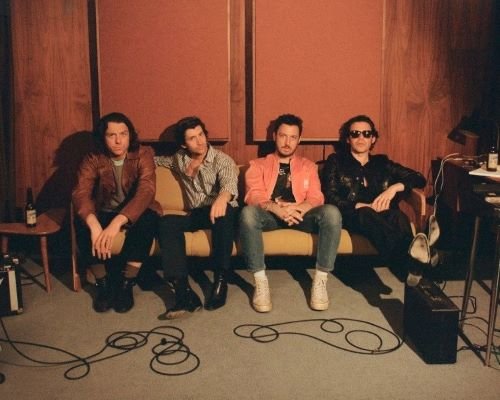
 IN THIS PHOTO: Arctic Monkeys/PHOTO CREDIT: Zackery Michael

for great new albums. I am going to recommend the ones that you will want to pre-order and add to your collection. On 30th September, Björk's tenth studio album, Fossora, is released. The week after that, you wonder whether any other artists can top or equal that sense of expectation and gravitas. Actually, there are some really great albums due on 7th October. In terms of one that I would advise you pre-order, that would be Alvvays’ Blue Rev. A terrific album that you need to get a hold of. I am a fairly recent convert to Alvvays, but I love their music and can recommend the gems that are likely to be found on Blue Rev:

What a time to be alive - Alvvays return with an album that keeps up their hot streak and we are here for it. Classic Indie Pop dynamics meet sweetly dark lyrical turns for an album that improves listen on listen. Welcome back Alvvays, we've missed you!

Alvvays never intended to take five years to finish their third album, the nervy joyride that is the compulsively lovable Blue Rev. At least the five-year wait was worthwhile: Blue Rev doesn’t simply reassert what’s always been great about Alvvays but instead reimagines it. They have, in part and sum, never been better. There are 14 songs on Blue Rev, making it not only the longest Alvvays album but also the most harmonically rich and lyrically provocative”.

A terrific album from an artist that you may not be aware of, Loraine James’ Building Something Beautiful for Me is an essential purchase. One of this country’s best young talents, I am excited to see this album come out and discover how people react to it. Maybe you have not heard of James, but I would recommend you investigate and pre-order a copy of Building Something Beautiful for Me:

Celebrated UK producer Loraine James joins Phantom Limb for breathtaking homage to vital NYC composer Julius Eastman, reinterpreting, reimagining and responding to key works for a brand new album.

In 1990, the composer Julius Eastman quietly passed away, out of the spotlight, a young man. By his death substance-addicted, homeless and broke, he was unforgivably overlooked in his lifetime. Still, the legacy of creative work he leaves is far more befitting to celebration than destitution. Only a portion of his music remains - a deeply regrettable sidenote to an already heartbreaking story - but this work represents a glorious and beautifully hued depiction of a composer totally in step with any modern great we could name.

Phantom Limb are long-term fans of both Eastman and Loraine James. Using their rare, fortuitous connection with Julius’ surviving brother Gerry, the label began this new project in summer 2021, hoping to continue the current tide of efforts to reinstate Eastman’s rightful place in 20th-century composition. Loraine was offered a zip drive of Eastman originals (courtesy of Gerry Eastman), Renee Levine-Packer & Mary Jane Leach’s illuminating biography Gay Guerilla (University of Rochester Press, 2015), and transcribed MIDI stems (courtesy of Phantom Limb A&R James Vella), and the resulting album Building Something Beautiful For Me carries the Eastman torch with finesse and sensitivity. Loraine employs samples, melodic motifs, themes and imagery, and inspiration from Eastman’s canon, slicing, editing, pulling apart and playing samples like instruments to craft a stunning album that venerates Eastman’s genius while adhering to her own.
Speaking in similar tongues as young, gay, Black, independent creatives in a challenging environment, the two musicians are bound closely together, despite a six-year gap between their lives ever intersecting. James includes the original Eastman title in many of her tracks, appending the source material in parentheses to mark the lineage of the work - a clear, traceable thread from the heavenly to the sublime.

Album opener “Maybe If I” riffs on Eastman staple Stay On It. Its arrestingly pretty central melody is reshaped into a living, undulating canvas on which James’ IDM-inspired beat production flickers and swirls. A repeated vocal line pulls Eastman’s towering work of modern minimalism towards reclassification as a “song”. Next follows “The Perception of Me (Crazy N–)”, channelling Eastman’s righteous anger and knowing reclamation of the brutally charged N-word into a quasi-ambient exploration of Eastman piano samples set to skittering beats. Elsewhere, opening side B, “Enfield, Always” acts as a creative response to our past master. While Eastman purposefully, slyly intermingled Uptown NY’s stuffy professionalism with Downtown’s loose fervour, Loraine is a London artist, bound into her locale with the same honour and justified sentimentality as Eastman was with his. And like Eastman, the track’s heady percussion and ecstatic arpeggios contrast intentionally with its austere backdrop.

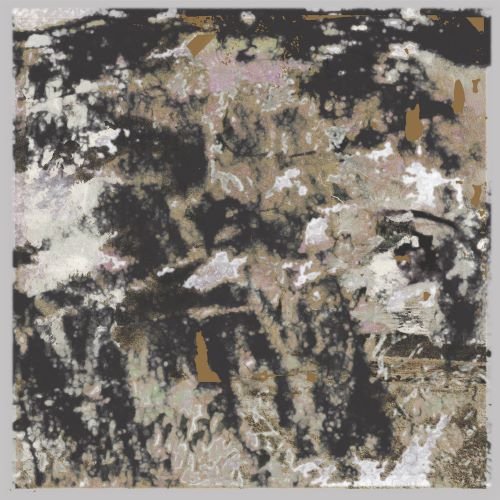
In keeping with key Eastman codes, Phantom Limb engaged Black creatives to complete the record, including acclaimed designer Dennis McInnes for the album packaging, which is inspired by Eastman’s marginalia on his own (surviving) manuscript pages: “we sought to visually convey the complexity of what we may see as beautiful, how beauty is misunderstood and often lies beneath the surface”.

Maybe another act that may be new to you, Sorry prepare to release their album, Anywhere Be Here on 7th October. Go and pre-order an album that is shaping up to be among this year’s most promising. Sorry are a North London band consisting of Asha Lorenz, Louis O'Bryen, Lincoln Barrett, Campbell Baum and Marco Pini. Definitely go and add this L.P. to your collection for October, as you will not regret it:

London once again features as a prominent character on Sorry’s second studio album, Anywhere But Here. ’If our first version of London in 925 was innocent and fresh-faced, then this is rougher around the edges. It's a much more haggard place,’ Louis says. Earwigged conversations, text messages, snatched speech recorded underground; the city’s discarded words fed into the lyrics which map the experience of urban life on a young and frustrated generation. Produced alongside Portishead’s Adrian Utley in Bristol, the result is an angular, acerbic, bittersweet triumph”.

There are some fantastic albums due out on 14th October. There is another out on 7th October that you definitely need to know about. One of the best albums due next month, The Orielles’ Tableau is going to get a host of love and positivity. I am going to check the album out, and I would also urge others to pre-order it. A tremendous band whose music is among the very best out there, I am very keen to see how Tableau is received:

The Orielles release their new album Tableau, a genuinely contemporary record which voyages far beyond the musical limits reached on their previous albums Silver Dollar Moment (2018), Disco Volador (2020) and La Vita

Olistica (2021). The album was self-produced in collaboration with Joel Anthony Patchett (King Krule, Tim Burgess). As well as the adoption of contemporary 21st century production, the Orielles used concepts from the world of art and minimalism in creating Tableau. Sidonie had researched the graphic scoring method of Pulitzer Prize nominated trumpeter and composer Wadada Leo Smith. They also utliised Oblique Strategies - the playing cards designed to aide creativity created by Brian Eno and artist Peter Schmidt in the early 1970s.

The result is a double album that rewards serious immersion, as complex as it is diverse. Though Tableau is likely to challenge preconceptions, this is something the band suggest they have been doing for quite some time anyway. “All through our whole career we’ve had to prove ourselves so, so much” explains Henry. “You can’t disconnect the age and the gender thing either” adds Esmé, “People belittle your age because they see women in the band. Whereas lad bands, if they’re eighteen it’s apparently exactly what people want to see.” Being from a small town in West Yorkshire may have added to that also, but Sidonie counters that “being from Halifax has also been a blessing, it’s kept our egos in check.”

Perhaps more than any of this, though, Tableau is also simply the product of the unique telepathy between three singular musicians that have grown in symbiosis for over a decade now - simply the three of them in a room.

If you want a taster of how great the album is go straight to 'Beam/s’ a gorgeous 7-minute-53-second piece of constantly shapeshifting celestial dream pop that heralds the truly extraordinary Tableau”.

The first album due on 14th October that you need to investigate is Meet Me at the Gloaming by A.O. Gerber. Her second studio album is one that will garner a lot of interest. Do go and pre-order it, as the L.A. artist is a sensation that everyone should know about:

Meet Me at the Gloaming is the long-awaited second album from Los Angeles indie artist A.O. Gerber. Following-on from her acclaimed 2020 album Another Place To Need, the new LP showcases Gerber's knack for subtly infectious indie-pop, crunching, atmospheric alternative-rock and classic acoustic songwriting.

Across Meet Me at the Gloaming, A.O. Gerber carefully grapples with the constraints she was taught as a child to reach for the flourishing that comes when we look past the black and white, and into the grey gauze of the in-between. “I was thinking about how damaging it can be to exist in that binary space of good and evil,” Gerber explains. “When we see everything in either/or’s, we lose the nuance and complexity that make life rich enough to be worth living.” By interlocking memory and imagination, Gerber crafts a gleaming future, where the light and the dark don’t just coexist - they create a new colour entirely”.

I am really pump by the upcoming arrival of Stay Close to Music by Mykki Blanco. Their new album is going to tremendous, and you will definitely want to go and pre-order this one. I have been a fan of Blanco’s for a bit now, and I love everything they put out. It looks as though Stay Close to Me is going to be a must-buy:

All versions with a limited Tattoo Sheet. Stay Close To Music the new studio album from Mykki Blanco, is unlike anything they have released before. Adventurous and expansive, it shatters any previously held assumptions about Mykki’s artistry, leaving them free to define their sound for themselves.

Throughout their evolution, poet, artist, musician Mykki Blanco has continuously blurred genres - pulling rave, trap, grunge and punk influences into a swirling pool of experimental hip hop that celebrated queer and trans experiences.

The songs spun together through numerous jam sessions, with writing taking place in Lisbon, Paris, New York, Chicago and Los Angeles. By 2019, Mykki realized that they were working on two different records concurrently. The first became 2021’s lauded mini-album Broken Hearts and Beauty Sleep and now Mykki readies the second collection of the sessions via Stay Close To Music.

Stay Close To Music features from Michael Stripe, Saul Williams, ANOHNI, Dianna Gordon, Devendra Banhart, Jónsi and more.

Mykki Blanco is an artist revered for their fearless ability to evolve, placing their creative exploration at the forefront of their career. With Stay Close To Music, Mykki Blanco is leveling up. By stepping into unchartered territory untethered and free, they have fulfilled their ambitions and created a rich, complex and accomplished sound that belongs entirely to them and which only solidifies their status as one of the world’s most innovative musical pioneers”.

There are a few more albums out on 14th October that I want to point you in the direction of. The prolific and legendary Red Hot Chili Peppers are releasing Return of the Dream Canteen. A band I have been a fan of since my teenage years, they are still pretty reliable and solid after all of these years. It is worth pre-ordering an album that could well see them get to number one on the U.K. chart. Decades after they formed, there is still so much love out there for Red Hot Chili Peppers:

Red Hot Chili Peppers release their brand new studio album, Return of the Dream Canteen on Warner Records. The release marks the band’s second album of 2022, hot on the heels of the platinum-selling chart topper Unlimited Love which was released in April debuting at #1 in the UK. It is also be the band's second Rick Rubin produced album of 2022, and reinforces their reputation as a band at their absolute peak, riding the crest of an undeniable creative wave”.

Let’s focus on The 1975’s Being Funny in a Foreign Language. The 1975 are one of the biggest bands around, and every album of theirs is an event! I think that their fifth studio album is going to be really superb. I would urge anyone to go and seek out and pre-order Being Funny in a Foreign Country. I am interested in seeing what the band come up with and what direction they head in:

The 1975 return new album, Being Funny In A Foreign Language via Dirty Hit.

The band’s fifth studio album was written by Matthew Healy and George Daniel and recorded at Real World Studios in Wiltshire, United Kingdom and Electric Lady Studios in New York.

Formed in Manchester in 2002, The 1975 have established themselves as one of the defining bands of their generation with their distinctive aesthetic, ardent fanbase and unique sonic approach.

The band’s previous album, 2020’s Notes On A Conditional Form, became their fourth consecutive No. 1 album in the UK. The band were named NME’s ‘Band of the Decade’ in 2020 after being crowned ‘Best Group’ at the BRIT Awards in both 2017 and 2019. Their third studio album, A Brief Inquiry Into Online Relationships, also won ‘Mastercard British Album of the Year’ at the 2019 ceremony”.

There are four more albums that I want to highlight from this week. Betty Who is a sensation and icon of the L.G.B.T.Q.I.A.+ community who is set to release BIG! If you want to discover a new talent or order an album that will lift the spirits, then go and check out BIG! A real trailblazer and superb talent with many years ahead, there is a lot of excitement around Betty Who’s upcoming album:

If you need to know anything about Australian-American pop trailblazer Betty Who, it’s that she is a survivor and an LGBTQ+ icon due to her infectious, always-inclusive artistry. Moving from the rigid major-label machinery to rediscovering her power as an independent artist, Betty Who is primed to kick off her latest, most triumphant chapter on her fourth studio album BIG!

Betty sings with as much pop exuberance as ever on the most open-hearted and personal work she’s ever produced. BIG explores many topics including self-love and acceptance, as well as career perseverance”.

Available on spring green vinyl, ILYSM will release Wild Pink on 14th October You need to go and pre-order this album. I am intrigued and I will definitely look out for Wild Pink. Again, if you have not heard of this band, then I would point you in the direction of ILYSM:

The fourth full-length from Wild Pink, ILYSM unfolds with all the fractured beauty of a dreamscape. Over the course of 12 chameleonic tracks, the New York-bred rock band build another world inhabited by ghosts and angels and aliens, inciting a strange and lovely daze as the backdrop shifts from the mundane (subdivisions, highways, hotel parking lots) to the extraordinary (deserts, battlefields, the moon). But within its vast imagination lies a potent truth-telling on the part of singer / guitarist John Ross, whose lyrics closely examine his recent struggle with cancer. The follow-up to 2021’s A Billion Little Lights — a critically acclaimed effort praised by the likes of Pitchfork, NPR, Vulture, and Stereogum, who named it “one of the prettiest rock records of the past decade”—ILYSM emerges as a truly revelatory body of work, transforming the most painful reflection into moments of transcendence”.

Even though the biggest October albums are due from 21st, there are actually a few more from 14th that I want to include. Ashe’s Rae is a terrific upcoming album that I would encourage every music fan to get a hold of. Ashe is a simply tremendous and multi-talented artist that should be on your radar:

Like a character out of your favourite movie or a novel you can’t put down, Ashe possesses her own mystique rooted in quiet wisdom, yet amplified with vibrance and spirit. For as much as she embodies timeless California cool (northern or southern, take your pick), she’s got enough gusto and moxie to hang on the East Coast or down South. Musically, she slides untouchable hooks over dusty instrumentation, connecting Laurel Canyon eloquence with UK rock scope. 

After an injury sidelined her future as a gymnast, she immersed herself in music as a kid. Teaming up with Finneas as producer, she reached critical mass on 2019’s Moral of the Story: Chapter 1 EP. The single “Moral of the Story” appeared in Netflix’s To All the Boys: P.S. I Still Love Youand exploded on streaming platforms, going platinum in the US and Silver in the UK. Her 2021 full-length debut, Ashlyn, arrived to widespread critical acclaim from Variety, Nylon, Billboard, and more.

Now, she turns the page on another chapter of her story on her second full-length album - Rae, which was produced by Leroy Clampitt (Jennifer Lopez, Justin Bieber), mixed by Manny Marroquin (Kanye West, Alicia Keys, Rihanna) and mastered by Michelle Mancini (Kid Cudi, Camila Cabello, Halsey)”.

I am keen to move on a week, but there are two albums I need to address before I do that. The Big Moon’s Here Is Everything is one that you need to pre-order. Rough Trade provide more details about the album:

The Big Moon return their new album, Here Is Everything and it's theme is motherhood, parenthood, birth, lockdown, friendships and love.

Like so many records landing in store and on streaming services right now, Here Is Everything was conceived during the weight and worry of lockdown in a pandemic. Worlds were turned upside down and inside out. Lives became seismically different, whilst every day a carbon copy of the last. So, whilst Covid pulled the duvet tightly up over our heads and sat on it whilst we muffle-screamed that we could not breathe, it was also the unlikely backdrop to welcoming new life. Vocalist Juliette Jackson might have started lockdown teaching fans how to play guitar on Zoom to help pay the rent (including, to her eternal bemusement, one Courtney Love), she ended it as mother to a super little human being.

Here is Everything documents the arrival of that fragile but mighty baby in real time, and the excitement and fear felt by this fragile but mighty mother. Meanwhile, the rest of the band doubled-down in the studio, taking Jules’ embryonic song frameworks and stepping forward as one, revelling in an innate, giddy togetherness and with a clutch of genuinely fantastic tunes.

The record was introduced by Wide Eyes, a pure, uplifting song of collective jubilance. It sounds like a band in the form of their lives, having the time of their lives, and against all the odds. It sounds instantly like The Big Moon whilst sounding unlike any of the music that’s gone before it.

Here Is Everything was mostly self-produced, with the expert guidance and expertise of Adam Cecil Bartlett (Self Esteem, Jehnny Beth, PJ Harvey) and the Grammy Award winning producer Ben Allen (Gnarls Barkley, Deer Hunter, and the producer of Walking Like We Do)”.

I am going to finish off with an album from a band releasing a new album after a decade away. The Lightning Seeds are one of my favourite groups. See You in the Stars is a great album that everyone needs to pre-order. I am really glad the band are back, and we are getting new music from them. There is not a lot of information out there about See You in the Stars, but here is what we know so far:

The Lightning Seeds make a most welcome return with See You In The Stars, their first new album in over ten years. This intoxicating 10 track collection kick starts a soundtrack to summer with the feel good warmth of ‘Sunshine’. Most of the songs are written by Ian Broudie. One of the album highlights, ‘Emily Smiles’, was co-written with Terry Hall while ‘Great to Be Alive’ is a co-write with James Skelly (the Coral)”.

I am going to end with the three biggest albums from 21st October. There are none from 28th October I will highlight, because there are so many terrific albums due the week before. Let’s build up to the big three with Pip Millett’s When Everything Is Better, I’ll Let You Know. An absolutely phenomenal artist, go and pre-order her upcoming album:

Future R&B super star Pip Millett releases her highly anticipated debut album When Everything Is Better, I’ll Let You Know. The singer and songwriter takes one step further into the global spotlight with an album full of her soulfully sombre vocals

CD - Folding cardboard pocket pack contains 1CD. Slipped inside a bespoke protective brown bag. All printed on 100% recycled board using plant based inks. Finishes are water-based and contain no toxins. Packaging and booklet are recyclable and has been manufactured in an environmentally friendly way. Protective brown paper back is printed using plant based inks.

2LP - Wide spine 12" sleeve containing 2 black vinyl with inner sleeves. Printed on 100% recycled card using plant based inks. Finishes are water-based and contain no toxins. Packaging and inner sleeves are recyclable and has been manufactured in an environmentally friendly way. Vinyl is made from 100% recycled black PVC, with labels printed on FSC-certified paper using traditional inks. Protective brown paper back is printed using plant based inks.

2LP+ - Wide spine 12" sleeve containing 2 colour vinyl with inner sleeves. Printed on 100% recycled card using plant based inks. Finishes are water-based and contain no toxins. Packaging and inner sleeves are recyclable and has been manufactured in an environmentally friendly way. Vinyl is made from 100% recycled multi-coloured PVC, with labels printed on FSC-certified paper using traditional inks. Each vinyl is unique in its colour composition. Protective brown paper back is printed using plant based inks”.

Loyle Carner’s hugo is a huge album due on 21st October. Sporting one of the most striking album covers of the month, Carner always delivers something truly extraordinary and memorable. I have no doubt in my mind about recommending people go and pre-order the stunning hugo:

In hugo, there’s a central question that Loyle Carner keeps coming back to: “I’m young, Black, successful and have a platform - but where do I go next?” The answer is explored in this epic scream of a third album. With urgent delivery and gloriously widescreen production, Carner confronts both the deeply personal (“You can’t hate the roots of a tree, and not hate the tree. So how can I hate my father without hating me?) and the highly political (“I told the black man he didn’t understand I reached the white man he wouldn’t take my hand”).

By continuing to write in these tumultuous times with a renewed clarity and sense of artistic freedom, Carner reached deeper beneath the surface than he ever had before. The result is his most cathartic and ambitious record yet, a coruscating journey into the heart of what it means to be alive in these tumultuous times, and one which looks set to neatly cement his position as one of the most potent and vital young talents around today. Working alongside renowned producer kwes. (Solange, Kelela, Nao), Carner leaves no stone unturned on this album, in both its sound and its stories.

In a 10-track album that moves from gorgeous neo-soul moments to thundering hip hop, with immediate, infectious bangers and sampled interludes from non musicians (mixed-race Guyanese poet John Agard and youth activist and politician Athian Akec) Carner shifts seamlessly from micro to macro, confronting everything from strained relationships with family to the societal tears caused by class stratification. It also lays bare bruises in his personal life that he has never revealed before – often in painful, deeply uncomfortable ways, focusing on Carner's experience of becoming a father in the context of growing up without contact with his biological father. Cognizant of the immense pain and fear and confusion that we are faced with everyday, Carner has thrown down the gauntlet, defying us not to rise above the fray, wake up each day and be ambitious. Ambitious in building strong personal relationships. Ambitious in our pursuit of our goals. Ambitious in never refusing to back down against injustice. Rejecting the title of leader, Loyle Carner sees himself “as holding up a mirror”, and that clearly translates into the album's universal messages”.

In contrast to Loyle Carner’s awesome album cover, Dry Cleaning’s Stumpwork is one that I am not overly eager on! Regardless, the mighty Dry Cleaning are one of the most original band around. Growing in popularity with every release, go and pre-order this gem:

Stumpwork, the follow-up to 2021’s New Long Leg. The South London-based group’s first studio album, recorded in just two weeks with producer John Parish at the iconic Rockfield Studios, became a huge critical and commercial success reaching #4 in the UK Album Charts and featuring in best-of-2021 polls across the board. Buoyed by its success, Nick Buxton (drums), Tom Dowse (guitar), Lewis Maynard (bass) and Florence Shaw (vocals) returned to rural Wales in late 2021, partnering once more with Parish and engineer Joe Jones. Working from a position of trust in the same studio and with the same team, imposter syndrome and anxiety was replaced by a fresh freedom and openness to explore beyond an already rangy sonic palette, a newfound confidence in their creative vision. A longer period in the studio afforded the time to experiment, improvise, play, sharpen their table tennis skills.

Stumpwork was inspired by a plethora of events, concepts, and political debacles, be they represented in the icy mess of ambient elements reflecting a certain existential despair, or the surprising warmth in celebrating the lives of loved ones lost through the previous year. Surrealist lyrics are as ever at the forefront – but there is a sensitivity now to the themes of family, money, politics, self-deprecation, and sensuality. Furious alt-rock anthems combine across the record with jangle pop and ambient noise, demonstrating the wealth of influences the band feed off and their deep musicality. With the pressure of their debut album behind them, Dry Cleaning have crafted an ambitious and deeply rewarding new work that marks them out as one of the most intelligent and exciting acts to come out of the UK.

The album and single artwork were conceived and created by multi-disciplinary artists Rottingdean Bazaar and photographer Annie Collinge. James Theseus Buck and Luke Brooks of Rottingdean Bazaar first worked with Dry Cleaning directing the official video for ‘Scratchcard Lanyard’ and as their creative partnership with the band continues to flourish, they have fashioned a brilliantly unique visual identity for Stumpwork”.

Prior to getting to three giant releases from 21st October, there is another album that you need to know about. The stunning Goat are delivering the cheerily titled Oh Death. This is an album from a tremendous and incredibly interesting band that you will want to pre-order:

Formidable psychic warriors, channelers of the mystic and proponents of a spiritual quest that transcends this realm, Goat remain a band shrouded in mystery. Travelling from their inscrutable origins in the Swedish village of Korpilombo across the stages and festivals of the world in the last decade, this band has created their incendiary music entirely according to their own co-ordinates.

With all this in mind, the casual observer might have guessed from its title that Requiem, their beatific and melancholic album of 2016, was to be their last. Yet the ancestral spirits summoned by their art are always restless. Thus the eternal cycles of rebirth have triumphantly produced Oh Death - a ceremonial conflagration as powerful as any this band has made. Invigorated by forces we can only guess at the origins of, Oh Death is a party to which all are welcome. Blithely waving away easy classification, these heat-hazed serenades are just as comfortable in the headspace of vicious ‘70s funk as they are in zesty ZE records post-punk.

Folk-haunted incantations and free jazz skronk here find common ground, buoyed by relentless forward motion and raucous energy. Yet all of the above is locked into a delirious gnostic groove that threatens to throw the whole shebang spiraling into orbit. Oh Death is driven by a supernatural charge that unifies, invigorates and transcends borders, whether geographical, musical, or between this world and the next. In the hands of these sages and soothsayers, this is just the beginning. Goat Is Oh Death, Long Live Goat”.

Okay, let’s get to a very different but huge trio of magnificent albums due out on 21st October. The first, Carly Rae Jepsen’s The Loneliest Time, is going up against a new Taylor Swift album. It is an interesting head-to-head between two huge American artists. I really like Jepsen’s music, so I can recommend The Loneliest Time with confidence. Go and pre-order the album:

Grammy, Juno- and Polaris Prize-nominated singer / songwriter Carly Rae Jepsen releases her massively anticipated new album, The Loneliest Time. Her most introspective body of work to date, The Loneliest Time expands on the emotionally potent songwriting and effervescent sound that Jepsen has showcased on past work like 2015's critically lauded and culture-shaping E*MO*TION. In bringing her new album to life, Jepsen worked with collaborators Tavish Crowe, Rostam Batmanglij (who helmed production on The Loneliest Time's acclaimed lead single "Western Wind"), Bullion, Captain Cuts, John Hill, Kyle Shearer, and Alex Hope among others”.

I have mentioned Taylor Swift. After releasing folklore in 2020 and evermore later in the year, she is putting out her third album in as many years with Midnights. With a range of covers and options for fans, this is an album that I think will convert those who have not always been sold on her music. Even though there are not many details out there and songs that I can drop in, more will come to light before 21st October. Undoubtably one of the biggest albums of this year, Swift has to be one of the most popular and important artists of her generation. I really love the photo from the cover of Midnights and what it will offer:

As previously stated, “Midnights” will have 13 tracks, ironically Swift’s favorite number, with two sides, Side A and Side B. Side A will consist of six tracks, while Side B will have seven. While the song titles have not been announced yet, the tracklist is shorter than usual compared to the singer’s last re-recording, “Red (Taylor’s Version).”

Fans have already begun proposing theories on what Swift will address within the album, with some thinking the songs will hold the same themes as past works such as “mirrorball,” “Forever Winter (Taylor’s Version),” “evermore (feat. Bon Iver)” and “hoax.”

Other fans believe the tracks are the sister accompaniment to “Lover,” as the album was originally supposed to be named “Daylight” until Swift changed the title. Some think that “Midnights” tracks will be the ones that were slated from “Lover,” with many referencing her Jimmy Fallon interview as the first Easter egg for the album.

In the interview, Swift said, “How far is too far in advance? Can I hint at something three years in advance? Can I even plan things out that far?” With this quote in mind, Swifties believe this album has been in the works since before the COVID-19 pandemic.

Additional “Midnight” theories

On TikTok, Swift’s followers have also suggested what her new aesthetic may look like with “Midnights.” One fan posted a video proposing that Swift’s new project will be within the “indie-sleaze” genre, as the singer on the album cover is rocking a minimalistic look.

The video goes on to compare Swift’s website to clothing brand American Apparel’s, as they both use the same font and colors. Even more exciting, the fan believes the singer will be collaborating with the alternative band The 1975 since her producer-turned-best friend, Jack Antonoff, recently worked with the group on their upcoming album. Swift even stated she’s listened to the band’s new album in a recent interview with Pitchfork.

Likewise, other fans took to Twitter to say Swift will tell a story in two parts because of the two sides on the album. Similar to the fictional character crossovers the singer created on albums “folklore” and “evermore,” Swifties think the same will happen on “Midnights.” Some even say the first side of the album will be ‘sweet dreams,’ while the other will be ‘terrors,’ as the singer mentioned in her Instagram post.

Lastly, many fans also have voiced their worries on TikTok that this could be Swift’s last album for a while once the “Midnights” era is over since the singer has been releasing back-to-back projects since 2020. Let’s hope this is not the case, but also let’s be real, Ms. Swift has continued to stay busy for the last three years!”.

The final album, and perhaps the most anticipated for years, is Arctic Monkeys’ The Car. The Sheffield band are going to cause tremors and a hell of a lot of chat when they release The Car on 21st October. Following the incredible and underrated 2018 album, Tranquility Base Hotel & Casino, I cannot wait to get The Car. With Alex Turner at the front, we have this poet and wonderful frontman who is among the finest voices and writers of his generation. This will come out in The Car:

The Car is the seventh studio album from Arctic Monkeys. Featuring ten new songs written by Alex Turner, produced by James Ford and recorded at Butley Priory, Suffolk, La Frette, Paris and RAK Studios, London.

Following 2018’s Tranquility Base Hotel + Casino, The Car finds Arctic Monkeys running wild in a new and sumptuous musical landscape and contains some of the richest and most rewarding vocal performances of Alex Turner’s career”.

I have recommended the very best from next month. There are many more albums due in October, but the ones above are the ones that I think that you need to pre-order and add to your collection. From Arctic Monkeys and Taylor Swift through to Loyle Corner and The Big Moon, there is plenty to choose from – hopefully something for everyone. If you need some guidance as to which albums you should get next month, then I hope that…

THE featured selection helps you out.
FEATURE: If These Walls Could Sing: Kate Bush and Abbey Road Studios

FEATURE:


If These Walls Could Sing

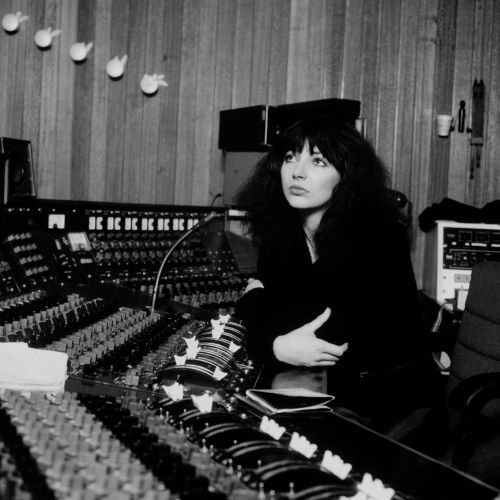
IN THIS PHOTO: Kate Bush at Abbey Road Studios 

Kate Bush and Abbey Road Studios

__________

I am writing this feature…

 PHOTO CREDIT: Abbey Road Studios

on Saturday, 10th September. It has been suggested by Big Boi that, on Thursday (15th), we may get a collaboration between him and Kate Bush. It will be confirmed one way or the other very soon. There has been a good bit of news when it comes to Bush and hearing her voice in a forthcoming documentary. One might not associate Kate Bush and Abbey Road Studios. Naturally, one links The Beatles with the studios, but Bush has actually recorded there a few times. Some of her very best work has been made there. Someone who has had a long fascination with its walls and hallowed spaces, one feels she would have recorded there more were it not for the expense and the fact that, as an exacting and experimental artist and producer, the bill for EMI could have cost quite a bit more than it actually did! Regardless, here the Kate Bush Encyclopedia give us details about when Bush worked in and was associated with the great Abbey Road Studios:

Kate worked at Abbey Road Studios on the albums Never For Ever, The Dreaming, and Hounds Of Love in Studio 2, and the orchestral parts for the albums The Sensual World and The Red Shoes. On 17 June 1981, the music video for the song Sat In Your Lap was recorded in the cavernous Studio 1, a huge space about half an acre in size. On 12 November 1981, Kate attended a 50th anniversary party for the studio, and cut the birthday cake alongside singer Helen Shapiro. In March 1986, she recorded a performance of the song Under The Ivy for the 100th broadcast of The Tube.

Kate about Abbey Road Studios

Being on your own in Studio 2 is a fascinating experience. I felt like there were at least ten other people there with me... I think it's a combination of all the people who have performed there over the years and their combined creativity. (Brian Southall, Abbey Road, 2002. ISBN 978-0711991118)”.

I don’t think that anyone expected Kate Bush to be involved in a new documentary about the studios. As a fan of The Beatles and especially Paul McCartney, I wonder whether the fact that Paul’s daughter, Mary, swayed her. She is directed the documentary-film, and it is coming to Disney+ soon. Kate does not appear on film I understand, but we do get audio input. Kate Bush News explains more about If These Walls Could Sing:

Filmmaker Mary McCartney has debuted her film about the legendary Abbey Road Studios, If These Walls Could Sing, at the Telluride film festival. The documentary includes interviews with members of Pink Floyd, Elton John, Kate, Ringo Starr and Mary’s father, Paul McCartney. From classical to pop, film scores to hip-hop, “If These Walls Could Sing” explores the breadth, diversity, and ingenuity of Abbey Road Studios. Intimate interviews with leading artists, producers and composers paired with vivid archive footage and session tapes give exclusive access to these famously private studios. From Elton John to Jacqueline Du Pre to Jimmy Page, from Kate Bush to Paul McCartney to Celeste, all found their musical language in Abbey Road Studios. Audiences will experience the creative magic that makes it a revered and sacred space that still produces many of the most recognised records today and makes Abbey Road the most famous and longest-running studio in the world.

Director Mary McCartney

Variety writes: “Kate Bush makes a rare modern appearance in the documentary, albeit audio-only. “It’s amazing having Kate in there because she produced her third album there, directed her video in there… I kind of made contact with her. I know she doesn’t do interviews, but I know she feels real affection for Abbey Road, so over time she kindly agreed to do an audio piece that she wrote and sent to me. Just having her voice talking about the space is pretty special as well.” In the Variety review of the film, they note that “resurgent star Kate Bush talks about the studio’s historic reluctance to repaint, lest even the slightest alteration affect the sound…”

If These Walls Could Sing will be streaming on Disney+ at a date to be announced”.

 IN THIS PHOTO: Director Mary McCartney

Ninety years after the studios opened, it is long overdue that a documentary/film should come out about it. I love the fact that Kate Bush is one of the contributors. Not only is it rare to hear her voice – apart from the Woman’s Hour interview this year -, but we also get to hear her recollection and reflections about the iconic studios. I have never visited myself, but I know a lot of the artists and albums associated with the great studios. I think that a film like If These Walls Could Sing will give us intimate access and provide revelations and history. I was just thinking about the fact that Abbey Road Studios opened in November 1931. A year later, the BBC was founded. Quite a seismic time in terms of British culture! It has been an unexpectedly busy and broad year in terms of Kate Bush news this year! Few would have expected much at all but, with Stranger Things catapulting Running Up That Hill (A Deal with God) to the top of the chart, books and magazines revolving around her, a Woman’s Hour interview and now this inclusion in If These Walls Could Sing, it has been very interesting. A whole new generation of fans have discovered Bush and her music. Documentaries, magazines and books allow greater understand of her. I think If These Walls Could Sing is especially important to Bush, as she will have fond memories of her time working within Abbey Road Studios. It will be fascinating to hear her feelings and memories. It is another unexpected, welcomed and wonderful bit of news. Let us hope that 2022 and 2023 gives us a lot more of…

THE legendary Kate Bush.

FEATURE: Second Spin: Fountains of Wayne - Utopia Parkway

FEATURE:


Second Spin

Fountains of Wayne - Utopia Parkway

__________

WE sadly lost…

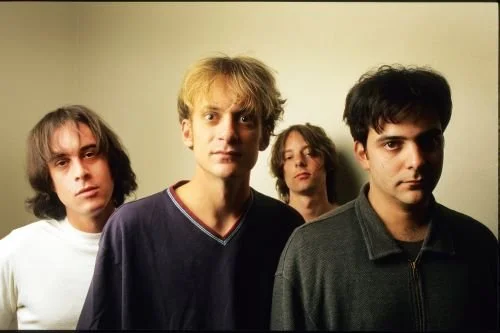
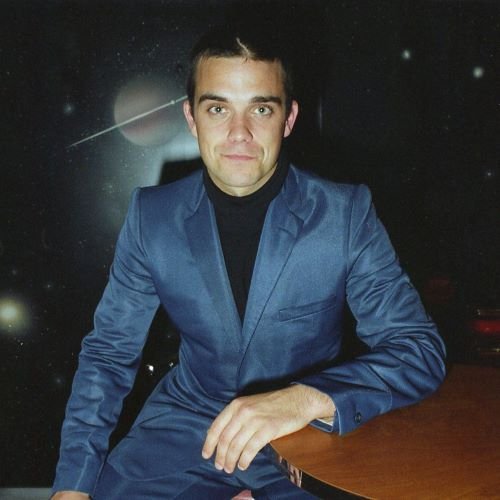
 IN THIS PHOTO: Fountains Of Wayne in 1997: Jody Porter, Chris Collingwood, Brian Young, and Adam Schlesinger (from left)/PHOTO CREDIT: Gie Knaeps/Getty Images

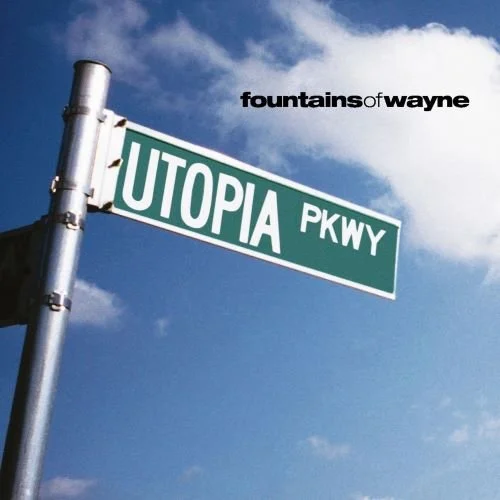
Fountains of Wayne’s lead singer Adam Schlesinger in 2020. He died from complications of COVID-19. Whilst it was a great tragedy for the world and a big loss, it did get people who might not have heard the New York band dig them out. I was one of those who had not heard them for a while. Whilst not as celebrated as the band’s eponymous debut, 1999’s Utopia Parkway is a great album that I think we should cast in a new light. Maybe not as celebrated as it should be, Utopia Parkway definitely deserves a second spin. I love an album names after an area. Whether a concept album built around the area or simply name-checking that place, Chris Collingwood and Adam Schlesinger of the band wanted to follow albums with a strong thematic story inspired by its surroundings like Muswell Hillbillies by The Kinks. The band were big fans of The Kinks. Collingwood and Schlesinger definitely nodded to the legendary London band when making Utopia Parkway. That point of their lives where they were maturing and wanted to show respect to where they live. Not shying away and feeling like they needed to write about a more glamorous area they have no connection to, Utopia Parkway is named after a major street that connects the neighbourhoods of Utopia and Beechhurst in the Queens borough of New York City. In 2020, RHINO named Utopia Parkway their album of the day:
When we were teenagers, we liked listening to Kinks records because we'd never been to England, and we got a sense of what it was like to live there,” said the late, great Adam Schlesinger of Fountains of Wayne's second album. Named after a Queens, N.Y. thoroughfare, UTOPIA PARKWAY revels in the people, places and music of Schlesinger and fellow singer-songwriter Chris Collingwood's '70s/'80s suburban youth. Such originals as “Troubled Times,” “Red Dragon Tattoo” and “Denise” are filled with memorable melodies and telling lyrical details leavened by a sense of humor. Adding a little muscle to the band, touring guitarist Jody Porter and drummer Brian Young joined the line-up to ensure the 1999 Atlantic collection had just the right ratio of power to pop. Crank this one up and enjoy a virtual ride down UTOPIA PARKWAY”.

I would advise people who might not be familiar with Fountains of Wayne to go and check out Utopia Parkway. It is a fabulous album from a band like no other. It makes it so tragic that we will never see the band perform the songs live again. Punk News provided their take on Utopia Parkway in 2019:

Formed in New York City in the mid-90’s, Fountains of Wayne were masters of power pop throughout their fairly brief career. Their 1996 self-titled debut album was barely changed from the demo that founders Adam Schlesinger and Chris Collingwood handed Atlantic Records. That record spawned the single “Radiation Vibe”, which has perhaps the catchiest pop rock chorus ever written, and led to extensive touring. Schlesinger was also tapped to write the title song to the Tom Hanks film That Thing You Do!, for which he received an Oscar nomination, and continued working with his other band, the criminally overlooked pop/dance act Ivy.

FOW’s follow up album was 1999’s Utopia Parkway. While not really a concept album per se, the foundation of everything here is rooted in the sprawling, monotonous desert that is American Suburbia. What FOW does best on Utopia Parkway is to take of all the dull, everyday minutiae of suburban life, and package it into a sound that is so bright and so refreshing, it’s as if pure sunshine is leaping out of your speakers. Now a quartet, there is much more fullness here than on their debut, which was arranged and mixed so barebones that it sounds like a punk record dressed as power pop. Nothing gets too complex or layered; other than the usual strings and sticks, there is just enough sprinkling of warm keyboards to compliment Collingwood’s dreamy croon. We get the pop craftiness of the Monkees, delivering tales of suburban boredom with the urgency of The Clash.

It’s all here, too. Trying to track down the girl you like, chain travel agencies, holiday parades, venturing to not just a mall, but a whole valley of them (probably referencing an actual area of northern New Jersey with 8 major shopping malls in a 20 mile radius), and when going to the planetarium is the ultimate night out. Even the crucial rite of passage that is the senior prom gets it’s own ballad. And true to the FOW formula, it’s all from an insider’s perspective, which makes for touching genuineness, and is served with such an enjoyably biting snark that we embrace laughing at each trite idiosyncrasy the band calls us out on.

Fountains of Wayne weren’t satisfied with Atlantic’s marketing efforts for the album; an argument which led to the label dropping the band, and a few years of inactivity for the band. After some side projects and production work, the band came back in 2003 with Welcome Interstate Managers, an album which finally made the band a household name thanks to the inescapable single “Stacy’s Mom”. While the band is now gone, 20 years later Utopia Parkway is their benchmark; the best achievement from a band whose touch can be heard today on bands like Vampire Weekend, the New Pornographers, and Sheer Mag. Their DIY debut may have turned heads in its own brilliant way, but it was Utopia Parkway’s jangly, summery sound and the honest telling of the stories of so many millions of us that still makes it as relatable and enjoyable today”.

Just to round up, I am going to bring in a review from AllMusic. A reliable go-to when it comes to interesting assessments, they have a lot of praise for Utopia Parkway – even if they note it lacks necessary depth and maturity at times:

There's no denying that Fountains of Wayne know how to craft a great pop record. They know how to write a hook, they can pull of mild rockers and sweet ballads with equal aplomb, and they write melodies that feel like half-forgotten favorites. They have all the elements of a classic power pop band but they suffer from that peculiar '90s ailment -- detachment. For all their flair, talent, and craftsmanship, the band don't really dig deeper than the surface. Of course, that doesn't mean they make bad records, and their second album, Utopia Parkway, is, if anything, every bit as good as their fine debut. All the songs immediately make a connection and all of their melodic attributes simply strengthen with repeated listens. However, those repeated listens reveal that Fountains of Wayne don't have a lot to say. That's not a cardinal sin in guitar pop, since most bands simply recycle the same lovelorn themes, but Fountains choose to have fun with clichés, throwing in goofy asides even in their ballads. Throughout the record, they seem like the well-read, pop culture-saturated kids who sat in the back of the classroom, cracking jokes that only they can understand. Depending on your view, this either enhances the fun or keeps the record at a distance, because if you don't share their disdain for hippies, laser shows, proms, malls, and bikers, it will be a little hard to sing along with those glorious melodies. For some, this may be a minor point, but consider this: emotional depth is what lifted Matthew Sweet's Girlfriend to classic status and what keeps Utopia Parkway from truly soaring, despite its many virtues”.

A lot stronger than many people give it credit for, listen to the brilliant second album from Fountains of Wayne. Released in April 1999, Utopia Parkway is worthy of deeper investigation. If some see the album as devoid of depth and substance, others have declared it as a masterpiece. To be fair, Utopia Parkway sort of falls between the two poles. It is definitely a very strong album that warrants repeated listens, even if there are some weak spots. Anyone who is dubious or have avoided the album, I would advise that you…

SPEND some time with it.

FEATURE: Spotlight: Been Stellar

FEATURE:


Spotlight

Been Stellar

__________

I did say I was going to move away…

 PHOTO CREDIT: Naz Kawakami/Press

from female artists exclusively for Spotlight. I will return soon but, in an effort to feature more groups, I wanted to include the incredible Been Stellar. The New York band have been in my radar before, but I have not yet included them. I shall come to their eponymous E.P. soon, as it is a phenomenal release. I would urge everyone to check them out. I want to bring in a few interviews from this year. They are a wonderful group who should be shown a lot of support and love. DIY spoke to the incredible Been Stellar back in June:

Think of guitar bands from New York and still, 21 years after their debut album was released, your mind will likely jump straight to The Strokes. Within the city’s musical history books, Julian Casablancas and co’s shadow looms large, and it’s a burden that Bushwick’s Been Stellar are all too aware of - yet they’re shrugging it off brilliantly with a refined new sound and a strong sense of confidence.

“Being in a band in New York isn’t cool anymore,” explains singer Sam Slocum nonchalantly from one side of a table in central London pub Ye Olde Cheshire Cheese (“We’re getting a real Charles Dickens experience!” they joke). “If someone asks me what I do, I won’t tell them I’m in a band.” To most people, that might sound like there’s a shame attached to the group’s endeavours but, the frontman says, it’s quite the contrary.

“That’s really liberating,” he suggests. “It’s hilarious to be a band [in NYC], but it’s just the format we enjoy making music in,” agrees guitarist Skyler St. Marx. “Coming over [to the UK] and seeing how much people care about guitar bands makes us realise that New York doesn’t have that same industry infrastructure.”

Been Stellar began life when Sam and Skyler started playing together in high school in Michigan. When they moved to New York for university, the band slowly evolved into the five-piece we speak to today, completed by guitarist Nando Dale, drummer Laila Wayans and bassist Nico Brunstein. Having first started gaining attention locally around four years ago, their early sound might have been a little more indebted to those famous forefathers but, now, they’re moving forward and coming into their own. You certainly won’t find them clinging onto the city’s past, “wearing leather jackets and hanging out in Tompkins Square Park”, as Skyler laughs.

The quintet’s sonic evolution can be heard on ‘Kids 1995’ - their latest single (and first for label So Young) which arrived in April as a rush of noisy shoegaze and the commanding hook of, “So when the time is right / You just have to take it / Jesus Christ, it’s like time is naked.” First written a few years ago, the song has since morphed to fit the band’s current vision. “The pandemic gave us time to reflect and rethink how we want to be perceived,” Nico explains. “It felt like what we were making [before] wasn’t being honest to what we felt or how we wanted to sound.”

Although their latest release nods to Kids, the Larry Clark-directed, Harmony Korine-written movie that follows a group of lawless teens around NYC, it’s less about the film itself, instead tying into a new mood of honesty. “I wrote it after I saw the movie for the first time about three years ago,” Sam shares. “I used it as kind of a jumping-off point for these reflections on my life and internal struggles, and topics like loss of innocence.”

Despite a film being the launchpad for the single, the band say movies aren’t really a typical source of inspiration for their music. “I prefer to write about my own experiences and things I see around me,” their frontman says, while Skyler adds that they do see themselves as “writing the soundtrack for a movie that doesn’t exist yet”. “Nando has some great descriptions,” he adds, referring to the imagined scenes they’re trying to accompany. The whole band looks at their other guitarist expectantly, as he digs one up from his memory. “One was meerkats staring into the setting sun,” he grins as laughter rings around him”.

Just before getting to NME’s take on the Been Stellar E.P., there is something else I want to include. It is one of the best E.P.s of this year I think. It will be exciting to think and imagine whether we will get an album from the New York group next year. DORK featured the tremendous Been Stellar last month:

While they tread that fine journey, the New York five-piece continue to discover their own sound – something they initially found difficult while stepping out of The Strokes’ shadow and finding their own identity, but it doesn’t haunt them any longer. “Personally, I don’t think we sound much like them,” Skyler shrugs. “We get that a lot more here than in the US, and it is easy to contextualise us in that way, but it’s not something we’re consciously replicating in any way at this point.” Instead, he points to more niche, albeit still extremely successful influences: “Sonic Youth, My Bloody Valentine, Ride… we like noisy and melodic music. That’s what interests us all. It’s a difficult thing to do – some people do noisy and very harsh stuff well, and some people do pop music well, but it’s a delicate balance trying to merge the two.”

Considering their signing to UK indie label So Young, it makes sense that the band also appreciate many current artists: “Lime Garden, VLURE, Humour, Gently Tender… they really are tastemakers,” Laila nods. Artists like these all embody something that Been Stellar try to take on board; using your current surroundings to define your path forward.

PHOTO CREDIT: Holly Whitaker 

“We like music that can only exist in one place,” Skyler clarifies. “If you’re not fully letting your environment influence your songwriting, you’re going to be making compromises. There’s a lot of artifice and dishonesty in that behaviour.” He continues: “It’s one thing to see a band and think, ‘they sound like x or y’, but it’s another thing to realise they’re saying something pertinent to the present day; that’s what is pushing music forward.”

Enabling this progression within their notorious neck of the woods has been a consideration always on his mind, too. “There’s a lot of give and take while doing that in New York – you get to have the New York identity, which is interesting in its own way, but you need to keep contributing to that identity if you’re also going to be taking from it. That’s something we take really seriously; we want to add to the lineage.”

Aside from all this talk, the band have been able to form a solid release to tee up their ambitions – the ‘Been Stellar’ EP reveals their first steps towards defining their post-pandemic goals. “It’s a really good mission statement for what we are going to become,” St. Marx summarises. “It’s a very diverse EP. There are a lot of different sounds and directions, but each song contains an element that we want to blend into one on the album. The directness of ‘Manhattan Youth’ combined with the boldness of closing track ‘Ohm’ is what we envision us reaching for next.” Speaking of, the aforementioned album is in the works as we speak. “We have a load of shades of blue, and a load of shades of red; but we want the album to be purple. A big bunch of purple,” he grins. “That sounded better in my head”.

Go and check out the Been Stellar E.P. if you have not done so already. It is a fantastic work. A very distinct and promising band, I am keeping my eyes on Been Stellar to see where they head. This is what NME had to say about a fascinating E.P. that everyone needs to listen to and embrace:

The band’s self-titled debut EP often feels an enchanting love letter to their adopted stomping ground, but on their own terms. Flickering brilliantly between shoegaze and dream-pop, its gripping closer ‘Ohm’ packs a skyscraping tonal quality as Sam Slocum’s piercing vocal arrives: “Floating through Avenues / Just a place to be, be a part of / Alone again with you.” Come the end of the five-minute anthem, you’re thrown into poetic snapshots of a post-lockdown city from the “line snaking around Katz’s Deli’‘ to “soda cans sweating in the August heat.”

Their nuanced portrait of the city doesn’t overlook its darker side. Opening with punchy riffs, ‘Manhattan Youth’ takes a swipe at rose-tinted views of their home, a place that can be as gruesome and heartbreaking as it is magical. Slocum shreds out his vocal about how the social system can easily distort its youth: “​​He takes his time / And holding out his hand waiting for a guide / His street is cold / His mothers old / Pace past the garbage and repeat.”

Their tonal palette is as thrilling as their lyrical takes. The EP ebbs and flows between spiky grunge and melody drenched guitars. The cinematic ‘Kids 1995’ is a standout moment that hits upon the kind of soul-striking perfection most bands could spend a lifetime chasing.

Though they’ve managed to carve their own angle, the mystique and raw sense of youth that has so often defined the greats of NYC’s guitar greats cuts through the surface at all times here. In capturing this, it’s a release that proclaims them as one of their city’s brightest new hopes”.

One of the great bands coming through, Been Stellar have many years ahead of them. Their self-titled E.P. is exceptional. I only discovered them earlier in the year, but I was instantly impressed by Been Stellar. Go and follow them on social media and chart their progress. Though some might not know about them at the moment, this will all change. They are definitely…

ONE of the bands of the moment.

_________________

Follow Been Stellar

FEATURE: As the Title Says… Kate Bush’s The Dreaming at Forty: All the Love and a Stunning Emotional Maturity

FEATURE:


As the Title Says…

IN THIS PHOTO: Kate Bush in 1982/PHOTO CREDIT: Steve Rapport Photography  

Kate Bush’s The Dreaming at Forty: All the Love and a Stunning Emotional Maturity

__________

THIS will be the final…

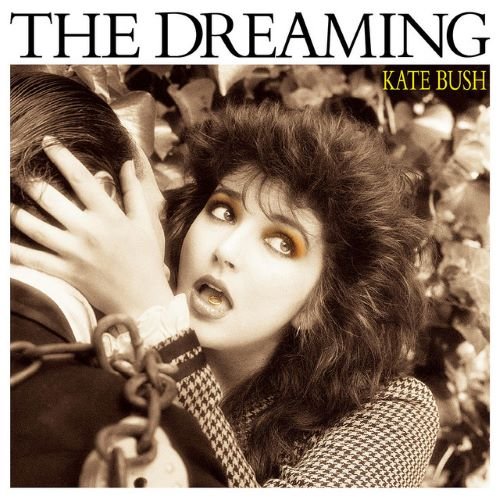
anniversary feature regarding Kate Bush’s The Dreaming. Her fourth studio album was released on 13th September, 1982. I have been eager to examine the album and show it some love. It is well-regarded by many, yet it still splits folk. Many see it as too weird and experimental. Critics at the time were divided. The Dreaming reached number three in the U.K. Its legacy is strong. It has been seen as a head-spinning album that was a brilliant predecessor to Hounds of Love (1985). Bush has said how she was surprised by the angrier tones of the album, but I think this is her stamping out a point and making it clear that this is an important work from a serious artist. Even if I have written about this song before, I had to dedicate the final anniversary feature to All the Love. Although my favourite song on The Dreaming (and my favourite Bush cut) is Houdini, I think that All the Love is the one song I would actually recommend people who want a way into the album or a place to start. I think that there is a nice sort of emotional shift on the second half of The Dreaming. After the title track opens up the side with a real sense of purpose and drama, you get the gorgeous Night of the Swallow. All the Love takes things down even further and provides this very touching and emotional song.

We then lead into Houdini. The track has an eeriness and rawness to it that then leads to the epic and demented closing song, Get Out of My House. Firmly and violently shutting the door on The Dreaming, I think of it as this swansong from a producer and artist who, near the end of recording, must have felt tense, exhausted, and slightly possessed herself (inspired By Stephen King’s The Shining, it is about a possessed house warning people away). In terms of the emotional and sonic spectrum, All the Love seems as far removed from Get Out of My House as you can. Maybe not specifically based on Kate Bush’s feelings and situation, I do read something into the song and lyrics and think All the Love reflects something of what she was going through recording The Dreaming – maybe not spending too much time with family; feeling a little emotionally detached or distant when she was throwing herself into work. The interview below is Bush speaking about All the Love and what it means:

Although we are often surrounded by people and friends, we are all ultimately alone, and I feel sure everyone feels lonely at some time in their life. I wanted to write about feeling alone, and how having to hide emotions away or being too scared to show love can lead to being lonely as well. There are just some times when you can't cope and you just don't feel you can talk to anyone. I go and find a bathroom, a toilet or an empty room just to sit and let it out and try to put it all together in my mind. Then I go back and face it all again.

I think it's sad how we forget to tell people we love that we do love them. Often we think about these things when it's too late or when an extreme situation forces us to show those little things we're normally too shy or too lazy to reveal. One of the ideas for the song sparked when I came home from the studio late one night. I was using an answering machine to take the day's messages and it had been going wrong a lot, gradually growing worse with time. It would speed people's voices up beyond recognition, and I just used to hope they would ring back again one day at normal speed.

This particular night, I started to play back the tape, and the machine had neatly edited half a dozen messages together to leave "Goodbye", "See you!", "Cheers", "See you soon" .. It was a strange thing to sit and listen to your friends ringing up apparently just to say goodbye. I had several cassettes of peoples' messages all ending with authentic farewells, and by copying them onto 1/4'' tape and re-arranging the order, we managed to synchronize the 'callers' with the last verse of the song.

There are still quite a few of my friends who have not heard the album or who have not recognised themselves and are still wondering how they managed to appear in the album credits when they didn't even set foot into the studio. (Kate Bush Club newsletter, October 1982)”.

One of my favourite things about All the Love is those answerphone messages. People saying goodbye to Bush. On Hounds of Love, the album’s second side, The Ninth Wave, is about someone stranded at sea who is almost having to say goodbye. I have mentioned before, but there is a song called Waking the Witch where voices are heard trying to wake the woman up (who, at this point in the narrative, has drifted off or is exhausted). Among the voices in there is Kate Bush’s brothers, Paddy and John; her mother and father, plus Del Palmer (who was her boyfriend at the time) Family on her mind then and, on All the Love, friends and family providing a driving force. The fact this malfunctioning answerphone squashed together goodbyes from people Bush knew and maybe had not spoken too in a while inspired one of her greatest songs. It is so beautifully composed. We get these very real and different voices from her machine. A heavenly choir vocal from Richard Thornton, together with some beautiful piano from Bush (not discounting the other musical elements; the piano just stands out to me) gives chills and shiver to a gorgeous song! One of Bush’s most emotive, aching, and impassioned vocal performances, I really admire All the Love. The words really dig into the heart: “Only tragedy allows the release/Of love and grief never normally seen/I didn't want to let them see me weep/I didn't want to let them see me weak/But I know I have shown/That I stand at the gates alone”.

The Dreaming is forty on 13th September. I have been writing about it in different ways. It is important to highlight just how good and important the album is. Bush’s production is absolutely brilliant throughout! Ten very full and different tracks, she brings all the songs to life. There are so many separate and varied sounds working alongside one another. One of her least commercial albums, it is a little unfair that it has taken a long time for people to appreciate The Dreaming. There are many still who do not understand it or put it aside. Let’s hope that changes on its anniversary. Recorded between September 1980 (the month her previous album, Never for Ever, came out) and May 1982, Bush the everything into this album. Recorded at various studios, it must have been quite nerve-wracking and sweaty for EMI when it came to the cost of the album and the time it took. Maybe they were disheartened by some of the mixed reviews, but the fact The Dreaming was a chart success showed that Bush was right in her approach – and the fact The Dreaming is a terrific album. Big Boi and Björk have named it among their favourite albums. Songs such as All the Love highlight what an extraordinary songwriter Bush is. Her lyrics hit hard, and the way she weaves together different musical and vocal strands into this beautiful song is amazing! Ahead of 13th September, I wanted to wish The Dreaming...

A happy fortieth anniversary!

FEATURE: Tom Doyle’s Running Up That Hill: 50 Visions of Kate Bush: The Start of a Fresh Wave of Books About the Icon?

FEATURE:


Tom Doyle’s Running Up That Hill: 50 Visions of Kate Bush

The Start of a Fresh Wave of Books About the Icon?

 __________

I think I wrote about this…

 PHOTO CREDIT: Mary Evans

a little while ago when it was announced but, as I am excited about a new book about Kate Bush arriving on 27th October, I wanted to feature it once more. Go and pre-order it if you have not done so already. Tom Doyle recently wrote the introduction to MOJO’s deep dive and spread about Bush’s 1985 album, Hounds of Love. Doyle interviewed Bush in 2005 when she released the 2005 double album, Aerial. This was her first album back since 1993’s The Red Shoes. A huge fan and supporter of her work, there are few better placed to write a fascinating book about the music icon. Of course, when Doyle was writing Running Up That Hill: 50 Visions of Kate Bush, he may not have known how significant and timely that title is. The song, a standout beauty from 1985’s Hounds of Love, is one he commented on in MOJO. This year, it appeared on Netflix’s Stranger Things and went to number one in the U.K. - in the process, setting records and earning Bush her first U.S. single top-five position! I wonder whether he had an inkling that this song would become her most-streamed by 2022. Whether it would almost define her now and be responsible for Bush earning a whole new legion of young fans. It is a remarkable turn of events. We did also not expect Bush to give an interview. Her first since 2016 (she did briefly react to the death of Lindsay Kemp in 2018), Woman’s Hour were lucky enough to hear Bush talk about Stranger Things, Running Up That Hill (A Deal with God), ancient phones and…gardening! It was a delight.

If you are a new convert to Kate Bush or a life-long fan (or anywhere in-between), Tom Doyle’s book looks like it will be right up your street! Here is some detail and insight into a book that is going to be a must-buy for all lovers of Kate Bush:

Kate Bush: the subject of murmured legend and one of the most ground-breaking, idiosyncratic musicians of the modern era.

Comprising fifty chapters or ‘visions’, Running Up That Hill: 50 Visions of Kate Bush is a multi-faceted biography of this famously elusive figure, viewing her life and work from fresh and illuminating angles. Featuring details from the author’s one-to-one conversations with Kate, as well as vignettes of her key songs, albums, videos, and concerts; this artful, candid and often brutally funny portrait introduces the reader to the refreshingly real Kate Bush.

Along the way, the narrative also includes vivid reconstructions of transformative moments in her career and insights from the friends and collaborators closest to Kate, including her photographer brother John Carder Bush and fellow artists David Gilmour, John Lydon and Youth. The book is a vibrant and comprehensive re-examination of Kate Bush and her many creative landmarks.

Tom Doyle is the author of three highly acclaimed books: The Glamour Chase: The Maverick Life of Billy Mackenzie; Man on the Run: Paul McCartney in the 1970s; and Captain Fantastic: Elton John’s Stellar Trip Through The ’70s. As a journalist and interviewer, his work has appeared in Mojo, Billboard, Q, Sound On Sound, The Guardian and The Times. Over the years, he has profiled Paul McCartney, Neil Young, Elton John, U2, Madonna, Keith Richards, Yoko Ono and, of course, Kate Bush.

PHOTO CREDIT: Steve Rapport 

Doyle said: “I’m super-chuffed to be joining the brilliant Pete Selby and the team at Nine Eight. Kate is an outstanding and complex artist, and so I feel that examining her work and career from 50 different angles will illuminate the girl who lived in her imagination, reluctantly became famous because of it, then had to deal with unwanted outside forces, before battling on and emerging triumphant, to become one of the most ground-breaking, idiosyncratic and singular music figures of our time.”

Pete Selby, publishing director of Nine Eight Books, said: “I have long been a great admirer of Tom’s writing. His ability to poke around under the metaphorical bonnet of his subjects and deliver fresh and insightful observations is second to none. Given the current global resurgence of interest in Kate Bush and having worked closely and sympathetically with her in the past, there is no one better placed to explore the life and work of one our greatest ever artists”.

PHOTO CREDIT: Jorgen Angel

The last couple of years have seen Kate Bush-related books released. Last year, Laura Shenton wrote books about The Kick Inside, and The Dreaming. The latter is especially significant as the album is forty on 13th September. She also has a visual history book that has not yet been given a set release date. We hope it is soon! Also, the brilliant Finding Kate was recently released. That is a quite a selection but, as Tom Doyle (and perhaps Laura Shenton) have new books coming out very soon, and Kate Bush has been put right back in the spotlight, might we see an explosion of new texts in 2023?! Her debut album, The Kick Inside, is forty-five in February. Even if there are no new announcements from Bush that might hint at future plans, there is so much love and excitement around right now. One might say that there has been more than enough Kate Bush books through the years. Whilst there are great photobooks like KATE: Inside the Rainbow, I think there is room for more. It is great reading about Bush’s influence and legacy being explored through books. I do hope that the next year sees more Bush books come onto the market.

In terms of options, more like Laura Shenton’s that explore individual albums. Hounds of Love, Never for Ever, Aerial and, maybe, The Sensual World could have their own books where we learn about the recording process, song-by-song breakdown and interviews from around the time. I have recently looked back at Before the Dawn, as that turns eight this month. A book specifically about the residency where we get photos, reviews, technical details and fan reaction would suffice. We may never get a DVD of Before the Dawn, so a big book would be awesome. I would also like to read more explorations of her career and how she has come to recognised as one of the most exceptional, innovative and popular artists ever. To be honest, there are so many avenues and angles. I have said in previous features how you would not just want any old book to be published. To exploit her recent attention and success. They would need to be lovingly written and from real fans. Maybe there are others in-the-works, but I have not heard whether there are going to be any fresh documentaries or podcasts. Bush is sixty-five next July, so one would imagine there may be a new biography or something to coincide with that. In any case, go and pre-order Tom Doyle’s Running Up That Hill: 50 Visions of Kate Bush, as it is bound to be…

A big success.

FEATURE: Revisiting… Veronica Swift – This Bitter Earth

FEATURE:


Revisiting…

Veronica Swift – This Bitter Earth

__________

THIS is an album…

PHOTO CREDIT: Matt Baker

and artist I was not really aware of until recently. I am a Jazz fan but, with such a wide and exciting scene, certain albums do slip by. One that should be on your radar is This Bitter Earth by the wonderful Veronica Swift. The phenomenal Virginia-born artist is an amazing interpreter, vocalist and talent whose latest studio album is a real gem. Released last year, I am going to delve into this album. I will end with a review. Before getting there, here is some more information about a wonderful album:

Whereas Veronica Swift’s 2019 Mack Avenue Records debut, Confessions, contained songs that played out like pages from her personal diary, on the captivating follow-up, This Bitter Earth, she flips by crafting an ingenious song cycle that tackles sexism (“How Lovely to Be a Woman”), domestic abuse (“He Hit Me”), environmental issues, racism, xenophobia (“You Have To Be Carefully Taught”), and the dangers of fake news (“The Sports Page”). The singer-songwriter gathered material that covers multiple genres, including jazz, American musicals, and contemporary indie-rock fortifying her position as a leading force in genre-bending song presentation.

“I want this album have two separate approaches,” states Swift. "I wanted to start with women’s place in society now and how it's changing. During the second half, I wanted to address other ailments in the world, whether it’s racism or fake news. But I don’t take any political stances. I’m very clear with my audience that as an artist I just want to address certain issues as an outsider looking in”.

If you can grab this album on vinyl, I would suggest you do. Veronica Swift is such an incredible songwriter and voice. Her music needs to heard and embraced far and wide! I want to bring in some parts of an interview from Jazz Times. Late last year, they spoke with Veronica Swift about This Bitter Earth and her career to date:

As we develop, our personal truths evolve. Do you consider how your interpretations of these songs might change as you enter your thirties or your forties?

Time is the truth. Only time can validate certain truths we’ve had in the moment. When I’m singing songs I haven’t done in a while that I learned 10 years ago, I say, “Man, isn’t it crazy that I’m only 27 but I’ve been singing this song for 10 years?” The songs reflect where we are. That’s why they’re called records—they document where we are at that time. It could be something so simple as a tempo change: All of a sudden you’re doing a ballad up-tempo because of something else that happened in your life. It comes down to the story. Everyone’s got one too.

Your musical choices—harmony, phrasing—seem to emerge from what you’re accessing emotionally.

Technique is there to facilitate the emotional. It can put you in a prison sometimes. It depends on your artistry. At least for me, that technique is there so I don’t have to think: “I need to do this with my voice so I can convey this emotion.” Then you’re a robot. But when you get to the point where it’s muscle memory—you practice, you drill—then live, you have this chance to step out of your body and accept the body’s gonna take you where you need to go. There’s three of you on stage: mind, spirit, and body.

PHOTO CREDIT: Matt Baker

Is technical “imprisonment” something you’ve experienced personally?

It happens to all of us. Especially when you’re a young artist, every day it’s constantly changing. You go through this big breakthrough and then you plateau for a while. It’s very unsettling. So we’ve all been there with the technique, especially if you have a goal. That’s part of the ebb and flow. The creativity has to stop to pay attention to the core technique: “I need to get this skill and put it in my arsenal.” But I think that’s a natural part of the process. It doesn’t necessarily mean imprisonment; I use that term to set a tone for what it can be if you’re not careful. When I started to really get some bebop vocabulary, I was like, “Oh man, I got all these lines!” You just wanna use them all the time. Then you come off as “technically proficient.” A lot of young people do this, myself included. You rely on licks out of context, when the magic of improvisation is when you’re developing spontaneous melodies. It’s like, “Listen to all these lines I can sing!” And then you listen back to yourself or, with an older musician, you have your ass handed to you and they say, “Yeah, so what about it?” And then you turn the switch.

It’s interesting to hear your use of certain grooves on older tunes. There’s a sense of inevitability in a march, which feels compelling on Lee Adams and Charles Strouse’s “How Lovely to Be a Woman.” How did you approach this component and some of your other arranging ideas for the recording?

What I love about playing with the arrangement, musically speaking, is that you can convey something different. The vocalist’s interpretation could be the same, and yet, with the arrangement underneath, it could be a completely different song. For that song specifically, the idea of the march came from Steven Feifke, who did the string arrangements for this record. I was thinking: Suffragettes. “How Lovely to Be a Woman,” for me, was always sarcastic. The arrangement kind of tells the story of the woman’s battle throughout history. But also, I love singing that song because I remember being a teenager. Those feelings are true. There’s that fantasy, as well. It’s kind of ambiguous, which is the point I was trying to get across with this record.

These arrangements are almost like found objects. Were you worried your intention would be misunderstood?

That thought is always there. But this circles back to what we were saying about truth. The thing is, I’ve been through some of the experiences on this record. It comes from a personal place, how I’ve felt. There’s so much more ambiguity, especially with the personal content. The songs of abuse. I wanted to represent people that maybe didn’t know what they believed. I didn’t want this to be a record that stood for a movement, per se. There are lots of people—men and women—who are in these kinds of [abusive] relationships that want to be in them. It’s easy for us on the outside to say, “You need to get out,” but it’s a lot more complicated. Musically, I wanted to convey that, as well. [Gerry Goffin and Carole King’s] “He Hit Me (And It Felt Like a Kiss),” there’s a sweetness to the music—there’s joy. It’s gut-wrenching. It’s painful. But this is something that a lot of people feel, and we can’t really talk about it.

A friend recently mentioned how today’s paradigm conditions artists to focus on the most—playing the most notes, releasing the most music, posting the most content—but really the goal is absolute recognition in a single note. Do you feel as though you’ve made that transition into true individualism, or do you feel it’s ongoing?

The second you think to yourself, “I’ve reached my goal,” you stop growing. I have the ideal that I’m reaching toward, but along the way you stay open and inspired. When it comes to finding your sound, I think you have to start by imitation. That’s how we learn to speak language, we imitate the noises. Ella Fitzgerald, Anita O’Day—you just imitate every facet of their sounds, their phrasing, their articulation. You learn the solos note by note. That’s just the first step. Then comes a point where you have to step away from the recording: “Now what do I sound like singing this?” because if you’re singing it to Ella, you’re only ever gonna sound like Ella, and there is only one Ella. That’s just an example, but it’s like being in a laboratory: trying the same thing over and over with slight differences, tweaking it like a scientist does. Then you get to the point where you don’t have to think about it. And you have to allow yourself to get everything you can out of a “phase.” I never had a moment when I thought, “Oh. That’s my sound.” I don’t even know what my sound is. I’m just doing my thing, trying to learn everything I can—and listen, listen, listen”.

 PHOTO CREDIT: Matt Baker

Jazzwise were among those to praise and applaud an album that is impossible to dislike or be uninterested by. If 2019’s Confessions was personal and like stepping into her diary, then This Bitter Earth is song cycle that deals with evils and discrimination in the modern world. From xenophobia and sexism to domestic abuse through to racism, it is such a hard-hitting but rewarding album where this phenomenal artist hooks the heart and mind from the start to finish:

Veronica Swift's second album for Mack Avenue is an eclectic, unforgettable delight, with the singer's out-and-out virtuosity perfectly matched by a band that can take the music in any direction they please. The 13-track collection kicks off with Swift's intensely moving take on the Robbie Robertson arrangement of ‘This Bitter Earth/On the Nature of Daylight’, a mash-up which originally featured on the soundtrack to Martin Scorsese's Shutter Island. A quartet of show tunes follows which include a dazzling, gear-changing take on ‘How Lovely To Be A Woman’, with a wonderfully OTT introduction courtesy of pianist Emmet Cohen.

There are brilliant reworkings of two Rodgers and Hammerstein songs – ‘You've Got To Be Carefully Taught’, whose message of being taught to hate and fear seems sadly all too relevant, and a vibrant ‘Getting To Know You’ – plus the Gershwins' timeless ‘The Man I Love’. Swift recorded the Bob Dorough/Dave Frishberg-penned ‘I'm Hip’ on her spectacular Mack Avenue debut, Confessions, and profitably returns to both writers here. The singer taps right into the joyousness of the late, great Dorough's music in ‘You're The Dangerous Type’, in which she also detonates a towering scat.

Powered by Yasushi Nakamura's pulsing bass ostinato and some outrageous pianistic feats from Cohen, Swift channels the dry humour of Frishberg's ‘The Sports Page’ to perfection. We also get to hear the Lionel Bart-penned torch song ‘As Long As He Needs Me’ (from Oliver!), a gorgeous take on ‘Prisoner Of Love’ (which nods subtly to the great version on Coleman Hawkins Encounters Ben Webster), plus an indescribably powerful take on The Dresden Dolls' ‘Sing’, which delivers the album's final emotional payload in spectacular fashion”.

Go and seek out and revel in This Bitter Earth from the magnificent Veronica Swift. I am not sure whether she has plans to come to the U.K. and play, but she is someone who deserves to be known more over here. Such a wonder of a human and artist, This Bitter Earth was one of the best albums of last year. It is one that needs to be heard by all. If you are not familiar with Swift and her latest, then you really must…

CHECK it out.

FEATURE: I Got the News: Steely Dan’s Aja at Forty-Five

FEATURE:


I Got the News

Steely Dan’s Aja at Forty-Five

__________

THE sixth studio album…

from Steely Dan, Aja turns forty-five on 23rd September. Recording alongside almost forty musicians, band leaders and songwriters Donald Fagen and Walter Becker pushed Steely Dan’s sound further into experimentation. More so on any other album, they played with a different combinations of session players while pursuing longer, more sophisticated compositions for the album. Reaching three in the U.S. and five in the U.K., Aja is the best-known and reviewed album of their career. With stunning cuts like Peg, Deacon Blues, and Josie, this is a classic album. Aja won the Grammy Award for Best Engineered Recording – Non-Classical in 1978. I will try and do it justice but, as one of the most immaculately produced album ever heads towards its forty-fifth anniversary, I want to bring in a couple of articles that look at the story and making of a genius L.P. I am going to end with a part of a review from Pitchfork. The first feature I want to start with SPIN’s essay and examination of Aja back in 2017:

These people are too fancy, they’re too sophisticated,” William S. Burroughs said of Steely Dan in 1977. “They’re doing too many things at once in a song.” Burroughs, who had no personal connection to the band, had been asked to comment on Aja, Steely Dan’s new record, because co-founder Walter Becker and Donald Fagen had named themselves after “Steely Dan III from Yokohama,” the surreal dildo featured in Burroughs’ most notorious novel Naked Lunch. His comment embodied a common-man criticism made about Steely Dan by their detractors: The unit, who stated their claim in the pop sphere with clean, blues-steeped singles like 1972’s “Reelin’ in the Years” and “Do It Again,” had gradually but consistently ceased to resemble a meat-and-potatoes rock band, instead spiraling off into groovier, jazz-inspired pop experimentalism.

The effect heightened as Fagen and Becker systematically fired all of their band’s other members, and replaced them with industry-standard jazz, soul, and blues musicians. They stopped touring; the songs’ narratives and jokes became more acidic and obscure. Rolling Stone’s review of 1976’s sprawling, sinister The Royal Scam summarized the feelings of the band’s skeptics and newfound admirers alike, that they would “eventually produce the Finnegan’s Wake of rock.” On the day Aja came out, Walter Becker told Cameron Crowe that he was empathetic toward the concerns, but also uninterested in compromise: “These days most pop critics, you know, are mainly interested in the amount of energy that is…obvious on the record. People who are mainly Rolling Stones fans and people who like punk rock, stuff like that… a lot of them aren’t interested at all in what we have to do.”

Instead of the Rolling Stones or punk rock, Aja was deliberately intellectualist pop music that appealed easily to music-school types and jazz fans–chops-y rock music that helped “legitimize” the genre. Becker and Fagen’s songs, charted out across six or seven sheets normally, prized and necessitated technical musicianship. They used horns as expressive, exalted instruments in rock songs, not just padding or blunt, skronking deus ex machinas. But the record’s appeal extended well beyond the ranks of any subgenre of snobs. Standard-issue rock listeners, after all, indulged in elaborate, preciously-conceived, and strange things in the 1970s, a decade which yielded four Top 10 albums for Emerson, Lake, and Palmer.

40 years later, Aja is still Steely Dan’s commercial triumph. It was their only record to sell over a million copies, spawned three Top 40 singles—”Peg” hit No. 11—and stayed on the charts for well over a year, peaking at No. 3. In 1977, the music industry was at the apex of LP sales and mammoth recording budgets. In the year-and-a-half Fagen and Becker spent making Aja, the Dan would push their studio expenses into the hundreds of thousands, all while not playing live. On its 20th anniversary, Becker would chalk Aja’s success over past Steely Dan ventures up to the right-place-right-time factor: “That was a particular time when people were just selling lots of records.” They assumed, he said, that “‘we’re gonna sell three times as many records as we would have two years before.’”

Much gets made of how obsessively Fagen and Becker would plot parts for musicians, but many of Aja’s best and most famous were defined by their players’ independent innovations. As bass player Chuck Rainey recalled in the Steely Dan biography Reelin’ in the Years, Fagen and Becker had specifically told him not to slap his bass during the sessions for “Peg.” Rainey responded by turning his back to the control room and slapping away. Fagen and Becker liked the sound, despite their prejudices, and Rainey went on to slap again on “Josie.”

Then there was Bernard Purdie, one of soul music’s most inimitable drum stylists, who told the story of taking control of the direction of the recording of “Home at Last” himself in the Classic Albums episode on Aja. “They already told me that they didn’t want a shuffle. They didn’t want the Motown, they didn’t want the Chicago,” Purdie explained. “But they weren’t sure how and what they wanted, but they did want halftime. And I said ‘Fine, let me do the Purdie Shuffle.’” It was precisely what Fagen and Becker hadn’t asked for, until they heard it. Purdie would go on to use the same beat on one of the Dan’s greatest singles, Gaucho’s “Babylon Sisters.” 

Meanwhile, drum prodigy Steve Gadd foiled the duo’s plans for the day by running down the intricate title track of Aja in just one take. For the most muso-focused listener, his epic, virtuosic solo in the instrumental middle of the song is the beating heart of the album, layered over with chunky horn charts from arranger Tom Scott and alien synthesizer atmosphere (an anomaly for a Becker/Fagen recording at the time.)

Like their hero Duke Ellington, Fagen and Becker needed the identity of individual soloists to create their finished canvas, but within quite specific and refined structural limits. The duo was not as good with people as Ellington, but they didn’t have to be. From the safety of the studio booth, they could just say “try it again” as much as they needed, and scrap the solos they didn’t like after the fact. According to Reelin’ in the Years, the band’s career-long producer Gary Katz would break the disappointment to the players by talking to them about baseball, before dropping the news that their solo—which the person had spent hours trying to hammer out—would not make the record. When it came to the prospect planning a live tour behind Aja, they got as far as rehearsals, but ultimately backed down.

“We had 4,000 dollars worth of musicians in the room, guys who wouldn’t go out on the road for Miles Davis, literally, and they were committed to doing this,” Fagen explained. “And we both left the room together and said, ‘What do you say, you wanna can it?’ And we both said ‘Yeah’ without thinking twice.”

The ambition of the music and their (Crowe’s words) “heinous” studio antics were not the sole, or perhaps even the main reason, for Steely Dan’s lasting reputation as curmudgeons. The narrators of their songs were creeps. On early Dan albums, Fagen and Becker spun autobiographical yarns about intellectually overzealous young men who were bitter beyond their years, both sending up and romanticizing their youthful steady diet of Beat literature, low-grade weed, and worn-out Sonny Rollins LPs. On Aja, those bad and sad men were grown up into shadowy, morose personalities, their faces averted like the lonely guy at the counter in Edward Hopper’s Nighthawks. The album solidified Steely Dan’s obsession with what Fagen would call a “culture of losers” in earnest, with Deacon as the self-appointed superhero of the bunch”.

One of the very best albums of the 1970s, Aja has this perfect musicianship and songwriting. At forty minutes and seven songs, it has this focus to it - and yet many of the songs are allowed to breathe and unfurl. It is a stunning record. Classic Album Sundays provided a wonderful story about Aja. I first hard the album when I was a child. It was a part of the family vinyl collection. I still never tire of its brilliance and impact! I get something different from Aja every time I approach it:

As Michael Phalen famously comments in the liner notes of Steely Dan’s sixth studio album, “Aja signals the onset of a new maturity and a kind of solid professionalism that is the hallmark of an artist that has arrived.”

Phalen, of course, was simply another illusion crafted by the ironic and somewhat bitter imaginations of Walter Becker and Donald Fagen, the two masterminds behind the enigmatic “non-band” who were gaining a reputation as some of the most difficult yet brilliant musicians of the 1970s. In late 1977 the pair had revealed Aja, an album which would come to define their legacy as a stubborn yet accomplished musical powerhouse, as they staked their territory in an increasingly fragmented and contradictory musical landscape. The album was a sumptuous and expansive collection of music; one that has rightly earned it’s reverence as an audiophile masterpiece.

Steely Dan had gotten off to a promising start with their debut album, 1972’s Can’t Buy A Thrill, from which the two hit singles “Do it Again” and “Reelin’ In The Years” Billboard charted at number six and eleven respectively. Guest vocalist David Palmer was often drafted into live performances to compensate for Fagen’s persistent stage fright, but the latter’s voice was clearly preferred by his band-mates, leading to Palmer’s exit during their first tour. This initial boom was followed by a notable downturn, as the group’s second album Countdown To Ecstasy, released a year later, failed to breakthrough commercially, with Becker and Fagen blaming a hectic touring schedule for its rushed and under-baked content.

Bouncing back with their most successful single “Rikki Don’t Lose That Number”, which peaked at Number 4 on the Billboard chart, Becker and Fagen found renewed energy in their eagerness to recruit new and exciting session players. Their 1974 album Pretzel Logic followed a period of touring with keyboard player/vocalist Michael McDonald, vocalist/percussionist Royce Jones and session drummer Jeff Porcaro (who would eventually go on to form Toto with Katy Lied Pianist David Paich.) Porcaro proved a reliable and consistent collaborator over the years, but joined the group as a creative fissure between Becker/Fagen and the rest of the band was widening. Echoing Brian Wilson of The Beach Boys, the pair were disillusioned by the obligations and restrictions of live performance, gravitating towards the creative reclusiveness enabled by the recording studio and it’s increasingly powerful tools. As the band’s creative directors they became harder and harder to please, often demanding that musicians perform around forty takes of the same recording.

Guitarist Jeff Baxter and drummer Jim Hodder, who remained particularly keen to tour, and felt insulted by their increasing redundancy for session players, eventually left the group along with the other core band-members, excluding Denny Dias who remained a member until 1980. Left to their own devices the pair revelled in their ability to assemble a rotating cast of musicians, each of whom they could draft in for minor or major contributions as they saw fit. As such, they began to decentralise the notion of Steely Dan as a solid group of musicians into something amorphous and indefinable, thus commencing the period of uninhibited creativity that birthed Aja.

Having cultivated a reputation as stubborn yet masterful songwriters, the pair now possessed a certain magnetism which allowed them to assemble a dream-team of jazz, r&b and rock virtuosos, who could actualise their sonic fantasies. Included on this list was legendary saxophonist and Miles Davis alumni Wayne Shorter (who rips through a solo on the album’s title track), drummer Bernard Perdie (responsible for the groove of “Home At Last”) and Steve Gadd, amongst many others. Far from assured by the proven talents of these musicians however, Becker and Fagen took their hairsplitting scrutiny to new and extreme levels, famously sifting through dozens of separate recordings of the same guitar solo for “Peg”, before landing on Jay Graydon’s pitch-perfect performance.

Considering the somewhat pressurised atmosphere surrounding these sessions, it’s easy to see how this ethos carried over into the album’s pristine sound quality. A truly lush and all encompassing audio experience, each instrument boasts a rich glossy veneer, penetrating and tessellating with an almost surgical precision. Far from clinical however, this exceptional clarity maintains the minuscule, if calculated, nuances of each musicians contribution, and ultimately serves as testament to their tight and disciplined performances.

Released in 1977, the year that both the lighting force of punk and the carefree abandon of disco were enjoying cultural hegemony, Aja found itself strangely out of time and place; an irregular jigsaw piece in an often polemic commercial environment. It was around this time that predominantly white rock fans where denouncing the perceived superficiality of repetitive black dance music. But Steely Dan had also been the subject of their ire. As Michael Duffy’s review in The Rolling Stone noted: “Aja will continue to fuel the argument by rock purists that Steely Dan’s music is soulless, and by its calculated nature antithetical to what rock should be.” Far from immune to this criticism, Becker and Fagen reportedly remixed the album around 13 times in the months prior to its release”.

I am going to conclude with a review for the supreme and magnificent Aja. Pitchfork gave the album a full ten when they provided their take in 2019. I think that this is an album that people will be unpicking and dissecting for decades to come. Masterful songwriting by Walter Becker and Donald Fagen, combined with superb production by Gary Katz (with Becker and Fagen) and some peerless playing from the band, this is an album that should be preserved for all of time:

Steely Dan is generally associated with Los Angeles, where they made most of their records, but Becker and Fagen are both New Yorkers (Becker was born in Queens; Fagen was born in suburban Passaic, New Jersey), and their sensibilities were plainly shaped by a kind of wry, East Coast cynicism. It manifests most palpably in Aja’s lyrics, which are funny, surreal, and, for the most part, narratively ambiguous. On a song like “Deacon Blues,” which they co-wrote, it’s impossible to deny the precision of their phrasing, and the unexpected depth of the song’s sentiment:

Learn to work the saxophone

I play just what I feel

Drink Scotch whiskey all night long

And die behind the wheel

They got a name for the winners in the world

I want a name when I lose

They call Alabama the Crimson Tide

Call me Deacon Blues

Becker later said the song was about the “mythic loserdom” of being a professional musician—how glorious it might look from the outside, how grueling it is in practice. “Deacon Blues” is a fantasy of art-making, spun by someone who has never had to do the work, and therefore requires a funny sort of narrative distance: Becker and Fagen were looking at their own lives from the perspective of someone who wants what they’ve got, but also someone who fundamentally misunderstands the costs.

Aja produced three excellent singles (“Peg,” “Josie,” and “Deacon Blues”) and sold millions of copies, becoming the group’s most commercially successful release. But it was a perplexing bestseller. Steely Dan spent the 1970s getting progressively more esoteric: jazzier, groovier, weirder. Even now, mapping the album’s melodic and harmonic shifts is impossible to do with confidence. Its songs are sprawling and fussy, populated by oddball characters with inscrutable backstories, like “Josie,” from the song of the same name (“She’s the raw flame, the live wire/She prays like a Roman with her eyes on fire”) or “Peg,” an aspiring actress headed who-knows-where, who’s “done up in blueprint blue.” “Blueprint blue”! It’s the kind of simple, perfect description prose writers pinch themselves over.

Outside of the studio, Becker and Fagen reveled in being a little rascally. They took long breaks from touring, and when they conceded to an interview, they often appeared self-satisfied, if not antagonistic. Their disdain for the record business occasionally bled into a disdain for their fans, itself a kind of merciless, punk-rock pose. When they did tour—like, say, in 1993, when, after a decade-long hiatus, they booked a few weeks of U.S. dates—they did not pretend to enjoy it. That year, when a reporter from The Los Angeles Times asked Becker how the tour was going, he said, “Well, not too good. It turns out that show business isn’t really in my blood anyway, and I’m looking forward to getting back to working on my car.”

Because the production on Aja is so expert—whole stretches are perfect, impenetrable, like the first 31 seconds of “Black Cow,” when that creeping bass line cedes passage to guitar and electric piano, and the backing vocals pipe up for “You were high!”—it’s easy to ignore the sophistication of its architecture. Becker and Fagen used obscure chords (like the mu major, a major triad with an added 2 or 9) and custom-built their own equipment (for 1980’s Gaucho, they paid $150,000 to build a bespoke drum machine). What they were doing was so particular and new, it was often difficult for critics to even find a vocabulary to describe it. On the title track, the verse shifts and dissolves as Fagen croons, “I run to you.” His voice thins as he finishes the line, a little gasp of tenderness. The minute-long drum solo that closes “Aja,” performed by the virtuosic session man Steve Gadd, is dressed with horns and synthesizers, and makes a person briefly feel as if they are being transported to a different dimension. Steely Dan reveled in making technical choices that would have hobbled a less ambitious outfit. That they succeeded still feels like some kind of black magic.

By 1977, it is possible that some corners of the culture had become desperate for music that was intellectually challenging but not exactly arduous to consume—something less predictable than Top 40, but not quite as hyperbolic or gnashing as punk. By the end of the 1960s, rock had been relentlessly and breathlessly defined as a frantic, bloody, all-consuming practice, for both performers and fans. Aja, though, doesn’t necessarily require any sort of deep emotional entanglement or vulnerability from its listeners. In that way, the record works as an unexpected balm, a break—a little bit of pleasure just for pleasure’s sake”.

On 23rd September, Aja is forty-five. Considered one of the greatest albums of all-time, it has been discussed by music journalists as an important release in the development of the Yacht Rock genre. As only the odd song from Aja is played on the radio – I guess Peg and Josie more often than the other tracks -, I am not sure whether young listeners are discovering it and how widely known Aja is among that demographic. In 2010, the Library of Congress selected the album for preservation in the National Recording Registry for being "culturally, historically, or artistically significant”. You only need to hear Aja once to…

UNDERSTAND why.

FEATURE: Kate Bush’s Hounds of Love at Thirty-Seven: Why I Want to Revisit the Delirious The Big Sky

FEATURE:


Kate Bush’s Hounds of Love at Thirty-Seven

Why I Want to Revisit the Delirious The Big Sky

__________

ONCE a year or so…

I do revisit songs like The Big Sky. The reason I am coming back once more is because Kate Bush’s fifth studio album, Hounds of Love, is thirty-seven on 16th September. I am going to repeat myself in a sense, because I need to bring in some information and interview archive from the Kate Bush Encyclopedia. Let’s start with that and some facts about The Big Sky. Released as the fourth and final single from the album on 28th April, 1986, this got to number thirty-seven in the U.K. If you are not aware of how The Big Sky changed and caused Bush some issues, here is some information:

The Big Sky' was a song that changed a lot between the first version of it on the demo and the end product on the master tapes. As I mentioned in the earlier magazine, the demos are the masters, in that we now work straight in the 24-track studio when I'm writing the songs; but the structure of this song changed quite a lot. I wanted to steam along, and with the help of musicians such as Alan Murphy on guitar and Youth on bass, we accomplished quite a rock-and-roll feel for the track. Although this song did undergo two different drafts and the aforementioned players changed their arrangements dramatically, this is unusual in the case of most of the songs. (Kate Bush Club newsletter, Issue 18, 1985)

'The Big Sky' gave me terrible trouble, really, just as a song. I mean, you definitely do have relationships with some songs, and we had a lot of trouble getting on together and it was just one of those songs that kept changing - at one point every week - and, um...It was just a matter of trying to pin it down. Because it's not often that I've written a song like that: when you come up with something that can literally take you to so many different tangents, so many different forms of the same song, that you just end up not knowing where you are with it. And, um...I just had to pin it down eventually, and that was a very strange beast. (Tony Myatt Interview, November 1985)”.

There are some new points I want to make about this song. I want to talk about the track as part of Hounds of Love. I have covered everything else but, as MOJO have released an edition that has a great spread about the album, it gave me new perspective on The Big Sky. Mark Blake wrote about the song and told of the song’s humour and sense of sunshine. Like the sun coming out after Hounds of Love’s title track. Blake also said that, in spite of the difficulties getting the song to hang together, you can not really detect that at all. I will start with its chart position, album position and video. I guess, by 1986, there was a certain loss of momentum. Later in the year, The Whole Story was released. That is a greatest hits album that was released to capitalise on the success of Hounds of Love. Even so, I think The Big Sky warranted a higher charting. If you think about the songs played on the radio, The Big Sky is never featured. It is quite surprising that the remarkable songs from the first side of Hounds of Love didn’t all chart well upon their release. Aside from the first single, Running Up That Hill (A Deal with God) getting to number three (it hit the top spot this year), the other three singles had mixed fortunes. Cloudbusting and Hounds of Love just made the top twenty. There was not as much demand for The Big Sky. It is my favourite song on the album, because it is gleeful and child-like. There is some of that on other tracks, but it is one of the most positive tracks on Hounds of Love. Among the struggle, seriousness, and deep thoughts, you don’t see that many moments when Kate Bush can put on this huge smile and embrace the silliness and randomness of nature and the sky. I feel that should have pushed The Big Sky higher up the charts. The incredible and catchy chorus lodges in your head.

The fact Hounds of Love hit the top spot here and thirty in the U.S. might have meant that they didn’t wasn’t to double-up and get The Big Sky as a single. It is a shame. It is the third track on the album. Following the incredible one-two of Running Up That Hill (A Deal with God) and Hounds of Love, The Big Sky keeps the momentum going strong! Bush clearly liked the song, even if it was hard to get it right. I feel it is one of the defining tracks of Hounds of Love and Kate Bush’s experiences in 1983-1985. When she had her own studio built near her family home, she definitely felt the benefit of being in a more rural and quieter location. When making The Dreaming, she was in a few studios but didn’t really have a lot of space, relaxation, and nature. I think the scenery and views compelled some of the best songs on Hounds of Love. I feel The Big Sky is Bush, back home, thinking to her childhood and starting up at clouds in the sky making shapes: “This cloud, this cloud/Says "Noah/C'mon and build me an Ark"/And if you're coming, jump/'Cause”. The video is wonderful too! I have discussed this before but, directed by Bush, it is packed with all kinds of characters and scenes. We see Bush looking up at the clouds and her appearing in various scenes. It was filmed on 19th March, 1986 at Elstree Film Studios in the presence of a studio audience of about hundred fans. The HomeGround fanzine was asked to get this audience together, and they did within two weeks. The whole audience was admitted for the 'crowd scenes'. The scenes were repeated until Kate had them as she wanted. It is a remarkably fun and accomplished video. This was only Bush’s second directing outing (after Hounds of Love). Both videos are very different but equally compelling. She would then go on to direct The Whole Story’s single, Experiment IV, later in 1986. Such an eclectic director with this cinematic ambition and mind!

More than simply writing about The Big Sky because Hounds of Love is thirty-seven on 16th September, it is a song I hope to ‘convert’ people to. When they discuss Hounds of Love, this track does not come up much. In a prominent position on the album, it is a simple song that actually is quite deep. Bush said, of the song, that it is about the pleasures we have as children that we do not have time for now. That act of watching clouds and sitting on the grass. She also said, in the Kate Bush Club newsletter in 1985: “The song is also suggesting the coming of the next flood - how perhaps the "fools on the hills" will be the wise ones”. I can understand why it took a while to get together. The Big Sky is a huge song that rumbles and builds. It is packed with so many great sounds. The production is phenomenal! I love Bush’s vocals throughout; the great handclapping that comes in. The digeridoo from Paddy Bush is unexpected-yet-magnificent. Martin Glover (Youth) delivers one of the great bass performances ever! The drums roll and thunder. Bush carries you off on a wave and leaves a big smile! Alan Murphy’s guitars cut, slash and funk their way through the song. Bush did perform live versions of Running Up That Hill (A Deal with God), Cloudbusting and Hounds of Love during the 2014 Before the Dawn residency. She also performed Hounds of Love’s second side, The Ninth Wave, there. Mother Stands for Comfort has never been performed live. The Big Sky has had a single live outing. I am surprised it was not included in Before the Dawn, as it would have been wonderful to see it in 2014. All the different characters and interactions during the course of the song! I guess, unlike Mother Stands for Comfort (a loner from the album), The Big Sky did have a video and was brought to life live. As we celebrate the thirty-seventh anniversary of Hounds of Love on 16th September, so many of the songs will be talked about. I am not sure how many will highlight The Big Sky. They should. On a genius album filled with brilliant and timeless songs, the beautiful and uplifting The Big Sky is…

MY favourite track.

FEATURE: Sleep to Dream: The Magnificent Fiona Apple at Forty-Five

FEATURE:


Sleep to Dream

PHOTO CREDIT: Malerie Marder for The New Yorker 

The Magnificent Fiona Apple at Forty-Five

__________

AN artist who released…

 PHOTO CREDIT: Getty Images/Jeff Kravitz

one of the standout albums of 2020, Fetch the Bolt Cutters, the sensational and legendary Fiona Apple is someone who is as spectacular now as she was on her 1996 debut, Tidal. I have been a fan of hers ever since. Apple is forty-five on 13th September. To mark that birthday, I felt it only right to assemble a playlist with many of her best-known songs, and some deeper cuts thrown in. Before getting there, here is some biography about the New York-born genius:  

Fiona Apple never quite belonged to a specific scene. The closest she came was at the dawn of her career, when her debut album Tidal arrived as the alternative rock wave reached its crest in 1996. Apple spent her time in MTV's Buzzbin and on tour with Sarah McLachlan's Lilith Fair revue, earning a hit single ("Criminal") and platinum certification along the way, but she wasn't a folkie or a punk rocker. Her roots lay in jazz, show tunes, and classic '70s singer/songwriters, an idiosyncratic blend that came into sharper focus on her second album, When the Pawn. Upon its release in 1999, When the Pawn drew attention for its emotional intensity, unconventional arrangements, and eccentric flair, elements that were central to her appeal in the next decades when she worked steadily and rigorously. As her output slowed -- it took her six years to deliver her third album, Extraordinary Machine, and another seven for its sequel, The Idler Wheel, to appear -- her reputation as a daring artist grew. The Idler Wheel and its 2020 successor Fetch the Bolt Cutters confirmed Apple took aural risks without abandoning her strengths as a singer/songwriter, a combination that helped her maintain a devoted cult following.

Born to singer Diane McAfee and actor Brandon Maggart in 1977, Fiona Apple started playing and writing songs at the age of 12 in an effort to work out a traumatic childhood that included rape at the age of 11. Apple continued to write, leaving high school for Los Angeles at the age of 16. She cut a demo tape that eventually earned her a contract with Sony Music in 1995. Teamed with producer Andrew Slater, she cut her debut, Tidal, releasing the album in the summer of 1996.

Tidal was a slow build, earning critical acclaim and a cult that exploded when the controversial video for "Criminal" turned the single and album into a hit. Mark Romanek's seedy, suggestive clip was overtly sexual -- a path Apple notably avoided afterward -- but it did the trick, helping the album reach the Top Ten and earning Apple a Grammy. Despite this titillation, Tidal appealed to middle of the road listeners, a path Apple definitively rejected with her next album, 1999's When the Pawn Hits the Conflicts He Thinks Like a King.... The entire title was a 90-word poem, a fair indication of the artistic ambition that lay within. Produced by Jon Brion, the album was dense, literate, and melodic, not matching the commercial success of the debut but deepening her cult. Despite a romance with director Paul Thomas Anderson -- she contributed to the soundtrack of his 1999 magnum opus Magnolia -- Apple retreated from the spotlight, fostering an element of mystery that only grew when her next album experienced a series of delays.

By 2003, the lack of a sequel became a sensation among some music message boards, where rumors swirled that Sony rejected her newest music for being uncommercial. Within the next year, unfinished mixes leaked onto the Internet and the saga of the album spilled over into the mainstream, earning ink in The New York Times. All this helped usher the album to completion in the fall of 2005, when the original Brion productions were tweaked and expanded with producer Mike Elizondo, who helped Extraordinary Machine reach its final shape. The album was greeted by generally positive reviews -- some compared it not entirely favorably to the leaked album -- and the record received healthy sales. In its wake, Apple maintained a moderate presence, touring with Nickel Creek in 2007 and appearing with the Watkins Family at times during their residency at the Largo in Los Angeles. In 2012, Apple previewed three songs from her fourth studio album (which boasted a typically enigmatic title in The Idler Wheel Is Wiser Than the Driver of the Screw and Whipping Cords Will Serve You More Than Ropes Will Ever Do) to a wildly enthusiastic audience at the South by Southwest music festival in Austin, Texas. Produced by Apple with her touring drummer, Charley Drayton, the album earned excellent reviews upon release in June 2012.

Apple spent the next few years contributing songs to movies and television shows, including writing "Container," which was the theme to the Showtime series The Affair. In 2015, she contributed to Watkins Family Hour, the first album by Sean and Sara Watkins' Los Angeles-based collective, and the following year she appeared on Andrew Bird's Are You Serious album. Apple released her fifth solo album, Fetch the Bolt Cutters, in April 2020”.

Because the stunning Fiona Apple is forty-five on 13th September, I wanted to put together a playlist featuring some of her best tracks. I have done Apple playlists before, but this one has some deeper cuts and is a little different. One of the most exceptional songwriters and artists of her generation, a very happy birthday to…

THE extraordinary Fiona Apple.

FEATURE: Kate Bush: The International Interviews: A Few of the Best and Rarest

FEATURE:


Kate Bush: The International Interviews

IN THIS PHOTO: Kate Bush in 1985/PHOTO CREDIT: Guido Harari

A Few of the Best and Rarest

__________

I saw an interview…

 IN THIS PHOTO: Kate Bush performs Babooshka on French T.V. in 1980

that Kate Bush took part in (below) that was conducted in France in 1990. I have covered some of her best interviews in my feature, The Kate Bush Interview Archive. Those are mainly print interviews – some were from the radio. I have been going down a YouTube wormhole with her interviews. One reason because of that is I have written quite a few features about her albums, The Dreaming, Hounds of Love and Never for Ever. They celebrate anniversaries on 13th, 16th, and 8th September respectively. I try to include interviews and promotional bits around the albums. Being a British artist who never really love traveling and especially hated flying, it is quite rare reading or seeing interviews that Bush gave to international media and press. She did not do too much in America, but she did do some promotion in 1985 around Hounds of Love. She was always professional and interesting. I am going to select four of my favourite international interviews (i.e., those either not conducted in the U.K. or not broadcast here). Rather than put them in a YouTube playlist, I will drop them into this feature so you can look at them individually. The reason why I wanted to choose this French interview is because of how relaxed Bush seems. She is very charming and patient. It must be strange talking about your work when the questions need to be translated. Bush does speak French, and she has released songs in that language. I like the interview because it is quite rare and one I was not aware of until recently.

I am going to Australia for the next interview. As I mentioned, Bush did do some promotion in the U.S. There was this mutual distance pre-1985. Bush was never interested in breaking the country and establishing a huge base there. Maybe not sold on the appeal or ideal that America is the dream and be all and end all, she wouldn’t have been keen flying there and back for gigs and promotion. Bush was offered a support slot on Fleetwood Mac’s 1979 tour. Showing how she wanted to navigate her own career – especially regarding live work -, she turned down that option. It would have seen her playing in America in a short support role. When Hounds of Love was a success in the U.S. and it was one of her first albums that was a commercial success – even if reviews were more mixed -, maybe it was a label decision for her to go there. Although there are great American interviews from 1985 such as this…and slightly less happy ones such as the Night Flight one (where the interview got stuff wrong and was close to making Bush snap), it does seem that her U.S. interviews in 1985 were largely good. I just like seeing Kate Bush in America. It is quite rare in itself. I wanted to highlight the WNBC's Live at Five with Sue Simmons clip. There are a couple of reasons why. Simmons does make some mistakes and errors, and Bush is always classy and patient with her responses. It also allows Bush the chance to talk about travel and why she has not come to America much since 1985.

Let’s go even further back in time to 1978. There is more than one Australian interview available online, but I especially love the one from 12th October on Countdown. It is a bit crazy and nutty, and we get a rare live performance of Hammer Horror. That song is taken from Lionheart (1978). By this point in 1978, Bush was nearing the end of a hugely busy year. She has put out two albums by this point (her debut, The Kick Inside, came out in February), and there was a tonne of travel and promotion. Not that Bush was used to flying to Australia, but she had been there before, so she was prepared for a flight there. Bush had quite a following in Australia. The Kick Inside went to number three. Lionheart went to twelve. More receptive and appreciative than a lot of countries in 1978, Australia definitely got her and loved her music. Even if the interview below is a little chaotic, I just love the fact it is less serious than many she was subjected to in 1978. Despite the fact Bush has always been a serious artist, many of the interviews (especially the ones here in the U.K. in the first few years) were quite stuffy. Maybe Bush favoured those taking her seriously, but she had a great sense of fun and comedy. The Countdown appearance in 1978 must have been quite scary! It being that far away just a month or so before she released her second studio album, it would have been exhausting for her. Bush was always such a good sport. In 1978 alone, she was taken all around the world and had to answer so many questions. It would have been especially draining going abroad to promote! She seems to be having a good time on Countdown.

The final interview is one of my absolute favourites. This is a case of it being an interview for another country, but the actual interview took place at Kate Bush’s parents’ home in Kent. Profiles in Rock was a weekly programme broadcast on CITY-TV in Canada. In December 1980, an episode was dedicated to Kate Bush. Presenter Doug Pringle conducted the interview, which was split up into small segments, with several of Bush’s music videos shown in between. If the U.S. did not really connect with Kate Bush until 1985, there was a bit more awareness from Canada. 1980’s Never for Ever has sold platinum there, and it charted at forty-four on the RPM (a music-based publication that featured song and album charts for Canada) Album Chart. There is easy and great chemistry between Bush and Pringle. The interview goes quite deep. Unlike the previous one I included, this one is more laid-back! It does get personal at times, but there are never moments when Bush is uncomfortable. She seems very at ease. Maybe being in home territory and in a familiar space meant that she was less guarded or anxious. Perhaps the absence of a studio audience and lots of crew was an advantage. I like the more intimate interviews like this. Canada was a great market for her. The Dreaming and Hounds of Love sold better in Canada than the U.S. She has been consistently popular in Canada, and you can understand why she gave one of her best early interviews for Profiles in Rock. I wanted to bring together a few international interviews, just to give you a flavour of the differences and varying styles between nations. Go onto YouTube and you can find others. But these are among my favourites. Although she preferred interviews close to home, it is nice seeing her in different nations, promoting her music there. It just goes, as was true then as it is now, Kate Bush is…

AN international treasure.

FEATURE: Second Spin: The Go-Go’s - Vacation

FEATURE:


Second Spin

The Go-Go’s - Vacation

 __________

IN August…

The Go-Go’s’ second studio album, Vacation, turned forty. Not seen as strong and consistent as their 1981 debut, Beauty and the Beat, this album still deserves another spin. I feel the band (Charlotte Caffey – lead guitar, keyboards, back-up vocals, Belinda Carlisle – lead vocals, Gina Schock – drums, percussion, back-up vocals, Kathy Valentine – bass guitar, back-up vocals, Jane Wiedlin – rhythm guitar, back-up vocals) are superb throughout. I think that Vacation’s title track as the first cassette single. One of the reasons why Vacation did not get the same sort reviews as The Go-Go’s’ debut is because the group were starting to fall apart. It is quite rare to hear bands fall crack as early as their second album, but that was the case! Before continuing, Ultimate Classic Rock wrote about Vacation’s successful title track:

When the Go-Go’s scored a hit with their 1982 single “Vacation,” the song’s music video became an MTV mainstay. Little did viewers know, the band was “cross-eyed drunk” while filming the clip.

The song was originally penned by the band's bassist, Kathy Valentine, several years prior. She’d enjoyed a brief romance with a young man while on a trip, and wrote the tune’s initial lyrics on the plane ride home.

"The short romance had softened me, and the words, written from true-life longing, resonated forever," Valentine later recalled in her memoir.

The bassist had been in a group called the Textones, and it was they who originally released “Vacation” in 1979. The song garnered little attention at the time, and Valentine joined the Go-Go’s in 1980.

The band’s 1981 LP, Beauty and the Beat, was a huge success, going two times platinum and scoring a pair of Top 20 hits. When the Go-Go’s went to work on their 1982 follow-up, Valentine suggested revisiting “Vacation.”

“We really loved the song, but it didn't really have a chorus,” Go-Go’s co-founder Jane Wiedlin recalled to SongFacts. “So Charlotte [Caffey] and I ended up working with Kathy a little bit more on the song, and sort of Go-Go-fying it, basically adding the chorus.”

Released June 26, 1982, “Vacation” would become the title track and first single from the group’s second album. And while making its music video, the Go-Go’s got a little goofy.

“It was a big-budget video because by that time we were really popular,” Wiedlin explained. “So we had a lot of money to do the video, which was the first time for us, because the other videos we just spent, like $5,000 on or something. It was fun, but it was a way of working that we weren't accustomed to. And I remember it being a really long day, like a 14-hour day, and about eight hours into it we all were getting really bored and restless, so we started drinking.”

“We drank champagne. Lots of champagne. Lots,” Valentine admitted in the book I Want My MTV.

The clip featured the band in two locations - an airport terminal, and waterskiing in formation. The latter was staged using a blue screen -- an already cheesy medium that the band’s inebriation only enhanced.

“By the time they shot the scene where we're on the water skis, skiing one-handed and waving and stuff, we were all really looped,” Wiedlin confessed. “It's so funny, if you look at us, look in our eyes in those parts, we're all like cross-eyed drunk.”

“Vacation” peaked at No. 8 on the Billboard chart, scoring the Go-Go’s yet another hit. However, behind the scenes fame was beginning to have an affect on the group, and the Vacation album was met with lower sales and mixed critical reviews compared to its predecessor. “Vacation” would be the Go-Go’s final song to reach the Top 10, and by '85 the group had disbanded”.

I am not going to say that Vacation is massively underrated and it is a classic. Nor too am I going to say that it is a disaster. I think that the album has been written off and seen as disposable because the group disbanded in 1985. Maybe a rush-released album so soon after their debut should have been avoided, but that was the reality for a lot of successful artists. That curse and thing about the ‘difficult second album’ is true here, but Vacation does have some highlights. The fact the group reunited and released God Bless the Go-Go's in 2001 meant that they did need time apart of to slow things down. Bassist Kathy Valentine left the band in 2013 due to irreconcilable differences. In 2020, a documentary movie about the group premiered at Sundance. The documentary features the formation and rise of the band through the 1980s breakup; ending with a 2019 reunion. On 31st  July, 2020, The Go-Go's released their first new song in nineteen years, Club Zero. By In January 2020 the group, including Kathy Valentine, announced an eleven-date reunion tour scheduled to begin in June 2020. The tour was postponed due to the COVID-19 pandemic. On 30th October, 2021, the band was inducted into the Rock & Roll Hall of Fame. They announced plans for a 2022 U.K. tour with Billy Idol that would start in June 2022. I feel Vacation is a worthy album that should be reassessed. Not everyone feels strongly about it. It is interesting reading different interpretations of the 1982 album.

Five years ago, Beat wrote about Vacation on its thirty-fifth anniversary. Expectations must have been quite high following Beauty and the Beat in 1981. It is a shame that there was excess and tensions within the group:

Vacation started off strong, but inspiration seemed as if had been stretched thin in order to quickly release a follow-up to the band’s best-selling debut. Leftovers from the Go-Go’s earlier live setlists unfortunately found their way onto the sophomore effort, effectively diluting what could’ve been a solid track listing. The obligatory cover tune "Cool Jerk" and the subpar "Beatnik Beach” sounded like fillers included to expand upon the album’s abstract beach theme. It resulted in the Go-Go’s second studio album sounding like the band members were left scrambling for quality material. Additionally, Jane Wiedlin's heavy reliance on Webster’s rhyming dictionary (as evidenced on "Girl of 100 Lists" and “It’s Everything but Partytime”) certainly didn’t help matters. Fortunately, Kathy Valentine was aptly able to pick up her cronies’ slack by contributing the effervescent title track, the accidentally prophetic "We Don't Get Along” and the ethereal closing ballad, “Worlds Away.”

By the time Vacation was recorded, each band member's contributions had become apparent; Belinda was the voice and "beauty" of the bunch, Valentine and Schock were obviously the most proficient musicians, while Caffey and Wiedlin wrote the lion's share of catchy hooks and (sometimes) biting lyrics.

Album producer Richard Gottehrer seemed too focused on making the band sound like a throwback to the bygone era of 60s girl groups, analogous to the first two Blondie albums. Furthermore, I’ve always thought "Speeding" should've followed “Get Up and Go” on the album, instead of being relegated as an overlooked B-side. After all, “Speeding” (featured in the 80s cult classic Fast Times at Ridgemont High and its accompanying soundtrack) not only tied in perfectly with the album's theme, but would’ve been a fantastic choice as Vacation’s second single. The much weaker “Beatnik Beach,” which hideously sounds like a cheer squad routine, should’ve remained only as a B-side, allowing room for “Speeding” to make a more cohesive album. Also, swapping the placement of “We Don't Get Along” and “I Think It's Me” would’ve tightened up the album’s first half, which ironically was how the track listing initially appeared on the LP label's first pressing. Luckily, with today's technology, it's now possible to rectify the album's imperfect running order, creating a far more enjoyable listening experience. Of course, none of this kept me from playing Vacation incessantly, nor lining my bedroom walls with enough Go-Go’s merchandise to make it look like a shrine to my favorite group”.

It is a shame that there is a lot of mixed reaction to Vacation. The album did get to number eight in the U.S. upon its release. The group released their third album, Talk Show, in 1984. They would then not return with a studio album until 2001. In their review, Rolling Stone did offer some positives when it came to Vacation. They provided it four stars in 1999:

What Vacation brings to the band's brand of squeal-appeal pop is a fresh curiosity about the world and a treasure trove of precise details. This is the sound of women at work: when the band members slam into "Vacation," you know it's not just something they want; it's not a vestige of the idle party girls they portrayed on the first LP. Instead, Belinda Carlisle's tight, strained vocal tells you that a vacation is something they need–proof of the nonstop touring band they've become.

Carlisle's wispily exhausted tone on "Vacation" is just one of an array of new voices she's developed for this record. Her singing has become deliriously witty; within her high, narrow range, she's located a full persona. Thus she can trill sweetly on "Girl of 100 Lists" one moment, and then come on frazzled and disgusted a few minutes later in "We Don't Get Along."

It helps, of course, that Vacation is filled with first-rate songwriting that offers Carlisle a wide range of emotions and characters. Where Beauty and the Beat was stuffed with New Wave pom-pom cheers like "We Got the Beat," Vacation opts for quick studies of moods and relationships. The album is one long meditation on escape–from the road, from men, from daily drudgery. Sometimes the band makes a game out of its chores. On "Get Up and Go," the Go-Go's exhort each other to pick up the pace: they could be jogging or stuck in the middle of a flagging onstage performance. Then there's Jane Wiedlin's "Girl of 100 Lists," a devilish parody of "My Favorite Things" from The Sound of Music. Instead of caressing sunshine and kittens, however, Wiedlin invites Carlisle to sing about teenage girls' obsessions: "What shall I wear/Who will I kiss," Carlisle muses dreamily.

In fact, as the album progresses, dreams themselves take on great significance. For Go-Go's trapped on the road, dreams are a primary means of escape. The loveliest expression of this is "This Old Feeling," a reverie written by guitarists Wiedlin and Charlotte Caffey. It's a perfect pop song: an ethereal melody is anchored by Kathy Valentine's bass as Carlisle's voice skims the surface of a pleasant memory just beyond reach. Rarely has the woozy pleasure of a good daydream been rendered more movingly in rock music.

Sometimes, though, the daydreaming takes on a desperate edge. In "Worlds Away," Gina Schock's drums throb distantly, like a fading pulse, and Carlisle sings an eerie chorus in a depressed croon: "I find myself wanting/To be sleeping/To be dreaming/To be worlds away...." Instead of the soothing effect the melody suggests at first, the song becomes a chilling expression of exhaustion and despair. As written by Wiedlin and Valentine, "Worlds Away" joins the lonely cries of women from Virginia Woolf to Marilyn Monroe for comfort and an otherworldly warmth.

If you think it's ludicrous to invoke Virginia Woolf in the presence of the Go-Go's, well, that's your problem. Vacation is fully cognizant of its own ambitions while remaining true to its creators' motto of female fun, fun, fun. It's not as if this is a perfect record: the band's cover of "Cool Jerk," a tune the Go-Go's have been yammering ever since their earliest days as New Wave know-nothings in L. A., sounds just as dumb and dull as they've always made it sound.

But nearly every song on Vacation is eager to demonstrate some new skill. "He's So Strange," for instance, might be just another I-don't-know-what-boys-like anthem except for the cutting guitar line that razors across the last verse – it slices the song with urgent aggression. You're left feeling that Carlisle doesn't think this strange boy is worth another second of her thoughts, and that decision is exhilarating–for her, for us.

The Go-Go's don't just sing songs about fun anymore; they toy with the idea of fun, asking: What does it mean? Is it worth it? And they turn it inside-out on "It's Everything but Partytime," surely the most dour song ever written about hedonism: "We're only looking for a good time/But what we get is empty rhyme.... It's everything but partytime." Does the it in this song refer to the newfound stardom of the Go-Go's? Will they survive their own good times? Stay tuned for the next vacation. (RS 377)”.

I wonder whether there will be another album from The Go-Go’s. The group seem to be in a better place than they were in 1982. With induction into the Rock & Roll Hall of Fame and a documentary, they performed together earlier this year. It leads me to believe they will do something together. Maybe hampered by struggles in the band and the speed in which they recorded Vacation, their second album is slightly derided and ignored. I don’t think that is fair. Even though it could never meet the heights and brilliance of Beauty and the Beat, I feel Vacation deserves…

A fonder look.

FEATURE: Kate Bush’s Never for Ever at Forty-Two: Breathing: Stepping Inside One of Her Finest Closing Tracks

FEATURE:


Kate Bush’s Never for Ever at Forty-Two

IN THIS PHOTO: Kate Bush and extra between takes filming the video for Breathing/PHOTO CREDIT: John Carder Bush 

Breathing: Stepping Inside One of Her Finest Closing Tracks

__________

RECORDED over the course…

of three days in 1980, Breathing (which I last discussed earlier in the year) is a masterpiece closer to Never for Ever. That album is forty-two tomorrow (8th September), and this will be my final anniversary feature about it. Alongside Never for Ever, both The Dreaming (13th) and Hounds of Love (16th) have birthdays. I am pacing myself after today and readying my hands for a slew of anniversary features next month – as many of her studio albums have anniversaries in November. Breathing is a perspective of nuclear annihilation and terror, largely told from the perspective of a fetus. That idea of the unborn child breathing in their mother. There is a bit of irony and clever imagery. That fear of a post-apocalyptic birthday but, also the fetus absorbing nicotine from the mother's smoking. Smoking provides this danger of a smaller scale. Put that alongside the large-scale apocalypse, and this is a fraught and terrible start to life! Bush is very proud of the song. Rightly so! She put it out as the first single from Never for Ever on 14th April, 1980. Four months or so before the album came along, we got as single unlike any she had ever put out. This was next level stuff in terms of the politics, production, and sound! Pairing the song with the almost-unheard and fantastic The Empty Bullring, it reached number sixteen in the U.K. and stayed on the chart for seven weeks.

Although it wasn’t a massive chart success, it was an impressive placing. Compare Breathing to the final U.K. single from her previous album, Lionheart, and they are different. Wow was released in March 1979. A short time after that single came out, the public got something altogether of another world from the always-unpredictable Kate Bush! I hope there will be a remix album or tribute album where we can hear new versions of Breathing. It is a song that could be interpreted and reworked in different ways. Bush only performed the track live once, during a Comic Relief concert on 25th April, 1986. It was a solo piano version. Because Never for Ever is forty-two on 8th September, I wanted to round off the anniversary features with the album’s biggest and, perhaps, most moving song. Bush did speak about Breathing in various interviews. There are some that I want to source, as they underline how inspired Breathing is. Bush claims it to be one of the best songs she had written to that point. Few could argue with her:

From my own viewpoint that's the best thing I've ever written. It's the best thing I've ever produced. I call that my little symphony, because I think every writer, whether they admit it or not, loves the idea of writing their own symphony. The song says something real for me, whereas many of the others haven't quite got to the level that I would like them to reach, though they're trying to. Often it's because the song won't allow it, and that song allowed everything that I wanted to be done to it. That track was easy to build up. Although it had to be huge, it was just speaking - saying what had to be put on it. In many ways, I think the most exciting thing was making the backing track. The session men had their lines, they understood what the song was about, but at first there was no emotion, and that track was demanding so much emotion. It wasn't until they actually played with feeling that the whole thing took off. When we went and listened, I wanted to cry, because of what they had put into it. It was so tender. It meant a lot to me that they had put in as much as they could, because it must get hard for session guys. They get paid by the hour, and so many people don't want to hear the emotion. They want clear, perfect tuning, a 'good sound'; but often the out-of-tuneness, the uncleanliness, doesn't matter as much as the emotional content that's in there. I think that's much more important than the technicalities. (Kris Needs, 'Fire In The Bush'. Zigzag (UK), 1980)

I wanted to write a song, and I came up with some chords which sounded to me very dramatic. Then up popped the line, 'Outside get[s] inside,' as I was trying to piece the song together, and I thought it would be good to write a song about a baby inside the womb. Then I came to a chorus piece, and decided that the obvious word to go there was 'Breathing', and I thought automatically that it had been done before. But asking around, I couldn't understand why it hadn't, because it's such a good word. Then 'breathing' and the baby turned into the concept of life, and the last form of life that would be around - that would be a baby that was about to be born after the blast. It was a very personal song. I thought at the time that it was self-indulgent, and it was something I just did for myself, really. For me it's a statement that I hope won't happen. (Kate Bush Club newsletter, April 1980)

It got to the point when I heard [Pink floyd's The Wall] I thought there's no point in writing songs any more because they'd said it all. You know, when something really gets you, it hits your creative centre and stops you creating... and after a couple of weeks I realized that he hadn't done everything, there was lots he hadn't done. And after that it became an inspiration. 'Breathing' was definitely inspired by the whole vibe I got from hearing that whole album, especially the third side. There's something about Floyd that's pretty atomic anyway. (Colin Irwin, 'Paranoia And Passion Of The Kate Inside'. Melody Maker (UK), 4 October 1980)”.

One of the most individual and different anti-war songs of the early-‘80s, The Guardian ranked Breathing Kate Bush’s tenth-best single. Far Out Magazine placed it in the same position earlier this year; Classic Pop ranked it fifteenth in 2021. This is what Dig! said last year when selecting Bush’s most essential songs:

Recorded in early 1980 and released as Never For Ever’s lead single in April that year, Breathing is written from the perspective of a foetus preparing to enter a post-apocalyptic world. As she told Smash Hits at the time of the single’s release: “It’s about a baby still in the mother’s womb at the time of a nuclear fallout, but it’s more of a spiritual being. It has all its senses: sight, smell, touch, taste and hearing, and it knows what is going on outside the mother’s womb, and yet it wants desperately to carry on living, as we all do of course. Nuclear fallout is something we’re all aware of, and worried about happening in our lives, and it’s something we should all take time to think about. We’re all innocent, none of us deserve to be blown up.” Again, despite the foreboding subject matter, it’s a gorgeous-sounding entry among the best Kate Bush songs – a sumptuous prog masterpiece that showed her musical ambition”.

It is a shame Bush only performed Breathing live once. Maybe not fitting for 2014’s Before the Dawn residency, it would have been great to hear on a new tour a few years later. Many asked Bush, when 1982’s The Dreaming was released, if she’d tour. That was the hope. The exhausting effects of that album and a need to rejuvenate and change things – that led into 1985’s Hounds of Love – put pave to that notion. With some backing vocals (powerfully done!) by the legendary Roy Harper – Bush featured on Harper’s track, You (The Game Part II), on 1980’s The Unknown Soldier – and prophetic words from Larry Fast, we get some chilling words:

In point of fact it is possible to tell the

("Out!")

difference between a small nuclear explosion and

a large one by a very simple method. The calling

card of a nuclear bomb is the blinding flash that

is far more dazzling than any light on earth--brighter

even than the sun itself--and it is by the duration

of this flash that we are able to determine the size

("What are we going to do without?")

of the weapon. After the flash a fireball can be

seen to rise, sucking up under it the debris, dust

and living things around the area of the explosion,

and as this ascends, it soon becomes recognisable

as the familiar "mushroom cloud". As a demonstration

of the flash duration test let's try and count the

number of seconds for the flash emitted by a very

small bomb; then a more substantial, medium-sized

bomb; and finally, one of our very powerful,

"high-yield" bombs

There is beautiful musicianship throughout Breathing. It is this symphony that could have featured on Hounds of Love! Bush’s vocals are raw and almost strangulated when near the end. Imploring heavens or the bomb-droppers to let her breathe; to give the people some hope and life! Such a powerful thing that is undoubtedly one of greatest ever songs, Breathing will never lose its relevance or potency. A happy forty-second anniversary to Never for Ever on 8th September. It’s haunting closing track – so different to its springing and almost uplifting opener of Babooshka – is still unbearably moving, impressive, important, and accomplished…

ALL these years later.

FEATURE: Let Me Entertain You: Robbie Williams' Life Thru a Lens at Twenty-Five

FEATURE:


Let Me Entertain You

Robbie Williams' Life Thru a Lens at Twenty-Five

__________

I am a bit surprised…

that there has not really been a feature or documentary produced that explores and looks inside Robbie Williams’ debut solo album, Life Thru a Lens. It turns twenty-five on 29th September. Not only is it a great and very underrated album. It is one of the most anticipated solo albums of the 1990s. There is so much history and expectation associated with Life Thru a Lens. This was Williams' first solo album following his departure from Take That. He left Take That in 1995. It was clear that he would embark on music at some point down the line. When I was young and heard the news, I thought he might join another group. Perhaps the most likely member of Take That to go solo (even ahead of Gary Barlow), I suppose a solo Williams album was the best option. More influenced by Britpop and other genres, Life Thru a Lens is a more current (for the time) and more mature and edgier sound compared to that of Take That. In spite of the fact that there was this spotlight and media glare his way before the album’s release – the album cover gives you an idea of Williams’ actual day-to-day life! -, there is so much confidence from him throughout. Co-writing all tracks (most with his writing partner, Guy Chambers), I think Life Thru a Lens has not gained the sort of stature it deserves. There are a couple of filler tracks, but its biggest and best numbers can match almost anything from the 1990s.

Even though the album's first three singles, Old Before I Die, Lazy Days and South of the Border were fairly successful, the fourth single, Angels, shot Williams to international fame. Reaching number four, it has sold over one million copies in the U.K. and is his biggest-selling single to date. The standout final single, Let Me Entertain You, reached number three. I think this song is the most memorable from Life Thru a Lens, and is it shows Williams’ bravado, showmanship, and playfulness in spades! A relatively slow chart success, Life Thru a Lens debuted at number eleven in the U.K. Following Angels’ success, Life Thru a Lens reached number one in April 1998. His sophomore album, 1998’s I've Been Expecting You, did get to number one and has sold much more (than Life Thru a Lens). If I've Been Expecting You is a stronger album, Life Thru a Lens is important. It was Robbie Williams’ debut solo album, and it was the start of a long career. I think Williams’ first two albums are his very best. Even Life Thru a Lens’ deeper cuts are interesting and worthy of listening.

As I said, I am surprised there aren’t long articles that tell the story of Life Thru a Lens. The debut solo artist from a former member of the biggest boyband of their generation, their most popular member was making his first big musical move since leaving the group in 1995. I think some of the mixed and negative reviews were based around people not liking Robbie Williams or lumping him in with Take That and their feelings for them. Taken a separate work, Life Thru a Lens is superb and filled with great singles and some amazing deeper cuts. The last few tracks are not the best on the album, but there is more than enough gold to keep you entertained and hooked prior to these songs. If some snobbier sources kicked Williams and felt his debut offered nothing, many others have viewed Life Thru a Lens as a very strong and accomplished debut from one of Pop music’s all-time great artists. This is what NME wrote in 1997:

RARE IS the pop star who finds his true vocation. That's because they're a bunch of moaning, jealous malcontents who always want what everyone else has got. And that's why they're famous in the first place. All pop stars want to be credible rock stars. All credible rock bands secretly want to sell loads of records and shag teenagers. And never the twain shall meet.

Robbie Williams would belong to the former category, were it not for the fact that his blood has always been coloured with a devil-may-care rock'n'roll spirit, and squeezing him into a clean-living pearly-toothed pop product like Take That was like making Paul Gascoigne captain of the Saint Pious The Chaste Church XI. In Take That, he always had the best voice, the best dancey bits, the best looks and, shockingly enough, a personality. Obviously it couldn't last.

And so it came to pass that, while Gary Barlow tried to be Britain's answer to Billy Joel (That answer, by the way Gary, is, 'No thanks you bland tedious schlock merchant') Robbie Williams, as anyone who follows the gossip columns will know, became a glorious celebrity fool. A dribbling, drinking, grinning gibbon who got passed from shoulder to shoulder at parties but was still a good laugh in small doses and probably just wanted to be loved at the end of the day. Contrary to popular belief, this is a perfectly respectable way of behaving for a pop star. You'd never find the '90s breed of cool, calculating copywriters risking making fools of themselves in public, and that is their problem. Robbie, meanwhile, can't help it. If Liam is mad for it, Robbie is insane for it.

That much we know. What hasn't been evident until recently is that Robbie knows all the above only too well. And still can't help it. This new-found self-consciousness, though, makes for a solo album that is often smart, sharp and prickling with personality far beyond the call of teenpop duty.

Sure, he's got a bunch of songwriters and musos in to do the tunesmithing donkey work, but he's moulded them in his own image. I mean, 'Old Before I Die' could be his theme tune. Meanwhile, the title track is a genuinely pithy scattershot at all the phoney sloaney wankers he sees ligging around him, featuring such top lines as, "Just because I ain't double-barrelled doesn't mean I haven't travelled well" and, of course, "Her clothes are very kitsch just because her Daddy's rich." The Pulitzer Prize may be some way off, but these are the kind of dumb-smart lyrics Blur were always a little bit too we-are-clever to write. Alternatively, there's just the disarmingly honest likes of 'Clean' or 'One Of God's Better People'.

Musically, he just about passes his self-imposed credibility exam, with a range of breezy guitar pop (see the singles) and piano ballads expanding to the dilute-to-punk buzz of the title track and loose-limbed Black Grape flavours of 'Ego A Go Go'.

Most importantly, though, there are enough tunes, enough point and enough style here to keep this crazy fool in rehab fees for a while yet. Take That and... er, party a bit more.

7/10”.

I am going to round up in a minute. Before then, I want to quote BBC’s review. They actually provide history and background to Life Thru a Lens, in addition to saying how Williams’ sound would shift between his debut and 1998’s I’ve Been Expecting You:

Robbie Williams had a 1995 to never forget, assuming he was ever in a state capable of recording the events that passed and, ultimately, defined the artist he soon became.

After drifting away from the other four members of all-conquering boyband Take That – his ideas were apparently overlooked by creative spearhead Gary Barlow, and his drug consumption threatened to see him excluded from the group before a mutual decision was finally made and he left relatively amicably – Williams wound up at Glastonbury, and was pap-snapped partying with members of the equally massive Oasis. Gossip columns flew into overdrive, and assumptions that a solo career beckoned were verified quickly enough when, the very next summer, Williams’ take on George Michael’s Freedom charted just a place shy of the top spot – that’s 26 places higher than the 1990 original.

That track didn’t make it onto Williams’ debut album of 1997, a collection of co-writes with Guy Chambers that, while mostly unremarkable when assessed as standalone arrangements, comprise the solid foundations for all that followed: seven further solo albums (2009’s Reality Killed the Video Star marks his return after three years out of the spotlight), several number one singles, more BRIT awards than any other artist, and total sales worldwide of over 55 million.

No single from Life Thru a Lens topped the singles chart in the UK, but the album certainly trumped all comers in its category, buoyed by both the celebrity status of its (co) maker and the catchy nature of whistle-along tunes like Lazy Days, Old Before I Die and the here-I-am-world-stop-me-if-you-can excessiveness of Let Me Entertain You, a song that’s less about collaborative enjoyment of music between artist and audience, and more about Williams puffing out his chest and adopting a swagger that would see him through until the comparatively melancholic overtones of second album, I’ve Been Expecting You”.

On 29th September, we mark twenty-five years of Robbie Williams’ Life Thru a Lens. Take That disbanded in 1996. The group reformed, and Williams briefly re-joined Take That (his first album back with them was 2010’s Progress). Williams and Guy Chambers’ writing partnership is one of the most successful in modern British Pop. It all started with Life Thru a Lens. If Williams did deliver a stronger album in the form of I’ve Been Expecting You, 1997’s Life Thru a Lens is…

A wonderful introduction.

FEATURE: Do You Want to Feel How It Feels? The Best Percussion Tracks from Never for Ever, The Dreaming and Hounds of Love

FEATURE:


Do You Want to Feel How It Feels?

IN THIS TRACK: Kate Bush in the studio in 1985/PHOTO CREDIT: John Carder Bush

The Best Percussion Tracks from Never for Ever, The Dreaming and Hounds of Love

 __________

MAYBE it is not the first things…

IN THIS PHOTO: Kate Bush in 1982/PHOTO CREDIT: Clive Arrowsmith

one associates with Kate Bush’s albums, but percussion and the rhythm are key to her success and brilliance. Whether it a drum pattern on a Fairlight CMI – which she became a bit of a pioneer and proponent of in the 1980s – or some wonderful natural percussion, many of her best songs are defined by their beats. No matter if they are created electronically, I am thinking about the best percussion tracks on three particular albums. Never for Ever turns forty-two on 8th September; The Dreaming is forty on 13th September; Hounds of Love is thirty-seven on 16th September. Three very different but splendid albums, I am not only fascinated by the prominence and quality of the percussion and beats throughout. It is interesting hearing the difference and evolution between the three albums. Whether it is the iconic percussions sounds of Running Up That Hill (A Deal with God) from Hounds of Love or the great (if fairly minimal) percussion on Babooshka and Breathing (from Never for Ever), Bush could elevate a song through percussion – whether it was more rhythmic and lower in the mix of the charging heartbeat of things. In the October 2022 MOJO, we got a deep dive into Hounds of Love.

In part because of its approaching anniversary but, due to Stranger Things propelling Running Up That Hill (A Deal with God) to the top of the charts around the world, its parent album was getting some love. Field Music’s Peter Brewis had some interesting things to say. He said, with reference to Hounds of Love, what “makes it sound unique is the rhythm. It’s not just the LinnDrum machine, because everyone around that time was using LinnDrums; it’s the sound of other drummers weaving in and out, treated with really creative reverbs…”. He finished by saying that “Hounds of Love is its own world, a magical world”. To mark the upcoming anniversaries of Never for Ever, The Dreaming and Hounds of Love, I have talked about the albums in general, but I have also highlighted individual tracks. Here, I have put together a playlist of songs that have great rhythm and beat. The different patterns and textures to be found is amazing. One can credit drummers in Bush’s fold like Preston Heyman, Stuart Elliott, or Charlie Morgan; perhaps the great Fairlight CMI work by Bush or the LinnDrum programming from engineer Del Palmer, there are groovy, pulsating, soulful, jazzy, frightening and evocative beats to be found across the three albums. Here, then, is my anniversaries playlist containing Kate Bush gems with..

SUPERB and memorable rhythmic skin.

FEATURE: My Favourite Singles of 2022 (So Far): Five: Kendrick Lamar – The Heart Part 5

FEATURE:


My Favourite Singles of 2022 (So Far)

Five: Kendrick Lamar – The Heart Part 5

__________

MAYBE an obvious choice…

for my fifth-placed single of 2022, I have been swept away and mesmerised by Kendrick Lamar’s latest album, Mr. Morale & the Big Steppers. It is one of the finest albums of this year. The Heart Part 5 is part of the digital release of the album, but it is really a standalone single. I love the song and it is up there with the best of this year. Many people might not have heard of Kendrick Lamar or might not have checked him out since his 2015 masterpiece, To Pimp a Butterfly. The Heart Part 5 was a song released to anticipate the new album. Released as a single on 8th May, it is unusual that a single garners so many reviews and attention. It happens most with huge artists, and Beyoncé was another star who got that same attention and love when she put out BREAK MY SOUL from RENAISSANCE. I actually want to bring in a few other reviews. Normally, when I review a song, I do not quote other people’s words, as it sort of takes away from my views and, essentially, a review should be about what I think. In this case, I am not reviewing Kendrick Lamar’s The Heart Part 5. One of the best singles of this year, it makes my top five. I want to start with a bit of NME’s review of one of the most mature and observational singles from a Hip-Hop legend and pioneer:

When it comes to the art of masterful and vivid storytelling, no-one is slicker than the incredible rap juggernaut Kendrick Lamar. Throughout his rap tenure, the 34-year-old has always been revolutionary with the way he regenerates musically. His peers may strive to become the best lyricists around, but Kendrick has always done that and more year on year. Now, with his first solo single in five years, Kenny’s comeback single full of heart as he observes the world around him.

As seen in the announcement of Lamar’s fifth album, the imminent ‘Mr Morale & The Big Steppers’, and confirmed in this first single’s music video, ‘The Heart 5’ introduces us to Kendrick’s newest persona, Oklama. There are many theories about the name, including that is a play on Barack Obama’s name. On ‘The Heart Part 5’, this seems to be the best definition. Over the Marvin Gaye-sampling track, Oklama plays with the original sentiment of Gaye’s disco-y Motown crossover track ‘I Want You’, where – instead of a lover – he wants his “hood to want [him] back”.

In essence, Lamar’s comeback takes a political stance, which is similar to his second album ‘To Pimp A Butterfly’ — hence the reference Obama, who was in the White House when it was released. Like the 44th president, Kendrick is an emotive speaker and ‘The Heart Part 5’ finds him trying to get his crime-riddled neighbourhood to change: “In the land where hurt people hurt more people / Fuck callin’ it culture”.

A song that caused a wave of excitement and conversation on social media, I was looking forward to a new album from Kendrick Lamar. A big fan of his previous album, DAMN. (2017), it was great receiving a taste of his latest work back in May. Mr. Morale & the Big Steppers came out on 13th May. Everything Kendrick Lamar puts out is so interesting, powerful and impressive. He is one of the all-time greats. Pitchfork provided their take on the staggering The Heart Part 5:

When Kendrick Lamar dropped the first volume of his “The Heart” single series in 2010, he declared himself “just a lil’ nigga from Compton.” This was one year before the release of his 2011 breakout album Section.80, yet he was already comparing himself to rap legends with a fire and urgency that implied his fate among hip-hop gods was already sealed. Twelve years later, his respect within the industry is unparalleled and he’s the first and so far only rapper ever to win a Pulitzer Prize. But gold can’t erase the bloodstains of the past, a fact that Lamar openly grapples with on his latest single “The Heart Part 5.”

Each new installment in “The Heart” series is a status update, a palate cleanser to prepare for whatever direction Lamar is heading next. “Part 5” has slightly more meta tendencies than usual. “As I get a little older, I realize life is perspective,” Lamar mutters over funky piano stabs and shuffling hand drums sampled from Marvin Gaye’s “I Want You.” His perspective swings from harrowing tales of the street-to-prison cycle to society’s tendency to numb pain with drugs to his memories of performing in Argentina on the night of late California rapper Nipsey Hussle’s death. During the third verse, Lamar speaks from Nipsey’s perspective, positing what he might’ve thought at the moment he was shot and telling his family and his brother, Black Sam, that he’s watching over them. It’s a powerful and haunting moment.

The themes and lyrics are dense and complex even by Kendrick standards, and the song’s accompanying video adds even more layers. From its second verse on, Lamar’s face morphs into deepfakes—created by a company founded by South Park creators Matt Stone and Trey Parker—of different Black celebrities of varying degrees of notoriety: O.J. Simpson, Ye, Jussie Smollett, Will Smith, Kobe Bryant, and Nipsey. The convincingness of the deepfakes is mixed, to say the least, but they amplify Lamar’s words and serve to visualize a complicated lineage through Blackness and the pressures of celebrity (Ye on “Friends bipolar, grab you by your pockets,” Smollett on “The streets got me fucked up,” etc.)”.

I do want to source from The Guardian for the last critical review of Kendrick Lamar’s The Heart Part 5. It is a song that amazed so many people. Right up there with his very best work, you wonder whether he will ever drop a step. I don’t think that he ever will! Such a spectacular artist, The Heart Part 5 is a single from this year that sits alongside the very best:

Lamar’s intense care for his people scales up even further in the heartstopping final verse. In the music video, he morphs into “deepfake” versions of oft-criticised Black celebrities including Kanye West, Jussie Smollett, OJ Simpson and Will Smith, a visual expression of Lamar’s determined empathy. During this final verse, he appears as Nipsey Hussle, the LA rapper who was shot and killed in 2019. Lamar refers to his grief over his death earlier in the track, and a line, “Sam, I’ll be watching over you”, seems to refer to Hussle’s older brother. This verse, then, is voiced from the perspective of the late Hussle, asserting that he is in heaven, forgiving his killer and speaking with satisfaction about what he achieved when he was alive. Some may find this emotionally manipulative or unethical, but Lamar has often expressed admiration for Hussle in the past and the verse feels true to an artist who was devoted to uplifting his community through regeneration projects and business opportunities.“You can’t help the world until you help yourself,” Lamar says as Hussle, and this is ultimately Lamar’s credo. Some will say he puts too much impetus on the Black community to do the work of governments and institutions – can you always help yourself before the world helps you? But as Lamar continues to document, you are a product of your environment, and the US, for better and more often for worse, has that mantra of self-actualisation at its core (he is also likely informed by the understandable lack of faith the Black community has in institutions to have their interests at heart).

Amid the song’s ambiguities, Lamar’s own love for his community is never in doubt. The backing track reworks I Want You, perhaps Marvin Gaye’s most purely erotic song – where the emphasis is just as much on the wanting itself as it is the particular person. In that desire, Lamar divines Gaye’s innate social conscience, changing the title line from one of lust to one of hope, using the urgent disco rhythm to perfectly impart the seriousness of his feeling. “I want you,” Lamar says as the track’s final line, a statement of pure fraternal need. And perhaps encouragement – there are endless implied words that come next. Back on the first part of the Heart series in 2010, he said, “I make a way for my people to see the light,” and that remains his mission”.

In a year that has provided so many remarkable and different singles, there was no doubt that Kendrick Lamar’s The Heart Part 5 would make the top five. In the next part, I am going to combine my sixth-placed choice and take it down to number ten. I wanted to spotlight the top five and give them their own space. Days after releasing The Heart Part 5, Lamar released the immense and unforgettable Mr. Morale & the Big Steppers. It was proof that he is a modern-day pioneer and…

A Hip-Hop master.

FEATURE: All Is Full of Love: Björk's Stunning Homogenic at Twenty-Five

FEATURE:


All Is Full of Love

Björk's Stunning Homogenic at Twenty-Five

 __________

IT is hard to think…

 IN THIS PHOTO: Björk in 1997/PHOTO CREDIT: Danny Clinch

of any artist who has had such a successful run of albums than Björk. Five years after her ninth studio album, Utopia, she has announced that Fossora is her next release. It will come out in the autumn. The icon has also unveiled a podcast where she explores her discography. Björk only releases albums with one-word titles. I like that. It is focused and more defined than a lot of other artists – ones that have lengthy titles. I am really looking forward to her tenth studio album. She has barely dropped a step or put a foot wrong since her 1993 debut, Debut. The quality has been sky-high for the past few decades! One of most acclaimed and astonishing is her third studio album, Homogenic. It was released on 22nd September, 1997. That year was one of the most remarkable years for music. Bands like Radiohead were entering new territory and breaking ground. Heavy-hitting and hugely atmospheric releases from the likes of The Prodigy, The Chemical Brothers, and Spiritualized defined the year. It was such an exciting and interesting year where things had moved on and evolved since the mid-1990s. Similarly, Björk’s music was shifting and changing. Keeping some of the Trip-Hop sounds of her previous two albums, Homogenic focused more on similar-sounding music combining electronic beats and string instruments, with songs in tribute to her native country Iceland. Recording began in London. She had to relocate after surviving a murder attempt by a stalker. Relocating to Spain, it was a tense period for Björk. That is not really reflected in Homogenic. By all accounts, the actually recording and production was smooth and productive. Working with Mark Bell, Guy Sigsworth, Howie B and Markus Dravs, Homogenic is a masterpiece. I am going to come to a couple of the many positive reviews for the album.

On 22nd September, 1997, Björk released one of the most spectacular albums of the decade. There are a couple of articles that I want to bring in now, so that we can get an idea of the making of Homogenic and the period leading up to the album. First, in 2017, SPIN revisited their 1997 cover story with Björk when marking twenty years of a truly astonishing album. It is shocking reading some of the turmoil and turbulence Björk was caught up in before recording Homogenic:

1996 was Björk’s year in the barrel. While on tour in Asia, Björk arrived in an airport in Bangkok and was descended upon by a bunch of television reports. The most aggressive telejournalist of the bunch shoved a microphone into her ten-year-old son’s face and tried to interview him on live television, saying to him at one point, “It must be really difficult to have a mom like that.” Björk—who says she has only lost her temper two other times in her life—snapped, beat the stuffing out of the reporter, and then, in an unintentional display of her recently acquired karate skills, threw her to the ground. The footage immediately went into heavy rotation on the Hard Copys of the world, and turned Björk into a most unexpected tabloid subject. Several months later, a crazed fan in Miami, disturbed by Björk’s impending mixed-race nuptials to jungle star Goldie, sent her a letter bomb and then killed himself. (The letter bomb was intercepted by police; she and Goldie never tied the knot.) Overnight, photographers were camped outside her London home, and Björk went from being the cultish and irresistible iconoclast of dance music—a hipster novelty from a strange land—to an international celebrity. The fuss has mostly died down, but it was, she says, the most “outrageous, mental year of my life.” With some distance on these events, she now believes she was asking for it. “I sent out messages,” she says, “and I got answers: Please put me on the edge of a cliff and will someone please kick me off.”

Björk’s response to her emotional crash was to fly off to El Madroñal, a small town on the southern coast of Spain, where she spent several weeks sleeping, Jet Skiing, and making music. If we are inclined, as Björk seems to be, to find the silver lining, then her beautiful, spooky, difficult new album, Homogenic, appears to be it. It is a minimalist masterpiece. The extravagant disco show tunes of yore are gone, and what’s left are the fuzzier musical experiments that popped up on Debut and Post, her first two solo records after leaving the punkish Icelandic band the Sugarcubes in 1992. A head-on collision of often contrary sounds—the Icelandic String Octet; the electronic, ahead-of-the-curve weirdness of coproducer Mark Bell of techno outfit LFO; and Björk’s outsized, unprecedented voice—Homogenic, she says proudly, is her least compromised work to date. “It’s the record that’s closest to the music that I hear in my head. It’s closest to what I am.” But. “I don’t know if people are going to like it or not.”

Neither does her record label. “Björk’s challenging her audience, and, more so, radio, to get beyond traditional song structure, to step outside their comfort zone,” says Greg Thompson, senior vice president at Elektra. “So yeah, it’s a challenge. No doubt. I liken her to Beck. They’re not necessarily radio-driven, single-driven artists. They conceive great albums. Björk’s concept is to combine strings and hip-hop beats, and quite frankly, from radio’s standpoint, that’s difficult to mix in with Sugar Ray.”

While Björk has charted 11 Top 20 singles in England, she has yet to have the same commercial impact in America (Homogenic debuted at No. 28 on the Billboard Top 200.) The worldwide combined sales of Debut, Post, and Telegram (last year’s remix album) total around six million, with her biggest single success in America coming from “Army of Me,” a song from Post that appeared on the Tank Girl soundtrack. Despite the steady momentum gained from the MTV airplay of 1993’s “Human Behavior” (Björk being chased by a bear) and ’95’s “It’s Oh So Quiet” (Björk dancing with a mailbox) and electronica’s recent Stateside foot-in-the-door, chances are remote the the bizarro Homogenic will launch Björk beyond her cute, cuddly cult. The album’s first single, “Joga,” a love letter to her best friend, feels nearly a cappella, a barely detectable beat humming under Björk’s soaring vocals. The stuttering, scratchy “5 Years” sounds as if it was recorded in a video arcade circa 1980. “Immature” repeats the same four lines over and over (“How extremely lazy of me!”) over a church bell-laced beat. You get the idea. Unless your name is RZA, such avant-garde strivings don’t do much for your bankbook. When Thompson says that the folks at alternative radio are “waiting for her to make that one gem that actually works as a radio song,” you can be sure that he knows it’s not on Homogenic.

Though Björk’s loath to put down Americans and our notorious need to categorize pop music into endless charts and radio formats, she can’t help herself. “It’s American radio’s own worst enemy,” she says. “Music, to me, stands for freedom, and to be so limited is the opposite of what music is.” And even within our endless sub-categories, it seems to her, we’ve still gotten it all wrong. “I went to New York last January and did some interviews and they were all like, ‘Electronica is the next big thing,’ and I’m like, ‘Please.’ And they put it under the same thing as Prodigy, Kraftwerk, Massive Attack—the whole lot. To them it’s this thing that was born half a year ago. Please.”

To Björk, the charge that techno is inherently cold and soulless—the typically rockist, typically American criticism formerly known as “disco sucks”—is patently absurd. There is no soul in a guitar, she points out; someone has to play it soulfully. “I saw this magazine called Guitar,” she says, with a smirk, “and there was this comic in the back with this blues guy with a guitar, and the question was, ‘Why will computers never take over the guitar?’ And the final thing was, ‘Well, you can never call a computer Layla.’ Please! Have you heard the names all the kids give their computers?! They’re like pets. Please!”

“Settled in, at last, for band rehearsal, Mark Bell and engineer Allan Pollard are on stage fiddling with the pets: a 909 drum machine, a brand new, powerful effects unit called a Sherman—that is no bigger than a typewriter—a keyboard, and a mixer. They are gearing up for an eight-city mini-tour of nightclubs around Europe hat kicks off in Munich a couple of days from now. All of the shows are low-key affairs—either barely promoted or unannounced—that will allow Björk and Bell some time to learn to play off each other before the Icelandic String Octet is brought in for the tour proper that begins in November. This is, in many ways, a new model for onstage musical performance: one person pushing buttons—remixing live, really—the other singing. “I think I can say this has never been done before,” Björk announces. Many of the songs will be left “open” so that Bell “can drop things in and surprise me. And then it’s just eye contact. It’s all very free-form.”

Bell has remixed parts of Homogenic for this tour, better to suit a late-night disco experience. He plays for Björk his pumped-up drum track for “Alarm Call”—it’s both deafening and skittish, a nimble feat—at which point Björk joins Bell onstage and begins to dance from one end to the other, sometimes skipping, sometimes marching, sometimes standing in place and twisting her torso in a strange reverie. She’s wearing an odd pants-with-a-skirt combo, a faded black T-shirt, and funny little canvas shoes that, she will tell me later, are worn by Japanese men who build houses. They make her feet appear webbed. The performance—Björk’s mad dance, her improbably voice, the unlikely outfit, the schizophrenic beats—reminds me of nothing so much as Alice in Wonderland, a trippy little universe unto itself. When Björk sings the line “I’m no fucking Buddhist / But this is enlightenment,” the track sputters out, and she and Bell matter-of-factly huddle, swapping asides on this tape loop and that string noise. Bell heads back to work. Björk comes down off the stage, yawns, and says, “I need meat.”

A few blocks away from the rehearsal studio, Björk sits in front of a huge plate of crispy duck, devours it like a hungry truck driver, washes it down with red wine, and explains to me why she’s titled such a weirdly eclectic new album Homogenic. “This album is only songs that were written last year,” she says, while Post and Debut were like back catalogs of all the songs she’d always wanted to record—of all her obsessions with different sounds and ideas from different times in her life. Those records weren’t as much solo projects, she says, as collections of duets with the producers who had inspired her: Nellee Hooper, 808 State’s Graham Massey, Tricky, Howie B. “This is more like one flavor. Me in one state of mind. One period of obsessions. That’s why I called it Homogenic.”

Those obsessions were, improbably, pre-Off the Wall Michael Jackson (“I love Michael Jackson so much. He’s got a ridiculous, outrageous, stubborn faith that magic still is with us.”) and 20th-century string quartets. “I went to music school in Iceland for ten years,” she says, “and obviously I was introduced to a lot of music.” In some ways, Homogenic is a return to her classical training, “going back through everything I learned,” she says, “and trying to focus on where I was in that moment.” With the help of Asmundur Jansson, a musicologist friend in Iceland who has been making her tapes since she was 14, Björk would sit down to compiled cassettes of, say, songs about ships or songs featuring angular, out-of-tune brass. “I went to him h`oping to find a treasure,” she says. “I really wanted to discover what Icelandic music is, and if there is such a thing. And in a way, there really isn’t.”

It is not a very big leap from this discovery, or lack thereof, to conclude that perhaps Björk herself is Icelandic music. Iceland is a country obsessed with literature and story-telling (think Viking sagas), to the exclusion of nearly all other arts. And, unlike America and Europe, countries that industrialized slowly over a period of a few hundred years, Iceland has come into the technological present fairly recently. Björk’s grandfather, for example, lived in a mud house. Out of this sped-up modernization sprang both an almost mythological relationship to nature and a brand-new fixation on technology. “All the modern things / Like cars and such,” Björk sings on Post, “Have always existed / They’ve just been waiting in a mountain / For the right moment… / To come out / And multiply / And take over.” And on Homogenic‘s “Alarm Call”: “I want to go on a mountain top / With a radio and good batteries”.

I know that is a lot to grab from SPIN, but it is such an amazing and detailed feature/interview. I want to move on to Classic Albums Sundays. Their feature about the making of Homogenic is excellent. Every fan has their own favourite Björk album. In terms of the critical reaction and the kudos Homogenic has received through the years, this one is right near the top:

With this album, Björk dug even deeper into London’s underground electronic scene, the sounds of which she absorbed, processed, and transformed into her most experimental work up to this point. She initially intended to produce the album herself and started writing with Brian Eno co-producer Marcus Dravs in her own home studio. She later opted to recruit other producers and brought back Howie B with whom she had collaborated on “I Miss You” for Post. And she was finally able to snag pioneering producer Mark Bell of LFO, who along with Eno and Stockhausen, was a big inspiration and would remain a collaborator through to her 2007 album Volta. Other production credits went to Seal and Bomb-the-Bass co-writer Guy Sigsworth along with Björk, herself.

The sounds on the album were a marriage between her love of strings once again orchestrated arranged by Deodato and this time performed by the Icelandic String Octet, and her infatuation with abstract electronic beats and sonics which she felt were just as pure. She told Jam! Magazine, “Most people look at technology that it’s cold and people that use synthesizers and all these samples are lazy bastards who just have everything on tape and just press ON and out comes the song, which of course, isn’t true. Synthesizers are quite an organic, natural thing.”

The name Homogenic also suggests the concept of home. While recording she revealed to Jam!, “I’m really seeking after something that’s Icelandic. And I want it to be more me, this album. Debut and Post are a bit like the Tin Tin books. Sort of Tin Tin goes to Congo. Tin Tin goes to Tibet. So it’s all these different flavors, me sort of trying all these different things on, which is very exciting, but now I think it’s a bit more Björk goes home.” On the song “Unravel”, one of the album’s highlights and a favourite of Tom Yorke, she used a traditional Icelandic choir singing technique which was a combination of speaking and singing”.

I am not sure whether there is a twenty-fifth anniversary release of Homogenic. If you want to know more about the album, then I would recommend this book from Emily Mackay. Although not every reviewer was positive towards Homogenic in 1997, most of the reaction was incredibly positive. In retrospect, that has only increased. The album has been reassessed in terms of what came next and how the music scene changed. One band who were influenced by Homogenic were Radiohead. Their guitarist Ed O'Brien claimed Björk inspired them to change their musical style for their fourth studio album, Kid A (2000). This is what AllMusic wrote in their review for the emotionally deep and spectacularly beautiful Homogenic:

By the late '90s, Björk's playful, unique world view and singular voice became as confining as they were defining. With its surprising starkness and darkness, 1997's Homogenic shatters her "Icelandic pixie" image. Possibly inspired by her failed relationship with drum'n'bass kingpin Goldie, Björk sheds her more precious aspects, displaying more emotional depth than even her best previous work indicated. Her collaborators -- LFO's Mark Bell, Mark "Spike" Stent, and Post contributor Howie B -- help make this album not only her emotionally bravest work, but her most sonically adventurous as well. A seamless fusion of chilly strings (courtesy of the Icelandic String Octet), stuttering, abstract beats, and unique touches like accordion and glass harmonica, Homogenic alternates between dark, uncompromising songs such as the icy opener, "Hunter," and more soothing fare like the gently percolating "All Neon Like." The noisy, four-on-the-floor catharsis of "Pluto" and the raw vocals and abstract beats of "5 Years" and "Immature" reveal surprising amounts of anger, pain, and strength in the face of heartache. "I dare you to take me on," Björk challenges her lover in "5 Years," and wonders on "Immature," "How could I be so immature/To think he would replace/The missing elements in me?" "Bachelorette," a sweeping, brooding cousin to Post's "Isobel," is possibly Homogenic's saddest, most beautiful moment, giving filmic grandeur to a stormy relationship. Björk lets a little hope shine through on "Jòga," a moving song dedicated to her homeland and her best friend, and the reassuring finale, "All Is Full of Love." "Alarm Call”'s uplifting dance-pop seems out of place with the rest of the album, but as its title implies, Homogenic is her most holistic work. While it might not represent every side of Björk's music, Homogenic displays some of her most impressive heights”.

I am going to finish off a part of Pitchfork’s review of Homogenic. They gave it a perfect ten in 2017. I don’t think Homogenic will ever lose any of its influence and incredible power. It is an album that you need to hear in its entirety and surrender yourself to:

Björk’s voice is, without question, the life force of this music. You can hear her finding a new confidence on “Unravel”: The edge of her voice is as jagged as the lid of a tin can, her held tones as slick as black ice. A diligent student could try to transcribe her vocals the way jazz obsessives used to notate Charlie Parker’s solos, and you’d still come up short; the physical heft and malleability of her voice outstrips language.

Videos had long been an important part of Björk’s work, but they became especially crucial in building out the world of Homogenic. Compared to the sprawling list of collaborators on her first two records, she had pared down to a skeleton crew for this album; working with an array of different directors, though, allowed her to amplify her creative vision.

Chris Cunningham used “All Is Full of Love” as the springboard for a tender, and erotic, look at robot love. Michel Gondry turned “Bachelorette” into a meta-narrative about Björk’s own conflicted relationship with fame—an epic saga turned into a set of Russian nesting dolls. Another Gondry video, for “Jóga,” used CGI to force apart tectonic plates and reveal the earth’s glowing mantle below. At the end of the video, Björk stands on a rock promontory, prying open a hole in her chest—a pre-echo of the vulvic opening she will wear on the cover of Vulnicura—to reveal the Icelandic landscape dwelling inside her. In Paul White’s video for “Hunter,” a shaven-headed Björk sprouts strange, digital appendages, eventually turning into an armored polar bear, as she flutters her lids and wildly contorts her expression—a vision of human emotion as liquid mercury. Her use of different versions of her songs for several of these videos also contributed to the idea that the work was larger than any one recording—that these songs were boundless.

Björk’s initial idea for Homogenic was to be an unusual experiment in stereo panning. She imagined using just strings and beats and voice—strings in the left channel, beats in the right channel, and the voice in the middle.

It’s kind of a genius idea: an interactive, self-remixable album, a sort of one-disc Zaireeka, that goes to the heart of the dichotomies that have always made Björk—theorist and dreamer, daughter of a hippie activist and a union electrician—such a dynamic character. And while it’s easy to see why the concept never came to fruition—there’s no way such a gimmick could have yielded an album as richly layered as Homogenic turned out to be—it turns out to have been a prescient idea: the direct antecedent to Vulnicura Strings, which excised the drums and electronic elements of Vulnicura and focused on voice and strings alone”.

I know there will be a lot of new inspection of Homogenic closer to its twenty-fifth anniversary in 1997. Following the acclaimed and remarkable Debut and Post (1995), few could have precited just where the always-unpredictable and innovative Björk would head next. She would release her fifth studio album, Vespertine, in 2001. It was yet another stunning album from an artist, as I say, who has not released anything other than wonderful and unique. 1997’s Homogenic is a monumental and utterly spellbinding album from…

ONE of music’s greatest geniuses.

FEATURE: Kate Bush’s Hounds of Love at Thirty-Seven: The Ninth Wave: The Rescue?

FEATURE:


Kate Bush’s Hounds of Love at Thirty-Seven

IN THIS PHOTO: Kate Bush in an outtake from the Hounds of Love cover shoot/PHOTO CREDIT: John Carder Bush

The Ninth Wave: The Rescue?

 __________

I think about…

 IN THIS PHOTO: Kate Bush during the shoot for The Ninth Wave/PHOTO CREDIT: John Carder Bush

the title of the final track on Hounds of Love, The Morning Fog, and wonder if it has a double meaning. I am writing about Hounds of Love because it is thirty-seven on 16th September. Once more, and apologies for repetition, I am dipping into the pages of MOJO’s examination of Hounds of Love. I know I have written about The Ninth Wave, the album’s conceptual suite that forms the second side, but I want to pinpoint on something particular. The Morning Fog completes things. The general story is that a woman starts off in the water. We do not know her name, nationality or where she came from. Bush performed The Ninth Wave in 2014 as part of Before the Dawn, and a few more details were filled in. A woman is swept off a boat or ship, maybe during a storm or heavy weather. Perhaps nobody noticed her going into the sea. Again, in terms of the location of the ocean, we are not sure. I always suspected it was near England, but you might have got a different takeaway if you saw one of the twenty-two Before the Dawn dates. I see the promotional images for The Ninth Wave, and there is a certain classical elegance to her attire. On the back on Hounds of Love, words from Alfred Lord Tennyson’s The Coming of Arthur (1869), seem to suggest the heroine might be someone from that time.

Definitely influenced by poetry and classic text. The idea of wave after wave being mightier than the last suggests something doom-laden and hopeless for anyone caught in it. That takes me back to The Morning Fog again. We assume that the morning has come and the heroine is rescued and made it onto land (“I'm falling/And I'd love to hold you know/I'll kiss the ground/I'll tell my mother/I'll tell my father/I'll tell my loved one/I'll tell my brothers/How much I love them”). There is a sense of ambiguity. The listener might feel that the heroine is delusional and suffering the ill effects of the cold and terror. She is safe but feels like things are lost. The final lines indicate, perhaps, a desire or a wish. She wants these things to happen. She wants to tell her loved one how she feels. Before the Dawn gave a distinct ending: the marooned woman and hopeless situation resolves in a rescue via helicopter. If you are not familiar with the sublime and cinematic The Ninth Wave, here are some interview words from Bush in 1992:

The Ninth Wave was a film, that's how I thought of it. It's the idea of this person being in the water, how they've got there, we don't know. But the idea is that they've been on a ship and they've been washed over the side so they're alone in this water. And I find that horrific imagery, the thought of being completely alone in all this water. And they've got a life jacket with a little light so that if anyone should be traveling at night they'll see the light and know they're there. And they're absolutely terrified, and they're completely alone at the mercy of their imagination, which again I personally find such a terrifying thing, the power of ones own imagination being let loose on something like that. And the idea that they've got it in their head that they mustn't fall asleep, because if you fall asleep when you're in the water, I've heard that you roll over and so you drown, so they're trying to keep themselves awake. (Richard Skinner, 'Classic Albums interview: Hounds Of Love'. BBC Radio 1, 26 January 1992)”.

I am fascinated by The Ninth Wave. Not only is its scale and concept original, epic and utterly gripping from start to finish. It is amazing to hear these seven distinct songs flow together. Extraordinary production and songwriting on each track. Able to produce this consistency and story development, there is a little mystery when it comes to the nature of the heroine being caught at sea. Who is she in fact? Bush said in 1992 that she wanted to end Hounds of Love on an uplifting note:

Well, that's really meant to be the rescue of the whole situation, where now suddenly out of all this darkness and weight comes light. You know, the weightiness is gone and here's the morning, and it's meant to feel very positive and bright and uplifting from the rest of dense, darkness of the previous track. And although it doesn't say so, in my mind this was the song where they were rescued, where they get pulled out of the water. And it's very much a song of seeing perspective, of really, you know, of being so grateful for everything that you have, that you're never grateful of in ordinary life because you just abuse it totally. And it was also meant to be one of those kind of "thank you and goodnight" songs. You know, the little finale where everyone does a little dance and then the bow and then they leave the stage. [laughs] (Richard Skinner, 'Classic Albums interview: Hounds Of Love. Radio 1 (UK), aired 26 January 1992)”.

Forgive me for repeating quotes and putting in familiar videos. Like some great films, there is a twist and sense of mystery. You think you know how things ended, but you might be wrong. Indeed, you may not see a twist coming. Many people listen to Hounds of Love’s second side and assume it is all figured. I think there is a point of view shift and focal point on Jig of Life. Arriving after Watching You Without Me, I feel it is open to interpretation. I have said this before about Watching You Without Me, but the song is about loved ones of the heroines waiting for the woman to come home, no idea where she is. The sense that the alone woman is imagining the scene and is in the room as a spirit or unseen presence makes me wonder whether this is the point in The Ninth Wave where she succumbs to the relentless thunder and terror of the waves. Jim Irvin, writing for MOJO, notes how this is Bush’s Irish heritage (her mother was Irish) “asking her to “let me live”. Death, voiced by Kate’s brother John Carder Bush, seems to beckon her towards the dark: “Catch us now for I am your future/A kiss on the wind and we'll make the land/Come over here to where When lingers/Waiting in this empty world/Waiting for Then, when the lifespray cools”. This is what Bush said about the hugely spirited Jig of Life:

At this point in the story, it's the future self of this person coming to visit them to give them a bit of help here. I mean, it's about time they have a bit of help. So it's their future self saying, "look, don't give up, you've got to stay alive, 'cause if you don't stay alive, that means I don't." You know, "and I'm alive, I've had kids [laughs]. I've been through years and years of life, so you have to survive, you mustn't give up."

This was written in Ireland. At one point I did quite a lot of writing, you know, I mean lyrically, particularly. And again it was a tremendous sort of elemental dose I was getting, you know, all this beautiful countryside. Spending a lot of time outside and walking, so it had this tremendous sort of stimulus from the outside. And this was one of the tracks that the Irish musicians that we worked with was featured on.

There was a tune that my brother Paddy found which... he said "you've got to hear this, you'll love it." And he was right [laughs], he played it to me and I just thought, you know, "this would be fantastic somehow to incorporate here."

Was just sort of, pull this person up out of despair. (Richard Skinner, 'Classic Albums interview: Hounds Of Love. Radio 1 (UK), aired 26 January 1992)”.

There is this push-and-pull to Jig of Life. The voice of the heroine trying to stay afloat and focused enough to survive. I wonder whether this is the ‘final’ song. Maybe everything after is a dream or her watching from Heaven. It may seem defeatist, but listen back to clues in Watching You Without Me (“Help me baby, help me, baby/Don´t do this to me, baby/Listen to me, listen to me/Talk to me, talk to me, please”) and the track before it, Waking the Witch (“Over here!"/"You still in bed?"/"Wake up, sleepy-head!"). You can spool The Ninth Wave as far back as the first track, And Dream of Sheep. That song is an imploration from the heroine. She wants to sleep and be back home. Under Ice is that terror of being trapped in a terrifying situation. Did the heroine actually die right at the start? Maybe she was in peril then, but she managed to make it out by The Morning Fog. That is the fascinating thing about The Ninth Wave. There is no truth or clear answer. I think the rescue at the very end could be interpreted one of three ways. Either the woman did get out and was taken to hospital. Maybe it is a dream she has from earlier in the suite. Perhaps it is visions post-mortem of her watching what could have been.

Bush’s chance to bring The Ninth Wave to the stage in 2014 created no confusion. This was someone being pulled alive from the water. A happy and triumphant resolution for the audience, maybe one could still read something into the fact that, for the first song of the Before the Dawn encore, Bush performed Among Angels. Then comes Cloudbusting. Does that slyly allude to a possibility that the heroine is figuratively among angels and is in the clouds at the very end? I know Bush followed The Ninth Wave with Aerial’s suite, A Sky of Honey. Going from the sea to the sky. The terrifying and dark to something more relaxed and light. Is this the heroine, who survived, back in her garden enjoying the course of a summer day? Maybe it is a flipside to The Ninth Wave. So many questions to ask and possibilities afoot! I keep writing about The Ninth Wave, as it is something I feel Bush wanted to keep open-ended. On paper it seems like a case of a woman being rescued, but lyrics in songs like Jig of Life, Watching You Without Me and Waking the Witch point to a premature (and sad) end. This is my final anniversary feature for Hounds of Love. It is thirty-seven on 16th September. Such an enormously important and influential album, the staggering The Ninth Wave is something constantly near the front of my mind. I often think about the ‘rescue’ during The Morning Fog and wonder if everything is…

AS it appears to be.

FEATURE: Spotlight: Emma Ruth Rundle

FEATURE:


Spotlight

Emma Ruth Rundle

__________

I did recently say that…

 PHOTO CREDIT: Emma Wondra

I was going to include male artists and bands but, as someone who has been listening to Emma Ruth Rundle a lot lately, I wanted to include her now. The focus is going to be around her previous studio album, Engine of Hell. One of the best albums of last year, I am introducing an artist that many people might be well aware of. This feature is not only designed to champion brand-new acts coming through. It is also an opportunity to spotlight those who are established but might not be known as widely as they deserve. Emma Ruth Rundle is a songwriter, guitarist and visual artist based in Portland, Oregon. Formerly of the Nocturnes and Marriages, she has released five solo albums and is a member of Red Sparowes. I am going to end with a review for Engine of Hell. There were quite a few interviews conducted around the release of a hugely prolific album. Her current album, EG2: Dowsing Voice, doesn’t have too many interviews attached, but it has been acclaimed. It is another remarkable work from one of the finest artists in the world. It is an album of improvised music that you need to check out. Even though her latest album is out there and is another remarkable work, I will keep a lot of the focus on Engine of Hell. Rundle is one of the most prolific artists out there - and surely one of the most original and talented.

I am going to dip into some interviews that were conducted around the release of the marvelous Engine of Hell. Go and get a vinyl copy of the album if you can, as it is perfect on that format. The Guardian spoke to Rundle in November 2021 about her music and career so far:

The 38-year-old operates on the fringes of metal, but often shares more with the folk music she was raised on than with her heavier peers. However, the darkness in her music constantly draws fans from the metal community, and led to an acclaimed 2020 collaboration with sludge band Thou, May Our Chambers Be Full.

Inspired in part by time she spent alone on Wales’s stark Pembrokeshire coast before the pandemic, Engine of Hell is a complete departure from that noisy predecessor – not just sonically, but philosophically. Her lyrics have never been so detailed or naked; no words are minced when Emma sings about being “down at the methadone clinic” as a child, watching someone she loved suffer the consequences of heroin. She says that seeing addiction close at hand in her youth ended up fuelling her own, beginning at age 12, rather than warding it off, though she is keen not to implicate or blame anyone. A blunt anonymity pervades the whole record, giving us tiny yet unflinching glimpses into her own battle for sobriety while maintaining distance and privacy. “I was forced to confront certain things,” she says, adding that the piano, which she hadn’t played since she was a teenager, allowed her to sit still and reflect. After more than 20 years, she is now sober.

Rundle also divorced her husband Evan Patterson earlier this year, in a creative as well as romantic split: he was in her backing band on her previous album. “I take what I do very seriously and I won’t ever mix romance and artistic collaboration again,” she says. “There was always a sense of contention in our relationship because [Patterson] felt gratification having a creative partner but it didn’t work for me.” Her addiction issues weren’t helped either: “Our rock’n’roll lifestyle wasn’t good for me, or my body.”

Her self-reliance on Engine of Hell also comes from her experiences as a woman. “I’m apprehensive about involving other people in my work, because I’ve spent a long time getting out from behind men. Engine of Hell is a statement that I’m not going to involve people in making aesthetic choices, or compromise on the emotional content.”

Working with producer Sonny DiPerri, the record has a stripped-back feel, and the majority of it was performed live to create an imperfect, humanising tone. “I always knew that was going to be flawed, because I’m not a trained musician. For me it’s not about the technique as much as the catharsis.” This catharsis saturates the record, from Rundle’s lyrics to the “anti-production” (her words). “The way I knew I was going to record it – warts and all – helped to inspire me and made it feel safe”.

Apologies if the interview sourcing is a bit scattershot and random, but I have picked a few that I like and the extracts that I think are most relevant. This takes me to Stereogum and their fascinating and deep interview with an astonishing artist who has the ability to silence audiences and leave them absolutely stunned and entranced. Maybe someone whose music is not known in the mainstream because of its depth and beauty, Emma Ruth Rundle is someone whose music can be embraced and loved by anyone. Do go and check her out if you have not discovered Rundle yet:

You’ve developed all of these associations with the guitar. What associations did you have coming back to the piano?

RUNDLE: Piano was my first real instrument. I took Celtic harp lessons when I was really little, that was technically my first instrument, but my dad is a pianist, he still plays all the time. So I grew up with the piano, I actually pursued it, I had a little scholarship at MI in LA for piano. And then as I started playing in bands and doing more with other people and trying to play shows, piano wasn’t working. Keyboards didn’t sound great at the time, and it was impractical. Guitar was just easier to play and take around, and I connected with it in a different way.

So going back now to piano and playing with it, there was this sort of bridge to a time in my life when I was younger, and I think that kind of opened up this portal to some of the experiences of my youth and what some of the songs are about. They all come from a time when I was playing piano. Like the song “Body,” my grandmother got me my first piano when I was living with her when I was a teenager, and I lived with her through to the end of her life. She supported my music and was really my person that took care of me and protected me and raised me. It was like a time machine; being with the piano took me back to that time when I was playing piano with her and what it was like to be with her at the end of her life.

Was there a certain moment for you that unlocked all these childhood memories?

RUNDLE: I’m not sure. Since we’re just talking about it now, I hadn’t really thought about how that piano was like a time machine, like a portal. You know those associations, like a scent can bring back memories, a feeling, a sound, and I guess for me the piano kind of did that, it opened up a lot of experiences. I’m not sure what did it, but this album was a reckoning with some of that past. I just had to deal with it I guess.

Is music the one conduit for unlocking those memories, or is there anything besides music that can help you access that?

RUNDLE: I’m not sure. The visual art stuff does to some degree, but I think music just has more of a connection there. And maybe because when I was younger, and especially the very young ages I had these experiences, at that time in my life music was so important, it was everything to me. In the writing of the record there are some purposeful nods to things that I was loving at that time. We talked about Boys For Pele. When I started playing the piano I was obsessed with Tori Amos. There’s kind of a meta quality to it where the songs are talking about an experience I had at that time and I’m using the instrument I played at that time with the influences of the music I liked at that time to sort of capture that for me.

 Did you write these songs in a hurry? Did you feel a sense of urgency at all?

RUNDLE: Not at all. The songs took a long time to write, actually. Except for “In My Afterlife,” that song came really quickly, and it’s the last song I wrote. It’s about being at the edge of space, viewing life from this weird disconnected perspective, reliving things over and over again. That’s kind of what the idea of Engine Of Hell is, it’s this mechanism through which you’re forced to rewatch and relive memories over and over again”.

Before coming to a review for the sensational Engine of Hell, I want to drop in bits from Kerrang!. They produced, perhaps, the best interview with Emma Ruth Rundle around the release of her 2021 album. It is a good starting place for people who do not know about her and are curious to understand more:

In January of 2020, Emma Ruth Rundle checked herself into a cottage in rural Wales for a month. Searching for time alone with her guitar in order to sink into the isolation and write new music after a month-long European tour, the rugged hills and the fact that, unlike in America, there’s “5,000-year-old Neolithic burial chambers that are just there”, provided a perfect setting in which to work.

What she was also looking for was a break. Something of a rolling stone by nature, the successes of her music – solo with 2018’s excellent On Dark Horses, her collaborations with artists like U.S. doom outfit Thou – had afforded her the opportunity to have a bohemian, rock’n’roll life, one in which there were few concerns besides music, touring and art. Money wasn’t bountiful, but that wasn’t so important when balanced out by doing what you love. Only, “It wasn’t working for me anymore.” She had begun to feel out of focus with her own life. Things weren’t quite lining up. Drink, drugs and a feeling of disconnection were beginning to outweigh the good.

“I started to realise I’d lost touch with who I was and my feelings,” she says. “I spent a long time trying to run away and push it all down.”

In Wales, Emma began to write what would become her fifth album, Engine Of Hell, intentionally to be a “stark” record, performed in bare-bones fashion on guitar and piano, in which in simplicity and lack of fuss would allow for an emotional intimacy. As she wrote and tuned into the darkness, and the darkness began to gaze back, she kept following it. And things began to come up.

“The more you uncover, the more the corpses reveal themselves,” she says. “I was excavating myself, like soul retrieval, trying to find my history again.”

Today, Emma says that Engine Of Hell represents a period of great change, some of which is still unfolding. When we join her drinking a cup of Earl Grey aboard a cheerfully colourful canal barge café moored on a West London stretch of the Grand Union Canal, she’s just spent a week travelling around the UK by train. Stopping in Edinburgh, the Scottish Isles and Worcester, she and a friend spent their time filming videos and visuals to accompany the album. Had all this been scheduled a couple of years ago, though, she says she probably would have cancelled.

“That’s a big change, being able to get on a train to come meet you, instead of being passed out on the side of the street somewhere,” she says. “I have had really bad anxiety in the past. I would have been just too freaked out to be able to leave my room.”

Engine Of Hell is a beautiful record. Stripped-down to bare elements that highlight the frailty at the soul of these songs, Emma describes this vision as “the most punk thing I could think to do”, to the point where recording was done in as few takes as possible, with no overdubs to correct mistakes, and even declining to have reverb on her vocals to preserve what was captured as purely as possible. In this vessel, with no distraction, the gently sung words take on an even deeper resonance.

PHOTO CREDIT: Emma Wondra 

“It's very awkward, and almost oversharing. There was some hesitation about some of the content,” she admits. “There were moments where I really thought, ‘Can I say this publicly? Can I say this in a song that other people are going to listen to?’”

The knots Emma unties in the album stem from “really searching for myself”. In 2017, she moved from her long-time home in Los Angeles to Kentucky. It didn’t work out, and the distance between her new place and what she knew – “I had a rock’n’roll life and now I’m in Kentucky? What happened?” – turned into disconnection at home. Out on the road, in a more familiar environment, things were in some way better, but it was more distraction than solution.

“I really numbed myself out pretty intensely with drugs and alcohol,” she says. “I was just living on the road, not having to just be anywhere, or do anything. I’d just show up to a place and play a show, or go to the bar and freak out, having a cocaine explosion. Which was fun. But ultimately, it didn't really serve me.”

Emma Ruth Rundle says she doesn’t really think about if anyone is going to listen to her art, or get it, or even like it. That she made Engine Of Hell was a necessary part of something bigger. In that, it is its own reward. “I like to think about getting paid in soul tokens,” she says. “Like, you collect something in your soul that is what makes life worth living. And that's from where art is made for me.”

Though the conversation is heavy, she’s also truly delightful company. Whatever she’s talking about – music, her holiday, asking to have the concept of Naked Attraction properly explained in terms an American can understand – she does so with a warmth and friendliness that one feels lucky to find in a person. When she talks about the distance she’s come in her journey, she does so with an almost bashful sense of pride, but also an endearing, likeable one.

Emma says that she “doesn’t know if I’m ever going to be a happy person”, and admits that she doesn’t truly understand what that means anyway. But the experiences have “made me feel stronger, and I feel more centred and more present”. Engine Of Hell may document a low, but also the start of a new, hopefully more pleasant period, too.

“I really believe that music and art sometimes takes actual life sacrifices,” she says. “I think there's something powerful to that. And whether the album helped me make these big transformations, or those things were sacrifices that went into the making of this record, I don't think that it would ever be possible to replicate that. I mean, I've even cut off all my hair. I don't really have anything left to take away. I put it all into this one”.

I am going to wrap things up with a critical review for Engine of Hell. It is a magnificent album that every person needs to hear. It introduced me to the sound and sensation of Emma Ruth Rundle. This is what Pitchfork wrote in their review for the amazing Engine of Hell. If you have not heard this album, then I would thoroughly recommend that you check it out:

Rundle’s power has grown with each new solo album. On 2014’s Some Heavy Ocean, she peeked out from the melancholic morass that characterized her contributions to the downcast post-rock of Marriages and Red Sparowes. She reincorporated her beloved reverb and death-march drum lines into 2016’s Marked for Death and 2018’s On Dark Horses, but these churning undercurrents were no match for her vocals. Collaborating with southern Louisiana sludge band Thou on 2020’s May Our Chambers Be Full, Rundle held her own. Her rich, smoky alto simmered in moments of bitter reflection and warped into a sneering falsetto when the pain flowed freely.

If that album’s brilliance was at times dimmed by sonic excess, Engine of Hell is crystallized by its austerity. It was recorded live, its instrumentation entirely acoustic. Rundle accompanies herself, alternating between piano and guitar. Her arrangements are sparse and simple, though her skill on the guitar is evident even when she’s merely strumming a few minor chords. Her relationship with the piano is more complicated: She played the instrument growing up but abandoned it in her 20s when she decided it didn’t fit her music. She’s a competent player, but her attack often feels tentative, and her voicings are uncharacteristically open and airy.

“Body” begins like an anonymous Lite FM ballad, but the melodramatic intro accentuates the grit in Rundle’s vocal delivery. Over childlike chords, she sings about the grandmother who bought her first piano and cared for her as a teenager until the older woman’s death. The consoling mantra of the chorus—“You know my arms are always around you”—echoes in her head as she watches her grandmother’s body being wheeled away. “We’re moving the body now,” she sings, as collaborator Troy Zeigler rasps the album’s only backing vocal, many octaves beneath her. In a different, earlier Rundle song, “moving the body” might have been the prelude to something more gothic and horrible, but here it’s an act of mourning and letting go.

Elsewhere on Engine of Hell, she cuts biblical allegories down to quotidian size. In “Blooms of Oblivion,” where she allows herself a modicum of lushness in the form of Jo Quail’s cello, Judas is a heroin addict waiting in line for methadone. And in “Razor’s Edge,” Lazarus is the traveling companion of a self-destructive twentysomething who’s “spending all my money as the petty cash of youth runs out.” Cryptic realism is Rundle’s strongest mode; the lyrics are less effective when they tend towards simple abstraction. “Citadel,” a baroque song-poem, feels detached without a more lifelike stand-in for the “fortress in my heart” or the “destroyer in my blood.”

If the first seven songs on Engine of Hell offer glimpses into Rundle’s worst moments, then the final track is where she casts her gaze toward eternity. “Taken to task in some engine of Hell/I lacked the toll to cross the river there,” she begins. Discussing the record with Stereogum, Rundle described the titular metaphor as “this mechanism through which you’re forced to rewatch and relive memories over and over again.” The raincloud hung heavy over her past four records; on Engine of Hell, it breaks open. The personal tragedies that come pouring out are scarier than any of the grisly apparitions she used to conjure”.

A singular talent whose music takes you to another place, go and check her out and music and follow her on social media. Someone who I have not known for that long, I am catching up and discovering the full extent of her talent and brilliance. Even though Emma Ruth Rundle has been on the scene for a while now, I don’t think she has a wide an audience as her music warrants. Even though I have put the focus on her previous studio album, EG2: Dowsing Voice was released this year and is very different to Engine of Hell. It shows the different sides and seemingly limitless ability and reach of such a special artist. Although there has not been this widespread embrace and recognition yet.…

ALL that will (hopefully) change.

____________

Follow Emma Ruth Rundle

FEATURE: The Lockdown Playlist: Groups Whose Names are Acronyms, Abbreviations or Initials

FEATURE:


The Lockdown Playlist

IN THIS PHOTO: TLC/PHOTO CREDIT: Getty Images

Groups Whose Names are Acronyms, Abbreviations or Initials

__________

FOR this Lockdown Playlist…

 IN THIS PHOTO: ABC

I have been thinking about bands like ABC, XTC and R.E.M. I don’t think I have done this before, but I wanted to compile songs from groups whose names are acronyms. Whether true acronyms – the band has said as such – or not, it intrigued me. In fact, I am also including band names that are abbreviations or initials. In any case, this Lockdown Playlist is all about tracks from groups that are not words but letters – in the form of acronyms or abbreviations. It has been interesting compiling the playlist. Whether you favour some TLC, ABBA, N.E.R.D. or AC/DC, I think I have it covered. As you can hear below, here are…

 IN THIS PHOTO: N.E.R.D.

SOME awesome tunes.