FEATURE: New Frontier: Forty Years of Donald Fagen’s Debut Album, The Nightfly

FEATURE:


New Frontier

 Forty Years of Donald Fagen’s Debut Album, The Nightfly

__________

THERE is a bit of debate…

exactly when Donald Fagen’s The Nightfly was released. Some sources say 1st October, whereas others say it is 29th October. Released in 1982, it is the debut album of the former Steely Dan frontman. The duo (with Walter Becker) released Gaucho in 1980. They would return in 200, but there was this period where Steely Dan called time. Fagen’s remarkable debut album came a couple of years after Gaucho. That Steely Dan album was not really up to the peak many were used to. Maybe in need of a break or a rethink, I feel studio perfectionism and endless honing dented the possibilities the album could have achieved. Not that Fagen and Becker were uninspired. Instead, I think it was a time when there were divisions, and they knew that things were coming to an end. By contrast, Donald Fagen’s The Nightlfy is inspired and extraordinary! One of the best produced and sounding albums ever, I wanted to mark forty years of its release. Whether it was officially 1st or 29th October, this month is forty years since one of the all-time great debut studio albums was released. There is a new live album of The Nightfly that is well worth buying. You must seek out the original on vinyl, as it is an extraordinary listening experience. Since its release, stereo and hi-fi manufacturers have used The Nightfly to test their speakers, as it is so immaculately composed and produced.

Produced by Gary Katz (who produced for Steely Dan), I wanted to end the anniversary feature with some features. It must have been strange for Fagen recording without Walter Becker, although many of the same personnel he worked with in Steely Dan are on The Nightfly. Retaining the same wit, intelligence and innovation that he brought to Steely Dan, The Nightfly features classics like New Frontier and I.G.Y. This album is the most autobiographical of Fagen’s career to date. Rather than reflecting the politics of the 1980s, Fagen goes back to his young years in the 1950s and ‘60s and the sense of romance and terror. The threat of nuclear war and political turmoil sits alongside tropical vacations and something idyllic. I think The Nightfly sounds so good because it was one of the earliest examples of fully digital recording in popular music. Because of this, coupled with the hungry and tireless pursuit for perfection from Fagen, it meant that The Nightfly was quite hard to record. The album is remarkably acclaimed and celebrated. It is a masterpiece from one of the greatest songwriters ever. I am going to drop in a recent interview Donald Fagen provided (not necessarily related to the album; it is nice to hear him speak), in addition to a live version of one of The Nightfly’s tracks. Although recording of The Nightfly happened only a year after the ‘break-up’ Steely Dan album, Gaucho, it is amazingly confident, consistent and incredible.

Showing no signs of weakness or adjustment, The Nightfly is a real step up from the somewhat patchy Gaucho. In 2017, Albumism marked thirty-five years of Donald Fagen’s classic. I think the production sound is one of the most notable and enduring aspects of thew album:

The album, recorded a year after the post-Gaucho breakup of Steely Dan, is a masterwork of production, one of the earliest examples of fully-digital recording. Inspired in part by Fagen’s Cold War childhood in New Jersey, The Nightfly is as intimate a portrait as we’re ever going to get of the notoriously shy bandleader, a sonic vision of a life lived in sci-fi paperbacks and late-night jazz and dreams scented of Ambush perfume and atomic ozone. Fagen, photographed in his apartment with a tie and a microphone and his sleeves rolled up, is here to guide you through the evening with a jazzy soundtrack, a fable or two, a tune you can dance to, a song for your heartbreak.

Right off the bat, “I.G.Y.” is soothing, a mid-60s vision of the futuristic 1976, with Spandex jackets and world peace. It’s narcotic. It is instantly chill. It’s an advertisement for a dream of an America we were once promised but will never fulfill, melancholy and all at once hopeful. Hearing him play a slowed-and-stripped down rendition of this during his tour with The Nightflyers took on a particularly mournful quality, given the current state of affairs of our nation.

The Nightfly also remains a curious case in build-up. The title track doesn’t appear until the second song on the B-side, and the A-side has some of the album’s weaker tracks. “Green Flower Street” has all the patter of a rain-slicked street and a swingin’ cover of the Drifters “Ruby Baby,” closing with the lovelorn (but musically sparse) “Maxine.”

But it just further sets the stage for the B-side, where all the real action is. The album kicks into gear with “New Frontier,” a raucous party in an abandoned bomb-shelter. “It’s just a dugout that my dad built / in case the Reds decide to push the button down.” It seems almost worth building a bomb shelter just to limbo and listen to Dave Brubeck records, plus the added benefit of surviving the nuclear blast. It’s that sort of cheeky look at the apocalypse that makes Fagen so goddamn wonderful.

(It should also be noted that Ambush is still manufactured and can be easily found online. I am wearing some, from what I’m pretty sure was a gallon bottle, as I write this.).

Oh, but “The Nightfly.” Here we are, back from commercial break, and our eminent hipster is here to guide us through the rest of the long night. It’s not difficult to imagine the Fagen on the cover singing this song into that mic, for you and for all the other lost souls out there, just as Uncle Mort soothed his teenage soul all those years ago. “Tonight you’re still on my mind….” he croons to some unknown lady. Perhaps he is singing to me, I think, swooning just a little.

The album winds down with “The Goodbye Look,” which is perhaps the darkest song on the album. There’s a twinge of his late musical partner Walter Becker in here, a sinister quality that is missing from the rest of the album, all feathered over with Fagen’s increasingly-anxious vocals. And it’s in sharp contrast to the album’s upbeat closer, “Walk Between the Raindrops,” an easy, lovely little tune that wouldn’t have been out of place in any Manhattan ballroom or cocktail party of the time.

(In addition to “I.G.Y.,” Fagen performed “The Nightfly,” “Green Flower Street,” and “New Frontier,” during his solo tour earlier this summer. I am not in the slightest bit ashamed to say that I wept with breathless, nearly-orgasmic bliss through most of the first verse. Though he rarely performs his solo work live, he played “Green Flower Street” with the Dukes of September and has been playing “New Frontier” during his current tour, along with Becker’s “Book of Liars” from 11 Tracks of Whack.

Fagen would follow up the album with two more in the “Nightfly Trilogy,” Kamakiriad in 1993 and Morph the Cat in 2006. But 35 years later, The Nightfly couldn’t be more perfect. It remains a record collection essential, a sonic delight. Thanks for calling. I wait all night for calls like these”.

I would definitely recommend people read this fascinating article about one of the best-recorded albums ever. Most wistful and nostalgic than his work with Steely Dan, The Nightfly was definitely a turning point. The music is jazzier, and there is this difference between Fagen solo and Steely Dan. Part of a trilogy of albums (the final was 2006’s Morph the Cat), The Nightfly was the start of a successful solo career for Fagen. His most recent album, Sunken Condos, is ten today (16th October). I do hope that we have not heard the last of Donald Fagen. I want to finish with another great feature about The Nightfly. Five years ago today, Ultimate Classic Rock explained why Fagen went personal for his debut solo album:

Donald Fagen's solo debut established him as a more grounded, autobiographical writer away from Steely Dan. It also launched a trilogy of albums that wouldn't conclude for decades.

The Nightfly, released on Oct. 1, 1982, uses an overnight stint by a DJ at the fictional WJAZ to transport listeners back to a moment in time from Fagen's youth at the turn of the '60s. At the same time, the album's sound is refreshingly contemporary, as bright as Steely Dan's era-concluding Gaucho album had been muddled.

"I used to live 50 miles outside New York City in one of those rows of prefab houses," Fagen told GQ in 2014. "It was a bland environment. One of my only escapes was late-night radio shows that were broadcast from Manhattan – jazz, and rhythm and blues. To me, the DJs were romantic and colorful figures and the whole hipster culture of black lifestyles seemed much more vital to a kid living in the suburbs, as I was."

Fagen appeared on the album cover as "Lester the Nightfly," based on real-life disc jockeys like Symphony Sid. His long-held passion for jazz played out there too. (Note that old Sonny Rollins record on the turntable.) Albums like that provided a window to the world for the young Fagen during a time of hope and fear.

Fagen was searching, he told The New York Times in 1982, "for some alternatives to the style of life in the '50s – the political climate, the sexual repression, the fact that the technological advances of the period didn't seem to have a guiding humanistic philosophy behind them.

"A lot of kids were looking for alternatives, and it's amazing how many of us found them in jazz, in other kinds of black music, in science fiction," he added, "and in the sort of hip ideas and attitudes we could pick up on the light-night radio talk shows from New York City. More and more of us started looking, until the whole thing sort of exploded and you had the '60s."

Everything about the clear-eyed, merrily nostalgic The Nightfly is resonant from that time. Fagen's No. 26 hit "I.G.Y.," the album's first single, referenced the International Geophysical Year – a global scientific project held from 1957-58 – while looking ahead to a hoped-for time when technology will work in concert with man

"New Frontier," a follow-up single named after a term used by John F. Kennedy in his acceptance speech at the 1960 Democratic convention, took place during a teen's party inside his family bomb shelter. Period groups like the Drifters and the Four Freshmen had a notable influence in "Maxine" and "Ruby Ruby," respectively, while "The Goodbye Look" seemed to build off the era's revolutionary upheaval in Cuba.

"I actually tried to write these new songs with as little irony as possible," Fagen told the Times. "I guess [Steely Dan partner] Walter [Becker]'s lyrics tend to have a little more bite than mine, to be more detached. I wanted this album to be a little brighter and a little lighter than a Steely Dan record.

"I wanted it to be more fun to listen to," he added. "and I wanted to make an album that was more personal, an album that might help explain how I got diverted from the plans I had when I was in school – which entailed going on to graduate school and getting a doctorate in literature. I mean, what happened?"

Steely Dan happened. But with his old group in the midst of a recording hiatus that would last until 2000's Two Against Nature, Fagen had time to put that in perspective too. A long look back on The Nightfly gave Fagen new insights into his journey.

"I was headed towards a different kind of life really, maybe an English teacher or something like that," Fagen says in Steely Dan: Reelin' in the Years. "I studied literature at college, and basically had my course set out for me. When the '60s came along, I perceived that there were other options and, since music was my hobby, I decided to try to make a living at it."

The Nightfly would eventually be part of triad of albums that were meant to represent the three stages of life – youth, middle age and death. First, however, Fagen would have to endure a lengthy layover between the first and second installments as he battled with a crisis of creative faith. You could blame The Nightfly, he said.

"I had come to the end of whatever kind of energy was behind the writing I had been doing in the '70s, and The Nightfly sort of summed it up for me in a way," Fagen told the Los Angeles Times in 1991. "And although I would work every day, I essentially was blocked because I didn't like what I was doing. I'd write a song and then a week later I just wouldn't connect with it at all. It seemed either I was repeating myself, or it just bored me. It wasn't relevant to what I was going through at the time."

The second album, Kamakiriad, finally arrived in 1993 – with Becker as producer. That sparked a long-hoped for Steely Dan reunion, which was then followed by the third and final album in this series, Morph the Cat, in 2006”.

Forty years ago this month, Donald Fagen released The Nightfly. I am not sure whether people expected there to be much activity from him or Walter Becker in the wake of Steely Dan’s Gaucho. Though it wasn’t their last album, both would have felt like taking some time away. Not quite sure of what would happen and whether they would record together again, The Nightfly arrived soon after that break-up. A masterpiece of production, some of Donald Fagen’s best lyrics and vocal performance can be heard on his debut. A favourite of audiophiles through the generations, The Nightfly will always sound astonishing. It will never date or lose that glorious pull and beauty! With a large and incredible array of musicians accompanying him through The Nightfly, it is such a richly layered and textured album that stays long in the memory. Because it is forty this month, I wanted to show my respect to Donald Fagen’s…

MIGHTY and masterful debut album.

FEATURE: Inspired By… Part Eighty-Three: Bill Withers

FEATURE:


Inspired By…

Part Eighty-Three: Bill Withers

__________

AN artist…

PHOTO CREDIT: Jake Michaels for The New York Times

that I discovered as a child and is definitely a legend, I wanted to include Bill Withers in this Inspired By… A hugely influential artist, he died in March 2020. It was a huge loss for the world of music. I am going to end with a playlist of songs from artists influenced by Withers. They have either named him as an influence or have been compared with him. Before getting there, AllMusic provide an interesting biography of the much-missed legend:

Few singers have possessed a baritone as rich and comforting as that of Bill Withers. Even smaller in number are the songwriters who have shared the West Virginian's natural ability to articulate a comprehensive range of emotions and perspectives -- jubilation and gratitude, jealousy, and spite -- with maximal levels of conviction and concision. Late to arrive, the everyman R&B paragon had just turned 33 when "Ain't No Sunshine," the unfading ballad off Just as I Am (1971), made him a sudden and unlikely success story, within one year an aircraft mechanic-turned-million-selling, Grammy-winning artist. Through the next ten years, Withers continued to meld soul, gospel, folk, and funk with rare finesse. He collected more gold singles with "Lean on Me" and "Use Me," both off the similarly successful Still Bill (1972), reached the same height with Menagerie (1977), led by "Lovely Day," and was handed a second Grammy for "Just the Two of Us" (1981), his collaboration with Grover Washington, Jr. Early to leave, Withers made his last statement with Watching You Watching Me (1985), closing a songbook that has served as a bountiful resource for artists from a multitude of stylistic persuasions. Given his flowers before his death at the age of 81, Withers was inducted into the Songwriters Hall of Fame and the Rock and Roll Hall of Fame.

The son of a maid and a coal miner, William Harrison Withers, Jr. was born in Slab Fork, West Virginia on July 4, 1938, and was raised in nearby Beckley. He wrote his first song at the age of four, but his talent wouldn't truly manifest for another three decades. Withers spent his late teens and most of his twenties in the U.S. Navy, where he served as an aircraft mechanic. Discharged after nine years of service, Withers relocated to San Jose, where he worked as a milkman, made aircraft parts, and eventually worked on planes. While at an Oakland club to see Lou Rawls, Withers overheard how much the star would be profiting from the gig, and was consequently motivated to buy a guitar and develop his singing and writing skills. Withers soon made his recorded debut with the self-composed "Three Nights and a Morning," an uptempo hardscrabble shouter produced, arranged, and released by Mort Garson, but the 1967 single was a one-off. A little later, having moved to Los Angeles and landed another aircraft mechanic job -- more specifically as a toilet installer -- Withers invested in recording a demo. The Watts 103rd St. Rhythm Band's Ray Jackson, one of the musicians hired to help, took the tape to the Stax label's Forest Hamilton, who arranged to have Sussex Records' Clarence Avant meet Withers. Physically moved by an original titled "Grandma's Hands," Avant signed Withers to Sussex.

Quickly matched by Avant with Booker T. Jones and most of the producer, keyboardist, and bandleader's partners in the M.G.'s, along with Stephen Stills (guitar), Jim Keltner (drums), and Chris Ethridge (bass), Withers cut Just as I Am, a 12-song set with ten originals. The album entered the Billboard's Top LP's chart in June 1971. "Harlem," the stomping opener, was released as the first single, but radio DJs favored the mournful ballad on the B-side, "Ain't No Sunshine." Sussex responded with a pressing that switched designations, and the new A-side scaled to number three on the Hot 100 (and number six on the R&B chart). The subsequent "Grandma's Hands" almost cracked the Top 40 (number 18 R&B). Just before Still Bill reached its number 39 peak, Withers was heard on another Sussex product, J.J. Johnson's score for the Bill Cosby vehicle Man and Boy, and a few months later, he granted "Cold Bologna" -- on which he also played guitar -- to the Isley Brothers' Givin' It Back. The following March, "Ain't No Sunshine" was up for two Grammy awards and won Best Rhythm & Blues Song. Withers was also nominated for Best New Artist, which went to Carly Simon.

Withers had hit the road with a band featuring Ray Jackson on keyboards, drummer James Gadson, bassist Melvin Dunlap, and guitarist Benorce Blackmon -- all from the Watts 103rd St. Rhythm Band -- plus percussionist Bobbye Hall. It was with this crew, during a brief break in touring, that Withers recorded and produced his follow-up. Even more successful than the debut, Still Bill reached number four on the album chart after its May 1972 entry. "Lean on Me" and "Use Me" were consecutive hit singles. The gospel-rooted former topped the pop and R&B charts. The latter, a funky and altogether very different proposition, peaked at number two on both. Before the next studio album, Withers scored his fifth Top 20 R&B hit with the late-1972 non-album single "Let Us Love," and his third straight Top Ten R&B LP with 1973's Live at Carnegie Hall. Recorded the previous October, the double live album contained among its fresh material "I Can't Write Left-Handed," an anti-war narrative, and a reclamation of "Cold Bologna" (titled "Cold Baloney"), which formed the back end of a spirited closing medley fronted by "Harlem." Around this time, Withers also co-wrote and played on the title track of José Feliciano's Compartments.

Still supported by his core band, plus the harp of Dorothy Ashby and an appearance from Feliciano, Withers closed out his Sussex phase with +'Justments. The confrontational and aching set entered the charts in April 1974, the same month he and actor Denise Nicholas, married the previous January, filed for divorce. Peaking at number seven R&B, it yielded the Top 20 R&B singles "The Same Love That Made Me Laugh," "You," and "Heartbreak Road." Nicholas wrote the tender standout "Can We Pretend." Also during 1974, Withers performed at the historic Zaire 74 music festival with the likes of James Brown, B.B. King, and future collaborators the Crusaders, and he composed and produced two cuts on Gladys Knight & the Pips' I Feel a Song.

In 1975, Bobby Womack sought Withers out to share lead vocals on the charting single "It's All Over Now," the title of which coincidentally mirrored the condition of Sussex Records. Withers pulled up stakes and settled with Columbia, where he would release the rest of his music. From 1975 through 1978, Withers issued a new album on an annual basis. While the first Columbia release, Making Music, contained names from the Sussex-era band in the songwriting credits, it set the tone for the rest of Withers' output with an extensive cast of high-profile session players, including the Brothers Johnson, Wah Wah Watson, Ralph MacDonald, and Ray Parker, Jr., while Larry Nash joined Withers as co-producer. Highlighted by the number 10 R&B single "Make Love to Your Mind," Making Music crested at number seven on the R&B chart. Blackmon and Dunlap returned for the Withers-produced Naked & Warm, which didn't spawn any major singles but contained "Close to Me," a swashbuckling number akin to "Use Me," and the 11-minute "City of the Angels," one of the artist's most adventurous numbers, Co-produced with Keni Burke, Clifford Coulter, and Clarence McDonald, Menagerie put Withers back in the upper reaches of the charts in 1977 with the soaring Skip Scarborough collaboration "Lovely Day," the singer's fifth Top 40 pop hit (number six R&B). 'Bout Love, steered by Paul Smith, capped the '70s output and placed two more singles on the R&B chart.

Although seven years passed between 'Bout Love and studio LP number eight, Withers was a semi-active collaborator for most of the time that separated the albums. In addition to his early outside work, Withers had continued to branch out later in the '70s with a showcase on Quincy Jones' I Heard That!!, and with Clifford Coulter, he co-wrote and co-produced a song for Hodges, James & Smith. Withers entered the '80s by co-producing Coulter's The Better Part of Me and fronting "Soul Shadows" for the Crusaders. More notably, he teamed with saxophonist Grover Washington, Jr. (who was among the first to reinterpret "Ain't No Sunshine" and "Lean on Me"), co-writing "Just the Two of Us" with Ralph MacDonald and William Salter, and providing the vocal for the song. The ballad appeared on Washington's 1980 album Winelight, was out as a single early the following year, and became a Top Five hit on the Hot 100, R&B, and adult contemporary charts. Nominated for four Grammys, it made Withers a two-time winner of the award for Best Rhythm & Blues Song.

Following Withers wasn't as easy for the next few years. His relationship with Columbia became increasingly strained by material the label deemed unworthy of release. This wasn't helped by the suggestion that Withers cover Elvis Presley. There was the stray 1981 single "U.S.A," and from 1982 through 1984, Withers contributed in varying capacities to recordings by Don Henley (background vocals on "Unclouded Day"), Michel Burger (co-writing and singing lead on "Apple Pie"), and Ralph MacDonald (the same roles on "In the Name of Love"). Watching You Watching Me, Withers' last album, finally arrived in 1985. Commercially, it fared marginally better than 'Bout Love. It was pieced together from sessions dating from 1981 through the year of release, an era in which the sound of contemporary R&B was rapidly developing. Drum machines and synthesizers, fairly common tools earlier in the decade, were all but compulsory by the time Withers bowed out. Very few of his fellow veteran contemporaries -- the Isleys among them -- made a smooth transition.

It was one such predominantly electronic recording that led to Withers' third Grammy. Club Nouveau's cover of "Lean on Me" became a number one pop hit in 1987 and earned the vocal group a nomination for Best Rhythm & Blues Performance, while Withers, as the writer, received the nod for Best Rhythm & Blues Song. In a way, it was a culmination of the almost-innumerable times Withers' songs -- not just the big hits, but also deep cuts such as "Let Me in Your Life" and "Who Is He (And What Is He to You)?" -- had been covered and reinterpreted. The acknowledgment didn't budge Withers, who was content to remain outside the music industry, apart from appearances on recordings by only a handful of artists, including Marcus Miller and Jimmy Buffett, through the mid-2000s. Withers was inducted into the Songwriters Hall of Fame in 2005, and four years later took part in the 2009 documentary Still Bill. In 2015, as his works continued to be covered and sampled across genres, Withers was inducted into the Rock and Roll Hall of Fame. He died from heart complications on March 30, 2020”.

One of the all-time greats, there are a lot of artists that owe a debt to him. Bill Withers’ music is still widely played, and I know many coming through will hear that and take guidance from him. The playlist shows what a legacy he has. I know that people will cherish his magnificent work…

FOR many decades to come.

FEATURE: Second Spin: 13th Floor Elevators - Easter Everywhere

FEATURE:


Second Spin

13th Floor Elevators - Easter Everywhere

__________

THIS is a Second Spin…

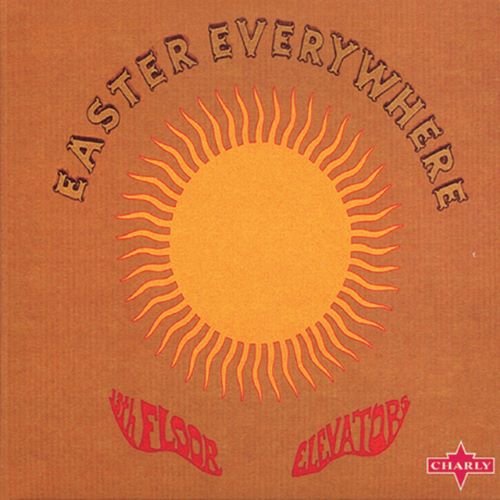
where I am highlighting an album that has got positive reviews but might not be well known. The other kind I do is albums that are underrated and were reviewed not so well but are well worth a listen – which is what I will be returning to for the next outing. A great album that turns fifty-five on 25th October, 13th Floor Elevators’ Easter Everywhere is not played and known as widely as it should be, and yet it is one of the finest Psychedelic albums ever released. 1967 was a terrific year for more experimental, Psychedelia-tinted, and trippy albums. The Beatles did that in style with Sgt. Pepper’s Hearts Club Band and Magical Mystery Tour. Pink Floyd, Jefferson Airplane and Cream also ventured into that territory. It was a remarkable time for music! I wanted to bring in a couple of reviews for 13th Floor Elevators’ second studio album. The Texan band released their aptly-named The Psychedelic Sounds of the 13th Floor Elevators in 1966. I think their masterpiece is the 1967 follow-up. It is a groundbreaking album that I am not sure how many people today know about. Maybe a lot of my parents’ generation (1950s and 1960s) remember the album and what it was like. How many people today can recall 13th Floor Elevators and their masterpiece sophomore album?! I fancy very few people will be able to remember. I don’t think I have heard them on the radio for a while. It is a perfect opportunity to spin this album and make people aware of it.

There are some wonderful and perceptive reviews and features concerning Easter Everywhere and the impact that it made. Released in a year that has seen world-class, culture-changing albums from the likes of The Beatles, the American band released something very different but hardly that inferior. Indeed, Easter Everywhere is one of the greatest albums of the ‘60s. This is what Glorious Noise wrote about 13th Floor Elevators’ sublime Easter Everywhere:

Any decent rock and roll fanatic knows the story about Roky Erickson. They’ve heard the stories of his struggles with mental illness. They know the tale of his unjust incarceration(s). They understand that his legacy has been assured an honorable nod, thanks in large part by one of the only decent tribute compilations ever released (Where The Pyramid Meets The Eye) and the caliber of contributors on it.

Yet there is a good possibility that you only know Roky from only one song, “You’re Gonna Miss Me,” from his band 13th Floor Elevators. And there is a good possibility that you only know that one song from the scene in High Fidelity when Laura leaves Rob and he cranks up the stereo, blaring that classic Elevators’ tune as she retrieves the last personal belongings from their apartment.

As good as that song is—and as wonderful as its source album is (1966’s The Psychedelic Sounds Of)—it isn’t the band’s defining moment. That moment would come with the second long-player, Easter Everywhere, an album that not only continues the 13th Floor Elevators road trip to mind expansion, it manages to send us the obligatory “Wish you were here!” postcard while the rest of us were still on the road trying to catch up.

Subdued, restrained, yet even more expansive than the aptly titled debut, Easter Everywhere shows the band mixing real emotion with the lysergic-fueled imagery. It’s still a mind-blowing listen, but not to the point where the band’s altered imaginations sound silly to the uninitiated. The straight and narrow can also enjoy the Elevators twists and turns through unchartered territories. It’s a communal affair that incorporates the band members themselves, a single mom with a maternal instinct that encouraged the member’s creativity, and the brother of Kenny Rogers who managed to capture the unique results on magnetic tape.

This is important to remember when understanding Easter Everywhere. It is not, as some may suggest, the work of an individual with enormous talent and unfortunate circumstances. It’s the product of several people, some of whom have back-stories that are almost as fabled as Erickson’s.

One of those members was Tommy Hall, a former chemical engineering major at the University of Texas. Thanks to an increasing drug intake and a growing resentment towards the intellectual establishment, Hall became so fixated on spreading his pharmaceutical gospel that he practically invented an instrument (the “electric jug”) and recruited a few local musicians to help with his lofty visions.

Since we’re clarifying Erickson’s role, let’s address Tommy Hall’s too. You notice the electric jug immediately on Easter Everywhere. The sound it produces is unmistakable and unique.

They’re also a sham.

Sources close to the band later revealed that Hall’s ceramic jug was merely a prop. The sounds being made were just noises made from his mouth with the jug providing minimal resonance and a distraction for people to focus on.

With that said, they are intriguing sounds, heavily reverberated, occasionally eerie and profoundly child-like when you consider the manner in which they were created: An intelligent young man with little musical ability that became so hell-bent on playing an instrument…any instrument…that he effectively made one up while managing to make it an intricate part of the band’s sound. By some strange manner of coincidence, the 13th Floor Elevator is probably the only band in existence where an “electric jug” sounds positively perfect.

Phony instruments aside, Hall’s other two roles seemed to play a greater part in the band’s creative arsenal: chief poet/lyricist and dispenser of mind-altering substances. Of course, the two roles were inherently intertwined and, as in any great acid-casualty story, the creative peak resulting from such substances is relatively short lived. For listeners, Easter Everywhere blends together the perfect balance of cerebral calisthenics and acid eating excess.

It begins with “Slip Inside This House,” an eight-minute song/poem modeled after the same linear structure of Bob Dylan‘s “It’s Alright Ma (I’m Only Bleeding).” It’s the band’s epic and it remains the greatest song they ever managed to produce.

Speaking of Bob, there’s also a spot-on version of “It’s All Over Now, Baby Blue” where Erickson’s phrasing sounds sweetly exasperated. It’s perhaps the best version of this song that you will ever hear.

But the real jewels of Easter Everywhere are in the originals. “Levitation” may be the album’s closet thing to a single. “Postures (Leave Your Body Behind)” takes a slow Texas soul groove for six minutes and provides the album with an uncommonly collected closer. And then there’s the prophetic “I Had To Tell You,” a song Roky co-wrote with Tommy Hall’s wife, Clementine. Clementine Hall entered into the Elevators world as a single mother with a few years of seniority on the rest of the members. In addition to encouraging and praising the band’s creative direction, she occasionally participated in it. The band entrusted her with lyrics and, as is the case on “I Had To Tell You,” backing vocals. Their tender duet on this song is beautifully fragile and frighteningly prophetic. She penned the songs chorus, “If you feel I’d lose my spirit / Like some drunkard’s wasted wine / Don’t you even think about it / I’m doing fine,” while it could have easily serves as the departing words from Erickson himself. Shortly after the release of Easter Everywhere, Erickson met with legal turmoil and some suggest that it was Texas’ draconian methods in treating “drug abusers” that helped push Roky into the mental abyss. Whatever the cause of his subsequent breakdown, he never sounded more in touch with his talents than throughout Easter Everywhere.

As do the rest of the band. Their contributions are so vital and fluent that they even managed to carry on without Erickson for one more album. The third release, Bull Of The Woods was created amid Erickson’s legal and mental turmoil and Tommy Hall’s lack of initiative. But thanks to guitarist Stacy Sutherland‘s leadership, Bull Of The Woods managed to be a credible finale for a band that began to crumble after ascending beyond anyone’s wildest expectations.

As under-appreciated as Bull Of The Woods is, it’s Easter Everywhere that’s been even more criminally overlooked. The album has been name-checked by fans and critics alike, but even lofty praise hasn’t prevented it from falling out of print for years on end and being subjected to limiting distribution.

Easter Everywhere is an album so good that it should always be offered an opportunity with prospective audiences, and now is the perfect time for this landmark to be resurrected and examined once more”.

I have only just reconnected with the eye-opening and mind-expanding colours, scents and sounds of the stunning Easter Everywhere. If people do not associate this album with defining the Psychedelic scene, I think that they need to shift their perspective. This is what AllMusic observed and discovered when they reviewed Easter Everywhere:

On their groundbreaking debut album, the 13th Floor Elevators sometimes sounded as if they were still learning how to work with the strange beast of their own creation known as psychedelic rock. But their second set, 1967's Easter Everywhere, found them a great deal more comfortable and confident with their loose and hypnotically trippy approach. Easter Everywhere doesn't have an out-of-the-box classic cut like "You're Gonna Miss Me" or "Fire Engine" from The Psychedelic Sounds of the 13th Floor Elevators, but in many ways it's a more cohesive and consistent work, and the subtle but effective structures of the longer tracks grow and develop through repeated listenings, while rockers like "She Lives (In a Time of Her Own)" and "Levitation" pack a surprisingly visceral punch. Stacy Sutherland was never a blazing guitar hero, but his concise aural punctuations on the epochal "Slip Inside This House" and a superb cover of Dylan's "It's All Over Now, Baby Blue" are perfectly suited to the material. In addition, the rhythm section of Dan Galindo on bass and Danny Thomas on drums locks these songs into place with confidence and skill. The strange patterns of Tommy Hall's electric jug playing are as gloriously bewildering as ever, merging the music of the spheres with an alien attack, and Roky Erickson's vocals make even the most acid-damaged poesy sound passionate, graceful, and wildly alive. And Roky and the Elevators never sounded sweeter and saner than they did on the penultimate tune, "I Had to Tell You," with Roky seemingly offering a postscript to his many sad years to follow with the words "If you fear I'll lose my spirit/Like a drunkard's wasted wine/Don't you even think about it/I'm feeling fine." Even if less influential than The Psychedelic Sounds of the 13th Floor Elevators, Easter Everywhere is every bit as compelling and a true benchmark of early psychedelic rock -- not bad for an album produced by Kenny Rogers' brother”.

I am going to end with a review that heaps the highest praise on 13th Floor Elevators’ Easter Everywhere. Head Heritage went deep with their exploration of the album. Their review ends with a line that seems to sum up the brilliance and essence of Easter Everywhere:

The arrangements on “Easter Everywhere” are extremely psychedelic as The Elevators were both absorbing and channeling the highest illuminations, informed by the raising of their respective consciousnesses through not only LSD dropping, but by FEELING it and converting those experiences into songs coherent for the intake of more rational, less far out states of mind. The massive opening track, “Slip Inside This House” (running anywhere between 10 minutes and an infinity of guises of time lengths) often appears to be quite longer than it actually is due to its strong and steady rolling drums, bass rumblings from Don Galindo and the ecstatic high-ness that is “Slip Inside This House”: an ever-evolving, being into becoming, like an endlessly unfolding lotus of infinite layers as the panels of consciousness shift this way to that in a constant flow of change and motion. It’s like wandering around wasted in suburban springtime sunshine after gulping 10 grammes of hashish and the sheer body buzz of it makes the houses you pass into faces, the doors smile at you as they slowly recede behind you in a curved horizon all stylised late-60’s faux-Peter Max pop art that constantly rotates as though set in motion by your feet. The houses appear, grow larger then smaller and recede -- to be replaced by a constant row of houses in an uninterrupted scene of non-diminished and unchanging returns. And “Slip Inside This House” details all this with its changing static-ness that’s gotta be one of the highest plasma marks of American psychedelic rock and roll ever. The constant Tommy Hall “doot-doot-doot”-ings on jug working alongside the near-constant shifting of sonic patterning that is as ever-returning as the classic Roky vocal bridge of “There is no season/When you are gone/You are always risen/From the seeds you’ve sown.” And when it all finally and subtly fades on a Stacy Sutherland near-surf guitar coda that The Rolling Stones would cop for the main riff of “Jumpin’ Jack Flash,” you wish it didn’t end so soon (The Stones would later appropriate elements and stylings from The Elevators’ own “Monkey Island” for their own proto-hominid rant’n’roll piece, “Monkey Man.”).

The album wriggles on through into “Slide Machine,” opening as it does with a handful of sharp acoustic pickings, only to submerge into the pervious wash of sound where everything merges into a single torrent and it melts into itself, the sky and forever. Roky Erickson’s sweet intonations of “tryin’ to/tryin’ to/tryin’ to get back to you...” grounds the piece into human experience as the rest of the lyrics and music is sheer Cosmic-Speak through the rhythms, buffeted by Sutherland’s searing, fuzz/reverb guitar scatter shots.

“She Lives (In A Time Of Her Own)” sees Roky vocalising about a very special woman, shared by booming harmony vocals that sing the parenthetical title as once more Sutherland’s throws in his proto-“Jumpin’ Jack Flash” riff in the middle section, amidst the clatter of drums and the overall organic yet willful and organised cacophony. And the above-mentioned, nameless ‘special woman’ whose “time does not spin outside her/It’s in every breath she breathes” is forever immortalised in this devotional portrait.

Next, The Jefferson Airplane’s “Somebody To Love” is inverted as “Nobody To Love” with Sutherland intoning a dry, love-jonesin’ supreme as his spiky though sticky-as-molasses guitar riffing streaks across the track with uncontrollable yet barely-reigned in looseness as the sheer sustain of his guitar’s reverberation bleeds through just BARELY in time, zigzagging and ricocheting astonishingly free all over the place. But you’ll need the insanely rare lyric sheet that accompanied the original IA pressing of this mystic aural platter to make 100% coherence out of Sutherland’s sonorous Tex-Mesc drawl. The album finally simmers with a cover of Dylan’s folk/protest elegy, “It’s All Over Now, Baby Blue” here elongated with a length and tempo completely gentle, relaxed and gracefully sad; especially with Roky’s barely detectable whispering of the title near the end that reinforces the sense of rebirth that hovers over the entire album.

“Earthquake” opens side two, and the previous wash of sound from side one is upon us once again as the staunch repetition of the drumming, jug blowing and bass clumping keeps the track with high tension wire humming, only to be interrogated by Sutherland’s hollow-bodied guitarus interruptus in the quick action breaks. So ragingly slinky is this song (what with the ever-steady hi-hatting’n’snare of Danny Thomas and the overwhelming snarl of Sutherland’s fuzz guitar like a mass of black seaweed that mats the surface of this particular roaring river rapids -- halting only for solo feedback and grinding fuzz counter-pointing), hinted at by Roky’s sung lines of pulling through ‘flesh and bone’/’earth and stone’ seems nothing less than cunnilingus of the Mother Earth Herself, all quivering quim and aching rim prompted along by Roky’s ecstatically freaking tonguing whine of ‘mmmmmmmmmmm...!’ And Sutherland’s fuzzed/shearing/searing guitar solo at the end may be one of his best. Although it’s practically the same notes he always utilises throughout the album, somehow THIS arrangement of them are particularly effective.

From here on in, “Easter Everywhere” has almost nowhere to go but to hunker down and take stock quietly, as they do with the plaintive Roky-sung “Dust.” Although primarily acoustic, Sutherland e-guitar prowls the perimeter with wisps of gentle vibrato, but wouldn’t you know it -- The Elevators come charging out full tilt with the last brash explosion on the album: “I’ve Got Levitation.” Here Roky is calling out for the Music of the Spheres over low-end surf guitar fills and an overall clattery blow-out that sees a weird edit right before the fade, failing to dissipate the energy or blow its spell one whit. But with its fiery passing, The Elevators take things way down with “I Had To Tell You,” sung softly by Roky and harmonized with jug-player Tommy Hall’s wife, Clementine. Their voices weave with acoustic guitar hi-hat, tambourine and harmonica as Roky comments on the chaos all around him, soothing to a degree, but none so more so than “Postures (Leave Your Body Behind).” Only here, the undulating rhythm lightly charge the scene, and it’s an ever-returning one that mirrors the album’s opener “Slip Inside This House” in terms of Roky’s reiterated lyric passages that are constantly re-inserted as soon as you’ve forgotten them. “Remember…remember…” he’ll sooth one minute, then onto a different line that gets repeated, like “etches that flow from your energy” or “keep on climbing.” And the more-hypnotic-than-Sam Andrews guitar keeps on lightly nudging your mind and body to “remember...remember” -- for there are “evolutions everywhere.”

A broader expanse was never mapped out by a rock’n’roll band of its time”.

Like I say with many of the albums featured in this series, you do not need to be a fan of the genre or artist to appreciate it. Easter Everywhere is an album that offers something phenomenal and new with every listen. Regarded as a classic, you do not hear it spoken about too much today. 1967 is one of the best years of music ever, and 13th Floor Elevators definitely contributed to that. The Psychedelia culture and scene of that year was history-making. Around the Summer of Love and everything that was happening on both sides of The Atlantic, the most remarkable and impactful music came through. Maybe not as commercial, celebrated, and accessible as something like The Beatles’ Sgt. Pepper’s Lonely Hearts Club Band, 13th Floor Elevators’ Easter Everywhere is an undoubted masterpiece! Give this a second (or first) spin and let it…

SEEP into your consciousness.

FEATURE: Where Life Begins: Madonna’s Erotica at Thirty: Its Legacy and the Artists It Has Inspired

FEATURE:


Where Life Begins

IN THIS PHOTO: Madonna shot for Vogue in 1992/PHOTO CREDIT: Steven Meisel

Madonna’s Erotica at Thirty: Its Legacy and the Artists It Has Inspired

__________

ON 20th October…

one of Madonna’s most influential albums turns thirty. Many Madonna album shave reshaped Pop and inspired legions of artists, but there is something unusual about Erotica. It is an album that has this huge legacy and importance without it being widely acclaimed. Although retrospective reviews have assessed it based upon its legacy and the fact that it was misjudged in the 1990s, a lot of the reviews that came out in 1992 were scathing or dismissive. Madonna released the infamous and notorious Sex book the same day as the album, meaning Erotica was seen as a double-barrelled release of sex and eroticism designed to shock. Some see Erotica as cold or too provocative. Lacking the Pop melodies and bigger choruses of her earliest albums, the relatively lack of instant accessibility, coupled with the press Madonna was getting around the time of Erotica’s release means it has never really received the praise and credit it deserves. I am going to come onto its legacy soon, and apologies if this is a little unfocused. My final feature around the thirtieth anniversary of Erotica, I wanted to draw more on its legacy and some of the artists it has influenced. Creating this alter ego of Mistress Dita, this gave Madonna license to inhabit a character yet remain personal and focused. Whereas there is a lot of sex and personal liberation through Erotica, Madonna also gets confessional and deep. It is a very mature album where this growing and blossoming Pop queen was taking risks but also delving into themes such as the AIDS crisis and safe sex.

I want to start by returning to a SLANT review from 2007. Looking back at the album fifteen years after its release, the review talks about how relevant the album is then. I think that has only become more obvious since 2007. Many consider Erotica to be wildly uneven and lacking in depth, but it has been misjudged and underrated:

Whatever words one chooses to label the album with—cold, artificial, self-absorbed, anonymous—Madonna embraces those qualities and makes it part of the message. “Why’s it so hard to love one another?” she asks on the reggae-hued “Why’s It So Hard?,” knowing the answer lies within the dark fact that a society that won’t even allow two people to love each other freely can’t possibly be expected to love and care for perfect strangers unconditionally. Sexually liberated, for sure, but Madonna is a liberal in every other sense of the word too, and you didn’t have to hear her shout, “Vote for Clinton!” as she was being whisked past the cameras at the album release party to know that. It could be argued that Madonna lost her rebel relevance right around the time Reagan’s regime ended; the waning of her popularity certainly coincided with the arrival of Bill Clinton’s “Don’t Ask, Don’t Tell” policy. But looking back from the vantage point of an administration far more sinister than Reagan’s, it’s clear that Madonna, her messages, and her music are more relevant now than ever”.

I do think that Erotica has been given a rough ride. Splitting critics at a time when Madonna was the Queen of Pop and going shoulder to shoulder with legends like Michael Jackson, the negative press and backlash after Sex could have set her back or derailed her momentum. It did to an extent but, as we know, Madonna created one of her masterpieces, Ray of Light, in 1998. Madonna’s most eclectic and broad album yet in terms of its sounds, there is so much depth to an album that has been neglected by some. I want to bring in segments of an Albumism. They celebrated twenty-five years of Erotica and highlighted some of its standout songs:

The album’s supreme standout is the second single “Deeper and Deeper,” a sublime slice of euphoric disco house that still sounds as fresh as ever, two-and-a-half decades later. An invigorating anthem of sexual awakening, the narrative of “Deeper and Deeper” can also be interpreted through the lens of a man acknowledging and revealing his homosexuality, as perhaps best evidenced in the second chorus (“Deeper and deeper and deeper and deeper / Never gonna hide it again / Sweeter and sweeter and sweeter and sweeter / Never gonna have to pretend”) and the song’s fourth and final verse (“This feeling inside / I can't explain / But my love is alive / And I'm never gonna hide it again”).

Among the three other singles officially released from Erotica, “Bad Girl” leaves the most enduring impression, and not just because of its memorable, Christopher Walken blessed video. A symphonic, drama-filled ballad about a tormented, self-destructive woman who’s wronged her lover by succumbing to temptation, the beautifully orchestrated “Bad Girl” reinforces Madonna’s penchant for crafting ballads that carry emotional weight without coming across as overwrought, a la her 1986 single “Live to Tell.” While the decidedly house-driven, percussive cover of “Fever,” originally popularized by Little Willie John in 1956 and two years later by Peggy Lee, is serviceable fare, the polished “Rain” is arguably the only banal and skippable offering among the album’s fourteen tracks.

The most painful and poignant moment appears with the somber “In This Life,” Madonna’s homage to two close confidantes who tragically lost their battles with AIDS—Martin Burgoyne, an artist and her first tour manager, and Christopher Flynn, her ballet teacher and mentor. Reminiscing about Flynn during a 2010 discussion with the film director Gus Van Sant for Interview magazine, Madonna reflected, “Growing up in Michigan, I didn’t really know what a gay man was. He was the first man—the first human being—who made me feel good about myself and special. He was the first person who told me that I was beautiful or that I had something to offer the world, and he encouraged me to believe in my dreams, to go to New York. He was such an important person in my life. He died of AIDS, but he went blind toward the end of his life. He was such a lover of art, classical music, literature, opera. You know, I grew up in the Midwest, and it was really because of him that I was exposed to so many of those things. He brought me to my first gay club—it was this club in Detroit. I always felt like I was a freak when I was growing up and that there was something wrong with me because I couldn’t fit in anywhere. But when he took me to that club, he brought me to a place where I finally felt at home.”

Just as refreshing and rewarding musically as it was for its brave social and cultural conscience, Erotica was, is, and will forever be a fearlessly fierce album that only Madonna could make. No one has ever come close to replicating it and no one ever will. In Vanity Fair’s October 1992 issue, Madonna proclaimed, “I’m out to open [people’s] minds and get them to see sexuality in another way. Their own and others.’” More than any other album in her prolific oeuvre, Erotica fulfilled her objective and struck a mighty blow to the plague of cultural and moral myopia, in America and beyond”.

I want to utilise and quote Wikipedia’s page about Erotica. They point at its legacy and influence. Alongside the way it changed Pop and elevated Madonna, they also name-check artists whose music has clearly been influenced by Erotica. I am going to drop a few songs from artists who are named. Songs that I think we can draw a line to the extraordinary Erotica:

The Rock and Roll Hall of Fame considered Erotica one of the most revolutionary albums of all time, declaring that "...few women artists, before or since Erotica, have been so outspoken about their fantasies and desires. Madonna made it clear that shame and sexuality are mutually exclusive... In the end, Erotica embraced and espoused pleasure, and kept Madonna at the forefront of pop's sexual revolution." Slant Magazine listed Erotica at number 24 on "The 100 Best Albums of the 1990s", calling it a "dark masterpiece". Miles Raymer of Entertainment Weekly said that "in retrospect it's her strongest album — produced at the peak of her power and provocativeness... and helped elevate her from mere pop star to an era-defining icon." Bianca Gracie from Fuse TV channel called Erotica "the album that changed the pop music world forever... one of the most controversial and genre-defining albums in pop history." Samuel R. Murrian from Parade commented that the influence of Erotica "is seen in the work of virtually every current pop act".

"By 1992, Madonna was an icon—untouchable, literally and figuratively—and Erotica was the first time the artist's music took on a decidedly combative, even threatening tone, and most people didn't want to hear it. Erotica's irrefutable unsexiness probably says more about the sex=death mentality of the early '90s than any other musical document of its time. This is not Madonna at her creative zenith. This is Madonna at her most important, at her most relevant. No one else in the mainstream at that time dared to talk about sex, love, and death with such frankness and fearlessness."

—Slant Magazine's critic Sal Cinquemani on the album's impact.

J. Randy Taraborrelli documented at the time of Erotica's release, "much of society seemed to reexamining its sexuality. Gay rights issues were at the forefront of social discussions globally, as was an ever-increasing awareness of AIDS." Barry Walters from Rolling Stone noted that the album's greatest contribution is "[its] embrace of the other, which in this case means queerness, blackness, third-wave feminism, exhibitionism and kink. Madonna took what was marginalized at the worst of the AIDS epidemic, placed it in an emancipated context, and shoved it into the mainstream for all to see and hear." Brian McNair, the author of Striptease Culture: Sex, Media and the Democratization of Desire, stated that upon the album's release "academic books began to appear about the 'Madonna phenomenon', while pro- and anti-porn feminists made of her a symbol of all that was good or bad (depending on their viewpoint) about contemporary sexual culture." Daryl Deino from The Inquisitr dubbed the album as "a groundbreaking moment for feminism."

Erotica remains the most rampantly misrepresented Madonna album with the biggest backlash of her career. Taraborrelli commented that it is unfortunate that Erotica has to be historically linked to other less memorable ventures in Madonna's career at this time. However, he quipped that the album should be considered on its own merits, not only as one linked to the other two adult-oriented projects, because it has true value. When asked to name her biggest professional disappointment, Madonna answered, "The fact that my Erotica album was overlooked because of the whole thing with the Sex book. It just got lost in all that. I think there's some brilliant songs on it and people didn't give it a chance." Brian McNair observed that Madonna took a financial risk with the album and it was not until Ray of Light (1998) that her record sales recovered to pre-Erotica levels. He further asserted that "what she lost in royalty payments, however, Madonna more than made up for in iconic status and cultural influence."

Walters asserted that Erotica "set the blueprint for modern pop... Without Madonna, modern pop as we know it would be unimaginable." He noticed the album's influence on various artists such as Beyoncé, Britney Spears, Christina Aguilera, Pink, Lady Gaga, and Nicki Minaj. Joe Lynch from Billboard wrote that the album "occupies a watershed place in the pop pantheon, setting the blueprint for singers to get raw while eschewing exploitation for decades to come." Similar thoughts were echoed by Jeni Wren Stottrup from The Portland Mercury, who believed that "Erotica should be recognized as one of Madonna's greatest albums". Critics also found its influence on Janet Jackson's 1997 album The Velvet Rope, with Daryl Easlea from BBC writing that Jackson's album "resembles Erotica at times, in subject manner and style”.

On 20th October, Erotica is thirty. I think that Erotica has fared better in the years since 1992. In terms of how it ranks alongside her other studio albums, there has been some acclaim. Dig! ranked it ninth earlier this year, remarking: “A provocative rallying call for the culture wars soon to consume us all, Erotica is undoubtedly the moment of glorious rebellion among the best Madonna albums. These 14 tracks (ten produced by Vogue collaborator Shep Pettibone) are a master class of 90s power-pop, with the album’s steamy title track nestling up against a house treatment of the Peggy Lee standard Fever”. Gay Times placed Erotica sixth in their rankings feature, where they said this: “She’d already challenged racial divides and discovered a career-long fetish for religious symbolism on Like A Prayer, but Erotica became one of the biggest affronts to white, Christian, middle-class America ever to appear in pop music when it dropped in 1992. Decades before artists like Rihanna and Britney Spears openly celebrated S&M and threesomes in their chart hits, Madonna became dominatrix alter-ego Mistress Dita, turning the listener into a voyeur of all things pleasurable – or ‘deviant’ in the eyes of conservatives. Sonically, the album does sound quite dated, but the lyrics and themes, including a heartbreaking song about friends lost to AIDS, were ahead of their time. She went one step further with the release of her explicit SEX book, a double-punch which had potential to destroy her career, but instead solidified her place as pop culture’s greatest icon. DM”.

Looking back to 2015, and Billboard actually named it Madonna’s fifth-best studio album: “Madonna’s sexual journey hit its peak in 1992 with Erotica, released alongside her book of erotic photos, fittingly called Sex. Madonna’s alter ego, Mistress Dita, invites you into a world of S&M and love that earned her a temporary nickname: “Queen of the obscene.” Standout tracks include her dancefloor update of “Fever,” “Deeper and Deeper,” “Rain,” “Bad Girl” and “In This Life.” The album hit its own peak at No. 2 on the Billboard 200. — Richin”. A hugely influential album, not just in terms of Madonna’s career but how it affected and resonated with Pop artists who would come through in the late-‘90s and beyond, I think that Erotica can be traced to artists fairly new today. Even Dua Lipa and Charli XCX embody elements of that album in their work today. In fact, listen to so many Pop artists of today and it is clear that they have been compelled and influenced by Erotica. It helped to redefine and shape Pop music post-1992, and it will do so for decades more. Maybe not as celebrated and renowned as albums like Ray of Light, Like a Prayer or Like a Virgin, Erotica is enormously important. I don’t think anyone can understate the importance and relevance of an album that has changed so much and is responsible for so many terrific artists (those who came along after its release). There is no denying that Erotica – which turns thirty on 20th October – was responsible for creating…

THE blueprint for Pop that followed.

FEATURE: Kate Bush: The Deep Cuts: Mrs. Bartolozzi

FEATURE:


Kate Bush: The Deep Cuts

IN THIS PHOTO: Kate Bush in an alternate publicity shot for 2005’s Aerial/PHOTO CREDIT: Trevor Leighton

Mrs. Bartolozzi

__________

I will move away from this series…

after today, as I want to do some more general Kate Bush features, plus a couple more about The Sensual World, ahead of its thirty-third anniversary next month. The point of this series is to highlight Kate Bush songs that are not played much or are deeper cuts. Aerial was released in November 2005. This was Kate Bush’s first studio album (a double at that) since 1993’s The Red Shoes. Split into two halves, A Sea of Honey, and A Sky of Honey, I wanted to focus on one of the songs from the first half. I have written about Mrs. Bartolozzi before. I was keen to explore this song, as I think it is quite misunderstood and overlooked. Many reviewers and critics focused to much on the erotic nature of the track or were reductive, in the sense they said it was about a washing machine. I mean, it is in a way, but there is so much more to the track, lyrically and musically. Thanks to the Kate Bush Encyclopedia, we get some archived interviews where Bush talked about Mrs. Bartolozzi and what it means:

Is it about a washing machine? I think it's a song about Mrs. Bartolozzi. She's this lady in the song who...does a lot of washing (laughs). It's not me, but I wouldn't have written the song if I didn't spend a lot of time doing washing. But, um, it's fictitious. I suppose, as soon as you have a child, the washing suddenly increases. And uh, what I like too is that a lot of people think it's funny. I think that's great, because I think that actually, it's one of the heaviest songs I've ever written! (laughs)

Clothes are...very interesting things, aren't they? Because they say such an enormous amount about the person that wears them. They have a little bit of that person all over them, little bits of skin cells and...what you wear says a lot about who you are, and who you think you are...

So I think clothes, in themselves are very interesting. And then it was the idea of this woman, who's kind of sitting there looking at all the washing going around, and she's got this new washing machine, and the idea of these clothes, sort of tumbling around in the water, and then the water becomes the sea and the clothes...and the sea...and the washing machine and the kitchen... I just thought it was an interesting idea to play with.

What I wanted to get was the sense of this journey, where you're sitting in front of this washing machine, and then almost as if in a daydream, you're suddenly standing in the sea. (Ken Bruce show, BBC Radio 2, 1 November 2005)

Well, I do do a lot of washing [chuckles]. I'm sure I would never have written the song if I didn't... You know, just this woman, in her house, with her washing. And then the idea of taking the water in the washing machine with all the clothes, and the water then becoming the sea... and I also think there's something very interesting about clothes. They're kind of people without the people in them, if you know what I mean? [Kate laughs] They all have our scent, and pieces of us on them, somehow. (Front Row, BBC4, 4 November 2005)”.

I am intending to write a series of features about Kate Bush albums that celebrate anniversaries in November. Aerial is among them. I will not revisit Mrs. Bartolozzi then, but I wanted to spotlight it now, as you do not hear that many songs from Aerial on the radio. I often wonder what it would have been like if Bush had decided to release another single from the album, following Aerial’s opening track, King of the Mountain. It would have been really interesting seeing what Bush would have done. Maybe there would have been quite a literal interpretation of the song, or perhaps something a bit more abstract. I have a lot of love and affection for all Kate Bush’s songs, and it is a shame that ones like Mrs. Bartolozzi are not better known or heard. This is what Bush said to Tom Doyle about the song in 2005 during an interview for The Guardian:

If there is perhaps less mystery to Kate Bush than we might have expected, her music remains reassuringly the same ecstatic alchemy of the humdrum and otherworldly. Recalling the hello-clouds wonder of The Big Sky from 1985's Hounds of Love or the frank paean to menstruation that is Strange Phenomena from her debut, The Kick Inside, Aerial finds Bush marvelling in the magic of the everyday: the wind animating a skirt hanging on a clothes line, the trace of footprints leading into the sea, the indecipherable codes of birdsong.

But the one track on Aerial that best bridges the divide between Bush's domestic and creative existences is the haunting piano ballad Mrs Bartolozzi, in which a housewife character drifts off into a nostalgic reverie while watching clothes entwining in her washer-dryer. It's also the one track set to polarise opinion among listeners, with its eerie, unhinged chorus of "washing machine ... washing machine". Bush acknowledges as much.

"A couple of people who heard it early on," she says, dipping a spoon into her avocado, "they either really liked it or they found it very uncomfortable. I liked the idea of it being a very small subject. Clothes are such a strong part of who a human being is. Y'know, skin cells, the smell. Somebody thought that maybe there'd been this murder going on, I thought that was great. I love the ambiguity”.

A terrific track that I would actually have loved to have seen unveiled at 2014’s Before the Dawn (Bush did perform many songs from Aerial at that residency, yet Mrs. Bartolozzi was not included), it is s superb deep cut that is worthy of more love and attention. The fact Bush can discuss domestic life and dreams in such a compelling and engaging way is testament to her originality and incredible talent. Mrs. Bartolozzi proves that there is…

NOBODY in music like her.

FEATURE: Spotlight: Clara Mann

FEATURE:


Spotlight

Clara Mann

__________

IN future…

Spotlight features, I am going to go into the band market. Now, I wanted to highlight an amazing young Folk artist whose music is among the most beautiful and accomplished out there. Clara Mann is a Bristol-based musician whose 2021 E.P., Consolations, is a remarkable work that you need to listen to! New songs like Thread and Go Steady are among her best work. I hope that we get even more work from such a sensational and unforgettable talent. With such a beautiful voice and an exceptional songwriting talent, Mann is someone who will go on to big things! In terms of interviews, most are from 2020 and 2021. At a time when the pandemic was in full flight and most artists were restricted and alienated from their fans, it was an unusual time to write and release music. Consolations was the subject of conversation and focus for Wax Music in their interview. They noted how there is something classical about the style and sounds of Clara Mann. Folk songs that seem older and classic but have this modern edge, she is an artist that everyone should know about:

You’ve had a really good couple of months – this is your debut and you’re already generating quite a lot of buzz. How’s that been for you?

I had very low expectations – not because of undervaluing my work, but just because it felt like a really strange time to be releasing music and like you say, I was a newcomer. But it’s been amazing! I’ve been completely overwhelmed by the response to the two singles so far. Sad Club Records have done an incredible job. I think my head’s kind of in a spin! It’s been frustrating obviously not being able to play live shows and meet people but I’ve just been really, really happy and excited.

How did you get involved with Sad Club Records?

About two years ago I was going to a lot of DIY gigs in Bristol with friends who were writing music and putting stuff out on Bandcamp, and I was like “oh this is really fun, maybe I should try writing my own stuff” so I just put out some demos on Bandcamp. I met a couple of people at gigs who had seen my social media and they liked what I was doing and showed an interest in me in that way. I was, I think, quite surprised because it’s not something that had ever occurred to me, although I grew up with music in my family and I’m a classically trained musician, but Sad Club Records just messaged me one day on Instagram and asked if I wanted to put something out with them! I was like “oh my god, so exciting, oh wow, I’m famous”, and then put out a track with them on one of their compilations and it just sort of started like that. It was honestly just through meeting lovely people who were working with Sad Club already.

And they’re a cassette only label – it’s quite niche.

I know! Very trendy. People ask me why it’s coming out on cassette and not vinyl, but they just don’t understand how on trend I now am”.

What sort of challenges would you say that you’ve had to overcome so far in bringing this out and working on it over the past year?

I think it was letting go of perfectionism and reaching an acceptance that there is something really special about the intimacy that comes with lo-fi home recording. Working with other people, even at a distance, I had to let go of my control. It was so important for me to accept that other people actually did know better than me when it came to recording because like, I can barely use Garageband! That was a really valuable experience.

I think it was mostly just that it was lonely. I would have liked to have been playing live – I would have liked to be getting that energy from musicians. I was lucky that my boyfriend is a musician and that Ben was so supportive the whole way through, so I think that was the main thing was feeling slightly robbed of that experience.

You’ve said that you write songs to keep yourself calm in a busy world. Would you say that the state of the world at the moment has put more internal demand on you to write?

I think so. A lot of these songs were written in the spring of 2019, so in a way they span my moving to Bristol and then being quite lonely, and then this weird vacant period, just at the beginning of COVID when it was starting to happen.

I think I have put more pressure on myself because of the way the world is. There is no stimulus, there’s nothing going on except this weird void and ‘void’ is quite difficult to express in a way that’s not just really abstract and airy-fairy. I don’t want to do that – it has to be more perceptive than that, I’m not satisfied with just expressing nothingness. So I think I’ve put more pressure on myself and I have had to let go of that, because actually it was blocking me creatively. Once I stopped putting pressure on myself and things opened up a bit more”.

There is a recent feature about a new Clara Mann song that I want to end on. Before that, I found a positive review from For Folk’s Sake concerning Consolations. In addition for it being comforting and soothing at a difficult time (2021), it is also an E.P. that warrants repeated listens and reaps rewards the more you hear it:

This collection of four songs brought by newcomer, Bristol-based singer-songwriter sounds timeless. Clara Mann is a classically-trained musician and she grew up in a small village in the south of France with classical music and choral pieces around her. As she put it herself , Mann “makes soft ‘almost folk music’ to make herself feel calm in a busy world”. We can be grateful that she shares it with us and opens the door to the piece of her soft, magic world, so we can feel calm too.

The title of the record comes from piano composition ‘Constellations’ by Liszt, one of Mann’s favourites when she was little. She describes her record as lo-fi. It was recorded in the artist’s home, which strengthened the intimacy of the songs. The songs explore something very familiar for everyone – the idea of waiting, passing time, and change captured in Mann’s intriguing songwriting.

‘Waiting for the Flight’ is a melancholic tale of waiting for a beloved one. The melody of tender ‘Thoughtless’ runs like a brook of verses when she sings about being vulnerable to the world, the vulnerability which may be a blessing or a curse. In ‘Station Song’ you can hear the sadness and bitterness of saying goodbye to a place you know so well. The last song (and the first single she has ever released) is the graceful and wistful ‘I Didn’t Know You’re Leaving Today’, which deals with loneliness and longing, a pain known by so many now during the lockdowns.

The simple and poetic tunes of Consolations sound like they can transfer you to the small picturesque village, by the coast, or cozy armchair by the fireplace, somewhere in a serene place. Clara Mann’s debut is a good musical balm for this time of uncertainty and chaos”.

One of my favourite singles of the tear is Go Steady. Such a stunning artist, Clara Mann releases music that gets into the soul. I am imagining that next year will find her touring around the world. In fact, you can keep updated of her tour movements by following her social media channels. CLASH covered news of the release of the marvellous Go Steady:

Clara Mann spent her childhood on the move. Growing up in locations as diverse as inner London and the South of France, the rural South West of England and the DIY hub that is Bristol, she learned to piece together her identity on her own.

Music, however, was always a constant. The songwriter began to express herself as a teen, playing tiny shows at first, with a voice both promising and hesitant. The past 12 months have represented a period of sharp evolution, with Clara Mann able to distill those stark folk influences – Karen Dalton, say, or Vashti Bunyan – into something that is purely, uniquely hers.

New EP ‘Stay Open’ is out on November 1st via 7476, and bold single ‘Go Steady’ leads the way. A gorgeous listen, it’s an intense piece of songwriting, with Clara Mann learning to bid adieu to the past, and accept the present.

A work gilded in emotion, ‘Go Steady’ is sublime, the minimalist arrangement seeming to place further emphasis on that voice, as refreshing as a cool silvery drink from a country stream.

Clara Mann comments…

“’Go Steady’ is about letting go of the past, and standing on your own two feet, firmly in the present. It’s also a thank-you song to everyone who’s shown me love, and kept an arm around me when I’ve needed it.”

“I used to be scared of letting go of things- of people, of stories from other times in my life- because I thought it meant leaving parts of myself behind, too, but I’ve recently realised that I’m happiest when I’m just being present in the Now. The marks those times left on me remain, but I don’t have to carry the whole of my story with me all the time, it’s heavy and it slows me down.”

“After some very strange, dark times, ‘Go Steady’ is a break in the clouds, and the closing of a chapter…”.

A typically amazing song from an artist who I am a big fan of, go and check out Clara Mann. Such a wonderful talent who I have been a fan of for a while now, there is something autumnal and evocative about Mann. Her music transports you somewhere. It keeps you warm but there is also this spark and fire that is like nothing else. Spend some time today investigating…

HER incredible music.

____________

Follow Clara Mann

FEATURE: You're Not Beaten Yet… The Beautiful Unity of Peter Gabriel and Kate Bush on Don't Give Up

FEATURE:


You're Not Beaten Yet…

 The Beautiful Unity of Peter Gabriel and Kate Bush on Don't Give Up

__________

THERE is this long and interesting…

friendship between Kate Bush and Peter Gabriel. There are a few Kate Bush anniversaries in October. One of them relates to the song she sung with Peter Gabriel, Don’t Give Up. From his 1986 album, So, the song was released on 27th October (even though, on Kate Bush’s website, the date is listed as 6th for some reason), this it spent eleven weeks in the U.K. top seventy-five chart in 1986, peaking at number nine. In 1987, the song won Ivor Novello Award for Best Song Musically and Lyrically. Here is some more detail about a perfect pairing between two musical innovators:

The second single to be taken from Peter’s fifth solo album So, Don’t Give Up sees Peter dueting with Kate Bush, and was released on 27 October 1986.

Written by Peter Gabriel, the song was produced by Daniel Lanois and Peter and engineered by Kevin Killen and Lanois and features the guest vocals of Kate Bush. Bush had previously provided vocals for the tracks Games Without Frontiers and No Self Control on Peter’s third solo album.

The song was inspired by a Dorothea Lange photograph, but was also informed by the high levels of unemployment under the Conservative government of Margaret Thatcher of the 1980s, as Peter told the NME at the time of the release of So:

“The catalyst for ‘Don’t Give Up’ was a photograph I saw by Dorothea Lange, inscribed ‘In This Proud Land’, which showed the dust-bowl conditions during the Great Depression in America. Without a climate of self-esteem it’s impossible to function”

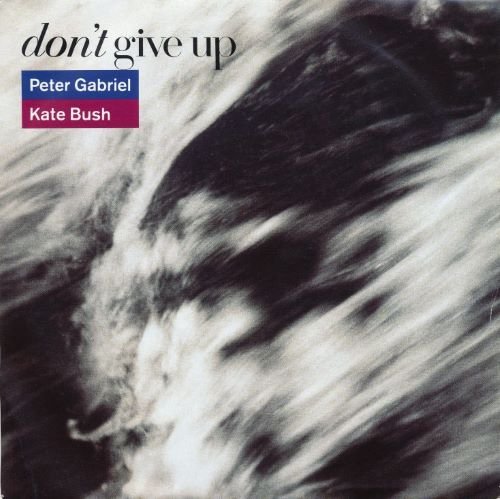
The cover was designed by Peter Saville and Brett Wickens for Peter Saville Associates, with photography by Trevor Key.

The single first charted in the UK on 1 November 1986, peaked at 9 and stayed in the Top75 for 11 weeks. In the USA the single reached #72 on the Hot 100 on 25 April 1987 and stayed on the chart for six weeks.

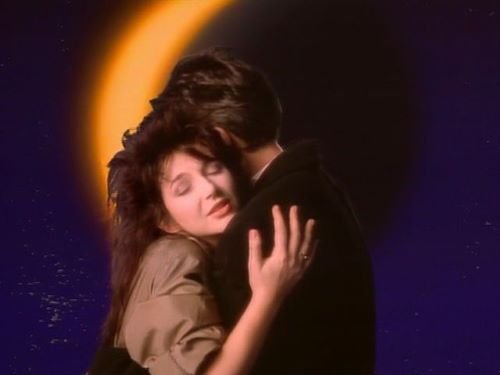
The accompanying video for Don’t Give Up was directed by Godley and Creme.

Originally, Peter had Dolly Parton in mind to sing the duet of Don’t Give Up. In 2011 he told The Quietus:

“Because there was [a] reference point of American roots music in it when I first wrote it, it was suggested that Dolly Parton sing on it. But Dolly turned it down… and I’m glad she did because what Kate did on it is brilliant. It’s an odd song, a number of people have written to me and said they didn’t commit suicide because they had that song on repeat and obviously you don’t think about things like that when you’re writing them. But obviously a lot of the power of the song came from the way that Kate sings it”.

Bush and Gabriel had this friendship long before 1986. Bush appeared on several Peter Gabriel songs, including Games Without Frontiers (from his eponymous 1980 album). The two performed together for Bush’s 1979 Christmas special. Although Gabriel never appeared on a Kate Bush album, he was instrumental when it came to her love of technology an experimenting more on her albums. Gabriel opened Bush’s eyes to the Fairlight CMI, and I can see the experimentation and less conventional sounds of 1982’s The Dreaming owe a nod to Gabriel. Bush’s decision to build her own studio for Hounds of Love (1985) was also partly influenced by Gabriel recording at Ashcombe House in Somerset (he rented the property between 1978 and 1987 as his family home and converted the house's barn into his home studio, where he recorded three of his albums, including 1982’s Peter Gabriel, commonly known as 4). Gabriel was the one who accidentally let slip that Bush had a child. Gabriel let that cat out of the bag almost five years (in 2003) after Bertie was born. I always wonder why Gabriel has not appeared on a Kate Bush album as they are good friends. I’d like to think that, if Bush ever did record another album, then he would be in the mix in some form. The fullest collaboration between the two, Don’t Give Up is a song that is so emotional, inspiring, and strong. It seems relevant to many now as we go through such a tough and unsure time. Recorded in 1985 – at a time when Bush was at the peak of her powers recording and releasing Hounds of Love -, I think it is the vocal differences and unity that makes the song so enduring and potent.

Gabriel’s delivery is raw and has a certain gruffness. It is vulnerable and pained, yet there is this resilience and hope that comes through. Bush’s is tender and caring. Playing the part of a wife, she is almost maternal in her embrace and warmth. The two together are a perfect combination! Again, it makes me sad the two have not done another duet on a studio album. One only needs to hear their rendition of Roy Harper’s Another Day from Bush’s Christmas special to realise that there is this incredible and natural chemistry and connection between them. It is not only the vocals that hit hard. Gabriel’s words are so stirring: “Though I saw it all around/Never thought I could be affected/Thought that we'd be the last to go/It is so strange the way things turn/Drove the night toward my home/The place that I was born, on the lakeside/As daylight broke, I saw the earth/The trees had burned down to the ground”. An empowering, sobering and hugely moving song that celebrates its anniversary next month, I wanted to revisit Peter Gabriel and Kate Bush’s sublime and entrancing duet. It has helped so many people. Elton John claims the song helped save his life when he was in the grip of drug addiction. Countless others owe their safety, sobriety, and salvation to a mesmeric song. Although it was written by Peter Gabriel, I especially love Kate Bush’s vocals and role on the song. Listening to Don’t Give Up now, and it could not have been sung by anyone else! There is no doubting that it is…

ONE of the most moving songs ever.

FEATURE: Time for Heroes: The Libertines’ Remarkable Debut, Up the Bracket, at Twenty

FEATURE:


Time for Heroes

The Libertines’ Remarkable Debut, Up the Bracket, at Twenty

__________

A hugely important album…

IN THIS PHOTO: The Libertines (from left to right: Pete Doherty, Carl Barât, Gary Powell and John Hassall)/PHOTO CREDIT: Eva Edsjö/Redferns

that still sound fresh today, The Libertines’ amazing debut, Up the Bracket, was released on 14th October, 2002. As it is twenty on Friday,  I wanted to spend some time with it. The album reached thirty-five in the U.K. The album was part of a resurgence for the British Indie/Alternative scene. It was widely praised by critics upon its release, and Up the Bracket is considered one of the greatest albums of the 2000s. You can get the twentieth anniversary edition and enjoy a mighty album. So fresh and thrilling, the band, led by songwriters Carl Barât and Pete Doherty, put out a potent statement with their debut. Such an impressive and strong album from the London band, you can tell that so many bands that followed were moved by Up the Bracket. I am going to come to a couple of reviews for Up the Bracket. Before, Guitar.com celebrated and investigated The Libertines’ confident and compelling debut back in July. Still going today, I love the fact the band have survived turmoil and fall-out to stand strong and celebrate the twentieth anniversary strong. In fact, there are podcast episodes coming on Friday that takes us inside the album:

Back in 2002, though, the Camden kings’ Anglo-leaning ethos set them apart from a set then spearheaded by The Strokes, one of most exciting new bands on the planet. The Libertines were nipping at the heels of Britpop’s heaviest hitters, ready to seize the torch from Oasis. They were fresh, determined and spoke to an unbridled hedonism that helped them earn the loyalty of their tribe. With their romantic veneration of Britain’s rock and literary canon, Pete Doherty, Carl Barât, John Hassall and Gary Powell were primed to become the country’s next obsession.

Marrying the blunt fury of The Clash with the poeticism of The Smiths, and the nicotine-stained thrill of early Suede with the pissed-at-the-piano rockney knees-ups of Chas & Dave, The Libertines were radically out of step with 2002’s musical landscape. Up the Bracket landed a year after The Strokes’ debut Is This It, which cemented the New York act as the most effortlessly cool on the scene. This was the Libertines’ response: with The Clash’s co-architect Mick Jones helming their debut (and Suede’s Bernard Butler producing the band’s non-album singles), Doherty, Barât and co were positioning themselves as the successors to the UK’s hallowed indie lineage.

Hoist the rigging

Clocking in at just over half an hour, Up the Bracket hit like a hurricane. Recorded mainly live, Barât and Doherty’s fuzz-soaked, galloping guitars ran roughshod over Hassall and Powell’s solid rhythm section. Throughout the album’s 12 tracks, the Libs’ leading lyricists painted a warring picture of twin dimensions of Britain. Their songs were set amid vomit-soaked pubs and featured street-stalking debt collectors, hotel room hook-ups, and ride-or-die debauchery. Barât and Doherty also conjured visions of a long-lost, half-dreamed, mythical Albion, particularly on their penultimate manifesto The Good Old Days.

Purposefully lo-fi, Barât and Doherty’s wilfully imprecise approach to guitar masked their true ability. Typically toting a Gibson Melody Maker (or SG), Barât’s penchant for seemingly spontaneous but actually well-mapped solos and riffs resulted in some of the record’s fiercest guitar work. Just listen to the white-knuckle closer I Get Along. Meanwhile, Doherty, then rarely seen without his Epiphone Coronet, demonstrated a remarkable aptitude for songcraft that underpins every minute of Up the Bracket.

Though the barbed wire riffage of Vertigo is an effective starting point, it’s on the album’s second track, Death on the Stairs, that the clearest indication of The Libertines’ musical and emotional breadth can be found. Built around a swerving chord sequence, Barât’s jibing A♯ riff keeps pace with the arrangement, as he and Doherty exchange lead vocals. The only let-up comes during the chorus section’s sublime six-note motif.

On the heels of the unrelenting Horror Show, the magisterial Time for Heroes bursts out of the speakers with punchy Smiths-esque chords, lurching from a bright D major to a troubled F♯m to a six-beat, punctuated G. The song’s intensity builds with each successive verse before it erupts with Barât’s frenzied solo. Yes, their exterior was rickety but any band that could pen a song as vital as Time for Heroes had to be worth your commitment.

The Libertines - Up The Bracket

The Libertines’ own distinct character is all over Up the Bracket but it’s an album clearly assembled from a well of influences. There’s the Clash-like truculence of the whirlwind title track, and the dreamy lull of Radio America, which elicits a misty image of Syd Barrett. Then there’s the bawdy strut of Boys in the Band, which The Libertines: Bound Together author Anthony Thornton describes as “The Jam soundtracking a late Carry On movie in a suitably saucy, British seaside-postcard kind of way”. Up The Bracket balanced thrilling bluntness with an astute grasp of what had gone before.

Though it reached only No. 35 in the UK album charts upon its release in October 2002, The Libertines’ growing ubiquity in the press would see its sales rise as the decade progressed. The band’s next two records featured delicacies of their own but it’s across Up The Bracket’s 12 songs that The Libertines skirted true greatness, even if it was always slightly out of reach.

Up the Bracket was the wake-up call that many of the soon-to-be players in what was called the ‘indie renaissance’ by some and ‘indie landfill’ by others desperately needed. Now established as The Libertines’ central text, Up The Bracket remains a rousing listen 20 years on”.

Regarded today as a classic of the ‘00s and one of the most influential British albums ever, I remember Up the Bracket coming out in 2002 and the reaction around me. At university, I can hear and feel how it resonated with people my age. Many British bands of the time were not getting great press in the U.S. Conversely, The Libertines were scoring a lot of love and respect from the American press. AllMusic, in a retrospective review, had this to say:

The first British band to rival the garage rock revival sparked by the Strokes and White Stripes in the U.S., the Hives in Sweden, and the Datsuns in, er, New Zealand, the Libertines burst onto the scene with Up the Bracket, a debut album so confident and consistent that the easiest way to describe it is 2002's answer to Is This It. That's not just because singer/guitarist Pete Doherty's slurred, husky vocals sound like Julian Casablancas' with the added bonus of a fetching Cockney accent (or that both groups share the same tousled, denim-clad fashion sense); virtually every song on Up the Bracket is chock-full of the same kind of bouncy, aggressive guitars, expressive, economic drums, and irresistible hooks that made the Strokes' debut almost too catchy for the band's credibility. However, the resemblance is probably due more to the constant trading of musical ideas between the States and the U.K. than to bandwagon-jumping -- the Strokes' sound owes as much to Britpop sensations like Supergrass (who had the Libertines as their opening band on their 2002 U.K. tour) and Elastica as it does to American influences like the Stooges and the Velvet Underground. Likewise, the Libertines play fast and loose with four decades' worth of British rock history, mixing bits and bobs of British Invasion, mod, punk, and Britpop with the sound of their contemporaries.

On paper it sounds horribly calculated, but (also like the Strokes' debut) in practice it's at once fresh and familiar. Mick Jones' warm, not-too-rough, and not-too-polished production both emphasizes the pedigree of their sound and the originality of it: on songs like "Vertigo," "Death on the Stairs," and the excellent "Boys in the Band," the guitars switch between Merseybeat chime and a garagey churn as the vocals range from punk snarls to pristine British Invasion harmonies. Capable of bittersweet beauty on the folky, Beatlesque "Radio America" and pure attitude on "Horrorshow," the Libertines really shine when they mix the two approaches and let their ambitions lead the way. "Did you see the stylish kids in the riot?" begins "Time for Heroes," an oddly poetic mix of love and war that recalls the band's spiritual and sonic forefathers the Clash; "The Good Old Days" blends jazzy verses, martial choruses, and lyrics like "It's not about tenements and needles and all the evils in their eyes and the backs of their minds." On songs like these, "Tell the King," and "Up the Bracket," the group not only outdoes most of its peers but begins to reach the greatness of the Kinks, the Jam, and all the rest of the groups whose brilliant melodic abilities and satirical looks at British society paved the way. Though the album is a bit short at 36 minutes, that's long enough to make it a brilliant debut; the worst you can say about its weakest tracks is that they're really solid and catchy. Punk poets, lagered-up lads, London hipsters -- the Libertines play many different roles on Up the Bracket, all of which suit them to a tee. At this point in their career they're not as overhyped as many of their contemporaries, so enjoy them while they're still fresh”.

To finish off, I want to bring in Pitchfork’s assessment from 2003. Perhaps not quite aware of a sound like the one The Libertines produced in 2002, I guess The Strokes were the American forerunners who paved the way for bands like The Libertines. I just love that anyone can put on Up the Bracket now and feel instantly connected and affected by the album:

And so it's come to pass: the great wheel of revivalism spins, dredging up the next phase of music history to be paraded about-- it was only a matter of time before we came around to The Clash. But just as calling The Clash "punk" belittles how their sound had evolved by the movement's curtain call, it would be unfairly dismissive to brand The Libertines Clash knock-offs. You'd have to throw in a line or two about singer Pete Doherty sounding uncannily like an English Julian Casablancas to be more dismissive. British Strokes for British folks, as they say.

All cards on the table, though: Up the Bracket does emulate, thanks in no small part to production care of ex-Clash founder Mick Jones, but it never truly imitates. Like The Clash before them, The Libertines draw primarily from decades of rock tradition-- blues, dub, a healthy whiff of the English countryside, and a few gorgeous rock riffs straight from the brainstem of Chuck Berry-- and fuse them into an unruly and triumphant monster of an album. The band burns through a range of emotions with fearless abandon, and just when one track seems about to split into pieces, they pull it all together only to threaten glorious collapse again on the next song. From their plaintive anthems to fuck-all barnburners, this is some of the most fun I've had with a CD in ages. Rarely does a band approach such a wide array of attitudes with equal proficiency.

"Boys in the Band" traverses miles of territory in four short minutes; funk-fused riffs lend a dangerous swagger to Doherty's ultra-confident vocals before, curiously, the whole thing pulls a 180 into barbershop-style harmonies. It's not as crazy as it sounds, but it's twice as fun. Later, the band find themselves in the throes of a token heartfelt ballad-- even one that delivers unexpected quaintness and delicate folk sensibilities-- as old-time cymbal washes make such an obvious track better than it has any right to be. But before the glow fades, they take us right back to hook-laden rock with the title song, recalling The Clash's finest moments, complete with vocals lifted from Joe Strummer's back pocket.

There's an almost indescribable wealth of rock lurking on Up the Bracket, and rarely is it less than blissfully entertaining. In just thirty-odd minutes, The Libertines pretty much do it all. Call it calculated, call it derivative-- hell, there's so much to this album, you can call it just about anything you like and probably not be too far from the truth-- but if you don't hear it, you'll be the one missing out”.

On Friday, there will be a lot of attention around The Libertines. The band have weathered storms and possible permanent split to regroup and release new material. Although nothing can quite match the brilliance of their debut, the band continued putting out such extraordinary music. From the spirited and rousing title track to the beautiful Radio America and the fan favourite Time for Heroes, there is not a weak moment on Up the Bracket. It is great to hear new music come out now but many people look fondly at groups like The Libertines emerging. Releasing one of thew all-time best debut albums back in 2002, many on Friday (on Up the Bracket’s twentieth anniversary) will fondly recall…

THE good old days!

FEATURE: I Couldn’t Love You More: Sade’s Love Deluxe at Thirty

FEATURE:


I Couldn’t Love You More

Sade’s Love Deluxe at Thirty

__________

IT is hard to follow up…

a trio of albums like Sade’s first three. Her stunning and celebrated debut Diamond Life was followed by Promise in 1985. Stronger Than Pride arrived in 1988. Her fourth album, Love Deluxe, came out into the world on 26th October, 1992 (in the U.S.; 1st November in the U.K.). I feel most critics really loved the first two albums. There was a bit more division for Stronger Than Pride, and Love Deluxe also split a few. That said, I feel Love Deluxe is a classic. Featuring timeless cuts like No Ordinary Love, this is Sade in the same sensational and regal form as in the early years of her career! Reaching ten in the U.K. and three in the U.S., Love Deluxe was a commercial success. I am not sure why any critics gave Love Deluxe anything less than full praise. It is a sumptuous and wonderful album from Sade, Led by the incredible Sade Adu, her wonderful and mesmeric vocals make the album a classic! I will come to a couple of extensive and praise-heavy features for the magnificent Love Deluxe. Some critics felt it was less potent and consistent than earlier Sade albums. Others noted how Love Deluxe packs less of a punch and has less of an impassioned rush as you might hear on Diamond Life. Perhaps smoother and more laid-back than some were expecting. I think that the superb Love Deluxe is a phenomenal album that warrants celebration ahead of its thirtieth anniversary on 26th October. I am excited, as the group are recording new music!

I will wrap up with some more thoughts about Sade’s 1992 pearl. First, Pitchfork provided their take on Love Deluxe in 2017. If you have not discovered the music of Sade or have not dipped into the back catalogue for a while, Love Deluxe is well worth a spin! Such a remarkable album framed and brought to life with the expressive, soulful, and sensational voice of their lead:

In the mid-’80s, a new kind of jazz-pop emerged in the UK, mostly assembled by former members of post-punk and new wave bands. They blended jazz, bossa nova, soul, and some of the swollen negative space of dub into a sleek and buoyant composite. The sound was streamlined and modern, inasmuch as anything that scans as “modern” is just an effectively redesigned past. It was initially embodied in records by Working Week, the Style Council, Everything But the Girl, and—the only band included in this brief genre that, as of 2017, still records and plays together—Sade.

Sade began as a reduced lineup of the Latin jazz band Pride. Stuart Matthewman auditioned for Pride after reading an ad in a magazine seeking a saxophone player for a “fashion conscious jazz-funk band.” At the audition, he met Sade Adu, then one of Pride’s backup singers; after Matthewman joined the band, he and Adu started writing together. As Pride eventually fragmented, the band Sade solidified, with the final lineup including bassist Paul Denman and keyboardist Andrew Hale. During the sessions for their first record, Diamond Life, they would listen to Gil Scott-Heron, Marvin Gaye, and Nina Simone, and try to synthesize the sounds into a more seamless design. Often the mixture would produce crisp staircases of soul, like “Your Love Is King,” or liquid-crystal pop-funk, like “Hang on to Your Love.” Sometimes they slipped into a less material space; in live performances of the Diamond Life B-side “Love Affair With Life,” Hale’s piano, Matthewman’s saxophone, and Adu’s voice are held together by the song’s vast margins, given a ghostly shape by its silences. They were capable of producing a floating, haunted kind of music, and over time their attentions and their albums grew more absorbed by it. Just two albums later, on 1988’s Stronger Than Pride, songs like “I Never Thought I’d See the Day” and “Love Is Stronger Than Pride” seem to flow out of and recede back into a gently-constructed nowhere.

As their first U.S. Top 10 hit “Smooth Operator” described the jet-setting lifestyle of a debonair, dangerous, Don Juan-type, Sade came to signify a kind of cosmopolitan exotica—where one could travel to distant places on luxury airplanes, absorb an endless, glossy flow of champagne, and slowly sift through a hangover in a hotel bar. Their music was a portal through which one could effortlessly simulate such an experience, a virtual vacation in which the more severe physical edges of reality had been dissolved. Sade had also acquired, through their numerous love songs, the reputation of a generally romantic band. In reality, Adu’s songs are less romantic in form than they are glassy vehicles for a more introspective melancholy, seamless projections of love, devotion, and heartbreak that also seem to have just barely escaped the inner depth that produced them.

In 1992, Sade returned to the studio after a short break following their tour for Stronger Than Pride. They worked for four months, a shorter and less dislocated session than the ones that generated some of their previous recordings, and the album they made, Love Deluxe, is their most monolithic in sound. It is made of inhales. The album title comes from Adu’s concept of love: “The idea is that it’s one of the few luxury things that you can’t buy,” she said in an interview at the time. “You can buy any kind of love but you can’t get love deluxe.”

It’s this sense of blissful abstraction in which the album swims, a total slipstream of feeling and experience and longing in which one can lose themselves and their contexts. The band plays with an almost fluid dynamism, audible in the oceanic churn of Matthewman’s guitar on “No Ordinary Love,” or in the way Hale’s synth work tends to add long, drowsy auras to his piano chords. Matthewman is, in interviews, often quick to diminish the actual abilities of the band, and suggests they are guided less by supreme talent than by interplay. “I think one of the reasons we’ve been successful at what we do is that we’re all decent musicians, but we’re not great musicians,” he said. “I think we all play really well together.”

Sade had played against drum machines before, but Love Deluxe was the first time they recorded an album almost entirely without a live drummer, and the particular yawn and lurch of the programmed beats on Love Deluxe somewhat align it with the parallel development of trip-hop. Massive Attack’s Blue Lines had come out just a year earlier, and the distance between snare hits on songs like “No Ordinary Love” and “Cherish the Day” seems to open a space in which lushness and dread merge. (Trip-hop feels like a spiritual continuation of jazz-pop, but with the dub element having swallowed and warped everything else beyond recognition; it produced its jazziness less through polished holistic productions than through the harsh collision of samples.)

There’s also crispness, a vacuum-sealed quality to the percussion that links it to the Dallas Austin-produced R&B of the mid-’90s, e.g. Madonna’s “Secret.” The drums act as a skeleton around which the rest of the notes pulse, drift, and fuse into an immaculate surface, all of which feel like sensitive responses to the lunar gravity exerted by the band’s eponymous singer. The arrangements bend around Adu’s voice, its narcotic pull, the way that its range sounds finely sifted out of other potential vocal material, perfectly decanted.

By 1992, Adu had arrived at a particular economy in her expressions of desire and heartache; “No Ordinary Love” is a song about a relentless, almost sacrificial devotion, which seems to consume and replace the person giving it. “I gave you all that I had inside and you took my love/You took my love,” she sings as the band designs a kind of pulsing, amniotic fog around her vocal. In the music video, Adu plays a character that resembles the Little Mermaid; she sits on the ocean floor, reading a wedding magazine among great muscles of coral and fluttering plantlife. Lured by a sailor to the surface, she evolves legs and a wedding dress, and walks down a dock while throwing handfuls of rice over herself. She enters a dive bar, orders a glass of water, and pours salt into it, a visible gesture of survival which disconnects her from the people around her. She never encounters the sailor above water. It’s a perfect visual embodiment of a Sade song, in that it conveys the total isolation of desire, Adu’s mermaid caught not exactly in love, but in the continuum of fantasy and abstraction. In the end, she sits by the dock, consuming water from a bottle.

On Love Deluxe, Adu also writes her own character studies, though distinct from her earlier attempts in “Smooth Operator” and “Jezebel”; here she’s so thoroughly embedded in the perspectives that it becomes hard to distinguish her, or even them, from the feelings conveyed. “I collect ideas in my head all the time,” Adu said in an interview at the time. “The things that most depress you are often the things that you write about.” In “Feel No Pain,” she describes the suffocation and paralysis of unemployment; “Pearls” focuses on the trials of a woman in Somalia and the dignity of survival; “Like a Tattoo” forms itself out of the perspective of a war veteran Adu met in a Manhattan bar. “I remembered his hands,” she sings, “And the way the mountains looked/The light shot diamonds from his eyes.” It’s hard to tell whether Adu is remembering the soldier, or if she’s the soldier remembering someone he killed, or if the perspective has totally collapsed and is flowing back and forth unconsciously, less a documentary of something that happened than a kinetic sculpture of it, depicting an emotional vastness that floats somewhere beyond experience.

“Like a Tattoo” and “Pearls” are the most amorphous compositions on Love Deluxe; given their spartan instrumentation—one drumless, the other buoyed by strings—they feel as if they’ve been severed from their greater contexts and are floating in their own darknesses. But this darkness swells throughout the record, and marbles even the luminous compositions with shadow; it flows into Matthewman’s saxophone, which fills the margins of “Bullet Proof Soul” with smoke; it causes me to be unable to tell whether the guitar in “Cherish the Day” is spilling honeyed light into the song or is instead weeping.

Of course, this darkness could be native to the grammar Adu revisits most: love. This is a love with its genome completely unfolded, so that even when she sings of incandescent romantic delight, as on “Kiss of Life,” one is able to catch a glimpse of its origin, whether in loneliness, desire, or obsession. Conversely, in songs like “Cherish the Day” and “Bullet Proof Soul,” one is able to apprehend love’s expiration point, what it inevitably shores up against: its death. “It’s not hard to find love, it is to keep it,” Adu once said. “It’s something which is like [one of] the more mysterious things in life. It’s like death and it’s like birth, and it can’t really be completely explained”.

I want to keep it in 2017. Albumism explained why Love Deluxe was such a remarkable album on its twenty-fifth anniversary. Whereas some give Love Deluxe a few lines or are a little lukewarm, there are those that dive deep inside a stunning album. Love Deluxe still sounds sumptuous thirty years later:

Co-produced by the band’s longtime studio confidante Mike Pela, who has also blessed projects by other purveyors of cool melodica like Maxwell and Everything But the Girl, Love Deluxe doesn’t depart from the musical blueprint Sade developed as they rose to sophisticated pop prominence in the latter half of the ‘80s. Not that we’d ever want their music to stray from the standard, when their signature sound is so distinctive and endlessly enthralling. “We don’t have any rules,” group co-founder and multi-instrumentalist Stuart Matthewman admitted to Ebony in 2012. “We have a sound that only the four of us make. Part of the sound is not overplaying; it’s sort of minimalistic. There aren’t a bunch of big fancy solos or big chord changes. We like to keep things simple so it resonates.” And the streamlined, sonically sublime Love Deluxe resonates profoundly.

Loosely inspired by the vicissitudes of frontwoman Sade Adu’s six-year marriage to the Spanish film director Carlos Pliego (which ended in 1995), as well as the band’s heightened social conscience at the turn of the new decade, Love Deluxe is a stirring celebration of the human spirit, both its strength and fragility. Coupled with the expert, seemingly effortless ensemble musicianship of Matthewman, Paul Denman (bass) and Andrew Hale (keys), Adu’s captivating contralto once again caresses and comforts weary souls and vulnerable hearts across the LP’s eight vocal tracks, beginning with the insistent and intimate album-opening lead single “No Ordinary Love.” Evoking the desperation of trying to secure an elusive love, the song begins with one of the most devastating intros ever, as Sade sings, “I gave you all the love I got / I gave you more than I could give / I gave you love / I gave you all that I have inside / And you took my love / You took my love.”

The theme of unreciprocated love resurfaces seven songs later on the dense, drum-machine driven torch song “Bullet Proof Soul,” which doubles as Adu’s proclamation of redemption and resilience, as she refuses to allow the emotional bullets of a wayward lover to penetrate her spirit, admitting near the song’s conclusion that “I came in like a lamb / But I intend to leave like a lion.”

Not all is doom and gloom when it comes to romance, however, as the band craft three of their most evocative and enduring love songs to date in the middle passage of the album’s sequencing. Paramount among these is the wonderful “Kiss of Life,” the third single largely propelled by Denman’s prominent bass groove and Adu’s endearingly sweet lyrics. I’ve adored this song since the first time my ears were seduced by it, so it came as no surprise to my wife that I dedicated it to her on our wedding day (for the record, her choice for me was Katie Melua’s acoustic version of The Cure’s “Just Like Heaven”). When Adu declares, “There must have been an angel by my side / Something heavenly came down from above / He led me to you / He led me to you,” I can’t help but think about the life-altering moment that I first met my wife-to-be that evening back in October 2005. Pretty sure that the sky over Brooklyn was indeed full of love that night.

Accentuated by Matthewman’s saxophone flourishes throughout, the subdued “I Couldn’t Love You More” is Adu’s ardent articulation of fidelity to her paramour. On the soaring “Cherish the Day,” the fourth and final single released from the album, a wistful Adu sings of finding a love so supreme that nothing in this life or beyond can ever compete (“If you were mine / I wouldn’t want to go to heaven”). “If I had to pick one it would be ‘Cherish the Day,’” she confided when prompted to choose a personal favorite from Love Deluxe during a 1992 interview with the accomplished journalist Michael A. Gonzales. “But I don’t know why. I just like it. I think it’s really quite deep, but at the same time it’s a love song. It’s funny, most of the songs I can’t tell you if I really like them or not; it’s really hard to be objective about it. But, ‘Cherish the Day,’ I know if I heard it on the radio I would say, ‘God, this is good. Who is this?’ The rest of them, I don’t know.”

Three songs expand Sade’s thematic focus beyond the central concepts of love gained and love lost, showcasing the band’s appreciation and empathy for the human condition. Percussive second single “Feel No Pain” is a compassionate call-to-arms that reminds us to treat the poverty-stricken with the dignity and decency they deserve, while encouraging us to do what we can to ease people’s suffering in times of financial turmoil and family upheaval.

A powerful narrative of a poor Somalian woman foraging for food to feed her daughter, the symphonic, strings-laden “Pearls” finds Adu cleverly juxtaposing the material indulgences so many take for granted with the fundamental human needs that define the protagonist’s struggle and bravery. Introduced in the opening verse, the imagery of the pearls—revealed to represent grains of rice later in the song—reinforces the often stark difference in what people seek and value, depending on the life circumstances that fate has bestowed upon them.

Inspired by a conversation Adu once had with a man in New York City and imbued with Matthewman’s acoustic, flamenco style guitar work, the hauntingly beautiful “Like a Tattoo” examines the emotional devastation of war and the permanent, guilt-ridden imprint of regret that many embroiled in battle feel for the entirety of their lives (“Like the scar of age / Written all over my face / The war is still raging inside of me / I still feel the chill / As I reveal my shame to you / I wear it like a tattoo / I wear it like a tattoo / I wear it like a tattoo”).

The album concludes with the atmospheric, multi-layered instrumental jam “Mermaid” that conjures imagery of underwater exploration through its ambient textures, a preview of the sounds that would appear four years later on Denman, Hale and Matthewman’s debut album recorded under the Sweetback moniker and released in 1996 during the eight-year interim between Love Deluxe and Lovers Rock (2000)

If ever there was a band whose musical output embodies the notion of “quality over quantity,” it’s unquestionably Sade. Throughout the past thirty-three years, the group has delivered just six studio albums, and half of these have arrived in the past twenty-five years. Celebrated together, Sade’s recorded repertoire—while sparse relative to other artists who are prone to falling victim to the “haste makes waste” approach to recording—is one of the most consistently revelatory and rewarding discographies you’ll ever lay your ears on. And for my money, Love Deluxe remains their magnum opus, its unequivocal brilliance still shining as bright as ever two and a half decades on”.

I wanted to highlight the brilliance of Sade’s Love Deluxe as it is approaching thirty years. Although some may not consider it to be her finest album, it is most definitely a terrific work that features some of her best songs. I would implore people to listen to the album today and lose yourself in its wonder and incredible beauty. The mighty and immense Love Deluxe is…

A remarkable album.

FEATURE: The Kate Inside: Photographing an Icon: Kate Bush and Guido Harari

FEATURE:


The Kate Inside: Photographing an Icon

IN THIS PHOTO: Kate Bush in an iconic Underwater Triptyc composition from 1989/PHOTO CREDIT: Guido Harari 

Kate Bush and Guido Harari

__________

I will refer to a new interview…

 IN THIS PHOTO: Kate Bush in a moment of downtime during filming of 1993’s The Line, the Cross and the Curve/PHOTO CREDIT: Guido Harari

very soon and also talk about my experiences and feelings regarding Guido Harari’s work with Kate Bush. He photographed her for ten years. Her official photographer between 1982 and 1993, you can see some of his examples here. Harari recently spoke with Classic Pop about working with Bush. That is a nice, updated look back at a very productive and happy time. Before that, I want to flip to a 2016 interview he conducted with The Guardian .

Any other star,” says Guido Harari, “would have gone crazy. They’d have probably thrown me out.” It was 1am one night in 1989 and the Italian had been photographing Kate Bush non-stop for 15 hours. “We hadn’t eaten. We weren’t really talking. Just shoot, costume change, more makeup, shoot, costume change, more makeup, shoot.” You worked in silence? “Yes. It was like we had telepathic communication.”

Bush had asked Harari to do the official photo shoot for her new album The Sensual World. And then, in the early hours, Harari had a bright idea. “I thought she looked like the figurehead of a ship. So I would make her look as though she was swimming towards the camera underwater.”

IN THIS PHOTO: Guido Harari

Harari decided to create this image by shooting Bush in a Romeo Gigli dress in front of a rented painted backdrop that looked like a Pollock painting. Then he would ask her to step out of the shot, rewind the film on his Hasselblad camera and shoot the backdrop again, making it look like she was a swimming through a submarine world of drips and blobs.

And then he had another idea. Why not have two images of Kate Bush on the same frame? “And then I thought: why only two Kates? Why not three Kates – all swimming in the water? She had to stand really still so she wouldn’t go out of focus because I was using a wide aperture, so there was no depth of field. She had to walk out of the shot, then back in, stand very still, and do the same again. I knew it was going to be great but it was going to take time and patience – and you don’t get either often from famous people when you’re photographing them.”

Isn’t that when her PR minder should have intervened and said: Guido, enough already? “Well yes! But there was no minder. She was never part of what she called the machine.” As we chat, Harari shows me shots from his new book The Kate Inside, which documents his 10 years photographing the British pop star. It shows her wearing a T-shirt that says: I am a prima donna. “My God,” he says. “I’ve worked with some real prima donnas, not to mention any names. She wasn’t one of them.”

Indeed, there is a copy of her handwritten thank you note which says: “You’ve made me look great.”

Harari has made his name over the years with disarmingly odd images of musicians. Leonard Cohen asleep on a little table before a huge painting; Tom Waits strutting in an improbably voluminous cape; Laurie Anderson and Lou Reed in a moment of tenderness, her nuzzling nose disappearing into his open shirt. Harari was a Kate Bush fan from the first time he heard her first single, Wuthering Heights, on the radio in 1978. “She was a pioneer, especially in Britain where no solo female artist had had a number one-selling album until she came along. And you had the sense that, despite her wistful manner, she had balls of steel.”

The photographer first met her in 1982 in Milan, when she was promoting her album The Dreaming. In the book he describes his first impressions:“Beautiful golden eyes, pouty lips, a big mane of hennaed hair.” Bush and her dancers had just come from a TV studio. “She was wearing what looked like decaying astronaut gear,” he recalls. “I had my equipment with me, so I asked them to improvise. What amazed me was how she switched. She seemed to be this shy girl then suddenly this wild beast came out. ”

In Milan, Harari showed her proofs for a new book he was making aboutLindsay Kemp. The choreographer had trained the teenage Kate Bush in the mid-1970s, becoming a mentor to her, as he had been for David Bowie. “So my book was like a calling card – showing her that I understood where she was coming from artistically.”

 IN THIS PHOTO: Kate Bush in 1985 (the year Hounds of Love was released)/PHOTO CREDIT: Guido Harari

Three years later, Bush called, asking if he would do the official shoot for her album Hounds of Love. “I went to meet her at her parents’ farmhouse in Kent. She had built a 48-track studio. One thing that really struck me was that there was no glass between the control room and where the musicians recorded. It was a place of silence and retreat from the rock’n’roll world. She had no desire to go to parties or be famous. Instead, she had her family around her. Her father was her manager and her brother had taken photos for her previous albums.”

For the Hounds of Love shoot, Bush told Harari that she would bring clothes that would be brown, blue and gold. “Nothing else! No other clues! So I got some backdrops I thought would go with those colours, and at 8am she turned up at the studio with her makeup woman and a few outfits and we went to work.”

Most of the photographs in Harari’s book have never been seen before. “There are lots of outtakes. What would happen is, at the end of the day, I’d have hundreds of rolls of film which I’d edit and then send to Kate. She’d send, say, four images to the record company. What nobody has seen until now is the progress through the day’s shoot. They really give a sense of her. The way she’s goofy one minute and then posing the next.”

 IN THIS PHOTO: Kate Bush during filming of The Line, the Cross and the Curve/PHOTO CREDIT: Guido Harari

After doing the photography for Hounds of Love and The Sensual World, in 1993 Harari was asked to be the stills photographer for her 50-minute film The Line, The Cross and the Curve starring Miranda Richardson, Lindsay Kemp and Bush, and showcasing songs from Bush’s album The Red Shoes. “It was a great invitation because I could be a fly on the wall. No fancy set ups, just me recording what was happening.” He’s particularly proud of his shot of Bush asleep on set in her curlers with Kemp posing behind her head. “I know she was disappointed in the film, she maybe thought it was a flop - not commercially but for her. So the photos were never published.”

That shoot marked the end of their collaboration, but there could have been another chapter. In 1998, Bush phoned Harari and asked if he would photograph her with guitarist Danny McIntosh and their newborn son, Bertie. “I said, ‘No. This is a private moment, keep it as it is.’”

Harari goes back to that Hounds of Love shoot, recalling Bush’s rapid transformations. First she appeared in an orange jacket with padded shoulders. “She looked like Joan Collins. And then she went off to the dressing room and came out wearing this fabulous purple scarf, like a woman from 1900. And then she disappeared again and I wondered where she was, so I went to the dressing room. And there she was sitting in a chair in this thick white Kabuki make up. She looked great, even with the powder still on her shoulders, but there was one detail missing – so I took her lipstick and smeared it across her lips”.

You can get Harari’s The Kate Inside. Three hundred photographs from the master photographer in a gorgeous and huge book. It is a must-own if you want something rare and timeless. I have been tempted to buy it, but the Deluxe version is quite expensive and I may need to have a think about it! I am going to wrap things up with my thoughts on Harari’s work. Classic Pop’s interview with him was very interesting. He explained how he met Kate Bush back in 1982. Bush was performing The Dreaming for a T.V. performance in Italy. Dressed in an astronaut costume with her two dancers, she agreed to be photographed in her hotel room. That was the start of a fruitful and extraordinary collaboration between two exceptional visionaries. Harari became more involved photographing her during the Hounds of Love period in 1985. Bush’s brother John Carder Bush has photographed her throughout her career, and he shot her a lot in 1985 (including the cover for Hounds of Love). Gered Mankowitz shot Bush for her first two albums so, wanting to do something different, Harari had a challenge on his hands. Her videos were evolving, so it was a case of how to fit in with that. “Here as the challenge” he explained: “to capture the “real” Kate Bush with no mask and no persona. Tricky!”. Harari recalls how he was a huge fan of Bush’s prior to working with her (though never starstruck). Remembering her as the warmest and kindest person, and her life and social activities tended to revolve around her work. She was incredibly focused on her career and being disciplined to ensure that she gave it her everything!

 IN THIS PHOTO: Kate Bush in 1982 after a performance of The Dreaming in Italy/PHOTO CREDIT: Guido Harari

Harari notes how the sessions were hassle-free and playful. “I had never felt so much trust, so much openness and telepathy with an artist before…”. That is great to hear! With no huge team around her, it was just Harari and Bush, her make-up artist, and his assistant. That would have made both of them feel comfortable and uninhibited. The sessions for Hounds of Love and The Sensual World, he said, lasted between twelve and fifteen hours. Sessions would run to 1: 30 a.m. One of the nicest moments of the interview is Harari remembering how, when the two were looking at endless Polaroids, Bush would whisper: “Guido, aren’t you feeling a bit tired?”. That was her sweet way of saying maybe it is time to clock off for the day! Modestly unsure as to why he was so successful in capturing so many great images, I feel the trust and friendship they shared meant Bush was truly at ease and invested in the sessions. Harari states how Bush has this timeless look and face. Almost a Hollywood screen icon’s beauty and aura that shows in every photo! He compared her to Marilyn Monroe, in the sense Bush is glamorous and striking, yet she has this girl-next-door charm and relatability. The accessibility mixing with something rarefied and almost heavenly! Harari told how Bush always sent a sweet thank-you note after every sessions – typical of her, she would often send presents to her musicians during recording albums, such is her kindness -, and she would call him on the landline. Harari enjoyed the vibe and reportage on set of 1993’s The Line, the Cross and the Curve (the short film Bush made around the time of The Red Shoes). The photo at the very top is one that Bush was very excited about. A series of underwater-style shots, it was the result of multiple exposures. It looks fantastic!

 IN THIS PHOTO: Kate Bush during filming of The Line, the Cross and the Curve/PHOTO CREDIT: Guido Harari

Although Bush stepped back and concentrated on her private life soon after 1993, Harari has very fond memories. Although the two had very little contacts afterwards (Bush’s next albums was not until 2005), he called working with Bush “a dream come true”. To have access to Kate Bush during the 1980s at a time when she was creating such wonderful music. Harari said to Classic Pop how he would have liked to have experimented more and played with different ideas, but the shots that he took of Bush are fantastic! The final questions asked of Harari was how he would sum up Kate Bush as a cultural icon. He explained how she explored so many uncharted territories and paved the way for countless women in terms of lyrical content and musical adventurousness. “She was, and still is, one of the bravest”. That is something people do not discuss when they think of Kate Bush: how brave she was as an artist, songwriter, and producer! Her private life mattered very much. She did not fall off the radar for twelve years, but it was definitely a sense of this artist who had been working tirelessly since 1978 needing to take time for herself. Harari’s very fond memories of working with Kate Bush cast his photos in a new light. I love his compositions and colours. You get different expressions and takes with different photographers. Seeing images of Bush from her mid-twenties through to her early-thirties is breathtaking! This blossoming and evolution. So many captivating shots between this exceptional photographer and a subject who was so hard-working and warm. You can sense that connection between them. I do love seeing photos of Bush, as she has a way of drawing you in and capturing the heart! Rather than projecting fantasies, hiding Bush’s light away, he managed to capture (quite beautifully and prolifically)…

IN THIS PHOTO: Kate Bush in 1985/PHOTO CREDIT: Guido Harari

THE true woman and artist inside.

FEATURE: My Name Is… The Phenomenal Eminem at Fifty: A Career-Spanning Playlist

FEATURE:


My Name Is…

PHOTO CREDIT: Interscope Records

 The Phenomenal Eminem at Fifty: A Career-Spanning Playlist

__________

ON 17th October…

 PHOTO CREDIT: Axelle/Bauer-Griffin/FilmMagic

one of the greatest songwriters and rappers of all time turns fifty. Eminem is one of the most gifted voices of his generation. Whilst he is controversial and some of his legacy ahs been dented because of various feuds and legal issues, that can take away from the fact that he is a hugely influential and important artist who deserves acclaim and respect. I am going to end this feature with a career-spanning playlist that joins his best-known tracks and some deeper cuts. There are a couple of articles that I want to bring in before I get there. I recently included an AllMusic biography in an Inspired By… feature about Eminem (a playlist of songs from artists influenced by him). I want to bring in a few sections from that biography that are relevant here:

The Slim Shady EP opened many doors, the most notable being a contract with Interscope Records. After Eminem came in second at the 1997 Rap Olympics MC Battle in Los Angeles, Interscope head Jimmy Iovine sought him out, giving the EP to Dr. Dre, who proved eager to work with Eminem. They quickly cut Em's Interscope debut in the fall of 1998 -- during which time Marshall reconciled with Kim and married her -- and The Slim Shady LP appeared early in 1999, preceded by the single "My Name Is." Both were instant blockbusters and Eminem became a lightning rod for attention, earning praise and disdain for his violent, satirical fantasias.

Eminem quickly followed The Slim Shady LP with The Marshall Mathers LP in the summer of 2000. By this point, there was little doubt that Eminem was one of the biggest stars in pop music: the album sold almost two million copies within the first two weeks of release, but Mathers felt compelled to tweak other celebrities, provoking pop stars in his lyrics, and Insane Clown Posse's entourage in person, providing endless fodder for the tabloids. This gossip blended with growing criticism about his violent and homophobic lyrics, and under this fire, he reunited his old crew, D-12, releasing an album in 2001, then touring with the group.

During this furor, he had his biggest hit in the form of the moody ballad "Stan." Performed at the Grammys as a duet with Elton John, thereby undercutting some accusations of homophobia, the song helped Eminem to cross over to a middlebrow audience, setting the stage for the ultimate crossover of 2001's 8 Mile. Directed by Curtis Hanson, best known as the Oscar-nominated director of L.A. Confidential, the gritty drama fictionalized Eminem's pre-fame Detroit days and earned considerable praise, culminating in one of his biggest hits with the theme "Lose Yourself," which won Mathers an Oscar.

After all this, he retreated from the spotlight to record his third album, The Eminem Show. Preceded by the single "Without Me," it turned into another huge hit, albeit not quite as strong as its predecessor, and there were some criticisms suggesting that Eminem wasn't expanding his horizons much. Encore, released late in 2004, did reach into more mature territory, notably on the anti-George W. Bush "Mosh," but most of the controversy generated by the album was for behind-the-scenes events: a bus crash followed by canceled dates and a stint in rehab. Rumors of retirement flew, and the 2005 appearance of Curtain Call: The Hits did nothing to dampen them, nor did the turmoil of 2006, a year that saw Mathers remarrying and divorcing Kim within a matter of four months, as well as the shooting death of Proof at a Detroit club.

During all this, Em did some minor studio work, but he soon dropped off the radar completely, retreating to his Detroit home. He popped up here and there, most notably debuting the hip-hop channel Shade 45 for Sirius Satellite Radio in September 2008, but it wasn't until early 2009 that he mounted a comeback with Relapse, an album whose very title alluded to some of Mathers' struggles with prescription drugs, but it also announced that after an extended absence, Slim Shady was back. While not quite a blockbuster, the album went platinum, and Eminem followed it at the end of the year with an expanded version of Relapse (dubbed Relapse: Refill) that added outtakes and new recordings. Recovery, initially titled Relapse 2, was issued in June 2010. The album debuted on top of the Billboard 200 chart, where it remained for five consecutive weeks, while its leadoff single, "Not Afraid," debuted on top of the magazine's Hot 100 singles chart”.

I am keen to get to the playlist, but it is important to discuss Eminem’s legacy. One of the most exciting and original writers and performers in Rap history, he has definitely left his mark on the music world. Wikipedia have an article that tells of the huge legacy of a musical genius (who released the greatest hits compilation, Curtain Call 2, in August):

Credited for popularizing hip hop to a Middle American audience, Eminem's unprecedented global commercial success and acclaimed works for a white rapper is widely recognized for breaking racial barriers for the acceptance of white rappers in popular music. Rising from rags to riches, Eminem's anger-fueled music represented widespread angst and the reality of American underclass. He has been greatly influential for artists of various genres. Stephen Hill, the then vice president of African American-themed television network BET (Black Entertainment Television), said in 2002:

Eminem gets a pass in the same vein that back during segregation black folks had to be better than average, had to be the best, to be accepted ... he is better than the best. In his own way, he is the best lyricist, alliterator and enunciator out there in hip-hop music. In terms of rapping about the pain that other disenfranchised people feel, there is no one better at their game than Eminem.

In 2002, the BBC said that the perception of Eminem as a "modern-day William Shakespeare" was comparable to the reception of American singer Bob Dylan: "Not since Bob Dylan's heyday in the mid-1960s has an artist's output been subjected to such intense academic scrutiny as an exercise in contemporary soul-searching. US critics point to [Eminem's] vivid portraits of disenfranchised lives – using the stark, direct language of the street – as an accurate reflection of social injustice." In addition, the BBC highlighted that, "Where parents once recoiled in horror [to his music], there now seems a greater willingness to acknowledge a music that is striking such a chord among the American young, angry white underclass."] Dan Ozzi of Vice highlighted that Eminem during the early 2000s was "the one artist high school kids seemed to unanimously connect with.... he represented everything high school years are about: blind rage, misguided rebellion, adolescent frustration. He was like a human middle finger. An X-rated Dennis the Menace for a dial-up modem generation."

 Writing for Spin in 2002, rock critic Alan Light compared Eminem to the Beatles' John Lennon:

Eminem is even starting to bear a resemblance to one of those rock icons ... Marshall Mathers is becoming something like this generation's John Lennon ... Lennon and Eminem were both subjects of pickets and protests; they both wrote songs about troubled relationships with their mothers; they both wrote about their strange public lives with their wives; they both wrote about how much they loved their kids. Lennon, of course, was able to find ways to use his voice to advocate for peace rather than just blasting away at litigious family members and various pop stars, but still, few other pop musicians since Lennon have found a way to render their private psychodramas into compelling art as effectively as Eminem.

Regarding his rehearsal with Eminem for the "Stan" duet at the 2001 Grammy Awards, English singer Elton John said, "[When] Eminem made his entrance, I got goose bumps, the likes of which I have not felt since I first saw Jimi Hendrix, Mick Jagger, James Brown and Aretha Franklin. Eminem was that good. I just thought, 'Fuck, this man is amazing.' There are very few performers who can grab you like that the first time — only the greats." John further praised Eminem, saying, "Eminem is a true poet of his time, someone we'll be talking about for decades to come. He tells stories in such a powerful and distinctive way. As a lyricist, he's one of the best ever. Eminem does for his audience what [Bob] Dylan did for his: He writes how he feels. His anger, vulnerability and humor come out."

Concerning the controversy surrounding Eminem due to his transgressive music, American entertainer Madonna had said, "I like the fact that Eminem is brash and angry and politically incorrect ... He's stirring things up, he's provoking a discussion, he's making people's blood boil. He's reflecting what's going on in society right now. That is what art is supposed to do.” American musician Stevie Wonder also said, "Rap to me is a modern blues – a statement of how and where people are at ... I think art is a reflection of our society, and people don't like to confront the realities in society ... But until we really confront the truth, we are going to have a Tupac or Eminem or Biggie Smalls to remind us about it – and thank God. They force people to look at realities in society”.

Ahead of Eminem’s fiftieth birthday on 17th October, I might write another feature. Such a fascinating and talented artist, it is clear he has had his problems and is quite divisive. Whether Marshall Mathers III, Slim Shady, or Eminem, it is time to offer up a salute to…

A mighty talent.

FEATURE: They Want to Hunt You Down: Kate Bush’s Wild Man at Eleven

FEATURE:


They Want to Hunt You Down

IN THIS PHOTO: Kate Bush in a promotional photo for 2011’s 50 Words for Snow/PHOTO CREDIT: John Carder Bush

 Kate Bush’s Wild Man at Eleven

__________

EVEN though…

I am looking at 50 Words for Snow closer to its anniversary in November, I am keen to spotlight its single release. Wild Man was released on 11th October, 2011. Ahead of its eleventh anniversary, it is a good idea to go into more detail. I will mention Wild Man again when writing about 50 Words for Snow’s anniversary, but there are some interesting things to note about Bush’s incredible single. Aside from a re-release of Running Up That Hill (A Deal with God) in 2012 and this year, I am counting Wild Man as her most recent original single (not including the A-side 10″ vinyl release of Lake Tahoe/Among Angels from 50 Words for Snow). This is the latest taste of new music we have had form her. Bush’s two singles from 2011, Deeper Understanding (from Director’s Cut) and Wild Man didn’t chart too high. Wild Man got to seventy-three in the U.K. As you would expect, there was a disparity between the single placing and the album position. 50 Words for Snow reached five in the U.K. and was the recipient of huge critical praise. In terms of commercial releases, there is nothing really on the album that stands out. Wild Man, I suspect, was released as the single because it is relatively short compared to the rest of the tracks. The album version of the song is over seven minutes so, as you can imagine, even a radio edit is a bit too long to get a lot of play.

It will not have worried Bush that the single didn’t chart high, as she has always wanted the album to be enjoyed as a whole work. It seems like it certainly was (as it reached five in the U.K. and it was a success around the world). I really like Wild Man, and it is almost a shame we did not get a live action video of Bush in the wild trying to find this unknown figure. Searching through the snow for a Yeti or animal that resembles a man, it would have made for a really great video! As it was, Finn and Patrick at Brandt Animation created a short animation for the single that was put on YouTube. Before carrying on, this is what Bush said about the remarkable Wild Man and its origins:

Well, the first verse of the song is just quickly going through some of the terms that the Yeti is known by and one of those names is the Kangchenjunga Demon. He’s also known as Wild Man and Abominable Snowman. (...) I don’t refer to the Yeti as a man in the song. But it is meant to be an empathetic view of a creature of great mystery really. And I suppose it’s the idea really that mankind wants to grab hold of something [like the Yeti] and stick it in a cage or a box and make money out of it. And to go back to your question, I think we’re very arrogant in our separation from the animal kingdom and generally as a species we are enormously arrogant and aggressive. Look at the way we treat the planet and animals and it’s pretty terrible isn’t it? (John Doran, 'A Demon In The Drift: Kate Bush Interviewed'. The Quietus, 2011)”.

A lot of Wild Man’s beauty and sense of atmosphere relies on Bush’s amazing production and the composition. With some excellent percussion from Steve Gadd, there is this environment and scenery projected that really takes you into the song. Bush’s lyrics on the song are among her most intelligent and itinerant. I imagine her lying awake thinking about this maligned and hunted beast that is actually quite friendly and wants to be left alone: “They call you an animal, the Kangchenjunga Demon, Wild Man, Metoh-Kangmi/Lying in my tent, I can hear your cry echoing round the mountainside/You sound lonely/While crossing the Lhakpa-La something jumped down from the rocks/In the remote Garo Hills by Dipu Marak we found footprints in the snow”. The digital download single finds Kate Bush in typically compassionate mood. Feeling that we treat animals and anything wild with contempt and cruelty, Wild Man embraces and celebrates almost something that is mythologised. You get the sense that Bush actually believes there is a Yeti or something out there similar to her subject in Wild Man. That doesn’t surprise me. Ever since her debut album in 1978, she has had this openness to the unknown, mystical, and spiritual. I get the feeling that the song came about when looking at the news or a report about cruelty towards animals or others. Being Kate Bush, this did not manifest itself in something literal or simple! Instead, because she was writing an album around snow, she took that thought out into the woods and mountains. This hunted wild man is being warned by Bush: “They want to know you. They will hunt you down, then they will kill you/Run away, run away, run away”.

IN THIS PHOTO: Kate Bush in a promotional photo for 2011’s 50 Words for Snow/PHOTO CREDIT: John Carder Bush

50 Words for Snow is quite a collaborative album in terms of guest vocalists. Aside from her son Bertie, she also introduces Michael Wood and Stefan Roberts, Stephen Fry, Elton John and, on Wild Man, the legendary Andy Fairweather Low. Formerly of Amen Corner, he is a great choice to lend his voice. Whether voicing the wild man or one of the protectors, he combines with Bush beautifully. The percussion has a warm roll and pitter-patter and tone that mixes superbly with the exotic and almost strange keyboard sound. Bush’s vocals are almost sensuous and husky. She has this sense of foreboding and worry, but there is also this allure coming from her voice. Definitely one of the best tracks from Bush’s tenth studio album, Wild Man turns eleven on 11th October. Wild Man received some really positive reviews. This is what NME wrote:

As for the the chorus, it bursts forth mid-eruption; a choir of strange voices; echoing the ‘Wild Man”s own explosion out of habitation into civilization in the narrative of the song. Bush tackles this by a multiple layering of voices, creating several personas and the atmosphere of a village set adrift by the sudden intrusion. It’s a style which recalls some of her most classic work.

Musically, we’ve moved on subtly from the pared down production of ‘Director’s Cut’, and on ‘Wild Man’ a guitar riff-plays pan-Asian and ponderous, but there’s also a layering of sounds in the chorus (tinkling percussion, a bedrock of organs), which suggests her 80s heyday.

Multiple listens on, the references just keep coming; there’s ‘Scary Monsters And Super Creeps’ era Bowie and some of the ‘Tusk’ era Fleetwood Mac and her own ‘Sensual World’ and ‘The Dreaming’.

After the domestic bliss of ‘Aerial’, it’s a deep joy to have Kate roam the narrative wiles of her imagination. The result is her strongest single for decades”.

Let’s hope that 50 Words for Snow is not Kate Bush’s last studio album, as it is among her very best! Seven longer tracks built around the theme of snow (apart from Among Angels), Wild Man is right in the middle of the album and comes after the two longest songs, Lake Tahoe, and Misty. Misty is about a night of lust with a snowman. Wild Man has passion at its heart, but it is more about protection and keeping safe something being tracked and hunted in its natural environment. Even though this Yeti or wild man is fictional, Bush makes it real and makes you feel there is something out there. I guess that he is…

STILL out there now.

FEATURE: Kate Bush: The Deep Cuts: 50 Words for Snow

FEATURE:


Kate Bush: The Deep Cuts

IN THIS PHOTO: Kate Bush in a promotional photo for 50 Words for Snow/PHOTO CREDIT: John Carder Bush/PA

50 Words for Snow

__________

WHEN Kate Bush’s…

50 Words for Snow celebrates its anniversary in November, I am going to writes about particular songs and the album as a whole. As part of this series that celebrates and illuminates deep Kate Bush cuts, I am spending a bit of time with the great title track from that 2011 album. 50 Words for Snow, like the rest of the tracks on that album, are hardly played at all. The fact is that they are longer songs, so you may not have heard of a song like 50 Words for Snow. Why explore Bush’s deep cuts then? I feel that, in spite of her new respect and popularity, there is still a reliance to play her best-known songs. Many fans still do not explore beyond the popular. There is a whole world of fascination beyond those singles and bigger songs that we associate with Kate Bush. 50 Words for Snow’s title track is a wonderful track that features the brilliant Stephen Fry. Here are some details about an epic title track:

Years ago I think I must have heard this idea that there were 50 words for snow in this, ah, Eskimo Land! And I just thought it was such a great idea to have so many words about one thing. It is a myth - although, as you say it may hold true in a different language - but it was just a play on the idea, that if they had that many words for snow, did we? If you start actually thinking about snow in all of its forms you can imagine that there are an awful lot of words about it. Just in our immediate language we have words like hail, slush, sleet, settling… So this was a way to try and take it into a more imaginative world. And I really wanted Stephen to read this because I wanted to have someone who had an incredibly beautiful voice but also someone with a real sense of authority when he said things. So the idea was that the words would get progressively more silly really but even when they were silly there was this idea that they would have been important, to still carry weight. And I really, really wanted him to do it and it was fantastic that he could do it. (...) I just briefly explained to him the idea of the song, more or less what I said to you really. I just said it’s our idea of 50 Words For Snow. Stephen is a lovely man but he is also an extraordinary person and an incredible actor amongst his many other talents. So really it was just trying to get the right tone which was the only thing we had to work on. He just came into the studio and we just worked through the words. And he works very quickly because he’s such an able performer. (...) I think faloop'njoompoola is one of my favourites. [laughs] (John Doran, 'A Demon In The Drift: Kate Bush Interviewed'. The Quietus, 2011)”.

In future features, I am going to look at songs from other albums. In November, 50 Words for Snow turns eleven. It is a remarkable album with longer songs that are wonderfully rich and atmospheric. The title track has this mix of skiffling, almost tribal drumming from Steve Gadd, Kate Bush switching between a deep and sensual voice to this scream. I like the fact that Bush picked up on the myth regarding fifty words for snow. Other artists would not think to write a song around it. The list she provides of the different words for snow is great! Wild Man was released as the single from 50 Words for Snow. I think that the title track could have been as second single, as it is one of the highlights of the album. Many people might not know about the 50 Words for Snow album. Bush’s most recent studio album, it has Art Pop sounds, but there is more of a Jazz sensibility and structure to many of the songs. Seven glorious tracks that unfold and seep into the senses, everything combines beautifully on 50 Words for Snow. Humorous, silly, exotic, and exciting, this is a great deep cut. Some may say that, as we are talking about Kate Bush, there can be no deep cuts. What I mean is the songs that are not singles. Those album tracks one might normally think about or play. 50 Words for Snow is a superb track that people need to hear. If you are a big fan of Kate Bush, new convert or somewhere in between, then check out…

THIS wonderful song.

FEATURE: Inspired By… Part Eighty-Two: Loretta Lynn

FEATURE:


Inspired By…

PHOTO CREDIT: David McClister

Part Eighty-Two: Loretta Lynn

__________

THIS week…

 IN THIS PHOTO: Loretta Lynn in 1965/PHOTO CREDIT: Alamy

we sadly said goodbye to the hugely influential Country pioneer, Loretta Lynn. The tremendous Lynn received many awards and other accolades for her huge role in changing and evolving Country music. Lynn was nominated eighteen times for a Grammy Award and won three. She is the most awarded female Country artist. During her amazing career, she scored twenty-four number one hits singles and eleven number one albums. Her forty-sixth and final album, Still Woman Enough, was released last year. It saw Lynn collaborate with female contemporaries such as Margo Price and Carrie Underwood. She leaves behind an immense legacy. Undoubtedly one of the most influential artists ever, this groundbreaking icon is going to keep inspiring artists for generations more. I am going to end with a playlist featuring artists influenced by Loretta Lynn. First, AllMusic provide a biography of the legend (it was written before her death):

Few performers in country music have proved as influential and iconic as Loretta Lynn. At a time when women usually took a back seat to men in Nashville, Lynn was a voice of strength, independence, and sometimes defiance, writing and singing songs that spoke to the concerns of working-class women with unapologetic honesty. She could sing of her hardscrabble childhood ("Coal Miner's Daughter"), deal with the realities of relationships ("Fist City," "You Ain't Woman Enough"), deliver proto-feminist anthems ("The Pill"), and explore mature romance (her series of duets with Conway Twitty) and sound perfectly authentic at every turn. Lynn's voice, strong but naturalistic and matched to tough, lively honky tonk arrangements, reinforced the home truths of her songs, and her success blazed trails for other female country artists. As a member of the Grand Ol' Opry and the Country Music Hall of Fame, she's been honored by the country music establishment while still doing things her own way. She was a frequent presence on the country charts from 1960 to 1981, and even as tastes changed and her record sales faded, she continued to be a potent live attraction and a major influence on other artists. And at the age of 72, Lynn was discovered by a new generation of music fans when alternative rock star Jack White, a longtime fan, produced her 2004 album, Van Lear Rose. It wasn't Lynn's last hurrah, however. A few years later, she entered the studio with daughter Patsy Lynn Russell and John Carter Cash to record hundreds of songs that would come out as a series of albums in the 2010s and beyond, starting with 2016's Full Circle.

As told by her song (and movie and book), Loretta Lynn is a Coal Miner's Daughter, born in Butcher Hollow, Kentucky in 1932. As a child, she sang in church and at a variety of local concerts. In January 1949, she married Oliver "Mooney" Lynn. She was 13 years old at the time. Following their marriage, the couple moved to Custer, Washington, where they raised four children.

After a decade of motherhood, Lynn began performing her own songs in local clubs, backed by a band led by her brother, Jay Lee Webb. In 1960, she signed a contract with Zero Records, which released her debut single, "I'm a Honky Tonk Girl." The honky tonk ballad became a hit thanks to the insistent, independent promotion of Lynn and her husband. The pair would drive from one radio station to the next, getting the DJs to play her single, and sent out thousands of copies to stations. All of the effort paid off -- the single reached number 14 on the charts and attracted the attention of the Wilburn Brothers. The Wilburns hired Lynn to tour with them in 1960 and advised her to relocate to Nashville. She followed their advice and moved to the city in late 1960. After she arrived, she signed with Decca Records, and would work with Owen Bradley, who had produced Patsy Cline, one of Lynn's favorite artists.

Lynn released her first Decca single, "Success," in 1962 and it went straight to number six, beginning a string of Top Ten singles that would run to the end of the decade and throughout the next. She was a hard honky tonk singer for the first half of the '60s, and rarely strayed from the genre. Although she still worked within the confines of honky tonk in the latter half of the decade, her sound became more personal, varied, and ambitious, particularly lyrically.

Beginning with 1966's number two hit "You Ain't Woman Enough," Lynn began writing songs that had a feminist viewpoint, which was unheard of in country music. Her lyrical stance became more autobiographical and realistic as time wore on, highlighted by such hits as "Don't Come Home a Drinkin' (With Lovin' on Your Mind)" (1966), "Your Squaw Is on the Warpath" (1968), "Woman of the World (Leave My World Alone)" (1969), and a tune about birth control called "The Pill" (1974).

Between 1966 and 1970, Lynn racked up 13 Top Ten hits, including four number one hits -- "Don't Come Home a Drinkin'," "Fist City" (1968), "Woman of the World," and the autobiographical "Coal Miner's Daughter" (1970). In 1971, she began a professional partnership with Conway Twitty. As a duo, Lynn and Twitty had five consecutive number one hits between 1971 and 1975: "After the Fire Is Gone" (1971), "Lead Me On" (1971), "Louisiana Woman, Mississippi Man" (1973), "As Soon as I Hang Up the Phone" (1974), and "Feelins'" (1974). The hit streak kick-started what would become one of the most successful duos in country history. For four consecutive years (1972-1975), Lynn and Twitty were named Vocal Duo of the Year by the Country Music Association. In addition to their five number one singles, they had seven other Top Ten hits between 1976 and 1981.

Lynn published her autobiography, Coal Miner's Daughter, in 1976. In 1980, the book was adapted for the screen, with Sissy Spacek as Loretta. It was one of the most critically acclaimed and successful films of the year, and Spacek won the Academy Award for her performance. All of the attention surrounding the movie made Lynn a household name within the American mainstream. Although she continued to be a popular concert attraction throughout the '80s, she wasn't able to continue her domination of the country charts. "I Lie," her last Top Ten single, arrived in early 1982, while her last Top 40 single, "Heart Don't Do This to Me," was in 1985. In light of her declining record sales, Lynn backed away from recording frequently during the late '80s and '90s, concentrating on performing instead. In 1993, she recorded the Honky Tonk Angels album with Tammy Wynette and Dolly Parton. Still Country was released in mid-2000. In 2004, Lynn teamed up with White Stripes guitarist Jack White and released Van Lear Rose, which was met with both surprise and awe. The album quickly became popular and Lynn embarked on a tour to support it. Van Lear Rose won two Grammy Awards, including Best Country Album, in 2005.

In 2007, Lynn started recording again, with her daughter Patsy Lynn Russell and John Carter Cash acting as producers. Over the next eight years, she recorded hundreds of songs, and these recordings were whittled down to Full Circle, a full-length album released in March of 2016. The album debuted at four on Billboard's Country Albums chart and 19 on the Top 200 chart. The following October, Lynn released the seasonal White Christmas Blue, which was recorded at the same sessions as Full Circle. 2018's Wouldn't It Be Great was a low-key set designed to showcase Lynn's songwriting, while 2021's Still Woman Enough spotlighted her songs about women”.

It is so sad that the music world has lost Loretta Lynn at the age of ninety. With so many albums and wonderful songs left behind, her music will be discovered and adored for years and years. She was definitely one of the most important artists we have ever seen. To show that, below is a playlist featuring songs from artists who are either inspired by Lynn or have been compared to her. It shows that her impact was huge! It goes to show how many other artists have been moved and influenced…

BY her incredible music.

FEATURE: Sexy M.F.: Prince and The New Power Generation’s Love Symbol at Thirty

FEATURE:


Sexy M.F.

Prince and The New Power Generation’s Love Symbol at Thirty

__________

THERE are a few things…

to address before exploring Prince’s Love Symbol album. For a start, the album was just a symbol, so I am not sure how it should be written in words! Also, where do you rank it among his other albums? Many fans would put it in their top ten, yet some critics place it lower. Not his very best, it is a superb album that contains some of his best material. I think Prince’s output in the 1990s is very underrated. Following the mixed and slightly patchy Diamonds and Pearls in 1991, Love Symbol is a more consistent and tauter album. Sexier, more varied, and memorable as a listening experience, Love Symbol was released on 13th October, 1992. I wanted to mark thirty years of a classic. This was the second of two albums that featured his backing band, The New Power Generation. Maybe not as acclaimed as it should be, I want to bring in a few features that look back at the mighty Love Symbol album. Reaching five in the U.S. and one in the U.K., it is a golden disc! I really love Love Symbol, and I remember hearing it first as a child. It is an amazing album! It would be nice to think there is a thirtieth anniversary vinyl edition coming, but it seems unlikely there is. Albumism revisited Love Symbol on its twenty-fifth anniversary in 2017:

Recorded just a few short months after the Diamonds and Pearls sessions wrapped, the Love Symbol album once again featured his New Power Generation band. On balance though, Love Symbol is equally a solo effort, with Prince taking on all musical duties on half the songs, whilst the NPG provide the backing for the other half.

Conceived as a concept album, with full narrative via the way of reporter Vanessa Bartholomew (played by actress Kirstie Alley) trying to remove the veil of Prince’s mystique whilst also pressing him on his “scandalous” new relationship with a 16-year-old girl (and by way of introducing Mayte), many of the original narrative elements were trimmed or dropped entirely to make space for more music. Not a bad decision, but the result is a confusing narrative that feels piecemeal and at times confusing, which distracts from the overall listening experience. But hey, you don’t buy a Prince album for segues anyway, right?

So what about the music? And how does it stand up 25 years later?

Written and recorded during a time when gangsta rap was on the rise and harder, more controversial social commentary was hitting the airwaves spearheaded by N.W.A and the Ice-T fronted Body Count, Prince decided to surround himself with his own posse of (not-so-convincing) rappers and dancers lead by Tony M, in either an attempt to reflect the changing musical landscape or appear in sync with it.

This, and the continual persistence of rave music (through techno and acid), cause a strong, cross-style musical influence on the album evident in the driving beats of “The Max” and “I Wanna Melt With U,” the hip-hop edge of “The Flow,” and the ironically titled “My Name Is Prince” (made even more so by the unpronounceable symbol that adorns the album’s artwork).

As a collection of songs, the Love Symbol album isn’t as cohesive and focused as its predecessor, but it is more musically adventurous. And even though not every path takes us to the Princely Promised Land, they are journeys worth exploring. If all that it yields for the casual listener are timeless tracks like “Love 2 the 9’s,” “And God Created Woman,” and “7,” then it deserves to be played again and played often”.

This was a fascinating period for Prince. For 1994’s Come, he was in a dispute and unhappy relationship with his record label, Warner Bros. Come would be Prince's final Warner Bros. album under his name. From then, his name would be represented by the ‘Love Symbol’, and he would be referred to as ‘The Artist Formerly Known as Prince’. Love Symbol seems like an altogether happier and more balanced album. One where you could feel the creativity and brilliant emanate from every song. On 13th October, 2017, The Current celebrated a brilliantly autobiographical album from the genius Prince and The New Power Generation:

Always playing ambiguity like a symphony, Prince put a gold male/female symbol on the jewel case of what eventually became referred to by most as the Love Symbol Album. The dawn of the '90s was an insanely ambitious time for Prince. Hot off of the double platinum Diamonds and Pearls, much of Love Symbol was conceived and recorded around the same patch of time and with the same musicians, the New Power Generation.

Hotter than truly any other artist in pop and on MTV at the time, Prince found himself at the top of the mountain creatively, amid a tumultuous relationship with Warner Bros., having just signed again with the label for another deal that he was soon to chafe under. Love Symbol marks a period of personal and professional transition for Prince, who felt the label was putting too much of a clamp on his creativity, trying to dictate the pacing and length of his releases. Thus, the high concept Love Symbol “rock opera” — the final record Prince would release under his original name until 2000 — famously covered as much musical territory he could pack onto one CD.


During a flurry of writing and recording music, promoting and touring behind Diamonds and Pearls, Prince created the music on Love Symbol as a soundtrack for a film he was developing. The straight-to-video 3 Chains o’ Gold (which also featured Kirstie Alley) illustrates the story, in Love Symbol’s lyrics, of Prince rescuing an Egyptian princess played by his then-muse and future wife, Mayte Garcia. Love, passion, sex, and togetherness are themes throughout the record.

It’s not a shock the public didn’t really get it, and that the label didn’t know what to do with the album. Love Symbol initially garnered modest sales and a muted critical reception. Star Tribune music writer Jon Bream called it "a royal disappointment," suggesting that the album's rap elements sounded derivative. “Prince used to be hip," wrote Bream. "Now he’s just another hip-hopper.”

For others, though, Love Symbol stands as a soulful, sexy, spiritual and overflowing masterpiece, and a balanced collection of songs. Anchored by the singles that some fans place among Prince’s greatest songs, Love Symbol bobs and weaves musically between love ballads and his own patented brand of raunchiness.

“Sweet Baby,” “Damn U,” “And God Created Woman” all ooze with sexiness and flavor. Prince even took a rare dip into reggae territory with “Blue Light.” Eschewing radio-friendliness, Prince launched the album with the funky and frank “Sexy MF” as a first single. The James Brown homage remains a defining Prince floor-filler to this day.

The artist also incorporated the popular New Jack Swing sound (previously used to great success by his Minneapolis peers Jimmy Jam and Terry Lewis) on “I Wanna Melt with U,” “The Max,” and the boastful “My Name is Prince.” In full rap mode, Prince attempted to drop the gauntlet for anyone who questioned his creative strength and dominance. Performing the song on The Arsenio Hall Show the following February, Prince famously burned Bream’s review on stage. Ouch!

It’s a Prince signature song, “7,” that stands as the spiritual climax of Love Symbol and has endured as a high point of his '90s output. The song ties the theme of the album, essentially his own life story at that time, together. As depicted in the famous video — a still of which graces the cover of Love Symbol — Prince rescues his princess, Mayte, from her father’s assassins, who are dressed as corporate executives. They dance together and lead a group of children through streets of gold. (The video also features the onscreen debut of Prince's dove Majesty.)

In her book The Most Beautiful, Garcia fondly recalled the filming as the moment they fell in love. “We changed during that shoot," she wrote. "There was a moment when I looked at him with tears in my eyes. All I could say was, ‘This is everything I love.’”

Overtly metaphysical in its self-reflection and spiritual awakenings, Love Symbol has cemented itself as a pivotal album in Prince’s career. Prince paints a picture within the record’s grooves that 25 years on feels uniquely autobiographical. While gangster rap, "new country," and grunge dominated 1992 commercially, Prince followed his own path and brought self-awareness to new heights with Love Symbol. It remains, in content and concept, the year’s most beautiful”.

I think it is important and interesting pulling in different features that approach Prince’s fourteenth studio album. I think that Love Symbol is one of Prince’s best albums. Sexy M.F., My Name Is Prince and 7 are among his finest singles. So confident and hard-hitting, this is an album that demands your attention. The Quietus went deep into Love Symbol in 2017:

For Prince, most boundaries were blurred: he could not conceive of freedom as anything other than sexualised. With all the talk of intersectionality in the last decade, it is startling to come across an artist who simply equated sexual denial with cultural and racial oppression. Staying independent meant being lascivious, as much as tattooing the word "slave" on one’s face with an ascendant "V". Liberty, intelligence, creativity - these were principles of eros, so interrupting the status quo involved a necessary defiling of the body ("I put my foot in the ass of Jim Crow"), as in 'My Name Is Prince'. But even here there was room for impish good humour: in the midst of his tirade, Prince cries, "When U hear my music, you’ll be havin’ fun / That’s when I gotcha, that’s when U mine!" This song is the kind of surrealist dream in which a major threat consists of being subjected to fun - a musical subjection, since Prince leaves most of the violent taunts to rapper Tony M.

'My Name is Prince' ends with two male voices trying to work out what a woman just did ("She came!" "Where?" "There!"). With that ringing in our ears, the next track, 'Sexy MF', is presented as the "there", the coming, even though it is tantalisingly slow in getting to the point. While Prince launches straight into seduction mode, he begins with a sly feint of keeping things purely cerebral ("It’s U I wanna do / No, not cha body your mind U fool"). According to the first verse, this song is about the "R.E.A.L. meaning of love", and if a woman assumed otherwise, that was her own dirty mind at work. Prince was fond of pulling these counter-intuitive moves, acting affronted at having his virtue questioned. At the inference that his motives might be less than pure, he would come back with shocked retorts of the "get your mind out of the gutter, Missy" variety, before getting down to lewder and lewder requests.

In '7', Prince’s multi-tracked vocals come together like pillars, upholding a vision of "streets of gold" after the fall of a regime. It is a song of praise, carried by stately Middle Eastern themes, but this anthem is also a death warrant: here, Prince’s fixation on counting is an unabashed glee in seeing his opponents crushed. The serene intonation of the chorus is deceiving; we hear drawn-out assertions that "we’ll love through all space and time, so don’t cry", but tears are quickly resolved with a curt statement: "One day all 7 will die." The seven assassins are not merely token obstacles to love; there will be a genuine joy in watching them suffer, literally one by one. The singer counts out the feet of the enemy army as they march to the slaughter: “words of compassion, words of peace” can’t silence the desire to “smoke them all” and see blood spilled. Along with the seven assassins, six traitors will be killed, and the song relishes their deaths by counting them. Although the second last line of each stanza suggests tolerance, we always close on an image of death (“watch them fall”).

That Prince could write a song of such magisterial calm driven by schadenfreude shows up the contradictions inherent in his talent: the ability to create elevated work from what others might regard as petty grievances, to transform hokey sentiments into singular imagery. For Prince, the chronically musical performer - he could hardly turn out a phrase that was unmemorable - it was often a matter of felicity as to what he might fuse together. On this album, he laced a hard-edged assault with humility, mixed flashy and elemental imagery ("like Evian and the deep blue sea"), and reserved his sleaziest lines for a sophisticated jazz number.

The story of Love Symbol allowed him to play out all of his ideal roles, even if they occasionally came into opposition: avenger, trickster, peacemaker, lover, aesthete. What other performer evokes such a range of fictional archetypes, from Des Esseintes, the collector of exotic sensations, to the Wizard of Oz, whose gaze simply filtered out colours which failed to harmonise? Like the Scarlet Pimpernel - another dandy known by a single symbol - Prince reconciled spiritual devotion with the glamorous life, presenting himself as a soulful libertine. Along with the pleasures of the harem, he wanted to experience repose, commitment, conjugal bliss - nothing less than the whole world at once”.

On 13th October, we mark thirty years of Prince’s Love Symbol. Whether you see it as one of his all-time best or something promising but flawed, one cannot deny a certain gravity and importance surrounding the album. I personally rate Love Symbol highly. It is a wonderful album that I cannot believe is almost thirty! A perfect time to spin this amazing album, there is no doubt that Love Symbol is…

A sexy M.F.

FEATURE: Revisiting... Joy Crookes - Skin

FEATURE:


Revisiting...

Joy Crookes - Skin

__________

I have featured this album before…

but, as it has been shortlisted for this year’s Mercury Prize (the ceremony takes place on 18th October), I wanted to come back to Joy Crookes’ remarkable debut album, Skin. Released on 15th October, 2021, it was one of the best debut albums of last year. Before getting to a couple of the reviews for Skin, there are interviews where we are introduced to Crookes and her amazing debut album. DIY spoke with her last August about her remarkable rise:
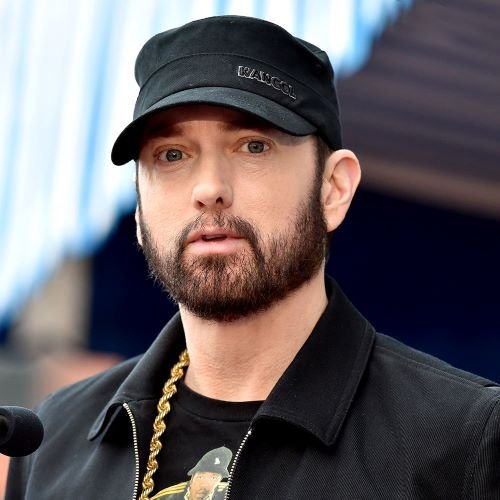
From back when she released her debut single, aged just 17, South London’s Joy Crookes has been no stranger to hype; something that only heightened in the run up to releasing ‘Skin’, her eclectic, luxurious debut album, in October last year.

And while she certainly doesn’t take her accolades for granted – the 23-year-old already has two BRIT Award nominations and a spot on the BBC’s Sound Of poll to her name – she’s still taking things in her stride. “I don’t rely on external validation. It’s just not who I am,” she told us last year, around the release of the record. So it probably comes as little surprise that she seems remarkably chilled when DIY catches her to talk the latest addition to her musical CV: being shortlisted for the 2022 Mercury Prize with FREE NOW.

Your world tour for ‘Skin’ wrapped up recently with shows in Australia and New Zealand. How did it feel to bring this era to a close?

It was so happy and so sad at the same time. Even though we’ve still got festivals, [headlining] is my favourite. The reception that we had over there was absolutely nuts! It’s mad to go to the other side of the world, places you’ve never been before, and have that.

On paper, your career so far has gone about as well as it could have: support from the BBC, BRIT Award nods, ‘Skin’ charting at number five. What sort of mindset does that put you in as an artist?

It’s really easy from the outside to say it’s always been top form; it really hasn’t. There’s been a lot of f**king up as well, to work out what works or doesn’t. I might have hype now but I’ve 100% worked for it. I haven’t shagged any popular rockstars… Have I? No I haven’t [laughs]. I’m not trying to put all the BBC stuff down – it was really amazing when it happened – but other artists were getting a lot more hype at the time. For me, it’s always been very guerilla. I try to gauge my success from the people as opposed to the press.

So, putting that pressure aside, what was your intention when it came time to create a debut album?

I just wanted to make something I would be proud of. I didn’t think about what the reception would be; I really tried to stay in tune with my instincts. I’ve got really good music taste. I don’t mean that in an arsehole way, I mean I’m really open to listening to everything; I love all kinds of music from different time periods and across the world. I knew I needed my music to match the standard of what I think is great.

Was ‘Skin’ influenced by any artists that people might not expect?

I’m a big indie-head. That was my shit when I was like 11 – I thought I was the coolest motherf**ker walking around with a Rough Trade bag! When I was recording ‘Poison’, my drummer walked in and said “this reminds me of Young Marble Giants”, which is exactly the reference; they’re like my favourite band. The sample on ‘Kingdom’ is from White Mice by the Mo-Dettes which has a really sick drum break. They’re probably all yummy mums in Dulwich now, [but in 1979] they were all crazy white chicks making post-punk songs. All their videos are of them with these awful perms at the London College of Printing. Some of my favourite indie stuff is that kind of angry chick music.

The breakthrough hit from ‘Skin’ has been your single ‘Feet Don’t Fail Me Now’. What was the inspiration behind that song?

It’s social commentary. I was really interested in immortalising what I saw in 2020 – not only the pandemic but the Black Lives Matter movement. I was thinking a lot about armchair activism, performative activism, and how in some ways we are all guilty of it. It’s about this character who finds it easier to [blend into] a pack or a group and not have to think individually.

I was thinking about Priti Patel in the second verse. She’s a fantastic example of someone that will never stand on her own two feet. I tried to have some empathy about why she does things the way she does but that’s never gonna happen. She has to be a cog in the f**king Tory party ‘cuz that’s her way. There’s so much self-hatred in this country in people from ethnic backgrounds who feel they have to validate themselves in those spaces. It’s a really complex thing to try and write about – how I managed to do it in my ‘big pop song’ is hilarious to me!

Have you had any especially meaningful fan interactions since releasing the album?

People just be crying all the time! Also, people are nervous with me which I don’t understand. Obviously when you love music and you see your favourite artist you feel nervous [but when] people are acting like that to me I’m like ‘that doesn’t make any sense!’ Some beautiful stuff, like people losing loved ones and what not, then coming to a show [and telling me] “I promised them I would be here”. I love all of that. I love that I can be on someone’s bucket list.

You’ve made it as far as the shortlist. What would it mean to you to win the 2022 Mercury Prize with FREE NOW?

I’d love to have £25,000 in cash, that would be great. Just to hold that in your hands”.

I want to include some sections from a Vogue from December. It was a time when Joy Crookes could reflect on her year and 2021 as a whole. Among other things, she spoke about cultural identity and gentrification:

While she has spent the past eight years building up to this moment, things seemed to accelerate over the last two, just as the world shut down. After coming fourth on the BBC’s Sound of 2020, she garnered a nomination for the taste-making Brits Rising Star Award; and following an increasingly ambitious series of videos rolled out to accompany her singles earlier this year, Crookes released Skin in October to widespread critical acclaim and commercial success, reaching number 5 on the U.K. charts.

Still, Crookes has been careful to keep things in perspective. “Social media was the only measure, and I try not to measure anything on social media, because it’s not real life,” she says of her recent breakout. “You can get as many likes or as many views [as you like], but it’s not the real thing. You don’t get that oxytocin, that genuine bond and connection with people. Real people are my biggest measure of success, and this year, just being in front of people, signing records for people, seeing what my fans look like, watching a 60-something-year-old man absolutely lose his mind to ‘Kingdom’ at the Birmingham show, that’s what I live for.”

It’s this attention to “real people” that brings her songs to such vivid life, after all. Much of the praise for Crookes’s songwriting points to her keen eye for a razor-sharp lyric, whether she’s invoking the epic or the everyday. “England’s blowing smoke, it needs attention / Could use a lick of paint, a change of color / Before they send us back across the water,” she sings on “Kingdom,” which skewers the U.K. Conservative government’s hostile immigration policies; “I’m Villanelle to your Sandra Oh / It’s only for the drama, I know,” she trills cheekily on “Trouble.” Voicemails from her uncle and recordings of her grandma also pepper the record, lending it an added touch of sentimentality and warmth.

 PHOTO CREDIT: Dervon Dixon for Vogue

There’s a strong sense of humor across the album, too; one that gently recalls Lily Allen’s Alright, Still, or even Amy Winehouse’s debut album Frank, with its pithy, distinctly London bite. “It feels like everyone’s really into the deep stuff, but I also think there are some fucking funny bits on the record!” Crookes says. “I do think that the funniest people are often the ones that have been touched by depression. Humor has been a deflection at times, but it’s also been really important through very difficult situations. I think if you can have a sense of humor, then it’s not getting the better of you. And because it’s such an integral part of my personality, it had to be showcased in the music and the lyrics, you know?”

It’s this mix of the sweet and the sour that perhaps best reflects how the spirit of Crookes’s upbringing infuses the album. Crookes talks most animatedly when it comes to her love for the area she grew up in, and the threats posed to it by gentrification. “When you put this gorgeous mix of all these different people from different walks of life into an area, the food, the smell on the street, the music, it’s just... there’s no real way of explaining it,” she says. “It’s a melting pot, and there’s never a dull day. South London is a cocktail of cultures and people and sexualities and races and identities. And somehow it’s thrown together carefully—emphasis on thrown and carefully. It’s a beautiful mess, and I mean that in the most positive way.”

On the album’s second track, “19th Floor,” named after the location of her “nani’s,” or maternal grandmother’s, apartment in a south London tower block, Crookes sings over sweeping strings and epic, Massive Attack-style trip-hop percussion of how the city she knows so well is changing in front of her very eyes: “Strip the life out of these streets / It’s a daylight robbery.”

“Gentrification is a fucking daylight robbery,” Crookes affirms. “It happens right under your nose, and before you know it, you’re like, fuck, I’ve just been robbed. There are problems here, but there is so much beauty.”

Crookes showcases that beauty in her music videos, which are just as vividly realized as the music. (“I always wanted to do that, I just didn’t have the money,” she says of the audibly extravagant production on some of the album’s tracks.) In the video for “Feet Don’t Fail Me Now,” a song written in the wake of last year’s Black Lives Matter protests as an expression of frustration with the emptiness of certain corners of online activism, she rides a motorcycle in traditional Bangladeshi dress while henna painted in the Louis Vuitton monogram pattern decorates her arms. In the final set-up, she wears the billowing white sari conventionally worn by widows as an intentional subversion of the idea that a woman should ever feel defined by a man, whether in life or death.

For Crookes, the idea of representation for the sake of representation feels increasingly redundant—instead, she deploys her South Asian heritage carefully, always to make a less-expected kind of statement. “There’s a lot of Desi-inspired ware in that video, but not just because of the aesthetic,” Crookes says. “I’m trying to make a point. That song is about people who are complicit, and I’m addressing my community there. I’m looking at the British-Bangladeshi community and reminding them that we’re part of the problem as well.” The gorgeous sunflower-yellow lehenga and chunni she wore to last year’s Brit Awards carried a similarly incisive message. “It’s about rewriting narratives,” Crookes says. “When I wore that to the Brits, yes, it was beautiful, but my point there was there aren’t any South Asians in this music industry. It wasn’t about representation—it was a bit of a fuck you”.

The reaction to Skin as hugely positive. One of the best albums of last year, it is a deserved nominee for the Mercury Prize. Maybe it is more of an outside bet, but Crookes’ debut is a stunning album that everyone needs to hear. When You Were Mine was among my favourite singles of last year. I am going to bring in a couple (of the many) positive reviews. This is what DIY noted in their review:

Nearly two years after receiving a BRITs Rising Star nomination and placing fourth in the BBC Sound of 2020 poll (a title that, in retrospect, she’s probably more than happy not to have been crowned with), South Londoner Joy Crookes’ debut arrives not as a rushed product of the hype machine but a rich, varied and considered body of work that audibly benefits from the time its had to breathe. Close and justified comparisons will obviously be drawn to Amy Winehouse, but it’s not just a similarity in old school warmth that Joy draws with her fellow Londoner; like Amy, there’s a timeless quality to ‘Skin’ that pulls equally from more nostalgic orchestral flourishes (‘When You Were Mine’) and slicker, more modern influences like the Massive Attack-echoing ‘19th Floor’. ‘Trouble’ slinks along on dub rhythms, previous single ‘Feet Don’t Fail Me Now’ pairs string flourishes with lyrics about retweeting, while the album’s title track - written alongside Matt Maltese - is a piano ballad as fittingly affective as you’d expect from the pairing. ‘Skin’ is an album worthy of elevating the singer into the realm of Britain’s classiest chart-bothering talents. It does everything a debut should, dipping into multiple pools but uniting them all with a consistent outlook and a clear voice. Joy Crookes, by rights, should be riding ‘Skin’ into the big leagues”.

I will round off with CLASH’s review of a truly wonderful and memorable debut album. I am looking forward to seeing what Joy Crookes gives us next in terms of albums. The Lambeth-born artist is one of our finest talents:

Joy Crookes radiates a self-confidence that defines herself in terms of who she isn’t. Transcending labels with her blend of neo-soul and R&B, she takes all the hooks, choruses, and high value associated with pop and packages them into something wiser. After all, calls to soul, jazz, and Motown are considered the province of generations past, right? Wrong. Spiced up with modern production and relatable reference points, 22-year-old Crookes is the real thing.

In the past two years alone, she has been nominated for the BRITs Rising Star Award, was due to support Harry Styles pre-pandemic, and has sold out her headline shows across the UK and Europe. She imbues her music with a genuine soulfulness, all the while touching on vulnerable topics including mental health, generational trauma, politics, and sex.

Honouring her Bangladeshi-Irish heritage, ‘Skin’ places this pertinence front and centre. The title track’s lyrics are evident: "Don’t you know the skin that you’re given was made to be lived in? You’ve got a life. You’ve got a life worth living". Crookes dispenses wider encouragement and, despite the pain, remains optimistically intimate with her featherlight tones as orchestral soul-jazz weaves around her. Later in the album, her skin becomes the subject of a political narrative in ‘Power’, where she makes an ode to the female figures in her life while exploring the misuse of authority in the current social climate.

The misty-eyed haze lifts on songs like ‘Kingdom’ and ‘Wild Jasmine’ which are filled with guitar riffs and experimental sonics. Crookes twists through narratives of both new beginnings and old flames, finding value in tumultuous times. Inviting listeners to daydream, ‘19th Floor’ laments on belonging. With a string arrangement that wouldn’t feel out of place on the discography of Portishead, Crookes vocal comparably reaches untold altitudes. Across ‘Skin’, the 13 smooth jams showcase Joy Crookes not only as a vocalist or candid writer but as the new face of British soul. While many artists chase nostalgia, Crookes offers a different way forward by disregarding the traditional boundaries of classicism.

9/10”.

On 18th October, Joy Crookes’ Skin goes up against eleven other great albums from British and Irish artists for this year’s Mercury Prize. It is wonderful to see her in the mix! Given how strong Skin is, there is every chance it could walk away with the prize. I wish the amazing Joy Crookes…

THE very best of luck.

FEATURE: A Timeless New Sensation: INXS’ Kick at Thirty-Five

FEATURE:


A Timeless New Sensation

INXS’ Kick at Thirty-Five

__________

I have done quite a few…

 IN THIS PHOTO: INXS in Chicago in 1988. From left: Kirk Pengilly, Garry Beers, Jon Farriss, Tim Farriss, Michael Hutchence and Andrew Farriss/PHOTO CREDIT: Norman Seeff

anniversary features lately. One that I am a bit late to but am going to mention now is INXS’ Kick. It was released on 12th October, 1987. Ahead of its thirty-fifth anniversary, it is only appropriate to celebrate and spotlight a sensational album by the Australian band. Produced by British producer Chris Thomas and recorded by David Nicholas in Sydney, Australia, and in Paris, France, Kick is seen as one of the best albums of the 1980s. In fact, it ranks alongside the best albums ever! Although the band are terrific throughout, I think their lead Michael Hutchence really defines the album and gives every song so much gravitas and passionate. A remarkable lead and songwriter, I do think Kick stands out and endures because of Hutchence’s talented and magnetism! It is worth coming to reviews of a simply wonderful album. I want to start out with Louder Sound and part of their review for the thirtieth anniversary release of Kick (in 2017). It is interesting what they say about the Australian band, and particularly Hutchence, and how they differed to what was around on the scene in 1987:

Outside of Frankie’s pleasuredome and Dexys’ dungaree incinerator, no one in the 80s ever admitted to sweating. This was the decade of the pristine, the age of immaculate aristocrat make-up, sculpted fringes, and trousers cut to allow for the maximum air circulation. Pop music was clinically synthetic, sleek and vacuum-moulded; no star worth their Stock Aitken Waterman remix would ever do anything as human as perspire.


So when, in 1987, INXS frontman Michael Hutchence rolled up in a zip-strewn biker jacket behind a swarthy guitar riff and pouted ‘there’s something about you girl that makes me sweat’, we barely knew what to make of him. He and his band of Australian gloss-rockers had all the plastic funk grooves, silvery synth touches, sax solos and soul harmonies of popular contemporaries such as Fine Young Cannibals, the Human League, Duran Duran, Level 42 and Curiosity Killed The Cat, but they were fronted by a lizard-hipped sex mop with clear aspirations to be the Jim Morrison of his day. With one purring ‘slide over here and give me a moment, your moves are so raw’, INXS became the safe, sanitised sound of 80s sexuality, the Kylie fan’s (and, later, Kylie’s own) bit of rough. A band more likely to make you feel like a million dollars in the sack than Howard Jones, but less likely to leave you encrusted with soiled dairy products than Prince.

Very much an Australian phenomenon until ’87 – their many Australasian hits had barely registered in the UK – their sixth album, Kick, landed like a Thor’s hammer of lascivious arena pop, a virtually faultless, laser-targeted collection of synthetic sleaze that spoke of a band arriving fully formed at the very peak of their songcraft. After 10 years spent quietly polishing up their Boomtown Rats-style new-wave pub rock and trimming their mullets for the spangly new decade, they were the Down Under U2, slamming from the ether with their very own Joshua Tree or, in Peter Gabriel terms, delivering their So without the wider world knowing they’d ever worn a sunflower helmet. Seductive nightcrawler Need You Tonight was like a glowing neon calling card reading ‘NEW IN TOWN’ tucked suggestively into the breast pocket of the top five, and once we made the call they sure kept showing us a good time. Devil Inside was 80s pop licking a forked tongue”.

Kick was the album that defined and announced INXS. It is their breakthrough. 1990’s X is a great album, but it does not scale the same glorious heights as its predecessor. With classic albums, it is great to talk about the songs and the legacy of the album, but I always like to know about the background and how things came together. With INXS’ Kick, Andrew Farriss and Michael Hutchence did work intensely on the songs. This article from 2021 discusses the background and creation of Kick:

After their breakout hit “What You Need” smashed into the US Top 5 early in 1986, INXS’s slow but steady rise to global stardom intensified. On the back of the single’s success, their fifth album, Listen Like Thieves, went double Platinum in the US and set the stage for the band’s promotion to rock’s big leagues with 1987’s Kick, released on October 19 that year.

Complacency, however, wasn’t an option for the hard-working Australian sextet as they began crafting their magnum opus. Indeed, while they embarked on the album sessions on a high following acclaimed US and UK jaunts, and the Australian Made tour, which straddled December 1986 and January ’87, the band was unanimous in the belief that their new material simply had to better than Listen Like Thieves. As guitarist and saxophonist Kirk Pengilly informed DJ and broadcaster Ian “Molly” Meldrum, INXS were striving for “an album where all the songs were possible singles.”

To achieve this aim, the band reconvened with Listen Like Thieves producer Chris Thomas. Having previously helmed acclaimed titles by The Pretenders, not to mention Sex Pistols’ infamous Never Mind The Bollocks… Here’s The Sex Pistols, Thomas’ crisp, efficient studio technique ensured he remained in demand. Yet while the producer was aware that INXS’s star was firmly in the ascendant, he later told band biographer Anthony Bozza that he felt “they didn’t have the right songs yet” when the Kick sessions began in Sydney.

Accordingly, primary songwriters Michael Hutchence and Andrew Farriss flew out to Hong Kong for an intensive two-week songwriting session. Inspired by the sojourn, the pair returned with a handful of promising demo tapes, including basic versions of several of the future album’s key tracks, among them the driving, anthemic “Kick,” “Calling All Nations” and “Need You Tonight.”

Certain they now had the goods, Chris Thomas and the band headed to France for further sessions in Paris, where they completed the newly-christened Kick. Their gut instinct was correct, for the new record took elements of all INXS’s key influences – anthemic, Rolling Stones raunch, Gang Of Four-esque angularity, and the cutting-edge sounds of the contemporary dancefloor – and seamlessly blended them into a compelling and highly original pop-rock hybrid that would thrust the band into the heart of the mainstream.

Yet, while group and producer alike were convinced they were sitting on a classic, INXS’s US label Atlantic initially failed to see Kick’s potential. In fact, it was only after the sleek, sensual “Need You Tonight” proved a hit on US campus radio, and its infectious follow-up, “Devil Inside,” crossed over onto classic rock playlists, that Atlantic relented and released Kick in October 1987.

The critical acclaim Kick attracted on release (with UK monthly Q’s four-star review memorably referencing “Hutchence’s knowing, Jagger-esque vocal swagger”) demonstrated that INXS and Chris Thomas’ confidence was entirely justified, and the band converted new fans in droves. The confident “New Sensation” and classy, strings-and-sax-enhanced ballad “Never Tear Us Apart” followed “Devil Inside” and the seductive, chart-topping “Need You Tonight” into the US Top 10, while Kick proved a global smash, topping the Australian Charts and peaking at No. 3 during a consecutive 79-week run on the Billboard 200 which eventually yielded US sales of over four million.

Keen to keep the ball rolling, INXS embarked on an extensive 16-month tour which saw them packing out arenas in North America, Europe, Japan, and Australia through October 1988. The itinerary included a brace of highly-acclaimed shows at New York City’s famous Radio City Music Hall and an emotional three-night homecoming at the band’s native Perth Entertainment Centre during the final leg in Australia. By the tour’s end, INXS was regularly performing all of Kick’s 12 songs and the group was widely recognized as one of the biggest bands on the planet.

“I think what makes the Kick album so dynamic is that we weren’t so much interested in what everybody else was doing as on what we wanted to do,” Andrew Farriss says, reflecting on the album’s longevity. “Michael and I were extremely focused as songwriters, and the band was very intent on making a series of recordings that we could be passionate about. It was really an incredible experience”.

I will end with a review for the immense Kick. Turning thirty-five on 12th October, I know that a lot of people will be sharing their memories of the album and what each of the songs means to them. Need You Tonight, New Sensation, Never Tears Us Apart and Mystify are among the best songs in INXS’ catalogue. Kick is an album without a weak moment. The deeper cuts are really strong and interesting. This is what AllMusic wrote about Kick in their review:

"What You Need" had taken INXS from college radio into the American Top Five, but there was little indication that the group would follow it with a multi-platinum blockbuster like Kick. Where the follow-ups to "What You Need" made barely a ripple on the pop charts, Kick spun off four Top Ten singles, including the band's only American number one, "Need You Tonight." Kick crystallized all of the band's influences -- Stones-y rock & roll, pop, funk, contemporary dance-pop -- into a cool, stylish dance/rock hybrid. It was perfectly suited to lead singer Michael Hutchence's feline sexuality, which certainly didn't hurt the band's already inventive videos. But it wasn't just image that provided their breakthrough. For the first (and really only) time, INXS made a consistently solid album that had no weak moments from top to bottom. More than that, really, Kick is an impeccably crafted pop tour de force, the band succeeding at everything they try. Every track has at least a subtly different feel from what came before it; INXS freely incorporates tense guitar riffs, rock & roll anthems, swing-tinged pop/rock, string-laden balladry, danceable pop-funk, horn-driven '60s soul, '80s R&B, and even a bit of the new wave-ish sound they'd started out with. More to the point, every song is catchy and memorable, branded with indelible hooks. Even without the band's sense of style, the flawless songcraft is intoxicating, and it's what makes Kick one of the best mainstream pop albums of the '80s”.

One of the absolute greatest albums, a happy thirty-fifth anniversary to INXS’ Kick for 12th October. It is sad that Michael Hutchence is not here to see how Kick has been respected and enjoyed through the years. He died in 1997. His voice, power, passion, and brilliance are displayed right through Kick. It is an album that will be adored and loved…

FOR decades to come.

FEATURE: Spotlight: Charlotte Sands

FEATURE:


Spotlight

Charlotte Sands

__________

AN incredible artist…

whose latest single, Tantrum, is among the best of this year, I wanted to highlight the wonderful work of Charlotte Sands. I am going to come to some interviews from this year. In fact, I will start with one from January, as it gives us some background and biography about the sensational Sands. SPIN spoke to her about life during the pandemic, her musical influences, and the success of the epic song, Dress:

When Charlotte Sands posted a TikTok at the beginning of COVID asking Yungblud to let her open for him on tour, she didn’t know that it would actually happen. The idea was something the blue-haired singer-songwriter had been putting into the universe for a while, and it finally seemed like her unrelenting hope was paying off.

“I genuinely have been manifesting opening for [Yungblud on tour] for about two years now,” Sands laughs over the phone between hours of tour rehearsals in Nashville. “I’ve always been a fan of his message and everything he represents as an artist and as a person. He has always been a really big idol for me.”

Born in Massachusetts to a musician father and actress mother, Sands was always surrounded by music. As a kid, she found herself inspired by storytelling songwriters like Bonnie Raitt, Sheryl Crow and Grace Potter. By her teen years, she began writing music and discovered emo and pop-punk bands like All Time Low and Taking Back Sunday. Trying to find that middle ground between those 2000s rockers and childhood favorites has been an ongoing challenge she’s embraced as an artist ever since she moved to Nashville two weeks after high school ended.

“The quest that I’m on is trying to mix all those influences together,” she says. “Because they are so weird and are different parts of who I am as a person and as an artist.”

After years of building up her songwriting chops, the stars finally seem to have aligned for the 25-year-old alt-pop singer. At the end of 2019, Sands signed a publishing deal and became a full-time songwriter. By February 2020, she headlined her first sold-out show and planned to tour both coasts. Of course, the COVID-19 pandemic then put those plans on hold.

In the interim, her fanbase grew exponentially thanks to a viral song. In November 2020, Sands penned “Dress” — a direct response to conservative pundit Candace Owens and the negativity surrounding Harry Styles’ Vogue cover where he sported a Gucci ball gown. “I love the way you wear that dress / Making everyone upset / Burning that cigarette, boy / Swear to god I’ll confess, boy,” she swoons in the chorus. It didn’t take long for the song to blow up on TikTok, and it currently has 1.3 million views and counting. For Sands, the surprise hit wasn’t just a statement about redefining masculinity.

“‘Dress’ started from a place of me realizing that my type — the kind of people that I’m attracted to — had changed,” she says.

The success of “Dress” gave Sands some much-needed momentum to carry on despite quashed tour plans. In November, Sands finally released her debut EP, Special — a six-song compilation of vulnerable pop-punk anthems — and now she’s followed it up with Love and Other Lies, an EP that combines her raw folk songwriting and alt-leaning melodies. In developing the framework of her sound for these two EPs, she’s found inspiration in Kelly Clarkson, P!nk, Avril Lavigne and Katy Perry.

“These incredible women were so angsty, and they always felt like they weren’t doing what they were supposed to do, but in the best way,” she says. “They were always kind of rebellious and different and outspoken. Pop music has certain stigmas for women to create certain types of music about certain types of emotions or relationships. It’s really amazing to see female artists have this place where they can be angry, make aggressive music, be energetic and all these things, and people are applauding them.”

This mentality fuels Love and Other Lies, a seven-song amalgamation of tenderness, rage, heartbreak and jealousy. Ahead of the EP release, Sands shared “Every Guy Ever” — a sticky anthem about being fed up with manipulative men. A few months later, she dropped “Keep Me Up All Night,” a pop-punk gut-punch about being in love with someone and watching them be in love with someone else. That emotion also bled into “All My Friends Are Falling in Love,” a track that encompassed the loneliness Sands felt during lockdown as the regular fifth wheel with her coupled-up friends.

“It’s probably one of the hardest universal feelings, feeling unwanted or left out,” she says. “I remember crying in the bathroom [during lockdown] and having this overwhelming sense of loneliness in knowing that I was the only one going home to nobody and I live alone.”

Perhaps the most striking moment on the EP is also the softest. On the title track, Sands warbles about her family dynamic in a hazy ballad. But its opening is particularly meaningful for Sands. For two years, she held out hope that she’d play her biggest gig yet: Bonnaroo. But bad luck struck the festival again in 2021 and the site flooded, officially canceling the event. It emotionally crushed the singer, until her mom called when she needed it most and left her an encouraging voicemail. It’s stuck with her, and she thought it could help her listeners, too.

“Some people don’t get to have moms call them and tell them helpful, inspirational things to get them out of where they are,” she says. “Because they don’t have that, they can have my mom.”

Despite releasing two EPs in such a short period of time, Sands isn’t necessarily rushing to release an album. It’s something on her radar, but she’s got plenty of other ambitions for now — like dream collaborations with Yungblud, Machine Gun Kelly, Raitt, Perry or Gwen Stefani in the future. Slowing down isn’t even on her radar.

“I’ve always lived with the idea that you have to earn the time and attention of an album,” she says. “I think it really has to do with where I am. There’s a lot I have to check off my list in the next few years.” And she’ll get to that album… eventually”.

 PHOTO CREDIT: Nickalaus Stafford

Charlotte Sands is coming to the U.K. next year but, if you are in the U.S., you can see her this year. An amazing live act and fabulous artist, I know that she is going to go very far. The scene is ripe and overflowing with amazing women across all genres and corners of the musical landscape.  The turquoise-haired Nashville-based artist is really on the rise and making music of the highest order! Melodic Magazine chatted with Sands earlier in the year about touring with YUNGBLUD, in addition to whether it is easy to balance her influences with an original and personal direction:

Picking a favorite song is like picking a favorite child – but do you have a favorite song to perform, or a favorite lyric you’ve written?

My favorite song to perform right now is “Keep Me Up All Night” because it feels like a ballad but also keeps the energy of the rest of the show which is really fun for me. It’s the only song that’s slow enough that I can actually focus on my voice and how it sounds and also check in on myself and my body during the show to make sure everything feels right and I’m not over or under performing.

I think one of my favorite lyrics is from the song “Love and Other Lies” when it says “we’re only human we’re all singing the same song”. It’s so simple but I love it because it’s a reminder that we’re all just people doing the best we can with what we have and that’s enough.

A few years ago you began manifesting opening for Yungblud – and it came true! Is the idea of putting things into the universe common for you, and something you want your fans to do as well? It seems in this day and age especially; we tend to be harder on ourselves and our dreams.

I definitely believe in manifestation and speaking things into existence! I’ve seen such an insane difference in my life since I’ve started vocalizing my goals and I don’t know if it’s the universe or a higher power or maybe just my own subconscious working harder for the things that I’ve said out loud but it works! I also believe that when you speak to yourself in a positive way and you talk about things you want to achieve in a way that’s claiming them as if they have already have happened, you start to convince yourself that things are possible and you work harder to make them happen without the constant obstacles of self doubt or fear. We live in a world with so much judgment and criticism and I think that anyone could greatly benefit from the idea of manifesting your dreams and shamelessly being your own champion.

Are there any other moments that have stuck with you and generated songs or specific lyrics that you could share with us?

In the second verse of my song “Bad Day” it says “I wish I felt everything less, can I be sad for a minute and not be depressed” and as dark as that sounds it was actually a note entry in my phone that I found when we were writing the song. I’m such a 0 to 100 person and I always feel every emotion so deeply which can be a blessing and a curse. I’m grateful I can feel so much because it’s why I’m able to write songs but it can also be a really heavy weight to constantly carry around which is what “Bad Day” ended up being about. It’s the story of allowing yourself to be where you are and to feel everything without automatically correcting yourself or trying to be more positive like we’re constantly told to be. It’s okay to have a bad day and writing that song has allowed me to be easier on myself when it comes to my own emotions.

You’re inspired by contrasting genres, from storytelling artists like Bonnie Raitt on one end to pop-punk bands like All Time Low on the other – creating your own distinctive sound. As time has passed, have you found it easier to create a middle ground combination of your influences, or is this something you are still seeking?

I definitely find it easier to combine all my influences now because I’ve realized how similar they all really are. All my favorite songs are so different but have so many things in common like the storyline or the quality of lyrics and overly melodic choruses. I have so much fun figuring out how to create music that sounds like mine and that reflects my influences and it doesn’t feel as daunting as it used to. I trust myself more and I’m a lot less interested in genre or whatever box that I’ve been told I fit best in which allows me a lot more freedom these days – I’m very excited about that”.

I am going to wrap things up with an interview from Alternative Press. A remarkable artist that everyone should know about, it is fascinating reading interviews with her. I really hope that Sands gets more dates in the U.K., as her fanbase is growing over here:

"Nashville-based singer-songwriter Charlotte Sands is truly having a moment right now. Between the breakout success of her single “Dress,” playing shows with YUNGBLUD and My Chemical Romance and providing guest vocals on several high-profile collaborations in the rock, alternative and pop world, Sands is an unstoppable force. While her rise to stardom has kicked into overdrive within the past two years, the young artist has been grinding it out as a songwriter for nearly a decade, and her success is a testament to her hard work and relatable ethos.

On “Dress,” Sands offers a stunning directive for her listeners to be themselves, defy societal expectations and embrace everyone’s unique characteristics. This has not only positioned her as a role model to a growing fanbase but has also created an entire community of supporters who are unified through a safe space rooted in the power of music. Now, Sands plans to make next year the most exciting and eventful it has been for her career while also giving back to her community in the process.

This leads us to the announcement of Sands’ first-ever headline run, the Love And Other Lies tour, which kicks off this fall with support from rising alternative artists John Harvie and No Love for the Middle Child.

You've had a meteoric rise as an artist. One can only imagine what's coming next for you, and it seems to be a very exciting time. What was the journey like to get here?

I pinch myself every day with how much we have been able to accomplish in the last two years, let alone the last 10 plus that I have been doing this. Overall, I have really tried to expand a network of people I love working with that inspire me and make me feel more creative. Once you build that community of people who love and respect your art, it helps create this web of like-minded people, which makes it more enjoyable.

Nashville has a history of having a strong community of songwriters and producers. What prompted you to move there, and what does the city bring out in your art?

Nashville is still where I believe the highest quality of songwriters exists. There is this quality and love for the story of the song and lyricism. The songwriters who live here, including me, experience this respect toward lyrics, and ever since, I’ve been obsessed with that relationship with words. I moved here because my favorite songwriters Sheryl Crow, Bonnie Raitt and Michelle Branch were here making albums, and when I was growing up, I had this feeling that this was where I was supposed to be.

With “Dress” being your breakout single, I find it so interesting that you leaked the song initially. Did you immediately know that you captured something special that needed to be shared right away?

To be honest, none of it was a strategy. I was in this position where I was home, I couldn’t tour and I didn’t feel like I had an output for my creativity besides releasing a song every six weeks. I hadn’t really gone down the TikTok hole at that point, but it got to a point where we had nothing else to try, so we just did it. I leaked it a couple of days before Thanksgiving, and I turned off my phone not thinking anything of it, but my manager called me and told me that something was happening with it. I was thinking it was probably a prank and automatically thought that there was no way this was real. I’m really grateful for the reaction to the song. There is such an important message in it of self-expression, questioning gender norms and being your authentic self.

There's such a strong message behind “Dress.” With that being said, do you recognize that you are now becoming a role model for so many of your fans?

I honestly have such impostor syndrome when it comes to that stuff. [Laughs.] I haven’t done anything — I just wrote my feelings in a song. I see activists and people who are donating their life to these causes, and I feel like I’ve done the bare minimum, but I do have so many people who have had an incredible reaction to it. I think the most wonderful thing for me is if I have given anybody more confidence because knowing that there is a community that supports you as you are and everyone is safe is something that I take a lot of pride in. Being able to curate a community is something I couldn’t be more proud of in my life. It’s so much more than a song.

You've also been involved in so many exciting collaborations with a wide range of artists, from Underoath and Sleeping With Sirens to pop artists like Mokita and the Maine. What was the process like getting together with these artists, and what makes collaboration so important to you?

I think every single collaboration has come out of a friendship. With Underoath, I wrote with [drummer, vocalist] Aaron [Gillespie] for my project, and he’s just the most beautiful human, and that’s how I got the Underoath feature. It was the same with Mokita. He lives in Nashville too, and it finally just worked out. The funniest thing about the Sleeping With Sirens collaboration was that I was on a podcast, and I was like, “I would love to do a collaboration with Kellin Quinn,” and of course, he saw that clip, and he told me he had a song he wanted me on. I think it’s important for me to push the box of the genre that people see me in. I grew up on such a wide range of music, and it’s important for me to not be pigeonholed as one type of artist.

Having the opportunity to share the stage with so many acts such as My Chemical Romance and YUNGBLUD must have been really special. Did you learn anything from these artists in the process?

It’s endless. With YUNGBLUD, that was my first tour ever, and he just breathes stardom. I think he is going to be the David Bowie for millennials and Gen Z. Watching him every night was so inspiring. Watching him have that power to captivate people so easily made me want to make people feel the same way when they’re watching me. It taught me so much. For the My Chemical Romance show, it was the biggest show of my life, and it was 32,000 people in a stadium. I blacked out a lot of it, and I remember walking onstage not being nervous and just kept telling myself, “This is what you are meant to do being do, so prove why you worked so hard and trust the work.”

That leads us to now with your first headline tour. What can we expect, and does it feel exciting or daunting?

I feel like the timing couldn’t be better. I’m itching to play more shows and play longer sets. For the first time ever, I get to curate an experience that is my own that I think the audience will enjoy. The preparation for it is daunting but it’s just one of those things where there’s so much to do that you just need to let go of control and know that it’s going to work out for the best. It’s going to be a magical experience, and it’s going to be the biggest thing I’ve done in my career. I’m so overwhelmed in a great way. I’m so excited!

With the music industry changing so much, a full-length isn't always needed anymore, but are there plans to put out a larger musical project down the road?

I have always said that you have to earn an album. You have to earn the amount of time it takes for someone to listen to your project front to back. I want to earn it, and I think I am at a point now where I want to do bigger projects. Being able to make multiple songs that feel like they are a part of each other and the same story is always really fun for me. Hopefully, next year is when I can put an entire project out”.

One of my favourite new artist, Charlotte Sands is primed for great things. I have been following her music for a bit, but I know the next couple of years are going to be really huge for her. I wonder whether there is an album in the back of her mind. If you have not heard of her yet, make sure you follow and listen to her now! This is a simply wonderful artist that you need to…

WATCH very closely.

______________

Follow Charlotte Sands

FEATURE: Kate Bush’s The Sensual World at Thirty-Three: This Woman’s Work: Her Most Heartachingly Beautiful Moment?

FEATURE:


Kate Bush’s The Sensual World at Thirty-Three

This Woman’s Work: Her Most Heartachingly Beautiful Moment?

__________

I will put out…

a couple more features relating to The Sensual World ahead of its thirty-third anniversary on 17th October. Kate Bush’s magnificent sixth studio album, there are so many great songs to be found. One that I especially love is This Woman’s Work. I have been thinking about Kate Bush and film. Someone whose music has been used on T.V. and film, I wonder how many times she was asked to write for films soundtracks. This Woman’s Work found her writing this beautiful song for the 1988 film, She’s Having a Baby. Directed by John Hughes, it is rare that people heard a Kate Bush song somewhere else before it appeared on a studio album. That was the case here. This Woman’s Work has a bit of a life of its own. Before moving on and going deeper, the Kate Bush Encyclopedia sourced interviews where Bush discussed one of her most potent and remarkable songs:

John Hughes, the American film director, had just made this film called 'She's Having A Baby', and he had a scene in the film that he wanted a song to go with. And the film's very light: it's a lovely comedy. His films are very human, and it's just about this young guy - falls in love with a girl, marries her. He's still very much a kid. She gets pregnant, and it's all still very light and child-like until she's just about to have the baby and the nurse comes up to him and says it's a in a breech position and they don't know what the situation will be.

So, while she's in the operating room, he has so sit and wait in the waiting room and it's a very powerful piece of film where he's just sitting, thinking; and this is actually the moment in the film where he has to grow up. He has no choice. There he is, he's not a kid any more; you can see he's in a very grown-up situation. And he starts, in his head, going back to the times they were together. There are clips of film of them laughing together and doing up their flat and all this kind of thing. And it was such a powerful visual: it's one of the quickest songs I've ever written. It was so easy to write. We had the piece of footage on video, so we plugged it up so that I could actually watch the monitor while I was sitting at the piano and I just wrote the song to these visuals. It was almost a matter of telling the story, and it was a lovely thing to do: I really enjoyed doing it. (Roger Scott Interview, BBC Radio 1 (UK), 14 October 1989)

That's the sequence I had to write the song about, and it's really very moving, him in the waiting room, having flashbacks of his wife and him going for walks, decorating... It's exploring his sadness and guilt: suddenly it's the point where he has to grow up. He'd been such a wally up to this point. (Len Brown, 'In The Realm Of The Senses'. NME (UK), 7 October 1989)”.

One of the standout songs from The Sensual World, I was surprised that Bush reworked it for 2011’s Director’s Cut. Like Deeper Understanding (also from The Sensual World), This Woman’s Work is perfect in its original form. Maybe trying to breathe new life into the song, I am of the opinion that This Woman’s Work sounds better and more affecting in its 1988 version. It only reached twenty-five in the U.K. in 1989. In 2008 it reached seventy-six; sixty-three in 2012. A track that has not really hit commercial highs, one cannot deny its sheer quality and importance! One of the most devastating and memorable sets of lyrics Kate Bush ever penned, I feel This Woman’s Work is one of the most remarkable beautiful and moving songs in her catalogue. There have been four different versions of This Woman’s Work recorded. The original version was released on the soundtrack for She's Having a Baby. The version that was featured on The Sensual World was re-edited from the original version. The version released as a single was a third, ever so slightly different mix. The track was then completely re-recorded on Director's Cut. The new version features a sparse performance of Bush playing the piano and singing. Directed alongside John Alexander, the video for This Woman’s Work is beautiful. Bush plays the role of the wife alongside her husband Tim McInnerny. The husband is desperate in a hospital waiting room waiting to see if his wife is okay. A nurse then speaks to him and we are not sure what the outcome is. Though the smile she gives makes us feel that thew wife (Bush) is alright.

Filled with emotional and powerful lines, one of the most recognisable and stirring passages Bush has ever written is this: “Of all the things I should've said,/That I never said/All the things we should've done/That we never did/All the things I should've given/But I didn't/Oh, darling, make it go/Make it go away”. I have been thinking about various songs from The Sensual World ahead of its thirty-third anniversary on 17th October. A wonderful album that features some of Kate Bush’s best songwriting, it all builds to the heartache of This Woman’s Work. I guess it is more about regret and growth. The husband is in a crisis position at hospital when his baby is in the breach position. To this point, he has been a bit silly and immature. Facing potential tragedy, he regrets things he never said and things he never did. It has that sadness. I wonder whether the line about making it all go away refers to the doubts and past struggles, or whether it is actually about the baby. Taking responsibility and facing all this challenge might be too big and much. The way Bush sings the song sends shivers up the spine. It is a song I have heard so many times, yet it always makes me feel affected moved. Testament to the power of her songwriting! Possibly the most beautiful track she has ever written, I do wonder why This Woman’s Work did not chart higher. That is a question for the ages! Taken from the incredible and acclaimed The Sensual World, This Woman’s Work is…

AMONG Bush’s very best songs.

FEATURE: Madonna’s Erotica at Thirty: My Introduction to the Album: The Superb Rain

FEATURE:


Madonna’s Erotica at Thirty

My Introduction to the Album: The Superb Rain

__________

A Madonna song…

that performed better in the U.K. than on the U.S. Billboard chart, my introduction to her 1992 album, Erotica, was through Rain. Released on 5th August, 1993 as the fifth single from the album, I wanted to write more about it, in addition to marking the thirtieth anniversary of Erotica on 20th October. I will write about one or two other songs closer to the time, but I can remember when Rain came out. Unlike a lot of what we hear on Erotica, this was the more sensitive and touching side of Madonna. Whereas Erotica does have some steamy and provocative moments, Rain is one of her great ballads. Not everyone shares that opinion, but I think Rain is a highlight from Erotica. I think, when I was a child, I was hooked by the New Age sound and the fact that it was gentler and more accessible than a lot of the album. Now, I love Erotica and think that it is misjudged, underrated and hugely influential. Rain concerns Lyrically the song likens rain to the empowering effect of love and water's ability to clean and wash away pain. There might be sexual elements and interpretations, but I think this is Madonna in more thoughtful and spiritual mode. A beautiful song that adds something very special to the second side of Erotica – which I think is weaker than the first half -, this song needs to be re-evaluated and reassessed.

In terms of critical reception, there were those who identified Rain as a terrific song that showed a more tender side to the Pop queen. Compare Rain to a track like Erotica, and it shows how broad and eclectic her work was around this time:

Upon release, "Rain" received generally positive feedback. Stephen Thomas Erlewine from AllMusic called "Rain" among "Madonna's best and most accomplished music". Jose F. Promis from the same media credited the song in "paving the way for the "softer" Madonna to emerge in the mid-'90s". Annie Zaleski from The A.V. Club stated that it established Madonna as "a sensual New Age goddess". While reviewing the album for Billboard, Paul Verna called the song "a lovely pop ballad". In a separate review of the single on the magazine, another editor, Larry Flick wrote.

A gorgeous, romantic moment from [Madonna]'s sorely underappreciated Erotica opus. A slow and seductive rhyme base surrounded by cascading, sparkling synths inspires a sweet and charming vocal. Though not as lyrically daring as the previous "Bad Girl", this is a wonderfully constructed, memorable tune that deserves as much attention (and airplay) as it can garner.

In August 2018, Billboard picked it as the singer's 73rd greatest single, calling it "a top 20 hit of perfectly polished R&B co-produced by Shep Pettibone. Built around one of pop music's most timeless central lyrical images, it's got a depth of production and vocal nuance that suggests Madonna's spin on a great late-'80s Jimmy Jam and Terry Lewis slow jam". Tony Power from Blender picked it as one of the stand-out tracks from Erotica. Scott Kearnan from website Boston.com felt that the song is an example of "what she lacks in [singing] technique she's always tried to make up for with earnestness". He also praised her phrasing, saying that "Madonna sings like she believes in every word". Troy J. Augusto from Cashbox commented, "Simple yet effective number sounds like a love-scene accompaniment from Beverly Hills 90210. At times. Miss Ciccone almost sounds like Karen Carpenter, all tender and shy. (My God, there's no limit to this artist's depth!)" Writing for The Huffington Post, Matthew Jacobs placed the track at number 43 of his list "The Definitive Ranking Of Madonna Singles" and felt the track was a departure from the previous "carnal" releases from Erotica; "It's not terribly distinctive from the other ballads Madonna released in the early '90s, but then there's the sultry chorus with the uplifting lilt 'Here comes the sun'". Stephen Sears from music website Idolator called the song as "the album's sole expression of pure love", which "revisits the oceanic sonic landscape of her epic 1986 ballad "Live To Tell".

I think there should be a lot of celebration around Erotica when it turns thirty next month. It is one of Madonna’s best albums, and one big reason is songs like Rain. Creating some balance and emotional reflectiveness on an album that is noted for its more sexual content, I was struck by the beauty and stillness of Rain when I first heard it. Although Madonna has created finer ballads (my favourite song of hers, Take a Bow, is from 1994’s Bedtime Stories), this 1993 hit she wrote and produced with Shep Pettibone is a classic. Even though I had heard other Madonna songs prior to 1993, I found Rain to be deeper and more mature than a lot of those from her earlier albums. Erotica is a magnificent album, and it came at a time when Madonna was this huge Pop artist on top of the world. Erotica is often seen as a purely sexual album or something trying to push buttons. To me, there is so much in terms of the themes and emotions at work. Some might not realise and appreciate the incredible strength and worth of Rain, but I really love it! A definitely highlight of Erotica, this stunning track ranks as…

ONE of Madonna’s best songs.