FEATURE: Stepping Inside Oh England My Lionheart: Kate Bush’s Lionheart at Forty-Four

FEATURE:


Stepping Inside Oh England My Lionheart

IN THIS PHOTO: Kate Bush during the Lionheart cover shoot at Great Windmill Street, London in 1978/PHOTO CREDIT: Gered Mankowitz

Kate Bush’s Lionheart at Forty-Four

__________

I am doling a big run…
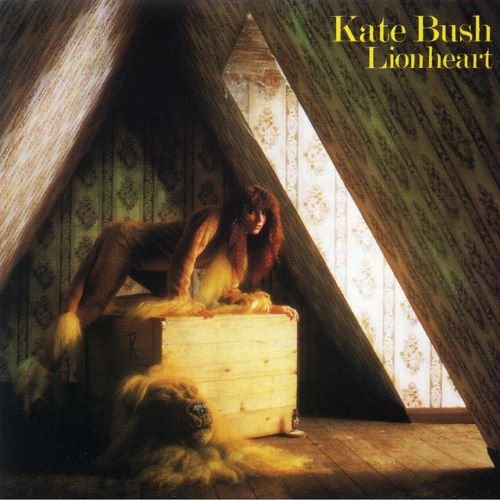
of Kate Bush features because quite a few of her albums have anniversaries next month. One of them is her second studio album, Lionheart. Released on 13th November, 1978, I wanted to make the first feature about one of the ten tracks that is not talked about all that much. To be fair, Lionheart is underrated and many only refer to it in the context of Wow. It’s best-known song, it is a shame that more people have not delved into a brilliant album. I think there is a feeling not many songs sound like singles and are lesser versions of what we heard on The Kick Inside (Bush’s debut album). Released a matter of months after that debut, Lionheart is a brilliant album. One of the songs that should be celebrated and highlighted is the gorgeous Oh England My Lionheart. Kate Bush was quite hard towards Lionheart in retrospect. When promoting the album, she was praising it and saying it was a stronger work than The Kick Inside. Not that she has been harsh. It is just the fact she distanced herself or felt she was less experienced or something was lacking. Lionheart is much better and worthy than that. The Kate Bush Encyclopaedia has a page where Bush was interviewed and talked about the album. I have chosen one section to focus on:

Even on the first two records, I was doing what I'm doing now as a artist, only because I was a lot younger, and I didn't have the room and the space to be able to truly present my music. I had to work with a producer and within certain kind of set-ups because of the fact that... that's how it was, I wasn't powerful enough basically to be able to say, ``Look, I'm producing this myself. This is what I do.'' And that's what I do now. I think that if I had been a little older, and if I'd had the experience at the time, I would have done it then, too. But I was - When I was making my first album, I was 18. I had never really worked with a band before, let alone a producer in a studio setup. So I just had - [Laughs] -I mean I just about had the guts, you know, to sing and keep it together. But you learn very quickly what you want. By the time the second album was finished, I knew that I had to be involved. Even though they were my songs and I was singing them, the finished product was not what I wanted. That wasn't the producer's fault. He was doing a good job from his point of view, making it sound good and together. But for me, it was not my album, really. (John Dilberto, Britain's Renaissance of Concept Rock, Keyboard, 1985)”.

A definite Kate Bush deep cut, maybe it is too English a song to have found success around the world. I think it could have fared well in foreign territories. As it is, Hammer Horror, Wow, and Symphony in Blue. The latter was released in Japan and Canada. I have written about Oh England My Lionheart before in a defensive context. I will do another couple of features about Lionheart. I am keen to highlight the strengths and variation through the album. From the stunning and gorgeous Symphony in Blue, to the more eccentric Hammer Horror, Full House and Coffee Homeground, there is so much to enjoy and respect about Lionheart. This is what Bush said about Oh England My Lionheart when promoting her second studio album:

It's really very much a song about the Old England that we all think about whenever we're away, you know, "ah, the wonderful England'' and how beautiful it is amongst all the rubbish, you know. Like the old buildings we've got, the Old English attitudes that are always around. And this sort of very heavy emphasis on nostalgia that is very strong in England. People really do it alot, you know, like "I remember the war and...'' You know it's very much a part of our attitudes to life that we live in the past. And it's really just a sort of poetical play on the, if you like, the romantic visuals of England, and the second World War... Amazing revolution that happened when it was over and peaceful everything seemed, like the green fields. And it's really just a exploration of that. (Lionheart Promo Cassette, EMI Canada, 1978)

A lot of people could easily say that the song is sloppy. It's very classically done. It's only got acoustic instruments on it and it's done ... almost madrigally, you know. I dare say a lot of people will think that it's just a load of old slush but it's just an area that I think it's good to cover. Everything I do is very English and I think that's one reason I've broken through to a lot of countries. The English vibe is very appealing. (Harry Doherty, Enigma Variations. Melody Maker, November 1978)”.

Maybe a combination of recorders and harpsichords put some people off! I really love Oh England My Lionheart, as it has heart and beauty. It has a classical and almost Elizabethan sound to it. A great contrast to the other songs on the album, I have barely heard it on the radio. Alongside In Search of Peter Pan – another beautiful and underrated song -, Oh England My Lionheart mentions Peter Pan: “Oh England, my Lionheart!/Peter Pan steals the kids in Kensington Park/You read me Shakespeare on the rolling Thames--/That old river poet that never, ever ends/Our thumping hearts hold the ravens in/And keep the tower from tumbling”. I think that there is something both calming and very stirring about Oh England My Lionheart. A great song from a terrific album, Lionheart and Oh England My Lionheart deserve a lot of love next month on its anniversary. I love 1978 and the material Bush was putting out. Oh England My Lionheart was a song written earlier than Lionheart. Bush performed it during The Tour of Life (her 1979 tour) as the first encore of the evening. Dressed in an old, oversized flying jacket and air helmet, she sung the song on a set inspired by old war films like A Matter of Life and Death and Reach For the Sky. Her dying comrades lay around the stage. I hope that, if people do listen to Lionheart, that they spend some time with its title track – well, it is close enough anyway! Go and spend some time with…

A terrific song.
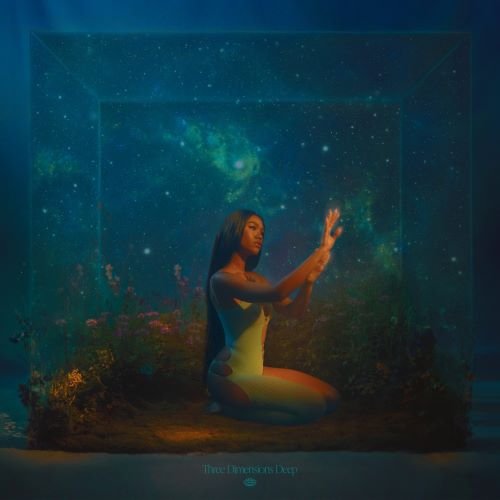
FEATURE: Revisiting… Amber Mark – Three Dimensions Deep

FEATURE:


Revisiting…

Amber Mark – Three Dimensions Deep

__________

EVEN though…

the album was released back in January, I wanted to revisit the extraordinary debut album from Tennessee-born artist Amber Mark. Three Dimensions Deep is one of the best albums of the year and, even though some were mixed towards it, it received a lot of love and applause. Quite right, as it is a stunning album from an artist that many should keep an eye out for. I feel some might have let Three Dimensions Deep slip by them, as it did come out at the start of the year. Maybe there was not quite the attention aimed the way of great new albums as there should have been. If you have not heard Mark’s amazing debut, then spend some time today to get to the bottom of a sensational music from an artist who I feel will continue to grow and build in terms of her talent, acclaim, and success. Before getting to a couple of reviews for the amazing Three Dimensions Deep, there are a couple of interviews and features that provide background and depth about Amber Mark. DIY interviewed her back in November of last year. I have selected some sections from that piece. Reading it, you can tell how intelligent, passionate, and soulful and open-minded the amazing Amber Mark is:

For Amber, knowing that the universe is expanding brings comfort, rather than concern. “The existence of quantum and theoretical physics is freeing,” she begins. “It gives evidence to the belief that there is something bigger than us out there.” This isn’t a particularly deep and meaningful conversation for her – far from it. These considerations swirl at the front of her mind daily, making their way into dinner chats with friends and populating her YouTube search history. “I don’t understand everything – it can be hard to wrap your head around all the concepts, like higher dimensions, wormholes, and all the math involved,” she continues, “but what’s cool is that I can try to implement these theories in a way that actually relates to my life. A lot of it actually tries to reference and borrow from real theory. The science and the fiction go hand in hand.”

Raised by a deeply spiritual German mother, whose wayfaring studies took them from India to Nepal to Berlin, Amber lived at a Tibetan monastery in Northern India for a notable period. “We did these ‘compassion meditations’ using mala prayer beads. I would repeat the same mantra – ‘For the love of the passion’ – over and over,” she recalls. Then came an unexpected awakening that would stay with her for life. “I saw the monks do these week-long retreats in the name of compassion. Then I’d see them turn around and kick the street dogs in the area like it was nothing to them.” The casual bloodlust was harrowing. “It came to a point where I couldn’t watch Animal Planet. Seeing people and animals attacking each other became traumatic for me, and still is.”

Chilling as it was, the experience had a sobering effect on Amber’s spiritual education. “In a way, it humanised the monks in my eyes. When people get power, it’s hard for them not to abuse it.” She saw this very human truth of corruptive power manifest in other ways, too. “When some monks and lamas became popular with Westerners, it could get really culty. I saw the darker aspects of religion that flow from following figureheads,” she continues. However, Amber found a way to still draw lessons to take into her adult life. “I separate those experiences from the beautiful, spiritual sides of religion, which I still love and appreciate. Today I still tap into the Tibetan Buddhist meditations I learned how to do as a kid,” she says.

 PHOTO CREDIT: Eva Pentel

She’s disarmingly casual about these memories, which are intense to hear about, even as an observer. It’s clear that the singer has lived her whole life watching and learning, and this comes through in her artistry. Known for its genre-defying versatility and brimming with intelligence, her music is a mirror ball, reflecting her influences with sensitivity and sharpness.

“My favourite show of all time is Avatar: The Last Airbender,” she gushes of one much-loved stimulus. “No matter what I’m doing, it’s always an inspiration to me.” Natively versed in fandom and sci-fi, she cites Douglas Adams’ The Hitchhiker’s Guide to the Galaxy as one of her favourite books, and even samples the infamous ‘42’ scene from Monty Python’s Meaning of Life on album track ‘On & On’. “We’re having trouble getting it cleared!” Amber moans, “I’m fighting so hard for it!”

The storytelling tradition of comic books and the sci-fi canon are important to her. “It’s why I take music videos so seriously. We’re lucky to be able to tell the story of a song through that additional level, and I try to draw from my knowledge base and pay tribute to what I love with my visuals,” she enthuses. “The glowing eyes in the ‘Worth It’ music video are an homage to Avatar, a way to include myself in that universe.” One could say that going to lengths to reference these influences in her music videos is an elaborate form of cosplay. She laughs in agreement: “And let’s not forget, expensive!”

An ode to the higher planes and cosmic orders at the centre of her lifelong fascination, even ‘Three Dimensions Deep’’s title is supremely aligned with this way of thinking. It will be her debut album, despite releasing music and earning industry recognition for over four years. A rich and fully realised body of work, the album took on its existential thesis from scribbles on the back of a crumpled brown paper bag on which Amber had scrawled a nebulous map of ideas and concepts. The central theme? “Figuring out what is going on!”

Although it was never the plan to wait so long for its release, Amber has continued to hone her craft and consistently put out interesting and intentional music in the interim. Her debut 2017 project ‘3:33am’ was a complex and thoughtful love letter written in memory of her late mother. ‘Conexão’ was her lustrous, romantic follow-up that called upon soul and bossa nova styles. Over the pandemic period, she charted an unpredictable course of releases ranging from dance, house and stripped down tracks to compelling personal takes on Nirvana’s ‘Heart-Shaped Box’ and, unexpectedly, Sisqo’s ‘Thong Song’.

 PHOTO CREDIT: Eva Pentel

Lead single ‘What It Is’ is very much the thesis of the album. Despite the glitzy, careening pulse of the track, it calls out for a sign, an answer to that central question and the climax of each chorus: what is the point of it all? “That question has always been building inside of me,” she ponders aloud. “Then it just flowered to a whole new level last year.” In the depths of last summer’s political upheaval, sparked by the murder of George Floyd, Amber looked first to society’s institutions for optimism and the promise of change. Instead, she found corruption and smokescreen theatrics at every turn. Her vision was pulled into full, sharp focus. “Here in New York City, I walked out the door every day and just saw suffering everywhere,” she explains. “I thought of the animal kingdom and the way suffering plays out there in its most basic state. Animals kill, consume and sacrifice each other to survive. That balance between life and death is such a trippy question. I don’t know if I’ll ever find an answer.”

Tackling the heady world of physics and the cosmos has, however, had the very human outcome of making Amber feel closer to her mother. Those same notions of wavelengths, energetic fields and higher dimensions espoused by her mother - a devout student of Tibetan Buddhism and “total hippie” - found their way back to Amber through the scientific studies she was turning to: “she was talking about the same things, just in a different way.”

Amber Mark reintroduces herself with purpose and clarity on ‘Three Dimensions Deep’. The album charts a young woman’s journey through self-discovery and waywardness, spirituality and existentialism, and at the end of it all, her way back to the lessons her mother taught her. “I’ve been seeing my mom in my meditations lately,” she smiles. “She’ll be sitting underneath a tree in the middle of space.”

One thing’s for sure – no matter where Amber’s journey takes her, she’ll never be lost”.

I have been listening to Three Dimensions Deep since it came out. Amber Mark is someone you need to follow on Twitter and keep abreast of all her progress. She is a wonderful artist whose debut album has stayed with me all year. This NBHAP interview caught up with the N.Y.C.-based artist and told how new-found spirituality runs through her impressive and somewhat underrated debut album:

Three Dimensions Deep also goes beyond musical expressions of the artist. Each music video transports you into a different world. In the process of making the visualizers, Amber Mark tells me, she has been heavily influenced by her love for science fiction movies and series. Across the board, she leaves little traces for the viewers to piece together. In all the videos for example, light is a prevailing theme. Whether it is as a complete dissolve into light, like on Bliss or the beginning of the light within on Foreign Things, the artist seems to have a special meaning attached to it.

“I turned to sci-fi movies and series from when I was younger for inspiration. One show I used to watch is Avatar the Last Air Bender”. She grins as she tells me about the universe created in the series, one in which the elements are manipulatable. “I was obsessed with that show, and I wanted to live in that universe. It also uses a lot of symbols from different Asian spirituality, which was something that I felt really connected to because of my mother.”

Light Beings

Her mother, a Tibetan Buddhist (even though she was actually German) introduced Amber Mark to a way of spiritual thinking that still influences her until today. “When I was a child, my mother would always try to get me to meditate”, Amber says. And the attempts to calm youthful hyperactivity worked with a few tricks applied. “She used to tell me to just not think about anything. Which did not work for me at all”, the artist laughs.

“But then she came up with a little visualization that helped. I would imagine myself sitting on the world with my legs crossed – on top of the entire planet, like a very large being. And a nectar of light would be beaming into my third eye, filling me up and turning me into a light being. Like that I really learned to focus and to keep my mind still.”

The visualization of herself as light being, stayed with the artist. For Three Dimensions Deep, she enacted parts of the meditative practice and turned them into stunning visuals to her songs.

 PHOTO CREDIT: Nelson Huang

Without, Withheld, Within

The story of the music videos unfolds alongside the journey of the record. But Amber did not release the videos in order, she admits cheekily. To keep her listeners on the edge of the seat, the chronology is in disorder. The transformation of the artist into a light being is not yet completed, we are still missing some pieces of the puzzle. Later, there will be a compilation of the videos released as a short film, Amber gives away.

“The record is me trying to go through a journey within myself”, and the videos externalize that journey into stunning visuals. Foreign Things is where the journey begins, where the first beams of light, the traces of spirituality shine through. It ends on Bliss, on which the artist turns into a full light being eventually dissolving into dust.

Third Dimension

Another prevalent motive across the videos is the cube. Even on the visualizers to songs without a music video, the artist moves in a rotating cube set against a rich blue backdrop. “I wanted to call the record Three Dimensions Deep. And when I thought of that, the three dimensions, a cube shape is the first thing that came to my mind. So, I wanted to play with that.”

The number three plays a big role in the artists life. Tied to her family, that for the longest time consisted of the three of them; her, her mother, and her brother. The number is also part of the debut EP, 3.33. “When I first started making music, I was embarrassed about recording and did not want anyone to hear. I was also working a day job, so I would always make beats and write at night. There was a span of two weeks during which I would always look at the clock at exactly 3.33am. And more threes started popping up around me after the death of my mother, which was also on the 3rd of June. I wanted to keep that theme on my debut record as well.”

Beyond Perception

Aside of the number three, which plays a big role in Amber’s private life, the number also bears a lot of meaning in the spiritual realm. The boundaries of human perception and the role of spirituality also influenced Amber in the creation process of the record. “I started to do a lot of research on theories on higher dimension and on how we perceive our reality. In three dimensions – Three Dimensions Deep – is how we view the world. Psychologically and philosophically, we are only able to understand three dimensions.”

Amber tells me about the theories she has been deep diving into over the pandemic years. “It is so interesting, there is the math for it, that higher dimensions exist. We know that they exist, but we cannot visualize them.” is that then the boundary of our perception is what Amber Mark asked herself. “That lead me to thinking about how we always talk about love, the soul, and consciousness, which essentially are also things we cannot grasp visually. But we still know that they are there somehow. Maybe they are things we could perceive in a higher dimension. I started playing around with ideas around that”.

  PHOTO CREDIT: Nelson Huang

I am going to wrap things up with a couple of the (many) positive reviews for Amber Mark’s Three Dimensions Deep. This is what Pitchfork felt when they sat down with such a personal, powerful, and amazing album:

Over the past six years, Amber Mark has crafted consistent pop-R&B music with tasteful, glossy precision. The New York artist’s first two EPs, 2017’s 3:33 AM and 2018’s breakthrough Conexão, examined themes of grief and love through lithe R&B, pop, dance, and bossa nova, melding different sounds into one elegant, rhythmic blend. She separated herself from her peers by leaning into stormy, overwhelming emotion, whether swimming through a monsoon of tears on an undulating ballad or demanding equal footing in a relationship over a jubilant house beat.

Mark’s impressive, husky voice suits her genre-hopping music, which hit a stride in 2020 on her quarantine-made covers series that allowed her to stretch her legs and experiment, especially in its more offbeat, cheeky exercises (see: her house-infused, unexpectedly delightful spin on Sisqó’s “Thong Song”). That set serves as a playful aperitif for Three Dimensions Deep, Mark’s polished, long-awaited debut. Moving smoothly between R&B, funk, and pop, the fully realized album foregrounds Mark’s vocals and songwriting, scrutinizing her self-doubt as a way to cast it out and build self-confidence.

The album is structured in three acts mapping Mark’s journey at different stages: identifying her own insecurities, working through the messy parts of self-discovery, and finally reaching a solid sense of self-worth. Three Dimensions Deep’s secondary, figurative throughline is inspired by Mark’s love of sci-fi and interest in heady astrophysics theories, a theme that pops up through celestial metaphors in her lyrics that amplify human concerns to galactic size. In Mark’s world, romance hurtles her to another planet, kisses are astronomical, and searching for her place in the world is posed as an all-consuming, cosmic question.

Mark makes the concept work, using it as a loose framework for plush, tightly produced songs whose subjects range from tossing men in the trash to battling dark nights of the soul. “Trying to see where life leads, where the future lies/Anxiety all of me keeping me up at night,” she admits on “One” over a chopped-up blues sample and knocking beats. The concession feels honest, with Mark taking stock of the uncertainty of her future and emerging freshly determined to take control of it. “On & On” describes another battle with self-doubt over a stomping drumbeat and sumptuous strings, making the mental slump of questioning one’s worth sound refreshingly comforting. She uses the occasional astral image, like looking up into the night sky, to illuminate small junctures of uncertainty and distance.

Mark tempers the album’s vulnerable moments with upbeat songs that traipse through sultry nights out and scenes from her love life. Early highlight “Most Men” unspools slowly, as organ chords give way to a laidback beat at the halfway point and Mark immortalizes the one true commandment when it comes to dating: “Most men are garbage.” Later, she moves on from terrible exes on the seductive “Softly,” which loops the guitar melody from Craig David’s 2000 song “Rendezvous” into a throbbing R&B backdrop for the heated tension she feels with a potential partner. Mark co-produced or engineered over half of the album’s 17 tracks and makes her fingerprints known, shifting easily from velvety, percussive R&B (“Worth It”) to sleek pop-funk (“Darkside”). Small details—a slight key change, stacked murmured vocals, luxuriant extended outros—work like choice accessories on Mark’s signature, memorable style.

As on her previous EPs, Mark’s dynamic voice imbues the album with its most emotive, surprising turns. On the sauntering “What It Is,” she stretches her vowels over cascading, layered vocals and a scorching guitar solo. Later she adopts a conversational flow to indulge in a glitzy lifestyle on “Foreign Things,” and strikes a smoky, melancholy tone during “On & On.” The depth and dexterity make for one of the album’s most engaging qualities; even when Mark reaches for an obvious lyric, as on the arguably outdated chorus of “FOMO” or the neutral-to-a-fault “Competition,” her rich, varied performance transforms the occasional errant choice into an opportunity for another compelling vocal phrasing.

Energetic, lush, and measured, Three Dimensions Deep is a cohesive debut from Mark that doesn’t lose sight of the bespoke sound that she’s developed over the years. Here, Mark’s music accomplishes its goal of making the pursuit of figuring out who you are, what you stand for, and how you can make it through the world feel as immense as a meteor cratering into the moon. But that kind of outsize passion feels exceptionally true to life, especially as rendered in Mark’s capable hands”.

The final review is from a British source, The Line of Best Fit. Perhaps not as known and played as widely and fondly as she is in her native U.S., there are sites and sources in the U.K. who are tuning into Amber Mark’s music. I have heard a few songs from Three Dimensions Deep played on the radio - though I hope 2023 is a year when her music is promulgated and augmented across U.K. stations and media:  

Almost four years after the release of her second EP Conexão, where singer-songwriter Mark established her favoured form of therapy – creative flow — she's delivering a concept album of self-discovery. Divided into three segments: Part 1: Without, Part 2: Withheld and Part 3: Within — each explores Mark’s journey through insecurity; forced confidence; and finding her place within the world, respectively.

Album opener “One” is a juxtaposition in it’s finest form. Lyrics that form the story of Amber Mark’s imposter syndrome and career anxiety are contrasted with an earworm of ridiculously rhythmic basslines, glints of sparkly synths and triumphant horn section choruses. A song dedicated to her late mother, Mark’s poignant lyricism has the ability to send shivers to anyone, as she sings “And I don’t know if I’ll ever succeed / I just want you proud of me up above”.

Moving through her mixed emotions, Mark captures the feelings of forced confidence in “Bubbles”, as she searches for escapism through trashy nights out to numb the pain of heartbreak. Laid back R&B fits the bill, as syncopated pulsations are at the core of the track, sensationally partnered with Mark’s rich contralo hums to create a sound that is ready made for the exact environment she sings about. And just like a concept album should, she seems to replicate this kind of night out in the near future, with a cooler head. “FOMO” is a neo-soul wonderland that sees Amber Mark truly release herself from anxieties that have been holding her back, as she chants “Won’t miss out on living / I believe it’s about time / I’m gon’ lose control / No time for FOMO”.

Part three of the album presents itself through the bittersweet dimension of “On & On”. Mark reveals her confusion of the world around her, as she questions “I’ve never been so confused / My confidence won’t come through” between fragments of iridescent keys and elegant strings. In contrast, her musical versatility shines through in “Darkside”, as she goes from R&B and soul to a track that delves into her exploration of astronomy with a sound that mimics essences of Phil Collins and Prince.

With stand out soulful single “Worth It” joining in the latter part of the album, it becomes even more delicate. Mark sumptuously unpacks how we are all our own worst enemy through self-destruction which is transformed into a message of self-love and a personal mantra to herself, as she hooks “You think you don’t deserve it / But you are so damn worth it”.

Three Dimensions Deep is an album that has helped Amber Mark to recover and find peace within herself. Yet somehow, it has potential to lend itself to anyone’s personal challenges, defining Mark as a force to be reckoned with”.

I was keen to promote Amber Mark’s Three Dimensions Deep, as it is one of the best debut albums of 2022. Such an incredible songwriter, producer and artist, Mark is someone who will go very far. An album that affected and moved me when I first hard it, I have been a fan of hers ever since. I guarantee you, when you listen to it, you will become a fan of the…

MESMERIC Amber Mark.

FEATURE: Vinyl Corner: George Harrison - Cloud Nine

FEATURE:


Vinyl Corner

George Harrison - Cloud Nine

__________

THERE are a couple of big…

 PHOTO CREDIT: Dave Hogan/Getty Images

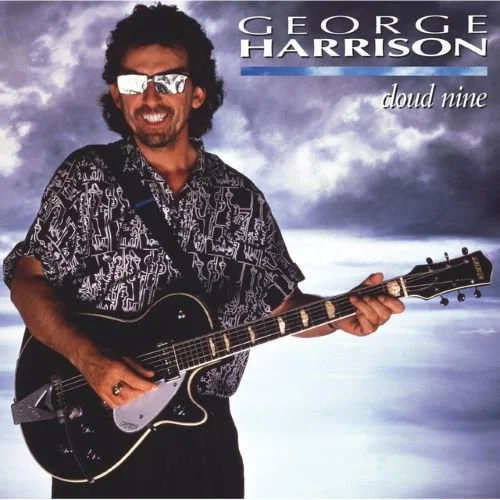
George Harrison anniversaries in November. The former Beatles legend sadly died in 2001. His posthumous album, Brainwashed, was released on 18th November, 2002. It will be sad celebrating its twentieth anniversary knowing that its creator is no longer with us. One of his best and most acclaimed solo studio albums, Cloud Nine, is thirty-five on 2nd November. I wanted to mark thirty-five years of a very important album. This was Harrison’s first solo album since the wonderful Gone Troppo of 1982. In fact, on 5th November, that turns forty. A lot of Harrison anniversary to mark! Cloud Nine was a triumphant and acclaimed return. You can read more here, but I wanted to suggest people get Cloud Nine on vinyl. I love the album so much. As this was 1987, there were quite a few cheesy album covers doing the round. Far removed from his 1960s cool, Cloud Nine finds Harrison grinning with sunglasses on! It is quite a humorous cover, and it is good to see Harrison smiling. Maybe not his coolest cover, Harrison was busy around the time of the album release. As a member of Traveling Wilburys, that supergroup (George Harrison, Jeff Lynne, Roy Orbison, Bob Dylan and Tom Petty) released their debut in 1988. He worked on Belinda Carlisle’s Leave a Light On in 1989 and provided slide guitar. His end of the 1980s was quite busy and successful! With terrific singles like When We Was Fab, Got My Mind Set on You and This Is Love, it is no wonder Cloud Nine has endured. It has dated pretty well, and there is more than enough quality throughout to ensure that it survives and resonates decades from now.

Produced with his Wilburys bandmate Jeff Lynne Cloud Nine is beautifully crafted, infectious, and packed with terrific songs! This was, significantly, the final studio album Harrison released in his lifetime. One might be shocked by that, as Harrison died fourteen years after Cloud Nine came out. Having been a member of The Beatles since the early-1960s (or before even), the man was entitled to step away and concentrate on other things! Frustrated with the changing musical climate, Harrison suspended his recording career in the early-1980s. Instead of being an artist, Harrison went into film production with his own company, Handmade Films. Come late-1986, Harrison felt the desire to make music again. He asked Jeff Lynne to co-produce a new album with him. After writing a new songs, Harrison entered his home studio Friar Park in Henley-on-Thames on 5th January, 1987 to begin recording his first new commercial album in five years. Before coming to a couple of reviews for Cloud Nine, there is an interesting feature that gives us some background about one of George Harrison’s greatest and most successful studio albums. A top ten smash in the U.S. and U.K., it still sound extraordinary to this day:

There were five years between the release of George Harrison’s 1982 album, Gone Troppo, and Cloud Nine, his album that was released on November 2, 1987. Cloud Nine was co-produced with ELO’s Jeff Lynne – who also co-wrote three of the tracks – and is a serious return to form, including as it does, “Got My Mind Set On You” that became George’s third No. 1 single in the US; it reached No. 2 in the UK.

I feel sure many of you think George wrote “Got My Mind Set On You”; it is a song that George completely makes his own, whereas in fact it was originally released by James Ray. His original recording of the Rudy Clark composition came out on the Dynamic Sound label in 1962. The song became George’s first No. 1 for 15 years, but stalled at No. 2 in the UK, spending 4 weeks kept from No.1 by T’Pau’s “China In Your Hand.”

Recruiting some famous friends

George’s version of “Got My Mind Set On You” was the closing track on Cloud Nine, his eleventh solo album that was released a week after the single. George had begun recording the album in January 1987 and, along with Jeff Lynne, it features many of the former Beatle’s friends, most of whom had played on some of George’s earlier albums.

There’s Eric Clapton on the title track, as well as “That’s What It Takes,” “Devil’s Radio” and “Wreck of the Hesperus.” Elton John plays piano on the latter two tracks, as well as “Cloud Nine.” Gary Wright, who had been in Spooky Tooth, and had a very successful solo career in America, plays piano on “Just For Today” and “When We Was Fab,” as well as co-writing, “That’s What It Takes” with George and Jeff Lynne. Drummers include Ringo Starr and another of Harrison’s long-time friends, Jim Keltner, along with Ray Cooper helping out on percussion.

The other big hit single from the album was “When We Was Fab,” a song title that when said with a Liverpudlian accent can only be referring to one thing; for that matter said with any accent it can only ever be referring to The Beatles.

When he was fab

It’s a perfect evocation of those heady days of Beatlemania when those loveable Mop-Tops, the Fab Four, ruled the world and we all thought they would go on forever. George co-wrote the song with Jeff Lynne, shortly before the two of them formed The Traveling Wilburys with Tom Petty, Bob Dylan and Roy Orbison.

According to George, “…until I finalized the lyric on it, it was always called ‘Aussie Fab’. That was its working title. I hadn’t figured out what the song was going to say … what the lyrics would be about, but I knew it was definitely a Fab song. It was based on the Fabs, and as it was done up in Australia there, up in Queensland, then that’s what we called it. As we developed the lyrics, it became ‘When We Was Fab’. It’s a difficult one to do live because of all the little overdubs and all the cellos and the weird noises and the backing voices.”

Not for one minute should anyone think Cloud Nine is an album of just two hits and a bunch of filler; the quality of the songs is great throughout. Standouts include, “Someplace Else,” which could easily have come from All Things Must Pass; the same of which could be said of “Just For Today” a beautiful song that is made even more so by an exquisite, trademark, Harrison slide guitar solo.

Jeff Lynne’s ace producing

Credit is due to Jeff Lynne for his production skills. Lynne had been, so obviously, inspired by the Beatles during his time with Electric Light Orchestra – just as Take That were inspired by ELO on their “comeback” album, Beautiful World. It’s part of what makes music so affecting; how generations of musicians pass on to the next, things that will continue to make us feel better about the world in which we live.

Cloud Nine made the top 10 in America, Britain, Australia, Canada, Norway, and Sweden. The cover of the album features the first American-made guitar that George owned, a 1957 Gretsch 6128 “Duo Jet” that he bought in Liverpool in 1961; Harrison called it his “old black Gretsch”. He had given it to his long-time friend, Klaus Voormann who kept it for 20 years, having left it in Los Angeles where it had been modified; Harrison asked for its return, had it restored, and used it for the cover shoot for both the album and single (photographed by Gered Mankowitz).

On the reissued album are some bonus tracks, including “Zig Zag,” the B-side of “When We Was Fab” which was written by George and Jeff Lynne for the film Shanghai Surprise. Also included is the title track from the film that features Vicki Brown on vocals, with George. Vicki, formerly, Haseman was originally one of The Vernons Girls, a Liverpool group that had been friends of the Beatles; she later married English singer and guitarist, Joe Brown – another dear (and local) friend of George’s. Vicki tragically passed away in 1990 from breast cancer.

If you’ve not revisited Cloud Nine in a while you’ll feel like you’ve got reacquainted with an old friend, and the same could be true if you’ve not really listened to it very much at all. It’s an album that no one but George could have made. Thoughtful, musical, humorous, and fab”.

Rolling Stone had their say on Cloud Nine in 1987. It is interesting charting The Beatles members’ solo albums. The 1980s was a decade that started with the death of John Lennon. Paul McCartney had some success, as did Ringo Starr. I think the 1980s was most interesting in terms of George Harrison’s work. Despite gaps between albums, Cloud Nine and the debut Traveling Wilburys albums proved his consistency and sheer quality:

If Cloud Nine were simply a decent record, it would still mark a major comeback for George Harrison, whose latter-day solo efforts have for the most part presented little more than a tired blend of spiritual, romantic and musical banalities. But the good news is that Cloud Nine — Harrison’s first album since 1982’s Gone Troppo — is considerably more than merely decent; it is in fact an expertly crafted, endlessly infectious record that constitutes Harrison’s best album since 1970’s inspired All Things Must Pass.

Some of the credit for Cloud Nine‘s success must go to Harrison’s coproducer, Jeff Lynne. If somewhere along the line the Beatle George forgot how to shape a pop record, Lynne — who’s led the Electric Light Orchestra on its own heavily Fab Four-inspired magical mystery tour — obviously has not. The opening track, “Cloud Nine,” is a surprisingly hard-edged midtempo rocker that features some tastily restrained riffing from Harrison and Eric Clapton. Right from that strong beginning, Cloud Nine powerfully reaffirms Harrison’s considerable charm as a singer, songwriter and guitarist. (He and Lynne are helped along by some simpatico instrumental backing from such notables as Clapton, Ringo Starr, Elton John and Gary Wright.)

Throughout Cloud Nine, Harrison and Lynne add layers of inspired production touches that make undeniable aural confections even out of some of the album’s lovely but slight songs (“Fish on the Sand,” “This Is Love,” “Just for Today,” “Got My Mind Set on You,” “Someplace Else”). When the team brings its sonic smarts to bear on more substantial numbers (“Cloud Nine,” “When We Was Fab,” “That’s What It Takes,” “Wreck of the Hesperus”), the results make for sublime pop.

Cloud Nine is an especially heartwarming return to form because it suggests Harrison has come to terms with his own Beatledom. “When We Was Fab,” the eerie Sgt. Pepper-sound-alike track that ends the first side of the album, is Harrison’s droll sendup of and tribute to his days as a Beatle. And on the album sleeve, George saves the last of his special thanks for John, Paul and Ringo. And that’s only appropriate, because Cloud Nine is a totally fab record that lives up to the legacy of all those years ago”.

I am going to end with another positive review for Cloud Nine. In fact, you’d be hard-pressed to find anything but admiration for Harrison’s Cloud Nine. With Elton John, Jeff Lynne, Eric Clapton and his former Beatles bandmate Ringo Starr on the album, Cloud Nine sounds remarkable. It possibly made George Harrison the most popular Beatles of the 1980s by 1987. This interesting review from September goes deep with one of Harrison’s most important albums:  

But wherever he found that inspiration, he found it in spades, turning in his strongest set of songs by far since the untouchable ATMP. Part of it is I think he’d recovered a sense of fun in writing and recording – his cover of “I Got My Mind Set On You” was a blast, and what it lacked in substance it more than made up for in exuding good time poppy rock. It was just a fun little song, and the music buying public loved it. When was the last time Paul McCartney had been that fun? “Spies Like Us” had been too stupid to be much fun.

With “When We was Fab” George pulled off the rare trick of taking a look back at The Beatles career without being overly nostalgic, cheesy, or exploitative. Unlike “Here Comes the Moon” or “This Guitar Can’t Keep From Weeping” when he tried a little too hard to connect with his Beatle past, “When We Was Fab” is bouncy, breezy, and boasts a totally infectious little piano bit. And it’s a gimlet eyed look at the past, George doesn’t make his Fab past out to be any more perfect than it was, even referencing his pot bust – “when the fuzz gonna come and take you away”. A time “back when income tax was all we had” – which is a bit of an exaggeration, but he was always pretty aggrieved at his 95% tax rate, which was the inspiration for “Taxman”. George looks back with love and fondness on his Beatle days, without romanticizing or mythologizing them. The production on the song is outstanding – cellos swoop, Ringo pounds away like he has since days of yore, and sitar takes the song out at the end. I’ve always loved this song.

“Someplace Else” is another album highlight, warm, melodic, and poignant. Plenty of tasty George Harrison guitar licks in this plaintive meditation about “Loneliness, empty spaces, wish I could leave ‘em all in someplace else”. Fantastic melody on that “And for a while you could comfort me and hold me for some time…” section – truly a marvelous song.

“Just for Today” is similarly reflective, if considerably quieter, almost hymn-like. It’s a prayer in the form of a song, and in its way more personal and humble than even anything on ATMP. Contrast it with “My Sweet Lord” or “Hear Me Lord” – it’s refreshing to hear George pleading to his Maker for relief from his problems rather than just singing his Maker’s praises like some kiss-butt devotee. George admits that he’s “his own life’s problem”, and wishes he could get away from that “just for today”, that “just for one night” he could “feel not sad and lonely”. Haunting, moving, and resonant, this shows what a songwriter George could be when stopped preaching at us and just expressed in song the loneliness and longing all humans feel.

Good old George hasn’t forgotten how to rock though – “The Wreck of the Hesperus” is built on a killer groove, snazzy horns reminiscent of “Savoy Truffle”, and exceptional Eric Clapton guitar licks. George may be “getting old as Methuselah”, but he can “still rock as good as Gibraltar” – but that’s OK, he’s “got some company” in all the other aging classic rock stars. His “it’s all right” refrain and general acceptance of aging as time marches inexorably on no doubt resonated at the time with the Boomers who’d grown up with him.

And it resonates with me too, now that I find myself in my 50s. It’s a great attitude to have really – yes, I’m older, I’m “no spring chicken”, “been plucked but I’m still kicking”. It’s a great song that becomes all the more applicable to all of us as the years roll inevitably on. That’s one of the great secrets of Cloud Nine – in its acceptance of advancing age and abandonment of pandering to the younger listeners that drive Top 40 radio, George managed to make an album that stands the test of time because it isn’t afraid to age along with us. It acknowledges the aging we are all experiencing and soothes us all that “it’s alright”. And damn it, from where I sit, you bet it is.

“Devil’s Radio” is another great rocker – although I’ve already told you in my review for Live in Japan about how disappointed I was that the backing vocals say “gossip” rather than “go sin”, which is a way cooler thing for the devil’s radio to be broadcasting, if you ask me. I listened to the song for more than 20 years before I realized they weren’t saying “go sin”, and I’ve actually haven’t liked the song as much ever since. But it’s still a fun romp of a rocker, and it’s good to hear George cutting loose with some good old fashioned rock and roll. Eric Clapton plays some more hot guitar on this one, Elton John is in there somewhere tickling the ivories, faithful Ringo keeps time faithfully like he does on the rest of the album – all around it’s a great time”.

A comeback album that nobody predicted or could have seen in terms of its quality and impact – following the poor-reviewed Gone Troppo -, people were hoping this wouldn’t be George Harrison’s final solo album. Sadly it was (the last in his lifetime). He would work with other artists but, as he was determined to make new music following a five-year break, it seemed like his enthusiasm for solo work waned after 1987. Looking back, Cloud Nine had a couple of weaker numbers, but it is a stunning album that features some of Harrison’s best and most impressive work. Whether writing solo or co-writing with Jeff Lynne, the album sounds awesome! On 2nd November, Cloud Nine is thirty-five. With his eleventh studio album, George Harrison found himself…

IN music heaven!

FEATURE: After Midnights: Following One of This Year’s Best Albums...What Next for Taylor Swift?

FEATURE:


After Midnights

PHOTO CREDIT: Beth Garrabrant

Following One of This Year’s Best Albums…What Next for Taylor Swift?

__________

I am going to split this into two…

 PHOTO CREDIT:  Beth Garrabrant

because I wanted to cover the reaction and reception of Taylor Swift’s latest album, Midnights. Already one of this year’s best albums, it was released on Friday (21st October). There was a lot of hype and speculation ahead of the album release, as Swift posted snippets and teasers. Now that it is out, Midnights has received glowing reviews across the board. I want to bring a couple of reviews in, plus some press from Swift about the album. I will move on to what might come next from Swift. As someone who has got more into her music over the past couple of years – 2020’s tremendous folklore was a turning point for me in that sense -, I think she has produced her best work over this period. Maybe 2019’s Lover was when she stepped up a level and was producing some of her best work. To be fair, the thirty-two-year-old has not realty dropped a step through her career! Midnights might be one of her best albums to date. Unlike folklore and evermore (also released in 2020), Midnights is more a return to Pop. Even so, it is more conceptual and complex that straight-ahead commercial Pop. I will come to that. I predict that she will release incredible music for decades more. There has been a lot of excitement surrounding Midnights the past few days.

In the absence of any new interviews with Swift – I cannot see any from the past few days -, there is an interesting article from Vulture that transcribes a conversation from the podcast, So Into It. “So Into It host Sam Sanders pondered the true meaning of Swift with Ann Powers, a critic and correspondent for NPR Music who has been thinking about Taylor Swift for as long as there has been Taylor Swift music on the radio. Read their conversation below and listen to the whole episode of Into It wherever you get your podcasts”. I will drop in the podcast too. There are some interesting exchanges and observations:

As the new Taylor Swift album comes to us, I think a lot about pop stars and what they mean — what their philosophy of self is. And I wanna talk about the meaning of Taylor Swift as a pop star some 15-plus years into her career. She’s harder to nail down than it might seem.

Well, one thing that always is important to remember about Taylor is where she started within country music and that sort of consummate craftsperson that she was even when she was a teenager.

There’s this idea that she’s performing damsel in distress and white vestal virgin. Well, not at all anymore, right? This idea that she writes songs just for teenage girls — not anymore. This idea that she represents women’s empowerment yet she’s been in some petty feuds with other women. I just feel conflicted and confused by her public persona more than I do with other pop stars.

If disclosure is one of her métiers, one of her main ways of operating in the world, just remember that she comes from a place where disclosure is always crafted so minutely that you can read it as a universal no matter how personal it gets. That’s what country music is. Country music is people writing songs that are deeply personal in rooms with other people, like in an office. You go into an office, and you’re gonna write a song about your brother’s alcoholism or your husband’s bad experience in Iraq or something, but you’re doing it in an office as a professional effort.

Because she knows this is a clear lineage that she wants to establish. I feel like she worries about legacy a lot more than someone like Beyoncé or Adele does, which is interesting to me.

Well, I think Beyoncé thinks about legacy in terms of her family, literally and business-wise. She’s built an empire. We call it an empire, but we can also call it a family: What am I passing on to the next generation? Culturally and politically as well, Taylor’s goals are much more individualistic, you know? I want to be remembered as a great capital-A artist. We could have a whole other conversation about if it’s even possible to inhabit the role of the great artist in our moment of virality, when everything is so fragmented. I’m not sure, but she’s gone pretty far in making the case for herself.

I find a lot of the conventional wisdom of Taylor not true or at least confusing. What is a piece of well-accepted conventional wisdom about Taylor Swift that you think isn’t really true at all?
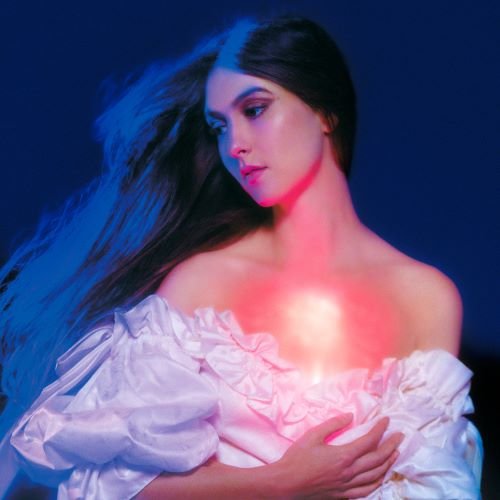
That she’s petty. I don’t think she’s petty. I think she is embedding kinda serious messages in these very individualistic, seemingly confessional tales. I have been biting my tongue here, wanting to talk about the scarf — the immortal, famous Jake Gyllenhaal scarf — and the theory that “All Too Well” is about her losing her virginity.

I just always go back to high school with Taylor. Even as she’s become an adult, she still writes about high-school love and all of that — it’s very fertile ground for her. And when I think of what Taylor wants to accomplish as an artist, she wants to be a pop star who is the homecoming queen and also valedictorian. But I wonder if, with Midnights, she is turning into the former prom queen, the former valedictorian, coming back for the ten- or 15-year reunion with her shoulders down a bit and ready to tell you some stories. That’s the version of Taylor I most want to hang out with, the grown woman smoking cigarettes in the back and talking shit.

I am a little worried that her Midnights confessions might be a little mild. Who knows? We know she’s lived a little, that she’s had some wild nights. Give us a wild night. I’ll give you a cigarette.

I’ll light it up for you. Put me in a lyric. I’ll take it. I can’t help but think about her and everybody making music this year and compare them to what Beyoncé is doing. And I feel like Beyoncé has gotten to a level of fame and power where she just does exactly what she wants to do. And she made a brilliant dance album full of musical ideas and musical throwbacks just for fun and said, Take it or leave it. No videos. Here it is. What is the musical equivalent of that for someone like Taylor? Will she ever give herself up to the music enough to make her own Renaissance?
That is a good question. On Renaissance, of course Beyoncé is still present, but she gave the spotlight to others. She gave the center to others, to her historical reference points, to the queer community, to her collaborators. She even samples Big Freedia again. It’s not that I think Taylor is afraid of giving away the spotlight, exactly, but I don’t think she experiences the spotlight in that same way.

Again, her making of a self has been her artistic project. So how do you become selfless, which is what Beyoncé did on that record, when the self is really everything for you? And I don’t mean that in an insulting way. We could think of her as a self-portrait artist, the painter who paints himself over and over again. And who is in the frame if it’s not Taylor?”.

Before looking ahead and thinking what might be next for Swift following the release of her tenth studio album, it is time to get some critical feedback for Midnights. There was so much love on social media. Articles have been written about the album - and it is definitely one of the best of the year. I think, when polls are done in a couple of months, Midnights is going to be top for so many sites and magazines. In their detailed review, this is what Rolling Stone said about Midnights:

COULD YOU HAVE ever guessed what Taylor Swift’s Midnights would sound like? Since announcing the album in late August, Swift tried out a new rollout strategy: no single, no surprise drop 12 hours later. Instead, it’s been two months of Lynchian TikTok videos unveiling song names and lyric billboards to tide over her increasingly spiraling, clue-hungry fanbase.

Midnights could have been anything. After the bubblegum dream-pop of Lover, Swift veered into the woods for the indie-folk-leaning pair Folklore and Evermore, both released in 2020. Then, she returned to her archives for her Fearless and Red re-records, expanding upon her second and fourth albums with a host of previously unreleased bonus tracks written during each respective era.

So what exactly is Midnights? In some respects, it’s a little bit of all of the above. It most notably picks up where the pure pop triptych of 1989, Reputation, and Lover left off, a dazzling bath of synths complementing lyrics caught between a love story and a revenge plot.

For her tenth release, Swift returned to the studio with her most prolific partner, Jack Antonoff, to talk about her favorite time of night (the middle of it). As she teased in the album announcement, Midnights covers “13 sleepless nights” from her life. In those midnight moments, Swift lets her intrusive thoughts win: her relationship, public image, nemeses, and inner child take over at different points to either ruin or redeem her. But Midnights is more sweet dreams than nightmares, her words acting like a protective shield around her life and most intimate relationships.

Opening track “Lavender Haze,” crafted with some of Kendrick Lamar’s collaborators as well as Swift’s friend Zoë Kravitz, is the most explicit song here about her forcefield of protection. When she announced the song title on TikTok during her “Midnights Mayhem” series, Swift made a pointed comment at “weird rumors” and all the scrutiny she and her boyfriend of six years Joe Alwyn have faced online and from tabloids. She cribbed the song title from Mad Men, describing an “all-encompassing love glow.” Lyrically, the song is reminiscent of “Call It What You Want” and “Cruel Summer,” a tale of the love glow breaking through all the negativity, criticism, and expectations. This time, she’s a little less overwhelmed by the comments, dismissing “the 1950s shit they want from me,” like the constant marriage speculation or the virgin-whore dichotomy she’s been fighting her whole career (“The only kinda girl they see/Is a one night or a wife”). “Lavender Haze,” like the rest of Midnights, shies away from the bombastic pop sound that often made singles like “Look What You Made Me Do” or “Me!” feel like such sonic misdirections from the more subtle and shimmering sound of the rest of the albums they teed off. This time, Swift shows some restraint though she doesn’t lose the playfulness that makes her forays into pop so fun.

PHOTO CREDIT: Republic Records

“Anti-Hero” is a prime example of just how fun Swift’s pop can be. It’s an album standout and due to be the official lead single. This time, her enemy is her own damn self as she wallows in the same type of “past her prime” anxiety she sings about on the Red (Taylor’s Version) vault track “Nothing New” and underrated Lover cut “The Archer.” It features some of Swift’s most shocking lyrics on the album, like the sure-to-be divisive line “Sometimes I feel like everybody is a sexy baby/And I’m a monster on the hill.” But it’s the next part that is a deeply revelatory, “Blank Space”-level burn of both herself and her critics: “Too big to hang out/Slowly lurching toward your favorite city/Pierced through the heart but never killed.” And the moment in the song where she imagines her non-existent daughter-in-law murdering her for the money in the future? Deliciously diabolical and weird in ways Swift rarely lets out.

Like Swift’s other Track Fives, the muted “You’re on Your Own, Kid” delivers a few particularly incisive, deep gut-punches while Swift does some light inner child therapy work. (In Swiftie lore, the fifth track on every Swift album is the most emotionally devastating). The song is a nostalgic slow-burn that begins a one-two punch of past relationship memories creeping backing into her night’s mind. It’s almost like a behind-the-scenes look of her as a teenager writing a song like “Teardrops on My Guitar,” a heartbreak origin story that gets her out of small town life and into the spotlight. “I see the great escape/So long, Daisy May,” she opines before posting up in her room to write the songs she’d sing in parking lots before taking the money and running away altogether. Following track “Midnight Rain” is an older and more jaded moment of lost love; here, she’s the titular midnight rain, a girl too distracted by her career chase to settle down. This time she’s the one to break a small-town boy’s heart.

“Vigilante Shit” and “Karma” are the only truly scorched-earth moments on the album. They’re way less melodramatic than a “My Tears Ricochet” or “This Is Why We Can’t Have Nice Things”; in these fantasies, she’s watching her enemies destroy themselves. The dark-pop “Vigilante Shit,” reminiscent of her friend Lorde’s moody debut Pure Heroine, offers some salacious claims that could be about any of the three men she’s been publicly feuding with for the last six years. In the verses, she’s befriended at least one of their ex-wives and makes the only cocaine reference in her entire discography (“While he was doing lines/And crossing all of mine/Someone told his white collar crimes to the FBI”).

“Karma” is a bubbly counterpoint, as Swift celebrates how much she loves seeing her nemeses get what they deserve. It’s a love song to pettiness: “Karma is my boyfriend/Karma is a god/Karma is the breeze in my hair on the weekends/Karma’s a relaxing thought/Aren’t you envious that for you it’s not?”

The majority of the album, however, is laser-focused on the anxiety and speed bumps two lovers face as their relationship develops. “Maroon” and “Labyrinth” are straightforward reckonings with love potentially lost. “Question…?” is a bubbly “Delicate”-style pop quiz for her paramour who maybe put up more of a fight before they ended up with two people they probably shouldn’t be with. By absolute knockout “Bejeweled,” she’s got him in the palm of her hands, presenting herself as the ultimate prize.

The only true disappointment on the album is the tease of Lana Del Rey’s feature on “Snow on the Beach” that’s more of a simple harmony than a true duet; the song itself is a hazy, wintery dream-pop cut in the vein of “Mirrorball” with a killer Janet Jackson reference. Hopefully this isn’t the last time these two talents cross musical paths.

Midnights caps off with “Mastermind,” where Swift lays out a long-planned initiative to get her crush to fall in love with her (it doubles as a cheeky nod to her own “cryptic and Machiavellian” clue-leaving ways). Funny enough, it follows the tender love song “Sweet Nothing” she penned with said strategically-secured boyfriend, so job well done to Ms. Swift.

As Swift has re-recorded her previous albums, it’s clear slipping back into her past self has unlocked something brilliant and fresh in her songwriting. Midnights may come as a surprise to the most newly turned fans of her music, those who only learned to like her songwriting when it came in the traditionally respectable Folklore/Evermore package. But like many of her purely “pop” releases in the past, Midnights leaves more and more to be uncovered beneath the purple-blue synth fog on the surface. And maybe that’s part of her scheme to begin with”.

Prior to the second part of this feature, there is another review I want to bring in. American Songwriter were impressed by one of Taylor Swift’s strongest and most astonishing albums. Before getting to the review, in terms of overview, Wikipedia provide some details:

Swift described Midnights as a "journey through terrors and sweet dreams", inspired by "13 sleepless nights" of her life. She adopted a glamorous visual aesthetic for the album, drawing from 1970s fashion and art. Eschewing the alternative folk sound of Folklore and Evermore, Swift experimented with electronica, synth-pop, and chill-out music styles in Midnights, achieved by subtle grooves, atmospheric synthesizers, drum machine and hip hop rhythms. Its subject matter features confessional yet cryptic lyrics, discussing self-criticism, self-assurance, insecurity, anxiety and insomnia. Upon release, Midnights was met with critical acclaim from music critics, who praised its restrained production, candid songwriting and vocal cadences.

Following negligible promotion of her previous studio albums, Swift returned to her traditional album roll-out with Midnights. She unveiled the tracklist through a TikTok series called Midnights Mayhem with Me from September 21 to October 7, 2022, revealing a Lana Del Rey feature on the fourth track, "Snow on the Beach". A trailer teasing several visuals for the album was released on October 20, followed by a surprise release of seven bonus tracks and a music video for the lead single, "Anti-Hero", on October 21. The album broke streaming records on Spotify, Apple Music, and Amazon Music, achieved the largest vinyl sales week of the 21st-century, became the fastest-selling album since her own Reputation (2017), and finished its first day as the best-selling album of 2022”.

Let us get to the review from American Songwriter. In terms of positivity and love they show Midnights, that is mirrored by many other critics. It is an album that will convert a lot of people who, until now, have not been big fans of Swift’s music:

When you’re Taylor Swift, the world waits at your doorstep with bated breath and keen ears to listen to whatever you’re going to put out next. Inevitably, a sense of pressure must flare up as you try to one-up yourself time and time again—especially after more than a decade in the music industry. But, luckily— you’re Taylor Swift—so the above goal seems to never be out of your reach.

Midnights is the first album full of completely new material from Swift since 2020 when she gave us two monumental records from seemingly out of the blue—folklore and evermore. Arguably, her most stunning bouts of songwriting ever, whatever material was to follow those up would need to bolster that streak of excellence for fear of getting stuck in their shadow.

Swift used a string of sleepless nights as an untapped source of inspiration for Midnights. Each of the 13 tracks stemmed from her wandering mind, with her eventually finding clarity long enough to land on a few key subjects—Self-hatred. Revenge. Love. Given how the album was made, it seems only fitting that it should be consumed in the same space—into all hours of the night with a sense of introspection—and that’s exactly what we did. The result was a rich listening experience, as Swift flew past the mark she set for herself with ease, daring to look further inward than ever before.

Even sonically, the album sees Swift take a self-reflective turn. In many ways, Midnights feels like 1989‘s grungier sister who lets the expletives fly freely and imbues a sense of maturity that leaves the prior work in the dust. The same glittering, pop flavors found in her 2014 blockbuster album are well accounted for here, but instead of retro glamour and diamonté two-pieces, she’s making use of last night’s make-up and throwing perfection out the window.

Her own faults are a major theme of the album. In track 3, “Anti-Hero” (which she previously credited as one of her favorite songs she’s ever written), Swift paints herself as the unwitting villain of her own story. I’m the problem, she declares in the chorus, allowing for a moment of self-loathing.

Elsewhere in “Vigilante Shit,” she once again scurries into the darker corners of her mind and gives into her desire for revenge. You say looks can kill and I might try, she reveals. Swift has never been one to sugarcoat her thoughts, but that honesty is all the more impressive when it’s shining a light on her rough edges.

Elsewhere she mulls over past relationships and their accompanying mistakes. She ponders missed connections in “You’re On You’re Own, Kid” and things left unsaid in “Questions.” All-too-familiar faces in our late-night thoughts.

It’s not all clouds and rain though. She does leave room for some romantic notions in “Maroon” and “Snow On The Beach” alongside Lana Del Rey. “Sweet Nothings” is a simple gem on the album and sees Swift at her most loved up. While most of the album feels like Swift is looking at the world through a wary eye, “Sweet Nothings” feels buoyantly carefree and delightfully naive.

Swift’s songwriting was forever changed by the folklore/evermore combo. She rarely takes the simple route these days and instead opts for something far more prosaic. It’s oh-so-enticing to see her apply those tendencies to something heavily steeped in the pop world.

Midnights is a golden thread tying where Swift has been and where she’s going—referencing her old material while still making leaps and bounds forward. Because it’s Swift, we have to assume that all of that was by design. As she remarks in the album’s closer, “Mastermind,” none of it was accidental”.

I am going to round up by looking ahead. In terms of finishing off 2022, maybe there will be another single or two released from Midnights. Anti-Hero came out on Friday - there is likely to be more from that album. I also think there will be new interviews where people ask Swift about Midnights and the reaction to it. There is going to be a lot of speculation as to where she heads next. Having released three original studio albums in the past three years, she also put out Fearless (Taylor's Version) and Red (Taylor's Version) in 2021. It has been a frantic and tireless time for her! In addition to tour dates and appearances in films, there has not been a moment’s breath for Swift. I hope that she gets some time to chill next year and is not instantly heading back into the studio. When it comes to music and touring, I guess there are going to be dates to support a Midnights tour. It is the way of things that, when an album comes out, big artists usually do extensive tours to promote it. Bringing these new songs to the fans. Having received enormous acclaim for Midnights, I can understand the temptation to go into the studio and bring out a new album in 2023. Perhaps Swift will do that but, in terms of future projects, maybe film could dominate 2023. Swift’s filmography is pretty impressive! She recently had a small part in David O. Russell’s Amsterdam. Her Taylor Swift Productions company is one that will work with other filmmakers. I have said how Swift seems like a very compelling screen presence and natural actor. Many modern artists have stepped into film (including Harry Styles). I think she could fit into genres like romantic comedy, horror, psychological thrillers…and pretty much anything else!

Through her video and short films, you get different sides to Taylor Swift. She is a naturally incredible actor who can project charm, humour, huge emotional sophistication and incredible depth. Although she has had some smaller parts, she has not just been in a big leading role or had her own film produced (she did write and direct the music video for Anti-Hero). I feel all of these are possibilities for next year. Providing inspiration for new music perhaps, it would be interesting seeing Taylor Swift write or direct a film. Whether it uses her music or is fictional, I do think she has this moment to explore projects. I recently published a feature mooting the idea of a Blondie biopic. Maybe one that focuses on Debbie Harry solely, the band itself, or adapts Harry’s memoir, Face It. Swift seems someone who could play Debbie Harry. An artist influenced by Debbie Harry, that would be a definitely possibility. This is something that might not see the light of day. It would be a shame if s Blondie biopic never came about. Swift would be a perfect fit for Debbie Harry. In a wider sense, I am sure there are scripts and ideas that Swift would want to explore.

Like contemporaries Halsey and Lady Gaga, Swift could get more into films and showcase a very natural talent. Throw into the mix Brandy. There are incredible and hugely popular artists who are amazing actors. One feels that Swift would make a remarkable and visionary director and screenwriter, Able to tackle everything from biopics to historical dramas, maybe something as simple as a romantic comedy might fit more into her music and albums like Midnights - but she could also take on some challenging projects. Perhaps a short film based around a selection of songs from her latest albums? If she was in a romantic comedy, it could be one that is a little edgier or smarter than many out there. Fans would want her to bring another album to the table but, once she is done touring and has taken Midnights around the world, is going back into the studio the best next move?! Swift did actually write and direct All Too Well: The Short Film, and that was hugely acclaimed. That came out in November 2021. I wonder whether there will be anything feature-length from her soon? I hope so. It will be fascinating to see…

WHERE she goes next.

FEATURE: The Red Shoes at Twenty-Nine: Constellations of Her Heart: A More Affected, Emotional and Reflective Kate Bush

FEATURE:


The Red Shoes at Twenty-Nine

IN THIS PHOTO: Kate Bush in 1993/PHOTO CREDIT: John Stoddart 

Constellations of Her Heart: A More Affected, Emotional and Reflective Kate Bush

__________

THE album reached number two in the U.K…

and it did get some positive reviews. 1989’s The Sensual World is a remarkable album and was well received. There was passion, curiosity, searching and beauty throughout, but there was loss and darker themes. I think that there was a sense of change and loss that permeated The Red Shoes in 1993. Bush herself ‘warned’ people that her new album might be a bit different:

I've been very affected by these last two years. They've been incredibly intense years for me. Maybe not on a work level, but a lot has happened to me. I feel I've learnt a lot – and, yes, I think [my next album] is going to be quite different… I hope the people that are waiting for it feel it's worth the wait. (BBC Radio 1 interview, 14 December 1991)

Aside from (in my view) the tracks being sequenced in the wrong order, I think that The Red Shoes is an album that is undervalued and deserves a lot more love. Maybe it is still viewed in the way many saw it in 1993. It was a year when Bush was facing a lot of struggle and personal loss. In terms of the production and sound, it is much more suited to the burgeoning C.D. market of the time. Maybe a bit too long and compacted/less natural-sounding, some bemoaned the overall sound. There are a couple of weaker songs but, when you think about the best songs on the album – The Red Shoes, Moments of Pleasure, And So Is Love, Eat the Music, and Lily -, and this is one of Bush’s underappreciated albums that offers a lot of brilliance. I am going to write a couple of other features about The Red Shoes before it turns twenty-nine on 2nd November. There are particular songs on the album that point at a more affected and hurt-afflicted songwriter. I shall come to that.

I want to bring in a couple of reviews for the superb The Red Shoes. This is what Pitchfork said about Bush’s seventh studio album when they sat down with it in 2019:

In Hans Christian Andersen’s short story “The Red Shoes,” a woman slips on some shiny footwear and suddenly can’t stop dancing. It’s all a bit of fun until she’s prancing across graveyards in the middle of the night, panicked enough to force an executioner to chop off her crimson-clad feet in hopes of breaking the spell. British filmmakers Michael Powell and Emeric Pressburger took that story and made it into a meta masterpiece with their 1948 movie The Red Shoes. It centers around a phantasmagoric ballet that translates Andersen’s tale, but the film also depicts the backstage plight of its principal dancer. “You cannot have it both ways,” a mad genius ballet director tells her. “A dancer who relies upon the doubtful comforts of human love can never be a great dancer.” In the end, forced to choose between great passions, she puts on those ruby slippers one more time—and jumps in front of a moving train. The Red Shoes, in all its beauty and tragedy, in its impossible decisions concerning art and life, is one of Kate Bush’s favorite films. She named her seventh album after it.

When Bush’s The Red Shoes was released in November 1993, the 35-year-old singer was reeling. Her mother had passed the previous year. Her romantic relationship with close musical collaborator Del Palmer, who had known her since she was a teenager, was ending. And after spending her entire adult life obsessively cultivating her fantasies into reality through sound and image, she was wary of being swept away by her work. “I’m feeling very tired,” she said at the time. “I’m going on a holiday. I’m really looking forward to not pleasing anyone but myself.” This was no idle threat. Her next album would not arrive for another 12 years.

But The Red Shoes has her once again doing everything: singing and dancing, writing and producing. The record was presented alongside a 45-minute short film called The Line, the Cross & the Curve that Bush directed, wrote, and starred in. It’s a little much: The Line is woefully underdeveloped as it stitches together a string of repetitive music videos via a cockamamie plot inspired by Powell’s The Red Shoes but without a trace of that movie’s lush panache. (In 2005, Bush herself called the chintzy visual “a load of bollocks.”)

The album fares better. It doesn’t rank among Bush’s finest—it sounds more prototypically ’80s than some of the records she actually released that decade, marked by big snares and a brittle sound that a recent remaster can’t properly remedy. It’s an outlier, but hardly a disaster. The Red Shoes finds an effortless perfectionist pushing very hard to locate her next great idea.

The album’s musical unwieldiness is set against Bush’s relatively diaristic songwriting.The Red Shoes is the most confessional album by an artist not known for, or especially interested in, confession. Bush has always taken advantage of the elusive space between art and reality, conjuring characters, rarely doing interviews, always aware of getting burned by a lingering spotlight. “That’s what all art’s about—a sense of moving away from boundaries that you can’t, in real life,” she said around the time of The Red Shoes. “It’s all make believe, really.” The album falters when she falls short of this magical realism. When it comes to her songwriting, Kate Bush’s stories are almost always more engrossing than Kate Bush.

The record’s personal themes of loss, perseverance, and memory coalesce on “Moments of Pleasure,” one of Bush’s most affecting ballads. She sings of the small memories of life—laughing at dumb jokes, snowy evenings high above New York City, a piece of wisdom from her mother—as Oscar-nominated composer Michael Kamen builds these quiet moments into monuments with a heroic string arrangement. Bush ends the song with a series of mini eulogies: for her aunt, her longtime guitarist, her dance partner. “Just being alive, it can really hurt,” she belts at the center of the track, stating the obvious with such conviction that it sounds revelatory”.

I am not going to mention The Red Shoes in relation to the short film Bush made, The album was accompanied by Kate's short film, The Line, the Cross and the Curve. Pensive and mysterious in places, there is no doubt that The Red Shoes is among Bush’s most personal albums ever. Some would say The Sensual World is more personal, but I think Bush was more open and less oblique on The Red Shoes. This is what Backseat Mafia observed about The Red Shoes:

Oddly unappreciated by all but her most devoted her fans, and seemingly Kate Bush herself, I find The Red Shoes to be one of her most fascinating albums. Having established herself as a phenomenally creative spirit over her first four albums, in which she rapidly transitioned from exciting debut, to consolidation, to pop experimentalism, to general weirdness, Bush gained the level of creative freedom that she craved with Hounds of Love. The stately The Sensual World had followed Hounds of Love, underlining the fact that she was now creating music on no one else’s terms but her own.

Having fought so hard to establish your commercial and creative freedom, what do you do once you’ve actually achieved it? In Kate Bush’s case, whatever she liked really. Like its predecessor, The Red Shoes sounds like an album where Kate Bush took advantage of the fact she had free reign to follow her muse. It’s an album where Bush sounds both defiant, yet somewhat haunted at the same time, as the previous few years had seen her juggle her music career with a traumatic period of her life away from the industry.

 IN THIS PHOTO: Kate Bush in 1993/PHOTO CREDIT: John Stoddart

The album itself kicks of with “Rubberband Girl”, one of her more upbeat offerings, but not one that seems to be generally well thought of. I like it though, after the mature and straight faced Sensual World, it’s great to hear Bush sound like she’s having some fun. Where the previous album sounds like a lot of effort had gone in to it sounding like a cohesive work, The Red Shoes is a much more wayward offering, willing to spring surprises on the listener and keep us on our toes. Where some would equate such an approach to being a bit patchy, it’s one I appreciate, as I feel there’s a lot more going on and that we as the listeners should respect her enough to just go with wherever Ms Bush’s head was at at the time of recording.

While each of Kate Bush’s albums has something unique to offer (even the much maligned Lionheart), I feel The Red Shoes is one that’s not so much over shadowed by better work, as misunderstood. If it had been an album by anyone else, I’m sure that same audience would hail it as a masterpiece, but because it’s Kate Bush, and her fans seemingly see her above dabbling with pop structures that flirt too closely with the mainstream, or relying too heavily on special guests, it’s unfairly dismissed as a lesser work.

Quite why Ms Bush herself isn’t fond of The Red Shoes is perhaps a more complicated matter. Maybe it’s an album that holds too many personal memories for her, or perhaps she feels in retrospect that some of the material is maybe a touch too personal? Maybe she just doesn’t like the way that The Red Shoes sounds, as in recent years she has confessed her dissatisfaction with the fact that the album was recorded digitally instead of analogue, and has even re-recorded some of the material as part of her Directors Cut album from 2011. Then again, maybe, just maybe, she just gets the vibe that her fans see it a lesser work and that has coloured her own opinions a little in the intervening years?”.

And So Is Love, Moments of Pleasure, Constellation of the Heart, Why Should I Love You? and You’re the One are songs that, in some ways, hint at someone who was exposing her soul and heart more. There are more oblique and fictional songs through The Red Shoes but, even though Bush’s losses and tragedies didn’t occur until most of the songs from the album were written – the death of her mother, the break-up of a long-term relationship-, it is undeniable that she was feeling a burden and a certain weight. In fact, minor tracks like You’re the One and Constellation of the Heart are the most revealing and interesting. The latter’s lyrics describes telescopes being turned inside out and pointed towards the heart and “away from the big sky". This is a referenced to the Hounds of Love track, The Big Sky, and seemingly a disavowal of old subjects. On previous albums, Bush wrote about love and desire in very interesting and new ways. Poetic, sensual, explicit, and tantalising, her lyrics are extraordinary. Looking at the lyrics to You’re the One, and this is Bush at her most frank and most unguarded: “It's alright I know where I'm going/I'm going to stay with my friend/Mmm, yes, he is very good looking/The only trouble is/He's not you/He can't do what you do/He can't make me laugh and cry/At the same time/Let's change things/Let's danger it up/We're crazy enough/I just can't take it”. Take away all the layers of music and guest vocalists – including Lenny Henry and Prince -, the beating heart of The Red Shoes is its revelation and soulfulness. It is honest and brave. Maybe there isn’t quite the same quality of songs as on The Sensual World or Hounds of Love, but I think The Red Shoes should be commended and re-examined because it is Bush baring her soul.

Before 1993, many accused Bush of being distant when it came to honesty. Maybe hiding behind fantasy, literature, films, and metaphor, they wanted her to be more direct and personal with her music. When The Red Shoes came along, many critics were a bit mixed. There was actually a lot of plaudit and commendation too. One big reason was because Bush was accessible and more straightforward. The Red Shoes is an album the listeners can relate to. Pulling along with Bush and willing her to find happiness and peace, many did not know what was to come regarding her career – she took a break and would return with 2005’s Aerial. You can feel someone in  her thirties suffering heartbreak and looking for change and moving on. In retrospect, many have picked The Red Shoes apart when it comes to lyrics and titles. Bush would retreat and step away from the limelight. I am not sure why the album has not gained more credit and appreciation given that. The fact that the songs are very personal and allowed Bush to clarify what she wanted and reflect and take stock. Of course, Aerial found her in a more comfortable and happier space. The Red Shoes’ sound and production is not that great, but I think the songs are excellent! I love The Red Shoes because it is very affected and reflective at the same time. Not angry or wallowing, Bush can be sad and revealing without being downbeat and morbid. Perhaps that change of direction took some fans and critics by surprise. As it is twenty-nine on 2nd November, I would urge people to listen to The Red Shoes and see it in a new light. Alongside the more optimistic songs like Rubberband Girl and Rocket’s Tail, together with the rush and bursts you get from Eat the Music and Why Should I Love You?, there is something moodier and cracked. That is what makes The Red Shoes so rich, deep, and fascinating. On 1993’s The Red Shoes, we got a deep and impactful look into the…

THE constellations of her heart.

FEATURE: You’re Still the One: Shaina Twain’s Come on Over at Twenty-Five

FEATURE:


You’re Still the One

Shaina Twain’s Come On Over at Twenty-Five

__________

I am continuing…

focusing on and documenting great albums celebrating big anniversaries soon. On 4th November, one of the biggest-selling albums ever is twenty-five. Shania Twain’s third studio album, Come On Over, seems almost like a greatest hits collection. With so many singles released, it is no wonder it sold so many copies and is considered a classic! Twain recently released the single, Waking Up Dreaming. I know she has talked about Come On Over in interviews to promote her latest single. Produced by the legendary Robert John ‘Mutt’ Lange (who has worked with the likes of Def Leppard, AC/DC, and Muse), Come on Over has a great mix of harder-edged rockers, Country kickers, ballads, and terrific Pop cuts. It is such a varied album with incredible songwriting throughout. Although I cannot include all the singles, eleven of the sixteen tracks on Come on Over were released as singles! All tracks were written by Twain and Lange. Few albums have helped change and update a genre as much as Shania Twain’s Come On Over. Modernising and revolutionising Country music, Wikipedia provide the extraordinary facts and figures regarding Come On Over’s success and legacy:  

The album became the best-selling country album, the best selling album by a Canadian and is recognized by Guinness World Records as the biggest-selling studio album by a solo female artist, and the best-selling album in the USA by a solo female artist. It is the ninth all-time best-selling album in the United States, and worldwide. It is also the sixteenth best-selling album in the United Kingdom.

As of 2020, Come On Over has sold more than 40 million copies worldwide, shipped over 20 million copies in the United States, with over 15.7 million copies sold according to Nielsen SoundScan, and another 1.99 million through BMG Music Clubs. The album debuted at No. 1 on the Billboard Top Country Albums chart and stayed there for 50 non-consecutive weeks and is recognized by Guinness World Records as the album with the most weeks at No.1 on the US Top Country Albums chart. It stayed in the top ten for 151 weeks. Ten of the sixteen tracks hit the top 20 of the Hot Country Songs chart, eight of which hit top 10, including three No. 1s. Seven of the tracks also made the Top 50 on the Billboard Hot 100 chart. Twain promoted the album with television performances and interviews. It was further promoted with the successful Come On Over Tour, which visited North America, Oceania and Europe. Out of the album's sixteen tracks, twelve were released as singles, including "Love Gets Me Every Time", "Don't Be Stupid (You Know I Love You)", "You're Still the One", "From This Moment On", "That Don't Impress Me Much" and "Man! I Feel Like a Woman!". The album was also promoted with a succession of music videos for the singles. The fifth single, "When", was the only single from the album to not be released in the United States”.

I am going to get to some features and reviews about the remarkable and record-breaking Come On Over. The Young Folks dove deep into an album that I think transcends genres and borders. It is an hour of incredible songwriting and amazing performances from Shania Twain and her band:

There are very few albums that you can say definitively changed the face of a genre. Shania Twain’s Come On Over is one of them.

Released in 1997, Come On Over was a massive success, selling over 15 million copies. The album featured twelve singles, most of which managed some form of radio play, and a few now iconic music videos. And, most importantly for the genre, Come On Over is one of the first examples of the country-pop genre to blow up on such a national scale. Twain takes the country music sensibilities of her previous album, The Woman in Me, and interjects top 40 stylings and arrangements, giving the songs near-pop perfection.

Arguably, the two songs most people would recognize off the album are its powerhouse singles: “Man! I Feel Like A Woman” and “That Don’t Impress Me Much”. Both songs are fun, bright, punchy girl power anthems that have become girls nights songs and almost obligatory karaoke jams. The girl power movement flourished in the late 1990s/early 2000s and “Man! I Feel Like A Woman” is a beautiful jam in that vein. A bright pump-you-up song, “Man! I Feel Like A Woman” is about going out with the girls, having a good time, and just reveling and celebrating in utter femininity. Twain’s lower register is put on wonderful display here, as she belts, charms, and grins her way through the entire song.

“That Don’t Impress Me Much” is a brilliant take down of all the egomaniac men that every woman has had to deal with at some point. Twain’s dismissals are kind of cheesy, but in a short and pithy way, a beautiful kiss off to puncture egos: “Okay, so you’re Brad Pitt / that don’t impress me much.” The song is light-hearted and fun, as Twain dismisses all her potential suitors with a smile on her face and a laugh in her voice. Both songs also have equally iconic videos, from “Man’s” Robert Palmer riff to the leopard print bonanza of “Impress Me Much.”

Though Twain’s biggest songs off the album are arguably these sassy ‘we don’t need men’ songs, Come On Over gives her plenty of a chance to show off her softer side. The album features multiple love songs, slower and more tender ballads that would fit on adult contemporary radio or playing over the credits of a romcom. One of them actually did play over the credits of a romcom: “You’ve Got A Way”, featured in Notting Hill. That song, as well as others like “From This Moment On” and “You’re Still the One” show just how multifaceted Twain is as a performer and how she manages to sell the hell out of any song or mood.

I really can’t overstate just how much of a cultural juggernaut this album was and how it effortlessly launched Shania Twain into the public consciousness. I doubt her 2003 Super Bowl performance would have happened had it not been for the masterpiece that was Come On Over. And even today, twenty years later, the impact of Come On Over is still felt. From HAIM covering “That Don’t Impress Me Much” to various album-themed jokes Twain made during her appearance on Broad City, Come On Over still holds a tight grip on the public consciousness and a firm place in the music loving world’s mind”.

Although there are some mixed or negative reviews – ignorance and snobby attitudes towards and album that is quite commercial -, many reviews acknowledged the importance and sheer quality running throughout Come On Over. I wanted to quote Holler. and their review of 2021. Shania Twain released something incredible and progressive in 1997. An album that updated Country and introduced a genre to a whole new audience:

To say that Shania Twain’s 1997 album Come On Over was ahead of its time would be a massive understatement.

Packed solidly with a dozen original singles - plus four more to give the listener an “hour of music” - this landmark record propelled Shania from a shy Canadian cowgirl into a global icon – transforming the very landscape of country music in the process.

She crossed over into the heart of the mainstream in one giant stride, as her producer, co-writer and then-husband Mutt Lange brought his big beats and pop-rock sensibilities to the party.

1997 was dominated by the class of Tim McGraw, Garth Brooks, Kenny Chesney, George Strait, and Toby Keith; with Faith, Reba, LeAnn and Martina trying to leave their mark in-between.

It was the year of Tarantino and Titanic; of Gianni Versace’s murder, Mike Tyson biting his opponent’s ear and the death of Diana. Madeline Albright became the first female US Secretary of State, as the country ranked 52nd in the world for female representation in government.

Into this hotbed of toxic masculinity and ongoing pushback for women stepped accidental feminist Shania Twain, who was, crucially, in charge of her own image and music.

She brought millions of new fans to an ageing sound, while bringing fresh sounds to old fans – speaking directly to these followers through her music and videos, long before the age of social media.

Many labelled Shania as too ambitious (as if striving for the top is bad), as a square peg in a round hole (is she pop or country), as not belonging (being Canadian), and not being responsible for her achievements (despite writing and co-writing her songs).

If it wasn’t already obvious that the industry was misogynistic, that didn’t impress her much. Having opened the door for creative freedom with '95's Woman in Me, Shania smashed it off its hinges with Come On Over.

First, she ripped up the rulebook by releasing it in three different versions; the original country album – complete with mandolin, fiddles and pedal steel– followed by revised pop and international club versions.

Shania would not bend or break in the face of Nashville antipathy and critical hostility. She stuck to her guns, forcing the industry to play by her rule book. She couldn’t join them, so she beat them.

Hauled over the coals for blending genres, sidestepping Nashville’s endless supply of songwriters by writing her own material and collaborating with hard rock producer Lange, she shrugged and went back to business.

“The very thing that I get criticized for,” she said, “- being different, original and doing my own thing – is the very thing that's making me successful.”

When the New York Times labelled Shania a rebel who “sings about taking charge and about unabashed lust; she bares her navel”, her reply was clear.

“I refuse to play down the way I look in order to be taken seriously as an artist," she said. "I’m aware there’s this mentality that you’re not allowed to be intelligent and good-looking, or that you’re not credible if you wear your hair like this or your shirt like that. But I will not accept that. It’s not right”.

Cue the lusty female empowerment anthem, ‘Man I Feel Like a Woman’, which won a Grammy for Best Female Country Vocal Performance. Inspired by seeing drag performers back in Ontario, this song started with the title before “writing itself”.

With a music video role-reversing Robert Palmer's ‘Addicted to Love’, Shania stands in front of a group of men, all dressed alike, wearing a long coat and veiled top hat, before stripping down to a black corset and mini skirt. When she sings “I ain't gonna act politically correct / I only wanna have a good time”, you know she means every word.

She says much of her material has a “feminine, female perspective, but a powerful one. It's not only girl power, its gay power. I think that song really stands for both”.

The title track also deservedly won a Grammy for Best Country Song, with its irrepressible beats and bouncy, zydeco flavour making the most of Joey Miskulin’s accordion. Of course, the message of being a supportive, dependable friend is universal.

Another that’s stood the test of time, much like its subject, is the evergreen ‘You’re Still the One'. The mandolin and rousing singalong chorus underpin her tribute to longevity and durability in marriage against the odds – initially for her husband and musical partner Mutt Lange, and of late focusing on her late mother and stepfather

This would, of course, also win Grammys; for Best Country Song and Best Female Country Vocal Performance respectively.

There’s welcome wit in the cheekiness of ‘That Don’t Impress Me Much’, which lists the kind of suitors she’s wary of: “you're a rocket scientist”, “you're Brad Pitt”, “you've got a car”, when all she really wants is a man who can keep her “warm in the middle of the night”.

Twain’s cultural impact from this point was undeniable – amassing cultural kudos from two more hits: ‘Rock This Country’ was used by both Al Gore and Hillary Clinton in their respective presidential campaigns, while ‘You’ve Got A Way’ appeared on the soundtrack for the mega-hit of a British Rom-Com Notting Hill.

But, perhaps most importantly, Come On Over feels way ahead of its time in tackling sensitive subjects.

Somehow anticipating the rise of movements like #MeToo in the three decades after, there’s a trio of key songs that talk directly to female listeners and their other halves. ‘Don’t Be Stupid (You Know I Love You)’ is about a partner’s excessive control and oppressive jealousy.

While the music video features Riverdance-style Irish dancers, the lyrics speak of her man looking over her shoulder as she reads her mail and suspecting ulterior motives when she paints her nails.

‘If You Wanna Touch Her, Ask'’s motion for consent is explicitly stated, as she adds further advice: “If you wanna get to know her / Really get inside her mind / If you wanna move in closer / Take it slow, yeah take your time” all culminating in that key line.

‘Black Eyes, Blue Tears’, approaches escaping domestic abuse in very frank terms. Again, it has a pop sheen, with lovely wah-wah guitar from Dan Huff, but that doesn’t undo its uncompromising sentiment; “I'd rather die standing / Than live on my knees / Begging please – no more”.

You can sense the urgency and personal experience coursing right through Come On Over. While Shania went on to perform at arenas, stadiums, Super Bowls and rule the global charts, she always knew her fans. She walked the walk and talked the talk, saying; “it's important to give it all you have, while you have the chance”.

Come On Over nudged country music into the 21st Century while busting the business wide open. It also showed Shania wasn’t going to be a one-hit-wonder, but a bona fide icon and mould-breaker. Man, it feels like a landmark.

8/10”.

I want to end, like I often do, with a review from AllMusic. It is interesting what they say about Come On Over and how it drastically altered from most Country albums and the impression we have of the genre. Although there is a Rock leaning, though at the core is a mix of Country and Pop. Shaina Twain, in terms of her image, definitely is a lot different to what many people associate with Country:

Shania Twain's second record, The Woman in Me, became a blockbuster, appealing as much to a pop audience as it did to the country audience. Part of the reason for its success was how producer Robert John "Mutt" Lange -- best-known for his work with Def Leppard, the Cars, and AC/DC -- steered Twain toward the big choruses and instrumentation that always was a signature of his speciality, AOR radio. Come on Over, the sequel to The Woman in Me, continues that approach, breaking from contemporary country conventions in a number of ways. Not only does the music lean toward rock, but its 16 songs and, as the cover proudly claims, "Hour of Music," break from the country tradition of cheap, short albums of ten songs that last about a half-hour. Furthermore, all 16 songs and Lange-Twain originals and Shania's sleek, sexy photos suggest a New York fashion model, not a honky tonker. And there isn't any honky tonk here, which is just as well, since the fiddles are processed to sound like synthesizers and talk boxes never sound good on down-home, gritty rave-ups. No, Shania sticks to what she does best, which is countrified mainstream pop. Purists will complain that there's little country here, and there really isn't. However, what is here is professionally crafted country-pop -- even the filler (which there is, unfortunately, too much of) sounds good -- which is delivered with conviction, if not style, by Shania, and that is enough to make it a thoroughly successful follow-up to one of the most successful country albums by a female in history”.

On 4th November, Come On Over is twenty-five. Because of its versatility and production, the album still sounds so engrossing and fresh. Its songs are played on radio and, because Shaina Twain has been promoting her new music, she has also reflected on the success of Come On Over. Maybe we did not know it in 1997, but the incredible Come On Over would soon…

GO down in music history.

FEATURE: Second Spin: World Party – Goodbye Jumbo

FEATURE:


Second Spin

World Party – Goodbye Jumbo

__________

A terrific album…

 IN THIS PHOTO: World Party’s Karl Wallinger in 1990/PHOTO CREDIT: Martyn Goodacre

that might not be that well known or played widely, I wanted to spend some time with World Party’s Goodbye Jumbo. The second studio by the group led by the extraordinary Karl Wallinger, the amazing and legendary artist recently turned sixty-five. One of those artists and songwriters who has written so many great tracks but many people may not know, Goodbye Jumbo is an album that you need to seek out. Having written wonderful songs like She’s the One (which was covered by Robbie Williams), his music with World Party is incredible. The fifth and final album from World Party, Dumbing Up, was released in 2000. Although it only got to thirty-six in the U.K. album chart, Goodbye Jumbo received positive reviews and is an album that stands up today. It is well worth some time and exploration. I am going to get to a couple of reviews for an amazing album. First, Back Seat Mafia discussed why Goodbye Jumbo should not be forgotten:

A lot more people should really know who Karl Wallinger is. He left The Waterboys at exactly the right time and set up his own musical project under the catchy name World Party. He immersed himself in 60s influences a good five years before it became fashionable, releasing albums like 1990’s Goodbye Jumbo, but by the time retro pop was in vogue, he was nowhere to be found. He’d arrived at the party early, sat alone for a few years, popped out for a breath of air and by the time he had got back lesser talents had drunk the free bar dry. Damn.

Goodbye Jumbo is arguably World Party’s finest album and is so chocked full of great pop moments that it can get a little overwhelming, and it’s almost impossible to take it all in. Infact there’s so much good stuff here that here and there the songs can blur into each other, which is a real shame, because taken individually, each track has the potential to be a thing of wonder. As it is Goodbye Jumbo suffers from a running order which puts great material next to other great tunes which are just a little bit too similar. The songs that leap out are those with up-tempo melodies (“Put The Message In The Box”, “Show Me To The Top”), but the heartbreaking centrepiece of Goodbye Jumbo and the highpoint of World Party’s output is the emotionally fragile “And I Fell Back Alone”.

If you heard each of the songs on Goodbye Jumbo in isolation, each one could be considered a classic in their own right, but there’s something about the combination of these dozen songs, the sequence that they are presented in, and the fact that every now and then Wallinger could slip into a sort of nice, but not particularly creative, holding pattern, which means that Goodbye Jumbo will always fall short of its true potential for me.

Does this mean that Goodbye Jumbo should sit gathering dust, forgotten at the back of music collections? Not at all. For all its flaws, it still an album of intelligent, sophisticated guitar pop, and perhaps the best album-length distillation of what Wallinger’s World Party was all about, with its empathetic, informed world view and oblique references to eco concerns and all without getting preachy or talking down to its audience. Wallinger seemingly credited his audience with a certain level of intelligence, taste and self awareness, which is something that the behemoths of 90s guitar pop simply forgot to do. Looking back, the British music scene of the mid-90s missed Karl Wallinger and World Party far more than anyone realised at the time”.

Displaying such a range of moods and sounds, there is such a spectrum and prism that runs through Goodbye Jumbo. That is what makes it such an interesting listen. You can put it on once and be amazed by the Wallinger and his band. You will come back time and time again and find plenty of reward and pleasures that might have passed you by the first time. It is a shame that more has not been written about the magnificent Goodbye Jumbo. This is what Entertainment Weekly said about this gem released on 24th April, 1990:

If I call Goodbye Jumbo inconsequential, I’d like to think that Karl Wallinger — the sole power behind this and the previous World Party album — would be pleased, even charmed. ”I was just writing songs,” he has said. He put the album together with ”no marketing ethic at all.”

So, despite an undertone of social concern — the album’s title refers to the threatened extinction of elephants — Wallinger’s music sounds like his hobby, not his compulsion or even his career. But that also could be why it’s so airy and delightful. You never know what to expect. A song like ”God on My Side” (a gentle attack on religious fundamentalists) reflects in nearly every note Wallinger’s obsession with the Beatles; it sounds as if he’d been listening to the White Album a lot, mixing it with occasional doses of John Lennon’s ”Imagine.”

Then the next song, ”Show Me to the Top,” introduces a wail midway between a train whistle and a convention of ethnic flutes, repeating peacefully over an easy beat. The glowing sound of ”Love Street” makes you feel that we’re all babies and that the world has become a giant cradle; ”And I Fell Back Alone” is an achingly private song about the end of a love affair.

There are albums that add up to more — or less — than the sum of their parts. Goodbye Jumbo adds up to precisely the sum of its parts, nothing more, but also nothing less. Considering how fine those parts are, that’s enough”.

I want to wrap things up by sourcing Rolling Stone’s 1990 review. They discuss how the music has this immediacy and urgency. Goodbye Jumbo is an album that demands to be heard and, although nothing quite like it existed in 1990, it was very much an album for the times. I heard it for the first time a few years ago, but it (an album) that I really love and have got so much from:

The second World Party album from Karl Wallinger begins with the apocalyptic urgency of "Is It Too Late" and progresses through the guarded optimism of "Love Street," "Sweet Soul Dream" and "Thank You World." As it moves from fevered desperation to a romantic, almost dreamy utopianism, Goodbye Jumbo displays an ambition as broad as the emotional range of its music.

Formerly the Waterboys' keyboardist, Wallinger wears his influences on his sleeve. It's unavoidably easy to hear his borrowings from Dylan, Lennon, Prince, Sly, the Stones. To dismiss the album as pastiche, however, is to miss the conviction that makes Goodbye Jumbo so audaciously cohesive, so compelling.

With its one-two punch of "Is It Too Late" and "Way Down Now," the album opens with the most bracing anthems for the millennium this side of Midnight Oil. World Party can't sustain such intensity (what party could?), but Wallinger's multi-instrumental textures suggest the freshness of first-take inspiration, and his reedy vocals bristle with immediacy. While Private Revolution, World Party's 1986 debut, was pretty much a one-man show, this album features the support of a three-man band – including key contributions from guitarist Jeff Trott – and guest spots by Sinéad O'Connor and Waterboys violinist Steve Wickham.

Wallinger's missionary zeal occasionally belabors his messages, but the music throughout is sufficiently vital to overpower resistance. If the first World Party album represented a big step, the followup finds Wallinger making far greater strides. Confronting the challenge that has faced everyone from U2 and R.E.M. to Terence Trent D'Arby and Lenny Kravitz, Wallinger attempts to reclaim the glories to which rock once aspired, while avoiding mere imitation. For all of the timeless influences it incorporates, Goodbye Jumbo demands to be heard as an album for these times. (RS 579)”.

An album I would thoroughly recommend to anyone, World Party’s Goodbye Jumbo was praised by many in 1990. Some sources and sites consider it to be among the finest albums of the ‘90s. I am not sure how many people know about it today. A stunning album led by Karl Wallinger, World Party’s remarkable and hugely impressive second studio album is one that you need…

TO hear today.

FEATURE: Kate Bush: The Deep Cuts: Under the Ivy

FEATURE:


Kate Bush: The Deep Cuts

IN THIS PHOTO: Kate Bush in an outtake from the Hounds of Love cover shoot/PHOTO CREDIT: John Carder Bush 

Under the Ivy

__________

THIS is a track…

 IN THIS PHOTO: Kate Bush in 1985

that was the B-side to one of Kate Bush’s best known and popular songs, Running Up That Hill (A Deal with God). Many might not consider Under the Ivy to be a deep cut in that sense. How many people still have the single from back in 1985? Whereas Running Up That Hill (A Deal with God) was written one evening during the summer of 1983, Under the Ivy was written quickly after Hounds of Love had completed. Bush could have used another album track to provide the B-side but, clearly wanting something new, she recorded a song which elevates itself above B-side status. I have written about this song before but, as a deep cut that I rarely hear played or discussed, I often muse how it could have fitted onto Hounds of Love had it been written in time. I shall not repeat myself in terms of details and angles when it comes to this song. All I wanted to say that, as this is a track relatively unknown, it is well worth listening to. There was a video made for it – a live performance at Abbey Road Studios -, but it would be great to see it visualised somehow. Under the Ivy could have been a single on its own, and I often wonder what would happened if Bush released it standalone in 1986 instead. That year, she did put out her greatest hits album, The Whole Story. One new single from that, Experiment IV, came out and did relatively well. I think Under the Ivy could have reached a high chart position and sold well.

Before carrying on, I should let Kate Bush herself discuss where Under the Ivy came from and what it is about. It is to the Kate Bush Encyclopedia for some archived interviews, where Bush revealed that this beautiful and astonishing song came together very quickly and naturally. A case of Bush writing a song whilst in the studio:

'Under The Ivy' we did in our studio in just an afternoon. (Peter Swales, 'Kate Bush'. Musician, Fall 1985)

It's very much a song about someone who is sneaking away from a party to meet someone elusively, secretly, and to possibly make love with them, or just to communicate, but it's secret, and it's something they used to do and that they won't be able to do again. It's about a nostalgic, revisited moment. (...) I think it's sad because it's about someone who is recalling a moment when perhaps they used to do it when they were innocent and when they were children, and it's something that they're having to sneak away to do privately now as adults. (Doug Alan interview, 20 November 1985)

I needed a track to put on the B-Side of the single Running Up That Hill so I wrote this song really quickly. As it was just a simple piano/vocal, it was easy to record. I performed a version of the song that was filmed at Abbey Road Studios for a TV show which was popular at the time, called The Tube. It was hosted by Jools Holland and Paula Yates. I find Paula’s introduction to the song very touching.

It was filmed in Studio One at Abbey Rd. An enormous room used for recording large orchestras, choirs, film scores, etc. It has a vertiginously high ceiling and sometimes when I was working in Studio Two,  a technician, who was a good friend, would take me up above the ceiling of Studio One. We had to climb through a hatch onto the catwalk where we would then crawl across and watch the orchestras working away, completely unaware of the couple of devils hovering in the clouds, way above their heads!  I used to love doing this - the acoustics were heavenly at that scary height.  We used to toy with the idea of bungee jumping from the hatch. (KateBush.com, February 2019)”.

It is amazing how Kate Bush managed to make this B-side in such a short time. A song that, as I said, is far stronger than a B-side normally would be! A jewel in her catalogue that not that many people know about, this is definitely a deep cut. I don’t think the song is available on Spotify, so it might have passed a lot by when researching Bush and seeking out her catalogue. I do really love Under the Ivy, and the fact Bush might have been inspired by the garden, ivy, and something secretive when in her family home or seeing the landscape around her. The video of her performing to celebrate one hundred episodes of The Tube is spellbinding. She seems in her element and entranced by this song! One of those Bush songs that definitely should be better known and more widely heard, go and listen to Under the Ivy and cherish it. Quite different to anything on Hounds of Love, I do think it could have had its place. Featuring one of Bush’s most beautiful vocal performances, I never get tired of this song. It is so engrossing and moving, you listen and watch the scenes unfold under the ivy…in that garden away from the party. A sensational Kate Bush song that must rank alongside the best B-sides ever, it goes to show that there are…

NO limits to her powers.

FEATURE: Inspired By… Part Eighty-Four: John Lennon

FEATURE:


Inspired By…

Part Eighty-Four: John Lennon

__________

I have been looking back…

through this archives, and I can’t remember including John Lennon in Inspired By… In terms of his influence, it is huge! I have included Paul McCartney, and The Beatles, but I want to spotlight John Lennon and his influence now. Before getting to a playlist of songs from artists either inspired by Lennon or have been compared to him, I want to bring in AllMusic’s biography of the much-missed legend and songwriting genius:

Out of all the Beatles, John Lennon had the most interesting -- and frustrating -- solo career. Lennon was capable of inspired, brutally honest confessional songwriting and melodic songcraft; he also had an undying love of straight-ahead rock & roll. But the extremes, both in his music and his life, were what made him fascinating. Where Paul McCartney was content to be a rock star, Lennon dabbled in everything from revolutionary politics to the television talk show circuit during the early '70s. After releasing a pair of acclaimed albums, John Lennon/Plastic Ono Band and Imagine, in the early '70s, Lennon sunk into an infamous "lost weekend" where his musical output was decidedly uneven and his public behavior was often embarrassing. Halfway through the decade, he sobered up and retired from performing to become a house-husband and father. In 1980, he launched a comeback with his wife Yoko Ono, releasing the duet album Double Fantasy that fall. Just as his career was on an upswing, Lennon was tragically assassinated outside his New York apartment building in December of 1980. He left behind an enormous legacy, not only as a musician, but as a writer, actor, and activist.

Considering the magnitude of his achievements with the Beatles, Lennon's solo career is almost overlooked. Even during the height of Beatlemania, Lennon began exploring outside of the group. In 1964, he published a collection of his writings called In His Own Write, which was followed in 1965 by A Spaniard in the Works, and in 1966, he appeared in Dick Lester's comedy How I Won the War. He didn't pursue a musical career outside of the group until 1968, when he recorded the experimental noise collage Unfinished Music, No. 1: Two Virgins with his new lover, avant-garde artist Yoko Ono. Two Virgins caused considerable controversy, both because of its content and its cover art, which featured a nude photograph of Lennon and Ono. The couple married in Gibraltar in March 20, 1969. For their honeymoon, the pair staged the first of many political demonstrations with their "Bed-In for Peace" at the Amsterdam Hilton. Several months later, the avant-garde records Unfinished Music, No. 2: Life with the Lions and The Wedding Album were released, as was the single "Give Peace a Chance," which was recorded during the Bed-In. During September of 1969, Lennon returned to live performances with a concert at a Toronto rock & roll festival. He was supported by the Plastic Ono Band, which featured Ono, guitarist Eric Clapton, bassist Klaus Voormann, and drummer Alan White. The following month, Lennon and the Plastic Ono Band released "Cold Turkey," which was about his battle with heroin addiction. When the single failed to make the Top Ten in Britain and America, Lennon sent his MBE back to the Queen, protesting Britain's involvement in Biafra, America's involvement in Vietnam and the poor chart performance of "Cold Turkey."

Before the release of "Cold Turkey," Lennon had told the Beatles that he planned to leave the group, but he agreed not to publicly announce his intentions until after Allen Klein's negotiations with EMI on behalf of the Beatles were resolved. Lennon and Ono continued with their campaign for peace, spreading billboards with the slogan "War Is Over! (If You Want It)" in 12 separate cities. In February of 1970, he wrote, recorded and released the single "Instant Karma" within the span of the week. The single became a major hit, reaching the Top Ten in both the U.K. and the U.S. Two months after "Instant Karma," Paul McCartney announced that the Beatles were splitting up, provoking the anger of Lennon. Much of this anger was vented on Lennon's first full-fledged solo album, John Lennon/Plastic Ono Band, a scathingly honest confessional work inspired by his and Ono's primal scream therapy. Lennon supported the album with an extensive interview with Rolling Stone, where he debunked many of the myths surrounding the Beatles. Early in 1971, he released another protest single, "Power to the People," before moving to New York. That fall, he released Imagine, which featured the Top Ten title track. By the time Imagine became a hit album, Lennon and Ono had returned to political activism, publicly supporting American radicals like Abbie Hoffman, Jerry Rubin, and John Sinclair. Their increased political involvement resulted in the double-album Sometime in New York City, which was released in the summer of 1972. Recorded with the New York hippie band Elephant's Memory, Sometime in New York City consisted entirely of political songs, many of which were criticized for their simplicity. Consequently, the album sold poorly and tarnished Lennon's reputation.

Sometime in New York City was the beginning of a three-year downward spiral for Lennon. Shortly before the album's release, he began his long, involved battle with U.S. Immigration, which refused to give him a green card due to a conviction for marijuana possession in 1968. In 1973, he was ordered to leave America by Immigration, and he launched a full-scale battle against the department, frequently attacking them in public. Mind Games was released in late 1973 to mixed reviews; its title track became a moderate hit. The following year, he and Ono separated, and he moved out to Los Angeles, beginning his year-and-a-half long "lost weekend." During 1974 and 1975, Lennon lived a life of debauchery in Los Angeles, partying hard with such celebrities as Elton John, Harry Nilsson, Keith Moon, David Bowie, and Ringo Starr. Walls and Bridges appeared in November of 1974, and it became a hit due to the inclusion of "Whatever Gets You Thru the Night," a song he performed with Elton John. At the end of the year, John helped reunite Lennon and Ono, convincing the ex-Beatle to appear during one of his concerts; it would be Lennon's last performance.

Rock 'n' Roll, a collection of rock oldies recorded during the lost weekend, was released in the spring of 1975. A few months before its official release, a bootleg of the album called Roots was released by Morris Levy, who Lennon later sued successfully. Lennon's immigration battle neared its completion on October 7, 1975, when the U.S. court of appeals overturned his deportation order; in the summer of 1976, he was finally granted his green card. After he appeared on David Bowie's Young Americans, co-writing the hit song "Fame," Lennon quietly retired from music, choosing to become a house-husband following the October birth of his son, Sean (he had an elder son, Julian, by his ex-wife Cynthia).

During the summer of 1980, Lennon returned to recording, signing a new contract with Geffen Records. Comprised equally of material by Lennon and Ono, Double Fantasy was released in November to positive reviews. As the album and its accompanying single, "(Just Like) Starting Over," were climbing the charts, Lennon was assassinated on December 8 by Mark David Chapman. Lennon's death inspired deep grief throughout the entire world; on December 14, millions of fans around the world participated in a ten-minute silent vigil for Lennon at 2 p.m. EST. Double Fantasy and "(Just Like) Starting Over" both became number one hits in the wake of his death. In the years after his death, several albums of unreleased recordings appeared, the first of which was 1984's Milk and Honey; perhaps the most substantial was the 1998 four-disc box set Anthology, issued in conjunction with a single-disc sampler titled Wonsaponatime. Further archival projects arrived throughout the 21st century, including the 2006 documentary The U.S. vs. John Lennon, and a reissue series in 2010 that restored the original mixes of his catalog, while debuting a "Stripped Down" remix of Double Fantasy. Imagine received a lavish box set edition in 2018”.

To show the range of brilliant artists who have been influenced by John Lennon, I have compiled a playlist of songs. I know that Lennon will continue to influence generations of songwriters. One of the best songwriters and voices in history, there are few artists who have achieved what John Lennon did! He is one of the most astonishing artists there has ever been. Below are some of the artists who either cite Lennon as an influence or…

HAVE been compared to him.

FEATURE: It Could Sing You to Sleep: Kate Bush’s Experiment IV at Thirty-Six

FEATURE:


It Could Sing You to Sleep

Kate Bush’s Experiment IV at Thirty-Six

__________

NEXT month…

I am going to write an anniversary feature about Kate Bush’s greatest hits album, The Whole Story. One reason why it is such a special compilation is because it introduced me to Kate Bush, and specifically her remarkable debut single, Wuthering Heights. My family had the VHS copy of The Whole Story. It was a revelation! One thing that stands out about The Whole Story is that the VHS copy featured the video for Wuthering Heights, but the audio releases had a new vocal of Wuthering Heights. That has split fans through the years! Bush also released a single especially for The Whole Story. Reaching number twenty-three in the U.K. (and twelve in EIRE), Experiment IV is one of my favourite Kate Bush songs. A song that does not get played a lot or find the attention it deserves, maybe some feel it is a filler between the majestic Hounds of Love album of 1985 and The Sensual World of 1989. Instead, I think the song is magnificent and warrants much greater respect and time. I think Experiment IV could have featured on Hounds of Love and not stood out as weaker. Experiment IV was released as a 7" single and a 12" single. The B-side of the 7" single featured Wuthering Heights (New Vocal); the 12" single featured a 12" mix of Experiment IV along with Wuthering Heights (New Vocal) and December Will Be Magic Again.

I am going to round off with my thoughts about Experiment IV. As it was released on 27th October, 1986, I wanted to mark the upcoming thirty-sixth anniversary. A superb track that many new fans of Kate Bush might not know about, the Kate Bush Encyclopedia sourced an interview where Bush talked about the song’s video:

This was written as an extra track for the compilation album The Whole Story and was released as the single. I was excited at the opportunity of directing the video and not having to appear in it other than in a minor role, especially as this song told a story that could be challenging to tell visually. I chose to film it in a very handsome old military hospital that was derelict at the time. It was a huge, labyrinthine hospital with incredibly long corridors, which was one reason for choosing it. Florence Nightingale had been involved in the design of the hospital. Not something she is well known for but she actually had a huge impact on hospital design that was pioneering and changed the way hospitals were designed from then on.

The video was an intense project and not a comfortable shoot, as you can imagine - a giant of a building, damp and full of shadows with no lighting or heating but it was like a dream to work with such a talented crew and cast with Dawn French, Hugh Laurie, Peter Vaughn and Richard Vernon in the starring roles. It was a strange and eerie feeling bringing parts of the hospital to life again. Not long after our work there it was converted into luxury apartments. I can imagine that some of those glamorous rooms have uninvited soldiers and nurses dropping by for a cup of tea and a Hobnob.

We had to create a recording studio for the video, so tape machines and outboard gear were recruited from my recording studio and the mixing console was very kindly lent to us by Abbey Road Studios. It was the desk the Beatles had used - me too, when we’d made the album Never For Ever in Studio Two. It was such a characterful desk that would’ve looked right at home in any vintage aircraft. Although it was a tough shoot it was a lot of fun and everyone worked so hard for such long hours. I was really pleased with the result. (KateBush.com, February 2019)”.

I am not sure why Experiment IV does not get more credit and focus. It is a typical Kate Bush song in terms of its subject matter. Few would write a song built around the idea of a secret military plan to create a sound that is horrific enough to kill people. Bush directs the video wonderfully, and I like how much attention and ambition was put into it. One of her best moments, it is one of those greatest hits singles that could have made it onto a studio album! I do think that it is one of those songs that sucks you in and affects you. I love the compositional sound. A bit different to anything she had done before, go and listen to the amazing song. It would be great to see a special release of Experiment IV with the track remastered, have remixes included and the video on a DVD. Showing that she was one of the most remarkable and original artists in the world, Experiment IV is this wonderfully strange and enticing song that I really love. I am glad Bush was happy with the music video and seems to really like the song. It is another gem that many people have not discovered. With violin from Nigel Kennedy, terrific percussion from Stuart Elliott and some keyboard/synth magic, Experiment IV is a rich song. I like the fact that Bush cameos a couple of times. The final shot where she climbs into a van and looks at camera has been turned into a GIF. She also appears as a ghoulish spirit who kills Del Palmer. It is a scene that could have come from Stranger Things. Made all the more ironic considered the role that show has played in getting Running Up That Hill (A Deal with God) to number one this year! The lyrics are exceptional. My favourite section is this: “We won't be there to be blamed/We won't be there to snitch/I just pray that someone there/Can hit the switch”. Go and spend some time today with…

SUCH a remarkable song.

FEATURE: Never Give Up on the Good Times: Spice Girls’ Spiceworld at Twenty-Five

FEATURE:


Never Give Up on the Good Times

 Spice Girls’ Spiceworld at Twenty-Five

__________

A twenty-fifth anniversary edition…

of Spice Girls’ Spiceworld is to be released. You can pre-order it here. Although some critics reacted negatively to the group’s second studio album, I think it is incredible. Spice Up Your Life, Stop and Too Much is an awesome trio of opening tracks. I am going to finish with a couple of reviews for one of the biggest albums of the 1990s. It is impossible to overstate the impact Spiceworld made. Released on 3rd November, 1997, this was nearing the end of a year that was among the most interesting and exciting ever. Britpop had gone and new styles were coming in. Even if Spice Girls’ Pop sound was perhaps not quite in step with what was around them of what people considered cool or current, Spiceworld has stood the test of time. Continuing the ‘Spicemania’ phenomenon that began with their awesome debut, Spice, of 1996, Spiceworld is well worth spinning if you have not heard it for a while. It is amazing to think how much Melanie Brown (‘Scary Spice’), Melanie Chisholm (‘Sporty Spice’), Emma Bunton (‘Baby Spice’), Geri Halliwell (‘Ginger Spice’) and Victoria Beckham (Adams as she was at the time) (‘Posh Spice’) packed into a couple of years! Despite the fact their Girl Power mantra did not last long and does sound a bit contrived now, there is no denying the mania and love that was around them in 1997. Spiceworld debuted at number one on in the U.K., with first-week sales of 190,000 copies and shipped an amazing 1.4 million copies in two weeks. I think a certain amount of pressure, fame and endless performances took its toll. This was the last studio album with Geri Halliwell (who left during the tour). It is a shame that there was so much pressure on them and they sort of got swept up in it all. Even so, the group are still together now…although Victoria Beckham didn’t perform with them during their last tour. Mel B did hint that 2023 could be the year that the reunion tour happens.

It has yet to be seen whether there will be an anniversary tour of Spiceworld and whether the original five-piece will reunite. I guess Spice Girls will always be seen as a bit of a fad by some, but I think their albums pack a punch and have brilliant songs on them. Even deeper cuts on Spiceworld are interesting. I will actually finish with one review, as there are a couple of retrospective features that take us inside an album that is twenty-five on 3rd November. Albumism celebrated twenty years of Spiceworld in 2017:

Victoria Beckham, Melanie Brown, Emma Bunton, Melanie Chisholm and Geri Horner (née Halliwell) had already conquered their native homeland England—and most of the globe — with Spice in 1996. Once their first album stepped onto American shores, simply put, it was just another territory to be taken by the quintet.  And so it was. Looking back now, in the era of Blur, Björk and Bad Boy, the Spice Girls were a funky, approachable and fresh alternative. They were also well studied. Their research had encompassed the musical urbanity of their American predecessors En Vogue and TLC, as well as the DIY model of their British foremothers Bananarama. Pairing that education with their own musical and visual disposition, the Spice Girls were peerless upon arrival.

But, it wasn’t enough for the Spice Girls to be musically formidable, they scaled the business world too. Of course, the pundits, mostly men, fumed. They attempted, through harsh critique written or otherwise, to obstruct the Spice Girls. It was to no avail. Multiple endorsement deals—from Pepsi-Cola to Chupa-Chups—kept their brand omnipresent. Additionally, they began work on their own feature film, a satirical, A Hard Days Night inspired project. Filming started in the summer of 1997 with a Christmas reveal posited for the same year. As the media dubbed “Spice Mania” was reaching peak hysteria in mid-1997, the group went to work writing and recording their sophomore set, Spiceworld. Aligned again with their principal co-writers and producers from Spice—Richard Stannard, Matt Rowe, Paul Wilson and Andy Watkins—the Spice Girls shut out the madness with attention to detail and focus on content.

Spice, at its heart, was a British rewrite of R&B Americana aesthetics in a pop context. Spiceworld sought to maintain that artistic standard, but open their sound. This was partially achieved by switching out the contemporary rhythm and blues of Spice for archetypal black music hallmarks for use on their second LP: jazz, doo-wop, Motown and disco. These facets of R&B had become so integrated into the general frame of pop music in years past that, to many listeners, they’d become staple instruments of the pop genre toolbox itself.

The categories of jazz (“The Lady is a Vamp”), doo-wop (“Too Much”), Motown (“Stop”) and disco (“Never Give Up on the Good Times”) were evocatively constructed pastiches on these differing forms of R&B now seen largely as “pop.” This, of course, is what the pop genre excels at when at its best: proper pastiche. There were exceptions to this vintage methodology though. Cuts like “Saturday Night Divas,” “Denying” and “Outer Space Girls”—B-side to the album’s second single “Too Much”—graciously nodded to the 1980s rhythm and blues variants of synth-funk, New Jack Swing and freestyle.

However, Spiceworld was about opening the Spice Girls' sound to other musical cravings. From the lush Spanish folk and orchestral aural ballet of “Viva Forever” to the reggae boogie-bump of “Walk of Life” (the second B-side to “Too Much”), these songs reinforced that the Girls weren’t just R&B junkies. But it was “Spice Up Your Life” that was the LP’s creative behemoth. An infectious slice of Latin groove, it was one of their most demonstrative evolutionary jumps, sonically speaking.

Central to the function of these (musical) components were the Girls themselves, lyrical and vocal entities cognizant of their respective strengths. Two, three, four and five-part harmonic blends and shared leads boasted five distinctive voices. A contralto (Horner), two sopranos (Beckham, Bunton) and two mezzo-sopranos (Brown, Chisholm) made the rocky sugar rush of “Move Over” a fine example of their chemistry. Thematically, they ante upped with “Do It,” the album's text centerpiece, confronting female oppression in the song’s first verse, “I will not be told / keep your mouth shut, keep your legs shut / get back in your place! / Blameless, shameless, damsel in disgrace! / Who cares what they say / because the rules are for breaking! / Who made them anyway? / You gotta show what you feel, don't hide!”

It was clear, the Spice Girls weren't resting on their laurels for their second outing.

Spiceworld hit shelves in the United Kingdom on November 3, 1997, it followed suit stateside the next day. The record was received sensationally and as of this writing has moved over 20 million units worldwide. Four singles were lifted from the LP from October 1997 to July 1998: “Spice Up Your Life” (UK# 1, US #18), “Too Much” (UK #1, US #9), “Stop” (UK #2, US #16), and “Viva Forever” (UK#1).

Critically, tastemakers of the day lazily tried to lump the Spice Girls into an incidental wave of homogenous pre-fab pop that came after their rise. In the years since, the music on Spiceworld has beaten back the criticism, proving that the Spice Girls were not merely “a product.”

One of the most exciting albums of 1997, their second LP facilitated even stronger turns in their future recording career, collectively and individually. Twenty years removed from its release, Spiceworld is as bold, colorful and musical as pop gets and it doesn’t get any better than this”.

The second feature I want to bring in is from The Young Folks. They also marked twenty years of the album in 2017. There is no denying the fact Spiceworld and the Spice Girls influenced a generation of girl groups and solo artists. Even though the album is quite sugary and has a lack of edge that was present in the music of U.S. girl groups of the time, there is intelligence, heart, powerful messages, and a sense of fun that runs through Spiceworld:

When the Spice Girls brought their debut album Spice into the world, they became an international sensation. The British girl band comprised of Melanie Brown (Scary Spice), Melanie Chisholm (Sporty Spice), Emma Buntin (Baby Spice), Geri Halliwell (Ginger Spice) and Victoria Adams Beckham (Posh Spice) were met with international tours, major sponsorship offers, and even a movie deal within a year of the release. It’s always best to strike while the iron is hot, and the Spice Girls weren’t about to let their careers cool down. Thus, Spiceworld was born.

This sophomore album was recorded while filming their movie Spice World, meaning that the entirety was written and recorded in stolen moments between takes. While the Spice Girls hung onto the creative control and writing process they had fought for while creating Spice, their contributions were piecemeal at times due to the chaotic nature of filming. Spiceworld was released to mainly positive reviews, often for how catchy and melodic every song was. While it didn’t reach the same height of success that Spice did, Spiceworld has sold over thirteen million copies worldwide and landed on the Billboard Top 100 chart, making them the first British band to have two separate albums in the top ten at the same time since the Rolling Stones over twenty years prior.

Spiceworld takes what the Girls built with Spice and expands their sound, further developing their amalgamation of pop, R&B, and disco with dips into Latin influences (“Spice Up Your Life,” “Viva Forever”), Motown sound (“Stop,” “Too Much”), and interestingly enough, jazz (“The Lady is a Vamp”). While some critics weren’t in love with the experimentation, others were impressed that the Spice Girls were expanding their horizons musically without sacrificing any of their instantly memorable melodies. For instance, album opener “Spice Up Your Life” was slammed in reviews for its lyrical hodgepodge, but its effervescence and infectious energy made it a worldwide success regardless of what critics had to say.

Thematically, Spiceworld helped the Spice Girls continued to build their girl power brand. Self respect continued to be a major topic on the album. The Motown-influenced “Stop” is all about slowing down a relationship to prove that it’s more about the chase. “You need less speed/Get off my case/Gotta slow it down baby just get out of my face,” they sing during the bridge, making it known that their significant other complies or hits the bricks. The keyboard-heavy “Denying”  let an unnamed man know that they saw through him. “You think you’re so cool/Hey big man you’re old school/You think you’re smart/But who the hell you think you’re talking to,” Chisholm and Halliwell sing, asserting their lack of respect.

While Spice talked a lot about girl power, Spiceworld took it to a new level with direct advice for their fans within the lyrics. The disco-riddled “Never Give Up on the Good Times” lends some fairly self-explanatory advice, the power pop Pepsi endorsement track “Move Over” calls fans to come together, and the Madonna-esque “Do It” instructs fans to trust themselves above anyone else.

The album ends on “The Lady is a Vamp,” a jazz-inspired tune that makes it sound like the Spice Girls are performing at a speakeasy. The pop culture reference-filled song is all about women who dared to break the rules, both real life and fictional–Bond girls, Charlie’s Angels, Jackie Onassis Kennedy, Sandy from Grease, to name a few–and how that doesn’t always get the best of attention at the time. By adding their Spice names in at the end, the girls are inserting themselves into this line of boundary-breaking women, giving a name to their legacy. This is especially significant considering Halliwell left the group before all of the album’s singles were even released.

While it may not have seen the same level of commercial success as Spice, Spiceworld is just as important to fans. The album garnered positive feedback for its boundless energy and infectious spirit, as well as the Girls’ dedication to inspiring their fans. David Browne’s original Entertainment Weekly review sums up Spiceworld perfectly: “Trading verses in this and other songs, [the Spice Girls] transform the numbers into audio pajama parties full of sisterly advice, support, and warnings. Part heart, part mind, all cotton candy, Spiceworld might just be the answer to one of life’s most vexing quandaries.” Spiceworld may not have been the be-all end-all of pop music, but it was insanely energetic, fun as hell, and furthered the idea that the Spice Girls had established with their first album: young girls have voices and they should use them, regardless of what anyone tells them to do”.

I am going to end with a positive review of Spiceworld. AllMusic kept it short, but they did have positives to offer - even if they do call the music manufactured and a guilty pleasure. I don’t actually think there is anything guilt-inducing listening to Spice Girls! There is no such thing as a guilty pleasure. You are either a fan of the music or not. I am not a huge Spice Girls fan, though I do like their second studio album and feel its twenty-fifth anniversary should be marked:

The Spice Girls, as well as their managers and songwriters, are nothing if not clever, and Spiceworld, the group's second album, illustrates exactly how sharp they are. Conventional wisdom dictates that Spiceworld should be a weak facsimile of Spice, which itself featured a handful of great singles surrounded by filler. Conventional wisdom, in this case, is wrong -- Spiceworld is a better record than its predecessor, boasting a more consistent (and catchier) set of songs and an intoxicating sense of fun. Instead of merely rewriting Spice, Spiceworld consolidates and expands the group's style, adding Latin flourishes ("Spice Up Your Life"), kitschy blues ("The Lady Is a Vamp"), and stomping, neo-Motown blue-eyed soul in the vein of Culture Club ("Stop"). The girls -- Mel C. in particular -- are actually turning into good vocalists, and each song plays to their strengths, giving each Spice a chance to shine. Best of all, each song has a strong melody and a strong, solid beat, whether it's a ballad or a dance number. It's a pure, unadulterated guilty pleasure and some of the best manufactured mainstream dance-pop of the late '90s”.

In a year where Tony Blair’s Labour government came to power and there was a huge wave of optimism in the country, Spiceworld fitted nicely into that. It is small wonder it resonated with so many people. Music around them was changing quite dramatically, but that does not make the album dated or uncool. Instead, it was a group continuing where they left off on Spice and making something bigger, more varied, and more confident. It was inevitable that Spice Girls’ reign would end and they would mature their sound (2000’s Forever is a more mature, reflective and, to be fair, weaker album than their first two). I still think that their 1997 album still sounds great and exciting…

TWENTY-FIVE years later.

FEATURE: Spotlight: Twinnie

FEATURE:


Spotlight

Twinnie

__________

I definitely will…

move to bands and male artists when it comes to this feature. The thing is, there are so many phenomenal women in music coming through right now, that it means they are in my thoughts! Twinnie is someone whose music I have known about for a while. The moniker of actor Twinnielee Moore, she is an English Pop-Country. In 2021, she founded the global music collective, I KNOW A WOMAN, whose primary mission is to standardise mental health therapy across the music industry. I have always loved her music! I am going to bring in a couple of interviews that she has been involved with first. You can go and see her perform live. Twinnie is in in Glasgow tonight (21st) and London on Saturday. As a successful actor and traveller, there is this itinerant soul inside of her. I can imagine how she is more comfortable on stage and touring than most artists. I have been thinking about Twinnie and whether, in conjunction with her music, she has considered deeper acting roles and doing what artists like Lady Gaga have done and going into bigger things. I can imagine she would be great in a short film or a project that she gets to write or direct. An amazing talent, her debut album, Hollywood Gypsy!, is one that I really love, she is going to go very far. The album title brings together that clash of her traveller background against the very different world of acting and glamour of California. He new E.P., Welcome to the Club, is one of her best works. I think she is an artist who sounds more confident and astonishing with every new release!

I am going to start by bringing in an interview from On Magazine, where Twinnie talked about her music loves and the amazing artists she has played alongside. I can see her career getting even bigger and, before long, she will command her own headline shows on some very big stages:

HOW LONG HAVE YOU BEEN PLAYING MUSIC?
I have been singing and writing since I was 4 but I started playing musical instruments when I was 7.

ANY PAST BANDS OR COLLABORATIONS WE SHOULD KNOW ABOUT?
I have been very fortunate to work with amazing artists such as Bryan Adams, 
Brian May & Roger Taylor (Queen), Robin Thicke, Harrel, Michael Buble, Casadee Pope and Kylie Minogue.

GIVE US 3 REASONS WHY WE SHOULD TRACK DOWN, LISTEN AND DISCOVER YOUR MUSIC?
I would say my songs provide some escapism no matter what mood you’re in. I bet I have a song you’ll like. There’s no one else called Twinnie so by default I think everyone should check out my music.

WHERE DO YOU SOUND BEST – FESTIVAL, CLUB, BEDROOM – OR SOMEWHERE ELSE?
I always love intimate gigs because you can hear the lyrics more rather than a bigger venue where sometimes the voice can get lost.

WHAT WAS YOUR FIRST MUSIC PIRCHASE?
It was a compilation of Now This Is What I Call Hits. I can’t even remember who was on it but I’m guessing it was the Spice Girls as I was obsessed by them.

SO, WHEN IT ALL GOES RIGHT AND YOU’VE GOT A BOTTOMLESS PIT OF MONEY AND LONG QUEUE OF HANGERS-ON, WHAT WILL BE YOUR BIGGEST MUSICAL INDULGENCE?
I know this sounds weird but I’m not a flashy person. I have never been one for 
designer labels or diamonds. Honestly if I could pay my families mortgages off that would suit me”.

I don’t know if many people are aware of the Country-Pop market in the U.K. We have a big Pop scene here, though many assume that it is just in the U.S. that you get Country. To be fair, I can imagine Twinnie recording out of Nashville or spending some time there writing. Someone with that Yorkshire blood who feels very at home in London, she does have this sort of mixture of feeling rooted but also not tied to a particular place. I think this comes across from a musical perspective. She has her own voice and style, but she also mixes styles and sounds to create this wonderful brew. I want to move on to Six Shooter Country’s interview from May. They looked ahead to the release of Welcome to the Club:

This June, you release your new EP, ‘Welcome To The Club’. It’s a collection of tracks with some important messages, dealing with themes and topics such as inclusivity, mental health and acceptance. With such delicate subject matter, was there any sort of apprehension about putting a work like that out there?

The only one [track] I was apprehensive about was ‘Dying Inside’ because I’m not used to releasing ballads. I think that one, for me personally, is deeply personal and it left me feeling a bit vulnerable and raw. But, as a whole, I wanted to highlight the human experience. That’s what ‘Welcome To The Club’ is: a metaphor for welcome to the world and all the feelings that we all go through, and highlight the fact that we’re all more similar than we are different. The song goes ‘some days are down, some days are up’ but we all ultimately need love. That’s what we need as humans. I thought the whole concept was cool and I enjoyed filming all the videos and doing a short film because I wanted to reach more people. It’s been amazing the support around it.

How did the EP come together? Did you set out to write these four songs with that overarching, interlocking theme? Or did you just start writing and saw that this was the direction in which the project was headed?

I always think ahead, which is one of my problems. I’m never really present as I’m always thinking all the time. For this I had an idea. Hollywood Gypsy, my debut album, was released during the pandemic and that was all about my two worlds, my cultures, clashing and what it means. It was just a really good introduction to me and all my issues and everything, it was a good way to get to know me. I wanted to extend on that.

I’ve been going back in two worlds, from Nashville to England quite a lot, and I thought that was interesting because it really mirrored my childhood of growing up in a traveller community and a normal community. There’s just so many things in sync; and extending on my journey, my personal journey, but wanting to highlight the emotions that we all go through, as humans. I don’t think I’d ever done that before purposely in my music.

When I wrote ‘Welcome To The Club’, I knew that it was a jam but it had a deeper meaning and I thought it would be cool to highlight in the video different types of people, different backgrounds. We shot it in Freedom Bar, which is the bar that I spent my teens in when I first came to London. I’m so used to going back and forth to Nashville that I wanted to highlight all the artists here, pop and country, who then feature in the music video and then did the same in Nashville. ‘Welcome To The Club’ takes you on this journey that we’re all human but also my personal journey from England to America. Every song after that – or before that, I should say, as the film is in a different order – you’ll see one half which is the break-up that gets me into therapy and then every time I go to see a therapist we talk about a different issue that then leads into the different videos.

I’ve never seen it done in a film before. I’m sure it has been in a proper film but [not] in a music way and I thought it covered a lot of what it means to be human.

Was that always the idea with this EP? To create that film and make it a wider, visual project too?

Yeah, I’m such a visual person. Even my first album, you probably don’t do a video for every song, that’s not really the norm, but I was hellbent on doing a visual for every song. The video element allows the listener to get to know you more, visually, and what you’re thinking and your character and mannerisms. I was like ‘if we’re going to do this, they all need a video’ so I wanted to work out a way in which they all tied together. That was always my plan.

What was the filming process like for all that? With each of them pieces of a short film, was it the case of treating it like that and getting it knocked out all at once?

I’ve worked in TV and film, that’s my background, so I knew you do a storyboard and map it out. I directed it as well. It was amazing to see everything that I’ve had in my head come to life. That was the best. Out of everything, that’s where my joy comes from. I enjoy creating and writing the songs and walking out the room like ‘yes, we’ve got a good song’, that joyful feeling. When you’ve had something up here [in your mind] and and it comes to life and you see the final product and you’re like ‘wow, I did that’. Regardless of how well it does in terms of streams or numbers, I’ve created something that’s out in the world and I’m super proud of it.

It was a very intense shoot. We shot for six days, it was a lot of organisation and I did everything. I’m such a control freak and I knew what I needed, so [everything] down to have people got water on set, things like that. I had an amazing team, don’t get me wrong, they were all brilliant. The styling, the hair and make-up, the crew. I shot it with Fraser Taylor, who was assisted by his brother John Taylor, and those two guys were the perfect fit for me. They knew how they wanted it to look because they were in the band The Young Guns – I think they’re about to go back on tour – and they were amazing because they knew how my brain works as an artist. It was a great week, I was exhausted afterwards.

During the pandemic, you kept busy. Not only did you release an album but you also launched ‘I Know a Woman’, a global music collective. How did that come about and was that something you’ve always wanted to do?

I wouldn’t say it’s something that I’ve always wanted to do. I think because I’ve been part of an actor’s union, and I think because the music industry can be a bit, you know, it’s not as transparent as it should be. I see my friends in the music industry who are artists, producers or writers and I see how hard [it is for them]. It’s hard anyway, full stop, whether you’re on the business side or the creative side. But it’s two different parts of the brain and I think creatives struggle because they’re putting a piece of themselves out into the world and that comes with anxiety. Whether you get praise or criticism, you’re still going to get someone’s opinion and, half the time, artists don’t create art for the sake the of everybody else. It’s more a form of therapy and they just do it.

I was finding during the pandemic that there was so many people struggling and I was like ‘why are these artists struggling when they’re on massive labels?’. I don’t care what people say, it doesn’t matter how famous people are or how much money they have, they’re still human beings and they should have the correct tools and support. I think it only gets worse when you get to that sort of level. I was seeing it all over and I couldn’t turn a blind eye. It’s something that I’d gone through and had therapy and I was like ‘why is this not standard?’. So I set up this collective to battle that, because my primary mission is, and it’s ongoing, to standardise therapy within label and publishing deals. For artists and creatives that are signed, it should be that if you’re struggling then you get to talk to someone for free”.

One of the best E.P.s of this year, Welcome to the Club announces a superb British talent who has a worldwide fanbase. I think Twinnie will relocate, at some point, to America to record. She has this incredible and natural acting ability too, so I wonder whether balancing T.V./film with music is on her radar – or whether she wants to focus on music for now. A live presence who delivers exceptional shows, go and check her out if you can. I will end with an interview from September, where Twinnie was asked about her new single, Bad Bad Bitch. Again, it shows her getting stronger and building on the promise of her debut album:

A real-world traveller with a gypsy heart and a storyteller’s soul, singer-songwriter & actress Twinnie delivers vibrant lyrics and effervescent melodies through her vivacious soundscape.

Following the UK success of her 2020 album Hollywood Gypsy, a mainstay at Radio 2 with an “Album of the Week” accolade, her upcoming track ‘Bad Bad Bitch’ is a self-affirming bold offering that boasts self-confidence and female empowerment.

Set to be released on October 7th, ‘Bad Bad Bitch’ has already enjoyed viral success via TikTok & left fans in eager anticipation for its release.

Twinnie has kindly taken the time to speak with Fierce & Fabulous Revolution regarding the journey behind the upcoming single & its viral success on TikTok. You can find the full interview below.

Hey Twinnie, thank you so much for this interview. Can you start by telling the readers a little bit about yourself?

Twinnie: Thanks for featuring me on your blog. I’ve been on stage since I was 4 and have always loved music. I released my debut album ‘Hollywood Gypsy’ in 2020 just as the pandemic was starting which was great timing haha. The response was so amazing and something I’ll never forget. I finally toured the record last year and then released my EP ‘Welcome to the Club’ this summer. I also spend much of my time in Nashville where I regularly perform and write, and in 2021 I founded the global music collective I KNOW A WOMAN.

When did you first discover your passion for music?

Twinnie: As I said above, I’ve always loved music and had a passion for it especially storytellers like Carol King, Dolly Parton, Shania Twain, and Billy Joel. For me, it’s all about the lyrics and I’ve been drawn to that since I was very young.

Have you always known that you wanted to pursue a career within the music industry?

Twinnie: Yes definitely. I began performing when I was 4 years old. I didn’t know anyone in the music industry though so I found my own way through various jobs whether that be performing in the West End or backing dancing for other artists.

How would you currently describe your musical style?

Twinnie: I’d say it’s pop influenced by storytelling lyrics. I have a very eclectic taste in music and don’t really conform to musical genres myself because I think it limits creativity. I like letting the song do the talking and the listener decide.

On October 7th, you will release the song “Bad Bad Bitch”. How did the idea for the song come together?

Twinnie: I think it comes from a place of just wanting to be upfront and honest from the off, especially when it comes to dating. I don’t like games and this is me, in a tongue-in-cheek way, laying my cards on the table and showing every facet of myself with humour.

How would you compare the creative process of this song to your previous releases?

Twinnie: It’s pretty much the same, I always write from an authentic place, whether that’s from my personal experience or my views on what’s going on around me and ‘Bad Bad Bitch’ isn’t any different.

The song recently attracted a lot of attention on TikTok. How did it feel seeing the song going viral?

Twinnie: It’s been amazing to see it getting so much attention, my nieces are now more famous than me lol. To be honest that was a huge factor in releasing the song at this time and I’m so excited for it to come out.

If listeners could take anything away from this song, what would you like it to be?

Twinnie: It’s a fun track that has humour, It’s my take on what all relationships experience at some point the good and bad side of your partner.

What advice would you offer to someone who is looking to pursue a career within the music industry?

Twinnie: Don’t feel discouraged by the no’s, you’re going to get a lot of those unfortunately but that one yes can change everything. I also offer support via I KNOW A WOMAN – iknowawomanofficial.com so please do reach out to us if you’re in need of support, guidance, or advice”.

A superb talent who can bridge the worlds of Country and Pop and provide something fresh but familiar at the same time, keep an eye out for her! Many may know Twinnie from her acting work, but her heart and passion is with music! That is what she was born to do. I know she will make music for years and years to come. The love she has for it is infectious and clear! If you have not introduced Twinnie into your world, then go and spend time with…

A stunning talent.

____________

Follow Twinnie

FEATURE: And There's a Rumour That You’re on Ice, And You Will Rise Again Someday: Kate Bush’s Majestic Return, King of the Mountain

FEATURE:


And There's a Rumour That You’re on Ice, And You Will Rise Again Someday

PHOTO CREDIT: Trevor Leighton 

Kate Bush’s Majestic Return, King of the Mountain

__________

WRITTEN a decade before…

most songs on her 2005 album, Aerial, King of the Mountain is a song that could have fitted on 1993’s The Red Shoes. That was the last album Bush released before her ‘return’ with Aerial. The double album ranks alongside her very best. Released on 24th October, 2005, King of the Mountain was a revelation. Her first single in years – since 1994’s And So Is Love anyway -, many did not know whether Bush was returning to music and whether we would hear anything! It is not like she fell off the radar one moment and then came back twelve years later! There were updates and bits of news. Bush was seen in public, and we did get a sense from the 1990s that she was not going away and retiring. What we didn’t know is when she would come back and why that was. The reason it took a while to come back to music is that she needed a break and was starting a family (her son Bertie was born in 1998). I am exploring this more in my features about Aerial (as it is seventeen next month), but Bush’s priorities changed after 1993 and a difficult year. She had already lost her mother, come out of a long-term relationship, and had a short film, The Line, the Cross and the Curve, panned. Coming back so soon was not an option. Similarly, when she did return, the album that she released had to be different from The Red Shoes. Not only in terms of its sound, but the way it was recorded and the general tone. Bush was in a much happier place by the end of the 1990s.

King of the Mountain is the only single from Aerial. It is the most-likely single in terms of commercial appeal, but there are other songs from the first disc of Aerial – it is a double album where the second disc, A Sky of Honey, is a concept about a single summer ‘s day (essentially a suite that takes us through the day and the various sights and observations) - that could have also been released. Mrs. Bartolozzi seems the most obvious second single! Some are the lines in King of the Mountain are interesting. Seeing as it seems to be about searching Elvis Presley (Bush’s singing is an homage to him) and the fact that he may be alive or returning to us, it sort of nods to rumours about Kate Bush and the thoughts of many – as to whether she would return or if she was a recluse on some hill or mountainside. Before going into the song more, I want to draw from Tom Doyle’s interview from 2005 where Bush addressed rumours and misperceptions about her:

Famously, Kate Bush hates interviews - the last was four years ago, the previous one seven years before that. So the prospect of this interrogation, the only one she has agreed to endure in support of Aerial, must fill her with dread. Around us there is evidence of a very regular, family-shaped existence - toys and kiddie books scattered everywhere, a Sony widescreen with a DVD of Shackleton sitting below it. Atop the fireplace hangs a painting called Fishermen by James Southall, a tableau of weather-beaten seadogs wrestling with a rowing boat; it is soon to be familiar as part of the inner artwork of Aerial. Balanced against a wall in the office next door is a replica of the Rosebud sledge burned at the dramatic conclusion of Citizen Kane, as commissioned for the video of Bush's comeback single, King of the Mountain, and brought home as a gift for her seven-year-old son Bertie.

Can she understand why people build these myths around her?

"No," she begins, apprehensively. "No, I can't. Pffff. I can't really."

You once said: "There is a figure that is adored, but I'd question very strongly that it's me."

There is silence. A stare. You did say it ...

"Well supposedly I said that. But in what context did I say it?"

Just talking about fans building up this image of you as some kind of goddess.

"Yes, but I'm not, am I?"

So, do the rumours bug you? That you're some fragile being who's hidden herself away?

"No," she replies. "A lot of the time it doesn't bother me. I suppose I do think I go out of my way to be a very normal person and I just find it frustrating that people think that I'm some kind of weirdo reclusive that never comes out into the world." Her voice notches up in volume. "Y'know, I'm a very strong person and I think that's why actually I find it really infuriating when I read, 'She had a nervous breakdown' or 'She's not very mentally stable, just a weak, frail little creature'”.

King of the Mountain is a confident, alluring, mysterious, very strong and classic Kate Bush song. The last music video to feature her, it sort of keeps the compositional duties in the family. Bass is played by her engineer and former boyfriend, Del Palmer. Her husband Dan McIntosh is on guitar, whilst her brother Paddy provides additional vocals. With Steve Sanger providing some excellent beats, King of the Mountain is a gem of a song. It would have been hard to pleased everyone releasing your first single after over a decade, but the reaction to King of the Mountain was largely very positive. Reaching number four in the U.K., Bush came back strong with her most successful single since Hounds of Love’s Running Up That Hill (A Deal with God) back in 1985. Mentioning Citizen Kane (Rosebud is Kane's childhood's sled), and the pressures of extreme fame and wealth, Bush did say in an interview with BBC Radio 4’s Front Row that people are not meant to withstand such heady fame (as Elvis Presley). The more I think about King of the Mountain, the more I think it is a shot to the press and those who pressured her. More autobiographical than many would imagine, it is one of the more anxious or darker songs on Aerial. Even so, there is a lot of light and positivity through King of the Mountain. Beautifully windswept and widescreen, it is one of Bush’s finest vocal performances of her career!

On 24th October, the superb King of the Mountain turns seventeen. It is a magnificent song that was so long-awaited. I don’t think Kate Bush could have disappointed, but she had to judge the single from Aerial right. If she got the wrong song then it could have backfired. King of the Mountain is definitely in the top twenty Kate Bush songs. Ahead of its seventeenth anniversary, I wanted to highlight it. A song that shows that the iconic artist had lost none of her touch and was revitalised at the same time, the mix of mythology and the personal makes King of the Mountain so special. It is a track that is played on the radio quite a bit, and I hope that it gets a lot of love on its anniversary. I will write more about the album as it is seventeen next month. The majestic and intoxicating opening track from Aerial, go and listen to the song if you have not heard it. Or, if it is a Kate Bush song you have not spun in a bit, then go and play it now. It is a shame no more singles came from Aerial, as there are a few songs that suggest themselves. King of the Mountain is an all-conquering, groovy, and fabulous single from…

ONE of her very best albums.

FEATURE: One for the Record Collection! Essential November Releases

FEATURE:


One for the Record Collection!

IN THIS PHOTO: Big Joanie/PHOTO CREDIT: Sam Keeler

Essential November Releases

__________

THERE are some great albums…

 IN THIS IMAGE: Suki Waterhouse

out next month that people need to check out. I am going to dive right in with those due on 4th November. One of my favourite groups, Big Joanie, release Back Home that week. Make sure you pre-order a copy. The London trio (Stephanie Phillips, Estella Adeyeri, and Chardine Taylor-Stone) will put out, in my view, one of the best and most important albums of this year:

Black feminist punk band Big Joanie release their second album Back Home on Daydream Library Series in the UK and Kill Rock Stars in the US. The brand new album Back Home follows on from last month's one-off single 'Happier Still', and the release of their 2020 single 'Cranes in the Sky', a cover of Solange Knowles released on Jack White's Third Man Records. Recorded at Hermitage Works Studios in North London, Back Home was produced and mixed by Margo Broom (Goat Girl, Fat White Family) and features violin courtesy of Charlotte Valentine of the experimental art rock project No Home, who recently collaborated with the LA-based artist SASAMI.

Back Home is a dramatic leap forward for the band; the band build on their tightly knit, lo-fi punk formula to bring forth a collage of blazing guitars, down tempo dance punk, and melancholic strings that evoke the full depth of the band's expansive art punk vision. The album title references a search for a place to call home, whether real or metaphysical. "We were really ruminating on the idea of a home and what it means," explains Stephanie. "It's about the different ideas of home, whether that's here in the UK, back in Africa or the Caribbean, or a place that doesn't really exist; it's neither here nor there."

The band worked with multidisciplinary artist Angelica Ellis to design the striking embroidered cover art, which is a depiction of Chardine's nephew at the barbers. The artwork is a reference to the embroidered wall hangings popular in Caribbean homes post-Windrush that were a callback to the homes they left behind. The album's strength lies in the band's bold and varied new sound. Album opener 'Cactus Tree' is an eerie, gothic folk tale that tells the story of a woman waiting for her lover while a wall of euphoric harmonies and screaming feedback roll in the background. Lead single 'Happier Still' is a driving, Nirvana-influenced track that grapples with the idea of wanting to push through a depressive episode. Inspired equally by the melodic rock of Hüsker Dü and the mystical sensibilities of Stevie Nicks, closer 'Sainted' brings the club-ready sentiment of the 2018 single 'Fall Asleep' to its natural conclusion”.

Go and pre-order Connie Constance’s Miss Power. You may not have heard of this tremendous artist, but you really need to listen to her music! I have been a fan of Constance’s for a little while now, and I am excited to hear what Miss Power promises. A superb artist who has caught the ear of stations like BBC Radio 1, this is going to be an album that you will not want to miss. The past couple of years have been pretty productive and successful for the Watford artist. Her upcoming album arrives on 4th November:

Watford born indie-rock goddess Connie Constance releases her new album, Miss Power, a bold collection of songsimbued with high voltage drums, snarling guitar riffs, and anthemic feminist rage. On Miss Power, Connie takes us on a joyride through dramatic, passionate and empowering scenes with hooks aplenty and lyrics that excitedly unpick heartbreak, Connie’s strained relationship with her father and her struggles with mental health. Connie’s titular and much-acclaimed first single from her new album, Miss Power earned itself a spot on the BBC Radio 1 C-list as well as being named Hottest Record by Radio 1’s Clara Amfo”.

Another album due on 4th November, I am looking out for is First Aid Kit’s Palomino. With one of the best album covers of the year in my mind (it is simple but looks amazing), you need to order this amazing album. Four-and-a-half years after the acclaimed Ruins, Johanna and Klara Söderberg follow it up with Palomino. There is not a lot of information available about the album in terms of its stories and background. You will have to keep your eyes peeled. As it is a First Aid Kit album, it is going to be well worth getting. A terrific and must-hear duo, they are among my favourite acts. November promises diversity in terms of the sound available. A very strong month with some phenomenal albums due, First Aid Kit’s upcoming album is going to be among the very best. Let’s hope that some interviews appear online in promotion of Palomino, as it is an album that deserves to be heard and do well. First Aid Kit are a tremendous act, so they deserve all the success they get!

You can see other albums that are due out on 4th November. Among them is a reissue of Steely Dan’s wonderful 1972 debut, Can’t Buy a Thrill. Not an album, but I did want to alert people to Suki Waterhouse’s forthcoming E.P., Milk Teeth. Go and pre-order this wonderful work. I Can’t Let Go, one of my favourite albums of the year, came out in May. Waterhouse follows that with a hugely important E.P. A remarkable songwriter and artist who is always growing and building, Waterhouse is someone that people need on their radar:

The Milk Teeth EP compiles singer-songwriter Suki Waterhouse’s various non-album singles onto a physical release for the first time. It includes the song “Good Looking,” which, in mid-2022, exploded on Tik Tok and hit #1 on the global viral chart.

Suki Waterhouse catalogs the most intimate, formative, and significant moments of her life through songs. You might recognize her name or her work as an actress and model, but you’ll really get to know the multi-faceted artist through her music. Growing up in London, Suki gravitated towards music’s magnetic pull. She listened to the likes of Alanis Morissette and caught Missy Elliott live as her first concert. Meanwhile, Oasis held a particularly special place in her heart. She initially teased out this facet of her creativity with a series of singles, generating nearly 20 million total streams independently. Nylon hailed her debut “Brutally” as “what a Lana Del Rey deep cut mixed with Joni Mitchell’s ‘Both Sides, Now’ would sound like.” In addition to raves from Garage by Vice and Lemonade Magazine, DUJOR put it best, “Suki Waterhouse’s music has swagger.” Constantly consuming artists of all stripes, she listened to the likes of Sharon Van Etten, Valerie June, Garbage, Frazey Ford, Lou Doillon, and Lucinda Williams. In late 2020, she finally dove into making what would become her full-length debut album, I Can’t Let Go [Sub Pop Records] with producer Brad Cook [Snail Mail, Waxahatchee]. Now, she introduces this chapter with “Moves” and “My Mind.”

Her first album for Sub Pop, I Can’t Let Go, produced by Brad Cook (Bon Iver, War On Drugs, Snail Mail, Waxahatchee) and released in May of 2022, is a testament to her powers as a singer and songwriter. The Milk Teeth EP rightly shines a spotlight on her pre-album material, giving these six songs their first physical release”.

There aren’t too many big albums out on 11th November. One that is going to get a of positive press is Christine and the Queens Presents Redcar’s Redcar les adorables étoiles. Definitely go and pre-order this album. This is going to be among the best albums of this year I feel. Christine and the Queens always deliver such brilliant and compelling albums. This is not going to be any different. Redcar les adorables étoiles sound quite enigmatic, mysterious, and grand in equal measures. It is sure to be a very interesting listen that is immersive and memorable. Again, there is not too much available when it comes to the album in terms of the songs and sounds. Here is what we know about what Redcar les adorables étoiles is offering:

Redcar is only the beginning. This is all an opera. It will take some time to unveil, the same way it is unveiling to Redcar, as he acknowledges his crazy freedom. Angels and stars, the sovereign verb, the heart at its centre. Redcar is not really there to affirm anything but the need to say who we are and what we pray for every day”.

Before moving onto 18th November and a few great albums that you need to seek out, there is another due on 11th that is well worth some pennies. Larkin Poe’s Blood Harmony is an album that I would recommend people pre-order. If you have not heard of them – and quoting from their official website -, they are an amazing duo creating such interesting music.  A really great blend of sounds (“Rebecca & Megan Lovell of Larkin Poe are singer/songwriter, multi-instrumentalist sisters creating their own brand of Roots Rock 'n' Roll: gritty, soulful, and flavored by their southern heritage. Originally from Atlanta and currently living in Nashville, they are descendants of tortured artist and creative genius Edgar Allan Poe”), you will want to own Blood Harmony, as it is promising to be a really rich album that will offer layers and treats with each new listen:

The latest full-length from Larkin Poe, Blood Harmony is a whole-hearted invitation into a world they know intimately, a Southern landscape so precisely conjured you can feel the sticky humidity of the warm summer air. In bringing their homeland to such rich and dazzling life, Georgia-bred multi-instrumentalist sisters Rebecca and Megan Lovell fortify their storytelling with a rock and blues-heavy sound that hits right in the heart, at turns stormy and sorrowful and wildly exhilarating”.

There are some tremendous albums due on 18th November. Caitlin Rose’s CAZIMI is the first I would point people in the direction of. I am really looking ahead to the release of CAZIMI, as it promises to be something truly special and essential. Do make sure that you go and pre-order it:

In February of 2020, singer-songwriter Caitlin Rose settled in at Nashville’s Sound Emporium Studios for a week of tracking with William Tyler, Brian Kotzur, Jack Lawrence, and Luke Schneider. After a seven year absence following the release of her sophomore LP, The Stand-In—a self-described Sisyphean nightmare of false starts and career blocks—Rose was ready, with the encouragement of close friend and producer Jordan Lehning, to give the rock a final push. “It happened so fast that there was no time to worry about what could go wrong; all I walked in with was the excitement,” she says. When she and Lehning planned to return for overdubs in early March, neither expected that the world would turn on its head in little more than a week, that a tornado would soon wipe half of east Nashville off the map, or a global pandemic would, as it has for so many others’ projects, further delay completion.

Paradoxically, though, sitting with her songs a little longer turned out to be exactly what Rose needed. “I had all the pieces,” she says. “It just took a while to make them fit. The initial charge of going into the studio with people I trusted and seeing it through was so inspiring, and then the world just stopped. It was a terrifying shift, but Jordan set the path for us and figured out how to utilize this new uncomfortable freedom of time. It led to a process more joyful than any I’ve experienced making music.”

The resulting record, CAZIMI, on Names, finds itself released into the world at the exact right time. We’re not quite post-pandemic but we’re certainly post-vibe shift. Things are falling apart, systems are failing in front of us; chaos and danger await us the moment we step out our front doors. The perpetual mood is that of a constant hum of anxiety as we try to cope, with varying degrees of success, with the collective trauma that has consumed us unrelentingly for the past few years.

Taking its title from the astrological term for when a planet is in such close, specific proximity to the sun that it’s considered to be in the heart of it, CAZIMI finds the listener at the moment with its examination of trauma, chronicling “the slow motion unraveling of somebody’s life” in the aftermath. The thing about cazimi is that it’s fleeting, accidental, even—a moment of exaltation that goes just as fast as it comes. It’s a phenomenon that Rose could relate to: “I was never prepared to take on everything that happened to me in my early twenties. Being all of a sudden thrust into spotlights that I had little business being under was rarely empowering, often more so debilitating, and being in the rush of it all, I never could quite catch up,” she explains. “I was living that ‘combust to the sun’ narrative and the burnout was inevitable”.

A D.J. and artist I recently spotlighted, Honey Dijon’s sophomore album, Black Girl Magic, is shaping up to be a real classic. Someone who has recently worked alongside Madonna and Beyoncé, she is preparing to step back into the spotlight with a stunning album that you will definitely want to pre-order:

Classic Music Company are proud to present Black Girl Magic, the highly anticipated sophomore album from the inimitable Honey Dijon. An artist in every sense of the word, across 15 tracks of attitude, energy, heart and community, Honey demonstrates a broad range of disciplines and influences, enlisting A-List collaborators such as Channel Tres, Eve, Pablo Vittar, Josh Caffe, Mike Dunn and more for an unmissable, boundary-pushing LP.

Redefining what it is to be a DJ in 2022, this year Honey’s production capabilities have been enlisted by the upper echelon of musicians. Producing two records for Beyonce’s chart-topping album Renaissance and remixing lead single ‘Break My Soul’, as well as working in the studio with Madonna on new material. Now unapologetically expressing her own sound on Black Girl Magic, she unveils the next chapter of her development as a producer and songwriter.

Since the first teaser of the album, the BBC Radio 1 playlisted collaboration with Atlanta singer-songwriter Hadiya George ‘Not About You’, to the most recent single ‘Show Me Some Love’ featuring Compton royalty Channel Tres, the Black Girl Magic project has consistently illustrated Honey’s dedication to profiling diverse vocal talent. Shining a spotlight on a new generation of queer people and people of colour, Honey’s intentions to “keep this culture in the conversation,” are demonstrated with the featured artists on the LP.

Behind the scenes Honey has worked closely with Classic Music Company founder and close friend Luke Solomon, as well as regular collaborator Chris Penny on the production of the album. Her most adventurous and explorative output yet with a diverse range of influences, Honey’s Chicago musical upbringing is a driving force behind the LP, with her sights set on demonstrating how she first experienced the music of her hometown felt deeply across the record.

Working with British sculptor Jam Sutton, an artist who explores the relationship between technology and antiquity, 3D sculptural digital renderings of Honey have formed the artwork for all preceding singles leading into Black Girl Magic. Exploring identity, form, technology and classical portraiture, the artwork for the album comes as the final piece in the series of bespoke displays of Honey.

From her stratospheric DJ career, to her fashion line with COMME des GARÇONS: Honey Fucking Dijon, to soundtracking some of the most iconic fashion shows of the 21st century, Honey’s influence is felt far and wide across the worlds of music, fashion and art, with Black Girl Magic a powerful physical statement of her interdisciplinary artistic impact”.

 PHOTO CREDIT: Neil Krug

I am particularly keen to hear Weyes Blood’s And in the Darkness, Hearts Aglow. That arrives on 18th November. Promising another stunning and eye-catching album cover and truly amazing music, Natalie Laura Mering’s fifth studio album follows the mighty Titanic Rising. Released in 2019, it was one of the best albums of the 2010s. This is a simply wonderful artist who delivers music of the very highest order. As such, you will want to pre-order And in the Darkness, Hearts Aglow.

Technological agitation. Narcissism fatigue. A galaxy of isolation. These are the new norms keeping Weyes Blood (aka Natalie Mering) up at night and the themes at the heart of her latest release, And in the Darkness, Hearts Aglow.

The celestial-influenced folk album is her follow-up to the acclaimed Titanic Rising. (Pitchfork, NPR, and The Guardian admiringly named it one of 2019’s best.) While Titanic Rising was an observation of doom to come, And in the Darkness, Hearts Aglow is about being in the thick of it: a search for an escape hatch to liberate us from algorithms and ideological chaos. “We’re in a fully functional shit show,” Mering says. “My heart is a glow stick that’s been cracked, lighting up my chest in an explosion of earnestness.”

And in the Darkness, Hearts Aglow opens with the wistful, winsome “It's Not Just Me, It's Everybody,” a song about the interconnectivity of all beings, despite the fraying of society around us. “I was asking a lot of questions while writing these songs. Hyper-isolation kept coming up,” Mering says. “Our culture relies less and less on people. Something is off, and even though the feeling appears differently for each individual, it is universal.”

Other tracks follow in kind. The lullaby-like “Grapevine” chronicles the splintering of a human connection. The otherworldly dirge “God Turn Me into a Flower” serves as allegory about our collective hubris. “The Worst Is Done” is an ominous warning, set against a deceivingly breezy pop melody.

“Chaos is natural. But so is negentropy, or the tendency for things to fall into order,” she says. “These songs may not be manifestos or solutions, but I know they shed light on the meaning of our contemporary disillusionment”.

Not a new album, but Michael Jackson’s Thriller is forty next month. There is a vinyl edition, plus a C.D. edition. There are various different sites where you can order the fortieth anniversary edition, but it is well worth investigating. Thriller is one of the best-selling and important albums of all time. There are extras that come with the fortieth anniversary edition. A fascinating insight into a classic album:

Instead of utilizing the industry-standard threestep lacquer process, UltraDisc One-Step (UD1S) uses only one step, bypassing two processes of generational loss and thereby revealing extra musical detail and dynamics otherwise lost due to the standard copying process. Every UD1S pressing serves as an immaculate replica of the lacquer sourced directly from the original master tape.

Putting into perspective the incalculable impact and pioneering significance of the best-selling album of all time has never been

easy. Though Michael Jackson’s Thriller lays claim to mind-boggling statistics – for starters, it netted a record-breaking eight Grammy Awards and sold upwards of 70 million copies globally – that serve as reminders of how pervasive and indispensable it remains to music snobs and casual listeners alike, its essence always traces back to the greatness, power, and scope of the songs. Now, as it celebrates its 40th anniversary, the blockbuster that reconceptualized music via a genre- and color-blind blend of fleet pop, funk, disco, soul, and rock sent up with cinematic panache and dynamic energy; united audiences; made strides towards achieving racial equality; and taught the world how to dance sounds even more invigorating than it did during the advent of the Walkman.

Mastered from the original analog master tapes, pressed at RTI, housed in a slipcase, and strictly limited to 40,000 numbered copies, Mobile Fidelity’s UltraDisc One-Step 180g 33RPM LP set does for Thriller what Jackson’s unforgettable appearance on the “Motown 25” TV special in 1983 did for his career: It makes the music personal, human, desirable, relatable, imaginative – the definition of cool. This extraordinary reissue does so by presenting the songs in lifelike fashion, zeroing in on the fundamentals with laser focus, and magnifying the brilliance of the production, arrangements, and vocals in ways that let everyone experience Thriller as if hearing the album for the first time. “It’s close to midnight…".

I will end this feature with an album that is due on 25th November. Stormzy’s This Is What I Mean is one to pre-order. Stormzy has said in interview how his new album is inspired by Soul. Not Grime or Hip-Hop, this sees the London legend taking a slightly different direction. This is what Pitchfork wrote about a highlight anticipated album:

Stormzy has announced that his third studio album will arrive later this year. This Is What I Mean is due out November 25 (via 0207 Def Jam/Interscope). The 12-track release, according to a press release, was mostly written during a retreat to Osea Island, a small island in the Blackwater Estuary that’s accessible by car for only a few hours each day due to the rising tide. In a statement describing the recording process, Stormzy said:

When you hear about music camps, they always sound intense and somber. People saying, “We need to make an album.” “We need to make some hit records.” But this felt beautifully free. We’re all musicians, but we weren’t always doing music. Some days we played football or walked around taking pictures. And the byproduct to that was very beautiful music. Because when you marry that ethos with world-class musicians and the best producers, writers, and artists in the world, and we’re in one space, that’s a recipe for something that no one can really imagine. You can’t even calculate what that’s going to come up with. And it came up with a big chunk of this album.

This Is What I Mean follows 2019’s Heavy Is the Head and 2017’s Gang Signs & Prayers. Stormzy has continued to release new music in the interim, most recently dropping the song “Mel Made Me Do It” with a nearly 11-minute video featuring guest appearances from Usain Bolt, Louis Theroux, José Mourinho, and more”.

Not quite as busy a month as others this year, there is still a huge amount of choice and quality available. From Stormzy to Honey Dijon, through to Michael Jackson, First Aid Kit, and Suki Waterhouse, November is offering up a lot of treats and promise. I am especially looking forward to work from Waterhouse, First Aid Kit, and Big Joanie. Keep your eyes peeled and, if you can afford it, put some money aside from the best that next month has to offer. Judging by the albums I have listed above, it is a month that…

WILL not disappoint.

FEATURE: The Beatles’ Magical Mystery Tour: Will It Ever Get a Remaster and Re-Release?

FEATURE:


The Beatles’ Magical Mystery Tour

Will It Ever Get a Remaster and Re-Release?

__________

WHETHER you consider it to be…

 IN THIS PHOTO: John Lennon, George Harrison, Ringo Starr and Paul McCartney pose for group shot on bus during filming of Magical Mystery Tour/PHOTO CREDIT: Getty Images

an album or E.P., The Beatles’ Magical Mystery Tour is fifty-five on 27th November. It was released on 27th November, 1967 in the U.S. as an album. It was released on 8th December, 1967 in the U.K. as a double E.P. The double E.P. features six tracks, whilst the L.P. has eleven. Many fans consider this to be among the band’s least essential works. It includes the soundtrack to the Magical Mystery Tour film. Maybe not one of the band’s best films, I think that it stands up and is worth a watch anyway! I love Magical Mystery Tour as an album. It followed the mighty Sgt. Pepper’s Lonely Hearts Club Band. This was a period where The Beatles were truly immersed in psychedelia and the spirit of 1967. The following  year, The Beatles’ eponymous album came out. It was a strange time for the group. A moment of transition. In 1967, in late-August, while The Beatles were attending a Transcendental Meditation seminar held by Maharishi Mahesh Yogi in Wales, their manager Brian Epstein died of a prescription drug overdose. Paul McCartney initiated the Magical Mystery Tour idea. After they  completed Sgt. Pepper's Lonely Hearts Club Band in April 1967,  he wanted to create a film that captured a psychedelic theme similar to that represented by author and LSD proponent Ken Kesey's Merry Pranksters on the U.S. West Coast. A mix of U.S. West Coast and the bus and coach tours McCartney enjoyed a as a child, recording began in late-April, yet the film idea then lay dormant for a time. Biographers have said how the sessions were aimless and unfocused; The Beatles overly indulging in sound experimentation and exerting greater control over production. Some wonderful songs came out of this period. McCartney wrote three of the soundtrack songs, including The Fool on the Hill. John Lennon and George Harrison contributed I Am the Walrus and Blue Jay Way, respectively. The sessions also produced Hello, Goodbye and Flying.

If some don’t consider Magical Mystery Tour a studio album or a necessary addition to your Beatles collection, it is a fascinating work regardless! Whereas other film-related and adjoined albums like A Hard Day’s Night were successful and lauded, many overlooked 1967’s Magical Mystery Tour. Not included on Sgt. Pepper’s Lonely Hearts Club Band, Penny Lane and Strawberry Fields Forever were on Magical Mystery Tour. So too is All You Need Is Love (the album version includes all of these). It is such a strong collection of songs! I do wonder whether Magical Mystery Tour will get a remaster. There have been Special Edition version of their albums since Sgt. Peppers Lonely Hearts Club Band’s fiftieth anniversary in 2017. Giles Martin (son of the late Beatles producer George) has covered their studio albums beyond that point. He has now gone back and has done Revolver. I suspect that he will continue to go back, so that Rubber Soul (1965) is his next project. I wonder whether Magical Mystery Tour will languish. There would have been outtakes and demos from the sessions. I’d love to know whether there are earlier versions of I Am the Walrus. Maybe seeing how The Fool on the Hill started life. Penny Lane and Strawberry Fields Forever are classics. Perhaps there are outtakes of those songs? As you have the film too, maybe that can be tied in. As Magical Mystery Tour is fifty next month (in the U.S.), it has been on my mind. Like Yellow Submarine (1969), it is one of those albums that people know about but do not necessarily love.

I want to end up with a couple of features/reviews, and a 2009 review from Pitchfork. A forgotten classic and hugely rewarding album, Magical Mystery Tour deserves new love and a reissue! The Spectrum investigated and told the story of Magical Mystery Tour in their feature from 2017:

Paul McCartney based both the film and its title track on memories of surprise trips he took as a child, though there are plenty of references to a different sort of trip in this trumpet-inflected tune. After all, he was in a rock ‘n’ roll band in the 1960s. Paul finds one of the most alluring hooks in the band’s history as his voice takes on a bit of an edge and he sings, “The Magical Mystery Tour is waiting to take you away.”

The bassist’s obsession with stage musicals is evident once again in “The Fool On The Hill,” which took inspiration from his regular tarot readings with a group of Dutch artists and designers called The Fool. But it also symbolizes Maharishi Mahesh Yogi, who taught transcendental meditation to The Beatles.

Not only was “Flying” an infrequent instrumental number for The Beatles but it’s also an extremely rare tune where all four band members share the writing credits — even Ringo Starr, whose voice is most prominent among the band’s wordless vocals on the track. While there is singing, there are no lyrics and the primary melody is often carried instead by John Lennon on a Mellotron that sounds like a trombone.

George Harrison wrote “Blue Jay Way” on a street of the same name in Los Angeles. It was composed on an organ in a rented house while waiting on the arrival of some friends who were lost in a dense fog. A variety of studio effects were used to enhance the mystical nature of the tune, including vocals processed through a Leslie cabinet to express a feeling of the fog.

Paul revisits the retro style of “When I’m Sixty-Four” on the bouncy “Your Mother Should Know.” There is no guitar on the song. Instead Paul plays piano and bass, John plays the organ and George plays tambura. Recording began at Chappel Recording Studios and it was there that Epstein visited The Beatles in the studio for the last time before his death four days later.

The soundtrack portion of “Magical Mystery Tour” ends with John’s brilliant “I Am The Walrus,” which was inspired by both literature and drugs. But the strange imagery had a purpose: “John wanted to make fun of pseudointellectuals who interpreted his songs in phony ways,” write Jean-Michel Guesdon and Philippe Margotin in “All The Songs: The Story Behind Every Beatles Release.” Yet he also said it “has enough little bitties going to keep you interested even a hundred year later,” according to The Beatles Anthology.

When it comes to the additional tracks, the only non-stunner is “Baby You’re A Rich Man.” It’s still a strong track and a rare full collaboration between John and Paul, the result of combining two separate pieces — one by each — to create the song. John sang lead and some suspect that Mick Jagger of The Rolling Stones may have even joined Paul and George on backing vocals near the end.

The remaining four singles are among the strongest pieces ever recorded by The Beatles, even though John wasn’t a fan of “Hello, Goodbye,” Paul’s exploration of duality, according to Guesdon and Margotin. It may not have been as artistically sound as “I Am The Walrus” but it’s difficult to ignore that addictive melody, including another fantastic Paul hook. And that short but eminently exquisite little snippet of whining electric guitar makes it a Beatles masterpiece.

Nearly 400 million viewers saw the debut of “All You Need Is Love” on June 25, 1967, as part of the first international satellite broadcast, “Our World.” John described his simple lyrics as carrying a universal message while George called the tune “a subtle bit of PR for God,” according to The Beatles Anthology. It became a massive hit and the unofficial anthem for the “Summer of Love.” Today its title has become synonymous with The Beatles and what they represented.

“Strawberry Fields Forever,” according to Guesdon and Margotin, “summed up the essence of The Beatles’ art in four minutes.” The authors say it is “probably the key song in their entire repertoire.” John wrote it while filming scenes for the film “How I Won the War” in Spain and said it’s about how he sees the world in a different way. Like some of John’s other compositions around this time (“Lucy In The Sky With Diamonds,” “A Day In The Life”), “Strawberry Fields” was so forward-looking that it still holds up extremely well 50 years later.

While John had a jewel with “Strawberry Fields Forever,” Paul answered with his own in the form of “Penny Lane.” John’s song celebrated The Beatles’ creatively psychedelic side while Paul’s focused on the band’s knack for pop perfection. Both tunes reflect on elements of their childhood, with “Penny Lane” telling the story of the neighborhood where Paul was raised. The impeccable melody finds Paul again aiming for The Beach Boys’ “God Only Knows” from “Pet Sounds.” It has, perhaps, the greatest melody of the band’s entire catalogue”.

Rolling Stone went very deep with their love and inspection of Magical Mystery Tour. A remarkable work from a band who, in 1967, were at their peak, you need to re-listen to Magical Mystery Tour. A very different album to Sgt. Pepper’s Lonely Hearts Club Band, I love discovering the background and details of Magical Mystery Tour:

THE YEAR LEADING up to the release of the Magical Mystery Tour album in November 1967 was turbulent but fantastically fertile for the Beatles – they were working on its songs more or less simultaneously with the ones that ended up on Sgt. Pepper’s Lonely Hearts Club Band and the Yellow Submarine soundtrack. With touring no longer a question, they had the luxury of fine-tuning their songs at length in the studio; the same band that had recorded its first album in a single day was now tinkering with individual recordings for weeks on end.

If Sgt. Pepper was a blueprint for the Beatles’ new utopianism – a culture of vivid sensory experience, for which they could be the entertainers and court jesters – the Magical Mystery Tour project was an attempt to literally take that idea into the world. Paul McCartney’s concept was that the Beatles would drive around the British countryside with their friends, film the result and shape that into a movie over which they would have total creative control. But like a lot of Sixties attempts to turn utopian theory into practice, the movie fell on its nose: The Beatles simply weren’t filmmakers.

“You gotta do everything with a point or an aim, but we tried this one without anything – with no point and no aim,” McCartney admitted the day after it premiered. The Magical Mystery Tour soundtrack, on the other hand, did what the movie was supposed to do – despite being a grab bag of the group’s 1967 singles and songs recorded specifically for the film, it holds together surprisingly well as an addendum to Pepper, giving us an image of the psychedelic Beatles refining their enhanced perceptions into individual pop songs so potent that they changed the whole landscape of music.

The songs that would end up on Magical Mystery Tour began taking shape in late 1966, well before McCartney was struck by his cinematic vision. From November 24th, 1966, to mid-January 1967, the Beatles worked extensively on a pair of new songs, intended for what would become Sgt. Pepper: John Lennon’s “Strawberry Fields Forever” and McCartney’s “Penny Lane,” both reminiscences of the Liverpool of their childhood. By the end of January, though, EMI was demanding a new Beatles single – there hadn’t been one since “Yellow Submarine” the previous August, an impossibly long gap in those days. George Martin wasn’t happy about pulling “Penny Lane” and “”Strawberry Fields Forever” off the album-in-progress, but there wasn’t much else in the can. Released on February 17th, the single was a worldwide hit, and a statement of purpose for the rest of the Beatles’ recordings that year: reflective, druggy, a little nostalgic, and more inventively orchestrated and arranged than anything else around.

That spring, with Sgt. Pepper all but complete, McCartney visited California, hanging out with members of the Beach Boys and the Mamas and the Papas. Along the way, he got the idea for an hour-long movie that would document a free-form bus trip, a sort of British equivalent of Ken Kesey and the Merry Pranksters’ adventures in their bus, Further. McCartney drew a diagram of how the Magical Mystery Tour film would be structured, and wrote a theme song for it, which the Beatles recorded over a series of sessions in late April and early May.

The next song they tackled was Lennon’s “Baby, You’re a Rich Man,” a scathing portrait of a social arriviste that may or may not have been intended as a jab at manager Brian Epstein. Relations between the Beatles and Epstein had become slightly strained. When he turned up in the studio to announce that he’d booked them to debut a new song on the first-ever live global-satellite-transmitted TV special, Our World, they were nonplussed – he hadn’t asked them first if they were interested. Lennon agreed to come up with a song for the show, then promptly forgot about it; when he was reminded that the show was a couple of weeks away, as engineer Geoff Emerick recalled later, Lennon groaned, “Oh, God, is it that close? Well, then, I suppose I’d better write something.”

Our World aired on June 25th, 1967, three weeks and change after Sgt. Pepper had been released. The song Lennon had grudgingly slapped together to fulfill his obligation was another triumph: “All You Need Is Love,” the signature anthem of the Summer of Love. The Beatles performed it live on the air (with the help of a prerecorded backing track), accompanied by an enormous crowd of their cohorts, including Mick Jagger and Keith Richards of the Rolling Stones, on whose “We Love You” Lennon and McCartney had sung a month earlier. When “All You Need Is Love” was rush-released as a single, the flip side was “Baby, You’re a Rich Man.”

That’s about all they managed to do together over the month and a half following the Our World broadcast. Their relative lack of productivity wasn’t a sign of the internal unrest that would soon surface; they were still very much a unit, and did everything by consensus. “If three of us wanted to make a film, for instance, and the fourth didn’t think it was a good idea, we’d forget about it,” McCartney said at the time. In late July, Lennon, George Harrison and McCartney traveled to Greece with the idea of buying an island and building a commune and a recording studio there.

The reason for the artistic slowdown was simple: It was a beautiful summer – there were parties to go to and drugs to take, and Ringo Starr’s wife, Maureen, was very pregnant. Among those parties was a big bash at Epstein’s house; he’d asked the band to arrive early so they could discuss something important. But, as Harrison later recalled, “Everybody was just wacko. We were in our psychedelic motorcars with our permed hair, and we were permanently stoned … so we never had the meeting.”

The bandmates did do a little work, convening in late August to run through McCartney’s old-timey number “Your Mother Should Know.” They also had an audience with the Transcendental Meditation guru Maharishi Mahesh Yogi, who would become a hugely mportant figure in their lives over the next year.

On August 27th, Brian Epstein was found dead of an accidental prescription-drug overdose. The Beatles had been drifting away from him for a while – his management contract with them was close to expiring, and it wasn’t clear whether they were going to renew it – but he’d directed the band’s business for close to six years, and had helped to transform the Beatles from a scruffy beat combo to an all-conquering cultural force.

“We loved him, and he was one of us,” Lennon said at the time. Epstein really had been a crucial part of their organization – the person whose business acumen gave them the freedom to concentrate on their music. The Beatles’ creative chemistry thrived on their differences as artists, but it was their business problems that would ultimately tear them apart a few years later. As Harrison later put it, “We didn’t know anything about our personal business and finances; he had taken care of everything, and it was chaos after that.”

It eventually took 11 weeks. The problem was partly that everyone had their own ideas about what should and shouldn’t be in the movie, and partly that they’d neglected to get some important material on film and had to go back to shoot it. Still, the band made it down to Abbey Road for a handful of sessions between September 25th and October 25th, completing the spacey trio of songs it had started in early September, and recording McCartney’s “The Fool on the Hill” and “Hello Goodbye” (the latter released on November 24th backed with “I Am the Walrus”).

The Magical Mystery Tour movie was finally broadcast on BBC television on December 26th, 1967, and became the first Beatles project to be an outright flop. (It didn’t help that the BBC aired it in black-and-white rather than color.) The reviews were savage. “They thought we were stepping out of our roles, you know,” Lennon groused a few months later. “They like to keep us in the cardboard suits they designed for us. Whatever image they have for themselves, they’re disappointed if we don’t fulfill that. And we never do, so there’s always a lot of disappointment.”

As an LP, Magical Mystery Tour was an unqualified triumph, sitting atop the American charts for eight weeks and eventually going sextuple-platinum. It extended and refined the Beatles’ version of psychedelia: a vision of the world that was essentially colorful, reflective and loving, but encompassed bad trips as well as good ones”.

I will finish off with Pitchfork’s review. The only U.S. release to become part of The Beatles’ cannon, the combination of singles and a soundtrack E.P. is masterful! Almost fifty-five years later, Magical Mystery Tour is a delight that everyone needs to behold:

Of the three singles, the undisputed highlight is "Strawberry Fields Forever"/ "Penny Lane", John Lennon and Paul McCartney's tributes to their hometown, Liverpool. Slyly surreal, assisted by studio experimentation but not in debt to it, full of brass, harmonium, and strings, unmistakably English-- when critics call eccentric or baroque UK pop bands "Beatlesesque," this is the closest there is to a root for that adjective. There is no definitive Beatles sound, of course, but with a band that now functions as much as a common, multi-generational language as a group of musicians, it's no surprise that songs rooted in childhood-- the one experience most likely to seem shared and have common touchpoints-- are among their most universally beloved.

The rest of the singles collected here are no less familiar: Lennon's "All You Need Is Love" was initially completed up for an international TV special on BBC1-- its basic message was meant to translate to any language. Harrison's guitar solo, producer George Martin's strings, and the parade of intertextual musical references that start and close the piece elevate it above hippie hymn. Its flipside, "Baby You're a Rich Man", is less successful, a second-rate take on John Lennon's money-isn't-everything theme from the considerably stronger "And Your Bird Can Sing". It's the one lesser moment on an otherwise massively rewarding compilation.

Much better from Lennon is "I Am the Walrus", crafted for the Magical Mystery Tour film and EP but also released as a double-sided single with McCartney's "Hello Goodbye". One of Lennon's signature songs, "Walrus" channels the singer's longtime fascinations with Lewis Carroll, puns and turns of phrase, and non sequiturs. "Hello Goodbye" echoes the same contradictory logic found in the verses of "All You Need Is Love", a vague sense of disorientation that still does little to balance its relentlessly upbeat tone. McCartney excelled at selling simplistic lyrics that risk seeming cloying, though, and he again does here-- plus, the kaleidoscopic, carnival-ride melody and interplay between lead and backing vocals ensure it's a much better record than it is a song.

In almost every instance on those singles, the Beatles are either whimsical or borderline simplistic, releasing songs that don't seem sophisticated or heavy or monumental (even though most of them are). In that sense, they're all like "All You Need Is Love" or childhood memories or Lewis Carroll-- easy to love, fit for all ages, rich in multi-textual details, deceptively trippy (see Paul's "Penny Lane" in particular, with images of it raining despite blue skies, or the songs here that revel in contradictions-- "Hello Goodbye"'s title, the verses in "All You Need Is Love"). More than any other place in the band's catalogue, this is where the group seems to crack open a unique world, and for many young kids then and since this was their introduction to music as imagination, or adventure. The rest of the Magical Mystery Tour LP is the opposite of the middle four tracks on the EP-- songs so universal that, like "Yellow Submarine", they are practically implanted in your brain from birth. Seemingly innocent, completely soaked through with humor and fantasy, Magical Mystery Tour slots in my mind almost closer to the original Willy Wonka or The Wizard of Oz as it does other Beatles records or even other music-- timeless entertainment crafted with a childlike curiosity and appeal but filled with wit and wonder.

On the whole, Magical Mystery Tour is quietly one of the most rewarding listens in the Beatles' career. True, it doesn't represent some sort of forward momentum or clear new idea-- largely in part because it wasn't conceived as an album. The accompanying pieces on the EP are anomalies in the Beatles oeuvre but they aren't statements per se, or indications that the group is in any sort of transition. But if there was ever a moment in the Beatles' lifetime that listeners would have been happy to have the group just settle in and release songs as soon as possible, it was just before and after the then-interminable 10-month gap between the Revolver and *Sgt. Pepper'*s. Without that context, the results could seem slight-- a sort-of canonized version of Past Masters perhaps-- but whether it's an album, a collection of separate pieces, or whatnot matters little when the music itself is so incredible”.

I do hope Giles Martin approaches Magical Mystery Tour at some point. If not a true studio album, it is deserving of a new release in the same way as Yellow Submarine is. After he goes back and does the studio albums (I assume 1964’s A Hard Day’s Night might be the last in the run?), going back and doing Magical Mystery Tour would be wise. At the very least, there needs to be something done! Fifty-five on 27th November, I hope there is some love and fond remembrance of this wonderful Beatles release. From the first line of the title track, you definitely want to go…

ON their magical mystery tour!

FEATURE: Pluses and Minuses… The Cases for and Against Remastering Kate Bush’s 1993 Short Film, The Line, the Cross and the Curve

FEATURE:


Pluses and Minuses…

IN THIS PHOTO: Kate Bush with Miranda Richardson in The Line, the Cross and the Curve

 The Cases for and Against Remastering Kate Bush’s 1993 Short Film, The Line, the Cross and the Curve

__________

I have mentioned how there…

 IN THIS PHOTO: Kate Bush and crew during filming of The Line, the Cross and the Curve/PHOTO CREDIT: Guido Harari

is a new edition of Classic Pop that presents Kate Bush and explores her career in forensic detail. It is a real gift for diehard fans and those new converts alike. I learned a bit when reading it, and I have been writing a few features off of the back of it. Whilst Bush’s albums win praise in different measures, some are underrated. I feel even her less-appreciated albums – such as 1978’s Lionheart and 2011’s Director’s Cut – have their fans and will be reappraised. One album that has always struggled for love and new affection is 1993’s The Red Shoes. I have explored 1993 and a couple of Kate Bush projects that signalled a turning point and pivotal moment. Classic Pop delve into it too. Maybe thinking that she should have released a short film around Hounds of Love’s glorious second side suite, The Ninth Wave (which was realised for the stage in 2014), she rectified this desire by directing, writing, and starring in a short film around The Red Shoes and songs from that album. I don’t think it is a case of the songs from that album being weaker than on Hounds of Love and the film struggling to register because of that. The tracks we see in the film are all great, but maybe she took on more than she could handle at the time. Classic Pop write how the release of the film and the somewhat negative reception it warranted was a breaking point of sorts.

She also split up with Del Palmer at a fairly similar time, so it was a lot to take in! Bush would appear on Top of the Pops in 1994 performing And So Is Love (the final time she appeared on the show), but it was a time when she started to retreat. Bush’s mother Hannah died in 1992, so the combined effects meant that she time away was needed. In June, 1993, when The Red Shoes was being readied for release, Bush appeared on Michael Aspel’s talk show. She was guarded during the interview. It was also I think one of he last time she would record a T.V. interview. Many of the questions are banal or inappropriate, and you get the sense Bush would have been happier doing a radio interview or not being there! The Red Shoes’ first single, Rubberband Girl (Bush’s least favourite song on the album) was released in September 1993. Bush wanted each of her albums to be different and have their own personalities. Perhaps, entering the 1990s and a more visual decade in terms of promotion, a short film was a good promotional tool. Many artists now do visual albums and release short films composed of tracks from their new work. You can trace that back to Kate Bush’s The Line, the Cross and the Curve. Compromising six songs from The Red Shoes, it was a brave move for Bush to undertake such heavy-duty work in such a busy year. Maybe as a distraction from some of the personal loss and heartache, the film premiered at the London Film Festival on 13th November, 1993. Bush thanked fans for coming and for the crew for their hard work.

The Line, the Cross and the Curve did come to VHS in 1994, though it was not well received and is a footnote when it comes to Bush’s career. Bush admits that she was tired and squandered utilising such a remarkable actor as Miranda Richardson (who appears alongside Bush). Thinking of the film after completing the album, maybe there was not enough time to get the short film into shape or as she would have hoped. There was no promotion or live performances needed as the videos from The Red Shoes were used in The Line, the Cross and the Curve. Again, it makes me think of The Red Shoes as a visual album in some ways. Bush did revisit The Red Shoes when it came to Director’s Cut. She did rework a few songs – including the once-disliked Rubberband Girl -, but there was no retrospection when it came to The Line, the Cross and the Curve. There has not been a remastered version that cleans up the versions floating around YouTube. A digital transfer would be a great idea. Whereas Bush was seen as a nutter after the release of 1982’s The Dreaming – as she revealed in a later Q interview -, the negativity she got in 1993 was a different thing. Rather than spur her on and then we got Hounds of Love, Bush stepped away from the spotlight after 1993. In fact, Bush was not being a recluse or being too affected by critical backlash, instead she felt she hadn’t had time to grieve following her mother’s death. I think Bush was reordering her priorities by that time. Not wanting to play the fame game, she was dedicating time to her personal life.

Later, Bush looked back and felt that she crammed too much in. Maybe wanting to take a year out after the release of The Red Shoes, her coping mechanism might have been the work itself. Comparing 1993 to 1978 in terms of promotion and releasing two albums, Bush did take on a huge challenge in 1993. People felt that, as she left gaps between albums, that she wasn’t do anything. Maybe to prove people wrong she released The Line, the Cross and the Curve. As she has often pointed out, the albums do take a long time – so she is hardly inactive or lazing around! Bush bought a flat in central London not long after releasing The Red Shoes, and she watched a lot of T.V. and she slept a lot. Occasionally dining with friends and visiting the theatre, she was definitely grieving and trying to be more relaxed. In retrospect, you can forgive The Line, the Cross and the Curve because of everything Bush was taking on. I don’t think people need to reappraise it, as the short film has its merits and is not a disaster! If the 1990s was a rocky decade in terms of its start, Bush ended it with happiness. With her new partner Danny McIntosh and a chance to break from music and put herself first, the couple welcomed their son Bertie into the world in 1998. Never originally wanting or having plans to become a mother, it makes me wonder if she made the decision to have a child because she had no firm future plans about music. As an artist, she didn’t have the time to balance motherhood and work. In 1997/1998, things had changed. She was already working on Aerial (released in 2005) and had to abandon that when she gave birth. Having already written songs for Aerial in the 1990s, she had not abandoned music and making albums. The fact that Aerial turned out like it did was affected by motherhood (King of the Mountain, An Architect’s Dream and Sunset were written pre-pregnancy). Motherhood reinvigorated Bush and provided her with fulfillment, gifts, and love after suffering so much loss merely a few years earlier!

Let’s end by thinking about The Line, the Cross and the Curve. Even if Bush and some critics feel it ranks alongside her least essential work, there are many who love it and find positives. It does exist in raw forms online, but there isn’t a cinema-quality video from her official YouTube account. As The Line, The Cross and the Curve is thirty next year, I think it should be remastered. What are the minuses and negatives? Kate Bush might not want to invest time having that done. As she dismissed in the years after its release and has since downgraded it to ‘bollocks’ status, she might feel it is best buried or consigned to the archives. Also, if you are remastering anything, surely her music videos come first?! We still do not have remastered versions of classics like Hounds of Love and Babooshka. Finally, I guess Bush has had a period of retrospection. She re-released her studio albums under her own Fish People label in 2018. Apart from Running Up That Hill (A Deal with God) featuring on Stranger Things, there has not been a lot of Bush looking to the past. I guess, if she is going to do anything, there will be a new album. We can only hope that is what she has in mind! That said, Bush has long said how she loves her videos and would be good to have them on DVD (she said that in an interview with a Canadian radio station in 2011 I think).

 IN THIS PHOTO: Kate Bush in 1993/PHOTO CREDIT: John Stoddart

As it is Bush’s longest visual piece and is her biggest undertaking as a visual director and actor (aside from her stage preparation for The Tour of Life and Before the Dawn), The Line, the Cross and the Curve should be celebrated. Fans would love to see The Line, the Cross and the Curve remastered, as there are definite highlights. Scenes that take your breath and show that Bush could have had a future as a film director. It also documents a very strange and busy time in her life. I feel the film has aged well enough and is actually very watchable. Although Bush is not as fine an actor as Miranda Richardson, she was clearly committed to making a great film and giving it her all. I like the whole concept of The Line, the Cross and the Curve (Bush plays a frustrated singer-dancer who is enticed by a mysterious woman (Richardson) into putting on a pair of magical ballet slippers. Once on her feet, the shoes start dancing on their own, and Bush's character must battle Richardson's character to free herself from the spell of the shoes. Her guide on this strange journey is played by Lindsay Kemp). Bush herself said in 1993 how there was potential (thanks to the Kate Bush Encyclopedoa: “In a way, it was very restrictive because it's not my conceptual piece from scratch. Also, I'm working around the songs and I had to put myself into the film. I would've preferred to cast myself in a smaller role. It wasn't the ideal situation because it was very rushed and we had little money. But it was an intense project. And I'm very glad I went through it, even if the film is not received well, because I learned so much. (Now Magazine, 16 December 1993). The Line, the Cross and the Curve is something I love and feel deserves remastering and fresh eyes. I, like many fans, hope that it does…

SEE the light of day.

FEATURE: I Was Dreamin' When I Wrote This… Prince’s 1999 at Forty

FEATURE:


I Was Dreamin' When I Wrote This…

Prince’s 1999 at Forty

__________

THE master Prince…

 PHOTO CREDIT: Ron Wolfson/WireImage, via Getty Images

released many genius albums in his life. Among his many masterpieces is 1999. Released on 27th October, 1982, his fifth studio was his best to that point. In fact, when you look at ranking lists like this, this, this and this, 1999 usually comes in at the number three position. Considering Prince released thirty-nine studio albums before his death in 2016, that is a pretty impressive feat! A staggering double album in a year when Prince was on a roll and releasing some of his very best music, I wanted to celebrate this incredible album ahead of its fortieth anniversary. I would encourage any music fan to buy the Deluxe edition of 1999 (you can see it being unboxed here). The New York Times wrote about it in 2019. Alongside the title track are classics like Little Red Corvette and International Lover. With songs lasting between four and nearly ten minutes, 1999 is an album that lets the material stretch, expand, and do its work. A gorgeously produced and realised album, 1999 still offers gifts and surprises forty years after its release! Seen as Prince’s breakthrough album, he followed up on the promise of 1981’s Controversy and began this purple patch. He would follow 1999 with perhaps the ultimate Prince album: the mighty and planet-conquering Purple Rain. The soundtrack to the film of the same name, how many artists have released two albums of that quality side by side?! It was a sensationally productive and golden period for the icon! 1999 was certified quadruple platinum by the Recording Industry Association of America (RIAA).

I am going to come to a couple of reviews for 1999. I often bring in features around big anniversaries. This is no exception. 1999 has been written about quite a bit, but there are a few features I want to highlight. PopMatters looked at the expanded Deluxe version of the album and provides some background about a time in Prince’s career where he was beginning to step into a league of his own:

The most remarkable thing about the new, five-disc reissue of Prince’s 1999 is it makes the original record feel small. As released in 1982, 1999 goes deeper and reaches further than most pop albums, its tracks crawling past the seven-minute mark into the most frightening abysses. But as any Prince fan knows, 1999 is only the tip of the iceberg. All his albums come with acres of apocrypha, and the hours of unreleased material available here are even more daunting for being accessible at the flip of a record or the press of a button. We kind of have to listen to it now.

Prince was on a roll in 1982. It was a year of epics such as “Automatic”, great pop songs like “Raspberry Beret”, and soulful abstractions like “How Come U Don’t Call Me Anymore?” Had he hung up his ruffled shirt after the inspired but awkward Controversy from the year before, he might’ve been remembered as a studio weirdo like Shuggie Otis or Todd Rundgren, an icon to boomers and DIY hermits but few others. Following an unprecedented spurt of creativity that should be on any shortlist of the best years ever enjoyed by a musician, it was clear there was no mentioning him in the same breath as anyone. He’d put in enough hours by the time he was 23 to produce a masterpiece with almost unconscious ease.

During the fallow years between the early 1970s heyday of black art-pop and the desegregation of MTV, it was hard to be noticed as a young, black auteur. Prince responded by encouraging false rumors about his race and cultivating a guitar-god mythos to appeal to the rock kids on the other side of the radio dial who might’ve still been mad about disco. Boos on tour with the Rolling Stones made clear that wouldn’t happen for a while, but to this day, rock fans are less likely to cite his music than his prowess on that most phallic of instruments as the reason for their admiration.

1999 is the sound of Prince deciding not to give a shit. The guitar is not central to 1999; its most heroic solo, on “Little Red Corvette”, was played by Dez Dickerson of the newly formed Revolution. Prince still wrote pop songs, but not in any conventional sense of the word, and the strongest tie to rock is in its use of strenuous song lengths to impart a sense of awe rather than just to keep the party going at the club. 1999 is one of the most uncompromising records ever made by a star who could be considered ascendant. It’s telling that so many of its modern progeny – Beyonce’s self-titled, Rihanna’s Anti – are made by artists with an established-enough brand that people would buy their most avant stuff on name recognition alone.

The opening stretch of the album might turn off anyone whose impression of Prince is just another 1980s hitmaker. “1999” and “Little Red Corvette” are ubiquitous. The latter is so burned in our brains it’s easy to miss how brave it is, using as it does what could be a throwaway Big Sean line – “Girl you got an ass like I never seen / And the ride is so smooth you must be a limousine” – as the emotional climax of the whole song. “Delirious”, the culmination of Controversy‘s rockabilly flirtation, is made with such a light touch it might not immediately scan as great art, even as its rubbery construction plays tricks on our brain.

It’s in the latter three sides that Prince emerges as pop’s wickedest genius. The stretch from “Let’s Pretend We’re Married” through “All the Critics Love U In New York” represents some of the furthest out pop music has ever gone while remaining resolutely pop. Though the sheer size of the tracks is daunting, they move with a diseased grace, like an eel swimming up a polluted urban canal. Verse-chorus structures are irrelevant. Without ever sounding cluttered or overambitious, 1999 finds room for monologues, dialogues, codas, solos, sound-effects orgies, and long segments where an instrument will just build by itself.

What makes “Let’s Pretend We’re Married” sound like the marathon sex it describes isn’t its perfectly deployed F-bombs (the word sounds genuinely transgressive in Prince’s mouth), but its Linn LM-1 patter. The Linn is the instrument Prince masters on 1999 in lieu of guitar, and the legions of Chicago house producers who bought their own after its release found replicating Prince’s programming as daunting saving up the money for one. The beat builds unaccompanied for the song’s opening minute, its eighth-note obstinacy creating a tension that never lets up. With each passing second, we drift further away from the light into the record’s fetid bowels

Both “Let’s Pretend We’re Married” and nine-and-a-half-minute centerpiece “Automatic” deepen in the same fashion. Prince starts by singing about sex, not particularly lasciviously, and as the song progresses, we’re treated to a foley-studio interpretation of the act itself. On “Let’s Pretend We’re Married”, it’s the disappearance of the melody, the elimination of all distractions but the drive to orgasm followed the dirty talk Prince fearlessly spits into his paramour’s ear. On “Automatic”, it’s what could be a dentist’s drill, followed by moans of pleasure that—like the ones on “Lady Cab Driver” a few tracks later, as he dedicates his individual thrusts to the higher powers—sound more like moans of pain. The sounds Prince himself makes in the throes of lust are nearly as disturbing as James Brown’s, not least his screams.

Anyone whose interest in Prince has anything to do with his much-touted sexual fairness should reconsider, not least because two songs from the 1999 sessions, neither of which made it onto this disc (“Extraloveable,” “Lust U Always”), cast Prince as a rapist. Sex doesn’t sound much fun on most of 1999; it’s a means to an end more than anything else. The hero of “Let’s Pretend We’re Married” uses a fantasy of monogamy to justify his reckless promiscuity to himself. It’s implied that Prince fucks the heroine of “Lady Cab Driver” in lieu of paying the fare. Only on “International Lover”, which is basically self-parody, is anyone having any real fun.

1999 is really an album about staving off oblivion. The title track is about partying in the face of nuclear annihilation. There’s a whiff of apocalypse about 1999, and Prince, fresh out of the theater from Blade Runner, cleverly surrounds his characters with the signifiers of 1980s retro-futurism: computer bleeps, automated voices, synth pads like malignant rain, sampled traffic and crowd noise. Prince could sound cheeseball when he engaged with futuristic themes on any level deeper than an aesthetic veneer, which is why “Something in the Water”, for all its gutting, paranoid desperation, has aged least elegantly of these songs”.

Classic Pop looked at the making of 1999 earlier this year. I do wonder whether those who heard Controversy in 1981 and were listening to Prince in 1982 had any idea that he would unleash an album as remarkable as 1999! Purple Rain expanded further and solidified his genius. In a year as wonderful as 1982, 1999 might be the most recognisable and popular album of that time. It still sounds awe-inspiring in 2022! Let’s learn more about its history and impact:

As far as we’re aware, Prince is the only pop star to have been honoured with his very own Pantone colour. ‘Love Symbol #2’ is its name and no prizes for guessing it’s a rather delicious shade of purple. But it’s not just a colour that Prince has claimed as his own.

He has come to define his own unique sound, to the point where the very word ‘Prince’ has itself become a musical shorthand for adding a little more spice into a performance: “Can you please make it sound a bit more Prince?” In other words, more funky, more visceral, more sexy… you know, more Prince.

A prodigious talent, Prince had long been shocking audiences, not only with an incredible musicianship, but also with song titles alone to make you blush. A gifted multi-instrumentalist and prolific songwriter, he had refined his sound and look across four studio albums in just four years between 1978 and 1981.

An incredible feat for any group, but even more so for a solo artist who did it all largely single-handedly, writing, performing and producing almost everything.

By the turn of the 1980s, Prince had gained a degree of notoriety on the R&B circuit, was playing sizeable venues to a select audience, and had gained himself some influential fans (Mick Jagger among them), but crossover success still eluded him. Album number five would correct that. If you had never heard of Prince before 1999, that all changed swiftly.

On 1999, Prince reached an artistic and commercial apex, finally becoming a mainstream artist five albums into his career. It was the moment that he had been building up to; the culmination of the work he’d put in to get to that point, refining the vision and building upon what had come before.

As well as his penchant for the colour purple and being friskier than a Duracell bunny on heat, Prince was particularly well known for his singular vision. His desire for total creative control is legendary.

He played every single note of every instrument on his first album, For You, and that solitary approach essentially set the template for his first few records. Gradually, however, he began to open up the door to let a select few individuals into his private world.

By 1999, a distinct change in approach was emerging. Perhaps by now he had proved the point, gained the self-assurance, or simply found the right people. Whatever the logic, he became increasingly more collaborative (or, at least, willing to delegate specific tasks to others under his meticulous direction).

While Prince still played the vast majority of the instruments on 1999, there were exceptions. Notably, he relinquished the Little Red Corvette guitar solo to his axeman, Dez Dickerson, (whereas on earlier albums, he surely would have opted to play it himself). Crucially, 1999 marked the introduction of his band, The Revolution.

It wasn’t a sudden outpouring of modesty, but all part of his masterplan. Dickerson has described Prince as both ‘spontaneous’ and ‘calculating’, “in a good way”, always with an eye on the commercial implications.

Giving his band a name on the bill – rather than being an anonymous bunch of session musicians – cemented their status as a unit, making the enterprise feel bigger and more substantial.

Prince’s willingness to share the stage is pointedly demonstrated in his decision to give the opening lines of the song 1999 (and hence the album) to his band mates. Far from diminishing his role, this move served only to strengthen it.

It’s the classic theatrical move of building the suspense and saving the best until last. In holding back his own dramatic entrance, it made it all the more potent when the moment arrived.

But this development extended beyond just his immediate band. Prince was building a family – perhaps even an army – with himself as the patriarch. Better to be the leader of a gang than go it alone, a mere sole trader. What’s more, the notoriously prolific songwriter was in such top form that he was churning out more songs than he could deal with.

His vision was too large for just one individual to carry. Why bother fighting to join a scene when you can simply make your own?

So that’s exactly what Prince did, creating other vehicles for expression, nurturing projects including groups The Time and Vanity 6. He even adopted the producer alter ego, Jamie Starr, a moniker that allowed him to explore another side of his character that he couldn’t under his own name.

These activities weren’t ancillary; they were all part of his bigger vision. But, of course, he planted himself as the centrepiece, and the Minneapolis movement’s totem statement was his landmark album, 1999.

Prior to recording 1999, Prince got burnt opening for The Rolling Stones – his outrageous attire and sexually provocative demeanor proved too much even for this audience and they were heckled and booed off stage amidst a barrage of missiles.

Prince’s response was to decamp to the studio, immerse himself in music and, according to Minneapolis music journalist Andrea Swensson, become “a superstar on his own terms.” Rather than going to the audience, make the audience come to you.

With 1999, Prince pioneered his own signature sound with its own definable characteristics, a sexy, synth-laden funk-pop, with elements of rock and R&B combined to create something totally fresh.

The futuristic sound was enhanced with synth stabs typically replacing a live horn section, and heavy use of the recently released Linn LM-1 Drum Computer, which Prince would feed through his guitar pedals to create even more otherworldly sounds.

This technology allowed the family unit to become more self-sufficient than ever. With a whole range of new sounds to tap into at their fingertips, the possibilities were endless. This distinct style became to be known as the Minneapolis sound. First expounded by Prince and his wider family, it was replicated by others outside the fold around the world.

Indeed, a certain would-be King of Pop took direct influence from the punchy synths of 1999 on his own burgeoning masterpiece.

It’s interesting to observe that while both Prince and Michael Jackson set out – dripping in confidence – to make defining records that would cement their superstar status, there is one very notable difference in their approaches. Unlike Thriller, which is consciously streamlined and trimmed down to its core essence, 1999 is the polar opposite of lean.

Where MJ gets straight down to the point, Prince allows each track the space to gestate, bubbling up slowly, like a physical workout routine that builds and builds before eventual climax.

Had Quincy Jones produced 1999, he would undoubtedly have shaved a sizeable chunk off the running time – after all, he thought the intro on Billie Jean was too much. But in Prince’s hands, 1999 is essentially one long victory lap. It feels as if he’s performing extended versions of well-established hits live, rather than introducing them for the first time on record. Four tracks extend over seven minutes, with Automatic rolling on for nearly ten.

It’s certainly an indulgence, and though it might be deeply sacrilegious to say so, the album could easily have been distilled down to under an hour.

Still, you just have to admire Prince’s unshaking bravado and refusal to truncate his vision. Prince was thinking visually, cinematically, even. An avid fan of movie nights with his inner circle, he took much inspiration from the big screen.

Quadrophenia apparently inspired the trench coats and (in turn) his own music movie, Purple Rain. By 1999 Prince had shaped a futuristic look befitting the music – shimmering hair, boxy jackets and guitars as angular and razor-sharp as the tunes. The birth of MTV in 1981 proved the perfect outlet for Prince to present the entire package to whole new audiences.

At the turn of the 80s, American radio was still notably segregated. Yet 1999’s singles went on to enjoy heavy rotation on mainstream radio and MTV. As such, the album was notable for making Prince one of the first black artists to get such broad airplay on the wider pop channels, as opposed to the R&B charts alone.

Prince now appealed to the white record-buying public, and in doing so, opened the door for others in his wake.

1999 was the album that propelled Prince into the big league. It gained him his first Grammy nomination and first Top 10 album. But he achieved this without diluting his vision; he didn’t suddenly become more acceptable to conservative sensibilities. After all, there are some very naughty bits on 1999 – he was as controversial as he had ever been.

Yet he refined his pop hybrid sound and brought in rock elements that enabled him to open doors previously closed to him. 1999 also set up the juggernaut that followed, 1984’s Purple Rain. Prince was in his stride and had entered a genuine purple patch that’s still pretty mind-boggling 40 years on”.

I am going to end with a couple of reviews for the monumental 1999. In its apocalyptic title track, Prince proclaimed that (in 1982) he was going to party like it was 1999. One of his most indelible and addictive choruses, 1999 is one of eleven masterful songs on a double album that ranks alongside the best of all time. This is what Pitchfork observed in their review:

For all the hot-pink light bathing 30-years-on memories of the '80s, that decade was full of dread—bad guys lurked around corners, and the threat of nuclear war hovered over the world’s geopolitik. 1999, Prince’s fifth album, opens with reassurance: “Don’t worry, I won’t hurt U,” a mushily robotic voice announces. “I only want U to have some fun.” The song that follows is the record’s title track, and with its lyrical laser focus on the world possibly ending, if not imminently then eventually, it fulfills that promise. Prince realizes the power of saying “Fuck it, let’s party” in the face of near-assured annihilation, a gesture that foments an effervescent, uncontrollable glee. (Which, here, is depicted by mashed-on keyboards and a joyously wailed policy of ejecting anyone who might be in a less-than-celebratory mood.)

But we all die eventually, right? That’s the attitude that runs through much of 1999, which powers itself with machines like the Oberheim OB-SX and the Linn LM–1 while taking a slightly more sober view of the pleasures that dominated so much of Prince’s earlier work. Dangers—the bomb, “brand new laws,” sneering critics—get their airing, and time might be running out (Party over, oops!). Best, then, to get in all the good stuff while one still can, whether those feelings come from extended make-out sessions in the back of a slick car (the simmering “Little Red Corvette,” which emerges from a plume of smoke to become one of Prince’s most potent fusions of funk’s swing and rock’s swagger), late-night secrets about love and lust told among icy synthscapes (the stretched-out seduction “Automatic”), or Prince’s Holy Quadrality of Dance, Music, Sex, and Romance (the jittery “D.M.S.R.”).

1999 is a sprawling double album (“D.M.S.R.” was cut from initial CD pressings to make it fit on a single disc) on which Prince indulged his curiosity in new technology, but what’s remarkable about it is how tightly-wound it feels, even on the more far-flung jams. “Something in the Water (Does Not Compute)” is claustrophobic and tense, Prince’s pleas to a lover who’s left him behind made even more frantic by the cacophony of digital sounds ricocheting around the mix. (It’s the song that probably brings Prince’s admitted influence of Blade Runner to mind the most.) “Lady Cab Driver” unfolds like a movie playing on fast-forward in Prince’s dirty mind, with a request for a “ride” turning into a bit of slap-and-tickle play before fading back to reality—as evidenced by scritching guitars and the reprise of the song’s feather-light hook.

Then there’s “Delirious,” one of Prince’s most unbridled offerings, its wheezing keyboards sounding like a mind left alone to whirl, propelled by a dizzyingly upbeat drum track and Prince’s half-sneeze vocals. The one-two punch of that track and the Erotic City staycation “Let’s Pretend We’re Married” is enough to drive even the most buttoned-up listener to their own personal brink—one that arrives even before Prince murmurs, “I’m not sayin’ this just 2 be nasty/I sincerely wanna fuck the taste out of your mouth/Can U relate?” Well. When U put it like that…

It’s not all fun and sex games, of course; even though “1999” makes the idea of impending apocalypse alluring, the planet still goes kablooey when all is said and done. The piano ballad “Free” presents Prince in tender mode, smearing the personal and political together as he sings “Be glad that u r free/Free 2 change your mind.” The music grows increasingly stirring, with militaristic drums and fiercely slapped bass fighting for supremacy as Prince sings of creeping clamp-downs. And “All the Critics Love U in New York” takes the self-regard exhibited by the city and its more pretentious inhabitants and mashes it into a ball. But those forays into the wider world only give the more pleasure-minded tracks on 1999 more urgency and lightness.

Prince played with different toys on 1999—new synths, new sexual frontiers, new paranoias. He bent them to his will, though, and this 11-song opus was the result. Balancing synth-funk explorations that would reverberate through radio playlists’ ensuing years, taut pop construction, genre-bending, and the proto-nuclear fallout of lust, 1999 still sounds like a landmark release in 2016; Prince’s singular vision and willingness to indulge his curiosities just enough created an apocalypse-anticipating album that, perhaps paradoxically, was built to last for decades and even centuries to come”.

I am going to finish up with a review from AllMusic. I have not heard of a new fortieth anniversary edition of 1999. I know that there will be new features and investigations of a sensational album:

With Dirty Mind, Prince had established a wild fusion of funk, rock, new wave, and soul that signaled he was an original, maverick talent, but it failed to win him a large audience. After delivering the sound-alike album, Controversy, Prince revamped his sound and delivered the double album 1999. Where his earlier albums had been a fusion of organic and electronic sounds, 1999 was constructed almost entirely on synthesizers by Prince himself. Naturally, the effect was slightly more mechanical and robotic than his previous work and strongly recalled the electro-funk experiments of several underground funk and hip-hop artists at the time. Prince had also constructed an album dominated by computer funk, but he didn't simply rely on the extended instrumental grooves to carry the album -- he didn't have to when his songwriting was improving by leaps and bounds. The first side of the record contained all of the hit singles, and, unsurprisingly, they were the ones that contained the least amount of electronics. "1999" parties to the apocalypse with a P-Funk groove much tighter than anything George Clinton ever did, "Little Red Corvette" is pure pop, and "Delirious" takes rockabilly riffs into the computer age. After that opening salvo, all the rules go out the window -- "Let's Pretend We're Married" is a salacious extended lust letter, "Free" is an elegiac anthem, "All the Critics Love U in New York" is a vicious attack at hipsters, and "Lady Cab Driver," with its notorious bridge, is the culmination of all of his sexual fantasies. Sure, Prince stretches out a bit too much over the course of 1999, but the result is a stunning display of raw talent, not wallowing indulgence”.

On 27th October, 1999 is forty. Kicking off with the insatiable title track and ending with International Lover, it is an odyssey and voyage into the mind and soul of the much-missed Prince. Few albums open with a more potent one-two-three as 1999, Little Red Corvette and Delirious. You get gripped and hooked by the first notes and stay until the end. We are living in quite an apocalyptic and strange times so, strangely, there is a relevance to an album released in 1982. Prince is here to often salvation, inspiration and music that helps you...

FORGET your troubles.

FEATURE: Highlighting an Iconic Album from a Masterful Artist… George Michael’s Faith at Thirty-Five

FEATURE:


Highlighting an Iconic Album from a Masterful Artist…

 George Michael’s Faith at Thirty-Five

__________

I wrote about…

 IN THIS PHOTO: George Michael in 1987

George Michael’s Faith at the end of last year. I am coming back to it because, on 30th October, it turns thirty-five. During one of the all-time best years for music – where titans like Michael Jackson and Prince were battling it out -, Michael released his masterpiece. There was a certain amount of pressure and expectation. The former Wham! songwriter and co-lead (with Andrew Ridgeley) stepped out of the shadow of the duo and released a solo album that was a step up in terms of its confidence and subject matter. More sexual, provocative, and accomplished, this was George Michael writing and performing some of the best material of his career. The opening three tracks, Faith, Father Figure, and I Want Your Sex (Parts 1 & 2), are classics in his cannon. Reaching number one around the world (including the U.K. and U.S.), Faith is one of the all-time great albums! In addition to playing various instruments on the album, Michael wrote and produced every track on the recording except for one, Look at Your Hands, which he co-wrote with David Austin. Faith is an amazingly rich album. Mixing introspection with sumptuous R&B, this is a blend of fiery and sexy together with the more soulful and soul-searching. Faith is one of the best-selling albums of all time, having sold over twenty-five million copies worldwide. The album won Album of the Year at the 31st Grammy Awards. Michael won three awards at the 1989 American Music Awards: Favorite Pop/Rock Male Artist, Favorite Soul/R&B Male Artist, and Favorite Soul/R&B Album. Faith is also regarded and ranked as one of the best albums ever. Quite an achievement for your debut!

Not that Wham! were necessarily cheesy or commercial. They were phenomenal. It is just that Faith is such an adult and contemporary album by comparison. Sounding far less dated than their work, George Michael’s vocals and compositions are so expressive, sophisticated, compelling, and diverse. Songs like Look at Your Hands seem miles away from what he was singing with Wham! only a few years earlier (the duo’s second and final album, Make It Big, was released in 1984)! As I do with album anniversaries, I am going to bring in some reviews. There is one from 1988, in addition to a couple of relatively recent ones. First, Albumism revisited Faith on its thirtieth anniversary in 2017:

Musically speaking, 1987 was a year of titans. In just that 12-month span alone, Prince and Michael Jackson went head-to-head with Sign O’ the Times and Bad, albums later recognized as flashpoints in their respective careers. Then, there was the story of George Michael’s solo ascendancy. He had come to be revered and reviled as one-half of the anodyne pop pair Wham!. As has been well documented, Michael’s growing artistic restlessness came to a head with the Quiet Storm seduction of “Careless Whisper” in 1984. And while it was billed as a Wham! single, it was, for all intents and purposes, a George Michael solo affair. The sparse breadth of “A Different Corner” took this creative growth a step further.

Not long thereafter, Andrew Ridgeley and Michael parted, closing off a consistent run of charters that began with “Wham Rap! (Enjoy What You Do)” in 1982. But it was what came next that rendered “Careless Whisper” and “A Different Corner” mere pop politesse.

Faith, Michael’s first solo offering, was released in late October of 1987; as of October 2017, it sits at over 20 million units sold worldwide. Seven singles were lifted from Faith from June 1987 to November 1988—“I Want Your Sex,” “Faith,” “Hard Day,” “Father Figure,” “One More Try,” “Monkey,” and “Kissing a Fool.” All of them dominated globally and can be heard playing somewhere in the world today. Nominations and wins for Grammys, American Music Awards, BRITs and Ivor Novellos were plentiful.

Additionally, Faith made Michael the first Caucasian to top the US Top Black Albums Chart, as it was then called. This happened 17 years after fellow Briton Dusty Springfield’s landmark Dusty in Memphis (1969) caused a stir on both sides of the Atlantic. Further, it was also eight years after Teena Marie (born Mary Christine Brockert) became the first white act to legitimately begin with—and be solely supported by—a black consumer base courtesy of her debut Wild and Peaceful (1979) on Motown Records.

But who can forget the visual set pieces for Faith? Their celluloid fantasies made Michael accessible to everyone, from (gay) men to (straight) women. The statistical accoutrement of Faith is deliriously endless, but don’t be distracted from the heart of the record’s purpose and ultimate triumph. Despite Michael’s deft knowledge of the “pop star playbook” in the age of MTV, he never let the music slide. He had done his homework on everyone from Stevie Wonder to Aretha Franklin, from Patrice Rushen to Prince, and it all came across in the sonics of Faith. Excusing “Look at Your Hands,” co-scripted with David Austin, Michael entered the exclusive club of “written, arranged, produced and composed by” on his debut effort.

The title track is the earworm of the 10 cuts on the LP. “Faith” stitches gospel, blues and rock together with an irrepressible hook and guitar lick so effervescent, it seems as if 30 years has barely lapsed since it jumped onto the airwaves back in 1987.

Live-based instrumentation (organic) and electro-funk tech (inorganic) principles forge a heady merger on “Hard Day,” “Monkey,” and “I Want You Sex.” The latter track is the flashiest jam on the album. Split into three parts—“Rhythm One: Lust,” “Rhythm Two: Brass in Love,” “Rhythm Three: A Last Request”—one can hear the fusion (and progression) between the synthetic and natural aesthetics, climaxing into something entirely new that pulls from both classic and modern pop and soul production idioms. It didn’t hurt that “I Want Your Sex” is danceable as fuck with a keen narrative, which opens the door toward examining Faith’s songwriting on the whole.

Michael understood the verse/bridge/chorus structure and the aforementioned “Faith” and “Monkey” evince this in their appeal to radio, but they weren’t total fluff either. The songs had words worth scanning the liner notes for, to read and ponder on. Four ballads make a sturdy case for Michael’s lyrical maturity: “Hand to Mouth,” “Father Figure,” “One More Try” and “Kissing a Fool.” “Hand to Mouth” was Michael’s first admirable stab at social commentary; he fully realized his potential with this writing avenue at length on Faith’s follow-up, Listen Without Prejudice Vol. 1 (1990).

The remaining trio of ballads have Michael opening the door on his sexuality, albeit slyly. The careful usage of certain pronouns is key to mask overtness, as needed. However, the sensitivity, darkness and humanity channeled by Michael’s tactile vocal performance in “One More Try” reveal the undeniable source of autobiographical gay romance (and heartbreak). As a result, Michael was soundtracking an entire generation of young gay men having similar experiences: “I've had enough of danger / And people on the streets / I'm looking out for angels / Just trying to find some peace / Now I think it's time that you let me know / So if you love me, say you love me / But if you don't just let me go / 'Cause teacher there are things that I don't want to learn / And the last one I had made me cry / So I don't want to learn to / Hold you, touch you, think that you're mine / Because it ain't no joy / For an uptown boy / Whose teacher has told him goodbye, goodbye, goodbye…”

There is a very human story about George Michael’s own journey toward his eventual self-acceptance that lies at the heart of the legend of Faith. Those steps in his journey were assisted by his love of both pop and R&B music as an outlet for him. By striking an authentic balance between the two genres, he eschewed the vanity of affectation and was driven by humble admiration instead. This ensured the record’s appeal to two audiences without forsaking one (white) or patronizing another (black), and that’s a legacy worth leaving behind”.

One might assume there would be resistance or a transition accepting George Michael as a solo artist, as he was so renowned and associated with Wham! Even if Michael still had to hide his sexuality and could not be as honest in his music as he would be later in his career, Faith still bursts with self-confidence and intensity! The album turned Michael into an international superstar and made him an icon and pin-up of the MTV generation. At such an exciting time for music, George Michael was rivaling U.S. superstars and releasing music that is still so loved to this day. This is what Rolling Stone wrote in 1988:

GEORGE MICHAEL IS a natural. Even as the pinup images of Wham! fade to gray, singles like “Wake Me Up Before You Go-Go” and “Careless Whisper” remain indelible — they’re virtually impossible to forget, whether you actually like them or not. Just twenty-four, Michael has emerged as one of pop music’s leading artisans, a painstaking craftsman who combines a graceful knack for vocal hooks with an uncanny ability to ransack the past for musical ideas and still sound fresh.

Just a cursory spin of his official solo debut is enough to spell out blockbuster even in non-music-biz minds. It would be easy to dub George Michael the Elton John of the Eighties; too easy, because for all its craft and catchiness, Faith is grounded in a passion and personal commitment as palpable as the grinding bump beat of “I Want Your Sex.” And with this album, George finally proves once and for all that he’s no mere genius chart hack.

Unsurprisingly, Faith is the move toward adulthood, signaled by the conscientiously horny “I Want Your Sex.” Sure, songs about drug abuse, abused wives, Thatcherism and the choice between monogamy and freelance lust are nothing new, but how many other current singer-songwriters can evoke a personal stake in their subject matter? One of Michael’s secret weapons is his knowledge that the power and eloquence of soul music come from simply singing what you feel. And as Faith proves, he’s got the equipment to render some relatively complex feelings.

Faith is not some cynical hit pack; it’s a concept album of sorts. After the rockabilly shock of the title track kicks things off, each song segues neatly into the next. The disco groove varies from urban thump to slow tropical heat wave, but it doesn’t let up until the very end. Key words, like faith, trust and understanding, pop up in song after song, and the issue of communication between lovers, and the lack thereof, is examined from numerous angles.

On “Look at Your Hands” a younger man expresses anger at his married ex-girlfriend’s battered state. She’s got “two fat children and a drunken man,” and the singer’s outrage comes as much from jealousy as from a sense of injustice: “You shoulda been my woman when you had the chance/Bet you don’t/Bet you don’t/Bet you don’t/Like your life now.” That nagging hook will undoubtedly haunt Hot Radio in the near future, as will the similarly insistent “ay-yi-yi-yi” chorus of “Monkey.” An antidrug number, “Monkey” is not a lecture but rather an exasperated lover’s question: “Do you love the monkey or do you love me?”

Faith is very much a George Michael showcase: he coproduced, wrote all the songs, plays many instruments and handles the lion’s share of vocals, including a wide, weird range of backup voices. Yet his overriding respect for melody and his sense of restraint, as evidenced in the economical arrangements on Faith, as well as in his singing, are really quite remarkable in this Age of Ego.

Of course, George Michael is only human. Occasionally his ambitions outdistance his ability. Attempting the elegantly sweaty seduction number “Father Figure,” he still sounds wet behind the ears; his voice isn’t husky enough for the role. Marvin Gaye he’s not. George Michael is much more convincing when he sings about the other end of such a relationship: “One More Try” is an undeniable, heart-wrenching teenage plea (“Teacher there are things/That I don’t want to learn”).

At times he’s almost too good. The Stevie Wonder-ized second section of “I Want Your Sex” is livelier and more adventurous than the usual dance mix, but included on the album, it still seems like an indulgence. And the concluding number, a pseudo torch song called “Kissing a Fool,” recalls one of Barry Manilow’s forays down Memory Lane with painful accuracy. It’s a sentimental dead end. But the rest of Faith displays Michael’s intuitive understanding of pop music and his increasingly intelligent use of his power to communicate to an ever-growing audience”.

I want to highlight AllMusic’s opinions about one of the 1980s’ defining and best albums. Such a staggering and nuanced album, I am discovering layers and thrills decades after I first heard Faith. From its super-cool-yet-mysterious cover to the wonderful production work from George Michael, this is such a personal and fascinating album:

A superbly crafted mainstream pop/rock masterpiece, Faith made George Michael an international solo star, selling over ten million copies in the U.S. alone as of 2000. Perhaps even more impressively, it also made him the first white solo artist to hit number one on the R&B album charts. Michael had already proven the soulful power of his pipes by singing a duet with Aretha Franklin on the 1987 smash "I Knew You Were Waiting (For Me)," but he went even farther when it came to crafting his own material, using sophisticated '70s soul as an indispensable part of his foundation. Of course, it's only a part. Faith's ingenuity lies in the way it straddles pop, adult contemporary, R&B, and dance music as though there were no distinctions between them. In addition to his basic repertoire of funky dance-pop and airy, shimmering ballads, Michael appropriates the Bo Diddley beat for the rockabilly-tinged title track, and proves himself a better-than-decent torch singer on the cocktail jazz of "Kissing a Fool." Michael arranged and produced the album himself, and the familiarity of many of these songs can obscure his skills in those departments -- close listening reveals his knack for shifting elements in and out of the mix and adding subtle embellishments when a little emphasis or variety is needed. Though Faith couldn't completely shake Michael's bubblegum image in some quarters, the album's themes were decidedly adult. "I Want Your Sex" was the most notorious example, of course, but even the love songs were strikingly personal and mature, grappling with complex adult desires and scarred by past heartbreak. All of it adds up to one of the finest pop albums of the '80s, setting a high-water mark that Michael was only able to reach in isolated moments afterward”.

A remastered version of Faith was released in 2011. The BBC shared their view about a classic. I am not sure how easy it is to get a vinyl copy of Faith. There was nothing announced for its thirty-fifth anniversary. We sadly lost George Michael on Christmas Day 2016. He would have been humbled to see that, nearly six years after his death, people are still holding Faith in the highest regard. It is a work of brilliance that will ensure and inspire for generations to come:

Even now, by today’s accelerated standards, that in a five-year span George Michael went from singing about having fun on the dole, simultaneously launching a solo career while clocking up a string of global chart-toppers with his mate Andrew, to multi-platinum success in America, is still rather mind-blowing.

It’s a career trajectory that has fuelled the most ambitious artists in his wake, desperate to emulate such a broad crossover. And who could blame them? The stats speak for themselves – 1987’s Faith album, here reissued across multiple formats including a special edition including bonus remixes and promo videos, sold 20 million worldwide, six of its 10 tracks were released as singles, and four of those went number one in the US (although curiously none of them went to number one in the UK). It contained some of his most enduring tunes, not least the title-track itself.

Ninety-nine percent made, produced, played and written by George himself, there are songs on here that would go on to outlive their parent album. Take One More Try, a timeless bit of soul imbued with regret and longing, and a wisdom that betrays the then-24-year-old artist behind it. The gospel-tinged Father Figure and jazzy Kissing a Fool too made those "new Elton John" claims not just a load of bluff. Time perhaps hasn’t been so kind to the Synclavier-soaked 80s-ness of Monkey, and, bearing in mind it was banned for being too raunchy at the time, I Want Your Sex seems positively quaint nearly 25 years on.

Of course hindsight is a handy tool, allowing one to spot the signs of what was to come more easily than one could at the time. But stripped of the nonsense – the car crashes, the spliffs, the troubled soul who ill-advisedly nips out for some late-night liaisons and the recent prison spell – Faith still endures as one of the more listenable major releases of the 80s. While he’d never scale these heights again – he started his retreat from the frontline after touring it solidly for two years – Faith made George into a proper international superstar, confirming his rightful place at pop’s top table. Listening to it today, marvelling at his seemingly effortless way with a tune, it’s understandable why it remains a classic of its era”.

On 30th October, fans around the world will celebrate thirty-five years of George Michael’s incredible debut solo album. I don’t think he had a point to prove when Wham! split, but you can feel and hear this artist step into the spotlight and rise to the challenge. Faith ranks alongside the greatest albums ever. So many people have dived into this amazing album through the years. It was acclaimed in 1987 and it remains one of these records that will never age. When it comes to the genius and importance of George Michael’s debut album, we will…

NEVER lose that faith.

FEATURE: Spotlight: Julia Wolf

FEATURE:


Spotlight

Julia Wolf

__________

ONE artist…

whose music I have been very interested in for a long time now, Julia Wolf is a Queens-based sensation. One of the freshest and most impressive young artists coming through, I shall bring things up to date at the end. There are a few articles and bits I want to introduce first. We Are the Guard provide us some introduction to the amazing Julia Wolf:

Queens based singer/songwriter Julia Wolf is an anti-pop superstar… and she's taking over.

Pop music is accused of being lots of things - style over substance; favoring accessibility over musicality; of pandering; playing up poptimism over complicated or difficult emotions. Do you really want to think of your shortcomings when you're trying to put a cute outfit together? Do you want to ruminate over neoclassical violin sonatas when you're just trying to make out and catch a buzz?

In many ways, Queens, NY singer/songwriter Julia Wolf is the least likely popstar you're likely to find. If there were a rulebook for "making it" in today's music scene, you could probably argue Julia Wolf is playing a completely different game. Instead of trying to ride the wave of the latest TikTok trends, Julia Wolf is more inspired by Italian classical music and culture, as well as her own unique, idiosyncratic background.

Even Julia Wolf's stage name comes from her distinctive background. "Wolf" was the name of her sister's imaginary friend when they were growing up. She'd end every night saying "Good night, Wolf." Somehow, Julia Wolf's classically-infused club pop feels like her guiding you into her surreal, imaginative inner world.

Julia Wolf's greatest strength might be her ability to translate her obsessions into an appealing form. Wolf's songwriting roots might be rooted in classical music and Italian culture and childhood daydreams, but her tasty trap beats, smooth vocals, and catchy hooks serve as a dangerously compelling vehicle for Julia Wolf's real talk”.

Forgive the switch of names but, until fairly recently, Julia Wolf performed under the moniker of WOLF. Some of the interviews refer to her as WOLF, whereas others use Julia Wolf. Headliner Magazine spoke with Wolf late last year about her remarkable music and life. Whether you call her WOLF or use her full name, this is an artist who has a sense of confidence that shines through in her music:

Her name is Julia, but you can call her WOLF. Based in Queens, New York, the singer-songwriter was one of the first independent artists to be featured in Spotify’s Fresh Finds program, landing herself a giant billboard in Times Square. The self-confessed shy girl explains how she nitpicked her way to carving out a space for herself – on her own terms.

“I've been doing all my creative work and all of my songwriting here in my bedroom; this is kind of where it all happens,” she begins, showing Headliner her room on Zoom.

Today, the Italian-American independent artist is busy taking her own photos (“via self timer or I might drag my sister into it”), working on Photoshop, and is then putting some finishing touches to her debut EP, Girls In Purgatory.

She’s a true DIY artist – WOLF (full name Julia Wolf) writes her own lyrics (in both English and Italian), co-produces her music, and creates all her graphics, videos and photos herself.

While she’s unquestionably resourceful and has complete control over her image and music, this self-reliance actually stems from being painfully shy. This is hard to believe from a woman who boasts more than 18 million streams to date and over half a million monthly listeners on Spotify in just over a year since releasing her first music.

“I started working on my own vision and learning how to do my own artwork only because I was extremely shy in college,” she nods. “In high school, I was so afraid of my own shadow, I couldn't talk to people – I couldn't make eye contact. I did everything I could to stay under the radar. Ever since I started putting music out, it has brought out a whole new side to me. It's made me more in touch with my own voice and allows me to speak out about things that I've been through.

 "My whole goal with music is to encourage others to be themselves, because I didn't have that too much growing up. The people that I idolised and the artists that I listened to never talked about eating lunch alone every day in school, and that's why I try and reiterate that so much. Even after I graduated I couldn't muster up the courage to ask people for help, so I went on YouTube and started teaching myself. And now it's great because it's made me a more self-sufficient person. If I envision something myself, I can just bring it to life on my own.”

The people that I idolised and the artists that I listened to never talked about eating lunch alone every day in school

She tells Headliner that she almost didn’t pursue singing. Approximately 10 years ago she was poised to move to Italy with her family to open a pizza place, but her dad changed his mind at the last minute, sensing it wasn’t the right path for his daughter.

“Father's intuition,” she recalls, fondly. “At the time, I was livid! I was very down in the dumps. It was years of frustration of not finding anyone to work with and just not being able to put any music out. I think he saw how depressed I was for that whole stretch of time, and because of it, he offered this opportunity to move to Italy, back to his hometown.

"I took it, honestly within minutes of discussion because it was the first feeling of hope that I had had in a while and it felt like a new chapter. I told myself I was gonna make it over there and figure out my music and find my team overseas, because that happens to people. I thought, ‘why not me?’”.

In preparation and readiness for the E.P, Girls in Purgatory, Spotify for Artists spoke with Wolf. I am always interested finding out what an artist wants to achieve from their music and who it is aimed towards. I was interested reading how Julia Wolf got into music and what direction she could have taken:

Julia Wolf is “making music for the girls that are too afraid to speak their minds,” drawing from her own experiences as a shy kid in a big Italian family, struggling to fit in and finding her escape – finding herself – through music.

Now with more than 300,000 monthly listeners on Spotify, the independent artist uses her own experiences to fuel her music, connecting with fans in a way that’s unique, radically authentic, and 100% her.

But it was a journey to get there. “Pursuing music as a career had a lot of trial and error involved, a lot of dead ends,” explains Wolf in the new episode of our How They Made It series. “It certainly wasn't as easy as I thought it would be. Just getting the music right took years.”

“There were a lot of failed collaborations, a lot of people calling me nitpicky. Everyone was just trying to change the sound – a sound that was so simple to me in my head.”

Wolf, a singer-songwriter from Queens, NY, describes her sound as drawing from the hip-hop world and from indie music, combining the lyrical emphasis she loves from rap music with the natural indie sound of her voice. “I love adding the layers of harmonies, but ultimately it’s the lyrics. I just want to highlight the lyrics.”

“I realized very, very quickly in my songwriting career that I can only write on things I've lived through. I can't write on other people's experiences, because when I do it, it feels so unnatural.” One such song she’s written is “Falling in Love,” a new track that tells the true story of an interrupted night out with friends. As the first single released in the lead-up to her first EP, Girls in Purgatory, her team was strategic in how they approached the release, using Spotify for Artists data and insights, Canvas, and Marquee to promote the track and build an engaged audience ahead of the full debut.

Wolf explains that she and her team used their audience data to better understand who her fans were, and as a result, changed her social media messaging to reach more women. “Spotify [for Artists] has helped me understand more about who my target audience is, because in the beginning it was more of a male-dominant audience. But when we saw that, I just started gearing more of my conversation on social media to my girls, and then we saw the shift starting to happen. And now the female audience is the more dominant one, which is so cool.”

Her manager, Joseph Pineda, adds: “[On Spotify] we have access to data that five, 10 years ago we’d never be able to see. Now more than ever, especially for independent artists like Julia, we need to use all the tools at our disposal in order to try to break through and get some momentum.” That’s why they turned to Marquee, a full-screen, sponsored recommendation of a new release that’s displayed to Spotify listeners who have shown interest in an artist’s music.

“What’s great about the Marquee is there’s no extra step for our fans,” explains Pineda. “For our new song, ‘Falling in Love,’ when they see it they can literally listen to the song right away as a reminder that it’s out and it captures them in that moment.”

When the Marquee for "Falling in Love" launched in August 2021, more than 29% of listeners who saw it streamed the song – double the benchmark for the pop genre. More than 20% of listeners also saved the track to their personal libraries.

“Falling in Love,” like most Julia Wolf tracks, also has a Canvas – a short, looping visual for fans to watch as they listen to her music. She does the artwork herself, and says it’s something she’ll hold onto as long as she can. “It's definitely another form of self-expression, because when people see it, I want them to understand the brand. I want them to feel like they're in a different world – the Julia Wolf world. It's a reflection of who I am, so it's just as important as the music.”

“Spotify Canvas has really helped me add another element to the music, because instead of it just being the artwork, I now have the freedom to put another visual into people's minds and just help them understand [the music even more],” explains Wolf. “I love when I see my fans sharing the Canvases that I make, because it makes it more intriguing for other people to click on and be like, ‘okay, what's the music behind this?’”

In the three months following the release of “Falling in Love,” the track was saved more than 20,000 times and added to more than 25,000 playlists. Wolf’s Spotify following also grew by more than 20%, increasing the number of listeners who were ready and waiting to hear her extended EP, Girls in Purgatory (Full Moon Edition), when it dropped this week (Dec. 8)”.

 PHOTO CREDIT: Kevin Sikorski for The Luna Collective

The final interview I want to source is from The Luna Collective. They chatted with Julia Wolf in April. It seems that Hoops particularly is a song that gets the crowds jumping and energised when she is performing live. I think that she is going to keep growing as an artist and make it to the mainstream. She has a busy start of next year booked up:

WITH LYRICS THAT KEEP YOU HOLDING ONTO EACH NOTE AND AN ENERGY THAT TRULY ENCAPSULATES YOU - Julia Wolf sure knows how to get you hooked. The Queens based artist joins Fletcher for a tour across the country, bringing her sultry tunes to fans all over. Her latest track “R.I.P. To The Club” showcases the soft and sweet range of Wolf, allowing the listener to lose themselves to her charming vocals.

Luna had a chance to catch up with Wolf before her show in New York to reflect on the tour and hear about what’s coming up for the rising artist. 

LUNA: Thanks for taking the time for this + congrats on hitting the road! What did you miss most about performing?

WOLF: I missed seeing people face to face! Getting to meet everyone at each show is always so moving; it helps me understand more about the ways music can really affect people. It’s crazy to think your lyrics can actually help someone the way you were intending, and nothing validates that more than a real life conversation.

LUNA: Which track has gotten the best reaction from the crowd?

WOLF: It has to be my closing song Hoops! The crowd gets into it, waving their hands, singing along. I had a gut feeling that it would be the favorite.

LUNA: You're about a week into tour, so what city are you most looking forward to playing in?

WOLF: Hands down was most looking forward to Nashville! It’s iconic of course. I’ve always heard such great things about their food. And I love how passionate they are about their music. Apparently every country star owns their own bar downtown and gosh I just think that’s so fun.

LUNA: Take us through a typical show day.

WOLF: After I wake up and get breakfast I start getting ready and that’s when the nerves kick in. It’s been unavoidable honestly, I’ve yet to shake them. But as soon as I hit the stage they leave!! So a typical show day is full of anticipation, playing Jack Harlow in the green room, sneaking in a margarita, and sometimes even playing Twilight in the background while I run through the set a million times over in my head. My team has been incredible though, really putting me at ease and helping me feel comfortable as I literally hyperventilate backstage for no reason.

LUNA: How do you find time for self care when on the road?

WOLF: The good thing about being on the road is all the downtime you get in the car. So it’s really been okay. I’ve split my time between rewatching footage or editing posts, and reading my newest book or listening to the latest podcast.

LUNA: As you get the opportunity to play more shows, how do you hope to see your live performance evolve?

WOLF: I think the first step will be adding additional players on stage! I’m thinking guitar and bass to really level things up. I’d also love to play keys more as that’s my main instrument. And not exactly sure how to incorporate this yet but I’m starting to take DJ lessons as that’s something i’ve always wanted to learn, and think it would be SO FUN to somehow dj an after party once the set ends!!

LUNA: What intentions do you have for the upcoming months?

WOLF: I’m in album mode!! I’ve been itching to have a fuller body of work that has more storytelling about myself and who I am versus my current catalog that speaks more on situations I've been through. There’s so much music on the way, and ideas I have of connecting more with fans who continue to have my back and show love!”.

With newer songs like Get Off My showing what promise and talent she has, it will be interesting to see what comes next year and how she progresses. An amazing artist who should be on your radar, go and follow Julia Wolf (and I hope she doesn’t mind me referring to her as that rather than WOLF). She is an artist that deserves…

A lot of love.

___________

Follow Julia Wolf

FEATURE: A Big Question: Guy Pearce: The Ultimate Kate Bush Superfan?

FEATURE:


A Big Question:

Guy Pearce: The Ultimate Kate Bush Superfan?

__________

THERE are a few interviews…

 PHOTO CREDIT: Brian Rasic

that Guy Pearce has been involved in that are behind paywalls. These interviews see him talk about his love for Kate Bush. Through the years, Pearce has discussed his appreciation and bond with Kate Bush’s unique and wonderful work. Someone who provided words to the HomeGround: The Kate Bush Magazine Anthology 1982-2012 a few years back. Pearce is friends with Krystyna Fitzgerald-Morris, Peter Fitzgerald-Morris, and Dave Cross (who founded and run HomeGround). He is also quite close with Seán Twomey (who runs the The Kate Bush Fan Podcast and Kate Bush News). Several celebrities and artists are hailed as the ultimate Kate Bush superfan. Big Boi has been given that crown, as have authors like David Mitchell and various other people. I don’t think there is a single authority when it comes to Kate Bush, nor is there that one ultimate historian or resource that you go to when it comes to expertise about the icon. Books about Bush have been written by, among several others, Graeme Thomson, and Tom Doyle. They know a lot about Kate Bush - though they themselves might claim not to know as much as some. Maybe Twomey is the go-to brain regarding Bush and her cannon? Even me – who has written hundreds of articles about her – cannot claim to be quite as knowledgeable as others! I think it is one of these wonderful questions that has no real answers. The Kate Bush fanclub and community has some experts and many diehard fans, but there are people who have been involved with her music from the very start. From her brothers John and Paddy; friends (and former loves) like Del Palmer; superfans who have got vinyl and collectibles and know so much, there is a great spread and variation of Bush fans and authorities.

It is all too easy to label celebrities as ‘superfans’ because they have a big reputation. I love Big Boi and artists like that, but there is something about Guy Pearce that singles him out as especially passionate and true. As I say, there are articles and interviews where he has discussed Bush’s music and meaning. I can only access one or two without paying. I am going to come to a recent interview where Pearce discussed the relevance of a particular Kate Bush song that means a lot to him – a deep cut from one of Bush’s more experimental and denser albums too! I want to start with a 2011 news feature from the Belfast Telegraph where Kate Bush’s name came up:

Guy Pearce admits he loved working with Kate Winslet on the Depression-era drama Mildred Pierce because he has a bit of a crush on most Kates.

"It was extraordinary, I mean I've been in love with Kate Winslet for a long time, nearly as long as Kate Bush, not quite as long as my wife Kate - I've got a thing about Kates obviously!" the actor laughed, speaking at Bafta Los Angeles' annual tea party in Hollywood.

The Aussie actor said of working with Winslet: "Look, she's brilliant, she's very bright, she's very funny, she's down-to-earth, she's really up for a good time and really up for raising the standard whenever she can, so it was quite inspiring, I have to say."

The HBO mini-series, which comes out this year, is an adaptation of the novel which was also made into an Oscar-winning film in 1945, starring Joan Crawford.

The former Neighbours star says Kate didn't have an easy ride with the gruelling TV schedule.

"Poor Kate was pretty much in every shot of the show so she was running around like a mad woman trying to learn lines. I think it was really just about honouring her and trying to make sure she was comfortable at every moment because she had a lot to do," Guy revealed.

The 43-year-old wasn't kidding about his love of Kate Bush.

"Ahhh Kate Bush, still is in fact [my biggest crush] - it's her voice, how she looks, just the strange unique creature that she is!" Guy insisted”.

To be fair to Pearce, I have a love of Kates too. Aside from Bush (the ultimate Kate) and Winslet, I would also throw in the divine Kate Beckinsale! I have been reading through archived interviews and you can really tell Pearce has this deep love and connection with the music of Kate Bush! Her music means so much to different people. For Pearce, it goes deep and penetrates his heart and soul (here is a 2014 interview where he name-checked Bush).

Pearce contributed to HomeGround and has been part of the Kate Bush fan community for years. I often think about him and Bush meeting one day. Pearce himself would say how nervous it would be to come face to face with one of his music idols. I would be in the same position if I interviewed her. Recently, Pearce appeared on the premier episode of TAKE 5 WITH ZAN ROWE. He talked about five songs that mean a lot to him. As an artist himself, Pearce has used some of this passion and love in his own music. It was the Kate Bush song, Night of the Swallow, that struck me. A song many might not be aware of, it goes to show how deep his love of Kate Bush’s music is. That track is from Bush’s fourth studio album, The Dreaming. The album turned forty last month. A terrific song that many people have a special relationship with, I have included the clip above where Guy Pearce explains why Night of the Swallow is powerful and meaningful. I can appreciate how, in Pearce’s case, some of the lyrics would have a personal relevance and potency (“With a hired plane/And no names mentioned/Tonight's the night of the flight/Before you know/I'll be over the water/Like a swallow”). One of the big reasons why I am featuring Guy Pearce is because Bush has had a resurgence this year. Because of the success of Running Up That Hill (A Deal with God) and its use in Stranger Things, her work has reached a new audience. I think a lot of popular figures claim to love Kate Bush to sound cool or fit in. It is clear that Guy Pearce has a very personal and deep relationship that goes back years! I am hoping to put together a podcast or show next year ahead of Bush’s sixty-fifth birthday in July. It would be wonderful to discuss her music and legacy with huge fans from various corners of the media and arts. I would say Guy Pearce is one of the ultimate Kate Bush superfans. His love and respect for her music is clear. It is humbling and wonderful seeing…

WHAT a huge and loyal fan he is.