FEATURE: Second Spin: Miley Cyrus - Bangerz

FEATURE:


Second Spin


Miley Cyrus - Bangerz

_________

A huge selling 2013 album…

 IN THIS PHOTO: Miley Cyrus at the 2013 MTV Video Music Awards/PHOTO CREDIT: Kevin Mazur/WireImage for MTV

from Miley Cyrus, Bangerz went to number one in the U.S. and U.K. Perhaps her finest album to date, I wanted to write about it for a couple of reasons. First, Cyrus released her incredible eighth studio album, Endless Summer Vacation, on 10th March. If many critics feel this is her finest work yet, I want to look back a decade to an album that arrived on 30th September, 2013. Whilst there were plans at the time for Cyrus to focus on her acting career, that was changed. She started work on Bangerz in mid-2012. Not as Pop-orientated as her previous work, there is something edgier and more Hip-Hop/R&B-based on Bangerz. Whilst there is Pop at the core, fans and critics noted how this was a departure from Cyrus. There are some incredible collaborations on Bangerz. Britney Spears, Big Sean, French Montana, Future, Ludacris, and Nelly feature. Cyrus co-wrote twelve out of sixteen tracks. Maybe shedding a more wholesome and Disney-esque image that one might have got from the Hannah Montana star, Bangerz established a more provocative, liberated, and sexual artist. Someone who was maturing and entering a new phase. It seemed deliberate that she was pushing away that alter ego and former life. If the public bought the album in droves and many publications listed Bangerz in their favourite albums of 2013, the reviews were a bit mixed. I am going to bring in a couple of the bigger and more positive ones. There were quite a few two and three-star reviews for an album that is much stronger and better than that. A moment where Miley Cyrus took control of he rpublic image and released an amazing alvbum, I think that people should revisit Bangerz almost a decade from its release.

If Endless Summer Vacation is an album that talks about Los Angeles and is a love letter to the city, Bangerz is more about romance and a young artist establishing herself fully. Shaking off the past. There were a lot of positive review for Bangerz, but there were far too many mixed ones. Before getting to review, this MTV feature speaks with the co-writer and producer of Adore You (one of the singles from Bangerz), Oren Yoel. He looked back at Miley's major leap into adulthood, and the album's legacy a decade on:

You can’t think of 2013 without picturing Miley Cyrus. Rocking a flesh-toned two-piece bikini, Miley and her twerk-centric performance with Robin Thicke at the MTV Video Music Awards in late August caused an uproar, but really, the then-20-year-old artist was just out there having fun, embracing her young adulthood, and expressing her autonomy. And she brought that fun and exploration fully to life on the album she released a month later, Bangerz.

After the release of her sophomore LP Can’t Be Tamed in 2010, Miley revealed in a Billboard interview that she felt “disconnected” from it and the rest of her older music. “I was 16 or 17 when I made it. When you’re in your twenties, you just don’t really know that person anymore,” she said. A few years earlier, she told MTV News, “The more I make music that doesn't truly inspire me, the more I feel like I'm blending in with everyone else.”

Unlike her previous albums which were fully centered in pop (or country, in her Hannah Montana era), Bangerz found her taking the adventurous route, dabbling in hip-hop, as heard on her hits “We Can’t Stop,” “FU,” and “Love Money Party,” as well as in and her collaborations with rappers like French Montana and Big Sean. But Bangerz’s opening track, the tender “Adore You,” kicked off this new version of a nearly 21-year-old Miley with a tender look at love from a more heartfelt place.

Oren Yoel, who co-wrote and produced the track, revealed to MTV News that the star wanted to show off both her fun-loving spirit and her maturity. “This was her way of showing that she's growing up,” he said. “I think she always wants something that touches her and hits the soul viscerally.” He said Bangerz was meant to reflect the changes in Miley’s life at the time, including throwing “awesome parties.” And Miley got real with her creativity during this era. “She pulls the things that she likes from different things and puts them together,” he continued. “So I think she wanted some big-booty bass and then just a great song.”

To make the track, Yoel met up with Miley in Philadelphia in 2012, where her then-partner Liam Hemsworth was filming a movie. “We got cheese steaks brought to us,” he said. “We worked at the studio, and there was this one huge room, gorgeous, and then a little room in the back that was barely hanging on. Miley wanted to work in that room. I remember [thinking], ‘Well, all right, OK, let's do it.’” Yoel tidied the place up (“I like a little feng shui in the room”), and then the two of them, along with co-writer Stacy Barthe, “hung out in this little back room, eating some cheese steaks and just talking about life. It was a really, really cool time.”

The end result was “Adore You,” which led off Bangerz on an earnest note. Although her other love songs such as “Wrecking Ball,” “My Darlin’,” “Someone Else,” and “On My Own” touched on heartbreak, the R&B-inspired pop ballad “Adore You” found Cyrus embracing the positive aspects of a growing love. The accompanying music video depicted a surreal montage of Miley lying under the bed covers and in the bathtub, suggestively expressing the star’s dual erotic and romantic feelings for her lover. The lyrics were simple but straightforward: “When you say you love me / Know I love you more / And when you say you need me / Know I need you more.”

“When somebody else is excited about love, it makes you excited about love, the possibility of it,” Yoel said. “And so I think that her excitement touched me, and it's just that all-encompassing thing. Everybody needs love, and when you find somebody special and you want to show them why they're special and her talent, amazing talent is to sing. And she showed that the best way she could to him.”

Yoel feels pride for how the song has touched others’ hearts. “I've gotten videos of it being played at weddings and a whole bunch of stuff,” he said. “I was sitting in the car and saw somebody listening to it next to me, bawling and crying. [I’m] very proud of how special that record has become for certain people.”

“Adore You” peaked at No. 21 on the Billboard Hot 100, while fellow Bangerz singles “Wrecking Ball” and “We Can’t Stop” reached No. 1 and No. 2, respectively. The latter originated from musical duo R. City, a.k.a. Rock City, who initially wrote it with Rihanna in mind. In a 2013 Vixen interview, the pair said Bangerz producer Mike Will Made-It pitched for Miley to take it instead. “We felt like this could be somebody’s first single,” R. City’s Timothy Thomas said. “We knew it was going to be big because it was very original.” A glimpse of Miley’s lively parties was featured in the hit’s music video, which was filled with bizarre props like giant teddy-bear backpacks, a mountain of white bread, a French-fry skull, and a woman simulating slicing her fingers. Even more surprising, Miley got into a brawl with her party guests. Director Diane Martel explained its significance to MTV News in 2013. "That fight scene is awesome. What female artist lets themselves get their ass kicked in their own video?" she said. "This is what I mean about her. Miley is my hero”.

I am going to come to a couple of reviews. In a positive assessment of Miley Cyrus’ Bangerz, this is what Rolling Stone had to say about an album that I think that everyone should hear and get to know more about. A decade on, and it still sounds brilliant and full of highlights:

WAY TO KILL it, Milez. Your VMA performance put the Internet in traction, enraging liberals with its dicey racial burlesque and scandalizing conservatives with its twerking-toward-Bethlehem decadence. You’ve taken raging-bull control of your sexuality, even if it has often looked like LBJ taking control of our policy in Vietnam. And now you’ve sealed the deal with the Rihanna-meets-Gaga-meets-Pink-meets-Britney party grenade of a record your special moment merits.

Bangerz is the sound of Hannah Montana gone Miami Vice. “You think I’m strange, bitch?/Shit’s bananas like a fuckin’ ‘rangutan, bitch,” she rhymes in a sketchy hip-hop drawl on “Do My Thang.” It’s strange but it’s also traditional: Her Disney-steeped voice never takes a back seat to the wide-ranging production (from the likes of Pharrell, Will.i.am and Dr. Luke), and Billy Ray’s daughter rocks a country vocal during several tracks. Some skeptics – let’s call them haters – might argue that Cyrus isn’t wholly comfortable in her new dirty/crazy persona. But that’s part of the strange charm: “We Can’t Stop” undercuts wild-child woo-hoo with dark, uneasy sonic textures, and ballad crushers like “Wrecking Ball” ride the hunger and confusion that make great coming-of-age pop. “I just started living,” she sings on the starkly beautiful album opener, “Adore You.” There’s as much terror as power in that realization. That’s what makes it stick”.

I am going to finish with a review from Entertainment Weekly. One of the most effusive reviews of Bangerz, I do feel a lot of critics should have been on their page when it comes to a very strong and enduring work from Miley Cyrus. It is an album that can be appreciated by existing fans, in addition to those who are new to their work and want a place to start. Bangerz is the sound of Cyrus starting fresh and making a statement:

Ever wonder what the grinning naked women in Robin Thicke’s ”Blurred Lines” video were thinking? Miley Cyrus might’ve solved that riddle with ”#GETITRIGHT” — created, as it happens, by ”Blurred Lines” mastermind Pharrell Williams. Over scratchy funk guitar that evokes Daft Punk’s ”Get Lucky,” the 20-year-old describes a heightened state of nude (or nudelike) being to an absent lover: ”Would you believe I’m dancing in the mirror?/I feel like I got no panties on/I wish that I could feel ya/Now hurry, hang up that damn phone!”

The song’s every bit as immodest as you’d expect from a young lady who recently spawned a craze for swinging unattired on public pendulums. It also establishes who gives the orders in Mileyland — and who lays claim to the spoils: ”I got things I wanna do to you,” she declares, after she’s already recounted an orgasm. Bangerz, executive-produced by shrewd Atlanta beatmaker Mike Will Made It, is the onetime Disney star’s fourth studio album, but her first as the master of her own destiny and — with the two lead singles already landing at No. 2 and No. 1 — a pacesetter in music. It’s also utterly fresh, a pop blitz from a hip-hop blueprint, and proof that Miley won’t settle for just shocking us.

In fact, she wants us to know her heart. A couplet like ”We were meant to be/In holy matrimony” could sink the hardiest song, but she coolly carries it off in ”Adore You,” a pretty, goop-free ballad that flaunts a key facet of her versatile voice: the throaty diva swoon. The M-word pops up all over Bangerz, most notably in ”Drive,” a sad-Kanye-esque track that Miley has said she started last Valentine’s Day, after first grazing the rocks with now ex-fiancé Liam Hemsworth. But she rebounds quickly: Immediately following the self-explanatory ”FU,” which folds starry Adele-style sass and a French Montana verse into expertly inlaid dubstep wub-wubs, comes ”Do My Thang,” a ripping dance track in which a rapping Miley issues a general warning to ”stay in your lane.”

Yes, Miley raps. And if you can’t stand Ke$ha, you probably won’t take to Cyrus’ skills, either. Her confidante Britney Spears rhymes too, on ”SMS (Bangerz)”: ”They ask me how I keep a man/I keep a battery pack!” But it’s all in Cyrus’ toolbox, along with everything from mutated honky-tonk (the winningly nutty Pharrell production ”4×4,” with Nelly) to shameless frat-party-starting (”Love Money Party,” featuring Big Sean paying tribute to red Solo cups). She’s not only game for ”My Darlin’,” a trippy duet with Auto-Tune artiste Future, she makes it a genuine weeper. And when she’s handed conventional EDM club bait such as ”Someone Else,” she calls up her chops and throws into relief just how meek typical DJ bros like their hook girls.

Miley’s not one to use her guests as ornamentation — she needs them to turn her pop pedigree inside out. Wherever her passions alighted in the past, she’s obviously infatuated right now with hip-hop and its perpetual drive for new and exotic sounds. Bangerz may be about breaking up and wilding out, but it also agitates for the future. When she sings, ”Been wondering where you been all my life,” in ”Adore You,” she might as well be addressing her own reinvented self. A-“.

Go and listen to the amazing Bangerz. Released in 2013, it celebrates its tenth anniversary in September. Although the brand-new Endless Summer Vacation can be seen as one of her most complete and best albums, I think that Bangerz is still at the top. An amazing collection of songs from an artist breaking from the past, it needs to be heard and respected…

BY all.

FEATURE: The Digital Mixtape: The Best of Lana Del Rey

FEATURE:


The Digital Mixtape


The Best of Lana Del Rey

_________

ON 24th March…

the sensational and iconic Lana Del Rey releases her ninth studio album, Did You know that there’s a tunnel under Ocean Blvd. Although she (Lizzie Grant) released the eponymous debut Lana Del Ray in 2010, I think Born to Die is her true debut. That 2012 album is hugely underrated. Since then, she has released some of the best albums of the past twenty years. One of the greatest songwriters of her generation, we will see that demonstrated through Did You know that there’s a tunnel under Ocean Blvd. I recently read the superb profile and interview that Hannah Ewans conducted for Rolling Stone UK. It is such a deep, interesting and great piece of writing where we learn more about Lana Del Rey’s past work, career and her new album. I think her ninth studio album will be among her most personal, arresting and enduring:  

Del Rey’s music once had a cool distance. It felt like she was melancholically singing over your shoulder. Now, however, her lines are played straight to the camera and then knock the fourth wall aside entirely to speak to you directly. There’s a playfulness, freedom and an honesty about her immediate reality on her new album, Did You know that there’s a tunnel under Ocean Blvd. Tracks flow in a jazzlike trance; classic piano and acoustic songs blend into hip-hop, pop, gospel and choral numbers. Colloquial lyrics move as fast as a Beat writer’s poem: they seamlessly speak to a friend about culture, offer mundane updates on what’s going on in her daily life, present notes on dark relationships. But songs frequently, as Antonoff notes, come together with a “voice of God, some joy or hopefulness”.

Antonoff returns as a producer on multiple tracks. “You have a weird whiplash of not knowing what you’re supposed to feel,” says Antonoff of the second single, the horror folk meets internet rap track, ‘A&W’. “That sensation is across the album: you could dissect the tone of whether it’s hints of gospel or bringing back some of the 808s and the fucked-up side of things. But in the studio, it was just about finding what is shocking in the moment.”

PHOTO CREDIT: Chuck Grant

The tunnel under Ocean Boulevard is a real place. In LA’s downtown Long Beach, the abandoned Jergins Tunnel will still gleam if you cast a light on its white, sand and caramel-coloured tiles and beige mosaics on the floor. People walk above today not knowing what lies beneath. In the late 60s, it was sealed off and closed to the public, but once upon a time it was a subway for holidaymakers to access the beach. Cotton candy and souvenir vendors lined those walls. Not to be too literal, Del Rey says of Did You know that there’s a tunnel under Ocean Blvd, but “would it be a worrisome concept to be boxed out and sealed up with all these beautiful things inside with no one able to gain access except maybe family?”

Lana wears own dress, gemstone bracelet by Swarovski, bangles and rings stylist’s own (Picture: Chuck Grant. Styling: Joseph Kocharian)

It’s a revealing query that shows Del Rey’s sensitivity around how she’s perceived and understood has softened but remains an enigmatic concern. “That was a question I had because that’s a very plausible thing that could happen with the music, with how pointed people’s perceptions of my music can be,” she explains further. “Would it probably, plausibly, get to the point where it became a body of work that made me a vessel that was sequestered to the point where only family would have access to the metaphorical tunnel?”

This album is a box of treasures of its own dedicated to family. You hear it in the constant reminders that this is what Del Rey calls a “name-out or call-out album”. She mentions her father, sister, brother, Caroline’s baby and all those loved ones around her to “keep them close in the music” because they’re with her every day. Some jokes and lines are drawn directly from conversations with her girlfriends, like on ‘Fishtail’ when a friend’s date promised he would come over to her house to braid her hair, but he never did. “If people think my music is good it’s because there’s other people involved in the songs and in the process of making it. So many people,” she says, with a smile at just how good it is”.

Looking ahead to her new album and back at the incredible work she has produced so far, below is a career-spanning playlist featuring her singles and best deep cuts. I hope that Del Rey continues to release albums for years to come. With such an expressive and mesmeric voice and style, that is matched with her unique and engrossing songwriting. The recent Rolling Stone interview lets us into a truly amazing human. I look forward to hearing what Did You know that there’s a tunnel under Ocean Blvd offers. It is going to be another successful and acclaimed album from…

A genius and hugely compelling songwriter.

FEATURE: Get on the Floor: The Legendary Quincy Jones at Ninety

FEATURE:


Get on the Floor

PHOTO CREDIT: Rich Fury/Getty Images for EJAF 


The Legendary Quincy Jones at Ninety

_________

ON 14th March…

 PHOTO CREDIT: M Records/Getty Images

the legendary producer and musician Quincy Jones turns ninety. His illustrious and amazing career spans over seventy years. He has accrued eighty GRAMMY Award nominations, 28 GRAMMYs, and a GRAMMY Legend Award in 1992. I am going to mark his approaching ninetieth birthday with songs from albums that he has produced. Whilst he is best known for his work with Michael Jackson on his albums Off the Wall (1979), Thriller (1982), and Bad (1987), he has worked with a range of different acts through the decades. Before getting there, AllMusic have an incredible biography of the master Quincy Jones:

In a career spanning over seven decades, Quincy Jones has earned his reputation as a renaissance man of American music. Since entering the industry as an arranger in the early 1950s, he has distinguished himself as a bandleader, solo artist, sideman, songwriter, producer, film composer, and record label executive. A quick look at a few of the artists he's worked with -- Miles Davis, Frank Sinatra, Count Basie, Lesley Gore, Michael Jackson, Peggy Lee, Ray Charles, Paul Simon, and Aretha Franklin -- reveals the remarkable diversity of his career. He has been nominated for a record 80 Grammy awards, and has won 27 in categories including Best Instrumental Jazz Performance for "Walking in Space" (1969), Producer of the Year (1981), and Album of the Year for Jackson's Thriller (1983) and his own Back on the Block (1990). Outside recording studios, he has produced major motion pictures, helped create television series, and written books, including Q: The Autobiography of Quincy Jones (2001). An inductee into the Rock and Roll Hall of Fame (2013), he has continued producing and recording, contributing the song "Keep Reachin'" for the documentary Quincy: A Life Beyond Measure (2018).

Quincy Delight Jones, Jr. was born in Chicago, Illinois on March 14, 1933. While still a youngster, his family moved to Seattle, Washington and he soon developed an interest in music. In his early teens, Jones began learning the trumpet and started singing with a local gospel group. By the time he graduated from high school in 1950, Jones had displayed enough promise to win a scholarship to Boston-based music school Schillinger House (which later became known as the Berklee School of Music). After a year at Schillinger, Jones relocated to New York City, where he found work as an arranger, writing charts for Count Basie, Cannonball Adderley, Tommy Dorsey, and Dinah Washington, among others. In 1953, Jones scored his first big break as a performer when he was added to the brass section of Lionel Hampton's orchestra alongside jazz legends Art Farmer and Clifford Brown. Three years later, Dizzy Gillespie tapped Jones to play in his band, and later in 1956, when Gillespie was invited to put together a big band of outstanding international musicians, Diz chose Quincy to lead the ensemble. Jones also released his first album under his own name that year, a set for ABC-Paramount titled This Is How I Feel About Jazz.

In 1957, Jones moved to Paris in order to study with Nadia Boulanger, an expatriate American composer with a stellar track record in educating composers and bandleaders. During his sojourn in France, Jones took a job with the French record label Barclay, where he produced and arranged sessions for Jacques Brel and Charles Aznavour, and traveling American artists like Billy Eckstine and Sarah Vaughan. Jones' work for Barclay impressed the management at Mercury Records, an American label affiliated with the French imprint, and in 1961 he was named a vice-president of Mercury, the first time an African-American had been hired as an upper-level executive by a major U.S. recording company. Jones scored one of his first major pop successes when he produced and arranged "It's My Party" for teenage vocalist Lesley Gore, which marked his first significant step away from jazz into the larger world of popular music. (Jones also freelanced for other labels on the side, including arranging a number of memorable Atlantic sides for Ray Charles.) In 1963, Jones began exploring what would become a fruitful medium when he composed his first film score for Sidney Lumet's controversial drama The Pawnbroker; he would go on to write music for 33 feature films.

In 1964 work with Count Basie led him to arrange and conduct sessions for Frank Sinatra's album It Might as Well Be Swing, in collaboration with Basie and his orchestra; he also worked with Sinatra and Basie again as an arranger for the award-winning Sinatra at the Sands set, and would produce and arrange one of Sinatra's last albums, L.A. Is My Lady, in 1984.

While Jones maintained a busy schedule as a composer, producer, and arranger throughout the '60s, he also re-emerged as a recording artist in 1969 with the album Walking in Space, which found him recasting his big-band influences within the framework of the budding fusion movement and the influences of contemporary rock, pop, and R&B sounds. The album was a commercial and critical success -- the title song won a Grammy award for Best Instrumental Jazz Performance, Large Group or Soloist with Large Group -- and kickstarted Jones' career as a recording artist. At the same time, he began working more closely with contemporary pop artists, producing sessions for Aretha Franklin and arranging strings for Paul Simon's There Goes Rhymin' Simon. While Jones continued to work with jazz artists, many hard-and-fast jazz fans accused him of turning his back on the genre, though Jones always contended his greatest allegiance was to African-American musical culture rather than any specific style. (Jones did, however, make one major jazz gesture in 1991 when he persuaded Miles Davis to revisit the classic Gil Evans arrangements from Miles Ahead, Sketches of Spain, and Porgy and Bess for that year's Montreux Jazz Festival; Jones coordinated the concert and led the orchestra, and it proved to be one of the last major events for the ailing Davis, who passed on a few months later.)

In 1974, Jones suffered a life-threatening brain aneurysm, and while he made a full recovery, he also made a decision to cut back on his schedule to spend more time with his family. While Jones may have had fewer projects on his plate in the late '70s and early '80s, they tended to be higher profile. He produced major chart hits for the Brothers Johnson and Rufus & Chaka Khan, and his own albums grew into all-star productions in which Jones orchestrated top players and singers in elaborate pop-R&B confections on sets like Body Heat, Sounds...And Stuff Like That!!, and The Dude, the last of which resulted in a Grammy for Producer of the Year. Jones' biggest mainstream success, however, came with his work with Michael Jackson. Jones produced his breakout solo album, Off the Wall, in 1979, and in 1982 they teamed up again for Thriller, which went on to become the biggest-selling album of all time. Jones was also on hand for Thriller's follow-up, 1987's Bad, and the celebrated USA for Africa session which produced the benefit single "We Are the World" (written by Jackson and Lionel Richie), and he produced a rare album in which Jackson narrated the story of the film E.T.: The Extra-Terrestrial. Jones' own Back on the Block, released in 1989, hit the pop Top Ten and led to five more Grammy awards, most prominently Album of the Year.

Having risen to the heights of the recording industry, Jones moved from scoring films to producing them in 1985. His first screen project was the screen adaptation of Alice Walker's novel The Color Purple, directed by Steven Spielberg. In 1991 he moved into television production with the situation comedy The Fresh Prince of Bel Air, which gave Will Smith his first starring role. Jones' production company also launched several other successful shows, including In the House and Mad TV. He produced a massive concert to help commemorate the 1993 inauguration of president Bill Clinton, and at the 1995 Academy Awards won the Jean Hersholt Humanitarian Award. In 1996 Jones performed at the Montreux Jazz Festival to celebrate his 50th anniversary in the music business. The concert was captured on video and released as a DVD.

Jones spent the rest of the '90s and first decade of the new century concentrating on his music publishing business, completing Q: The Autobiography of Quincy Jones, and being an "unofficial" cultural ambassador for the United States. In 2004 he helped to launch the We Are the Future (WAF) project, benefiting children in conflict-inhibited situations all over the globe. In 2010, Jones released Q: Soul Bossa Nostra, his first album in 15 years. As with many of his previous solo albums, the set featured appearances by popular vocalists like Amy Winehouse and Usher. Three years later, he was inducted into the Rock & Roll Hall of Fame as a recipient of the Ahmet Ertegun Award. He continued working with artists including Emily Bear, Nikki Yanofsky, and Terrace Martin, and released the Chaka Khan collaboration "Keep Reachin'," recorded for Quincy: A Life Beyond Measure, a 2018 documentary about his illustrious career”.

To celebrate the ninetieth birthday of the fantastic Quincy Jones, below is a playlist of singles/songs from albums he has produced. The man’s golden touch is all over some of the all-time great albums. It just leaves me to offer the icon…

THE very happiest birthday wishes.

FEATURE: Lines, Crosses, and Curves… Musing About Kate Bush Possibilities for 2023

FEATURE:


Lines, Crosses, and Curves…


Musing About Kate Bush Possibilities for 2023

_________

I am thinking ahead…

 PHOTO CREDIT: Guido Harari

to 30th July, as that is the sixty-fifth birthday of Kate Bush. I was planning on doing a series of celebrations but, as I think Bush herself would not want that sort of fuss, maybe something a bit more toned-down! Closer to the time, I will start a run of features. I might also do a podcast about Lionheart. Her second studio album, it was released in November 1978. That might be a fitting tribute. It will be exciting building up to 30th July and seeing how the world reacts. Last year was an unexpectedly busy one when it came to Kate Bush and her music. In addition to articles and books (including Tom Doyle’s excellent Running Up That Hill: 50 Visions of Kate Bush), there was a lot of love for her online. Rather than me repeating myself about what I predict will happen this year, there are a few possibilities and hopes that I hope will come to be realised. We have just celebrated the forty-fifth anniversary of her debut album, The Kick Inside (on 17th February), and there are one or two big anniversaries this year. Naturally, fans around the world hope that this year is one where Bush will announce some new music. You never know what might happen, but I think we could hear something around summer sort of time. That would be amazing to read! Apart from that, of course there will be cover versions and the usual array of magazine features – and there is a new Hounds of Love 33 1/3 book coming later this year too.

I wanted to both reintroduce a few ideas and subjects I have covered before, but sort of muse on what could come to light or what is missing from the market. You never know what could be announced, which is why it is always exciting being a Kate Bush fan. In the same way that I am going to scale down any ideas for Bush’s sixty-fifth birthday, she herself would not really embrace a full-on blitz of books and projects. Rather than cashing in on her recent success and fresh resurgence, what we will see are lovingly assembled and researched books. I always bemoan the lack of Kate Bush podcasts, but I think we will see more this year. Not that it is being marked by a big anniversary but, as, on 2nd April, it will be forty-four years since Bush embarked on The Tour of Life, that warrants attention. That was the warm-up gig to her only tour. In terms of artefacts and mentions about it, you do not get a lot. There are three things and releases that I think should come to light. A release relating to The Tour of Life is one. Whilst there has been physical release for 2014’s Before the Dawn – Bush’s twenty-two-date residency in Hammersmith – and there is memorabilia available online, there is very little concerning The Tour of Life. Apart from the On Stage E.P. – four tracks taken from the tour, the E.P. was co-produced alongside Jon Kelly -, there isn’t a great deal. I know that Bush herself has said she loved the tour, and it was a great deal of fun (if tiring). There are so many people who do not know about it. A podcast covering it would be a good starting point for many. Perhaps speaking with people who were there back in 1979, taking a deep dive into the tour and its impact would be fascinating.

Although a podcast would be easy enough and great, the audio and visuals of The Tour of Life are sort of in bits and would benefit from being remastered and combined. I have written about this before but, as I think this year is one where more people know about Bush’s music, this iconic and hugely important tour needs to come to physical formats. There are some remastered videos of Bush performing during The Tour of Life, but nothing official. There is a Nationwide documentary that looks at the preparation and aftermath of the gigs, but either a Blu-Ray/DVD release of a full set and that documentary, or maybe a YouTube video or new documentary where we get remastered footage from several dates on the tour, and that is then cut with with parts of the Nationwide feature. It would kind of be a new Kate Bush documentary, but one that is specifically about The Tour of Life. It would be fascinating to see that come to life. It would need to be agreed between EMI and Kate Bush, but the Tour of Life is one of the only major parts of her career without an official album or release. We have the studio albums, a greatest hits collection (The Whole Story), plus a few other things. A full set from The Tour of Life, with cassette and C.D. options – vinyl would be the main attraction of course -, together with some linear notes/photos would be more than fair. I am not sure why there has not been a release, as Bush would support it and has fond recollections of The Tour of Life.

Before moving to an idea around two studio albums from Bush that celebrate big anniversaries later in the year, I keep coming back to the idea of photos. This is a big thing for me when it comes to Kate Bush. Nothing has come in recently, and I think there is a whole archive of wonderful photos that could come to light. Cherished volumes like John Carder Bush’s Kate: Inside the Rainbow show that there isa affection and demand for photos. As I have also written about, I am not sure whether it is easy to collate press photos (from official shoots and interviews) from through the years. I would love to see more photos of Bush by Gered Mankowitz. He took a lot of fabulous images of Bush in 1978 and 1979. Guido Harari sort of took up the baton from there, and there are two large and more expensive coffee table books from them both. I think something similar to Kate: Inside the Rainbow that is more affordable and maybe combines great images of her through the years would be welcomed. Maybe bringing in addition or unseen photos from John Carder Bush, it could be a chronological book. Maybe bringing in interview snippets, information about her studio albums and other information, there is a whole world of Kate Bush imagery that would look beautiful in a new book. Again, I don’t think that this is something that she would object to. Maybe in collaboration with John Carder Bush, Guido Harari, and Gered Mankowitz, there could be this celebration and salute of an icon. If it were possible to have some press photo and images from The Tour of Life and Before the Dawn, then that would provide a brilliant and wonderful compendium for established fans and new alike.

 PHOTO CREDIT: John Carder Bush

Two of Kate Bush’s studio albums have big anniversaries this year. Both are in November. The Red Shoes turns thirty, whilst Lionheart will be forty-five. Both are underappreciated albums. Whilst we will not see anniversary reissues, there should be something around the anniversaries. When it comes to Lionheart, there are interviews and music videos. I do hope that magazines and websites take some time out to mark an album that is very strong and does not get the attention and respect it deserves. There have not been many (if any) podcasts exploring the album. Whilst albums such as Hounds of Love and The Kick Inside will get articles written about them, there has been precious little when it comes to Lionheart. Bush’s second studio album, it was a little rushed. Even so, at only ten tracks, there is no real wastage. Some of her best songs can be found on this album – including the newly-written Symphony in Blue and one of the singles, Wow -, so I do think that there is a need to highlight this album. Again, podcasts could come about, but I do hope a magazine dedicates some pages to the making of Lionheart and shining new light on it. It did then lead to The Tour of Life, where all of its tracks were performed live. In fact, an alternate title for the tour was The Lionheart Tour. Perhaps tying in something to do with Lionheart and The Tour of Life could happen. It would be nice to think.

In terms of albums that do not get a great deal of focus, The Red Shoes is right up there. Similarly to Lionheart, the 1993 album has plenty of great tracks. Whilst I do not consider it to be as strong as Lionheart, it does have some magnificent work on it. Rubberband Girl, Eat the Music, Moments of Pleasure, and Lily alone are enough to confirm that it is well worth a lot of love! I would love to see something come about in November for its thirtieth anniversary. Again, there will be no reissue or anything like that but, as I have said for a long time, there are not many remastered videos. Rubberband Girl, Eat the Music and Moments of Pleasure have great videos. HD versions of them would be awesome. Also, and also turning thirty later this year (13th November) is the short film, The Line, the Cross and the Curve. This short film, directed and written by Bush (she also starred) was maligned. Bush herself put distance from the short, but I think it has some fabulous moments. Perhaps a remaster of that too would welcome it to new fans and, in the process, shine new light on its better moments. Magazine articles definitely need to come for The Red Shoes, as this was the last studio album by Bush before a twelve-year hiatus. It was a fascinating period!

 PHOTO CREDIT: John Stoddart

There is the possibility to put together some great articles, podcasts and events to mark some key Kate Bush albums and occasions. Of course, there is no telling what else could be coming this year in terms of commemorations and acknowledgements. I still think that there should be something to do with The Tour of Life, as it is a monumental and hugely important part of her career that has not really been explored or revised since 1979. A lot of people do not even know about it. With photobooks of her the subject of real fascination, they illuminate a beguiling and multi-layered artist. I know there are so many images out there that are striking and complex that could sit together beautifully. I have been thinking about this because of the occasion of her sixty-fifth birthday on 30th July. It has got me thinking about how there should be something in the world before then. In a previous feature, I suggested the idea of a tribute album. Rather than flood the market with a Kate Bush swell of things, something like a Tour of Life release or a podcast about Lionheart would fulfil a need. Not only would be it be beneficial for established and older fans of Kate Bush. It would also be revelatory and beneficial…

FOR the younger generations.

FEATURE: Spotlight: Mae Muller

FEATURE:


Spotlight


Mae Muller

_________

YESTERDAY

it was officially announced that London-based artist Mae Muller would be representing the U.K. in this year’s Eurovision Song Contest. Coming from Liverpool, it will be a year where many people think we will win it. Sam Ryder finished second last year. Many are tipping Muller to go one further. With her terrific track, I Wrote a Song, impressing fans and press alike, it seems like there is a sure-fire winner already concocted. It has all the components needed to get the judges handing out big scores on the night. It is a timely moment to put her in Spotlight and highlight her work. An amazing artist who has released two E.P.s, Chapter 1 (2019), and no one else, not even you (2020), there will be this demand and expectation of an album. After she appears at Eurovision in May, there will be many more people with their eyes trained the way of her amazing music. Before I get to some previous interviews so that we can discover more about the stunning Mae Muller. Here is more information about out Eurovision hopeful and how she came to represent us:

Following an extensive search headed by 2023 partners the global music management and publishing company TaP Music, the BBC can confirm that singer-songwriter Mae Muller will be representing the United Kingdom at the 67th Eurovision Song Contest, set to be held in Liverpool on behalf of Ukraine, in May 2023 with I Wrote A Song.

The news was exclusively revealed by Zoe Ball on the Radio 2 Breakfast show earlier today (Thursday 9 March) and tonight at 8.55pm on BBC One and BBC iPlayer, Scott Mills will have the first exclusive TV interview with Mae and the first televised broadcast of the official music video.

Mae was still working at a pub when she landed her first publishing deal. Within two years she’d released 3 EPs full of pop gems that stood out for their melodic hooks and lyrics that were feisty and unapologetic in their frankness. Stealing the attention of the industry, she supported Little Mix on their 2019 stadium tour, landed millions of YouTube views, and scored a top 10 US chart hit with her platinum selling single ‘Better Days’ which she performed on NBC’s The Tonight Show Starring Jimmy Fallon.

Having signed to Capitol Records UK (part of Universal Music Group), Mae continues to stand out and in 2022 she was nominated at the MTV EMAs and VMAs. Since then her music has reached over two billion streams and 5.5m monthly listeners on Spotify.

Mae Muller co-wrote I Wrote A Song with Brit-Nominated songwriter Lewis Thompson (David Guetta, Joel Corry, and Raye - Bed) and Karen Poole, who has written for Kylie Minogue, Lily Allen, David Guetta and Alisha’s Attic.

Mae Muller says: ”I'm SO excited to participate in Eurovision this year and represent the UK! I've loved watching Eurovision all my life, so to compete in such a massive music competition is simply brilliant. I’m a huge fan of so many of the artists that have found success at Eurovision, from ABBA to Måneskin! Sam Ryder was so amazing last year and proved the UK can be back on the left-hand side of the leader board! I wrote the song I Wrote A Song a few months ago when I was going through a hard time and wanted to feel empowered about relationships, so for it to be chosen for this year’s UK Eurovision song is honestly a dream!”

TaP Music co-founders Ben Mawson and Ed Millett say: “We have always been fans of Mae for her voice, songs and star charisma, and when we heard I Wrote A Song, we were really taken by its impactful message - “songs as a form of therapy” (a great message for the biggest song contest in the world!) alongside its playful tone and up-tempo fun production. From the moment we met Mae, we knew she would be an incredible ambassador for the UK at Eurovision. Alongside her abundant talent, she has the most wonderfully warm and fun personality and expressed positivity and excitement about the opportunity to represent the UK. We are super excited to work with Mae, EMI and her management company Modest! on supporting Mae to get another great result at Eurovision.”

Jo Charrington, Co-President of EMI says: “We’re incredibly excited for Mae to be the UK’s entry for Eurovision. Mae is a standout talent with superstar quality, she’s bold, charismatic, fun and a mesmerising performer who has already amassed a global following through her music. Working alongside TaP, Modest! and the BBC, we feel hugely confident Mae will deliver an iconic moment for the UK at this year's momentous show in Liverpool."

Rachel Ashdown, Lead Commissioning Editor for Eurovision at the BBC says: “We’d like to thank TaP for their extensive search for the UK entrant for Eurovision this year. Mae’s commitment and drive in representing the UK is undeniably clear and I am certain that she is going to be a brilliant ambassador with I Wrote A Song.”

Suzy Lamb, MD of Entertainment & Music at BBC Studios says: “BBC Studios are so excited Mae Muller will be flying the UK flag on home turf in this very special Eurovision year.  We could see from the very first time we met her that she is a ball of positive energy and we can’t wait for the rest of Europe and beyond to fall in love with her and her fabulous song.”

Tonight on BBC One and iPlayer at 8.55pm, Eurovision 2023: Meet the UK Act will introduce Mae to the UK audience in an exclusive interview with Scott Mills. In the show, Scott will delve into Mae’s career and hear how Mae is preparing for the contest in Liverpool. It will also showcase the music video in the first televised broadcast.

The contest itself will take place in Liverpool in May. The UK are hosting on behalf of Ukraine, following the country’s victory at the 2022 contest with the song Stefania by Kalush Orchestra. The Semi Finals will be broadcast on BBC One and BBC iPlayer on Tuesday 9 and Thursday 11 May at 8pm and the Grand Final will be broadcast on BBC One and BBC iPlayer plus via BBC Radio 2 and BBC Sounds on Saturday 13 May from 8pm.

For the latest information on the United Kingdom at Eurovision 2023, follow @bbceurovision on Twitter, Instagram and TikTok and BBC Eurovision on Facebook.

The BBC One coverage of the Eurovision Song Contest 2023 is a BBC Studios Entertainment Production commissioned by Kalpna Knight-Patel, Head of Entertainment. The Head Of Delegation is Adam Wydrzynski, and the Assistant Head of Delegation is Lucy Youngman. Pete Ogden is the Creative Director for BBC Studios in the North. Suzy Lamb is the MD of Entertainment & Music at BBC Studios. The Lead Commissioning Editor for Eurovision for the BBC is Rachel Ashdown”.

I have known about Mae Muller’s music for a couple of years now, but I did not know much about her in terms of her tastes, upbringing, and ambitions. One of our best Pop artists that can sit alongside Dua Lipa and Charli XCX, she is a fantastic talent who is going to release so much more great music. I know there will be a lot of people crossing fingers she releases a debut album this year. In 2021, Glamour spoke with this incredible rising talent. It is fascinating getting to know more about Muller and the sort of music she listened to when young. She is a strong role model for women around the world. Someone who is empowering, inspiring and hugely talented:

When you think of big UK music talent you picture Dua Lipa, Adele and Little Mix amongst others. Well, have we got news for you, Mae Muller is about to join this epic roster of talent and we’re getting a front row seat!

Singer, songwriter and professional baddie in our eyes, Mae Muller, 23, confesses that perhaps her passion behind performing came from growing up in her North London family home, fighting for all attention to be on her — blame it on middle child syndrome — although she confesses that her parents went on to have more children, her passion for showcasing her talents didn’t go away:

“I'd stand on the coffee table and sing songs and force everyone to have a look at me. I was always just that annoying kid.” she reveals as she virtually sits down to kiki with GLAMOUR.

It’s obvious that Mae has been working on her impeccable stage presence and her captivating flair for performing for some time, with a unique sound that has the power to span generations.

However, Mae Muller didn’t actually get into music until she turned 19. She reveals that she struggled to find a way in, so resorted to where some of the greats like Justin Bieber and Adele did — social media. “I started putting videos of me singing on Instagram and I put a song up on SoundCloud and then from there it just kind of snowballed. I started getting into sessions and just making more and more music and working on improving my writing skills.”

Mae Muller is now working on her latest music projects and is the ambassador for Love, MeMeMe – a Gen-Z, forward-thinking wellness and skincare brand. We managed to squeeze into her busy schedule to talk all things music, therapy and sharing advice for young women that money can’t buy...

My musical taste comes from listening to Dixie Chicks CDs on long car drives...

“Both of my parents are big music lovers. My grandparents used to live in Wales and I remember being in the car with my mom on these really long car journeys to see them. She’d put on the Dixie Chicks’ album, Home, and I just fell in love with it. I loved their songwriting and storytelling. I just thought it was so beautiful. I think that was really instilled in me from a young age.

I have imposter syndrome, but I also have the opposite as well…

My mom then bought me the All Right, Still album by Lily Allen, and I was definitely too young for those stories, but that was another album that has kind of changed my life. I was like, ‘Who is this girl? She just says whatever she wants, how she wants to say it, telling these insane stories.’ I was like, ‘Oh my gosh, I want to do that’ and obviously because she's singing with her London accent, I really heard myself there, I thought it was amazing. It's started my love story for music and storytelling.”

I want to be able to create music that you hear, see and feel...

“I also loved Florence & The Machine. I loved Gwen Stefani, I was obsessed with her when I was younger. Who wasn't? All three of them [including Lily Allen] are such different artists, but what I think they all have in common is that they're really strong women who are amazing storytellers and great writers.

"I'm a very visual person. Whenever you listen to their music, you can really see it and see what they're saying. That's something that I've always really wanted to do on my own art.”

I’m surrounded by powerful woman on my team…

“There are things that are out of your control, like the people that lead your label, and that are on the board of things, but I try to request my direct team to be women, because I think they deserve to be in these spaces too and that makes me more comfortable.

"I've always said, I want my manager to be a woman. I have minimal interest [in being] surrounded by middle-aged men, because – I'm sorry – how can a group of middle-aged men understand exactly what's best for me?

"The president of my label is a woman, which is rare and great. I think women just get it and they just see things differently.”

We need the music industry to be more inclusive...

“We need to look out for each other. I’d like to see people that are in the top positions employing more women. I feel like a lot of the time when you're in the studio, a lot of the writers are women, but a lot of the producers are men. I'd say around 95% of the producers I work with are men. I feel as thought there are so many talented women out there that are just not being given the same opportunities. I think it's just about giving everyone an equal chance and just being vocal and proactive about it”.

Let’s skip forward to last year. As an artist who as releasing material and trying to break through and tour when the pandemic hit, maybe there is a bit of a delay in terms of Mae Muller being on people’s radar. The last couple of days have been a whirlwind for her. So much promotion for Eurovision. A hot tip to win for sure, it will be intriguing to see what she does when it is over in terms of her direction and plans for releases. Women in Pop spoke with Muller about the track, Better Days, songwriting, and taking control:

You are a major pop powerhouse. The rest of the world sees Sweden as next level when it comes to incredible pop music. Do you feel a little bit like you're in Valhalla at the moment?

Oh, the level of talent here is insane. I've done a writing trip here once before, I had two weeks of writing. And if you do two weeks of writing, and you get two, maybe three good songs that's a good trip, you know? Every single song that I wrote here with the people that I was working with were all amazing. They know how to write a good pop song.

You are a powerhouse, and I have read a couple of interviews where you confessed you were a middle child spotlight puller - great thing! How did you get into music? How did you go from ‘mum, dad look at me’ to where you are today?

Honestly, I just always loved the attention! I've always really enjoyed writing and I've always loved music, but I just didn't really know how to get into it. It was always this big unknown thing. And I would ask, ‘How do people do it? How do you become a singer?’ and people say ‘you get a record deal’. And I'm like, what? You just skipped right to C, what’s A and B first? It was very confusing to me. I just started putting music out on SoundCloud actually, just doing it myself because I was like, ‘I'm just gonna get out there, it doesn't matter if it's not the most sparkly shiny thing’. I just wanted to get my stuff out there. I used to do these little singing videos on Instagram and they were not very good, but then through that I met management and then I just was writing every day and in sessions. I was releasing music independently for a year, and then I got signed [to a label] and that's when it really started popping off.

I want to talk to you as well about your last EP, 2020’s no one else, not even you. This is a work of art, of heart and words. I just love the way you put that EP together. You clearly had your hands on every single moment of the process and I can almost feel like you're learning as you do it and you're leading with your integrity. What does creating and being that present in music, do for you?

It's just a release. I feel like it's really easy to get caught up in the deadlines, the ‘when is this going to happen?' When can we make this work?’ You forget that we're here to make music and I'm so lucky that I'm so involved in the process. It’s been a great release for me and those songs on that EP are so important and it came at such an integral part of this journey. I just feel really lucky that I have, basically, free therapy isn't it? It’s fantastic!

On that, who were those sheros that you were listening to growing up? Who were those women that you were not just pretending to be and singing along to, but who were the ones that you were like, I want to make that?

I used to love Lily Allen when I was younger and especially in a lot of my earliest stuff like you can really hear her influence because I just wanted to tell stories. I used to listen to her and she sang with her with her own accent, with her own voice. She was just herself and I really really liked that. And then I listened to Florence & The Machine, who I love whose storytelling was just incredible. My mum used to play Dixie Chicks and Simon Garfunkel in the car, which was very different to what I do, but it's just amazing storytelling and I've always just been so swept away with that. I've always known that whatever I do, and whatever kind of music I make, I want people to be able to see it and to feel it and for there to be as a message”.

I am going to finish off with a feature from DORK from August. An artist who has captured widespread attention and is someone who is impossible to ignore and dislike, the passion she has for music is clear. After a successful and big year in 2022, this one is going to be the most eventful, successful and greatest so far for her I think! There will be a lot of new fans coming on board and discovering her music. Again, that demand for an album will be undeniable and large:

You’ve done quite a few collaborations now, but how did this one come about?

I’ve been such a big fan of Marshmello, has such a legend and to work with him was such an honour. I think he heard ‘American Psycho’ while I was in the studio and loved it, so he then made it a million times better. I couldn’t believe it at the time; this was when ‘Better Days’ was really starting to do its thing too, so my life was going absolutely crazy. I’ve been a fan of Trippie Redd for a while and just wanted a cool rapper on it, so we went for it and asked him – the worst he could do is say no, but he said yes and smashed it! His verse added something that neither of us could ever have done. It’s a very unlikely trio, but it really, really works.

You’ve expressed that this song is kick-starting a new era – what’s changed?

‘Better Days’ was my first introduction to success on a new level, and I’d never experienced that level of elevation before; it felt very new. Now that I’ve seen what I can do, I’m trying to go even bigger. This era visually is a bit darker, more intense; it brings out a completely different side to me that I haven’t really shown before. A lot of my stuff is sassy and tongue in cheek, which is a big part of who I am, but it is nice to say no; I can offer some serious shit now. It’s been good for me personally to express that.

You started working on music aged 19 and have been grafting away for the last five years. How did the sudden exposure from that track feel?

Really weird. It happened overnight in a way; it became this massive thing that just kept growing super quickly. I have actually been working on my music for five years, though, it took us so much hard work to get here, and then suddenly, it finally broke through. I felt ready for it because I had worked for that long and had time to figure out who I am. I think it looks really appealing to have overnight success with your first song, but that must actually be really scary because you wouldn’t really know what you’re doing. I feel really blessed to have had that time to grow – I might have found it hard, and I did get a bit impatient, but now that this is happening, I’m really grateful.

Your songs use negative events in your past to instil a sense of self-worth in the present – why do you think that has connected with so many people?

I think that is a universal experience. It’s really easy to get lost in the fear and anxiety of past trauma, and that can stop you from enjoying certain things in the future. Trust is a big thing – once your trust has been broken, it can be really hard to trust someone again. I wanted my music to show that there is life after that negativity, in relationships or anything else. If you feel bad now, that’s not going to last forever. I’ve been through some shit, and yet here I am – you can find power in that”.

Our Eurovision representative this year, and an artist who is being talked about a lot right now, go and follow and support the sensational Mae Muller. I would be interested hearing an album and what else she has to offer. I Wrote a Song is her Eurovision entry. It will definitely be a popular choice on the night! After the dust has settled on the contest in May, all eyes will be on this…

ORIGINAL and fantastic young artist.

___________

Follow Mae Muller

FEATURE: The Digital Mixtape: C2C: Country to Country at Ten

FEATURE:


The Digital Mixtape


C2C: Country to Country  at Ten

_________

AS a special anniversary…

 IN THIS PHOTO: Lainey Wilson/PHOTO CREDIT: Alex Berger

starts today and is continuing through this weekend, I wanted to mark it with a playlist. C2C: Country to Country is a huge festival that was set up ten years ago. I am not a huge Country music expert, but I do like the new crop of artists coming through. There are some legends of the genre, and it is a great scene to get involved with. I am going to end with a playlist of artists playing across the C2C: Country to Country festival, in addition to some other modern-day Country gems. Before then, here is some background to a crucial and celebrated event in the music calendar:

C2C: Country to Country is Europe's biggest country music festival created by AEG Europe and SJM Concerts in association with the Country Music Association. The festival takes place each March in London, Glasgow and Dublin, with three days of the best in country music and programming. Performances come from the world’s best country stars as well as emerging talent from Nashville, UK and Europe.

C2C was first launched in March 2013 at The O2, London as a two day event with Carrie Underwood and Tim McGraw as headliners. This was Tim McGraw’s first UK appearance.

In 2014 C2C launched in Dublin and in 2016 C2C grew into three days and added C2C Glasgow. In London, new stages outside of the arena included the Bluebird Café, BBC Radio 2 Country Stage and the Late Night Sounds Like Nashville Stage.

C2C 2022 saw multi award-winning headliners Luke Combs, Darius Rucker and Miranda Lambert along with Kip Moore, Brett Young, Ashley McBryde, Russell Dickerson, Scotty McCreery, Flatland Cavalry, Tennille Townes and Hailey Whitters take to the arena stage.

C2C is delighted to announce that it will return for its ninth year on 10th to 12th March 2023”.

To mark ten years of C2C, and also celebrated some great modern Country music, below is a playlist with a selection of artists who have/will appear at the three-day festival. If you are not overly familiar with modern Country or need some guidance, then hopefully the playlist will be of assistance. Below are some are some terrific Country tracks from…

SOME true greats.

FEATURE: Please Please Us… The Beatles' Debut Album at Sixty, and the Idea of an Anniversary Event

FEATURE:


Please Please Us…


The Beatles' Debut Album at Sixty, and the Idea of an Anniversary Event

_________

WHILST few fans of The Beatles…

PHOTO CREDIT: CBS Photo Archive/Getty Images

would put their 1963 debut, Please Please Me, at the top of the pile, it is undoubtably one of the most important and revolutionary albums in history. I actually love Please Please Me and, as it is sixty on 22nd March, I have been wondering how the world will mark it. Go and buy it on vinyl, because it is as terrific album that captures the energy, excitement and promise of this young band who would soon change the trajectory and sound of Pop music. Most of the songs on the albums were captured during a single session on 11th February, 1963. I love how it was recorded a month before its release. With such urgency and efficiency, this amazing debut is more like a live album compared to a studio one. Studio albums find artists working weeks and months to put their songs together, do overdubs and different takes. Here, there is the feeling and sound of a band getting songs down quickly in order to capture a simplicity and electricity that was necessary. The Beatles would experiment and push the studio to the limit soon enough, but their debut is a terrific album that makes you feel like you are watching the band in concert!

I want to get to an idea or hope. Hoping that people celebrate this huge anniversary of an album that changed music. I will start with an article and a couple of reviews for the stunning Please Please Me. Far Out Magazine wrote a feature a year ago that collates the words of The Beatles band members. Their thoughts and recollections of a debut album that would thrust them into the limelight:

This album was one of the most revolutionary moments in music. It set pop music on course for the golden horizons yonder and shaped rock ‘n’ roll for decades to come. That’s because, with Please, Please Me, an album jam-packed with The Beatles own compositions, the Fab Four confirmed that things would never be the same again. While there are endless reviews and revised reports of this landmark moment in music, we think it’s best to hear about the album in the words of those who helped create it. So, below, we’re looking back at The Beatles’ debut album through the words of John Lennon, Paul McCartney, George Harrison and Ringo Starr.

The record was revolutionary for two main reasons. Firstly, the album contained, by and large, songs that The Beatles themselves had composed which was, at the time, a more than unusual occurrence — pop groups were expected to ‘play the hits’. Equally as innovative was George Martin’s employment and his desire to ensure that the album sounded like attending a Beatles concert.

The Fab Four had made a name for themselves on the stage. Not only in their native Liverpool and the hallowed Cavern Club but across the channel in mainland Europe too, where they had a particularly interesting residency along with the great and good of the music scene in the unlikely pop mecca of Hamburg. As well as their songwriting, the band’s incredible live shows had been a huge part of why they were signed and given the opportunity at a live album in the first place.

Lennon remembered the album back in 1976 as a true to life occurrence. “That record tried to capture us live,” the bespectacled Beatle recalled, “And was the nearest thing to what we might have sounded like to the audiences in Hamburg and Liverpool. You don’t get that live atmosphere of the crowd stomping on the beat with you, but it’s the nearest you can get to knowing what we sounded like before we became the ‘clever’ Beatles.” The album captures the band’s intensity in their salad days, with all the sweat and joy of performing live pouring out of the LP with every rotation.

The reason George Martin was able to capture so much of that visceral showmanship was that the band had reacted well to the arduous conditions for recording. Unlike most artists today, the group were shovelled into the studios for a searing day of sessions. “The whole album only took a day… so it was amazingly cheap, no-messing, just a massive effort from us. But we were game,” remembered McCartney in 1988 of the experience. “We’d been to Hamburg for Christ’s sake, we’d stayed up all night, it was no big deal. We started at ten in the morning and finished at ten at night… it sounded like a working day to us! And at the end of the day, you had your album.”

Adding: “There’s many a person now who would love to be able to say that. Me included.”

While the thrill of making an album emboldened the band, that didn’t mean they let their artistry slip away. In 1963, Lennon recalled the experience: “We sang for twelve hours nonstop. Waiting to hear the LP played back was one of our most worrying experiences. We’re perfectionists. If it had come out any old way we’d have wanted to do it all over again. As it happens we’re very happy with the result.” Considering the songs on offer, we’re not surprised that Lennon was sated.

Largely buoyed by Lennon-McCartney’s powerhouse partnership, The Beatles revolutionised pop music by writing and performing their own songs. At the time, it was a partnership that seemed as steadfast as it was successful. Lennon could see the value of his partnership from the very beginning, speaking in 1963: “All the better songs that we have written — the ones that anybody wants to hear — those were co-written. Sometimes half the words are written by me, and he’ll finish them off. We go along a word each, practically.”

There are some serious songs on the album too. The record’s opener, ‘I Saw Her Standing There’, is one of the Fab Four’s most beloved songs. A track which came out of the duo ditching school, “We sagged off school and wrote it on guitars,” remembered McCartney in 1988. “I remember I had the lyrics, ‘Just seventeen/Never been a beauty queen,’ which John… it was one of the first times he ever went, ‘What? Must change that!’ And it became, ‘you know what I mean.'” Starting with a bang, the songs only go further to showcase the talent at hand.

Next on the record was ‘Misery’, a song originally written for Helen Shapiro; it now works as a perfect representation of a John Lennon pop song, Lennon himself telling David Sheff: “It was kind of a John song.” Another track that was Lennon’s song “completely” was the title track from the record ‘Please, Please Me’. Though it was an original composition, the song was heavily inspired by one rocker: “It was my attempt at writing a Roy Orbison song, would you believe it? I wrote it in the bedroom in my house at Menlove Avenue, which was my auntie’s place. I heard Roy Orbison doing ‘Only The Lonely’ or something. That’s where that came from.”

The next track on the album also showed the band’s promise, as ‘Love Me Do’ remains a seminal moment for the entire band, including McCartney, who recalled in 1982: “In Hamburg, we clicked… At the Cavern, we clicked.. but if you want to know when we ‘knew’ we’d arrived, it was getting in the charts with ‘Love Me Do.’ That was the one. It gave us somewhere to go.” Coming to the studio to lay down the tracks for ‘Love Me Do’, The Beatles approached their first real recording session, “I was very nervous, I remember,” said McCartney some years later. “John was supposed to sing the lead, but they changed their minds and asked me to sing lead at the last minute, because they wanted John to play harmonica. Until then, we hadn’t rehearsed with a harmonica; George Martin started arranging it on the spot. It was very nerve-wracking.”

‘P.S. I Love You’ may not go down in history as the best Beatles number of all time, but it did set a precedent for a songwriting trick McCartney would employ through a lot of his career: “A theme song based on a letter… It was pretty much mine. I don’t think John had much of a hand in it. There are certain themes that are easier than others to hang a song on, and a letter is one of them.” It shows that while the band weren’t relying on other people’s material exclusively, they knew how to play the commercial side of the game. One aspect of which was ensuring that each band member — who were being marketed similarly to something we’d align with a boyband — had a song to sing. ‘Do You Want To Know A Secret’ was penned for Harrison to add his vocals to, something he didn’t exactly relish: “I didn’t like the vocal on it. I didn’t know how to sing”.

I am keen to move on. A number one in the U.K., it would be a little while until The Beatles stormed America. In fact, when they first arrived in February 1964, they were met with thousands of screaming fans. It did not take long for them to conquer the planet! Their debut album, whilst not as revered as their classic work, is a historic album in its own right. It kickstarted something profound, seismic and revolutionary. This is what AllMusic had to say in their review of Please Please Me:

Once "Please Please Me" rocketed to number one, the Beatles rushed to deliver a debut album, bashing out Please Please Me in a day. Decades after its release, the album still sounds fresh, precisely because of its intense origins. As the songs rush past, it's easy to get wrapped up in the sound of the record itself without realizing how the album effectively summarizes the band's eclectic influences. Naturally, the influences shine through their covers, all of which are unconventional and illustrate the group's superior taste. There's a love of girl groups, vocal harmonies, sophisticated popcraft, schmaltz, R&B;, and hard-driving rock & roll, which is enough to make Please Please Me impressive, but what makes it astonishing is how these elements converge in the originals. "I Saw Here Standing There" is one of their best rockers, yet it has surprising harmonies and melodic progressions. "Misery" and "There's a Place" grow out of the girl group tradition without being tied to it.

A few of their originals, such as "Do You Want to Know a Secret" and the pleasantly light "P.S. I Love You," have dated slightly, but endearingly so, since they're infused with cheerful innocence and enthusiasm. And there is an innocence to Please Please Me. The Beatles may have played notoriously rough dives in Hamburg, but the only way you could tell that on their first album was how the constant gigging turned the group into a tight, professional band that could run through their set list at the drop of a hat with boundless energy. It's no surprise that Lennon had shouted himself hoarse by the end of the session, barely getting through "Twist and Shout," the most famous single take in rock history. He simply got caught up in the music, just like generations of listeners did”.

Before moving along, I want to source Pitchfork’s review of The Beatles’ 1963 debut album. I listen to it now and I still get chills and excitement. The same things I was feeling as a child decades ago. It has that power and ability to take you back to your childhood! I imagine the band recording at EMI (Abbey Road Studios as it would be renamed) and hearing the album back after a long day of recording. It must have been both tiring and thrilling! Please Please Me is such a fresh and exhilarating experience. With great original songs from John Lennon and Paul McCartney together with cover versions, it is an eclectic and huge compelling statement:

Besides, at the start they weren't so different at all. Britain in the early 1960s swarmed with rock'n'roll bands, creating local scenes like the Mersey Sound the Beatles dominated. Rock'n'roll hadn't died out, but it had become unfashionable in showbiz eyes-- a small-club dance music that thrived on local passion. It was raucous, even charming in a quaint way, but there was no money in it for the big-timers of the London music biz.

At the same time the record market was booming. The Conservative UK government of the late 1950s had deliberately stoked a consumer boom: Aping the post-war consumption of the U.S., more British households than ever owned TVs, washing machines, and record players. The number of singles sold in Britain increased eightfold between the emergence of Elvis in 1956 and the Beatles in '63. Combine this massively increased potential audience with the local popularity of rock'n'roll and some kind of crossover success seems inevitable-- the idiocy of the Decca label in turning down the Beatles isn't so much a businessman's failure to recognize genius as a businessman's failure to recognize good business.

The Beatles' life as a rock'n'roll band-- their fabled first acts in Hamburg clubs and Liverpool's Cavern-- is mostly lost to us. The party line on Please Please Me is that it's a raw, high-energy run-through of their live set, but to me this seems just a little disingenuous. It's not even that the album, by necessity, can't reflect the group's two-hour shows and the frenzy-baiting lengths they'd push setpiece songs to. It's that the disc was recorded on the back of a #1 single, and there was a big new audience to consider when selecting material. There's rawness here-- rawness they never quite captured again-- but a lot of sweetness too, particularly in Lennon-McCartney originals "P.S. I Love You" and "Do You Want to Know a Secret".

Rather than an accurate document of an evening with the pre-fame Beatles, Please Please Me works more like a DJ mix album-- a truncated, idealized teaser for their early live shows. More than any other of their records, Please Please Me is a dance music album. Almost everything on the record, even ballads like "Anna", has a swing and a kick born from the hard experience of making a small club move. And it starts and ends with "I Saw Her Standing There" and "Twist and Shout", the most kinetic, danceable tracks they ever made.

The "evening with the band" feel makes Please Please Me a more coherent experience than other cover-heavy Beatles albums: Here other peoples' songs work not just as filler, but as markers for styles and effects the band admired and might return to as songwriters. McCartney, for instance, would go on to write songs whose drama and emotional nuance would embarrass "A Taste of Honey", but for now he puts his all into its cornball melodrama, and the song fits.

Please Please Me also works as a unit because the group's vocals are so great. At least some of this is due to the remastering, which makes the Beatles' singing thrillingly up-close and immediate. I'd never really paid much attention to "Chains" and the Ringo-led "Boys", but the clearer vocals on each-- "Chains"' sarcastic snarls and the harmonies helping Ringo out-- make them far more compelling.

And as you'd imagine, making the voices more vivid means Lennon's kamikaze take on "Twist and Shout" sounds even more ferocious. Done in one cut at the session's end, it could have been an unusable wreck. Instead, it's one of the group's most famous triumphs. This sums up the Beatles for me. Rather than a band whose path to the top was ordained by their genius, they were a group with the luck to meet opportunities, the wit to recognize them, the drive to seize them, and the talent to fulfil them. Please Please Me is the sound of them doing all four”.

What is going to happen on 22nd March? I don’t think Giles Martin (son of The Beatles’ late producer George) will reissue anything or remaster the album. There can’t be anything in the vaults from that brief time the band recorded the album! Perhaps there is the odd scrap but, compared with Revolver, Sgt. Pepper’s Lonely Hearts Club Band or Abbey Road, there aren’t these alternate takes and in-studio chat. You get the sense that budget was limited and there could be no real wastage or any form of experimenting and feeling their way into the songs. This was a band who had performed a lot of the songs live enough times so that thewy felt pretty intuitive and as good as they were going to be. Maybe there are live recordings or the possibility of remastering the band’s December 1962 set at the Star-Club in Hamburg. That would be an intriguing addition! I do hope that there is a proper celebration or something happening. I have not heard whether there are new podcasts or any radio broadcasts that celebrate sixty years of Please Please Me. I know BBC Radio 6 Music do all-day celebrations like this, so maybe they will play the album in full. I love the contrasts on Please Please Me. The first and last songs see the chief songwriters take lead. On Twist and Shout Lennon, with a very sore throat, provides such a raw performance of a song done in a single take. Now considered one of the most important vocals in Rock and Roll. Please Please Me started with Paul McCartney counting “1,2,3,4!” on I Saw Her Standing There and, with it, he ignited…

A music revolution.

FEATURE: The Digital Playlist: Spring Songs to Warm the Body

FEATURE:


The Digital Playlist

PHOTO CREDIT: Vinicius Wiesehofer/Unsplash 


Spring Songs to Warm the Body

_________

WE are in…

 PHOTO CREDIT: Sam Carter/Unsplash

meteorological spring, but we have to wait a bit longer until we are in spring itself (20th March). It is very cold and bitter right now, so it doesn’t feel like we are near spring! Colder than we had hoped for March, everyone is looking forward to spring truly arriving. To hopefully get the process started and at least warm the body, below are some spring-ready songs that hopefully will help banish the cold for a little while. It has been pretty horrible weather-wise as of late, and we are all hoping that things brighten and warm up pretty soon. As spring looms and we all want to get outside and feel much cheerier, there are some tracks below that should get you in the mood. Even though it doesn’t feel spring-like at the moment, it will be here…

 PHOTO CREDIT: Sergey Shmidt/Unsplash

BEFORE you know it.

FEATURE: Living in Paradise: Elvis Costello & The Attractions’ This Year’s Model at Forty-Five

FEATURE:


Living in Paradise


Elvis Costello & The Attractions’ This Year’s Model at Forty-Five

_________

ON 17th March…

 PHOTO CREDIT: The estate of Keith Morris/Redferns/Getty Images

one of the greatest albums of the 1970s turns forty-five Elvis Costello’s This Year’s Model. Following from his 1977 debut, My Aim Is True, This Year’s Model saw Costello form The Attractions – keyboardist Steve Nieve, bassist Bruce Thomas, and drummer Pete Thomas. One of the things that amazes me about the album is how quickly it all came together. Recording at London's Eden Studios in eleven days between late-1977 and early-1978, and produced by Nick Lowe, this masterpiece seemed to form and flow with ease! Most of the songs had been written prior to recording, and they had also been played live enough so that the band could get into the studio and lay them down without too many takes and issues. With elements of New Wave and Power Pop, you get embers of bands like The Rolling Stones coming through. There is melody and depth alongside attack and power. This Year’s Model was accused of employing some misogynistic ideas when it came to Costello singing about failing relationships. It does not tar and album that has many more positives than negatives – though it can be problematic and uncomfortable listening back to some of the lyrics today. Before getting to a couple of reviews for This Year’s Model, there is a 2018 feature from Consequence I want to bring in. They celebrated the album’s fortieth anniversary, and noticed how This Year’s Model has a bit more bite and venom than My Aim Is True. The seamless blend and balance of difference sounds is what makes This Year’s Model so deep, rich, and nuanced:

That next thing was This Year’s Model, a whip-smart pop rock masterpiece that took its predecessor’s flare for cutting wit and tuneful guitar pop and injected it with a generous dash of punk rock venom. It might have been his second record overall, but This Year’s Model was Costello’s first with The Attractions, and that’s an important distinction. The band Clover might have supported Costello’s songs capably on My Aim Is True, but his debut was very much a solo record. This Year’s Model, on the other hand, was the work of a band. Costello now had what would quickly prove to be one of the best backing bands in rock history augmenting his literate lyrics and razor-sharp pop instincts, and the combination proved deadly. As such, This Year’s Model doesn’t just earn its claim as one of the best rock records of the ’70s 40 years on; it was the first in a murderer’s row of classics Costello would tear off with The Attractions during their influential eight-year run.

What makes This Year’s Model so great, even after 40 years, is the way it effortlessly balances out sound and mood. It’s a pretty-sounding pop record that’s actually anything but. The Attractions’ technical dexterity is something to marvel at, nowhere more so than on the record’s frenzied opening track “No Action”. But there’s a perfect give and take between Costello and his band that makes the record fly. While the band works its damndest to keep things musically upbeat, Costello’s lyrics are driven by a darker but equally volatile energy. “I don’t wanna kiss you/ I don’t wanna touch,” he whispers with near-palpable nervousness to start the track. “I don’t wanna see you ‘cause I don’t miss you that much.” Despite the efforts of keyboardist Steve Nieve, bassist Bruce Thomas, and drummer Pete Thomas, Costello can’t dig himself out of the mire of a toxic relationship where he’s doomed to come off as the jerk. “Every time I phone you, I just wanna put you down,” he sings with cold truth. When the band goes high, Costello more often than not goes low. But the two make perfect foils.

Nieve’s keyboard playing, in particular, gives the record a certain wistfulness, but it’s an effect designed to set listeners up only for Costello to knock them back down. More often than not, the subject of the singer’s angst is love on the rocks, and This Year’s Model is bursting at its seams with salty gems. Sometimes he’s not only comfortable, but oddly pleased being the bad guy (“No don’t ask me to apologize/ I won’t ask you to forgive me,” the singer spouts with unmistakable vengeance on “Hand in Hand”). Other times, as on the soulfully subdued “Little Triggers”, he’s equally upset to find the shoe on the other foot (“I don’t wanna be hung up, strung up, when you don’t call up”). Whether he’s playing the bully or the martyr, the end result is savagely cunning.

Costello sharpened his lyrical claws considerably from his first record to his second, but that shouldn’t overlook the leaps the singer also was making musically with The Attractions in tow. Produced and recorded in London by Costello’s early collaborator and mentor, Nick Lowe, This Year’s Model came to be in the thick of punk rock’s first wave. While it’s difficult to call the record “punk” in the classic sense, it’s undeniably informed by the genre’s angry, rebellious spirit. Costello doesn’t spit and mug it up here like Johnny Rotten or take pronounced sociopolitical stances like The Clash, but he’s just as fixated on the idea of breaking the rules in his own sophisticated way. On just his second record, Costello established himself as a musical maverick and shape-shifter. He’s not interested in committing whole-heartedly to punk, soul, or ’60s pop, but rather glomming onto the aspects of those genres that most appeal to him”.

With elegant and sharp songwriting, what makes This Year’s Model so timeless and strong is the backing of The Attractions. A remarkable musical force, it adds extra weight and brilliance to Elvis Costello’s obvious gifts. A huge influence on Punk and New Wave that followed, This Year’s Model was a commercial success around the world. Reaching number four in the U.K. upon its release, it is no wonder people still talk about this album. Often voted as one of the best ever, it must be up there with Costello’s best work. This is what AllMusic noted in their review of the phenomenal This Year’s Model:

Where My Aim Is True implied punk rock with its lyrics and stripped-down production, This Year's Model sounds like punk. Not that Elvis Costello's songwriting has changed -- This Year's Model is comprised largely of leftovers from My Aim Is True and songs written on the road. It's the music that changed. After releasing My Aim Is True, Costello assembled a backing band called the Attractions, which were considerably tougher and wilder than Clover, who played on his debut.

The Attractions were a rock & roll band, which gives This Year's Model a reckless, careening feel. It's nervous, amphetamine-fueled, nearly paranoid music -- the group sounds like they're spinning out of control as soon as they crash in on the brief opener, "No Action," and they never get completely back on track, even on the slower numbers. Costello and the Attractions speed through This Year's Model at a blinding pace, which gives his songs -- which were already meaner than the set on My Aim Is True -- a nastier edge. "Lipstick Vogue," "Pump It Up," and "(I Don't Want to Go To) Chelsea" are all underscored with sexual menace, while "Night Rally" touches on a bizarre fascination with fascism that would blossom on his next album, Armed Forces. Even the songs that sound relatively lighthearted -- "Hand in Hand," "Little Triggers," "Lip Service," "Living in Paradise" -- are all edgy, thanks to Costello's breathless vocals, Steve Nieve's carnival-esque organ riffs, and Nick Lowe's bare-bones production. Of course, the songs on This Year's Model are typically catchy and help the vicious sentiments sink into your skin, but the most remarkable thing about the album is the sound -- Costello and the Attractions never rocked this hard, or this vengefully, ever again”.

I will finish off with a review from Pitchfork. It is not often they hand out a perfect ten for an album. That is what they awarded this classic back in 2002. There is something about the album that means it is timeless. I think we will be talking about This Year’s Model for decades to come:

Anyone can whine. But as a seemingly infinite stream of cliché-obsessed singer/songwriters using misery as a thinly veiled ploy to get laid has proven, very few people can do it well. Drawing inspiration from banal personal miseries and girlfriend tragedies may indeed turn songwriting into some kind of a cleansing experience, but nobody wants to be sprayed in the face with someone else's emotional Lysol. And being preached to? That's nearly as bad. Screamy thugs recycling endless bullshit about the oppressive and destructive state of capitalism, and yet selling their records for profit-- where's the dignity in that?

Elvis Costello, more so than any other musician before or since, has managed to integrate the insight of personal music and the conviction of political music, while avoiding the self-indulgent pitfalls of both. To put it another way, Elvis Costello could sing a song about the oppressive and destructive state of his girlfriend and pull it off with wit and talent to spare.

With My Aim Is True, Costello immediately established himself as the world's foremost angry geek with something to prove. And while the songs on that album were absolutely stellar, Costello had yet to make his defining statement. Clover, who would later become the News and back up a lesser geek who never managed to prove much of anything, did a great job backing Costello's songs, but never really managed to sound like anything more than a backing band.

This, Elvis Costello's second album, marked the beginning of a long and illustrious collaboration with the Attractions, not to mention one of those glorious moments in which a musician discovers a sound that is all his own. While My Aim Is True was largely a guitar-centered album, the sonic core of This Year's Model consists almost entirely of drums, bass, and keyboards. As a result, it's not only a more complex and dynamic album, but also one that steers well clear of the retro guitar twang that marred the less interesting bits of his debut.

Indeed, songs like "Pump It Up" and "This Year's Girl" sound like they were essentially written from the rhythm section up. Pete Thomas' drumming is nothing short of perfect-- on these two songs in particular he keeps the beat deep and powerful, putting accents in all the right places without ever attempting to take the spotlight off the freak up front. With less rhythmically straightforward songs, such as the vaguely reggae-inflected "(I Don't Want To Go To) Chelsea," Thomas shifts accents faster than Miss Cleo, and with far more skill.

"(I Don't Want To Go To) Chelsea" is by far the most angular tune to be found on This Year's Model. But at the other end of the spectrum sits "Little Triggers," a piano-driven pseudo-ballad that plays host to some of Costello's best wordplay. "Thinking all about those censored sequences/ Worrying about the consequences/ Waiting until I come to my senses/ Better put it all in present tenses," is characteristic of Costello's finest lyrics-- eloquently constructed and uniquely insightful without ever being trite or obvious”.

Turning forty-five on 17th March, I wanted to salute and show appreciation for the magnificent This Year’s Model. The first album where Elvis Costello linked with The Attractions, classics like Pump It Up, This Year’s Girl and (I Don't Want to Go to) Chelsea sit alongside some brilliant deeper cuts. There is no doubting the fact that This Year’s Model will…

ALWAYS be in vogue.

FEATURE: I’ve Got Them on the Wedding List… Keeping the Idea of a Kate Bush Tribute Album Alive

FEATURE:


I’ve Got Them on the Wedding List…

PHOTO CREDIT: Guido Harari

Keeping the Idea of a Kate Bush Tribute Album Alive

_________

EVEN if I have raised and explored…

 IN THIS PHOTO: St. Vincent/PHOTO CREDIT: Andy Ford

this subject before, there is something about a possible Kate Bush tribute album that intrigues me. There would be plenty of reasons why it would be popular and necessary. Bush turns sixty-five on 30th July. It would not be done to commemorate that but, ahead of such a big birthday, it would be a fitting tribute to an artist that continues to inspire and amaze. There has never been one that unites major and rising artists. The albums that have been released have been good but, after a year or two where Bush’s music has been at the fore and reached new generations, it would be a great way to introduce her catalogues. There are other big things that would be great when it comes to Bush and celebrating her legacy. New books will come out, and I have been thinking about The Tour of Life from 1979 and how we really need a full set remastered and brought to YouTube or Blu-Ray. Together with it could be an album (on vinyl and C.D.) of one of the sets. Maybe this stuff will not happen, but it would be good if there was something coming from other musicians. In previous features relating to a possible tribute album, I have speculated who could cover what song. I heard that St. Vincent does a mean karaoke version of Wuthering Heights! Rather than a faithful rendition in terms of the vocal sound, it could give her a chance to take the song in a new direction.

I know Bush can be protective of her music, but she is always open to cover versions. Running Up That Hill (A Deal with God) has been covered a lot lately and, through the years, there have been various versions of her biggest songs. Artists such as Guy Garvey and Björk would definitely been keen. I am not sure whether I mentioned it in previous features, but the proceeds from the album could go to a charity. Crisis is a charity Bush has supported before, so it would be wonderful to have an album out in the world that could raise more money for them. There is a raft of artists coming through and established that would pay tribute to Kate Bush. The fact that nothing of this size of scope has been brought out definitely confirms there is a need for it. I know people do find some Bush covers not nearly as good as the original, but combining eleven or twelve artists together to put their spin on her songs would be terrific. It always warms the heart when a new artists come along that says they have been impacted by Kate Bush. The same goes for those who have been around a long time. It is evident that she has touched so many people. I am not sure which tracks could be included and which artists exactly would be invited. I know that incredible artists like The Anchoress (Catherine Anne Davies) are fans of Bush’s music. Having them all together would be amazing!

 PHOTO CREDIT: Nick Knight for NME

I have mentioned a few that would be right for the project. Rather than use it as a sixty-fifth birthday celebration for Kate Bush – as I suspect the album would not be out in time for 30th July -, it is a chance for artists to show their appreciation of her amazing music. Whilst Running Up That Hill (A Deal with God) has been covered quite a fair bit, there are songs that could benefit from a fresh perspective. Even well-known songs such as Wuthering Heights and Wow would take on a new life if another artists took it on. I am just putting it out there but, to this point, we have not really had anything like it. Raising money for a charity Bush cares about, and meaning her music once again reaches new fans, it seems like a win-win. It would need someone to approach her/her team and raise the concept. If it is met with a ‘no’, then that is fair enough. Any artists can cover one of her songs and put it out there. It just seems like a fundraising tribute album would be effective and a collaborative tribute to her genius. Fans around the world would delight in seeing some incredible artists included…

ONTO the wedding list.

FEATURE: International Women’s Day 2023: Modern-Day Queens: Award Nominees and Winners from 2022 and 2023

FEATURE:


International Women’s Day 2023

IN THIS PHOTO: Little Simz won the 2022 Mercury Prize for Sometimes I Might Be Introvert 


Modern-Day Queens: Award Nominees and Winners from 2022 and 2023

_________

WHEREAS I have covered…

 IN THIS PHOTO: Bree Runway

songs from the best albums made by women in recent years as part of a run for International Women’s Day, I wanted to acknowledge the brilliant female artists who have been nominated in award ceremonies and events the past couple of years. I am talking about the NME Awards, GRAMMYs, BRITs, Mercury Prize and beyond. One reason is because it provides a chance to highlight some seriously amazing artists. I still think women are under-represented at award shows, and there needs to be conversations especially around categories such as the BRITs’ Artist of the Year category that, whilst not gendered like in previous years, ignored women altogether! This playlist is about modern-day queens who were either shortlisted for awards last year or this one, or they actually won one (or more). In the final International Women’s Day feature, I will finish with a piece about inequality and ways that things should be addressed and redressed. In this feature is a selection of songs from award-nominated women who are among our…

 IN THIS PHOTO: Snoh Aalegra/PHOTO CREDIT: Jack McKain

ABSOLUTE finest.

FEATURE: Groovelines: Toto - Africa

FEATURE:


Groovelines


Toto - Africa

_________

A song that went to number one…

 PHOTO CREDIT: Scott Richie

in the U.S., and was a hit around the world, Toto’s Africa is perhaps the best-known song from the group. Taken from the Los Angeles band’s fourth (and best) album, Toto IV, Africa closes the album. There is some brilliant sequencing on that album. Opening with another huge hit, Rosanna, we work our way to Africa. Released in the U.S. through Columbia Records in October 1982, it was Toto IV’s third single overall and second in Europe. Written by band members David Paich and Jeff Porcaro, Africa became Toto’s only Billboard number one. It has endured and taken on a life of its own. At this time (27th February), it has amassed 1,371,925,932 streams on Spotify and over 846 million views on YouTube! It is this colossus that has grown and grown. I want to combine a couple of features about this massive track. Classic Rock wrote a feature on Africa at the end of last year. It was a song that David Paich suggested to the band, and they sort of indulged him. Just about fitting to the end of Toto IV, who knows what would have been if the band had let the song get away:

Travel broadens the mind. But vicarious travel can bless you with a hit song that's eternal. Or at least one that's still in heavy rotation forty years on.

That's the message behind one of rock's most unexpected long-term success stories, that of Toto's lovable, but cheesy 1983 single, Africa.

Recalling the initial inspiration for what he calls his “little oddball song,” keyboardist David Paich told The Guardian(opens in new tab), “As a kid, I'd always been fascinated by Africa. I loved movies about Dr. Livingstone and missionaries. I went to an all-boys Catholic school and a lot of the teachers had done missionary work in Africa. They told me how they would bless the villagers, their Bibles, their books, their crops and when it rained, they'd bless the rain. That's where the hook line – 'I bless the rains down in Africa' - came from.”

It was the early '80s TV commercials for UNICEF, showing impoverished African children, that put Paich back in the frame of mind to write about his fascination for the Mother Continent. His songwriting instincts knew that a mere travelogue wouldn't be enough. So he added the romantic drama of an old flame into the mix.

“My teachers had said that loneliness and celibacy were the hardest things about life out there,” Paich said. “Some of them never made it into the priesthood because they needed companionship. So I wrote about a person flying in to meet a lonely missionary. It's a romanticised love story about Africa, based on how I'd always imagined it.”

For musical colour, Paich used his Yamaha synthesiser to replicate a kalimba, a metal-and-wood thumb piano that's indigenous to Zimbabwe. Acting as a kind of imprint for all things African, it's the sound behind the catchy, percussive riff in the intro and turnarounds. “It was a fertile time to make music with new sounds, and that kind of defined the song,” Paich said.

Despite feeling that his new tune was touched by magic and God, Paich initially found that most of his bandmates didn't share his enthusiasm. He told Grantland(opens in new tab), “When someone writes a song that doesn't really fit into the Toto mold, the joke is, everybody says, 'Save that for your solo album.' So the band kind of indulged me and let me start working on this track for it. This one barely made it; it just got on the end of the album. It's the one that didn't get away.”

Toto's late drum wizard Jeff Porcaro saw the song's potential and responded to the groove. Inspired by his memories of hearing the “trance-inducing” beats of African pavilion drummers at the 1964 World's Fair, and National Geographic TV specials, Porcaro constructed an intricate network of drums, congas and, with his help from his jazz musician dad Joe, tape loops consisting of bottle caps and marimbas. That attention to percussive detail earned Porcaro a co-writing credit on the song.

Africa was released in October 1982, as the third single from Toto IV, accompanied by a video that almost certainly wouldn't get past the storyboard stage today. Four months later, it was number one in the U.S. and Canada (it rose to #3 in the U.K., and made the Top 10 in several other countries). A staple of oldies radio for many years, the song began its pop culture resurgence in the early 2000s, when it was included in the video game for Grand Theft Auto, then started popping up in TV shows like Family Guy, Chuck and South Park”.

I want to finish with an article from Stereogum that actually looks inside Africa and breaks down its composition and vocal. Focusing on the anatomy of the song gives you greater insight into a classic. There are a few parts of the feature that I wanted to bring in and highlight:

In 1982, Los Angeles-based supergroup Toto released their 4th studio album, fittingly named Toto IV. This month marks the 40th anniversary of the US release of the second single off the album, and the band’s best-known song, “Africa.” It’s a tune widely loved for its smooth melody and indelible hooks, but also variously reviled—for factors usually having nothing to do with music. In recent years, this pop jam has managed to reach mega-meme status, and at present it is approaching 1.3 billion streams on Spotify (making it one of the most played songs of the 20th Century). In fact, today the song may be more popular than it was in 1983 when it hit #1 on the Billboard Hot 100. For all the cultural baggage it carries, “Africa” is a truly innovative, masterfully crafted piece of music (which is saying something given that it’s not even the best song on the album!). Yet we so often see the song reduced to droll memes, or dismissed simply as a superficially dramatic (albeit catchy) pop tune. As famous as the song has become, it seems most people really don’t appreciate the brilliance of its musical architecture. But make no mistake: It is brilliant. Let’s check it out.

What’s In A Pocket?

Returning to the drums: Jeff Porcaro, who died tragically in 1992, had an uncanny ability to create grooves that feel assertive, yet laid back. You could spend years studying the thousands of records he played on to try to crack the code — and I’ve tried. A crucial component of Jeff’s pocket groove involves the way he throttled the tempo from moment to moment within a given bar of music, while keeping a steady pulse across the bar line.

When a drummer “pushes,” it means they’re playing slightly ahead to drive the pulse forward. “Pulling” means they’re playing ever so slightly behind, or late, to build tension. (Note: This is not exactly the same as “rushing” and “dragging,” which relate to increasing or decreasing the overall tempo — usually in an undesirable way.) Famously, Charlie Watts of the Rolling Stones tended to play his kick drum slightly ahead (pushing), while his snare backbeat was slightly behind (pulling), resulting in a confident groove with an incredibly slinky feel. Every drummer has a signature time feel — a tendency — that’s as distinctive to them as the shape of their face. There’s no mistaking John Bonham’s signature time feel for James Gadson’s, or Bernard Purdie’s time feel for Stewart Copeland’s. Josh Freese, Sheila E., Ringo Starr, Elvin Jones… they’re each instantly recognizable by their respective time feels — i.e., by where they choose to place beats, either slightly ahead, or slightly behind, or right on top.

One of Jeff Porcaro’s hallmarks was the time accuracy with which he chose to place notes during his fills. In Steely Dan’s “Night By Night” (off of Pretzel Logic) Jeff played 32nd notes in early parts of his fills slightly ahead of the beat (pushing), which infuses energy into the phrase, and then he slowed down slightly at the middle of each phrase (pulling), which instills a sense of weightiness (sometimes pushing again at the end). In Toto’s “Africa,” he used the inverse approach: In the early part of a given measure, he placed notes much later than you might expect, and then he made up time just before landing exactly on the downbeat.

Harmonized Melody

The part of the song most people remember is the bit where David Paich blesses the rains down in Africa. Sure, the lyrics are a little goofy (more on that later), but the interweaving vocals make for a gorgeous hook. Paich enlisted main Toto vocalist Bobby Kimball (high vocal), Timothy B. Schmit (probably best known for playing bass with the Eagles), and Steve Lukather (Toto co-founder, legendary guitarist, and musician par excellence) to stack the vocals with him in the chorus.

In big-band jazz arranging, one of the central features is the “soli” (plural for “solo”). Most often, you’ll hear a soli in the saxophone section, with the 1st alto sax playing the melody and the four other saxes (2nd alto, 1st tenor, 2nd tenor, and baritone) filling out the chord underneath, all moving together in “block voicing.” It’s an unmistakable, magnificent sound”.

An incredible song that must rank alongside the all-time best, there is something infectious and timeless about Africa. Even though it came out in June 1982, it has found generations of new fans. Over forty years since its release, there is no sign of people forgetting this track! So instantly recognisable and singalong, Africa popped into my head recently, and I realised I have not covered it for Groovelines. A band that are perhaps defined by a few songs, Toto are worth exploring in more depth and detail. There is no doubting Africa is their masterpiece and a fan favourite. As soon as that chorus kicks in…

YOU can hear why!

FEATURE: The Digital Mixtape: Martin Fry at Sixty-Five: The A-Z of ABC

FEATURE:


The Digital Mixtape


Martin Fry at Sixty-Five: The A-Z of ABC

_________

I like to celebrate…

big birthdays of popular artists. The lead of the legendary band ABC, Martin Fry is the only member of the band who has been there since the start. In fact, he is the only member of the band at all. The incredible lead is still performing and going strong. Even though we have not had an ABC album since 2016’s The Lexicon of Love II, let’s hope that we get to hear a lot more of Martin Fry on the stage. Having been responsible for co-writing/performing songs such as Tears Are Not Enough, Poison Arrow, The Look of Love, All of My Heart, That Was Then But This Is Now, and When Smokey Sings, I wanted to mark his upcoming sixty-fifth birthday with a playlist of the best ABC songs. Fry is sixty-five on 9th March. Before I get to that playlist, AllMusic provide a detailed biography about the magnificent ABC and their successful career:
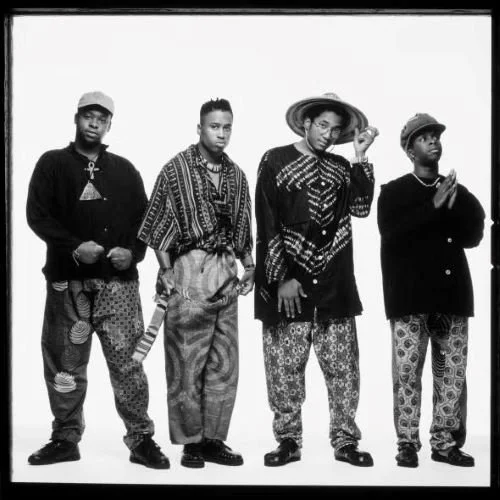
One of the most popular new wave bands of the early '80s, the British group ABC built upon the detached, synthesized R&B pop of David Bowie and Roxy Music, adding a self-conscious, campy sense of theatrics and style. Under the direction of vocalist Martin Fry, the group scored several catchy, synth-driven dance-pop hits in the early '80s, including "Poison Arrow," "Look of Love," and "Be Near Me."

During the late '70s, Fry ran his own fanzine, Modern Drugs, while he attended Sheffield University. ABC formed in 1980, after Fry interviewed Vice Versa members Mark White (guitar) and Stephen Singleton (saxophone) for his fanzine. The two musicians asked Fry to join their band as a vocalist, and he soon became part of the group; the lineup also featured drummer David Robinson and bassist Mark Lickley.

Soon, Fry had taken control of the electronic band, steering them in a more pop-oriented direction and renaming the group ABC. By the fall of 1981, the band had signed a record contract with Phonogram Records, which agreed to distribute ABC's own label, Neutron. ABC released their first single, "Tears Are Not Enough," in November; it peaked at number 19 on the U.K. charts. Before they recorded their second single, Robinson left the band and was replaced by David Palmer in early 1982. Two singles, "Poison Arrow" and "The Look of Love," became British Top Ten hits in the spring, paving the way for their debut album, The Lexicon of Love, to enter the charts at number one. "All of My Heart" also became a Top Ten hit in the fall of 1982.

Toward the end of 1982, the group began concentrating on the United States. Their American success was helped greatly by the fledgling MTV network, which aired videos for "The Look of Love" and "Poison Arrow" frequently, making both singles Top 25 hits in the spring of 1983. Palmer left the band in the summer of 1983, as ABC were recording their second album. Featuring a harder, rock sound driven by guitars rather than keyboards, Beauty Stab was released late in 1983. Supported by the number 18 single "That Was Then But This Is Now," the album didn't perform as well as the debut, peaking at number 12; the record was also a commercial disappointment in the U.S. Late in 1984, ABC -- now consisting solely of Fry and White augmented by various session musicians -- released "(How to Be A) Millionaire," which failed to put a halt to their commercial slide. Following its release, the duo moved to New York, where they added David Yarritu and Eden to the group; neither member could play or sing -- they were added for the visual effect.

Released at the beginning of 1985, the light, catchy "Be Near Me" became a hit single in Britain, climbing to number 26. Due to the single's success, How to Be a...Zillionaire! became a Top 30 hit in both the U.K. and U.S. "Be Near Me" was released as a U.S. single toward the end of 1985 and it became the group's first American Top Ten hit. Even though they had a fair amount of success in 1985, ABC's subsequent singles stalled on the charts. Fry was also ill for most of the latter half of the year; he recovered in 1987 and began writing and recording with White. In the summer of 1987, ABC released "When Smokey Sings," which was a major hit, reaching number five in the U.S. and number 11 in the U.K. Alphabet City followed that fall, peaking at number seven in the U.K. and number 48 in the U.S. Two years later, they released Up, which only charted in the U.K. Absolutely, a greatest-hits collection, made it into the British Top Ten upon its release in 1990.

Following the release of Up, Fry took an extended break from the music industry, returning in 1997 with a revamped ABC and a new album, Skyscraping, which was only released in the U.K. Shortly before ABC's comeback, England experienced a short-lived new romantic revival called Romo, which increased Fry's exposure substantially, in turn helping Skyscraping to earn good reviews and respectable sales. A live album followed in 1999, and several ABC reissues appeared during the 2000s, including a double-disc deluxe offering of Lexicon of Love. The drummer from that album, David Palmer, returned to the ABC lineup in 2004, and the band released an album of original material in 2008 entitled Traffic. They continued to play concerts and festivals, and in 2009 they played the entirety of Lexicon of Love at Royal Albert Hall with the BBC Orchestra conducted by album collaborator Anne Dudley. They did the same thing in 2012 to celebrate the 30th Anniversary of the album, performing again with Dudley, only at London Theatre Royal Drury Lane instead. That night while on-stage, Fry was struck by the idea that the album needed a sequel and soon after he began to assemble the songs and players to help make it a reality. Enlisting Dudley and producer Gary Stephenson, the album captured the sound and feel of Lexicon of Love, while Fry's ageless voice and wry lyrics made it feel like nary a moment had passed since 1982. The album was titled Lexicon of Love II and released by Virgin/EMI in May of 2016”.

To celebrate the upcoming sixty-fifth birthday of the incredible Martin Fry, below are some of the best ABC tracks. There are hits and well-known songs alongside some deeper cuts. If you are a fan of the band or not, there are tracks in here that you will recognise and like. One of the greatest and most distinct singers of his generation, Lancashire-born Fry is a legend who deserves saluting! The songs below show how powerful…

HIS presence and voice is.

FEATURE: Walking Up That Hill… The Hounds of Love 33 1/3 Book, and Which Other Kate Bush Album Celebrations Should Follow

FEATURE:


Walking Up That Hill…

N THIS PHOTO: Kate Bush in an outtake for the Running Up That Hill (A Deal with God) single shoot in 1985/PHOTO CREDIT: John Carder Bush


The Hounds of Love 33 1/3 Book, and Which Other Kate Bush Album Celebrations Should Follow

_________

THE brilliant…

Leah Kardos is among the authors who will bring great albums to life through the 33 1/3 series very soon. I reacted to the news when it arrived, but I wanted to revisit it. Kardos is a brilliant writer and author, and she is definitely a Kate Bush superfan. I am surprised it has not been done sooner, but Hounds of Love is coming to the series. Maybe it is quite daunting not only trying to condense this 1985 masterpiece into a short book, but it is so well-known and popular, so it is a case of writing about it in an accessible way, but also including details that people might not know – appealing both to new Kate Bush fans and those who are new. Before moving on, I spoke with author, musician and composer Leah Kardos about the upcoming Hounds of Love book, her love of Kate Bush, and what it was like researching the 1985 album.

Congrats on being commissioned to write the 33 1/3 book for Hounds of Love! How did you react when you heard the good news? Why was Hounds of Love the album you wanted to write about?

Hey, thank you! I was overjoyed when I found out, because I’ve wanted to write a 33 1/3 for a long time now. I had submitted two unsuccessful proposals before this one. In fact, my last book, Blackstar Theory: The Last Works of David Bowie, began as a failed proposal for a 33 1/3. When I heard the news there was a very excited, quite protracted “!!!” conversation over messenger with my best friend. Just days and days of Kate GIFs.

I knew for this open call that I wanted to write about Kate’s music, the ideas for it have been brewing for years - but I couldn’t decide on which album to focus on. For a while, my heart was set on writing about Aerial (that abandoned pitch is uploaded as a draft on my academia account if anyone’s curious. But in the end, the RUTH (Running Up That Hill (A Deal with God) appeared on Netflix’s Stranger Things) moment of 2022 was too good to ignore, and there’s so much to dig into with Hounds: all the bangers on side A; The Ninth Wave is a real gift to write about. I think that intuition was correct in the end. There seems to be  a bit of special energy around Hounds of Love at the moment with the re-release coming up, the stirrings of something new with the Fish People rebranding, and the move to The state51 Conspiracy. For me, everything feels synchronous and right, even down to the Fish People logo redesign in collaboration with Barnbrook, who I interviewed and got to know with my Bowie book research, and with whom I had some long chats last year about Kate and Hounds of Love specifically. It feels like stars are aligning for this thing.

 “The challenge will be to approach something so familiar with a freshness

What has it been like writing the book? Did you learn anything new about Hounds of Love and Kate Bush when researching it?

I’m in the research phase right now. I haven’t really started properly writing it – the manuscript is due in December. For the moment, I’m just making lots of notes and doing some deep thinking on the musicological side of things, which I think (hope) will be the book’s USP. That, and situating the work in the larger cultural picture in terms of influence and legacy. One thing I’m really digging into at the moment is Kate’s Before the Dawn concert residency from 2014, where all but one of the songs from Hounds of Love were performed for the first time. I think the theatrical staging of The Ninth Wave really expands and deepens the album content, going quite a long way to illustrate the artist’s own vision of it.

How did it differ to, say, writing about David Bowie for Blackstar Theory: The Last Works of David Bowie in terms of research and approach?

The difference for me is that the Bowie book was about the last phase of his career, so in a way it was about his entire career too. The whole story of the catalogue; all the connecting threads. Also, I wrote it not long after it happened – barely five years of Bowie’s death in 2016. With this book, it will be nice to zoom in on a single album, a specific time and place, a unique season for an artist who is still around, who could still put more work out yet (I dearly hope she does!). Another difference will be that Hounds has been discussed and written about quite a lot; the late Bowie work, not so much. The challenge will be to approach something so familiar with a freshness.

 “With staggering sound design and next level songcraft, it’s an uncompromising artistic statement and a commercial success

When did Kate Bush come into your life, and what was it about her music that struck you?

My fandom has gone through some phases. As a younger music student studying piano and trying to write my first songs, I was all about the earlier albums – trying to figure out the chords and sing along to songs like Moving, Symphony in Blue, Wow. Then later, when I got into record production and music technology as a creative and academic interest, I became alive to the staggering expression and sonic daring of The Dreaming and Hounds of Love. As I’ve gotten older, I appreciate Kate’s later work more and more, especially Aerial, which I think offers a profound, life-affirming message for everyone, especially for women at a specific stage of life. Being a woman in her forties, acutely aware of my fading visibility in the world, living in England in thrall to the magic of birdsong, the long-reaching light of summertime, I feel a connection to this work on an existential level!

As a musician and composer, how important is Kate Bush and albums like Hounds of Love to you personally?

Well. Beyond loving it and everything about it, Hounds is so important to me because it’s a complete vision, fully realised. I love how Kate becomes the complete auteur here, working expressively with sound, music, text, reference and image. With staggering sound design and next level songcraft, it’s an uncompromising artistic statement and a commercial success. Immediately accessible and exquisitely deep. Blazing a trail for and setting the template for successive generations of artists – especially female, Queer and trans self-producing songwriters like Tori Amos, Björk, ANOHNI, SOPHIE, Perfume Genius, FKA twigs, Jenny Hval, and so many more.

I’ve unfortunately seen how female self-producing artists can have their authorship questioned and/or diminished…

I don’t think enough people talk about Kate Bush’s talent as a producer. Her skill and intuition through Hounds of Love is evident. Do you think she is underrated as a producer?

Absolutely. I would love it if critics and musicologists would start talking about Kate as an influential record producer more. I would put her skills and vision during this era on par with Trevor Horn, or even Prince. Line it up next to Peter Gabriel’s So, and I think Hounds sounds every bit as good – if not better, more daring and stylistically coherent in places. And Peter had Daniel Lanois’ help with production on that one. I’ve unfortunately seen how female self-producing artists can have their authorship questioned and/or diminished - Bjork’s comments to Pitchfork in 2015 about this particular phenomenon come to mind – it makes me wonder had a man produced Hounds of Love, there would probably be a lot more open celebration of the album’s fantastic and influential production values. 

My favourite song from Hounds of Love is The Big Sky, but I adore The Ninth Wave too. Do you have a standout track or aspect of the album that is a personal favourite?

This is a hard one. This week, I’m feeling the dopamine hitting hardest when Jig of Life comes on.

Ann Powers’ proposed volume on ‘The Dreaming’ would have been an excellent addition to the series” 

I am writing a feature about your upcoming book, but I also ask which other Kate Bush albums should be brought to the 33 1/3 series. Which would you say deserves to follow Hounds of Love?

Well as I said earlier, I think Aerial would be a great addition. There’s so much juicy stuff in there that I haven’t seen many people writing about yet. Ann Powers’ proposed volume on The Dreaming would have been an excellent addition to the series – I really enjoy hearing her talk about this era on Yasi Salek’s Bandsplain podcast, and you just know she would have done The Dreaming full justice. They’d probably never go for it, but I think Director’s Cut could be really interesting to write about, too.

For being a good sport, you can choose a track from Hounds of Love, and I will put it here. Which do you fancy?

Let’s have Hello Earth, since it references several songs, themes and musical motifs from the album…sewing the threads into a satisfyingly dramatic climax. You can’t fail to get swept up and away by it.

I am really pleased that there is a new book coming out about Hounds of Love! Considering what a masterpiece it is, there is little out there in terms of podcasts and books. I am not sure what date the book is coming out (as Kardos is still researching for it), but keep an eye on Kardos’ Twitter feed, and 33 1/3’s page. Given the new attention Hounds of Love has received after Stranger Things featured Running Up That Hill (A Deal with God) last year, it is going to provide more background and depth about such an important album. It sort of begs the question as to what comes next. I think we will see other Kate Bush-related books this year, but I have always said how it is important to highlight and explore her albums. 33 1/3 offers a brief-but-deep look inside great albums. I think The Dreaming was published or planned at some point. I may have said it before, but there is an album that has always been underrated that has a fascinating backstory and run-up. 1980’s Never for Ever came a year after The Tour of Life – where Bush toured her first two albums around the U.K. and Europe. Producing alongside Jon Kelly, it features some career-best tracks like Babooshka, The Wedding List, Breathing and Army Dreamers. If not Never for Ever, then I think The Sensual World is an album that is both acclaimed and not known by all. I think these two albums would be perfect for further exploration.

I am not sure whether anyone is planning those books but, when 33 1/3 pitch for new submissions, I think these albums should be options. Of course, all the other Kate Bush studio albums are worthy of inclusion, but Never for Ever is hugely underrated and a fascinating album. The Sensual World came out in 1989 and was the follow-up to Hounds of Love. It saw Bush keep the quality up, but I think it was a more personal album. Full of sensuality and beauty, it had a different tone and palette to Hounds of Love. It is great that Leah Kardos is writing about Hounds of Love. I hope it opens the door for more books about Bush’s albums. We got Tom Doyle’s brilliant biography about Bush last year, Running Up That Hill: 50 Visions of Kate Bush, so I am interested whether there will be another biography or even a photobook. Album dives and books are especially interesting, as it will open them up to new fans and listeners. So far, The Kick Inside, The Dreaming, and now Hounds of Love have had books written about them. I am not sure whether any others have. Every fan has their opinion as to which Bush albums would benefit from a 33 1/3-style representation. Whether it is 2005’s double album, Aerial, 1978’s Lionheart, or 2011’s 50 Words for Snow, there is more demand and a bigger fanbase than there has ever been! Whilst we wait to see if new Bush material will come along, there are these brilliant albums to enjoy. Knowing more about how they formed and took shape provides this insight and illumination. This is a great thing. I am looking forward to reading Leah Kardos’ writing on…

KATE Bush’s Hounds of Love.

FEATURE: Inspired By… Part Ninety-Three: A Tribe Called Quest

FEATURE:


Inspired By…

 PHOTO CREDIT: Aristos Marcopoulos/PRNewsFoto/Legacy Recordings via AP Images


Part Ninety-Three: A Tribe Called Quest

_________

SIMILAR to Cyndi Lauper…

 IN THIS PHOTO: DJ/Producer Ali Shaheed Muhammad, Jarobi White and Phife Dawg (Malik Isaac Taylor) celebrate the 25th anniversary of their debut album

when I included her in Inspired By… last time, this is another Hall & Fame-related act. Both Cyndi Lauper and A Tribe Called Quest are nominated for inclusion this year. The fan vote is open, and it made me reflect on the importance and influence of A Tribe Called Quest. The Hip-Hop group formed in Queens, New York in 1985. Their 1991 album, The Low End Theory, is among the best and most important of all time. Because of that, I wanted to end with a playlist of artists who are inspired by the group. We sadly lost Malik Izaak Taylor (Phife Dawg) in 2016, so the possibility of another album from them is practically zero. Before I get to that playlist, AllMusic provide a biography of the remarkable A Tribe Called Quest:

A Tribe Called Quest were without question one of the most progressive and crucial rap groups of the 1990s. Along with their brothers and sisters in the Native Tongues -- a crew that also included the Jungle Brothers, Queen Latifah, De La Soul, Monie Love, and Black Sheep -- Tribe struck a natural balance between ruminative and carefree lyrical content, examining personal and deep societal issues without forgetting to have a good time. Just as creative and powerful as producers, Tribe helped create new paths for hip-hop with visionary and inventive sampling from previously unutilized '60s and '70s jazz recordings, among other styles ranging from bossa nova to prog rock, and even collaborated with some of the players whose names were listed in the liner notes they scoured. The group's first five albums, highlighted by the all-platinum run of The Low End Theory (1991), Midnight Marauders (1993), and Beats, Rhymes and Life (1996), added up to one of the decade's most vital artist discographies, rap or otherwise. Six years after their 1998 split, they reconvened onstage and continued to occasionally tour into the 2010s. We Got It from Here...Thank You 4 Your Service (2016), their final LP, became their second number one album months after the death of founding member Phife Dawg.

Although it wasn't until 1988 that they became known as A Tribe Called Quest -- named by peers the Jungle Brothers -- the group started to take shape three years earlier, with Queens native Q-Tip (born Jonathan Davis) and high school classmate Ali Shaheed Muhammad (a Brooklynite) recording demo material with pause-tape beats. The rapper/producer and DJ/producer duo eventually became a quartet with the addition of Q-Tip's childhood friend Phife Dawg (born Malik Taylor) and neighbor slash part-time member Jarobi (short for Jarobi White). Q-Tip was heard first on the Jungle Brothers' 1988 album Straight Out the Jungle. The next year, he was featured De La Soul's "Buddy," and a version of that track, dubbed "Buddy [Native Tongue Decision]," added Phife to the mix. The recorded debut of A Tribe Called Quest followed later in 1989 with "Description of a Fool," issued on Jive. (The group had recorded a demo for Geffen, but the major label balked on offering a contract.) The following April, Tribe released their first album, People's Instinctive Travels and the Paths of Rhythm. Much like De La Soul, Tribe looked more to jazz as well as '70s rock for their sample base; "Can I Kick It?," which followed "I Left My Wallet in El Segundo" and "Bonita Applebum" into the Top Ten of Billboard's rap chart, plundered Lou Reed's "Walk on the Wild Side" and made it viable in a hip-hop context.

No matter how solid their debut was, second album The Low End Theory, released in September 1991 (after Jarobi's departure for culinary school), exceeded all expectations and has held up as perhaps the best hip-hop LP of all time. In addition to its rich assemblage of samples, it featured jazz legend Ron Carter on double bass for "Verses from the Abstract." Like the debut, it yielded a trio of charting singles. "Check the Rhime" topped the rap chart, and "Scenario," featuring Leaders of the New School (with future solo star Busta Rhymes), went to number six. The Low End Theory included several tracks with props to hip-hop friends, and Tribe affirmed their support of the wider rap community with their third album, Midnight Marauders. The album cover and booklet insert included the faces of over 70 hip-hop luminaries, a coast-to-coast assortment that included members of De La Soul, the Jungle Brothers, and Beastie Boys, as well as Ice-T and Too $hort. The LP entered the Billboard 200 at number eight, easily the group's highest placement to that point. It offered several classics, including "Award Tour," the group's sixth Top Ten rap hit, and a sound that was harder than the first two albums. During the summer of 1994, Tribe were part of the fourth Lollapalooza lineup, and the next year were comparatively quiet, apart from several production jobs for Q-Tip. They returned in July 1996 with their fourth LP, Beats, Rhymes and Life, which prominently featured Consequence, Q-Tip's cousin, and production associate Jay Dee (of Slum Village), who had gained notice for his work on the Pharcyde's Labcabincalifornia. The album topped the Billboard 200, was nominated for a Grammy in the Best Rap Album category, and became the group's third consecutive platinum LP. The single "1nce Again" was also up for a Grammy in the rap field.

Before they released their next album, The Love Movement, the group announced it would be their final statement and that they were splitting up. After The Love Movement debuted at number three and earned the group their second Best Rap Album Grammy nomination, each member pursued solo projects to varying degrees of success, but the call of the group proved strong enough that they reunited many times over the years. They headlined the Rock the Bells concert in 2004, toured heavily in 2006, featured on the Rock the Bells tours of 2008 and 2010, and played a series of shows in 2013, including some with Kanye West in New York. They reunited again in November 2015 to play The Tonight Show in conjunction with the 25th anniversary reissue of People's Instinctive Travels and the Paths of Rhythm.

The group's performances post-Love Movement helped pay for increasing medical expenses faced by Phife. Diagnosed with diabetes in 1990, Phife eventually needed multiple kidney transplants. In March 2016, Phife died (at the age of 45) due to complications related to the condition. Later that year, Q-Tip announced that the group had completed a new album. The night of their Tonight Show appearance the previous year, the group's original four members decided to put aside their differences and start recording again. Sessions were held in Q-Tip's well-appointed home studio, and the group welcomed guests like Busta Rhymes, Elton John, Kendrick Lamar, and André 3000 to contribute. Though Phife died before the album was finished, Q-Tip was able to power through and complete it. We Got It from Here...Thank You 4 Your Service was released in November 2016 and topped the Billboard 200 on its way to gold status. Q-Tip and Ali Shaheed Muhammad continued with assorted musical pursuits. Tribe were nominated for induction into the Rock and Roll Hall of Fame in 2022”.

Ahead of what may be induction into the Rock & Roll Hall of Fame for A Tribe Called Quest, I wanted to salute them and put together a playlist featuring artists who are clearly inspired by them. Almost thirty-three years since they released their debut album, People's Instinctive Travels and the Paths of Rhythm, A Tribe Called Quest are still hugely important to artists coming through. The playlist below is features may artists who look up to…

THIS amazing musical force.

FEATURE: International Women’s Day 2023: About Damn Time: Worthy Female/Female-Led Headline Artists

FEATURE:


International Women’s Day 2023

IN THIS PHOTO: Lizzo appears on Glastonbury’s bill alongside headliners Elton John, Arctic Monkeys, and Guns N’ Roses, but as a ‘support’ artist rather than a headliner herself

About Damn Time: Worthy Female/Female-Led Headline Artists

_________

NOT to labour…

 IN THIS PHOTO: Billie Eilish is one of the headline acts at this year’s Reading & Leeds Festival

a point I and many have made over the past few days, festivals like Reading & Leeds and Glastonbury have been criticised for a lack of female headliners. Even though Glastonbury have two female headliners booked for 2024 and have Lizzo and Lana Del Rey as ‘support’ for headline acts, it is an all-male lime-up. The issue is more complex than festivals not looking hard enough. Taylor Swift was originally booked, and many ask whether Lizzo could have been a headliner. There is an issue with how female artists are marketed and signed. Labels are signing the same tired male acts and, even when women are signed, they are not being handled and marketed well. Many are going independent. This means that they have to work harder to get exposure and gigs. If festival headliners are usually defined by a certain successful, popularity and experience, I don’t think that needs to be the way. When I posted my disappointment with Glastonbury’s all-male headliners, some said it would be crowbarring a female artist. Do we need to change things? If the rest of the bill is a good split in terms of gender and sound, why does it matter if the headliners are all-male? I argued that it is recognition of women at the highest level, and it shows that festivals do not believe women can command a headline slot and would prove popular. That is not the case.

 IMAGE CREDIT: Glastonbury Festival

Many American festivals have no trouble booking women. Roisin O’Connor, writing in The Independent argued that there is a problem with the U.K. music industry. It is troubling to realise that, unless there are major changes, we might not see many women headline festivals in this country:

A symptom of this, it appears, is that festival bookers are resorting to old, bad habits in a bid to lure music fans back to the events they’ve gone without for the last few years. In 2022, a YouGov survey found that only one in 10 headliners at the UK’s top festivals were women. Of 200 headline acts, just 26 were female, one identified as non-binary, 24 had a mixed line-up, and the rest (149) were either male solo artists or all-male bands.

But, as Eavis points out, the issue begins far earlier than festival line-ups. Record labels seem perfectly content to sign 100 identikit white male singer-songwriters – your Ed Sheeran, Lewis Capaldi, George Ezra and Sam Fender soundalikes – and just about every spoken-word band that stumbles out of The Windmill in Brixton. Of course, this isn’t the case for women. “There can only be one Adele, one Dua Lipa,” seems to be the argument. The UK industry is still blighted by the ludicrous view that, if you have one female pop star, it’s impossible to break another one on the same timeline. Meanwhile, in the US, they make it look effortless, with Lana Del Rey and Lizzo doing just fine alongside Lady Gaga, Olivia Rodrigo, Beyoncé, SZA, Taylor Swift, Miley Cyrus, Demi Lovato, Meghan Trainor…

IN THIS PHOTO: Taylor Swift was due to headline this year’s Glastonbury Festival, but owing to a scheduling/date conflict she was replaced/PHOTO CREDIT: Beth Garrabrant

There’s also a lack of effort to help emerging female artists achieve any kind of longevity. Labels are busy snapping up viral TikTok stars with one song and zero live experience to their name, then scratching their heads over why fans feel no sense of loyalty towards them, even as industry giants like Capaldi share memories of one of his first gigs in Scotland (he’s currently on a worldwide arena tour). Success such as his does not happen overnight. Yet even now, publications put out their lists championing 100-plus artists to watch each year then fail to mention half of them ever again. Radio stations play the same major label artists on a never-ending loop. Last year’s gender and racial disparity report into UK radio found that UK male solo artists occupied the top 100 more than three times as often as female solo artists, and were present in 80 per cent of all top 100 singles. Sheeran alone took up 10 per cent of the top 50 singles last year”.

The truth is that, even for a two-and-a-half-hour set, there are options at least for festivals when it comes to book suitable and popular women. Setting aside their cost, availability or anything else that might be a barrier – and is often used as an excuse -, the artists in the playlist below are all wonderful potential headline acts (and several of them have headlined festivals in the past). Invaluable directories like The F-List provide so many possible names. It is not as simple as festival organisers need to call these women and book them. There are attempts and efforts made but, when you consider the artists who could command a headline set, you wonder why it is men (and white men at that!) who are consistently booked. Quite boring male artists too. Ahead of International Women’s Day on Wednesday (8th), below are songs from incredible women/female-fronted acts who could…

 IN THIS PHOTO: Lana Del Rey is booked for Glastonbury this year, but not as a headliner/PHOTO CREDIT: Lia Clay Miller for Billboard

CREATE stunning headline sets.

FEATURE: Revisiting… Saint Etienne - I've Been Trying to Tell You

FEATURE:


Revisiting…


Saint Etienne - I've Been Trying to Tell You

_________

THERE are a few reasons…

 ILLUSTRATION CREDIT: Melek Zertal

why I want to feature Saint Etienne’s I've Been Trying to Tell You in this Revisiting… For one, the tenth studio album from the legendary London band is among their very best. It shows they are one of the most consistent and inventive groups of their generation. Also, this album was released on 10th September, 2021, and it did get great reviews. I don’t think it is played and talked about as much as it should be. Also, as it was released during the pandemic, maybe it denied Saint Etienne the opportunity to promote and tour it in full. An album that should not pass anyone by, I also like I’ve Been Trying to Tell You, because it makes direct reference to music of the late-’90s. In terms of its concept and act, it is an album set between the ‘optimistic’ years of 1997 and 2001. It contains samples of Pop songs from this time, alongside some field recordings. Before getting to some reviews, there are a couple of interviews that I want to bring in. The band, Sarah Cracknell, Bob Stanley and Pete Wiggs discussed the inspirations behind I’ve Been Trying to Tell You. They spoke with The Guardian in September 2021 about COVID-19, in addition to British music and culture in the ‘90s:

I’m Trying to Tell You’s hazy musical style is influenced by something unexpected: YouTube videos made by younger people Stanley became obsessed with a few years ago. “It was this warped, woozy music like chillwave or vaporwave, but it’s mostly samples of 80s American music, set against stills of abandoned shopping malls. There are virtually no records or CDs [of this music] – it’s all on YouTube and it definitely seems outside of the conventional music industry, which I find fascinating.”

Stanley is the band’s resident pop geek, publishing acclaimed books (including 2014’s whip-smart history of pop, Yeah, Yeah Yeah, and this year’s Excavate!: The Wonderful and Frightening History of the Fall, co-edited with his partner, artist and writer Tessa Norton, as well as compiling crate-digging anthologies with Wiggs. Some might accuse him of wallowing too much in the past, but he’s not having that. “I don’t think it’s nostalgic to be fascinated by the Chartists or the Bauhaus, or the Beatles for that matter. It’s about history.” It’s also about having a modernist approach to creativity, he says. “And my understanding of modernism is that it’s about borrowing the best bits of the past when you’re creating something new. That’s how you progress. ‘Che Guevara and Debussy to a disco beat’ as Neil Tennant said in Left to My Own Devices. You can’t ignore history.”

When Covid hit, the band struck on the idea of taking samples from a period currently being referred to by younger artists such as Charli XCX and AG Cook. Cracknell loves the resulting album: “It’s all hazy, late summer sounds – and it was so nice to do something like this during multiple lockdowns, and so nice to see each other, even if it was only on Zoom.” She recorded her vocals in her son’s bedroom; Wiggs worked at home, as did Stanley, but later hooked up with composer Gus Bousfield, who contributed to two tracks. They decided to look at the less well-know styles songs that were actually all over the radio in the late 1990s – styles far removed from indie and Britpop. “Because it frustrates us how history gets rewritten,” Stanley says. “That’s part of the theme of this record – it’s an attempt to reclaim memory.”

IN THIS PHOTO: Bob Stanley, Sarah Cracknell and Pete Wiggs in 1991/PHOTO CREDIT: Brian Rasic/Getty Images

The idea of reappraising our received version of the 1990s is something the band have often discussed. Stanley says he finds it odd that “Britpop people have taken over the music bits of the BBC… ex-members of various bands being presenters or whatever. That doesn’t help what we remember.” What was exciting then, he says, was rave, hardcore and breakbeat, jungle and drum and bass, music that was developing constantly. “Every couple of months there was something new. It was constantly evolving.” We discuss the famous cover of Select magazine in 1993 that first introduced Britpop as a concept: Saint Etienne were one of the bands. “It had us, Pulp, Denim, Suede and the Auteurs as well – we all sounded completely different. By the time Britpop became big, that sound was much more homogeneous and by 1997 it was quite dreary – and suddenly everyone was splintering off into different things.”

What do the band think of the argument that Britpop – and its fetishisation of Britishness – was one of the building blocks towards Brexit? Wiggs nods wearily; Cracknell offers a theatrically miserable shrug. “You can definitely see things within the stereotypes of Britpop that tie those things together,” Stanley says. “It snuck certain associations into popular culture.”

The album also explores a time where Britain last felt optimistic, they say, although it was tempered by disillusion even shortly after New Labour was elected. “We must be near the bottom of it for politics now, though,” says Stanley.

Cracknell and Wiggs have kids in their late teens who are fascinated by the 1990s (Stanley is merely an observer of this phenomenon: his son with his partner, Norton, is only five). I wonder if they cling to that period because it takes them to a mysterious world just before they were born – so close to them, in a way, but also so out of touch. “It’s a bit like us having a fascination for the 60s at a similar age, just in a different way,” Cracknell says. “I mean, for us, the 90s seems like yesterday, but for them, it seems like a really, really long time ago”.

Before getting to those reviews, there is an interview from PASTE that caught my eye. In it, the band’s superb lead Sarah Cracknell was asked about the album and living through the pandemic. There are a couple of sections of the interview that I wanted to bring in. One answer suggested that Saint Etienne might have another album coming along soon:

Paste: Your new album title I’ve Been Trying to Tell You works on several levels. For years in my writing, I’ve been quoting everything from the book Ishmael to climate-change headlines to underscore the fact that man, in thinking he’s the end product of evolution, has basically doomed himself to extinction. And there will be no safe place to run that’s free from fires, floods, tornadoes, hurricanes and coastal erosion. We’ve been trying to tell you.

Cracknell: Oh yeah. I know this woman, she’s really lovely, and she’s got younger kids. But her 14-year-old teenage boy, she found him crying his eyes out, and she was going, “What’s the matter?” And it was all about how frightened he was about the future, and about climate change and about wars and the pandemic and the government. It was horrible, and my friend said she wished she’d never had the news on. I mean, you put the news on and you think that your children are not absorbing it, but this kid was. And she felt so sorry for him, but she said, “What can I tell him?” And there was another hurricane in New Orleans, and a million people without power, and they’d only just got their shit back together, you know? It’s awful. Boy, this is really a doom-y conversation!

Paste: So you were just getting lost in bygone Britpop-era reverie on this album, basically? Back when Labour was in, Boris wasn’t.

Cracknell: Yeah, exactly. I think we were just thinking about how you can get into the idea that there was this great change, and with it brilliant things are going to happen! And some really good things did happen, but not everything we expected happened. So it’s about optimism, but optimism that’s a little bit unfounded, you know? And you kind of remember the good bits and that feeling. So the album is about sort of misremembering things.

Paste: So there’s another nearly finished Saint Etienne album in the pipeline then?

Cracknell: Yeah. And I’d say, to be realistic about it, it’s probably 2/3 of the way there. But now I think we might even get those songs and rethink how we want to approach it. Because—and this is just me talking, and I think Bob would agree with me—I don’t think it’s necessarily the right thing to do to suddenly go back to really full-formed songs again. I think some kind of segue, some kind of hybrid of the two things might be good. I don’t know—we’ll see. If we even get to do another record, that is. Who knows?

Paste: Did you come out of the whole experience cheered up? Reinvigorated?

Cracknell: Yeah, actually! Yeah! I think we did. Right around track four, I was thinking, “This is great! I love this!” And even the grumpy old manager, my husband, said, “This is great!” And he doesn’t normally say things like that, you know. And then because Alasdair was involved, after we’d done about three or four songs, he was sending us stuff that he had made to go with the songs, and it was really exciting. I mean to have someone as creative as he is, and who gets us as much as he does, sending us these beautiful images and beautiful sections of films, it was really exciting”.

I will put in a review from CLASH. I’ve Been Trying to Tell You received positive reviews across the board. From such a  remarkable band, their 2021 album ranked alongside their very best. This is what CLASH had to say in their review:

As literally nobody says: if you can remember the late 90s, then you weren’t really there. At the time, the period seemed to take on a beatific, easy-going glow in the eyes of the media – the Britpop party had ended but the confidence remained, while Labour’s history-making victory seemed to remove the Tory menace forever. Looking back, emotions are mixed: the art that emerged from the late 90s often feels flat, saccharine, lacking any kind of counter cultural edge; Labour – New Labour – failed to invoke radical change in this country, largely allowing the achievements that did emerge to rest on market forces.

‘I’ve Been Trying To Tell You’ digs into this period. It’s an odd choice – there’s nothing so strange as the recent past, and Saint Etienne choose to linger in between gilded memory and unvarnished reality, somehow invoking both across eight songs that always feel uneasy, always feel engaging, and rarely feel anything else but exemplary.

Their first sample-based record since 1993’s ‘So Tough’, the album draws on a mosaic of sounds from that pre-9/11 period of trans-Atlantic optimism. Re-adjusting sonic traits more familiar with Zero 7, All Saints bangers, and T4 idents into transportive works of art isn’t an easy feat, but the production on ‘I’ve Been Trying To Tell You’ is simply stunning. ‘Music Again’ slows down the chimes of an acoustic guitar into a grinding sense of introspection; ‘I Remember It Well’ seems to open out into a hauntological faux-90s landscape, reminiscent of Forest Swords’ hinterland dreams.

That oft-overused word ‘cinematic’ comes to mind – there’s an accompanying full-length film incoming, constructed by Alasdair McLennan – but only because Saint Etienne’s songwriting is so rich in atmosphere and suggestion. Even at its most left-field – the strange, warped trip-hop elements of ‘Pond House’ push the coffee table into the incinerator – there’s a knack for melody and accessibility that simply cannot be denied.

With a sonic palette bathed in artificiality, Saint Etienne seem to pick apart the plastic, to illuminate the flesh underneath. The slomo progression of ‘Penlop’ drags you into an aural torpor, while ‘Little K’ inverts on-hold muzak to simultaneously embody, cherish, and thoroughly pierce the sense of stasis so many have found in the Blair era.

A record that feels sharply removed from 2012’s glossy ‘Words And Music By Saint Etienne’ and the more autobiographical ‘Home Counties’ (2017), ‘I’ve Been Trying To Tell You’ reaches for the inexpressible. When words fail them – much of the record is instrumental – sounds somehow take up the taxonomy, falling mid-way between a dream state and waking. A hugely impressive achievement, ‘I’ve Been Trying To Tell You’ is technically exquisite, while remaining incredibly difficult to pin down. A project to bathe in, rather than simply enjoy.

8/10”.

The final review I want to bring in is from AllMusic. They were hugely positive and enthusiastic when it came to I’ve Been Trying to Tell You. Even though the album does lean heavily on British culture, it still did very well in other countries. I have seen American reviews that are very glowing and enthusiastic. It is an album that everyone needs to get involved with:

From the beginning of their long career, Saint Etienne have excelled at bringing together nostalgia and futurism in one stylish package that has always felt fresh, no matter how many old parts were salvaged in the creation process. Along the way, many of their most memorable moments have come about on the dancefloor, whether a glittering new wave disco or a past-its-prime Northern Soul discotheque. Looking past the shiny surfaces, it was always clear that the trio have just as much skill at crafting heartbreakingly pretty ballads that could be as epic as "Avenue", elegiac as "Teenage Winter", or painful as "Hobart Paving." After a couple of records in the 2010s that were bright and shiny examples of disco-driven pop at its best, the band have shifted gears dramatically to delve exclusively into their sadder, softer side. 2021's I've Been Trying to Tell You is a concept album that looks to extract the optimistic sound of late '90s mainstream pop and twist it into a suite of songs that feel like the half-remembered afterimages of a dream.

Built around samples of artists like Tasmin Archer, Lighthouse Family, Lightning Seeds, and Honeyz, to name a few, the band snatch little bits of acoustic guitar, strings, and keyboards, add their own instrumentation, then drape snatches of vocals over the top. The end results aren't songs as much as they are moods, or dub-like versions of songs that never existed. The circular melodies spin around like a record on a turntable, the keyboards drift and swell like ships lost at sea, and Sarah Cracknell sings like she's making up bits of songs to be sung only to herself. It's mesmerizing and peaceful, uplifting and heartbreaking all at once, especially when the revolving sounds resolve into something resembling a chorus, as on "Penlop" when all the elements of the song come together, and the melody breaks through like the sun on a cloud-filled afternoon. "Pond House," too, comes alive when the Natalie Imbruglia vocal sample shifts into a wonky synth bass breakdown, then slides back into a hazy swoon that plays on and on. There are moments like this throughout the album as the band mixes sounds like mod scientists to come up with something magical. While early albums sought a similar sample-based path that often deviated into eddies of calm despair, the band have never dived in as deeply as they do on I've Been Trying to Tell You. Fans of the group more interested in songs might feel short-changed at first, but further listens only intensify the cohesive power and pocket grandeur of the record. It's rare for a band to have a new idea after being together for five years, let alone thirty. That Saint Etienne not only had a brilliant idea but also made it come to life so fully and so beautifully is nothing short of miraculous”.

One of the best albums of 2021, I’ve Been Trying to Tell You is not played a lot. It is a magnificent album from the brilliant Saint Etienne. Mixing modern production with some samples from late-’90s tracks, I love that blend. For those who were growing up in that time in Britain, the album might resonate more and have a deeper meaning. For everyone else, you will fall in love with the always exquisite and original songwriting of the trio. The magnificent I’ve Been Trying to Tell You is an album that…

YOU should not ignore.

FEATURE: I'm Not the Same: Madonna’s Burning Up at Forty

FEATURE:


I'm Not the Same


Madonna’s Burning Up at Forty

_________

WRITTEN by Madonna…

for her debut album of the same name, Burning Up turns forty on 9th March. I am writing about Madonna quite a bit at the moment. The song was presented as an early recorded demo by Madonna to Sire Records. They gave her the green light to go after her debut single, Everybody, became a hit. Produced by Reggie Lucas, Burning Up concerns her (Madonna’s) lack of shame in declaring her passion for her lover. I am going to write about Madonna’s debut album closer to its anniversary in July. Although it was not a big chart hit in the U.S. or got major attention, it was a top twenty song in Australia. With Physical Attraction as its B-side, this is a song that has grown in importance through the years. Her first single release of 1983, and the third track off of the Madonna album, I was eager to mark the approaching fortieth anniversary of a very important song. I think Burning Up announced Madonna, not only as a terrific songwriter, but an original and confident artist. It would take a little while longer for her to become the Queen of Pop and an icon, but songs such as Burning Up show why the Madonna album is revered and seen as influential. I am glad there is a lot of information on Wikipedia regarding the song.

 IN THIS PHOTO: Madonna in 1983/PHOTO CREDIT: Marcus Leatherdale

Maybe not considered one of Madonna’s best or most famous songs, it is definitely one of her most important. When it turns forty on 9th March, I know it will get a lot of love and celebration around the world. I hope Madonna herself marks its fortieth:

Rolling Stone staff described the video as a juxtaposition of "disparate images of illuminated busts and cars driving on water with Madonna writhing in the middle of the road". The narrative shows Madonna proclaiming her passion for her lover, being portrayed as a "helpless" victim and a "stereotyped [female] portrayed in many silent movies". Though lyrics such as Do you want to see me down on my knees? portray female helplessness, the video acts as a counter-text; when this line is sung, Madonna is shown kneeling on the road in front of the advancing Amphicar, then turns her head back while exposing her throat back in a posture of submission. However, her voice tone and her look at the camera portray a hardness and defiance that contradict the submissiveness of her body posture and turn the question of the line into a challenge for her lover. At the end of the video, it is her who's driving the car, with a knowing, defiant smile on her lips. She has ditched the man, thereby giving the message that she's in charge. This theme would become recurrent throughout her career.

Author Andrew Morton, in his biography on Madonna, commented that the video was America's first introduction to Madonna's sexual politics. Author Robert Clyde Allen in his book Channels of Discourse compared the video to "Material Girl" (1985). According to him, both videos have an undermining ending, while employing a consistent series of puns and exhibiting a parodic amount of excess associated with Madonna's style. The discourses included in the video are those of sexuality and religion. Allen wrote that Madonna's image of kneeling and singing about 'burning in love' performed the traditional ideological work of using the subordination and powerlessness of women in Christianity to naturalize their equally submissive position in patriarchy. Author Georges-Claude Guilbert in his book Madonna as postmodern myth commented that the representation of the male character becomes irrelevant as Madonna destabilizes the fixing and categorization of male sexuality in the video. Her utterance of having "no shame" was interpreted by author James B. Twitchell, in his book For Shame, as an attempt to separate herself from contemporary female artists of that era”.

I don’t think people realise the sort of promotion Madonna did for singles like Burning Up. Before its March 1983 release, she performed the song around various New York clubs. She was in London and performed at clubs such as Heaven, Camden Palace, Beatroot Club. She also played it at The Haçienda in Manchester. Being a new artist and someone a lot of people were not overly aware of, the performances were not received that well. Burning Up is a song that Madonna is fond of and has performed on a few of her tours: Virgin (1985), Re-Invention (2004) and Rebel Heart (2015–2016). As she is touring later in the year, I wonder whether Burning Up will get an outing at all. Her debut album is forty in July, so it is only right a few tracks from it get a modern live performance from Madonna. I am going to end with another bit from Wikipedia. The video for her debut single, Everybody, was quite low-budget and basic. It is just Madonna dancing in a room. To be fair, her third single, Holiday (1983), was not too dissimilar. For Burning Up, there is more concept, cinema, and ambition. It is another reason why the song is important and iconic:

Author Andrew Morton, in his biography on Madonna, commented that the video was America's first introduction to Madonna's sexual politics. Author Robert Clyde Allen in his book Channels of Discourse compared the video to "Material Girl" (1985). According to him, both videos have an undermining ending, while employing a consistent series of puns and exhibiting a parodic amount of excess associated with Madonna's style. The discourses included in the video are those of sexuality and religion. Allen wrote that Madonna's image of kneeling and singing about 'burning in love' performed the traditional ideological work of using the subordination and powerlessness of women in Christianity to naturalize their equally submissive position in patriarchy.

Author Georges-Claude Guilbert in his book Madonna as postmodern myth commented that the representation of the male character becomes irrelevant as Madonna destabilizes the fixing and categorization of male sexuality in the video. Her utterance of having "no shame" was interpreted by author James B. Twitchell, in his book For Shame, as an attempt to separate herself from contemporary female artists of that era.

To the staff of Rolling Stone, it can be seen as a "great testament to the anything-goes era of early MTV". Jon Pareles, writing for The New York Times, compared Madonna's poses to those of Marilyn Monroe. Louis Virtel deemed it Madonna's 18th greatest video and wrote: "Before [Madonna] humped the stage of the MTV Video Music Awards in a wedding dress, she thrusted away at pavement in a chintzier white ensemble". It was ranked her 13th best by Eric Diaz, who went on to call it "iconic" and a "classic". He further wrote that "there is something [about 'Burning Up'] that is just so ’80s, and so Madonna - the rubber bracelets, the chains, the bleach blonde hair with the terrible roots. When girls today dress up like '80s Madonna' for Halloween, it's the look from this video they're emulating".

In their feature from 2018, Entertainment Weekly placed Burning Up 11th in their list. They commented about how it is underrated and borrowed from the Punk scene. The Guardian, in 2018 too, placed it forty-third. Parade put it at thirty-three. Everyone notes at how rocking and punky the song is. In 2016, Rolling Stone named Burning Up Madonna’s tenth-best song. It is clear how important it is, and it goes to show just how assured and compelling she was from the start. It is only right that we all celebrate Burning Up on its fortieth anniversary on 9th March. It is another big moment and anniversary for an artist who will celebrate forty years of her debut album and Holiday

LATER this year.

FEATURE: Unbelievable! Kate Bush’s Wow at Forty-Four

FEATURE:


Unbelievable!

PHOTO CREDIT: Gered Mankowitz


Kate Bush’s Wow at Forty-Four

_________


I have written about this song many times before…

 IN THIS PHOTO: Kate Bush performing during The Tour of Life in 1979/PHOTO CREDIT: Pete Still/Redferns/Getty

but, as it was released on 9th March, 1979, I wanted to look ahead to the forty-fourth anniversary. Wow was the second single from Kate Bush’s second studio album, Lionheart. Perhaps the defining track from that album, I am going to look at Wow fairly soon again, as there is another anniversary coming up. The Tour of Life (Bush’s only tour) started on 2nd April, 1979. Wow was featured in the third act/part of the set, and I think that it is one of Bush’s most important and underrated singles. I do not hear the song on the radio as much as you’d think. It did get to number fourteen in the U.K. Lionheart’s first single, Hammer Horror, only got to forty-four. I often wonder why Wow was not considered as the first single. Maybe there was a feeling Hammer Horror was a bolder departure from the songs and sounds of The Kick Inside (her debut album). Released in October 1978, Hammer Horror did sound very different. Maybe Bush and EMI wanted to send out that message and indication she was not to be easily predicted. Although Wow is an incredible track, maybe it sounds more similar to songs on The Kick Inside than Hammer Horror. There is greater accessibility to Wow. A finer chorus and a something that elevates the track beyond most others in her catalogue, the supreme Wow still sound amazing to this day. It was subjected to parody and ridicule by some – Faith Brown did so in 1980 -, but one cannot deny the hypotonic and timeless quality of this track.

Inspired by Pink Floyd, Bush wanted to write something spacey when it came to Wow. This was an older song that was written before The Kick Inside came out, and I often wonder what would have been if it was included on her debut. In terms of inspiration, the Kate Bush Encyclopedia has sourced an example where Bush spoke about the background and inspiration behind one of her most famous songs:

'Wow' is a song about the music business, not just rock music but show business in general, including acting and theatre. People say that the music business is about ripoffs, the rat race, competition, strain, people trying to cut you down, and so on, and though that's all there, there's also the magic. It was sparked off when I sat down to try and write a Pink Floyd song, something spacey; Though I'm not surprised no-one has picked that up, it's not really recognisable as that, in the same way as people haven't noticed that 'Kite' is a Bob Marley song, and 'Don't Push Your Foot On The Heartbrake' is a Patti Smith song. When I wrote it I didn't envisage performing it - the performance when it happened was an interpretation of the words I'd already written. I first made up the visuals in a hotel room in New Zealand, when I had half an hour to make up a routine and prepare for a TV show. I sat down and listened to the song through once, and the whirling seemed to fit the music. Those who were at the last concert of the tour at Hammersmith must have noticed a frogman appear through the dry ice it was one of the crew's many last night 'pranks' and was really amazing. I'd have liked to have had it in every show. (Kate Bush Club newsletter, Summer 1979)”.

Kate Bush did find some of her videos hitting issues. Experiment IV (released as a single from her 1986 greatest hits collection, The Whole Story) was banned from Top of the Pops, as it was deemed too violent for the pre-watershed slot. In Wow, the video shows Bush patting her bottom while singing "he's too busy hitting the Vaseline". Vaseline was once defined as a personal sexual lubricant, so that got the song into trouble. I love the cheekiness of the song. Bush’s vocals are superb throughout. This was a track where she did so many takes to get the vocal right. Like an actor getting the right take, Bush was quite precise when it came to this song. I am not sure why she was pretty obsessed when it came to her vocals here, but it paid off! The song has received some ribbing and fonder comedic affection – Steve Coogan performed it live as Alan Partridge -, but it is a classic! I think it is still quite underrated. When it comes to Bush songs played on the radio, Wow does not get the same exposure as others. I think it is the song many associate with Lionheart. As that album is forty-five in November, I hope Wow compels many to check out the album it came from. It is a remarkable song that turns forty-four on 9th March. So many lines stick in the mind. I love the theatrics and emotion Bush’s puts into her vocals when she sings “Ooh, yeah, you're amazing!/We think you're incredible/You say we're fantastic/But still we don't head the bill”. Performing the song through The Tour of Life (April-May 1979), and on an ABBA T.V. special in Switzerland in April 1979, one cannot listen to Wow without singing along! I love the Keef (Keith McMillan) video, and the hooky and wonderful chorus. It is another song that proves Kate Bush was and is…

A true music genius.

FEATURE: International Women’s Day 2023: 2024: A Year for True Equality and Balance Across All Festivals?

FEATURE:


International Women’s Day 2023

IN THIS PHOTO: Holly Humberstone will play the Reading & Leeds Festival this year 


2024: A Year for True Equality and Balance Across All Festivals?

_________

WHEN I think of…

 IN THIS PHOTO: Rina Sawayama is also booked to play this years Reading & Leeds/PHOTO CREDIT: Olivia Lifungula/The New York Times/Redux

International Women’s Day, I think of equality and an end to discrimination and abuse. In terms of artists, gender balance is still something that blights many festivals. As we look ahead to the summer, there are going to be plenty of festivals and events for all kinds of music lover. Even if festivals like Reading & Leeds offer a valuable and prestigious platform to some brilliant rising female artists, there is still not gender balance. I am not sure why there has not been a complete reversal of the inequality that has plagued festivals. If Reading & Leeds has improved in terms of the percentage of male artists vs. female artists (and gender non-specific artists), then it still shows there is a lot more work to do. Most of the major festivals are not defined and rigid in terms of the genres of music features. There is a breadth and flexibility that means so many kinds of artists are accommodated for. That does make selection a lot easier. I don’t think there is any room left for excuses. There will be various festival bills revealed in the coming months. With festivals offered gender equality, let’s hope that next year is going to be one where there is actual commitment and change! Baby steps are happening, but it is peculiar why things are slow in terms of parity. The past few years has seen an explosion of incredible women right across the musical map. Apologies if it sounds like I am repeating myself, but it is a subject that requires bringing back to the fore. In the same way award ceremonies like the BRITs made excuses as to why some of their major categories were male heavy, I don’t think festival organisers can really hide behind old lines.

 PHOTO CREDIT: Wendy Wei/Pexels

We are living in a time when women are ruling music. In terms of choice, originality and potential, there are so many options for every festival. Excuses in the past revolved around female artists not being available to play or busy touring; some were not commercial or popular enough; maybe not the right fit. Festivals are not defined by harder-edged bands or any particular scene. Music is as fluid and genre-free as it has ever been, and festivals’ line-ups are reflecting that. Even if Reading & Leeds’ bill features very few women in the top lines and headline slots, they have expanded their sonic roster and palette. One hopes that, by next year, they will be even closer to a fifty-fifty. I think it is poor that many festivals this year will not improve or create a gender-equal bill. Glastonbury are the leading light from the biggest festivals, and there are smaller festivals like The Great Escape in Brighton where there is equality. The same is true of Connect Music Festival in Scotland. One only needs to look at the wave of features from the end of last year that tipped so many great female artists for success. That should provide ammunition and inspiration for all festivals. The best and most enduring albums of the past year or two are by women, and the most exciting and indelible album are also from women. I am glad that incredible artists like Holly Humberstone and Billie Eilish are going to be at Reading & Leeds.

I guess we will have to wait until nearer the summer before other festivals announce their bills. It is frustrating not really knowing why festivals are slow to adopt a gender-equal billing. Glastonbury has announced its first wave of names and, astonishingly, even though there are some incredible women lower down the bill, there are NO female headliners. Whilst excuses have been made, there is no excusing a festival that should be leading the way! What about Taylor Swift for instance?! It is ridiculous that there will be all-white male trio of headliners. Maybe there are genuine problems that mean things are what they are, but one cannot deny the sheer talent and popularity of so many female artists who would be perfect on festival bills. They are no less qualified or promising than male artists. This idea that women are not festival-ready, or they would be hated on is not true. I guess it is an evolving process and improvement. Things will be better this year than last, so it stands to reason that 2024 will be a year when things improve even more. Will that mean gender equality across all festival bills? I think that is unlikely, but we will see bigger steps towards it. It is sad and frustrating that, with databases like The F-List providing a plethora of U.K. female artists, that there are is still disparity. I spoke with the President of the Independent Society of Musicians, and the founder of The F-List, Vick Bain.

PHOTO CREDIT: Vick Bain

I wanted to know what she felt about gender inequality at festivals and across the industry and, as we head to International Women’s Day, whether she felt change was happening:

Even though smaller festivals like Connect in Scotland have announced a balanced line-up in terms of gender, larger ones like Reading & Leeds are still not there. Do you think there are reasons behind this?

Yes, the pipeline is not there yet. Festivals, especially larger ones, will book from agents. Agents book from record labels. Only 20% of signed artists are female (solo-artists it’s slightly better), with the ‘harder’ genres such as heavy rock and electronic music having even less than that. So the talent development side of the industry needs to invest in more female talent to get that pipeline going.

Now more than ever, women are dominating music and producing the most original and brilliant work. How damaging is it to young female artists coming through when they see how music festivals are struggling to reflect this with their line-ups?

It’s got to have an impact. I am told time and time again by women that they struggle to get festival spots because they are unsigned (not because they are not talented but because of discrimination and stereotyping) and so they don’t get that experience to help them progress. Female musicians experience far more barriers to progression in their careers and it accounts for the astonishing fall-off rate – 46% of all music performance students graduating from UK universities were female (2013 – 2018) and yet make-up only 25% of professional musicians and 20% of signed artists and 13% of large festival headliners. As an industry not improving the retention rate means we are losing out on talent.

The F-List for Music clearly lists a huge volume of female artists who would fit onto festival bills. Are festivals out of excuses when it comes to not creating gender-balanced bills?

Indeed, one of our straplines is no more excuses. Especially with smaller/mid-size festivals. And with the brilliant examples of huge festivals like Glastonbury and Primavera leading the way…

So yes things are improving, but goodness it’s glacial

What was the reason for creating The F-List for Music? With no excuses for a lack of diversity and equality, is it frustrating to see only small steps being made?

It came out of data that I collected and analysed from my research for Counting The Music Industry, where I analysed the rosters of over 300 record labels and music publishing companies. Out of that process, I realised I had the details of a number of thousand female musicians who were signed and I made that information public via a Google spreadsheet, so festivals could find the ‘roster of rosters’ of signed women to book. Then lockdown happened about two weeks later and creating The F-List WordPress platform allowing women to create their own listings, and the non-profit organisation behind it became my lockdown project.

And yes, I wish progress was happening at a far quicker pace! We have some fantastic promoters and festivals out there (I’d like to give a big shout out to the brilliant promoters in our Doing The Right Thing network!).

I guess things have improved through the years. Do you think things have moved on and given women a bigger platform in general, or is there a long way to go?

Research and analysis allows us to measure progress and the BBC Data Unit have reported that in the few decades prior to 2017 women consisted of 6% of large festival headliners, that has increased to 13% (plus 12% ‘mixed’-sex bands) up to 2022. So yes things are improving, but goodness it’s glacial.

With so few festivals booking female artists as headliners, and very few festivals committing to a fifty-fifty gender split, what message would you give to them as we look towards the summer and a raft of festival announcements?

Use The F-List! There are over 5,700 women listed on there with all types of skills, genres and expertise. If they want help and assistance on recommendations they can drop me an email.

It is not only festivals that are lacking when it comes to balance and parity. Award ceremonies such as the BRITs are culpable. What was your reaction to the all-male line-up in the BRITs’ Artist of the Year category?

Exactly the same as what I have said about festivals: it’s an industry pipeline problem!

Female musicians are demanding it….and so are audiences, which at most festivals nowadays are now also majoritively female

How do you feel things will look next year in terms of equality and diversity at festivals and across the industry? Do you have a message to festival organisers and label bosses?

Invest in female talent just as much as you do male talent. Female musicians are demanding it….and so are audiences, which at most festivals nowadays are now also majoritively female. It’s better for your reputation, the vibe of your festival, the creativity on stage, your economic potential and risk management.

It is International Women’s Day on 8th March. To me, the voices of women in music is more important now than it has ever been. How does it make you feel to see the results of the great work you have helped create with The F-List, and should International Woman’s Day be a moment where the industry should stop and appreciate just how important female artists are?

I am thrilled that three years after lockdown we are building our momentum to make a difference and influence the industry. And YES, the industry needs to stop and appreciate just how important female artists are - and they can do that by signing more women, investing in their careers and supporting women-led initiatives such as The F-List 😊

2022 saw so many tremendous new female artists coming through, and some established names put out incredible music. Let’s hope that there are signs of equality this year at festivals. It would be the least that they can do for artists who have made such a big and important impact on the industry. It would be hugely encouraging if we got gender-balanced festivals across the board…

 PHOTO CREDIT: Rahul Pandit/Pexels

BY 2024.