FEATURE: Pink + Black(ish): Bringing the Music Universe Into the Film World

FEATURE:


Pink + Black(ish)

ILLUSTRATION CREDIT: Rafael Caban


Bringing the Music Universe Into the Film World

_________

STARTING with that image above….

 PHOTO CREDIT: Luis Quintero/Pexels

it was created by Rafael Caban. It shows Margot Robbie’s Barbie together with Cillian Murphy’s J. Robert Oppenheimer. The two films – Barbie, and Oppenheimer -, went up against each other in cinemas on 21st July. They have both won rave reviews and huge takings at the box office! I was taken by the image – the same graphic artist also mocked up Pink Floyd’s Wish You Were Here with Barbie and Oppenheimer in – and this cinema world coming into a musical universe. Of course, the main image at the top of this feature is a parody of the Abbey Road cover. Many people have emulated and copied that famous walk that The Beatles did for the 1969 album. Here, with Barbie in Paul McCartney’s position and Oppenheimer in Ringo Starr’s place, the two surviving Beatles are represented by film characters with vastly different personalities. I think Barbie is much closer to McCartney than Oppenheimer is to Starr – in fact, I could see Ringo being closer to Ken to McCartney’s Barbie…and maybe John Lennon is a little closer to Oppenheimer?! Regardless, I liked the way Rafael Caban detailed his images so that we see married 1960s London together with Barbie Land and 1940s America. I wanted to use this feature to discuss a couple of things that relate to the mingling of music and film.

As I have said many times, there is a close and long-running bond and interaction between these disciplines. My first point relates to album covers. Even if Rafael Caban has transported Barbie and Oppenheimer into some classic album covers, it got me wondering whether A.I. could be used beneficially. It has its uses but, with artists fearing it may take over, it seems creating these kind of striking images would be beneficial. Having album covers that are iconic and original because you can mix in actors and elements of the film world into music. It is a shame that Abbey Road already exists, because if an artist released an album with Barbie and Oppenheimer strolling across a crossing outsider the Abbey Road Studios, it would be raved about! It is curious whether Caban considered making Barbie barefooted. Paul McCartney was barefooted for Abbey Road, so that could have happened here maybe – and, like we got with Macca, rumours that ‘Barbie is dead’…or Oppenheimer blew her up! So vivid and eye-catching is that new mock-up and loving tribute to a classic album and two massive films, it reignited my desire to see more bold and brilliant album covers. With that thought came the notion that film could be brought into music more. It does happen at the moment – biopics and music videos are examples -, but I am talking about more music-based films.

 ILLUSTRATION CREDIT: Rafael Caban

Seeing two disparate characters in massive films right now calmly alone in London in the 1960s sparked my imagination. I have written about how I feel there is not enough cinema where music is the focus. Either concentrating on a specific genre or movement or having a film where an artist’s music is the main focus. We have biopics of course and the odd musical, but there isn’t really a lot that blends together cinema and music in this symbiotic quality. There are so many artists whose soundtrack could fit into a film with an amazing story. Looking again at those amazing images with Barbie and Oppenheimer in them, I get a combination of Disco and some rather Gothic music style. Barbie representing the passion and frivolity of Disco. A film I have pitched before revisiting Studio 54 and the Disco era has not been updated or thought about. That possibility has a filmic quality that would translate with evocative power to the screen. Similarly, a darker film with horror and tense drama could be beautifully brought to life with music. I admire film scores immensely. But what I am talking about is representing various periods of music in film more. Having these flicks where a great album or artist scores the thing. Their songs very much influencing and impacting scenes’ direction and feel!

 PHOTO CREDIT: Tima Miroshnichenko/Pexels

I am going to explore this theme more in the coming months. I have been inspired by a very recent clash of heavyweight film and the attention they have garnered. From their promotional campaigns to the trailers, that sense of the grand and cinematic should come to music! Also, integrating music more into cinema. Away from scores and soundtracks and even biopics, I don’t think there is quite enough exploration and investigation of music worlds. Take Hip-Hop for example. That genre turns fifty next month. There are artists who catalogue could be brought to the big screen. From Blondie to Steely Dan to Kate Bush, some evocative and wonderfully rich films could be made where you have this phenomenal run of songs alongside the action. It is going to be a while before the dust settles on the ‘Barbenheimer’ phenomenon, as both of the films (Barbie and Oppenheimer) have take huge receipts and wowed audiences. The fabulous images that were created by Rafael Caban made me think more deeply about the interconnection between film and music. How it would also be for cinematic and historic figures coming into the music universe. Just a general though compelled by some interesting artwork and concepts. Less than a week after two of the biggest films in recent years have opened, I am thinking about film and possibilities (presuming the writers’ strike ends fairly and there is not too much delay regarding productions resuming once a deal has been brokered). Music has always had a role in films, and yet I keep seeing gaps and ideas that have not yet been explored and exposed. I hope that, when things are calmer and resolved in Hollywood with everything going on, that filmmakers are excited about and open to…

NEW possibilities.

FEATURE: Spotlight: Bloody Civilian

FEATURE:

Spotlight

PHOTO CREDIT: UAX


Bloody Civilian

_________

I am going to spotlight…

an artist I have known for a little while. I was waiting for more interviews to go online. With the release of her E.P., Anger Management, last month, there has been new interest and attention. Emoseh Khamofu is known as Bloody Civilian. The Nigerian singer, songwriter and producer is considered one of the most important and pioneering names in Nigerian music right now. Many have tipped her as an emerging name to watch closely. I will finish with a review for her recent E.P. Prior to getting there, there are a few interviews that are worth bringing in. Vogue asked Bloody Civilian about her upbringing and what her experiences are as a Nigerian woman. They also her about a song she contributed to Black Panther: Wakanda Forever. Wake Up (ft. Rema) is a remarkable song that brought Bloody Civilian to the attention of a new and wider audience:

Before she had released her debut single, Bloody Civilian discovered she would soundtrack the Marvel blockbuster of the year. Real name Emoseh Khamofu (“bloody civilian” is the callous term members of the Nigerian army use for the public), the Abuja-born 25-year-old was signed by Def Jam CEO Tunji Balogun – who was responsible for signing Tems, SZA and Kendrick – and is managed by Seni “Chubbz” Saraki, co-founder of NATIVE, who also served as a co-producer on Black Panther: Wakanda Forever. With Ludwig Goransson, the film’s composer and soundtrack album producer, they created camp, inviting different artists to contribute their ideas.

First, she created a beat, and they gave her a theme to explore. “When I think of ‘hustle and grind’, I think of waking up… I believe the first 30 minutes of your day dictate the rest of the day,” she tells Vogue over Zoom. “I wanted to write a song that describes how, when I wake up, I fight with getting up from bed, but then find the strength to go about the day.” When she found out composer Ludwig Göransson had selected her song “Wake Up” featuring Rema, it was “so surreal… the whole process was [already] life-changing… so when I found out I’d be on it, I was really, really excited,” she laughs. “I was one of those people who showed up in traditional African regalia for the first film.”

She grew up in a musical household with a bass guitarist father, and “as a kid I would write on little papers and give it to my parents. They thought they were poems until I would catch up with them and actually sing them.” Her powerful debut single, “How To Kill A Man”, grew out of a need to channel her anger: “As a woman in Nigeria, there’s a lot of things to be angry about.” She plans to co-direct the music video, and an EP is in the works. “I want to make stuff for people like Rihanna,” she smiles, gesturing to a course modelled by Tems for this very soundtrack, with “Lift Me Up”, but ultimately, “I would love to just be able to connect with a fan base, get to know people and grow as an artist”.

What is your debut song “How To Kill A Man” about?

On a daily basis, we go through subtle injustices, as well as [injustices] on a higher level. I think another thing about women that gets managed and micromanaged is our anger, so I wrote a song that defies all that. It did for me, and hopefully it can do that for other women as well.

What is your experience as a woman in Nigeria?

Sexism is hard to track because it’s been so normalised here. On a daily basis, we get catcalled – I did at the market today. There’s a lot of domestic violence towards women. Women in athletics struggle to be taken seriously; we never got good coaches for sports. Coming from a Christian background, the only form of sex education I got was that my teacher put a paper on the ground, stepped on it, and said, “This is what happens when you violate yourself before marriage” – equating the vagina to that paper. The list goes on. I didn’t like that it started to feel normal, and wanted to express that.

What sounds influence you?

African sounds, because I am an African, and I also grew up being deeply influenced by R&B. Ultimately, I would say Aṣa. I can still remember the day I heard “Fire On The Mountain”. It made me freeze in my tracks. It’s one of those songs that gets you to listen. I remember listening to it like, “yeah, I want to be this person”. I literally started playing guitar because of her.

How did you start producing?

Production started off without me knowing I was producing. It was on an app called Audacity that my cousin had given me; I would make a capella beats by transposing vocals, using everything the app could possibly offer to try and make instrumentals. Then a producer heard it and told me I’m [already producing], I just need to use proper software. He introduced me to Fruity Loops and Logic and that’s how this whole thing started – it was quite unintentional”.

Apologies if the timeline and order of the interviews is not chronological. I want to get a general overview and impression of Bloody Civilian, so there might be a bit of jumping about. METAL highlighted a prodigious talent who started writing lyrics on scraps on paper and performing to her parents when she was very young. Stepping into the production world aged twelve, here is someone who was born to make music. It is incredible how young she was when that phenomenal talent started to bloom:

Which sound has had a lasting influence on you?

I grew up listening to a lot of blues and instrumental jazz, so that is where a lot of my instrumental influences come from. But I grew up on African pop music when I was a kid, and a lot of it was influenced by R&B. Aside from that, as a kid a lot of American music was popular here, particularly Black music. I grew up listening to a lot of R&B and hip-hop and then I graduated into trap when I was in high school. I pretty much had different phases and listened to different things at various times in my life.
And so, if I have to say what had the biggest, biggest influence, I would say African music because that’s the common channel between everything at the end of the day. What really felt like home was always African music because it was always relatable. And an artist that made me want to be a musician was an artist by the name of Asha, she’s a Nigerian singer/songwriter from Lagos, she was my biggest inspiration growing up.

What does the performing name Bloody Civilian mean to you and how do you believe this has been shaped by your personal and professional experiences as a Nigerian woman?

To start off, I’m from Northern Nigeria where there’s a lot of military violence against the people. So mainly, that name came from the derogatory term that’s used on us, the army would usually call you a “Bloody Civilian!” And, in my opinion, I just basically took it as, “You know what? I am an ordinary civilian,” but I decided that I would make it something that I would tone and make my own, and use it as a way to go against the norm, and empower myself.

Which genres of music are you drawn to?

When I think about genres, I think about limitations. I found myself listening to a lot of things that aren’t necessarily where I felt my comfort zone was, there are so many things that make songs relatable, you might not know the genre, but maybe the lyrics or the voice touches you. So I’ve listened to everything, I listen to country, reggae, I love pop... I think pop is where there’s a lot of versatility. I love those top-liners and the simplicity of pop music as well. I love, love rap music, I love hip-hop, I feel like you can’t express a story in the same way you can through rap, and it’s really inspiring how their song structures go and how they’re able to write. And like I said, African music is my biggest influence, especially old and new, and then I would say R&B secondly, and then the final thing would be trap.

How do you hope to fuse these into your own compositions?

I don’t have any plans. How I make music is not planned, I don’t really say I’m going to fuse this and this, it just happens. I just pretty much start from something random, it's usually not premeditated in any way and I don’t like to create music in any other type of way, I don’t like it when it feels mechanical.

I’ve read that during your childhood, you would write on pieces of paper and perform these lyrics to your parents, at church, talent shows and school performances. How do you believe these early experiences have informed your approach to music today?

I had a lot of support, so I would write, and my parents are very critical, it wasn’t a kind of a relationship where you give your parents the song and whatever you give to them they’re like “Oh, this is great.” If I gave my dad a song that wasn’t written very well, he would tell me, my parents are very abrupt. So I had a very good competitive relationship, I don’t have the mindset of people’s criticism being a problem for me.
When I think about music and creativity, that’s good and fine, but when you think about the business of it, and you think about how much criticism comes from it, I don’t think there’s anyone better prepared for that. Nothing seems like an issue, I work hand-in-hand with my team, and I’m always open to what they feel about music because that also affects how it’s perceived, generally. Whoever's in your team telling you anything about your song might account for twenty per cent of a demographic. I take these things into account because, at this point, I’m telling a story to people, so I won’t change the story, but I might change how I say it.

You were signed by Def Jam CEO Tunji Balogun — the music executive who is also responsible for signing Tems, Sza and Kendrick Lamar — and you are managed by Semi ‘Chubbz,’ the co-founder of Native who also took on a co-producer role for Black Panther: Wakanda Forever. What have been some of the most important lessons you have learned from these relationships?

One of the most important lessons I’ve learned is that you never really know how things are going to go. When you meet people you just never know that they might eventually become a part of your team and I think that’s one that I’ve learned from. I’m happy that I stayed authentic to myself when I was pitching myself. I’m grateful that we’re able to work together, and we’re also able to work on terms that are comfortable for everyone in no way do I feel like I can’t work with my team and my label boss. He’s a person who has the artists’ interests in mind, he also started off as someone who was very much a rapper, so he takes things from the artist’s perspective more often than others who you would find in the industry. I feel really lucky, I’m in a very good position, and I’m hopeful for where this will take me.

How would you say your sound has developed over time?

I’ve become more honest and unhinged. I feel like the older you get, and especially as a woman, you just stop caring, so that’s where I am. I can only be myself, I can only tell my truth, and I can’t tell anyone else’s truth and that’s where I am now as a young woman trying to enter the industry. I’m ready for whatever unfolds, I’ve just evolved into somebody who is ready, I feel like I’m gradually becoming more comfortable, becoming wiser. I have more skills now, there are a million and one things I can do now, that I couldn’t do before, so I’m super excited”.

I am going to come to a recent feature from NME. They interviewed Bloody Civilian around the release of the tremendous Anger Management. If she is not on your radar at present, then she really does need to be! Here is someone who is going to be in the music industry for many more years to come:

NME: When did you start to work on ‘Anger Management’?

The first lyric was written four years ago. It was a period in my life filled with question marks. I was kind of writing to free myself through expression. I just wanted to be able to let go. Whenever I write about something, it’s the beginning of a healing process for me…over the years it’s evolved into different layers of healing.”

Your artist name directly relates to your experiences with violence in northern Nigeria. How has your upbringing impacted the music you make today?

“I grew up in a city called Abuja; typically we would go back home to my actual village for Christmas. As I got older and things got more turbulent up north, it became virtually impossible to visit home. My village technically no longer exists, it’s sort of shifted because people have had to run away from their homes. Being from up north, it’s in the heat of everything – the Boko Haram attacks. It’s definitely a different experience.”

When music first came into your life, did it serve as a form of escapism?

“As a child, anything that could make me emotional could make me write. Now, being a grown adult, it’s the same thing. Even if it’s humour, anger or sadness, it definitely can find its way into my creativity in some sort of way.”

You’ve since moved to Lagos. How did you find that move from Abuja?

“I’ve had to move to Lagos to basically be closer to all the opportunities and work here. The differences are very clear, they’re in your face. Abuja was a small, intimate city and Lagos is a big city with a lot of opportunities and disappointments, excitement and sadness.

“Although the creatives are able to create in their various cities that they come from, Lagos is sort of like the Mecca, maybe the Hollywood of music in Nigeria. This is where you can really have life-changing things happen to you.”

How do you feel about the level of globalisation African music is currently experiencing?

“I coincidentally fell in the demographic of people who kind of experienced it in real time. The year I went to college in the States was a very good year – the first good year – for Afrobeats. My first year of college, I felt like I was still in Lagos. There were so many huge Afrobeats parties, so many different races of people were going to these Nigerian parties and I was very confused. It was very interesting to see that happen in real time, to see other cultures vibe to the music.

“Growing up as a kid, there were people who looked down on those of us who listened to African music. But now, Nigerians are proud of their sound and their culture. Which is honestly the one thing that Afrobeats has done for Africans – it has given them a sense of pride of who they are and their identity”.

I will round off with a review of Anger Management by Pulse. They were appropriately stunned and blown away by an E.P. that announces this very special artist to the world. If you have not heard it, then I would advise that you spend a bit of time with it today:

While she offered glimpses of her talent in her contribution to the 'Black Panther' album, her singles have showcased the talent, ability, and talent that's rare in the Afrobeats scene.

Bloody Civilian's debut EP 'Anger Management' exemplifies her conscious approach to music as she decidedly crafts sounds and expresses herself in a way that doesn't only arrest the attention of listeners but also showcases her elevated talent.

'Anger Management' offers refreshing elements that stretch the creative boundaries of Nigerian mainstream music. From the experimental production that combines electronic elements with Amapiano, Afrobeats, and Dancehall down to her vocals and melodies that cuts across R&B, Pop, Soul, and Hip Hop, Bloody Civilian floats at a whole different level.

The artistic freedom with which she produces her music can be easily reconciled with the defiance in her writing as she gets things off her chest.

Whether it be finding an outlet from the social economic realities or trying to break free from the quintessential African family setup that has matriarchs playing the roles of meddlesome interlopers, Bloody Civilian appears to have a lot to get off her chest.

Even when she talks about romance, it's to set the record straight and insist not to be toiled with like in 'How To Kill A Man' where she floats on the beat switching from singing to Pop rap. She thins out her voice as she shows her vocal range in 'Mad Apology' where she delivers sticky ad libs that elevates the record while rebuffing the apologies that follow deliberate wrongdoing.

The ease with which she switches from singing to delivering Pop rap melodies is notable in 'I Don't Like You' which is a blend of Jersey and Amapiano and in which she refuses to be tagged the devil because she chooses to reject advances of a person she doesn't fancy.

Across the EP, one thing is clear, Bloody Civilian has no intention to kowtow to the expectations of her, motivated by social prejudices. She readily embraces this identity that comes across as combative in a society where women are told to fly and expected to ask how high.

Musically, the EP excels on Bloody Civilian's incredible talent as she shows her ability to make music that captures her willingness to embrace all her influences.

The production seamlessly blends multiple genres while markedly carrying Afrobeats cadences that make it relatable to average listeners while still stretching Afobeats' creative bandwidth.

Her vocals, melody, and delivery are tailored to complement the defiance she intends to express while still retaining alluring elements that showcase her feminine charms.

Through compositions that capture her essence, Bloody Civilian showcases her multi-faceted abilities while also making music with unlimited potential.

The use of production, BPM, genre-blending, and Gen Z leaning topics makes the EP capable of widely resonating with young listeners who will readily propel the music to global fame through social media platforms. The Amapiano cuts also serve party-starting purposes which positions it for local success.

Overall, 'Anger Management' is an injection of creative vibrancy into the Afrobeats scene and a display of mindblowing talent from an artist who intends to express herself the way she fancies”.

Having been tipped for success this year, it is evident that Bloody Civilian is turning heads and making waves. The remarkable Emoseh Khamofu is a talent that is going to be in the music industry for many years more. Do make sure you investigate the music of Bloody Civilian as, once heard, it is…

HARD to forget.

__________

Follow Bloody Civilian

FEATURE: Good Vibes, Bad Sentiment: Artists Boycotting Anti-L.G.B.T.Q.I.A.+ Festivals and Doing It the Right Way

FEATURE:


Good Vibes, Bad Sentiment


Artists Boycotting Anti-L.G.B.T.Q.I.A.+ Festivals and Doing It the Right Way

_________

EVEN though one would think….

 PHOTO CREDIT: Alexander Grey/Pexels

that there would be acceptance around the world of the L.G.B.T.Q.I.A.+ communities, there are nations that still criminalise homosexuality. Nations such as Dubai make homosexuality a criminal offence. In fact, it is punishable by death! There are these Stone Age and horrific countries that impose such ridiculous and frightening laws. The same is true of Malaysia. They are very strict and rigid when it comes to the rights of homosexuals in the country. It is heartbreaking for anyone who lives in these countries and cannot express themselves and live their lives true and comfortably. When it comes to the media, various films will be censored or banned if they include scenes involving homosexual activity. In terms of music, there are problems for artists who are part of the L.G.B.T.Q.I.A.+ community. I think that artists thinking of playing gigs or festivals in nations that criminalise homosexuality should think twice. Recently, The 1975 played the Good Vibes Festival in Malaysia. Their set was cut short as lead Matty Healy kissed their male bass player. The festival then announced that it was cancelled. Even though you suspect that it will go ahead next year, that one act caused the organisers to pull the plug. It shows how strict and backwards the country is when it comes to sexuality and freedoms.

IN THIS PHOTO: The 1975 (Matty Healy is pictured second from the left)

NME provided details of what happened at the Good Vibes Festival and how the band responded to them being ejected abruptly. It does seem like there was a massive overreaction. But, given the fact the band should know about Malaysia’s laws regarding homosexuality, that there would be problems if they contravened and ignored those:

The 1975 saw a festival set cut short in Malaysia after frontman Matty Healy criticised the country’s government for its LGBTQ+ laws, and kissed the band’s bassist on-stage.

During their headlining set at the Good Vibes Festival in Kuala Lumpur on Friday July 21, Healy gave a speech calling out the Malaysian government for its hardline stance on gay rights.

“I made a mistake. When we were booking shows, I wasn’t looking into it. I don’t see the fucking point, right, I do not see the point of inviting The 1975 to a country and then telling us who we can have sex with,” said Healy.

He continued: “I am sorry if that offends you and you’re religious and it’s part of your fucking government, but your government are a bunch of fucking retards and I don’t care anymore. If you push, I am going to push back. I am not in the fucking mood, I’m not in the fucking mood.”

Healy later told the crowd that the night would not feature a set of their more “uplifting” material due to his frustration.

PHOTO CREDIT: Kristy Sparrow/Getty Images

“Unfortunately, you don’t get a set of loads of uplifting songs because I’m fucking furious and that’s not fair on you because you’re not representative of your government,” he said. “Because you are young people and I am sure a lot of you are gay and progressive and cool. So I pulled the show yesterday and we had a conversation and we said ‘You know what? We can’t let these kids down because they’re not the problem’.”

He added: “But, I’ve done this before, I’ve gone to a country where, I don’t know what the fuck it is? Ridiculous. Fucking ridiculous to tell people what they can do with their that and that [points to groin and mouth] and if you want to invite me here to do a show, you can fuck off. I’ll take your money, you can ban me, but I’ve done this before and it doesn’t feel good and I’m fucked off.”

Fan-shot footage showed that after his speech, bassist Ross MacDonald walked over to him and then the two began to kiss. After their seventh song, ‘I Couldn’t Be More In Love’, Healy told the crowd that they had to go, claiming the band had “just got banned from Kuala Lumpur”. The 1975 then left the stage.

Good Vibes Festival have since shared an official statement stating that it “regret[ted]” the set was cut short due to “non-compliance with local performance guidelines”.

“Good Vibes Festival has always been dedicated to providing enjoyable music experiences, and we sincerely appreciate your continued support,” they added. “Good Vibes Festival 2023 will proceed as scheduled, and we eagerly anticipate your presence on Saturday and Sunday.”

 The festival added: “To those who attended on Friday, July 21, 2023, we understand your disappointment. If you have a Friday single-day festival wristband, you will now be able to attend the festival on either Saturday or Sunday – simply present your Friday single-day wristband at the main entrance for entry. We hope to see you soon.”

Malaysian law criminalises sexual activity between people of the same sex, with its penal code criminalising “carnal intercourse against the order of nature” and acts of “gross indecency”.

This is not the first time Healy has spoken out against anti-LGBTQ laws in another country. In 2019, the singer kissed a male fan during a show in Dubai, defying strict anti-LGBTQ laws in the Arab state.

Footage of the moment showed Healy inviting the fan to hug him, before the pair shared a quick kiss. Homosexuality is illegal in Dubai and is punishable with up to 10 years in jail.

Posting on Twitter after the show, he wrote: “Thank you Dubai you were so amazing. I don’t think we’ll be allowed back due to my ‘behaviour’ but know that I love you and I wouldn’t have done anything differently given the chance again.”

He added: “But who knows maybe they will let me back in let’s just wait and see.”

The 1975 are yet to issue further comment on the incident in Malaysia. The band’s Asian tour continues with a date in Jakarta on Sunday July 23 before some North American dates. They were recently drafted in as replacement headliners for Lewis Capaldi at next month’s Reading & Leeds festival in the UK, where they’ll be performing their self-titled debut album in full to celebrate its 10th anniversary”.

PHOTO CREDIT: chandlervid85 via Freepik

I am never going to be a fan of Matty Healy. I think that he is a loose cannon that has no real control or sense when it comes to respecting others. More concerned with creating controversy and seeing himself as a bit of a messiah figure who is this rebel and original, he does make things more complicated and difficult than they need to be. To their credit, the band have cancelled planned gigs in nations where homosexuality is illegal or not approved by the state. Also, this is not the first time Healy has got into hot water. Let’s not forget that, in the statement above, Healy used an ableist slur when referring to the Malaysian Government. That  r-word has been used by artists such as Lizzo recently. There does need to be more education and awareness around why this word is not acceptable and has no place in modern society. Comedian Rosie Jones also caused controversy after titling a recent documentary, Rosie Jones: Am I a R*tard? As someone who lives with cerebral palsy, she was using that word to show that she is called this word online – and she meant no offence by using it in the title. It is a great documentary that people should definitely see. I am getting side-tracked slightly. Matty Healy has, in the recent past, been accused of racism, misogyny and homophobia. When it comes to flaunting homosexuality laws in other countries, Healy has done it before. My position is very clear: it is abhorrent and repulsive that any country would criminalise homosexuality and discriminate against the L.G.B.T.Q.I.A.+ community in any way. Even if Healy’s politics and opinions regarding homosexuality seem contradictory - as he was accused of being homophobic following comments he made about Harry Styles. He seems to be someone who gets called out for prejudice and, in an attempt to right that, rebels in the worse way.

My personal feelings about Matt Healy aside (who I will always find to be childish, hugely problematic and someone nobody should look up to), I do respect the fact that at least he does find Malaysia’s Good Vibes Festival to be a sham. One that excludes homosexuals on or off stage. The trouble is, and as he claimed when speaking about the incident recently, he stumbled into it without researching. If you are playing a festival or gig anywhere, you need to research. I find it hard to believe that The 1975 arrived in Malaysia, found out homosexuality was illegal and, in a fit of rather rash protest, Healy kissed Ross MacDonald. I suspect that he knew a while ago and, maybe to change the narrative about him, felt he would get kudos and praise for standing up against such ancient and barbaric laws in the country. Even if he was misguided or naïve in this act, again, I respect his pro-L.G.B.T.Q.I.A.+ stance – even if his past behaviour suggests he is not entirely clear on his stance and opinions. The biggest take-away from this incident and controversy is that a festival like Good Vibes should not exist.

 PHOTO CREDIT: 42 North via Pexels

Nations can hold their own festivals, but if they are anti-L.G.B.T.Q.I.A.+ or discriminate against any group, then they should be banned. The 1975 should not have agreed to play the festival. Instead of sending out a message that discrimination against homosexuality will not be tolerated, they took attention away from the festival and onto themselves. Instead, I think Good Vibes Festival will double-down next year and will ensure that they vet bands and artists strictly to avoid anyone else doing what Healy did. What would have been better was to protest by not playing at the festival and sending a more dignified and less offensive statement to the organisers. Rather than lashing out and approaching things like he was Oasis back in the 1990s, a more grown-up and sensible approach was needed. Demanding change and striking out against the festival would have been wiser than rocking up, no doubt taking a paycheck, and causing huge disruption. I am sure people travelled to Malaysia to see The 1975 play (and were left disappointed). Other artists and fans would have lost out. I sort of draw parallels to the England men’s football team and them playing in Qatar for the World Cup last year. Rather than pulling out and sending a message they do not tolerate the countries laws regarding the L.G.B.T.Q.I.A.+ community, they played, were unable to really take a big stance against the nation, and were condemned by some for having taken the money and attended. They could have done more good by not playing and getting Qatar to face the consequences.

IN THIS PHOTO: Beyoncé/PHOTO CREDIT: Tyler Mitchell for Vogue 2018

When it comes to how the music industry tackles countries that criminalise homosexuality and castigate the L.G.B.T.Q.I.A.+ community, it is quite complex. I don’t think any artists should play any gig in any country whose laws state that homosexuality is sinful and wrong. There needs to be that very obvious step first and foremost. Again, it baffles me why The 1975 took to the stage in the first place, and then followed that with an act that that might have had its heart in the right place, but then caused more problems than it solved. It is unlikely nations like Dubai or Malaysia will change their laws anytime soon (or at all). It is not just artists who identify as L.G.B.T.Q.I.A.+ that should avoid playing these nations. Their music should be pulled from any Spotify playlists from those nations. The same can be said of radio playlists. The Good Vibes Festival sends a hateful and disturbing message to the world. When Beyoncé’s played a private gig in Dubai earlier this year, it caused a huge stir. The fact that she is a supporter of the Black queer community and promotes L.G.B.T.Q.I.A.+ rights was somewhat undermined by her agreeing to perform in a part of the world that holds very different values. The Guardian explains more:

To some, Beyoncé’s performance in the UAE undermines the explicit purpose of Renaissance, which she has dedicated to Black queer culture. As expected, the performance has led to a heated online tug-of-war between righteous criticism and furious defence from devoted stans. Some defenders of Beyoncé have noted that UAE is not the only nation with anti-LGBTQ+ legislation, questioning if people would protest at her performing in her home state of Texas – where legislation outlawing sodomy, though made defunct by the Lawrence v Texas 2003 supreme court ruling, still exists, and may even be reinstated following the overturning of Roe v Wade – and saying that queer Emiratis deserve to see Beyoncé live, too. And many have correctly pointed out that Kylie Minogue’s New Year’s Eve set at Atlantis the Royal should have come under equal fire – although the anticipation for Beyoncé’s live return, plus her wider international appeal, heightened the response to her performance. (Meanwhile Spice Girl Melanie C cancelled a New Year’s Eve performance in Poland after being made aware of issues “that do not align with the communities I support”: widely inferred to be the state of LGBTQ+ rights in the country.)

PHOTO CREDIT: Mason Poole/Parkwood Media/Getty Images for Atlantis The Royal

Representatives for Beyoncé have not responded to requests for comment on her decision to perform in the country. Defenders among her fanbase have also noted that there have been no recorded arrests, prosecutions or state punishments for same-sex sexual activity in the UAE since at least 2015. But it bears stating that 88.1% of UAE’s total population is made up of migrant workers: what this means in practice, as research by the London School of Economics has shown, is that both gay Emiratis (through citizenship) and wealthy migrant workers (through class) have been privileged enough to effectively navigate UAE’s underground gay social scene while evading Emirati authorities. But for poorer, queer migrant workers from India, Bangladesh, Egypt and the Philippines, many of whom are undocumented, or were denied birth certificates, it cannot be assumed that a lack of recorded prosecutions means that the UAE has been safe for them.

The issue of migrant labour adds an additional dimension to conversations on the ethics of concerts – it’s as much about where Beyoncé performs as who she’s performed for and who she’s accepted money from, namely business magnates whose activities are inextricably linked with the state and aggravate the worst excesses of inequality and exploitation. The UAE has laws and initiatives to protect migrant workers, and yet allegations are rife that much of Dubai’s luxury playground has been built under appalling conditions amounting to indentured servitude”.

Whether motivated by money or somewhat blinded by a need to please fans, it should be a no-brainer that any artists that supports the rights of anyone within the L.G.B.T.Q.I.A.+ community should not perform anywhere that excludes and punishes those people. Festivals such as Good Vibes should be banned - but it highly likely they will carry on regardless. More action and protest needs to happen from artists here, the U.S. and around the world. Confirmation and declaration that their music and live performances will not feature in these nations. If fans there would miss out, it is for the greater good. Rather than turn up to a festival, sh* stir a bit and then claim ignorance and deliver a profanity-laden (and ableist slur-including) rant against the government, a more sage and productive action would be not playing there to begin with. That might sound counterintuitive, but running head-long into battle and risk being imprisoned or worse is not the way to solve things! Similarly, the wider music community needs to strongly condemn anything like Good Vibes Festival – an ironically-named event if ever we heard one! Things will not be solved overnight; it is clear that artists and those in power need to come together and pledge a single-minded and unified approach to defying and castigating any festival or nation that finds same-sex or L.G.B.T.Q.I.A.+ people vile and wrong. The despicable Malaysian Good Vibes Festival should have been a celebration and change for togetherness. Instead, it was scrapped and sent out the message: if you support or ”ridicule” laws in the country then you are not welcome. It reveals a prehistoric, barbaric and…

EXTREMEY sorry state.

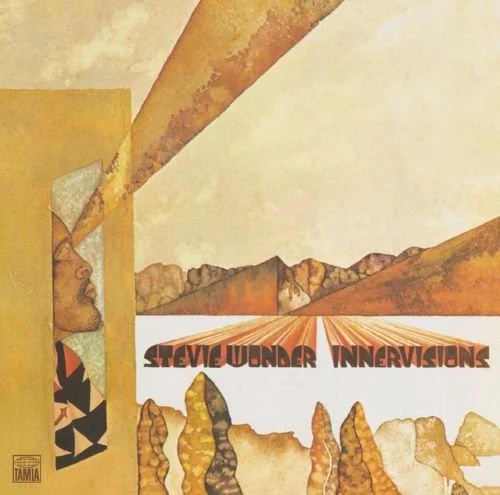
FEATURE: Higher Ground: Stevie Wonder’s Innervisions at Fifty: Will We See An Anniversary Edition?

FEATURE:


Higher Ground


Stevie Wonder’s Innervisions at Fifty: Will We See An Anniversary Edition?

_________

THIS masterpiece album…

from Stevie Wonder was during a golden period for him. His fifteenth studio album, Talking Book, came out in 1972. Following Innversions, Wonder put out Fulfillingness' First Finale in 1974. He put out another masterpiece, Songs in the Key of Life, in 1976. Released on 3rd August, 1973, Innervisions is considered to be one of Wonder’s greatest albums. Someone so prolific delivering an album of that quality over a decade from his debut. That shows what an innovative and continuously brilliant artist Stevie Wonder is! A chart success that is often seen as one of the best albums ever, Wonder’s lyrics of urban struggle and inequality rings true fifty years later. That may sound depressing, but it means Innversions is this relevant and enduring album that we can learn from. I am not sure whether a fiftieth anniversary edition is coming out. We are a little way off 2nd August, but I hope that something is planned. It would introduce Innversions to new people. I am sure that there are demos, extras and some new takes that could go into an anniversary package. As much as anything, it would celebrate and salute an album like no other. I am going to bring in some features and reviews that dive inside this work of genius. I will finish off by asking whether an anniversary is a possibility. Let’s hope that it is! You can get it on vinyl if you want to give it a spin now.

I will get to a couple of reviews. Five years ago, Albumism celebrated the forty-fifth anniversary of the magnificent Innervisions. I think that this is an album we will be talking about for generations to come. My favourite songs on it are Higher Ground and Don't You Worry 'Bout a Thing…but you also have Living for the City, Golden Lady, He's Misstra Know-It-All, Too High and Visions! Deeper cuts like Jesus Children of America are also spellbinding. Each of the nine tracks seem essential and hugely powerful. There is not a weak moment throughout Innervisions:

Okay, what were you doing with your life when you were 23? Most of us were still trying to figure out what our path in life was going to be. In 1973, 23-year-old Stevland Hardaway Morris, better known as Stevie Wonder, had already recorded fifteen studio albums, written hit songs for other artists like Smokey Robinson & the Miracles (“Tears of a Clown”) and The Spinners (“It’s a Shame”), and established himself as one of his generation’s most popular artists. In that same year, Wonder released Innervisions, the first in the holy trinity of his discography, with Fulfillingness’ First Finale and Songs in the Key of Life rounding it out.

To better understand the huge significance of Innervisions, let’s go back a couple of years to 1970. Wonder had a desire to have more autonomy in the studio. He wanted to comment on the social issues of the day though his music, which Motown chief Berry Gordy had no stomach for. In Gordy’s eyes, it was bad enough that he had the same, albeit on a more intense level, issue with Marvin Gaye. Now, he had to deal with Wonder’s demands.

Wisely, Wonder let his contract with Motown expire on his 21st birthday, giving him the freedom to record what he wanted, plus he owned the publishing rights to his music. With no record label, Wonder recorded two albums, Music of My Mind and Talking Book. In 1972, Motown signed Wonder to a contract that gave him a higher royalty rate and the artistic freedom that he had fought so hard for. The label also released the two aforementioned albums, which put Wonder in an entirely different atmosphere. In the same year he toured with the Rolling Stones, which expanded his growing audience even further.

With two classic albums and a successful tour in his rearview mirror, Wonder spent the beginning of 1973 recording Innervisions. As great as Music of My Mind and Talking Book are, Innervisions is where Wonder made a quantum leap into that rarified creative air that only a handful of artists can claim to have captured. It’s a smart and beautiful observation of the world that existed in 1973. Walter Cronkite gave us the news on television and Wonder put the truth on wax. It’s interesting how a blind man saw the world so much more clearly than many did with the gift of eyesight.

Three days after the release of the album, Wonder was involved in a serious car accident. While driving from a concert in Greenville, South Carolina, Wonder was asleep on the front passenger side. His vehicle collided with a truck carrying logs, and one of the logs smashed through the windshield, hitting Wonder in the forehead. Wonder was in a coma for four days. When he awoke from his coma, Wonder began a slow recovery process that would last well over a year.

His concert tour was canceled, but it gave him time to reflect. Even though the album was recorded and released before the accident, many erroneously think that the spiritual nature of the album’s material is the result of the accident. Wonder once remarked, “I would like to believe in reincarnation. I would like to believe that there is another life. I think that sometimes your consciousness can happen on this earth a second time around. For me, I wrote ‘Higher Ground’ even before the accident. But something must have been telling me that something was going to happen to make me aware of a lot of things and to get myself together. This is like my second chance for life, to do something or to do more, and to value the fact that I am alive.”

On seven of the nine tracks, Wonder plays all of the instruments, including the opening track “Too High,” a cautionary tale about drug abuse cleverly disguised by the bouncy arrangement. “Visions” slows it down a bit but leads us into “Living for the City.” Wonder paints a stark, but accurate picture of a young black man who faces systemic racism every day of his life. He leaves his home in Mississippi to venture to New York, only to get framed for a crime for which he is arrested and eventually convicted. It’s one of those songs that stays with you and never leaves. 45 years later and this scenario is still being played out in way too many places in this country. “Higher Ground” is a protest song and call-to-arms anthem that simply has no rival.

Innervisions was a rarity for a Motown record of its era in that it wasn’t a couple of hit singles, B-sides and useless filler. It was a reflection of life interpreted through the genius of Stevie Wonder, whose best work was yet to come. We tend to overuse the word spiritual or spirituality. So much so that one could argue that the words are almost meaningless. As hard as I’ve tried, I’m struggling to call Innervisions anything else but a 9-track spiritual journey that doesn’t preach, but instead, invites the listener to just take it all in and enjoy”.

I haven’t seen a review for Innervisions that is anything less than effusive and positive! Scoring so many five-star reviews and 10 out of 10s, there is no denying the brilliance and importance of Innvervisions. Not often dishing out 10s, Pitchfork awarded that high honour to Wonder’s sixteenth studio album for their 2022 review. When looking ahead to the fiftieth anniversary on 3rd August, I have been listening back to the classic. Every song blows you away and stays in the mind! Testament to the peerless artistry and songwriting talent Stevie Wonder possesses:

The ’70s were boom times for groundbreaking work with synths, following ‘60s innovations at America’s Moog Music, the UK’s Electronic Music Studios, and elsewhere. In 1971 and 1972, synthetic, sequenced sounds swept into art-rock and jazz, trickling down into popular music. Caped keyboardist Rick Wakeman joined English prog group Yes and played the Minimoog on 1971’s Fragile. Todd Rundgren used EMS’s portable VCS3 synth on his early solo records. It’s the mess of knobs to the right of the singer-songwriter in the studio pic in the liner notes of 1972’s Something/Anything?, a crucial ingredient in the Who’s “Won’t Get Fooled Again,” and the instrument Brian Eno played in Roxy Music. Wonder pushed the envelope not just by playing most of Innervisions by himself at a time when popular Black artists could not all count on enjoying such freedoms, but also in his commitment to tones and textures still new to mainstream music. When summarizing he appeal of synthesizers to the presenter David Frost, Wonder said,“The whole point of the instrument, being that you can do so many beautiful things with it, [is to] make sounds that are bigger than life.” Stevie reveled in the funky possibilities of the clavinet on “Higher Ground.” In “Golden Lady,” a Moog bass stood in for the fretwork of a gifted session bassist, to say nothing of Wonder’s ease with the mercurial TONTO, innovation borne out of the artist’s insistence on recording with a skeleton crew.

Innervisions is a tricky album, very much a soul thing with direct ties to records in its Motown lineage like Marvin Gaye’s What’s Going On, whose social consciousness Stevie tried to channel on 1971’s Where I’m Coming From, although it is best remembered for “Never Dreamed You’d Leave in Summer” and “If You Really Love Me,” notable detours from its political messaging. Innervisions surveys scenes outside of Motown. The anti-drug anthem “Too High” gestures to the technical, intricate grooves of jazz-fusion; “Living for the City” is as much art-rock epic as funk/soul masterpiece. Wonder traveled around the world in nine songs, matching the proggy experiments in contemporary rock gems like Pink Floyd’s Dark Side of the Moon and Todd Rundgren’s A Wizard, a True Star; the playful synthesizer parts in the funk bombs from Birds of Fire by Mahavishnu Orchestra and Herbie Hancock’s Head Hunters; the nervous hope of Donny Hathaway’s Extension of a Man; the acoustic jazz of Baden Powell’s Solitude on Guitar; and the horn-filled salsa of Willie Colón and Héctor LaVoe’s Lo Mato. Innervisions collapsed the spaces between avant-garde and mainstream, rock and soul, and jazz and pop music. They had all been playing the same instruments.

Like What’s Going On, Innervisions lays out a problem, then offers solutions: The stresses of the modern age are many, but with truth, goodness, love, and faithfulness, we can beat back the darkness. Wonder’s albums had never been this concise or cohesive in message. Innervisions was his first full-length without any co-writers or covers, a monumental endeavor for both Motown—a hit factory betting against its history again by letting an artist write his own songs—and Stevie, who was pulling thematically consistent pieces out of thin air. The album doesn’t judge or sell easy answers. It nudges you in the direction of a more mindful stewardship of our world and then lets you know that the task will be difficult. (“Jesus Children of America” is fascinatingly slippery. It implores you to place less stock in physical gratification and more in the edification of the mind and soul. It reminds you that this path is riddled with grifters and conmen. And it’s way too hyped about transcendental meditation to qualify as run-of-the-mill church proselytizing. Innervisions is a potpourri of ideas from Eastern and Western philosophies, but its call to inspire change through personal and cultural reckoning is grounded, less pie in the sky and more mutual aid and good vibes. It’s a very ’70s outlook, a specific response to the reverberations in modern bohemian culture as the counterculture grew more fractured and paranoid, but it still rings true in its questing for peace and love in the shadows of systemic racism and widespread political corruption”.

I will source from one more review. SLANT added their name to a long list of admirers. They provided their take on Innvervisions in 2003. Thirty years after its release, it was still making an impact. Twenty years following the review below, and a new generation are discovering and playing one of Wonder’s true masterpieces. Many of its songs are radio staples. It is impossible to dislike or ignore an album that should be preserved for all time:

Sadly, Stevie Wonder’s pop-culture reputation centers around his final mega-hit “I Just Called to Say I Love You,” so new Wonder recruits who choose to delve into the singer’s unparalleled ’70s output are inevitably surprised by the depth and power of his funky-bad earlier self. His phenomenal seven-and-1/4-album-long string of definitive soul music began with 1972’s densely layered Music of My Mind, climaxed with his gargantuan 1976 opus Songs in the Key of Life, and ended in 1982 with the four new tracks tacked onto his retrospective Original Musiquarium (the best of which, the post-disco romp “Do I Do,” is surely among the most joyful tunes ever penned). But the one album that basically all Wonderlovers can agree represents the man working at the very pinnacle of his considerable abilities is the keenly focused, brooding Innervisions.

Innervisions was something of a departure because Wonder, who was previously more than content to allow his lyrics, both bitter and sweet, to apply to simple love scenarios, had discovered a desire to tap into a larger reserve of collective emotion—in this case, the disenfranchised rage of America’s Nixon era. Unlike 1972’s Talking Book, which opened with the edging-on-insipid upward whole-tone progressions of “You Are the Sunshine of My Life,” Innervisions’s opening salvo, “Too High,” begins with a jangling cymbal and a bass-heavy minor-key riff that immediately segues into a frightening vocal break before repeating the cycle. Wonder enters singing the obtusely metered phrase “Too high, I’m so high, I feel like I’m about to die,” which, incidentally, descends down the whole-tone scale in an inversion of “Sunshine.” Hobbling along, the protagonist of Wonder’s anti-drug screed finds himself (or herself) lost in a musical labyrinth that threatens to loop itself into a whirlpool of insanity. Clearly this was a different Wonder than the kid who just two years earlier had a major hit with the clap-happy “If You Really Love Me.”

The overt scare tactics of “Too High” melt into the soothing and gentle utopian ruminations of “Visions.” Wonder has frequently claimed that of all his songs, “Visions” is perhaps his favorite, and it certainly fits his personality: both politically conscious and still optimistically obsessed with a better future. A song as wispy and ephemeral as “Visions” would’ve been lost on any other album, and probably dismissed by critics as flakey. But one less-heralded tenet of Wonder’s genius on Innervisions is his intuitive mastery of song sequencing.

Nestled in between “Too High” and “Living For The City,” Wonder’s fiercest moment, “Visions” has a calming effect. Wonder is occasionally targeted for being a tad too milquetoast as a funkateer, but even George fuckin’ Clinton would probably shy away from the astringency of “City,” which tells the story of a black man who grows up poor, attempts to make a life for himself in the city, is arrested immediately upon his arrival, spends 10 years in jail, and winds up a grizzled, homeless, gritty-footed walking corpse. Wonder scores the man’s descent to a basic blues progression; hollow moog synthesizers and a low droning bass once again induce a surprising sort of terror (made all the more powerful following “Visions”).

“Living For The City” is the album’s centerpiece, and remains one of the only moments in Wonder’s career as a politically minded pop star where he allows himself to come face to face with utter pessimism and caves in to it wholesale (check the avant-garde, atonal parody of patriotic leitmotifs that underscores his final howl of “No!”). The sweet reward of following Wonder down the path of his own personal hell is “Golden Lady”—the light at the end of the tunnel, the rebirth of Wonder’s optimism, whatever cliché you wish to attach to it. What can’t be denied (even if you’re put off by the bi-polar bait-and-switch routine that characterizes Side A, and find yourself cynically alienated by the song’s joyful denouement) is that the rich, gorgeous chord progressions of “Golden Lady” make it a soul sister to Songs in the Key of Life’s unparalleled “Summer Soft,” and both remain the best case for giving in to Wonder’s uniquely charming brand of joie de vivre.

The album’s second side is much less high-stakes than the first, and even if it, too, bounces between extreme emotions, it’s still suffused with the spirited energy of a man who’s finally gotten something off of his chest (as in the rousing and deeply funky Latin hustle number “Don’t You Worry ‘Bout a Thing”). If one really wanted to, they could make a case that “Higher Ground” (the album’s biggest hit) and the incredibly wise “Jesus Children Of America” (which pleads for religious honesty even as it decries the showmanship of the “holy roller”) represent a religious awakening, and it’s this aspect of the second side that accounts for the feeling of relief. But with the benefit of 20-20 hindsight, a genuine near-death experience (Wonder was put into a four-day coma after a freak car accident while promoting Innervisions) provided what was to become his ultimate statement on renewed spirituality: 1974’s Zen-calm and underrated Fulfillingness’ First Finale. But Innervisions remains Wonder’s most harrowing and tightly structured album—one that manages to say as much about life in 45 minutes as Songs in the Key of Life took an extra hour to convey”.

As we look ahead to the fiftieth anniversary of Innvervisions, I guess there will be questions as to whether a special reissue is coming. I am not sure how much there is in the vaults, but you know there will be stuff that could make for a really compelling and revealing anniversary set. Maybe providing different-coloured vinyl choices, putting out a cassette edition and a C.D. reissue with demos etc. Stevie Wonder fans would be up for that. There would be so many more discovering the album for the first time who would go and snap it up! One of the all-time greats, I am excited to see how the world embraces and reacts to this album when it hits fifty. As I say, I think it is still so relevant and moving. In 2020, Rolling Stone named the best 500 albums ever. Innversions made it to 34. It finished above The Beatles’ Rubber Soul and below Amy Winehouse’s Back to Black. Explaining why the album ranked so high (“We as a people are not interested in ‘baby, baby’ songs any more, there’s more to life than that,” Stevie Wonder said in 1972. With Innervisions, Wonder offered a landmark fusion of social realism and spiritual idealism; he brings expressive color and irresistible funk to his synth-based keyboards on “Too High” (a cautionary anti-drug song) and “Higher Ground” (which echoes Martin Luther King Jr.’s message of transcendence). The album’s centerpiece is “Living for the City,” a cinematic depiction of exploitation and injustice. “Innervisions gives my own perspective on what’s happening in my world,” Wonder said. “I think it is my most personal album. I don’t care if it sells only five copies”), it makes me believe an announcement will come soon regarding a fiftieth anniversary reissue. There will be a lot of celebration and new inspection ahead of 3rd August. A towering and timeless album, I wanted to show my love and appreciation for…

THE phenomenal Innvervisions.

FEATURE: Not My Mate: Doing More to Ensure Women in the Music Industry Are Safe and Respected

FEATURE:


Not My Mate

PHOTO CREDIT: Liza Summer/Pexels


Doing More to Ensure Women in the Music Industry Are Safe and Respected

_________

I have covered this before….

but, as a new campaign by the Mayor of London Sadiq Khan has caused a bit of anger and mockery, it has got me thinking about music and the way women are received. I have included the photo that appears on billboards. It is essentially a message to men who are advised, if they see a friend of theirs harassing a woman or stepping out of line, to simply say the word ‘mate’  - albeit in an elongated manner. What instantly sprung to mind was a routine that Stewart Lee did for his standout tour, Content Provider. If you listen from 2:18, that is sort of what I picture when I see that billboard. I can sort of see what was being envisaged. A man is out and is stepping out of line. He is coming on too strong. The friend steps in and, rather than confront their mate, they say the word and it is a moment where things can calm down and conversation can begin. I don’t think that something as basic and rather laddish as that word can defuse a situation where there needs to be something deeper and more substantial said. I saw a tweet from someone I follow on Twitter, and they sort of had that same reaction. If you are dealing with a man who is being gross, offensive or sexually harassing a woman, then they are hardly going to change their behaviour with one word!

 PHOTO CREDIT: Anete Lusina/Pexels

There are no links to websites on the billboard. No giant QR code or anything that would take you to resources. You need to have men who do thing is it fine to harass women to have information at their fingertips so they can alter their ways. In music, there are organisations that help to educate people about how to behave around women. Proper conduct. I have seen tweets from Consent Coalition and the good work they do. Safe Gigs provide education and information. They set up stalls at gigs so that people can approach them and they can give them invaluable information and resources. Rather than being security, they are there to ensure there is zero tolerance regarding sexual assault and harassment during gigs. There are other bodies who are out there but, as we do see and read stories of sexual harassment, assault and rape in music, these charities and organisations need support. I was going to say that the Government need to work on a campaign and work alongside these remarkable organisations. Given that there is such a simplistic and ineffectual billboard in London designed to help prevent sexual assault and harassment, it does seem like a lost cause! I think that things will start to change. Even so, today, I read so many cases of women who have suffered sexual assault and abuse.

 PHOTO CREDIT: kues1 via Freepik

The statistics are quite shocking. I have sourced this article before but, as I am thinking about the gulf between government messaging and the grassroots work that is happening and the effectiveness of the former and latter, it is worth bringing in some truly alarming realities regarding the number of women who have been abused or harassed:

TuneCore and Believe have published their latest ‘Be The Change’ study of gender equality in the music industry, timed to come out on International Women’s Day.

It offers the latest stats on some of the challenges facing women and gender expansive people in music, based on a survey of 1,656 industry folk and musicians.

34% of women surveyed said they had been sexually harassed or abused at work in the music industry, and that percentage rose to 42% for trans people and 43% for nonbinary people.

58% of the people surveyed disagreed with the idea that ‘everyone has an equal opportunity to succeed in the music industry’, with pay gaps, mental health, a lack of access to professional training and development, and being passed over for promotions among the challenges explored.

“We need more change. We, as individuals and as an industry must heed the calls to action and do just that – take action,” said TuneCore CEO Andreea Gleeson”.

I do feel that there are a lot of vital groups out there who are helping make women feel safer throughout the music industry. Whether providing literature for men so that they can be better educated, through to numbers for charities and support lines that can talk with women affected by abuse and harassment, we need to make sure they are funded and highlighted. The fact there is still a massive problem shows that there does need to be more action and funding. I was shocked by the campaign launched by the Mayor of London. The fact this was deemed substantial and useful! As it has received criticism and mockery shows that it is misjudged and a bit insulting. I am sure that many men use the ‘mate’ word already. That is a way they can get their attention and maybe take them away from a woman/women they are harassing. Beyond that, what happens?! That word will not ring in their ear the next time they think of going too far. Men will not seek help or information if a mate of theirs tries to calm the situation. I know you can only fit so much on a billboard and you need to keep it short enough so that people see it and can absorb the message. One word is not good enough! The music industry has always been blighted by men who harass and abuse women. There have been campaigns and adverts run in the past, but statistics coming out show that we need a new documentary or video that outlines what can be done. How women can find support; how men can educate themselves and do better. You only need to look at articles from last year such as this and this to know that harassment is still rife. The Musicians’ Union aim to stamp out sexual harassment in music. Last year, they produced their findings regarding the degree and prolificacy of sexual harassment and discrimination throughout music. Things have moved on since then but, as sexual harassment and abuse is still rife, it is clear that the Government really…

NEED to do more.

FEATURE: Mick Jagger at Eighty: Like a Rolling Stone: 1968-1972: Highlighting the Legendary Band’s Phenomenal Run of Masterpieces

FEATURE:


Mick Jagger at Eighty: Like a Rolling Stone

IN THIS PHOTO: The Rolling Stones in 1971 (in a promotional image for Sticky Fingers)/PHOTO CREDIT: Peter Webb


1968-1972: Highlighting the Legendary Band’s Phenomenal Run of Masterpieces

_________

I guess that…

 IN THIS PHOTO: Keith Richards, Mick Taylor, Mick Jagger, Bill Wyman and Charlie Watts photographed on 20th October, 1969 departing for America from London for their first tour in three years (three weeks, fourteen cities - from L.A. to Miami)/PHOTO CREDIT: Getty Images

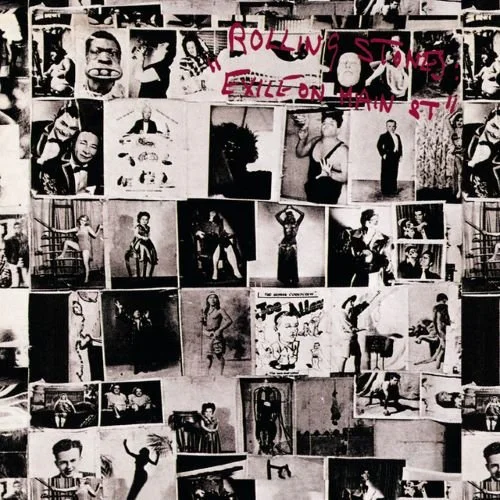
a lot of artists put together a string of albums that you can see as a golden period. Whether it is Prince’s run of albums between 1981’s Controversy and 1988’s Lovesexy, or David Bowie’s 1971 through 1973 (from Hunky Dory to Aladdin Sane) and 1975 through to 1977 (from Young Americans to “Heroes”), there is something that captures their imagination and leads to these wonderful albums. The momentum then keeps going. There are plenty of other acts that this applies to. Some who have made an entire career of genius albums. In the case of The Rolling Stones, they scored their first real masterpiece with 1968’s Beggars Banquet. That four-album purple batch and golden run ended with 1972’s Exile on Main St. Some feel that this album was an implosion. Even though it got mixed reviews upon its release, it is now considered to be one of The Rolling Stones’ very best albums. I often wonder whether there was that competition with The Beatles. The Rolling Stones released their debut the year after The Beatles’. If the Liverpool band peaked early and then created a work of brilliance, Abbey Road, as the last album they recorded (which was released in 1969), The Rolling Stones took a little longer to get started up. They then continued to make exceptional music after The Beatles broke up. In fact, 1972’s Exile on Main St. could be considered their best work. Perhaps that responsibility of being Britain’s biggest band. Perhaps there was a momentum from 1968 that kept on going. Whatever the reason, there are these four albums that stand out from the rest. As Mick Jagger is eighty on 26th July, I wanted to spend time with The Rolling Stones four albums released during this stunning run. In each case, I will introduce a review, select the best tracks, and I will embed all of the albums for people to listen to. Let’s go back almost fifty-five years to when The Rolling Stones were about to release their finest album to that date. After Beggars Banquet, they then gave us Let It Bleed in 1969; 1972’s Sticky Fingers came a year before the final of that awesome quartet, Exile on Main St. To honour Mick Jagger ahead of his eightieth birthday, let’s step back and take a look inside…

FOUR world-class albums from The Rolling Stones.

______________

Beggars Banquet

Release Date: 6th December, 1968

Label: Decca

Producer: Jimmy Miller

Standout Tracks: No Expectations/Street Fighting Man/Stray Cat Blues

Review:

On Beggar’s Banquet the Stones try to come to terms with violence more explicitly than before and in so doing are forced to take up the subject of politics. The result is the most sophisticated and meaningful statement we can expect to hear concerning the two themes — violence and politics — that will probably dominate the rock of 1969.

Politics has not been fashionable since Dylan left it among musicians. There have always been the few hold-outs left over from the folk music period, but despite the mass media’s continually mistaken references to rock and roll as “protest music,” rock musicians have done remarkably little protesting. Protest is a hallmark of the liberal. It is an appeal to the conscience of the majority to remedy some injustice being done to the minority. It presupposes a belief that meaningful change can be worked out within the system. Rock and roll musicians, for the most part, don’t buy that. They don’t take things like government seriously unless they are forced to. They find the whole political process something worthy of contempt.

Protest singers in the past were most often ideologues who set pallid verse to semi-musical melodies. The idea that it is the music that should convey the brunt of their meaning never occurred to them. There were words and there were notes but there wasn’t any music.

The people who are turning to political themes in their music now are different. They don’t do it a as luxury, or for moral reasons. They are doing it because it is part of their lives and they have to express themselves in terms of how what is happening in the streets is affecting their lives.

Beggar’s Banquet is not a polemic or manifesto. It doesn’t advocate anything. It is a reflection of what goes on at the Stones house, with a few pictures of the house itself thrown in for good measure. Part of what that house looks like has to do with what it’s surrounded by and the most startling songs on the album are the ones that deal with the Stones environment: “Salt of the Earth,” “Street Fighting Man,” and “Sympathy for the Devil.” Each is characterized lyrically by a schizoid ambiguity. The Stones are cognizant of the explosions of youthful energy that are going on all around them. They recognize the violence inherent in these struggles. They see them as movements for fundamental change and are deeply sympathetic. Yet they are too cynical to really go along themselves. After all, they are rock and roll musicians, not politicians, and London is such a “sleepy town.”

They make it perfectly clear that they are sickened by contemporary society. But it is not their role to tell people what to do. Instead, they use their musical abilities like a seismograph to record the intensity of feelings, the violence, that is so prevalent now. From the beginning they themselves have been exponents of emotional violence and it’s hard to imagine any group more suited to voicing the feelings of discontent we all share in these most violent of times. Wherever they wind up themselves, they are writing songs of revolution because they are giving powerful expression to the feelings that are causing it.

Musically the Stones express themselves through three basic elements: rhythm, tension, and energy. “Street Fighting Man” is prototypical of the approach. Drummer Charlie Watts lays down an elementary drum pattern, the same one he has been using since “Route 66.” He strikes the high-hat with a near compulsive regularity and hits the snare drum with such a wallop it’s hard to believe the sound is coming out of only one drum. The rhythm guitar is layed over the drum and is characterized by a violent attack which emphasizes the “on” beat. The bass pattern is simple and restrained. Like the guitar it serves to magnify the impact of the beat. The collective effect of the instrumental track is of fantastic thrust forward.

The beat is constantly being pushed, the guitars constantly re-emphasizing the basic movement of the song, the bass providing the perfect floor to the arrangement. And then the voice: Jagger is the source of the tension. At his best (definitely on this track) he sounds like he’s fighting for control, fighting to be heard over the din of the instruments. For all its simplicity it is an amazingly complex style of arranging and a perfect vehicle for expressing the lyrics.

The words are beautiful. Notice how Jagger emphasizes them: “Ev-ry where I hear the sound of charg-ing, march-ing peo-ple.” The Stones obviously revel in the images of charging people: they’ve sure seen enough of them at their concerts. But they are too mature and too realistic to fall into the trap of slogans and easy answers. All they can really do is sing in a rock and roll band.

“Salt of the Earth” continues in the same vein and serves as Jagger’s tribute to the “other half.” Lyrically, the song’s point of view is again ambiguous. Jagger obviously wants to empasize with the “common foot soldier,” the working man, the man who is forced to throw his life away on “back-breaking work” without ever achieving satisfaction. On the other hand, when he looks into their “faceless crowds,” they look “strange.” He has gotten to a point where he can’t really come to terms with their way of thinking. Nonetheless, the tribute goes on and begins to sound a bit like a drinking song. At one point I expect them to all be standing around the bar toasting the veterans of the Spanish Civil War. The double time at the end pushes the song past that stage and helps it regain its movement and vitality. It is typical of Jagger’s honesty that he was unafraid to use a soldier as symbol of “The Salt of the Earth.” They are as much victims as anyone else.

“Sympathy for the Devil” rounds out the group of ambiguous, socially aware songs. To me, it is the most distinguished song and performance of the year. Lyrically, it is a striking picture of a world gone mad. Cops are criminals. Saints are sinners. God is the devil. Whoever is on top makes whoever is beneath him the enemy; actually, it is always the men on top who are the enemy. Those who claim righteousness for themselves are only interested in perpetuating their own power. Those they vilify are really the righteous ones, until they achieve power for themselves. Then they imitate their predecessors and the process repeats itself through history. The narrator, Lucifer, was there when “Jesus Christ had his moment of doubt, of pain.” He was there when “the blitzkreig raged and the bodies stank.” And he lays “traps for troubadors who get killed before they reach Bombay.” And who is telling us all this? A man of wealth and taste. Sounds like what a lot of people would like to become.

The music is brilliant. The cut opens with just the percussion—a sort of syncopated Bo Diddley, precisely the kind of thing Watts excells at. Then they add Nicky Hopkins’ rhythm piano, perfectly understated. Wyman’s simple bass line matches Watts syncopation perfectly. Throughout the cut he adds color to the basic rhythm pattern by throwing in some very pretty, loopy bass lines. After two verses of Jagger’s singing, the background voices add that ultra simple “oo-oo” accompaniment which continues to grow for the duration of the cut. By the time they reach the end, they sound like a plane taking off, accelerating at an inexorable pace until it finally reaches its normal flight speed, at which point it levels itself off.

The rest of the album is made up of largely conventional Stones styled songs. There are some mediocre ones among them, but then that’s part of the Stones. Consistency is not their bag. Among the really fine cuts are “Doctor, Doctor,” “No Expectations,” “Factory Girl” and “Stray Cat Blues.” “No Expectations” is noteworthy for its sentimental melancholy. It has a lovely country feel to it, without actually being an attempt at country music. “Factory Girl” is more of the Stones interest in the working class (remember “Backstreet Girl”) and has a New Lost City Ramblers-type accompaniment, complete with old-timey styled fiddle.

“Stray Cat Blues” is easily the best of the lot and is pure Stones. It deals with their favorite subject: naughty boys and girls. The lyrics are about a groupie and Jagger comes up with some very tough lines: “I’ve heard you’re fifteen years old/But I don’t want your ID” and signs off with “I’ll bet your mother don’t know you can bite like that.”

Beggar’s Banquet is a complete album. While it does not attempt Sgt. Pepper-type unity it manages to touch all the bases. It derives its central motive and mood from the theme of “revolution” but isn’t limited to that. Over at the Stones house there’s plenty of room for groupies, doctors, jigsaw puzzles, factory girls, and broken hearts as well. Yet even these subjects are colored by the impact of “Sympathy for the Devil” and “Street Fighting Man.” Beggar’s Banquet ought to convince us all that the Stones are right. By putting all these different themes on the same album the Stones are trying to tell us that they all belong together. They do” – Rolling Stone

Key Cut: Sympathy for the Devil

Let It Bleed

Release Date: 28th November, 1969

Label: Decca

Producer: Jimmy Miller

Standout Tracks: Gimme Shelter/Let It Bleed/Monkey Man

Review:

After disparaging their self-produced 1967 album "Their Satanic Majesties Request" as a work of utter “nonsense,” the Rolling Stones turned to American sound man Jimmy Miller to set things right. And did he ever. Over the next several years, Miller produced a quintet of the band’s finest albums, ranging from "Beggars Banquet" (1968) and "Let It Bleed" (1969) through "Sticky Fingers" (1971), "Exile on Main St." (1972), and "Goats Head Soup" (1973).

In many ways, Miller’s extended collaboration with the Stones marks the pinnacle of their album-length recordings. Not surprisingly, these same records find the band making their finest contributions to the form. With the exception perhaps of "Goats Head Soup," any one of the Miller-produced Stones albums could easily vie to be the group’s prevailing masterwork.

Slated for release this on November 15 in a 50th-anniversary remastered edition, "Let It Bleed" may (pun intended, given the LP’s surrealistic cover art) take the cake. The deluxe version of the original mono and stereo recordings features a spate of goodies, including a set of lithographs, a commemorative book, and unpublished photos by Ethan Russell, the Stones’ tour photographer.

But the real star—as always, when it comes to these types of affairs—is the music. And in this regard, "Let It Bleed" doesn’t disappoint. Painstakingly remastered by Bob Ludwig, the album sounds as fresh and potent as ever. If anything, Ludwig’s efforts have paid off in terms of capturing the original record’s bizarre admixture of hyper-sexualized terror, ersatz-gospel, and terrifying lament.

Originally released in December 1969, "Let It Bleed" explodes into being with “Gimme Shelter.” Then, as now, the record is anchored by the fearsome sense of dread inherent in the song’s lyrics and even more chilling, cautionary music. In the remastered version of the song, “Gimme Shelter” takes on even darker hues, with Merry Clayton’s soaring backing vocals merging with Mick Jagger’s lead in perfect, panic-inducing unison.

For many listeners—in particular, esteemed rock critic Greil Marcus—“Gimme Shelter” already exists as the Stones’ finest moment, although to my ears, Beggars Banquet’s “Sympathy for the Devil” can’t be lagging too far behind. But with the remastered "Let It Bleed," it’s the lesser classics that really come alive under Ludwig’s tutelage. Take “Monkey Man,” with its madcap rock ‘n’ roll gusto or “Midnight Rambler,” Jagger’s fright-provoking retelling of the Boston Strangler’s “silk-stalking” spree murders.

As with other recent remastered editions and remixes associated with rock’s legacy acts, "Let It Bleed" benefits from contemporary audio technology’s capacity for expanding the sound palette and affording half-century old tracks with greater sonic separation and definition. When it comes to "Let It Bleed," there is no better candidate for studio enhancement than the Stones’ epic masterwork “You Can’t Always Get What You Want.”

Intentionally composed by Jagger and Keith Richards as a grandiose rejoinder to the Beatles’ “Hey Jude,” “You Can’t Always Get What You Want” took on a life of its own in the studio. In Ludwig’s able hands, the song feels even more expansive, more symphonic—from its plaintive choral preface and Al Kooper’s horn solo through Jagger’s hep-cat vocals and the gospel outro.

While rock music consumers might understandably be overwhelmed by the sheer number of deluxe editions and box sets flooding the market over the past several years, the price of admission when it comes to LPs like the Stones’ "Let It Bleed" is more than justified by the audible results inherent in “You Can’t Always Get What You Want.” With Ludwig’s superb rendering, you get exactly what you need” – Salon (50th Anniversary reissue)

Key Cut: You Can't Always Get What You Want

Sticky Fingers

Release Date: 23rd April, 1971

Label: Rolling Stones

Producer: Jimmy Miller

Standout Tracks: Wild Horses/Can't You Hear Me Knocking/Sister Morphine

Review:

The story of the Baby Boomers, and their movement from adolescence to adulthood, has been documented and re-told endlessly. And few bands represent that story, and the move from the relative innocence of the mid-'60s into the hedonism and burnout of the '70s, better than the Rolling Stones. They started out as seemingly polite boys in jackets and ties and they grew and changed in front of the cameras and the microphones. Their music grew darker and more cynical, just like the times. At one of their shows, the Altamont Speedway Free Festival, held just as the '60s came to a close, a group of Hell's Angels, possibly enlisted as security, killed a man, and the event, along with the Charles Manson murders four months earlier, have long been held up as the symbolic end of the peace-and-love '60s. Seen in retrospect, the Stones were a Zelig-like band for a while there, somewhere in the mix whenever there was a cultural shift underway.

That post-Altamont moment was the setting for their 1971 album Sticky Fingers, an album reissued many times that was recently released in its most extensive re-packaging yet. From 1968's Beggars Banquet and the following year's Let It Bleed on through this album and 1972's Exile on Main St., the Rolling Stones had one of the great four-album runs in pop music history. This was a time when—on record, at least—they could do no wrong, and Sticky Fingers could reasonably be called their peak. Beggars and Let It Bleed might have had higher highs, but both also had their share of tossed-off tracks; Exile's tossed-off tracks, on the other hand, were pretty much the whole point—it's the underground music's fan's favorite, but it never had the broader cultural impact of its predecessor. Sticky Fingers is where the myth met the songwriting; Keith Richards' riffs and melodies were in full flower, Mick Jagger never sang better, their new guitarist, Mick Taylor, was upping the ante musically, and the whole thing was wrapped up in a brilliant packaging concept by Andy Warhol.

"Brown Sugar" launches the record with its quintessential blues-rock riff and lyrics that get more questionable the closer you listen (Jagger has since said it was a bit of a wind-up, "all the nasty subjects in one go"). But words were secondary for the band at this point—Sticky Fingers is about melody, and playing, and style. The Stones were always fascinated with American music, but after the death of Brian Jones in 1969 and their move away from psychedelia, their connection to blues, R&B, and country music grew even more intense. From the loping country-folk of "Wild Horses" and the tongue-in-cheek honky tonk of "Dead Flowers" to a Mississippi Fred McDowell cover ("You Gotta Move") to the swelling Otis Redding-style R&B of "I Got the Blues" to the crunchy boogie of "Bitch" to the Latin-flavored Santana jams of "Can't You Hear Me Knocking", Sticky Fingers is a love letter to these forms, the culmination of obsessions these musicians had had since childhood. But where they once sounded like English boys doing their version of the blues, now their songs felt as lived-in as their inspirations.

By this point, the Stones were so convincing playing rootsy American music it made little sense to compare them to their British peers. Musically at least, the Rolling Stones of 1971 had more in common with the Allman Brothers than they did the Who. Along with the barrelhouse piano, pedal steel, and Stax-like horns, Sticky Fingers was also only the second album to feature the guitar work of Mick Taylor, and his clean, fluid, and highly melodic leads bear a strong resemblance to Duane Allman's playing from this period.

But ultimately, this is Mick Jagger's album, the same way Exile is Keith's. Of all the iconic vocalists in '60s and '70s rock, Jagger remains the hardest to imitate, at least without sounding ridiculous. That's partly because he himself never minded sounding ridiculous, and he turned his almost cartoonish swagger into a form of performance art. Jagger's voice never sounded richer or fuller than it does here (Exile mostly buried it, to artful effect), but he's doing strange things with it, mimicking and exaggerating accents, mostly from the American South, with an almost religious fervor.

When the Stones were coming up, the line on British singers is that they sounded American because they grew up listening to those records; on Sticky Fingers, Jagger pushes that kind of mimicry to places that run just short of absurd. His twang on "Dead Flowers" is obviously played for laughs, but "You Gotta Move" is harder to get a bead on, partway between homage and parody and delivered with abandon. "I Got the Blues" is utterly sincere, with Jagger flinging every ounce of his skinny frame into it. Wherever he stands in relation to the material, Jagger is selling it, hard, and by extension selling himself as a new kind of vocalist. "Sister Morphine" and "Moonlight Mile" are the two songs that stray furthest from American music reverence, and they are highlights, showing how well the Stones could convey weariness and a weird kind of blown-out and wasted beauty.

With reissue culture in overdrive, we're seeing which classic bands kept the most in their vaults. The Stones, like Zeppelin, didn't keep much. The 2010 version of Exile on Main St. pretty much cleaned out the vault as far as music from this era, so what we have here are alternate mixes, an inferior but still interesting different take of "Brown Sugar" with Eric Clapton, the one true rarity that has long circulated but never been officially issued. There's also, depending on which version you get, a good deal of vintage live Stones, which is the main thing to get their fans excited. Selections from two 1971 gigs, both recorded well, capture the band in a peak year.

To my ears the Stones' live prowess has never quite translated to recordings. The best live records are about more: more heaviness, more jamming, more crowd noise, more energy. And their music didn't necessarily benefit from increasing any one of those things. Their songs were about a certain amount of balance between all of the elements, which is why their recordings sound so platonically perfect. With their live records, you can focus on the grooves and the riffs and the collective playing, but it's easier to notice moments of sloppiness and mistakes. Still, as far as live Stones on record, the material here is about as good as you will get.

The Stones entered the '70s still young and beautiful, but they'd have their share of problems just like everyone else; they got into disco and then in the '80s they dressed like they were on "Miami Vice" and then finally they fully understood what nostalgia for them was really worth and they discovered the power of corporate synergy. Given the weight of history behind it and its centrality to the story of both the Rolling Stones and rock music as a whole, it can be difficult to put on Sticky Fingers and try and hear it for what it was: the highly anticipated new album from one of the biggest bands in the world, a group that at the time hadn't released a new one in two years (in 1971, that was an eternity). They were called the World's Greatest Rock'n'Roll Band for entirely too long, but if that designation ever applied it was here” – Pitchfork

Key Cut: Brown Sugar

Exile on Main St.

Release Date: 12th May, 1972

Label: Rolling Stones

Producer: Jimmy Miller

Standout Tracks: Rocks Off/Rip This Join/Shine a Light

Review:

Greeted with decidedly mixed reviews upon its original release, Exile on Main St. has become generally regarded as the Rolling Stones' finest album. Part of the reason why the record was initially greeted with hesitant reviews is that it takes a while to assimilate. A sprawling, weary double album encompassing rock & roll, blues, soul, and country, Exile doesn't try anything new on the surface, but the substance is new. Taking the bleakness that underpinned Let It Bleed and Sticky Fingers to an extreme, Exile is a weary record, and not just lyrically. Jagger's vocals are buried in the mix, and the music is a series of dark, dense jams, with Keith Richards and Mick Taylor spinning off incredible riffs and solos. And the songs continue the breakthroughs of their three previous albums. No longer does their country sound forced or kitschy -- it's lived-in and complex, just like the group's forays into soul and gospel. While the songs, including the masterpieces "Rocks Off," "Tumbling Dice," "Torn and Frayed," "Happy," "Let It Loose," and "Shine a Light," are all terrific, they blend together, with only certain lyrics and guitar lines emerging from the murk. It's the kind of record that's gripping on the very first listen, but each subsequent listen reveals something new. Few other albums, let alone double albums, have been so rich and masterful as Exile on Main St., and it stands not only as one of the Stones' best records, but sets a remarkably high standard for all of hard rock” – AllMusic

Key Cut: Tumbling Dice

FEATURE: The Digital Mixtape: Thurston Moore at Sixty-Five: His Best Solo and Sonic Youth Cuts

FEATURE:


The Digital Mixtape

PHOTO CREDIT: Eleanor Jane for Guitar


Thurston Moore at Sixty-Five: His Best Solo and Sonic Youth Cuts

_________

ONE of music’s greats…

 IN THIS PHOTO: Sonic Youth in 2000/PHOTO CREDIT: Giotas

celebrates his sixty-fifth birthday on 25th July. Thurston Moore is a guitarist, singer and songwriter best known as a member of Sonic Youth. He has also participated in many solo and group collaborations outside Sonic Youth. One of the greatest guitarists of all time, I wanted to mark his upcoming birthday with a playlist featuring his best solo and Sonic Youth songs. Whether he wrote the lyrics, sung lead or was the guitarist on the track, there are some great examples of his talent below. Before I get to that, AllMusic give us biography about the wonderful Thurston Moore:

Thurston Moore's work with Sonic Youth rearranged the parameters of indie rock to an almost incalculable degree, merging experimental art rock tendencies with unconventional guitar tunings for a sound that would influence generations to come. Moore's abstract poetic lyrics and perpetually mysterious aura were core ingredients of Sonic Youth's 30-plus-year run, but also bled into countless side projects and less-frequent solo albums like 1994's sprawling and loose Psychic Hearts. After the group's breakup in 2011, Moore continued with his ambitions, ranging from projects like his band Chelsea Light Moving to noisy collaborations with Merzbow and John Zorn to solo albums like 2020's By the Fire that continued exploring the kind of moody, twisting art rock he'd become an icon of with Sonic Youth.

Moore was born in 1958 in Coral Gables, Florida. At age 18, he dropped out of college after a single semester and moved to New York City to take part in the punk and downtown art rock scene that was forming at the time. Immersing himself in underground poetry and music communities, a teenage Moore was exposed to a constant flow of new ideas and artistic influences. Along with taking in live readings from punk poet Patti Smith, Moore was especially moved by composer Glenn Branca's experimental approach to guitar. In 1980, Moore co-founded Sonic Youth, bringing aspects of Branca's avant guitar techniques to scuzzy art rock songs. Sonic Youth would grow from their feral beginnings into a defining pillar of alternative rock. While the band would be Moore's main focus for the next three decades, he also pursued a plethora of side projects, from the hardcore rush of Even Worse to formless songs written with Kim Gordon released under the moniker Mirror/Dash to an endless list of collaborations with artists from across the world's jazz, noise, and experimental scenes.

Moore's first proper solo album, Psychic Hearts, appeared in 1994. The record featured ex-Half Japanese guitarist Tim Foljahn and Sonic Youth drummer Steve Shelley, and had an offhand noise-rock feel not far from the post-grunge territory Sonic Youth were operating in around that time. Moving into the 2000s, Moore collaborated with artists including DJ Spooky and Nels Cline, wrote music reviews and other pieces for Arthur magazine, and issued a book, Mix Tape: The Art of Cassette Culture, in 2005. His second song-based album, Trees Outside of the Academy, arrived in 2007, and featured cameos from Shelley, Samara Lubelski, and Dinosaur Jr.'s J Mascis. In 2010, Moore guested on the Hat City Intuitive's A Ticket for Decay and began laying the foundation for another solo effort, Demolished Thoughts, which appeared the following year.

Following Moore's separation from bandmate, wife, and partner Kim Gordon in late 2011, Sonic Youth was put on indefinite pause. Nevertheless, Moore and Gordon collaborated with Yoko Ono the following year on the album YOKOKIMTHURSTON. By 2012, Moore had begun touring and recording with new act Chelsea Light Moving, as well as joining black metal group Twilight on guitar. The year 2013 saw the release of @, a collaborative album of sax/guitar improvisations with fellow N.Y.C. fringe dweller John Zorn. Arriving in 2014, The Best Day saw Moore shedding the softer acoustic moods of Demolished Thoughts for a return to his signature rock sprawl and daydreamy lyrics. Around the same time, he took part in a massive improvisation session with Mats Gustafsson, Balázs Pándi, and noise master Merzbow that was released as the double album Cuts of Guilt, Cuts Deeper in 2015. The following year, he issued the single "Feel It in Your Guts," which was available to anyone who donated to Bernie Sanders' presidential campaign.

For 2017's Rock n Roll Consciousness, Moore reunited with his backing band for The Best Day -- Sonic Youth drummer Shelley, My Bloody Valentine bassist Deb Googe, and Nought guitarist James Sedwards -- on a mystically inspired set of songs. In 2019, he released the ambitious Spirit Counsel project, a live document with over two hours of orchestrated, instrumental guitar-based compositions that hearkened back to the Branca influences that helped form Moore's earliest output. June 2020 saw the release of the track "Hashish," the first single from Moore's forthcoming seventh solo effort, By the Fire, which was released in September of that year”.

Before the incredible Thurston Moore turns sixty-five on 25th July, I wanted to compile a playlist with some of hie very best work. He is one of the most important songwriters and guitarists of his generation. If you do not know Sonic Youth and his other work or are a huge fan, there will be something in the playlist for you to enjoy. Here is a birthday celebration for…

A remarkable human.

FEATURE: Beatles for Sale: New Possibilities Regarding the Fab Four’s Work

FEATURE:


Beatles for Sale

IN THIS PHOTO: The Beatles in 1963/PHOTO CREDIT: Daily Herald Archive


New Possibilities Regarding the Fab Four’s Work

_________

I do like to do…

 IN THIS PHOTO: Paul McCartney, John Lennon and Ringo Starr mobbed by press in Central Park NYC in 1964/PHOTO CREDIT: Paul McCartney (from his book, Eye of the Storm)

a bit of  Beatles roundup now and then. When it comes to the band, there is always stuff going on! I do like the fact that we are still getting ‘new’ Beatles material after all of these years. A story I am sure you have all heard regards the final Beatles song we will hear fresh, Now and Then. This is something that was suggested a little while ago. Ringo Starr has confirmed he and Paul McCartney have added their parts to the John Lennon song – one that takes Lennon’s voice from a demo that he recorded. NME give us the developments about a track that has divided the Beatles fan community:

Ringo Starr has shared his thoughts on the upcoming “Last” Beatles song, which has been created by Paul McCartney using help from artificial intelligence.

The track was first teased by McCartney last month during an interview with Radio 4’s Today Programme when he revealed that he’d used AI to help him finish a “final” Beatles song.

According to the legendary songwriter and bassist, the new technology allowed him to “extricate” John Lennon’s vocals from an old demo track, and complete the song over four decades since the Beatles musician’s death.

Now, following a mixed reaction from fans at the idea of the song, which is suspected to be the unreleased 1978 track ‘Now And Then’, the band’s former drummer Starr has shared his thoughts on the project, saying that the final result sounds “beautiful”.

Speaking in an interview with Variety, the musician clarified that the song is made using authentic recordings from the time and that fans needn’t worry about the whole thing being reliant on artificial intelligence.

PHOTO CREDIT: Apple Corps Ltd

“It’s not down to AI,” he said. “It’s not like we’re pretending anything. That is actually John’s voice, Paul’s voice and bass playing, George [Harrison] on rhythm guitar and me on drums.

“The two things that are new are Paul’s bass and me on drums… I really worked at it just months ago here. And it works,” he added. “It’s a beautiful song. You know, for all the madness going on around it, it’s still a beautiful track. And our last track.”

According to the interview, the “new” song is one that McCartney, Starr and Harrison first attempted to make in the ’90s using scraps of songs that they found written by Lennon.

As for why they chose to revisit the project in 2023, Starr joked: “I don’t know. Paul must’ve had a slow day.”

“He says, ‘You know that track we did? Do you want to work on that?’” he added, saying how he went to re-record the drums and backing vocals for the song. “It is moving, because the four of us are there, and there won’t be ever again.”

Shortly after announcing the song during his Radio 4 appearance, McCartney also went on to reassure fans that the project isn’t made entirely using AI. “Been great to see such an exciting response to our forthcoming Beatles project. No one is more excited than us to be sharing something with you later in the year,” he wrote”.

Even though there have been some saying how this new song is going to be unnatural and might detract from what it could have been, we are lucky to have any ‘new’ Beatles material – and this comes over fifty years since they split up! Producer Giles Martin will help bring this track to life. He is the man in charge of remastering and remixing The Beatles’ work. Bringing us these reissues and expanded editions. He has worked with A.I. before - and it is someone that is introducing The Beatles’ music to new listeners. If the old guard are a little wary about too much messing around with the old and loved stuff, it does not take away what is originally there. This new Beatles song we are going to get is a gift to fans that is not going to lead to a slew of older songs or demos coming to light where Ringo Starr and Paul McCartney add new parts. They have said this is the final Beatles song. Going forward, I do wonder what else we might get. A new podcast, McCartney: A Life in Lyrics, sees Macca team up with poet Paul Muldoon and revisits the people, experiences, and art that inspired his songwriting. Each episode focuses on one song, spanning early The Beatles  tracks through to his diverse solo work. The series starts on 20th September, though you can hear the prologue episode here. With McCartney’s photo exhibition running at the National Portrait Gallery until 1st October, there is all this Fab Four activity going on!

You always kind of wonder what more can come. Those projects and possibilities as yet unexplored. I know we have had a fiftieth anniversary release of The Beatles (a.k.a. The White Album). As that album is fifty-five in November, I wonder whether there will be new lyrics videos, a book written about it, or any sort of celebration. It is such a fascinating and crucial time during the band’s career. One where their relationships were changing. The dynamic was certainly shifting. Out of the sprawling album came some of their best and most unusual material. I would like to see or hear more written and said about The Beatles. On 23rd August 1963, The Beatles released She Loves You. The song that, according to many, is one of the most important Pop songs ever written, it is an explosion and revolution. We know a lot about the track, but a documentary or podcast around the song and its impact would be great. Paul McCartney himself must have fond and vivid memories writing the track with John Lennon sixty years ago.

Apart from that, a cinematic event would be interesting. When The Beatles: Get Back came out, it did hit cinemas. Whether it is a remastered gig that could come to the big screen and bring fans together, or there is a new documentary waiting, I feel one of the greatest things would be something Beatles-related coming to the cinema. I wonder whether, apart from the Peter Jackson documentary-film, there has been a recent documentary or film about The Beatles. New interviews with Paul McCartney and Ringo Starr. Concert footage and stuff people might not have seen. Something a bit similar to the David Bowie film, Moonage Daydream, where it is quite stylised and cosmic. As news of a final and new Beatles track has come about, it gets one dreaming about what else could come and where the band’s next project comes from. The Beatles are always going to be explored. So long as the barrel is not scraped and there is not overkill, a steady stream of interesting stuff definitely is welcomed by the fans! We will hear Now and Then. The question after that is…

WHAT comes next?

FEATURE: The Digital Mixtape: Pitchfork’s 20 Contenders for 2023’s Song of the Summer

FEATURE:


The Digital Mixtape

IN THIS PHOTO: Victoria Monét


Pitchfork’s 20 Contenders for 2023’s Song of the Summer

_________

THIS is a bit of a cheat…

 IN THIS PHOTO: Bad Bunny

as I am cribbing a playlist and idea from someone else! Actually, it is more than simply sourcing Pitchfork’s contenders for the song of the summer. It is always a fierce and interesting debate. Even though summer goes on until September, I wonder whether we have seen and heard the best of the season. August always produces some bangers, though I think that the tracks Pitchfork has selected are pretty strong and are hard to be topped! Maybe my song of the summer in terms of its sound and summoning sunshine and heat is Kylie Minogue’s Padam Padam. There have been some incredible tracks soundtracking the summer. A chance to put together a playlist of awesome tunes that should bring the sunshine and warm weather – even if you have none where you are right now -, I wanted to compile a cool mixtape that can definitely get the party started. There are some left-field suggestions too, so that is why I was drawn to the article. To be fair, too, Pitchfork have selected tracks they think are a little too earworm-y and they would like to shift them - but that just shows they have made their mark! Perhaps you have your own candidates for the song of the summer 2023. Below are the twenty tracks that Pitchfork feel…

DESERVE that honour.

FEATURE: Spotlight: CMAT

FEATURE:


Spotlight


CMAT

_________

WITH an album…

 PHOTO CREDIT: Sarah Doyle for Rolling Stone

CrazyMad, For Me due on 13th October, there are a lot of eyes on the incredible CMAT (Ciara Mary-Alice Thompson). Her second album, it follows 2022’s If My Wife New I’d Be Dead. I would advise people pre-order CMAT’s upcoming album. It is a mature, hook-filled, exciting project from the Irish artist. The Dublin-born wonder has got the seal of approval from artists like Robbie Williams. She has collaborated with John Grant, and she has the ear of stations like BBC Radio 6 Music. Even though she does not need my approval and words, I am aware there are people who may not know about her – and that is why I wanted to spotlight her now. I am going to come to some recent interview soon. Prior to that, it is worth going back to last year and the acclaim and interest around If My Wife New I’d Be Dead. Rolling Stone wanted to find out more about an incredible debut album from an artist already turning heads and being heralded as one to watch closely:

Describing herself in her Twitter bio as a “global celebrity teen pop sensation”, Dublin-born Ciara Mary-Alice Thompson first gained attention from Irish music stations with ‘Another Day (kfc)’, a relatable tune about crying in a chicken shop over a failed relationship. That humour is a continuing theme on the 26-year-old’s debut album, If My Wife New I’d Be Dead, which Thompson describes as “if XTC was writing for The Nolans” and “the Nolans were making that record with Glen Campbell, which would go on to be covered by Paris Hilton.”

But in between the jokes and pop-culture references, Thompson offers searing insights into loneliness and prioritising the sesh over stability, a country twang that’s as comfortable on a disco pop song as it is on a searing ballad, and some of the most engaging songwriting out there right now. Having hit No. 1 on the Irish album charts and taken the CMAT experience everywhere from Leeds to Nashville, it’s starting to look like that self-assigned Twitter bio is the real deal.

For the uninitiated, how would you describe CMAT in one sentence?

Really fun, but with a lot of heart.

How long was the process of putting the album together; was it years in the making or an entirely new concept?

In some ways, the album was in the making for a very long time, but I think that will be the case for every single album I make. There’s always going to be things knocking around for years that took a while to come to fruition. But in terms of the album concept and the arrangement and writing, it was a really quick turnaround. I went away for a month in January 2021 and I wrote two or three songs that were brand new; one of them was ‘No More Virgos’, which I wrote from scratch. Then it was recorded in April, mastered and delivered by August. It was a really quick album to make, but I think that’s because I’ve written so much for so long and there’s been so many things bubbling away on the back burner. I’m a good enough songwriter at this point to know when something is ready and something isn’t ready, and what goes together and what doesn’t. I had enough songs for six albums if I wanted to, but I didn’t do that because it would have been terrible.

There’s also a lot of Irish references in there. Does your Irishness have much of an influence on your songwriting?

It’s not a conscious thing. But because I spent all of my time in Ireland up until a couple of years ago, all my references are going to be Irish and I’m not going to apologise for that. I won’t generalise my references to appeal to an American audience or whatever — if they like it, they’ll just learn what it is. Fiona Apple is always singing about things I don’t know, and then I’ll fall down a Wikipedia hole reading about it. But as much as my Irishness influences me, I won’t apologise for making references that aren’t Irish. A lot of people gave out to me over the Waitrose lyric. I’m sorry, I lived in Manchester for two years.

You put a lot of effort into the visuals, from your videos to your record artwork. How important is that side of things?

I think the visuals are as important as the songs. The two have to marry each other. You can have an amazing song, and then it doesn’t have a music video, or the video is just [singing] “I’m sitting against a studio backdrop, and I’ve got a ring light on, and I’m being sexy”… Listen, don’t get me wrong, it’s very important to be sexy at all times, I do it constantly. But I think if you can get visuals that are inspired by the music and there’s stuff that looks like how the music sounds, you just can’t beat it. A great example of that is — not to blow smoke up their holes — Fontaines D.C.’s album rollout. The visuals are just insane, and they’re on their third album and they’ve just hit their stride. It actually stresses me out how much I already love this record. I’ll be very happy to lose the Choice Music Prize to them next year. I’d be kind of raging if I won over them”.

Back in May, before she took to the stage for Live at Leeds in the Park, DIY chatted with the phenomenal CMAT. Not only is she one of the best rising artists around. She is a live act that always stuns and amazes crowds. A complete artist with many years ahead, everyone needs to be aware of CMAT. Her second album will confirm her as a future legend. A truly wonderful songwriter who I can see headlining festivals and touring with massive artists like Robbie Williams very soon:

“Dare we say it, the level of indie heading to this year’s Live at Leeds in the Park is at least three cans of Dark Fruits. Headlined by Two Door Cinema Club and their trolley load of indie disco bangers, there are also spots for perennial Swedish party-starters The HivesThe Big MoonKate NashEverything Everything, and many more.

That’s not all: we’ll also be back on site living our best lives over at the DIY stage, which will play hosts to the likes of Cavetown, our Class of 2023 cover stars CrawlersSir Chloe and our favourite Irish cowgirl, CMAT.

To mark the occasion - and to celebrate her newest single ‘Whatever’s Inconvenient’ - we had a chinwag with Ciara Mary-Alice Thompson herself…

PHOTO CREDIT: Sarah Doyle

Hello CMAT! What’ve you been up to recently?

I’ve been making some new videos, I’m getting ready for some shows and I’m actually going to Leeds this evening! I’ve booked myself a lil Leeds holiday because I’m going to see one of the last Yard Act shows on this album cycle, over at the Brudenell. Lolly Adefope is opening for them and I fucking love her, and I’m a big Yard Act fan but I’m an even bigger fan of Leeds. I have this weird infatuation with Leeds; every time I’ve ever played there, it’s been the best gig of the tour. That’s not me being a sycophant; I don’t say this about all the other places.

You’ve also just released your brand new track ‘Whatever’s Inconvenient’. Can you tell us a bit about it?

It’s the first single from my forthcoming album - which is not announced yet, but we’ll get there! - and it’s a song about feeling like an insane person because you keep breaking up with people, being broken up with and you keep changing your mind so drastically about how you feel about people. It’s a song about that feeling of, ‘Is there something wrong with me because I keep doing the worst possible things at the worst possible time in relationships?’ That’s what it’s about!

You’re also about to get back into festival season; what was it like to get your teeth stuck into playing festivals last summer?

Festival season is amazing; I love festival season more than doing my own touring because I’m a masochist. You know, we played Primavera and we had a really bad [set] time, and were warned, ‘You’re gonna go play a rehearsal show in front of maybe five people…’ So we were put in a bit of a shit position, but then 1500 people turned up! They were all wearing cowboy hats and waving Irish flags, and that was really emotional and made me feel really special. Then you play other festivals… We played - name and shame! - Standon Calling last year and the 30 people there hated me. That’s what I love about festival season; it can be so inspiring and amazing, and the next day, so humbling”.

A hugely entertaining and me4morable live performer, I must got and see CMAT play very soon. I am looking forward to the release of her second studio album. CrazyMad, For Me is going to be one of the best of the year. An album that will get plenty of positive reviews. I want to finish with an interview from The Guardian. Earlier this month, they was asked about her upcoming album. Something I did not know is when she gave Charli XCX some constructive criticism about a new track. That kind of bravery – as she was invited to an exclusive listening party where most were fawning over Charli XCX! – is a big reason to respect her:

I always thought the first album was about the fight between comedy and tragedy,” she says, “and how all the saddest people I’ve ever met are the funniest.” Thompson, 27, could be one of these figures. As a teenager, she led a (somewhat self-inflicted) isolated existence. “I was into the most pretentious things I could get my hands on because all of that was so far removed from Dunboyne, County Meath, where I grew up,” she says. On her first day of secondary school, she prepared by printing out black-and-white pictures of 40s film actresses. “I posted them up in my locker so that everyone could see that I was different.”

It ended badly. A boy spotted her posters and, “like the town crier”, called her a lesbian in front of the school. Thompson, who is bisexual but hadn’t yet realised it, shrugged it off. Instead of spending time with her peers, she spent her school years chatting to people on message boards. “I stayed solidly on the internet for about eight years,” she says. “It’s kind of weird and scary to think about now, but I don’t think that I lived in the real world. And I don’t know that I ever have.”

Things changed when, aged 18, she started a band with her then-boyfriend. Thompson says their five-year relationship was toxic, filled with infidelity and further isolation, this time from friends and family. She turned to alcohol to cope and gained weight: one day, three years in, she didn’t recognise a photo she had been tagged in on Facebook. It led her to quit being a musician. “Being a girl doing music is already a fucking ballache,” she says. “But I felt like I couldn’t be chubby and a woman and play the guitar.”

Depressed and hoping for a new start, she moved to Manchester with her boyfriend, where she worked “as a sexy shots girl” and partied. “I had no friends,” she says. “I might have physically shared a space with people, but I don’t think I talked to anyone for two years.”

An encounter with Charli XCX changed everything. Thompson was one of several Charli fans invited to an in-person listening session at a studio in London, to listen to unreleased tracks and give their opinions. While most were sycophantic, Thompson was “really specific about my criticism; I really went in on her”. After the session, Charli pulled her aside and asked her why she was wasting time by not making music herself. “She looked right through me and said in a slightly mean way: ‘Sort your shit out.’” On the Megabus back to Manchester, Thompson decided to blow up her life: she broke up with her boyfriend, moved back to Dublin and became CMAT.

Thompson’s new album, Crazymad, for Me, exorcises the rage and heartbreak from that period: as she sings on opener California, she’s “harvesting all this misery” for storytelling. “They’re gonna make a movie of it,” she sings, before winking: “Oh no, it won a Razzie!” The Americana tang remains, as does the reverence for country music, but the muscular instrumentation and chest-puffing melodies give her music a new robustness. (John Grant joins Thompson on new single Where Are Your Kids Tonight?, a weary country mid-tempo that fizzes with regret, his gorgeous harmonies lending a weathered texture.) She thought the album might be about forgiving her ex, she says. “But while making it I was like, ‘Fuck that!’ I don’t want to forgive him. I want to be able to move on with my life in the knowledge that I’m allowed to be angry about everything that happened.”

Her anger is laced with wit. On Rent, she stabs at her ex’s incompetence and fakeness, while on the Fleetwood Mac-indebted Stay for Something she winces as she grapples for reasons why she stayed: “Holy God damn you were so annoying / But you had my heart.” Phone Me vibrates with paranoia about adultery (“How can I figure it out / Becky Vardy’s account / I went for dinner with her yesterday”) and on the loose I … Hate Who I Am When I’m Horny, Thompsons cries that she’s into “God, self-destruction and a Britney tune”.

Some have questioned whether her humour and pop culture references make CMAT tantamount to a novelty act. Thompson disagrees. “I think the internet is responsible for my maximalism. I love things that are lyrical and gorgeous, but I don’t see why you can’t also use the things that are around you, too. I think people only feel cringe when something doesn’t relate to them.”

Ultimately, she says, she’s making music for people like her, those who lived insular lives and paid the cost “like queer people or 14-year-old girls who have no friends and weird hobbies. Stewart Lee has a quote where he says: ‘All you need is 5,000 people a year to give you £10 to have a successful career.’ I really like that. I would quite like to be a cult figure.” Given where her career is heading, it might already be too late”.

Go and pre-order CrazyMad, For Me and follow the sensational CMAT. An artist that the music desperately needs and, as a result, has embraced and recognised as a star in the making, go and check out her wonderful music. I thought I had included her in my Spotlight feature before now. It was an oversight on my part that I wanted to correct now! The tremendous CMAT is showing why Irish artists are so important and should be getting a load of attention. There is no doubting the fact that she is…

IMPOSSIBLE to ignore.

_________

Follow CMAT

FEATURE: Present Tense: How Best to Mark Kate Bush’s Birthday on 30th July

FEATURE:


Present Tense


How Best to Mark Kate Bush’s Birthday on 30th July

_________

WHILST I am drawing attention to it…

 IN THIS PHOTO: Kate Bush performing during Secret Policeman's Ball, in aid of Amnesty International at the London Palladium in March, 1987/PHOTO CREDIT: Dave Hogan/Getty Images

for this feature now, I am not making a big fuss about the fact that she is sixty-five on 30th July. It is a big day though, rather than focus on age and the fact it is a big birthday, a normal celebration is in order. There are those new to Kate Bush’s music who will be adding their birthday wishes on social media. I have been thinking the best ways of honouring Kate Bush on her birthday. I have my own plans for the day. I would say that spending time with her music is the best reward. Each fan might have their own plan. I feel that everyone should think about an album of hers they do not have but have always wanted to own. It might be the Before the Dawn live album. Maybe a rarity from eBay, or a studio album such as Hounds of Love or Aerial. Whether it is some rarity or a standard album, deciding which one you want and pledging to save up for it is a great start. There is that focus and goal that you can work towards. I feel all Kate Bush have an album or rare purchase that they want to own one day. In terms of albums, I really do need to get Aerial on vinyl. I have not been able to save up before, though I need to use 30th July as a chance to do that! Outside of album, there are other possible purchase avenues. We are all strapped for money. I desperately want to get the photobook, Cathy. Early photos takes by her brother John Carder Bush, this would be something to treasure! Fans should think long and hard about that must-own item. Maybe post on social media. People might have a second-hand copy of something they are willing to sell. More than anything, interact with fellow Kate Bush fans. Accounts like this wonderful community, and the Kate Bush News Twitter account will keep you up to date. Go and explore any podcasts you can about her albums. The Kate Bush News website will take you to the fan podcast that offers some brilliant chats. Even if you are a diehard fan, you will learn something that is for sure!

I would also say to the fans, in terms of paying and parting with money, to either go and investigate some of the books written about her – such as Under the Ivy: The Life & Music of Kate Bush, Running Up That Hill: 50 Visions of Kate Bush, How to Be Invisible, Kate Bush The Dreaming: In-depth, or KATE: Inside the Rainbow -, or check out magazines that have been published featuring her or dedicated to her music/an album. Outside of that, 30th July is a perfect opportunity to dive into streaming services and YouTube. Maybe do it in a few sittings, but I find one of the most rewarding things to do is listen to interviews and watch music videos of Kate Bush. It is informative, uplifting and inspiring. I am discovering new things all of the time. Learning more about the icon is such an important thing. However you choose to mark her birthday, ensure that you do listen to her music and interviews. With streaming making it so accessible, you can listen to entire albums. It would be worth at least selecting a few of her studio albums and listening in full. So many people go for the hits, so take an opportunity to go deeper. I think that you will get some new if you take that time out to investigate her albums completely.

Of course, the Most Wuthering Day Ever happens on Bush’s birthday. This one seems extra-special and important. It is on her sixty-fifth, but it comes after such a momentous past year for her. Hitting the top of the charts and finding new success, fans will come together, don red dresses, and dance to her unforgettable debut single, Wuthering Heights. I am looking ahead and committing to a Kate Bush event. It probably won’t happen until next year but, having recently attended an event at Opera Holland Park, that beguiling and beautiful venue is one I want to be at! I hope that there is opportunity to mount a Kate Bush celebration or live podcast there next spring or summer. I am thinking about upcoming birthday, and of course people will ask what comes next. Will there be that album?! Is she going to do another interview soon?! I think, as opposed speculating about what happens next, look back and see where she has come from. Immerse yourself in her music and become better acquainted with one of music’s most extraordinary artists. Bush would hate a fuss being made about her. Rather than do that, fans around the world should focus on celebrating the music and maybe making a purchase they have always wanted to – almost like an early birthday present to yourself! There is so much incredible resource out there about Kate Bush, so 30th July (a Sunday) can be a day where you catch up and find out new things. Not only does it do wonders for the senses and the soul. Diving into the world of the magnificent Kate Bush is…

SO very rewarding.

FEATURE: The Digital Mixtape: Songs from the Best Mercury Prize-Shortlisted Albums Ever

FEATURE:


The Digital Mixtape

IN THIS PHOTO: Laura Mvula was shortlisted for the Mercury Prize in 2021 for the phenomenal and year-best Pink Noise (Arlo Parks won for her debut, Collapsed in Sunbeams)/PHOTO CREDIT: Dawbell PR 


Songs from the Best Mercury Prize-Shortlisted Albums Ever

_________

ON Thursday (27th)…

 IN THIS PHOTO: Pulp won the Mercury Prize in 1996 for Different Class

we will learn which twelve albums from British and Irish artists have made the shortlist for this year’s Mercury Prize. It is always an exciting time of year, as you get established and legendary artists being placed with some fascinating new talent. Each time out, we get surprises in terms of the shortlisted albums. This year, the Mercury Prize Awards Show will be held at the Eventim Apollo, Hammersmith on Thursday, 7th September. I think that, among the twelve shortlisted artists this year will be Jessie Ware, Hak Baker, Loyle Carner, and Billie Marten. Their albums are worthy of being included but, as I say, you never call tell! I am going to go back to my predictions feature because, in addition to Hak Baker, I think that Maisie Peters might also get a nod for her second studio album, The Good Witch. There are so many albums to choose from! Ahead of the shortlist announcement on 27th, I wanted to put together a playlist featuring the best Mercury shortlisted albums – and only a few from the winners in each year. The ones that got onto the list but didn’t win. Although, as there have been some amazing winners, I have put a few in the mix. Below are awesome cuts from…

SOME terrific albums worth exploring.

FEATURE: Days Are Gone? Why HAIM Defending Their Musicianship Against Sexist Comments Highlights a Deep-Rooted Toxicity and Misogyny

FEATURE:


Days Are Gone?

IN THIS PHOTO: Este, Alana, and Danielle Haim/PHOTO CREDIT: Drew Le Fore Escriva/The Guardian/Eyevine/Redux 


Why HAIM Defending Their Musicianship Against Sexist Comments Highlights a Deep-Rooted Toxicity and Misogyny

_________

I am not sure whether it ever happens…

PHOTO CREDIT: Kevin Winter/Getty Images for The Recording Academy

to male musicians, but you really get people going online questioning whether they play their own instruments. They’ll highlight them playing great or, if it is a bad gig, that they were not up to scratch. That can be insulting…but rarely do you get people asking if men are playing their own instruments. Whether it is a live performance or a studio cut, so many women in the industry have had their musicianship called into question. You would think, in 2023, that we should not have established women in music doubted regarding their credibility and authenticity! HAIM are Los Angeles sisters Este (bass guitar and vocals), Danielle (lead vocals, guitar, and drums), and Alana Haim (guitars, keyboards, and vocals). Their phenomenal debut album, Days Are Gone, is ten in September. Acclaimed upon its release,  a tenth anniversary reissue is out soon. Amidst that anticipation and celebration of an important debut album coming up for its tenth anniversary, they spoke to NME. During the interview, they mentioned how people have commented as to whether the group, and specifically Este, actually play their instruments – like they were imposters that has men behind the scenes playing for them and piping it out to the audience, perhaps:

Haim have responded to the constant doubt they receive from trolls about not actually playing their instruments when performing.

While chatting with NME about the 10th anniversary reissue of their 2013 debut album ‘Days Are Gone’ and their upcoming headlining slot at this year’s All Points East Festival, the sister trio – consisting of Danielle, Este and Alana Haim – also spoke about the hate they receive about their musicianship.

Back in June, the band played New York City’s Governors Ball Music Festival. In a clip posted to NME‘s Instagram of the band performing ‘My Song 5’, the band received a comment that read: “Is it just me or is that bassist just acting?”

The band replied: “Lol, I can’t believe this shit is still happening.” In a longer post shared on Haim’s Instagram Story, they wrote: “I’m so used to seeing this shit on every fucking video of us playing ever.”

“I’m so over it,” they continued. “Don’t ever say we don’t play our own fucking instruments.”

Now, while discussing the interaction in a new interview with NME, the trio revealed the true extent of the comments over their musical ability that they continue to receive.

“That video came up on my Instagram and I was like ‘Oh My God. that’s such a great video, wow!’,” recalled Danielle. “I think the thing that is really frustrating is… there will be amazing videos of us online playing our instruments really well and I’ll look at our comments [not that we sit and look at comments regularly] and I’ll just be shocked that people are still like ‘They’re not playing,’ ‘That’s not real,’ ‘They’re acting’. It’s unbelievable.

“It’s just really disappointing because that’s the thing we worked so fucking hard for our whole lives you know.”

Music has played a critical role within the sisters’ lives. Before Haim, they were in a band with their parents called Rockinhaim. Their father, Moti Haim, was a drummer and believed that music was important.

Alana shared: “We have been a band for 16 years but we have also been a band since we were children. We were in a band with our parents and have been playing since we were kids, so to then be a band for 16 years and and still have to prove ourselves… it never ends.

“It’s like ‘You don’t play your instruments, you don’t write your songs, you’re not a real band’. And it’s like, we’ve been here for 16 years and there’s no stopping yet.”

She continued: “We’re gonna keep going until we can’t fucking play anymore. So to be so proud of the work that we’ve done and then to see mostly men I mean, pretty much all men comment things that are not only just terrible about our looks but then on top of that, that we don’t fucking play our instruments is insanity.”

Este, the band’s bassist who the comment left under NME‘s video clip was aimed toward, weighed in and said: “It’s one thing to talk about the way we look, we don’t care, whatever. But the way we play? I will go toe to toe with whoever, whatever band wants to go toe to toe with me. I know how to play”.

This is neither an isolated incident or the last time that we will read about something like this (in fact, for a 2019 interview with The Guardian, HAIM talked about sexism and how they can stand toe to toe with any male group). The exasperation that HAIM expressed when they were challenged about whether they were playing. Whether Este was actually on the bass. She is just a naturally gifted player, so that is why it looked seamless! It is depressing that there are still these very sexist opinions about women with instruments. There have been articles written where women discuss the underlying sexism when it comes to playing an instrument. Even though attitudes are changing because of the visibility and emergence of more women in bands and playing at the front of the stage, it is still the opinion of many that performance and instruments are for men and women are more defined by songwriting and singing. It is a binary and outdated mindset that means, when you do get amazing bands like HAIM performing, their chops are called into question! I will come to a few awesome women in music who have faced the same judgment and sexism as HAIM have. Before that, and going back to that idea as to whether people define women as songwriter/singers and not musicians or imbued with any edge, this article is relevant. A misogyny pervades where we still think Rock and Rap for instance are male genres. That genres like Pop, where women dominate, are seen as inferior or weakened because they are less defined by instruments and riffs.

Melodies and Pop structures more feminine, whereas there is greater importance and relevance from male-led music. Often boys are encouraged to play instruments, whereas girls are not necessarily so. Maybe they will be guided to the piano rather than guitar, bass or drums. Things are changing there but, when you look at how some men perceive women in bands and wonder whether they are playing – or if they are miming and a man is playing away from the stage etc. -, it does infuriate and highlights how conversations about respecting and embracing women as musicians needs to happen frequently and urgently. The 2021 articles asks some interesting queries and posits theories which I want to bring in:

You may notice that women and nonbinary artists are most plentiful in the pop and indie pop scene. Many other genres like rap, rock and country remain fairly male-dominated. You might also recall from aforementioned data that straight men don’t really listen to pop or any women or nonbinary artists. So why don’t men listen to pop? Why is the genre not respected? It’s a complex question. I suspect the answer is thanks to deep rooted misogyny thinly veiled as “an aversion to pop” (and coincidentally, to all female rappers and rockers). The story goes like this: From a very young age, boys are encouraged to master instruments, and girls are not. However, women are notoriously more attuned to their emotions than men due to a culture of toxic masculinity. That skill generally lends itself to a strength in songwriting and expressive vocal performance. Ultimately, the gender binary translated into music equates complicated instrumentation with male identity, and strong lyricism and songwriting with female identity.

It’s the classic sexist logic and reason versus emotion and passion dichotomy, just in music. Thus, pop is deemed feminine, rock is deemed masculine, etc. Of course, the complexity of your instrumentation doesn’t measure the greatness of a song. If it did, pop wouldn’t be one of the most popular and influential genres of all time. People don’t always want to hear 12 chords and random riffs; sometimes they want to hear simple melodies that get stuck in their heads, melodies that are relatable, that they can sing along to. Melodies and lyrics that make you feel something. In pop, melody has priority over instrumentation. That’s not “inferior.” It’s just a different type of musical expression. Because of this sexist framework, artists like Shawn Mendes, Justin Bieber and Harry Styles don’t have many male fans even though they’re men; their music is considered feminine and therefore inferior because of its pop structure. This binary doesn’t tell the whole story of course. Straight men don’t take female rappers or rockers seriously a lot of the time simply because they are women”.

 IN THIS PHOTO: Hayley Williams (Paramore)/PHOTO CREDIT: Peyton Fulford for The New Yorker

I have mentioned this chat before but, at the end of last year, Wet Leg and Hayley Williams (Paramore’s lead) discussed sexism and expectations in the industry. As NME wrote, they have received the same sort of criticisms and sexism as HAIM have through their career. That feeling they cannot play instruments on stage in case they get offensive comments or people think they are faking it:

Paramore‘s Hayley Williams has discussed sexism in music with Wet Leg, saying she doesn’t “dare” play guitar on stage due to sexist comments.

The artists were speaking to each other for a new podcast from The Face, when they discussed the higher bars set for female musicians in guitar-led spaces.

Wet Leg vocalist Rhian Teasdale said: “I think for us one of the hardest or most irritating things about being women is probably just the stupid comments on the internet like, ‘Oh she’s holding that guitar but she’s not actually playing it’.

She continued: “Like, for example, when I am just not using my guitar but then I need to play it in the chorus or something, there will always be a comment being like, ‘Girls shouldn’t play guitar, women shouldn’t play guitar,’ and it’s just like… it’s so dated but it’s still there! And I just hate it so much. It’s so frustrating.”

Williams added: “I know those people so well, and I don’t even play guitar on stage. I don’t even dare, because I love to play guitar but I don’t know if I could handle… man. I feel you so hard.

“I just hate that people even need to point it out,” she said. “I don’t even really think about my gender at all, when we play the music especially. It’s just not part of the picture. I’m trying to lean into femininity and empower that part of myself more in this era of my career, but do you ever get on stage and feel ‘other’? You feel like this alien thing that’s powerful and beautiful.”

Wet Leg’s Hester Chambers responded: “It’s a scary thing to be confronted with. When it’s just us being ourselves in a room, I’m not thinking about it at all. But as soon as you have a gig and an audience, you become a bit hyper-aware”.

Among the many conversations that need to happen around women in music and how they are perceived, the opportunities offered to them, and issues around parity and misogyny, we do need to stop doubting female musicians! Bands like HAIM play their own instruments and should not have to answer to people who think they don’t have the skills. Like their natural ability looks fake and they are miming their parts. They, nor any other woman in music, should have to prove themselves or justify why they should be taken as seriously as men. On a lighter note, HAIM’s Days Are Gone is ten in September. The title is almost ironic when we use it to ask whether the kind of sexism and misogyny they have faced still exists. It is sadly alive and well. Those dark days are still here! Go and listen to Days Are Gone and pre-order the 10th Anniversary Deluxe Anniversary. It is a remarkable introduction from…

A wonderful trio.

FEATURE: Madonna at Forty: How Holiday Confirmed Her As a Future Icon

FEATURE:


Madonna at Forty


How Holiday Confirmed Her as a Future Icon

_________

THIS Thursday…

Madonna’s debut album turns forty. It is a huge moment that will be celebrated by fans around the world. There is no anniversary edition or anything especially huge going on because, as we all know, Madonna takes to the stage soon to start her Celebration Tour – one that has been delayed due to her recent hospitalisation. The tour is to mark forty years of Madonna, but I think it is also a chance to mark forty years of the breakthrough song, Holiday. After 1982’s Everybody and the first single of 1983, Burning Up (released on 9th March), Holiday arrived at a very crucial time. Out on 7th September, it came at the very end of summer – or maybe we were in autumn/fall at that point?! Her most confident song to that point, there is something about Holiday that instantly sticks in the mind.  One of the things that has always interested me about Madonna is the track order. Sequencing is always a crucial thing for any album. In the case of Madonna, it is a classic album that is beyond fault. I do wonder about the sequencing choices, mind! Everybody ends the album, yet I sort of thing it should be higher up. The rest of the tracks are where they should have been – though, if we are moving Everybody somewhere, then it could nestle between Holiday and Think of Me.

Holiday is the opening track of the album’s second side. It is the perfect spot for it! Rather than go in all guns blazing and have it as the opening salvo, it is the introduction to the second side. Lucky Star opens Madonna. Followed by the epic Borderline, I like the fact a Madonna-penned song opens her debut album (she wrote five of the eight tracks, including Everybody). Many might think an eight-track debut is quite short, yet most of the songs are over four minutes. At a time when Pop music was typically shorter, Madonna was mixing Disco into the blend. Making songs a bit longer and giving them room to breathe and unwind, Holiday is a typical example. It could have been this tight three-minute song. Instead, it runs in at over six minutes! I think that might be one of her longest-ever songs. On a debut album, there is this bravery and huge confidence having a song at 6:08 not only being released as a single (though the 7-inch single was just over four minutes), but also not really giving it a bigger music video. I guess the budget was a bit tight, so it would have been costly making a high-concept video for a song so long. I have always wondered why the video for Holiday has not been remastered. I will end with why I feel Holiday not only came into the world at a crucial time. It also confirmed Madonna as a Pop artist who would soon take over the world! I want to collate some features about the majestic Holiday.

To start things off, I want to source from Wikipedia. A song that dominated the charts and was a massive success in the U.S. and U.K., Madonna has performed Holiday numerous time during her tours. The most recent time she performed the song was in 2016. Covered or sampled by the likes of Kelis and Cassandra Peterson, the song has been acclaimed and celebrated through the years. In 2018, The Guardian ranked it as Madonna’s eighth-best single; Entertainment Weekly placed it third last year; Dig! put it among their top-twenty essential Madonna cuts; Parade placed Holiday seventh in their rundown of the one-hundred greatest Madonna songs. Written by Curtis Hudson and Lisa Stevens-Crowder, and produced by Madonna’s then-boyfriend John ‘Jellybean’ Benitez, Holiday is a giddy masterpiece:

Holiday" is a song by American singer Madonna from her self-titled debut album (1983). It was written by Curtis Hudson and Lisa Stevens-Crowder for their own musical act Pure Energy, and produced by John "Jellybean" Benitez. Hudson came up with the lyrics of the song while watching negative news on television, and together with Stevens-Crowder worked on the music. They recorded a demo, which was turned down by their label Prism Records. Afterwards, Benitez pitched the track and offered it to several artists, including former The Supremes singer Mary Wilson, but it was rejected. Around the same time, Benitez was working with Madonna on her album; after realizing they needed a song for the project, Benitez thought of "Holiday" and approached Hudson and Stevens-Crowder.

IN THIS PHOTO: Madonna with John ‘Jellybean’ Benitez in 1984/PHOTO CREDIT: David Mcgough/DMI/The LIFE Picture Collection/Getty Images

Recording for the song took place at New York City's Sigma Sound Studios; although Madonna and Benitez did not want the final version to differ too much from the demo, minor alterations were made in the composition, including the addition of a piano solo, which was done by their friend Fred Zarr. Described as a dance-poppost-disco song, the lyrics talk about the "universal feeling" of needing and wanting to take a holiday. It features instrumentation from guitars, electronic clapping, a cowbell, and synthesized strings. Initially released as a double-sided single with "Lucky Star" on August, "Holiday" was published by Sire Records as the official third single from the album on September 7, 1983.

Holiday" has received positive reviews since its release. Rooksby deemed it, "as infectious as the plague. One listen and you could not get the damn hook out of your mind". On a similar note, it was described as a "festive, infectious anthem [that] caught fire almost immediately [...] in dance clubs all across the country" by J. Randy Taraborrelli, author of Madonna: An Intimate Biography. Writing on Encyclopedia Madonnica, Matthew Rettenmund referred to "Holiday" as a "prime example of Madonna's reliance on infectious optimism", that has "aged remarkably well". It was considered a "simple song with a fresh appeal and a good mood" by author Mary Cross. For Lucy O'Brien, it is the song that "cemented [Madonna's] style. With its bubbling Latin undertow, crunchy bassand strings, and Fred Zarr's elegant closing piano riff, it's one of her most persuasive numbers". Adam Sexton, author of Desperately Seeking Madonna: In Search of the Meaning of the World's Most Famous Woman (1992), named it a "loping disco ditty" with an "ineffable charm".

To the staff of Billboard, "Holiday" is a "pretty standard dance tune, but [Madonna] has the pipes and presence to make [it] special". On the same vein, Don Shewey from Rolling Stone named it, alongside "Burning Up", simple but clever. AllMusic's Stephen Thomas Erlewine singled out "Holiday" as "effervescent", and as one of the "great songs" on his review of the Madonna album; from the same portal, Stewart Mason highlighted its "undeniable electronic groove". According to Entertainment Weekly's Jim Farber, "['Holiday'] satisfied both worlds". While Slant Magazine's Sal Cinquemani deemed it airy, it was referred to as "sparkly" by the Portland Mercury's Mark Lore. From Pitchfork, Jill Mapes applauded the song's "feel-good wiggle", and opined it "helped resituate electronic dance-pop at Top 40’s apex".

While reviewing The Immaculate Collection on its 25th anniversary, the Daily Review's James Rose referred to "Holiday" as a "fairly sappy, empty [...] conventional '80s dance number", with vocals that are "ordinary, even chirpy", and "gidgetish" lyrics. On his review of the 2001 re-release of Madonna, Michael Paoletta from Billboard pointed out that, "such tracks as 'Holiday' [...] remain irresistible".The same opinion was shared by The Quietus' Matthew Lindsay, who also added that it "bubble[s] with joie de vie", and compared it favorably to Kool & the Gang's "Celebration" (1980). A 2012 poll conducted of Rolling Stone readers found the song to be Madonna's tenth best, as well as one of her "most enduring". In another occasion, the magazine named it the singer's 22nd best song. It was named Madonna's ninth and eight best song by Gay Star News' Joe Morgan and Matthew Jacobs from HuffPost, respectively; the latter wrote that, although it didn't reach the Hot 100's top ten, "it's certainly her most infectious song". For The Arizona Republic's Ed Masley, "the production hasn’t aged as well as, say, 'Into the Groove', but the melody? That’s timeless"; he deemed it Madonna's 20th best”.

 IN THIS PHOTO: Madonna in 1983/PHOTO CREDIT: Richard Corman

In 2018, when looking ahead to the thirty-fifth anniversary of one of the most important and best debut albums in music history, the New York Post wrote how Holiday almost didn’t happen. I don’t think many of us can imagine music without it now! Even if the Madonna album was a little bit slow to explode and get into people’s hearts, there was something instantly anthemic about Holiday:

It’s hard to imagine Madonna’s namesake debut album — which came out 35 years ago, on July 27, 1983 — without “Holiday,” the classic party anthem that became her first mainstream hit and has given people all over the world cause to celebrate on the dance floor. But the song almost didn’t happen: It was a last-minute substitute for another track on her first LP.

“Madonna’s album was finished,” says “Holiday” producer and New York DJ legend John “Jellybean” Benitez, who was dating Madonna at the time and had been hired to do some remixes for her. There was just one problem: Madonna found out that a song she had recorded called “Ain’t No Big Deal” had already gone to disco act Barracuda, so the track was no longer an option. “She wasn’t so thrilled about that,” says Benitez. 

With the “Madonna” LP then down to just seven songs, a replacement was urgently needed. “And I had a demo of ‘Holiday,’ so I played it for her, and she loved it,” the producer says.

 Benitez, who had remixed “tons of records” but had never produced one from scratch, was given a one-week deadline by Madonna’s label, Warner Bros., in February 1983. “They said, ‘If you could have this song done by next Friday, you can make the album.’ I started on Monday and finished on Friday, and we delivered it.”

And deliver it did: After “Everybody” and “Burning Up” failed to make the Billboard Hot 100, “Holiday” became Madonna’s first single to hit that chart, reaching No. 16. The track also became her first No. 1 dance song (as a double-A-side single, with “Lucky Star”).

While “Holiday” jump-started one of the biggest careers in pop history, the tune was written by ex-spouses Curtis Hudson and Lisa Stevens-Crowder for their own group, Pure Energy. “I started out playing that chord progression as a ballad,” recalls Stevens-Crowder of the song’s keyboard inception. “But as I kept playing it over and over for a couple of days, I sped it up. And then Curtis came up with that bass line.” 

“The whole song just kind of poured out of me,” says Hudson, who came up with the musical arrangement while writing the uplifting lyrics in response to all of the bad news he was watching on TV. “I was like, ‘Man, what’s going on? We need a holiday or something.’ The melody just came to me. I wrote the lyrics in, like, 30 minutes. That’s why I always think of it as a gift from God.”

But Pure Energy’s label, Prism Records, passed on “Holiday” for them. So Benitez, who knew Pure Energy from their performances at the Fun House club where he was resident DJ, offered to shop the song around. “I originally played it for Mary Wilson from the Supremes,” says Benitez. “She liked it, but she wasn’t in love with it.” Then after also pitching the song to the R&B singer Phyllis Hyman and the disco group the Ritchie Family, Benitez found “Holiday” a home with Madonna.

“We were a little nervous at first,” says Hudson about the then-unknown Material Girl recording “Holiday.” “We were thinking of black artists, so it kind of put a whole different spin on it. But once we met Madonna, I knew she was gonna go somewhere. I just didn’t know to what level.”

Hudson played guitar on the final recording of “Holiday,” cut at Sigma Sound Studios in New York. Madonna herself also got in on the instrumental action, playing the cowbell that kicks in early in the song. “It was just sort of like, ‘You got to play something,’ and it worked,” says Benitez, who also added a piano solo by Fred Zarr toward the end of the six-minute track.

Stevens-Crowder — who, as Pure Energy’s lead singer, had done the main vocals on the demo — thought that Madonna made the song her own: “She captured the soul I put into it, but she added her own flavor. She didn’t try to copy it. Madonna did Madonna.”

Because of Madonna’s soulful delivery on “Holiday” and the fact that the song was getting played on black radio, there were those who didn’t realize that the singer was actually white. “Back then, people thought she was black,” says Benitez. “They didn’t know.”

Benitez went on to produce Madonna’s 1985 smash “Crazy for You,” while Hudson also co-wrote “Spotlight,” off Madge’s 1987 remix album “You Can Dance.” It’s the legacy of “Holiday,” though, that truly endures.

“I’ve run into so many people who ‘Holiday’ has had some kind of impact on,” says Hudson. “It defies race, age and all of that stuff.”

Of the song’s iconic status, Benitez says, “It’s amazing to see. Madonna still performs it on her tours, sometimes as an encore. It always gets an amazing reaction. It’s a song that they remember.

And it’s a song whose message is more relevant than ever, 35 years later. Pointing to “the political climate and crazy things that are going on in this world,” Stevens-Crowder says, “We need a holiday today in 2018”.

The final feature I want to highlight is from Dig!. They looked back at the track last year. As they lead, nobody expected the monster success and record-breaking brilliance of Holiday. Considered to be one of Madonna’s signature songs, it shook up and inspired the scene in a year when there was nothing as thrilling and fresh as this in Pop!

While finishing sessions for her self-titled debut album, Madonna seized on the demo of Holiday, enlisting then boyfriend John “Jellybean” Benitez to produce it and add it to the collection of songs she had already cut with producer Reggie Lucas. It was the first of many decisive moves that would change the direction of her career. “The songs on Madonna were pretty weak and I went to England during the recording, so I wasn’t around for a lot of it,” the singer later reflected. “I wasn’t in control.”

Issued in July 1983, the album proved a slow burn – Everybody and Burning Up had already been released in some markets, gaining traction on the dance listings. With no video being filmed for Holiday, which was issued in the US on 7 September 1983 (its UK release would follow in January 1984), Madonna’s promotion of the track was gruelling: scores of lip-synching appearances on TV shows of the day, including American Bandstand, the UK’s Top Of The Pops and Discoring in Italy. As the single climbed the charts in Great Britain, she made a legendary appearance on The Tube, performing Holiday, Everybody and Burning Up at the Factory Records-owned Haçienda nightclub in Manchester, alongside backing dancers Erica Bell and her brother Christopher Ciccone, who would go on to be the art director on Madonna’s classic Blond Ambition Tour of 1990.

Holiday would become a staple of Madonna’s live shows. It was placed second on the setlist of her debut The Virgin Tour, in 1985, and was heard as recently as the Rebel Heart Tour, which ran across 2015 and 2016. The song’s most famous staging was arguably at Live Aid, where Madonna performed at Philadelphia’s JFK Stadium. That appearance triggered “Madonna Mania” across the globe, igniting the growing hysteria that had been building around the star since the release of 1984’s Like A Virgin single.

Madonna’s record label were quick to seize on the momentum by reissuing Holiday with a new picture sleeve (and as a collectable 12” picture disc) which would see the single soar back up the UK charts to peak at No.2 in the summer of 1985, just behind Into The Groove, the third in what would be an unstoppable run of Madonna No.1s, taken from her first major film, Desperately Seeking Susan. This notable chart double saw the soon-to-be “Queen Of Pop” enter the record books for the first time, becoming the first woman to achieve simultaneous hits at the top of the UK charts in the rock era. The single also did well again across the rest of Europe.

Six years later, Holiday received a third issue in the UK, following the incredible sales of Madonna’s first hits compilation, The Immaculate Collection, and the critical and commercial triumph of the seminal Blond Ambition Tour, which was then concluding its final European leg and featured Holiday in an infamous sequence that got some conservative cities hot under the collar (the Truth Or Dare documentary, aka In Bed With Madonna, reveals how close the singer came to being shut down ahead of the Toronto shows). This time, the single would have to settle for a No 5.peak in the UK, but its place in the history books was secured.

Madonna still recognises the track’s anthemic appeal, and has remained comfortable revisiting it across the years. Now one of the best summer songs, it’s guaranteed that, as soon as the seasons change and the sun comes out, streaming services and radio programmers will return to the track that first got the “Queen Of Pop” noticed”.

I have said how Holiday was released at a crucial time. With Madonna’s eponymous debut out in the world for over a month by this point, she was being heralded as a contemporary queen of Pop. A bold artist mixing in older Disco sounds to a current and exciting Pop blend, Lucky Star was released in the U.K. and Europe a day after Holiday came out in the U.S.. Holiday was first released in the U.K. in 1984, so we got a slightly different order and experience here. I wonder why artists would release different singles in different countries years ago. We don’t really have that now. I guess Holiday needed to come out in America in 1983, to highlight the album and it seemed to a perfect moment to launch one of the standouts from Madonna. Maybe the U.K. market was not as instantly receptive. We got the amazing but slightly less energised Lucky Star. We also got a different visual representation of Madonna. Lucky Star has this more professionally-looking video. Holiday, whilst quite basic, is memorable in its simplicity. Lucky Star hit fourteen in the U.K. I think that Holiday was a seismic moment in Pop. From this promising artist who had released a couple of great singles to that point, Holiday blew Madonna up! We mark forty years of Madonna’s debut album on 27th July. In September, Holiday has its fortieth birthday. I think Madonna will be playing it a lot through her Celebration Tour this year and next. A timeless and utterly thrilling and legendary song, I wanted to use this final Madonna anniversary feature to look at a cut that confidently opened the album’s second side. I can only imagine how exciting and head-spinning it must have been hearing Holiday for the first time in 1983. In 2023, it remains like nothing else! This is a song that showed Madonna was an artist who would soon…

RULE the world!

FEATURE: Anti-Heroes: Should Major Artists Like Taylor Swift Make Gigs More Affordable for Fans?

FEATURE:


Anti-Heroes

IN THIS PHOTO: Are major artists like Taylor Swift (who is currently performing a huge run of sold-out shows as part of her Eras Tour) turning their backs on loyal fans by charging extortionate amounts for some gig tickets?/PHOTO CREDIT: Cassidy Araiza for The New York Times


Should Major Artists Like Taylor Swift Make Gigs More Affordable for Fans?

_________

WHILST a modern-day…

superstar like Taylor Swift is deserving of every plaudit and success she gets, one feels that she has the riches and foundations to be comfortable for the rest of her life. She is currently on her Eras Tour. I have raved about that before, because it is a spectacle that has won huge reviews. The fans are getting this extraordinary live experience! I do feel that there is a problem, though. Ticket prices vary depending on which artist you see. As we can see here - and from this tweet from Mark Savage -, remaining tickets for Swift’s upcoming legs are selling at extortionate rate! That V.I.P. rate is eye-watering! Fans who are hoping to catch some of the last tickets to see Taylor Swift in the U.K. next year are angry and upset. Here are some more details:

"Taylor Swift fans are fuming after getting through to buy tickets for her UK tour dates only to find that their only option is to fork out more than £600 for 'VIP' packages. The singer is bringing the Eras Tour to the UK in June and August next year, stopping off in London, Liverpool, Cardiff and Edinburgh.

Last week, Swifties with access to the Midnights presale snapped up the first of the sought-after tickets. This week, it's the turn of the registered fans, who were lucky enough to be selected at random to access the general sale.

However, fans took to social media as tickets went on sale today to complain that they were being asked to spend hundreds of pounds on tickets, despite the cheapest seats being listed at around £60.

Fans scrambled to get their hands on tickets for two London shows and all three Edinburgh shows today. But Swifties in Scotland were left disappointed to find that after waiting in the queue they were only able to purchase VIP packages, which are priced between around £200 and more than £600.

Six different VIP bundles are on offer for the Eras Tour and they are each named after a memorable Taylor Swift song lyric. Perks of the VIP packages include early entry to the standing area and exclusive merchandise such as tote bags, souvenir concert tickets and lanyards.

But not all fans wanted to spend the extra money and felt let down that VIP packages were left as their only option. One angry fan posted an image of the seating plan she had been shown on the ticket page, which indicated that there were plenty of seats available. She fumed: "General sale started at 11am today and there are THIS MANY seats still available for Edinburgh N1 (its like this all the way round the stadium) but every seat is the top VIP ticket…£661 each. How is this allowed?!"

@EurovisionSwift agreed and commented: "Honestly so disgusting. Why not sell the seats at face value with the option of buying the vip package as an add-on?? Some fans only want to experience the concert, not be forced into buying overpriced VIP boxes."

Another fan, @greynovember13, told Ticketmaster "this is not okay", adding: "Cost of living crisis hello?? Why is this experience only available to those who can drop the cost of their monthly bills on a single ticket?? Taylor would want this show to be accessible to all."

While some Swifties begrudgingly forked out for the higher priced tickets, others were forced to say goodbye to their chances of going to the show.

@FFCasuals_Lama said: "Ach well we tried and failed lmao. Only prices for Taylor Swift tickets at over £600 a pop. Bit steep for my 19yr old niece..... So I reckon that it's all only VIP packages we are trying to get, everything else must have sold at the pre pre sale :(" Another fan, @aquarising111, wrote: "Trying to get tickets for Taylor Swift Edinburgh via axs since this morning and only the vip packages are coming up. Sorry miss taylor but I aint a millionaire I aint paying £600+ for a single ticket. Absolute shambles"

Swifties were unhappy with the high prices, with one describing the cost as "crazy money". @HeatherHamilt10 said: "Not to fret if you didn't get a code for Taylor Swift. There are still seats available... They'll only set you back £661. I'm bitter I know, but that is crazy money, full on ridiculous!"

Some went straight to Ticketmaster and AXS with their complaints. @MadeleineRuddle asked: "@TicketmasterUK why is EVERY SINGLE ticket for @taylorswift13 Eras Tour in Edinburgh being sold as a 'VIP package' at £660, instead of the £57.50-182.50 advertised? That's not a special package, that's just pricing them way higher than listed!"

PHOTO CREDIT: Pixabay/Pexels

@hollyleiper said: "Twice now @AXS_UK I have logged on with issues and when I get there you only have the really expensive VIP tickets. Did anyone get normal tickets from AXS?"

Some even wondered whether the cheaper tickets had all been sold during the presale last week. @annabell91882 said: "i’m literally so upset why did they sell out all the non vip tickets during the presale and leave us with £1325 tickets??" @slutsofsaigon replied: "NO LITERALLY. I tried to buy two normal tickets but the only option for me were packages for at least £700"

@JesscatB94 addressed her concerns to the singer herself, telling her: "I love you, I love you so much I’m here anxiously waiting to hear from my friend buying tickets and unable to do anything else, but why are there so many tickets at £600+ and none at normal prices? It’s not fair, it’s not accessible to normal people."

Ticketmaster and AXS have been contacted for a comment.

On Tuesday, tickets for another five shows will go on sale, including all three nights at Liverpool Anfield. On Wednesday, the final London dates will go on as sale along with the only show in Wales at Cardiff's Principality Stadium.

Ticketmaster has not made it clear whether there will be any further sales of tickets”.

 IN THIS PHOTO: Harry Styles photographed for Better Homes & Gardens/PHOTO CREDIT: Tim Walker

It is not only Taylor Swift who has these inflated prices. I guess artists need to charge quite a bit to fans, as they have that demand, and the tours cost a lot of money. Considering how much travel is involved, the sets they construct and how many people work with them, the costs run into huge numbers. I can imagine someone like Taylor Swift spends hundred of thousands of dollars getting something like The Eras Tour polished and looking like it does! Madonna is heading on the road later this year, and prices for some of her shows are several hundred dollars/pounds. I have been looking at other major artists and what they charge. Even someone like Harry Styles, they charge anywhere between £90 and over £500. I think the whole V.I.P. thing is ridiculous. What are you getting for that money?! It seems insane anyone would pay that sort of money for a gig! The fact that some fans have no choice or are left with these hugely expensive ticket options is scandalous! Ticket resale sites are also not helping things. You find tickets on there hugely inflated that price out most fans.

That is the thing with fans of artists like Swift. They do not have huge disposable income and, even if it is a dream seeing their favourite artist, obtaining even $100 to see her is a lot. I guess that would be what you would expect artists to cap their prices at. As we see, that is not the case. Is profiteering overtaken ethical and moral considerations regarding the fans?! Even if all seats retailers for that sort of $100/£100 mark – or those seats obscured or higher up go for less -, that would still mean massive income for the artist. They would make serious bank after all the expenses are worked out! Ticket resale sites are preying on fans. This article from earlier in the year explains more – and it mentions a campaign group that is looking to change things:

A campaign group backed by Ed Sheeran, PJ Harvey and Arctic Monkeys has warned that music fans will continue to face “rampant” ripoffs by touts on resale sites, after ministers rejected plans to crack down on the sector.

The Department for Business and Trade decided not to implement proposals from the competition watchdog designed to make life harder for professional touts, who have been repeatedly exposed using sites such as Viagogo and StubHub to exploit fans.

The Competition and Markets Authority (CMA) set out the suggestions in August 2021, including moves to stop bulk-buying of tickets and end the fraudulent practice of “speculative selling”, where touts list seats they don’t have, bank the proceeds upfront and hope to secure a ticket later to fulfil the order.

IN THIS PHOTO: PJ Harvey/PHOTO CREDIT: Steve Gullick via The Guardian

The CMA also suggested a licensing scheme that would have allowed it to penalise or shut down resale sites found to have breached its rules.

Dismissing the proposals on Thursday, the junior business minister Kevin Hollinrake acknowledged the emergence of an alternative resale market in the form of ticket exchange platforms, where fans can recoup the face value of tickets they are not able to use plus a small commission.

However, he said sites such as Viagogo and StubHub, which allow professional resellers to charge limitless prices, “may still provide a service of value to some consumers”.

He said it was “too soon” to conclude that legislation was required, adding that broader changes to consumer law were the priority.

FanFair Alliance, the music industry campaign group backed by representatives of artists such as SheeranPixies and Iron Maiden, said the government was ignoring “overwhelming evidence of continuing bad practice”.

“The experiences of consumers appear to have been overlooked entirely,” said spokesperson Adam Webb. He added: “FanFair Alliance shares the views of the CMA that further action is still required to tackle these evident and ongoing problems with online secondary ticketing.”

IN THIS PHOTO: Ed Sheeran/PHOTO CREDIT: Jo Hale/Redferns

The group said practices carried out at the expense of genuine fans, such as speculative selling and bulk-buying, “remain rampant”.

The Labour MP Sharon Hodgson said the government had “effectively given bad actors a free pass”.

A dusiness department spokesperson said: “The new digital markets, competition and consumers bill will give the Competition Markets Authority significant new powers to tackle bad businesses ripping off consumers.

“We do not therefore see the need for additional regulatory powers or bodies specifically on secondary ticketing, which would add costs that would inevitably be passed onto consumers”.

Artists such as Paul Heaton and Jacqui Abbott have capped their ticket prices. I know they are not on the same level as a Taylor Swift or someone like Harry Styles, but they show that you can give fans access and affordable live music and not lose out. One might say that labels and venues are deciding what price fans have to pay. It does vary depending on the artist, though I think they have more say in what the tickets cost than you might imagine! Maybe ticket companies are taking advantage, but the artists know what sort of prices are being charged. Even someone like Bruce Springsteen has pretty high prices on his tickets. Artists can step in and lower them. They can apologise to fans who they are charging extreme amounts!

Not only do these tickets that cost hundreds means many will not buy them because they can’t justify that amount of spending, but it sends a very bad message. If artists like YUNGBLIUD can cap their prices and keep it reasonable, then why do larger artists feel the need to keep their ticket prices high?! These are the people who need the money less. So many artists struggle to make money from touring, and yet they make sure their tickets are on the low side. Millionaire artists need to be compensated for their popularity and the incredible work they do, but there is something garish and disrespectful charging massive amounts for V.I.P. tickets and these being the only ones left for fans. Even thew standard prices are really high! Massive artists could sell out venues and make millions by charging no more than $75/pounds per gig. That is still a lot of money, but I think that many fans could afford that. Why don’t they?! Of course, if ticket resale sites and scalpers are in the world, they will scoop up tickets and sell them on for inflated prices to fans who missed the boat. Limiting the number of tickets per person to one or two does preclude groups of friends going together, but you do need an upper limit! There needs also to be some form of vetting for those buying tickets or ways or prosecuting those who resell tickets at massive prices. This may be hard to implement, but it is clear something needs to charge! News of artists like Taylor Swift – as much as I respect and love her music and what she does – charging hundred and hundreds of dollars to their fans is an insult and nothing more than greed and gouging! Until things change, artists who feel comfortable with this practise and do nothing are anti-heroes. You’re the problem…

IT'S you.

FEATURE: Physical Attraction: The Continued Boom of Vinyl Sales in the U.S.

FEATURE:


Physical Attraction

PHOTO CREDIT: ALTEREDSNAPS/Pexels


The Continued Boom of Vinyl Sales in the U.S.

_________

EVEN though it is not a new trend…

 IN THIS PHOTO: Taylor Swift/PHOTO CREDIT: Beth Garrabrant

there is allure for and demand of physical music formats. I think part of the appeal comes from the album covers in addition to the tactile nature of the product. People get to own something real and ensuring. Vinyl is especially popular, as you get this fantastic physical album that will last for years. Whilst there has been criticism that many legacy albums have taken too much focus. They sell very well, but that is not to say that new artists are unable to get a foothold. You can see why classic albums are selling on vinyl. New listeners discover the album and want to preserve it this way. People want to replace older copies. I don’t think that it is the case that old classic albums rule vinyl charts. If you look at the vinyl charts and the best-selling so far this year, there are plenty of new albums. That is encouraging to see! The Guardian reported how vinyl sales in the U.S. are continuing to boom:

Vinyl sales in the US are up 21.7% for the first half of 2023 over the same period last year, according to a new music industry report.

The vinyl resurgence is itself not new – 2022 marked the 17th consecutive year that sales of vinyl records rose, according to Luminate’s music midyear report. But the growth rate this year has reassured experts that the vinyl market did not hit a natural plateau after surging during the pandemic, which caused a 108% increase in 2021.

The data company’s findings, released on Wednesday and first reported by Variety, also includes figures on Americans’ consumption of non-English language music (40% of US listeners have non-English music in their diet), as well as charts of the best-selling and streaming albums of the year so far.

The company found that other formats beyond vinyls, including compact discs, did not see a decline in sales from the previous year. But nothing is even close to the numbers from streaming, which doesn’t seem to have a growth ceiling in sight. On-demand audio and video streaming numbers were up 15% in the US, and double internationally at 30.8%.

The international market with the most streaming growth was Asia, with a 107% increase in audio and video streams over the same period last year. Latin America was up 70%, while Europe was up 57%.

Taylor Swift’s Midnights, which was released last October, is the best-selling vinyl LP of year so far, with 251,000 copies sold in 2023. She leads a top 10 list including Lana Del Rey, supergroup Boygenius and Melanie Martinez as well as record-store staples Fleetwood Mac (Rumours has sold 103,000 copies this year) and Michael Jackson. The top 10 best-selling CDs were all K-pop groups with the exception of Midnights, which landed at No 6 with 176,000 units sold.

Swift topped the list for pure album sales, with 607,000 copies sold in the past six months. But the biggest album and single this year on the Billboard year-to-date charts, which factors in streaming numbers, belongs to country artist Morgan Wallen, for his 36-song album One Thing At a time and blockbuster single Last Night.

 Luminate found that direct-to-consumer sales were up more than vinyl alone – 26% to 21.7% – demonstrating an audience of devoted fans willing to buy music direct from artists’ websites. Traditional physical album sales as a whole, including vinyl, CD and cassettes, were up 13.3%. CDs alone, long dismissed as dead, were up 3.8% over this time last year. Overall album sales trended up by 7.9%, with the surge in vinyl purchases counterbalanced by the slow returns of paid digital downloads.

There was a daunting 112,000 new tracks released a day so far this year, up from 93,400 per day over the same period last year. The vast majority of these are independent releases, with only 3.3% of total track releases coming from major distributors.

“The story of music in the first half of 2023 is defined by more empowered super fans with a growing hunger to support their favorite artists, more engagement with non-English music in the US, and more content being uploaded on a daily basis, which creates more opportunities and challenges,” said Luminate’s chief executive, Rob Jonas, in a summary to Variety.

“The key word here is ‘more’, which leads to the need for a more focused and insights-fueled understanding of worldwide music listener habits”.

When vinyl sales increase, that then leads other people to seek out the format. What are the reasons behind the continuing rose in vinyl sales? Maybe the fact streaming music denied artists of proper compensation is leading people to buy more vinyl. Earlier in the year, Music Week published an article where they theorised why vinyl sale are in such great health:

But vinyl unit sales in 2022 increased by just 2.9% year-on-year to 5.5 million, compared to growth of 10.6% (around 500,000 units) in 2021. Nevertheless, vinyl is now at its highest level in units since 1990.

Of course, a large part of the problem is to do with supply rather than demand, with stores only able to sell LPs in the quantities made available by labels and distributors due to production capacity issues.

“The outlook for vinyl remains extremely positive,” said ERA’s Kim Bayley. “It’s worth remembering that the much talked about problems of vinyl have been a result of demand exceeding supply – there are worse problems to have. There are issues around price – arguably vinyl has gone from being underpriced to in some cases being too ambitious – but I expect these to be resolved as supply more closely aligns with demand.”

Almost half of those extra 200,000 sales in 2022 were down to Taylor Swift’s Midnights (EMI), which moved 89,163 copies on vinyl last year.

IN THIS PHOTO: Harry Styles/PHOTO CREDIT: Tim Walker for Better Homes & Gardens

Eight of the Top 10 vinyl sellers last year were from albums first released in 2022. It follows a period when catalogue was driving the growth of the format, alongside increasing streaming consumption. In 2017, just three of the year’s 10 biggest vinyl LPs were released in that year with the top sellers dominated by catalogue titles by artists including The Beatles and Pink Floyd.

“The rise in sales of catalogue albums on vinyl is a clear example of the symbiotic relationship between streaming and physical retail,” said Bayley. “People are finding and listening to classic albums on streaming services and in many cases buying - or re-buying - those albums on vinyl.

“That said, the more striking development in 2022 was the strong performance of new releases from the likes of Taylor Swift and Harry Styles on vinyl – vinyl is far from some kind of heritage format.”

Harry Styles had the overall No.1 album of 2022 with Harry’s House (Columbia), which was the No.2 vinyl release of the year (77,955 copies).

During Q4, vinyl sales were up 7.4% year-on-year with more than two million units sold in the quarter.

“The market is going to continue to be strong across 2023,” said Charles Wood, VP of market planning and sales at Sony Music UK. “We had good vinyl sales on new [Q4] releases from Bruce Springsteen and First Aid Kit plus continuing strong sales on Harry Styles.

“The backlog at some manufacturers inherited from Covid, has begun to ease, so we are much better equipped going into 2023 than we were at the turn of the last two years. We still have some strong catalogue titles yet to be re-issued or released on vinyl, for example Whitney Houston following on from the recent success of Jamiroquai”.

I do think that vinyl sales will continue to rise across the world. It is pleasing that the American market is doing so well. Any great news about vinyl is worth celebrating. I would say, even though vinyl is successful and selling well, there is still an issue around pricing. It is expensive as a format, even if you do get quite a lot for your money. To make it more accessible, the price does need to come down a bit. Ensuring there are more plants to press vinyl. In any case, encouraging news in the U.S. relating to vinyl sales is encouraging. I think that vinyl sales will continue to grow…

FOR decades more.

FEATURE: Whiplash: Metallica's Kill 'Em All at Forty

FEATURE:


Whiplash


Metallica’s Kill 'Em All at Forty

_________

I am not sure why…

I never considered 1983 to be a year when a band like Metallica would come through. They did! Well, their debut album, Kill ‘Em All, came out that year. In fact, it turns forty on 24th July. It is a brilliant album that I wanted to explore more ahead of its anniversary. I will get to some reviews in a bit. First, there is a feature I will get to. The Los Angeles band- James Hetfield – vocals, rhythm guitar, Kirk Hammett – lead guitar, Cliff Burton – bass, Lars Ulrich – drums – created something masterful and genre-defining with their debut album. It is amazing that Kill ‘Em All did not enter the Billboard 200, following the success of their 1986 album, Master of Puppets. In this feature from last year, Consequence celebrated thirty-nine years of a Thrash Metal classic. The forefather of the genre, in fact:

Bang that head that doesn’t bang.” – R. Burch ‘83

Thus reads the quote on the back sleeve of Metallica’s debut album Kill ‘Em All, which was released on July 25th, 1983. It stands as one of the earliest documents of thrash metal, a pivotal album that explored artistic extremes and set the foundational archetypes of thrash as a sound, image, and lifestyle. At a time in heavy music when record labels were starting to embrace super-produced glam-metal bands that would go on to dominate radio and MTV for the remainder of the decade, Metallica literally said: “Metal up your ass.”

Ironically, that was meant to be the original title for the album, but the label execs decided it was too profane for the sensitive tastes of American consumers and suggested the band change it. So Metallica picked the arguably more aggressive title of Kill ‘Em All, ostensibly in reference to those very consumers. That is metal. And there are so many moments on the album that warrant that remark. You listen to it and you throw up the horns reflexively at various moments: the chorus of “Jump in the Fire”, the intro chugs on “No Remorse”, the opening riff of “Seek & Destroy” — just to name a few.

Suddenly metal had the punk attitude, the drunken joy of rock ‘n roll, and the poeticism of the ‘70s prog masters. Freaks, drunks, stoners, and outcasts had a new set of anthems and a band that was speaking directly to them: “On through the mist and the madness/ We are trying to get the message to you/ Metal militia!”

While not on the album, Dave Mustaine deserves a lot of credit for Kill ‘Em All. He brought the thrash to Metallica. Listen to the original version of “Hit the Lights” on the Metal Massacre comp from 1982, recorded with Jamaican guitarist Lloyd Grant before Mustaine joined. Not to be too harsh on a young band, but it’s not very good, something like high-school kids covering Diamond Head (which was pretty much the case). When Mustaine showed up, the riffs came with him. The addition of bassist Cliff Burton in place of Ron McGovney further tightened the musicianship.

As a guitarist and songwriter, Mustaine transformed Metallica into a tornadic speed band. There would be no Kill ‘Em All without his influence, and perhaps no Metallica as we know it. His wild side and drinking would also rub off on his bandmates, but only to a point, as these habits would lead to his removal.

A number of the riffs on Kill ‘Em All are obviously written by Mustaine, but it’s the desire for sheen shared by frontman James Hetfield and drummer Lars Ulrich — a well-documented desire that has since become their albatross — that makes the album a masterpiece of early thrash. With Mustaine’s compositions as shells for the songs, Hetfield and Ulrich arguably improved the artistic presentation (i.e. the conceptual and lyrical alteration of “The Four Horsemen” from Mustaine’s “The Mechanix”, which resulted in one of Metallica’s finest songs).

Essentially, Kill ‘Em All is the best of the both worlds, even if Mustaine doesn’t play on it. Kirk Hammett’s solos remain impressive and memorable; Hetfield and Ulrich get to indulge in the record-making inspired by their nerdy love of Rush and Budgie. Though it’s fun to ponder the alternate reality where Mustaine played lead (listen to the Megaforce demos to semi-indulge your fantasy), there is no dissent anywhere on the record. The band is tight and locked in.

While several of the rhythms are Mustaine, the songs are Metallica. It’s fun to note the “firsts” throughout the album, tropes which would recur throughout the band’s career: Hetfield’s patented syllabic accents on “Horsemen”, the acoustic guitar that peeks through on the bridge of “Phantom Lord” (predating their ballads), an instrumental track (Burton’s bass solo track “Pulling Teeth”), and the use of samples with a pre-recorded military step that closes “Metal Militia”.

This was extreme, underground music in its time. Long before Metallica became a corporate music entity unto itself, they hustled like any aspiring band, operating DIY until they gained attention through cassette demos and live shows. The innocence of youth and discovery is captured on Kill ‘Em All, and those intangibles can’t be bought or sold”.

Even if it is nearly forty, Kill ‘Em All remains so fresh, startling and vital. An album surely inspiring musicians still, its power and brilliance has not dimmed or dented through the years. On 24th July, the world celebrates four decades of a masterpiece. This review goes deep with an album that I would suggest to anyone who has not heard it before:

They are simple, angry songs with a punk rock ethos, which is not uncommon for thrash metal. Why did they tap into the zeitgeist so hard, thought? Why did the disenfranchised gen Xers had such a visceral reaction to Kill 'Em All and turned to Metallica like demin-clad saviors? It's because the lyrics don't speak to complex, wordless emotion, but the guitar does. Guitar has always been a primary weapon for Metallica and it already takes a lot of air time on this album.

The real "voice" on Kill 'Em All is the angry, powerful and hyperactive guitar of Kirk Hammett. Before you ask, Dave Mustaine co-wrote some of the songs, but he was fired a month before the recording started.  Kill 'Em All is a treasure chest of awe inspiring guitar solos that both show unbridled anger and exquisite control. There's an instrumental song on the record titled (Anesthesia) - Pulling Teeth where Hammett's guitar is almost like the hum of an electronic voice. The opener Hit the Lights is another example where like, half of the song is constructed with solos.

For young and angry teenagers that don't care or simply don't know how to express their feelings, it was a new way to live out their anger.  Nobody before Metallica had built these monuments to the noxious feelings that consumed them. They mixed the darkness of early heavy metal (Black Sabbath, Motörhead) with the speed and sophistication of NWOBHM and created something entirely new. It didn't need words to be efficient, but the simple and angry anthems worked in their favor and rallied the troops.

And it spoke volumes to angry young people.

Kill 'Em All didn't exactly made Metallica famous. It sold 60 000 copies in a year and made them a quite successful for a metal band, but it was a mere stepping stone for things to come. It laid the foundation for an identity that would become richer and more nuanced for every album until ...And Justice for All. So, Metallica didn't suffer from the aura of their first album the way bands like Guns N' Roses did. Kill 'Em All has a special place in their legacy, but if they hadn't gradually evolved out of it, they would've become Slayer or Testament. They would've been fine, but wouldn't have become the juggernaut they have been for two decades.

That is why Kill 'Em All is not Metallica's best album. It's one of their best, easily top 5, but the best was yet to come for the band that would engineer the sound of a generation”.

There are a couple more reviews that I want to get to. Pitchfork recognised the fact that Metallica hit the ground running on a titanic debut album. Maybe it was too different and bracing in 1983 to get into the charts. The more Metallica got recognised and people were familiar, that is when Kill ‘Em All did some proper business. It is a shame it took the world a long time to wake up to the audio whiplash of this mesmeric 1983 debut:

Without belaboring the point, some albums change the course of music so profoundly that it's hard to imagine what the world was like before their arrival. Metallica's 1983 debut Kill 'Em All more or less singlehandedly launched thrash metal and established the template for every other speed- or extremity-oriented metal band on earth that's been active since. You can split hairs about the key role played by fellow ground-floor pioneers Slayer and Exodus, and point out that Anthrax and Voivod had also already formed by the time Kill 'Em All was released. You could even argue that other bands were bound to reach the same threshold of tempo and attack because the early-'80s metal underground was collectively headed in the same direction anyway—i.e: getting faster and heavier and building on the work of Motörhead, Venom, Mercyful Fate, and others.

But the fact is, several key participants in thrash metal's first wave freely admit that Kill 'Em All gave them a framework for the sound they had all been searching for. In other words, once Metallica stepped up the pace, everyone else followed suit. Listening back through modern ears, it's almost like revisiting those first three Ramones records—you know this music shaped the world you live in, but since so many artists have added extra levels of intensity since then, there's no way to re-create the sensation of how revolutionary the music was during its time. Today, the sequencing sounds a little more abrupt, and a surprising share of the riffs fall closer to traditional Maiden/Priest-level heavy than outright thrash. But of course, there are moments—the crunching chugga-chugga riffs that propel songs like "Whiplash," "Metal Militia," for instance—where Metallica's sense of purpose crystallized, and it's easy to see why the band became known as such a genre-defining force right out of the gate”.

I will end with a review from AllMusic. Like so many, they gave it a hugely passionate review when they sat down with it. I think, whether you are a Thrash Metal fan or not, you will get something from Kill ‘Em All. In a year when Pop breakthrough’s like Madonna’s debut were out, Metallica were providing something alternative and fierce:

The true birth of thrash. On Kill 'Em All, Metallica fuses the intricate riffing of New Wave of British Heavy Metal bands like Judas Priest, Iron Maiden, and Diamond Head with the velocity of Motörhead and hardcore punk. James Hetfield's highly technical rhythm guitar style drives most of the album, setting new standards of power, precision, and stamina. But really, the rest of the band is just as dexterous, playing with tightly controlled fury even at the most ridiculously fast tempos. There are already several extended, multi-sectioned compositions foreshadowing the band's later progressive epics, though these are driven by adrenaline, not texture. A few tributes to heavy metal itself are a bit dated lyrically; like Diamond Head, the band's biggest influence, Kill 'Em All's most effective tone is one of supernatural malevolence -- as pure sound, the record is already straight from the pits of hell. Ex-member Dave Mustaine co-wrote four of the original ten tracks, but the material all sounds of a piece. And actually, anyone who worked backward through the band's catalog might not fully appreciate the impact of Kill 'Em All when it first appeared -- unlike later releases, there simply isn't much musical variation (apart from a lyrical bass solo from Cliff Burton). The band's musical ambition also grew rapidly, so today, Kill 'Em All sounds more like the foundation for greater things to come. But that doesn't take anything away from how fresh it sounded upon first release, and time hasn't dulled the giddy rush of excitement in these performances. Frightening, awe-inspiring, and absolutely relentless, Kill 'Em All is pure destructive power, executed with jaw-dropping levels of scientific precision”.

Turning forty on 24th July, the mighty Kill ‘Em All the debut from the legendary Metallica. The band’s latest album, 72 Seasons, came out earlier in the year. With most of the original line-up still in the fold - Robert Trujillo is in the band; Cliff Burton died in 1986 aged only twenty-four -, this incredible force of nature continue to put out wonderful music. Take some time to revisit their stunning and hugely important debut ahead of its fortieth anniversary. It remains…

A work of genius.

FEATURE: Erase the Race That Claim the Place: The Dreaming’s Mesmeric Title Track at Forty-One

FEATURE:


Erase the Race That Claim the Place

IN THIS PHOTO: Kate Bush in a photoshoot for The Dreaming’s title track in 1982/PHOTO CREDIT: Guido Harari


The Dreaming’s Mesmeric Title Track at Forty-One

_________

I have written about…

one of Kate Bush’s best and most underrated tracks before. I think I wrote about it for its fortieth birthday last year. The Dreaming was released as the second single from her fourth studio album. Released on 26th July, 1982, it came out just under two months before the album (which was released on 13th September). It is a memorable single for a few reasons. I am going to go into the song in a bit. I have been thinking about title tracks through Bush’s career. Whilst Hounds of Love might be the best-known, I have always wondered why she never recorded one for Never for Ever. You can say that Oh England my Lionheart is a sort of title track for Lionheart (released in 1978, it was her second studio album). A track, Never Forever, was recorded but never included on Never for Ever. I digress. I wonder why The Dreaming’s track was so-called. In terms of its subject matter, there are other titles that more easily spring to mind. I sort of like the fact there is a bit of ambiguity to calling it The Dreaming. One noteworthy aspect of The Dreaming is, unlike the first single from the album, Sat in Your Lap, it was not a chart success. Hitting forty-eight, this was the least successful single in the U.K. for Bush to that point. She would fare worse with the follow-up single, There Goes a Tenner. I have always said how The Dreaming deserved a higher chart placing. Maybe the video, more cinematic and wide-lensed compared to the tight and rapid-cut Pop videos of 1982, put some people off. The subject matter is something that was uncommon in music in 1982 – and to this very day in fact. Displacement and mistreatment of indigenous people was a little unconventional for some back then, even if the song is wonderful produced and has a lot going on.

I have had to edit and selectively choose some interview archives about The Dreaming’s origins because, unfortunately, Rolf Harris was an influence. He played didgeridoo on the track. Unlike songs he contributed to on Bush’s 2005 album, Aerial, it is hard to edit Harris’ contributions out of The Dreaming’s title track. His voice is not heard, so it is easy to overlook. It is more important to focus on the positives:

We started with the drums, working to a basic Linn drum machine pattern, making them sound as tribal and deep as possible. This song had to try and convey the wide open bush, the Aborigines - it had to roll around in mud and dirt, try to become a part of the earth. "Earthy" was the word used most to explain the sounds. There was a flood of imagery sitting waiting to be painted into the song. The Aborigines move away as the digging machines move in, mining for ore and plutonium. Their sacred grounds are destroyed and their beliefs in Dreamtime grow blurred through the influence of civilization and alcohol. Beautiful people from a most ancient race are found lying in the roads and gutters. Thank God the young Australians can see what's happening.

The piano plays sparse chords, just to mark every few bars and the chord changes. With the help of one of Nick Launay's magic sounds, the piano became wide and deep, effected to the point of becoming voices in a choir. The wide open space is painted on the tape, and it's time to paint the sound that connects the humans to the earth, the dijeridu. The dijeridu took the place of the bass guitar and formed a constant drone, a hypnotic sound that seems to travel in circles.

The title actually came last. It always does. It's the most difficult thing to do. I tried to get a title that would somehow say what was in there. It was really bad. Then I found this book [Hands me huge tome on australian lore]. I'd written a song and hadn't really given it a proper name. I knew all about this time they call Dreamtime, when animals and humans take the same form. It's this big religious time when all these incredible things happen. The other word for it is The Dreaming. I looked at that written down and thought, ``Yeah!'' (Kris Needs, 'Dream Time In The Bush'. ZigZag (UK), 1982)

The Aboriginals are not alone in being pushed out of their land by modern man, by their diseases, or for ther own strange reasons. It is very sad to think they might all die. 'The Dreaming' is the time for Aboriginals when humans took the form of animals, when spirits were free to roam and in this song as the civilized begin to dominate, the 'original ones' dream of the dreamtime. (Press statement by Kate Bush, 1982)”.

The first song from the second side of The Dreaming, I like the fact that its title track is half-way down. Many artists would put it as the first or second track. Whilst it sounds perfectly suited after Leave It Open and before Night of the Swallow, maybe as a single it is a bit unusual or without context. It must have been quite a hard single to promote. Bush did do live versions of the song. As I type that, I did write about The Dreaming quite recently and included some videos of her performing the song. The Dreaming is distinctly an album more political and socially aware. On her first album she produced alone, I think Bush was looking to create music more artistic and serious. Still seen as screechy or high-pitched, there were sections who were dismissive of her music. The final two tracks of 1980’s Never for Ever, Army Dreamers and Breathing, discussed young men sent to war ands potential nuclear destruction from the perspective of a foetus. Throughout The Dreaming, Bush explores politics and bigger causes. Whether it is the war in Vietnam or Aboriginal settlers who are losing their land, this was Kate Bush changing her sound. Other songs about the self and philosophy, the search for knowledge and the fact that everyone feels lonely and it is very much needed at times are fascinating. Bush also explored Harry Houdini and The Shining. There is a broad mix of topics being discussed, but I think that the plight of an indigenous Australian population arrived at a time when this was not widely discussed. There was love out there for The Dreaming album and Bush, but there were no clear-cut singes from her 1982 masterpiece. I wanted to celebrate the upcoming (on 26th July) forty-first anniversary of a brilliant song. Distinctly the work of Kate Bush, it still sounds like nothing else to this day. If you have not heard it before, then I would encourage you to…

TAKE a listen now.

FEATURE: U Got the Look? Marry Styles: Embracing the Chic, Cool and Unusual Fashions in Music

FEATURE:


U Got the Look?

IN THIS PHOTO: Lady Gaga in 2023/PHOTO CREDIT: Inez & Vinoodh via ELLE


Marry Styles: Embracing the Chic, Cool and Unusual Fashions in Music

_________

I have been thinking about it a while…

 IN THIS PHOTO: Jane Birkin on the set of the T.V. drama, Poor Cherry, 1967/PHOTO CREDIT: Popperfoto

but, following the sad passing of Jane Birkin at the weekend, it is back in my mind. Birkin was a definite icon. Someone whose music and art was extraordinary and influential; she was also someone whose fashion sense and looks were legendary. She is part of an older generation who included other fashion visionaries like David Bowie. Today, I was wondering whether style and fashion is as important as it once was. We have artists like Harry Styles who are known for their and individual wardrobe. How about beyond that?! I am not necessarily referring only to photoshoots. Then, artists make an effort anyway and can dress a lot differently to how they would on the stage or regularly. I mean someone who has that dresses in their own way and has that compelling look all of the time. I associated Prince with that too. Back in the day, Madonna was known for her changing looks and distinct eras. She still has that but, at a time when there isn’t necessarily the same demand or allure of a chameleon-like artist or someone who has that chic, it makes me a little sad. I think modern and young artists like Iraina Mancini are exceptions. Bringing 1970s fashion and cool to the music and images, I think fashion and clothing choices say more about an artist than anything. Maybe it is a cultural thing, in the sense that a various decade and how it is shaped by art and the landscape, impacts how people dress.

 IN THIS PHOTO: Iraina Mancini

Not to say the music scene is drab when it comes to fashion, but the likes of Harry Styles, Iraina Mancini, Lady Gaga or those artists who have their own style and stamp, and yet can change and bring together various looks and combinations, is far less common than it was. We had a particular Indie look back in the ‘00s. In the 1990s, there were various tribes and looks. I wonder whether the disappearance of genre and its importance means that fashion and style is more homogenise or broader. Broad clothing choice is a great thing, but genres like Glam, Disco and Grunge had distinct looks. In 2023, it might be impossible to go back and redefine genres. Break up what we have in search of some unity and distinct fashion. I guess that tribalism in music is not a great thing, but the fact that various genres and music movements had their uniforms and colour palette is arresting and one reason why they stand out. That also inspires artists within a genre in terms of their own looks and what music they produce. Now, you get a few artists here and there that catch your eye with their fashion choices. Those innovators who adopt new characters and personas between albums. The real visionaries who could mix 1960s and 1970s trends together with something more of their time seems like a relic. As I said, you do get artists dressing up more for shoots and videos. Maybe it is something that is not so absent and rare in other industries.

 IN THIS PHOTO: Prince in 1985/PHOTO CREDIT: Liu Heung Shing/AP

Even though Hollywood is closing down because of the writers’ strike and the support actors are giving them, the acting industry almost relies on fashion and an emphasis on style. Not always in a shallow way. Whether it is the interesting costumes you see in films or the way stars bring it to the red carpets, there is always that beauty, cool chic and unusualness that makes it so interesting. Again, we have red carpet music events where our music talent glam up and look great. Fashion and different styles are integral to films in a way you do not see in the music industry. I can’t think of two many artists today that evoke the wonder and aura that we got from the icons of the past. Jane Birkin’s passing has made me reflect on how that aesthetic and style she had was tied and blended into her music. Some might say artists use their sound collages and palette as fashion. That they strike an identity and flavour through their songs. I am talking about those artists who were as known for their clothing and the personality they brought from their threads, as much as the wonder they provoked from their music. I do miss the fact that genres and various clans brought with them this impressively distinct identity and fashion. Maybe it would lead to competition and division…but you had the cool of Disco with the grit of Punk. Couple that with the 1980s fashion and the changing looks of the ‘90s and ‘00s. It sort of stopped at some point. With genre-less music or genres becoming less defined and distinct, with it goes those sartorial chameleons and innovators. Also, the fans that could rep the genre with its distinguished and tailored looks.

IN THIS PHOTO: David Bowie in an iconic striped bodysuit for the legendary Aladdin Sane tour, 1973/PHOTO CREDIT: Masayoshi Sukita/© Sukita and The David Bowie Archive

The appropriately-named Harry Styles is an example of someone other artists should be following. I guess Lana Del Rey also has that incredible look and enviable wardrobe. It all takes my mind back to a recent photo at the Oppenheimer premiere. The stars on the red carpet here in the U.K. had to leave because the actors in Hollywood joined the strike and they showed their solidarity. People highlighted a photo that showed actors Robert Downey Jr., Emily Blunt, Cillian Murphy, Florence Pugh and Matt Damon in a line. All very different-looking, people jokingly defined each actor by various areas of London or New York – so that, say, Florence Pugh’s look was more ‘Dalston’ compared with Damon’s ‘Bank’ (credit to Richard Stott for that observation). Each actor almost represented a different genres of film with their awesome looks. Do we really get the same with artists?! I think it is not far-fetched to imagine we’d have a new-day Bowie or Madonna or Prince. Artists people immolated and idolised because they had these incredible tastes and different looks. Now, it seems less important and obvious – and that is something I feel is quite sad and regrettable. Maybe people will correct me by suggesting many artists who are fashion kings and queens (and non-binary regal equivalents). As we lost a style and music icon in Jane Birkin last week, it took away something that is far less common and sought-after in music: those whose wardrobes are as stylish and standout as their music. The fashionable and maverick artist kickstarting trends and creating these heady and colourful fashion blends are not as bright and widespread as years past. I feel that it is something that we really need to…

BRING back to the front of the stage.

FEATURE: Chorus/Adverse: The Tricky Situation of Separating the Artist from the Music

FEATURE:


Chorus/Adverse

IN THIS PHOTO: Noname has been criticised on social media for featuring controversial artist Jay Electronica on her forthcoming album, Sundial (which is due this week)


The Tricky Situation of Separating the Artist from the Music

_________

ONE of the most difficult things in music…

 PHOTO CREDIT: Tima Miroshnichenko/Pexels

is separating the artist from the music. Whether an artist is seen as ‘problematic’, ‘controversial’, or another vague and somewhat watered-down word for something more serious and disturbing, listeners are often put in a position where they have to boycott the music on moral grounds or can enjoy the music on its own terms. Whether we are thinking of departed artists like Michael Jackson or current ones such as Chris Brown (more on him soon), slowthai (Tyron Frampton), Matty Healy or Kanye West, we have to grapple with a lot of things. Each situation and artist brings with them different contours. In the sense that there are some artists who have committed serious crime or have been accused of, say, sexual assault, compared to those who have said stupid things on social media. Both are very serious, though there is a distinction and different scenarios. Do we have moral lines and criteria when it comes to muddied waters and artists who are divisive and have lost trust?! Not to bring gender into this but, for the vast majority of the time, the artist who were are deciding whether they should be blacklisted or not is male. That is the reality. Whereas artists such as Michael Jackson and slowthai – I am using these as examples, but there are many more artists that I could list – have been blacklist by some/all radio stations, others like Chris Brown and Kanye West continued to be played. It does seem like artists accused of sexual assault or rape need to be removed from playlists. Issues around racism and political views seems like a grey area or not quite as extreme. That sounds ridiculous, though I guess there do need to be boundaries before you either ban all those artists or continue to play them.

In reality, we should be sending messages to artists that they will be punished and lose access and privileges if they unwisely commit crimes or display horrific prejudices. I bring this up because there are current artists who are in the news because they have said or done something inexcusable, and yet they appear on other artists work and there is seemingly no punishment or restrictions! Some might say that it is ‘overly-woke’, but condemning this sort of freedom and lack of repercussion is actually justified and not overreacting! If we allow artists who hold very suspect views or have committed crimes to continue their careers in a way people in other industries would not be allowed, then that sends the message they are beyond the law or any sort of rules. Almost turning them into these untouchable figures. I knew it is a complex subject and not everything is straightforward, but there are clear-cut cases where one raises eyebrows. I will come to a recent case involving Noname collaborating with Jay Electronica on her hugely-anticipated new album, Sundial. Recently, Chloe Bailey received criticism and backlash after featuring Chris Brown on her album, In Pieces:

Chloe Bailey has found herself in hot water. Over the past week, the singer, and one-half of the beloved duo Chloe x Halle, has experienced a near 180 degree turn in public opinion online. It was largely sparked by her latest release, “How Does It Feel,” a collaboration with the controversial Chris Brown. Announced on Feb. 16, news of the single immediately stirred up feelings of shock, betrayal, and incomprehension among her fans. In recent days, that outrage has morphed into a larger question for writers and fans: Why artists — specifically. Black women artists and musicians — continue to work with Brown. Below, we break down the entire controversy, from specific grievances from fans to why the incident goes beyond the immediate backlash.

The controversy began on Feb. 16 when Chlöe announced her new single with Brown on social media. “2ND PIECE. HOW DOES IT FEEL @chrisbrown. 2/24,” she tweeted. Almost instantly, fans flooded the tweet replies and quote tweets with their shock and disappointment in the singer.

IN THIS PHOTO: Chloe Bailey/PHOTO CREDIT: Gioncarlo Valentine for Rolling Stone

All of the complaints alluded to Brown’s very public history of violence toward women. Perhaps the most well-known physical abuse incident he was involved in was with Rihanna in 2009. On Feb. 8 of that year, photos of the pop star with bruises and blood on her face surfaced on the internet, as news slowly trickled out that Brown had repeatedly punched her in the face while they were driving in a rental Lamborghini. (Brown was later arrested and sentenced to community service and domestic violence counseling.)

Years later, Brown appeared to show remorse over the incident, saying in a 2017 documentary that afterwards he “felt like a f*cking monster.” But that’s far from the only instance of violence (specifically, violence toward women) that Brown has found himself in since then. He’s been accused of stealing women’s phones, pushing them to the floor, and threatening to punch them in the face. In 2017, his ex Karrueche Tran filed and won a five-year restraining order against Brown, citing multiple threatening text messages and voicemails from the singer. Given his past extreme antagonism toward women, Chlöe’s collaboration with Brown seemed out of character and baffling to her fans.

“We're failing Black women in music if they feel like they have to collaborate with a known abuser in order to chart,” wrote journalist Ernest Owens in response to her tweet. “We will absolutely not be streaming. catch you next time tho,” tweeted Drag Queen Eve 6000”.

It is down to the artist and not the fans/industry to decide whether particular artists will feature on their music. Again, why is it male artists that are culpable?! You do get some female artists who have caused controversy, but one has to think quite hard to find too many examples! It is quite glaring and worrying. In any case, how do you separate the artist from the music?! Can you, even?! In the case of Noname joining with Jay Electronica for her new album, she has hit back at those who she considers to be too sensitive and woke in judging her:

On Thursday (July 13), Noname announced that the lead single from her second studio album, Sundial, would drop next Friday, July 21. Titled “Balloons,” the track will feature R&B artist Eryn Allen Kane and rap legend Jay Electronica. The full album, which would be Noname’s first since 2018’s Room 25, was initially scheduled to drop in July. But after Thursday’s news was met with a mixed reception online, the Chicago rapper, poet, and activist said she’s now thinking of canceling the record’s release.

While the online reaction to Noname’s announcement has been mostly positive, some fans took issue with her choice to work with Jay Elect in light of his affiliation with the Nation of Islam and his apparent allegiance to the group’s outspokenly antisemitic leader, Louis Farrakhan. Some twitter users also pointed to Jay’s 2012 track “Bitches and Drugs,” in which he refers to himself as “Jaydolf Spitler, rap Hitler,” and his continued support for Kanye West despite Ye’s recent rash of antisemitic tirades, to make the case that Jay himself is an antisemite.

IN THIS PHOTO: Jay Electronica

Today (July 14), in a string of increasingly defensive tweets, Noname responding to criticisms of her decision to feature Electronica on her new song. “n***as legit rap about actual murder and sexual assault that they commit in real life and y’all can’t take a jay elect verse?,” she wrote this morning. “please drink water and be safe out here.” In another tweet, she implied that the backlash stemmed from the fact that she’s perceived by many hip-hop fans as “the mascot for the woke mob” due to her vocal critiques of other rappers’ politics (or lack thereof). She also dismissed gripes with the “Jaydolf Spitler” lyric, pointing out that rappers tend to “compare themselves to anything for a punchline,” and rightfully called out comparisons of the Nation of Islam (a largely nonviolent organization) to the Nazi party (who exterminated more than six million Jews between 1933 and 1945) as absurd.

After this initial run of argumentative posting, Noname took a break to retweet more positive feedback to her announcement. In her last two tweets of the morning, however, she claimed that the negative reactions were making her reconsider the album’s release entirely. “y’all want the album,” she wrote just after 10 a.m. ET. “fine.” Then, quote tweeting another comment criticizing her for defending herself so vocally, she clarified: “oh the song fa sho coming out lol. the album is another story. i’m good on the selective outrage. anyways hip hop is in a great place right now. another noname album ain’t really necessary.”

From another artist, statements such as these could easily be dismissed as hyperbole. But in 2021, Noname scrapped the release of her previously announced album Factory Baby, citing frustrations with the industry that were making her reconsider her career in music. View that post below, archived by Okay Player”.

There are so many questions and considerations when you approach artists and look at the past. If musicians such as Josh Homme (Queens of the Stone Age) can be celebrated and embraced, even though he has more than a chequered past, then should artists like Jay Electronica be banned or judged?! I do think that there should definitely be stricter attitudes towards artists who have worrying pasts and  seemingly have been easily forgiving or things have been blotted out by areas of the media. In many cases, there does seem to be greater backlash and judgement against Black men. In the case of Jay Electronica, I don’t think he should have appeared on Noname’s album, but then that is her choice. Also, as Chris Brown has been spotlighted by Chloe Bailey recently, you can’t go back and erase him – and you can’t have one rule for one and another for someone else. It does seem like Noname is getting more flack and negative response because she is a Black women, whereas a white man featuring Jay Electronica would get a far easier ride. I am not sure what the outcome will be but, as this latest episode does reignite the debate as to whether you can separate the artist from the music, and whether artists need to think more carefully at how giving oxygen to those who have a mark against their name is damaging and unwise. It would be good to know what people think in general. I don’t think there is an overly-woke mob who are responsible for the press around Jay Electronica and Noname – I think she is wrong in this case. It is right to call out an artist who is sending out poisonous messages. Sensitivity and conscientiousness in these cases is vital and should be applauded. It is something that also extends to industries like acting; where you get those who are still allowed to work despite something awful they have done, whilst others are allowed to slide back (and, again, race seems to be a worrying deciding factor). That burning questions remains: Can we and should we separate…

THE artist from the art?