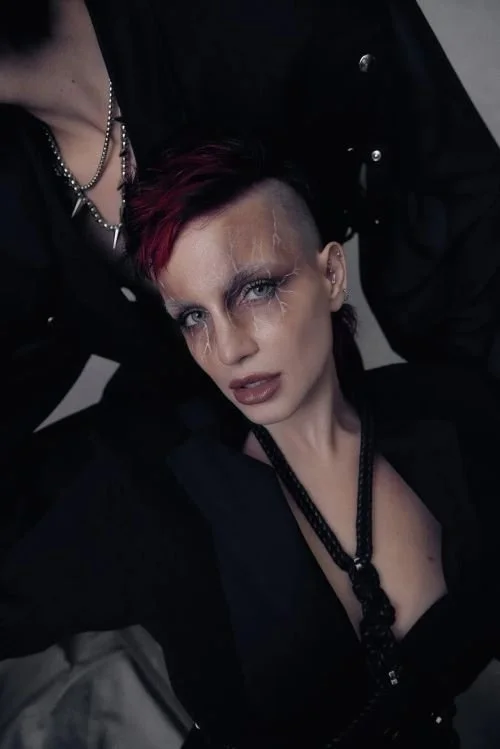
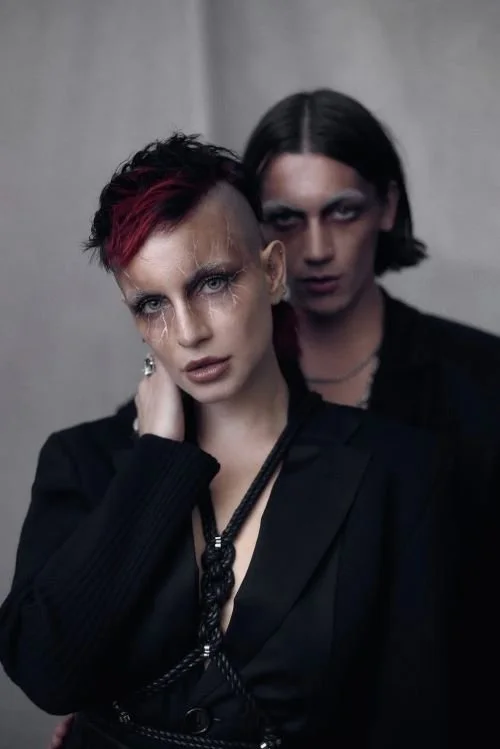
FEATURE: Spotlight: ScarLip

FEATURE:


Spotlight


 ScarLip

_________

TIPPED by Vevo…

as one of their DSCVR Artists to Watch, I wanted to spend some time with the magnificent, empowering and essential ScarLip. I am going to get to some interviews from the New York rapper. One of the finest new voices coming through. Before that, here is some background and biography about the incredible ScarLip:

“With the wave of female rappers entering the game being the strongest it's ever been, the newest leading lady out of New York has everyone asking, “Who is Scar Lip?” With hits like “New York” and her infamous “Glizzy Gobbler,” Scar Lip is making her presence heard with her aggressive delivery and sharp punchlines. Like other artists emerging from Hip Hops modern era, Scar Lip’s social media presence keeps her new fans close to her and gives insight into who she is. With plenty of competition in the form of fellow female artists on the scene, she is looking to stand out with an iron fist. Here is everything you need to know about New York’s own Scar Lip.

Childhood

Growing up in the Bronx, Sierra Lucas, also known as Scar Lip, didn’t have an easy upbringing. In fact, the traumatic events in the rapper’s childhood shaped who she is today. At 12, she lost her mother in a hit-and-run car accident. Her brother caused a traumatic injury as a child, resulting in a trademark scar on her lip. While living with her aunt, Scar Lip also faced alleged abuse from her uncle and aunt as well. Soon, Lucas moved into foster care after leaving the abusive household. This is where the rapper began writing poetry to cope with the events she had experienced. She details these experiences in her songs “Therapy,” “Foster Care,” and “Suicide Awareness.”

Famous Co-Signs

Since emerging on the scene, Scar Lip has received a lot of love from fellow rappers. The latest A-lister to give her praise to Scar Lip is fellow Bronx native Cardi B. When asked if she would consider being featured on the “This Is New York” remix, she enthusiastically replied, “I love that song! My fans keep asking for it." Earlier this month, both artists attended the Met Gala celebrations. On Instagram, Cardi B reposted a pic of Scar Lip in her Met Gala ensemble with the caption, “I love her.” The new upcoming artist also went to Instagram, sharing her excitement at the moment with her fans.

“Cardi B just posted me,” Scar Lip said in a video. “She inspired me. She from The Bronx, bro. I’m from The Bronx. She showed us young girls we could make it, and we could be something, bro. I can’t f**king believe this sh*t. We did it.” In her post, she also got support from other figures as well. Tony Yayo, Wack 100, Lola Brooks, and Latto all joined in showing love in Scar Lip’s comment section. The 22-year-old has also received praise from the likes of Busta Rhymes and Jadakiss. Even NBA legend, Shaquille O’Neal, gave his stamp of approval. On Instagram, the basketball player told the rapper, “It’s time for you to take over New York.” Snoop Dogg gave his praises to the artist as well.

Influences

Being New York to the fullest, Scar Lip's musical style is heavily influenced by legends who are also fellow residents. The rapper has also cited the late DMX as her main influence. Several others have made striking comparisons between the two artists. Scar Lip says well-known other New York artists, including Onyx also influence her. Among fans, she is also often compared to Brooklyn rapper Casanova.

Last May, ScarLip gave her thoughts on the Rap scene in New York to COMPLEX. She was asked about comparisons with other artists, getting advice from Swizz Beatz, and why she leans into her unique and distinct voice. This is an artist who should be on everyone’s mind this year. I am new to her as it turns out, yet I am excited to follow her through this year and see what comes next:

“New York is in the midst of a rap renaissance, with sevral subgenres dominating the city, and Scar Lip is here to restore the gritty gangster rap feeling.

The 22-year-old Bronx rapper embodies her borough and reflects her past experiences. When it comes to her stage name, Scar Lip shares that she landed on it after being assaulted by her brother when she was young; the incident left a gash on the left side of her upper lip. Despite the traumatic experience leaving a permanent mark on her face, Scar embraced it and made it a part of her rap persona.

“I was like, ‘I’m going to own this. I’m going to turn my pain into my power,’” she tells Complex. “If I call myself Scar Lip, anything somebody says about me can’t affect me and they can’t say anything about me because this is who I am. And now it’s my scar. My scar is my brand. I just turned my pain into my glory.”

Beyond her recognizable brand, Scar has a special lyrical ability that reflects the New York legends she’s inspired by, including DMX, 50 Cent, and Busta Rhymes. After getting into spoken word when she was young, Scar Lip eventually picked up rap in 2018 and started taking it seriously, leading up to the release of her 2022 track “Glizzy Gobbler,” which took YouTube by storm. As the name suggests and she made clear to us, Scar isn’t rapping about hot dog lovers, but “dick-eaters.”

“So I’m like, ‘How am I going to catch these people’s attention and spit them hard bars so niggas know I can rap,’” she recalls. “So I just started picking up some items. I started picking up glizzies, I started picking up noodles, and some nuts. I was just like, ‘What could the hood relate to?’ And they were fucking with that shit because it was funny.”

When and how did you get started doing spoken word and slam poetry? 

I’ve been doing poetry since I was a little girl. Poetry is like an expression to me. And I’ve always written raps, but I never actually posted them. My first time ever posting a rap video was in 2018. And it went viral in 2018 or 2019. I did a rap, a regular rap, not even a poem.

I saw your reaction to Cardi B reposting your recent post. What did that mean to you as a Bronx artist, and where do you hope that relationship will go?

It was like my dreams came true, because Cardi B from the Bronx. And I’m from the Bronx and she made it so when you from the Bronx, you are going to look up to her. She made it happen for us. Now she’s opening the door to make it happen for us.

So that shit was crazy. It was really a dream come true. Every day I work, every day I post my events, every day I grind and I finally see some results. For all the upcoming artists, they know how it is when we finally get that little taste of just recognition. Once we get that recognition, we go beast mode.

You have a unique voice too. What makes you lean into it?

I have multiple voices. I’ve always done that. It’s just not released. I have multiple characters, I have multiple personalities, multiple alter egos in my music. It was just like, I don’t drop a lot. I wasn’t dropping a lot of music.

I know you linked up with Busta Rhymes for a “This Is New York” remix. What advice did he give you as an up-and-coming artist?

One thing I can say is Busta is a big help and a big support for me. He’s like a mentor to me. And he always gives me advice to stay who I am, stay authentic, don’t change for nobody, and to be consistent in my music. He always gives me pointers. Like when I first went into the studio with Busta Rhymes, I was very nervous. I was nervous because we were laying down tracks, we got more than one.

And I feel like I was too nervous about, “I got to get them bars right. I gotta make it sound good for him because this is a legend,” you feel me? And he was just like, “Scar, just chill, just vibe. We good. We got this.” But yeah, he’s just a good support for me. I ain’t going to lie.

How would you describe the state of the New York rap scene right now?

We are bringing this shit back. No, I’m joking. I don’t know. There are multiple talents, and multiple genres. Everybody always asks me how I feel about this kind of rap or that type of rap. It’s an expression. These people express themselves. Not everybody’s going to express themselves in an old-school way. Not everybody will go and express themselves in a new school way. Artists bring different vibes to the table, and different flows. That’s why when you see an artist, they stand out because they’re unique, right?”.

In December, Stereogum spoke with the phenomenal ScarLip. It was noted how women are dominating Hip-Hop right now. Certainly when it comes to what is happening in the U.S.. There is also this feeling that Rap is a little too clean or sweet right now. ScarLip is here to mess it up. Bringing something rawer and less apologetic to the plate. Sitting alongside contemporaries like City Girls, ScarLip is offering something fresh and invigorating. A sound that lingers long in the mind:

“I bring authenticity, unapologetic rawness, and aggression. I’m bringing pain back to rap. I’m always gonna bring the ugly side.”

It’s a pretty perfect summary of why 2023 has been such a breakout year for this fast-rising 22-year-old, who passionately raps about unpleasant realities in a hoarse rasp that cuts through the air like an uncoiled spring. Her voice carries the bite of someone – finally – turning the tables on a lifelong enemy.

No other rap song released this year slapped you across the face with the icy chill of ScarLip’s “This Is New York,” with its stomping, warped bassline replicating a motorbike revving up and all the war-ready bars (“Get the fuck out New York/ You ain’t welcome anymore!”) helping resurrect the rebellious spirit of the golden era Ruff Ryders crew doing wheelies in the direction of terrified Shiny Suit rappers. This song had no time for pretty, IG-ready diversions; it’s too gnarly and far too busy aiming for the jugular, forcing fuckboys to run off screaming.

“This is New York, fuck I look like telling a ni*** good morning?” ScarLip spits like a cantankerous hood-rap Larry David, snarling like she’s protecting NYC from an invading army of yuppies and gentrifiers. “Fuck I look like being nice, sweet, charming and warming?”

At a time where there isn’t too much to smile about amid the current neverending abyss of our bloody news cycle, ScarLip’s warrior energy; husky, imperfect vocals; refusal to wear a fake smile; and decision to fully embrace the stereotype that New Yorkers are naturally wry and grouchy is pretty radical stuff. She is a much-needed female voice telling the masses that it’s okay to want to scream into the void and be imperfect, or even long for more mainstream hip-hop that speaks for the poor rather than elevating all the venture capitalists. “This Is New York” is the ugly truth.

Comparisons to DMX carry enormous pressure, but it’s obvious ScarLip shares the late rap legend’s ability to sound simultaneously invincible and vulnerable during her verses. When rapping this pair sounds like they’re purging to a priest and emotion is therefore extracted from every syllable.

“My earliest memory of freaking out to music was hearing DMX on ‘Ruff Ryders Anthem,’” ScarLip recalls while giving me a rowdy rendition of the legendary song’s battle-cry hook: stop, drop, shut ’em down, open up shop, etc. The comparison to X doesn’t seem to phase her, not one bit. He’s practically her spiritual advisor, and her hope is that her major-label debut will continue in 2024 where It’s Dark And Hell Is Hot left things back in 1998.

“That thing, that thingggg, that thiiiiiiing,” she continues, laughing loudly and mischievously as she sings “Doo Wop.” “Lauryn Hill inspired me a lot too! When I saw her on TV it told me it was okay to be dark skinned, have nappy hair, and look like me. You can still go right to the top, as both a singer and rapper.”

On wax, you’ve never shied away from the darkness of your childhood and how you were passed around children’s homes. Was writing poetry an escape?

SCARLIP: Poetry was a way I could express myself and, whenever I was going through things I didn’t feel comfortable speaking to anyone else about, I would just stay in my room, writing. It was a healthier way to let my anger out. I spent a lot of my younger years in the system and care homes, so I would write about how those experiences made me feel. My first three songs were just three poems: my life as a Black girl, me being in the foster care system, and losing my mom. The same way Billie Eilish can make those big songs about overcoming depression? That’s what I am trying to do. Before I even made it, I said I wanted to get so big from music that I could open up homes for children.

I want to talk about the importance of the line, “If you feel like you’re alone, it aint your fault,” on “Therapy.” So often victims of sexual abuse are made to feel like they brought it on themselves, somehow. Why is it so important to change that toxic mentality?

SCARLIP: I believed as a young girl that it was my fault and a lot of the things that happened – my mistreatment, my abuse, losing my mom, the poor treatment from my aunt – were all things I deserved. That’s what they taught me: “Oh it is you! It is on you!” I repeatedly said that lyric, “It ain’t your fault”, so other people wouldn’t be brainwashed into thinking it was their fault either. I want everyone [who has been abused] to know: It isn’t your fault! If you can be in the system and still make something out of yourself, even after the world and everyone else turned their backs on you, then you can make it through anything else in life.

I hate this expectation that we all must be jolly right after waking up. I think “This Is New York” captures that so perfectly when you complain about having to wish people a good morning and instead embrace being cantankerous. The world is fucked up right now, so it’s okay to have an off day, right?

SCARLIP: Yeah! Not everybody wants to be happy every day. Not everyone can be jolly all the time! Sometimes I want to be mad. Sometimes, ni***, I want to curse you out! We gon’ put all the emotions in the music, you feel me? It ain’t gon just be happy go lucky energy, ni***, we about to go do a drill too! Let’s make a song about punching a ni***s in the face. We don’t always need love.

Does it feel like New York rap is re-energized right now? And are a lot of the best rappers from the five boroughs women? I think so.

SCARLIP: I ain’t gonna let you trick me with that question, haha. But I will say this! Women are dominating, you feel me? New York is as grimey as it has ever been! We winning right now. We got people like me, Lola Brooke, Ice Spice; we all turning the city up! And we all got our own edge, and I feel like we’re bringing something new to the game and something new to the city. Especially the legend Cardi B! She is full-on Bronx. Most of the best rappers right now; we from the Bronx! We’re bringing it back to where hip-hop started. We all soldiers out here, you feel me?”.

I will wrap things up soon. I will finish with an interview from Hot New Hip Hop. ScarLip reflected on a busy and memorable 2023. One where she was getting kudos and recognition from some incredible fellows. Artists bowing down to her clear talent and brilliance.! That energy and momentum will carry her through this year. Somebody who is going to put out some amazing music:

“HotNewHipHop: How do you feel about 2023, a year of abundance, lessons, and valuable experiences?

Scar Lip: This year has been a mix of highs and lows, but it brought tremendous growth and invaluable life lessons. I've learned so much about myself and the industry.

What were some of the most memorable moments for you in 2023?

Meeting Busta Rhymes and receiving a diamond chain from him was unforgettable. Also, being in the studio with legends like Cardi B and Mary J Blige, and having Cardi B bring me out on stage in Dubai, were surreal experiences.

How did you establish connections with industry legends like Busta Rhymes, Cardi B, and Mary J Blige? Was it all organic?

Social media played a significant role, but I was also proactive. I reached out through DMs, Instagram Live, and even approached Snoop Dogg. Being a fan of Cardi B, I took the initiative to connect.

Why do you think it's important to be public about your journey and story?

I want people to know that no matter where you come from or what you've been through, you can make it. Sharing my story is a way to inspire others and show them that overcoming challenges is possible.

How do you handle the overwhelming support and love you've received?

I'm incredibly grateful and cheerful about the support. Sometimes, I can't believe how far I've come.

Any surprising moments where someone unexpected showed support?

Definitely, Cardi B and Shaq reaching out were unexpected but amazing moments.

What can we expect from Scar Lip in 2024?

Look forward to new music, new opportunities, and more of me being myself and striving for greatness”.

A name that is going to be among the most talked-about this year, ensure that ScarLip is someone on your radar. With incredible singles like No Statements and Blick arriving last year, eyes are on her to see where she heads. Maybe a mixtape or album is coming along. I hope she gets chance to visit the U.K. at some point. Someone who would be embraced here, this is an artist ready for global success! All the signs look positive. Proclaimed and celebrated by some pretty huge contemporaries, there is no stopping one of the most compelling voices coming from New York. This majestic and mesmeric artist is…

BUILDING her empire.

____________

Follow ScarLip

FEATURE: Don’t Judge Me: Is the Banned FKA twigs Calvin Klein Advert ‘Stereotypical and Exploitative’ – or Was the Ban Misogynistic and Racist?

FEATURE:


Don’t Judge Me

IN THIS PHOTO: FKA twigs/PHOTO CREDIT: Getty Images


Is the Banned FKA twigs Calvin Klein Advert ‘Stereotypical and Exploitative’ – or Was the Ban Misogynistic and Racist?

_________

AS this pertains…

PHOTO CREDIT: Getty Images

to someone in the music industry, I wanted to cover the recent story around a Calvin Klein advert being banned. Featuring FKA twigs, it was an image of her with a shirt draped across her body, revealing part of one breast and the side of her buttocks, along with the caption “Calvins or nothing”. Adverts like this have been printed or shown on the T.V. before. In terms of the actual image itself, it is not all-revealing and profane. It is sexy and eye-catching. It is confident and liberating! An artist who would not let herself be exploited or want to project a false image, there has been division around the ban. Different sides of the debate which raise questions around the fact that she is a woman. That she is a mixed-race woman. An advert for Calvin Klein that is appearing on billboards features The Bear star, Jeremy Allen White. Undoubtably looking good, he has been celebrated. Showing sex appeal and flesh, he has been revered for his physique and the fact he reminds people of the Calvin Klein models of old. A classic star who is a perfect fit. Flip that around to FKA twigs. Someone who perhaps revealed slightly less of herself, she instead has been banned and seen as objectified. People complained because she was deemed this stereotypical sex object. People feeling you see more of her than the clothing. I don’t think it was a case of people concerned about the brand worried that the product was being mis-sold. Concerned that some would be confused. Instead, there is a double standard that did not apply to Jeremy Allen White – who, by the way, was wearing practically nothing! Even though he was selling briefs and a billboard features him in them alone, I think he is still wearing less clothing than FKA twigs. In terms of ‘coverage’, there is not a lot in it. He was not seen as exploited or used as a sex object.

I can understand if people were concerned FKA twigs was being used for her body and this was a case of a woman being misrepresented. All about her body rather than her brain. That is fair enough. What we are talking about is Calvin Klein. A brand that has always had a reputation for its sexier adverts. It is not a situation or area where a more intellectual setting would have been appropriate. FKA twigs would have gone in knowing the brief and been fine with it. A fantastic and arresting image that would definitely get people talking about Calvin Klein, it is revealing without being too explicit or crossing any lines. Questions around discrimination asnd misogyny have come up. A woman being banned. Would even a white singer or figure have received the same backlash?! Here is some background and reaction:

“The two complainants also objected to a pair of Calvin Klein adverts featuring the model Kendall Jenner, but the ASA deemed them acceptable, saying one of her holding her breasts was not done “in a manner that portrayed her as a sexual object”, and the other fell within the bounds of acceptable lingerie advertising.

Calvin Klein has defended the FKA twigs advert, saying: “The images were not vulgar and were of two confident and empowered women who had chosen to identify with the Calvin Klein brand, and the ads contained a progressive and enlightened message.” They argued the poses adopted by both her and Jenner were “natural and neutral”.

They also highlighted that FKA twigs and Jenner collaborated with the company and approved the images, and subsequently told interviewers “they felt a sense of empowerment and confidence from having participated”. Calvin Klein also highlighted that male models featured in the same campaign”.

Without getting too forensic, if there was outrage that FKA twigs has part of her breast exposed in the advert, then is that enough to deem an advert inappropriate or offensive. That line between a confident and empowered woman and one being exploited because of her sexuality. It comes to consent, comparisons and standards. FKA twigs has since reacted and not seen any offence or issue. Male models have been as revealing and are not subjected to complaints and judgement. Also, in terms of whether the partial nudity offends people, I would refer people to Jeremy Allen White – and, in fact, advertising campaigns from Calvin Klein and other brands throughout the decades. It is a body. It is skin. There is nothing being show in the twigs campaign that has not been seen and celebrated from other times. Rather than this being an issue around appropriateness and exploitation of women, it does seem misogynistic and racially-motivated. Dig deeper, and something darker is revealed. Not about this being a woman objectified, instead a brave and confident woman of colour has been banned. Someone who has endured pain and unspeakable horrors in the past, this is an image that needed to be out there. FKA twigs responded to the ban:

“NEARLY A YEAR after a partially nude FKA Twigs starred in a Calvin Klein campaign, the ad was banned in the U.K. as it apparently made the singer a “stereotypical sexual object.”

The artist responded to the ban on Wednesday, taking to social media to share her thought. “I do not see the ‘stereotypical sexual object’ that they have labelled me. i see a beautiful strong woman of colour whose incredible body has overcome more pain than you can imagine,” wrote Twigs on Instagram alongside an image of the ad.

She continued, “In light of reviewing other campaigns past and current of this nature, i can’t help but feel there are some double standards here. so to be clear… i am proud of my physicality and hold the art i create with my vessel to the standards of women like josephine baker, eartha kitt and grace jones who broke down barriers of what it looks like to be empowered and harness a unique embodied sensuality.” Twigs thanked Calvin Klein for giving her “a space to express myself exactly how i wanted to,” adding, “I will not have my narrative changed.”

The Calvins or Nothing ad, which debuted in April 2023, featured Twigs naked, draped only in loosely fitting shirts. The image — which showed the side of Twigs’ buttock and breast — drew complaints to the U.K. Advertising Standards Authority, which ultimately ruled this week that the Twigs ad cannot be displayed or published in its current form again.

“The ad used nudity and [centered] on FKA twigs’ physical features rather than the clothing, to the extent that it presented her as a stereotypical sexual object,” the ASA said in their decision. “We therefore concluded the ad was irresponsible and likely to cause serious [offense].”

However, the ASA also deemed a similar Calvin Klein campaign featuring Kylie Jenner — which also drew complaints — acceptable.

Calvin Klein previously defended the campaign in a statement (via the Guardian), “The images were not vulgar and were of two confident and empowered women who had chosen to identify with the Calvin Klein brand, and the ads contained a progressive and enlightened message.”

In March 2023, Twigs spoke to Rolling Stone about the provocative ad campaign. “You’re literally stripping bare for the public,” Twigs said. “Physicality right now is such a huge point of discussion,” nodding to fashion’s inconsistency to encompass all body types. Though recent years showcased a burgeoning change amongst luxury and retail brands, the last few months have felt like a regression. “We’ve gone from enhanced female body parts to now everyone being obsessed with being so thin”.

It does seem strange that the advert is being banned now. Real name Tahliah Debrett Barnett, the half-Jamaican, part-English and Spanish artist is someone who should be on billboards. Celebrating her heritage. At a time when there is still a preference for white faces and particular body shapes, this ban does feel regressive. An ideal that Calvin Klein want. A brand that has become more inclusive since dark days of fatphobia and the promotion only of thin models, it seems to have taken a step back. Writing for Glamour, Chloe Laws explained how the banned Calvin Klein advert reveals misogyny, racism and double standards:

“In my opinion, the situation is layered in misogyny, racism and double standards. Taking to Instagram, she said: “I do not see the ‘stereotypical sexual object’ that they have labelled me. I see a beautiful strong woman of colour whose incredible body has overcome more pain than you can imagine."

The ASA statement read: “The ad used nudity and centred on FKA twigs’ physical features rather than the clothing, to the extent that it presented her as a stereotypical sexual object, the image’s composition placed viewers’ focus on the model’s body rather than on the clothing being advertised”.

In the full letter, there are some lines that stick out as, I believe, extremely hypocritical and nonsensical, such as: “Her nudity and facial expression, including a direct gaze and open mouth, gave the image an overall sexual overture.” 

In my opinion, Jenner’s image is posed in a very similar same way and is objectively more sexualised. It is extremely problematic that a Black woman’s sexuality would be policed and criticised, while—in the same campaign, no less—the White woman’s is not.

Calvin Klein has defended the FKA twigs advert, saying: “The images were not vulgar and were of two confident and empowered women who had chosen to identify with the Calvin Klein brand, and the ads contained a progressive and enlightened message.” The brand continued to say that the poses adopted by both her and Jenner were “natural and neutral”. It’s a solid response from the brand, albeit slightly missing the point—it is precisely the fact that FKA twigs is empowered and confident that has likely caused the complaints in the first place. This is not a world that responds positively to such traits.

The decision from the ASA shows just how impossible it is for women to 'win'. In one action we are objectified, commodified, liberated or empowered, all depending on who you ask. In this ruling the ASA is taking away a woman’s autonomy—doing the sexualising and objectifying it claims to be ruling against”.

These worrying overtured of bias, misogyny and racism do send a very bad message! Even now, in 2024, we are still having these discussions. To be fair, it is not Calvin Klein’s fault. They commissioned the advert and ran with it. They were keen for FKA twigs to be a face of their campaign. It is the decision of the Advertising Standards Authority to comply with complaints and ban the advert that has caused controversy. It is not about decency and exploitation. If the model herself feels she was not exploited and was simply projecting herself as a brave and sexy woman of colour who had control, then why does anyone else think they can speak for her?! It is a double standard where a man or white woman can be more revealing and sexualised and not subjected to criticism or bans. At a time when we should embrace all cultures, races, body sizes, and sexual orientations and genders, this feels like a very troubling statement. Hiding behind an excuse that FKA twigs was a stereotyped sex object, she has hit back saying that she will not have her narrative changed. She is absolutely right! Nobody has any right to speak for her or…

JUDGE her.

FEATURE: Spotlight: Madi Diaz

FEATURE:


Spotlight


Madi Diaz

_________

WITH a string of dates…

announced across North America, Madi Diaz has a very busy start to this year. The Connecticut-born artist is no newbie to the music scene, though she may be new to some people in the U.K. I do not hear her played as much as she should. I wanted to spotlight this amazing artist who releases her new album, Weird Faith, on 9th February. This is an album that I would urge everyone to check out:

“Madi Diaz has been making records and writing songs professionally since the mid 2000s, but it wasn't until she released 2021's History Of A Feeling that she felt the glare of wider notoriety. It wasn't her debut album, but it certainly felt like it. She made her daytime and night time television debuts, embarked on her first solo tour since 2012, and supported Waxahatchee and Angel Olsen on tour, and also collaborated with them on record. Harry Styles handpicked Diaz to open for him in arenas and stadiums in North America, and was so taken by her captivating live show, he asked her to be a member of his touring band, to sing alongside him all over Europe and the UK, as well as continuing to open the show in various cities. After three months on the road touring internationally, Diaz is back in Nashville, and gearing up to release her new album, Weird Faith, perched on the precipice of her moment. Featuring Kacey Musgraves and produced by Sam Cohen and Konrad Snyder, the album feels expansive and exploratory, showcasing her growth as a songwriter and speaking earnestly about the fears that come from falling in love again”.

I am going to get to a couple of interviews with Madi Diaz. I want to go back to 2021. Give some run-up and context to where she is now. Diaz spoke with SPIN about her album, History of a Feeling, and how it has been a long process and journey. I am fairly new to Madi Diaz’s album, so I am interested looking back and getting a sense of where this amazing artist has come from - and how, with each album, something extraordinary and unique is revealed:

“For Madi Diaz, the journey of History Of A Feeling has been a long one. She can hardly believe it herself. “2014…how is that simultaneously two seconds and like 5 million years ago?” she asks SPIN over Zoom from her Nashville home.

Diaz, who is perched on her red and white couch, glows as the sun pierces through the window behind her. It makes sense that she’s embraced such tranquility, considering she was “white-knuckling a Zen approach” to everything early on in the pandemic. “I didn’t have a publishing or label deal or any sort of foundation there at that point,” she recalls. “So it was tough, and it was scary, but it was also very strange the way that the cards started to just naturally fall.”

And they did. In February, the singer-songwriter signed to ANTI- Records. And seven years since her last full-length album, Phantom, Diaz shared her new LP, History Of A Feeling, on Aug. 27. The folk-pop album, anchored by honky-tonk guitar riffs and wistful lyrics, took shape gradually as Diaz went through her own healing process.

In 2017, Diaz endured a painful breakup. After the split, her partner came out as transgender. “When you’re in a super codependent relationship it’s weird [and it] hurts, and you don’t know how to untangle your feelings from their feelings,” she explains. Just a few months later, she relocated to Nashville for a fresh start, and what followed was a three-year process of compiling upwards of 150 songs. The result, History Of A Feeling, captures the heartbreak and growth Diaz experienced as she rebuilt her life. Whether it’s quiet rage (“I hope you fuck her with your eyes closed and think of me” on “Think of Me”) or the acceptance of a different future (“What used to work doesn’t work anymore” on “New Person, Old Place”), Diaz’s keen sense of self-awareness shines through each track.

Ahead of the LP’s release, Diaz spoke to SPIN about starting over in Nashville, having Kesha sing “Resentment” and still being known as a “new artist” 14 years into her career.

SPIN: When did you start making the record?

Madi Diaz: The first song that I officially wrote for the record was in a non-official sort of way. I wasn’t making the decision to start writing a record. I think as a writer, a creative person, it’s just the thing that I do to get through a day, or an experience, a feeling or a topic. I kind of have to chew on it, talk about it and figure out how to explain it to myself. The first song that ended up on the record dates back to fall of 2017 [in] October, but it was a long process that I wasn’t really aware of going through: just writing, existing and being, and growing day after day, which is kind of why there were 150 songs that were in the running. The accumulation of almost three years of writing and then getting to the point where it’s like, “Okay, now you get to do a thing. What are you going to do?

Which artists were you inspired by for this record?

I was listening to a lot of Patty Griffin’s earliest record, Living With Ghosts, and Joni Mitchell’s Blue is a record that I go back to almost seasonally and ruminate on the rawness of having the opportunity. The label and ANTI- didn’t really enter the conversation until the record was finished, so I really was more giving myself the opportunity to make this body of work and was kind of lucky to just have a production partner in Andrew Sarlo just wanting to make something that sounded like me. But I guess I’ve been through so many different versions of myself that I was really wanting, deeply desiring, something as raw as those records are because they’ve stuck with me for so long. Lori McKenna is another one that I always go back to over and over again.

You put out your last full-length album, Phantom, in 2014 followed by your 2017 EP, Okay to Be Alone. What accounted for the large gap in time between albums?

Life was happening, and Phantom was such a push in a pop direction that at the end of the day it didn’t really resonate with who I am as a person and an artist. [I was] kind of all over the place, pouring my energy into different projects and writing. For better or worse, I definitely love being an escape artist and figuring out how to not sit still, but when I moved back to Nashville there’s so much less going on here. That really forced the issue of “How did you get here, and what’s going on with you?”

Was there ever a point in time that you weren’t sure if you were going to release another record?

100%. I mean, I can’t believe I’m still here. That’s kind of how a lot of this feels. I was sitting with my A&R from the label when I was in L.A. playing shows, and he was like, “As a new artist this, that and the other.” It’s just funny at 35 after having been doing this for 14 years to still carry the torch of the new artist. I also feel really lucky to have some sort of outlet to put these feelings.

What’s the meaning behind the title of your new record?

History Of A Feeling came from retracing my steps and trying to figure out certain patterns that I found myself in and walking it backwards and realizing that on some level, regardless of the thing that I’m going through, my reaction to that doesn’t even necessarily have to do with the thing that’s happening. It has to do with the narrative that I’ve been writing for my life because of that one thing that happened all the way back there.

What made you choose “Man in Me” as the lead single?

I wanted to lead with that one because I had been trying to find more of a production role with myself, especially before I found [writer and producer] Andrew Sarlo, and we started working together. In the spirit of not losing the plot, I wanted to make sure that the recording was as close to a mirror as possible of what I was going through and what I was feeling in the moment. So it felt like leading with that was the best way to rip off the Band-Aid.

“Resentment” is a beautiful song that Kesha also sang on The High Road. What’s the story behind it?

”Resentment” happened early on in the process of writing. It’s just this funny song that you don’t even realize that you’re writing sometimes in your relationship. It’s just all the times that you say, “I don’t need you to talk about that right now.” Or “This just isn’t a good time.” Or “I shouldn’t express this thing that I’m feeling.” It can be the silent third partner in a relationship and can creep up out of nowhere.

Your long-term relationship ended between records. Is this entire album about that relationship?

The relationship is — or was — definitely the catalyst for a lot of change in my life, but most endings inspire beginnings, if not all. So I think 15% of this record [is] a retelling of some stuff after the fact that had to do very closely with the relationship. Really, 85% of that record is what happens when you’re just sitting by yourself after the fact.

How did moving to Nashville help inspire you?

Nashville is just the best. In the groups that I’ve had the fortune to be with, I’m friends with everybody that I wrote my record with, and sometimes we’d get together and just talk and not even write a song. Just having the space and the time gives room to have really honest conversations and allows a really organic process to happen. In L.A., I felt like I was at the point where I was so tired and beat down there. It kind of put this pressure on things in a way that I didn’t really feel super centered in the end of it.

When you were alone and back in Nashville, what did you rediscover about yourself?

It started with lots of margaritas and nachos six days a week for three months. There was a hazy period of whatever and my sweet friends showing up at my house with flowers and bathrobes. I was really lucky, and I am really lucky, to be surrounded just by a fucking incredible community of kind humans that aren’t afraid to hold pain with you, even if they have nothing to say or nothing to add”.

I will bring things up to date. Having supported Harry Styles in 2022, and with high-profile musician fans including Angel Olsen, there is no doubting the fact that Madi Diaz is a musical treasure. One who is much respected by her peers. Perhaps not as played in the U.K. as the U.S., I do hope that changes this year. I will end with an interview from Rolling Stone. They spoke Wirth Madi Diaz earlier this month. She has a lot of dates lined up. As someone used to life on the road, she was looking ahead to a new tour and her forthcoming album:

“Madi has a really pleasing way of keeping everything conversational,” her friend Kacey Musgraves tells Rolling Stone. “My favorite kind of songwriting.” The Nashville musicians have known each other for a long time, but became close in the pandemic — cooking, shopping for antiques, and joking about sharing a house together. “Madi and I will hit the occasional estate sale or go for a long walk and chat,” Musgraves says. “There’s also wine. And horses. We’re both horse girls through and through.”

Musgraves appears on the Weird Faith duet “Don’t Do Me Good,” a dazzling send-off to a lover with a potent chorus about finally throwing in the towel. “There’s something about her voice that just lifts the whole thing,” Diaz says. “I know Kacey’s speaking voice pretty exclusively, so it was fun to be in the studio and put the headphones on and then listen to that voice coming out of her mouth: ‘Oh, right! That’s my friend!’ ”

PHOTO CREDIT: Cheril Sanchez

Co-written with Ed Sheeran collaborator Amy Wadge, “Don’t Do Me Good” is easily one of the strongest songs in Diaz’s catalog. But she was hesitant to ask Musgraves to sing on it. “I was totally terrified to ask her, because that bridge feels comfortable for me and my friendship with, like, Courtney Marie Andrews,” Diaz says, naming an Americana peer. “But Kacey is in a completely different stratosphere. She’s a pop star.” (Hearing this quote, Musgraves laughs: “That’s ridiculous. We’re friends. I was like, ‘Absolutely. Duh. Yes.’ ”)

Many of Diaz’s friends these days are female musicians — something that wasn’t always the case for her. “With our generation, alpha females were taught to avoid each other in our twenties,” Diaz says. “Which is such a goddamn shame. It’s funny how that completely shifted in my thirties.”

Diaz grew up in a musical family in Norwalk, Connecticut (her dad plays in a Zappa cover band), and moved to Pennsylvania when she was seven; later, she studied at Berklee College of Music before dropping out to play gigs at the Bitter End in New York. She moved to Nashville in 2008, grinding it out as a songwriter, then moved to Los Angeles to play in bands, finally returning to Nashville in 2017.

“I did not literally think for two seconds about being a woman in the industry and how that would maybe, eventually, become difficult,” she says, thinking back to her early career. “It’s fucking different for women, and hopefully people will respect that at some point. I honestly don’t think that men do.”

Diaz names several musicians who tour with their children, from Maren Morris to Elle King to Margo Price (“a fucking badass”). “Or my friend Michaela Anne, who has a two-year-old — like, there are women that do tour with kids,” she adds. “Michaela Anne’s situation is very different than Maren Morris’ situation on the road. And they’re both doing it.”

But despite that line about parenthood in “Everything Almost,” she knows it’s not her time yet. She’s learning to live in the present, citing Holocaust survivor Viktor Frankl’s 1946 memoir, Man’s Search for Meaning, as a recent inspiration.

“It’s about listening to what life is asking of you and responding to those questions,” she says. “And, like, life isn’t asking me to be a mother. Right now, it’s asking me to fucking carry my guitar two miles from LaGuardia Airport, and have a rat’s nest of cables in my carry-on bag that weighs 50 pounds. So I’m trying to be there”.

I am going to wrap up now. If you do not have Madi Diaz on your radar then make sure that you check her out. An incredible artist that has a string of wonderful albums under her belt, she releases Weird Faith next month. Shaping up already to be one of the best albums of this year, I am really interesting in listening to it. Although a lot of fresh and rising artists are getting attention as ones to watch in 2024, I do think there are artists who have been around a while not known everywhere. Ones that should be heralded too. Madi Diaz definitely fits into that category. She is truly…

<

A phenomenal artist.

___________

Follow Madi Diaz

FEATURE: bad reputation: Why a Recent New York Times Article Suggesting Taylor Swift Is Queer Provoked Such Backlash

FEATURE:


bad reputation

IN THIS PHOTO: Whilst Taylor Swift has shown huge support for the L.G.B.T.Q.I.A.+ community and fought for their rights, a recent feature from The New York Times suggesting she is queer has provoked criticism and accusations of homophobia/PHOTO CREDIT: Luis Sinco


Why a Recent New York Times Article Suggesting Taylor Swift Is Queer Provoked Such Backlash

_________

THERE has been a lot of discussion around…

ILLUSTRATION CREDIT: Angie Wang

an article published by The New York Times that borders on the obsessive. One that feels Taylor Swift sends out coded messages through her songs saying that she is queer. A 5,000-word guest edit by Anna Marks entitled “Look What We Made Taylor Swift Do” – Look What You Made Me Do is the title of a track from Swift’s 2017 album, reputation -, it is almost obsessive and forensic in ‘revealing’ or at least strongly suggesting that Taylor Swift is queer. In a tone that suggests she is hiding it. You can read the piece here. Rather than celebrate her success and the fact her Eras Tour has broken records and is the most successful concert film ever, she has been subjected to this ‘exposé’. It would be interesting to see a piece about how Swift’s music resonates with the L.G.B.T.Q.I.A.+ community and how ‘Swifties’ – the name given to her fanbase – find strength and identification through those songs. Instead, this excess and rather needless feature seems to want Taylor Swift to come out. It has prompted an angry response. Is it appropriate for the media to do that?! Not a tabloid feature, it does have that feel of try to out someone or suggesting that they are coding something that should be declared and made public. Here are some segments from that New York Times feature:

“On April 26, Lesbian Visibility Day, Ms. Swift released the album’s lead single, “ME!,” in which she sings about self-love and self-acceptance. She co-directed a campy music video to accompany it, which she would later describe as depicting “everything that makes me, me.” It features Ms. Swift dancing at a pride parade, dripping in rainbow paint and turning down a man’s marriage proposal in exchange for a … pussy cat.

At the end of June, the L.G.B.T.Q. community would celebrate the 50th anniversary of the Stonewall Riots. On June 14, Ms. Swift released the video for her attempt at a pride anthem, “You Need to Calm Down,” in which she and an army of queer celebrities from across generations — the “Queer Eye” hosts, Ellen DeGeneres, Billy Porter, Hayley Kiyoko, to name a few — resist homophobia by living openly. Ms. Swift sings that outrage against queer visibility is a waste of time and energy: “Why are you mad, when you could be GLAAD?”

The video ends with a plea: “Let’s show our pride by demanding that, on a national level, our laws truly treat all of our citizens equally.” Many, in the press and otherwise, saw the video as, at best, a misguided attempt at allyship and, at worst, a straight woman co-opting queer aesthetics and narratives to promote a commercial product.

Ms. Swift’s “Lover” was the first record that she created with nearly unchecked creative freedom. Lacking her old label’s constraints, she specifically chose to feature activism for and the aesthetics of the L.G.B.T.Q. community in her confessional, self-expressive art. Even before the sale of her masters, she appeared to be stepping into a new identity — not just an aesthetic — that was distinct from that associated with her past six albums.

When looking back on the artifacts of the months before that album’s release, any close reader of Ms. Swift has a choice. We can consider the album’s aesthetics and activism as performative allyship, as they were largely considered to be at the time. Or we can ask a question, knowing full well that we may never learn the answer: What if the “Lover Era” was merely Ms. Swift’s attempt to douse her work — and herself — in rainbows, as so many baby queers feel compelled to do as they come out to the world?”.

Once a record of good repute and standing, The New York Times has not covered itself in glory with this feature! Why it was even commissioned to start with seems very odd. Capitalising on Taylor Swift’s success, it does seem a negative reaction to that. Whereas it could have been framed in a more positive way regarding sexuality and themes explored in her songs, it is something rather tawdry and baiting. Whether Swift is queer or not is queer is no business of ours. She has not stated her sexual preference or how she identifies. At a time when L.G.B.T.Q.I.A.+ artists are still not as embraced as they should be, I wonder whether this set things back. Rather than celebrating the community and showing support, there are articles (like the one in The New York Times) that almost force people to come out! Accusatory and needlessly obsessed with something that does not need to be written about. How many artists of Taylor Swift’s standing have similar articles written about them asking if they are straight?! There is a sense of homophobic and prejudice in the article. Many have reacted to it. I want to bring in some reaction and analysis.

PHOTO CREDIT: Kevin Mazur/Getty Images for iHeartMedia

Laura Snapes, writing for The Guardian, felt that the number of mentions in Taylor Swift’s songs suggesting she may be queer are not accidental. That may she has rebuked her L.G.B.T.Q.I.A.+ fans. Why is it impossible to think that the reference that might suggest sexual desire are actual about friendship?! Or, more importantly, why does she have to reveal her sexuality or make her lyrics overtly queer?! What business is it of ours?! She does not owe her fans that announcement. As someone afforded virtually no privacy or part of her life uncovered, is this the final stone that needs to be unturned so that she is completely exposed?!

“The response felt almost as heavy-handed and misguided as the original piece. Male artists including Shawn Mendes and Harry Styles have in fact been the subjects of massive speculation about their sexualities: the NYT writer previously published a similar piece about Styles, while Mendes has spoken of the pressure of the constant discourse about his identity. (“I thought, ‘You fucking guys are so lucky I’m not actually gay and terrified of coming out,’ ” he told Rolling Stone. “That’s something that kills people.”) And there is no way that gimlet-eyed Swift has made the many references listed by accident: if you lead a horse to water, don’t be surprised when it drinks. Dignifying an overblown essay with such a severe response may in turn act as a rebuke to fans who have found identification and solace – or even just benign entertainment – in imagining, say, that Swift’s gaspingly sexy Reputation song Dress may be about her once-prominent friend, the model Karlie Kloss (“I don’t want you like a best friend”!), rather than its more likely subject, her then-boyfriend Joe Alwyn”.

It’s these playful and personal mutations that keep a star like Swift interesting at a time when her carefully managed media omnipresence and tightly plotted breadcrumb trails have started to feel a little tedious, laden with thudding predictability. (Does the snake-green dress she wore to the Golden Globes at the weekend mean that the serpent-referencing Reputation (Taylor’s Version) is coming? Is the pope Catholic?) For many onlookers, that wearying feeling struck again when reading her lone recent interview, for Time’s person of the year cover, which seemed disappointingly uninquiring and intent on validating her version of events – namely that she was “cancelled” in the wake of her feud with Kim Kardashian and Kanye West, when in fact it resulted in one of the most successful albums of her career – rather than pushing deeper into the fertile ground where her self-conception rubs up against public interpretation. The most abiding images of Swift this past year show pop’s biggest outlier standing alone on stage at the Eras tour, bedazzled with sequins. She cuts a formidable figure in her class of one – but it’s in the unruly exquisite corpse of pop fandom and stardom that the most meaningful rewards are found”.

That suggestion that an artist who has become a bit predictable or subjected to little media scrutiny or scandal. Swift is the master of her own narrative. Why should the queer suggestion compete with other interpretations? I think that that assumption somewhat misses the point. Regardless of her fame and perceived lack of revelation regarding her sex life and relationships, The New York Times were analytical in a very intense way. Why should the subject of Taylor Swift’s sexuality compel such obsession?! Again, it comes to the argument or whether it is intrusive and inappropriate or an article that is trying to make her more identifiable to her L.G.B.T.Q.I.A.+ fans. Rather than her songs holding back when they should maybe embrace an important part of her fanbase, it is needless decoding and obtrusion.

In the same way that Taylor Swift loves her L.G.B.T.Q.I.A.+ fans and they are very important to her, she has long been the subject of speculation around her sexuality. Not the first time this has been brought up, Swift has also said how she is not L.G.B.T.Q.I.A.+. Why then, now, curiously timed around the Eras Tour success and this new level of fame, should Anna Marks decide to focus on entirely the wrong thing?! There are a couple of other opinions from The Guardian that I think are interesting. This is what Arwa Mahadawi wrote in her feature as she asked whether it was okay for people to speculate about Taylor Swift’s sexuality:

“Swift, for her part, has said she isn’t part of the LGBTQ+ community and asked people not to sexualise her female friendships. Was the Times unethical to gloss over all of this and give rumours about her sexuality so much airtime? Swift’s inner circle reportedly thinks so. According to CNN, Swift’s associates (a vague term which could mean anyone from Swift’s PR person to someone who once sat in the same restaurant as her) were disgusted by the article, and accused the Times of sexism.

Outing someone against their wishes is clearly morally wrong, but that’s very different from overanalysing a bunch of song lyrics

“Because of her massive success, in this moment there is a Taylor-shaped hole in people’s ethics,” a source told the outlet in response to the Times piece. “This article wouldn’t have been allowed to be written about Shawn Mendes or any male artist whose sexuality has been questioned by fans.”

Let’s not go overboard here, eh? Yes, much of the discourse surrounding Swift is steeped in sexism and double standards. But I’m not sure that charge can be levelled at this particular piece. Marks has, after all, written a similar sort of article (albeit much shorter) about Harry Styles – who has been accused of queerbaiting and whose sexuality is constantly being questioned by fans.

Further, while I think Marks’s piece was highly inadvisable, I wouldn’t go as far as to say it was unethical. Outing someone against their wishes is clearly morally wrong, but that’s very different from overanalysing a bunch of song lyrics. Particularly when those lyrics are set up to be overanalysed in the first place. As Marks notes in her piece, “Swift has explicitly encouraged her fans to read into the coded messages (which she calls ‘Easter eggs’) she leaves in music videos, social media posts and interviews with traditional media outlets.”

PHOTO CREDIT: John Salangsang/Golden Globes 2024/Getty Images

It’s a genius marketing move, encouraging fans to engage deeply with her content and get them speculating about what deeper meaning the megastar might be weaving into her songs. Is it any wonder that some fans go down rabbit holes?

Speculating about a celebrity’s sexuality on online forums is one thing, but there’s a case that speculation in serious media outlets is completely different. Certainly, Chely Wright, a queer country singer whose struggles to come out in the early 2000s kicked off Marks’s piece, thinks so. “I think it was awful of [the New York Times] to publish,” she wrote. “Triggering for me to read – not because the writer mentioned my nearly ending my life – but seeing a public person’s sexuality being discussed is upsetting.”

I can understand why Wright would feel upset about the article, but – and I say this as a gay woman – I take umbrage with the idea that it is upsetting to see a public person’s sexuality being discussed in 2024. I mean, come on now: celebrities have their sexuality discussed all the time. Newsflash: talking about a celebrity dating someone of the opposite sex is discussing a public person’s sexuality.

It is unfortunate, I think, that Wright’s criticism accidentally plays into homophobic ideas that only queer people have sexualities while heterosexual love lives are just the default. And quite a lot of the outrage over the Times piece, I should note, does seem to be tinged with homophobia. Certainly all the outraged op-eds in the likes of the New York Post seem disgusted with the very idea that anyone might suspect Swift to be gay. “What’s so wrong about her being a straight white woman who makes great music?” an irate Post article demanded.

I’m not entirely sure what Marks set out to achieve with her piece (which, again, was ill-advised), but I do think she has achieved something. She has shown us that the entertainment industry is perfectly fine with its biggest stars flirting with LGBTQ+ imagery. It’s fine with its biggest stars draping themselves in rainbow flags and making statements about allyship. Dare to suggest that those stars might actually be gay, though, and you’ll see quite a lot of old-fashioned homophobia coming out”.

Maybe intended to celebrate an artist at the height of her powers that might be this role model and tangible inspiration for other queer people, was the intention to reveal this queer icon – in a music scene where queer artists are perhaps accepted by not spotlighted as they should be. Is the music industry doing enough to show the visibility and enormous importance of L.G.B..Q.I.A.+ artists?! I know there is an irony in me writing a feature that will nearly be 5,000 words angrily reacting to an original 5,000-word feature! Why go to such excessive lengths to pick apart and slam an original piece that, in itself, was strangely over-analytic and needless?! It is not only about Taylor Swift. It is the way the media needs to know private details and people’s sexuality. A feeling that this should be public information. Taylor Swift shrouding something in mystery when she should be honest with her fans. As Swift has made no suggestion she is queer, what The New York Times feature is seems to be muck-racking. When artists are slammed for queer-baiting, isn’t this what The New York Times are doing?! This opinion piece raises some interesting points:

“Swift has embraced the LGBTQ+ community in the past, calling her concerts a “safe space” for LGBTQ+ people and publicly defending them in a 2019 interview with Vogue magazine against a record number of anti-gay bills introduced in states across the country. “Rights are being stripped from basically everyone who isn’t a straight white cisgender male,” she said. “I didn’t realize until recently that I could advocate for a community that I’m not a part of.” 

But she has not identified as a member of the queer community herself. In the prologue to the re-record of her 1989 album, released in October, Swift said she surrounded herself with female friends at one point in her career to counter ceaseless media speculation on her love life. “If I only hung out with my female friends, people couldn’t sensationalize or sexualize that – right? I would learn later on that people could and people would,” she wrote.

Marks, seemingly aware of the criticism her essay could face, pre-emptively tried to address potential backlash in her piece. “I know that discussing the potential of a star’s queerness before a formal declaration of identity feels, to some, too salacious and gossip-fueled to be worthy of discussion,” she wrote.

“I share many of these reservations. But the stories that dominate our collective imagination shape what our culture permits artists and their audiences to say and be,” she added. “Every time an artist signals queerness and that transmission falls on deaf ears, that signal dies. Recognizing the possibility of queerness – while being conscious of the difference between possibility and certainty – keeps that signal alive”

El Hunt, writing for The Independent, feels that a dangerous line was crossed by The New York Times. Rather than it being a fascinating and important essay on sexuality and artists’ privacy – or whatever the intention was! -, there is this element of homophobia. The feeling that queerness needs to be exposed, rooted out and revealed. It also puts pressure on other queer artists who have not come out that they may be subjected to such prurient obsession from the media. This beautiful community, queerness should not be seen as something dirty or shameful:

“Both of them are right – analysing every last detail of somebody’s existence for hidden clues that they’re harbouring some kind of secret doesn’t just buy into the idea that a queer person looks or acts a certain way, it implies that being LGBTQ+ is still something that needs to be exposed or rooted out. Have none of us learned from the countless tabloid outings, gleefully pasting celebrity’s private lives across their front pages, occasionally with tragic results?

It implies that being LGBTQ+ is still something that needs to be exposed or rooted out

For artists who find themselves embroiled in these seemingly baseless rumours, such as Swift, the whole thing must be deeply infuriating – and beyond that, we all lose out. A world where some straight men  – such as the Puerto Rican rapper Bad Bunny, or the actor  Tyler James Williams – are singled out, their playful fashion senses or affection for their male peers held aloft as ‘evidence’ sounds like an incredibly depressing, two-dimensional one to me.

For an artist who is either straight, or refuses to label their sexuality at all, there is simply no way to win. Those who breezily ignore the rumours and carry on as they are (often while politely refusing to label themselves publicly) are immediately branded as queerbaiters seeking to profit off the so-called pink pound.

It is not enough to show solidarity with a community that forms a beloved chunk of a musician’s fan-base anymore; surely there must be an ulterior motive or PR strategy whirring away behind the scenes. Hit back at speculation too firmly, and you risk being labelled homophobic ‒ so what if you’re gay? What does it matter anyway?! But to flip that same logic in its head, why get so obsessed about it in the first place, then?

Often it’s also implied that artists we suspect of being queer ‒ whether it's Taylor Swift or Billie Eilish, who recently accused Variety of outing her ‒ have some kind of duty to come out in order to bolster representation. “And so just for a little while longer, we need our heroes,” insists the New York Times.

Fame does not form a protective mystical shield from homophobic hate crimes

This isn’t just naïve, it does a huge disservice to the realities of homophobia, and is completely untethered from a period in which hate crimes based on sexual orientation have actually increased by 112 per cent over the last five years. Fame does not form a kind of protective mystical shield, either; actor Jonathan Bailey recently told the Standard about having his life threatened because he was gay. “That is the reality,” he said. “People’s lives are literally at risk.” 


Given how much we hear about positive queer representation nowadays ‒ and granted, things are improving ‒ it’s tempting to buy into the incredibly optimistic suggestion that homophobia is mostly a thing of the past (it’s 2024! Love is love!) and the preserve of a few ignorant, poorly educated bigots. This could not be further from the truth.

Look, I love searching through popular culture for ‘gay morsels’ as much as the next bored lesbian. I would be flat-out lying if I denied having watched endless compilations of Rachel Weisz/Cate Blanchett/Kate Winslet waxing lyrical about starring in a film about queer love and sounding amusingly, accidentally, perhaps slightly-knowingly gay in the process; for me, that’s about the art itself, so it’s fair game.

And perhaps this is where the line is. If you ask me, reappraising somebody’s art through an LGBTQ+ lens in the first place is not a problem ‒ it’s so common that there’s an entire branch of academia dedicated to the practice, called queer theory. The analysis that follows can often shed really interesting light: who does a lyric belong to once it has left an artist’s mouth?

It’s an important and valid question that cuts right to the core of the magic of music in the first place; a song’s essence shifts depending on who sings it, or who hears it. When Shania Twain sings Man, I Feel Like A Woman, it’s a defiant expression of female empowerment; but when she performs it as a duet with Harry Styles, it automatically becomes a playful exploration of gender expression instead”.

It is interesting seeing various interpretations and reactions to the feature from The New York Times. Why it was published in the first place…and what message it sends out. I think there is a majority feeling that it is inappropriate and shows The New York Times in a bad light. Doing very little to improve their reputation, it does seem like a misjudged and dangerous write-up! Digging into lyrics to try and make Taylor Swift reveal she is queer – when she has said she isn’t -, it is homophobic and completely unnecessary. That New York Times feature is entitled “Look What We Made Taylor Swift Do”. Nobody made her do anything! Rather than writing nothing or producing a feature celebrating Taylor Swift’s achievements, instead we have this scandalous and obsessive deep-dive that seems completely unnecessary and tasteless. It has provoked huge anger. Look what The New York Times…

MADE us do!

FEATURE: The Digital Mixtape: Harry Styles at Thirty: The Ultimate Playlist

FEATURE:


The Digital Mixtape

PHOTO CREDIT: Harry Styles


Harry Styles at Thirty: The Ultimate Playlist

_________

ON 1st February…

PHOTO CREDIT: Amanda Fordyce for Rolling Stone

a global megastar turns thirty. Harry Styles is one of the most recognised and respected artists in the world. His third studio album, 2022’s Harry’s House, is his best yet. Formerly with boyband One Direction, Styles has really blossomed as a solo artist. Not only establishing himself as a phenomenal songwriter; he is also one of the greatest live performers of his generation. I am going to end this feature with a playlist of his best solo tracks to date. Before that, AllMusic provide detailed biography of the amazing Harry Styles:

“Global pop superstar, songwriter, actor, and social advocate Harry Styles transitioned from boy band fame to massive solo success with his anthemic pop-rock hits, iconic fashion sense, and crossover appeal. As a member of the British boy band One Direction, he topped the charts in the early 2010s, toured the world to play for millions of screaming fans, and sold albums by the bucketload. Branching out on his own in 2016, his solo material took a more rock-influenced approach -- reflecting the influence of childhood favorites Queen, Elton John, and the Beatles -- while still delivering the pop sound his faithful fans desired. His debut set, Harry Styles, reached number one across the globe and he soared to greater heights in 2019 with his multi-platinum follow-up, Fine Line, home to the Grammy- and Brit-winning smash "Watermelon Sugar." More accolades followed for Styles with 2022's Harry's House, another Grammy-winning, worldwide chart-topper that was supported by a record-breaking, two-year tour.

Born in Redditch, England, in 1994, Styles was raised in Holmes Chapel, Cheshire, and he made his first foray into music with a high school band named White Eskimo. In 2010, he left home and joined the seventh season of The X Factor, where fate (and Simon Cowell) would eventually lead him toward a life-changing opportunity with four other young men. As One Direction, Styles and his bandmates Zayn Malik, Louis Tomlinson, Niall Horan, and Liam Payne would release five albums from 2011 to 2015, hitting number one across the globe and selling millions of records to an adoring and rabid fan base that drew comparisons to the fervor at the height of Beatlemania. In early 2016, after Malik had already parted ways with 1D, the remaining foursome announced an indefinite hiatus.

Months later, Styles signed a solo deal with Columbia. Reflecting the influence of childhood favorites like Queen, Elton John, and the Beatles, Styles' solo material took a more serious and rock-based approach, while still delivering the pop sound his faithful 1D fans desired. With the help of Grammy-winning producer Jeff Bhasker (who had worked with Kanye West and Bruno Mars), Styles put together a small band and, after rehearsing the songs, headed to Jamaica for two months to record an album. The plaintive "Sign of the Times" was released as its first single in April 2017 and quickly rose to the top of the charts across Europe. The self-titled full-length followed in May and debuted at the top of the charts in Australia, the U.S., and across Europe. Later that summer, he made his movie debut as a soldier in Christopher Nolan's Oscar-winning epic Dunkirk, which was the top film in the U.S. the week of its release, making Styles the first British artist to secure a number one debut single, album, and film in the same year. He set off on a lengthy worldwide tour that lasted from September 2017 through July 2018, then began recording his second album with producers Kid Harpoon and Tyler Johnson, both of whom worked on his debut.

Taking time off from the sessions -- which took place at various studios in California, England, and Nashville -- in 2019, Styles inducted Stevie Nicks into the Rock and Roll Hall of Fame, co-hosted the Met Gala, and modeled for Gucci. The finished album, Fine Line, was released in December and found the singer adding influences as varied as Childish Gambino-styled funk and Bon Iver-esque Baroque folk to his repertoire. While the hit single "Adore You" made a splash around the world, the multi-platinum, international Top Five smash "Watermelon Sugar" was ubiquitous in 2020, taking home a Grammy Award for Best Pop Solo Performance and winning a Brit Award for British Single of the Year in 2021. He also added additional acting credits to his résumé that year, joining the Marvel Cinematic Universe as Eros in the film Eternals and the casts of Don't Worry Darling and My Policeman.

When his Love on Tour kicked off in late 2021, Styles added a headlining slot at 2022's installment of Coachella to his schedule. He also released the driving synth-forward single "As It Was," which topped charts in over two dozen countries across the globe. That song landed on his third full-length, Harry's House, which arrived in May. Produced yet again by Kid Harpoon and Tyler Johnson, the '70s-inspired pop LP featured guests John Mayer, Pino Palladino, Blood Orange, and Ben Harper. It also topped numerous global charts, including in the U.K. and on the Billboard 200, and took home the Grammy Awards for Album of the Year and Best Pop Vocal Album. In between tour dates, Styles found the time to star in 2022's Don't Worry Darling and My Policeman. In late July 2023, Love on Tour concluded, becoming the tenth highest-grossing tour of all time”.

To nod to a music colossus turning thirty on 1st February, I am have collated a playlist with some of his amazing tracks. There are some deeper cuts alongside the bigger tracks. I hope that those not familiar with Harry Styles’ music will connect and find something they like. He is a remarkable artist. One is going to enjoy a long solo career. An actor too, I am predicting this year will be pretty busy for him. In terms of his fashion, live sets, music and words, there is nobody in music like him. He is an artist…

WE should treasure.

FEATURE: Groovelines: The Kinks – Sunny Afternoon

FEATURE:


Groovelines


The Kinks – Sunny Afternoon

_________

THERE are songs from…

some of music’s queens I will feature in upcoming editions of Groovelines. For this, however, I wanted to dig deep with one of The Kinks’ best-loved songs. Later this year, it will be sixty years since the band released their eponymous album. I was thinking about artists that have this run of golden albums. Where they barely put a note wrong! Who enjoyed the longest golden spell? One could argue Nick Cave and The Bad Seeds perhaps. Maybe Björk. Perhaps not The Beatles or The Rolling Stones. One of their peers, The Kinks, definitely can lay a claim. Even if their 1964 debut was not their best album, they hit their stride on their third studio album, 1965’s The Kink Kontroversy. With only the 1971 soundtrack, Percy, breaking (briefly) that spell, maybe 1973’s Preservation Act 1 was the first creative dip. Count the album up and that is eight albums across eight years where The Kinks were on top huge. The fact that they produced so much material in that time proves why they are among the most influential and respected bands ever. Led by Ray Davies’ wonderful songwriting and his observations on English life and the more eccentric side of things, they were a pleasing alternative to their peers. I think they do not get as much credit as bands like The Beatles – even though one can argue The Kinks were more consistent. Whereas The Kinks’ best albums were not quite as massive as The Beatles’, I feel that Ray Davies’ songwriting and the brilliance of The Kinks in the 1960s should be talked about more. One of the most remarkable periods of creativity and musical genius in history. I wanted to focus on a particularly special song from The Kinks. It would be great to see an animated video for this song at some point.

Appearing on 1966’s Face to Face, this came a year before the Summer of Love. I feel like there are mellow and loving vibes through Sunny Afternoon. A gorgeous and timeless song that was released on 3rd June, 1966, I can only imagine the react people had listening to the song for the first time. Alongside Dave Davies, Pete Quaife and Mick Avory, Ray Davies penned this astonishing song. One that went to the top of the charts in the U.K., the London band released a masterpiece. A song that Ray Davies wrote when he was ill. Before moving onto some features about Sunny Afternoon, this Wikipedia about how the classic came to be:

“Davies explained of the circumstances in which the song was written and recorded:

"Sunny Afternoon" was made very quickly, in the morning, it was one of our most atmospheric sessions. I still like to keep tapes of the few minutes before the final take, things that happen before the session. Maybe it's superstitious, but I believe if I had done things differently—if I had walked around the studio or gone out—it wouldn't have turned out that way. The bass player went off and started playing funny little classical things on the bass, more like a lead guitar: and Nicky Hopkins, who was playing piano on that session, was playing "Liza"—we always used to play that song—little things like that helped us get into the feeling of the song. At the time I wrote "Sunny Afternoon" I couldn't listen to anything. I was only playing the greatest hits of Frank Sinatra and Dylan's "Maggie's Farm"—I just liked its whole presence, I was playing the Bringing It All Back Home LP along with my Frank Sinatra and Glenn Miller and Bach—it was a strange time. I thought they all helped one another, they went into the chromatic part that's in the back of the song. I once made a drawing of my voice on "Sunny Afternoon". It was a leaf with a very thick outline—a big blob in the background—the leaf just cutting through it”.

I do marvel at The Kinks in the 1960s and how many superb albums they released. In 2021, Far Out provided the story behind the majestic Sunny Afternoon. A song, at least in part, inspired by Bob Dylan, I think it is one of the defining songs of the 1960s. Something that instantly connects with everyone. Showcasing Ray Davies’ knack of writing something simply and universal that stands the test of time, I wonder how many songwriters today are influenced by The Kinks and brilliant songs like Sunny Afternoon. I feel that there is a real gap for a modern artist to learn from The Kinks’ songbook:

“Sunny Afternoon’ was written by Ray Davies when he was tired, sick and lonely in London. Given the chance to write some music to express himself, there was only one track that would come out. He once said, “I’d bought a white upright piano. I hadn’t written for a time. I’d been ill. I was living in a very 1960s-decorated house. It had orange walls and green furniture. My one-year-old daughter was crawling on the floor and I wrote the opening riff. I remember it vividly. I was wearing a polo-neck sweater.” The Kinks had been gaining huge success and, while they continued to live in Britain and maintain their citizenship, Davies was not happy about his situation.

The song’s lyrics referred to the high levels of progressive taxes that the British Labour Government of Harold Wilson used to levy on high earners — something The Kinks had just become. While the backstory to the track was more political than it led on, with its breezy music and poppy rhythm, it came out of how poorly Davies felt when he was sick. Davies felt screwed by his government, having worked up the ladder to reach unchartered heights only to have his account ransacked. “The only way I could interpret how I felt was through a dusty, fallen aristocrat who had come from old money as opposed to the wealth I had created for myself.”

It’s not just a track about a rich man becoming slightly poorer, the song also mocked the affluent sections of the society and their lifestyle. This is where the brilliance of the song lies. Davies didn’t want his audience to sympathise with the misfortunes of the protagonist of the story he wanted them to be expressed but, having been a working class lad himself, he knew he’d find no empathy in his audience.

So, he portrayed him as “a scoundrel who fought with his girlfriend after a night of drunkenness and cruelty.” Referring to the line in the song, “I got a big fat mama trying to break me”, Davies said, it “alludes to the government, the British Empire, trying to break people. And they’re still doing it. How are we going to get out of this f—ing mess?” On the contrary, the song may also have hinted to the simpler joys of life, like “lazing on a sunny afternoon in the summertime.”

Ray Davies was always a man who worked far beyond his years and it seemingly drifted into his vocal tone too. “I did it in one take and when I heard it back, I said, ‘No, let me do it properly,’ but the session was out of time. So that was the vocal,” he explained. “I heard it again the other day. I was 22 but I sound like someone about 40 who’s been through the mill. I really hang on some of the notes. A joyous song, though, even if it’s suppressed joy. I had real fun writing that.”

He said, “I once made a drawing of my voice on ‘Sunny Afternoon’. It was a leaf with a very thick outline—a big blob in the background—the leaf just cutting through it.” The song may well have some complex originations but it is also one of the most sincere and authentic cuts from the band. Much of that may be down to the song’s spontaneous recording sessions: “‘Sunny Afternoon’ was made very quickly, in the morning, it was one of our most atmospheric sessions. I still like to keep tapes of the few minutes before the final take, things that happen before the session. Maybe it’s superstitious, but I believe if I had done things differently—if I had walked around the studio or gone out—it wouldn’t have turned out that way.” The singer speaks candidly about the circumstances surrounding the studio at the time.

“The bass player went off and started playing funny little classical things on the bass, more like a lead guitar: and Nicky Hopkins,” continued Davies, “Who was playing piano on that session, was playing ‘Liza’—we always used to play that song—little things like that helped us get into the feeling of the song. At the time I wrote ‘Sunny Afternoon’ I couldn’t listen to anything. I was only playing The Greatest Hits of Frank Sinatra and Dylan’s ‘Maggie’s Farm’—I just liked its whole presence, I was playing the Bringing It All Back Home LP along with my Frank Sinatra and Glenn Miller and Bach—it was a strange time. I thought they all helped one another, they went into the chromatic part that’s in the back of the song.”

‘Sunny Afternoon’, which was released as a single on June 3rd, 1966, was the third and final number one hit for The Kinks in the UK. More than that, it remains one of the go-to songs for any lazy afternoon, sunny or otherwise”.

Produced by Shel Talmy, Sunny Afternoon has been compared to Taxman by The Beatles. That song appeared on 1966’s Revolver. Maybe a fertile time for songwriters feeling exploited by the taxman – and the high level of progressive tax taken by Labour’s Prime Minister Harold Wilson -, there is that balance of romantic summery breeze and something more stifling and anxiety-ridden. Perhaps not as overtly beautiful and care-free as Waterloo Sunset, I have always thought about Sunny Afternoon as being purely care-free. The more you listen and dig, the more other layers and elements come to life:

“The chorus, with its catchy melody, adds a touch of irony to the song. The line “Save me, save me, save me from this squeeze” portrays a plea for help, but it is followed by the humorous image of a “big fat mama tryna break me.” It highlights the absurdity of the situations we sometimes find ourselves in and the need for escapism.

In the second verse, the song takes a more personal turn as the protagonist’s girlfriend leaves him, taking his car with her. He finds solace in simply “lazin’ on a sunny afternoon,” sipping on his ice-cold beer. It reflects the bittersweet nature of life, where even in the face of hardships, we can find moments of peace and contentment.

What makes “Sunny Afternoon” truly special is its relatability. We have all experienced financial struggles or heartbreak at some point in our lives. The Kinks capture these universal emotions through their clever lyrics and catchy melodies, making the song timeless.

Aside from its lyrical depth, the song also showcases The Kinks’ musical talents. The band’s signature sound, with Ray Davies’ distinct vocals and Dave Davies’ skillful guitar playing, shines through in “Sunny Afternoon.” The addition of piano and harmonium, played by Nicky Hopkins, adds an extra layer of richness to the song.

Being a music teacher, I often use “Sunny Afternoon” as a teaching tool. Not only does it provide a great example of songwriting and arrangement, but it also sparks meaningful discussions about the socio-economic themes addressed in the lyrics. My students always enjoy dissecting the meaning behind the song and analyzing its musical elements.

In conclusion, “Sunny Afternoon” by The Kinks is more than just a catchy tune; it is a poignant reflection on the complexities of life. Its timeless appeal lies in its relatability and musical craftsmanship. Whether you’re a fan of The Kinks or discovering the song for the first time, “Sunny Afternoon” is sure to leave a lasting impression”.

A departure in terms of style and a move away from the Rock-driven sound of previous work, Billboard were among those to praise the more offbeat musical style and politically relevant lyrics. Through the lens of an aristocrat who loses a lot because of taxation, it is biting as it is calming and singalong. Ray Davies has expressed his surprise that the song is so popular and has been taken to heart through the years. The classic was featured in and was the title song of West End musical Sunny Afternoon. The year after Sunny Afternoon and Face to Face arrived, The Kinks released Something Else by the Kinks. Maybe sitting alongside 1968’s The Kinks Are the Village Green Preservation Society as their best work, I think that Sunny Afternoon is one of the best things they ever recorded. With a vocal and composition that sounds distinctly '60s in nature, the lyrics and situation of the song can relate to any time period. The brilliance of Ray Davies’ songwriting! Put this magnificent song on and…

SING at the top of your lungs.

FEATURE: Revisiting… YUNGBLUD - YUNGBLUD

FEATURE:


Revisiting…


YUNGBLUD - YUNGBLUD

_________

EVEN though…

I heard this album when it came out in 2022, it gained new context and insight when I saw the episode of Louis Theroux Interviews with YUNGBLUD. That was such a revealing and interesting episode. We got to know a lot more about Doncaster’s Dominic Harrison. His third studio album might be his best-received yet. Even so, you do not hear it played a whole lot now. It is worth bringing in a couple of reviews for the YUNGBLUD album. I wanted to start out with a snippet of the interview from NPR. They spoke with YUNGBLUD in September 2022 about his eponymous album. The album was released that month. It went to number one in the U.K. and forty-five in the U.S. A big success for an album that clearly connected with a lot of people:

“RASCOE: You know, listening to your album, like, the music is very upbeat. It's very energized.

YUNGBLUD: I wanted to internalize and, like, reflect my personality because I see myself as someone who is confidently insecure. I have a lot of anxiety inside myself. I'm quite bad at communicating, and I'm really insecure. But I'm really loud, and I'm really energetic, and I wanted to kind of reflect that in my music. That's why I self-titled it. I was like, this is Yungblud. This is what it's about.

YUNGBLUD: I needed this defiant yet euphoric sound. I think when you, like, find the sound of what your next album is going to be, it almost has to find you first. You know, I mean, it's like that bit in Harry Potter. It's like, the wand chooses the wizard, Mr. Potter. You know, I mean, it's almost got to fall in your lap.

RASCOE: In this album, you definitely go deep into some very painful things. You have lyrics that deal with thoughts of suicide.

YUNGBLUD: (Singing) Don't leave me alone 'cause I won't survive it.

RASCOE: You've been open in the past about the fact that you've attempted suicide. What do you want people to take from those sorts of lyrics. And are you ever concerned that listeners might misinterpret what you're saying?

YUNGBLUD: People need truth. Music lacks truth at the minute, in my opinion. A lot of people have dark thoughts. And the world tells us to bury them and to not talk about them because, again, it might make you look a bit strange.

YUNGBLUD: (Singing) 'Cause I know I don't want to do what the cruel kids do. I want a better life.

But that's the most dangerous thing in the world. I want to be a vehicle for people's expression, if you are feeling sad or you're feeling dark OR you're having extremely dark thoughts. I spoke about them. I put them in my music. And it suppressed them - allows me to let them go because I let them out.

RASCOE: Let's talk about "I Cry 2." I mean, it's supposed to be, maybe, a critique of mainstream culture as you see it.

YUNGBLUD: What was so beautiful about this song is it started about me looking at my mate. He was finding it really hard to express his emotions, and, like - so there's still a massive stigma in males, you know what I mean? And I sat opposite him. I'm like, listen. It's all right.

YUNGBLUD: (Singing) But I won't tell if you don't want me to. Let's keep it between us, if that's what you want to do. And I know you're hurting, but I know you're getting through. It's all right, mate. I cry, too. It's all right, mate. I cry, too.

And I'm sat there, and I'm like, listen, it's all right. I go through this. I understand where you're coming from. With me, everyone had an opinion on my sexuality and my gender because, again, I tell the truth. Like, I am not going to sit here and dance around or say just about enough that my publicist wants me to. And I found myself get a turning point through this song because I was telling my mate that it's all right to express himself. And I'm like, well, that's me.

RASCOE: When you talk about your truth, I know you've said that you're pansexual. Do you - like, is that part of where you felt like you got pushback?

YUNGBLUD: Yeah. If you go, this is where I'm at, and I'm proud of that, it's like, no, you're not. If someone says that - something and wants to express themselves in a certain way, I think that should be uplifted and celebrated. And that's why I put that lyric in - is that everybody online keeps saying I'm not really gay. Well, I'll start dating men when they go to therapy. You know what I mean? I wanted to take the piss out of it instead of letting it hurt me”.

Named Rolling Stone’s Artist of the Year for 2022, they spent timer with him on the road for an interview. It was a deep and interesting talk with YUNGBLUD. They note how he is the exemplification of a Gen Z Rock artist. A reason why I think that his eponymous album should be played and discussed more:

“To say Yungblud has been a divisive presence in British pop culture over the past five years would be putting it more mildly than anything Harrison has said in his life. For all the hostility, there is the adoration, the fans who run up to him to overshare and worship. “Imagine walking down the street and everyone loves you or thinks you’re a fucking c*nt and hates you,” he says. “There’s hatred for you. You sign up for it and then it happens and you’re like… holy shit.”

To elicit this sort of reaction, you have to be as distinctive and recognisable as the McDonald’s logo. Yungblud looks like Beelzebub cast by Tim Burton, the Joker dressed in Hot Topic or Sid Vicious signed to a modelling agency. He is loud in every way and his messaging is neither subtle nor layered. He always wears pink socks to encourage his fans to do the same and posts black hearts online as a visual sign-off. Where other artists might focus on world-building or Easter eggs for fans, he is direct. If Busted or McFly played Britpop covers, you’d be close to a Yungblud album. As he readily admits, music has not been the most important part of what he does.

Yungblud followed an influencer business model to success. He exemplifies the way in which musicians must increasingly be social media creators before anything else. He had a meeting with Musical.ly before it was TikTok because he thought it was the future of music. “Look how big TikTok became. TikTok is like grunge to me. It’s the same shit as when someone shaved their head for the first time with punk. It’s just expression every time,” he says, adding, “My whole career came from me looking into an iPhone.” He follows TikTok trends online to see if there’s something he can recreate and he does it. For example, he recently saw that the LA Western-themed bar Saddle Ranch was discovered by users of the app, so he went there and did a video on the mechanical bull, screaming at fans to buy tickets to his US tour. He has conversations with people younger than him, like Jxdn Hossler and Travis Barker’s son Landon to understand how to keep growing his audience.

PHOTO CREDIT: Kosmas Pavlos

Not long ago, Harrison would wake up through the night to post on social media. He didn’t trust anyone to care as much about his online engagement as him. “I’m not an industry plant, I’m in Japan, awake at 4am to post this video,” he tells me. “But then I’m vibing — I’m still like: ‘Sick, I’m in Japan. Wow.’” That changed a few months ago because of the global growth in his profile. His team expanded to a 35-strong crew and he has three different managers. His social media is now run in part by Jules, a 19-year-old who created the most followed Yungblud fan account. Finally, he says half-jokingly, someone who would understand the importance of waking up at 4am to post.

The idea of him cancelling a run of shows because he’s exhausted is unthinkable (he sees his diagnosed ADHD as both a disadvantage and a superpower). His day-to-day tour manager explains how, after playing shows in Australia then flying to New York on a 23-hour round trip for pre-album promo, he woke up in the night and threw up from the jetlag. From there, they all went on to LA, then Amsterdam for two days and back to London for 24 hours, before going back to LA for 24 hours and then Japan. Join Harrison’s team and you are told: don’t try to keep up with him — you can’t.

Through sheer force of turning up every day as Yungblud and working in this crazed manner, he proved he can no longer be ignored as a legitimate pop-rock contender. After being initially signed in the US, and feeling snubbed by the UK, Harrison’s luck in his own country recently began to change. The first two albums were criticised for being sonically unremarkable and for clumsy lyrics that covered gender, sexual assault and mental health. But over the past 12 months, he’s achieved ubiquitousness in the British mainstream media and is close to becoming a younger household name like Lewis Capaldi or Rita Ora. In an age where beige homegrown celebrities dominate our attention domestically, Yungblud as an entity is refreshing. That media presence and personality among neutered stars who never say — or embody — much of anything at all (he will take a stab at prejudice against trans people, homelessness, most pertinent issues) is notable.

PHOTO CREDIT: Kosmas Pavlos

His 2022 self-titled third album altered the narrative around him on its own merit — it reached number one in the UK album chart (his second record to reach the top spot) and most reviewers were surprised. The verdict: Yungblud was… all right. He starred in his own episode of Louis Theroux’s new interview-format BBC show (other featured names include British A-listers Stormzy and Judi Dench) and played a primetime slot this year at Glastonbury on the hallowed John Peel stage, which, to him, was evidence of his UK breakthrough.

“No one wanted to admit I was as big as I was and I will admit at times… bruv, it hurt, it got to me,” Harrison says. “Without sounding wanky or self-important, Glasto felt like retribution for me. Two years ago, it felt like exactly the sort of place Yungblud shouldn’t belong, but I so badly wanted to be a part of it.”

Harrison feels extremely Gen Z himself and that’s part of the problem of how he’s perceived by older generations. “When I look at The 1975 and Arctic Monkeys, they’re such a different generation to me,” he says. “When they speak, they’re profound now. I don’t want to be profound yet, I want to be on the fucking tarmac, on the ground. I love Matty [Healy] and I love Alex [Turner] but I don’t relate to them as much as I used to. They’re older and it’s all very serious.” He lurches across the table and back again to demonstrate his comprehension of them. “I’m there and then I’m not. We’re absolutely a generation apart, there’s a big difference between us. Different brains, different way of communicating. Personally, I relate to Mac Miller, Billie Eilish, Lil Peep and Lil Nas X. That’s where my head is at.” 

PHOTO CREDIT: Kosmas Pavlos

Over food, he explains why he’s never proclaimed to be a musical genius. “I wanna be that feeling of throwing paint at the wall and sometimes it’s gonna be a masterpiece and sometimes it’s gonna fucking suck,” he says. “I look at truly great British artists like Amy Winehouse or Arctic Monkeys or Sam Fender, they have their critically acclaimed albums on [album] one or two or three. I am not like them, I will never be like them. My masterpiece is not Back to Black or Whatever People Say I Am, That’s What I’m Not.It’s a 35-year career of making other people feel like they can express themselves. They are about the music; I am about the fucking people.” Harrison’s voice has changed: he is starting to speak in declarations and Yungblud has been switched on.

Can he be brutally honest with me? “I don’t give a fuck what people rate my albums as. It’s not about being critically acclaimed to me, it’s about connecting to people.” To me, a critic, who will not deter him from making more work: “Ultimately, I love you, but I don’t give a fuck. But I like to read [reviews] because it’s fun. I like seeing how people’s minds work.” He goes on to speak about the recent reviews for Yungblud. The long and considered Guardian piece (three stars) he enjoyed but not the snarkier Pitchfork one (four-and-a-half out of a maximum 10). At least the Guardian review interrogated his actual music, he says, and didn’t just feel like a hit piece”.

I shall end with a couple of reviews for YUINGBLUD. Even though they suggest YUNGBLUD is on his way to something great and he will produce his best work down the line, Rolling Stone recognised how there is this singalong quality to the album. Perfect for arena tours. It is also an album that mixes and jumps between genres. A mixture of darker themes and big energy. Something that you do not get from every artist. An ability to deal with some deeper themes and wrap it in something uplifting and energised. Whereas some critics did not feel the lyrics has depth or much clout, others disagreed. Maybe an album that divided people. I feel it is much better than people gave it credit for. One that needs revisiting:

“THE ENGLISH SUPERNOVA Yungblud—real name Dominic Richard Harrison, hailing from South Yorkshire—has been an anti-pop star since his 2018 breakthrough, amassing fans and ink with his insistent hooks, soul-exposing lyrics, and endlessly quotable interviews. His third album is self-titled, which implies a reset—although if anything, Yungblud’s version involves scaling up as much as possible.

Yungblud is a whirlwind listen, fusing together building blocks of various rock subgenres—mostly Britpop’s hip-shaking carnality and emo’s on-the-brink wails—then spit-shining them a bit before adding confessional lyrics. (He’s not baring everything, mind you; the Autotune effect on “I CRY 2,” which gives the titular verb the blurred-face treatment, is a musical signal that keeping his friends’ secrets is just as important as broadcasting his own.) Yungblud has said that he wants to avoid the viral-sensation frenzies that resulted from his earlier singles, which led him to festival stages and collaborations with the likes of Halsey and Machine Gun Kelly. But the brash, guitar-laden hard-candy rockers on Yungblud, which was assembled by the artist alongside producer Chris Greatti (Willow, Poppy) and musician Jordan Gable, are ripe for arena-crowd singalongs and TikTok soundtracks.

The 12-track album opens with “The Funeral,” which channels the gothy flamboyance of My Chemical Romance, Yungblud’s snarl sounding like the British cousin of MCR leader Gerard Way’s wail. “Tissues” plucks the rhythm from The Cure’s bashfully infatuated 1985 cut “Close To Me” and blows it up larger than life, then uses it as a basis for a strenuous, if wary love song: “I’m in love again/ and tomorrow I’ll be sad,” Yungblud howls on the brightly spangled chorus, with extra emphasis on that last word. On “Memories,” a slash-and-burn breakup chronicle that possesses the harried pace of ‘00s electropop sleaze, Willow plays the role of Yungblud’s superego, her spat-out criticisms revealing the wellspring of Yungblud’s overwhelming angst. On Yungblud, the 25-year-old polymath wrestles with sex and death, love and hate, and other seemingly diametrically opposed notions, trying to find salvation in huge riffs and throat-scorching caterwauls. There are lighter moments; “Don’t Feel Like Feelin’ Sad Today” sounds like a road-trip anthem, with sunburst guitars and a galloping bassline, but it’s actually a wish that Yungblud could just stay in bed (and away from the internet) with a close confidant, while “Sweet Heroine” is a gently spectral love song with tender lyrics about how addiction can ruin a relationship. It’s far from the only reflective song on the hyper-stimulated Yungblud, but it’s the one that best shows where he might take his artistry in the years to come”.

I am going to end with a review from NME. Declaring YUNGBLUD to be his most confident and cohesive album yet, the mixture of love, sincerity and vulnerability that goes into the songs will not doubt ruffle feathers with some critics. YUNGBLUD’s response is, as NME say, to kill the critics with kindness:

“Yungblud made a name for himself as a hyperactive punk who doesn’t care about genre. First album ‘21st Century Liability’ pulled from indie and ska as the Doncaster-native raged at a world that wasn’t listening to him or his generation. Brilliant second album ‘Weird!’ was a giddy trip through alt-rock, with Yungblud (aka Dom Harrison) celebrating the like-minded community that had forged him. With breakout collabs with Bring Me The Horizon, Halsey and Machine Gun Kelly, Yungblud was seen as either the saviour of rock or an annoying caricature, copying what had come before.

On social media, he was accused of ‘queer-baiting’, being an ‘industry plant’ and pretending to be working class. Meanwhile, after gigs, Harrison was told countless times how his music had saved lives. His self-titled third album sees him wrestling with that spotlight. Speaking to NME, Harrison said it’s about “reclaiming my name and humanising the caricature”, but rather than fury or cynicism, ‘Yungblud’ is driven by love, sincerity and vulnerability.

It’s a lot more focused than what’s come before; Harrison’s replaced his kid in a candy shop approach to music with a blistering confidence. Perhaps for the first time in his career, he knows exactly what he wants. ‘Yungblud’ is a coming-of-age album but it doesn’t skimp on the excitement either.

‘The Emperor’ is a triumphant explosion of energy that sees Harrison bundle his entire ethos into a joyful three-minutes of carnage. “Not gonna stop someone with no limits,” he sings, before adding “don’t be the same as everyone.” It’s a world away from the brooding emo of opening track ‘The Funeral’, which sees Harrison fearlessly listing all his insecurities in a bid to become “bulletproof”. With the acoustic ‘Die For A Night’, though, he challenges that carefree attitude to his own demise. Clocking in at just 93 seconds, the devastatingly honest, stripped-back track sees Harrison wondering how people would feel if he wasn’t here. “Would anyone mind it / Would everyone like it?” he asks: it’s a gut-punch to the stomach.

There is a lot of bleakness on ‘Yungblud’, with songs about death, depression and toxic masculinity. Sure, tracks such as ‘Die For A Night’ see him wallow in that negativity – but for the most part, all that sorrow just seems to drive Harrison to create positive change. The celebratory ‘Don’t Feel Like Feeling Sad Today’ dismisses all the online criticism as “playground games” and encourages action. “Why are we sitting in silence / Wondering how we can beat all the violence,” starts the thundering track. “The politician ain’t gonna help you,” he sings later.

Elsewhere the funky electro stomp of ‘Sex Not Violence’ touches on trans rights while the glitching beats of ‘I Cry 2’ take influence from Radiohead and The 1975. Lyrically, Harrison offers comfort before poking fun at those queer-baiting rumours: “Everybody online keeps saying I’m not really gay / I’ll start dating men when they go to therapy.”

As you might expect from a self-titled record, there’s a lot of personal stuff on ‘Yungblud’ as well: ‘Tissues’ is a straight up love song. Built around the iconic guitar line from The Cure’s ‘Close To Me’ , it’s a swaying gothic banger that unashamedly wears its heart on its sleeve. In a similar vein, ‘Don’t Go’ is a rumbling percussive track that finds hope on the edge of a breakup, while ‘Sweet Heroine’ is a sparse electro track that lets the poetry of Harrison’s lyrics take the spotlight. Talking about trauma, love and fear, he’s come a long way from his 2019 track ‘Parents’, on which he sang: “I went out to the garden and I fucked my best friend”.

Then there’s the Willow-featuring ‘Memories’, which sees the pair trading in pop-punk revival for gritty alt-rock. Both artists have done their fair share of collaborations in recent years but, full of ambition and wrestling with escapism, this track sees both artists come into their own.

It all leads to ‘Boy In The Black Dress’, a cinematic, goth-infused anthem of self-acceptance, self-discovery and ferocious self-belief. Polished but still with that scrappy edge, it’s perhaps the closest Harrison has come to writing the ultimate Yungblud song. “They hate what he is and they hate what he’s not,” he sings, coming to terms with his divisive position at the forefront of a new generation of guitar heroes. Tying the hate he receives now to the violence he faced as a kid for being different, it explains why Harrison is so determined to keep speaking up for those who resonate with his angsty outsider anthems.

It would have been easy for Yungblud to pull back from the spotlight after getting a battering online. Instead, he’s come back with his most confident, cohesive album, which sees him fighting hate with understanding and love. It’s a battle he knows he can win”.

I think that YUNGBLUD created something decent and important with his third studio album. The 2022 release is one that warrants more acclaim. I do wonder where he heads next and what will come from him. No doubt another album is in his mind and taking shape. A terrific young artist who has a lot of love for his fans and wants to ensure that his music speaks to them, it clear did on YUNGBLUD. Hitting the top spot in the album chart here, it will give him heart that there is a huge amount of support out there for him. Go and spend a bit of time with YUNGBLUD. It is an album that did not quite get…

THE love it deserved.

FEATURE: AC/CD: Given an Unexpected Rise in Compact Disc Sales, How Will the Industry React?

FEATURE:


AC/CD

  PHOTO CREDIT: cottonbro studio


Given an Unexpected Rise in Compact Disc Sales, How Will the Industry React?

_________

WHEN we talk about…

PHOTO CREDIT: Wellington Cunha/Pexels

physical sales increasing, it normally relates to vinyl. It is always great to see. Year after year, the format is reaching more and more people. Ensuring that we keep vinyl sales climbing up. There are other physical alternatives that struggle for the same kind of success and appeal. Cassettes are finding ne3w focus and audience, though they are still quite a niche and lesser-bought format. Compact discs have had mixed fortunes through the decades. When streaming came fully into force, they started to decline more notably than years before. In fact, I think since the start of this century, there has been less attention and desire for CDs. As new technologies came in and people began getting musical digitally, the compact discs seemed more obsolete and less necessary. Happily, we have just heard about a rare success story for CD sales. Music Week reports the statistics and news:

“Digital and entertainment retail association ERA has issued its preliminary numbers for the past year, and they make encouraging reading for the physical music sector following years of overall decline (although vinyl sales alone have soared for the past decade and more).

Overall, UK spending on music streaming subscriptions, vinyl, CDs, downloads and cassettes grew by 9.6% based on value in 2023, nearly twice as fast as 2022 (which saw an increase of 5%). As part of that sales performance, there was a rare increase in CD sales last year – the first in two decades.

 The £2.22 billion total for 2023 was the highest since 2001, the historic peak of the CD era, and just 0.08% short of that record. It was more than double the level of 2013 when music sales were being hammered by internet piracy.

Two years ago, ERA reported a rare increase in overall physical sales (vinyl, CD and cassettes combined) during 2021, although that wasn’t repeated the following year as vinyl sales growth softened a little in 2022 (but still outsold CD for the first time in terms of revenue).

But 2023 was a blockbuster year for physical music sales, delivering growth across the board. A strong release schedule included albums by Taylor Swift, whose 1989 (Taylor’s Version) was the biggest seller on vinyl last year, as well as Take That, the Rolling Stones, Lewis Capaldi, Lana Del Rey, Blur, Olivia Rodrigo, Pink, Kylie Minogue, Foo Fighters, Metallica and Noel Gallagher’s High Flying Birds.

ERA said that overall physical sales increased by 10.9% year-on-year to £311 million, a significant improvement on 2022’s 4% decline. It was also ahead of the 7.3% growth for physical sales in 2021, which was then the first such increase since 2001.

Vinyl album sales grew by 17.8% year-on-year in 2023 to reach £177.3m, while CD recorded its first rise in sales value for 20 years – up 2% to reach £126.2m. Take That’s This Life was the biggest seller in the format last year.

 Vinyl pulled ahead of CD in 2022 in value terms (though not in units), and the older format extended its lead last year.

“The strength of physical sales was all the more remarkable given significant distribution problems which affected much of the industry in late summer 2023,” noted ERA in its end-of-year results for retail. The numbers are based on data from the Official Charts Company and the BPI.

Of course, the main driver of growth in 2023 came from streaming services such as Spotify, YouTube, Amazon and Apple, which grew subscription streaming revenues by 9.8% to £1.866 billion, an all-time-high.

The biggest album of the year across all formats was The Highlights by The Weeknd, while Miley Cyrus had the biggest single with Flowers.

The CD sales increase for 2023 tallies with results from HMV, who have just returned to London’s Oxford Street with a flagship store. The chain’s owner Doug Putman recently told Music Week that it had increased CD sales in terms of both units and revenue.

ERA CEO Kim Bayley said: “With revenues just a fraction away from music’s all-time-high, this is a red letter day for the music industry and is a testament not just to the creativity of artists, but to the entrepreneurial drive of digital services and retailers. A world without streaming now seems unthinkable. Meanwhile the tenacity of physical retailers has driven not just the vinyl revival, but a surprise increase in the value of CD sales. Given all we’ve been through, it really doesn’t get much better than this”.

I do hope that this increase continues. It will never boom and hold like vinyl sales, yet many thought that the CD was declining and would face being phased out. Maybe huge artists account for this increase. Fans wanting to get their albums on CD, or they are also getting it on that format alongside vinyl. I would be interested to see the breakdown in terms of the types of albums bought - whether new or classic albums are bought on CD. I suspect that there is a new attachment to CDs from younger listeners. Maybe those who would otherwise stream albums, they are keener to have something in their hand. There will be some variation and dip in years to come when it comes to physical music sales. Vinyl is steady and doing well. People have turntables to play them on. A format exclusively for listening when stationery, not much needs to be done regarding making it easy for everyone to listen to vinyl. Other than try and keep prices low so fans are not priced out, that idea of vinyl being an investment holds true. People buying albums and keeping them for years. Cassettes might seem the most fragile and least sustainable physical form. I would love to see them embraced more, though I know a lot of people do not like them and have nothing to play them on. This is something that needs addressing. I do know that there are options on the market. The ones that are highlighted are quite expensive. There do need to be cheaper alternatives or greater exposure of the CD players that are out there already. CDs are proving desirable now. At least more than years past. As you can see from that feature, physical sales went up last year. I do feel like it is a sign of things to come. What about CDs and keeping them alive and playable?

ILLUSTRATION CREDIT: Tienda92

There are many advantages of a CD. Aside from the fact the packaging is not environmentally friendly – more artists will need to put them out in card covers and packaging rather than plastic -, they are less expensive than vinyl. I know people my age have CDs from our youth that we collect. You can get a CD wallet and carry your collection around. They are sturdier and less breakable than cassettes. Affordable and portable, there is a lot to recommend about the CDs. Not much needs to be done in terms of improving them. One of the worrying things about the rise in compact disc sales is that people are probably not listening to them on the go. I guess some people play CDs in the car still (as do I) or they have a boombox or Hi-Fi where they can play them. It does seem like CDs are being bought and maybe not played that much. I’d like to think that people are getting them and spending time listening. Compared to vinyl, you are going to have cases of people buying compact discs and not playing them. I have this romantic vision of people walking around with an old-skool Sony Discman with a wallet of compact discs in their bag. Why do we not have a modern equivalent?! With a few selections available, I do think many are beyond the budget of most people. What about reviving older models? Maybe the slightly unstable nature of the Discman is an issue. Less stable than a Walkman, CDs would jerk, skip and stop altogether – the Discman not really built for people moving around! I do think that a new model needs to be introduced that is stronger and more reliable (and one that can be bought for about £50 or so; maybe with in-car compatibility)). If more and more are purchasing CDs, are they even able to listen to them on the move?! There is nothing wrong with returning to the past and repurposing and updating older technology.

I hope that the industry reacts positively to the new desire for compact discs. Ensuring people can play them and, in the process, meaning more will buy them and use them. Vinyl survives and grows because there are record players easily available and they are very study and reliable. Cassettes are enjoying minor success. Perhaps even harder to play then CDs, we do need to ignore good news around sales and assume CDs/cassettes are a new fad and will soon fade out – and therefore do not need to be catered to in terms of how you can play them. I don’t think it would be a hugely risky or expensive process manufacturing more affordable compact disc players so that people can play them portably. The industry also needs to highlight CDs as much as vinyl. It is a format that was once a go-to for music fans. There is no reason why it cannot enjoy a resurgence and new period of growth. It is a shame to think people buying CDs and then putting them aside and not playing them. If the consumers are doing their part, how does the industry react to ensure there is sustained growth? I also think that many record stores and high street chains still massively prioritise vinyl over CDs. I know it makes them more profit, though we don’t want to side-line compact discs in their favour. As we have heard about unexpected and gratifying success for the CD, we need to keep it going and encourage people to keep purchasing them. In order to do so, they need to be playable. I guess there are modern equivalents or Sony Discmans, though I have done a quick scan and there are not as many as you’d hope. Investing in the technology that allows people to play CDs is crucial. Let’s hope this happens this year. Not something we were expecting at the start of 2024, we can raise a glass to CDs…

 PHOTO CREDIT: Wellington Cunha/Pexels

ENJOYING richly-deserved success.

FEATURE: Big Tour Dates: Hopes That the Anniversaries of The Tour of Life and Before the Dawn Will Be Properly Celebrated

FEATURE:


Big Tour Dates

Hopes That the Annivesaries of The Tour of Life and Before the Dawn Will Be Properly Celebrated

_________

THIS year…

 PHOTO CREDIT: Ken McKay/Rex Features

sees Kate Bush’s two extended live runs celebrate big anniversaries. The Tour of Life started in April 1979. Its forty-fifth anniversary is very soon. On 2nd April, 1979, Kate Bush embarked on the first date of her only tour. I feel that needs marking in some fashion. On 21st March, 2014, Bush announced Before the Dawn. Her only residency, this tenth anniversary is significant. Het two major live commitments have anniversaries very soon. Even though Before the Dawn kicked off in August 2014, the fact that it was announced months early makes me think how that can be marked. Both are magnificent and were distinctly the work of Kate Bush. The former arrived a year before her third studio album, Never for Ever. Bush had recorded two studio albums and they came out in 1978. It was a fantastic year where she was promoting a lot. The Tour of Life was her taking some control. A chance not only to promote her new material on the stage but also to get some time to create something truly in her vision – she felt The Kick Inside and Lionheart were not really her; she did not have enough say in the process -, she threw a lot into it. Creating this distinct and extraordinary live world, critics were bowled over! I am going to come to a feature around The Tour of Life. At the moment, there is not a lot available regarding the tour. No real 4K or HD video of a full set. There are some YouTube videos and attempts, yet nothing official that could be screened at cinemas or shown on T.V. In terms of the live recording, nothing on streaming platforms. There is the On Stage E.P. that contained some songs from the set. No official full album or anything really connected. No book about the tour in terms of its impact, feedback from people there - and its incredible influence. I think it is one of those great overlooked moments in Kate Bush’s career.

This feature was published in 2020. Talking about Bush’s The Tour of Life and the preparation that went into it makes me think that there should be appropriate salute of an event that was like no other. Taking Kate Bush as this studio enigma and fascinating artist into a bona fide live legend, I can only imagine the nerves and excitement she felt forty-five years ago:

“When Kate Bush announced earlier this year that she would be performing 15 dates at London’s Hammersmith Apollo throughout August and September (a figure since bumped up to 22 shows) under the banner Before The Dawn, the reaction was shock and awe. Shock that she was finally following up that original tour, a promise she’d made many times but all but her most optimistic fans had long given up hope on her ever keeping. And awe at the prospect of what a woman who broke so much ground could deliver with 35 years of artistic and technological advancements at her disposal.

But there was also a question of just how she could follow up the original spectacle, retrospectively dubbed The Tour Of Life. 35 years on, that extravaganza has grown to almost mythical status – a strange state of affairs given that it was witnessed by more than 100,000 people at the time.

Footage of an hour or so of the show is freely available to view on YouTube, highlighting a performance that bridged the worlds of music, dance, theatre and art. But there’s even more footage that has never been made public – including that of the magician Simon Drake, who played seven different characters during the show.

But in many other respects, the tour was utterly grounded in reality. The singer spent six months beforehand working herself to the bone as she attempted to forge a brand new model of what a live show could be, then another two months doing the same as she took it around Britain and Europe. And it was hit by tragedy when lighting engineer Bill Duffield was killed in an accident after a warm-up show, his death almost bringing the whole juggernaut to a halt before it had even started.

But all that was in the future when the idea for the tour was conceived. Ironically, Bush herself was the first to admit that there was no need for her to do it. “There’s no pressure,” she said in 1979. “But I do feel that I owe people a chance to see me in the flesh. It’s the only opportunity they have without media obstruction.”

“Kate was never at ease in the public eye,” says Brian Southall, who was Artist Development at Bush’s label, EMI, and had worked with the singer since she was signed. “Whether that was performing on Top Of The Pops or doing interviews. She was very reserved, very wary, I think by nature shy. So this spotlight on her was new.”

The singer was fully aware that anything she did would have to raise the bar on everything that came before. But even then, she was trying to manage expectations – not least her own. “If you look at it, it’s my reputation,” she said 1979. “And yes, I hope that it’ll be something special.”

EMI were unsure what the show would involve, so the costs were reportedly split between the label and Bush herself. In return, they got an artist who threw everything into her biggest endeavour so far.

“She was very determined about how her music was presented and performed – that was pretty obvious from her first album,” says Southall. “So no one saw any reason to step in and stop it. The rock’n’roll story was that you put singles out, you put albums out, you went on Top Of The Pops, you toured. But she wasn’t prepared to do the conventional thing.”

In fact no one realised just how unconventional it would be – with its choreography, dancers, props, multiple costume changes, poetry and in-house magician, there was no precedent with which it could be compared.

Rehearsals began in late 1978. Bush had already trained with experimental dancer/mime artist Lindsay Kemp, one-time mentor of David Bowie. But this tour would entail a new level of aptitude entirely, and the stamina to simultaneously dance and sing for more than two hours every night.

Dance teacher Anthony Van Laast was brought in from the London School Of Contemporary Dance to choreograph the shows and help hone Bush’s abilities. Van Laast brought with him two protégés, dancers Stewart Avon Arnold and Gary Hurst. Van Laast put the singer through the equivalent of boot camp at The Place studio in Euston, working with her for two hours each morning. Bush’s own input was crucial to the developing routines.

“Kate knew what she wanted, she had very specific ideas,” says Stewart Avon Arnold today. “What she wanted was in her head, and she wanted people around her who could help her put it into movement. She had so many hats on at that point – artistic, creative, musical.”

If the mornings were for the dance aspect of the slowly coalescing show, then the afternoons were for the music. As soon as she was done with Van Laast, Bush would make the eight mile journey to Wood Wharf Studio in Greenwich, south London, where she would meet up with a band that included Del Palmer, guitarists Brian Bath and Alan Murphy and her multi-instrumentalist brother, Paddy Bush. Also present was her other brother, John Carder Bush, who would perform poetry (and whose wife would provide vegetarian food for the tour). It was hard work for everyone involved and as the show neared, Bush would work 14 hours a day, six days a week.

“You have to make things more obvious so people can hear them,” she said of the live interpretation of her songs. “Maybe make them faster.”

While Bush was utterly in command, sometimes necessity was the mother of invention. With the singer literally throwing her whole body into her performance, holding a traditional mic would be difficult. So a mic that could be worn around the head was devised.

“I wanted to be able to move around, dance and use my hands,” she said. “The sound engineer came up with the idea of adapting a coat hanger. He opened it out and put it into the shape, so that was the prototype.”

In early spring 1979, the various creative wings finally came together at Shepperton Studios. There was the odd stumbling block. Del Palmer, Bush’s bassist and boyfriend, was less than impressed with some aspects of the choreography when he first saw it.

PHOTO CREDIT: Rock Archive

“In those days, dance wasn’t as popular as it is now, and I don’t think Del was clear on what we were doing,” says Stewart Avon Arnold. “There was a bit where we picked Kate up. I remember him going, ‘What they hell are they doing to Kate! They’re holding her between the legs!’”

In late March, a week before the tour was due to start, the whole production moved to the Rainbow Theatre in Finsbury Park, north London, for dress rehearsals. Like everything over the past six months, the whole endeavour was undertaken in secrecy.

“It’s like a present that shouldn’t be unwrapped until everyone is there,” reasoned the singer. “It’s like hearing about a film. Everybody tells you it’s amazing – and you could end up disappointed. You shouldn’t get people’s expectations up like that.”

By the time the tour was due to start on April 3 in Liverpool, everyone drilled to within an inch of their existence. If Bush was nervous, she wasn’t letting on.

“There was no suggestion that Kate was scared about going on the road,” says Brian Southall. “I certainly never got a sense that she was nervous about the financial aspect of it. If money was her concern, she’d have been out making albums every year rather than every 10 years. It’s not something that crossed her mind. The creativity was all-important”.

Kate Bush, as a studio artist in 1979, could have felt cautious about going on stage. If critics felt she was a bit kooky or weird, would they take to her live shows?! Sell-out shows and success across the U.K. and Europe meant that fans at least were eager to see her. She need not have worried.! The reviews, bar one or two, were wildly positive! Proclaiming her to be a star and a sensation, it seemed that Bush’s instinct about being in control and directing her own music was on the money. She would take this further when she returned to the studio not long after completing The Tour of Life. Producing Never for Ever with Jon Kelly, The Tour of Life as a pivotal moment when it came to her direction, autonomy and desire to produce. Thirty-five years since The Tour of Life started (well, April!), and you can feel its influence in modern Pop. Think about Madonna and her use of the head microphone. That was first used by Kate Bush in 1979 as a way of being able to sing live and dance. That mix of theatre, mime, and various artistic elements into a traditional live show was quite new. At least for female artists. Bush’s 1979 revolution and revelation needs to be archived in a way it has not been done already. Apart from a documentary around it and some live videos, there is not a great deal. Dive deeper into The Tour of Life and how it came together. Podcasts, books, photo collections – though Max Browne’s book is available - and a new album/full set would be welcomed.

Before the Dawn’s tenth anniversary is also a major thing. There is a live album available on physical formats and Apple Music. There is no visual representation of it. Again, podcasts, books and photo collections are absent. Not too much around. I wonder whether Bush would be tempted to release something around its tenth anniversary. There will be articles written about it. I was not lucky enough to get a ticket for Before the Dawn. For those who were not there, we only have the live album. Maybe something in terms of a documentary where we can get exclusive live video from the residency. As it turns ten, it does warrant some form of proper salute and retrospection. I will end with a review. The Standard gave a five-star review to a magnificent and unforgettable night:

“Much has happened in the 35 years since Kate Bush last played a full concert. The fresh-faced girl with a precocious talent is now a matron of 56. That precocious talent has matured and she is British music’s most significant female artist. No wonder then that when she led her backing singers on stage in a slow motion conga, surfing in on a tidal wave of goodwill to open Before the Dawn, her 22-date Hammersmith residency, the ovation was long and standing. Almost three hours later, after the closing Cloudbusting, the ovation was still standing, but much, much longer.

Such was the level of secrecy and anticipation that almost nobody knew what to expect. Just four hits — Running Up That Hill, King of the Mountain, Hounds of Love, Cloudbusting — might seem a skimpy return after all these years, but much as Bush never did things by halves, she never was a crowd-pleaser. All the same, this extraordinary mix of magical ideas, stunning visuals, attention to detail and remarkable music left this crowd well-pleased.

After an opening quip (“Where’ve YOU been?”) and the glistening opener Lily, her stage fright seemed to evaporate and she appeared to actually be enjoying herself. She moved slowly, as did the cast around her including her son Bertie, credited as “Creative Advisor”, but the years have strengthened her voice and Among Angels (the only time she was alone with her piano) was four minutes of aching beauty.

She settled herself and the giddy crowd during a relatively conventional first half hour, before the stage became a sunken ship for The Ninth Wave suite, Bush turned into a fish and a cast of 20 wrapped themselves around The Morning Fog. A Sky Of Honey, the second half of 2005’s Aerial, formed the second half: Bush rocked, turned into a bird and kissed a wooden puppet.

The audience so desperately wanted Bush to be brilliant that by simply turning up, she had triumphed without trying. That she did try so very, very hard and that she was so obviously, so unambiguously brilliant, made last night something to tell the grandchildren about”.

 I do feel it is only right that Kate Bush’s The Tour of Life and Before the Dawn are marked this year. Turning thirty-five and ten respectively, it is a good time to organise adequate and deserved love for this titanic and hugely important events. I know, as I said, articles will be written. March 2014 is when Bush announced her stage return. April 1979 was the start of The Tour of Life. Hearing some special release, programme or podcast about these dates would be wonderful. It is highly unlikely Kate Bush will return to the stage in any form. For that reason, we do need to cherish The Tour of Life and Before the Dawn. I think that we are going to perhaps see an end to Kate Bush’s recording career. With the death of her engineer Del Palmer, it seems unlikely we will record again. Maybe nothing new from Kate Bush. It make it more important that we can still connect with her through her music of the past. That she is happy to engage with that too. The Tour of Life on an album and getting some cleaned-up video or a new documentary. Something more about Before the Dawn would also be embraced. Even though her two enormous live shows were thirty-five years apart, prior to going on stage for the first night of both, Kate Bush must have felt nervous. The roar and anticipation from the audience! It would have been quite magical being in attendance. They have big anniversaries this year. It is only right that we mark them…

WITH as much love as possible!

FEATURE: An Overdue Renaissance: Will the Success of Beyoncé’s Tour Create Better Visibility of Black Female Artists?

FEATURE:


An Overdue Renaissance

 IN THIS PHOTO: Beyoncé/PHOTO CREDIT: Beyoncé


Will the Success of Beyoncé’s Tour Create Better Visibility of Black Female Artists?

_________

MAYBE something that has always existed…

IN THIS PHOTO: Little Simz

in music but needs to change. There is that mainstream and the biggest artists promoted. The ones who are played the most. These that are afforded the most press attention and seen as the leaders of Pop. More often and not, definitely when it comes to women, are white. Not to take anything away from giants like Taylor Swift and her peers. They are tremendous artists who are influencing generations of girls and young women. I still think that the industry and media does not highlight and promote Black women and women of colour as much as they should. Those incredible role models being shone and celebrated. It does raise questions around greater visibility and celebration of Black female artists. Not to say there is a huge shortage. From SZA and Jamila Woods to Mega Thee Stallion and Little Simz, there are amazing queens who are at the top of the game. I still think that the artists who court the most focus and are discussed as much are white. There is a homogenisation still at the very top. When you consider the incredible Black female artists throughout music, I wonder whether they are seen as equal or are seen as ready and natural role models. Is there still a bias happening? Not that the music has a problem with race – though it does in some ways -, although there is something to be said about the fact that there is a bias for sure. It got me thinking about Beyoncé and her recent Renaissance Tour. A global smash and hugely well-received demonstration of her phenomenal live prowess, it will no doubt have connected with so many women around the world. What about fellow Black female artists coming through that will follow behind her? I wonder who her successor will be. This incredibly powerful, important and influential artist who is this immense source of love and wonder. An artist who is touching so many people.

IN THIS PHOTO: Megan Thee Stallion/PHOTO CREDIT: Campbell Addy

We think about Beyoncé and all that she has given. How she has inspired people for years now. Not that she is retiring anytime soon, though who is there being shaped in her image? A young black female artists who is coming through who will have that sort of stature in years to come? No doubt the talent is out there. My worry is that there is not the same opportunities given to and appeal of these artists than a future Taylor Swift or Dua Lipa. Maybe things have changed the last few years but, as you can read in this article, there was a preference for white artists. That dominance that holds back Black women. Think about Normani,. Mega Thee Stallion, Little Simz, Cardi B, SZA and their sisters who are dominating the industry. Whilst recognised and hugely successful, is the industry marketing them as icons and queens? There is a much readier packaging of white artists and their future potential. Not that Beyoncé is the only huge Black female artists at the forefront. She is the name people jump to when asked that question. Compare that to how white artists are marketed and more visible. In 2020, VV Brown wrote for The Guardian about how music’s white infrastructure is holding back Black female artists:

“It was exhausting having to prove to the industry that I wasn’t some sassy, aggressive diva. I was tired of worrying about feeling isolated and ridiculed on photoshoots for having afro hair. I was tired of being stereotyped, I was tired of journalists assuming I was a soul singer and never a producer. I was tired of white so-called feminists playing a huge part in the racism towards black women within my music industry and feeling unable to talk about it.

I would see countless images on social media of “UK women in music” conferences championing the progress on gender within the industry, yet with no black women to be seen. I would notice tight cliquey networks of white women in the industry supporting other white artists but ignoring black artists. It was unconscious, unintentional, packaged politely – and was never done in a way that meant to cause harm. However, it was deeply rooted in the industry.

Black female artists are used, abused, discarded and mistreated. The patterns of disparity are undeniable. Our careers have quicker expiry dates than our white counterparts and we are not promoted or treated with the same intent. There sometimes seems to be a one-in, one-out rule so rampant it can feel like a factory line of disposable blackness.

As I took my headphones off after listening to Laura Mvula’s latest album, Pink Noise, I almost wept because of her brilliance. I was so frustrated that her previous label had treated such a genius with such disrespect and I hope that she will receive the high praise she deserves. I thought about the British black female musicians who have come and gone over the years, and how their talents have never come to light in the same way as their white counterparts.

Artist Raye has spoken out about not being allowed to release her music, and throughout my years in the business there have been countless black artists in exactly the same position. I experienced it myself. For two years I was unable to release music and was completely neglected. I negotiated myself out of my first record deal in a 24-hour web cafe at 1am.

We musicians are trained to be silent about our experiences because there is a heavy stigma that our rebellion will be categorised as aggressive, bitter or ungrateful. We are supposed to accept what we are given because to be black in this industry is thought to be even more of a privilege for us than for white artists.

Why hasn’t the UK music industry produced a black pop star like Rihanna, and why do so many of us instead make our success overseas? I sold more than a million records in the US and had a strong fan base, but my album was derided as music for a children’s party by NME, and it spoke of “sass” as if I was a soul singer who’d just picked up a mic and danced.

Black female artists don’t lack talent, it’s the white infrastructure that stops them from fulfilling their potential. Our careers are in the hands of people who take from our culture and package it for the masses through a white gaze, whereas success stories of black individuals often arise from independent, grassroots, progressive platforms.

The next time you see a white female British artist on television, count the number of black women who stand behind them, supporting the continuation of white female artists singing music from our culture. The next time you see anything to do with championing women in arts, count how many black women are speaking. The next time you see an article in a music magazine, think of how few black women in the industry have the power to make executive creative decisions. The disparity is obvious and it needs to change”.

PHOTO CREDIT: Jennifer Enujiugha/Pexels

You do sense the industry wants to change. Of course, it doesn’t just apply to Black female artists when we think of bias. All Black artists face this struggle. This 2021 article how Black artists were self-releasing music because there was a bias against them. Struggling to get major label attention. The opening words make for shocking reading:

“Racism in the British music industry is "serious, upfront and personal", says the author of a new report about the experiences of black musicians.

"Prejudice is here," says Roger Wilson of the Black Lives in Music initiative. "There's nothing stealthy about it."

The report finds that six in 10 black music creators have experienced racism, while 86% say they have faced barriers to their career because of their race.

They also earn £299 less per month, on average, than their white colleagues.

The report was compiled from the biggest-ever survey of black musicians and music industry professionals in the UK.

In total, 1,718 people responded, describing a range of discriminatory acts and "sometimes hostile working environments".

One reported "having to repeatedly ask other artists to stop using the N-word", while another faced "jokes about [my] skin colour, Africa [and] persistent questioning about where I really come from".

Their testimonies echo recent revelations from stars like Alexandra Burke, who said she was advised to bleach her skin to "look whiter".

The singer, who won the X Factor in 2008, said she was subsequently told she would "have to work 10 times harder than a white artist, because of the colour of [her] skin”.

The ongoing and glaring lack of Black representation at executive level means that there is always going to be a skew against Black artists. With fewer Black artists signed to major labels and having the same opportunities and focus as their white peers, the industry does need to challenge this. Even a recent report like this shows that there is racism throughout the music industry. With this discrimination and prejudice existing at the lowest level, follow it to the top of the mainstream, and it makes sense that there is this pipeline issue when it comes to those amazing Black queens who are as big as Beyoncé. Someone who has that sort of platform who will then influence girls and young women. Whereas there are plenty of amazing Black women throughout music killing it and dominating, the mainstream and those artist who get the most focus are non-Black artists. For Black women who want an identifiable queen who speaks for them at the highest level, how many options and faces are there?! Think about how Taylor Swift’s Eras Tour was a global success. One can easily name a slew of other Pop artists similar to her and can succeed her if she ever steps away from music. When we think about young Black artists coming through years from now, is the industry doing enough to provide balance and quality so that they have role models being seen as equal or superior to other major artists?! It is quite worrying. If the industry is starting to become aware of the racism and bias that needs to be smashed, it will take a long time for things to correct. I am not even sure everything is being done to tackle it. Still this imbalance when it comes to festival line-ups and radio playlists. Black women in the minority there. Again, though things have improved this past few years, it is still not enough. Why are amazing Black women not seen as vital and worthy as their white peers?! A complex question, it is heartbreaking to see the industry still favour white artists.

I am going to finish with a review of Beyoncé’s globe-straddling spectacular. The Renaissance Tour was a phenomenon! Esquire had their say about an event that was truly iconic and unforgettable. Reason why we should be moulding and supporting young Black artists who will inspire the next generation:

“It’s 10:00 P.M. at New Jersey’s MetLife Stadium. We’re nearly two hours into Beyoncé’s marathon-like Renaissance Tour, and she finally pauses to address the crowd. “Thank you for coming,” she says, marveling at the sea of people who, on July 29, trekked to one of the tour's most anticipated stops. “Some of you have been with me for 20 years.”

That's me. I was introduced to Beyoncé at six years old, shortly after the release of her debut album, Dangerously in Love. I still remember holding the CD from my car seat, marveling at a mysterious woman in a glittery top, whose heavenly vocals boomed through our stereo. Twenty years later, Beyoncé is still a mystery to me—maybe even more so, following most recent album, 2022's Renaissance. At 41 years old, Beyoncé has three children and seven albums under her belt, but she can still sing like there’s an angel trapped in her throat. (She hasn’t let go of the sparkly outfits either.)

As Beyoncé finishes her speech, 80,000 fans erupt in a thunderous cheer. The floor shakes. Glitter floats through the air. Looking at the jumbotron, I swear there's tear in her eye. Beyoncé beams back at the audience, and everyone roars again. She doesn’t have to say much else. We get it. Beyoncé is a legend. Now, it's simply time to celebrate Renaissance.

PHOTO CREDIT: Kevin Mazur/Parkwood Entertainment

The Renaissance Tour kicked off on May 10 in Stockholm, Sweden. From there, Beyoncé and co. traveled across Europe before making it to North America. By the time Beyoncé reached New Jersey, clips from her previous shows leaked online. Even a glimpse at the silver-hued concert hinted that the Renaissance Tour may stand as Beyoncé’s best work yet—and her most popular show ever.

Forbes predicts that the Renaissance Tour could earn around $2.1 billion by the time it wraps in September. If Beyoncé pulls it off, that will make her the highest-grossing female act of all time. That title currently belongs to Madonna, who—in July 2022—had earned $1.4 billion from her shows. Taylor Swift is next in line with a projected $1.9 billion in sales from her currently-running Eras Tour. According to Billboard, Beyoncé is well on her way to nabbing the top spot, earning more than $154 million from her European tour dates alone.

Like everyone else in the crowd, I attended the Renaissance Tour as a fan. But I was a fan on a nearly 20-year-long mission. We all know Beyoncé is Beyoncé (you don’t earn $154 million on a whim), but I wondered what I'd learn from seeing her live—dancing and singing along with her, plus, of course, mingling with the Beyhive.

One of the first people I run into is Zahir, who is proudly donning a sequined top. I simply ask why he loves Beyoncé. He says, “Her Blackness. She’s so in tune with her womanhood and voice.” The next person I talk to is Rickey Mile, a self-proclaimed superfan. He gives a dumbfounded look, as if any questions about Beyoncé's greatness go without asking. “She’s timeless,” he explains. According to Mile, it doesn’t matter when you see Beyoncé, what’s going on in her personal life, or which era of her career she’s in—the woman always puts on a good show.

After seeing the Renaissance Tour, I have to agree. The concert (and the album) is a homage to Beyoncé’s uncle, Johnny—a gay man who introduced her to house music. To say Renaissance would make him proud is an understatement. It’s one giant, queer party, filled with references to drag icons Kevin Aviance and Moi Renee, along with a cameo from viral ballroom dancer Honey Balenciaga. The stadium shook for three straight hours, with fans bouncing and rocking along to each song.

Given Beyoncé’s expansive catalog, there is a smattering of oldies woven throughout the show. But don’t be fooled. This isn't anything like Swift's Eras Tour. Instead of selecting songs chronologically, Beyoncé presents a mix of her favorite hits. The show opens with a powerful rendition of “Dangerously in Love,” which bleeds into the yearning ballad “1+1.” Then, just when you’re ready to profess your love to someone in the crowd, Beyoncé switches gears, performing the self-assured Renaissance track, “I’m That Girl.” The whole thing exudes rich aunt energy. Pure fun. No rules. And the atmosphere? Well, it’s like a reunion. After all, the last time the Beyhive convened was during 2016's Formation Tour.

You know that moment at a family party, when you see someone you don’t recognize, but feel an intrinsic connection to? That’s what attending Renaissance is like. Everyone is a stranger, yet also a cousin. I suppose that makes Beyoncé our matriarch. Just ask the troves of fans yelling “Mother!” during her set.

Perhaps that maternal energy stems from Beyoncé’s dedication to lifting others up. Along with the references to the aforementioned queer icons, Beyoncé uses Renaissance to celebrate Black women. During the show, she sings, “Break My Soul (The Queen's Version), featuring Madonna. The remix praises every Black performer who inspired them: Bessie Smith, Lauryn Hill, and Nina Simone, among many others. Later on, Beyoncé brings her daughter, Blue Ivy, on stage to celebrate their heritage, with the songs “My Power” and “Black Parade.” The Renaissance Tour feels like one giant love letter to Beyoncé's community—and because of that, every moment has a purpose”.

2024 needs to be a year when inequalities and biases are properly recognised. The industry fully committed to ending them. I think about the great female artists of our time and who the media is highlighting. The ones seen as most significant, popular and commercial. The landscape is not as balance and diverse as it should be. I think about Beyoncé and how important she is. Now in her Forties, who is there coming behind that is being seen as the successor to Queen Bey?! I hope the success of the Renaissance Tour will change things. Make the industry more aware that there are amazing Black women like Beyoncé who deserve a platform and more opportunities. Not being held back or limited. Whilst there are great Black women in Rap, R&B and beyond, not many are brought to the same level as artists like Taylor Swift, Dua Lipa, Olivia Rodrigo or similar phenomenal artists. This needs to change. The music industry is only at its stronger when it fully embraces…

THE importance of diversity.

FEATURE: Spotlight: NXKXTA

FEATURE:


Spotlight

PHOTO CREDIT: Olivia Brissett


NXKXTA

_________

HAVING recently heard her…

PHOTO CREDIT: NXKXTA

played on BBC Radio 6 Music, I was instantly hooked and intrigued by NXKXTA. Someone who definitely stands out and is an artist with a long future, she is entering an Alternative Rock scene that, I think, is still not as supportive as women as they should be. Maybe still male-heavy, NXKXTA is definitely paving the way. Maybe it is unfair to categorise her and be so narrow. Her music is cinematic and astraddle genres. I am going to get to some interviews with her. First, here is a bit of background regarding the wonderful and empowering NXKXTA:

“NXKXTA is an alt-rock artist and visual storyteller creating cinematic songs inspired by art rock, post-punk, and indie pop. Originally from Germany and now sometimes based in London, NXKXTA weaves together haunting vocals, textured guitars, and pulsing rhythms as she explores themes of relationships, mental health, sexuality, and societal issues.

NXKXTA is set to release her highly anticipated debut visual album in 2024. Her latest single "The Likes of You" showcases her talent for immersive musical narratives and avant-garde fusion of sound and visuals.

With artistic vision underscored by her experience in fashion and creative direction, NXKXTA aims to spark important conversations and connect deeply with listeners through boldly vulnerable songwriting and vivid imagery”.

An artist who wants the listener to take away a sense of empowerment and inner strength, I want to start with an interview from SPINDLE. They spoke with the trailblazing NXKXTA last year about her music. The important and powerful messages that she is putting out through her music. Striking and unforgettable, this is someone who brings this amazing sense of the visual, visceral and vital into her songs:

“Having originally forged a path as a creative director, NXKXTA (Nikita) has spent most of her life perfecting and authenticating her artistic expression. Growing up in Germany, she moved to the UK tender age of 15, and ended up falling in love with the country’s alternative music scene. It wasn’t until the Covid-19 pandemic that NXKXTA finally embarked on her musical journey, and with new release ’THE LIKES OF YOU’, it sounds as though it was meant to be. Preparing to release her debut visual album, NXKXTA is still vey much enjoying creating captivating visuals, which, similarly to her music, come straight from the human experience, never shying away from difficult topics. NXKXTA is all about creating immersive experiences, with no dramatics spared. We had the opportunity to speak to the multi-talent about her new path as a master in sultry art-rock….

Hey NXKXTA! For anyone new to your music, give us three words to describe it.

Empowering, Seductive, Cinematic.

Congratulations on your new single ‘THE LIKES OF YOU’. The video is stunning. What inspired the song and visuals?

Thank you! The song is based on a Russian saying “suitcase without a handle”, which describes something that is a pain to carry around but a shame to throw away. In this case I use it to narrate a relationship that you know has run its course but feels too hard to let go of. When you still love the person, but you also deep down know it’s over. My concept for the video was to depict a mixture of intimacy and pain between myself and actor Freddie Dadson, who is basically playing the human version of the ‘suitcase without a handle’. Additionally, you see me struggling with an actual broken suitcase while also cradling it and holding on to it for dear life. The video was directed by the wonderful director Kassandra Powell and shot in various locations around London.

You first made a name for yourself as a creative director. What made you want to take a side step into music? Do you feel as though the two go hand-in-hand?

Definitely! I think music combines everything I love to do creatively and offers me so much space for collaboration and exploration.

You’ve also announced that there will be a debut visual album! What can you tell us about it?

The album is titled ‘7’. The number has a special meaning to me, as it’s my Enneagram type and the self-reflection I did around that was a catalyst during the writing process of the album. All of the songs were produced by Steven Graham Ansell (Blood Red Shoes) and one of them was also a collaboration with Will Vaughan (Universal Music). It’s 7 songs and 7 videos that symbiotically come together as a body of work. They are collaborations with different creatives and shot in various countries. I want to take the audience on a visual journey and really dig deep into the cinematic energy of my music.

Who are you most inspired by in terms of musical and creative visionaries?

Every element of my work is inspired by so many artists, so that would be a long list! But to keep it as short as possible: Timber Timbre, Leonard Cohen, Unloved, Nick Cave, Warhaus & The Kills were the music artists that inspired my sound and lyrics the most. Performance wise I’m drawn to artists who put on a show that feels raw, authentic and seductive. The first artist and performer that I looked up to as a kid was Janet Jackson. Other performers whose live shows I have admiration for are Eartha Kitt, The Cramps, Florence + The Machine, Madonna, Aerosmith and FKA twigs. In terms of the visuals, David Lynch was a huge motivating force. I adore his intelligent approach of dark themes and value how he immerses himself into a thoroughgoing idea and vision instead of today’s very popular trend driven approach”.

Going back to August, KALTBLUT. chatted with Nikita Andrianova about the video for her track, The Likes of You. We also learn more about her career arc and course. She was also asked about her biggest challenge so far as an artist. I do feel that this year is one where she will release an album and tour the world. So many new fans connecting with the mighty and unique NXKXTA:

“KALTBLUT: Your final graduation piece at Chelsea College of Art was the official music video for Bloom Twins song “Blue“; nine years ago. Why did it take you almost a decade to extend your artistic work to do your own music?

Nikita: That project was the first time where I combined music, moving images and storytelling. And it felt so right. I remember how nervous I was, but how alive I felt. My intuition was shouting at me: “This makes you happy! This is what you want!”

But then I ended up having a lot of bad experiences in the industry, unfortunately. I internalised the idea even further that I don’t have a voice, mentally, but also technically.

I like my speaking voice. And people kept telling me that I should do something with it. But I always thought I couldn’t sing. It was like a mental block that I couldn’t get over. I didn’t know how to breathe correctly, and my deep-rooted fears didn’t allow for a radical level of vulnerability. That’s why I had the tendency to hide behind other artists while working as a creative in their shadow.

Yet I always wrote, secretly. I just love words. I’m obsessed with lyrics. But with English being my third language, I was convinced there’d be no way I was good enough. I never told people, I just locked my words away in stacks of diaries. Even when I dated musicians I was too embarrassed to fully share that side of me. I never thought I could step to the front and be like: “This is me! This is what I want to do!”

KALTBLUT: What changed your mind?

Nikita: Around 2018 I had a conversation with a friend in LA, also a musician. He said: ‘You’ve got a good voice, but it is like a muscle, it requires time, hard work and training.’ In truth, hard work never intimidated me, I just didn’t previously even consider it a real possibility. Now that it was suddenly on the cards, I decided to dive in and give it a go. My friend Will Vaughan invited me to his studio and we wrote and recorded a song in a couple of hours on the spot. Recording felt visceral, intense but so electrifying. We wrote “DRACULA”, my first release, together two sessions later. And then the lockdown happened.

PHOTO CREDIT: Kim Hardy

KALTBLUT: How did that affect you and your plan to start your music journey?

Nikita: It broke me. It was tough because I had unlocked a dream, and it seemed like it would never become a reality now. It activated a gripping hyper-focus. I immersed myself in a bunch of music documentaries and master classes. Really went into a rabbit hole. I researched artists to such a cathartic extent. That’s how many of the fiery themes developed in my own lyrics because I discovered so many eery facts about the industry. In hindsight it was necessary in a way, it was kind of like I needed to break myself open to start rebuilding. However, it was not a very balanced way of doing that.

I gave up my apartment in London because it was financially impossible to pursue music otherwise. During that time, I found a vocal coach in Germany. The weekly sessions over time developed my vocals and expanded my range. There were a lot of tears, it was a really humbling experience. You must trust the process, sit with the discomfort, allow yourself to sound terrible and even lean into it. And eventually, there’s tangible progress.

KALTBLUT: What has been the biggest challenge in the process of becoming a musician for you so far?

Nikita: The most onerous challenge by far is shouldering the costs and workload alone and regularly feeling very isolated. There’s no set stairway to guarantee your success. Everybody has a different opinion on what you should do and there’s a lack of stability. To me, it feels like the old ways don’t work any longer but a system that doesn’t entirely exploit the artist hasn’t been developed yet. I would describe it as hiking in fog and praying that the path will reveal itself as you go.

The financial strain is very severe, as well. I saved up and sacrificed a lot to do this. Instead of investing in something ‘sustainable’, I push everything I got into my music. Sounds great in an interview, but it doesn’t feel very cool when you do this in a post-covid world where nothing feels certain. We shouldn’t have to break our backs to pursue a music career. I’m very privileged that I can even do it in the first place and I’m 31, so I’ve been through the wringer as is. The paramount part is not losing hope.

PHOTO CREDIT: Kim Hardy

KALTBLUT: Let’s dive a bit deeper into your music. How would you describe your sound?

Nikita: For me, the key points are storytelling, a cinematic feel and a dark, powerful and seductive energy. And I was exploring this over the genres of alternative indie rock, post-punk, punk-pop. Nowadays everything flows into one another anyway and there are so many new genres being invented as well.

For the whole album, I wanted to show that I’m not a one-trick pony. I didn’t want to be just an “intense rock girl” or a “Lana Del Rey vibe type, but darker”. People were trying to push me into a certain direction and were telling me it would be much better for marketing. But I don’t want to feel locked into a box. For me, it was more about a certain vibe. All seven songs have different energies, but they fit together as a body of work. And my focus is very much on the lyrics. We built a lot of the songs based on the lyrics and created the melody around the feeling and structure.

KALTBLUT: I get it. “Pretty privilege” is probably quite real and especially for women it’s still considered a courageous act to publicly show up ‘ugly’, whoever defines what that means. Nevertheless, do you think your rather rough and dark look sometimes is a kind of protection for the person behind the artist – for Nikita behind NXKXTA?

Nikita: I feel my most authentic when I’m my most eccentric. I guess Gen Z describes it as “main character energy”. It’s more about not hiding behind makeup or fashion but rather using it as a tool to really express yourself. Actually, I used to hide behind things more when I tried to be ‘pretty’.That felt much more like I was wearing a mask. When I am my crazy dressed-up self I feel my most authentic, because that is the time when I’m least trying to please anybody else.

For a video, I can sometimes go into a character where it’s actual acting. But my persona as an artist is not about acting at its core. It’s more taking parts of my personality and turning it into art. I’m taking a part of me, which is not who I always am – the sexuality, the energy, the power – and going completely wild and weird. That makes me feel very happy and at ease. This is why, by now, I dress quite extreme in my day-to-day life too”.

 PHOTO CREDIT: Olivia Brissett

A few more interviews to check off before I wrap up. This interview from November mentions that there is a debut album coming called 7. NXKXTA discussed her new track, EPHEBOPHILE. Again, like many of her songs, there is something challenging and quite disturbing at its heart. Tackling themes that other artists might not. Making her an essential artist who is voicing and highlighting issues that need to be discussed:

“Alt-rock multi-talent NXKXTA (aka Nikita) has released the fourth offering from her forthcoming debut visual album. ‘EPHEBOPHILE’ is an uneasy but vital release from the creative director, fashion figure, and now multi-creative music artist, who here examines what she feels is the societal normalization of grooming and the sexualization and fetishization of adolescents, paying particular attention to the long-term repercussions for survivors.

NXKXTA puts her best foot forward with captivating sonics and visuals straight from the authentic human experience, no matter how unsettling they may be – with a twist of the avant-garde. ‘EPHEBOPHILE’ is out now via Drowned In Sound (Bat For Lashes, Blood Red Shoes).

A trailblazer of dynamic, immersive artistry, always with a crucial message to share, NXKXTA delivers ‘EPHEBOPHILE’ with her signature smokey vocal, creeping bassline, and a sliding dark-rock ’n’ roll sensibility. Guitar riffs descend in a brutal minor key, with musical references to be made to the likes of Timber Timbre, The Kills, Nick Cave, Yeah Yeah Yeahs, and The Cramps.

PHOTO CREDIT: Olivia Brissett

“I wrote this song during a time when I was intensely researching musicians, as it was the first time I was recording music of my own”, explains Nikita of ‘EPHEBOPHILE’. “I repeatedly would stumble across disturbing conversations about artists I admired and their conduct with teenagers. So I couldn’t help but look into the topic further and I was stunned to find out that ‘teen’ is the #1 searched-for word in pornography worldwide. It made me realize just how normalized grooming and being sexualized at a very young age was in my own adolescence and how it shaped me and the teenagers around me.”

“It is especially prevalent in the creative industries due to either a lack of laws and regulations or due to a multitude of loopholes that hinder the protection of children and adolescents. We are finally seeing this topic gaining traction in mainstream media with more individuals opening up about their experiences. However, it is still not safe for survivors to come forward and they currently pay a steep price on a personal level by doing so. I believe that as a society, we really have to work towards changing this.”

@nxkxta_music Nothing’s off limits. ⛓️🌶️🤘🏼🖤 #Bigirls know best. #spicy #girlpower #🏳️‍🌈 ♬ HOPELESS KIND - NXKXTA

The cinematic music video, directed by Kassandra Powell and starring NXKXTA shows the artist walking through surroundings that would have felt exciting and fantastical to a teenager – an American diner, bright arcades, and the seaside. Instead, the video presents the bitter aftertaste of how that time of innocence in a teen’s life can be destroyed and cause a shift in perspective. The visual works in some cultural references with regard to Ephebophilia, including the burning of Vladimir Nabokov’s widely banned book, ‘Lolita’, a statement of burning the term itself to the ground. 

“Shooting a video that focuses in on a difficult topic is never easy, so I wanted to be careful to not trigger survivors or add fire to the fuel by showing actual teeangers in my video”, says Nikita, who took charge of creative direction, concept, styling and makeup as a multifaceted visionary. “I chose instead to create a ‘deranged doll’ like character, somewhat nodding to famous fictional characters and villains like Michelle Pfeiffer’s ‘Catwoman’, ‘Harley Quinn’ in the DC Comics or Emma Stone’s ‘Cruella’. In fact it’s a common trope in fiction — a young female character who was wronged by men and became disillusioned, which in turn transformed her into the villain. This in some ways also happens when survivors speak up — society tends to turn against them and vilify them”.

Before moving to the most recent interview I can find, in November, NXKXTA spoke about online grooming and this ‘Lolita myth’. A rather seedy and disturbing trend online regarding what is searched for when it comes to sexual images and videos. This fetishisation and sexualisation of school girls. Again, not many artists would address this. It is so important that we highlight NXKXTA for doing so. Writing for Big Issue, some shocking truths were brought to the light:

“’Teen’ was the number one search term on PornHub for many consecutive years. The sexualisation of school girls and their uniforms that we’ve become desensitised to as a society has real life repercussions.

It connects to the ‘Madonna-whore-complex’, a term first coined by Sigmund Freud, describing a psychological complex that is said to develop in men who see women as either saintly Madonnas or debased prostitutes.

Men with this behavioral complex desire a sexual partner who has been degraded (the whore) while they cannot desire the respected partner (the Madonna). Being branded as the angel or the temptress plays out in a teenage girl’s life daily, as they are navigating purity culture that’s contrasted by constant public slut shaming.

In movies they see teenage actresses cast as a love interest to adult men. In the media, teenage boys are being explicitly, obscenely and sexually discussed by grown adults. Few people are aware that it’s been scientifically proven that the teenage brain is very mouldable and it inevitably makes them a target. The thing is that now that I know that, I cannot un-see it. I notice it everywhere around me and even recall my own memories through a very different lense.

I remember one night we went to this bar with my fellow classmates and a handsome, but much older guy started chatting to me. He asked my age and upon finding out I had just turned 16 told me that I seemed ‘so mature for my age’ but still had this ‘beautiful Lolita energy’. It was the first but not the last time that a man referenced Novikov’s book to me, fetishising my youth. Fellow millennials will remember how common it was to start frequenting clubs underage, as ID checks were a lot less strict when we were teenagers and how back then a comment like that would have likely not rung any alarm bells for our teenage brains”.

PHOTO CREDIT: Damian Noszkowicz

I want to include quite a large chunk of STRAND and their interview with NXKXTA for the start of this year. As we are heading through 2024, it is clear that this artist is not slowing down when it comes to tackling and speaking about things other might not. Highlighting some ills and dark subjects. Tackling inequality and fighting to make sure women are treated better. An admirable and strong voice in music we need to get behind:

“On the subject of filming, I’m reminded of a previous interview between NXKXTA and Spindle Magazine, where she’d mentioned admiring filmmaker David Lynch for his “thoroughgoing vision” compared to today’s “trend-driven approach” to making art. Given her almost 100-thousand Instagram followers, she’s no doubt an authority on the latter topic herself — so I ask her what she thinks about the current need to churn out social media content as a creative, particularly within the music industry. “For some people social media is an amazing opportunity. For others, it's just an extra level of stress. Right now, artists are just under so much pressure that it's not realistic to handle everything, and there's very little support.

“I honestly think we’ll see real repercussions from it. So far, it's been glamorised too much and regulated too little. Social media as a concept is good, but at the rate it's going right now, it’s a bit like the Wild West. The rules and algorithms could change tomorrow, and we’d just have to deal with that. It’s just not healthy, and it’s not sustainable.”

PHOTO CREDIT: Damian Noszkowicz

The other side of the industry which NXKXTA admirably takes a stand against is its exploitation of young people. A recent piece she penned for Come Play With Me Magazine denounced the “fetishisation of youth” in our society, and how people are quick to take advantage of the vulnerability which comes with it. As the team working on the STRAND X FEMMESTIVAL showcase are all in our early 20s (even if we do feel our bones creaking on the regular), I’m eager to hear her further thoughts on the topic. “Personally, I love working with younger people. It pisses me off that the industry is structured in a way that really doesn't protect people enough. As a young person, you're so dependent on the people you're working for; you often idolise them because you've seen them do great work. The problem is they completely use that.

“They make you work twice as much for as little pay as possible, if any. And then also quite often don't give credit to you, or celebrate you. People need to demand a change, and I think the generation below me actually has the guts to do that, so I'm hoping and praying that things will get better — because they really need to.”

The Come Play With Me piece isn’t the only piece NXKXTA has recently had published, though: readers of the Big Issue will have seen her powerful op-ed on the over-sexualisation of young women. I ask her about the inspiration behind the article, and what she hopes young women and femmes will take from her work, which has no doubt left a big impact on them already.  

PHOTO CREDIT: Damian Noszkowicz

“I think if my message to young women and femmes was to be distilled to one word, it would definitely be empowerment. By that I also mean taking back your power from everything that’s been weighing you down. The biggest lesson for me was that, instead of pretending all the things I went through weren’t affecting me, I’d just lay them all out on the table. I wanted to take my power back and use the darkness, the pain, the frustration, as a way to encourage other people to and to connect with others. My goal is to eliminate the whole idea of competition among women, and instead push the collaborative aspect of things. We need to get together as women and stand up against all the bullshit.

My music is just a constant fight for equality, really. It’s a fight for empowerment and a safe way to be a woman, no matter what that represents. All of us should be able to exist safely in the world.”

The released singles from NXKXTA’s upcoming debut album, ‘7’, all harness these difficult experiences and transform them into a source of empowerment. Gorgeously cinematic visuals and slick instrumentals provide the backdrop for her charged lyrics, packed with Easter eggs, references and multilingual plays-on-words. 

“I would call the album a taster of what I have to offer as an artist,” she explains. “Every song is a different facet of myself. All of them involve quite intense topics, but they're presented in very different ways. For example, there’s ‘VERBAL VENOM’, which is quite mellow, dark and mysterious; it's very cinematic and has a lot of sound effects. Then there’s ‘EPHEBOPHILE’, which is very raw and intense. It’s about spreading the knowledge you have about what someone’s done to you, so they won't have that power over other people either. And then you've got ‘THE LIKES OF YOU’, which is the sweetest and softest song, and it has an intimacy to it.

As for the last two unreleased songs: one of them is about consent, and the other one is about eating disorders. I saved them for last on purpose, because I wanted to have time to put them out there in the way that they need to be presented. I shot two beautiful music videos for them, with actors involved, which were the biggest productions I've done to date. I’ve been approaching the album like a short, informative film, which can connect with the audience and make them feel less alone. We're usually too embarrassed to actually push these topics out there and talk about them, so that’s what I’m trying to do.”

I’m looking forward to hearing her perform her new material live at our showcase, I tell her. Is there anything else we should expect from a NXKXTA live performance, I add? “With my performances, I always wanted to be the freak show, so that everybody else can just be themselves, and think ‘no matter how freaky I get, Nikita's freaky already, so it’s okay’.” She laughs. “I want my performances to be a safe space, and a liberating experience.”

She elaborates: “I remember when I was younger, I used to always go out and dance with friends. I’ve loved dancing since I was a kid, and even when I was underage I started going into nightclubs. I wasn't even drinking, I just wanted to dance. I always felt, though, that you were so objectified as a woman when you were dancing. You’d be constantly treated like it makes you cheap, and undermines your status. At the same time, it’s acceptable for performances like burlesque: when it’s on a stage and when Dita [Von Teese] is doing it. Meanwhile, people criticise strippers, for example, who are technically doing the same thing, just in a slightly different way.

“I always wondered about where we draw the line of what we consider acceptable or unacceptable, and I think in that area, women, non-binary people and femmes always lose out. We're always put into a box, and have to appeal to the male gaze. So what I wanted to explore with my performances was what it meant to be sexy on my own terms. I asked myself, if I was to envision the most confident, exciting and wild version of myself as a persona, what would she be like? What would she do? How would she act on stage? And that's really what it is. It’s an exploration of being seductive but also cheeky, but also having fun with it. And it’s a bit ‘out there’ in a way that as women we’re constantly forced not to be. The stage offers that sense of liberation for me, and my goal is to create that experience for people watching as well. So they feel they can ‘let their freak out’. I want them to have a good time and feel safe within that framework”.

I am new to the sensational and thoroughly arresting NXKXTA. I am compelled to follow her this year and share her music whenever I can. Someone that should really be played and known to all, I think, when an album arrives, more and more will discover her music. Someone I can also being on the screen and being involved with film. The brilliant and essential NXKXTA is one of the most exciting and important names of this year. A wonderful person we all need to embrace. If you have not discovered NXKXTA, then make sure that you…

CHECK her out now.

_____________

Follow NXKXTA

FEATURE: Spotlight: Scene Queen

FEATURE:


Spotlight


Scene Queen

_________

I am going to spend…

some time with the amazing Scene Queen. Born Hannah Collins, the New York-born artist signed to Hopeless Records. Scene Queen is known for the style ‘Bimbocore’: a subgenre of Metalcore with feminist themes. Scene Queen came to prominence through TikTok, where she has amassed over 626,000 followers. Her amazing debut E.P., Bimbocore, was released in April 2022. Its wonderful follow-up E.P., Bimbocore Vol. 2, was released in November 2022. I think that she is an artist to watch very closely this year. Someone that everyone needs to be tuned into. I am going to come to some interviews from last year. Prior to that, I am heading back to the end of 2022. Scene Queen spoke about her Bimbocore Vol. 2 E.P. Rockin’ Interviews spoke with an amazing rising artist about her captivating music:

“Scene Queen is the emo, glitter-covered heavy metal brainchild of 23-year-old Hannah Collins. After blowing up on TikTok and pioneering a new genre Bimbocore, she released her debut EP early 2022. Following the release, she took Scene Queen to the next level – stages all over the world. Opening for acts such as Palaye Royale and Wargasm in addition to her own headlining shows, Collins has become the epitome of feminism in the heavy music space.

Rockin’ Interviews – How are you?

Scene Queen – I’m back and more Bimbo than ever. (So good)

Rockin’ Interviews – Releasing Bimbocore Vol. 2 only seven months after your debut EP Bimbocore, I was wondering what the writing and recording process was like? Did this follow up EP come together very quickly or was it always the plan to release them so close together? 

Scene Queen – I wanted to write an albums worth of music, but had only put out one song prior to getting signed, so I figured it would be best to get my music out there in segments that way I could grow a fan base and actually have them around by the time all the music was out. So for Vol 1 I wrote 9 songs so I had three ready to go by the time I got around to writing Vol 2.

Rockin’ Interviews – How do you feel you’ve grown as an artist since your debut EP? 

Scene Queen – Honestly, I think my confidence in myself has grown almost as quickly as the project itself. Which is something I never thought would happen. I feel so much more sure of the message I’m bringing and my own writing voice. I mean you can even visually see that in the music videos, the way I carry myself in camera like I’ve been holding my head just a little bit higher and more willing to take risks.

Rockin’ Interviews – What was it like working with MOTHICA on The Rapture (But It’s Pink)? 

Scene Queen – I wrote The Rapture to be on Vol 1 but ended up scrapping it because it just didn’t feel like it fit. I ended up posting the song on TikTok as part of a “songs I cut from the EP” series and fans loved it. I still wasn’t going to put it on the EP though because I just felt like something was missing even though I LOVED the message of the song. Fast forward a few weeks and I get a text from MOTHICA saying she wanted to be on it. It had been so long since I wrote it that I forgot I had sent it to her casually because I was proud of it. MOTHICA brought a whole new life to the song and was 100% the part that was missing all along. So, in hindsight I’m really glad I scrapped it because nobody would’ve gotten to hear her on it

Rockin’ Interviews – How and when did the aesthetic of Scene Queen come to be?

Scene Queen – I grew up around emo music, cut my own side bangs with kitchen scissors, wore rubber bracelets etc. but from college onward as a surprise to no one I dressed pretty feminine. Especially around the time I was in a sorority. Before Scene Queen came to be, I dropped an active rock song and was just my blonde girly looking self. The comments I got were filled with men saying I was too “prissy” to make that sort of music and it sparked a rage in me. I was already switching up my sound at this time, but I made a promise to myself that I would make my branding as overtly feminine and pink as humanly possible because I never want another woman to look at my project and have to wonder if it’s a place where they’re accepted. You can visibly see my message. Also I wear pink quite literally every single day so it’s perfect”.

Fem Metal spoke with Scene Queen early last year about her then-new single, 18+. It is a brilliant song but one that conveys quite a dark and disturbing message. Concerning some heavy themes. To Scene Queen, it is important to convey truth and speak about these things. That idea of predatory men in bands. Women feeling unsafe and open to abuse:

“Great! You are about to release your new single “18+”. What was your inspiration behind the song and what is the message you’d like to convey through it?

I’ve been in the alt scene since I was a kid. I’m almost 26 now and working in the scene finally and realized how much of how I have to carry myself in this scene was affected by the subject matter of 18+. The alternative scene is meant to be a safe space but for the longest time, I’ve felt like as a woman I have to always watch my back, never get too comfortable, and guard myself around men. But so much of that is stemmed by things I experienced as a teen. So this song is my first real criticism on the scene I love so much. And talks about all the trauma I’ve faced in my work life and teen life in the industry.

That’s brilliant. I have a bad habit of reading comments, and I noticed some people commenting on posts by musicians who decided to sound their opinion on political or social issues through social media saying things like “stick to music and stay away from politics”. As an artist whose music is directly connected to a social movement, what is your opinion on the notion that “musicians/celebrities should not sound their political or social opinions”?

I think this is the most outrageous opinion you could have about musicians. I don’t talk about politics in a song and my song is too mainstream sounding and I’m an industry plant. I make a song too political and suddenly I’m disrespectful of the scene. The entire joy of making music is writing how you feel. I will never since a song that’s not how I feel. Whether that be political or if I just feel like making jokes that day. My brain is in the DNA of my songs.

We live in an era where social media has become essential for musicians to reach fans and promote their music. In your opinion, what are the cons and pros of social media having all that power in the music industry?

I think social media is great in the sense that it allows artists to reach all corners of music and the internet so for genre-bending artists like me where it would be harder to grow on tours that focus on one style it’s extremely beneficial. On the other hand, social media is ever-changing so even tho I spend most days glued to my phone I’m still worrying about the next thing. So it’s definitely a bittersweet time for musicians.

Many of our readers face sexism on daily basis. What advice would you give young people around the world who face any kind of discrimination?

Nobody’s opinion of you has any reflection of your abilities. As unfair as the world is to certain groups, I think it’s important to remember that the people telling you no have had to deal with half as many no’s so they have half as thick skin. At the end of the day, your strength is so much greater. And if you have the ability to speak up please remember that your voice always matters even if when the people in your immediate space don’t hear it”.

I want to move on to DORK and their chat with Scene Queen from last August. Reacting to some of the reception of 18+, she noted how anything worth doing is going to come with a degree of backlash and controversy. She is someone delivering such important songs. Rather than shy away, her music does deal with some of the more unsettling themes:

“After releasing two editions of her ‘Bimbocore’ EPs back in 2022, Scene Queen (real name Hannah Collins) established herself as a giddy force that wasn’t to be messed with. 2023 single ‘18+’ only underlined that fearsome attitude. A ferocious call-out of the predatory behaviour of men in bands, the track continues to cause waves.

Her label, Hopeless Records, did warn Hannah that the track was going to cause backlash and people were going to get mean. “Anything worth doing is going to come with controversy,” she explains, with the label backing her whole-heartedly.

Inspired by the awful things she witnessed as a teenager in the Midwest scene, ‘18+’ sees Scene Queen carry out her mission to make any show she plays feel like a safe space. Clocking up over 3 million streams, it’s clearly resonating with people. “I left it broad enough that it could apply to any number of bands,” explains Hannah. “The unfortunate fact it’s connecting is proof there’s clearly an epidemic within the scene.”

The track will feature on Scene Queen’s upcoming debut album, which will be released as soon as she’s able to. “I hate waiting to put out music,” she says. It’s not finished, but she has a vision. “’Bimbocore’ is always going to be the vibe musically,” she explains. “I love the contrast between super girls vocals with heavy guitars or screaming over a twinkling track. My whole thing with the hyper-femininity is to show the strength and power within femininity. It’s also a fuck you to misogynists, so I’m keeping that attitude, but not every song will be called ‘Pink something’. It’s more of a concept album,” she promises, with ‘18+’ fitting into the “theme”.

PHOTO CREDIT: Frances Beach

Hannah goes on to explain that humour is everything when it comes to delivering the message of Scene Queen. “The easiest way for me to digest things and process them is to have them delivered in a jokey way.” It’s why songs like ‘18+’ and ‘Pink Rover’ (“a song written to explain the rage I feel towards a society that allows women to be treated the way that they are”) are full of so many smirking one-liners. “If you come into something too seriously, people will back away and miss the message.”

“When I started this project, I never knew it was going to reach the scale that it’s got to, but I always knew I wanted to shift the scene a little bit,” she continues, with her debut featuring a variety of collabs with female artists. “I just try to be as loud and out of the box as possible because somewhere down the line, there’s going to be a girl that does the type of in-the-box metalcore that people think is acceptable, but it’ll be that much easier for her. I’m cool with taking the hate,” she adds with a smirk.

But more than hate, Scene Queen is inspiring a whole lot of love. “The thing I’m most proud of is feeling like I’ve been able to foster this little community within my music,” she beams, already looking forward to a return to the UK for her biggest-ever headline shows in October. “Every time I come here, I have an exceptional time”.

In October, Metal Core spoke with Scene Queen. A pioneer of Bimbocore, she was also touring the U.K. and getting some first-hand love from fans here. She was asked about being pitted against other women, what fans in the U.K. were like, in addition to the missed opportunity of none of her songs being featured on the Barbie soundtrack:

“What’s your weirdest ambition?

“I want to do a Gathering Of The Juggalos [annual Insane Clown Posse festival] set, so badly! They’re gonna either love me, because they’re gonna get the ridiculousness of it, or they’re gonna throw beer cans at me which, like… I deserve it. You know? I need to be painfully humbled or have the greatest experience of my life.”

Could you walk us through the rules of being a Bimbo metalhead?

“Bimbos do not care about math but they do care a lot about human rights and politics – that’s important. Bimbos dress however the hell they want but, ideally, they dress insanely extra. Bimbo rules are quite literally to do and say anything as long as it’s beneficial to your mental health and the greater good of society. I feel like glitter and rhinestones are extremely necessary to my project.

It’s OK to be materialistic. Honestly, we’re all slaves to capitalism anyway, so you’re allowed to like to spend money egregiously if you feel the need to. Get a sugar daddy if you want one – you can be a girl boss and a sugar baby at the same time.”

It feels strange that we aren’t hearing a Scene Queen song on the Barbie movie soundtrack. If you had written something for that release, who would have featured on it?

“Oh, well, I mean it already happened! They have Nicki Minaj on it [with Barbie World]. You have to have Barbz on the Barbie soundtrack, for sure. Her or Ashnikko, I feel like we could make a very chaotic Barbie song, and also in general that’s just like a dream collab of mine. Probably something about expensive cars and stealing money.”

What’s your favourite memory of touring in the UK?

“I still, to this day, think about this one specific girl. This was the first time I played Reading and Leeds festivals, the first time I got to play Pink G-String to a big crowd. I asked people to open up the Twerkle Pit and immediately this girl kicks her leg and just drops into a split. I was like, ‘Thank God for the people in the United Kingdom, God save the Scene Queen.’ It was honestly so incredible”.

I will end with Kerrang! and their interview with Scene Queen from November. It is not about shock value and being explicit: it is about creating safe spaces for women and community. Making sure her music makes people feel heard and seen. There is also that electricity and sexuality that adds layers and depth to her music. A complete artist who is among the most important out there:

“Country is an extremely gatekept genre in general, and so is metal,” Hannah explains over the phone from her boyfriend’s house in Nashville. “I feel like both have these people that are like, ‘You shouldn’t be doing this, you shouldn’t be [in this genre].’ I was like, ‘This would be the perfect storm of irritating the people that I want to irritate.’

“It’s always been the joke of it all, [being] a conservative person’s worst nightmare. In general, metal, for whatever reason, has shown itself to be very conservative – it’s very not what rock is about, so I don’t really understand it. We were like, ‘Let’s be the antithesis of anything those people want to hear.’”

MILF was one of the first ‘fun’ songs Hannah wrote for the aforementioned debut album, titled Hot Singles In Your Area, which is set to land in spring next year.

PHOTO CREDIT: Megan Winstone

“I kind of forgot I was able to do songs that were meant to just be fun, because I was like, ‘I have all this stuff I need to say’, like with Pink Push-Up Bra,” she explains. “I get a little bit political, some of it’s about yelling at men who treated you poorly, a lot of break-up songs. The album has a lot of hot, sexy singles on it. I wrote it at a time where I was single and kind of reclaiming my sexuality, in a way, exploring sexuality, and knowing that initial timeframe in your life is going to be super-awkward and you’re going to have nightmarish stories, but that’s the whole fun of life – going through things you can make fun of yourself for later.”

Hannah jokes that the title was chosen because the album has “the hottest singles on it possible”, but it’s far more than a wink-nudge reference to the adverts on websites that you definitely don’t visit. It represents various dimensions to her Scene Queen identity – paying homage to Y2K culture, to the online world that launched her career, and also references the fact that her music “wouldn’t exist” without sex workers and how the internet afforded a way for sex work to grow exponentially.

“The twerkle-pit and those dance moves very much came from strip club culture, but now, it’s become so mainstream that women are very able to do sex work on their own terms,” Hannah explains. “I think working as a stripper is kind of how I came into my own in my sexuality. It was the first time I realised, ‘Oh, I’m hot, I can own my body and profit off of it.’ A lot of my fanbase are sex workers, too; some send me videos of them pole dancing to my songs. [The title] pays homage to a lot of people that my project could not exist without.”

Previously released singles 18+ and Pink Push-Up Bra are both set to appear on Hot Singles In Your Area, but fans are yet to pick up on the common thread between those titles and MILF, which runs through the entirety of the album.

“They’re very internet-themed porny titles,” smiles Hannah. “I feel like people will laugh when they read [the song titles] from top to bottom. I also wanted it to be kind of a nightmare for people to search my songs, because with those titles, a million things could come up. But also, you’re accidentally going to find my record 5,000 times because of the song titles. Some man somewhere who is not looking to find my record will accidentally stumble upon it. I want it to be an album that makes people feel empowered in some way to be themselves, or to reclaim themselves or whatever, but have so much fun while listening to it along the way.”

PHOTO CREDIT: Megan Winstone

As she grew up, Hannah would drive many hours to Cleveland every weekend to go to gigs, usually on her own. At those shows, she wasn’t just having the time of her life – she was looking at what she wanted her future to be. If she wasn’t going to be onstage, she’d be backstage, working behind the scenes. She went on to study music business at college in LA but hated it and dropped out halfway through, switching her focus to songwriting, but the call of the stage still proved impossible to resist. “I realised I wanted to stop waiting for other people to make me successful,” she says of posting her early music on TikTok, which almost instantly went viral. “It’s just been a massive climb since then and it freaks me out every day.”

It was the experience of escaping to the big city for shows that inspired Hannah to reach out to her own fans find themselves in the same position, attending gigs alone because there’s nobody else in their hometown who knows about the alternative world they’re so immersed in. She even created her own sorority, Bimbo Beta Pi, and inducts a number of people at each show on the condition they pledge to be a friend to anyone in the crowd who needs some company.

“I was like, ‘As an adult, if I’m going to start this fanbase, the most important thing is going to be the sense of community within it,’” Hannah reasons. “I never want people to deal with the same thing I dealt with, which is feeling like you didn’t fit in anywhere. Now, I’m very thankful that I play shows, people come by themselves, and then the next time I come through town, they’ll be in a group of seven friends that they made at that show. Small towns exist everywhere – going to shows in the city is an escape for so many people. Even if it’s three hours out of their whole week, I just want to make sure that it’s a time they feel completely involved and included in something”.

This year is going to be another exciting one for Scene Queen. A simply incredible artist that everyone should hear about, I am looking forward to seeing where she heads. Which festivals and venues she plays. Among those to look out for an add to your playlist, Scene Queen should be right up there! Hannah Collins’ pioneering of Bimbocore means that others will follow. Many women out there in music who are being influenced by her music. There is no doubt that Scene Queen is…

A huge voice in modern music.

_____________

Follow Scene Queen

FEATURE: Dance Queens: With Women Dominating This Genre, Is 2024 a Year When This Spreads to Others?

FEATURE:


Dance Queens

IN THIS PHOTO: Eliza Rose


With Women Dominating This Genre, Is 2024 a Year When This Spreads to Others?

_________

ONE of the most pleasing…

IN THIS PHOTO: Charlotte Plank

aspects of this year so far is how various genres are starting to become less of a boys’ club. In fact, Pop has very much turned in favour of female artists. Dominating charts and producing the best the genre has to offer. The most exciting and worthy new artists emerging too. A welcomed shift. I think other genres might take longer to turn. There is still inequality when it comes to club bills and booking female D.J.s. As I have written before, polls declaring the best D.J.s still tend to be male-heavy. Fewer opportunities for women it seems. They work much harder to get the same exposure as men. That should change very soon I hope. Looking at a recent article from The Guardian, it seems like Dance music is seeing a bit of a turnaround. Even in recent years, there has been a case of female Dance producers and artists not being played. Maybe as part of a collaboration. Rather than the industry and labels encouraging solo female Dance acts, they are often seen as featured artist or pushed aside. That was the way it was decades ago. I remember growing up listening to Dance music where women were either vocalists or featured artists. It was normally a male act that was using a female vocalist. The sort of power and excellent of those vocals defined the tracks, yet they didn’t get the dues they deserve. I think we do not talk enough about those queens who voiced some of the biggest Dance tracks ever.

Now, with new artists coming through producing their own tracks and not necessarily having to sign to big labels to get noticed, there is this wave of female Dance artists and producers who are turning the tide. It is becoming a more balanced landscape. It made me think about other genres that are traditionally male-heavy and whether that balance can shift in the next year or so. With the past being littered with misogyny, casual sexism and low expectations of women in Dance, things are getting better in that respect – yet women still face discrimination and have obstacles to overcome. It is amazing that platforms like TikTok do allow this forum for Dance’s queens to highlight their music and find an audience:

“Last year, Kenya Grace began documenting her music production on TikTok. Her pairing of pop songwriting with dance instrumentals, performed from her bedroom with a simple mic and Midi-controller setup, soon attracted thousands of followers, and the comment sections were inundated with requests for covers, collaborations and official releases.

But some – generally male – viewers were unconvinced, littering her posts with variously sexist, patronising and mansplaining comments. “I’ve had people ask if someone else made the tracks for me,” she says, sighing. “I’m like: you can see me doing it.” It’s just one in a collection of microaggressions Grace can recall from her relatively new career, from paternalistic peers in early studio sessions to passive aggressive comments at live shows. “There’s a lot of stigma that women can’t produce.”

As well as being named in the BBC’s success-predicting Sound of 2024 poll, the ultimate accolade came in October when the self-taught producer, singer and songwriter spent three weeks at No 1 with her incredibly catchy drum’n’bass song Strangers, which spent a subsequent month in the Top 10. This career-changing moment still feels like a dream, she says. “There’s no way this would have happened 20 years ago.”

IN THIS PHOTO: Kenya Grace/PHOTO CREDIT: Bella Howard for MusicTech

Electronic music has a long history of sidelining women. Credits on dance tracks have been dominated by male producers, while women have too often been confined to providing faceless and nameless vocals. A 2022 report by the Jaguar Foundation found that less than 1% of the dance music played on UK radio was made by a female solo artist or all-female band; Grace is only the second woman to top the UK chart with a track she wrote, produced and performed herself – and the only one making dance music – after Kate Bush’s resurgent Running Up That Hill reached the top in 2022.

But a new vanguard of female producers is beginning to redefine what dance music looks and sounds like. With their snappy, pop-informed takes on drum’n’bass, garage and EDM, Grace, PinkPantheress and Becky Hill are all chart mainstays; Ireland’s Jazzy reached No 3 and spent 31 weeks in the chart with Giving Me, a euphoric but steely house track she co-wrote; Scotland’s Hannah Laing is getting tens of millions of streams for her self-produced, old-school-leaning rave tracks. Pursuing dance music – and crucially, on their own terms – is now a viable career path.

Piri has also faced sexist questions on her understanding of dance music and comments on what she wears, but overall she says her experience in the industry has been positive. “I feel I’m kinda lucky to be in a duo with [Tommy] because having a man there has probably sheltered me from a lot of treatment that women doing it on their own get. It’s lucky for me, but it shouldn’t have to be that way.”

As representation grows on stage and on the airwaves, Piri is also pushing for more diversity behind the scenes, hiring a crew made up exclusively of women, non-binary and LGBTQ+ people, and urging other artists to do the same. “It’s a boys club. The reason more men get these jobs is because a man has the opportunity to hire people and then will just automatically pick their friends. So we’ve gotta push outwards. You are the artist, you [have] the power to choose who’s on your team – make the most of that.”

Aside from visibility, the changing demographics in dance music are down to the wider availability of resources democratising production, from YouTube and TikTok tutorials to cheaper software, and grants such as the PRS Foundation Women Make Music fund. Collectives such as Loud LDN use group chats and events to build support networks for early-career women and gender-nonconforming artists. Among its members are Piri, Venbee and fellow pop-dance rising stars Issey Cross and Charlotte Plank. “It can be intimidating having to go and ask men for help,” says Piri. “It’s nice to know that you as a community of marginalised people can just figure it out together and accomplish your goals.”

Manchester-based producer Anz says the recent shift in mainstream music culture has its roots in the underground. When she started releasing music online in 2015, she kept her identity hidden for fear of not being taken seriously; she had to rely on male friends to vouch for her to play at house parties. But over the past decade, many local underground scenes have developed their own ecosystems to support women and marginalised genders through mentorship and training, such as Bristol’s Saffron Music, or All Hands on Deck in Manchester. “I’d be hard pressed to find a fellow female producer who hasn’t led a workshop or taught in some way,” Anz says. “You hold your hand out to whoever’s coming next. There’s no pulling the ladder up behind you.”

Within these grassroots settings, many producers and vocalists – such as Anz, Sherelle and another UK chart-topper, Eliza Rose – have been encouraged to flourish regardless of their gender. Anz says it is now a case of the major labels finally “picking up on the fact that there has been this wave of female producers, women who are just doing everything and making things happen for themselves”, albeit on a time lag. “It’s really, really delayed compared with how long the underground has been doing it. People have been working overtime to put right wrongs and those at the top are like: ‘Yeah, it’ll get here when it gets here”.

IN THIS PHOTO: PinkPantheress/PHOTO CREDIT: Lia Clay Miller for Billboard

Artists like Charlotte Plant, Venbee, Nia Archives, and piri are striking out and showing that women are adding their voices to Dance. Standing out and really shaking up what was once a scene and genre dominated by male artists. Few women given spotlight or really taken seriously. Seen more as vocalists rather than the artist or producer. Things have not completely changed, yet it is wonderful that there is this shift happening. There are other genres I think are starting to balance but are still skewed in terms of gender. Rock, Alternative and Hip-Hop are still areas of music where men get more opportunities and focus. One cannot ignore the women coming through in these genres that are delivering incredible music. I feel there is still a lot of sexism that exists, that sadly means there is a bias against women. I was reading this article about how feminism was nurtured in Rock music in the 1990s. I look around Rock, Alternative and genres like Rap and, whilst women are clearly vital and pushing against decades-long sexism, maybe the industry needs to do more to ensure that we do not need to keep having these discussions. Attitudes that still pervade about women’s worth in these genres. That said, there are signs of change. The more we seer Pop and Dance being taken over by women and that tide changing, the more that will have a knock-on effect. The lists that are being published about new acts to watch are female-heavy. At least the ones I am seeing. It does mean this weight of female talent will come into the scene and help create balance and greater attention.

PHOTO CREDIT: Pixabay/Pexels

One day it would be nice to feel that every genre and area of the industry is equal and the sexism and misogyny we have had to see for so long is eradicated. Every article and bit of news that shows how women are taking control and kicking through barriers, the more heart and cheer it gives. It is a pity that the industry has taken so long to respond and not done a whole lot to effectively tackle gender inequality! This year is going to be a big one. The more we talk about work that needs doing and issues that still exist, the more pressure that puts on the industry. Highlighting incredible women coming through and making change. All steps towards creating a landscape that is fairer and more representative of the value that women provide. Dance music has modern legends like PinkPantheress and Kenya Grace. Maybe it is social media and various platforms that have helped create this shift. Circumvent radio stations and other channels that should be showcasing these artists. The power and influence of TikTok and other sites should not be underestimated. Though that is not the whole story. Not to slight the guys – as I love the music they put out! -, but I think female artists are genuinely more oriignal and striking at the moment. Music that is hitting harder and resonating with more people. The industry needs to realise that and ensure that it is rewarded in terms of festival spaces, record deals, financial support and platforming their work. Let’s hope that this then builds momentum and we see change and improvement…

YEAR on year.

FEATURE: Playgirl, Playboy: Inside Crystal Hefner’s Only Say Good Things and How It Made Me Reflect on Realities in the Music Industry

FEATURE:


Playgirl, Playboy

PHOTO CREDIT: Ebury Publishing


Inside Crystal Hefner’s Only Say Good Things and How It Made Me Reflect on Realities in the Music Industry

_________

THIS may not…

seem related to music, yet its themes and story is something that applies to the music industry and wider world. I am going to hear Crystal Hefner speak for The Trouble Club on 9th February at the Century Club, Soho. She will talk about her book, Only Say Good Things: Surviving Playboy and Finding Myself. The San Diego-born model and author writes openly and bravely about her experiences with Playboy and her marriage to the late Hugh Hefner. The misogyny and objectification that she was subjected to. Her words will resonate with women and everyone in fact. The way we still objectify women and impose these impossible beauty standards. Released on 25th January (that is the U.K. date; U.S. sites make it available from 23rd January), I am looking forward to reading the book and hearing Hefner speak. She is really inspiring. I am going to expand more and explain why her book can be applied to music and experiences women face through the industry. First, from her website, is some information about the brilliant Crystal Hefner:

“Crystal Hefner is a world-renowned entrepreneur and multimedia personality. From physical properties in real estate to a commanding presence online, she’s developed a highly respected portfolio of business experience.

Crystal has also curated a respectful presence of influence across her social media networks. She passionately engages her platform of over 10 million followers to bring awareness to key issues surrounding general lifestyle, health and wellness, animal rights, body image and objectification, beauty standards in the media, and more”.

IN THIS PHOTO: Crystal Hefner outside the Playboy Mansion/PHOTO CREDIT: Crystal Hefner

A must-read book this year, it is going to be a hugely powerful, eye-opening and emotional read. One where she will share her experiences and some dark moments with Hugh Fener and her association with Playboy. Maybe envisaging a different life or something that would lead to greater exposure (in a positive way), instead, Crystal Hefner faced a world of poison and objectification. Out of the other side and now moving on, her book not only exposes a relic of the old world and something that seems very archaic. I believe the Playboy Mansion is being renovated and may be restored. Let us hope one thing that is not restored is what happened between its walls. At a moment when there is misogyny and toxicity aimed at women, it seems like the degrading and demeaning nature of Playboy should be laid to rest! I am going to go on. First, you need to pre-order Crystal Hefner’s upcoming book:

“In this shockingly eye-opening memoir, Crystal Hefner reveals the toxicity and misogyny at the heart of Playboy and how she managed to rebuild her identity and sense of self after the devastating years with her late husband.

'I was 21 years old when I found myself on the front stoop of the Playboy Mansion, its ornate front door feeling like a route to success. I want to tell the real story of my time there - the good and the bad, the dark and the light. The story I wish I'd heard as a young woman trying to find my way in the world. Before I showed up at a party, allowed myself to stay, and made the decisions that would shape my life.'

In 2008 the Playboy mansion became Crystal Harris's sanctuary - a shimmering vestige of power and opportunity. Within months she had ascended its hierarchical system to become Hugh Hefner's top girlfriend. But her new home came at a cost. Forced to follow strict rules which governed everything from her appearance to behaviour, she began to lose her identity.

By the time she married Hef in 2012, the mansion had become her prison. Before he passed away in 2017, Hef made Crystal promise to only say good things about the decade she spent in his world. After years of silence, in this gripping and honest memoir Crystal finally exposes the toxic culture at Playboy's core and the devastating effect it had on her health.

In a world where so many still strive to achieve impossible beauty standards formed by the male gaze at the expense of their happiness, her extraordinary story of misogyny and objectification and ultimate journey to self-discovery reveals eye-opening lessons that are relevant to us all”.

PHOTO CREDIT: Brandon Sloter

It seems like Crystal Hefner experienced a lot of coercion and abuse. Being seen as an object. Now, empowered and free to tell her story, I wonder what the next step is. She could have a further career as a novelist or actress. She hasher Beneath the Surface podcast. Someone who could give talks and tell her story in a bigger way. Maybe creating a documentary or speaking with other women who were associated with Playboy or involved with Hugh Hefner. An incredible woman. Whilst she does not want to paint Hefner as a hero or villain, it is clear that his autonomy and dictatorship over women is rather disturbing and seedy. Someone who clearly did not respect women. In this interview, Crystal Hefner talked about her book, in addition to her life with Hefner and with Playboy:

“Hef's not like a hero or a villain you know, he's a very complex person," Crystal, who was married to Hefner for nearly five years when he died in 2017, told The Messenger while discussing her new podcast Beneath the Surface, which focuses on discussing a spectrum of topics with her circle of friends, ranging from relationships and mental health to gender rights.

She referenced her forthcoming book, Only Say Good Things: Surviving Playboy and Finding Myself, where she discusses the "dark side" of life in the mansion, and continued, "I feel in the book, it really comes across how complicated it was, you know, like showing all the love and then feeling controlled, and it's just confusing."

IN THIS PHOTO: Hugh Hefner and Crystal Hefner attend the 2013 Playmate of the Year announcement at The Playboy Mansion on 9th May, 2013 in Beverly Hills, California/PHOTO CREDIT: Paul Archuleta/FilmMagic

She continued that it might be hard for most people to understand what that life was like, though she has met people who feel connected to her experience. "I know the situation is very different than other situations," Crystal continued. "But, you know, I've spoken to different women that I know and they can relate to being controlled or being in hard relationships. I hope by talking about it, I can help more people."

Crystal, who remains board president of the Hugh M. Hefner Foundation, mentioned that Hugh had her on a curfew and she had to be home by 6 p.m.

"It was kind of disguised as movie nights at 6 or we have to go downstairs and eat and then go to the movie right at 6 so you have to be home by then," she shared with The Messenger. "Monday nights, he was with the men. It was called manly nights. I had a little break until 8:30 or 9. Those were later days. He had cards on Wednesday. Those were sort of like my weekends. Other than that, you had to be on 24/7. It was so interesting."

Crystal also said she was expected to participate in orgies.

She noted that she went into these scenarios "not really knowing who I was. And I feel that when you don't know who you are, it can get dictated to you."

"I just conformed," she said. "I was like the perfect person for Hef because I just went along with whatever he said. And I think that's part of not knowing who you are, yourself. Once you kind of find your own voice, you don't really tolerate a lot of that stuff”.

It is a complex situation. I am looking forward to hearing the Audible version of the book, as she must have a range of emotions about her time married to Hugh Hefner. Not someone who wants to shame him wholly and give a one-dimensional portrait; I think we will see debunked a myth that the Playboy Mansion is a glamorous place. Somewhere that was quite harmless if rather lurid. Behind closed doors, it does appear that the women who spent time there were sort of convinced into thinking it was good. Not brain-washed as such, they were led astray and stripped of a sense of dignity for a chance and glimpse of fame and excess. As a fog has cleared and Crystal Hefner, as a survivor, can discuss the truth about life with Hugh Hefner, it raises questions about the modern world and attitudes that still exist about women. How there are men who are telling young men that women should be controlled and abuse. Less severe in music, I do think that it is not completely embracing of women and their freedom. Still misogynistic and sexist. This feature from September takes us inside Crystal Hefner’s world and her forthcoming book:

"Hef, as she calls him, gave her a sense of belonging after coming from a broken family. “You depend on the kindness of others and you make yourself small to try to fit in. You have no power. Then I met Hef. He lived how the other half lives. You feel, ‘Wow, I could belong here too.’ At first, the Playboy Mansion felt like a sanctuary. It wasn’t. But then you either abide by it or you leave, and I didn’t feel like I had anywhere else to go or that I could make anything of myself.” That’s why she moved there with the twins Karissa and Kristina Shannon, 18, also chosen by Hefner to be a part of his tribe, a choice that was “devastating for us girls, but a game to him,” according to the mogul’s widow, who notes that it was easy to find replacements for the young women and that, being always on guard, it was difficult to cultivate friendships. “I’m learning what female friendship even means — learning what it’s like to have female friends that truly want the best for you that you could actually trust. It was a hard cutthroat environment for so long.”

IN THIS PHOTO: Guests arriving at the Playboy Mansion in Los Angeles in December 2003, where Hugh Hefner was celebrating 50 years of his magazine/PHOTO CREDIT: Ann Johansson/Getty Images

It is common to see Hefner in the final photos of his life with the three young blondes, his wife and the even younger Shannon twins. In a documentary released a year ago, Karissa accused the tycoon of rape and confessed to having an abortion after becoming pregnant at the age of 19. Crystal has explained that, in a search of the house, she found photographs of many naked women, and that she decided to destroy them. It’s what she would have wanted them to do with her own images, she maintains. She also admitted to “arrested development” between the ages of 21 and 31 due to living inside that bubble. She was rewarded for being dependent and for many strange and competitive things. Now she says she is learning what it’s like to be a normal person and to go out on dates. But she realizes the reasons that led her to live that way at that stage of her life. And when the end was approaching, she felt the need to take care of Hefner, although now she sees that theirs was not a healthy relationship.

After Hefner’s death, his widow came to speak of him as “an American hero.” “He changed my life, he saved my life. He made me feel loved every day,” she said after burying him in a grave next to Marilyn Monroe, a niche that the businessman had bought 40 years ago. Today, she does not feel quite the same way. “All I can say is that if you come from a happy, perfect, loving childhood, you don’t usually end up with someone who was already 60 years old by the time you are born,” she said in her interviews. “‘The other day I found a picture of me with him at the very beginning. It’s just so sad. It [she means the image of herself] looks like a baby. I look back and I feel sorry for that girl. There was going to be this Wizard of Oz moment where the fantasy fades, you draw back the curtain and see the reality of it. But he who has the money makes the rules, right?’”

“Looking back, I think I had a kind of Stockholm syndrome,” she says. “There was part of me that always thought if this was real love, there wouldn’t be other women in the bedroom. I reconciled myself to it by trying to believe that Hef loved me as best he knew how.” She explains now that she is living an independent life thanks to the money the magnate left her, but also thanks to an intense activity on social media (she has more than three million followers on Instagram, which gets her paid collaborations) and her work as an ambassador for a digital club and as president of Hefner’s foundation, which defends freedom of expression and whose legacy she manages. But she admits that it is difficult for her to maintain romantic relationships, and that she is always receiving offers to meet older men.

Crystal kept the promise about only saying good things for five years. “After going through a lot of therapy and healing, I realized that I needed to be honest about my time there. The book is about healing from a toxic environment,” she told the NY Post. In her interviews she describes her husband as “a narcissist and a misogynist… he was a very complicated human. But he also did a lot of good. He helped a lot of people and helped stand up for things. At the same time, he also hurt people in ways that he didn’t realize,” she says. Harris, who now lives in Hawaii, has already visited 37 countries, has a podcast about to be released, has gone on dates with different men, has frozen her eggs to be a mother at a future date, and still loves British Cadbury chocolate more than anything in the world”.

As Hugh Hefner died before the #MeToo movement took hold, I wonder whether he would have changed and had an epiphany. Would he have been a dinosaur unwilling to evolve and realise what he was doing and what he is noted for has no place in the world?! I get the feeling that he would have kept his Playboy Mansion and not really done anything. You never know! This thing fuelled by the media that it was quite idyllic and sexy. In fact, there was this corruption and indignity that so many women had to experience. Crystal Hefner’s book, Only Say Good Things: Surviving Playboy and Finding Myself, will lead to conversations. I hope that it gets dramatised and has a wider lifespan. It not only reframes Playboy and Hugh Hefner. It arrives in the world when there is still so much misogyny. #MeToo made a different, though there is still a staggering lack of gender imbalance and sexism. Women across the world still seen as inferior. I think about Crystal Hefner’s recollections and what she had to face. Whilst not ass explicit in the music industry, it is clear that there still exists huge issues. The male gaze exists in music. Women still sexualised and objectified. Whilst not as bad as dark days past, I do feel that the industry has a long way to go. Many women have spoken about experiences of abuse at the hands of men in the industry. Many female artists still sold in terms of their appearance and sexuality rather than talent. A sexism inherent across the industry that has been slow to shake. Lessons Crystal Hefner has written will directly apply to music.

PHOTO CREDIT: Crystal Hefner

All of this makes me quite angry! We have women like Crystal Hefner writing affectingly. Her book will open up a lot of debate points. With so much being controlled by men, is there impetuous and possibility things can change for the better?! It is mostly women speaking about misogyny and abuse. With fewer male allies than there should be, how far can #MeToo go to creating this safe and respectful landscape?! There is no doubt things have moved forward, yet there are far too many occasions of women having to speak about their experiences of misogyny and exploitation. It definitely applies to music. I had this in mind. As I say, I am looking forward to hearing Crystal Hefner speak soon. I may not get to meet her, so I wanted to write here why her book is one I shall read with interest. How amazing she is and what Only Say Good Things: Surviving Playboy and Finding Myself will do for other women. It is going to be such a potent and moving read! A lot of this year will be taken up promoting the book. I am interested considering what Hefner will do going forward. She is a person who is a voice of inspiration and strength for young women. She can make a real change in the world. I have thought about music and some of the things women go through. How they have to fight harder for respect and to be taken seriously. This lure and male gaze that is still evident. When will we see a world where this is no longer the case?! Books like Only Say Good Things: Surviving Playboy and Finding Myself means we will get to that day…

SOONER or later.

FEATURE: The KT Bush Bond: Remembering the Great Del Palmer

FEATURE:


The KT Bush Bond

IN THIS PHOTO: Kate Bush and Del Palmer/PHOTO CREDIT: Getty Images


Remembering the Great Del Palmer

_________

WE woke up today (7th January)…

to the news that Del Palmer has died. Announced yesterday, Kate Bush News brought us a heartbreaking announcement that Palmer passed away on Friday (5th January). It is still very numb thinking that he is not here anymore. Without any realisation that he was ill, it is especially winding and shocking that we have to process such gutting news:

“We are heartbroken to tell you that Del Palmer passed away at home, yesterday, Friday January 5th, surrounded by his family. Del had dealt with health issues over the last few years and the announcement came today on social media from his niece, Debbii Louise Palmer on behalf of Del’s family. We don’t need to tell anyone out there the monumental role Del has always played in Kate’s work and music – it’s impossible to quantify. As this news sinks in, we will have more to share with you all about our friend Del, and we will be talking much more about his incredible life and career in the coming days as we remember this remarkable musician and wonderful, irreplaceable man.

We extend our deepest sympathies to Del’s family and loved ones, to Kate, to his many friends, and all the people who knew and worked with Del throughout his brilliant career in music. He’ll be so very missed. Rest in peace, Del. You are so loved – Seán, Peter, Krys and Dave x”.

One of the most upsetting aspects about the loss of Del Palmer is how it will affect Kate Bush. They were in a relationship for many years and Palmer was someone very dear to her. Even when they broke up and Bush was in a relationship with her now-partner Danny McIntosh, Palmer would often accompany Bush to events and was a loyal friend and rock. Someone she felt incredible around, she trusted nobody else to engineer her albums. Bush’s most recent album, 50 Words for Snow, featured Palmer playing. He engineered it (listed as ‘Recorded By’ in the album notes I think).

Having lost him in his early-seventies, it seems a sadly premature end to a life that was extraordinary. On 23rd December, Kate Bush wrote a brilliant Christmas message. It seemed like this year might be one for optimism and new music from her. Given the fact that Bush will not work with another engineer and Del Palmer is the only person she wants recording her music, it does seem like Palmer’s passing now signals the end of Bush’s recording career. Unless an album was already recorded, I don’t think she will follow it up. Also, in 2024, there are three big anniversaries where Del Palmer was very much a part of. The Tour of Life is forty-five. He was a big part of that. A member of her band, I think about him as being essential to Bush’s album recording and live performances from that period (and long after). Even though he was not as involved with 2014’s Before the Dawn, the fact that it is ten makes me think of him. He just comes to mind when I think of it. The Sensual World, her sixth studio album, is thirty-five this year. Palmer played on that album. We have to mark these major things without him being in the world. I will concentrate more on him very soon. My mind casts back to the K.T. Bush Band. The K.T. Bush Band was formed in 1977 with Kate. Bush on vocals and piano, guitarist Brian Bath, drummer Vic King and bassist Del Palmer.

My mind races around time periods. Even before 1977, Del Palmer and Kate Bush were friends. Someone who was with her and in her inner cire before that, he got a first-hand view of the young Kate Bush’s talent taking shape. Working alongside Bush in the K.T. Bush Band, those small gigs around London where she was playing songs that would get worldwide attention soon after must have been fascinating. I don’t think we talk much about Del Palmer in terms of Kate Bush’s work. Not only was Palmer a member of her band and engineer. His friendship and importance in her life inspired Bush’s writing. This creative bond that entwined with the romantic. The strength he gave her. A bedrock and someone who kept her grounded but also pushed her, it will be so draining reading what Kate Bush writes about this loss. No doubt this is the biggest tragedy Kate Bush fans have ever faced. Apart from Bush’s brothers John (Jay) and Paddy, Del Palmer is the most important member and name in her career (discounting her son and partner). They knew each other for decades. That trust and relationship they formed was incredible. The loss of Del Palmer means we are almost at the end of an era. We are processing the news and what all this means. Whether we will see any new work ever from Kate Bush. Rather than making it about her, I wanted to highlight how close the two still are. Del Palmer is the longest-serving member of her team and band.

Someone she had utter faith in. I don’t think we will see Bush want to work in the studio or with anyone again – or at least not for a long while. I want to end capturing some words from Del Palmer. Whereas Kate Bush was the main media attraction, we did get interviews where Palmer spoke. About working with Bush and his role. There are two interviews I want to come to. The first, from Sound of Sound, is from December 1993. It was conducted during the sessions for The Red Shoes. Published shortly after the album was released (November 1993), there are some fascinating insights:

“Del takes up the story: "During early 1990, Kate said `I want to do something, I want to go in the studio and work.' During the early stages I can set up a sound for her, set up some keyboards, show what to do on the console, and leave her to it. She'll work for days until she's got something, then we'll get the musicians in and carry on from there."

As both prducer and artist, Kate Bush is extremely focused and knows exactly what she wants. So when Del comes up with a particular sound, she wastes no time in telling him whether or not it's what she's looking for.

"There have been lots of times when I've had quite heated arguments with her--I'd say something wouldn't work, to which her response has been, `Indulge me...Just do it.' For example, on the Hounds of Love album there's a part that goes `Help me, baby, help me, baby,' which cuts in and out very quickly, which she wanted to do by turning the tape over and cutting in and out with the records switch. I said it would just be a mess, but she said, `Look, just do it, will you?' So I did it and of course it worked, and I had to eat humble pie. I've eaten so much humble pie over the years that I'm putting on weight!"

Kate is apparently not averse to placing her own fingers on the faders, especially in relation to the vocals as well as much of the instrumentation. "I was able to just set her up with a sound, and she'd take care of it herself," explains Palmer. "She'd record all the vocals, then phone me up and say, `Let's put it all together'."

These days, Kate Bush tends to write about 90% of her material as part of the overall recording process in the studio, largely because of the difficulty of trying to recreate the spontaneity and the feel of the demos.

"We just couldn't do it," says Palmer, "so we decided to use the demos as the basis for the albums. We started off by taking the demos, transferring them, then working on top--then it struck us that we should just do away with that whole process, develop the home studio and record absolutely everything right onto the multitracks and keep everything that was done. Now, a lot of the stuff that we start with doesn't make it right through to the end, but at least the flavour of it does.

"There's no fixed method to how Kate works, but generally speaking she will say, `Can you get me a drum pattern that sounds like this?' She'll sing me something and I'll program the Fairlight with a simple eight-bar loop, never any more than that, and then she'll program a sound in the Fairlight and get a tune going. Then she'll say, `I've got something, can I put a vocal down?' Something that may only amount to `la-la-la-ing`, but almost every time there'll be a specific little bit of lyric that will give her an idea, which in turn becomes the basis for the song. So we put it down, and that becomes the basic demo that we're going to work with; an eight-bar drum pattern, a keyboard and a very rough guide vocal. From that she can tell whether it's worth pursuing an idea or not. Some get discarded at this point, while others progress a little bit further before it becomes obvious that they too are not going to work."

Until the Red Shoes project, it was traditional to bring in the musicians one at a time to record their parts. Firstly--and, from Kate Bush's point of view, most importantly--the drummer, followed by the bass player (often Del Palmer himself); this would then allow her to review how each song was progressing and to make any necessary alterations prior to the guitarists and other musicians entering the fray. This time around, however, it was decided from the outset to record quickly and to aim for more of a band feel, so most of the tracks were recorded with a least bass, drums and, in several cases, keyboards being played together.

Palmer, wishing to concentrate on his role as engineer, didn't play the bass guitar; the same bass player and drummer worked over the course of ten separate days to fuel the group atmosphere, though guide guitars weren't deemed necessary. However, `Rubberband Girl' does feature a keyboard pattern performed by Kate with an acoustic guitar sample.

"On the track `Big Stripey Lie', Kate played electric guitar as well," points out Palmer. "She said to the guitarist we were using, `I'm really into the guitar. I'd really like to be able to play it,' and he said, `Oh, here, play this one (a Fender Stratocaster) for a bit.' So, he showed her a few chords, and--this is no kidding--a week later she was in front of this Marshall stack in the studio giving it her all! I've never seen anything like it. She's a natural--she was playing lead guitar and no one would know it wasn't an experienced guitarist."

THAT VOCAL SOUND

The trademark Kate Bush sound that has been developed over the course of the last four albums owes a lot not only to the pulsating, highly atmospheric, slightly discordant noises that seem to emanate from every direction, but also her own unique vocal style, with its breathy delivery and haunting presence.

"I can't take any credit for Kate's vocal sound," admits Palmer, "because it was originally shown to me by an engineer called Paul Arden who taught me so much. He would explain anything that I asked him about. One day he couldn't make a session, so he said, `Why don't you do it?' So I did, and he showed me how to get the sound which they had started using on The Dreaming. Kate loved it, and ever since then we've been using it.

"Basically, it's all down to an overdose of compression, and the fact that she really knows how to work with it. We set her up with a [Neumann] U47 in the live part of the studio--brick floor and stone walls--so it's very, very live--and then there's loads and loads of compression on the mic. The SSL desk's compression is very violent and works very well for this. So, what's happening is that every time she breathes in, you can hear it, so she has to be very specific in the way that she deals with this. She's backing off from the microphone all the time, really working it. We use a small amount of gating so you'll get the sound of the room and then it cuts off--a bit like the Phil Collins drum sound.

"If Kate's singing really loud she backs off from the mike and then she comes right in close for the quiet stuff, but when she breathes in, she does this to the side. I have to say that from a purely technical standpoint, it's really badly done, there's just so much compression on everything. But I'm not interested in being technical, I just want it to sound good, and if it does, then what's the point of changing it?

"When it comes to the mix you don't have to push the vocal up as high as you might imagine, because with that sound you're getting so much high frequency. It's real borderline stuff. Sometimes you can go too far, and it'll break up or distort, or it'll really blow your ears off, but if you get it just right, you're getting so much high frequency that you can just push the voice right down and it will still cut through everything."

On average, Kate performs four or five vocal passes for each part, and while compiling does take place, there is normally a clear contender for the master take. This is invariably deduced by way of Kate's own vocal chart, on which she makes notes while listening to the various takes. "Usually, Kate will record a complete section of her vocal and it'll work, then I'll just have to patch up a few bits."

When dealing with problems, Palmer tends to steer clear of the old cliche, `we'll sort it out in the mix.' For one thing, as Palmer is quick to point out, you have to be very sure that you *can* sort it out in the mix, so and Kate try to get things right as they put them down on tape. When it came to mixing the album, it was simply a matter of pacing, creating space and giving everything its moment. There were, however, a few exceptions.

GUESTS OF DISTINCTION

With the exception of her piano (recorded with two 87s inside the lid and Massenburg Parametric EQ), Fender Rhodes and Yamaha DX7, all of Kate's keyboard sounds were produced using a Fairlight. The other musicians were provided with only limited room for experimentation, as she was characteristically specific in her directives, while also keeping an open mind and ear to any new ideas or sounds that might come her way. For this reason, Palmer has become accustomed to recording absolutely everything that goes on during the sessions.

"Even when the musicians are just setting up I record everything," he confirms. "Because she'll say, `Oh, do you remember that thing you did when you were warming up?', and of course if you haven't got it on tape you've lost it. So, whenever there's anybody in, I always have the half-inch running, then I can spin anything back in later."

All in all, a pretty wise approach; whereas some of the musicians within the `band unit' returned time and again, others simply contributed guest appearances and it would have been altogether more difficult--not to mention embarrassing--to have these people return to redo what they had already done.

Violinist Nigel Kennedy, featured on `Big Stripey Lie' and `Top of the City', was recorded in the deader of the two main live areas, standing on carpet. "The thing with Nigel is that he never stands still," says Palmer. "So, after talking to him, it seemed that the best way to work was to use a pair of 87s. They're so versatile, I use them for everything. One was about eight feet from the ground, pointing down over his (left) shoulder toward the violin, and the other was diagonally to his right and about three feet from the ground, pointing up toward his chest. Out of the two I think I used the overhead one the most, but it was just a juxtapositional thing to see how different the room would sound. Because the room's so small you could put a microphone anywhere and it would pick him up. I used the Massenburg EQ--you have to watch the mid-high frequencies--our rooms are so live and so specific that you can get a tone that'll go right through your ears."

Jeff Beck played his signature Stratocaster for `You're The One' in the control room with a tiny amp positioned underneath the front of the console and miked with a U87 positioned three inches away to the side and pointing in. "I was sitting at the console, Kate was to my right and Jeff was seated about four feet behind," explains Palmer, "so she could talk to him and was able to both operate the deck and stand up to adjust the rack."

Eric Clapton played his Eric Clapton signature Strat using a very similar setup for `And So Is Love', albeit with his amp in the studio area. "What happens with people like Eric is that his guitar roadie turns up with a lorry full of gear and just piles it into your studio," exclaims Palmer. "Then, when he turns up, you say, `Well, actually what we want, Eric, is that classical sound of yours,' and so he says, `Oh yeah,' and he gets out a small combo and puts that up!"

Gary Brooker (of Procul Harem fame) played Hammond C3 in the main room, miked with a U87 on the Leslie cabinet, and another one about ten feet away to capture some ambience. Again, Massenburg EQ and hard compression were used to create a rich Hammond sound with sufficient cut at a relatively low volume.

As the Bush studio does have a very specific room sound--small and harsh, as characterised by the vocals--it was decided that a more expansive sound might be obtained for the vocal performances of the Trio Bulgarka by recording them in Abbey Road's Studio 2. They stood around a crossed stereo pair of U87s; Abbey Road's Studio 1 was also used for the string sessions for `Moments of Pleasure', arranged by Michael Kamen.

"The only other stuff we did at Abbey Road was technical, like moving analogue material onto digital," says Del Palmer. "We started the album 48-track analogue, using two A80s, and about a year into the project we became aware that it would be better for us to go digital... We weren't really sure whether it was going to work or not--we were kind of thinking that without some tape compression we may not get the same drum sounds--but I was convinced within an hour of turning the thing on!”.

In 2018, Del Palmer spoke with Irish Examiner. It was highlighted how Palmer has constantly worked on Bush’s music. Ahead of the interview, Palmer was making a return to Ireland to reprise his bass parts on some of Bush’s classic records as part of the acclaimed Kate Bush Songbook show. He was in Ireland with Bush before when recording for albums like Hounds of Love. Fond memories from his time there and the musicians he worked alongside. Palmer was playing with Mandy Watson and keyboardist and band-leader Michael Mayell:

“It’s a big deal for him to go back on the road as the last time he will have played many of these tracks was on Bush’s first, and only, world tour in 1979, after which she retired from live performance, until her comeback residency at Hammersmith Apollo in 2014.

My philosophy was, ‘I’ve been there — I’ve done the real thing.’ But Michael sold me on the idea — in the end I asked him if I could be involved.

His memories of the 1979 shows are glitteringly bright. The Tour Of Life was truly ground-breaking, incorporating “mime, magic and reading”.

IN THIS PHOTO: Kate Bush, performing live onstage during The Tour of Life/PHOTO CREDIT: Jorgen Angel/Redferns

It also featured pioneering use by Bush of a wireless headset, so that she could sing and dance simultaneously (she had studied dance with David Bowie’s old mime tutor Lindsay Kemp).

These were innovations that would be copied by everyone from Madonna to Lady Gaga. It ran for just over a month — but changed live music forever.

“Nothing like that had been done before,” Palmer recalls.

“There were projections and costume changes and we played for three hours. It was very revolutionary. I remember the first night the audience going absolutely bananas.”

By that point, he’d been in Bush’s orbit for a little over two years. He was introduced via mutual friends in south London (he had known Bush’s older brother Paddy). The first time he saw her perform, Palmer understood his life had changed. He’d never encountered anyone like her.

“I knew I had to be involved. She was going to be huge — that was obvious to me when she was 17 and still a very raw artist. We had a residency in the Rose of Lee pub in East London.

"The first night there were about 10 people. By the time we finished the residency, there were people out the street who couldn’t get in the door, it was so jammed.

"Even then, she was using dry ice getting and down into the audience. She was remarkable, A little Energiser Bunny.”

By the time of Hounds of Love, Bush had come to a critical juncture. Her previous album, The Dreaming, had not been well reviewed (it was regarded as too experimental).

So a lot was riding on the new LP. Adding to that, both she and Palmer were determined to connect with their Celtic heritage.

“We were recording in Windmill Lane. Dónal Lunny was involved, John Sheahan [The Dubliners], Paddy Glackin [The Bothy Band]. Kate wanted to get back to her roots. On one occasion they had done a piece for Hounds Of Love called ‘The Jig of Life’.

They were all around her and played the piece and she was reduced to jelly. It just blew her away, she got so emotional. Irish music is for her and her family a very intense relationship.

There was also a trip to Waterford to meet Bush’s family.

“We went to look them up and they seemed to come out of the woodwork there were so many. ‘This is cousin Mick, this is cousin Johnny…’ There were thousands of them. They were so friendly”.

I will write more about Del Palmer in the coming days and weeks. I hope the interview and videos here give you some insight into his importance and how big a part he played in Kate Bush’s career. With 2011’s 50 Words for Snow maybe being a full-stop now in terms of their work together, we need to cherish his work. Spend time writing about and remembering this lovely man. It is a very sad time when we have to face the fact Del Palmer is not in the world. In years to come, I hope documentaries are made about Kate Bush where we see and hear Del Palmer on the screen. People talking about what an incredible force he was. Nobody will ever replace him or mean as much. He was more than a friend to Kate Bush. Even for those of us who never met him, it feels like we knew him and were friends. Lots of love to Del Palmer’s family and friends. I was keen to write something in reaction to the sad news. More tributes will be paid in the coming days to…

A truly remarkable human being.

FEATURE: The Digital Mixtape: A Billie Marten Playlist

FEATURE:


The Digital Mixtape


A Billie Marten Playlist

_________

THERE are a few reasons…

PHOTO CREDIT: Katie Silvester

why I am dedicating an entire playlist to Billie Marten. Her 2016 debut album, Writing of Blues and Yellows, is back in my mind. One of my favourite albums from the past decade, it is a gorgeous work that is in my head and swims in the heart! Billie Marten turns twenty-five in May. Someone still so young, her fourth studio album, Drop Cherries, was released last year. I think she is one of our greatest songwriters and voices. I am thinking back to 2015. In January of that year, Marten signed to Chess Club Records, a division of Sony Music and their RCA Records recording label. It was a big moment and signal that she was a very special talent. Nine years ago, this teenage artist was had recorded the 2014 Ribbon. Later in 2015, As Long As was released. Her second E.P. came out the year before that magnificent debut. I wanted to celebrate Marten signing to Chess Club Records. Also, with four albums under her belt, she has also toured the world and no doubt will be a festival fixture this summer. A remarkable artist who has this spellbinding voice that transports you somewhere incredible. I hope we get a lot more albums from the one and only Billie Marten. There is no doubt that she is…

ONE of our very best.

FEATURE: Not the Holiday We Were Expecting… Forty Years Since Madonna’s First Appearance on British T.V.

FEATURE:


Not the Holiday We Were Expecting…

 IN THIS PHOTO: Madonna made her debut British T.V. appearance for The Tube performing at The Haçienda on 27th January, 1984/PHOTO CREDIT: Kevin Cummins


Forty Years Since Madonna’s First Appearance on British T.V.

_________

MAYBE seen as a forgettable moment…

IN THIS PHOTO: Madonna photographed in 1983/PHOTO CREDIT: Deborah Feingold

and one that Madonna has blanked out, on 27th January, 1984, she made her debut appearance on British T.V. It was a rare appearance out of New York. A chance to get her latest singles to the British public. She got a chance to perform the iconic Holiday on The Tube. Playing at Manchester’s The Haçienda, I think that it is more important than people give it credit for. Not a rousing success or one where the audience were captivated, it did give us this exposure to the greatest Pop artists ever. Madonna would soon go on to conquer the U.K. and the world. Her debut T.V. appearance was definitely curious. At a time when we were not used to artists like Madonna, and The Haçienda was probably used to more Dance and Acid, this was quite a moment. I do think that it was quite as bad as people think. Indeed, Madonna’s performance was great. Full of energy and verve, it was no doubt seen as something that the club-goers would approve of. I want to start by bringing in an article from Electronic Sound about that iconic and much-discussed night forty years ago:

“It would be easy to look back at Madonna’s first live appearance on UK shores and paint it as a pointy-boobed meteorite crashing to earth, rattling dainty teashop china for miles around. Or a dancing sex nun gatecrashing a knitting circle, vicars fainting, monocles falling from startled eyes. However, it was more mundane than that.

The venue for this pivotal moment in music history was the hotbed of moody Mancunian mardiness, The Haçienda. The soon-to-be Queen Of Pop landed on our green and concreted land not with a bang, but with bemusement.

The moment, on 27 January 1984, was shared live on Channel 4’s essential Friday teatime music show, ‘The Tube’.

The previous night, with her slow-rising debut single ‘Holiday’ barely tickling the Top 30, ‘Top Of The Pops’ beamed in an outside broadcast. The producers had clearly ordered attendees to dance, party hats snapped clumsily onto bobbing heads. There was no such crowd fakery the following night when ‘The Tube’, fronted by Jools Holland and Paula Yates, turned up with their cameras and Madonna took to the Haçienda stage.

Headlining that night was Sweet Sensation frontman Marcel King alongside the Factory All Stars, a supergroup which included members of Durutti Column and A Certain Ratio. When Madonna’s turn arrived, the audience mostly stood there, cross-armed as if waiting to collect their Argos order.

Don’t take my word for it. Let’s make this a multimedia extravaganza: search for ‘Madonna Haçienda’ on YouTube. There she is, curly-haired Madge, miming to a backing track while caught in awkward goth aerobics with her brother Christopher and socialite dancer Erika Belle. Look closely and you will see the bread roll and napkin gifted to them by grateful watchers.

Speak to the celebrities who witnessed her appearance and the stories come thick and fast.

Resident Haçienda DJs Mike Pickering and Greg Wilson talk of Madonna’s moodiness in the dressing room, while Fatboy Slim recalls her being quite polite. A Certain Ratio’s Martin Moscrop says he chided her for trying to move his gear. The most famous tale though is of New Order manager Rob Gretton sticking his head round a dressing room door and offering Madonna the chance to play again later that night for £50. “She looked at him,” recalls Peter Hook in his 2009 book ‘How Not To Run A Club’. “‘Fuck off’, she drawled in her whiny Noo Yawk accent before turning away. That was it for the night.”

Speak to regular audience members and the apocryphal stories fade away. Former Portishead videographer Hazel Grian got into the club thanks to a friend’s doctored press pass. “It was like a big fridge inside, clinical and industrial with high ceilings,” she says. “I used to get Smash Hits and felt like the only New Romantic in Bury. I hadn’t really heard of Madonna, but I have a vague memory of people being a bit sniffy about her, but ‘The Tube’ was a cool programme and we were excited. I had to leave early because my dad was picking me up.”

“We didn’t know Madonna and we didn’t know ‘The Tube’ was there,” says Southport furniture salesman Steve Molloy, who’s easily spotted on the YouTube clip. “All of a sudden someone started dancing on stage. There was no pomp and ceremony. It was too poppy for traditional Haçienda music and that’s maybe why no one was dancing.”

Madonna’s brother Christopher Ciccone, unimpressed with the reaction, says they took the money and ran. Although Hooky, who had been collared for speeding on the way to the gig, says Madonna later got stuck in the porch of Mike Pickering’s place in Chorlton.

“They [Madonna and boyfriend/manager Mark Kamins] turned up, both completely drunk,” he recalls. “They successfully unlocked the [porch] door, stepped into the gap, and then the doors slammed behind them with the key still in the lock. At which point they were stuck. Mike woke up the next morning to hear that his missus had opened the door, causing Mark and Madonna to tumble into the house.”

Years later, the late Factory supremo Tony Wilson reminded Madonna that it was his club that broke her UK performing virginity. Indeed, it was her first appearance outside New York. Even Madonna was underwhelmed with such a mundane moment that, thanks to the Mancunian rumour mill, became the stuff of legend”.

Whether people see it as a weird combination or whether it was any good, there do seem to be contrasting views on how it went and what the audience reaction was. Even if it was not an ideal setting for Madonna’s first U.K. appearance - a somewhat scary step outside of Madonna’s comfort zone -, I think that it should be marked. It was a pivotal moment and one where the U.K. got to know the name of a Pop icon in-the-making. This feature also takes us inside the Manchester club. I find it hard to believe that people who were there in 1984 could forget Madonna. She herself might not rank it highly, yet it was something that The Haçienda had never seen:

“I suppose it depends on what you were there for. Most of the audience will not have been expecting an American lady to get up there and mime to two songs whilst dancing and bopping away with a couple of scantily-clad muscle heads. I highly doubt any of them in attendance thought that they were witnessing a future superstar – and I don’t think they were really that bothered.

Madonna didn’t seem too bothered either because she got her coat on and pissed off almost immediately – I’m surprised she wasn’t halfway out of the door before the track began to fade away.

I’m presuming she went straight back to the airport and to New York, but I’d like to think of her heading off to the Spar on Oxford Road for a couple of tins of Stella and a mucky kebab from Monsoons next door.

The show finished with a rather stilted interview with Morrissey and that was it – Madonna’s first ever performance on British TV and her first ever gig outside of New York”.

On 27th January, 1984, this little-known artist Madonna was making a quick stop in the U.K. Rather than it being a minor footnote, I think that it is historic and vital for many reasons. Perhaps not everyone was engaged and knew what they were seeing, though this was important and relevant live experience for her. Not used to playing clubs in the U.K., she has since played in a few. She did get to promote Holiday and her debut album (1983’s Madonna), and it was a moment where Madonna’s name was better known. I would have been entranced and in awe being there. I know that many people have fond memories. Even so, in January 1984, Madonna was turning into this superstar. You could see her name being discussed alongside the best in music. Her love for the U.K. did find its feet soon enough. It was hard to market Madonna or know which venues would be best. As an artist mixing Dance and Disco, perhaps she was more suited to New York clubs rather than something distinctly British. I hope that people do mention The Haçienda and Madonna passing through its doors. On 27th January, 1984, forty years ago, this unique experience was being witnessed by a crowd in the North of England. Magical for many reasons, it would not be long until Madonna continued on and would conquer the music world. Before too long, her incredible career…

WOULD change forever.

FEATURE: With The Red Shoes Put Away in the Closet… Oddly Busy and Interesting: Kate Bush’s 1994

FEATURE:


With The Red Shoes Put Away in the Closet…

 IN THIS PHOTO: Kate Bush in 1993 in a promotional photo for The Red Shoes


Oddly Busy and Interesting: Kate Bush’s 1994

_________

EVEN though Kate Bush gave interviews in 1994…

IN THIS PHOTO: Kate Bush in London at the 1994 fan convention on 8th May 

in terms of releases and commercial attention, she only released a couple of singles. The Red Shoes then And So Is Love were the final releases from her 1993 album, The Red Shoes. With And So Is Love Out in November, 1994, there was still some promotion and activity from the album. Even so, she was not really recording or working on anything new. Instead, it was a moment Kate Bush was thinking about moving out of the spotlight and taking an overdue break. When you would think that 1994 was a year when Bush was mostly at home and there was very little happening, it is a lot more interesting and packed than that! As it is thirty years ago, I wanted to revisit this period on a big anniversary. In a year when music was at its peak and some all-time great albums were released, Kate Bush was taking the longest break she had ever had to that point. She would not put out another studio album until 2005’s Aerial. Since then of course, an even bigger space has come between albums – 2011’s 50 Words for Snow has not had a follow-up; not new album has been announced. I wanted to highlight things happening in Kate Bush’s career in 1994. Thanks to Kate Bush News for their timeline of Kate Bush’s career. You can see that 1994 is definitely a full one for her:

“1994

A brief summary of the year’s events:

Spring: Kate appears on the new Alan Stivell album “Again” providing keyboards and backing vocals on the track Kimiad. Kate has spoken in the past of her love for this piece, and has worked with Alan on The Sensual World album.

March 23rd: Kate appears at the 12th Brussels International Festival of Fantasy, Thriller & Science Fiction to promote her film which she introduces.

April/May: Eat The Music released on a CD single in a number of territories outside the UK & Ireland.

April: The title track of Kate’s album The Red Shoes is released as a UK single on the 5th April. The video is a segment from the film The Line, The Cross and The Curve. The B-side is a new track You Want Alchemy. A second CD contains a 10 minute remix of the track , entitled Shoedance. The single peaked at no.21.

Maybe a little quite at the start of 1994, things soon spring into action! I know she collaborated with a lot of artists. She would work with Prince for his 1996 album, Emancipation. In 1994, she appeared on a song and album I was not aware existed. Not keen to write her own music, she was still open to collaborations and other projects. Bush travelling to Brussels to promote The Line, the Cross and the Curve was interesting. It got some poor reviews, though I think it is really important and underrated. The film was definitely appreciated by fans, yet it was not that well received further afield. Bush perhaps detached herself from it soon after, though she was committed tin 1994 to making sure it was discussed and seen.

On 5th April, an underrated single came out. Not played much or discussed, The Red Shoes is one of the strongest tracks from the album of the same name. It got to twenty-one in the U.K. Whilst not a big success, it at least showed there was still appetite for Bush’s music. She would put a further single from the album out. It would be the last one she did until 2005’s King of the Mountain. May 1994 was a very interesting time. I love the fact there was a fan convention in which Kate Bush appeared. Someone always appreciative of the fans’ support, it sounds like the 1994 Kate Bush Convention was a hugely enjoyable event for everyone who attended. I was only ten at the time (my eleventh birthday was 9th May, 1994), but I would love to have been older and to have been there:

May 8th: The 1994 Kate Bush Convention is held at The Hippodrome in London on Sunday 8th May. The event was organised by Homeground/KBC. Kate appeared to introduce a screening of The Line, The Cross and The Curve, and her brother Paddy appeared performing with Colin-Lloyd Tucker, his partner in the musical project Bushtucker.

Fans perform their versions of Kate’s songs on stage and hours of rare video are shown. An auction of rare items is hosted by Del Palmer (in aid of Great Ormond Street Children’s Hospital, as was the entire event), and all participating fans (1,000+) had submitted their top ten favourite Kate tracks (with great difficulty!) with the booking form for tickets for a special Top 50 to be compiled and announced at the convention. Here’s the Top Twenty:

1.      Wuthering Heights
2. Moments Of Pleasure
3. Running Up That Hill
4. The Sensual World
5. This Woman’s Work
6. Cloudbusting
7. The Man With The Child In His Eyes
8. Hounds Of Love
9. Under The Ivy
10. The Red Shoes
11. Night Of the Swallow
12. Hello Earth
13. Breathing
14. The Big Sky
15. Never Be Mine
16. Eat The Music
17. Moving
18. Wow
19. Suspended In Gaffa
20. Babooshka

I guess the middle of 1994 was a big time. That screening of The Line, the Cross and the Curve in the U.K. Kate Bush appeared at the premiere and there was anticipation and interest. Even if critics were less than kind, thirty years after that screening, there should be some reissue or retrospection. Get the film to 4K and show it again. Maybe an anniversary Kate Bush convention where the film is played and there are events. It would be amazing. I like the fact that the summer was a time for Kate Bush to finish off promotion – more or less (for The Red Shoes and The Line, the Cross and the Curve) and take on other things. Not really pressured to write anything new, her association with Fruitopia is really fascinating and cool. Not someone who took on commercial requests (apart from appearing in a Japanese Seiko advert in 1978), this was unusual and magnificent:

May/June: Kate’s film is screened at 24 UCI cinemas across the UK.

Summer: Kate supplied a variety of soundtracks for TV commercials for the US launch of the Fruitopia range of drinks by Coca-Cola. This came as a surprise to fans, an unusual project for Kate to embark on. There are 10 different “scores” accompanying “intense kaleidoscope-style manipulations of brightly coloured fruit”. The UK versions of these ads featured Liz Fraser of the Cocteau Twins on vocals.

Rather than 1994 being an intense year with an album and live performances, Bush was doing this interesting bits away from her own music. I love her version of The Man I Love. Hardly spoken about, it is a wonderful interpretation from Bush. Smoky and gorgeous, it is one of her all-time greatest vocals. After July and that contribution to a wonderful album, Bush then saw a huge live performance released a video and C.D. Such a rich couple of months where we get some retrospection in different forms:

July: Kate’s contribution to the Glory Of Gershwin album, The Man I Love, is released as a UK single on the 18th July. It is accompanied by a video shot in black and white which got aired on ITV’s Chart Show and on MTV. The single enters the UK chart at its peak position of no.22. During an interview on Sky News, Larry Adler, beaming, recalled the making of this video:

“When we made the video together, the one you just showed a bit of, I had gout in my foot and whenever I had to go to my bedroom, Kate would escort me like a nurse, and I just was so charmed by her.”

August: PMI (Picture Music International) release a double-pack of the Live At Hammersmith Odeon (1979) video with a CD of its soundtrack…in effect Kate’s first live album. (an E.P. of 4 tracks, On Stage, was released in September 1979)

I get the feeling that 1994 was a year Bush was free to step away from the album promotion cycle and engage in other ventures. She was definitely look to an extended break. Before then, the autumn of 1994 produced some curious moments. I like the fact that October and November were standout for different reasons. In November, And So Is Love was the final single from The Red Shoes. Reaching twenty-six , it was a modest success in the U.K. but did little business elsewhere. It seemed like a sign to take some time away and refresh. I really like And So Is Love, yet I feel there were other songs on The Red Shoes that could have been a final single (maybe Lily?):

October: Kate contributed a pair of exhibits to the War Child charity’s “Little Pieces From Big Stars” exhibition, entitled Someone Lost At Sea Hoping Someone In A Plane Will Find Them and Someone In A Plane Hoping To Find Someone Lost At Sea. The artworks consisted of two small black frames within which was a black surface containing a small twinkling red light, one in each piece. They were eventually sold for £1,150. Other participants included Paul McCartney and David Bowie.

October: Kate’s film, The Line, The Cross & The Curve is released on video by PMI.

November: The fourth and final UK single from The Red Shoes album, And So Is Love (featuring Eric Clapton on guitar), is released on November 7th. A limited edition 7″ came in a plastic wallet containing a large fly-poster for the single. Also the CD single came with three prints from The Line, The Cross & The Curve. The B-side features a lively dance remix of Rubberband Girl. Kate appeared on Top Of The Pops on the 17th of November. The single entered the UK chart at it’s peak position of No. 26. The video is a segment from the film and got plays on MTV”.

You can see that 1994 has a very eclectic year. Thirty years ago, Bush was at a moment after The Red Shoes was released but before she embarked on further promotion and other projects. I do think there should be anniversary events around the 1994 convention; the release of The Line, the Cross and the Curve, and the War Child charity auction (you can see a video of that here). Not sure what form they would take. I think a lot of people do not realise all the things Bush got up to in 1994. It was a remarkable year with some commercial stuff, charity bits and her working on other people’s albums. After 1994, she would engage now and then. There were the odd appearance and things here and there, however it was not until 2005 when she was fully back in the spotlight. Barely taking a break since 1978, it is only right she would end 1994 thinking that other things needed to become a priority. I love that Bush, during perhaps music’s best year, was not releasing a new album or really engaging with all of that. Instead, she was doing things that seemed more personal fulfilling and less predictable/tiring. 1994 was definitely a crucial year…

FOR Kate Bush.

FEATURE: Groovelines: The Beatles – Hey Bulldog

FEATURE:


Groovelines


The Beatles – Hey Bulldog

_________

AS The Beatles’…

album, Yellow Submarine, turns fifty-five on 13th January (its U.S. release) - 17th January, 1969 in the U.K.-, I want to use the opportunity to both nod to the album on its anniversary. I also want to highlight its best song, Hey Bulldog. A song that I feel has inspired so many other artists and songs – you can feel the spirit of Hey Bulldog running right through Led Zeppelin’s early work (songs like Four Sticks have a bit of Hey Bulldog) -, it is definitely worth highlighting. There are a few albums from The Beatles celebrating big anniversaries this year. Released in 1964, A Hard Day’s Night and Beatles for Sale turn sixty. Abbey Road was released in 1969 and is fifty-five later in the year. Yellow Submarine is one of the most divisive albums from the band. With an accompanying animated film – the role of The Beatles is not voiced by John Lennon, Paul McCartney, Ringo Starr and George Harrison -, Yellow Submarine arrived several months after The Beatles (a.k.a. The White Album). The first half of Yellow Submarine is songs from the film. The second is George Matin’s orchestral film score. Featuring a few original songs from The Beatles on the first side – including Only a Northern Song and All Together Now -, it was a gap and change of pace from the intense and quite divisive The Beatles recording. Before getting to Hey Bulldog, I want to bring in some information about Yellow Submarine:

“Four days after its US release, The Beatles’ soundtrack LP for the Yellow Submarine film was issued in the United Kingdom.

The group’s 11th UK album (including 1966’s A Collection Of Beatles Oldies) was their first to contain non-Beatles recordings; it contained seven original orchestral pieces written by George Martin. Furthermore, it featured two songs – ‘Yellow Submarine’ and ‘All You Need Is Love’ – which had been released some time previously.

The Beatles received some criticism for offering just four new songs on this full-price album – ‘Only A Northern Song’, ‘All Together Now’, ‘Hey Bulldog’ and ‘It’s All Too Much’. In light of this, a five-song mono EP, with the addition of ‘Across The Universe’, was mastered for release, but remained in the EMI vaults.

The Yellow Submarine soundtrack was issued as Apple/Parlophone PMC 7070 (mono) and Apple PCS 7070 (stereo). The mono version, however, was not a separate mix, but a ‘fold-down’ version of the stereo one.

It spent two weeks at number three in the UK charts; at the time the White Album was at number one.

The introductory sleeve notes were written by Apple’s press office Derek Taylor, and were accompanied by an article titled ‘The Beatles’ bull’s-eye’, originally written for The Observer newspaper by Tony Palmer.-2:

My name is Derek but that is what my mother called me so it is no big thing, except that it is my name and I would like to say I was asked to write the notes for Yellow Submarine. Now Derek Taylor used to be the Beatles press agent and then, in America he became the Beatles former press agent (having left them) and now Derek Taylor is the press agent for the Beatles again so when has was asked to write the notes for “Yellow Submarine” he decided that not only had he nothing new to say about the Beatles whom he adores too much to apply any critical reasoning, and by whom he is paid too much to feel completely free, and also he couldn’t be bothered, and also he wanted the people who bought the Yellow Submarine album to buy and enjoy the really wonderful “The Beatles” album out in the month of November ’68 so here and now, unbought, unsolicited, unexpurgated, unattached, pure and immeasurably-favourable is a review of “The Beatles” (the new Apple/EMI album) from the London Observer by Tony Palmer, a journalist and film-maker of some special distinction”.

Before finishing with a feature looking at the brilliance and oddity of Hey Bulldog, Beatles Bible gives us the details about the recording and personnel involved in Hey Bulldog’s creation. Recorded in 1969 when The Beatles were putting together their eponymous album, it appeared on the Yellow Submarine album almost a year later. The Yellow Submarine film arrived in the U.K. on 17th July, 1968:

“Written by: Lennon-McCartney
Recorded: 11 February 1968
Producer: George Martin
Engineer: Geoff Emerick

John Lennon: vocals, piano, guitar
Paul McCartney: vocals, bass, tambourine
George Harrison: guitar
Ringo Starr: drums

Released on the soundtrack to the Yellow Submarine animation, ‘Hey Bulldog’ was written and recorded while The Beatles were being filmed for a promotional film for ‘Lady Madonna’.

The song started life as ‘Hey Bullfrog’, based on a few ideas sketched out by John Lennon. The line ‘Some kind of solitude is measured out in you’ was originally ‘measured out in news’, but Paul McCartney claimed to have misread Lennon’s handwriting.

Paul said we should do a real song in the studio, to save wasting time. Could I whip one off? I had a few words at home so I brought them in.

John Lennon
The Beatles, Hunter Davies

The title came about after McCartney made a barking sound during the session, as he and Lennon ad-libbed during the finale. The Beatles decided to keep the barking in, and changed the title to ‘Hey Bulldog’ to fit.

Hunter Davies also recounted how Lennon originally tried playing a sitar on the track, strumming it like George Formby’s banjolele and singing in a Lancashire accent. Although an intriguing proposition, The Beatles were unable to work this into the song.

Musically, the song harks back to the early R&B riffs of songs such as ‘Money (That’s What I Want)’, and retains a similar blues feel as ‘Lady Madonna’ – the two songs were combined on the Love album.

An animated sequence for ‘Hey Bulldog’ was made for the Yellow Submarine film, although it was originally included only in European prints.

That’s me, ’cause of the Yellow Submarine people, who were gross animals apart from the guy who drew the paintings for the movie. They lifted all the ideas for the movie out of our heads and didn’t give us any credit. We had nothing to do with that movie, and we sort of resented them. It was the third movie that we owed United Artists. Brian had set it up and we had nothing to do with it. But I liked the movie, the artwork. They wanted another song, so I knocked off ‘Hey Bulldog’. It’s a good-sounding record that means nothing.

John Lennon
All We Are Saying, David Sheff

The recording of ‘Hey Bulldog’, unusually, was captured by a film crew. As The Beatles were preparing to travel to India, a promotional film for ‘Lady Madonna’ was commissioned, to be issued in their absence.

The ‘Hey Bulldog’ animated sequence was restored for the 1999 worldwide re-release of Yellow Submarine. At the same time Apple revisited the original studio footage of The Beatles and synchronised it with the song, to create a new promo clip.

When we were in the studio recording ‘Bulldog’, apparently it was at a time when they needed some footage for something else, some other record, and a film crew came along and filmed us. Then they cut up the footage and used some of the shots for something else. But it was Neil Aspinall who found out that when you watched and listened to what the original thing was, we were recording ‘Bulldog’. This was apparently the only time we were actually filmed recording something, so what Neil did was, he put it all back together again and put the ‘Bulldog’ soundtrack onto it, and there it was.

George Harrison

IN THIS PHOTO: Paul McCartney during filming of the Hey Bulldog video

‘Hey Bulldog’ was later cited by The Beatles’ engineer Geoff Emerick as one of their final true group efforts, with equal contributions from all members. Following their Indian jaunt The Beatles’ sense of togetherness began to sour; they tended to work separately, with increasingly frequent disagreements which eventually led to their split.

In the studio

On 11 February The Beatles recorded, completed and mixed ‘Hey Bulldog’ during a 10-hour session. The basic rhythm tracks consisted of piano, drums, tambourine, lead guitar and bass.

By take 10 they had a good version, and so onto this were overdubbed more drums, fuzz bass, a guitar solo, double tracked lead vocals by John Lennon and backing vocals from Paul McCartney.

I remember ‘Hey Bulldog’ as being one of John’s songs and I helped him finish it off in the studio, but it’s mainly his vibe. There’s a little rap at the end between John and I; we went into a crazy little thing at the end.

Paul McCartney
Many Years From Now, Barry Miles”.

I am going to end with this feature from 2013. There is this sense that Hey Bulldog is throwaway. A John Lennon song with improvisation and a sense of urgency, he sort of dismissed it as not being serious. It is often now regarded as one of The Beatles’ best tracks. A real gem. I think it is the standout track from the Yellow Submarine album:

“According to Rolling Stone, McCartney had played drums on a Paul Jones track entitled “The Dog Presides” just a few days earlier; apparently with dogs on the brain, he and Lennon mimicked that song’s sound effects by enthusiastically barking and howling. Legend has it that McCartney’s misreading of the lyrics also altered the nature of the song in significant ways. He claimed that he misread the original lyric, “some kind of solitude is measured out in news” as “some kind of solitude is measured out in you”; Lennon preferred the word change, and the group left in the slip.

More importantly, as Lennon and McCartney improvise at the tune’s outro, McCartney accidentally said “bulldog” instead of “bullfrog (perhaps confusing the “bullfrog” and “sheepdog” references); again, Lennon enjoyed the new lyric. As McCartney told biographer Barry Miles: “There’s a little rap at the end between John and I; we went into a little crazy thing at the end.”

The instrumentation also underwent several changes. According to Hunter Davies’ Beatles biography, Lennon originally wanted to play sitar on the track and sing in a Lancashire accent; obviously the group rejected the idea. The final version consisted of Lennon on piano and guitar; McCartney on bass and tambourine; George Harrison on guitar; and Ringo Starr, of course, on drums. They recorded the song in a ten-hour session, with take ten deemed the best.

According to the Beatles Bible, the group then overdubbed more drums, fuzz bass, a guitar solo, Lennon’s double-tracked lead vocals, and additional backing vocals from McCartney.

Two mono mixes were immediately made, with one given to King Features for the Yellow Submarine film. As the Beatles Bible notes, the tape machine ran slightly faster during the mixing, thus raising the pitch and tempo of “Hey Bulldog.” On October 29, Emerick oversaw the stereo mixes; interestingly, “All Together Now,” “All You Need Is Love,” and “Only A Northern Song” also received remixing for the Yellow Submarine soundtrack album.

The footage of the Beatles recording “Hey Bulldog” was superimposed over the “Lady Madonna” single; thus viewers assumed the group was performing the latter for the song’s video. But Harrison revealed the truth behind the clip to Billboard Magazine in 1999: “Neil Aspinall who found out that when you watched and listened to what the original thing was, we were recording ‘Bulldog,’” Harrison explained. “This was apparently the only time we were actually filmed recording something, so what Neil did was, he put (the unused footage) all back together again and put the ‘Bulldog’ soundtrack onto it, and there it was!”

The restored video was part of the rerelease of the Yellow Submarine film and soundtrack, or “songtrack,” as it was retitled. Another addition to the rerelease: the restoration of the “Hey Bulldog” sequence in the film, as it was deleted from American prints.

While never released as a single, “Hey Bulldog” remains an underrated rocker in the Beatles’ oeuvre. McCartney’s bass fascinates; the isolated track in the video above reveals the intricate lines that prove crucial to the song’s pounding rhythm. While hotly debated whether Lennon or Harrison played the guitar solo (my guess is Harrison), it still cuts sharply through the background, lending a harder edge.

Indeed, the lyrics conjure silly images — a Lennon trademark — yet the instrumentation rescues the track from becoming a simple novelty. Hearing Lennon and McCartney shouting and laughing toward the end demonstrates that despite their growing differences, they loved recording together and never strayed far from their youthful Liverpool roots”.

On 13th January, it will be fifty-five years since the Yellow Submarine album was released in the U.S. I wanted to mark the fifty-fifth anniversary of the album. I was also keen to spend time spotlighting a remarkable track from it. The riveting and hypnotic Hey Bulldog is a song that still sound magical and insatiable to this day. Maybe recorded at quite a tense time for the band, there is a child-like glee and innocence to it. A swaggering and swinging song from The Beatles, I have a lot of love for it! We are going to be celebrating and digging this song…

FOR decades to come.

FEATURE: One for the Record Collection! Essential February Releases

FEATURE:


One for the Record Collection!

IN THIS PHOTO: Nadine Shah


Essential February Releases

_________

NEXT month sees…

IN THIS PHOTO: Jennifer Lopez

quite a few wonderful albums released. I wanted to focus on them. Recommend the ones that you should pre-order. Let’s start with 9th February. The first album to look out for is Chelsea Wolfe’s She Reaches Out to She Reaches Out to She. You need to pre-order this album. It is an amazing release from an artist who I don’t think gets as much credit and attention as she deserves:

“Chelsea Wolfe’s latest album, She Reaches Out To She Reaches Out To She, is a rebirth in process. It’s about how such a moment connects to our past, our present, and our future. It’s a powerfully cathartic statement about cutting ties, as well as an important reminder that healing is cyclical and circular, and not a simple linear process. As Wolfe explains, “It’s a record about the past self reaching out to the present self reaching out to the future self to summon change, growth, and guidance. It’s a story of setting yourself free from situations and patterns that are holding you back, in order to become self-empowered. It’s an invitation to step into your authenticity”.

There are a couple of other albums from the week that you need to check out. One of our best songwriters releases What Happened to the Beach?. The wonderful Declan McKenna. He is a a magnificent talent that I first came across a few years ago. His latest album is one that I am definitely going to check out. You might be new to his work, so I would suggest you check back his previous work first. What Happened to the Beach? sounds like it is another superb release from the brilliant Declan McKenna. Go and pre-order this wonderful album:

“Produced by Gianluca Buccellati (Lana Del Rey, Arlo Parks), What Happened To The Beach? marks Mckenna’s third studio album following 2020’s Zeros. The LP is an album that revels in both space and atmosphere and the tracks much looser”.

The last album from 9th February that you need to seek out is Zara Larsson’s Venus. One of the biggest Pop artists in the world, the new album from Larsson is well worth checking out. Maybe it is more for fans and those who already know about her work, though I would say that she is such a strong and interesting artist that it is very much for everyone. I am going to listen to the album, as I have a lot of respect for her work. She is a tremendous artist. You can pre-order Venus here:

“Swedish popstar Zara Larsson has gifted fans a divine gift, her new album Venus. The LP was preceded by two UK Top 40 singles, Can't Tame Her and On My Love with David Guetta”.

There are four great albums out on 16th February that I will recommend. You can check out everything out in February here. I think that IDLES’ new album, TANGK, is one that everyone should get. You can pre-order the album here. There is a slightly new direction and tone to this album. Perhaps more revealing and soulful than previous IDLES album, TANGK sees the band in incredible form. A band that have never dropped a step, this is a fascinating evolution. You will definitely want to get this album:

“TANGK is the righteous and vibrant fifth album from madcap truth-seekers, IDLES. Pronounced “tank” with a whiff of the “g” - an onomatopoeic reference to the lashing way the band imagined their guitars sounding that has since grown into a sigil for living in love - the record is the band’s most ambitious and striking work yet. Where IDLES were once set on taking the world’s piss, squaring off with strong jaws against the perennially entitled, and exercising personal trauma in real time, they have arrived in this new act to offer the fruits of such perseverance: love, joy, and indeed gratitude for the mere opportunity of existence.

A radical sense of defiant empowerment radiates from TANGK, co-produced by Nigel Godrich, Kenny Beats, and IDLES guitarist Mark Bowen. Despite his reputation as an incendiary post-punk sparkplug, frontman Joe Talbot sings almost all the feelings inside these 10 songs with hard-earned soul, offering each lusty vow or solidarity plea as a bona fide pop song—that is, a thing for everyone to pass around and share, communal anthems intended for overcoming our grievance.

TANGK is a love album—open to anyone who requires something to shout out loud in order to fend off any encroaching sense of the void, now or forever”.

One of the biggest and most anticipated albums of the year is Jennifer Lopez’s This Is Me… Now. At the moment, you can pre-save the digital version. It will be available on physical formats. For now, it is an album you can add to your library. One of the world’s most influential artists, Jennifer Lopez’s forthcoming album is among her most important. You can get updates regarding the album on Jennifer Lopez’s Instagram. It is almost a full circle moment regarding this icon. Pitchfork published an article about This Is Me… Now last year:

“Jennifer Lopez has shared more details about This Is Me…Now, her first new album in a decade, one year after she announced it. It arrives February 16. That same day, Lopez will release the accompanying This Is Me…Now: The Film on Prime Video, which is described as a narrative-driven reflection on her journey to find love. Watch teaser trailers below.

This Is Me…Now is a play on the title of Lopez’s third studio album, This Is Me... Then, which celebrated its 20th anniversary the same day she announced the LP last year. The new 13-track full-length includes a song called “Dear Ben Pt. II”—presumably a sequel to her 2002 song “Dear Ben” about her husband, Ben Affleck. The lead single “Can’t Get Enough” will drop January 10.

Lopez’s last album, A.K.A., came out in 2014. Since then, she’s released standalone singles with Cardi B and Skrillex, collaborated with Maluma and Lin-Manuel Miranda, and performed at the Super Bowl LIV halftime show with Shakira. She’s also stayed busy as an actor, starring in Hustlers, Marry Me, and Second Act, as well as hosting an episode of Saturday Night Live in 2019.

Revisit “Shakira and Jennifer Lopez’s Super Bowl Halftime Show Was a Dance Party With Purpose” on the Pitch”.

Before moving on to the final album from 16th February, I want to recommend Laura Jane Grace’s Hole in My Head. This is an album that you should pre-order. A wonderful and hugely powerful artist who is an incredible voice that demands to be heard, you need to pre-order this phenomenal album. It will be among the best released from the first couple of months of this year:

“Following the release of her debut album, Stay Alive (2020) and the At War With The Silverfish EP (2021), Emmy-nominated artist, author, musician, activist and Against Me! founder/songwriter, Laura Jane Grace, returns with Hole In My Head - her beautiful new album featuring eleven tracks that showcase her undeniable power as a songwriter and storyteller. The album features her most personal and emotionally gripping songs of her career - stripped down masterpieces like “Dysphoria Hoodie” paired with blistering distorted anthems like “Hole In My Head” and “Birds Talk Too,” tracks that demand the listener’s attention with an immediacy and urgency unlike anything Grace has written before”.

I will come to 23rd February’s albums soon enough. First, there is one more from 16th February. Paloma Faith’s The Glorification of Sadness is a tremendous album that sees Faith producing. One that is obviously very personal and meaningful to her, you will not want to miss out on it. Go and pre-order this stunning work. It sounds like it is going to be a hugely moving and remarkably affecting album. One from an essential and much-loved artist:

“The Glorification of Sadness is more than an album about relationships. The celebration of finding your way back after leaving a long term relationship, being empowered even in your failures and taking responsibility for your own happiness. It is Paloma's most personal album to date, drawing on her own experiences with Paloma acting as the anchor to direct a deeply personal narrative and album. This is the first new music from Paloma since the release of her fifth studio album Infinite Things in November 2020 and is the first time in her career where she has executively produced a record”.

There are a few albums from 23rd February that you need to check out. Allie X’s Girl with No Face is one that you will definitely want to pre-order. An artist that I have known about for a while but maybe not followed as closely as I should, Girl with No Face sounds like it is shaping up to be a wonderful album. One that I would recommend people investigate:

“Girl With No Face: Allie X’s fourth album, Girl With No Face, is a daring excavation of her identity. A maniacal journey into the mind of an artist who just spent three years in isolation, refusing any input as she became the solitary producer, writer and creative voice for the first time in her career. “This record documents an intense struggle for power and control – creatively, professionally, mentally and physically,” X explains. Inspired by the technology and hedonism of the early 80’s new wave scene, the album’s analog-leaning songs are a series of stark contradictions – retro in feel but ultra-modern in subject matter, pointed, unpredictable yet danceable, approachable while delightfully menacing. In short, Girl with No Face is completely orthogonal to the hyper-tuned, automated shapes that dominate today’s alt pop. “Instead of following any trends, I just wanted to indulge myself in all my favourite stuff this time. I wanted limitations. No plug-ins. I chose a bass synth, drum machine, string machine and embraced the shortcomings and grittiness of this old temperamental equipment. The result was something that felt messy, raw, and direct, which was really exciting to me.” Infused with early 80’s British experimentalism, with nods to The Human League and New Order, the album is a strident move away from 2020’s introspective and spare Cape God -- so much faster, more threatening. It’s not difficult to envision an industrial booted and black-eyed 80s subculture mouthing the German verses of “Weird World” and thrashing about to the relentless pulsing bass. Self-deprecation and the driest of wits lighten the aggressive mood of the record, especially in songs like You Slept on Me (a musical manifestation of the age-old tweet ‘Stop sleeping on Allie X!’) and Off With Her Tits (an upbeat satirization of some of Allie X’s more unsettling thoughts). Her signature deranged Disney-princess pop sensibility still manages to weave its way into most songs . “I always need a bit of camp,” says X, “it counterbalances the dark thoughts in a necessary way.” In the end, the multi-platinum songwriter enlisted the help of Justin Meldal Johnsen (Beck, M83, Wolf Alice). “The best comparison I can make is intentionally locking yourself in a room and sitting in front of a mirror staring at yourself. When everything is refracted through your lens you get high on the sense of power and control. But as you get to know yourself intimately, you see your own ugliness, your limitations, your pain. It’s terrifying and enlightening all at once. A total ego fuck.” - Allie X”.

The penultimate album you will want to get is Laetitia Sadier’s Rooting for Love. Go and pre-order the album. It sounds like it is going to be among this year’s most arresting and fascinating albums. I am definitely interesting in seeing what Rooting for Love has to offer. Laetitia Sadier is a truly captivating artist whose music always resonates and makes a massive impression:

“Over the course of her career, spanning three-plus decades, Laetitia Sadier has never shied away from the hard topics, or stopped advocating for the possibility of self determination and emancipation in the face of the powers that be, conscious or unconscious. This is an essential part of the foundation she co-built with Stereolab, showcasing her spiritual, scientific and sociopolitical inquiries. She’s continued this process with Monade and under her own name and as a writer/singer/and musician whose every album acts as a report on her journey of the self through time, space and the collective.

On Rooting For Love, the report is set alight by the heat of a turbulent world, collapsing institutions and Laetitia’s fully engaged process of expression as well as orchestration. The opening number, “Who + What” elucidates the central issue of the album: a call for a collective striving for Gnosis – an inquisitive outlook that will lend clues to the traumatised civilisations of Earth, allowing us to evolve away from millennia of alienation and suffering and towards the achievability of healing. The musical arrangements help to embody the layers of the issue, as with “Who + What”’s combination of organ, synths, guitar, bass, trombone, drum programming, vibraphone and zither, all working along intricate paths of chord and tempo changes. Leading from the inside is the implacable presence of Laetitia Sadier, herself interacting with a vocal assembly of men and women billed as The Choir. The regular reappearance of The Choir throughout Rooting For Love is a reminder of this music being one of a people in critical mass, in addition to an evolution that continues to deepen the rich harmonic fields in which Laetitia plays.

Whether drawing inspiration from Zen Shiastu training, or the lyrics of Véronique Vincent, (lyricist and singer for Aksak Maboul, and once upon a time, lead singer of the Honeymoon Killers), Laetitia faces the truth without flinching. The shadows, whatever stuff they are made of - individual and collective, present and ancestral - need to be recognized and acknowledged, because the more we heal within ourselves, the more undivided we become in the face of looming Neo-fascist/Neoliberal narratives polluting the inner and outer landscapes.

Alongside of her collaboration with Modern Cosmology, last year’s incredible What Will You Grow Now?, as well as her continued tours with a reformed Stereolab, Rooting For Love finds Laetitia back in the world, once again urging all our grounded inner alignment and heart power to make us better equipped for creating what’s to come”.

The final album that you need to pre-order is my favourite from February. Nadine Shah’s Filthy Underneath is one I will definitely be ordering. The first single from the album, Topless Mother, was my favourite song from last year. An artist whose music I hold infinite love for, I am excited to get a copy of Filthy Underneath. I would also urge everyone else to go and pre-order an album that will sit alongside the very best of this year:

“Nadine Shah releases her fifth album - Filthy Underneath on EMI North. The follow up to 2020's critically acclaimed Kitchen Sink and 2017's Mercury Prize nominated Holiday Destination.

Filthy Underneath chronicles a period of unprecedented turbulence in Nadine Shah’s life. And yet, the experience of listening to it is oddly life-affirming – a parade of ghosts spanning the entirety of Nadine’s thirty-seven years, moving with balletic beauty to the music that Nadine and long-time co-writer and producer Ben Hillier have created around them, with renewed emphasis on placing melody and movement front and centre”.

Those are the albums from next month that I think you will want to invest in. Some terrific selections including a big release from Jennifer Lopez, plus essential albums from IDLES and Nadine Shah. A busy and splendid month for music, there is plenty if choice for every music lover! I hope that there is something above that takes your fancy. I am really looking forward to hearing some of February’s very best. There is no doubt that it shaping up to be an…

INCREDIBLE month.