
FEATURE:
The First Sound of the First Track

IN THIS PHOTO: Kate Bush in 1978/PHOTO CREDIT: Gered Mankowitz
Inside Kate Bush’s Moving and the Majestic The Kick Inside
_________
THERE are a couple of interviews…

that I wanted to cover off. I will write more about The Kick Inside closer to its forty-sixth anniversary on 17th February. Today, I will discuss it in the context of its remarkable opening track. Although Wuthering Heights, Kate Bush’s debut single, was released on 20th January, 1978, some may not have heard that. In any case, the first track on The Kick Inside is Moving. It is really the only song that could open the album. It is a song I always felt could have been released as a single in the U.K. It clearly meant a lot to Bush. Opening her album with whale song (it is sampled from Songs of the Humpback Whale, an album including recordings of whale vocalisations made by Dr. Roger S. Payne), there is this beautiful meditation on personal growth and crashing the lily in her soul – meaning her timidity and fears were going. Getting rid of any sadness or lack of will, this song about growing and connecting with dance the physical. It was for her mime instructor, Lindsay Kemp. He taught mime in London during the 1970s. Bush attended his class and learned a lot from him. Someone who helped bring Kate Bush out of herself, this first track on her debut album is dedicated to Kemp. There is a lot to love and admire about Moving. One reason I want to cover it off is because it was released as a single in Japan on 5th February, 1978. Time to discuss the song on its forty-sixth anniversary. First, the Kate Bush Encyclopedia give some details about one of Kate Bush’s finest and most beautiful songs:
“Moving’ is a song written by Kate Bush, included on her debut album The Kick Inside. The song is a tribute to Lindsay Kemp, who was her mime teacher in the mid-Seventies. She explained in an interview, “He needed a song written to him. He opened up my eyes to the meanings of movement. He makes you feel so good. If you’ve got two left feet it’s ‘you dance like an angel darling.’ He fills people up, you’re an empty glass and glug, glug, glug, he’s filled you with champagne.”
‘Moving’ opens with a whale song sampled from Songs of the Humpback Whale, an LP including recordings of whale vocalizations made by Dr. Roger S. Payne.
Formats
On 6 February 1978, ‘Moving’ was released as a 7″ single in Japan only, featuring Wuthering Heights on the B-side.
Versions
There are two officially released versions of ‘Moving’: the album version and the live version from Hammersmith Odeon. However, a demo version from 1977 has also surfaced and was released on various bootleg cd’s.
Performances
Soon after the release of The Kick Inside, Bush performed ‘Moving’ alongside with ‘Them Heavy People’ on 25 February 1978 on the BBC TV show Saturday Nights at the Mill. On 12 May, she took part in a Dutch special TV show dedicated to the opening of the Haunted Castle, the new attraction of the amusement park Efteling. She performed six songs in six videos filmed near the castle and across the park. At the beginning of the video for ‘Moving’, the camera shows a tombstone covered with leaves. Then, the wind blows the leaves and lets appear the name of Kate Bush. She performs the song in front of the castle’s door. In June 1978, Bush sang ‘Moving’ at Nippon Budokan during the Tokyo Music Festival. The performance was retransmitted on the Japanese television on 21 June and was followed by a 35 million audience. She won the silver prize alongside with the American R&B band The Emotions. In 1979, Bush included ‘Moving’ on her first tour, The Tour of Life. Her performance can be seen on the video Live at Hammersmith Odeon”.

IN THIS PHOTO: Kate Bush in 1978/PHOTO CREDIT: Gered Mankowitz
There are few opening tracks on a Kate Bush album as strong and fitting as Moving. For those who bought the album back in 1978, putting down the needle and listening to Moving come into view must have been an experience for the senses! Like nothing else in music at the time, it is this hypnotic and gorgeous song that takes you somewhere else. You lose yourself to it. Even though The Skinny misinterpreted the ‘crushed lily’ line in Moving, they did acknowledge that it was a perfect opening track on Kate Bush’s debut album:
“Opening track Moving was the only other song to be released before the whole album. However, for inexplicable marketing reasons it was only released in Japan, with Wuthering Heights as its B-side. It begins, and hence begins canonical Kate Bush, with 20 seconds of whale song before segueing into a moving tribute to Lindsay Kemp, with whom Bush had taken mime classes (and also taught, influenced and collaborated with David Bowie). The lyrics invoke a sense of motion as an enveloping state, one which surrounds and affects, that can uplift, 'How I'm moved, how you move me / With your beauty's potency / You give me life...', but can also be destructive, as exemplified in the abstruse line: 'You crush the lily in my soul'. A mixture of gleefully simple sentiment, theatrics and enigma; a perfect introduction”.
I do feel that there has not been enough discussion around Moving. Whereas other tracks have had features written about them, there is very little on Moving. It is important as it is the first album track by Kate Bush. The one that introduces her debut album to the world. As it was a single in Japan on 5th February, 1978, I did want to spend time with it and give it some exposure. Before wrapping up and talking more about The Kick Inside, there is a section on Wikipedia about the composition of Moving. Unconventional when compared to Pop music of the 1970s, it is hard to compare Moving to anything else. Maybe Bush was channelling some of her favourite artists like David Bowie or Pink Floyd. Even then, it still sounds like the singular work of this wonderful new teenage prodigy:
“Moving" follows a chord progression of Dm–C–B♭–F in the verses and Dm–Am–Dm–Am in the choruses. Written in the key of D minor, the song is set in common time with a "slowly" tempo. Its instrumentation includes drums, bass, guitars and electric piano. "Moving" opens with fifteen seconds of whale song sampled from Songs of the Humpback Whale, an LP of recordings made by Dr. Roger S. Payne of whale vocalisations. In an interview with the magazine Sounds, Bush commented, "Whales say everything about 'moving'. It's huge and beautiful, intelligent, soft inside a tough body. It weighs a ton and yet it's so light it floats. It's the whole thing about human communication —'moving liquid, yet you are just as water'— what the Chinese say about being the cup the water moves in to. The whales are pure movement and pure sound, calling for something, so lonely and sad ..." According to Dr. Ron Moy, author of Kate Bush and Hounds of Love, the lyrics evoke different aspects of Bush's songs: love, relationships, sensuality and desire. She is direct and assertive in the lines "Touch me, hold me/How my open arms ache" while she is more poetic and metaphoric in the line "You crush the lily in my soul”.
I do think that there is not enough focus on The Kick Inside. Kate Bush’s debut album, it is enormously important. I am going to cover it in more detail closer to its anniversary on 17th February. With all thirteen tracks written by Kate Bush, this insanely talented and original teenage artist came into the music world. She would develop her sound. Many argue that she would hit her peak later on. I still think that The Kick Inside is her best album. In terms of its range and the impact it has, there is no other album that leaves the same impressions. I can only imagine the excitement Kate Bush felt entering the studio (AIR in London) when she recorded her debut! It was a new experience for her. Showing no weaknesses or nerves, what she put out into the world in 1978 is this masterpiece. Starting with the stunningly beautiful Moving, you cannot help but be hooked into the album. It gets into your head and heart and stays with you. With so much attention paid to Hounds of Love (1985), I do think that some overlook Bush’s earliest albums. Moving is one of thirteen distinct and fantastic songs. I feel it would have been a chart success if it was released in the U.K. Instead, we had Wuthering Heights and The Man with the Child in His Eyes. Both remarkable songs, Kate Bush was spoiled for choice when it came to potential singles! The wonderful Moving was…
THE perfect introduction.
FEATURE: Spotlight: Carpark
FEATURE:
Spotlight

Carpark
_________
AN exceptional trio…

who have not long released their latest single, Happy on Mars, it comes off the back of some late releases last year from Carpark. Declaring their intentions for 2024, this is a phenomenal group that people need to get behind. The London trio consists of lead singer and bassist Scottie, drummer Loda and guitarist Hattie. I am going to get to some interviews with the band. They have been together a little while now, though they were making their earliest moves during the pandemic. I always feel sorry for artists that had this start. It is almost like last year and this is ‘catch-up’ in terms of releases and visibility. Carpark put out singles in 2021 and the tremendous E.P., The World Ended in 2012, in 2022. Before getting to some more up-to-date press, When the Horn Blows covered the single, Don’t Want You, in 2022. They gave us some background to this incredibly tight-knit and wonderfully talented trio:
“The London-based 3-piece consists of lead singer and bassist Scottie, drummer Loda, and guitarist Hattie. From playing their first gig in a friend’s garage only last year, to opening for Lauran Hibberd on her UK tour, the indie rock band have made notable accomplishments since their musical debut in April 2021. Since releasing their first EP ‘The World Ended in 2012’ this March, 2022 has been a busy year for Carpark, consisting of various festival appearances over the summer, as well as two London headline shows. The trio’s talent has not gone unnoticed, with the self-managed band gaining themselves features on Jack Saunders’ Radio 1 Future Artists show and Spotify’s New Music Friday UK”.
With fresh material out this year already, many are looking forward to a possible album from Carpark. There are a smattering of interviews and profiles from between 2021 and 2023. There are going to be further pieces as we move through the year and more and more people get to know Carpark. There is actually an E.P., Born to Be Average, coming next month. It is a perfect time to spotlight the trio. I shall come to an article that mentions the E.P. at the end. Before that, there are a couple of features/interview I want to include. I will start with an interview from Bring the Noise from last year. An exciting time for Carpark, they were getting under people’s skins and getting their music played at some big radio stations:
“People definitely came and it was so much fun. It was the perfect way to start our day. So for people who haven’t heard of Carpark before can you sum yourselves up in five words?
H: We can do one each.
S: Concrete.
H: Rock.
S: Cars.
H: Dry humour.
Loda: Chaos.
S: You can choose whichever five sum us up best.

You released ‘The World Ended in 2012’ last year, what can you tell us about any news music and follow up plans? You played Suburbs Of Hell during your set. What can we expect and when can we expect it?
S: Suburbs Of Hell is going to be the next single we release which we’re really, really excited about and it’s going to be end of summer. Yeah, we don’t know the exact release date yet. But like, we had the first mix yesterday and it’s sounding great. We’re really excited to get that out.
H: It’s close!
So what is the vibe going to be? Is it going to be the same as the old Carpark? Are we going to hear something completely new?
L: I think sonically it’s definitely levelled up and we’re really, really excited about the new songs. I think in terms of the things that we’re writing about now yeah, I think it’s kind of changed a lot. I don’t know we kind of were going through a bit of a phase where everything we’re writing is a bit like catastrophic and a bit like maybe that’s the running theme of everything we write is everything’s a bit awful, but we’re actually positive people I think.
S: feel like it’s gonna be a slight evolution. But you know, we might still throw in a little ballady number.
Everybody loves a ballad don’t they? Those are the rules.
S: Those definitely are the rules. We plan on following them.
And final question, what are your 2023 and beyond plans for the band?
S: 2023 plans are we have a headline show. Our next headline show, which is on the 29th of September at the Lower Third on Denmark Street, which we’re really excited about. That’s going to kind of be around the release of new music, which we’re pretty hyped for. Yeah, so after this festival, we’ve got like a few weeks in the studio recording our next thing. So yeah, we’re gonna be busy, but we’re really excited”.
There is a lot coming up for Carpark. An E.P. is on its way. No doubt an album will be along soon. I am thrilled to see this London three-piece getting a lot of love and applause. Their music is instantly compelling and addictive. I hope to see them live very soon. Euphoriazine featured the trio when covering their new track, Suburbs of Hell. That came out back in October. Another big step from the immense Carpark:
“Carpark, made up of Hattie, Scottie and Loda, are back with their brand new single, “Suburbs of Hell.” Transporting listeners to what could be the soundtrack of a 2000s coming of age movie, Carpark brings the energy, relatability factor and nostalgic feel to their music. Gaining much deserved attention from BBC Radio 1’s Nels Hylton and Jack Saunders, it is clear to see why Carpark are a band that many people have taken an interest in.
With a catchy chorus, sugar sweet vocals and the grungy undertone, Carpark knows what it takes to create a signature track and not be predictable with whatever they deliver. That’s what sets them apart in this ever changing scene. The relationship that all three members have with each other, both through their live performances and on record works perfectly to create a song like “Suburbs of Hell.”
Produced by Spaceman, who produced music for artists including Dua Lipa and Dermot Kennedy, it is hard for emotion not to shine through in the creative process. Carpark are rewriting the rules and continue to bring a refreshing vibe to the scene. According to the band, the meaning behind “Suburbs Of Hell” is, “A dark parallel reality brought to life, it’s about the anger and frustration of being trapped in the inner city of hell but aspiring to live out in the suburbs and sunbathe with the devil in your back garden.” This is something that many people may be able to resonate to, as well as the band’s authentic character and style.
The production of the track allows each element to stand out and have its own moment. “Suburbs of Hell” fits in perfectly amongst the band discography. The signature sound of Carpark always shines through, as well as being able to switch things up which makes things exciting for every release. This year saw the band play festivals including Barn On The Farm and 2000 Trees, where they played the track live for the first time. Quickly capturing the attention of the crowd, this is well translated on the record.
Encapsulating their style and culture in their songs, this doesn’t go unnoticed. It shines through and as always, it feels authentic. 2022 saw Carpark drop their five track debut EP which received high praises and rightly so. This gave people an insight into the trio and what they are here to deliver. “Suburbs of Hell” does the same. Showcasing infectious riffs and strong drum beats, the track is a reminder of living in the real world and knowing exactly where you want to be, as well as recognising that there can be obstacles in the way to overcome.
In this ever so changing industry, staying authentic and releasing music that resonates with the audience is one but major step to gaining the right sort of fans and being seen in a positive light. This is what Hattie, Loda and Scottie do best and will surely continue to do throughout their career. If “Suburbs of Hell” is anything to go by, especially with the release of their highly- anticipated EP, Carpark are ready to kick off 2024 the right way”.

Last month, Loud Women got to listen to Born to Be Average. It does seem like the E.P. heralds in a new chapter and sonic evolution for Scottie, Loda and Hattie. It does sound like the E.P. is Carpark stamping their personality on the scene! Really announcing themselves. Listening to their songs and you get a real live sense. Like the songs are recorded live. Something that means their songs will translate to the stage easily:
“They may cite Blink-182 as one of their biggest inspirations, but Carpark are redefining pop punk and making it their own. The effortlessly cool trio are here to make you play air guitar in your bedroom like you’re fifteen again.
Scottie, Hattie, and Loda (even their names are cool!) already have a stream of knockout singles and an EP under their belt. Now they promise an enticing follow-up, Born To Be Average, dropping early next year.
Two of the five tracks on the upcoming EP have been released so far. ‘MIA’ is an angsty, nostalgic grunge-fest with dreamy bedroom vocals and a home-style video to match. Any ’90s baby is sure to be transported back to the days of wailing into their hairbrush surrounded by band posters and fumes of Charlie Red. ‘Suburbs of Hell’ is pure classic guitar pop, though the lyrics paint an ultra-relatable picture of feminine rage.
With so much variety to offer in just two of its tracks, Born To Be Average is set to be a real gem of an EP. The band themselves promise that all sonic bases will be covered, stating:
“Born To Be Average introduces the new era of Carpark with heavy rock and even some dance elements, but we also have a ballad that pays homage to earlier Carpark, and a song that is so undeniably inspired by the pop/punk influences we grew up on. It’s been a really fun process and we can’t wait for everybody to hear all five songs in February”.
There is nothing average about Carpark. Their E.P. is going to get a lot of attention. Based on what they have released so far, there is no doubt they are going to be on the scene for years to come. Avoiding too many carpark-related jokes, but they are very much here for a longstay. Such a close-knit and fantastic trio, recent singles Happy on Mars and MIA give you an impression of what the E.P. will be like. A group that you need in your life, spend some time with the music of Carpark. Once heard, it is impossible to forget…
THIS electric and exciting trio.
___________
Follow Carpark

FEATURE: Spotlight: EMMI IIDA
FEATURE:
Spotlight

PHOTO CREDIT: Tabitha Brooke
EMMI IIDA
_________
AN artist who…

is very much more than just the music she is making, EMMI IIDA is someone who needs to be on your radar. What I mean by that is that music and this new artistry is a culmination of other things. A way to create something holistic through music. Someone who wants to not only create incredible sounds that are remembered and people embrace. There is this consideration towards mental and spiritual heath. Nourishment and fulfilment. I will come to some features and interviews in a minute so that we can learn more and getting a better impression of EMMI IIDA. Before that, from her website, is some detail and biography about this incredible creative:
“EMMI IIDA (Emmi Granlund), 33, is an internationally recognised Finnish visual artist, holistic interior architect & musician currently based in the countryside of Southern Finland. She creates art in unlimited forms through her company EFG Productions Oy, expanding her horizons consistently. Most recently, she has founded EFG Records Oy, a record label focusing on bringing holistic wellbeing and union with healing frequencies”.
I know that, among other radio stations, EMMI IIDA has received praise and airtime from Lauren Laverne on BBC Radio 6 Music. Craig Charles has also featured her work. I shall end with a feature about the amazing single, Trinity (perhaps her strongest work to date). There is a lot to recommend and love about EMMI IIDA.
I will wrap up with a couple of features relating to Trinity. It is early days still, so we shall see more music from EMMI IIDA this year. Someone I am excited about and would recommend to anyone. So different to other artists out there. You get the impression that, unlike most, EMMI IIDA is trying to make the listener feel better. Get inside their heart and mind. This holistic approach to music. The music itself is incredible! It does seem that she is going to be very busy throughout 2024. I shall come to an interview from back in October. Before that, Naluda Magazine spoke with EMMI IIDA about the single, Energy Guru, and what she has planned for 2024:
“Check out our interview with internationally recognized Finnish visual artist, holistic interior architect & musician EMMI IIDA who just released her new single ‘Energy Guru’ via EFG Records Oy.
The multi-faceted artist has hosted solo art exhibitions around the world, from Barcelona to Los Angeles. She now seeks to translate her artistic prowess into her music, with ‘Energy Guru’ set as her second official release, following the success of her song ‘Blooming’, which gained support from notable tastemakers METAL Magazine and CLASH Mag, as well as securing her an interview with MTV Finland. In addition, ‘Energy Guru’ was produced by #1, gold-disc selling songwriter and producer Jess Sharman, who has created music for shows and movies like Grey’s Anatomy, Love Island and The Inbetweeners.
Hi EMMI, please tell us a little about you?
I was born and raised in the countryside of Southern Finland, was the oldest of six kids with five younger brothers… we had kind of a free upbringing in a countryside environment so that leaves a lot of room for creativity, I’ve been painting and making things from scratch from a young age. For the past decade I lived in the States, in Minneapolis and Nashville, and recently moved back to Finland with my two kids, appreciating it all, the safety and pure nature, even more now.
Describe your sound in 3 words?
Ethereal, dreamy, meditative
Who influenced you and why did you choose to make music?
People who expand their limits inspire me. Music has always been close to my heart but it was only 4 years ago when I started getting these songs. Or should I say I opened up to the possibility of being able to write a song.
Tell us about your new single “Energy Guru?”
It’s about the connection with the divine, with it all. It’s about finding the truth, your own true nature and co-creating your world with the Source, feeling oneness, union with everything there is.
What’s the story behind the song?
The song started playing in my head summer 2020 when I was meditating at a cabin in Lapland of Finland. It was playing with the full orchestra, explaining to me that you can find the energy guru within you, when you calm your mind, listen to your intuition and get clear with anything that’s been bothering you.
How was working with popular producer Jess Sharman in the project?
Jess is such a talent, both in songwriting and producing. We were going through the lyrics and the song structure and tweaking it to find the best possible outcome for the song, and I feel like we did. I learned so much working with her this spring and I’m very, very grateful to have the honour to be working with her.

What is the most rewarding part of your work?
Personally it’s been so healing to create these songs. The element of the healing frequencies in the songs and the messages of the songs are so therapeutic in themselves, that I feel success if one other person other than myself gets the same feeling of hope and love that has helped me. Also it’s so rewarding when my kids sing the lyrics of the songs, that brings me to tears every time.
If you were a book, what would be the title of the book and why?
I have written a book actually, related to the album! It’ll be published in 2024 so you’ll see.
What’s next for EMMI IIDA in the last months of 2023 and for 2024?
Exploring, grounding and expanding. Taking time for just being”.
Phuture Sound spoke with EMMI IIDA back in October. With the amazing Blooming out in the world, they wanted to know about her the defining moment in her career, in addition to what is her biggest inspiration as an artist. I would encourage everyone to spend some time with this amazing artist:
“EMMI IIDA is an internationally-recognised Finnish visual artist, holistic interior architect & musician currently based in the countryside of Southern Finland. She released a new single, ‘Blooming’, on the 22nd of September 2023 via her own label EFG Records Oy. The song is accompanied by a stunning music video filmed in the Peak District of England, produced by Sebastian Luke-Virgo. The multi-facetedartist has hosted solo art exhibitions around the world, from Barcelona to Los Angelesand now seeks to translate her artistic prowess into her music, with ‘Blooming’ set as her first major official release. Accelerating her artistic momentum, the track has already gained support from notable tastemaker METAL Magazine. We chatted with the multi-modal artist below.
Walk us through your creative process?
For me having space and time for creativity is vital, creating the right atmosphere for those subtle energies to flow and to get inspired. I have two boys, who are 2 and 4, so peace and quiet is such a luxury in our household, but I try to make time for my morning rituals every day: lighting up a candle, burning palo santo and grounding incense, taking a moment for a meditation session and journaling. That truly sets the tone for the day and uplifts your vibrational levels. And that opens up the space for new ideas and songs, too.
What has been the most defining moment of your musical career?
I opened up to the idea of creating songs about four years ago. It was all about curiosity and honouring the art form of music, as previously I had been focusing on my visual art, designing and creating clothing and interiors – I did my school for interior architecture and design. So at first, after writing down my first song, I started playing with Garageband and self-producing some sort of demos of them. I lived in Nashville at the time, for the past four years, and studied Logic Pro with an engineer for a spring, wanting to learn how to speak the same language with actual producers and learn more about the process. The eagerness of making the best versions of my songs was the defining moment of my career. I was lucky to find the talented team around me, Jessica Sharman as co-writer and producer and Femke Weidema as mixer and masterer. It’s been such an eye opening project, creating this whole album of 14 songs and I’m excited and hopeful for them to help someone with similar struggles that I’ve been going through.
@emmiidaworld BLOOMING MUSIC VIDEO PREMIERED BY CLASH MAGAZINE
♬ original sound - EMMI IIDA
What equipment or software are you using the most?
All of the instruments in the songs are produced electronically, we used Logic Pro for them. All of the songs are tuned into 432 Hz which has been shown in the studies that it improves one’s wellness levels by lowering stress, helping to get better sleep and bringing harmony instead of the constant chaos in our lives. I also studied sound healing and do sound baths with Tibetan singing bowls, gongs and koshis – sound is a great way to fall into a meditational state of mind, we’re re all vibrational beings and full of water, so that immediately takes us to peace and calm. Also the songs of this project have additional frequencies to unblock specific chakras, that are related to the themes, the deeper messages of the songs. For example, ‘Blooming‘ is for the sacral chakra, our sensuality and creativity, and Energy Guru is for crown chakra, our connection with it all, the oneness.
Whats your performance setup looking like?
The last time I was singing solo for an audience was with a choir as a kid, so we’ll see what kind of Beyonce level performance will unfold this time, haha.
Who are your biggest inspirations at the moment?
My kids inspire me every day. It’s fascinating to see the level of creativity when one hasn’t been programmed yet or doesn’t have any issues with self-confidence, it’s just pure joy, excitement and creation.
Whats next for you as an artist?
I have many upcoming projects, filming music videos, producing new songs and painting for art exhibitions.. and performing the songs of this project, too! I’m excited to expand my horizons as an artist and open to see where it takes me”.

Let’s wrap up with some more recent press. Muze.fm featured EMMI IIDA in December. Highlighting the incredible single, Trinity, it was another remarkable release from the multi-talented Finnish artist. Someone who is going to make some really big steps through this year. I do hope that there are some gig dates in the U.K. later in the year. Plenty of people here who would love to see her:
“Finnish multi-modal artist EMMI IIDA has released an avant-pop single, ‘Trinity’ on the 1st of December 2023 via her own label EFG Records Oy. EMMI IIDA is an internationally-recognised visual artist, holistic interior architect & musician. The single follows the success of ‘Blooming’ and ‘Energy Guru’, which saw support from notable tastemakers METAL Magazine, CLASH Magazine, and NOCTIS Mag as well as securing her an interview with MTV Finland. ‘Trinity’ premiered with an interview from Naluda MAG and received early airplay from BBC 6’s Craig Charles as well as over on RTÉ 2FM.
‘Trinity’, sees EMMI IIDA ramping up the attitude – her last two singles were distinctly spacey, ambient and ethereal – here, her vocal tone and instrumental backing are more upbeat, with more of a pop sensibility, while still retaining her holistic and spiritual intentions . Featuring a pulsating synth bass over a deep marching drum beat, distorted synth arpeggios, pads, and effects, the track is a gorgeously extraterrestrial sonic landscape.
EMMI IIDA shared: “Think about being an alien who arrives on Earth for the first time. She’s wondering what’s going on in here, all the madness, and if we still have time to make a change and save it all. ‘Trinity’ is all about finding that power within, activating our solar plexus chakra, through the frequencies and messages of the song”.
@emmiidaworld TRINITY OUT NOW
♬ original sound - EMMI IIDA
I will finish off with Wonderland. Magazine and their spotlight of EMMI IIDA. There has been a lot of positive press and praise of EMMI IIDA from the U.K. Her music is definitely hitting people and leaving an impression. Someone I am quite new to but was instantly fascinated by. I think she is going to go a very long way in the coming years. A name to keep your eye out for. Trinity is a magnificent song that showcases a wonderful and hugely creative soul that everybody needs to know about. Make sure you follow her on social media:
“EMMI IIDA, a versatile Finnish artist, seamlessly navigates between various creative pursuits, spanning from visual artistry to holistic interior design. In her latest work, ‘Trinity,’ Iida showcases a mesmerizing and experimental evolution in her musical repertoire, skilfully fusing avant-pop elements with her distinctive ethereal sound. The track features distorted synth arpeggios, pads, and effects, creating a sonic backdrop that complements the eclectic visuals which feels synonymous with retro science-fiction cinema.
Set against the desert backdrop of Joshua Tree, California, ‘Trinity’ captures the ethereal essence of EMMI IIDA, whilst evoking memories of late-90s sci-fi fantasy cinema. The narrative commences with EMMI descending from the expansive blue skies, adorned in a silver ensemble and futuristic visors. As she journeys through the desert, a radiant burst of light metamorphoses her into a more ‘human’ form, now clad in all black. A serendipitous encounter with a wanderer reveals a metaphysical connection, tapping into IIDA’s distinctive exploration of spirituality, as she activates his third eye.

Discussing the themes and inspirations behind the project, Emmi shared: “’Trinity’s music video is about an extra-terrestrial landing on Earth against her own will, as she has been given a mission of waking people up, trusting their intuition, activating their own willpower, solar plexus chakra and opening their third eye. She’s wondering about the state of our Earth and horrified by how it currently is: how we’re fighting instead of finding our way to union, oneness. She’s hoping there’s still time left for us to make a change. Is there?”.
I wanted to spend some time with the brilliant EMMI IIDA. You may not have heard of her name, though I guarantee you will love her music. A label owner who has that different approach to music, as EMMI IIDA is a visual artist and holistic interior architect, you get this different approach to music. Songs that are designed to heal, lift and inspire the listener. A debut album is out on 22nd February. She is a stunning artist who I predict good things for. Do make sure you follow EMMI IIDA, as she is very much…
SET for massive success.
______________
Follow EMMI IIDA

FEATURE: Speak the Rhythm on Your Own: Soundgarden’s Spoonman at Thirty
FEATURE:
Speak the Rhythm on Your Own

Soundgarden’s Spoonman at Thirty
_________
I will mark the album…

IN THIS PHOTO: Soundgarden (Matt Cameron, Kim Thayil, Ben Shepherd and Chris Cornell) in February 1994/PHOTO CREDIT: 4/Shinko Music/Getty Images
closer to its thirtieth anniversary on 8th March. That album in question is one of the best of the decade. It is Soundgarden’s immense and near-perfect fourth studio album, Superunknown. It is rammed with some simply awesome songs. Most know it for Black Hole Sun. The third single from the album, it was released on 13th May, 1994. Because the lead single, Spoonman, was released on 15th February, 1994 – quite an interesting post-Valentine’s Day release! -, I wanted to mark its upcoming thirtieth anniversary. It is one of the finest songs from an album that I really love. I will come to the single and dive deeper. A fifteen-track album can seem a bit sprawling. In the case of Superunknown, you are engaged to the very end! Spoonman is the eighth track. In the middle of the pack, it is a nice kick into the second side. Even if the first half is stronger – as it contains Black Hole Sun, Superunknown, My Wave and Fell on Black Days -, Superunknown is well sequenced so that there is a strong end to the album. Written by the band’s lead, Chris Cornell, I wanted to salute this great track. We sadly lost Cornell on 18th May, 2017. He is still very much missed! That incredibly powerful, raw voice that could display so many emotions and so much depth, not enough people talk about him in terms of his songwriting. An incredibly original and intelligent lyricist, he was the antithesis to some of the more meat-headed and simplistic Grunge and Alternative bands of the 1990s - those who were writing sexist, dumb and banal lyrics. A single that was a top twenty in the U.K. and a top five in the U.S., Spoonman remains one of Soundgarden’s best-loved songs. It is their third most-streamed song on Spotify (behind Fell on Black Days and the gold medal holder, Black Hole Sun).
In terms of the songs on Superunknown, there are tracks about Cornell’s depression and emotional state. Black Hole Sun seems like a need for sunshine and hope following bleakness. Released around the time of Kurt Cobain’s suicide in 1994, a feeling of something coming and washing away the rain. Spoonman is less personal and enigmatic. Its title suggest something quite eccentric. It is an appropriate mid-album track. Most would pass people by or be a great pivot/interval. Instead, Spoonman is a natural single and one of Soundgarden’s best compositions. In this Request interview from October, whilst exploring and explaining the lyrics behind Superunknown songs, Chris Cornell revealed Spoonman’s influence and story:
“Getting back to Superunknown, the first single was "Spoonman." The song is superficially about Artis the Spoonman, but the underlying sentiment is that rhythm and music have healing properties.
It's more about the paradox of who he is and what people perceive him as. He's a street musician, but when he's playing on the street, he is given a value and judged completely wrong by someone else. They think he's a street person, or he's doing this because he can't hold down a regular job. They put him a few pegs down on the social ladder because of how they perceive someone who dresses differently. The lyrics express the sentiment that I much more easily identify with someone like Artis than I would watch him play”.
Before moving on, Loudwire published a feature in October about the magnificent Spoonman. One of the band’s most iconic songs, some people are not aware of its truth and meaning. It is definitely a standout of Superunknown in that sense. Nearly thirty years old, this song still holds a quirkiness, mystique, power and beauty that few other tracks. Testament to the connection and musicianship of Kim Thayil, Ben Shepherd and Matt Cameron:
“The track is featured on the band's fourth and most commercially-successful album Superunknown, which came out in 1994. It peaked at No. 3 on Billboard's Mainstream Rock songs chart, and it won a Grammy for Best Metal Performance at the 1995 Grammy Awards. Despite its popularity, many people don't know the origin story of the song, so we're going to dive in and explain it.
Who Is the 'Spoonman'?
"Spoonman" was inspired by a man named Artis, who made a name for himself as a street performer in Seattle. His instrument of choice were always spoons, so he was given the name "Artis the Spoonman." According to his website, he started performing in 1972, and eventually shared a stage with Frank Zappa and Aerosmith, in addition to Soundgarden.
“My mom bought me a pair of musical spoons when I was 10... I had a collection of records that I played along with on my bongos and spoons and I’d sing along, too. She never told me to turn it down or turn off the music," Atis recalled to Maximum Ink in 2019. "I’ve always wanted to be a rocker... Imagine yourself as a 12-year-old, and instead of being something like what your father was, you said: poet or musician. Who is going to accept that? I just wanted to be a rock star, and who would have thought of that?”
"It's more about the paradox of who he is and what people perceive him as. He's a street musician, but when he's playing on the street, he is given a value and judged completely wrong by someone else," Chris Cornell said of the song in an interview with Request in 1994.
"They think he's a street person, or he's doing this because he can't hold down a regular job. They put him a few pegs down on the social ladder because of how they perceive someone who dresses differently. The lyrics express the sentiment that I much more easily identify with someone like Artis than I would watch him play."
What Was Artis the Spoonman's Connection to Soundgarden?
Soundgarden knew of Artis because he'd been performing in Seattle for years, and they developed a friendship in the '90s. The rockers invited the artist to open one of their shows in Seattle, and they later asked him to play his spoons on the recording of the song "Spoonman." He's also the star of the music video.
"We didn't know what a spoon solo was gonna sound like on a Soundgarden song since it's never happened before. You don't hear a lot of rock songs with spoons in them, so it was sort of an experiment and it turned out really great," Cornell said during a special with MTV.
"I never really met 'em until they invited me to open a show for them two years ago here in Seattle," Artis explained in the clip. "When I'm in Seattle, or wherever I'm anywhere, my only aspiration and involvement vocationally for 20 years is playing spoons and entertaining."

IN THIS PHOTO: Artis the Spoonman, pictured left, performing in Seattle in 1993
Where Is Artis the Spoonman Now?
Artis suffered a heart attack in 2002, according to The Seattle Times, and a pass-the-hat benefit held during a festival in Seattle helped raise over $3,200 for him to help with his medical bills. Several years later, he moved to Port Townsend, Wash. and has lived there ever since [via KUOW.org].
He released an album called Finally in 2018, and keeps the spoons from the "Spoonman" video in a cabinet in his home, according to the aforementioned Maximum Ink interview.
“I just managed to be a rock-star with fucking spoons!” he concluded”.
There are features like this that give more insight into a classic song. I am fascinated by the origins of Spoonman and how it took shape. The fact that it sounds like an anomaly on Superunknown is because of its inspiration. Rather than Chris Cornell taking from the personal or traditional lyrical sources, this song has a very different starting point – especially in terms of its geography. Rolling Stone explained when they marked the twenty-fifth anniversary of Superunknown on 8th March, 2019:
“In a deleted scene from Cameron Crowe‘s grunge-steeped 1992 rom com Singles, Matt Dillon’s character, Cliff Poncier, busks on a Seattle street. A friend walks by and asks him what happened to his band, Citizen Dick. “They didn’t get it; they weren’t with the program,” the dudely, long-haired singer-songwriter says. “But I’m solo now — I’m doing some really, really interesting things.”
At that point, he reaches down and grabs a homemade demo tape from a box. “That’s my latest,” he says of the cassette, adorned with his silhouette and simply titled Poncier. “They’re playing that record in France.”
At the time, Poncier wasn’t real, but the fictional tape — the brainchild of Pearl Jam’s Jeff Ament — served as the inspiration for “Spoonman,” a future classic by Soundgarden, one of the bands featured in the film.
“The idea was that Matt Dillon’s character, Cliff Poncier, in the course of the movie, he loses his band, and he loses his girlfriend, and he gains soul,” Crowe told Rolling Stone of the origins of the Poncier tape “So, there’s a period where he’s on a street corner busking, having lost his band, but beginning his solo career. And there would be, in reality, these guys standing on the corner outside the clubs in Seattle hawking their solo cassettes. So we wanted Cliff Poncier to have his own solo cassette. And Jeff Ament, in classic style, designed this cassette cover and wrote out these fictitious song names for the cassette.
“And Chris Cornell was another guy who was close to us when we were making the record and still is a good friend,” Crowe continued. “I really loved Soundgarden; they were my favorite band. I originally thought Chris could play the lead, but then I think that turned into too big of a commitment for everybody and so he became the guy he is in the movie, but in the course of making the movie he was close to all of us. He was always around.
“Anyway, Jeff Ament had designed this solo cassette which we thought was hilarious because it had all of these cool song titles like ‘Flutter Girl,” and ‘Spoonman,’ and just like a really true-type ‘I’ve lost my band, and now I’m a soulful guy — these are my songs now’ feeling. So we loved that Jeff had played out the fictitious life of Cliff Poncier. And one night, I stayed home, and Nancy [Wilson], we were then married, she went out to a club, and she came back home, and she said, ‘Man, I met this guy, and he was selling solo cassettes, and so I got one for you.’ And she hands me the Cliff Poncier cassette. And I was like, ‘That’s funny, haha.’ And then she said, ‘You should listen to it.’ So I put on the cassette. And holy shit, this is Chris Cornell, as Cliff Poncier, recording all of these songs, with lyrics, and total creative vision, and he has recorded the entire fake, solo cassette.”
“I felt like these titles were brilliant,” Cornell told Rolling Stone of the tape in 2014. “They inspired me. I never would have written [‘Spoonman’] or the other four songs that were part of that if the titles weren’t compelling.”
Cornell’s solo version of “Spoonman,” listed on the tape as “Spoon Man,” appeared in the film and was released at the time on a promo CD. (The entire Poncier EP was reissued in 2017 on the deluxe edition of the Singles soundtrack, and also later came out as a stand-alone Record Store Day exclusive.) Soundgarden’s brawny version of the song would become the first single from the band’s fourth LP, Superunknown, which turns 25 today.
Ament’s original title was inspired by the Seattle street performer Artis the Spoonman, known for playing percussion with spoons. Cornell’s lyrics delved further into Artis’ persona, and the real-life Spoon Man would be featured on the song itself as well as in the video.
“It’s more about the paradox of who he is and what people perceive him as,” Cornell said of the song in a 1994 interview. “He’s a street musician, but when he’s playing on the street, he is given a value and judged completely wrong by someone else. They think he’s a street person, or he’s doing this because he can’t hold down a regular job. They put him a few pegs down on the social ladder because of how they perceive someone who dresses differently.”
Cornell also later credited Artis for inspiring his career as a solo singer-songwriter.
“He also changed my life in that the only thing I do outside of Soundgarden is this one-man acoustic show that I tour with,” he told Rolling Stone. “He was a big inspiration for me that anyone can do that. I remember sitting in a room, probably with eight or 10 people, and he walked in with his leather satchel he always carries with him and took out spoons. Everyone’s jaw dropped. I thought, ‘It’s amazing this guy performs at festivals, fairs and street corners.’ This guy can walk into a room and get a reaction. Suddenly, I felt embarrassed and smaller, ’cause I felt like I call myself a singer, a songwriter, a musician, and I’ve sold millions of records and toured the world, but I can’t do what he can. I can’t just walk into a room and pick up an instrument and perform and entertain everyone and their jaws drop. So that stuck in the back of my mind, and at some point I started to pursue that. He was the main inspiration for that.”
The song would make it to Number Three on Billboard’s Mainstream Rock chart and win the 1995 Grammy for Best Metal Performance. The band performed it hundreds of times, including at Cornell’s final show in Detroit on May 17th, 2017”.
On 15th February, the first taste of the genius album that is Superunknown turns thirty. For many, Spoonman might have been their very first experience of Soundgarden. I think that Black Hole Sun was my initial exposure. I listened back to albums such as Badmotorfinger (1991) later on. Spoonman, in my view, is one of the all-time best Soundgarden releases. A perfect introduction to the classic Superunknown, I wanted to celebrate this song ahead of its thirtieth anniversary. It makes me think of Chris Cornell and how he is so missed today. How he would be chuffed that this song continues to get played and hit new ears.! Superunknown turns thirty in March. Another chance to remember one of the best songwriters and leads of his generation. Spoonman is a typically brilliant offering from a musical mind…
LIKE no other.
FEATURE: U-Love: Remembering the Great J Dilla at Fifty
FEATURE:
U-Love

Remembering the Great J Dilla at Fifty
_________
THERE are a few features…

I want to come to, as they look at the genius and legacy of J Dilla. Born James Dewitt Yancey in Detroit, Michigan on 7th February, 1974, many see this incredible producer and Hip-Hop genius as one of the most influential of his day. We sadly lost him on 10th February 2006 at the age of thirty-two because of complications related to lupus. Even though he died very young, he left behind this immense legacy and influence. Posthumous albums have been released. People perhaps know him best for the 2006 album, Donuts. There are weird parallels with David Bowie, in the sense of a career-best album was released both close to his birthday and the day he died. In J Dilla’s case, Donuts was released on 7th February, 2006 – his thirty-second birthday. Three days later, J Dilla died. Heartbreaking that he did not get to see how Donuts was received and celebrated, we are glad that he left behind an incredible body of work. J Dilla emerged during the mid-1990s underground Hip-Hop scene in Detroit. He was a member of the group Slum Village. He was also a member of the Soulquarians. They were a musical collective during the late-1990s and early-2000s. I will come to a book that was written about J Dilla and his impact on the world. First, AllMusic provide some biography about the great J Dilla:
“Frequently and rightly placed in the same context as DJ Premier, Pete Rock, and Kanye West, J Dilla (aka Jay Dee) built and sustained a high standing as a producer's producer while maintaining a low profile. When Pharrell Williams appeared on BET's 106 & Park in 2004, he excitedly declared that Dilla was his favorite producer and told an audibly stumped crowd that it had probably never heard of the man. At the time, Dilla had been active for well over a decade and had netted enough beats -- including the Pharcyde's "Runnin'," De La Soul's "Stakes Is High," Common's "The Light," and several others with production teams the Ummah and the Soulquarians -- to be considered an all-time great. Dilla never produced a mainstream smash and, in many cases, his presence has to be confirmed with a liner notes scan. (And even then, that might not help; he occasionally went uncredited.) He never marked his territory like Just Blaze ("Just Blaze!") or Jazze Pha ("This is a Jazze Phizzle produc-shizzle!"), and he never hogged the mike like P. Diddy. He let his music, and its followers, do the talking. Rather than provide immediate (or fleeting) thrills, he was hooked on working the subconscious as much as the neck muscles. He was so focused on his work that it took a severe toll on his health.
Born and raised on the east side of Detroit, Dilla -- James Yancey -- was forced by his parents to become involved with music, and he was a record fanatic at a young age, absorbing funk and rap singles and jazz albums, from Slave to Jack McDuff. He learned to play cello, keyboards, trumpet, and violin, but drums got him like nothing else. He tried his hand at producing tracks on a tape deck by using the pause and record buttons, and he also took up MC'ing. In 1988, he formed Slum Village with Pershing High School friends Baatin and T3. It wasn't until 1992, after receiving some valuable guidance from fellow Detroiter Amp Fiddler, that his talent really began to take shape.
A session keyboardist who had worked with Prince, Parliament, and Enchantment, Fiddler taught Dilla how to use the MPC drum machine. To say that Dilla was a quick study would be an understatement. Fiddler introduced his protégé to A Tribe Called Quest's Q-Tip, who heard some of Slum Village's material, liked it, and helped get the word out. Following sessions with First Down (a collaboration with Phat Kat, another Detroiter), Little Indian, and alternative rocker Poe, Dilla's production career reached full flight. In 1996 alone, he worked with Busta Rhymes, De La Soul, and the Pharcyde, all the while playing a major role in the Ummah with Q-Tip and Ali Shaheed Muhammad. (He did extensive work on Tribe's last two albums.) Before long, hardcore hip-hop fans began to know Dilla for his steady wobble, which was unfailingly musical and rich in details -- shuffling hi-hats, oddly placed handclaps, spacious drum loops with drastically reshaped samples of tracks both obscure and obvious.
Through the remainder of the '90s, Dilla quietly racked up more output, including Janet Jackson's "Got 'Til It's Gone" (for which he did not receive credit), additional tracks for the Pharcyde, and collaborative work with Q-Tip on all of 1999's Amplified. Largely upbeat and filled with boisterous energy and thick sounds, Amplified is one of many pieces of evidence against the argument that Dilla was about one sound and one style. During the producer's steady rise, Slum Village remained a priority. Fantastic, Vol. 2 and Best Kept Secret (the latter credited to J-88, an SV pseudonym) were released within weeks of each other in 2000. However, the producer would only contribute a few tracks to the group from then on, as his schedule became increasingly tight. As a core member of the Soulquarians, with James Poyser and the Roots' Ahmir "?eustlove" Thompson, Dilla worked on Common's Like Water for Chocolate, D'Angelo's Voodoo, Erykah Badu's Mama's Gun, and Talib Kweli's Quality. Through 2005, he continued to work with past associates while dipping his toes deeper in R&B. A favor was returned on Fiddler's 2004-released Waltz of a Ghetto Fly, and a couple dynamite tracks -- Steve Spacek's "Dollar" and longtime collaborator Dwele's "Keep On" -- were released the following year.
Amazingly, from 2001 on, Dilla was also a prolific solo artist. A couple singles and the Welcome 2 Detroit album came out in 2001, and a number of low-key instrumental compilations and incidental 12" singles followed shortly thereafter. Rarely praised for his mike skills, he was often assisted by the likes of Phat Kat, Lacks, and Frank-n-Dank. Wooed by a Madlib mixtape that featured the rhymes of Oxnard's finest over his own beats, Dilla forged an alliance with his admirer for 2003's Champion Sound, released under the name Jaylib. It was around this time that his health took a sharp decline. For over two years, he had to use a dialysis machine. Despite having to perform in a wheelchair, he was still able to tour in Europe during late 2005.
Donuts, an album of instrumentals that Dilla completed during one of his extended hospital stays, was released on February 7, 2006, his 32nd birthday. Three days later, while staying at his Los Angeles home with his mother, Maureen "Ma Dukes" Yancey, he passed away, a victim of cardiac arrest. While reflecting on the tremendous loss, close colleague and friend Thompson (an authority if there ever was one) compared the producer's level of genius to that of jazz giant Charlie Parker. Karriem Riggins, a close associate, put the final touches on another album, The Shining, which was released six months later.
A dizzying quantity of posthumous albums, EPs, and singles, most notably a greatly expanded edition of the Ruff Draft EP, were issued throughout the decade that followed. In 2014, Dilla's mother, who was involved in many of those releases, donated her son's MPC and Minimoog Voyager synthesizer to the Smithsonian's National Museum of African American History and Culture. The Diary of J Dilla, which originated as an early-2000s project for MCA, saw release in 2016. MCA had signed Dilla for his reputation as a beat maker, but Dilla confounded the major label by switching to MC mode and enlisting the likes of comrades House Shoes, Waajeed, Madlib, and Pete Rock as producers. After an extended period that entailed major legal obstacles and the recovery of recordings, the album was released in 2016 on the reactivated Pay Jay label through Mass Appeal. Yet another poshumous release arrived in 2017. Titled Motor City, that set consisted of previously unreleased instrumentals selected and sequenced by Maureen Yancey”.
There is a book you can buy here called Dilla Time: The Life and Afterlife of J Dilla, the Hip-Hop Producer Who Reinvented Rhythm. Written by Dan Charnas, it was released in February 2023. Pitchfork provided details of a must-read book for any fans of J Dilla’s work:
“After his untimely death from lupus-related complications in 2006, just after his 32nd birthday, J Dilla became recognized as one of the most important producers in hip-hop history. Born James Dewitt Yancey to an opera singer and a jazz bassist, the Detroit native started rapping and beat-making as a kid, forming the rap trio Slum Village with his high school friends, and eventually working with the likes of A Tribe Called Quest, the Roots, and Erykah Badu. With his meticulous knowledge of records and wily command over drum machines, he created intricate, sample-based productions that defied the rigid structure of the grid and altered how musicians of all stripes thought of time. “What Dilla created was a third path of rhythm,” writes journalist, record executive, and professor Dan Charnas in his upcoming biography of the artist, resulting in a “new, pleasurable, disorienting rhythmic friction and a new time-feel: Dilla Time.”
Charnas’ book, Dilla Time, is a fascinating, immersive look at Dilla’s impact both during his lifetime and beyond: the producer’s relationships and upbringing, his musical interventions, and the contentious dispute over who gets to control his posthumous legacy. Below, we have an excerpt from Dilla Time (out February 1) about how mentorship from A Tribe Called Quest’s Q-Tip led to Dilla’s first big production credits and the formation of the musical collective the Ummah”.

There is another article, this one from The New York Times that dives into that book. Because we are approaching what would have been J Dilla’s fiftieth birthday – on 7th February -, I am ending with a selection of his best work. With a heavy dip into Donuts. I hope that there is celebration of the amazing and peerless J Dilla closer to his fiftieth birthday. It is strange to think that Donuts came into the world nearly eighteen years ago. It still sounds so fresh and immediate to this day:
“Listenership and the breadth of Dilla’s influence have grown exponentially since his death. There are now annual Dilla Day events around the world, and his music has been celebrated by institutions like Lincoln Center and the Detroit Institute of Arts. His MPC3000 is displayed behind a glass case at the National Museum of African American History and Culture in Washington, D.C. Charnas teaches a course about Dilla, which is how the book originated, as an associate professor at the Clive Davis Institute of Recorded Music at New York University.
Over the years, there has been almost a deification of Dilla; Charnas’s book takes great efforts to humanize him. Though he is sympathetic to his subject’s struggles — particularly his misfortunes as an artist in the major label system and his deteriorating health — Charnas does not shy away from describing his imperfections.
Dilla had a temper and could become jealous, those closest to him said to Charnas. When he was frustrated, his quietness would break as he lashed out at them. But the same people who told Charnas these unflattering stories continued to care about Dilla unconditionally.
“He was private, and there’s still things I don’t talk about,” said Frank Nitt, Dilla’s close friend since middle school whose music he later produced as part of the group Frank-n-Dank. “But on the flip side, being who he was and how he’s being perceived by the people at this point, there’s a lot of misconceptions.”
One of the foundational Dilla myths is how he arrived at his signature sound, in which the rhythm can feel off, different or just wrong. Some have said it was a failure to quantize his compositions, a feature in digital recording that eliminates human error and puts the timing of drum beats in their “correct” place.
Charnas explains that Dilla’s process was more complex and that he took multiple steps to purposefully accentuate the sonic effects of error. The result was a fresh rhythmic feel that Charnas labels the titular “Dilla time” — differentiating it from straight time and swing time, the two rhythmic patterns that defined Western music. Dilla’s explanation for his innovation? He would just say that’s how he nodded his head.
Charnas traces Dilla’s influence beyond hip-hop and soul, as it extended to pop, electronic music and jazz. His imprint can be found in songs by artists like Michael Jackson, Flying Lotus, the 1975 and Robert Glasper. (“Dilla Time” reveals that Dilla blew off potentially working with ’N Sync, twice.) Sometimes Dilla’s impact has been circuitous. He inspired young Los Angeles jazz musicians like Terrace Martin and Thundercat. Then Kendrick Lamar had those artists work on and expand the palette of his landmark 2015 album, “To Pimp a Butterfly.”
Charnas also clarifies the story around “Donuts,” an instrumental album that Stones Throw Records released right before Dilla’s death that has become a key entry point for new generations of fans. It’s been said that Dilla recorded “Donuts” in the hospital, embedding messages for loved ones in his compositions as the end approached. In reality, “Donuts” was born from one of the many beat tapes he had made. It was largely edited and extended by Jeff Jank, who worked at Stones Throw, and completed months before Dilla died.
Though he settled on J Dilla around 2001, he was alternately credited under names including Jay Dee, Jaydee, J.D. and Jon Doe. For much of the mid-90s into the turn of the century, he was part of two production collectives, the Ummah and the Soulquarians, alongside more famous members.
In the book, Charnas relates how during the making of D’Angelo’s 2000 opus “Voodoo,” D’Angelo and Questlove called Dilla and Prince their “two North stars.” Dilla was around for many of the recording sessions at New York’s Electric Lady Studios, but none of the songs he initiated were completed. In the end, when he received his copy of the record, he was disappointed to realize that his name was nowhere in the liner notes.
“The main theme for James in this story is credit, being seen,” Charnas said, “and he’s struggling to be seen.” Even on Common’s “The Light,” the biggest hit Dilla ever produced, he’s listed as “The Soulquarian’s Jay Dee for the Ummah,” leaving him, as Charnas said, “smothered in brotherhood.”

PHOTO CREDIT: Gregory Bojorquez/Getty Images
Charnas’s main reasons for writing the book are not only to make Dilla’s contributions to music known but to also explain that the devotion from fans is justified. “Ultimately it’s really about me saying to everybody who loves Dilla: ‘You were not wrong. Your affection was not misplaced,’” he said. “He is special, more special than many of you all even know”.
On 7th February, it would have been J Dilla’s fiftieth birthday. There has been controversy regarding posthumous releases and bootlegged stuff. The estate having to seek legal advice and act. It is sad that it has slightly muddied the waters. I have included as much as I can. Material that demonstrates J Dilla’s brilliance, though I know that there are E.P.s and albums that perhaps the estate of J Dilla are not happy with. Releasing three studios albums in his lifetime – 2003’s Champion Sound was with Madlib (J Dilla’s moniker was ‘Jlib’) -, there is a lot to explore when it comes to this much-missed genius. A true music and production original, when you look at artists and talent that has arrived since J Dilla’s death in 2006, it is clear that there are…
FEW like him.
FEATURE: An Angel Among Us: Kate Bush’s 50 Words for Snow Is Proof That She Is Among the Music World’s Elite
FEATURE:
An Angel Among Us

IN THIS PHOTO: Kate Bush in a promotional photo for 2011’s 50 Words for Snow/PHOTO CREDIT: John Carder Bush
Kate Bush’s 50 Words for Snow Is Proof That She Is Among the Music World’s Elite
_________
I am going to be…

going back to 1978’s The Kick Inside and Lionheart soon for some anniversary features. Before I do, I am flipping right through to Kate Bush’s most recent album. There are a couple of reasons why I am coming to the album. There is a definite demand for new Kate Bush material. I am not sure whether that will happen. As Del Palmer died recently, I feel the chances of her working with another engineer are slim. It is a shock that we may never get more Kate Bush material. Nothing new from her. Even so, when she was speaking about 2011’s 50 Words for Snow, she hinted that there was more written. Even when promoting the 2016 live album of Before the Dawn (2014), that feeling that this was not the end. I am not sure whether there are songs recorded waiting to come out. We hope that 2011’s album was not the end of things! What is startling about 50 Words for Snow is that it was another bold and assured move from Kate Bush. 2005’s Aerial is quite orchestral in its feel. Sweeping and grand in places. It has its own sound and is quite sprawling too. With a lot of individual tracks across the double album, it is vastly different to 1993’s The Red Shoes. Similarly – and with 2011’s Director’s Cut coming before it -, 50 Words for Snow is entirely different. With seven tracks (the fewest ever seen on a Kate Bush album), there was mot emphasis on the texture and layers of a track. Bush and her musicians allowing the songs to unfold and move. No punchy single or shorter track that could be suitable for radio.
The first album that was about the listener experiencer, without any eye or ear on the radio market. Bush presenting this album designed to be listened to as a single piece. Conceptual in a way – snow and the wintery weather lingers through most of the track -, this ranks alongside Kate Bush’s best. If Bush is seen as an influence to so many other artists, I think that she was still innovating and leading the way in 2011. Not a case of this older artist past her best who had passed a torch to other artists. On her tenth studio album, Bush was not playing it safe or limiting her ambitions. It may be seven tracks, though there is so much detail and nuance in every moment. With the lyrics being near her absolute finest, it is the compositions and Bush’s vocals that really stand out. Produced by Kate Bush and engineered by Del Palmer, 50 Words for Snow rightly received positive reviews across the board. An album whose title track invents fifty words for snow, this was an artist by no means calling time. It was a new phase rather than a full stop. Almost like she was heading back to the start of her career. Comparisons with The Kick Inside in many ways. Such a distinct album, 50 Words for Snow showed that Bush had no peers and equals. Reaching number five on the U.K. album chart and a success around the world, there was a lot of love out there for a very special Kate Bush album. Ann Powers, writing for NPR, shared her thoughts about 50 Words for Snow in 2011:
“Powdery fantasia. Contemplative. Winter matins. Playful. Opium reverie. Grounded. Ghost story. Sensual. Artistic recalibration. Unhurried. Drummer's holiday. Quiet. Ode to the white keys. Imaginative. Exploration of the lower register. Floating. Mother-son duet. Solitary. Snowed-in erotica. Collaborative. Joni Mitchell answer record. Inimitable. Supernatural space odyssey. What we'd expect from Kate Bush.
Each song on Snow grows as if from magic beans from the lush ground of the singer-songwriter's keyboard parts. The music is immersive but spacious, jazz-tinged and lushly electronic – the 53-year-old Bush, a prime inspiration for tech-savvy young auteurs ranging from St. Vincent to hip-hop's Big Boi, pioneered the use of digital samplers in the 1980s and is still an avid aural manipulator. This time around, drummer Steve Gadd is her most important interlocutor – the veteran studio player's gentle but firm touch draws the frame around each of her expanding landscapes. But Bush won't be restricted. Like Mitchell on Don Juan's Restless Daughter, she takes her time and lets her characters lead.
The opening and closing cuts invoke a chill as they dwell on the ephemeral nature of the life cycle. "Snowflake," which features the choirboy pipes of Bush's 12-year-old son Bertie, gives voice to the melting consciousness of the natural world itself; "Among Angels" reads like the sweetest kind of suicide note. In between there are imagined couplings – with a gender-bending snowman in "Misty," and with a lover found and lost through many reincarnations (and played with brio by Elton John) in "Snowed In At Wheeler Street." The bounding "Wild Man" chases a yeti.
The trip-hoppy title track casts actor Stephen Fry as a Siberian scientist building a lexicon in white. That song could be a metaphor for Bush's own creative process. In its choruses, she goads Fry on with vocals that come close to the legendary witch whoops of her youth: Come on, Joe, you have 32 to go! The listener can easily imagine Bush pushing herself in a similar way: waking up in the morning and telling herself to get on that sled and ride her theme to a new destination.
We who treasure her can rejoice that she cut a path so quickly. Along with May's reworking of older material, Director's Cut, this makes for two Bush albums in a year. The once moderately reclusive artiste may be entering a fruitful late season. Let's hope she continues on her elemental mission. One hundred words for starlight, maybe, Kate?”.
In addition to celebrating 50 Words for Snow and showing that it is among her most arresting and best albums ever, there is also that assumption (from some) that was the final album from Kate Bush. Maybe a sign that she was bringing things to a close. Maybe Del Palmer’s passing confirms that. If you listen to 50 Words for Snow and the wonder and scale of it, you get a feeling that Bush was starting this new phase. Inspired to write songs differently to how she had done in the past, the whole world would embrace another Kate Bush album. We will not know whether that will happen unless Bush says something one way or the other. I would encourage people to listen to 50 Words for Snow, as it is not like her other albums. Embracing negative space and very much letting songs go on and create this very distinct atmosphere, I get the impression Kate Bush had in mind another album or two like this. Maybe not snow-themed or with the exact same sound, one could imagine a future album that embraces fantasy and a brilliant concept. It did not feel like a final chapter. Director’s Cut cleared the way for new work. Rather than end with one more album, I guess Bush was excited to do a lot more. 2014’s Before the Dawn, like The Tour of Life in 1979, was a live event after two albums. After that, maybe more material. Bush has been in retrospective mode since 2014. Releasing studio albums and this and that. I have said how Del Palmer’s death has a profound impact on future music. Even so, listening back to 50 Words for Snow, one hears this new passion and quality that I always thought would be followed up. It still might be. We are not sure what lies ahead in terms of Kate Bush’s career. 50 Words for Snow is this hugely influential artist once more doing something incredibly innovative and fresh. Yet very much being Kate Bush. A distinct sound that showed, thirty-three years after her debut album, she was at her absolute peak. Not many artists can claim that! Listen to the album and get lost in…
THIS spellbinding and beautiful world.
FEATURE: Spotlight: Sam Akpro
FEATURE:
Spotlight

Sam Akpro
_________
AN artist I hope…

becomes more engaged and frequent on Twitter, as he could have a real and growing audience there, Sam Akpro is someone who should be bigging himself up! A huge talent who released the amazing single, Death By Entertainment, in November, I want to introduce someone who should be on people’s minds. Before getting to some features and interviews, here is some more detail about the sensational Sam Akpro:
“Born from Peckham’s tangled streets and an imagination keen to distort, discomfort and entice is the sound of Sam Akpro. Sparked equally by the borderless sonic contortions of Yves Tumor as he is the extreme post-rock manipulations of Slint and the kitchen-sink observations of Hak Baker, there is a depth here – and a sense of discernment – that belies his twenty-four years.
Dive into his 2021 debut EP, Drift, and you will hear propulsive post-rock that’ll grab you by the collar, a mutant orchestra of strings and distorted electronics that pass like a dark, unsettling cloud. The scale of Akpro’s ambition caught the ear of Wu-Lu, Shame and 404 Guild who welcomed him to open their performances across South London, inheriting new listeners and a burgeoning reputation with his fusion of no-wave, jazz and funk.
All the while, he felt a pressure to define his sound, to carve out a statement of intent – but his hotly-awaited second EP, Arrival, proves that it’s in that space of uncertainty where interesting things start to happen. He returned to a place of no-pressure experimentation, trying on sounds, particular feelings, until he found the right fit. It was all about instinct, and from following something so natural, the confidence you hearfeels effortless. Compared to his previous EP, Arrival’s four tracks come as a surprise. Akpro is taking his sound right to the edge, drawing on a hyped-up heaviness that feels like a rush of blood to the head; a kind of adrenalin hit that will have you sprinting for miles.
‘Trace’ is the connector between where Akpro has been and the next step in his evolution: written at the tail end of his previous EP which he had co-produced with Finn Billingham of Sunken, its off-kilter funk was reflective of the relaxed atmosphere that he finds to be the most creatively fertile. ‘Leaving Please’, a feverish sonic freak-out, similarly came to life in a matter of hours. Tumbling down a rabbit hole of sampling, digging for his own drum brakes and listening to the beats of J Dilla, the making of the track proved to be a perfect storm of everything that sparks Akpro’s creativity.
Arrival was also created in a time of turbulence. With the world upended by the pandemic, he found his world confined to four walls. Under the weight of it all, making music suddenly felt strained. Only a sound like that of the title track could be born of a time like that with its pacing rhythm and percussion that rains down like hellfire. “The headspace for this track was probably more of a depressing one,” he says, “just because the world felt quite weird at the time. Everything just stopped. It felt like being in limbo.”
Single ‘New Blocks’, however, represents something far more hopeful. It was written alongside his band who transformed his production sketch into the chameleonic track you hear today. Coiling tension its unrelenting rhythm to create an uneasy, jazz-indebted arrangement, just when you think you have it figured out, Akpro pushes the sound over the edge into oblivion, caught in a punishing freefall, going faster, faster until it reaches its conclusion.
Mind-altering: that’s his ambition for this project, to warp your expectations and catch you by surprise. Arrival implies that Sam Akpro has reached his destination, but really, it’s a roadmap for where he’s heading next”.
I will come to another interview in a minute. First, Fred Perry chatted with Sam Akpro and asked some quick-fire questions. An insight into his music tastes. Still relatively new to the scene, I think that this year is going to be one where Akpro’s music gets him noticed and he gets some big gig opportunities:
“If you could be on the line up with any two bands in history?
I would go on stage with Miles Davis’ band around the time when he made bitches brew because I like the crazy switches in the music he made. The other band would be Joy Division, because they had a lot of energy and stage presence.
Which Subcultures have influenced you?
Skateboarding has influenced practically my whole teenage existence cause I grew up doing it from the age of 11. It’s where I’ve made the majority of my friends and it’s got me involved in other things like music and graffiti.
If you could spend an hour with anyone from history?
That would have to be Miles Davis, just from what I’ve seen him say in interviews about music and the mix between the technicality of playing and the feeling of it. Also, I respect the fact that he didn’t take shit from people. A lot of integrity.
Of all the venues you’ve been to, which is your favourite?
I haven’t been to many venues but the one I did like was the Tate Britain, I played there three months ago with my band. The sound in there was really good because of the acoustics in the gallery.
Your greatest unsung hero or heroine in music?
Yves Tumor cause I feel like he’s tapped into a very unique sound and the evolution of his albums is very unheard of.
The first track you played on repeat?
'Paper Plans' by K-Trap.
A song that defines the teenage you?
'Feels Like We Only Go Backwards' by Tame Impala.
One record you would keep forever?
'Loraine' by Linton Kwesi Johnson.
A song lyric that has inspired you?
“Familiarity doesn’t breed gratitude just contempt”
From 'Ezekiel’s wheel' by Jay Electronica.
A song you wished you had written?
'Patron Saints' by Ka.
Best song to turn up loud?
'Night Mode' by UnoTheActivist.
A song people wouldn’t expect you to like?
'Be the One' by Dua Lipa”.
The Line of Best Fit spotlighted Sam Akpro in April of last year. About to release the Arrival E.P., he discussed the sound and influences that go into it. A remarkable young artist who is now being spun by stations like BBC Radio 6 Music, expect to hear a lot more from him very soon. This is an artist who will go onto big things:
“No longer living with the financial cushion of being at his parents’ home, he trades off the occasional pub shift for the relative quiet: “I’ve got younger siblings, innit.”
This is Sam Akpro at 24 in the run up to releasing his second EP, Arrival. His work up until this point has been a continual evolution, marked by his developing confidence producing music between solitary sessions on his laptop and more elemental jams with his backing band. His emergence with Nights Away was defined by texture, vocals sparsely added as just another sound competing in the mix, while 2021's Drift put expressive lyricism at the centre of a swarming industrious sound, reflecting a period Akpro himself describes as “quite blurry.” In his own words, Arrival reflects a fresh sonic palette and is less lyrica-focused. He looks to “catch the vibe,” he explains, making use of addictive grooves and repetitive phrasing and “not trying to say so much” in a literal sense.
Akpro’s journey as a musician begins to describe the eclectic musical environment Peckham gave him growing up. His work with beats and samples was inspired by friends’ hip-hop nights, and playing a guitar he bought at around 18 when he was “listening to a lot of Tame Impala”. Before that, however, he gained his first experience as a musician playing in primary school Djembe lessons, building towards participation in Peckham Carnival. In secondary school, he was then given the chance to learn violin.“[I reached] grade 2 or 3… but as you become a teenager you’re kinda like, ‘Fuck that shit,’” he laughs. Peckham as a place had a role to play in this shift. “I guess it’s being from my area”, he considers, imitating an uncomprehending “why is this guy carrying around a violin, bro?” This was “never that deep,” he insists, pointing out that there were simple other interests taking hold at that point, particularly skateboarding.
Sam Akpro songs are magnificent collages that fuse elements from all kinds of styles and eras to create something truly individual. As he understands it himself, the wide-ranging, open-minded taste that facilitated this was forged on the skate park. “Skating was where I got a lot of my musical references from… just because it was so varied. Peckham Skate Park: make sure you get that name in the article! There’s so many types of people there, middle class kids, me from the estate opposite, people that would never have met anywhere else. That’s where I met a lot of people like JADASEA and Pinty.” These slightly older creatives offered guidance and inspiration, not only as music-makers, but also as listeners.
The skate park provided a context for musical exchange, not only in association with its various patrons but also in the skate videos shared among that community. “Every skate video is by a different person and they’ve got a different taste in music,” Akpro explains. Skipping through YouTube on the new family computer, Akpro was given an unsorted guide to music history bringing him from hip-hop to Tame Impala to David Byrne. Childhood friend Finn Dove, who recently produced the video for “Trace”, cut his teeth making skate edits, leaving choice of song up to the featured skater. Akpro remembers these videos and their music, noting they “subconsciously influenc[ed] me. I would listen to a song while watching a video but then at a certain point I would be watching just to listen to the music.”
Akpro’s sound is truly modern, speaking of that digital native upbringing, with access to the entire history of music, not only on dedicated platforms like Spotify but also out of context, as was the case with those skate soundtracks on YouTube. A noisy life in Peckham further expanded his sonic palette, involving gigs, parties, and even just music blasting out of shops. All around him, friends were producing their own music out of bedrooms and school practice rooms. “A lot of successful drill artists came from my school,” he explains, while also coyly referring to black midi as “friends from BRIT school doing well making guitar music.”
Being a part of a busy cultural community in Peckham, the evolution of Akpro’s own musical project came naturally and swiftly. After releasing his first EP on his birthday in June 2019, he continues “it happened really quickly.” His friend Me, Charles arranged to put him on at a night at Rye Wax, with the band ending up as headliners. After a few hasty practices at a Pirate Studios (“in Croydon of all places”) the band found themselves at an unexpectedly packed-out room, playing to a 120-strong crowd. “A lot of mates were there supporting,” he smiles. It was a show of the strength of that community, and though Akpro modestly suggests “I didn’t really know what I was doing,” he felt for sure that this was something worth pursuing. “It felt so organic the way it was happening”.

PHOTO CREDIT: Holly Whitaker
Whilst one can find press and interviews from years back with Sam Akpro, I think this is an artist that is still rising and coming through. Not everyone has connected with his music. As CLASH wrote last year when they interviewed Sam Akpro, this Peckham prince is looking for intuitive creativity. He is someone whose music has pricked ears and got him noticed. I would watch out for this amazing talent. A distinct and wonderful young voice on the British music scene:
“Sam started sharing his music on SoundCloud in January 2019, finding welcome success and laying the groundwork to cultivate a dedicated and supportive core fan base. Citing the 1000 true fans theory, which states that only 1000 dedicated fans are required to actively support an artist’s career, as something that resonates deeply with his purpose. “Where music started for me was on SoundCloud, with House of Pharaohs and that kind of era. SoundCloud was very, very sick, even to this day I have followers on there that have been there since the night it started.”
His mother’s Gambian background and his father’s love for gospel and highlife music had a hand in shaping his ear but arguably the largest component of his creative tapestry comes from his love for skate culture and the connections he developed kicking around the streets of South London. The freedom, exploration and individuality of the culture brought new modes of expression for him. “It’s madness… and the culture when you meet all the people in it, it’s really good. Because obviously, it’s not just the painting, it’s going to steal the paint from the shop all of that just like running around tracks or behind the block late at night.”
Waxing lyrical about his inspirations he mentions that Sonic Youth and The Alchemist were crucial in the development of his sound, but above them all stands the king himself, J Dilla. He became obsessed with the drums and sampling techniques of the era and wanted to experience that process for himself. “The Shining album innit, that’s a mad album. Like it’s hip-hop but there’s more than that in there. A lot of it started from sampling. Once I took it out of my bedroom and to the band it became something bigger.”
The songs he ends up releasing are usually the ones created in a short amount of time. These fast-developing ideas serve as the foundation for his tracks. ‘Trace’, for example, was created in an hour and was kept for four years before being re-recorded and released. Once it was out Sam combined it with a music video that transforms Peckham into a dark, psychedelic animation. Mentioning that he wanted it to be like a fever dream so people could understand his associations with his home turf. This intuitive approach coupled with a longer development time means he can slowly add and subtract elements, tweak the music, and try out new ideas, refining the tracks over time. “Some of my best stuff comes from moments when I wasn’t consciously trying to control the outcome, I want to allow the music to flow naturally”.
Go and follow Sam Akpro. As I said, some more Twitter engagement would be good. Building up hi social media portfolio. Maybe getting onto TikTok. There is a world who have already discovered his music. Yet, there are so many more who are unaware of this special artist. I think this year is the one where Sam Akpro…
TRULY breaks through.
_____________
Follow Sam Akpro

PHOTO CREDIT: Cassian Gray
Instagram:
https://www.instagram.com/sam.akpro/
YouTube:
https://www.youtube.com/channel/UCEZ6Ky4Ho_-guTXkZ02lXvA
Spotify:
https://open.spotify.com/artist/0gs6n0OYGwA7j4L4HHqKV2
Twitter:
FEATURE: Revisiting… Reneé Rapp – Snow Angel
FEATURE:
Revisiting…

Reneé Rapp – Snow Angel
_________
I want to jump straight in…

and get to some interviews with the amazing Reneé Rapp. Many might know her first as an actor. Having just appeared in the film remake of Mean Girls, there is a lot of buzz and praise around this wonderful talent. Also completing tour dates for her debut album, Snow Angel, it has been a busy past year or so. I am going to come to some press around Snow Angel, as I think it is a tremendous album that is underrated – not getting the acclaim and spread that it deserved. I wanted to start off with this High Snobiety interview. Among discussing her mental health, we also an insight into this incredible actor and artist who is very much she wants to be. A huge name and queer icon who has a legion of love and fans behind her:
“Today, she attributes much of the stability she’s found on this tour to her team. In the past, her team’s were, shall we say, a little toxic. “I had so many people telling me what was wrong with me for so many years… I'm in a much more supportive space.” While she notes her privilege as a cis white woman, and the things that shape her experience in the industry, Rapp explains she has really struggled with standing up for herself – especially earlier in her career.
“A lot of people will be like, ‘Wow, she's such a bitch. She comes across so bratty.’ And it's actually just me advocating for myself… if me asking for basic respect is bitchy and going for what I want is bratty, then okay, I would love to be a bitch. Because then I'm really enjoying saying what I want and living how I want to, to serve and support myself, and the people around me. That's actually great to me — hot take.”

PHOTO CREDIT: Morgan Maher
I had so many people telling me what was wrong with me for so many years. I’m in a much more supportive space.
But getting to a place where she’s surrounded by a supportive team that both respects and pushes her hasn’t been easy. “I also have been fortunate enough to craft my business and my team with people around me who keep me in line, absolutely, but I've tried to bust my ass to make sure that I can call shots.”
Beyond her supportive team, Rapp is grateful for her queer community, and the platform it has given her. Coming to terms with her sexuality as a kid in North Carolina, she remembers moments where she had to battle her own internalized homophobia, and deeply empathizes with the infinite spectrum of ways people come to love their own queerness, an idea she explores in the video for “Pretty Girls” directed by the one and only Cara Delevingne.
“When I was a kid… I was coming to terms with bisexuality or whatever you want to fucking call it, I remember saying out loud, ‘Well, I would really want to kiss a girl, but I don't think I could ever marry a girl.’ I remember saying that as a really young kid, and I think a lot of people do.”
The song and corresponding video focus on the classic queer experience of wondering “Are they into me into me? Are they into me to experiment? Or are they My boyfriend said it would be cool if we made out into me. Which, truthfully, is an experience most of us gays have been on both sides of.

PHOTO CREDIT: Morgan Maher
“I've done some shit I'm super not proud of,” Rapp admits. “And I've also done some things where I've been like, ‘Yes, this is amazing for me and this is very empowering.’ But I've also done shit out of true exploration and trying to figure out who I am and what I want. And I don't know, for me, that's never ended.”
These days, things are certainly different for Rapp. ”I've said to my partner, ‘Look, I've never loved being bisexual so much in my life as I have in this relationship. Because I feel so happy here.’”
Rapp’s relationship with her mental health, her body, and her queerness, have greatly informed the ways in which she looks at the fashion world.“I feel my best when I feel good. And that's coming from somebody who's been told, ‘You need to cover up’ or ‘You need to lose weight’ or ‘You look too frumpy’ or things like that for my entire adult life so far in a professional setting… I love fashion and I love versatility, and I love how it can make you feel on different days.”
She laughs when I bring up my favorite maybe-controversial topic: dressing gay. “It's such a joke, and probably such a bad joke, but I always say my style changes depending on how gay I want to feel that day.”
But for Renee (and for many of us) weighing feeling comfortable and safe, expressing different parts of ourselves via fashion while still feeling affirmed and authentic, also requires acknowledgment of the ways conforming to gender stereotypes, and being perceived by the world, has shaped our experiences.
“I really enjoy when I dress hyper-feminine or appear hyper-feminine, and then people are very confused. I quite love it. It didn't use to serve me when I was a kid though, because I was like, ‘Wait, I'm gay.’ Which is such an interesting complaint, because growing up in the South, I was blessed and lucky to present in such a way that I wasn't actively looked at through a specific lens.”
For Rapp, this perspective makes for an openness to experimenting with her own style and expression. “I could think that I don't like something one day and then somebody could wear it and make it look really fucking cool and style it really well. And I think it's sick. I am so for anything”.
I want to come to a couple of the positive reviews for Snow Angel. It is an album that I would recommend people check out. A top ten album in the U.K., Snow Angel was the first introduction for many to this awesome and original artist. Reneé Rapp is an artist who deserves a lot of respect. Her debut album was among the finest and most important of last year. The Guardian spoke with Rapp back in August about her new album. Having quit the Broadway musical of Mean Girls to protect her mental health, she was in candid and open mood when it came discussing her psychological wellbeing:
“Snow Angel, the debut album by US musician and actor Reneé Rapp, doesn’t pull its punches. Three songs in, the 23-year-old is airing out an old friend with exaggerated, vitriolic vim: “You’re the worst bitch on earth,” she sings over Poison Poison’s breezy acoustic pop, “I hate you and your guts.”
Over the course of Snow Angel – which puts her firmly in the realm of emotionally candid young pop singers such as Billie Eilish and Olivia Rodrigo – Rapp also criticises herself and ex-partners, writing raw, sophisticated songs in an attempt to make up for a childhood in which she was told she was “too emotional” by everyone around her. She has long been cursed with “really caring what people think, in a way that does not serve me”, she says. So, whenever she is worried about sending the wrong message with her music, she tries to remember: “I’m not making art to say this is my moral high ground and this is what I believe and agree with – I’m making art to be like, damn, this is what I’m feeling right now,” she says. “That doesn’t mean I’m proud of those feelings, but they are what they are – and that’s just art at the end of the day.”
Rapp anticipates criticism about Poison Poison. “Some people could listen to it and say: ‘How the fuck could you write a song like this? Why are you tearing down other women?’” She stresses that the issue is one of “women tearing down women in front of men. Trust me, I have not been out-girlbossed.”
It makes sense that she would be drawn to the subject: over the course of her relatively short career, she has made something of a muse out of mean girls. Rapp got her big break in 2019, playing the role of Regina George in the Mean Girls musical on Broadway; until recently, she was a lead on Mindy Kaling’s HBO show The Sex Lives of College Girls, playing the wealthy, preppy closeted lesbian Leighton. (Today she can’t discuss her film and TV work due to the ongoing Hollywood strikes.) On her popular TikTok account, where she has more than a million followers, she often adopts a disaffected, eye-rolling persona, speaking with the ironic detachment of the coolest bartender at the local bar you are a little too scared to go into”.
I am going to end with some reviews. DORK outlined why Snow Angel is not a typical album from an actor-musician. Full of personality and potential, it is an amazing debut from Reneé Rapp. It is one of my favourite albums from last year. I cannot wait to hear what a second album may offer:
“Oh, so you’re an actor who dabbles in music, are you? Or perhaps a musician with a flair for acting? We’ve seen plenty of those. What’s so special about you, huh, Reneé Rapp?
Well, quite a lot, as it turns out! Within the first few beats of the opener ‘Talk Too Much’, it becomes evident that ‘Snow Angel’ isn’t merely a vanity project or a superficial brand addition. Instead, it’s a record that bites back with genuine fervour. Raspy, rambunctious, and seamlessly blending both vulnerability and strength, it firmly establishes the tone, marking Rapp as an undeniable force to be reckoned with.
The album’s mood may ebb and flow – transitioning from the tropical undertones of ‘Poison Poison’ to the sassy, confident strides of ‘So What Now’ – but there’s a palpable authenticity to ‘Snow Angel’ that distinguishes it from the pack. It’s a deeply personal record that wears its journey with pride, showcasing a raw, unflinching honesty at every turn. ‘The Wedding Song’ delivers verses laden with plucked strings reminiscent of Panic! At The Disco’s iconic ‘I Write Sins…’ before erupting into a powerful, anthemic chorus, while ’Pretty Girls’ is a shimmering, high-definition mega-bop that even Carly Rae Jepsen would approve of.
It’s the album’s title-track that really stuns, though. A piano-driven slow-burner, it goes from heart-wrenching and crystal-sharp to a brash, bombastic hymn of defiance. “I tried so hard, I came so far,” Rapp asserts. Holding nothing back, it’s the perfect representation of both an artist and an album that puts real substance behind the shine. Reflective, audacious, deeply emotional, and relatable with it, Reneé’s got nothing left to prove. Clear a space in the A-list, Reneé Rapp has arrived.
4/5
TOTAL SCORE”
The Line of Best Fit were also full of praise for the terrific and endlessly playable Snow Angel. With Rapp co-writing all of the twelve tracks (a Deluxe version was released with an extra four tracks – all of which she co-wrote), there is a lot of the personal in the songs. That comes through when you listen to Snow Angel:
“On an app full of Gen-Z teens constantly thinking about climate change, relationships, or the, well, everything, happening right now, it’s no surprise pissed-off anthems like Olivia Rodrigo’s “good 4 u”, newly released “vampire” or GAYLE’s “abcdefu” struck a chord. Even pop songs with a powerfully delivered chorus or bridge – Mimi Webb’s “Red Flags” or Taylor Swift’s sleeper hit “Cruel Summer” – are enough to take anger out on.
That’s where Reneé Rapp comes in – an intelligent songwriter turning the direction inward, towards herself. Her breakout “Too Well” soundtracked self-hatred upon seeing someone with a new partner: “I get so sick of myself,” she yells atop a pulsating beat on her 2022 EP Everything to Everyone.
Her debut full-length, Snow Angel, follows the same angst and pent-up energy that all pop songs must have, anxiety so explosive it results in some of the year’s best moments. The title track, cleverly picked as the album’s lead single, harbours the assurance “I’ll make it through the winter if it kills me,” eventually exploding into a stadium-ready outro. “I met a boy, he broke my heart,” she says, a lyric so simple it wouldn’t work anywhere else but in an emotion-driven scream. The aptly-titled “I Hate Boston” follows the same sonic pattern, documenting how one failed relationship can sour an entire location. “The whole thing is haunted,” she sings as the song builds into an inescapable crescendo.
Her astute writing – devastatingly funny, and shocking in a way Samia explored on her sophomore album Honey – comes into play several more times, particularly on the bossa nova “Poison Poison.” “Yes, I am a feminist,” she prefaces, “But bitch, you’re making it so hard for me to always be supporting all women.” The shock value – “is she… allowed to say that?” Twitter users might ask – is genuinely reflective of the undue hatred you might feel for someone existing. “Fuck you, you dumb bitch,” she ends. Another swing on the album is towards those who don a queer persona in the name of quirkiness – on “Pretty Girls,” she tells an experience knowing women who, after a couple of drinks, will kiss other women for fun, but forget about it the next morning. It’s easy to understand why Rapp, openly bisexual, disdains this sort of behaviour. “Keep on pretending, pretty girl,” she acknowledges through clenched teeth.
Snow Angel is also delicately tender when Rapp chooses to be. On its opening track, she examines her anxiety in relation to pseudo-obsessive-compulsive signs (“If I see a blue car today, we’ll probably have to break up”); on “Gemini Moon”, a similar track about dissonance, she admits, “I talk shit then I bite my tongue.” She pretends to be calm on “Tummy Hurts”, where she envisions a past partner’s lineage with a new family: “Someone’s gonna hurt their little girl like their daddy hurt me.” On the closing track, an ode to turning one year older, she laments that her birthday wish – to get better, in some intangible, encompassing way – remains the same.
Snow Angel is exuberant, hilarious (“I just want some recognition for having good tits and a big heart” is a standout line) and not afraid to go there. Rapp has big feelings, and she’ll let you know about it. It’s an oddly assured debut, tender and strong at the same time – and its greatest strength is that Rapp is as good of a songwriter as a performer of her own emotions”.
I want to revisit the stunning Snow Angel. I think that some were a bit mixed towards it. Perhaps assuming that this was another actor trying their hand at music, unaware that this is a complete and compelling album that is unlike anything else. One that needs to be played and shared more today. If you have not heard Reneé Rapp’s Snow Angel, then take some time out…
AND check it out.
FEATURE: Spotlight: Erika de Casier
FEATURE:
Spotlight

Erika de Casier
_________
I shall come straight to…

PHOTO CREDIT: Charlotte de la Fuente for Rolling Stone
some interviews with the amazing Erika de Casier. I want to head back a little way for the first interview, as de Casier has been on the scene a little while now. Perhaps someone that many people are not aware of. She announced the album, Still, will be released on 21st February via 4AD. It is going to be an album you’ll want to check out. In 2021, Rolling Stone spoke with the Danish artist in 2021. It was around the release of her second studio album, Sensational. Erika de Casier is someone I am quite new to, so I am listening back to Sensational, in addition to her 2019 debut, Essentials:
“Her 2019 debut album, Essentials, featured sensual R&B and Nineties nostalgia, laced with the frenetic production of U.K. garage and a hint of drum ‘n’ bass. Songs like “Do My Thing” garnered comparisons to Sade and Aaliyah, and made de Casier a quiet star among a certain set of sensitive dance music fans. Her approach is not unlike what Tracy Thorn did with Everything but the Girl, transposing emotional depth onto dance culture’s innate euphorics. That quest for depth has been a defining characteristic of the past year, with global shutdowns forcing the entire world to look inward.
De Casier spent the majority of quarantine alone, remotely finishing her last year of university while simultaneously finishing the new album. In another Scandinavian twist on American annoyances, she studied music in a self-directed program that her country subsidizes for its citizens. As part of a university project, she presented tracks from the album that will likely soundtrack moments of introspective romance around the world. And yes, she passed. “They thought it was cool,” she says. “I was really surprised that they were so open to it.”
De Casier was born in Portugal; her mother is from Belgium and her father is from Cape Verde, a small island off the coast of West Africa. When she was a kid, she relocated with her mom to a small town in Denmark called Ribe, where she and her brother were the only mixed-race children at their school. She remembers finding solace in music videos, where she saw people that looked more like her than any of her classmates. “MTV was a place where I could turn it on and it’s like, ‘Oh, people like me,’ and feel a sort of relief or a sense of belonging,” she says.
After completing an exchange program in Vermont as a teenager, de Casier enrolled in university in Aarhus, where she’d meet the DJ and producer known as Central, who would provide production help on a number of tracks on Essentials and, perhaps most importantly, furnish some of the record’s most memorable remixes. The club mix of “Intimate” was many people’s first introduction to de Casier. That track, an assertive drum ‘n’ bass beat softened by her gentle croon, is a case study of everything the singer does well. Her melodic flourishes, inspired by the glory days of black music in America, when artists like Missy Elliot and Aaliyah were stretching the confines of what defined popular music, graft naturally to the sonic sensibility of club music, itself indebted to the experimentations of mid-’90s R&B. The result is something pure; it’s borderless, timeless, and genreless.
De Casier says she approached the new album as a clean slate. She’d released Essentials independently, and its positive word-of-mouth reception gave her a sense of a proof of concept. For this new record, which will be released later this year on the label 4AD, she wanted to trust her instincts in the same way. “I wanted to just put Essentials behind me and say, ‘That was a lovely record, now I want to do something new,’” she explains. “I was trying to remember what it felt like to just let go and stop trying to meet any expectations.”
With the surplus of alone time afforded by the pandemic, that freedom came easier than it might have otherwise. As a songwriter, though, de Casier has a knack for keeping things centered regardless. “Instead of writing about how I did react to a situation, I write about how I wish I would have reacted,” she says. “You know how sometimes when your friends ask you for advice, you’re like, ‘Yeah, you should just do this,’ but you never follow your own advice when it’s about you?”
There’s an admirable patience in the tales of love, loss, and rejection that de Casier constructs. On “Busy,” an upcoming single from the album, she takes a classic U.K. Garage beat as the canvas for her to politely inform any potential suitor that she’s focused on herself first and foremost. It might be a letdown, but at least you can dance to it.
In moments like these, de Casier’s music recalls the empowerment ballads that Destiny’s Child or TLC constructed in the early 2000s. Except where a previous generation might have called for outward displays of confidence, her music — like the rest of the world for the past year now — is all about bringing that confidence home. “I’ve had a lot of time to think about how I am with people,” she says, “and parts of my emotions that I haven’t maybe dealt with before”.
I am going to move it onto more recent interviews. An artist who is not only creating her own magnificent work. Erika de Casier is writing wonderful music for other artists. GQ spoke with de Casier in August. She had written several songs from NewJeans’ E.P., Get Up. The K-Pop group having this secret weapon in the form of a modern-day R&B great:
“As of press time, the Copenhagen-based singer-songwriter Erika de Casier boasts a relatively modest 38.6k followers on Instagram, 7.78k subscribers on YouTube, and 281,948 monthly listeners on Spotify. But to some of music’s biggest names, de Casier is an IYKYK secret weapon.
Those relatively humble numbers are pulled into focus when you realize who’s listening: In 2020, pop superstar Dua Lipa slid into her DMs, professed her admiration for de Casier’s music, and commissioned a remix of her Future Nostalgia single “Physical.” Last year, over Instagram DMs with Dev Hynes, she was drafted to sing on Blood Orange’s “Relax and Run.”
“I remember I woke up and it was a notification from Dua Lipa,” de Casier remembers, laughing. “I was just like, ‘What is this fake account that wrote me?’”
This year, the 33-year-old is having another surreal moment—this time, as a songwriter drafted in by Hybe’s indie label ADOR for the buzzy K-pop girl group NewJeans. Co-writing four out of six songs on NewJeans’ blockbuster Get Up EP, which sits at No. 1 on the Billboard charts (and includes global smashes like “Super Shy” and “Cool With You”), de Casier has lent her increasingly distinctive sound—unfussy, unhurried, Y2K pop and UK garage-indebted R&B—to a genre that has traditionally leaned on maximalist pop hooks.
De Casier honed that sound over two albums of sexy, skittish, bedroom jams for introverts. And as she prepares to release her just-finished third album (“coming soon,” she says), she seems poised for a breakout moment of her own.
Erika de Casier’s curious trajectory is a case study in pop music’s globalized present. She’s a Portugal-born, Copenhagen-based singer-songwriter of Belgian and Cape Verdean descent, who grew up on a steady diet of US and UK pop and R&B acts like Destiny’s Child, Craig David and Sugababes. Recently, de Casier talked to GQ about writing for NewJeans, the influence of Aqua’s “Barbie Girl” and the magic of multilingual pop.
GQ: You’ve built quite a following for yourself as an independent act who’s done things on their own terms. How has working with big pop entities like NewJeans and Dua Lipa—and even more established acts like Blood Orange—influenced your work?
Erika de Casier: NewJeans is the first project that I've written for that's not my own. For me, it was really freeing to write for another artist, because it lets you put yourself aside in another way. I think I've maybe in the past been afraid that if you write for others, it takes away some of the creativity or something from your own stuff. And that is not true at all, because it actually just makes you more aware of what your style is and what you really want to do.
I just had a lot of fun writing those songs and that's something I can bring to when I'm making my own music. For me, it develops your creativity in another direction, which then can shed light on how you do your own stuff.
And also, I don't know, it just takes away the ego. And it takes away the pressure—which is funny, because you would think there would be so much more pressure because it's for such a big name as NewJeans. When writing for NewJeans, I just felt like, "Well, if they don't like it, they can always just say no to it." [Laughs]
How did you end up writing for NewJeans?
So I just got this email from one of their team members that just said like, "Hey, we're having a session in Copenhagen, we would love to see you there." And then I was randomly talking to my friends, Catharina [Stoltenberg] and Henriette [Motzfeldt] from [Norwegian electronic pop act] Smerz, and my friend Fine [Glindvad Jensen, a singer-songwriter] and they were like, "Oh, we got that email as well… What? That's so random." And then we just decided, okay, let's all just go there. We met there and wrote one of the songs “ASAP” together, the four of us.
There was these also other producers that we wrote a bunch of songs with like Frankie [Scoca] from New York, Kristine Bogan who lives in Berlin but is from the States, and there was another guy called Monro from the UK. So it was just all these different people and then my best friends.
It's kind of mind-blowing.
Yeah, because I don't know how they heard of me. Because on that [massive pop] scale, we're just so small. And in Copenhagen… Why did they have a session in Copenhagen? It's so weird! [Laughs] But yeah, I'm so happy about it”.
I will finish with a new interview from The Guardian. It mentions how Erika de Casier has been working with this alter ego, Bianka, in addition to writing songs for other artists. It seems now, it is a time when she is stepping out alone and trusting her own voice and identity. A terrific artist whose music is instantly recognisable and memorable, Still will be an album that announced her to a wider world. After working with NewJeans and songs she wrote for them being hugely popular, it is now time for her own music to get the praise it deserves:
“One of those sides is as pop’s most sought-after songwriter. Last year she co-wrote four of the six tracks on the second EP from hugely popular K-pop girlband NewJeans. Released in July, Get Up sold more than 1.65m copies worldwidein a week and beat the Barbie soundtrack to No 1 in the US. The call to collaborate came completely out of the blue. “To be honest, I didn’t know who it was,” laughs De Casier. “I read the email and was like: ‘NewJeans? Who is that?’ So then I looked them up and thought it sounded pretty fresh. They asked me if I’d listened to K-pop and I had to be honest and say: ‘No, I haven’t,’ and they were like: ‘Perfect!’ They have their antennae out and they’re trying different things.” Rather than simply utilising De Casier’s way with a catchy hook, songs such as Super Shy (more than 390m Spotify plays and counting) sound exactly like De Casier records: all tactile, softly sung R&B, liquid drum’n’bass plus a gift for tender introspection housed in a club setting. “People were writing to me: ‘Is this you singing?’ and I’m like: ‘Nope,’” she says. “I find it flattering that they liked the sound and they kept it the way it was.”

PHOTO CREDIT: Colin Solal Cardo
Born in Portugal to a Belgian mother and Cape Verdean father, De Casier credits her humility to Denmark, the country she moved to when she was eight with her mother and younger brother. “It’s a part of me,” she says, referring to janteloven, the Scandinavian trait of not wanting to stand out. “It feels unnatural to talk about myself.” When she first moved to the small town of Ribe, she was unable to speak Danish. She and her brother were also ostracised for being the only mixed-race children in their school. De Casier found solace in MTV, both in the music’s universal language and because she could see people with the same skin tone.
As she got older she started to dabble in music production on her computer and would borrow CDs by the likes of Destiny’s Child and Erykah Badu from the local library. Her hushed, introspective vocal style was honed more out of necessity than anything else; she would often sing at night and didn’t want to disturb her flatmates. Music was never meant to be a career, however. “I was thinking about going to art school and I was thinking about medicine. Then I wanted to be a psychologist. That’s a plan B for me.” She still has trouble calling herself a musician today, three albums in. “I have a lot of impostor syndrome. I don’t know if you ever do something and think: ‘Yep, I’m a musician.’”
But it’s in the music she creates, often as sole songwriter and producer, that De Casier can dismiss any misgivings and tap into her id. On the Sensational highlight Polite she scolds a date for being rude, while Still’s loose album-long concept of charting a relationship from hot-and-heavy beginnings to messy endings is anchored by the slinky Ooh, which finds De Casier breathily describing fantasies and dishing out come-ons. My Day Off, meanwhile, is both a nod to her hectic schedule and a newfound sense of being able to say no. “I didn’t feel like answering any emails or messages,” she says of the song, which also mentions the very un-R&B topic of catching up on laundry. “I was just being a brat on that song – it’s like: ‘I just need a day off.’”
Days off are going to be few and far between in 2024. Still will be followed by more touring and more songwriting for others, while songs for album four are already taking shape. But, for now, all of that is at the back of De Casier’s constantly whirring mind. “I’m not hearing back from the builders, I don’t have a kitchen, I’m living in a building site,” she sighs, looking around at the dusty detritus. “We’re in my living room where I’ve knocked down a wall,” she says, before clarifying: “I didn’t do that myself.” It turns out there are some things she can’t do”.
I am going to finish it here. I wanted to do a sweep and look back at where Erika de Casier has come from and where she is now. An artist that I am really interested in who I think that is going to release a lot of new music, everyone needs to keep an eye on her. I am new to her, yet I am going to look out with interest at what comes next. After Still is released on 21st February, there will be a lot more coming from Erika de Casier. Do make sure that this is an artist…
YOU acquaint yourself with.
___________
Follow Erika de Casier

Official:
Instagram:
https://www.instagram.com/erikadecasier/
Spotify:
https://open.spotify.com/artist/1nIJEqPyIj5qutlgWNmQB0?si=tw-2yacNSL6DwUlLemmdJw
YouTube:
https://www.youtube.com/channel/UCklUVCXk0jZny51BO_qK3Rw
Bandcamp:
https://erikadecasier.bandcamp.com/
Facebook:
FEATURE: Let's Get Together and Feel All Right: The Upcoming Biopic, Bob Marley: One Love
FEATURE:
Let's Get Together and Feel All Right
The Upcoming Biopic, Bob Marley: One Love
_________
THERE are going to be a fair few…
PHOTO CREDIT: Kingsley Ben-Adir as Bob Marley in Bob Marley: One Love/PHOTO CREDIT: Chiabella James/Paramount
music biopics this year. Among artists being immortalised on the big screen are Amy Winehouse. One of the problems with a music biopic – and the Back to Black film starring Marisa Abela – is the authenticity of the lead. It can be very hard and a real balance ensuring that the person playing an iconic artist is just right and embodies their look and spirit. When it comes to the new biopic, Bob Marley: One Love, it is understandable that there might be reservations about anyone playing the late Reggae godfather. Out on 14th February (appropriately!), there will be a lot of eyes on this biopic. One that many have longed to see. I think that it will be one of the best and well-received in modern times. I will look more about Bob Marley and his legacy. Firstly, there are a couple of interviews with the star of Bob Marley: One Love, Kingsley Ben-Adir. Entertainment Weekly spoke with the British actor back in December:
“By the time Ziggy Marley approached Kingsley Ben-Adir to play his late father in the upcoming biographical film Bob Marley: One Love, the actor had already portrayed the likes of Malcolm X and Barack Obama on screen. Having played those fabled figures, however, didn’t do much to quell his trepidation about stepping into the role of the reggae icon.
“There were a lot of reservations,” Ben-Adir, 37, tells EW over Zoom from his native U.K. “I was completely convinced that there’s no point in auditioning for this. I can’t sing. I can’t dance.” He later quips, “My question was if they'd been on a worldwide search and they said yes. And I said maybe they should go on another one.”
But the role kept coming back to him. Finally, he surrendered to assembling an audition tape, first spending a weekend studying Marley’s performances and becoming particularly “obsessed” with his 1977 performance of “War” at London’s Rainbow Theater. With a vote of confidence from Ziggy, who produced the biopic alongside mother Rita, sister Cedella, and wife Orly (an executive producer), his road to embodying the reggae pioneer and activist began.
Directed by King Richard’s Reinaldo Marcus Green, One Love offers an intimate portrait of Marley’s life and fame, tracing the assassination attempt against him in December 1976 to his historic performance at the One Love Peace Concert in Kingston, Jamaica in April 1978, which sought to bridge unity amidst the volatile political crisis between the country’s two major political parties, Jamaica Labour Party and People's National Party. Lashana Lynch also stars as Marley’s wife, Rita.
Ben-Adir learned to sing and play guitar for the role, performing all of the songs with his own voice during filming. “Not necessarily well all of the time,” he notes. “I butchered a lot of people's ears for many days." The final cut blends his voice with Marley's archival recordings. "Bob’s not someone you can choreograph or copy," Ben-Adir continues. "His singing and dancing is from an internal experience, so you really have to find your own version of that for yourself”.
I will move onto an interview from The Guardian. In a very recent chat, we get to know how much being cast as Bob Marley means to Kingsley Ben-Adir. It is exciting that we get to see a music legend brought to the big screen! I still think that Bob Marley is underrated. An artist that is not as discussed and played as much as he should be. I hope that Bob Marley: One Love brings more people to the incredible and powerful music of Marley (and The Wailers):
“Where the range of Marley’s music suits his voice, he agreed to do a bit of singing in the movie. He thinks he managed those parts OK, without being any sort of natural: “Thanks God, I asked for a singing teacher.” To further aid his preparation, Ben-Adir flew to Kingston to spend time with Marley’s family and to consult with his surviving bandmates and collaborators. “Many of the people I spoke to in Jamaica were wary of me when I first sat down. And rightly so. ‘Who are you coming over here to do this? Who are you?’ I would tell them: ‘If I was you, I’d feel the same. But I want to try my best to represent this properly.’ I told them: ‘Listen, I’ve grown up with Jamaicans, believe me I’m not taking this lightly. I’ve agreed to do it, so I’m fucking going to try my best.’”

PHOTO CREDIT: Gavin Bond/The Observer
That question they put to Ben-Adir in Jamaica – “Who are you?’ – I end up putting to him again in the pub. More than the usual amount of mystery surrounds this guy. In the few interviews Ben-Adir has given in the past, he tends not to reveal much. Today, he chats fairly freely about his wife, with whom he practised his Bob Marley: One Love lines and from whom he pinched the pale red hat. But he is careful not to give her name or any identifying information. Google his name and you’ll likely come across a lingering question about his religious background. He has a Jewish surname. The Jewish Chronicle recently claimed Ben-Adir as Barbie’s “Jewish Ken”, though I can’t find a reliable record of him ever saying so. I inhabit a half-Jewish hinterland myself and because of this I feel (just about) comfortable asking Ben-Adir whether he identifies as a Jew.
Pleasant about it, but categoric, Ben-Adir avoids answering. “It’s about wanting the people who love you to feel safe,” he says, adding: “I definitely find it cringe when I read actors using the media as a space to vent their therapy.” However well-meaning a conversation with a journalist might be in the moment, he continues, the nuances of a person’s private life can easily get lost in translation when written down. Because of this, whenever he has a contractual obligation to promote a film or a TV programme, he tends to ask his publicists: what’s the minimum amount I can get away with before it starts to damage my reputation in the industry? “I feel nervous about people knowing stuff about me. I do feel frightened by the idea of celebrity and being recognised. I get the tube every day, I cycle everywhere. I live a normal life and I really, really like it.”
Ben-Adir acknowledges that, behind the scenes, some people involved with the movie have been nervous about this decision. “The family were asking for one thing, which was: ‘Keep it real, completely authentic, no white-washing.’ And then I’m reading [early] scripts where that wasn’t fully reflected.” Siding with the Marleys, Ben-Adir was among those who pushed for redrafts that made fuller use of patois, even if that risked limiting the movie’s commercial prospects. “I don’t know,” he says, thinking back on all of this from the pub, “maybe the financial stakes aren’t as important to me as to other people. I was always, like, ‘How cool would it be to have a foreign language movie, no subtitles?’ It gives this biopic its individuality.”

PHOTO CREDIT: Chiabella James
Ben-Adir tells an apt story about his favourite TV show, The Sopranos, episodes of which he frequently re-watches. In one episode, Tony Soprano stands on a mountaintop and yells out… something. The recorded dialogue isn’t clear. Soprano might be yelling, “I did it!” or the line might be, “I get it!” After years of wondering, Ben-Adir says, he finally put on subtitles the other day. He solved the mystery (“I get it!”), but surrendered forever a delicious ambiguity. It convinced him that in art “you don’t need to know everything straight away. You only need to feel it. I think I could watch a movie like City of God, no subtitles, and still be transfixed without knowing what they’re talking about. For my taste, anyway, I want to feel the essence of things, I want to feel these moments of authenticity, I’m happy to try to understand the story of a scene without necessarily understanding all of the words.”
At the pub, about to head off to that studio in town and record the final lines of Bob Marley: One Love, Ben-Adir warms up some more with that Marley dialogue he has by heart. He recites a rousing speech about Black suffering, then a religious tract. Every so often he throws in phrases – direct lifts from Marley’s recorded interviews – that nobody has ever been able to decipher, not Ben-Adir listening along in slow-mo nor the members of the Marley family he consulted for help. Marley spoke in patois, he spoke in English, and just sometimes he spoke a language that was entirely his own. Ben-Adir hopes all this makes the final cut of the biopic, because it was true to the bio”.
It is important that Bob Marley’s story is being brought to the screen. If anyone wants to get an impression of the influence of Bob Marley, then there are articles like this that chart his story and remarkable rise to prominence. In terms of civil rights and his messages of peace and unity. I am going to end in a minute. I want to source a great article from last year that charted the life and legacy of Jamaica’s beloved son. Music and messages that are as important and needed now more than ever:
“Birth of The Wailers
Bob Marley was born in the small country settlement of Nine Mile, in St Ann, Jamaica, on February 6, 1945. His father, Norval, originally from the UK, was absent, though he did send some money to Marley’s mother, Cedella. Norval died when Bob was ten; practically penniless, Cedella headed south for Jamaica’s capital, Kingston, ending up in Trenchtown, a slum district but a wellspring of sporting, political and cultural talent. The young Bob loved music, especially US musicians such as The Impressions, The Miracles, and The Moonglows. He had a decent voice and, in 1962, recorded some songs for Leslie Kong, owner of Beverley’s records in Kingston’s Federal studios. Three were released as singles on the fledgling Island label in the UK, credited to Robert Marley.
The singles flopped, but, undaunted, Bob formed a vocal group with fellow teenagers in the government yard in Trenchtown, Bunny Livingston and Peter Tosh, plus a revolving cast that included Junior Braithwaite, Constantine “Vision” Walker, and female vocalists Beverley Kelso and Cherry Smith. Walker also worked with The Soulettes, a vocal outfit whose leader, Rita Anderson, would become Bob’s wife and musical foil. Bob’s group’s name eventually settled as The Wailers. Under the tutelage of local star Joe Higgs, they absorbed the finer points of harmony singing, and he took them to Studio One in 1964, where they cut a series of ska hits, including “Simmer Down,” “It Hurts To Be Alone,” “Rude Boy,” “Put It On,” and “One Love,” most written by Bob, though the group’s lead vocalist role rotated. Often basing their harmonies on The Impressions, albeit with a Jamaican beat, they sang of love, folklore, and rude-boy antics. The Wailers were teen stars across the island, but received little renumeration.

IN THIS PHOTO: Bob Marley live at the Lyceum Ballroom, London in July 1975/PHOTO CREDIT: Adrian Boot
Gritty and rebellious
Stripped to a core of Bob, Bunny and Peter, in 1966 the group formed their own record label, Wail ’N Soul ’M, partly funded by Bob’s stint on a Chrysler production line in the US. The Wailers’ company released a series of superb, often serious records in the rocksteady style, but only two sold strongly, the suggestive “Bend Down Low” and the romantic dance invitation, “Nice Time.” Any income was absorbed by studio and session charges, and pressing and distribution costs: the group remained, in the Jamaican word, sufferers. Bob’s interest in Rastafarianism was confirmed in April 1966, however, when his wife, Rita, witnessed the visit to Jamaica of the faith’s living God, His Imperial Majesty Emperor Haile Selassie Of Ethiopia. Bob was instructed in his new spirituality by Ras Mortimer Planno, the religious teacher who greeted HIM at the airport.
Bob returned to Beverley’s with The Wailers in 1969, but Leslie Kong’s successful upbeat sound did not suit the group. In 1970, a union with maverick producer Lee “Scratch” Perry proved more fitting. He identified a rebellious tendency in the group and encouraged it, revealing a swelling militancy across two albums, Soul Rebels and Soul Revolution. Scratch urged Bob to sing in a more emphatic manner and helped them sound more rootsy. Several songs that would fuel Bob’s mid-70s rise debuted under Scratch’s regime, including “Small Axe” and “Sun Is Shining.”
The Wailers left Scratch, taking Aston “Family Man” and Carlton Barrett, Perry’s bass and drums brothers, with them. They again focused on their own label, renamed Tuff Gong. Bob flew to Europe to write for US star Johnny Nash, then met Chris Blackwell, who asked The Wailers to create an album for his label, Island. Catch A Fire (1973), was gritty and rebellious, yet built to appeal to the era’s rock culture. A further album, Burnin’, was, naturally, just as hot. When Eric Clapton, regarded as the most serious rock musician of the era, had a US No.1 with Bob’s “I Shot The Sheriff” in 1974, Bob’s stock rose further. Live!, which found him and The Wailers in celebratory form at London’s Lyceum Theatre, delivered a major 1975 hit in “No Woman, No Cry.” But this Wailers was a backing band: Peter and Bunny had quit before 1974’s seminal Natty Dread album. Bob’s wife, Rita, and established reggae vocalists Marcia Griffiths and Judy Mowatt handled the harmonies as The I-Threes.
One love
Island marketed Bob Marley & The Wailers like it promoted its rock acts. Bob’s dreadlocked image helped, and the seriousness of his message destroyed a lingering idea among some critics that reggae was trivial. In Jamaica, Bob was important enough to face a gunman’s assassination attempt in December 1976. The motive remains unclear, but one theory suggests political factionalism in Jamaica turned its fury on Bob when he agreed to appear at the Smile Jamaica concert organized by the Prime Minister. Bob, wounded in the arm and chest, played the gig just two days later.
Brave he may have been, but Bob was not reckless. He chose to recover somewhere safer, and flew to London. The move affected his music positively, resulting in the 1977 album Exodus, which enjoyed more than a year on the UK charts and carried the hits “Jamming,” “Waiting In Vain,” “Three Little Birds,” and “One Love”/”People Get Ready.” Time later named it the album of the 20th Century. Bob also cut the successful Kaya in the UK. In April 1978, he faced down danger to unite the leaders of Jamaica’s antagonistic parties at Kingston’s One Love Peace Concert, forcing the politicians to clasp hands while he sang “Jamming.” Bob’s will could not be denied.
Bob’s progress continued unabated, with the serious Survival and Uprising albums delivering contrasting classics, “Redemption Song” and the anthem-like “Zimbabwe,” the latter of which was written in 1979 and gloriously performed in Harare on 17 April 1980, at the African country’s independence celebrations. However, Bob was secretly seriously ill. He’d been diagnosed with cancer in 1977, and the disease became critical when he collapsed in Central Park, NYC, two days before his final gig, in Pittsburgh, on 23 September 1980.
Bob left Earth to do his work in the next realm on 11 May 1981. He was 36. Jamaica gave this child of the ghetto, a true believer in a religion the island’s middle-class rejected, a full state funeral. He had done more for the country and its sufferers than any number of official schemes.
In the decades that followed, Bob’s legacy has been carefully handled. For years, his music has never appeared on inappropriate compilations, and official collections, such as Rebel Music, Songs Of Freedom, and the perennially popular Legend, pay respectful tribute to his work and message. Some fans assume that Bob is still a physical presence, so eternally contemporary is his message of unity, spirituality, and freedom”.
I think that Bob Marley: One Love is going to receive huge reviews. As I opened by saying, it can be very hard getting a music biopic right. In terms of the tone and balance of the script or casting the right lead, there are a precious few that manage to please all fans and critics. There have been some successful biopics through the years, though few from the past decade or so that stand in the mind. I do feel that Bob Marley: One Love will be a huge success. With Kingsley Ben-Adir so committed about getting his portrayal right and spending time getting singing lessons and immersing himself in Bob Marley’s world and career, there is this authenticity and real passion behind the performance. It will highlight how important Bob Marley is. It is going to be brilliant seeing one of the most important artists ever brought to the screen. That peerless and unmistakable sound. If you are a fan of Bob Marley/Bob Marley and The Wailers or do not know much, it is well worth a trip seeing the upcoming biopic. Out in cinemas on 14th February, Bob Marley: One Love is going to be…
A huge success.
FEATURE: Spotlight: Kaleah Lee
FEATURE:
Spotlight

Kaleah Lee
_________
I will come to some interviews…
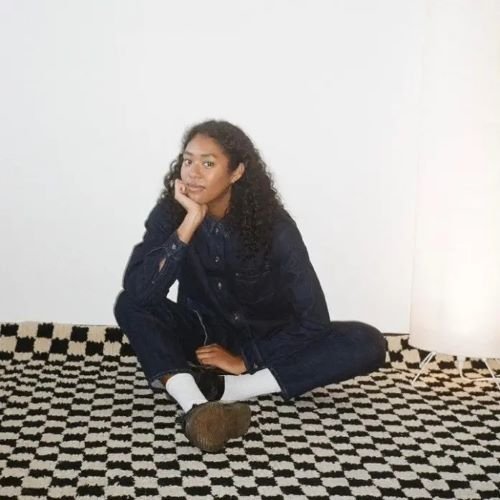
with the amazing Kaleah Lee. This is a Canadian artist who I am new to. I am keen to know more about. I think that this year is going to be a very busy year for her. Late last year, Pitch Perfect PR shared some biography about this wonderful artist. Someone who I hope gets to tour in the U.K. and bring her music over here:
“Vancouver-based artist Kaleah Lee shares “Where’d The Time Go?,” her first new single from a forthcoming project out next year. Hushed and organic, it’s an intimate glimpse at her artistic prowess that extends from poetic field recordings to tender folk. Written and produced by Lee herself, “Where’d The Time Go?” began as a poem which she then set to an intricate guitar-picking pattern. “Noticed the hollowing out of your cheeks // How you’ve grown up to desire nights quiet and meek,” Kaleah sings. “How you welcome the tears // How did you switch to tea?”
“I initially wrote ‘Where’d The Time Go?’ when I had a few moments to myself on my birthday this year,” says Kaleah. “For me, birthdays are a strange and bittersweet thing, being a day when the reality of getting older is scarily magnified. The song is a sort of meditation on not only being hit with the fact that I’m getting older, but also that my parents and loved ones are getting older too. Time is so, so precious, and all the change that comes with each passing year seems to become more and more obvious, whether I want it to or not. ‘Where’d The Time Go?’ feels like a time capsule for me, and I know that I’ll appreciate looking back at it being such a candid and specific representation of how I felt on that day.”
Raised in suburban Vancouver, Kaleah began playing music at her church, eventually focusing on piano and guitar as she got older. She wrote her first original music in 2020, and was encouraged by her sister to release it. Kaleah started turning heads with her original songs on TikTok, amassing over 20 million views, 85k followers, and receiving the attention of Taylor Swift, Bon Iver, Maggie Rogers, Gracie Abrams, and more. That buzz turned into high demand for more new music; Kaleah responded in 2022 with a string of singles, including her debut, “Heavy Handed,” resulting in over 4 million streams, playlist covers on Spotify’s coveted “Fresh Finds” and Tidal’s “Rising,” and spots in Spotify’s “Fresh Finds Class of 2022” and Tidal’s “Rising Best of 2022”.
At the start of last year, Lyrical Lemonade spent some time getting to know better Kaleah Lee. At that point, Out of Body was her new single. One of her best to that point. With so many interesting and talented rising artists round, it can be easy missing some of them. Make sure Kaleah Lee is someone you check out and investigate right away:
“Sam: I love that. Okay, so you were born and raised around Vancouver right? What was it like growing up there?
Kaleah: Yeah, so I live technically not in Downtown Vancouver, I live in the suburbs like 20 minutes away. It’s really quiet here, sort of in the middle of nowhere and a little removed from a lot of action, but it’s nice; very quiet and lots of nature, so that’s been a very nice thing to grow up around. The actual city though, I really enjoy spending time there. I’m not sure if it’s because it’s much different from where I am normally, but I love it. There are a lot of different things to do…A lot of demographics of people, so it’s always interesting. A lot of different food and experiences.
Sam: When it comes to your family in Canada, did you grow up in a musical home? Did anyone sing or play instruments?
Kaleah: Not really, no. Most of my family were athletes. That’s what I did most of my life too, but I have an uncle who is a musician, but I wasn’t around that growing up. Half of my family is filipino and they love music so much, but it was never anything that was super serious; and actually, no one knew that I could sing until maybe a few years ago, but yeah I grew up with instruments though. I played the piano which I would play by ear, so my parents got me lessons…But overall, music wasn’t anything that anyone took very seriously.
Sam: Okay, so with that, what is your creative process like? How do you take an idea and turn it into a full fledged song so seamlessly?
Kaleah: It’s very strange. Sorry that’s a word I use a lot and it’s so hard to explain it, because it’s never the same I would say. Sometimes I have the notes app or my journal and I’ll just write random things or if I think of a line, I’ll jot it down to revisit later; or sometimes it’s like a zone I’ll get into, but I’ll just be playing chords and start writing simultaneously whatever I feel and whatever comes to mind, but yeah, it’s always different every time. It is mostly very emotional and feelings based for the most part. Maybe I’ll re-read a journal entry and try to make something out of it. But at the same time, it’s not always me trying to make something…It kind of just happens.
Sam: You’re amazing. Talking to you really shines a light on why your music is so good. I’m so Inspired by you…Okay, final question. It’s almost the end of the first month of the year. What are you excited about and looking forward to in 2023?
Kaleah: I’m excited to just keep doing what I’m doing and see how it can progress and grow. Interacting with people has been really cool. People have been making little group chats and adding me to them and I just get to see the community that’s forming and that’s been really cool to watch, so I’m excited to be able to watch that grow and see how I can be more a part of the people who are listening to me”.
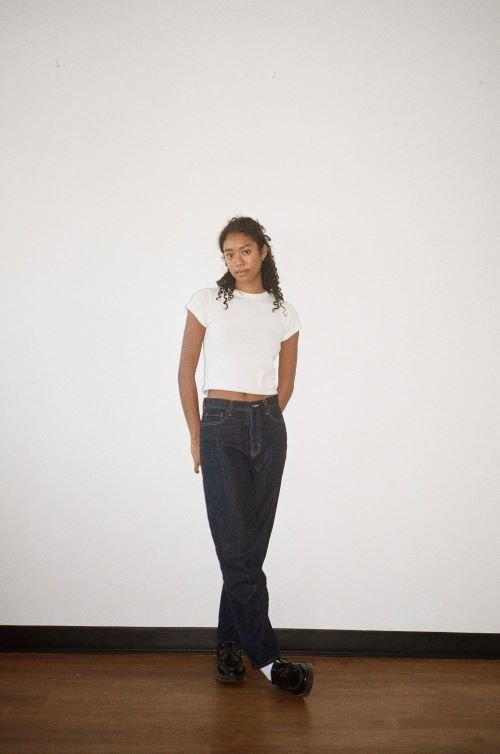
Prior to moving to a current feature around Kaleah Lee, there is another interview from last year that I am keen to get to. No Multiple Faces spent some time with an artist they were very fond on. Someone baring her soul and connecting with an online audience. Even though I have just discovered her music, I am now truly a fan of this wonderful artist. I know that we will get a lot of awesome new music from Kaleah Lee this year:
“Ahead of the release of her new single ‘All At Once’ on March 29th, and on the back of her last single ‘Out of Body’, I spoke with Kaleah about her music, the community that she has built online, and her role as a rising star in the music industry.
With a proven talent to draw people towards her and her artistry, I asked Kaleah:
The community that you have built on social media has played a big role in your journey in music so far, and you seem to really facilitate this sense of belonging and community amongst your fans. Do you find there to be a certain type of person that gravitates towards you and your music?
The community that’s forming has been one of the most rewarding parts of all of this. This is interesting because it’s something that I’ve thought of a lot and noticed myself! I’m not sure I’d say there's a specific type of person that gravitates toward my music. They vary so much in age and whatnot, but they do all seem to share the commonality that the music resonates in some way. It’s like talking to different versions of myself at different stages and walks of life which sounds crazy, but it’s made me feel so much less alone and hopefully them too. I think that collective understanding and connection is a big part of why there's a community in the first place. They've all been so supportive and so special in their own way!
What is the storytelling process that you take through your music?
Most, if not all of what I write is based on an experience or feeling that I’ve had, and it’s a way that I cope with literally anything. I’d say the storytelling process I take is a cathartic one. It can start with a thought or emotion I’m experiencing at that current moment, revisiting a journal entry, playing around with a chord progression, or all three at the same time. Usually, when I’m at the point of making anything a song, the “story” has been fleshed out somehow, most likely written in my journal or just something that’s happened that has been living in the back of my mind, so connecting it to music is like the last piece. I try to express the experiences I’ve had as candidly and acutely as possible.
Social media likes to box people into certain aesthetics (soft girl, sad girl, etc...). Do you feel this, and is there any inclination in you to lean into any box to appease the categorization features of internet culture?
I’m aware that these aesthetics exist, but I wouldn’t say that I personally try to pursue any particular one. I make what I feel is right for me to make and if someone feels the need to fit it somewhere, maybe to help them identify how the music makes them feel or if it’s how they express their connection to the music, that’s great! But I also think that if it’s taken too seriously, being limited to creating on one plane of space can be restricting to the growth of an artist or person in general. It’s definitely not a goal or really even an interest of mine to be placed in any one particular place at all or to place others in one particular place at all. It’s important to make what you want to make!”
Where do you draw the majority of your inspiration from? And what is the source of inspiration that people may be surprised by?
The majority of my inspiration comes from my personal experiences. I use writing to express the things I feel because it seems to be the only way I’m able to articulate myself exactly how I want to…I’m terrible at talking about how I feel hahaha. I’m not sure if this is surprising, but I also get a lot of inspiration from nature and its interconnectedness and how everything I experience seems to be intertwined with it or can be represented through it.
Is there something specific that you'd like to represent or stand for as a rising star in the music world? Personal or on a wider scale.
I feel like there are so many things I could say but something I stand for, and I’m choosing this one because it has become important to me now more than ever, is taking care of yourself. Especially on an emotional level. I’ve recently come to terms with the fact that I can’t fully be the person I’d like to be for others until I find ways to get help for myself first! It can feel daunting to reach out for help, and might even feel weird to do things for yourself, but it's scary how easy it can be to neglect your own needs with others in mind. Having a healthy relationship with yourself first is so, so important not only for you but for the people in your life that you love as well”.
It has been quite a ride for Kaleah lee so far. Her cover versions are amazing. Whether interpreting boygenius, SZA, Taylor Swift or Billy Joel, the stripped back and affectionate versions have done won a lot of attention and love online. Music is definitely her calling. After studying Interior Design at college and then dripping out during COVID-19 when everything went online, Kaleah Lee has not looked back. The Line of Best Fit recently spoke with an artist whose music is very lyric-driven. Someone who grew up on the music of artists like Bon Iver and Lorde, it is no wonder that her own music has that same sort of attention to words. A debut E.P. is due later this year. Rotting Fruit is the first taste of it. After taking herself out of college, things have been pretty busy for the Canadian artist:
“Since then, Lee has toured with Leith Ross across the West Coast, from Canada to LA. “That was huge for me, playing shows in general,” she tells me. “I think that's the one thing I was really scared of and I'm sort of still nervous when I do it, but getting kind of thrown into that, where I had to do it for a few nights was a great way for me to get out of my shell in that way. And it also just helped me feel more comfortable to share what I'm making with a direct audience.”
It’s certainly a jump from performing at home: “I only just play in my room for the most part, and that's super comforting,” she says. “So to be able to kind of pivot and do that elsewhere feels comforting as well. But, yeah, I think the start of making music too, I was really scared to add production to stuff because I was just so used to how stripped down acoustic stuff was, and it was comforting. I think it's just always been a safe space for me.”
Even her music videos reflect the safe space that home represents for her.. Snippets of rivers and rocks and tree roots appear as she wanders through the vast expanse in the visual for “All at Once.”
“I'm very affected by my environment and I guess a lot of the things I write about are more personal topics and more emotional-based things. So that's honestly directly influenced by my surroundings,” she explains. “So definitely the rain and all of that is a huge thing. Just as a person, too, kind of the same thing. I’m very influenced by what I'm around.” It's no surprise that this carries through in her writing to today given that she is still in Vancouver, hometown based and adjacent to the elements that offer so much solace.

The likes of Swift and Cyrus continue to influence Lee and have laid the foundation for her own songs, where she’s making space for the emotions of young women and validating them in her own self-expression, ushering in fresh lyricism that comes from her own vulnerability.
The perspective of her work is rooted in the experiences of her adolescence and what it is to navigate this time in her life as she comes of age. “I would say ‘Rotten Fruit’ is probably one of the most emotionally liberating things I have written,” she tells me. “And it's sort of about as you get older, you start to form your own opinions and your own belief systems, and I think it was weird at first to realise, like an out of body, third person kind of watching yourself thing. It was strange to navigate, but once I was able to sort of surrender to the feelings, like maybe things I believe now don't align with what I used to believe or what I was taught growing up, it became super liberating. That's sort of what the song is about, just navigating those feelings.”
@kaleahvl didnt cry on my bday but i wrote this and idk whats worse
♬ original sound - Kaleah Lee
Even as she builds upon the production in her music and moves away from the purely acoustic sound she has come to be known for, the themes stay constant. “I just always will find some kind of comparison to relate it back to nature. It feels like a safer way for me to express things. Not super directly, but through something that's comfortable.”
She wants to get out of Vancouver soon, but being a product of her environment bodes well for Lee. It’s this perspective and observation that has gotten her this far already. “The nature will always find its way in,” she says”.
If you have not discovered Kaleah Lee, then I would suggest that you do so. She is a tremendous young artist with a bright future. Definitely standing our from her peers, we are going to be hearing a lot more from this amazing artist. I hope that we get to see her in the U.K. From a personally selfish place, it would be good to see her on the stage. I know there is a lot of support for her here. For those searching for an artist that will stick in the mind and they will return to time and time again, then the magnificent Kaleah Lee if for you. She is an artist you will…
NOT want to miss out on.
___________
Follow Kaleah Lee

FEATURE: Lost in Your Light: Dua Lipa: One of Britain’s Most Important Pop Icons
FEATURE:
Lost in Your Light

Dua Lipa: One of Britain’s Most Important Pop Icons
_________
ON 30th January…

PHOTO CREDIT: Michael Bailey-Gates for Rolling Stone
it will be four years since Dua Lipa released the single, Physical. The second to be taken from her as-then-unreleased second studio album, Future Nostalgia, that album came out in March 2020. I know that she is working on a third studio album. One that is almost done. The London-born British-Albanian artist is someone who, I feel, is our most important modern-day Pop icons. If the U.S. has Taylor Swift and Billie Eilih, we have Dua Lipa. I feel that she is out greatest modern Pop artist. Not only an incredible artist, Lipa is a budding actor and a magnificent live performers. One of the best of her generation. A hugely consistent and brilliant songwriter, I will bring in a couple of recent interviews with this modern-day superstar. Alongside the queens of modern music – including Lana Del Rey and Megan Thee Stallion -, there is no denying that Dua Lipa is an all-time great! Someone who will go down in the history books. In terms of her sound and influence. She is someone already inspiring emerging artists. At twenty-eight, we are going to see her in the industry for many years to come. There is a lot of excitement around a third album. Also, as they have yet to declare their headliners, many wonder whether Dua Lipa will be one of the three headliners who will take to Glastonbury’s Pyramid Stage later in the year. Maybe her, Little Simz and a male band will be the three names.
There are a couple of interviews that I want to bring in. Giving an insight into the creative and personal mind of Dua Lipa, I think that they go into detail as to why she is so compelling and acclaimed. In my mind, she is a modern-day Pop giant who does not get as much credit and spotlight as other artists. A queen of music, she is also someone wrestling with the public’s perception of her. In terms of who a modern-day Pop artist, do people want them to be smart and political? Perhaps something that is applied to women in a rather patronising and sexist way, should modern artists stick to music and not aspire and ideas beyond that?! This BBC article reports how Dua Lipa has reacted to a certain perception of her:
“Dua Lipa is one of the world's biggest pop stars, but the singer has voiced her frustration with the public's perception of her.
"I don't know if people believe that I like to read books," she said. "They don't want you to be political. They don't want you to be smart. There is so much more to me than just what I do."
Since her breakout single New Rules in 2017, the British-Albanian singer has launched a book club, a lifestyle newsletter and an international music festival in Pristina, Kosovo.
She has also made headlines for her political views - criticising the UK government's stance on immigration and calling for a ceasefire in Gaza.
Speaking in a new interview with Rolling Stone, she said her worldview had been shaped by her parents' experience of fleeing the Kosovo war in the late 1990s.
"My existence is kind of political, the fact that I lived in London because my parents left from the war," she said.
"I feel for people who have to leave their home. From my experience of being in Kosovo and understanding what war does, no-one really wants to leave their home.
"They do it for protection, to save their family, to look after the people around them, that kind of thing, for a better life. So I feel close to it."

PHOTO CREDIT: EPA
The star said she saw parallels between what her parents went through and the situation Palestinians currently find themselves in, which prompted her to sign a petition calling for a ceasefire.
However, she was also critical of the atrocities carried out by Hamas during their deadly attack on Israel last October.
"I don't condone what Hamas is doing," she said. "I feel so bad for every Israeli life lost and what happened on 7 October.
"At the moment, what we have to look at is how many lives have been lost in Gaza, and the innocent civilians, and the lives that are just being lost.
"There are just not enough world leaders that are taking a stand and speaking up about the humanitarian crisis that's happening, the humanitarian ceasefire that has to happen."
'I won't spill my guts'
While the star has been vocal about her political views, she is less forthcoming about her personal life.
"I think I'm British," she told Rolling Stone, by way of explanation.
"I don't think I'm here to spill my guts on a talk show because it's going to be good for a news cycle or getting attention.
"As much as people think they know the people they support, I actually don't think they know anything about them anyway."
She was more keen to discuss her third album, which due for release later this year.
The record will be the follow-up to her Brit Award-winning disco odyssey Future Nostalgia.
The singer promised a change of direction, with Rolling Stone describing the album as a "psychedelic-pop-infused tribute to UK rave culture", inspired by bands like Primal Scream and Massive Attack.
"This record feels a bit more raw," she said.
"I want to capture the essence of youth and freedom and having fun and just letting things happen, whether it's good or bad. You can't change it. You just have to roll with the punches of whatever's happening in your life."
It will be the star's first record since splitting with TaP Management, who discovered and developed her as an artist.
She said legal agreements meant she "couldn't talk much" about the separation, but confirmed she had bought back the publishing rights to her biggest hits, and cautioned young musicians to educate themselves on the the business side of the music industry.
"Pay attention early on... I don't think enough people tell young artists that," she said.
"Everything feels so exciting in the beginning, and of course it is, but it's good to have the knowledge, and good to take care of yourself."
The star will next be seen at the Grammy Awards on 5 February, where she will perform alongside acts like Billie Eilish and Olivia Rodrigo.
She is one of the nominees for song of the year, thanks to her Barbie song Dance The Night. The tune could also pick up an Oscar nomination when the shortlists are revealed on 23 January”.
Tomorrow (23rd January) could indeed she Dua Lipa Oscar-nominated. I also think that she will be a festival headliner this summer. A third album due soon, this is a moment when Dua Lipa ascends to new heights. A supreme talent, she is also someone who holds a lot of influence and importance. I think that there are sections of the public and media who may balk at her political side. Maybe not pay as much notice to her book club and other projects. She should not be deterred. It is these various sides and assets that makes her such an amazing and rounded artist. Touching lives around the world, I do hope Lipa is not disheartened. This year is shaping up to be one of most successful and important. Rolling Stone featured Dua Lipa earlier this month. Discussing, among other things, influences on her third album, her dating life and acting projects, it is a deep dive into an artist who is one of the most astonishing in the world. And someone I feel is still underrated:
“She’s slightly jet-lagged, having landed from London a few days earlier. Two days before her flight, she released her new single, “Houdini,” a neo-psychedelic dance-floor rager. The next morning, Grammy nominations were announced, and she found out her Barbie hit, “Dance the Night,” was up for two awards, including Song of the Year. “I didn’t even know they were coming out that day!” she says. She celebrated by going to her friend’s DJ set, and admits she was kind of hungover for her flight.
But in between such big moments and celebrations, Lipa has been figuring out a lot about herself. Her highly anticipated third album is due later this year, and it captures a period of major changes in her life, including the end of a relationship and her forays into dating. She also parted ways with the management firm that represented her for a decade and bought back the rights to her music. Beyond that, she’s been planting seeds and piling up projects that include her Service95 newsletter, movie roles, and a production company, plotting out exactly what she wants to do in the future.
“I’m being thrown into learning lessons of resilience,” she says, “lessons of maybe not having to be so strong all the time and being OK with that.” She searches for the words a bit. “I don’t know.… I’m learning so much about myself.”

PHOTO CREDIT: Michael Bailey-Gates
Lipa may have already been more resilient than she realized. Look no further than her origin story: At 15, she famously persuaded her family to let her leave Kosovo and moved back to London, where she was born, completely alone. She finished school, passed her A-levels, and began waiting tables and modeling while seeking out a team and label to get her music career off the ground. Before she turned 20, she was signed.
In the years leading up to and following the release of her 2017 self-titled debut, Lipa hustled in the studio and on the road, playing festivals and opening for Troye Sivan, Bruno Mars, and Coldplay. The work paid off with hits like “New Rules” and a Best New Artist Grammy Award. Then, in 2020, her hyper-glam disco revival Future Nostalgia became a pandemic blockbuster that climbed the charts and launched her into main-pop-girl territory.
The album was a rebel yell for Lipa. It became an unlikely soundtrack for millions of people during lockdown, and made disco a ubiquitous trend in pop for the next few years. And with her warm, soulful voice, mixed with her undeniable self-assuredness, Lipa became the pop diva ready to meet an uncertain moment.
While she’s one of the most-streamed artists in the world, she’s also your favorite rock star’s favorite pop star: When Elton John isn’t calling her up for lavish dinners, Mick Jagger is busting a move with her at his Christmas party. “We had a full dance party, dancing with Mick Jagger in his living room,” she says, laughing. She breaks into a light impression of Jagger: “He’s like, ‘All right, babe! Let’s go, darling!’”
Last summer, Trent Reznor said that he found “Levitating” so “well-crafted” it made him tear up. (“That was too, too cool,” Lipa says, smiling widely.) Recently, for her Service95 book club, Lipa spoke to Patti Smith, one of her heroes. Smith shared that she had seen a picture of Lipa in a chain-mail dress at the Barbie premiere and instantly thought of Joan of Arc. “Sometimes when I’m talking about things like this, I’m like, ‘It feels weird that I am even talking about myself,’” Lipa says.

PHOTO CREDIT: Michael Bailey-Gates
Lipa is everywhere, but many critics feel they have barely cracked the surface of who she is. She slipped so easily between genres that her sound, and personality, came off as inscrutable earlier in her career. Glimpses into her life outside of the spotlight would come in frequent but well-curated waves on her Instagram, the only social platform she runs herself. For her, music is a job — and her personal life remains just that. “I like to just live my life, do my photo dump, write my songs, and dip,” she explains. “I’m not interested in trying to be controversial or do something for a reaction.”
Her poise and disinterest in drama often leads people to cast her as a guarded, too-perfect pop bot. Jokes and criticism that she’s not trying hard enough, not giving enough, have hurt her. In the middle of all this self-discovery, Lipa’s been figuring out how to create more distance from the noise around her.
The truth is, you can’t be as ambitious and precise as Lipa is without giving a fuck. “I really care about how the fans respond,” she says. (After “Houdini” was released, she was frustrated that people said it still sounded “disco” when none of her influences come from there.)
“I’d be lying if I said I didn’t care about what the critics thought.… When you put your heart and soul into something, you want people collectively to be like, ‘Oh, it’s changed sonically, and it’s been something different.’”
She’s noticed a pattern with all of her singles so far, how they don’t start at the top and “gradually grow” over time. “They take so long and never get to Number One, but they stay around for a long time,” she says. There’s no irritation or anger in her voice when she says this; while a Number One in the U.S. would be nice, the longevity feels like a hard-earned win.
“As long as the songs stick around and people are listening to them, I’m cool with that,” she says.
When it’s time to leave, London is a darker shade of gray. Lipa walks me to the door, holding open my jacket for me to stick my arms into. She tells me about her dinner plans at BRAT, a Michelin-star restaurant in Shoreditch where she’s meeting up with a primary-school friend. After she recommends the negroni at the restaurant where I’m heading to meet friends, the gates close behind me. Like she promised, the negroni is delicious.
LIPA CAN TRACE her meticulous nature back to when she was a child. As a kid, she ran a blog called Dua Daily, a Service95 prototype where she would share her style tips and recipes. And as the oldest of three, she’s taken her job as a big sister as seriously as she has taken her gigs as both tastemaker and pop superstar. Her siblings were in school when Lipa’s career started taking off, and are now forging their own paths; her sister wants to be an actress, while her brother is producing music.
“It’s cool to just see them have their goals,” she says, grinning proudly. “I’d be like, ‘Oh, you guys want to come over?’ And they’re like, ‘Oh, no, I’m busy. I’ve got a studio session.’” Lipa sees their parents, Anesa and Dukagjin, as her blueprint: Anesa had been studying to be a lawyer and Dukagjin was both a musician and a dentist in Kosovo before they fled their homes in the early Nineties when the Bosnian war broke out. The couple completely started over in the U.K., where their three kids were born”.
I am going to end with an essential and career-spanning Dua Lipa playlist. I feel it was a moment when I needed to salute a modern great. Maybe not only one of Britain’s greatest-ever Pop artists. In a modern landscape where incredible women like Taylor Swift and Lana Del Rey have such success and this gigantic fanbase, I think Dua Lipa stands alongside them. I can see Lipa in more films and T.V. projects in years to come. A third studio album that will get great acclaim and will be award-nominated. She is likely to be Oscar-nominated for her Barbie song, Dance the Night. I have a feeling there will be some Glastonbury news. In any case, there are few as compelling and important as Dua Lipa. This is an immense talent that we should hold…
CLOSE to our hearts.
FEATURE: The Digital Mixtape: Songs That Start with the Chorus
FEATURE:
The Digital Mixtape

PHOTO CREDIT: Diana Onfilm/Pexels
Songs That Start with the Chorus
_________
MOST songs have a broadly…

PHOTO CREDIT: Matthias Groeneveld/Pexels
similar construction. They start with a verse or prelude. The chorus kicks in after the first or second verse. Occasionally, songs will have no chorus at all. Though this is quite rare. For the most part, you get a few verses and one or two choruses. I am interested in songs that go straight into the chorus. It is quite a gamble. Getting the most catchy part of the song there up top! It is interesting when an artist decides to do that. You get it in some songs these days, though most artists leave the chorus for a little bit. I wanted to look at some great songs through the years that start with the chorus. From The Beatles’ classics through to some more contemporary examples, there are some wonderful songs that start off with the chorus. I think more artists should do this. Below are phenomenal tracks that kick right off with…

PHOTO CREDIT: Dennis_icap/Pexels
AN amazing chorus!
FEATURE: The Woman with the Child in Her Eyes: Kate Bush’s February 1979
FEATURE:
The Woman with the Child in Her Eyes

IN THIS PHOTO: Kate Bush in 1979/PHOTO CREDIT: Mirrorpix
Kate Bush’s February 1979
_________
MOVING slightly on…

from a feature I published in November, I wanted to look back almost forty-five years ago to Kate Bush’s February 1979. I know I have spent a fair time in this period. In future features, I am going to look into Kate Bush’s more recent albums and years. Maybe a tip to 2011. It is a good year to revisit, as this was when she released her latest album, 50 Words for Snow. There are some events and moments from 1979 that caught my eye and compelled me to put finger to keyboard. Thanks to this website for the fascinating and crucial timeline around Kate Bush and the important moments that are worth considering. February 1979 was a particularly important time. Not too long before she would start The Tour of Life (2nd April would be the first date), it was a moment between her second studio album, Lionheart, being released and its promotion finished. That album came out in November 1978, though Bush would release Wow in March 1979. I will do an anniversary feature around that next month. I will drop in what happened in Kate Bush’s career in February 1979. Aged twenty, she had already packed so much in. 1979 was a year of completing promotion of her second album and being immersed in The Tour of Life:
“February, 1979
Kate records the song The Magician (music by Maurice Jarre, lyrics by Paul Webster) for the film The Magician of Lublin. [The song has never been released, and is virtually inaudible in the film--a shameful waste of talent.]
Penny Allan, a women's-column feminist for The Guardian, lambasts Kate for "cultivating a childlike voice and encouraging her audience to act like voyeurs."
February 17, 1979
The Man With the Child in His Eyes enters the U.S. Billboard Hot One Hundred, the first of Kate's singles so to do. It remains there for four weeks, peaking at number 85.

There is a bit to focus on from the first half of February 1979. I know that Kate Bush recorded songs for films and there were quite a few collaborations. I was not aware that she had recorded for The Magician of Lublin. It was an early case of people spotting the talent and potential of Kate Bush and how her voice and music translates to the screen. It is a shame that, as fans look for some unheard material or rarities, that we cannot get a cleaned up and usable version of The Magician. I hope that it does see the light someday! She would have been quite picky about what requests she accepted and how she spent time away from her own music. To give you an insight into some of the critical perception of Kate Bush, she was being called out as irresponsible. Faking a child’s voice or maybe doing it on purpose. The fact that her voice was high and quite angelic does not mean she was being child-like. A single like Wow is very powerful and mature. Maybe thinking back Wuthering Heights, there were some who felt that Kate Bush was weird or irresponsible. I am not sure what Bush would have to gain from being child-like or putting on this act. Suggesting that she was employing some odd form of allure or sexuality, Kate Bush constantly had to read and react to critics labelling her. This idea that they had. All artist face criticism and misrepresentation at various points or their career though, for Kate Bush, she faced this for years. In 1978 and 1979, having established herself and not having to prove anything, there was all of this insult and sexism. Even female critics besmirching her!
In the U.S., on 17th January, The Man with the Child in His Eyes makes a small dent on the charts. Wuthering Heights went largely unnoticed. Perhaps more accessible and less eccentric, perhaps U.S. audiences could relate more to The Man with the Child in His Eyes. For a woman who was accused of being a child, it is quite odd that a song with that word in the title – Bush wrote it about how men seemingly have this child-like ‘quality’ in them always – was in the charts. She could not really win either way. Writing mature and extraordinary music, there was this stream of criticism and judgment from critics. It would take until 1985 – and Hounds of Love – for most to fully embrace Kate Bush. Even then, there was still some in the U.S. press who were dubious. There are two more February dates from 1979 that are worthy of highlight. I am particularly interested in 1978 and 1979, as this was the start of Kate Bush’s career. Even though her earliest recordings of her at home in Kent, she seemed to get further and further away – in terms of geography and ambition/scale – very shortly afterwards. It must have been quite disorientating! Unlike some artists of the time, Kate Bush’s promotion was very standout and unusual. Not the routine and dull mimed performances, you could always tell a Kate Bush performance!

IN THIS PHOTO: Kate Bush was photographed in 1979 at the Rose d'Or music festival in Montreux, Switzerland/PHOTO CREDIT: Dany Gignoux
I say this because, on 18th February, Bush was very busy on her travels. The Tour of Life would take her across Europe in the spring/summer. A couple of months previous, she was still promoting Lionheart and having to balance this with preparation and set-up for her only tour:
February 18, 1979
Kate travels to Leysin [Lausanne?], Switzerland, to take part in a mammoth European television co-production. The results are carved up into three television shows, and it is planned that Kate will appear in two. For the first, an Easter Abba Special, she records a routine for Wow. At the rehearsals the cameramen and journalists break into spontaneous applause, and the press coverage verges on the hysterical. For the second programme, a Christmas programme to be called The Winter Snowtime Special, she records a version of Wuthering Heights barefoot in the snow of the Swiss Alps. [The latter film was never aired, though photos appeared in the U.K. press.]
On her return to Britain Kate goes into Air Studios in London with Jon Kelly, the engineer on The Kick Inside and Lionheart, to determine the possibilities of working as a co-production team on Kate's next album. [This statement implies that some music was recorded at this time, but if so it has never been identified.]
The video for Wow, the next single, is made at Wilton's Music Hall in East London, directed by Keef MacMillan.
Again, there is quite a lot to unpick and unpack! The amount of travel Bush had done to this point was immense! Another country to tick off of the list, I am not sure how much of a fanbase there was in Switzerland. I am not sure how Bush’s music performed in Switzerland. It is not a nation one would associate with dedicated and significant fandom! Regardless, the fact that there was this reaction and reception that was very warm means that her music was resonating. I would have loved to have been at that ABBA special where she was preparing to perform Wow. The fact that it was pretty cold in Switzerland that time of year would have been draining for her. Regardless, she did undertake this big promotional jaunt there. I wonder what the legacy was and whether it increased her sales in the country. I guess it would have made a difference in some way! The fact that there was a recording of Bush in the snow singing Wuthering Heights is one of those lost treasures. I would love to think that everything assumed missing is found and shared in years to come. Crucial bits of archive that shows just how madly busy and varied her first couple of years in music were!
Coming back from Switzerland, she would head off to make the video for Wow. The second single from Lionheart, Bush’s song about showbusiness, the music industry and actors would see her soon take to the stage. Almost an actor herself in this giant production: the majestic and magical The Tour of Life. The end of February 1979 was Kate Bush back in the U.K. and an interesting event:
February 27, 1979
Kate takes part in BBC Radio 1's first-ever phone-in programme, Personal Call, answering listeners' calls for 60 minutes and jamming the Broadcasting House switchboards”.
She did some of this through her career. Bush appeared on Multi-Coloured Swap Shop with Noel Edmonds on 20th January, 1979. Five weeks or so later, she was doing another similar thing. Taking calls from the public. Maybe a nice and easy way to promote her music without answering the same journalist questions, it was nice that there was definite variety in her life. Bush must have been exhausted by the end of February 1979. Eyeing up her first tour, there was not a great deal of relaxation and downtime between this point and April. She was promoting Lionheart, travelling around and doing the odd bit here and there, at the same time as putting the finishing touches on her tour. It is amazing to think that she put it all together when she was still solidly promoting her music. Not a dedicated time to just focus on the tour alone. If people think that artists like Taylor Swift balanced a lot and straddle the globe, one can look back forty-five years ago and the sort of itinerary that Kate Bush had! March 1979 was about final rehearsals and late stages of The Tour of Life preparation, plus promotion and the release of Wow. The daunting task of a single coming out a month before your first tour. It was mad! This is why I wanted to flip back forty-five years and look at Kate Bush’s…
HECTIC but memorable February 1979.
FEATURE: Another Year with The Trouble Club… Why It Is More Important Now Than Ever Being a Member
FEATURE:
Another Year with The Trouble Club…

IN THIS PHOTO: Emma-Louise Boynton will speak for The Trouble Club at AllBright on 15th February
Why It Is More Important Now Than Ever Being a Member
_________
I will come to some housekeeping…

IN THIS PHOTO: Crystal Hefner will appear alongside Pandora Sykes at Soho’s Century Club on 9th February/PHOTO CREDIT: Amy Harrity for The New York Times
in a minute about The Trouble Club. I will start by saying that, this year, it is my first full year with The Trouble Club. I joined and, after the first event I attended, I was compelled to go to as many as possible! This year is one where I will be as engaged as possible. I shall explain why. The last feature I wrote on The Trouble Club was back at the start of December. I am going to bring things up to date and then look forward to events announced for this year so far that have not already happened. I would advise people to check out The Trouble Club. Director Eleanor Newton is someone who I have a tonne of respect for. Someone responsible for bringing all the great events together, she also speaks to/interviews most of the guests who appear at Trouble Club events. Always incredible welcoming of new members and everyone who attends events, she has so much love and passion for what she does. Alongside Francesca Edmondson, Marketing and Events Coordinator at The Trouble Club, you have this very close and powerful pair who ensure that some incredibly diverse and fascinating women are brought to a range of venues across London. That is something I will nod to. I know that The Trouble Club is expending to Manchester. I am not sure when the first event will be. As it has been purely London-based until now, it is going to branch out and host some events from there. That will give access to those who are based further north who are unable to travel down to London. The expansion of this incredible and growing empire. You can follow The Trouble Club on Instagram, Twitter and TikTok. There is also the YouTube channel, and a podcast.
I shall move on now. On a personal level, the past couple of months have been very rough. Being made redundant from my job, I am not looking around. The Trouble Club has been very important, in the sense of having this safe space to go to. Something to give me some positivity. In the future, I do hope to join an organisation like The Trouble Club. As a music journalist, I have a huge interest in women’s rights and gender equality. It would be perfect to bring that to a job. Something to aim for. It is the social aspect of being at Trouble Club events that is also so vital. Being able to connect with some incredible members. At some gorgeous venues across the capital, it has been so memorable and a thrill experiencing an array of events since I joined. In the final month of last year, there was a run of incredible events that stood alongside the all-time best. I saw Arit Anderson at The Hearth on 6th December. She was discussing her career in gardening and the book, The Essential Tree Selection Guide: For Climate Resilience, Carbon Storage, Species Diversity and Other Ecosystem Benefits. A beautiful and hefty tome that is a pleasure to read, it was amazing hearing Anderson discuss her journey into gardening, the environment, and the importance of planting trees. Fixing France with Nabila Ramdani happened on 11th December at the sublime and historic The House of St Barnabas. It is especially sad that they have announced they are in the process of winding up and closing. Such an important and wonderful space in Soho, it is going to be a real loss! It was wonderful being there last month and hearing Nabila Ramdani speak about Fixing France: How to Repair a Broken Republic. It was such a compelling and moving event: “Nabila Ramdani is not from the establishment elite: she is a marginalised insider, born and raised in a neglected Paris suburb. With unflinching clarity, she probes the fault lines of her struggling country, exposing the Fifth Republic as an archaic system which emerged from Algeria’s cataclysmic War of Independence”.
@thetroubleclub Trouble’s final event of 2023!!
♬ Keeping Your Head Up - Birdy
I attended three other events before the end of 2023. One of the most inspiring events I attended last year was Trouble In Business: Leaders in Tech. The three panellists: Georgia Stewart - CEO and co-founder of Tumelo, Deirdre O’Neill - Co-Founder and Chief Commercial & Legal Officer at Hertility Health, and Juanita Morgan - Co-Founder and CEO of Value Adders World – discussed what drove them to start their own businesses. Speaking at Dartmouth House, it was hugely eye-opening and inspiring hearing these three amazing women speak about their experiences. Before moving on, here is an interview from last year where Georgia Stewart spoke about her mission with Tumelo:
“Tumelo is an award winning, UK based fintech that empowers pension members and investors to speak up on issues that are important to them. The software enables people to see the companies they have invested in and allows them to say how they would like the company to tackle the issues they care about.
We interviewed Georgia Stewart, co-founder and CEO of Tumelo, to find out more about their ambition, the importance of transparency in financial services, and her views on the challenges facing women in financial services.
What is the long-term plan for Tumelo?
Our vision is that by 2030, every investor will be empowered to use their shareholder rights. 275 million investors hold £54 trillion in workplace pensions and investment products across the UK and the US. Most of their money is invested in funds. As a result, fund managers control majority stakes in the world’s most influential companies. These companies feel untouchable and yet we own them. Our shareholder ownership system is broken. So, our mission at Tumelo is to enable platforms to empower investors, and to enable companies to listen to them.
Are you more focused on B2C, B2B or both?
Both. We’re a B2B2C organisation, and we partner with platforms so that they can distribute our solution to their customers. We are committed to and focused on our partners, with whom we have the commercial relationship, and our end-users who engage and interact directly with our product.
What makes Tumelo’s approach unique? How do you compete against fintechs with similar offerings?
Tumelo’s proposition is unique in the sense that no organisation in the world (that we’re aware of) is engaging end investors and fund investors with shareholder resolutions. We have no direct competitors; however, there are of course other organisations working in similar industries and which share our stakeholders. Ultimately our USP is that we are democratising the investment system, and our partners will be pioneers in this space, giving end investors a voice. In short, we continuously innovate to make sure that we stand out and focus on what makes our solution like no other.

Has transparency become a bigger issue in financial services?
Absolutely. Last year at COP26 The World Economic Forum stated, “To secure all the benefits that ESG policies bring to the economy, environment and society, we need greater transparency and enhanced disclosures”. As “ESG” becomes increasingly popular, investors have started to look into how ethical or sustainable their investments are. It’s no longer sufficient to brand an investment fund as an ‘ESG’ or ‘Green’, and it is now expected that funds’ investments are disclosed, so that investors can feel confident about where their money is ending up.
How have attitudes to investment changed over the last five years? How do you expect them to evolve in the next five?
Investors are now increasingly conscious of ESG, and want to know what their money is doing, where it’s going, and how it can better serve the planet. People are generally investing more, investing earlier in life and engaging more with their investments. Investing is no longer just for men in suits; we see more teenagers and more women are investing actively as well, with investor communities diversifying across all groups of people. The spike of interest in ESG has also encouraged investors to become more aware of the proxy votes/shareholder resolutions being addressed at the companies they’re investing in. In 2021, major votes at Exxon Mobil and Chevron saw investors driving change in the boards of both polluting companies, exciting investors everywhere. In the next five years, we predict more of this, and it will be imperative for all investment platforms to disclose the underlying holdings of their funds. Investors will be better qualified to verify how ethical these investments are, and increasingly base their choices on ESG factors. In the next five years, the number of investors and shareholders taking part in proxy votes will double worldwide and we will generally see a lot more involvement and awareness in the industry as a whole”.
On 14th December, Networking Drinks Evening: Power Hour with Adrienne Adhami provided a pre-Christmas treat. A chance to enjoy some drinks, network and hear Adrienne Adhami speak about Power Hour: How to Focus on Your Goals and Create a Life You Love was amazing. That was held at DIAGEO. Her Power Hour podcast is one I would really recommend. In December, she gave an interview to The Grove:
“HI ADRIENNE, CAN YOU TELL US MORE ABOUT THE POWER HOUR?
Put simply, the Power Hour is all about reclaiming your time. It’s about starting each day with one hour dedicated to yourself. The modern world demands so much of our time and energy. As a result many of us are ‘too busy’ and we feel as though there is never enough time.
I encourage people to start the day by doing something intentional, that could be going for a walk, reading a book, meditation, swimming, writing in a journal etcetera, before the rest of the world wakes up and starts competing for your attention. Not sure where to start? Ask yourself: what is one thing you’d like to do more of if you had more spare time? You’ll be amazed at how much impact this seemingly small act can have. Sure, a single hour is not much, but over time it can become a powerful daily habit that transforms your entire life.
WHAT DOES SELF-CARE LOOK LIKE TO YOU? HOW DO YOU TAKE TIME FOR YOURSELF?
For me, self-care is not about candles and face masks. It’s about learning to prioritise yourself and your needs. The truth is, this is not always an easy thing to do. I understand the challenges of juggling work, raising a family, travelling, and pursuing personal goals too. Self-care means that as well as considering what’s best for everyone else in your life, you stop to consider what’s best for you too. Your work, kids, friends – they all matter, and so do you.

WHAT ADVICE WOULD YOU GIVE TO SOMEONE STRUGGLING TO FIND A SENSE OF PURPOSE AND FULFILMENT IN THEIR LIFE?
I’d say take a break and create some space in your life. Spend some time reflecting on all of the things you’ve done throughout your life – the hobbies, interests, sports etcetera. Which people and places bring you joy? How often do you see those people? How often do you visit those places? The things in your life that spark an emotional response, they are signals worth paying attention to.
CAN YOU SHARE YOUR TOP TIPS ON HOW TO START THE NEW YEAR OFF THE BEST WAY?
At the start of a New Year typically people focus on adding new things to their lives. They vow to start cycling again, start reading more, to take on a new project or hobby. While there’s nothing wrong with any of that, I would encourage you to also consider what you’d like to give up and relinquish. Yes, that’s right. It might not sound very motivational at first, but allow me to explain. The start of a New Year is a great time to do a life audit, to consider which things you’d like to reduce or even remove altogether. Sometimes less is more. For example, maybe you’ve got a shelf full of unread books. Instead of adding more books to that shelf this year, maybe consider donating some of those books instead.
Which other areas of your life could you declutter? How about your schedule? How can you create space for something new? If your goal is to improve your health and increase your energy, the same approach can be helpful. Identify which things typically have a negative impact on your health and wellbeing and where possible try to reduce them as much as possible. For example – less stress, less late nights, less ultra-processed food, less caffeine.
Remember that ‘improvement’ isn’t always about adding more, it can also be about simplification and creating space for what matters most”.
With the weather being so changeable and wintery, it was a great relief and sense of comfort looking ahead to Trouble's Big Night Out: Featuring Caroline Criado Perez & Kelechi Okafor. That took place at Conway Hall. Criado Perez is - among other books -, the author of Invisible Women: Exposing Data Bias in a World Designed for Men:
“Invisible Women shows us how, in a world largely built for and by men, we are systematically ignoring half the population. It exposes the gender data gap - a gap in our knowledge that is at the root of perpetual, systemic discrimination against women, and that has created a pervasive but invisible bias with a profound effect on women's lives.
Award-winning campaigner and writer Caroline Criado-Perez brings together for the first time an impressive range of case studies, stories and new research from across the world that illustrate the hidden ways in which women are forgotten, and the impact this has on their health and well-being”.
You can learn more about the book here. Also at the event was the amazing comic, Bronwyn Sweeney. She was hilarious and this was my first time seeing her perform live. Such an incredible talent! Alongside these two phenomenal women, Kelechi Okafor also spoke. She was absolutely astonishing! Edge of Here: Stories from Near to Now is a book I would recommend people buy:
“Enter a world very close to our own...
One in which technology can allow you to explore an alternate love-life with a stranger.
A world where you can experience the emotions of another person through a chip implanted in your brain.
And one where you can view snippets of a distant relative's life with a little help from your DNA.
But remember: these experiences will not be without consequences . . .
In this stunning debut collection, Kelechi Okafor combines the ancient and the ultramodern to explore tales of contemporary Black womanhood, asking questions about the way we live now and offering a glimpse into our near future. Uplifting, thought-provoking, sometimes chilling, these are tales rooted in the recognisable, but not limited by the boundaries of our current reality-where truth can meet imagination and spirituality in unexpected ways.
Allow yourself to be taken on a journey into worlds that are blazing with possibility, through stories that will lead you right up to the Edge of Here . .”.
Interviews like this give you an insight into the amazing Kelechi Okafor. Caroline Criado Perez is someone I knew about, yet I was at the event to hear more. Seeking out interviews such as this gave me insight and background before going in. All in all, it was a wonderful event to end the year with The Trouble Club! I was so thankful to be at Conway Hall and experience something like that. I think it might be one of their most-attended events so far. It definitely is one where everyone in that space was engrossed from start to finish. For those who were considering becoming a Trouble Club member in 2024, I hope that attending any of these events – or reading about them – were influential in that respect.
@thetroubleclub We’d love to have you! #thetroubleclub #membersclublondon #womenownedbusiness #spaceforwomen ♬ Keeping Your Head Up - Birdy
The final section – apart from me rounding up – is events announced that take place after this date (22nd January). There have already been a few events. I have been to two of the three. Coming into this new year, Let's discuss......the Pope! With Jessica Wärnberg was a great ‘debut’. Back at the glorious The Hearth, Dr. Wärnberg was speaking about her book, City of Echoes. You can buy the book here:
“From a bold new historian comes a vibrant history of Rome as seen through its most influential persona throughout the centuries: the pope.
Rome is a city of echoes, where the voice of the people has chimed and clashed with the words of princes, emperors, and insurgents across the centuries. In this authoritative new history, Jessica Wärnberg tells the story of Rome’s longest standing figurehead and interlocutor—the pope—revealing how his presence over the centuries has transformed the fate of the city of Rome.
Emerging as the anonymous leader of a marginal cult in the humblest quarters of the city, the pope began as the pastor of a maligned and largely foreign flock. Less than 300 years later, he sat enthroned in a lofty, heavily gilt basilica, a religious leader endorsed (and financed) by the emperor himself. Eventually, the Roman pontiff would supplant even the emperors as de facto ruler of Rome and pre-eminent leader of the Christian world. By the nineteenth century, it would take an army to wrest the city from the pontiff’s grip.

As the first-ever account of how the popes’ presence has shaped the history of Rome, City of Echoes not only illuminates the lives of the remarkable (and unremarkable) men who have sat on the throne of Saint Peter, but also reveals the bold and curious actions of the men, women, and children who have shaped the city with them, from antiquity to today. In doing so, the book tells the history of Rome as it has never been told before.
During the course of this fascinating story, City of Echoes also answers a compelling question: how did a man—and institution—whose authority rested on the blood and bones of martyrs defeat emperors, revolutionaries, and fascists to give Rome its most enduring identity?”,
There is also a great and really interesting podcast episode about the book. A subject and area that I had not delved into before – as an atheist -, I was not only really keen to learn more how The Popes’ influence has shaped Rome. Also, being in fantastic company at The Hearth, combined, made it another wonderful event!

IN THIS PHOTO: Christine Coulson
On Thursday (18th January), I was at The Power of Constraint with Novelist Christine Coulson. The first time I had been to The Groucho Club, it was a suitably renowned and epic venue in which to host Christine Coulson! Coulson was discussing the engrossing and hugely original novel, One Woman Show. The Trouble Club’s description (“Can 75 words really capture a moment in time, its details and atmosphere, its character and mood? Christine Coulson’s new, bullet of a novel, One Woman Show, is written almost entirely in 75-word museum wall labels and demonstrates how constraint need not limit storytelling”) has me hooked! Go and order the book and immerse yourself fully:
“Prized, collected, critiqued. One Woman Show revolves around the life of Kitty Whitaker as she is defined by her potential for display and moved from collection to collection through multiple marriages. Christine Coulson, who has written hundreds of exhibition wall labels for the Metropolitan Museum of Art, precisely distils each stage of Kitty's sprawling life into that distinct format, every brief snapshot in time a wry reflection on womanhood, ownership, value and power.
Described with wit, poignancy and humour over the course of the twentieth century, Kitty emerges as an eccentric heroine who disrupts her privileged, porcelain life with both major force and minor transgressions. As human foibles propel each delicately crafted text, Coulson playfully asks: who really gets to tell our stories?”.
This interview from Apollo gives us some revelation and insight from its author. I am now going to seek out the book as, hearing Christine Coulson speak was a really moving experience. That word may seem a little overwrought or misplaced – though it really isn’t at all! It was a captivating eventing being in her presence:
“Can you begin by describing the very distinctive form of the novel?
It’s written almost entirely in museum wall labels, using the Met’s structure for those labels. Almost all museums have what we call the tombstone information – artist, date, medium – and at the Met I always had 75 words for every object. I used that same constraint in this to craft, essentially, a retrospective exhibition of a life, of a distinctly 20th-century, wealthy, not particularly likeable woman, who is treated not unlike a work of art from her earliest age. She is evaluated, critiqued, prized and collected throughout her whole life.
One of the most striking elements is that you’ve found words that are used a lot by people who think about museums, or about art or art history, but that are not part of normal discourse. For example, you use the word ‘deaccessioned’ of Kitty divorcing her second husband. Or there’s a friend who looks down on Kitty for being of ‘lesser provenance’. Did you begin with the arc of the life and then go looking for the words, or did you begin with the words and construct the life?
I first had the idea when I was writing the labels for the new British galleries at the Met. I had this spark of ‘That’s what I want to do, I want to write labels about people, I want to treat human beings like exquisite works of art.’ In my first experiment doing that I just described an old woman standing in the galleries and wrote the first label, which was about this patrician, Park Avenue matron. I had no particular investment in her as a character, it was just a test for myself. I called her Kitty and there she was on the page. Then I challenged myself to write 20 labels about her to see if this form had legs. As I had ideas about what could, would, should happen to Kitty – which was never very linear – the book spread like an ink blot.
The first label that I wrote is almost at the very end of the book – at that point she’s 91 years old – which is a very speech-writery thing to do. I was a speech-writer at the Met for eight years and you very often are writing to an ending. There were times in which words, like the definition of ‘garniture’ at the very beginning of the book, seemed so well-suited for a woman who I was referring to in terms of porcelain and her social group. Then other times I found myself looking back at old Met guidebooks. I would almost go shopping for words. I would find some great entry for a medieval chalice that would drive my thinking about how a label could work. So it worked both ways: the language supported the idea, but the idea was really fuelled by the language.

The form’s very easy to understand once you start reading, but I was surprised by how elastic it is. I wonder if you were surprised, too?
That was the challenge as a writer – as much as I know this voice, I know this form, I know how to do it. But at the same time, I was writing a novel – I need character development, I need plot, I need emotional investment. [The challenge was] to take this notoriously boring form and stretch it to its capacity: can I write a funny label, can I write an emotional label, can I write a sexy label? I often hear that because the book is short, people read it twice. They read it first for plot because it’s very propulsive, you want to know what happens – and then they go back to the beginning and find all the Easter eggs.
It also feels as if you’re playing with art history as well with character and form?
Different people will read it in different ways. Like any author, I’m happy about that. People will pick up on cubist references, which very much speak to this form of storytelling, this idea of a part standing for a whole, about something being seen from multiple perspectives.
Kitty is a fictional character but she represents an East Coast type who, if she doesn’t exist still, definitely has existed. You mention institutions like the Chapin School, Miss Porter’s – and the husband goes to Choate and Yale. Can you talk about her niche in society?
Those touchstones are real. I knew a lot of those women and they’re fantastic. They’re incredibly clever and smart, but the lives they were allowed to lead were very constrained and the options for them were very limited. To some degree, I wanted to write about porcelain, too, so I needed a porcelain life. I loved the idea of porcelain being hard but fragile, something made from fire and easily grouped with other things. With porcelain, it’s very hard to hide any damage. I love the museum term – when something is flawed, we talk about it having ‘condition issues’. Is there anything more human than talking about a person’s condition issues? We all have condition issues”.
I am looking ahead and forward to more great evenings in the company of The Trouble Club. New people I did not see last year are coming. Some regular faces. It is always a great mix. Even though there are not always a lot of men at events - which can be a good thing in some ways -, there are more joining. An inclusive club, I always feel awed being in the presence of the speakers, the audience, Ellie and Francesca, and the incredible photographers at each event. You always go away with memories and having learned something. I was not at Friday Night News Roundup with Carole Walker yesterday (19th January), as I was away at home. The News Roundup nights and any Book Club ones; I hope to get to some of them this year. Coffee mornings and drinks, there is this range of get-togethers that are either casual and a chance to chat with new people, or they might be something that encourages more lively political or literary debate. As there are ten more events to mention before closing this off, I will skim through and be brief (or relatively so!). On Thursday, via Zoom, is The Life Brief with Bonnie Wan. Go and check out her book. “The Life Brief is the essential playbook to unlock what you want in life. This three-step tool, created by globally-renowned Brand Strategist, Bonnie Wan, realigns your path with your dreams—personally, professionally, culturally, and spiritually. Break through the clutter and create a life that is wholly your own”. I might be busy for that event but, as members can watch back to events – they are recorded on the night for those watching via Zoom -, I will check it out, as Bonnie Wan’s book seems like one I need!

IN THIS PHOTO: Bonnie Wan
There are some really interesting and varied events on the schedule for the next few months. I will write another feature around April-time, yet I wanted to cast ahead for those who might not be members/are who are thinking about whether to become more involved. On 30th January, The Great Plant-Based Con with Jayne Buxton takes place at The Ned. I love The Ned! Tackling quite a, perhaps, controversial subject, is excluding meat and dairy from our diets good and saving the planet – or is it harmful and a determent? “Almost every day we are bombarded with the seemingly incontrovertible message that we must reduce our consumption of meat and dairy - or eliminate them from our diets altogether. But what if the pervasive message that the plant-based diet will improve our health and save the planet is misleading - or even false? What if removing animal foods from our diet is a serious threat to human health, and a red herring in the fight against climate change”. Jayne Buxton’s book is one that is well worth reading, whether you are a meat-eater or not. I am pescatarian and thinking of becoming vegetarian. Even though I am never going to eat animals again, it is useful to hear the debate and thoughts around, perhaps, not eliminating dairy and animal product. Definitely something that will get interest and questions from the audience who will be there at The Ned. Prior to coming to another in-person event, and beneficial for those who cannot go to venues in London and see events, there is another Zoom event.

Trouble In Investing with TILLIT Founder & CEO, Felicia Hjertman. You can read more about TILLIT in this interview. It is going to be a really enlightening and fascinating talk that I have booked my ticket for. Here is some more information:
“Everyone thought I was mad for leaving. Nobody ever leaves Baillie Gifford, or chooses to leave a job like that. But I was 32 and I would have rather tried and failed, than to never know whether it would have worked.”
In May 2019, Felicia Hjertman (pictured) left Edinburgh-based asset management firm Baillie Gifford, where she had co-managed the Japanese Smaller Companies OEIC and Shin Nippon Investment Trust, alongside Praveen Kumar. The portfolios, which had a combined AUM of £1.9bn, had significantly outperformed their average peers over her tenure.
“I love small caps and I love Japan; it is such a quirky and special place. I also loved working both on a fund and an investment trust. With the latter, it was an interesting experience working with the board and becoming closer to the retail market,” the Tillit founder and CEO tells Portfolio Adviser.
“But while that was a really interesting and exciting intellectual challenge, I have always had this little fire inside me, this need to build something tangible myself – to create something out of nothing and try to help people in one way or another”.
A big one is coming along on 9th February! Surviving Playboy with Crystal Hefner and Pandora Sykes is happening at Century Club in Soho. I will talk about Pandora Sykes first. Her Substack can be accessed here. Her official website is here. She is a wonderful broadcaster and writer. I would advise anyone to check out her books too. This is an invaluable interview about What Writers Read; a collection of essays from world-famous authors on their favourite books, published in aid of the National Literacy Trust. She is someone I will write about again, as her work is really inspiring! She is going to be speaking with Crystal Hefner. She will be talking about her experiences in the Playboy Mansion, and her marriage to the late Hugh Hefner. Her book, Only Say Good Things: Surviving Playboy and Finding Myself, is out on Thursday. I know the word count already is pretty high for this feature – and I have a bit more to go -, but I wanted to bring in parts of a recent profile from The New York Times:
“Ms. Hefner, 37, said she is still adjusting to life outside the mansion, where she lived for almost a decade and where she “was rewarded for being small.” She’s been trying to shed the conditioning that she endured within its lavish walls. “Coming into power is a work in progress,” she said.
“Only Say Good Things,” which comes out on Jan. 23, is a step toward achieving that power. In the book, Ms. Hefner re-examines her initiation into the Playboy world; details the objectification and misogyny she said she experienced under Mr. Hefner; and mines the trauma that she’s still processing.
“At the time,” she said, “I must’ve been brainwashed or something.”
Ms. Hefner met Mr. Hefner at a 2008 Halloween party at the mansion. The estate offered a glimpse at how the 1 percent lived, she writes in the book, and she wanted to be part of it. Then 21, she was one of many attendees in revealing French maid costumes whom he invited to his bedroom to have group sex as the party wound down.

PHOTO CREDIT: Amy Harrity for The New York Times
She soon learned visits to the mansion often involved a “trip to the bedroom at the end of the night,” she writes in her memoir. Back then, she believed it was worth it.
Mr. Hefner, dressed in a black tuxedo, sitting next to Ms. Hefner, who is wearing an off-white wedding dress and holding a bouquet of flowers. Next to Hefner is a Cavalier King Charles spaniel.
Ms. Hefner moved into the mansion two weeks after the Halloween party, and she started dating Mr. Hefner about two years after they met. (At the time, Mr. Hefner was still married to his second wife, Kimberley Conrad, but the two lived separately.)
As his girlfriend and later as his wife, Ms. Hefner had to routinely maintain her appearance for Mr. Hefner: If she gained any weight, he would tell her to “tone up,” she writes in the book, and if her natural brown hair was showing, he would tell her to make it blonder.
She writes about how she and other girlfriends who lived in the mansion were given a weekly payment of about $1,000 and about how they had a strict curfew that was disguised as a schedule. Breaking it risked Mr. Hefner throwing a fit.
Ms. Hefner said she made several attempts to escape the mansion when she was one of Mr. Hefner’s girlfriends. One time, she succeeded: She told security guards on the property that she needed to buy tampons and went to stay with a friend who lived nearby. But she moved back into the mansion a year later, she said, because she had Stockholm syndrome.
“I just felt like, ‘Oh, this is my destiny. This is where I’m supposed to be,’” she said. “I was 25.”
Ms. Hefner said that she often catered to his desires at the expense of her own because she feared being replaced by someone younger, bubblier, blonder and with “bigger boobs.”
She said those worries were slightly assuaged by their wedding in 2012, when she was 26 and he was 86. (Mr. Hefner’s second marriage, to Ms. Conrad, ended in 2010 after an 11-year separation; his first marriage, to Mildred Williams, whom he met during his college years, ended in a divorce in 1959.)
His union with Ms. Hefner was the kind made for tabloid fodder. Some wrote her off as a “gold digger” and a “dumb blonde,” reducing her to nothing more than another notch in the belt of a man known for dating and marrying younger women.
She didn’t feel comfortable having sex with Mr. Hefner alone, she writes in the book, so she often invited a friend to join them. By 2014, the sex had stopped because of Mr. Hefner’s age and declining health. At home, Ms. Hefner started to become more of a caretaker than a companion: She described herself as “the supportive, loving wife in public” and “the nurse carrying his bedpan at night.”
When he died of cardiac arrest at 91, she at first protected his reputation. She writes about how, before he died, Mr. Hefner made her promise to “only say good things.”

Ms. Hefner’s resolve to keep that promise began fading in 2019, she said, when she started therapy after watching “Leaving Neverland,” the documentary that details sexual-abuse allegations from two men who had long-running relationships with Michael Jackson.
Looking back at their marriage now, Ms. Hefner said, evokes feelings of regret and disgust. She is still learning how to build healthy relationships and break the codependent tendencies she developed during her relationship with Mr. Hefner.
“When I started dating again, that was hard,” she said, “because with Hef, he just wanted me by him all the time.”
It was only recently, she said with a nervous laugh, that she learned the concept of setting boundaries. “I didn’t have any when I was at the mansion,” she said. “If you wanted to be there, you couldn’t have boundaries.”
Ms. Hefner said Mr. Hefner could be emotionally abusive and some of his other former lovers have made similar accusations. In 2015 Holly Madison, a former girlfriend of Mr. Hefner’s, released a memoir in which she recounted the strict rules she needed to follow at the Playboy Mansion and the ensuing mental health issues she experienced. Many Playmates were upset about the book when it came out, Ms. Hefner said, herself included.
But now? “I see it in a completely different way,” she said”.

PHOTO CREDIT: Mathilda Della Torre
There is one other event I want to expand on. I swill be brief as I can with the remainder. On 13th February, Conversations From Calais with Mathilda Della Torre and Hiba Noor takes place at Mortimer House. This is going to be a very stirring and powerful event I am sure! “Conversations From Calais aims to re-humanise those affected by the refugee crisis by using public space to share conversations volunteers have had with migrants met in Calais. It is a way of bearing witness for the thousands of displaced people stuck in Calais and trying to reach the UK, whose voices are so often silenced or ignored”. Conversations from Calais: Sharing Refugee Stories by Mathilda Della Torre is a book I would recommend people check out. Her official website is here. This recent interview with Hiba Noor (Khan) about her debut novel is really interesting. Four more events I will touch on and cover off. First, and another biggie, is A Year In Sex with Emma-Louise Boynton. Emma-Louise Boynton is a writer, broadcaster and founder and host of the award-winning, sell-out live event series and media platform, Sex Talks (taken from 5x15). Coming from AllBright, Boynton is speaking as part of the live event series (and podcast), Sex Talks. I am aware I may be the only man in that audience. Why, you may ask?! Well, for me, as a music journalist who does cover subjects such as sex and femininity through music – media,, videos and songs -, it is going to be useful for several reasons. Check out this interview from Ann Summers; this podcast episode, Release The Tapes: Sex Therapy With Emma-Louise Boynton…and also her features and opinion pieces for The Standard. Again, someone I will write about for a separate feature.
A quick nod to 16th February and Friday Night News Roundup with Anoosh Chakelian from The Prince Regent Marylebone. That looks like it is going to be a very engaging and must-attend event! A few more to cover off. The View From Down Here with Lucy Webster comes from AllBright. Her book, The View from Down Here is one that everyone needs to seek out:
“Women's lives are shaped by sexism and expectations. Disabled people's lives are shaped by ableism and a complete lack of expectations. But what happens when you're subjected to both sets of rules?
This powerful, honest, hilarious and furious memoir from journalist and advocate Lucy Webster looks at life at the intersection; the struggles, the joys and the unseen realities of being a disabled woman. From navigating the worlds of education and work, dating and friendship; to managing care; contemplating motherhood; and learning to accept your body against a pervasive narrative that it is somehow broken and in need of fixing, The View From Down Here shines a light on what it really means to move through the world as a disabled woman”.

IN THIS PHOTO: Lucy Webster
If you’re still not convinced about becoming a member or, if you are one already, attending more events, then I hope that the remaining couple swing the vote. As I say, a ‘Manchester branch’ is planned. That will mean that audiences there can check out some of the amazing events that are coming in the future. Two great social/entertainment nights out are on the calendar. On 22nd February is Trouble Comedy Night! That will be at The Museum of Comedy, here is what you can expect:
“Back by popular demand, it’s another Trouble comedy night! Welcome to a hilarious evening at The Museum of Comedy as comedians from all over the UK come together for an unforgettable night of laughter and, of course, trouble.
All of the acts were finalists in last year's 20th Anniversary Funny Women Awards. Funny Women is the leading non-profit organization empowering women to perform, write and create comedy.
The evening’s lineup:
Blank Peng is a bilingual comedian who was made in China but with reliable high quality. Pro in Mandarin, she started to perform in English from scratch as Communism humour Spokesperson and quickly squeezed into the British comedy circuit like Top Secret, The Comedy Store, Up the Creek, The Glee…
“Performed with a faux innocence, take on the undemocratic, authoritarian, misogynist surveillance state back home.” Chortle
Hannah Platt was a finalist of the BBC New Comedian of the Year Award and recently came 2nd in the Funny Women stage awards. She’s been described as ‘A voice of a new generation’ by The Skinny and a ‘voice with something to say’ by Chortle, never shying away from sensitive topics with brutal honesty and quick, acerbic wit.
She’s written and starred in her own short for BBC Three, written and appeared on BBC Radio 4 and has supported Lou Sanders, Fern Brady and Kiri Pritchard-McClean on tour.
Discovered by Mark Watson on Twitter in 2019, Welsh comic exiled to London, Vix Leyton is a natural storyteller with a keen eye for observation, combining warm, whimsical charm, as well as a PR hustler. You’ve maybe heard of her, you just might not know how. A Funny Women awards stage semi finalist, finalist for the Industry award and named as ‘one to watch’ in 2023.
Her panel show podcast ‘The Comedy Arcade’ is both an audio success and compelling live show, picking up a nomination for Leicester Comedy’s best podcast in 2021 and racking up sell out shows at Edinburgh Fringe two years in a row. Regular MC for pro nights including Red Imp Comedy, Poodle Club and Outside the Box, she is also the promoter of the infamous church gig ‘Have I got pews for you’ and regular legal prosecutor for ‘This is your trial’.
From the bonnie banks of Loch Lomond, Nikola is a Scottish actor/writer who specialises in comedy. She regularly gigs on the London comedy circuit, performing musical comedy and alternative character comedy. Nikola’s comedy films have been screened at several film festivals including London Super Short film festival, Women X film festival, ShortCom film festival, Greenwich film festival and Lit Laughs film festival”.

IN THIS PHOTO: Nikola McMurtrie
Looking ahead to 15th March – and the furthest-away event announced so far – is Trouble's 70s & 80s Disco Party from The Star of Kings, Kings Cross. It is going to be a seriously fun evening:
“Do you love to dance but find nightclubs sticky and crowded. Us too! We're teaming up with Haven’t Stopped Dancing Yet a night out that's been featured everywhere from Stylist and The Guardian to Time Out & the i. It's been described as Mamma Mia meets Saturday Night Fever in a glorious mash up and they are throwing a party just for The Trouble Club.
DJ Dolly Mix (Shoreditch House, Pop Brixton) will be spinning 70 & 80s soul, funk and disco classics, plus there are choreographer-led dance routines to get everyone into the groove. There will also a best outfit competition, so wear something snazzy!”.
I am not sure who else is going to speaking going forward – I have always felt Caitlin Moran would be perfectly suited -, though you know there will be some incredible guests invited to The Trouble Club. I am looking ahead to some great events. Really moved by the ones I have already been to. Having recently lost a job (due to redundancy), The Trouble Club not only provides networking and powerful women sharing stories and incredible thoughts: there is that social aspect and being around like-minded people. It is such a vital source of community and strength. Something that will be strengthened (and even more needed) in the coming weeks. Rather than this being a sales pitch for potential members – though there is some of that in here! -, is another chance to say thanks to Eleanor Newton, Francesca Edmondson…and everyone who has made my time at The Trouble Club so memorable. For various reasons (politics and the economy), things have been pretty rough the past few years. As we are not settled into 2024, we all hope and know that we have…

A much better year ahead.
FEATURE: Saluting the Queens: DJ Paulette
FEATURE:
Saluting the Queens

PHOTO CREDIT: Lee Baxter
DJ Paulette
_________
A definite D.J. queen…

and an all-round legend, I wanted to shine a spotlight on the amazing DJ Paulette. She is someone who has inspired so many other D.J.s. One of the most renowned in the world, she releases the book, Welcome to the Club: The Life and Lessons of a Black Woman DJ, on Tuesday (23rd January). With a foreword by another D.J. legend, Annie Mac, this is a must-read book. I am going to come to interviews with a giant in the music industry. First, and I would suggest people buy this book, is some more details:
“In Welcome to the club, Manchester legend DJ Paulette shares the highs, lows and lessons of a thirty-year music career, with help from some famous friends.
One of the Haçienda’s first female DJs, Paulette has scaled the heights of the music industry, playing to crowds of thousands all around the world, and descended to the lows of being unceremoniously benched by COVID-19, with no chance of furlough and little support from the government. Here she tells her story, offering a remarkable view of the music industry from a Black woman’s perspective. Behind the core values of peace, love, unity and respect, dance music is a world of exclusion, misogyny, racism and classism. But, as Paulette reveals, it is also a space bursting at the seams with powerful women.
Part personal account, part call to arms, Welcome to the club exposes the exclusivity of the music industry while seeking to do justice to the often invisible women who keep the beat going”.
You can follow DJ Paulette on Instagram. Without doubt one of the most important D.J.s ever, it is a timely moment to celebrate her talent and voice. As if you needed more reason to buy a book that should be on everyone’s shelf. One that I am going to get and explore in great detail. The reviews and feedback is incredible:
“'Imagine the DJ is taking notes while everyone in the club is dancing. Welcome to the club is exactly that, notes of a DJ - the irrepressible sunlight of DJ Paulette. A fascinating insight into the music business by a northern Black woman.'
Lemn Sissay, author of My Name Is Why
'Icon. Trailblazer. Activist. Warrior. DJ Paulette has led the way for Black women and women everywhere in a global music industry riddled with racism and misogyny. She has blown apart the myths. This is a magnificent book. A manifesto for our times and a rallying call for the future.'
Maxine Peake, actress and activist
'Paulette continues to light the way for others, building in relevance and significance, wowing crowds, annihilating dancefloors. I would recommend Welcome to the club as an essential read for anyone and everyone. I thoroughly enjoyed it.'
Craig Charles, actor, comedian, DJ, television and radio presenter
'Paulette is someone I've always respected, admired and been inspired by. This book is beautifully written, incisive, dry, witty and real - true Mancunian honesty. What an adventure and a truly fascinating life.'
Rowetta, member of the Happy Mondays
'Paulette is a pioneer, a ground-breaker, a trailblazer and never afraid to hold a mirror up to the world to show that there is still so much more to do. A self-assured shimmy of a book that instantly transports you to the dancefloor and beyond. I love it!'
Arielle Free, BBC Radio 1 presenter
'DJ Paulette's Welcome to the club is a testament to her ability to witness the dancefloor while blending memorable anecdotes that bring new life to the UK underground music scene. More than her fabulous landing in Paris, where she built a new world of listeners around her name and sound, it's the fact that Paulette turns notable moments in her thirty-year career into a close listening experience. There's a musical quality to this book that sounds like what Black women DJs have tried to tell the world - our unique experiences turn any party into a lively classroom. Paulette leaves curious students waiting for the next chapter so they can hear it like a song.'
Lynnée Denise, DJ, writer and interdisciplinary artist
'When I first met Paulette, back in that pivotal space of early 1990s Manchester, I don't think any of us really understood what we were getting out of nightlife beyond raw enjoyment. Now we've had a chance to re-evaluate those codes, to understand how much they meant in forming us as people. This book explains why nightlife matters, beamed in from a vanguard position behind the DJ booth. Paulette understands the philosophy of the nightclub because she was there when it was at its very best.'
Paul Flynn, author of Good As You: 30 Years of Gay Britain
'I arrived in 1990s Manchester, found a place to live and a job then got dragged up, went clubbing and there was DJ Paulette on the decks. She made being an outsider look hot, and I wanted in. Her energy and music were the soundtrack to my queer gender-bending dance floor years. Decades on I still want to be in her club. If music and clubbing played an important part in your life, then so will this book.'
Kate O'Donnell, Artistic Director of Trans Creative
'I now realise the weight of the obstacles and challenges Paulette overcame, her fortitude to compete in male-dominated arenas, the racism she undoubtedly encountered. Her mettle and contribution have clearly opened doors for the diversity and equality we strive for today.'
Simon Dunmore, DJ and Founder of Defected Records & Glitterbox
'With fierce resilience and passion, DJ Paulette's travels through clubland reveal her personal triumphs over life's adversities. A book filled with music and love, positivity and enthusiasm. '
Princess Julia, DJ, model and music writer
'Any list of the pioneers of the Manchester club scene, and the international scene it so heavily influenced, is not complete without the name of DJ Paulette. Ours is a city that celebrates those who challenge elites, break down barriers and open doors for others to walk through. Paulette has done all of those things and more and that is why we are so proud of her.'
Andy Burnham, Mayor of Greater Manchester
'A thrilling ride around the world through the lens of a Black female DJ. Covering the good, the bad and the ugly, DJ Paulette tells it like it is. There are few visible Black female role models in the music industry and DJ Paulette is a passionate advocate for racial, gender and LGBTQ+ equality, but most of all she's a legendary DJ. If you want a fresh, original voice on electronic dance music, culture, politics and more, this is the book for you!'
John Shortell, Head of Equality, Diversity and Inclusion, The Musicians' Union
'A refreshingly honest and positive queer voice. DJ Paulette's memoirs are everything that club culture needs at the moment: Written with warmth and passion, this book continues the trend of female professionals telling their stories - the good and the bad ones - so that we learn how clubs can once again become the places of Peace, Love, Unity and Respect.'
Dr Beate Peter, The Lapsed Clubber Project
'A true original of the UK club scene, Paulette has experienced the highs and lows of dance music culture, and this heartfelt and insightful book tells the story of what she saw and learned with her distinctive style, warmth and wicked wit.'
Matthew Collin, author of Rave On and Altered State
'DJ Paulette has written a story that needed to be told, and as only she could tell it. Rich with experience and careful research, Welcome to the club is a must-read for anyone interested in house music, DJing and the power of life narrative.'
Audrey Golden, author of I Thought I Heard You Speak

PHOTO CREDIT: Danny Sargent
'Welcome to the club is joyful, funny and furious. DJ Paulette's essential read doubles up as an alternative history of dance music, told from the middle of the dancefloor. It's a sparkling and generous ride through international high times and low moments, documenting music industry racism, sexism and homophobia with fabulous clarity. This pioneering DJ and musical instigator has written a full-bodied celebration of the myriad ways music can save your life - and can also make your life. '
Emma Warren, author of Dance Your Way Home
'This book is a timely reminder that history or herstory is not written yet and never over. It gives a valuable and personal account of the development of DJing as a professional music career and its beginnings in the LGBTQ community in Manchester at the start of the 1990s. At moments it is a disturbing and hard read, but read it one must. This is a much needed and powerful account for anybody interested in the music business and the development of dance music internationally.'
Sally Anne Gross, music industry practitioner and academic
'Paulette's rollicking memoir takes you through unmarked doors vibrating with bass to celebrate a life lived to the full in dance music.'
Frank Broughton, DJ History”.

I will come to some interviews with the iconic DJ Paulette now. Before coming right up to date, let’s head back a bit. To last year and Ban Ban Ton Ton’s interview. There are some really interesting exchanges and answers that opened my eye:
“You’re from the magnificent city of Manchester. What are the things that you love about your hometown? What are the characteristics of a good Mancunian?
A good Mancunian doesn’t need the sunshine to be happy – we lap it up when it comes though. Manchester people are the best in the world. You can talk to anyone anywhere here – it’s not considered weird – and we happily engage in the conversation. Manchester people are open, helpful, really good listeners and if we can’t help you we can put you in touch with someone who can. Humble mavericks. Rule breakers… and we have a naughty sense of humour too.
Who are the icons from your city in your opinion?
There are so many, old and new: Anthony H Wilson, Marcus Rashford, Emmeline and Christobel Pankhurst, Maxine Peake, ANZ, Afrodeutsche, Andy Burnham – he’s from Warrington but he’s an honorary Manc, Marie Stopes, Rowetta, Diane Modahl, Alex Ferguson, Caroline Aherne, Victoria Wood, Lemn Sissay, Sacha Lord…
Where were your first gigs? What kind of music were you playing? Who were the DJs you looked up to back then?
My first DJ gig was at the Number 1 club on Central Street in Manchester. I was heavily influenced by a Manchester DJ called Tim Lennox, who was the resident DJ at the club when I was a dancer there. I played a mixture of everything – disco, rare groove, soul, funk, house, early techno, from the likes of Evelyn ‘Champagne’ King, Gwen McCrae, Larry Heard, Kevin Saunderson, Marshall Jefferson, Earth Wind and Fire, James Brown, Salsoul, Prince, The Jacksons. Anything that sounded good together went into those long sets.
You were awarded a DJ Mag’s Top 100 Lifetime Achievement Award – sincere congratulations for that Paulette! What did that that feel like? Your people must be pretty proud.
It was indeed a very proud moment for me. At first I thought they were asking me to vote for the category, or asking my advice on who the winner should be. When I read that I’d been nominated as the winner I honestly didn’t believe it. I slammed my laptop shut and hid in the dressing room I was that triggered. I didn’t think it was real. I had to read the email about five times before it fully sunk in.
As a strong woman in music, do you feel that the male-dominated tide is finally turning? What has changed? What still needs to change?
Yes I can confidently say that things are changing. There are way more women in the business now than ever before, both in front of and behind the scenes, but we are still relatively outnumbered. It’s great to see people like Jaguar and Jamz Supernova making huge strides, whilst people like Annie Mac and Honey Dijon are icons and shining beacons for us all. We need more women and non-binary people throughout the chain, but these changes do not happen overnight. It’s a case of baby steps. Applause. Then more baby steps until we get to a fully balanced, diverse, safe, and equally paid environment. It is great though and it gives me a massive buzz every day to see women smashing it better than men and on the daily. It gives me hope”.
I want to move to this recent interview, where we get some real insight into the career of DJ Paulette. Why she is so important and respected. For D.J.s following her, there are so many wise and powerful words that will resonate. It shows that Welcome to the Club: The Life and Lessons of a Black Woman DJ is an essential purchase:
“What were your first steps in this industry?
When I was 18 years old, I started working at Piccadilly Radio. I sent in an application for this new show, which was a teen magazine/lifestyle show. I sprayed my application with CK’s Obsession perfume (you have to get noticed in this game) and they liked my application, I was invited to audition and I was chosen. It was a youth programme but I absolutely loved it. I was working with two bright young stars, Chris Evans and Becky Want. The programme taught me how to interview people. It taught me how to go to gigs and write good scripts and reviews for clubs and listings. It introduced me to the celebrity side, because I got to interview people like Martin Fry from ABC. It really gave me a taste of the music industry. But aside from that, my mum was a singer, she sang jazz and cabaret, so all of the family were really musically trained, we were all into music, buying records, that kind of thing. I'd also been clubbing since I was 15 years old.
Then I sang in bands and got fired a lot. Not because I was rubbish. Whenever I'd be in rehearsals, I'd always be in tracksuits. So when it came to the gigs and I dress up like that, it was like “you're not really a backing singer, you're fired”, which wasn't fair. So when DJing came along, I thought this is a way of performing and a way of delivering my music that is down to me. Nobody could fire me. I could look how I wanted. I could play what I wanted. And I could just entertain people for as many hours
Years later, a friend of mine called Tommy introduced me to a woman called Adele. She was putting on a party at The Number One Club where I was dancing. Adele had run out of money for a big DJ name and she was looking for someone to play records for the night. Tommy told her that I had lots of records. So we met, we talked about music and for some reason (was she desperate or did she think I'd be good at it, I don't know) she chose me to do it. I was studying for my degree at the time, so I thought, I could earn money doing something that I really love, that I wanted to do. I loved clubs, I loved clubbing. I'd never DJed before. I didn't have my own decks or anything like that, but I just thought it'd be a good idea. She paid me 30 pounds (from 9pm till two in the morning). It was 1992, so that was actually quite decent money (well, it was better than nothing). But then I went out and spent my entire grant money on records. The rest is history.

From there, I met Paul and Lucy (A Bit Ginger Productions), they were putting on a new party at the Hacienda called Flesh, and they needed somebody to host their second room. I was suddenly thrown into the deep end and DJed once a month at the Hacienda downstairs.
It was a big gay night in Manchester and attitudes to anything gay in the 90s weren’t that cool, so I hid it. I didn't tell anyone at Uni. I was the boring, married, mature student, so if anyone from my class ever turned up at Flesh, I hid from them.
Then it - and I - became more public as time went on, because I was good at what I did. And I became a face in Manchester. So it's like, well, you can hide but not for long. I became successful and I started DJing in Nottingham, at Venus in Leeds at Vague and started moving around. And then the next thing I knew I was being picked to DJ at Heaven in London, at the ZAP Club in Brighton. When I graduated, I intended to become a teacher, a professor, you know, do an MA, go the full academic route, but DJing came along and that was the end of that.
Your book “Welcome to the Club” is the first self-penned book by a black female DJ, can you share with us the inspiration behind writing this book?
My inspiration for writing “Welcome to the Club” came from many places. First of all, lots of people asked me why, if I've been doing this for 30 years, why has it taken me so long to get any kind of flowers for the work that I've been doing over the years? I needed to explain certain challenging aspects of my career that were hidden and also put my history out there because it wasn't out there. People couldn't really understand anything about me because if you Googled me, there wasn't really that much information. 16 years in Europe had created a bit of a blind spot. So I thought, either I could wait for somebody to write a book about me or I could do it myself. And I'm very much a self-starter.
I didn't pitch this book to anybody. The publishers came to me with the idea during the second lockdown. I've been really mercenary about saying ‘yes’ to this publisher, because I knew that this book was going to go into the libraries. So then history is set. It's not just an ordinary book. It is an academic book, which means it goes into every university library from here (UK) to the United States to France, to wherever. I'm making a point of creating a history for this particular subject. And it's never been done before.
I also became aware that it wasn't just me that had the hidden histories. There were a lot of other women around me that had hidden histories that weren't counted into the development or the evolution of the culture and I wanted to tackle that subject as well. When people say, “oh, we've never heard of you”, it’s because you're not included in the story. It was important to me to put a story there to create some kind of balance or be a counterbalance to all the other books that didn't mention and all the other books that didn't talk about this particular thing.
Another key factor was writing and working through the pandemic. Nobody is talking about the pandemic because it has only just happened. I wanted to talk about how we, as people and as creatives, dealt with the pandemic. As the events and hospitality and as the industry had to deal with the pandemic; the rules, the regulations, the financial implications, all of that. There are two chapters that really talk about what happened and how we came out of it. It's a really strong Manchester story because we were kind of the guinea pigs for the government with all of the rules and regulations. It also talks about the limitations, not earning any money, not getting any support and it talks about mental health.
In the book, you have spoken to a few very influential women from the industry.
A lot of the time women work for companies where it's like “maybe they'll do it one day” or “maybe one day I'll get the award”. This is why my book is really throwing a brick through that window. We as women have to stop accepting that being written out, not getting our flowers is okay. It’s not okay.
I decided to talk to a big group of my peers (Jamz Supernova, Jaguar, Caroline Prothero, Lakuti, Marcia Carr, Gladys Pizarro, Judy Griffith from fabric, DJ Colleen Cosmo Murphy, Sophie Bee, the creative director of the Warehouse Project, Eruica McKoy, NIKS (from Black Artists Database) a lot of very successful women. I found out about what their experiences and challenges have been (working in the music industry) and lots of things became apparent. There are ways that women are treated in the industry that just don't happen for men. Men never have to think about certain issues; about how they are promoted through the industry or how they are always going to have to knock the door down.

I wanted the reader to hear other voices and not just have the words pouring out of my mouth. It's not just my experience that you get to read in the book, you get to read lots of other people's experiences. We sat together and discussed the frequently asked questions that we always get when we're interviewed; is it difficult being a woman, a female DJ, you know, the gendering of the job?
Why is DJing even gendered? We all do the same things. We use the same USB sticks. We use exactly the same equipment. There is no reason why this job should be separated into male and female DJs. We are all DJs but we are not paid on the same level. We're not given the same billing. We're not given the same breaks, even when it comes down to branding and sponsorship. We're not given the same opportunities or deals.
There's the other side of it where biological and physical things can happen for women that can signal the end of their career. Pregnancy, breakups, menopause, ageing. For some reason, 40 seems to be the cutoff where women start suddenly not getting any work anymore, whereas guys can work for their entire life without really having to think “Am I over the hill?” You know?
It views that aspect, through a lot of other women's eyes. And one of the things that became clear is that ageism is a really annoying factor. People just don't like successful older women. I mean, Madonna has it, (you know, she's in her 60s and people are still trying to say she is too old, should stop and isn't relevant). It's like hold on a second. Why isn’t Madonna relevant? Because Piers Morgan says so? A white cis middle aged straight man? How many column inches are wasted on trying to say that this woman is not relevant after 40 years smashing practically every glass ceiling and leaving a legacy that every newcomer somehow uses as a blueprint. She has spent years in the music industry breaking barriers, waving the flag for LGBTQ+ rights before anybody else did it. What is wrong with people?
It was important to have this conversation with Jamz Supernova. It was important to have that conversation with Marcia Carr, Kath McDermott and Colleen Cosmo Murphy. They can tell you the truth about how sickness overtook them or how agents wouldn't book them.
It's really interesting to talk about Jamz’ case because it gives us hope that there is a way through it. It's easier now than it was for Colleen Cosmo Murphy and Marcia Carr when they literally had to stop work for three, four years while they reared their children, whereas Jamz has gone straight back to work. It's interesting hearing them discuss what that journey is. The book talks about all of those things and the psychological impact of going through that and the push to come out on the other side.
What message do you hope it sends to aspiring DJs? Especially those who may face similar challenges as you did?
First of all, I say that I forgot that I was in the top 100. I really did forget it and I didn't take it as seriously as maybe I should have. Or I didn't take it as seriously then as people take it now, because, I didn't know what I was doing when I started this. I didn't even have my own decks. Now, it is more of a business.
So the advice I would give to people is take it as seriously as you need to take it. If you want to make a career out of it, make a career out of it, but be very focused about it. You can be giddy and you can enjoy it certainly, but have a plan and ask for help, which I didn't do. Always ask for help. Find your tribe. Build your team”.
I know this is a pretty long future, though I think it is important to give proper respect and salute to DJ Paulette. Also, with a book out on Tuesday, there are a lot of people who are getting her story. Keen to hear from one of the true greats. I am going to finish with Mix Mag and their interview. I think that there is still imbalance and inequality. DJ Paulette has said how things are improving - though, when we see rankings of the most important and best D.J.s around, they are dominated by men. Women having to work twice as many gigs as men to get the same recognition. The tide is slowing turning, though there is still a way to go. There is no doubt that someone like DJ Paulette is both inspiring change in the industry and so many women coming through:
“The ‘good’ in DJ Paulette’s story is detailed in exhilarating detail, bringing to life the excitement and chaos of the formative years of club culture in the UK. DJ Paulette describes how her first booking came about because the promoter had spent the whole budget on flyers and how her residency at Flesh dealt with a makeshift DJ booth fashioned out of a metal flight case and two wobbly bar tables for the turntables to stand on. Then there’s the laugh-out-loud recollection of when she DJed on ecstasy pills, that turned into a complete disaster when DJ Paulette lost the ability to read the print on the sleeves of her records. She left her twin sister Paula to take the reins, only to find that her sister was playing the same record over and over as DJ Paulette slumped down grinding her teeth in a toilet cubicle, unable to do anything about it.

PHOTO CREDIT: Danny Sargent
The ‘bad’ takes on sexism, racism and classism that DJ Paulette and her peers have experienced, but also subjects like the loneliness of DJing and struggles with mental health, doing so with candour and often humour. “If I’ve had a breakdown, I’m not going to gloss over that and jump to the next chapter of happy, I want to deal with how that affected me, and how that affected all the people around me; I think it’s important to tell that too,” she says. She also explores how a career in DJing affects relationships and shines a light on fellow female DJs’ experiences, including the struggles of juggling playing out with motherhood. Many of the younger voices in the book illustrate how much the music industry has evolved for the better.
But as much as DJ Paulette shares her literary stage with others, from Colleen ‘Cosmo’ Murphy to Lakuti and Jamz Supernova, it’s her own story that’s the most remarkable thing about Welcome to the club. Although well documented in articles through the years, there are aspects of DJ Paulette’s career that don’t make the cut in limited word count profiles; in book form there’s room to demonstrate just what the secret to DJ Paulette’s endurance is. Arguably, it’s her ability to predict what’s coming next, and getting one step ahead. In the mid 1990s it was internet radio, in the early 2000s, it was having her own website and blog. It’s also been about constantly evolving her skillset, from doing PR for Mercury Records to A&R for Azuli and Defected.

PHOTO CREDIT: Lee Baxter
It’s also been about DJ Paulette’s ability to predict developments in music and adapt accordingly. “I don’t make music myself and because of that I’ve had to find music that I can create a body of music around me with, that people will identify as my sound, so I’ve had to really stay ahead of the game,” she says. This approach is in full flow during her Haçienda reunion set, where the music she plays – mostly harder tech-house mixed with choice soulful house numbers the crowd will know – contrasts with the purely nostalgic vibe of most of the other DJs. “The crowd changes, music sounds different now, you need a bigger kick, you need a more compressed middle, to fill a room that holds 10,000 people. Some of those old tracks don’t travel anymore because the production values are different,” she says.
Some of the biggest highs in DJ Paulette’s book relate to her time in Paris. “I was so popular that people copied what I wore, how I looked…Clubs placed metal barriers outside to restrain my fans from surging forwards as I entered,” she recalls. But she also doesn’t shy away from describing mistakes she’s made, like selling her flat in London and spending the profits on high fashion. Other low moments were the result of developments outside of her control. For example, she writes about how the rise of lad mags in the late 1990s meant a new type of woman was being fetishized, and as a result, DJing changed too. “Still only in my thirties, I no longer ticked any of the boxes required to advance. I was free-falling without anything or anyone to stop it,” she writes in a chapter aptly titled ‘How to kill a DJ’, that also recounts how at a dinner with an agent, a booker and a promoter – all men – she was told that “no club will ever book a Black, female DJ with grey hair.”

PHOTO CREDIT: Lee Baxter
In an industry characterised by Instagram-filtered careers where discussing failure is taboo, DJ Paulette is refreshingly open about the downsides of being a DJ, not least the fact that what she terms ‘DJ death’ is cyclical: “It might have soothed me to know that I would soon find a way to climb out of the hole that I was in. I think I would also have liked to know that, like Groundhog Day, the hole would suck me in again.” In this way, her book acts as a manual for both aspiring and established DJs alike, that she didn’t have the access to when she was starting out. But it’s also full of universal truths and advice that not only DJs or those working in the music industry will find useful. It’s how DJ Paulette intended it: “I wanted to present a more accessible way of talking about music than getting locked into the anorak-geeky [route of] ‘this record, that tune, that DJ, this producer,’ which is only interesting to DJs, it’s not interesting to a lawyer that’s reading it in New York or a doctor that’s reading it in India,” she says. “But if I talk about it in terms of how you structure your life and career, then it starts to make a bit more sense and you can transfer those skills to other disciplines.”
Still, in some ways, DJ Paulette sees her work as only just beginning, especially when it comes to advocating for changes in publishing: “Magazines are still full of white guys, bros, and they say they can’t put older people on the cover, but they’ll still put Carl Cox or Gilles Peterson on the cover. Why can’t they put [women like] Cosmo or me on? And I think, why has it taken this long for someone to commission a book written by an older, Black female DJ? Because it’s the way it is, because it’s systemic.” DJ Paulette is intent on changing this, as she has been with breaking previous glass ceilings. “I always try to be the first to do it or the best. If I can’t be the best, then I’ll be the first,” she says. “If you’re the first it doesn’t matter if you’re the best, at least you’re the person with the balls to just do it, and then everyone that comes after, maybe they’ll be a million times better, but it took you doing it before they could be seen to be brilliant and better.” And this, perhaps, is the biggest lesson of Welcome to the club and DJ Paulette’s life story – be brave and fearless and you might just pave the way for the next generation”.
Within that interview from Mix Mag is a link to one that talks about how the industry is not a meritocracy. It is hardest on Black women. A 2020 article about how there is misogyny, violence and sexism in Dance music is still relevant in 2024. Even articles from a few years ago still ring true. Whilst there are some incredible women D.J.s out there, I wonder whether the industry truly acknowledges and hears them. Whether the landscape is safer for them. Things will eventually get there yet, right now, there is still a lot to be done. Pioneers and icons like DJ Paulette are to be saluted. She is such a crucial voice and role model. Welcome to the Club: The Life and Lessons of a Black Woman DJ shares her experiences of being a D.J. and what she ensured. There are positives and moments of strength among some darker days and obstacles. Go and seek the book out. I hope to interview DJ Paulette down the line. She is pretty busy now with a book launch! You can book her, and also keep up with the latest news. Such a remarkable and enormously important figure in music, I felt it was only right so salute…
A D.J. queen.
FEATURE: Suits and Ties: The GQ Acquisition of Pitchfork and a Worrying Future for Music Journalism
FEATURE:
Suits and Ties

PHOTO CREDIT: Andrea Piacquadio/Pexels
The GQ Acquisition of Pitchfork and a Worrying Future for Music Journalism
_________
A sad bit of news broke…

IMAGE CREDIT: Pitchfork
this week that impacted one of the best-known and respected names in music journalism. A hugely trusted voice in music, Pitchfork is being taken over and assimilated into GQ. To be fair, one does not associate the latter with music journalism and this incredible platform for the best and most essential writers. It does feel, given the news, that a few glaring things have been made obvious. A men’s magazine acquiring Pitchfork means a music media strongest when it is balanced and gives incredible female writers space and opportunity is weakened. Becoming more male-orientated when music websites and magazines should be doing more to share the words and voices of women. I will carry on. First, The Quietus report on the news:
“Pitchfork is being restructured by Condé Nast, the mass media company that purchased the music publication in 2015.
The music outlet will be moved under men's fashion magazine GQ, which is also owned by Condé Nast, according to a leaked internal email that was shared today (January 17) on X (formerly Twitter) by media reporter Max Tani.
The email, written by Anna Wintour, who is chief content officer at Condé Nast, also mentioned that some Pitchfork employees, including editor-in-chief Puja Patel, have left the company amid the restructure. The decision to fold the publication into GQ was made, the email said, "after a careful evaluation of Pitchfork's performance". It added that the company believed this was "the best path forward for the brand so that our coverage of music can continue to thrive within the company".

IMAGE CREDIT: GQ
A number of Pitchfork staffers have this evening taken to social media to share that they have been laid off from the publication. Among them is features editor Jillian Mapes, who wrote on X: "I've referred to my job at Pitchfork as being on a ferris wheel at closing time, just waiting for them to yank me down. After nearly eight years, mass layoffs got me. Glad we could spend that time trying to make it a less dude-ish place just for GQ to end up at the helm."
Ryan Schreiber, Pitchfork's founder and former editor-in-chief who sold the publication to Condé Nast in 2015, wrote: "Extremely saddened by the news that Condé Nast has chosen to restructure Pitchfork and lay off so much of its staff, including some who've been integral to its operations for many years/decades. Sending love to everyon affected and hoping for the best for its future."
It's not yet known exactly how many staff members have been let go as part of the restructure, while details on how it might affect Pitchfork's publication of content going forward are also currently scarce”.

The news has been met with sadness and anger. Pitchfork, as a comprehensive and years-running source for music news, features and incredible opinion pieces has been a bedrock for so many music fans and journalists. I find it is invaluable for so many reasons. Their detailed reviews of albums; the brilliant features and championing of new music. You can see for yourself the bounty and options available on the website. A hugely publication/site that one can access for free and there is this originality and distinct voice is now going to be controlled, distilled and lost. This tie-in and new look for Pitchfork is going to see a lot of journalists lose their jobs. Scaling down and a lack of the autonomy they once had. I do feel that this might be a sign of things to come. Other leading and loved music journalist gold standards subjects to restructuring and purchase by organisations that have very little to do with music. A business move rather than a creative one. There has been reaction from journalists to the news about Condé Nast bringing Pitchfork under the umbrella of GQ. I do also think that, as a men’s magazine, there will be a more male-aimed and focused look now. Losing many women (and non-binary) writers. The Pitchfork that we knew is going to change drastically. Robin Murray, writing for CLASH shared his reaction to a very sad day:
“The music press has watched its obituary being written countless times over. Indeed, there are now shelves of books on the downfall of the inkies, exploring the rise and fall of fabled titles such as Melody Maker, Sounds, and Q – or in the States, AMP and The Source, for example. Yet even amid this wave of eulogies, news that Pitchfork – self-proclaimed as The Most Trusted Voice In Music – is to be merged with GQ strikes hard.
The news came first as rumour, and then fact. An internal memo from Anna Wintour of all people confirmed that publishers Conde Nast will be “evolving” the site’s “team structure”: “Both Pitchfork and GQ have unique and valuable ways that they approach music journalism, and we are excited for the new possibilities together.”

PHOTO CREDIT: Suzy Hazelwood/Pexels
Adding to this, she acknowledged “some of our Pitchfork colleagues will be leaving the company today.”
It’s the end of a rocky chapter for Pitchfork. Founded in 1996 by Ryan Shreiber, the site became important because it valued taste and curation, favouring a singular voice over the messy scrawl of the early internet. Rising to prominence in the Millennial indie boom, its seal of approval was termed the ‘Pitchfork Effect’ – the hype sparked by the support of Arcade Fire’s ‘Funeral’ say, would result in soaring record and ticket sales.
Perhaps the most popular of a wave of websites in America, Pitchfork soon attracted admiring glances from bigger publishing houses. Conde Nast took control in 2015, lauding the “very passionate audience of millennial males” who hinged on every word Pitchfork posted. For some, this proved to be a sign that the relationship wouldn’t be a happy one – Pitchfork was always more than just white male indie, and the peerless work of Editor-in-Chief Puja Patel helped to underline this, making the site more open, fun, and inclusive of other genres and backgrounds.
Overnight, it seems this work has been dismantled. A wave of Pitchfork staffers have taken to social media to confirm their dismissal, reinforcing the sense of personal loss at this appalling situation. Amy Phillips called it “the honor of my life” to have worked there; Sam Sodomsky pronounced himself to be “grateful for it all”, while contributor Simon Reynolds described it as “an awful day for music journalism, music journalists – and for music, too.”
Extremely saddened by the news that Condé Nast has chosen to restructure Pitchfork and lay off so much of its staff, including some who've been integral to its operations for many years/decades. Sending love to everyone affected and hoping for the best for its future.
— Ryan Schreiber (@ryanpitchfork) January 17, 2024
At each point in the evolution of the music press, voices have been lost but opportunities have been gained. The late 90s crunch that saw Select and Melody Maker go under was followed by the blog era, by an explosion of online voices. Received wisdom held that print was fading, but the internet would create a different playing field, one where independence could be valued. Pitchfork was foremost in this wave, a totemic title not just in audience reach, but also in importance; to describe it as a maker leader hardly does its relevance justice.
The loss of so many staff members and writers serves as a very bleak signal of where music, and the culture around it, is heading. In the UK, the loss of Q saw the demise of a valued major monthly title. Budgets are being squeezed, as a bleak economic landscape overall causes brands to refrain from spending on advertising. Pitchfork may cause headlines, but beneath the standfirst the broader landscape is in a period of atrophy.
It’s vital that the music industry understands what it is losing. The eco-system necessary to build and break new voices is reliant on storytellers, on people who are able to probe art, and lift it above the dissonance of a saturated marketplace. An over-reliance on stats, an addiction to social media moments, is wiping all of this away. There is a feeling – not least for this writer – that the music press has been left to wither on the vine. Stories, how they are told and presented, are integral to music. Without it, you are left with noise”.
There is hope that a Pitchfork-like endeavour and site could come about. That this fearless and incredible platform for great writers can be sustained. Promoting women’s voices and showcasing some amazing music writing. Even when Pitchfork divided peopl, there is something for everyone. You get bands and artists highlighted that others have not found. The latest music news and some wonderful features. Whether assessing the best albums of the 1980s or reacting to changes in music culture and technology, Pitchfork is this oasis of eclectic and distinct music journalism. One wonders how they will survive and sustain going forward. Whether the website goes or there is a paywall. It is a troubling development that could mean other websites are bought out or merge with another company. At a time when we need to support and highlight oriignal and passionate music journalism, we are losing so many. Pitchfork going to GQ does not only affect those who support Pitchfork. As I mentioned, so many journalists and music fans relied on the site. So many artists were discovered through Pitchfork. For journalists who look to Pitchfork as a career goal where they can get their words read by a vast audience, that is now jeopardised. Each time we see some respected and distinct music journalism voice silenced or weakened, it has a trickle-down affect on other music websites and magazines. I have seen many posts saying how music journalism struggles to promote women and affect gender balance. I doubt that GQ are going to do much to support progressiveness and highlight women’s voices. There are so many dedicated and talented journalists who will now have to move on. At the start of a year where we were relying on sites like Pitchfork to champion artists coming through and showcases some of the most important music journalists in the industry. The reaction to Pitchfork being moved to GQ has made people…

PHOTO CREDIT: Timur Weber/Pexels
UNDERSTANDABLY angry.
FEATURE: Spotlight: No Guidnce
FEATURE:
Spotlight

No Guidnce
_________
THERE is a lot to cover off…
when it comes to No Guidnce. Even though I am not a massive fan of the name – Google always tries to auto-corrected to ‘No Guidance’ -, they do at least stand out from the crowd. In terms of the crowd, I guess I mean boybands. Once upon a time, the music scene was teeming with them. They had a purple period in the 1980s, 1990s and 2000s. Now, we do not see many. There are K and J-Pop boybands around. They do not get the focus and airplay in the U.K. and U.S. that they perhaps deserve. In the U.K., we have a range of girlbands coming through. FLO are perhaps the standout. Even so, there is a surfeit of girl and boybands. I think boybands used to have that reputation as being a bit naff and uncool. Perhaps unfair! There were a few pretty good ones back in the day. No Guidnce are a bit of a rarity in the sense that they are an R&B boyband who are suggestive of the '90s crop. Bringing back the cooler and sexier edge. There are quite a few interviews I want to come onto. Their Spicy EP was released back in September. Boasting big tracks like Yeah Yeah, it has put them on the music map. The Standard spoke with the group last year about their aim to reshape the Nineties narrative around boybands:
“No Guidnce, a four-strong boyband who’s revival of Nineties nostalgia has proved extraordinarily popular with young fans, owe a great deal to a bright yellow car park in a mystery part of central London.
Blessed with both natural acoustics and security willing to turn a blind eye to their sneaky recording sessions, it is the place where the group, two in their teens and two in their early 20s, first went viral with their acapella covers of everyone from The Fugees to Usher.
Even the car park’s guard has seen their ridiculously popular TikTok videos made in this renegade recording studio (the group won’t disclose where it is). “He’ll come up, and be like: ‘I’m supposed to kick you out now… but 10 more minutes,” Zeekay, the group’s resident joker grins. “We should invite him to our next show,” adds Kaci.
That show is next week, on September 18, with the band set to headline for the first time in the UK. They’re still fresh from playing the main stage of Wireless earlier this summer with just a single EP – this year’s debut Is It A Crime? – to their name.
“Seeing the feelings that our music evokes in the audience is the best thing honestly, to see in real life,” says Ebubé, whose velvety baritone wins him frequent comparisons to the RnB singer Giveon. “Wireless was a crazy experience. A lot of people [in the audience] didn’t know us, but we took on the challenge… it wasn’t daunting at all.”
An increasing number of people are catching on; just ask any of their 73 million TikTok followers. The title track of their debut EP, Is It A Crime? was written with Ariana Grande collaborator Victoria Monét, already boasts 6 million streams, and channels a mischievously sultry, Boyz II Men-ish brand of Nineties RnB. It puts them in good company with an increasing number of London-based artists bringing back the aesthetic of this era, along with Enfield singer Bellah and Brits Critics Choice winners FLO.
“Especially with FLO, the whole RnB group concept is coming back,” says Ebubé, with Josh adding there may be a time when its right to collaborate”.
I am going to come onto DAZED and their interview with No Guidnce. All the headlines seem to be around ‘making boybands cool again’. This suggestion that they never were! I think it was more nuanced than people think. There were some cool boybands. I think many have not dated that well, so an updated and fresh take is needed. We have a tantalising option when it comes to this intriguing four-piece:
“Hey guys – first of all, what’s the meaning behind the name of the band?
Zeekay: No Guidnce just means working towards freedom, and not really following a path that’s been done before. It’s a very old-but-new concept. We are a thing that isn’t really out there, and we’re doing things that are quite different to other people in our lane and in our surroundings. It’s just about being independent and following a different path.
How do you guys feel about the boyband moniker? What do you tend to call yourselves?
Kaci: We say boyband. We used to say ‘R&B vocal group’, because we thought ‘boyband’ wasn’t cool, but we’re trying to make boy bands cool again.
What made you change your mind back to boy bands being cool again?
Zeekay: Cos we’re cool! [Laughs]
Josh: We are so cool.
Kaci: When we started doing live shows, we discovered the whole boy band effect thing. We were like, ‘no, we might as well just go by boyband.’ And we do have someone who plays instruments, so it does work.
Josh: I feel like we’re just trying to change the connotation, give it a fresh new meaning, you know?
@noguidnce ‘Committed’ is out now! 🌐 #noguidnce #newmusic #rnb #acoustic #carparksinging #viral ♬ Committed - No Guidnce
From what it looks like online, the fan reaction has been quite intense.
Kaci: Yes. Intense is the word. It’s been quite wild, to be honest. We’re on tour right now with Mahalia, and I feel like we’ve seen the biggest fan reaction while we’re on tour with the people we’re meeting. Basically, at the end of the shows, we’ll just meet a bunch of people at the end, taking selfies and stuff – and it’s a lot. But it’s good, though. So sick to meet with the fans, and just to meet new people.
What was the inspiration for the new songs ‘White Tee’ and ‘Long Walk’?
Kaci: We’ve dropped two EPs now. We just wanted to take things, not even a different direction, but just improve on what we’ve already been doing. We’re getting an idea of what works for us and what necessarily doesn’t. With ‘White Tee’ we wanted to bring a bridge back, and it’s us really vocalising, again, like our first EP Is It A Crime? We have proper vocals and we’re singing together, it’s much more that kind of vibe.
With ‘Long Walk’ it was a bit different, because we were like ‘let’s just try something very different.‘ It’s like a boom-bap style, and we never really ever saw ourselves doing that. It was one of the songs we made randomly in Miami, and it ended up coming through as one of the stronger ones. So yeah, we’re excited for people to hear these songs, to be honest.
Josh: I feel like both of those songs are two types of songs that we haven’t released, and fans haven’t heard from us. We always wanted to give our fans something fresh.
How do you approach the songwriting side of things?
Ebubé: Mainly, we go out to Miami. There’s this particular studio that we really like. They pamper us, give us chicken wings, loads of soul food. We usually write off concepts with a writer and a producer. We’ll sit down even before we get in the studio, and work out if we want to write something up-tempo, something more slow jam, something more meaningful, and then we’ll come up with a concept. Usually it’s just a word. Like for ‘Spicy’, it was just the word spicy, and screeching the word out loud”.

There is a bit more I want to source. Wonderland. were keen to spotlight a very special British proposition. At a time when the boyband market is a little lean and focused mainly in Asia, it is good that there is a band that have stormed TikTok and are getting their name known. Let’s hope that, with more music this year, they get even more attention and focus:
“What would you say connects you all?
Our sense of humour. That’s originally built our friendship, just busting jokes 24/7.
Our influences too, we all loved Boys II Men as a sonic influence and aesthetically. We have in general a very common goal of what we want for the group, since the very beginning. We’re driven and we won’t stop until we get there, no matter what adversities we face.
What is it like to exist as a boy band boy group within the British R&B scene?
It’s been interesting. It’s very good that we have each other, mainly because we have each other and we’re navigating being new in the industry together. It helps to not feel alone. UK specifically the RnB scene is niche, but also on the come up at the same time. There are a lot more genres that the UK grasps onto than RnB and its history, people are adjusting, so it makes it a bit harder, but it’s part of the challenge, it’s fun. It’s been about 10 years since a boy band has been entered the scene. We’re watching the respect and the audience slowly grow together.
Another thing about being in a boy band is realising the “Boy Band” effect, realising how powerful boy bands are. People just love boy bands!
Congratulations on your recent single and EP “Spicy”! What does spicy signify to you all? What is the message behind it?
(Collectively laughing) It’s a really deep song about finding yourself… yeah…
We made “Spicy” ages ago, it was a step into a new part of RnB for us, we had been doing slow jams and wanted to show people No Guidnce can go into any avenue of RnB. That’s the beauty of having four of us, “Spicy” gets people hyped, every time we perform it live, it’s a surprise and it’s instantly party time.
No Guidnce has been on the road with Mahalia, what has this experience been like? What has been a standout moment?
It has been just constant giggles. One of the highlights was the show we did last night, we were about to come back to the hotel in Amsterdam, and as we were walking towards our Uber, there was a group of girls that just started singing “Crime”, it was a real “wow” moment that people knew who we were.
Mahalia has been amazing to us, she was one of the few people in the industry who reached out to us and lent that hand of support from early on. It has been so helpful to understand the industry from her point of view, with us being newbies, and allowing us to tour around Europe and the UK so early on is so valuable to us.
We have grown so much since the first show with her three weeks ago, particularly in confidence and performance. Having a run of shows back to back has just allowed us to hone in on our strengths and lock in as a group. Mahalia has given us so many tips and pointers about being on stage, how to just be ourselves and block out the noise.
What would one bit of advice be to someone starting their creative/music journey?
Enjoy the process of getting better. Enjoy that process of always improving and learning what it means to do music.
I saw a video the other day about work ethic and it made me think about the answer to this question. If you want to start to prepare yourself for 10 years, be ready for success to take 10 years before you start.
For us we didn’t plan every little step in detail, we very much thought if we’re always striving to improve and feeding into TikTok and keep building little by little, then we’re on the right track regardless of what is going on around us.
What change do you want to see as a whole, specifically within the UK scene, but also industry as a whole?
I think we need to have the old way of doing things, before TikTok was a thing, maybe a way of them working together simultaneously, because TikTok is great for artists who don’t have a way of getting exposure, to get exposure and they can end up being bigger than people who are fully planted through the industry. But at the same time, because of social media, some people have the whole artist package but haven’t quite yet figured out a social media thing, so yeah I wish there was a way for people to have more help on that side. Artists should be found through their talent and then should be helped through the social media side of things.
The industry is sick at the moment though, I love how it is right because there’s so much going on.
What’s next for you?
We’ll be making new music, there’s one exciting project that we’ve had in the pipeline that we’re excited to be able to share. Next year, there’s going to be lots of shows and elevating the dance to the next level”.
Let’s move along to Ones to Watch and their discovery of a wonderful new act. I think that the rise of No Guidnce will get people listening back to boybands of the past and casting them in a new light. What the London group are offering now is their own stamp on that R&B sound of the past. Bringing it up to date whilst nodding to the past. This takes us back to June, when the boyband released the Is It a Crime? EP:
“Stealing hearts with angelic harmonies and making waves across oceans, London’s newest prodigal boyband No Guidnce is delivering us back to the golden age of R&B. With cosigns from artists like Boyz II Men, and legendary acts like Babyface showing up to their show in Los Angeles, it’s clear they’re getting passed the baton with resounding approval.
Consisting of Zeekay, Josh, Ebubé, and Kaci, No Guidnce is a soulful quartet making a name for themselves in an industry actively debating whether or not R&B is dead. With a sound reminiscent of the timeless tracks you’d hear while buckled in the backseat or as your hair is being washed in the sink, it’s impossible not to be transported to a time in which R&B was at its highest reign. Catching the attention of artists like Anderson .Paak, Labrinth, and more, No Guidnce has mastered a sound that begs you to be a kid again, or ravenously in love, or somewhere in between.
Their latest release, the Is It A Crime? EP, consists of four tracks that bow to every cornerstone of romance—the yearning, the mourning, the floating, and the falling. With emotionally dense singles like “Committed” and their title-track hit “Is It A Crime?,” their most significant offering to the industry is bringing us back to the roots of a perfectly crafted love song. To Zeekay, a perfect love song “takes a good story. An experience. I like songs written with a lot of metaphors and wordplay.”
Paying homage to a lost art, boybands were a once vital organ to the industry that has been buried under the sands of ego and individualism. “R&B is more than just music. A proper R&B boyband doesn’t come around too often,” shares Kaci. “I think in the '90s it was poppin’ because everyone was trying to make it, but it’s not really as much of a thing anymore.”
Taking it upon themselves to resurrect a genre both malnourished and overshadowed, they’re only paying respects to the musical eloquence of their very childhoods. “Having grown up in it and having listened to it is why we’re helping bring it back,” shares Josh. Zeekay adds, “Music changed dramatically from 2009 to 2020. There was a change with the deaths of old school stars like Michael Jackson and Whitney Houston. I think love has changed, too. How people identify with love, how we define it. I think the young artists whose parents put them on and are grown up now, like Coco Jones and Alex Vaughn, and even people who have been here a long time and didn’t get big until recently like Lucky Daye, are becoming mainstream again and a boyband is what’s missing.”
It only takes a few tracks to be immediately aware of their comfort in their sensitivity and their radical ability to strip to the core of themselves. Each member has individually grown up with open-hearted women figures in their lives, nurturing their vulnerability and giving them permission to lean in. “My family has always been very open. We’ve always had open conversations at home. I’ve always been an emotionally available person,” shares Kaci. Ebubé adds, “I’ve always been close with my mom and grew up with my sister, auntie, and her daughters. I was always in conversation with women and understood how they view life. It’s important that we understand how they view life.” These emotionally nutritious ecosystems could only birth R&B stars, or at the very least men willing and able to be fully seen, and aren’t we lucky to witness it all?”.

Let’s end with a recent interview from NME. There have been a lot of interviews with No Guidnce recently, though few sites tipping them for big things this year. Is there still this snobby attitude towards boybands – about them not being serious or as good as other types of artists?! I hope that attitudes change, as No Guidnce offer something enduring and instantly good:
“How did you create your first singles ‘Lie To Me’ and ‘Committed’?
Kaci: “We wrote them with Theron Thomas, they both came quite differently though. The first one, producer JR [Rotem] played us some sample tracks, and we instantly gravitated towards the Spandau Ballet song ‘True’, and we made that song quite quickly. We heard the hook and we knew straight away, ‘Yeah, we’re messing with this one’. And then ‘Committed’ came three days after. That came from us just having a conversation with lunch, talking about relationships and this generation, and we just wanted to be committed to one woman.”
How did it feel to get that message from Victoria Monét?
Zeekay: “I nearly cried. We got posted by Genius, one of our Michael Jackson covers. Our DMs were quite flooded that week, and the Victoria Monét one came through and I just messaged the group chat immediately. And the second message was her saying, ‘I’d love to work with you guys’. And then we’re like, ‘Oh, we’re in business now!’ So immediately we started having conversations about getting out there and linking up in LA, and then it happened and it was amazing.”
What do you think of the state of R&B in the UK right now?
Kaci: “It’s poppin’ right now. I think people are being more brave with it. I think before it was all one sound, you could go on Spotify’s ‘UK R&B’ and it all sounds the same. But now, with people like FLO, and hopefully with us coming to the scene as well, it’s a more broad sound and it’s more individual to each person.”
Ebubé: “FLO really reminded people that they needed R&B groups, and that’s what we’re trying to do with the male space as well.”
You recently performed your first live show at The Great Escape. How did it compare singing for a relatively small audience compared to the numbers you reach on TikTok?
Zeekay: “I feel like a smaller audience is always more intimidating. When there’s a million faces, you can’t see can’t see any faces. Whereas when there’s 10, you can see every reaction. It’s still one of the things that should be daunting but it’s really not. I feel like at the point we’re at, we’ve been behind the scenes for quite a while, so finally getting out there and performing, which is one of the main parts of a musician’s life, it’s very nice. We had a great time, we loved being on stage.”
What’s something people don’t know about you as a band?
Kaci: “We’re just the funniest people in the world. We’re comedians. I feel like it’s not well represented on TikTok because we’re very serious.”
Ebubé: “We just laugh all the time. The craziest stuff happens. We just went to America for a week and it was like we were there for a month. So much happened, it was just insane. I feel that’s the best way to deal with a lot of stuff that gets thrown at you when you’re doing music. To laugh it away”.
There is no need for caution or hesitation when approaching the music of No Guidnce! Regardless of your feelings towards boybands, there is plenty to recommend about the four-piece. Offering up some nostalgia and modern cool, I think they will enjoy a long and varied career. Let’s hope that they attract a wider listenership when it comes to their music being played on radio. What they have put out so far proves and highlights the fact that they…
WARRANT respect.
______________
Follow No Guidnce
PHOTO CREDIT: Natasha Pszenicki
Official:
Instagram:
https://www.instagram.com/noguidnce/
Twitter:
TikTok:
https://www.tiktok.com/@noguidnce
Spotify:
https://open.spotify.com/artist/4jE1yavE4c5IR1hhM4wHhY?si=v7fC21b3Qvmxgw8GpoTLYg
YouTube:
FEATURE: Spotlight: Say She She
FEATURE:
Spotlight


Say She She in another feature. I have not done a Spotlight on them yet. Whilst established and known to many, I wanted to highlight them, as there are still people who do not know about their work. Their latest album, Silver, came out in September. It is a remarkable work from an awesome NYC trio. With a string of shows across the U.S. from next month, Say She She are in the U.K. in March before heading to Europe. I am going to come to some interviews with Say She She. I will finish with a review of the mighty and mesmerising Silver. First, here is some biography about this beguiling trio:
“Say She She, the soulful female-led group, stand rock solid on their disco-delic duty with their boundary-breaking sophomore album Silver (released September 29 on Colemine/Karma Chief Records). The strong voices of Piya Malik (El Michels Affair, Chicano Batman), Sabrina Mileo Cunningham and Nya Gazelle Brown front the band. Following the NYC siren song, the trio was pulled from their respective cities — Piya from London, Nya from DC, and Sabrina from NYC — to Manhattan’s downtown dance floors, through the Lower East Side floorboards, and up to the rooftops of Harlem, where their friendship was formed on one momentous, kismet evening.
Silver was written and recorded live to tape at Killion Sound studio in North Hollywood in early 2023, and produced by Sergio Rios (Orgone, Neal Francis, Alicia Keys). While these analog recording techniques help root Say She She’s sound in a bedrock of tonal warmth that only tape can achieve, it is also their process of cutting the track in the moment and capturing the magic of communal creativity that have critics reeling. Musical inspirations include Rotary Connection, Asha Puthli, Liquid Liquid, Grace Jones, and Tom Tom Club.
Described as “a glorious overload of joyful elation and spiritual elevation” (MOJO) and “infused with the wonky post-disco spirit of early 80s NYC” (The Guardian), the band consistently tops the radio charts of tastemaker stations KCRW and KEXP, as well as BBC’s Radio 6 Music. Sold out shows from London to Los Angeles and televised appearances on CBS Saturday and Later…with Jools Holland are a testament to a rapidly growing fan base. Say She She has toured with the likes of Thee Sacred Souls, and have already played iconic festivals like Glastonbury, Central Park Summerstage, and more.
Ultimately, Silver oozes with quirk and adventure and embraces the multifaceted nature of what it means to be a modern femme. Say She She fully embrace their role as beauticians, actively reminding people of the inherent beauty in the world. They skillfully employ double entendres and humor to encourage open dialogue and fearlessly address important matters that demand attention”.
Before getting to some interviews from last year, Earmilk spoke with them around the release of their debut album, 2022’s Prism. We get introduced to the trio once more and their backstory (apologies), though there are some interesting observations and responses from the trio. A reason why they are an act that we need to embrace. A reason why their music is so powerful. They make music that can be serious and tackles big themes. They also want to uplift people:
“You'd be hard-pressed to find a more distinctly 'New York' story of how the trio was formed. Piya Malik, former El Michels Affair staple, and other founding member Sabrina Mileo Cunningham, were upstairs/downstairs neighbors in their Lower East Side apartment building. "We lived above and below each other, and she would hear me coming in late at nights, stomping around and singing, and I would hear her early in the morning doing her warmups" Malik recalls. "Below it's worse, which I was" Cunningham interjects with a smile. Third member Nya Gazelle Brown had also known Malik for years prior, having met at a rooftop party, and the three singers immediately coalesced to become one. "Sometimes you're colliding with someone by accident or running to see someone's show together. It's just such an amazing city and I don't think we could have quite come together like this anywhere else."
The group immediately began recording at Dap-King Joe Crispiano's Dumbo studio and recorded the bulk of the demos that became Prism in just two days, working off of a tape machine and splicing together vocals and instrumentation themselves as well as with additional production from The Shacks' Max Shrager. "We recorded this with friends, who knew we were on a budget and were willing to work with us and chip in. It was like a jigsaw puzzle; you're working with all your friends in New York and everyone's trying to make rent somehow so you try to just honor each other and trade where you can" Malik explains.
A key piece of funk and soul music throughout history, all the way back to Nina Simone and Marvin Gaye, has been its rebellious nature and the ability to make people move while pushing for a more acceptable social climate. With records like "Forget Me Not" and "NORMA", Say She She continues this tradition, especially in the wake of the Roe v Wade decision and its inevitable fallout by taking some key inspiration from the Guerrilla Girls movement that started in 80s New York and continues to this day, in New York and around the world. "Their reach and what they did was incredible" Cunningham explains, "We really fed off their energy and injected some of that activism into our own work." Malik continues, "When the 'Me Too' movement kicked off, we felt like this is a really important time, not only for us to use our voices, but also through messaging, campaigning, lobbying and also, most importantly, just soothing."
"Even though we do have records with a more serious message, at the end of the day our purpose remains to make people dance and feel good," Brown explains of this balance. "We like to use our voices to uplift, to protest, to make people feel sexy and loved. Just to make people feel something. And I think we really did that on this record." With their debut record Prism taking a decidedly more soothing tone, there is still an undeniable passion and verve that runs as a through-line from start to finish. Titular track and lead single "Prism" is the perfect example of the trio's more upbeat leaning songs that are nigh impossible to not bob your head to. Sprinkled throughout are gems that soothe and abet the listener from the tribulations of daily life. "Pink Roses", a song about grief that, first and foremost, seeks to uplift, is a definite standout from the record and a cut that places a special emphasis on Say She She's unique take on the juxtaposition between melancholia and joy. "It's quite easy to write a sad song" Malik states, "It's much harder to make an effort to put some energy into something. We really wanted to make an effort to uplift people, especially after Covid. Enough with the sad songs!”.
Prior to getting to some promotion around Silver, Bristol Beacon focused on a group whose debut album gained a lot of love. Appearing on T.V. and with some big dates under their belt, more and more people were discovering who Say She She and what they are about. A truly hypnotic and essential musical force. I am not sure whether they have plans for an album this year or not. There is a lot of demand for this sensational trio:
“The making of ‘Prism’ and evolving their sound
The band describe their sound as a hat-tip to late 70s girl groups, and their catalogue is full of dreamy harmonies, catchy hooks and uptempo grooves. “We had a clear vision for the type of music we wanted to make in this project from the start”, the band say. “The name Say She She is a silent nod to Nile Rodgers (a homophone in French; ‘c’est Chi-Chi’ or ‘it’s CHIC’) – Nile is an undeniably prolific writer and producer and no matter what he touches, his music makes listeners dance and feel uplifted. That is what we always wanted to emulate and create in our own way with Say She She.”
“We also always wanted to be free of genre and not defined by one label. Our dream is that one day you can find a Say She She record in every corner and crate in the records shop. A song for different moods that reflect the multifaceted nature of us as women.”
Indeed ‘Prism’ has garnered praise from critics and listeners alike for its eclectic sound, with its songs originating from piano-centred sessions and demos then laid down to tape, giving it its rich, analogue sound.
Since the end of lockdown restrictions, the trio have been intent on further evolving their sound. “We were itching to get out of our apartments and make music with our friends again so we approached things a bit differently once we were able to travel”, say the band. “Instead of writing a song individually in front of the piano and bringing it to the group we wanted to feel the energy of a rhythm section while writing, so we started writing songs from scratch with our band in the room. That change instantly made a difference for us and inspired a new creative energy that allowed us to further define our sound…we were really able to lean into the more uptempo grooves with a rhythm section present.”

PHOTO CREDIT: Caroline Safran
The importance of community and friendship
Despite differing greatly in size, both Bristol and New York share an emphasis on community, collaboration and a DIY ethos which inspires each city’s artists and musicians.
“New York is such a melting pot of ideas and cultures and we feel that our music directly benefited from being immersed in that”, reflects Sabrina. “The level of creativity of people around you trying to play out also pushes you to be better and more dynamic and inspires you to keep working harder. This city teaches you grit and determination – two things that you need to survive in the music biz”.
The warmth and friendship between the three female leads is immediately apparent. This closeness has been imperative when overcoming difficult situations and has lent an authentic power to singles such as ‘Forget Me Not’ and ‘NORMA’, which challenge racial and gender discrimination.
“We want to inspire people with our music”, say the band. “We were so touched that our own frustrations about the anti-abortion issues resonated with others via our song NORMA. There is still so much work to be done but we are proud that we can use our voices to try to inspire change and hopefully one day restore a woman’s right to choose in all the states.”
From studio to stage
The joy and magic of live music is clearly deeply felt for the group. “Performing our songs live and seeing people dance and react to them in real time is what we live for”, says Sabrina. The growing buzz around the band has been bolstered by a string of live appearances this year opening for Thee Sacred Souls and their own shows across the US in 2022.
With their UK and EU tour a matter of days away, the trio are now looking forward to their first live performance as a band in Bristol”.
There is one more interview I will come to after this one. A German site, Bedroom Disco, featured Say She She back in October. They noted how, if you need the mood lifted, then Say She She’s music has the ability to transform and transport you:
“Piya is the most communicative of the three women. She grew up in London and worked full-time in the political arena. On election campaigns and in lobby groups. At the same time, she devoted herself to her true passion, music. She was involved in studio sessions and sang jazz standards in the legendary Ronnie Scott's . “I was never a member of a band because I didn’t have the time or the courage ,” she remembers. “That only changed in New York. I was born in the States and wanted to go back there because I couldn't stand it in Britain under the Conservative government. Especially not as a speechwriter for the opposition.” She didn’t need a long time to get used to it; she quickly came into contact with artists in the Big Apple. “At a party I met this cool DJ who was playing great stuff. It turned out to be Sal Principato from Liquid Liquid. He invited me to sing for his punk band. I liked that straight away because I could improvise and didn't have to rehearse anything." In London, it's common to work with people from the same age group. In New York you meet representatives of different generations. Mostly men. What Piya didn't accept as a permanent situation. “I would rather work with women, like I used to in choirs. I met Nya who sang in local bands. Sabrina did it under me in the apartment. I once toured with Chicano Batman. When the three of us tried something together, we quickly realized that our voices formed a unit.”
When looking for a name, they quickly agreed on Say She She. It fits in two respects. On the one hand, the singers want to show how women feel in today's world. As an example, Piya cites the song Norma (named after the real first name of plaintiff Jane Roe in the 1970 Texas abortion case). “It was created in 2022 on the day it was first announced that the Supreme Court would overturn the nationwide right to abortion. This shocked many, many women in this country. When something like that happens and we feel personally touched, we as a band think it's logical that we deal with the topic and address it. I still remember how insecure I was as a teenager and in the years that followed. Now I feel stronger, I'm committed to dealing with things. We all think like that in the band. We want to support young girls and women when they find themselves in a bad situation.” Nya doesn't believe in the advice of managers and employees in record companies who think it's better if there is no political content in the lyrics. “Of course we want to reach as many people as possible with our songs. But not at any price. Nobody can expect us to pretend to be human beings for the sake of money and popularity. Statement is important to us. We want to reach people, touch them, set an example. Stand up for things we believe in. Be loud and proud.”
And don't forget to be relaxed. It is the prominent trademark of Say She She and is conveyed through singing and music. Which brings us to the second explanation for the meaning of the name. “C'es si bon, c'est si chic ,” it says at the beginning of the hit. You don't have to look long to find out who is meant. Of course it's about the band Chic , and one title in particular. “We all like Le Freak ,” informs Piya. “The song exemplifies the impact of the band. It creates a vibe and ensures movement in the body and mind. For me, that's pretty damn helpful. I usually function better in the studio than on stage. It's different here. Sabrina and Nya make me take off my bonds. What, you're not a good dancer? Just show that you can bring the feeling of the dance floor to the stage in front of an audience, they say. Le Freak helped me understand what they meant.” Since our esteemed compatriot Roosevelt recently teamed up with Chic's Nile Rodgers , it's natural to wonder whether they have something similar in the works. “We would love nothing more than a collaboration with him ,” says Sabrina. “But we are like all people. We don't deal well with rejection. That's why we don't ask him. We're waiting for him to move. And they’re very patient.” They definitely don’t have to hold out for long. Say She She frees disco from the one-way street of celebration and gives the genre meaning and depth. The momentum remains, even if it sounds psychedelic and somewhat reminiscent of Linda Perhacs . It will be impossible for Nile Rodgers to escape the charm of it all. No chance. We can't do it now”.
I am going to wrap up soon. GRAMMY chatted with Say She She in September. Shortly before Silver came out (it was released the following month), we got to learn more about the creative process behind the album and addressing progressive causes and championing them. A group who, as I said, mix heavier and important themes with something uplifting and bright:
“On Writing Their New Album, Silver
Sabrina Mileo Cunningham: We planned the writing of the second album and did a nice writing camp in L.A. with our band. It was a labor of love. When we were planning when to do these writing sessions, we knew we wanted it to be a good chunk of time, but we definitely consulted the stars for a creative period of the year.
Piya Malik: If you ask any person who grew up as a Hindu, we consult the stars for everything.
Cunningham: That was definitely the most creative that I've ever personally felt. That was like channeling all sorts of different things. And yeah, it was just a really kind of wonderful and big, magical experience to write all those songs.
Malik: Prism was made in this kind of context of the fact that we were in a lockdown. And we had these old tape stems that we'd made with our friend Joey Crispiano that were originally meant to be demos and Sab and I had gone in and cut those. When we first started the band, it was really just a very quick thing.
And then, of course, we had COVID, and a lot of it was done remotely with all the production and the mixing and all that stuff, which is extremely difficult. Now, fast forward to Silver, we're all physically in the room during the process of the recording and the writing, just feeding each other's energy. And that absolutely changes things. Most of the lyrics were written on the spot — I think it's to do with capturing this excitement and this energy and this moment.
Nya Gazelle Brown: After we wrote "Questions," I think we all had to take a moment. I don't know if all the listeners would feel the same way, but there's a certain drive in that song — what the bassline is doing and what the drums are doing together — that creates this tension that physically works your body up. We had to have a moment of silence after we wrote it because we just couldn't believe that that came out of us.
Championing Progressive Causes Through Their Music
Malik: We are all political just by being who we are, not just because of the jobs and the experiences that we've had. Just by being women from diverse backgrounds with something to say, who have gone through some life experience. So why not allow our truest expressions to come out in our music?
In "Reeling," there's a lyric, "Kick the door down, smash the ceiling, leave them reeling." So I think, again, you can see here, there's passion and rage, but also trying to be constructed and move forward. And we launched that single with a piece of evovinyl with Frank Moody and the money goes towards climate change activism.
Cunningham: For "Norma," there were so many emotions that we were experiencing. Because we woke up and read in the Times that Roe v. Wade might be overturned, and we just came into the studio. I think half of us were crying, half of us were just pissed. And it was just a very visceral expression of exactly what we were feeling and there was just not really anything else we could write that day.
Brown: To be able to use our voices in such a forward way, standing for the things that we really truly believe in, was really important for me. It's really special when we see the audience relate to it and sing along and do the choreography. It just feels like we're united and that we're going to be okay.
Malik: [Our tour had some] all-ages shows, and you could see teenagers. And they were screaming the lyrics, and I got such chills on that stage watching them. I felt like they felt supported. Okay, there are older women fighting for us. Even if the government isn't, we're here fighting to try and make sure that things don't go so far to the right.
"Echo In The Chamber" is about gun control and we've actually launched a postcard writing campaign; it's a letter to senators that we're going to be including this on the mailouts with all of the vinyl …a campaign to help support the Background Check Expansion Act. We need to do something to use our voice in a constructive way. We start every writing session and well, "What is it that we want to say and what are we mad about right now? What are we feeling and what's going on out there in the public?"
Our live set and a lot of our music is there to uplift, and we believe the medium is the message. And so the way in which you present messages is important for how people receive them. So I love that our protest song, "Norma," is actually a space to dance and to make people get up. To protest, to fight for your rights, to defend that doesn't have to be violent. It can be a celebration too.
Performing Sold-Out Shows At Iconic Venues
Cunningham: Opening for Thee Sacred Souls at Brooklyn Steel was a real highlight. It was a sold-out show. We're all from New York, so the family was there and it just was such an incredible night.
Brown: Just the air was right, the sound was right. The energy was just so perfect. Everybody was waiting to experience the night and the magic was just so thick.
Malik: [Playing] the Hollywood Bowl was really special. Portugal. The Man are just the nicest people on earth; we'd met them some years back and stayed in touch. And so, it was crazy that they invited us to open for them for the Hollywood Bowl. Who could have thought? We were practically an unheard of band — people wait their whole lives to play the Hollywood Bowl. And it's special for the boys [in the backing band] because they're from LA. [The venue holds] 17,000 people and it's a sold-out show and we didn't know that until afterwards”.
There were plenty of hugely positive reviews for Silver. One of the best-received albums of last year, it confirmed the fact Say She She are a massively vital group you need in your life. With some unaware of their brilliance, I wanted to spotlight them here. This is what The Line of Best Fit had to say about the majestic and moving Silver:
“Firstly, there’s the echo of original disco deities Chic, whose effortlessly funky, sleek ghost hangs over Silver like a Batlight you can’t and shouldn’t switch off, even when the album ventures from outright disco grooves (“C’est si Bon”) towards pillowy soul, slow-burn incantations and psychedelic space-disco (Discodelia? Discodelic?).
Secondly, Silver is infused with a righteous but ultimately positive political anger against forces of regression that are trying to turn back the clock to the dark ages when people (especially women) were supposed to know their place: "Don’t mind your manners / Throw a spanner in the works!", as the trio chant during the high-octane funk of “Questions”, one of the album’s many highpoints. It’s hard to think of a more entertaining yet still determined musical stand against gender-based condescension and barriers in the workplace than the positively levitating stop/start strut of “Entry Level”.
Silver is hardly a direct disco homage or a plain political broadside, however: backed by members of Los Angeles cult funkateers Orgone, the trio’s second album is above all a celebratory demonstration of real musical imagination and scope, echoing such past notables as Liquid Liquid, ESG and Tom Tom Club in how oft-visited strands of rhythm-forward music – rooted in funk, soul and disco – are successfully moulded in the band’s own, unique image.
According to a recent interview, the band’s story started when one of the three singers heard another future member sing through the floorboards, and just had to investigate further. Listening to telepathically tight vocal blends and by turns soaring and soft harmonies of Piya Malik, Sabrina Mileno Cunningham and Nya Gazelle Brown, it’s not hard to buy into that origin myth. The music and the songwriting are often sublime (check out the cosmic glide of “Reeling” or the impassioned lament of “Echo In The Chamber”, for example), but the seamlessly unified, powerfully expressive voices of three vocalists really separate Silver from the competition.
Complaints about having too much of a good thing can seem petty, but it’s fair to say that some of the stylistic directions on Silver work better than others: there is an absolutely unbeatable standard-length album hiding inside this 70-minute colossus. That said, the album’s sprawl also allows the stunning space-funk title track to spread its wings for full lift-off unhurriedly over 9 minutes until total resistance-shattering hypnosis has been achieved. If this is their Silver, Say She She’s gold must be out of this world”.
I have been imagining an album inspired by Steely Dan and Donald Fagen. I bemoaned the lack of artists tackling big themes like gun control, abortion rights, L.G.B.T.Q.I.A.+ rights and heftier social issues. Say She She are doing this. When thinking about a Dan/Fagen record and the sublime backing and harmony vocals that define many of the best songs, Say She She came to my mind. They intrigue me hugely.! They do have shows coming up. If you are near any of them, then make sure that you go and check them. With lyrics packing punch and exploring a variety of themes, their music and vocals are soaring and beautiful. Albums like Silver definitely put the listener into…
A state of bliss.
__________
Follow Say She She

Official:
Instagram:
https://www.instagram.com/saysheshe/
TikTok:
https://www.tiktok.com/@saysheshe
Twitter:
Spotify:
https://open.spotify.com/artist/1WGb8nCPGJA0RyriSDIQfC?si=CoWLawpXReyAHV_ZBmbKOg
Bandcamp:
https://saysheshe.bandcamp.com/
YouTube:
https://www.youtube.com/@saysheshe
Facebook:
FEATURE: The Digital Mixtape: Hey Baby: The Ultimate No Doubt Playlist
FEATURE:
The Digital Mixtape

IN THIS PHOTO: No Doubt in 2001/PHOTO CREDIT: No Doubt Archive
Hey Baby: The Ultimate No Doubt Playlist
_________
IT is great to be speaking…

about No Doubt. The line-up for this year’s Coachella has been announced. Apart from some awesome headlines like Lana Del Rey, there is also a special set from No Doubt. They are reunited on stage for the first time since 2015. Joining a stellar line-up, it will be awesome seeing the Gwen Stefani-fronted band together performing some of their hits. Their final album together, Push and Shove, was released in 2012. I am thinking back to their debut, 1992’s No Doubt, and its more acclaimed follow-up, 1995’s The Beacon Street Collection. I am not sure what they have planned in terms of a set. There is likely going to be a career-spanning dive. I hope that they play Don’t Speak. Maybe a song that could close the set. In any case, I was pleasantly surprised to see them on the Coachella bill! I am not sure whether this signals a more committed and long-term reunion. There are no plans for albums or anything else. It is not a big anniversary year for them, so there is no pressure or expectation around that. We shall see what comes of it. To mark the announcement that the legends are back on stage and will deliver their music to older and new fans alike, I have compiled an essential playlist with their hits and some deep cuts. Whether you are new to No Doubt or have been listening since the 1990s, there is no denying the fact they are one of the all-time great bands. Here is a selection of their…
MUSICAL brilliance.