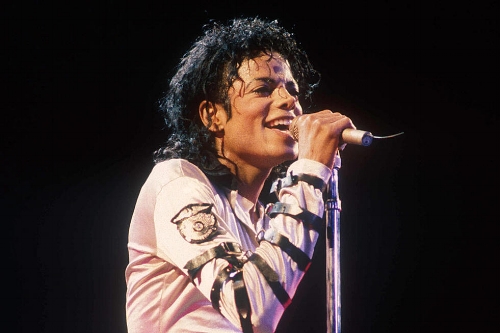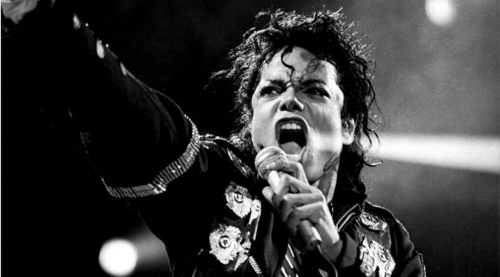
FEATURE: Black or White: Michael Jackson at Sixty: How the Pop Genius Broke Down Racial Barriers and Revolutionised the Music Video

FEATURE:


Black or White

bnnb.jpg

IN THIS IMAGE: Michael Jackson/IMAGE CREDIT: Andy Warhol

Michael Jackson at Sixty: How the Pop Genius Broke Down Racial Barriers and Revolutionised the Music Video

__________

THIS piece will bring in some treasured Michael Jackson videos…

445.jpg

IN THIS PHOTO: Michael Jackson in the video for Thriller/PHOTO CREDIT: Getty Images

but it would do him a disservice to do a simple list and get people to look at that! We cannot think about the King of Pop and not talk about music videos. Today, there is a serious question as to whether videos are needed and how valid they are. A lot of new artists are making great videos on a small budget but it seems the Pop elite, with the bigger bucks, are able to do something more imaginative that gets the YouTube videos coming. Most of the videos are pretty forgettable and there is the odd one that sticks in the mind. Look at the Pop titans of today like Taylor Swift and Justin Bieber and how often are you stopped in your tracks by one of their videos?! Maybe it is harder to break ground and push boundaries. The fact we do not have MTV and music video television – not like we did in the 1980s and 1990s... – means few people are seeing videos or they do not place them high in the heart. I love music videos and feel they are an integral part of a song. Even if you have a tight budget; you can do something fantastic and get people’s attention. I wonder whether Jackson would be pumping out the high-concept videos at the age of sixty!

It would be good to see the King of Pop bust his moves and thrill the people. Maybe his videos would be more ‘sedate’ but I couldn’t see the man sitting down calmly and recording something laidback! There is that golden age of MTV – from the 1980s to the end of the 1990s – where the music video was an art-form and that was our introduction to music. There was no streaming (or Internet up until a point) and radio was the only channel we could hear music. Videos, therefore, allowed a song to come to life and see the artist perform. From Madonna and Prince to Soundgarden and Peter Gabriel; I remember those eye-catching and fantastic videos that took songs to another level and remained in the mind. To my mind, nobody progressed and changed MTV quite like Michael Jackson. I am slightly relieved MTV doesn’t hold much sway these days because I am not sure it would be as progressive as it should be. One of the reasons Michael Jackson pushed so hard to get onto the station and put so much into the video was the resistance from MTV to put black faces on the screen. That racism was embedded into their D.N.A. and it took a lot of protesting and fantastic creativity (for them) to give artists like Michael Jackson the same sort of coverage as white artists.

One might say that racism made the videos bigger and better and, as such, gave him an edge. How did the rocky association Jackson had with MTV start?

Despite Jackson’s presence on MTV through 1986, the network faced allegations of racism for giving scant airtime to videos featuring people of color. MTV executives have denied that racism was at the root of the network’s “blackout,” saying that black artists received little airplay because their music didn’t fit the channel’s rock-based format.

“MTV was originally designed to be a rock music channel,” said Buzz Brindle, MTV’s former director of music programming, to Jet magazine in 2006. “It was difficult for MTV to find African American artists whose music fit the channel’s format that leaned toward rock at the outset.”

With so few black rockers, adding African Americans to MTV’s roster proved difficult, according to the network’s co-founder Les Garland, whom Jet also interviewed.

“We had nothing to pick from,” Garland explained. “Fifty percent of my time was spent in the early days of MTV convincing artists to make music videos and convincing record labels to put up money to make those videos…

There may be those arguments that few black artists were making videos but the truth is there was a fear they would not be taken seriously and excluded. Jackson’s classic videos like Billie Jean and Beat It created a huge explosion and excitement. This was not an artist lazily producing a video and expending little effort: a superstar was born and you could feel the anger, determination and passion in every frame!

MTV.jpg

ILLUSTRATION CREDIT: Brett Jones/ART DIRECTION: Crush Creative

How, then, did Jackson change MTV and open doors for artists?!

It took major prodding to get MTV to play “Billie Jean,” the second track from Jackson’s 1982 album Thriller. Released Jan. 2, 1983, the single would go on to top the Billboard 100 chart for seven weeks, but Walter Yetnikoff, president of CBS Records Group, reportedly had to threaten to remove all other CBS videos from MTV before the network agreed to air the video for “Billie Jean.”

Garland denied such a confrontation occurred, telling Jet that the network began playing the video on its own. “There was never any hesitation. No fret,” he said. Based on his account, MTV aired the video the same day that executives screened it.

However “Billie Jean” ended up on the network, there’s little doubt that it changed the course of MTV. The first video by a black artist to receive heavy rotation on the network, “Billie Jean” opened up the door for other artists of color to be featured on MTV”.

Once doors were opened and there was that visibility – quite small but a step – it meant Rock took a back-step and R&B artists came more to the fore. Given the popularity of Hip-Hop and artists like Whitney Houston and Prince in the 1980s; MTV was given no choice but to diversify its playlists and provide visual access to black artists.

You can chart back to Michael Jackson and Billie Jean as a moment when things started to change. I realise it was not Jackson alone who created change: Hip-Hop artists and other Pop artists help inspire evolution and Jackson was among those whose incredible music was finally being seen and heard! I will look at Jackson’s changing appearance but one can chart back to his role in The Jackson 5 as starting revolution and visibility for black artists:

As the Jackson 5, Michael Jackson and his brothers "became a cutting-edge example of black crossover artists," said Mark Anthony Neal, a professor of black popular culture at Duke University's Department of African and African American Studies.

"You basically had five working-class black boys with Afros and bell bottoms, and they really didn't have to trade any of that stuff in order to become mainstream stars," Neal said.

Young Michael Jackson was the first black "bubblegum teen star" in the vein of Monkees singer Davy Jones, Neal said”.

Jackson continued as a pioneer in the black culture when he broke barriers by appearing on MTV, and by breaking sales records with the 1982 album, "Thriller".

Before long, as I shall examine, Jackson stepped into a league of his own and, with the respect and trust of MTV, was pushing himself into the stratosphere. That issue of race was still an issue when videos like Thriller (from the album of the same name) came out.

The concept, Jackson turning into a beast, was almost what white T.V. producers feared: the evil and unsettling black artist; something inferior and inhuman in a way. By Billie Jean, as this article explains; roles changed and he was being seen as a hero:

However, on what could be his most famous song, “Billie Jean”, he takes it a step further and becomes the object of adoration and what is more, of obsession for women and perhaps men to the point he is portrayed as a monster, unhuman. Unbeknownst to him at the time, this would become the curse of his every-day life. As with Prince, people were unable to label him, to put him into a well-known category and be ok with it, because he could not be and refused to be categorized”.

If the videos he did for The Jackson 5 saw him as a cute child with potential; the post-Thriller videos made Jackson a megastar who was breaking boundaries and giving a voice for black artists. How did Jackson break moulds and change music/videos forever:

“…In the end, both Prince and Michael created powerful, influential on-stage personas who delivered electrifying performances, witty lyrics and memorable grooves. They became master manipulators and made the world believe whatever they wished by taking their prejudices and projecting them back onto the audience. Jackson broke down his own records – nobody came close to them ever again - whereas attendance and earnings from tours was concerned and Prince became arguably the most prolific musician in popular music, the first African American to have a song, a movie and an album at number one in the charts”.

There is that discussion, and irony, if a man who sung that it doesn’t matter if you’re black or white (Black or White from the album, Dangerous) changed from the fighting and inspiring black artist to what MTV was promoting before he made breakthroughs: a white artist. There have been medical explanations or maybe it was Jackson taking a stand and ensuring he was going to be respected. In any case; race played an important part in his career: from the black artist we saw up until Thriller to the white man we would see in Bad’s videos (from 1987) - his skin was lighter by 1987 but would look radically different by 1991's Dangerous. Bad, amazingly, spawned nine singles – the album only had ten tracks on its original release (Leave Me Alone was added on a later release). Videos for songs like Bad and Smooth Criminal saw Jackson liberated and pushing on. Aside from Thriller’s world-dominating concept and impact; there was much more ambition by 1987 – much more complex and richer; bigger storylines and budgets. The fact Jackson released so many singles meant there was a greater opportunity and a bigger role for him on music T.V. Look at 1991’s Dangerous and how far Jackson stepped. Again, budgets increased the concepts became more ambitious.

Look at Remember the Time where Jackson starred alongside Iman, Eddie Murphy and Magic Johnson. Its Egypt-set story finds Jackson stealing the queen (Iman) from Murphy’s pharaoh and seducing her. It is almost like a film in itself: a big start and that chase; Jackson acting as the hero but Iman being given a strong and memorable role.  Again, we saw nine singles come from the album (Dangerous) and Jackson was collaborating with other actors/figures more than his earlier career. Black or White is that big statement and, aside from starring a young Macaulay Culkin, it split opinions but definitely made people talk. That transformation from The Jackson 5 to this completely changed artist. There was a jumbled start to the video and mixed messages; no real cohesion but something great came out of that video:

Yet it was the final four minutes that ignited the furor: Alone on a soundstage streetscape, Jackson, sans music, transforms from a black panther into a human, dances, and gradually loses himself in a maelstrom of destruction and unabashed eroticism. Interpretations ran rampant the following day. Was that final bit ”meant to portray Jackson’s interpretation of the panther’s wild and animalistic behavior,” as Sony said in a statement? Was it an overdone attempt to shed his good-boy image? Was it merely, as The New York Times opined, ”the narcissism of a spoiled child throwing his toys”? Was the son-versus-father segment with actors Macaulay Culkin and George Wendt an allusion to Jackson’s own allegedly domineering father, Joe Jackson? “.

Whether you agree with the storyline or think it was a publicity ploy; there is no denying Jackson was taking chances and stirring things up. In the Closet finds him cavorting and dancing with Naomi Campbell in a provocative and memorable video; Jam is him, yeah, jamming on a basketball court in a tough and playful shoot – a man showing different sides of himself and bringing his songs to life. Maybe there was some doubt as to whether the appearance change was a chance to get attention and not have to fight but, either way; the King of Pop took music videos to new levels. I remember watching Remember the Time and marvelling at this extraordinary film coming to life. It gave new life and lease to a song that I had visions of in my mind – nothing as bold and exceptional as that! It seems, whether through incredible art or controversy Jackson became the face of MTV and inspired legions of artists. He was not producing flaccid and predictable videos: his promotional efforts stirred the imagination, got people debating and, at times, got the press questioning his motives. His post-Dangerous work produced a few fine videos (Blood on the Dance Floor and You Rock My World among the best; Earth Song vivid and disturbing.

Whether you agree with the sentiments and messages on offerings like Earth Song; it is clear Jackson wanted to say something deep and urgent with the video. How many modern artists are using music videos to deliver political and conservation messages?! Maybe Hip-Hop and R&B artists are but, in the Pop forefront, there is still the reliance on love and rather uninspired concepts. In many ways, Jackson’s music videos are more powerful and potent today – artists should be looking at his MTV heyday as inspiration; revitalise the music video and get people talking. Maybe the absence of music T.V. means we have less fascination with videos but there is no denying how influential Jackson was and what he did for artists. He gave an opening for black artists and took the video to dizzying heights. Thriller, as his standout video, made some of the biggest leaps:

Thriller sealed MTV's reputation as a new cultural force; dissolved racial barriers in the station's treatment of music (though MTV has always denied they existed); revolutionised music video production; spawned the "making of" genre of documentary ("The Making of Filler," as Landis said at the time); helped create a market for VHS rentals and sales, because fans were desperate to see it when they wanted, rather than at the will of TV stations; and, in 2009, became the first music video to be inducted into the Library of Congress's National Film Registry”.

la.jpg

IN THIS PHOTO: Michael Jackson with Thriller's video director, John Landis/PHOTO CREDIT: Getty Images

Thriller was a multi-million-dollar beast but, in many ways, it captivated new directors, including Spike Jonze, and made them think there was a place for fun, filmic videos:

Jonze took the freedom he sensed in Thriller – and also its eccentricity and humour – and ran with it, creating some of the 90s' most famous music videos, including the Beastie Boys' Sabotage and Praise You by Fatboy Slim, which also get continually spoofed. "When I made videos, whether it was with the Beastie Boys or Björk, we weren't chasing anything," he says. "It was never like some marketing thing. I just wanted to create something that would do justice to the song and I was excited about making, and I think Thriller was the same way."

Perhaps that's Thriller's ultimate legacy, and it's also why Jonze has become a key influence on film-makers creating videos for YouTube. As Psy's Gangnam Style proved, films shot relatively cheaply and quickly, and which don't require pluggers, or for the artist to necessarily have an existing profile, can have a global impact comparable to Thriller. The rules have been rewritten, unleashing a new surge of creativity”.

I love how Jackson’s creative effectiveness did not wane after Dangerous and he continued to explore the possibilities of the format. It is tragic to think how far he could have taken the music video has he of lived.

Look at the Scream video. With his sister, Janet, he managed to create a head-busting video whose budget made eyes water! This article looks at the song/video and its brilliance:

Amazing lead single “Scream” – released twenty years ago today – however offered a more relatable and enjoyable sense of catharsis. A duet with younger sister Janet Jackson, and produced by Jimmy Jam and Terry Lewis, “Scream” finds the pair spitting out tightly wound lines railing against the press almost through gritted teeth, the industrial beats and clattering percussion encasing an incredible vocal performance from Michael that peaks with the line, “oh brother please have mercy 'cause I just can't take it”. Its sense of unleashed frustration makes it one of Jackson's most enduring songs outside of his 80s purple patch, the aggression sounding defiant as opposed to bitter. It also came with one of the best (and allegedly most expensive) videos of all time, director Mark Romanek housing the siblings in their very own wipe-clean, hyper-modern spaceship, complete with indoor zen garden, remote controlled art gallery and futuristic squash court”.

Anyone thinking the siblings would be harmonious and diplomatic was in for a shock. Michael, especially, was a bit of a nightmare. He spent, literally, a day looking for a perfect handclap sound. He would alter the volume and slave over his idea of the song. Janet Jackson’s career was faring better by 1995 – the song featured on Michael Jackson’s HIStory: Past, Present and Future, Book 1 – and this was seen as a chance to promote Janet Jackson.

The idea was for Michael to go in first and Janet to follow him. He went into the booth, asked for his headphones to be turned up and busted his moves. He asked how it was – they said it was good – and Janet had to follow him! The siblings were competitive and this was Michael’s way of regaining his crown and getting back into the public fore – even if the song was designed more with Janet in mind. Maybe the world-draining budget of Scream makes it impossible for other artists to replicate this today but, as this article continues; the promotional did inspire other artists and made changes to music videos well into the 1990s:

“…Needless to say the label weren't exactly over the moon when they saw the final budget, which was likely further increased by the initial three-day shoot running to over a week. “I got on the phone with the head of the record label and he had seen the budget and was apoplectic,” Romanek said. “He started screaming at me on the speakerphone, “do you think I'm the fucking Bank of America? Are you out of your fucking mind?” I said Michael and Janet want something huge, you've given me no time to do it, the song brings to mind images of a spaceship and if Michael Jackson has his own spaceship it's going to be really impressive. There was this dead silence on the speakerphone and then I heard (puts on soft voice) ‘yeah, that's right’ and I realised Michael was in the room on the other end of the line which I didn't know. From that moment the record executive guy knew he was pretty much screwed.” The space-age visual influence of “Screram” can be seen in the likes of TLC's “No Scrubs”, Lil Mama's “Shawty Get Loose” and, more recently, Ciara's “I'm Out”.

Look at the Internet and how the music video is changing and progressing. The interactivity we saw Michael Jackson project – bringing listeners into his world and giving them a sublime experience – is much easier to replicate now. The best videos from modern times (including Childish Gambino’s This Is America) are bolder, bigger and much more challenging the rather average and routine videos. There are other artists who have helped this leap but you can draw a line between Michael Jackson’s videos like Bad and Thriller and how artists are connecting with audiences today. I am not one of these people who has given up on the music video – even if there are fewer legendary offerings than past decades. Few artists have the same purse Michael Jackson had back in the day but his movements, physicality and concepts have filtered through the years and changed the modern music video. He transformed from this ignored artist who was held back by MTV and given excuses to the Billie Jean icon that changed the game; the megastar that produced more and more lavish and spellbinding videos. As we mark his sixtieth birthday and how he changed Pop and become a king; let’s not forget his arsenal of brilliant videos and…

ja.jpg

 IN THIS PHOTO: Michael Jackson captured during the Bad video shoot/PHOTO CREDIT: Getty Images

THE impact they created.

INTERVIEW: Masa Diora

INTERVIEW:

2.jpeg

 Masa Diora

___________

THE chaps of Masa Diora

55.jpeg

have been telling me about their upcoming single, You Don’t Love Me. I ask what we can expect from the song and what comes next for them. I wondered how the band got together and whether there are some upcoming artists we should follow.

The guys reveal the albums most important to them and what sort of artists they grew up around; if tour dates are a possibility; what advice they would give to musicians coming onto the scene – they each pick a song to end the interview with.

___________

Hi, guys. How are you? How has your week been?

Hey! We’re all really good and immensely excited to finally share our music as a band – the countdown has officially begun! It’s been a productive week for us - but no different from any other as we‘re constantly writing and recording new tracks.

For those new to your music; can you introduce yourselves, please?

I’m Jonty. I play the lead guitar and produce alongside Callum.

I’m Callum. I play the keys; I sing, write and co-produce the songs.

I’m George. I sing, I play the rhythm guitar and I’m also a songwriter for the band.

1.jpeg

How did Masa Diora get together? Is there a story behind that name?!

Callum: Me and Jonty met whilst studying Music Tech at college and bonded over our love for experimental music and art.

Jonty: The band then came together after I contacted George asking if he fancied making some music. Once he was down, I asked Cal the same question. We’d previously made music together in the past but never thought of forming a band until later on.

As for the name; we wanted something that simply sounded cool! The name is an anagram of 'dioramas' which are those 3-D model things you had to make in high-school for art/history classes – where you had to create a little scene - a moment in time - to tell a story which is exactly what we are doing through our art. After we had ‘dioramas’, we then made ‘Masa’ – a wordplay of N.A.S.A. (we love space) – and ‘Diora’ simply followed to create ‘Masa Diora’ (pronounced: may-sa dee-aura).

3.jpeg

You Don’t Love Me is coming soon. What can you reveal about the inspiration behind the track?

We spent some time creating a story of our own – a tragic fiction about an unrequited love and how one's mind can become so disillusioned by the obsession of a 'perfect world'. Y.D.L.M. is where this psychedelic journey begins. You gain the first glimpse of our character and how he deals with the emotion of loving someone who does not love him back, which inevitably takes a turn for the worse.

What might we expect in terms of forthcoming material and future plans?

Expect something (very) unique. We’ll be dipping our toes into the streams of Jazz, R&B and Rock as we experiment with our predominantly psychedelic sound. The story in which we’ve crafted continues throughout each track and each release.

Do you think there is a U.S.P. the band has that singles them out from others?

Certainly. We’re a band with a story and an emphasis on art. We take time and effort to focus on every aspect of our presence - that being our music, visuals and look. Our music is hard to compare to anyone currently out there which stands us out from the crowd.

4.jpeg

In terms of artists and music; what did you all grow up listening to?

Jonty: I grew up listening to a range of music, from Sam Cooke to the Wu-Tang Clan. The biggest inspiration for me to learn the guitar and get into music was listening to artists such as Van Halen, Jimi Hendrix; Pink Floyd, Guns N’ Roses and the ELO.

Callum: I can remember the first ever song I played on guitar was Mr. Tambourine Man by Bob Dylan, followed by Cat Stevens’ classic Father and Son. It was tracks like these that also got me into songwriting and, also, realise my passion for creating music of my own.

George: I grew up listening to a lot of Fleetwood Mac...and I absolutely loved Bobby Caldwell; picking some taste in music up from my dad who loves Jazz, and my mum, who just loves music in general. Names like Jimi Hendrix and Metallica really set me on the right path to begin learning guitar; artists such as Frank Ocean and Frank Sinatra got me into singing (my two favourite Franks).

Do you think there will be touring dates? Can we catch you play?

We would love to tour! After we have a few releases under our belt, the live music scene won’t seem so far away at all.

What could we expect in terms of your stage show? Is the stage somewhere you all love to be?

We have so much energy when writing and we soon want to take that energy to the stage. Our shows are something that we want to make really memorable, as much an audio experience as a visual one to match our psychedelic sound and retro sci-fi vibe. We also have a keen eye for detail and a love for tech – so expect something a little ‘different’.

5.jpeg

If you each had to select an album that means the most to you; which would they be and why?

Jonty: I’m stuck between The Dark Side of the Moon by Pink Floyd and Rodeo by Travis Scott as I remember just loving the production on both albums – they both really inspired me to develop my music and production and skills.

Callum: Although it’s not exactly an iconic album, nor is it necessarily my favourite, + by Ed Sheeran stands out as one of the most influential for me in terms of realising my passion for music. It just reminds me of how I started out and brings back a lot of good memories.

George: I love the Another One by Mac DeMarco. It really inspired me to start learning guitar and made me realise that music was the thing for me. And, still to this day, it helps me to focus on that passion and mute all the stressful things in my life.

Have you each got a favourite memory from your time in music – the one that sticks in the mind?

Sounds corny but our favourite memories have always been sitting down with each other and creating a completely new piece of music as you just don’t know what you’re going to make or where it’s going to take you. It’s a thrill which is very addictive.

6.jpeg

If you could support any musician alive today, and choose your own rider, what would that entail?

George: I’d actually love to support someone like Mac DeMarco as he’s another big inspiration for both me and Jonty.

Callum: In terms of who has inspired me to create something different and experiment with music, I’d probably say Bon Iver. Wait…am I allowed Fleetwood Mac?

Jonty: For our rider, we’d request a bottle of wine (quite likely to be more than one) for each gig so that, hopefully, by the end of our career we’ll all be professional wine connoisseurs. And, if we had butlers, then we’d have them dressed in some retro-looking space uniform and address us all as ‘captain’. Oh…and we’d have to have a few beanbags – like, big ones.

What advice would you give to artists coming through?

Just keep working on what you love; experiment and continue to craft your own sound. There will be someone out there who appreciates your music as much as you do...don’t give up on it!

zan.jpg

Are there any new artists you recommend we check out?

Yes! Two bands from our old college are also releasing some bops too: The Zangwills and Delights.

DlG4hVaX0AARCT8.jpg

IN THIS PHOTO: Delights

Do you get much time to chill away from music? How do you unwind?

Music is how we unwind. Haha! But, music aside, we’re all huge T.V./film buffs so if we’re not out chilling with our mates, then we’re either at home binge-watching a T.V. series on Netflix or at the cinema watching the latest sci-fi.

Finally, and for being good sports; you can each choose a song and I’ll play it here (not any of your music - I will do that).

Thank you for having us; it’s been a pleasure!

Jonty: Little Wing by Jimi Hendrix

Callum: Little Lies by Fleetwood Mac

George: Johnny B Goode by Chuck Berry

____________

Follow Masa Diora

7.jpeg

INTERVIEW: Lemzi

INTERVIEW:

7.jpg

Lemzi

___________

IT has been a real thrill speaking with Lemzi

both.jpg

IN THIS PHOTO: Lemzi with Tonia Soulbird

who tells me about the E.P., Ton x Lemz. He discusses working with Tonia Soulbird and putting the E.P. together; what is coming next for him and his music; why artists like Eminem were influential and important to him growing up (and now) – I ask whether there are some upcoming artists we need to investigate.

Lemzi reveals what he hopes to accomplish before next year and which three albums are most important to him; what he thinks of the British Grime scene right now; how he has improved and developed since his early work – he selects a pretty ace tune to finish the interview with.

___________

Hi, Lemzi. How are you? How has your week been?

Yo. All good, man. Nice, relaxing week so far. What about you?

For those new to your music; can you introduce yourself, please?

I call myself an artist as opposed to a musician. I don’t have any music theory knowledge and can’t play any instruments but I can make my words sound good! I have my own event, Hidden Gems LIVE, which has been successful in getting a lot of the best U.K. acts on stage and I also go into schools as a Rap music tutor!

You hook up with Tonia Soulbird on the Ton x Lemz E.P. How did you two meet?

We met a little a while ago at an open mic in Stratford called Newham Nights that took place every last Sunday of the month (shout out Abena the Actress for organising the show as long as you did!). It was a really good vibe down there generally and we just came together naturally. We rated each other’s music and, more than that, each other’s character.

In the open mic, we saw a batch of talented artists as well such as Kemi Sulola, Diamantina; Jay Scriptz and a lot more! The first thing we worked on together was Hidden Gems the single and that involved meeting up in Leytonstone Tesco Costa; writing the bars and a few signs that told us it was something to continue and spread...

What do you think Tonia brings to your work that elevates it? Do you plan on working together again?

Some soul…and that powerful female energy that matches what I bring to a song/performance etc. Before anything, we’re good friends with a lot of mutual interests and outlooks on life so, because of that cohesion, we tend to find it an enjoyable process working together. We’ve got tours, shows and videos all to do so we’ll definitely be working closely!

6.jpg

Your 2011 mixtape, LemziFreeBies, spawned a series of lauded and impressive works. How do you think you have developed as an artist since then?

In pretty much every way, without sounding arrogant. I’m still developing and progressing and working with new artists challenges me to approach things differently. However, I’ve found my base sound and the mixtape series of LemziFreeBies was just me growing in front of a small audience. Learning how to operate in a studio, watching how some of my peers executed their ideas; working out finances for the studio!

Everything I do now comes from that mixtape phase of my life. I keep all of those songs up there so, wherever someone joins on the journey, they have a reference to note how much progression has taken place.

What do you think of the British Grime/Rap scene right now? Is it as relevant and strong as it was back when Dizzee Rascal shot onto the scene?!

There are two ways I look at it: talent and reception. The talent, to me, is the best the U.K. has ever had and we have a genuine spectrum from the Grime scene, to Drill; Afro-Swing, U.K. Hip-Hop etc. Even the R&B scene is really coming into fruition with artists like Rebecca Winter, Ella Mae; Kemi Sulola etc. I’m proud to feel a solidified part of this scene.

However, from my perspective, reception is still far too imbalanced. The Hip-Hop/Neo-Soul/R&B scene gets a fraction of the attention that Afro-Swing, Drill or the other more contemporary genres have. But, it’s all a process. I feel the more the aforementioned genres develop a credible scene in their own right: with events, D.J.s; radio shows and collabs etc. all between these artists, the Hip-Hop scene will get its proper recognition...

3.jpg

Do you recall when you got into music? Which artists did you grow up around?

I remember the first artist that really captivated me and I can remember being really into Eminem. I saw Lose Yourself on the T.V. a lot and I learned all of the lyrics - at around ten years old – then, from there, I wanted his album (which introduced me to other artists like Dr. Dre, 50 Cent; The Game etc.).

This completely switched in 2004 when I got into Grime. Grime music and the whole scene genuinely shaped my perspective on the world at that age (around twelve years old when I was first introduced to it). I was suddenly a lot more aware of my surroundings; picking up on reference points, postcodes and clothing etc. It was a mad time. A lot of energy and huge characters, especially in East London where the majority of the M.C.s were from. I was most into Kano, Dizzee; Roll Deep...to be honest, almost anyone that was doing grime between 2004-2008 got my interest at some point. It was a lot.

It was interesting for me in particular because I was in a private school, not like Eton or anything, but it was a good one. We had people from all over the East - Beckton, Mile End; Leyton etc. - but just a few of us from these areas. So, I didn’t even grow up around loads of other people really into Grime; just a small group of us. It was only during uni that I really started meeting other artists and discovering even more music.

5.jpg

What do you hope to achieve by the end of 2018?

Man...it’s only a few months but I want to do a lot in this time. I said, at the start of 2018, this year will be phenomenal so I’ve given myself no chance but to end it well! Ton x Lemz E.P. is out now, so we are working on getting at least one video arranged; doing a headline show, other shows and maybe more.

I’ll also have a solo demo album finished, depending on how everything is going. It will be out before the end of 2018. I will definitely release a couple of the singles before then as well as a documentary...

I’m currently trying to create a syllabus that I can take to these schools; something more structured that will hopefully inform the students about the music, history; social implications and everything around the music too. Hopefully, I’ll have at least one, if not two Hidden Gems LIVE events in this period; get some new artists on the stage sharing their gifts. That’s a chunk of the plans but God moves so let’s see how everything envelops.

2.jpg

Have you got a favourite memory from your time in music so far – the one that sticks in the mind?

There’s been a lot, you know. A lot of not great memories from the earliest days but they were all learning curves rather than actually bad experiences…

One of my favourites was the first full live band set I did in Rich Mix in October 2017. Between me, The Bandem; Tells & Tonia we brought my E.P., Autumnal Aura, to life. It was a whole process and being on the stage with such a good audience made it feel special.

Which three albums mean the most to you would you say (and why)?

Dr. Dre - Chronic 2001

This album to me is the best-produced Hip-Hop album of all time. A lot of the topics and viewpoints wouldn’t even be recorded in this day but it works as a great timestamp of the turn of the millennium with mad performances from Hitman, Dre; Snoop Dogg, Eminem and more. The composition, structure and production – as well as executive production – was phenomenal.

Jill Scott Who is Jill Scott? Words and Sounds Vol. 1

Nostalgia...an album everyone in my family enjoys. Jill Scott, through this album, was one of my introductions to Neo-Soul (and assimilating this with Hip-Hop and Spoken Word). The esoteric messages, the lyrical prowess; vulnerability mixed with self-confidence and production is timeless.

Kano Home Sweet Home

Stuck between this and Dizzee Rascal - Boy in da Corner but I give it to Kane here. Home Sweet Home showed me how to spit, had bangers; smooth songs and I had both Nobody Don’t Dance No More and Signs of Life as my most-played songs for a looong time.

98.png

If you could support any musician alive today, and choose your own rider, what would that entail?

Alicia Keys. I want to see Butterflies and Diary live myself but I think we could make some great music together too. Especially if she brought Swizz Beatz.

In fact; my rider would be that we would have to create some music between the three of us and she would need to give me a whole folder of samples (royalty-free) to send to my producers.

What advice would you give to new artists coming through?

Do this for the right reason. Someone should be able to ask where do you see yourself in five/ten years and music still being a big part of whatever you’re doing. I love music and have done since I remember hearing Eminem, who galvanised me to express myself through words. Passion is key as is patience but the journey is special. Don’t overlook it just because you’re not doing the O2 and Wembley after what you thought was ‘the hit’.

kem.jpg

IN THIS PHOTO: Kemi Sulola

Are there any new artists you recommend we check out?

My team, the EXCLUSIVE Collective (Ferns, Wyllis; Timmy B & Jerome Leetz); Tonia, Tells; Kemi Sulola, Melvillous; Choze, Sharna Cane; K The Infinite, Boy Nash; Amelia Poamz…and I’ll stop there or this will be my longest answer...

ch.jpg

IN THIS PHOTO: Choze

Do you get much time to chill away from music? How do you unwind?

Yeah. I do music full-time, including going to schools/institutions and my events but I have a great family that I spend time with. I have a girlfriend who’s almost always around and my closest friends don’t do music, so I’m in and out of the scene in that regard.

Finally, and for being a good sport; you can choose a song and I’ll play it here (not any of your music - I will do that).

WyllisBaka! Boom issa (sic) banger!

____________

Follow Lemzi

98.jpg

INTERVIEW: CAGGIE

INTERVIEW:

DlTw4BHWsAA5ZQ7.jpg

CAGGIE

___________

THE wonderful CAGGIE has been telling me…

si.jpg

about her new single, Thinking About You, and how it came together. She shares her experiences of L.A. and reveals whether there is more material coming; which artists and albums have been most important to her; if there are any gigs coming up – she recommends some emerging artists to watch.

I ask her about her time in Made in Chelsea and whether music was always her calling; what her favourite musical memory is; what she wants to achieve before the end of this year; the advice she would give to artists coming through – CAGGIE ends the interview by selecting a great modern cut.

____________

Hi, CAGGIE. How are you? How has your week been?

It’s been good, thank you. My second single has just come out and was on New Music Friday, so I am pretty happy...

For those new to your music; can you introduce yourself, please?

I’m a singer/songwriter from London. I tend to focus on writing about past love. I’d describe my music as 'romantic nostalgia'.

You have just released Thinking About You. Can you reveal the story behind it?

It’s about when I first moved to L.A. I was feeling a little bit lonely - and it was the first time I felt ready to tell my story.

Might we see an E.P. next year? Are you always working on new material?

Absolutely. I would love to go straight in for an album. But, let’s just see. I’m always working on new stuff, whether that’s just writing down ideas or being in the studio. I like it to be dispersed when I am in the studio - I enjoy going in when I am filled with ideas so it’s always a special and exciting experience. It can feel redundant if I am in there every day.

DlY6a2LX4AAykAf.jpg

Many will recognise you from Made in Chelsea. Was that desire to go into music always there? Do you feel more yourself and free to express your true personality through music?!

Yes; very much so. I have always loved music. In fact, I’d say it’s my one true love. It’s taken me a while to be able to admit that. Because, for a really long time, I felt like it didn’t love me back. Music can be incredibly cruel in ways but, in the moments when it does work - however fleeting they are -, it’s magical...and, yes, I feel freer. It’s a question I think about a lot in a lot of detail...

But, in an attempt to give you the shorthand, I think I tried to be someone else for many years; in order to feel safer and to fit in in ‘life’. I have always felt like a bit of a loner - and found that my favourite moments are often in isolation when my only companion is a notepad. I rather enjoy my own loneliness…which is quite reflective in my music; probably not the first single so much but my other material. A friend mentioned it recently and said: “How can Caggie be so sad and what does she have to be sad about?!” which I found quite funny. I definitely project a certain version of myself to the world.

I recently found a journal from when I was twelve and, in it, it said: “What is your favourite thing about yourself?” and I had written: “That I am always a little sad.” I found it amusing; almost paradoxical. I can pretend to be a lot of different people but you’ll always find my truth in my music.

3.jpg

How important are London and the people regarding your inspiration? What is life like there for a young artist?

I wrote my favourite songs in L.A. But, perhaps, that’s because I was lonelier there. But, in the same breath, coming back to London as I am today does have the essence of a new beginning at the moment…which I am enjoying.

Which artists compelled you growing up? What sort of music were you raised on?

I was raised on Oasis, Madonna; Whitney Houston and Michael Jackson. My house wasn’t musical, so it was really what any other kid was hearing on the radio or obsessing over at school. I was always very into film soundtracks like The Wedding Singer or Moulin Rouge. What was compelling about '90s Popstars is that they were this full package, almost cookie-cutter-persona that I think is about to come back...they were untouchable. I don’t necessarily think that connects to me but I think we are about to see a resurgence of that with the likes on Nina Nesbitt.

What do you hope to achieve by the end of 2018?

To bring out more music and to establish a musical family around me - and to have things ready for 2019. I think it’s gunna be a great year.

5.jpg

Have you got a favourite memory from your time in music so far – the one that sticks in the mind?

There was one when I was singing this song that I had rehearsed to the bone; I have never worked so hard on anything in my life. And, when it came to record, it was like it wasn’t my voice coming out: it felt like something else; something entirely effortless…like it was just happening. I was able just to feel the emotion. I learnt a lot from that experience, that the homework is crucial. It’s the groundwork you do first then the emotion comes in and decorates.

It’s a highly emotional song and was a very moving experience for me. I recently performed it on radio and someone watching said whatever happened just then, whatever you tapped into, hold onto that.

6.jpg

Which three albums mean the most to you would you say (and why)?

I’d say Imogen Heap - Speak for Yourself

This album was sort of the soundtrack to the first summer I first fell in love. I remember listening to it over and over again. And, when I listen to it now; I feel like I am sixteen all over again.

Then; I’d say Damien RiceO

It’s such a phenomenal album. Beautiful songs filled with so much emotion. It also takes me back in time a little…  

And, third; India ArieAcoustic Soul

I remember me and my best friend listened to this album so much growing up. I would just sit in her room playing the guitar and writing songs.

DivLtWmWAAAKw7P.jpg

If you could support any musician alive today, and choose your own rider, what would that entail?

I would love to support Lana Del Rey. My rider would involve sage and gin.

Can we see you on tour soon? What dates are coming up?

I’ve got a show at Hoxton Square Bar & Kitchen on 13th September called Gold Dust.

DkupFsaWsAApaMJ.jpg

What advice would you give to new artists coming through?

Just be true to yourself. Don’t be concerned with what’s coming out now: work hard to get to the core of what is going to make you special. I am not the most musical. I don’t play, I don’t speak musically either - but I have a natural ear and a way with words that is unique to me. So, figure out what your strengths are.

KI.jpg

IN THIS PHOTO: King Princess

Are there any new artists you recommend we check out?

King Princess and Sasha Sloan.

sas.jpg

IN THIS PHOTO: Sasha Sloan

Do you get much time to chill away from music? How do you unwind?

Yeah, a lot. I like watching T.V. shows. I have just been watching The Innocents on Netflix. But, I like to chill and do music stuff like practise singing like other singers I like. Or, just play around on the guitar...

Finally, and for being a good sport; you can choose a song and I’ll play it here (not any of your music - I will do that).

I think one of the best songs out at the moment is Grace Carter - Why Her Not Me

____________

Follow CAGGIE

4.jpg

FEATURE: A Lament for the Crate-Diggin': The Decline of Sampling in Popular Music

FEATURE:


A Lament for the Crate-Diggin'

woo.jpg

PHOTO CREDIT: Unsplash 

The Decline of Sampling in Popular Music

__________

I have written about sampling before…

DJ.jpg

PHOTO CREDIT: Unsplash 

and how some of my favourite artists splice myriad sounds and diverse elements together to create something wonderful. I will end this piece will some sample-featuring songs but the first artists that come to my mind are The Avalanches, Beastie Boys; DJ Shadow and Public Enemy. The former, especially, on their Since I Left You album laboured through countless recorded and created an all-samples record. I can only imagine how difficult and time-consuming it is ensuring the samples hang together and are interesting. The fact the Australian band took sixteen years to give us a follow-up album (Wildflower in 2016) shows how much work is required. I love their debut and get giddy when hearing these rare and unusual sounds come together. It is fun and exciting getting to sort through crates and your recording collection but there is immense technicality, experimentation and trial needed lacing all these (disparate) songs together and trying to create something that flows and resonates. It may seem like a dream expedition on paper but, once the vinyl is out; how long does it take before you get from the inception to the final product?!

pub.jpg

IMAGE CREDIT: Getty Images

Like a lot of artists who use sampling in their work; we are not hearing mega-tunes and very familiar sounds. A lot of the time, they will mine older records or rare cuts to get something unique and fresh. Beastie Boys and Public Enemy used sampling to heighten their gritty and pulsating music. If Beastie Boys fused various samples with their humorous raps; Public Enemy were more political and used other songs to help deliver their potent messages. DJ Shadow, on the other hand, is a more traditional D.J. and takes influence from different areas of music. There is so much to investigate and drool over when it comes to the variations in sampling and how different genres approach things. Look at Hip-Hop sampling and compare that to artists who work in other genres. It is a fascinating blend and culture that seems to be diminishing and becoming far too conservative! From the 1980s through to the current time, we can definitely hear a shift in regards the prolificacy of sampling in music and how that is affecting the larger culture. 

Listen to an album like Entroducing….. and that 1996 debut features moody, slow tracks with more upbeat jams – taking from DJ Shadow’s early Hip-Hop influences. That album was produced over two years: other artists have taken longer and it is a real labour of love. The fact the Beastie Boys hit their sampling peak on their sophomore album, Paul’s Boutique (1989) shows that some artists can nail their best work very quickly. The Avalanches and DJ Shadow did it on their debuts and got huge critical acclaim: Beastie Boys didn’t fare as well and a lot of the album’s credit came retrospectively. Everyone from Sugarhill Gang and The Beatles were sampled on Paul’s Boutique; Entroducing….. features inclusions from The Heath Brothers and Jeremy Storch. It is interesting to see the differences between those albums. DJ Shadow has fewer samples on his album and uses his D.J. and production skills to create original threads and integrate samples. Beastie Boys use original vocals and lyrics but employ samples to add humour, light and new energy to their music. Sampling is not a new thing, I know. Ever since the birth of Hip-Hop in the 1980s; artists have taken from vinyl and the streets to unleash these kaleidoscopic and vivid songs full of sounds – from traffic noise and conversation to the streets – and vibrancy. I am a big fan of Beck and De La Soul. They use samples in different ways but, one will agree, their work is stronger for it.

I love sampling because it is a way of bringing older sounds and unheard-of beats to the people. I listen to a song from the Beastie Boys or The Avalanches and I not only get something new and giddy but I can disrobe the packed song and compartmentalise the samples. I then get to trawl vinyl myself and look where those sounds originated from. It is wonderful to be able to connect in such a way with artists and songs you might not have otherwise have experienced. I also love how dizzying a song can be with samples! Most tracks are predictable in their structure and what we can expect. Listen to a song and, before you know it, there is a political speech, classic Soul cut or familiar sound coming in and you are livened and taken aback. For an artist, there is that bittersweet experience of digging through crates and splicing music together.

woman.jpg

PHOTO CREDIT: Unsplash

It can be infuriating narrowing things down and it takes a lot of discipline, patience and intuition. The good thing is you have access to a world of music and, as such, can dive right in and get to work. Perhaps the biggest talking point regarding sampling is its legality and expense. It is complex regards sampling because there are strict copyright laws and it can be expensive getting clearance for various songs. Some artists want to protect their music and will not give permission; others will charge a lot of want royalties from it. There are programmes and software where you can get free samples and use them but, in terms of bigger songs, it is more complicated.

I was reading exerts from a Science Friday show where host Ira Flatow was speaking about sampling and copyright with guests. The excerpts I am going to quote involve Max, a caller; Prof. Kembrew McLeod (co-author of Creative License: The Law and Culture of Digital Sampling (2011) and Dean Garfield (President and CEO, Information Technology Council, Washington, D.C.). These parts of the conversation stood out:

FLATOW: All these free, use them as much as you want little riffs on there, little samples. But why can't I get something, you know, from some of these popular tunes that are going to be sampled any way the kids want to do it? Why can't we find a way to put those up on iTunes or add little bits of it, somehow, in a system there?

Prof. McLEOD: The short answer...

Mr. GARFIELD: In part, it is artistic integrity. It's the reason you now have The Beatles on iTunes where previously you didn't. You know, they made the determination, at some point, that it was appropriate. And before then, they thought it wasn't. And so, as the person who spent the time developing the work, you should, I believe, have some control over how that work is used”.

A caller rang in and added their voice to the mix:

MAX: But I just want to say that I think a lot of creativity gets stifled. I mean, you can look at, basically, the golden age of sampling during the '90s for hip hop, and you just saw so much unique sounds coming out. And I - that's when I started deejaying. I've been doing it for 15 years. You can check me out at soundcloud.com/dj-eclipse.

“…But it's basically, you know, stifling a lot of the creativity because a lot of the people who get these samples and play them - a lot of people rediscover music from past genres by listening to these samples.

And, you know, I think those corporations that are holding those copyrights hostage are missing out on a huge marketing opportunity, basically, because they're not going to - these people are now getting into these electric genres where people aren't able to listen to snippets and soundbites of old music where they're going to say, hey, where did that come from?

Where did RZA get that sample from? Where did it RJD2(ph) get that sample from? And then rediscover past genres of music and buy those albums, because I know I did, through just sampling and through just being interested in the music and trying to research and find out how these sounds are put together. And I think that's one of the most lost aspects from the golden age of sampling that we have today, what you can call, I don't know, the Timberlanization(ph) of hip hop where...

It is an interesting interview/show that talks about two different sides to sampling. On the one hand, there are artists and creators who are happy for others to use their work as evolution and getting the music to new audiences. They will get credit and, at the same time, others get to experience music not being played on the radio or readily accessible on streaming sites...

There is the other school of thought that argues, in a time when YouTube and Spotify make it easy to access any track out there; people can steal what they want and there are infringement issues. Rather than open up channels and make it a free-for-all; there are strict laws and rules that mean permission needs to be sought or too much financial compromise happens. I wonder whether past legal cases have made artists and labels scared their work is going to be copied and used without permission. Most modern artists are happy to give credit but I wonder whether labels are asking for too much money or being too unrealisable regarding credit and percentage. Certainty, artists like Beastie Boys would have had a hard time getting clearance and permission but the fact we are hearing fewer albums like Paul’s Boutique these days makes me wonder whether it is impossible to sample at all. Modern artists like SZA and Kendrick Lamar bring samples into their work but it is not as free range and expansive as the classic records of the 1980s and 1990s. There are people like me who would love to make a sample-heavy record that took from various genres and time periods – would that ever be legally and financially viable?!

Before I come to my arguments; I want to bring in this piece that looks at the most-sampled songs ever. As of 2016, The Winstons’ Amen, Brother has been sampled over two-thousand times. It seems some songs are not only being sampled easily but set up challenges for other artists – the same sample being used in different environments and settings:

There’s one song that’s been sampled far more than any other, according to one measure. The website WhoSampled.com, whose audience obsessively tracks what’s sampled, says that a 1960s track called “Amen, Brother” by The Winstons is the most-sampled track in history, and it’s not particularly close. By its count, more than 2,000 songs have sampled a particular drum beat from “Amen, Brother” that’s now known as the Amen Break. As you play the clip below, you can hearThe Winstons’ drummer, G.C. Coleman, play the kick drums, snare drums and cymbals in a funky four-bar pattern.

top.jpg

PHOTO CREDIT: Unsplash

"MCs looking for an edge had to dig even deeper into the archives of rock, funk and Motown records that supplied their beats. Flores, who MC’d with Bambaataa, said that Bambaataa had found the track “Amen, Brother” on the B-side of a once-popular 1969 soul record by The Winstons, and kept it in his secret stash. (Attempts to reach Bambaataa, who has recently been accused of having committed sexual abuse in the 1980s, through his lawyer were unsuccessful.) The whole song was eminently danceable, but the party really got going during that six-second drum break a minute and a half into the track. Flores said Bambaataa would slow the break down — going from a 45 rpm to 33⅓ rpm and play it again and again as B-Boys (or “break boys”) tore it up on the dance floor.

By the early 1990s, the Amen Break wasn’t just being used by acts such as Rob Base and Heavy D, it had become one of the foundational beats of an entirely new electronic dance music genre: jungle. Jungle artists often sped up the break, sliced it up into individual drum hits, rearranged it, and played it for minutes at a time while layering techno, reggae and a melting pot of other sounds on top of it”.

Mark Ronson, when interviewed back in 2014, was asked about sampling and today’s market. These quotes are taken from Part 1 of the TED Radio Hour episode, What Is Original?

 “Though the tools associated with sampling have changed over time — yesterday's used-vinyl crate diggers have become today's digital foragers, yanking their source material straight from YouTube — its power to shape culture has not. In his TED talk, Ronson offers a case in point by charting the 30-year journey of one of the most sampled songs of all time: Slick Rick and Doug E. Fresh's 1984 hit "La Di Da Di," a bare-bones rap and beatbox duet, which has been borrowed by everyone from The Notorious B.I.G. to Miley Cyrus to Spoon.

Do you think we live a post-sampling era?

You know, we used to go to record stores or record fairs to find these rare breaks. I see young producers today, kids who are 19, 20; they stay up all night just sampling straight from YouTube. I think things like YouTube kind of have made a lot of today's younger generation think thatthe "Well, everything kind of just belongs to us, right?" Because it kind of does: Music has been free for a long time now, for better or for worse.

In some ways, the culture of today is really just about taking whatever you feel like and making it your own. Which is dangerous — there are troubled lines there — because at the end of the day, credit needs to go to the people that created the stuff in the first place. But it does make for some incredible, exciting art. And it does mean that some little kid sitting in his basement in Ohio with a laptop can be making some of the most interesting music around”.

There are articles like this...and this that ensure you legally take samples and are not crossing any lines. Reading this article and one gets a view of the history of sampling and how it has evolved. It looks at copyright laws and how, now, there are libraries with samples available. It is great having access to free samples and sounds but what happens if you want to sample a Beatles track or something from Amy Winehouse; throw in an interview from Kurt Cobain or have some Funkadelic in there?! Is it a case of contacting their estate/management and asking politely?! I feel they would say ‘no’ and it would be very tricky to make that happen. They may say it is okay but only if a large percentage of a song’s profits were given to them. The fact streaming services and YouTube mean a lot of artists are giving their music away means people cannot afford to pay labels. I understand that need to protect a song and ensure it is not endlessly shared and illegally accessed. As many artists have been saying; sampling is a great way of carrying the torch and using a song in a different way - pushing music to new generations. If you are confused regarding sampling clearance and costs then articles like this might assist. It is worth doing research and not giving up completely. Many artists feel it will be financially ruinous using all the samples they want but there are compromises and ways to use samples.

erik.jpg

IN THIS IMAGE: The album cover for Erik B. & Rakim's 1987 masterpiece, Paid in Full/PHOTO CREDIT: Getty Images

Out of all of this, I wonder whether a more affordable and fair compromise/contract can come into place that ensures original tracks are protected and not illegally distributed but allows an artist, for a small fee, the chance to use it in their song. I wonder whether we will hear any big album that uses a lot of samples and whether a lack of progression in some genres – like Pop and Hip-Hop – is because there are such rigid laws regarding sampling. I would love to make an album that uses samples and mixes it together with sounds and library effects. It may not be on the same level as something from The Avalanches but I wonder whether artists are being frustrated because they cannot get clearance or permission.

I worry a lot of older music is being lost and getting duty because pioneers are unable to use them in their work. I said how I discovered older records because I heard them sampled by the likes of the Beastie Boys. That culture has vanished – or shrunk down at the very least – and that is a sad thing to see. Labels are red-hot regarding illegal use and big court cases are scaring musicians off. If something rational and sensible can be discussed between artists and labels then I think we could see an explosion and evolution that vastly benefits modern music – this will lead to future innovation and breakthroughs.  Modern music has plenty of treasure and promise but, for my money, you cannot beat a vinyl record…

FULL of great samples!

FEATURE: Patience, Poker and Snap: The Art of Music Photography

FEATURE:


Patience, Poker and Snap

@heatherhwk.jpg

IN THIS PHOTO: Hayley Williams captured in 2017/PHOTO CREDIT: Heather Hawke

The Art of Music Photography

__________

THE biggest problem I have with new musicians…

b.jpg

IN THIS PHOTO: Madonnatron photoed during the Green Door Store's seventh birthday celebrations earlier this year/PHOTO CREDITTLBrooker Imagery

is the rankle regarding photos – or a distinct lack thereof. My interviews and reviews are always full of great shots that give a visual edge to things. The reason I require about six or seven images, high-resolution, from each artist is that visuals are vital when making an eye-catching and interesting piece. If I had a long interview with one photo and a block of text; not only would it look dry and like an academic text – people would grow a bit weary. Photos keep you hooked and, more importantly, show different sides to an artist mere words cannot convey. It may sound like a whorey old cliché but a picture really can paint a thousand words (here is a useful guide regarding photography regarding beginners). A photo – maybe there are some swear words in there – can say so much more. Artists always come back to me and ask the question: Why do you need so many images?! The reason I love images and want to make my pages as rich as possible is to give them a professional look but show what great work is being done by music photographers right now. I have included shots from Heather Hawke, Georgia Penny and Thomas Brooker (among others) to show how each photographer has their own style and personality. I love seeing music photography because, in a digital age, it is more important than ever.

@georgiapenphoto.jpg

IN THIS PHOTO: Taking Back Sunday during a set at this year's Slam Dunk Festival/PHOTO CREDIT: Georgia Penny Photo

Maybe a certain vintage look and authenticity have been lost: so many snappers use the best cameras and want to get the clearest possible images. Although getting into photography is not that cheap – there is the camera and accessories to go with it – getting a basic kit together and going to as many gigs as possible is a great experience. Bands and artists always want to be captured and feel great when they see a photo of them in the music press. For me, photography in music is as vital as a video. Things are so digital and faceless at the moment – photos give music a sense of soul and colour that is lacking from streaming. We are all too busy flicking through playlists and not really looking up. Without a physical product (a vinyl or C.D.) and only the sound available, it can be hard to understand what a song/artist is about. Photos give you that important visual representation and bring new sides out. Of course, it can be a bit costly for new artists to hand over the cash when it comes to snaps. I often get people saying they cannot afford a photoshoot because they are new and do not have much money. I emphasise but would argue that even a top photographer is not going to charge mega-bucks for a single shoot – when you can get seven or eight good images to share with the press and on social media.

DkQrUNGWsAAMj4E.jpg

IN THIS PHOTO: Florence + the Machine in Lake Tahoe this year/PHOTO CREDITLillie Eiger

Even if it is a bit of a cost it is all part of the marketing campaign and an investment that will pay for itself. Few things annoy me more than bands and artists with very few good images – Metal bands are especially guilty! – or a few crappy phone pictures they have put. I am not saying every artist needs to have an arsenal of professional and great images but there is something very pleasing viewing a portfolio when you have an option to choose photos that express a range of moods and moments. A great music photography can get an artist to come out of themselves or reveal something mysterious (if doing a portrait). In the live setting, they can capture that single moment members of the audience might have missed (especially with people filming gigs on their phones!). It is almost like watching wildlife: you are waiting for that defining shot that drops the jaw and cannot be easily replicated. Those who feel photography is an easy quality that we can all do now – on our phones – need their head checked. It is much more than selecting the right camera and being ‘in the right place at the right time’. The best music photos have a concept or design.

IDLES.jpg

IN THIS PHOTO: IDLES/PHOTO CREDIT: Pooneh Ghana for DIY

Look at the image of IDLES above. It is a shot that shows them in all their game, gooey and goofy glory – a banquet of colours, bare flesh and intriguing interplay. Pooneh Ghana is an excellent photographer and someone I have been following for a while. It is a different discipline snapping from an audience or stage as opposed to a studio or on-location. The latter involves more concept, design and wardrobe. It is a subtler and more delicate procedure where you have the time to set a shot up but do not want to make it look fake and boring. The live shot is that instant and quick reaction where you need to get a great photo and be in the right position. I know music photographers take multiple images a gig but it is still about being in the moment and having the right equipment. Maybe the photographer is in that special place that captures a perfect angle; they are part of the crowd (moshing or dancing) or pick the right song that defines a gig. There is so much to consider, emotionally, physically and technically before you even take that shot. The greatest music photos ever can go down in history and be seen as works as art. We see rare photos of big artists and can learn more from a single image as we can an album or interview.

I will go on to look at music photography and how to get into it but, before then, I want to bring in a couple of articles. This piece, written in 2016, spotlighted Kana (Kana Waiwaiku) who uses a single moment and atmosphere to bring something unique and special from an artist. His shots vary between portraits and live shots but seem to convey so much emotion and texture. I shall quote from the piece that unearths valuable advice and insight from those looking to get into the industry:

Music photography is a heavily saturated industry. With many emerging photographers happy to shoot for free to have their name associated with musicians, it has become very difficult to make a living by specializing in music. But there are a few pioneers who have risen amongst this heightened competition; this is the story of renowned music photographer Kana Waiwaiku.

The 31 year old Londoner, Kana, has swam against the tide his entire life both personally and professionally. He describes trying to establish himself whilst being true to his personal vision as an uphill struggle. But with great dedication to his craft, Kana's brand of music photography has gained many admirers. Yet the biggest compliment I can give is that you can identify his work without needing to look at the credits.

kana.jpg

 PHOTO CREDIT: Kana

“…As a young, black, British man growing up in London, Kana’s early experimentation in photography is full of elegant anecdotes that he describes as love letter to the craft. My favorite one was of his run-in with the police when out taking long exposures in a dark London park.

I got stopped by the police once because they had thought I’d nicked all this camera gear. I’d tried to convince them I was taking 30 second exposures, but they were having none of it.

It’s this reality in his personal experiences that I feel comes across in his work, yet he never shies away from how difficult an industry it was to crack whilst trying to stay true to the spirit of his work. Even his first few times spent in the photo pit at gigs he was shooting film, then taking his work into the dark room to physically mark his expression in post”.

This piece, written for DIY Musician interviewed photographer Jason Gardner back in 2010. A few sage and interesting questions were asked that could be of help to budding photographers and musicians alike:

Which advice would you give someone when selecting a photographer?

The first thing to do is look at the work. Look at the photos they choose to display on their site. You want to see a couple things, and if you can determine it from the photos, great. If not, that’s fine too. Do they specialize in outdoor/exotic locations, or is it all studio? That’s the big thing with music and photographers in general and speaks to what kind of work you want to produce for yourself too. Maybe I’m stating the obvious, but the outdoor work tends to be a little bit more visually interesting than just a blank wall. It tends to be less artificially lit. Studios inside could be five lights, and this could just be one light. Part of that is a little soul searching as to what kind of vibe you think you and your band mates would react to more. Some bands love to go into the studio with six lights because they feel like rock stars. And some have had so much of that they want to go to a random corner in remote Brooklyn where no one knows them and they can run around naked.

UR.jpg

IN THIS PHOTO: Surfbort/PHOTO CREDITSacha Lecca 

I am awful at being photographed because I never know what to do with my face or my eyes. Can you advise someone on how to take better photos? Is there something to being a good subject?

That’s a good question. Part of it is in the pre-visualization/collaboration. It’s talking about what image you want to portray. I shot this guy recently, who is starting a punk music label. He never smiles, and we knew that was happening. He was scowling and fist clenching. That’s kind of an extreme. It depends on the image you want to portray. You don’t want to be too smiley/goofy when the desired result is a somewhat serious photo. What I like to do is provide musicians with a whole different bunch of looks. Let’s say we’re doing five locations and three wardrobes. All the sub-categories within those. Some they are looking at the camera, some they are looking away, some they are looking at each other. Some they are with their instruments, and some without. Some are more contemplative, and some aren’t.

I don’t think musicians need to put a lot of pressure on themselves to be a good subject. I think part of that is the photographer’s burden/job. But part of it is keeping your mind and heart open to the photographer’s suggestions. A portrait is like a conversation, and not just a one-way conversation. A one-way conversation would be the subject saying, “This is what I have to say, and it’s here.” A two-way conversation would be the photographer judiciously and subtly art directing them and moving them here, to and fro or adjusting the group dynamic.

ri.jpg

IN THIS PHOTO: Rhiannon Giddens (2018)/PHOTO CREDIT: Claire Harbage/NPR

If you can’t afford a photographer, are there some simple things you can advise people about their photographs? When you look at a crappy, amateurish photo, are there a handful of things you can steer people away from doing?

One thing I would say would be regarding your wardrobe. Unless your persona onstage is to wear crazy costumes or you are like KISS with full-on makeup, I would say for musicians it depends, but the photo should be about you and not what you’re wearing. What you’re wearing should not call the attention away from your face, instrument, facial expressions, mohawk, whatever. I’d say wearing plaids and polka dots and major patterns is more distracting than solid colored clothes. Of course someone like Eugene from Gogol Bordello would be a different story, because he is all about that kind of craziness”.

I have titled this article as such because I believe music photographer is a game of patience and cunning; you need a poker face and be able to, in a sense, bluff the intuition to just endlessly shoot and hope something sticks. You also need a certain amount of dare and risk when you are taking that shot. Is there a formula and set chemistry to getting that perfect/rare photo?! This article, written by photographer Sacha Lecca, shed some light:

I’ve never been happy just shooting the first three songs at a concert, stuck in a pit with 20 other photographers all trying to get the same thing.

Traditional live shots can feel dated quickly. The challenge is to find a unique moment that will endure.

tot.jpg

PHOTO CREDIT: Unsplash 

Rather than give an overall representation of the concert, the best music photographers will capture one sliver of stillness amid the madness – little details away from the stage, among the crowd.

I’m just as interested in seeing the opening act if they’re unknown to me. They’ll often play separate shows elsewhere in the city, leading me to other bands and other venues.

Letting those connections grow makes me excited to shoot as much as I can. Sometimes you never know what’s going to happen”.

Is it just a case, especially when taking live shots, for a photographer to simply rock up and start snapping? Sarah Arnold, for SmugMug, provides some useful tips for those who are new and not sure how to approach artists. She looks at the art of concert photography and raises some interesting points:

Don’t be shy.

 The majority of the concerts I’ve shot, I’ve walked straight up to the band and asked them directly, “Would you mind if I take photos?” 99% of the time, they are excited a photographer is interested and have absolutely no problem saying yes. You have to be a bit of reporter when trying to track down the band. I usually find where they’re located backstage or wait until they are on stage setting up and simply approach them. In many cases, I’ve ended up becoming friends with the band members and am given stage passes as well as put on the guest list for future shows… 

Don’t get flashy, kid.

Whether it’s natural spot lighting or a colorful light show, concerts have unique lighting systems. Usually the stage lighting used produces a much more natural capture, while flash can distract the musicians during their performance and can interfere with the experience for those involved.

dua.jpg

IN THIS PHOTO: Dua Lipa/PHOTO CREDIT: Heather Hawke

Location.

Moving around is key. You want to get entire venue shots showing the band and the concert attendees from behind, as well as those awesome detail shots taken from the front of the stage. The bigger the band, the more likely the front of the stage will be crowded and difficult to navigate. Staying in one place is easier, but you’ll miss some great shots”.

That might sound like a breathless and whistle-stop tour of music photography but I hope there is advice in there and useful guides – in addition to an explanation as to why photography is crucial in music and what a great photo can do. Those who turn their noses up and think that anyone can go into photography is half-right. Anyone, literally, can become a music photographer but your amateur capturing shots on their phone are not in the same league as the professional. I am yet to see a convincing argument for allowing people to use phones at gigs: I am yet to find a convincing argument that makes music photography irrelevant. Images are crucial and, at a time when competition is fierce and artists are struggling, having great photos is essential. Recently, I interviewed Delroy Matty about his experiences and asked him this question:

One of my biggest gripes is artists without good photos. Do you think great music relies on striking visuals? How many words, in fact, can a picture/photo say?!

Photos and visuals are so, so important as it helps people to recognise you, the artist or the brand. Look. If there was a shelf with two rows of Coca-Cola; one row had the Coca-Cola branding on the can and the other row was still Coca-Cola but had nothing on the can; what one would you pick up? It would be the one with the visual because you know what to expect inside the can but both rows were Coca-Cola but the one with the better image looked more appealing. So, yes, image and visuals very important”.

Articles like this one offer some useful advice for those starting in the business. Have a read – but this closing point really stands out:

I find this last point to be the most important one. You don´t have to pretend to be someone else. Be authentic, be real and people will appreciate you for who you are and your work. It´s good to have a look at what other photographers are up to and it´s great to seek some inspiration from them. But you have to find your own way. I believe that everyone has her/his own voice. Find it and you will be able to communicate your vision to others”.

Authenticity is important if you want to be a music photographer: creating your own style and dynamic will stand out to artists looking for photographers and means you are not lazily copying others. I will pop in a video as a guide how to become a music photographer but, before I go, make sure you keep a track of guides and articles that will give you a useful leg-up and push. I have included a selection of music photographs that show brilliant instinct, emotion and skill. Anyone who claims music photography is dead or irrelevant needs to have a look at the great work out there. Look at music websites like The Line of Best Fit and DIY; take a look at The Guardian and NME - stuffed with epic and perfect shots that ingrain themselves in the mind. There is an army of upcoming music photographers who are at the gigs getting that best representation of an artist; they are calling the shots in studios and bringing new life to bands; they are braving the bad weather, keen to capture a unique moment. They are the (largely) uncredited army doing sterling and incredible work that now, more than ever, certainly…

Dej6O5IWsAAKLIy.jpg

IN THIS PHOTO: Jimmy Eat World during a set at this year's Slam Dunk Festival/PHOTO CREDIT: Georgia Penny Photo

DESERVE your respect.

INTERVIEW: RAIGN

INTERVIEW:

top.jpg

ALL PHOTOS OF RAIGN: Miranda McDonald 

RAIGN

___________

I have been given the chance to chat with RAIGN

2.jpeg

about her new track, Out of Time, and what its story is. She discusses moving from the U.K. to L.A. and what the scene is like in Los Angeles right now; what themes and ideas inspired her album, SIGN, and what she hopes to achieve before the end of this year.

RAIGN shares her favourite memories from music and what sort of sounds she grew up around; which three albums are most important to her; how vital and special it is being up on the stage – she ends the interview by selecting a great live performance.

____________

Hi, RAIGN. How are you? How has your week been?

Incredible. So fun, positive and exciting, thank you. You?

For those new to your music; can you introduce yourself, please?

Hello. My name is RAIGN - but you can call me Rachel (smiles). 

Out of Time is your new single. Can you talk about its origins and how it came together?

Out of Time was the first song Robbie and I wrote together - and the start of a magic collaboration. It started off as us writing an Indie-Rock song for fun, because we both loved bands in that genre, but became a doorway to the more uplifting, guitar-infused sound I wanted to explore on my album. 

It is from the L.P., SIGN. What sort of themes and ideas inspired the music?

Yes! It’s track-one, actually! SIGN is really a life’s work coming together. Some of the songs started their journey five years ago and have kind of guided me through. Musically, it's a blend of orchestral, darkly-dreamy and cinematic elements mixed with my favorite euphoric synths and half-time back beats and, since the guitar was my gateway instrument to songwriting, we’ve infused my Rock and Blues roots in there too. Lyrically, I often disengage my brain and write from a subconscious place and, sometimes, what comes out actually has multiple meanings that even I have to work out.

There’s a lot of soul-searching, looking for answers or love; a journey into the unknown and coming out the other end with the euphoria you feel when you’ve found what you were looking for; found the higher perspective and gotten a much-needed sign on the road (all very deep) –but, occasionally, there’s a bit of carefree fun because life shouldn’t always be serious!

6.jpeg

You have collaborated with a few producers and musicians on the record. How did you select the people you worked with?

My publishers and other managers and creatives I know often suggest new collaborations - the industry is supportive in that way. Sometimes, I step out of my comfort zone and work with new people but I love to work with the same handful of people and really craft something over time. I wanted to be really hands-on with the production on this record, being a musician myself, so we did this the old-fashioned way whenever we could; recording musicians live in a studio. All the strings and guitars on this record are real, not programmed, and it makes such a difference. 

Is it pretty cool being based in L.A.? What is the music scene like there right now?!

L.A. is an amazing city. It’s a paradisiacal enigma full of magical opportunities but it also has its trials and I’ve seen many people come and go. I often miss London and my family and there have been times when I've wanted to go home but, every time I do, L.A. pulls me back and I’m so grateful for that. The music scene here is super-fun, very eclectic. I LOVE that you can go to the same venue to hear a rapper one night and an Indie-Rock band the next but I still have a special place in my heart for the grit and purity of the London music scene.

4.jpeg

Do you recall when you got into music? Which artists did you grow up around?

Well. It started with my mother singing opera arias and my father playing Rhythm ‘n’ Blues, Big Band and Soul when I was very young - and so I first learned to play the violin and then the clarinet. Then, the '80s kicked in; I woke up to Wham! and Michael Jackson and sang and danced my way through the '90s listening to Pop music and '90s House.

Then, I got into the band scene and found Psychedelic-Rock, Pink Floyd; The Beatles, Eric Clapton; Bob Dylan, Oasis; No Doubt and local bands on the London scene. Let’s not skip past my short stab at mixing Drum ‘n’ Bass and U.K. Garage on vinyl decks and learning about grooves and tempos - “Enough, enough is enough already...

But, in the end, it was Amy Winehouse’s record that got me to pick up a guitar and write my first real song and I spent the next few years playing in bars in London; sometimes making up songs on the spot. Music and singing have been at the center of my life, literally, my whole life but it didn't occur to me that I could make it my career until my mid-20s.

3.jpeg

What do you hope to achieve by the end of 2018?

Well. I truly hope the fans enjoy the new album and that the energy, passion and soul-searching that went into this record radiates in a positive and inspiring way; an escape of sorts. Because that’s what music has done for me through the years: it’s kind of saved me at times and that’s what I want to give back. If, by some magic, we can defy the system and get some of this music on the radio that would be a huge blessing. 

Have you got a favourite memory from your time in music so far – the one that sticks in the mind?

I have two standout memories - getting the call that Bob Dylan had listened to and approved of my version of Knockin’ on Heaven’s Door was magic and sitting in my old Vauxhall Corsa in London two winters ago (which I still have rusting away at my mum’s house in London) and hearing my vocals played on the Annie Mac chart show on BBC Radio 1. That was an amazing moment for me as a Brit.

8.jpeg

Which three albums mean the most to you would you say (and why)? 

Pink Floyd - Dark Side of the Moon

That record rocked my world. It’s poetic, cosmic; abstract and incomparable thirty years later.

Michael Jackson - Bad

The first album I ever owned and played repeatedly in my bedroom until the cassette wiped clean. 

Amy Winehouse - Back to Black

Amy’s talent, authenticity and voice are incomparable. She sang about her deepest, darkest feelings with a sense of humor and soul and I love that. 

If you could support any musician alive today, and choose your own rider, what would that entail?

I would love to support a brooding stadium Rock band like Nine Inch Nails or even Bob Dylan - It would be a totally incredible dream come true to do a duet together of Knockin’ on Heaven’s Door!

My rider would be very un-Rock 'n’ Roll and very food-orientated. I’m always hungry after I perform. Well, I’m just always hungry…

gig.png

How important is it being on stage and playing? Is it possible to describe the emotions you feel when connecting with fans in the audience?!

Being on stage is the moment you live for; the opportunity to really feel what the music you’ve shared is giving the audience - because they send it all right back to you. It’s love. Before you sing a ballad, there is a split second when you can literally feel the silence and anticipation radiating through the room like you’re all floating in the crystalline darkness of outer-space together and, when the verse starts, it’s as if the sun comes up and warms the room. That feeling right there never gets old. Driving all night with a sweaty band in a small bus does though. Haha. 

What advice would you give to new artists coming through?

Forget logic: take intuitive steps. Be 100% authentic, be prepared to work really, REALLY hard; be patient, don’t be afraid to hustle; remember, if you are really meant to do this, the universe will help you in ways you cannot fathom - you only need that one moment to change everything but, when it comes, you must be prepared. Keep learning, keep training; keep networking - even if it’s not in your nature – and, most importantly, always put the MUSIC first. NOTHING can happen without the music (smiles).

Are there any new artists you recommend we check out?

I’ve been hibernating to make this record and try to stay as authentic as possible so I’m really out of touch with new music - but I'm trawling the music blogs as we speak!

5.jpeg

Do you get much time to chill away from music? How do you unwind?

There is so much other work that happens around making and releasing music that sometimes, for me, writing a new song is my chill time. But, other than that, I love to walk my dog, go for a good meal with friends; binge-watch T.V. shows. But, my fave hobby is making clothes: I have a whole sewing studio in my garage now. I love clothes!

Finally, and for being a good sport; you can choose a song and I’ll play it here (not any of your music - I will do that).

YES. Please play Amy Winehouse - Take the Box (live at the BBC)

____________

Follow RAIGN

7.jpeg

INTERVIEW: RAYLO

INTERVIEW:

top.jpeg

RAYLO

___________

THE guys of RAYLO

2.jpeg

have been speaking with me about their latest track, So Gone, and what it was like shooting the music video. I ask what we can expect from the E.P. of the same name; they discuss London as a base and their views on the British Rap scene – I ask which artists inspire them.

The guys each choose an album that means a lot to them; whether there are going to be any tour dates soon; what they would say to artists coming through – RAYLO recommend some rising artists we need to get behind.

____________

Hi, guys. How are you? How has your week been?

Busy, busy, busy!

For those new to your music; can you introduce yourselves, please?

Hey. We are Reece, Teni; G & Bobz. Collectively known as RAYLO.

How did RAYLO get together? When did you start making music?

Our paths crossed two years ago at The Boom Room Studios in Ladbroke Grove, working on a very strange project. There was some mad serendipity going on that day. Haha. We’ve all been making music for years.

So Gone is your new track. What is the inspiration behind the song? What was it like shooting the video?

The inspiration for So Gone was sparked by the beauty of a journey towards success. Taking elements from our surroundings wherever we go; understanding steps we had to take to get to the level we are at now.

Shooting the video was a great creative experience. Sourcing locations and working on how we wanted it to look wasn’t easy but the product is priceless. We wanted people to see London in its real unique way with an array of short snappy composition shots - and convey the grittiness of our home. It was hard work putting the video together but the sense of achievement was overwhelming.

8.jpeg

It is taken from the E.P. of the same name. I believe you produced it as a band. Are there particular themes that inspired the music? What was it like putting it together?

The music is inspired by everything around us; urban artists from both sides of the pond (Skepta, Bryson Tiller; The Weeknd, Kanye West...) but also great cinematic writers like Jóhann Jóhannson, Zimmer and JXL and inspiration from our own individual stories and journeys. We put emphasis on sound and feeling.

What do you think of the current Rap scene in the U.K.? Is it as healthy and strong as the U.S. would you say?!

I like the rap scene in the U.K. Artists have taken it to a new level. I believe we can be as big as the U.S. provided we keep pushing and showing the world what we have. 

5.jpeg

How important is London as a base and fountain of inspiration?

London is such a melting pot of cultures, ideas and creativity. It’s still one of the hearts of music in the world. So yeah it’s a huge part of our sound.

Which artists are you all inspired by? Did you grow up around a lot of different sounds?

We’re Inspired by so many artists but, to name a few: N.E.R.D, Miguel; Calvin Harris, Frank Ocean; Travis Scott, James Blake; Drake, Gnarls Barkley; Tame Impala, Kendrick Lamar; Kano, Craig David; then everything from Michael Jackson to Deadmau5 to UB40 to Chase & Status…we’re inspired by many styles of music in different ways.

3.jpeg

Do you think there will be touring dates? Can we catch you play?

Course! I feel we have a lot to offer when performing live and will be performing our E.P. as much as we can, so keep your eyes peeled.

If you each had to select an album that means the most to you; which would they be and why?

Reece: Plan B - The Defamation of Strickland Banks

It’s the best body of work ever.

Teni: N.E.R.D - Seeing Sounds

It changed my creative outlook.

Bobz: Inception: Music from the Motion Picture - Hans Zimmer

He makes everything sound epic

G: System of a DownToxicity

Such an awesome team-up for me, with Rick Rubin producing. Sick album.

1.jpeg

Have you each got a favourite memory from your time in music – the one that sticks in the mind?

R: Headlining the Big Freshers Icebreaker U.K. tour last year. It was an amazing experience playing to crowds like that!

G: Recording B.B. King, back when I was working at Olympic Studios was a pretty magical session!

T: Laying down my first track at sixteen…it  was a banger.

B: Kicking a ball around in Studio One at Olympic Studios with G.

If you could support any musician alive today, and choose your own rider, what would that entail?

Supporting N.E.R.D and SNES Super Mario Kart rider. Maybe a cheeky Brandy and Pussy (the drink!) on the side.

What advice would you give to artists coming through?

Just really master your craft and learn to do everything to push your music as far as possible.

spo.jpg

IN THIS PHOTO: Spooky Black

Are there any new artists you recommend we check out?

R: I love Spooky Black. He’s sick

T: Oh…and RAYLO. RAYLO!

4.jpeg

Do you get much time to chill away from music? How do you unwind?

T & B: Going to the gym or playing Xbox.

R: I’m obsessed with photography and make a lot of visual art.

G: It’s rare that I’m not in the studio or D.J.ing but, aside from that, tennis, gym or good old-fashioned partying.

Finally, and for being good sports; you can each choose a song and I’ll play it here (not any of your music - I will do that).

B: Respect - Aretha Franklin

(Just to pay tribute to the legend - and that track makes anyone feel good)

R: Maria MariaSantana (ft. The Product G&B)

G: Gett Off - Prince

T: Ghostface Killah (ft. Raekwon, Cappadonna) - Daytona 500

Thank you!

____________

Follow RAYLO

7.jpeg

FEATURE: Aaliyah: One in a Million: Remembering a Rare Star

FEATURE:


Aaliyah: One in a Million

9.jpg

IN THIS PHOTO: Aaliyah/PHOTO CREDITEric Johnson

Remembering a Rare Star

__________

YESTERDAY saw a lot of tributes paid…

6.jpg

PHOTO CREDIT: Sal Idriss/Redferns

to Aaliyah and everything she gave to music. She died on 25th August, 2001 aged twenty-two (she was born on 16th January, 1979) after a twin-engine Cessna 402B she was on crashed shortly after takeoff killing everyone on board. Aaliyah and her entourage were keen to depart back to the U.S. after wrapping up the video shoot for her single, Rock the Boat. The plane was overloaded and should not have taken off - a tragic and horrendous loss the music industry is still feeling. Rock the Boat is a cut from her third and final album – Aaliyah gained a huge amount of acclaim and an extra weight of sadness following her death. I was just about to leave for university and heard the news come through. I bought Aaliyah’s eponymous album – it was released on 7th July, 2001 – and I remember following the songs and being blown away by it! I had followed female R&B singers since the 1990s and was a big fan of girl groups like TLC and Destiny’s Child. I had grown up around powerhouse singers like Whitney Houston and Aretha Franklin but there was something unique and spectacular about Aaliyah. Since her debut – Age Ain’t Nothing but a Number – in 1994; this rare and very special creature was being taken to heart and producing some of the most beautiful music around. The breathy vocals and restrained performances had power and passion but there was so much seductiveness and beauty.

It is an album that sounds incredible and, whilst her best was still ahead, she was fifteen at the time and the fact an album of that confidence was out in the world blew people away! We only had to wait until 1996 before her second album, One in a Million, was released and, yet again, it was a step forward. Still a teenager; this was a young woman making her way through music and releasing big singles like If Your Girl Only Knew and One in a Million. I still listen to these songs today and look around at the modern scene. Although Aaliyah's fashion changed from a typical teenage look to something more grown-up and varied; the seeds were planted from the start and that authoritative sense of being and confidence was there. I have heard nothing like Aaliyah since her debut album in 1994 and, at a time when there are few stars and genuine personalities; Aaliyah is a star that still burns and continues to guide artists. The leap from her debut to One in a Million took me by surprise and confirmed my love for Aaliyah. I was entranced, fascinated and utterly shocked (in a good way).

3.jpg

ALL OTHER PHOTOS/IMAGES (unless credited otherwise): Getty Images

I was thirteen when One in a Million came out and could not quite believe someone slightly older than me was so commanding and confident. She has writers and producers around her – including Missy Elliott and Timbaland – but everything that came out of the speaker was her. There was no need for too much polish and hiding behind samples/sounds: this woman knew how to hold and control music; weave it and captivate anyone listening. The 1990s was a busy and extraordinary decade for music but no artist got into my heart quite like Aaliyah. I listen to her music a lot and discover new revelations and secrets every time I spin - a rare and impressive feat indeed! In this article, written in 2016, Rolling Stone looked back at Aaliyah’s start and how she managed to make such an impact right from the off:

It is one of the greatest moments in modern soul history: The first few seconds when Aaliyah Haughton, then only a 15-year-old newcomer, opens her cover of the Isley Brothers’ “At Your Best (You Are Love)” with a few seconds of a cappella brilliance. “Let me know … let me know,” she sings with grace, before offering a wordless cry with incandescent softness”.

“…Back in 1994, Aaliyah’s career-defining interpretation topped out at Number Six on the Billboard Hot 100, but that was due to radio programmers and BET’s Video Soul spinning R. Kelly’s “Gangsta Child” remix, which relied on a bass-heavy G-funk beat and an alternate vocal from Aaliyah that’s more restrained than the version on her debut, Age Ain’t Nothin’ But a Number. But from its release, the LP version drew a cult following, first through constant airplay on the late night mix shows that still populate black radio; and then through samples and homages like Drake’s “Unforgettable” and Frank Ocean’s rendition for his recent “visual album” Endless”.

Listen to songs like Throw Your Hands Up (from Age Ain’t Nothing but a Number) and you can see how she inspired artists today. Whilst her best work was, as I said, to come; you could hear that intense talent and magic come from the music. Aaliyah, at an early stage, was a mysterious figure who would not lust after the camera – look at the cover for Age Ain’t Nothing but a Number where she is wearing sunglasses – and that sense of disguise has been adopted by artists like The Weeknd. One in a Million saw the glasses remain and, whilst there was a bit of restraint from the artist in a visual sense; listen to the music and it is expressive, powerful and intoxicating. Her voice would range from soft and inviting to hardcore and on top; she would switch between a soft and sensitive soul to someone who could step into the spotlight and own it! With her first hit, Back & Forth, she not only created an instant hit and unique piece but brought the black teenage voice to the fore.

A lot of the artists at the time – even contemporaries like En Vogue – were dressed more sexily and seductively. Aaliyah sported shades and baggy jeans; a tough and typical teenage look that was inspiring artists and allowing other teenagers to identify. They had a role model out there who did not need to flaunt or compromise to get noticed. Critics took a while to warm and appreciate the star. She was battling with big bands and, in 1994, we were seeing some of the greatest albums ever being laid down. By 1996, she was getting more airplay and acclaim but her big success, sadly, would arrive after her death in 2001. There was a gap between her second and third albums – five years... – and that built speculation and sense of expectation. The appeal increased and this teasing and engaging artist got people talking. Rolling Stone, in the article I just quoted, made some good points when talking about her legacy. A couple of points really caught my ears:

She made Timbaland and Missy Elliott official
Every R&B fan alive and kicking in 1996 remembers when they first heard Ginuwine’s “Pony.” Its odd interplay of vocal percussion, whistles, and a sludgy yet swinging beat sounded like nothing we had heard before. Timbaland’s (who made the track along with the late songwriter Static Major) stylistic quirks could have been dismissed as a novelty, or gimmick with a short shelf life. (See Rich Harrison’s fusion of go-go and brassy hip-hop, which quickly lost steam after a few classic singles like Beyoncé’s “Crazy in Love.”) But when Timbaland and Missy Elliott brought the same kitchen-sink aesthetic to Aaliyah’s “If Your Girl Only Knew,” which appeared just weeks after “Pony,” we realized that their revolution was here to stay.

Her voice is unlike anyone else’s
Many R&B singers have tried to duplicate Aaliyah’s pillowy falsetto and sharp mid-range, from Ciara and Amerie to Teyana Taylor. She could do deep gospel runs, too – check her deep-hued inflections on the Age Ain’t Nothin’ But a Number track “Street Thing.” But she’s rightly remembered as one of the most influential singers of the modern R&B era”.

The piece went on to speculate where Aaliyah’s career would have gone if she had survived. She would have been in her late-thirties and I wonder how she would fit into a market where the likes of Cardi B and Nicki Minaj are fixtures. I will talk about her eponymous album and its influence but, even from the start, the songs popped and stood out. I can listen to tracks like Back & Forth and Street Thing (from her debut) and they sound so fresh and unusual. There is nobody in the scene today that has that mixture of talents and vocal blends. At a time where there are few teenage stars and newcomers; albums like Age Ain’t Nothing but a Number and One in a Million should be studied and followed. One in a Million showcased a more mature blend and saw Aaliyah grow in confidence. It was award-nominated and sold very well; critics were impressed by her artistry and abilities but, again, something was missing.

There were a lot of unfair reviews and negative comparisons to other artists. Whilst fans were responding and great reviews were coming in; there were many who did not see all of her wonder and what she stood for! Not only was Aaliyah a role model for black girls and fellow songwriters but she was creating something that fitted into the mainstream but was distinctly her own. Five years after her sophomore album, and with Stephen Garrett as the lead writer – replacing Missy Elliott and Timbaland –, there was a tougher and sassier sound. Listen to the squelchy electronics of More Than a Woman and the tense beats. Although there was only a five-year gap between her second and third albums; it seems like so much more than time affected her new direction. Much more boldness and intuition were coming into her voice; a woman who was aiming high and wanted to take her music to the next level. Those critics who dismissed her back in 1994 were earing their words in 2001. You could not escape the sense we were seeing a young woman coming into her own and aiming for the heavens. From the very start of Aaliyah; you know you are witnessing a spectacular album and one of the finest decelerations of the decade.

aaaa.jpg

ART CREDITMcFlyy

It is a tight and strutting funk that sees Aaliyah step out and nail it! More confident as a vocalist than ever before; one can hear shades of Aaliyah in Beyoncé’s later career. It is true that, in 2001, she was already shaping the future of Pop and R&B. We Need a Resolution features Timbaland and is a fantastic start to the album; Rock the Boat looks back at her earlier work and provides a more soothing and sweet cut; Loose Rap and Extra Smooth are indelible smashes that, again, show new sides to Aaliyah. AllMusic, when reviewing the album in 2012, summed it up perfectly:

Where such peers as Macy Gray and Jill Scott work too hard to establish their ties with classic soul, Aaliyah revels in the present, turning out a pan-cultural array of sounds, styles, and emotions. This sound is entirely unfamiliar -- part of the pleasure is how contemporary it sounds -- but she sounds just as comfortable within the sonicscapes of Timbaland as Missy Misdemeanor Elliott and, possibly, less self-conscious. Aaliyah never oversings, never oversells the songs -- this comes on easy and sultry, and there's a lot of substance here, in terms of the songwriting and the songs themselves. Urban albums rarely come any better than this, and there haven't been many records better than this in 2001, period”.

By 2001; Aaliyah had a growing film career and was building her name. She could have sold out and created an album that was commercial and lacked any progression but, instead, she provided her most ambitious yet accessible record. It completed her transformation from a sensitive teenage artist to a sensual and fascinating woman. Aaliyah did not see the sweetness and vulnerability of her debut disappear completely – her third album was a chance to unite all her phases and expressions into one record! Whereas her previous two albums showed a little distance between star and collaborators; now, she was engaging with them and using them in a more noticeable and direct way. She was blossoming into a genuine artist who was having her say – some had accused her of being controlled by the studio before (not a shock considering her age and lack of complete critical backing!).

By 2001, contemporary R&B hit a new peak and the popularity of Neo-Soul increased. In a period when these genres were influencing more than Pop; Aaliyah’s self-titled album spoke volumes and pointed at a bright and exciting future – one that was cut tragically short. Despite the tragic plane crash that took her life, you can hear artists such as The xx and Beyoncé take guidance from her – especially that final album. Aaliyah inspired in so many ways: it was not only her music and creative growth that compelled and resonated. This Billboard article from 2014 explored her subtlety and textures and how, quite a few years after her death, so many upcoming songwriters were learning from her:

"The new generation pulls inspiration from Aaliyah, despite not growing up with her, because she was authentic," says 43-year-old Missy Elliott, who co-wrote many of Aaliyah’s songs. "Her music couldn’t be placed in a category."

Rather than the powerful pipes R&B is known for, Aaliyah’s vocals were intimate and low-key. "Coming from a church background, if you can’t hit high notes and runs, some say you can’t sing," says Streeter. "She made me feel OK about not screaming over every track."

all.png

 "We owe our chill vibe to her," says Tinashe, 21. "People were used to artists belting things out. She brought a new vocal styling that wasn’t represented in R&B. Not everything has to be so uptempo”.

I am always sad when we have to write about a musician posthumously – looking back on what they created rather than what they will go on to achieve. The thing with Aaliyah is you can hear her D.N.A. and voice in the guise of modern artists. With only three albums, she managed to transform music and, with Aaliyah, here is an album that is being spoken about as one of the finest of the decade (the '00s). Missy Elliott came out and paid tribute to Aaliyah; marking her death and saying how much she has done for music and what she would be doing were she alive today – it is scary to think what she would bring to music and how she could push it forward. I have fond memories of her music; hearing Aaliyah for the first time was a semi-religious experience. From the sweet and street-wise cuts from her first couple of albums to the mature and bold artist who presented a masterpiece in 2001; we reflect and remember a woman who is shaping and affecting music seventeen years after her death. I used one of her album (and song) titles, One in a Million, as the title for this piece. Some might see it as lazy wordplay but, for those who know her and what her music means, there are no other words we could use! In a music world where there are copycats and bland artists, it is true the astonishing Aaliyah was…

ONE in a million.

FEATURE: The Detail’s in the Devil: Have We Seen the Best of the Reading and Leeds Festivals?

FEATURE:


The Detail’s in the Devil

DlTyT09XcAEr7Yt.jpg

IN THIS PHOTO: A shot from this year's Leeds Festival/PHOTO CREDIT@matteachus 

Have We Seen the Best of the Reading and Leeds Festivals?

__________

THE brilliant festivals at Reading and Leeds

thi.jpg

IN THIS IMAGE: An early line-up poster for the Reading and Leeds Festivals (there have been alterations since)/IMAGE CREDIT: Getty Images

have seen some magnificent line-ups through the years. I will mention a few years that have gone down in history but I wonder, as the festivals diversify and widen, whether we will see the Devil’s favourite music making a return. I love the fact Hip-Hop and Pop can find a place at Reading and Leeds but I wonder whether it is in the true spirit of the festivals. There are festivals for Pop and Hip-Hop artists and, whilst it is important to be as all-inclusive as possible; are there any huge Rock festivals that bring explosions and the best bands tearing the place up?! Maybe there are some smaller festivals making headway but we really do not have any big festivals that promote and showcase awesome, kicking bands. Think about the last couple of Glastonbury line-ups and this year’s Reading and Leeds Festivals. I think it is grand Dua Lipa has played the main stage and is getting props – her eponymous album charted well and got some big reviews. It is important, at any festival, to diversify and open up the line-up, especially when it comes to gender and race. Having a less blokey and white line-up in any situation is always good. I do not object to more genres splicing alongside the best Rock acts around but, when looking at this year’s line-up and the best artist high up the bill is Kendrick Lamar – a U.S. Hip-Hop artist who can bring plenty of passion and fire to any gig.

It is not his inclusion I object to. Look at the so-called ‘big’ and ‘great’ names working alongside him: Fall Out Boy, Kings of Leon and Panic! At the Disco. Not only are those bands past their best but they do not have the songs, clout and reputation to inject credibility. Old hands like Muse are still kicking about and, apart from them, where are the traditional Rock artists who used to define the festivals? I like the fact there is a broadening of tastes and sounds but you still need to have that core of Rock/Alternative acts – where do those who love that kind of sound go to?! There are plenty of bigger, hard acts that could headline and enthral Reading and Leeds but there is still that problem where festivals are booking older, weaker acts based on past glories and their back catalogue – popular once but no longer cool and relevant! I agree it is rather fruitless comparing music of the past vs. today and living back then. Maybe there is a deterioration in terms of quality but you can argue music is much more diverse and eclectic now. I am glad acts like Post Malone have made the cut this year but I worry about the headliners and the fact that, in fact, festivals like Reading and Leeds are becoming safer and less exciting. It is great to see people’s minds opened to new music and a wide spectrum but how many will go away from this year’s event with a head full of memories?!

read.jpg

IMAGE CREDIT: Getty Images

More and more, it is down to smaller festivals like Camden Rocks to provide the sort of music that gets people bouncing, singing and thrilled. Now, less than one-third of festival headliners are Rock bands. We are embracing different genres but I think the decline speaks about the state of Rock and whether festival headliners are interesting in this day and age. This article highlights some of the Rock acts playing at this year’s event. Shame, Starcrawler; The Sherlocks and Shed Seven have pitched up and there is an argument that Reading and Leeds is aimed more at a younger audience in a streaming age – where you have a wider range of sounds that reflect changing times and a break from the past. I can get behind the assumption and view that there are some good artists around putting fizz into Reading and Leeds and it is good there are other genres mixing into the blend. My argument comes when we look at those BIG NAMES that are top of the bill and you salivate over. Look back at 1990 when Inspiral Carpets and the Pixies were topping the bill; 1992 had PJ Harvey, Nirvana and Public Enemy playing; 1995 had Smashing Pumpkins and Neil Young play Reading; Blur and The Charlatans were playing the festivals in 1999; Beastie Boys and Garbage were big draws in 1998; Oasis and Pulp featured in 2000; Arctic Monkeys and Radiohead provided tantalisation in 2009.

dua.jpg

IN THIS PHOTO: One of this year's Reading and Leeds artists, Dua Lipa/PHOTO CREDIT: Erik Madigan Heck for GQ

Any one of those years would have got me out of my seat and over to Reading! It was nine years since Reading saw Radiohead rule and, whilst the line-ups before 2018 were less diverse and interesting; there was a lot more excitement, theatre and memorability. I am not slamming Reading and Leeds at all because they are not the only ones culpable. Aside from Radiohead’s headline appearance at Glastonbury last year; how many recent years have been defined by truly epic and pulsating sets?! We are living through a time where there is more choice and great options than any other time in music history. You have thousands of artists emerging and it seems, for all the variation, there are few artists capable of providing a scintillating and epic headline set. I am not even talking about Rock and keeping things pure: a huge act like Beyoncé or Cardi B, to replace the older and boring acts like Fall Out Boy, would be better. I know it is not healthy looking back and thinking everything now is weaker now than back then – although there is truth in that – but I feel big festivals like Reading and Leeds are comprising quality and excitement in order to be broader and more inclusive.

I welcome a wider community but I look at the poster for this year’s festival and it makes me sigh. There are few acts I would see and, considering the cost of one day there, are punters getting value for money? Fine if you want to see a line-up that reflects your Spotify playlist and tastes but why books fading and bygone acts like Kings of Leon?! They have not made anything decent in years. Fall Out Boy are distantly average and Sum 41…there must be more recent artists who are worthy of slots?! All the finest acts are lower down the bill why the headliners, aside from Kendrick Lamar, are distinctly boring. I realise music has changed since the 1990s but I am not suggesting we go back and feel anything that does not measure up to the 1992 line-up is inferior. There are many positives to be found in this year’s line-up. Upcoming artists like Wolf Alice and Dua Lipa are great bookings but look at artists high up the bill like The Kooks and The Wombats! You cannot blast those who are nostalgic and then book artists who have not recorded anything new and are being booked based on their past glories. If you want to take that approach then why not book decent and edgy artists! Don’t go for obvious bands like Foo Fighters and Muse: throw Arctic Monkeys back in there or get Chrissie Hynde ruling the stage! In order to reflect the modern times, we are doing well regarding equality – more women and minority artists – but lacking distinct quality at the top of the bills. Long gone are those titans artists that could get you sweating before you have even bought a ticket; a weekend that you will kill to attend – do you really look at this year’s Reading and Leeds Festivals and open your eyes wide. I don’t. Hooray for progression and sonic boldness but will the Devil smile and feel there is enough to keep the festival fires burning?! Based on the ‘big’ names booked for this year – and rain lashing as we speak – it seems, in many ways, a lot of the magic and passion…

nir.jpg

 IMAGE CREDIT: Getty Images

HAS been lost.

FEATURE: We Were All Being Watched in 1984; Nobody Was Listening in 1986: Is I986 the Worst Year in Music History?!

FEATURE:


We Were All Being Watched in 1984; Nobody Was Listening in 1986

1986.jpg

ALL IMAGES/PHOTOS (unless credited otherwise): Getty Images 

Is I986 the Worst Year in Music History?!

__________

THERE have been a few articles flowing…

prince.jpg

that reflect on 1986 and how, well, none of us really liked the music! Look at the so-called ‘best-of-the-year’ lists and there are few albums from the pack we hold dear. I will come to some of the gem albums from 1986 but if you asked anyone to name a year in music that was a bit quiet, most of would probably gravitate towards the 1980s! Consider all the Pop geniuses that were around in the 1980s and they were not releasing material into the world. Michael Jackson brought Bad out in 1987; Prince did release Parade in 1986 but it would be another year before we saw the mighty Sign o’ the Times. In fact, many are being a bit cruel towards 1986. Prince’s Parade is considered masterful and Madonna released True Blue (in 1986) – another album that is seen as pretty damned good! Paul Simon unleashed the incredible Graceland and we had some other great albums in the form of The Smiths' The Queen Is Dead and Metallica’s Master of Puppets. Whilst there are iconic albums that helped elevate 1986; it is hard to make up a top-ten that you actually like! Think about years like 1991, 1994 and 1997; throw in 1967 and even 2001 and you are not struggling to name some phenomenal albums – it is hard narrowing it down to a definitive top-twenty each year!

bill.jpg

Look at albums that did come out in 1986 and it makes for some tough reading! For every Lifes Rich Pageant (R.E.M.), Raising Hell (Run-D.M.C.) and Different Light (The Bangles) there was a slew of dodgy and 1980s-ruining efforts. Nobody can claim The Rolling Stones’ Dirty Work is anything to shout about; Billy Idol’s Whiplash Smile is pretty awful and the less said about Lionel Richie’s Dancing on the Ceiling the Better! Sure; we had Licensed to Ill from the Beastie Boys but Nick Cave and the Bad Seeds’ Kicking Against the Pricks was a bit ho-hum. Elvis Costello did please with King of America but, again, there is little to rave about. Maybe that is the standard we set in past decades: unless there are bangers galore and classic albums spewing from every artist then we deem that year a failure. Look at the past few years and are they any stronger than 1986?! Perhaps a lot of the Pop artists were resting or releasing work that the public were adapting to. That horrible feeling and view we have of the 1980s – big hair and plastic Pop – was taking more of a stand and there was an odd sense of unease and lacking purpose. The big revolutions that were to come were not even in sight; the past glories were dead or dying: 1986 marks a big of a blot in the music landscape.

bored.jpg

PHOTO CREDIT: Unsplash

This article provides some viewpoints:

Music really WAS extra-awful in 1986.  According to a new study of 17,000 songs, that year was a low point in creativity and a high point in boredom. Too many drum machines and overuse of synthesizers led to too many similar-sounding songs.

The study also shows that there were three big revolutions  in pop music over fifty years.

  1964: The rise of guitar-based rock bands by the Beatles populated by members who wrote and performed their own songs.

  1986: The era of endless drum machines leading to a world that sounded like Duran Duran.

 1991: Hip hop enters the pop charts in a big way”.

1986 was (apparently) so dog-turd-awful that, in 1987, Newsnight dedicated a show to investigating its music! I do not have a clip of the show but the fact a respected news show felt the lack of invention and fun in 1986’s music is a bit worrying. It was the year drum machines and compacted beats ruled music. Not even artists like Madonna and Prince, with iconic tracks, could save the rather boring and derivative sounds coming from the mainstream. What was it about 1986 that irked us and provided so few great hits?! The Independent explored the topic in 2015:

It was the year that Madonna begged Papa Don’t Preach and Peter Gabriel dropped his Sledgehammer. Now a scientific study of pop music’s evolution has concluded that 1986 was the most repetitive year on record.

Whilst the hits of 1986 morphed into one repetitive thud, 1991 was the most revolutionary year in popular music, as rap broadened the vocabulary of pop, researchers from Queen Mary University of London and Imperial College London found.

With help from music website Last.fm and using the US Billboard Hot 100 as its source material, the scientists employed cutting edge methods including signal processing and text-mining to analyse the musical properties of songs.

Their system automatically grouped 17,000 hit songs by patterns of chord changes and tone allowing researchers to statistically identify trends with what they believe is an unprecedented degree of consistency”.

nnew.jpg

PHOTO CREDIT: Unsplash

It seems some disagree 1986 was the nadir and absolute worst. Alexis Petridis, writing in 2011, argued 1976 was far worse:

If you haven't seen it, it's difficult to express how awful TOTP – and by extension – pop music seems to have been in 1976. Every week, something comes on that causes you to be gripped by the absolute certainty that an unequivocal nadir has been reached and that things can only get better: second-division glam-rockers Mud going disco in a desperate attempt to stave off the inevitable; Dave Lee Travis's mirthless novelty record Convoy GB. It's invariably followed by something even worse: JJ Barrie's No Charge; second-division glam rockers the Rubettes going country in a desperate attempt to stave off the inevitable; and, my personal favourite, Paul Nicholas's awe-inspiring Reggae Like It Used to Be.

This, just to clarify, features the bloke off Just Good Friends boldly announcing that in 1976 – the year of Lee "Scratch" Perry's Super Apethe Mighty Diamonds' Right TimeMax Romeo's War Ina Babylon and Augustus Pablo's King Tubbys Meets Rockers Uptown – the only reggae worth listening to is that made by Paul Nicholas. His jaunty presentation of this controversial theory, for which he wore a bowler hat, could only have been improved had he been forced to perform in front of an audience composed entirely of angry Rastafarians”.

It is easy to poke fun of the 1980s because we feel it was a time when nothing great came out. I argue some more recent years have eclipsed 1986 in terms of boredom and unspectacular albums.  It is true, though, that 1986 was synonymous with its awful drumming sounds and something rather pale. If Paul Simon’s Graceland used percussion in new ways; Madonna was putting big choruses and career-altering songs into the ether; it appears Pop artists of the day were more concerned with something machine-fed and robotic. Songs like Miami Sound Machine’s Bad Boy and Pet Shop Boys’ album, Please, were, in some ways, defining the worst of that year. Although Pet Shop Boys did provide a good debut album, the beats and sensations of West End Girls (the single was released in 1985 but inspired a movement in 1986) became a staple for other artists – all you seemed to hear was that sort of drumming sound! This article, when looking at Now That’s What I Call Music! 1986, noted there were some missteps and, even when highlight ‘good songs’, there is a definite familiarity regarding sounds:

Dire Straits ruined Brothers In Arms by including the awful Walk Of Life halfway through side one. Peter Gabriel’s most successful solo single came with Sledgehammer and an extremely potent video while Prince wrote Manic Monday for The Bangles who had a very bountiful ’86. On the other side of the scale, Eurythmics had their last brush with the top 10 – Thorn In My Side which originally was served up on Hits 5. Also featuring on the big dice sleeve were Paul Simon’s heavily-caned You Can Call Me Al and the Pretenders’ storming Don’t Get Me Wrong. The big pop album of 1986 was Invisible Touch; the title track is here and was the first of five singles released from the LP. Like Queen, Genesis also had their day out in Wembley [coming a year later in 1987].

"...The Queen Is Dead was my most played album of the year. During the first couple of weeks it was getting five spins a day. Mid-June was quite hot; the school holidays had kicked in. I’d get up before 6.00am and pick strawberries until lunchtime, come back and play The Smiths and then head off to play golf. Panic was another non-album single and reached #11. I remember the chart rundown as our ship sailed from Rosslare Harbour to Fishguard en route to Italy. That unforgettable school tour. This mini indie sequence also includes The Housemartins’ jangly cynicism of Happy Hour and Public Image Limited’s hot-wired Rise. And then it’s David Bowie’s magnificent Absolute Beginners. Director Julien Temple shot the music video which echoed the 1950s style of the movie.

Rock for the ages next with Robert Palmer’s driving Addicted To Love. After ABBA and before Ace Of Base, Europe came out of Sweden to reach #1 with The Final Countdown. Then there was the great hope Owen Paul; My Favourite Waste Of Time chugs along without breaking sweat. Cutting Crew’s slowburner (I Just) Died In Your Arms Tonight continue to pop up all over the place while Status Quo’s slump lasted all through the decade. Thumbs down for In The Army Now. It’s followed by Huey Lewis and The News’ monster hit Stuck On You before Mr Mister’s mournful but epic AOR of Broken Wings. This somewhat unremarkable path comes to an end with Chris De Burgh and the dreaded Lady In Red. Sing when you’re winning: it’s just like reliving American Psycho”.

billss.jpg

The fact that article opens with the words ‘Dire Straits’ leaves me smiling – it was a rather troubling time for music. Were there some good sides to 1986, though? Tidal summed up the year in music:

But 1986 was also about new music, and a lot of it. Huge ’80s superstars like Madonna, Prince, Bon Jovi, Genesis, Queen and Janet Jackson all released essential albums this year. Hip-hop was starting to peak above the surface above underground with newcomers like Run-D.M.C. and Beastie Boys, while alternative college radio favorites like The Smiths and R.E.M. were just about to break big.

Often mocked for its glossy synth-laced productions, the mid 1980s was not only a rich playground for various kinds of music, it left us with some truly memorable tunes, as we showcase on this playlist.

Best-Selling Album: Whitney Houston by Whitney Houston
Longest No. 1 Single: “That’s What Friends Are For” by Dionne and Friends (4 weeks)
Grammy – Album of the Year: No Jacket Required by Phil Collins
Grammy – Song of the Year: “We Are The World” by USA for Africa
Groups Formed: The Afghan Whigs, Boards of Canada, Cypress Hill, Green Day, N.W.A., No Doubt, Sebadoh, The Vaselines
Groups Disbanded: Black Flag, Dead Kennedys, Electric Light Orchestra, Men at Work, (Prince &) The Revolution, Weather Report, Wham!
”.

It is clear the entire year was not an absolute bust: we had some great albums and some really fine songs. I think, aside from Paul Simon, Madonna and The Smiths; it is hard to define the year and highlight too many positives. I have tried to make a case for 1986 in a playlist below but, to be fair, there were far stronger years for music in the 1980s – 1987, in fact, was a pretty strong one! I was only two when 1986 started and I was not really aware of what was happening then. It is amazing to believe, in the space of a year, we saw such an explosion. 1987 gave us Guns N’ Roses’ Appetite for Destruction and U2’s The Joshua Tree; Prince’s Sign o’ the Times and Eric B. & Rakim’s Paid in Full! Throw in Midnight Oil’s Diesel and Dust and Fleetwood Mac’s Tango in the Night; Pixies’ Come on Pilgrim and George Michael’s Faith – changes were coming in and Hip-Hop, especially, was taking more charge. Maybe we are being a bit harsh calling 1986 the worst year for music ever. We did have some classic records – from The Smiths through to Madonna – but it seems like there was this annoying habit for artists to use the same drum programmes and spew them in every track. A tinny, anodyne and fake sound was defining a lot of music at the time: artists who were creating groundbreaking albums were being buried in a sea of synthetic beats, samey tunes and the worst side of the 1980s. Music did recover pretty quickly – 1987, as I said, was a fantastic year – and 1985 was a big one (classic albums from Kate Bush, Tears for Fears and Prefab Sprout made it pop). Maybe Pop music has moved on since then but I still feel there is little personality and fascination to be found. 1987 came along and threw more colour into the palette: maybe 2019 will see other genres come to the forefront and it will be a more memorable year! Aside from all the naffness and general awfulness that defined 1986; it is clear, as the below playlist shows, that there were a few…

madonn.jpg

 IN THIS PHOTO: Madonna in 1986

DECENT songs out that year!

FEATURE: Long Live the King! Michael Jackson at Sixty: Why His Crown Will Never Fall

FEATURE:


Long Live the King!

top.jpg

IN THIS PHOTO: Michael Jackson/ALL PHOTOS/IMAGES (unless stated otherwise): Getty Images/Redferns

Michael Jackson at Sixty: Why His Crown Will Never Fall

__________

IT is amazing to think…

mann.jpg

IN THIS PHOTO: Jackson on tour in Rotterdam (1992)/PHOTO CREDIT: Paul Bergen/Redferns

that three music legends celebrate their sixtieth birthday this year! Michael Jackson’s, granted, comes with a tinge of sadness – given that he is no longer with us – but Madonna and Kate Bush have also turned sixty. It seems like 1958 was a vintage year for great musical births – I wonder what was in the water?! In the same way radio stations celebrated those female icons by playing their best tracks and focusing on aspects of their art; there is so much to unpack and note when you look at Michael Jackson. From the budding genius who was part of The Jackson 5 to the solo artist who rose to become the King of Pop; there was no stopping that rise and regency! I followed Michael Jackson for most of his solo career and first encountered his work shortly after Bad was released. Jackson would have turned sixty this coming Wednesday so I do wonder how far he would have gone had he lived. As I say, my first taste of his music was with 1987’s Bad. I was only four when it arrived on 31st August but have memories of those incredible songs infiltrating my young brain! Maybe it was around 1990 when I became more immersed in the album and I distinctly remember it being played around the neighbourhood.

bads.jpg

I, with my friends, would play the cassette and pump the volume right up! My early favourites – from the record – were the title-track, Leave Me Alone and Dirty Diana. Smooth Criminal became a favourite very soon and, in fact, most of the album left a huge impression! Although Bad did not score the big reviews and celebration of 1982’s Thriller; it was a record that offered, in my view, more consistency and a new direction. It is amazing to think Jackson left a five-year gap between records but that was to ensure the sound was brilliant and, inevitably, allow some of the heat to die down following Thriller’s release. I tracked back to Thriller and Off the Wall (1979) and ingested as much as I could from those records. I will discuss the impact of those albums soon but, looking at Jackson’s career and you can see a man shifting and evolving. Early solo albums like Ben (1972) sound radically different to, say, Dangerous (1991). One reason why Michael Jackson stood in my young eyes was because of his videos on MTV and the way he broke ground. He was denied early access because he was black and, during the 1980s, that was a rarity – the station was playing white bands for the most part and that infuriated Jackson! If one connects his changing appearance with a desire to be taken more seriously – an ironic thing considering the messages on his track, Black or White – I am not sure but it is obvious Jackson broke walls and pushed music forward.

His epic videos for songs like Billie Jean and Beat It (both from Thriller) were stunning and were his statement of intent. It is amazing to think there were racial barriers on MTV and they were holding back artists like Jackson. Things (slowly) changed but one can only guess how influential Michael Jackson is regarding black artists and their ascension onto music T.V./the mainstream. It is those videos that defined what Michael Jackson meant to me. After the success of albums like Thriller and Bad; Jackson saw himself as this king and prince: a statue and monument of greatness that was ruling the Pop landscape. Although the truth was not far from that impression; as such, Jackson’s promotions became bigger and more expensive. Look at videos for Dangerous cuts Remember the Time and In the Closet and you have a man who was turning music into cinema. You can argue he was doing that as early as Thriller – the title-track, especially, renowned for its images and story. Where’s Pop’s queen, Madonna, was showing her sexuality and confidence; Jackson was turning in these mini-films that elevated his music to new heights. I have selected a definitive video list below and it charts how they became more sophisticated and high-concept.

I wonder whether we will ever see a Pop phenomenon who can do that with the music video? The visual feasts and eye-catching promotions did not get in the way of the music itself. I am not sure which Jackson album is my favourite but it would be a fight between Bad and Dangerous – quite appropriate given their titles! Bad mixes some romance and shows its muscles here and there: Dangerous is Jackson releasing his first album of the 1990s and showing a tougher, distinct sound. Maybe the production is a bit compacted and the album is over-long but you can hear a real shift in terms of themes and the effect. Dangerous is more accusatory and wracked: the growing and exposed star feeling cheated and betrayal; coping with hate and keen to change things. If songs such as Heal the World – Jackson claims this is his favourite song – were mocked for being sugar-sweet and a bit naff; one cannot argue against the intent and impact of songs like Jam and She Drives Me Wild.

da.jpg

Replacing Quincy Jones – more about his partnership with Jackson later – with new producers, Teddy Riley, Bill Bottrell and Bruce Swedien; you feel Jackson break free from his more innocent days and embrace a more sexual, tough and defiant star. By 1991, he was properly in the public eye and could not escape the endless press intrusion. If some critics felt Jackson sounded nervous on the album and lyrics were dogmatically pragmatic; the production not allowing proper expression and pleasing tones then the swirl of attention and airtime the album received compensated. Jackson would release two more albums before his death – HIStory: PAST, PRESENT AND FUTURE - Book 1 in 1995 and 2001’s Invincible – but nothing matched that heyday of 1979-1991.

Before tracking back to the start and looking at that partnership with Quincy Jones; we can see, even shortly after his death (in 2009), how many articles were written regarding his influence and legacy. The Atlantic, in 2010, looked at Jackson and how his status rose to the level where he was untouchable. He could be any character he wanted and created his own world. Whilst allegations of child abuse and various controversies meant he was reviled by many; time will sanitize his memory and we will focus on what made him special: that music, incredible vocal gymnastics and something truly unique. The article talked about Jackson’s videos and the ability to hold a live audience in the palm of his hand:

Jackson, though, was something else entirely. Something new. Obviously he made great records, usually with the help of Quincy Jones. Jackson's musical influence on subsequent artists is simply unavoidable, from his immediate followers like Madonna and Bobby Brown, to later stars like Usher and Justin Timberlake.

Certainly, Jackson could also electrify a live audience. His true canvas, though, was always the video screen. Above all, he was the first great televisual entertainer. From his Jackson 5 childhood, to his adult crossover on the Motown 25th anniversary special, to the last sad tabloid fodder, Jackson lived and died for on TV. He was born in 1958, part of the first generation of Americans who never knew a world without TV. And Jackson didn't just grow up with TV. He grew up on it. Child stardom, the great blessing and curse of his life, let him to internalize the medium's conventions and see its potential in a way that no earlier performer possibly could.

thr.jpg

 "...The result, as typified by the videos for "Thriller," "Billie Jean," and "Beat It," was more than just great art. It was a new art form. Jackson turned the low-budget, promotional clips record companies would make to promote a hit single into high art, a whole new genre that combined every form of 20th century mass media: the music video. It was cinematic, but not a movie. There were elements of live performance, but it was nothing like a concert. A seamless mix of song and dance that wasn't cheesy like Broadway, it was on TV but wildly different from anything people had ever seen on a screen”.

Rolling Stone, reacting to his death and looking at the artists he inspired, talked about the lines of Kanye West and Beyoncé – how their music took ideas from Jackson and inspired new audiences:

Kanye West: Jackson’s influence on hip-hop may be harder to trace, but that doesn’t mean it isn’t there. Of all of hip-hop’s current stars, only West possesses Jackson’s knack for allowing a singular vision to yield huge commercial dividends. West has Jackson’s superstar drive, the consuming desire to do everything bigger and better than anyone before him, and the ability to bring a very particular vision to a mass audience. Like Jackson, West is enamored of the spectacle: the scope and grandeur of his Glow in the Dark Tour was positively Jackson-esque, and his ability to sell hip-hop — in massive quantities — to a pop crowd rivals what Jackson did for R&B.

Beyoncé: Cue up any given track on B’Day, whether the stuttering “Get Me Bodied” or the searing “Ring the Alarm,” and hear Michael Jackson’s trickle-down effect. Her contemporaries may have Jackson’s pop flair, but only Beyoncé possesses his fierceness. The spry toughness of “Survivor” and “Independent Women” are distant cousins to Jackson’s darker, meaner numbers (like “Dirty Diana” or “Give it to Me”), and Beyoncé’s gradual transformation from bright-eyed ingenue to the new First Lady of Soul rivals Jackson’s own ascent to power”’.

9.jpg

It is hard to say just how far and wide his influence extends. Certainty, you can hear influence in everyone from Justin Timberlake and Beyoncé to Lady Gaga; Hip-Hop artists like Childish Gambino and the new breed of Pop pretenders who want to follow Michael Jackson’s lead. We listen to the music and know what he was capable of but, as this piece shows the sheer volume of sales and awards he won is eye-watering!

There are different numbers on the exact amount of copies that Thriller has sold both nationally and internationally. Many say it's sold 66 million, while others say it's sold over 100 million. Either way, Thriller still remains the first album to become certified 33x multi-platinum. Moreover, due; to Thriller’s success, MJ became the highest-selling recording artist up until the time of his tragic death in 2009.

In his career, Jackson was inducted into the Rock and Roll Hall Of Fame not once, but twice, with The Jackson 5 and as a solo artist. On top of that, he’s won 13 Grammys, 86 Billboard Awards, cracked 31 Guinness World Records, has stars on the Hollywood Walk Of Fame for The Jackson 5 and as a solo artist, won eight World Music Awards, won 26 American Music Awards, has been named the  "Artist of the Century" at the American Music Awards, and so much more”.

We say the same thing with all musical icons: they have given so much to music but, no matter how hard you look, you will find nobody else like them. If fellow icons like Madonna spoke about feminism, sexuality and caught the public imagination with changing fashions; Jackson looked at race, the environment and pushed the limits of what a music video could be. That is a simplified view of his genius but he definitely had his passion and concerns; ensuring every album was different and each conveyed important messages. Those vocal tics and effects – much-parodied but never matched – became his own and was like a language. The sheer range of his voice and the emotional spectrum has not been equalled in music. Maybe Prince matched him vocally but there is something about Michael Jackson’s aura and personality that put him in a league of his own. The complexities of the man include bad – relationship splits and allegations; his changing appearance and eccentricity – and good – him breaking racial barriers and becoming the voice of a generation. Jackson has recently been represented in a series of portraits and paintings (On the Wall) at the National Portrait Gallery and there are rumours his posthumous material did not feature him on lead vocals. It seems, nine years after his death, Jackson is never far from the news!

There are great biographies and books you should get to read up on Michael Jackson and some interesting documentaries. I have included a few in the form of hyperlinks (look at selected words and phrases) and Jackson’s sixtieth birthday is a great excuse to study the great man and how he came into music. I have included some of his best interviews in a collection above so I hope, by the end of this piece, you have all the information you need regarding Michael Jackson. We often look at Michael Jackson’s career in the context of the work he did with producer Quincy Jones. Jones’ reputation and input helped shape Jackson’s work and bring new light from it. The two worked together on Off the Wall and it was a travesty the record did not scoop every Grammy it was up for! Jackson wanted to separate himself from the work he did with The Jackson 5 and wanted a different-sounding record. Jones’ new approach and the drafting of Heatwave’s keyboardist Rod Temperton – who wrote three songs – gave Jacko a funkier, tauter sound that fused R&B, Disco and Pop. Temperton tracks such as Off the Wall and Rock with You sit alongside Jackson offerings such as Don’t Stop ‘Til You Get Enough and Working Day and Night. The album established Jackson as a genuine star and showed he could step away from his brothers’ band and thrive as a solo artist. It is the Thriller-Bad period that many see as his watermark.

4.jpg

This article, written in November 2012, looks at Thriller and how Jackson changed the game:

 “On this date, 30 years ago, Jackson released Thriller, and with it, changed the landscape of contemporary pop music. Before Thriller, established rock guitarists did not collaborate with soul, R’n’B and disco singers. Before Thriller, black artists were very rarely featured on MTV.

The album came three years after Jackson’s first non-Motown solo record, Off the Wall – itself a smash hit which had sold more than eight million copies. Released when Jackson was 20, Off the Wall had been seen as a departure from his brothers and his childhood stardom. Many were sceptical that he could survive without Motown but Off the Wall had proved them wrong and it was assumed that Jackson had reached his peak. Jackson, on the other hand, knew that he was only just getting started. Off the Wall had been a decent disco record, but Thriller was set to span genres and break both boundaries and records.

Jackson and his producer Quincy Jones approached the project with enormous ambition. They wanted to make an album that would appeal to fans of all genres and prove so important that the press that would normally give a black man little coverage would be forced to pay attention to him. To give the record true rock credibility, Jackson and Jones drafted in Eddie Van Halen to play a solo on Beat It.

bad.jpg

 “…Compared to the enormous success of Thriller, Bad did not sell as well and only won two Grammies. But with time it has found its place in history. Both Bad and Thriller can easily be named as Jackson’s finest album, depending on who you ask. That said, it could be argued that Bad is the stronger album simply because it doesn’t contain the utterly dire Paul McCartney duet, The Girl is Mine.

The legacy of both albums, along with Jackson's individual dancing style, voice, and inclusive approach to different genres is well-documented. Love them or hate them, even brand new artists such as Justin Bieber cite him as an influence. With the countless bizarre stories now associated with the artist, it's all too easy to forget just how innovative, talented and groundbreaking the work of Michael Jackson was, and still is today”.

Although Bad (1987) received a lot of love; we often associate Jackson’s best moments with 1982’s Thriller:

 “Jackson was at the top of his musical prowess on “Thriller,” with these songs inhabiting whole worlds and traversing multiple sonic terrains without pausing for even a moment. Through a combination of music video presence and radio reliability, the record became a resounding critical and commercial success-thanks also in no small part to Jackson’s meticulous musical vision and a mainstream music atmosphere that was ready to embrace the next big phenomenon. Though he really never left the spotlight, it was on this record that he produced some of his greatest and most innovative compositions, resulting in the creation and continuation of his mythic pop stature that would exist long after he passed away.

7.jpg

 “…It was through this legend that Jackson became a lightning rod for both fans and detractors. And so his musical history continues to go-there are those who tout his music as being some of the best ever recorded and those who see only the controversy and less-than-favorable conditions under which he was often scrutinized. But setting aside his storied personal life and focusing solely on his music, you see just how imaginative he was when it came to his songs. These are fully formed lengths of pop wonder and inclusive melodic narratives. There was no one else who even came close to creating this kind of expansive pop music, and after “Thriller” was released, no one even bothered to question his authority on the matter”.

There are events being held to celebrate Michael Jackson’s sixtieth and BBC Radio 2 will be heavily featuring his music – choosing the sixty best tracks. I have merely scratched the surface regarding Michael Jackson and there is a lot more to be said regarding the King of Pop. I am sure I will put other pieces up but, right now, I wanted to wish him an (early) happy birthday. On Wednesday, make sure you get involved with everything Jackson-related and revisit his impressive catalogue. From the mesmeric videos and best-selling albums to his images and legacy; there is no denying the fact nobody can succeed…

Da_5J9QW4AEACsR.jpg

THE King of Pop!

INTERVIEW: Zjál

INTERVIEW:

main.png

PHOTO CREDIT: Ryan Postas 

Zjál

___________

I have been speaking with Zjál

EP.jpg

about her upcoming E.P., Home. That is dropping very soon and, in the coming weeks, its title-track will be unveiled. The Australian-raised artist talks about themes that inspired the E.P. and how she got into music; which albums are important to her and why she idolises artists such as Michael Jackson.

I ask what advice she would give to artists coming through and whether she has a favourite musical memory; what she hopes to achieve by the end of the year; if she gets time to chill away from music – she selects a great song to end the interview with.

____________

Hi, Zjál. How are you? How has your week been?

Hi, guys! My week has been amazing, thank you! I just recently had a single release party in my hometown of Adelaide, Australia. It was such a special night finally being able to share everything I've been working on with my family and friends who have been there from the get-go. It's all very real now. I’m preparing for the release of my first single, Home, next month and I couldn't be more excited.

For those new to your music; can you introduce yourself, please?

I'm an R&B singer/songwriter of Middle Eastern descent, born and raised in Australia. My name, Zjál, is actually an Arabic word which describes the ancient Lebanese art of poetry slam. I love to be lyrically meaningful in what I do because I appreciate anything of substance and love to contribute a sort of ‘essence’ in my music. Everything I write is close to my heart or born out of experience or something I’ve witnessed.

I have been building this dream for years working under my previous name ‘Yasmine Amari’ but recently underwent a rebranding and a rebirth discovering my voice and realizing my current sound. My musical style, which has emerged in the last few years, is something I’m really proud to share. Music is about connection, for me, and I hope it reaches people on a deeper level.

4.jpeg

Home is your debut E.P. What sort of themes inspired the songs? Do you have a standout cut from the E.P.?

My standout track would be my first single, Home. There is something about it that just hits the right spot, not only for me but with everyone who has heard it thus far. There is a variation of themes throughout my E.P.: I love to mix it up and have a bit of everything. There are some soulful tracks on the ‘love’ theme. Then, I have some more upbeat Hip-Hop feels which showcase my sassy side and attitude.

There are also some more cheeky and fun vibes. I've honestly been through a range of emotions in the last few years which I’ve incorporated into this E.P. All the smiles, tears; struggles, victories in discovering my worth, falling in love; moving from place to place and finding my purpose. It’s the first time allowing myself to be this transparent and bravely expose my sensuality. This is only the beginning.

I get the impression poetry and Hip-Hop’s use of language, in addition to Pop and Soul, is important to you. Would that be a fair assumption?

Yes: that is a perfect assumption. I admire the art of poetry and I respect Rap just as equally when used in the form of poetry and storytelling as it originated. I appreciate learning and connecting through music and lyrics. I'm more likely to be listening to music with meaning because I’m someone who yearns for depth. I’m an old soul and feel as though, if something isn’t stimulating me emotionally, then it’s not really for me. I believe life is about sharing and using art as a form of elevation. I am someone who longs for authenticity and honesty so when I need to express myself or want to feel connected I’ll most likely pump some music and let my pen move freely. 

You were born in Australia but spend a lot of time in London. What compelled the move to the U.K.?!

My heart is the boss of me…I do what she tells me.

I was at a point in my life where I was in transition, I felt stagnant; I felt suffocated. I had to let go of everything which was no longer serving me and needed to just be free for a while. I wanted to take a risk. I had always felt a connection to the U.K. since I was a child so my heart led the way and I followed it.

To me, it just felt like a new beginning; somewhere I felt like I could build my new foundation, so I decided to stay. I’m a traveller by nature. I love immersing myself in new cultures, new places/experiences and I feel travelling goes hand in hand with my creativity. It brings out a passionate side of me and inspires my music and writing. Looking back now, moving to another country on my own was a bold move, but I am extremely proud of it. 

2.jpeg

Which artists compelled you growing up? What sort of music were you raised on?

I was raised on mostly Rock music growing up so I have a great appreciation for it. My parents listened to a lot of '80s American and Australian rock which has rubbed off on me in ways but, when I first saw Michael Jackson, I was utterly mesmerized. He pretty much took over my speakers from the moment I heard him sing. Then it wasn’t until around high-school that my love for R&B and Hip-Hop emerged - Lauryn Hill, Tupac and Erykah Badu. I love being open to all styles of music as long as it reaches me on some level. 

Do you recall when you got into music? Was there a time or moment when you knew you had to chase it?

To be honest, I can't seem to recall a single moment where it just hit me because I’ve always been so innately drawn to music. Every time I lose focus, I return to the understanding that I can’t see myself doing anything else. It’s strange…it wasn’t until I joined the school choir, when I was about seven or eight, and we sung Heal the World by M.J. that I became the instigator of dance performances and singing groups with my friends. I'd organize performances in assembly for no reason at all and my teachers would just allow it! 

As a child, I was always singing and dancing but then, as I got older, I became really shy and introverted. There was a phase where I wouldn’t sing in front of anyone by myself…then, it was in high-school that I worked through the shyness and became a lead singer in the school band. When I realised people’s positive reactions to me singing, I was shocked into confidence and that’s when I started feeling as though I could actually build a career out of this and I have not stopped since. 

Which three albums mean the most to you would you say (and why)? 

This is one of the hardest questions ever! It always changes but, for right now...

Lauryn Hill - Miseducation of Lauryn Hill

It would definitely be one of them. Lyrically, she expresses EVERYTHING that I’ve always wanted to say. It’s the closest lyrically to what I express in my poetry. 

Tupac - Greatest Hits

I mean…this was on-repeat throughout my life. He’s such a special truthful and authentic soul; I connect with him on so many levels. 

Michael Jackson - Thriller

Of course! Choosing one M.J. album is torture - because I’m in love with every single one.

1.png

What do you hope to achieve by the end of 2018?

I hope to continue to build a loyal following and reach people across the globe. I'm really looking forward to promoting my E.P. and furthering my career. I hope my music is received well. I’d also love to be travelling and performing.

Have you got a favourite memory from your time in music so far – the one that sticks in the mind?

My favorite memory so far would be being nominated for an Australian Independent Music Award in Sydney a few years ago. I knew that was just the beginning of amazing things to come. Being one of two women in the Urban category was an unforgettable moment! Walking the red carpet that day brought a sense of pride, especially being an independent artist. I'm focused on making many more memories like that and much bigger. 

6.jpeg

If you could support any musician alive today, who would you choose?

The legendary, beautiful and powerful Janet Jackson. She is someone who has maintained the longevity any artist would dream of. No limitations, brave heart and soul. I love her.

How important is it being on stage and playing? Is it possible to describe the emotions you feel when connecting with fans in the audience?

Live music is healing. I believe it’s one of the most important things as an artist. For me, it's all about a vibe and connection. When I get onstage, it unleashes parts of myself which I would usually keep reserved. It’s my ‘high’ since I don’t drink or take any mind-altering substances. For me, being on stage and expressing myself authentically is my freedom...my euphoria.

I get overwhelmed with gratitude for being able to live my dream and have people appreciate it…but it is also the place where I feel I’m completely in control. That is priceless. 

What advice would you give to new artists coming through?

Don’t ever feel like you need to be more than who you actually are to be unique. Everyone seems to try so hard to stand out but when you are authentic in who you are all you have to do is show up.

Always trust your own intuition above all! Never allow anyone to tell you how things have to be done: always listen to your instincts. If it doesn’t feel right, it’s not. Allow time to build a solid foundation. Define your purpose. For me, this is not about fast fame, it’s about longevity. Trends aren't necessarily always healthy, so always do what you believe is right regardless of what everyone else is doing and don’t compare yourself to anyone. Ever. And know how amazing you are.

russ.jpg

IN THIS PHOTO: Russ/PHOTO CREDIT: Instagram

Are there any new artists you recommend we check out?

These guys have been grinding for a while but, at the moment, I'm bumping: Russ, Gallant; Raury. Oh, and I love Sabrina Claudio. Loving their lyrics and they are all really unique and genuine.

sab.png

IN THIS PHOTO: Sabrina Claudio

Do you get much time to chill away from music? How do you unwind?

I make sure to get enough ‘me time’ because, if I’m not good, nothing else will be either. I can turn into a savage otherwise! I do a lot of winding down. Things that might not seem ‘fun’ to many people but are necessary for my wellbeing. Meditation and alone time is a necessity for me; after all the energy, adrenaline and excitement of traveling performing and meeting people...my favorite thing to do is be alone. I lavishly indulge in anything which makes me feel relaxed and balanced: good food, long baths; candles, incense.

Sometimes, I need absolute silence and won’t even listen to music. It's crazy. I like watching films to take my mind off of life and I love immersing myself in nature. And, when I've had my time to center and reground myself, I love being with those that I love.

Finally, and for being a good sport; you can choose a song and I’ll play it here (not any of your music - I will do that).

Thanks so much for having me, guys! Right now, I'm feeling: Killem with Kindness - Dizzy Wright

____________

Follow Zjál

5.jpeg

INTERVIEW: Delroy Matty

INTERVIEW:

7.jpeg

Delroy Matty

___________

IT is rare I get to chat with a photographer…

1.jpeg

so it has been nice to chill with Delroy Matty as he talks about his career and highlights. I ask how he got started in photography and what advice he would give to those wanting to follow his footsteps; which musicians he recommends we check out – he reveals what he wants to achieve by the end of this year.

The photographer gives insight into his process and equipment he uses; what it was like hearing French Montana wanted to use one of his shots in his collection; whether Delroy Matty gets a chance to chill away from photography – I ask him how he feels British Rap and Grime are faring right now.   

____________

Hi, Delroy. How are you? How has your week been?

All good, thanks. Just got back from Germany; I was on tour with Chase & Status.

For those new to your work; can you introduce yourself, please?

Yes. My name is Delroy; I’m a photographer, DM Official Photographer - or others will know me as ‘DMOP’ which stands for 'Delroy Matty Official Photographer'.

Many might recognise your photos of Rap artists. How did you get into music photography?

It started in around 2002 when I first bought my first Sony Handycam DCR-PC5E Mini DV Camcorder from the Loot paper. It was a paper where you could buy local, used items - it was like Gumtree. It could record and take stills. I also had an Olympus C-920 ZOOM camera, 1.3 megapixels. To put it into context, my iPhone 7 is 12.0 megapixels. I started filming and taking photos of local M.C.s rapping in my area like Wiley, Dizzee Rascal; Tinchy Stryder,  Sir Spyro etc. that have now gone on to have successful careers in music.

I had a friend, Roony ‘Risky Roads’, that also use to film around that time. In 2006, I went to college to study Photography but soon realised, after finishing college, that there was not a big demand for photographs so I went and got a job in retail. In 2014, I went back to college for two years to brush up on photography and get back up to speed…which brings me up to now. I have worked with French Montana, Post Malone; MoStack, Hardy Caprio; Sir Spyro, Adidas London; Arsenal FC, Nike Footasylum; BBC 1Xtra, Hector Bellerin of Arsenal; Not3s, DJ target; Laughta, Paigey Cakey etc.

9.jpeg

Is there a shot or gig that defines your work would you say?

Yes. French Montana, Post Malone and Lil Uzi Vert at Wireless Festival 2018 - showing the world the best moments from an artist on and off stage.

Some claim, because of technology, music photographers are less sought-after. Would you say, in fact, the industry has a huge demand for great photographers?! How has the business changed over the past decade? 

In my opinion, I would stay the technology is what has saved photography and I say this because of technology such as Instagram (also, The Dots allows you to show the world your work). I find there is a big demand for photographers: I can only base this on my experience I’ve had. I get contacted by music artists, record labels; brands etc. every week and this reflects in my work that I post.

5.jpeg

Rap and British Grime seem to be in the background at the moment. Do you think, given the political times and tensions abound, their voice and place in the forefront is just around the corner?!

I believe that British Rap and British Grime have now set a precedent and it has gone from strength to strength and I love seeing this. What British Rap and British Grime have done is unprecedented: we now have American artists playing British Rap and British Grime music (and working with British Rap and British Grime artists) and this is amazing and a real game-changer.

Is it expensive taking up photograpy and making a go of it?

No, it’s not expensive. You can even start out on your phone, i.e. iPhone or Smartphone. I would say learn photo composition and the rule of thirds - there are lots of videos on YouTube this will help instantly.

4.jpeg

One of my biggest gripes is artists without good photos. Do you think great music relies on striking visuals? How many words, in fact, can a picture/photo say?!

Photos and visuals are so, so important as it helps people to recognise you, the artist or the brand. Look. If there was a shelf with two rows of Coca-Cola; one row had the Coca-Cola branding on the can and the other row was still Coca-Cola but had nothing on the can; what one would you pick up? It would be the one with the visual because you know what to expect inside the can but both rows were Coca-Cola but the one with the better image looked more appealing. So, yes, image and visuals very important.

How did it feel to see French Montana and Lil Uzi Vert add your snaps to their collection?

I was really happy to see they both liked what I’d done and it was a really nice thing for them to do. When I spoke to French Montana after the show, he said he really liked the photos and wanted to post them.

3.jpeg

What do you hope to achieve by the end of 2018?

To inspire others that want to get into photography or become creative. 

Have you got a favourite memory from your time in music – the one that sticks in the mind?

On tour with Chase and Status in Germany and the Reebok shoot I did for them out there in Germany. They are amazing guys and have a great team.

8.jpeg

Which three albums mean the most to you would you say (and why)?

I don’t have favourite albums: more books such as The Power of Now, The Third Circle Theory and Beyond the Lens.

What advice would you give to anyone wanting to follow in your footsteps?

Stay focused and practice, practice, practice. Don’t be afraid to work for free when starting to get content out there and, remember, people won’t pay for a service if they can’t see what you have done so good content is key.

li.jpg

 IN THIS PHOTO: Litty Lightz

Are there any new artists you recommend we check out?

Litty Lightz, Laughta; Vital and D Dark.

laughta.jpg

 IN THIS PHOTO: Laughta

Do you get much time to chill away from photography? How do you unwind?

I don’t get that much time chill at the moment but I like to read books and just chill with friends.

Finally, and for being a good sport; you can choose a song and I’ll play it here.

(Laughs) Surprise me...

____________

Follow Delroy Matty

10.jpeg

TRACK REVIEW: DXTA - Going Home

TRACK REVIEW:


DXTA

top.jpeg

PHOTOS: Ashley Walsh

Going Home


9.5/10


single.jpg

SINGLE ARTWORK: Alice Bradley

The track, Going Home, is available via:

https://www.youtube.com/watch?v=SA-fdg6l9UI

GENRES:

Alternative-Rock; Dream-Rock

ORIGIN:

Portsmouth, U.K.

RELEASE DATE:

16th July, 2018

_________

I get to look at slightly different subjects…

man.jpg

when thinking about DXTA. I have been following Dexter Krenal, whose solo project it is, and what he is putting out into the world. It has been a long road for him and he has gone through a lot but, right now, there is a lot to get excited about. Before I talk about the music and what is going on in his camp right now, I want to look at homelessness and sleeping rough; sounds that have a Punk flair and real personality to them; keeping going in the face of adversity and struggle; the world-famous Abbey Road Studios and artists whose music makes their way there; where DXTA can go from here – I will also have a quick look at artists who can change from being in a band to going solo and make things work. What strikes me about Krenal is how he has managed to come through some really bleak days and make things work out. It may seem odd to talk about homelessness in a music review but it is something I have spoken about before. I know a few musicians who are homeless and others who are sleeping rough right now. It is hard for many of us to imagine what they are going through and how hard their lives are. One might think Krenal would be thinking of anything but music when he was on the streets. The determination he had to get through the darkness and back on his feet can be heard in his sounds. Survival was key but there was always something working in the back of his mind that knew everything would be okay. In his new project, Krenal is joined by Rob Walsh on guitar, James Ford on bass and Kristian Driver on drums. It is a nice unit but one he might not have imagined would take shape. I predict big things will happen for DXTA and there will be much success coming their way. With Dexter Krenal as the lead and figurehead; it is going to be an interesting next few months.

3.jpeg

It seems like music can provide a great platform to help the homeless and raise awareness. You only have to look at big cities like London and Manchester to see how prevalent the issue of homelessness is. I have just come back from Manchester and detected so many rough sleepers – something that is hard to see and cope with. I think the issue is getting more pronounced and things are pretty bad. Music can provide an outlet for those who are on the street. Not only is it a way of earning money but it is a source of creativity and channelling thoughts. I noticed a few homeless people in Manchester who played guitar and it seemed, to me, to provide some solace and guidance. I am simplifying things but I feel music has the power to pull us from the depths and give us some sort of direction. In the case of Krenal; he was sleeping rough in London and suffered drug and alcohol issues. He sought refuge in his hometown of Portsmouth and is was a challenging time for him. I met Krenal when he played a gig for me as part of his old band, Meat Loving Vegans. From that time until now, things have taken a turn and it might have seemed like he would not record any music again. Musicians are an important platform for raising awareness about subjects like mental-health issues and homelessness; struggles with addiction and political issues. I know Krenal has a powerful sound and, given his situation, I hope he unites with a homeless charity and helps get the word out regarding the plight of rough sleepers. He is not completely out of the woods but one hopes his worst days are behind him. In any case; it is a brighter route forward and music is keeping Krenal focused and moving ahead. I think a lot of the past experiences and torment he has faced goes into his current movements.

8.jpeg

There is a lot of great music out there but I feel like something is missing. I mention bands like IDLES and Shame a lot because they produce great music but they have the swagger and sense of rebelliousness that you can hear in the classic Punk bands. Krenal’s previous incarnation had more spit and knuckles but DXTA has that distinct accent working away. There is no faking things with the frontman: he is an authentic bloke and does not disguise his voice to fit in with the market. If you had to compare his voice with anyone then I guess there is a bit of MGMT about it. It is a faint hint but it is there. In any case, there are few you can link him to. I feel artists lack a sense of authenticity and unique energy; we are missing bands who put the spark back into music and get into the ears. I am interested to see how Krenal’s project evolves and whether more material is coming out. I have been following Krenal, as I say, for a long time and know what he is capable of. As a stage performer, there is ample explosion and guts from the man. I love those artists who can put in a hellacious show and throw themselves into the crowd. That tactic might not work too well if you are playing at a Jazz club or in a coffee shop but for Krenal, and where he is used to playing, he vibes from the energy of the crowd. All of that intuition and physicality goes into the music. One hears plenty of heart and soul in the sounds and you feel a real bond with the singer. He is someone who has carried a lot of weight and, rather than let it bury him, channels that into incredible music. I will move on to another subject in a bit but feel it is important to keep on the topic of the music scene.

Alice Bradley.jpeg

MODEL DESIGN: Alice Bradley

Look around the mainstream and there is little place for the older Punk sounds or something with classic edges. A few great Pop artists are emerging and it is good to see changing tastes but I do worry we have come too far to see a revival of the golden days. Maybe it is a class thing: the working-class musicians always struggle and not accessible to the big leagues. I am annoyed we have a situation where hungry and exceptional artists are being denied and things are set up for a particular kind of music. I long to see bands and artists who tell it like it is and win you with their ego-less persona. You get a lot of calculated discussion and songs when it comes to the mainstream. Look at what is being said and delivered right now and you have to ask how much freedom and flexibility there is. Many of us can identify with the music being put out at the moment but do you often take the time to explore the artist behind the sounds? Dexter Krenal is an intriguing figure who has an interesting story and has a bright future. There is nothing to suggest DXTA cannot be a big force in music but I ask myself how long it will take them. It seems the mainstream is less established to accommodate those with real talent and voice: you still have too many commercial artists that are winning a lot more focus than they should. I know DXTA will release more material and gig but, on sheer quality alone, I feel something good needs to happen now. You can hear that intent and know how much music means to them. With Krenal as lead and guiding voice, I feel there will be a lot of deep and interesting songs that go beyond the ordinary and love-based – a look at gritty sides of life and social observations. We can never get bored of artists who reflect reality and shine a light on what is not being said. For that reason, I feel DXTA are worthy of big love.

13.jpeg

Not only do you get a bit of attitude and plenty of authenticity with DXTA but you have a central message that urges people to keep going strong and to hold on. Whether it is the depths of mental illness or addiction; sleeping rough or having a broken heart – Krenal is keen to show things can turn around and work out okay. It is all well and good saying things will be right but it is harder to believe. How powerful are words when they cannot transpose your situation and act as a magical fix?! I feel music holds the potential to change lives and change the world. Maybe it takes a lot of luck and community but, as we are more aware of social issues and big problems, social media acts as a great tool to unite and inspire. In the case of DXTA’s track, Going Home, there is a light at the end of the tunnel many of us can follow. Things have been tough for the lead but he is resolved to stay on a smoother course and see it through. Music is a therapy and safe drug for Krenal and an addiction that is a lot more healthy and secure than anything he has previously tried. I hope there are no relapses because, right now, he is in great form and keeping his spirits high. Listen to the latest track from DTXA and you feel a sense of the personal and revealing but there is a wider message to the people out there. Music should not solely be about sending big messages into the world but, if you have that platform, then it shouldn’t be about love and what is going on in your own life. I feel too many artists squander what music can do and do not explore bigger subjects. Maybe that is a sense of fear – commercial loss and people not responding – but so many of us are going through dark times.

6.jpeg

Look at what is coming from DXTA right now and you hear a young man who knows the pains of isolation and fear and having to live on the streets. I can only imagine how his world fell apart and what he had to endure before finding his feet. I am not sure what the catalyst for the reckless behaviour was but, to me, it is a complex sense of events tied to a general frustration in professional and personal life. I hope there is more music to come from him that looks at his experiences and how he has managed to turn a corner. Even if those songs speak to one person and help them then it has been worthwhile and means music is doing what it should do – go beyond the speakers and connect with people. I feel too many artists are struggling to create something memorable and, in a market that is growing larger, that is going to continue. If they change tack and start reflecting something more substantial and meaningful then I feel music could really inspire and get into the mind. It should be more than just sound: artists need to project messages that are deeper and go past the cliché. Krenal is someone who can mix the familiar with the personal but turn the lyrics outwards and allow the listener to extrapolate whatever they need. The most powerful hit will be when he comes to perform songs like Going Home and how they resonate from the stage. With his band in tow and the ammunition inside of him; I feel he will get a great reception and go down a storm. Krenal has worked as a session musician and played the Reading and Leeds Festival with Misty Miller; he has worked with other bands and had plenty of experience. I know there will be a lot of gig chances for DXTA – and a chance for the people to connect with that incredible music.

5.jpeg

It is not often an artist or song gets to Abbey Road Studios. Some are lucky enough to record there and be within touching distance of where The Beatles recorded their greatest sounds. I have never been there but really want to. I can only imagine how powerful and emotional it is walking through the doors and being in that stage. In the case of DXTA, the music was mastered there and you can hear the quality come through. That professional and legendary handling makes Going Home sparkle and pop. You can smell the studio and feel its blood running through the body of the song. I hope DXTA get a chance to play there and record an E.P. at those studios. It is a good start to have their music mastered at Abbey Road Studios and they can capitalise on that in the future. The latest song was recorded and produced at their guitarist’s studio down in Gosport. In a way, the song has taken a reversal role to Dexter Krenal. The man himself is based near Portsmouth and had his start in London. His song started life in Gosport but has been perfected and housed in London. I will talk a bit about Going Home’s video when I get to the song but there is a lot going on with DXTA. Even though there is not a big budget, you are attracted to the visuals and a song that gets right under the skin. Looking ahead and I wonder whether there will be another song before the end of the year. I have predicted a bright future for DXTA and I feel the momentum from the current single will lead to more releases. There is nothing to suggest Krenal and his band cannot take to some big stages and play the festivals. It is a bit late this year but I know next year will be an eventful one for them. We all want to bond with an artist or band that goes beyond the familiar and stays in the mind.

11.jpeg

There is a lot of sound, momentum and energy that opens Going Home. There is a clash of drums and upbeat guitars; it has a 1960s feel and there is a jollity that mixes with the edginess. You are instantly connected to the song and compelled to move. As the whirling and cheery organ plays – forgive me if it is a different instrument – you hear Krenal come to the microphone and have his say. I can hear shades of bands like The Small Faces and there is a definite nod to past masters. What excites me is the unique voice of Krenal and how his personality reigns. He says, quite clearly, how he does not get along with anyone and seems to have that anti-social edge. The hero is afraid of dying – although he doesn’t know why – and he seems to be running from something. The song’s video sees Krenal rob a shop and gets away with a bag of cash. He points the gun at the owner and makes off with the stash. The symbolism and story of the video – the lead shooting a man who he bumps into whilst evading capture; nods to desolation and disconnection – make me think the song is a sign of desperation from a man who is making ends meet in nefarious ways and getting really scared. Mortality plays a big part and Krenal wonders why he feels fearful of his future. The composition has an amazing quality that matches frivolity and youthful energy with something more disciplined and dark. The excitement and electricity continue and you are following the plight of the hero. Things are surreal and the man cannot believe what is happening. Maybe it is a commentary on his situation and living on the streets or a look back at his past and the way his life has panned out. Going Home boasts that strong lead vocal that constantly questions, campaigns and strikes. Once or twice the vocal gets lost in the mix but, for the most part, it is clear and revealing.

2.jpeg

I am impressed Krenal and DXTA did not go for an all-out assault regarding the composition. Maybe that was the first option but I feel the song is more potent given a sense of melody and optimism. I have mentioned a particular decade and band but, to be honest, there is so much working away. You get a fusion of decades and ideas that never seem to be distant and alien: it all hangs together and takes the song in different directions. The video follows the hero as he boards a train and heads home. His mate picks him up and they divide the money stolen and go their separate ways. All the while, the hero is being traced and tracked by police and there is that sense that he will be captured. The hero ends up being cornered and meeting his end and it seems to be a metaphor for walls closing in and being unable to run from the darkness. I know Krenal is in a better place now but I feel Going Home is a sign not to take desperate measures and find a way out of problems that involve criminality and risk. Maybe it is a wake-up call for him but, to many, it will ring true. I am one of those people who question what I am doing and whether it is the right thing. We can all get into the places where we feel trapped and not sure whether we should move or remain. Dexter Krenal has come a long way and he knows more than anyone what it takes to get clean and safe. Going Home is the sound of a man coming to terms with reality and making better decisions. I love how the band fuses together and the composition created. It is addictive and memorable and you will find yourself coming back again to discover new things. The song is a good sign of what the group/Krenal can achieve and what they can offer music. I would love to hear more material and am pumped to see where they head next. Maybe the sound will take a different slant but I feel there is a chemistry and formula in place already that is already established and solid. I can imagine Going Home going down a storm in the live setting and more gigs will come off the back of that. Make sure you investigate DXTA and follow what comes next – you will not want to miss it!

10.jpeg

I have taken some time out to look at Going Home and what makes DXTA tick. This is a new project but one that has legs and big potential. Make sure you listen to the current track and see how far Dexter Krenal has come. I feel there are more singles coming and it will be interesting to see what sort of direction they take. In terms of sound; maybe it will mix some of Meat Loving Vegans’ sound and go in a more snarling direction. I feel Krenal can balance the rowdy and romantic and create his own identity. Right now, he has fused together a great sound that makes you come back time and time again. What gets to me is how he has managed to transition from painful and hard times and come through it. Maybe he is not completely free of his demons but the worst is out of the way, one hopes. Going Home has a personal origin but it is a mandate to people out there to keep going and stay strong. I will follow DXTA and what comes next and I feel there will be gigs coming up. I am not sure of the exact plan for the rest of the year but keep involved with the social media pages of DXTA and find what is coming up. I am impressed there are a lot of good photos available and the music is available across a number of sites. A lot of artists have a very vague platform and layout and their social media pages are weak. Maybe it is photos missing or they have very little information; they might be absent from some sites and it can be frustrating. It is important the music is strong and it gets into the brain. I find marketing and being visible is a crucial tool when it comes to standing out and capturing attention. If you have great music and know where you want to go then that is great but it is important, at a competitive time, to consider social media.

9.jpeg

DXTA do/does it very well and it is pleasing to see. I would love to see them play and see how far Dexter Krenal has come. He has been through a lot of crap and there would have been points where he felt resigned and defeated. Coming from the streets and overcoming the black hole he was in is impressive but maybe he has a long way to go. It is never easy to get rid of addiction and ensure it does not come back into your life. I feel music is a very solid ground for him and something he can use to stay out of trouble and keep focused. A sense of optimism will come when the music starts to spread and more people share it. That has started already and I know it will continue as we head to the end of the year. Let’s all get behind DXTA and discover an exciting venture. The music reminds me a bit of the great Punk bands and, no matter what your tastes, it is impossible to deny the potency and wonder coming from the speaker. I have been a fan of Krenal for a long time now and it is great to see how his sound has shifted and shaped itself. I hope the success and determination continues and, in time, DXTA is allowed a passage to the mainstream. We are seeing bands like IDLES speaking about important things like masculinity and mental-health and it is striking much harder than a lot of what is coming from music. Maybe it can get a bit familiar and tired after a while but, if an artist can mix important subjects with something more familiar then that is a good blend. I am hopeful big success will come the way of DXTA and new songs will come. I am not sure what form the material will take but I feel the sound will get bigger and more ambitious. It is exciting to see the songwriter and lead grow and gain new traction. He has made his way from the streets and is in a position where he can inspire and grow. I hope the rise continues and DXTA is a name, soon enough, many of us…

7.jpeg

WILL be familiar with.

___________

Follow DXTA

4.jpeg

FEATURE: The Benefits of Skipping Class: The Miseducation of Lauryn Hill at Twenty: An Album That Shows How Much We Need the Icon Back in Music

FEATURE:


The Benefits of Skipping Class

los.jpg

IN THIS PHOTO: Lauryn Hill photographed in New York City (1998)/PHOTO CREDIT: Anthony Barboza/Getty Images

The Miseducation of Lauryn Hill at Twenty: An Album That Shows How Much We Need the Icon Back in Music

__________

I have not long put my fingers down…

alb.jpg

IMAGE CREDIT: Getty Images

from writing about another legendary artist who only released one solo studio album (Jeff Buckley, Grace) before I come to another! Grace has just passed twenty-four but, today, we celebrate Lauryn Hill’s The Miseducation of Lauryn Hill turning twenty! I am not sure what is happening in Hill’s camp but, through recent years, she has been involved in legal problems and occasional appearances. It is a sad day today: Aaliyah, a celebrated American artist, died seventeen years ago today. As I mourn the loss of a great and innovative talent; I have been looking at a brilliant, decade-owning album that managed to elevate Lauryn Hill from Fugees member to a standalone star. Forty-three-year-old Hill has been in the worldwide media for the wrong reasons the last couple of years. I wonder whether there is music brewing and we will ever see a follow-up to her 1998 gem. I recall buying the album and excitedly headed down to the record shop to snap up something I have worn to death. Back when we discussed music and shared albums; The Miseducation of Lauryn Hill was a revelation and profound earthquake in my circle. I had experience of music from black American music but had not experienced anything like Hill’s magnum opus. The incredible passion and command throughout the album blew me away; the way she switched from fighting and primed to tender and revealing was like nothing I had experienced before.

rririri.jpg

IMAGE CREDIT: The Ringer

The fourteen-track record documents social injustice and the plight of the black population in America; personal strife and romantic distress; emancipation and liberation in the face of repression and judgement. One gets history and sociology; politics, feminism and civil rights in an album that never judges and pushes people away. It involves listeners of all races and classes and captivates you with its moods and incredible dynamics. There are interstitial fragments of a classroom – the opening gambit sees Hill absent from the role-call – and it is a nice narrative and hook that gives the album a real sense of immediacy and response. In a way, it is a concept album but not one that is stiff and off-putting. When I was in school (in 1998) I was hanging with other kids my age (fourteen/fifteen) and we were chatting about the best cuts from the record and quoting lines. My instant favourites were Doo Wop (That Thing) and Everything Is Everything but, in recent years, I have started to embrace Lost Ones and Final Hour.  Although there have been lawsuits and accreditation issues regarding The Miseducation of Lauryn Hill – the songwriter working with other musicians but not giving them propers – we cut that aside and revel in an album that is Lauryn Hill taking charge and setting a bar. She opened doors for many black musicians and left a huge legacy.

Hill became a media icon and was adorning the cover of magazines around the world. It was rare in 1998 to have a black female being proffered and celebrated – it is weird and alien today in many ways! Hill helped assimilate Hip-Hop into the mainstream and provide a female bent. Her debut solo album brought Soul (1970s) to the fore and pushed boundaries. It is a sloppy listen but its lack of technical perfection is its masterstroke: the freedom and easy nature mean it is more accessible than you’d imagine. Hill’s delivery is flawless and she has inspired legions of musicians. I will continue to offer my thoughts and perspectives but, as it turns twenty, The Miseducation of Lauryn Hill has been receiving tributes from the worldwide media. Kuba Shand-Baptiste, writing in The Independent, shared her experiences and love of Lauryn Hill:

Gifting the world ageless, raw anthems, and endearing skits about life, love and spirituality, The Miseducation spoke with an honesty that only a select few in mainstream R&B could indulge in at the time”.

The author went on to look at Hill’s recent output: a yearning to record new material but a reputation that is synonymous with tardiness, controversy and an all-too-brief Fugees reunion. She says, in spite of that, The Miseducation of Lauryn Hill is being utilised and resonating with modern artists:

“…That aside, The Miseducation has had a rebirth of sorts this year. “Ex-Factor” was sampled twice – in Cardi B’s “Be Careful” and Drake’s hit feminist-lite anthem “Nice For What” – renewing conversations about the lasting legacy of the 1998 album…There’s a reason that this album refuses to fade into the background. So groundbreaking was it, with its penchant for infusing social commentary with R&B, soul and hip-hop beats, that you could argue that Lauryn’s The Miseducation, like Erykah Badu’s Baduizm the previous year, was one of a small selection of albums responsible for changing the face of soul and R&B as we know it”.

Her voice, just as powerful as it was sweet, soared on every track on the album. “Nothing Even Matters”, a timeless, honey-dipped duet with D’Angelo, could have easily faded into the background had it been sung by someone else. Miss Hill’s vocals, pained yet understated, transformed it into something much more”.

USA Today were among the thanksgiving that concentrated on different aspects of the album’s brilliance/birth:

“…And, beyond its numerical success, “Miseducation” is a true expression of artistic greatness. Interestingly enough, the two songs from Drake and Cardi B, which serendipitously sent Hill’s music back to the top of the charts, both channel one of the album’s most compelling narratives -- the power and pain of womanhood. Released when she was just 23, “Miseducation” was famously recorded amid several defining events in Hill’s life -- her pregnancy and birth of her first child, the dissolution of the Fugees and her breakup with former bandmate Wyclef Jean -- that provided emotionally fertile conditions for her to record a classic.

In particular, Hill credited her pregnancy for giving life to this period of creativity. “When some women are pregnant, their hair and their nails grow, but for me it was my mind and ability to create,” she told Ebony in 1998. “I had the desire to write in a capacity that I hadn't done in a while. I don't know if it's a hormonal or emotional thing ... I was very in touch with my feelings at the time".


TIME looked at the album’s twentieth and how it exceeded all expectations. One would think Hill, stepping away from a successful band like the Fugees, would bury herself behind a team of producers and writers; play it safe and bring in a raft of collaborators! Instead, she demanded to be paid for every interview around the album’s promotion and was not going to be guided. She fought against control and bad decisions; stood out as this raw and defiant personality who was taking no sh*t and wanted to be remembered. TIME looked at the record and how the creator created change and conversation:

The album bends expectations in other ways, too. On the masterful “Doo Wop (That Thing)” — which debuted at No. 1 on the Billboard Hot 100 in 1998 and won two Grammy awards the following year — Hill’s gaze is broad, and she cautions men and women against being exploited for sex and money. “Guys, you know you’d better watch out / Some girls, some girls are only about / That thing, that thing, that thing,” she sings on the tinny piano-backed hook. But also: “Girls, you know you’d better watch out / Some guys, some guys are only about / That thing, that thing, that thing.” Meanwhile, the strings-heavy “Everything Is Everything” is arguably a love letter to black communities and a meditation on injustice: “It seems we lose the game / Before we even start to play / Who made these rules?” Hill asks, extending a revolutionary sort of affection”.

ssss.jpg

PHOTO CREDIT: Getty Images

One can say this – the sassiness and boldness – was a media campaign and a publicity trick. It was not at all: Hill was on her own and not willing to be dictated to and have her material changed. Here is an artist who was speaking about women’s rights and race; she was discussing heavy topics and, in an industry that sees labels and managers control and dictate; Hill was not going to let this happen. TIME looked at other effects and ways in which Hill stood out:

In this light, one thing that makes Hill stand out is how boldly she’s sought to take to task the very system that catapulted her to international stardom in the ’90s. In the past, for instance, she’s refused to give interviews without being paid for them, and once reportedly demanded $10,000 to participate in a cover story for Oneworld magazine. While some may see this behavior as excessive, you could argue that, for Hill, it was a show of power — or at least a means of trying to reclaim power from a system with a history of nickel-and-diming black artists. (This seems to be why Aretha Franklin often brought her payment-filled purse on stage with her, within eyesight.) Even something as outwardly bizarre and eye-roll inducing as Hill’s insistence on being called “Ms. Lauryn Hill” (her artist page on Spotify is listed as such) reasonably has meaning: It’s a way for her to command respect for herself when others fail to deliver it, and to do so specifically in an arena in which the status of female artists and rappers always appears to be up for debate — something Nicki Minajhas pointed out in recent years. The New Yorker’s Doreen St. Félix got it exactly right when she wrote earlier this year, “I resist the narrative that Hill is crazy or lost — that she has failed because she has chosen not to participate in” — or, I’d add, has chosen to subvert — “that which causes her strain”.

Many are stating how, in 1998, The Miseducation of Lauryn Hill was a dynamite that shook things up and opened eyes! In terms of women’s rights and racial tensions; one can argue we have gone backwards and not really made progress. There are fantastic black artists making changes and speaking loud but they are in a minority and there is a huge struggle ahead – so much inequality and a long way to go. Lauryn Hill’s incredible debut demands a follow-up. I wonder whether we will see that because, at a stressful and divided time, she is this endlessly-inspiring voice that could create some order and inspiration. Maybe it is the fact Hill has not followed up on her success and promise that creates the biggest impression. There is a chance a follow-up can be disappointing or take something away from her debut; maybe it will be ill-judged and lack any real bite. In any case; we have this incredible album that desires a brother or sister. Maybe, as The Ringer investigates, Hill’s age and youthful vigour might have inspired the album’s direction and quality:

When an artist makes such a massively successful, groundbreaking, and format-defining work at a precocious age—think Mary Shelley writing Frankenstein at 20 or Orson Welles directing Citizen Kane at 25—it usually inspires the less precocious members of its audience (so roughly, everyone) to feel some combination of adoration and human inferiority: What were you doing with your life when you were 20, or 25, or 23? But maybe, too, there is something inherently youthful and thus reassuringly communal about such be-all-and-end-all swings for the moon. And so I like to temper this vision of an inhumanly precocious Lauryn Hill with the more human hubris of youth. “Lucky for us, like everyone in their twenties,” writes Kierna Mayo, the woman who famously put Hill on the cover of the preview issue of Honey magazine, “Hill imagined herself wiser than she really was”.

The piece also looked at modern black icons and the confidence of the contemporary female best. These are words I can get behind:

The lesson is particularly resonant right now, this year. On social media, hyperbolic god-and-goddess worship of celebrities runs rampant. Queen Bey exists in a place so far above censure that SNL parodied what happens when a person suggests that something she’s done is anything less than great. Nicki Minaj, who is currently promoting an album called Queen, has been lashing out at anyone who dares question her greatness, sometimes sending her fan base to do her bidding and other times attacking constructive critics herself. But I was reminded reading Morgan’s book that criticism at its most measured and thoughtful can be an act of love, an act of seeing another person’s humanity and his or her potential for growth. Maybe this is what Hill needed—after all, Lauryn is only human. Perhaps that is how she should have been seen all along”.

I have vivid memories of The Miseducation of Lauryn Hill arriving in my white, working-class background – something that seemed so far away from Hill’s existence and what she was singing about. It didn’t matter, mind: I can relate to every note, in a way, and so too could my friends in the schoolyard. The album became a bit of a favourite and taught me so much about the world. I was more educated – ironic, given the fact I was in school! – and excited to dive into every song and note. As I mark the twentieth anniversary of the album with new appreciation and ears; I wonder whether we will see Lauryn Hill return to class and grace us with another biblical seminar. That is in her hands but, if you have not heard The Miseducation of Lauryn Hill; get in touch with a record that set a standard…

FEW have got close to touching!

FEATURE: One of These Days! How the Eagles’ Greatest Hits Compilation (1971-1975) Toppled the King of Pop’s Thriller as the All-Time Best-Selling Album

FEATURE:


One of These Days!

eag.jpg

ALL PHOTOS/IMAGES: Getty Images 

How the Eagles’ Greatest Hits Compilation (1971-1975) Toppled the King of Pop’s Thriller as the All-Time Best-Selling Album

__________

IT is strange to think a greatest hits package…

al.jpg

that covers four years in a band’s career could outsell Michael Jackson’s epic album, Thriller. I always associate Jackson as being the artist who could not be beaten but it seems like a new wave of Eagles appreciation has seen their greatest hits record become the all-time biggest-selling disc. Compare Michael Jackson and the Eagles’ albums and there are big differences. Thriller is the album that finally got the King of Pop his throne and made up for a lack of award success following on from Off the Wall. That album gained huge critical acclaim but did not scoop as many Grammys as expected. Thriller, released in 1982, became an instant seller and was a step up from the 1979 smash, Off the Wall. Maybe, compared to other albums in his cannon, Thriller contained a few weaker moments. We do not often replay Baby Be Mine (on the first side) or P.Y.T. (Pretty Young Thing) (on the second side) but the nine-track album suffers no bloating and few wasted moments. The truly biblical tracks – Thriller, Beat It; Billie Jean and Wanna Be Startin’ Something – have gone down in the history books and, between them, saw Michael Jackson stand in a league of his own. Whilst there were various writers and producers that helped Thriller pop and resonate; it is the central performances from Michael Jackson that ensured the record sold by the millions!

Thriller has shifted over thirty-three million units (in the U.S.) and it seemed like its position as the best-selling album ever was cemented. It is no surprise Jackson’s masterpiece gained big applause back in 1982 and, given the fact it is a sleek and polished selection of Pop gems, is promise and brilliance will not dampen for a very long time. The tracklisting on the Eagles’ greatest hits selection is a banquet of treasures that, unfairly to Michael Jackson, is the cream of the band’s crop. Take It Easy, Lyin’ Eyes and Desperado; One of These Nights, Take It to the Limit and Tequila Sunrise are all Eagles classics and it is not the only album from the band in the top-ten best-selling albums. Hotel California, with the title-track as mysterious and popular as ever, is at number-three and there is a big appetite for the band. Look at the remainder of the top-ten and there are offerings from Led Zeppelin (Led Zeppelin IV), Pink Floyd (The Wall) and Fleetwood Mac (Rumours). The Eagles’ collection, Their Greatest Hits (1971-1975), has shifted five-million more than Michael Jackson’s Thriller and I wonder whether that balance will shift. The tussle between the top-two albums has been going on for a while now. Jackson overtook the Eagles in 2009 after posthumous popularity surged Thriller into the lead. Now, nine years down the line, and it seems like the leader is confirmed and in no danger of shifting.

I feel there is something old-school and romantic in the collection of songs. Maybe the Eagles, at their peak, represented an America that has been lost and forgotten. If Hotel California has been seen as a wild night with a band ripping up a hotel – there are numerous interpretations and theories – there is something settled, safe and memorable regarding the Eagles’ greatest hits. We can all hum the songs and recognise the brilliance at work. This piece asks why the Eagles’ greatest hits has overtaken Thriller and lodged into the mind of millions:

“…Now, it’s not a bad album by any means. “Take It Easy” is a good song, as are “Desperado” and “One of These Nights.” But how has a run-of-the-mill best-of collection sold more than 29 million copies? How did it, in 1999, manage to surpass Michael Jackson’s Thriller—a moon-landing of an LP—as the best-selling album in American history? (Thriller would reclaim the top spot 10 years later, following Jackson’s death.)”.

When Their Greatest Hits was released in 1976, “best of” albums were a relatively new phenomenon in rock and pop music. The album’s initial success prompted a trend piece in The New York Times, one that included primers on nine other new best-of compilations”.

It’s no wonder that record companies love to market these collections,” the Times’ Henry Edwards rationalized. “They cost almost nothing to produce; they sell with a minimum of advertising; and they are spared bad reviews by pop critics who, for the most part, ignore them.” (This didn’t prevent Edwards from slipping in some critical musings: “A genuine gift for melody coupled with vigorous playing and harmonizing occasionally enables the Eagles to overcome the vacuity of their recent hits.”) While Edwards understood why these albums were so beloved by labels, he couldn’t predict how fervently fans would eat them up”.

You may think it is a bit of an unfair advantage having a best of out there when Michael Jackson’s Thriller is an original studio album. I argue some of the Eagles’ best songs are not on that compilation but it is a solid collection of tracks that seem to connect. The fact so many of the songs have been endlessly played on the radio means they have embedded themselves in the mind and become the soundtrack to many of our lives. It is amazing to think, in a streaming age, we are still celebrating the album and have a lot of love for artists like the Eagles. I mentioned how America has changed and, in my view, the Eagles represented core values that have disappeared from the nation. One can hear something old-world and romantic in the best songs on that album; there is an easiness and open road that portrays a gentler and more hopeful America. Maybe many yearn for the past and turn to the Eagles because they have scored many of our lives. I wonder, as does this article, whether we can accurately determine what constitutes a world-class album and whether that mirrors cultural tastes/preferences:

In 2018, sales numbers of any sort can seem like a quaint metric for success—the methodology for gathering and collating those numbers hasn’t caught up, in any satisfying way, to cultural shifts in how people actually consume music. It wasn’t until 2016 that the R.I.A.A. even agreed to tally on-demand audio and video streaming. (Now fifteen hundred streams count as one sale.) Yet, even long before streaming complicated the mathematics, accurately determining a record’s sales was something of a fool’s errand. Prior to the introduction, in 1991, of Nielsen SoundScan (itself a flawed point-of-sale electronic tracking system), the Billboard charts were determined by “store reporters,” or record-store clerks who would call the magazine and simply describe what was selling”.

eagles.jpg

IN THIS PHOTO: The Eagles

Do we really value the album as a concept and put much stock in the sales figures?! We are all so consumed by the streaming statistics and how many times a video is viewed on YouTube. Albums still sell but we rarely take a look at the top-ten and go and buy that album – why would we when we can hand-pick the odd song on Spotify?! The article I have just quoted asked whether we should care which albums are selling well:

You might be thinking: But who even cares what is selling? The monoculture is dead! This is the age of personal autonomy! Commercial popularity is surely no longer a useful barometer of the national condition! But it’s also an era in which “influence”—as determined by the number of followers a person can amass on any given social-media platform—can be quantified with horrifying precision. This leads, on occasion, to a very modern sort of numbers panic. Earlier this month, the rapper Nicki Minaj released her fourth album, “Queen.” When it débuted at No. 2 on the Billboard chart, behind Travis Scott’s “Astroworld”—“Queen” sold a hundred and eighty-five thousand copies in its first week—she logged on to Twitter and posted a series of heated grievances, opining on the system and how it can be gamed. Numbers matter less than ever—until they matter the most”.

I wanted to raise this article because it is fascinating to see two big albums tussle and change positions through time. This Rolling Stone article whether the Eagles’ greatest hit has gained new reputation because of its influence on modern artists:

The ubiquitous compilation influenced generations of future country stars. “A lot of younger country musicians did experience the Eagles [through Their Greatest Hits],” says Ken Levitan, a veteran country and rock manager who represents Kings of Leon, Trace Adkins and LoCash. “Every household had a copy of that record. If they didn’t hear it themselves, their parents were listening to it, so it became part of a fabric of their life. That record, and Skynyrd and Hank Jr., influenced the whole range of country artists”.

I can understand why Michael Jackson’s Thriller gained its millions-selling reputation and continues to shift: it is peerless and sees the Pop maestro at the top of its game; the songwriting is superb and you can listen to the entire album and not feel the need to wander off and skip through tracks. So, then, why do many people like the Eagles’ greatest hits – given that so many find a lot of the songs hard to swallow?! This piece offers some guidance:

That still doesn't answer the major question: Why did The Eagles benefit so much more than anybody else? If yuppies were re-buying their favorite records to relive the music of their youth, shouldn't a plethora of similar albums be threatening their record? Yet outside of a similar Billy Joel collection that has now exceeded 23 million in sales, no other greatest-hits record has approached the dominance of "Their Greatest Hits." (Of course, Billy Joel's sales figure is assisted by the rule that counts each sale of a double album as two units.)

More credit must go to the changing sounds of country radio in that time period. Steel guitars and southern accents gave way to guitar solos and bigger drum sounds. The gigantic country acts of the time, most notably Garth Brooks, acknowledged the influence of songs such as "Take It Easy" and "Lyin' Eyes," and a 1993 country tribute to The Eagles topped the charts with more than three million in sales. This was a previously untapped market for the band, and a greatest-hits compilation certainly would be a perfect entrance”.

I am one of those people fascinated by the album and why some sell big and others do not really catch on. I wonder whether Michael Jackson and the Eagles will tussle and battle for those top-two spots for the rest of time? You have to ask which other albums can get near to them and would be able to budge their crowns – nothing from modern times has any chance of getting anywhere near! I think the Eagles’ greatest hits package seem to hold a lot of sway for modern artists in Pop and Country. There is timelessness to the material that seems to puts us in a better mood; a sense of satisfaction and reminiscence that other albums do not hold. Whatever the reason behind the success of the work; I have approached the album with fresh ears and appreciation. In an age where we care less about the album and need to see a reversal in our habits; I am happy to throw light on a couple of records who have been battling for the best-selling spot for years and years. Maybe Michael Jackson will come back and put Thriller back on top but, right now, the Eagles’ four-year-spanning songs of solid gold…

sin.jpg

IS outstripping anything else out there.

FEATURE: Grace at Twenty-Four: Why Jeff Buckley Is More Influential Than Ever

FEATURE:


Grace at Twenty-Four

grace.jpg

ALL PHOTOS/IMAGES (unless credited otherwise): Getty Image 

Why Jeff Buckley Is More Influential Than Ever

__________

THERE are few musicians I love more than Jeff Buckley.

mikop.jpg

PHOTO CREDIT: Mikio Ariga

Maybe Kate Bush steals the honour of my absolute-all-time-brilliant-and-best musician but there is something about Jeff Buckley that continues to make my heart skip a beat! He died in 1997 but, since then, he has managed to make a gigantic influence on the music scene. It is like the old Jazz masters who gained modest applause during their lifetime: the adulation and respect followed when they were not able to appreciate it. I have mooted, in previous Jeff Buckley-related pieces, how the man would have dealt with his current fame. He would have been pleased to know his music has endured and continues to get radio play and respect. I think the modern music would not suit his needs and personality. Even before he died, he bemoaned the stadium gigs and not having access to intimate spaces – he performed anonymously in some venues to get back to his roots and escape the sort of places he was expected to play. I feel future albums and movements would have had the obligatory stadium tours and endless T.V. gigs. He would be (if he had lived) in his fifties now so would have been enjoying the slightly more settled life of a middle-aged musician. Given the fact there was huge attention paid to artists like David Bowie and Prince when they hit that age; I wonder whether he would have had much rest and chance for privacy...

In any case; one of the reasons I hold Jeff Buckley in a special place in my heart is that honesty and warmth he gave. There was no ego and the need to hold back. Listen to any of his interviews and you are greeted by that soft voice and knee-buckling sound. He often flirted with the camera and pouted; sometimes he was shy and cool – at others, he would be quite angry or baffled. Maybe there was an air of playing up to expectations and projecting a more mysterious version of himself but listen to the way he talks and projects and you get a pure and beguiling artist who just wanted to make music and not be subjected to the glare of the media. I guess you cannot be a musician, at any age, and escape the rumours and endless demands. There is one reason why Jeff Buckley will always be in the news: his incredible debut album, Grace. Technically, it is his only studio record – he was starting work on his follow-up but died before completing it – and stands as one of the greatest records ever. Every time I interview an artist and ask for their influences; you always get a nice mixture of names. Jeff Buckley’s Grace is the album that, time and time again, keeps coming up.

I am not surprised Grace continues to compel musicians some twenty-four years after its release. Released through Columbia on 23rd August, 1994; Grace was an unusual album that did not fare too well. There were some good reviews but sales were pretty poor. 1994 was a year when gritty and bombastic albums were gaining the most critical acclaim. From Oasis’ Definitely Maybe and Blur’s Parklife to Hole’s Live Through This and Soundgarden’s Superunknown; Manic Street Preachers’ The Holy Bible and Portishead’s Dummy – it is, perhaps, music’s finest year but one where something harder and more ‘exciting’ was being favoured. Perhaps it was the transition from Grunge and the reaction to changing tastes; perhaps the role of the sensitive singer-songwriter was limited and ahead of its time. Tori Amos released Under the Pink in the same year but there was something strange and dark enough to impress the public and fit into the scene. Grace was the outsider that provided alternatives and options for those seeking something more sensual, emotional and tender. Buckley, on the album, showed plenty of passion and intensity in certain songs – Grace and Eternal Life – but it is the range of moods and extraordinary songwriting that, for some reason, evaded critical love. One need only look at Grace’s cover to realise what you were in store for: a brooding hero whose mystique and beauty would infuse every note of the album.

bbb.jpg

PHOTO CREDIT: Anton Corbijn

I feel the lack of genuine Rock bands and a solidified, central music movement – like Britpop – means the landscape is more varied and less cohesive. One cannot identify a particular taste and preference in today’s music. If 1994 was defined by its Britpop wars and brilliant American guitar music; today, there is nothing definitive and identifiable that artists can use as a guide. Buckley was not going to compromise and make something Nirvana-like or Pavement-sounding. He was outside the Grunge/Alternative nucleus and, instead, was taking guidance from artists like Joni Mitchell and Edith Piaf when creating his debut. Look at documentaries made regarding Grace and you get to see Buckley and his band entering the Woodstock space and all the magic coming together. Personnel and commentators noted how Buckley knew exactly what he wanted from his music and would often throw in strings and unconventional sounds to elevate a track. Many artists would play it safe or follow the scene: Buckley was an innovator and curious musician who wanted the music to stand out and was true to who he was. There are subtle shifts and turns but it all adds to a majestic and era-defining album. 

From the rush and ecstatic power of Grace – a song about true love and not fearing mortality – to the weaving and wordless runs of Mojo Pin; the heartache and loss of Last Goodbye and the fantastic cover versions (including Lilac Wine); it is a banquet of brilliance and wonder that could not have come from any other artist. I will talk about the legacy of Hallelujah but I have sort of side-stepped my original question. The reason so many modern artists are discovering and name-checking Grace is the role of more sensitive and evocative songwriting. Maybe the changing role of masculinity and the male singer-songwriter means there is greater room for an album like Grace. 1994 was a bad year for a tender and richly textured L.P. With the likes of Oasis and Soundgarden claiming big focus; Jeff Buckley delivered this terrific debut album that had nothing in common with its peers. Maybe it would have fared better in the 1960s and 1970s but it took a while for the music world to open its eyes to Buckley’s brilliance and voice. Today, there are a lot more albums like Grace and one can attribute that opening to Jeff Buckley. Artists are less afraid of being sensitive and exploring different areas of music. Whereas, back in 1994, bands were more popular than singer-songwriters; today, that balance has shifted and I wonder what would happen if Grace had been released today.

One suspects there would be the odd, criminal two-star review and some would turn their noses up. It would be a much more instant hit and see Buckley get his face all over T.V. Maybe that would be a poisoned chalice: a popular album means that exposure and many would put soundbites and personal life over the quality of the music. Look at other interviews Buckley conducted around 1994/1995 and you can see interviewers coming back to the same old subject. Whether it is his late, estranged father Tim Buckley or something else personal – it must have been tiring hearing the same things and always being compared to his dad. Grace is an album that has plenty of unanswered questions and deep thoughts; sweeping moments and some of the most beautiful music ever recorded. Conspiracy theorists and the media went nuts when Buckley drowned in 1997 and asked whether he foresaw his death in 1994. Songs talking of waves and water, perhaps, a sign of what was to come. The truth is that none of those songs foresaw anything but that is the way people’s minds work! Consequence of Sound, writing last year, encapsulated what Grace meant and why it delivered such an enduring and empathic punch:

There is no replacement for the kind of singing Buckley does on Grace. It has an uncanny ability to summon memories of loss, a quality that’s almost intrinsic to its sound. But it’s also an instrument of blunt force, every high note finding the frequency of heartbreak, articulating how love feels at its most devastating.

jeff.jpg

 IN THIS PHOTO: Jeff Buckley with Nusrat Fateh Ali Khan, in New York, in 1995: Buckley called the Pakistani legend "My Elvis"

Yet for all the power contained within his voice, Buckley’s presence as a songwriter is the real reason why Grace endures. There was an almost magical innocence to Buckley; in interviews, he answered questions with soft, dreamlike speeches, and he was known for carrying around a sketchbook brimming with doodles and poems (many of which would later evolve into songs). He cared about music — both listening to and making it — with a fierce conviction utterly at odds with the slackerdom of his generation. This rare blend of innocence and intensity characterizes every scrap of music Buckley produced in his short career, from his grandest compositions to his barest demos.

We know this because, in the more than two decades since Grace was released, countless covers and demos have been dug out of the corners of Buckley’s career. In all of these posthumous releases — including the recent You and I — he can be heard finding his way as an artist, searching for his own sound through the music of his heroes. As enjoyable as these collections are, none can quite recreate the synergy that happened on Grace. It’s an album that Buckley crafted with passion, and it encapsulates everything that made his musical style so special. Some of the musicians and artists who worked alongside him in the studio still grapple with how Grace came to fruition”.

I agree with everything written there but would suggest post-Grace recordings are worth a look. From the songs on SKETCHES for My Sweetheart the Drunk – Buckley’s second album was to be called My Sweetheart the Drunk but he drowned as the band flew out to meet him and record – and his live albums; there is so much material that gives you a complete impression of the man and master. Maybe Grace is his defining statement but it is not the only thing Jeff Buckley put out into the world. Many people associate him with one album and, in many cases, a single song. Hallelujah has been much-covered since Buckley’s definitive version of the Leonard Cohen track (which he released in 1983) but it has never been equalled. The track is the mixture of everything Jeff Buckley was about. Every emotion and ember of his being went into making that song what it is and, as such, I argue there has not been a pure and transcendent like it. It is a sensational delivery that makes you shiver and takes you somewhere special. Even if the remainder of Grace were weak and inferior, many would still hold the album up as a treasure. The fact there are so many wondrous moments in the album makes it astonishing critics missed the boat in 1994. It is also no shock to see the record making an impact and finding fresh eyes twenty-four years after its release.

The Irish Times, writing in 2014, investigated Buckley posthumous work and stated how, in no uncertain terms, everything leads back to Grace:

As with Tupac Shakur, the posthumous myth is often much different to what happened when Buckley was actually still around.

In terms of assessing Buckley’s work, all roads lead to Grace, the document that he gave us in August 1994. He had made various statements of intent before then: he had played in experimental rock combo Gods and Monsters with Gary Lucas, before striking out for solo turns in New York’s cafes and coffee houses, which produced the Live at Sin-é EP. But Grace was the big calling card.

The recording emphasised his vision for emotionally driven rock music with sweeping string arrangements. Aside from some cathartic, lovely original tracks, his debut also featured that mesmeric version of Leonard Cohen’s Hallelujah, a beautiful take on Nina Simone’s Lilac Wine, and a stunning ambient, choral version of Benjamin Britten’s Corpus Christi Carol. The album was a sign that Buckley was on the way to much greater things”.

So many people are coming into music because of Grace and what Jeff Buckley gave to the world. It is a record that never ages and is never too personal: everyone can understand what it is about and relate to the lyrics. The musicianship and incredible nuance mean even those who experienced the album first time are picking up on new things!

The genius behind the music might be gone but, more and more, we are seeing songwriters compared with Buckley; Grace is mentioned and it seems like the fascination will never end. Grace was not part of a scene or captured a single time in musical history. It was a stunning and unique perspective of an artist who was making music for people rather than the scene; someone who was happy to create the way he wanted and not compromise and negotiate. That sort of attitude and boldness did not translate to huge sales back in 1994 but, more importantly, the enormous legacy and reputation it has gained since then are more important. Many of the artists who created 1994 albums have either passed, retired or made less-effecting work. Buckley’s debut remains cocooned and protected as this sublime piece of work that cannot diminish and weaken with age. I think we need to mark the album with each passing year but look backwards and forwards. Visit the Live at Sin-é collection (the Legacy Edition) and these are recordings made in a New York coffee shop in 1993 – just before Buckley signed a record deal and headed to make Grace. It is the man performing in a space he felt at-peace in and wanted to return to. You can hear embryonic versions of Grace tracks taking shape and the maturing musician causing jaws to drop. The post-Grace recordings are hit-and-miss but there is ample evidence to suggest the follow-up album would take in a sharper and more Rock-driven sound. It is upsetting to realise Buckley would have made many great albums and, let’s hope, still hitting the road today. Rather than mourn his death - and the lone studio album - it is a great time to listen to Grace – and the documentaries and interviews conducted around the time – and discover an artistic statement like no other. The first lines of Grace’s title-track speak: “There’s the moon asking to stay/Long enough for the clouds to fly me away”. It is a shame the man who spoke those words is among the stars but, as we listen to his timeless masterpiece it is true…

bbbvbvv.jpg

PHOTO CREDIT: Mikio Ariga

HE will never leave our hearts.

FEATURE: Sisters in Arms: An All-Female, Summer-Ready Playlist (Vol. XXIV)

FEATURE:


Sisters in Arms

DlO8KCwUYAI9Ncj.jpg

IN THIS PHOTO: Taliwhoah/PHOTO CREDIT: Undine Markus

An All-Female, Summer-Ready Playlist (Vol. XXIV)

__________

I am not giving up on summer…

aces.jpg

IN THIS PHOTO: The Aces

and feel this collection of female-led music is the perfect way to keep the sun going and the heat rising! I guess we have another few weeks of summer so, until then, I am going to provide the perfect soundtracks to keep the body moving and the positive high in the mix. Included in this latest outing are Pop gems, R&B seducers and some brilliant, harder moments and some of the best music from new artists. Some of the songs are a year or so old but are perfect when matched alongside the brand-new and unfamiliar. Sit back and enjoy another selection of brilliant tracks that are definitely going to…

loz.jpg

IN THIS PHOTO: Lauren Ruth Ward/PHOTO CREDITTess O'Connor

KEEP the great weather flowing!

ALL PHOTOS/IMAGES (unless credited otherwise): Getty Images/Artists

_____________

aacc.jpg

PHOTO CREDITAdeline Mai

The AcesFake Nice

AMA.jpg

Amara La Negra - Insecure

bn.jpg

PHOTO CREDIT: @exquisite_eye

Taliwhoah - Sweetest Escape

L.jpg

PHOTO CREDIT: @mandorlalondon 

Lial Heart Scars

ASH.jpg

PHOTO CREDIT: Leslie Colon

AsheChoirs

sofi.jpg

PHOTO CREDIT: Paul Bellaart

Sofie WintersonMilitary Man

EM.jpg

Empress OfWhen I’m With Him

YOUR.jpg

Your Girl PhoI Can’t Take It

WILD.jpg

PHOTO CREDIT: Marcus Maschwitz

The Wild ThingsLoaded Gun

BU.jpg

bülowYou & Jennifer

LLZ.jpg

Lauren Ruth Ward Sideways

JAS.jpg

Jasmine SokkoHURT

IVY.jpg

Ivy AdaraRebels

sloan.jpg

PHOTO CREDITWill Edgar

Sloan PetersonOur Love

SAARA.jpg

SAARA Sangria

INGE.jpg

PHOTO CREDIT: @Jan Lenting

Inge van Calkar - River

DgiHSMxW4AA3dH_.jpg

Fears Blood

eves.jpg

Eves KarydasDamn Loyal

DQyRjvUUEAAuYYD.jpg

Clara MaeRooftop

KT.jpg

KT Tunstall - The River

liza.jpg

Liza OwenFallin

Dk5qE0yW4AAX6q-.jpg

IndianaPaper Cut

eva.jpg

Eva LazarusBad News

hannh.jpg

Hannah Wants (ft. Kate Loveridge)How Long

zoe.jpg

PHOTO CREDITCameron Brisbane Photography

Zoe GrahamIndustrial Strength

INTERVIEW: Ricky Rebel

INTERVIEW:

rik.jpg

Ricky Rebel

___________

THE fascinating and candid Ricky Rebel

33.jpg

talks with me about his new single, The New Alpha, and what its story is. He tells me about his experiences with Michael Jackson, Britney Spears and Adam Lambert; being inspired by Madonna and the albums mean the most to him – the songwriter talks about his future and what we can expect going forward.

The American sensation discusses his bisexuality and support of the L.G.B.T. community; a gender-fluid society and not subscribing to the myth of ‘men need to be men’ – he ends the interview by selecting a classic Madonna cut.

____________

Hi, Ricky. How are you? How has your week been?

I am doing well. My week has been productive. 

For those new to your music; can you introduce yourself, please?

I am a Billboard Top-40 recording artist who has toured with Britney Spears. Notable tracks on the Billboard charts include Boys & Sometimes Girls - a bisexual anthem - and If You Were My Baby - an '80s-inspired love song that has Prince’s actual synth on it. I am also a strong advocate for freedom of speech and expression and L.G.B.T. rights. 


The New Alpha is your current single – it is from the album of the same name. What can you reveal about the song’s stories and the themes address on the album?

The New Alpha is a record about freedom.

On the album, I sometimes express myself in a way that can be seen by some as politically incorrect. The New Alpha doesn’t live in a box of labels that society tries to impose on him: he lives outside of the box. The themes I explore on The New Alpha are sex, power; materialism and love. My favorite track is called Magic Carpet. It’s a sexual song with Middle Eastern undertones. 

Style and creating your own image is important. We have had some great musical style icons like David Bowie and Madonna. Who do you draw inspiration from?!

I draw inspiration from the two artists you just mentioned. I am lately inspired by political figures who are out there speaking their minds for free speech. I think it’s important that we fight for speech that we disagree with just as hard as speech that we agree with. One day, it might be your speech that is repressed. 

nn.jpg

 PHOTO CREDITKentö

I believe you are friends with Adam Lambert. How did you two meet? Is it true you raised Adam’s closet when you needed a stage outfit pretty quick?!

Adam and I met at the clubs in Downtown L.A. We used to gather a group of friends, dress in wild outfits; wear makeup and dance the night away. One night, I was headlining at the Roxy in West Hollywood and had nothing to wear. I called Adam for help and he let me raid his closet. He is a very generous guy. In return, the only thing I had to do was re-feather his jacket. 

Do you think society wants ‘men to be men’ and not show their feminine side?! What do you think about that and the rise in gender fluidity?

I think society doesn’t even know what a real man is. A real man is a man who can be authentic with who he is. A real man tells the truth. I identify as all-male, all-man every day. I can wear makeup, high heels; a dress, stockings; a suit and tie (sometimes at the same time) and it has nothing to do with my gender. These things are an expression of my creativity. I am absolutely not gender-fluid. I do not turn into a woman when I impersonate one. I’m acting. 

Has your bisexuality ever caused issues in music? Have you been told to hide your sexuality away?!

Absolutely. I was told, at the beginning of my career, to stay in the closet or else I would never make it. I was even locked into a sound booth while someone read Bible verses to me informed me that I was going to Hell. I knew that, one day, being honest and open about my bisexuality would be seen as a strength, not a weakness. 

9.jpg

Do you recall when you got into music? Which artists did you grow up around?

I started singing professionally immediately after I started taking dance classes at eleven-years-old. Before that, at five-years-old, I would sing Annie and Grease every single moment of every single day. Growing up, my mother and father loved The Beatles and Queen. They were always playing great music like that during my childhood. 

I am a big Madonna fan. Is it true you have worked with her label? (My favourite cut of hers is Take a Bow). Do you have a personal standout Madonna song/style period?

I was signed to Maverick - Madonna’s record label. My favorite era was The Blond Ambition period. I remember taping the entire show and performing it on-repeat in my room. I loved the fact that she would miss notes and not perform some of the dance steps perfectly, but she did everything with beauty and confidence. She was my hero when I was growing up. 

Is it true Michael Jackson gave you some advice? What did he say to you?!

Before I signed to Madonna’s label, I was signed to Michael Jackson’s label MJJ records. He told me that I should stay away from girls because they break up bands..

TOPS.jpg

What do you hope to achieve by the end of 2018?

I want to headline a ten-city West Coast tour in the U.S.A. with other talented artists. 

Have you got a favourite memory from your time in music so far – the one that sticks in the mind?

Learning that I charted on the Billboard chart was an amazing day! I loved being invited to perform at the Cannes Film Festival. The whole trip was like a dream. The people were beautiful, warm and welcoming. They loved Boys & Sometimes Girls

Which three albums mean the most to you would you say (and why)?

Prince - When Doves Cry

That album is the closest thing to perfection.

Madonna Music

That album taught me how to produce. It’s simple in its production style. Mirwai is a genius.

David Bowie - Reality and Low

David Bowie taught me to love my voice. He sings in a lower register like mine. He was the first rock-and-roller that I could identify with vocally. 

If you could support any musician alive today, and choose your own rider, what would that entail?

I would love to open for Britney Spears again. She was such an amazing person to be on tour with. She’s a lot of fun. Plus, we could talk about memories of being on tour together. On my rider, Britney and I would have to do Pilates together in my dressing before every show. 

11.jpg

How important is it being on stage and playing? Is it possible to describe the emotions you feel when connecting with fans in the audience?

Performing is everything to me. I feel most alive when I am on stage. The connection you feel is the closest thing to oneness. When I performed at New York City Pride this year, people were exuding so much love. It made me cry. The L.G.B.T. community has fought so hard to be where we are.

What advice would you give to new artists coming through?

Stick to your original idea of who you are and what you stand for. People in the industry will push and pull you in many different directions and waste your time. Don’t let them. Stick to your first version of who you set yourself out to become. That is the best way to succeed. 

saint.jpg

 IN THIS PHOTO: Saint Heart

Are there any new artists you recommend we check out?

Every week, I go live on Instagram, Facebook and Periscope (@RickyRebelRocks) at 12 P.M. P.S.T. for all of my fans on a show called #TuesdaysWithRebel. I have featured some great artists that I am currently producing and/or just great friends with like PrettiBoiRoq, Glass Battles; DJ Hector Fonseca; Davis Mallory, Saint Heart; Twinkle Time etc. - all people that I love and admire. Elena Nazaroff, my stylist, also gives them a mini makeover. It’s a lot of fun. 

glass.jpg

IN THIS PHOTO: Glass Battles

Do you get much time to chill away from music? How do you unwind?

My chill time consists of working out, doing Pilates; listening to political podcasts (relaxing to me, believe it or not), getting facials; eating, napping and having sex. That’s a great way to unwind.

Finally, and for being a good sport; you can choose a song and I’ll play it here (not any of your music - I will do that).

Erotica - Madonna. That’s my spirit animal song

____________

Follow Ricky Rebel

12.jpg