INTERVIEW: Diving Station

INTERVIEW:

Diving Station

___________

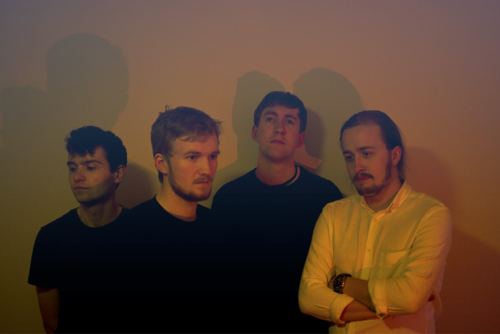
A big thanks to Anna and Sean of Diving Station...

for telling me about the new single, Film, and its story. I ask how the Manchester-formed band got together and what sort of music inspire them; Anna and Sean pick their favourite albums and recommend some rising artists to look out for.

I ask how it feels having their music backed by some big names in radio and whether there are gigs coming up; who they’d support on the road given the choice and what comes next for them – the guys each select a song to end the interview with.

____________

Hi, guys. How are you? How has your week been?

Sean: Hey! Not bad thanks. This week has been spent prepping for the single release and trying to get our head around summer festival/gig dates, which is super-exciting but a little head-achey.

For those new to your music; can you introduce yourselves, please?

Anna: We are Diving Station. We make ‘Harp-Driven-Dream-Pop’. We write story songs, Shoegaze chants and what I like to sometimes describe as ‘bath music’.

How did Diving Station get together? Did you all know each other from way back?

Sean: We all met at university in Manchester, studying music at the RNCM. It started with our drummer Barny asking around for people with a similar music taste. We made friends over our love of Bombay Bicycle Club, CHVRCHES and Foals. From then, we had a few rehearsals, the first of which resulted in a ten-minute jam of what became our first ever song, Turn Off. Four years later and here we are!

Film is your new single. What is the story behind it?

Anna: Film was born out of a poem I wrote about feeling lost within yourself and the importance of acknowledging that. Writing has always been a catharsis to me, and here I used it to extradite the stuff I was bored of carrying around. Lines such as “Throw me a bone; I’ll chase it” - and the repeated tagline of this song: “It’s fine, I’m told” - are a comical comment on societies’ blatant and relentless urge to turn a blind eye when things get even slightly difficult. However, I want it to mean whatever people want it to mean for them: don’t let me and my crap sway you!

Your E.P., Feather Mouth, has gathered huge acclaim. What does it feel like getting support from big names in radio, for example?

Sean: Getting support from the likes of Steve Lamacq and Tom Robinson from BBC Radio 6 Music was huge for us. I still feel excited when I think about it now, though equally exciting is just knowing people have heard and enjoyed the songs we wrote as friends at uni. We owe a lot to the hero that is Ryan Paul from BBC Introducing Manchester who has sent our music around the BBC relentlessly since its release.

The band is based in Manchester. How inspiring is the city and its people to you?

Anna: As a band, we come from all corners of the United Kingdom: Edinburgh, the Isle of Man; Reading and Stockport. Manchester is where we met and I think for all of us it feels like the first place we all chose to adopt as our own. To me, Manchester is an honest, humane and also quite a hard place to live. I am very inspired by the people of this city and how down to earth they are. We explored this in our song, When I Arrived It Was Raining, off of our last E.P.

Have you got a favourite memory from your time in music so far – the one that sticks in the mind?

Sean: Playing at Bluedot Festival a couple years ago was a stand-out for me. It was the first ‘proper’ festival we’d played and the little things, like getting AAA stage passes, proper toilets and a buggy to get our gear to the stage, was such a novelty for us!

Which albums from all of music mean the most to the band (and why)?

Anna: As a Desert Island Discs collector, I have been working on this for a while. I will give you my top-three:

Karine Polwart – Faultlines

She taught me the importance of writing through observation and her music reminds of home and growing up on the Scottish music scene.

Nina Simone - The Very Best of Nina Simone

A compilation seems like cheating, but I learnt to sing by listening to these Jazz standards and copying them; Nina herself is truly the very best.

Corinne Bailey Rae – Corinne Bailey Rae

This was the first album/C.D. I ever bought; I must have been about nine or ten. They’re just bloody great songs.

Sean: My favourite albums change all the time, but there’s a few that have stuck since I first heard them. Phoebe Bridgers’ Stranger in the Alps must be one my most-played albums in full since I’ve been alive - and it’s not even been out two years! From my teenage years, Death Cab For Cutie’s Plans was definitely one of the first that made appreciate the album format and the beauty of listening to it from start to finish. Every song on there is great, but they also have their place in creating a perfectly-paced and hard-hitting piece of work.

bb.jpg

If you could support any musician alive today, and choose your own rider, what would that entail?

Anna: Hmmm. Well, I guess our collective favourite band would be Dirty Projectors and that would be a pretty ridiculous experience for us. In terms of a rider, it would probably be something like:  all the necessary ingredients for a hot toddy; three fish suppers and one halloumi supper from Manchester’s Leo’s Fish Bar;  ten packs of sweets (for Barny, our sweet-toothed drummer); one big, fat hypoallergenic cat.

What advice would you give to new artists coming through?

Anna: Never ever compare yourself to other artists and, for God sake, don’t Google how old they are. It takes time and everyone is different. The best advice I have gotten this year was to make goals based solely on the progression of the music and not on the progression of the project…and that has really helped.

aqww.jpg

Do you have tour dates coming up? Where can we catch you play?

Sean: We’re playing a fair bit over summer. You could catch us at the Toad Hall Stage at Glastonbury; The Tramlines Fringe and the BBC Intro Stage at Bluedot. After that, our next headline gig is at YES, Manchester on 3rd October. There’s also talk of a Leeds headline show and some tour dates around that…

What is a typical gig like for you guys? What might we expect if we come and see you perform?

Anna: That’s a funny one because a typical gig for us might be very different to a typical gig for the crowd. I’d hope you would find in it something fun, intimate and relaxing. But, come along, decide for yourself and let me know afterwards!

What plans does Diving Station have for the rest of the year?

Sean: Outside of the gigs, following our latest single, Film, we’ll be releasing a second single, Honeybees, with the headline gig in October. Apart from that, we’ll be writing away and prepping for more releases in the New Year. We’ve also been talking about having a writing retreat in the countryside sometime; to get some focused time away from the busyness for a weekend or so...

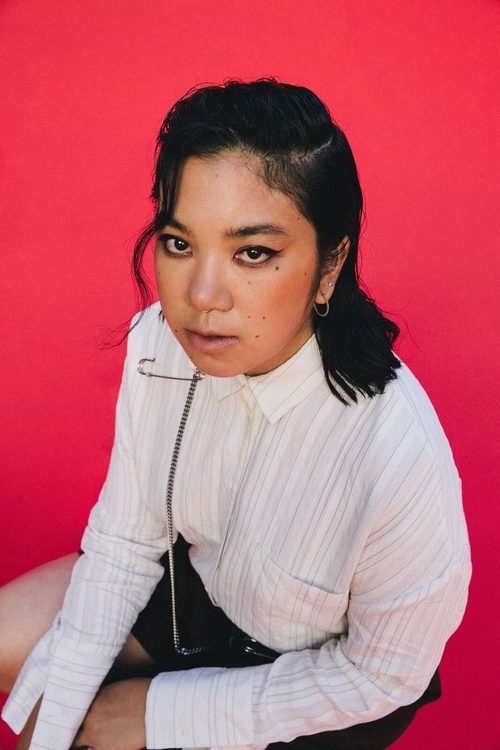
 IN THIS PHOTO: Rozi Plain

Are there any new artists you recommend we check out?

Sean: We went to see Rozi Plain on her tour for the release of her latest album, What a Boost, which was absolutely magical. Another recent discovery has been ALASKALASKA, who Anna went to watch at YES a few weeks back. They’ve just released an album and it’s been on-repeat on our band Spotify playlist since.

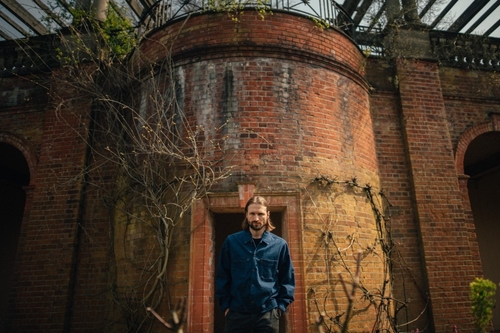
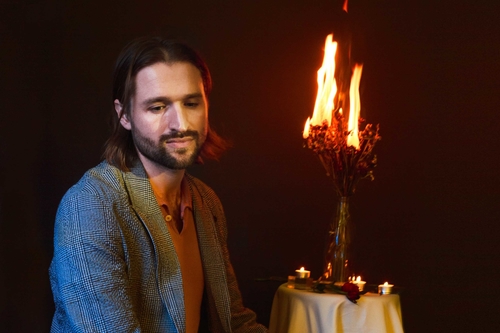
 IN THIS IMAGE: ALASKALASKA/IMAGE CREDIT: Elliott Arndt

Do you get much time to chill away from music? How do you unwind?

Anna: Music takes up a lot of our lives and that sometimes does become a bit of a chore no matter how grateful we are for it. I love hopping on my bike and going for a wee cycle through town. This always sorts me out. Other than that, I have recently gotten into pottery and find that to be a nice way to be creative away from music!

Sean: At the moment, it’s pretty much full-pelt music all the time. It seems to be the only way we can sustain it at this stage. For me, anywhere outside and more natural feeling than the city centre makes me feel best. A trip to the Peak District is a dream day off!

Finally, and for being good sports; you can each choose a song and I’ll play it here (not any of your music - I will do that).

Anna: To Be Remembered - ESKA

Sean: From - Big Thief

___________

Follow Diving Station

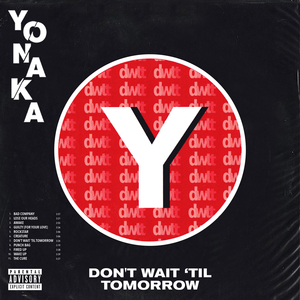
TRACK REVIEW: YONAKA - Wake Up

TRACK REVIEW:


YONAKA

Wake Up


9.5/10


The track, Wake Up, is available via:

https://www.youtube.com/watch?v=hbLptuA9XQo

GENRES:

Alternative/Pop

ORIGIN:

Brighton, U.K.

The album, Don’t Wait ‘Til Tomorrow, is available via:

https://open.spotify.com/album/20XIFoAtLYdFGnDoqNwnbf?si=tenVP1fFQFeYYJQVWIX9MA

RELEASE DATE:

31st May, 2019

LABEL:

Asylum Records UK

__________

THIS time around...

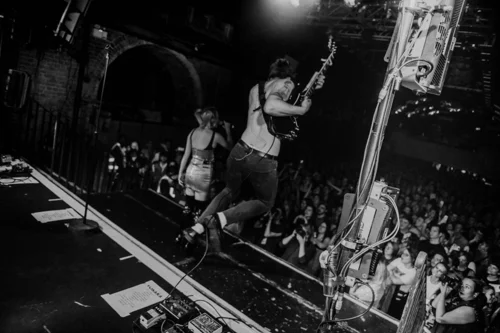
 PHOTO CREDIT: Rory Barnes

I want to talk about bands and artists coming out of Brighton, addressing subjects like toxic relationships in music; mixes of Pop and Alternative in music; female-fronted bands and why festivals/the industry needs to take more notice; a bit about underground artists are their future in the industry – I will end by speaking about YONAKA and where they might head. It is interesting addressing YONAKA because I have been following them for a little while now and have seen them grow as a band. Their album, Don’t Wait ‘Til Tomorrow, is out and it is the culmination of years of grafting and hard work. The guys have a really tight connection and great sound that they have forged through live gigs and regular play. It is testament to their chemistry and abilities that they have released an album that is gathering great reviews and going down a storm with the fans. They have got a lot of exposure in London but I think it is their roots in Brighton that has helped them to stand aside from the pack. I live in London but I know full well that there is more room and time to breathe in Brighton. It is a part of the country that inspires the senses and allows one to recharge. There is far less bustle and stress than in London and the people are fantastic – there are nice people in London but nearly as many as in Brighton. It seems like, despite one or two venues closing, there is a really strong live scene and some great artists bursting through. There is a lot of emphasis on London – because this is where most of the big venues and labels is – but one cannot discount the appeal and strength of Brighton. It has a fantastic mix of people and great venues like The Green Door Store give space for artists to cut their teeth and hone their craft. More than that, there is this feeling of community and support that one does not get from other parts of the world – there is also the convenience of being quite close to London in terms of commuting to gigs.

 PHOTO CREDIT: Ryan Saradjola

I wonder whether a lot of people are aware of Brighton and why bands like YONAKA are thriving. You only need to go down to Brighton and spend some time there to understand there is something in the air; a sense of wonder and relaxation that gets into the bones. The variety of music on offer down in Brighton is also impressive. You can find all sorts of genres and styles to suit your tastes; this real blend of colours and textures to amaze and dazzle. Great record stores like Resident provide a chance for in-stores and inspiration; festivals such as The Great Escape display a banquet of artists and give local groups the chance to ply their trade and impress the crowds. This year has seen Brighton in the spotlight. I think The Great Escape – where YONAKA featured – is more balanced (in terms of gender and genre) than most festivals and brings a lot of new followers and faces to Brighton. There is so much emphasis on London and what is happening there but I feel so many people are heading there and it is getting harder and harder to stand out. I think, in terms of YONAKA’s sound, they sort of take from the scenes and sights around them but they possess a sense of innovation and brightness I do not think they’d have if they were in London. That might sound strange but I think they are influenced by their surroundings and the people of Brighton. It might be the case that they relocate to London so they can find more opportunities but, as Brighton is so close in terms of a commute, I do hope that they remain put for a while because, as their new album takes hold and gets buzz, they will get a lot of gig requests and love from Brighton. I shall move on but I think it is interesting in Brighton right now. I went down there a few months ago and saw pubs and venues boasting live music; a general vibe that is hard to ignore and a happiness that one does not get from London. Maybe the reality is different but one goes to Brighton and they are instantly lifted; their troubles melted and their mind opened.

It is interesting addressing YONAKA because I have been following them for a little while now and have seen them grow as a band. Theresa Jarvis, the lead of YONAKA, brings a lot to the party on the band’s album. Don’t Wait ‘Til Tomorrow’s title suggests taking the bull by the horns and seizing the day. There is that need for urgency and getting out of bad situations; not putting things off and taking chances when they come your way. I will quote an interview from YONAKA in a bit but, when looking at themes on the record, it seems that toxic relationships play a big role. I am not sure whether Jarvis has been on the receiving end of bad love and mistrust but it seems like she is taking from her own experiences. Everyone can relate to situations where one person in a relationship is controlling or is exerting a lot of pressure. Getting away from that and moving on can be hard but YONAKA’s lead feels that it is possible – taking those steps and realising you do not need to be with that person if they are bringing you down. There is more to YONAKA’s album than relationships alone. The band address mental-health (on the album) but manage to fuse serious messages with songs that have a distinct bubble and pop to them. Look at this interview YONAKA gave NME earlier in the year and they explain what inspired their recent material:

“I want them to feel strong,” starts Theresa Jarvis of what she wants people to get from Yonaka’s debut album. “I want them to feel empowered. I want them to feel like they can kick the door down and go get what they want.”

It’s a strutting, confident message from a band who’ve spent the past few years growing in strength; collecting their power and kicking down whatever doors have been stupid enough to stand in their way. The end result is ‘Don’t Wait ‘Til Tomorrow’, a record that captures all that growth and, alongside a blossoming belief, twists it into a celebration of everything that the band stands for…

“I definitely do think what we’re doing is important. When we get offstage, all these young girls come and speak to me saying we’ve given them confidence to do this or ‘thank you for talking about this, you’ve made me feel better’. If young girls are saying that, that’s fucking amazing. It’s definitely important,” beams Theresa. “We were getting the album together at that point as well, which helped solidify it,” continues George.
“It’s saying reach out to someone, change something or do something about it. Don’t leave it too late. I was going through some really bad anxiety myself. I couldn’t sleep properly and I was feeling really shit. I started reading Matt Haig and his writing captured exactly how I felt, but couldn’t explain. That was really important.”

She continues: “Sometimes you feel really lonely, like ‘It’s just me, I’m going to die’. To know someone else feels the same way I do, that helped me when I wasn’t feeling good. I’ve got family and friends who suffer with depression and it really gets heavy on people. People’s brains, they can take over and put you in this horrible place. ‘Don’t Wait ‘Til Tomorrow’ is a message to let you know you’re not alone. Other people are going through the same stuff and you can reach out and talk to someone”.

It is great that YONAKA have managed to inspire young girls when it comes to big subjects; stuff that is not necessarily being broached by their friends and at school. YONAKA put mental-health at the front and, when it comes to loneliness, they know that there is someone out there who feels the same – Don’t Wait ‘Til Tomorrow is that realisation that we can all find someone to relate to and we need to discuss these sort of themes. Whereas a lot of artists are still concentrating on their own struggles and very narrow themes, YONAKA are a part of a new wave who are going deeper and being more inclusive with their sounds.

poopop.jpg

 PHOTO CREDIT: Elina Lin

It is hard to describe the sound of YONAKA but they seem to mix Pop, Punk and Alternative together. I look the Pop edge because it gives their music a sense of colour and lightness. When they address themes like toxic relationships and loneliness, it is important the messages resonate and strike but, in terms of memorability, they have made the palette a bit less stressful and tense; it allows the songs to convey something important but make people move at the same time. I do think modern music lacks a sense of smile and fun and, even though YONAKA are dealing with some serious stuff on Don’t Wait ‘Til Tomorrow, they are able to write some big choruses and lace in something charming. Led by Jarvis’ excellent vocals and intoxicating spirit, the band come together wonderful and have this busy and exciting sound. I guess there are artists putting together Alternative and Pop but I do feel it is a style of music that should be more popular and exposed. There are too many downbeat songs around right now so it is a relief to discover YONAKA. They can make you think and highlight something pretty raw but, at the same time, they want people to move and feel free. This is a potent combination and something that makes their album a real hit. The band give us big hooks and you are never in short supply of rush and energy. Their music definitely awakens the senses and this is music you can sing along to. Whereas some artists are quite closed-off and can be pretty dour, YONAKA are bursting with life and their music gets people together. Those who have seen them live – I should do next time I am down Brighton way – state how friendly YONAKA are and how they always have time for their fans. Their live performances are excellent and you can feel some of this energy in the album. Rather than produce something polished and fake, the band have kept close to their roots and have released and album that will please existing fans and bring in new support.

 PHOTO CREDIT: Rory Barnes

Going forward, I hope YONAKA will keep their sound true and not feel the need to change too much. I love the fact that YONAKA have these great choruses and can put hooks in the mix but there is this rawness that makes you want to get into a mosh-pit and let everything fly loose. YONAKA have strengthened as a unit and I am sure they will say their new material is more meaningful and nuanced than their earliest days. I know Jarvis has looked back at some of the early songs and wonders what she was saying. It seems the band is riding a high now and, with industry backing and a growing fanbase, they seem ready to take the next step. I do think they have an important role to play in music. There is some great Pop and Alternative around but nothing that has the same sound as YONAKA. They bring together some shades of the 1980s and 1990s – always good when you want to cross the generations – so that is something that speaks to me. They are always in the present day but, as they do straddle time and moods, their music has this variety and width that means everyone can take something from it.

Everyone who sees them live tends to say the same thing: they are one of those bands that you cannot forget and you want to see again. It is obvious YONAKA are among the most exciting groups coming through right now and they back that live reputation with incredible songs that stay in the brain. I find so many modern tracks have a sort of doomy skin and it can be a bit depressing. I yearn to uncover great artists who can talk about something serious but have a fun time whilst doing so. YONAKA is what we need in music at the moment and I cannot wait to see where they head next. Let’s move onto something else because I am keen to look at YONAKA as a possible future-headliner.

I have been very feminist-minded the last few days and, whereas I am continuing today, I do feel that so many great female artists are being overlooked. YONAKA might be underground and rising right now but that is not to say they will be quiet for too long. They have this great local reputation but are starting to get a lot of attention from further afield. I look at festival line-ups this year and there is a lack of female headliners. There are not even female-fronted bands at the top and that worries me. Considering there are so many great women around right now, I do wonder what is holding festivals back. Look at European festivals like Primavera Sound and they have the likes of Robyn and Solange rocking the crowds. They have shown that a fifty-fifty gender balance is possible at festivals. I wonder why we here are not able to match Primavera Sound because they have shown how easy it is! As this BBC article shows – when putting Primavera Sound in the spotlight – there are a lot of great female artists and bands out there:

“Charli XCX, Lizzo, FKA Twigs, Christine and the Queens, Robyn and Sigrid are just a few of the names on the bill. And when headliner Cardi B pulled out Primavera managed to replace her with another big name - Miley Cyrus.

"We love music and if you love music in 2019 it's quite obvious that it's done both by men and women the same way," says Primavera's Marta Pallares Olivares.

She says it was only when last year's festival ended that they decided to try and achieve an equal gender balance this year - something they're calling the "new normal".

"It's not difficult once your mind is set - when you decide that you want to do this, you start looking for female bands and see that you have been listening to them during the last month," she tells Radio 1 Newsbeat.

"I will say to all those people who say there are not enough female acts out there - because I've heard that - that it's simply a lie. They are out there - because they're here".

 PHOTO CREDIT: Rory Barnes

We do need to address festival imbalance and show that an equal gender split is what should be happening every year. Great female-led bands like YONAKA might look at festival line-ups and feel that they could never headline because they are fronted by a woman. Look at Wolf Alice – a band who won the Mercury Prize – and one wonders why they were not chosen to headline any festival this year. I can name so many great female/female-fronted bands that are capable of producing a great headline set – one wonders if they are even considered and part of the conversation. It is sad to see but it makes me wonder what festival organisers are looking for in headliners. I think YONAKA tick a lot of boxes. They have these immediate songs that are memorable and get the crowd pumped. Their live sets are fantastic and they are getting stronger with every new release. I do think that, when they have another album or two under their belts, they can own a headline stage. I do wonder if, by that time, festivals will be more attuned to the variety of music and how many great women there are. In any case, we need to change where we are now and stop holding women back. I do actually think that female/female-led bands provide that perfect mix. I prefer a female voice up front with a band because I think there is more depth and emotion in the voice. Having men and women in a band, I feel, gives the music more variety and different voices. There is a chemistry in the ranks that leads to terrific music and that translates readily to the stage. Who knows where music will head in years to come but I do think that bands like YONAKA warrant the chance to headline. They are underground right now but, as I said when talking about Brighton, there are some really good bands emerging that you need to look out for.

There are distinct themes that run through Don’t Wait ‘Til Tomorrow. You only need to look at the song titles to realise escape, movement and defiance are all high on the list. The opening to Wake Up is one of the most compelling (introductions) on the album. The band are masterful when it comes to providing these great introductions and giving each song a real sense of character and voice. We get some great percussion leading from the back and a mix of tripping strings and warped electronics. It provides this contrast of buzz and nimbleness that drags the mind and senses in different directions. When Jarvis comes to the microphone, she talks about, when she closes her eyes, she makes some sort of compromise. Before I continue, I wanted to say that, apart from a couple of songs on the album, the band have brought new material to the plate on their album – whereas a lot of other bands tend to cram albums full of old songs. Also, every song on the album is between three and four minutes long: none last any shorter or longer, if you see what I mean. One can hear hints of YONAKA’s earliest material but there is freshness on songs such as Wake Up. That sense of being allowed to wander – without being too long-winded – means the tracks breathe and expand. Jarvis, when talking about closing her eyes, knows that this is not real life. I do wonder what she was referring to when she said she was compromising – maybe having dreams of love and being stuck in a bad situation. Maybe she goes to sleep and pictures horrible scenes from a relationship and knows that, as this is a dream, she has control in real life, maybe? It is an intriguing line of thought and Jarvis continues with lines about kissing people she does not like and experiencing all these bad moments. Things seem a bit rough when she lets her imagination take control but, as she keeps telling us, this is just a dream and she can wake up.

I love the sounds YONAKA put together; this blend of strong but sweet vocals – in the sense there is light and colour but plenty of teeth – and an incredible composition. In a way, there are similar threads one can find in bands such as black midi (who portray a similar blend of tones in their music) and it is great to hear. As I follow Wake Up, I had to ask myself whether what we are hearing is in the heroine’s past. Is the heroine still going to sleep and trying to escape these bad memories and visions? It appears that, whilst she can wake up and take control, maybe the ghosts of a bad relationship continue to weight her down. It seems like her boyfriend is with another girl and things have not been too great for the heroine. When she goes to sleep, she runs with gorillas in the moonlight and seems to fall into this rabbit hole – maybe the natural result of her building anxieties manifesting into something quite divorced and weird. When she does wake up, it is a chance to run away from the bad dreams but it seems like real life is not so straight-forward. Sure, Jarvis can take some control and get away from a toxic relationship but she still has to cope with a lot of heartache. Even if the heroine talks about s*it getting real and things being a bit strained, the way the song is delivered definitely gets the voice ringing.

PHOTO CREDIT: Rory Barnes

In a way, the words become more memorable and indelible when there is a sense of positive and pop in the delivery. There are definite nods to 1980s Pop when you hear the chorus burst into life. I am not surprised YONAKA have a big live following because I can imagine songs like Wake Up get people chorusing together and in a great mood. That is not to ignore the song’s message and the fact Jarvis is dealing with something pretty rough. That contrast between dreams and a lack of escape and being able to tackle things when awake is pretty vivid. I do wonder whether, in the song, she has someone with her offering support and backing. Maybe her boyfriend is not as reliable and supportive as he should be and one gets the sense the heroine is finding the power and strength to get through some choppy waters. Wake Up is an incredible song that has this breeziness and big heart but there are deep messages that many people can relate to. If you like Wake Up and want to hear more of this sort of track, investigate Don’t Wait ‘Til Tomorrow because YONAKA have produced a dazzling album full of gold.

I shall end things here because, I hope, I have talked about YONAKA enough and drilled down to their core. I am a big fan of theirs and think that Theresa Jarvis is one of the most compelling and extraordinary leads in British music. She is an intoxicating presence and someone who is leading a mighty band right now. YONAKA were at The Great Escape Festival and they seem to have a really solid and supportive home in Brighton. They are a lot of fun and they always provide great interviews; their live shows are exceptional and the music is wonderful. I think they have all the components to succeed and endure for many years to come. Keep an eye on their social media channels because they are busy gigging and, if you can, make sure you get and see them. I wonder whether they have had an in-store at their local record store, Resident, because that would be pretty cool to see – I would definitely come down and see them if that was the case. Their album, Don’t Wait ‘Til Tomorrow, is out and the band will want to focus on that and make sure it is promoted far and wide. I have seen some reviews for the record and there is a lot of love for YONAKA. It is hard to ignore them and I do really believe they will be big in the future.

I love what they are doing and they will definitely inspire other bands emerging. I have talked about Brighton and mixing Pop and Alternative together. I do think that, if you need your creative batteries recharged, Brighton is a great place to head. There is so much happening down there and you only need walk around for a couple of hours to realise how relaxed things are. It is so easy to get the juices flowing and be influenced by what happens around you. This is more or less the start for YONAKA but I know they will be setting their sights on the future and where they will head next. I feel there will be international dates and I feel like they can do a lot of good in the U.S. With an album out, they have this bargaining chip and way in; a great set of songs that would sound amazing in the live arena. Congratulations to the band on Don’t Wait ‘Til Tomorrow and, if you are not familiar with their work, then make sure you spend some time…

FALLING in love with them.

___________

Follow YONAKA

FEATURE: Thank U: Alanis Morissette at Forty-Five: The Playlist

FEATURE:


Thank U

PHOTO CREDIT: Mario Anzuoni/Corbis  

Alanis Morissette at Forty-Five: The Playlist

__________

I have been a fan of Alanis Morissette since…

 COVER/PHOTO CREDIT: John Patrick Salisbury

her 1995 breakthrough album, Jagged Little Pill. That album seemed to appear out of nowhere – even though she had released a couple of albums before that – and put her name on the musical map. That is, perhaps, the album most people associate with Morissette but it is not her only golden release – 1998’s Supposed Former Infatuation Junkie is a masterpiece in its own right! Today is Alanis Morissette’s forty-fifth birthday and, in addition to wishing her many happy returns, it is a great opportunity to revisit her brilliant work and, as I love to do it, assemble a playlist. Jagged Little Pill is in the news because it – or a musical about it – is being brought to Broadway. This article provides more details:

“Alanis Morissette didn't want her landmark album Jagged Little Pill to become a bio-musical. So when producers approached her eight years ago about bringing the music to the stage, she had some requests.

"I was flattered and my initial thought was, is it going to have to be my story? Because that's terrifying. Maybe one day I'll have the audacity to share it in another form," said Morissette at a launch event for the musical in New York. "The last thing I wanted to do — to be transparent — was any kind of a jukebox musical or anything that felt compartmentalized or separate."

The cast and creative team gathered at Haswell Green's in Midtown on Tuesday night to share songs from the show and to talk about the genesis of the production. The musical premiered at American Repertory Theatre in Cambridge, Massachusetts, last summer and is scheduled to start performances on Broadway in November.

A.R.T. artistic director and Tony winner Diane Paulus stages the new musical, which has a book by Diablo Cody, a 2008 Oscar winner for her original screenplay for Juno.

The show takes those songs and weaves them through a timely, female-driven story about characters dealing with issues ranging from addiction and gender identity through sexual assault. The songs take on new life onstage, yet retain their inherent drama. "You Outta Know" is still an anthemic breakup song, and "All I Really Want" becomes an opening "I Want" song for a family struggling to communicate.

"I have learned more from Alanis and the thoughts she's given me and the books she's told me to read about understanding, which is key to this musical," Paulus said. "We cannot heal anything that we are hurting about if we're alone. Everything is done in relationship to other people and that is fundamental to what she's given us."

Cody crafted a story by zeroing in on characters that already existed in the album. She started with the central figure of Mary Jane from Morissette's song of the same name. In the musical, Mary Jane is a mother struggling with addiction and mental health, distancing herself from her marriage and children.

"That song tells you everything you need to know about that woman, and so I was able to build it out from there," Cody explained. "I just feel very fortunate to have this incredible, theatrically rich, beautiful source material to work from. It's not a typical jukebox musical situation where you're thinking, 'How can I shoehorn this hit into the story?'"

The musical/show is a great chance for people to see a new side to an album that garnered a huge amount of praise upon its release. It would be unfair to link Morissette with the one album but, with songs such as You Outta Know, Hand in My Pocket and Ironic in the pack, one cannot overlook its brilliance. I always found myself supporting Supposed Former Infatuation Junkie. Released in 1998, songs such as Thank U and Unsent were hits and (the album) received widespread critical acclaim. AllMusic, in this retrospective review, were very positive and complimentary:

“Also, she has clearly spent some time crafting her lyrics; not only do they never sound like straight diary entries, she no longer is trying to fit too many syllables into a phrase. These two differences are subtle -- the brooding, Eastern-styled music that dominates Supposed is not. There are numerous extensions of the vague hip-hop and pop fusions that made "Hand in Pocket" and "All I Really Want" huge hits ("Front Row," "UR," "Thank U," "So Pure"), but much of the album is devoted to moody ballads and mid-tempo pop, where the textured production functions as a backdrop for Morissette's cryptically introspective lyrics. Far from being alienating, this approach works surprisingly well -- not only do the pop tunes sound catchier, but the ballads, with their winding melodies and dark colors, sound strong and brave. If anything, the record is more coherent album than its predecessor, and even if it isn't as accessible or as compulsively listenable, it's a richer record. That said, it won't win any new fans -- for all of her success, Morissette is a weird acquired taste, due to her idiosyncratic vocals and doggedly convoluted confessionals -- but it certainly confirms that she doesn't quite sound like anyone else, either”.

xccxcxcxcx.jpg

IMAGE CREDIT: Getty Images

Morissette’s last album, 2012’s havoc and bright lights, is a very different beast to her golden days but it did show that she was capable of evolution and changing styles without compromising monster choruses and catchiness. I wonder whether she is planning more material or, with a musical in full swing, things are a bit busy. When Jagged Little Pill was released, it not only won awards and big reviews, but it influenced a score of female artists – including Shakira, Meredith Brooks and P!nk. It is the timelessness of Jagged Little Pill’s best moments that make you realise nobody like Alanis Morissette has arrived since. Before rounding off, I wanted to bring in a Variety article from last year that featured Alanis Morissette as she prepared Jagged Little Pill for the stage. She (alongside Diablo Cody) talked about the album and some of its themes; why feeling angry was a force for good:

“I see anger as this gorgeous life force,” said Morissette. “It’s actually one of my favorite feelings because it’s a catalyst. The destructive version of anger gets such a bad rap—the destructive acting out and lack of maturity and inability to contain it gets the bad rap. And our traumas can create so many different personality disorders to the point where the empathy is gone, the curiosity is gone...

PHOTO CREDIT: Getty Images 

 [...] Those are the first things to go and connect us as human beings. . .this disconnect with ourselves and each other is becoming normalized, to the point where our health is being affected. Our wellbeing. A lot of us are anxious and depressed. And it’s no wonder that we are.”

“One of the big lessons for me, sitting in the audience—which was very surreal—was taking in how these relation-ial interactions are healing,” said Morissette. “Writing is such a cathartic experience. . .I thought I could just get away with writing in my journal and just writing songs for the rest of my life—and never have to deal with human beings. But it didn’t work. It was incredible to work with Diablo and [director Diane Paulus]. . . because it was so healing”.

If Alanis Morissette’s most-famous album is coming back strong in a new guise, we cannot ignore her other work and what she has given to music through the years. To celebrate her forty-fifth birthday, I am ending with a forty-five-song playlist that charts her beginnings right through to her most-recent album. If you are new to Morissette’s music, I urge you to listen and discover this fantastic and unique force. Listen to some of her interviews online and just listen to the way she speaks – so passionate and compelling. She is a hugely inspiring artist who has made a huge impact on music and continues to amaze. Today is a sunny and pretty hot day and, to round it off, I feel like everyone should play the Alanis Morissette playlist below and end it in style. Happy birthday to Alanis Morissette and let’s hope there are many more albums from the…

CANADIAN superstar.         

FEATURE: Artificial Flowers: Is the End of Morrissey’s Career Nigh?

FEATURE:


Artificial Flowers

PHOTO CREDIT: Getty Images/@officialmoz  

Is the End of Morrissey’s Career Nigh?

__________

THERE are some well-known figures who you can…

5432.jpg

 PHOTO CREDIT: Getty Images/@officialmoz  

always rely on to put their foot firmly in the mouth! Music is full of characters and those who are a bit outspoken but, when it comes to stirring real controversy and debate, Morrissey is pretty high on the list! It is not a particular good time in his camp right now. His covers album, California Son, has not received terrific reviews. There have been some scathing reviews but, among the less-venomous, this is what Pitchfork had to say:

“The choice between listening to a misanthropic relative telling you old stories they love or hearing them grouch at the news is a no-brainer, but that doesn’t make some of the sugariness easier to swallow: As hard as Morrissey tries, it’s difficult to enjoy a celebratory gambol with him down memory lane when it’s full of potholes. Perhaps unsurprisingly, it’s the gloomiest moments that come closest to winning you over, like when he turns Tim Hardin’s “Lenny’s Tune” into an exquisite elegy at a doomy cabaret bar, or when he makes Melanie’s “Some Say (I Got Devil)” sound like the darkly dramatic last stand of a vengeful titan. When you hear them, you could almost pretend it was the old days again, even though you know it can never be the same”.

It is not the most fertile and successful time of Morrissey’s solo career but, as he has been in the game for a long time, there are other albums ahead. It is not necessarily the quality of the music and his direction that is putting people off: it is his latest in a string of ill-judged moves that has courted a lot of reaction.

The Guardian take up the story:

 “These days, however, Morrissey prefers a different kind of onstage provocation. During a recent performance on The Tonight Show Starring Jimmy Fallon (and at a number of live shows in New York), the former Smiths singer sported a For Britain badge. For those unfamiliar with it, For Britain is a far-right political party. Even Nigel Farage believes it is made up of “Nazis and racists”.

Last year, his thoughts on #MeToo were no less inflammatory. Of Anthony Rapp, who accused Kevin Spacey of making sexual advances towards him when Rapp was 14 years old, he said: “One wonders if the boy did not know what would happen … When you are in somebody’s bedroom, you have to be aware of where that can lead.” Of the many female accusers of Harvey Weinstein, he said: “They play along. Afterwards, they feel embarrassed or disliked.” In today’s culture wars, Morrissey has clearly chosen his side – and there have been consequences. Posters for his new album, California Son, have been taken down by the train network Merseyrail. A guest vocalist on the record, Broken Social Scene’s Ariel Engle, told the Guardian she felt like she’d “been had” by the singer. A record store in Cardiff decided not to stockthe album, with its owner saying sales of his music had nosedived because “customers are saying they can no longer buy into his increasingly divisive politics, not even for ‘old times’ sake’”.

There is no denying that Morrissey knew what he was doing and was making a statement: that the country in which he lives is divided and, when people are choosing sides, his allegiance is with a far-right organisation.

Morrissey has never been afraid to speak his mind on a range of subjects; whether it is vegetarianism, politicians or the state of the nation. His latest move is not a wise or popular one and, when it comes to record stores around the U.K., our oldest has taken a stand. Stereogum reports how Spillers has stopped stocking Morrissey records:

“Spillers’ owner Ashli Todd told Wales Online, “I’m saddened but ultimately not surprised that Spillers is unable to stock Morrissey’s releases any longer. I only wished I’d done it sooner”.

That single quote is all you need to know: Morrissey is no longer welcome at Spillers and I would not be surprised to see other record stores doing the same – and boycotting his records in the future. We are getting used to Morrissey letting his mouth run away with him but I think you tolerate and accept a certain sense of outrage so long as he does not cross a line. That is a subjective measure but I think his ongoing support for the far-right is hard to come back from.

I know everyone is entitled to their political views but Morrissey’s defence of the far-right is not something that will give his fans heart. I have heard of people who once loved Morrissey soured by his continued controversy. It seems that, for many, he has pushed things too far and there is no real way back. One can also claim that, so long as the music is great, we can balance a bit of the bad into the equation. Even from the earliest days, Morrissey has provoked a certain fire but it seems, with age, there is no real limit to his ignorance and lack of judgement. It is surely very disheartening for his die-hard fans to see their hero tarred once more. One can hardly say Morrissey has been pressured and made a stupid comment he has since apologised for. His support of the far-right and figures like Tommy Robinson is something he believes in and has not apologised for. It has put his fans in a bad position. Do they continue to listen to his music or is it now too awkward and uncomfortable? It raises an argument regarding separating the musician from the music. I am a big fan of The Smiths and love Morrissey albums like Your Arsenal and Vauxhall and I. I can listen to his music but I would be reluctant to buy anything new from him. Also, regarding the man himself, I have lost an awful lot of respect and feel like Morrissey has tarnished his genius and brilliance.

 IMAGE CREDIT: Getty Images/@officialmoz

The Guardian piece I quoted earlier states that Morrissey is due for some criticism and investigation:

“It is hard not to agree that proper, forceful criticism of Morrissey is overdue. Yet perhaps it’s not surprising that many were hoping he was just, misguidedly, playing provocateur. In a piece for the Guardian in 2011, the author Sukhdev Sandhu wrote beautifully about how, as an “ordinary Asian” fan of the Smiths, the singer seemed to speak directly to him: “No one had ever come as close as Morrissey, the child of Irish Catholics, to expressing a poetics of second-generation migration. He sang about shame and unlovability; I had bloodied myself as a 12-year-old using a kitchen knife to scrape away what I saw as the tainting brownness of my skin – a brownness that made me only half a person, half the Englishman I wanted to be. He sang about loneliness and isolation; I was rarely invited to the homes of schoolfriends, and certainly never invited them to my mine, for fear that they would snigger at the photographs of turbaned relatives that lined its walls”.

His latest album shows that, for now at least, he does not hold a lot of sway and momentum. I do think it will take a lot of time before he is in the good books of fans and the media. Even if Morrissey does follow with an incredible album, are people going to disassociate his public persona with the man’s music? It does open up a debate but I think there is no denying that Morrissey’s popularity and appeal is waning.

I pose that question at the top of this article regarding Morrissey’s career and whether the end is coming. His loyal fanbase will always be behind him and it will take a nuclear bomb of controversy before they turn away. I think, for the rest of us, we cannot really overlook and forgive a man who supports division, racism and discrimination. His music will never go out of circulation but I think, now, he has lost the ear and respect of so many out there. I think all iconic songwriters should set a good example to the new generation but, with Morrissey backing right-wing politicians, should musicians aspire to be like the northern star? One cannot deny the strength of Morrissey as a lyricist but his ever-increasing sense of self-destruction and irresponsibility leads me to feel that he is not the sort of artist we should be proffering and putting on a platform right now. I do think that there is a sense that things have changed. Even if Morrissey produces a cracking album next, I think there is still that bad taste in the mouth that means fewer people will listen to and support his music. How many young fans will go and see him in concert – knowing his political allegiance – and, for those who do, will they be subjected to Morrissey’s unpredictable and often-erratic remarks?! One could and should never ban a musician and silence them but I do not think we can overlook Morrissey and what he is throwing out into the world right now.

If some long-time Morrissey fans are scrapping their membership, it seems that his former Smiths bandmate, Johnny Marr, is not concerned the music they left behind is going to be tainted. Metro report the news:

“But his former bandmate Johnny Marr isn’t worried about the affect Morrissey’s political leanings will have on The Smiths’ legacy. The guitarist and songwriter told NME: ‘I don’t think you can change history. I’ve said that before. I’m not worried. It’s got nothing to do with my world or my life. The songs are out there for people to judge, relate to and hear. I think that’s all going to be forgotten in a few weeks, as these things inevitably are – for better or worse. It’s always been that way”.

After comments regarding Kevin Spacey and Harvey Weinstein, Liverpool Rail removed posters promoting Morrissey’s latest album – something that the man himself was disappointed about:

“This led to Liverpool’s public transport network removing posters for Morrissey’s new album California Son, following complaints. Morrissey told Music News: ‘It’s very Third Reich, isn’t it? And it proves how only the feelings of the most narrow-minded can be considered within the British Arts. We are not free to debate, and this in itself is the ultimate rejection of diversity … I am afraid we are living through The Age of Stupid, and we must pray that it passes soon”.

Morrissey does not make things easy for himself but one can say that he has always been this way. Personally, I think Morrissey will always have a place in music – one cannot discount his legacy and what he has provided over the past three-and-a-bit-decades. I do think that, with a lot of former supporters looking elsewhere, many are fed up and have lost patience. I used to hold a lot of love for Morrissey but I feel, with every passing year, he is backing himself into a corner – one he will struggle to come out from. One wonders just what Morrissey will say next and what problem will arise. When an artist is in the press more for their remarks and bad sides – and less for their music – it does suggest that people’s patience is…

PHOTO CREDIT: Jake Walters

STARTING to wear thin.       

FEATURE: Life Thru a Lens: The Iconic Shots of Michael Putland

FEATURE:


Life Thru a Lens

IN THIS PHOTO: Bob Marley, Mick Jagger and Peter Tosh backstage at a Rolling Stones concert at the Palladium in New York on 19th June, 1978/ALL PHOTOS: Michael Putland 

The Iconic Shots of Michael Putland

__________

I was listening to Lauren Laverne’s show…

 IN THIS PHOTO: Michael Putland captures a smoking Marianne Faithfull in 1982

on BBC Radio 6 Music earlier in the week. She was speaking with the legendary photographer Michael Putland about his work and life. He claims to have never taken a day off during the 1970s and I could tell, when listening to their conversation, that the passion still runs deep. If you are unfamiliar man then, to get acquainted, let me introduce him to you:

“Born in 1947, Michael grew up in Harrow where he took his first pictures at the age of nine before leaving school at sixteen to work as an assistant to various photographers including Time-Life photographer, Walter Curtain and the legendary motor racing photographer, Louis Klemantaski. In 1969 he set up his own studio and by 1971, he was the official photographer for the British music magazine Disc &Music Echo. His first assignment for them that year was to photograph Mick Jagger in London.

From the editorial work for Disc and Music Echo, Sounds and later Smash Hits & Q magazine amongst others, to the 1973 tour with The Rolling Stones that led to a long-standing relationship working with the band, Michael has shot prodigiously including for major record labels including CBS, Warner, Elektra, Polydor, Columbia Records and EMI. Relocating to New York in 1977, it was here that Michael founded the photo agency, Retna which went on to become one of the most respected music and celebrity image libraries in the world.

Music photography has taken Michael around the globe touring with acts as diverse as George Michael in Australia & Japan, The Cure in Brazil, Eric Clapton in the U.S., The Stones as well as intimate shoots with artists at home: David Bowie painting his ceiling at Haddon Hall, John Lennon and Yoko Ono in the White Room at Tittenhurst Park, Roger Daltry in his Kitchen, Jeff Beck with his beloved hot rod cars, Billy Joel by the fire in Michael’s own apartment, Keith Richards at his Upstate New York farmhouse, Robert Plant at home in Wales … and being a music lover, Michael always enjoyed the privilege of sharing a recording studio with some of the great artists of the last 50 years from Paul McCartney, Stephen Stills, Rolling Stones, Marc Bolan, Yes and Dave Gilmour to Stephen Sondheim recording Elizabeth Taylor in ‘A Little Night Music’ and Stomu Yamashta with his percussive World Music.

It has been said that Michael photographed everyone from Abba to Zappa … when looking at his archive this is actually true.

Now living in East Sussex, recent exhibitions include “Off The Record” at The Lucy Bell Gallery in Hastings showing images both on and off stage including previously unseen contact sheets; Autumn 2014 saw Michael’s 50 year retrospective at the Getty Gallery in London: “A life in Music, 50 Years On The Road”.  whilst Ono Arte in Bologna, Italy has hosted a David Bowie show and ‘Glad to be Glam’ in 2018.

IN THIS PHOTO: Arun Gosh captured in 2016

2019 has already been a busy year with the launch of Michael’s 350 page photographic career book ‘The Music I Saw’ launched with an exhibition at Paul Smith shops in New York and London.

Michael continues to shoot the artists he most admires – likely to be jazz, classical and world musicians, who have always provided an alternative narrative to his rock music portfolio.

“It has been a fantastic ride through an incredible period of music history, which combined my two great loves … music and photography. Little did I appreciate, when my Uncle Alan encouraged my photography back in the 1950s, that this would lead me to photographing nearly all of my heroes … and thrilled to be still finding new ones. A great never ending journey.” Michael Putland”.

The reason I wanted to put Putland under the microscope is because, in an age of quick snaps and Instagram accounts, how much attention is paid to the music photographer?! Putland was saying, when speaking with Laverne, how things are so much harder now for photographers. When he started out, there was not all this technology; not everyone could do what he did and there were very few crutches. A lot of his shots, as you can tell from his website, are these perfect moments that seem to capture artists in their element. I do think many people take photographers for granted and assume that their role in music is minor. I have lied a bit about this being a bit random: Putland has a book out, The Music I Saw, that is well worth getting; it collects all his fantastic shots together and gives you a real sense of the man behind the lens.

 IMAGE CREDIT: Lullabit

I have so much affection for music photographers because they are charged with capturing artists in their prime; that rare shot that defines them or shows a unique side to them. It is not as easy as idly snapping and then sharing it with the world: so much skill and technique is required. The patience to get that exceptional shot is, well…you need a lot of it. I do think many assume that, in this age, anyone can do what a music photographer does – that couldn’t be further from the truth. The elder Putland is still shooting artists and provides incredible inspiration to those coming through. I think it is very hard in the industry. One cannot underestimate how difficult it is getting into photography but I would urge anyone with that spark to keep going and not give up.

There is less money available to photographers and, with so many people able to take their own pictures, where does that leave them? The thing is, the average musician/person cannot take a shot like a professional. I have had my photo taken by a professional and there is a lot of work that goes into a shoot. There is the need to set the mood and get the right setting. A lot of shots are taken and, as the photographer speaks with the artist, it is all designed to get them in the right frame – to capture that image that will live forever. Michael Putland, you can tell, had a great relationship with those he photographed. From Mick Jagger through to David Bowie, there is a glint in the eye and a trust; the knowledge that they were in safe hands and being guided by someone who had a deep affection for that. The trust between photographer and their subject is key – but it is more than that working relationship.

 IN THIS PHOTO: David Bowie at his home in Beckenham, South-East London on 25th April, 1972

Anyone, yes, can take a photograph but there is a naivety regarding the complexity of photography. That shot of Bob Marley, Mick Jagger and Peter Tosh in 1978 is a truly iconic shot – Putland’s favourite, as it is said – and unites three truly wonderful artists. The fact they were in New York at the same time is amazing but to get them into that one shot and make it look that good – you can tell how happy all three are! Putland captured David Bowie doing some D.I.Y. and he has shot artists on stage doing their thing. A photographer needs to match their subject with the scene; shoot something that nobody can and get them to feel relaxed yet real. It is hard, that: making sure the artist is not playing up for the camera but they are aware it is there. I see so many photos on the Internet and there are few that catch the eye. Conversely, there are some great music photographers emerging that are producing some truly wonderful shots. Whether they are band portraits or incredible live shots, they are proving how necessary they are and what talent is required. One has to consider so many factors when composing a photo and getting that right look. Michael Putland has been in the game for decades but he, like all the young photographers coming through, started at the bottom and learned his craft.

 IN THIS PHOTO: A relaxed Lizz Wright is captured by Michael Putland in 2016

The reason I wanted to write it (is) because Putland is a great reason for people to get into photography. I have included a few of his best shots in this feature but, in reality, there are many more. The man is a master when it comes to taking these big artists and making them feel relaxed; capturing them in a new light and revealing them to the generations. There are people who recall some of Putland’s best work of the 1970s but now, in 2019, there is a whole new wave of photographers who can learn a lot from the master. We are told – by those ignorant – that music photography is dying and pointless but, whilst it is hard to get into the business and earn money from it, I feel the results are priceless. Classic shots last forever and musicians always are on the look-out for great photographers. Marrying the artist with the photographer is a beautiful union and now, more than ever, music is a visual medium. Michael Putland spoke with Lauren Laverne and did express his sympathy with those starting in a tricky business but he also talked about the wonders of photography. I feel too many people listen to music and never really think about the artist behind the sounds. I think music is and always has been reliant on visuals and photography. It tells a story and, when you see a wonderful photo, it gives you such an insight into an artist.

 IN THIS PHOTO: Mick Jagger alongside his wife Bianca Jagger in Berlin on 20th October, 1973

Michael Putland is definitely one of the finest music photographers ever and the reason he is so famed is because of his dedication and passion. He has experienced tough times but, as he said, he was a busy boy in the 1970s! Always on the hunt for a great photo, the man captured some of the biggest names of the day. He was (and is) not in it for the fame and celebration: rather, it was about bring something from the artist nobody else had seen; nothing that we could detect from the music. His warmth, humour and kindness put musicians at ease but the sheer determination and talent he had ensured that, time and time again, the world was given these rare and wonderful shots! I do think that, the more artists that come through, the more we need photographers. I know some great photographers but there are others that are wary. It is a tough time for venues and the industry in general but I do think one can start modestly and make a success of things. They might need to start at the ground-level and work their way to the bigger leagues. Photography is a tough profession but it is endlessly rewarding. The reward of capturing a fabulous shot and seeing that work preserved for years is beyond comparison. Maybe it will take a while but, for those with desire and patience, there is no reason they cannot reach the same level as Michael Putland. Still shooting after all these years, it is amazing to look at his work and marvel at the brilliance on display. For anyone doubtful about being a music photographer, take a look at some of Putland’s work and realise what can be when you and the artist are…

 IN THIS PHOTO: Bryan Ferry (Roxy Music) with backing singers Jacqui Sullivan (left) and Doreen Chanter in London in October 1975

BLENDED in perfect harmony!          

FEATURE: Sisters in Arms: An All-Female, Spring-Ready Playlist (Vol. XIV)

FEATURE:


Sisters in Arms

IN THIS PHOTO: Wildwood Kin 

An All-Female, Spring-Ready Playlist (Vol. XIV)

__________

AS the sun is blazing...

IN THIS PHOTO: Before Breakfast

it is a good time to get some more female-led sounds out there. I can guarantee there is plenty of heat in the mix but, if you want something more cooling, you have some options for sure! I have been hunting down some fresh sounds and have compiled them in this pretty fulsome playlist. It is a real sunny and bright day so, if you need some music to accompany your travels, this one should be near the top of the list. There are some great artists in the mix and some that, I am sure, will be big names very soon. Make sure you dive into this new edition and discover some pretty epic songs. Whilst we have the sun and heat here, use the opportunity to pick some of the songs from the list below and…

IN THIS PHOTO: Cleo Sol

CARRY them with you.

ALL PHOTOS (unless credited otherwise): Getty Images/Artists

____________

PHOTO CREDIT: Athena Kulb

Holly Redford Jones - Bonjour Madame

PHOTO CREDIT: Sebastian Furtado

Andrea Piperni – Instinct

PHOTO CREDIT: Marieke Macklon Photography

Litany – My Dude

Wildwood Kin – Never Alone

Before Breakfast – Buddleia

dssa.jpg

Delilah Montagu - Gold

assd.jpg

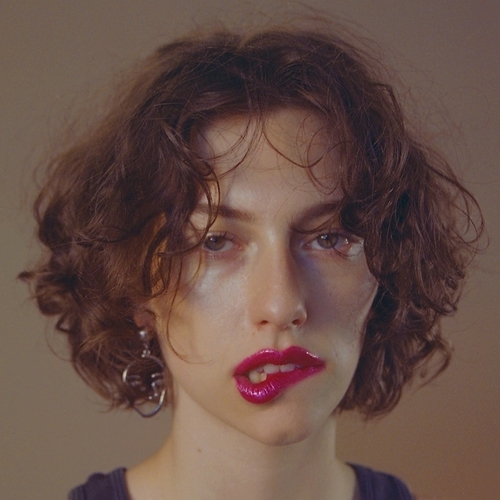
King Princess – Cheap Queen

Hanne Hukkelberg - Crazy

Molly Kate Kestner – My Way Up

qwwq.jpg

XYLØ - yes & no

Cleo Sol - Sweet Blue

Rothwell – Quarter Life Crisis

Childcare – Bamboo

Ingrid Michaelson - Jealous

333.jpg

Joy Crookes – London Mine

3we.jpg

I See Rivers – Helios

trees.jpg

Cosmo Gold - Drown the Fly

cxxc.jpg

Lucy Booth – Butterfly

Sasha Sloan – Thoughts

Zhavia Ward – 17

Las Aves - A Change of Heart

Mia Martina – Different Kind of Love

Nasty Cherry – Win

dswwees.jpg

Call Me Loop – Forget You

ytrteew.jpg

Mia Milla – Little Red House

FEATURE: The June Playlist: Vol. 1: Hurry on Home, Because the Press Are Here…

FEATURE:


The June Playlist

IN THIS PHOTO: Sleater-Kinney 

Vol. 1: Hurry on Home, Because the Press Are Here…

___________

LAST week…

 IN THIS PHOTO: Hot Chip

I was saying how there seems to be this switch between weeks that are not so hot regarding new music and those that are positively ablaze! I do love the fact there is that contrast and, on the first day of June, I give to you a playlist that is dripping with gold and quality! Last week was sort of okay but it didn’t have nearly the same amount of headline-worthy acts that have released huge tracks. This week, Sleater-Kinney, Miley Cyrus; Kate Tempest, Hot Chip and Bruce Springsteen are in the mix. Throw in some Cardi B, Skepta and School of Language and there is plenty of wonder in there to keep even the fussiest music fan happy and fulfilled. I am curious whether this momentum will carry on and whether we will see the same sort of spread this time next week. That is the thing about music: you never know what you’ll get and what a week will provide! It is exciting to think what will arrive next week but, before then, enjoy this veritable banquet…

332.jpg

 IN THIS PHOTO: Miley Cyrus/PHOTO CREDIT: Jo Hale/Redferns

OF great music.  

ALL PHOTOS/IMAGES (unless credited otherwise): Getty Images/Artists

__________

Sleater-Kinney – Hurry on Home

Cardi B - Press

Kate Tempest – Holy Elixir

Miley Cyrus (ft. RuPaul) - Cattitude

Katy Perry – Never Really Over

Hot Chip – Melody of Love

Bruce Springsteen - Tucson Train

Skepta – Same Old Story

Metronomy - Lately

ROSALÍA - Aute Cuture

Sacred Paws – Almost It

King Gizzard & The Lizard Wizard - Self-Immolate

School of Language – Adult in the Room

Noel Gallagher’s High Flying Birds - Rattling Rose

dodie – Guiltless

Nasty Cherry – What Do You Like in Me?

PHOTO CREDIT: Phil Smithies

Sea Girls – Damage Done

Tove Lo – Glad He’s Gone

Sufjan Stevens - Love Yourself

sASD.jpg

Yonaka – Punch Bag

Cheryl – Let You

Freya Ridings – Castles

Sinkane – Ya Sudan

IN THIS PHOTO: Little Simz

THE S.L.P. (ft. Little Simz) - Favourites

Jon Bellion – Crop Circles

oo.jpg

AURORA – A Different Kind of Human

Craig David – When You Know What Love Is

Thomas Rhett – Blessed

Daya – Forward Motion (From the Motion Picture, Late Night)

Bhad Bhabie – Lotta Dem

Crumb – Fall Down

iiite.jpg

Queen Naija – Away from You

Mark Ronson (ft. Camila Cabello) - Find U Again

Charles Bradley – Lucifer

TRACK REVIEW: Kate Tempest - Holy Elixir

TRACK REVIEW:


Kate Tempest

Holy Elixir


9.5/10


The track, Holy Elixir, is available via:

https://www.youtube.com/watch?v=cOo8m8GaL-U

GENRES:

Hip-Hop/Spoken Word

ORIGIN:

London, U.K.

RELEASE DATE:

30th May, 2019

The album, The Book of Traps and Lessons, is available from 14th June, 2019. Pre-order here:

https://www.roughtrade.com/gb/music/kate-tempest-the-book-of-traps-and-lessons

LABEL:

Fiction

__________

NOW that I have sort of branched out...

on my own regarding reviews, it has given me the chance to sweep the genres and artists who are near to the mainstream. To be fair, I should be outside in the sunshine – I will get there later – but I have been compelled by Kate Tempest’s latest track. Her new album, The Book of Traps and Lessons, is out in a couple of weeks and it looks set to be a belter! I will talk about Tempest’s latest single in a bit but, before then, I will address the songwriters/thinkers we need in music right now; a bit on the evolution of songcraft and how artists like Tempest have evolved; wordplay and the importance of building imagery; the consistency of artists who continue to dazzle and amaze – I will look at Tempest’s future and where she might go from here. Let us think about the state of music right now and what artists are addressing. There is still the mainstream and, by and large, artists are not straying too far from the tried and tested: they are discussing love and all its machinations. That is all well and good but (many artists) do so in a very ordinary and unimaginative way. There are other songwriters tackling the big issues of the day and what is happening in the wider world. Kate Tempest is someone who has always been aware of the struggles around us and, in her poetic and striking way, she has managed to articulate our thoughts. Now, on her latest album, there is some of that but there is more of the personal. Her last single, Firesmoke, was a gorgeous and beguiling track to her girlfriend. It was tender and impassioned; a beautiful and intelligent paen to their love and commitment. I have not heard a track as beautiful and direct for some time and, compared to her previous work, it was a chance to see under the skin and in the soul. Tempest’s 2016 album, Let Them Eat Chaos, was, as you’d imagine, about the sense of dislocation and madness around us.

Not that she has abandoned that path but, in 2019, it seems her heart and desires are playing an important role. The reason I mentioned how Tempest is an artist we really need right now is because of the way she can describe that sensation of desire. She not only talks about love in a very striking way but her poetry and delivery is sublime. On her forthcoming album, we will get a mixture of the personal and political. I tend to find artists are either divided between the familiar and safer – writing about love and their own lives – and those who address politics and something a bit bigger. Kate Tempest investigates both camps and she can mix up the intensity and urgency of modern dilemma and beautifully compose a song that comes straight from the heart. I do not think there is an artist as varied and accomplished as her; one that can easily and naturally step into both camps and come off as such a complete writer. Tempest is keen to address what is happening in this country but she is in love and wants to put that onto the page! One can admire that and I feel Tempest is that ‘ultimate artist’ who can provide endless quality but, at the same time, endless depth and intrigue. You only need listen to her in interviews to realise there is no ego and, in fact, there are very few as real and relatable as her. Many artists have this chip on their shoulder or they come across as inaccessible and dethatched. With Tempest, here is a woman who has that common touch and her music, as such, is much more powerful and popular. I love her sound and style and how she can switch it up between releases. Let me move onto another topic and something else that has struck me about Kate Tempest. It seems that the young songwriter has evolved and changed quite a bit; made a few changes and has moved to a new stage in life.

 PHOTO CREDIT: Alex Lake for The Observer

That might sound vague but, as I said, I was struck by her visions of love and dedication on Firesmoke. I wanted to bring in a couple of interview snippets from a couple of years back. Not only (do these clippings) express Tempest’s mindset and view at the time but they sort of prove what has changed since then. When speaking with The Guardian, Tempest talked about when she wrote and the conditions conducive to composure; how the state of the nation weighs on her mind:

 “When Tempest is awake at that hour, she finds it peaceful. “There is something really magic about the couple of hours before dawn,” she says. “You’re recharged, the day before is gone, but there are no requirements. You don’t belong to anybody, to anything. That time lends itself to lyricism because of the repetitive nature of insomniac thoughts.”

She talks about her creativity as something exhilarating and powerful, but also very fragile, liable to damage if she doesn’t handle it with care. “You work your whole life to build up integrity and you lose that in seconds if you allow yourself to do the done thing, or not listen to an instinct because someone in the industry has got an idea about who you might be for them. You’re defined by your choices so you have to be aware of that.”

“I’m not interested,” she says. “We’re in a terrible situation in this country and I don’t think any of us are quite prepared for what the next few years might bring. I think that the artist’s role is to be observant at all times and do their best to create and feed back. In terms of party politics, I feel like we’ve gone too far now for I’m right and you’re wrong. And I think if you align yourself too closely with a system that you find completely flawed then you’ll probably end up living to regret it”.

 PHOTO CREDIT: Neil Gavin

In a separate interview, she expanded on that idea of living in the city and how the pace of life can impact you:

 “If you live in a big city, the impact that will have on you is pretty relentless,” Tempest says, to the soundtrack of blaring traffic and buzzing market stalls. “I understand the kind of toll it takes on people to be so surrounded by life. And obviously the coping mechanism is to exclude as much as you can from your field of vision, so you can focus on the things that you’ve got to do. But I think it’s making people pretty unwell. Just look again. Remember that all of these people are human beings, they’ve been through a hell of a lot that day, that week, that month, that year. Reinvest yourself with a sense of empathy that extends beyond your exhaustion, your particular panic.”

For Tempest, the downside to capturing so much anger and frustration in this kind of vivid detail is having to explain it further in interviews. The way she describes making music, it sounds like a primal process, something that just happens. Looking back on these songs, tracing steps and delving deeper is far from her idea of fun, to say the least. A couple of times, when pressed to explain the meaning behind one thought or the other, she seizes up. “It’s so useless me even talking about this,” she quips, midway through describing people’s reaction to the Syrian refugee crisis. It’s not that she’s being hostile, more that she’s pointedly aware of how broad statements could be taken out of context.

“People – especially journalists – seem to be hankering after a political statement or stance. But if you’ve just made a whole album that expresses some quite nuanced views on a given situation, the last thing you want to do is sum that up in a couple of sentences that will come nowhere near to expressing the scope and the complexities of how things feel at the minute”.

This painted a picture of someone who, in 2016/2017, was quite on the edge or aware of how anxious modern life is. The Book of Traps and Lessons does not stray away from the pains and challenges of modern-day Britain but, at a time when we are at our most stressed, Tempest seems to be in a different place. You can tell how much her girlfriend means and I get the sense of someone who, whilst not entirely calm, seems to be in a better place right now.

7654.jpg

 PHOTO CREDIT: Perry Curties

It is clear that Tempest has developed and added something new to her music in 2019. We listen to her previous work and there is an edge and physicality that is hard to ignore. The soothed and devoted Tempest that presented herself on Firesmoke adds welcomed dynamics and colours to her palette. I urge people to buy her upcoming album because, as you will see, there is a unity of her past sound and something different; fresh and tender strands that are divine and wonderful. Kate Tempest is a sensational artist because, when it comes to language and how she paints, there is nobody like her! Able to cut to the core with a straight and no-nonsense line or buckle the knees with a couplet borrowed from the heavens; here is someone who has devoted her life to literature, words and the pursuit of language – to embrace it in all its forms and see just what is possible when you open your mind. Tempest is someone so in love with language and words and you can hear that in her songs. I am not suggesting other songwriters are lazy or average when it comes to lyrics but there is something extra-terrestrial about Tempest and her skills – not quite on the same plain as those who, at certain points, can turn the head. Look back at albums such as Let Them Eat Chaos and Tempest beautifully takes us inside the walls of flats and through streets. It is a narration of modern Britain and all is various sides. Earlier on, on 2014’s Everybody Down, there were stories of workaday folks and the variety of emotions and scenes one could see on an average day in London – albeit told with such authority, passion and dazzle. Tempest is a poet and playwright (and author) so she keeps her pen sharp and wet. I do wonder how she spends time away from music and, when not hanging with her girl, one suspects a pile of great books are never too far away!

 PHOTO CREDIT: Karen Robinson for The Observer

The rich, scent-filled and near-mystical words she puts onto the page can move the senses and enflame the soul. I tend to find that a lot of modern songwriters are too obsessed with love and, whilst that is okay, the way they document their passion is quite cliché and, a lot of times, downbeat. Tempest realises how her life has sort of fallen into place and how things are working out. She expresses that thanks and sense of comfort but the artist is aware of what is happening in the world right now and is unwilling to abandon that. Listen back to Tempest’s past work and just immerse yourself in her songs. There is so much detail and wit; conversations and clashes that are amazing and take you by surprise! There are very few artists in the modern world who have the intellect and range of Kate Tempest. That linguistic talent is matched in the back. Her compositions are as diverse and fascinating as the words she sings. Her music is so complete and stunning and, for that reason, I feel she warrants a lot more respect and attention. For sure, Tempest has her fans and loyal crew – in music and in the literary and theatrical worlds – but I feel like there is a whole world waiting. Maybe radio stations do not know such a good thing when they hear it – I think Tempest is one of the finest songwriters in the world and is an inspiring human. I will talk more about that in the conclusion but I am always stunned by Tempest’s work and what it does to the senses. I keep mentioning the soul and senses because Tempest’s work goes deep and strikes hard. I am keen to address Tempest’s current single, Holy Elixir, but I wanted to finish off this section but thinking about the sheer consistency and workrate of Tempest. It is staggering thinking about Tempest and what she achieved in her life so far.

The thirty-three-year-old is an award-winning writer and she has released two huge solo albums so far – the third is a matter of days away. Her collections of poetry – such as 2013’s Brand New Ancients and 2018’s Running Upon the Wires – are sensational and you need to check out her 2016 novel, The Bricks That Built the Houses. Tempest’s plays – such as 2013’s Wasted and 2014’s Glasshouse – are hugely popular and it goes to show what an exceptional and broad talent Tempest is. She stunned years back but has kept that quality high since then. I find a lot of artists start out strong and then dim a few years down the line. Maybe they get stronger over time but it can be quite a tenuous start. In the case of Kate Tempest, she came out of the blocks charged and ready and there seems to be no signs of her slowing or losing that magic. There is something inherently familiar and wonderful about Tempest’s work. She can write fantasy and detach herself but it is the reality she portrays and the innate way she can speak for us that makes her so amazing. Even if her background is different to some of her fans, we can all extrapolate some truth and wisdom from her words. That mix of imagination and grounded reality makes her one of the most important and relatable writers in the world. She is only in her thirties so I wonder where she can go and just how good she can get. With a new album just around the corner, Tempest will be busy – but I hope there is another novel or a collection of poems in her sightline. I hold so much love and respect for what Tempest is doing and how busy she is. Not only has she penned these great poems, plays and songs but Tempest has curated festivals and given talks. She is this modern-day polymath and genius that holds endless ability and brilliance but is able to resonate. She is just the same as us and never pushes people away. The fact we can all connect with Tempest and understand her words so clearly means she will always be popular and loved.

2121.jpg

 PHOTO CREDIT: Neil Gavin

Whereas Firesmoke – her previous single – started with a tenderness and did not stray too far from the delicate and sensual; here, we have a song that begins with more intensity and mood. Holy Elixir begins with curious words and thoughts. Tempest casts herself almost like a Creator-type figure; animating “tree gods” and giving life to animals. Given the song’s title, it is unsurprising that religious imagery should present itself but, such a stark departure from Firesmoke, we go from the intimate and deeply devoted to something that, literally, takes us back to the beginning of time – well, technically, God doesn’t exist so that is wrong; I just mean we are talking about creation and all life rather than a tender and personal love story. Tempest, it seems, is taking us through the development of man and time as she discussing (us) catching food and scrawling on caves. In the back of my mind, I sort of know where she is heading from the early stages – I think I do, anyway! I get the sense that, when talking about the primitive nature of life at the start, she is sort of mirroring that to the modern day. One gets the sense that, covertly or openly, Tempest is making comparisons to the savagery and simplicity of the earliest humans to where we are as people now – maybe I am reading too much into it; Tempest can forgive my curious and wandering imagination! I love how, like so many of her songs, the composition is a constant yet it never intrudes. Rather than throwing so much into the mix, there is a simplicity and consistency that gives Holy Elixir a strange groove and hypnotic focus. If Tempest’s previous albums were more intense and packed, now it seems Tempest is more restrained in terms of energy but that has also allowed her words to breathe more. With all Tempest songs, language is at the fore and she packs so many words together.

 PHOTO CREDIT: Jenna Foxton

The narrator discussing us setting fire to lands and reducing things to ashes; the way we have burned and burnished beautiful things and conquered worlds. She never explicitly alludes to modern politics but one feels, as she guides us closer to the modern time, there is a comparison between our earliest ancestors and the supposedly more evolved people of today. As the song continues, you are left dizzy by the pulsing electricity of the composition and the words Tempest delivers. Her wordplay is amazing and, whilst her vocal is quite tender and soft, the potency of the words is incredible. Tempest casts herself in this image and talks of a girl that walks over her. Tempest is this holy elixir and, as she offers prophecy and truth, there is that unity of the biblical past and the modern times. There is, as Tempest says, scripture now but just a modern equivalent. The switch between the development of mankind and religious rules transform into the codification, guidelines and treaties of our time; the ridiculousness of modern politics and how our elected are unwilling to bend and accept any derision. This is where I felt the song was heading and, when it does arrive, the effect is stunning. Tempest never gets too angry and loses control but you can feel the anger and disgust bubbling and festering. Keeping control but still able to get her words out loud and strong, Tempest talks about someone/the people keeping their heads down and exhaling fumes; this constant repetition and sense of anger working in the skin. The composition never intrudes and, as the song goes on, it seems to gain more traction and weight – even though the sound and pace has not changed at all! Tempest talks about, I think, leaders and how the soul is a “closed system”; wisdom has been vanquished and, what they hold in their fists, is all that there is. These words are oblique but direct at the same time.

Each listener will imagine their own story and cinema but I get the impression that, with every heartbeat, Tempest is talking about politics today and the intentions of politicians. Holy Elixir goes much deeper than that and it takes a few listens before everything sort of unfurls and comes into the light – the sign of a truly rewarding and intelligent track. “Your loneliness is the symptom/not the sickness” Tempest decrees; her voice firm and resolute and, as those words are delivered, they conspire all kinds of images and thoughts. I have loved everything Tempest has put on record but I think she is at her most powerful and impressive here. One will find plenty of charge and force on her new album but there is a more level head and sense of composure, even though her words are still as powerful and potent. In many ways, this means her words can cut deeper and have more time to explore and expand. Lyrics are Tempest’s strong suit and you find yourself engrossed by her incredible wordplay. Maybe that is a dismissive terms for what she is about: ‘poetry’ is much more apt and respectful! As Holy Elixir comes to its end, Tempest takes us to the garden (whether Eden or more of a Joni Mitchell/Woodstock sense); she has led us here and notices that the soil is bare and blind – that we need to start sowing and planting seeds. In some ways, this is a literal image of degradation and neglect but, in a wider sense, it is a commentary regarding the poverty around us and how the planet is faring – whether that is political impotence or the all-too-real climate apocalypse that awaits us! Tempest is always firm and controlled whilst never preaching and attacking. She can portray so much wonder and powerful without yelling and getting aggro: instead, the beauty of her words create these fertile scenes that will be ingrained in the psyche for many weeks to come. If the rest of The Book of Traps and Lessons is as wondrous and memorable as Holy Elixir (and Firesmoke) then there is no doubt Kate Tempest is the artist to beat in 2019!

 PHOTO CREDIT: Alex Lake for The Observer

Sorry if I have rambled on and repeated myself. I find artists like Kate Tempest are so impressive and amazing that it is hard to get everything down in words; to summon up the right words and get to the heart of the matter. I hope Tempest continues to reign and shine in music as we definitely need her around. Tempest releases her new album, The Book of Traps and Lessons, on 14th June and it will be good to see what sort of reception it gets. I have only heard bits of the album but it is amazing. There is a mark of Tempest’s older and familiar sound but, as I said earlier, there is more of the passionate and personal this time around. Maybe this indicates that Tempest is in a happier place and is able to feel calmer and anchored because of a strong relationship and sense of safety. I encourage people to get The Book of Traps and Lessons when it arrives and play it in full. Tempest has signings and in-stores coming up this month so make sure you keep your eyes peeled and, if you can, get down to where Tempest is appearing and throw her some love. Holy Elixir is a fantastic track that is so nuanced and deep that it has taken me a few spins to really get to the bottom of it.

To be honest, Tempest is someone whose songs are stirring when you first encounter them but, like flowers blooming, everything sort of unfolds and stretches the more time goes on. It is an amazing thing and another reason why she is so loved and respected. The U.K. is in a pretty sorry place right now and I do think that it is hard to make sense of all the crap and division around us. Tempest has not shied away from this on her latest album but I do like the fact that the importance of love and her feelings are being expressed. Like many of her peers, one can find sweetness, hope and deep affection: so many are eager to express pain and unhappiness without providing any light and relief. Let’s leave things here and I’ll let you spin Holy Elixir one more time. I cannot for The Book of Traps and Lessons and I am already predicting it will be one of 2019’s best and brightest albums. Make sure you dedicated some time to investigate Kate Tempest and, as I said, if you can get down to one of her signings, make sure you do. She is simply wonderful and, in a music world where there are so many similar and familiar faces, she is someone who…

IMAGE CREDIT: @residentmusic

STANDS in a league of her own.

___________

Follow Kate Tempest

INTERVIEW: Dead Slow Hoot

INTERVIEW:

Dead Slow Hoot

___________

THANKS to the guys of Dead Slow Hoot...

kkj.jpg

for talking with me about their latest single, An Island Keen to Float (its video arrives next week), and what inspired it; what comes next for them and how the band found one another – they reveal some albums and rising artists important to them.

I ask whether there is more material coming down the track and, as the band are from Sheffield, whether they think Yorkshire gets overlooked in terms of musical quality and promise – the guys each select a song to end the interview with.

____________

Hi, guys. How are you? How has your week been?

Hugo: Good, thanks! The week’s been hectic but productive; so I guess it’s been good? Basically, I’m very tired.

Luke: Me too…

Sam: Ditto

Dominic: Just been to my brother’s stag so, yeah, I’m knackered.

For those new to your music; can you introduce yourselves, please?

H: Hey. We’re Dead Slow Hoot: purveyors of sad jams and sticky hooks. I’m Hugo and I do the vocals and half of the guitars.

L: I'm Luke. I do 100% of the bass guitar.

S: I’m Sam. I hit the drums and cymbals. Or ‘the boomers and tingers’, as Luke likes to call them. 

D: I’m Dom and I play guitar and synth…but, like, a funny way of saying that.

An Island Keen to Float is your latest single. Is there a story behind it?

H: Like a lot of our songs, it’s kind of an amalgamation of a lot of different ideas. We try to be socially conscious and, with this song, I really wanted to capture something about the mentality behind the Brexit vote; but to do that I felt like I needed to describe it from a more personal perspective, and so every line has a double meaning where the broad idea can be reflected on an individual level. For example, the line “Blame some foreign force instead’ can be understood as blaming immigrants, but when I perform that song, it has more to do with a tendency to externalise my own frustrations and shy away from responsibility.

It’s weird dissecting it because it sounds like the whole thing was very deliberate, which it wasn’t really, but I personally feel very proud of it specifically because of this duality and I hope that, in listening to it, people can relate to those emotions from an internal and external perspective.

What was it like filming the video for the song?

H: Honestly, it was probably one of the most surreal days of my life! I went down to Lewes with our friend, Sam Nicoresti, who directed this video and had a lovely day wandering around small independent shops and cafes. But, by the evening, every window was boarded up and people were walking around with flaming torches. Basically, it was the purge and I’m thankful that we got out of there alive...10/10 would recommend to a friend.

L: Sam directed our first-ever music video for a track from our last E.P. called I Hope You Never Say a Word, so it was a total joy to work with him again. Sam's very good at making movies of weird and strange events, so it was very natural to shoot a video down in Lewes where the weirdness just presents itself to you.

Is there going to be more material coming from you down the line?

H: We are writing new material at the moment and we’re hoping to get some of it released in the New Year. Watch this space!  

How did Dead Slow Hoot all get together? Did a shared love of music gel you?

Hugo: I was playing in a gospel choir band with Luke and Sam, our drummer, and playing my own songs as a solo artist - which is a grandiose way to say I was playing the same open mic week after week. I asked Luke and Sam if they wanted to try out some original music and it just worked really well. Dom joined after we recorded our first E.P. and got carried away with the arrangements. He’s the only musical polymath we knew and he was a band member from the first rehearsal we did together. Musically, we’re all steeped in the classic noughties Indie music but we all diverge in slightly different ways, which makes for a good group dynamic as we all bring distinct ideas to the table.

L: The first time I met Hugo he was singing Sweet Caroline at a karaoke and stage-dived out of the venue. The first time I met Sam he was talking about pop-up polytunnels and the first time I met Dom he was living with my ex. This doesn’t have that much to do with how we formed the band but anecdotes are fun…

You hail from Sheffield. How important is the city’s history and present to your own sound and work ethos?

H: Sheffield is the best city that no-one’s heard of! We’re all dyed in the ethos of Sheffield; it’s full of independent people who plug away at their work without feeling self-conscious of how it looks to the outside, which makes for something that everyone’s proud of and feels unique.

S: Also….it’s highly affordable. In fact, the most affordable city in the U.K. according to recent statistics. So, we get a lot of quality rehearsal space for a very reasonable amount. D.M. us for details (winks).

Do you think areas like Yorkshire get overlooked when it comes to great artists?

 H: Absolutely!

S: Definitely. I think, if BBC Radio 6 Music could move their studios to Sheffield that would help redress the balance… 

Have you got a favourite memory from your time in music so far – the one that sticks in the mind?

H: Our album launch this year felt really special. We’ve been on the scene a long time but we haven’t always been the most present band in town. We weren’t expecting so many people to show up, but there was so much love in the room and it was probably our best gig ever!

L: I totally agree. It was very hot and sweaty in that room and we were overwhelmed by the audience. Our friend, Charles, even fainted during the final chorus of the final song - he's fine now but at the time it felt pretty Rock and Roll.

S: Luckily, all of us are first aid-trained in case of such an emergency.

D: We’re fortunate that we have a very chantable name. Any gig when people are going “Dead Slow Hoot! Dead Slow Hoot!” is a great one. I feel like (the band) …And You Will Know Us by the Trail of the Dead really missed a trick.

545.jpg

Which albums from all of music mean the most to the band (and why)?

H: I keep coming back to The End of History by Fionn Regan. The songcraft is just perfect and it’s got beautiful lyrics. It makes me cry whenever I listen to it, which is pretty much at least once every week.

L: I've been a big fan of Car Seat Headrest for a while now, but their reworking of Twin Fantasy that was released last year is a real magnus opus for the band. Will Toledo is such a creative songwriter and his lyrics really raise the bar for sad indie bands.

S: I have no idea who Hugo or Luke are talking about. I’ll go much more mainstream with AM by Arctic Monkeys. There was a lot more groove on their songs in this album which I loved. The opening bass and drums for tracks like Arabella are just magic. In my opinion.

D: I’m gonna cheat and say Radiohead’s OK Computer and Kid A. They’re the perfect combination of emotional songwriting and sonic experimentation that we’ve tried to emulate. The National Anthem, in particular, was a big influence on our album.

If you could support any musician alive today, and choose your own rider, what would that entail?

H: We played with Big Thief on their first U.K. tour and it was such an amazing night. They were so genuinely friendly and the music is just so good; so I’d probably say them (again). For the rider, I’d like to have a pint of your local bitter with a second pint of tap water, please.

L: Yeah. I remember hearing that British Sea Power would ask for local beer and postcards of the local scenery on their rider along with lots of foliage. I also thought that must be a nice way to tour the country and really get to know the places you're visiting. Saying that, I would love to support British Sea Power…call us.

D: Before I joined Dead Slow Hoot, they actually supported my old band on our E.P. launch. Luke asked for a porcelain owl or something weird like that. As for supporting, I dunno; maybe Portishead? I feel like they’d have a very polite audience. I don’t just listen to bands with ‘head’ in the name, by the way.

S: U2. Then I could make great jokes all day about being too close to The Edge etc...

aaa.jpg

Do you have tour dates coming up? Where can we catch you play?

H: We’re playing a small tour this June in Leeds (12th June); Sheffield (14th June); London (15th June) and Manchester (19th June).

What advice would you give to new artists coming through?

H: Stay together and don’t worry about getting quick success. We have the best time together when we’re creating something new and that’s what keeps us coming back. All the rest is nice but it needs to be secondary to making good music.

S: Make sure you all get on well - rehearsing, gigging and recording involve large amounts of time spent together. And establish a favourite pre-gig food outlet early on - we’ve always stuck with Streetfood Chef in Sheffield. They do probably the best burritos in South Yorkshire.

D: Turn up to the venue on time

PHOTO CREDIT: Campbell Sibthorpe 

Are there any new artists you recommend we check out?

H: Lou Terry is a super-talented songwriter based in Sheffield who’s playing a few shows with us in this tour. Campbell Sibthorpe is another singer songwriter who we played with in London this year whose songs I love.

L: Both great recommendations. I'd add Before Breakfast. They're from where we're from and have recently been making big strides in the national music scene. Their new E.P. is really worth checking out.

D: We played with a band from Leeds called Van Houten. They’re worth checking out for their snare drum sound alone. Also, inFictions. They don’t play live but they’ve made two immaculate Post-Rock albums that’ll give you goosebumps.

 IN THIS PHOTO: Before Breakfast/PHOTO CREDIT: Ellie Grace Photography

Do you get much time to chill away from music? How do you unwind?

H: Lately, I’ve become a big fan of gardening, so I spend a lot of time watching my crops…

L: I take a walk around the block to say ‘hello’ to all the local cats.

S: Also a gardening fan. This year, I’m growing courgettes, potatoes and runner beans.

D: I’m watching the tenth series of Doctor Who on Netflix. It’s a bit disappointing.

Finally, and for being good sports; you can each choose a song and I’ll play it here (not any of your music - I will do that).

H: Campbell Sibthorpe - Father Carpenter

L: Body - Before Breakfast

S: At the River - Groove Armada

D: Oo, nice choice, Sam. I’ll go for Red Wine by Common

___________

Follow Dead Slow Hoot

FEATURE: Actions and Words: Tackling Sexual Assault and Inappropriate Behaviour in Music

FEATURE:


Actions and Words

564.jpg

PHOTO CREDIT: @nickkarvounis/Unsplash  

Tackling Sexual Assault and Inappropriate Behaviour in Music

__________

MY plea/declaration might seem a little far-fetched…

 PHOTO CREDIT: @mitchy___/Unsplash

but I have heard a couple of stories recently that has made me concerned. It is impossible to get rid of all cases of sexual assault in music but, as we see more and more women taken advantage of and abused, I do wonder whether more needs to be done to send a message out! I shall not name any artists involved but, when looking on Twitter yesterday, I saw a couple of threads; two artists sharing their experiences of men assaulting them. One involved a male fan approaching a singer and, when having a photo taken, groped her. This man, apparently, had a wife and was not intoxicated – never an excuse or a defence -; he just decided to grope this artist for no reason. One wonders what his ambition and aim was. Did he feel like she would like that or, enamoured by that sort of attention, would ask him out?! It is baffling to think what someone like that was thinking (if, indeed, one can call it thinking) and why he behaved in such a way. I think, in this case, no police action was involved and the artist, shocked by what had happened, just wanted to get away. She took to social media and was, quite rightly, appalled and angered by the situation. I got the sense that this was not the first such incident she had been on the receiving end of. Another female artist interjected and recalled the time when she was at a gig and a man lunged forward and kissed her.

 PHOTO CREDIT: @ricardonunes_fotografo/Unsplash

One might say that, when it comes to big stars and world-famous bands, young girls and woman kiss their idols and touch them at gigs: what we are discussing here is entirely different. There is a marked difference between a fevered fan hugging a Pop artist and a man/men groping/assaulting women. I bring up that distinction because, as is common with social media, you always get people playing down such cases of assault and trying to rationalise it. Over the past couple of years, there have been cases of bands splitting because one of their members has blurred the lines between what is acceptable and what is not – Hookworms is a famous example of a great band destroyed by the prurient and obnoxious behaviour of a member. These two cases I have just mentioned are not isolated or insignificant: there are countless cases where women have been touched, assaulted or abused at gigs – whether it is sexual language or out-right assault. Every case is appalling and I do think that a lot of the accusations are brushed away and not taken as seriously as they should be. The music industry is going through some tough times right now – what with venues closing and an air of instability – and it does not help when we have women feeling unsafe. It is not just artist themselves that are subjected to unwanted attention. I have heard of fans and women who work at venues being touched inappropriately ore on the receiving end of lewd and disrespectful language.

ewq.jpg

 PHOTO CREDIT: Engin Akyurt

It is bad enough when you witness this sort of behaviour at bars and pubs but, at venues and gigs, it is appalling. Female artists should not have to be worried about abuse and having that anxiety hanging over them. I understand these cases are extreme but it does not define music. For the most part, fans are well-behaved and the vast majority of men who attend gigs do not step over the line. Like sexism and cases where women are overlooked, more needs to be done to eradicate the problem and raise awareness. Social media is a great way to get people talking and highlight what is happening at some gigs. I do concede that it is hard to police gigs and have that level of surveillance but there are issues that are affecting progression. A lot of female artists and gig-goers feel like they would not be believed if they come forward. In a lot of cases, there is no C.C.T.V. at venues to prove their side of events and there doesn’t seem to be adequate punishment for men who go too far and are accused. I do think, if someone does assault or abuse a woman at a gig/venue etc., there needs to be swift and unambiguous discipline. Barring offenders from venues or having them arrested sends a much stronger message. I think venues need to get tougher regarding those who are accused and I do think there is a lack of awareness in general.

We hear of cases where a band/musician/fan has been called out and has done something horrendous but, after that, what do we do!? It is tricky to roll out definitive guidelines and laws; to make sure these cases are kept to a low minimum but I do feel there is a general apathy. It is harrowing and upsetting reading on social media accounts of sexual abuse and inappropriateness. I do think that a lot of men feel they are entitled to do what they want or feel that, perversely, the woman likes that sort of attention. In a very small number of cases, it is defining what is deemed wrong and what is being misconstrued: most incidences are clear-cut and there is no way that what happened could be misconstrued; a clear intent and desire. Artists and fans are speaking out but I do feel like there should be more action taken so that spaces like venues are safer and feel less intimidating for women. It does not only extend to touching and lewd remarks. The sort of foul language and aggression many women have to face is appalling. I guess, when we look at what work needs to be done, it seems like there needs to be a big push made. I know there are organisations that are set up for artists and fans regarding their mental-health and finances but, considering the amount of sexism and casual abuse that we see, could more be done?

 PHOTO CREDIT: @karimboubker/Unsplash

Not many artists speak out about it; very, very few men are getting involved in the debate. Many would say that this problem (sexual abuse and inappropriateness) is minor but one needs to consider the number of cases not revealed/spoken about; the number of women on social media sharing their stories that we do not see. I hate to think there are women suffering in silence when they are touched by a fan; when a female gig-goer finds herself harassed or taken advantage of. There is never any justification (for any men) to touch a woman against her will or behave in a lurid or inappropriate manner. The threads and social media feeds I have seen, sure, will help with conversation and visibility but what are the long-term problems? I know there are many cases not going reported and discussed through fear or other factors. A few promising bands and artists have paid the price when their mistakes were revealed and, the more this happens, the better. A lot of brave women are speaking out but I think the industry needs to do more; venues need to be tougher and, in 2019, there still seems to be this stigma attached regarding speaking about subjects like sexual assault and abuse. The sheer ignorance and callousness I have seen on social media when it comes to some of the responses – people attacking women who speak out – chills the blood. I think we can all agree that issues such as sexual abuse and inappropriate contact are awful and should not be tolerated and definitely have…

y54.jpg

 PHOTO CREDIT: @letanloc1941995/Unsplash

NO place in music!

INTERVIEW: Liam Phelan

INTERVIEW:

Liam Phelan

___________

I have been spending time with Liam Phelan...

who has been telling me about his new single, Khao San Road, and whether there was a story behind it. I wanted to find out what his next moves are and which artists/albums inspire him - he suggests a few rising acts worth getting behind.

Phelan talks about his musical tastes and whether there will be more material approaching; how he spends his time away from music and whether he is inspired by what is happening in the modern scene – Phelan selects a great track to end the interview with.

____________

Hi, Liam. How are you? How has your week been?

Hey. I’m good. I’ve been making music all week so I’m tired but I’m making it work.

For those new to your music; can you introduce yourself, please?

Sure! I’m an artist and producer from London. I started out making lo-fi beats but have progressively incorporated vocals and live instruments like guitar into my music.

What can you reveal about your new single, Khao San Road? Is there a personal tale behind it?

Khao San Road is dedicated to my travels around Thailand last summer. The whole trip was an amazing experience but this one road caught my interest as it was so lively. People were out partying until 4 a.m. and, by 10 a.m., the street was filled with markets. I’d never seen anything like it. It was crazy.

Looking ahead, might an album or E.P. be arriving do you think?

I do have an E.P. in the works. By the end of this year it will be dropping but, before that, I have a couple of other projects I’m working on that I want to release this summer.

Music came into your life early. Which artists inspired you when you were a child?

From a young age, I had a varied mix of music around the house. I was listening to a lot of Green Day, Gorillaz and Eminem. The one that really inspired me though was Kanye. My mum had his early albums on C.D., so you would usually find me listening to The College Dropout and Late Registration on-repeat.

332.jpg

Are there any modern artists that are turning your head in terms of what they are doing?

Since discovering him, Childish Gambino has been my favourite artist. I haven’t seen any other artist progressively get greater over a ten-year period than him. He’s been killing the Rap game; he’s a fantastic singer and even better performer. I don’t even have to go into his career as an actor! You never know what he’ll bring next.

What plans do you have for the rest of 2019?

Other than the E.P., I’m working on a few collabs with upcoming artists. There are a lot of scenes popping in London right now, so I don’t want to be confined to doing one thing. I love all genres, so you might see me popping up on some Hip-Hop, R&B and even Grime projects.

Do you have a standout memory from your time in music so far?

Recently I was out and somebody approached me saying they knew me from my music. They even started singing one of my songs. It was the first time that had ever happened so for me it was a crazy experience.

98.jpg

Which three albums mean the most to you would you say (and why)?

Kanye West - Late Registration

Like I said, this album was a massive part of my childhood. I had it on-repeat. It had deep emotional songs like Roses and Hey Mama then triumphant bangers like We Major. Whenever I bump that track I feel invincible.

Childish Gambino - Because the Internet

 This album is a masterpiece from start to finish. There are insane guitar solos, jazzy chords; mad 808s. Everything. I love the range of emotion and honesty in Gambino’s deliveries. It’s something I always strive to do in my music.

Stan Getz, João Gilberto - Getz/Gilberto

This one might be surprising, but I love Bossa Nova music. Living in London can be super-stressful so, to have an album that can mentally transport me to a beach in Brazil and make me forget about my worries is nice. I also play guitar on my songs, so sometimes using the finger-picking and chord progressions heard in Bossa Nova records for my tracks can be refreshing.

If you could support any musician alive today, and choose your own rider, what would that entail?

It would have to be Childish Gambino - for the reasons I already stated. As for the rider, something that all my friends and fans know about me is that I have a chocolate addiction. Just having chocolate on the rider would be enough for me. I even have a song called I Only Love and Chocolate!

What are your other plans regarding gigs/touring?

I’m looking at doing a couple of shows for the summer. Probably around London. Some of the music I’m working on to be released soon is really vibey and I would love to perform them live.

If we came to see one of your gigs, what might that involve? Do you love being on the stage?

Versatility. I have songs where I’m playing guitar, some where I’m singing deep lyrics; even somewhere I’m more energetic and rapping. I want to put the crowd through a range of emotions.

Is there any advice you’d give to upcoming artists?

Keep creating and network. You never know what you will make and who you will meet.

sewq.jpg

 IN THIS PHOTO: Ka-Li

Are there any new artists you recommend we check out?

Kdvsgoliath, Ka-Li; GR3YWXLF, IsaacB and Digitz. These are a few artists who I have had the pleasure of meeting and they are all doing big things. I’m sure, in five years, they will all be talked about highly.

hhh.jpg

 IN THIS PHOTO: Digitz

Do you get much time to chill away from music? How do you unwind?

I have just finished university and have been working weekends, so it’s been a bit of a stressful year - but music is funnily enough my time to chill. I’m at my most comfortable state when I’m making music.

Finally, and for being a good sport; you can choose a song and I’ll play it here (not any of your music - I will do that).

It has to be my anthem, Kanye West – We Major. Thank you!

___________

Follow Liam Phelan

ytre.jpg

INTERVIEW: The Urban Renewal Project

INTERVIEW:

The Urban Renewal Project

___________

KICKING us through the week...

is The Urban Renewal Project. With the track, Shake Those Hips, out into the world, I was eager to learn how the song started life and what comes next; how they found one another and what sort of sounds inspire them – they highlight a couple of artists worth looking out for.

I wanted to know whether there are gigs coming up and whether the U.S. band will head to the U.K. at some point; how important Los Angeles is to the guys and if they get time to relax away from music – they end the interview by choosing a pretty cool track.

____________

Hi, guys. How are you? How has your week been?

Really good, thanks. We're shooting a music video this week. It's been hectic, but fun.

For those new to your music; can you introduce yourselves, please?

The Urban Renewal Project is a sixteen-piece band that plays an original blend of Hip-Hop, Soul and Jazz music; featuring a singer (Alex Nester), two rappers (Elmer Demond and Slim da Reazon) and a Big-Band horn section.

Shake Those Hips is your new track. Can you explain its origins and story?

After our previous release (21st Century Ghost, 2017), we were talking about the fact that all of the music we listen to, recreationally, has huge bass and drum sounds that really slap on a proper stereo system…and decided we wanted to make some music like that, which is a bit of a departure from the more Indie-Jazz production style of our previous recordings. Our band leader (R.W. Enoch) came up with this instrumental and we all agreed it sounded like a party track. We wrote some lyrics to match and the rest you can see for yourself in the music video.

How did The Urban Renewal Project get together? Was it a gradual formation?

It definitely took some time. The seed for the idea came from a genre-busting Jazz/Big-Band that R.W. had put together for his high-school talent show. Then R.W. met Elmer about ten years ago and they started working on songs together and putting Rap lyrics over this monster band. Since then, it's been a steady upward climb; slowly bringing in new people that fell in love with the idea.

How would you describe your sound? Which artists are influential to all of you?

Brass, bars and beats. The list of artists that could be considered influential to all sixteen of us is pretty small, but we've spoken a lot about the sound that A Tribe Called Quest achieved in sampling Jazz records for their Hip-Hop tracks and how Gorillaz has had a stream of number-one albums without having a clearly defined genre or personnel line-up.

You are based out of Los Angeles. How important is the city and its varied sounds regarding your music and creativity?

The effects of living in L.A. can't be overstated. It's even reflected in our name: The Urban Renewal Project. The idea being that we are taking these people and elements and combine them into something fun and unique. I think both L.A. and the band are greater than the sum of their parts.

Is there going to be more material coming from you down the line?

Definitely. We just dropped another single, Red Eye, inspired by the international tour life that we've experienced over the last year (available on all platforms) and we have quite a few more tracks that we're working on for later this year. We're working towards releasing an E.P. called Love. Glory. Duty. Death.

Have you got a favourite memory from your time in music so far – the one that sticks in the mind?

Our trip to Jakarta to perform at the Java Jazz Festival was definitely a highlight. We've also had some really good times at SXSW in Austin, Texas the past two years.

Which albums from all of music mean the most to the band (and why)?

Man, now we're narrowing it down from artists to individual albums!? Probably the only thing we could all agree on is Michael Jackson’s Off The Wall.

If you could support any musician alive today, and choose your own rider, what would that entail?

We should tour with Wu-Tang and roll in about a dozen luxury coach buses just to accommodate all the people. 

What advice would you give to new artists coming through?

Keep your axe to the grind and never give up. A game-changer could be right around the corner.

Do you have tour dates coming up? Where can we catch you play?

We have a bunch of dates on the West Coast of the U.S. this summer. 

Saturday, June 8 – Pasadena Block Party (Pasadena, CA)

Friday, June 21 – Tooth & Nail Winery (Paso Robles, CA)

Friday, July 19 – TGIF Concerts in the Park (Carlsbad, CA)

Friday, August 9 – San Jose Jazz Summer Fest - Main Stage (San Jose, CA)

Saturday, August 10 – Neck of the Woods (San Francisco, CA)

Sunday, August 11 – Carson City Jazz & Beyond Festival (Carson City, NV)

What is life like on the road for a sixteen-piece band?! Does it bring you all closer together?

Total chaos but, yeah, we have some great times on the bus and hanging out in the places we get to visit. 

Might you come to the U.K. and play some time?

It's high on the wishlist! 

 IN THIS PHOTO: The Magnettes

Are there any new artists you recommend we check out?

Two bands we've met on the road that we really liked are Hyberbella and The Magnettes.

Do you get much time to chill away from music? How do you unwind?

Unfortunately, not really! We all have incredibly busy freelance or solo careers outside the band that we barely have time to sleep. But we're all really into cinema.

Finally, and for being good sports; you can each choose a song and I’ll play it here (not any of your music - I will do that).

King Geedorah – Take Me to Your Leader

___________

Follow The Urban Renewal Project

aes.jpg

FEATURE: Limited Editions, New Releases and Remixes: Why, With a Few Tweaks and Additions, the Glorious BBC Radio 6 Music Could Become a World-Beating Station

FEATURE:


Limited Editions, New Releases and Remixes

IMAGE CREDIT: BBC  

Why, With a Few Tweaks and Additions, the Glorious BBC Radio 6 Music Could Become a World-Beating Station

__________

THERE are no real negatives here…

but, as BBC Radio 6 Music is my favourite radio station out there and one that continues to give me inspiration, I feel like it could hit unbeatable heights. RAJAR figures released recently suggest that more listeners than ever are heading the way of BBC Radio 6 Music! Like a political swing, I am not sure where the votes have come from and which parties are losing out – who cares really when you have lots of new ears listening in?! I guess a few people would have been fresh to radio: a bit bored and unmoved by other BBC stations and, in the arms of 6, here is a much more complex, voluptuous and attractive option. I feel like there has been a move (of people) from BBC Radio 2 and BBC Radio 1 and, given the music is more diverse and strong on BBC Radio 6 Music, there has been this swell in figures. I think there are some ways BBC Radio 6 Music can go from where it is now to an even bigger monster but, just today, I have heard news of some welcomed developments. I was a little against the idea of guest presenters joining the station – whether they would have the same authority and music depth as the D.J.s who currently work there – but, over time, I have realised that they (the guests) add a sense of variation and spark. It has been announced by the BBC that a couple of new voices will be joining the station on a temporary basis:

“Rob Delaney and Martin Freeman will be joining BBC Radio 6 Music for a run of Sunday afternoon shows.

They will be hosting their own shows, covering Guy Garvey’s 2-4pm slot whilst he is on an extended break working on his next album. Cillian Murphy has been presenting the show since March, with his final programme on 2 June.

IN THIS PHOTO: Comedian and actor Rob Delaney will soon be joining BBC Radio 6 Music to present his own Sunday show/PHOTO CREDIT: Getty Images 

Rob Delaney says: “I’m thrilled to be presenting on BBC Radio 6 Music. Whether you listen to music while you make dinner, widgets or perhaps even love, I hope you’ll do so to my powerful rhythms.”

Cillian Murphy says: “Thanks so much to everyone at 6 Music, all the listeners, and especially Guy Garvey, for giving me the chance to play some music on the best radio station in the world. I had a splendid time. Looking forward to tuning in to the brilliant Rob Delaney.”

Paul Rodgers, Head of 6 Music, says: "Rob Delaney and Martin Freeman are both fantastic talents so I’m delighted they will be joining 6 Music, where they can bring their love of music to our Sunday afternoons. I’d like to thank Cillian Murphy, who has done a great job sitting in for Guy Garvey since since March - listeners have loved tuning in to him."

Rob Delaney will be on air from 9 June - 7 July, with Martin Freeman presenting from 14 July - 4 August. The shows will also be available on BBC Sounds.

6 Music regularly welcomes guest presenters such as Neneh Cherry, Courtney Barnett, First Aid Kit, Patti Smith, Spike Lee, Russell Crowe, Roisin Murphy, Norman Jay, Sam Mendes, Skinny Pelembe, Michael Kiwanuka and Daman Albarn. And the Wise Women at Christmas – where each year, three women present shows featuring their own music choices and pick highlights from the 6 Music archive - have included Sharon Horgan, Jodie Whittaker, St Vincent, Alison Goldfrapp and Laura Marling”.

IMAGE CREDIT: fendri 

I do love the idea of musicians and actors joining the BBC Radio 6 Music family and I think, outside of the Sunday slot, there are not a lot of opportunities. I am not suggesting a load of new shows be opened up but think about some of the previous talent that has added something remarkable to the station – including Laura Marling and Damon Albarn. Given the fact there are some shows looking a little tired on the station, I feel like adding new voices is a great way to bring BBC Radio 6 Music to new audiences. The fact these high-profile actors/personalities have masses of fans ensures BBC Radio 6 Music is taken to heart by a new audience and reaches around the world. So long as there is not a huge dependence on celebrities regarding shows, I feel like even more people will come to the station and stay put. It is a shame the likes of Cillian Murphy and Rob Delaney cannot stay put because, together with the more conventional presenters on the station, it would make this rich and rewarding cocktail. I am not sure what BBC Radio 6 Music has planned regarding its Sunday shows – and whether there is more room for guest D.J.s – but there are many more names I, and many others, would like to see coming to the station. There is something else interesting that came from the BBC Press Office regarding BBC Radio 6 Music.

 IN THIS PHOTO: Don Letts (a.k.a. ‘The Rebel Dread’)/PHOTO CREDIT: Getty Images

It is great that the army of listeners behind BBC Radio 6 Music keeps growing and bringing in new recruits:

“Now with a reach of 2.52m listeners (Rajar Q1, 2019), 6 Music is the largest digital-only music station in the UK. It celebrates the alternative spirit of music and culture, bringing together the cutting-edge music of today and the iconic and ground-breaking sounds of the past 50 years. 6 Music’s presenting line up are Amy Lamé, Cerys Matthews, Chris Hawkins, Craig Charles, Don Letts, Gideon Coe, Gilles Peterson, Guy Garvey, Huey Morgan, Iggy Pop, Lauren Laverne, Liz Kershaw, Marc Riley, Mark Radcliffe, Mary Anne Hobbs, Matt Everitt, Nemone, Shaun Keaveny, Steve Lamacq, Stuart Maconie, Tom Ravenscroft and Tom Robinson”.

There are so many reasons why BBC Radio 6 Music continues to flourish. Everyone who works at the station is passionate about what they do; there is a loyalty and commitment that is good to see – how many D.J.s have left over the past decade? Nobody wants to go anywhere and I do think things are very bright for the station. The music is brilliant and it offers a diversity the likes of BBC Radio 2 and BBC Radio 1 does not. It would be nice to see a bit more risk from some shows but, on the whole, there is a huge range. I am not a fan of the playlists in general because, when it comes to certain songs, they are rinsed to death.

I used to, genuinely, love Little Simz’s 101 FM but, inexplicably, it was played far too much and it made me sour on the song – other tracks get the same attention and it can be grating and unnecessary. I think there is a chance for BBC Radio 6 Music to include more underground artists. D.J.s like Mary Anne Hobbs are always looking to promote upcoming acts but I still think there is still too much reliance on those artists higher up the chain. There are so many underground artists that would benefit from a bit of a nod from BBC Radio 6 Music and, whilst the station does have a show series dedicated to the best new music, it could go further still. I think the balance between old-new is pretty good but, yeah, maybe a little bit of extra space in the schedule for the best brand-new material could well give BBC Radio 6 Music an additional boost and level.

IN THIS PHOTO: BBC Radio 6 Music's 'signing wall' from Glastonbury 2010/PHOTO CREDIT: BBC

We have some great Internet radio stations that do a sterling job in this respect but there are terrific artists who would benefit from the kudos of a BBC Radio 6 Music thumbs-up. I am full of love regarding BBC Radio 6 Music’s tastes and how many artists I have discovered through them. That is the best part of the station: the incredible sounds we hear every day makes us all happier and more enriched. The record listening figures show BBC Radio 6 Music is heading in the right direction and keen to conquer all. I would like to see Mark Radcliffe and Stuart Maconie back on weekdays because, as we can hear from their weekend show, they are fantastic and I do think they could make a huge impact on afternoons – maybe taking the 4 p.m. slot.

 IN THIS PHOTO: Lauren Laverne poses with Jarvis Cocker/PHOTO CREDIT: @BBC6Music

I have no sway when it comes to the line-up but I know people want Radcliffe and Maconie back during the week and it would bring even more people in. Lauren Laverne’s appointment as breakfast show host has not only brought in awards (at least a couple) but she has attracted record listeners. I do hope she gets a pay rise and there are opportunities for her to expand on the station. She is someone who, one feels, has a lot of great ideas for shows/segments and, given the fact she is presenting BBC Radio 4’s Desert Island Discs, she has a lot of pull right now. Whereas one can hear a lot of documentaries and specialist shows on BBC Radio 4, is there a gap in the BBC Radio 6 Music schedule? One of the downsides regarding a station where there are regular programmes and strict guidelines is the fact that there is a relative lack of spontaneity. I think it was Radcliffe and Maconie, when they did weekdays, who used to do a Classic Album of the Day segment. I am not sure whether that has moved to another timeslot but there are music bookmarks not quite as prominent as they should be. Whereas more upcoming artists would add richness to BBC Radio 6 Music’s playlist, I feel like classic albums are not given the time they deserve. Hip-Hop classics such as De La Soul’s 3 Feet High and Rising and Beastie Boys’ Ill Communication have/are celebrating big anniversaries this year – the former turned thirty earlier in the year whilst the latter is twenty-five on 31st May.

Weekender Huey Morgan has marked both albums but it is a shame that both albums have been confined to the weekend. Having a classic album featured during the week would mean more songs could be played and it would give various BBC Radio 6 audiences to experience them. There are other albums that get mentioned on the BBC Radio 6 Music feed and get some interaction. I feel all the major albums celebrating big anniversaries warrant more oxygen and exposure. It means people who remember the albums first time around get that blast of nostalgia but, more importantly, new listeners and younger people can experience them for the first time. In fact, there are huge albums that warrant their own show/segment because they do not get a load of airplay normally – sort of doing a Classic Albums segment would be great. There are a lot of ideas/sides of music that would benefit from a BBC Radio 6 Music spin – The Sony Walkman is forty on 1st July; there are themes and discussion topics that are normally covered on BBC Radio 4 but seem better for BBC Radio 6 Music. From the golden age of Hip-Hop to women in music, I think there is an opportunity for the station to mix the best of BBC Radio 4 and bring it to their door. I am sure there are other great features/documentaries that would be perfect in the hands of the great presenters on BBC Radio 6 Music.

 IN THIS PHOTO: The excellent and always-reliable Jon Hilcock is a regular on BBC Radio 6 Music but one wonders when he will get his own slot/PHOTO CREDIT: Getty Images

The station does have some great features/bespoke shows but they are predominantly on the weekends. How about a Desert Island Discs-like interview show where a musician talks exclusively about their musical tastes and we get a much closer look? It would sort of be like Gemma Cairney’s Leisure Society but deeper and broader. On the subject of presenters, there are those on the station that deserve their own slot. Jon Hilcock is an excellent presenters but, for the most part, covers for others. Tom Ravenscroft is a brilliant curator and fan of new music – like his father, the late John Peel – and it seems a shame he is not more prominent and permanent. In terms of the weekend, there is that chance for people like Rob Delaney and Martin Freeman to become permanent; new features to come in and these documentary-type shows to bring even more diversity to the station.

IN THIS PHOTO: We Are Family: Shaun Keaveny, Steve Lamacq; Mary Anne Hobbs and Lauren Lavern/PHOTO CREDIT: @BBC6Music

There are very few women on the station and, largely, they are on weekends – Lauren Laverne and Mary Anne Hobbs are two of BBC Radio 6 Music’s finest presenters and prove why there should be more women on the station. How about a permanent show for Georgie Rogers? She is someone who has a clear passion and talent and could bring her flair and hunger to BBC Radio 6 Music. It would be great to see more women brought in to the station and, aside from a few line-up shifts – RadMac back to weekdays; more time on air for Craig Charles and given presenters like Lauren Laverne more say/time – there is not a lot one can add. These are little hints and suggestions because, in reality, getting that ‘perfect blend’ is pretty subject and can be incredibly tricky. It is not just the on-air talent that makes BBC Radio 6 Music so essential: the hugely important and hard-working producers and staff that make sure everything runs smoothly are the heroes that do not really get the credit they deserve. Massive respect to all of them!

 IN THIS PHOTO: Should room be made for Craig Charles to bring his patented Funk and Soul blends to daytime weekdays?/PHOTO CREDIT: Getty Images

Every huge music fan – myself included – dreams of presenting their own show on BBC Radio 6 Music because it has that tight-knit feel and one can play (largely) whatever music they want. I wonder how much autonomy presenters get regarding the music played and whether the likes of Shaun Keaveny (weekday afternoons) and Chris Hawkins (the man who takes good care of early mornings) are able to suggest songs to play. I know producers and the station have the biggest say regarding music played but you always get the sense that, if big names such as Lauren Laverne and Mary Anne Hobbs were given more of a split regarding the sounds featured, their shows would be even stronger; providing them with their own features/shows outside of their regular slots (both would put together great documentaries and ideas) would also strengthen BBC Radio 6 Music. The station is digital-only and, whilst this is a great thing, I wonder how many listeners from the U.S. and Australia listen in. I know time differences are a bugger but there is BBC Sounds and I feel like there are territories and regions that are missing BBC Radio 6 Music. The social media feed of the station does a great job getting the good word around the world but there is this opportunity to really hit the international market.

I think BBC Radio 6 Music has the potential to be more popular and well-known than BBC Radio 2 around the world. Because BBC Radio 6 Music is digital, it has that flexibility: one does not need an F.M. radio and there is this chance to seize and really get the BBC Radio 6 Music brand around the world. I will finish on all the positives and good vibes of BBC Radio 6 Music but, aside from the need for more women at the station, is it time for some younger blood to come into some of the shows that are going through the motions; maybe filling in on some of the later shifts? The Guardian’s Laura Snapes, when assessing the line-up change announcements last year, noted how there are few ‘younger’ presenters and, in terms of diversity, other stations are ahead:

“…The average age of its 22 DJs is 52. Only one is under 40 – Tom Ravenscroft, at 38. For all its praiseworthy emphasis on new music (apparently a key doubling-down of the reshuffle), 6 Music struggles to introduce new presenters because it relies on stable brands – largely pegged to the very white history of British indie culture – rather than minting new stars.

There’s no shortage of potential 6 Music DJs: Jon Hillcock has been filling in on the station for years with one of the most inclusive and inquisitive new music shows going, yet has never progressed to a regular slot. A DJ like 1Xtra’s omnivorous Jamz Supernova would fit well, as would NTS’s Bullion, and they could do more with Huw Stephens than Radio 1 make of him. I’m surprised they’ve not poached the fairly new but eminently adept Matt Wilkinson from Beats 1, nor opened up their cohort of musicians to younger performers: off the top of my head, Lily Allen, Dev Hynes, MIA, Metronomy’s Joe Mount and Bat for Lashes’ Natasha Khan would all create.

Clearly 6 Music’s remit is one the commercial sector can’t fill: Capital isn’t poaching their talent, nor the lad-centric Radio X, nor TV. Though that speaks as much to the problem as the positives. Like Radio 2, 6 Music is a cultural endpoint with no clear next step for the majority of its older presenters. It trades in comfort and familiarity, new versions of old sounds, rather than pursuing a genuine cultural “alternative spirit”. The “alternative” it celebrates is the mainstream – look no further than David Cameron’s festival selfies for proof. In essence, 6 is the old Radio 1 evening slot writ large for people who, due to jobs and kids, can no longer listen to the radio between 7pm and midnight. Sloughing off older presenters would force listeners of a certain age to reckon with their identity – and mortality – and the fact that what was once their youthful alternative now simply … isn’t”.

I do think that giving a few late-evening/night slots to new presenters – not interfering with the regular line-up – would allow more balance in terms of age – and, hopefully, gender and race. I think the fact there are these long-lasting presenters on BBC Radio 6 Music gives it that stability and keeps the audiences locked in. A few little touches and changes would not rock the boat but it would allow some diversity and flexibility; some great features/documentaries would add new listeners and ensuring more women come to the station would give BBC Radio 6 Music an edge over a lot of the other BBC stations; being less reliant on playlists and giving more space to underground artists and classic albums would also be a good step -  so many huge albums and great moments in music are given a fleeting glance on social media on brief mention on the air.

It seems that, with huge figures coming in and presenters such as RadMac and Lauren Laverne hitting new heights, BBC Radio 6 Music hardly needs my recommendations! Clearly, it is doing something right and there are a number of reasons behind the success. The music is fantastic and a lot more eclectic than most of the radio brands out there – many reliant on the charts or narrow demographics. If the line-up on BBC Radio 6 Music is not exactly diverse regarding age, gender and race, that does allow for a certain experience to come through. The fact these presenters have worked in radio for years/decades has provided them with that Midas touch that other stations lack – one cannot say BBC Radio 6 Music lacks coolness and credibility. From Liz Kershaw to Tom Robinson through to Steve Lamacq, Chris Hawkins; Cerys Matthews, Gideon Coe and Marc Riley…all these people make the magic bubble and the wheels turn. I love all of them and, really, hope they stay where they are for many years to come. It would be good to see a few of the bigger artists have their back catalogues opened up more – there are songs from the likes of The Beatles and David Bowie that have never/rarely been played -  but it would be unfair to criticise the range of music played on the station. There is room for new shows/regular features but, again, that is beyond my powers and those listening. I am sure the BBC Radio 6 Music faithful have ideas regarding making the station even stronger and, as they are the ones helping make it the must-listen-to brand, maybe they could make BBC Radio 6 Music even stronger.

rewq.jpg

 IN THIS PHOTO: Cerys Matthews’ Sunday show is one of the most eclectic on BBC Radio 6 Music/PHOTO CREDIT: Rick Pushinsky

To me – and millions out there – BBC Radio 6 Music is a safe haven and hub that provides warmth, great music and reliable voices we have followed for years. Each presenter has their own tone and style and that means everyone can find something to enjoy. With daily music news – Matt Everitt delivers the music news on Shaun Keaveny’s show (but is there room for a music news presenter on breakfast or later in the day?) – we get informed as well as enlightened and, ever year, there is the BBC Radio 6 Music Festival. The station is definitely growing and the listeners have chances to join in and be part of the shows – from Laverne’s People’s Playlist to RadMac’s The Chain, the doors are always open! If the station gave a few more props to some of the big music events/anniversaries and tweaked here and there, I think it would be an unbeatable and unstoppable radio machine. I know for a fact the station is encouraging D.J.s to get into the business and become more ambitious; artists are being buoyed by having their music played and people who were feeling uninspired by other radio stations, finally, have this salvation and new home. Big RAJAR figures and new records means that BBC Radio 6 Music is throwing out this rare and special scent the people need in their lives. It seems strange that this is the same station that was threatened with closure a few years ago –let’s hope the BBC have learned from that mistake and dare not go near that well ever again! Long may the reign and rule of BBC Radio 6 Music continue because, for so many out there, they make lives…

SO much brighter.

FEATURE: Sonic Proof: Volume VI: Bank Holiday Magic: Fantastic Artists to Watch

FEATURE:


Sonic Proof: Volume VI

21.jpg

IN THIS PHOTO: JEMS/PHOTO CREDIT: @gilleklabin   

Bank Holiday Magic: Fantastic Artists to Watch

__________

MOST of us have a precious day off

 IN THIS PHOTO: Pleasure Heads/PHOTO CREDIT: Rosie Sco

so it is a good opportunity to take things easy and spin some tunes. I have been looking through the waves of great young artists coming through and have compiled some here. There is a real blend of music and, whilst a lot of the music is from this year, there are some tracks from 2018 – artists who have something brewing or who I feel are shaping up to become something great. I know you will enjoy something from the playlist and there might be one or two artists that turn the head. Have a listen through and see what you think. The fact we all have to return to work tomorrow is a bummer but, whilst we have this day free, sit back and enjoy these great artists…

 IN THIS PHOTO: Big Joanie/PHOTO CREDIT: Ellie Smith Photography

FILLING your ears.                      

FEATURE: Eternal Life: A Voice from the Heavens: The Jeff Buckley Playlist

FEATURE:


Eternal Life

IN THIS PHOTO: Jeff Buckley/PHOTO CREDIT: Getty Images 

A Voice from the Heavens: The Jeff Buckley Playlist

__________

I will make this brief…

 PHOTO CREDIT: Chris Buck

because, when it comes to Jeff Buckley, people want to hear his music and that incredible voice – my words cannot do justice to his brilliance and audacious abilities. I am writing this because, on Wednesday, it will be twenty-two years since Buckley died. It is strange to think that, at the age of fourteen, I discovered this terrific musician had died. I was not too familiar with Buckley’s music in 1997 but, having learned of his death, there were a lot of tributes; his music was played (more so) on MTV and there was a huge outpouring of sadness. The loss of such a magnificent and once-in-a-generation artist moved the world and the fact Buckley was only thirty when he died added to that sense of loss and tragedy – someone so young and promising taken from us so cruelly. Whilst in Mississippi and putting together the bones of his second album, Buckley drowned after being inspired to get into the water during a warm evening; lying on his back and singing along to Led Zeppelin’s Whole Lotta Love – he and his friend were plying on a boom-box -, the boom-box was moved as an incoming wave approached, and when his friend/roadie, Keith Foti, looked back he saw that Buckley was gone – pulled under the water by a passing tug boat; it would be several days before Buckley’s body was discovered by a passing tourist boat. It is of some comfort to know Buckley was in a good mood leading up to his death and was in playful spirits.

 PHOTO CREDIT: Merri Cry

The music world was shocked to learn of Buckley’s death but you look at music now and so many artists are inspired by what he gave us. Buckley’s sole studio album, Grace, turns twenty-five on 23rd August – and it will be a great opportunity to mark this incredible human. Upon its release, it sold poorly in the U.S. and struggled to make an impact on the charts. In a year when other sounds and genres were making an impression, Grace did not really get the respect it deserved. Subsequent live performances and the passing of time have seen the album gather the acclaim and celebration it should have received back in 1994. Buckley was, in many ways, ahead of his time. You look now and there are a lot of sensitive male songwriters who enjoy great affection and assimilation. Those whose ears and minds were truly open embraced Buckley but it is a shame that it took a lot of posthumous attention to see Grace grow to a larger extent. I have been a fan of Buckley for years and there are so many different aspects to him and his music that compel me. One cannot ignore that voice: this heavenly thing that stretches in all kinds of directions and can bring people to their knees. One can only imagine where Buckley would be now if he had lived; what direction his music would have taken.

From his early days performing in coffee shops around New York – a scene he was keen to return to when the madness of fame and touring demands took over – through to his final weeks, he was this hugely adored artist who sounded like nobody else. Go and acquaint yourself with his live albums like Live at Sin-é (Legacy Edition) and hear this man, in a modest and small café, blow away a lucky selection of attendees. He did not lose that allure and magic when he started playing bigger venues but, at every gig, you sort of feel like he was more at home in the New York bars and cafes. In any case, Buckley did inspire and amaze those around him. You only have to listen to interviews he conducted and hear that beautiful voice speak so passionately. Maybe Buckley was better understood in the U.K. than the U.S. I guess people here and in Europe were more willing to bond with this romantic soul with a sensitive side; a musician capable of immense power and beauty. It is almost a shame Grace arrived in 1994: a year when Grunge was still firing and Britpop was bouncing in the U.K. Since Buckley’s death in 1997, there have been numerous collections and projects that bring together lost recordings and his biggest hits. There are great biographies such as this that get to the heart of Buckley and, in October, Jeff Buckley: His Own Voice hits the shelves – a collection of photos and diary entries.

On Wednesday, I hope people do mark Buckley’s passing and, rather than feel sad, appreciate all the music he gave people and see how his music and legacy has affected the next generation. So many artists cite Buckley as an idol and that must be very humbling; Buckley would have been chuffed to realise how much his music means to people. I am still heartbroken he is no longer with us because there is always that suspicion that he was on the cusp of his greatest work. When he was putting together his second album, My Sweetheart the Drunk – the album, Sketches for My Sweetheart the Drunk collected together recording he made for the album finished and half-finished alike – there was this change of direction afoot. There was a grittier and slightly bolder sound; a bit more electricity and something that was shaping up in Grace but never quite materialised. Grace is rightly regarded as one of the greatest albums ever but Buckley was keen to move on and develop his sound on his second outing. One can only guess what would have become of his second album and, knowing his perfectionist tendencies, how long it would have taken to come out! Rather than mourn this incredible artist that shone bright and too briefly, let’s all take some time to spin the music that he gave us. From his live recordings, through to Grace; his later sketches and those rare cut, it goes to show that there was nobody quite like him. Twenty-two years after the legend’s death, there is still nobody out there…

LIKE the amazing Mr. Buckley.

FEATURE: Forty Years of the Sony Walkman: 1st July, 1979: An Historic and Iconic Day for Music

FEATURE:


Forty Years of the Sony Walkman

yty.jpg

IN THIS ILLUSTRATION: The Sony Walkman TPS-L2 was the world's first low-cost portable stereo and went on sale for the first time on 1st July, 1979/ILLUSTRATION CREDIT: Moritz Adam Schmitt  

1st July, 1979: An Historic and Iconic Day for Music

__________

I was not alive when the Sony Walkman was invented…

 IN THIS PHOTO: The Sony Walkman WM-101 was the first device to come with rechargeable batteries/PHOTO CREDIT: Sony/Getty Images

but it definitely made an impact in my childhood years. I remember getting hold of a Walkman around the age of about seven or eight and being liberated. Able to transport my favourite cassettes around and listen to music on the go…this was something that my generation were experiencing and it was a major breakthrough. One might feel it is a bit over-the-top to call the invention of the Sony Walkman an historic moment. Look at the devices and technology that has brought music forward and revolutionised how we listen to music. Think of when the gramophone came in and how that allowed records to be played. Back in 1979, people could listen to cassettes on the move but, for the most part, they had to rely on slightly cumbersome and clunky players and boom-boxes. It was quite social having a cassette player or boom-box; one could bring it out into the open and people could share their prized artists. Thinking about it and it didn’t allow for much subtlety and privacy. On 1st July, 1979, Sony introduced the portable and awesome Walkman – a device that would eventually evolve into the Discman (a rare case of taking a huge step back when it came to technology). Before I tell you why me and a lot of people my age love the Walkman, let’s get some historical perspective. This Time article charts the beginnings of the Sony Walkman:

“The Walkman wasn't a giant leap forward in engineering: magnetic cassette technology had been around since 1963, when the Netherlands-based electronics firm Philips first created it for use by secretaries and journalists. Sony, who by that point had become experts in bringing well-designed, miniaturized electronics to market (they debuted their first transistor radio in 1955), made a series of moderately successful portable cassette recorders.

But the introduction of pre-recorded music tapes in the late 1960s opened a whole new market. People still chose to listen to vinyl records over cassettes at home, but the compact size of tapes made them more conducive to car stereos and mobility than vinyl or 8-tracks. On July 1, 1979, Sony Corp. introduced the Sony Walkman TPS-L2, a 14 ounce, blue-and-silver, portable cassette player with chunky buttons, headphones and a leather case. It even had a second earphone jack so that two people could listen in at once.

All the device needed now was a name. Originally the Walkman was introduced in the U.S. as the "Sound-About" and in the UK as the "Stowaway," but coming up with new, uncopyrighted names in every country it was marketed in proved costly; Sony eventually decided on "Walkman" as a play on the Sony Pressman, a mono cassette recorder the first Walkman prototype was based on. First released in Japan, it was a massive hit: while Sony predicted it would only sell about 5,000 units a month, the Walkman sold upwards of 50,000 in the first two months. Sony wasn't the first company to introduce portable audio: the first-ever portable transistor radio, the index card-sized Regency TR-1, debuted in 1954. But the Walkman's unprecedented combination of portability (it ran on two AA batteries) and privacy (it featured a headphone jack but no external speaker) made it the ideal product for thousands of consumers looking for a compact portable stereo that they could take with them anywhere. The TPS-L2 was introduced in the U.S. in June 1980”.

Although the Walkman was a revolutionary and welcomed introduction, it was quite a pricey option for music-lovers back in 1979 – can one put a price on its importance?! This feature from The Verge shows how the humble Walkman grew in stature; how it is hugely important to his very day:

“The first of Sony's iconic portable cassette tape players went on sale on this day, July 1st, back in 1979 for $150. As the story goes, Sony co-founder Masaru Ibuka got the wheels turning months before when he asked for a way to listen to opera that was more portable than Sony's existing TC-D5 cassette players. The charge fell to Sony designer Norio Ohga, who built a prototype out of Sony's Pressman cassette recorder in time for Ibuka's next flight.

After a disappointing first month of sales, the Walkman went on to become one of Sony's most successful brands of all time, transitioning formats over the years into CD, Mini-Disc, MP3 and finally, streaming music. Over 400 million Walkman portable music players have been sold, 200 million of them cassette players. Sony retired the classic cassette tape Walkman line in 2010, and was forced to pay a huge settlement to the original inventor of the portable cassette player, Andreas Pavel. But the name lives on today in the form of new MP3 players and Sony's Walkman app. They heyday of the Walkman may be over, with kids today baffled and disgusted by the relative clumsiness of cassettes. But the habit it spawned — listening to music wherever and whenever you want — is bigger than ever”.

IN THIS PHOTO: Sony’s first Discman was released in 1984/PHOTO CREDIT: Sony/Getty Images 

I will end by looking at how the Walkman has dwindled since its introduction but, in an age where we carry everything on our phone, it is sad that we do not have this groundbreaking piece of kit on our person! I recall my parents talking about the introduction of the Walkman and how it was this desirable object that eventually made its way to our shores – it is a Japanese invention and, as I shall show later, the fact it slowly crept around the world made it all the more desirable! My earliest music-listening days (around about 1987-1990-ish) were spent, largely, listening to a bigger unit where I had a double tape deck. It was pretty cool having that and it allowed me to listen to tape out of the house. I have a huge fondness for vinyl but I often find a record player does not allow the portability we crave. Early cassette players and devices were a bit large but it did mean me and my mates could take cassettes out of our homes and share them with one another. We could sit on the grass and marvel at these great albums, played loud, without having to worry about our parents’ (dis)approval. I cannot recall the day I got a Walkman but the effect was instant: the ability to listen to music privately whilst on the move. One might say that the Walkman made music-listening more insular and less communal but, from the earliest days of music, there has always been that desire to listen to music peacefully and in a very personal way.

 ILLUSTRATION CREDIT: Sam Cooke

I think there is something magical about sharing music and listening with peers but, for that sheer release and affirmative rush, listening to music without interruption and expectation is hard to beat! Now, as I type this, I have headphones on am listening to Beyoncé’s Homecoming album. If I was listening to the album with a group of people, we could all react and it would be cool seeing how people respond to the music. I feel, with the music in my ears (and only mine) it is more intimate and personal – like Beyoncé is performing directly to me. Music is at its strongest when it has that direct touch and power to move you. I am not saying the earliest days, pre-Walkman, were not good but there was something about the Walkman that took music to a new level! I had a large collection of cassettes and, before, I had to play them in my room and it didn’t allow for much movement and personal space. When I got my first Walkman – maybe the early-1990s, now that I think of it – I was able to walk around and, not only did I get to listen to all my tunes with smoothness and peace, but I was actually getting active at the same time! The portability and sleekness of the Walkman, as Mental Floss explained in this feature, was marketed at a younger audience:

“The teen angle also meant that Sony had to produce new, more stylish and lightweight headphones, improving on the earmuff-like ones available at the time.

The initial ad campaigns emphasized youth and sportiness: young people on roller skates and bicycles, earphones on their ears and Walkmans on their belts. One advertisement said it all: a young, pretty girl with a Walkman wearing futuristic earphones walking past an elderly monk wearing a clunky, old ’60s-style headset”.

As I said early, the Walkman was reserved to Japan for a long time. It took a while for it to make its way to international markets:

“Two months after the July 1 rollout, Sony sold out of the initial production in Japan. The company intended to introduce the Walkman to foreign markets in September 1979, but scrapped that plan in order to dedicate production to meet Japanese demand. This only made the Walkman more desired in other countries. Tourists and airline crews searched them out and brought them home. Whenever Sony executives went abroad, colleagues badgered them about obtaining Walkmans.

In 1979, the year of the Walkman’s release in Japan, recorded music sales were about $4 billion in the U.S., half of which went to vinyl, a quarter to compact cassettes, and a quarter to 8-tracks, according to Mark Coleman's book Playback. The Walkman made its U.S. debut in June 1980, and just three years later, in 1983, cassettes overtook vinyl as the top format. By the time Sony stopped manufacturing the Walkman portable cassette players in 2010, the company had sold around 385 million units”.

Was the Walkman, at a time when music was sociable and shared, taking us more into private and closed-off territory?

“In an essay that may seem either quaint or prophetic in the age of smartphones, Japanese professor Shuhei Hosokawa accused the Walkman of altering the urban landscape, from one in which experiences were shared and spontaneous into one where individuals were preoccupied and autonomous in thought and mood. In a 1984 article for the journal Popular Music, entitled "The Walkman Effect," Hosokawa, of the inter-university International Research Center for Japanese Studies, wrote that the “listener seems to cut the auditory contact with the outer world where he really lives: seeking the perfection of his ‘individual’ zone of listening.”

IN THIS PHOTO: The invention of the Walkman has, indirectly, led to the portability and convenience of the Smartphone/PHOTO CREDIT: @jens_johnsson  

I have mentioned how, if the Walkman made music more personal and less sociable, it did encourage people to move and, with music in their ears, the health benefits were clear:

“The Walkman coincided with the exercise craze of the ’80s, which saw the Western middle class, newly confined to office jobs, take to the gym and fitness classes. “[A]lmost immediately, it became common to see people exercising with the new device,” Richard James Burgess wrote in The History of Music Production. “Appropriate personalized music eases the boredom and pain of repetitive exercise.”

I think there has not been another move in music technology since 1979 that has changed how we listen and experienced sounds. One can say Smartphones have transformed things but, look at what was before the Walkman, and you have to admit that (the 1979 invention) was a seismic shift. We all know what sort of went wrong when it came to following the incredible Walkman: making C.D. listening portable was fraught with challenges. This AdWeek article discusses the ways Sony tried to make other forms of music mobile but, as anyone who has owned a Discman will tell you, there were more problems than benefits:

“Groundbreaking as it was, however, the Walkman would also become one of branding's cautionary tales. Sony initially kept apace with the changes in technology, introducing its CD-playing Discman D-20 in 1987. But when the era of MP3 arrived, Sony wasn't hip to the groove. The MP3 Walkman arrived in 2004, but its high price ($400) and Sony's insistence on using its Atrac MiniDisc format alienated many consumers—who were all too happy to defect to Apple's iPod after it hit the market in 2001. "Sony was not defending its space as it should have been," Reed said. "One of the brilliant things that Apple did—and that Sony had done—was to create a category."

 IN THIS PHOTO: This is what the Walkman looks like today: the modern-day and slimline NW-ZK1/PHOTO CREDIT: Sony/Getty Images

I am not down on the Discman at all: it meant we could all listen to C.D.s on the move but, as C.D.s are more fragile than cassettes, it meant harnessing a device that could play them smoothly was always going to be a challenge. Now, we look back and laugh at how one used to hold a Discman: usually in the air, making sure tracks did not skip; perhaps walking very gingerly as not to irritate the mechanisms and get that horrible skipping sensation. Walkmans, in a way, were way ahead of Discmans and much more inviting. There was always the dilemma one would have when the cassette would sound a bit off – normally one would have to unspool the tape because the bloody thing was stuck and beyond saving! This article charts where Sony went from the Discman. By 1992, Sony brought out its first HD Walkman - Sony created the world’s first MiniDisc Walkman® MZ-1 that featured recording, playback; a numeric keyboard and anti-skip technology. This device could record for up to seventy-four minutes, and those recordings could be divided, combined; deleted and named (all new experiences to tape recording!). From there, as newer technology came out, the Walkman changed its shape and appearance. I do wonder whether the so-called ‘Walkman Effect’ is responsible for this big modern-day issue of people on their phones; nobody looking up and everyone keeping to themselves.

If one can argue the Walkman encouraged technology companies to pioneer music/devices that were more private and personal than social and communicative, they (Sony) at least made portable music-listening possible. They made it possible for us to listen to music on our own and not have to be anchored and constricted by overly-large cassette players and worry about volume! Is the Walkman due a revival? As this feature explains, the Walkman had a brief resurgence a few years back:

“They have since licensed the name to Chinese manufacturers and used it themselves for MP3 players and even phones, but the original Walkman had become a thing of the past...or had it? In 2014 the Walkman was revived thanks to the release of the Marvel movie Guardians of the Galaxy in which the main character uses his Walkman and mix tapes as a lifeline to his childhood on Earth. After the release of the movie, the price of second-hand walkmans increased dramatically thanks to this retro reboot”.

As our modern world keeps vinyl alive and there is never going to be an end to our love of record shops, does that mean there is a space for cassettes? Definitely, there are disadvantages with cassettes: you cannot easily skip tracks and you have to wind forward/backward; it is a rather frustrating experience unless you want to listen to an album in one go.

I do think cassettes – if we get rid of the plastic – could make a comeback and inspire the next generation. A lot of D.I.Y. labels and artists still put out cassettes and there is no danger of them disappearing. Maybe it is hard to revive the format and get it to where it once was. At a time when  so many of us listen to music on our phones and have the freedom to listen where and when we like, I feel we ignore what started it all: the incredible and life-changing Walkman. It started out in Japan in 1979 but it would find its way around the world. Many felt its popularity would not be that great; considering there was no record function and there were some limitations it was a raging success and a hugely important time for music. To be alive on 1st July, 1979 and hear news of this strange and near-space-age device coming into the world! Forty years on and the Sony Walkman remains iconic and progressive. It definitely changed how we listened to music and meant that people could hear their favourite artists in a whole different way. When the official fortieth anniversary comes, I think it is a perfect excuse to get your hands on a Walkman – you might need to do some research first – and understand why it is such an important invention. Maybe digital has taken over and the cassette is facing extinction in years to come. I would hate to accept that because people like me grew up around cassettes and they were a vital part of childhood. When I think about the Walkman and how it changed my life, it makes me smile a lot. That is a memory/sensation that…

grew.jpg

 IMAGE CREDIT: Sony/Getty Images

CAN never be taken away.        

FEATURE: Female Icons: Part Four: Beyoncé

FEATURE:


Female Icons

IN THIS PHOTO: Beyoncé shot for the cover of Vogue’s September issue in 2018/PHOTO CREDIT: Tyler Mitchell 

Part Four: Beyoncé

__________

IN future parts of this feature…

 IN THIS PHOTO: Beyoncé captured here for GQ in 2013/PHOTO CREDIT: Terry Richardson

I want to investigate Joni Mitchell and Stevie Nicks but, when we think of a modern-day icon, Beyoncé has to be near the top of the pile; close to the imagination when considering those who have pushed music forward. In fact, a lot has happened with Beyoncé over the past few months. Not only has her 2016 album, Lemonade, been unleashed on Spotify – it was not on there since its release; various reasons and so forth – but it is great to have it on there (even if the songs with coarse language have been heavily edited for no apparent reason). I love that album and will address it a bit later but, having been off of Spotify for a while, it is a chance for people to experience the record – it is always good buying records but for those who rely on streaming, having this great album on Spotify is a definite boon. Elsewhere, we saw the incredible Homecoming documentary arrive. It concerned Beyoncé’s iconic performance at Coachella last year and the rehearsal performance footage. It was not only a chance to see her practise and put together the routines but we get some behind-the-scenes material and we also get to witness that legendary performance. The Guardian, when reviewing Homecoming, explained how the stage is, essentially, where Beyoncé is most free and at home:

“So Coachella, she explains, was the homecoming she never had, but also a paean to the rich culture and vibrant aesthetic of historically black colleges and universities, the insignia of which can be spotted on the bright yellow and pink hoodies worn by Beyoncé and her onstage battalion (the film brilliantly cross-cuts between Beyoncé’s two Coachella sets to create an almost kaleidoscopic effect, edited down to each gyration and stutter-step)…

And even with the relative sparsity of information about how the concept came together, Homecoming is, alongside the southern gothic feminism of Lemonade, Beyoncé’s grandest articulation yet of her artistic mission. It’s a mission so great, she looks to no less an authority than Maya Angelou to put it into words. “What I really want to do is be a representative of my race,” Angelou says over grainy rehearsal footage near the end of the documentary, in what was the last interview she gave before her death in 2014. “I know that when I’m finished doing what I’m sent here to do, I will be called home.”

Home, for Beyoncé, is the stage. It simply agrees with her, as does every light source, camera angle and audience member, many of whom are seen howling blissfully in the crowd, gobsmacked with pride and hero-worship. But Beyoncé, queen she may be, doesn’t ask us to bend the knee. Homecoming is about the collective. It’s about the experience of viral, transitory togetherness for which musical festivals are one of the last remaining conduits. Beyoncé lets us see as much of the sweat as she’s willing, and some will perhaps want more. But she’s less interested in unraveling the mythology than letting us plebeians revel in it”.

Make sure, if you can, you watch Homecoming and get a sense of Beyoncé the performer (you can also hear the album here). One cannot overstate how important and impactful her Coachella performance was and why, in 2018, she was outclassing and outdoing her peers – many of whom have been compelled by her music since the early days of Destiny’s Child.

I have never been to a Beyoncé gig but, in terms of showman(woman)ship, there are few out there who put on a show like her. So, then, where does she go from here? Her side-project, THE CARTERS (with her husband Jay-Z), spawned the celebrated album, EVERYTHING IS LOVE, and gained a mass of effusive reviews. It was a slightly different step from Beyoncé and Jay-Z but, rather than it being a second-rate solo effort, it was a unified and interesting collaboration – one where both artists retained their core attributes but were able to take their talents to new heights. Beyoncé went on the road with Jay-Z to promote the album but now, with Lemonade three years in the past and the shockwaves from Coachella starting to settle…many will ask whether there is new work coming from Beyoncé. She has to balance business, music and being a mother but one feels that there might be something from her in the next year or so – 2020 would be a good and apt year for her to explore equality, perfect vision and something very bold. In a year dominated by female artists, I think a Beyoncé album would further the cause for equality and gender balance in music. With festivals still ignoring women for headline slots, Beyoncé’s headline Coachella set and her incredible music, surely, should give pause for thought and encouragement. I will look back at Beyoncé’s past work and her rise but, when we think about her, there are two schools of thoughts; a polemic that divides people and, I think, does her an injustice.

There are those who feel Beyoncé has a lot of people making her music and she is not as individual as artists who write their own stuff. Every Beyoncé album has had a fair few writers and producers – the same is true of so many mainstream artists. For someone who prides herself on being independent, how is having others construct her music, marketing and product staying true to her ethos?! There is something to be said for that but many see Beyoncé as cynical and a bit fake in that respect. Beyoncé is always at the front and it would be unrealistic for an artist as busy and high-profile to take care of every element and aspect, considering there is such pressure on her. I think having other bodies in the kitchen adds different ideas to the mix and, whereas some of her albums have been bit ho-hum, they are always interesting and unique. Even Lemonade, with several collaborations and producers, was synonymous with Beyoncé’s voice and vision. There is debate whether the album’s theme and narrative was a reaction to rumours Jay-Z was cheating on her – she maintains it is not – but one cannot fail to hear the anger and sense of outrage as she rallies against lies and low-down cheating. Whether cribbed from her own experiences or coming at it from a fictional perspective, the messages on Lemonade gave heart and courage to those who were going through the same things; huge songs that were full of heart, striking moments and deep passion.

One could not help be moved and overwhelmed by Lemonade and its whole personality. Beyoncé put out seventeen videos for Lemonade: a visual album that was groundbreaking and provided her music with a cinematic flair. One can say that others have helped boost Beyoncé’s profile and music but you only need go back to the start of Destiny’s Child to realise that the hunger and ambition was there from the earliest days. On the 1998 eponymous album, Beyoncé was already starting to establish herself as a star that was more than the sum of the band. That is not to say there was an early power struggle but there was a line-up change by 1999. Kelly Rowland and Michelle Williams, together with Farrah Franklin and Beyoncé completed Destiny’s Child 2.0 and, on their second album, there were bigger hits and increased quality. One can look at the management problems and stuff that was happening in the backrooms when the band started out but it was clear things were not smooth and especially harmonious at the beginning. Whatever was happening away from the studio was, at times, ugly but the music on The Writing’s on the Wall is sensational. I often associate the 1990s with the rise of girl groups and, with the likes of En Vogue, All Saints; TLC and the Spice Girls adding their own take to the scene, Destiny’s Child mixed strong and defiant songs with catchy hooks and sweet choruses.

Consider songs such as Bills, Bills, Bills, Jumpin’, Jumpin’ and Say My Name: these are some of the biggest songs of the late-1990s and we can all recall their memorable choruses! Knowles (Beyoncé), by 1999, was becoming even more involved with the songwriting and, together with Kelly Rowland, establishing herself as the leader. 2001’s Survivor whittled the line-up down to Beyoncé, Michelle Williams and Kelly Rowland and it seemed like this move helped them create greater unity and memorability. I love what Beyoncé and co. were doing in the late-1990s but Survivor’s strongest songs – Independent Women ,Part I, Survivor; Bootylicious, Nasty Girl and Dangerously in Love – marked them out as a stunning force. Beyoncé, clearly, was the most popular member of Destiny’s Child by 2001 and you can hear a lot of Destiny’s Child in her solo work – songs about independence, overcoming hurdles and defiance would become her calling cards. 2004’s Destiny Fulfilled was the group’s last album and, whilst there were some tough and raw songs to be found – Lose My Breath and Soldier are the very best – gone was a lot of the hook and freshness. Beyoncé has remained on good terms with the other girls from Destiny’s Child – there was a reunion at her Coachella show last year – so you can never say they are over for good. It is the solo path that Beyoncé is walking and, right from 2003’s Dangerously in Love, there was this sign that she was the star and this was her moment.

Destiny’s Child was a group effort but now, going solo, Beyoncé was allowed to shine and strike. AllMusic, when reviewing her debut solo album, noted the highlights and changes:

“Knowles doesn't save this voice just for the ballads -- she sounds assured and sexy on the dance numbers, particularly when she has a male counterpart, as on the deliriously catchy "Crazy in Love" with her man Jay-Z or on "Baby Boy" with 2003's dancehall superstar, Sean Paul. These are the moments when Dangerously in Love not only works, but sounds like Knowles has fulfilled her potential and risen to the top of the pack of contemporary R&B divas. It's just too bad that momentum is not sustained throughout the rest of the record. About halfway through, around the astrological ode "Signs" with Missy Elliott, it starts crawling through its ballads and, while listenable, it's not as exciting as the first part of the record. Still, the first half is good enough to make Dangerously in Love one of the best mainstream urban R&B records released in 2003, and makes a strong case that Knowles might be better off fulfilling this destiny instead of reuniting with Destiny”.

2006’s B’Day capatalised on the success of her debut and (her sophomore) was a stronger and more arresting album. Songs like Déjà Vu, Ring the Alarm and Green Light find Beyoncé baring her teeth and strutting but there are ballads and softer moments; able to blend emotions and moods without losing focus and identity.

 IMAGE CREDIT: Max Vadukul

Like Madonna transition to become the Queen of Pop by the time of 1989’s Like a Prayer, Beyoncé transformed from the princess-in-waiting of R&B to become the Queen by 2006. There were a couple of below-her-best albums after B’Day but 4 (2011) contains pearls such as Love on Top and Run the World (Girls). 4 was a more intimate album than many were used to be but, again, there was that splicing of the fiery and tender. Her eponymous album of 2013, debatably, started her ‘golden period’ – she would follow it with Lemonade in 2016 and has been sort of untouchable since then! All of Beyoncé’s albums have inspired other artists and pushed music forward but her self-titled release came with no fanfare and was just put out there. This surprise release sent the Internet into meltdown and showed that Beyoncé could do what she wanted; other artists have followed her lead and not been slavish to convention and the usual drip-feed marketing cycle. Releasing an album with no run-up and hoopla impressed critics and, as Pitchfork said in this review, it was a big move that paid off:

“Which is all to say that Beyoncé has delivered on the promise she inadvertently made by dropping an album and its expansive visual counterpart late on a Thursday night in December on iTunes, free of traditional fanfare. Call it a coup or just another victory for her mammoth PR apparatus, but consider the alternatives: The strategy probably would have failed if the quality wasn't there, and the album could not have achieved such an impact without its rogue—in spirit, at least—method of distribution…

Beyoncé was unleashed upon the world in a way that could only succeed right now, with an aim to make the audience consume it the way it would have long ago. It’s a line that could be ripped straight from the mouth of an investment-drunk tech startup founder, but it’s true: Beyoncé seized the powers of a medium characterized by its short attention span to force the world to pay attention. Leave it to the posterchild of convention to brush convention aside and leave both sides feeling victorious”.

That sort of takes us up to Lemonade and, again, that innovation remained: releasing a visual album was another bold move from Beyoncé and the sign that she was at her finest and most confident – concerned as much with subverting expectation and expanding horizons as producing music of the highest order. Maybe increased success or motherhood led to this big leap but it is clear that, from 2013-present, Beyoncé has been in a league of her own. There are articles that talk about Lemonade’s influence and impact; ones that explore the cinematic influences on her visual album; others that discussed themes on the album (motherhood, black rights and independence) and hypothesised where Beyoncé found guidance. It is clear that, unlike any other album Beyoncé had put her name to, Lemonade took her to new levels. Not only did she revolutionise the visual aspect of videos/an album but she created this bittersweet masterpiece.

 IN THIS PHOTO: Beyoncé in a still from the Hold Up video/PHOTO CREDIT: Parkwood Entertainment

The Telegraph, when looking at Lemonade and its dichotomy of the forward-aiming and fierce and the heartbroken; they underlined just how inspiring and important Beyoncé’s 2016 album was/is:

“Following BEYONCÉ’s vision of a perfect marriage, Lemonade’s narrative thread revealed a marriage in trouble; adultery and anger in the first third, reflection in the middle and a kind of acceptance by the end. Chapters were marked by Kübler-Rossian titles: Intuition, Denial, Anger, Apathy, Emptiness, Accountability, Reformation, Forgiveness, Resurrection, Hope and Redemption and linked by eerie recitations of poems by Warsan Shire, casting new shadows across familiar concepts of love and anger.

By focusing on the personal, Beyoncé created a space to dissect the political, both visually and aurally. The music was a huge leap forward for her too; with a litany of collaborators (Jack White! Father John Misty! James Blake!) and a reference library of samples and homages (Soulja Boy! Yeah Yeah Yeahs!) she probed her (and, by extension, our) pain from every angle. From the wild and raw rock of Don’t Hurt Yourself to the bluegrass country of Daddy Lessons, nothing was beyond her; the sheer fury of her sneeringly telling a lover to “suck on her balls cos I’ve had enough” was very un-Beyoncé – until, suddenly, it wasn’t.

US eatery Red Lobster reported a spike in sales after Bey claimed to take a lover there as a reward for spectacular performance in the bedroom. The video accompanying Hold Up – where Beyoncé takes a stroll down a street in bright yellow couture, gleefully wielding a baseball bat to smash images of the patriarchy and the exclusionary nature of white culture – sparked a litany of reaction memes. The entire album was homaged in an episode of the Netflix series The Unbreakable Kimmy Schmidt, coining the verb “to Lemonade”.

But beyond the critical acclaim, gossip column fodder and meme-ification, the album and its visual accompaniments made waves in more serious areas. Its focus on feminism, race and identity and the thousands of visual and sonic references to black history made Lemonade ripe for academic study”.

So, then…why put Lemonade on streaming services after getting everything from the album the first time around?! Not only do new fans get to discover it but, as the article continued, it seemed like another power-move from the superstar:

“She’s also explicitly addressed Lemonade’s absence from other streaming services in song – in 2018, Beyoncé and Jay-Z released an album as The Carters on which she raps: “If I gave two f---- about streaming numbers / Would have put Lemonade up on Spotify.” She’s not the only artist to withhold her work from Spotify as a statement; Prince was staunchly anti-streaming, and Taylor Swift’s new releases and back catalogue were famously absent from Spotify for years (she relented when 1989 reached 10 million sales).

dsssssssssssssssssssssssssss.jpg

IN THIS PHOTO: Beyoncé pregnant with her twins, Rumi and Sir, in 2017/PHOTO CREDIT: Parkwood Entertainment

To now allow Lemonade on to Spotify, which famously pays out very small amounts per stream, is less cowing to the machine and more of a classic Beyoncé power move. The promotional hoopla for Lemonade has ended: anyone who was going to buy it digitally or physically probably already has, anyone hoping to see Lemonade’s songs live has already bought tickets to do so”.

The words ‘Beyoncé’ and ‘interview’ do not really go together naturally. There is no single reason for it but it seems a combination of intrusion and wanting to remain private has enforced her decision. I have talked about Beyoncé as an artist but not really addressed her in terms of being a role model and businesswoman – more on that later on. She did speak to Vogue last year and, as Variety explain in this feature, she did cover a lot of ground:

“Beyonce is the cover star of Vogue’s prestigious September issue, and she was reportedly given unprecedented editorial authority over her presentation in the issue. As such, it’s a 1,500-word as-told-to in which she talks about subjects ranging from pregnancy and body image to her galvanizing Coachella performance earlier this year, and the ongoing On the Run II Tour with her husband, Jay-Z.

IN THIS PHOTO: Beyoncé shot for the cover of Vogue’s September issue in 2018/PHOTO CREDIT: Tyler Mitchell  

“I was 218 pounds the day I gave birth to [twins] Rumi and Sir” in 2017, she tells writer Clover Hope. “I was swollen from toxemia and had been on bed rest for over a month. My health and my babies’ health were in danger, so I had an emergency C-section. We spent many weeks in the NICU. My husband was a soldier and such a strong support system for me. I am proud to have been a witness to his strength and evolution as a man, a best friend, and a father. I was in survival mode and did not grasp it all until months later.”

“She also speaks of her own parents’ challenged marriage and how it has informed her own. “I come from a lineage of broken male-female relationships, abuse of power, and mistrust,” she said. “Only when I saw that clearly was I able to resolve those conflicts in my own relationship. Connecting to the past and knowing our history makes us both bruised and beautiful.

“I have experienced betrayals and heartbreaks in many forms,” she continues. “I have had disappointments in business partnerships as well as personal ones, and they all left me feeling neglected, lost, and vulnerable. Through it all I have learned to laugh and cry and grow. I look at the woman I was in my 20s and I see a young lady growing into confidence but intent on pleasing everyone around her. I now feel so much more beautiful, so much sexier, so much more interesting. And so much more powerful.”

“She also speaks at length of the inspiration behind her Coachella performances in April, which were an elaborate and reference-laden celebration of black culture. “I had a clear vision for Coachella,” she said. “I was so specific because I’d seen it, I’d heard it, and it was already written inside of me. One day I was randomly singing the black national anthem to Rumi while putting her to sleep. I started humming it to her every day. In the show at the time I was working on a version of the anthem with these dark minor chords and stomps and belts and screams. After a few days of humming the anthem, I realized I had the melody wrong. I was singing the wrong anthem. One of the most rewarding parts of the show was making that change. I swear I felt pure joy shining down on us. I know that most of the young people on the stage and in the audience did not know the history of the black national anthem before Coachella. But they understood the feeling it gave them.

“It was a celebration of all the people who sacrificed more than we could ever imagine, who moved the world forward so that it could welcome a woman of color to headline such a festival”

“I’m in a place of gratitude right now,” she concludes. “I’ve worked long and hard to be able to get to a place where I can choose to surround myself with what fulfills and inspires me.”

I think it is good that there are not too many interviews around of Beyoncé. If she keeps repeating herself or gives too much away then it distills her essence and actually makes her work less potent and personal. There are rumours that a new interview might come soon: whether this signals a fresh album or new tour, who knows. It is exciting to think that, some twenty-one years after Destiny’s Child released their debut album, Beyoncé is still turning heads and growing stronger. There are article such as this and this that list reasons why Beyoncé is a role model but, back in 2017, Michelle Obama called Beyoncé a role model – as this article explains:

“Beyoncé and Michelle Obama are the epitome of women supporting women. They not only have a long history of supporting one another, but also, together, of supporting women as a whole.

On Monday, Beyoncé took to her website to announce that she would be launching an initiative that she has aptly named “Formation Scholars.” The purpose of the program is “to encourage and support young women who are unafraid to think outside the box and are bold, creative, conscious and confident.” Involving Berklee College of Music, Howard University, Parsons School of Design, and Spelman College, each school will award a scholarship to a single student who best fits the above description.

After the announcement, Michelle tweeted her support for Beyoncé, writing, “Always inspired by your powerful contributions @Beyonce. You are a role model for us all. Thank you for investing in our girls. 👑🐝 👑🐝”

There is no denying that, with her music, sense of ambition and role model status, Beyoncé is an icon that has inspired women around the globe. She has talked about black culture and equal rights; she has spoken for those overlooked and continues to be this pioneer that keeps taking music to dizzying heights. As a live performer, she is unstoppable and one of the most dazzling artists in the world. I will end with an article from Variety that has just come. It asks whether Beyoncé can be seen as a true icon and whether, ahead of Michael Jackson, she is the most important black artist who ever lived:

“Queen Bey certainly would qualify as a legitimate successor to the King of Pop. Like Jackson, she’s sold millions of records, racked up an impressive string of hits, and amassed a sizable fan base and fortune. Jackson’s 2009 death left a hole in the hall of hallowed black music stars that Beyoncé was primed to fill.

But where one is celebrating and making black history, the other is black history – five decades of it. Beyoncé has driven some of the pivotal pop culture moments of this millennium – from “Independent Women” to “Single Ladies” to “Lemonade” to her Coachella “Homecoming” performance – but nothing in black entertainment in the last half century can match the impact of Jackson and “Thriller,” the all-time best-selling album by a black musician. That both have been so difficult to mute post-“Leaving Neverland” is a testament to their artistry and enduring importance.

Beyoncé is an undeniable creative force, but she’s first and foremost an entertainer. Her talent as a singer and performer is often jaw-dropping, but it takes a village to make a Beyoncé hit. Jackson was more of a self-contained, independent artist. He worked with accomplished producers but composed many of his greatest hits solo. As he proved with his career-making moonwalk on “Motown 25” in 1984, he didn’t need a battalion to leave a lingering impression.

His perennial success has been against substantial odds. In future centuries, he will serve as an example of how to remain a beloved star despite ever-mounting negative press. “Leaving Neverland” may have damaged his legacy irreversibly, but it’s impossible to erase him from black history.

This isn’t to understate Beyoncé’s musical and cultural significance. In paying homage to black womanhood, she’s brought it into white living rooms in a way no other performer before her has. Though her black consciousness can seem choreographed and calculated at times, especially when compared to earthier forerunners like Nina Simone, Aretha Franklin, and Mary J. Blige, Bey dares to go there in a way Jackson — who became figuratively and literally more colorless as time went by — never did.

At just 37, and 22 years into her career, she’s opening more doors and breaking down more barriers than any living black music star. She can headline Coachella in California and Glastonbury in England (the first black woman to do either) and still bring down the house at the Apollo in Harlem. Critics and fellow artists are as enamored of her as fans, and although her personal life makes headlines, unlike Jackson, her legacy is untarnished by scandal”.

Beyoncé means something different to everyone. She is not one of these fake stars that follows the beat of a record label’s drum and produces these very samey and empty songs. With every move and note, there is a conviction and sense of energy that gets under the skin and into the bones. She has been this champion for decades now and, still in her thirties, there is no telling how far she can go and what she will do next. Whether she sets up her own charity or reforms Destiny’s Child, it seems like she has already lived this remarkable life – even though she has decades left in music. To me, she is an artist who has produced some of the most memorable music of the past twenty years and someone who the music world needs to preserve and put on a platform. She is this gorgeous and sexy woman who has provided so much impetus and conficence to young women around the world. One cannot that Beyoncé is a hugely vital figure in an industry where there are so many false idols and fakery.

IN THIS PHOTO: Beyoncé captured here for GQ in 2013/PHOTO CREDIT: Terry Richardson

She is not perfect at all – some of the music misses the mark and one would like to see some solo-written songs now and then – but she is an incredibly powerful and important woman who has given so much to so many people. I do think that critics need to understand all the good she does and how her music connects with people. Long may her reign continue (some call her ‘Queen Bey’) and there is a lot of talk right now that something might be coming up. Maybe Beyoncé will surprise us with an album in 2019 but we have that incredible Homecoming documentary to Watch and mustn’t forget what she has produced over the past couple of years. She continues to dazzle, amaze and surprise at every turn. Whether you see her as a queen, a role model or just merely a Pop artist, one cannot deny that the Houston-born mother-of-three is…

 IN THIS PHOTO: Beyoncé performing at the Grammys in 2017/PHOTO CREDIT: Kevin Winter/Getty Images for NARAS

TRULY wonderful.

INTERVIEW: TRACE

INTERVIEW:

TRACE

___________

BEFORE heading on to a new feature...

I have been speaking with TRACE about her new song, All My Friends, and the story behind it. She reveals the music that matters most and how her own work has evolved since the start – TRACE recommends some rising artists to keep an eye out for.

I wanted to know if there are gigs coming up and whether there is more material afoot; what it is like to be revealing and open in songwriting and how she spends her time away from music – TRACE selected a great song (or two) to end the interview with.

____________

Hi, TRACE. How are you? How has your week been?

Howdy. I’m actually pretty exhausted but very well. The week has been crawling but I think it’s only because I’m releasing my new single on Friday and the butterflies are flowing right now.

For those new to your music; can you introduce yourself, please?

Hi, everyone, I’m TRACE. I live in Los Angeles and the current weather is super-grey which makes me super-happy. My music is consistently centered around my emotions and my hope is that it makes you feel a little less alone when you hear it.

What can you reveal about your new single, All My Friends, and its story?

I wrote All My Friends from a place of contemplation. Initially, it was about my move to Los Angeles a handful of years ago and feeling like I chose a path to follow that was different than most of the people around me. I had to accept that friendships and relationships change and that’s ok. All My Friends is also a commentary on what true friendship means and a questioning of intimacy and connection: how we are to foster these things in our lives.

In a world of social media and easy access to people, it’s almost ironic that we are a ‘lonelier than ever’ generation. So, with this song, I want to ask the listener ‘Who are your friends?’.

Is there going to be more material coming later in the year?

Absolutely. Hopefully, very soon and I cannot wait to share what I’ve been working on for the past year and a half.

How important is it to write songs and ‘put yourself on the page’, as it were?

It’s pretty crucial for me to not overthink when I write: meaning, I’ve learned the more I TRY to be ‘real’ or honest, the more obvious it is that I was trying - and it doesn’t  actually feel real or honest. ‘Putting myself on the page’ happens the most naturally when I take the pressure off and just am. It’s easier said than done, but it’s important because I know writing music is an opportunity to share something about myself…and I want to grow deeper relationships with my listeners as I continue to write music.

 Looking back, how do you think your music has developed and changed?

I think the biggest thing is that I’m writing more candidly with more of an understanding that people will hear what I’m going to write and sing about. In the beginning, I wouldn’t say I was careless but I didn’t really think anyone would be listening to what I had to say.  Now, there’s a weight that I feel honored to hold, so I’m finding my music more intentional and purposeful.

Being based in L.A., how important are the people and the general vibe regarding your music and creativity?

This city has a distinct air that is definitely dreamy and that has definitely benefited me and inspired my music. People, in general, inspire me but Angelenos are a specific kind of people and, at the very least, are so interesting. I love being surrounded by what this city has to offer.

What plans do you have for the rest of 2019?

I plan to release more music for sure and hopefully more live performances!  

Do you have a standout memory from your time in music so far?

My first headline show at the Echoplex was SO fun. Also, meeting a fan and her whole family who she brought out for her birthday was a really special moment that I will never forget!

Which three albums mean the most to you would you say (and why)?

Gosh, there are a lot of bodies of work that have changed my life. But, three I could share off the top of my head are:

The Reminder by Feist

As one of my favorite artists, her raw and distinct vocals and the way it was engineered was so distinct and felt so special (similar to how Dylan recorded vox), paired with her writing, really made me feel a deeper love for music than ever.

Sylvan Esso – Sylvan Esso

The production of that album was the main reference point for my first E.P. in 2016. They perfected what feels like combining an Indie-Folk-type of writing with an electronic sound and vibe, which I find so impressive.

Pure Heroine - Lorde

This changed Pop music for me. And inspired me with my own writing.

Shoot, bonus? For Emma, Forever Ago by Bon Iver was the soundtrack of my life for a few years.

ddsd.jpg

If you could support any musician alive today, and choose your own rider, what would that entail?

I love these questions. First, it’s a toss-up. I’d say Frank Ocean or Feist.

Secondly, my dream rider would for sure include palo santo and a lighter; wet wipes, spearmint gum; San Pellegrino, Yola Mezcal; dried mangos, fresh fruit; jalapeno potato chips, beef jerky; RX bars, pistachios and peanut butter cups. I LOVE snacks.

What are your other plans regarding gigs/touring?

There’s still some mystery around it; but I do hope to be able to hop on the road in the near-future.

Is there any advice you’d give to upcoming artists?

Surround yourself with good people you respect and know that no one will or should work harder for your music dreams than you.

 IN THIS PHOTO: Arlo Parks

Are there any new artists you recommend we check out?

I’m really loving DRAMA, Arlo Parks; Men I Trust and Barrie right now.

 IN THIS PHOTO: Emma (Men I Trust)

Do you get much time to chill away from music? How do you unwind?

It depends on the season of my career I’m in but I definitely make time for myself outside of work to maintain a balance. I really enjoy traveling, visiting art museums and galleries; exploring nature in L.A., watching films; writing (outside of songs) and cooking.

These things definitely help me to unwind.

Finally, and for being a good sport; you can choose a song and I’ll play it here (not any of your music - I will do that).

Fade Into You by Mazzy Star or You’re Not Good Enough by Blood Orange (sorry, I cheated)

___________

Follow TRACE

dssasa.jpg

TRACK REVIEW: Hayden Thorpe - In My Name

TRACK REVIEW:


Hayden Thorpe

In My Name


9.7/10


The track, In My Name, is available via:

https://www.youtube.com/watch?v=5wUwaffYLMw

GENRES:

Indie/Alternative

ORIGIN:

London, U.K.

The album, Diviner, is available via:

https://music.apple.com/fr/album/diviner/1456813144?l=en&ign-mpt=uo%3D2

RELEASE DATE:

24th May, 2019

LABEL:

Domino Recording Co.

__________

NOW that I have transferred over to reviewing...

 PHOTO CREDIT: Matthew Parri Thomas

the bigger artists, it gives me a bit more depth and reach regarding subject matter. I have been a fan of Hayden Thorpe since his days with Wild Beasts – one must nod to them. Before I come to his solo work and a song from his debut album that I wanted to address, I feel it is only right to talk about moving from bands to life as a solo artist; debut albums that are very different from past work and take you by surprise; artists who strike you with their personality and intelligence; putting something deeper, lyrics-wise, into albums; where Thorpe might go and what (to me) makes him pop – I will end by looking at a very special song and predicting the next few months for Thorpe. One cannot help but mention Wild Beasts in the context of Hayden Thorpe. He was their lead and chief songwriter and someone who struck the imagination from their debut album. I remember listening to the imaginatively-titled Limbo, Panto and revelling in the strangeness and originality of the songs. All helmed and propelled by Thorpe’s gymnastic and resonant voice, the Wild Beasts’ sound was unlike anything I had heard before. It seemed like the Kendall-formed band had this great connection and, in terms of their music, they evolved from album to album. I do love how (Wild Beasts) changed from this somewhat eccentric-at-times band who were quite theatrical and high-spirited to a more mature, romantic and nuanced group. I love their debut album – don’t get me wrong – but I feel Wild Beasts really sort of honed their craft as time elapses. Thorpe was at the centre of everything they did and blew people away with his incredible voice and his stunning lyrics. He seemed to articulate love and desire in a way no other writer was doing – almost like a poet compared to the more conventional and formulaic songwriters around him. Things are quite different for him now that he has stepped out alone.

I am not sure what the reason was behind Wild Beasts’ split – it seemed like they had done everything they could – but the sound of the band was, for the most part, quite racy and intense. Thorpe spent years in this group, writing a certain way and having his musical brothers around him. There was a comfort in that, for sure, but I feel like Thorpe was always straining to go solo and have more of a say. The Wild Beasts template was solid and exciting but, when you are in a band, there has to be a sense of diplomacy and I guess you have to write in a certain way. Once the band had put out their debut and established themselves, they could not jump in too many different direction or stray that far from the mould. Now that Thorpe is doing his own thing, he could sort of rewrite the rulebook and break away from the Wild Beasts sound. It must be very strange adapting from the comfort of a band and that routine and going solo and having to shoulder a lot of the responsibility. To be fair, Thorpe has people around him and he is not completely alone. There are differences in terms of texture and tone when you compare Thorpe’s new work and the band material. I think Thorpe is a lot more ambitious, varied and comfortable when on his own than with Wild Beasts. Maybe that is strange to say but I think Diviner, his debut album, has that sense of comfortable and freedom that was perhaps missing from the Wild Beasts days. A lot of former band members have struggled to go alone and they have not really been able to match the giddy heights of their former glories – I am thinking of Liam Gallagher (Oasis) as a perfect example. In any case, the man is out in front and he has released an album scooping kudos and great critical affection. It does seem that there will be (I hope) much more from Hayden Thorpe and he has managed to transition from Wild Beasts to his own material without too many problems.

Before I look at the way Thorpe’s solo music is different to the work of Wild Beasts, I wanted to bring in an interview from NME, where Thorpe talked about going solo and what it is like being out in front:

“So much of your life and identity has been wrapped up in being creative. Is it nice to have that element of yourself back out there?

“Yeah, totally. I often think musicians are kind of like tennis players, in that they become so hyper-specialised at that one very specific thing, they’re actually ultimately very useless at other ways of being. I kind of feel either hyper-specialised, or completely maladjusted – or maybe both at the same time. The thing is, once you’re used to crafting beauty and the cadence of your life is towards trying to create beauty, that becomes the compulsion, and nothing else matches that. That is everything.”

Had you always intended to go it alone, once the band came to an end?

“I had no idea what I wanted to do, because I had always relied on music as a compulsion. And you can’t rely on compulsion – it’s either there or it’s not. To start to make plans upon a compulsion, it’s a bit like navigating by the stars, it’s trial-and-error. I didn’t want to bank on it, and I had no expectation that anyone would want to listen to my [solo] music. There was no sensation of inheritance or righteousness to this position. All-in-all, what happened felt so right – the alignment and the perfection of the ending of the band, and how much closure and peace it gave meant that there was a massive forward propulsion from that. Which I hadn’t expected.”

One of the great things about Thorpe going solo is that he does not have to follow the last Wild Beasts album (Boy King came out in 2016) and have that pressure. Diviner is less aerobatic and saucy as a lot of the Wild Beasts material and I think the sound is more cerebral and soulful. Thorpe discuses and dissects his passage and progress and is very candid. Where Wild Beasts’ songs had their sensitive moments and were pretty frank, I think Thorpe is even more revealing and honest with his lyrics.

 PHOTO CREDIT: Phil Smithies

There is never a sense of gloom or oppression coming through but, instead, there are all these mixtures and contrasts. He can go from revealing and tender to this quivering and insatiable lead. One might say that this is similar to Wild Beasts but listen to Diviner and its general feel and you can detect something very different indeed. I think Thorpe is placing lyrics and the power of his words above, perhaps, the flexibility of his voice or the compositions. That is the impression I got as the lyrics definitely dig deeper and linger the longest. On the subject of his voice, it has always been his calling card and something that has provided excitement and wonder. I am not suggesting Thorpe’s voice is more restrained on his debut album but I think it has calmed a little and is more graceful; less wild than his former self but, if anything, more varied and interesting. Perhaps it is impossible to define the differences between Thorpe as the Wild Beasts lead and what he is doing now. One can find similarities between the two ventures but there are big differences, too. Following the band’s split in 2017, Thorpe set about crafting an album that was his own vision. Recorded over the course of 2018 with his long-time collaborator, Leo Abrahams, this was a strange period for Thorpe. No longer with his bandmates, other artists might have felt unsure and struggled to move forward. Instead, Thorpe took to the task of recording a new album and has transitioned wonderfully. It is great that Hayden Thorpe is carrying on post-Beasts and he seems to have entered a new creative phase. Is it just the music of Thorpe that strikes the heart and seduces the senses? Alas, there is a lot more to the man and I do think he is one of these artists that can captivate and intrigue away from the studio.

Let us consider his interviews and how he comes across. Ever since the Wild Beasts days, Thorpe has provided these very intelligent, rich and unique interviews. I love the way he talks and how he describes things. His imagery and use of language is superb and he comes across as this very witty, intellectual and interesting human. Maybe you think that is pretty normal and of little note but consider all the artists out there and how many of them actually get under the skin. I would say there are very few that resonate and connect in a power and long-lasting way. Perhaps I just need to do more research but Thorpe is far more interesting than a lot of his peers. You can hear that intelligence bleed into his songs and, when he talks to journalists, he comes across as very warm and engaged. Rather than provide the same answers (to a lot of the same questions) one gets something different and fresh every time. That is rare in the modern landscape and it is an attractive quality. It is not a slight on musicians but many of them tend to provide very ordinary interviews and do not really hook you with their personalities. Sam Fender is another great artist who has that blend of intelligence and humour – there are a few other artists that have that similar level of colour and excitement. I don’t know. Maybe there is too much music out there and it is harder to find those who are going to stand in the mind. Hayden Thorpe compels with his music but he also makes you stand to attention when he speaks. I do think that this helps when you listen to the music. If you have an artist that appears dry and not especially striking during interviews then it creates this sort of odd tone in the music. I listen to Thorpe speak and how he comes across and I get more from the music because of it; it makes me want to listen to what he is saying and the music remains for longer.

 PHOTO CREDIT: Matthew Parri Thomas

Perhaps that is just me but I am always looking for artists that have that attractive personality or something about them. The depth and wisdom Thorpe conveys during interviews comes across in his songs. I have mentioned how Diviner is different to his Wild Beasts output. Perhaps more honest and stirring, this (the album) is the sound of a man who has experienced a lot of change the last couple of years and can finally let these feelings and stories come to the surface. There is no telling how far Thorpe can go and what comes next but I love his debut solo album and feel that there will be huge demands. I will nod to touring and the future in the conclusion but, if you have not experienced Diviner yet, make sure you listen to it. For those who loved Wild Beasts and their more exuberant moments, you will find something to love on Thorpe’s album. Before I move to review my favourite song from Thorpe’s debut album, I will bring in another interview where Thorpe explains his move to solo work and what the main differences were (from Wild Beasts’ sound); what motivated him and what defines Diviner:

“Although ending the group left him unmoored at first, he didn’t find working alone daunting, largely because he sees Diviner as a record made on intuition: the title reflects his belief that songs are “foot-soldiers of the subconscious”, and that this album was already there, just waiting for him to write it. There are differences, though. “In society now, the individual is king,” he says. “The individual success is absolutely placed at your door, and therefore the failure is absolutely at your door, so the scrutiny, self-interrogation and attention on yourself to make a record on your own is something to behold.”

PHOTO CREDIT: DIY/Phil Smithies

Most of its songs search for clarity and catharsis after confusion and chaos. Every morning before writing, he says, he would watch YouTube videos from philosopher Alain de Botton’s The School of Life. “You be my diviner / Show me where to go,” he sings over the title track’s shimmering pianos; “A world is waiting for us outside / No more hiding in plain sight,” he promises on the dreamy Impossible Object. Thorpe describes it as an album about breaking up with his idea of who he was, which isn’t as fraught as it sounds. “If people go through a struggle, they have a breakdown,” he says. “But why can’t you break up? When people go through these phases, are they not going through some necessary reincarnation?”

I ask if the record’s penchant for spiritual sensuality, instead of the wordy sauciness of songs past, means he has changed in other ways. Thorpe agrees it’s “less Viz”, but says there is still sexuality in the record, and he never got tired of people harping on about Wild Beasts’ fondness for sex. “I revelled in it!” he hoots. But, he says, “there’s a limit to how sexy things can get when you spend a lot of time on your own”, and that he does feel less cocksure nowadays. “Don’t things get more wondrous and confusing as we go on?” he asks. “It’s more of a mystery now, in a beautiful way.” Out of the blue, the automated voice on his phone interrupts to ask if he wants to open an app. “Tinder!” he says in a stage-whisper.

You can see what I mean about giving good value in interviews! There is the sexuality and sensual searching from the Wild Beasts days but, from that fire, a renewed and different man has risen from the flames. There is a lot of wisdom and truth on Diviner; some common threads and songs that everyone can relate to. Out of the ten tracks, I was spoiled for choice regarding a song to assess - but I plumped for the excellent In My Name.

 PHOTO CREDIT: Matthew Parri Thomas

If one is expecting Diviner’s songs to leap around and have the same sort of growl as Wild Beasts, songs like In My Name take you in a very different direction. Piano-led, it starts with this very elegant and romantic sound. You are immersed in the beauty of the piano and where it will lead us. I think songs that go in too hard sort of put you off or sap the energy. Appropriately relaxed and intrigued, Thorpe steps to the microphone and provides some curious expressions. He is, it seems, tired of shaking these hands and can smell their perfume. He has slept in their room and knelt in the dirt. There are these powerful images and scenes unfolding and, when it comes to the chorus, a bit more light is revealed. He asks (the unnamed subject), if they must crusade and do what they are doing then not to do so in his name. One can apply that sort of proclamation to political avenues. It is hard not to think about things happening in British politics right now and people doing our bidding. Given the sights of Thorpe fighting demons and kneeling in the dirt, one can also speculate about romantic endeavours and how, maybe, there is a split occurring. Rather than overtly and explicitly reveal the truth behind the song, one can come to their own conclusion and build their own story. I do love the sheer majesty of the piano and how it is joined by strings. Wild Beasts did employ a statelier and romantic sound in their later work but Thorpe has taken that up a notch. The endless beauty and grace of the music perfectly accompanies the lyrics; always arresting and vivid. You can see Thorpe in this wind of turmoil and pleading to someone – the anonymous villain – not to sully his name and use him/people as a pawn in a game. You can hear a bit of Kate Bush in the sound of In My Name.

The building and brooding composition reminds me of Aerial and 50 Words for Snow; the way Bush could build these soundscapes and unite them to a stunning and passionate vocal. Maybe I have been looking too deeply at political themes: maybe the past life of Hayden Thorpe is under the microscope on this song. In Wild Beasts, there would have been these demands and impressions; journalists reading too much into what he did and misconstruing the words. Perhaps there is this feeling that, now he is solo, this is a chance to be truthful and set the record straight. In My Name is, as I say, a song that can be interpreted in a number of different ways from different angles. I adore how the song sweeps and swoons; it flies like a bird and has this haunted quality. Thorpe, his voice delicate and determined, does not want people flying “that flag” is his name. When thinking about the image of a flag being waved, I am back to political avenues but, being too literal, it might be other people speaking for him or getting the wrong impression. Thorpe seems to be battling against false ideologies and lies; a sense that other people are talking for him and causing huge strain. Although Thorpe’s voice never explodes or loses control, you can hear this sense of tension underneath everything. The composition is this beautiful thing that brings the best from Thorpe’s voice and takes the song in new directions. I have mentioned Kate Bush but there are elements of Tori Amos’ early work and what she was doing on albums like Under the Pink. You are stunned by the stillness and beauty of In my Name but fascinated by the lyrics and the pictures they paint. I had to listen to song a few times to really get to the bottom of it and, to be fair, even after that much time, there are mysteries and questions lingering. That is the mark of a great song: one that can get under the skin but still leaves you itching a bit. Maybe Hayden Thorpe is addressing his past life or what is happening in the U.K. right now. There is no real telling but I like the fact there is a sense of the ambiguous and mysterious. I love In My Name and it seems to join all the aspects of Diviner. From the gorgeous, kiss-like vocals with tremor and passion through to the stunning compositions and the compelling lyrics. It is a marvellous song from a truly remarkable debut album. Hayden Thorpe has always been a wonderful songwriter but I think he has really progressed and come on leaps since the days of Wild Beasts. Make sure you get Diviner and check out stunning songs such as In My Name.

PHOTO CREDIT: Phil Sharp

It is always hard accepting an artist on their own terms when they step solo. I was a big Oasis fan but have different opinions regarding Liam and Noel Gallagher’s solo work. Any big artist that leaves a band and goes alone will always be compared to their former days and have this pressure on their shoulders. That is fair enough but I do think we need to judge every album on its own merits and not expect the same thing to come through. Rather than duplicate the work of Wild Beasts and feel the need to please the critics in that sense, Hayden Thorpe has produced an album that contains remnants of his band work but is a lot more personal and different that all of that. I think Thorpe sounds freer and more natural here. More of a reincarnation than evolution, I love all the different sides to Thorpe that were not necessarily exploited during the Wild Beasts days. I have a huge affection for the band and really liked everything they put out. I am not sure, as I say, why things ended for them but it must have been tough for Thorpe to adapt and realise that he had to go solo. Some artists would be overwhelmed by that but Thorpe has shouldered all of this and seems to be in a really good place. What comes next for him? Now that Diviner is out, it is unlikely there will be too many other singles but there will be tour dates. Not only does Thorpe have his fans from Wild Beasts but he will appeal to a whole new set of people. Thorpe has a couple more in-stores to come and will get a chance to meet fans and get their reaction. The critical response to Diviner has been positive and that must give him heart and energy. I know there will be people around the world who want to see him play and get a chance to hear the songs unfurled in the live arena.

sasa.jpg

 PHOTO CREDIT: DIY/Phil Smithies

It has been a strange and wonderful past few years for Hayden Thorpe. Think about the music he has been responsible for and how he has had to go from this band leader to the solo artist. I think his debut solo album is incredible and there will be, I am sure, ideas in his mind regarding material for a second album. I hope to catch Thorpe perform live – he was in London yesterday so I missed the opportunity – because he is a fantastic performer and someone who has a natural bond with the crowd. Let’s end things here but I am really chuffed Diviner is out in the world. I wanted to single out a track, In My Name, because is struck me harder and I feel it only fair to delve into a song with depth and passion – giving a few words about each track seems a bit causal and ineffective. I urge everyone to get the album and experience all the different moods and subjects explored. It is a very rich work that gets stronger and more compelling the more you listen to it. You can tell how much heart and soul has gone into the music and how personal the music is. That being said, everyone can relate to what Thorpe is saying and he definitely involves the listener in the album. I will keep my eyes on Thorpe and see where he heads off to next. After his gigs and plans this summer, there will be that period where he can evaluate and think where he steps next. Will there be another album or will there be a few more dates later in the year? It is a great time for Hayden Thorpe and I wish him the best of luck as he pushes forward. With Wild Beasts, he was this unique and vibrant lead who amassed a huge following. Now, as he steps out alone, he has even more sides to him and I feel like he can accrue a whole new audience. It is a great time for the man and many eyes will be trained his way. Make sure you follow Hayden Thorpe’s next moves and keep abreast of all his happenings. Diviner is a truly wonderful album that is among the year’s best but I do think there is a lot more to come from…

THIS beautiful former Beast.

___________

Follow Hayden Thorpe

FEATURE: Bernie’s Jets, a Tiny Dancer and the Mona Lisa’s Smile: The Five Essential Elton John Albums

FEATURE:


Bernie’s Jets, a Tiny Dancer and the Mona Lisa’s Smile

tr.jpg

IN THIS PHOTO: Elton John (circa 1970)/PHOTO CREDIT: Michael Ochs Archives/Getty Images  

The Five Essential Elton John Albums

__________

I have yet to see the Elton John fantasy musical, Rocketman…

 IN THIS PHOTO: Jamie Bell as Bernie Taupin and Taron Egerton as Elton John in a publicity shot for the Elton John fantasy musical, Rocketman/PHOTO CREDIT: New Republic Pictures/Marv Films/Rocket Pictures

but those who I know who have seen it report the same thing: it is breathtaking and well worth seeing! I am a fan of John’s music and had some reservations regarding the concept of the film and how it would be approached. It seems that lead Taron Egerton has tackled playing the iconic musician with aplomb and nuance – one expects a few awards to go his way pretty soon! In any case, it has made me think of all the classic Elton John albums that have been part of our/our parents’ lives for many years. Many people just rattle off the hits but we forget what an incredible artist Elton John is and how many great records have been put out there. Make sure you snap up as many Elton John records as you can and marvel at the man’s genius. I have been considering his best albums and, whilst it is unfair to limit them, I have selected what I think are his finest five. If you are an Elton John fan or someone approaching his music for the first time, here are the albums that need to…

tre.jpg

 PHOTO CREDIT: Getty Images

BE in your vinyl collection.

ALL ALBUM COVERS: Getty Images

___________

 Goodbye Yellow Brick Road

Release Date: 5th October, 1973

Producer: Gus Dugeon

Labels: MCA (U.S.)/DJM (U.K.)

Standout Cuts: Funeral for a Friend/Love Lies Bleeding; Candle in the Wind; Bernie and the Jets

Review:

“This was truly the debut of Elton John the entertainer, the pro who knows how to satisfy every segment of his audience, and this eagerness to please means the record is giddy but also overwhelming, a rush of too much muchness. Still, taken a side at a time, or even a song a time, it is a thing of wonder, serving up such perfectly sculpted pop songs as "Grey Seal," full-bore rockers as "Saturday Night's Alright for Fighting" and "Your Sister Can't Twist (But She Can Rock & Roll)," cinematic ballads like "I've Seen That Movie Too," throwbacks to the dusty conceptual sweep of Tumbleweed Connection in the form of "The Ballad of Danny Bailey (1909-34)," and preposterous glam novelties, like "Jamaica Jerk-Off." This touched on everything John did before, and suggested ways he'd move in the near-future, and that sprawl is always messy but usually delightful, a testament to Elton's '70s power as a star and a musician” – AllMusic

Buy: https://www.amazon.co.uk/Goodbye-Yellow-Brick-Road-Elton/dp/B00I480SGG/ref=sr_1_1?crid=3QIRGRJ79ZCSF&keywords=elton+john+goodbye+yellow+brick+road&qid=1558803376&s=music&sprefix=elton+john+goodbye%2Cpopular%2C157&sr=1-1

Key Cut: Goodbye Yellow Brick Road

Captain Fantastic and the Brown Dirt Cowboy

Release Date: 19th May, 1975

Producer: Gus Dugeon

Labels: MCA (U.S.)/DJM (U.K.)

Standout Cuts: Captain Fantastic and the Brown Dirt Cowboy; Tower of Babel; We All Fall in Love Sometimes

Review:

“The narrative guides us through the rise to fame of Captain Fantastic (John, obviously) and his pen-bothering, Western-fixated sidekick as they fight to pay the rent in London in the late 60s. Taupin focuses on reality here and, while hugely narcissistic, draws his most acute, affecting creations. John, for his part, knocked out the music while on a cruise, but his chords are at their most intimate and moving, particularly on the closing double-whammy of We All Fall in Love Sometimes and Curtains. They echo the portentous mood of Someone Saved My Life Tonight, which reveals how Long John Baldry talked Elton out of an ill-advised engagement to Linda Woodrow (who is spared no acrimony by Taupin, in astonishingly vicious couplets), and touches on John’s 1969 suicide attempt.

There are sparkling pop songs here too – Bitter Fingers, Better Off Dead, the sugar-coated country of Writing. But the overriding feeling one takes from the colourful, theatrical, Captain Fantastic is that this is the big artistic statement that Goodbye Yellow Brick Road was touted as. It’s extraordinary that a pop star then on top of the world found the wherewithal to carve out such candour. And it’s ironic that the John-Taupin pair then descended into blandness and self-parody for years. They revisited these themes with a kind of sequel in 2006’s The Captain and the Kid, but by then they’d long since lost it on the wind” – BBC

Buy: https://www.amazon.co.uk/Goodbye-Yellow-Brick-Road-Elton/dp/B00I480SGG/ref=sr_1_1?crid=3QIRGRJ79ZCSF&keywords=elton+john+goodbye+yellow+brick+road&qid=1558803376&s=music&sprefix=elton+john+goodbye%2Cpopular%2C157&sr=1-1

Key Cut: Someone Saved My Life Tonight

Madman Across the Water

Release Date: 5th November, 1971

Producer: Gus Dugeon

Labels: Uni/DJM

Standout Cuts: Levon; Madman Across the Water; Indian Sunset

Review:

“Trading the cinematic aspirations of Tumbleweed Connection for a tentative stab at prog rock, Elton John and Bernie Taupin delivered another excellent collection of songs with Madman Across the Water. Like its two predecessors, Madman Across the Water is driven by the sweeping string arrangements of Paul Buckmaster, who gives the songs here a richly dark and haunting edge. And these are songs that benefit from grandiose treatments. With most songs clocking in around five minutes, the record feels like a major work, and in many ways it is. While it's not as adventurous as Tumbleweed Connection, the overall quality of the record is very high, particularly on character sketches "Levon" and "Razor Face," as well as the melodramatic "Tiny Dancer" and the paranoid title track. Madman Across the Water begins to fall apart toward the end, but the record remains an ambitious and rewarding work, and John never attained its darkly introspective atmosphere again” – AllMusic

Buy: https://www.amazon.co.uk/Madman-Across-Water-Elton-John/dp/B000001EGC/ref=sr_1_1?crid=2AYN2F11S46JE&keywords=madman+across+the+water&qid=1558803933&s=music&sprefix=madman+across+%2Cpopular%2C140&sr=1-1

Key Cut: Tiny Dancer

Honky Château

Release Date: 19th May, 1972

Producer: Gus Dugeon

Labels: Uni/DJM

Standout Cuts: Honky Cat; I Think I’m Going to Kill Myself; Mona Lisa and Mad Hatters

Review:

“Let's not forget "I Think I'm Gonna Kill Myself," a surprisingly happy song with a great bass melody. Self mocking at times, this humorous song is another stand-out on the album, with some great slower melodies. I've always considered "Mellow" to be the worst song on the album, but that's not saying that much as that is still a pretty good song. I just don't like some of the key changes, but the chorus is great, and the regular verse parts are slower, just what you would expect from the title.

"Salvation" is one of my favorites, a moving gospel piece with great vocals. The instrumentations work just right, and the little bass riffs really add a nice touch. "Slave" is a country/ folk piece, and it has a nice, moving chorus. The bongos are a great touch, and Elton uses falsetto at just the right places. It may be a bit boring to some, but not to me. There are some nice guitar riffs too, this song is mostly guitar.

"Susie (Dramas)" is a nice, upbeat rocker with a very catchy chorus. The guitar riffs is are awesome, the only bad thing is that the song isn't exactly memorable. "Amy" is another fast rocker with a great groove to it. It does suffer the same thing as "Susie," it's not exactly memorable, but it is a great song. The most memorable part (in my opinion) is near the end, and it only appears twice.

"Hercules" is an acoustic guitar-inflicted boogie song, and it has the same upbeat feeling as you get on so many other songs on this album, and this one is polished perfectly. It also has some great doo-wop and Beach Boy back-up vocals. A very memorable and great way to end a great album” – Sputnik Music

Buy: https://www.amazon.co.uk/Honky-Chateau-Elton-John/dp/B000001EGE/ref=sr_1_1?crid=2CTI6O4BZWIET&keywords=honky+chateau&qid=1558804405&s=music&sprefix=honky+chat%2Cpopular%2C148&sr=1-1-catcorr

Key Cut: Rocket Man (I Think It's Going to Be a Long, Long Time)

Don’t Shoot Me I’m Only the Piano Player

Release Date: October 1972

Producer: Gus Dugeon

Labels: Uni/DJM

Standout Cuts: Daniel; Elderberry Wine; Have Mercy on the Criminal

Review:

“Don’t Shoot Me has its share of swipes, too—the album’s second cut, "Teacher I Need You," features an unexpected Phil Spectoresque vocal bed under the chorus, and of course the perennial wedding favorite "Crocodile Rock" is an homage to every throwaway dance platter that ever spun. There’s muscle here, too, in the Stax-flavored horn arrangements from "Midnight Creeper" and "Elderberry Wine."

The album is anchored by two of John’s most underrated ballads. "Blues for Baby and Me" is a story of two young lovers hitting the road to the west, one of them of course looking back with (here it comes) nostalgia for the trip. Paul Buckmaster’s string arrangement swirls and twists around the melody.

Don’t Shoot Me closes with "High Flying Bird," which John would later claim echoed Van Morrison’s sound. Stately and elegiac, the song brings a record full of stylistic gyrations and aching for the past to an appropriate close” – Ultimate Classic Rock

Buy: https://www.amazon.co.uk/Dont-Shoot-Only-Piano-Player/dp/B000001EG2/ref=sr_1_2?crid=33VLONH3SV8M8&keywords=dont+shoot+me+im+only+the+piano+player&qid=1558805893&s=music&sprefix=don%27t+shoot+%2Cpopular%2C153&sr=1-2-catcorr

Key Cut: Crocodile Rock