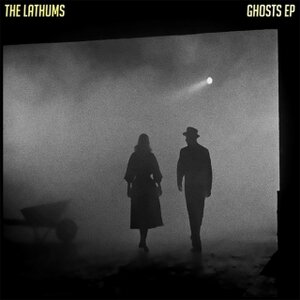
TRACK REVIEW: The Lathums - I See Your Ghost

TRACK REVIEW:


The Lathums

I See Your Ghost


9.5/10


The Ghosts EP is available to pre-order via:

https://music.apple.com/gb/album/1531730786?app=itunes&cId=WE&i=1531731090&ign-itscg=30440&ign-itsct=catchall_p4&ign-mpt=uo%3D4&lId=1866634&sr=1&src=Linkfire

RELEASE DATE:

30th October, 2020

GENRES:

Alternative/Indie

ORIGIN:

Wigan, U.K.

LABEL:

Island Records

__________

IT has been a while since I have…

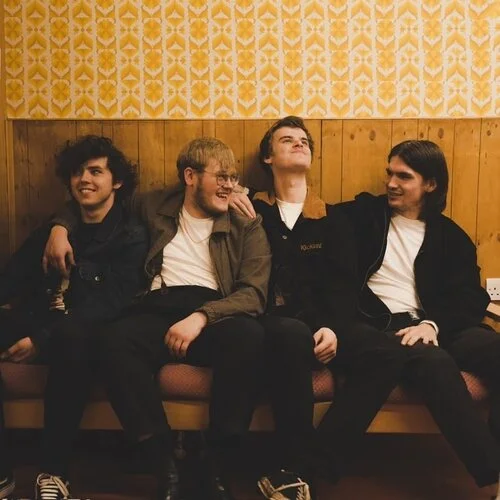
included a new band in this feature. I think the music scene is still being dominated by solo artists and, whilst there are some good bands around, the majority of the great artists out there are solo. That said, one could not have missed the rise and rise of The Lathums. It gives me a chance, not only to investigate a promising group, but to take my focus away from London – so often the obvious go-to when it comes to music. The Lathums hail from Wigan and, whilst many of us associate the North with bands such as The Stone Roses, and The Beatles, I think many are unaware of the terrific bands that exist in every corner of the North. Whilst Wigan might not be as packed with legendary and new bands as, say, Liverpool or Manchester, it is the home to one of the U.K.’s most encouraging groups! Before moving onto a topic that I am keen to explore, I will grab from a CLASH article which introduces the lads:

“Humble but confident, the Wigan four-piece made up of frontman/singer Alex Moore, Scott Concepcion on guitar, bassist Johnny Cunliffe and drummer Ryan Durrans make sublime, jangly guitar-laden songs soaked in melodic textures. Not only resembling The Smiths, they connect with sonics of The Beatles, The Coral, The Stone Roses and The Housemartins. The Lathums are a close unit where everything’s natural and feels right.

Although some lyrics derive from sadness, there’s a wider palette of emotion displayed and optimistic sentiments occur with frequency. A dedicated writer Moore has a rare gift for capturing life’s essence with humour, charm and precision, offering nuanced perspectives that allow for exploration and gritty portrayals. There’s a belief that lyrics exist to explore themes of local, national and international interest, hence subjects like the French Resistance, digital culture and materialistic age are tackled with intelligence and imagination”.

PHOTO CREDIT: Sam Crowston

I think Wigan is important for a number of reasons. Not only does it put a different part of the North on the map, but it seems that the fans and locals there are among the most supportive. At this very hard time for every artist, I think getting as much backing and loyalty as possible is vital; it seems that the Lathums have a tremendous backing from their home crowd! It is not the only reason why they are so popular and talked-about, but I think it might have been harder if they were from London. Perhaps it might have taken them a bit longer to get that buzz but, as there is such a passionate and dedicated following there, it was only a matter of time before The Lathums began to accrue that sort of acclaim and reputation. In an article from Get Into This, Alex Moore nodded to the hometown masses:

“Moore states that the support in their home town has been important for the young four-piece.

“It helps to have that backing,” he says. “Obviously Oasis had Manchester and The Beatles had Liverpool getting behind them so this is our equivalent.

I don’t want to use the word gang to describe it , it’s more like a scene. Everyone has been really supportive, the people who are associated just help us anyway they can”.

Although this review is going to be shorter than the usual ones I put out – as The Lathums have conducted fewer interviews than most acts I assess -, I think I can go into quite a bit of depth and explore them from a number of different angles. Indeed, the band have found themselves on this rise of attention and popularity. I am not suggested that it has been an overnight success – as every band works their work gradually to prominence -, but The Lathums have resonated very quickly and are signed to Island Records.

That legendary imprint, through the years, has signed everyone from Any Winehouse to Nicki Minaj, and it is testament to the quality and appeal of The Lathums that they have found themselves signed to one of the best labels around. That does not mean that their future is assured, and they will be pampered. Island Records will provide the band with a platform and guidance, but the guys are still going to have to put in the hard graft – which they know already. It is a major accomplishment to be signed to such a big label so soon, and one would expect quite a few albums to come from them in the future. I want to grab a few different bits from that CLASH feature/interview I just sourced from, as Moore talks more about the local support; but we learn just how busy the band have been since their formation – and a particularly prominent and popular musician who saw a spark in them:

“Moore sees their nurtured community as key to who they are as people and musicians. “Community is a good word for it”, he reflects. “Back then our reputation was built around word of mouth. It’s passed from friend to friend, so it’s like a close knit family thing. It’s not really like fans, it’s all part of the movement and part of the team.”

Two Eps are out already; one’s self-titled from last year, ‘Fight On’ was released earlier this year. 3rd July represents a milestone as ‘All My Life’ comes out, it’s the first song Moore ever wrote. He was just sixteen at the time and about to leave school, and it shows the songwriter at his purest. Produced by James Skelly, recorded at Liverpool’s Parr Street Studios, it’s their first release on Island Records. The band recently signed key documents with the label.

The band themselves might not have expected people to be so receptive so soon, and Moore sort of found music as this useful outlet where he could funnel his emotions through; there is sort of this comfort in picking up a guitar and playing. The reaction that he was afforded by those he played his earliest material to was immediate – in the sense that people were stunned and there was this wonderful response.  The impression the band made when performing their songs live also helped get them recognised:

“I wanted to pour my emotions through the guitar, and I found some solace, almost”, he says. “It was borne out of desperation, I think. I had a lot of bad times going on when I was younger, so that was my escape. I was just doing it for myself.”

“I showed the song to people, and everybody seemed quite stunned at first”, he adds. “Everybody said they didn’t expect me to be able to sing. I don’t look like the sort of person who can sing, apparently. It was all my emotions from being young, all these experiences just spoke through the song.”

Live gigs make up parts of The Lathums’ rise and simmering success. Having delivered their own UK tour of packed, in-demand shows playing to full crowds, they stopped at iconic venues like Glasgow’s King Tuts. They also played alongside Blossoms on tour and will re-join the Stockport band for some European dates in February. A gig sharing the stage with Paul Weller is on the cards. Studio sessions to work on songs for a debut album are being arranged”.

I have been looking back at The Lathums’ earliest recordings, and they started so young! Having success and recognition when you are in your teens can be quite daunting, and I think there is this sense of expectation – from the public and artists – to improve and use that as a benchmark, which can be quite daunting and damaging. The fresh-faced band have seen music they produced and started at school end up in the charts. In an interview with Music Week, Alex Moore reflected on the chart success, and he seemed almost unaware of the significance of such acclaim:

“All aged just 20, singer Alex Moore, guitarist Scott Concepcion, bassist Johnny Cunliffe and drummer Ryan Durrans must be responsible for one of the few ‘school’ projects to end up in the Top 20, which is where The Memories We Make – a collation of their first two EPs – landed earlier this month, reaching No.14 in the UK album charts.

“It’s quite weird really, I’m not up to scratch with charts but obviously it’s a big thing isn’t it?” asks Moore down the line from Liverpool’s Parr Street Studios where he’s working on the band’s debut album with producers Chris Taylor and James Skelly (the latter also frontman of The Coral). Moore says the Wigan-born band have managed to take their rapid success in their stride, insisting the four-piece are “just normal people doing what we love”. Yet, with offers for collaborations already piling up, Moore admits he’s eager for more. “I feel quite excited by it, the fact that we can impact so many different people from different places, it’s quite a humbling feeling,” he notes”.

I want to stick on the subject of popularity and instant success, not to blow smoke up the band’s bottoms, but to underline how their music has been taken to heart, in a way we have not seen with many acts of the past decade. Maybe it is the commitment and loyalty one finds in the North, or maybe it is the effect their music has on a wide range of people. Whatever the reason, there has been this wave of affection and support for The Lathums. I am eager to review their latest track, I See Your Ghost, but I wanted to spend a bit more time on how they have been received by the public. When speaking with NME this year, the band were asked about their success and rise – and Alex Moore reacted to their tour selling out so quickly:

“Your latest tour sold out in five minutes and things are picking up nationwide. What’s happened there, then?

Alex: “It’s crazy really, it’s all word of mouth how this has happened. We put a few tunes out and got a bit of a local following. Then with Twitter and social media everybody got onto it and we’ve just built up from there and it’s not stopped. I think people are just ready for some proper music again. Not to be arrogant but everybody wants to hear good music and for a long time there’s not really been that [guitar] band you can get behind and really get involved with.”

“The gigs have been mental too. Sometimes I don’t even have to sing. We played a gig at King Tuts and literally from stepping out to going off stage, everybody was singing every word to our songs. It was madness”.

It is a shame that the band cannot play much this year (though there are dates booked for next year), and they might have to wait until next year before they can really hit the road and get the music out there. They will be frustrated, as they have captured an energy and sense of acclaim that has fed right into their music. Not that the train has come to a stop, but the band will be desperate to get back on the stage and take their music to new places. Their Ghosts EP is released later this month – just in time for Hallowe’en! -, but they were asked by NME about their previous E.P., and what it was like having such an esteemed and well-known musician producing (Alex Moore and Scott Concepcion reacted):

“Another indie legend, The Coral’s James Skelly came on board to produce your last EP. How have you found working with him?

Alex: “It felt like being on work experience really for musicians. It’s kind of like learning your trade. He’s dead good with us James as well because he’s kind of been there and done it. He’s already had this journey. He always says if ‘you need any guidance or advice or anything just give me a text’ and that gave us a lot of confidence. He knows that we’re screwed on and very on to the music. When we go in the studio, we know what songs we’ve got and how we’re gonna portray them and get them across and James soaks up that information.

Scott: “Sometimes he tells us to tone it down a little bit because we go overboard sometimes. He just adds a bit of class”.

Before coming to The Lathums’ latest song, I picked up on something from the Music Week feature regarding Alex Moore’s upbringing and the music he was exposed to. I have spoken about the band’s rise and spreading popularity, but I have not really addressed musical influences. It seems that The Beatles’ music is not only important to The Lathums but, as Alex Moore discussed, perhaps their messages of positivity rubbed off on them in terms of what they project:

“The singer grew up surrounded by music, recalling vivid memories of his mother singing Motown around the house, which encouraged him to sing when he was “dead young”. The Lathums’ collective influence though is that fab perennial The Beatles. “I got into them from Scott. He has these musical fads where he just becomes completely obsessed by someone,” explains Moore. “I already knew The Beatles obviously, but he broadened my mind to them and I delved in a bit more.”?

For the singer, his band’s main purpose now is to spread positivity in the world through his lyrics, and The Beatles are the reason behind that goal. “They made really positive differences in society, they gave people a different perception of things, and they united people who would’ve otherwise never even spoken to each other. I want to make positive differences too,” he declares. While he doesn’t see himself as a political artist, Moore has sung about everything from the French Revolution to Generation Z and is sure the band’s new songs will “ruffle a few feathers”.
One of the tricky tasks I was faced when reviewing I See Your Ghost is that, from what I can see (or not), the lyrics have not been published anywhere – this always allows me the chance to dissect them and not mishear lines. In this case, I am having to try and pick up as many lines and words as I can from the recording and, whilst this is easy enough for most tracks, there is a quickness and restlessness to the song which makes it quite difficult! That is okay, as the song’s title sort of gives you an indication as to the crux and theme. The idea seems to concern ghosts, obviously, and the enduring presence of the departed. This song is a bit of a change in pace for The Lathums, as they have put in some Ska and Reggae touches. There is a definite groove that one would associate with the genres, and the words are delivered with plenty of speed and turns. So many bands can get hooked on a sound or think that, when they get noted, that they need to stay with that sound and do not move forward. The Lathums are a curious and evolving band, and it is great to hear them in this mode. The song starts with some deep and exciting bass; a real rumbling that makes you wonder and allows images to form in the mind. A guitar line hooks in and provides a speed and lightness that contrasts nicely with the bass. At just over two-and-a-half minutes, the boys deliver a song as economically as The Beatles would back in the day and they manage to pack in so much! I like Moore’s vocals, as he delivers the first line in one manner, and then his voice speeds up.

I have not heard a song that goes through so many shifts so early! From that introduction, which is quite brooding and deep, the song brightens and accelerates. As I say, the lyrics can be quite hard to decipher, as Moore delivers them pretty rapidly! There are songs that are almost designed to be performed live and get the crowd jumping – and this is one such song! It seems like the hero is talking about something being “worth their weight in bones”, and we/she must listen to him carefully as he could save you “ever so much time”. In terms of lyrical inspiration, the band have not really explained the song, so it is down to the listener to come to their own conclusions. To me, the song is less about the paranormal and literally seeing a ghost – even though ghosts aren’t real, so you can’t ‘literally’ see one -, but of a spirit that has died; in the sense that there was a relationship that has now died. That would seem to make more sense to me but, of course, there is that chance that the band are referring to ghoulish spirits. With elements of The Coral in the song’s sound and a slightly skeletal/ghost ship sound – that was prevalent on The Coral’s debut album -, it is pleasing to hear The Lathums sound slightly off-kilter. Talking about (I think) “cities of snow”, one gets flashes of images and scenes, as the song races through the mind. I just mentioned The Coral and, perhaps as a nod to mentor/producer James Skelly, the chorus evokes their sound.

At night, the hero sees her ghost – if, indeed, it is about a lost lover -, and the chorused vocals are extremely evocative and pleasing! The band never let their foot off the accelerator throughout the song. The chorus is brief-yet-pleasing, and then we are back with the rapid and delirious verse. This time, our hero asks the heroine/spirit if there is anything they want to ask him; they seem very funny to him and, as the next part of that thought sort of gets buried because it is a very fast delivery, I think that actually adds some weight. If all the lyrics were out there and we could have them to hand, I think that might take something away from the song. Instead, there are these slightly gaps; almost like we are getting fragments of the story and, ghost-like, we never get the full body and essence. The band are incredibly tight throughout and each player adds so much to the brew. Even though this someone is gone, they “feel so close”, and one can hear the sense of loss in Moore’s voice. Again, I will stick with my theory of escaping love, and an important person that has slipped through his fingers. At the half-way marker, Johnny Cunliffe’s bass comes back in, and we get another ghoulish, twilight rumbling. From the sway and wave of energy that came before, there is this chance to breathe. The song rumbles and rises; there are wordless vocals that have a spectral feel, as the composition builds and builds. There is a fiery riff – props to Scott Concepcion -, and Ryan Durrans’ drums gallop and pound. Our hero, towards the end, says that this person is too close and that nobody knows. There is plenty of intrigue and mystery in those thoughts, and it gives me plenty to ponder. With only a few seconds to go, there is another twist in the tail, and that sped-up and rapid-fire vocal comes back in to end the song. I have listened to I See Your Ghost over and over, and it is one of those songs you can listen to without getting bored! Not only because it is so short, but the band pack so much in! As I said earlier, they could have stuck with the sound of previous tracks or repeated themselves, but they have produced a new-sounding cut that splices Reggae, something akin to a Coral-esque sea shanty, together with Ska elements. It is a refreshing blast from the young band, and they demonstrate such economy and talent in a single song. I look forward to the arrival of the Ghosts EP if this is the standard they have set!

I shall wrap up soon, but I want to end with a little look to their future. If you can pre-order the Ghosts EP, I would recommend that, as it is going to be a tremendous release. The Lathums have had a busy and exciting past year and, like so many, it has sort of ground to a halt. At a time when they would have wanted to attack and play as much as possible, they have been stifled and held back. I can only imagine how frustrating it is for them. NME asked them how they felt about the current situation:

“The pandemic has had a devastating impact on the live circuit this year. How have you coped with it?

Scott: “At first it was like a crushing blow because we had loads of gigs lined up but after we’d got over the initial bitterness of it all, we just realised that we could just go in the studio after lockdown had been lifted and record the tunes that we had. So silver linings.”

Alex: “Everyone is in the same position though aren’t they? We were very lucky because we had just signed our record deal and we could just sit in our rooms and write songs for weeks and weeks. There was a good momentum going for us before COVID but I don’t think it’s stopped to be honest. Everyone is just more raring to go. Obviously it’s a really horrible time for everybody but I feel like it’s put things into perspective, what we take for granted, even just going to a gig. I think it’ll make people realise when we come back, what’s actually important”.

I guess the band have plenty of time to perform and strike, and they have a great record deal under their belt. I know that they will be alright and continue to recruit fans, but it is unfortunate that their momentum has been slowed slightly at a pivotal time. If you are not following them at the moment, get onto social media and keep abreast of the Wigan band’s movements. There will be a lot of talk regarding a debut album and when we might be able to see that in the world. I am sure The Lathums have a plan for that and, as they have an E.P. to promote and will want to be able to perform a lot of the album live, it will happen…

PHOTO CREDIT: John Latham/@MRJOHNLATHAM

IN good time.

___________

Follow The Lathums

FEATURE: A Buyer’s Guide: Part Twenty-Four: Marvin Gaye

FEATURE:


A Buyer’s Guide

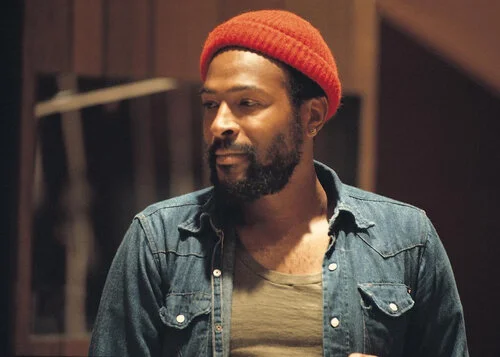
IN THIS PHOTO: Marvin Gaye recording at Golden West Studios in Los Angeles in 1973/PHOTO CREDIT: Jim Britt/Michael Ochs Archive/Getty Images

Part Twenty-Four: Marvin Gaye

___________

NEXT week I am including…

PHOTO CREDIT: Eugene Adebari/REX/Shutterstock

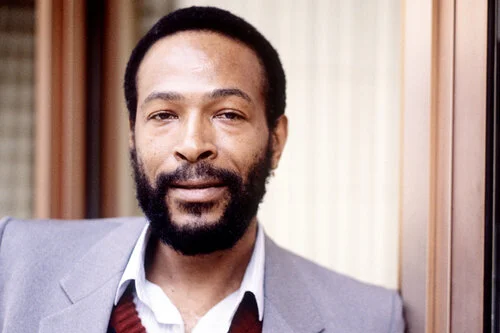
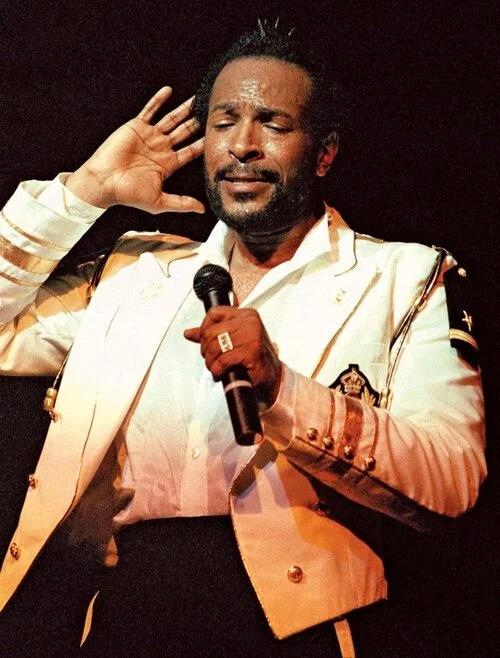
Carole King in this feature, as I am aware that I have included a lot of male artists – and there are some great women of music that I need to cover! In this edition of A Buyer’s Guide, I am focusing on the best albums from Marvin Gaye; an underrated record of his, and a book relating to him. The Motown pioneer died in 1984, but he remains one of the most influential and important artists ever. If you need help navigating his illustrious back catalogue, then I think I can help out. Sit back and enjoy the very best albums from one of the music world’s…

GREATEST voices.

____________

The Four Essential Albums

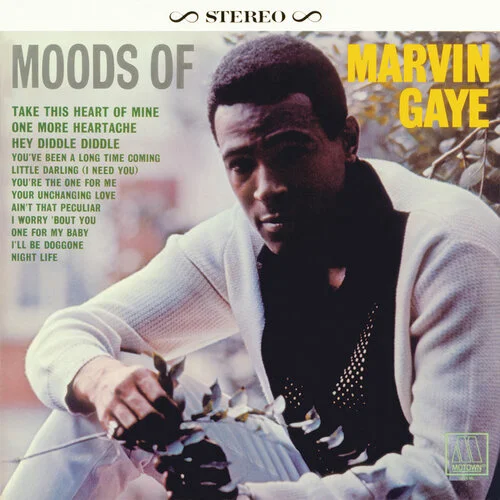
Moods of Marvin Gaye

Release Date: 23rd May, 1966

Label: Tamla

Producers: Smokey Robinson/Brian Holland/Lamont Dozier/Clarence Paul

Standout Tracks: Take This Heart of Mine/One More Heartache/Your Unchanging Love

Buy: https://www.discogs.com/Marvin-Gaye-Moods-Of-Marvin-Gaye/master/260642

Stream: https://open.spotify.com/album/4pfaSNzd1uXEumYj6VAzF0?si=UQl9Z0STT6yZLTXMCyz-sw

Review:

“After Marvin Gaye recorded tributes to Broadway and Nat King Cole in the previous two years, Motown fans may have had their suspicions raised by an LP titled Moods of Marvin Gaye. Yes, there are a few supper-club standards to be found here, but Gaye moves smoothly between good-time soul and adult pop. Most important are his first two R&B number ones, "I'll Be Doggone" and "Ain't That Particular," both from 1965 and both produced by Smokey Robinson. Berry Gordy's right-hand man also helmed "Take This Heart of Mine" and "One More Heartache," another pair of big R&B scores, and just as good as the better-known hits. As for the copyrights not owned by Jobete, the chestnut "One for My Baby (And One More for the Road)" certainly didn't need another reading, but Gaye's take on Willie Nelson's after-hours classic "Night Life" was inspired. Marvin Gaye was improving with every record, gaining in character and strength of performance, and Moods of Marvin Gaye is a radically better record than its predecessors” – AllMusic

Choice Cut: Ain’t That Peculiar

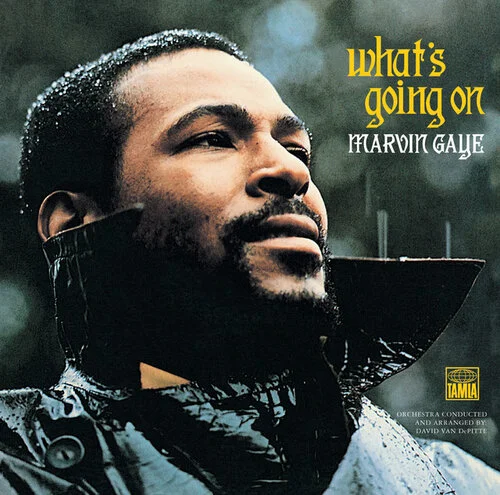
What's Going On

Release Date: 21st May, 1971

Label: Tamla

Producer: Marvin Gaye

Standout Tracks: Save the Children/Mercy Mercy Me (The Ecology)/Inner City Blues (Make Me Wanna Holler)

Buy: https://www.discogs.com/Marvin-Gaye-Whats-Going-On/master/66631

Stream: https://open.spotify.com/album/6qX4eoPWGteMdJMqGOwPTs

Review:

“Easily one of the greatest albums of all time, What’s Going On is nothing short of a masterpiece. Like Bob Marley’s Exodus, it mixes gritty social commentary and anguished dissatisfaction with expressions of religious devotion; indeed, the singer once stated that the album had been written by God, with Gaye merely the vehicle selected to deliver its messages. And like Miles Davis’ Kind of Blue, its non-standard musical arrangements, which heralded a new sound at the time, gives it a chilling edge that ultimately underscores its gravity, with subtle orchestral enhancements offset by percolating congas, expertly layered above James Jamerson’s bubbling bass. For a singer that had built his career on pop records written by others, What’s Going On was a very bold departure, and considering that Motown boss Berry Gordy was flatly against issuing it, Gaye’s determination in seeing the project to fruition is certainly something to be celebrated.

Ten years ago, for the 30th anniversary reissue, Universal unearthed the album’s alternate early mix, done in Detroit, shortly before Marvin and Motown shifted camp to Los Angeles; this less-cluttered mix is highly instructive, allowing listeners to hear the disc from a new vantage point. The 30th set also had a live bonus set, taken from a 1972 performance; but this time around, the collected bonus tracks include original mono mixes of the album’s 45 RPM single releases, plus some unreleased outtakes from the LP, as well as an entire second CD of funk jams Marvin cut with Hamilton Bohannon’s band. Much of this material has never been released before. This time around, the Detroit mix of the album has been relegated to vinyl only (good news for those who prefer that format to compact disc), while the accompanying LP-sized booklet has brief essays by biographers David Ritz and Ben Edmonds, giving a bit of context to the proceedings.

In any form, What’s Going On is an album that everyone should have in their collection; no matter how many times you play it, there is always something else to discover, from the post-Vietnam psychosis of What’s Happening Brother to the pusher’s ode of Flyin’ High; from the terror of Mercy Mercy Me to the hopefulness of Right On and the righteous indignation of Inner City Blues. If you’ve already got both mixes of What’s Going On, the funk jams make this release a welcome package; if you haven’t heard the album for a while, or never got your hands on the Detroit mix, this 40th anniversary edition is a must-have” - BBC

Choice Cut: What’s Going On

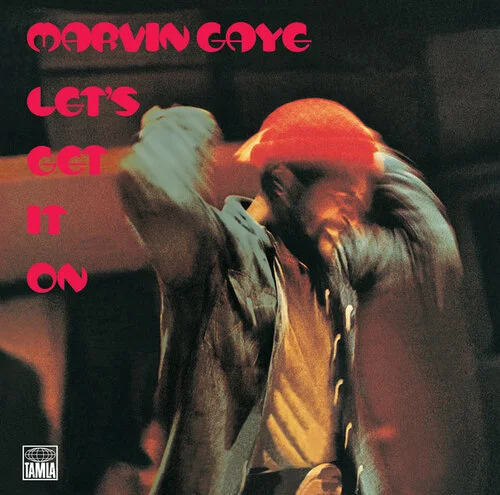
Let’s Get It On

Release Date: 28th August, 1973

Label: Tamla

Producers: Marvin Gaye/Ed Townsend

Standout Tracks: Please Don't Stay (Once You Go Away)/Come Get to This/You Sure Love to Ball

Buy: https://www.discogs.com/Marvin-Gaye-Lets-Get-It-On/master/66602

Stream: https://open.spotify.com/album/6AmnVWOxXYucWxgidEgwhy

Review:

“After brilliantly surveying the social, political, and spiritual landscape with What's Going On, Marvin Gaye turned to more intimate matters with Let's Get It On, a record unparalleled in its sheer sensuality and carnal energy. Always a sexually charged performer, Gaye's passions reach their boiling point on tracks like the magnificent title hit (a number one smash) and "You Sure Love to Ball"; silky and shimmering, the music is seductive in the most literal sense, its fluid grooves so perfectly designed for romance as to border on parody. With each performance laced with innuendo, each lyric a come-on, and each rhythm throbbing with lust, perhaps no other record has ever achieved the kind of sheer erotic force of Let's Get It On, and it remains the blueprint for all of the slow jams to follow decades later -- much copied, but never imitated” – AllMusic

Choice Cut: Let’s Get It On

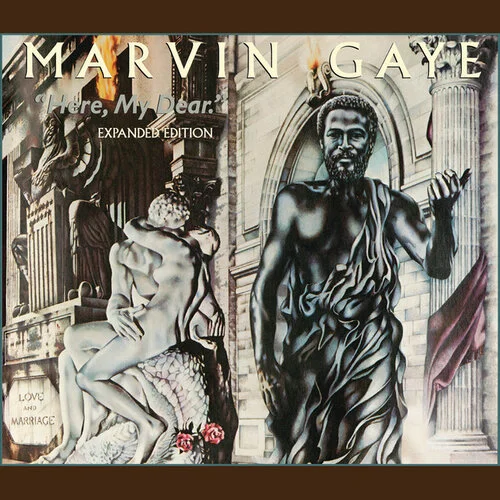
Here, My Dear

Release Date: 15th December, 1978

Label: Tamla

Producer: Marvin Gaye

Standout Tracks: Angel/Is That Enough/Time to Get It Together

Buy: https://www.discogs.com/Marvin-Gaye-Here-My-Dear/master/66800

Stream: https://open.spotify.com/album/7wkzcu3G3L35OownBenoas

Review:

“After a scene-setting intro—“I guess I’ll have to say this album is dedicated to you”—the story begins in earnest with, fittingly, a doo-wop song. “I Met a Little Girl” boasts all the longing and vocal stacking of Gaye’s beloved ’50s music, but with the perspective flipped—he’s singing not as a green teen but as a man in his late 30s who has tried and failed at love, and is no closer to figuring it out. Gaye exquisitely sings all of the parts himself, creating an echo chamber of hurt. Though the singer spoke out against the women’s liberation movement of the era, there’s a generousness to his voice and sentiments, and a shared blame. “Then time would change you,” he squeals, “as time would really change me.” The song is nearly zen in its wistfulness, with a sumptuous arrangement and languid pace. Later, on a track called “Anger,” Gaye still takes the longview, condemning the soul-destroying properties of rage rather than giving into them. Perhaps the slow crumble of Gaye’s marriage across more than a decade allowed him a certain distance, and a way to make this very personal album feel like much more than one man’s loss.

Like much of Gaye’s ’70s work, Here, My Dear is a groove album. Voices, instruments, and hooks don’t jump out as much as they lay in the cut waiting to be discovered. Though it can sound redundant at first, its unvaried instrumentation and tempo strengthen the thematic bonds within. Three tracks called “When Did You Stop Loving Me, When Did I Stop Loving You,” are worked into the suite, all with the same easy sax funk, as if Gaye keeps returning to the question in hopes of a definitive answer. Spacious jazz backgrounds make tracks like “Sparrow” and “Anna’s Song” luxuriate in memories and idylls gone by—even when Gaye breaks character by screaming “An-na!” the vamp barely breaks its stride, acting as something of a calming agent” – Pitchfork

Choice Cut: A Funky Space Reincarnation

The Underrated Gem

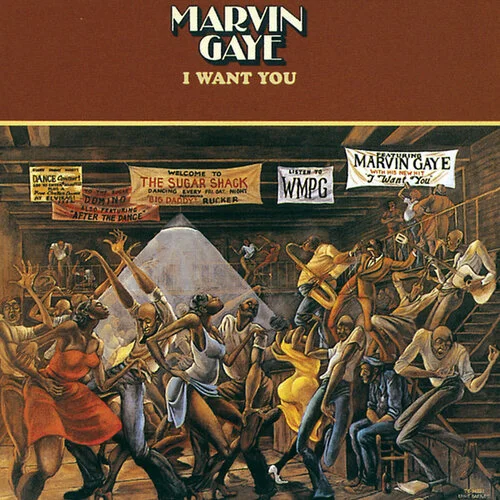
I Want You 

Release Date: 16th March, 1976

Label: Tamla

Producers: Marvin Gaye/Leon Ware/Arthur ‘T-Boy’ Ross

Standout Tracks: I Want You (Vocal)/Feel All My Love Inside/I Wanna Be Where You Are

Buy: https://www.discogs.com/Marvin-Gaye-I-Want-You/master/66739

Stream: https://open.spotify.com/album/0EM4Q0JUVZ8FNqmT5CI2E7

Review:

“But the most astonishing things about I Want You are its intimacy (it was dedicated to and recorded in front of Gaye's future second wife, Jan), silky elegance, and seamless textures. Gaye worked with producer Leon Ware, who wrote all of the original songs on the album and worked with Gaye to revise them, thus lending Gaye a co-writing credit. The title track is a monster two-step groover with hand percussion playing counterpoint to the strings and horns layered in against a spare electric guitar solo, all before Gaye begins to sing on top of the funky backbeat. It's a party anthem to be sure, and one that evokes the vulnerability that a man in love displays when the object of his affection is in plain sight. Art Stewart's engineering rounds off all the edges and makes Gaye's already sweet crooning instrument into the true grain in the voice of seductive need. "Feel All My Love Inside" and "I Want to Be Where You Are" are anthems to sensuality with strings creeping up under Gaye's voice as the guitars move through a series of chunky changes and drums punctuate his every syllable. In all, the original album is a suite to the bedroom, one in which a man tells his woman all of his sexual aspirations because of his love for her. The entire album has been referenced by everyone from Mary J. Blige to D'Angelo to Chico DeBarge and even Todd Rundgren, who performed the title track live regularly. By the time it is over, the listener should be a blissed-out, brimming container for amorous hunger. I Want You and its companion, Ware's Musical Massage, are the pre-eminent early disco concept albums. They are adult albums about intimacy, sensuality, and commitment, and decades later they still reverberate with class, sincerity, grace, intense focus, and astonishingly good taste. I Want You is as necessary as anything Gaye ever recorded” - AllMusic

Choice Cut: Since I Had You

The Final Album

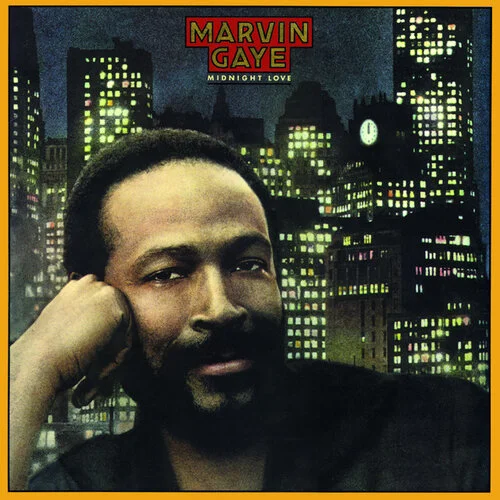
Midnight Love

Release Date: October 1982

Label: Columbia

Producer: Marvin Gaye

Standout Tracks: Midnight Lady/’Til Tomorrow/Joy

Buy: https://www.discogs.com/Marvin-Gaye-Midnight-Love/master/66820

Stream: https://open.spotify.com/album/3gPlX9Zs3tXZZKNCyoOkSm

Review:

“First off, Marvin Gaye is one of the most expressive singers ever, as far as conveying emotions in a clear, touching way. He also has an absolutely beautiful voice. So him singing anything is a joy. An example of the power of his singing is the Midnight Love ballad "'Til Tomorrow." He starts off with a really silly spoken bit where Gaye speaks to his lover in French. Then he sings, and immediately articulates one hundred times more feelings than the spoken word part even hinted at.

The songs here, with the exception of "Sexual Healing," aren't really as good or as important as some of the fantastic pop songs he recorded over the years. Still, there's some interesting musical turns, like the P-Funkish "Midnight Lady" and the Bob Marley-influenced "Third World Girl," lyrics that suggest a man looking for the joy and healing missing from his life (which, it goes without saying, makes his murder two years later seem even more tragic), and that unmistakable voice. A few of these songs would sound absolutely fabulous in less glitzy arrangements, like "Joy," where he beautifully lists off the joys of life over an overloaded funk track, and "My Love is Waiting," a pretty love tune with some religious overtones.

It's hard to criticize an album for the context it arose from. In the early 1980s, this sort of glossy musical backdrop was dominant in the field of pop music. Midnight Love was Marvin Gaye's attempt at a commercial comeback, and thus fits right into the commercial sound of the time. I personally think that sort of sound got in the way of some excellent songs that would have been better served by different production tactics and arrangements. Still, Midnight Love has some great moments, and has its place both in Marvin Gaye's fine catalog and in the history of R&B” – Pop Matters

Choice Cut: Sexual Healing

The Marvin Gaye Book  

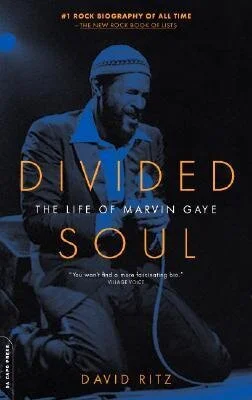
Divided Soul: The Life of Marvin Gaye

Author: David Ritz

Publication Date (First Published): 1st March, 1985

Publisher: Da Capo Press

Synopsis:

“Drawing from interviews conducted before Marvin Gaye's death, acclaimed music writer David Ritz has created a full-scale portrait of the brilliant but tormented artist. With a cast of characters that includes Diana Ross, Berry Gordy, Smokey Robinson, and Stevie Wonder, this intimate biography is a definitive and enduring look at the man who embodied the very essence of the word soul” – Goodreads

Order/Listen: https://www.amazon.co.uk/Divided-Soul-Life-Marvin-Gaye/dp/B002SQ41KE/ref=sr_1_3?dchild=1&keywords=marvin+gaye&qid=1602053079&s=books&sr=1-3

FEATURE: Too Good to Be Forgotten: Songs That Are Much More Than a Guilty Pleasure: Boston - More Than a Feeling

FEATURE:

Too Good to Be Forgotten: Songs That Are Much More Than a Guilty Pleasure

Boston - More Than a Feeling

___________

THIS is one of these songs…

PHOTO CREDIT: Michael Ochs Archives/Getty Images

that has appeared in a few lists concerning guilty pleasures. I have seen Boston’s More Than a Feeling appear in lists like this, and this; maybe there is a feeling that some of the Rock from the 1970s was a bit on the cheesy side and didn’t have the same quality and coolness of other music of that time. Some also say that Boston’s eponymous debut album is a guilty pleasure, though some will vehemently take exception to that. More Than a Feeling was released as the lead single from the Boston album, and it was written by Tom Scholz. It was included in the Rock and Roll Hall of Fame's list of the 500 Songs That Shaped Rock and Roll and was also ranked at Number-500 on Rolling Stone's 2004 list of the 500 Greatest Songs of All Time. With incredible lead vocals from Brad Delp – who sadly took his own life in 2007 -, More Than a Feeling is a staple of Classic Rock! I think there are those who feel that Classic Rock was defined by these overwrought and overblown choruses and not a lot of depth. I have seen More Than a Feeling (unfairly) counted as a guilty pleasure; some who admit that the song makes them feel a bit embarrassed, but they sing along to it because it is so infectious! The lyrics express the author's discontent with the present and his yearning for a former love named Marianne, whose memory is strongly evoked by an old familiar song.

The band’s founder, Tom Scholz, has given various interpretations regarding the lyrics and who ‘Marianne’ is – one explanation was that she was a much older cousin that he had; he also said it may be related to an old school love that he had. In terms of feelgood tracks that are impossible to ignore, I think More Than a Feeling comes close to the top. I think that, because Hard Rock/Classic Rock is not really around now, it can make some of the songs from that time seem dated. Whereas Punk and other genres have evolved and are still going in some form, one does not hear that many Classic Rock-inspired bands today. Maybe that is one reason why bands like Boston have been perceived as being a bit pompous or lame. I would disagree with that. Their music is as far from pretentious and pompous as possible; I think there is so much musicianship and skill in their music, and songs like More Than a Feeling should not be seen as a guilty pleasure – it is a classic song in its own right! One might notice some similarities between Boston’s More Than a Feeling of 1976, and Nirvana’s 1991 classic, Smells Like Teen Spirit. Far Out Magazine explains how, if the songs aren’t exactly the same, it is clear that Kurt Cobain was a fan of Boston:

“It’s hard to deny the similarities between a lot of classic songs, with a more than a hint of Pixies too, but confident the tune was original, Cobain and Novoselic pushed on. Once the song found fame, however, the similarities between it and Boston’s fist-pumping seventies charmer, ‘More Than A Feeling’. 

The songs are in a different key and the similarities clearly weren’t strong enough for it to warrant Boston’s Tom Scholz taking offence. “I take it as a major compliment,” Scholz said in 1994, “even if it was completely accidental.” It didn’t spark the need for the singer to get into the band either.

Scholz admitted to Rolling Stone a few years ago that he hadn’t spent much time getting to know Nirvana, “The only times when I’ll hear other music will be at the ice skating rink or the gym,” he said. “It’s been debated whether [Nirvana playing a bit of “More Than a Feeling”] was homage or thumbing their nose. Regardless, Nirvana was, from what I’ve heard, a great band. I was really impressed by the couple of things I heard. Regardless of what the context was, it’s an honour to be heard in the same airspace as Nirvana”.

I think Boston’s debut album is well worth buying, and it is one of those overlooked classics. More Than a Feeling still divides people, but it is a track that has been covered by many different artists; a song that has hit the heart of many people around the world. In an Entertainment Weekly article from 2016, Tom Scholz discussed the creation of More Than a Feeling and the early days of Boston – but we start with a passage regarding the influence and usage of More Than a Feeling in popular culture:

“Over the years, “More Than a Feeling” has been covered by an absurdly diverse collection of acts, from *NSYNC to Nirvana, whose own classic track “Smells Like Teen Spirit” bore a striking, and much-noted, similarity to the Boston tune. The song has also appeared on a host of films and TV shows, including Close Encounters of the Third Kind, The Sopranos, and, most recently The Walking Dead.

If the idea of an unknown — and deliberately anonymous — band having such an impact with its first ever release is incredible, then the way the song was crafted is no less so. In a rare interview, Boston founder, guitarist, songwriter, and producer Tom Scholz recalls the crazy creation of “More Than a Feeling” in his own words below.

I spent six years submitting dozens of recordings to dozens of record companies and I got nothing but rejections. By this point I was 29 and I decided it was time to get responsible. I was married. We weren’t rolling in cash. This was going to be my last demo — and “More Than a Feeling” was the last one that I completed. Epic Records got that song and a couple of weeks later, Brad Delp and I had an offer to become recording artists.

The song was not written about an actual event. It was written about a fantasy event. But it’s one that almost everybody can identify with, of somebody losing somebody that was important to them, and music taking them back there. There actually was a real Marianne. She was my older first cousin, who I had a crush on when I was 10. I ran into her many many years later and she was very annoyed at me for mentioning that she was my older cousin.

It’s a piece of music that really takes me to someplace else when I listen to it. Which is my criteria for whether a recording I come up with is worthy of going on a Boston album. I shut my eyes and I play it at the end of a long day in the studio. If I still enjoy it, and it takes me some place else, and I forget about all that I had to go through that day, then it’s a winner. “More than a Feeling” did that for me”.

Boston were responsible for shifting American Rock from a more Blues/Metal-based foundation to Power Pop; they mixed precision and fantastic production with a sense of fun and singalong abandon. At this very hard time, songs like More Than a Feeling can provide us with uplift and energy, but I think those who have dismissed the song need to listen back and understand its importance and quality! It is a terrific song that, far from being a guilty pleasure, is actually one of the best Rock songs ever. I was talking about the New Romantic movement the other day, and I stated how it was a shame that that genre/period of music is not around today and seems to have died in the 1980s. Similarly, Classic Rock had its day, and it was replaced by something else. One does not hear too many epic and fist-pumping Rock tracks like More Than a Feeling; things seem more serious and lack that ebullience that is so infectious and important. If you do need a boost and a song that gives you a kick, then go and spin Boston’s…

TERRIFIC debut single.

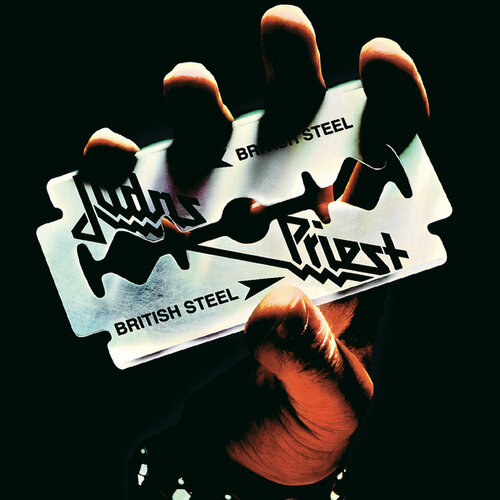
FEATURE: British Steel: The Iconic Judas Priest at Fifty

FEATURE:


British Steel

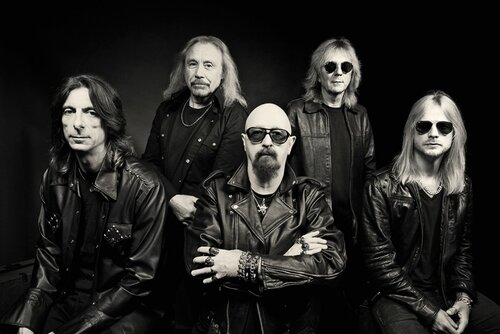
IN THIS PHOTO: Judas Priest (from left) Scott Travis, Ian Hill, Rob Halford, Glenn Tipton and Richie Faulkner/PHOTO CREDIT: Justin Borucki

The Iconic Judas Priest at Fifty

___________

I’LL start this with a bit…

of information from Wikipedia that gives a sort of potted history of the brilliant Judas Priest: “Judas Priest are an English heavy metal band formed in West Bromwich in 1969. They have sold over 50 million copies of their albums, and are frequently ranked as one of the greatest metal bands of all time. Despite an innovative and pioneering body of work in the latter half of the 1970s, the band had struggled with indifferent record production and a lack of major commercial success until 1980, when they rose to commercial success with the album British Steel”. It was that album, British Steel, when Judas Priest came to my attention. I grew up listening to a lot of different genres, but Metal was not a big part. I think Judas Priest helped make Metal more accessible, and I was stunned by their incredible power and the brilliant vocals of Rob Halford. The great man has released his autobiography, Confess, and it is a book I would recommend everyone check out:

“Rob Halford, front man of global iconic metal band Judas Priest, is a true 'Metal God'. Raised in Britain's hard-working heavy industrial heartland he and his music were forged in the Black Country. CONFESS, his full autobiography, is an unforgettable rock 'n' roll story - a journey from a Walsall council estate to musical fame via alcoholism, addiction, police cells, ill-starred sexual trysts and bleak personal tragedy, through to rehab, coming out, redemption... and finding love.

Now, he is telling his gospel truth.

Told with Halford's trademark self-deprecating, deadpan Black Country humour, CONFESS is the story of an extraordinary five decades in the music industry. It is also the tale of unlikely encounters with everybody from Superman to Andy Warhol, Madonna, Jack Nicholson and the Queen. More than anything else, it's a celebration of the fire and power of heavy metal”.

It is an exciting year in the Judas Priest camp, even though they cannot tour. They have been together five decades, and they must surely rank alongside the most-popular and influential Metal bands of all time. Certainty, in terms of their firepower and character, the band are well above many of their peers. I am going to end the feature with a Judas Priest playlist but, if you are a fan of the band, you might be interested to know that a huge photobook is coming out in December. Ultimate Classic Rock provide some more details about what we can expect:

“Judas Priest are commemorating their history with a 648-page coffee table book called Judas Priest -- 50 Heavy Metal Years.

Arriving in early December, it's the first authorized book about the band, with contributions from all current members of the group, as well as journalist Mark Blake. 50 Heavy Metal Years also contains hundreds of photographs from Ross Halfin, Neil Zlozower, Mark Weiss, Fin Costello, Oliver Halfin and others. Mark Wilkinson, who created the artwork for six Judas Priest albums, designed the cover.

View this post on Instagram

Judas Priest Celebrate their career with their first official book titled - 50 HEAVY METAL YEARS PRE-ORDER DETAILS Judas Priest - 50 HEAVY METAL YEARS can be exclusively pre-ordered at www.rufuspublications.com The pre-order starts on September 11th 2020 at 3pm UK time on a first come first served basis Special priced bundle editions will also be available to pre-order and a 10% pre-order discount can be used at the online checkout with the code PRIEST50 JUDAS PRIEST and Rufus Publications are pleased to announce the publication of the first ever official Judas Priest book documenting the bands extensive history over the last 50 years - titled JUDAS PRIEST - 50 HEAVY METAL YEARS the book has been put together by David Silver, Ross Halfin and Jayne Andrews. “I've photographed Judas Priest from 1978 until now and of all the bands I’ve worked with they are one of the most enjoyable to me - you have to love the mighty Priest,” Ross Halfin, August 2020 This huge, 648 page coffee table book chronicles the history of the world’s foremost heavy metal band using hundreds of unseen, unpublished photographs from Rock’s greatest photographers including Ross Halfin, Neil Zlozower, Mark Weiss, Fin Costello, Oliver Halfin and many more. With a linking text by renowned journalist Mark Blake the book explores the bands exciting history on stage and off in a unique photo documentary designed to excite fans and devotees of true heavy metal the world over. Current band members have all contributed to the book with written pieces detailing their love and passion for the band, making this an extraordinary artefact for their legions of followers. The book features an exclusive cover by Mark Wilkinson who has worked with the band for many years now. Glenn Tipton comments “We spear-headed the visual image of metal - breathing new life into it and it has been captured forever in the pages of this book”. See all the details at http://bit.ly/JP50Book

A post shared by Judas Priest (@judaspriest) on

“We spearheaded the visual image of metal - breathing new life into it and it has been captured forever in the pages of this book,” guitarist Glenn Tipton said in a press release.

“I've photographed Judas Priest from 1978 until now and of all the bands I’ve worked with they are one of the most enjoyable to me," photographer Ross Halfin, who helped compile the book, added. "You have to love the mighty Priest.”

There will be four versions of 50 Heavy Metal Years. The Standard Edition (pictured above) comes in a cloth slipcase with red foil, while the Deluxe Edition, limited to 500 numbered copies, is bound in black leather with gold foil and a lenticular image on the front, and also contains a fold-out poster.

Only 100 copies will be made of the Glenn Tipton Parkinson’s Foundation Charity Edition, which contains a blue cover and is housed in a cloth slipcase with blue foil. All proceeds go to the Glenn Tipton Parkinson’s Foundation, created in 2018 after the guitarist revealed that he was diagnosed with the condition. These three editions measure 12"x12".

Finally, there is the Epic Leather and Metal Edition, which is 16"x16" and comes in die cut black metal slipcase. The book, restricted to 100 copies, is bound in padded black leather with gold foil and a lenticular image, with a poster included. All but the Standard Edition are personally signed by Rob Halford, Glenn Tipton, Ian Hill, Richie Faulkner and Scott Travis”.

The band’s eighteenth studio album, Firepower, was released in 2018 and is aptly-named! It features Rob Halford – vocals, Glenn Tipton – guitars, Richie Faulkner – guitars, Ian Hill – bass guitars, and Scott Travis – drums; a solid and incredible band who sound as potent and good now – the core of the original band – as they did back at the beginning! It seems like there is no stopping Judas Priest (and who would want to?!), and I am glad they are marking fifty years together – some bands feel uncomfortable and do not necessarily want to look back at all. Although the line-up has gone through some shifts through the years – there was a revolving cast of drummers in the 1970s and Rob Halford departed in 1992. The American singer Tim ‘Ripper’ Owens replaced Halford in 1996 and recorded two albums with Judas Priest, before Halford returned to the band in 2003 -, I think Halford’s leadership and the band’s consistently-brilliant recordings will stand the test of time and are influencing young bands today. Also, the fact that Rob Halford is openly gay will give strength and guidance to members of the L.G.B.T.Q.I.A.+ community and artists who might feel hesitant about coming out – there is still a long way to go in terms of equality, openness and acceptance. I want to quote from a couple of interviews before finishing things off. Rob Halford spoke with REVOLVER in 2018, where he talked about Judas Priest’s legacy.

I want to source quotes from Richie Faulkner and Glenn Tipton, who speak with affection towards the band and Halford:

 “The Priest audience, built over decades, also accepted the younger player, without excessive angst. "I really felt like there was a healthy skepticism because they care so much, but after 30 seconds of a live set, they were with me," says Faulkner, who, at 38, was born the year British Steel was released. "They knew it was going to be OK and the band was going to be OK."

For the longtime survivors within Judas Priest, being back at a peak moment of urgency and creativity is especially welcome as they get further down the road. "You never know what's around the corner. It's been a bad couple of years, really. People have been dropping like flies," says Tipton, who lost a good friend with the 2015 death of Lemmy Kilmister. At least the future of Priest still looks loud and open-ended. "Rob's vocals are unbelievable. I mean, he's getting on like we all are and his voice hasn't suffered at all," Tipton says. "He can still hit those high notes. His vocal abilities are second to none".

2018 was when we saw an album from the band, and I feel there will be more recordings ahead. It seems like the band are all still very much on the same page and connected, so who knows how long Judas Priest can keep going for! I want to bring in an interview from Bandwagon of 2018, as Halford discussed what it was like still being acclaimed and respected after all these years – and what he feels the band’s legacy is:

“Earlier this year, you released Firepower, one of the band’s best records. How does it feel to see the music you release get such love from critics and fans alike after having spent so long in the industry?

It's a mixture of emotions. We're definitely very humbled, extremely grateful, thrilled, motivated, it's just an incredibly uplifting time for Judas Priest and I think it also reemphasizes the fact that music kind of takes a life of its own when you release to your fans around the world. It connects the metal family, the Judas Priest family and in Singapore. Those are the emotions that pop into my head almost immediately: Just a lot of gratefulness.

How does it feel to be constantly referred to and immortalized as one of the greatest bands of all time?

It's a beautiful thing. We never expected these kind of accolades and awards. It's absolutely fabulous and it feels good, it makes us feel like our efforts and sacrifices have paid off. It also makes you more determined to do the best job you can do so we welcome that type of claims. It comes from the industry and more importantly, the fans and so it's encouraging. We're very grateful to receive it.

The band has been around for close to 50 years. When all is said and done, and Judas Priest calls it a day, what is the legacy you wish to leave behind?

I think it would be the legacy of a band that worked really hard for decades. It's a band that tried to be innovative and tried to break the rules and boundaries of what music can be or do. We've experimented with many types of metal because we're always trying to give fans a complete experience with Judas Priest.

We've given millions of our fans a great time, wether they're just listening to us at home or even at a concert. All of those things, all of those metal memories will be cherished and I'm sure that we'll making great memories one more time when we return to Singapore this December with BABYMETAL”.

I wanted to give a salute to the legendary Judas Priest, and offer congratulations on fifty years of them changing and bettering the music world! I am going to check out their photobook when it comes out, and Halford’s autobiography is going to be well worth a read! To end, I am have put together some Judas Priest classics that demonstrate why they…

ARE so beloved.

FEATURE: Hostage to Fortune: Rather Than Retrain… Why We Need a Strong Music Industry Now More Than Ever

FEATURE:

Hostage to Fortune

PHOTO CREDIT: @john_matychuk/Unsplash

Rather Than Retrain… Why We Need a Strong Music Industry Now More Than Ever

___________

TODAY is World Mental Health Day…

PHOTO CREDIT: @ericjamesward/Unsplash

and, in a year where this day seems more important than ever, I think that music plays a huge role in mental rejuvenation and improvement. Not only are millions around the world suffering with worsening mental-health, but musicians are also seeing their livelihoods threatened. Whilst music is still being made and that has not stopped, gigs are not really happening - and this is a valuable part of many people’s well-being. Also, venues are a vital part of the economy, and the music industry itself is such a huge part of the economy! Between gigs, sales and streams, artists put so much into the pot, yet they are being ignored. Most venues are closed right now, and so many musicians – who normally would be touring – are unsure what the future holds. Artists do have access to emergency funds, but the bailout the Government offered the arts earlier this year has either not been distributed to those in need or it will not last. Chancellor’s Rishi Sunak’s announced this week that artists and those in the industry might need to retrain and look for other careers, as unemployment is to be expected; not everyone can be protected. As you can imagine, many across the world of music had something to say! NME takes up the story:

 “Sunak told ITV News that people “in all walks of life” will have to consider changing the jobs they do in certain industries.

“I can’t pretend that everyone can do exactly the same job that they were doing at the beginning of this crisis,” he said.

“That’s why we’ve put a lot of resource into trying to create new opportunities.” 

Responding to his comments, Liam Gallagher wrote: “So the dopes in gov telling musicians and people in arts to retrain and get another job what and become massive c**ts like you nah yer alright c’mon you know LG x”.

Johnny Marr also hit back at Sunak on Twitter adding: “This is someone running the country. How about you not have your movies, TV shows, Netflix etc during lockdown? All the music, paintings, art in the culture since time began. Moron.”

Badly Drawn Boy also criticised Sunak’s comments. He said: “How about a government that thinks positively and works closely with people in the creative industries (and others) to find solutions to keep them in the important work they are already trained in”.

The only reason that the music industry has thrived for so long and has changed the course of the world is that musicians and those in the sector have been allowed to perform and they have been able to do what they love. I know that the life of a musician, for example, has never been smooth: it is that career people talk you out of as it seems to be risky and a ‘dream’ that has flaws and can end in disaster. Whilst many have dreamt of being a Rock star or going on international tours, the music industry is much more than the artists themselves – from venues and crew through to those in offices, the industry is complex, huge and vital!

IN THIS PHOTO: Chancellor Rishi Sunak/PHOTO CREDIT: Press Association

Maybe a lot of the massive artists will be able to ride this current storm, but there are thousands of promising young artists who are, essentially, being asked if they wouldn’t mind abandoning their careers and dreams and retraining in case there is no way forward for them! Venue staff and those right across the industry are not being given necessary reassurance that the Government will provide financial support until things start returning to some form of normality. Being in the music industry is much more than a dream. It is a thriving and wonderful industry where everyone works hard and are fuelled by passion. I shudder to think where I’d be as a person if COVID-19 has come along in the 1980s and 1990s and the music industry had been rocked then. Would we have most of the great artists we grew up listening to?! If they all fell and were unable to continue, would we have most of the musicians today?! Venues would have closed, and I think there would be a very reduced and scarred industry. Right now, I think new music is at its strongest in terms of its promise and the talent we have. There is so much diversity, so much powerful music, and so many incredible future stars that have had to put their plans on hold. It is not as simple as artists taking other jobs and making ends meet that way. Will these people come back to music, and will there be an industry for them to return to?!

IN THIS PHOTO: Tim Burgess

It might seem unreasonable for the Government to pledge billions more to the music industry, but I do think there needs to be as much action and guidance as they can so that we can retain as many people as possible. Venues across the U.K. are struggling, and so many of those who work in music are going to be heading towards Christmas without a solid job or any clue as to what 2021 will bring. I want to bring in article from The Guardian, where Tim Burgess wrote down his thoughts and provided this passionate defence of why the music industry is so valuable and cannot be treated with such a cavalier and ignorant approach:

 “We totally understand that everyone is facing hardship at the moment, but there was something offhand in Sunak’s words – people felt dismissed and undervalued. What Sunak didn’t seem to take into account was that musicians and actors have been working other jobs for years – as baristas, chefs, roadies, graphic designers or bartenders, and in so many roles in the ironically named “gig” economy – to fill the time between, well, gigs. When I tweeted that many musicians and artists already had second jobs, the writer and journalist Ravi Somaiya nailed it with his reply: “Nobody remembers Renaissance accountants.”

It’s said that in certain parts of Shoreditch, in London, or Manchester’s Northern Quarter, you’re never more than 12 feet from a singer in a band. But it’s a long time since the heady days when you could write a song, release an album and live off the income from royalties and record sales – nowadays you’d need well over a thousand streams just to be able to buy a coffee (unless of course you’re working as a barista, in which case you can probably just make yourself one); and increasingly music is being offered for free to an audience who get their music from streaming platforms. Even before the pandemic, it wasn’t looking good for any artists who were just starting out.

PHOTO CREDIT: @wansan_99/Unsplash

The worry is that the next generation of performers will come only from certain sections of society. It felt as if the chancellor was rebranding the arts sector as some sort of luxurious, decadent hobby, and now it was time for everyone to get their hands dirty – perhaps literally, as we are very short of people to pick fruit. Is that part of his masterplan: to plug the gaps left by the exodus of migrant workers with people from bands? We could divide them according to skillsets – drummers keeping a steady beat as they scoop up armfuls of berries, bass players keeping locked in with them and working to a rhythm, while the singers wander around randomly picking selective items of fruit when the mood takes them.

Acting, creating art and playing music have buoyed up the UK’s economy for decades. In 2018 alone, the music industry contributed more than £5bn to the UK economy, and the Conservative’s own figures show that in the same year 296,000 people were working in music, performing and the visual arts. The government has even been happy to persuade tourists to head to our shores via pictures of the Beatles, Florence Welch, Shakespeare, Stormzy, beautiful theatres and aerial photos of fun being had on an industrial scale at Glastonbury. Has all this been forgotten?”

IN THIS PHOTO: Florence Welch

The reason the music industry is so broad and exciting is because it picks its talent from all walks of lives and corners of the globe. Every gender, genre and sound is accommodated for and represented, and there is greater choice and more hungry and talented artists coming through now than we have ever seen! If we have an industry where only the elite and best-of will survive, then that will be a disaster. It would lead to hundreds of venues closing, businesses closing and, worse, a very unsure future for music as a whole! On a day when we are supporting good mental-health and raising awareness, there are countless people in the music industry who are tackling serious mental-health struggles because of what is happening. We have already seen so many music publications and venues close or be threatened; this will only intensify as the Government distances itself from the responsibility of protecting and preserving an industry that not only contributes so much to the U.K. economy, but enriches the lives of so many people. The music industry in the U.K. is one of the strongest in the world, and it would be a tragedy and unimaginable curse to…

PHOTO CREDIT: @iamarnold/Unsplash

LET it die.

FEATURE: Second Spin: Beastie Boys – To the 5 Boroughs

FEATURE:

Second Spin

Beastie Boys – To the 5 Boroughs

___________

THE last few albums from the Beastie Boys…  

are really interesting, as they vary in quality. Hot Sauce Committee Part Two was released in 2011, and that was followed, rather sadly, by the death of Adam ‘MCA’ Yauch in 2012. I think it is a fitting and strong final album from the legendary Hip-Hop trio, and it is a shame that there can be no other albums from them. Before that came 2007’s The Mix-Up, and that was an album of instrumentals. It has some great moments, but I think it is the group’s weakest album. 1998’s Hello Nasty was an album I really fell for when it came out and, between that album and The Mix-Up we have the fantastic To the 5 Boroughs of 2004. The sixth album from the Beastie Boys, it debuted at number-one on the Billboard 200, and it has since been certified platinum. Maybe one would not rank the album in the best three/five of their albums, but I think To the 5 Boroughs is a great album that won some mixed reviews when it came out. Ch-Check It Out, and An Open Letter to NYC is classic Beastie Boys, whereas Right Right Now Now is a brilliant track. Of the fifteen tracks, there are a few weaker numbers, but I think the Beastie Boys put out a great album that moved their music on whilst retaining their distinct tone and style. I think some that dismissed the album felt that, naturally, there was plenty of fun to be found but the guys were not bringing anything new to the plate.

It was their first studio album for six years, and the boys had entered a new century. Hip-Hop had changed since the late-‘90s, and I guess the Beastie Boys’ were at their peak between 1989 and 1994. That said, their music sounds incredible today, and I don’t feel that it is defined by a certain time or moment. I really like To the 5 Boroughs, as there are so many great tracks, and Michael ‘Mike D’ Diamond, Adam ‘MCA’ Yauch and Adam ‘Ad-Rock’ Horovitz sound like they are having a great time throughout! The chemistry between them is as electric and brotherly as ever, and I think the album deserves re-evaluation and reassessment. I want to highlight a review from The Guardian, who were not completely sold by To the 5 Boroughs:

“In January, anyone with $10,000 to spare could have bid for what was once the world's hippest record label: The Beastie Boys' Grand Royal, bankrupt and up for internet auction.

The label's 2001 closure brought the curtain down on the New York trio's decade-long reign as global avatars of cool, and their first album in six years retreats from the cutting-edge into comfortingly familiar territory: the 1980s hip-hop that first brought them mainstream success.

The beats bounce along happily enough, particularly on the dubby Crawlspace and Dead Boys-sampling An Open Letter to NYC, but the stripped-down sound focuses attention on the anti-Bush lyrics, and that proves to be the album's undoing.

Not even the most hysterical Beastie Boys fan would claim them as great wordsmiths, and political conviction doesn't appear to have sharpened their skills. "George W's got nothing on we," suggests a typical line from That's It That's All. "We got to take the power from he." Indeed us do, but this is a strangely underwhelming way to go about it”.

As a big Beastie Boys fans, maybe I am a little subjective when it comes to their albums, but I feel To the 5 Boroughs is a really complete and interesting album where the group’s sharp pens and rhymes are right at the fore, and the production throughout is brilliant – To the 5 Boroughs was solely produced by the Beastie Boys. In a more positive review, AllMusic offered the following:

“For the Beasties, this means heavy doses of old school rap spiked with a bit of punk, which admittedly isn't all that different from the blueprints for Check Your Head, Ill Communication, and Hello Nasty, but the attack here is clean and focused, far removed from the sprawling, kaleidoscopic mosaics of their '90s records. In contrast, To the 5 Boroughs is sleek and streamlined, with all the loose ends neatly clipped and tied; even the punk influences are transformed into hip-hop, as when the Dead Boys' "Sonic Reducer" provides the fuel for "An Open Letter to NYC." Given the emphasis on hip-hop, it may be tempting to label Boroughs as an old-school homage, but that isn't accurate, since nothing here sounds like a lost side from the Sugarhill Records stable. Still, old-school rhyme schemes and grooves do power the album, yet they're filtered through the Beasties' signature blend of absurdity, in-jokes, and pop culture, all served up in a dense, layered production so thick that it seems to boast more samples than it does.

Apart from an explicit anti-Dubya political bent on some lyrics, there's nothing surprising or new here, and the cohesive, concise nature of To the 5 Boroughs only emphasizes the familiarity of the music. Familiarity can be comforting, though, particularly in troubled times, and there's a certain pleasure simply hearing the trio again after six long years of silence, particularly since the Beasties are in good form here, crafting appealing productions and spitting out more rhymes than they have since Paul's Boutique. If there are no classics here, there's no duds, either, and given that the Beasties' pop culture aesthetic once seemed to be the territory of young men, it's rather impressive that they're maturing gracefully, turning into expert craftsmen that can deliver a satisfying listen like this. That's a subtle achievement, something that will likely not please those listeners looking for the shock of the new from a Beastie Boys record, but judged on its own musical merits, To the 5 Boroughs is a satisfying listen, and convincing evidence that the trio will be able to weather middle age well”.

Maybe it was hard to reinvent the wheel in terms of what Beastie Boys could offer, but I think they do venture into new ground on To the 5 Boroughs. Many wondered whether the Beastie Boys would release any other albums after Hello Nasty, and the fact that they came back with such a gem was a real relief! I would encourage people to listen to the album. Many Beastie Boys fans do not rank it that high, and non-fans might not even be aware of its existence. To the 5 Boroughs is a fantastic album from Hip-Hop legends. Some critics feel that To the 5 Boroughs is a slightly weaker Beastie Boys effort but, to me, it is just…

BUSINESS as usual.   

FEATURE: MOJO: The Collectors’ Series: Kate Bush: Challenging the Traditional Songwriter, Remaining Private and Blowing Minds

FEATURE:


MOJO: The Collectors’ Series: Kate Bush

IMAGE CREDIT: MOJO

Challenging the Traditional Songwriter, Remaining Private and Blowing Minds

___________

I am sliding an extra Kate Bush feature in…  

this weekend, as I took delivery of a great magazine. MOJO have a Collectors Series, which means they dedicate an entire magazine to a particular artist. If you want to order the one on Kate Bush that has just come out, then this is what you can expect:

“MOJO The Collectors’ Series: KATE BUSH DIRECTOR’S CUT 1958-2020

MOJO is delighted to present its finest writing on Kate Bush in a collectable single deluxe volume.

As one of the most original and extraordinary figures in music, Kate Bush deserves to be saluted in style – and that’s exactly what this sumptuous 132-page magazine does. Drawing on MOJO’s many exclusive interviews with the singer down the years, plus a wealth of archive features and rare and iconic images, DIRECTOR’S CUT 1958-2020 traces Kate’s remarkable story from her pre-fame days recording demos with Pink Floyd’s David Gilmour and breakthrough success with Wuthering Heights and The Kick Inside album, right through to the creation of the mid-’80s masterpiece Hounds Of Love and on to her millennial return to live performance with 2014’s breathtaking Before The Dawn shows.

Among the other wow-some treasures you’ll find within its covers are an unguarded 1980 Sounds interview conducted by writer Phil Sutcliffe, Tom Doyle’s epic four-hour encounter with the singer after she returned from a decade’s hiatus with 2005’s Aerial album, a run-down of Kate’s 50 greatest songs and guide to all her key albums. Plus much more besides. Unbelievable indeed!”.

It is a wonderful magazine, and it covers all of her career; going into detail regarding specific albums; showing us some interviews Bush conducted with MOJO, and giving us so many great photos. It is something I would recommend to everyone and, whilst I know much of the facts and stories that are laid out through the magazine, there were sections and snippets that compelled me to write this. This is going to be a fairly general piece but, having read through the magazine a few times, it amazes me how Bush transformed the way we approach a female singer-songwriter, and that influence and ripple is still being felt now!

Not only that, but the blend of the private and musically bold – which I have covered in a previous feature – really comes to the fore. In interviews, Bush talks about being shy and quiet, yet we have a body of work from an artist who exuded so much confident and inhabited so many different guises through the years. I am going to quote a few snippets from the magazine, as we get this detailed impression of a songwriter who, since 1978 (and actually before that), has left jaws hanging and created some of the most interesting and incredible music ever! Going from the earliest pages that caught my eye and, when MOJO talk about Bush’s early T.V. appearances, it made me feel sorry for her. Throughout Bush’s career, she has always been seen as a sex-symbol, and her beauty and sexuality has always been on the minds of interviewers. I am going to bring in that side of things – Bush and her approach to sex and its liberation – in a feature next week but, as this otherworldly and very excited young artist coming onto the scene in 1978, it must have been daunting and, at times, a bit angering having to navigate (mainly) male interviewers, who were either focusing on her looks or were asking quite clumsy questions. I think the way Bush navigated this minefield, with grace and composure, is one reason why people have so much respect for her – other artists might have shot back or had a go at the interviewers!

When The Kick Inside was released in 1978, Bush appeared on Saturday Night at the Mill and, as Mark Blake writes for MOJO, she must have seemed “absurdly out of place” as she played Them Heavy People and name-checks philosophers and spirituality – they wouldn’t have seen her like on the show before! Hosted by Bob Langley, the T.V. show was quite a formal and stuffy thing, so Bush’s presence and unusual music might have taken people by surprise. Langley was quite the old schoolmaster when speaking with Bush, and she answered all his questions “but looks like she might be silently telling him to piss off”. Bush wanted to overhaul the cliché expectations of female songwriters and make music that was quite intrusive and physical. The Kick Inside – and subsequent albums – deals with sex and love in a very open and raw way, and her vocals are far more arresting and imaginative than that of many of her peers of the time. Just looking back on some of those very early T.V. appearances, and one can only imagine how a young Kate Bush would have felt. She was excited to get her music out there, but one feels that the business of being interviewed was something she never truly enjoyed. As Blake writes, Bush’s music had “one foot in the BBC studio” with its piano and gorgeous strings, but songs (on The Kick Inside) that looked at incest, suicide, and orgasms were the kind to raise a few of the more conservative eyebrows!

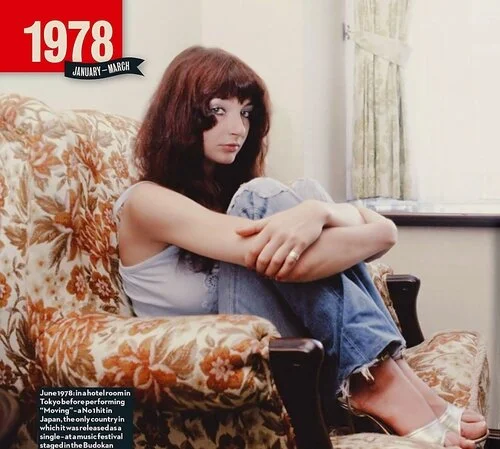
IN THIS PHOTO: Kate Bush in Italy in 1978/PHOTO CREDIT: Angelo Deligio/Mandadori via Getty Images

That is the one thing that I love about Bush’s music above all else: the subject matter was always fearless and tackled themes that were not often discussed in music. Not only were the lyrics and vocals produced by a singular artist, but the compositions, even on The Kick Inside, nodded back to Progressive Rock. Kate’s early boyfriend, the future D.J. Steve Blacknell, recalls that he took her on dates to see Camel, and the Incredible String Band – “you can hear elements of these and more on The Kick Inside”, as MOJO (rightly) observe. It shouldn’t be a surprise that Bush was attracted to the psychedelic and progressive, as her music was brought to the attention of Pink Floyd’s David Gilmour. In 1973, when Bush was at St Joseph’s Convent Grammar School, her brother Paddy passed a simple demo tape to his friend, Ricky Hopper, who was playing with Unicorn (a Folk Rock band), whose producer was Gilmour – he heard potential on that tape and was intrigued. It is clear that the music world was witnessing a true and unique star come forward in 1978. Gilmour oversaw recordings at Bush’s family home and at his studio in Essex. He was pitching Bush to EMI, who he saw as “cloth-eared record company folk”; they were probably expecting something very conventional, commercial and unchallenging. Gilmour fronted the money to bring Bush to AIR studios in 1975, and she recorded three tracks – including The Man with the Child in His Eyes. Producer Andrew Powell was there, and it must have been remarkable for Powell, Gilmour, and those musicians in the sessions that were hearing a then-sixteen-year-old Bush deliver these sublime-yet-unusual songs!

When EMI’s Bob Mercer was given the demo tape of Bush by Gilmour, he signed her on an “apprenticeship deal”, and she was given £3,000 to write some songs and gig – Bush left school, moved out of the family home and embarked on, in her words, “the beginning of my life”. One very obvious thing I gleaned from reading the earliest pages of the MOJO special is that Bush dreamed of putting out an album long before she encountered David Gilmour. I have discussed Bush’s childhood influences and exposure to music, and Bush herself said: “Since I was 14, my only ambition was to get 10 songs on a piece of plastic”. There was an urgency and desire that one can hear through The Kick Inside, and producer Andrew Powell almost had to forewarn the musicians that the songs were not your usual fare, and that they should not judge them/her. It didn’t take long before these experienced male musicians had their jaws opened by an artist whose extreme musical beauty and extraordinary talent was like nothing they had ever witnessed! Bush’s lyrics have always astonished me. She has said how many take time to formulate, whilst others “just come out like … like … diarrhoea”. Why, as MOJO ask, would Bush start singing a Sanskrit mantra – “om mani padme hum” - in the middle of a track (Strange Phenomena) that covers the celestial power of the moon, coincidence and menstruation?! It is that sort of un-linera and unpredictable sense of narration. I guess Bush faced a lot of judgement regarding her age.

How could someone who, when her debut album was released was only nineteen, be aware of the complexities of love and the challenges of life?! She explained how she, like many teenagers, had gone through some heavy times and the best way to channel these experiences and emotions was through music. If so many artists of the late-1970s were using their music as a platform to express anger and rebellion, Bush’s music (on The Kick Inside) was always positive and beautiful. I want to move on from 1978, as I am really interested in how Bush was already fully-formed and this stunning artist right from the get-go. In hindsight, I wonder whether record men and bosses like Bob Mercer regretted not listening to Kate Bush more closely. Many at EMI did not know what to do with her, and when Mercer suggested James and the Cold Gun as the first single, Bush resolutely knew it had to be Wuthering Heights; at which juncture there was quite a heated moment between them where, depending on who you believe, Bush broke down in tears because she knew that she was right – Bush denies that she cried, but it was clear that she had this determination, stubbornness and sense of her own music that many others did not see at that time.

IN THIS PHOTO: Kate Bush at the Plaza Hotel, Copenhagen in 1979/PHOTO CREDIT: Jorgen Angel

Moving forward a bit, and there was, in many magazine and newspaper pieces, this clash of Kate Bush the musician and Kate Bush the public figure. In teen magazine, Look-in, Bush’s rise to attention was described thus: “To every young girl working hard at dance classes and learning music, the story of Kate Bush’s rise to fame must seem like the ultimate fairy story. Few may look as striking as Kate, and it is unlikely that many have her incredible vocal range, but her rise to acclaim gives us all a model to aspire to – showing just how much sheer hard work is involved in reaching the top”. When Never for Ever arrived in 1980, many had heard Bush’s previous singles and albums (Lionheart arrived in 1978; Never for Ever was her third album), and there has been a bit of a change from the higher-voiced artist who was ripe (rudely) for parody in 1978, to a growing artist who was discovering the joys of technology – she used the Fairlight C.M.I. for the first time on Never for Ever -, and was changing all the time. That said, and reading an interview she conducted with Sounds in 1980, and there was still these tags she could not shake off! When that piece/quote from Look-in was read to Bush in the Sounds interview, there was this exasperation – she would have left school and worked at Woolworth, as that sense of pressure scared the hell out of her! Like many artists, Bush was subject to misquotes and the lure and grubbiness of the tabloids. She told Sounds how she saw an early interview that was entirely made up. Sounds themselves ranked Bush at number-two in their list of Sex Object(s) (Female). Today, there would be an outcry and social media backlash if a magazine was ranking female artists in terms of their sex appeal, but it must have been galling and unwanted (rather than flattering) to be seen as a sex-symbol and reduced like this, whereas her music was so majestic, worthy and passionate! Even two years after her debut album, Bush was still being handled and addressed as this slight young girl by many.

She explained how many male interviews were flirty and try-too-hard in the flesh, whereas they would tear her apart in print. She sort of knew that came with the territory, but how could she be anyone but herself?! Maybe people expected Bush to be akin to her sword-wielding, sexy character in the Babooshka video (from Never for Ever) in person, rather than who she really was: quite shy, private and nice. By 1980, Bush’s lyrics were turning slightly more to the political but, even when her attentions were pure, she was still finding interference from record bosses who thought she was putting sex into the mix. Take the anti-war song, Breathing, which Bush saw as her symphony and one of her best moments – she was worried some would feel she was exploiting nuclear war, but her song, told from the perspective of a foetus whilst nuclear war was in the air, was a very honest and serious thing. There is a line, “Breathing, in-out”, which was construed by someone from EMI as being pornographic. He felt the ‘in-out’ was Bush being saucy, which shows that she was not being taken as a serious artist, even in 1980 – as she was progressing and putting out this heavy song, the men from the record company were almost acting like fathers who were dissuading their daughter from meeting boys and talking about sex! It is clear that, in every album and movement, Bush was not only changing the role and view of a young female songwriter, but she was having to battle interfering record bodies and this never-ending perception about her! I do think the media can do more damage than good when it comes to how the public perceive an artist. It was a while until the narrative shifted from Bush being this sex object and ingénue, slightly star-gazing songwriter to a young woman who was crafting some of the greatest music of her time and, unbeknownst to everyone, she was also inspiring artists years down the track!

IN THIS PHOTO: Kate Bush performing on Peter's Pop Show on 30th November, 1985/PHOTO CREDIT: ZIK Images/United Archives via Getty Images

Skip through to Hounds of Love – the MOJO magazine does not really talk about 1982’s The Dreaming -, and we see Bush embark on her most confident transformation. On The Dreaming, Bush was viewed by many in the media as being too experimental and releasing these singles that were too uncommercial to be taken seriously and played – The Dreaming, and There Goes a Tenner charted very low, and there were doubts from EMI that Bush should produce Hounds of Love (after she produced solo for the first time on The Dreaming). I think Bush’s most successful and happiest work (in the sense that she felt happier and less exhausted) arrived when she was in the producer’s chair alone. The Dreaming was a hard transition and album where Bush was pushing technology, the studio and herself to the limits, but Hounds of Love was a much more pleasurable experience for Bush. By 1985, the media had (in a large part) changed their view of her and there was more talk of her as a successful and accomplished artist, and less reliance on her sex appeal and young age. As singles like Hounds of Love, and Running Up That Hill (A Deal with God) charted higher than her efforts from The Dreaming, she was afforded new respect and focus – although The Dreaming did well in the U.S., Hounds of Love was a bigger breakthrough. One interesting change that occurred after The Dreaming was the relationship between musicians and Kate Bush. Stuart Elliott, who played on every Bush album up to Aerial (2005), remarks how Bush started using one musician at a time and, as she told MOJO’s Phil Sutcliffe, “Now the chemistry is between the individual musician and the track he is playing on”. MOJO’s special on Kate Bush notes how, even though technology was a big part of Hounds of Love, the physical performance and the importance of nature and the water was elemental.

Bush has always been interested in the power of people – Running Up That Hill (A Deal with God) is about a man and woman trading places so they can better understand one another -, and the beauty and wilderness of nature (The Big Sky is Bush embracing clouds and the child-like wonder they provoke, whereas The Ninth Wave, is about a woman stuck at sea and at the mercy of the darkness and unpredictability of what lies below). One thing that is not talked about enough – and was covered well by MOJO – is how Kate Bush not only blew away musicians and the media with her music and extraordinary abilities, but of her courtesy, hospitality and down-to-Earth aspect. Musicians playing on Hounds of Love noted how tea and snacks would be prepared for them at the farm kitchen before they headed to record in the barn (it sounds primative, but Bush installed a nice studio in there!). “Brian Tench, who oversaw the album’s final mix (barring the title track and Mother Stands for Comfort), was similarly impressed. “You couldn’t see her doing her vocals” Tench tells MOJO. “She enjoyed being in there and getting into her own world. Then she’d come out and say, (quiet voice) ‘How was that?’ and we’d all be sat there with our mouths wide open”. Hopping to her next album, and there is a quote that she provided that seems to relate to the making of that album: “In music you have to break your back before you even start to speak the emotion”. One of the biggest observations from Bush’s work post-1980 is that albums were taking longer to record and release. As I have said many times before, Bush could write songs pretty quickly, but the actual finalisation became lengthier as each new album came out about. By 1989’s The Sensual World, there were notable gaps. Bush said the actual album took about two-and-a-half years to make, but there were gaps and stops. “There’s tremendous self-doubt involved”, as she admitted.

Bush also noted how she started working on the album soon after Hounds of Love; perhaps trying to capitalise on the momentum created, she was tasked with making another album but, as The Sensual World was very different to Hounds of Love, I can understand why it was four years between album releases. Bush came to resist and hate going from one album to another, and she needed a wall so she could shut off and recharge – that might explain why Aerial arrived twelve years after The Red Shoes! I think one reason why Bush was able to continue recording after The Dreaming and was able to keep writing is because she took some time out to detach and relax. She took up gardening and spent more time with her family – something that would become hugely important before Aerial’s release as her son, Bertie, was born in 1998. I have covered Bush’s early career and that media perception and sense of judgement; taking it through to the breakthrough of Hounds of Love and how different life was for Bush then (Bush’s mother, Hannah, died on 14th February, 1992, and whilst many of the songs on 1993’s The Red Shoes were written before that even, the emotional impact of her passing was another reason why that album took four years to follow on from The Sensual World). The grounded and domestic aspect of Kate Bush came to the fore when she was conducting interviews in 2005. MOJO were lucky enough to be invited into her home, and it is amazing to think about Bush in 1978 and her life then compared to the mother of 2005 who was more interested in spending time at home rather than putting music out – she was keen to release Aerial but she was not going to be rushed or intruded upon! Tom Doyle spoke to Bush in 2005 and, in the years between albums, there was the usual media speculation: Had she had a breakdown or retired? Was there ever going to be another album? Was something more sinister behind her inactivity? If the media perceived Bush as a recluse and someone who was very illusive and strange, the Bush that greeted Doyle in 2005 was a forty-seven-year-old mum who was dressed in brown shirt top, jeans, and as welcoming (if nervous) as ever.

“Around us, there is evidence of a very regular, family-shaped existence – toys and kiddie books scattered everywhere, a Sony widescreen with a DVD of Shackleton sitting below it”. It is, as Doyle writes, a “disarming environment in which to meet such a daunting figure”. One thing that many people do not realise about Bush is how normal she is. I feel there is this vision of her living in a Gothic mansion with jewels around her; this sense of her being otherworldly and superhuman. In the run-up to Aerial’s release, Bush and her guitarist partner, Danny McIntosh, found themselves shattered (after Bertie’s birth in 1998) and moving to a new house – they then spent months doing it up. Being Kate Bush, she was not going to hire a nanny or help, so she was attending to her motherly duties and demands of the house whilst slowly fermenting and constructing songs. Bush was having to adapt from a fourteen-hour working day that she would have undergone in years previous, to being in the studio far less frequently. If pre-2005 albums took a while to come along because of the time she spent in the studio getting songs right, it is understandable how time would have flown by when she had to juggle so many things after giving birth and moving home! Bush herself wondered whether an album would come out and if she could make it happen and, if one fabled story about EMI visiting her home – who came down and, when asked what she had produced, Bush took some cakes from the oven and presented them – is not true, there must have been some nervousness from the label about their huge star and her eighth studio album. Bush is rare as an artist, as she never took a penny in advances, and she did not play the label her works-in-progress before an album came out – one can imagine artists now having to present their music in a very different way now!

Bush was asked what it was like playing EMI the album for the first time: “Well, the first time they listened in the studio. I just think they were relieved that it wasn’t complete crap. So they’re thinking, ‘Phew, thank God for that’”. EMI’s chairman, Tony Wadsworth, was blown away when he heard the album and relieved that it was finished. One passage from that interview seems to epitomise the contrast between Kate Bush the artist and her as a normal person. MOJO observe how the music remains beguiling, unique and this balance of the mundane and ordinary (Bush is always interested in the everyday when it comes to her lyrics) and the simply magical. One domestic conversation between Kate Bush and Danny McIntosh caught my eye. “A clock somewhere strikes two, and the chipper, ever-attentive Danny McIntosh arrives with tea, pizza, avocado drizzled with balsamic vinegar and cream cake for afters, only to be fully admonished by his partner, who protests, “I can’t eat all that shit!”. Digging through the MOJO special and reading interviews like that from 2005 makes you wonder what she is doing now and what her daily life is like – even at a time like now, I can imagine it is a house filled with humour and great moments! I am going to end by taking from an interview from 2016 but, sticking with the interview from 2005, and there are a couple of things I want to quote before moving along. MOJO comment how Bush stares into the late-afternoon light one moment, before bursting into life as she presents Bertie’s favourite toy of the time: a disembodied hand (“like Thing from The Addams Family”) that “creeps its way across the carpet”. That seems to perfectly articulate the two sides to Kate Bush: the dreamer and always-thoughtful person who loves the simplicity of nature and the outside world, but someone who is intrigued by technology, new inventions and other people. Before moving on from this interview – and skipping ahead to 2011 -, and there was a question that I knew the answer to but it made me smile reading it in print…

It relates to Bush meeting the Queen for the first time – Bush was awarded a CBE in 2013, and it seemed to be a smoother meeting than the first time. When she was attended a music industry reception at Buckingham Palace, some say that she asked the Queen for an autograph. Bush grinned and confirmed: “Yes, I did!”. “I made a complete arsehole of myself. I’m ashamed to say that when I told Bertie that I was going to meet the Queen, he said, ‘Mummy, no, you’re not, you’ve got it wrong’, and I said, But I am So rather stupidly I thought I’d get her to sign my programme. She was very sweet…”. In terms of personal development and big shifts in Bush’s life, there were not any major changes between Aerial in 2005 and Director’s Cut arriving in 2011 – Bertie was older, and I am sure one or two big events had gone down in the Bush household! In musical terms, I guess one cannot easily compare the two albums. Director’s Cut was Bush reworking and rerecording songs from The Sensual World, and The Red Shoes – albums where she felt there were issues with production or many of the songs needed room to breathe and required some stripping down. I just want source from a MOJO interview from Keith Cameron, and highlight some interesting parts. At 8:35 a.m. – on the day of the interview – Bush rang and wondered whether it was a good time to conduct the second part of the interview. It was not, as Cameron explained, and he asked if they could re-arrange it for 9:15 a.m. Five minutes later, whilst Cameron was driving through South London, he was caught in a scrape with another vehicle and, moments before, pondered whether it was wise to delay Kate Bush – showing that she could literally drive men to distraction after all these years! Bush conducted that first interview in six years by phone – she did invite a couple of people into her home to interview then (including Mark Radcliffe and John Wilson for the BBC).

cccc.jpg

IN THIS PHOTO: Kate Bush in a promotional shot for Director’s Cut in 2011/PHOTO CREDIT: John Carder Bush (from the book, KATE: Inside the Rainbow)

Bush did call MOJO back at 9:15 a.m. and she explained how, in the start of her career, she didn’t realise that she could say ‘no’. I think her enthusiasm and eagerness to promote her music and do as much as possible tipped the balance and, years later, she was resolved to promoting less and recording more: “And then suddenly I was being asked to do all this stuff, so I thought, Right I’d better do it! What I didn’t like was spending all my time promoting the thing and a very small amount of time being set aside for the creative process. That wasn’t me. I just put the balance back the way I wanted it”. MOJO were impressed that, whilst Bush was engaging in one aspect of music that she has never fully enjoyed, she was a fifty-two-year-old being a mother and trying to lead a normal life as possible. The humour of Bush showed. Cameron was asked whether he had heard the new album and, when he said he had, he confessed that the new version of Moments of Pleasure made him shed a tear – “Oh God, it’s not that bad is it?” was Bush’s retort. In the interview, Bush was asked everything from whether the death of her mother affected The Red Shoes (she said the songs had been written but “it was devastating, for all of us as a family”), to whether that album was originally conceived as being more stripped-back and she intended to tour it (“Yes, you’re right. And… it kind of just went away”). There is one more interview I want to briefly grab from but, in the Director’s Cut interview, Bush was asked whether she still worked with Del Palmer – her former long-term boyfriend, trusted and varied player, and her engineer since the Hounds of Love days. She confirmed she was working with him (and he also engineered the follow up, 50 Words for Snow), and she was asked whether he was sick of her by now: “Oh, I think so! It’s wonderful, because I’m working with someone I know so well and I’m very relaxed when I’m in those very early stages of the creative process”. 

IN THIS PHOTO: Kate Bush in a promotional shot for 50 Words for Snow in 2011/PHOTO CREDIT: John Carder Bush (from the book, KATE: Inside the Rainbow)

She explained how she is shy and feels very relaxed with Palmer – “in some ways, in the nicest possible way, it’s almost like he’s not there”. Del Palmer was there for 50 Words for Snow (his credit is ‘Recorded by Del Palmer’), and, actually, I wanted to go past that album and to the last big event involving Kate Bush: her 2014 Before the Dawn residency in Hammersmith. She spoke with Jim Irvin of MOJO about the release of the live album of that show in 2016. Irvin noted how Bush had refused face-to-face meetings and interviews since Aerial arrived – they were speaking with one another by phone. That is not entirely true. Bush invited to her home Ken Bruce, Mark Radcliffe and John Wilson (both for Director’s Cut, and 50 Words for Snow - you can hear her speak to Wilson about Director’s Cut here, and 50 Words for Snow here; I am not sure what happened to the Mark Radcliffe interviews. She spoke to him, in her home, about Aerial in 2005 and, strangely, there is a 2011 interview Bush conducted with BBC Radio 2’s Jamie Cullum that has also disappeared online!); so it was a rare event but she had opened her doors to people – she also spoke to Matt Everitt in the flesh for BBC Radio 6 Music in 2016 to similarly promote the live album. In the final passages, it sort of takes us back to the beginning and how, whilst Bush has released remarkable albums through her career and been consistently brilliant, her life had changed a lot since 1978. She was asked whether she knew things would get crazy after her debut album arrived: “No. You deal with stuff as it comes in, don’t you? It was such an intense time. But it was very exciting that it was being responded to in such an incredibly positive way”. I am going to complete my selective dig through the MOJO magazine special on Kate Bush in a minute but, before completing, there is an interesting couple of sections from that 2016 interview relating to the live album. Bush was asked what the audiences were like: “Every night they were fantastic. You couldn’t have wished for more appreciative audiences. There was a different energy coming off them every night, but they were all so receptive”. The reception Bush was afforded on the various nights shows how much people adore her and that her months of hard work (around about eighteen months or so from start to finish) paid off!

It was lucky that Bush made it to the stage at all! The Ninth Wave is performed in full during Before the Dawn, and part of it sees her immersed in water. She was filmed singing and floating in a twenty-foot water tank; she co-directed for hours at Shepperton Studios. The challenge was to create waves in the tank – as Bush played a woman lost at sea and it needed to look realistic – but not damage the vocal microphone in the process. Bush grew increasingly irritable, and there was quite a tense exchange between Bush and the technicians: “But it doesn’t look right, we need bigger waves”. “You can’t fucking have bigger fucking waves!” was Bush’s response, clearly aggravated about the increasing cold and uncomfortableness (she developed flu-like symptoms that night and was told by her doctor she had mild hypothermia and only to be in the water two hours the next day – Bush, as always, suffering for her art and dedication!). Bush remarked noted, in the show’s notes, that she truly questioned her sanity! The gamble and suffering paid off, and she made a triumphant return to the stage – the first big production since 1979’s The Tour of Life. That was in 2014 and, just over six years since that residency ended, we await her next move. I was really struck by the MOJO Collectors’ Series print of Kate Bush, as I learned new things and, more importantly, had affirmed my appreciation of her talent and how hard she has worked to get where she is! She is seen as a goddess-like figure and sex-symbol; others remark on her spectacular songs that still sound like nothing else, and others see her as a recluse and someone who hides away. I wanted to highlight both her openness and normality; the way she has tirelessly worked through the years and, despite all her success, she remains rooted and dedicated to home and family – if, at the start, it was to her parents and two brothers, Paddy and John, now it is her son and Danny McIntosh.

Although Bush’s second recording experience was with the KT Bush Band – the band she performed in pubs with prior to recording most of the album; in April 1977, they were invited to De Wolf Studios to record some demos (they did not appear on The Kick Inside; instead, musicians from established, more professional bands like Pilot were used instead) -, her first was in 1975 at the age of sixteen. Instead of sitting mock O-Levels, she was instead recording what was to be the final version of The Man with the Child in His Eyes. Bush recalls how gutsy it was of her to sit in that studio and realise that she had achieved a long-held dream. Her parents would have wanted her to take her O-Levels and focus more on school but, as the MOJO feature quotes “I wanted to make music. When I look back at it, they (her parents) were really great about it. Because they probably saw I so driven that it was what I was going to do anyway”. Forty-five years after that fateful (if nerve-wracking!) first experience of a professional studio, and Kate Bush has become an icon and one of the most beloved artists ever! I would urge people to buy that MOJO edition, even if they have a passing interest in Kate Bush, as it is illuminating, informative and very revealing. One gets a bigger and better sense of an artist who, through the decades, has negotiated early critical dubiousness and misrepresentation, the demands of album releases, the addictive lure of technology, and the revelation of motherhood. From the first notes on The Kick Inside’s opening song, Moving, to the final notes (on Among Angels) of her most-recent studio album, 50 Words for Snow, she has beguiled and moved the world; inspired so many people and made an indelible mark on the fabric of music! Let’s hope that 50 Words for Snow was not the final chapter, as I don’t think the whole story has been told. The thing about Kate Bush is that she could release two albums in a year (as she did in 1978 and 2011), or she could suddenly announces that she is coming back to the stage (as she did in 2014). The surprise and unpredictability is why so many people love her so, and let’s hope that the enigmatic, ordinary, spellbinding and hugely important Kate Bush…

IN THIS PHOTO: Kate Bush with Paul McCartney, Linda McCartney, Victor Spinetti, Phil Lynott and Leo Nocentelli, circa 1979

NEVER changes.

FEATURE: The October Playlist: Vol. 2: Maybe a Shot in the Dark, But Show Them the Way

FEATURE:


The October Playlist

IN THIS PHOTO: Stevie Nicks

Vol. 2: Maybe a Shot in the Dark, But Show Them the Way

__________

ALTHOUGH there are fewer bigger songs…

out this week than previous ones, there are still some great tracks in the pack! There is brilliant new music from Stevie Nicks, Lykke Li, AC/DC, Anderson .Paak, Little Mix, John Cale, and Yola (ft. Natalie Hemby, The Highwomen, and Sheryl Crow). Alongside them are Steps, Lauran Hibberd, Katy J Pearson, Travis, cupcakKe, Girlhood, Celeste, and The Lathums. It is a busy week, and one with a lot of variation of brilliant new acts – mixing it up alongside a few legends! It is a bit of a chilly week, and I think these songs provide plenty of heat, energy, and motivation. If you need a boost and some kick to get the weekend swinging along, then take a listen to the best of this week’s new releases, and I am sure that they will be able to send you…

IN THIS PHOTO: Anderson .Paak

ON your way.

ALL PHOTOS/IMAGES (unless credited otherwise): Artists

___________

Stevie Nicks - Show Them the Way

Lykke Li – BRON

AC/DC - Shot in the Dark

Girlhood – It Might Take a Woman

Little Mix – Not a Pop Song

Anderson .Paak - JEWELZ

John Cale - Lazy Day 

aaa.jpg

IN THIS PHOTO: John Grant

Lost Horizons (ft. John Grant) – Cordelia

PHOTO CREDIT: Alysse Gafkjen

Yola (ft. Natalie Hemby, The Highwomen, Sheryl Crow) – Hold On

Katy J Pearson – Something Real

Steps – Under My Skin

cupcakKe – Elephant

Lauran Hibberd – Boy Bye

Izzy Bizu (ft. Dom McAllister) - MG 

Bicep – Apricots

Travis – Waving at the Window

Low Island – Don’t Let the Light In

Megan O’Neill – Head Under Water

Jetta – Taste

PHOTO CREDIT: Matilda Hill-Jenkins

Celeste – Hear My Voice

The Lathums – I See Your Ghost

Sasha Sloan – Hypochondriac

Bea Miller – wisdom teeth

Sharna Bass – Murda

Future Islands – Born in a War

Martha Skye Murphy – Yours Truly

ccccc.jpg

PHOTO CREDIT: Sophia Burnell

Ward Thomas – Don’t Be a Stranger

Bleached - Stupid Boys

Fia Moon – Let This Go

MICHELLE – UNBOUND

Eve Belle – Bluff

Kassi Ashton – Black Motorcycle

vvvvv.jpg

Emma McGrath – Mad About It

FEATURE: The Lockdown Playlist: Best of the ‘80s

FEATURE:


The Lockdown Playlist

IN THIS PHOTO: Janet Jackson

Best of the ‘80s

___________

I have done a 1980s playlist before…  

ffff.jpg

IN THIS PHOTO: The Smiths/PHOTO CREDIT: Camera Press

but, as it is National Album Day and the theme for this year is the music of the 1980s, I wanted to do a Lockdown Playlist that fuses the best sounds of the decade. I still think it remains an underrated decade, and many people sort of overlook it or define it rather simplistically. I think it is a remarkable time for music, and so many terrific albums and artists came out of that decade. To honour National Album Day and nod to the brilliant music of the 1980s, this Lockdown Playlist is all about one simply…

yyyy.jpg

IN THIS PHOTO: Madonna/PHOTO CREDIT: Gary Heery

WONDERFUL period of music.

FEATURE: National Album Day 2020: The Eighties: The Album of the Decade That I Will Be Playing: Traveling Wilburys - The Traveling Wilburys Vol. 1

FEATURE:

National Album Day 2020: The Eighties

The Album of the Decade That I Will Be Playing: Traveling Wilburys - The Traveling Wilburys Vol. 1

___________

EVERY year…  

I always look forward to National Album Day. It is a bit strange this year, in so much as everything feels a bit odd! There is a theme with each National Album Day and, for today (10th October), it is about the music of the Eighties. Here are some more details:

“On Saturday 10th October the entire British music community are coming together to celebrate the third National Album Day.

There’s going to be a week-long build-up of activities across the country celebrating the album as a format involving amazing talent which spans artists, songwriters, producers, labels, retailers, sleeve designers and the great British public too!

We've enjoyed over 70 years of albums; classic, life-changing, first, influential and even the ones we couldn't live without. Albums mean different things to different people – but there is no denying the huge impact they’ve not only had on our lives but on British pop-culture as we know it.

There are lots of ways for to celebrate National Album Day, from hosting album listening parties, going record shopping with friends, attending live album playbacks or just rejoicing in your record collection and telling us all about the albums you cherish and love. Check out our Get Involved page for more ideas and to submit information about your event.

The Eighties is our theme for 2020, exploring the long voted UK’s favourite music decade that has inspired future generations. It's hard to believe the era began 40 years ago!”.

Of course, it is a chance to embrace all music of the Eighties, but I am going to put together a playlist of great music from that decade but, when it comes to focusing my time on a single album from that decade, it is going to be The Traveling Wilburys Vol. 1. There were other albums I was considering – including Janet Jackson’s Control, Paul Simon’s Graceland, and De La Soul’s 3 Feet High and Rising -, but I think the one album of the decade that has given me some joy recently is The Traveling Wilburys Vol. 1. I grew up listening to a lot of the great artists of the 1980s. Madonna and Michael Jackson were a big part of my childhood, and Bad by Michael Jackson was an album that meant a lot to me. It still is a massive album to me, but I was not too sure how people would react if I selected that album – what with the fact Jackson is not really played now amid controversy and an ongoing feeling of unease. Putting that aside, and the debut album from the Traveling Wilburys is one of my all-time favourites. I have written about this album before, and it is one that I experienced not long after its release. There are many reasons why The Traveling Wilburys Vol. 1 is the album of the Eighties that I am going to be enjoying today.

My experience of the album started when I was a small child and the family and I would have Sunday morning trips up to see my grandparents. They lived close by, and the day would see us drive towards their house, stop for a McDonald's not too far away, before driving up to their house – on the way back, me and my sister would be allowed to buy some sweets at a newsagents near our house on the way back (in the days when there were penny sweets and there was this pleasure about being allowed to choose 50p of sweets and enjoying them on the Sunday!). I listened to a lot of music in the family car when I was young, and I think I may have first heard The Traveling Wilburys Vol. 1 as early as 1989 – though it may have been a bit later. In terms of music from the Eighties, it was mainly Pop that I was listening to. I was getting into Hip-Hop and artists who crossed Hip-Hop and Pop, but I did not stray too far away from those genres in those early days. The Traveling Wilburys Vol. 1 took me by surprise, as it was very different to anything else, and I was not initially aware about the pedigree of the musicians in the band.

I could detect Bob Dylan and George Harrison in there, but I hadn’t heard too much music from Jeff Lynne, Roy Orbison and Tom Petty; it was only in later years that I understood what a supergroup was and why The Traveling Wilburys Vol. 1 could have been a gamble. The musicians were friends, but having five huge names perform together does not necessarily translate into natural and instant results. In other supergroups, egos can clash and the songwriting can seem a bit muddled and unfocused. With the Traveling Wilburys, there was this respect between the members, and you get this carefree vibe throughout the album. The sheer simplicity and catchiness of the songs affected me as a child, and I liked the fact that there were different lead vocals and there was so much range throughout The Traveling Wilburys Vol. 1. Petty, Orbison, Harrison, Dylan, and Lynne were in different stages of their careers by the time they got into the studio. This review from AllMusic talks about how The Traveling Wilburys Vol. 1 helped re-inspire the group - and the result was one of the finest albums of the Eighties:

“The Traveling Wilburys built upon Harrison's comeback with Cloud Nine and helped revitalize everybody else's career, setting the stage for Dylan's 1989 comeback with Oh Mercy, Petty's first solo album, Full Moon Fever, produced by Lynne (sounding and feeling strikingly similar to this lark), and Orbison's Mystery Girl, which was released posthumously. Given the success of this record and how it boosted the creativity of the rest of the five, it's somewhat a shock that the second effort falls a little flat. In retrospect, Vol. 3 plays a little bit better than it did at the time -- it's the kind of thing to appreciate more in retrospect, since you'll never get another album like it -- but it still labors mightily to recapture what came so effortlessly the first time around, a problem that can't merely be chalked up to the absence of Orbison (who after all, didn't write much on the first and only took lead on one song).

Where the humor flowed naturally and absurdly throughout the debut, it feels strained on Vol. 3 -- nowhere more so than on "Wilbury Twist," where Petty implores you to put your underwear on your head and get up and dance, the epitome of forced hilarity -- and the production is too polished and punchy to give it a joie de vivre similar to the debut. That polish is an indication that Lynne and Petty dominate this record, which only makes sense because they made it between Full Moon Fever and Into the Great Wide Open, but it's striking that this sounds like more like their work, even when Dylan takes the lead on "Inside Out" or the doo wop-styled "7 Deadly Sins." Both of these are quite good songs and they have a few other companions here, like the quite wonderful country stomp "Poor House," but they're songs more notable for their craft than their impact -- nothing is as memorable as the throwaways on the debut -- and when combined with the precise production, it takes a bit for them to sink in. But give the record some time, and these subtle pleasures are discernible, even if they surely pale compared to the open-hearted fun of the debut. But when paired with the debut on this set, it's a worthy companion and helps support the notion that the Traveling Wilburys were a band that possesses a unique, almost innocent, charm that isn't diminished after all this time”.

The Traveling Wilburys Vol. 1 is not necessarily a ‘typical Eighties album’, but in such a varied decade, I don’t think we can easily define and limit the music of the time. The originality and timelessness of the music is a reason why The Traveling Wilburys Vol. 1 hit me when I was young, and it is the album I will diving into today.

At ten songs, the album is very tight and focused. It starts and ends with two brilliant Harrison-led songs (Handle with Care, and End of the Line), and it ensures that we kick off with an awesome track and finish on one of the very best. Last Night is a wonderful song combining Tom Petty and Roy Orbison, and Orbison can be heard on all five tracks from the first side – he goes solo on Not Alone Any More. There is a lack of his incredible instrument on the second half (aside from the final track, End of the Line), but it is nice that we get to hear him so much in the first half! I love the Dylan-led Tweeter and the Monkey Man, as it is an epic song and has nods to Bruce Springsteen; Heading for the Light is a huge highlight, and every track on the album sounds polished, but there is definitely punch and depth – Jeff Lynne and George Harrison produced. The Traveling Wilburys Vol. 1 is a great nostalgic trip, and one of the first albums from the Eighties that made a very big impression. I return to it a lot now, as it is impossible to listen to the album and not be cheered and lifted. If you have not heard The Traveling Wilburys Vol. 1, then I would encourage people to listen to it now but, on National Album Day, everyone will be playing some great music from the Eighties that means a lot to them. I am going to listen to other music from the decade, but I wanted to focus on an album from the Eighties that means a great deal to me. It is an important record from my childhood, and one that keeps revealing new pleasures and highlights…

OVER thirty years since its release.

FEATURE: Power to the People: John Lennon at Eighty: An Incredible Legacy

FEATURE:

Power to the People

PHOTO CREDIT: Bob Gruen

John Lennon at Eighty: An Incredible Legacy

___________

IT will be quite an emotional day…

IN THIS PHOTO: John Lennon with The Beatles, circa 1963/PHOTO CREDIT: Jim Gray/Keystone/Getty Images

today (9th October), as it is John Lennon’s eightieth birthday. Even though Lennon was killed forty years ago, his legacy and influence remains strong and widespread. Whether you discovered his songwriting genius when he was a member of The Beatles, or you were tuned in when he was releasing solo work, it is clear that, between some slightly less-than-incredible albums, he was producing some truly fantastic work. In fact, the last album he released in his lifetime, Double Fantasy (1980), ranks alongside his very best. From the incredible originality and constant reinvention, through to Lennon’s embrace of the Avant Garde and the experimental – that started during his Beatles’ work and continued thereafter -, to his amazing work with his widow, Yoko Ono,  there was nobody like Lennon! In fact, Yoko Ono had a profound impact on Lennon as an artist and man, and her positive influence can be felt in his work - his bed-in for peace in 1969 would not have happened were it not for Ono. Looking at the way Lennon progressed as a songwriter, and one hears something more political and sharper on his work with The Plastic Ono Band and in his solo material compared to what he was producing with The Beatles. One does not have to divide Lennon pre and post-Beatles, but there were definite changes and developments when he stepped away from the band.

It is impossible to talk about John Lennon and his legacy without mentioning The Beatles. He started the band and brought Paul McCartney in; the two formed the finest songwriting partnership that has ever been seen in music. If McCartney was associated with slightly softer music, character songs and there was greater escape and invention, then Lennon’s songs were bolder, bigger, and, perhaps, more emotionally raw - though McCartney was no stranger to bearing his heart and soul! I think Paul McCartney was the best Beatle, but I know Lennon wrote, debatably, three of the best songs the band ever produced. Strawberry Fields Forever, and In My Life are masterpieces, whilst I Am the Walrus is one of my absolute favourites. One can also mention All You Need Is Love, and A Day in the Life – McCartney wrote some of it, but the main thrust and body came from Lennon. There are various events and shows dedicated to John Lennon at eighty. There is a wonderful series by Sean Ono Lennon on BBC Radio 2, where he interviews people inspired by his father. Ono Lennon chats with Paul McCartney, Elton John and his brother, Julian Lennon. In 2010, Richard Williams wrote a piece for The Guardian, and he discussed Lennon’s legacy, and where he might have headed if he had lived:

“Now, too, we can hear him prefacing "(Just Like) Starting Over" with: "This one's for Gene and Eddie and Elvis… and Buddy!" This was Lennon excavating his roots and he might have carried on with that for a while. He would certainly have admired the way some of his contemporaries make new music while retaining the integrity of the sounds that first inspired them. The chances are, however, that – after effectively missing out on punk and the new wave, which happened during his voluntary engagement with house-husbandry while Yoko worked at consolidating their fortune – he would have found a way to engage with more innovative sounds, rather than settling for the kind of traditional AOR textures that were added in the final stages of the production of Double Fantasy.

Not that he was ever a completely dauntless adventurer. For all his endorsement of Yoko's wailing, he cheerfully confessed that he had been unable to get through even the first side of John Coltrane's Ascension, one of the key works of the 60s avant garde. But having enlisted Phil Spector's help in 1969 to turn the reverb-laden sound of Elvis Presley's Sun records into the pared-back starkness of "Cold Turkey", "Instant Karma" and the John Lennon/Plastic Ono Band album, he might have found a way to perform the same trick for a second time at a later stage in his life. There is always an audience for primal, bare-bones rock'n'roll, something for which he had an instinctive feel.

In the Britpop wars, he would probably have preferred Blur's originality to Oasis's revivalism ("So why all this nostalgia? I mean, for the 60s and 70s, you know, looking backwards for inspiration, copying the past. How's that rock'n'roll?"). It's easy to imagine him enthusing over Radiohead and the White Stripes”.

Not only is Lennon’s musical genius affecting artists and resonating so many years later, but his activism definitely connected with people in all walks of life. In 1990, Yoko Ono spoke with Rolling Stone and shared her memories of Lennon and the way he continued to influence people a decade after his death:

“She had struck a similar note during her press conference following the UN ceremony. “I think John’s spirit is alive today,” Yoko answered when she was asked what sort of things Lennon might be doing on this day if he were still alive. “And I think this celebration is a proof of that. I think that his music is still affecting people, affecting the world and encouraging people to make a better world.” She emphasized in particular Lennon’s continuing importance to people who were only children when he was killed. “It seems like [young people] have their own way of being in touch with John’s spirit,” she said.

“I have a teenage son, so I know that that generation seems to be very interested in, not John’s only, but Sixties music.” Of course, Yoko, like everyone else, has her own favorite aspect of the legacy left by her husband. “The exchange of roles,” she said that day in the Dakota, with evident fondness. “John’s awareness about the roles of women and men and how to cope with each other and with a relationship. I think that affected a lot of couples and a lot of couples with children, too.”

She still holds to the brand of personal politics that she and Lennon made a hallmark of all their activism in the Sixties and Seventies. Speaking about what ordinary people can do to help realize the ideals extolled by John and Yoko in their own lives, Yoko articulated a vision that inextricably linked the late Sixties with the early Nineties. “I always get letters from people saying, ‘I’m not famous, I’m not rich, and I’m just an ordinary housewife. What could I do?’ ” Yoko began. “I think this is an age when the issues are so big that, of course, one hero cannot take care of it. All of us have to be heroes in some ways. But we don’t really have to be that much of a hero. What I learned from what we did in the Sixties – maybe we were young, too, but we were always in so much of a hurry. When I wrote the song, ‘Now or Never,’ I thought, ‘Oh, well, with this song, everything is going to be all right by next year’ – I was that naive, you know?

IN THIS PHOTO: John Lennon and Yoko Ono circa 1970s/PHOTO CREDIT: Keystone-France/Gamma/Getty Images

 And when I saw that nothing happened after writing a song or something, it was like ‘Oh, it didn’t work.’ I think a lot of us were like that. We were very idealistic, and we wanted a result now. If we demonstrated, the war was supposed to end tomorrow. That’s how it was”.

John Lennon is still motivating and stirring his Beatles bandmate, Paul McCartney, and I know there are scores of artists performing today who owe a debt to John Lennon! It will be sad looking back on Lennon’s life knowing that he could have made so many changes and contributed so much more brilliant work to the world, but we can also celebrate his legacy and spirit. From the timeless music and his politics through to his work with The Beatles and everything else, we will all come together today to mark the eightieth birthday of a true icon. He really was a one-off who changed music and the world more than he could ever have imagined! Whatever you are doing today, put away some time to remember the life of and celebrate the great music of…

THE masterful John Lennon.

FEATURE: The Lockdown Playlist: Eddie Van Halen’s Finest Guitar Work

FEATURE:


The Lockdown Playlist

PHOTO CREDIT: Paul Natkin/Getty Images

Eddie Van Halen’s Finest Guitar Work

___________

GIVEN the news that…  

PHOTO CREDIT: Fin Costello/Getty Images

the great Eddie Van Halen died earlier this week (on Tuesday), I had to dedicate a Lockdown Playlist to his incredible guitar genius. I think Van Halen is one of the greatest guitar players ever, and he helped revolutionise and evolve the guitar and bring it to new audiences. He very much had his distinct and intimidate style, and I listen back to the classic hits from Van Halen and they are defined by the stunning guitar notes of Eddie Van Halen. Michael Hann writing for The Guardian explained why Van Halen is such an important player and innovator:

“Think of Eddie Van Halen as a time traveller as much as a guitarist, someone who saw the future and fetched it back into the present. “What Eddie Van Halen did was reinvent the electric guitar,” says Def Leppard’s Joe Elliott. “He took it to the next level. He did what Hendrix did in 1967. He made people start listening again.”

He was far ahead of the times, in fact, that his playing could be used to symbolise something unearthly: it is him playing on the cassette that Marty McFly uses to convince his future father he is an alien in Back to the Future – a burst of Van Halen’s squalling, squealing playing, then the words, “silence, earthling!” In 1985, that was a joke all the watching audience understood. Those other players? Yeah, they shred. But Eddie? He’s one step past that.

That much was evident on the debut album by his band, also called Van Halen, released early in 1978. The songs themselves were revolutionary – hard rock, but with a pop edge; a new, sunny, Californian sound that owed little to the bands who had dominated guitar music earlier in the decade – but it was the second track on the album that proclaimed Eddie Van Halen as the heir to Hendrix.

What set Eddie Van Halen apart from the shredders who followed – Yngwie Malmsteen, Joe Satriani and the like – was that he didn’t just play; he could write songs. Huge, glorious, memorable songs. Though he always saw himself as a hard rock player, he also knew how to write pop, and so Van Halen were never just a band for the guitar nerds. Though Van Halen albums always had some showcase for Eddie’s playing – Spanish Fly, Tora! Tora!, the opening of Mean Street, Cathedral – they were usually brief, and his soloing within songs was surprisingly to the point (across the first six VH albums, the ones with David Lee Roth, only three songs last longer than five minutes; this was not a self-indulgent band). His skills were just as often displayed in little flourishes – a guitar equivalent of a drum fill – fitted into the spaces in riffs, or between Roth’s lines. If you can make an impact in a few seconds, why bother wasting more time?”.

To honour the great man – and a hugely sad loss for music -, I have combined some of Eddie Van Helen’s finest work into a playlist that shows why he is so revered and such an influence. It is clear that we will not see anyone like him…

PHOTO CREDIT: Getty Images

WALK the Earth again.

FEATURE: Once in a Lifetime: Talking Heads’ Remain in Light at Forty

FEATURE:


Once in a Lifetime

Talking Heads’ Remain in Light at Forty

___________

SOME big album anniversaries…

have already happened this year, but today (8th October) is the fortieth anniversary of Talking Heads’ Remain in Light. It is the fourth studio album from the band, and it was produced by Talking Heads’ long-term collaborator, Brian Eno. Led by the incredible David Byrne, Remain in Light was the first Talking Heads album I came across. I think it was the single, Once in a Lifetime, that hooked me into the band, and I was instantly struck by that song! I think there was a feeling, on previous albums and 1979’s Fear of Music, that the band was a front for David Byrne, whereas Remain in Light was a shift and a more inclusive album; one where the band experimented with Nigerian music and looping grooves. Although David Byrne suffered some writer’s block during Remain in Light’s creation, he adopted a stream-of-consciousness approach to lyrics and was inspired by academic literature on Africa. I do not think I had heard too many African elements in music prior to discovering Remain in Light. I guess Paul Simon’s Graceland (1986) was an album where the sound of Africa was present, but there were not too many albums from my childhood where we had that blend of accessible and conventional sounds with something more unusual. I think the reason why I loved Remain in Light from the start is that it was so original and different from anything around, in the sense that there are so many sounds merged together and we hear these brilliant songs flow effortlessly!

There is plenty of complexity and genius, but the album can be appreciated by all. As a child, I was powerless to resist Talking Heads, and I listen to their music a lot still. Although David Byrne has gone solo and the band’s last album, Naked, was released in 1988, I think they are inspiring artists today and we can look back at albums like Remain in Light as classics. Even though Remain in Light weas released in 1980, I think it is one of the best albums of the decade, and I think it helped bring African rhythms and music more to the forefront. The album peaked at number-nineteen on the U.S. Billboard 200 and number twenty-one on the U.K. Albums Chart. I think the greatest strength of Remain in Light is the variety of sounds and how diverse the album is. With some Art Pop and Dance Rock mixed with that African influence, it sounded like nothing else at the time – and it is still in a league of its own. Remain in Light is an album that sounds great on vinyl - and this is how Rough Trade describe it:

“The musical transition that seemed to have just begun with Fear of Music came to fruition on Talking Heads' fourth album, Remain in Light. "I Zimbra" and "Life During Wartime" from the earlier album served as the blueprints for a disc on which the group explored African polyrhythms on a series of driving groove tracks, over which David Byrne chanted and sang his typically disconnected lyrics. Remain in Light had more words than any previous Heads record, but they counted for less than ever in the sweep of the music. The album's single, "Once in a Lifetime," flopped upon release, but over the years it became an audience favourite due to a striking video, its inclusion in the band's 1984 concert film Stop Making Sense, and its second single release (in the live version) because of its use in the 1986 movie Down and Out in Beverly Hills, when it became a minor chart entry.

Byrne sounded typically uncomfortable in the verses ("And you may find yourself in a beautiful house, with a beautiful wife/And you may ask yourself, well, how did I get here?"), which were undercut by the reassuring chorus ("Letting the days go by"). Even without a single, Remain in Light was a hit, indicating that Talking Heads were connecting with an audience ready to follow their musical evolution, and the album was so inventive and influential, it was no wonder. As it turned out, however, it marked the end of one aspect of the group's development and was their last new music for three years”.

I will wrap up soon, but I want to bring in a couple of reviews. Remain in Light received widespread acclaim on its release in 1980, and it continued to accrue praise and accolades years after its release. In their review of 2012, here is what the BBC had to say:

“Remain in Light wasn’t the first time Talking Heads, helmed by the inimitable David Byrne, had worked with producer Brian Eno. Nor was it the first time they’d incorporated elements of "world" music: debut set Talking Heads: 77’s opener, Uh-oh, Love Comes to Town, features steelpan sounds from the Caribbean. But it was (is!) the indubitable zenith of both the band’s Eno collaborations and their explorations beyond art/post-punk and new wave templates.

Whilst Byrne and bandmates’ intentions from the outset were framed by the desire to experiment, Remain in Light is a perfectly accessible affair, never losing sight of the following Talking Heads had attracted via minor single hits like Psycho Killer and their cover of Al Green’s Take Me to the River.

This mainstream-savvy sensibility is encapsulated by Once in a Lifetime. Far from Remain in Light’s most riveting moment, it’s nevertheless the ideal introduction to this set: Eno’s introduction of Fela Kuti-inspired rhythms lends the track a savant edge, but Byrne’s aspiration-meets-realism lyricism connects with a universal audience. With MTV offering support come the station’s 1981 launch, the track was Talking Heads’ best-known song until it was out-radio-played by 1985’s Road to Nowhere

Road to Nowhere’s parent LP, Little Creatures, can’t match Remain in Light’s bravado, though. This fourth album illustrates how keen ambition could gel with commercial nous, with results that dazzle. Even in its darker turns - closer The Overload the obvious example -these eight tracks continue to fascinate over 30 years after their creation.

In short: same as it ever was, same as it ever was…”

There is no doubt that Remain in Light marked a real turning point and peak for Talking Heads. I think David Byrne’s lyrics especially come to the fore, and he produced his best work with the band on the album. At forty, Remain in Light still has the power to startle and intrigue the senses. I want to source from a Pitchfork review of 2018, where they talk about the album’s strengths and why the album is so important:

“The musical transition that seemed to have just begun with Fear of Music came to fruition on Talking Heads' fourth album, Remain in Light. "I Zimbra" and "Life During Wartime" from the earlier album served as the blueprints for a disc on which the group explored African polyrhythms on a series of driving groove tracks, over which David Byrne chanted and sang his typically disconnected lyrics. Remain in Light had more words than any previous Heads record, but they counted for less than ever in the sweep of the music. The album's single, "Once in a Lifetime," flopped upon release, but over the years it became an audience favorite due to a striking video, its inclusion in the band's 1984 concert film Stop Making Sense, and its second single release (in the live version) because of its use in the 1986 movie Down and Out in Beverly Hills, when it became a minor chart entry.

Byrne sounded typically uncomfortable in the verses ("And you may find yourself in a beautiful house, with a beautiful wife/And you may ask yourself, well, how did I get here?"), which were undercut by the reassuring chorus ("Letting the days go by"). Even without a single, Remain in Light was a hit, indicating that Talking Heads were connecting with an audience ready to follow their musical evolution, and the album was so inventive and influential, it was no wonder. As it turned out, however, it marked the end of one aspect of the group's development and was their last new music for three years.

Although Remain in Light has become an acknowledged classic, it retains a feeling of unfamiliarity. It is tempting to attribute this quality to Byrne’s obtuse lyrics, but the album’s instrumental arrangements also constitute a break with rock’s conventional forms. Weymouth’s bassline on “Crosseyed and Painless” crowds staccato bursts of notes into the first half of each measure, leaving the second half empty in a way that defines the percussion pattern. This technique, essential to funk, diverges from rock’s standard practice of using the bass to keep time. Perhaps the album’s greatest heresy, though, is its total absence of guitar riffs. Like Weymouth, Harrison prefers to use his instrument as a noisemaker. His howling fills on “Listening Wind” lend a foreboding, unpredictable atmosphere to lyrics that are as close as Byrne gets to conventional narrative. These tracks do not hew as strictly to Afrobeat forms as “Once in a Lifetime” or “Born Under Punches (The Heat Goes On),” but they still manage to introduce a coherent sound that is alien to mainstream rock”.

Remain in Light’s legacy is huge. It was named one of the best albums of 1980 by many publications at the time, and, in 1989, Rolling Stone named Remain in Light as the fourth-best album of the decade. In 1993, it was included at number-eleven in NME's list of The 50 Greatest Albums of the '80s. Many other newspapers, music magazines and sites have listed Remain in Light among the best albums of all-time. I know that Remain in Light will receive a lot of love today, and many will nod to a very important album. I got hooked on it as a child, and I have loved it ever since. Albums as extraordinary as Remain in Light come about….

ONCE in a lifetime.

FEATURE: In My Garden: Home and Hearth: Early Influences on Kate Bush

FEATURE:


In My Garden

IN THIS PHOTO: A young Kate Bush/PHOTO CREDIT: John Carder Bush (from his book, Cathy)

Home and Hearth: Early Influences on Kate Bush

___________

AS I (and many others) imagine whether we…

PHOTO CREDIT: John Carder Bush (from his book, Cathy)

will ever see another Kate Bush photograph book in the world, I have been thinking about John Carder Bush’s Cathy. Here are some more details:

“First published as a run of just 500 copies in 1986, Cathy is a collection of photographs by John Carder Bush of his sister Kate as a young girl, with accompanying text. This new edition—the first printing since the original edition—includes a new introduction by John Carder Bush, illustrated with eight previously unpublished photographs. A beautifully bound hardback with a linen cover, head and tail bands, and a matching linen slipcase, Cathy is comprised of 28 cut out pages featuring the text, with full-page photographs revealed on a separate page beneath. The design matches the original limited run in layout, including the original introduction as well”.

One can buy a copy of that book and, whilst it is expensive, it does provide an intimate and vivid look into the early life of Kate Bush by her brother. I will come on to look at the art, music and inspiration Bush was surrounded by in her childhood home (and school to an extent), as I have not really looked back at Kate Bush pre-The Kick Inside (her debut album of 1978). When it comes to a lot of great artists, we do not really have access to photos of them when they were very young and really falling in love with music and the world around them. I guess it helped having a photographer brother, so we can get a photographic representation of Cathy blossoming into this fantastic artist.

I want to cover a small window of her childhood where she was in a family home and the earliest musical seeds were being planted. There aren’t interviews with Kate Bush really before 1978, so these photographs are invaluable and give us a great impression of a curious and shy girl who was absorbing so much around her and, even as a child, possessed this unnatural ability and prolific intent! I am going to be referring from the 2015 book, KATE: Inside the Rainbow. It is a great book I would urge any Kate Bush fan to own:

“KATE: Inside the Rainbow is a collection of beautiful images from throughout Kate Bush’s career, taken by her brother, the photographer and writer John Carder Bush. It includes outtakes from classic album shoots and never-before-seen photographs from sessions including The Dreaming and Hounds of Love, as well as rare candid studio shots and behind-the-scenes stills from video sets, including ‘Army Dreamers’ and ‘Running Up that Hill’.

These stunning images will be accompanied by two new essays by John Carder Bush: From Cathy to Kate, describing in vibrant detail their shared childhood and the early, whirlwind days of Kate’s career, and Chasing the Shot, which vividly evokes John’s experience of photographing his sister”.

There are interviews where Bush looked back at her upbringing and family home, but I am going to start off by quoting from John Carder Bush’s 2015 update and expansion of the Cathy book. KATE: Inside the Rainbow has over 250 rare photos in black-and-white and colour that were taken between 1964 (when she was five/six) and 2011 – when her current studio album, 50 Words for Snow, was released.

Like any songwriter, those very early years are as influential and formative as any. I think the music and culture we are surrounded by as children moulds and directs us. Carder Bush was involved with his sister (in a creative manner) for twenty years, and, as he puts it in his book, he was “surrounded by a pulsating system of remarkable creativity – it actually felt like I was living life from inside such a phenomenon: from inside a vibrant shimmering rainbow, where reality juxtaposed seamlessly with intense creativity to conjure something enigmatic and intangible that has always embraced my sister and her music”. Although she was born in Bexleyheath in 1958, the Bush family lived in a farmhouse in East Whickham – an urban village in Welling, London (Welling is located in the London Borough of Bexley, although it does share the Kent postcode prefix of DA16). Her father, Robert, was a doctor, and her mother, Hannah, was an Irish staff nurse; daughter of a farmer in County Waterford. Surrounded by a loving family including her older brothers John (or ‘Jay’) and Paddy, Bush came from an artistic background: her mother was an amateur traditional Irish dancer, her father was an amateur pianist Paddy worked as a musical instrument maker, and John was also a poet and photographer. Both brothers were involved in the local Folk music scene. Although she wasn’t necessarily a veracious reader, Bush would have been influenced by literature and poetry from a young age. Celtic and Folk music was in her bloodstream very early, and the idyllic surroundings of the farm provided perfect tonic and elixir for someone who was clearly instilled with a love of music and the arts from a very young age.

PHOTO CREDIT: John Carder Bush (from his book, KATE: Inside the Rainbow)

I think one of the reasons Bush’s music is infected by and infused with elements of dance, literature, and cinema is because of her childhood years and the way the arts was introduced into her life very young - and it became such an important element of her daily life. Carder Bush, in KATE: Inside the Rainbow, recounts how he kept journals and can remember how (for his sister) “1973 and 1974 were very intensive creative years, with often a couple of new songs a week”. Bush would have been fifteen by that point, and I am going to go back further a bit later when I reference Graeme Thomson’s biography, Under the Ivy: The Life & Music of Kate Bush. Through Kate Bush’s infancy, the house was awash with the Irish singing of her mother. As Hannah Bush grew up in the rural South of Ireland, family holidays were taken in Ireland, and the vivid and colourful landscape was at odds with the somewhat greyer and more modest greenery of rainy England. That experience of holidaying among such evocative countryside had a very direct and powerful impact on young Kate/Cathy. As Carder Bush remarks: “Most of our uncles played an instrument, and our mother’s family all loved dancing, both traditional and ballroom”. Sequestered in a slice of paradise in Welling, although the urban expanse had increased in the 1950s and 1960s, there was something pleasingly traditional about the Bush household.

With the music, dance and words of the Irish connecting to the young Bush through her mother and her side, coupled with the piano and Methodist hymns from her father, it must have been quite strange for Bush to enter quite an orthodox school in England! I want to discuss her brother Paddy and his musical influence, in addition to Bush’s school life and her fascination with poetry. Whilst quite a disparate and eclectic cocktail of English and Irish poetry, music and religion might have been quite confusing and strange for a child, it seemed to provide a warm cocoon for Kate Bush – as John Carder Bush attests to in his book. In conjunction with music and literature came film and T.V. I am not sure how many families had access to T.V. in the 1950s and 1960s – Bush’s family were comfortably middle-class, though she was never spoiled -, but the young Bush was often found sitting in front of the T.V. watching the Saturday night film on BBC 2. I have explored how influential film was to Bush in terms of her songwriting and original tangent, and how many of her songs are rich with images and elements of classic T.V. and film – her debut single, Wuthering Heights, was written after Bush saw a T.V. adaptation of the Emily Brontë novel of the same name. Cathy/Kate was meant to practice violin – something she did but never really enjoyed -, but, instead, she began playing the piano.

DSSS.jpg

PHOTO CREDIT: John Carder Bush (from his book, KATE: Inside the Rainbow)

The piano was in the room where she was meant to play violin, and that piano was given to Bush’s father by his piano teacher. Bush would embrace Irish music and her mother’s side through her career – one can hear elements through many of her albums from 1980’s Never for Ever onwards -, but the violin was a pathway into the piano and, on this instrument, Bush enjoyed her first crush and most passionate relationship. Her brother, Paddy, was also very music (he appeared on many of her albums), and they both had a great and easy aptitude for piano – perhaps more influenced by their father than their mother. So many iconic songwriters started out listening to commercial artists or being influenced by what they heard on the radio; they would go on to develop their own style later and evolve through time. Kate Bush definitely loved more conventional music – from Steely Dan and Captain Beefheart through to Elton John and Roy Harper -, but her earliest songs were provoked by things and events around her; anything that really moved her – from pets and animals through to imaginary love. As a child prodigy became more prolific, none of the family realistically felt that this would lead into a music career but, as John Carder Bush remarks in KATE: Inside the Rainbow: “We all became aware of something unexpected emerging; the flower left to grow in its own safe surroundings was blossoming in an exotic and unique way, like a rare orchid among daffodils”.

PHOTO CREDIT: John Carder Bush (from his book, KATE: Inside the Rainbow)

That is a beautiful and apt description of his sister’s clear talent, and the photos John Carder Bush took in those very early years shows Kate at the piano in her elements, frolicking in the splendour and grace of her family’s garden, or looking thoughtful and pensive beneath a tree. One interesting observation (made by Carder Bush) is that Kate Bush’s generation was the first who were not pressured by their parents or expected to follow in their footsteps. Bush could have become a doctor or a nurse – as she was extremely academic and could have gone to university -, but she was gently encouraged to go into music, as her father especially could see that she possessed unflinching and fascinating ability. Although he was proud of his daughter, there was a fear of future instability: the perception that she would become a wandering musician and pursue creativity and success with very little financial stability and career to fall back on. This sort of fear exists in the minds of parents today, and it wasn’t until Pink Floyd’s David Gilmour heard a demo tape from Bush and took an interest in her that the fear subsided. In 1975, Bush recorded both The Man with the Child in His Eyes, and The Saxophone Song – they would appear on The Kick Inside three years later. Not only was music and art an important factor in the Bush household but, curiously, karate was prevalent!

IMAGE CREDIT: John Carder Bush

Everyone, apart from their mother, practiced karate, and Kate Bush trained with her brother, John, for two years – she took two examinations in the Shotokan style. I think the exposure to karate and this form of movement not only fed into her songwriting later on, but it coupled alongside her attraction to dance. Bush trained with and was a fan of the late Lindsay Kemp – whose incredible production, Flowers, resonated and deeply affected her -, and  the marriage of movement, song and literature – alongside film and T.V. -, all went into Kate Bush’s wild and wonderful musical brew! Karate is about defence and attack and, whilst Bush studied it, she substituted for a form of expression more about beauty and protection; something less offensive and confrontational – which is where mime, dance and Lindsay Kemp played an important role. During a time when music was making its way into every household and car, the young Kate Bush was experiencing so many different sounds that her parents would not have had access to in their youth. Her brother, Paddy, brought her examples of World music and unusual sounds; this continued through her entire career, and I think it is as important to her originality and success as anything. Whilst myriad sounds and musical sources provided direction for Bush, it would have been quite overwhelming too. I often wonder whether Bush’s love of nature and birdsong is intended as an escape from the noise and assault of the media…and the endless stream of music.

Kate Bush, appropriately, arrived in music like a rare and magical bird, pure of song and spirit in a music scene enveloped in noise and generic clatter. That sounds rude to her peers, but Wuthering Heights seems like it arrived from a different world and time period; hardly typical of what was absorbed and popular in 1978! I want to shift from the Bush household to the school environment in a moment but, in KATE: Inside the Rainbow, there is a passage that made me stop dead. As John Carder Bush notes: “When I was sixteen, our father’s father, our English grandfather, told me the story of his adolescence”. Because of his religious convictions, he was designated as a conscientious objector when World War I broke out in 1914. Conscription did not come in until 1916, so there was no choice but to enrol; his grandfather went on the run. He was caught and put before a military tribunal. Alongside eleven other ‘conchies’, they were sentenced to death before a firing quad unless they enlisted to go to war. “Six took the opportunity of saving their lives” whereas the remaining six were sent before the firing squad; they were given the chance (again) to go to war, and three more took that option. Three were left, including Carder Bush’s grandfather, and the riffles were cocked and ready to fire…but it was all a ruse!

vvv.jpg

PHOTO CREDIT: John Carder Bush (from his book, KATE: Inside the Rainbow)

Rather than execution, he was sent to prison for the rest of the war. That self-belief and determination not to kill another human was an unpopular one at a time when Britain needed to recruit soldiers. Maybe not as dramatic, John Carder Bush equates that story with his sister determined to follow her instincts and enter an industry by herself. Not only was she influenced by her brothers and her parents, but her grandfather too! The inter-generational and multifarious influences all seeped into her bones and soul, and the girl who wrote from a very young age and was playing her creations to family members and friends was now embarking on a very challenging and frightening move into professional music! As Graeme Thomson writes in his excellent book, Under the Ivy: The Life & Music of Kate Bush, Bush’s background and family home was important regarding her decision to go into music, but there was this niggling that, as she was from a stable home and had not suffered for her art, then that this somewhat invalidated her career choice. I think there is this perception that great art comes from sadness and struggle but, as Bush dispelled in future interviews, one does not need to be unhappy to create great music. Her parents were from “unshowy country stock”, and one cannot accuse Bush of being spoiled. The shift from Catherine to Kate occurred after she left school, but those school years are important – which I shall get to in a second. Bush and her family would holiday in countries like New Zealand (where they would visit members of Bush’s mother’s family), and this infant exposure to different nations and cultures would have been instrumental.

PHOTO CREDIT: John Carder Bush (from his book, KATE: Inside the Rainbow)

Thomson argues that, rather than wealth and opportunity being the most important reason why Bush stepped into music, it was the artistic environment and bohemian atmosphere of her household that was the biggest factor. Indeed, many of Bush’s school friends remarked how her father, Dr. Bush, took surgery in a flowered smock; the family house had a Victorian ghost exorcised when it became too intrusive, and there was this eccentric nature to the home which, inevitably, explains why Bush’s music has always been imbued with a slightly more unusual edge! Whilst the young Bush loved and followed Roxy Music, Marc Bolan, and Simon & Garfunkel (the first album she owned/loved was their Bridge Over Troubled Water album), there was not a lot of traditional Pop music in the house – Bush didn’t get into The Beatles until the Seventies (and later explained how Magical Mystery Tour was her favourite album of theirs). Whilst Paddy played concertina for the English Morris Dancers, and the pure narrative of Irish music was a common sound, those wondering why Bush’s arrival into music was so unconventional-sounding and unorthodox should look at her childhood and upbringing – the Kate Bush we know and love would not exist were it not for her family and the sounds of East Wickham Farm! Through her brothers, Bush was exposed to a lot of English Folk music, which was often gritter than Irish Folk – tales of murder, incest and ghouls ran deep! Bush, as Thomson notes, cannot be categorised as a Folk artist, but its impact “runs deep in her writing”. John Carder Bush, whilst a huge fan of music, became a sort of tutor to his sister and opened her eyes to poetry and deeper ideas.

Jay/John was an accomplished poet, and some of his more illicit and explicit work was shown to his sister. He showed her “how explicit desire was a legitimate artistic endeavour”. Bush wrote her own poetry similar in tone to that of her brother’s and, whist a little sloppy, she would become more refined later. Listen to songs on her debut album, The Kick Inside, where she talks of love and lust in such a direct and bold manner, and one can link that back to her connection with poetry and her brother’s influence. The Bush household was unencumbered and unabashed, and there would have been no taboo when it came to sex and desire. Whilst Paddy Bush brought to his sister so many weird and wonderful recordings that spiked her mind, Jay’s intellectual curiosity and ferocity rubbed off on his sister; she especially loved G.I. Gurdjueff (a Greek-American spiritual leader who died in 1949), and mentioned him on her debut album and in several interviews. Her older brothers’ passions definitely shaped her but, like all great artists, the young Kate Bush pursued her own outside interests. From books – by Kurt Vonnegut to Oscar Wilde -, to Billie Holiday and T.V./film, everything became food for thought. Thomson also notes how there is this misconception that Bush’s music is high-concept and all about philosophy and high-minded ideas where, in actuality, there is silliness, fantasy and humour.

IN THIS PHOTO: A young and mirror-side Kate Bush/PHOTO CREDIT: John Carder Bush (from his book, Cathy)

Track backwards and sideways to Bush’s school years and, whilst it was an unhappy environment (she could not wait to leave), her time at St Joseph’s Convent Preparatory School and St Joseph’s Convent Grammar definitely left their mark. Though her school friends paint her as a shy and extremely nice person, I am intrigued by St Joseph’s and the blend of the ordered and strict. Run by runs – always a horrifying image and sentence! -, everything was kept very beautiful and neat; there was a gardener, and the surroundings were beautiful. It was a school for middle-class children and it prepared these young women for excellence. The nuns, it seems, were proto-feminists and any discipline that took place was self-regulated – there were no canings or anything of that manner! Rather than girls being fearful of a lashing or some form of physical rebuke, there was a sense of disappointment if the pupils did not perform at their highest level. That ethos of performing to your very best standard definitely motivated Bush, and it stuck with her through her career. One can imagine that it was frustrating for Bush to be surrounded by girls with very little male contact, given her fascination with the masculine. Perhaps that stems from her childhood home and the influence of her father and brothers; school was a sharp contrast to life at home.

rrrr.jpg

IN THIS PHOTO: Kate Bush on holiday in Kent in 1972/PHOTO CREDIT: John Carder Bush (from his book, KATE: Inside the Rainbow)

One of the positive aspects of school was the fact that music was a part of the curriculum. I have already mentioned the prolificacy of music in the Bush household, but every pupil at St Joseph’s had to learn an instrument. I think the importance of school on Bush was less about absorption and obedience and more about a sense of defiance. By that, music was taught rather rigidly and there was little in the way of flexibility and excitement in the curriculum. This was at odds with the freer and thrilling energy of home, so I can understand why Bush did not enjoy school a whole lot. Despite her English classes being too regimented and structured to offer any stimulation or interest, Bush did start to blur the lines between home and school. Friends would come home to the farm, and it was a very different atmosphere to St Joseph’s. A more open and far less disciplined space, there were parties, seances, smoking and singing! Bush was probably the most introverted of her friend circle, and I think being around more extroverted characters was important; the very shy Kate Bush definitely started to come out of herself, though she would remain quite private and shy for much of her young and adult life. If her English classes were quite dull and rigid, many noticed Bush excel as a poet and writer whilst at school.

eee.jpeg

IN THIS PHOTO: Paddy and Kate Bush in 1980/PHOTO CREDIT: John Carder Bush (from his book, KATE: Inside the Rainbow)

As Graeme Thomson writes: “Between Form I and III she had several poems published in the school magazine”. This magazine was a rare chance for Bush to express herself in a manner she would not have been afforded in English classes. She was just eleven when her first poem was published, and there was a mix of more introspective pieces and poems that related to death and religion – nothing too unusual for a teen in the Seventies (or any time). Thomson describes those early poems as the “first tangible public evidence of the overpowering excess of emotions that, hidden away, characterised her private childhood…”. A lot of her earliest poems had a definite fixation on death, and it is clear that Jay’s influence was there. Even though Bush would strengthen as a poet and writer in years to come, it is evident from her very first works that she had a great grasp on form and language; a definite confidence of voice. One can see a continuation of the themes in her poems in some of the earliest tracks that would appear on The Kick Inside. I am interested in the demos that Bush recorded in 1972 and 1973 – she would have been around fourteen or fifteen when these songs were put to tape. Many of the songs on these demo tapes would have been considered for inclusion on The Kick Inside, but most of the recordings have never been officially released.

I want to bring in an article from the Kate Bush Encyclopaedia concerning some early demos, and how Bush went from those similar songs to recording her first professional cuts in 1975:

“In 1972 and 1973 Kate recorded several tapes of songs. Reports vary about the amount of songs that were recorded, but there must have been dozens. 20 to 30 of these songs were presented via Kate's brother John Carder Bush's friend Ricky Hopper, first without success to record companies. Ricky Hopper then presented the songs to David Gilmour. Gilmour noticed her talent, but also the bad tape recorder quality. This led to one or more recording sessions with David Gilmour present, but with a better recorder. According to Kate: "Absolutely terrified and trembling like a leaf, I sat down and played for him."

At Gilmour's insistance, another recording session took place in the summer of 1973, at Gilmour's farm with two band members from Unicorn: drummer Peter Perrier and bassist Pat Martin, and Dave Gilmour on electric guitar. According to Gilmour, ca. 10-20 songs were recorded. This tape definitely made it to EMI Records. One of the songs recorded during this session was Passing Through Air, which ended up on the B-side of the single Army Dreamers in 1980.

Then, in June 1975, David Gilmour booked a professional studio (AIR London), brought Andrew Powell to arrange and produce the songs and hired top musicians to back Kate. They recorded The Man With The Child In His Eyes, Saxophone Song and Maybe. This tape finally was Kate's breakthrough at EMI. The first two songs from this session appeared on The Kick Inside. With the three demo songs in hand, a recording deal is much discussed between Kate, her family, Gilmour and EMI. In July 1976 it finally comes together: Kate gets £3000 from EMI Records and a further £500 to finance her for a year of personal en professional development”.

I have talked a lot about how there was positive family influence but, when talking about Bush’s school life, there was a lonelier side. Maybe not overly-impactful when it comes to her music and creative drive, I think it warrants mention though. I want to quote from an article from 2017 relating to an article Bush wrote for a magazine called FlexiPop! It makes for quite sobering reading:

“I was too shy to be a hooligan but inside I had many hooligan instincts,” wrote Ms Bush in Testament of Youth, an article published in 1982 by Flexipop!, a short-lived pop magazine.

Reprinted in a new book detailing the history of the cult magazine, which featured a flexi-disc by a leading pop act on each cover, the Bush article pulls no punches about her troubled childhood.

“I became very shy at school,” wrote Ms Bush, who attended St Joseph’s Convent Grammar School in Bexley, south-east London. “There were people who picked on me and gave me a very hard time. It was a very cruel environment and I was a loner,” said the singer, who would “get hit occasionally.”

“My friends used to play this game whereby they’d ‘send you to Coventry.’ My friends sometimes used to ignore me completely and that would really upset me badly.

“I still tend to be vulnerable, but I’m much better at fighting back if people are nasty to me today.”

The aspiring performer was writing songs at the age of 10 but didn’t tell anyone at school “because I feared it would alienate me even more.”

Describing her life as a teenager as “interesting and difficult”, Ms Bush, then 24, concluded: “I was very lonely. And even after I left school there were times when the loneliness became desperate.”

In her article, Ms Bush said she found the idea of school “exciting” because she “liked the idea of wearing a uniform.” An extrovert as a young girl, she became “very self-conscious” and stopped dancing to music.

“I found it very frustrating being treated like a child when I wasn’t thinking like a child,” said the singer who “felt I was being patronised, right through the until I was 18 or 19. From the age of 10 I felt old.” Her adolescent struggle was “important because it stirred up all sorts of things in me” which shaped her persona as a musician.

One of the reasons why I want to see/hear a new Kate Bush documentary and see her demo recordings released officially is because that pre-debut album period is fascinating and instrumental! I am intrigued by her childhood and the impact her family had on her music - and it is great that we have books like KATE: Inside the Rainbow to provide a literal look at her childhood home and the very young Kate Bush. It is interesting looking back at the pre-teen/teen Kate Bush and those promising beginnings and the music/art she was exposed to. Who would have known, back in the 1960s and early-1970s, that she would grow into the…

vcc.jpg

PHOTO CREDIT: Anton Corbijn

LEGEND that she is today!

FEATURE: Spotlight: Nova Twins

FEATURE:


Spotlight

PHOTO CREDIT: @arwimages

Nova Twins

___________

THIS duo have been around for a while…

but as they released an album back in February and they are getting a lot of love right now, I thought it was a good time to include them in Spotlight. I have known about Nova Twins for a couple of years, and there are few acts like them around. I think there is still a perception that Rock is reserved for white men, and Georgia South and Amy Love are dispelling that; striking back and trying to change things. I want to bring in an article from The Guardian, - from 2016, who highlight this amazing, rising duo:

“Nova Twins are all about that bass: the lurching, grinding, seismically distorted, FX-mangled sound that propels the music of this young London duo: Georgia South, 19, and Amy Love, who is in her early 20s (Tim Nugent, no relation to Ted, adds drums). They call it urban punk but elsewhere their bass-heavy racket with irascible, sharply insinuating vocals has been variously titled hip hop-grime, grime-pop/“grop”, even “grunk”, such is their furious collision of grime and punk. “We are females of colour playing heavy music,” declares Love, who alternately sings (term used advisedly) and raps, with backing squeals from South. “Sometimes we have to shout a little bit louder. We don’t want to be pigeonholed.” Their heroes range from MC5 to Missy Elliott, Skunk Anansie to Skepta, and they get a broad demographic at their increasingly populous gigs, although to date they have attracted more punks and rockers than grime kids.

“Because our sound and delivery is so intense, and because we do it all live, without laptops or any programming, some grime people are put off,” explains Love. “But we want it to be more open – we want diversity in our audience ’cos that’s what we are,” she says of their mixed parentage. “We want guys in snapbacks next to guys with mohawks and nose rings. That would be amazing.”

“When we were younger and slightly more vulnerable, someone pissed us off, trying to make us sound less live, reduce the power of the bass and make us sound American,” recalls Love. “He was expecting us to be more pop, thinking, ‘That’s a bit heavy.’ So we walked out, and he walked out. But we’re not making music for the record industry, we’re making it for us.”

“People do stereotype us,” adds South. “We’re both mixed [race] and we play guitars, so straight away we get, ‘Oh, you girls are going to be singing some R&B,’ and it’s like, ‘Oh come on, educate yourself!”

It is still a time when women are vastly under-represented in music, and festival line-ups are especially shocking and skewed in favour of male artists. Nova Twins know this and they are desperate for things to change. Their album, Who Are the Girls?, is one of the finest of this year, and I think Nova Twins will be playing a lot of festivals when things start to get back to normal. At the moment, I would recommend that you buy that album, and witness a fantastic duo primed for big things!

I want to bring in an interview they gave to Louder Sound in February, just before the release of their album - and it is clear that Nova Twins are definitely always evolving and looking ahead:

“Looking into the future, the duo seem interested in progressing their music further and trying out new things in their sound. “We are where we are now,” Love says. “I think album four might end up with a synth, who knows.”

Their new label 333 Wreckords Crew, founded by Fever 333's Jason Butler, is something the duo are sincerely excited to be a part of. Instead of a standard label, it’s defined as an ‘artist-orientated collective’. “You don’t always feel backed because everyone is struggling to get to one place or another, so it’s hard for artists to look out for each other,” says Love. “But Jason’s been like, ‘we have to look out for each other’ and we totally agree with that.”

The duo are aware they're outnumbered in the rock industry – not only are they women, but women of colour – and that the odds are stacked against them in such a male-dominated industry. They experienced it first-hand at some of the festivals they played in 2019. During rock and metal festival Download, for example, the girls noticed they were two of seven women on the line up. “We feel like we need to represent all the women and people of colour [at the festival]” says South. “When we walk around, we cannot see our reflection.”

Instead of seeing it as a downside, the girls see it as a challenge. In the next decade, they want to further promote the movement of a diverse audience at rock shows. “We want to change it up and try and make it more open, so more people can be involved in heavy music.

"Because everyone has an influence on the culture – rock and punk – but it doesn’t necessarily let everyone in. So we’re trying to do that”.

I am going to bring in a couple more pieces that highlight the awesomeness of Nova Twins, as I have been intrigued and bowled over by their music got a very long time. Before their debut album, I heard the tracks they released, but I think one gets a bigger and clearer story with the album regarding who Nova Twins are and what their music represents. I think the next year or two will be crucial when it comes to making changes in the music industry so that those at the top are replaced as we can see discussion, progression and, above all, effective change regarding inequality. Things are not moving forward quickly enough! When Nova Twins spoke with NME, they were asked about the political tones in their album and what can be done to make Rock music less white and male-heavy:

“Hey Nova Twins. What did you feel you had to prove with your debut album?

Amy: “As women and especially as women of colour, you do come against a lot of stereotypes and challenges. This album was us proving a point.

Georgia: “There are no synths, no backing track and no other writers. It’s just us.”

Amy: “So when we do play it live, nobody can say anything ‘cos its going to sound like the record. We can do it all, no matter how much hopscotching we’re doing on the pedals to make it happen.”

Would you say it’s a political album?

Amy: “Being black women doing punk music is political, so yes. ‘Devil’s Face’ touches on Brexit, ‘Bullet’ speaks about sexism, but ‘Athena’ is completely fictional and mythological. We called it ‘Who Are The Girls?’ because we didn’t always feel heard or accepted making the type of music we do, looking the way that we do. It’s definitely challenging and there is a stigma attached to it.”

Georgia: “When we play these festivals, we’re the only people that look like us on these bills and a majority of the audience would never have seen a band like us, so we need to be the best band possible so their whole perception of black women playing rock music is changed. We wanted to be the voices for the unheard.”

What kind of impact did not seeing people of colour in rock music have on you?

Georgia: “You wonder if you can even be in a heavy band because you don’t see anyone else doing it.”

Amy: “It also affects people in ways they don’t even realise. They start trying to dull themselves down to fit in, but when you try and fit into somewhere you will never, ever belong because your existence doesn’t lend itself to that, it becomes really psychologically damaging. You start questioning yourself and that quickly becomes self-hatred. It took me a long time to accept myself.”

Georgia: “We feel this responsibility to make sure no one else feels like that”.

What can be done to make rock music less straight, white and male?

Georgia: “All we’re asking for is the same chances and opportunities. It needs to start from the top, get rid of tokenism and hire more people of colour but the power is with the audience too. If you support a band, buy their merch, go to shows, you’re giving them power. If you keep supporting POC in alternative music, it’ll become undeniable and they’ll have to be heard”.

I will leave things here, but I want to bring in a review for Who Are the Girls? that underlines what an important album it is. It is one of my favourite from 2020, and I think Nova Twins will get bigger and better with each release! This is what CLASH wrote when they reviewed the album:

 “Nova Twins’ pedalboards have also grown exponentially since 2016, when their reputation for grotty, pitch-shifted assaults of distortion earned them the label ‘grime-punk’. It’s not an unfair description. South’s basslines are what supercharge the songs, leading from the bottom with a dirty, street-gutter rumble that attains absolute perfection on lead single ‘Taxi’. When paired with Love’s delivery, the music can resemble the heavier cuts from Skepta and Tempa T, but they just as often deviate into the realms of UK garage, or rave, or even dubstep.

Both ‘Play Fair’ and ‘Bullet’ end with full-on wub-a-dub freakouts that owe a debt to the likes of Caspa and Rusko, while ‘Undertaker’ genuinely sounds like it could have been painstakingly pieced together out of re-pitched Rage Against The Machine tracks by The Prodigy’s Liam Howlett.

While their peers are busy taking on board smooth-edged American influences and trying to become the next Imagine Dragons, Nova Twins’ sound remains 100% homegrown British beefiness. There are many people out there from across the rap-rock spectrum who will despise this album (for reasons both fair and foul), but there are many more who will appreciate the lack of compromise in this rollicking call to arms. You have never heard two women have this much fun with a metric fucktonne of distortion pedals, but if you do in the future, then the way will have been paved by Nova Twins”.

If you have not discovered the amazing Nova Twins, then follow them online and make sure that you keep an eye on them! They are an amazing duo and I think they will be huge names very soon. This year has been pretty bad but, with Nova Twins’ music out there, 2020 has provided us with some…

GOLD and light.

_____________

Follow Nova Twins

b.jpg

FEATURE: Vinyl Corner: Laura Mvula – The Dreaming Room

FEATURE:


Vinyl Corner

Laura Mvula – The Dreaming Room

___________

I have included some fairly recent albums…

in my Vinyl Corner feature, as there are these recordings that sort of got some attention when they were released but they do not get talked about too much today. I have always loved the work of Laura Mvula and her debut album, Sing to the Moon, of 2013 contained the phenomenal track, Green Garden. With a stunningly powerful voice and a blend of R&B and Neo-Soul, there is a dreaminess and potency that makes her music so long-lasting and interesting. The Dreaming Room is Mvula’s second album, and it was released on 17th June, 2016. There was a positive critical response to Sing to the Moon, and it got inside the top-three in the U.K. album charts. Following that debut release, Mvula worked on various projects; she recorded Little Girl Blue, which was included on the soundtrack for the 2013 film, 12 Years a Slave. At this venture, Mvula began working on her second album. It wasn’t until January 2016 when her first single in three years arrived in the form of Overcome. The song features Nile Rodgers, and it was one of Mvula’s strongest releases. I really love Sing to the Moon, but there was some extra on The Dreaming Room; her sound and confidence was at a new peak and her songwriting finer. I would urge people to buy The Dreaming Room on vinyl, as it is such a deep and stunning album.

Although she wrote songs with others – producer Troy Miller co-writes a few tracks, whilst Steve Brown takes a couple -, it is Mvula’s voice and direction that defines the album. She has a writing credit for every song, and I think she puts her everything into each track! The Dreaming Room is a stunning album that boasts so many standouts. I really love the singles, Phenomenal Woman, and Show Me Love, but non-singles such as Who Am I, and Let Me Fall are sensational. There are, in my opinion, no weak moments, and one can easily listen through The Dreaming Room time and time again, as you’ll pick up new shades and layers that you might not have encountered the first time around! It has been four years since that album, and I wonder whether we might get a new album from Laura Mvula next year, perhaps? It would be fantastic, as the Birmingham-born artist is one of the U.K.’s best singer-songwriters, and her albums are always stuffed with life, meaning and passion. There was a really positive reaction to The Dreaming Room. This is what AllMusic wrote when they reviewed the album:

“The Dreaming Room is somehow more sumptuous and emotive than Sing to the Moon, Laura Mvula's impressive 2013 debut. Written and produced primarily with Troy Miller, who she met while working on the soundtrack for 12 Years a Slave, it's another categorically evasive set that updates and amalgamates traditional forms of blues, jazz, R&B, and orchestral pop. For all its unearthly charm, it nurtures the soul. Mvula's rich voice prances across songs of perseverance, salvation, survival, hope, and pride.

 Everything is transmitted with a contagious form of optimism, even in darker moments like "People," where Mvula mourns "They strip us down and rape our minds, our skin was a terrible thing to live in," then marvels "How glorious, this light in us," her words accentuated with a congruent verse from Wretch 32. The only other guest appearance comes from Nile Rodgers, whose golden and unmistakable rhythm guitar is threaded throughout "Overcome," one of the many highlights of this powerful album”.

Although The Dreaming Room charted lower in the U.K. compared with Sing to the Moon, I think it is a better album, and it deserved more acclaim and sales. Looking back, I think the album is one of the best of 2016. It was a very strong year for music and, if released now, I think the album would go into the top-ten in the U.K. and U.S. There was a lot of love for the album. When they tackled the album, The Guardian offered the following:

“The Dreaming Room is a rich stew. It’s vivid, cramming a lot of information into barely half an hour of music. Even the most commercial tracks are pretty odd – as evidenced by the off-kilter funk and yelped, incomprehensible chorus of the single Phenomenal Woman, Mvula’s interpretation of her grandma’s instruction to “write a song I can lift me spirits, write a song I can jig me foot” – and even the quiet moments prickle with intensity: the ostensibly straightforward piano-and-vocal section in Show Me, recorded in such a way that Mvula appears to be singing directly into your ear, the tranquil piano chords disrupted by the noise of her feet on the pedals. Lyrically, it’s preoccupied with relationship woe and black empowerment.

The artist who declined to attend the Brits in protest at its woeful lack of black nominees is present on People – “our skin was a terrible thing to live in” – while there’s also a lot of raw, often harrowing stuff about Mvula’s divorce, the tracks on which she appears to come to terms with the collapse of her marriage outnumbered by those where she seems inconsolable: “I miss the wonder of a future with somebody,” she sings on Show Me’s hymn-like opening, “Oh God, where are you?”

It should be much harder work than it is. But like Joanna Newsom, Mvula pulls the listener along with her through the most serpentine songs: however winding their routes, the melodies are almost always beautiful; however much the musical scenery shifts, it is always striking. You do wonder what its commercial fate will be. Despite the discrepancy between its advance publicity and its contents, Sing to the Moon went gold, but there are moments here strange enough to make Sing to the Moon sound like the work of the new Adele by comparison. Or perhaps audiences will be seduced by The Dreaming Room’s invention and originality, which would be entirely fitting”.

If you have not played or owned The Dreaming Room, I think it is a good time to discover a real treat. Mvula’s voice is like no other, and her second studio albums offers so much to the listener. It is a wonderful release, and one that I have been revisiting a lot over the past few weeks. Go and get a wonderful album from such…

A huge talent.

FEATURE: The Lockdown Playlist: Songs of Optimism and Uplift

FEATURE:


The Lockdown Playlist

PHOTO CREDIT: @priscilladupreez/Unsplash

Songs of Optimism and Uplift

___________

I cannot recall whether I have…

PHOTO CREDIT: @adigold1/Unsplash

covered this subject before for a Lockdown Playlist, but I thought I would put out a playlist of unifying, uplifting songs, as things have become pretty tense…and it has been a fraught past week or two especially. With areas of the country locked down and others plain confused, I think we do need some clarity, for sure, but also some spirit that gives us some energy and optimism! Whilst we cannot literally join together and embrace, music is a powerful connective tool, and it has the ability to elevate and bring people closer. I have been looking around for songs that will give us a bit of a spirit and togetherness at a time when we…

PHOTO CREDIT: @belchev/Unsplash

SORELY need it.

FEATURE: Of All the Things I Should Have Said: Kate Bush’s This Woman’s Work

FEATURE:

Of All the Things I Should Have Said

Kate Bush’s This Woman’s Work

___________

IN future pieces relating to Kate Bush…

I am going to be more general and explore various aspects of her work. At the moment, I am keen to dive into particular songs, as I think, in a streaming age, how often do we digest entire songs or take them apart? The Sensual World is an album that is not among my most-spun of Bush’s, and I have been coming back to it in recent weeks. A while ago, I argued that The Dreaming’s Get Out of My House might be her finest closing track on any album. That song has such an intensity and physicality that it is impossible to follow it! It is one of Bush’s most-underrated songs and brought a magnificent album to a powerful end. On the opposite end of the scale is The Sensual World’s This Woman’s Work. This is a song that is very dear to Kate Bush fans, and it is a song that could only have ended The Sensual World, such is its weight of emotion and effect on the listener – the C.D. bonus track had Walk Down the Middle ending the album, but This Woman’s Work is the true closer. The song was originally included on the soundtrack of the American film, She's Having a Baby (1988). I have never seen the film, but it was a rare occasion of a Kate Bush song featuring on a film soundtrack – I still think there are many films that could be lifted by including a Bush song on them!

Sourcing from the Kate Bush Encyclopaedia, here is some more information about This Woman’s Work – including interview quotes where Bush discussed the track:

“Song written by Kate Bush. Originally released on the soundtrack of the movie She's Having A Baby in 1988. A year later, the song was included in Kate's sixth studio album The Sensual World. The lyric is about being forced to confront an unexpected and frightening crisis during the normal event of childbirth. Written for the movie She's Having a Baby, director John Hughes used the song during the film's dramatic climax, when Jake (Kevin Bacon) learns that the lives of his wife (Elizabeth McGovern) and their unborn child are in danger. As the song plays, we see a montage sequence of flashbacks showing the couple in happier times, intercut with shots of him waiting for news of Elizabeth and their baby's condition. Bush wrote the song specifically for the sequence, writing from a man's (Jake's) viewpoint and matching the words to the visuals which had already been filmed.

The song was used in the 21st episode of the third season of Party Of Five. The song was also used in the first episode of the second season of The Handmaid's Tale.

The music video was directed by Bush herself. It starts with Bush, spotlighted in an otherwise black room, playing the introductory notes on a piano. In the next scene, a distraught man (played by Tim McInnerny) is pacing in the waiting room of a hospital. It is then revealed through flashbacks that his wife (played by Bush) has collapsed while they were having dinner. The story blurs into a continuous scene where he carries her to the car, a desperate race to the hospital, and his wife being wheeled away on a stretcher as he races in behind her.

While waiting, the husband is wracked with fear and imagines his wife in happier times, kissing him in the rain, and even imagines the nurse coming to tell him she has died. The nurse then pulls him out of his reverie, as she reassuringly puts her hand on his shoulder and tells him about his wife's situation, the outcome of this is left ambiguous; yet the nurse is seen smiling as she speaks, implying a happy outcome. The final scene of the video returns to Bush as silently closes the piano keyboard.

John Hughes, the American film director, had just made this film called 'She's Having A Baby', and he had a scene in the film that he wanted a song to go with. And the film's very light: it's a lovely comedy. His films are very human, and it's just about this young guy - falls in love with a girl, marries her. He's still very much a kid. She gets pregnant, and it's all still very light and child-like until she's just about to have the baby and the nurse comes up to him and says it's a in a breech position and they don't know what the situation will be. So, while she's in the operating room, he has so sit and wait in the waiting room and it's a very powerful piece of film where he's just sitting, thinking; and this is actually the moment in the film where he has to grow up. He has no choice.

There he is, he's not a kid any more; you can see he's in a very grown-up situation. And he starts, in his head, going back to the times they were together. There are clips of film of them laughing together and doing up their flat and all this kind of thing. And it was such a powerful visual: it's one of the quickest songs I've ever written. It was so easy to write. We had the piece of footage on video, so we plugged it up so that I could actually watch the monitor while I was sitting at the piano and I just wrote the song to these visuals. It was almost a matter of telling the story, and it was a lovely thing to do: I really enjoyed doing it. (Roger Scott Interview, BBC Radio 1 (UK), 14 October 1989)

That's the sequence I had to write the song about, and it's really very moving, him in the waiting room, having flashbacks of his wife and him going for walks, decorating... It's exploring his sadness and guilt: suddenly it's the point where he has to grow up. He'd been such a wally up to this point. (Len Brown, 'In The Realm Of The Senses'. NME (UK), 7 October 1989)”.

I guess one can interpret the lyrics to This Woman’s Work in different ways. If you see it in the film, you get this idea of what the song is trying to represent but, actually, when listening without visuals, various listeners will have different perspectives. I really love the music video and what Kate Bush did as a director on it, as it is a powerful and moving clip. I am surprised that Bush re-recorded the track for 2011’s Director’s Cut. That album was a reaction to Bush’s view that a collection of her songs from The Sensual World, and The Red Shoes (1993) needed reworking – the originals perhaps sounding too cluttered and needed to be opened and stripped back to an extent. The version of This Woman’s Work that we hear on The Sensual World was edited from the She’s Having a Baby soundtrack; the single version was a different mix, so we have four different versions of the same song – the version on The Sensual World, I feel, is the definitive! I admire the sparse version on Director’s Cut, but there is something more evocative and spine-tingling when listening to the 1989 version.

Although This Woman’s Work only reached number-twenty five in 1989, I think it is one of Bush’s best songs, and it constantly is included in polls of her finest tracks – Louder Sound included it in a top-twenty-five poll in 2018; Far Out feel This Woman’s Work is one of Bush’s essential songs, whilst Consequence of Sound ranked it high in 2016, and The Guardian placed the song at number-three in 2018. This Woman’s Work has been sampled and covered by others, and it was the name given to a compilation boxset released on 22nd October, 1990 – which I shall mark in a future feature. The Sensual World is a phenomenal album, and I have already covered its opening number, the title track, and the opener to the second side, Deeper Understanding. I might cover The Fog, and Love and Anger later in the year, but I have not featured This Woman’s Work, and it is such an important song in her cannon. Over thirty years since its release, This Woman’s Work still has the power to move, and it is one of Kate Bush’s most hard-hitting and emotive songs – even though there is a lot of hope and strength to be found. In a career filled with hugely important and memorable songs, This Woman’s Work holds a very…

SPECIAL place in people’s hearts.

TRACK REVIEW: Melanie C - Good Enough

TRACK REVIEW:


Melanie C

Good Enough


8.9/10


The track, Good Enough, is available from:

https://www.youtube.com/watch?v=bw4s9qXNgQ8

The album, Melanie C, is available via:

https://melaniec.net/

RELEASE DATE:

2nd October, 2020

GENRE:

Pop

ORIGIN:

London, U.K.

PRODUCERS:

Billen Ted/Future Cut/Paul O'Duffy/One Bit/George Reid/Biff Stannard/Ten Ven

LABEL:

Red Girl Media

TRACKLIST:

Who I Am

Blame It on Me

Good Enough

Escape

Overload

Fearless (ft. Nadia Rose)

Here I Am

Nowhere to Run

In and Out of Love

End of Everything

__________

AS it is a rainy day and…

we will want to stay in and keep warm, I think it is a perfect time to listen to music and find some escape there. Some terrific music has been released in 2020, and I think it is a year where artists have really hit a new level. There has been so much variety and quality and, every week, it is a chance to discover some tremendous new albums! With her Melanie C album out in the world, it gives me a chance to write about the amazing Melanie C herself. I like how there has been this gradual change regarding her name. Many of us know Melanie C as Mel C of the Spice Girls – she was dubbed ‘Sporty Spice’. Real name Melanie Chisholm, there has been this slight change that seems more grown up; calling herself ‘Melanie’ seems to indicate that she has entered a new phase of life and wants to be seen differently as an artist. Her eponymous album is, perhaps, her most personal to date, and there are so many terrific tracks to be found. I will be reviewing Good Enough later but, before then, I wanted to cover off a few things. As I shall explore in a minute, Melanie C is this inspirational and strong voice - almost twenty-five years since the Spice Girls broke through with Wannabe. A source of strength and direction for so many people out there, it would be hard for some artists to step aside from a popular band and not only make it on their own but to sound relevant and powerful as a solo artist. I want to explore this more a bit soon. I would encourage people to go and buy Melanie C, as there are some really cool bundles available on her official website. I like how there is a choice of vinyl, C.D., and cassette, and that we get such range. At a moment where streaming seems more convenient and accessible, artists are still going to so much trouble to give us a great physical experience! Melanie C is an album that will sound incredible on vinyl, so people should go and do that.

PHOTO CREDIT: Conor Clinch

I like how there is this preservation of cassettes and artists like Melanie C are putting their albums out on this format. That is a great retro touch and, whilst Melanie C would have seen some of Spice Girls’ albums put out on cassette back in the 1990s, I think C.D.s had pretty much taken over by then. I still maintain that an album sounds better on physical formats, and you get something more tangible and warmer. One can hold the album in their hand and, when playing it, get this experience they would not be able to enjoy on digital platforms. I am sort of going off on a bit of a tangent, but I wanted to raise the point of physical albums and how there is this demand and boom. Rather than put Melanie C out on Spotify and C.D., there are other great options and bundles that her fans can enjoy. Before moving to the present and looking at Melanie C as a solo artist, of course, we cannot ignore the Spice Girls. The group are still together – and they toured last year – and I am not sure whether there are plans to record new music. Certainly, as Melanie C, Mel B, Emma Bunton, and Geri Horner have recorded solo albums since the group split up, and they have matured as artists, the music they would produce now as a band would be very different to what we heard back in the ‘90s. It is hard coming back after that time with an album, as there is so much expectation; critics will judge the Spice Girls against what came before, and the challenge would be to sound current and genuine but also retain some of that classic sound. Being in a successful girlband of the 1990s must have been a dream, as it was such a fervent, exciting, and rich time for music. There was so much wonderful music around, and it would have been a dream on some level.

Most of us would be unaware of the pressure the Spice Girls faced…and Melanie C was not immune. Although the group existed as a five-piece for less than two years, it was an intense time; Melanie C – perhaps trying to keep her ‘Sporty Spice’ moniker true – was eating very healthily and hitting the gym hard. That may sound sensible, but she was reluctant to relax, socialise and indulge, maybe feeling that she needed to be ultra-disciplined and strict. When she spoke with The Guardian late last year, she discussed that time and how she coped:

“She says they were well cared for. The problem was, she didn’t want to be looked after. “I was a grownup, thank you very much,” she says. Instead, she entered “survival mode”, spending three hours a day in the gym, subsisting on fruit and steamed vegetables. “My life was out of control and the only thing I could control was how much I ate and how much I exercised,” she says. “One of my biggest regrets is that there were years when I wouldn’t socialise because I didn’t want to eat in front of people. I just think: ‘Cor, what a waste of life.’”

The Spice Girls’ ubiquity obscures the fact that they only existed as the original five-piece for 22 months, with Geri quitting in May 1998. The other four slogged on through two more tours. Chisholm says it couldn’t have lasted much longer. “We destroyed ourselves,” she says. “We were exhausted, we were homesick.” They never formally split – which, I tell her, was torture for a 10-year-old with a blind faith that they would return. She laughs, apologetically. They never announced the end, because they couldn’t be bothered with the press interest. “We were burying our heads in the sand. And, to be a bit of a wanker, you’re always a Spice Girl; it never stops”.

There is still that appetite for the Spice Girls whereas some of their contemporaries – like All Saints, and TLC -, perhaps, do not court the same sort of media focus and speculation regarding new music. The level of fame and hysteria that afforded the Spice Girls was pretty mad!

PHOTO CREDIT: Anthony Harvey/Rex/Shutterstock

Now, there is a new generation that are discovering their music and, as solo artists and as part of the group, the members are still influencing and acting as role models. It is hard to say what is next for the Spice Girls, but Melanie C is definitely embracing her solo career and she is more determined and motivated than ever. I want to return to that interview with The Guardian, where Melanie C talked about the reunion tour of last year, and why her eponymous album is especially important:

“While she says – contrary to comments from Mel B and Emma – there won’t be new music, Chisholm would love to do more shows, playing territories the band never visited. “I’d do it at the drop of a hat,” she says. I tell her that the Guardian rarely reports on rumoured reunions, but that we often make an exception for the Spice Girls owing to the mania around their existence. Why are we still so obsessed by them? She laughs. “It was quite unusual for a female band to be that successful – and not only successful musically; it was a very cultural movement.” Plus, we are living in a period of nostalgia for 90s Britain. “British music was ruling the world. Even politically, things were on the up. Or we thought so.” And the Spice Girls, she says, are like an ongoing soap opera.

The response to this year’s tour – and admiration from a generation of young artists including Billie Eilish – renewed Chisholm’s solo ambitions. Her previous albums flew under the radar, but the partnership with Sink the Pink and the hiring of a snazzy new PR company suggest someone who wants to make a bit of a splash again. She agrees. When her manager of 18 years retired, Chisholm realised she wanted to speed up. She hired a new team, who gave her a “kick up the bum”, and sought out exciting young writers and producers, which she says has produced a high strike rate of good material”.

PHOTO CREDIT: Daniel Nadel

Returning to the subject of that band pressure and what it must have been like in those early days, and I think we get an impression that it was all care-free and wonderful. The adulation and opportunities would have been amazing, but there would have been such tight and rigorous demands placed on the group; very little time to unwind and this weird sort of numbness and detachment – as Melanie C and the others would not have been seen as normal or allowed to live a conventional life. Maybe things are different now – as we do not really have huge groups like the Spice Girls (maybe BLACKPINK, BTS, and Little Mix are exceptions) -, but it must have been a rather odd and head-spinning time for a young woman like Melanie Chisholm. If she did not feel comfortable or right speaking about her experiences and troubles when she was at the peak of her powers, she has looked back now and talked about those times. When she spoke with The Standard this year, Melanie C revealed what it was like being in the world’s most-famous group:

“It’s heartwarming that these days she feels qualified to dispense advice, given that she has spoken about suffering from depression and anorexia during the pressure-cooker days of the girl group. Those nicknames (imposed by Top of the Pops magazine rather than chosen) and personalities boiled down to a single trait (the pouty one, the cute one, the one who sticks her tongue out, the backflipping one, etc) helped them to translate internationally but also made them superstars ridiculously quickly. There was one year and 11 months between the release of debut single Wannabe and the departure of Geri Halliwell from the group, with two albums and Spice World: The Movie in between.

“When you’re young, if you’re lucky enough to have that level of success, the workload is insane. You don’t know your arse from your elbow. It is literally survival mode,” she says. “It wasn’t about not enjoying the work, but it was more difficult behind the scenes, ­dealing with being in the public eye and the dynamic of the band”.

I do not want to hang too closely to the Spice Girls and focus on the band, but I know it is important to Melanie C, and that time impacted how she approached her solo work. It must have been a weird and scary proposition stepping away from such a well-known group and launching a solo album. I remember when Melanie C’s first solo album, Northern Star, arrived in 1999, and the sort of expectation there would have been. That album is more musically diverse than any Spice Girls record and, as it might have been harder for her to stamp out her individuality and true voice on a Spice Girls album – as we have five different personalities alongside one another -, going solo afforded her that opportunity. In an interview with GQ from this year, Melanie C spoke about emerging from the group and stepping out alone:

“How did she take to being a solo artist at first, coming out of the cocoon of a juggernaut like the Spice Girls? “When I think about the girls, what we were like, there are some big personalities there! And I was probably one of the quieter members of the band – although I still love a chat. Once I went solo, and I was still only 25 at that point, I wanted to be seen as an individual and I did things in order to distance myself from the group, perhaps. I became a bit rebellious: I cut my hair, put out a single that was a bit rockier…”

There are a few other topics that I want to broach and explore before moving to review a track from the Melanie C album. Again, not to labour a point too much, but Melanie C is now talking about being in the Spice Girls and the fact that she had an eating disorder and lived with stress and depression.

There are artists today will idolise Melanie C, and they might feel that her experience in the music industry in the 1990s was a lot easier, and life in a major group would have been far simpler than being a big artist today. Melanie C is in a happier and healthier space now, but so much of being in a group would have been about image and being more part of a machine, rather than being natural. Tabloid pressure and stories would have had an effect on Melanie C, and it is heartbreaking thinking about what each member of the Spice Girls would have experienced and what toll everything took on them. In an interview with Glamour from this year, Melanie C was asked about projecting that image of Sporty Spice, and what impact that had on body image and confidence:

“Can you remember a time when you were trying to be this ‘perfect’ image of yourself?

I think probably the early days in the band with the girls in the mid-90s. There were lots of different events that led to this, but I think one of the big things was being in the public eye and reading about yourself in the tabloid media, because nothing prepares you for that. And when you're reading about yourself it's like reading about a stranger, because we all meet people and we all have opinions on people, but you're not used to knowing everybody's opinion about you. It was very odd to read about yourself and think, "Who's that?" And I think that's what wobbled me quite a lot.

Did being Sporty Spice put a pressure on your body image, in a way you didn’t expect?

Do you know, I don't know with that because I grew up dancing and doing gymnastics and when I was a kid, I was so active, and I never even thought about body image. I went to performing arts college and I was actually quite close to some people with eating disorders and I know a lot of dancers, a lot of people in that environment. It's very difficult. Obviously, you look at yourself in the mirror all day and, I mean, I'm sure things are a little bit different now and I know the modelling world is the same, but you're told to lose weight. There's a certain way you're expected to look in that profession and it never affected me. That was through my late teens and it wasn't until the Spice Girls really took off that I became very self-conscious about the way that I looked.

tttt.jpg

PHOTO CREDIT: Chris McAndrew/Camera Press

That's when I was exercising obsessively and I wasn't eating properly, I lost a lot of weight and I was living in an unsustainable and unhealthy way for a couple of years. When you're young and you leave home, you start eating a bit of rubbish and going in the pub and having a drink and all of that. But I never had an extreme, I never dealt with any of that in an extreme way until what happened, happened. I think a lot of that was due to just how crazy the whole situation was”.

Moving onto a really positive aspect, and Melanie C is a champion of the L.G.B.T.Q.I.A.+ community. I think she is not only giving strength and important comfort to anyone who, like her, has experienced an eating disorder and dealt with stress and depression, but Melanie C is giving her voice to the L.G.B.T.Q.I.A.+ community. Being an ally is very important to her, and it is another reason why I wanted to highlight Melanie C. Not only is she an artist who continues to grow and release amazing material, but she is among a selection of artists who use their platform to bring about change and raise awareness about issues they are passionate about. When she spoke to Glamour, Melanie C explained why it is important to lend her support to the L.G.B.T.Q.I.A.+ community:

“One of the amazing things you have done recently is champion the LGBTQ+ community, especially when you toured with Sink The Pink. What have you learned about being an ally?

I learned so much. When I toured with Sink The Pink last year, we went and toured the Prides all over the world and it was straight off the back of the Spice Girls tour. I literally did three sell-out shows at Wembley and three days later I was on a plane to Sao Paulo and then I was on a float going down Paulista Avenue with over 3 million people on the street. It was insane and it was brilliant. The Spice Girls have always had an incredible support from the LGBTQ+ community and we've always appreciated that, but I've never worked that closely with people from that community.

I'm super proud to be an ally. I feel more than an ally. I feel like I am part of that community and the reason why is because I was working with drag queens, non-binary people and working alongside them, learning their stories and the challenges that they faced growing up has just helped me to accept myself again on another level entirely. I just feel like last year it was such an important year for me. With the Spice shows, kind of everything came full circle. And then I knew I'd have fun with Sink The Pink and touring Prides, but I didn't realise the profound effect it would have on me”.

Many might associate the Spice Girls with Girl Power, and that mantra and slogan that was everyone when the group came through. It gave identity and strength to a lot of girls and young women and, whilst some see it as a bit phoney and meaningless, it was very motivating for a great number of people. Not only is Melanie C a supporter of the L.G.B.T.Q.I.A.+ community, but she is keen to support trans people. In an NME interview, she explained why Girl Power extends to them:

“When asked if it’s important to her that “Girl Power” extends to trans people, she answered: “Absolutely. We’ve always talked about Girl Power being about equality – and it’s equality for all. Like Black Lives Matter, it’s about education.

bbb.jpg

PHOTO CREDIT: Daniel Nadel

“We’re afraid of the things we don’t understand and that’s where prejudice comes from, so I’m very proud to be an ally to the trans community.

She added: “The great thing I learned working with non-binary people [during her 2019 Global Pride Tour with Sink The Pink] is to see people as people and not as a gender which is really hard because we’re conditioned”.

I think 2020 is a year where we are seeing the real Melanie C. Maybe there was a reluctance to open up prior to now, but now she is speaking out - and we get to see more of this amazing artist. I am just about to move to reviewing Good Enough, but I was struck by an interview from The Times recently, where Melanie C discussed a BBC performance – and a rare chance for people to see inside her home:

“In July, from her home studio strewn with blankets and fairy lights, she collaborated with the BBC Concert Orchestra for Radio 2’s House Music, performing spine-tingling, rearranged versions of the Spice Girls’ Say You’ll Be There and her latest single, Blame It on Me, which spent a month on the station’s A-list.

“Letting people see my home felt weird at first,” Chisholm says. “I’m a very private person, but lockdown loosened me up. That shared experience of everyone in isolation made any sense of pretence seem ridiculous.

“I’ve spoken a lot in the past about my battles with depression and it really helped me hearing from fans trying to make sense of the same situation. Their stories compelled me to reach out. To my great surprise I loved being so open and allowing people to see the real me”.

I think Good Enough is a song that has potential to be a great single – and I could imagine a pretty good video to go alongside it! It opens with some darker tones and electronics that remind me a bit of Billie Eilish (I will mention her at the end, as she is a big fan of Melanie C). Rather than perhaps the lighter and punchier sound of some of her earliest work, there is a seriousness and sense of mood with Good Enough. That might suggest that Sporty Spice has become Sluggish Spice but, actually, a more mature and darker sound is a great development; I think the sound is more contemporary and the tracks on Melanie C are more affecting and nuanced than a lot of her previous albums. There is a nice mixture of lightness and weight to Melanie C’s voice. There is a sweetness and tenderness, but there is also a sense of doubt and emotion. The lyrics are direct and simple, and many can relate to the sentiments and feelings of the first verse: “It could be easy but you're making it so hard/You keep on calling but I don't wanna pick up/We both know what you're gonna say/You're gonna make it so complicated when it could be easy but you're making it hard”. In terms of what is being laid down, I think it is a story of a relationship facing the rocks, rather than it being more directed at the wider world and the sense of expectation that Melanie C must still feel; perhaps a look at how she is more confident as a woman and artist, and for people to stop comparing her music of now to the past. Maybe there is a feeling that, perhaps, there is another layer to be found, but it seems that matters of the heart are at the forefront. The energy level soon notches upwards, and the beats and electronic swell. There is almost a Dance and Disco feeling in the song; maybe a sad-banger type of dancefloor vibe!

PHOTO CREDIT: Conor Clinch

Our heroine explains that her sweetheart/this other person is trying to fix something that isn’t broken, and there is this pressure. Maybe her lover wants things to be better and is trying to fix things, but they are fine as they are. The two are in different places, and it seems like it will be hard to bring about a resolution and find some common ground. The song shifts another gear and there is this explosion and energy unleashed in the composition. Melanie C delivers lines with heavy breath and a sense of exasperation, as she tries to come to terms with a frustrating experience. In the chorus, she explains how, if there seems to be room for improvement when things are fine, then things look bleak: “Good Enough, Good Enough/Now you're losing control/Oh, there's nowhere to go/When nothing's good enough/Good Enough oooh oh/Good Enough oooh oh/If I leave you behind, I believe I will find/Something good enough”. At a juncture where our heroine wants some support and she is looking for answers, it seems like she must do so alone. Being with someone else seems like a better move, as the bond she is in now seems to be quite imbalanced and rough. That lack of understanding and connection can be felt in the song and the vocal performance. Although the composition has a lot of drive and rush, our heroine is trying to find her way forward. There is a line that makes me feel that she is not willing to pack things in just yet: “You're not making easy, but I'm not gonna give up”. Although there might be an easier and better relationship available, you get the feeling that there is a lot of history between the two. By the time the song ends, there is a real feeling that Melanie C has got a lot off her chest, but you wonder what comes next. Good Enough is my favourite song from the album, and one that I have returned to quite a bit.

There are some gig dates in the diary and, whilst plans might change, it will be an opportunity for people around the world to see Melanie C play and to hear first-hand songs from her new album. So long after the Spice Girls exploded into the world, one of its members is out there and producing incredible music. I think Melanie C is one of her most varied and personal albums, and there are no signs to suggest that she is slowing down any time soon! Not only has Melanie C got fans of the Spice Girls behind her, but she is also resonating with some huge artists of today. One (perhaps unlikely) superfan of Melanie C is Billie Eilish. Eilish was born in 2001, so she did not hear any Spice Girls albums the first time around – the last single the group released was in 2000 -, but she would have grown up listening to a lot of their music, and she would have connected and related with so many of the tracks. Although Eilish’s music is very different to that of the Spice Girls,  it must be very moving for Melanie C to realise that one of the world’s biggest artists holds her group in such high esteem. She spoke with GQ about having Eilish as a fan and what it was like meeting her:

“One superfan who feels all Melanie’s vibrations is none other than Billie Eilish, British GQ’s summer cover star and self-confessed Spice Girl fanatic (as is Eilish's entire family we’ve heard, not least her father). The “My Future” singer might be keen to know her adoration is fully reciprocated. “I am such a big fan of Billie. And her brother Finneas. I saw her play Shepherd's Bush Empire a few years ago and she had already outgrown that venue.

fdd.jpg

“To hear her fans screaming every word of every song – and not teenage girls screaming for boys, but girls screaming for girls – it was beautiful. I just felt something so familiar, something similar I experienced with the Spice Girls. We met backstage that night and I felt a connection. Billie is wise beyond her years. To have Billie Eilish as a young role model is really refreshing. She’s what the world needs right now. I’ve been itching to hear what she’s going to do next.” No doubt the feeling is mutual; Sporty Spice stans Billie, Billie stans Sporty Spice. It's a transatlantic, cross-generational, multi-genre musical love-in. And we approve”.

I think Melanie C is an important album, as it feels like she is accepting herself fully for the first time, and we get to hear the real Melanie C. Returning to that interview with The Times, and she talked about how she has moved on and why her eighth studio album is her most important:

“Since 2018 Chisholm has been a DJ-for-hire, playing corporate events, private parties and festivals. Unlike a lot of her celebrity peers, she doesn’t just stand behind the decks, waving her arms in the air.

“I could never do that,” she says. “I’m a total tech nerd. I’d always fancied giving DJing a go, but I thought maybe I’m too old to learn a new skill. From lesson one I was obsessed … I don’t go clubbing any more, but as a DJ I can dance and I don’t have a hangover the next day.”

Despite the young collaborators, Melanie C is a grown-up album with an obvious theme of self-acceptance. Its first single, Who I Am, was initially conceived as a swipe at the other Spices. Or as Chisholm more delicately described it last year: “It’s about certain people who are happy for me to be — how shall I put this? — in my place.” Now she insists it’s about herself more than anyone else.

“In the past perhaps I haven’t wanted to upset the apple cart,” she says. “And that suited some of the people around me. But one of the great things about getting older is that you have the courage to care less. The whole album is saying, ‘This is who I am, take it or leave it.’ That apple cart? I’m finally up for kicking it over”.

Go and get a copy of Melanie C – or go and stream it -, as it is always great having her music out there. I am not sure what the next year ore two holds for her, but I am sure she will want to tour as much as she safely can, and her eponymous album seems like this new phase; future albums, I anticipate, will follow a similar lyrical and sonic path to that of Melanie C. It is wonderful to see that, after all these years, this northern star still…

SHINE bright.

___________

Follow Melanie C

FEATURE: The Lockdown Playlist: The Best Sub-Two Minute Songs

FEATURE:


The Lockdown Playlist

cvv.jpg

PHOTO CREDIT: @insungyoon/Unsplash

The Best Sub-Two Minute Songs

___________

THROUGH these playlists…

PHOTO CREDIT: @icons8/Unsplash

I am trying to cover as wide a spread as I can regarding music and different themes. Today, I was thinking about short songs that make a real impact in under two minutes. It can be hard making an impression in such a short time, but there are those tracks that deliver a real sense of memorability without saying that much. For this Lockdown Playlist, I have compiled some epic tracks that, despite their brevity, are high in quality! If you need a little bit of a lift and something to help out at this hard time, have a listen to the playlist as there are some brilliant songs in the mix that are guaranteed to stay on your head and…

xzzz.jpg

PHOTO CREDIT: @von_co/Unsplash

GIVE you that much-needed energy!