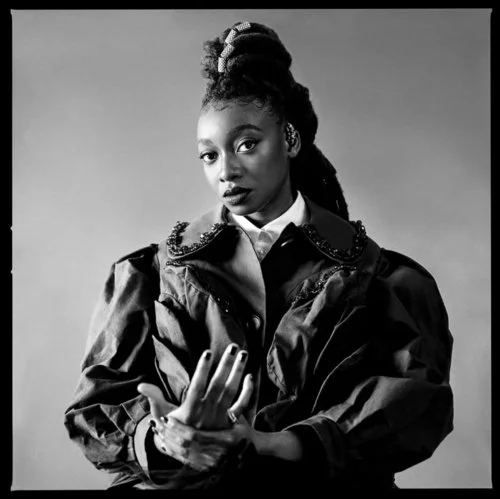
FEATURE: Spotlight: Jensen McRae

FEATURE:


Spotlight

 Jensen McRae

___________

THERE are so many artists…

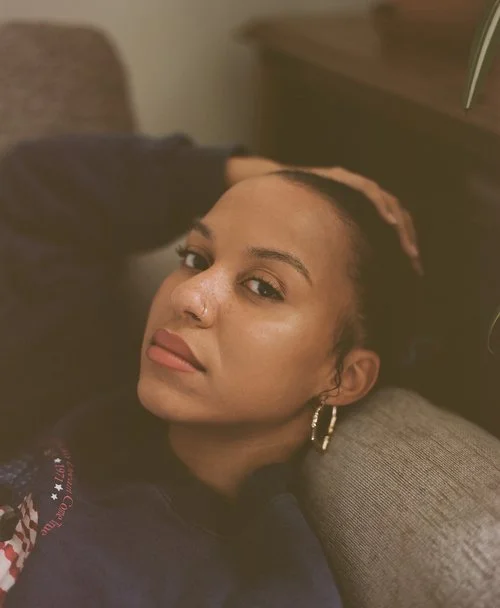
who are going to make big impressions through this year. Across all genres, it is interesting seeing the artists being promoted and highlighted. One musician who I am excited about is Jensen McRae. The Californian poet and songwriter came to prominence because of her debut singles, White Boy (2019) and Wolves (2020). Last year, she released the incredible E.P., Who Hurt You?. I think this year is the one when she puts out her much-anticipated debut album. As a Black artist in Folk music, McRae has spoken out against the lack of recognition and representation of Black women – not only in that genre but right across music. I am going to end by sourcing from a review/feature about her new E.P. First, it is worth getting some background and biography regarding an amazingly talented and promising young artist. W spoke with McRae last year around the launch of Who Hurt You?. In addition to explaining when she decided she wanted to become a musician, McRae also talks about her influences:

Despite the newfound attention, McRae wasn’t exactly new to the music industry: the singer-songwriter and poet, born and raised in Los Angeles in a biracial Black and Jewish family, had “no conscious memory of wanting to be anything else” beyond a musician. Growing up, McRae’s parents enrolled her in piano lessons and encouraged her to participate in musical theater to help her overcome her shyness; she subsequently fell in love with songwriting and playing pop music. By 16, McRae attended Grammy camp, a 10-day intensive at the University of Southern California, which cemented her own desire to attend college there. (And she did, studying popular music performance as an undergrad.)

During college, McRae released two EPs Lighter and Milkshake, but it wasn’t until right after graduating in 2019 that she shared her proper debut single “White Boy.” Inspired by a party she attended, McRae processes racist microaggressions and being ignored as a woman of color by a potential romantic encounter. While she claims it’s not the song she’s known for, she says, Black and Brown people of all genders have reached out and told her that they “have a white boy.” “I spent a long time thinking it was too niche of an experience and that no one would ever relate,” recalls McRae. “I was obviously very wrong about that.” What followed was her 2020 single “Wolves,” a haunting series of vignettes about sexual assault and harassment. (Bon Iver’s Justin Vernon was a “wonderful champion” of the song in its early days.) “[‘White Boy’ and ‘Wolves’] were songs that I had inklings of many times over the years, at least thematically, but I never sat down to write them because I wasn’t emotionally ready until I was in my early twenties,” the singer says.

Building on the momentum McRae garnered in 2021, the singer-songwriter released her new EP Who Hurt You? in late June featuring her socially conscious lyrics, tender vocals, and her unwavering sense of vulnerability. “There’s a lot of room in communities of color to talk more about mental health and therapy, so to be a Black woman singing about depression and anxiety is important for a lot of people,” McRae notes. Throughout the six-song EP, which covers everything from race and gender to mental illness and unrequited love, you can hear trappings of Michelle Branch, Joni Mitchell, and Tracy Chapman—along with McRae’s affinity for the rich, low registers of Adele and Alicia Keys.

Although the uniqueness of McRae’s voice can’t quite be defined by comparisons to other artists, she sees the value in them. At the very least, listeners who haven’t heard her music “know what they’re getting into.” “I don't have any delusions about being the most groundbreaking person,” she says. “I know I'm part of a long and honored tradition of female folk writers and pop writers [with] maybe a little country and a little R&B thrown in there.” Her influences speak to her wide-ranging dream collaborations—everyone from Bridgers and Vernon to Sara Bareilles and Kendrick Lamar.

But as a mixed-race folk artist, McRae used to find herself misidentified when it came to genre. “People are still surprised by the genre that I worked in, and I think, even to a greater extent, I’m often still one of very few Black artists represented in those spaces on playlists or in conversations about who’s making folk music.” While she says it’s “a lifelong journey” to be seen in that space, surrounded by artists like Arlo Parks, Joy Oladokun, and the more pop-leaning Olivia Rodrigo, she feels “lucky” to be on the rise “at a time when the landscape is hospitable.” “I feel like Brown girls with guitars are having their moment,” McRae explains. “The 2000s were white men with guitars and then the 2010s were white women with guitars, and now, it’s Brown women with guitars”.

 PHOTO CREDIT: Jerritt Clark/Getty Images for Culture Creator

I am interested knowing about the earliest memories and experiences with music for McRae. It is clear, as we learn from this interview with NYLON, that McRae loves discussing her lyrics, and she appreciates when people make new comparisons when hearing the music – as it shows that the person has been listening carefully and deeply:

If you had to pinpoint where your passion in music first came from, where would that be?

It’s hard to say, because it’s been my whole conscious life that I’ve wanted to be a musician, since I was a child. But I guess it really was being exposed to Alicia Keys. My mom played me a lot of Alicia Keys when I was a kid. A lot of it was very cosmetic: she was a mixed girl with braids, I was a mixed girl with braids. I was like, “I want to do that!” [laughs] I was so inspired by her and I knew I wanted to do exactly what she was doing and I never looked back.

When you started writing music, at what point did you hit on the way your work sounds now?

I started playing piano when I was 7, but I didn’t learn guitar until I was 18. That was a big turning point for me, and honestly, it was largely out of convenience. Keyboards are very heavy and a lot of venues don’t have pianos there, so I was already at a disadvantage. When I started playing guitar, I was like, “This will make playing gigs way easier. I’d better get good at this.” Also, as I was writing, I realized that so much of what I loved, like The Mountain Goats, Phoebe Bridgers, Joni Mitchell, [were] more guitar-based things and that was probably better-suited for the kind of storytelling I was doing. The more competent I became at guitar, the more I realized that my sound really lies in that space.

You stress that you’re a folk artist, despite sometimes being mischaracterized as an R&B or soul singer. Why do you think it’s important to make it clear that music that sounds like yours and tackles the subjects that you do is folk?

A big part of it is that I think it’s important for people to know what they’re getting into. I like to talk about my music with labels, because then people can know what to expect when they’re listening to it. I like making my music more inviting in that way.

And then, from a demographic political standpoint, it’s really important for me as a Black woman to claim those genres that historically have closed out people like me. When I say, “I make folk pop music, I’m explicitly not making soul or R&B,” it's a way of inviting more people of color into the genre and the space, and to assert that the music I make belongs where I think it belongs.

I get excited when people come up with new comparisons that I haven’t heard before. To me, that’s a mark of really educated and close listening, to draw a comparison that even the artist didn’t see before. I don’t think that’s a bad thing at all.

How do you feel about the way your music has been covered? Do you think it’s getting to the heart of what you’re trying to express?

I get most excited when people do deep dives into my lyrics. That’s my favorite thing to talk about. I love when I do Instagram Lives and fans ask me really specific questions about my lyrics. Or in song premieres or articles when they quote direct lines and talk about what they mean. That’s my favorite thing, as a kid who loved English class. There’s this incredible blog, Indie Happy Hour, that has been covering me since 2017. The guy who runs it is an English teacher and he’s talked about how he’s had his class analyze the lyrics to “White Boy.” That was one of my favorite things I’d ever heard. To me, that’s the highest compliment, if a bunch of middle schoolers have to analyze my words”.

Before coming to a little piece about Who Hurt You?. When DIY spoke with Jensen McRae back in July, she discussed the representation of Black women across music. I was also intrigued by McRae’s maturity and strength. She is a huge ambassador and voice who is making space for other Black women in music and society:

When we were talking about releasing an EP ahead of [the album], I didn’t want to at first, as I didn’t want to break apart this very large, cohesive body of work,” Jensen explains. “But I’d always wanted to have a project called ‘Who Hurt You?’ - that title came to me a long time ago for something - and I thought I could use it for this.” From ‘Wolves’, her raw and arresting track about sexual assault, through to ‘White Boy’, a vulnerable exploration of racial injustice, via ‘Immune’, a Phoebe Bridgers parody track about love in the pandemic that quickly went viral, the EP is a multi-faceted response to the title.

“One of the things I’m always trying to do in my work is to provide as broad a portrait of my experience as possible,” she nods, on what kind of songwriter she hopes to be, “because I feel like the representation for Black women - especially in folk music, but really across all genres of music - is really limited,” she explains. “I want to acknowledge every single aspect of my personhood: sometimes that’s political, sometimes that’s about love, sometimes it’s about mental illness, or gender, or gender violence.

“Coming of age is a really important theme to me as well, and I wanted to make sure that the music that I put out at least touches on all of those things. It’s a tall order, but I realise that, for better or for worse, I am an ambassador for my entire demographic,” she says, with a profound but light touch. “I want to make sure I’m providing as much variety as possible in terms of subject matter, because a lot of people genuinely do not think about the inner lives of Black women in that way, and I really want them to”.

Who Hurt You? is an exceptional E.P. that points to a very long career from an artist who we should all know about. This article looked at McRae’s E.P. when the second song from it, Wolves, was released. Each track from Jensen McRae is this hugely captivating experience:

Emotive indie rock artist Jensen McRae bares her soul in a new EP Who Hurt You?. Each soft, passionate tune touches on introspective themes of breaking barriers and romantic salvation. Fusing captivating indie-folk with delicate dream pop, there is fragility within the release while also oozing fierceness and power.

The second song off the EP “Wolves” draws us in with vivid, detailed storytelling. With just the simple strum of an acoustic guitar, it allows her stunning, gentle vocals to shine. With “Little Red Riding Hood” vibes she narrates the tale of meeting those people that seem innocent enough until their true colors are revealed. Each deceiving encounter, is a lesson learned and now she vows never to make that mistake again. McRae’s cunning single “Immune” all started with a joking tweet. The funny tweet read, “In 2023, Phoebe Bridgers is gonna drop her third album & the opening track will be about hooking up in the car while waiting in line to get vaccinated at Dodger Stadium and it’s gonna make me cry.” The post went viral. Not long after she shared a video clip of her preforming the song, and it even caught the eye of Bridgers herself. This parody perfectly describes the current state we are in. Concluding with “Adam’s Ribs” the poignant offering tugs at your heart with striking strings and an impressive vocal range.

The Los Angeles native collaborated with partner and executive producer Rahki (Eminem, Kendrick Lamar) on the songs for the EP. McRae first made her splash onto the music scene with her single “White Boy”. That was followed by her expressive releases ”Wolves” and ”The Plague.” Who Hurt You? is a beautiful body of work and we look forward to seeing more from the talent in the future”.

Definitely one of this year’s artists to watch closely, we are going to hear a lot more from the magnificent Jensen McRae. She is someone I am fairly new to though, having listened to quite a few of her songs, I am a confirmed fan! McRae is definitely going to go a very long way. Go and follow her on social media and support her music. There is no doubting the fact that she is going to be…

A huge artist very soon.

____________

Follow Jensen McRae

FEATURE: The Lockdown Playlist: David Bowie’s Low at Forty-Five: Songs Featuring the Word ‘Low’

FEATURE:


The Lockdown Playlist

David Bowie’s Low at Forty-Five: Songs Featuring the Word ‘Low’

___________

FRIDAY will see…

 IN THIS PHOTO: David Bowie in 1977 for a “Heroes” session/PHOTO CREDIT: Masayoshi Sukita

a lot of people celebrate the forty-fifth anniverssary of David Bowie’s eleventh studio albums, Low. Considered to be one of his best, it is definitely in my top five of his. I have written about Bowie recently (as he would have been seventy-five on 8th January), so I did not want to do an anniversary feature about it. There are articles and features out that explore one of Bowie’s greatest albums forty-five years on. Instead, this Lockdown Playlist takes the word, ‘low’, and makes up a theme. All the songs below contain that word. Also, I am including a couple of tracks from David Bowie’s Low. A happy forty-fifth anniversary to a 1977 masterpiece from one of the greatest artists who ever lived. In a salute to a majestic album from the much-missed Bowie, the songs in this Lockdown Playlist…

ARE all related to that three-letter word.

FEATURE: Second Spin: Madonna - MDNA

FEATURE:


Second Spin

Madonna - MDNA

___________

I have included Madonna’s music…

in Second Spin before. I have written loads of features about her. Oner reason is because she is such a compelling and long-running artist. Many think that her golden period ran until 2005’s Confessions on a Dance Floor. In terms of her albums post-2005, most would say that Madame X (released in 2019) would be the best album of her more recent career. There are a few albums or hers that did not get great reviews and, as such, are not seen as valid by many. Following 2008’s Hardy Candy (perhaps her weakest album), MDNA had a different look and feel. I think that it is an underrated album that is well worth another spin. As the album turns ten in March, I wanted to spotlight one of her overlooked works. Whilst there are a couple of filler tracks on MDNA, cuts such as Turn Up the Radio and Superstar are worthy of a place in her top forty songs. Madonna started the recording of MDNA in July 2011 and worked with a variety of producers such as Alle Benassi, Benny Benassi, Demolition Crew, Free School, Michael Malih, Indiigo, William Orbit, and Martin Solveig (the last two serving as primary producers of the record). A few of Madonna’s albums have featured a range of guests. MDNA features, among others, M.I.A. and Nicki Minaj. Selling huge numbers and going to the top of the album charts in the U.S. and U.K., MDNA was definitely a success.

It is an album that was hugely successfully commercial, though it did not do that well with critics. Many felt that, whilst her sense of invention and ambition was high, the results were a little spotty. I think, in the case of Madonna, all of her albums get compared to her classic work. In 2015, she released Rebel Heart. Again, it was a commercial success, though it did get a mix of positive reviews and more mixed one. There is no doubting how busy Madonna was in the run-up to MDNA’s recording! After Hard Candy came out, Madonna her third greatest-hits album, Celebration (2009). She rolled out introduced her Material Girl clothing line. She also opened Hard Candy Fitness centres across the world, unveiled fashion brand, Truth or Dare by Madonna (which included perfumes, footwear, underclothing, and accessories). If that was not enough, Madonna directed her second feature film, W.E., a biographical piece about the affair between King Edward VIII and Wallis Simpson. I think all of her ventures and projects culminated in this creative energy that is MDNA. I love a lot of the songs on the album, and I feel that more of the songs should be played on the radio. Maybe one of the problems with MDNA is that it is quite top-heavy. I think the range of producers help Madonna explore multiple sounds and genres, though I am not sure how effective it was having multiple writers. The lyrics are not as strong on MDNA as previous albums.

I want to bring together a couple of reviews that point to positives, yet they seem to echo sentiments from a lot of critical reviews: there are promising aspects and songs, but there are some weaknesses and room for improvement. This is what SPIN offered when they reviewed MDNA:

One pill makes you larger, and one pill makes you small. And the pill Madonna wants you to associate with her 12th studio album, MDNA — the imaginary, Ecstasy-like drug that Beverly Hills, 90210 adorably called “Euphoria” — will make you feel just that… until it doesn’t. The comedown is a teeth-gnashing, serotonin-sloughing, damn-the-daylight free-fall. It sucks. So does going through an ugly public divorce, seeing your efforts to build schools in Africa go to shit, and watching pop stars half your age strip-mine your career for inspiration.

Staring down the unique triad of crapitude that’s been her reality since releasing 2008’s Hard Candy and finishing its record-breaking Sticky & Sweet support tour, Madonna kicks off MDNA guzzling from the Fountain of Youth, cooing about how “girls, they just wanna have some fun” over a four-on-the-floor Eurodisco tsunami from Italian electro-house maestro Benny Benassi. For five additional tracks, Madonna twirls around the club with her face in the bottom of a glass, and it’s all good. She bops back to the ’60s, fashioning herself a Nancy Sinatra-esque revenge fantasy on thumper “Gang Bang,” and partying with M.I.A. and Nicki Minaj on bouncy hip-swiveler “Give Me All Your Luvin’.” She channels the gooey pleasure of cranking up the radio and hitting the road on the playful, Martin Solveig-produced “Turn Up the Radio.” She tumbles well past the rabbit hole on swirling synth concoction “I’m Addicted.” And she bobs and weaves over crunchy banger “Some Girls,” helmed by longtime collaborator William Orbit and Robyn’s secret weapon Klas Åhlund.

Then the real dance-floor confessions arrive. MDNA isn’t Madonna’s true breakup album — she did most of her emotional heavy lifting on Hard Candy‘s “Miles Away” and “She’s Not Me,” as her relationship with British filmmaker Guy Ritchie fizzled before our eyes. But the second half of this album is far more earnest; and in related news, far less fun. She breaks out her cache of clichés to gush about a new man on “Superstar,” and fills “Love Spent” with painful comparisons between marriage and money. She goes into Evita mode for “Masterpiece,” the orchestrated ballad that appeared in her feature-length directorial debut, W.E. She slips into an “American Life” flashback for “I Don’t Give A,” a breathless bitch-fest about her hectic life, only rescued by another Minaj cameo and some glitchy production work by Solveig.

But if there’s one producer who knows how to pluck Madonna’s heartstrings, it’s Ray of Light‘s Orbit. He lifts up this sagging second half with “I’m a Sinner,” a mod, “Beautiful Stranger”-like romp that combines two of Madonna’s most reliable tropes — Catholic guilt and hedonistic glee — and gives her a pretty outlet for her woe on mournful closer “Falling Free.” Singing in a vulnerable, resigned soprano, Madonna sinks into the tune’s soothingly repetitive melody like a warm bath and admits there’s a chink in her armor: “Deep and pure our hearts align / And then I’m free, I’m free of mine.”

Beneath the fishnets and chiseled arms, Madonna is a 53-year-old divorced mother of four, and despite what you think you saw in her “Girl Gone Wild” video, this is the most naked she’s been in years. Love, like club anthems, public opinion, and luck, does cycle through your system like a drug. Whatever Madonna was on has worn off by now, but a star this ferociously focused on what’s next can always pop another”.

One has to commend Madonna’s endurance, constant sense of energy and innovation. Not many of her 1980s peers were able to boast records in 2012! MDNA is a solid album that has some incredible songs to enjoy. SLANT explored different observations and findings in their review:

In the past three years, two of the three biggest pop superstars of the ‘80s have died tragically. But unlike Michael Jackson and Whitney Houston, Madonna wasn’t thrust into the spotlight by way of an enterprising family or the kind of prodigious talent that, with or without its owner’s consent, begs to be hoisted up and exalted by the masses. That Madonna was forced to compensate for her perceived lack of natural “talent” with, in addition to unbridled creativity, supreme self-control and focus is probably what’s helped keep her from succumbing to the demons that have plagued many of her contemporaries. It’s also, perhaps, the thing that makes her a somewhat unsympathetic character, an attractive target for ridicule among even those who claim to love her.

Everyone is afraid of death. But how that fear manifests itself when you’re one of the most famous women on the planet and how it’s compounded when you reach middle age in an industry that increasingly values youth and beauty were revealed, respectively, in Madonna’s largely graceful quest for answers to life’s most universal questions on Ray of Light and her often awkward, misguided attempts to reconcile those lessons with a habitual desire to preserve her status in the years that have followed. Social, cultural, and political impact aside, Madonna’s career has been a demonstration of endurance.

To that end, while Madonna was accused of running out of ideas long before she actually did, her recent propensity to rehash her own canon seems deliberate—not to mention cynical. Last month, she told The Advocate that while she “never left” her gay audience, she’s “back.” (Back from where is unclear, though her estranged brother’s claim that ex-hubby Guy Ritchie is a homophobe offers a clue.) The video for “Girl Gone Wild,” the second single from her first album in four years, MDNA, is like “Human Nature” redux, seemingly tailor-made to snatch the title of Most Played Video Artist at Gay Bars from Lady Gaga.

But while “Human Nature” was an intentional sendup of Madonna’s Erotica period, the seemingly straight-faced Catholic Girl Gone Bad shtick of “Girl Gone Wild” is just—you guessed it—reductive. Even though Madonna’s dressed up like her, the feisty pop singer who went on Nightline in 1990 and clumsily but zealously called out the media for its hypocrisy and sexism is missing here. Madonna pilfers the title of one of her earliest rivals’ songs during the hook of “Girl Gone Wild,” only to defang it of its feminist bent: Just like Madonna’s own “Material Girl” was meant to be ironic, the point of Cyndi Lauper’s signature anthem is that girls want to have fun, but that’s not all they want to do.

The song’s intro, during which Madonna recites an act of contrition over canned disco strings, is just a ruse; the rest of MDNA is reminiscent of neither Like a Prayer nor Confessions on a Dance Floor. It’s unclear what Madonna’s motivations were for reuniting with William Orbit after more than a decade; a smarter move would have been to call on longtime collaborator Patrick Leonard to help her excavate and examine the remains of her second marriage. But while the album is no Ray of Light either, MDNA is surprisingly cohesive despite its seven-plus producers (most notably, Martin Solveig, the man behind the regrettable lead single “Give Me All Your Luvin’”), and it’s obvious Madge and Billy Bubbles can still create magic together. “I’m a Sinner” harks back to the pair’s most ecstatically joyous work—not just sonically, but vocally. Something about recording with Orbit again has inspired Madonna to abandon her recent insistence on singing like she’s wearing a clothespin on her nose.

Likewise, her performance on “Love Spent” is confident enough to transcend Orbit’s superfluous vocal effects. It’s not just the most melodically sophisticated song on the album, it’s also the most revealing, rather poignantly alluding to the tens of millions Ritchie received in the couple’s divorce settlement: “I want you to take me like you took your money,” she longs. What makes the lyrical faux pas of songs like “Girl Gone Wild” and “Superstar” so frustrating is the pop mastery of tracks like this and the Italo-disco “I’m Addicted,” a meditation on the power of language that’s both profound (“All of the letters push to the front of my mouth/And saying your name is somewhere between a prayer and a shout”) and tongue-in-cheek (“I’m a dick-, I’m a dick-, I’m addicted to your love”). When she’s not rapping about child custody and prenups on “I Don’t Give A,” she admits: “I tried to be a good girl/I tried to be your wife/Diminished myself/And I swallowed my light.”

But in case the title of that song didn’t tip you off, the Madonna of MDNA is more defiant than heartbroken. Ritchie’s impact on the singer’s personal life is obvious, but his influence on her work is just as apparent: He bought her a guitar when they met, changing her approach to songwriting, and he was responsible for the introduction of violence, often seemingly gratuitous, into her videos and stage performances, starting with his clip for her 2001 single “What It Feels Like for a Girl.” So, in that sense, it’s disappointing to see guns and violence continue to play such a prominent role here. But the twisted “Gang Bang,” a standout cut in which Madonna quite convincingly portrays a jilted bride turned femme fatale in the vein of Beatrix Kiddo, plays more like a piss take of Ritchie’s gangster fetish than a glorification of it”.

If you are going to listen to MDNA, I would suggest the Deluxe Edition. It is more expansive and does not suffer from being quite long. Even if some consider Madonna’s albums post-Music (2000) or Confessions on a Dance Floor to be weak compared to her earliest music, then I think we need to re-evaluate and reconsider. MDNA, despite some flaws and slight tracks, packs plenty of punch and promise. It is an album that everyone should…

SPEND some more time with.

FEATURE: Kate Bush: The Iconic Shots: ‘Walking the Crocodile’, Claude Vanheye (1979)

FEATURE:


Kate Bush: The Iconic Shots

PHOTO CREDIT: Claude Vanheye

‘Walking the Crocodile’, Claude Vanheye (1979)

___________

THERE are a few great photos…

 PHOTO CREDIT: Claude Vanheye

of Kate Bush that were taken in 1979. Barry Schultz took a few of Bush walking around the city. The photo of her in a shop doorway is one that sticks in the mind. Bush was performing The Tour of Life in 1979, and she was in the Netherlands’ capital on 29th April of that year. Nearing the middle of a run of European dates (before she headed back to the U.K.), I wonder how the audience took to her performance. She has a lot of Dutch fans, and it appears that Bush was pretty relaxed and happy in the country. I imagine Amsterdam being a city she was rather comfortable and familiar with. Although I love Schultz’s shots, there is one photograph that sticks in the imagination. Shot by Dutch photographer Claude Vanheye in a parking garage in 1979, the photo of Kate Bush seemingly taking a crocodile for a walk is fantastic! It is playful and elegant at the same time. In a yellow dress looking like she was running or dancing out of the garage, it is humorous and weird. I have never seen a photo quite like it! It is typical of Kate Bush that she would do something different and interesting. A lot of artists might have balked at the concept of walking around with a crocodile (albeit a fake one), though Bush seemed to be in playful and accommodating mood.

His 1979 photo session (some have said it was in 1978, though I am pretty sure it was the following year) with Bush was scheduled for thirty minutes, yet she sent away her entourage and stayed for six hours, with props like a fake dolphin and dresses by Fong Leng. Vanheye’s photos of Bush were used on the Japanese 7" single for Symphony in Blue and in the unofficial box set, Never Forever. At such a busy and tiring time, it is testament to Bush’s friendliness and professionalism that she gave this photographer so much time and herself. I love the shots her took of her in the yellow dress. I have featured his shot of Bush riding a dolphin before. A more surreal sense of imagination, this is something that Bush seemingly clicked with. Almost childlike in its whimsy and wonder, it is a pity more people do not know of his photos. I always feel that his crocodile shot could have been used in Never for Ever as one of the insert photos. There is a rumour that, when Vanheye brought tears from Bush when he proposed the shoot of her with a dolphin, as she had dreamed about a desire to swim with dolphins (something she later alluded to in a 1994 interview). Whilst some dislike the angle of the crocodile shot – as they feel it is cruel (even though it is not real!) -, I think that it is an ingenious idea. No animals were harmed, and Bush obviously was on board (as a vegetarian and animal lover, she was perfectly fine with it).

Not sexualised like many of the photos from 1978 and 1979, instead we get the more eccentric and out-there side to her. Perhaps, being in Amsterdam, something wackier and more trippy was appropriate! I could not imagine a London photographer suggesting she go for a stroll with a crocodile! I still cannot believe she had the time and energy to allow six hours for photographs in one of her most hectic and restless years. Such a giving person, we see Bush so at ease and involved with Vanheye’s visions. The crocodile shot is his finest work, as it seems to bring so many aspects and sides of Bush out. Not that her photographs would get more conventional, though the 1978-1980 sessions are very different to anything that came after. Maybe some are quite juvenile or basic, but I feel the photographs got more serious at a certain point. I like Kate Bush when she is in a cheeky or playful frame. You get something unique from her. Other artists might have worked with someone like Claude Vanheye and phoned it in or not have given much of themselves. In the case of Kate Bush in 1979, she was very much at her peak. As we know when it comes to her and everything she does: she is…

ALWAYS delivers the goods.

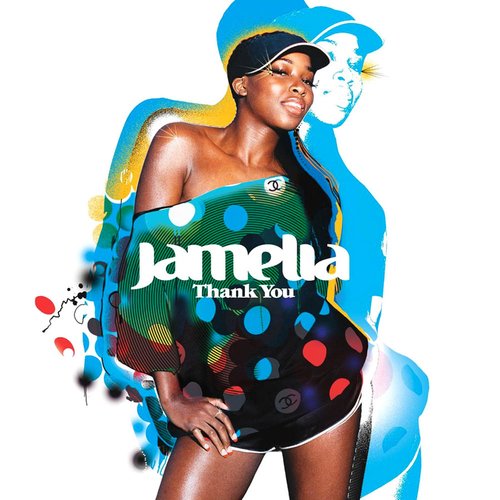
FEATURE: Second Spin: Jamelia – Thank You

FEATURE:


Second Spin

Jamelia – Thank You

___________

THIS is a case…

of an album being popular back in the day, but not being discussed and explored much now. In Second Spin, I revisit albums that are either underrated or underplayed. I think that Jamelia’s second studio album, Thank You, is underplayed. An exceptional and hugely enjoyable album that still sounds fresh and engaging in 2022, more radio stations should play the lesser-heard cuts from the album. One might hear the big hit, Superstar, played, though not many of the other tracks are. Thank You was shortlisted for the Mercury Prize in 2004. It is Jamelia's best-selling album to date, with sales of over three million copies shipped worldwide. Aside from a few tracks, Jamelia co-wrote all of Thank You. Her vocals and performances are stronger than on her debut, Drama. This is an artist that I feel could deliver a brilliant fourth studio album (her third and most-recent, Walk With Me, was released in 2006). One of the finest British talents of R&B, let’s hope that we get more music from Jamelia. Thank You is one of 2003’s best albums and one that more people should know about. The vibes and reaction Thank You were largely positive. AllMusic wrote this about an incredibly assured album:

The music industry isn't exactly known for its patience. A flop single, an underperforming album, or a lackluster comeback is sometimes all it takes for an artist to be dropped and never heard from again. Birmingham-born Jamelia has had all three during her short four-year career (three of her seven singles have failed to reach the U.K. Top 30 and debut album Drama sank without a trace), and yet somehow she's still here. The faith invested in her by her record company is admirable in this fickle day and age, but with her second album, Thank You, it's been totally justified. Taking two years off to raise her daughter, the MOBO Award winner has obviously used the time well, raising her game to produce a record bursting with potential singles.

While partly influenced by the U.S. production sound of the moment, Thank You, unlike countless other U.K. R&B albums, never forgets its roots, either. So the Neptunes-alike production of the title track, a female empowerment anthem about domestic violence, sits comfortably alongside "Off da Endz," a frenetic grime duet with So Solid Crew's Asher D, as does "Cutie," featuring a Kanye West-style helium-voiced chorus, next to the grinding dirty basslines of "Taxi," written by Alisha's Attic's Karen Poole. Indeed, the best track here is quintessentially British and a masterstroke in fusing R&B with the modern rock establishment. "See It in a Boy's Eyes," written by Coldplay's Chris Martin, is a beautiful, slinky piano-driven ode to understanding the opposite sex. It's one of the best things Martin has done, but it's also the most blatant indication of how Jamelia has matured as an artist. She's just as at ease when she moves outside her comfort zone. "Superstar," the single that rescued her career, was originally a hit for Denmark's Christine Milton, but Jamelia makes it her own to produce a simple but effective pop classic, while final track "Antidote," a haunting, quirky ballad smothered in a glossy electronica production, promises a bolder, different direction for the future. Overall, Thank You is a confident, imaginative record that oozes with personality and should be a lesson to record companies everywhere that patience can sometimes reap the biggest rewards”.

I do not think that, like some of her peers, Jamelia is or was confined to a certain market or radio station. Her music is mature, yet there is this youthfulness and vigour that means anyone of any age can appreciate it. Thank You boasts some simply amazing tracks! Antidote is a deep cut that I would love to hear played more and championed. Such a phenomenal artist, Thank You rightly won praise. This is the BBC’s view (they reviewed the re-released version, which had a couple of extra tracks) on an album that built on the foundations and promise of her 2000 debut:

Jamelia may be widely regarded as the best UK R&B singer in years, but - like most interesting artists - she wears her genre lightly. Although her debut album Drama stole its sound and attitude wholesale from the US, Thank You sees the vocalist take bold steps onto new musical ground.

Indeed, Thank You is at its weakest when it is most generic. First single, "Bout", was hardly a promising introduction, its heavy handed, booming production sounding much like Christina Aguilera's "Dirrty", but without the vocal range and the raw charisma. It tries too hard to achieve too little, as does the embarrassing "Bitch", in which Jamelia tries Pink's attitude on for size but finds it doesn't fit at all.

Jamelia is far more comfortable at the poppier end of the R&B spectrum, where her limited but sultry vocal style flourishes. At certain times in the last few months Capital FM could have been renamed "Superstar" FM, but despite its airplay dominance this champagne pop song still sounds fresh and irresistible. Almost as catchy is the frivolous "Cutie", which nods in the direction of Jamaican dancehall with its giddy, drunken rhythm.

But its on the two slowest numbers that Jamelia triumphs. "See It In A Boys Eyes", a collaboration with Coldplay's Chris Martin, is as beguiling as it is unclassifiable. Built on one of Martin's loveliest ever piano riffs, it's a slinky, haunting hymn to understanding the opposite sex. A perfect partner to Prince's "If I Was Your Girlfriend".

And then there's "Thank You", the album's focal point and a blistering put-down to an abusive former partner. In the hands of a white boy guitar band, the song would likely have become a squeal of anger, but Jamelia handles it with a grace and wisdom that belie her youth - "You messed up my dreams, made me strong/ Thank you." It's that rare beast, a true pop classic which will be played for years to come.

Given the success she is now enjoying, it seems likely that Jamelia's confidence and willingness to experiment can only grow. Her third album should be quite something”.

I first heard Thank You in 2003 and, as a fan of Jamelia, I wondered whether I would be invested in the album beyond the singles. I was. It is such a fine album that only gets its singles played. So much more than its big-hitting tracks, there is a lot to explore on Thank You. If you have not heard this album for a while, then it is one that you can put on now and enjoy…

OVER and over again.

FEATURE: Spotlight: Lucy Blue

FEATURE:


Spotlight

Lucy Blue

___________

ONE upcoming artist…

I would love to interview this year is Lucy Blue. I have fallen for her music quite hard. It is a striking and great sound that I really love! There aren’t a huge number of interviews online. The emerging and hugely promising Pop artist is someone that everyone needs to keep a watch out for through this year. She released the magnificent Fishbowl E.P. last year. Hailing from Dublin, I am always interested what the city is producing. I don’t think people pay as much attention to areas outside of England and the U.S. The E.I.R.E capital has always spawned fantastic artists. Lucy Blue is someone who is going to make Dublin proud! Every year seems to see more and more terrific and original artists come through. 2022 has taken that to new heights already! NME recently named Lucy Blue as one of their one-hundred artists that will define and rule 2022:

Gentle and wise indie-pop confessions full of both tricks and treats

From: Dublin, Ireland

For fans of: Daughter, Phoebe Bridgers

Why you’re going to love them: Dreaming of all the people she could be to impress the person she wants to be noticed by, Lucy Blue crafts soft, shapeshifting stories with butter-smooth vocals and stripped-back, twinkling production. Well, that’s what you get half the time – before she switches gears with distorted beats and harmonies on earthier, rock-inflected coming-of-age love songs too. Unpredictable and spellbinding in constantly changing ways.

Key track: ‘See You Later’ EK”.

Despite the fact she has not been releasing music all that long, she has gained some great media coverage. Ears and eyes are definitely tuned the way of the sensational Lucy Blue. I feel that she will get chance to play a live a lot this year and put out some incredible music. Before coming to another feature, we get some helpful and informative biography from Lucy Blue’s official website:  

Lucy Blue is a 19-year-old singer, songwriter and producer from Dublin, Ireland, who builds unique musical worlds from wide ranging influences covering the likes of Frank Ocean, PJ Harvey and iconic skate bible Thrasher Magazine. With mature observational lyrics about lost love, overwhelming angst and the lives of childhood friends – in a way not dissimilar to the early work of her cinematic idol Harmony Korine – Lucy’s ambitious, coming-of-age pop revels in the outsider spirit and vulnerability of being a teenager finding her way in the world.

Lucy is also an incredibly visual person. For every song the Irish singer, songwriter and producer creates, she sees a space in which it exists. Sometimes it’s a room (a karaoke bar in Tokyo, her mum’s living room), sometimes a night-time bike ride, sometimes even an ominous dark place full of lily pads floating in water. With her soft Dublin accent Lucy explains how these images take over as she writes her music; how they usually come right at the start, shaping the session and the resulting song completely. “It just helps me so much with music,” Lucy says. “I need to tie what I’m hearing to an image. It helps my brain.”

With a predisposition for taking on the emotional stories of her peers and a talent for processing them into something positive, Lucy Blue is an essential young voice in music: just a girl from Dublin fated to soundtrack our lives”.

Music Week highlighted Lucy Blue’s incredible Pop music in March last year. They included her as one of their ‘artists making waves’. Nearly a year later, it is clear that she has definitely and consistently lived up to the promise:

What impact do you want to make?

“I want to make just one kid feel the way my musical heroes made me feel about music. I don’t know what the best thing about my music is, that’s for others to decide.”

Who are your biggest influences?

“Some of my biggest influences musically would have to be Van Morrison, Cocteau Twins, Prince and Joni Mitchell. Also, I just want to be like Gwen Stefani during No Doubt. I’m so inspired by film as well, it’s so intertwined with music for me. Visual artists like Harmony Korine and Davide Sorrenti inspire me a lot.”

Tell us about your debut single...

“See You Later is a song I wrote two years ago after leaving school. It’s about loss and watching someone die.”

How do your songs come to life, what’s the process like?

“My musical process can differ a lot of the time, but I would say I’m a songwriter before a singer, so lyrics are always my favourite part. I wrote the majority of my debut EP in my bedroom when I was 16 and 17. I made demos at home and that’s when I first started getting into producing, it was just a really good creative outlet that I needed. The songs just show how or what I was feeling at that time in my life. I guess they’re the purest form of songwriting I’ll ever have.”

Do you have big plans for 2021?

“My EP is coming out this year, which I’m so excited about. I’m really passionate about this project as it’s songs I’ve been writing since I was 16, so I can’t wait for the world to hear it”.

There are a couple of other bits I want to put in here before wrapping up. CLASH wrote about her track, See You Later, back at the start of last year (sorry to hop around with the chronology!). Although she is young and has her best musical years ahead, there are touches of musical greats in her DNA:

Lucy Blue is something to behold.

An independent spirit, the Irish born artist grew up flicking through old issues of Thrasher Magazine and downloading Frank Ocean deep cuts, gradually finding her way in live.

Leaving home and travelling to London, music has become a form of journal, an intimate space where she can truly express herself.

We're hearing elements of classic songwriting - Joni Mitchell, for one - against lush production, lyrical maturity, and a desire to face towards the future.

New single 'See You Later' is simply exquisite, an astonishingly beautiful piece of songwriting that is so suggestive, so alluring in its cinematic sweep.

There's a hushed intimacy to the production, as though you could hear a pin drop behind Lucy Blue's vocal.

She comments...

I think this song may sound like a love song but it wasn’t really what I intended at the time. Not that I have anything against love songs they’re the best. I was thinking about people who had lost someone who they love. Thinking about what they must’ve felt like looking at or holding some knowing they were dying.

I like the idea of people interpreting the song in whatever way they want though. That’s the beauty of songs it means whatever you want it to mean, I’m not protective about things like that”.

The last thing I want to highlight is a little interview from MTV. They spoke with Lucy Blue back in August. As the creator of such beautiful and accomplished music, it is great knowing as much as possible about someone like her. Although I am bringing in some information and details we know already, it is great reading Lucy Blue discuss her influences and how she started out:

for those who don’t know about you and your music, tell us a little bit about who you are and where you’re from...

I’m Lucy Blue, I’m 19 from Dublin, Ireland and I make songs. I’ve been writing and producing for the last few years and my debut EP Fishbowl came out this year! It’s a super personal project to me and a self expression of a time in my life. My favourite things to do really are making music and visual art.

 who are your biggest musical influences?

I would say my biggest musical influences are Cocteau Twins and Van Morrison. There's so many more like PJ Harvey, Joni, The Blue Nile.

tell us about the writing and recording process of your new release…

'Taxi Driver' actually came about really quickly. I wrote it with an artist called Matt Maltese and it was just a weird idea we had that felt funny but we ended up loving the song. We wrote and recorded the finished vocals that day which is not always the case. It just felt like a really nice process.

what has been your biggest career highlight so far?

I got to play my first ever festival at Latitude last week which was so sick. But to be honest releasing Fishbowl felt like a really personal highlight for me. It had been a part of me for so long so letting it go felt cathartic in a way. Being able to share the music with people and affecting them in anyway means more than anything”.

A very bright young artist who is rightfully being tipped as someone who is going to make big impressions this year, go and follow her on social media. I love what she has achieved so far and, still a teen (unless she has turned twenty recently), it is impressive how matured and developed her music sounds! She has a lyrical and singing voice that has age, wisdom and something very special about it. I am very confident in saying Lucy Blue is someone that…

WILL go stratospheric!

____________

Follow Lucy Blue

FEATURE: Halfway Down 52nd Street: Approaching Forty Years of the CD: Its Rise and Decline

FEATURE:


Halfway Down 52nd Street

PHOTO CREDIT: Brett Jordan/Unsplash 

Approaching Forty Years of the CD: Its Rise and Decline

___________

IT is amazing that…

we celebrate the fortieth anniversary of the compact disc later in the year. Although the technology was invented in 1981, the first album to be released onto CD for the mass market was Billy Joel’s 52nd Street. This is a format that would grow in popularity. Right through the 1980s and 1990s, the compact disc was being bought in its droves. With the introduction of the CD player and the portability of music – even if the Sony Discman was flawed -, there was this move towards the more compact and accessible CDs and cassettes rather than vinyl. I think a lot of my very earliest listening was via cassettes. I feel I got my first albums on CD around about the early-1990s. Even so, I think I preferred them to cassettes. CDs, even though they could be scratched, seemed more robust and solid than a cassette. Many was the time I would have to pull a cassette out of a tape machine or boombox, as the spooling has become caught. Also, in terms of skipping tracks or moving back and forth through an album, a CD is much easier in that sense. I do love storing cassettes and having them in a rack through, with its slimmer casing and shape, there are few things more satisfying then a big CD rack full of albums! In a way, even vinyl does not provide that kind of thrill.

 PHOTO CREDIT: Denissa Devy/Unsplash

It is a shame that the CD is declining as a format but, leading up to forty years of the introduction of CDs to the wider market, I wanted to chart the history of the humble-yet-reliable technology. Even if the past few years have seen compact disc sales decline, a new report showed that they have risen as of late. This illuminating article provides more information regarding the history and launch of the compact disc:

" In 1976 Phillips and Sony developed the compact disc (CD), an optical disc used to store and playback digital data. It was originally developed to store and playback sound recordings exclusively. CDs can hold up to 700 megabytes. This equates to up to 80 minutes of uncompressed audio.  By 2007 200 billion CDs were sold worldwide.

Philips publicly demonstrated a prototype of an optical digital audio disc at a press conference called "Philips Introduce Compact Disc" in Eindhoven, The Netherlands on March 8, 1979. Three years earlier, Sony first publicly demonstrated an optical digital audio disc in September 1976. In September 1978, they demonstrated an optical digital audio disc with a 150 minute playing time, and with specifications of 44,056 Hz sampling rate, 16-bit linear resolution, cross-interleaved error correction code, that were similar to those of the Compact Disc introduced in 1982. Technical details of Sony's digital audio disc were presented during the 62nd AES Convention, held on March 13-16, 1979 in Brussels.

PHOTO CREDIT: Brett Jordan/Unsplash

"The first test CD was pressed in Hannover, Germany by the Polydor Pressing Operations plant in 1981. The disc contained a recording of Richard Strauss's Eine Alpensinfonie, played by the Berlin Philharmonic and conducted by Herbert von Karajan. The first public demonstration was on the BBC TV show Tomorrow's World when The Bee Gees' 1981 album Living Eyes was played. In August 1982 the real pressing was ready to begin in the new factory, not far from the place where Emil Berliner had produced his first gramophone record 93 years earlier. By now, Deutsche Grammophon, Berliner's company and the publisher of the Strauss recording, had become a part of PolyGram. The first CD to be manufactured at the new factory was The Visitors by ABBA. The first album to be released on CD was Billy Joel's 52nd Street, that reached the market alongside Sony's CD player CDP-101 on October 1, 1982 in Japan. Early the following year on March 2, 1983 CD players and discs (16 titles from CBS Records) were released in the United States and other markets. This event is often seen as the "Big Bang" of the digital audio revolution. The new audio disc was enthusiastically received, especially in the early-adopting classical music and audiophile communities and its handling quality received particular praise. As the price of players sank rapidly, the CD began to gain popularity in the larger popular and rock music markets. The first artist to sell a million copies on CD was Dire Straits, with its 1985 album Brothers in Arms. The first major artist to have his entire catalogue converted to CD was David Bowie, whose 15 studio albums were made available by RCA Records in February 1985, along with four Greatest Hits albums. In 1988, 400 million CDs were manufactured by 50 pressing plants around the world. To date, the biggest selling CD (as opposed to the biggest selling title) is Beatles "1", released in November 2000, with worldwide sales of 30 million discs" (Wikipedia article on Compact Disc, assessed 01-17-2010)”.

 PHOTO CREDIT: Mick Haupt/Unsplash

There was good news late last year, where we learned that vinyl sales continue to soar. Cassettes, too, are doing quite well. The Guardian were among those who reported the development:

For many people, placing a record on the turntable will always be the quintessential musical experience.

Sliding a shiny black disc out of a gatefold sleeve and dust jacket, laying it on the turntable platter, then the unmistakable crackle and the low, almost imperceptible analogue rumble as the needle slides into the groove.

Before the digital revolution, vinyl was the premier choice for listening to music. But the format’s resurgence in popularity over the past few years shows no signs of letting up, with new figures predicted to show sales growing to their highest level in more than three decades.

According to the British Phonographic Industry (BPI), more than 5m vinyl albums have been bought in the UK over the past 12 months, up 8% on sales in 2020 and the 14th consecutive year of growth since 2007.

By the end of the year, vinyl will have accounted for almost one in four album purchases – the highest proportion since 1990 – according to BPI estimates.

But why? There are tactile, sensuous and theatrical qualities to vinyl that made it a unique format, said Andy Kerr, the director of product marketing and communications for Bowers & Wilkins, a British audiophile speaker maker”. 

PHOTO CREDIT: Zyanya BMO/Unsplash

The CD, for me and so many others, was this social thing. I would often take the bus into town to buy a single or album. CDs would be shared, and there was this desirability and pleasure in taking a CD home and playing it on a Discman or a stereo. I still have a CD player in my car. I think that, as many people do not play CDs in cars and hi-fis are less common, maybe we will see CD numbers fall keep stable and rise this year. Cassettes are still being bought, through I think that is more of a retro thing. I wonder whether many people actually can play a cassette. Some say that vinyl is more of a collector thing. I believe that most people buying vinyl are playing that album, rather than it being a piece of art. There will be mixed emotions ahead of the fortieth anniversary of the CD. Many of us will cast our minds back to childhood and the albums that we owned on CD. It was the way that many of us gained a wider knowledge of music. Radio was useful, though it was these albums and singles that were much more important and communal. In 2022, is the CD more of a sign of the past? Is it a relic or something seen as old-fashioned?

I firmly believe that the CD will never die altogether, but there is no good reason why it should be allowed to wither. Devices that play CDs are available still and, compared to vinyl, albums are cheaper on this format. Environmentally, plastic cases are not idea. Another material could be formulated (or you could have CDs in a carboard sleeve). One of the most worrying things is whether there will be this hand-down culture in years to come. From vinyl and CDs through to cassettes, I inherited and heard many interesting albums this way. My parents and friends would give me these CDs that I own to this day. I can look through my collection now and there are memories attached to each CD! I will continue to play these CDs and get enjoyment from them for many years. I love vinyl, though I feel one needs to dedicate their time to the whole album. With a CD, I can select a few tracks or listen in stages. How many people would have thought, in 1982, that the CD would be something we are discussing nearly forty years later?! Never changing its shape and design, it has managed to enjoy this regency and golden period. Whilst streaming has its advantages, there will be no legacy. People aren’t handing down Spotify playlists. Sure, vinyl will still be shared, yet CDs were for me, and so many others, the gateway to music’s past. This interesting article raises a good point regarding the decline of physical music like CDs:

If you buy an album in digital form today, do you expect to still own it in twenty years? If so, you are banking on some pretty unlikely events. You need to hope that in twenty years there is still some program or service that plays whatever format your music is stored in.

You’re going to have to hope whatever technology you are storing it on remains viable, intact, and free of viruses, and that you remember to back everything up correctly and transfer it over each time you change computers or devices.

If you are storing your music online or in the cloud, you need to depend on those services being around in twenty years, and you need to hope they don’t have some kind of problem or disappear overnight. You are going to have to hope that, if something bad does happen, there is still some version of your music out there for you to replace your lost copy.

To be clear, digital music technology is a good thing. It’s good for new bands, it’s good for established bands and it’s good for the consumer. It makes things easier for everybody, and if you are an unsigned band there has never been a time in history when it is more possible to get your music out to more people.

But it lacks a sturdy vessel, and that’s a big problem. We can’t rely on hard drives and the ubiquitous “cloud storage” to protect our music and culture for years or decades to come. Unless this changes, in twenty years there will be a lot of music you remember from years past that you simply will not have access to anymore. It may exist somewhere, in the digital vault of some record company, but as far as the public is concerned it is gone”.

 PHOTO CREDIT: Nicholas Nguyen/Unsplash

In spite of lower-than-hoped sales of CDs over the past few years and the boom of vinyl, there is no doubting the fact CDs have a huge role in the history of physical music. Whilst there will be features published in October, I wanted to write something today to coincide with news about the continuing growth of vinyl. It is great that physical music is still in good health, though I hope that more people buy CDs and build their collection. When it comes to passing on music and handing it down to the next generation, we need physical formats to flourish and sustain. Without that, you do fear that a lot of people will miss out on so much. Having inspired and thrilled generations for forty years, I wanted to salute the CD. They have created countless memories for people all around the world. It would be nice to think that, on its fifty anniversary a decade from now, CDs are still being bought (even if new albums by huge artists account for the visibility of CDs). Maybe less relevant than they were in the 1980s and 1990s, letting the format become extinct would be a massive mistake! Even though a lot of my older CDs are not being played often, I have no desire to get rid of the collection. As I said, each album holds a memory and is part of a larger tapestry. To me, they are…

 PHOTO CREDIT: Mick Haupt/Unsplash

SO precious to own.

FEATURE: Spotlight: Laura-Mary Carter

FEATURE:


Spotlight

Laura-Mary Carter

___________

ONE of the things with half of a duo…

going solo, is that their new endeavour often gets compared with their duo work. A bit like Jack White following The White Stripes, Laura-Mary Carter is always going to be tied to her duo, Blood Red Shoes. To be fair, the Brighton twosome are still going strong (and they have a new album, Ghosts of Tape, out on 14th January). I think that the work of Blood Red Shoes sharpens and expands because Carter stepped solo and produced this incredible debut album. More of a mini-album, Town Called Nothing, is one you need to get. Although it won some positive reviews, I think that it was underrated and deserved a lot more praise than it got. An exceptional composer and artist, I think that Laura-Mary Carter will keep releasing solo material and expand. Despite the fact Blood Red Shoes have been together for years, I am spotlighting Laura-Mary Carter, as her solo career is relatively new. Among the absolute best and brightest of 2022, I am excited to see what comes next from Carter. A remarkable musician and inspiring human, I feel that Town Called Nothing is just the start of a glittering solo career. Rather than spreading herself thin, as I said, Blood Red Shoes’ music benefits from Carter working solo. Also, her solo material is more assured and strong because of her experience with Steven Ansell.  

I am going to mention and include a couple of positive reviews for Town Called Nothing. Before that, there is a recent interview from Louder Than War, where Carter talked about her mini-album debut:

Laura-Mary Carter, one half of the mighty Blood Red Shoes, is set to release her solo debut album “Town Called Nothing” on 3rd December.

Andy Von Pip had a chat with Laura- Mary about going solo, Jimi Hendrix’s bedroom, starting a podcast, and returning to touring with Blood Red Shoes.

After 17 years alongside bandmate Steven Ansell as part of acclaimed duo Blood Red Shoes, Laura-Mary Carter is releasing a mini debut album “Town Called Nothing.” To be clear this is not a collaboration, this is very much all Carter’s work and it’s a beautiful album tinged with a wistful sense of melancholy. The stirring title track also encapsulates the sense of displacement that runs throughout the album. “To be honest I’d written these tracks before lockdown” explains Carter. “But with all our gigs cancelled it gave me time to work on them and record them”. The title track certainly demonstrates Carter’s vocal range and shows a softer side which isn’t perhaps apparent when singing and shredding as part of Blood Red Shoes. It was also the first track she wrote for the album, “ I suppose it does capture the essence of the album, a sense of abandonment of heartbreak and restlessness. I seem to have an inability to stay in one place, and I guess the songs do reflect my true self. ”

Carter’s nomadic lifestyle was influenced by her Irish family when she was a child. They moved around to the extent that she was the only one of three siblings to be born in the UK. As a teenager, a Tarot card reader once predicted Carter’s wanderlust. “I mean I know a lot of that stuff can be nonsense” she laughs “but that tarot reader really did say a lot of things that made sense later. Like saying that I’d travel lots but only stay in places for a day, which is very weird as that basically is my life on tour.” Carter has performed well over 1000 shows all over the world and sometimes can spend more than 250 days a year away from home.

After taking a break from Blood Red Shoes Carter moved to L.A. but even there she was constantly on the move exploring new environments. She eventually paused at one place which had a battered acoustic guitar hanging on the wall, with a couple of missing strings. Unable to tune it properly she started writing. “It was strange that the music I wrote at that stage came out sounding like it did because I’d never previously considered myself to be an Americana fan.” She reflects “ However since writing the album I’ve discovered lots of things I do love about the genre. So it will be interesting to see what my next album will sound like.” Despite the Americana flourishes and country leanings, there are still moments that recall Blood Red Shoes such as on one of the album’s standout tracks the cinematic “The City We Live In.”  “I guess it’s bound to seep in somewhere” reasons Carter “but I did try to approach this album in a different way than I would do writing for Blood Red Shoes. I also wanted to explore my voice and use it as more of an instrument. I mean I’ve always been in a band as part of a duo with Steve since my teens, and I’m certainly the more reserved one. So I wanted to break away,  to find that voice, but not break from my band because I love Blood Red Shoes. But it’s important as you progress as an artist to have another creative outlet. When I write for Blood Red Shoes we both know what we want it to sound like, but outside of that Steve and I like very different music. He’s brilliant at electronic production whereas I love singer-songwriter stuff like Elliot Smith”.

As well as releasing her solo album, Carter is back with Blood Red Shoes next year who are releasing a new album “Ghosts On Tape” on Velveteen Records. The band have previously released records via their own label which they started  for a variety of reasons and Carter admits “we are a bit control freaky and if you’ve been around awhile the industry can write you off. They are obsessed with new, new, new all the time so we just thought, “who else is going to do it?” We always found that when working with people in the industry, they just didn’t care as much as we did. I find it different in the States, but in the UK it’s the negativity that bothers me. The default response seems to be “no, you can’t possibly do that!” Nobody has the drive to do stuff.”

And as you might expect Carter has also missed performing live and touring “I arrived back in the UK last year and it’s the longest I’ve been in one place for ages, so touring with Blood Red Shoes in 2022 should help assuage my restless spirit. I’d also love to play some shows in support of my own album.”  For her solo work, Carter put together a band composed of Seb Rochford (Polar Bear, Electric Ladyland, Patti Smith), Jack Flanagan (The Mystery Jets) and Patrick Walden (Babyshambles). During Lockdown they recorded a live session at Jimmy Hendrix’s flat in Bond Street London. “We were all like wow this bedroom has such a vibe. It’s been restored to exactly how it was when he lived there. I’d previously visited it with a friend who is much louder than me and she was saying “you should play here, you never push yourself.” So she went and asked the people who run it. The original intention was to do a small gig there but Covid happened so we did this live session instead. It would be great if I could keep that band together for a few shows in the future. And then I’ll make another album.  “Town Called Nothing” is essentially a mini-album, but I’ve plenty more songs written so hopefully, I’ll be recording them later in 2022”.

 A remarkably interesting and nuanced mini-album, I do think that some critics were a little short-sighted when it came to Town Called Nothing. It is among the best debut works of 2021. This is what The Skinny observed in their review:

For long-standing followers of Laura-Mary Carter’s work, there shouldn’t be anything too surprising about the direction she’s taken with this first proper solo release (too long to be an EP, too short to be an album). We already know that hooks and melody have always been at the heart of her band, Blood Red Shoes; they are disciples of Nirvana, in that they’ve spent the past 15 years perfecting the art of cloaking smartly-constructed pop songs in riffs, reverb and sheer volume.

The slow-burning atmospherics of the band’s softer moments – from When We Wake to Beverly via Slip Into Blue and Stranger – have already shown us that Carter is a multi-faceted songwriter (as, for that matter, has the power-pop of another of her offshoots, Shit Girlfriend). Yet the six tracks of Town Called Nothing still feel disarming; the countrified breeze of the title track, the woozy almost-folk of opener Blue’s Not My Colour, the softly epic reflection of Better On My Own. Only closer Ceremony really nudges towards Carter’s grungy rock bread-and-butter; on every other track, she’s taken ambitious stylistic risks, and they pay off handsomely. This is a hugely accomplished solo debut”.

Laura-Mary Carter’s incredibly rich and layered songwriting is all over Town Called Nothing. Go and give it a spin and deep listen if you are not aware of it. An artist who is going to keep releasing brilliant music through this year, she is someone to watch and celebrate. To end, there is one more review that I wanted to introduce:

Laura-Mary Carter is, perhaps, more familiar to At The Barrier regulars as one half of Brighton alt-rock duo Blood Red Shoes.  In her Blood Red Shoes guise with band partner Steven Ansell, Laura-Mary has been touring the world for the past 17 years and the duo have, in the process, released five albums, with a sixth, Ghosts On Tape, scheduled for January 2022.  Town Called Nothing is, however, Laura-Mary’s solo debut, and it will come as quite a surprise to anyone expecting more of the loud, guitar-led, almost punky sound that they’ve come to expect from Blood Red Shoes.

The inspiration for Town Called Nothing came during a between-tours sojourn in Los Angeles, during which Laura-Mary indulged her twin passions for songwriting and incessant travel.  Taking the advice of a tarot reader in Venice Beach, she headed out into the wilds of Arizona to “find her heart,” and came across a ghost town with the memorable name of ‘Nothing.’  “It was simply fate,” says Laura-Mary.

Laura-Mary takes up the story of the journey that inspired her album: “It started in the real town called Nothing and then it became a sort of obsession, because it’s a completely abandoned town and I kept going back and wanting to find more of these places.  Someone once told me I am a love addict and this felt the same – feeling pulled back to places, even though you know there is really nothing there.”  And those sentiments are echoed repeatedly throughout Town Called Nothing, as Laura Mary sings, using varied moods of mysticism, detachment and desperation, of love, desolation and abandonment – just as she found in that old, abandoned, town that inspired her to write.

The music takes in doses of folk, alt-country, indie rock and electronica and the sound is sparse and even quite other-worldly.  Laura-Mary’s vocals are emotional, ethereal and often ghostly and are, with a couple of startlingly intimate exceptions, fairly low in producer Ed Harcourt’s mix, and the overall impact recalls, as much as anything, Kate Bush in her Hounds Of Love heyday.

Blues Not My Colour gets this six-track mini-album underway; it’s a song with a nice country feel, intimate vocals, a tapping rhythm and the bass right upfront in the mix – a device that Ed H utilizes pretty consistently throughout the album.  And Blues Not My Colour establishes the theme of break-up that Laura-Mary returns again and again…

The dreamy Signs is, perhaps, the album’s most other-worldly track.  Synths and a loping bassline provide the background for Laura-Mary’s expression of abandonment – an emotional outburst that ends with the stoic conclusion of “Well that’s the way it goes, I suppose…”  As a complete contrast, Town Called Nothing, the album’s title track is instant and upbeat, peppered with jangly reverb guitars as it tells the story of the town’s discovery and the irresistable pull that it exerted on Laura-Mary.  Town Called Nothing is, probably, my favourite track on the album and I particularly like the song’s closing line: “Get in my car, let’s drive to nowhere,” which Laura sings in the most blissful of laid-back voices.

The jangly, indie feel is retained for Better on My Own, yet another break-up song, with Laura-Mary’s desire for freedom expressed in the ghostliest of voices, as if her words are swirling around inside the head of her jilted partner.  The anguished, haunting, The City You Live carries the theme of separation forward, before the album is closed by the ominous Ceremony, the song on which Laura-Mary gets closest to the spirit of Kate Bush.  Over a spooky bassline and a soft drumbeat, Laura-Mary sings of betrayal and regret.  Her voice is distant and anguished, as if she’s singing from the very eye of a violent storm, and the song’s long, slow fade-out, drenched in howling guitar notes and quivering string effects, is positively unnerving”.

One of my favourite songwriters and musicians, the amazing Laura-Mary Carter has a busy year ahead with a new Blood Red Shoes album, touring the album and, perhaps, some solo gigs too! I am excited to see how she follows Town Called Nothing. If you are hunting for exceptional and promising talent, then make sure that you keep Laura-Mary Carter…

FIRMLY on your radar.

_____________

Follow Laura-Mary Carter

FEATURE: Spotlight: Brittney Spencer

FEATURE:


Spotlight

PHOTO CREDIT: kt sura. 

Brittney Spencer

___________

THERE are some great artists…

that I feel are going to make a big impression this year. Brittney Spencer is a phenomenal Country artist who everyone should know. Her 2020 E.P., Compassion, is a phenomenal release. Last year, Spencer released the single, Sober & Skinny. She is a fantastic artist who I don’t feel is as widely-known in the U.K. as her native U.S. There are some features/interviews that I want to include, so that we can get to know more about Spencer. Country Now named her as one of the fifteen artists to watch this year:

One of the fastest-rising artists of 2021, Brittney Spencer launched her first-ever headlining tour at the end of the year. It was the culmination of a lifetime of hard work and string of recent successes: The singer-songwriter began performing in her church choir at age three, and she spent years posting cover songs by some of her favorite artists on social media. One of those — a rendition of The Highwomen’s “Crowded Table” — earned her recognition from the artists themselves, with Highwomen band mates Maren Morris and Amanda Shires retweeting Spencer’s version and ultimately inviting her to perform with the band.

She’s gone on to become an in-demand collaborator in the country genre, also releasing a bevy of her own solo work, including her 2020 debut EP Compassion. A powerful performer who blends soul and pop influences into her country roots, Spencer is also among those leading the charge of making space for Black women in country music. In one particularly memorable performance, she joined Mickey Guyton and Madeline Edwards on the stage of the 2021 CMA Awards, performing a visually stunning rendition of Guyton’s “Love My Hair” in a segment introduced by Faith Fennidy, the young girl who inspired the song”.

The first interview is the first of two from Holler. Earlier in the year, they spoke to her after the release of Compassion. I was especially interested in Spencer’s earliest musical memories and her being accepted into arts school:

When Maren Morris was named Female Vocalist of the Year at last year’s Country Music Association Awards, she used her time in the television spotlight to call attention to trailblazing Black female country artists, including Linda Martell, Yola, Mickey Guyton, Rissi Palmer, and Rhiannon Giddens.

Another name Morris mentioned belonged to newcomer Brittney Spencer, a Baltimore native who has worked as a background vocalist for artists including Carrie Underwood, and moved to Nashville in 2013 to pursue her own career in country music.

Spencer’s elegant, powerful voice first caught the attention of Morris and her Highwomen bandmate Amanda Shires in October of last year, after Spencer posted a cover of The Highwomen’s ‘Crowded Table’. Shires retweeted Spencer’s video, writing, “This is beautiful, Highwoman. Some day, we will play again—and when we do, we’d be honored if you’d come sing this with us.” Morris added her own sentiments, saying, “Brilliant. Come sing with us.”

Possessing more than just a compelling voice, Spencer is a storyteller in her own right, following in the tradition of artists like Morris, Shires, Loretta Lynn, Miranda Lambert, Eric Church, and others with singular perspectives and styles of song craft. In December, she released her EP Compassion, pleading for a society with more empathy on its searing title track, taking on the role of the heartbreaker in ‘Sorrys Don’t Work No More’, and championing individuality and self-assurance on ‘Damn Right, You’re Wrong’.

Here, Spencer discusses the formation of her new EP, her journey to Nashville, and the uphill battle that female artists face at country radio.

You recently released your EP Compassion. Were you surprised at all by the reaction to the project?

If I’m honest, I didn’t think people would really listen to this EP. I didn’t expect the support and love that I’ve gotten, because it wasn’t just a bunch of songs about trucks. Don’t get me wrong, I have songs - I mean, I don’t have any songs about trucks - but I do have party songs. I have songs that talk about other things that aren’t such heavy topics, but I wanted this EP to do a couple of things. I wanted it to show that I am a songwriter who knows how to vocally communicate the ideas in the lyrics. I wanted to show that I am an artist, a songwriter, and I’m about my shit. There are things I care about.

What are your early memories of being involved in music?

I grew up in church and there is just talent everywhere. The best singer in the church is the receptionist, or the best musician in town is a teacher. While growing up and listening to gospel music and singing in church, I was also being classically trained all through middle and high school. I did classical music competitions, opera, jazz standards, just being exposed to as much music as I could. When I was 14 or 15, I was introduced to the music of the Chicks — then they were called the Dixie Chicks — and it opened my world to another style of songwriting. And their harmonies felt like church to me; it sounded like a quartet.

In middle school, I got accepted into an arts school. It was beautiful, just being around creative people all day. I went to school for music and studied voice, but I was also around people who studied dance, culinary arts, business, visual arts. In a way it prepared me for Nashville. Being in an industry town is challenging, but just being around other creatives is rewarding.

You moved to Nashville in 2013. What do you recall about first moving to Music City?

My first year in town, I didn’t sing anywhere; I just went around town and listened. I taught myself how to play guitar and started busking downtown. I approached it like marketing research. I wanted to figure out what made people stop and listen. What people give me $2 instead of $1? Or $10 instead of $2? I didn’t have the money to attend songwriting workshops or publishing events, so I would volunteer at them. I just wanted to learn. I noticed students are afforded a lot of opportunities, so that sparked my interest in going back to school. The session work I did in Baltimore really opened my eyes to just how ignorant I was about the industry; I had no idea about royalties or payouts; I didn’t know the business side of it and that bothered me. So that fueled my decision to study Public Relations with a concentration in Music Business at Middle Tennessee State University.

You’ve built relationships with established artists like Maren and Amanda, but also with other newcomers. I saw a video of you, Reyna Roberts and Kären McCormick harmonizing on a cover of Little Big Town’s ‘Better Man.’ What has it meant for to you to have that kind of camaraderie?

Kären and Reyna are some of the most special people I’ve ever met in my life. We realized we were being mentioned in the same articles and we all just reached out to each other. It’s really beautiful to have them in my corner and for me to be in their corner as well. We face a unique set of challenges as Black women who are artists. It’s nice to be able to do life where you can talk about those challenges and you can also not talk about those challenges. You can just be with people who get you. We are very aware of what this moment means for Black women and Black artists in country music, but we are also doing a good job of not taking ourselves so seriously. When we posted the video, we weren’t thinking, “Oh this is going to make a statement. This is three Black women in country music.” We just thought, “This is fun. Let’s do this.” I would love to keep that mentality”.

There is another Holler. interview that I want to come to before finishing. First, it is worth getting some reaction to the Compassion E.P. This is what Atwood Magazine wrote about an exceptional release from one of Country music’s breakout stars and major young talents:

Country singer Brittney Spencer takes Atticus’ call for empathy and threads it through her four-track EP Compassion. It ranges from the political to the personal and back again, all the while asking us to step out of our bubble—and into someone else’s.

Born and raised in Baltimore, Spencer made the move to Nashville in 2013 to write and perform country music after being inspired by The Chicks. In an interview with Baltimore Magazine she said, “It sounded like church to me. It sounded like a quartet. But they were telling a different story.” Faith and music are incredibly important to Spencer to the extent that she is a central figure in Common Hymnal, which, “involves building a virtual library to facilitate a vital and ongoing exchange of songs, stories and ideas between communities in this space.” A recurring theme for Common Hymnal is Praise and Protest.

Like many other black country artists in Nashville, Spencer ran smack into the racism that permeates country music but which the overwhelmingly white country music establishment continually fails to confront and expunge. Country music is quite happy to pillage black music and black culture (see bro-country), but when it comes to elevating and working with black country artists, no thanks. Spencer isn’t the only black country artist to experience this prejudice. A recent New York Times article interviewed Spencer along with Grammy Nominated Mickey Guyton, Reyna Roberts, Miko Marks and Rissi Palmer, all of whom have similar stories to tell.

In light of Black Lives Matter, a number of black female country artists are refusing to bend anymore. In Spencer’s words, “You thought you had me figured out / Oh well, guess you were wrong/ Damn right, you’re wrong”. Spencer has tried appeasement and catering to ignorant values and has decided that all she can do is be herself.

I’ve been working real hard at people pleasing
Pageant dreams at the parlor reaching
For crowns
I don’t need another sad whiskey anthem
My self esteem don’t move with this crowd

‘Damn Right, You’re Wrong’ has that heavy twang, bounce and fuck you attitude that the best country kiss-off songs have. Think the confidence and swagger of Maren Morris and the acidic wordplay of Kacey Musgraves.

It’s never worth faking my song
Tryna be cool
Tryna prove I belong
That I belong
You made a box to make me feel small
I couldn’t to fit in
So I guess you were wrong
Guess you were wrong
Damn right you’re wrong

‘Sorrys Don’t Work No More’ was written after Spencer found out her boyfriend had been unfaithful. She decided, like Atticus suggests, to step into her boyfriend’s skin. The result is a song from the other side and Spencer saying, perhaps, all the things she wished her boyfriend had said to her.

I try, I try, I try
I try to apologize
But I can’t seem to find the words
I called up you in August
Hoping I could be honest
But you never let me speak”

To round off, it is back to Holler. I was interested in the albums that she names as being important and influential to her. From  Beyoncé to Sade, some remarkable artists and icons have moved and inspired the amazing Brittney Spencer:

For Brittney Spencer, the albums that have proved most influential are those that taught her versatility. Some of her favorites exemplify sonic diversity, like Shania Twain’s genre-defying Up! or Keith Urban’s blend of dazzling guitar work and pop-tinged commercial country. In other cases, the most important albums to Spencer are the ones that present different directions to get to a common musical destination.

For example, she highlights two albums by British singer-songwriter Sade, which taught her that protest songs don’t have to sound a certain way or fit a certain genre. “Music and art, in general, offer a lot of opportunity to walk in someone else’s shoes,” Spencer tells Holler. “To show you what their life looks like or give you a glimpse into their story. For me, that’s the power of music, being able to increase our capacity for empathy.”

Then, there are other songs and albums that showed her how to lead with raw lyricism. She cites Miranda Lambert’s Four the Record album as a project that defies genre lines, stepping effortlessly between the commercial country she’s best known for and a more Americana-based sound, such as in her cover of Gillian Welch’s ‘Look at Miss Ohio’. The emphasis, both in that song and the originals throughout Four the Record’s tracklist, is on lyrical precision and poetry.

“The likes of Miranda Lambert, Taylor Swift, Cam - they write such incredible poetry in everything, which makes me feel at home,” Spencer explains. “I’ve always been a literary person, paying attention to words. The rawness is what I love. I hope I embody that in my new song, ‘Sober & Skinny’, when I say 'When you get sober, I’ll get skinny.’”

‘Sober & Skinny’ explores the pitfalls of picking at another person’s faults, especially in a loving relationship. Spencer wrote it with singer-songwriter Nelly Joy and Jason Reeves - who are also a married couple - as a reflection on the hypocrisy of comparing flaws, in an effort to find better ways to communicate.

“I'm trying to find a loving way to sort problems in a relationship, because it’s so easy to fuss, yell and fight,” she remarks. “It’s just a metaphor for, ‘Stop pointing at my flaws.’ Or, ‘Be willing to change your issues if you’re willing to point at mine.’”

For Cuts The Deepest, Spencer reflected on just a small selection of the albums that have inspired her – the five discussed highlighted as particularly powerful influences on who she is as an artist. “I could’ve kept going!” she adds with a laugh, before launching into her choices.

Sade - Lovers Rock or Lovers Deluxe

I can’t decide between these two. The music is just so beautiful - sonically, it has such a universal sound. It was incredible storytelling presented in a way that reached beyond genre lines. I thought it was brilliant the way that Sade would present protest songs because it wasn’t preachy. She just told the story of a person. She did that on her Love Deluxe album with a song called ‘Pearls’, describing a person’s pain by saying “It hurts like brand-new shoes”. I just thought that was brilliant and it really influenced me. I think you can kinda hear it in my song ‘Compassion’.

PHOTO CREDIT: Jason Meyers 

Shania Twain - Up!

I think the biggest takeaway I got from that album was that it was two-sided. One side had all the country music songs, and then the other side was all pop. I thought that was genius; a wonderful way to show that a good song can be translated any way you want. It gave Shania the opportunity to express herself artistically and reach different audiences; it allowed her to branch out. I really do think that album paved the way for so much of what we’re seeing right now in terms of country-pop music and cross-genre collaborations. I’m just so here for that album, it’s beautiful in every way.

Miranda Lambert - Four the Record

It’s so sonically versatile, you know? There are disparate ideas everywhere; it’s not all about the same thing. I love that there were songs she wrote herself like ‘Dear Diamond’, but also ones she cut written by other writers, like ‘Mama’s Broken Heart’. She had Chris Stapleton [‘Nobody’s Fool’] and Charles Kelley [‘Better in the Long Run’] both write on it as well. I just thought it was an incredible display of her artistry; especially as a songwriter who can write by themselves. She probably didn’t really need co-writers, but you can tell that she enjoys collaboration. I think that’s easy to tell on this album, even if you’re not like me, a nerd looking at the liners.

Beyoncé - Lemonade

I remember when I first heard ‘Daddy Lessons’ and watched Beyoncé perform it with the Chicks at the CMA Awards. I was in college walking to my car from class when we found out she was in town. My friend said, “Oh my God, Beyoncé’s in Nashville”, and I just fell on the ground. There are pictures of me just lying on the ground. ‘Daddy Lessons’ is so Black, is so country, and it just totally opened my mind. I was already pursuing country music in Nashville when that song dropped, but when I heard it in the context of all the other styles on her album, I thought, “This is exactly how I’ve always listened to music”. She goes through so many different sounds - ‘Pray You Catch Me’ is really kind of alternative, ‘Hold Up’ is a Caribbean-themed song, 'Daddy Lessons' is a country song, and then you get to the song with Jack White and it’s a rock song! But that’s the way I’ve always consumed music, and this record just meant so fucking much to me. In my mind, it forecast the future of music in general.

India Arie - Testimony Vol. 1, Life & Relationships

I love that album. It fused so many folk, country and R&B elements. It was also the first time I heard an R&B singer with a country band - she did ‘Summer’ with Rascal Flatts. I had never heard that before, so it just blew my mind; I didn’t know that sort of thing happened. It was incredible. That album taught me so much, because I didn’t grow up with country music. As a kid I didn’t have country music, but instead, I had India Arie - and honestly, it’s just as good.

An artist who is going to go even further in 2022, go and follow Brittney Spencer. I hope that her music reaches a lot of people in the U.K. I also hope that radio stations here play her music more. She is a tremendous artist who is going to inspire so many other young artists. The music she has released so far is incredible! Spencer shows immense promise. This year is one where she will…

SHINE even brighter.

________________

Follow Brittney Spencer

FEATURE: Inspired By… Part Forty-Four: Alanis Morissette

FEATURE:


Inspired By…

PHOTO CREDIT: Stuart Pettican 

Part Forty-Four: Alanis Morissette

___________

I have featured Alanis Morissette before…

 PHOTO CREDIT: Terry O’Neill/Getty Images

and included some details and biography about her. I am going to again today, but I am doing it for a feature where I compile songs from artists inspired by her. No doubt, there are a lot of great artists who have been compelled by the phenomenal music and long career of Morissette. Her sound is so individual to her, but one can definitely hear some elements of it in other artists. I think that we will hear music from the Canadian legend for years to come. Before coming onto the playlist itself, here is some biography about the incredible Alanis Morissette:

Pitched halfway between glossy mainstream pop and angst-ridden alternative rock, Alanis Morissette's American debut Jagged Little Pill caught the zeitgeist of the mid-'90s, splitting the difference between Gen-X cynicism and self-help actualization. Spinning off a series of Top Ten singles, including "You Oughta Know," "Hand in My Pocket," and "Ironic," and winning the 1996 Grammy for Album of the Year, Jagged Little Pill became an international blockbuster so squarely tied to its time, it threatened to leave Morissette behind in the '90s. Instead, the album gave her a lasting career, one she cultivated through emotional candor and music she gently modulated as she matured. The Top 40 hits slowed after "Hands Clean," the single pulled from 2002's self-produced Under Rug Swept, but Morissette worked steadily, her albums reflecting an earned serenity while retaining the wit and insight that made her a cultural phenomenon in the '90s.

Morissette was born in Ottawa, Canada, and began playing piano and writing songs during her childhood years. She also joined the cast of You Can't Do That on Television, a children's television program. Using money that she earned on the show, Morissette recorded an independent single, "Fate Stay with Me," which was released when she was only ten years old. She then concentrated on a musical career after leaving the show's cast, signing a music publishing contract when she was 14. The publishing contract led to a record deal with MCA Canada, and Morissette moved to Toronto before releasing her debut album, Alanis, in 1991.

Alanis was a collection of pop-oriented dance numbers and ballads that found success in Canada, selling over 100,000 copies and earning the singer a Juno Award for Most Promising Female Artist. However, no other country paid much attention to the record. In 1992, Morissette released Now Is the Time, an album that closely resembled her debut. Like its predecessor, it was a success in Canada, even if its sales did not match those of Alanis. Following the release of Now Is the Time, Morissette relocated to Los Angeles, where she met veteran producer Glen Ballard in early 1994. Ballard had previously written Michael Jackson's hit single "Man in the Mirror," produced Wilson Phillips' hit debut album, and worked with actor/musician David Hasselhoff. The two decided to work together, and despite their shared experience with mainstream pop, they opted instead to pursue an edgier, alternative rock-oriented direction. The result was Jagged Little Pill, which was released in 1995 on Madonna's label, Maverick Records.

On the strength of the angst-ridden single "You Oughta Know," Jagged Little Pill gained attention upon its release in the summer of 1995. The song soon received heavy airplay from alternative radio outlets and MTV, sending the album into the Top Ten and helping it achieve multi-platinum status. Jagged Little Pill's subsequent singles -- "Hand in My Pocket," "All I Really Want," "You Learn," and "Ironic" -- kept the album in the Top Ten for an astounding 69 weeks, and Morissette was nominated for six Grammys in early 1996. She won several of those awards, including Album of the Year and Song of the Year.

While she never managed to replicate the success of Jagged Little Pill, Morissette continued to release well-received albums into the 21st century. Her much-anticipated follow-up, Supposed Former Infatuation Junkie, was released in the autumn of 1998, setting a record for the highest first-week sales by a female artist. An Unplugged set appeared a year later and featured a cover of the Police's "King of Pain," while 2002's Under Rug Swept saw Morissette writing and producing without the help of collaborators. So-Called Chaos followed in 2004. A year later, she took Jagged Little Pill on the road as an acoustic tour. Those tour dates led to the release of Jagged Little Pill Acoustic, an album originally (and tellingly) sold exclusively through Starbucks outlets. Morissette and her fans had grown up, and Collection -- an 18-track retrospective of her work -- followed in November 2005. But Morissette wasn't done, returning in 2008 with the brooding Flavors of Entanglement, which dealt with the emotional fallout from the dissolution of her engagement with actor Ryan Reynolds. In 2010, Morissette gave birth to her first child, Ever Imre, with rapper Mario "MC Souleye" Treadway, resulting in 2012's spry and hopeful Havoc and Bright Lights, which focused on spirituality, marriage, and motherhood; it debuted at five on the Billboard Top 200. Over the next few years, Morissette played some acoustic shows, acted, and launched a self-help podcast. Also in 2015, she celebrated the 20th anniversary of Jagged Little Pill with the release of a four-CD Collector's Edition reissue of the album. In December 2019, she released "Reasons I Drink," which served as the first single off her ninth studio album, 2020's Such Pretty Forks in the Road”.

I am going to leave it there. The playlist below is a collection of songs from artists who, in some way, owe a debt to Alanis Morissette. One of the greatest artists of her time, let us hope that Morissette has many more albums left in her. She is someone who has left behind so many iconic songs. As you can hear from the playlist, these artists would be less…

WITHOUT the brilliant Alanis Morissette.

FEATURE: Too Long I Roam in the Night: Kate Bush’s Wuthering Heights at Forty-Four

FEATURE:


Too Long I Roam in the Night

PHOTO CREDIT: Gered Mankowitz 

Kate Bush’s Wuthering Heights at Forty-Four

___________

DESPITE the fact there have been…

a few covers of Kate Bush’s Wuthering Heights, nothing beats the magic and sheer oddity of the originally. Bush’s debut single was officially released on 20th January, 1978 (though it was leaked the year before and played on radio). I wanted to mark forty-four years of one of the greatest debut singles ever. Reaching number one in the U.K., few people would have expected a song like Wuthering Heights would do so well at a time when Punk was still a huge force. Taking ABBA’s Take a Chance on Me off of the top spot, actually, the records that topped the U.K. chart in early-1978 are eclectic. With songs from The Bee Gees, Boney M, and The Commodores ending up as huge hits, maybe there was this appetite for music that was more interesting and different to what was being offered elsewhere. Even so, Wuthering Heights is a song one cannot compare to anything else. From her debut album, The Kick Inside, it was Bush herself that fought EMI to get the song released as her first single (they wanted the more conventional and commercial James and the Cold Gun). It is a sign that Bush wanted to not only have a bigger say in how her music was released; she also wanted to stand out and present songs that were not immediately familiar or accessible. I am not surprised Wuthering Heights has endured and remains one of the most-loved songs ever.

The Kate Bush Encyclopaedia gives us details and facts behind the extraordinary, mesmeric and timeless masterpiece that is Wuthering Heights:

Song written by Kate Bush, released as her debut single in January 1978. She wrote the song after seeing the last ten minutes of the 1967 BBC mini-series based on the book ‘Wuthering Heights’, written by Emily Brontë. Reportedly, she wrote the song within the space of just a few hours late at night. The actual date of writing is estimated to be March 5, 1977.

Lyrically, "Wuthering Heights" uses several quotations from Catherine Earnshaw, most notably in the chorus - "Let me in! I'm so cold!" - as well as in the verses, with Catherine's confession to her servant of "bad dreams in the night." It is sung from Catherine's point of view, as she pleads at Heathcliff's window to be allowed in. This romantic scene takes a sinister turn if one has read Chapter 3 of the original book, as Catherine is in fact a ghost, calling lovingly to Heathcliff from beyond the grave. Catherine's "icy" ghost grabs the hand of the Narrator, Mr Lockwood, through the bedroom window, asking him to let her in, so she can be forgiven by her lover Heathcliff, and freed from her own personal purgatory.

The song was recorded with Andrew Powell producing. According to him, the vocal performance was done in one take, "a complete performance" with no overdubs. "There was no compiling," engineer Kelly said. “We started the mix at around midnight and Kate was there the whole time, encouraging us… we got on with the job and finished at about five or six that morning." The guitar solo that fades away with the track in the outro was recorded by Edinburgh musician Ian Bairnson, a session guitarist.

 Originally, record company EMI's Bob Mercer had chosen another track, James And The Cold Gun as the lead single, but Kate Bush was determined that ‘Wuthering Heights’ would be her first release.  She won out eventually in a surprising show of determination for a young musician against a major record company, and this would not be the only time she took a stand against them to control her career.

The release date for the single was initially scheduled to be 4 November 1977. However, Bush was unhappy with the picture being used for the single's cover and insisted it be replaced. Some copies of the single had already been sent out to radio stations, but EMI relented and put back the single's launch until the New Year. Ultimately, this proved to be a wise choice, as the earlier release would have had to compete with Wings' latest release, ‘Mull of Kintyre’, which became the biggest-selling single in UK history up to this point in December 1977.

‘Wuthering Heights’ was finally released on 20 January 1978, was immediately playlisted by Capital Radio and entered their chart at no. 39 on 27 January. It crept into the national Top 50 in week ending 11 February at No.42. The following week it rose to No.27 and Bush made her first appearance on Top of the Pops ("It was like watching myself die", recalls Bush), The song was finally added to Radio One's playlist the following week and became one of the most played records on radio. When the song reached number 1, it was the first UK number 1 written and performed by a female artist.

I wrote in my flat, sitting at the upright piano one night in March at about midnight. There was a full moon and the curtains were open, and every time I looked up for ideas, I looked at the moon. Actually, it came quite easily. I couldn't seem to get out of the chorus - it had a really circular feel to it, which is why it repeats. I had originally written something more complicated, but I couldn't link it up, so I kept the first bit and repeated it. I was really pleased, because it was the first song I had written for a while, as I'd been busy rehearsing with the KT Band.

I felt a particular want to write it, and had wanted to write it for quite a while. I remember my brother John talking about the story, but I couldn't relate to it enough. So I borrowed the book and read a few pages, picking out a few lines. So I actually wrote the song before I had read the book right through. The name Cathy helped, and made it easier to project my own feelings of want for someone so much that you hate them. I could understand how Cathy felt.

It's funny, but I heard a radio programme about a woman who was writing a book in Old English, and she found she was using words she didn't know, but when she looked them up she found they were correct. A similar thing happened with 'Wuthering Heights': I put lines in the song that I found in the book when I read it later.

I've never been to Wuthering Heights, the place, though I would like to, and someone sent me a photo of where it's supposed to be.

One thing that really pleases me is the amount of positive feedback I've had from the song, though I've heard that the Bronte Society think it's a disgrace. A lot of people have read the book because of the song and liked it, which I think is the best thing about it for me. I didn't know the book would be on the GCE syllabus in the year I had the hit, but lots of people have written to say how the song helped them. I'm really happy about that.

There are a couple of synchronicities involved with the song. When Emily Bronte wrote the book she was in the terminal stages of consumption, and I had a bad cold when I wrote the song. Also, when I was in Canada I found out that Lindsay Kemp, my dance teacher, was in town, only ten minutes away by car, so I went to see him. When I came back I had this urge to switch on the TV - it was about one in the morning - because I knew the film of Wuthering Heights would be on. I tuned in to a thirties gangster film, then flicked through the channels, playing channel roulette, until I found it. I came in at the moment Cathy was dying, so that's all I saw of the film. It was an amazing coincidence.

Kate Bush Club Newsletter, January 1979”.

 IN THIS PHOTO: Kate Bush photographed in January 1978/PHOTO CREDIT: Gered Mankowitz

It is fascinating reading about Wuthering Heights and how it cane about. I can imagine Bush sitting at her piano and looking up at the moon as she wrote the song on that fabulous night. I have been meaning to have lyrics from Wuthering Heights tattooed on my arm. Containing some of Bush’s finest lyrics, one can imagine themselves in the scene; in the song, as we see the ghostly Catherine at the window of Heathcliff. With an incredible performance by the band (drums: Stuart Elliott, bass, celeste: Andrew Powell, acoustic guitars: David Paton, electric guitar: Ian Bairnson, organ: Duncan Mackay, percussion: Morris Pert), it must have been so satisfying hearing Wuthering Heights back after the recording! Among the stunning lyrics, this is perhaps my favourite passage: “Ooh, it gets dark! It gets lonely/On the other side from you./I pine a lot. I find the lot/Falls through without you./I'm coming back, love/Cruel Heathcliff, my one dream/My only master”. Although Wuthering Heights is one of Kate Bush’s most recognised songs, it is not played on the radio a whole lot (compared with some of the songs from Hounds of Love, certainly). I am going to finish off with another article about the song. One cannot overstate how groundbreaking Wuthering Heights and Kate Bush was in 1978:

A phenom for her time, Kate Bush debuted her first album The Kick Inside in 1978, when she was just 19 years old. This year marks the 40th anniversary of its release and our introduction to one of the most wildly unique performers of our time.

Bush was not only one of the first British singer-songwriters to blend performance art and choreographed dance together (now categorized as “art rock”), but she was also the first female artist to reach #1 on the UK charts for her single “Wuthering Heights.” The track remains perhaps one of the most haunting musical tributes to a piece of literature ever.

Listening to Kate Bush’s “Wuthering Heights” for the first time is a spiritual experience—appropriate for a song that is also about a spiritual experience. The verb “wuther” fits the bill for this dual mystical experience. As in, “I laid on the ground in someone’s off-campus college housing, I burned Nag Champa, and Kate Bush completely wuthered me.” Okay, so that is an example from my real life. Yes, the first time I heard “Wuthering Heights,” it was in that very environment and on repeat for hours. Even in the heyday of cassette tapes, it was worth every manual rewind to have Bush's otherworldly voice sing me into oblivion.

The song is richly layered with piano, electric guitar, and an amazing bass line. Bush sings in the voice of Catherine, Emily Brontë’s deceased character, who has returned to haunt her first love, Heathcliff.

The famous lines of the chorus, which soar in Kate’s ethereal tone, are: Heathcliff, it’s me, I’m Cathy / I’ve come home now / so cold / Let me in through your window...

The chorus is liable to get stuck in your head for days, if not months. Brilliantly, Kate places the listener of the song in the position of Heathcliff, the character who broods over the loss of his first love Catherine throughout the entirety of the Brontë novel. As a result, listeners are indirectly led to contemplate our own experiences with lost love, and Kate (as “Cathy”) embodies the hope of its return. No wonder we still love her so much.

If you’re a visual learner, and prefer YouTube over iTunes, a few videos were released in the late 70s to promote her debut single. A 2006 biography of Kate Bush by Rob Jovanovic, however, states that these videos “pushed her further into the sex-object category...and detracted from her initial efforts to be considered a serious artist.” One could argue the same fear of not being taken seriously also applied to Emily Brontë when she decided to publish her novel under a male pseudonym”.

I am going to finish off in a minute. I will do another feature about The Kick Inside close to its forty-fourth anniverssary in February. There has not been another song like Wuthering Heights since its release. Such a beguiling track – and the video of Bush in the white dress helps add to that mystique and beauty -, we will be talking about it for decades to come. From the wind, the wild and the turbulence of loss and love at the beginning (“Out on the wiley, windy moors/We'd roll and fall in green/You had a temper like my jealousy/Too hot, too greedy/How could you leave me/When I needed to possess you?/I hated you. I loved you, too”), through to the spellbinding chorus (“Heathcliff, it's me—Cathy/Come home. I'm so cold!/Let me in-a-your window/Heathcliff, it's me—Cathy/Come home. I'm so cold!”), Wuthering Heights is one of my favourite songs. I like the fact that it reached number one in Australia (a country that supported Kate Bush since the start); I love the fact that Bush had to perform it quite a few times on Top of the Pops - and, despite a horrible experience first time around, she grew more comfortable. Above all, I respect how Bush fought to have the song released as a single, in spite of the fact that it was not the first choice of EMI. As it was, Wuthering Heights was released as her debut single on 20th January, 1978. As they famously say…

THE rest is history.

FEATURE: The View from the Top Room: The Joys of Shaun Keaveny’s Community Garden Radio

FEATURE:


The View from the Top Room

IMAGE CREDIT: Shaun Keaveny

The Joys of Shaun Keaveny’s Community Garden Radio

___________

RIGHT through 2022…

I am going to write about podcasts, music shows and series that are worthy of committed listening. I didn’t do that too much in 2021. As I have been relying more on podcasts and radio more than ever (like so many others), I feel I need to pay something back and promote those who I take great comfort from. I have written about it before, but one of the most heartbreaking events of last year was when Shaun Keaveny left his BBC Radio 6 Music show. None of us saw it coming before he made the announcement. In truth, it wasn’t entirely a mutual decision. One feels that he could have been in his afternoon slot for years to come. As BBC Radio 6 Music turns twenty in March, it would have been great to have Keaveny being present on the 11th when so many of the broadcasters get to wish the station a very happy birthday. He was with BBC Radio 6 Music for fourteen years, and he was one of the main reasons why I discovered the station and stuck with it. To me, the weekday was not complete and proper without tuning into his show! It was gutting listening to that last show back in the summer. I am going to get to the main point of this article soon. After leaving BBC Radio 6 Music, Keaveny has been busy with podcasts and other projects. His own podcast, The Line-Up, is one that everyone needs to listen to, subscribe to and review. It features guests selecting their own festival line-up (complete with catering, design and a name). He has also appeared on other podcasts…so the man has been keeping himself pretty damned busy!

Before writing about his latest endeavour, I want to bring in a couple of interviews that Keaveny has given since leaving BBC Radio 6 Music. Whilst at the station, he did the odd interview here and there. I think many of us wanted to read what he had to say after departing a station that he had made his home for so long – and, being such a popular figure there, he won so many fans and a huge audience for them. The Times spoke with Keaveny back in October. Although they incorrectly say that he was ‘axed’ by the station, he does get the opportunity to talk more about the decision that BBC Radio 6 Music made (they, essentially, wanted to move him to another slot which would not have been ideal or fair):

I am a BBC super-fan, but there is a lot of heat on the BBC at the moment that makes it really difficult for clear-headed decisions,” he says. “Because there’s a lot of pressure from other sources. The effect of that sometimes is that it can trickle down, make people second-guess — not confident about decisions they’re making editorially. As a member of staff, I was expected to be non-partisan. But I do have opinions and they sometimes seem a little strong to be put out when I was also a BBC guy. At the end of the day, that wasn’t why I left. But that definitely exists. The BBC wants the people who broadcast to be as impartial as possible.”

But it’s intense,” he says. “I was at the Beeb for 14 years and it felt like I was the pilot light of national radio — I’m burning, but it’s a low light. But it’s constant. Chris Evans is a huge fireworks display. With our programme, it was the least amount of fuss and hassle. And on it went.”

Until, of course, it did not. So now he is on The Line-Up, in which Keaveny and a guest run through their fantasy festival line-up. His would be James Brown and Aretha Franklin, James Blunt in a comedy tent far away from a guitar. Soon there will also be Shaun Keaveny’s Creative Cul-De-Sac, another podcast in which he and a guest will run through ideas for sitcoms, novels and such that were never made.

It will be interesting how many of his listeners follow him to these podcasts and, indeed, which radio he does next. Last weekend he sat in for Liza Tarbuck on BBC Radio 2, while he has also been narrating Rockanory on Absolute Radio, a show about apocryphal rock’n’roll legends. Do people listen to a radio station or a person?

He remains in shock, as anyone would when cast off from a job they thought they were doing well. “I’ll always want to do live radio,” he says, sadly. He pauses. “Please continue to give me some work.” Radio gave him confidence. He says that he created a “little bubble of people that love you” and feels he did exactly what 6 Music wanted him to do when he started working there in 2007”.

 IN THIS PHOTO: Shaun Keaveny with his former BBC Radio 6 Music colleague, Matt Everitt/PHOTO CREDIT: BBC

There is a lot of positive stuff to talk about in a minute. There is another interview, this time from Far Out Magazine, where Keaveny talks about the BBC (he has a lot of love for them and what they provide in spite of a difficult split):

What’s great about it The Line Up is its dead simple. Really, all we’re talking about is your favourite bands, your favourite festival experiences. We’re asking you to imagine what it would be like to have Paul McCartney and NWA next to each other on the bill. We’re talking about your favourite carbohydrates. Then we end up just talking about emotional experiences because music is emotional”.

In the New Year, he is beginning another new podcast too, Shaun Keaveny’s Creative Cul-De-Sac, which he describes as “me sitting in my top room going through all my stupid old ideas and talking bollocks, then I do that with a guest”.

Although he’s enjoying the foray into podcasting, radio will always be his first love, and Keaveny is already plotting to return in the not so distant future. “I’m keeping my hand in,” he tells Far Out. “I’ve not burned a bridge at the Beeb because I’m still doing bits and bobs here and their super-subbing, but I’ve got plans to come back somehow next year. But, it’s a hard landscape to get into. It’s like selling your house in London, moving back up north, and trying to get back into London”.

The BBC remains close to Keaveny’s heart, and he does worry that the institution is at risk of abandoning what makes it great in a bid to rival Spotify with BBC Sounds. “The BBC almost doesn’t understand what it’s got,” he says from a place of love rather than bitterness. “It doesn’t understand how unbelievably great it is, and it’s the world’s best radio provider. I think it’s so important that whatever happens next, they protect that, and they don’t just put everything on BBC Sounds and make everything about mixes. Other people do that, and arguably better than them,” he adds.

Despite Keaveny no longer being an employee of the BBC, it’s clear that he still has the best wishes for the corporation in his heart, and he doesn’t want them to be just another broadcaster, which they are potentially sleepwalking into becoming.

Whether Keaveny will make a permanent return to the airwaves in 2022 is unknown, but surely if there’s a commissioner with a grain of common sense, the wait won’t be too much longer. For now, the second series of his binge-able podcast, The Line-Up, is airing weekly until the end of the month before he invites us to his Creative Cul-De-Sac in the New Year”.

One of the best Christmas treats was hearing the first broadcast of Shaun Keaveny’s Community Garden Radio broadcast. For those of us who loved and tuned into his BBC Radio 6 Music afternoon show (prior to afternoons, he had a long-running breakfast show), he has brought some of the best elements to his new slot. At the moment, every Friday at 3 p.m., we get to tune into a much-needed dose of his impressions, (in his own words) slight clunkiness and amazing and unflinching love for his listeners and music. Armed with his legendary cartwall (that has various clips and sounds that listeners know and rely on) and jingles, it is pretty similar to his afternoon show. The Christmas show was Keaveny broadcasting in his top room in North London. One thing I love about the Community Garden Radio (and what we will hear when his Creative Cul-de-Sac podcast/show takes flight) is that this is a homemade and humble show. When he was at the BBC, you knew he was in a bigger, professional studio and was broadcasting to a massive audience. Now, Keaveny is at home and speaking to us from his top room (see the photo below).

 PHOTO CREDIT: Ben Tulloh

Yesterday (7th January) was the first ‘proper’/post-Christmas broadcast of the Community Garden Radio. Alongside Keaveny was producer Ben Tulloh, who was on hand to ensure that things flowed smoothly. Although the show is going to become slicker and a bit closer to his BBC Radio 6 Music show, it is great to, essentially, hear the cogs moving and experience this sort of raw and very homely broadcast! The intimacy one gets from listening is clear. I would recommend people become a Patron, so that you can listen on Fridays at 3 p.m. What one will hear is an hour of great music, chat and Keaveny’s proprietary blend. He is a broadcaster that is much-missed on the BBC airwaves. My hope is that he gets a permanent gig on a station like BBC Radio 2 (he brilliantly stood in for Liza Tarbuck a couple of times last year). Actually, if he gets more Patrons, I guess we can have an even longer Friday broadcast. It is the perfect way to end the working week! The sense of community and togetherness means that, from the second the show starts, you feel warm and embraced. The music selection is top-notch and awesome (yesterday, he played song from, among others, Madonna and Cleo Sol). He reads out listener comments/emails, and there is that reliable mixture of his impressions and stories.

After such a sad departure from his BBC show, we did wonder whether we would hear Shaun Keaveny on the air again. This is a much-welcomed return. I am sure he will be getting some big radio offers this year. Let’s hope that he has the time to continue delivering the essential Community Garden Radio on a Friday. Rather than this simply being a promotion piece or something fawning, the reason I wanted to write this – apart from directing people towards the show – is to highlight how such a respected and experienced broadcaster has managed to build something of his own after leaving a long-running show. Keeping his loyal listeners and recruiting new ones, I am excited to see how the Community Garden Radio grows and sprouts. It is early days, yet the past couple of broadcasts have been so soul-lifting and nourishing. 2022 is going to be a very busy one for Shaun Keaveny. Although he can do podcasts like The Line-Up from his home and do others from there, I reckon there will be other jobs and offers that will take him to new places and stations.

 PHOTO CREDIT: Ben Tulloh

It was a shock saying goodbye to him when he said his final words on BBC Radio 6 Music back in September. The weeks and months after that must have been strange and upsetting. It is wonderful to see that Keaveny is as busy now as he has ever been. With another podcast coming and other projects in the back of his mind (he has said how he is writing a book; maybe a sitcom could come from him?), the man won’t have much time to rest! I forgot to mention that, this year, there are two huge musical birthdays happening in June. Paul McCartney (who Keaveny loves loads and does a great impression of!) is turning eighty on 18th. Four days earlier, Keaveny turns fifty. I am not sure what point I am trying to make, though it is kind of cool that we have these birthdays to look forward to. An early birthday gift for him would be subscribing to his Patreon and listening in to the Community Garden Radio. It is a weekly hour of gold that gets you ready for the weekend. Although the seeds have been planting and these are early days, before too long, we will see the radio garden…

 PHOTO CREDIT: Sean Adams

IN full bloom!

FEATURE: I’m Just a Killer for Your Love: Blur’s Incredible Eponymous Album at Twenty-Five

FEATURE:


I’m Just a Killer for Your Love

Blur’s Incredible Eponymous Album at Twenty-Five

___________

RELEASED on 10th February, 1997…

Blur released their eponymous album into the world. Blur is an album that I have written about before. Although I cannot offer many new angles, I wanted to mark its twenty-fifth anniverssary next month. In 1997, Britpop had pretty much all but faded away. The scene was changing drastically, and bands like Radiohead and The Prodigy were coming to the fore. The long-lasting competition between Oasis and Blur had sort of past its peak. One can debate that, in 1996, Oasis were ahead of Blur when it came to their fanbase and popularity. That changed in 1997 after Blur was released. Oasis released the somewhat overblown and disappointing Be Here Now in August. Hardly changing their sound or direction, Blur succeeded because they were embracing new sounds and ambitions. I think it was the band’s guitarist, Graham Coxon, who suggested they embrace American guitar music and bands like Pavement. I think they were feeling a bit tired and lacking necessary direction. Departing from the sort of sound we heard through 1994’s Parklife, songs like Death of a Party, I’m a Killer for Your Love, Essex Dogs and Song 2 marked a darker, more American sound. That might sound vague, but one can notice a sonic shift from their earlier work. Song 2, alongside Beetlebum and On Your Own are the best-known tracks. At nearly an hour long and spanning fourteen songs, Blur is an album that takes us to America (Look Inside America), Essex (Essex Dogs), via the rumble of Chinese Bombs and the incredible Country Sad Ballad Man. Few albums of the 1990s started as strongly as Blur. When you have a one-two of Beetlebum and Song 2, that is hard to beat!

Like I do with features such as this, I want to bring together a couple of critical reviews. It would have been easy for Blur to call it quits in the lead-up to their eponymous album. It was clear that they needed to rethink and rebuild as a group. Classic Pop Mag gave us more information about Blur in a 2019 feature:

Blur’s own Achtung Baby where the band rip up everything they ever knew and start from scratch; a scorched earth policy which marked a breathtaking reinvention. Ironically, their volte-face saw them transform into the kind of US-influenced alt-indie rock band they’d previously kicked so vigorously against on their preceding Anglocentric trilogy. Graham Coxon’s love of Pavement finally won through, ushering in with it a much grittier sound, rough around the edges.

This Year Zero policy to their history (even the album title suggested that they were beginning all over again) coincided with their best collection of material to date. Blur spins all over the map, but, despite its experimentalism, hits the bullseye every time.

Pleasingly, their fans went with them for the ride, too. It topped the charts in the UK and Song 2 helped break the band in the States, shifting a healthy 700,000 copies of the LP.

Despite struggling with a drink problem, a re-energised Coxon is in inspired form throughout and Albarn returns to a more personal style of songwriting, eschewing the character-based material for the most part.

Coxon claimed he wanted to “scare people again” with his music and after previously finding little in common with the guitarist’s lo-fi tastes, Damon admitted in an interview with Select magazine: “I can sit at my piano and write brilliant observational pop songs all day long but you’ve got to move on.”

Recorded in London and Reykjavik, where Albarn now had a home, the band built up songs from jam sessions for the first time rather than the disciplined studio performances they’d previously undertaken.

Beetlebum, the first taste of the album, displayed a subtle reinvention; Coxon’s sly guitar riff and Albarn’s woozy vocals and lyrics, alluding to the latter’s experiences smoking heroin. Blur’s central pairing were in a dark place in their personal lives but managed to turn that into wonderful art.

Blockbuster second single Song 2 remains one of the greatest 120 seconds of unadulterated joyousness in modern music; its gonzo ubiquity at the time meant they were known as ‘The Woo-Hoo! Band’ in the States for a while.

Coxon’s unconventional soloing style sparkles in Country Sad Ballad Man and his guitar sounds more like a squealing electric drill for Movin’ On.

Meanwhile, the heavily treated guitar tones of M.O.R usher in a trademark chorus that hinted the band hadn’t wholly given up their attempts at crowd-pleasing moments.

The heady, intoxicated fug at the heart of Blur is best evidenced in the haunted dancehall dub of Theme From Retro and crepuscular spoken word Essex Dogs. Coxon gets his own dazed showcase in the slacker strumalong You’re So Great,  foreshadowing the off-kilter pop of Coffee & TV.

In the main, Blur sound like they are working in an all-consuming vacuum here, satisfying themselves rather than chasing hits. Only the Space Oddity-era Bowie homage Strange News From Another Star wore its influences brazenly on its sleeve”.

In ranking Blur’s albums, it is hard to make a definitive top three. I think that Blur is definitely up there. Maybe Parklife and Think Tank would be my top two. I would put Blur third. It is such a stronger album. There must have been an element of risk when it came to refocusing their sound and vision in 1997. As it was, Blur went to number one on the U.K. album chart. Aside from a rather low position in the U.S., the album did very well worldwide. This is what AllMusic observed in their review of 1997’s Blur:

The Great Escape, for all of its many virtues, painted Blur into a corner and there was only one way out -- to abandon the Britpop that they had instigated by bringing the weird strands that always floated through their music to the surface. Blur may superficially appear to be a break from tradition, but it is a logical progression, highlighting the band's rich eclecticism and sense of songcraft. Certainly, they are trying for new sonic territory, bringing in shards of white noise, gurgling electronics, raw guitars, and druggy psychedelia, but these are just extensions of previously hidden elements of Blur's music. What makes it exceptional is how hard the band tries to reinvent itself within its own framework, and the level of which it succeeds.

"Beetlebum" runs through the White Album in the space of five minutes; "M.O.R." reinterprets Berlin-era Bowie; "You're So Great," despite the corny title, is affecting lo-fi from Graham Coxon; "Country Sad Ballad Man" is bizarrely affecting, strangled lo-fi psychedelia; "Death of a Party" is an affecting resignation; "On Your Own" is an incredible slice of singalong pop spiked with winding, fluid guitar and synth eruptions; while "Look Inside America" cleverly subverts the traditional Blur song, complete with strings. And "Essex Dogs" is a six-minute slab of free verse and rattling guitar noise. Blur might be self-consciously eclectic, but Blur are at their best when they are trying to live up to their own pretensions, because of Damon Albarn's exceptional sense of songcraft and the band's knack for detailed arrangements that flesh out the songs to their fullest. There might be dark overtones to the record, but the band sounds positively joyous, not only in making noise but wreaking havoc with the expectations of its audience and critics”.

One of the very best albums from the 1990s, Blur is an album that definitely subverted expectations and took the band to a new audience (whilst they retained their existing fanbase). To close up, I want to bring in some of Pitchfork’s words regarding the mighty Blur:

Death of a Party" (which now sounds like the first proto-Gorillaz Blur song) is the most apt song title on 1997's Blur. Recorded partially in self-imposed exile in Iceland, it is a post-success record, what happens when the odd burdens of mega-fame don't destroy a band but instead sends it diving into uncharted waters. It is 1995's hangover. Exquisitely bleary-eyed ("I'm Just a Killer for Your Love", the oddball sprawl of "Essex Dogs") and often jolting ("M.O.R.", "Chinese Bombs"), Blur sounds like staying up for six days and then accidentally catching a glimpse of yourself in the mirror. And somehow, amidst the claims of career suicide, it was a huge international hit, the one that finally broke them in the States. (Which is to say that yes, this is the "Song 2" album.)

Blur found Pavement in the mid 90s the way Dylan found Jesus in the late 70s: The transfiguration was that complete, that apparent, that difficult for longtime fans to swallow. Coxon had long been evangelizing American indie rock to his bandmates, and, wearied of fame and looking for a new direction, they finally started to listen. To call Blur Coxon's record is a huge simplification (it also marks the height of Albarn's Bowie phase), but it does contain the first song that Coxon wrote and sang on a Blur record, the sweetly wooly "You're So Great".

Much has been made of the Pavement and Dinosaur Jr. influence on his virtuosic playing, but Coxon has said that the record he was listening to most while making Blur was Big Star’s elegiac Third/Sister Lovers. Alex Chilton was an artistic kindred spirit for Coxon. Both had experienced intense, Tiger Beat-cover-style adoration (Chilton had a No. 1 song with the Box Tops before he was 18) and had figured out early on that commercial success wasn’t all it was cracked up to be. Chilton, of course, lost his foil too early when Chris Bell left Big Star and died in a car crash not long after. The tension that kept Blur going, in a creatively fertile, decade-long state of about-to-combust, was the push and pull between Coxon and Albarn”.

I have already released playlist of songs from albums celebrating big anniversaries this year. I will try and cover as many of those individual albums in the form of features closer to their anniversaries. Blur was one of the albums that I had to spotlight. Definitely one of my favourite albums as a teenager, I still listen to it today. Twenty-five years since its release, Blur is a magnificent album that is being discovered by those fresh to it. There is so much in the way of lyrical and sonic range throughout. The band, in spite of a few cracks, sound together and incredible! In a hugely busy and impressive year for album releases, Blur’s fifth studio album sat alongside the very best of them. Their amazing eponymous album is…

A 1997 masterpiece.

FEATURE: Cover Aversions: Is Album Art Still Important and Interesting Today?

FEATURE:


Cover Aversions

IN THIS PHOTO: The cover for perila’s album, how much time it is between you and me? 

Is Album Art Still Important and Interesting Today?

___________

DURING such a tough and changeable time…

 PHOTO CREDIT: Marc Fanelli-Isla/Unsplash

there is uncertainty regarding the music industry and its prosperity. We are not sure whether many festivals and gigs will go ahead during the summer. At the end of last year, great news came out concerning the success of vinyl sales. 2021 was another that saw the boom of the treasured format. The Guardian take up the story:

For many people, placing a record on the turntable will always be the quintessential musical experience.

Sliding a shiny black disc out of a gatefold sleeve and dust jacket, laying it on the turntable platter, then the unmistakable crackle and the low, almost imperceptible analogue rumble as the needle slides into the groove.

Before the digital revolution, vinyl was the premier choice for listening to music. But the format’s resurgence in popularity over the past few years shows no signs of letting up, with new figures predicted to show sales growing to their highest level in more than three decades.

Adele, Coldplay, Ed Sheeran, Elton John and Abba all all competing for limited vinyl pressing plant production capacity

According to the British Phonographic Industry (BPI), more than 5m vinyl albums have been bought in the UK over the past 12 months, up 8% on sales in 2020 and the 14th consecutive year of growth since 2007.

By the end of the year, vinyl will have accounted for almost one in four album purchases – the highest proportion since 1990 – according to BPI estimates.

But why? There are tactile, sensuous and theatrical qualities to vinyl that made it a unique format, said Andy Kerr, the director of product marketing and communications for Bowers & Wilkins, a British audiophile speaker maker.

Popular streaming services used digital file compression to lower internet bandwidth that “tend to make the sound tinny”, Kerr said. “Vinyl is the opposite of that. It tends to make the sound lush and warm.”

But Kerr said he did not think the renewed interest in vinyl was being led by audiophiles. “I do think a huge amount of what’s going on with vinyl is not about the sound at all, it’s about the theatre of it, it’s the experience of it,” he said.

“The LP record forces you into that [experience], you don’t tend to skip every 30 seconds because you don’t like the way that the song is going, you tend to listen to it all the way through.”

Tom Fisher, record buyer at Rat Records, a secondhand record dealer in Camberwell, south London, said lockdowns had led to “frustrated demand for music as a cultural thing”.

“If you can’t go and see a band you might buy an album or T-shirt, [that satisfies you] in a way that digital doesn’t fulfil,” he said.

Emphasising that his comments related to the secondhand trade in LPs, Fisher said: “The only thing I would say about the renewed interest in vinyl is that it is not really very good for creative music and art, because the interest in vinyl is retro”.

There are a number of reasons why vinyl sales have boomed and continued to trend upwards. That need for a physical connection at a rather edgy time has translated to music. In the absence of gigs, many people are without the usual physical connection to music. People want to support artists and rely less on streaming platforms and the low payments they provide artists. Also, people want to enjoy albums in their long-form state. I feel there the communal aspect of a record shop draws people in. Legendary albums are reaching new generations, whereas some major artists like Ed Sheeran and Adele are reaching a wider demographic. One might think younger fans would stream more than buy vinyl. Perhaps we have this moment where listeners are more concerned with preserving an album rather than listening and having this ephemeral relationship with music. I think that vinyl sales will continue to flourish for many years to come – as formats like the C.D. decline and many people are heading away from streaming. One of the major reasons to buy an L.P. is that it lasts and you have this piece of art. Some people buy vinyl purely because of its imagery, rather than the music that is on it. Whilst I think albums should be bought and heard, I can understand why some people buy classics albums: because of the sleeve and the striking imagery. One does not see too many articles regarding eye-catching album covers. The Vinyl Factory ran a feature last year regarding the best artwork and packaging.

IN THIS PHOTO: The cover for IDLES’ album, CRAWLER

The reason I bring up the subject of artwork is because, although vinyl sales have increased, I think that album covers are getting less ambitious. Although 2021 saw some great album covers (including IDLES’ CRAWLER), I tend to find that most albums have really boring covers. The most-popular albums of last year, by and large, sport rather ordinary and plain covers. The artist not really going for a concept or a new angle. The best covers tend to be from the albums that did not sell hugely or get the huge critical attention of artists like Little Simz, Self Esteem, Arlo Parks, Billie Eilish, Wolf Alice or Adele. 2021 was a year defined by women making the strongest and most interesting music. In a wider sense, the album covers were not exactly timeless. Think about some of the classic albums like Nirvana’s Nevermind, The Clash’s London Calling, The Beatles’ Sgt. Pepper’s Lonely Hearts Club Band, or Blondie’s Parallel Lines. Even though the latter is the band shot with not a lot else, it is the outfits and colour scheme that makes it iconic. There have been some sensational album covers the past decade or so (I think Kendrick Lamar’s 2015 album, To Pimp a Butterfly, is the most stirring example). Maybe the reason why so many of the classic album covers were from the 1960s-1990 is because there was no streaming and it was physical sales. Seeing an album cover leap out from the shelves is one of the great pleasures of vinyl. You are transfixed before you have heard a single song!

IN THIS PHOTO: The cover for Halsey’s If I Can’t Have Love, I Want Power

Not to say 2021 was a wipe-out for album covers, though it has been quite sparse. I think my favourite cover is Halsey’s If I Can’t Have Love, I Want Power. Not because it is quite explicit; I love the concept and the image stays in your mind. This article lists some good album covers, though I think most of them are quite unadventurous and do not hit you as hard as the very best. Similarly, whilst this article lists some genuinely strong album covers, most of their favourites are defined by bright designs and bold images. There is less intricacy and layers than one would expect. I guess a lot of the classic covers have a simplicity. Maybe something bright and sharply-coloured is a more popular and successful cover angle compared to detail or anything cinematic, creatively rare or enduing. For example, how many of these album covers genuinely linger in the mind?! Whereas I love Arca and Cedric Noel’s covers from this feature, there are not many others that capture me. Maybe there is psychology or something ‘2021’ behind the shift in album art and its importance. Artists may argue they want the music to be the most important thing, but physical albums also need to have a good cover in order to sell! There is something slightly unsatisfactory about a great album with a mediocre cover. This does not seem to have put off vinyl buyers this past year. They have turned out in their droves and boosted sales massively! I wonder if this year will see more interesting album covers. I have been compiling playlists for albums celebrating big anniversaries in 2022. Interestingly, many of the covers that I like best are from over thirty years ago. The albums I am featuring from 1992-1967 are vastly more intriguing than those from 1997-2017 (though 1997 has a few pearls!). Although the past year has sported some unique covers, too many albums have been based or boring portraits, bright images with no real depth or point…or there has been little that takes the breath. As the vinyl growth continues, one would like to see more in the way of engaging and iconic-worthy covers. To me, a wonderful cover design elevates an L.P…

 IN THIS PHOTO: The (rather unmemorable) cover for Adele’s new album, 30

TO insane and giddy heights.

FEATURE: One for the Record Collection! Essential February Releases

FEATURE:


One for the Record Collection!

IN THIS PHOTO: Mitski 

Essential February Releases

___________

I am actually…

 IN THIS PHOTO: Big Thief/PHOTO CREDIT: Buck Meek

writing this feature on 29th December, so in the couple of weeks until this goes live, schedules could have changed. I am a bit late to really get a grip on the January-due albums, so I want to look ahead to the best albums out next month. There are quite a few must-own albums out that will make a cold month much warmer. The first big week for new releases is on 4th February. I will start with the upcoming album from Los Bitchos. Let the Festivities Begin! It is one I am pre-ordering myself (you can also order the album here). It is going to be a real treat of an album:

Produced by Alex Kapranos (Franz Ferdinand). Panthers prowling through a desert. Cowgirls swaggering into a saloon and kicking up dust. Riding shotgun with a Tarantino heroine. Having the fiesta of your lives under a giant piñata with all your friends. Los Bitchos’ hallucinatory surf-exotica is as evocative as it is playful: the London-based pan-continental group could well be your new favourite party band with their instrumental voyages that are the soundtrack to setting alight to a row of flaming sambucas and losing yourself to the night. They’ve got a bun-tight knack for a groove – and they’ve got the best fringes in rock’n’roll too.

Serra Petale (guitar), Agustina Ruiz (keytar), Josefine Jonsson (bass) and Nic Crawshaw (drums) hail from different parts of the world but met via all-night house parties, or through friends, in London. Their unique sound binds them together, though, taking in a retrofuturistic blend of Peruvian chicha, Argentine cumbia, Turkish psych and surf guitars. They are London’s answer to Khruangbin, if Khruangbin spent all weekend getting slammed on cheap tequila in”.

The excellent Animal Collective release their eleventh studio album, Time Skiffs. It is an album that I would advise people to pre-order. The Maryland-formed band have been around almost twenty years now. They always release such amazing albums. It seems that Time Skiffs will be no exception:

Time Skiffs’ nine songs are love letters, distress signals, en plein air observations, and relaxation hymns, the collected transmissions of four people who have grown into relationships and parenthood and adult worry. But they are rendered with Animal Collective’s singular sense of exploratory wonder. Harmonies so rich you want to skydive through their shared air, textures so fascinating you want to decode their sorcery, rhythms so intricate you want to untangle their sources. Here is Animal Collective's past two decades, still in search of what’s next”.

After releasing one of last year’s best albums, For the First time, it is amazing that Black Country, New Road (Isaac Wood, Tyler Hyde, Lewis Evans, Georgia Ellery, May Kershaw, Charlie Wayne and Luke Mark) are putting out their second album, Ants From Up There, on 4th February. It is a sign of their amazing productivity and popularity. This will already be one of 2022’s most-anticipated albums – and I expect it will get the same awesome reviews as their debut. This is an album that you definitely need to pre-order:

Black Country, New Road return with their second album Ants From Up There. Following on almost exactly a year to the day from the release of their acclaimed debut For the first time, the band have harnessed the momentum from that record and run full pelt into their second, with Ants From Up There managing to strike a skilful balance between feeling like a bold stylistic overhaul of what came before, as well as a natural progression.

Released alongside the announcement the band (Lewis Evans, May Kershaw, Charlie Wayne, Luke Mark, Isaac Wood, Tyler Hyde and Georgia Ellery) have also today shared the first single from the album, ‘Chaos Space Marine’, a track that has already become a live favourite with fans since its first public airings earlier this year - combining sprightly violin, rhythmic piano, and stabs of saxophone to create something infectiously fluid that builds to a rousing crescendo.

PHOTO CREDIT: Rosie Foster 

It’s a track that frontman Isaac Wood calls “the best song we’ve ever written.” It’s a chaotic yet coherent creation that ricochets around unpredictably but also seamlessly. “We threw in every idea anyone had with that song,” says Wood. “So the making of it was a really fast, whimsical approach - like throwing all the shit at the wall and just letting everything stick.”

Their debut For the first time is a certain 2021 Album of the Year, having received ecstatic reviews from critics and fans alike as well as being shortlisted for the prestigious Mercury Music Prize. For the first time the band melded klezmer, post-rock, indie and an often intense spoken word delivery. On Ants From Up There they have expanded on this unique concoction to create a singular sonic middle ground that traverses classical minimalism, indie-folk, pop, alt rock and a distinct tone that is already unique to the band.

Recorded at Chale Abbey Studios, Isle Of Wight, across the summer with the band’s long-term live engineer Sergio Maschetzko, it’s also an album that comes loaded with a deep-rooted conviction in the end result. “We were just so hyped the whole time,” says Hyde. “It was such a pleasure to make. I've kind of accepted that this might be the best thing that I'm ever part of for the rest of my life. And that's fine”.

Another brilliant artist releasing an album on 4th February is Cate Le Bon. The exceptional Welsh songwriter prepares to release Pompeii. Following 2019’s Reward, her sixth studio album is looking like it will be hugely well-received. This is what Rough Trade say about it:

Cate returns with another intricate, timeless and rewarding album. Pompeii Cate Le Bon’s sixth full-length studio album and the follow up to 2019’s Mercury- nominated Reward, bears a storied title summoning apocalypse, but the metaphor eclipses any “dissection of immediacy,” says Le Bon. Not to downplay her nod to disorientation induced by double catastrophe — global pandemic plus climate emergency’s colliding eco- traumas resonate all too eerily. “What would be your last gesture?” she asks. But just as Vesuvius remains active, Pompeii reaches past the current crises to tap into what Le Bon calls “an economy of time warp” where life roils, bubbles, wrinkles, melts, hardens, and reconfigures unpredictably, like lava—or sound, rather. Like she says in the opener, “Dirt on the Bed,” Sound doesn’t go away / In habitual silence / It reinvents the surface / Of everything you touch.

Pompeii is sonically minimal in parts, and its lyrics jog between self-reflection and direct address. Vulnerability, although “obscured,” challenges Le Bon’s tendencies towards irony. Written primarily on bass and composed entirely alone in an “uninterrupted vacuum,” Le Bon plays every instrument (except drums and saxophones) and recorded the album largely by herself with long-term collaborator and co-producer Samur Khouja in Cardiff, Wales. Enforced time and space pushed boundaries, leading to an even more extreme version of Le Bon's studio process – as exits were sealed, she granted herself “permission to annihilate identity.” “Assumptions were destroyed, and nothing was rejected” as her punk assessments of existence emerged.

 Enter Le Bon’s signature aesthetic paradox: songs built for Now miraculously germinate from her interests in antiquity, philosophy, architecture, and divinity’s modalities. Unhinged opulence rests in sonic deconstruction that finds coherence in pop structures, and her narrativity favors slippage away from meaning. In “Remembering Me,” she sings: In the classical rewrite / I wore the heat like / A hundred birthday cakes / Under one sun. Reconstituted meltdowns, eloquently expressed. This mirrors what she says about the creative process: “as a changeable element, it’s sometimes the only point of control... acircuit breaker.” She’s for sure enlightened, or at least more highly evolved than the rest of us. Hear the last stanza on the album closer, “Wheel”: I do not think that you love yourself / I’d take you back to school / And teach you right / How to want a life / But, it takes more time than you’d tender. Reprimanding herself or a loved one, no matter: it’s an end note about learning how to love, which takes a lifetime and is more urgent than ever.

To leverage visionary control, Le Bon invented twisted types of discipline into her absurdist decision making. Primary goals in this project were to mimic the “religious” sensibility in one of Tim Presley’s paintings, which hung on the studio wall as a meditative image and was reproduced as a portrait of Le Bon for Pompeii’s cover. Fist across the heart, stalwart and saintly: how to make “music that sounds like a painting?” Cate asked herself. Enter piles of Pompeii’s signature synths made on favourites such as the Yamaha DX7, amongst others; basslines inspired by 1980s Japanese city pop, designed to bring joyfulness and abandonment; vocal arrangements that add memorable depth to the melodic fabric of each song; long-term collaborator Stella Mozgawa’s “jazz-thinking” percussion patched in from quarantined Australia; and Khouja’s encouraging presence.

The songs of Pompeii feel suspended in time, both of the moment and instant but reactionary and Dada-esque in their insistence to be playful, satirical, and surreal. From the spirited, strutting bass fretwork of “Moderation”, to the sax-swagger of “Running Away”; a tale exquisite in nature but ultimately doomed (The fountain that empties the world / Too beautiful to hold), escapism lives as a foil to the outside world. Pompeii’s audacious tribute to memory, compassion, and mortal salience is here to stay”.

There are two more albums due on 4th February that I want to highlight, before I move along to the following week. Perhaps the best February-due album comes in the form of Mitski’s Laurel Hell. This is an album that you definitely need to pre-order. I am going to quote from a recent Rolling Stone interview with her soon. First, this is what Rough Trade write about Laurel Hell:

We don’t typically look to pop albums to answer our cultural moment, let alone to meet the soul hunger left in the wake of global catastrophe. But occasionally, an artist proves the form more malleable and capacious than we knew. With Laurel Hell, Mitski cements her reputation as an artist in possession of such power - capable of using her talent to perform the alchemy that turns our most savage and alienated experiences into the very elixir that cures them. Her critically beloved last album, Be the Cowboy, built on the breakout acclaim of 2016’s Puberty 2 and launched her from cult favourite to indie star. She ascended amid a fever of national division, and the grind of touring and pitfalls of increased visibility influenced her music as much as her spirit.

Like the mountain laurels for this new album is named, public perception, like the intoxicating prism of the internet, can offer an alluring façade that obscures a deadly trap - one that tightens the more you struggle. Exhausted by this warped mirror, and our addiction to false binaries, she began writing songs that stripped away the masks and revealed the complex and often contradictory realities behind them. She wrote many of these songs during or before 2018, while the album finished mixing in May 2021. It is the longest span of time Mitski has ever spent on a record, and a process that concluded amid a radically changed world.

She recorded Laurel Hell with her longtime producer Patrick Hyland throughout the isolation of a global pandemic, during which some of the songs “slowly took on new forms and meanings, like seed to flower.” Sometimes it’s hard to see the change when you’re the agent of it, but for the lucky rest of us, Mitski has written a soundtrack for transformation, a map to the place where vulnerability and resilience, sorrow and delight, error and transcendence can all sit within our humanity, can all be seen as worthy of acknowledgment, and ultimately, love”.

 PHOTO CREDIT: Josefina Santos for Rolling Stone

When speaking with Rolling Stone late last year, the Japanese-American singer-songwriter talked about her career, upbringing, and following up the hugely successful 2018 album, Be the Cowboy, with the her highly-anticipated sixth studio album:

In the past year, as she’s planned her return with Laurel Hell, Mitski spent time setting boundaries for herself and being aware of her limitations. She’s even worked with her team to ensure that her schedule has mandatory breaks so she can eat and unwind. (In December, weeks after this interview, it was reported in Billboard that her management company had dissolved following a sexual-harassment allegation against her manager. A representative for Mitski says that this person is “currently transitioning out of the role of being Mitski’s manager”; the manager did not respond to a request for comment.)

“I think this break has been good for me,” she says. “I had physically neglected my health because I was on tour so much. I didn’t have health insurance. Basically during all of my twenties, I had no time or space to figure out who I am. I needed to actually figure out how to take care of my body”.

Even though The District have had to cancel some shows recently, they are bringing out Great American Painting on 4th February. This is the follow-up from their 2020 album, You Know I'm Not Going Anywhere. Make sure that you go and pre-order their approaching fifth studio album:

The Districts return with their biggest, boldest and most naturally pop album. It's upbeat and has a real XTC mid period edge. It's a bundle of fun and a real surprise.

This record is a new era. The desire to create something larger than yourself, that will infiltrate people’s hearts like well oiled machines, to paint pictures that will shake them and create a resounding push forward towards something more. In our pandemic isolation, what we wanted was to play a loud collage of music, unconfined by preconceived notions of what it should be, and to transcend ourselves in a room full of breathing, screaming, vibrating human beings - to let the darkness out in a cathartic squeal of noise, eclipsing it with light. We wanted to feel it all at once with you and to escape this fucked up world and find our way into a better one together”.

Although there are two albums (each) from the week 18th and 25th February, there are three from 11th that I want to discuss. Big Thief have been sharing songs and snippets from their forthcoming album, Dragon New Warm Mountain I Believe in You. One of the most prolific and extraordinary groups, this is an album you need to pre-order and add to your February collection:

Dragon New Warm Mountain I Believe in You is a sprawling double-LP exploring the deepest elements and possibilities of Big Thief. To truly dig into all that the music of Adrianne Lenker, Max Oleartchik, Buck Meek, and James Krivchenia desired in 2020, the band decided to write and record a rambling account of growth as individuals, musicians, and chosen family over 4 distinct recording sessions. In Upstate New York, Topanga Canyon, The Rocky Mountains, and Tucson, Arizona, Big Thief spent 5 months in creation and came out with 45 completed songs. The most resonant of this material was edited down into the 20 tracks that make up DNWMIBIY, a fluid and adventurous listen. The album was produced by drummer James Krivchenia who initially pitched the recording concept for DNWMIBIY back in late 2019 with the goal of encapsulating the many different aspects of Adrianne’s songwriting and the band onto a single record”.

The band formerly known as British Sea Power, Sea Power, are giving us Everything Was Forever on 11th February. A band who have endured and captivated for many years, they show no signs of slowing. I feel that one cannot be without their new album. Ensure that you go pre-order the amazing Everything Was Forever:

Sea Power (formerly British) release their first new album in five years – Everything Was Forever. Their music has won them some remarkable admirers – Lou Reed, David Bowie and London's National Maritime Museum. Indeed, the BSP fanbase now includes Doctor Who, Harry Potter and Sherlock Holmes. Peter Capaldi is a confirmed BSP fan. "A band of stark originality," he wrote in his foreword for the reissue of the band's 2003 debut album, The Decline Of British Sea Power. "BSP's songs bring you the bite of the wind, the fury of the sea, and music that is simply exhilarating." Daniel Radcliffe has talked in detail about his plan to get a BSP tattoo (featuring the 2002 T-shirt slogan Bravery Already Exists). Benedict Cumberbatch is also an admirer of the band.

Fifteen years on from their first concert, British Sea Power continue to make bold, galvanising, idiosyncratic marks on the world. Race horses and massive ocean-going yachts have been named after the band. London's National Maritime Museum recently opened a new £35m exhibition wing. Visitors are greeted by huge, sculpted quotations from Shakespeare and Coleridge – and a lyric from British Sea Power”.

The brilliant American band, Spoon, release their tenth studio album, Lucifer on the Sofa, on 11th February. If you are not familiar with their previous work, I would still recommend their forthcoming album. They are a band that will definitely hook you in. Go and pre-order a copy of Lucifer on the Sofa:  

Spoon’s tenth album, Lucifer on the Sofa, is the band’s purest rock ’n roll record to date. Texas-made, it is the first set of songs that the quintet has put to tape in its hometown of Austin in more than a decade. Written and recorded over the last two years – both in and out of lockdown – these songs mark a shift toward something louder, wilder, and more full-colour.

From the detuned guitars anchoring “The Hardest Cut,” to the urgency of “Wild," to the band’s blown-out cover of the Smog classic “Held,” Lucifer on the Sofa bottles the physical thrill of a band tearing up a packed room. It’s an album of intensity and intimacy, where the music’s harshest edges feel as vivid as the directions quietly murmured into the mic on the first-take. According to frontman Britt Daniel, “It’s the sound of classic rock as written by a guy who never did get Eric Clapton”.

Actually, there are more albums out in February that I want to recommend (I underestimated how many good ones are due!). One of two from 18th that I want to bring to your attention is Beach House’s Once Twice Melody. You can pre-order the album now. I am not a massive Beach House fan, though I do like their stuff. I am interesting in that they are going to deliver with Once Twice Melody:

Beach House release their 8th album titled Once Twice Melody. Once Twice Melody, the first album produced entirely by Beach House, was recorded at Pachyderm studio in Cannon Falls, MN, United Studio in Los Angeles, CA, and Apple Orchard Studios in Baltimore, MD. For the first time, a live string ensemble was used, with arrangements by David Campbell. Once Twice Melody was mostly mixed by Alan Moulder but a few tracks were also mixed by Caesar Edmunds, Trevor Spencer, and Dave Fridmann”.

The second album from 18th February that you should add to your basket is Metronomy’s Small World. This is a band who always release such incredible music! For that reason alone, you will want to pre-order their new album:

Now on album number seven, Metronomy has continued where many of their 2000s ‘cool’ band peers have dropped off along the way. Small World is a return to simple pleasures, nature, an embracing in part of more pared down, songwriterly sonics (some moments wouldn’t sound amiss on a Wilco release), all while asking broader existential questions: which feels at least somewhat rooted in the period of time during which it was made – 2020. For all that Mount seems to think he has made a comparatively sombre record, much of Small World still pulses with the zesty, tongue-in-cheek joie de vivre you’d expect of a Metronomy record.

So sure, things are different now Joe Mount is getting older and what’s on his mind is changing, but that doesn’t mark a change in quality for Metronomy. An immaculate set of tracks, Joe Mount’s ability as a songwriter and arranger shines through on Small World, evergreen. Metronomy might be growing up, but they’re not afraid to still have fun with it all. Through the tumultuous ebb and flow of the years, Metronomy continues to endure and make great pop music – and, really, that’s all that we could ask for”.

Moving on to some terrific albums coming out on 25th February. SASAMI is an artist I have been following for a while. Her new album, Squeeze is one I will be pre-ordering. There is not a tonne of information about the album available online (I cannot see any recent interview from her). She does say on her Bandcamp: “Squeeze, the second full length from Sasami, surveys the raw aggression of nu-metal, tender plainspokeness of country-pop and folk rock, and dramatic romanticism of classical music”. Similarly, there is not too much available regarding Soft Cell’s *Happiness Is Not Included. Regardless, this is an iconic group who are always brilliant. This is what Rough Trade say about their new album:

Soft Cell - legendary frontman Marc Almond and producer / instrumentalist Dave Ball - return with their fifth studio album and first in 20 years, *Happiness Not Included. It represents their first new album since they issued Cruelty Without Beauty back in 2002”.

I am providing links to pre-order these albums. If they are sold out, it is worth checking other sites. Sticking with legendary acts, Spiritualized release Everything Was Beautiful on 25th February. This is an album that you need to pre-order, as the demand is quite high already!

During lockdown last year, J Spaceman would walk through an empty “Roman London” where the world was “full of birdsong and strangeness”, trying to make sense of all the music playing in his head at the time. The mixers and mixes of his new record weren’t working out yet. Spaceman plays 16 different instruments on Everything Was Beautiful which was put down at 11 different studios, as well as at his home.

He also employed more than 30 musicians and singers including his daughter Poppy, long-time collaborator and friend John Coxon, string and brass sections, choirs and finger bells and chimes from the Whitechapel Bell Foundry. Eventually the mixes got there and Everything Was Beautiful was achieved.

The result is some of the most “live” sounding recordings that Spiritualized have released since the Live At The Albert Hall record of 1998, around the time of Ladies and Gentlemen, We Are Floating In Space”.

March is looking pretty tasty for new albums! I shall write about those albums next month. The final album I will recommend is from Tears for Fears. They are releasing The Tipping Point on 25th February. This is a group that have been giving the world such amazing music for decades. You will want to get this album:

Some forty years into one of music’s most impactful, sometimes tense and yet curiously enduring partnerships, Tears For Fears have finally arrived together at The Tipping Point – the group’s ambitious, accomplished and surprising first new studio album in nearly two decades.

And now, at very long last, Tears For Fears find themselves back in peak form at The Tipping Point, an inspired song cycle that speaks powerfully and artfully to our present tense here in 2021. This is an album that vividly recalls the depth and emotional force of the group’s earliest triumphs. Imagine a far more outward-looking take on Tears For Fear’s famously introspective 1983 debut album The Hurting set in an even more mad world, or 1985’s Songs From The Big Chair bravely confronting even bigger issues in our increasingly unruly world. Or even 1989’s The Seeds Of Love that sows a mix of love and other emotions.

The Tipping Point is the bold, beautiful and powerful sound of Tears For Fears finding themselves together all over again”.

Above are a selection of albums out next month that I think people should order. You can see others here if you want more selection. Even though we are only just in 2022, there are some amazing albums planned and due already! If you need some brilliant albums to enjoy in February, I hope that the above…

IS of some assistance.

FEATURE: Vinyl Corner: k.d. lang - Ingénue

FEATURE:


Vinyl Corner

k.d. lang - Ingénue (25th anniversary edition)

___________

IN March…

 IN THIS PHOTO: K.d. lang in 1992/PHOTO CREDIT: Jill Furmanovsky

k.d. lang’s superb second solo album, Ingénue, turns thirty. The Canadian legend’s album is one that I discovered when it came out in 1992. For this Vinyl Corner, I am going to point you in the direction of the 25th anniversary edition. We all know the single, Constant Craving, though The Mind of Love and Miss Chatelaine are other standouts. I really love all of k.d. lang’s work, and she is one of these artists who writes and sings like nobody else. I am going to quote a couple of reviews. Before that, this article from 2017 lists a series of facts regarding Ingénue. I have selected a few to highlight:

Ingénue, released on March 17, 1992, was k.d. lang's first all-original album. She co-wrote most of the songs with her longtime collaborator and bandleader, Ben Mink.

"The fact is that in our eight years of collaboration we have only got together four times to write her entire body of work," Mink told Mat Snow in Q magazine in April 1993, a year after the record's release. "It comes out very quickly. Ingénue was written in a week and a half, though we agonised for ages over the arrangements, and she over the lyrics. We sit down with a couple of acoustic guitars and talk, but we'll start off a song with anything. If the kitchen clock falls to the ground and clanks in a certain key, that can give us enough of an idea to start something."

The album's focus on sex was referenced in many of the reviews, though perhaps none as vehemently as Phil Sutcliffe. In Q magazine he described the record as "something completely different; normal on the surface, very strange underneath" and "carefully non-gender-specific, Ingénue is head over heels in love with love and sex." According to Sutcliffe, "the moment she starts singing, she's off into the high planes of seduction," though he criticized stylistic elements of lang's balladry as "the pleasantly unsettling sensation" of "lusty sweat cooled by the all but Sinatra-like sheen" before concluding that Ingénue is "open, self-assured and sexy as a cobra."

In the interview — which is archived here — lang reaffirms that Ingénue is, at least in part, about her love affair with a married person.

"Miss Chatelaine" is a sly send-up of gendered expectations, particularly since the main thing being written about lang's appearance at that point was an appraisal and examination of her androgyny, and whether that was code for something else. Lang embraced the character of Miss Chatelaine wholeheartedly in her music video, a tongue-in-cheek, high-femme treatment that was also a tribute, in part, to The Lawrence Welk Show.

Ingénue won the Juno Award for best album in 1993, beating out a host of other albums that were also classics in the making: Celine Dion's self-titled record, the Tragically Hip's Fully Completely, Barenaked Ladies' Gordon and Blue Rodeo's Lost Together.

Lang was also nominated for several Grammy Awards in 1993, including album, song, and record of the year. She won best female pop vocal performance for "Constant Craving," and lost in the same category the following year for "Miss Chatelaine".

 IN THIS PHOTO: K.d. lang and Cindy Crawford on the 1993 Vanity Fair cover/PHOTO CREDIT: Herb Ritts

Ingénue is a gorgeous album that everyone should listen to. Watershed is the latest album from lang. Released in 2008, I hope she puts out more music soon. She is an artist that transfixes you and takes you someone magical. There is no doubting the fact Ingénue is one of the best albums of the ‘90s. This is what AllMusic said about lang’s amazing second studio album:

On her early albums, k.d. lang was a country traditionalist with a difference -- while she had a glorious voice and could evoke the risen ghost of Patsy Cline when she was of a mind, there was an intelligence and sly humor in her work that occasionally betrayed her history as a performance artist who entered the musical mainstream through the side door. And while the three years between Absolute Torch and Twang and Ingénue were full of controversy for lang that may have encouraged her to seek out new creative directions (among other things, she came out as a lesbian and her outspoken animal rights activism alienated many fans in the C&W mainstream), the former album suggested lang had already taken her interest in country music as far as it was likely to go. Ingénue presented lang as an adult contemporary artist for the first time, and if she felt any trepidation at all about her stylistic shift, you'd never guess after listening to the record; lang's vocal style is noticeably more subtle on Ingénue than her previous albums, but her command of her instrument is still complete, and the cooler surroundings allowed her to emotionally accomplish more with less.

lang's songwriting moved into a more impressionistic direction with Ingénue, and while the literal meanings of many of her tunes became less clear, she also brought a more personal stamp to her music, and the emotional core of "Save Me," "Constant Craving," and "So It Shall Be" was obvious even when their surfaces were evasive. And the production and arrangements by lang and her longtime collaborators Ben Mink and Greg Penny were at once simple and ambitious, creating a musical space that was different in form and effect than her previous albums but one where she sounded right at home. Ingénue disappoints slightly because while lang was a masterful and thoroughly enjoyable country singer, she was a far more introspective adult contemporary singer/songwriter who seemingly demanded the audience accept her "as is" or not at all. However, the craft of the album is impressive indeed, and few artists have reinvented themselves with as much poise and panache as lang did on Ingénue”.

Prior to wrapping things up, there is another interview that I wanted to include. Pitchfork provided a detailed take on k.g. lang’s 1992 masterpiece in a review in 2019. This is what Laura Snapes had to say about the masterful Ingénue:

Ingénue—an album named for the roles ascribed to young women, and one that early screen stars wilfully exploited for professional reward—often finds lang questioning who she has become in the wilds of heartbreak. “The Mind of Love” comes from a similarly comic school to “Miss Chatelaine,” a pillowy torch song where she considers her plight with tender impatience. “Talking to myself/Causing great concern for my health,” she declares, with operatic boldness, only to circle in on the joke and ask, “Where is your head, Kathryn?” in an all-time great example of a star singing their own name. But lang also plays it dejected, a mode that can seem to weigh heavy given her evident spryness.

“Tears of Love’s Recall” is, at least technically, the album’s least interesting song—lang’s usual pin-drop vocal delivery is flattened to a series of unengaging sustained notes, and its cinematic air feels rote compared to the creativity elsewhere. And the lyrics are oblique, even tortured, like bad Shakespeare: “Love, thing of might and dread, stays the savior and poison to all of heart and head,” she sings over a pattering dirge. But what feels like emotion held at arm’s length spoke specifically to the elusive experience of queerness at the time. Reflecting on Ingénue for its 25th anniversary, lang remarked that its sometimes obtuse nature felt like a form of protection: “It was our own prison that we were trying to break out of, but it was also our comfort zone.”

On Ingénue, you hear lang brushing against the limits of internal experience. It’s an album about purgatory, a place where you work out who you are. But then there’s the lonely, self-flagellating hermitage of it. There is the private fantasy of a self, a side that lang makes genuinely sexy: “I can exist being caught by your kiss,” she belts on “So It Shall Be,” a moment of subjugation that soon melts away. “Outside Myself,” Ingénue’s most beautifully written song, explicitly evokes that dislocation: “I’ve been outside myself for so long,” she heaves, answering the earlier question from “The Mind of Love. It’s a great, rueful sigh of realization that obsession is as much self-neglect as self-indulgence.

Ingénue’s final track, “Constant Craving,” is lang’s conclusion to all this, a brilliant song about how yearning runs deep within us all, yet one that feels tacked on, in sound and in spirit. It’s brisker than everything that came before it, as if her label had asked lang to come up with a potential hit, although its plaintive accordion and melodramatic vocal tumbles probably weren’t going to shake Kriss Kross and Sir Mix-a-Lot from the top of the Billboard charts. And lang’s sanguine takeaway was another depersonalized construction—“Constant craving has always been.” She had sewed up the wound.

That it was this song that became a hit (No. 38 on the Billboard Hot 100; later peaking at No. 15 in the UK) probably protected her. She released Ingénue in March 1992. Three months later, k.d. lang came out in an interview to The Advocate magazine, and her heartbreak had to bear the weight of a massive socio-cultural shift. Suddenly, Madonna was likening her to Elvis and seeing the potential in letting rumors about a dalliance spread; Cindy Crawford was sensually shaving her face on the cover of Vanity Fair magazine, the best magazine cover of all time. lang enjoyed the performance of stardom for a little while before retreating again. She knew it wasn’t her”.

An album that people should grab on vinyl, Ingénue is one of those moments I remember from childhood. Constant Craving was the song that introduced me to k.d. lang. I have been a fan ever since. There are few albums finer than…

THE stunning Ingénue.

FEATURE: Scratched: A Music Series with a Twist

FEATURE:


Scratched

IN THIS PHOTO: Olivia Wilde/PHOTO CREDIT: Isak Tiner for The New York Times

A Music Series with a Twist

___________

WITH podcasts growing ever-popular…

 PHOTO CREDIT: Erik Mclean/Unsplash

and more diverse, there is pretty much one our there for everybody! That is true of music fans. If you want to find an album explored or a genre covered, you can go to YouTube, Spotify, Apple Music or somewhere else and discover the podcast for you. Whilst 2022 is a year where I am going to (finally/hopefully) put my Kate Bush podcast fantasies into motion, I am also thinking wider afield. Maybe there is already a format like this but, when it comes to music I find the most interesting chats and insights come from people who are not musicians themselves. That being said, it can be interesting hearing musicians discuss albums they have been involved with. There is the incredible and long-running Song Exploder series, where artists (in the main) discuss a song of theirs. It is a real forensic and fascinating look into an individual song. I like all kinds of music podcasts, though one does not realise how widely music is utilised. From scoring films and plays to be using in political campaigns, different music in different settings can evoke separate and distinct reactions. A novelist or actor might have a whole new experience with music compared with, say, a director, campaigner or comedian. There are podcasts and series where ‘non-musicians’ are asked about their favourite tracks and music memories. In the U.K., we have Desert Island Discs: where a famous figure selects eight discs that they would take with them to a hypothetical desert island.

 IN THIS PHOTO: Florence Pugh/PHOTO CREDIT: Jingyu Lin

Whereas an audio podcast would be the most convenient and easy option for this idea – considering it would bring in guests from around the world; the pandemic makes it harder for face-to-face chats -, there are not many music series and interviews on the screen. I pitched a series idea a while ago which would be held in an empty London cocktail bar where guests would sit opposite the host and, in a casual atmosphere, shoot the breeze about music and their formative song choices whilst sipping on their selected cocktail. I have been thinking hard about a new audio/visual idea: Scratched. The title refers to scratching a record, or scratching an idea or notion (it would also be a term used to describe a song that a guest used to love but doesn’t now). It would be a six-part series (that, hopefully, could run for several series) with a diverse range of guests from the world of literature, T.V., film, comedy and further afield – essentially, people who are not musicians but have a great appetite and knowledge of music. It has grown from the fact that actor, director, campaigner and all-round legend Olivia Wilde did a guest mix for KCRW a while back that I really loved and listened to a lot (she also appeared in the excellent and short-lived U.S. series, Vinyl). I love the idea of well-known figures chatting about music and getting to spin their favourite records. I am a big fan of Olivia Wilde, and I think that her passion for music of various tastes is really fascinating!

 PHOTO CREDIT: Henry Perks/Unsplash

Someone else who I would love to have on/feature (if I were not to host) is director Edgar Wright. His films are noted for having great songs featured. He is a big music fan and, like Olivia Wilde, it would be awesome to hear Wright putting together his own playlist and discussing the music that matters most to him. Another hypothetical guest – on a hypothetical series! – would be the remarkable Aisling Bea. The Irish comic, writer, journalist, and general genius, again, has a deep and diverse love of music. I have read interviews where Bea has talked about music. I would be intrigued to learn about her childhood music tastes, what role it plays in shows she has written and appeared in, and what she listens to in her spare time. Maybe the guest list is quite ambitious, but I would plump for actor Florence Pugh as a guest. She is an amazing talent but, once more, someone who would reveal some really interesting stories and recollections. As someone in her twenties, her experiences and tastes might be very different to that of Edgar Wright or someone who was a little older than her. Another must-book is an author who is among the world’s very best: Colson Whitehead. Among other honours, he won the 2016 National Book Award for Fiction and the 2017 Pulitzer Prize for Fiction. Actor Elisabeth Moss is someone else who I really love and respect. She is someone who loves music but, as she is a different field to someone like Colson Whitehead, her episode would be different. It is about uniting a cross-section of acclaimed faces who give their own take on their unique music experiences.

 IN THIS PHOTO: Aisling Bea/PHOTO CREDIT: Getty Images/Roy Rochlin

It is all very well having a guest list before you have an idea or anything solid! Whilst it is not out in the world yet or at the stage where it can be launched, I think a series called Scratched could work well purely as a podcast or a visual series. I like either option, though a T.V. series (whether it was a BBC, Netflix or Amazon thing) could deliver something more enriching and stimulating. The series would combine a general interview with that guest about their relationship with music…though there would also be categories and criteria that would be addressed. Such categories include the first song they remember, their favourite album of this year (whenever the year is when it goes out), and their favourite album of all time. There would also be an old-skool mixtape, where the guest would compile six songs that mean the most to them. As there would be actors, writers and comedians, it is a chance for that guest to explain how music links to their profession and the songs/artists who have been important in that sense. As I said, there would be that one song they used to love but no longer do. I am obsessed by the idea of T.V. series that are set in the past where we get music from that time played throughout (whether it is diegetic music or not). I also love music biopics too, so I would be asking about their pitches for shows like this. I am also intrigued about how music helps us when we are low or when we are happy. Delving more into the psychological side of things. So, Scratched would be a mix of the fun and more serious, where that guest’s full musical palette and tastes are opened up and explored.

 IN THIS PHOTO: Edgar Wright/PHOTO CREDIT: Getty Images

If it were a T.V. series, we would see mentioned albums and songs physically held and played; music videos seen, and this cool set allowing us to showcase their music choices. A podcast would allow the interview to be deeper I feel, and it would mean guests don’t have to travel. In any case, I know there are so many incredible people that we know and love who have this rich and deep love of music. I have thrown out some guests that I would love to include (especially Olivia Wilde and Aisling Bea) but, even if it does not get going or turn into anything concrete, it is my hope that a radio station, podcaster or station will think about doing something similar. Margot Robbie, too, is another person who has an eclectic and excellent taste in music! From their childhood choice tracks to the way music has fed into their career now, there is so much to discuss and uncover! Scratched is something that I am going to pitch this year and, alongside my hopeful Kate Bush podcast, see if it can come to fruition. I don’t think there is anything quite like this out there at the moment. To me, chatting with extraordinary people from various walks of the cultural map about the music that shapes them would be…

 IN THIS PHOTO: Colson Whitehead/PHOTO CREDIT: Chris Close

A really cool idea.

FEATURE: Spotlight: Pip Millett

FEATURE:


Spotlight

Pip Millett

___________

I am including…

a remarkable artist in Spotlight; someone I have been following a while now. Pip Millett was recently named one of Vevo’s DSCVR Artists to Watch 2022.

Jodeci Rampasard, Junior Manager, Music & Talent, said: “I’m very excited to have Pip Millett on our Artists to Watch List. Her soulful and warm vocals captivate you as a listener, while her raw and honest lyrics take you on a journey through her eyes. She’s an incredible talent and I’m very excited to see what 2022 brings.”

Pip added: “To be selected as a Vevo DSCVR artist for 2022 is dreamy! I know there are some great artists that are chosen to be a part of this every year so it’s dead exciting to be included”.

Manchester-born artist Millett has taken the U.K. music world by storm with her beautifully chilled, emotional fusion of R&B and Soul. Her passion for music began during her school days, when she received guitar lessons as a present from her mum, before moving to London to study music. She has been releasing music a while now - but last year was one when many new sites and sources were turning their thoughts and eyes the way of Millett. She is an artist that I think is going to be one of this country’s biggest before too long. I want to bring in a few fairly recent interviews with the wonderfully accomplished and compelling songwriter.

Prior to coming up to date with interviews, it is worth starting with an older one. In 2018, Wonderland. wanted to know more about an exciting artist who, even that early in her career, was presenting a very essential and engaging sound:

Hi! Where are you from and how has that influenced your music?

I’m from Manchester, but moved from the city to the suburbs when I was 4. I think the mix of the two places allowed for a larger mix of genres to reach me. My mum was a main source for most of my musical influences, but growing up with the kids in my area probably bought me closer to the acoustic sounds, and pushed me towards wanting to learn how to play guitar.

Describe your sound.

My sound is somewhere under the umbrella of neo-soul. The lyrics are the centre of every song. It’s like the music moves around the words. I’ve been lucky enough to work with talented producers and musicians such as Lester Duval and Josh Crocker, whose productions help emphasise the meaning behind the lyrics.

What artists did you grow up listening to?

I grew up listening to various genres. Albums frequently heard in the car were Lauryn Hill’s “Miseducation”, Amy’s [Winehouse’s] “Back to Black” and Joni Mitchell’s “Blue”. I still listen to them all now.

When did you first start making music?

I can’t say I can remember the exact age, but I started playing bass and then guitar when I was 14, so I think that would’ve been the beginning of anything proper.

What has been the highlight of your career so far?

It’s really early days, but I think it would be the release of my first single “Make Me Cry.” I really didn’t know what to expect but it made me feel so nervous, and excited. Also watching people on the journey with me getting excited was overwhelming. The realisation that people were interested in what I was doing was great.

What is the story behind “Love the Things You Do”?

I wrote it after telling a good friend I had feelings for them and getting knocked back. I don’t think I’ve ever been that nervous sending a text, and I’ll never be sending one like it again. The feelings were mutual which made things a lot less awkward, but there was a variety of other stuff that stopped anything going further than that text. The song was basically just to ease any tension, and reassure him that our friendship would stay the same. We’re still pretty close and it’s all calm now”.

There is no doubt that Millett has gained a lot of momentum since the pandemic began. She would have much preferred to have toured more, though last year’s Motion Sick E.P. is the sound of an artist at the top of her game. I know that this year is going to be the biggest and most successful one for Pip Millett. CLASH spoke with her last year about her new E.P. and how its sound differs from her earlier work:

Hailing from the Northern city of Manchester is rising songwriter Pip Millett, who over the past few years has blown listeners away with her soulful tone, candid lyrics, and rich sound. Captivating the listener with a refreshing sense of vulnerability, Pip’s warming and humble presence paves a lane that not many artists can touch. Since appearing on COLORS back in 2019 with a performance of her break-out track ‘Make Me Cry’, an exploration of her fighting battle with depression at the time, Pip has jumped leaps and bounds professionally and is gearing up for a sold-out UK tour later this year.

Following on from the ‘Lost In June’ EP amidst the chaotic year of 2020, Pip has recently shared her highly anticipated project entitled, ‘Motion Sick’. Taking down a completely different path from ‘Lost In June’, this old-school and empowering EP marks a new chapter in Pip’s career sonically. Uncovering issues surrounding the Black experience in the UK, moving on from friendships, identity, and more, we are taken on a journey through a selection of blissful tracks that infuse jazz, gospel, hip-hop, and soul elements into one seamless body of work.

Spread across five tracks with guest appearances from UK heavy-weight Ghetts, as well as Netherlands-based artist Gaidaa, ‘Motion Sick’ is a transitional project that marks various changes in Pip’s life. Delving into various issues from start to finish, we are swiftly accustomed with a selection of old-school felt backdrops that each compliment Pip’s silk-like tone. Continuing to prove why she is one of the most fresh and exciting acts to arise from the UK, ‘Motion Sick’ is yet another quality project from the songstress.

Are there any artists that have helped shape your sound recently?

I’ve been listening to Nas’ ‘King’s Disease’ album a lot, I love it! I think that’s probably come through somewhere. Other than that, I discover a lot of stuff through Spotify. I listen to a lot of Sabrina Claudio and Snoh Aalegra – I always listen to Snoh Aalegra, I’m obsessed with her to be honest! (laughs) She is an older female but she’s killing it! She makes me feel less pressured because sometimes – I mean, maybe I’ve given this to myself – it’s now or never, but in fact I’m looking at all these artists that are in there 30’s and I’m 23! I can calm down a bit!

You’ve just released your ‘Motion Sick’ EP! Talk me through the title behind the project and why you picked that.

It's actually a line from ‘Hard Life’, one thing about all these songs is that they are all about change and moving forward, with the good and bad that comes with that. I often think with good and bad change there is always discomfort because it’s odd, and I would call that motion sickness. Moving forward in whatever way, even if it’s a good thing and you are starting your new job, there is always a feeling that revolves around moving out of your comfort zone.

Sonically, this EP has a more old-school feel. Was this something you wanted to encapsulate throughout?

It was definitely something I wanted to do! We had ‘Hard Life’ recorded and written for years and that had an older feel to it, and I wanted to keep that throughout the whole project. Most of the songs apart from one do use samples, I wanted to keep that old, warm, and crackly feeling. We finished all the songs and sent them across to Josh Crocker, a producer in Leeds, that put his own little spin on them. It was cool to hear his input!

This project differs a lot in comparison to ‘Lost In June’. Do you think you’ve grown a lot since then?

I’m never sure if its growth or if it’s just a new phase! I still listen back to some of those songs and wish I could re-write some of them. This EP does sound so different to ‘Lost In June’ and I don’t think they could be compared in any way. I know some people say, “Oh, you’ve grown so much, you sound so much better” and I’m thinking, is this meant to be a compliment? (laughs) For me personally, they are two very different projects and its good to be able to go from zone to zone. It’s a new part of my music! The next project will be a new chapter!

You said earlier that you were quite worried about dropping ‘Deeper Dark’ because you did it on our own. Are you more comfortable now with being as vulnerable in your songs?

It's always going to be a little bit scary because you just never know what people are going to say about it! Even when people are being nice to you, they can say some shadey things. I think people think it’s a compliment to say things like “Oh, I like this one but this one is way better” and I’m thinking, I’ve put so much work into both, so shush! (laughs)

I wasn’t as nervous this time to release the project because I was so desperate to have it out and the nerves had gone, but when you release the first single from any project it can be a bit scary! Each time I go to release, my audience has grown a little bit more! When I dropped ‘Make Me Cry’, I didn’t know who was going to listen to that, I didn’t have a following back then!”.

Penultimately, I am going back a bit further to an interview where Glamcult spoke with the Manchester-born sensation. This is a 2020 interview where they focus on her single, Stupid People:

Stupid People” is so beautiful but oxymoronic in a way; super chill musically, however, the story behind the song feels super heavy! Where does this come from?

I think I’ve always loved that kind of chilled vibe with heavier lyrics. I think maybe it’s because I write my lyrics once I’m past whatever situation it was that I was in, so perhaps naturally I’m drawn to that calmer sound because my head is clear and calm about the situation now?

Being a fellow manchester-gal; how has the scene there influenced your sound?

I’ve loved Children of Zeus for years now but that’s the only real Mancunian music I was listening to until maybe a couple of years ago. The guitar side of me has been influenced by the indie music of Manchester but I’m not sure that was by choice hahaha

And how does the Manchester scene differ to the London scene?

The London scene, until recently, had more people shouting about it than Manchester did, but that seems to be changing. I think it’s easier to differentiate between those who want to be creative and those who want fame in Manchester.

Who have you been listening to recently?

I’ve been listening to Jordan Ward at lot as well as Unknown Mortal Orchestra and Deante’ Hitchcock. They’re all amazing!”.

 PHOTO CREDIT: The Lizard Queen

I want to finish off with a simple question-and-answer interview from NOTION. It is interesting learning about Millett’s ‘firsts’ and some of her favourite early memories:  

First CD or record you owned?

I’m too young for that! I remember cd’s being given as gifts but I had an iPod nano in primary school and before that an MP3 player with Paolo Nutini and Kings of Leon on it.

First time you realised you wanted to be an artist?

From a young age, I loved the idea of it but felt like it was out of my reach. I was super shy and everyone told me it was a really difficult career path but I went for it anyway and I guess probably over the past few years it’s gradually become more real.

First gig and first festival you went to? And the first festival you performed at?

First gig was either Rihanna or Paolo Nutini – both a great first gig. First festival I went to was either Camp Bestival or Solfest when I was about 11/12 – both were the same year.  The first festival I performed at was Manchester International this year for myself – however, I did perform at Boardmasters a few years ago with Franc Moody.

First time you felt starstruck?

Seeing Beyoncé on stage.

First time you heard your song playing somewhere?

I heard “Love The Things You Do” playing at a bar in Islington once and that’s the only time I’ve heard my music out and about”.

A wonderful and enormously promising artist, Pip Millett is someone who we are going to hear a lot more from this year. Already on the radar of so many sites regarding the artists to look out for in 2022, I am excited to see how far she can go. Having released an incredible and well-received E.P. last year in the form of Motion Sick, I wonder whether we will get a debut album. That must be the next stage? I think that, if that is her plan, there is going to be a lot of fresh attention…

HEADING the way of Pip Millett.

____________

Follow Pip Millett

FEATURE: Vinyl Corner: Joanna Newsom - Divers

FEATURE:


Vinyl Corner

Joanna Newsom - Divers

___________

ON 18th January…

the ever-consistent, hugely talented and amazing Joanna Newsom turns forty. I might put out a playlist of her best tracks so far, as she is such an insane talent who has no equals. I have featured Newsom on my blog before, though I have been meaning to cover Divers. Released in 2015, it is her most-recent album. When thinking of the artists one would love to see release an album this year, Newsom is right near the top of my list. Divers is her fourth studio album. It seems that, with each release, she gets even better and more sublime! Her most transports you somewhere incredible and otherworldly. One of the best albums of 2015, it is one I would certainly urge people to buy on vinyl. Such a dazzling and diverse album, it is one that anyone can appreciate. Before coming to a couple of reviews, I want to introduce a 2015 interview from FADER:

You figured out how to only do the kind of music you wanted to do, and nothing else.

I got lucky. I’d be dead in the water if I hadn’t ended up on Drag City. It’s not like I spoke to 10 labels and picked the one that was the best fit for me. I ended up with this one label that in retrospect, 12 years down the line, is the only one I could’ve been with for so long. I made Milk-Eyed Mender [in 2004], and then they basically consented to fund this weird five-song record with full orchestra recorded with tape, which I think at that point had been their most expensive record, and they never questioned it. They never questioned me making a three-record album to follow that one. They never questioned how long it took me to make this record, how many steps, how many layers. And they don’t ever ask me to do anything that’s corny. No negativity to anyone who enjoys social media, but from a marketing strategy, a lot of people feel like they have to do it. Drag City doesn’t ask that of me, or to do anything that feels wrong.

PHOTO CREDIT: Brian Vu 

Is your writing process serious or fun?

What is fun for me to do with language is deadly serious for me as well. I tend to start with melody and chords, which take a while to resolve into calcified arrangements. Basic melody, basic chords—those are born from some feeling or narrative idea or both. I have the prompt for the lyrics before I have the lyrics.

Some songs, I work with placeholder lyrics for months until I find the exact wording. With certain songs, there are requirements that the lyrics have to fit. For “Leaving the City,” on Divers, the choruses have three different patterns that are interlacing. Those lyrics are somewhat simple, but they took me a really long time. They had to tell a story, but they had to incorporate these syntactic parameters. There was a straight-up chart I drew. I had to have certain rhymes that were there because they emphasized the downbeat of a contrary meter that was overlaid on the primary dominant meter of the song. Then there were contrapuntal syllabic emphases. Then there were the basic rhymes at the end of each line, which were anchor rhymes. And I needed that to happen in a way that said what we wanted to say.

What did you want to say on Divers?

If I could say it all the way, I wouldn’t have bothered making a record. I will say that there’s a thematic core of the album—every song on the record is asking some version of the same question.

The whole record is personal, but a lot of what is most personal is conveyed through pure fiction or, sometimes, even science fiction—literally sci-fi. With “Waltz of the 101st Lightborne,” I’m contrasting this British Isles sea shanty with a narrative in which I’m talking about colonizing alternate iterations of the terrestrial position in the multiverse. Colonizing time sideways, front and back, traveling in four directions through time. The subject matter is some of the heaviest and occasionally saddest I’ve ever explored. It’s linked to mortality and the idea of getting older. Time runs through every single song. But it was also the most fun to make. There’s no way to know someone except to know them

All of Joanna Newsom’s albums have been met with praise and fascination. The Californian artist is someone who you can tell takes so much time to craft her music, to ensure that it is the finest it can possibly she. Such a wonderful creative and artist, I do hope that we hear more from her very soon. This is what Pitchfork noted in their review of Divers:

Divers makes a landscape out of this abstract fear of loss. On the courtly "Anecdotes" and "Waltz of the 101st Lightborne", she is part of a battle fought by birds to try and wrest control of time. "You Will Not Take My Heart Alive" is the most Ren Fair piece here, on which Newsom contemplates ascension to some transcendent plane, "[severing] all strings to everyone and everything." Its sister song "A Pin-Light Bent" descends sadly back towards reason and reconciliation of her unsuccessful quest to outrun time. "In our lives is a common sense/ That relies on the common fence/ That divides and attends," she sings with palpable mourning, accepting that her life, "until the time is spent, is a pin-light, bent." Where this kind of cosmic existentialism could come off like a stoner marveling at the moon, Newsom pulls it off with balance of poetry and reason. Her fantastical world is sometimes hard to get your head around, but it brings surreal, sometimes sci-fi delight to a record that's otherwise often lyrically despairing.

Where Newsom's second and third records each overhauled what came before, Divers is a refinement that draws on elements of each of its predecessors. The shapes of her records often get misinterpreted as concepts themselves, rather than the sign of a writer attuned to her work's needs. Ys from 2006 was the five-song suite; Have One on Me from 2010, the three-disc opus. On its surface Divers is more conventional, a single disc where nine of its 11 songs are under six minutes long, but it also happens to be a wild, genuine concept album. The final song, "Time, As a Symptom", ends with Newsom in raptures, commanding white stars, birds, and ships to "transcend!" On the very last burst, she clips the word to "trans—". The first word on opener "Anecdotes" is "sending." It is a perfect loop.

Most artists on their fourth album settle into atrophy, or at least comfort, Newsom delivers such complex, nuanced music, filled with arcane constructions, that she is only her own yardstick. (In a recent interview about Divers, David Longstreth cited The Milk-Eyed Mender as one of the reasons he quit college: "[What] am I doing here if someone is already out there making music like this, on this level?") Her consummate craft is a given; what surprises every time is her ceaselessly renewing sensitivity for life's vicissitudes and the fantastic ways she finds to express them. D**ivers is not a puzzle to crack, but a dialog that generously articulates the intimate chasm of loss, the way it's both irrational and very real. Nothing will stem the fear of a loved one's death, which western culture does little to prepare us for until the very end, but by pulling at the prospect of mortality from every angle, Newsom emerges straighter-spined, and invites you to stand alongside her”.

Prior to finish up, I am going to quote AllMusic. They are always insightful when it comes to albums and what makes particular ones special. That is definitely the case with their take on Divers:

If music is a time machine, able to transport listeners to different places and eras as well as deep into memories, then Joanna Newsom steers Divers as deftly as Jules Verne. She flits to and from 18th century chamber music, 19th century American folk music, '70s singer/songwriter pop, and other sounds and eras with the lightness of a bird, one of the main motifs of her fourth full-length. Her on-the-wing approach is a perfect fit for Divers' themes: Newsom explores "the question of what's available to us as part of the human experience that isn't subject to the sovereignty of time," as she described it in a Rolling Stone interview. It's a huge subject, and even though she worked with several different arrangers -- including Dirty Projectors' David Longstreth and Nico Muhly -- she crystallizes Have One on Me's triple-album ambition into 11 urgent songs that still allow her plenty of variety. "Leaving the City," with its linear beat and electric guitar, is the closest she's come to an actual rock song; "You Will Not Take My Heart Alive" could pass for medieval music, despite its mention of "capillaries glowing with cars."

While Divers is musically dense, it may be even more packed with ideas and vivid imagery; its lyrics sheet reads like a libretto (and is a necessary reference while listening). The bird calls that bookend the album -- and the way its final word ("trans-") flows into its first ("sending") -- hint at the album's looping, eternal yet fleeting nature, while "Anecdotes" introduces how each track feels like a microcosm (or parallel universe) dealing with war, love, and loss in slightly different ways. "Waltz of the 101st Lightborne," in which time-traveling soldiers end up fighting their own ghosts, highlights Divers' sci-fi undercurrent, which is all the more intriguing paired with its largely acoustic sounds. Newsom combines these contrasts between theatricality and intimacy, and city and country, splendidly on "Sapokanikan," named for the Native American settlement located where Greenwich Village stands. As she layers the ghosts and memories of old Dutch masters, potter's fields, Tammany Hall, and allusions to Percy Bysshe Shelley's Ozymandias, the music nods to ragtime and other vintage American styles; it could be overwhelming if she didn't return to the simple, poignant refrain: "Do you love me? Will you remember?" Indeed, despite its literacy and embellishments, Newsom's music is never just an academic exercise. The album's emotional power grows as it unfolds: "Divers" itself reaches deep, bringing the album's longing to the surface. "A Pin-Light Bent" finds Newsom accepting that time is indeed finite with a quiet, riveting intensity, building to the majestic finale "Time, As a Symptom," where the personal, historical, and cosmic experiences of time she's pondered seem to unite as she realizes, "Time is just a symptom of love." Newsom can make her audience work almost as hard as she does, but the rewards are worth it: Dazzling, profound, and affecting, Divers' explorations of time only grow richer the more time listeners spend with them”.

An amazing album from a talent like no other, make sure that you check out Joanna Newsom’s Divers. It such a phenomenal album that you will not want to…

BE without.

FEATURE: All Things Being Well… Who Might Headline Glastonbury 2022 Alongside Billie Eilish?

FEATURE:


All Things Being Well…

IN THIS PHOTO: Billie Eilish 

Who Might Headline Glastonbury 2022 Alongside Billie Eilish?

___________

I think there will be an announcement this month…

regarding other headline acts for this year’s Glastonbury Festival. The event has been postponed the past couple of years. The fiftieth anniversary festival was due to take place in 2020. It is such a shame that such an important anniversary was cancelled. Hopefully, all being well, Glastonbury 2022 will take place. There may need to be stricter measures, but I do feel we will get the Glastonbury Festival after two years of nothing. It will be such a relief for those who have tickets and will be attending! At the moment, one headliner has been confirmed. Billie Eilish, at only twenty, is the youngest person to headline the festival. Her incredible second studio album, Happier Than Ever, was released last year. As this article explains, there have been no other confirmed headliners (Diana Ross is an artist who has also been booked to play Glastonbury in the Legends slot):

Glastonbury Festival is planned to finally return to Somerset in 2022.

The world-famous music event was cancelled in both 2020 and 2021 due to government-enforced coronavirus restrictions.

However, it is planned that the huge event, which welcomes more than 200,000 people to Pilton, will be back in June next year.

Despite many swirling rumours as to who will take to the stage at Worthy Farm, only two acts have been officially confirmed by the festival so far.

In October, it was revealed that Billie Eilish, 19, will headline the Pyramid Stage on the Friday night of the festival next summer.

The musician will be the youngest-ever headline act at Glastonbury Festival.

The American singer-songwriter has seen a dramatic rise to fame after her 2015 debut single success, Ocean Eyes, took the world by storm.

Since then, the teenager has gone on to achieve a chart-topping debut album in the UK, alongside seven Grammy Awards, two Brit awards and many other major music accolades.

Co-organiser of Glastonbury Festival, Emily Eavis, said: "We couldn’t be happier to announce that the wondrous Billie Eilish is headlining the Pyramid on the Friday at next year's Glastonbury Festival, becoming the youngest solo headliner in our history.

"This feels like the perfect way for us to return and I cannot wait!”.

 IN THIS PHOTO: Little Simz

Taking place between 22nd and 26th June at Worthy Farm, organisers Emily and Michael Eavis have not been able to get too ahead of themselves regarding headliners this year. Assuming there are no lockdowns and restrictions, the festival can go ahead. I shouldn’t imagine there will be any last-minute announcements that would squash Glastonbury for a third consecutive year. 2020 was going to be the year when Paul McCartney, Taylor Swift and Kendrick Lamar were going to headline. I can understand that, as she has released a new album recently, Billie Eilish was booked. She appeared at Glastonbury back in 2019 and was a huge fan favourite. Her headline set will be historic and iconic! I think many people would like to see another woman headline. Dua Lipa is someone who has built a lot of momentum since the release of Future Nostalgia in 2020. I would not be shocked to see her booked. Paul McCartney did release an album in 2020, McCartney III, and there has been so much talk and excitement after the documentary-film, The Beatles: Get Back. I am not sure as to whether Taylor Swift or Kendrick Lamar will be re-invited to headline this year. I think that there is definite and deserved hype around Little Simz and how she continues to bring out music of the highest order. I think that she would be a wonderful headliner. Her Sometimes I Might Be Introvert album has been hailed as one of the best of last year. In terms of young female artists who could join Eilish on stage, one could look at Charli XCX as a potential booking. How I'm Feeling Now was one of 2020’s best albums. I feel she could command the Pyramid Stage.

IN THIS PHOTO: Adele

Last year – like the past four of five years – saw the very best albums made by women. Given the enormous success of her latest album, 30, surely Adele is among the front-runners to headline!? The same could be said of Self Esteem (Rebecca Lucy Taylor) after Prioritise Pleasure was crowned the best album of 2021 by so many sources and sites. Based on albums from last year, I would say that Wolf Alice, St. Vincent and Lana Del Rey are outside bets. The same goes for IDLES. Maybe Taylor Swift will get a re-invite, but it might be the case that only one woman will headline this year (as Glastonbury, historically, has rarely booked more than one woman to headline a single year). Although I think that eighteen-year-old Olivia Rodrigo will get a slot at Glasto, maybe she is not headline-ready yet – even though her debut album, SOUR, was among last year’s very best. In terms of diversity, Glastonbury has definitely expanded in terms of headliners. Once was the time most of the headliners were Rock or Pop acts. Now, there are no barriers. Maybe a Grime/Rap artist like Dave could headline? His second studio album, We're All Alone in This Together, gained huge reviews last year. Even though Glastonbury has legendary artists playing, might one make it as a headliner this year?

 IN THIS PHOTO: Arctic Monkeys

Two rumoured acts who could be headliners are Elton John and Arctic Monkeys. The former’s much-delayed final tour, Farewell Yellow Brick Road, is not taking place until next year. There is every chance that the legend will have space and time to play at Glastonbury. I feel that he would provide a great set and, contrasting that with the music of Billie Eilish, it does mean that there is that variety. How about Billie Eilish, Little Simz and Elton John as the three headliners?! That would be something! Arctic Monkeys are rumoured to be coming back with a new album this year. The Sheffield band would deliver a barnstorming set! A lot of people associate festival headliners with bands, so having all-solo headliners might disappoint. Of all the bands that would prove a very popular Glasto headliners, Arctic Monkeys have to be up there. Thinking about albums arriving this year – and artists tying in the release with some Glastonbury exposure -, maybe Jack White is a possible headliner? He releases two albums this year: Fear of the Dawn and Entering Heaven Alive. The former album is coming out on 8th April. With The White Stripes, he played Glastonbury in 2005. He would be another amazing artist to consider. The other act I was thinking of is Beyoncé. She did headline in 2011 but, as that was a long time ago and there is an album coming from her (or at least rumoured) this year, it would be a perfect chance for her to set Glastonbury alight! I am not sure when the official announcements take place regarding the remaining two headliners. Though, whoever gets the illustrious spots, are going to face such an excited and hungry crowd! After this enforced break, the appetite for Glastonbury and all it has to offer will be immense! We will keep our ears and eyes open to see who will be…

JOINING Billie Eilish.