FEATURE: Paul McCartney at Eighty: Paul McCartney and Me: The Interviews: Roy Kerr

FEATURE:


Paul McCartney at Eighty

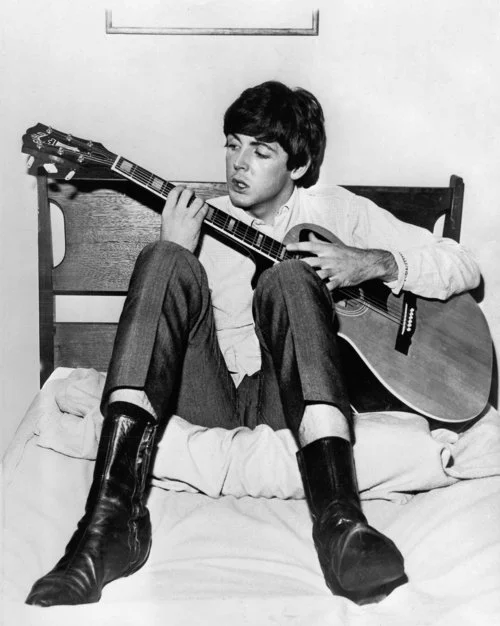
IN THIS PHOTO: Paul McCartney in 1964/PHOTO CREDIT: RA/Lebrecht Music & Arts 

Paul McCartney and Me: The Interviews: Roy Kerr

___________

I have already begun…

a forty-feature run that leads to Paul McCartney’s eightieth birthday on 18th June. In addition to features about The Beatles, Wings, his solo material, in addition to why he is such a legend, inspirational human and genius, I am interviewing various amazing people. I ask what Paul McCartney means to them, and when they first experienced his music. In this interview, Roy Kerr discusses working with McCartney, touring with him as a support act, in addition to working on the Twin Freaks album. In a deep and illuminating interview, Roy speaks passionately and fondly about…

THE magnificent Paul McCartney.

____________

Hi Roy. In the lead-up to Paul McCartney’s eightieth birthday on 18th June, I am interviewing different people about their love of his music and when they first discovered the work of a genius. When did you first discover Paul McCartney’s music? Was it a Beatles, Wings or solo album that lit that fuse?

I was first aware of The Beatles through my dad. He was a huge fan, especially of the early stuff. At university, I fell in love with their later more experimental/anthemic music.

I honestly didn’t know much about Wings or his solo work until I started DJing in the early-2000s (other than the huge chart hits). That was when I started to truly appreciate his individual talent and thirst for experimentation.

Like me, you must have been engrossed by The Beatles: Get Back on Disney+. How did it change your impression of The Beatles at that time, and specifically Paul McCartney’s role and influence on the rest of the band?

Mainly how much love they clearly still had for each other. That and the humour…

All I’d ever known was stories of them fighting and sniping, and it was so lovely to see them joking in spite of the clear differences. Having got to know Paul a little bit, his managerial behaviour didn’t surprise me all that much. I was impressed by his grace under pressure, though. It can’t have been easy being so young - and yet he clearly had the oldest head in comparison to the others.

On tour, he always spoke lovingly of John and Yoko (which surprised me, having only read gossipy anecdotes), so I was a little prepared. I’m still gobsmacked at him coming up with Get Back out of thin air though!

That film should be a permanent exhibit in The British Museum imho…

I know that you worked with McCartney between 2004 and 2007. How did that come about? Did you two know about one another prior to 2004?

It was a complete bolt from the blue!

My manager said he was looking for a tour DJ for an upcoming European tour and a bunch of us submitted mixtapes. I did a 5-minute megamix (cut-n-paste job), which I think worked in my favour.

The others did longer 40-60 minute mixes I believe, and I don’t think he would have sat through all of them. Plus, I was having a bit of a moment as mashup artist/DJ, so was being featured in magazines and on radio.

I got a call at home one night from one of his people and they said “Paul will call you in about half an hour”. And he did. We had a quick chat. He was lovely. He invited me to MPL (his offices in Soho) and we hit it straight off!

As a D.J./support act during the 2004 Summer European tour (including Glastonbury) and the Back to the U.S. arena tour in America in 2005, what was life like on the road with McCartney? Do you have any favourite memories of that time?

It was the most incredible experience.

My first rehearsal was at The Millennium Dome (now the O2) in London. They had a full (stadium-sized) stage set up inside an otherwise completely empty void. We were using bikes and scooters to get around, it was so vast. From then on I was treated like one of the band. It was all private jets and police escorts and Four Seasons hotels. I still pinch myself all these years later. He was so lovely and welcoming. Everyone was. He’s very disarming and gentle, but you know there’s a steely centre and you have to be at the top of your game. Everyone there was at the top of their game.

My favourite memory was when my parents joined me in New York. We did several nights at Madison Square Garden. I had my own dressing room. My mum and dad came to soundcheck and started dancing to some of the old rock ‘n roll warm-up songs Paul and the band would play.

Paul called out to them from the stage “Is that Mr & Mrs Hellraiser?!” After the show that night he met them, and he told my dad that I was a genius! My dad never really understood what I was up to with my DJing and remixes etc…but that trip changed everything.

 You made the Twin Freaks album with him where there are great remixes of some of his tracks. What was the criteria when it came to selecting the songs to remix? How much input did McCartney have when it came to the overall sound/track sequencing?

He gave me absolute free reign to do whatever I wanted.

The only stipulations were no Beatles stuff and I wasn’t to play any original music over any of it. But I got full access (including any multitracks I wanted) to all the Wings and solo catalogue (including later experimental projects such as The Fireman with the producer Youth). I was a bit cheeky by including Live and Let Die, because he didn’t own the multis to that (the Broccoli family do), but I just snipped the intro and looped it like an old Beatles loop and he loved it.

He even cheekily played it live once at soundcheck and I nearly fainted.

What was it like working with his team when putting the album together? Did you learn anything new about Paul McCartney’s music and importance during the making of Twin Freaks?

His team were wonderful.

I had my own tech on tour, Jamie, who had worked for Paul for some years, and anything I needed I got. I offered some fairly creative suggestions (I thought of having masks based on his Twin Freaks painting), and they all helped me every step of the way. I never felt like the new boy or a pain in the arse. I was surprised at how much electronica there was in his sound. Loads of amazing synths and textures. Plus all the collaborations; Stevie Wonder and Jimmy Page and others.

If you had to select your favourite Beatles, Wings and McCartney albums (one each), which would they be and why?

So tough…

Having just finished the doc., I bought the remastered/mixed albums again on vinyl and fell in love with The White Album again but, for all times, probably Revolver.

For Wings it would be Band on the Run. Mainly for the American tour, because I’d heard those songs growing up but never understood the impact they’d had until I saw them played to an American audience. He’d open with Jet right after I finished my set.

As for his solo stuff, it was McCartney II that I’d discovered through DJing electroclash parties in the early-2000s, and it properly blew me away. Still does.

Maybe an impossible question, but what does Paul McCartney, as a human and songwriting icon, personally mean to you?

As a human, he was so welcoming and open to me. He got to know my wife and young daughter (similar age to his youngest), and after all the touring he would invite me out for his boys nights out in London and Sussex. I bumped into him in St. Johns Wood a couple of years ago and he was still so warm and friendly. We had a lovely catch up walking to Pret together!

As an artist, I really think he’ll go down as our greatest ever songwriter and be thought of like one of the great classical composers for decades to come. Clearly, there are all the hits but also his endless thirst for experimentation and new frontiers too, which I think has become more understood and appreciated over time. His latest work is a reflection of that.

“He’s never happy to just simply do what others have done”.

It is difficult to say just how far and wide McCartney’s influence spans across music, culture and the world at large. If you were trying to explain to a child (or someone who had never heard of Paul McCartney) who was unaware of Paul McCartney why they should listen to his music, what would you say?

Funnily enough, my wife is a child-minder, and she loves to play her kids music. I wondered why she’d never made a Beatles kids playlist. I made her one including The Frog Chorus and a load of Beatles, and the kids love it. So, you can go from pre-schoolers to songs that make 80-year-olds cry and become 18 again, and Avant Garde songs that make young experimenters’ minds boggle. I’m not sure there’s ever been any (non-classical) composer like that. Ever.

He’s never happy to just simply do what others have done.

If you had the chance to interview Paul McCartney now and ask him any one question, what would that be?

I would want to know if he’d ever wanted to swap it all for anonymity.

He’s been famous around the world since he was a teenager and, for all the wealth and accolades, I can’t imagine the stress and strain that it has put on his personal relationships and privacy.

If you could get a single gift for McCartney for his eightieth birthday, what would you get him?

Probably a nice tasty Margarita.

To end, I will round off the interview with a Macca song. It can be anything he has written or contributed to. Which song should I end with?

Selfishly, I’ll go with Oh Woman Oh Why from Twin Freaks. This was always my opener, and it takes me back to a dark, packed, expectant stadium. It’s a full-body sensation I’ll never forget, and this one instantly takes me there.
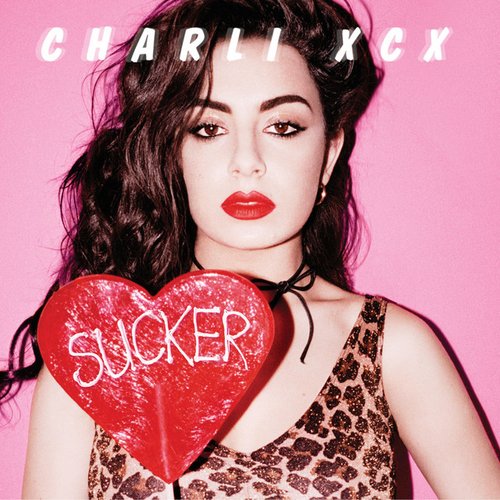
FEATURE: Second Spin: Charli XCX - Sucker

FEATURE:


Second Spin

Charli XCX - Sucker

___________

THIS is an album…

 PHOTO CREDIT: Emma Swann

that was positively reviewed when it came out in 2014, though the songs from it are not played as much as they should be now. In fact, when people talk about the very best albums of the 2010s, how many mention Charli XCX’s Sucker? Her second studio album, it was an incredibly accomplished, confident and exceptional release from the twenty-two-year-old Cambridge-born artist (real name Charlotte Emma Aitchison). Even though, years after the album came out, that she felt some of it felt fake now (2018), I feel it is a great album that solidified the status of one of the world’s best young Pop artists. Although subsequent albums have been truer to Charli XCX’s true talents and potential, Sucker is a brilliant album that should be hyped! I want to get to a couple of contrasting reviews for the 2014 album soon. Most of the reviews were very positive, though a few were a bit more mixed. Prior to that, there are a couple of interviews from around the release of Sucker that I want to bring in. COMPLEX covered an artist who was definitely ion the rise:

Charli’s songwriting process is astoundingly spontaneous and reactive: Listening to a beat for the first time, she sings and records whatever comes out. Sometimes there are additional takes, but not always.

There’s a distinctly electric, kinetic quality to “I Love It,” the hook to “Fancy,” and “Boom Clap”—they’re built for parties and mixtapes, totally singable anthems. Incredibly, when lacking anything remotely resembling self-consciousness, Charli XCX produces hits that resonate around the world. But what about her more deliberate, self-conscious efforts?

True Romance, released in April 2013, didn’t have any hits, per se. The album had catchy songs about relationships destroyed and young, dumb love—common pop wheelhouse stuff. It was the packaging that set her album apart to its vocal admirers, many of whom were music critics. Lush, dreamy soundscapes and bedroom-ceiling musings with the coolest girl in school, finely produced to a tee, with each note exuding Charli’s naturally charismatic, smart edges. Maybe too smart. The album was a critical success, but despite building Charli’s devoted following, it struggled commercially, never cracking the Billboard 200. She loves True Romance but admits to making music in a way she’s not entirely proud of: “I just wanted to make sure people thought I was cool,” she says. “That’s what I was worried about.”

Charli went to Sweden. She recorded those punk songs. She stopped caring about pleasing critics or becoming famous. After turning down so many people in the industry for writing work, she decided to work with whomever she felt like, appearances notwithstanding. She wrote for Britney Spears and with Dr. Luke. Iggy Azalea’s people sent her a beat. Charli was a fan of Iggy’s song “Work.” She wrote several hooks to the beat. “I had that rap in my head, the ‘Who dat, who dat? I-G-G-Y,’” she says. “I was like, that’s fucking cool. Then I just did my thing.”

Her “thing” resulted in yet another No. 1 single. And her not giving a fuck resulted in new sessions, with Batmanglij, Cuomo, and über-producer Stargate, that birthed material for a new album, Sucker, to be released this fall. She acknowledges that some people—maybe even some of her core fans, Charli’s Angels, as they call themselves—might not like it, that it might be too pop for them. “Some people will look at that like, ‘She’s working with Stargate, she’s sold out.’ That’s the kind of person I used to be—and now I think that kind of person is fucking retarded.”

Of course, mixed in with all of the work, there’s semblance of a life. She still has a handful of close friends who “literally do not give a fuck about Charli XCX” and a few real friends she’s made in the music industry. It’s a close circle. Charli considers herself an awkward person, or at least has felt like one lately. She’s had panic attacks in the studio, during which she’ll start to crawl on or under the equipment. She’s shut down before, emotionally. She’ll quickly cop to feeling self-conscious at existential moments of recognizing her weird, sometimes isolating existence.

When I ask her to elaborate on all of this, she’s already ahead of me. It all just spills out:

“There are days where I can go into a room full of people, talk to every single person, and feel completely at ease, and feel like making every single person laugh, and feel like everyone’s having a great time. There are other times where I go into a room of people and I literally want to run and hide. I want to lock myself in the bathroom and cry, which I’ve done. It’s not because anyone’s saying anything horrible to me. It’s just...people are asking me questions—not even asking me questions about Charli XCX.”

Before I can ask her whom these people are asking her about: “I’ve felt like a schizophrenic person since the beginning of 2014. Sometimes I just shut down and want to stay in bed and cry. Other times I want to get fucked up in the most fun way possible.”

It doesn’t seem to be my place to tell her that this is a surefire indicator of a human being in her 20s. But there are also hints of something a little more existential. And then:

“I haven’t figured out what triggers the sudden thing. I’m exhausted today. So tired. I woke up at 4 a.m. yesterday and stayed awake until 6 a.m. because I was having loads of sex”—here, she laughs to herself—“and then I woke up at 9 a.m. this morning because I had to go, so I’ve had three hours of sleep in the last two days. But I’m not moody. So, it’s not because I’m tired, because otherwise I would’ve shut down now”.

In another interview, Pitchfork asked whether it was more difficult for Charli XCX to stay private and have some space now that she is a bigger artist and is getting attention from various quarters:

Pitchfork: It’s funny to hear you say that because one thing you really excel at on Sucker is bridging the gap between the mainstream pop world and the “cool” pop world—you’re mixing big Top 40 producers and songwriters, like Stargate and Benny Blanco, with critical darlings like Robyn producer Patrik BergerCashmere CatAriel Rechtshaid, and Vampire Weekend’s Rostam Batmanglij.

XCX: That’s what I aim to do as an artist. I hate the idea of people thinking that I’m just a little girl who goes into studios with pop producers, and they work their magic. I executive-produced this record myself and I put those people in a room together because I thought it would be right. A lot of artists in my position, particularly before “Fancy”, would be very afraid to work with Stargate for fear of what people would say about them. But I don’t give a fuck because I think Stargate are tight and I work really well with them—they can sit in a studio and write seven songs in a day. And Cashmere and Benny have worked together forever, they live in the same house. I want to bring those people together because I think I can make it work. I’ve always been good at never being the same thing twice, and it’s partially because I like collaboration.

Pitchfork: There was almost lore around Sucker before it was even announced: how you went to Sweden to make a punk record to get out your anger and then abandoned that album in favor of a more traditional pop record. But I still hear the punk bits in some of these songs.

XCX: Some of the poppier songs on the punk record are now the most punk songs on the pop record. There were some full-on, two-minute-long, me-screaming songs. There was one called “Mow That Lawn”, which is so sick. It goes, “Oooh! Baby mow that lawn/ Oooh! Really turns me on/ Oooh! Got no mobile phone/ Oooh! ‘Cause the signal’s gone.” It’s about me moving to the countryside and being bored of taking too many drugs and drinking too much, and just wanting to have a cat and mow the lawn.

That experience was therapeutic for me, because I was bored of being the girl who didn’t sing “I Love It”, even though I do fucking sing all through that song—I’m pretty audible on it. I was bored of getting requests to rewrite that song for other people. I had lost myself in the music industry and in the idea of being “the best” songwriter; I was going down a Dr. Luke road with my competitive mentality. I didn’t like it. That’s not who I am. So I went to Sweden and spoke with Patrik [Berger] and Pontus [Winnberg, aka Avant of production duo Bloodshy & Avant] about it. Pontus worked on a lot of the Britney [Spears] stuff back in the day, and I asked him, “What do you think about how I’m feeling?” He said he felt like that, like the pop world is this weird competitive environment that he wanted to get out of. Everyone in Sweden is cool, it’s not like L.A.; I got all my shit out and felt better about myself belonging in the music world.

PHOTO CREDIT: Terry Richardson 

Pitchfork: Do you find that it’s gotten harder to stay private as you’ve gotten more popular? It seems like there’s this expectation among pop stars who write their own lyrics to reflect their personal lives in a way that can be voyeuristic, and ultimately feed into the cult-of-personality cycle of fame.

XCX: The thing that differentiates me from someone like Taylor Swift is that I don’t live in gossip magazines. I don’t want that. It’s not a slight on Taylor—she’s a genius—but I’m not about to date a boy-band member. I don’t have interest in fame, at all. I have an interest in people listening to my music. That’s it. I don’t want to go to a fucking fashion party. It’s hard for people to be truly voyeuristic about me because they don’t know that much about me. I’m not getting chased while buying eggs, like Iggy was the other week. I don’t even buy eggs, I can’t fucking cook! Maybe I’m being naïve, expecting that I’m going to be able to stay like that if I continue to do what I’m doing. But I’m very conscious to keep it like that.

Also, I’m very selfish when I write songs and I don’t really think about my audience. My subject matters are broad, and I’m very much a blunt songwriter. So it’s quite easy for people to apply my shit to their life. That takes the pressure off me a little bit”.

To round off, I want to source two interviews. I will end with a mor positive one. The Guardian had some slightly mixed opinions when they sat down with Sucker:

Indeed, you get the sense that Sucker has been attended by perhaps a little too much excitement for its own good. In the US, where the album was released in December (it appeared at No 6 in Rolling Stone’s best albums of 2014 list), reviews went big on its radical and uncompromising nature: it was frequently referred to as punk. That is obviously talk to get the blood up. Punk is a catch-all term, encompassing everything from the shouty vegan anarcho-syndicalism of Crass to the intricate concept albums of Fucked Up to the late GG Allin throwing his own excrement around on stage while singing Eat My Diarrhea. Adopting any of these as an influence would clearly represent a radical gesture on the part of a mainstream pop star.

In the case of Sucker, however, punk means the occasional presence of some distorted guitars and some swearing. Nothing wrong with that, of course, but the listener should perhaps adjust their expectations of uncompromising radicalism accordingly. With its synthesisers topped with chugging riffs and powerchords, what Sucker usually resembles is a more unbridled, less obviously micro-managed version of the Strokes-inspired new wave pop style unveiled on Kelly Clarkson’s 2004 hit Since U Been Gone and later adopted, to staggering commercial effect, by One Direction. At its best, as on the withering string of put-downs that comprises Breaking Up or Hanging Around’s homage to I Love Rock’n’Roll, it’s great, fizzy, trashy fun. At its worst, as on London Queen, it gets a bit tinny and irritating: a criticism that’s been levelled at virtually every attempt to graft a new-wave/pop hybrid over the last 40 years, from Back of My Hand by the Jags to Busted.

The one thing it never is, though, is particularly radical. It’s tempting to say that it doesn’t really need to be. If her songwriting occasionally misfires, churning out stuff that’s indistinguishable from every other indistinguishable song on the Radio 1 playlist – the Rita Ora feature Doing It is a case in point - it’s frequently dead on target, as evidenced by the closing So Over You, which distinguishes itself from dozens of other big, synthy mid-tempo pop tracks out there simply by being a slightly better song.

That said, there’s certainly a hint of screw-you subversion about the lyrics, at least in the context of recent pop music. The usual you-are-beautiful, believe-in-yourself platitudes are dispensed with in favour of paeans to hedonism, or “getting high and getting wrecked” as Break the Rules puts it. Famous features what appears to be a reference to taking LSD, of all things; the closest it comes to the arena of self-help is a song about having a wank. In marked contrast to the X Factor-peddled notion that celebrity is within everyone’s reach, Aitchison’s songs present her fame and success as something fantastic, unattainable by mere mortals. It would sound a bit snotty if she wasn’t so funny: Gold Coins depicts her literally building a castle out of money, pulling up the drawbridge, then sitting inside it, smoking a fag.

One of the reasons that image is funny is that it wildly overstates the level of success Charli XCX has achieved thus far: as it turned out, Sucker was a modest US success rather than a chartbuster. But for all its failings, and for all that it falls short of the more hysterical hype, it does enough to convince you that her long-delayed moment in the sun won’t be fleeting: perhaps she’ll get there yet”.

To end, I want to include AllMusic’s take on Sucker, it is far kinder. It is more accurate. I think that Charli XCX’s second album is one that everyone should hear and spend some time with:

For a while, Charli XCX seemed to be tiptoeing into the spotlight. After co-writing and singing on Icona Pop's smash hit "I Love It," her album True Romance -- which had a darker, indie-friendly sound -- earned more acclaim than sales. Her next big break came with another collaboration, 2014's inescapable "Fancy," where she provided the sing-songy chorus to Iggy Azalea's brash verses. On Sucker, she keeps more of that hit-making swagger for herself, delivering attention-getting pop that's bold enough to ensure she isn't overshadowed by anybody. She makes her purpose clear with the album's title track, a musical middle finger to the clueless set to revved-up synths and stabbing guitars. It's a big change from the gothy pop of True Romance, though even on that album, XCX's hooks were undeniable. Sucker is also full of should-be hits, but these songs also show how creatively she fashions the shiniest parts of the '80s, '90s, 2000s, and 2010s into her own highly stylized sound. "Famous" bops along on a riff that nods to Cyndi Lauper's "Girls Just Wanna Have Fun"; there's a bit of Elastica in "Breaking Up"'s buzzsaw guitars and flirty put-downs; "Caught in the Middle" could be vintage Gwen Stefani; and "Doing It"'s retro dance-pop feels equally informed by XCX's own fascination with the '90s and HAIM's update on that decade.

Similarly, Charli still exudes plenty of sass on Sucker, but the exact kind of attitude has changed. She retrofits some of True Romance's atmosphere on "Boom Clap," turning it into a sparkly anthem to young love that seems more innocent than it actually is. If she was trying to keep up with the hip kids before, now she sounds like an older sister sharing her tricks on "Break the Rules," where she's literally too cool for school. Anytime it feels like XCX may have oversimplified her sound -- like the notable absence of one of her finest singles, "Superlove" -- she proves otherwise. There's a realness to her writing no matter how shiny the album's surfaces are, and while these songs are influenced by the success she's had with others, she's saved her most personal songs for herself. It's hard to imagine any of her collaborators or contemporaries belting out a lyric like "When I'm driving down the wrong side of the road, I feel like JFK you know" with as much mischievous glee as Charli does on the standout "London Queen"; later, she states her independence, sexual and otherwise, on "Body of My Own." From song to song, she bounces from hanging out in her friends' bedroom to flying on private jets, making both sound like the coolest possible thing to do. Sucker's mix of youth and sophistication is more than a little volatile, and sometimes it feels like XCX is still figuring out what really works for her music. Nevertheless, it succeeds as an introduction to Charli XCX the Pop Star while retaining her whip-smart songwriting and attitude”.

With her hotly-anticipated fifth album, Crash, due in March, it is a good opportunity to look back at an earlier album. One that deserves more spins and credit. An artist who grows stronger with every release (she turns thirty in August), Charli XCX is one of our best artists. A remarkable songwriter and modern-day star, it will be interesting to see how her career progresses. Sucker is an album full of brilliant material. If you do not believe me, then go and…

LISTEN for yourself.

FEATURE: Vinyl Corner: Silverchair – Freak Show

FEATURE:


Vinyl Corner

Silverchair – Freak Show

___________

THIS is a Vinyl Corner…

where I am featuring a band I have not included before. Silverchair were an Australian Alternative Rock group. They left us with some sensational albums. I think that their second album, Freak Show, is their best known. It is an album that I would encourage people to seek out on vinyl. It is an amazing album from a band that are not really played an awful lot now. They were very popular in the mid to late-1990s, though I wonder how many people are discovering Silverchair today. If you have not heard of the band before, then I would suggest Freak Show as a starting point. Released in February 1997, the album celebrates its twenty-fifth anniverssary soon. Five years ago, Cryptic Rock spotlighted and explored Silverchair’s second studio album twenty years down the line:

Back in the ’90s, when Alternative Rock was king, Aussie band Silverchair were etching their  name in history. Only 13 years of age when beginning their band back in 1992, their 1995 debut album, Frogstomp, was recorded in just nine days, going on to become one of the hottest releases on the charts.

As Frogstomp and “Tomorrow” continued to gain in popularity, the group toured the US with the Red Hot Chili Peppers in June, The Ramones in September, and also played on the roof of Radio City Music Hall at the MTV Music Awards. Going on to become a #1 album in Australia and New Zealand, it was certified as a US double-platinum album by the RIAA, triple-platinum in Canada by the CRIA, and multi-platinum in Australia. Not bad for 15 years old still attending high school, right?

Looking to keep the momentum of their success going, in May of 1996, the Hard Rock trio composed of Vocalist/Guitarist Daniel Johns, Drummer Ben Gillies, and Bassist Chris Joannou re-entered the studio to work on their sophomore album. Often the most challenging record for a band, of course with success and record sales always comes a certain degree of criticism as well as backlash.

For Silverchair, many felt that the band’s debut album relied too heavily on their Seattle Grunge influences. Songs like the singles “Pure Massacre” and “Israel’s Son” seemed derivative of the teens’ influences ranging from Nirvana, to Pearl Jam, to Soundgarden, to Alice In Chains, as well as Black Sabbath. For this, critics gave the group serious flack for wearing their influences on their sleeves, instead of melding their own, original sound.

So it was their second album, Freak Show, that the trio from Down Under had much to prove. Concluding the recording process in November of 1996, the album hit record stores across the U.S. on January 31, 1997. Now, twenty years later, the album remains a pivotal point in the story of Silverchair.

Lyrically, many of the songs on Freak Show focused on the backlash and anger of the expectations put on the band during their Frogstomp period. The group’s lyricist, Johns, focused his young mind, determined to prove the naysayers wrong. For his efforts, the album reached #1 and two-times platinum in Australia; was #12 on Billboard and certified gold in the United States; hit #2 in Canada; was in the Top Ten in New Zealand; and its global sales eventually exceeded 1.5 million copies. Say what they might, how many critics had released two #1 discs before graduating high school?

For the album, Johns wrote all of the lyrics with Gillies collaborating on the music. The young duo were no strangers to radio gold, and Freak Show‘s singles – “Freak” and “Abuse Me” – would help propel it to the top. (A third single/video was released in Australia and Europe for “Cemetery” but never made it to the U.S. An additional fourth single, “The Door,” received an Australia-only release.)

“Freak,” the first single and video, reached #1 on the Australian charts; it was the second single by Silverchair to do so after “Tomorrow” in 1994. (The band would not have another #1 hit until “Straight Lines” in 2007.) The music video for this song was directed by Gerald Casale, a member of Devo, who also directed the majority of their other videos. It raises the pertinent question, “What is a freak?” Are the black-clad teenagers with eyebrow piercings freaks, or is it the women that seek plastic surgery to look younger? Although, with their bass-heavy, grungy sound, none of this really mattered: they were the perfect sign of the times, musically speaking. The video for “Freak” won the International Viewer’s Choice Award for MTV Australia at the 1997 MTV Video Music Awards.

Second single/video “Abuse Me” reached #4 on Billboard‘s Hot Modern Rock Tracks and Hot Mainstream Rock Tracks charts in the U.S. The video depicted the trio performing on a silver stage, amidst freak show performers and paraphernalia, and a Rock-n-Roll astronaut inside a human gyroscope. As far as videos go, it was not-monumental, but it continued the push for the album and the band. The song, however, was a clear jab at critics who had lauded the band for copying their influences. “Come on, abuse me more, I like it,” Johns taunts in the now-classic chorus. It was a mirror of Nirvana’s “Rape Me,” but that did not stop fans from loving the track and the album.

Third single, “Cemetery,” received an overseas release but was never available here in the U.S. Die-hard fans did not much care and still managed to get their hands on the video. Reportedly, Johns had never actually intended to release the song, as he was apprehensive about being ridiculed for having written a ballad. Of course, Johns need not have worried: both his bandmates and fans loved the song. In fact, to date, it has been covered by a plethora of artists, most notably Good Charlotte.

By late 1997, the trio had completed their secondary education and were free from school books and exams. After Freak Show, the band would go on to release three more albums, 1999’s Neon Ballroom, 2002’s Diorama, and 2007’s Young Modern over the next ten years before announcing an indefinite hiatus in May 2011. The music has not seized for the members of Silverchair though as they continue to write and record in other projects since, notably Johns’ released an impressive debut solo album in 2015, entitled Talk.

Nonetheless, the importance of Freak Show in the Silverchair oeuvre is as the catalyst for the band’s third, arguably most beloved album, Neon Ballroom. It was with this disc that their sound would truly begin to take on its own voice, moving away from Hard Rock and toward something much more Pop-friendly”.

Some would say that Silverchair’s third album, Neon Ballroom (1999), is their finest moment. I would plump for Freak Show. It is an album that got a lot of love back in 1997. It was a great year for Rock and Alternative music. I want to end with a review for Freak Show. Rolling Stone had their say in 1997:

Bonding with Silverchair’s ’95 debut, Frogstomp, was like finding cool clothes at your local mall: No matter how much you wanted to dismiss it as a fluke, one that somehow stumped your hip radar, it ultimately fulfilled some deep, aesthetic need. So Freak Show should be the teenage trio’s embarrassing second album, one that proves that this Australian outfit is truly the Menudo of grunge. But as Freak Show demonstrates, you weren’t duped the first time around — Silverchair own the attitude, passion and songwriting skills that most Nirvana Juniors can only feebly approximate.

“If only I could be as cool as you,” sings Daniel Johns on “Freak,” addressing the you-only-think-you’re-from-Seattle issue with a sarcastic one-liner. The band then moves on to pillage other sources, namely the hardcore guitar assault of Helmet and the heavy-duty groove of its parents’ Black Sabbath albums.

Johns’ bittersweet, crackly voice tops the ample power chordage, sounding eerily close to Kurt Cobain as Johns hits shivery, emotional notes that convey both sweet idealism and disappointment. The 17-year-old singer’s lyrics aren’t quite as deep as the Nirvana frontman’s; instead, Johns is a fount of the kind of poetry etched on the walls in fifth-period English class (“No more maybes/Babies got rabies”). And that’s enough — for now, it’s Johns’ voice that’s doing all the communicating.

Throughout, Silverchair spin out songs strong enough to crack the charts, yet the band plays them with the spontaneity of an after-school jam. A number like “The Door” is as catchy as a Monkees tune, but Silverchair actually wrote it themselves. The only problems with Freak Show are that a few tracks sound too much alike and the proggy ballad “Cemetery” is as overblown as the hairstyles in any high school annual (you watch, it’ll be their biggest hit).

Silverchair have loads of potential. The band may still be using other peoples’ riffs to guide its post-pubescent fury, but it’s the enthusiasm that makes this Freak Show more than a novelty”.

An album that is well worth getting on vinyl, make sure that you add Silverchair’s Freak Show to your collection. I encountered it first time around in 1997, though it is an album that I have come back to. Freak, to me, is one of the defining songs of the 1990s. I have been dipping back into it the past few days. A terrific album from the much-missed Silverchair, Freak Show is an album that sounds pretty raw and epic…

ON vinyl.

FEATURE: Paul McCartney at Eighty: Paul McCartney and Me: The Interviews: David Quantick

FEATURE:


Paul McCartney at Eighty

IN THIS PHOTO: Paul McCartney in 1964/PHOTO CREDIT: RA/Lebrecht Music & Arts  

Paul McCartney and Me: The Interviews: David Quantick

___________

I have already begun…

a forty-feature run that leads to Paul McCartney’s eightieth birthday on 18th June. Alongside features about The Beatles, Wings, his solo material, in addition to why he is such a legend, inspirational human and genius, I am interviewing various amazing people. I ask what Paul McCartney means to them and when they first experienced his music. In this first interview is the terrific novelist, author, music journalist and comedy writer, David Quantick. Having appeared numerous times on Chris Shaw’s phenomenal Beatles podcast, IAmtheEggPod, I can confirm that David knows his stuff when it comes to Paul McCartney! David also made a programme about what if John Lennon had left The Beatles in 1962/lived (the Beatles icon was killed in 1980) for Playhouse Presents. To start this interview series ahead of Paul McCartney’s eightieth birthday in June, David Quantick explains what the music icon…

MEANS to him.

______________

Hi David. In the lead-up to Paul McCartney’s eightieth birthday on 18th June, I am interviewing different people about their love of his music and when they first discovered the work of a genius. When did you first discover Paul McCartney’s music? Was it a Beatles, Wings or solo album that lit that fuse? What was your reaction when you first heard the band?

I first heard Help! on the radio as a small boy. I think I liked it. Then I had tapes of the Red and Blue compilations (released in 1973, the Red Album covered their hits songs between 1962–1966; the Blue Album between 1967–1970) and became obsessed.

Like me, you must have been engrossed by The Beatles: Get Back on Disney+. How did it change your impression of The Beatles at that time, and specifically Paul McCartney’s role and influence on the rest of the band?

It didn’t really…

I enjoyed it and was pleased that The Beatles continued to be creative and so on. But to be honest, Let It Be is a bad album and The Beatles were right to jack it in.

Your excellent 2002 book, Revolution: The Making of The Beatles' White Album, looked at the classic 1968 eponymous double album from The Beatles. What did you learn about Paul McCartney as a songwriter whilst researching and writing that book?

Only that he is a unique and fantastic talent, which I knew already. The White Album is a pretty democratic Beatles L.P., and Paul’s contributions - from Back in the U.S.S.R. and Mother Nature’s Son to I Will and Honey Pie - show enormous range.

McCartney’s latest studio album, McCartney III, was released at the end of 2020. What do you think the future holds in terms of McCartney’s music? How do you think his sound/lyrics will change or evolve, if at all?

He is nearly 80, but shows no signs of retiring. He loves to work, and he loves new ideas.

So, I will continue to look forward to his next record.

If you had to select your favourite Beatles, Wings and McCartney albums (one each), which would they be and why?

The White Album (The Beatles) for the variety and the ambition; Wings Over America for the variety and the ambition, and McCartney I because it is lovely.

Maybe an impossible question, but what does Paul McCartney, as a human and songwriting icon, personally mean to you?

Talent, luck, ambition and genius sometimes attach themselves to really good people. Like his fellow Beatles, Paul has always tried to be a force for good.

I love him.

“ He is nearly 80, but shows no signs of retiring. He loves to work, and he loves new ideas”.

It is difficult to say just how far and wide McCartney’s influence spans across music, culture and the world at large. If you were trying to explain to a child (or someone who had never heard of Paul McCartney) who was unaware of Paul McCartney why they should listen to his music, what would you say?

Just buy the Red Album.

Reading The Lyrics: 1956 to the Present makes me realise that Paul McCartney might be underrated as a lyricist. He is lauded because of his musical innovation, but sometimes his lyrics get short shrift. Do you think he is undervalued as a lyricist, and do you have any personal favourite lines of his?

He is a great writer.

Often complex, mostly simple. I’d show someone The End of the End from Memory Almost Full for the complex, and Silly Love Songs for the simple.

If you had the chance to interview Paul McCartney now and ask him any one question, what would that be?

Could you sing I Don’t Know from Egypt Station for me?

If you could get a single gift for McCartney for his eightieth birthday, what would you get him?

A day off being asked about The Beatles.

To end, I will round off the interview with a Macca song. It can be anything he has written or contributed to. Which song should I end with?

I Want to Hold Your Hand.

Nothing has ever sounded like this before or since. My favourite single of all time. Or Mull of Kintyre, the first single I ever bought. I still love it.

FEATURE: Vinyl Corner: Meat Loaf – Bat Out of Hell

FEATURE:


Vinyl Corner

Meat Loaf – Bat Out of Hell

___________

FOLLOWING the sad…

death of Meat Loaf on 20th January, there were a lot of tributes about his success and legacy as an artist. Whilst he recorded so many great albums through his career, 1977’s Bat Out of Hell will always be seen as his peak. Produced by Todd Rundgren, the album spawned huge hits like You Took the Words Right Out of My Mouth (Hot Summer Night), Paradise by the Dashboard Light and Bat Out of Hell. One of the best-selling albums ever in the U.S., this is an album that everyone needs in their vinyl collection. No matter what your age, everyone can remember and sing along to the biggest songs on the album. It is operatic and huge, yet there is so much variety in terms of the songwriting and sound. I am going to end with a review of Bat Out of Hell. Prior to that, there are a couple of articles that give background to the blockbuster album. Classic Rock Review note how the album was a collaboration between Meat Loaf, Jim Steinman (who wrote the tracks) and producer Todd Rundgren:

Although credited as a solo album by Meat Loaf, the blockbuster album Bat Out of Hell was actually forged through a collaboration of three people – Meat Loaf (born Marvin Lee Aday), songwriter Jim Steinman and producer/guitarist Todd Rundgren. This album would go into the stratosphere sales-wise, certified platinum fourteen times over and currently ranked ninth all-time in worldwide sales. However, these gentlemen may have been the only three to believe in this project during its early years. By the time of its release in late 1977, the album had been worked on for over five years but it had been rejected by every major Label (and quite a few minor labels as well). The project was finally picked up by tiny Cleveland International Records, not so much by musical merit but more so when owner Steve Popovich heard the witty dialogue which precedes the song “You Took the Words Right Out of My Mouth (Hot Summer Night)”.

Meat Loaf met Steinman shortly after releasing his soul-influenced debut album Stoney & Meatloaf in 1971. Both were deeply interested theatrical music as Meat Loaf had starred in several Broadway plays and the film, Rocky Horror Picture Show, and Steinmen had composed for several productions including a sci-fi update of Peter Pan called Neverland, which was a pre-cursor to Bat Out of Hell. Writing for the album started as early as 1972, with the songs fully developed by the end of 1974, when Meat Loaf decided to leave the theatre to concentrate on this project. In 1975, the dual performed a live audition for Todd Rundgren, an avant garde performer and producer, who was impressed that the music did not fit any rock conventions or sub-genres to date. However, this was a double-edged sword as they had immense difficulty finding a record company willing to sign them. According to Meat Loaf’s autobiography, the band spent two and a half years auditioning the record and being rejected. One of the most brutal rejections came from CBS head Clive Davis, who first dismissed Meat Loaf by saying “actors don’t make records” before turning his ire towards Steinman’s songwriting.

The group had reached a verbal deal with RCA Records and started recording the album in late 1975 at Bearsville Studios in Woodstock, NY. However, the RCA deal fell through during production and Rundgren essentially footed the bill for recording himself. And this was no small bill as the album includes contributions by sixteen rock musicians and singers as well as the New York Philharmonic Orchestra. Some of these backing musicians include members of Bruce Springsteen’s E Street Band as well as Rundgren’s backing band, Utopia.

Steinman, who wrote every song and gave the album its title and artwork, had wanted equal billing with Meat Loaf on the album’s title, but was out-voted by record execs who felt that Meat Loaf alone was a more marketable, with the unorthadox, “Songs by Jim Steinmen” sub-heading appearing on the album’s cover. Even after the album was finally released in October 1977, it took awhile to catch on In the U.S. Ironically, it was after a CBS Records convention where Meat Loaf performed a song for that label’s top artist Billy Joel, that the album finally got some mainstream momentum”.

The phenomenal songwriting of Jim Steinman (who sadly died last year), the huge personality and titanic voice of Meat Loaf and the epic production from Todd Rundgren is a brilliant combination! Bat Out of Hell is one of the defining album from the late-1970s. Albumism celebrated forty years of a classic in 2017:

Meat Loaf’s Bat Out of Hell is outstanding in every sense of the word. Produced in 1975, released in 1977, it went on to become one of the best-selling albums of all time. It sits neatly in the cross-hairs of all major rock music trends of the 1970s: teen angst storytelling, reverberating guitar shreds, and smooth soft-rock vocals. And yet, Bat Out of Hell is a complete oddball. It is an epic unto itself: a seven-track album averaging six minutes per song. The lyrics are kitschy and the song structure is intentionally inconsistent. It was a rock opera parody often taken a little too seriously. It was misunderstood, underestimated, and almost never released.

Bat Out of Hell plays like the soundtrack to a musical that would be cost-prohibitive and very dangerous to make: a tale of brash and intense young love, with motorcycles and fire strewn about. It’s intentionally over-the-top. The title track opener is an eight minute, 784-word opus that tests the limits of endurance from both a performer and listener’s perspective. It tells the story of a man who has crashed, is hurt and presumably dying (“Oh, like a bat out of hell / I'll be gone when the morning comes”). What ensues in the album is the flood of memories of his life with love: “If I gotta be damned, you know I want to be damned / Dancing through the night with you.” The subject is recklessness and the lyrics are carefree. As a whole, the album opener is turbo-charged and makes you want to move your feet at 158 bpm. The beginning of this album sounds like any other musician’s closer.

<center><iframe width="500" height="400" src="https://www.youtube.com/embed/_wO8toxinoc" title="YouTube video player" frameborder="0" allow="accelerometer; autoplay; clipboard-write; encrypted-media; gyroscope; picture-in-picture" allowfullscreen></iframe>

Though it was Meat Loaf’s second album, it was his first collaboration with writer/composer Jim Steinman. Meat Loaf has a reputation for incredible vocals and passionate delivery, but Steinman represents the “signature sound”—a fact not lost on either party since the album’s release four decades ago.

Steinman shows strength in creating legendary singalongs without subscribing to pop music norms. One of his influences was 19th century opera composer Richard Wagner; Steinman described Bat Out of Hell thematically as Wagnerian Rock. One notable aspect of Wagner’s was his “through-composition”—that is, he set lyrical stanzas to different music for each verse, rather than relying on a more traditional “strophic” form which repeats the same music for different stanzas. Most songs on this album subscribe to this through-composed structure. “Paradise by the Dashboard Light” covers the whole arc of a teenage relationship in iconic micromovements, re-lived clumsily on most wedding dancefloors in the ‘80s and ‘90s.

According to Meat Loaf’s autobiography, producer and lead guitarist Todd Rundgren joined the project because he thought the concept was “just so out there.” It’s the exact reason label executives rejected the album left and right. Clive Davis of CBS famously lambasted Steinman on his inability to write music that fits into the pop music formula.

After at least two years of shopping it, Bat Out of Hell was ultimately picked up by Cleveland International Records, a subsidiary of Epic Records. According to Frederic Dannen’s book Hit Men, Cleveland International President Steve Popovich “did not care much for it” upon first listening but solicited feedback from two women whom he trusted: his ex-wife and sister-in-law. They both loved it. Ultimately the album grew on him and he thought the uniqueness of the sound could work to its advantage. After Cleveland/Epic picked it up, it took a few years of local radio play and a live performance or two before the album finally took off to the success we associate with it today. It has now sold over 43 million copies worldwide.

Unfortunately, the success of Bat Out of Hell is one that very few people shared in. According to a 1993 article by John Aizlewood in Q Magazine, after its release “Steinman hadn't been paid for Bat Out Of Hell. He sued Meat Loaf's publishing company, who hadn't been paid either. Everyone seemed to sue Meat Loaf, who filed for bankruptcy.” Steinman and Meat Loaf collaborated on follow-up projects but continued to wage subsequent legal battles (most recently over the use of the “Bat Out of Hell” name). Popovich sued Epic (now Sony) Records for lost royalties as record sales continued to soar and Sony hid behind a cross-collateralization clause, claiming that the costs of the album’s production were still not covered. Popovich passed away in 2011 in the midst of legal battles. Seemingly most important was his desire to restore the original “Cleveland International” logo to the album cover as his legacy”.

I am going to end with a review. AllMusic showed a lot of love and respect for an album that, whilst not ranked alongside the very best albums of the ‘70s in some people’s views, it definitely should be there:

There is no other album like Bat Out of Hell, unless you want to count the sequel. This is Grand Guignol pop -- epic, gothic, operatic, and silly, and it's appealing because of all of this. Jim Steinman was a composer without peer, simply because nobody else wanted to make mini-epics like this. And there never could have been a singer more suited for his compositions than Meat Loaf, a singer partial to bombast, albeit shaded bombast. The compositions are staggeringly ridiculous, yet Meat Loaf finds the emotional core in each song, bringing true heartbreak to "Two out of Three Ain't Bad" and sly humor to "Paradise by the Dashboard Light." There's no discounting the production of Todd Rundgren, either, who gives Steinman's self-styled grandiosity a production that's staggeringly big but never overwhelming and always alluring. While the sentiments are deliberately adolescent and filled with jokes and exaggerated clichés, there's real (albeit silly) wit behind these compositions, not just in the lyrics but in the music, which is a savvy blend of oldies pastiche, show tunes, prog rock, Springsteen-esque narratives, and blistering hard rock (thereby sounding a bit like an extension of Rocky Horror Picture Show, which brought Meat Loaf to the national stage). It may be easy to dismiss this as ridiculous, but there's real style and craft here and its kitsch is intentional. It may elevate adolescent passion to operatic dimensions, and that's certainly silly, but it's hard not to marvel at the skill behind this grandly silly, irresistible album”.

We sadly said goodbye to Meat Loaf earlier this month. The outpouring of love on social media proves how adored he is. His music will stand the test of time and be revered decades from now. It has been an hour including Bat Out of Hell

IN this Vinyl Corner.

FEATURE: A Radio Revolution: Celebrating BBC Radio 6 Music at Twenty

FEATURE:


A Radio Revolution

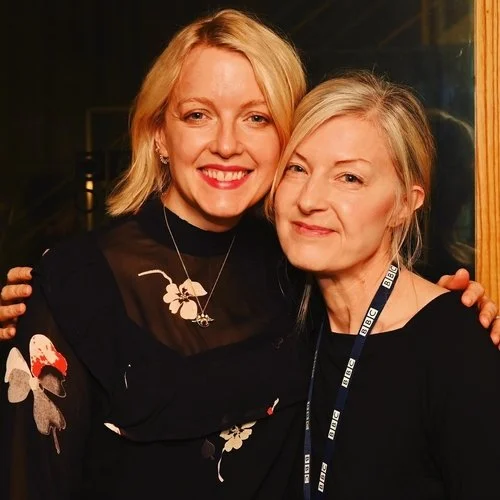
IN THIS PHOTO: Lauren Laverne and Mary Anne Hobbs/PHOTO CREDITS: BBC

Celebrating BBC Radio 6 Music at Twenty

___________

ON 11th March, 2002…

 IN THIS PHOTO: Gilles Peterson

BBC Radio 6 Music arrived in the world. In 2002, I don’t think many of us were too aware of digital radio and what it could achieve. My experience with radio to that point was with FM stations. I was conscious of the Internet and its powers, though digital radio was a new thing. It must have been nervous and exciting for listeners tuning in on 11th March, 2002. Phill Jupitus was responsible for welcoming in this new and brave dawn. I did not turn into that first show, though it was a thrilling and brilliant new era. Although the station was threatened with closure, it was saved from an ill-judged end. And, in spite of the fact BBC Radio 6 Music has received criticism, I think that BBC Radio 6 Music – who you can follow on Twitter – has broadened through the years. As an alternative station, its mandate was to be different to the mainstream and more popular BBC stations. At  the time of this feature going live, I am not sure whether there are any plans for the big anniversary. I am sure that there will be a dedicated day or events that herald an important occasion. Few who started at the station in 2002 (including early-morning host Chris Hawkins) could have envisaged that it would still be here twenty years later! It is a combination of great broadcasters, a broad aesthetic and loyal listenership that has ensured BBC Radio 6 Music has not only survived, but it has grown and continues to become more of a force.

Many of the broadcasters who joined the station in the first few years are still there today. The likes of Lauren Laverne, Chris Hawkins and Marc Riley are cornerstones! One of the criticisms levied at BBC Radio 6 Music in previous years was the sound and target audience. Maybe they were quite guitar-based in terms of music in the earliest days. Perhaps trying to present an edgier and hipper brand of radio, a certain all-inclusiveness was omitted. Listen to the station now, and they take from all corners of the music spectrum. The broadcasters are diverse too. From established names like Chris Hawkins to relative newcomers like Deb Grant and AFRODEUTSCHE, we have voices, tastes and faces from a wide spectrum. BBC Radio 6 Music, to me, is the most diverse and all-encompassing station we have.  The new head of the station, Samantha Moy, has brought in changes in terms of the presenters and timeslots. There have not been too many radical changes to the way BBC Radio 6 Music operates and what it says. Remaining fresh and must-listen, each broadcaster has their own style and appeal. From fascinating features to the most eclectic music, BBC Radio 6 Music has defied criticism and predicted shelf life. As the BBC celebrates its centenary later this year, it should be proud of a station that offers comfort and inspiration to so many. During the pandemic, it has not only been the blend of hot new music and wide-ranging older tracks that have kept people coming back. Each broadcaster, in their own way and from their individual studios, have offered guidance and warmth to the listeners.

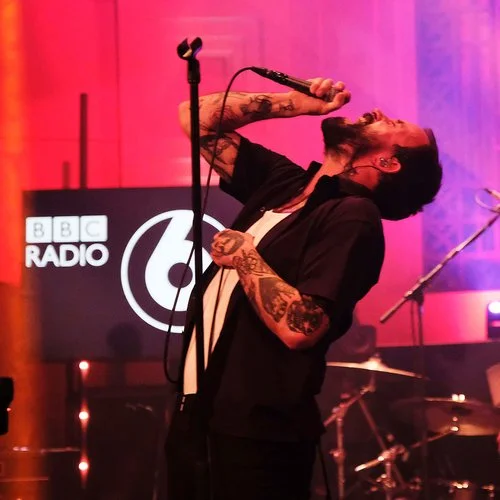
 IN THIS PHOTO: IDLES in session for BBC Radio 6 Music in 2020

I think one of the most important moments in their twenty-year history is the way BBC Radio 6 Music has helped and embraced its listeners. When so many people were unbale to see others and live life in a normal way, BBC Radio 6 Music were there and offering strength, reassurance and strength. The station is often called, by its presenters, a family. It seems that way. A community of listeners that can find common ground and connection, this familial blanket is another major reason why listener figures continue to increase. I look forward to learning what BBC Radio 6 Music plans for its twentieth anniversary. Going forward, I expect that the station will increase its listenership and bring in some new names. The broadcasters there are dedicated and passionate about what they do – so one might not see too many of them depart anytime soon. I think there will be new shows and presenters coming to the station. Always remaining relevant and open to change, 2022 offers a chance for real impact. The station holds a festival each year but, due to the pandemic, it has not been in its normal format. That will, surely, return to its usual state this year. The station is likely to broadcast from Glastonbury in June, and there is likely to be positive news regarding increased listeners and new records. All of this is exciting for a digital station that launched humbly (yet optimistically) on 11th March, 2002. BBC Radio 6 Music has survived potential closure to find itself beloved and heard by millions each day. It is clear that this vital part of the radio landscape is…

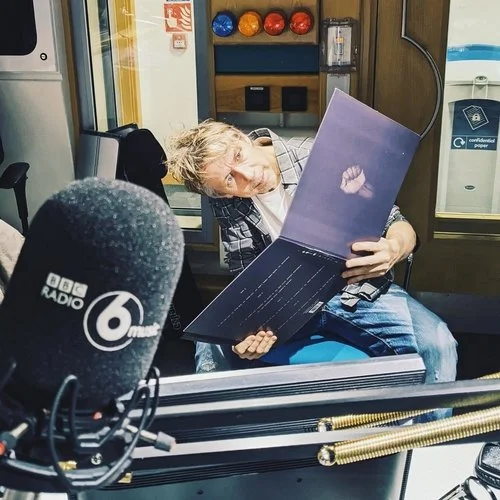
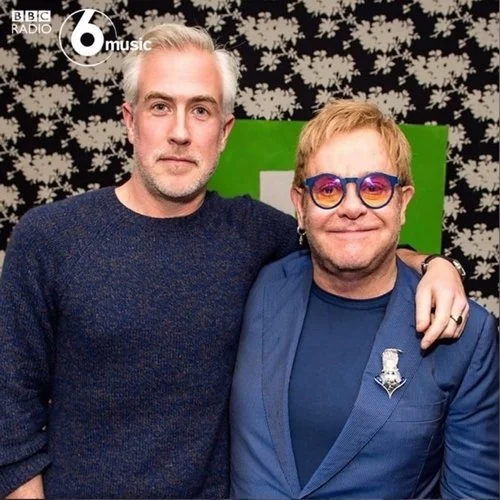
 IN THIS PHOTO: Matt Everitt with Elton John

NOT going anywhere.

FEATURE: Inspired By… Part Forty-Eight: Carole King

FEATURE:


Inspired By…

IN THIS PHOTO: Carole King in an outtake from Tapestry album cover session/PHOTO CREDIT: Jim McCrary/Redferns

Part Forty-Eight: Carole King

___________

ON 9th February…

 PHOTO CREDIT: Kirsten Shultz

the legendary Carole King turns eighty. I have also marked that occasion with a playlist of her best work. When thinking about her, I realised how influential she is. So many other artists can be traced back to her. In this second feature celebrating Carole King at eighty, this Inspired By… is a selection of songs from artists who are similar to King. Before getting to the playlist, here is some biography from AllMusic  concerning the brilliant Carole King:

Even before stepping out of the shadows into one of the brightest solo careers of all time, singer/songwriter Carole King had already firmly established herself as one of pop music's greatest composers, with work recorded by everyone from the Beatles to Aretha Franklin. Active as a songwriter in the legendary Brill Building since the late '50s, King penned hits like Little Eva's "The Loco-Motion," the Drifters' "Up On the Roof," "Will You Love Me Tomorrow," which the Shirelles scored a number one hit with, and countless other songs that would help define pop music throughout the '60s. King eventually applied her gift for songcraft to her own albums, reaching new levels of artistry and commercial success with 1971's landmark Tapestry. The album's flawless confluence of melodic hooks and soft rock textures would help define the entire era it soundtracked, going on to sell over 25 million units and consistently stay in the charts for over five years. She would have a vibrant solo career that produced multiple gold and platinum albums like 1971's Music and 1973's Fantasy, and she remained active as a songwriter and solo performer into the '80s, '90s, and beyond. King's work has won her multiple Grammys, an Emmy, and two separate inductions into the

Born Carole Klein on February 9, 1942 in Manhattan and raised in Brooklyn, she began playing piano at the age of four, and formed her first band, the vocal quartet the Co-Sines, while in high school. A devotee of the composing team of Jerry Lieber and Mike Stoller (the duo behind numerous hits for Elvis Presley, the Coasters, and Ben E. King), she became a fixture at influential DJ Alan Freed's local rock & roll shows; while attending Queens College, she fell in with budding songwriters Paul Simon and Neil Sedaka as well as Gerry Goffin, with whom she forged a writing partnership.

In 1959, Sedaka scored a hit with "Oh! Carol," written in her honor; King cut an answer record, "Oh! Neil," but it stiffed. She and Goffin, who eventually married, began writing under publishers Don Kirshner and Al Nevins in the famed pop songwriting house the Brill Building, where they worked alongside the likes of Doc Pomus, Mort Shuman, Jeff Barry, Ellie Greenwich, and countless others. In 1961, Goffin and King scored their first hit with the Shirelles' chart-topping "Will You Love Me Tomorrow"; their next effort, Bobby Vee's "Take Good Care of My Baby," also hit number one, as did "The Loco-Motion," recorded by their babysitter, Little Eva. Together, the couple wrote over 100 chart hits in a vast range of styles, including the Chiffons' "One Fine Day," the Monkees' "Pleasant Valley Sunday," the Drifters' "Up on the Roof," the Cookies' "Chains" (later covered by the Beatles), Aretha Franklin's "(You Make Me Feel) Like a Natural Woman," and the Crystals' controversial "He Hit Me (And It Felt Like a Kiss)."

King also continued her attempts to mount a solo career, but scored only one hit, 1962's "It Might as Well Rain Until September." In the mid-'60s she, Goffin, and columnist Al Aronowitz founded their own short-lived label, Tomorrow Records; Charles Larkey, the bassist for the Tomorrow group the Myddle Class, eventually became King's second husband after her marriage to Goffin dissolved. She and Larkey later moved to the West Coast, where in 1968 they founded the City, a trio rounded out by New York musician Danny Kortchmar. The City recorded one LP, Now That Everything's Been Said, but did not tour due to King's stage fright; as a result, the album was a commercial failure, although it did feature songs later popularized by the Byrds ("Wasn't Born to Follow"), Blood, Sweat & Tears ("Hi-De-Ho"), and James Taylor ("You've Got a Friend").

Taylor and King ultimately became close friends, and he encouraged her to pursue a solo career. Released in 1970, Writer proved a false start, but in 1971 she released Tapestry, which stayed on the charts for nearly six years and was the best-selling album of the era. A quiet, reflective work that proved seminal in the development of the singer/songwriter genre, Tapestry also scored a pair of hit singles, "So Far Away" and the chart-topping "It's Too Late," whose flipside, "I Feel the Earth Move," garnered major airplay as well. Issued in 1971, Music also hit number one, and generated the hit "Sweet Seasons"; 1972's Rhymes & Reasons reached number two on the charts, and 1974's Wrap Around Joy, which featured the hit "Jazzman," hit the number one spot.

In 1975, King and Goffin reunited to write Thoroughbred, which also featured contributions from James Taylor, David Crosby, and Graham Nash. After 1977's Simple Things, she mounted a tour with the backing group Navarro and married her frequent songwriting partner Rick Evers, who died a year later of a heroin overdose. Pearls, a collection of performances of songs written during her partnership with Goffin, was released in 1980 and was her last significant hit, and King soon moved to a tiny mountain village in Idaho, where she became active in the environmental movement. After 1983's Speeding Time, she took a six-year hiatus from recording before releasing City Streets, which featured guest Eric Clapton. In 2001, she returned with Love Makes the World, a self-released disc on her own Rockingale label. Four years passed before her next record, The Living Room Tour, a double-disc set documenting her intimate 2004-2005 tour that found her revisiting songs from throughout her career with only her piano and acoustic guitars as accompaniment.

King joined longtime friend James Taylor for a co-starring show at L.A.'s famed Troubadour venue in 2007, and the pair followed it with several more shows, resulting in the Live at the Troubadour release in 2010. King released her first-ever Christmas album, A Holiday Carole, through the Hear Music/Concord Music Group on November 1, 2011. In 2013, King received a remarkable show business accolade -- her life became the basis for a Broadway musical, Beautiful: The Carole King Musical, which followed her professional and personal life in the '60s and '70s. The show opened on Broadway in January 2014, with a score dominated by King's hit songs, and an original cast album appeared the following May. The next year, King was a Kennedy Center Honoree, and in 2016 she played the entirety of Tapestry at the British Summer Time Festival in Hyde Park. The concert was documented on the 2017 album/DVD set Tapestry: Live in Hyde Park. King's discography was largely absent of archival material for a star of her magnitude. With the exception of the odd live document, not much was released from the vaults until 2012's aptly titled collection The Legendary Demos. In 2019, another rare document of King's legacy was unearthed in the form of the DVD/audio combo footage Live at Montreux 1973. The material was captured at the Montreux Jazz Festival in Switzerland just weeks after the release of fifth album Fantasy, marking her first performance outside of the states. In 2021, King was inducted into the Rock & Roll Hall of Fame as a solo artist. This was her second recognition from the Hall of Fame, following a joint induction with Goffin in 1990 as a songwriting team”.

To celebrate the magnificent Carole King turning eighty, here is a playlist of songs from artists who have an element of King about them. Whether it is the delivery or the sound, it is amazing (though not surprising) to see how far her reach has spread! One of the all-time great songwriters, many happy returns to…

A mesmeric artist.

FEATURE: A Natural Woman: Carole King at Eighty: Her Finest Songs

FEATURE:


A Natural Woman

Carole King at Eighty: Her Finest Songs

___________

ON 9th February…

one of the most important and influential artists ever turns eighty. Carole King has made twenty-five solo albums, though Tapestry is her most loved and successful. It held the record for most weeks at number one by a female artist for more than twenty years. I am going to end with a playlist of her best tracks. Before then, I wanted to include the biography from Carole King’s official website:

Since writing her first number 1 hit “Will You Love Me Tomorrow” at the tender age of 17, Carole King has arguably become the most celebrated and iconic singer/songwriter of all time.

Since writing her first number one hit “Will You Love Me Tomorrow” at the tender age of 17, Carole King has arguably become the most celebrated and iconic singer/songwriter of all time.

Carole wrote "Will You Love Me Tomorrow for The Shirelles with then-husband Gerry Goffin. The dozens of chart hits Goffin & King wrote during this period have become part of music legend, including “Take Good Care Of My Baby” (Bobby Vee, 1961), “The Loco-Motion” (Little Eva, 1962), “Up On The Roof” (The Drifters, 1962), “Chains” (The Cookies, 1962; The Beatles, 1963), “One Fine Day” (The Chiffons, 1963), “Hey Girl” (Freddie Scott, 1963), “I’m Into Something Good” (Herman’s Hermits, 1964), “Just Once In My Life” (with Phil Spector for The Righteous Brothers, 1965), and “Don’t Bring Me Down” (The Animals, 1966).

In 1960 Carole made her solo debut with a song called “Baby Sittin’” and, two years later, her demo of “It Might As Well Rain Until September” made the Top 25 in the United States, climbing all the way to No. 3 on the British chart. In 1967 Goffin and King’s “Natural Woman”
was immortalized by Aretha Franklin. To date, more than 400 of her compositions have been recorded by more than 1,000 artists, resulting in 100 hit singles.

Carole's 1971 solo album, Tapestry, took her to the pinnacle. While she was recording Tapestry, James Taylor recorded King’s “You’ve Got A Friend,” taking the song all the way to number one. In a first for a female writer/artist, Tapestry spawned four GRAMMY Awards® — Record, Song and Album Of The Year as well as Best Pop Vocal Performance, Female honors for Carole. With more than 25 million units sold worldwide, Tapestry remained the best-selling album by a female artist for a quarter century, and Carole went on
to amass three other platinum and eight gold albums. Tapestry was inducted into the GRAMMY Hall Of Fame® in 1998.

In 1987 Carole was inducted into the Songwriters Hall of Fame, and, a year later, Goffin and King were awarded the National Academy of Songwriters’ Lifetime Achievement Award.
 In 1990 the duo was inducted into the Rock and Roll Hall of Fame, and in 2002, Carole was honored with the prestigious Johnny Mercer Award from the Songwriters Hall of Fame. Two years later, Goffin and King received the Trustees Award from The Recording Academy®.

Carole King and James TaylorThe past decade has been among the busiest and most successful of Carole's career. She’s been the recipient of a number of esteemed awards and honors, and remained active in the public’s eye with musical and literary work.

Carole's many late-career achievements include a 50th anniversary Troubadour reunion run 
with James Taylor that became the RIAA gold- certified Live At The Troubadour, inspiring the pair’s 60-concert Troubadour Reunion world tour in 2010. The Troubadour shows also inspired the Morgan Neville-directed feature-length documentary Troubadours: Carole King/James Taylor & The Rise Of The Singer-Songwriter, and premiered on PBS’ American Masters in 2011 shortly after being released on DVD.

In 2012, Carole received the BMI Icon Award and an Honorary Doctorate from Berklee College of Music. The following year brought her The Recording Academy Lifetime Achievement Award, and she became the first woman to be awarded The Library of Congress Gershwin Prize for Popular Song, presented by President Barack Obama at an all-star White House gala.

Carole published her memoir, A Natural Woman, in 2012, which debuted on The New York Times best-seller list at number six and prompted Vanity
 Fair to say, “America is having a Carole King moment."

On January 12, 2014, Beautiful: The Carole King Musical opened on Broadway. Audiences were amazed by her deep musical catalog, and captivated by her life story. The show became 
the hit of the season and won a GRAMMY®
 for Best Musical Theater Album and two Tony®
 awards.  The musical continues to tour across America.  In 2015, it made its international debut at London’s West End, where it garnered two Olivier Awards, and after wrapping up in London, toured throughout the UK. In 2017, Beautiful opened new shows in Japan and Australia.

In January 2014, Carole was honored as MusiCares Person Of The Year and a special gala was held at the Los Angeles Convention Center in which several of today’s most popular artists, including Lady Gaga, Alicia Keys, and Kacey Musgraves, performed many of her classics. To end the night, Carole herself came out to perform “Home Again”, “Jazzman”, and “Sweet Seasons”/”Hey Girl” with James Taylor; after all these years, she proved that she could still captivate an entire audience.

On December 6, 2015, Carole was introduced as a Kennedy Center Honoree for her lifetime contributions to American culture through her music.  Aretha Franklin, James Taylor, Sara Bareilles and Janelle Monae performed Carole's music at the ceremony to pay tribute to her indelible music.  The folowing February, PBS premiered "American Masters" - Carole King: Natural Woman," a documentary about her life and work.

On July 3, 2016, Carole returned to the UK stage for the first time in 27 years to perform Tapestry in full at a sold-out performance at Londone's Hyde Park during the BST Festival.  The 65,000+ audience spanned multiple generations and showed the power and timelessness of Carole's music.

In 2019, she performed at the national "A Capitol Fourth" concert in Washington D.C. and at the Global Citizen Festival in New York's Central Park, and presented the Artist of the Decade Award to Taylor Swift at the American Music Awards.

In 2021, Carole was inducted into the Rock and Roll Hall of Fame a second time, becoming the first person to be inducted separately as a songwriter and a performing artist.

In 2021, Carole wrote a new song, "Here I Am (Singing My Way Home)" with Jennifer Hudson and Jamie Hartman, for Hudson's star turn as Aretha Franklin in the biopic 'Respect.' The film aso includes Hudson's bravura performance of the Goffin/King song "(You Make Me Feel) Like a Natural Woman," the 1967 hit credited as cementing Franklin's status as a superstar.

Carole KingIn addition to her continuously evolving musical career, Carole, who has lived on an Idaho ranch since the early 1980s, is actively involved with the environmental organizations in support of wilderness preservation”.

To honour the truly inspiring and magnificent Carole King ahead of her eightieth birthday on 9th February, below is a collection of her best music. As you can hear, she is a remarkable talent whose words, music and voice is heavenly and like nothing else. A very happy birthday to a…

TRUE icon of music.

FEATURE: Get Into My House: Kate Bush and Why She Is So Relatable

FEATURE:


Get Into My House

 Kate Bush and Why She Is So Relatable

___________

THERE is no denying that Kate Bush…

 IN THIS PHOTO: Kate Bush in a photo taken during the promotion of 50 Words for Snow in 2011/PHOTO CREDIT: Trevor Leighton

is one of the most popular artists in the world. Her fanbase extends across all ages. It is not the case that she is only trending when there is news about her – which, as any Bush fan will attest, that is quite rare! She trends just because people are listening to her music! I have lost count of all the times I have gone onto social media and seen something about Bush and her music. There are so many sides to her career and artistry. There is no doubting there is something rarefied about her. I have written before how there is this balance between the deified and domestic regarding Kate Bush. She is such an icon and legend, yet one knows she is very grounded. Whereas it is the music and its genius that has reached so many people and continues to inspire all around the world, I think it is the personality of Kate Bush that draws so many close. One fan understand why she courted a lot of media attention back in the day. Incredibly intelligent, supernaturally beautiful and beautifully spoken, I don’t think music has seen anyone quite like her! Obviously very ambitious yet polite and warm, here is an artist who was very much herself in 1978. No ego or forced persona. Instead, Kate Bush connected with people because she was ordinary and humble. Whereas some of her heroes like David Bowie were less accessible and seemed to be on a different level when it came to accessibility, that was never a problem for Bush!

In an age where social media tends to detach and connect us with artists at the same time, it can be hard getting to know the real musician. There are a lot of walls and barriers. So many of the biggest artists lead lives that few of us can relate to. Even though Kate Bush lives in an expensive house, she is not someone who lives a famous life. She wants to be comfortable and live well, yet she is very much connected to the people and the real world. In December, she left a message for her fans on the Kate Bush News:

With nearly two years of Covid, are any of us the same people we were before?  It’s left everyone confused and uncertain of the future.

It’s been a terrible time of loss for so many. I want to say a big thank you to all the people on the front line and in the NHS. I have such huge respect for all the nurses and doctors who’ve already been working flat out for nearly two years. These caring people are showing such extraordinary acts of kindness to others. Let’s hope they get the pay rises they rightly deserve.

I’d like to mention something that happened a few weeks ago on a walk;  stopping to look at the view, I noticed something moving in a tree right beside me. It was a Goldcrest  – the smallest bird in Europe, even smaller than a wren. I stood still, hoping not to frighten it away.  Its colouring is beautiful –  a peacock’s eye on each wing and a striking yellow streak on its tiny head. This gorgeous little ball of fluff flew away after ten minutes or so. I’ve only ever seen one once before and very briefly. It made my day. In these strange times, I really hope you can get the chance to stop for a moment and feel nature around you.

Please stay safe.  Wishing you a restful Christmas and hoping 2022 is a happier year for everyone .

With love

Kate”.

One can easily imagine Kate Bush doing the shopping, leading a normal life and being very lowkey. This is what she is like. In fact, it was something she strove to return to when her career took off. Before recording Hounds of Love, in 1983 she returned to the country and spent valuable time with her family and boyfriend doing stuff like garnering, going on trips and getting away from the pressure of recording. It inspired one of her best albums. I think this sort of less stressful and high-profile life is what is conducive to great material. Since 1993, Bush has recorded away from big studios and there is no real time pressures on her. The message she left for her fans shows that she is very much one of us. Even if we cannot dream of matching her in terms of musical brilliance, the fact she is relatable accounts for her incredible endurance – and why there is so much passion and love for her. In fact, another piece of news that arrived on Kate Bush News relates to the HomeGround fanzine. I think one of the reasons it is returning for a one-off anniversary edition is because of the swelling fanbase:

In 1982, in the months leading up to the release of The Dreaming single, we first had the idea of making a Kate Bush fanzine. Over the following 30 years we put out 79 issues, full of news and information about Kate and her music and associated subjects, providing a platform for review and discussion of Kate’s work on a worldwide basis. On the way we also organised, with the official Kate Bush Club, the 1985, 1990, and 1994 fan Conventions, the 1986 Video Party, all of which Kate attended. We also organised the fan contribution to the video shoot for The Big Sky. We were asked to provide the chronology and discographies for the 1987 Kate Bush Complete music and lyric book from EMI Music Publishing, and the sleeve note for the 1997 EMI 100 remastered CD of Hounds of Love.

The last printed HomeGround magazine was published at the end of 2011 and rapidly sold out. It was followed in March 2014 by the hugely successful two-volume HomeGround Anthology, containing over 1,200 pages of material from all 79 issues.

In May 2022 it will be 40 years since the first issue of HomeGround, and we felt we should mark the occasion with a very special issue – issue 80. Our intention is to make this available as a free downloadable PDF enabling us to use full colour.

Just as no previous issue of HomeGround could have happened without contributions from Kate Bush fans around the globe this special issue cannot happen without your help.

We will be producing the familiar news and a special retrospective summary of the last ten years in the Kate Speaking world. What we need are other features, artwork, poetry, short “Letters to the Editor” and even For Sale, Wanted, and Personal Message ads, just as we always did.

Here are some ideas for articles: there’s the work Kate has done since 2012, the 2014 Before the Dawn live performances, the 2015 live album, the 2018 re-masters and The Other Sides, and the Record Shop Day specials. 40 years of The Dreaming. Last words on 50 Words for Snow and the animations. Tribute Bands and tribute gigs, cover versions and Kate songs on TV talent shows.

 Inspired fictional stories. Reviews and reactions to the many and various Kate related books now available. The trials and tribulations of collecting Kate material. Charts and facts. That day you met Kate. The Most Wuthering Heights Day Ever, tales of fan conventions and other Kate fan meet ups. The wider KateSphere – Paddy and John Carder Bush, Beck Sian, Sarah Daly, Raven Bush …

But generally, whatever might have a connection to Kate’s music. Before now we have run material as diverse as the appropriate whisky to drink with each album, to an analysis of the Red Shoes myth. We are looking forward to your contributions. Have a go!

Our aim is to have the issue ready by 18th May 2022, the official HomeGround birthday, so four months”.

I am hoping to contribute to that publication. There is this ongoing drive and commitment from fans to share Bush’s work and explain why she is so special. One might think this sort of tsunami of love must be for someone who is mega-famous and starry. As I posited, Kate Bush wins so many hearts because she is not like this! From her charity work to her inspirational messages and her lack of social media presence, we can identify with and respect her. I guess, in a sense, there is also a degree of mystery and enigma that attracts people. As we do not hear from Bush much and nobody really knows what she is doing at the moment, there are always those questions. She just wants to live her own life and, at sixty-three, she has worked for decades and earned that right for privacy. A woman who is deified but also extremely relatable and almost quintessentially English (even though she is half-Irish), it is a reason why we will be talking about Kate Bush…

FOR generations.

FEATURE: Spotlight: Izzi De-Rosa

FEATURE:


Spotlight

Izzi De-Rosa

___________

HAVING released some terrific music…

that displays huge promise, I wanted to spotlight the great Izzi De-Rosa. Although a lot of talk last year centred around the song Love & Roulette, she also released the excellent I Don’t Care. Not averse to describing her sound as ‘Brat Pop’, the North London artists has a big 2022 ahead! With new tracks, surely, on her mind and a bigger project likely, it is a great time to discover the music of De-Rosa. She has a growing and loyal army of fans who are recognising her work and sharing it. I think that there are some wonderfully interesting Pop artists around. Many are taking from the ‘80s or ‘90s, yet De-Rosa is someone inspired by the ‘00s. As she was a child then, inspired by the amazing Pop coming up early this century, it is no surprise that she would look to incorporate that into her own aesthetic. Reminding me of a cross between Britney Spears, Nelly Furtado with some Avril Lavigne in there, in fact, it is hard to actually compare her with anyone else (I hope she is not offended by those comparisons!). With a fresh and vibrant sound, I am looking forward to hearing an E.P. or album. As more live performances are occurring this year, it is a great time for De-Rosa to showcase her material and connect with fans in the live arena. If ‘Brat Pop’ is going to become a bigger sound – which I think it will -, then I feel De-Rosa is at the forefront. There are not many interviews with her available online. That will change as we go through this year. I am, therefore, going to source quite heavily from a great interview NOTION conducted last year. First, here is a bit more information about a wonderful young woman:

Izzi De-Rosa is a British artist that developed her distinct and alluring sound in the underground Leeds scene, before returning to her home town of London. De-Rosa’s music features a signature combination of complex jazz-inspired techniques with endearing soulful melodies. De-Rosa’s commandeering attitude on the track illustrates the singer/songwriter’s empowering qualities. This is mixed with buoyant lyricism and a mature self-awareness that is instantly appealing to a variety of ears. The vocalist has been generating a buzz amongst her growing following, teasing supporters with a number of unreleased projects”.

Rather than Izzi De-Rosa’s music being throwback or endlessly nostalgic, it is actually a perfect cocktail of the best of the ‘00s Pop and R&B scene with one eye very much on the present. Recently, she has teased that a rather good demo has been recorded. With an energy and affectionate fanbase behind her, that is going to translate into some incredible music from a rising star. Back in July, NOTION sat down with De-Rosa and asked about her musical influences and the brilliant single, Love & Roulette:

If you’re a fan of early 2000s pop, chances are you will love Izzi De-Rosa. The self-confessed “sasspot” and “brat” is one to watch, throwing back to a uniquely British sound of pop. Dubbed “Brat Pop” by myself and Izzi during the course of our interview, her sound favours the early noughties’ era-defining aesthetic. Think bright pink velour tracksuits, Bratz, Freaky Friday, and the likes of Brad Pitt, the Sugababes, Destiny’s Child, and Christina Aguilera at events like the GRAMMYs, where they radiate an aura of effortless coolness.

The North London native studied Philosophy at the University of Leeds, before scrambling to transition to music after two weeks on a masters course, where she became deeply embedded in the Leeds music scene, part of a collective of artists. Relocating back home within the first lockdown, she began to find her voice, her sound, and define her aesthetic. Her debut track “Love & Roulette” landed a spot on the Spotify UK playlist, and a clip of her showing the song to her crush (in which he is the subject of a verse) went viral, as it currently stands at 10.1m views. This resulted in a deal with Atlantic Records UK.

Talk to me about the response to “Love & Roulette”.

I just keep pinching myself, it’s so unreal. I’ve been using TikTok to just get my name out there and I haven’t released any music – I’ve just been using it for things like creating songs about things I see around London, and my tattoos and stuff. I had this song, and I love it so I put the video up of me showing this guy that I’d been hanging out with a verse I’d written about him.

I don’t even know why I did it, and I don’t know what came over me because it was like the third time we’d hung out. “Can I record your reaction?” I said, and I don’t think enough people realize that it was so genuine. He’s also a musician so I think he thought that it was like a promo thing – he did not realize it was about him!

The video went crazy. I didn’t really expect it to have that reaction. I just thought I’d get a few views. But within a week, it was at almost 2 million views. My first thought was “Shit, this is crazy!” Because of the algorithm, you blow up like 2 or 3 weeks later, so I just thought the reaction it originally got was what it got. The links in the comments of people making their own are really cute. It really messed up my release schedule – I was going to release more jazz music over the year, and eventually became more of a pop artist.

The universe just throws these situations at you. I just think everything happens for a reason.

It’s mad to see how instrumental TikTok is becoming to a lot of artists now.

I got a lot of followers and then attention from labels, and back in the day to get that attention, especially from labels, you had to graft for years and years, to create a body of work like a mixtape to then present to them.

@izziderosa i probably shouldnt be showing u guys this but im so in luv with the song🥺❤️‍🩹 #newmusic #ukpop #ukartist #poprock ♬ original sound - Izzi De-Rosa🌹

You writing a song with things you see around London is taking off on TikTok – is this part of your actual process?

With those ones, I just go for a walk looking for something to write about, but the songs I make as a musician are based on my real life. In terms of writing my music, something will happen to me and I’ll write about that. The TikToks are really to keep people engaged, saying “I’m still writing and I’m going to show you what I can do”. It’s quite a nice way to show off your music without ruining the hype around a natural release.

For my music – and it’s cringy to say this, but – it’s almost therapy for me. I want to process my emotions and the events that I’ve gone through in day-to-day life through writing. When I release it and see it connect with people, I’m so elated. I feel like we’re all so busy with life that we forget that we’re all sharing this same experience. Those feelings of heartbreak, anger, or falling in love are universal. When I write about those things that are just so personal to me, it’s so amazing to see people print their own experiences onto that.

Tell me about the formative years of uni and the effect the city of Leeds had on you.

I did my undergrad at Leeds in Philosophy, and I ended up staying there for 5 years. I was on an MA course and I had an existential crisis, so I scrambled to get into the music college. I had to go as far as tracking down the Head of Year’s number and calling him! From there I spent a lot of time in the Leeds music scene.

Then I moved back to London in the midst of the first lockdown. But in Leeds, I was in a music collective, and I see it as my training ground, just doing gigs 3 nights a week. But I went back to London and spent the rest of the lockdown writing in my bedroom finding my sound, my aesthetic and just transitioning into a professional artist.

You’ve said you were born in the wrong era – which is the best era?

The early 2000s was a cool combination of grunge and pink things, watching movies like Freaky Friday. Britney Spears in velour tracksuits and the Barbie aesthetic – I love that fusion. Some people now will be one or the other, and back then everyone looked so effortlessly cool. Think videos of Christina Aguilera at the GRAMMYS. Now everyone tries to follow the trend, but back then everyone owned the trend. Musicians and actors of that era all have their own thing going on, the likes of Destiny’s Child and Lindsay Lohan”.

 PHOTO CREDIT: Ollo Weg for NOTION

Someone that I am keen to interview and see live soon (as I am based in North London myself), I am predicting some big things for Izzi De-Rosa this year. I think that she will get some good festival bookings, in addition to seeing radio stations turn onto her music in a big way. I feel that everyone from BBC Radio 1, BBC Radio 2, and BBC Radio 6 Music could spin her music, such is its appeal and range. That would bring her to a massive audience and, as such, confirm her as a serious proposition! As more material comes, so too will honours, bookings and huge accolades. Make sure you follow De-Rosa, as she is someone who will be on the scene for years to come. It will be interesting seeing how her sound evolves and moves on. At the moment, even though these are fairly early days, she has that confidence and talent that you cannot knock or ignore. With a style (both visual and audio) that is her own, look out for De-Rosa! In that NOTION interview, she came across as such an incredibly bright and hungry artist. Someone who, no doubt, was raised around so much music and drank it in as a child, there was a part of her that knew that she had to follow that career path and put her own music out there. Dreams are turning into reality for the London-based artist. If you are seeking a new talent to follow in 2022, then I can definitely recommend…

THE terrific Izzi De-Rosa.

____________

Follow Izzi De-Rosa

FEATURE: Inspired By… Part Forty-Seven: Nicki Minaj

FEATURE:


Inspired By…

Part Forty-Seven: Nicki Minaj

___________

ONE of the most influential modern…

Rap artists, Nicki Minaj is a Trinidadian-born, singer, and songwriter. She is known for her versatility as an artist, in addition to the animated flow lyricism in her rapping. She often employs alter egos and accents. Not only an influence on fellow women in music, her impact spreads far and wide. I am going to end with a playlist of tracks from those who, in some way, have taken guidance from Minaj. Before that, AllMusic provide a biography of the iconic star:

With an unmistakable style and charisma, Nicki Minaj skyrocketed to superstardom with a talent that brought to mind past legends but wasn't quite like anyone who came before her. Her early days included shaky attempts at an acting career and losing her job at Red Lobster for being rude to customers, but Minaj progressed quickly from MySpace demos to nationally adored mixtapes to household-name status. She worked closely with Drake, Lil Wayne, Kanye West, and virtually every upper-echelon rapper and pop star before ascending to the level of fame that had her selling millions of albums and performing in the Super Bowl halftime show. As a rapper, Minaj is ferocious, known for a unique flow that turns on a dime from sugary to snarling, with razor-sharp wordplay and mercilessly blunt lyricism. Her range isn't limited to mixtape fire, however, as her crossovers into pop territory have yielded some of her most successful work. Her 2010 debut album Pink Friday saw the rapper branching out into radio-friendly melodicism, and accordingly it was the first of her albums to sell in the multi-platinum reaches and top chart positions internationally. Establishing herself as more an iconic presence than an album artist, Minaj released well over 70 singles under her own name in her first decade of recording, and stole the show in guest appearances on countless hits for other artists. Minaj's fame was canonized with stand-alone singles like "Superbass," "Starships," and "Anaconda," all of which were chart-topping smash hits with stream counts in the hundreds of millions. As one of the most successful rappers and crossover pop stars of her age, Minaj is part of a lineage that includes Jay-Z, Missy Elliot, Drake, and Beyoncé.

Nicki Minaj was born Onika Tanya Maraj in 1982. Born in Saint James, Trinidad and Tobago to parents who were both gospel singers, she lived with her grandmother in Saint James until the age of five, when she joined her mother, who had relocated to Queens, New York. In high school she discovered the performing arts, setting her sights on acting as her main pursuit. She eventually transitioned into music, working as part of a group called the Hood$tars in the early 2000s before going solo. In 2007 she was discovered by Dirty Money Entertainment CEO Big Fendi, who happened upon her demos on MySpace and signed Maraj to the label. At Fendi's suggestion, Maraj took on the stage name Nicki Minaj, jumbling her last name to reflect a more ruthless persona. Dirty Money Entertainment released both her 2007 debut mixtape, Playtime Is Over, and its 2008 follow-up, Sucka Free. Industry buzz was already surrounding Minaj on her earliest releases, and these mixtapes featured guest appearances from stars like Lil Wayne, Gucci Mane, Jadakiss, and Lil' Kim.

The 2009 mixtape Beam Me Up Scotty was a favorite among a growing fan base, and also included her first songs to hit the Billboard charts. In August of 2009 Minaj signed to Lil Wayne's Young Money Entertainment, becoming the label's first female artist. The floodgates opened from there, as Minaj made cameo appearances on tracks from Gucci Mane, Kanye West, Pusha T, and others as well as offering verses to hits like "Bedrock" and "Roger That" from the 2009 Young Money collaborative album We Are Young Money. An official non-mixtape debut album came in the form of Pink Friday, released in November of 2010 but preceded by the hit singles "Your Love" and "Check It Out." The album saw her leaning more into a pop style than the hard-edged rap of her mixtapes, but the hybrid of the two proved immediately successful, and the album debuted at number two on the Billboard 200 and went platinum, selling upwards of 375,000 copies during its first week alone. She earned a handful of 2011 Grammy nominations, including Best New Artist, Best Rap Album, and Best Rap Performance. An all-out media blitz followed between albums, with extravagant performances at award shows across the globe, an appearance as a musical guest on Saturday Night Live, and joining Madonna -- alongside M.I.A. -- for her Super Bowl XLVI halftime show.

In early 2012, the Euro-dance-influenced single "Starships" signaled the coming of her official sophomore effort, Pink Friday: Roman Reloaded, an album built around her devil-may-care alter ego "Roman Zolanski." Guest artists included Nas, Lil Wayne, Rick Ross, Chris Brown, and Beenie Man, while production came from the likes of RedOne and Ke'Noe. The album hit number one on the U.S. album charts, driven by a Top Ten showing for "Starships," and "Va Va Voom" also reached the Top 40. By the end of 2012, Minaj had been announced as a judge for the 12th season of American Idol, although she left at the end of the season. It hardly affected her success, as she set two career records during 2013: the most-charted female rapper in the history of Billboard's singles chart, and the first person to win Best Female Hip-Hop Artist at the BET Awards four times in a row.

In December 2014, Minaj released her third studio album, The Pinkprint. First single "Lookin Ass" was also featured on the Young Money compilation Rise of an Empire released in March of that year, while follow-up "Anaconda" was nominated for Best Rap Song at the 2015 Grammy Awards. Filled with songs about guilt and failed relationships, the album was well received by critics and debuted at number two on the U.S. Billboard 200 chart. Throughout 2016, Minaj guested on numerous singles, including DJ Khaled's "Do You Mind" and Ariana Grande's "Side to Side," and she also released her own "Black Barbies." In 2017, she issued a trio of stand-alone singles: "Regret in Your Tears," "Changed It" with Lil Wayne, and "No Frauds" with Lil Wayne and Drake. The latter track went gold and broke into the Top 20 of the Hot 100 and Top Ten of the R&B and rap charts. That year, she also appeared on the Migos track "MotorSport" with Cardi B, and on Jason Derulo's "Swalla" with Ty Dolla $ign.

She returned with the singles "Chun-Li" and "Barbie Tingz" in spring 2018, paving the way for her fourth studio album, Queen, which arrived in August of that year. In addition to third single "Bed" featuring Ariana Grande, the LP also features guests Labrinth, Eminem, Lil Wayne, the Weeknd, Future, Foxy Brown, and Swae Lee. Upon release, Queen matched its predecessor with a number two debut on the Billboard 200. More singles arrived the following year, including the non-album track "Megatron," "Tusa" with Karol G, "Trollz" with 6ix9ine. Minaj was also featured alongside Murda Beatz on PnB Rock 2019 track "Fendi." In February 2020, the rapper returned with her own stand-alone song "Yikes." Minaj's third mixtape Beam Me Up Scotty was reissued in 2021, eleven years after its original release. The project was given new cover art and the track listing was altered somewhat, omitting some of the songs from the original 2009 release and including several new tracks. This new version of Minaj's breakout project debuted in the number two spot on the Billboard 200, making it the highest-charting mixtape from a female rapper up to that point”.

To illustrate the artists who are following Nicki Minaj and are inspired by her incredible talent and strength, the playlist at the end contains cuts from some incredible Rap/Hip-Hop artists who are going to go on to inspire others. As you can see, there is some serious talent to be seen! They all have a lot of love and respect…

FOR the amazing Nicki Minaj.

FEATURE: Spotlight: Morgan Wade

FEATURE:


Spotlight

Morgan Wade

___________

AN incredible talent that I am a bit new to…

 PHOTO CREDIT: Thirty Tigers

I want to spend a few moments spotlighting the brilliant Morgan Wade. The twenty-seven-year-old Country artist from Virginia is someone who instantly caught my eyes. Not only does her amazing music and stunning voice stay in the mind. She also has a range of tattoos that, are both super-cool and unexpected! She is an artist that everyone needs to follow! Released through Thirty Tigers, Reckless is an album that won more than its share of good reviews. I will come to one of them at the end. I also want to source some good interviews that Wade was involved with last year. First, her biography on her official website provides more detail and backstory:

Morgan Wade has never sounded like anybody else, and for a long time, she thought that meant her songs were just for her. “Honestly, I think that was really good for me,” she says. “It made me think, ‘Alright, well, I’m not going to sing for anybody else––but I’m singing for myself.’” Since then, Wade has figured out that when you grow up in Floyd, Virginia, where bluegrass sustains everyone like the Blue Ridge Mountain air but you hear other sounds like pop and punk in your own head, singing for yourself is the way to become the artist you were always meant to be.

Produced by Sadler Vaden––Jason Isbell’s longtime guitarist and an acclaimed solo artist in his own right––Wade’s full-length debut Reckless is a confident rock-and-roll record that introduces a young singer-songwriter who is embracing her strengths and quirks as she continues to ask questions about who she is––and who she wants to be. Her voice, a raspy soprano that can soothe liltingly or growl, is on brilliant display. “I feel like the last couple of years have been me trying to figure out where I fit in, who I fit in with, and what’s going on,” Wade says. “I’m almost four years sober, so a lot of the friends I had, I don’t really hang out with anymore. When I wrote these songs, I was going through a lot, just trying to figure out who I am”.

The first interview I want to include is from EF Country. They spoke with Wade back in March about her plans for 2021. They asked her, among other things, about tackling mental health and sobriety in her lyrics:

This record has been a while in the making – is it quite strange that it’s now going out into the world

Yeah, it is weird because I was in such a hurry. I’m very impatient. So we get the record done and a week later the world shuts down ’cause of the pandemic. And so then I’ve just had all this time – it’s literally been over a year. So now that it’s actually time to put it out I’m like, “is it really time to put it out? Are you guys gonna let me?” But I’m excited, I’m ready for everybody to hear it. We worked really hard. But it’s a little weird. It doesn’t feel like it’s real.

Do you feel the way you’ve approached your music has changed at all since you made the record? Or is it still pretty much the same?

Yeah, I mean to me, towards the end there’s a couple of last songs that we put on the record that I’d written to tracks. It wasn’t me sitting down with a guitar or piano or whatever, it was just a track. And so I’ve been writing a lot of stuff like that now, because I enjoy it and it adds something different. It allows me to change things up so they’re not the same. So a little bit has changed but it’s kind of like here and there. Since working with Sadler and a lot of these really talented people out here it’s challenged me to work harder with my writing and challenged myself. So, definitely.

PHOTO CREDIT: Ethan Luck 

You’ve also been very open on the lyrics of this album about your mental health and sobriety. Is that something that’s important for you to talk about – both in your music and more generally?

Oh, for sure. Like I feel like that’s such a big part of my life, and I feel like my fan base… I’ve gained a lot of fans through that because they connect with that, and so I feel like I owe that to them. It keeps me being honest and authentic. It’s something that I struggle with daily so it’s something that I shall always be open about. We have to talk about those things to be able to overcome them.

What’s next for you? Is the record and your upcoming shows your focus for the foreseeable future?

Yeah, just seeing what we can do, getting back to touring however we’re allowed to do that. But just pushing the record, getting out there and doing live shows. I’ve got some other TV stuff coming up to promote. There’s still the pandemic but at least we’re coming towards the end of it maybe, I can see the light so fingers crossed [laughs].

Are you thinking about the new project yet? Or is that still a way off?

Yeah, yeah. No, that’s not way off, not in my head. I’ve been sitting there thinking about record number two for months and they’re like, “well we kind of need to get the first one out”. I’m impatient, I’m always thinking about the next thing, so definitely I’ve been writing a lot and looking for future stuff”.

There were some great interviews with Morgan Wade last year. I got to know a lot more about her when researching. I was definitely interesting learning more about her musical influences. Off the Record discovered more about that when they spoke with her in September:

Morgan Wade on her influences and her obsession with Elvis

Morgan Wade: I’m definitely a ’90s baby. And so, ’90s, early 2000s, Shania Twain, I called her ‘Nia Twain. That’s all I wanted to listen to as well. I was obsessed with her, and then especially it was the Tim and Faith era, and Garth Brooks, and all that coming about. But then, I discovered Elvis, and that changed everything for me. That’s all I would listen to. I was obsessed. And still pretty… We had a show in Memphis a couple weeks ago, and I went to Lansky Bros. They’re at the Peabody Hotel. I had to buy an Elvis leather jacket, and a bunch of stuff. I got a little carried away there, but super obsessed with Elvis.

Morgan Wade on being an old soul 

Joy Williams: My question is, do you feel like you came into this world with an old soul, and do you think that’s something to be proud of, if so?

Morgan Wade: For sure. My grandmother was a hairdresser, and she had her salon in her house. And so, I would sit down there with these women in their 80s, and listen to their stories. And then, my grandmother would also go over to the nursing home and do hair, and I gravitated towards those, it was called the C Wing, which was the wing that was locked down. They couldn’t leave there, because they were flight risks. Those were my friends. I would literally-

Joy Williams: Those were your people.

Morgan Wade: My grandmother would take me there a couple days a week after school, and I just loved it, because the stories they would tell you. And they never would remember me, but they could remember these stories, and I would sit back there with them for hours. It was hard too, because there was a point where my mom really had to kind of sit me down, because all my friends were sadly dying off left and right, because I was becoming friends with… I learned about that pretty early on. It seemed like everyone that I was gravitating towards was, like Elvis, she had to break that to me that he was not alive, when I discovered him. It just seemed like everybody that I loved was in their final days. It might explain a little bit about me, I think.

Morgan Wade on what she hopes fan take away from her debut album ‘Reckless’ 

I was really nervous to put this record out, because I didn’t know if it would be country enough for the people who like country, and would it be too country for the people that don’t like country? And so, I had all these things going through my mind. But now that it’s out, I’m super proud of this record. My main thing is, I’m so glad I put that out there, and I did it exactly how I wanted to. If anybody could take something away from what I’ve done, it’s just do what you want to do, and don’t worry about what everybody else is going to think. Because at the end of the day, Sadler, my producer and I, we talked about it, we were like, “All right, we’re not going to go in here and just try to make hits.” It’s like, we’re going to go in here and make stuff we believe in, and then at the end of the day, if we’re really happy with this, we’ve got something that we worked really hard on together. I think that’s what made this so great, is that we had such a good time doing this, and I can stand behind this. It’s not like I put something out there that I’m like, “Ugh, yeah, it’s doing really well, but I don’t believe in it”.

There is one more great interview that is worth popping in before getting to a review of Reckless. Hopping back to May, The Big Takeover interviewed Wade - in which we find out about her more contemporary musical tastes and tips:

Tour dates are starting to roll out. Are you ready to get out on the road?

MORGAN: I am, yeah. I played five shows since Reckless came out. I played zero in 2020, so that’s really a good feeling. Now that we’re slowly getting back out there and stuff’s not being cancelled anymore, it’s a good feeling.

The Big Takeover has a strong history in punk rock, dating back to the early ’80s. I know you’re a country artist, but wondering how you might identify with punk, whether it be an attitude, or clothes you wear, or the tattoos you have?

MORGAN: I don’t really know what punk rock is, exactly. I don’t listen to country music, really, which baffles people because when people ask what I’m listening to, it’s never country music. Machine Gun Kelly’s last record, Tickets to My Downfall, now that was a punk record and that’s probably my favorite record that came out last year. I can’t deny that. I listen to a lot of, like, punk-rap and more of that sad music, like Lil Peep and stuff like that. I can’t say it’s too far off from punk rock, pretty much if I like music, I like it.

I always wonder, who is this generation’s Don Henley or Huey Lewis or Phil Collins. I’ve had people say that Post Malone fits that bill which, at first, I thought was crazy – he sounds nothing like the middle-age arena artists from the ’80s – but he does write hits, gets a lot of radio airplay, and can fill an arena, so maybe that is a good comparison.

MORGAN: Lana Del Rey goes over a bunch of different genres, she’s one of those that hasn’t had a ton of radio play but she can sell out an arena and tour and she can put out 10 albums in a year and they would all sell and do amazing.

You grew up as part of an MP3/streaming music generation but vinyl is making a comeback. Did you ever buy vinyl when you were younger or did you consume stuff digitally?

MORGAN: Honestly, because I’m 26, I still remember cassettes and being in the car with cassette tapes. And then I remember my grandpa being like, “What the heck?” when we moved over to CDs. So, CDs was my big thing. I remember going to Walmart or something and going back there to look at CDs. It’s funny because I was at Walmart today and I looked and there are almost no CDs. I guess it’s been so long since I’ve looked, but there was more vinyl at Walmart than there are CDs.

Is there a particular lyric that you’re really proud of, like after you wrote you said, “That is good!”?

MORGAN: In “Met You,” I took that from reading a book about Ernest Hemingway and his first wife, Hadley. If you read A Movable Feast, he talks about, “We would be happy, we have our books in bed every night.” So, there’s the line, I don’t know if people picked up on that – you know, in the bridge I talk about “But like Hemmingway and Hadley / It’s not the end of our story” – but in the second verse, I’m like, “We didn’t get our books in bed every night.” I kind of worked that throughout that whole song. I felt kind of artistic on that, I’m like, “I’m going to give myself a little pat on the back for that one”.

To round things off, I am getting to a review from SLATE. They sat down with a remarkable album from last year that went beyond the realms of Country. I think that modern Country is a lot more diverse and genre-spanning than the classic image of the form. They note how other musical elements and flavours are at work through Reckless:

Morgan Wade grew up in the heart of Southwest Virginia—the same area of Appalachia from which the Carter Family and the Stanley Brothers hail—and her voice, a raspy soprano drenched in twang, is shaped by that geography. It’s a voice that sounds like it was built for murder ballads and songs about cheatin’ and drinkin’. But the 26-year-old singer-songwriter isn’t that kind of artist, and on her debut album, she refuses to be typecast.

Produced by Sadler Vaden, Reckless is striking in the way it upends expectations. Although country music is unmistakably present in the DNA of these 10 songs—from the glossy Nashville sheen that underscores opener “Wilder Days” to the aching sway of “Mend”—it’s not the driving force. You won’t find a lick of banjo, fiddle, or steel guitar on the album, and Wade’s songwriting steers clear of country music’s most common tropes, like religion and family, and the caricatures of rural identity that have become the hallmarks of country radio.

Instead, Reckless revolves around issues like addiction, mental health, and isolation—plights that are central to exurban life but mostly ignored by the music that claims to represent that culture. Wade navigates these topics with stark, evocative storytelling. “Tonight I am numb from a cocktail of pills,” she sings on “Met You,” the album’s haunting final track. “I hallucinate, think I’m touching your skin/I’d much rather die than think of the bed that you’re in.” It’s an affecting lyric in its own right, but it’s even more so when considered in context.

Like many of America’s rural communities, Appalachia has been ravaged by the opioid epidemic over the past two decades. For those, like Wade, who grew up in places like this, addiction is omnipresent, a defining characteristic of their hometowns. So it’s no surprise that it shapes almost every song here in ways that are often subtle but deeply consequential. With a few exceptions, these are songs of desire, dependence, and desperation—of a narrator who’s searching for a way to make things better, even if that means settling for a temporary reprieve.

At the same time that vital stories like these are excluded from country music, singers with voices like Wade’s are also denied a place in the broader popular culture. We rarely hear pop or rock that features thick mountain accents or deep Texas drawls—not a surprising fact considering the structural bias that exists against regional dialects (especially Southern ones). Faced with this dilemma, most artists choose one of two paths: cater to the stringent demands required to fit into the country music machine—which dictates everything from what you can sing about to how you dress—or learn to perform in ways that belie their roots.

 Wade makes no such compromises on Reckless. She blends pop and country without subjugating either, all the while covering a wide swath of stylistic ground that runs from searing country ballads like “Mend,” to the sauntering Southern rock of “Take Me Away,” to the radio-ready shimmer of “Last Cigarette,” a perfectly crafted track that takes cues from Halsey and the Chainsmokers. That Wade is equally compelling in all of these modes is a testament to her powerful, versatile, and unique voice.

It’s also a remarkable accomplishment considering the scale of the project. Only seven musicians, including Wade, appear throughout the album, but Vaden’s production offers Wade plenty of space without leaving the arrangements too sparse, which—given the rustic character of her voice—could have made Reckless come off like a roots record. Instead, each of the album’s 10 tracks features just the right level of polish and embellishment—especially the ballads, where Vaden’s masterful guitar playing shines, and where the occasional, well-placed synth or Mellotron adds depth to an otherwise guitar-heavy album”.

If you have not found Morgan Wade or know much about her music, then go and listen to Reckless and check out an amazing artist. I am looking forward to seeing what comes this year. Maybe we will see her come to the U.K. to play. That would be great. It is obvious that Morgan Wade is a fantastic talent who is…

PRIMED for big things.

_______________

Follow Morgan Wade

FEATURE: Running with the Hounds of Love: Kate Bush’s Ultimate, Defining Title Track

FEATURE:


Running with the Hounds of Love

IN THIS PHOTO: Kate Bush captured in 1985 during the Hounds of Love video shoot/PHOTO CREDIT: John Carder Bush

Kate Bush’s Ultimate, Defining Title Track

___________

I ran a feature not too long ago…

when I ranked Kate Bush’s title tracks. I decided, perhaps unsurprisingly, that Hounds of Love got the top honour. Although Hounds of Love is not my favourite Kate Bush album (that is 1978’s The Kick Inside), there is something about her 1985 masterpiece that means it is most people’s favourite albums of hers. Inspired and hugely impressive. At the peak of her game as a songwriter, musician, singer and producer, I can appreciate why many people consider this to be the defining Kate Bush album. I feel a title track is often the song that is the theme or standout of an album. Not always the strongest track, I guess it is the artist trying to distil the album’s themes and meaning into a song. Bush in particular has produced some incredible and varied title tracks. Although Hounds of Love is split into two – the singles on the first side and the suite, The Ninth Wave, on the second -, I kind of think of Hounds of Love as the defining cut on the album. If one wanted a clear image and sound of the album, I would point them in the direct of the eponymous song. I shall talk about the video in a minute (which Kate Bush directed) but, as the single turns thirty-six on 24th February, I wanted to explore it from a different angle. This is the one single (from four) released off Hounds of Love that underperformed.

Running Up That Hill reached number three in the U.K. It was released in August 1985 – a month before Hounds of Love came out. Arguably, there was this excitement and anticipation of an album that propelled the single up the charts. Cloudbusting came out a month after the album release and reached twenty. The Big Sky only got to thirty-seven. I am generally surprised that the singles did not fare better. Although the album was a huge chart and commercial success and penetrated the U.S. market – Kate Bush became a much bigger name there from 1985 -, I am stunned a single like Hounds of Love did not get into the top ten. The fact that the U.K. B-side was The Handsome Cabin Boy, rather than another album track like Waking the Witch or And Dream of Sheep, might account for a slightly low placing. One reason why I think Hounds of Love is the ultimate Kate Bush title track is because the video was the first she directed. She would also direct the video for The Big Sky (and several videos after that). I love that one can see Bush’s love of horror/suspense director Alfred Hitchcock in the video. Influenced by his film, The 39 Steps, 'Hitchcock' also features in the promotion (a nod to the director's famous cameo appearances in his movies).

I have some more thoughts and points about the song but, first, the Kate Bush Encyclopaedia sources interviews where Bush talked about the inspiration behind one of the most important tracks from her most popular and revered album:

The ideas for 'Hounds Of Love', the title track, are very much to do with love itself and people being afraid of it, the idea of wanting to run away from love, not to let love catch them, and trap them, in case th hounds might want to tear them to pieces and it's very much using the imagery of love as something coming to get you and you've got to run away from it or you won't survive. (Conversation Disc Series, ABCD012, 1985)

When I was writing the song I sorta started coming across this line about hounds and I thought 'Hounds Of Love' and the whole idea of being chasing by this love that actually gonna... when it get you it just going to rip you to pieces, (Raises voice) you know, and have your guts all over the floor! So this very sort of... being hunted by love, I liked the imagery, I thought it was really good. (Richard Skinner, 'Classic Albums interview: Hounds Of Love'. BBC Radio 1 (UK), 26 January 1992)

In the song 'Hounds Of Love', what do you mean by the line 'I'll be two steps on the water', other than a way of throwing off the scent of hounds, or whatever, by running through water. But why 'two' steps?

Because two steps is a progression. One step could possibly mean you go forward and then you come back again. I think "two steps" suggests that you intend to go forward.

But why not "three steps"?

It could have been three steps - it could have been ten, but "two steps" sounds better, I thought, when I wrote the song. Okay. (Doug Alan interview, 20 November 1985)”.

Most definitely a song that should be in everyone’s list of Kate Bush’s best twenty, Hounds of Love is a song that stands out on an album not short of highlights! The video is cinematic and incredible. I love the colour palette and Bush’s confidence as a director first time around. I hear Hounds of Love played a lot on the radio, as it is a song that has connected with so many people. One of most powerful, sweeping and punchy compositions on Hounds of Love (Jonathan Williams’ cello is especially memorable), it also features some of Bush’s most captivating and astonishing lyrics. She stops you in your tracks with these lines: “I found a fox/Caught by dogs./He let me take him in my hands/His little heart/It beats so fast/And I'm ashamed of running away”. Almost thirty-six years after the single came out, I wanted to spotlight one of Kate Bush’s greatest moments. Hounds of Love’s title track still sounds so potent and moving! It is a song that catches you and grabs the heart. With an exceptional video and lyrics that are among her best, no wonder Hounds of Love is played so much. It is a song that I…

NEVER tire of.

FEATURE: A Buyer’s Guide: Part Ninety: Lana Del Rey

FEATURE:


A Buyer’s Guide

PHOTO CREDIT: Joe Pugliese/August

Part Ninety: Lana Del Rey

___________

I recently featured Lana Del Rey’s 2012…

album, Born to Die, a few weeks back. I am revisiting it for this ninetieth edition of A Buyer’s Guide. With her eighth studio album,. Blue Banisters, released last year, I wanted to look more widely at her work. Before recommending the four essential albums, the underrated gem, the latest studio album and a book about her, I wanted to bring in some biography from AllMusic:  

Lana Del Rey envisioned a Southern California dream world constructed out of sad girls and bad boys, manufactured melancholy, and genuine glamour, and then she came to embody this fantasy. At first, her stylized noir-pop garnered skeptical sneers -- the rise of her 2012 debut, Born to Die, was impeded by a tentative live debut on Saturday Night Live -- but Del Rey proved to be tougher than her soft exterior suggested. Following a hit remix of her single "Summertime Sadness," she steadily gained not only popularity but respect; her second album, 2014's Ultraviolence, received positive reviews to accompany her sales, and her imitators (of which there were many) became merely an alluring accessory. With subsequent albums like 2019's Grammy-nominated Norman Fucking Rockwell! and 2021's Blue Banisters, Del Rey grew more and more into the ideal she intended to be: a damaged torch singer designed as the tragic romantic icon for her age.

Lana Del Rey's journey to this stardom was a long, steady climb. Born Elizabeth Woolridge Grant in New York City to a pair of wealthy parents, she was raised in Lake Placid, not starting to pursue music until she was out of high school and living with her aunt and uncle on Long Island. Her uncle taught her how to play guitar and soon she was writing songs and playing New York clubs, sometimes under the name Lizzy Grant. While she attended Fordham University, she continued to play music and she started getting serious around 2005. In April of that year, a CD of originals was registered under her birth name with the U.S. Copyright Office and she recorded elsewhere, finishing up an unreleased folky album called Sirens under the name May Jailer.

Reverting to the name Lizzy Grant, she signed with 5 Points Records in 2006, recording an EP called Kill Kill with producer David Kahne, who would prove to be her first pivotal collaborator. Kill Kill appeared digitally in 2008, and over the next two years, Grant became Lana Del Rey, digitally releasing a full self-titled album under that name in 2010. Not long after its release, she teamed with managers Ben Mawson and Ed Millett, who helped her separate from 5 Points (rights to her recordings reverted back to her) and moved to England, where she began crafting the Lana Del Rey persona.

The first unveiling of Lana Del Rey arrived in 2011 via YouTube videos that quickly became a viral sensation, led by the moody, murky "Video Games" and followed by "Blue Jeans." Much of her success was limited to the Internet, but it soon started to spill over into U.K. pop culture. By the fall of that year, she released "Video Games" on Stranger Records, an independent division of Interscope/Polydor, in the U.K., and she won the Next Big Thing trophy at the Q Awards. Del Rey's full-fledged debut album, Born to Die, appeared to considerable anticipation in January 2012. Greeted by mixed reviews, Born to Die's launch also suffered a setback after Del Rey's halting appearance on Saturday Night Live on in January 2012, but that apparent stumble ultimately had the effect of raising Del Rey's profile, and soon Born to Die became a steady seller. That November, Del Rey released the Paradise EP -- at eight tracks and 33 minutes, it was essentially a mini-LP; some pressings bundled Paradise with Born to Die -- which, supported by the single "Ride," charted at ten in the U.S.

Throughout 2013, various singles and videos surfaced -- these included a cover of Leonard Cohen's "Chelsea Hotel #2," as well as a cover of Lee Hazlewood's "Summer Wine" performed with her then-boyfriend, Barrie-James O'Neill -- but her biggest release of the year was the new song "Young and Beautiful," penned for Baz Luhrmann's adaptation of The Great Gatsby. Ultimately, this single was overshadowed by Cedric Gervais' remix of Born to Die's "Summertime Sadness," a remix that turned the song into her first Top Ten hit in the U.S. At the end of 2013, Del Rey released a short film called Tropico, which was accompanied by an EP of the same name. All of these releases -- including a cover of the Disney standard "Once Upon a Dream" for the Disney film Maleficent -- kept Del Rey in the spotlight as she worked on her second album.

Del Rey hired Dan Auerbach, the leader of Ohio blues-rockers the Black Keys, to produce the majority of Ultraviolence, the sophomore set that appeared in June 2014, preceded by the singles "West Coast," "Shades of Cool," "Ultraviolence," and "Brooklyn Baby." Ultraviolence found a more receptive initial audience than Born to Die: not only were the reviews positive, so were the sales, with the album debuting at number one in both the U.S. and the U.K. Ultimately, Ultraviolence didn't generate hits as big as Born to Die, but it performed the crucial task of elevating Del Rey's critical reputation, illustrated by her selection to sing the title song for Tim Burton's 2014 bid for an Oscar, Big Eyes.

Del Rey wasted no time following Ultraviolence. During the first months of 2015, she worked on a third full-length album and announced a co-headlining summer 2015 tour with Courtney Love. As the summer wound to a close, Del Rey announced the September release of Honeymoon, an album she said was "very different from the last one and similar to the first two, Born to Die and Paradise." Her claim was borne out by the album's first two singles, "High by the Beach" and "Terrence Loves You." Honeymoon saw release on September 18, 2015. The album topped the charts in a handful of countries, peaking at number two on the Billboard 200. In addition to touring in support of Honeymoon, she contributed vocals to the Weeknd's chart-topping third LP, Starboy, and began recording for her own follow-up.

In early 2017, she released "Love," the first single from her fourth full-length album, Lust for Life, which arrived that July. Along with debuting at number one on the Billboard 200, the album earned Del Rey her second Grammy nomination for Best Pop Vocal Album. The following year, she began rolling out singles in advance of her fifth album, Norman Fucking Rockwell!, beginning with "Mariners Apartment Complex" and "Venice Bitch." The trickle of new music continued throughout 2019 with a steady stream of new songs, some one-offs, and some album tracks. After ramping up excitement for the record with a cover of Sublime's "Doin' Time" and a two-part joint single, "Fuck It I Love You"/"The Greatest," Norman Fucking Rockwell! was released in late August 2019. It received Grammy nominations for Album of the Year as well as Song of the Year for the title track. The following year, Del Rey issued Violet Bent Backwards over the Grass, a book of poetry that also yielded a spoken word album of the same name.

The official follow-up to Norman Fucking Rockwell!, Chemtrails over the Country Club, appeared in March 2021. Only a few months later, Del Rey released three more singles including the song "Blue Banisters" from her forthcoming album of the same name. Blue Banisters arrived in October of that year, featuring production on some songs from Kanye West and Kid Cudi producer Mike Dean”.

To highlight the incredible work of Lana Del Rey, this A Buyer’s Guide combines the albums that you must hear. If you are a new fan of hers, I hope that the details below are of some use. To me, Del Rey is one of the greatest artists…

IN the world.

_________________

The Four Essential Albums


Ultraviolence

Release Date: 13th June, 2014

Labels: Polydor/Interscope   

Producers: Dan Auerbach/Lana Del Rey/Paul Epworth/Lee Foster/Daniel Heath/Greg Kurstin/Rick Nowels/Blake Stranathan

Standout Tracks: Shades of Cool/Brooklyn Baby/West Coast

Buy: https://www.discogs.com/sell/list?master_id=697600&ev=mb

Stream: https://open.spotify.com/album/1ORxRsK3MrSLvh7VQTF01F?si=oblY2JJmReGb0a7v4QfFdQ

Review:

The title of Lana Del Rey’s new album is a portmanteau coined in Anthony Burgess’ bloody dystopian fantasy A Clockwork Orange, which Stanley Kubrick turned into one of his signature films in 1971. Kubrick would have loved Del Rey — a highly stylized vixen who romanticizes fatalism to near-pornographic levels, creating fantastically decadent moments of film-noir melodrama. It’s an aesthetic that demands total commitment from both artist and listener, and it would be difficult to buy into if she didn’t deliver such fully realized cinema. Ultraviolence masterfully melds those elements, and completes the redemption narrative of a singer whose breakout-to-backlash arc on 2012’s Born to Die made her a cautionary tale of music-industry hype.

The addition of producer Dan Auerbach enhances Ultra‘s air of everyday menace, and finds Del Rey digging deeper. The Black Keys frontman doesn’t push — he’d rather let her shape-shifting moan brush up against dusty drum loops and dead-eyed bass drones. The spacey, sinister groove of ”West Coast” proves that frequent Auerbach collaborator Danger Mouse’s style has rubbed off on him too, and ”Pretty When You Cry” evolves from a woozy mumble into a widescreen blast of guitar heroics. Del Rey’s dark urges — for love, for money, for pure pleasure — don’t evoke the Clockwork droogs as much as they do Tom Cruise’s Dr. Bill Harford from Kubrick’s final film, Eyes Wide Shut. Like Harford, Del Rey has spent countless hours stalking the night, searching for answers and trying on various guises — and Ultraviolence is the masked bacchanalia that finally unleashes the full potential lurking beneath the hype. A” – Entertainment Weekly

Choice Cut: Ultraviolence

Lust for Life

Release Date: 21st July, 2017

Labels: Polydor/Interscope  

Producers: Lana Del Rey/Rick Nowels/Kieron Menzies/Dean Reid/Benny Blanco/Boi-1da/Emile Haynie/Tim Larcombe/Sean Ono Lennon/Max Martin/Metro Boomin/Mighty Mike/Jahaan Sweet

Standout Tracks: Lust for Life (with The Weeknd)/White Mustang/Get Free

Buy: https://www.discogs.com/sell/list?master_id=1212427&ev=mb

Stream: https://open.spotify.com/album/7xYiTrbTL57QO0bb4hXIKo?si=eDp5aMpFTTKgtNrN1r8Sxg

Review:

For those who haven’t paid attention to Del Rey’s career since its first flourish – the sighing, sorrow-drenched Video Games – the Californian artist’s music has remained locked within a small range of emotions, most of which revolve around awful men (often elderly bikers or gangsters) doing awful things and Del Rey remaining belligerently in love with them. However, the world has changed considerably since 2015’s Honeymoon, and, much like Katy Perry’s ambition to make “purposeful pop”, Del Rey has decided to puncture her long-running narrative and reflect the troubled times we are in.

Here, her political approach is rooted in escapism. Del Rey’s longtime producer Rick Nowels recently declared When the World Was at War We Kept Dancing a “masterpiece” for its lyrical message about finding pleasure in the Trump era. Meanwhile, Coachella – Woodstock in My Mind is a sedated trap track; one that attracted derision for its title, given that Del Rey is the patron saint of wearing a flower garland at a celebrity-filled festival. It is a sweetly innocent song about observing an audience of young girls dressed just like her, and praying for their safety amid a period of global terror.

The triumphant God Bless America was written before the Women’s Marches of earlier this year and is a response to the Republicans’ attack on women’s rights – a relief for parents who’ve fretted over their children’s obsession with a singer who has a habit of romanticising toxic relationships. (Del Rey recently admitted that she no longer sings the Crystals-sampling lyric, “He hit me and it felt like a kiss” from her song Ultraviolence.) You can hear the pleasure in Del Rey’s vocals on Beautiful People Beautiful Problems, a piano ballad she shares with Stevie Nicks, which is comparable to Harry Styles’s vague, state-of-the-nation balladry.

But, for every socially conscious sentiment, she paints another pastel coloured paradise full of feted actors (“I’m flying to the moon again / Dreaming about heroin”), doe-eyed infatuation, and 50s girl-group appreciation (“My boyfriend’s back ... and he’s cooler than ever”). Groupie Love is spoken from the perspective of a devoted fan and features quintessentially Del Rey-like lines such as: “This is my life, you by my side / Key lime and perfume and festivals.” 13 Beaches is inexplicably about the time Del Rey travelled to 13 beaches before she found one with nobody on it. It’s surface-level stuff, but perhaps there’s a deeper message in there somewhere: the overwhelm of fame? Overpopulation? Climate change?

Still, Del Rey’s music has always been more about a feeling than an explicit lyrical message. This album features some of the most sophisticated production and shifting of moods from her four-album career. A$AP Rocky and Playboi Carti feature on the lazy rap track Summer Bummer, its eerie production and futuristic melancholy sounding closer to a track from Frank Ocean’s Blonde than her usual 50s and 60s enthralled shtick. The Beatles-referencing Tomorrow Never Came features vocals by Sean Lennon. It’s a strange, melodic reworking of the Beatles’ Something, a vintage glow that rubs up against the sleek contemporary-sounding soundscapes elsewhere. The Chris Isaak school of monochrome melancholy echoes around icy production. The old and new entwine throughout” – The Guardian

Choice Cut: Coachella – Woodstock in My Mind

Norman Fucking Rockwell!

Release Date: 30th August, 2019

Labels: Polydor/Interscope  

Producers: Jack Antonoff/Lana Del Rey/Rick Nowels/Andrew Watt/Zachary Dawes/Happy Perez/Kieron Menzies/Dean Reid/Mighty Mike

Standout Tracks: Mariners Apartment Complex/Cinnamon Girl/The greatest

Buy: https://www.roughtrade.com/gb/lana-del-rey/nfr-new-version/lp

Stream: https://open.spotify.com/album/5XpEKORZ4y6OrCZSKsi46A?si=IgTguzC8QbewVslfa_zdiQ

Review:

Radiating new dimensions of sensitivity and eloquence, “Mariners Apartment Complex” is a towering peak on Norman Fuckng Rockwell!, a four-minute drama about fateful potential romantic energy. But its turbulent grandeur could speak to the whole Lana Del Rey story. “You took my sadness out of context” and “They mistook my kindness for weakness” are bold refusals to be misunderstood. Referencing Elton John with her pristine declaration “I ain’t no candle in the wind,” a phrase originally inspired by the early deaths of Marilyn Monroe and Janis Joplin, is a patent embrace of life from a woman who once wrote, “I wish I was dead.” When she sings, “I fucked up, I know that, but Jesus/Can’t a girl just do the best she can?” it could be a mic-dropping rebuttal to the ludicrous standards she faced from the start (and the overblown, Internet-engineered Lana outrage that now seems sexist and pathetic). The Hollywood author Eve Babitz once wrote, “Once it is established you are you and everyone else is merely perfect, ordinarily factory-like perfect… you can wreak all the havoc you want.” Lana’s evolution follows suit. “Mariners Apartment Complex” is the sort of ballad that makes teens want to bang on pianos and spill their souls.

Lana zooms out to find her zenith. A piano ballad to close down the bar at the end of the world, “The greatest” collapses time, as if Lana is writing the zeitgeist on a typewriter, her lines raving up with fevered reference to rock’n’roll and depression and a proverbial “Kokomo.” Turning the weight of a generation into light, her words crest like the white of a tidal wave—“L.A.’s in flames, it’s a getting hot/Kanye West is blonde and gone/‘Life On Mars’ ain’t just a song/Oh, the livestream’s almost on”—and they feel on arrival to have existed forever. As ever, Lana regards the despondency of existence as a realist, offering a funhouse reflection of the way we live.

Call her Doris Doomsday: “The culture is lit/And if this is it/I had a ball,” she resolves with ecstasy and fire, a lightning rod of humor, sadness, and perception; flip jadedness and abiding love. Fanning the flames of a culture ablaze, Lana sings each word like a prayer, finessed with conviction and smoke, chaos and control. “The greatest” is a galaxy-brain moment in the pantheon of pop, and it belongs to a generation fully aware we are at risk of being distracted into oblivion, Juuling towards early death while watching Earth burn.

But hope does not elude us yet. And Lana has an anthem for that, too. The title of Norman Fucking Rockwell!’s grand finale is itself a doomy 16-word poem called “Hope is a dangerous thing for a woman like me to have - but I have it.” Whatever it was that brought Joni Mitchell and Leonard Cohen together half a century ago, that middle ground is in the solemn mood, hollowed space, and spiritual fortitude of this haunting song. In the muted resignation of her voice you can see her “trust no one” tattoo. She rejects a world of luxury, rejects happiness and sadness both, calls herself “24/7 Sylvia Plath.” And in this slow, glowering procession, she points more directly to her own personal history than ever—“spilling my guts with the Bowery bums” as a volunteer, FaceTiming her father “from beyond the grave”—and soberly she sings: “Hope is a dangerous thing for a woman with my past.” In the vacant spaces between her dark phrases is the unassailable fact that people bury their pasts in order to endure them.

Norman Fucking Rockwell! is the apotheosis of Lana Del Rey, songs of curiosity and of consequence, darkness and light, a time capsule of 2019, proof that a person cannot escape herself but she can change. Lana has said hope is dangerous because of her own experience, because in Hollywood she “knows so much.” Hope is dangerous because women are rarely taken seriously, from matters of authenticity to cases of assault. Hope is dangerous because the world fails women, and the bigotry to which American power is currently pitched ensures it. Lana calls herself “a modern-day woman with a weak constitution,” witnessing “a new revolution,” with “monsters still under my bed that I never could fight off.” What makes this final song of survival so cutting is the palpable difficulty in her delivery. When she lands on “a gatekeeper carelessly dropping the keys on my nights off,” it sounds like an oblique image of corrupted power, as upsetting as it ought to be, one to finally drain her of hope. But she still has it. In a piercing falsetto we rarely if ever hear from Lana, perhaps saved for her most pressing truth, she touches the sky: “I have it, I have it, I have it.” And when she does, you believe her” – Pitchfork

Choice Cut: Venice Bitch

Chemtrails over the Country Club

Release Date: 19th March, 2021  

Labels: Interscope/Polydor

Producers: Jack Antonoff/Lana Del Rey/Rick Nowels

Standout Tracks: White Dress/Tulsa Jesus Freak/Let Me Love You like a Woman

Buy: https://www.roughtrade.com/gb/lana-del-rey/chemtrails-over-the-country-club-black-friday-2021

Stream: https://open.spotify.com/album/6QeosPQpJckkW0Obir5RT8?si=0xIuyqMqTgqATX4blNNnDA

Review:

Lana Del Rey's 2019 album Norman Fucking Rockwell! represented a new level of artistry, as the singer moved further from the disaffected Hollywood starlet persona of her early recordings into something more restrained, subtle, and mature. With seventh album Chemtrails Over the Country Club, Del Rey shakes off the cocoon of her slick pop days completely, continuing the nuanced songwriting and hushed perspectives of NFR! and turning in her most atmospheric set of songs to date. Much like its predecessor, the arrangements on Chemtrails are toned down, keeping the rhythmic elements minimal if they show up at all. This puts her layered self-harmonizing in the forefront of most songs, and also makes room for colorful smears of laid-back '70s-style lead guitar or delicate, jazz-informed touches. Del Rey again pairs with Jack Antonoff for production, and the duo map out every song with slowly evolving subtleties. "White Dress" opens with spare piano and a drawn-out vocal line, and slowly adds nearly imperceptible layers of sound as it goes on. On the surface, the song appears to be a simple nostalgic reflection, but the introduction of each new instrument adds tension and uneasiness, shifting the emotional undercurrents. In the first moments of the album, Del Rey delivers surreal and devastatingly sad commentary on the brutal machinery of the music industry and the sinister side of her own journey with fame, all deftly disguised with lyrics about remembering simpler days spent listening to the White Stripes and talking all night with friends. The title track is similarly sad and subdued, with willfully trite lyrics about the slow passing of an idyllic summer pushed forward by a dark, simmering instrumental.

While NFR! also had a restrained approach, there were multiple moments of accessible pop in the moody cover of Sublime's "Doin' Time" and the classic rock grandeur of "The Greatest." There's barely a hint of that here, with the booming bass and steady drum loop of "Dark But Just a Game" being the closest Chemtrails gets to pop production. There are more tendencies toward ghostly folk, as with the acoustic guitars and bongos of "Yosemite" or the lonely, drifting strumming of "Not All Who Wander Are Lost." Del Rey experiments with expanding the depths of her long-established persona, occasionally breaking the fourth wall with overtly personal lyrics. "Wild at Heart" includes one of several moments where she alters her phrasing to fit extra lyrics into a single line, wondering aloud about what would happen if she escaped her music career for a more frivolous existence. The opening lines of "Dance Til We Die" refer to "covering Joni" and the next song is a pristine cover of Joni Mitchell's Ladies of the Canyon classic "For Free," with vocal contributions from Weyes Blood and Zella Day. The track is a perfect closer for an album that further advances Del Rey's evolution from a constructed pop persona to a complex artist. It's on an entirely different page than the club-ready remixes of her earlier material, but with Chemtrails Over the Country Club, Del Rey shows her softest moments can be her most powerful” – AllMusic

Choice Cut: Chemtrails over the Country Club

The Underrated Gem


Honeymoon

Release Date: 18th September, 2015

Labels: Interscope/Polydor

Producers: Lana Del Rey/Kieron Menzies/Rick Nowels

Standout Tracks: Honeymoon/Music to Watch Boys To/Terrence Loves You

Buy: https://www.discogs.com/sell/list?master_id=884682&ev=mb

Stream: https://open.spotify.com/album/2DpEBrjCur1ythIZ10gJWw?si=hTb95k62TzSNzIrd6FC5DQ

Review:

Earlier this year, Lana Del Rey said that her third album 'Honeymoon' would be "very different" to her previous release, 2014's underselling 'Ultraviolence'.

That album had seen the ‘Video Games’ singer work with Black Keys frontman Dan Auerbach to strip away the more modern elements of 2012 debut 'Born To Die' in favour of a vintage, smoky feel. The constant was the character that Del Rey – real name Lizzie Grant – has fostered: a brooding femme fatale, a stray extra from a Tim Burton film, the sultry face of sadness.

Three albums in, the challenge of ‘Honeymoon’ is not only to reconnect with the audience who bought 'Born To Die' but also to see how far she can push that character before it becomes a caricature. It's the album on which she can widen her world or typecast herself for good, but the words "very different" were an exaggeration – bad boys, sadness, mortality and the myth of California are still on the menu, even if its crisp beats snap the album back to 2015.

The grainy video for the title track has the singer reclining on a bank by a freeway, battered paperback in hand; the song has sounds like the theme for a desolate Bond film directed by Lars Von Trier. Del Rey was, apparently, in the frame for Spectre at one point, and spy soundtracks inform much of the album, from the pensive 'God Knows I Tried' to the quietly powerful 'Terence Loves You'. Out of Bond mode, the mood is languid and tortured, the pace slow and intense even when underpinned by trap hip hop influenced beats as on 'High By The Beach'.

An intoxicating listen, ‘Honeymoon’ is designed for the red neon glow of a smoky cabaret bar, a Californian answer to the chanson tradition. Its lyrics are pulled from the jaws of tragedy, and its melodies evoke the uneasy state between wakefulness and dreaming. Lana seems more fragile, and more human this time. And it makes you think: perhaps it's not a character after all” – NME

Choice Cut: High by the Beach

The Latest Album


Blue Banisters

Release Date: 22nd October, 2021

Labels: Interscope/Polydor

Producers: Lana Del Rey/Gabe Simon/Zachary Dawes/Drew Erickson/Dean Reid/Loren Humphrey/Mike Dean/Barrie-James O'Neil/lRick Nowels

Standout Tracks: Blue Banisters/If You Lie Down with Me/Cherry Blossom

Buy: https://www.discogs.com/sell/list?master_id=2344513&ev=mb

Stream: https://open.spotify.com/album/2wwCc6fcyhp1tfY3J6Javr?si=BBvBVP-gQNSBHEBSIR23mQ

Review:

Let’s keep it simple, babe/Don’t make it complicated,” Lana Del Rey purrs at the start of “Beautiful,” a track from her eighth studio album, Blue Banisters. The lyric serves as a statement of purpose, reflecting the album’s pared-down arrangements, as in the glistening, interlocking piano chords on “Beautiful,” the emphatically plucked acoustic guitar on “Nectar of the Gods,” and plaintive brass instruments on “Arcadia” and “If You Lie Down with Me.” The decision to keep the music sparse draws focus to the lyrical content, which is some of the most razor-sharp and bitingly funny of Del Rey’s career: “‘Crypto forever!’/Screams your stupid boyfriend/Fuck you, Kevin,” she quips on “Sweet Carolina.”

Where this past spring’s Chemtrails Over the Country Club underlined its genres of choice—country, folk, jazz—via overt lyrical and musical references, Blue Banisters merely hints at its own with far-off pedal steel (“Text Book”) and tittering jazz drums (“Black Bathing Suit”). This is, perhaps, due to the absence of producer Jack Antonoff, replaced here with less well-known collaborators like Gabe Simon and Drew Erickson. Hip-hop stalwart Mike Dean also contributes to one track, the piano-driven “Wildflower Wildfire,” but his presence is as much of a tease as the Morricone-quoting “Interlude – The Trio,” whose big, rattling 808s erupt out of nowhere on an album with otherwise minimal percussion.

A fascination with color, a recurring thread that’s ever-shifting in its meaning, is weaved throughout Blue Banisters. When, on “Beautiful,” Del Rey quips, “What if someone had asked/Picasso not to be sad…there would be no blue period,” we understand “blue” to represent not just a state of depression, but one that yields inspiration. On “Nectar of the Gods,” the singer admits that she gets “wild and fuckin’ crazy like the color blue,” suggesting inspiration morphing into impulsiveness. To further confound the motif, across the two distinct choruses of the title track, Del Rey describes a man who promises to paint her banisters blue and enliven her dreary existence. Later, after “a baby’s on the way,” her sisters come to paint her banisters “green and gray,” as if to highlight the man’s empty promise.

“Blue Banisters” marks a new wrinkle in Del Rey’s portrayal of gender. Her music has long explored the charged dynamics between men and women, but Blue Banisters ventures into untrod territory for her. “Thunder” sees the artist rebuking a man whom she knows so intimately that she sees through the veneer he puts on for other people. Del Rey is fraught yet also wiser for how she acknowledges the salve of love while questioning her own obsession with it. Ultimately, she finds a man’s attention unsatisfying and unfulfilling.

Elsewhere, “Violets for Roses” manages to be both beautiful and silly, contrasting city life and the countryside, with Del Rey making mention of a lover forcing her to trade her “new truck for horses” but reminding herself of the “simple life” that she chose. These and other references to a Midwestern existence are more detailed and self-aware than the idealizations on Chemtrails Over the Country Club, where the bucolic is merely seen as the antithesis to city life.

Del Rey’s vocals are as cherubic and distant as ever, stuck in a daydream but exactingly so. She’s torchy on “Dealer,” pushing herself to the brink of tears and her register to its highest reaches. On “Wildflower Wildfire,” she revs up an ever-accumulating force of melody. Sure, there’s an odd bit at the end of “Living Legend” where Del Rey’s trilling is processed through a wah-wah pedal, and there are several, perhaps inevitable, instances of thematic retreads from past albums. But by stripping back the sonic density of her previous work and taking its sweet time to unfold, Blue Banisters further fleshes out Del Rey’s increasingly vivid personal world” – SLANT

Choice Cut: Arcadia

The Lana Del Rey Book


Lana Del Rey: Her Life In 94 Songs: The Early Classics

Author: F.A. Mannan

Publication Date: 18th September, 2020

Publisher: Eyewear Publishing

Synopsis:

Lana Del Rey seemed to appear fully-formed with her melancholy viral hit 'Video Games' - but the story started long before. In this anatomy, F.A. Mannan considers everything that has gone into the equation: the music, poetry and films but also the places and experiences that allow the songs to communicate despite the media circus around them” – Waterstones.co.uk

Order: https://www.waterstones.com/book/lana-del-rey-her-life-in-94-songs/f-a-mannan/9781913606190

FEATURE: My Picks and Predictions… Who I Think Will Win at the BandLab NME Awards 2022

FEATURE:


My Picks and Predictions…

IN THIS PHOTO: Wet Leg (Hester Chambers and Rhian Teasdale) are nominated in multiple categories, including Best Song in the World for Chaise Longue/PHOTO CREDIT: Holly Whitaker

Who I Think Will Win at the BandLab NME Awards 2022

___________

IN addition to music predictions…

there are some other categories as part of the BandLab NME Awards 2022 that I want to take a confident shot at. I have an interest in T.V. and film, so I do not want to be too restrictive. I have already written features about my predictions for this year’s BRIT Awards and the Mercury Prize (which occurs later in the year). Now, as I love NME and they definitely know their stuff, I want to cover most of the categories. This is NME’s piece on the upcoming award ceremony:  

The full list of nominations for the BandLab NME Awards 2022 has been revealed – celebrating the best in pop culture across the worlds of music, film, TV, gaming and beyond over the last year.

The wildest night in music will return to London’s O2 Academy Brixton on Wednesday, March 2 to celebrate the best in music and entertainment from around the globe. Tickets to the event are on sale now and available here.

We’ve already announced that the evening will be co-hosted by comedian, actor and writer Daisy May Cooper and grime trailblazer and radio host Lady Leshurr, alongside huge live performances from Sam FenderGriffRina Sawayama and the recently revealed BERWYN and Chvrches featuring special guest Robert Smith of The CureHalsey will also be in attendance on the night to pick up this year’s Innovation Award.

Now, we can reveal the full list of nominees for the BandLab NME Awards 2022 – with Sam Fender, Little SimzWet LegWolf AliceBillie Eilish, Rina Sawayama and CHVRCHES amongst those leading the nominations with multiple nods each, while the likes of Lana Del ReySelf EsteemGhettsBTSOlivia RodrigoLordeBring Me The HorizonIDLES and Megan The Stallion are up for the some of the biggest gongs on the night.

Meanwhile, today also sees the announcement that Bleachers frontman singer, songwriter and producer Jack Antonoff, will be honoured with the Songwriter Award at this year’s event – following in the footsteps of 2020’s Songwriter of the Decade winner Robyn.

Following a landmark year, which saw Antonoff release Bleachers’ acclaimed third album ‘Take The Sadness Out Of Saturday Night‘ and work with the likes of Taylor Swift, Bruce Springsteen, Lorde, Lana Del Rey, Clairo and more, NME is thrilled to honour Jack with the award for his outstanding contributions to music over the past two decades. Previous winners of this award include Elton John and Bob Dylan. Bleachers are also nominated for the Best Live Act award.

“Looking at the company of artists who have received this award and I am absolutely humbled,” said Jack. “This one goes out to everyone who writes and knows that sacred place it comes from. If you know it, it’s a place you live in. This means the world to me.”

He added: “To hear that Bleachers are also shortlisted for Best Live Act… well, that’s the shit. We play every show like the last night on earth. So this one means a hell of a lot to be recognised for it.”

You can have your say too – head here to vote for who you think should be crowned this year’s Hero Of The Year and Villain Of The Year.

Check out the full list of winners in the Asia and Australia categories at the BandLab NME Awards 2022 here, and the remaining nominees below. Some of the biggest and most prestigious honorary awards are still to be announced in the weeks ahead – along with some more live performances”.

In anticipation of one of the coolest and best music award ceremonies in the U.K., I have listed most of the categories for the BandLab NME Awards 2022. It will be very exciting to see who takes away the prizes in March! Here are my tips as to whom…

 I think will win in the below categories…

 _____________

BEST ALBUM IN THE WORLD

IN THIS PHOTO: The cover for Halsey’s If I Can’t Have Love, I Want Power

Genesis OwusuSmiling With No Teeth

GhettsConflict of Interest

HalseyIf I Can’t Have Love, I Want Power

Lana Del ReyBlue Banisters

Little SimzSometimes I Might Be Introvert

Sam FenderSeventeen Going Under

Self EsteemPrioritise Pleasure

Subsonic EyeNature of Things

Tyler, The CreatorCALL ME IF YOU GET LOST

Wolf AliceBlue Weekend

The Other Best Three: HalseyIf I Can’t Have Love, I Want Power/Little SimzSometimes I Might Be Introvert/Wolf AliceBlue Weekend

Who I Think Will Win: Self EsteemPrioritise Pleasure

BEST ALBUM BY A UK ARTIST

GhettsConflict of Interest

Little SimzSometimes I Might Be Introvert

Sam FenderSeventeen Going Under

Self EsteemPrioritise Pleasure

Wolf AliceBlue Weekend

Who I Think Will Win: Self EsteemPrioritise Pleasure

BEST SONG IN THE WORLD

IN THIS IMAGE: Charli XCX

BTSButter

Charli XCXGood Ones

CHVRCHES & Robert SmithHow Not to Drown

LordeSolar Power

Olivia Rodrigogood 4 u

pinkpantheressjust for me

Sam FenderSeventeen Going Under

The Kid LAROI & Justin BieberSTAY

Warren Hueomomo punk

Wet LegChaise Longue

The Other Best Three: Charli XCXGood Ones/LordeSolar Power/pinkpantheressjust for me

Who I Think Will Win: Wet LegChaise Longue

BEST SONG BY A UK ARTIST

Charli XCXGood Ones

CHVRCHES & Robert SmithHow Not to Drown

pinkpantheressjust for me

Sam FenderSeventeen Going Under

Wet LegChaise Longue

Who I Think Will Win: Wet LegChaise Longue

BEST LIVE ACT: SUPPORTED BY GROLSCH

 IN THIS PHOTO: Rina Sawayama/PHOTO CREDIT: Chloe Sheppard for TIME

Bleachers

Bring Me the Horizon

IDLES

Little Simz

Megan Thee Stallion

Rina Sawayama

Self Esteem

Tomorrow x Together

Wizkid

Yungblud

The Other Best Three: IDLES/Little Simz/Rina Sawayama

Who I Think Will Win: Self Esteem

BEST FESTIVAL IN THE WORLD

All Points East

Austin City Limits

Fuji Rock

Exit Festival

Green Man

Life Is Beautiful

Reading & Leeds

Riot Fest

TRNSMT

Wireless

Who I Think Will Win: Reading & Leeds 

BEST FESTIVAL IN THE UK: SUPPORTED BY WHITE CLAW

All Points East

Green Man

Reading & Leeds

TRNSMT

Wireless

Who I Think Will Win: All Points East

BEST SMALL FESTIVAL

End of the Road

Live at Leeds

Lost Village

Mighty Hoopla

Wide Awake

Who I Think Will Win: End of the Road

BEST FESTIVAL HEADLINER

IN THIS PHOTO: Tyler, The Creator/PHOTO CREDIT: Paul Farrell/The Guardian

Billie Eilish

Liam Gallagher

Megan Thee Stallion

Wolf Alice

Tyler, The Creator

The Other Best Three: Liam Gallagher/Megan Thee Stallion/Wolf Alice

Who I Think Will Win: Billie Eilish

BEST BAND IN THE WORLD

IN THIS PHOTO: Nova Twins

Amyl and The Sniffers

Ben&Ben

Bring Me the Horizon

CHVRCHES

Fontaines D.C.

Glass Animals

HAIM

Måneskin

Nova Twins

Wolf Alice

The Other Best Three: Amyl and The Sniffers/HAIM/Wolf Alice

Who I Think Will Win: Fontaines D.C.

BEST BAND FROM THE UK: SUPPORTED BY PIZZA EXPRESS

IN THIS PHOTO: CHVRCHES

Bring Me The Horizon

CHVRCHES

Glass Animals

Nova Twins

Wolf Alice

Who I Think Will Win: Wolf Alice

BEST SOLO ACT IN THE WORLD

IN THIS PHOTO: Little Simz/PHOTO CREDIT: HYPERBEAST

Arlo Parks

Billie Eilish

Burna Boy

Dave

Little Simz

Pyra

Rina Sawayama

Sam Fender

Tkay Maidza

The Weeknd

The Other Best Three: Dave/Little Simz/Wolf Alice

Who I Think Will Win: Billie Eilish

BEST SOLO ACT FROM THE UK

IN THIS PHOTO: Arlo Parks/PHOTO CREDIT: FADER

Arlo Parks

Dave

Little Simz

Rina Sawayama

Sam Fender

Who I Think Will Win: Little Simz

BEST NEW ACT IN THE WORLD: SUPPORTED BY CANO WATER

IN THIS PHOTO: Olivia Rodrigo

Bad Boy Chiller Crew

BERWYN

Bree Runway

Inhaler

King Stingray

Olivia Rodrigo

Shye

Tems

Wet Leg

Yard Act

The Other Best Three: Bree Runway/Olivia Rodrigo/Yard Act

Who I Think Will Win: Wet Leg

BEST NEW ACT FROM THE UK: SUPPORTED BY MUSIC VENUE TRUST

IN THIS PHOTO: Bree Runway

Bad Boy Chiller Crew

BERWYN

Bree Runway

Wet Leg

Yard Act

Who I Think Will Win: Wet Leg

BEST MIXTAPE

BERWYNTAPE2/FOMALHAUT

Central CeeWild West

FKA twigsCAPRISONGS

Holly HumberstoneThe Walls Are Way Too Thin

PinkPantheressto hell with it

 The Other Best Three: Central CeeWild West/FKA twigsCAPRISONGS/PinkPantheressto hell with it

Who I Think Will Win: Holly HumberstoneThe Walls Are Way Too Thin

BEST COLLABORATION

IN THIS PHOTO: BTS

Baby Keem x Kendrick Lamarfamily ties

Coldplay x BTSMy Universe

FKA Twigs x The WeekndTears in the Club

Griff x SigridHead on Fire

Rina Sawayama x Elton JohnChosen Family

The Other Best Three: Baby Keem x Kendrick Lamarfamily ties/FKA Twigs x The WeekndTears in the Club/Rina Sawayama x Elton JohnChosen Family

Who I Think Will Win: Griff x SigridHead on Fire

BEST PRODUCER: SUPPORTED BY BANDLAB

IN THIS PHOTO: India Jordan

Arca

Fred again..

India Jordan

Nia Archives

Travis Barker

Who I Think Will Win: Nia Archives

BEST FILM

Last Night in Soho

Licorice Pizza

Promising Young Woman

Sound of Metal

The Harder They Fall

The Other Best Three: Last Night in Soho/Promising Young Woman/Sound of Metal

Who I Think Will Win: Licorice Pizza

BEST TV SERIES

 It’s a Sin

Feel Good

Sex Education

Stath Lets Flats

We Are Lady Parts

The Other Best Three: It’s a Sin/Feel Good/We Are Lady Parts

Who I Think Will Win: Stath Lets Flats

BEST FILM ACTOR

 IN THIS PHOTO: Riz Ahmed/PHOTO CREDIT: Sharif Hamza for British GQ

Alana Haim

Benedict Cumberbatch

Jonathan Majors

Riz Ahmed

Thomasin McKenzie

Who I Think Will Win: Thomasin McKenzie

BEST TV ACTOR

 IN THIS PHOTO: Mae Martin/PHOTO CREDIT: Matt Crockett

Aisling Bea

Mae Martin

Ncuti Gatwa

Olly Alexander

Zendaya

Who I Think Will Win: Aisling Bea

BEST REISSUE

IN THIS PHOTO: The cover for Taylor Swift’s Red (Taylor’s Version)

NirvanaNevermind

OutKastATLiens

RadioheadKID A MNESIA

Taylor SwiftRed (Taylor’s Version)

The Beatles Let It Be

The Other Best Three: NirvanaNevermind/RadioheadKID A MNESIA/Taylor SwiftRed (Taylor’s Version)

Who I Think Will Win: The Beatles Let It Be

BEST MUSIC FILM

 Billie Eilish: The World’s a Little Blurry

If I Can’t Have Love, I Want Power

Oasis Knebworth 1996

Summer of Soul

The Sparks Brothers

The Other Best Three: Billie Eilish: The World’s a Little Blurry/Oasis Knebworth 1996/The Sparks Brothers

Who I Think Will Win: Summer of Soul

BEST MUSIC VIDEO

 IN THIS IMAGE: Billie Eilish/IMAGE CREDIT: Getty Images/Ringer illustration

Billie EilishHappier Than Ever

FOALSWake Me Up

Lil Nas XMONTERO (Call Me By Your Name)

Taylor SwiftAll Too Well – The Short Film

Wet LegChaise Longue

The Other Best Three: Billie EilishHappier Than Ever/Lil Nas XMONTERO (Call Me By Your Name)/Wet LegChaise Longue

Who I Think Will Win: Taylor SwiftAll Too Well – The Short Film

BEST MUSIC BOOK

Bobby Gillespie – Tenement Kid

Dave Grohl – The Storyteller: Tales of Life and Music

Michelle Zauner (Japanese Breakfast) – Crying in H Mart

Paul McCartney – The Lyrics

Questlove – Music Is History

Who I Think Will Win: Paul McCartney – The Lyrics

FEATURE: Spotlight: Grandmas House

FEATURE:

Spotlight

 PHOTO CREDIT: Rosie Carne 

Grandmas House

___________

LIKE all of my Spotlight features…

 PHOTO CREDIT: Rosie Carne

I want to get to the bottom of an act through interviews and reviews. Grandmas House consist of Poppy, Yasmin and Zoe. They released the Grandmas House E.P. late last year, and they are being tipped as one of the bands to watch closely this year. The Bristol-based trio have an incredible chemistry and sound that we will all be hearing a lot more of soon enough. I will come to a review of that E.P. towards the end. I also want to bring in a couple of recent interviews. Prior to that, I want to look a bit further back to see how Grandmas House were being talked about. If you are fresh to the trio, I hope that the information below is of use. Get in Her Ears spoke with Grandmas House early last year. They asked about, among other things, their incredible track, Always Happy:

Hello Grandmas House! For anyone who doesn’t know, can you explain how you met and originally formed as a band?

Yasmin: We all went to uni together in London. Then me and Poppy moved to Bristol afterwards and then we dragged Zoe along with us well.

Poppy: Yeah, we were like “you’ll love it here!”

Yasmin: We did have a different bassist before Zoe actually, who we also met at uni. She lived in London still and she was commuting so much and that didn’t really work out. Then Zoe moved to Bristol and became our new bassist, so that worked out pretty well. We’ve all been living together now for three years.

Does living together make things easier in terms of recording and writing songs?

Yasmin: We usually go into the studio now that we’re getting a bit more serious about music, but when we started the band it was just demos recorded on all of our phones. We didn’t know how to edit music so we just cropped all the recordings together. But now we try to go to a professional and take it into a studio and stuff. Obviously because of Covid-19 and all the studios being shut, we did have to record a few things from home. We did a few vocals on the mic from home, but that’s it.

‘Always Happy’ is a song about the misconceptions we have about people’s confidence in social settings and also online. Talk me through what the track’s about, as I know it’s based on your own experiences of performing on stage as well.

Yasmin: I feel like everyone is a bit taken aback by how we are onstage and how loud our music is, especially because our name is Grandmas House, which is quite calm…

Zoe: The track is a mix of thoughts about social anxiety, performing on stage and how people perceive you online, as well as how you show yourself online too. In between songs when we’re on stage, people have said we’re always so smiley, and then we suddenly just start screaming again. There’s been a few gigs where Poppy has been on the drums, looking really, really into it and angry and then as soon as a song ends she’s doing this cute giggle.

Yasmin: I think we’re definitely confident off stage as well. The song is definitely more about mental health and social anxiety that is generally present, but that doesn’t mean you can’t be talkative or chatty after a show. I think you definitely just see a snippet of us, or any other band, when we’re on stage. You don’t see how nervous we are before as well.

Zoe: That adds to the adrenaline we get whilst we’re playing  though. It’s been built up beforehand which is great, so performing is definitely an outlet for that”.

CLUNK MAGAZINE chatted with Grandmas House after they released their E.P. (one that is worth getting on vinyl). As a band who have moved cities and are in a different setting to the one they started in, you can feel that they feel more settled and inspired now. Grandmas House discussed the Bristol music scene:

 “Bristol based post-punk trio Grandmas House recently shared their explosive debut self-titled EP, four tracks of poignent, anarchic music. It’s hard not to be lured in by their frantic sound, especially in a live setting. Since this release we have been eager to find out more about one of Bristol’s, if not the UK’s most exciting post-punk outfits.

Recently, we had the pleasure of asking Poppy Dodgson, vocalist and drummer of the band. We discussed the bands decision to move to Bristol, bands they’ve been enjoying, and much more!

Kieran: Hello Grandmas House, how are you!?

Poppy: Good thank you! We’ve been LOVING touring around the UK over the past few weeks so very happy and very tired!

Kieran: So, you all met at University in London but decided to move down to Bristol, what was it that prompted the move and how have you found it?

Poppy: I’m (Poppy) from Bristol, and knew the other two would love it so dragged them home with me! We absolutely love living here, the music scene is amazing and the people are lovely so we haven’t wanted to go anywhere else since!

Kieran: Has moving cities changed your songwriting or sound at all?

Poppy: There’s a real post punk sound in Bristol at the moment which has definitely inspired our sound!

Kieran: For a band as loud and riotous as yourselves, the band name Grandma’s House feels almost out of place, how did this come to be?

Poppy: Our friend has a tattoo of her grandmas house on her arm, and when we were trying to think of a band name we were saying every possible word we could think of, and one of us just pointed to the tattoo and said GRANDMAS HOUSE! It immediately stuck, and just felt like the perfect juxtaposition with the loud shouty music we make.

Kieran: Bristol has an amazing live music scene full of great bands and artists, who are some you would recommend to our readers?

Poppy: Yes so many! Slagheap, Muffintops, Try Me are some of our absolute faves at the moment!

Kieran: Your self-titled debut EP was released into the wild on October 15th, how has the reception been and how do you feel now it’s out there?

Poppy: Oh my god it’s been amazing!!! We are so happy with the response! We’re so glad it’s out in the world as it’s been a long time coming.

Kieran: Can you talk us through the recording process of the EP?

Poppy: Yeah we had so much fun! We recorded our instruments all together in Factory studios, all in one day in a mad blur! And then we finished it off with Scott Barnett in Bath!”.

There are a couple of other interviews that I want to explore. To give you a view as to what critics were saying about Grandmas House, this is a pretty positive and considered review from DORK:

Coated with sticky sweet danger, Bristol trio Grandmas House’s eponymous debut EP sizzles with all things wild and natural, blazing through the five-track run with elemental power. Lightning fast, three of the songs don’t even touch the two-minute mark; blink, and they’ll just be a ringing in your ears. From the high-street folklore of ‘Pasty’, to the politicised rage of ‘Golden’, the band create songs deeply rooted in the dual mundanity and extravagance of the world we live in, but framed in witchy, earthy sounds. A stand-out moment is the throaty desperation of ‘Feed Me’, which evokes something primordial in its image of the hungover woman laid bare.

The EP feeds the violent frustrations of the past few years through a needlepoint with cutting precision, stitching their songs together with turbulent guitars and incisive lyricism. Jagged and sharp, the band cut through blue skies with their oddly melodic punk explosion, teasing the riotous energy of their live shows and leaving you scouring the internet for their next slot in your nearest boozer. Pumped full of dangerous amounts of adrenaline, Grandmas House have proven themselves as ones to watch”.

It is going to be a very busy year for new music! Grandmas House are one of those groups who are primed and ready for the live circuit. It has been weird the past two years, and they have had to sort of remember how to perform live again! Mia Smith spoke with the trio following an acclaimed and sold-out show at Rough Trade back in September:

I commend the impressive mosh pits induced by their set - ‘yeah, that was insane!’ Yasmin says, ‘from the beginning onwards as well - it usually takes a while to heat up’. The demographic of the Grandmas House crowd couldn’t be wider - from middle aged bearded rockers to a literal child holding onto the barrier. ‘We’ve got the whole range’, Yasmin laughs. Zoe is in similar disbelief: ‘I didn’t look up for the first three songs because I was trying to get in the zone, and then I looked up and was like oh my God’. It’s inspiring to see the crowd the band attracts, and Yasmin notices too: ‘there was a really good mix of genders in the mosh pit, and that’s what we like to see’. I ask if they plan on moshing to IDLES later. ‘I don’t know if I’m gonna get in the pit yet’, Zoe says. Yasmin agrees: ‘yeah, people have definitely broken bones in there. We don’t have any time to be breaking bones’.

 PHOTO CREDIT: Rosie Carne 

The band really don’t have time for injuries, always busy after moving in together in Bristol. We joke that Grandmas House is more than a band name - it’s their actual home. Poppy explains that they met at university in London, but only started making music a year later. They find that living together helps their creative process, and have been especially grateful to share a space throughout the pandemic. ‘A lot of bands were struggling, but we were just constantly together, and that was good’, Yasmin says, ‘If we have an idea we can just shout down the hall’. Zoe laughs, ‘yeah, or just message the Whatsapp group like ‘come to my room!’’. During lockdown the band tried their hand at making music videos, resulting in the delightfully homemade accompaniment to track ‘Always Happy’. ‘We had a vision and it actually worked out really well’, Yasmin explains, ‘I didn’t think it was gonna look that good but it did’. In one part of the video the trio smother their faces in clown-like paint as Yasmin sarcastically screams ‘I am always happy’. ‘We got this really cheap face paint, and it was a one take situation’, she explains proudly”.

Go and follow Grandmas House if you have not already done so. I am going to end with this interview from 365Bristol's dedicated music magazine, LOUD Bristol. They spoke with Grandmas House last year for their third edition. The band talked about the relief and joy of getting back on the road:

 “Despite releasing a slew of singles since their inception, Grandmas House have carved out a reputation as an explosive live band first and foremost, playing some of Bristol’s best-loved small venues including The Old England, Exchange and The Louisiana during their early days. “We were playing out loads at that point,” Yasmin tells me, “playing Bristol pretty much every week.” But, like so many acts emerging across the city and beyond, their progress came to a grinding halt when Covid-19 started to take hold in early 2020. Suddenly, a band who were making a name for themselves with their head-turning stage shows had no heads to turn and no stages to play on.

As it turned out, though, the trio managed to maintain some productivity and keep the ball rolling through successive lockdowns. Living together for the entirety of the pandemic, Yasmin, Poppy and Zoë spotted an opportunity to come up with ideas and focus their energy on making new music while venue doors were bolted shut.

“Going from nothing to playing all these new cities in the past few months has been amazing”

“I think we figured out a really good way of writing songs,” Poppy recalls, “because we were spending so much time together and we’re so comfortable around each other. It was never like ‘oh let’s get together and write a song’ – usually it’s like we’re one brain that comes together and makes something happen.”

IN THIS PHOTO: Grandmas House on-stage as part of the Music Venue Trust Revive Live tour/PHOTO CREDIT: Vendy Palkovicova

“One merged brain! We are just the same people – it’s actually a bit weird,” Yasmin laughs.

Whatever the dynamic, it was clearly a good fit. From March 2020 to the end of lockdown in July, Grandmas House released four standalone singles and two homemade music videos, showcasing their ability to self-produce and create on their own DIY terms. Yasmin explains they were “gigging so much before [the pandemic] that every time we practiced we’d just play the set for the next gig,” never being able to put time aside to work on a studio-quality release.

In contrast, lockdown presented the band with an opportunity to fine-tune their sound, spend more time writing and put more thought into their production. Now, they’ve released their self-titled debut EP (recorded between Bristol and Bath) and crucially, they’re back on the road. Between supporting IDLES on The Downs in September (playing in front of their biggest crowd to date), taking part in the Music Venue Trust’s Revive Live series and embarking on their first-ever nationwide headline tour, Grandmas House are right back in amongst it, and loving every second.

“I feel like we actually kind of forgot how to play live,” Poppy says. “We’d only played gigs in Bristol and one in Cardiff before lockdown, so we never got to experience the proper touring thing and playing in different places. We were a bit scared - we were like ‘oh my god what if we don’t like touring!’ – but going from nothing to playing all these new cities in the past few months has been amazing”.

This year will be a lot more fruitful and productive for Grandmas House. Having released an E.P. and a string of singles last year, they will want to capitalise on that and get the music out there to the people. Keep abreast of their social media channels to see when you can catch them live. Maybe they will pop out another E.P. before the end of 2022. I have big hopes for the Bristol-based powerhouse. They are a really wonderful band. If you want to follow and back a hot band with a big future, then I can direct you…

TO Grandmas House.

_____________

Follow Grandmas House

FEATURE: Letters and Numbers: Recognising Kate Bush’s Enormous and Ongoing Significance

FEATURE:


Letters and Numbers

IN THIS PHOTO: Kate Bush in 1980/PHOTO CREDIT: Patrick Lichfield 

Recognising Kate Bush’s Enormous and Ongoing Significance

___________

I am going to…

IN THIS PHOTO: Kate Bush in 2011

source from a couple of articles that I have used before. There are a couple of things that are notable when you think of Kate Bush today. Firstly, the sheer number of social media posts I see every day concerning her music is amazing. Although not surprising, one is stunned to realise how far and wide her music has spread! An artists who is being talked about passionately by people in their teens and twenties, she is someone who is adored by a huge demographic. Even though it is more than a decade since fresh material came from her, her body of work is endlessly being shared and extolled. The second thing that I notice is how Bush is not as prized and honoured as she should be. I have raised this before. I wrote a feature a while back where I asked when Bush would be made a Dame. Whilst some dislike honours like this and feel uncomfortable, I do not think Bush has that issue. She is a CBE, though she is more than deserving of being a Dame. In terms of music awards, she has won her fair share through the year. That said, she has not been inducted into the Rock & Roll Hall of Fame. Again, there are artists who hate award shows and any sort of ceremony. Whatever form it takes, I feel the sheer size of her legacy and the popularity she has means she deserves more. We have just started 2022. I look around and can see artists covering her songs; others are definitely influenced by her. In addition to compelling new acts, she is someone who has influenced everyone from Tori Amos to Big Boi.

 Regardless of what comes from Bush in the coming years, she is someone who is as relevant now as ever. I have spoken to some people who ask whether Bush is significant now. Does visibility and prolificacy equal relevance and popularity? Look at the adoration Bush and her music received on a daily basis, and one can definitely say she is popular. The fact she is inspiring generations and touching those of all genders, races and walks of life means she is massively relevant! The same is true when it comes to the musical landscape. Not hogging the charts, being played massively on Radio 1 or appearing on the red carpet, it is the fame and modern-day view of celebrity that confuses people. Bush was never like that, nor has she ever sought fame and that sort of exposure. Regardless of whether she does get any further prizes or honours, that takes nothing away from her or the music. Having inspired a few great albums over the past few years, Bush’s influence and important today is huge. I want to start by going back to an article from COMPLEX. In 2020, Brianna Holt wrote about the widespread influence of Kate Bush. She also remarked how her lack of social media activity is refreshing and could account for her popularity:

For the last three decades, Bush has been crowned the queen of art-pop without ever winning a Grammy or touring after the releases of new albums. You won’t catch her in the audience at an award show or giving lengthy interviews on a talk show. In fact, it isn’t even certain where she is spending her time, but many fans assume she’s tucked away somewhere in South Devon. With her pioneering legacy of experimental sound, masterful storytelling, and unconventional lyrics and structure, Bush’s influence in the music industry has stretched across genres and borders. “Kate Bush has always been a typewriter in a renaissance," Boy George explained. "She appeared out of nowhere at the tail end of punk and sort of embodied the punk spirit by just being completely herself. She blew things apart with things like ‘Running Up That Hill’ because it defied the classic logic of pop.”

If you haven’t been as lucky to come across Kate Bush’s music in a film or through the recommendation of a friend, there's a chance you’ve unknowingly grown accustomed to the sounds she pioneered. From FKA Twigs’ Magdalene to Billie Eilish’s When We All Fall Asleep, Where Do We Go?, Bush’s influence—whether direct or not—exists in so many modern pop projects today. Hints of her dramatic vocals carry on through Florence Welch’s delivery and her experimental, futuristic production provided a blueprint for artists like Charli XCX to push pop forward. Her mime-like dance moves coupled with intimate orchestration is echoed in Lorde’s performances. Sinead O’ Connor’s penetrating lyrics in “Troy” and Sia’s roaring vocals in “Chandelier” both conjure the spirit of Kate Bush. Her heirs include other greats like Tori Amos, Björk and Enya. Even electronic artists like Grimes and rock artists like Stevie Nicks have been compared to the UK artist.

Music critics often award talent to musicians who effectively create songs that are transformative and albums that generate a different vibe than the previous. In 2011, Kate Bush told Interview Magazine, “My desire was never to be famous. It was to try and create something interesting musically if I could.”

She is highly praised by her peers, too. Big-time artists like St. Vincent and Adele have publicly expressed how Bush’s music influenced their own work. Prince noted her as his favorite lady. Even Tupac was a Kate Bush fan. Big Boi, a longtime stan of “Running up That Hill,” shared that he would listen to the song everyday on his bike ride to and from school. During a phone call earlier this month he told us, “I fell in love with her songwriting and how her songs would tell stories. It was deep. From there she became one of my two favorite artists." The connection he formed to Bush's music grew so deep that he spent a week in England trying to pin her down while he was in town for press meetings.

For fans, it can be quite frustrating to admire someone who is so distant, especially in the digital age. Very little is known about Bush’s day-to-day life, and social media doesn’t provide a stance on her political views or evolving taste and perspective. It isn’t even certain when and if another Kate Bush album will ever come, leaving fans with no choice but to be patient with her timeline and dive deeper into music that already exists. Luckily, powerful art coupled with a mystifying personality has left a lot to explore since the release of her debut album in 1978. Maybe that is why Bush has continued to persist over time. After all, an artist who is not yet fully understood can often be the most compelling”.

It is true that Bush’s output and visibility in the mainstream has dwindled since the 1990s. In 1993, at a particularly stressful and hard time, there was a real need for her to take a step back. It would take until 2005 until another album arrived from her. I want to finish by quoting from a New Yorker feature from 2018.

In “Under the Ivy,” the music journalist Graeme Thomson’s smart and respectful biography of Bush, from 2010, the author describes how, early on, reactions to Bush often condescended to her as a child of privilege. She was a doctor’s daughter from Kent, raised by an affectionate, mildly oddball family in a rambling old farmhouse (I kept thinking of the Weasleys from the Harry Potter series), where she was kindly listened to and afforded time and space in which to play the piano and write songs. It was a house full of hidden corners and secret-garden nooks, a portal to the imagination almost as good as a magic wardrobe. The family was Catholic, and Kate, the youngest of three, attended convent school; home, meanwhile, was vibrant with the Celtic singing and sayings of her Irish mother. The twin influences of mystical Irishness and Roman Catholicism bequeathed an atticful of imagery to Bush’s songwriting. Her two older brothers, John Carder and Paddy, were early creative collaborators who became lifelong ones, introducing her to prog rock and the pre-Raphaelites, and, in Paddy’s case, playing a startling array of instruments. Her mum and dad loved her songs, even the ripe ones about adolescent sexual longing. “Our father bought a good reel-to-reel tape recorder,” John Carder writes in his book “Kate,” “and we assiduously recorded all her songs, typed out the lyrics, catalogued them and then posted the tapes to ourselves in registered envelopes—the simplest way of preserving copyright.” Later, a college friend of John Carder’s got David Gilmour, the guitarist for Pink Floyd, to come listen to young Kate play at home, and Gilmour, impressed, arranged recording sessions for her at a London studio.

Thomson contends that, at a time when musical camps were more fiercely armored than they are now (remember when people had to choose, absurdly, between punk and disco?), Bush got a bad rap from some music journalists for being a dreamy middle-class girl rather than an angry working-class bloke. There was grumbling about her tweeness, her witchy, unapologetic femininity. “Most of her records,” the jazz critic Richard Cook, writing about Bush in Sounds magazine, complained, “smell of tarot cards, kitchen curtains and lavender pillows.” That said, John Lydon—a.k.a. Johnny Rotten—loved her music. In a BBC documentary about Bush, from 2014, he allows that “a lot of my friends at the time couldn’t bear” Bush’s high-pitched, passionate warbling on “Wuthering Heights” and other early songs. “They just thought it was too much”—and, indeed, Bush is the high priestess of too much. “But that,” Lydon said, “was really what drew me in.”

In the nineties, when Bush’s output slowed and her public appearances dwindled, the British tabloids seized on another archetype for her: she was a “mythical recluse,” as Thomas writes, a rock-and-roll Miss Havisham. It’s a persistently alluring reversal-of-fortune story—the celebrity, especially one who blazed early and prodigiously, fading away, vain and lonely, ideally in a mansion. (See narratives stretching from “Sunset Boulevard” to the 2017 podcast “Looking for Richard Simmons.”)

But her real story doesn’t conform all that well to the fable. She was most productive between 1978 and 1994, when she made seven albums, but in the years since, she’s put out two critically acclaimed albums of original material plus a live album and a collection of some new versions of her old songs. She’s raised a son, Albert, who’s now in his late teens, with her partner, the musician Danny McIntosh. In 2014, she put on “Before the Dawn,” a twenty-two-night residency at the Hammersmith Apollo, in London, that combined theatre, puppetry, film, and music in a spectacle that critics found occasionally ridiculous and genuinely, almost unbearably moving. Tickets for all twenty-two performances sold out within fifteen minutes online”.

Someone who is a national treasure in the U.K. and admired enormously around the world, I do think Kate Bush deserves more awards and honours. Not only has Bush amazed and influenced with her music. Through the years, she has donated to and worked with charities. During the pandemic, she has shown her support for the NHS and commended the frontline workers. That patronage is another reason why Bush should be commended. I have heard no news of any forthcoming honours, though you…

CAN never say never!

TRACK REVIEW: Suki Waterhouse - Melrose Meltdown

TRACK REVIEW:


Suki Waterhouse

Melrose Meltdown


8.7/10


The track, Melrose Meltdown, is available from:

https://www.youtube.com/watch?v=MDbD_07FLuE

RELEASE DATE:

25th January, 2022

ORIGIN:

London, U.K./Los Angeles, U.S.A.

GENRES:

Baroque Pop/Dream Pop/Alt-Pop

The album, I Can’t Let Go, is available from 22nd April, 2022. Pre-order the album here:

https://www.resident-music.com/productdetails&path=168&product_id=86977

LABEL:

Sub Pop Records

TRACKLIST:

Moves

The Devil I Know

Melrose Meltdown

Put Me Through It

My Mind

Bullshit on the Internet

Wild Side

On Your Thumb

Slip

Blessed

PRODUCER:

Brad Cook

__________

I want to start out with a couple of points…

that I would not normally do for other artists. Because Suki Waterhouse is an actor and model, she comes from a different background and brings a different set of skills to music. It is not unusual for actors to also release music. Today, we have new artists like Maisie Peters who sit between the two crafts. In fact, iconic model Heidi Klum is going to release her first single soon. I think there is a slightly snobby attitude when it comes to actors and models releasing music. Maybe a sense that the purity is distilled or they are not as authentic as other musicians. In the case of Suki Waterhouse, she is a born artist. She released music years ago, yet it is now that she is really looking ahead to a longer and more prolific career. In terms of significant output, she releases her debut album, I Can’t Let Go, in April. I love her music, and I think that her acting experience and C.V. elevates and impacts the songs. She brings new disciplines and nuances into her work. In her early-thirties now, newer songs like Melrose Meltdown (which I will review soon) are not the same as her tracks from a few years back. Rather than present a diversion, I am going to start by discussing Waterhouse as an actor. Last year, she appeared in the supernatural film, Seance. Remix Magazine spoke with her about it:

Currently based in LA filming an upcoming TV adaptation of New York Times bestseller Daisy Jones & The Six, the charismatic Brit radiates positivity. “It’s SO nice to be back at work again and finally doing stuff!” Suki responds when I ask how she’s doing right now. Refreshingly, her year has been much the same as mine, minus the blacked-out windows and constant sound of drilling echoing in her complex. “Like everyone else this past year I haven’t had much escape. I was in an apartment that had building work going on all the time. After having had blacked-out windows, I think my body is only just reactivating to seeing sunlight! I feel like I’ve been a cavewoman eating yoghurt for what feels like two years…” Again, relatable.

PHOTO CREDIT: RLJE Films 

Suki is playing new girl Camille Meadows at the prestigious Edelvine Academy for Girls in new horror mystery Seance. “A really fun, cool, go-back-to-school horror movie,” is how Suki describes it. “Not too scary that you’ll be terrified the entire time and up all night though. It’s dark but kind of funny as well. I like the way it doesn’t take itself too seriously.”

Marking a change in genre for Suki, she was drawn to the role not just for a new challenge but the nostalgia. The actress drew inspiration for the role by digging into her own school days. “I think so much of our lives as grown-ups is shaped by those years. From being the ‘outcast’ to that mission to help a friend. It was like a full-circle experience going back there, except this time around having more empathy for myself,” she recounts.

In the film, we see Camille (Suki) take part in a Seance to find out what happened to a fellow classmate after a mysterious suicide. The supernatural nature of Seance begged the question, where does Suki sit in terms of the supernatural world in real life? “I’m not super attuned to that world, although in saying that I have certain things I ‘see’ quite regularly. I experience sleep paralysis, which feels quite paranormal." Describing it as that moment before you wake up where you ‘feel trapped in your own body, like you’ve been abducted by aliens’, Suki says it’s as close as she’s got to being ‘spooked’.

Her army of two million fans on Instagram might be surprised to learn, despite fronting campaigns for the likes of Burberry, Tommy Hilfiger and Salvatore Ferragamo, Suki is first and foremost an actress. Masterfully navigating the line between screen and fashion, I asked the multitalented performer where her heart lies most. “I haven’t modelled for years,” she tells me. “I actually started acting, as well as singing, really young before I even got into modelling. Acting for me was always an outlet outside of school that was for me. I never did it in school, I was way too embarrassed. My theatre group was always my secret world.” Turns out, there’s another world that has her heart though too. “Music has been a big focus for me – I’m really excited about that. I’ve been doing it my whole life, working up to an album that’s coming out soon.” … "Stay tuned," she teases”.

Keep an eye out for future Waterhouse acting projects. She is appearing in Daisy Jones & The Six soon (it is an adaptation of the 2019 novel from Taylor Jenkins Reid). Waterhouse is hugely multi-talented. Whether she is going to base herself out of L.A. or London, I think that her music will take on a bigger significance very soon. With a debut album forthcoming, many new listeners will discover her incredible music. Prior to coming more up to date regarding her interviews and exposure, there is a piece from a few years back where we get to know a then-twenty-seven-year-old emerging and coming through. Like so many new artists who were putting out work in 2019 and 2020, the pandemic has delayed things. Waterhouse was building momentum in 2019. Things have taken a bit of a weird course since then. What strikes me about Suki Waterhouse is her creativity and how much passion she has. A multidisciplinary talent, here is someone who turning heads and standing out:

The allure that 27-year-old Suki Waterhouse radiates is undeniable no matter what platform she is seen on–and she has pretty much all of them covered. The English model was discovered at age 16 and since then has posed for designers such as Tommy Hilfiger, Alice + Olivia, and Burberry. Waterhouse’s modeling career led her to her own photography exhibition at Eb and Flow gallery in London, followed by the launch of her accessories brand Pop & Suki, which she co-founded with longtime friend Poppy Jamie, and helped grow her 1.5 million Instagram following, too. With her cool charisma and bold ambition, Waterhouse successfully made her foray into acting in 2016, earning roles in films such as The Divergent Series: Insurgent, Assassination Nation, and Detective Pikachu.

The creative stamina that Waterhouse possesses is clear from her never-ending and ever-growing list of projects that stretch across industries. “Once I finish something I’m quite like, okay, what else do I have on the list?,” Waterhouse tells me. The multi-hyphenate talent ventured into music in 2016 and has been self-releasing singles every so often since then. “There’s a very immediate reaction when you put out music. But, music is also something that people keep discovering, so it kind of has a really long life,” the singer says.

PHOTO CREDIT: reformation 

Waterhouse released her single “Johanna” in late 2019 with an accompanying music video starring legendary New York City performance artist Amanda Lepore. “I was more nervous with her than probably I would be with anyone else. I used to go and watch her a lot when I first went to New York when I was 17. She’s so larger than life and made a big impact on me,” Waterhouse says of working with Lepore. The video casts Waterhouse as a male bodyguard and Lepore as a glamorous Hollywood darling.

While Waterhouse croons about unrequited love on the song, her portrayal of Fred the bodyguard in the video is a reflection of some of her own internal struggles and insecurities. “I was thinking about how I was going to present myself and I kind of wanted to not look like myself. Maybe because I was nervous,” she says of her role in the music video. Waterhouse dons a dark men’s suit and glasses in the video, a bold contrast to her on-screen counterpart but not totally far from Waterhouse’s actual personal style.

“I sort of wanted to hide behind a suit that feels very authoritative. I think a lot about wearing suits and men’s clothes. I’m either dressed like a cupcake or in suits and boy’s clothes a lot,” she offers. Waterhouse adds that she finds it interesting that in today’s society, a suit is the expected uniform for most bankers and “greedy men” but there is an androgynous and authoritative connotation when she wears a suit.

“It’s like such a basic bitch outfit so why do we associate it with being powerful and strong?,” she asks herself. Waterhouse celebrates both her femininity and masculinity in her fashion choices, but admits that both styles have limitations and a certain level of power to them”.

To confirm how strong Waterhouse is as an artist, she signed to Sub Pop recently. I find that Waterhouse brings a bit of film and acting to her music. When NME spoke with her back in October, they highlighted her Thelma & Louise-inspired song, Moves:

Suki Waterhouse has signed to Sub Pop and shared her first two songs under the label with ‘Moves’ and ‘My Mind’. Listen to them below, and check out NME’s interview with the British actor and musician.

Waterhouse has been releasing her own music since 2016, when she put out her debut single ‘Brutally’. Over the last five years, she’s shared a further four tracks that marry ‘60s girl group influences with dreamy, melancholy-tinged pop, each showcasing a knack for writing evocative lyrics and songs that linger with you long after they’re over.

“I’ve always been comfortable making music and playing it and even having the life of a musician, but I’ve always been so scared of actually putting out records,” she told NME over Zoom from Los Angeles last week. “The ones I’ve done before it’s been one song a year and I’ve really been trying to push myself to do that.”

Although it’s been a long time coming, Waterhouse’s debut album will finally arrive next year via the legendary Sub Pop. “It really was a surprise,” the musician explained of inking the deal. “I made the album by myself and then was sending it to some labels. I sent it to Sub Pop and didn’t get a response for months, and then nudged them again.” When the label’s team listened to the record, they came on board and snapped up the album.

‘Moves’, the first fruits of her relationship with the historic imprint, shows why. It is a timeless piece of pop that beautifully straddles romanticism and sadness, Waterhouse’s voice a gorgeous anchor as she shares small details from her life.

“That song is like a collection of diary entries put into one idea from over 10 years,” she explained. “Years ago, someone said to me that I looked like Suzi Quatro when I was out one night. I remember I didn’t know who she was at first, but I was like, ‘I think that’s a cool thing, I’m gonna try and keep being like this person’ and then going home and looking her up and hearing the Chris Norman version of her and him doing ‘Stumbling In’ and going down a total Suzi love hole.”

‘Moves’ was also inspired by feminist film classic Thelma & Louise, with Waterhouse imagining “the kind of song they’d be listening to when they drove off the cliff”. “‘Moves’ came from a place of strength, but also feeling a sense of abandon,” she added. “I was listening to a lot of Shangri-Las at the time and ‘60s girl band songs, which had a seduction to them but also a [sense of a] last chance and something desperate. My songwriting all comes from my places of helplessness, even if there’s a powerfulness [to it]”.

A few days ago, Atwood Magazine spotlighted a vulnerable, beautiful, stirring and highly promising young artist who was taking her next steps. Maybe there are similarities with Lana Del Rey or Jazz legends of the past regarding her vocal. Something of the cigarette-lit, smoky, romantic and vintage vision comes from her lungs - like you are in the 1950s or 1960s and walking alongside a hypnotic and hugely heart-stopping singer. I will come to an interview where Waterhouse discusses her influences soon:

While she’s been content with a slow-burning music career, releasing one single per year since 2016’s “Brutally”, 2022 marks the year where Waterhouse is finally letting us into the musical universe she’s been creating since the age of 13. “I’m the same person that was looking out the window of the house that I grew up in and writing the same version of love songs that I was writing all the way back then”, says Waterhouse, about the confessional and romantic songwriting that’s been helping her navigate life, love, and the pressures of a public identity, among other things.

Waterhouse sings as if she’s pouring her heart out to a dimly lit bar, clouded by cigarette smoke, so entranced by the music that she doesn’t care if anyone is watching her. There’s a folky quality to her sound and the intimacy of her lyrics that hypotizes anyone who listens. She’s been chronicling all these years through music, each song a different chapter of the diary of her life, and now she’s ready to let us in.

“Moves” and “My Mind“, both singles off her album, find the balance between being certain about taking a step towards vulnerability and love and feeling like you’re losing grip of your sanity. “Moves” is bold and a classic, injected with the energy that only someone who is determined to give love a chance has, while “My Mind” is introspection at its best. Waterhouse’s latest single, “Melrose Meltdown” (a song that’s infamous among her friend group), is as gripping as a love story with a tragic ending. Cinematic and remarkable, “Melrose Meltdown” could easily soundtrack the climax of a movie about star-crossed lovers and ill-fated endings. I Can’t Let Go, Waterhouse’s debut album, is set for release April 22nd, 2022 via Sub Pop, and promises to let us in on the other chapters of her story”.

Sticking with that same interview, Atwood Magazine asked her what it was like having a music career when her name was also known. As her output has been slightly patchy in terms of prolificacy, now she is at a stage when things are starting to take off. A unique artist who is going to strike big in 2022, this year seems like an awakening for Suki Waterhouse:

AS AN ALREADY PUBLIC PERSON, BUT ESPECIALLY SOMEONE WHO’S EITHER MODELLING OR ACTING, TO FINALLY EXPRESS YOURSELF TO PEOPLE AND HAVE PEOPLE BE REINTRODUCED TO YOU IN THIS PROCESS, SO WHO IS THE SUKI WATERHOUSE THAT PEOPLE ARE GOING TO GET TO KNOW THROUGH YOUR MUSIC?

Suki Waterhouse:I was thinking about this the other day, so I never have actually been very good at, you know, the kind of “using your voice” or taking to Instagram and telling everyone every detail of why something’s wrong about the way you’ve been perceived, or like the exact details. I find it really difficult. I want people to know, how things felt, and I want you to be able to know how things feel. The details I don’t think matter as much as the feeling. And then I love that thing that you get to share with people where it’s like people know how something felt, and they get it, sharing a feeling more than the detail filling in. I made the album for girls, women who have fallen in love many times and lusted a lot, and maybe have also been a bit of a heartbreaker as well. That’s how I can sum it up.

 YOU TALKED ABOUT THE FEELING A LOT AND THERE IS SUCH A UNIVERSALITY TO THE THINGS YOU SAY IN YOUR MUSIC, BUT IT ALSO COMES ACROSS AS VERY SPECIFIC TO SITUATIONS, LIKE “I’M GOING TO PUT SOME MOVES ON YOU”, THAT IS SOMETHING EVERYBODY HAS FELT SOME TIME IN THEIR LIFE. IT CAN FEEL VERY SPECIFIC TO YOU IN YOUR SITUATION BECAUSE IT FEELS VERY GENUINE WHEN YOU'RE SINGING, BUT IT ALSO AUTOMATICALLY IS APPLICABLE TO THE LISTENERS LIFE AND THAT CREATES SUCH A DEEP BOND WITH THE MUSIC. THERE IS SOMETHING SO BEAUTIFUL ABOUT JUST SINGING ABOUT LOVE AND YOU KNOW, POURING IT INTO SONG.

Suki Waterhouse: When I wrote “Moves” I was kind of in this place where I had been heartbroken quite a few times before and it was sort of about, when you’ve been heartbroken a couple of times, actually the risk of going for somebody and saying ‘I’m actually going to put myself out there and and invest in this and want this and fully go for it’ becomes way more way more risky. There’s a small chance that you might have the reward but there’s also a way bigger chance that you might jump off the cliff and like break all your bones and like fall on your face. So that did have that kind of naivety to where it’s like ‘Oh, I haven’t done this in a long time and I’m kind of ready’ because falling in love a lot is very tiring. You get exhausted by it at some point. That was the gearing up to go for it again.

BEING ABLE TO WRITE AND EXPRESS YOURSELF, AND HAVE THAT MUSIC CAREER START QUIETLY AND SLOWLY, WHEN YOU HAD THIS WHIPLASH OF PUBLIC ATTENTION AND WERE NAVIGATING A CONSTRUCTION OF IDENTITY THAT BECOMES PUBLIC AS WELL, AND FINDING OUT HOW TO SAVE YOURSELF AND YOUR ESSENCE IN THE MIDDLE OF IT. I CAN IMAGINE IT’S JUST INSANE. HOW DID MUSIC HELP YOU GO THROUGH IT?

Suki Waterhouse: I really think it saved me in so many ways, because it’s like making a statue of exactly how you were and how you felt in that time. And it’s memorialising it, and I can listen to the first song that, in that moment, when I was my worst at about 23, I wrote “Brutally” and I was sobbing the whole time while I wrote it. I always had that need to write it down. And I think that, at the end of the day, I’m like, no matter how hard the times that you’re in might be, I always had the inclination to document it. That kind of confessional journaling, just to keep all of it down. And I would take a lot of photos as well of little things everywhere. I have so many photos, just to remind yourself of objects and everything, that always felt incredibly important. So it wasn’t knowing that I was wanting to start a music career or anything. It just felt very important to remember because I didn’t feel like I could like share exactly what where I was with anyone else. So it kind of it was making myself feel alive and remembering what had happened. I think as long as you write it down and make it into something, then who the fuck cares? That’s always more important to me, as long as you’ve made something from whatever you are going through that’s the best.

I READ THAT YOU MADE THE ALBUM AND AFTER IT WAS DONE YOU STARTED SENDING IT TO LABELS. SO YOU HAD FULL CREATIVE LIBERTY AND FREEDOM, IT WAS YOUR OWN PROCESS WITH YOUR PRODUCER. HOW DO YOU THINK THAT HAVING THIS MUCH FREEDOM AND NOT HAVING ANY EXPECTATION ON YOU HELPED YOU MAKE THE ALBUM?

Suki Waterhouse: That was the great thing. So I had  this own thing on my heart weighing really heavy like ‘I have to do this’, but also it was really nice for me just self-releasing, you know, one song every now and then and watching people react to that. Especially “Brutally”, I think that was a big deal for me because I put that song out and it just encouraged me very much to keep going. But the great thing about all of this songwriting, I never had a label being like, ‘hey, like better get this in by this day’. No, whatsoever. You’re never totally ready, but you just get to a point where you’re like, ‘I’m as ready as I can be’.

 It’s funny the way stuff happens. It was more to do with the producer, Brad Cook, who I absolutely like love, like some of the records he’s done with Hiss Golden Messenger and Waxahatchee. I was like, I think that is who it would be. Because before then I didn’t actually know who would be the person to take like the recordings and make them into something that we could do together that would be a cohesive sound. I knew about him. And then my friend Dave Sitek from TV on the Radio, who I’ve written with before, he knew him too. So I managed to send the demos to him and he had two weeks and said, ‘If you can come to North Carolina, then we can do it’. And that is quite a strange thing, in a way, because usually you meet the person and know what they’re going to be like, and you’ve worked with him loads and I had never met him at all. But I called him and he’s like, ‘Well, what are you listening to right now?’ And I said, Lucinda Williams “Fruits of my Labour”, which is like the only song pretty much that I’ve listened to for like years, like every day. And he’s like, ‘Well, that’s my favorite song’.

I just knew, in a funny way, that everything would be okay, but very much just being like, this is something that needed to come out of me, it’s not had any outside force telling me to do it. I didn’t expect to find a label. I was just at the point where I wanted to self-release it. And then I started sending it to labels just to see what would happen. And, I mean, Sub Pop, I would never have fucking thought that they would want to do it”.

There is a lot of excitement and anticipation regarding the new album from Waterhouse. It is going to be one of those L.P.s you will want to own on vinyl (I have put a link where you can pre-order at the top). Coming back to that NME interview that I sourced, she talked about working with producer Brad Cook (who has produced records for the likes of Bon Iver and Waxahatchee):

Waterhouse flew to North Carolina to start recording with him, with original plans to make her album in a “really old, beautiful church”. “And then someone came in and said, ‘We’ve booked this’ so we had to pack up and move,” she said. “We ended up making the record in a bridesmaid’s makeup room in a wedding hall. Where I sat listening to everything and singing all the vocals was literally a bridesmaid’s dressing room with a pillow that said ‘Live, Laugh, Love’.”

Making an album was something Waterhouse had been wanting “for so long” and reasoned she had pushed herself now, at 29, because she “had all these things I’ve never spoken about that I felt like I had to tie up before I go into my thirties”.

“[Music] is the only way that I really know how to express certain things, so it definitely felt like, ‘I’ve got to get this format’.”

With an album ready to go, the musician can now turn her attention to performing live. She made her first festival appearance at BottleRock Napa in California last month, having “barely done a show” at all before. “I definitely had that feeling where it feels like your teeth are going to be sick,” she said. “But as soon as I walked on, I was really happy to be there and just really comfortable”.

Although some have noticed a possible dig at Bradley Cooper in the opening verse of Melrose Meltdown - Waterhouse herself would probably not shy from this take -, I am not going to interpret it that way! The lyrics are so evocative, poetic and stirring: “Deep horrible blues/Watching you work the room/There's a frequency of trouble/In the car to Malibu/I'll be crying on your milk-white sheets/Hoping one day we're married/In a house you'll build around me”. I detected elements of modern artists like Lana Del Rey, but also of legends like Etta James and Julie London. As someone who grew up in the 1990s and ‘00s, perhaps one might expect Suki Waterhouse to have a different set of influences. Many artists of her age are taking a different musical course. That said, I Can’t Let Go is an album that will explore different genres and musical time periods. Before that first verse arrives, there is a brief rush and drenched beauty of strings. Rather than extend the introduction, Waterhouse’s vocals come in. There is an urgency to them, yet they are caramel and honeyed. Gorgeous and tender, there is also this womanly soulfulness from a strong and dignified soul. Trying to keep straight and her tears away, one can detect emotion and some sense of resignation from her profession and revelation. With some slight electronic stab and injection, we get the strings brooding and slightly haunting. The first couple of lines to the pre-chorus, in a way, seems to nod to the style and musical influence of Melrose Meltdown: “I guess I believe/I believe in old-fashioned things/Imagining us/But the longer I stay, I can see you/What's happening? What's happening?”. The video (directed by Sofia Malamute) sees our heroine in a pink gown with long gloves on a sparse set. Strangely captivating in its simplicity, it adds new dimensions to the lyrics. This sense of a hazy dream or an emotional hit.

The chorus provides the biggest punch and swell. Although most of Suki Waterhouse’s romantic experiences and life memories would have happened in the U.K., it is clear that California’s Melrose Avenue is inspirational and key. Maybe nodding to a relationship Waterhouse is trying to exorcise and project or a more fictionalised investigation of romance and loss in the West Coast sun, the chorus does definitely get under the skin: “Welcome to my Melrose meltdown/Nobody ever breaks up, we just break down/We really fucked it up in diamonds and drugstores/That's what we came for/And when you get it, you got what you need”. The lyrics are almost film-like. I alluded to the fact that Waterhouse’s experience in acting goes into the music. She has this cinematic and widescreen approach that makes her lines so much bigger and more moving. I wonder whether there was a more literal concept for the music video, where we see Waterhouse driving through Melrose, or looking lonely and thoughtful or a balcony as she looks out into the night. Waterhouse’s voice is breathy and alluring.

PHOTO CREDIT: Sofia Malamute

There are definite nods to a certain Lizzy Grant (which is definitely no bad thing!), although Waterhouse very much brings her own experiences and cadences to the vocal. She is also influenced by and channels elements of Sharon Van Etten, Valerie June, Garbage, Frazey Ford, Lou Doillon, and Lucinda Williams. There are scent notes of regret and longing, together with anger, reflectiveness and dreaminess. Stirring all this together, we get a rich vocal performance that beautifully pairs with the stirring strings. The composition almost acts like a film score, as Waterhouse narrates her lines The turn of phrase and wording is brilliant: “Handing out gold stars for tailor-made behaviour/I can see your demons shining like prizes/I'm sat out on the balcony/Too sad to go to the party/It's a crime loving you so, it's a crime letting you go”. The structure of the song is also excellent. We then get a pre-chorus, the chorus again, the bridge and one final chorus. The bridge seems to suggest that her former sweetheart - whomever he happens to be - has taken quite a lot out of her Maybe there is a degree of defeat: “Got what you need/When you hang up and say, "I'll see you later"/Got what you need/Write it down, California paper/Got what you need/Forevermore, my anti-hero/For loving and letting me go down, down”.  We do get a bit of Waterhouse being driven, as the camera focuses on her swaying back and forth in the back of what seems like a truck. Waterhouse repeats the chorus line, “We just break down”;  the madness and torment that has arisen from a challenging experience. A fantastic song from the upcoming album, I Can’t Let Go, make sure that you watch out for the amazing Suki Waterhouse.

I Can’t Let Go is shaping up to be an album that everyone will need to own. Before rounding off, this is what we can expect from an L.P. that is from the heart and soul of the amazing Suki Waterhouse. Make sure you pre-order your copy:

Nowadays, voice memos, videos, and pictures chronicle our lives in real-time. We trace where we’ve been and reveal where we’re going. However, Suki Waterhouse catalogs the most intimate, formative, and significant moments of her life through songs. You might recognize her name or her work as singer, songwriter, actress but you’ll really get to know the multi-faceted artist through her music. Memories of unrequited love, fits of longing, instances of anxiety, and unfiltered snapshots interlock like puzzle pieces into a mosaic of well-worn country, nineties-style alternative, and unassuming pop. She writes the kind of tunes meant to be grafted onto dusty old vinyl from your favorite vintage record store, yet perfect for a sun-soaked festival stage. These compositions comprise her upcoming 2022 full-length debut album, I Can’t Let Go [Sub Pop Records].

“The album is called I Can’t Let Go, because for years it felt like I was wearing heavy moments on my sleeve and it just didn’t make sense to do so anymore. There’s so much that I’ve never spoken about. Writing music has always been where it felt safe to do so. Every song for the record was a necessity. In many ways, I’ve been observing my life as an outsider—even when I’ve been on the inside. It’s like I was a visitor watching things happen.’

Growing up in London, Suki gravitated towards music’s magnetic pull. She listened to the likes of Alanis Morissette and Fiona Apple. Meanwhile, Oasis held a particularly special place in her heart. She initially teased out this facet of her creativity with a series of singles, generating nearly 20 million total streams independently. Nylon hailed her debut “Brutally” as “what a Lana Del Rey deep cut mixed with Joni Mitchell’s ‘Both Sides, Now’ would sound like.” In addition to raves from Garage, Vice and Lemonade Magazine, DUJOR put it best, “Suki Waterhouse’s music has swagger.” Constantly consuming artists of all stripes, she listened to the likes of Sharon Van Etten, Valerie June, Garbage, Frazey Ford, Lou Doillon, and Lucinda Williams. In late 2020, she finally dove into making what would become I Can’t Let Go. Falling in love with Hiss Golden Messenger’s Terms of Surrender, she reached out to its producer Brad Cook [Bon Iver,War On Drugs, Snail Mail, Waxahatchee].

“I’ve been dreaming up this record for years,” she recalls. The weeks I spent in North Carolina with Brad were by far the best of my life.’

The first single “Moves” illuminates the nuances of her sound. Guitar echoes through soft piano and a veil of reverb. The momentum builds, and she warns, “I might put some goddamn moves on you, babe I know you need it.”

 “Moves’ is a song I first started writing one night on the couch, picking up the guitar and seeing what came out,” she explains. “It was a moment where I felt the urge to both sever a previous bond, while putting my faith back in trying a different path. I often think, ‘what happens when you are struck by someone who changes the course of your entire life?’ The song speculates on that journey, one that moves beyond lust and physical longing, where you know that you now have something to give.”

The companion single “My Mind” pairs breathy vocals with an airy riff paced like a tumbleweed as her angelic hum takes hold.

Next up is “Devil I Know.” A sparse beat trudges in tribal-style rhythm, while she leans into the cataclysmic chorus, “Back in hell at least I’m comfortable, need your body when my fire’s gone.”

There is also “‘Melrose Meltdown,” which Suki describes as “A shattering of illusion, undoing from a cage I'd been kept myself in where I'd thought was safe. It’s a sweeter send off, but there is an anger there when I sing it’.

I Can’t Let Go culminates on “Blessed.” Her voice ebbs in and out of the cracks between lightly strummed guitar and delicate synths as she exhales, “I could be something.”

“‘Blessed’ was right at the end,” she goes on. “It’s a song about the delicacy of family, a reflection on the moments that tested the fabric of it, when supposed light contains shadows. Ultimately, you’re cherishing the mistakes.”

In the end, Suki not only catalogs her life up to this point in the album, but she also fulfills a lifelong ambition.

“When I’ve been stuck or feel out of touch with a sense of inner meaning and outer purpose, I’ve found both through searching my memories and finding those events buried in the shadowy areas of the psyche where they were ignored,” she leaves off. “So many times of change in my life have required return visits—especially at the transitions through to the next stages. The album is an exploration of those moments when there is nothing left to lose. What is left and can’t be thrown away is the self”.

A tremendous artist who will release more albums in the future, I Can’t Let Go is an album that I am looking ahead to. With stunning songs like Melrose Meltdown showing what a talent Suki Waterhouse is, there will be a lot of positive reviews. Producing music that is so soulful, heartfelt and memorable, Waterhouse is clearly an…

INCREDIBLE talent.

___________

Follow Suki Waterhouse

FEATURE: Groovelines: Kris Kross – Jump

FEATURE:


Groovelines

Kris Kross – Jump

___________

ON 6th February…

one of the biggest songs of the 1990s turns thirty. Jump is the hit debut single by American Hip-Hop duo Kris Kross. It was a single from their debut studio album, Totally Krossed Out. Whereas some see the song as a bit of a novelty, I feel it is actually a terrific song that should be focused on more. Infectious and uplifting, it is no surprise that music buyers around the world helped make it a success! Even though Kris Kross could not follow the success of their debut single, one can definitely look fondly at the tremendous Jump. Stereogum looked at the song earlier in the month. In a very extensive feature, I wanted to highlight a few sections:

But Kris Kross also made straight-up rap music. In terms of age and geography and subject matter, Kris Kross were outliers within rap music, but they still made music that could sit comfortably next to Public Enemy or EPMD in a DJ set. “Jump,” Kris Kross’ debut single and only #1 hit was, in its time, the most credible version of rap music that had ever made its way to the top of the Billboard Hot 100. In its time and for many years afterwards, “Jump” was also the biggest rap hit of all time.

“Jump” is a ridiculously catchy and memorable song, and that definitely helped it hit the way that it did. But the real difference-maker for “Jump” was probably timing. “Jump” was targeted directly at the kids in my micro-generation, the ones who had never known a pre-rap world. The two members of Kris Kross, Chris “Mac Daddy” Kelly and Chris “Daddy Mac” Smith, were parts of that exact same micro-generation. (I was born in September of 1979, the same month that “Rapper’s Delight,” the first rap song to reach the Hot 100, came out; both members of Kris Kross were about a year older than me.) If you were a little kid when “Jump” came out, then these two guys immediately seemed like the coolest human beings in existence.

While both members of Kris Kross were kids, they weren’t really that much younger than the guy who discovered and assembled the duo. Jermaine Dupri grew up fully immersed in the R&B industry. Michael Mauldin, Dupri’s father, was a road manager for funk acts like Cameo and the SOS Band. In the early ’80s, a very young Dupri jumped onstage to dance with Diana Ross at an Atlanta show that his father booked. As a kid, Dupri found work as a dancer, touring with Cameo, Herbie Hancock, and early rap groups like Whodini and Run-DMC. Dupri was the little kid pop-locking in Whodini’s 1985 “Freaks Come Out At Night” video.

Chris Kelly and Chris Smith, both from Atlanta, had been friends since first grade. That day at Greenbriar Mall, the two of them were shopping for sneakers, and they walked up to Silk Tymes Leather to ask for autographs. Dupri, who wasn’t too much older than those two kids, saw a whole lot of charisma in them. In Fred Bronson’s Billboard Book Of Number 1 Hits, Dupri remembers the meeting: “They were real fresh. I thought they were some teen stars I wasn’t hip to. So I said, ‘Who are you? What do y’all do?’ They said, ‘No, we ain’t no group.’ Everybody else in the mall was looking at them the same way. People were paying attention.” Right away, Dupri decided that these two little kids should be a group and that he should turn them into one.

 The two Chrises didn’t write their lyrics. Jermaine Dupri wrote and produced everything on Totally Krossed Out, the Kris Kross album that came out in March of 1992. Dupri had been to a concert and noticed that “people were just into jumping.” In the Bronson book, Dupri says that he wrote “Jump” in an hour, though he probably spent a whole lot longer putting together the beat. Like most other rap hits of that early-’90s moment, “Jump” is a stitched-together collection of samples, and in an age where all those samples have to be cleared, it would probably be prohibitively expensive to release. The main instrumental hook of “Jump” is a needling, wobbling synth-loop that’s taken from “Funky Worm,” the 1973 funk workout from former Number Ones artists Ohio Players. (“Funky Worm” peaked at #15. Before “Jump,” “Funky Worm” samples had already appeared on a couple of N.W.A tracks.)

The “Jump” single came out in February of 1992, almost two months before the Totally Krossed Out album. It took a couple of months for “Jump” to gather steam, but after Kris Kross performed the song on an early-April episode of In Living Color, the song suddenly soared up the chart, leaping from #61 to #12 in a single week. (Kris Kross probably would’ve been prime targets for In Living Color mockery if they hadn’t actually been on the show; whoever got them booked was very smart.)”.

I was keen to mark thirty years of a ‘90s classic. Maybe you can call Kris Kross a one-hit wonder. Jump definitely captured a mood and resonated with the public. If all critics were not on board, there were plenty who reacted positively to the song. This Wikipedia article combines some critical feedback:

Steve Huey from AllMusic called the song "irresistible", adding, "actually, the miggeda-miggeda-mack bit proves they're not bad rappers". Larry Flick from Billboard wrote that "energetic pop/hip-hopper showcases fast-talking, baby-voiced male rappers that may initially draw comparisons to Another Bad Creation." He also described the song as "radio-friendly" and "melodic". Randy Clark and Bryan DeVaney from Cashbox commented, "For such young guys, they deliver some pretty impressive lyrics and have a slammin' music track on their debut single. You can be sure to hear more from this group in the near future." James Bernard from Entertainment Weekly noted, "Play the group’s hyperactive platinum single ”Jump” at any party and watch the floors quake. To their credit, the two rappers don’t rely on their production team’s musical prowess. Smith (who calls himself Daddy Mack) and Kelly (Mack Daddy) grip their microphones with so much confidence that if they didn’t sound so youthful, you might forget they’re just barely out of grade school." Dave Sholin from the Gavin Report stated, "These two twelve year-olds from Atlanta are about to bounce in only one direction—to the top of the chart." Bruce Britt from Los Angeles Daily News described the song as "bubble gum rap".

Pan-European magazine Music & Media commented that "these 12-year-old boys have formed a real rap posse. They sound as determined as Michael Jackson at that age." Alan Jones from Music Week stated that "against an unusually fresh and eclectic backdrop, the two 13-year-old rappers make a highly infectious noise incorporating some ragga influences". James Hamilton from the magazine's RM Dance Update deemed it a "jaunty "jump, jump" prodded jiggly lurcher". A reviewer from People Magazine said that "their best trick is inserting catchily melodic refrains in the middle of their free-stylin' raps. That should help them kross over to pop. And cheek the speed at which they spin out their ragamuffin rhymes on "Jump" and "Warm It Up". Obviously the tongue matures before the rest of the body.” Hannah Ford from Select wrote that the song "is a beautiful hip hop track that gets your goose bumps quacking. It's Public Enemy's wailing sax break with Naughty By Nature's b-line." Bunny Sawyer from Smash Hits gave it five out of five, commenting, "Their tune's a work of hip-hop genius that comes complete with easy-peasy dance steps to make us all look as cross as them." Sunday Tribune described it as a "infectious rallying cry”.

It is a shame that we did not hear more songs from Kris Kross that equalled the stature and catchiness of Jump. In any case, they could be proud of a song that was a huge chart-topper. Even to this day, Jump is ranked alongside the best tracks of the 1990s. That is no small feat! As its thirtieth anniversary is on 6th February, I would suggest people put the song on and…

PLAY it loud.

FEATURE: Paul McCartney at Eighty: Two: Heart of the Country: What Paul and Linda McCartney’s 1971 Album, Ram, Means to Me

FEATURE:


Paul McCartney at Eighty

Two: Heart of the Country: The Brilliance of Paul and Linda McCartney’s 1971 Masterpiece, Ram

___________

IN the second of forty features…

 IN THIS PHOTO: Paul and Linda McCartney in 1970/PHOTO CREDIT: Paul McCartney

that will come in the build to Paul McCartney’s eightieth birthday on 18th June, I am concentrating on my favourite non-Beatles/Wings album of his. In future pieces, I am going into depth a lot about his role in The Beatles, in addition to his work with Wings. I am also keen to explore subjects away from music – including his vegetarianism and activism – to give a full tribute and salute to the world’s greatest-living songwriter. Before diving into The Beatles, I will write a bit about the Paul and Linda McCartney gem from 1971. Maybe it comes as little surprise that my favourite non-Beatles/Wings album is Ram. The only album credited to Paul and Linda McCartney, I wanted to single this out. Whilst I am going to do more general features about his solo work, I am going to spotlight my favourite Wings album soon. Today, I wanted to come back to Ram. Celebrating its fiftieth anniversary last year, I am going to draw in a couple of articles and reviews to give you more information about an album that was not shown huge kindness when it first came out. After his 1970 McCartney album was slated by many, Ram found plenty willing to throw salt in the wounds and kick McCartney. Given the tension and stress that still existed after the break-up of The Beatles, I think Ram is one of Paul McCartney’s most difficult albums to listen to.

It was clear that McCartney needed to get out of the U.K. With his family, he flew to New York City in October 1970 to begin work on Ram. While the previous album had featured him playing every instrument, now, McCartney decided to hold auditions for musicians. Maybe McCartney was trying to get away from some tension in Britain, but enough time had passed where he wanted to collaborate with other musicians. One reason why Paul and Linda McCartney’s album is so special to me is because this seemed like the former Beatle starting to regain strength and inspiration, despite continued media glare. McCartney definitely would still have felt the aftershocks of not being in The Beatles. Even though Linda does not contribute a huge amount, I think their bond and her influence on him is very clear. She was a rock to him, and one can hear Paul’s affection for his wife on the album. Even though McCartney has released some tremendous solo albums – which I shall rank at a later date -, I do think Ram is the best ‘non-Beatles/Wings’ effort. I do not think there is a weak moment on the album. Ram contains some of McCartney’s best tracks. Linda’s songwriting is excellent features prominently! Beginning with the charged Too Many People and ending with the finest track, The Back Seat of My Car, this is an album that I can listen to over and over again.!

I can understand that some blamed McCartney for the end of The Beatles. There was this anger directed at him. A lot of the spite and poison that was contained in reviews is shocking! Retrospective assessment has been far kinder. Now, Ram is considered among Paul McCartney’s best albums. Not as raw and stripped-back as McCartney or McCartney II (1980), there is an honesty and earthliness to Ram that makes it such a fantastic listen. It is a nuanced album as well. I have found new respect for songs that, before, I liked but did not listen to a lot. Prior to coming to a retrospective review and offering some final thoughts, last year saw Ringer produce a feature around the legacy of Ram at fifty. I find it interesting learning what the recording sessions were like. Ringer spoke with drummer Denny Seiwell about his experiences of working with Paul, Linda and the other musicians:

As Paul also said, “I think the songs—some of them, anyway—reflected our lifestyle at the time.” It’s a record that evokes a time, place, and mood, like Exile on Main Street with a Scottish farm subbing in for a French villa and hugs instead of hard drugs. That connection comes through not just in the pastoral stylings of “Heart of the Country” and “3 Legs” or the loved-up domestic bliss of “Ram On,” “Eat at Home,” and “Long Haired Lady,” but also in the sound. Paul asked Linda to contribute to the album and be in the band he was planning to form, despite her lack of training. She received songwriting credits on six of Ram’s 12 songs, and her homespun harmonies made the album a family affair that sounded different from the Beatles. A more practiced vocalist might have sung certain “Long Haired Lady” lines more smoothly and sweetly than Linda did, but a more typical intonation also might have made it less fun to sing along.

Recording with his wife was one way to ensure that his new bandmates wouldn’t all turn on him the way the old ones did. It was also in keeping with McCartney’s lo-fi approach to his first album (as well as Wild Life, his first one with Wings). McCartney could have assembled a supergroup to record Ram, like Lennon’s “Dirty Mac” lineup at the Rolling Stones Rock and Roll Circus, but as he said in 2001, “I was looking for a new band rather than the Blind Faith thing.” After a decade of Beatlemania and internal tension, secret auditions and no-name sidemen seemed like low-pressure, lasting solutions to the problems that had plagued the Fab Four.

Although Seiwell and the other new recruits weren’t headliners, they had some serious chops, which they needed to master some of the album’s demanding musical moments. “Ram was not that easy of a record to really pull off,” Seiwell says, adding, “A lot of the material on Ram was really complicated. To do a song like ‘Uncle Albert’ in one day, in one pass—we did not do ‘Uncle Albert,’ and then stop the machine, and start it for ‘Admiral Halsey.’ That was one song, and that’s the way it was recorded.” Other passages presented similar challenges, particularly the layered vocals of “Dear Boy” and the creative arrangements of multi-part teen ballad “The Back Seat of My Car,” a song McCartney had demoed during the sessions for Let It Be. (“Oh my God, talk about complicated songs,” Seiwell says about “Back Seat.”) “And there wasn’t a lot of editing, if any,” he continues, adding, “That record was not done to a click track. It was pure. It was really an organic recording.” Most tracks required only three to five attempts to get an album-quality take.

What McCartney found was an effortless-sounding synthesis of his influences and strengths. Ram boasted the Beach Boys–style symphonies and harmonies of “Dear Boy” and “Back Seat”; the Buddy Holly bop of “Eat at Home”; the Lennon-esque absurdity and doggerel of “Monkberry Moon Delight.” Yet it’s less an homage to anyone else than a sampler of McCartney’s musical selves, from the anti-political preaching against preaching in album opener “Too Many People”—a potshot aimed at the outspoken Lennon, who would soon return fire—to the whimsical song suite of “Uncle Albert/Admiral Halsey,” the winking raunchiness of “Eat at Home,” the rustic scatting of “Heart of the Country,” and the “Eleanor Rigby”–esque, depressed protagonist of non-album single “Another Day,” a hit from the same sessions”.

There are so many shades and different sounds mixed through Ram. I love how eclectic it is. You get cheeky-yet-romantic songs like The Back Seat of My Car alongside more experimental and out-there tracks like Uncle Albert/Admiral Halsey. Ram is an album where McCartney is not directly influenced by his former Beatles bandmate, John Lennon. At the time, there was animosity between them. Whilst Ram’s opening track, Too Many People, contains some clever digs at John Lennon and Yoko Ono, later in 1971, Lennon would attack McCartney on Imagine’s vicious track, How Do You Sleep? In some ways, Ram is like a divorce album. Even if McCartney was breaking away from The Beatles, he could not escape the fallout and bitterness from bandmates (George Harrison was heavily involved with Imagine). I love Ram because he wrote with Linda and there is so much great material. Even though they were married, it must have been strange writing with her. It would have been the first serious collaboration since the end of The Beatles. Rather than it being a confused or transition album, it is a masterpiece that, years after its release, gained the respect and reputation that it deserved all along. Pitchfork reviewed Ram back in 2012. They talk about some of the darker notes on the album, in addition to how Ram has this collaborative/group vibe - that, in spite of the fact Paul McCartney was very much at the front and centre:

Or actually, "Paul and Linda." This was another one of Paul's chief Ram-related offenses: He not only invited his new photographer bride into the recording studio, he included her name on the record's spine. Ram is the only album in recorded history credited to the artist duo "Paul and Linda McCartney," and in the sense that Linda's enthusiastically warbling vocals appear on almost every song, it's entirely accurate. Some read Paul's decision as the ultimate insult to his former partner: I've got a new collaborator now! Her name is Linda, and she never makes me feel stupid. In the album's freewheeling spirit, however, the decision scans more like guilelessness and innocence. The songs don't feel collaborative so much as cooperative: little schoolhouse plays that required every hand on deck to get off the ground. Paul had the most talent, so naturally he was up front, but he wanted everyone behind him, banging pots, hollering, whistling-- whatever it is you did, make sure you're back there doing it with gusto.

It is exactly this homemade charm that has caught on with generations of listeners as the initial furor around the album subsided. What 2012's ears can find on Ram is a rock icon inventing an approach to pop music that would eventually become someone else's indie pop. It had no trendy name here; it was just a disappointing Beatles solo album. But when Ben Stiller's fussy, pedantic "Greenberg" character painstakingly assembles a mix for Greta Gerwig intended to display the breadth and depth of his pop-culture appreciation, he slides Ram's "Uncle Albert/Admiral Halsey" on there. It's the song we see her singing along to enthusiastically in the following montage.

The joy of paying close attention to Ram is gradually discovering that Paul was humming darker things under his breath than it seemed. "Smile Away", for instance, is a messy, romping slab of Buddy Holly rock. Paul makes a joke about his stinky feet. The chorus goes "Smile away, smile away, smile away, smile away, smile away." But it's not just "smile," a brief, cost-free act that can last a second. It's "Smile Away", keeping a fixed grin as conversation grows unpleasant. In interviews of the period, Paul was asked repeatedly if he felt lost without his collaborating partner, if he was motivated solely by commercial success, how he felt about being "the cute Beatle." The backing vocal chant behind "Smile Away" goes, by turns, "Don't know how to do that" and "Learning how to do that." "Smile away horribly, now," Paul slurs over the song's fadeout. Yes, he's fine. No, he and Linda will not become the next "John and Yoko." But thanks so much for asking. If you tell a dog it's a brainless fleabag with the same tone of voice you use to say "Good boy," it will still wag its tail.
The album is riddled with dark grace notes like this: "Monkberry Moon Delight" has an absolutely unhinged vocal take, Paul gulping and sobbing right next to your inner ear. The imagery is surrealist, but anything but whimsical: "When a rattle of rats had awoken/ The sinews, the nerves, and the veins," he bellows. It could be a latter-day Tom Waits performance. "Too Many People" opens with Paul warbling "piece of cake," but the lyrics themselves wag their finger at societal injustices, former bandmates-- basically everybody. The lyrics to "3 Legs" are full of hobbling animals with missing limbs.

The almost-title song "Ram On", could serve as the album's redeeming spirit: A haunting, indelible little tune drifts past on ukulele as Paul croons, "Ram on, give your heart to somebody/ Soon, right away." The title is a play on his old stage name "Paul Ramon," which makes the song a private little prayer; a mirror image, perhaps, to John Lennon's "Hold On". The song is reprised, late in the record, functioning like a calming breeze. "I want a horse, I want a sheep/ Want to get me a good night's sleep," Paul jauntily sings on "Heart of the Country", a city boy's vision of the country if ever there was one, and another clue to the record's mindstate. For Paul, the country isn't just a place where crops grow; it's "a place where holy people grow." Now that American cities everywhere are having their Great Pastoral Moment, full of artisans churning goat's-milk yogurt and canning their own jams, Ram feels like particularly ripe fruit”.

As I say, I am going to discuss various Paul McCartney albums and spend a lot of time on his work with The Beatles (as you would expect!). The only album credited to both him and Linda McCartney is my favourite of his away from Wings (who Linda was a member of) and The Beatles. Over fifty years after its release, critical tone has shifted. I can only imagine what it would have been like for Paul McCartney reading reviews of Ram back in 1971! Ahead of McCartney’s eightieth birthday in June, I wanted to show some love for…

A simply brilliant album.