FEATURE: Welcome to Paradise: Billie Joe Armstrong at Fifty: His Best Green Day and Solo Songs

FEATURE:


Welcome to Paradise

Billie Joe Armstrong at Fifty: His Best Green Day and Solo Songs

___________

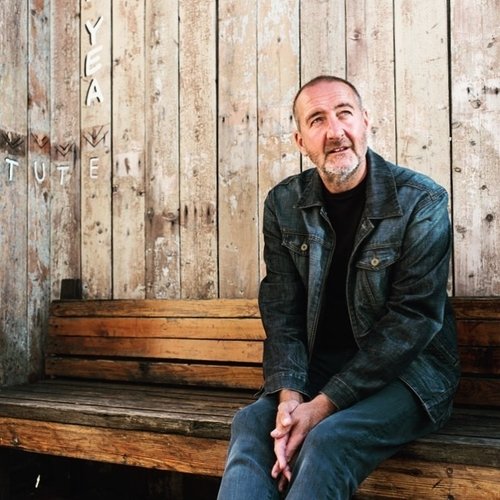
BECAUSE Green Day’s Billie Joe Armstrong

 IN THIS PHOTO: Green Day’s Mike Dirnt, Billie Joe Armstrong and Tré Cool/PHOTO CREDIT: Nigel Crane/Redfern

is fifty on 17th February, I felt it was only right to compile a playlist of the best Green Day songs (in addition to a few solo ones). The lead of a hugely influential Pop-Punk/Post-Punk band, they formed in 1987. It is amazing to think of their longevity! One of my favourite bands, I am going to salute Armstrong with a playlist. Before then, AllMusic provide some useful and informative biography:

Billie Joe Armstrong (guitar, vocals) received slings and arrows from obstinate punk fans when his band Green Day leapt from the underground and onto MTV in 1994.

Born on February 17, 1972, in Berkeley, California, Armstrong is the youngest of six children; his father died from lung cancer when he was only ten. He formed Sweet Children in 1987 with bassist Mike Dirnt. The group's name became Green Day in 1989, and Al Sobrante (drums) joined the band, eventually replaced by Tre Cool. Green Day's first two albums, 39/Smooth and Kerplunk!, solidified their place in the Southern California punk scene of the early '90s. However, when 1994's Dookie was released on a major label and sold more than eight million copies, Green Day were accused of selling out. Armstrong married his girlfriend Adrienne Nesser in June 1994; nearly a year later, their first child, Joseph Marciano, was born.

With each Green Day album, Armstrong continued to ignore the criticisms of the group's early fans as the band proceeded to strengthen their status within the mainstream, culminating in 2004's American Idiot, a rock opera that became a surprise international success, a multi-platinum Grammy winner, and the best-reviewed album of the band's career. Outside of Green Day, Armstrong teamed with jazz singer and pianist Norah Jones in a project to re-create the classic 1958 Everly Brothers album Songs Our Daddy Taught Us. Recorded in nine days with bassist Tim Luntzel and drummer Dan Rieser, Foreverly was released in 2013.

Armstrong busied himself with Green Day during the back half of the 2010s, releasing Revolution Radio in 2016 and Father of All… in 2020. Once the band's touring plans for 2020 were scrapped due to the COVID-19 pandemic, Armstrong began an online covers project called No Fun Mondays where he debuted a new tune at the beginning of each week. The covers were assembled as the No Fun Mondays album in November 2020”.

One of Green Day’s best albums, Nimrod, is twenty-five later this year. Seeing as they have also been together thirty-five years, I hope there are celebrations and special gigs planned. Because Billie Joe Armstrong is such a loved and awesome songwriter and musician, here are tracks that show him…

AT his best.

FEATURE: Vinyl Corner: The Hold Steady - Separation Sunday

FEATURE:


Vinyl Corner

The Hold Steady - Separation Sunday

___________

ONE of the most acclaimed albums…

of the first decade of this century, The Hold Steady’s second studio album, Separation Sunday, is one I would encourage people get on vinyl, as it is a fascinating concept. Separation Sunday follows the interconnected stories of several fictional characters: Craig (the narrator), Holly (short for ‘Halleluiah’), a sometimes-addict, sometimes-prostitute, sometimes-born-again Christian/Catholic (and sometimes all three simultaneously); Charlemagne, a pimp; and Gideon, a skinhead, as they travel from city to city and party to party. Even though their latest album, 2021’s Open Door Policy is brilliant, my favourite album from the Minnesota band is Separation Sunday. It is such an ambitious and totally engrossing album that you will want to hear from start to end! With the core band of Craig Finn – lead vocals, guitar, Tad Kubler – guitar, Galen Polivka – bass guitar and Franz Nicolay – keyboards in top form, everyone needs to listen to Separation Sunday. It is an album that I heard when it came out in 2005, though I have not listened to it for a while. Before I round up, there are a couple of pretty detailed reviews that show why Separation Sunday is an album that you will want to investigate. This is what AllMusic wrote in their review:

The Hold Steady's Almost Killed Me is their hands-down masterpiece, at least this far in the career anyway. A swirling maelstrom of intense, hilarious, and breathtaking rock & roll, it should have been the album that knocked everything else into a cocked hat in 2004. Of course, it was mostly ignored outside the homes of a handful of indie snobs and adventurous punks, but it's there, it's amazing, and most likely the band will never be able to top it. Separation Sunday comes pretty damn close, though. It is a much darker record, revolving around drug casualties, broken lives, a hoodrat fixation, spiritual and physical dissipation, and general despair, and there aren't as many easy laughs this time out -- but instead the listener gets lots of head-shaking wonderment at Craig Finn's genius lyrics and voice.

His gruff, in-your-ear vocals negotiate the twisting torrent of words like a world-class skater kid. He is insanely literate and insanely insistent: he's like the guy who calls at 2:30 a.m. in a frenzy to holler about his latest disaster of the heart, the bar-stool poet with a religious obsession, or the guy who corners you at a party and just won't shut up about how Boston are the missing link between the Beatles and Derrick May -- only you don't mind because he is strangely brilliant. He is also just about the best rock & roll frontman since Bob Pollard. In fact, the group sounds a bit like Guided By Voices at times, only a Guided By Voices that want to kick your sorry can up and down the length of the bar. Or maybe a GBV that worship Springsteen instead of the Who. Whipping up a classic rock-inspired frenzy of monitor-straddling guitar riffs, dual harmony leads, E Street piano flourishes, and galloping horns, the band behind Finn sounds like nothing less than Jim Steinman's dream group. You could talk about great individual songs (the epic "How a Resurrection Really Feels," the piledriving album opener "Hornets! Hornets!," the weird and almost funky "Charlemagne in Sweatpants"), but the strength of the album is in the flow from song to song and the way the intensity level (which starts off at a near fever pitch) elevates until your head is just about ready to burst from the thrill of it all. Call it a quaint idea in 2005, but Separation Sunday is truly an album, one that sounds almost perfect when played from beginning to end in the proper running order. Block out about 42 minutes sometime, hold steady, and get ready for indie rock -- no, rock & roll -- at its sweatiest, most intense, and most impressive. Long live the album; long live the Hold Steady”.

The second review comes from Pitchfork. Separation Sunday is one of those albums that take quite a bit of listening so you can fully appreciate it. I love its concept and the fact that every song seems to form part of this arc and storyline. This is what Pitchfork noted when they reviewed the4 excellent Separation Sunday:  

The Hold Steady's first album, last year's ...Almost Killed Me, was a tangled mess of damaged character sketches and triumphant bar-rock thump-- Harold and Kumar Go to White Castle reimagined as an epic of Russian literature. But Separation Sunday is something more, the elegiac Biblical lost-innocence junkie odyssey that Denis Johnson never wrote.

Like Fiestas & Fiascos, the final album from Finn's former Minneapolis post-punk band Lifter Puller, it's an album-length story that forces us to pull bits of narrative from Finn's tangles of words. In Separation Sunday, a confused Catholic girl named Hallelujah hooks up with a motley assortment of shady characters, does a gang of drugs, gets born again when some guy with a nitrous tank dunks her in a river, wakes up in a confession booth, and maybe dies and maybe comes back from death. But the real story is in Finn's virtuoso evocations of menace ("When they say great white sharks/ They mean the kind in big black cars/ When they say killer whales/ They mean they whaled on him till they killed him up in Penetration Park"), hedonism ("You came into the ER drinking gin from a jam jar/ And the nurse is making jokes about the ER being like an after-bar"), and brief shining moments of lucidity ("Youth services always find a way to get their bloody cross into your druggy little messed-up teenage life").

<center><iframe width="500" height="400" src="https://www.youtube.com/embed/94PUqP4yVzc" title="YouTube video player" frameborder="0" allow="accelerometer; autoplay; clipboard-write; encrypted-media; gyroscope; picture-in-picture" allowfullscreen></iframe>

None of this would work if Finn didn't have an expert rock band backing him up. Finn's songs wheel precariously from one unhinged lyrical idea to the next, almost never stopping for choruses or going out of their way to fit into any sort of structure, but the band plays these songs like long-lost fist-in-the-air classic rock anthems. It's well-schooled in every bar-rock cliché, and executes these moves with joy and conviction: the pick-slide before the climax, the weeping Hammond organ on the bridge, the pregnant pause before the big riff kicks back in. Since ...Almost Killed Me, the band has beefed up its sound with the help of Rocket From the Crypt producer Dave Gardner and keyboard player Franz Nickolay, and its Meat Loaf pianos, greasy George Thorogood blooz choogle, and wheedling Journey guitar carry more heft and authority than they had on the last album. This stuff would sound great behind just about any garage-rock hack, but it turns Finn's dirtbag chronicles into something epic and huge and molten and beautiful”.

A terrific album that will sound superb on vinyl, it is one that I would nudge people in the direction of. The Hold Steady are still going strong, though I still think their finest release was 2005’s Separation Sunday. I have been listening to it a lot the past few days, and I get a new favourite song each time I pass on through. An album that definitely stands up to dedicated focus and listens, Separation Sunday is an album you should not…

BE without.

FEATURE: BBC Radio 6 Music at Twenty: Creating a Loyal Family of Listeners

FEATURE:


BBC Radio 6 Music at Twenty

IMAGE/PHOTO CREDITS: BBC 

Creating a Loyal Family of Listeners

___________

I have previously written…

 IN THIS PHOTO: Nemone

two features about BBC Radio 6 Music in the run-up to its twentieth anniversary on 11th March. It must have been exciting learning about the new station back in 2002. Phill Jupitus kicked things off on that Monday almost twenty years ago. I will not repeat myself too much this time around. There is going to be plenty of love thrown at the station that special Friday next month (a month from today in fact!). It will be great to tune in and see what happens on the day. I do know that this Tuesday (15th) will reveal more about the upcoming 6 Music Festival. We will know the line-up, venues and location. A nice little pre-anniversary treat, for sure! I am sure that the plans and line-up will make up for a slightly different feel and set-up the past two years. On Friday, 11th March, the twentieth anniversary (or should it be birthday!?) celebrations are stating off properly at 5 a.m. with Chris Hawkins (who was with the station on the first day and remains one of the most popular broadcaster) and continuing with Lauren Laverne and then Mary Anne Hobbs, a combination of listener memories and some guests (I assume?) will mark a vital occasion. One reason why the twentieth anniversary is so important and celebration-worthy is because the station was saved from closure in 2010:

A vocal campaign to save BBC 6 Music from closure was rewarded today when the BBC Trust said the digital music station will stay open.

The trust said it was opposed to a proposal put forward in March by the director general, Mark Thompson, as part of a wide-ranging strategy review.

However, the BBC Trust said it would accept a formal management proposal for the closure of 6 Music's digital sister station, BBC Asian Network, provided that it included alternative plans for meeting the needs of this ethnic minority audience "in different ways".

It said 6 Music was encouraging the take-up of digital radio among listeners, describing it as a "highly distinctive" service that represents "value for money" and is "well liked" by its audience.

The BBC Trust said there had been "significant public support for the service" and that 78% of nearly 50,000 online responses to a consultation on the BBC's future focused on 6 Music. The trust also received more than 25,000 emails and nearly 250 letters about the station, "the great majority" of which opposed the closure plan.

IN THIS PHOTO: Chris Hawkins 

It said BBC managers should be increasing 6 Music's average audience of around 600,000 weekly listeners rather than shutting the station down.

The trust also said 6 Music does not represent a threat to commercial competitors. "Throughout the period of our consultation we have received no evidence from the commercial radio sector to suggest that 6 Music represents any kind of threat either now or in the future, so long as it remains true to its distinctive remit."

BBC executives should consider the future of 6 Music as part of a wider examination of how best to improve the performance of its network of digital radio stations.

"The trust concludes that, as things stand, the case has not been made for the closure of 6 Music," the trust ruled. "The executive should draw up an overarching strategy for digital radio. If the director general wanted to propose a different shape for the BBC's music radio stations as part of a new strategy, the trust would consider it. The trust would consider a formal proposal for the closure of the Asian Network, although this must include a proposition for meeting the needs of the station's audience in different ways."

Ruling on the other elements of Thompson's strategic review of the BBC's activities, the trust said it endorsed the proposal to cut the corporation's online budget by 25%, contingent on being able to "understand and approve the editorial changes involved".

"The BBC should sharpen online's focus so that it is truly distinctive and has clearer editorial vision and control," the trust added”.

 IN THIS PHOTO: Lauren Laverne with Professor Hannah Fry

It was a relief that the station not only survived, but it went on to become even bigger and more popular! In 2015, the fifth anniversary of that almost terrible decision was marked and reflected on. This feature from The Guardian explains more:

BBC 6 Music, home to presenters Lauren Laverne, Elbow’s Guy Garvey and Jarvis Cocker, will pass a landmark anniversary in the next few days, although it is not one likely to prompt wild celebrations on air.

It will be five years since the BBC tried to axe the fledgling digital station and replace it with a spin-off version of Radio 2.

The decision prompted a wave of unprecedented listener protest – its Facebook campaign an early demonstration of the power of social media – joined by star names such as David Bowie and Mark Ronson, and its own presenters.

After management was forced into a U-turn by the BBC Trust the fortunes of the station have blossomed. Its audience has since tripled, and in the final quarter of 2014 hit 2 million listeners a week, overtaking its long established sister station, Radio 3.

Now the target is 2.5 million listeners for the station, which the BBC said five years ago had “relatively few unique listeners to BBC radio” and whose audience of 30- to 50-year-olds were well served by commercial radio.

Jeff Smith, head of music for Radio 2 and 6 Music, said 90% of its output today is not heard on any other UK station, with a mix of indie disco, edgier entries in rock’s back catalogue and championing of new artists such as US folk star Father John Misty.

IN THIS PHOTO: Shaun Keaveny 

If the station lacked focus in its early years when it promised an enervating mixture of archive and album tracks, it now pursues a different mantra, “celebrating the alternative spirit in popular music since the 1960s”.

Paul Rodgers, head of programmes for 6 Music, said it was an “important phrase defining what the station is about” but admitted it is a “slippery one”.

“I’m loathe to get into a musical definition of it. Which bit of the Human League is the alternative spirit? You can see I’m struggling,” he said.

For help he turned to the lineup for the 6 Music festival this weekend, which includes Mogwai, the Fall, British Sea Power and Bryan Ferry. “Bryan Ferry might not seem to embody alternative spirit,” said Rodgers. “But if you look back at his work and the ideas that informed it, they are, every bit.”

Liz Kershaw was among the 6 Music DJs who addressed two huge protests outside the BBC’s Broadcasting House in central London after the closure plans were announced in 2010.

I remember saying, yes there’s a need for the BBC to lose weight but you don’t cut your little finger off, you get fit

“I remember thinking, ‘No, I’m not having that. Over my dead body’,” remembered Kershaw, who currently presents the Saturday lunchtime show. “We had fought too long for a station like 6 Music, long before it opened in 2002, for it to shut down eight years later.

“As a listener I felt completely unserved by BBC national music radio. I was past my sell-by date as far as Radio 1 was concerned but I wasn’t one foot in the grave enough for Radio 2, as it was then. I wanted to hear on the radio the sort of bands you saw at festivals and live venues.”

The protests outside Broadcasting House were a very BBC affair – along with banners and placards, campaigners also turned up with homemade cupcakes.

Other 6 Music presenters also spoke out, including Adam Buxton and Tom Robinson. Cerys Matthews, the former lead singer of Catatonia who joined the station in 2009, recalled appearing on BBC1’s Breakfast programme to debate the closure with then BBC chief operating officer, Caroline Thomson.

“I remember saying, yes there’s a need for the BBC to lose weight but you don’t cut your little finger off, you get fit,” said Matthews. “Threatening to shut 6 Music was a ridiculous way to save money”.

 IN THIS PHOTO: Nadine Shah

Like so many loyal listeners to the station, I was proper gutted when Shaun Keaveny left last year! It was not exactly his decision to go; his huge absence is still being felt. In spite of a bad decision by BBC Radio 6 Music management, the station is moving in the right direction. Samantha Moy is now the head of the station, and she has big plans going forward. The main purpose of this feature was to explain how BBC Radio 6 Music is less a traditional radio station. It has this family vibe and sense of community that means new listeners are coming in all of the time. Rather than shout-out every presenter, you can listen live and check out the schedule. Lauren Laverne, Chris Hawkins, Mary Anne Hobbs, Marc Riley, Radcliffe and Maconie, Steve Lamacq, Craig Charles, Iggy Pop, Huey Morgan, Amy Lamé and their colleagues are part of an evolving and wonderful station that has given listeners so much through its twenty years! Whilst the music landscape has changed drastically since 2002 – streaming services have been the biggest shift and addition to the world I think -, the warmth and diversity that is being offered is terrific and a constant. Last year, Samantha Moy talked to Music Week about BBC Radio 6 Music and her plans going forward:

Yes. We are alternative to the mainstream. 82% of the music on our playlist last year was from independent labels. Alternative – as in indie? Yes we are, as well as a myriad of other genres, scenes and specialisms. Truly, we love music of all kinds and we love artists who push boundaries, develop and hone their craft. The last 18 months have been difficult for artists and our audience too - there might have been moments when we are the only voice a listener might hear, so it’s been so important to be the thread which ties us together through our love of music. And in those dark wintry months, we’ve brought a little sunshine through the speakers – celebrating our cut of pop and revelling in nostalgia as we did with 6 Music Goes Pop and 6 Music Goes Back To.”

IN THIS PHOTO: Craig Charles 

What are your plans and ambitions for the station in the months and years ahead?

“To build on what we’ve achieved so far. We’ll always keep the schedule and our plans alive with brilliant commissions, guests and presenters – and of course music. But one thing that I can’t wait for is getting the gang back together - it’s been a long time since we've all been in the same space. I’m looking forward to the return of the 6 Music Festival – with all our presenters and as many of our listeners we can get there. I love those moments when you see Mark Radcliffe and Marc Riley having a chat, or Mary Anne and Steve Lamacq in a studio together, Tom Robinson darting about to as many shows as possible in one weekend or Gideon Coe crate digging for records. It’ll be wonderful to get back to sharing our love of live music together in person.”

Have you completed all the schedule changes you envisioned for the station, or can we expect any further announcements in 2021?

“Later this month, we will be able to announce who will host our 7pm-9pm slot on Friday nights - as Iggy Pop moves to Sunday afternoons (4pm-6pm). And we’ve confirmed that in time, 6 Music will be rooted in Salford as part of the BBC’s Across the UK plans, so that will shape our plans too. I am always looking at ways we can evolve, engage more listeners and be the best partner we can be to artists and the industry, and I’m looking forward to seizing every opportunity we can in 2021 and beyond”.

So what is the main asset and benefit about being a BBC Radio 6 Music listener? In my mind, it is the way the presenters actively label the station as a ‘family’. The listeners are considered and included. One can say that this is true of every radio station - though there is something special about BBC Radio 6 Music that stands it out from the crowd. Whether it is having features where listeners can choose tracks or the sense of comfort and togetherness the broadcasters project on daily basis, there is nothing to suggest BBC Radio 6 Music cannot keep going for decades more! Overcoming possible closure and having to face criticism that the station’s ethos and sound was too narrow and Rock-based…now, it is one of the most eclectic and distinct in the world! The presenters come from different background and walks of life, so they each offer something unique. The music varies hugely. From great new sounds to a wide range of classic tracks, there is something for everyone. A station that wants to embrace and cater for every listener, the growing listenership is testament to the way BBC Radio 6 Music has listened to feedback and adapted. There is no way that the BBC will ever again consider closing the station. The biggest digital station in the U.K., the BBC Radio 6 Music family is one to be proud of. I see so many tweets and interactions on social media. Friendships have been made because of a shared love of the station.

For me, the way BBC Radio 6 Music keeps things fresh is one of the strengths. They have a New Music Fix shows and a New Album Fix (where Matt Everitt looks at four albums each week). The Remix with Chris Hawkins takes established tracks and plays some awesome remixes. Newer additions like The Blessed Madonna and Deb Grant sit alongside long-time broadcasters such as Gideon Coe and Tom Robinson. They each have their own approach and dynamic. One can go from show to show and get a different vibe and feel. In that sense, nobody feels left out at all. If you like a particular style of music, you are accommodated and welcomed somewhere on the schedule. I feel the station will continue to grow in the years ahead. It remains the nation’s biggest digital radio station. Bringing in new presenters and features, I wonder whether the digital-only station will go FM? In terms of audience figures, BBC Radio 6 Music is doing incredibly well (even if there has been a slight dip recently). I know that a lot of people who used to listen to BBC Radio 1 and 2 are now coming to BBC Radio 6 Music. A spectacular force for good, let’s hope that 11th March sees lot of new listeners join a radio family that reaches around the world. I do think we need radio now more than ever! After such a terrible past two years, it is has given so many of us a sense of hope and togetherness! A reliable warmth and light of positivity, BBC Radio 6 Music has been there through it all.

IN THIS PHOTO: AFRODEUTSCHE

A way in which BBC Radio 6 Music can be described as a family is, like a family, they are there at the best moments and help you through the worst. I recall, that dark day in January 2016 when Matt Everitt announced the death of David Bowie on Shaun Keaveny’s breakfast show. Keaveny, Lauren Laverne and everyone at the station kept us together, played Bowie’s music and broadcast messages and reactions from listeners. The same happened when Prince died that same year (2016 truly f*cking sucked!). Great artists are not confined to singular experience and a limited audience: they are part of us all and, as such, their passing is felt across all nations and communities. One can only imagine how strange it is being on air when an iconic artist dies or when the pandemic was at its peak. That sense of fear, uncertainty and need to keep strong and stay positive. That is a special gift that the listeners of BBC Radio 6 Music are fortunate to receive! On the flipside, there are positives aplenty. From themed music days (the station went back to the ‘90s recently). Then, we can all congregate and celebrate glorious music as a parish! The dichotomy and capriciousness of life and music means a station has to adapt at a moment’s notice. From 2002 to now, listeners have come and go. Some have sadly passed, whilst others have been born…

I know there will be BBC Radio 6 Music listeners marking their twentieth birthdays on the same day the station does! Presenters have come and gone but, pleasingly, so many who have been there since near the start are still there. Music news presenters like Georgie Rogers, Matt Everitt (whose The First Time with… is essential listening), Clare Crane and Siobhán McAndrew have provided us with incredible service and loyalty. Guest presenters have filled in expertly. Well-known artists have sat in as part of the Artist in Residence series. The month BBC Radio 6 Music launched, albums from Brandy, Shakira, and Gomez were popular. The day BBC Radio 6 Music turns twenty, new albums from Jenny Hval, Widowspeak, and The Districts are coming out. Whilst a lot has changed, a lot has stayed the same. As we emerge into 2022 bleary-eyed and hopeful of a brighter, busier and much less restrictive year, that means gigs and togetherness. BBC Radio 6 Music will be at Glastonbury; they will hold their festival too. There is a lot to look forward to! On 11th March, make sure you tune in to the station (and, if you know of someone who has not discovered BBC Radio 6 Music, then point them in the right direction!). If you have not tuned in, then make sure that you…

 IN THIS PHOTO: Marc Riley

JOIN the family!

FEATURE: Every Old Sock Meets an Old Shoe: The Passing of Hannah Bush and Kate Bush’s 1993

FEATURE:


Every Old Sock Meets an Old Shoe

IN THIS PHOTO: Kate Bush at Black Island Studios, London, in 1993/PHOTO CREDIT: Guido Harari 

The Passing of Hannah Bush and Kate Bush’s 1993

___________

WHILST this year…

 IN THIS PHOTO: Kate Bush with her brothers, John and Paddy, and her mother at the family home

holds a few big Kate Bush anniversaries – including the fortieth anniversary of The Dreaming -, there is one slightly unhappy one that happens on Valentine’s Day. On 14th February, 1992, her adored mother, Hannah, died from cancer. Normally I would not bring it up, though the thirtieth anniversary does make me think about how special and important she was. Even though, arguably her father (Robert) was more of a sounding board and willing audience of his daughter’s music – especially pre-The Kick Inside -, there is no doubt that Mother Bush was at the heart of the household. At East Wickham Farm, one might find Kate, John, Paddy and her parents enjoying music or a family activity. Whether it was something on the T.V. or an entertaining evening, there was much laughter, culture and energy in the house. Hannah Bush was a very loving and supportive mother. It is no coincidence that Kate Bush, as told in interviews, is very hospitable and welcoming. Often ready with a cup of tea and a warm ‘hello’, one gets the impression this was what her mother was like. I have read about Bush recording her albums and how musicians would often be in and out of the house. Her mother would frequently be there with food and a welcoming smile. More than a source of emotional and physical nourishment, there was this great affection between mother and daughter.

Born in Ireland, it is obvious how influential Hannah’s side of the family was. I have written about this before but, as we mark the passing of a key figure in the Kate Bush story, it is worth repeating. The family would take trips to Ireland; no doubt the young Kate would have been intoxicated by the sounds and scents of the music played around her. I think to this day Celtic and Irish sounds are rare in mainstream music. Right from her earliest albums, Bush was incorporating musical elements one can trace to her mother. One of the biggest instances of Irish music being used in her music comes from The Sensual World’s title track. Of course, Irish players make a big impression of Hounds of Love’s The Ninth Wave (especially Jig of Life). Hannah Bush also featured in the video for Suspended in Gaffa (from The Dreaming). Some people say that the song, Moments of Pleasure (which featured on 1993’s The Red Shoes), was written after Hannah died. It contains the line, “Every old sock meets an old shoe”. Bush has said how this was something her mother said only once - and yet it stuck with her. Her mum found it hilarious when she was told it was in a song. She would have been ill at the time it was recorded. Released as a single on 15th November, 1993, there was a poignancy that came in. Bush re-recorded the song for 2011’s Director’s Cut. Clearly a song that is special to her, it is one where the memory and wisdom of Hannah Bush looms large.  

I think that Hannah Bush’s passing was a turning point when it came to career prioritised being shifted. Even though she died in February 1992, it impacted Kate. The Red Shoes was being recorded at this time…and I wonder whether it affected some of her decisions. Considered to be one of her weaker albums, one wonders how it would have sounded if not for her mother’s death. Although Bush has said in interviews since how a lot of the more heartbreaking and emotional elements of The Red Shoes were written before her mother died, no doubt 1993 was a year that was quite tough. Reviewers have noted how Bush sounds more like a woman on The Red Shoes. One could hear this maturity and new lyrical direction of 1989’s The Sensual World. In her mid-thirties when The Red Shoes was released, maybe Bush was thinking about taking a break and looking at life differently. It would only be six years after her mother died before Bush became a mother herself (to Albert/Bertie). 1993 was a year that changed so much. The Red Shoes was released at the beginning of November. Maybe taking on writing, directing and starring in a short film, The Line, the Cross and the Curve, was a distraction. Released on 13th November, it was a very busy time. Both the album and film received mixed reception. Not that Hannah Bush’s death was the main reason why her daughter worked so hard, I feel there was something missing in the way of guidance and motherly support which could have led Bush to overwork herself. In need of some wise counsel and her support, I often wonder how she felt during such a tense year.

Although she herself would say it wasn’t a hugely bad year, she did split with her long-time boyfriend, Del Palmer. The fact that the two had worked together since before The Kick Inside (1978) – and the two still do work together to this day – would have made the split that bit harder. By the end of 1993, Bush started to wind down in terms of recording and promotion. Whilst Britpop was coming through in the U.K. and it was one of the most exciting and fruitful periods in musical history, one of music’s icons was preparing to step away from the spotlight. 2005’s Aerial was the next album Bush released. Starting a family and having some much-needed rest, the media didn’t know what to make of it. Kate Bush didn’t disappear. Instead, she was putting life and wellbeing above music and the demands that come with that. I don’t think it is a coincidence that there are elements of Hannah Bush in Aerial. The song, A Coral Room, features the lines “My mother and her little brown jug/It held her milk/And now it holds our memories”. On Valentine’s Day, I know that Kate Bush and her family (including her partner, Dan McIntosh) will think about Hannah. Whereas every artists’ mothers are important in some way, there was this close connection and influence that Bush carried right through her career. From Hannah supporting her young daughter when she decided to take up music full-time, through to her sonic, visual and lyrical presence in many of the studio albums, Hannah Bush will never be forgotten. I wanted to write about her ahead of the thirtieth anniversary of her death. On a day when sentiments and expressions of love are shared, this Valentine’s Day, Kate Bush fans around the world should send the much-missed Hannah Bush…

SO much love.

FEATURE: Inspired By… Part Forty-Nine: Brandy

FEATURE:


Inspired By…

Part Forty-Nine: Brandy

___________

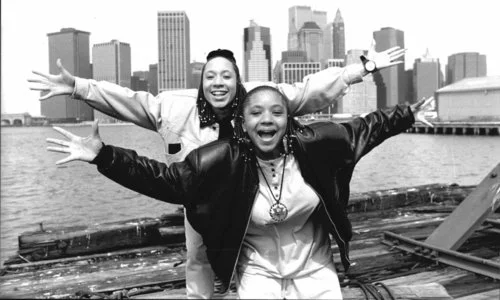
I have featured Brandy

a few of times fairly recently. I was hugely impressed by her 2020 album, B7. I also included her in A Buyer’s Guide and recommended the albums of hers that people need to get. Back in September, I argued how her 1998 album, Never Say Never, is underrated and warrants new inspection.  Today, I am showing how other artists have been impacted by her. Maybe it is in terms of their own music and people following her. In other cases, it is artists who have praised Brandy’s vocal style and talent. I am finishing by a playlist of songs from artists who have either been influenced by her or have taken inspiration in some way. To start with, as I do for these features, AllMusic provided a biography of Brandy:

Brandy is among the few artists to achieve mainstream success as a teenager and make smooth artistic transitions across a multi-decade career. The singer and actor emerged during the post-new jack swing era like the kid sister of Mary J. Blige or TLC, specializing in pop-oriented R&B epitomized by her first two singles, "I Wanna Be Down" and "Baby," both Top Ten crossover hits that made her debut, Brandy (1994), a multi-platinum smash. The title role on the popular sitcom Moesha, a chart-topping and Grammy-winning duet with Monica ("The Boy Is Mine," the longest-running number one female duet in Billboard chart history), and the multi-platinum follow-up Never Say Never (1998) all reaffirmed Brandy's broad appeal through the end of the '90s. While she could have continued to crank out safe contemporary R&B as her acting career took precedence, she made the most out of her subsequent studio time, highlighted by Full Moon (2002) and Afrodisiac (2004), progressive stylistic hybrids that earned her consecutive Grammy nominations for Best Contemporary R&B Album. Since the mid-2000s, Brandy has recorded less often, with Human (2008) and Two Eleven (2012) maintaining her unbroken streak of Top Ten R&B/hip-hop albums. Amid constant work onscreen and on-stage, Brandy's musical output during the second half of the 2010s was limited to a handful of singles and featured appearances, but she issued her seventh album, B7 (2020), early the next decade.

Brandy Norwood was born in McComb, Mississippi, and began singing in church at age two. When she was four, her father was hired as music director at a church in Carson, California, and after a few years, she decided to pursue a professional singing career, inspired by Whitney Houston. With the help of her family, she began hunting for a record contract, and in 1992 began singing backup for the young R&B group Immature. Brandy enrolled in the Hollywood High Performing Arts Center and launched an acting career, appearing in films like Arachnophobia and Demolition Man. At the age of 14, she landed a record deal with a performance at an Atlantic Records talent showcase. Around the same time, she won a supporting role on the short-lived ABC sitcom Thea. In September 1994, Brandy released her self-titled debut album, which immediately produced Billboard Hot 100 Top Ten smashes in "I Wanna Be Down" and "Baby," both of which hit number one on the R&B/hip-hop chart; "Brokenhearted" and "Best Friend" went on to smaller successes. Brandy was certified quadruple platinum within two years.

In 1996, Brandy scored her biggest hit yet with "Sittin' Up in My Room," recorded for the Waiting to Exhale soundtrack; it hit number two pop and number one R&B/hip-hop. Early that year, she also debuted on UPN as the star of Moesha, for which she took a lengthy recording hiatus. Apart from "Sittin' Up in My Room," her only real activity over the next couple of years was the Set It Off soundtrack single "Missing You," on which she teamed with Chaka Khan, Gladys Knight, and Tamia. In 1997, she branched out by taking the title role in Disney's made-for-TV version of Cinderella, appearing alongside her idol Whitney Houston; the film's star power and integrated cast made it a significant ratings success. Finally, Brandy set about recording her second album. Never Say Never was released in June 1998, and its first single, the Monica duet "The Boy Is Mine," was a mammoth hit, topping the Hot 100 for a staggering 13 weeks. In its wake, "Top of the World" (featuring guest rapper Mase) and "Have You Ever?" were both substantial hits as well, with the latter becoming Brandy's first solo number one Hot 100 hit. Never Say Never spun off three additional singles, including the Top 20 pop hit "Almost Doesn't Count," on its way to sales of over five million copies. "The Boy Is Mine" subsequently won a Grammy for Best R&B Performance by a Duo or Group with Vocal.

Meanwhile, Brandy's acting career continued to blossom. In 1998, she landed her first major theatrical film role in I Still Know What You Did Last Summer, and the following year, she appeared in another TV movie, Double Trouble, with Diana Ross. She concentrated mostly on Moesha until the show was canceled in the spring of 2001. The same year, she voiced a character in the animated film Osmosis Jones. In February 2002, Brandy released her third album, Full Moon, which entered the Billboard 200 chart at number two, spun off an immediate hit in "What About Us?" -- her seventh Top Ten pop single -- and was subsequently nominated for a Grammy in the category of Best Contemporary R&B Album. That summer, Brandy gave birth to her first child. Her pregnancy was the subject of an MTV documentary series, Brandy: Special Delivery.

The singer's fourth album, Afrodisiac, was released in June 2004. Its lead single, "Talk About Our Love," was produced by Kanye West and peaked at number 36 on the Hot 100. Although it too received a Grammy nomination for Best Contemporary Album, Afrodisiac was Brandy's last recording for Atlantic. Signed to Epic, she returned in December 2008 with Human, an adult contemporary-leaning set that entered the Billboard 200 at number 15. A couple years later, she starred alongside her brother and parents in the reality television series Brandy & Ray J: A Family Business, with a soundtrack of sorts following in 2011.

She teamed up with Monica again in 2012 for the single "It All Belongs to Me" (which appeared on Monica's New Life), and months later issued the collaboration-heavy Two Eleven, which topped the R&B/hip-hop chart and entered the Billboard 200 at number three. The Chris Brown collaboration "Put It Down" became Brandy's tenth Top Ten R&B/hip-hop single as a headliner.

For the rest of the 2010s, Brandy devoted most of her time to acting, highlighted by roles on the series The Game, Zoe After Ever, and Star, as well as the lead role in the Broadway production of Chicago. Her limited recordings during these years included the bluesy belters "Beggin & Pleadin" (2016) and "Freedom Rings" (2019), a featured appearance on August Greene's cover of Sounds of Blackness' "Optimistic," and a duet with Daniel Caesar, "Love Again," which earned a Grammy nomination for Best R&B Performance. After she built more anticipation with the Chance the Rapper collaboration "Baby Mama," B7, her first album in eight years, arrived in 2020. The Disney Princess anthem "Starting Now" appeared the following year”.

To show the popularity, influence and brilliance of Brandy, listen to the playlist below. They are songs from artists who, in some form, are moved by her. Brandy is a stunning and iconic artist who, since her first recordings to the present day has influenced so many people. She is a wonderful artists. I hope that she brings out another album soon. Her is another (well-deserved) salute to…

THE intoxicating and amazing Brandy.

FEATURE: Spotlight: GAYLE

FEATURE:


Spotlight

GAYLE

___________

A hugely talked-about teen artist…

whose debut single made a big impact late last year, GAYLE is someone that you need to be aware of. There are a raft of great young Pop artists breaking through. It is encouraging to hear so many artists come through who sound so confident and like they have serious longevity potential. GAYLE sounds like she is here for the long-run. This is a rare occasion when an artist I am covering only has a couple of songs out. Her latest, ur just horny, came out this year. Her amazing debut, abcdefu, is one that garnered a lot of response and positivity. The tremendous artist from Dallas, Texas has been based in Nashville for a few years. In 2021, she signed a deal with major label Atlantic Records. GAYLE was discovered by former American Idol judge and Pop songwriter, Kara DioGuardi. As I do in these features, I am going to draw in some interviews. They revolve around the debut single of last year. It is clear that we will hear more from GAYLE very soon. VENTS MAGAZINE congratulated an artist who is signed to a label that has represented some all-time legends:

Major congratulations are very much in order for your newly announced addition to renowned record label Atlantic Records! Atlantic has a long and celebrated past, being home to such legendary artists like Otis Redding, Aretha Franklin, Ray Charles and Wilson Pickett. How does it feel to join that roster of amazing talent?

If I’m being completely honest I haven’t fully processed the emotions of signing with my dream label. Every once in a while, it hits me at like 2 am that I ACTUALLY did it and I’m not living in a fever dream. It’s a complete honor to be on the same roster as the amazing artists you mentioned above and i will do everything in my power to match the amazing successes on the Atlantic roster.

Your very first single under the Atlantic Records umbrella is due out on August 13 and it is entitled abcdefu! First things first, the elephant in the room: What led to one of the more unique and creative song titles that I’ve seen in all of my years? It’s really a head-turner!

Funny enough the song was originally called “abcdefuckoff” and I decided to pull it back just a little haha. I didn’t want to give away the whole concept of the song with just the title and I thought “abcdefu” was a good in-between.

Who produced abcdefu and what was that collaboration like between the two of you?

Pete Nappi produced this version of “abcdefu” and we finished it out together when I was visiting LA. I’m a control freak so I always like being in the room with the producer when it comes to my music. Pete started the vibe out by himself and then I added in my production notes and that’s the version that’s coming out today!

For those that may be late to the party, how would you describe your style of music?

Shitty.

You’ve already amassed five million global streams from a very loyal fan base as an independent artist alone. Was there any trepidation of signing on to Atlantic? What made them the perfect fit for you and your music?

Honestly I had no trepidation in singing with Atlantic. I know everybody on my team there has my best interest at heart and truly believes in me and I feel very welcomed and loved joining the Atlantic family”.

Definitely one of the best debut Pop hits of 2021, abcdefu resonated with fans and critics alike. What I have noticed with a lot of the new Pop artists emerging is that they are being inspired by Soul and R&B legends, rather than their mainstream contemporaries or Pop acts from the 1980s and 1990s. I wonder if there is generational thing – maybe these artists’ parents are bringing them up on Soul music. In any case, GAYLE talked about her musical influences in an interview with POPTERNATIVE:

What can you tell us about your latest single, “abcdefu”?

I came out with the first version of “abcdefu” on August 13th [2021], I have since released the demo, a chill, and angrier version of the same song but seen in a different light. The demo shows what “abcdefu” started as. The chill version is for the juxtaposition of telling someone to ‘f*** off’ but in a calm manner, and the angrier version just found a way for me to curse more.

Who is GAYLE as an artist? How would you describe the sound of your music?

I’ve always been inspired by soulful voices Aretha Franklin, Joss Stone, Nina Simone and Kelly Clarkson. I also really love the catchiness of pop music and how so many pop songs can manage to get stuck in my head for days. I prefer an organic leaning production, with occasional synths and lyrics that have something to say and I try my best to take all of those things and channel it towards my music.

When people listen to your music, what are you hoping they get out of it?

I hope when someone listens to my music it gives them the confidence to be more comfortable with themselves and their emotions. I have a tendency to at times bottle up my emotions and I know listening and making music helps me own up and process my emotions, and I hope I can do that for other people.

Did you always know that music was something you wanted to pursue?

I’ve been singing for as long as I can remember. I remember when I was younger before I decided to do music, I wanted to be a puppy rescuer but that lasted like a week.

What advice would you give to aspiring musicians?

Learn to take what inspires you and make it into something different. It’s really hard not to copy things that inspire you and it’s still a struggle for me, but it’s really important if you want to be something different”.

There is another interview that I want to bring in before rounding up. Warner Music Australia chatted with GAYLE about her debut single taking off. They also enquired about musical influences and what comes next for her:

The song has such a collective feeling where it’s meant to be screamed in a room full of people. How was it hearing that chorus yelled back to you?

It was amazing. The song started getting popular during the tour. At the start, a few people know it but later on as the shows started happening more. At the end, I would say the title and people would start yelling. Like, you know this song? What do you mean? It was amazing to hear people scream. I do the angrier version live because any opportunity to say ‘fuck’ more, I’m going to take. Like, c’mon. It was amazing just to hear a loud room of people screaming “fuck” at the top of their lungs.

It’s difficult to imagine a song taking off like this and few will let themselves believe it even when they know they’re great. You must have known there was something special about it though?

I knew it was a song that had the potential to be liked. People would either love or hate it. When you have a strong emotion to a song that can be a positive thing. Personally, though, it was important. For a long time, I didn’t want to be angry. I ran away from anger thinking it would make me less of an angry person. Running away from it is what made me angrier in the first place. I think putting that song out was the reminder that I’m allowed to be angry. I deserve it. It’s not something you have to earn. You have the right to feel that emotion. It was also really important to have the possibility of inspiring other people to let themselves be angry. To give people a safe space to be angry and process their emotions. That was something I just found really exciting about it when it was coming out. That said, I had no fucking clue it was a hit. I just hoped people wouldn’t hate it.

What artists were your outlet growing up?

Alanis Morissette was one. She was a big inspiration. Julia Michaels also became a big inspiration for me. Especially as a writer who can also write for other artists. That was really intriguing for me. Delacey is also really inspiring. That was when I was 15 or 16, her album came out. She said things I’ve never heard someone say so…so, out there. So many people would be afraid to say it but she just says it how it is. Also, Billie, lyrically and the vibe… I’m young and a lot of people want to invalidate my feelings because they don’t think young people can go through shit. I’m going through things and I’m going to talk about it.

In the early ‘00s of pop it wasn’t cool to share your raw emotions. This year, however, popstars are validating young people’s feelings thanks to Billie and Olivia Rodrigo. You don’t have to pretend to be 35 when you’re 17 now.

There’s a lot of things where it’s like you’re either completely okay or you’re having a mental breakdown. In the past 5 years though people are talking about the in-between and are still talking about it today.

Have you thought at all about what comes after this song?

Yeah, I have plans. I filmed the music video yesterday which was really fun. I change my mind on the next single. I’m just gonna let the holidays happen before we start something up in the New Year. It’s staying in the pissed-off vibe”.

A tremendously promising young artist who, although seen as a Pop act, defies genre and boundaries. Her music has the potential to rank alongside the most popular and played of 2022. I guess an E.P. is the next step for her. With a couple of awesome singles out, there is a lot of praise, hope and attention focused the way of the Tennessee-based artist. Here is someone that you need to…

FOLLOW closely.

______________

Follow GAYLE

FEATURE: Not Quite a Full House: Theoretical Extra Singles from Each of Kate Bush’s Studio Albums

FEATURE:


Not Quite a Full House

IN THIS PHOTO: Kate Bush in an outtake from The Sensual World (1989)/PHOTO CREDIT: John Carder Bush

Theoretical Extra Singles from Each of Kate Bush’s Studio Albums

___________

WHILST we cannot turn back time…

PHOTO CREDIT: Getty Images

and speculate an alternate reality, there are artists who release singles from their studio albums - and we wonder what else they could have brought out. Whether it is a deeper cut or an obvious single never realised, we dream what could have been. With a new music video and a chance of fresh chart assault, I do think about Kate Bush and her studio albums. In this feature, I am looking at her ten studio albums and will list the U.K. singles from each. I am going to give my choice as to which other song from each album should have been released as a single. With albums like Hounds of Love so stuffed with gold, there was definite potential for an extra single release. Whether the label/Bush felt that they needed to leave it be or too many singles would result in a poor chart return or damage the enjoyment of the album, I think there is flexibility in every case. I did publish a feature recently revealing the song from The Kick Inside that should have been the third U.K. single (apologies for repeating myself). From 1978’s The Kick Inside to 2011’s 50 Words for Snow, an unreleased single-worthy gem lies within! Here are the songs from each album that I would choose to release if Kate Bush decided to release another U.K. single…

 FROM each album.

______________

The Kick Inside

Release Date: 17th February, 1978

Label: EMI

Producer: Andrew Powell

Stream: https://open.spotify.com/album/5NKTuBLCYhN0OwqFiGdXd1?si=WLZUOLGlSiW31cONAr4-xw

Buy: https://roughtrade.com/gb/kate-bush/the-kick-inside-7a5278e6-76b3-40e7-a55f-2d9471a311ae/lp?channable=409d9269640032333339323310&gclid=Cj0KCQiAosmPBhCPARIsAHOen-NOjorVgsBgwyvsZZilM726nucfFDpGmovy3ey8SXl34ILkHJN-TncaAhcBEALw_wcB

U.K. Singles Released: Wuthering Heights (20th January, 1978), The Man with the Child in His Eyes (26th May, 1978)

Which Other Track Could Have Been a U.K. Single? Oh to Be in Love

Lionheart

Release Date: 13th November, 1978

Label: EMI

Producers: Andrew Powell (Assisted by Kate Bush)

Stream: https://open.spotify.com/album/2CRirDu87zmvr01X8MkcQ8?si=kNgNYPnMSna6_MqiWkCOTg

Buy: https://roughtrade.com/gb/kate-bush/lionheart-60077c9a-5fb5-4714-821a-280d80024a96

U.K. Singles Released: Hammer Horror (27th October, 1978), Wow (5th March, 1979)

Which Other Track Could Have Been a U.K. Single? Kashka from Baghdad

Never for Ever

Release Date: 7th September, 1980

Label: EMI

Producers: Kate Bush/Jon Kelly

Stream: https://open.spotify.com/album/0KBFDO8qcY0zhybIESEQUt?si=ZbAnkJxBQquFWS6lYHBtXw

Buy: https://roughtrade.com/gb/kate-bush/never-for-ever-0e80c456-fc19-41c7-85b8-6574e9091658

U.K. Singles Released: Breathing (14th April, 1980), Babooshka (27th June, 1980), Army Dreamers (22nd September, 1980)

Which Other Track Could Have Been a U.K. Single? The Wedding List

The Dreaming

Release Date: 13th September, 1982

Label: EMI

Producer: Kate Bush

Stream: https://open.spotify.com/album/1gRJsaJ7ExC9Q9YdB9ZMC5?si=Gu0XndTrRmyWY8fHRJPWtA

Buy: https://roughtrade.com/gb/kate-bush/the-dreaming-03e10ee0-e2d3-4b54-948e-0afcb7e7c290

U.K. Singles Released: Sat in Your Lap (21st June, 1981), The Dreaming (26th July, 1982), There Goes a Tenner (2nd November, 1982)

Which Other Track Could Have Been a U.K. Single? Get Out of My House

Hounds of Love

Release Date: 16th September, 1985

Label: EMI

Producer: Kate Bush

Stream: https://open.spotify.com/album/5BWl0bB1q0TqyFmkBEupZy?si=gKClC6UlQzqOUTms8zXxjA

Buy: https://roughtrade.com/gb/kate-bush/hounds-of-love-d3743f1e-51e3-4337-b759-f47b26c0a247/lp

U.K. Singles Released: Running Up That Hill (A Deal with God) (5th August, 1985), Cloudbusting (14th October, 1985), Hounds of Love (24th February, 1986), The Big Sky (28th April, 1986)

Which Other Track Could Have Been a U.K. Single? And Dream of Sheep

The Sensual World

Release Date: 16th October, 1989

Label: EMI

Producer: Kate Bush

Stream: https://open.spotify.com/album/0Bk6rV33JObdtOpjJg0vIy?si=SeFOhYpbTGS1n-gD9-E77w

Buy: https://roughtrade.com/gb/kate-bush/the-sensual-world-e4747d6f-f1a1-4c91-bc7d-c5562cef6288

U.K. Singles Released: The Sensual World (18th September, 1989), This Woman's Work (20th November, 1989), Love and Anger (26th February, 1990)

Which Other Track Could Have Been a U.K. Single? The Fog

The Red Shoes

Release Date: 1st November, 1993

Label: EMI

Producer: Kate Bush

Stream: https://open.spotify.com/album/7GaIK1F61cLAGASyB8TAk4?si=Vor6u-cEQBW7jBbIV7gj5w

Buy: https://store.hmv.com/store/music/vinyl/the-red-shoes

U.K. Singles Released: Rubberband Girl (6th September, 1993), Moments of Pleasure (15th November, 1993), The Red Shoes (5th April, 1994), And So Is Love (7th November, 1994)

Which Other Track Could Have Been a U.K. Single? Lily

Aerial

Release Date: 7th November, 1995

Label: EMI

Producer: Kate Bush

Stream: https://open.spotify.com/album/0xo3ZL0B9982pr08stcNlt?si=gnbjekO-RfyEbvaLIg-R5g

Buy: https://roughtrade.com/gb/kate-bush/aerial-90730658-35e2-49ab-93d8-9c3e7897c0f4

U.K. Singles Released: King of the Mountain (24th October, 2005)

Which Other Track Could Have Been a U.K. Single? Mrs. Bartolozzi

Director’s Cut

Release Date: 16th May, 2011

Labels: Fish People/EMI

Producer: Kate Bush

Stream: https://open.spotify.com/album/5jYdgzyT71V5j4MQm327gF?si=w403tCRvTQOrHMnLi75bFw

Buy: https://roughtrade.com/gb/kate-bush/director-s-cut-23cb82bf-539f-4cfd-a97b-a846f8e0dbdf

U.K. Singles Released: Deeper Understanding (5th April, 2011)

Which Other Track Could Have Been a U.K. Single? This Woman’s Work

50 Words for Snow

Release Date: 21st November, 2011

Label: Fish People

Producer: Kate Bush

Stream: https://open.spotify.com/album/1VAB3Xn92dPKPWzocgQqkh?si=0x1sXJeDRea9yMPFxqyBxg

Buy: https://store.hmv.com/store/music/vinyl/50-words-for-snow

U.K. Singles Released: Wild Man (11th October, 2011)

Which Other Track Could Have Been a U.K. Single? Among Angels

FEATURE: The Lockdown Playlist: Valentine’s Day: The Best Love Songs of 2021

FEATURE:


The Lockdown Playlist

PHOTO CREDIT: Jonathan Borba/Unsplash

Valentine’s Day: The Best Love Songs of 2021

___________

THIS Lockdown Playlist…

 PHOTO CREDIT: @jay_singh_4/Unsplash

is primed for Valentine’s Day on 14th February. Rather than compile a selection of the all-time great love songs, I thought that I would bring it up to date. There was a tonne of love songs released last year. I have assembled some of the very best. Although some prefer the vintage classics, there are a lot of current and varied love songs that should be heard. Whether they are slightly more downbeat and heartbroken or joyous ands positive, there is more than enough to choose from! Ahead of Valentine’s Day, here are a great collection of love songs from some terrific artists. If you need a reminder of some of the best love songs from 2021, then I have some…

 PHOTO CREDIT: @arunanoop/Unsplash

THAT will jog the memory.

FEATURE: Spotlight: English Teacher

FEATURE:


Spotlight

PHOTO CREDIT: Sara Carpentieri 

English Teacher

___________

A great and promising band out of Leeds…

I wanted to spend a little time with English Teacher. Whilst a lot of the hotly-tipped acts of this year are solo artists, there are some terrific bands who have the potential to be long-lasting and festival mainstays of the future. English Teacher have already been endorsed by none other than The Charlatans’ Tim Burgess. If he gives them his thumbs up, then that is a good indicator that you are in the right path! Whilst there is probably not as especially arresting or original story about how they came up with their name, the music itself is very compelling and different. I am going to scatter in a few interviews where we get to know better a fantastic northern band who are making big strides. I am going to jump back and forth a little in terms of the date of the interviews. I want to start with NME’s interview from November of last year. They were keen to boost and boast about a tremendous young band:

Made up of Lily Fontaine (vocals, rhythm guitar, synth), Douglas Frost (drums), Nicholas Eden (bass) and Lewis Whiting (lead guitar, synth), English Teacher are no strangers to self-deprecation. Formed in 2020 after meeting at Leeds Conservatoire, their brand of indie is more kitchen sink drama than straight-to-the-chorus smash.

Having wasted no time post-lockdown, they’ve already racked up over 20 gigs supporting the likes of Do Nothing and TV Priest, conquered their first Reading & Leeds and created enough buzz around double-A-side ‘R&B’/‘Wallace’ to sign to Nice Swan, home of Sports Team, Courting and The Rills. It’s enough to swell any young band’s ego, but if you ask them why they think their music is resonating, Fontaine will give you an effacing answer.

“Honestly, I feel like a lot of places have been looking to spotlight bands that have got women in them, and women of colour in indie just isn’t really a thing,” she says. “I don’t want to put ourselves down, but I do think it’s helped, being visually different. Obviously I hope it’s something to do with our music too…”

English Teacher are not necessarily a band who would boast about themselves, so it’s a good job that NME are willing to do it for them. As exemplified on ‘R&B’, a brooding narrative that ricochets between sweetly-satirical compliance and open confrontation of the racialised expectations of a frontwoman of colour (“Despite appearances, I haven’t got the voice for R&B / Even though I’ve seen more Colors Shows than KEXPs”), this is a group that are willing to enter potentially awkward conversations while moving with a melodic speed that defies direct comparison. “Last night at a gig, this guy said we sounded like Pixies without sounding anything like Pixies,” says Douglas. “I don’t know what that means, but I’ll take it!”

There’s also their tireless work ethic. Deeply involved in the north Leeds scene, English Teacher exist within the same hotbed of creativity that has incubated smart-rock breakout bands such as Yard Act, Alt-J and Wild Beasts, feeding off a spirit of collaborative ideals. For Fontaine especially, keeping her diary straight is quite the task: English Teacher and her other band, Eades (in which she contributes keys and vocals), were both signed to labels in swift succession, creating a deluge of commitments. “As an incredibly disorganised human being, I’m not the best at it,’ she says, laughing. “But it’s nice to be doing what you’re passionate about so much of the time. It’s a good kind of stress!”

And what exactly is that band? Let’s throw modesty to the wall: what would Grade-A success look like to English Teacher?

“I think when [music] becomes something we can do all the time,” says Whiting. “The idea that you could possibly be lucky enough to have your whole job be music, that would be the dream.”

“That’s it,” chips in bassist Eden, quiet until this exact moment in our chat. “We want to sound lucrative!” It’s a pragmatic answer, but it’s one that perfectly suits their style: level-headed, cautiously confident and letting their music do the talking. You know how the old saying goes: it’s often the quiet ones you’ve got to watch out for…”.

In terms of the band’s best tracks, R&B definitely ranks up there with them. DORK chatted with Lily from the band early last year. Already gaining headway and steam, they recognised a group that were certainly worth keeping an eye out for:

Leeds bunch English Teacher excel in the on-point sort-of-post-punk-but-not-really-and-definitely-more-enthusiastic controlled racket that has found their latest drop ‘R&B’ a place in Nice Swan Records’ singles club. Just one weapon in their vast musical armoury, it’s a fantastic start for the foursome – made up of Lily Fontaine (vocals, rhythm guitar, synth), Douglas Frost (drums, synth), Nicholas Eden (bass, synth), and Lewis Whiting (lead guitar, synth) – who can also be found at The Great Escape’s virtual bash next month. Lily introduces her band.

Hello Lily! How’s it going? What are you up to today?

Hi! It’s going unnaturally well – I am currently listening to my 2021 playlist and doing some writing in the sun with a coffee. If I squint my eyes and move my head real fast I can almost pretend I am sat on a continental balcony and not in our backyard in Headingley surrounded by broken glass and that drain smell.

How did you lot meet and decide to form the band, then? You were studying in Leeds, right?

I met our ex-guitarist in 2018 on a uni trip to Valencia (he’s currently on a grad-scheme training in property development because he likes buildings, but we’re working on his return). I put out a demo on Soundcloud, and then a local promoter asked if I wanted to play a gig, so I said yes and asked him if his band would help out. We haven’t given up since, for some reason.

You’ve not long dropped your single ‘R&B’, how did that go? Was it one you were sat on for a while?

R&B came together weirdly quickly for us; I’m pretty sure the whole thing was written, demoed and recorded with Theo in the same month. That was January, and it’s been a bit of an agonising wait for the release because it’s quite different from the singles we’ve already released; we weren’t sure how it would be received. But, some people have said some really nice things, so we’re all currently in a state of relief, with a hint of pride.

Where did that single come from? Do tracks find you, or do you have to find them?

Lyrics and themes usually find me, and then I have to go searching for the music. It’s simultaneously an ode to the worst writer’s block of my life so far, and what cured it. I wrote the bass riff on Logic’s piano scroll, and then Nick knocked it out of the park with his chorus melody. Doug had already decided on the bridge section’s drum part, and when Lewis and Nick started jamming their polyrhythms over it, it really started sounding like us”.

I shall include one more interview. There are other interviews and bits of information online that are well worth reading. Far Out Magazine spotlighted English Teacher back in December. It was another dose of praise and attention pointed at the excellent Leeds band:

What’s the state of the current scene in Leeds and what other bands from the area should people listen to?

“With the Brudenell Social Club at its centre, the Leeds music scene is this crazy little petri dish of literally everything great. Small, semi-incestuous and forever multiplying. Some of the artists we’d recommend: Treeboy and Arc, Big Softy, Thank, Rodeo, Honey Guide, Fuzz Lightyear, Pop Vulture

Since forming in 2018, how much has the identity of English Teacher fluctuated?

“We were originally a dream-pop band so yeah, a fair bit of honing has happened. There have been a few lineup changes over the years so I guess with that, we have naturally progressed into what we are today.

Returning to playing live this summer must have been an even sweeter experience after the prolonged absence coupled with all the new songs you released during that period?

“It’s been intense but very fun. As a band, we’ve now shared many beds, megabuses and deodorants so it’s been an excellent bonding experience too. Will never get over seeing people sing our music back to us either, tempted to tell them to learn the words to better songs, to be honest”.

If you have not acquainted yourself with English Teacher, then go and check them out now and see what all the fuss is about. Although they have not yet confirmed if a debut album arrives this year, we definitely will hear more of them in terms of live gigs and singles. Revealing something new about themselves with each song, it is exciting to see them blossom and develop! The wonderful English Teacher are…

IN a class of their own.

______________

Follow English Teacher

FEATURE: Revisiting... Kate Nash - Yesterday Was Forever

FEATURE:


Revisiting...

Kate Nash - Yesterday Was Forever

___________

FOLLOWING the more Rock-orientated sound…

 PHOTO CREDIT: Jenn Five for DIY

of 2013’s Girl Talk, Kate Nash’s fourth studio album, Yesterday Was Forever, returned more to her Indie roots. That said, I feel the album is not easy to define in terms of a single sound. Also, it was very underrated when it came out. Some felt that there were not many standout songs, whilst others were quicker to praise a great album from Nash. Released on 30th March, 2018, I wanted to revisit an album that one does not hear played too much now. It is well worth digging out and listening to! I am going to get to a couple of the more positive reviews that, in my view, showcase some of Nash’s best work. She has talked about new music and, after a couple of singles last year, we may see a fifth studio album quite soon. DIY spoke with Nash in March 2018 ahead of the release of Yesterday Was Forever:

It’s this simultaneous sense of emotional vulnerability and righteous empowerment that runs through both Kate’s general speech and the high-octane technicolour gut-punch of her new album. An infectious burst of everything at once, you sense that if the singing and the acting all somehow went to pot, she could carve out a pretty good line in motivational speaking. “I think I’m strong and stubborn and I’m really silly and I like to laugh a lot and I like to dance and I’m very emotional and very melancholy and I can take things way too seriously, but then I can also just laugh through everything anyway,” she muses, trying to dissect her own particular personal blend. “It’s like I’m an old woman who’s looking back on her life out of a window and it’s raining outside, but I’m also a child all dressed up in mismatched colours who’s cut her own fringe and eaten loads of sweets,” she decides. “Those are my two personalities I think.”

 PHOTO CREDIT: Jenn Five for DIY

All these myriad elements seep their way into ‘Yesterday Was Forever’ – from the formative questioning of opener ‘Life In Pink’ (“Am I a person yet?”) to the heart-flip passion of ‘Body Heat’, ‘Hate You’’s middle finger up or the blissed-out sweetness of ‘My Little Alien’. Musically, it encompasses everything from the poppier storytelling of old to the riot grrl vocals of 2013’s ‘Girl Talk’. “It feels like all of my sounds together; it seems to have slotted into one shape somehow. It’s like the Megatron or something,” she laughs. And with a vague emotional narrative (flushed romantic beginnings lead to shitty heartache and then redemptive reclamation), it’s an album that encourages the same self-belief as its author. “There’s been a storyline in my life that’s been going on for the past few years and I feel like it came to a head last summer. I think letting go is really important because I’m a fucking crab, a Cancer baby, moon child and I was just like, ‘No! Don’t leave!’ But you’ve got to let go,” she nods. “It’s putting yourself first and understanding that if you see a vision of your future that’s positive and something that you want, then you actually have to make that happen.”

Undeniably, Kate is someone who practices what she preaches. When it came to recording ‘Yesterday Was Forever’, the singer put herself on the line and raised the money via Kickstarter – an industry-swerving tactic placing her back in the hands of the fans, like her early days. Now, she’s also carving out a second string to her bow as Rhonda Richardson in GLOW: a liberating new career path that’s giving her life in all sorts of ways. “As a girl you’re always being told to take up a small amount of space and cross your legs and not touch your vagina and be quiet. But in wrestling it’s like, everything you’ve been told that you’re not supposed to do your whole life, this is the opposite of that,” she says. “Now is the time to be big, take up space, use your strength, use your power. It’s amazing what you can do with your human self and that’s what everybody needs to be taught: that just being yourself is fucking great and you can do so much with that”.

At fourteen tracks, maybe Yesterday Was Forever is a smidge too long. That is the only criticism I can levy at the album. Beginning with the tremendous Life in Pink, there is a lot to love through the album. The Line of Best Fit notes how Nash’s sound has changed through the years:

On her debut, Made of Bricks, she delivered an album of clever, wordy indie pop; on her second, My Best Friend is You, the tunes were slicker but the lyrics seemed to lack the cerebral tone of the first record, and on her most recent, Girl Talk, she abandoned any notions of finesse or polish and went straight for the jugular with anxious, ra,w garage-y Rawk.

However, last year Nash emerged from the cocoon with the EP Agenda, which seemed to be the culmination of all of her personae. It was rough-edged, sharp pop, with a saccharine sweetness, all delivered with a knowing wink. It sounded like she’d made a breakthrough – as though this was, finally, truly, her.

For this record, Nash draws on a mixture of 90s alt. riffs, fuck-you attitude and brash, surprisingly poetic lyrics. It’s closer to Alanis Morisette than Adele; and there are hints of PJ Harvey’s ragged confessionals and Liz Phair’s playful ditties.

Album standout “Call Me” cleverly segues from a rubbery reggae beat into a glorious chorus. “Take Away” features a sharp, angular New Wave guitar line that hints at The Cars’ driving melodicism and The Strokes’ chiming indie rock.

“Drink About You” has some hard-hitting self-analysis – the exact kind you’re faced with after a night of drunken reminiscing. It has a rapid, clench-jaw punk tempo that Nash tempers with sweet, syrupy vocals. The riff hits hard, but she makes her voice the ointment for the bruise.

“Karaoke Kiss” veers uncomfortably close to Taylor Swift’s “Style” but manages to just pull it off, while the roaring guitar of “Twisted Up” evokes the Pixies in their mid-era prime (or Wolf Alice, if you’re after modern reference points)”.

Before signing off, there is another review that I want to highlight. DIY noted how it was a little tragic that Nash had to crowdfund Yesterday Was Forever. One would think that an artist of such calibre would have labels bidding for her music! In any case, what we get on her fourth album is brilliant. DIY noted how Nash’s lyrics especially stood out:

It’s a sad fact of the music industry that Kate Nash – all-round bright spark, actor, and the genius behind the undisputed greatest pop song of 2007, ‘Foundations’ – needed a Kickstarter campaign to fund her fourth album. But it’s also a sign of the unrelenting hard work and ‘go get ‘em’ attitude that she holds. ‘Yesterday Was Forever’ comes eleven years in for Kate, but it’s an album as courageous and fun as any debut.

The fourteen tracks here are pleasingly pop-led, but that doesn’t make them samey. Guitar-driven ‘Life in Pink’ is brazen, ‘Call Me’ holds a catchy backbeat which burgeons into a full-on singalong chorus, and ‘My Little Alien’ is a smooth ditty which looks far beyond planet Earth.

There’s something in Kate’s rhyming couplets – the ingenuity of which is comparable only to King of Sombre Couplets, Sufjan Stevens – that sets off her lyrics. Her rhymes feel so easy, but their meanings remain stark and honest. “Well I wish that I could take you to another time, where everything was cool and my mental health was fine,” she sings on ‘Life in Pink,’ managing whimsy and punch-in-the-face frankness all at once. Standout ‘Body Heat’ is a straight-faced love song about someone who makes “my dopamine levels go crazy.” “Baby you can steal my sheets / I can live off your body heat,” she sings, a sugary-sweet romance sung with sincerity.

For all the trials and tribulations of relationships, its Kate’s insistence on making it as a musician that has stuck around. “Music is the only one / Music is by my side / Music will never leave / To the music I’ll die,” she sings on piano-led ballad ‘To the Music I Belong.’ Songs about how much a singer loves singing can be, well, trite at the very least. But the startling openness with which Kate writes is nothing but warming”.

I would recommend people listen to Kate Nash’s Yesterday Was Forever. Stronger than many reviewers gave it credit for, it is an album that should be played and explored more now. It has some great cuts that people definitely need to hear. I am sure we will hear more from Nash very soon. The London-born artist always delivers something interesting through her music. Yesterday Was Forever is an album that I was eager…

TO revisit.

FEATURE: Emotional Thing: Shakespears Sister’s Hormonally Yours at Thirty

FEATURE:


Emotional Thing

Shakespears Sister’s Hormonally Yours at Thirty

___________

THERE is something bittersweet…

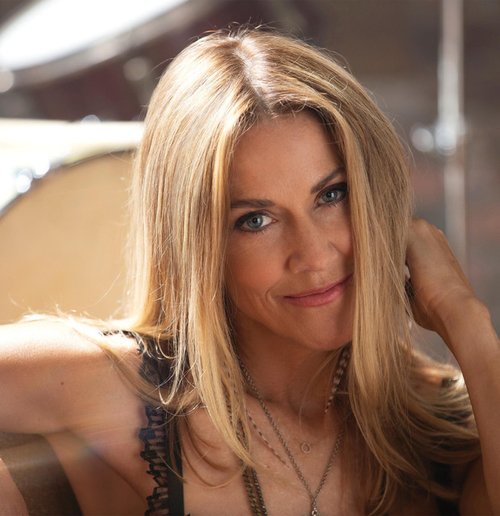
celebrating thirty years of Shakespears Sister’s Hormonally Yours thirty years on. On 17th February, it marks a big anniversary (I would recommend you pre-order the great reissues coming out on 17th February). This was the second and final album from the group to present them as a duo of Siobhan Fahey and Marcella Detroit. The title of Hormonally Yours derived from both members being pregnant while making the album. It is one of the best albums from the 1990s in my view. Hormonally Yours spawned five singles. Among them is the huge chart-topper, Stay. I have written about the album before and how it is underrated. I think a lot of fans will mark thirty years of a terrific album. I am going to source a couple of positive reviews for an album that boasts some superb deep cuts. I love the vocal blend of Fahey and Detroit. With a deeper husk from Fahey and a more operatic tone from Detroit, they weave so beautifully together. I cannot think of another duo like them in terms of the dynamic. What I remember most about the album and the videos is the gothic look. Dramatic and almost ghostly at times, there was something special about their look. Whilst a lot of the biggest songs are in the top half of Hormonally Yours, they do end with the single, Hello (Turn Your Radio On). Produced by Shakespears Sister, Alan Moulder and Chris Thomas, Hormonally Yours reached number three in the U.K.

I was seven when the album came out. I can recall the video for Stay being played a lot. My favourite song off the album, I Don’t Care. I shall concentrate on Stay in a bit, as the single turned thirty back on 13th January. This Wikipedia page looks at the reception to I Don’t Care:

Tom Demalon from AllMusic described the song as "bouncy and resilient". Larry Flick from Billboard wrote that a "lively, guitar-anchored ditty is fueled by finger-poppin' rhythms and shaking tambourines." He added further that the duo's "unconventional vocal style charms, as do light, retro horn fills at the close. An adventurous pop delight with strong multiformat appeal.". Randy Clark from Cashbox called it an "upbeat, slightly quirky pop cut, with an almost '60s-ish jangle to it, featuring the dual vocals of the performance artists". The Daily Vault's Michael R. Smith noted Detroit's "ear-piercing wail" at the beginning of "I Don't Care”.

The video, ironically, sort of shows some of the tension that would have been present between Fahey and Detroit at the time. Whilst it is heightened, I wonder whether director Sophie Muller was alluding to that at all. It is a superb video and song. Now that the duo is back together and reconciled, I feel more comfortable discussing a time that was quite tense and fragmented. Not to go into the split, but it was rather unceremonious the way Detroit was informed she was not going to be part of the duo anymore (Fahey continued as a solo artist under the Shakespears Sister moniker).

Before getting to some reviews, it is worth spending time with the song most people associate with the album and the duo. Stay is a mega-hit that is dramatic, beautiful and unforgettable. In most songs, Fahey would take the lead and Detroit would do more of the backing. In this track, Detroit takes the lead; Fahey comes in at a point to provide a stirring drama and darkness in the song. On its twenty-ninth anniversary last year (13th January), Siobhan Fahey and Marcella Detroit spoke about the inspiration behind the song:

There was a time in the early 1990s when Shakespears Sister truly enjoyed a moment in the sun (or perhaps moon). The duo of Siobhan Fahey and Marcella Detroit brought together influences as divergent as reggae, pop, punk and soul to create their own unique sound. That musical alchemy clearly worked and their second album, 1992’s Hormonally Yours went on to spend 55 weeks on the charts, gaining Double Platinum status along the way.

Much of that success was down to the single Stay, a gothic pop masterpiece which haunted the music world for many months. Helped in no small part by an appropriately eerie video, directed by Sophie Muller, the song perfectly showcased the contrast between Fahey and Detroit, as well as highlighting the latter’s distinctive vocals.

So it’s over to the reformed bandmates to reveal all…

Siobhan Fahey: “We’d written about half a dozen songs for the album which went on to become Hormonally Yours. I would go over every morning to Marcy’s and work in her demo studio.

Dave [Stewart] had this idea that we needed to write a song that highlighted Marcy’s great voice and said he had an idea. I hadn’t heard his idea until he sat down…”

Marcella Detroit: “…Right, he came over at 09:30 in the morning one day and my husband came to wake me up, I’m a late riser. ‘Hey, Siobhan and Dave are here, get up, Dave’s got an idea for a song.’ I got the coffee and we all went to my little studio and he started to play this idea… a really beautiful idea.

“When we started the album it was a concept album. We were going to try and write about this film that we wanted to purchase the rights to called Cat-Women Of The Moon.

SF: “It was a 3D B-movie from the 50s that was going cheap. We thought if we buy it we can write some new scenes and shoot them and put ourselves in and it would be a video album but it was a bridge too far for London Records. So the film idea didn’t come to pass but it did inspire many of the songs. The moon imagery and that extraterrestrial vibe.”

MD: “Stay… each of us had different characters that we identified with in the movie and then in this one scene my character was falling in love with an earthling and he was telling her that he had to leave and go back to earth, so that’s what that song was inspired by.”

SF: “Dave had the chords and the melody…”

MD: “…He had the first verse, he started playing it and singing and we got to the chorus where he had these chords and I just started singing, ‘Stay with me.’ It just happened, a little moment of magic.”

SF: “And then I started scribbling some lyrics and it was pretty quick.”

MD: “Yeah, then you came up with the rest of the lyrics and that was it. We then demoed it at my little home studio.”

SF: “Yeah the final recording is pretty faithful to the original demo, even the funny keyboard sound is on the demo.”

MD: “That was all on the demo, our background vocals and also my lead vocal. I did that at my home studio. That is the difference between technology now and then. Back then, I would send the tape reel over and they couldn’t quite get it to sync up. There was a problem with syncing it up, near the end it just started to go off. So Chris Thomas who was producing it had a little bit of a hard time but they finally got it to work properly. Then everything else was recorded properly, Siobhan’s vocal and any other things that needed to be added. We did the recording in a few different places.

“We did some stuff with Steve Ferrera and this bass player Ian [Maidman] who was so good. We actually put that down at George Harrison’s studio in Friar Park where we initially started the recording.”

SF: “In fact, we recorded most of the album at Friar Park, which was very auspicious. So so generous of George and his wife and son to have us there for a month and lend us his studio.

“I seem to recall that, at the time that we demoed it, Dave was making an album with Chris Thomas. Chris Thomas was producing his album so he was round the house when we brought the cassette home and freaked out and went, ‘That’s a No 1 record, I’ll produce it if you want.’

“It has got a classic melody. For us though it was just another song for the album that we were writing.”

MD: “And then very unusual, conflicting lyrics. It starts out all sweet, the subject is about this unrequited love and then it gets a little bit nasty. There was a great dichotomy between Siobhan and my characters”.

In fact, timed nicely to this piece that went live today (6th February) saw a feature in The Guardian where Marcella Detroit and Siobhan Fahey discussed making Stay:

Marcella Detroit, singer/songwriter

Stay came to life one morning in my converted garage in the back of my house in LA: a very unassuming studio, all knotty pine and carpet, my recording equipment in a cupboard. Siobhan Fahey lived down the road and her then-husband Dave Stewart [ex-Eurythmics] had given her a lift over, then he came in, because he had an idea.

The idea came from these amazing parties Dave and Siobhan used to have. You would not believe the crew that would show up – Tom Petty, George Harrison, Jeff Lynne from ELO, Timothy Leary. Eventually, we would all start singing and jamming, and I would always end up doing ballads. Dave said: “You know how you always sing those ballads at our parties? Wouldn’t it be great to style a song like that to feature you?” And he had an idea for chords and a melody.

Stay was rewritten maybe four times – it sounded like a Prince song at one point – before Siobhan and I went back to the original, developed it, and made a cassette of it. We played it to Chris Thomas, the producer of Roxy Music and the Sex Pistols, who was staying at Dave and Siobhan’s. We weren’t expecting anything, but I remember the room was completely silent: everyone was listening really intently. After it stopped, Chris stood up, and he went: “No 1 smash!” And we were like: “Yeah? Really?”

Later, when the final mix wasn’t working, we asked Chris to help. He rescued that song and made it sound incredible. Jennifer Maidman, from Penguin Cafe Orchestra, came up with the great synthesiser parts for the chorus, and Steve Ferrera, the drummer, also did great things.

It entered the charts at No 27. Then we played Top of the Pops and it kept steadily going up. When it got to No 1 and stayed there for eight weeks, it was really unexpected. But it was incredible that that could happen. I think it’s still one of the longest-running No 1s by a female band.

PHOTO CREDIT: Gie Knaeps/Getty

Siobhan Fahey

For our second album, Hormonally Yours, we’d had this lofty idea to acquire the rights to Cat-Women of the Moon, a fabulously kitsch 3D B-movie from 1953, and build songs around its narrative. The record company said no – they’re not known for their creative thinking are record companies – but we’d written half a dozen songs already, so carried on.

If I remember rightly – 30 years is a long time – the idea for Stay’s lyric came from a woman in the film who had to go back to her planet and leave her human love behind. I was worried about it being too saccharine, but alongside Chris Thomas we had Alan Moulder. He’d recently worked with My Bloody Valentine and the Jesus and Mary Chain, who I loved. At that point, we were the only “pop” band Alan had ever worked with – and he went on to work with Marilyn Manson and Nine Inch Nails. It meant there was nothing sugary about the production.

Sophie Muller , who was my best friend at the time, made the video. We were muses to each other. I’d been getting into gothic ringlets and sparkly glam-rock catsuits, enjoying becoming an unhinged Victorian heroine meets Suzi Quatro meets Labelle! Now that look was combined with me becoming the angel of death in the video, in dark makeup coming down the stairs from another dimension, trying to steal Marcella’s human love away from her – the video had a slightly different concept to the song.

We only had a day for the shoot. Most of it involved recording Marcy singing, so by the evening I was getting bored – but also the clock was ticking. At 8pm, I hit the vodka and by the time we filmed, I was, shall we say, in high spirits, in full deranged splendour. Performing as a darker character is always more fun than being peaches and cream.

I loved coming down the staircase, which was inspired by one of my favourite films, Powell and Pressburger’s A Matter of Life and Death. That character seemed to register with lots of people, which was amazing – there were lots of ludicrous takes on it [by French and Saunders as well as David Baddiel and Rob Newman]. I found that funny and the greatest compliment. Funnier still is how people expect me to be just like the angel of death in real life, 30 years on. They’re bitterly disappointed when I’m not”.

I hope that a lot of love is aimed the way of Hormonally Yours on its thirtieth anniversary on 17th February. Their debut, 1989’s Sacred Heart, is well worth hearing, but I think that Hormonally Yours is the best album from Shakespears Sister. Before wrapping up, I want to bring in one review. Entertainment Weekly gave Hormonally Yours a positive review. Even though they note a few songs are over-long, they have highlight the way their voices are different, yet they blend well:

Most women really hate being accused of hormonally induced moodiness whenever they feel a little crabby, but the two women who make up Shakespear’s Sister clearly have no such qualms. In fact, their second album, Hormonally Yours, plays on the idea of female biological madness, and to its credit, it does so without sounding bitchy or melodramatic. Unlike band member Siobhan Fahey’s former group, Bananarama, Shakespear’s Sis isn’t afraid to emote: The cool detachment of yesteryear has been replaced by a warmer and more emotionally complicated sound. Fahey’s deep, uncannily male-sounding voice is perfectly complemented by her American-born partner, Marcella Detroit, who adds more soulful and feminine R&B-influenced backup vocals. Mostly, the combine sounds great-but several songs (notably ”Emotional Thing” and ”Let Me Entertain You”) go on way too long. Shakespear’s Sister isn’t going to start a turf war with Natalie Cole or Anita Baker, but taken on its own terms — as an original purveyor of lightweight, white-girl blues — this pair is excellent. B+”.

An incredible album that turns thirty on 17th February, I hope Marcella Detroit and Siobhan Fahey recall good memories of that time – even though there were tensions and Detroit departed the duo in 1993. The duo released a 2019 E.P., Ride Again, so we may get another album from them soon enough. Crammed with so many terrific songs from an incredible duo, Hormonally Yours is a…

SENSATIONAL and hugely listenable album.

FEATURE: Spotlight: Anz

FEATURE:


Spotlight

Anz

___________

A wonderful D.J., artist and producer…

 PHOTO CREDIT: Terna Jogo

I wanted to include the wonderful Anz in this Spotlight feature. An epic talent that NME have tipped for greatness this year, I will end with a  review of her magnificent recent E.P., All Hours. It is a sensational release that everyone should play! I am going to quote some interviews, so that we can discover more about an amazing human. I will start with some biography from Ninja Tune:

Anz is a DJ and Producer based in Manchester, renowned for her genre-spanning productions and mixes. Across her work, she unearths the links between Electro, UK Garage, Jungle and more, underpinning a versatile take on contemporary UK club music as bright as it is unpredictable.

In the summer of 2017, Anz’ self-titled debut EP was championed by fellow UK club figures for its playful high energy sound. Distinguished by her unique style and an unparalleled danceability, she refined the formula for her second EP ‘Invitation 2 Dance’ (2019).

Alongside compilation contributions for Discwoman and remixes for Houndstooth and XL Recordings, in 2020 Anz joined UK club stalwarts Hessle Audio for her third full EP. Three tracks of dark hoovers, wiggling basslines and sharp vocal cuts, ‘Loos In Twos (NRG)’ was a ruffneck ode to the club, working its way into countless DJ sets and end of year lists.

Since then, Anz has been busier than ever. A salvo of standout mixes and her acclaimed NTS Radio residency saw Anz scoop DJ Mag's 2020 ‘Breakthrough DJ’ award, and an invitation to join BBC Radio 1’s Dance Residency line-up in March 2021 soon followed. Taking on monthly shows with two of the UK’s most respected broadcasters, Anz has cemented her position as one of the UK’s most exciting young selectors.

But, as a producer, nowhere is Anz’ prolific workrate better demonstrated than her annual ‘dubs’ mixes. Now in its 6th year, each edition is comprised entirely of original productions running the gamut of UK and international styles - always mixed with her trademark laser-focus and tempo-warping trickery.

After self-releasing the fifth edition of S/S Dubs in a deluxe cassette bundle in December 2020, Anz unveiled her label OTMI in early 2021; a home for her as-yet-unreleased tracks and stylistic counterparts from friends and family across the electronic music spectrum. With the physical release selling out in a day, and lead single ‘Unravel in the Designated Zone’ championed by Danny Howard and Resident Advisor alike, Anz spoke to Crack Magazine about the nascent label and her masterplan in her June 2021 cover feature debut.

Showing no signs of slowing down, Anz joins the Ninja Tune family with the announce of her 4th EP ‘All Hours’. Due for release this Autumn, the record is a full-throttle trip through the history of dance music and underground culture – tracing lines through sun drenched electro into club-focused breakbeat, classic UK garage and jungle - all seamlessly pieced together in Anz’ infectiously joyous style.

From her dubs mixes to her award winning NTS show, guestmixes for Mary-Anne Hobbs to her recent Radio 1 Dance residency, her OTMI imprint to the forthcoming ‘All Hours’ EP, Anz mashes down disparate styles with mystifying ease. Expect nods to seminal scenes and plenty of vibes”.

Heading back to 2019, and THE FACE profiled a rising talent who was already a club legend. Anz’s story and progress is fascinating and interesting. It seems like, even by 2019, she had found her place and groove:

Anyone who’s crossed paths with Anz knows all about her passion for the club. The London-born, Manchester-based artist spends her weekends shelling in venues across the UK, and you can hear her blend bass, UK funky, breakbeats, ghetto tech and electro selections once a month on her NTS Manchester show. Anz recently dropped the playful, high-octane EP Invitation 2 Dance – dedicated to ​“the boys who used to muscle me off the decks at house parties” alongside a long list of friends, family and fellow northern nightlife legends.

How did you first develop a passion for raving?

I first went clubbing around 16, sneaking into clubs in East London with my doctored 16 – 25 railcard as ID – I switched the numbers on Microsoft paint, ​‘laminated’ it with clear tape and hoped for the best. But I think university is where I really honed in on the craft of raving. In and around Liverpool, I vividly remember clattering downstairs into the unknown with my partner-in-crime Jess (while I’m here, hold tight Jess). We mainly cut our teeth in warehouses around Liverpool’s Baltic Triangle, before they had been done up all nice with gin menus or whatever.

What’s special about Manchester’s club scene?

Entirely different scenes converge to support each other’s hustle. You get hip-hop and soul heads posting about the latest jungle releases from the city or people from ambient labels front and centre at a hard techno night. There isn’t that tangible sense of competition – I guess everyone is just working to make this thing happen. I think the geography of the city also helps; people might be less inclined to roll to each other’s nights or radio shows if it was a 3.5 hour night-tube round trip.

Other than London and Manchester, where’s your favourite place to go out in the UK and why?

I think Leeds and Sheffield are the ones at the moment. Leeds feels so exciting, the city has a wealth of small DIY spots and people who are passionate about building sound systems, pushing music forward and having a wicked time. Sheffield is similar, but with more hills and greenery. Lovely”.

PHOTO CREDIT: Paula Abu 

I have loved learning about Anz and reading about her sheer passion and drive. Mix Mag interviewed her in 2020. This was near the start of the pandemic. For someone who is use to playing at clubs and around people, it must have been heartaching and stressful for Anz to have her plans and normal routine disrupted a lot:

What would your dream scenario for the first proper party post-COVID be?

First and foremost, there’s a COVID vaccine in place. Then, I think probably just somewhere familiar like The White Hotel or Soup Kitchen in Manchester with loads of familiar faces. No particular line-up or specific genre or anything, just friends and family back together again.

You shared a helpful Twitter thread of tips about your production process. What do you think is the most valuable recommendation you have to help producers facing writer's block?

I'd say there's two. The most important one is that there's no sense in forcing it, and understanding that resting and taking the time away is ok. I've been in situations where I've really tried to push through a block to the point where I'm getting more and more frustrated and then that makes me even more blocked. Especially now that there's reduced pressure with no clubs and no feeling that you need to have the hottest banger to play at X night or Y event, you can try and use that reduced pressure to take time, do nothing, absorb life. Because I feel like once you've absorbed all your surroundings and taken time to just be, it makes it a lot easier coming back to music.

 The second one is trying to make something bad, which I mentioned in the thread. It's probably the most surprising experiment that I've ever tried. I don't know what happens but something kicks in in your brain when you're trying to make something bad that starts injecting it with bits of you and your style or personality. It's weird, but it seems to work.

A lot of the tracks were used in your fifth annual production mix which came out recently and absolutely bangs. Can you share any further plans you’ve got coming up for them - are there releases on the way?

I've got a really big, exciting release later in the year at some point. The masters just came back last week. I probably can't say what it is yet because I don't want to jinx it even though I know it's happening. But it's absolutely mad to me.

How’s lockdown in Manchester been?

It's been interesting. I live in the city centre and for the beginning it was sort of a ghost town, it was really strange to see all these hubs of activity completely dead, which I'm sure everyone has been noticing when going for their sanctioned exercise. I get the sense that I'll maybe never see the city like it again in my lifetime which is quite a heavy feeling.

With making the 74 odd tunes, I haven't really spent that much time outside anyway so I probably couldn't tell you much more. The inside of my flat has been cool”.

Last year, Resident Advisor were excited to speak with an artist who was breaking through. I love D.J.s and producers who are more used to having their music played and heard in clubs rather than the radio. That said, Anz’s music is perfectly fit and ripe for international airplay, as it is so energised and inspiring:

In her family home, where boogie and funk chimed effortlessly with Afrobeat and Ghanian highlife, Anz was drawn to four-part harmony bands and lush basslines—think Dynasty and Earth, Wind & Fire. Her parents carried the familiar sounds of their Nigerian youth over to the UK, bringing a sense of home to their new surroundings. After a series of moves, the family settled outside of London, where things felt a little less like home.

"I didn't really clock on to exactly why I felt uncomfortable and why my parents really encouraged us to make friends with other black kids in the school," she said. "At the time it felt kind of corny, but I don't think I really got the weight of it and why they really encouraged it so much." It was in the quiet moments on the house computer, watching performances by the likes of The Prodigy, that Anz began imagining a new world of sound. By 2015 she was ready to share.

"I didn't really see production mixes all that often from my peers," she said, "and there were moments where I thought 'is this weird? Am I being extra?' But I just felt so compelled to document it all, including the wonky mixdowns and patchy blending. I just needed to try, and to document it, and it's ended up being a really affirming part of my process, for lots of different reasons."

PHOTO CREDIT: Jungle Joe 

Although Anz has always been prolific, the first UK lockdown precipitated an especially intense period. It's clear from our conversation that music has a certain grounding quality. "Whenever I'm feeling sad or upset, there's two ways it will go," she said. "I either completely disconnect, do something that brings me comfort without any kind of expectation, or I start a project. There's no real in-between. It's overdrive or absolutely nothing."

She takes a similar approach to DJing, bringing a few tracks to frame the evening and leaving the rest up to the crowd. "I try to put myself in their shoes, because I've been in their shoes so often," she said. "If I've just had a super-melodic, airy fairy tune, I'd probably want a little bit of pressure, something a little bit tougher. It's a conversation—people tell you if they don't like something, especially if they're moving to the smoking area."

There have been a number of international or high-profile gigs—Lady Gaga booked her for a Marsha P. Johnson Institute online fundraiser in June—but for Anz there's nothing like playing to a home crowd. She likens away-sets to delicate trust-building exercises, whereas in Manchester she's free to roam and hone in on sounds. "At home they understand the broader me, have heard me play in the same basement however many times," she said.

"I don't feel I need to be like, 'Oh, and by the way this and this and this is how we get to here.' They already know that, so I can go as mad, moody, dark or as ecstatic as I want to. They trust me with it." And what about her parents? What do they make of her musical evolution, and the decision to stay up north? "I played a gig for Gal-Dem at the Tate once and they came for that. I think it all kind of made sense—it wasn't a sweaty rave." She leaned into the camera and looked away, pensive. "Maybe I'm trying to do what they were doing at the time, find that comfort in home”.

Prior to the wrap-up and getting to a great review of All Hours, there is a more recent interview that I want to include. The Guardian featured Anz in October last year. As the pandemic is dying down a bit, I know that Anz will have a busy 2022 planned:

This narrative arc is the inspiration for her new EP All Hours. Bookended by a bright piano intro signifying the waking morning, and a dreamlike synth outro designed to sooth you into sleep as the sun comes up and strangers have passed out on your sofa, each track corresponds to a time of day so listeners can “choose their own adventure” through 24 hours.

Lead single You Could Be is a bubbly, sunburst number with vocals from London singer George Riley, meant to reflect an optimistic afternoon feeling. Anz’s music often features vocal snips and samples, she considers them instruments that make the track feel human, but she wanted to find a proper singer for You Could Be, which meant a five-year search before she connected with Riley over Instagram.

Other tracks include a swinging garage cut meant for the evening, an electro/drum track for the dancefloor and a heady, proto-breakbeat and jungle tune for those early hours, lights-on moments. Each track contains a little sonic element of the track before it as well as the one after it; Anz not only connects parts of the day, but shows how dance music history is sewn together too. It’s masterly stuff, demonstrating the 29-year-old’s far-reaching knowledge.

 “As I was building the record, I realised it could be about who I am as a producer, what’s gone into me to create the output,” she says. The record channels various UK electronic styles – rave, breaks, garage – and black music more generally, influenced by the vitality of The New Dance Show, a Soul Train-style dance music TV show that aired in Detroit in the late 80s and early 90s. Today’s dance scenes are rooted in black creativity – a fact often underplayed, now being reclaimed. “It’s music for all hours, and music that’s all ours too – all ravers, but also, for black people. I don’t just mean one set of people, I mean all of us.”

Before this release, Anz’s discography consisted of a few club-ready 12” singles, colourful and propulsive, unconstrained by genre: “I maintain this stuff should be fun. I think discourse merchants get caught up in being purist about genre. Is that fun? No!” The same vision is present in her DJing. “There’s a specific kind of fun that comes with mixing up genres,” she continues. “Music deserves respect, but it doesn’t mean that it needs to be this chore, this fight where we’re warring over the semantics of it rather than appreciating it. This is black electronic music and it doesn’t have to be serious, it can be joyous.”

Residencies for BBC Radio 1 and NTS and her own recently started label OTMI aside, she’s renowned for her annual mixes of her own productions: forthcoming singles, sketches and exclusive tracks blended together into the most potent potion of tomorrow’s new sounds. “I hadn’t really seen other people doing it, and I thought: ‘Am I being extra?’ But this feels like a special thing that I can do … It reminds me of the excitement and wonder I felt when first trying to make music.”

All these efforts have built up into a sudden surge in profile. “The strangest thing was coming back after the pandemic and stepping out in front of a crowd – suddenly it’s not a 200-capacity basement any more, it’s thousands of people staring at you.” Now planning or performing several sets over a weekend while trying to keep her material constantly fresh, she’s busy adjusting to the new balance.

Taking inspiration from the EP concept, Anz considers her dream day: “Every perfect day starts with a lie-in, no alarms, just sunlight. No one texting, calling or emailing me. Garage in the evening. A party with me and my friends playing, no pressure on anyone. A good afters, and the next day in the park. It’s like when I went to uni and first realised I wouldn’t get in trouble if I didn’t go in, and literally watched Ferris Bueller’s Day Off instead.” Ferris would be proud, but with the packed new schedule, her perfect day might prove elusive”.

All Hours is an E.P. that should be played loud. It is so colourful and full of memorable and interesting textures. There have been some very positive reviews for one of last year’s best releases. Pitchfork noted the following when they sat down to experience All Hours:

The nightlife concept behind All Hours is explicit but not overbearing. Anz calls the EP “dance music for people who are up all hours,” and the record’s opening and closing tracks—“Decisions (AM Intro)” and “Quest Select (AM Outro)”—reflect their positioning in the theoretical small hours. The EP’s six songs surge and relax as the record traces the course of 24 hours in clubland, building from the contemplative welcome of “Decisions (AM Intro)” to the brutalist rave frenzy of “Last Before Lights,” and finally mellowing off into the nervous energy of “Quest Select,” a song that suggests tired, twitching feet and brain waves hovering between retreat and attack.

Within this loose framework Anz offers a freewheeling—and very entertaining—callback to the club styles of the last four decades. The giddy “You Could Be,” featuring George Riley, takes the listener back to the early days of Madonna’s career, when she was riding high on the New York electro-funk style of Jellybean Benitez; “Real Enough to Feel Good” nods to G-funk, UK garage, and Baltimore club, while “Inna Circle'' splits the difference by introducing Mantronix-style electro to Baltimore breakbeats. “Last Before Lights,” meanwhile, is a tribute to pretty much everything, throwing Beltram hoover sounds, staccato trance riffs, a chest-bursting bassline, and rousing Italo pianos at a track intended to capture that last, glorious surge of energy before the club lights come on.

While this genre pick ’n’ mix is not exactly standard practice for electronic producers, All Hours is notably less experimental than Anz’ 2020 EP for Hessle Audio, Loos In Twos (NRG). With the possible exception of “Real Enough to Feel Good,” the music on All Hours walks with a straight back and winning smile quite different from that EP’s wobbly strut. The production is bright and welcoming, like an unexpectedly friendly pat-down from security.

More importantly, All Hours brings to the forefront a melodic tendency that Anz has only hinted at in her previous work. The piano intro to “Decisions (AM Intro)” teases the kind of ambiguous emotional journey you might expect of a particularly winsome movie soundtrack, while “You Could Be” is simply a wonderful pop song, shining with romantic sass. The way that the EP’s six songs flow into each other, with sonic elements artfully bridging the divide between tracks, evokes a well-crafted DJ set. The twisting synth riff that connects “Decisions (AM Intro)” and “You Could Be” brings a smile to my face every time, a perfect sleight of hand that never seems to tire.

Like the very best nights out, this EP is simultaneously fleeting and impactful, a brief moment of joy that promises to resonate for years. All Hours feels like an effortless step up to the major leagues for a producer who can find magic in the murkiest nightclub corner”.

A simply remarkable D.J., artist and all-round wonder-talent, go and check out Anz’s socials, and check out her incredible music. She is someone who, one hopes, will be at many festivals through the summer. I love what she is doing – as do so many other people. She has a very long career ahead. Go and throw your support towards…

THE tremendous Anz.

_____________

Follow Anz

FEATURE: Paul McCartney at Eighty: Six: 6th July, 1957: When Paul Met John

FEATURE:


Paul McCartney at Eighty

IN THIS PHOTO: John Lennon as part of The Quarrymen at a garden fete at St Peter’s Church, Woolton, Liverpool  on 6th July, 1957

Six: 6th July, 1957: When Paul Met John

___________

THERE are two big anniversaries/birthdays…

 IN THIS PHOTO: Paul McCartney in November 2021

this year relating to Paul McCartney. For one, he turns eighty on 18th June. As I have said, I am doing a series of features ahead of his birthday to celebrate his music and overall genius. There will be a fair few concerning with The Beatles. I thought, as it is sort of the start of the story, I would write about the time Paul McCartney met John Lennon. That discovery occurred in 1957 – this year, we mark sixty-five years of that historic event! It is hard to understate the significance of the meeting between McCartney and Lennon. Maybe they would have come across one another eventually, though there seems something romantic and fated about 6th July, 1957. Whilst there is a little debate whether the first conversation and meeting occurred at a fete or a local chip shop, we do know it was that warm July day in 1957. As McCartney was only fifteen, he was a blossoming musician - but it would be a few years before he started to write more prolifically (certainly songs that showed what he would be capable of with The Beatles). I often wonder what would have been had McCartney and Lennon not got on or connected. Would they each be in different bands or written completely different songs? It is a good thing that these geniuses did find one another! I find it staggering that two musicians with such incredible talents occupied the same space as teenagers in ’57! Those who were around McCartney and Lennon would not have known what would become and how these two would change the course of musical history.

So. How and where did Paul McCartney and John Lennon meet one another? It is quite quaint and modest how these two future world-class songwriters came to know one another. The Beatles Bible set the scene and reveal the course of events that magical day:

6 July 1957 was a pivotal day for the history of modern music: it was the day that John Lennon met Paul McCartney for the first time.

In the afternoon the Quarrymen skiffle group played at the garden fete of St Peter’s Church, Woolton, Liverpool. The performance took place on a stage in a field behind the church. In the band were Lennon (vocals, guitar), Eric Griffiths (guitar), Colin Hanton (drums), Rod Davies (banjo), Pete Shotton (washboard) and Len Garry (tea chest bass).

The group arrived on the back of a lorry. As well as music, there were craft and cake stalls, games of hoop-la, police dog demonstrations and the traditional crowning of the Rose Queen. The fete was a highlight of the year for the residents of the sleepy Liverpool district.

The entertainment began at two p.m. with the opening procession, which entailed one or two wonderfully festooned lorries crawling at a snail’s pace through the village on their ceremonious way to the Church field. The first lorry carried the Rose Queen, seated on her throne, surrounded by her retinue, all dressed in pink and white satin, sporting long ribbons and hand-made roses in their hair. These girls had been chosen from the Sunday school groups, on the basis of age and good behaviour. 

The following lorry carried various entertainers, including the Quarry Men. The boys were up there on the back of the moving lorry trying to stay upright and play their instruments at the same time. John gave up battling with balance and sat with his legs hanging over the edge, playing his guitar and singing. He continued all through the slow, slow journey as the lorry puttered its way along. Jackie and I leaped alongside the lorry, with our mother laughing and waving at John, making him laugh. He seemed to be the only one who was really trying to play and we were really trying to put him off!

That evening the group were due to play again, minus Colin Hanton, this time at the Grand Dance in the church hall on the other side of the road. They were due on stage at 8pm, and admission to the show, in which the Quarrymen alternated on stage with the George Edwards Band, was two shillings.

While setting up their equipment to play, the Quarrymen’s sometime tea-chest bass player, Ivan Vaughan, introduced the band to one of his classmates from Liverpool Institute, the 15-year-old Paul McCartney.

This historic occasion was the first time McCartney met John Lennon, one year his senior. McCartney wore a white jacket with silver flecks, and a pair of black drainpipe trousers.

The pair chatted for a few minutes, and McCartney showed Lennon how to tune a guitar – the instruments owned by Lennon and Griffiths were in G banjo tuning. McCartney then sang Eddie Cochran’s ‘Twenty Flight Rock’ and Gene Vincent’s ‘Be-Bop-A-Lula’, along with a medley of songs by Little Richard.

I remember coming into the fete and seeing all the sideshows. And also hearing all this great music wafting in from this little Tannoy system. It was John and the band.

I remember I was amazed and thought, ‘Oh great’, because I was obviously into the music. I remember John singing a song called ‘Come Go With Me’. He’d heard it on the radio. He didn’t really know the verses, but he knew the chorus. The rest he just made up himself.

I just thought, ‘Well, he looks good, he’s singing well and he seems like a great lead singer to me.’ Of course, he had his glasses off, so he really looked suave. I remember John was good. He was really the only outstanding member, all the rest kind of slipped away.

Paul McCartney, 1995

Record Collector”.

The two knew one another for just over twenty-four years. Although the relationship would go through some turbulence at the end of The Beatles’ career until shortly before Lennon’s death in 1980, they did reconcile and become friends. There was something brotherly about their bond. Being in the band forged this kinship. Whilst it faced challenges, it also led to some of the greatest music the world has ever heard! Less than a month after Paul McCartney’s birthday in June, he will get to think back sixty-five years and this day when he met someone who would become a great friend and writing partner. In the John Lennon at 80 celebrations from 2020, McCartney spoke with Lennon’s son, Sean, about the time the two met. NME quoted Paul’s recollections:

In McCartney’s segment, he recalled when he first realised Lennon was special. He said he had first noticed him on the bus and thought he was “an interesting looking guy”, but had no idea he played music until their friend Ivan introduced them at the village fete where The Quarrymen were playing.

“I knew nothing about him except that he looked pretty cool,” he explained. “He had long sideboards and greased back hair and everything.”

McCartney continued to talk about the band’s musicianship, saying that their attitude was more important than sophistication. “My attitude would be, ‘This is what I want to do’ and then John would bring another edge to it,” he said. “What was the great thing was the combination of those two attitudes and I look back on it now like a fan.

“I think, ‘Wow, how lucky was I to meet this strange Teddy Boy off the bus who turned out to play music like I did, and we get together and, boy, we complemented each other’. They say with marriages opposites attract and we weren’t madly opposites, but I had some stuff that he didn’t have and he had some stuff I didn’t have so when you put them together it made something extra”.

As Paul of my Paul McCartney at Eighty series, I will explore more to do with him and The Beatles. From the debut album through to the final embers of Abbey Road, I am excited to discuss the cultural significance of Paul McCartney as part of the group. On his birthday on 18th June, the world will come together and celebrate a wonderful human. In this series, I simply had to discuss the time McCartney and Lennon met. It is such a monumental and important event; one that would go on to alter the course of music as we know it. Just think back to July 1957 when these two talented teens…

FIRST said ‘hi’.

FEATURE: Groovelines: Dexys Midnight Runners and the Emerald Express – Come on Eileen

FEATURE:


Groovelines

Dexys Midnight Runners and the Emerald Express – Come on Eileen

___________

THIS is a bit of a classic…

that I have not featured before. Released in June 1982, Dexys Midnight Runners’ (credited to Dexys Midnight Runners and the Emerald Express) Come on Eileen was taken from their album, Too-Rye-Ay. That album itself is a bit of a classic in its own right. That said, there is no doubting the biggest song on it is Come on Eileen! The song reached number one in the United States. It was the British band’s second number one hit in the U.K. following 1980's Geno. Not only was it a chart success. Come on Eileen  won Best British Single at the 1983 BRIT Awards. It was named as Britain's best-selling single of 1982. Not only is the song one of the defining hits of the 1980s. It is a track that translates to this day and still sound amazing. Some say that the group are a one-hit wonder. I disagree. Although Come on Eileen is their biggest moment, Kevin Rowland and co. have had more than their share of hits! There are a couple of interesting articles that take a closer look at a massive Dexys hit. American Songwriter wrote a feature on Come on Eileen a couple of years back:

The greatest one-hit wonder of the 80’s? Maybe the greatest one-hit wonder of all time? You can certainly make that case about Dexys Midnight Runners and “Come On Eileen,” the band’s 1982 lightning bolt of a single that they never could quite repeat. Not that they should be ashamed about that, because this was a song that brimmed with so much spirit and passion that anyone would be hard-pressed to replicate it.

IN THIS PHOTO: Dexys Midnight Runners in 1982 

It should be noted that “Come On Eileen” was not the only hit that the group had in their native Great Britain; they had actually scored a previous #1 smash with “Geno.” In America, the song seemed to drop out of the clouds in the midst of a wave of British invaders at the peak of the MTV era. Yet unlike the electronic, automaton chilliness of the Human League or Soft Cell, “Come On Eileen” was brimming with palpable heart and soul.

The song was written by Dexys’ frontman Kevin Rowland along with band members “Big” Jim Paterson and Billy Adams. Rowland told authors Jonathan Bernstein and Lori Majewski in the new book Mad World: An Oral History of New Wave Artists and Songs That Defined The 80s that a big hit was something he was actively trying to achieve. “I always want what I haven’t got – or I used to,” he said. “I was hankering after pop success at that point. I’m not saying we wrote it with that in mind. Oh, that I would be that clever. But we did write it, like everything we did, the best we possibly could. We worked our arses off. Every detail counted.”

Rowland and his collaborators bucked the prevailing trend at the time by spurning synthesizers in favor of a slew of back-porch instruments like fiddles, banjo and accordion. With sure-handed 80’s hitmakers Clive Langer and Alan Winstanley at the producing helm, the end result was a song with more hooks per capita than anything short of “Billie Jean,” even as Rowland’s heartsick vocal added a touch of melancholy to the uplift of the instruments.

The song’s lyrics, at surface level, may seem to be nothing more than the narrator’s amorous plea to Eileen, one that gets downright spicy at times: “You in that dress/My thoughts I confess/Verge on dirty.” Yet “Come On Eileen” spins off from that basic concept to articulate the youthful urge for separation from an older generation hoping to indoctrinate these youngsters into their tired society.

Rowland name-checks weepy 50’s crooner Johnnie Ray at the beginning of the song to symbolize the kind of sorrow that hangs over the entire scene he wishes to escape. “These people ‘round here,” he sings, “Wear beaten-down eyes sunk in smoke-dried faces/So resigned to what their fate is.” He promises Eileen that their fate will be different: “No not us/We are far too young and clever.”

By the time the bridge rolls around, with what seems like a whole gang of Runners imploring Eileen from all angles in swooning countermelodies, you are completely caught up in the song’s energy. In the end, nothing sums up Rowland’s argument as well as his wordless cry of independence: “Too-ra-loo-ra, Too-ra-loo-ra, aye.”

Even though Dexys Midnight Runners imploded not long after this colossal #1 hit, the song itself still looms large. There’s nothing wrong with having just one hit when it’s a hit as memorable as “Come On Eileen.” “And you’ll hum this tune forever,” Kevin Rowland promised. You can call that line foresight or just plain youthful arrogance, but you can’t deny its accuracy”.

Come on Eileen is one of those songs that has been shared through the generations. You can play it and, by the time the chorus hits, everyone is singing along! It is an undeniable classic. Stereogum wrote about how Kevin Rowland’s band were not hugely successful to start out with:

The first few records from the new Dexys lineup weren’t terribly successful, but then Rowland heard demos of some Blue Ox Babes songs. Rowland loved the way Blue Ox Babes combined Celtic strings with uptempo soul beats, and he basically decided to steal this style for Dexys. Rowland tried to get all the horn players to learn to play strings. When that didn’t work out, Rowland recruited violinist Helen Bevington, a music school student, from the Blue Ox Babes. Rowland got Bevington to change her name to Helen O’Hara, since it sounded more Irish, and he convinced her to bring in a few more string players from her music school.

This lineup of Dexys Midnight Runners didn’t last long, either, but Rowland kept it together long enough for Dexys to record Too-Rye-Ay, their second album. While working on the new album, he assigned the band a whole new look: Those grimy and patched-together overalls from the “Come On Eileen” video. Rowland co-wrote “Come On Eileen” with band members Jim Patterson and Kevin Adams, though he later admitted that he’d stolen the basic sound from his ex-bandmate Kevin Archer. Rowland was very much trying to make a hit when he came up with “Come On Eileen”; Dexys needed one badly. They got it.

I don’t think I’d ever really given the “Come On Eileen” lyrics much thought before sitting down to write this piece, but there’s a lot going on in the song. Rowland wrote those lyrics about getting into a sexual relationship with a friend when he was in his teens. Catholic guilt hangs over the song; Rowland tells the girl that his thoughts “verge on dirty” when he looks at her. He gets majestically sentimental about his parents and their music. He thinks of their mothers listening to “poor old Johnny Ray,” the dependably bummed-out pre-rock American pop idol, and he thinks that they could sing Irish lullabies just like their fathers. But he doesn’t want to end up like his father

Rowland sings about Birmingham’s miners and factory workers with a sort of terror. To him, they’re “beaten down” and “so resigned to what their fate is.” But Rowland dares to imagine something better for himself and Eileen: “We’re far too young and clever.” That’s when “Come On Eileen” becomes a song about sex, one of our most dependable, if short-lived, means of escape. Rowland wants Eileen to “take off everything,” and suddenly the song turns into a giddy chant, speeding up and slowing down tempos recklessly.

“Come On Eileen” takes its intro from “Believe Me, If All Those Endearing Young Charms,” an Irish folk song that Thomas Moore (not the saint) wrote in 1808, and its big hook is suspiciously close to the one on “A Man Like Me,” the 1972 single from Jimmy James, a Jamaican singer beloved on the Northern soul scene. (This is another one of those cases where someone probably would’ve been sued if it happened today.) “Believe Me, If All Those Endearing Young Charms” and “A Man Like Me” don’t necessarily have much in common with one another, but Rowland draws them together through horny desperation and fired-up intensity and a big clompy-clomp rhythm, and he makes them work.

A big part of the charm of “Come On Eileen” is Rowland’s voice. He’s clearly not the soul singer that he wants to be, but he doesn’t let that stop him. He yelps and wails as hard as he can, and his Northern English honk bulldozes through all the strings and horns around him. When “Come On Eileen” turns into a big mass singalong, it finds a certain drinking-song grandeur. Producers Clive Langer and Alan Winstanley had already done a lot of work with London ska goons Madness, and both the clean clumsiness of the “Come On Eileen” beat and the gang-shout chorus could’ve come straight from that band. (In the US, Madness’ highest-charting single, 1982’s “Our House,” peaked at #7. It’s a 9.)”.

A song that I really love and have so much time for, it is a chart-topper that has lifted people for almost four decades. I wanted to know a little more about the track. The band, now trading as Dexys, released Let the Record Show: Dexys Do Irish and Country Soul in 2016 (an album of interpretations of Irish songs and other select compositions). Both their 1980 debut, Searching for the Young Soul Rebels, and 1982’s Too-Rye-Ay are stunning albums. The latter’s Come on Eileen is a stone-cold classic that is...

IMPOSSIBLE to dislike.

FEATURE: Kate Bush: The Iconic Shots: A Stunning Artist Takes to Abbey Road Studio 2 During the Recording of Never for Ever

FEATURE:


Kate Bush: The Iconic Shots

A Stunning Artist Takes to Abbey Road Studio 2 During the Recording of Never for Ever

___________

THIS is the absolute final…

part of a run of features where I look at iconic shots involving Kate Bush. Although I do not have an exact date and photographer for the shot (it is between 1979 and 1980), I couldn’t pass by such a classic! I think that many picture Bush as this artist who is known for her voice. They do not often associate her with production and tackling the studio. She was just as hungry a producer and sonic innovator as she was an accomplished vocalist. The shot I am featuring shows Bush focused and in her element! This is her at Abbey Road Studios. I am guessing the photo is around 1980. In the featured image, she is sat at the Mark IV desk in the control room. Whereas her brother, John Carder Bush, took photos of her smiling at a studio control room when she was making Hounds of Love (1985), I am not sure about this photo. Although I can only be a bit vague with this final inclusion, it is an image that I think about a lot! The Kate Bush Encyclopaedia explains when Bush recorded at Abbey Road Studios:

Kate worked at Abbey Road Studios on the albums Never For Ever, The Dreaming, and Hounds Of Love in Studio 2, and the orchestral parts for the albums The Sensual World and The Red Shoes. On 17 June 1981, the music video for the song Sat In Your Lap was recorded in the cavernous Studio 1, a huge space about half an acre in size. On 12 November 1981, Kate attended a 50th anniversary party for the studio, and cut the birthday cake alongside singer Helen Shapiro. In March 1986, she recorded a performance of the song Under The Ivy for the 100th broadcast of The Tube”.

Whilst I cannot really pinpoint the month the shot was taken – as there is scares information online about this image -, I do think that it ranks alongside the best. I am pretty sure it is in 1980, but I do not have a photographer credit. During the recording of Never for Ever, she worked alongside Jon Kelly as producer. These two young people were given the keys to Abbey Road! It was the first time Bush co-produced. It would have been such an exciting time. Both revealing and scary, this was a big leap for her. As it turns out, the sound and production work on Never for Ever is incredible. The tone and sound would radically shift for 1982’s The Dreaming – Bush produced solo and worked out of Abbey Road for parts of it. There are several reasons why I love the shot of her looking intent at Abbey Road. The fact it is a black and white shot makes it more memorable and beautiful I think. Also, her expression is wonderful. Bush always gave great looks when it came to her photos! Here, there is a mixture of seriousness and curiosity. If the Hounds of Love studio shots were more fun, this is a more determined and focused look. Bush was following on from 1979’s The Tour of Life and a very busy first couple of years of her career. Although 1980 was a busy year for her, the period where she recorded Never for Ever seems less intense than in 1978. She had more control of the music, and her next album would not be for another two years.
I think that Never for Ever is an underrated album. One that is not often talked about, one has to marvel at Bush’s songwriting and the different moods expressed throughout. Songs like Babooshka and Army Dreamers are very different. Lesser-heard tracks like The Wedding List and The Infant Kiss are magnificent. So assured and accomplished, there was no doubt that this was a songwriter and talent at the top of her game! Wanting to exert more control of her material and create an album that was truer to her, she worked very well alongside Jon Kelly. Even though he did not produce with her again, the two had a good working relationship. It was just that, having had a taste, Bush knew that she had to produce alone and take full the reins on her own. Only twenty-one when she started recording Never for Ever, it is amazing to hear the complexity on display. Peter Gabriel introduced Bush to the Fairlight CMI. We hear it a bit of Never for Ever, though this exciting new technology would play a bigger role on The Dreaming and Hounds of Love. Able to simulate all sort of sounds, it was a real breakthrough. It was a really exciting time for Kate Bush. One can see that in the expression she gives in the photo from Abbey Road Studio 2. A remarkable young artist who always produced such phenomenal music, it would have been fascinating sitting in the studio and hearing these songs come together. In terms of the conversations and memories that are held in that studio from that time, it is something that…

WE can only imagine!

FEATURE: Paul McCartney at Eighty: Five: Post-McCartney III and 2022

FEATURE:


Paul McCartney at Eighty

Five: Post-McCartney III and 2022

___________

IN this part of my run of features…

 PHOTO CREDIT: Mary McCartney

that looks ahead to Paul McCartney’s eightieth birthday in June, I wanted to look at this year. As of the time of writing (20th January), there has been no announcement regarding festivals or any big bookings. Aside from his bestselling and award-winning lyrics book, there was also the documentary, The Beatles: Get Back. It was a hectic and fun year for McCartney in terms of promotion and activity! With gigs few and far between, I think he is looking ahead to what 2022 has in store. In terms of albums, I suspect that McCartney has had some material stored up. His latest album, McCartney III, topped the charts and won him some of the best reviews of his solo career. It is a tremendous album that was made during lockdown (or ‘rockdown’ as he called it!). I have an inkling and feeling that we may get an album from Macca later this year. In any case, I wanted to speculate what more could come from him this year. Topping the charts and winning plaudits all over the shop, McCartney III showed that a legend in his late-seventies had lost none of his songwriting genius! This is what AllMusic observed in their review:

Paul McCartney faced the COVID-19 lockdown of 2020 like he faced so many other unexpected challenges in his life: he set out to make music on his own. The title of McCartney III positions it as a direct sequel to 1970's McCartney and 1980's McCartney II, albums he made in the wake of the respective dissolutions of the Beatles and Wings, a sentiment that rings true in some ways but not in others. Certainly, the one-man-band approach unites all three albums, as does their arrival at the dawn of a new decade, yet McCartney III doesn't contain a clear undercurrent of Paul processing change in the wake of loss.

He doesn't spend the record trying to "Find My Way," as he puts it on the album's second song, but rather simply existing, drawing evident pleasure from the process of writing and recording new music. This also means McCartney III doesn't quite have the shock of the new the way that the homespun McCartney and synth-laden McCartney II do; he's not attempting new forms or ideas, instead returning to themes that have served him well over the years, whether they're plucked acoustic ditties, plaintive piano ballads, or stomping rockers. Execution makes a big difference, though. Where 2018's Egypt Station was designed with the charts specifically in mind -- Paul went so far as to hire producers Greg Kurstin and Ryan Tedder for the record, hoping they'd give him a modern sheen -- McCartney III is constructed at a modest scale, the arrangements so uncluttered that it's easy to hear the years on McCartney's voice. Maybe he can't hit the high notes he way he used to, maybe he sounds a bit weathered, but the change in his singing has a profoundly humanizing effect, especially when heard in conjunction with his distinctive drumming and fuzzed-out guitars. Within these contours, it's possible to trace the distance between the three McCartney albums. Despite these signs of age, McCartney III isn't an album about mortality, it's about finding sustenance in rough times. McCartney nods to sadness and loneliness on "Deep Deep Feeling" and conjures a fleeting sense of wistfulness on "Pretty Boys," then balances these moments of sadness with the sweet "The Kiss of Venus," the sugar-coated rallying call "Seize the Day," and the vulgar jabs of "Lavatory Lil." Individually, these moments may not seem particularly eccentric, yet when they're collected as an album, they add up to a charmingly off-kilter record, an album that benefits from its modest origins and McCartney's willingness to not polish too many of his rough edges”.

McCartney also did a series with Rick Rubin where he explored and dissected his songwriting. 2021 was a year where he looked back quite a bit. After a fresh album at  the end of 2020, the last year was McCartney largely revisiting his past work. With a lot of focus being on The Beatles and how Peter Jackson’s documentary changed the narrative and decades-held beliefs as to why the band broke up (namely that Yoko Ono was somehow responsible), it must have been quite emotional for him. With Ringo Starr, McCartney got to see his sadly-departed bandmates (John Lennon and George Harrison) working at a time that many have assumed was quite tense. I wonder whether this has given him drive to compose new material. In terms of Beatles-related bits, there have been no announcements regarding books or remastered albums. Of course, we got a range of packages for Let It Be. Complete with extras and a treasure trove for fans, I am not sure whether Giles Martin is going to go back to 1963 and Please Please Me. Many fans wonder if Rubber Soul and Revolver will be the next for the remaster treatment, as Sgt. Pepper’s Lonely Hearts Club Band was the first in 2017 – fifty years after the album was released. I don’t think there are any plans in 2022 from Martin. That could change, but it seems unlikely. What is more likely from a Beatles viewpoint is more books. Naturally, The Beatles: Get Back would have inspired new perspective on the band. I feel we will get some books about the group from 1969/1970.

In terms of McCartney himself. There has been no word as to whether he will play Glastonbury this year. He was due to headline in 2020 but, with the pandemic halting things, there has been no news. I suspect that McCartney will play plenty of gigs. As he approaches eighty, it is amazing he still has the energy to play such demanding sets! I do feel that there will be an album. McCartney has always worked and, with time to compose and record at his home studio, I reckon we might get an album similar in tone to McCartney III. Maybe he will play with other musicians but, as Macca did everything himself, maybe he will go down that route again. Things are still a bit restricted, so maybe he will not feel comfortable inviting musicians into the studio with him. Given the fact that McCartney III was released with a starting or artists re-versioning and remixing songs from the original, perhaps McCartney is in a more collaborative mood. Whatever comes, I get the sense McCartney will reflect on the pandemic and strange time, but he will look to move forward. Maybe watching The Beatles documentary has given him some fresh direction and sense of reflection. There will be a lot of demand for new McCartney material for sure. I am excited to see what comes next. One might predict a quieter year for McCartney but, as he approaches eighty, I do not think…

HE will slow down.

FEATURE: U.N.I.T.Y.: The Women Who Helped Shape and Transform Hip-Hop

FEATURE:


U.N.I.T.Y.

IN THIS PHOTO: Lauryn Hill won five GRAMMYs - a new record for a female singer in a single award ceremony - on 24th February, 1999/PHOTO CREDIT: Frank Trapper/Corbis via Getty Images

The Women Who Helped Shape and Transform Hip-Hop

___________

IN today’s music…

 IN THIS PHOTO: Bree Runway

we have artists like Little Simz and Bree Runway, who are helping to shape and elevate Hip-Hop. I have always felt that the women of Hip-Hop have both been under-explored and overlooked. Stunningly innovative and important regarding the history of the genre, I am reading a book called Flip the Script: How Women Came to Rule Hip Hop. Written by Arusa Qureshi, it is revealing and illuminating. In the book, she discusses the women who helped shape Hip-Hop. From success stories like Cookie Crew in the U.K. to the sexism that surrounded Roxanne Shante’s rise and success in the U.S., it has made me respect more the women who have paved the way for the new wave. There is still sexism and prejudice in Hip-Hop, though I think there have been doors open and steps made since the 1980s and 1990s. I am going to end with a playlist of songs from women who, from decades back to today, have been hugely influential – including quite a few modern-day queens and pioneers. Before that, I want to reference some articles that explore and spotlight the women whose voices are essential and inspiring. Before rounding off, I am going to source the liberally from some features which not only chart the history of women in Hip-Hop and their impact. There is a great feature that highlights the most important women of the genre.

Before coming to that - and as I mentioned her book -, Arusa Qureshi spoke with Cookie Crew in an article for The Guardian in November last year. It is very clear that they made an enormous impact on the scene:

When considering the history of women in hip-hop, some pioneering names will always stand out. There’s Debbie D, a member of DJ Marley Marl’s Juice Crew; Pebblee Poo, who joined DJ Kool Herc’s Herculoids; and Lisa Lee, who was in Afrika Bambaataa’s Universal Zulu Nation. Then there’s Sha-Rock, considered the first prominent female MC; Mercedes Ladies, the first all-female group in hip-hop; Roxanne Shanté, the formidable battle rapper. But as in many parts of the music industry, these women were told they’re good for a girl: a patronising framework that is one of the core reasons women are left out of the history of the genres they helped revolutionise.

In the UK in 1983, two more young women were also about to be underestimated. MC Remedee (Debbie Pryce) and Susie Q (Susan Banfield) were just getting started as Cookie Crew, inspired by what was happening in the New York music scene. Cookie Crew pre-dated other prominent women in UK hip-hop such as She Rockers and Wee Papa Girl Rappers, not to mention Monie Love, who would go on to settle in New York in 1988 to massive success. As one of the first female hip-hop groups in the UK, they were also among the first to battle the hurdles women faced in the genre; constantly compared to adjacent male rappers, forced to prove themselves despite their evident success, and constantly pushed in different, and often contradictory, directions.

IN THIS PHOTO: Debbie Pryce and Susan Banfield, a.k.a. Cookie Crew/PHOTO CREDIT: David O’Neil/ANL/Shutterstock 

“We started listening to hip-hop because Debbie would go to New York with her family in the early 80s, record the radio on a cassette tape and bring it back for us to listen to,” Banfield explains. “We would listen to it at home, and it was amazing to us.”

The pair would spend time in the park near where they grew up with their crew of friends, roller skating and playing double Dutch – once they started writing, this was the ideal place to test the waters with their rhymes. “Malcolm McLaren did this documentary in a place in Covent Garden where breakers [breakdancers] used to hang out,” she recalls. “We started to connect the dots with everything that was happening in the hip-hop scene. There were graffiti artists down there, there were breakers, and there were rappers – everyone started to try a little something.”

This included Banfield and Pryce, who were writing raps, not realising that there weren’t really other girls doing the same thing locally. “We had no clue because we saw American girls doing it. We were listening to female rappers like Sha-Rock, Lisa Lee and Debbie D and we were influenced by them. There were a lot of rappers out there [in the UK] at the time, all male, but we did see Michelle Devitt also known as Mystery MC of Family Quest. We saw her rapping on stage; she was freestyling and she blew us away – the first female rapper that we had seen from England.

It was at this point in 1985 that they heard about a rap competition being run by a young Tim Westwood, with prize money and a recording contract up for grabs. “The boys that we used to hang with were saying, ‘You could win this!’ And so our friends forced us to go down there, and we put our name down for the first week. We saw all the rappers that were taking part and then thought, OK, we’ll go back next weekend and take our name off the list, because this is looking really hard and we’re not sure. But the night came and we thought: We’re just gonna go out there and do it because it doesn’t matter. I remember the stage being so big that they had to lift Debbie up on to it! We rapped over Afrika Bambaataa and the Soul Sonic Force’s Planet Rock, and it was fast. It was so fast!”

“Basically, we killed it,” Pryce adds with a grin. “We could see all the guys from Battersea who came with us, who were our support network. The crowd was just going crazy. When they made the announcement on the night that we won, it was like our feet didn’t touch the ground. It was a complete blur, but it was sheer excitement. We went away feeling like champions and after that, the world was our lobster.”

They took the prize money but not the contract. “It’s a good job we didn’t take it, because it probably would have been a mess,” Pryce notes. “We went for a meeting and I just remember coming out unsure. We knew nothing about the business. We just wanted to hang out and build our reputation on the scene. Thank God we didn’t sign – but we did get a trophy!”

After signing with London Records, Cookie Crew took on the US, and soon they were working with the likes of Stetsasonic and Gang Starr. But through all of this, they stuck to their truth, and to their British identity, and did all they could to represent the burgeoning scene at home. Songs from their debut album Born This Way make direct reference to their home town and to their journey (“We’ve got a message to all who said we couldn’t do it / take a look at us now, take your words and chew it”); Black is the Word captures their pride in their Black British identity and From the South is a homage to their home.

“We’ve always stayed true to our roots because we were very patriotic about London, and about south London particularly,” Pryce says. “All the narratives on the tracks are based around our experiences, even though the delivery might have had that American tone, because that was our reference point. Our subject matters were very, very British. When we were in New York, we were very proud of being British. We also felt that we were educating them about what was going on outside the US. A lot of the people we met didn’t realise that there were actually Black people in England because not many people had passports back then and they weren’t travelling. We were educating them on who we were, being British, but British Caribbean too.”

“Our references came from our parents, and our parents were the Windrush era,” Banfield explains. “Hip-hop in a way introduced us to what was happening in America but it didn’t introduce us to wider issues we faced as Black people. For example, we spent a lot of our time doing anti-apartheid gigs. We spent a lot of time making sure that we were involved with any gig to do with freeing Nelson Mandela as much as we could. We boycotted certain things, we were involved in everything possible that could be against Margaret Thatcher. We’ve always had that side of us”.

Tied into the new T.V. show, The Real Queens of Hip-Hop (on Hulu), Deena Zaru wrote an article that began by stating how women were right at the core of Hip-Hop from its inception and roots:

Even before hip-hop was called “hip-hop,” women were on the frontlines of the culture as emcees, rappers and producers.

From the earliest icons of the 1970s and 1980s, to the trailblazing stars of the 1990s and the chart-toppers of today, women have empowered each other and broken down barriers for generations to come.

“The Real Queens of Hip-Hop,” an ABC News special that is set to air on Monday, explores the inspiring rise and powerful force of women in hip-hop, in their own words. It is narrated by Salt of the iconic group Salt-N-Pepa; it includes original spoken word performances by the legendary MC Lyte and interviews with iconic artists like Eve, Da Brat, Trina, Monie Love, Yo-Yo and more.

Here’s a look back at the legacy of women in hip-hop and some of the artists who changed the game:

Early pioneers

MC Sha-Rock, known as the “Mother of the Mic,” got her start as the first female emcee of hip-hop in the 1970s when her rhymes earned her a spot as a member of The Funky 4+1.

But during its earliest days hip-hop was not taken seriously by older generations and record companies, she said, so artists had to fight for recognition.

“They felt as though this was something that just was never going to go any place,” MC Sha-Rock said. “I can tell you how we were told as young teenagers that this was just a fad. It wasn't until corporate America radio stations saw that these young kids with little or no resources created something out of nothing.”

The Funky 4+1, with Sha-Rock at the center, became the first hip-hop group to get a record deal and the first to perform on mainstream television when they were invited to appear on “Saturday Night Live.”

This was the beginning of hip-hop’s foray into the mainstream.

IN THIS PHOTO: Roxanne Shante poses for a portrait session in 1988 in New York City/PHOTO CREDIT: Michael Ochs Archives/Getty Images

Another important moment took place in 1980 when Sylvia Robinson, the founder and CEO of Sugarhill Records, released “Rapper’s Delight,” -- the first hip-hop song to achieve commercial success and the first to chart on the Billboard Top 40.

“Rapper's Delight was a huge deal. And then they started playing it on the radio. So that was even grander,” MC Lyte, the first female hip-hop emcee to release a solo album, said. “But then later to find out that it was a woman, Ms. Robinson, behind it all … it was wonderful.”

But at the time, rappers did not wait for record companies to release their music; they released their own cassette tapes, which were a form of communication at the time.

“I didn't come through no great studio. My record was made on a cassette tape … and what it did was it opened up the floodgates,” said Roxanne Shante, who was known in Queens in the 1980s as one of the fiercest MCs.

“I think I was able to open up those doors as a woman ... to allow a lot of these other rappers to come in and say … you know what? I can do this,” she added.

A message of empowerment

As hip-hop made its mark in mainstream culture in the 1980s, women had to battle for recognition in a male-dominated industry.

“Today you need to have thick skin, but back in the 80s, you needed to be a rhino, honey, because for one, you could be as good as any man and you still wasn't getting the level of respect that you deserved as a woman on the mic,” said Grammy-nominated rapper Monie Love.

Monie Love and Queen Latifah perform "Ladies First" at Newark Symphony Hall in Newar...Read More

In 1989 Queen Latifah called on Love to join her in writing an anthem to empower female MCs, which led to the all-time classic single “Ladies First,” which celebrates the lyrical prowess and talent of women in the industry.

IN THIS PHOTO: Monie Love/PHOTO CREDIT: Asanteworks PR 

“I love the unity that the women came together because that's what I've always been about,” said MC Lyte. “... that was historical, because I think [it’s] the first time that I'd seen women come together on a rap song, and they brought it.”

At the time, in some hip-hop lyrics women were given derogatory terms but “Ladies First,” which was featured on Queen Latfiah’s 1989 album, “All Hail the Queen,” honored women as “queens.”

Love said that as a female emcee in the 1990s she was constantly asked about misogyny in hip-hop, but she would say, “‘I don't own it’ ... me and Latifah are over here calling sisters queens. That's what we doing.”

Hip-hop has been standing up for Black lives for decades: 15 songs and why they matter

Compton rapper Yo-Yo was outspoken against misogyny in hip-hop at the time and advocated for women’s empowerment in her music in songs like the 1991 classic, “You Can't Play With My Yo-Yo,” featuring her fellow West Coast rapper Ice Cube.

“[The song] has a lot of femininity, adult femininity in it, and it's powerful to me because it's everything that I am. My name is Yo-Yo, I'm not a h--, no,” she said.

“It was really a chance to stand up and be bold and be fearless and to represent women in a different kind of way.”

Yo-Yo, MC Lyte and Queen Latifah perform onstage during Queen Latifah's "Ladies First"...Read More

Embracing sex appeal

A new generation of female hip-hop stars in the 1980s and 1990s sent another message of empowerment to women by boldly embracing their sexuality.

And it all started with Salt-N-Pepa.

The group released their first studio album in 1986, becoming the first female rap group to sell more than a million records and their style distinguished them from other artists on the scene as they brought sex appeal into the game.

“Everybody today took a page out of Salt-N-Pepa's book. Everyone,” Love said.

In the 1990s, artists like Lil Kim would take this image to a whole new level.

Lil Kim’s debut album “Hard Core,” which was released in 1996 was certified double platinum, and the rapper became known for her raunchy lyrics and unapologetic sex appeal.

IN THIS PHOTO: Salt-N-Pepa/PHOTO CREDIT: Michael Putland 

“That was the first time for me that I saw that much sexiness in female hip-hop -- she created and started that,” said rapper Trina, who rose to prominence in the late 1990s.

Da Brat, who released her debut album “Funkdafied” in 1994, becoming the first solo female rapper to sell a million records, said that it’s important for women to have the freedom to express themselves however they choose.

“I love the fact that Lil Kim was comfortable in her own skin, which apparently she was because she did the damn thing, and I was comfortable in my skin, and nobody tried to change me, and if nobody tried to change her, then more power to her,” she said.

According to MC Sha-Rock, in the early days of hip-hop there was less of a focus on a woman’s looks and more a focus on her skills as an emcee.

But as hip-hop got more corporate, things began to change and women faced more pressure to fit into a certain image.

“I say that that shift started in the 90s when they took the female rapper and didn't make her the more prominent female figure in hip hop,” Shante said. “Instead, they took the video vixen and made her the more prominent female in hip-hop, so people were looking for her rather than looking for a lyricist.”

IN THIS PHOTO: Da Brat 

Changing the game

Despite the pressures of the industry, trailblazing female artists stayed true to themselves and produced legendary work that continues to influence and define hip-hop today.

When Missy Elliot released her debut album “Supa Dupa Fly” in 1997, not only did the rapper stand out for her unique style, but also for her artistry, which was reflected in her iconic, larger than life performances and music videos -- the first of which was her debut single, “The Rain.”

Da Brat was one of the many artists who made memorable cameos in the video.“Missy has always been way ahead of her time with her thought process,” Da Brat said.

“I love he still to this day for that and what she's done for the culture. She changed the game for women completely.”

Another artist who embraced her individuality in the late 1990s was Lauryn Hill.

Lauryn Hill won five Grammys, a new record for a female singer in a single award ceremo...Read More

Hill, who was a member of The Fugees, took the entire music industry by storm when she launched her solo career with the release of “The Miseducation of Lauryn Hill” in 1998.

The album debuted at number one on the Billboard 200 chart, was nominated for 10 Grammy Awards and won five, including Album of the Year.

“Lauryn Hill introduced the aspect of the multi-functioning female artist within hip-hop. I mean, write, produce, rhyme, sing and deliver the artistic vision of it all, too,” Love said.

According to Da Brat, Hill’s “sound shifted the whole game.”

Breaking down barriers

Rap music became more mainstream in the 2000s but female artists struggled to get recognition as record executives signed less women.

“In 2005, I think at some point I did realize or look around and say, where are the women? Because even when I came out, there were a few of us,” Grammy-winning rapper Eve said.

Eve released her debut album, “Let There Be Eve...Ruff Ryders' First Lady," in 1999, making history as the third female hip-hop artist to top the Billboard Hot 200 chart.

And although she considers herself “completely lucky” to have the support of Ruff Ryders where she was able to be herself, she struggled to navigate a male-dominated industry.

"When I say male-dominated, I don't mean in front of the cam, those people on stage. I mean the people that you have to sign contracts with, the people that you have to negotiate with," she said.

Nicki Minaj burst onto the scene in 2010 with her debut album “Pink Friday” and her hit single “Super Bass” at a time when mainstream hip-hop was missing female voices.

Over the past decade, she has become one of the top selling female artists of all time, with more than 100 million records sold.

But it wasn’t until the rise of social media that big barriers would break.

A notable example is the rise of Cardi B, who became the only female solo artist to win a Grammy for Best Rap Album.

She was initially known to America as an up-and-coming artist on the reality TV show “Love and Hip-Hop.” But through social media, Cardi B was able to promote her mixtapes, grow her own platform and develop a fan base -- all before scoring a big record deal with Atlantic Records in 2017.

“There are things that artists do now that are fascinating and the way they use social media and the way they can launch their careers by themselves and the way they don't have to wait for a label to sign them,” said radio personality and rapper Angie Martinez. “There is a lot of independence and a lot of amazing things happening in hip-hop now.”

Yung Miami of the hip-hop duo City Girls said that social media is a “big part” of music and platforms like TikTok and Instagram have helped them promote their music.

“I feel like we bring fun music, turn up music, girl power. I feel like we just like empowering women to be the best they can be,” she said.

The group is known for viral singles like “Act Up” and "Twerk,” featuring Cardi B -- both of which are certified platinum.

“When I see all of the women on the top of the charts, it reminds me of back in the day ... back in the nineties when every record label had representation of a female MC,” MC Lyte said.

“I love all those ladies. I love Meg, Nicki, Cardi. I love them all. I love everything that they stand for,” Eve said. “... I don't think you'll see another period like the 2000s where [women] are just gone. That's not going to happen”.

I have not gone as deep as I could have but, to give a sense of how many great women through the years have changed Hip-Hop for the better, I hoper the playlist at the bottom is good and respectful representation. In terms of the pioneers and players, this article is fascinating. It is another great read from last year. Another terrific book about the women of Hip-Hop that was released last year was The Motherlode: 100+ Women Who Made Hip-Hop. It is wonderful reading about the iconic women of Hip-Hop from the early days to now:

From the start, hip-hop was about storytelling. Just as the sound of the movement was created by the creative repurposing of music that already existed, the success of the genre’s MCs was based on their willingness to shatter old forms and wield the shards to create a new style of self-expression. Male and female rappers alike used wordplay, repetition, and extended metaphor to relate experiences that were dark, violent, romantic, or hopeful, casting themselves as hero, witness, or seer.

But given the music industry’s history of marginalizing the contributions of women, it’s easy to see hip-hop as a boys’ club. Braggadocious lyrics about violence, sex, swagger, and masculinity reign in a space where women, in most cases, are cast as either conquests or a faceless Greek chorus, their own stories largely ignored. But in the early days of the genre, while critics were still deriding hip-hop as a passing fad, female rappers were beginning to make up a formidable piece of the genre’s biology, unapologetically detailing their interpretations and experiences of the world they lived in. They all had distinct variations in style, flow, and lyrical content, but what each woman had in common was a fiercely independent voice and the power to remain consistently and resoundingly herself.

MC Lyte

The first solo rapper to release her own, full-length album, MC Lyte’s Lyte As A Rock dropped in 1988. Lyte’s flow, lyrical precision, and refusal to self-censor gained her industry attention quickly. She has described the scene in its early days as competitive and skill-based, but not without a gender bias. “There may have been times when promoters didn’t want to pay me what I deserved. In a line-up, they didn’t want to put me where my songs warranted me going. But none of it affected me to a degree to where it mattered. There may have been setbacks but I never let them get to me.”

In 1993, “Ruffneck” was nominated for a Grammy for Best Rap Single, making MC Lyte the first female rapper nominated for a Grammy. In recent years, Lyte herself has called for the Female Rap Solo category to be reinstated, saying “it destroys [hip-hop] culture to not have the perspective of a woman.”

Queen Latifah

Part of the New York area’s storied Native Tongues crew, along with the likes of Jungle Brothers, De La Soul, and A Tribe Called Quest, Queen Latifah was one of the earliest female rappers in hip-hop. The Native Tongues collective were known for their socially conscious, largely positive lyrical content, but Latifah made a name for herself talking about issues in the lives of black women. Songs like “Ladies First” and “UNITY,” which discussed domestic violence, street harassment, and the need for coalition-building between females, made the New Jersey native a powerful voice for change.

Monie Love

One of the only other female rappers in Native Tongues, Monie Love and Queen Latifah struck up a fast friendship after Latifah and Native Tongues traveled to the UK, where, at a show, they met the British rapper, who had been making noise in the underground scene there for years. Love eventually joined Native Tongues in New York, where she collaborated with Latifah on “Ladies First,” and released her own album, produced by Afrika Baby Bam. Songs such as “Monie In The Middle” and “RU Single” both slyly and cleverly struck back at expectations and assumptions about black women in relationships without sacrificing the flow.

Salt-N-Pepa

When Cheryl James and Sandra Denton joined forces in 1985, much of the record industry still believed hip-hop was a fad. Calling themselves Salt-N-Pepa, the two put out “The Showstopper,” a response to Doug E Fresh’s hit “The Show.” Clad in short shorts and tight midriff-baring shirts, this duo ruled the sex-positive revolution of the 90s. With songs such as “Push It,” “Do You Really Want Me,” “Let’s Talk About Sex,” and “Shoop,” Salt-N-Pepa were frank and outspoken about their desires and their sexuality, while simultaneously demanding respect, preaching feminist values and speaking out against assault and discrimination.

Bahamadia

One of Philadelphia’s first prominent MCs, Bahamadia, a former producer, was moved to join the rap game after being inspired by the likes of female rappers Salt-N-Pepa and Lady B. Lyrically dexterous with a smooth, unflappable flow, Bahamadia’s verses serve less bombast than her contemporaries, but are no less verbally crafty. Her debut album, 1996’s Kollage was an instant classic, and the very first LP to be co-produced and entirely written by a female rapper. Loaded with deceptively simple beats that reveal their complexity as they weave over, under, around, and through textured melodies, the album is both warm and fresh, full of the jazz and soul influences that have become synonymous with the Philadelphia sound.

Foxy Brown

One of the most distinctive voices in rap, Foxy Brown entered the scene at a mere 15 years old, and first appeared on LL Cool J’s album Mr. Smith , rapping over the remix for “I Shot Ya.” She was signed to Def Jam in ’96, the same year she appeared with Lil’ Kim, Total, and Da Brat on the Bad Boy Remix of “No One Else.” It was also the year her debut album, Ill Na Na, dropped. Critical reviews were mixed but Foxy’s sales were strong, and “Get Me Home” was that rare radio banger with decades of staying power. Like Lil’ Kim, Foxy was frank and outspoken about her sexuality and her desire while still commanding – and demanding – respect.

Lauryn Hill

From the moment critics got their first taste of Lauryn Hill on the 1994 Fugees album, Blunted On Reality, she was hailed as a star. Fellow Fugee Wyclef Jean acknowledged it himself in a verse on 1996’s The Score: “The magazine said the girl shoulda went solo/The guys should stop rapping/Vanish like Menudo.” Hill did go solo, releasing The Miseducation Of Lauryn Hill in 1998 to public and critical acclaim. Mixing neo-soul sounds with powerful feminist lyrics, Hill delved deep into the complications inherent in womanhood, motherhood, black femininity, and the music business. Hits like “Doo Wop (That Thing),” “Everything Is Everything,” “Lost Ones” and “Ex-Factor” still sound as fresh and compelling today as they did at the time of their release. Hill hasn’t released an album since a compilation in 2007, but remains an irreplaceable voice in the canon of female rappers.

Lil’ Kim

The woman who rapped “got buffoons eatin’ my pu__y while I watch cartoons” needs no introduction. She hasn’t released a major studio album since 2005, but Kim remains in the canon as one of the most gifted MCs of either gender. Flipping sexual mores on their head, Lil’ Kim twisted the paradigm that said a female rapper had to come with a masculine swagger. Draped in mink and diamonds, lace, and lingerie, Kim embraced the feminine sexual aesthetic that kept many women in the genre locked in the role of “video vixen.” “I’ve always been super sexy and feminine,” Kim told Billboard in 2014. “My record company didn’t understand a female rapper being sexy. They thought I needed to look like MC Lyte, wear sweatsuits and all that.” Instead of changing to fit the mold of female rappers, Lil’ Kim doubled down on her sexuality and used it to unapologetically empower herself in a world of men, whom, in many ways, she still needed in order to access power.

Missy Elliott

With a visual and sonic vocabulary that’s one of a kind, it’s not an exaggeration to say that the southern-born Missy Elliott changed the game. After years of collaboration with the likes of Jodeci, Ginuwine, and Aaliyah, Elliott headed into the studio with childhood friend and longtime collaborator Timbaland to work on her debut album. The result, which took only two weeks, was Supa Dupa Fly, which yielded the radio hit “The Rain.” Laced with inventive wordplay (“I sit on hills like Lauryn”) that sampled Ann Peebles’ 1973 single and with one of the most inventive videos in the history of the medium, “The Rain” was a surprise and a smash.

Elliott’s next album, Da Real World, was equally successful, and her third album, Miss E… So Addictive, gave the world “Get Ur Freak On,” one of the most enduring hits of the decade. Missy’s look – baggy pants, cartoonish silhouettes, and bright colors – added comedy to an often hyper-serious musical genre. She was in stark contrast to many of the newer commercial female rappers who were scantily dressed and hypersexualized, working hard to appeal to a fanbase of young men. Through her unique vision, Missy created a body of work that has cemented her position as one of the legends of modern music.

Roxanne Shante

Roxanne Shanté began rapping at the age of 9, displaying an almost inherent knack for rhyme schemes and flow patterns. This talent earned her acceptance into the widely popular Juice Crew, which included Big Daddy Kane, Biz Markie, and Kool G Rap. The crew was tough-talking and wouldn’t take slander from anyone, and over the course of the group’s existence, the crew produced many answer records in response to disses and engaged in numerous beefs. They were also a major player in the rise of the posse cut, when each member would handle a verse on an extended song. Shanté was also a frequent collaborator of Marley Marl. Though she practically retired at the age of 25, her monumental impact on the rap game is still felt to this day.

Sha-Rock

Every artist on this list has a rightful claim as a pioneer, but no one had the impact Sha-Rock had. She was quite literally the first female rapper recorded on vinyl, and she was rapping during a time when female MCs just weren’t accepted in any meaningful way. Within the hip-hop community, she has rightfully come to be celebrated as the “Mother of the Mic.” As a member of the first hip-hop crew to appear on television, known as the Funky 4 + 1, her style of delivering raps on early mixtapes influenced notable superstars like MC Lyte and DMC (born Darryl McDaniels) of Run-DMC. McDaniels cited Green as a significant influence on the style of rapping associated with the pioneering group.

Trina

Way back in 1998, Trina was studying to get her real estate license, when she caught the attention of Miami rapper Trick Daddy, who serendipitously recruited her to appear on his track “Nann Ni__a.” The song was released as the lead single from Trick’s second studio album, www.thug.com in 1998, reaching No.3 on the Rap Songs chart. The feature essentially kickstarted Trina’s rap career, leading to a record deal with Slip-n-Slide Records with distribution from Atlantic Records. She released her debut LP, Da Baddest Bitch, two years later, and would forge a career celebrated for its consistency and longevity.

Da Brat

Da Brat’s first major breakthrough occurred when she won the top prize in a local contest in her hometown of Chicago, Illinois, sponsored by Yo! MTV Raps. Her reward? Meeting the wildly popular rap duo Kris Kross. They introduced her to their producer, Jermaine Dupri, who signed Da Brat to his So So Def label. Dupri initially intended to position Da Brat’s image as a “female Snoop Doggy Dogg,” and she became one of the first female rappers to spit openly about her life. Da Brat’s debut album Funkdafied was released in 1994 and entered the Rap Albums chart at No.11. The album went platinum, making her the first female solo rapper to sell one million copies.

Ladybug Mecca

Ladybug Mecca introduced the world to her slick, impossibly cool rhymes as a member of the seminal jazz-rap group Digable Planets. The group signed to Pendulum Records in 1992, and Ladybug, born and raised in Maryland, relocated to Brooklyn to record their debut. That album, Reachin’ (A New Refutation of Time and Space) was released in 1993 and certified gold soon after, thanks to the unimpeachable interplay of the members. Ladybug went on to pursue a solo career after the group disintegrated, releasing the brilliant Trip The Light Fantastic in 2005. She continued to collaborate regularly with other musicians, notably on Legacy/Sony’s Billie Holiday Remixed and Reimagined album, Del tha Funkee Homosapien’s Eleventh Hour, and with rap supergroup eMC.

Lady of Rage

The entire rap world could be connected in two steps if every segment traced back to Lady of Rage. The Virginia-born and LA-based MC was pivotal to a number of essential rap movements. She was an integral part of albums from several Death Row Records artists, including Dr. Dre and Snoop Dogg on their seminal albums, The Chronic and Doggystyle. Before she departed the rap world to take up acting, Lady of Rage also appeared on a project with Gang Starr, and had a production deal with L.A. Posse, who produced several hits for LL Cool J.

Eve

It can be argued that DMX was the most popular rapper alive in the late 90s. Right by his side was Eve, who in 1999 released her debut album, Let There Be Eve…Ruff Ryders’ First Lady. The project reached No.1 on the Billboard 200, making her (at the time) the third female rapper to accomplish this feat. She continued to be a magnetic force in the Ruff Ryders universe, though she began her career on Dr. Dre’s Aftermath Records. But it wasn’t until the release of her 2000 breakthrough album Scorpion, that she would become a household name.

MC Trouble

LaTasha Sheron Rogers, better known as MC Trouble, left a large legacy during her short life. She became the first female rapper signed to Motown and was an early pioneer for blending hip-hop and R&B styles. Her biggest hit, “(I Wanna) Make You Mine,” featuring the Good Girls, charted at No.15 on the Billboard Rap Charts, but it was her influence on MCs like Q-Tip and Phife Dawg from A Tribe Called Quest, Boys II Men, and more, that resonated so deeply with the rap community. Though she only released one EP and album during her career, she quickly became your favorite rapper’s favorite rapper, a legacy that will live on forever.

Lisa ‘Left Eye’ Lopes

In 1990, after hearing word of an open casting call for a new girl group through her then-boyfriend, Lisa Lopes moved to Atlanta to audition. Originally starting as a female trio called 2nd Nature, the group was renamed TLC. The members didn’t stick, but Lopes did, recruiting new members and re-branding herself as Left Eye. TLC, obviously, went on to enormous fame, one of the biggest hip-hop and R&B groups on Earth, but Lopes’ deft lyricism as an MC is celebrated by rap aficionados everywhere. Left Eye was planning to work with Death Row Records after TLC split up, even boasting a song with Tupac they recorded before he died. But Lopes died tragically in 1992, leaving behind one of the most successful legacies in rap history – male or female.

Jean Grae

Jean Grae was a massive part of the New York underground in the 90s, and effortlessly began to become an integral member in the 2010s indie scene in part due to her thrilling collaborations with partner Quelle Chris. Back in her early days, Grae built a large, worldwide fanbase thanks to her clever bars and unique delivery. Her unimpeachable lyrical prowess has earned her recognition as a favorite emcee by many stars in the game like Talib Kweli, Jay-Z, and Black Thought of the Roots. Grae was also an influential figure in the movement of artists going independent, first offering all of her guest verses for a fixed fee via Craiglist, and later becoming an early adopter of the artist-friendly platform Bandcamp.

Remy Ma

A Big Pun endorsement goes a long way in rap circles. Remy Ma was one of Pun’s favorite MCs, and after he discovered her talent, she came to prominence for her work as a member of Fat Joe’s group, Terror Squad. She appeared on their second and final album, True Story, released in 2004. Their single “Lean Back” topped the Billboard Hot 100 for three weeks and garnered Ma her first Grammy nomination. Her work as a solo artist was equally impactful. There’s Something About Remy: Based on a True Story remains a classic in rap circles.

Gangsta Boo

All hail the queen of Memphis! Long before artists like NLE Choppa and Moneybagg Yo were dominating the scene, Three 6 Mafia were the pioneers of horrorcore in town, and Gangsta Boo was the lone lady stealing the show alongside Project Pat and Juicy J. Outside of her work as a member of Three 6 – which is as impactful as any rap group from the 90s – Boo’s first solo album, Enquiring Minds, was released in 1998 and reached No.15 on the Billboard Top R&B/Hip-Hop Albums chart and No.46 on the Billboard 200. The album featured the surprise massive hit “Where Dem Dollas At!?”

Amil

Amil came to prominence in the late 1990s as a Jay-Z protege and recorded the single “Can I Get A…” with him from the Rush Hour soundtrack. She got her start after Hova was looking for female vocalists on his album Vol. 2… Hard Knock Life, but when Jay heard Amil freestyle, he decided he didn’t need to look elsewhere for vocalists. It fast-tracked her career, and her solo debut album, A.M.I.L – All Money Is Legal, was released in 2000. The album featured the single “I Got That”, a duet with Beyoncé, and All-Star Roc-A-Fella single “4 Da Fam.”

Rah Digga

Rah Digga came up as a longtime member of the Flipmode Squad, a hip-hop group led by Busta Rhymes. Her debut solo album, Dirty Harriet, was released in 2000 and featured Busta Rhymes and Eve. She also worked with Bahamadia on the track “Be Ok” from Lyricist Lounge, Vol. 1. At that time they were the two leading women of the Lyricist Lounge movement, which also served as the home base for artists such as Mos Def, Talib Kweli, Pharaohe Monch, Common, Lord Have Mercy, Foxy Brown, and Shabaam Sahdeeq.

Mia X

If you like Southern rap, you better know about Mia X. She was the first female emcee to get a contract with Master P’s No Limit Records, and subsequently, started being called the Mother of Southern Gangsta Rap. Aside from her solo output, she has a number of collaborations with several No Limit Records artists under her belt, including Master P and Silkk the Shocker on the seminal Louisiana albums, Ice Cream Man, Ghetto D, and Charge It 2 Da Game.

 Diamond And Princess

Diamond and Princess were members of the Atlanta-based crew Crime Mob. Casual rap fans will likely recognize their groundbreaking hit, “Knuck If You Buck,” though the group’s impact on Atlanta’s sound goes much deeper than just one hit. Rumors have since grown quiet, but the duo was reportedly making music together as recently as 2019.

Yo-Yo

Yo-Yo is one of the first female rappers to openly advocate and be a staunch advocate for the feminism movement in the industry. Much of her music touches on a need for female empowerment and denouncing the frequent sexism and misogyny in rap. Yo-Yo is the protégé of Ice Cube, who helped inspire her political bent. True to form, she dubbed her crew the IBWC, for the Intelligent Black Woman’s Coalition.

Charli Baltimore

Anyone that names themselves after Geena Davis is good in our book. Luckily, Charli Baltimore raps her ass off, too. Her stage name is taken from Geena Davis’s character in the film The Long Kiss Goodnight, which by our estimation, is a total power move. Baltimore began her musical career when she met The Notorious B.I.G. and they became involved in a romantic relationship. Rumor has it that several months into their relationship, she left him a voicemail of a rap verse that she had written and he immediately recognized her natural lyrical abilities. From there, Baltimore became a fixture in the rap scene, releasing her stellar lone studio album, Cold As Ice, in 1999.

Erykah Badu

Erykah Badu glided so smoothly onto the scene with 1997’s Baduizm that you could be forgiven for failing to realize she was about to change the game. Cleverly barbed and artfully built lyrical structures and a jazzy funk-tinged bluesy sound got her branded as the first lady of “neo soul,” a label that makes feeble attempts to describe her sound. It’s exceptionally difficult to describe Badu’s music without resorting to 70s-sounding expressions like “tapestry” or “potpourri,” but it’s even tougher to recall another artist from any era who infused a distinct, modern sensibility with the level of historical richness and references that Badu brings to every project.

Elements of soul, funk, and R&B are brilliantly deployed through rap rhymes and references to hip-hop culture. There’s rarely a genre that can’t find a home on one of her tracks. The music is as layered and polychromatic as the woman herself. If she’s sly and knowing (“You Loving Me”), she’s also vulnerable and seeking (“Out My Mind,” “Just in Time”). She’s the lady who wrote “Tyrone,” perhaps the most poignant song about being done with a dude’s bulls__t ever sung, while “Green Eyes” remains a timorous ballad about the danger of an open heart.

Nicki Minaj

If you want to know what the soil’s like, look at what’s grown on it: Nicki Minaj, Queens native. She’s what happens when 90s predecessors feed your already-sharp tongue, drawling delivery, and the kind of syllable-stacking honed-blade verbal dexterity that forces Kanye to let you show him up on his own track. Her domination of the verse is absolute, and her aesthetic sensibilities are one of a kind. If her talent weren’t enough, her insight makes her additionally formidable. Her off-the-cuff remarks on the now-viral video known as “the pickle juice clip” were an astute and poignant distillation of the absurdity of double standards in the music industry – but really in any workplace – and her comments about a culture that chastised women for the same behavior it encourages in men feels eerily prescient. Her early works have been a proving ground and, with a new batch of singles under her belt (“Changed It,” “No Frauds,” “Regret In Your Tears”), Minaj seems in every way to be poised for long-term success.

New school artists: Azelia Banks, Megan Thee Stallion, Cardi B, Doja Cat, and more

As the hip-hop scene continues to star more female rappers, we thought it would only be right to list a few of our favorites, like the groundbreaking Azelia Banks, whose anthem “212” became the official song of New York shortly after it was released. Then there’s Megan Thee Stallion, who has not only become the most exciting female rapper out of Houston, but arguably the best rapper in the city, period. Her “WAP” collab with Cardi B became an instant classic upon its release in 2020. Doja Cat has topped the Billboard chart and racked up Grammy Award nominations. We’re also partial to Miami’s City Girls (Yung Miami and JT), who create dancefloor anthems at every opportunity, and Tierra Whack who has melded the avant-garde and mainstream in a thrilling and fascinating way. Some of our other favorites include Rico Nasty, Latto (FKA Mulatto), Lakeyah, Buffalo rapper Armani Caesar, Flo Milli, and more”.

Maybe it seems like a bit of a cheat when I take an entire article! I could not short-change the remarkable words and work that illustrate and emphasise the importance of women in Hip-Hop. To this day, I feel women are at the vanguard. They are the most creative and compelling. Many think that it is the men and male groups who have defined Hip-Hop. From researching and reading, I would say it is the stunning and innovative women who have made the biggest mark! I feel that the Hip-Hop community…

OWE them such a debt.

FEATURE: What I Can Do for You: Sheryl Crow at Sixty: Her Ultimate Collection

FEATURE:


What I Can Do for You

PHOTO CREDIT: Ryan Pfluger/The New York Times/Redux

Sheryl Crow at Sixty: Her Ultimate Collection

___________

ONE of my favourite artists ever…

celebrates her sixtieth birthday on 11th February. Not to bring too much emphasis on age but, as Sheryl Crow is marking a big birthday, it gives me a chance to mark her enormous impact and share some of her music. I love everything Crow has produced through the years, but one of the first albums I really fell for was 1998’s The Globe Sessions. Previously, Crow worked as a backing singer on the Michael Jackson Bad tour. She went on to sell more than fifty million albums worldwide and garnered nine Grammy Awards from the National Academy of Recording Arts and Sciences. I want to showcase her magnificent work through the years with a playlist at the end. Prior to that, and as I am prone to do, AllMusic’s biography provides huge detail about the Missouri-born songwriter:

Sheryl Crow's fresh, updated spin on classic roots rock made her one of the most popular mainstream rockers of the '90s. Her albums were loose and eclectic on the surface, yet generally tied together with polished, professional songcraft. Crow's sunny, good-time rockers and world-weary ballads were radio staples for much of the '90s, and she was a perennial favorite at Grammy time. Although her songwriting style was firmly anchored to the rock tradition, she wasn't a slave to it -- her free-associative, reference-laden poetry could hardly have been the product of any other era but the '90s. Her production not only kept pace with contemporary trends, but sometimes even pushed the envelope of what sounds could be heard on a classicist rock album, especially her self-titled sophomore effort. All of this made Crow one of the most dependable stars of the decade, and she showed no signs of relinquishing her hard-won success in the new millennium.

Sheryl Suzanne Crow was born February 11, 1962, in Kennett, Missouri. Her parents had both performed in swing orchestras, her father on trumpet and her mother as a singer; her mother was also a piano teacher, and ensured that all her daughters learned the instrument starting in grade school. Crow wrote her first song at age 13, and majored in music at the University of Missouri, where she also played keyboards in a cover band called Cashmere. After graduating, she spent a couple of years in St. Louis working as a music teacher for autistic children. She sang with another cover band, P.M., by night, and also recorded local advertising jingles on the side. In 1986, Crow packed up and moved to Los Angeles to try her luck in the music business. She was able to land some more jingle-singing assignments, and got her first big break when she successfully auditioned to be a backup singer on Michael Jackson's international Bad tour. In concert, she often sang the female duet part on "I Just Can't Stop Loving You," and was inaccurately rumored by the tabloids to have been Jackson's lover. After spending two years on the road with Jackson, Crow resumed her search for a record deal, but found that record companies were only interested in making her a dance-pop singer, which was not at all to her taste.

Frustrated, Crow suffered a bout of severe depression that lasted about six months. She revived her career as a session vocalist, however, and performed with the likes of Sting, Rod Stewart, Stevie Wonder, Foreigner, Joe Cocker, Sinéad O'Connor, and Don Henley, the latter of whom she toured with behind The End of the Innocence. She also developed her songwriting skills enough to have her compositions recorded by the likes of Wynonna Judd, Céline Dion, and Eric Clapton. Thanks to her session work, she made a connection with producer Hugh Padgham, who got her signed to A&M. Padgham and Crow went into the studio in 1991 to record her debut album, but Padgham's pop leanings resulted in a slick, ballad-laden record that didn't reflect the sound Crow wanted. The album was shelved, and fearing that she'd let her best opportunity slip through her fingers, Crow sank into another near-crippling depression that lingered for nearly a year and a half. However, thanks to boyfriend Kevin Gilbert, an engineer who'd attempted to remix her ill-fated album, Crow fell in with a loose group of industry pros that included Gilbert, Bill Bottrell, David Baerwald, David Ricketts, Brian MacLeod, and Dan Schwartz. Dubbed the Tuesday Night Music Club, this collective met once a week at Bottrell's Pasadena recording studio to drink, jam, and work out material. In this informal, collaborative setting, Crow was able to get her creative juices flowing again, and the group agreed to make its newest member -- the only one with a recording contract -- the focal point.

Crow and the collective worked out enough material for an album, and with Bottrell serving as producer, she recorded her new official debut, titled Tuesday Night Music Club in tribute. The record was released in August 1993 and proved slow to take off. Lead single "Run Baby Run" made little impact, and while "Leaving Las Vegas" attracted some attention, it reached only the lower half of the charts. A&M took one last shot by releasing "All I Wanna Do," a song partly written by poet Wyn Cooper, as a single. With its breezy, carefree outlook, "All I Wanna Do" became one of the biggest summer singles of 1994, falling just one position short of number one. Suddenly, Tuesday Night Music Club started flying out of stores, and spawned a Top Five follow-up hit in "Strong Enough" (plus another minor single in "Can't Cry Anymore"). Crow was a big winner at the Grammys in early 1995, taking home honors for Best New Artist, Best Female Rock Vocal, and Record of the Year (the latter two for "All I Wanna Do"). Her surprising sweep pushed Tuesday Night Music Club into the realm of genuine blockbuster, as its sales swept past the seven million mark. After close to a decade of dues-paying, Crow was a star.

Unfortunately, success came at a price. In 1994, Crow had been invited to perform "Leaving Las Vegas" on Late Night with David Letterman. In a brief interview segment, Letterman asked if the song was autobiographical, and Crow offhandedly agreed that it was. In actuality, the song was mostly written by David Baerwald, based on the book by his good friend John O'Brien (which had also inspired the film). Having been burned by the industry already, some of the Tuesday Night Music Club took Crow's comment as a refusal to give proper credit for their contributions. Baerwald in particular felt betrayed, and things only got worse when O'Brien committed suicide not long after Crow's Letterman appearance. Although O'Brien's family stepped forward to affirm that Crow had nothing to do with the tragedy, the rift with Baerwald was already irreparable. Some Club members bitterly charged that Crow's role in the collaborative process was rather small, and that the talent on display actually had little to do with her. Tragedy struck again in 1996 when Crow's ex-boyfriend, Kevin Gilbert, was found dead of autoerotic asphyxiation.

Stung by the accusations, Crow set out to prove her legitimacy with her second album when the heavy touring for Tuesday Night Music Club finally ended. Bill Bottrell was originally slated to produce the record, but fell out with Crow very early on, and the singer ended up taking over production duties herself. However, she did bring in the noted team of Mitchell Froom and Tchad Blake as assistant producer and engineer, respectively. Froom and Blake were known for the strange sonic experimentation they brought to projects by roots rockers (the Latin Playboys) and singer/songwriters (Richard Thompson, Suzanne Vega), and they helped Crow craft a similarly non-traditional record. Released in the fall of 1996, Sheryl Crow definitely bore the stamp of the singer's personality and songwriting voice, especially in the idiosyncratic lyrics; plus, she was now doing most of the writing, usually with her guitarist, Jeff Trott, proving that she could cut it without her estranged collaborators. The singles "If It Makes You Happy," "Everyday Is a Winding Road," and "A Change Would Do You Good" were all radio smashes, and "Home" also became a minor hit. Sheryl Crow went triple platinum, and Crow brought home Grammys for Best Rock Album and another Best Female Rock Vocal (for "If It Makes You Happy").

Crow toured with the Lilith Fair package during the summer of 1997 (the first of several tours), and subsequently wrote and performed the title theme to the James Bond film Tomorrow Never Dies. In the fall of 1998, she returned with her third album, The Globe Sessions. A more straightforward, traditionalist rock record than Sheryl Crow, The Globe Sessions didn't dominate the airwaves in quite the same fashion, but it did become her third straight platinum-selling, Top Ten LP, and it won her another Grammy for Best Rock Album. It also spawned two mid-sized hits in the Top 20: "My Favorite Mistake" and "Anything But Down." In 1999, she contributed a Grammy-winning cover of Guns N' Roses' "Sweet Child o' Mine" to the soundtrack of the Adam Sandler comedy Big Daddy. She also performed a special free concert in New York's Central Park, with an array of guest stars including Keith Richards, Eric Clapton, Chrissie Hynde, the Dixie Chicks, Stevie Nicks, and Sarah McLachlan. The show was broadcast on Fox and later released as the album Live in Central Park, just in time for the holidays. "There Goes the Neighborhood" won her another Grammy for Best Female Rock Vocal; however, partly because of some shaky performances, the album flopped badly, not even going gold.

 Hit with a case of writer's block, Crow took some time to deliver her fourth studio LP. In the meantime, she produced several tracks on Stevie Nicks' 2001 album, Trouble in Shangri-La, and also recorded a duet with Kid Rock, "Picture," for his album Cocky. Finally, in the spring of 2002, Crow released C'mon C'mon, which entered the LP charts at number two for her highest positioning yet. It quickly went platinum, and the lead single, "Soak Up the Sun," was a Top 20 hit and another ubiquitous radio smash. The follow-up, "Steve McQueen," was also a lesser hit. At the beginning of 2005 it was announced that there would be two simultaneously released new albums available by the end of the year. The project was then scaled back to the single-disc Wildflower, which saw release at the end of September. Crow was forced to take time off from her musical career in 2006 after being diagnosed with stage 1 breast cancer. After successful treatment, she returned in 2008 with her sixth studio album, Detours. The soul-inspired 100 Miles from Memphis followed in 2010 and featured guest spots from Keith Richards, Justin Timberlake, and Citizen Cope. By the end of that year she had performed with Loretta Lynn and Miranda Lambert on the title track of a Lynn tribute album, Coal Miner's Daughter. This country-focused collaboration was an early indicator of the direction that Crow's work would eventually take in the years that followed.

A creatively quiet 2011 ended with her appearance on William Shatner's space-themed third studio album, Seeking Major Tom. Crow's delicate, piano-fueled cover of K.I.A.'s "Mrs. Major Tom" was generally received by critics as one of the highlights of the disc. Then, in summer 2012, she revealed details of another health scare. Although Crow had been diagnosed with a brain tumor at the end of 2011, it was found to be benign, and six months on she was quoted in many news reports as feeling healthy and happy. That November she issued the download-only, politically charged "Woman in the White House." It was her first self-penned material to appear in a couple of years and was her most out-and-out mainstream country track to date. March 2013 saw the release of "Easy," the first single to appear ahead of Feels Like Home, a country-steeped full-length that appeared in September of 2013. Feels Like Home debuted at seven on the Billboard Top 200 -- and number three on the country chart -- but generated no country hits, so Crow changed direction for 2017's Be Myself by reuniting with her '90s collaborators Tchad Blake and Jeff Trott. The politically charged 2018 single "Wouldn't Want to Be Like You" saw Crow pairing up with St. Vincent's Annie Clark. That track later landed on her star-studded duets album, Threads, which recruited a wide array of guest artists including Stevie Nicks, Bonnie Raitt, Mavis Staples, Chuck D, Eric Clapton, Keith Richards, and Willie Nelson. Upon its September 2019 release, Threads debuted at number 30 on the Billboard Top 200”.

Many happy returns to Sherly Crow for 11th Feature. Although Crow intended for 2019’s Threads to be her finback studio album, one can never rule out more music. It would be a shame if we heard the last of this amazing musician! Even though she has not released an album since then, she has released singles, collaborated and appeared on other tracks. I am a huge fan of hers, so it is good to be able to compile a playlist of her excellent music. Here is a selection of Crow cuts that proves what a…

UNIQUE artist she is.

FEATURE: Kate Bush: The Iconic Shots: Before the Dawn, 2014 (Ken McKay)

FEATURE:


Kate Bush: The Iconic Shots

PHOTO CREDIT: Ken McKay 

Before the Dawn, 2014 (Ken McKay)

___________

I wanted to return to this feature…

 PHOTO CREDIT: Ken McKay 

for one more outing. I have been looking at photographs that, I feel, capture Bush in extraordinary situations. Iconic because of the composition or setting, this part takes me back to 2014. Her Before the Dawn residency in Hammersmith was the last real time anyone heard anything live from Bush. In fact, it is the most recent time we heard music from her at all. 2011’s 50 Words for Snow is her latest album, and she followed it with an incredible and unexpected return to the stage in 2014. I have already included a very nice shot from her first huge live outing, 1979’s The Tour of Life. In 1979, Bush was very much a musical pioneer. I don’t think the world had really seen a Pop concert like this. Madonna is often credited with reinventing what a Pop gig could be with her 1990 Blond Ambition World Tour. In fact, a lot of factors that people pick up can be traced to The Tour of Life! The wireless headset/mic was something Bush and her team pioneered. The thing about changing outfits and sets for each songs was also something Bush did. She also, before Madonna in 1990, mixed magic, mime, theatre, cabaret and dance. We do not credit Bush and her crew with what other artists are being credited for! Because of that, I think the photos from The Tour of Life are really important. Also, as that same innovator was still blowing people away and raising the bat thirty-five years after she first did, the shots captured during those twenty-two Hammersmith dates are vital.

The one I have chosen is from Ken McKay. I am going to come to a review for Before the Dawn, as it helps frame and contextualise the image. There were some great shots taken at Hammersmith (Bush returning to the same venue she was at in 1979, despite the fact it is the Eventim Apollo). I really like McKay shot, as the set and colours behind Bush are like the sun rising. She is almost welcoming in the day, at the same time as commanding the stage. I know she said how nervous she was when she was performing each night. The lift and warmth from the audience touched her. I am not sure which number Bush is performing in the photo, though you can tell that she is in her stride and drinking it in. Capturing her in an arena at a very special time for a live event that we will never see her repeat, it is one for the memory chest for sure! I was not quick or lucky enough to get a ticket…but, as Alexis Petridis notes when writing for The Guardian, Kate Bush and her musicians/cast pulled off something remarkable:

Backed by a band of musicians capable of navigating the endless twists and turns of her songwriting – from funk to folk to pastoral prog rock - the performances of Running Up That Hill and King of the Mountain sound almost identical to their recorded versions - but letting rip during a version of Top of the City, she sounds flatly incredible.

You suspect that even if she hadn't, the audience would have lapped it up. Audibly delighted to be in the same room as her, they spend the first part of the show clapping everything she does: no gesture is too insignificant to warrant a round of applause. It would be cloying, but for the fact that Bush genuinely gives them something to cheer about.

For someone who's spent the vast majority of her career shunning the stage, she's a hugely engaging live performer, confident enough to shun the hits that made her famous in the first place: she plays nothing from her first four albums.

The staging might look excessive on paper, but onstage it works to astonishing effect, bolstering rather than overwhelming the emotional impact of the songs. The Ninth Wave is disturbing, funny and so immersive that the crowd temporarily forget to applaud everything Bush does. As each scene bleeds into another, they seem genuinely rapt: at the show's interval, people look a little stunned. A Sky of Honey is less obviously dramatic – nothing much happens over the course of its nine tracks – but the live performance underlines how beautiful the actual music is.

Already widely acclaimed as the most influential and respected British female artist of the past 40 years, shrouded in the kind of endlessly intriguing mystique that is almost impossible to conjure in an internet age, Bush theoretically had a lot to lose by returning to the stage. Clearly, given how tightly she has controlled her own career since the early 80s, she would only have bothered because she felt she had something spectacular to offer. She was right: Before The Dawn is another remarkable achievement”.

In a career spanning nearly five decades, there have been so many iconic and unforgettable images of Kate Bush. I want to finally end this feature with a shot from the last time Bush performed in public. It is one of the more recent photos of her. After 2014, there is the odd shot, though none of her performing. It is almost a time capsule and end of a chapter looking at the snaps from the 2014 residency. Ken McKay helped immortalise a national treasure delivering music that, to many, was akin to a sermon or prayer! One can almost feel the electricity, atmosphere and sheer passion that would have been in the London night back in 2014. Like she was in 1979 (paving the way for the likes of Madonna in terms of spectacle and busting the boundaries of the live experience), Kate Bush’s Before the Dawn in 2014 proved that she was…

SUCH an innovator and ground-breaker.

FEATURE: Spotlight: Tora-i

FEATURE:


Spotlight

PHOTO CREDIT: Alfie White & Rashidi Noah 

Tora-i

___________

I will bring in some bands soon…

but, when thinking about the artists who are going to be big this year, my mind goes to solo artists. Today, I wanted to highlight the word of the amazing Tora-i. I have a few interviews and features that I want to drop in. The London-based R&B artist is someone who definitely lit a fuse last year. She has been courting a lot of attention with tracks like Serial and PBFF. I am new to her work, though I already recognise her as one of the most promising young artists in the country. It is no wonder that, last year, AWAL were keen to sign a deal with Tora-i. This Music Week article explains more:

AWAL has signed a new worldwide deal with Tora-i, offering the emerging R&B artist its full range of services.

Real name Tora Lambie, Tora-i, is a 21-year old East Londoner influenced by Mariah Carey, Outkast and more. She released debut EP Cavalierlast yearand has enjoyed support from a range of platforms including No Signal, Complex and more.

Tora-i has a new single, Serial, out now and will play All Points East Festival in August 2021.

AWAL president Paul Hitchman said: "AWAL is increasingly the partner of choice for breakthrough artists with important things to say. Tora-i is a supremely talented and inspirational artist who has huge potential and a unique creative vision. We believe there is no limit to what she can achieve in partnership with AWAL."

We believe there is no limit to what she can achieve

Paul Hitchman, AWAL

Eve Fairley-Chickwe, AWAL senior A&R manager, added: “Tora-i is an incredible artist, and a true creative across every aspect of her music and visuals. It's been amazing to see Tora-i steadily gain traction as an independent artist and start to build an audience here in the UK as well as in the United States. With her new music we are set to see her further evolve in her sound and style."

Pierre Bost, owner of Out Deh Management, commented: "From the release of her debut project Cavalier to now, Tora-i has built an impressive audience and AWAL is the perfect home for her to be empowered as a creative independent artist as well as continue to build globally”.

There might be those of you who are new to Tora-i and want to know more about her sound and background. She is an artist with her own vibe. One that, once heard, gets into the head! Although there is not a tonne of interviews available from Tora-i, the ones that there are reveal quite a bit. CHECK-OUT spoke with the London-based wonder around the release of her single, Serial:

Jeffrey Thomson: How would you describe your sound?

Tora-i: An experimental soulful experience.

JT: What’s your first memory of music?

Ti: Listening to the radio with my parents.

JT: Just over a year has passed since you dropped your debut single, Vein. How has your life changed since then?

Ti: Crazy to think it’s been a year, in pandemic time that’s like six weeks so technically it wasn’t really thaaat long ago. I don’t feel any major changes though, people know that my music exists, that's about it.

JT: What do you hope people will take away from your songs?

Ti: I want them to feel understood.

JT: What advice would you give to other young female artists trying to make it in music?

Ti: Don’t mek anyone tek yu fi eediat! Bring family or someone you trust along to help and also so you don’t give the impression of being alone, that way people can’t try and take advantage of you. It’s hard not to live on defence but you have to ensure you’re protected. Learn an instrument and/or produce. And don’t worry about proving yourself to anyone, if your intention is pure it’ll happen naturally”.

Before I close things off, there is another interview that I want to bring in. TEETH spoke with Tora-i back in November. It is the deepest and most extensive interview with her so far. Among other things, Tora-i spoke about the new track, PBFF:

Tora-i exudes authenticity and procures a confident development in her sound. With jazz and funk elements echoing through her R&B and pop melodies, this artist has continuously developed her sound in a progressive and alternative fashion. With talent and a love for corresponding visual art in the form of music videos, Tora-i brings sultry, smooth production to her effortless vocals that provide easy and intriguing listening to her audience.

The intimate creativity of Tora-i’s intentional art has captivated audiences and produced impressive streaming numbers, including over 5 million streams on Spotify alone for her debut EP, Cavalier. The celebration of beauty and womanhood can be visually and audibly endured in her music, within her straightforward songwriting. She embodies the phrase, “empathy with a sharp tongue,” in her honesty. The magnetic power of Tora-i’s music is impeccably represented by her endearing and personable disposition.

Tell me about your creative influences, both inside the walls of music but also outside in general art and creativity.

I would say they range… I think when I was younger I used to be like, ‘Oh, this is my one-person [or] this is my one-person.’ But I think as I’ve gotten older, you just take things from different people or just by life, you’re just inspired by different things. I think the artists that influenced me are usually people that are not just specific in music, they are more well-rounded and have dabbled in other things. So I would say like Prince or Frank Ocean or Andre 3000… that’s a lot of men… Solange. Yeah, those are the ones that come to my head.

PHOTO CREDIT: Alfie White & Rashidi Noah 

Your stage name is ‘Tora-i,’ could you tell me a little bit about the origin of that name?

My parents picked the name ‘Tora’ because it means ‘strong’ and ‘tiger’ in Japanese. So that’s where they found that name. As I’ve gotten older I’ve realized there are lots of different meanings but that’s why they picked it.

Who is your dream collaboration? You can give a top three.

This is a hard one, you know. Okay… I think some part of me is like, ‘What if I meet them and start fangirling and that’s annoying.’ Top collaboration, I would say James Fon*, for helping me write a song, he would be one of the top ones. Andre 3000, yeah, a verse from him would be, like, it. And then… I’m just going to say those two.

In regards to your upcoming music, what can you tell me about your creative process, what is the messaging behind it? In collaboration with that, will there be a music video associated with this song?

So, “PBFF” is about the marks that we leave on each other that you don’t really heed of until the other person’s gone. It was written in a relationship sense but I think, and I wrote it a while ago, but now that I’m out of that space and I’ve heard it a lot of times now, it can relate to a lot of different things. Just general life, like we all have an effect on each other. That’s more significant than I think we pay attention to. I guess now we feel like, in the last couple of years, we are very singular and isolated, we are living our own life. Everything’s about being self… I guess as people, as humans, I think we’re meant to be community-led and yeah, it is just about that.

There will be a video, I don’t think I’m going to do a video every single time, but there is a video for this one”.

I think that, perhaps, PBFF is the finest song from Tora-i. It is a song that I have been listening to a lot since it came out late last year. I am not publishing this feature until late in January (I am writing this on 11th January), so there may be announcements regarding new work between now and then. As this article rightly states, PBFF is a captivating listen:

London’s rising songstress Tora-i, formally known as Tora, has recently graced supporters with the release of her brand new captivating single named, “PBFF”.

Exploring a difficult relationship with someone, Tora-i dives into the decisions you have to make amidst the aftermath of it all and what lessons you can takeaway from doing so. Housing an ethereal and laid-back production courtesy of LA beat-smith Josh Grant, Tora-i’s raspy yet rich vocal tone takes centre stage in this captivating listen.

Speaking on the release, Tora-i commented, “PBFF is about acknowledging the lasting effect that people can have on you & rather than it being a permanent stamp it’s about choosing what to take from them as you move forward”.

A sensational talent who is among the absolute pride of London, make sure that you get involved with Tora-i’s work. She is an incredible and tantalising proposition that is going to keep making strides through 2022. I cannot wait to see where she heads! Although most of Tori-i’s fanbase are U.K.-based right now, her stunning music is gripping people…

ALL around the world.

 _______________

Follow Tora-i