FEATURE: Revisiting… Gwenno - Le Kov

FEATURE:


Revisiting…

Gwenno - Le Kov

___________

BECAUSE the forthcoming…

 PHOTO CREDIT: David Levene/The Guardian

Tressor is released in July, I wanted to use this opportunity in Revisiting… to look back at Gwenno’s current studio album, Le Kov. Released in 2018, it is a stunning album from the Cardiff-born artist. Her second studio album (following from 2015’s Y Dydd Olaf), I heard a few of the songs from Le Kov played on the radio when it was released a few years back. Now, whilst you might catch the odd track here and there, it does not get the airplay and examination it deserves. It is an album where its deep cuts are so interesting and original. Recorded all in Cornish (Gwenno Saunders grew up in a Cornish-speaking family, with her father Tim Saunders writing Cornish poetry), maybe the dialect means that some people find Le Kov less accessible than other albums. I feel the greatest strength of Le Kov is that it celebrates Cornwall and we get to hear the accent and dialect. With compositions that go between dreamy and trippy, and stunning vocals from Gwenno throughout, Le Kov is an intoxicating experience! A tribute and representation of a displaced people whose language has been marginalised. Gwenno was also inspired by the Government’s decision to cut funding towards the Cornish language in 2016. Seemingly seeing it as a dead language, it means Le Kov is a very valuable, educational and important album. The melodies and hooks are there to keep you coming back, whilst the heart of the album is this beautiful and heartfelt representation of the Cornish dialect (or language).

Before getting to a couple of positive reviews for the exceptional Le Kov, I have found a couple of interviews where Gwenno talked about the inspiration behind the album and her relationship with the Cornish. The Guardian chatted with her in 2018 and, quite rightly, noted the fact Le Kov is probably the first Psych-Rock/Pop album in Cornish:

To that end, Saunders has just recorded her second solo album entirely in Cornish, the language she learned as a child. The follow-up to Welsh-language Y Dydd Olaf (2014), which won the Welsh Music prize, Le Kov would be a fantastic album whatever it was sung in – spacey, strange and richly melodic – but there’s no doubt that the language gives it an added sense of purpose. Without wishing to make any rash claims, it seems likely that it’s the first ever Cornish electronic psych-pop concept album.

Indeed, it seems likely it’s the first ever Cornish rock album full stop. There has been a vibrant Cornish-language folk scene for decades. The late singer and poet Brenda Wootton was its best-known exemplar, while Saunders has a soft spot for a band called Bucca, who released a solitary album, An Tol Yn Pen An Telynyor, in 1980. But, perhaps unsurprisingly, given how few native speakers there are, it never crossed over into pop.

The website Kernow Beat has assembled an exhaustive database of wildly obscure bands from Cornwall, pulling back the curtain on a vibrant regional music scene: who knew punk took such a grip on Penzance in the late 1970s? But, alas, not one of the frequently mind-boggling names it lists (Constable Zippo’s Electric Commode Band, Furry Vermin, Big Dick and the Deviants) seems to have used Cornish. Its solitary appearance in something approaching pop was on Aphex Twin’s 2001 album Drukqs, the track listing of which contains a few Cornish titles, albeit frequently misspelt and easy to miss among the titles comprising entirely made-up words.

Aphex Twin actually turns up on Le Kov, one of an array of real-life figures who haunt the album’s songs. They are the inhabitants of the titular imaginary city “where Cornish is spoken by everybody”: Peter Lanyon, a painter of abstract landscapes from St Ives who died after crashing the glider that he flew to “get a more complete knowledge of the landscape”; Michael An Gof, commander of the doomed Cornish rebellion of 1497; and Georg Sauerwein, a 19th-century German linguist who was the first person to write a letter in Cornish for a century, the words of which inspired the song Koweth Ker.

As the cast list suggests, Le Kov is an album teeming with ideas. As she discusses it, Saunders flits from Brexit to JG Ballard, from Constant Nieuwenhuys, a Dutch artist who imagined an anti-capitalist utopia where no one had to work, to cheese. (One of the few surviving traditional sayings in the Cornish language is “Eus keus?” or “Is there cheese?”)

There is also a preponderance of the lost, sunken cities that pepper Cornish mythology: Lyonesse, reputed to be the home of King Arthur, and Langarrow, “which I thought was more interesting, because the people there really went for it and had a good time. It was built by convicted criminals, who then mixed with the natives and it all went wrong. It became like the Cornish Sodom and Gomorrah.”

Saunders says the album was partly inspired by the government’s decision to cut its meagre funding for the Cornish language in 2016. “There’s that argument that I think is really stupid: why do you have to learn Cornish or Welsh, why don’t you learn Mandarin? It’s like everything you do has to have monetary value. I think you have to find the non-monetary value in things.” But mostly it’s rooted in something more personal: her desire to “accept what I actually am – and my upbringing, which always felt slightly at odds with other people’s”.

It certainly sounds unconventional. Saunders is the child of a Cornish poet and a Welsh language activist who was imprisoned “a couple of times for vandalising the Welsh Office”. She elaborates: “My mum was always complaining about being in the house and having to look after the kids, so I think she really quite looked forward to going to prison, just to get a break.” In her house, Anglo-American culture and the English language were forbidden, the TV was turned down if S4C wasn’t broadcasting, and everyone spoke Cornish, a language that virtually died out in 1770, before undergoing a minor – but ongoing – revival 150 years later.

“It was like living in a sort of cult of four people, in Riverside in Cardiff,” she says. “I had no idea about popular culture. Years later, I said to my mum, ‘Why didn’t you tell me about David Bowie or people like that?’ And she said that it was all just around, that I was always going to find out about that stuff myself. But it was really annoying for a while, because I’d meet people and have no idea what they were talking about – you know, ‘Who are Pavement?’.

I am looking forward to seeing what her new album, Tresor, offers. Although it was recorded in Cornwall, it is about her experiences of motherhood and how this has affected and changed her. Even so, the album is almost entirely recorded in Cornish. As preparation for Tresor (the Cornish for ‘treasure’), have a listen to the gorgeous Le Kov (Cornish for ‘a  place of memory’). The Quietus sat down with Gwenno and, as I suggested earlier, asked about that ill-advised 2016 Government decision:

Did the decision coincide with the government withdrawing Cornish language funding in 2016?

G: I think that a lot of things contributed to it. I found a lot of Cornish speakers on social media, which sounds like a really uneventful thing, but it was eventful for me having not known a huge amount of Cornish speakers growing up. I met people in Cardiff who spoke Cornish. And yeah, it was related to the funding thing. But also the last song on my last album was in Cornish [‘Amser’] and it was really amazing every time I played that song live. People would really listen when I’d announce it, so that excited me because it was suggesting a conversation. I think you learn quite a lot when you play live.

To me it’s astonishing that you grew up speaking Cornish, because I assumed it was ancient history growing up. I certainly didn’t know anybody who spoke it.

G: Not as a first language among native speakers where you use it with parents or whatever and you're using it every day. Now I have a son and I speak Cornish with him. So I thought a lot about that; about what you're given. When you have children you think a lot about your own childhood. So that fed into it because Cornish to me is a family thing. I instinctively think of the home because I didn't use it in school. It's a very homely thing.

I don’t speak Welsh or Cornish, but I know the salutary “Iechyd da!” and “yeghis da!” mean the same thing (Good health). I suspect they’re quite similar so do you mix them up ever?

G: I don't think you do. Someone asked me that the other day. I don't think you do mix your languages up if you speak more than one do you? They're both Brittonic languages so Welsh is related to Cornish.

It’s a part of my heritage so I should probably learn it really.

G: It's a tool isn't it? And if you've got a couple of tools you may as well use them all. I overthink things a lot and so I found that singing Welsh initially helped me feel freer in the creative process, and I became less conscious of what I was doing. And I felt that with Cornish too, because it was such uncharted territory for me. There's not a lot of Cornish language music, so as a creative process I became a lot less conscious of what I was doing.

One of the biggest disappointments of the Brexit vote for me was that Wales and particularly Cornwall voted out.

G: But you know what, Richard Wyn Jones - who's the head of politics at Cardiff University - did a study of who voted for what, and you can't forget there are quite a lot of people who are retired who have moved to rural areas. The joke is they'll move to somewhere like north west Wales - "I just want to go somewhere away from the foreigners" - and they'll end up in a predominantly Welsh speaking area. I think the percentage of people who weren't born in the area was quite high and I just wonder if that would apply to Cornwall as well. I think there are two things going on: that and the fact there wasn't much in it. For me more than anything else, people were manipulated by state media.

There certainly was a lot of sneering at the Cornish after the referendum.

G: A friend was going door-to-door in Holyhead trying to convince people to vote remain. And when asked why they were voting Brexit people would answer "because of the muslims". And that epitomises people in disenfranchised areas where they can't really work out what's wrong. They're believing what they're reading. It's very complicated so you can’t just to say people were cutting their noses off to spite their face”.

I shall move on to a couple of reviews. Voted one of the best albums of 2018 by several publications, there was a lot of praise for Le Kov. This is what Loud and Quiet had to say in their review:

Those who’ve been to Cornwall will know its beauty is subtle and serene, and those who haven’t will get a pretty good idea if they let ‘Le Kov’ – the second album from former Pippettes member Gwenno Saunders – immerse them in all the hidden charm the southern coastal county has to offer.

The first thing you fall in love with about Cornwall is the sea, so it’s no surprise that the album’s opener ‘Hy a Skoellyas Lyf a Dhagrow’ perfectly captures its tranquility with sun-tinged psychedelia. From there, ‘Le Kov’, an album sung entirely in Cornish, becomes a record of two halves. There’s the pop-infused, groove-laden soundtrack to a quintessentially British day out by the sea on one side – captured in glistening lye in the infectious art-pop of ‘Tir Ha Mor’ or the fairground nostalgia of ‘Daromres y’n Howl’. Then there’s the hypnotic lure of Cornish mythology on the other (the Brythonic city legends are a great place to start digging deeper). Of course, no Cornish experience would be complete without cheese, and “Eus Keus? (Is There Cheese?)” provides one of the record’s most unabashedly fun tracks in its dedication to fromage.

Gwenno effortlessly glides between styles on ‘Le Kov’ – the seamless transitions between forlorn piano and frosted beats (Aphex Twin was an inspiration) to pristine drums and discordant brass evoke a Cornwall that’s as easily accessible as it is steeped in tradition and folklore.

Like her debut, ‘Y Dydd Olaf’, delivered in her native welsh (the Cornish comes from her parents, it was spoken around the house, and her father is a Cornish poet), the fact that the majority of people won’t understand the lyrics matters not. ‘Le Kov’ would be a wonderful album even if it were sung in Gallifreyan”.

The Skinny with impressed with the beguiling Le Kov. An album that turned four earlier this month, go and listen to it in full if you have not done so already. You will definitely find yourself coming back for further spins:

On her solo debut Y Dydd Olaf, Gwenno Saunders explored the importance of preserving a sense of cultural identity almost entirely in Welsh. Closing track Amser, though, was sung in Cornish. It’s this thread that Gwenno picks up again on her new album Le Kov, journeying through both the individual and collective subconscious entirely in the Cornish language.

Much like Y Dydd Olaf, Gwenno’s often languid vocal style ensures the language is delivered beautifully, both tuneful and entrancing, continuing to ensure that her music is accessible to the non-Cornish speaker. On the sparkling pop of Tir Ha Mor, her voice and the seemingly intuitively musical nature of the words give the album one of its strongest hooks. She draws inspiration from Aphex Twin’s Drukqs on Hy a Skoellyas Lyf a Dhagrow, delivering a dream-like landscape alongside her hushed vocals. Eus Keus? (or “is there cheese?”) is more playful, building on propulsive melodies and continually reintroducing warped guitar around Gwenno’s own more exuberant voice.

Le Kov is a cinematic and atmospheric collection, crisply produced while also maintaining a sense of mystery. Its cosmic blend of psychedelia and strong synth-pop sensibilities once again bring the listener firmly into Gwenno’s psychological territory. She places another Brythonic tongue firmly in the spotlight, continuing to break through language barriers with sparkling psych-pop”.

Undoubtedly one of the best L.P.s of 2018, Le Kov is an album we all need to hear. Ahead of the release of her third studio album in July, go and listen to the moving and wonderful Le Kov. Not too many of its tracks make its way onto radio now. It is a shame, as every track on the album is engrossing (and something that people need in their lives). Le Kov is a remarkable album from…

THE brilliant Gwenno.

FEATURE: Inspired By… Part Fifty-Six: Elton John

FEATURE:


Inspired By…

Part Fifty-Six: Elton John

___________

I will include an inspirational woman…

 PHOTO CREDIT: Ben Gibson

in the next edition of this feature. The reason for including Elton John today – aside from the fact that he is incredible! – is that he turns seventy-five on 25th March. To celebrate that, I am releasing a few features that look at his influence and brilliance. I will start with Inspired By…, and a list of songs from artists who are influenced by him. Before getting there, AllMusic provide a detailed biography about the iconic Elton Jonh:

Elton John exploded like a supernova in the early 1970s, generating headlines and hits with ease. As "Your Song," "Rocket Man," "Crocodile Rock," "Daniel," "Goodbye Yellow Brick Road," and "Bennie and the Jets"--songs John wrote with his lifelong collaborator Bernie Taupin--climbed into the Top Ten on either side of the Atlantic, John was inescapable during the first half of the '70s, five years that turned out to be the first act in a remarkable career that kept him at the top of the charts for decades. He had a Billboard Top 40 hit single every year between 1970 and 1996, a sign that he knew how to both change with the times and mold the times to fit him. John's earliest records were part of the moody, introspective post-60s singer/songwriter movement yet once he had a hit with "Your Song," the pianist revealed he could also craft Beatles-like pop and pound out rockers with equal aplomb. Over the ensuing decades, he delved into soul, disco, and country, as well as classic pop balladry, progressive rock, and even musical theater, writing songs for Disney's The Lion King and collaborating with Tim Rice on Aida. His versatility, combined with his effortless melodic skills, dynamic charisma, and flamboyant stage shows, became his calling cards; many of his songs became contemporary pop standards.

The son of a former Royal Air Force trumpeter, John was born Reginald Kenneth Dwight in 1947. He began playing piano at the age of four, and when he was 11, he won a scholarship to the Royal Academy of Music. After studying for six years, he left school with the intention of breaking into the music business. In 1961, he joined his first band, Bluesology, and divided his time between playing with the group, giving solo concerts at a local hotel, and running errands for a London publishing house. By 1965, Bluesology was backing touring American soul and R&B musicians like Major Lance, Doris Troy, and the Bluebells. In 1966, Bluesology became Long John Baldry's supporting band as they toured cabarets throughout England. Dwight became frustrated with Baldry's control of the band and looked for other groups to join. He failed his lead vocalist auditions for both King Crimson and Gentle Giant before responding to an advertisement by Liberty Records. Though he failed his Liberty audition, he was given a stack of lyrics left with the label courtesy of Bernie Taupin, who had also replied to the ad. Dwight wrote music for Taupin's lyrics and began corresponding with him through mail. By the time the two met six months later, Dwight had changed his name to Elton John, taking his first name from Bluesology saxophonist Elton Dean and his last from John Baldry.

John and Taupin were hired by Dick James to become staff songwriters at his fledgling DJM in 1968. The pair collaborated at a rapid rate, with Taupin submitting batches of lyrics -- he often wrote a song an hour -- every few weeks. John would then write music without changing the words, sometimes completing the songs in under a half-hour. Over the next two years, the duo wrote for pop singers like Roger Cook and Lulu. In the meantime, John recorded cover versions of current hits for budget labels to be sold in supermarkets. By the summer of 1968, he had begun recording singles for release under his own name. Usually, these songs were more rock- and radio-oriented than the tunes he and Taupin were giving to other vocalists, yet neither of his early singles for Philips, "I've Been Loving You Too Long" and "Lady Samantha," sold well. In June of 1969, he released his debut album for DJM, Empty Sky, which received fair reviews, but no sales.

For his second album, John and Taupin hired producer Gus Dudgeon and arranger Paul Buckmaster, who contributed grandiose string charts to Elton John. Released in the summer of 1970, Elton John made inroads in America, where it appeared on MCA's Uni subsidiary. In August, he gave his first American concert at the Troubadour in Los Angeles, which received enthusiastic reviews, as well as praise from Quincy Jones and Leon Russell. Throughout the fall, Elton John continued to climb the charts on the strength of the Top Ten single "Your Song." John followed it quickly in late 1970 with the concept album Tumbleweed Connection, which received heavy airplay on album-oriented radio in the U.S., helping it climb into the Top Ten. The rapid release of Tumbleweed Connection established a pattern of frequent releases that John maintained throughout his career. In 1971, he released the live 11-17-70 and the Friends soundtrack, before releasing Madman Across the Water late in the year. Madman Across the Water was successful, but John achieved stardom with the follow-up, 1972's Honky Chateau. Recorded with his touring band -- bassist Dee Murray, drummer Nigel Olsson, and guitarist Davey Johnstone -- and featuring the hit singles "Rocket Man" and "Honky Cat," Honky Chateau became his first American number one album, spending five weeks at the top of the charts.

Between 1972 and 1976, John and Taupin's hitmaking machine was virtually unstoppable. "Rocket Man" began a four-year streak of 16 Top 20 hits in a row; out of those 16 -- including "Crocodile Rock," "Daniel," "Bennie and the Jets," "The Bitch Is Back," and "Philadelphia Freedom" -- only one, the FM hit "Saturday Night's Alright for Fighting," failed to reach the Top Ten. Honky Chateau was the first a streak of seven consecutive number one albums -- Don't Shoot Me I'm Only the Piano Player (1973), Goodbye Yellow Brick Road (1973), Caribou (1974), Greatest Hits (1974), Captain Fantastic and the Brown Dirt Cowboy (1975), and Rock of the Westies (1975) -- that all went platinum. John founded Rocket, a record label distributed by MCA, in 1973 in order to sign and produce acts like Neil Sedaka and Kiki Dee. John didn't become a Rocket recording artist himself, choosing to stay with MCA for a record-breaking eight-million-dollar contract in 1974. Later in 1974, he played and sang on John Lennon's number one comeback single "Whatever Gets You Through the Night," and he persuaded Lennon to join him on-stage at Madison Square Garden on Thanksgiving Day 1974; it would prove to be Lennon's last live performance. The following year, Captain Fantastic became John's first album to enter the American charts at number one. After its release, he revamped his band, which now featured Johnstone, Quaye, Roger Pope, Ray Cooper, and bassist Kenny Passarelli; Rock of the Westies was the first album to feature this lineup.

Throughout the mid-'70s, John's concerts were enormously popular, as were his singles and albums, and he continued to record and perform at a rapid pace until 1976. That year, he revealed in an interview in Rolling Stone that he was bisexual; he would later admit that the confession was a compromise, since he was afraid to reveal that he was homosexual. Many fans reacted negatively to John's bisexuality, and his audience began to shrink somewhat in the late '70s. The decline in his record sales was also due to his exhaustion. After 1976, John cut his performance schedule drastically, announcing that he was retiring from live performances in 1977, and started recording only one album a year. His relationship with Taupin became strained following the release of 1976's double album Blue Moves, and the lyricist began working with other musicians. John returned in 1978 with A Single Man, which was written with Gary Osborne; the record produced no Top 20 singles. That year, he returned to live performances, first by jamming at the Live Stiffs package tour, then by launching a comeback tour in 1979 accompanied only by percussionist Ray Cooper. "Mama Can't Buy You Love," a song he recorded with Philly soul producer Thom Bell in 1977, returned him to the Top Ten in 1979, but that year's Victim of Love was a commercial disappointment.

John reunited with Taupin for 1980's 21 at 33, which featured the Top Ten single "Little Jeannie." Over the next three years, John remained a popular concert artist, but his singles failed to break the Top Ten, even if they reached the Top 40. In 1981, he signed with Geffen Records and his second album for the label, Jump Up!, went gold on the strength of "Blue Eyes" and "Empty Garden (Hey Hey Johnny)," his tribute to John Lennon. But it was 1983's Too Low for Zero that marked his last great streak of hit singles, with the MTV hit "I'm Still Standing" and the Top Ten single "I Guess That's Why They Call It the Blues." Throughout the rest of the '80s, John's albums consistently went gold, and they always generated at least one Top 40 single; frequently, they featured Top Ten singles like "Sad Songs (Say So Much)" (1984), "Nikita" (1986), "Candle in the Wind" (1987), and "I Don't Want to Go on with You Like That" (1988). While his career continued to be successful, his personal life was in turmoil. Since the mid-'70s, he had been addicted to cocaine and alcohol, and the situation only worsened during the '80s. In a surprise move, he married engineer Renate Blauel in 1984; the couple stayed married for four years, although John later admitted he realized he was homosexual before his marriage. In 1986, he underwent throat surgery while on tour, but even after he successfully recovered, he continued to abuse cocaine and alcohol.

Following a record-breaking five-date stint at Madison Square Garden in 1988, John auctioned off all of his theatrical costumes, thousands of pieces of memorabilia, and his extensive record collection through Sotheby's. The auction was a symbolic turning point. Over the next two years, John battled both his drug addiction and bulimia, undergoing hair replacement surgery at the same time. By 1991 he was sober, and the following year he established the Elton John AIDS Foundation; he also announced that he would donate all royalties from his single sales to AIDS research.

In 1992, John returned to active recording with The One. Peaking at number eight on the U.S. charts and going double platinum, the album became his most successful record since Blue Moves and sparked a career renaissance for John. He and Taupin signed a record-breaking publishing deal with Warner/Chappell Music in 1992 for an estimated 39 million dollars. In 1994, John collaborated with lyricist Tim Rice on songs for Disney's animated feature The Lion King. One of their collaborations, "Can You Feel the Love Tonight," won the Academy Award for Best Original Song, as well as the Grammy for Best Male Pop Vocal Performance. John's 1995 album, Made in England, continued his comeback, peaking at number three on the U.K. charts and number 13 in the U.S.; in America, the album went platinum. The 1997 follow-up, The Big Picture, delivered more of the same well-crafted pop, made the Top Ten, and produced a hit in "Something About the Way You Look Tonight." However, its success was overshadowed by John's response to the tragic death of Princess Diana -- he re-recorded "Candle in the Wind" (originally a eulogy for Marilyn Monroe) as a tribute to his slain friend, with Taupin adapting the lyrics for what was planned as the B-side of "Something About the Way You Look Tonight."

With the profits earmarked for Diana's favorite charities, and with a debut performance at Diana's funeral, "Candle in the Wind 1997" became the fastest-selling hit of all time in both Britain and the U.S. upon the single's release, easily debuting at number one on both sides of the Atlantic; with first-week sales of over three million copies in the U.S. alone and 14 weeks in the top spot, it was John's biggest hit ever. For his next project, John reunited with Lion King collaborator Tim Rice to write songs for Disney's Broadway musical adaptation of the story of Aida; an album of their efforts featuring a who's-who of contemporary pop musicians was released in early 1999, going gold by the end of the year. In late 2000, John landed a TV special with CBS, performing a selection of his greatest hits at Madison Square Garden; a companion album drawn from those performances, One Night Only, was issued shortly before the special aired. Released in 2001, Songs from the West Coast was a return to form for John, who found critical success for the first time since the '80s. However, it wasn't until 2004's popular Peachtree Road album that he managed to match that success commercially. In 2006, John and Taupin released The Captain & the Kid, a sequel to 1975's Captain Fantastic and the Brown Dirt Cowboy. John busied himself with stage work and a Vegas show before he unexpectedly recorded a duet album with Leon Russell, releasing the T-Bone Burnett-produced The Union in the fall of 2010.

The Union revived Russell's career and the duo supported the record with a limited tour. John settled into another Vegas stint in 2011, signing a contract with Caesars Palace to deliver a show called The Million Dollar Piano over the next three years. Despite this long-term commitment, Elton pursued other projects: He published an autobiography called Love Is the Cure in the summer of 2012 and, around the same time, the Australian dance duo Pnau reworked many of his classic '70s recordings on the Good Morning to the Night album. He also completed another collection of new songs, The Diving Board; the T-Bone Burnett-produced album appeared in September 2013. Three years later, John again reunited with Burnett to record Wonderful Crazy Night, the first album of his to feature his touring band since The Captain & the Kid. Wonderful Crazy Night saw release in February 2016. A year later, PBS aired the Burnett-produced documentary The American Epic Sessions, which yielded a number of unique collaborations between prominent artists, including the Elton John and Jack White duet "2 Fingers of Whiskey." In November 2017, Universal released the Diamonds compilation -- available as a double-disc and as a deluxe triple-CD set -- to mark the 50th anniversary of John's songwriting career with Taupin.

Elton John launched his final tour, dubbed Farewell Yellow Brick Road, in September 2018, the first in a series of retrospective events that ran through 2020. The splashiest of these was Rocketman, a Dexter Fletcher-directed 2019 biopic starring Taron Egerton as the rocker and Jamie Bell as Taupin. John and Taupin contributed a new song, "(I'm Gonna) Love Me Again" -- performed as a duet with Egerton -- which later won the Academy Award for Best Song. At the end of 2019, John published his memoir, Me. Jewel Box, a hefty box set containing non-LP B-sides and previously unreleased early collaborations with Bernie Taupin, appeared in time for the holiday season of 2020. Among the highlights on Jewel Box was John's scrapped debut album Regimental Sgt. Zippo, a record cut in the wake of Sgt. Pepper; it was released on its own for Record Store Day in 2021.

During the COVID-19 pandemic of 2020 and 2021, Elton John collaborated long-distance with a variety of artists, a roster ranging from Lil Nas X and Miley Cyrus to Eddie Vedder, Stevie Nicks, Gorillaz, Brandi Carlile and Stevie Wonder. These recordings comprised his 2021 album The Lockdown Sessions”.

To mark the upcoming seventy-fifth birthday of the legendary Elton John, below are artists who definitely have followed John, or they have been influenced by his sound. We will see artists come through for years to come who are influenced the iconic artist. This is an Inspired By… salute to…

THE magnificent Elton John.

FEATURE: Precious: Annie Lennox’s Diva at Thirty

FEATURE:


Precious

Annie Lennox’s Diva at Thirty

___________

I have written about Annie Lennox’s…

1992 album, Diva, before, but its thirtieth anniversary occurs on 6th April. I am looking ahead to a phenomenal album from the former Eurythmics lead (she and Dave Stewart dissolved in 1990). Diva is her debut solo studio. It entered the U.K. album chart at number one. It has since sold over 1.2 million copies in the U.K. alone, being certified quadruple platinum. One can read into a few of the songs on Diva being about the break-up of Eurythmics or a certain pain from that split. Maybe others interpret the tracks as being about trust and relationships. Two of the biggest songs, Why and Walking on Broken Glass, seem to straddle either world. It is clear that Annie Lennox had nothing to prove as a solo artist. Demonstrating her remarkable songwriting ability, Diva sounds very much like her stepping out and doing something new – though one can still hear influences of her former group. I am not sure whether there are anniversary plans for the thirtieth of Diva. Such a sensational album that has Why, Walking om Broken Glass and Precious as its opening three tracks. One of the strongest opening trio of songs on any album in my book! Bar a couple of co-writes/credits, Lennox penned all the songs on Diva. It is such a fine and memorable album.
I am going to come to a positive review of the hugely impressive debut from Lennox. The Scottish icon’s latest work was the 2019 Lepidoptera E.P. I hope that we hear more music from her in the future. I feel she was at her absolute strongest on her debut solo album. Diva is a moment when she seemed to defy any sense of doubt. Could see go from a successful duo to making in on her own? All doubts were emphatically answered! Diffuser wrote about Diva around the time of its twenty-fifth anniversary in 2017:

When the Eurythmics drifted into hiatus following the release of 1989's We Too Are One LP, singer Annie Lennox didn't hurry into a solo career.  But as she proved with her 1992 debut Diva, she hadn't lost her muse.

Released in the spring of 1992, Diva offered an emphatic statement of independence — not only from the duo that had defined her in the public eye over the previous decade, but from many of the constraints the music industry placed on female artists in terms of marketing and image. As she'd done so often throughout her career, Lennox adopted a heavily stylized image that was equal parts fashion statement and artistic commentary; on the album cover, she wore a large headdress and heavy makeup — neither of which, she pointed out in an interview surrounding the record's release, were necessarily intended to be taken at face value.

"It's meant to be partly ironic," said Lennox. "My life is divided into the public me and the private me. In the public me, I am seen as a woman on a pedestal, an artifice, who glides from place to place, a grandiose creature with no other life. That’s the one I’m projecting. It’s not me, of course. It’s myth-making, the lifestyle of the persona I am creating."

Lennox's Diva makeover also acted as a layer of artifice between herself and the gears of the industry, mitigating what she described as the "Faustian deal" female artists strike when exposing themselves to public physical scrutiny. "It's daunting for me to be exposed in public again," she admitted. "I want to go carefully, slowly-slowly."

If she was physically guarded, Lennox was nakedly personal when it came to Diva's songs, the majority of which were solo compositions. Although she co-wrote with Jethro Tull member Peter-John Vettese on "Legend in My Living Room" and collaborated with members of the Blue Nile on "The Gift," the rest of the 10-track set was all Lennox — the beginning of a new creative phase after her lengthy partnership with fellow Eurythmic David A. Stewart. Her move into the solo spotlight was underscored with the lyrics of opening track and leadoff single "Why," which — although Stewart later claimed it had been written about him — Lennox described as a response to "feeling misunderstood."

"For me, words are very powerful," said Lennox. "One person can misinterpret what the other person’s saying so easily."

She found an eager audience for that message — and for Diva in general, which surged into the U.S. Top 40 on its way to more than two million copies sold. Although the album was a far bigger hit in her native U.K., where it topped the charts, it represented a commercial rebound in America, where the Eurythmics' fortunes had flagged later in their career. "Why" gave Lennox her first solo Top 40 single, while follow-up single "Walking on Broken Glass" peaked at No. 14. Although she'd never obviously gone out of her way to court pop stardom, Lennox admitted the warm reception offered a surprise measure of vindication after years of feeling somewhat abandoned by her U.S. fans.

"I just felt rejected. I thought, 'Look at all that crap on the charts. I can do better than that. It’s rubbish.' And then I got very blasé about it," she later recalled. "I thought, 'Oh well, they’re all f---ed up anyway. Their culture’s a mess,' and I really didn’t care. In fact, I said I’d rather not put it out in America. But I couldn’t do that, because I’m contracted. I had to put it out there."

Ultimately, Diva announced Lennox as a vital solo artist in her own right, proving her creative strength remained undimmed outside the context of her work with Stewart. Yet as gracefully as she entered the solo spotlight, she was already planning to recede; having started a family in the years immediately following the Eurythmics' split, she understood she'd entered a chapter in which releasing new music took a back seat to her life at home. In the years following its release, she'd move at a measured pace, resurfacing at irregular intervals — and almost as often as not, she'd do so as a vocal interpreter rather than a songwriter, releasing albums of covers between new collections of original material. When she hinted at retirement in 2014, it was just the latest step in a long journey away from pop stardom”.

Prior to rounding off, it is worth sampling a review. There were a couple of mixed reviews – some noting Diva’s best songs are near the top and it is a little uneven -, but the overall reaction was hugely positive. Diva still sounds remarkable and uniquely Annie Lennox thirty years later. This is SLANT’s take on a beautiful and timeless album:

To pick apart a deceptively simple album by its musical structure, Diva opens with the simplest of chord progressions. A major fifth is sustained throughout the riff and only the descending bassline provides the tension (turning the fifth into an aroused and introspective sixth, and then resolving with a resigned seventh). That’s it. Nothing more complicated than that until the bathetically optimistic bridge. Stephen Lipson’s icy, new wave use of synthesizers—unfettered, tubular artificiality that’s poised directly between crystalline austerity and late-night Cinemax sleaziness—does very little to murk up the composition. The song, “Why,” is hardly the sort of melodramatic setting we’d imagine from an album whose very name evokes histrionic pretense. But Annie Lennox isn’t and has never been a representative pop diva. Her body is lanky and angular instead of curvaceously plush. Her exaggerated facial features (capped off with a most spectacular set of cheekbones that she wisely never allowed her hair to grow long enough to cover) are matched in androgen-fabulousness only by her tremulously guttural alto.

The first album Lennox released after the Eurythmics called it quits, Diva’s relative quietude is reflective of a woman in full awareness—if not complete control—of the occasional ostentation of her emotional whims. It’s musically analogous to All About Eve’s ferocious Margo Channing during those rare moments when she’s alone and contemplating the social consequences of her violent temper. It speaks exactly what she (Margo, Annie, every woman…) wished she could convey, but the music underneath most of the album’s tracks is filled with the rumbling turbulence that betrays her best intentions.

Practically speaking, the music video for Lennox’s baroque dance hit “Walking On Broken Glass” harnesses this stress to a T. Dressed in Amadeus boudoir finery (not to be confused with the Vegas headdress crowning Lennox on the album’s disingenuously gaudy cover), the clip’s heroine finds her flirtations ignored until she gets her paramour alone in her chambers. He mistakenly reads her interest as sexual heat and, outraged, she casts him away, banging her fist against the wall in synchronization to the song’s rimshots. “Every one of us was made to suffer,” she reasons. “Every one of us was made to weep.” One of the most brilliant singles of the era, “Walking On Broken Glass” and its video cast a suspicious eye on the deliberate façade-maintenance of modern pop by playing up the same mixed signals that equips Diva with its power.

Elsewhere on the album, the brooding “Legend In My Living Room” seems to address the false hopes Lennox experienced early in her career from the promises of fame, fortune, and ultimately self-definition (i.e. the notion that she would find her soul in her image), while the lyrics to “Primitive” (“Wipe your tears and let the salt stains dry”) almost seem to address Lennox’s performance in Amos Gitai’s Birth of the Golem, in which she personified the creature born of clay (another role played, another legend in her screening room). Ultimately, the album (well, the CD version of it, anyway) lands on its soft shoes with an incongruous cover of the 1930s MGM showtune “Keep Young And Beautiful,” which ends the introspection on a note of carefree self-parody. As befitting any diva, Lennox isn’t above a little bit of self-deprecation, but Diva glides with a rich, feminine dignity that stands tall in pop history”.

One of the finest albums ever, Annie Lennox’s songwriting brilliance, soulful and powerful voice and magnetic presence is all over an album that stops you in your tracks. Lennox followed Diva with 1995’s Medusa. An album of covers, it is a great work, though I feel Lennox is at her strongest when performing her tracks. On 6th April, we celebrate thirty years of a classic album. Diva was and still is…

ONE of the all-time greats!

FEATURE: But Love's Alright Too, It's Just, Everything I Do… Kate Bush: The Singles Collection

FEATURE:


But Love's Alright Too, It's Just, Everything I Do…

IN THIS PHOTO: Kate Bush in a photo around the time of The Sensual World (1989)/PHOTO CREDIT: John Carder Bush 

Kate Bush: The Singles Collection

___________

I have speculated whether…

 IN THIS PHOTO: Kate Bush in a The Red Shoes-era publicity photo in 1993. This is the dress she wears in the Eat the Music portion of the short film, The Line, the Cross and the Curve

we would ever see another Kate Bush greatest hits album. The 1986 album, The Whole Story, is really the only one we have. There is This Woman's Work Anthology 1978-1990. That is Kate Bush’s albums from 1978 and, I guess, it can be seen as a greatest hits selection. Apart from that, there has not been an awful lot. The Single File 1978-1983 is a box-set released in 1984, containing all of Kate Bush's 7" singles from Wuthering Heights (1978) to There Goes a Tenner (1982). I do not feel there was much of a demand or call from EMI after The Whole Story in 1986. That was released as a reaction to the success of 1985’s Hounds of Love. Bush’s albums did well after that point…but would the public have wanted another greatest hits albums after The Red Shoes in 1993? I still think there is a market and definitely place for a more extensive compilation that collates her very best tracks. What I think would be even cooler is something similar to what The Beatles did with The Singles Collection. That was released in 2019, and it is their singles with each one featuring a cool cover from different countries. A huge box containing forty-six songs, it is a real must for every Beatles fan! Bush has put out box-sets through the years. The Singles File 1978-1983 celebrated her early career, whilst the 1990 compilation misses out on the last few decades.

Remastered Part I and II joins together her albums; the second of the two also includes rarer tracks and her Before the Dawn residency live album. I guess, as they were put out in 2018, that is quite a lot of goodness for Kate Bush fans! As four years have passed, I have seen how her popularity and adoration has increased. There is definitely a lot of love out there for her. I would love to see a box-set like The Beatles one, where we get everything from Wuthering Heights (1978) to Running Up That Hill (2012 Remix). We could also include the live version of And Dream of Sheep for 2014’s Before the Dawn, in addition to the duet with Peter Gabriel, Don’t Give Up. Each single would be given their own 7”, with artwork corresponding to a different nation. There are some seriously good covers of her singles, so having it together in a great set would be something to treasure. Some might say that it would be a lot of money for such a selection. With around thirty-five songs in the box, it would not be as pricey as The Beatles’ one. Instead, it would be something that could hook in new fans – and it would be one for the collection for existing fans! Given the comparative lack of retrospection and archiving when it comes to Kate Bush releases, this would be something that could not be balked at. I am not sure whether Bush is going to release another album in her career. Let’s hope that she does!

Kate Bush: The Singles Collection could come out later this year – if there was such an intuitive –, as The Dreaming turns forty in September. It would be good to follow that anniversary with a box-set that shows how varied and incredible her singles are. It could also include a B-side on each single. That would provide amazing value if, say, the box-set was priced at under £100. Beautifully packaged with a booklet or linear notes that discuss her singles through the years and give us some photos and quotes; this cornucopia for Kate Bush fans would be a real treasure trove! I am not sure what Bush would say on the matter but, if it was released through her Fish People label, she could oversee everything and remaster the tracks if she wants. Maybe she would want to put out new material before anything that relates to her old work, but there is constant call for more when it comes to the singles, greatest hits and anything like that. I really think something will come from her this year, whether it is new material or something else. I have been thinking about Kate Bush’s singles and how many of them deserve new acclaim and attention. Having a box-set like Kate Bush: The Singles Collection would afford that opportunity. A timely reminder of why Bush is so loved and is such a genius, a lovely box-set of all of her singles would be…

SOMETHING to pass through the generations.

FEATURE: Second Spin: Le Tigre – This Island

FEATURE:


Second Spin

Le Tigre – This Island

___________

THE final album from the legendary Le Tigre…

This Island is one that did not get the true positivity and reception it deserved. Released on 19th October, 2004, it was the only one from the New York icons put out on a major label (Universal). Although it only reached 130 on the Billboard 200, it is amazing album that has some of Le Tigre’s best work on it. After their second album, Feminist Sweepstakes, in 2001, the band finished touring duties and they were going to head to North Carolina. As New York studios were expensive, this would allow the trio more flexibility and time. Armed with poppier songs that their previous work, Kathleen Hanna, Johanna Fateman and JD Samson created something spectacular. Instead of moving, they stayed in New York and used their touring money to record at home studios and use Pro Tools. Rather than go into a studio and record in a formulaic or ordered way, Le Tigre could patch together and work on an album at their own pace and how they wanted. Whilst not as radical and urgent as their epic and hugely influential eponymous debut of 1999, This Island is an album that is worthy of new listening and wider reach. I have not heard any of the songs from the album played on the radio recently. Seconds, New Kicks and TKO are golden Le Tigre cuts! Before coming to a couple of positive reviews for This Island – the reception was mostly positive, though there were quite a few less enthusiastic reviews -, DIY revisited the importance of Le Tigre’s final studio album back in 2017:

From the very beginning - since their self-titled debut album in 1999 - Le Tigre have turned brash, abrasive electropop into their own form of rebellion. After the exit of original member and visual artist Sadie Benning, the trio we still recognise today was complete. Kathleen Hanna and musical zine-making badass Johanna Fateman were joined by activist and artist J.D. Samson, who became an integral part of the band for their second album ‘Feminist Sweepstakes’. Parodying tunnel-vision hero worship (“Misogynist!” “Genius!” yelled their debut album cut ‘What’s Yr Take On Cassavetes?’) and proudly refusing to stop creating on the now-infamous ‘Hot Topic’, theirs was a band fuelled by aggressive, visceral wit; serious debate dissolving into comical silliness at a moment’s notice. Hilarious, political, and a danceable revolution, Le Tigre kept it short and sickly-sweet with a trio of brilliant records, never ones to fade out in a half-arsed fizzle.

Their final outing before going on hiatus in 2006 was ‘This Island’, a jarring (and, bizarrely) major label album that sounded more like an underground smash. Deliberately isolating itself by title, and sonically infiltrating the mainstream pop world, it’s a whip-smart record that both embraces and parodies radioplay and fame, all while donning fight-ready boxing gear and prom-worthy suits for ‘TKO’s video.

Hilarious, political, and a danceable revolution, Le Tigre kept it short and sickly-sweet with a trio of brilliant records.

So limb-possessing is ‘This Island’ in fact, that’s it’s easy to miss the dry humour that surges through the whole record; at clear odds with the idea that political music must be earnest and sombre. On ‘Nanny Nanny Boo Boo’, Le Tigre boast of having “dicks done by C.P. Caster” (an American artist who creates plaster-casts of rock stars’ penises, fyi), while protest anthem ‘New Kicks’ samples a newsreader listing off countless cities where anti-war protesters have taken to the streets, before she concludes “AND I AM ONLY NAMING A FEW!” Meanwhile, in ‘Viz’, J.D Samson’s ubiquitous moustache sees her instantly ushered straight into a lesbian bar where freedom and debauchery awaits: “they call it way too rowdy, and I call it finally free”. And then, who can forget their brilliantly ludicrous take on The Pointer Sisters’ ‘I’m so Excited’?

Wonky, tricky-to-palate pop warped through the ferocious bleeps of an early noughties internet modem, several gas turbine combustors, and a synth cranked up to breaking point, Le Tigre were the very essence of refusing to conform. After all, what could be more rebellious than cloaking sex and provocation in big, bold, commercial pop? While they won’t rule out a reunion altogether - and the trio did briefly get back together last year to release ‘I’m With Her’ in support of Hillary Clinton - don’t count on it happening until they’ve got something new to say. This lot do not do things by halves”.

Ending on a high with an album that had to fit into the scene of 2003/2004 – more Pop-driven and different-sounding to the one they launched into in the late-1990s -, This Island is a fine album with many highlights. This is what The A.V. Club offered in their 2004 review of This Island:

The distance between Kathleen Hanna's old band, Bikini Kill, and the hooky dance-pop of her trio Le Tigre seems considerable, but it may not be as profound as it first appears. Bikini Kill grated on the ears with angry noise and angrier rhetoric. Le Tigre happily covers the Pointer Sisters and signs to a major label. But the message hasn't really changed much—only the delivery system has. A crowd that will move to "I'm So Excited" is easy to motivate to dance as it shouts down Bush, contemplates the sexual politics of personal presentation, and chants along to righteous feminist statements.

Ahead of the New York hipster curve, Le Tigre looked to post-punk experimentalism and new-wave theatricality for inspiration on its self-titled 1998 debut. The band hasn't learned many new tricks since then, but it hasn't really needed any. After the hit-or-miss sophomore disc Feminist Sweepstakes, This Island finds Hanna, Johanna Fateman, and J.D. Samson further refining their pop instincts while increasing the intensity. Hanna screams "You make me sick" over and over again on "Seconds," but the band remains committed to making its political pill go down as easy as possible. "New Kicks" glues mile-wide guitar riffs to a skittering beat, chanted slogans, and anti-war spoken-word samples from Susan Sarandon, Al Sharpton, and others.

Only one track—the sultry, defiant "Tell You Now"—survives from some sessions produced by Ric Ocasek, but the rest of the album uses memorable tunes to smuggle in messages of hope and rage by the same method Ocasek used to sneak in lyrics of obsession and sadness. Le Tigre even tips its hand on the unnervingly catchy "Nanny Nanny Boo Boo," singing "we synchronize our movements 'til they're super-sick… we love to see the crowd move" before suggesting "it's just a joke." Of course, there's more to This Island than that. It's a crossover gesture with no interest in compromise, and though it could probably only have come from the Manhattan Island of the title, it should find an audience far beyond the banks of the Hudson”.

The final inclusion is Drowned in Sound’s take on This Island. It is an album that is a fitting and very strong farewell from the very much-missed and unique Le Tigre:

There’s a pretty big leap between the strong woman and the woman brave enough to throw around the F word. Yes that’s right, whisper it, we’re talking about…_ feminism. Bringing up the secret – but very real – war on women’s rights is tantamount to telling your friends to go buy bottled water and gaffer tape in preparation for a terrorist attack in Alabama… _oh wait!

OK, so Fred Durst And The Misogynist Boy Brigade have been temporarily thwarted. That’s all well and good, but there’s still the pressing threat of messer Bush removing that rather controversial of rights, abortion, along with a whole list of legislature to keep women’s pay low and those pesky ‘liberals’ at bay.

Kathleen Hanna is a woman who has never been afraid to stand up for what she believes in and shout it from the rooftops. Whether thrashing out punk anthems Bikini Kill or turning out dancefloor-ready disco pop as on ‘This Island’, Hanna has always had something to say, and never has her message sounded so clear.

When Kurt Cobain noted that “even liberals don’t like smart women,” he wasn’t lying. Those people who tut about the war from their armchairs would cringe at much of this album, particularly ‘Viz’ – a butch lesbian anthem written from the firsthand experience of Le Tigre’s JD Samson. Nor would they likely appreciate the rather blunt protest song ‘New Kicks’. But if we can’t rely on these gals to tell it like it is, who exactly can we?

All of which is rather a shame, considering that those same people will be missing out on the rather brilliant ‘TKO’, the after hours charm of ‘Tell You Now’ and their rather smashing cover of The Pointer Sisters’ ‘I’m So Excited’. Still, striking the balance between preaching to the converted and selling a million albums has never really been top of Hanna’s agenda”.

If you have not listened to Le Tigre’s final album, This Island, then I would advise you to do so. One of the best albums from 2004, it is still sounds incredible to this day. With the peerless Kathleen Hanna in your ranks, I think it is impossible to make anything other than amazing music! Although it has not sold a massive amount, and there are no signs of Le Tigre returning, This Island is a brilliant finale from a group who are staggering. I definitely miss…

THEIR brilliant music.

FEATURE: Inspired By… Part Fifty-Five: Primal Scream

FEATURE:


Inspired By…

Part Fifty-Five: Primal Scream

___________

FORMED in 1982…

the world is going to celebrate forty years of Primal Scream this year. Established and rooted in Glasgow, the band started life with Bobby Gillespie (vocals) and Jim Beattie. The band's current line-up consists of Gillespie, Andrew Innes (guitar), Martin Duffy (keyboards), Simone Butler (bass), and Darrin Mooney (drums). With classic and hugely influential albums like Screamadelica (1991) under their belt, the group are one of the most important ever. I am going to end with a playlist of songs from artists influenced by Primal Scream. Either they sound similar or have named them as influences, it is a broad collection of tracks from some terrific artists! Before getting to that, AllMusic provide some useful biography:

Primal Scream's career has been a series of adventures that have seen the band recording era-defining albums like 1991's Screamadelica, digging deep into the past to excavate classic rock tropes, and playing music that sounds like it was beamed in from the future. No matter what path they follow, their love of music and daredevil spirit never wane. Formed by vocalist Bobby Gillespie, they started off playing a Byrds-like brand of indie pop that jangled with all the sweetness that Gillespie's former group the Jesus and Mary Chain lacked. In a move the group repeated over and over, they changed sounds drastically, becoming hard rockers à la the Stooges. Swept up in the blossoming acid house scene, and with the help of producers like Andrew Weatherall (who worked on their landmark single "Loaded"), the Orb, and Jimmy Miller, they created a sound that mixed indie pop, country ballads, techno, dub, and psychedelia on Screamadelica. The album broke down musical boundaries, helped fuse the techno and indie scenes, and made the band worldwide stars. From there, the group shifted gears relentlessly, swerving from straight-ahead boogie rock on 1994's Give Out But Don't Give Up to electro rock on 1997's Vanishing Point to experimental noise on 2000's XTRMNTR in what seemed like a breathless rush. The band continued this unpredictable pattern as they gained legendary status, alternating new albums like 2013's More Light -- which bends genres with the same flair as Screamadelica -- with commemorative reissues like Demodelica, a rarities collection released as part of Screamadelica's 30th anniversary.

On its initial releases, Primal Scream were a group of '60s revivalists crafting hooky, guitar-driven pop songs. The band signed to Creation in 1985, and over the next year they released a pair of singles. However, the band didn't really take off until the middle of 1986, when Gillespie left the Mary Chain and guitarists Andrew Innes and Robert Young joined the band. "Velocity Girl," a rush of jangly guitars, was a B-side that wound up on NME's C-86 cassette compilation, a collection of underground pop groups that defined the U.K.'s mid-'80s indie pop scene. The band's debut, Sonic Flower Groove, fit into the C-86 sound. After the band rejected the initial version recorded with Stephen Street, they re-recorded it with Mayo Thompson, and the record was finally released in 1987 on Creation subsidiary Elevation. The album was well-received in the British indie community, as was its 1989 follow-up, Primal Scream, which demonstrated hard rock influences from the Rolling Stones and New York Dolls to the Stooges and the MC5.

As the '80s drew to a close, Britain's underground music scene was dominated by the burgeoning acid house scene. Primal Scream became fascinated with the new dance music, and they asked a friend, a DJ named Andrew Weatherall, to remix a track from Primal Scream, "I'm Losing More Than I'll Ever Have." Weatherall completely reworked the song, adding a heavy bass groove echoing dub reggae, deleting most of the original instrumentation (even the layers of guitars), and interjecting layers of samples, including lines of Peter Fonda's dialogue from The Wild Angels. The new mix was titled "Loaded," and it became a sensation, bringing rock & roll to the dancefloor and dance to rock & rollers. "Come Together," the first single from their forthcoming third album, was in much the same vein, and was similarly praised.

For their third album, Screamadelica, Primal Scream not only worked with Andrew Weatherall and Hugo Nicholson, the pair who essentially designed the sound of the album, but also the Orb and former Stones producer Jimmy Miller. The resulting album was a kaleidoscopic, neo-psychedelic fusion of dance, dub, techno, acid house, pop, and rock, and it was greeted with rapturous reviews in the U.K. Released in the spring of 1991, Screamadelica also marked an important moment in British pop in the '90s, helping to bring techno and house into the mainstream. The album was a massive success, winning the first Mercury Music Prize in 1992.

In the wake of the groundbreaking Screamadelica, many wondered what Primal Scream would do next, yet few would have predicted their retreat to '70s hard rock for Give Out But Don't Give Up. Released in 1994, the album was eagerly awaited, but its Stones-y hard rock was not well-received, and it was a relative commercial failure. More importantly, it hurt the group's reputation as innovators, a situation they reacted to with the title track to the hit 1996 film Trainspotting. The band's contribution to the soundtrack was a return to the dance stylings of Screamadelica, only darker. They continued to work on their next album, titled Vanishing Point, over the course of 1996, finally releasing it to enthusiastic reviews in the summer of 1997.

The ultra-aggressive XTRMNTR followed in the spring of 2000. Two years later, Primal Scream released Evil Heat, a guest-laden (even supermodel Kate Moss makes an appearance) album in line and on par with XTRMNTR, and in 2006, Riot City Blues came out. Festival shows and gigs with My Bloody Valentine's Kevin Shields filled out the following year, capped off with the release of the single "Can't Go Back." That single reappeared on the 2008 Suicide- and Alan Vega-informed full-length Beautiful Future. In 2011, the band toured in support of the 20th anniversary of Screamadelica, which resulted in a live DVD. The following year, Mani left to focus on a reunion of the Stone Roses, whom Primal Scream went on to support with Deb Googe from My Bloody Valentine on bass. 2013 began with news that the band were working on their tenth album with producer David Holmes. The resulting More Light was released in the U.K. in May 2013, appearing in the U.S. a month later. Sporadic touring followed in support for More Light, and the group spent 2015 recording their next album, Chaosmosis, which appeared in March of 2016.

Primal Scream dug out their original Tom Dowd-supervised mixes of the 1994 album Give Out But Don't Give Up for an archival release in October 2018. In keeping with the nostalgic spirit, the group issued the double-disc career-spanning collection Maximum Rock 'n' Roll: The Singles in May 2019. Gillespie turned to non-Scream projects after that, in 2021 releasing Utopian Ashes, an album of duets with Savages' vocalist Jehnny Beth, and a memoir of his early life titled Tenement Kid. That same year, the band celebrated the 30th anniversary of Screamadelica with a series of reissues including a set of rarities called Demodelica”.

To celebrate the Scottish icons who, to me, are one of the most influential bands of their time, the playlist below features tracks from those who have either followed Primal Scream or have been inspired heavily by their sound. Their eleventh studio album, Chaosmosis, was released in 2016. Let’s hope we hear more from Primal Scream and the band keep…

MOVING on up.

FEATURE: Spotlight: Kat & Alex

FEATURE:


Spotlight

Kat & Alex

___________

NOT too many Country acts…

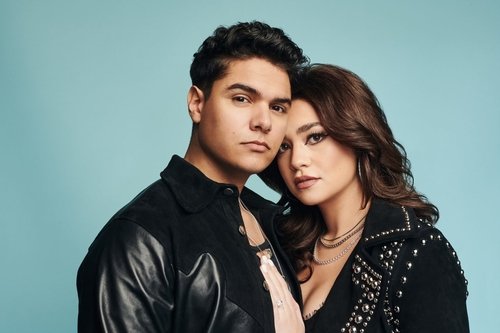
have been featured in my Spotlight feature. I am quite new to the music of Kat & Alex. The Nashville-based duo unite Country values with a Latin twist. It is a fresh, exciting, multicultural and colourful blend that has helped to bring Latin sounds and music to a different audience. I wonder whether we will see any other acts like Kat & Alex come through. An inspiring and very close duo, their relationship works in the music’s favour. They have that natural and deep chemistry that one can hear in every song. There are a couple of interviews I want to get to so that we can get to know the duo a lot better. Before that, and from their official website, here is some bio about Kat & Alex:

For as much as Kat & Alex embody classic country stylings and values, the Nashville-based duo also rewrite the rules altogether with a Latin twist. The husband-and-wife pair shake up country with full-bodied soulful delivery, inventive live instrumentation, and bilingual lyrics, introducing themselves as outliers with just the right amount of outlaw glee. Before their paths finally crossed, Alex worked as a police officer for two years and logged time as a social media influencer for Harley Davidson Corporate in Milwaukee, WI, before he created art around Miami as “Space Cowboy.” Meanwhile, Kat honed her voice and took advantage of any opportunity to perform. She witnessed Alex sing one day, and the two forged an eternal bond after one date. They appeared on American Idol before returning home to focus on writing and recording original music. In 2020, they signed to The AMG for management and inked a publishing deal with Warner Chappell between numerous sessions with producer Brad Hill [Maren Morris, Brothers Osborne]. Kat & Alex made their official debut with the single “How Many Times” and its accompanying Spanish Version. Right out of the gate, it gathered 7.9 million Spotify streams as they claimed coveted real estate on playlists such as “Hot Country” and “New Boots” in addition to rubbing elbows with Bad Bunny and Camilo on Latin playlists. Amassing nearly 20 million streams independently and receiving acclaim from Billboard, CMT, and more, they introduce a scorching signature style in 2021 with new music for Sony Music Nashville ignited by “Heartbreak Tour”.

With some of their best and most personal material released last year, there was a lot of press interest. They will have more dates later in the year but, as far as I can see, the only confirmed short-term date is 8th April at the Tortuga Music Festival 2022. Sounds Like Nashville chatted with Kat Luna and Alex Georgia last year. Since their debut in 2020, they have risen, accrued a lot of news fans and grown as songwriters and performers:

The duo’s Kat Luna and Alex Georgia rose to national fame during their 2020 American Idol audition. All three judges were completely smitten by their chemistry and vocal prowess, advancing them to Hollywood. Since coming off the television singing competition, the newly-wed singers signed a recording contract with Sony Music Nashville, a publishing deal with Warner Chappell, and management deal with The Artist Management Group (AMG), which formed by reputable industry professionals Rob Beckham and Bill Simmons, and is home to superstars Brad Paisley and Chris Young.

In October last year, Kat & Alex unveiled their official debut single and first ever release, “How Many Times.” A stellar mid-tempo offering, the poignant tune captures the essence of a breakup and the gripping emotions that follow after. Though both singers are happily married to each other now, they say it is something they “can relate to in [their] own separate pasts.” Since its release, the song has been spotlighted on SiriusXM The Highway’s new music discovery show, On The Horizon. 

Last month, the rising country duo released two brand new tracks — the larger-than-life ballad “Heartbreak Tour” and the summery, roll-your-windows-down bop, “You and the Radio.”

Sounds Like Nashville got to chat with the singers earlier this month all about their individual journeys to music, American Idol audition, new music and of course, how they met. Hint: Kat saw Alex leading worship in a church, and thence began, as Katy Perry cheekily dubbed it, their “digital love affair.”

How did each of you get into music?

Kat: At a very young age, I was always singing and tapping on chairs. I always loved music. When I was in middle school, I auditioned for this high school, which was a Magnet School of the Arts. I had my audition, sang for them and they were like, “OK, perfect! We want you in our vocal program.” So after that day, I knew I wanted to do music for the rest of my life as a career. Later, I jumped on a show called La Vos (The Voice in Spanish), where I [found out] I really loved performing on stage. I met Alex shortly after, and after I started singing with him, I knew I didn’t want to and couldn’t do it with anybody else.

Alex: Music has been a part of my life ever since I was little. My dad was a drum major in high school and played the cello and flute. Any instrument he picked up, he pretty much learned. He had an acoustic nylon string guitar lying around that his brother had given him. So, I saw it and said, “I want to learn that instrument!” I was maybe 11 or 12. And he was like, “Yeah, here you go! You can learn the guitar, here’s some books, and we’ll get you lessons if you’re interested in it.” So that was really the beginning of me really taking music seriously. 

How did y’all meet each other and end up dating?

Alex: I was painting at a place called Wynwood, Miam’s Art District. So, I started attending a church in that area, got on the worship team, played for a Sunday, and it just so happened that that Sunday was the day Kat was able to go back for service since she had not been to [one] in a while. That very day, she picked that very service that I was playing at. She normally goes to evening services, but she went that morning, and that’s where she saw me on stage! So, [it went] from Kat seeing me, to her friend having her add me on Instagram, to I adding her back. We had a “digital love affair”- that’s what Katy Perry called it. (chuckles)

PHOTO CREDIT: Matthew Berinato

How would you describe the sound of Kat & Alex?

Kat: I feel like it’s a mix of latin, soul and country. A latin fiesta!

Alex: Yeah, it’s an explosion! Imagine a cowboy and a cowgirl riding horses together on a rainbow and there’s this sound of country music flowing under it, and Adele is screaming and singing in the background! (laughs)

How much of a role has faith played in both of your journeys?

Kat: I feel like in my life, faith has gotten me through every single thing that I’ve gone through. Every challenge and every bad thing. If it wasn’t for my faith in God, I wouldn’t be who I am today, and as happy as I am today.

Alex: Faith plays a large role [in my life]. When I was in law enforcement and got that injury and concussion, I hit rock bottom. I was depressed and wanted to commit suicide. I honestly wanted to end everything. God really got me through that season because I believe God had a bigger purpose for my life—bigger than what I could imagine. And little did I know, it was to meet Kat and start playing music that would impact so many people. And that’s why, even now, God plays such a big role in our marriage and our career. This is all faith-based. This is a purpose that God gave to us. It’s a responsibility, really, and we don’t take that lightly. So, we put all our faith and trust in Him and know that He’s got big plans for us.

What else do you want fans to know about Kat & Alex?

Alex: As a country duo, like what Luke Combs says, “What You See Is What You Get!” We are as real as it is and we really try to be as transparent as possible with our fans.

Kat: We want people to feel like we’re a part of their family and we want them to feel like they’re a part of ours.

Alex: Yes! Because in the Latin culture, for example, if you’re going to a Latino’s house, they’re going to treat you like family. “You want to eat? You want to drink? You want a pillow to lay your head on? I got you.” So we want everyone to feel like that”.

Before rounding off, there is another interview that I really like. Country Now interviewed Kat & Alex as they were picking up some serious traction and attention. As they were (and are) married, it must be quite a feat to balance and separate their personal relationship with the professional one:

No one in country music right now sounds like you. What is it like to be trailblazers as artists mixing country and Latin influences?

It’s an honor to hear how we are trailblazing in country music. To be honest, we are just making sure that we stay true to who we are. Even before we came to Nashville, we talked about incorporating our native language into country music because it mixed two of our favorite things. It’s the best of both worlds, and we wouldn’t want to have it any other way. We are humbled and happy to know that everyone else enjoys the mix just as much as we do!

How does it feel when you connect with non-English listeners and introduce them to the country genre?

Being able to connect with non-English speaking listeners and introduce them to country music is an indescribable experience. Music is so powerful, and it truly unites everyone. When we get messages from people saying things like, ‘I am so excited to have found you guys because now I can show my family country music,’ and they can connect with the lyrics, it warms our hearts. People get just as fired up about this blend as we do!

What do you want fans to take away from your music?

We want them to feel like they are a part of the song. We want them to connect with our music and feel like they helped write it. They are our “familia,” which means “family” in Spanish.

As husband-and-wife, how do you balance your personal lives with your musical lives?

It is truly an incredible thing to be able to play music together. Music was already such a large part of our personal lives. Since we get to play music for a living, it feels like we never have to go to work. We get to live out our dreams every day and create music just like we always have since the day we met”.

With one of their best singles, I Want It All, released recently. I wonder if Kat & Alex have an album planned this year – or whether they are going to work on some more singles and tour as much as they can. I hope they get an opportunity to come to the U.K. soon, as there is an audience for them here. Country radio aficionados like the legendary Bob Harris would definitely back their music and support them. Go and back Kat & Alex and follow them. They are a wonderful, close-knit and hugely talented pair whose unity of Latin and Country is quite ground-breaking. The brilliant Kat & Alex are…

AN amazing Country force.

 _____________

Follow Kat & Alex

FEATURE: The Lockdown Playlist: The Spring Collection

FEATURE:


The Lockdown Playlist

PHOTO CREDIT: @eyeforebony/Unsplash 

The Spring Collection

___________

BECAUSE next Sunday (20th)…

 PHOTO CREDIT: @mayear2019/Unsplash

marks the first official day of spring in the Northern Hemisphere. Because of that, I am looking ahead to a long-awaited change of the season. This Lockdown Playlist has songs that include the word ‘spring’ in their title, are about the new season, or evoke a sense of change and optimism after a hard time. Projecting a sense of blossoming, blooming and warmer weather, the songs below should (hopefully) get you in the mood for the approaching spring! After such a terrible two years and a pretty rough winter, we are all looking forward to spring. Hopefully it will bring warm weather, calmer conditions and greater optimism and stability. The Spring Collection assortment of songs is here to beckon a season that we all…

 IN THIS PHOTO: @rodlong/Unsplash

DESPERATELY need right now.

TRACK REVIEW: The Mysterines: Life's a Bitch (But I Like It So Much)

TRACK REVIEW:


The Mysterines

Life's a Bitch (But I Like It So Much)


9.3/10


The track, Life's a Bitch (But I Like It So Much), is available from:

https://www.youtube.com/watch?v=sfG5b8pW3pU

ORIGIN:

Liverpool, U.K.

GENRES:

Rock/Alternative

LYRICS:

Lia Metcalfe

MUSIC:

The Mysterines

The Mysterines’ album, Reeling, is available now. Buy here:

https://www.roughtrade.com/gb/the-mysterines/reeling

RELEASE DATE:

11th March, 2022

LABEL:

Fiction

PRODUCER:

Catherine Marks

__________

ONE of the problems…

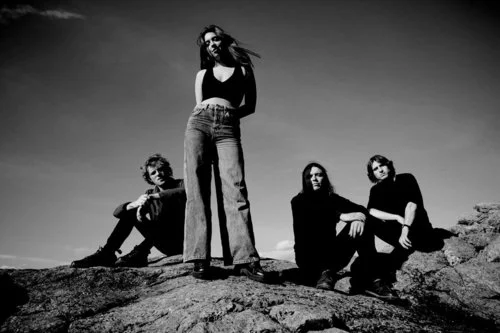
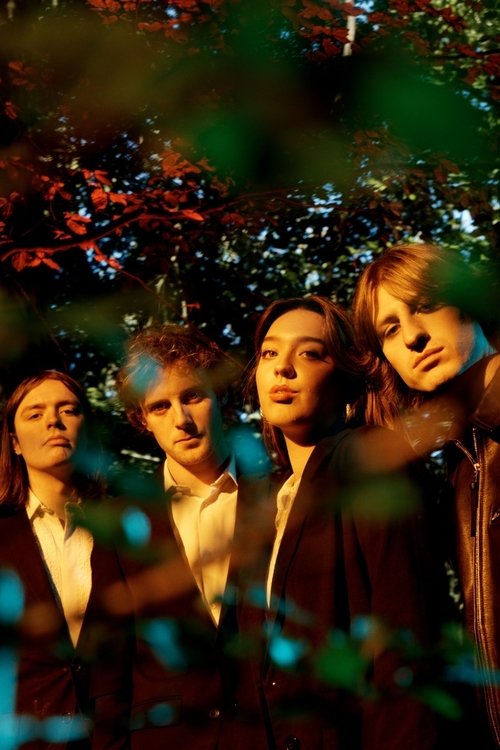
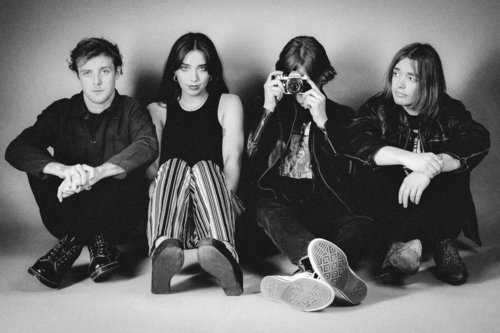
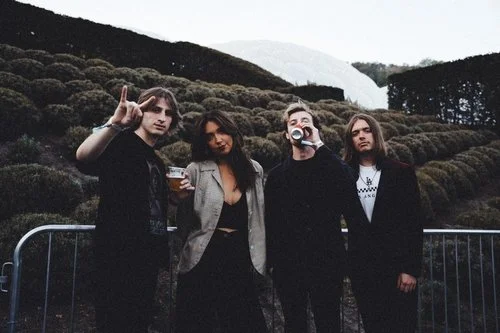
with reviewing a band is that their membership might have changed through the years. Because of that, you get old photos and interviews you can’t use. I am finding more and more bands are losing members or replacing old ones. In the case of Liverpool’s The Mysterines, they have added to the fold. I don’t think I will stumble on old interviews or include photos that are of the old line-up. In their case, the original line-up consisted of Lia Metcalfe and bassist George Favager. It is Metcalfe’s band; she is their electric and wonderful lead. Making up the quartet are drummer Paul Crilly and guitarist Callum Thompson. I am going to come to a review of a song from their album, Reeling. The album was recorded live with Catherine Marks. She is a producer I have interviewed before and have a lot of respect for. Before getting to specific aspects of The Mysterines, I want to start with an interview from DIY. The way they describe meeting the band and the way they set up their aesthetic and operations. This is a talented and promising young band who could have come from the classic fold in the 1990s:

young PJ Harvey gazes out across The Mysterines’ Liverpool rehearsal space. The framed photo of the iconic rocker from around the time of her early ‘90s emergence is propped against a wall, waiting to be mounted; it was a birthday present from the photographer Steve Gullick, to the band’s singer and key creative force, Lia Metcalfe. Steve shot the fledgling Liverpool outfit recently, and would probably tell you he sees in Lia some of what marked out Harvey as a special talent around the time he first met her.

You’d imagine Polly Jean would approve of what she’d hear if she could gaze out of the frame and into the room, too. The Mysterines’ debut record ‘Reeling’ shares its title with a song on ‘4-Track Demos’, the legendary raw takes that paved the way for PJ’s breakthrough LP, ‘Rid of Me’. It’s that album that The Mysterines’ own ‘Reeling’ recalls; slick but emotionally turbulent, polished without rounding off the cutting edges from the singer’s razor-sharp writing. Its release marks the end of a winning road for the group’s two remaining founding members, Lia and bassist George Favager, one marked by lineup changes and COVID-enforced inertia.

Drummer Paul Crilly arrives first today to the industrial estate about a mile north-west of the city centre that the band currently call their base. He’s marvelling at some bizarre prospective footage that the singer has put together for the video for their next single, the incendiary ‘Life’s a Bitch (But I Like It So Much)’, which looks like what you might expect a tour documentary directed by David Lynch to be.

As the group’s principal songwriter, and with a keen handle on every aspect of their output, The Mysterines is very much Lia’s band - a commanding presence onstage, with a line in conversation that’s thoughtful one minute and wisecracking Scouser the next. If the group started out as a vehicle for her writing, you get the sense it’s because going down the traditional singer-songwriter route was never an option. She seems invested in the idea of what it means to create with like-minded people, particularly when she talks about the additions to the lineup in 2020 of Paul and guitarist Callum Thompson, as well as in the opportunity to build a mythology around her songs that tends to come more readily to bands than to solo artists.

PHOTO CREDIT: Steve Gullick 

Her position as the brains of the operation perhaps explains why the arduous process of putting together ‘Reeling’ seems to have been harder on her than anybody else; today, she talks about the recording with the occasional wince. “We spent three weeks in the studio,” she says. “But they were months apart. July, November, and then March. So there were these long drawn-out months in between where the lockdowns meant we couldn’t really do anything. So that was kind of intense.”

“It was a bit of a double-edged sword,” adds Paul, “because it gave us time to write a few more songs. If we’d done three straight weeks before COVID happened, this would be a very different album.” As much as he’s able to see the positives, Lia isn’t so sure; in contrast to the freewheeling rock’n’roll of their band’s live shows and her dominant presence as frontwoman, doubts crept in during the recording process, something she said she “resented” at times. “Some of these songs were written when I was 16, so I have a lot invested in them,” she explains.

“When something means so much to you, it can be hard to have resistance against it. To introduce it to this new lineup, to then be taking it to London, there’s a lot of pressure on,” she continues. “You get signed, there’s singles to think about, then the album, it’s like, ‘How the fuck did we get here?’ And things have moved so fast since the beginning of 2020 after moving so slow for a few years for me and George. So that was overwhelming. I had some resentment towards the album at times that made me not enjoy it. With a little bit of distance from it, I’m proud of it now. It’s a good snapshot of that time”.

For The Mysterines, life in the pandemic has been particularly strange. Although they did not get chance to gig and play out there much, there was this enforced confinement that allowed them to focus on writing Reeling. I feel a lot of artists had that opportunity to concentrate on an album without the distraction of outside activity or anything else. Upset Magazine chatted with The Mysterines in November last year about their pandemic experience:

2020 might have been a chaotic one for most of us, but for scuzz rock newcomers The Mysterines, it was an opportunity like no other. A year away from the temptation of touring gave the Liverpool foursome, helmed by the inimitably cool Lia Metcalfe, a chance to focus, and to write and record 'Reeling', their explosive debut album just announced for next year.

"As distressing as lockdown was for the whole world, it was actually really, really enjoyable for me. Got dealt a good card there in terms of writing an album," Lia explains over Zoom. "I don't think a lot of those songs would have been written without that time, which is interesting because it was such a freak moment in history, Covid occurin'. There's nothing I've ever experienced in my lifetime that's been anything like that."

Pre-pandemic, The Mysterines - completed by bassist George Favager, guitarist Callum Thompson and Paul Crilly on drums - were trending upwards and gaining speed. 2019's 'Take Control' EP introduced the then-trio as hooky rock virtuosos while tours alongside The Amazons and Royal Blood gave their already massive sound the stages to match. They'd just ticked off their first headline run in February last year when... well, you remember.

"Everything looked like it was really on a great run, and then a month later, everything closed!" laughs George.

Time away hasn't dampened their momentum at all, though. The first taste of the record, 'In My Head' is a grisly, prowling affair with monster riffs à la 'AM' era Arctic Monkeys and Lia's most commanding vocals to date. It dropped back in July and went straight onto BBC 6 Music's A list”.

I want to go back to that DIY interview. For Paul and Callum, it was an especially odd time. Their first time with this new band, they then were locked down and were not sure when they could play again. In the DIY interview, we also learn about some of The Mysterines’ influences:

Initially Lia did, in her own way, enjoy the derailment of the band’s plans. After finishing up a UK tour - Paul and Callum’s first - in March 2020, she found herself living alone for the first time, and the isolation suited her: not just because she had nothing to do but write music, but because she had nothing to do besides listen to it, either. More of her heroes have been honoured with photos on the wall, including Bob Dylan and her biggest lyrical inspiration, Tom Waits - although it’s worth noting that not all legends are revered here, not even local ones. ‘BRING ME THE HEAD OF PAUL McCARTNEY ON HEATHER MILLS’ WOODEN PEG’ reads a scrawling on the space’s back wall, with Lia and Paul both quick to deny responsibility.

More time digging into those influences, as well as more contemporary ones such as Queens of the Stone Age, Black Rebel Motorcycle Club and The Strokes, meant that Lia was able to retool lyrics and look for new thematic avenues to wander down. “I didn’t worry about running out of inspiration,” she says. “It was kind of the opposite, because I’d never had that sort of time on my hands since we started the band. I had time to try to craft a definitive story on the album. Just asking myself questions - ‘What else can I say now? What else can I think about? How far can I take my ideas?’.

I am actually reviewing Life's a Bitch (But I Like It So Much) in a bit. I wanted to spend some time discussing producer Catherine Marks. She is one of the most respected and amazing producers in the world. At a time when women account for such a small percentage of producers (I think there is still a culture where women aren’t respected in studios and encouraged), she is giving inspiration and hope. Marks’ work is always incredible! She brings something special from anyone she works with. Able to bond with artists easily, it is no wonder that there is so much love out there for her. As we learn from the interview in Upset Magazine, Marks not only took control of a group largely comprised of men. It must have been great for Lia getting to work with a woman as producer:

To achieve a sound that really gnashes its teeth, you call Catherine Marks. The esteemed producer has helmed the control panels for Foals, Wolf Alice and plenty others; with 'Reeling', she adds The Mysterines to her success story portfolio. You hear Catherine's influence on 'Hung Up', the record's relentless latest single which attacks from all angles.

"She's fucking amazing. She's helped us create the album in a way that no one else could have, and we're all very proud of it, so we've got her to thank for that one," lauds Lia.

"I do think that she's fuckin' boss, like!" adds George, whose Scouse accent is as fine as his basslines.

Working with the seasoned hitmaker taught Lia patience, she says. "And that it takes more than one woman to control a group of men!"

But for George, there was a more practical takeaway: "Don't concuss yourself on the last day. I hit me head off the cupboard door!”.

Marks is most definitely one of the greatest producers of her generation. There are interviews with her that give you more of an idea of how she got to where she is and the messages she is sending out to any other producers (especially women). When NME spoke with the band, they discussed Marks as a producer. Over the course of a year, The Mysterines made three week-long visits to producer Marks at London’s Assault & Battery studios to put together the album. It was quite an intense period and, as there were lockdowns, they recorded in bits – having a lot of time to think about the album meant that cabin fever set in:

All this works thanks to the decision to record ‘Reeling’ live. “It would’ve been easy to go into an expensive studio to build all kinds of crazy synths and guitar sounds, but when you come out of that studio, you don’t sound like The Mysterines anymore,” Crilly says, emphasising the encouragement Marks gave the group to create exactly what they wanted.

The relationship built over the weeks spent together turned into a real friendship. “There was no ego at all,” he adds, explaining that Marks’s expertise came into play when she encouraged the quartet to balance acoustic numbers against the full band tracks. He continues: “[Catherine] was exactly who we needed. She let us play out all of our ideas, and only intervened when she felt like she needed to. By the end [of the process], she trusted us – and we trusted her too.”

“Catherine put in as much emotion as we did,” says Metcalfe. “There are parts of the album that were hard to deliver and perform, but it was just as hard for her to hear and record them. It made for these emotionally intense moments that aren’t something I could ever recreate live again.”

Being bold and giving it their all isn’t something new for The Mysterines, though. They refused to include their older tracks on the album – such their last pre-Covid single, ‘Love’s Not Enough’ (despite its two million Spotify streams) – and picked the heavy-handed ‘In My Head’ as the record’s lead single, even though it was first demoed just a week before they finished the album. The trust they have in each other’s opinions and instincts is unfounded”.

The Mysterines will be more relieved than most bands to know that they have Reeling out in the world. As a relatively new four-piece, most of their life together has been spent during a pandemic. It is only really now that they have been able to get and really hone themselves as a unit. Today (13th April), they play Rough Trade in Nottingham. If you can get out there and see the band, I would recommend it! HMV spoke to The Mysterines about their progression, and how they selected material for Reeling:

Obviously you’ve released a couple of EPs and you’d had a sold out UK tour just before the first lockdown, then everything stopped. How did that delay shape how your album has turned out, do you think?

Lia: “I mean, it gave me more time to write, and I appreciated that time because we’ve never really been granted that much opportunity to spend time writing anything, really, because we’ve been gigging so much right from the start of the band. We had months on end to think about the songs so it definitely affected the process, but because it’s the first record we’ve done we don’t really know any different. For me that’d be a normal way to make a record now so I’ve got nothing to compare it to, I suppose.”

How far back do the songs on this album go?

Lia: “I think the oldest song on the record is probably ‘Under Your Skin’, actually. When I wrote it it didn’t sound how it does on the record, we’ve changed it quite a bit lyrically, but that riff I’ve had since I was probably about 16. I’ve been writing since I was a kid, pretty much."

What kind of music did you bond over when you were starting out?

Lia: “Me and Paul both love Radiohead and Arcade Fire, Nirvana, but I suppose in terms of our sound we’re closer to Nirvana than the others on that list.”

Paul: “Nirvana would be a big one for me. Queens of the Stone Age would be another, but I suppose there’s loads of different things that we referenced, The Desert Sessions, that kind of thing, Pixies, there was loads of stuff that we were all into at the time but they’re probably the main ones.”

Was there any key track on this album that set the direction of the record as a whole?

Lia: “I reckon the song ‘Reeling’ is probably the one that best summarises the record, which is why it’s also the title of the record. I think it’s probably the biggest summary, lyrically, of what I’m trying to portray, and I think the sound is probably something that people would associate most with us.”

Is it Lia that handles the lyrics for the most part?

Lia: “Yeah, pretty much, then I bring the songs to the lads and we work them out like that, really”.

Prior to getting to a review of an awesome track from Reeling, there is another interview I want to include. Why Not spoke with them recently and noted how there is this dichotomy. The band are charming and effortlessly breezy when chatting, and yet their music has this intensity and energy that you might not expect:

There’s a real multipolarity to your music. What other artists and mediums do you draw inspiration from?

Lia: Songwriters. I really liked Paul Simon, when I was growing up and listened to a lot of Simon and Garfunkel. My mum and dad were quite young when they had me and were in their prime during the early 2000s, so I grew up hearing a lot of The Strokes, Black Rebel Motorcycle Club and The Verve. The 90s as a decade massively influenced the band.

In terms of films, I  love the surrealist director Alejandro Jodorowsky. The Holy Mountain’s one of my favourites, and Santa Sangre. I love David Lynch too – I tried to show Paul Mulholland Drive once.

Paul: I think I fell asleep! We’d had this really heavy weekend and she put that on and I woke up to the most bizarre scene I’d seen in my life.

Lia: Oh yeah you did fall asleep. Then he had a nightmare about the film. A fever dream. I took him to Mass once as well when he was horrifically hungover. I wanted to go and purge my soul, you know, after the weekend, to get rid of all my sins!

Paul: I had to leave and lie down on a bench outside.

Lia: Well I had a great time. I’ve been back since, got some friends there now.

 PHOTO CREDIT: Steve Gullick

You’ve all known each other for a long time, since you were teenagers. Who met who first?

Lia: I was with my mum in Home Bargains when I was 14 and spotted George, our bassist, in there. I thought his jacket was nice, a green parka, and I’d just watched Quadraphenia, so I was enthusiastic about the mod subculture. I half-knew the person he was with an so stalked him on Facebook and asked him if he could play an instrument. He said he could play bass, which was a real rarity back then, and things just took off from there.

Your album, Reeling, is out this Friday, 11th March, what’s behind it from a songwriting perspective, Lia?

Lia: Without getting too spiritual, I channeled all this emotion, energy, influence into songs hidden behind characters. The best example’s probably ‘Old Friends Die Hard’. But in essence it’s supposed to be a funny story, I hope people don’t take it too seriously!

Our aesthetic’s simple – we chose red, black, and white for everything because everybody agrees on it. The overall tone of my songwriting darkened and became more introspective years ago when I started to write more and more and started listening to Tom Waits. I suppose I could really relate, as a 17-year-old girl from Liverpool, to a 50-year-old whisky drinking man from Detroit!

I could identify with the exploratory nature of him, not so much his direct sadness, or his theatricality, but his playfulness. The character manifestation and description. Artists like PJ Harvey and Nick Cave, Bob Dylan and Leonard Cohen, they all do the same thing.

You’re about to embark on a big American tour. Are you all prepared?

Lia: I don’t think we can prepare for it, which is the exciting part and the scary part.

Paul: We’ve done our job now. The album’s done, we’re giving it to the people, and there’s nothing left to do but go out and tour it. Obviously there’s a bit of nerves and apprehension but that’s normal. Most of all I’m looking forward to it”.

Let’s get to reviewing Life's a Bitch (But I Like It So Much). I have not been able to see any lyrics for the song posted online, so apologies to the band if there are any misquotes at all! The song starts by giving a nice little riff in the left-hand side (ear) of your headphones. The song starts in that ear, and then also joins the right as I get this full experience. A gnarly and cool riff with powerful bass and drums. There are relatively few Rock and Alternative bands out there who I would match to the likes of Queens of the Stone Age, or a band who are renowned for something meatier and more intense. A lot of the new breed seem watered-down, more angular and do not have that ability to write killer riffs, hooks or project much weather. That is not the case with The Mysterines! Right from the get-go – and what you will note throughout Reeling – is that they have this kinetic understanding. Although they have not recorded a whole lot as a quartet, they are instantly in-step and locked together. With each band member giving it their all, Lia comes to the microphone with some wordless vocals. I am not sure who directed the video for Life's a Bitch (But I Like It So Much), but I like the filming and editing style. It is in black-and-white, but there are pauses, nice cuts and this stylised look that works well. I would say to the band that, if they could produce the lyrics or make them available somewhere online (or the YouTube video description). That said, Marks’ production means the vocals are very much at the centre. Even though there is a nice balance of the instruments, Lia’s voice never gets buried in the mix or is shouted over. She has this lyrical personality where it is quite conversational and personal. Almost like we are in a room with her, she talks about life being a bit crap but all good. There is this sort of mix of the good and bad. I get the feeling this might have been a nod to lockdown and strange times. Perhaps written at a time when there was uncertainty and things were sort of ‘meh’. We did not really know what was going to happen.

In a larger extent, it could be more personal and pertinent to a physical relationship. The video does not give any story and revelation away. Instead, the band are performing on a stage without an audience. That gives me the interpretation that The Mysterines are referencing lockdown, isolation and the constant unpredictability we have endured since March 2020. Lia sings “It’s always the same” as she is joined by thunderous support from the band. One of the most captivating band leads, Lia reminds me of Shirley Manson of Garbage. There is that same power, charisma and allure. A stunning singer who has this ability draw the listener into the song and keep your attention focused on her! Not a slight against the rest of the band, but the gravitas she possesses is cosmic! There is repetition to the lyrics that is befitting of a song that is about routine and this cycle of good and bad. Kudos to Catherine Marks’ production. She manages to make the song sound raw and stripped but packed with layers. The way Lia’s vocals are processed gives them this sort of echo and rawness. When it comes to the composition, it is not too polished, nor is it lacking in punch and sonic weight. It is testament to her instinct and the close relationship she has with The Mysterines. The video does actually switch between black-and-white and colour. Again, that contrast between bad and good; light and dark. It is a great filming style that gives the song personality, energy and plot – without any other actors or participants. An instantly memorable and hook-y song, Life's a Bitch (But I Like It So Much) is, I think, the best cut from Reeling. You can get the album and decide for yourself.

The opening track of Reeling, I think the band also love the song, as this is the first thing a lot of people will hear! Coming in at under three minutes, it is relatively brief and gets its message across quickly. Showcasing their obvious chemistry and talent, George, Paul and Callum fire things up with Lia. There is this thunderstorm of broken glass, barbed wire, fire, ice and every other weapon, element and bodily fluid! I usually refer to artists by their surnames, but there is this closeness and relatability with The Mysterines that means I shall make a rare exception for them! In any case, some of the words do get lost in the rubble and whirlwind towards the end, which does make another case for having lyrics posted. Lia is singing about life being a struggle, but it is sort of what you make it. Not necessarily a detriment or thing to pull you down, I wonder if she has talked about Life's a Bitch (But I Like It So Much) in an interview? I would love to know what it is about. I really like the video and song. I keep coming back and watching, as the band are hard to look away from! I have not seen them live, though it seems like it is a sensational and unforgettable experience. Even though there are elements of bands like Queens’, Savages, and Soundgarden, The Mysterines very much have their own sound. Throughout Reeling, they present thirteen tracks of originality. A song with an instantly quotable chorus, this is one that live fans are going to be chanting soon enough! One of Lia’s strongest and most  moving vocals, she reminds me of the iconic women of the 1990s. Someone who can be tender, brutal and utterly possessed but still have this vulnerability, it is a mixture of qualities and emotions that come through in her vocal. Life's a Bitch (But I Like It So Much) is a sensational opening track from The Mysterines’…

AWESOME album, Reeling.

___________

Follow The Mysterines

FEATURE: Revisiting... Summer Walker – Over It

FEATURE:


Revisiting…

Summer Walker – Over It

___________

FOLLOWED by the remarkable…

Still Over It last year, Summer Walker’s amazing debut album, Over It, is one that everyone should play and investigate. Released on 4th October, 2019, it gained rave reviews and was placed in many publications’ best albums of the year polls. It is an exceptional release from the Atlanta-born artist. Whilst the singles got a lot of airplay in 2019 and 2020, I think a lot of the buzz wore off. That is only natural I guess. Then the immense Still Over It came along last year and reaffirmed Summer Walker as one of the most incredible and talented artists in the world. I love her debut album, as it follows the 2018 mixtape, Last Day of Summer. With every album and release, she grows stronger and without equals. Such is the strength of her lyrics and her delivery, I feel she is an artist who will be iconic and seen as a legend very soon. I have said this about quite a few new artist, though it is not an over-exaggeration with Summer Walker. Before coming to a couple of glowing reviews for the incredible Over It, there is an interview from 2019 where we hear from Walker about the album. The Times spoke with her in December 2019. Despite being grounded and modest, the success Over It has already accrued by that point showed she was a huge artist with an admiring and growing fanbase:

Summer Walker has been singing seriously for only two years, but she has already broken one of Beyoncé’s records, become YouTube’s most viewed female artist for October, collaborated with Drake, Usher and Chris Brown — and nailed the art of pop-star eccentricity.

This is a woman whose former manager, also called Summer Walker, discovered the singer when she googled her own name. Who, at her bonkers and brilliant show in London the night before we meet, came on with a handbag on one arm, read her lyrics from sheets of A4 paper and spent much of the evening sitting on the stage ogling her two almost naked pole dancers.

Today, in her hotel room in Shoreditch, east London, the 23-year-old Atlantan seems to be in some kind of coma. Not once does she raise her voice above a whisper, and she spends the entire interview hidden beneath a bathrobe. And I mean hidden. She’s curled up in an armchair with the hood of the robe pulled up; all that are visible are two bare tattooed legs and a pair of turquoise Ugg boots. This is the kind of weirdness that took Prince a whole career to perfect.

Walker blames her state partly on jet lag. “I’m up till 8 in the morning every day and then they wake me up at 12, so . . . ” Yet I suspect she may be like this even when she’s in the right time zone. Her singing voice is beautifully languorous and her woozy R&B emphasises atmosphere over hooks. “I don’t just go for catchy things,” she says. “Better to make it about vibes.”

In that sense she is like Beyoncé, who long ago dispensed with the idea of making her songs radio-friendly. Walker’s debut album, Over It, was streamed more than 150 million times in its first week, beating the record for a female R&B artist held by Beyoncé for Lemonade. How does Walker feel about breaking a megastar’s record? “It’s nice,” she says as the robe drops to reveal a flash of rainbow hairband and a tattoo of a sweet above her eye. Was Beyoncé an icon for her growing up? Walker’s song Playing Games interpolates Say My Name by Beyoncé’s former band, Destiny’s Child. “Hmm. Not really.”

Well, at least she’s honest. It’s one of the things that saves Walker from being irredeemably frustrating. Once she warms up, her answers are straight, thoughtful and sometimes very funny. We get on to the subject of whether she wants to have children. “I do,” she says. “I actually wanna adopt. What am I? Twenty-three. I want to at 25, maybe sooner.” Why adopt? “I don’t wanna have no babies come out of my vagina! That’s gonna hurt.” She says the word with southern musicality: vag-aye-nah.

Honesty runs through her music: frank songs about anxiety, sexuality, abusive boyfriends. “I value honesty,” she says. “Sometimes I’m too honest.” Does it get her into trouble? “Yeah, all the time. I just always say how I feel. I’m very impulsive so I can say something one day and the next day say something completely different.”

Walker grew up in Atlanta in “a good home”. Her mother was “a top-end estate agent for celebrities and athletes and stuff, and my dad, he owns a construction company”. Which celebrities? “A bunch of people — I wouldn’t wanna name-drop, though.” She went to private school, where she was quite outgoing, until the age of 14, and then a state high school, where she “didn’t say nothing to nobody, used to eat my lunch in the library”.

There aren’t many privately educated R&B stars. Was she ever tempted to cover up her privilege when she went into music? “No. I did not come from the streets. I say that, my mum will get mad!” She laughs, aping her mother: “I worked this hard!” Her parents weren’t wild about her going into music, she says. “My dad’s kinda military and he’d be, like, ‘That’s not a real job.’”

Perhaps, but he can’t have been over the moon when she left college to dance in a strip club and work as a cleaner. Which did she prefer? “Hmm. Dancing made more money.” It must have been hard with her anxiety issues. “No, I just didn’t really talk to people.” I ask if she has seen Hustlers, the recent movie in which a group of strippers swindle bankers. “I did. I wasn’t a big fan.” Why? “I don’t like thieves.”

What ambitions does she have? “I would like to finish putting things in my home that I like and then I would like to quit,” she says. Retire from music — why? “So I can go home.” But what about the fans, all those millions of followers? “You’ll survive.” It’s not that the adulation scares her, she insists. “I think it’s wonderful and all. I just really want my money so I can get the hell home.” She recently moved to Las Vegas: “It’s hot, beautiful and there’s tax breaks”.

It is clear Summer Walker will not be returning to a career of cleaning anytime soon! She is an artist with a lot more to say. Following the success of Over It and Still Over It, you wonder what will come next and how much better she can get. Over It did get some wonderful reviews, though the songs and singles from it are not played that much now. I will finish off with a couple of reviews for the stunning Over It. This is what CLASH had to say in their review:

Having made waves with tracks like ‘Girls Need Love’ and ‘Playing Games’, Atlanta’s Summer Walker follows in the footsteps of her label mate 6LACK and delivers her own taste of authentic contemporary R&B with her debut album ‘Over It’.

The project includes a host of features from some of the biggest names in the genre, who provide welcome (but somewhat unnecessary) co-signs as she herself manoeuvres with a standout level of artistry that leaves you in no doubt that she is indeed here to stay.

This last 12 months or so - in musical terms - could be considered to be a year for the women of the music industry with a swathe of artists coming to prominence such as Meg The Stallion, Saweetie, City Girls and Kash Doll to name a few, while in the realm of R&B, Ella Mai and Dani Leigh are just two names that have been making waves.

But among them has been Summer Walker, who capitalised on the success of her single ‘Girls Need Love’ with a Drake remix (which has gone platinum), as well as a stellar debut commercial mixtape ‘Last Day Of Summer’.

Continuing on the themes of confidence, love and womanhood, Walker is transparent and honest in her lyricism throughout the 18 tracks, conveying different perspectives matched by the varying styles of production, predominantly handled by London on da Track, who serves as executive producer (and happens to be her current boyfriend).

Whether exploring her feelings about a failed relationship such as on the PARTYNEXTDOOR duet ‘Just Might’ or the more overwhelming emotions that come when you’re infatuated as depicted on ‘Like It’ featuring 6LACK, it’s this relatability and willingness to go deeper than the surface level that elevates the project above those of a lot of her contemporaries.

Tracks like the Destiny’s Child-sampling ‘Playing Games’ (featuring Bryson Tiller) and the Jhene Aiko-assisted ‘I’ll Kill You’ stand out as early fan favourites, while a special mention has to go out for ‘Come Thru’ featuring Usher which sees her sample and interpolate a classic track from the elder statesmen and sees him remix his own verse in a classy rework of his 1997 hit, ‘You Make Me Wanna…’.

What makes Summer Walker stand out from her peers is the unwavering honesty and in-depth layers perpetuating through her catalogue. On ‘Over It’ she captures the nuances and intricacies of the ‘90s and 2000s R&B she grew up on, in a time when they’re often lost. But the nostalgia is kept in check by smart production choices  - ‘Body’, for example, flips 702’s ‘Get It Together’ - keeping her art fresh and provides something different. This, coupled with her narrative voice and lyrics, make her debut album a statement and suggests that the 23-year-old could soon become a staple of the R&B genre”.

Without doubt one of the best albums of 2019 and a debut album of huge originality, Over It deserves more play and focus now. Playing Games and Come Thru are great singles where Summer Walker collaborates with Bryson Tyler and Usher respectively, but I think the strongest tracks are ones where she is solo and unaccompanied – such as Body, Over It and Tonight. NME had this to offer in their review:

“R&B hasn’t, in recent years, always reflected relationships as honestly as ’90s and noughties R&B stars did. Yet on her stunning debut album, ‘Over It’, Atlanta star Summer Walker subverts the genre with a collection of subdued love songs that continues her winning streak. Her brilliant breakthrough track, ‘Girls Need Love’, released last year, set the template – emotionally raw lyrics, sultry sounds – and became a platinum smash when Drake lent a guest verse to the remix. The question is: could the 23-year-old keep up the pace across an 18-track album?

Spoiler alert: she can. There’s ’90s nostalgia on  ‘Come Thru’, which samples Usher‘s 1997 UK Number One ‘You Make Me Wanna’, though Walker flips the narrative – about a man who’s in love with two women – to relay the tale from a woman’s perspective: “Got my feelings runnin’ on a loop / This ain’t what I’m really used to”. With added hip-hop percussion, the classic song is revamped with the current sounds populating R&B.

And on ‘Just Might’, Walker is bracingly frank about the promiscuous life she just can’t resist; by laying her raspy vocals over sensual beats, she lets us not only hear the thoughts, but feel them too. When she says with a shrug that she “just might be a ho”, you can almost hear her smiling. R&B crooner PARTYNEXTDOOR takes the role of an anguished, cheated-on boyfriend; blending in a male voice, Walker gives us a 360-degree perspective on the sorry situation.

American singer-songwriter Jhené Aiko assists Walker on the aggressively named ‘I’ll Kill You’, on which the musicians sing atop spacey keys to relay their possessiveness – and sense of agency – in a relationship. If there’s one thing you learn from this stunning track, it’s that you should never test Walker and Aiko when it comes to their men. From the get-go, Summer Walker warns, “If them bitches ’round you, better be blood / If it ain’t me or your mama, shouldn’t be showin’ you no love”.

R&B fans have been waiting for a sucker-punch like ‘Over It’. There’s been a lot of insipid, cutesy output across the genre – broad brush strokes either depicting crushing over some guy, or being in gut-wrenching heartache, with little in between – but Summer Walker paints in subtler shades. This is an album of relatable, mixed emotions, the narrator promiscuous one minute and faithful the next. This is record of complex emotions, treated with a lightness of touch that ensures it’s fun as fuck. We’re far from ‘Over It’”.

I would strongly advise everyone to listen to Summer Walker’s phenomenal debut album, Over It. If 2021’s Still Over It is a slightly stronger album, one cannot ignore what came before. One of the music world’s rarest and greatest artists, Summer Walker is someone we need to treasure! Over It is, without a shadow of doubt, a…

MESMERISING album to behold.

FEATURE: Vinyl Corner: Savages - Silence Yourself

FEATURE:


Vinyl Corner

Savages - Silence Yourself

___________

SOME people might not have heard…

of Savages. The band formed in London in 2011 and released two albums. Consisting of  Jehnny Beth, Gemma Thompson, Ayse Hassan and Fay Milton, I am going to concentrate in their remarkable debut album, Silence Yourself. It was released on 6th May, 2013 via Matador Records. I would encourage everyone to get this album on vinyl. Their second album, Adore Life (2016), is equally strong…though I have a particular soft spot for Silence Yourself. I particularly love the vocals of Jehnny Beth (who has gone on to have a successful solo career, and she has worked with the likes of Bobby Gillespie and Johnny Hostile (who co-produced Silence Yourself). It is a shame Savages only made two albums, as they are an incredible group! Maybe they burned too intensely to last that long. I hear songs from Silence Yourself played on the radio - the album is something you will want to hear from start to finish. Prior to coming to a couple of reviews for Savages’ debut album (in case you need further persuasion to get it), here is a review from Peek a Boo Magazine in 2013. They spoke with Jehnny Beth about the formation of Savages and how their debut album came together:

Jehn, thank you very much for this interview ! First, how would you describe the music that you're playing ? There's a lot of postpunk, plus a combination of different styles of music?

I think it's a combination of the four of us. We have different backgrounds, different influences.

Did you meet the other girls in London ?

Yes. Gemma (Thompson) was playing guitar for John And Jehn, my previous band. We were on tour together for two years, that's how we got to know each other. John (Hostile) had kind of a guitar crush on her. He got interested in what she was doing and asked her to come to play with us and then after the end of the tour, she told me she wanted to do a project with Ayse Hassan, our bassist. First she asked John but he was too busy recording the Lescop album so he declined. So I proposed if she would try something with me. And we thought it would be good to have a female drummer as well, so that's how it started, really...

How did you record your first album ?

We recorded it last December for 3 weeks. It was produced by Johnny Hostile, and there was also Rodaidh McDonald in the studio.

It was recorded in London ?

Yes, at the Fish Factory studio and we recorded it mainly live. The idea was to go from one song to the other to avoid getting tired of it. We wanted to have a kind of Nirvana drum sound, and some Converge guitar sounds as well. We wanted to find something hardcore in the sound, like a punch in the face.

Do you write all the lyrics ?

Yeah, I write all the lyrics.

And the music is composed by the band...

Yes. I'm quite lucky because the girls are quite interested in the lyrics. 'Husbands', eg, is really constructed around the aggressiveness of the lyrics. It has taken so many meanings, it's really interesting. People take the song and make it their own. We did a show in LA where there was this gay couple, two guys, in the front row. They were nice. During the chorus of 'Husbands', they were sort of screaming the word to each other, while kissing and everything. I never thought that would be the meaning. I was amazed. I thought it was great. I think each of us in Savages like men and men attitudes and visions of women. We're not really into feminist things. We quite enjoy the company of men, obviously the ones we know, and we share their visions of sexuality.

You know that it can give an image of you as women who look like men and sing like men ?

It's more like having a male perspective...

Also the way you dress...

Yeah, a bit like a tomboy.. But it's a way to be comfortable most of all”.

The reaction and reception of Silence Yourself was hugely positive. Reaching the top twenty in the U.K. album chart, it still sounds so fresh and meaningful today. Such a powerful album created by such an amazing group! With critics making comparisons to Siouxsie Sioux, The Stranglers and Joy Division, there was definitely a lot of support and high expectations put on the Savages shoulders. The group lived up to that, but they created an album that was very much their voices and nobody else’s. This is what NME said in their review:

London quartet Savages take music dead seriously, like it’s an exam. Since the release of meticulous B-side ‘Husbands’ last summer, the all-female foursome have played their cards close to their chest, choosing interviews carefully and taking their androgynous brand of post-punk with the industrial spirit of Magazine and Gang Of Four to venues nationwide. French frontwoman Jehnny Beth has moulded herself into the demonic, possessed spawn of Ian Curtis and Siouxsie Sioux. Their callous soul has sent such cold shivers up the world’s spine that the polar icecaps have likely stopped melting. Savages enter the world so fully realised and neurotically confident they’re met with a unanimous round of applause.

In theory then, debut album ‘Silence Yourself’ is flawless. Just see its monochrome sleeve – even their eyebrows look deeply important. The studied angular riffs, motorik beats and flair for tension-and-release form a confrontational soundtrack to urban friction. Every distorted note sounds under control. Savages could manipulate the screech of fingernails running down a chalkboard and make it sound melodic.

The hypnotic rhythms of tracks such as ‘I Am Here’ entrance you until you agree that this isn’t a mere album, it’s a work of art. How crafty. “I am here/No more fear/No more dark shadows”, wails Jehnny, as if comforting a lover, eventually climaxing with quivering shrieks of “I am here! I am here! I AM HERE!” like a malfunctioning C-3PO. It’s as relaxing as a Hitchcock murder scene. Jehnny’s vocal histrionics are similarly patterned throughout: ‘She Will’ (“She will! She will! SHE WILL!”), ‘Husbands’ (“Husbands! Husbands! HUSBANDS!”) etc. The former’s guitar line is the most colossal of 2013 so far.

The sequencing alone screams instant cult classic. Opener ‘Shut Up’, for example, begins with an excerpt from John Cassavetes’ film Opening Night. The middle is marked by ‘Dead Nature’, a dystopian two-minute instrumental that knocks and echoes like the inside of a grandfather clock. Final track ‘Marshal Dear’ ends proceedings with piano balladry and – zut alors! – a jazz brass solo! It ticks every box. And yet something doesn’t connect.

Savages are so hysterically overprotective of their image that music is their only message. Problem is, if you break its spell ‘Silence Yourself’ often doesn’t say much. Scratch its surface and you’ll find ‘No Face’, for example. “You have no face/You have no face/You! Have! No! Face!” Who has no face? A man? A potato? Who knows? Savages isolate themselves with their clever-clever humourless intensity. As with some modern art, you may find ‘Silence Yourself’ leaves you whispering, “I appreciated it, but I didn’t love it”.

With eleven flawless tracks that each have their own strengths and skin, Silence Yourself sounds magnificent on vinyl. An album to keep and play over and over. I will end with Pitchfork’s take on Silence Yourself:

Savages' music feels out of step with current trends-- which I'm sure they'd take as a compliment. With its tumbling, tom-heavy percussion, singer  Jehnny Beth's Siouxsie-summoning battle cries, and the compositional emphasis placed on Ayse Hassan’s bass (in the moments when Beth is silent, the bass feels like Savages’ lead singer), post-punk is Silence Yourself’s most obvious sonic reference point. And it doesn’t matter that they missed the post-punk revival by about a decade. While the bands that dominated indie rock in the early aughts looked to Joy Division and Gang of Four for reasons that had mostly to do with rhythm, Savages’ music finds kinship with post-punk’s oppositional politics, thematic darkness, and anxiety about the dehumanizing effects of technology-- the spirit is the same, but it’s been adjusted to reflect the times. Savages’ distaste for experiencing life through a screen comes from the same place as, say, Wire’s sardonic take on viewers whose idea of adventure was living vicariously through “the Lone Ranger”; after all, if “Ex Lion Tamer” were written today, it’d probably go, “Stay glued to your iPhone.”

Which is not to say that Savages are writing scathing songs about shitty service providers; their lyrics are boldly stark, elemental, and timeless. (The titles alone hit with a blunt force: “She Will”, “Hit Me”, “No Face”, “Shut Up.”) Beth has said that the band’s writing process is less about addition than subtraction, paring each song down to its most essential shape. All of the best songs on Silence Yourself derive their power from this kind of focused intensity, from the driving, dissonant “City’s Full” to the creeping, percussive lurch of “I Am Here”. The chorus of “Husbands”, a phenomenal single first released last year, sharpens that focus down to a single word. “I woke up and saw the face of a guy/ I don’t know who he is,” Beth sings in the song’s paranoia-inducing opening moments. A Savages song is about challenging the ideas, words and desires we consider “normal”, and they’ve found that repetition is an effective way to get that point across. “Husbands, husbands, husbands, husbands, husbands, husbands,” Beth chants in a manic whisper; with each intonation, the meaning erodes from a word that’s ostensibly meant to evoke comfort, protection and familiarity until it feels faceless.

Savages really show promise and range on the slow-burners. The moody dirge "Waiting for a Sign" and goth-cabaret closer "Marshall Dear" aren't the most immediate songs on the record, but over repeated listens, they bloom. If Hassan and Faye Milton's punishing rhythm section takes the helm on the more frantic numbers, Savages' downtempo moments allow Gemma Thompson and her scuzzy Fender to shine. On the excellent "Strife," she holds back as often as she strikes, underscoring Beth's most brutal lines with perfectly timed jolts and filling the song's winding corriders with thick plumes of distortion.

The mix allows each band member’s contribution to smolder with equal intensity and lends a palpable physicality to Savages’ sound. Milton handles her toms and bass drum like a boxer going at a punching bag; Hassan’s bass strings pulsate like a throbbing tendons; Thompson’s guitar cuts with a goosebump-inducing tone that recalls a chainsaw, and Beth shrieks like she’s resetting her own bones. Combining in a constant pendulum swing between tension and release, it all provides the perfect atmosphere for the darkly sensual themes that Silence Yourself explores.

As a lyricist, Beth says she’s inspired by the “awkward places” from which “twisted, original desires” spring. “Hit Me”, a sub-two-minute tornado of squalling noise, isn’t about domestic abuse, as some people assume, but is instead about a consensual encounter described by the porn star Belladonna. (Beth: “I hate it when women are turned into victims.”) Savages might make political pronouncements in interviews and on album covers, but their songs come from a lived-in perspective as Beth inhabits her different characters’ states of mind-- and forces the listener to do the same”.

A remarkably compelling and strong album from a tremendous group. One of the vert best L.P.s of the 2010s, Silence Yourself is a remarkable listen. Go and check out the album and immerse yourself in its genius. Although the group had a relatively short time together, the mighty Savages definitely…

LEFT their mark!

FEATURE: Paul McCartney at Eighty: Paul McCartney and Me: The Interviews: Brian O’Connor (Sodajerker on Songwriting)

FEATURE:


Paul McCartney at Eighty

IN THIS PHOTO: Paul McCartney in 1964/PHOTO CREDIT: RA/Lebrecht Music & Arts 

Paul McCartney and Me: The Interviews: Brian O’Connor (Sodajerker on Songwriting)

___________

CONTINUING my run of Paul McCartney features…

 IN THIS PHOTO: Sodajerker on Songwriting’s Brian O’Connor (right) alongside his co-host, Simon Barber

ahead of his eightieth birthday in June, it is time for another interview with a terrific fan of the legend. Now, I have been speaking with Sodajerker on Songwriting’s Brian O’Connor. Alongside his Sodajerker cohort Simon Barber, O’Connor spoke with the iconic McCartney back in 2018. The two have also appeared twice on Chris Shaw’s I Am the EggPod (they talked about The Beatles’ Beatles for Sale in 2019, and Paul McCartney and Wings’ Red Rose Speedway last year). I asked O’Connor about what it was like interviewing McCartney, how he regarded in his native Liverpool now (O’Connor and Barber are a songwriting duo from Liverpool), what O’Connor’s favourite Beatles, Wings and Macca solo albums are, and what his reaction to The Beatles: Get Back was. Speaking with someone who runs a podcast about songwriting, it was fascinting to learn what O’Connor had to say about McCartney as a scribe, and what he felt some of the master’s underrated tracks are. Sit back and enjoy my interview with Sodajerker on Songwriting’s Brian O’Connor, as he passionately discusses…

 PHOTO CREDIT: Collier Schorr for GQ

A songwriting hero.

____________

Hi Brian. In the lead-up to Paul McCartney’s eightieth birthday on 18th June, I am interviewing different people about their love of his music and when they first discovered the work of a genius. When did you first discover Paul McCartney’s music? Was it a Beatles, Wings or solo album that lit that fuse?

Brian O’Connor: I’ve been aware of Paul, one way or another, since as far back as I can remember. My first recollection of him would be from the mid-’80s, when, to the 6-year-old me, he was just an agreeable-looking fellow who wore fetching sweaters, appeared on the odd chat show, and sang with animated amphibians.

Later, when I was about 10, I started paying more attention to these ‘Beatles’ characters I’d heard about and would borrow my dad’s Magical Mystery Tour, Abbey Road and White Album cassettes to listen to on my Walkman. I didn’t realise it at the time, but it was Paul’s songs that I naturally gravitated towards, especially the jaunty, child-friendly ones like ‘Hello Goodbye’, ‘Your Mother Should Know’, ‘Martha My Dear’ and, yes, ‘Maxwell’s Silver Hammer’ (with, as I later realised, its less than child-friendly lyrics).

I also recall being at a school friend’s house around that same time and looking through his dad’s vinyl collection, which included some Paul/Wings stuff like Band on the Run and Red Rose Speedway. I was really intrigued by those album covers (the image of Paul with the rose in his mouth really stuck with me for some reason), although a few more years would pass before I actually listened to those records properly, and properly investigated his solo output in general.

 Like me, you must have been engrossed by The Beatles: Get Back on Disney+. How did it change your impression of The Beatles at that time, and specifically Paul McCartney’s role and influence on the rest of the band? Did you have any favourite moments from the three-part documentary?

A short while prior to watching the documentary, I’d heard Beatles scholar Mark Lewisohn - who’d listened to the Nagra tapes in their entirety - talk at length about January ‘69 and how what he’d heard on the tapes didn’t necessarily tally with the established narrative that the Get Back project was a miserable experience for everyone concerned. So, in the light of Mark’s findings, the upbeat nature of much of the footage in Peter Jackson’s doc wasn’t that much of a surprise to me, I have to say.

Similarly, I’ve read a lot about The Beatles and Paul over the years, and it’s been quite clear to me for a long time that McCartney was very much the driving force in their final years together; that, without him gently-but-firmly kicking the others’ arses, it could’ve been curtains for the band a couple of years previously. So, again, seeing Paul’s proactiveness in action, whilst utterly fascinating, wasn’t revelatory.

Having said all that, I adored the Get Back documentary, of course. Favourite moments: the rooftop finale (naturally), Billy Preston’s introduction, George generously helping Ringo with an embryonic ‘Octopus’s Garden’, Paul on the piano demonstrating how he writes songs to a wide-eyed young crew member, the moment ‘Get Back’ begins to emerge before our very eyes…But really the whole thing was a joy; as close as we’ll ever get to hanging out with those guys. Like most others who watched it, I didn’t want it to end.

Similarly, I’ve read a lot about The Beatles and Paul over the years, and it’s been quite clear to me for a long time that McCartney was very much the driving force in their final years together”.

Following the mass adoration of that documentary, Beatles and McCartney fans will ask what more there is in the vaults. Do you think Giles Martin might choose another Beatles album to remaster? What McCartney-related release would you like to see in 2022?

I’d be very surprised if there aren’t more Giles remixes on the slate. Next year is the 60th anniversary of Please Please Me, so I’m sure that occasion will be marked in some way, although I don’t know how much bonus material exists from those sessions (or those for With The Beatles, A Hard Day’s Night etc.) to justify a boxset. They didn’t have time to fuck around in the studio in the early days, after all, so outtakes from that period will be rather thinner on the ground.

As for Macca, I’m hoping we’ll see more of those lovely Archive Collection releases, which I’ve been super-impressed with so far, even if acquiring them all has brought me close to penury. London Town and/or Back to the Egg next please, Paul, if you’re reading. (He’s reading this, right?) Anyway, this being his 80th year, I’m sure something pretty special must be in the works at MPL HQ.

If you had to select your favourite Beatles, Wings and McCartney albums (one each), which would they be and why?

My favourite Beatles album changes almost daily, but right now I’ll choose Rubber Soul because, for me, it represents an overall artistic ‘step up’ for the band; not only in the songwriting, but the musicianship and arranging too. Also, imagine having so many good songs that you can afford to bury ‘In My Life’ towards the end of side 2!

As for Wings, I’d probably plump for Red Rose Speedway. It’s an odd, ramshackle record - a bit of a hotchpotch really -, but it’s bursting with rough-round-the-edges charm and great tunes, and it’s probably the one I come back to most often. The closing medley is one of my favourite moments on any Paul record.

My solo pick would be Ram, without question. It encapsulates everything that makes Paul great – the singing, the playing, the songwriting, the inventiveness, the stylistic versatility, the sheer buoyancy of the whole thing. Ram is peak, quintessential Macca (ably assisted by Linda).

Maybe an impossible question, but what does Paul McCartney, as a human and songwriting icon, personally mean to you?

All I can really say in answer to that is whenever I’m feeling a little down in the dumps and listen to Paul McCartney’s music, I feel instantly better. It’s like a light switch comes on. His music has been doing that for me for 30-odd years now, as it has for millions of other people too. Put simply, Paul’s music makes people happy. You can’t place too high a value on an artist who’s blessed with the ability to do that, and who’s been doing it consistently for 60(!) years, whilst maintaining enviably high artistic standards into the bargain. And he’s still so into making music. His love and enthusiasm for his craft has never waned. What more can I say? The man’s an inspiration and we’re lucky to have had him around for so long.

His love and enthusiasm for his craft has never waned”.

As you run a podcast called Sodajerker on Songwriting, would you say McCartney is one of the ultimate songwriters in terms of craft and ability? What differentiates his brilliance and style with that of his peers?

For me personally, he’s definitely at the top table, and I don’t think many would argue. It’s hard to pinpoint why exactly, but obviously you’d have to cite his unusually keen sense of melody; as Bob Dylan once said of Paul: “Everything that comes out of his mouth is framed in a melody.” Then there’s his overall sense of taste; he’s a very musical person, of course, but that musicality is almost always in service to the song. So he writes great melodies, but he doesn’t overwork them to the point that they meander and become a distraction, and they always sit comfortably within the framework of the song.

He doesn’t use too many chords, even though I’m sure he has an exceedingly wide chord vocabulary in his locker should he need it. Also, when he’s at his best, his music never feels forced; there’s an apparent effortlessness to it, but there’s a lot of craft that goes into making it sound that way. Oh, and he’s an underrated lyricist too. Yeah, I said it.

You just feel like you’re in good hands when you listen to a McCartney song, that he’s not going to let you down. And he’s been not letting us down since he was a very young man.

You actually have interviewed him for the podcast! Was there extra pressure on you because he is such a revered artist? What was the experience like?

I’d be a liar if I said we didn’t feel more pressure than usual beforehand. I mean, how could we not? But at the end of the day, we had a job to do and we couldn’t allow ourselves to be overawed by the circumstances. We certainly weren’t taking meeting a Beatle and a personal hero for granted, but we wanted a solid episode out of it too!

As for the actual experience, it was a very positive one. As anyone else who’s interviewed Paul will tell you, he’s terrific at putting you at your ease, and it was no different for us. He was very warm and welcoming - even offered us something to eat from his table of veggie snacks - and, really, once we sat down and hit record it was almost, dare I say it, easy. Then afterwards as we were packing away the mics, he asked us where we got the name ‘Sodajerker’ from, so we told him and he said, “Well, it’s catchy!” We’ve worn that as a badge of honour ever since. (I just wish we’d still had the backup recorder rolling to capture it).

It’s been a few years now since we spoke to Paul, and I still can’t quite believe it happened. It always feels like I’m recounting a wonderfully satisfying dream I had.

It’s been a few years now since we spoke to Paul, and I still can’t quite believe it happened”.

To me, McCartney is still underrated. So many of his songs do not get the credit they deserve. Are there any songs from his catalogue that you feel more people should know about?

A few that come to mind (I’ll try and avoid anything too obvious):

‘Arrow Through Me’, ‘Daytime Nighttime Suffering’, ‘Call Me Back Again’, ‘Monkberry Moon Delight’, ‘Warm and Beautiful’, ‘The Pound Is Sinking’, ‘Somedays’, ‘Dear Boy’, ‘The Other Me’, ‘At the Mercy’, ‘Only Love Remains’, ‘Ever Present Past’, ‘Spin It On’, ‘I’ve Had Enough’, ‘I’ll Give You a Ring’, ‘Dominoes’, ‘London Town’, ‘Getting Closer’.

Although McCartney does not live in Liverpool anymore, is he still talked about a lot? Are the young songwriters of Liverpool influenced by his music and genius?

Well I for one never shut up about him! It’s funny, because looking back I think that maybe McCartney had fallen out of favour a little in Liverpool back in the ‘80s. George and Ringo too. I’m not entirely sure why that was, but there did seem to be this weird prevailing attitude in the city back then that pretty much any Scouser who had gotten famous, made a few bob and no longer lived in Liverpool had somehow ‘turned their back on us’ and forgotten their roots. (Even as a kid, I thought that was bollocks, and I still do). But the tide eventually turned back in Paul’s favour, and you only have to watch his Carpool Karaoke appearance to see how much he means to his fellow scousers. Incidentally, I’ve always gotten the sense that, of all the Beatles, Paul had the strongest bond with his hometown.

As for his influence on Liverpool’s young songwriters, that’s simply undeniable, surely? He’s so woven into the cultural tapestry at this point, it’s nigh on impossible for budding songwriters in Liverpool or any other city to escape his influence.

As Paul McCartney enters his ninth decade of life in June, what would you say his legacy is? Do you think his music will be discussed decades from now?

When Paul departs this planet (and I sincerely hope he’ll be around for a good while yet), he’ll leave behind a body of work to rival that of any great songwriter or composer you care to name, and I have no doubt his influence will be felt – and his work discussed - by generations of musicians and songwriters to come.

If you could get a single gift for McCartney for his eightieth birthday, what would you get him?

The complete works of Philip Norman. Will come in handy when he’s next having a ramble through his East Sussex woodland and he wants to get a fire going.

To end, I will round off the interview with a Macca song. It can be anything he has written or contributed to. Which song should I end with?

Let’s go with: ‘Monkberry Moon Delight’. It’s Macca at his most thrillingly unhinged, and it’s a joy to behold. That vocal could strip paint…

FEATURE: The Lockdown Playlist: Clare Grogan at Sixty: The Best of Altered Images

FEATURE:


The Lockdown Playlist

PHOTO CREDIT: Getty Images 

Clare Grogan at Sixty: The Best of Altered Images

___________

ALTHOUGH her band’s…

 IN THIS PHOTO: The legendary Scottish band, Altered Images

most recent studio album was released the year I was born, Altered Images are back with a new album this year. Mascara Streakz is going to be one of the most anticipated albums for many years (it is due in August). Fronted by the incredible Clare Grogan, Altered Images are a group that has a huge and passionate fanbase. Grogan turns sixty on 17th March. I wanted to celebrate that by uniting the very best Altered Images tracks. I feel their 1981 album, Happy Birthday, is one of the all-time best. As the band’s lead, Grogan exuded such personality, energy and confidence. An amazing songwriter and performer, she is a definite icon of the late-1970s and 1980s. Before getting to the playlist, AllMusic provide a biography of the inimitable and amazing Grogan:

The bouncy, little-girl voice of Altered Images belongs to Clare Grogan, who was working as a waitress at the Spaghetti Factory in Glasgow, Scotland when she was discovered by director Bill Forsyth. Only 17 years old at the time, Grogan was asked by Forsyth to star in his film Gregory's Girl. Both the movie and her band were suddenly tossed into the media spotlight. Born on March 17, 1962, Grogan is as well known for her acting jobs -- her performance in Gregory's Girl acquired countless raves -- as her innocuous, bubbly personality with Altered Images. Grogan formed Altered Images in 1979 with Tony McDaid (guitar), Johnny McElhone (bass), and Tich Anderson (drums).

After recording a demo, the group mailed it to Siouxsie & the Banshees, who then asked the band to be their opening act on a number of gigs. In late 1980, with Grogan's acting in Gregory's Girl receiving international attention, Altered Images was signed to Portrait. In 1981, the group released their debut LP, Happy Birthday. The title track landed at number two on the U.K. charts. With her schoolgirl vocals, Grogan was the antithesis of early-‘80s new wave heroines, completely unlike the streetwise grit of Blondie's Debbie Harry or the witches' coven gloom of Siouxsie Sioux. Altered Images weren't as successful in the U.S. as they were in England, but Grogan's appealing looks and cute voice were perfect for early-‘80s MTV. In 1983, Steve Lironi was introduced to Grogan by the group's manager. Lironi joined the band and became a good friend of Grogan's. Six years later, they became lovers; she married him in 1994. After Altered Images broke up in 1984, Grogan went solo, recording Trash Mad in 1987 with Lironi. She continued her acting career, appearing in several British TV series. In 2000, she sang on the 6ths' "Night Falls Like a Grand Piano." Two years later, Altered Images were added to the Here and Now tour of ‘80s new wave veterans such as the Human League, Visage, and Dollar”.

To honour the sensational Claire Grogan and her band, Altered Images (whose comeback album is not too far away), below is a selection of songs that shows why she is such an amazing artist and beloved person. These songs are sung and brought to life by…

 A music icon.

FEATURE: Let’s Get Back: No Doubt’s Eponymous Album at Thirty: The Band’s Ten Best Singles

FEATURE:


Let’s Get Back

No Doubt’s Eponymous Album at Thirty: The Band’s Ten Best Singles

___________

ON 17th March…

No Doubt’s eponymous album will turn thirty. In 1992, when the U.S. was dominated by Grunge, the Ska and Pop sounds of No Doubt, maybe, didn’t fit into the scene and sell as much as it should as. Listening back, it is a very promising album from the Californian band! Interscope refused to fund the release of a single from it, so No Doubt released its only single Trapped in a Box independently. Signing out from Interscope thereafter, No Doubt released their 1995 follow-up, The Beacon Street Collection, on the Beacon Street label. It sold over 100,000 copies, which meant Interscope agreed to fund their third album. The iconic Tragic Kingdom, also released in 1995, was their breakthrough. I have a lot of love for No Doubt. A band who were doing something different and whose sound you can hear right from the start, they would go on to become one of the most important bands of their generation. To this day, they remain unique and loved. Led by Gwen Stefani, all of the songs on No Doubt were co-written by Eric Stefani. He left the band in 1994 (though he has songwriting credits for 1995’s The Beacon Street Collection and Tragic Kingdom). The band’s final album, 2012’s Push and Shove, is a fine finale! That album turns ten in September. I wonder whether the band will mark that or do a special one-off performance? To mark thirty years of No Doubt’s debut album, I have chosen my ten favourite singles from the band – who are very much missed. It is hard to single down their best songs, but my top five may surprise some people! Here is my ranking to mark the thirtieth anniversary of the debut album from…

AN iconic band.

_______________

10. Simple Kind of Life

From the Album: Return of Saturn (2000)

Single Release Date: 13th June, 2000

Songwriter: Gwen Stefani

Producer: Glen Ballard

U.S. Chart Position: 18 (Billboard Adult Top 40)

Critical Reception:

Simple Kind of Life" received positive reviews from music critics. Rolling Stone described the song as being "at once grand, fragile and very, very sad" and commented that "it's clear this woman whom many desire but few regard as a serious artist has penned a song that can sit on the same shelf with the likes of Elliott Smith and Aimee Mann.” Entertainment Weekly characterized the song as "manicured power pop" with a melody "buttery to the point of melting". It later included the song in a list of No Doubt's top five songs, referring to it as "musically understated (layered guitar strumming and a melancholy melody), but lyrically devastating.” Slant Magazine found the song's melodic structure odd, but was pleased by how it "unabashedly delivers double-takes". "Simple Kind of Life" was listed at number twenty-eight on the 2000 Pazz & Jop list, a survey of several hundred music critics conducted by Robert Christgau” – Wikipedia

9. Sunday Morning

From the Album: Tragic Kingdom (1995)

Single Release Date: 27th May, 1997

Songwriters: Gwen Stefani/Eric Stefani/Tony Kanal

Producer: Matthew Wilder

U.S. Chart Position: 35 (Billboard Mainstream Top 40)

Critical Reception:

Professional critiques of "Sunday Morning" have been largely positive, both at the time of its release and retrospectively. Partridge, writing for Billboard, singled out Stefani's role as a songwriter, praising her ability to write after "constantly gaining and losing the upper hand in her romantic adventures". Mike Boehm from the Los Angeles Times stated that "Sunday Morning" is an example of "the band's improved craft" on Tragic Kingdom and complimented its ability to correlate well with the conceptual themes of the album.

In honor of the 20th anniversary of the album, a panel of critics from The A.V. Club reanalyzed Tragic Kingdom. Annie Zaleski from the publication admired the track in addition to "Happy Now?" and "Excuse Me Mr."; she noted that all three of them "have just the right amount of pep". Alex McLevy was critical of Tragic Kingdom but wrote: "Luckily, 'Sunday Morning' is there to remind you just how good the band can be when it gets the recipe right." Marah Eakin, also from The A.V. Club, claimed that the single aged well despite being two decades old. She also described it as her favorite song on the parent album. In a poll held by Rolling Stone in 2016, Brittany Spanos asked her readers to vote on "The 10 Best Gwen Stefani Songs". "Sunday Morning" took fourth place and Spanos' consensus stated: "Stefani is a powerhouse on the raucous, bitter single. [...] From the moment Adrian Young's opening drum solo builds up, the song grows more and more massive and searing" – Wikipedia

8. Settle Down

From the Album: Push and Shove (2012)

Single Release Date: 16th July, 2012

Songwriters: Gwen Stefani/Tony Kanal/Tom Dumont

Producer: Spike Stent

U.S. Chart Position: 34 (Billboard Hot 100)

Critical Reception:

The song was generally well received by most music critics. Randall Roberts of the Los Angeles Times said that, "It's a song made for summer in the Southland: big beats designed to pop out of sunroofs and rolled-down windows, to rumble the nuts and bolts of Impalas across Orange County and down Hollywood Boulevard.” Popjustice said the song was "brilliant" and noted the familiar sound of No Doubt present in it, writing, "In terms of signature sound the track doesn't really mess around – this is definitely a No Doubt tune, rather than a Gwen one – but it gives the less Popjustice-friendly end of the No Doubt 'sonic' 'palette' a swerve, and by that we mean it goes easy on the ska-punk racket side of things." Lily Rothman of Time commended No Doubt for not "[messing] with their signature sound.” Crystal Bell of Huffington Post said that "it has a slight reggae feel – harking back to the band's SoCal roots – but there's also a radio-friendly hook."

Jason Lipshut of Billboard wrote that "the melodies are snipped while others are shoehorned into place, and Stefani's lyrical conversation with herself sounds more exhaustively constructed than effortless." Nick Bassett from The Re-View also praised how: "'Settle Down' takes it back to No Doubt's early music-making roots, effortlessly fusing their early ska-pop vibe with catchy hooks and one brilliant chorus, manhandled perfectly by lead singer Gwen Stefani." Amy Sciarretto of Pop Crush gave the song 3.5 out of 5 stars, writing: "The verses are reggae heavy, from the horns to Stefani's accented delivery. The Jamaican-inspired choruses are more addictive than any drug you can think of. From the sounds of this, you'd be more apt to believe Stefani and co. are from the islands, as opposed to So Cal. If this song doesn't inspire you to dance, or to 'get in line and settle down,' not much else can." Andrew Unterberger of Pop Dust also gave the song 3.5 stars, writing, "It's a good song, especially for the summer and it would have been just as good a song in the summers of 2002 or 1996. It won't get the group a lot of new, young fans, but old-school fans will doubtless be appreciative." Robbie Daw of Idolator agreed, calling it "amazingly bombastic, joyous reggae-rock track, which manages to sound like No Doubt in both 2012 and 1995." Robert Copsey of Digital Spy called it "a welcome return to their signature sound; thankfully it sounds as fresh as it did in their heyday." Sal Cinquemani of Slant Magazine wrote that the song "somehow manages to be both silly and cool” – Wikipedia

7. Spiderwebs

From the Album: Tragic Kingdom (1995)

Single Release Date: 19th November, 1995

Songwriters: Gwen Stefani/Tony Kanal

Producer: Matthew Wilder

U.S. Chart Position: 29 (Billboard’s Adult Top 40)

Critical Reception:

In addition to several other tracks from Tragic Kingdom, Noisey's Nick Levine praised "Spiderwebs" for having a chorus "that will bounce round [sic] your brain for days". Tom Breihan from Stereogum praised No Doubt for managing to get radio stations to select "Spiderwebs" for airplay, writing: "kids like me still wound up thinking it was cool that ska was getting onto the radio." He also claimed that the song's "central melody [...] will get stuck in your head for days and days".

In honor of the 20th anniversary of Tragic Kingdom, a group of critics from The A.V. Club reanalyzed the album and its songs. Alex McCown felt that No Doubt "found a musical sweet spot" with "Spiderwebs", calling it one of the catchiest songs on the album. Kenneth Partridge, from the same publication, acclaimed Stefani's "beautiful and slender voice" in the track. He also stated that the lyrics of the song made it "hard to call the nineties anything else but classic". In a 2016 readers' poll compiled by Rolling Stone magazine, "Spiderwebs" was voted as Stefani's fifth-best song of all time” – Wikipedia

6. Trapped in a Box

From the Album: No Doubt (1992)

Single Release Date: 25th February, 1992

Songwriters: Eric Stefani/Tom Dumont/Gwen Stefani/Tony Kanal

Producers: Dito Godwin/No Doubt

U.S. Chart Position: Did Not Chart

Music Video:

After the disappointing sales of No Doubt, Interscope did not wish to finance the release of a single from the record. However, the band financed the shooting of a video for the song "Trapped in a Box" out of their own pockets. Roughly $5,000 was spent on it. The video got local airplay in Orange County. It was also aired on MTV, but it was never aired on VH1, although it was played on MuchMusic in Canada. It failed to achieve status on any chart. In 2003 the song was released on No Doubt's greatest hits compilation album The Singles 1992-2003 and the video was released on the companion DVD of music videos, The Videos 1992–2003.

This is the only music video to feature original keyboardist Eric Stefani, who left in 1994. The video was directed by Mike Zykoff” – Wikipedia

5. Don’t Speak

From the Album: Tragic Kingdom (1995)

Single Release Date: 15th April, 1996

Songwriters: Gwen Stefani/Eric Stefani

Producer: Matthew Wilder

U.S. Chart Position: 1 (Billboard Adult Top 40)

Chart Performance:

Upon release, "Don't Speak" immediately began to receive extensive airplay and it eventually became the most widely played song on American radio in 1996. It reached number one on Billboard's Hot 100 Airplay chart and maintained that position for 16 non-consecutive weeks, a record at the time. Despite its copious airplay, "Don't Speak" was not allowed to chart on the Billboard Hot 100 since no commercial single was released for it in the United States (a requirement for charting purposes at the time). Slate magazine music critic Chris Molanphy has stated that if the song had been eligible to chart, it almost certainly would have claimed the number one spot. An import CD did sell in the US, but this format was not allowed to chart either.

On other Billboard charts, "Don't Speak" stayed at number two on Alternative Airplay chart for five consecutive weeks, blocked by the band Bush's single "Swallowed". The song also proved to be a crossover hit, reaching number one on the Adult Top 40 chart for 15 consecutive weeks as well as numbers six and nine on the Adult Contemporary and Rhythmic charts, respectively. It was ultimately placed at number one on the Hot 100 Airplay year-end chart of 1997.

Internationally, "Don't Speak" was also very successful. In February 1997, it peaked at number one in both the United Kingdom and Ireland for three weeks. Elsewhere in Europe, "Don't Speak" reached the top position in Belgium, the Netherlands, Norway, Sweden and Switzerland. Australia was another major music market where the song received widespread airplay, debuting at number one and maintaining the peak position for eight weeks” – Wikipedia

4. Just a Girl

From the Album: Tragic Kingdom (1995)

Single Release Date: 21st September, 1995

Songwriters: Gwen Stefani/Tom Dumont

Producer: Matthew Wilder

U.S. Chart Position: 23 (Billboard Hot 100)

Critical Reception:

Critiques of "Just a Girl" during its release era were positive. Mike Boehm wrote in the Los Angeles Times that Stefani's lyrics of "irony and indirection" make the serious subject matter of "Just a Girl" more appealing to the listener. Music Week rated the song three out of five, adding, "This Californian quartet sound quirky enough with Bolanesque vocals, an ear for a good song and a spiky punk image." In addition to several other tracks from Tragic Kingdom, Nick Levine from Noisey praised "Just a Girl" for having a chorus "that will bounce round your brain for days".

Contemporary critics described "Just a Girl" as No Doubt's breakthrough single. It was also considered a major contribution to the success of Tragic Kingdom Kenneth Partridge from Billboard recognized "Just a Girl" as the song that made No Doubt popular and secured Stefani's role in the music industry as the opposite of "some delicate flower who needs protecting or tolerates special treatment".[34] Mic's Tom Barnes found that "Just a Girl" helped popularize the ska genre and called it part of a "potentially serious music movement". Ilana Kaplan from Observer wrote that "it was 'Just a Girl' that really set things into motion for No Doubt"; she continued:

The song was featured in '90s cult hits Clueless and Romy & Michelle's High School Reunion—movies that served as power-players for unlikely female heroes. Stefani's aim at a male-centric world ended up being one of the most prominent feminist anthems of the '90s—it's a song that stands out now as the music industry's misogynistic outlook continues on. Stefani's sarcasm for a lack of equality made "Just a Girl" one of the catchiest feminist anthems of the '90s.

In honor of the 20th anniversary of Tragic Kingdom, a group of critics from The A.V. Club reanalyzed the album. Marah Eakin noted that "Just a Girl" was able to "age [...] surprisingly well". Although Alex McCown disliked Stefani's pouty vocals on the track, Annie Zaleski thought her "exaggerated pouts and simpering" were intentional and dealt with the song's subject matter” – Wikipedia

3. Hella Good

From the Album: Rock Steady (2001)

Single Release Date: 13th April, 2002

Songwriters: Gwen Stefani/Pharrell Williams/Chad Hugo/Tony Kanal

Producers: Nellee Hooper/No Doubt

U.S. Chart Position: 13 (Billboard Hot 100)

Critical Reception:

About.com ranked the song number one in a list of the top five singles from Stefani's career, with the band as well as solo, reasoning by saying that the song's "bumping contemporary beat pushes along 80's style keyboards making it nearly impossible to keep from moving your body." Blender described it as a "blazing start" to Rock Steady and compared it to the work of pop group Was (Not Was), rapper and producer Timbaland, ska punk band Fishbone, and electro DJ Afrika Bambaataa. The NME also compared the song to Bambaataa's music as well as that of Britney Spears and Duran Duran. PlayLouder called the track outstanding and compared Nellee Hooper's production to the electroclash style of Chicago house DJ Felix da Housecat. Entertainment Weekly characterized the song as a sequel to Madonna's 1985 single "Into the Groove”. The publication listed "Hella Good" seventh on its list of the top singles of 2002. It went on to include the song in its list of the top five No Doubt songs, in which it described the song as "a dance-pop delight irresistible enough to make you forget that ''hella'' is one of history's most irritating slang terms." Stylus Magazine was pleased with the use of overdubbing in the song's "anthemic rock chorus", but referred to its lyrics as stupid. Billboard referred to the group as the B-52's of the 2000s and praised "Hella Good"'s combination of a strong bassline; "fairly aggressive electric guitar accents"; Kraftwerk-style electronics; and Stefani's "loose, playful" vocals. The song was listed at number twenty-six on the 2002 Pazz & Jop list, a survey of several hundred music critics conducted by Robert Christgau” – Wikipedia

2. Ex-Girlfriend

From the Album: Return of Saturn (2000)

Single Release Date: 13th March, 2000

Songwriters: Gwen Stefani/Tom Dumont/Tony Kanal

Producer: Glen Ballard

U.S. Chart Position: 2 (Billboard Alternative Airplay)

Chart Performance:

Ex-Girlfriend" failed to enter the US Billboard Hot 100 chart but reached number 11 on the Bubbling Under Hot 100. It did manage to find popularity on US alternative rock stations, allowing it to peak at number two on the Modern Rock Tracks chart, becoming No Doubt's highest-charting single on that listing alongside their breakthrough hit single, "Don't Speak". Abroad, the single experienced more success, reaching number six in Iceland and number nine in Australia and Spain, as well as the top 20 in Finland, the Netherlands, New Zealand, Sweden, and Switzerland. In Australia, the song was certified Gold and came in at number 80 on the country's year-end chart for 2000. In the United Kingdom, the song became No Doubt's fifth top-40 hit, debuting and peaking at number 23 on the UK Singles Chart and spending three weeks in the top 100. In Ireland, the song reached number 40 and spent two weeks in the top 50” – Wikipedia

1. Hey Baby (ft. Bounty Killer)

From the Album: Rock Steady (2001)

Single Release Date: October 2001

Songwriters: Gwen Stefani/Tony Kanal/Tom Dumont/Rodney Price

Producers: Sly and Robbie/No Doubt

U.S. Chart Position: 5 (Billboard Hot 100)

Critical Reception:

"Hey Baby" received generally positive reviews from music critics. LAUNCHcast's Lisa Oliver described the song as a mix of "spacesynth" and ragga that "bursts with Batman punches." Colleen Delaney of Stylus Magazine was unimpressed by the lyrics' double entendres and noted that the toast and "deep, booming production save this song from being thin" but that it remained "inane and unengaging". Sal Cinquemani of Slant Magazine found the song a return to the band's roots, and that it finds No Doubt "sunnier (and tighter) than ever" as a result. Entertainment Weekly included "Hey Baby" in a list of the band's top five songs. About.com ranked the song number three in a list of the top five singles from Stefani's career, with the band and as a solo artist, for her "simultaneously sounding like she understands the hippest of contemporary pop (the Bounty Killer guest rap doesn't hurt) while having the wisdom of an adult several years out of high school." The song was listed at number thirty-eight on the 2002 Pazz & Jop list, a survey of several hundred music critics conducted by Robert Christgau.

The band's endeavor in dancehall music received mixed reviews. AllMusic reviewer Stephen Thomas Erlewine viewed the toast as a mistake, and Blender's Rupert Howe found the foray into dancehall misguided, leaving Bounty Killer sounding bored. Alex Needham wrote for the NME that the song was a strong example of "white reggae" but that many listeners may not be able to tolerate the genre itself. For Entertainment Weekly, David Browne described the chorus as "big, bustling, and irresistible" and its hip hop influence as kicky. In the BBC review of The Singles 1992-2003, Ruth Mitchell wrote that the chorus was addictive and chiming and that the song had a "catchy dancehall groove" – Wikipedia

FEATURE: One for the Record Collection! Essential April Releases

FEATURE:


One for the Record Collection!

IN THIS PHOTO: Wet Leg/PHOTO CREDIT: Holly Whitaker for DIY 

Essential April Releases

___________

IT is that time of the month…

 IN THIS PHOTO: Confidence Man

where I look ahead to see which great albums are forthcoming you need to pre-order. I will get to the albums out next month that are worth getting. As I say in all of these features: some dates may be pushed back or change between now and the time the albums are due to come out. There is a bumper crop of April-due albums that everyone needs to pre-order. Let’s start with 1st April. There are no fools that week! Two great albums are out that week that I want to point people in the direction of. Australia’s Confidence Man are putting out the sensational and must-hear Tilt. Go and pre-order an album that is going to lift the spirits and be among the most engaging and finest of 2022:

In this world, nothing is certain except taxes, death and Confidence Man. They are unstoppable, unquenchable, undeniable, and if you get in their way, you’re gonna get hurt. Not even a global pandemic could stop Janet, Sugar, Reggie and Clarence from producing an album so fierce, flirty and full of anthems that you might need to sit down before you hit play. Welcome to Tilt, Confidence Man’s second album on Heavenly Recordings. Confidence Man’s debut, Confident Music For Confident People, was one of the joys of 2018, laced with savage lyrics and rapturous melodies; a north star of euphoria in an increasingly joyless world. Since then they’ve teased us with the occasional dance-floor snack, but with their follow up album Tilt they are finally serving us the main meal. “We’ve been trying for the most epic, hands up, euphoric anthem for a while and this is the first time we’ve come close… Turns out it’s pretty difficult, but nothing’s too hard for con man.” Sugar Bones circa 2021 “No one tells Confidence Man what to do. Who said a Holiday can’t last forever? Spend big and live free, that’s our motto. And it can be yours too. A vacation is just sunburn at premium prices but a holiday is a state of mind.” Janet Planet circa 2021”.

Also coming in on 1st April is Red Hot Chili Peppers’ Unlimited Love. The legendary U.S. band are preparing their twelfth studio album. Not just an album for fans of the band, I would encourage people to check out and pre-order this album. It is going to be a stonker from a band who, since their formation in 1983, have given us some unbelievable music! I am certainly going to investigate the album when it comes out on 1st April:

Red Hot Chili Peppers release their twelfth full-length offering, Unlimited Love. It notably marks their first recording with guitarist John Frusciante since 2006 and first with producer and longtime collaborator Rick Rubin since 2011.

Unlimited Love resumes a three-decade partnership with Rick Rubin [Johnny Cash, Adele]. Their creative collaboration spans legendary albums, including the diamond-selling Blood Sugar Sex Magik [1991], Californication [1999], By The Way [2002], and Stadium Arcadium [2006].

The interplay between the band borders on intergalactic once again - yet elevated to another stratosphere altogether. Unlimited Love represents the united spirit of four individual souls still fearlessly exploring the future of their eternal friendship and musical congregation”.

Hopping to 8th April, and there is a selection of awesome albums that you should think about pre-ordering. It is a bit of a cheat, but BANKS’ Serpentina is available from 8th July. I will cover it again nearer the time, but it is available for streaming from 8th April I believe. In any case, it is an album that you need to get involved with:

Platinum-certified, Banks, releases her highly anticipated fourth album, Serpentina. The musician enters previously uncharted territory in every sense—from sound to lyrics to visuals, and everything in-between.

"In the past, I've been really tight and controlled, and I don't feel like that right now," says Banks. "I just feel more wild and free."

Featuring singles 'The Devil' and 'Skinnydipped,' the 13-track Serpentina started taking form in the early days of quarantine, when Banks decided to use the time under lockdown to master the production software Ableton.

Despite being heavily involved with the production across all of her previous three records, it was her first time fully in control. "It felt like opening up a whole new world," says Banks. "It feels like a journey listening to it from the beginning to end”.

Two albums that are out on physical formats on 8th April. Father John Misty’s Chloë and the Next 20th Century is a gorgeous album that you should pre-order. Father John Misty is one of the most original and special artists. Everything he releases is luscious, beautiful and highly listenable. This will be no exception:

Father John Misty returns with Chloë and The Next 20th Century, his fifth album and first new material since the release of God’s Favorite Customer in 2018.

Chloë and the Next 20th Century was written and recorded August through December 2020 and features arrangements by Drew Erickson. The album sees Tillman and producer/multi-instrumentalist Jonathan Wilson resume their longtime collaboration, as well as Dave Cerminara, returning as engineer and mixer. Basic tracks were recorded at Wilson’s Five Star Studios with strings, brass and woodwinds recorded at United Recordings in a session featuring Dan Higgins and Wayne Bergeron, among others.

Chloë and the Next 20th Century features the singles “Funny Girl”, “Q4”, “Goodbye Mr. Blue”, and “Kiss Me (I Loved You)”.

2LP++ - Limited edition deluxe 2xLP box set with a gorgeous hardcover book containing both LPs pressed on clear red vinyl, a poster, and two bonus 7” singles featuring covers of Chloë and the Next 20th Century songs, performed by Lana Del Rey (“Buddy’s Rendezvous”) and Jack Cruz (“Kiss Me (I Loved You)”)”.

Although The Linda Lindas say on their Twitter that their album, Growing Up, is out on 8th April, you cannot buy the album until June. Unlike BANKS, I am not sure whether the digital version is out on 8th April. Instead, I want to recommend is Jack White’s Fear of the Dawn. His fourth studio album, it is the first of two this year from him (Entering Heaven Alive is the other). I would advise everyone to go and pre-order Fear of the Dawn. Released on his Third Man label, Fear of the Dawn is going to be a great album. This article from January reacted to an interview White gave to ALT 98.7 FM, where he talked about the sound of his two new albums:

Jack White is releasing two albums this year: Fear of the Dawn on April 8 followed by Entering Heaven Alive on July 22. Now, White has explained the distinction between the two albums, which are said to be very different-sounding projects.

In an interview with Los Angeles radio station ALT 98.7 FM on Friday (January 7), White put it like this: "This first album is called Fear of the Dawn and it's really hard — like, lots of really hard-hitting tracks like 'Taking Me Back.' They all seem to hit together in that sort of box. The other album is very mellow — almost sort of like a Sunday morning album to me."

He explained that he didn't intend to make two distinct albums, but as he begin working on music, the songs fell into two distinct styles.

"I usually just write and record, and then eventually it starts to tell me what it is," he said. "I usually don't say, 'This is the kind of record I'm going to make.' I didn't in this case either. I just kept writing and recording as it was happening, with no real urgency to it, because of the lockdown. 'Cause I was like, 'Well, who knows if we're going to be playing shows or when a good time for another record to come out would be anyway.'"

White said that his next single will be out this week. This time, he will be releasing a single from the more mellow album, Entering Heaven Alive”.

On 8th April, Kae Tempest releases their album, The Line Is a Curve. Go and pre-order this album from one of Britain’s most truthful and important songwriters:

Kae Tempest the award-winning Sunday Times – bestselling author, poet and recording artist returns with the new Dan Carey produced album. It features guest spots from Grian Chatten, Lianne La Havas, Confucius MC, assia and Kevin Abstract.

The Line Is A Curve is about letting go. The core of the record is that the pressures we face do not always have to be heavy burdens, but can be reframed; the more pressure a person is under, the greater the possibility for release. The album plays like a chronicle of pressures - the mind-numbing pursuit of a comfortable life, the eternal striving for more, the pressures of the city, the country, the times. The pressures of maintaining relationships, of battling illness, addiction, poor mental health, the vacuous life of our online selves. As we move through these chronicles though, the mood brightens. The musicality becomes more expansive as the lyrical horizon broadens and we glimpse coastlines, high streets, scrap yards, train stations in the rain; the entire album begins to let go. We encounter the contributions of artists who I love and admire, guest vocalists and instrumentalists, and so we defeat the sense of isolation felt in the opening track with a sense of deeply connected community.

More Pressure, the penultimate song, is the essence of the whole album and the epiphany that leads to Grace, which is a prayer, a surrendering; ‘Please move me, please move through me, please unscrew me, please loosen me up.’ But once we get to the end of Grace, and the album, we loop back to the start – to ‘Kiss off the day with a mute mouth. Pass the commute like I can die faster than you.’ Because no matter how much a person grapples with, realises, deeply understands, about life and their place in it, we still wake up in the morning back to square one. Life isn’t solved the minute you figure something out about it. It’s a daily operation to increase your resilience, cultivate a deeper acceptance, let go of what’s chasing you and lean in to the pressures. It’s cyclical, as I believe all things are. And instead of trying to fight the cycles, this album asks us to surrender to them. To let go. • These general themes, of acceptance, resilience, surrender are also about where I’m at in my personal life, in my journey towards a greater acceptance of myself as an artist and as a human being. Being more honest with the world and my community about who I am and letting go of some heavy heavy shame, which is a glorious thing. • This album has a beautiful heart, there is so much love running through it and I can’t wait for people to experience it”.

Let’s Eat Grandma’s follow up on 2018’s I’m All Ears with Two Ribbons. This is another album I would point people towards, as it is going to be sensational and full of songs that will stay in your head for ages:

Let’s Eat Grandma, the duo composed of songwriters, multi-instrumentalists and vocalists Rosa Walton and Jenny Hollingworth, release their third full-length album. Two Ribbons was co-produced by David Wrench and Let’s Eat Grandma. Standouts include the title track "Two Ribbons” which is a slow, melancholic moment of quiet that deviates from their almost industrial dancefloor fillers. The single contains reflections from Jenny on how the pair are still bound together through their compassion for each other, tight as ever, although slightly frayed and world-worn. “Hall Of Mirrors” is an ethereal, glistening pop song about a beautiful, intense moment remembered,

The band has been through a lot in the last three years, and Two Ribbons is the artefact that signals some kind of progression out of distressing times; a story of loss, change, and of survival; a proof of life. Such was the intensity of Jenny and Rosa’s bond that when they promoted their first album, they positioned themselves as twins. Friends since early childhood, they had graduated into a teenage friendship that was unbreakable and practically telepathic. Those intense and all-consuming friendships are subject to the same ebbs and flows as any other, and as they grew older the two began to find themselves as individuals, tastes differing here, reactions jarring there. There was a time when both felt a little trapped, and needed to fight to create the space to express themselves as individuals within their relationship. And so the partnership began to fray.

PHOTO CREDIT: SHOT BY PHOX 

Two Ribbons can be heard as a series of letters between the two of them, taking the place of conversations as they try to make sense of the rift in their relationships. It’s a cathartic blood-letting and a devastating realisation about the fickleness of life. Though it is still very much a Let’s Eat Grandma album, for the first time there are Rosa’s songs and Jenny’s songs. Both Rosa and Jenny found themselves more involved in the production of this album, experimenting with new sounds and diverse instrumentations within the studio, collaborating with David Wrench, also the primary producer of I’m All Ears. On this record Rosa in particular threw herself into the behind the scenes work and driving her own sonic agenda, whilst Jenny sought to synthesise new influences to forge new spaces artistically for the group. The backdrop to Two Ribbons is two women navigating their way through a lot, for the first time without the tiller of each other to guide them. The songs they wrote and eventually brought to each other are little pockets of light in the darkness, signals in the night to show each other how they were feeling and what they had lost. Two Ribbons is an album that treads a fine line expressing the most intimate feelings of, whilst making space for, the different perspectives of two women; an album that says this is not the beginning or the end but part of a never-ending circle. It’s cyclical in nature; there is sadness, and pain, and joy, and hope – and knows that no matter what detours we take, we are all connected”.

Another incredible duo who are releasing an album on 8th April are Wet Leg. Perhaps the most-anticipated debut album for some years, Wet Leg is an album that is already getting a lot of buzz. Having released a string of singles, we get a sense of what Wet Leg’s eponymous album might provide. It is one you need to pre-order:

After releasing two of the hottest singles of 2020, Wet Leg’s Rhian Teasdale and Hester Chambers were catapulted from their confines on the Isle of Wight to sold out venues across the UK and packed-out tents at festivals causing giddy excitement wherever they went. Now, the duo unveil their debut album.

Wet Leg was recorded and produced in the main by Speedy Wunderground’s Dan Carey (“Chaise Longue” and “Angelica” were produced by Jon McMullen and Josh Mobaraki respectively). The album was mostly recorded in London, in April 2021, meaning they had a finished album before the world had even heard debut single “Chaise Longue” or played live.

Right from the start of Wet Leg, Teasdale and Chambers focus was fun, and a dry sense of humour ripples through the album.

Wet Leg is sad music for party people, and party music for sad people. It is cathartic and joyful and punk and scuzzy and above all, it's fun”.

There are five albums due on 29th April that I want to recommend. I will flip ahead to 22nd April and two albums you need to pre-order. Fontaines D.C.’s Skinty Fia is going to be a corker from the Dublin band. Available on a range of vinyl formats, do go and pre-order a very special album from a band who continue to grow and build on their debut promise:

“2020’s A Hero’s Death saw Fontaines D.C. land a number 2 album in the UK, receive nominations at the Grammy's, Brit's and Ivor Novello Awards, and sell out London’s iconic Alexandra Palace. Now the band return with their third record in as many years: Skinty Fia. Used colloquially as an expletive, the title roughly translates from the Irish language into English as “the damnation of the deer”; the spelling crassly anglicized, and its meaning diluted through generations. Part bittersweet romance, part darkly political triumph - the songs ultimately form a long-distance love letter, one that laments an increasingly privatized culture in danger of going the way of the extinct Irish giant deer”.

Produced by Jorge Elbrecht, also recently Grammy-nominated and known for his work with Sky Ferreira, Japanese Breakfast, and Wild Nothing, Giving the World Away is Hatchie’s most thunderous, sprawling work yet. Featuring extensive input from longtime Hatchie collaborator Joe Agius, it takes the celestial, shimmering shoegaze and pop sensibilities of her earlier releases, but with the volume knob cranked up tenfold. Built out with percussion from Beach House drummer James Barone, it’s synthed-out, sonic opulence, a more structured and ornate musicality with traces of ‘90s trip-hop and acid house influences.

Pilbeam initially intended for these songs to go in a higher-energy direction - she had the distinct vision of a Hatchie show turned dance party, inviting more movement and vibrancy into her live shows. But then, between Covid and the lockdowns in Australia, Pilbeam retreated more into herself, and that introspection and self-discovery served as the true inspiration for the record. Again and again across ‘Giving the World Away,’ she returns to that same theme – dismantling internalized shame and finding gratitude and steadiness, and finally being able to trust herself. Pilbeam grew up the youngest in her family, a self-described “big baby,” but says the last year and a half gave her the space to understand herself better. After years of emotional avoidance, here she excavates her fears fully.

Giving the World Away is an album about self-confidence, about reclamation, about the strange time in young adulthood where you begin to finally be able to see yourself clearly. Incisive and probing, Giving the World Away is the clearest look at Pilbeam yet, and a relic of the power and bravery that spring forth from embracing vulnerability and putting your heart on the line”.

Let’s concentrate on 29th April, and a day when quite a few terrific albums are coming out. The first is Honeyglaze, by the trio of the same name. The London-based band are going to share a very special album with us. Go and pre-order an amazing album that will get a lot of love:

First Copies on all formats come with a fanzine. Honeyglaze are the South London based, Haiku loving trio comprised of vocalist and guitarist Anouska Sokolow, bassist Tim Curtis, and Yuri Shibuichi on drums. Born out of lead songwriter Sokolow’s un-desire to be a solo-act, the group met officially at their first ever rehearsal- just three days ahead of what was to become a near-residency, at their favoured ‘The Windmill’, Brixton. Forming a mere eighteen-months ahead of a subsequent eighteen-months of mandatory solitude, a parallel that’s both aligned and universally un-timely, Honeyglaze, at first appearance, are a group who play with chance, time, and synergetic fate, in mannerisms few others are able to do. Pricking the ears of seminal producer Dan Carey and his team of merry taste-makers: Speedy Wunderground (Tiña, Squid, Black Country New Road), the Speedy Wunderground / Honeyglaze partnership would manifest into a dynamic that, despite not having met prior, quite simply, just worked.

Much like the eponymously debuted statements of contemporary folk-singer Bedouine’s ‘Bedouine’, ‘Crosby, Stills and Nash’, or, dare we suggest Madonna’s ‘Madonna’, Honeyglaze the album presents to the world an audibly picturesque documentation of soul-searching, in all its figment’s of reality; a proclamation of cultivated intent which in turn creates a subliminal safe-space between relatability and self-projection, and creative-comradery paired with introspective artistry.

A self-described “opposite to a concept album” that sonically encapsulates the who, what, where and how of their individual circumstances coming together as one, Honeyglaze is a meticulously transformative feat of which, in their own eyes, is a “quite accurate” sonic encapsulation of who the trio believe to be. This is storytelling at its most soulful, and Honeyglaze presents human-instinct in a manner that accepts all of the insecurities that come from their present adolescence, whilst acknowledging the formative maturity that’s earned when we allow ourselves to embrace the unknown, of our futures ahead.

“If someone is going to find you special – then you want to show what’s most special about yourself” notes Curtis. “Then you can do what you want from there.” Mixing the personal with romanticised ideals in ways that are simultaneously heart-wrenching, and humorous to a dead-pan effect, there is no one trajectory for Honeyglaze who’s greatest ability, is finding ways to present what’s written in-between the lines, in moments of beautifully well-versed clarity. In their own words: “Hi we are Honeyglaze, and there’s no time to explain”.

Another tremendous album will come from Lola Kirke. The English-born, American-based actor and musician releases Lady for Sale on 29th April. From what I have heard of the album (singles released), it is promising to be a simply stunning release. I can confidently recommend that people go and pre-order an album that will put Kirke’s music in some new hands and ears:

Lola Kirke stands out like a flash of neon magenta in this nostalgic landscape of Americana tin-types. While many of her singing, songwriting peers look further back for inspiration, Kirke’s sweet spot is decidedly in the excess of the 80’s. Anyone only familiar with Kirke through her on-screen performances (Mistress America, Gone Girl, or Mozart in the Jungle) may be surprised by just how dazzling Lola-playing-Lola can be. Just a few lines into “Better than Any Drug,“ it’s clear no written role could reveal more of Kirke’s wit, lust for life, and sense of humor than this record captures with the help of producer Austin Jenkins (White Denim, Leon Bridges).

The 10-song sophomore full-length album showcases Kirke’s unselfconscious, country-twinged vocals alongside a brightly coloured candy shop of glam-twang guitar riffs, department store tv commercial synth stylings, and swooping, lilting, unabashedly feminine background vocals. Lady For Sale channels a high-spirited insouciance that feels invigorating and familiar, decidedly more easy-going and fun-loving than what we’ve come to expect from its genre (and the world in general) in recent years. This is a party you’ll want to attend”.

Bloc Party’s Alpha Games is an album that you will want to check out. Their first album in six years, that is a reason to pre-order a pretty incredible release from a band who continue to evolve their sound and release really good music:

Bloc Party return with their forthcoming sixth studio album Alpha Games, via Infectious / BMG. Alpha Games is the band’s first studio album since 2016’s Hymns, and the first Bloc Party album written and recorded as this four piece; adding the musicality of Justin Harris (bass) and the unbridled energy and power of Louise Bartle on the drums to capture the spark of their live shows and to deliver the most exciting Bloc Party album yet.

Alpha Games, produced by Nick Launay and Adam Greenspan (Nick Cave, Yeah Yeah Yeahs, IDLES), includes new single Traps, which sees the band returning to the raucous, high-octane sound of their earliest work in an outburst of propulsive post-punk. The album’s 12 tracks veer from the intense and confrontational (Traps, Day Drinker) to melodic and introspective (If We Get Caught, By Any Means Necessary), and marks a new and important chapter in one of music’s most important voices in Kele Okereke and important bands in Bloc Party”.

There are a few 29th April-due albums I want to include before finishing off. Melody's Echo Chamber’s Emotional Eternal is the first. The project is the work of French musician Melody Prochet. Her 2018 album, Bon Voyage, was one of the best of the year. The follow-up looks set to be incredible. Go and pre-order this gem:

Emotional Eternal, the third studio album from Melody’s Echo Chamber, is a deeply human collection of songs full of prolonged moments of sonic transcendency – a record that clearly exhibits its maturity but still regards the world with a childlike wonder. Having swapped Paris for the clean air of the Alps, Melody hopes the record “has that uplifting quality. I made some big and impactful decisions and changes to my life. It took me to where it is peaceful, and I think the record reflects this”.

The final album I will highlight is Toro Y Moi’s MAHAL. Go and pre-order this one, as it looks like it will be one you cannot miss out on:

Toro y Moi’s seventh studio album, Mahal, is the boldest and most fascinating journey yet from musical mastermind Chaz Bear. The record spans genre and sound—encompassing the shaggy psychedelic rock of the 1960s and ‘70s, and the airy sounds of 1990s mod-post-rock—taking listeners on an auditory expedition, as if they’re riding in the back of Bear’s Filipino jeepney that adorns the album’s cover. But Mahal is also an unmistakably Toro y Moi experience, calling back to previous works while charting a new path forward in a way that only Bear can do.

Mahal is the latest in an accomplished career for Bear, who’s undoubtedly one of the decade’s most influential musicians. Since the release of the electronic pop landmark Causers of This in 2009, subsequent records as Toro y Moi have repeatedly shifted the idea of what his sound can be. But there’s little in Bear’s catalog that will prepare you for the deep-groove excursions on Mahal, his most eclectic record to date.

The second the album begins we’re immediately transported into the passenger seat, jeep sounds and all, ready for the ride Chaz and company have concocted for us. Seeds of some of Mahal’s 13 songs date back to the more explicitly rock-oriented What For? from 2015. Mahal was mostly completed last year in Bear’s Oakland studio with the involvement of a host of collaborators, Sofie Royer and Unknown Mortal Orchestra’s Ruban Neilson to Neon Indian’s Alan Palomo and the Mattson 2.

“I wanted to make a record that featured more musicians on it than any other record of mine,” he explains. “To have them live on that record feels grounded, bringing a communal perspective to the table.” As a result, Mahal is lush and surprising at every turn, from the cool-handed “The Loop,” which recalls Sly and the Family Stones, to the elastic psych rock of “Foreplay” and the dizzying Mulatu Astatke-recalling of “Last Year.”

Lyrically, the album zooms in on generational concerns, picking up where the Outer Peace standout “Freelance” effectively left off. Bear seems to be surveying the ways in which we connect with technology, media, each other, and what disappears as a result. Cuts like the squishy “Postman” and the “Magazine” take a deep dive into our relationship with media in a changing digital world. “It’s interesting to see how we adapt to this new age. We’re so connected, but we’re still missing out on things,” Bear ruminates while discussing the album’s themes.

It’s not all introspection. Bear cools things down near the album’s end with the Mattson 2-featuring “Millennium,” a laid-back jam with tricky guitar licks about ringing in new times even when everything else seems upside down. “It’s about enjoying the new year, even when it’s been shitty,” Bear explains. “There’s nothing else to do.” Finding a sense of joy in the face of adversity is embedded in Mahal’s DNA, right down to the jeepney that literally and figuratively brings the music out into the community. “We know that touring is messed up for now, and large gatherings are a fluke,” he explains. “It’s about the notion of us going out to the people and bringing the record to them.” And with the wide-open atmosphere of Mahal, Toro y Moi stands to connect with more listeners than ever before”.

Quite a few amazing albums out next month that you need to pre-order. There are a couple that have been announced but I cannot find anywhere you can order the album (I am writing this on 11th March; a link could appear near the end of the month). There will be other albums coming out next month that pass me by, though the above are all confirmed and should keep you occupied! With Wet Leg’s eponymous debut the highlight of the month, it is going to be pretty exciting! If you need some guidance about the albums to get next month, then I hope the above suggestions…

HELP you out.

FEATURE: Revisiting... BANKS - III

FEATURE:


Revisiting...

BANKS - III

___________

IN a feature that looks back…

 PHOTO CREDIT: Stephen Wilson

at great albums from the past five years that are worth a new spin and look now, I have spent some time with BANKS’ III. It was released on 12th July, 2019 through Harvest. Ahead of her fourth studio album, Serpentina, on 8th April (she released the latest single from the album, Holding Back, on 25th February), her current album needs spotlighting. It received some positive reviews but, in my opinion, many were more mixed and did not get to the heart of III. It is one of BANKS’ strongest works, filled as it is with incredible music. The California artist said the album was called II because it is about the beginning, middle, and end of her life. Reaching number twenty-one on the Billboard 200, perhaps it was a lower album placing than it deserved. III is definitely due some fresh love. I think the album has one or two songs not up to BANKS’ normal high, but the range of sounds are brilliant! More emotive and softer songs sit alongside the more upbeat rushes. III satisfied existing BANKS fans recruited new ones. I gained new appreciation for BANKS after hearing III. Before showing a couple of positive reviews for BANKS’ third studio album, there are interviews from 2019 that are worth highlighting. Vanity Fair spoke with BANKS, where we learn how III marked a moment of growth and change for her:

At the beginning of her career, the musician Banks made the decision to tour nonstop. After a song she uploaded to her SoundCloud made it all the way to the BBC, she found herself opening for The Weeknd. She didn’t have time to think; she had to adjust quickly. “Especially as someone who is quite introverted in a lot of ways, it was definitely a big adjustment,” she said in a recent interview, reflecting on the road that led her album III, which is out today. “I never really took a break.”

Eventually it caught up to her. “I think I was past my limit of exhaustion, and I wasn’t physically feeling well at all,” the 31-year-old said. “I needed a break.” After dropping her sophomore album The Altar in 2016, she wanted to take some time for herself and remember her own identity as Jillian Banks, beyond her stage name.

So she decided to settle in one place. “I have been pretty much nesting in Los Angeles and really working through stuff and healing and writing,” the singer said. “When you’re touring and performing in front of all those people and you’re giving so much energy to so many people, it’s not quite normal…I needed some time to replenish my soul in really human ways.”

Recorded at Henson Studios in L.A., the new album represents a moment of growth for Banks, partially because she turned 30 while she was recording it. “[Thirty] comes with being more at peace with yourself and giving less fucks,” she said.

The album’s first single, “Gimme,” is meant to celebrate that maturity. “It felt like an unapologetic reintroduction,” she said. “It’s about knowing what you want, demanding it and saying it out loud,” she said. “In order to say, ‘Gimme what I deserve,’ you have to have a lot of confidence, and I think that’s what I love about it; it’s just about getting what you want, knowing what you deserve.”

Despite her internal changes, her trademark gospel-soul-tinged vocals remain. She also sought the help of a small group of collaborators: Frank Ocean’s music director Buddy Ross, Bon Iver producer BJ Burton, and DJ/producer Hudson Mohawke.

One collaborator in particular came as a surprise. While recording her debut album, 2016’s The Altar, Banks had an intense relationship with someone she coyly declined to name that fueled some of the songwriting. “It was very obvious, and I hadn’t spoken to him so I was scared to see him,” she said. But a few years later, they became friends. He wound up playing her a song that he couldn’t finish, called “Godless,” and said it was about her. While Banks typically writes her songs solo, she couldn’t help but want to finish it. “I pretty much finished this song that was originally about me,” she laughed. “But it turned into something about that relationship.… It’s beautiful, but it’s a little bit twisted if you look at it on the surface.”

Relationships are a throughline on III, but they don’t all come to such a pleasant end. On “Stroke,” she sings about the allure and simultaneous misery of dating a narcissist. “It’s really impossible to be with a narcissist,” she said. “If you’re an empath, it’s a dangerous combination.”

The record closes out, however, on a hopeful note with “What About Love.” She is more optimistic than jaded there, and the song ends with a snippet of her four-year-old niece saying “I love you.” “Something about [that song] feels really naïve, and I think that’s why I wanted to end on it,” she said. “Because despite whatever you go through, I always want to feel hopeful”.

When talking with Harper’s BAZAAR, BANKS explained how this was very much the same artist making III; she was addressing issues and traumas that, perhaps, were hidden or overlooked when she was recording previously:

Making III meant revisiting previously "blocked out" traumas and finding a new way forward from them.

"I guess I’ve just grown a lot [since The Altar came out in 2016] and my music always reflects what I’m going through in my real life. I feel like I’m just in a different place and so the music sounds different. I mean, it’s still coming from me, so it’s not like a different human is making it. It’s just I was working through some things on this album that I had maybe blocked out in the past, with certain coping mechanisms or whatever.

"There’s like a youthfulness and a naivety that I wanted to capture on the album. Songs like 'Sawzall' and 'What About Love;—they feel to me like they come from this really pure place, when you’re really bright-eyed and young, before you’ve gone through stuff. It’s not that you’re naïve, but you haven’t been hurt yet, so you view things with a different-colored glasses on. I never wanna lose that. It was really important for me to capture that type of energy on this album."

"Gimme" is about staking a claim in whatever the fuck you want.

"['Gimme' is about] just, y’know, owning it. Getting what you want. Being loud about admitting who you are and what you want, and being proud of that, and having fun with it! It’s fun being a powerful woman, and playing around, and announcing your power. And I feel like, for me, that song does that, whether it’s about a relationship, whether it’s about getting a fucking raise… it’s about being like ‘I deserve what I want so I’m gonna get it, and if you don’t give it to me, I’m going to snatch it.’"

Women's reproductive rights are under attack and, like all of us, BANKS feels the very real political threat.

"It’s so sad what’s happening right now. I can’t even… I’m speechless about it. It feels unreal and unbelievable. For me, when I make music, it’s such a fluid process… it’s not really in my brain, it’s in my body. So, I’m sure things that I’m feeling subconsciously affect my music.

"But I don’t think I read politics, or anything that’s going on in that realm, and then think, 'That’s going to affect my music.' It’s more like, if you read that abortion is now illegal in some places, that is going to fuck with your head. That’s terrible. Then, if you go into the studio and you’re feeling pretty heavy, that might affect the song you make that day”.

Despite a few average reviews, there was general positivity for the incredible III. This is what AllMusic had to say in their review for one of 2019’s strongest and most personal albums:

Three years after her electronically robust sophomore outing, The Altar, and Banks has grown. On her aptly titled third set, III, she continues her upward trajectory with improved vocals and production value, presenting a wiser version of herself with more mature lyrics focused on longing, love, and loss, and fresh, expansive atmospherics that toy with her usual alt-R&B stylings. There's a refreshed spirit coursing through III that transforms her typically chilly and hypnotic aura into something grander. Whereas her first two releases maintained a fairly homogeneous, dark synth energy, III features a number of surprises that elevate the effort to new heights in her catalog. Key collaborators help buffer her vision, with frequent Kanye West sidemen Hudson Mohawke ("Gimme") and Francis and the Lights ("Look What You're Doing To Me"), R&B crooner Miguel ("The Fall"), and Adele/Rihanna producer Paul Epworth ("Hawaiian Mazes") contributing to a handful of highlights. In addition to the aforementioned "Gimme" and "Hawaiian Mazes," the throbbing "Stroke" features a late-song funk-bass injection that not only shifts the mood of the track, but also of the entire album. Later, the tribal "Alaska" and '80s synth pop gem "Propaganda" have the same effect, hinting at exciting new directions for future compositions. These creative bursts help Banks deliver her most accomplished statement to date, a collection brimming with emotion, attitude, and unexpected delights”.

The final thing I want to include is CLASH’s review of III. They had a lot of positive things to say for a passionate and powerful artist whose lyrics – perhaps her strong suit – are at their most astonishing and direct:

BANKS is a formidable artist. Her creativity as an avant-pop singer merges with her vulnerability in a way that she’s now mastered, making music that’s as provocative as it is heart breaking (at times) - and she’s maintained this with her latest album.

The opening track, ‘Till Now’, is a declaration of sorts (“And you been messin’ me around ‘till now”) and sets the tone for how the rest of the album will unfold, while ‘Gimme’ - the album’s first single - is electrifying with its synth-heavy sound and futuristic, electronic production.

BANKS’ lyrics are as direct as ever (“You want me to stroke your ego”). She isn’t afraid to share her feelings with listeners.

‘Sawzall’ begins life as an acoustic, stripped back track with BANKS’ vocals stripped back too, creating a very truthful feeling song. In this spirit of honesty, ‘Look What You’re Doing To Me’ (feat. Francis and the Lights) is an upbeat track, about the exuberance of being in love. The production is eccentric, but it works.

‘Propaganda’ is an attention-grabber of a song, as is ‘The Fall’, which exudes passion in its delivery. The final two tracks ‘Made of Water’ and ‘What About Love’ are soft, soulful tracks, both tinged with sadness. ‘What About Love’ is a beautiful ending to the record.

BANKS is ever-evolving and ‘III’ is definitely a progression for her as an artist. The more upbeat tracks are interspersed among softer, more delicate, heartfelt ones that represent the duality of her personality and also increase its replay value”.

A remarkable album from an artist whose upcoming album, Serpentina, is going to among this year’s most-anticipated and best. I really love III. I feel it didn’t quite get the same respect and airplay as it deserved. We definitely need more songs from III played today. Even though it has a lot of producers attached, and III was recorded at quite a few different studios, that does not detract from the singularity of BANKS’ talent. It is rife and in fertile evidence right throughout her…

THIRD studio album.

FEATURE: This Woman’s Work/And So Is Love: Kate Bush and a Natural Kindness

FEATURE:


This Woman’s Work/And So Is Love

IN THIS PHOTO: Kate Bush in 1993/PHOTO CREDIT: John Stoddart/Popperfoto via Getty Images

Kate Bush and a Natural Kindness

___________

THIS sort of ties in…

 IN THIS PHOTO: Kate Bush signing The Dreaming at the Virgin Megastore, Oxford Street, London in September 1982/PHOTO CREDIT: Pete Still

with features I have in mind about The Dreaming. Kate Bush’s fourth studio album is forty in September. It is worth celebrating that anniversary, as it is a terrific album with so many interesting stories and moments attached. There are a couple of incidences of kindness from Bush that relate to The Dreaming. As I have been referencing UNCUT’s recent edition (where they have a twelve-page spread about The Dreaming), one thing that stood out to me is how much respect people had for her. This is no surprise. In previous features, I have talked about her hospitality, generosity of spirit and the way, as an artist and producer, she brought the best out of everyone she worked with. Reading anything about Bush and her albums, everyone who worked with her had something kind to say. She was keen to listen to everyone and have their voices heard. Bush’s niceness was evident during The Dreaming. Several people who worked with her received gifts. Howard Gray was sent chocolates and a signed copy of the album. Terri Reid was given a Nintendo Game & Watch video game for Christmas. For an artist so ahead of her time and visionary, she had her hands full recording that album. Even though it was exhausting and challenging, Bush managed to keep her finest qualities intact. Other artists would simply have recorded the album and left the personnel with a simple thanks. Bush seemed to go out of her way to reward and thoughtfully touch those who worked with her.

Rather than this simply blowing smoke a bit and finding a flimsy excuse to praise Bush, it is more a way of highlighting how a genius and music pioneer has this incredible human side. A warmth and enormous generosity that goes alongside immense talent and ability. Sticking with The Dreaming – and something I may return to -, and fans who attended signings of the album remarked how Bush had time for them all and let people kiss her on the cheek. Not someone who merely got things like this out of the way as quickly as possible, she was keen to see the fans and thank those who came out to get The Dreaming signed. It must have been slightly unnerving being faced with huge lines of adoring fans! Dignified, sweet and generous, she gave so much time and affection to those who bought her album. When she was working on The Tour of Life in 1979, it could have been easy to do a huge thing like this with so many people and having a somewhat collegiate relationship with many. As it transpires, she learned everyone’s name (right down to the cleaners) and created this family. Protective to everyone, the love and natural warmth she gave to everyone was reciprocated. Whether it was material goods or providing time and support, Bush’s kindness was evident. I know of times when Bush gave chocolates and a handwritten note to people (men) who worked with her.

There would have been one or two who wondered whether this was romantic or something more. It was just Kate Bush being herself and very giving! There was a time when Tony Visconti wrote a letter to Kate Bush and her was close to producing The Dreaming (Visconti produced David Bowie’s 1979 album, Lodger, and I think Bush took some inspiration from that album). Bush turned him down, but she was very sweet and kind about it, explaining if she was going to have another producer work on her album, then it would be him. One can look at her upbringing and how there was a lot of love and warm hospitality around. That was not the case for everyone who was young in the 1950s and 1960s. Bush was from a very loving and, yes, well-off family, so I think she was brought up to respect and be kind to everyone but be humble with it – rather than being very extravagant or throw wealth around. When Bush was awarded a CBE in 2013, she dedicated it to her family, friends and musical collaborators. Through the years, as I have written before, she has raised money for charities by selling her music at a pop-up shop, or donating items for an auction. CRISIS is a charity close to her heart that she has given so much to. Bush has also appeared on charity singles. She was part of a cover of The Beatles Let It Be in 1987 with a host of other artists. She appeared on Spirit of the Forest, a 1989 Live Aid-style charity single that also included Iggy Pop, Kim Wilde, Fish from Marillion, the Jungle Brothers and the Ramones.

 IN THIS PHOTO: Kate Bush at a fan convention in 1994 at the London Hippodrome

She gave so much time to everyone around her. Supporting important causes and giving gifts and lovely notes to people who worked around her, I feel this immense kindness and love has never dimmed. Bush was a regular contributor to her fanzine. She is said to have once interviewed herself in the guise of an American journalist called Zwort Finkle. She has always loved the fans and those she worked alongside. Even though she has not released new music for over a decade, she is still inspiring people and showing that natural and unflinching kindness and thoughtfulness. We have definitely not heard the last of Kate Bush, either as a recording artist or someone who appears (virtually) in the public eye. She is someone who is always thankful of the support she is given, and, in turn, she gives back so so much to so many others. I was thinking about The Dreaming and how she was so kind and giving to people who worked on the album. This sense of largess and benevolence goes back to before her debut album. It has continued to this day. I was eager to write about some of Bush’s generous moments and, if it needed to be reiterated, prove how respected she is. How much love she gave to other people. There is no doubt Kate Bush is someone with a beautiful soul and…

A huge heart.

FEATURE Paul McCartney at Eighty: Fourteen: The Essential Four Albums of the Underrated Paul McCartney & Wings

FEATURE:


Paul McCartney at Eighty

PHOTO CREDIT: Paul McCartney and Wings circa 1972/PHOTO CREDIT: AP/REX/Shutterstock 

Fourteen: The Essential Four Albums of the Underrated Paul McCartney & Wings

___________

WHEN it comes to the amazing…

 PHOTO CREDIT: GAB Archive/Redferns

Paul McCartney & Wings (or simply ‘Wings’ if you prefer), there is a lot of love for 1973’s Band on the Run, but not the other albums. The band released seven studio albums between 1971 and 1979.A Although there are a couple of less-than-sensational albums in the pack, I actually feel there are a few very strong albums that were written off at the time. As there is not great re-evaluation of Paul McCartney & Wings, I wanted to observe how the band are underrated, and also nod to four of their albums everyone should check out. As part of this run of features ahead of Paul McCartney’s eightieth birthday in June, I am assessing various moments and times of his career. His time with Paul McCartney & Wings is really interesting. I think he wrote some of his best tracks with the band. The band are often considered to be far inferior to The Beatles and even Paul McCartney’s solo work. I also think many of McCartney’s solo albums are undervalued. I have also compiled a playlist of the best Paul McCartney & Wings songs. Before coming to the four albums of their everyone should seek out, udiscovermusic.com wrote about how the band released a strong of successful singles and delivered some stunning live shows:

It’s impossible to do justice to a career as diverse and creative in so few words. Paul McCartney doesn’t only have solo albums to his name, but also work with Wings, his post-Beatles break-up band: a revolving cast of musicians with Paul and Linda at its heart. During their lifespan, which was longer than that of The Beatles, Wings had 12 Top 10 singles in the UK and 14 Top 10 US singles. Their British No.1 albums included Band On The Run, Venus And Mars and Wings At The Speed Of Sound. Paul McCartney’s post-Wings work has also included its fair share of No.1 albums, Tug Of War, Give My Regards To Broad Street and Flowers In The Dirt.

When The Beatles finally called it a day in April 1970 the last thing that most people expected was for Paul McCartney to form another band so soon and embark on a rigorous and lengthy schedule of touring. He’d seemed set on pursuing a solo career on his own terms; his first solo album, McCartney, was recorded during the last days of The Beatles and was released in the same month that their break-up was officially announced. In an age when excess in music was becoming more prevalent McCartney, with its pared-down basic arrangements and almost demo-ish feel, was savaged by the press, which made no odds really because it was a No. 2 UK album and hit No. 1 in the US chart. It’s an album that has improved with age and in retrospect can be seen as a strong statement of intent from McCartney about the sort of songs he wanted to write in future and the way he wanted to present them. His enduring appeal was further emphasised the following February when the non-album single, ‘Another Day’, was a No. 2 hit. Now co-billed with his wife Linda, he made Ram, which was released in May 1971 and reversed the chart positions – it was a No.1 album in the UK and No. 2 in the US. A remarkable achievement by anyone’s standards as neither album contained a hit single.

Sensibly ignoring ‘critical’ indifference and obviously revitalised by the opportunity of making music on his own terms again, and the popularity of his new material, he decided to take his music out on the road and, in August 1971, formed his band Wings in order to do so. Consisting of himself on bass and vocals, Linda on keyboards and vocals, ex-Moody Blues guitarist Denny Laine and ex-session drummer Denny Seiwell, they first made an album, Wildlife, released in December 1971, which the press had a field day with but which nevertheless reached No. 8 in the UK album chart and No. 10 in the US. With the addition of guitarist Henry McCullough from Joe Cocker’s Grease Band, they took to the road for the first time and played a low-key UK college tour in order to get the band into shape.

Controversy then surprisingly ensued when in February 1972 Wings’ first single, ‘Give Ireland Back To The Irish’, was banned from the radio. Written as a response to the events of Bloody Sunday the month before it was perhaps a naive gesture but it inflamed a section of public opinion on the mainland enough to dent its success. It was, not surprisingly, a No. 1 hit in Ireland. And then a few months later McCartney rekindled the fuss by releasing what amounted to a children’s single, ‘Mary Had A Little Lamb’, which many people interpreted as retaliation for the censorship he’d been a victim of. None of this predictably had a long-term effect on Wings’ assured popularity.

Two Top 10 singles followed ‘C’Mon’ and ‘My Love’, the latter taken from their second album, Red Rose Speedway, a No.5 UK album. May and June 1973 saw them undertake a very successful UK tour and release another Top 10 single – the title song for the new James Bond film Live And Let Die – a recording that reunited McCartney and George Martin.

The following month rehearsals began for the band’s next album, which received a setback just before recording started when both Denny Seiwell and Henry McCullough left the band. Reduced to a trio they flew to Nigeria to record Band On The Run at EMI’s studio there in Lagos. Conditions were a little less sophisticated than they were used to, and the country was in political turmoil, so it wasn’t an easy, comfortable ride, but Band On The Run, against all the odds, turned out to be both a critical and commercial triumph. In October 1973 ‘Helen Wheels’, again a non-album single originally, was a No. 12 UK hit and then in December the Band On The Run album came out, soared to No. 1 in both UK and US album charts, went triple platinum, yielded two Top 10 singles the following year ‘Jet’ and the title track, and became the best-selling UK album of 1974. The album is a pop masterpiece to this day and as thorough a vindication to his critics, as was possible. Even ever-discerning ex-songwriting partner John Lennon told Rolling Stone it was “a great album. You can call them Wings but it’s Paul McCartney music. And it’s great stuff.” It sold over six million copies during its period in both the UK and US charts, appeared regularly in lists of ‘Greatest Albums of All Time’ and was the last record McCartney made for Apple (the label). The striking cover was also a talking point, featuring the band plus six very assorted celebrities of the day – Michael Parkinson, Kenny Lynch, James Coburn, Clement Freud, Christopher Lee and John Conteh – posing as convicts caught in the spotlight whilst attempting escape. A 1999 25th Anniversary CD reissue of Band On The Run included a bonus disc of live material plus ‘Helen Wheels’. It remains Wings’ crowning glory and album to rank with the very best.

In May 1974 the trio line-up was expanded again with the addition of Jimmy McCulloch (ex-Thunderclap Newman and Stone The Crows) on guitar and Geoff Britton on drums. Britton only played on the subsequent ‘Junior’s Farm’ single before being replaced by Joe English in time for the recording of the next album, Venus And Mars, in November in the States. Preceded by yet another Top 10 UK single ‘Listen To What The Man Said’ Venus And Mars suffered critically in comparison to Band On The Run but it was still indisputably a huge success – a No.1 album in both the UK and US. And the touring continued relentlessly. The Wings Over The World tour, starting in the autumn of 1975, took in a staggering 10 countries in 13 months as the band swept through the UK, Australia, the US and twice around Europe before ending in a four-night stand at Wembley’s then Empire Pool. Almost as relentless was the continuing stream of chart albums and singles. In April 1976 the Wings At The Speed Of Sound album was released and ‘Silly Love Songs’ and ‘Let ‘Em In’ (both UK No.2 entries) extended the run of hit singles. A mammoth live triple-album, Wings Over America served to reinforce the growing view that Wings were a proper band as opposed to just McCartney’s backing group and was a No.1 album in the US and reached No. 8 in the UK.

The hit machine that Wings had become rolled on. In May 1978 ‘With A Little Luck’ was a No. 1 single in the US and a No. 5 here and the less strident and pop-orientated London Town album nevertheless charted in the Top 10. A Wings Greatest compilation at the end of 1978 marked time while McCartney worked on a solo album, McCartney II, a sign perhaps that Wings were due to land for good before too long. When a new single was released it was the disco-flavoured, Chris Thomas-produced ‘Goodnight Tonight’ and aroused sufficient interest to chart at No. 5 on both sides of the Atlantic. It was their last hit single though and the June 1979 album, Back To The Egg, confirmed for many that Wings had run its course creatively if not commercially. It still racked up a decent No. 6 UK chart placing but the press were almost unanimously dismissive.

There were still touring commitments to be met, however, and with a brass section, they toured the UK and were about to tour Japan when McCartney was arrested in Tokyo for possession of marijuana and sent back to the UK whereupon he released McCartney II and cancelled a proposed Wings tour of the US. And apart from some recording sessions for the still-unreleased Cold Cuts album of Wings’ outtakes, that was about it for the band called Wings. Life on the road eventually took its toll on McCullough and English though and they both departed at the end of the globetrotting tour leaving the band a trio once again. After a live version of ‘Maybe I’m Amazed’ only grazed the UK Top 30 the band took a well-earned break before re-emerging with perhaps their most contentious single, the love-it-or-hate-it ‘Mull Of Kintyre’. Thankfully for McCartney and friends enough people loved it to keep it at the top of the UK singles chart for nine weeks and to make it the biggest selling, non-charity, UK single ever until 1997, when Elton John‘s ‘Candle In The Wind’, re-released at the time of Princess Diana’s funeral, superseded it.

In recent years, Paul has gifted us a succession of old-time popular classics, specifically classical and original works, notably 2013’s aptly named New, produced with Giles Martin, Ethan Johns, Mark Ronson and Paul Epworth. Warmly received, it includes the standout childhood homage “Queenie Eye” and the title cut, and was promoted with select shows in well-chosen venues.

In 2016, the compilation Pure McCartney popped up. Available in standard and deluxe editions, it chronicled large chunks of the man’s career with Wings, along with his solo albums. More recently, Flowers In The Dirt became the tenth release in the Grammy Award-winning Paul McCartney Archive Collection series. Featuring the original 13-track album, remastered at Abbey Road Studios, it was also expanded with previously unreleased tracks, rare unseen footage, memorabilia, and special packaging. Check out the nine original acoustic demos recorded with Elvis Costello, Macca’s handwritten lyrics, Linda’s previously unpublished images, and a Linda McCartney exhibition catalogue from 1989”.

If you think that Paul McCartney & Wings are a band who are a minor music footnote or only released one great album, the four albums below, I feel, are ones that you need to hear. Yes, I am including Band on the Run, as I could not leave that out! In each case, I have tried to find a positive critical review for the albums, and I have selected the tracks from each that I think are the best. Paul McCartney & Wings lasted longer than The Beatles, and they put out more than their share of terrific albums and singles. Ahead of Macca’s eightieth birthday in June, I wanted to salute…

A fantastic band.

________________

Red Rose Speedway

Release Date: 30th April, 1973

Label: Apple

Producer: Paul McCartney

Standout Tracks: Big Barn Bed/Little Lamb Dragonfly/Medley: Hold Me Tight/Lazy Dynamite/Hands of Love/Power Cut

Key Cut: My Love

Buy: https://www.roughtrade.com/gb/paul-mccartney-and-wings/red-rose-speedway

Review:

All right, he's made a record with his wife and a record with his pickup band where democracy is allegedly the conceit even if it never sounds that way, so he returns to a solo effort, making the most disjointed album he ever cut. There's a certain fascination to its fragmented nature, not just because it's decidedly on the softer side of things, but because his desire for homegrown eccentricity has been fused with his inclination for bombastic art rock à la Abbey Road. Consequently, Red Rose Speedway winds up being a really strange record, one that veers toward the schmaltzy AOR MOR (especially on the hit single "My Love"), yet is thoroughly twisted in its own desire toward domestic art. As a result, this is every bit as insular as the lo-fi records of the early '90s, but considerably more artful, since it was, after all, designed by one of the great pop composers of the century. Yes, the greatest songs here are slight -- "Big Barn Bed," "One More Kiss," and "When the Night" -- but this is a deliberately slight record (slight in the way a snapshot album is important to a family yet glazes the eyes of any outside observer). Work your way into the inner circle, and McCartney's little flourishes are intoxicating -- not just the melodies, but the facile production and offhand invention. If these are miniscule steps forward, consider this: if Brian Wilson can be praised for his half-assed ideas and execution, then why not McCartney, who has more character here than the Beach Boys did on their Brother records? Truthfully” – AllMusic

Band on the Run

Release Date: 5th December 1973 (U.S.)/30th November 1973 (U.K.)

Label: Apple

Producer: Paul McCartney

Standout Tracks: Jet/Mrs. Vandebilt/Let Me Roll It

Key Cut: Band on the Run

Buy: https://www.discogs.com/sell/release/778278?ev=rb

Review:

Although Paul McCartney had previous and future albums where he played virtually every instrument, this album is probably his most important accomplishment. Beyond stepping in at the last moment to provide the bulk of guitars and drums, McCartney also forged fine vocal melodies and chameleon–like changes in tone and inflection to fit the mood of each track. His arrangements are spectacular, especially on the mini-suites, and the productions are rich. This was also the album where McCartney first really started to develop his own style on bass and brought it up to the forefront of the mix.

The opening title song “Band On the Run” is one of the absolute classics of McCartney’s solo career. This three-part medley follows sequentially (at least among album tracks) the 4-part medley which ended Red Rose Speedway. After a complex two-minute intro, the third, acoustic-driven title part is the melodic payoff. The song strikes the balance between being experimental with unique structure yet accessible enough to make it impossible to be ignored by the pop world. McCartney credits George Harrison for coining the term “Band on the Run” during an acrimonious Apple board meeting in the Beatles’ final days.

“Jet” is a great follow-up to the fantastic opener with layers of sound, and an exploding chorus (like a jet). This rocker has great harmonies and background vocals in general and the title may have been influenced by the McCartney’s Labrador Retriever. Unlike most of the rest of the album, recorded in Nigeria, “Jet” was recorded back at EMI’s Abbey Road Studios in London.

The first side concludes with a couple of unique rockers. “Mrs Vanderbilt” is a driving acoustic tune with chanting vocal inflections during the verses and a great bass line throughout, which really stands out. The opening lines borrow from a catchphrase from music hall performer Charlie Chester. While recording in Lagos, the studio suffered a power outage so overdubs were later added in London. “Let Me Roll It” contains a bluesy rolling guitar riff during the verses and use of tape echo on the vocals, following a Fafsa organ and bass intro. The tune has long been considered to be an answer to John Lennon’s “How Do you Sleep?” from his 1971 album Imagine.

Side two begins with the very bright and acoustic “Mamunia” with more melodic and bouncy bass throughout. The lyrics are a bit nonsensical, more wordplay than meaning, but a cool synth lead near the end adds some variety and a new level to the sound. “No Words” is an electric song with judicious use of orchestra and sounds a lot like Harrison, vocal-wise. It jumps through several sections rapidly with differing instrumental arrangements, sounding somewhat under-developed and confused. It was the only song on the album partially credited to Denny Laine. “Helen Wheels” takes a simpler rock/pop approach with some whining vocal effect above a hook good enough to make it a hit song, peaking at #10 in the U.S. and #12 on the U.K.

“Picasso’s Last Words (Drink to Me)” is another attempt at a multi-part suite, starting as an acoustic, almost Scottish folk tune and evolving through sections with clarinets, heavy strings, and even some odd percussion added by Ginger Baker, who was also recording in Nigeria at the time. The repetitive nature tilts a bit towards the infamous “You Know My Name (Look Up the Number)” with its repetitiveness and contains slight reprises of “Jet” and “Mrs Vanderbilt” in the mix. The album concludes with “Nineteen Hundred and Eighty-Five”, a great closer which really gets into the beat and rhythm with a vaudeville flavor. It takes some judicious breaks for vocal chorus with sustained organ before coming back to great effect and builds towards a climatic ending with heavy brass brought in to add to the tension before it finally breaks and abruptly reprises in the chorus of “Band on the Run” which fades the album out” – Classic Rock Review

Venus and Mars

Release Date: 27th May, 1975

Label: Capitol

Producer: Paul McCartney

Standout Tracks: Venus and Mars/Rock Show/Letting Go

Key Cut: Listen to What the Man Said

Buy: https://www.discogs.com/sell/list?master_id=48955&ev=mb

Review:

After the fantastic “Band on the Run” from less than 2 years prior to this album, it was becoming more clear as time went on that Wings was going to have the potential to be another legendary band like the Beatles—all with one guy being in and writing for both of them. Sure, “Wild Life” may have been just okay at best, but the likes of the underrated “Red Rose Speedway” and the aforementioned exceptional “Band on the Run” made it to where things were looking great for Macca’s second huge band. And even though Wings wouldn’t quite make it to that legendary status in the long run, they’re still remembered as a damn good underrated band by many, nonetheless—myself included. And this album would help continue to cement that forever, as this very well might be the band at their peak. While some could argue it’s not as straightforward as “Band on the Run”, it has it’s own qualities that make it every bit as good, but for different reasons. In fact, some aspects are simply better than anything the band has done previously.

One of those aspects is diversity. That’s not to say any of the previous albums had none, but I feel this one pulls it off the most flawlessly. And that’s because even though it has a lot of variety, it all still comes together as one complete package, and a damn fun one at that. Whether it be the hard rockin’ “Rock Show” and “Medicine Jar”, the beautifully hypnotic title track (both versions) and “Love in Song”, the adorable and wonderful ragtime dance callback “You Gave Me the Answer”, the bouncy and hooky “Magneto and Titanium Man” and “Listen to What the Man Said” (the former being awesome comic book references), the slower, yet soulful “Letting Go”, the bluesy and ambiguous “Spirits of Ancient Egypt”, the boisterous and heartfelt “Call Me Back Again”, the beautiful and mature “Treat Her Gently - Lonely Old People”, or the rockin’, yet orchestral instrumental “Crossroads” that wonderfully closes the album, there’s more than enough here to warrant this album having something for everyone—and yes, I did just cover the whole track list in one overly long sentence. And while I may have included two songs in some of the examples I gave, there’s still no song here that sound quite the same as any other on this album.

And it’s not just diversity that this album excelled at. It’s the writing, as well. It was clear that Macca and company wanted to go above and beyond compared to their last album. And they did that by not just incorporating more diversity, but some more themes as well. Examples being the aforementioned comic book inspired “Magneto and Titanium Man”, as well as the aforementioned rocker and tragically ironic anti-drug song “Medicine Jar” sung by Jimmy McCulloch, who passed away far too young due to heart failure brought on from morphine and alcohol poisoning. Still a great song, and one good way to help cement his legacy as an underrated rock musician. That’s not all though. Even love songs like “Spirits of Ancient Egypt” and “Listen to What the Man Said” have themes of their own to push the creativity of them as high as possible—much like the rest of the album. Mix all of that with every song having excellent hooks, and what you’ve got here is a collection of songs that really really work.

Overall, it’s a damn shame how mixed the reception of this album seems to have been, because there’s really nothing about it I dislike. The music is great, the composition is superb—even from Denny Laine and Jimmy McCulloch, the production is consistently great, the structure is solid, and the focus is still there. It is one of the most creative and rewarding albums I’ve ever heard at this point, and one that I’m happy to see get more attention as time goes by. Do yourself a favor and check this out, because this is one hell of a rock show that will prove difficult in letting go, as it’ll give you the answer to what a mid ‘70s masterclass is—regardless of what some critics may say” – Sputnikmusic

London Town

Release Date: 31st March, 1978

Labels: Capitol (U.S.)/Parlophone (U.K.)

Producer: Paul McCartney

Standout Tracks: London Town/Backwards Traveller/With a Little Luck

Key Cut: I’m Carrying

Buy: https://www.discogs.com/sell/release/1034649?ev=rb

Review:

Reduced to the core trio of McCartney, McCartney, and Laine after the successful Speed of Sound tour, London Town finds Wings dropping the band façade slightly, turning in their most song-oriented effort since Band on the Run -- which, not coincidentally, was recorded with this very trio. And although its high points don't shine as brightly as those on its two immediate predecessors, it's certainly stronger than Speed and, in its own way, as satisfying as Venus and Mars. What London Town has in its favor is Wings' (or, more likely, McCartney's) decision to settle into slick soft rock, relying on glossy, synth-heavy productions as he ratchets up the melodic quotient. This gives the album a distinctly European flavor, a feeling that intensifies when the lyrics are taken into the equation, and this gives London Town a different flavor than almost any other record in his catalog. And if its best moments aren't as strong as McCartney at his best they, along with the album tracks, find him skillfully crafting engagingly light, tuneful songs that charm with their offhanded craft, domesticity, and unapologetic sweetness. McCartney's humor is in evidence here, too, with the terrific "Famous Groupies," which means there's a little of everything he does here, outside of flat-out rocking. It's a laid-back, almost effortless collection of professional pop and, as such, it's one of his strongest albums” – AllMusic

FEATURE: Funtime: Iggy Pop’s The Idiot at Forty-Five

FEATURE:


Funtime

Iggy Pop’s The Idiot at Forty-Five

___________

THERE is a bit to cover off…

 IN THIS PHOTO: Iggy Pop and David Bowie during the tour for Pop’s 1977 album, The Idiot/PHOTO CREDT: Rex Features, via Associated Press

when it comes to the upcoming forty-fifth anniversary of Iggy Pop’s The Idiot. Released on 18th March 1977, it was released following the breakup of The Stooges in 1974 (the band since reformed), it was co-written by David Bowie. He also produced the album. I often wonder whether The Idiot is more a collaborative album that an Iggy Pop solo album. I am not sure if that is a concept. Like, today, Charli XCX and Taylor Swift recording songs together and producing together. It is definitely something that should happen more. Struggling addiction and compelled to rehabilitate and stop, Pop accepted an invitation to accompany David Bowie on his Isolar Tour. Bowie was also struggling with drug addiction (1977’s Station to Station found him heavily involved with cocaine). The fact was each wanted to help the other. Bowie agreed to produce the album, and, between them, they created something wonderful! Even if The Idiot is a dark album and is a tough listen in places, it has endured and influenced so many others. I will come to the impact of the album soon. Before then, there are articles and reviews that are worth combining, just so we can get a feeling of how important and enduring The Idiot is. Maybe not as regarded and acclaimed as Pop’s next album, Lust for Life (also released in 1977), The Idiot is a fascinating album that features some of Pop’s best tracks. UNSUNG discussed the brilliance of The Idiot, and the fact both Iggy Pop and David Bowie were in bad places in 1976 (it was recorded between June and August of that year):

In the middle of the 1970s David Bowie and Iggy Pop were both struggling with the demons of their drug addictions. Iggy Pop had destroyed his mind through heroin and David Bowie had numbed his emotions through cocaine.

Iggy Pop had struggled with substance abuse throughout his tenure as the frontman of The Stooges. The band fired bassist Dave Alexander in August 1970 because he was an alcoholic and the band broke up for the first time in July 1971 (the same month Jim Morrison died). The band then briefly reunited in 1972 to record Raw Power. Their roadie and touring bassist Zeke Zettner died of a heroin overdose at the age of 25 in 1973. The Stooges broke up for a second and final time in 1974. Dave Alexander died at the age of 27 due to his alcoholism in 1975.

Iggy Pop checked himself into a drug rehabilitation clinic in a mental hospital in Los Angeles in 1975. During that same year David Bowie's cocaine psychosis was rapidly spiraling out of control as he recorded the sessions for Station to Station in Cherokee Studios.

In 1976 David Bowie left L.A. behind to return to Europe. He invited Iggy Pop to embark with him on this voyage. David Bowie had already begun to immerse himself in the experimentation of Krautrock pioneers such as Michael Rother and Klaus Dinger of Neu! (whose incorporation of industrial noise on the track "Negativland" from their December 1971 sessions for their self-titled debut would later inspire Bowie's Berlin period especially the opening track "Speed of Life" from Low.)

Fun House was recorded in a frenetic and furious two weeks in Los Angeles with an acid-fueled Iggy who was only 23 years young. L.A. was the city of hell for Iggy. The album cover of Fun House showed Iggy swarming and writhing in a fiery maelstrom. In complete contrast Iggy's solo debut was recorded during multiple months in a series of sessions at the Chateau d'Herouville in France as well as Musicland Studios in Munich. It sounds different than any other album he ever created.

The album cover of The Idiot showed Iggy standing and staring into the void surrounded by falling snow. Iggy was contemplative and introspective on the cover and in the songs. He was reflecting on the ruins and wreckage of his past.

The Idiot saved Iggy from certain self-destruction.

It was also musically innovative.

The original Rolling Stone review aptly summarized The Idiot as "the most savage indictment of rock posturing ever recorded" and "a necrophiliac's delight."

The album's songs can be split into three categories: 1.) tormented love/lust ballads ("Baby" / "China Girl" / "Tiny Girls") which were already part of Iggy's lyrical consciousness (examples from The Stooges are "Ann" & "Dirt"); 2.) celebrations of Berlin's nocturnal culture ("Nightclubbing" / "Funtime"); 3.) autobiographical exorcisms ("Sister Midnight" / "Dum Dum Boys").

"Sister Midnight' is the bastardized '70s child of The Doors' "The End"--Iggy's Oedipal dream of sex with his mother and being hunted by his father. It is an amalgam of funk and Krautrock led by Carlos Alomar's menacing and super cool guitar.

"Nightclubbing" is a decadent 1930s German cabaret piano combined with a drum machine. It's dance music for zombies.

"Funtime" is The Stooges' visceral hard rock turned inside out and transformed into a horror movie train stop party.

"Dum Dum Boys" is Iggy's detached and weary farewell to his 20s as he entered his 30s. It is a poignant and soul-searching lament for his former bandmates who disappeared and vanished. It lays the foundation for post-punk.

The closing track "Mass Production" was Iggy's dissection of industrial life. As he said in the book Gimme Danger: "I would always talk to Bowie about how much I admired the beauty of the American industrial culture that was rotting away where I grew up. Like the beautiful smokestacks and factories—whole cities devoted to factories." "Mass Production" is a dystopian nightmare with mechanical sounds sampled on tape loops grinding away harshly while Iggy groans and moans disturbing lyrics concerning dehumanization.

"I like to drive along the freeways

See the smokestacks belching

Breasts turn brown

So warm and so brown

Though I try to die

You put me back on the line

Oh damn it to hell

Back on the line, hell

Back on the line

Again and again

I'm back on the line

Again and again

And I see my face here

And it's there in the mirror

And it's up in the air

And I'm down in the ground"

The Idiot heavily influenced countless bands and musicians including Ian Curtis (of Joy Division) who committed suicide while listening to its bleak hallucinations.

The Idiot's title was taken from Fyodor Dostoevsky's philosophical novel. It is the darkest and greatest album of Iggy Pop's career”.

Quite a moment of recovery and resurgence for Iggy Pop in 1977. After the dissolvement of The Stooges and struggles with addictions, things could have gone a different way for Pop were it not for The Idiot and the support of David Bowie. I wonder whether Pop and Bowie knew, when making the album, that this was something that would inspire and motivate both of them to such a degree! Far Out Magazine wrote about The Idiot last year and highlighted how it turned things around for Iggy Pop:

Over a tape-loop of industrial noise, the landscape of The Idiot was crafted by two of the greatest musical architects ever. It was this gritty, urbanise, creative expanse that resurged Pop’s artistry, as he once told Bowie, “I admired the beauty of the American industrial culture that was rotting away where I grew up.” This notion of recapturing youth became the lifeblood of the record, much in the same way the Stooges’ visceral energy is built on youth’s passion. This upsurge led to a slew of songs, which were later taken back to Berlin to be polished up at the legendry Hansa Studio’s where Tony Visconti would assist with the final mixes.

At this stage, it might be expected that I eulogise the brilliance of the record and betray opinions about ‘Nightclubbing’ featuring the greatest production and drum-sound in music. However, its legacy stretches beyond the sumptuous strength of the record. It is no exaggeration to save that it saved Iggy’s creatively, and it may have even saved his life full stop.

The Idiot charted at 72 in the US; it broke the top 30 in the UK and was a hit in Berlin and beyond. The title of the record is taken from the Fydor Dostoyevsky novel of the same name, and as if it was woven into place by some mystic figures of fate, Pop and Dostoyevsky traversed a very similar path. The two artists shared issues with excesses, greatness, threats of the gulag or institutions, brushes with being forgotten and a way of capturing life with veracity but eviscerating all the banal burdens that realism can sometimes entail.

Ultimately both artists now reside rightfully amongst the greats, but without The Idiot, it would have been very different”.

I will finish with reviews for the magnificent The Idiot. In terms of the legacy and the album’s standing through the years, Wikipedia collated facts about its impact and importance:

Although reviewers consider The Idiot good in its own right, Pop's fans have criticized the album as unrepresentative of his repertoire and as evidence of his being "co-opted" by Bowie for the latter's own ends. In his contemporary review of the record, Riegel comments, "As the star of The Idiot ... Iggy Pop seems more under David Bowie's manipulative thumb than ever before, a condition that can be taken as positive or negative. Furthermore, Jones described it as his "second favorite David Bowie album". When reviewing Lust for Life, Pete Makowski of Sounds magazine felt The Idiot suffered from "being a part of Bowie's come down," calling it "a Low disco platter". O'Leary considers The Idiot a Bowie album just as much as a Pop one. Although Bowie's "Berlin Trilogy" is said to consist of Low, "Heroes", and Lodger (1979), O'Leary argues the true "Berlin Trilogy" consists of The Idiot, Low, and "Heroes", with Lust for Life a "supplement" and Lodger an "epilogue". Bowie himself later admitted:

Poor [Iggy], in a way, became a guinea pig for what I wanted to do with sound. I didn't have the material at the time, and I didn't feel like writing at all. I felt much more like laying back and getting behind someone else's work, so that album was opportune, creatively.

Bowie later re-worked "Sister Midnight" with new lyrics as "Red Money" on Lodger, while his version of "China Girl" on 1983's Let's Dance became a major hit. Bowie and the Sales brothers would reunite in the late 1980s and early 1990s to make up three-quarters of the rock band Tin Machine. Siouxsie Sioux of Siouxsie and the Banshees described it as "re-affirmation that our suspicions were true – the man was a genius and what a voice! The sound and production is so direct and uncompromised." The album has been cited as a major influence on post-punk, industrial, and gothic rock artists, including Depeche Mode, Nine Inch Nails, and Joy Division; the latter of the three formed in the months between the releases of Low and The Idiot. Pegg writes that their debut album Unknown Pleasures (1979) drew heavily on the "industrial soundscapes" and "relentless percussion" of tracks like "Nightclubbing" and "Mass Production", also noting that The Idiot was still playing on the turntable of the band's singer Ian Curtis when he was found having committed suicide in 1980. In addition, Seabrook cites "Mass Production" as an influence on modern alternative rock acts like the Smashing Pumpkins and Radiohead. In 2011, Killing Joke's Youth described The Idiot as one of his 13 favorite albums. In 1981, Grace Jones covered "Nightclubbing" as the title track to her album of the same name. Pop's version of "Nightclubbing" provided the kick drum sound for Nine Inch Nails' 1994 song "Closer". Pitchfork would later rank The Idiot number 96 in its list of the 100 Best Albums of the 1970s in 2004. The aggregate website Acclaimed Music lists The Idiot as the 20th most acclaimed album of 1977, the 172nd most acclaimed album of the 1970s and the 612th most acclaimed album in history”.

Although it must have been idyllic to record at Château d'Hérouville - and things seemed smooth, continuing like that when they located to continue work in August 1976 at Musicland Studios in Munich -, The Idiot could have been a mess. Iggy Pop was not necessarily in the best frame of mind but, as Bowie showed on albums like Station to Station, he can produce magnificent work when gripped by addiction issues – though, of course, artists are definitely more productive and better off clean and sober! I want to finish with some critical impression of The Idiot. AllMusic observed this in their review:

In 1976, the Stooges had been gone for two years, and Iggy Pop had developed a notorious reputation as one of rock & roll's most spectacular waste cases. After a self-imposed stay in a mental hospital, a significantly more functional Iggy was desperate to prove he could hold down a career in music, and he was given another chance by his longtime ally, David Bowie. Bowie co-wrote a batch of new songs with Iggy, put together a band, and produced The Idiot, which took Iggy in a new direction decidedly different from the guitar-fueled proto-punk of the Stooges. Musically, The Idiot is of a piece with the impressionistic music of Bowie's "Berlin Period" (such as Heroes and Low), with it's fragmented guitar figures, ominous basslines, and discordant, high-relief keyboard parts. Iggy's new music was cerebral and inward-looking, where his early work had been a glorious call to the id, and Iggy was in more subdued form than with the Stooges, with his voice sinking into a world-weary baritone that was a decided contrast to the harsh, defiant cry heard on "Search and Destroy." Iggy was exploring new territory as a lyricist, and his songs on The Idiot are self-referential and poetic in a way that his work had rarely been in the past; for the most part the results are impressive, especially "Dum Dum Boys," a paean to the glory days of his former band, and "Nightclubbing," a call to the joys of decadence. The Idiot introduced the world to a very different Iggy Pop, and if the results surprised anyone expecting a replay of the assault of Raw Power, it also made it clear that Iggy was older, wiser, and still had plenty to say; it's a flawed but powerful and emotionally absorbing work”.

To finish off, I want to highlight Pitchfork’s review of The Idiot. In a year where Iggy Pop put out the magnificent Lust for Life, and David Bowie released Low and “Heroes”, The Idiot arrived. Low came out a couple of months before The Idiot, and it is amazing to think how fertile and productive Bowie was in 1976/1977! This is what Pitchfork say:

The Idiot, Pop’s solo debut, decisively shut the gates on his time with the Stooges. Where once he was infernal and freewheeling, he now became cool and restrained by Bowie’s careful, calculated producer’s hand. He still sang in a tone of abjection, still retained his sense of being a debased and decrepit subject, but where he once showed a grimace he now wore a smirk. His Cold War surroundings provoked icy, glib reflections; taking cues from Kraftwerk over in Düsseldorf, Bowie and Pop adopted cool detachment as a primary artistic mode.

Predictably, The Idiot enraged those who championed the Stooges for their unhindered squalls; the legendary music critic Lester Bangs called it “phony bullshit.” And it’s easy to see how a voice beloved for its fire would turn fans cold after dimming its spark. But by reining in Pop, Bowie and his effete European sensibilities drew out a new range of nuance in the singer. The Idiot may lack fury, but it compensates with sardonic humor and perfectly tuned melodrama—both tools that would become wildly popular across all artistic media in the 1980s.

Against clipped percussion, whining guitars, and thin synthesizer tones, Pop’s voice turns barbed and sour on The Idiot. The closest he comes to unfiltered emotion is “Dum Dum Boys,” an elegy of sorts for the Stooges, and even there his keening is ringed with a sneer. Mostly, he sounds distant; the sleazy, hilarious “Nightclubbing” is less an ode to Berlin’s vibrant nightlife than it is a monument to alienation—the numbness of being among people in their moments of joy and sharing none of it. Pop’s circular lyrics reveal the song’s emptiness: “We see people/Brand new people/They’re something to see”.

A remarkable album that turns forty-five on 18th March, I wanted to spend a bit of time with Iggy Pop’s incredible solo debut. Inspiring artists such as The Smashing Pumpkins and Grace Jones, The Idiot will go on to influence so many other artists. If The Stooges was all about anger and this Punk energy, then the more inward-looking The Idiot was different…

TO anything he has recorded before.

FEATURE: Inspired By... Part Fifty-Four: Massive Attack

FEATURE:


Inspired By...

IN THIS PHOTO: Robert del Naja (right) and Grant Marshall

Part Fifty-Four: Massive Attack

___________

I have not included many groups…

in this feature. One that I have overlooked until now are Massive Attack. Their debut album of 1991, Blue Lines, is one of the most important albums ever. The Bristol Trip-Hop group (formed in 1988 by Robert ‘3D’ Del Naja, Adrian ‘Tricky’ Thaws, Andrew ‘Mushroom’ Vowles and Grant ‘Daddy G’ Marshall) are such an important act who have inspired so many others. Their most-recent work, the 2020 E.P. Eutopia, is a typically fine listen. Such an inventive and pioneering group, Massive Attack will continue to inspire and move artists for years to come. I am finishing with a playlist of songs from artists who have cited them as influences, or one can tell they have been inspired in some form. Before getting there, here is some biography about Massive Attack from AllMusic:

As the genesis point of the trip-hop movement, Massive Attack originated the genre's hypnotic sound: a darkly sensual and cinematic fusion of hip-hop rhythms, soulful melodies, dub grooves, and choice samples. The group created some of the most influential and trend-setting sounds of their era, with the groundbreaking albums Protection (1994) and Mezzanine (1998) informing decades' worth of acclaimed artists including Portishead, Beth Orton, Radiohead, TV on the Radio, and Tricky, a Massive Attack alumnus.

Massive Attack's roots date back to 1983 and the formation of the Wild Bunch, one of the most successful sound system/DJ collectives to arrive on the early-'80s U.K. music scene. Renowned for their seamless integration of a wide range of musical styles, from punk to reggae to R&B, the group's parties quickly became can't-miss events for the Bristol club crowd, and at the peak of their popularity they drew enormous crowds with their shape-shifting sets.

When the Wild Bunch folded during the mid-'80s, two of its members -- Andrew "Mushroom" Vowles and Grant "Daddy G" Marshall -- teamed with local graffiti artist 3D (born Robert del Naja) to form Massive Attack as a production team in 1988. Another Wild Bunch alum, Nellee Hooper, split his time between the new group and his other project, Soul II Soul. Massive Attack's first single, "Daydreaming," appeared in 1990, featuring the sultry vocals of singer Shara Nelson and raps by Tricky, another onetime Wild Bunch collaborator. The classic "Unfinished Sympathy" followed, as did another compelling effort, "Safe from Harm." Finally, in 1991 Massive Attack issued their debut LP, Blue Lines. While by no means a huge commercial success, the record was met with major critical praise and was heralded as an instant classic in many quarters. Nelson, featured on many of the album's most memorable tracks, exited for a solo career soon after, and the group then changed their name to simply "Massive" to avoid any implication of approval for the U.N.'s policy toward Iraq.

After a three-year hiatus, Massive Attack -- their full name now properly reinstated -- resurfaced with Protection. Again working with Hooper and Tricky, they also brought into the fold vocalist Nicolette, as well as Everything But the Girl's Tracey Thorn. Three singles -- "Karmacoma," "Sly," and the title track -- were released from the LP, which was also remixed in its entirety by dub specialist Mad Professor and issued as No Protection. A lengthy tour followed, and over the next several years, Massive Attack's output was primarily confined to remixes for artists including Garbage. They also worked with Madonna on a track for a Marvin Gaye tribute album. Finally, to promote their appearance at the annual Glastonbury music festival, the group issued the EP Risingson during the summer of 1997.

The third full-length Massive Attack effort, Mezzanine, appeared in mid-1998. In addition to reggae singer Horace Andy making his third consecutive LP appearance with the group, vocal chores were handled by the Cocteau Twins' Elizabeth Fraser and newcomer Sara Jay. Mezzanine became a hit among critics, clubs, and the college crowds, spinning successful singles such as "Teardrop" and "Inertia Creeps." The album topped the U.K. chart and crossed into the Top 60 of the Billboard 200 in the U.S. A tour of America and Europe followed, but Vowles left the band after disagreeing with the artistic direction of Mezzanine. Del Naja and Marshall continued as a duo, later working with the likes of David Bowie and the Dandy Warhols. Marshall later took a brief leave of absence to raise his family and producer Neil Davidge picked up the slack.

In February 2003, after a five-year wait, Massive Attack released their fourth album, 100th Window, including collaborations with mainstay Horace Andy as well as Sinéad O'Connor. The record was the group's first effort to be free of samples or cover songs, but it still performed well commercially, eventually selling more than a million copies. For much of the 2000s, members of Massive Attack moonlighted in film score work, often under the 100 Suns pseudonym. A contract-fulfilling collection of hits and unreleased material entitled Collected was issued in 2006.

The fifth proper Massive Attack studio album, Heligoland, released in 2010, featured collaborations with Horace Andy, TV on the Radio's Tunde Adebimpe, Elbow's Guy Garvey, and Martina Topley-Bird. Burial remixed the album's "Paradise Circus" and the unreleased "Four Walls" for a limited 12" release in 2011. The four-track EP Ritual Spirit appeared in 2016 and featured cameos from Roots Manuva, Young Fathers, and for the first time since 1994, the return of original Massive Attack collaborator Tricky. Later that year, the band issued new songs "The Spoils," with vocals by Mazzy Star's Hope Sandoval, and "Come Near Me," which featured U.K. singer Ghostpoet.

In July 2020, the group returned with the conceptual three-song EP Eutopia. The material was recorded in three different cites during quarantine for the COVID-19 pandemic and featured contributions from Young Fathers, Saul Williams, Algiers, and several spoken word artists. The audio was paired with video counterparts, with charged visuals further emphasizing the overt political themes of the song”.

A tremendous group whose political views, human rights stance and anti-war advocacy has also inspired as much as their musical genius; Massive Attack are titans. With classic albums like Blue Lines and Mezzanine (1998) considered among the best albums ever, small wonder other artists have been compelled by what they have put out! Massive Attack’s influence has touched musicians from various corners and quarters of...

THE musical map.