FEATURE: Paul McCartney at Eighty: Twenty: The Playful, Child-Like and Whimsical Sides to the Songwriter

FEATURE:


Paul McCartney at Eighty

IN THIS PHOTO: Paul McCartney and his daughter Stella

Twenty: The Playful, Child-Like and Whimsical Sides to the Songwriter

___________

WHEN researching for features…

IN THIS PHOTO: Paul McCartney and his daughter Mary in Scotland in 1970/PHOTO CREDIT: Linda McCartney

to mark Paul McCartney’s eightieth birthday in June, I have been discovering new things about him. I have always known it, but I love the fact that he can write these deep and haunting songs like Eleanor Rigby (from The Beatles’ 1966 album, Revolver), alongside the more upbeat and fun. Since the early days of The Beatles, McCartney has always had this whimsical and child-like side. Maybe it was more from McCartney than anyone else in the band. Sometimes John Lennon was less keen on McCartney’s more child-like side. The band were hammered and drilled when it came to recording Abbey Road’s Maxwell’s Silver Hammer. A daft song, its lyrics are pretty dark. That said, it has a sense of fun and the silly. I think some of The Beatles’ best moments came when McCartney was writing these more playful tunes. It didn’t really start to happen until the band became more experimental. Written with John Lennon, Yellow Submarine was an early sign of the more child-like view of Macca. Sung by Ringo Starr, it is a song not intended for the band’s female audience or related to the band’s romantic lives. It is a step into something more fantastical. This continued on Good Day Sunshine (on Revolver). Sgt. Pepper’s Lonely Hearts Club Band (1967) has When I’m Sixty Four. Written years earlier, this is a very young McCartney writing a song about being old. As I look to his upcoming eightieth birthday, I wonder what he thinks of the tracks today!

Although these types of songs did not connect with critics as much as some of hid classics, I find McCartney to be at his most charming and delightful when, for instance, he is discussing northern characters growing old. Although the lyrics are not child-like, the sentiment and mood of Ob-La-Di, Ob-La-Da is! Again, not a great favourite among the other Beatles or critics as such, it is a supreme Pop writer branching out and diversifying. I think one of the reasons why I fell for The Beatles as a child is because I could relate to songs like Ob-La-Di, Ob-La-Da. I will end by discussing McCartney’s 2019 children’s book, Hey Grandude! Maybe his perspective is different now when he is writing for children or has that child-like view – as a grandfather and older man -, but I feel  there was this desire, maybe, for McCartney to return to childhood when writing some of these Beatles songs. Becoming famous and things being quite different and busier, maybe there was this escape and need to embrace something simpler and easier, songs such as All Together Now (from 1969’s Yellow Submarine soundtrack) is joyous! Even if these more whimsical and lighter songs do have elements of the sexual and saucy, there is a playful nature that has connected with children and adults alike. Being in a huge band like The Beatles and writing songs that weren’t necessarily targeted at the core audience or were instantly commercial, that was quite brave! For his cynicism, Lennon was definitely inspired by McCartney’s child side. Think about Hey Bulldog from Yellow Submarine or The Continuing Story of Bungalow Bill from The Beatles. This was a man who, in spite of a harder edge, took something from McCartney that was more childish and sillier!

Thinking about McCartney’s solo output, right from his debut, McCartney, there was signs of this more childlike side. Teddy Boy is a song that springs to mind. 1982’s Tug of War contains Dress Me Up as a Robber, whereas we have songs such as Fine Line and English Tea (from 2005’s Chaos and Creation in the Backyard) that are lighter, have whimsy and project something almost child-like. There is definite eccentricity and silliness on English Tea. Quaint almost! I love the tone and sound of Mr. Bellamy from Memory Almost Full and Back in Brazil from Egypt Station! For Wings, he wrote songs like Bip Bop (from 1971’s Wildlife). 1974’s Band on the Run has Jet. I almost see that as a chant that children can sing to. It is definitely on the more playful side of things. Think about McCartney II from 1980 and pieces like Check My Machine are the sound of a man experimenting with sounds and accents to create something that was entertaining to him. A songwriter who could project silliness, lightness or something that didn’t have to be serious or predictable! From his teens right through to now, Paul McCartney has kept this child-like innocence at heart. He is an artist whose material is as broad as anyone who has ever lived. I don’t hold onto this assumption that songs like When I’m Sixty Four or All Together Now are more throwaway and not worth as much as, say, Hey Jude or Yesterday. Indeed, Hey Jude was written for John Lennon’s son, Julian, when Lennon left his wife to be with Yoko Ono. Dealing with that upheaval, McCartney showed paternal instincts and opened one of his most enduring songs. Maybe his more whimsical songs are a way for him to stay young or deal with stressful times. McCartney also wants to connect with a younger audience and not come across as too serious or predictable.

His children’s book, Hey Grandude!, is McCartney continuing to see the world through this prism. Not that the more child-like element of his is dominant in his songwriting - you can feel and hear it on albums he made with The Beatles, Wings and his solo material. He has grandchildren, so it seemed almost inevitable he would write a children’s book. Even though he is approaching eighty, I feel that McCartney will continue to write children’s books and include albums tracks that have that playful side to them. It is one of the best and most interesting aspects of his career. I love When I’m Sixty Four and Yellow Submarine. I think that the brilliance of Paul McCartney is that he can write these heart-wrenching songs that take it out of you. He can also switch the mood and take you to this more escapist world. It is one of many reasons why the world loves him so much! A quality that definitely should not be overlooked or dismissed in any way at all. I think, as McCartney enters his ninth decade of life, he will continue to splice whimsy and the child-like with the serious and personal. It gives his albums that emotional variation that make them so rich. It is what makes the beloved Paul McCartney…

A worldwide treasure!

FEATURE: Spotlight: Beth McCarthy

FEATURE:


Spotlight

PHOTO CREDIT: Emris Media 

Beth McCarthy

__________

I interviewed…

the magnificent Yorkshire-born artist Beth McCarthy almost four years back now. Now situated in London, I think that it is high time I include her in my Spotlight feature. There is an E.P., coming from her soon. Having followed her music for over four years and loving what she has done since I interviewed her, everyone should follow McCarthy. Before I proceed, I want to bring in a few of the questions I asked her back in 2018:

 “For those new to your music; can you introduce yourself, please?

So. I’m a singer/songwriter from York and I’ve been on ‘the scene’ for around eight years now. People who follow me will know me for a more Country/Folk vibe but I’ve spent the last year working on a totally new Electronic/Pop sound that I’m super excited about.

You are a Yorkshire-based artist. Is it a great county to make music in? How important are the people and the vibe of Yorkshire regards your music?

I am so unbelievably proud to be from Yorkshire. I think we have some absolute gems when it comes to music and everyone just wants to help each other get to where they want to be which is amazing. Yorkshire supports Yorkshire. It’s magic.

Were you raised around a lot of great sounds? What sort of music were you raised on?

I was actually raised on Rock music! AC/DC, Meat Loaf and Deep Purple were all favourites of my dad so, ultimately, became the soundtrack to my childhood. The standout, though, was Queen and they remain one of my favourite bands of all time!

What do you hope to achieve by the end of 2018?

I try not to put time stamps on things as I’ve found it generally leads to disappointment! I’ve been in so many situations where things have been planned or promised and they’ve ended up taking far longer than expected or not happening at all which leaves this massive feeling of defeat.

These days, I just keep going ‘till I get to where I want to be and I don’t really keep track of the time. I know that, if I keep working hard, it’ll happen eventually so I just enjoy the ride!

What advice would you give to new artists coming through?

The best advice I ever got was from a doctor in London who I met during my time on The Voice. He’s a doctor to the stars and said that the three things you need to be successful in this industry are: talent, the skin of a rhinoceros and the ability to cope with extended periods of inactivity. Over the last couple of years, I’ve realised how true that is and it’s kept me going through some of the harder times”.

I want to mention McCarthy’s latest single, Friendship Bracelet, which was released late last year. I am excited to hear the next track from the E.P., No Hard Feelings, which is out on Friday (25th). I will get to an article about that track ion a minute. Prior to that, York Vision spoke with Beth McCarthy last summer. A big hit on TikTok and a rising artist who is among our finest young songwriters, they wanted to know more about her:

Anyone who has been within 50 yards of TikTok will recognise Beth McCarthy, having seen her sobbing behind her steering wheel to ‘She Gets the Flowers’ – a video with 5.1 million

views.

If you’ve seen the dual TikTok of Will Joseph Cook’s ‘Be Around Me’ and her own ‘Omg Did She Call Him Baby?’, you’ll also remember her distinct, trembling voice. There is something vulnerable and fragile about her music that belies the incredible strength it imbues to her listeners.

McCarthy left many people’s dream job in radio the month that lockdown began, but quickly returned as her pursuit of success in London was “spoiled” by COVID-19. Explained as a role for “if music doesn’t work out”, the radio enables her need for “connection”.

“My main goal has been to write songs that connect with people and that people can relate to and listen to and go, that’s me, that’s my story.”

TikTok provides the perfect opportunity for this, according to McCarthy – particularly during a pandemic where we all have “that kind of want for real moments and genuine emotion.” Three years ago, she tells me, “If I’d have cried in my car and put it online, people would have been like, ‘She’s not okay!’” Now, people need to connect on a “vulnerable and raw and genuine level.”

PHOTO CREDIT: Louie Wittner 

However, McCarthy jokes that TikTok is still not a wholly comfortable platform. She admits to being “a little bit bitter that I spent ten years grafting my arse off to try and make it in music… and then I literally had to cry in a car. And that’s the thing that everybody’s listening to my music because of… I could have just done this the whole time?” This was something that picked up when she went on The Voice UK at 16 – maintaining that she did it to “get the experience”.

“I chatted absolute bollocks for like, a good 20 minutes,” she laughs. “But it worked for me… they were like, ‘Yes, you’re weird, and so are we! We’ll just stick with you!’” This plays out across McCarthy’s music as she rewrites the charts – from Lewis Capaldi to Noah Cyrus. “There are certain songs out there that I hear and I’m like, wow, that’s incredible. But I-I am the person they’re singing about, like, I’m not them.”

The power of this approach is perhaps best led through ‘Self Love Story” – a fundamental reworking of Taylor Swift’s 2009 hit. The famous, perhaps infamous chorus is replaced by: “You don’t need a prince when you’re already a queen / Write your own story / Where, baby, you are the lead.” She compares her role as singer-songwriter to being “the best friend or the big sister.” Her personal ethos is one based around self-appreciation: “I hate this narrative that people have of, like, needing someone else. The minute you start being, like, happy with yourself and comfortable with yourself, is the minute that all that attachment and sadness goes away.”

“I’m trying to take on everyone’s story on my little shoulders. I’m the Oprah of Music.”

Interaction with her audience has remained an integral element of McCarthy’s work – in the music video for ‘She Gets the Flowers’, a sequence of women write and hold up their stories of heartbreak. Simple and totally devastating, you leave the song consumed by the silence it leaves behind. She says that her next song is going to be building on the power within her rewrites – “We all cried together, and now we’re all going to get over it together.” Her aim is to “take the power back and take that moment where it’s like, okay, we’re really sad about that person, we’re really, really sad about that. But you know what, we’re okay”.

I think that everyone should follow Beth McCarthy (all the links are at the bottom). Friendship Bracelet is the current taste of her upcoming E.P. Make sure you listen to No Hard Feelings when it comes out this Friday. A sensational artist that I hope to see play live soon, she is an amazing talent with a very long future. Music Crowns covered Friendship Bracelet when it arrived in December:

Beth McCarthy returns with another sensational alt-pop track: ‘Friendship Bracelet’. Her witty, storytelling lyricism stands out as she laments a friendship falling apart through hard-hitting lines and singalong melodies. Flooded with deep bass, shimmering strings and dynamic percussion, Beth McCarthy presents a magnetic indie-pop sound.

Discussing her new release, Beth reveals: “‘Friendship Bracelet’ expresses the petty and over-dramatic feelings that you experience when you lose your friend to a new relationship and in a way, is like a friend breakup anthem. I’m always unreasonably heartbroken when my friends get into new relationships because I suddenly have to share them with someone that they’re going to love more than me and the friendship will inevitably change. It’s also the worst thing EVER to be a third wheel so I wanted this song to encapsulate all those feelings of resentment, betrayal, sadness, and also the process of reminiscing on old times with that friend and almost grieving them as you know everything will be different now.

My favourite lyric in the song is ‘we were growing old alone together, that’s what you wanted ’til you wanted something better’ as I feel like it fully represents that feeling of being left behind in a friendship and is a feeling I’ve experienced too many times!”

‘Friendship Bracelet’ is the second single from Beth’s highly-anticipating upcoming EP, which boasts production and co-writing credits from Sophie Ackroyd (Nina Nesbitt, Benjamin Francis Leftwich). Accumulating almost 10 million streams, landing spots in coveted Spotify playlists and opening for Sigrid, Beth McCarthy is on her way to the top”.

An artist I have a lot of affection and time for, keep your eyes peeled on Beth McCarthy’s social media channels. I think 2022 will be a busy one for the Yorkshire artist. Go and see her perform if you can. She is a marvellous and hugely original artist who I have been a fan of for years now. I am in no doubt she will continue to grow and get some very big honours and gigs through her career. In the wonderful Beth McCarthy, we are lucky enough to have…

A very fine artist.

_____________

Follow Beth McCarthy

FEATURE: Turn It On: Sleater-Kinney’s Dig Me Out at Twenty-Five

FEATURE:


Turn It On

Sleater-Kinney’s Dig Me Out at Twenty-Five

___________

I am going to source heavily…

 IN THIS PHOTO: Sleater-Kinney in Seattle in 1997

from others, as there have been some detailed and insightful articles and reviews written about Sleater-Kinney’s third studio album, Dig Me Out. Released on 8th April, 1997, it was produced by John Goodmanson and marked the debut of Janet Weiss, who would become the band's longest-serving drummer. Carrie Brownstein (guitar, vocals), Corin Tucker (vocals, guitar) and Janet Weiss (drums, percussion) were responsible for one of the greatest albums of the 1990s. Sleater-Kinney cemented their reputation and brilliance on 1996’s Call the Doctor. That album fought against gender roles, consumerism, and Indie Rock's male-dominated hierarchy. Even though Lora Macfarlane’s drumming on the album is great, the introduction of Janet Weiss unlocked something and took Sleater-Kinney’s music to new heights. The band’s 2021 album, Path of Wellness, does not feature Weiss. She left the band because she felt she was just the drummer, and not a creative equal in Sleater-Kinney. It is sad that someone so integral to the overall sound and success of the band has left. It makes the upcoming twenty-fifth anniversary of Dig Me Out bittersweet. One big reason why the album is a classic is because of Janet Weiss’ huge talent and innovation. Of course, the album is not only about Weiss. The songwriting and performance from the trio is immense throughout! At thirteen tracks running to a total of just over thirty-six minutes, Dig Me Out is focused and economic. There is definitely no filler on this hugely important album.   

I want to bring in a couple of features about Dig Me Out before getting to some reviews. The A.V. Club looked at Sleater-Kinney’s third studio album on its twentieth anniversary in 2017:

That solid base gave Tucker and Brownstein more room to play with their interlocking guitar and vocal lines. Although both continued to tune their guitars down from a standard E to C-sharp (and still do), adding Weiss to the band forever liberated Sleater-Kinney from its lack of a bass player. Weiss’ precise, pounding beats filled the void just fine, with a little added volume from producer John Goodmanson, who noted in a profile of the band, “The awesome thing about having no bass player is you can make the guitars sound as big as you want.” The result is an aggressive, yet intricate dual-guitar attack that relentlessly plows forward with punk passion and danceable hooks, without any extended solos or self-indulgent noodling—or rock ’n’ roll wankery of any kind, even when it’s reinterpreting it.

Brownstein’s sharp opening riff on “Dig Me Out” serves as a thesis statement, an urgent warning to buckle up. The rest of the song zooms by in a panic, as an increasingly desperate-sounding Tucker sings, “I’ll wear your rings, your sores,” before belting out, “Oh god, let me out / There’s nowhere else to go.” Later in the album, “Not What You Want” resembles the Shangri-Las on speed, describing a tearful breakup in the front seat of Johnny’s car with both pedals pressed to the floor.

Tucker’s lyrics combine such relationship conflicts and confusion with a politicized take on the female body, as well as the transcendent power of the music itself, which is often the only thing giving her full ownership over herself. Without her guitar, Tucker seems broken, emotionally and physically (“Work ’til I can’t give / I’m a machine,” goes the call and response on “The Drama You’ve Been Craving”). It’s an idea that becomes literal on “Heart Factory,” which starts as an extended fantasy about feelings that can be turned on and off at will, until the chorus busts down the door with a defiant cry, “I’m not just made of parts.”

That interplay was made even more poignant by the relationship Tucker and Brownstein shared off stage, which had recently ended in heartbreak. Between Call The Doctor and Dig Me Out, Brownstein and Tucker were forcibly outed in a Spin interview describing them as “ex-lovers,” a fact that neither of them had made public at the time. In her memoir, Hunger Makes Me A Modern Girl, Brownstein writes of the experience, “I told my dad that Corin and I had dated but that we didn’t anymore, which was the truth. I said that I didn’t think or know if I was gay, dating Corin was just something that had happened, which at the age of 22 was also the truth.” The relationship may have been over by the time Dig Me Out was recorded in the winter of 1996, but the wound was still fresh. That’s most evident on the poignant “One More Hour,” a snapshot of the exact moment when you know that while you might always love someone, you won‘t always be with them, delivered over skittish Gang Of Four-inspired guitar, and with Brownstein offering some consolation (“I know it’s so hard for you to let it go”) to Tucker’s anguished “I needed it.”

Toward the last third of the album, Dig Me Out turns even more reflective, waking up after the party with last night’s makeup smeared on its pillow and a pang of regret. Tucker’s vibrato-laden vocals and Brownstein’s spare guitar enhance the pathos of “Buy Her Candy,” a wistful song of longing after a perfect woman, as both a romantic and an aspirational ideal. (The narrator fears she can never measure up either way.) That uncertainty swells to epic proportions on album closer “Jenny,” where Tucker laments a lost love repeating, “Didn’t we almost have it? Didn’t you want it?” as guitars swell around her like the ocean.

Dig Me Out is frustrated with the suffering that women endure, but focuses that rage into a determination to survive. It embraces joy as an act of self-love, a defiant promise to get up, brush yourself off, and keep going despite the many painful obstacles that life throws your way. It’s a sentiment best reflected on “Things You Say,” a swirl of choppy guitars and churning emotions that ends with what could serve as the album’s manifesto: “It is brave to feel,” Tucker sings. “It is brave to be alive”.

In another twentieth anniversary feature, Stereogum discuss how quickly Dig Me Out was recorded. It is amazing to consider how such a great and enduring album was recorded over such a short period of time:

Call The Doctor, Sleater-Kinney’s previous album, had hit like a bomb, and that album came out barely a year before Dig Me Out. And yet the band still figured out ways to level the fuck up on their third album. They lost Lori McFarlane, their perfectly capable drummer, and teamed up with Janet Weiss, probably my favorite drummer on the face of the Earth. That change did amazing things for them, anchoring their low end and giving them room to play around rather than just fire straight ahead. And Tucker and Brownstein seemed to think of themselves as something more — as rock stars, or something like it. The Dig Me Out cover famously quotes the Kinks’ The Kinks Kontroversy, demanding to be taken as seriously as any foundational classic rock. “Words And Guitar” nails the elemental power of what they were doing. “I make rock and roll,” Tucker howled on “It’s Enough” — as simple and defiant a statement of intent as you could ever want.

And as they were saying all this, Sleater-Kinney were still very much an underground band. Their last album had been a critical smash, but it didn’t exactly move massive numbers. They moved up from a tiny indie label to a less tiny indie label, and they probably started playing bigger rooms, but Dig Me Out was still an album made by the skin of its teeth. They got 10 days to record Dig Me Out — luxurious compared to the four days they had to make Call The Doctor, but not compared to anything else ever. They had to stay at Brownstein’s father’s place while making it because they didn’t have money for a hotel. The studio was bone-cold, and Brownstein has written about how they had to jump around and do aerobic routines between takes just to keep themselves warm.

So it’s a minor miracle that Dig Me Out even exists, that Sleater-Kinney had the vision to go for something so elemental and huge. And it’s a miracle for more than just material reasons. Tucker and Brownstein had been a couple, and they’d broken up not long before they recorded the album. That’s the sort of thing that would’ve broken up most bands — especially in that era, coming from a riot grrrl scene where bands rarely made it past one album. Instead, Sleater-Kinney used all that stress and hurt and anger to fuel the album. Brownstein has written about disconnecting emotionally while recording it, working on her “One More Hour” guitar parts and not even thinking about whether she was the person Tucker was singing about, the one who had the darkest eyes.

Dig Me Out is Sleater-Kinney’s greatest album, the one that will always jump into people’s minds when they think of the band. It’s not my favorite Sleater-Kinney album; that’s One Beat, now and forever. Maybe it’s not your favorite Sleater-Kinney album either. But it’s the one where everything absolutely clicked, where they rode some astral wave and burned their name into the history of American underground rock. It’s where they became legends. Dig Me Out isn’t a punk album, as Call The Doctor had been — not really, not exactly. Instead, it’s an album that lies outside subgenre designations, outside conversations. It’s where Brownstein and Tucker’s guitars became these tangled and intricate balls of melody, where they began to sound like a completely interconnected web. It’s where Brownstein’s icy, haughty vocals first held their own against Tucker’s otherworldly roar. It’s where Weiss came in and gave the band a whole new rhythmic dimension — hitting hard but treating her drums as an instrument rather than just a way to keep rhythm. It’s where they really became Sleater-Kinney.

Critics lost their minds for Dig Me Out, just as they’d done for Call The Doctor before it. And in a later age, that critical love probably would’ve been enough to push Sleater-Kinney closer to something resembling popularity. These days, the power of the internet is such that critical love can be enough to push a band into bigger venues, into higher spots on the festival posters that didn’t exist in 1997. (Back then, the closest thing we had to Coachella was alt-rock radio-station festivals, and Sleater-Kinney were emphatically not getting booked at those.)”.

It is worth highlighting a couple of positive reviews. Dig Me Out found very little but huge respect and praise when it arrived in 1997. That has continued to this very day. Pitchfork wrote about the album in 2014, following the release of a vinyl box-set of all of the band’s studio albums up until that point:

Then, behold: Janet Weiss. She joined on 1997's breakneck Dig Me Out, an all-time great American punk statement, giving Sleater-Kinney the most crucial muscle a drummer can offer: not sheer force, but heart, taking the momentum to a new plane. Sleater-Kinney released their next four records with the larger Olympia feminist label, Kill Rock Stars, but none distilled the band's sound and attitude like Dig Me Out: sometimes brutal heartache, sometimes a menacing threat, always intelligent and extreme, there are enough hooks architected into these two- and three-minute songs to span several albums, but even the added dum-de-dum sugar seems as though it must be raw Portland agave.

"Little Babies" critiques stereotypes of motherhood, "Heart Factory" roars over synthetic emotions of the Prozac Nation, and the instantly classic "Words and Guitar" is an ode to rock that just feels necessary. At the peak of "The Drama You've Been Craving"—Tucker's "Kick it OUT!"—there are practically fireworks bursting on either side. Really, Dig goes from 0-to-100 within seconds of its opening salvo of a title track, which begs for transcendence from worldly oppression, "Outta this mess/ Outta my head."

Unlike so much in the trajectory of punk, there is no nihilistic self-destruction in the face of chaos. More than skepticism, anti-consumerism, or the glories of tattoo art, punk teaches empathy, a principle Sleater-Kinney practiced with nuance. This is why Sleater-Kinney's music shines a light despite its loudness, why it is easy to be alone with the songs and feel protected. Sleater-Kinney would never forego the optimism to believe their songbook could make us smarter, angrier, more tender and hopeful. Dig Me Out dreams of a better future, clawing itself up with every note.

The highlight of Dig Me Out and Sleater-Kinney's career, "One More Hour" is one of the most devastating break-up songs in rock. "Oh, you've got the darkest eyes," Tucker and Brownstein quaver in unison—the song is about their own short-lived romance—and the way Tucker extends the last word, it is like she can't let them go. There are complex feelings near clear ones, which is what break-ups are: someone wants to untangle the mess, someone wants to snip it apart. "I needed it," Tucker howls, hardly distinguishing where one word ends and another begins. "One More Hour" is sublime sadness, a kind one can only know when staring at the end of something and wanting desperately for it not to be so”.

I will end with SPIN’s take on the mesmeric and staggering Dig Me Out. This is what they had to say when they explored the album on its twentieth anniversary:

Nobody wants to be radical anymore. On the right, radicals blow up family-planning clinics; on the left, they’re shaggy ’60s relics and fat, hairy manhaters who destroyed feminism for ordinary women. Even as slang, “radical” seems about as fresh as Pauly Shore in a pair of Bongo shorts.

Until you hear Sleater-Kinney. “Dig me out!” hollers Corin Tucker on the title track of the band’s new album. “Dig me in! / Outta this mess, baby / Outta my head.” Tucker’s singing about how rock’s monstrous noise rips off her skin, leaving her unprotected and gloriously unbound. As guitarist Carrie Brownstein turbocharges a riff rescued from Iggy Pop and David Bowie’s “China Girl” and drummer Janet Weiss applies dominatrix discipline to her kick drum, Tucker alternately guides the music’s onslaught and gives in to it. She lets the songs’ electric momentum strip her down to her emotional core—a pure and antisocial humanity. From start to finish, Dig Me Out aims for this place of undiluted emotion, where girlishness yields to the rage and joy of women who feel no need to charm.

Nurtured in the pink petri dish of Olympia, Washington, where women’s lib never went out of fashion and punk meant the gentle triumph of nerdy kids, Sleater-Kinney seemed at first like a glorious anomaly: politically radical artists whose rhetoric fired them up instead of weighing them down. Tucker’s voice was one of those wonders of the world that turned listeners into pilgrims; Brownstein drove her own path with raggedy-ass, blade-sharp guitar, and the songs gleamed with quick eloquence. Yet for all the harsh allure of their 1995 debut and last year’s Call the Doctor, Sleater-Kinney’s music remained, for the most part, more no than yes, a reaction against sexism instead of an attempt to imagine life beyond it.

On Dig Me Out, a rockin’ little collection of love songs and catchy dance numbers, Sleater-Kinney take the next step. Like the most radical feminist art, the album cuts into the meat of women’s everyday experience, aiming for depths untouched by the buttons-and-brows (or nose-and-belly-button-ring) conventions that identify what’s “feminine.” This is not an easy task in the pop world, where most female artists trade in these conventions, occasionally sassing back, but ultimately staying within familiar boundaries. Many women assume they’re liberated because they can choose which fantasty to modify. But self-determination doesn’t mean shit when you didn’t create the self you’re determining. And one thing rock ‘n’ roll’s beat can offer is a momentary sandblast that frees raw consciousness. When Tucker sings “I’ll touch the sky and say what I want,” she knows that the music is what opens her mouth.

It takes chops to achieve such a visceral liberation, and Sleater-Kinney now own them fully. Weiss, who joined the group last year, is both relentless and highly musical, and Brownstein has grown dexterous on guitar; her twisted melodicism, which always got its energy from wiry riffs instead of crunchy chords, is a full partner to Tucker’s vocal aerobatics. Sleater-Kinney now deliver the punch their words describe. “Words and Guitar” leaps and skitters with the just-released repression of early Talking Heads; “Dance Song ’97” uses a Farfisa for a new wave, Day-Glo mood. Even “Little Babies,” a fairly standard feminist protest against the maternity trap, gets an added bite from a rock-reveling chorus (“All the little babies go one-two-three-four!”). Over chords that sounds like the Clash taking a walk on the wild side, Tucker and Brownstein giddily admit their own need to suck the mother’s milk of the backbeat.

It’s a blast to get charged up by Sleater-Kinney’s suffragette rock, but Tucker and Brownstein make their most surprisingly radical moves within love songs. Most address women, and this unqualified declaration of lesbian desire immediately lifts them past typical wedding-bell romance. Both fragmentary and painfully intimate, the songs avoid erotic platitudes, instead exploring sexual longing in plain language. Tucker and Brownstein are listening to themselves, and what they discover isn’t simple. In the magnificent “One More Hour,” the chorus counterposes Tucker’s irrational heartbreak (“I needed it,” she repeats, her pitch rising) against Brownstein’s rote rationalizations and deadpan clichés. The argument ebbs and fades; it could be lovers feuding, or one friend consoling the other, or the bereft Tucker split against herself. In this moment what emerges is the clarity of partial vision, the understanding that who you are is a process, not reducible to parts.

Dig Me Out captures the noise of a soul-filled body shaking itself awake, and that’s an experience that bridges any gender divide. In it, guys as well as girls will hear the rattle of their brains and the flash of their libidos. The catharsis Sleater-Kinney seek is more than just fun; it’s a battle in earnest for the human right to know and possess yourself. Feminism was supposed to be about that fight, too, but it’s still sputtering under the weight of its own complacency. Sleater-Kinney push us back into the fray. If they wanna be our Simone de Beauvior, Dig Me Out proves they’re up to it”.

Ahead of its twenty-fifth anniversary on 8th April, I wanted to write about a wonderful album that is one of the defining statements of the 1990s. During a decade that saw so many scenes, genius releases and timeless albums, Dig Me Out ranks there with the best of them! If you have not heard the album in a while, make sure that you dig it out, turn it on and…

PLAY it loud.

FEATURE: Reel-to-Real: Fabien Baron: Madonna – Erotica (1992)

FEATURE:

Reel-to-Real

Fabien Baron: Madonna – Erotica (1992)

___________

IN October…

Madonna’s fifth studio album, Erotica, turns thirty. I am going to write features about it ahead of its anniversary. Even though the title song does not turn thirty until September, I wanted to explore it now. I am going to lean fairly heavily on a Wikipedia article that talks about the video. Pushing her sound, sexuality and confidence further than she did on 1989’s Like a Prayer, Erotica is an album where Madonna inhabits a character, Mistress Dita. Able to play this character, in a sense, allowed Madonna to write and release videos that were a little mor provocative and controversial. It is empowering to see the video for Erotica! Sexual, cinematic and highly captivating, I think that it is one of Madonna’s greatest videos. The first single from the album, the video for Erotica did attract a lot of attention. Not only because of its visuals and themes. Madonna, as the biggest Pop artist in the world at that time, had eyes and ears her way. There was so much press speculation and intrusion! This megastar was taking her music to new heights and levels. Directed by fashion photographer Fabien Baron, the video for Erotica is phenomenal. Justify My Love was a single released to coincide with Madonna’s greatest hits album in 1990, The Immaculate Collection. Similar in terms of its sexual content and steaminess, if anything, Erotica takes things further and is the Queen of Pop at her most alluring, commanding and boundary-pushing!

This Wikipedia article gives information about the amazing video for one of the most memorable and talked-about singles of the 1990s. Many Pop artists of the ‘00s were inspired by Erotica and the video for the title track:

"Erotica" is a song by American singer and songwriter Madonna. It is the title track from her fifth studio album, Erotica (1992), and was released as the album's lead single on September 29, 1992, by Maverick Records. It was later included on her greatest hits albums GHV2 (2001) and Celebration (2009). The song was written by Madonna, Shep Pettibone and Anthony Shimkin, while production was handled by the singer and Pettibone. Musically, "Erotica" contains spoken word vocals, and is an ode to S&M, with Madonna using a pseudonym called "Dita". She invites her lover to be passive while making love to her and leads him to explore boundaries between pain and pleasure.

The song debuted at number 13 on the Billboard Hot 100, becoming one of the highest debuts on the chart history at the time, eventually peaking at number three. Additionally, it became a success on the Hot Dance Club Play chart, reaching the top position. "Erotica" also found commercial success internationally, peaking in the Top 10 in several countries including Denmark, Finland, New Zealand, Norway, Portugal, Sweden and the United Kingdom. In Italy and Greece it peaked at number one.

“The music video for "Erotica" was directed by fashion photographer Fabien Baron. The video intercalates scenes of Madonna, dressed as a masked dominatrix with a gold tooth, with actual footage of the making of her Sex book; in these scenes Madonna is seen sitting topless in the lap of an older man, kissing model Naomi Campbell, wearing BDSM gear and riding a bicycle in the nude. The video also counts with cameos by celebrities such as Isabella Rossellini, Tatiana von Fürstenberg, Helmut Berger and Big Daddy Kane. Shooting for the footage of Madonna singing the song, took place on August 22, 1992, at The Kitchen in New York City while shootings for Sex took place at Hotel Chelsea and Times Square's all-male burlesque Gaiety Theatre. In order to imitate the look of old home movies and stag films, the entire video was shot with super 8 mm film. The video had its world premiere on MTV, on October 2, 1992. Upon its release, it was met with controversy; Susan Bibisi, from Los Angeles Daily News, called it a "virtual advertisement" for Sex". Entertainment Tonight had previously reported that Madonna herself had initiated the mayhem surrounding the video by walking bare breasted at designer Jean Paul Gaultier's fashion show and posing nude in Vanity Fair magazine. Richard Harrington from The Washington Post wrote:

In the video, Madonna becomes Dita Parlo, a masked, gold-toothed dominatrix from an indeterminate age, ready to help us cross the street at the corner of Pleasure and Pain [...] assuming different dominatrix roles and investigating assorted bondage scenarios before finishing up with some nude hitchhiking on a street remarkably free of pile-ups. Shot in grainy black and white, 'Erotica' has the feel of a stag film, though its quick cuts keep the viewer from seeing all that much.[

After its release, it was aired by MTV a total of three times, all of these after the 10 pm watershed, due to its highly charged sexual content, before being permanently banned; this made it Madonna's second video to be banned from airing by the channel, after "Justify My Love" in 1990. MTV spokeswoman Linda Alexander said, "The themes of the video are clearly aimed at a more adult audience. It is not appropriate for a general viewing audience". Madonna herself said she understood the channel's ban on the video; "MTV plays to a huge audience and a lot of them are children, and a lot of themes I'm exploring in my videos aren't meant for children, so I understand that they say I can't show it [...] I accept it". Rolling Stone's Anthony DeCurtis said that "This is pretty much normal Madonna fare, [...] But how much longer can you continue mining sexuality? In checking off your list of taboos, how far can you take them? At what point does it just stop being interesting?” Similarly, David Browne from Entertainment Weekly, asked "Haven’t we seen most of this stuff before? Can we be bored with the subject matter already? [...] no emotion is attached to the mechanics of these acts, so it's difficult to identify with or care about the characters”. The video was nominated for the 1993 Billie Awards in four categories: Consumer print, trade print (music) and consumer print (retail), the most for a single entry It also was ranked at number 16 on VH1's "50 Sexiest Video Moments". The video was made commercially available in 2009, when it was included, albeit in a censored version, on Madonna's Celebration: The Video Collection compilation; it had previously been excluded from 1999's The Video Collection 93:99. In October 2020, during the 28th anniversary of the studio album, the music video got remastered and posted on her official YouTube channel”.

Leading up to October, there will be a lot of talk and writing out there regarding Erotica and Madonna’s Sex book. As they turn thirty, there will be fresh perspective. I wonder what Madonna herself will say on the anniversary – and whether there is a thirtieth anniversary re-release in store for Erotica (and if the Sex book gets reprinted). This Today in Madonna History articles recalls a very special day in 1992 when New York’s The Kitchen was graced with the presence of one of the most influential artists on the planet:

On August 22 1992, Madonna filmed scenes for the Erotica music video at The Kitchen in New York City with fashion photographer/director/designer Fabien Baron. These scenes consisted of Madonna in the character of her Sex book alter-ego, Dita, miming the lyrics to the song, and would be intercut with a selection of 8mm footage previously shot by Baron during the making of the Sex book.

Baron also served as art director for the Sex book, the Erotica album and single, and later for the Bedtime Stories album and its singles Secret and Take A Bow. He also directed the commercial for her fragrance, Truth Or Dare by Madonna, in 2012.

“She put that book out at the best moment. She timed it very well. She knows what she’s doing. And such drive. Some people want to lift stones and see what’s under it. She’ll be on a beach with millions of stones and want to lift every one of them”  – Fabien Baron”.

I really love the video for Erotica. It is challenging and bold without being too explicit or crude. If a male artist were to do a similar video (and they have through the decades, then they would not have got flak!). Madonna, as a woman in music, was subjected to judgment. Defying critics and those who attacked her, the Erotica album is one of Madonna’s finest works. Even though there was some slight pulling back and conservativism on 1994’s Bedtime Stories, Erotica’s title track is Mistress Dita taking the reins! This article explores how the vivid and wonderful video helped Erotica climb high up the charts:

Proving to be shocking and highly controversial upon its release, the song served as the title track of Madonna’s fifth, eagerly-awaited album. Released to coincide with the steamy coffee table book she’d assembled, the directly and appropriately titled tome “Sex,” the video clip included a series of bold and somewhat pornographic vignettes. While critics, the religious right and many parents were less than thrilled with the video that featured Madonna in sadomasochistic gear, kissing supermodel Naomi Campbell and appearing topless in several scenes, it was agreed that the clip would be shown only after 10 p.m.. Viewed by some detractors as nothing more than an overt advertisement for her book, the video was shown only three times on television before being permanently banned, making it the second Madonna clip to achieve that status following her seductive clip for “Justify My Love” in 1990. The controversy paid off: The “Erotica” single climbed as high as No. 3 on Billboard’s singles chart and the album of the same name made it all the way to No. 2”.

With Fabien Baron helming a video of Madonna at her best, there is no doubt Erotica is one of the most striking and memorable videos ever. I think it took Madonna from this Pop artist on the verge of superstardom confirming her place as the Queen of Pop. Erotica’s video still seems and feels quite bold to this day! I think that Pop music has become a bit more reserved since the 1990s. It is a mixed blessing, but Erotica’s title track definitely opened the track for a generation of women in Pop. We will celebrate the track of the amazing Erotica album on its thirtieth anniversary…

IN October.

FEATURE: Lines, Crosses and Curves: Kate Bush and the Filmic Possibilities

FEATURE:


Lines, Crosses and Curves

IN THIS PHOTO: Kate Bush in 1989/PHOTO CREDIT: Guido Harari 

Kate Bush and the Filmic Possibilities

___________

SHE did release a short film…

PHOTO CREDIT: Gered Mankowitz

in 1993 called The Line, the Cross and the Curve. That was a selection of her songs set to film. The material appeared on The Red Shoes, yet Bush wanted to do something a bit more filmic. She loves cinema, and she had directed some of her music videos up until that point. I really like the film, though Bush directed, wrote and starred in it. Taking on a lot at a time when she was so busy, maybe it was not the best time to take a short. I do think that Bush’s music is perfect for film. I have written features before asking if there will ever be a Kate Bush biopic. I have also discussed the need for new documentaries about her. Also, I have written about how Bush’s music and life could be translated to film. In the past, her songs have been used on the big screen. It is quite rare, so it needs to be a film that she approves of. I think that her songs are so diverse, yet they mean so much to so many people. Rather than there being a biopic or musical, a film that uses Bush’s music as the soundtrack would be wonderful. It would come down whether Bush would be comfortable having her music used as part of a soundtrack.

I think that originals plus artists covering her songs would be great. One of my other features explored the idea of a tribute or covers album. There have been one or two before, though they have not really featured bigger artists. Many people cover Bush’s work, but there is a list of artists that love her work that I would enjoy hearing tackle one of her songs. Maybe The Divine Comedy’s Neil Hannon and St. Vincent doing songs. Perhaps Björk and Big Boi providing an interpretation each of a classic. There could be four or five new recordings made especially for the film. I have been batting around a film that is sort of coming-of-age that either has a lead actress who is a massive Kate Bush fan, or else there is a film that is set to her music. Sort of like a narrative with different songs being visualised. I think that the first option is more likely. From the gorgeous tones of The Kick Inside’s (1978) The Man with the Child in His Eyes to 50 Words for Snow’s Snowed in at Wheeler Street (2011), there could be this fascinating story. Maybe a film set in the 1980s that would use her songs up until, say, 1988 or 1989. It could be this great mix of a teen coming-of-age, but it would also have more serious and deeper elements. I can’t recall whether anything has been done like this. There are artists whose music has been used this way (Blinded by the Light was a film set to Bruce Springsteen’s music), but Kate Bush has bene relatively untouched and under-explored when it comes to her music and the screen. Whether the protagonist would discover Kate Bush and find power in her music, or there is a semi-autobiographical element where some of the lead’s life and arc mirrors that of Kate Bush’s, I am not too sure.

 IN THIS PHOTO: St. Vincent

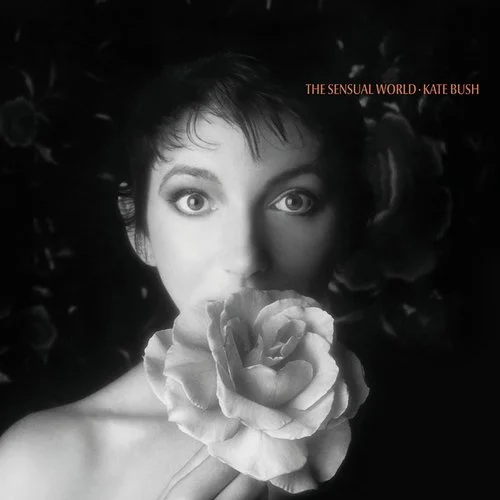
One cannot say that there is a lack of support, affection for and demand of Kate Bush’s music. Her popularity seems to rise by the year! I really like how people can just share her videos and music and that sparks huge conversation and admiration. Unlike big stars of today who have to tweet and post endless posts to get their music noticed and talked about, Kate Bush has this endless majesty and genius that means her music will be dissected and highlighted for generations. I love the split between Bush’s ‘70s music and what she produced in the 1980s. Her first two albums – 1978’s The Kick Inside and Lionheart – have a more stripped sound that rely more on piano and voice. Themes mostly explore love, and there is this quality to her voice that is pure, sweet – yet there is also great passion and range. As she moved into the Eighties, one can feel shifts and expansions between 1980’s Never for Ever, 1982’s The Dreaming, 1985’s Hounds of Love and 1989’s The Sensual World. Songs like Babooshka and Army Dreamers (Never for Ever) could be represented and start the film. Then songs from The Dreaming like There Goes a Tenner and All the Love could be the next part of the first act. Hounds of Love’s The Ninth Wave could be act two, then you could go to a couple of tracks from The Sensual World for the final act.

There are, in fact, endless possibilities when it comes to plot and setting. Rather than this being a way to simply use Kate Bush’s songs in a film, a lot of the lyrics would be played out. A story would form around her words. Mixing in music video-style direction with different visual angles, it could be an engrossing and memorable film. The fan demand would be there but, in a more general sense, there would be success and demand. Because Kate Bush keeps reaching new people and her influence is vast, I do think there needs to be more projects that visual and represent this.  A film could combine elements of a musical, together with well-known artists covering her songs. There would be a mixture of romance, tragedy and drama. I am not sure what it would be called or what the plot is, but I can picture scenes and little moments that would combine into a pretty decent and original film (or T.V. drama). I feel we will see some books and other projects relating to Kate Bush through this year. Who knows what could shape up and appear in the coming months?! There is always hope that another album will arrive (2011’s 50 Words for Snow is her latest studio album), but she will be done when she is done! Her music will engage and inspire the new generation, but I reckon a powerful, funny, interesting and affectionate film where her music is at the heart of things would…

PROVE to be a big success.

FEATURE: In All Her Glory: Ranking Britney Spears’ Nine Studio Albums

FEATURE:


In All Her Glory

Ranking Britney Spears’ Nine Studio Albums

___________

EARLIER this week…

 PHOTO CREDIT: Axelle/Bauer-Griffin/FilmMagic

there was news that Britney Spears is writing material for a new album. Her ninth, Glory, came out in 2016. Having won a long-drawn-out conservatorship battle against her father and those who have been controlling her career for years, it seems like this is a new phase for Britney Spears. Now forty, the Pop icon is looking ahead to fresh horizons. Maybe there will be big live dates later this year and some personal news. I think the music world is holding its breath for another album. Will it be confessional and angry, or will it be a return to the lighter, sexier Pop that she is known for? I think we will get something defiant, independent, strong and compelling. One of the biggest artists of the late-1990s and 2000s, it is good that she is in a happier space now. Ahead of a potential tenth studio album, I wanted to rank her nine albums. I think they are all very strong, though there are some that I prefer above the rest – even the lowest-ranking album is very good indeed. Here is my view when it comes to ranking…

THE albums of the inimitable Britney Spears.

_____________

9. Britney Jean

Release Date: 29th November, 2013

Label: RCA

Producers: A.C./Chico Bennett/Christopher Braide/Peter Carlsson/Cirkut/Diplo/Dr. Luke/Freshmen III/David Guetta/Derek Weintraub/Zach ‘Reazon’ Heiligman/Keith Harris/HyGrade/William ‘DJ Keebz’ Kebler/Kool Kojak/LWAM/Sebastian Ingrosso/Damien LeRoy/William Orbit/Otto Knows/Anthony Preston/Nicky Romero/Giorgio Tuinfort/Marcus van Wattum/Richard Vission/will.i.am

Standout Songs: Alien/Perfume/Body Ache

Review:

Even now, just about to celebrate her 32nd birthday, Britney Spears remains as enigmatic as the Disney-groomed, emotionally insulated teen who greeted us in the late ’90s. It’s part of why we treasure her: The feeling that, even as she sings her most seductive or inventive songs, the real Brit’s off dreaming her unknowable dreams. Britney Jean, which takes its title from her family nickname and has been billed as the most ”personal” of her eight albums, tells you virtually bupkus about her struggles over the years. But in just 10 tidy songs, it brings us closer than ever before to that distant dreamer.

Of course, since it’s a Britney Spears album executive-produced by will.i.am in 2013, it also happily indulges the fantasies of endorphin-seeking EDM festival goers. Brit promises she ”won’t stop ’til you breathe heavy” on ”Body Ache,” a David Guetta track that nearly builds to a clobbering house beat, then cannily falls back. Thor’s hammer comes down instead on the other Guetta collaboration, ”It Should Be Easy,” in which Britney, will.i.am, and their AutoTune elves join hands to reflect vacuously on love. Dance music’s lousy with anonymous female hook singers right now, but these two songs transcend DJ filler because Britney never soft-pedals her voice’s uneasy layering of girly and libidinous. They’re based more in tension than release.

Britney’s tradition of messing with pop forms goes back at least 10 years, to the genre-splicing ”Toxic.” As often as she might withhold tabloid fodder from her lyrics, she puts a lot of trust in her producers. That translates to the weird and wonderful intimacy of ”Alien,” a gently pulsing track in which an actual extraterrestrial finally realizes she’s ”not alone,” and repeats the phrase until it is pitchshifted up like a departing space ship.

It also gives rise to less subtle pleasures, like the first single, ”Work Bitch,” a fabulous if campy dance track, and the bass bomb ”Tik Tik Boom,” in which Brit tells a lewd T.I., ”you got a sex siren in your face.” Alienation lurks in those songs, too — which naturally gives Brit’s duet with her younger sister Jamie Lynn, the morphing ballad ”Chillin’ With You,” a special poignancy. All we really learn is that Britney prefers red wine, and Jamie Lynn, white. But we share their warm, tipsy feeling all the same. B+” – Entertainment Weekly

Key Cut: Work Bitch

8. Blackout

Release Date: 25th October, 2007

Labels: Jive/Zomba

Producers: Danja/Bloodshy & Avant/Kara Dio/Guardi/Freescha/Fredwreck/The Neptunes/J.R. Rotem

Standout Songs: Piece of Me/Radar/Break the Ice

Review:

 “Public image is vital to pop stars, but few stars have been so inextricably tied to their image as Britney Spears. Think back to "...Baby One More Time" -- it has an indelible hook but what leaps to mind is not the sound of the single, but how Britney looked in the video as she pouted and preened in a schoolgirls' uniform, an image as iconic as Madonna's exposed navel. Every one of Britney's hits had an accompanying image, as she relied on her carefully sculpted sexpot-next-door persona as much as she did on her records, but what happens when the image turns sour, as it certainly did for Britney in the years following the release of In the Zone? When that album hit the stores in 2003, Britney had yet to marry, had yet to give birth, had yet to even meet professional layabout Kevin Federline -- she had yet to trash her girl-next-door fantasy by turning into white trash. Some blamed Federline for her rapid downward spiral, but she continued to descend after splitting with K-Fed in the fall of 2006, as each month brought a new tabloid sensation from Britney, a situation that became all the more alarming when contrasted to how tightly controlled her public image used to be. The shift in her persona came into sharp relief at the 2007 MTV Video Music Awards, as she sleepwalked through a disastrous lip-synch of her comeback single "Gimme More," a disaster by any measure, but when it was compared to such previous meticulously staged VMA appearances as her make-out with Madonna in 2003, it made Britney seem like a lost cause and fallen star.

All this toil and turmoil set the stage for her 2007 comeback Blackout to be a flat-out train wreck, which it decidedly is not -- but that doesn't mean it's a triumph, either. Blackout is an easy album to overpraise based on the lowered expectations Britney's behavior has set for her audience, as none of her antics suggested that she'd be able to deliver something coherent and entertaining, two things that Blackout is. As an album, it holds together better than any of her other records, echoing the sleek club-centric feel of In the Zone but it's heavier on hedonism than its predecessor, stripped of any ballads or sensitivity, and just reveling in dirty good times. So Blackout acts as a soundtrack for Britney's hazy, drunken days, reflecting the excess that's splashed all over the tabloids, but it has a coherence that the public Britney lacks. This may initially seem like an odd dissociation but, in a way, it makes sense: how responsible is Britney for her music, anyway? At the peak of her popularity, she never seemed to be dictating the direction of her music, so it only stands to reason that when her personal life has gotten too hectic, she's simply decided to let the professional producers create their tracks and then she'll just drop in the vocals at her convenience. Even the one song that plays like autobiography -- "Piece of Me," where she calls herself "Miss American dream since I was 17" and "I'm miss bad media karma/another day another drama," complaining "they stick all the pictures of my derriere in the magazines," as if she wasn't posing provocatively for Rolling Stone as soon as "Baby" broke big -- was outsourced to "Toxic" producer/writers Bloodshy & Avant, who try desperately to craft a defiant anthem for this tabloid fixture, as she couldn't be bothered to write one on her own. Instead, she busies herself with writing the album's two strip-club anthems, "Freakshow" and the brilliantly titled "Get Naked (I Got a Plan)" (surely the successor to such trash-classics as Soundmaster T's "2 Much Booty (In Da Pants)" and Samantha Fox's timeless pair of "Touch Me (I Want Your Body)" and "(Hurt Me! Hurt Me!) But the Pants Stay On"). Every piece of gossip in the four years separating In the Zone and Blackout suggests that her head is in the clubs, yet it's still a bit disarming to realize that this is all that she has to say.

Britney may not have much on her mind but at least she pockets so deep she can buy the best producers, hiring Bloodshy & Avant, the Clutch and the Neptunes, among others, to help craft an album that cribs from Rhianna's sleek, sexy Good Girl Gone Bad and the chilly robo-R&B of Justin Timberlake's FutureSex/LoveSounds. Emotionally, this isn't a progression from In the Zone, but it is a cannily contemporary dance album, sounding nearly as fresh as Rhianna and JT, even if it's hardly as trendsetting as either. Then again, Britney hasn't set the pace for the sound of dance-pop since her first two Max Martin-driven productions, and her skill -- conscious or not, it doesn't really matter -- has always been to get the right producers at the right moment, which she surely does here. Those producers turn Blackout into a sleek, shiny collection of 12 guiltily addictive dance tracks where the only weak link is Britney herself. Never the greatest vocalist, her thin squawk could be dismissed early in her career as an adolescent learning the ropes, but nearly a decade later her singing hasn't gotten any better, even if the studio tools to masquerade her weaknesses have. Strangely enough, the computer corrections either emphasize her irritating, strangled delivery -- nowhere more so than on "Piece of Me," where she's sharp, flattened, and clipped, the vocoder stabbing at the ears like a pick -- or she disappears into the track entirely, just another part of the electronic tapestry. Naturally, the latter cuts are more appealing, as they really show off the skills of the producers, particularly the Clutch's lead single "Gimme More," Bloodshy & Avant's relentless "Radar," the new wave shimmer of "Heaven on Earth," the stuttering electro-clip of "Break the Ice," or the spare, silly chant of "Hot as Ice." When Britney is pushed to the forefront, she garners too much attention, as she tries too hard to be sexy -- a move she could pull off before, when carefully controlled pictures of her in schoolgirl uniforms, cat suits, and tight jeans filled in the blanks her voice left behind. Now, those images are replaced by images of Britney beating cars up with umbrellas, wiping her greasy fingers on designer dresses, and nodding off on-stage, each new disaster stripping away any residual sexiness in her public image, so when she tries to purr and tease on Blackout she repels instead of seduces. That's the new Britney, and as she's always been an artist who relies on image, her tarnished persona does taint the ultimate effect of her music, as knowledge of her ceaseless partying turns these anthems a bit weary and sad. But if you block that image out -- always hard to do with Britney, but easier to do here since the tracks sound so good -- Blackout is state-of-the-art dance-pop, a testament to skills of the producers and perhaps even Britney being somehow cognizant enough to realize she should hire the best, even if she's not at her best” – AllMusic

Key Cut: Gimme More

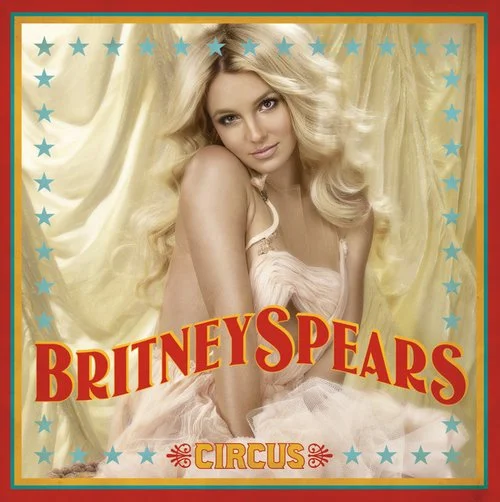
7. Circus

Release Date: 28th November, 2008

Labels: Jive/Zomba

Producers: Benny Blanco/Bloodshy & Avant/The Clutch/Dr. Luke/Fernando Garibay/Nate ‘Danja’ Hills/Rob Knox/Greg Kurstin/Let's Go to War/Max Martin/The Underdogs/Gary White/Nicole Morier/The Outsyders/Guy Sigsworth

Standout Songs: Circus/Out from Under/Kill the Lights

Review:

Britney Spears is making a habit of putting out albums with titles that promise more self-revelation than she’s ultimately able to provide. Last fall, she released Blackout…which turned out not to have anything to do with experiencing blackouts. This year, it’s Circus, with a title track that’s not about the madhouse her life has become but just a brag about her prowess as a whip-cracking sexual ringmaster. In the studio, however, she’s no auteur, and with her producer-writers seemingly calling the creative shots, Spears is only as interesting as they are on any particular day.

Initially, that’s not interesting enough. Circus‘ first half has hitmakers like Dr. Luke and Max Martin bringing their B game to rote dance tracks like ”Shattered Glass” (pronounced glah-ee-ass) and the puerile ”If You Seek Amy” (sound it out to hear why it’ll be a middle-school sensation). But halfway through, Circus shifts from defiant booty calls to subtler material; suddenly, it’s a first-rate electro-pop album. The Danja-produced ”Blur” is a remarkably pretty song about (finally!) an actual blackout. ”Mmm Papi” giddily sets her littlest-girl voice against a guitar right out of 1960s go-go rock

The standout is ”Unusual You,” a pulsating ballad where a woman of experience finds unexpected love: ”Didn’t anyone tell you you’re supposed to/Break my heart, I expect you to/So why haven’t you?” Mostly, Spears still presents herself as fantasy object, but here might be her own fantasy — of real acceptance. Next time, Britney, flash us more of that. B” – Entertainment Weekly

Key Cut: Womanizer

6. Britney

Release Date: 31st October, 2001

Label: Jive

Producers: BT/Rodney Jerkins/Brian Kierulf/Peter Kvint/Max Martin/The Neptunes/Rami/Josh Schwartz/Justin Timberlake

Standout Songs: Overprotected/I'm Not a Girl, Not Yet a Woman/Boys

Review:

To thwart bootleggers, and perhaps the reviewing process, reviewers get to hear Britney Spears third album once: on a swivel chair in the middle of her record company's office whilst all around workers get on with their daily chores.

But even after just one play it's clear 'Britney' is Spears' coming of age album. This is not an album exclusively for playground dance routines, this is an album of late nights and nightclubs, of self-discovery and self-doubt. She's clearly manoeuvring herself into Madonna's slipstream, but a better comparison can be made with Janet Jackson's 1986 album, 'Control', where Jackson powerfully announced her womanhood with an explosion of club-dominated pop. 'Britney' pulls off exactly the same trick, both musically and lyrically.

She enlists an array of top grade songwriters to facilitate this, including Rodney Jerkins, Dido and her boyfriend, *N SYNC's Justin Timberlake. It's The Neptunes, though, who spin the darkest magic with their two tracks - even if the lusty electro funk of 'I'm A Slave 4 U' and 'Boys' are essentially the same songs telling exactly the same story: that it's better to be a slave to the rhythm than to any man. Timberlake, meanwhile, provides backing yelps on his re-write of *N SYNC's 'Pop', 'What's It Like To Be Me', as well as a bizarre lyric for his fiancee to sing. "Do me right", growls Britney, "or we're through". Is this a memo from Justin to himself, or to her? Indeed, the fact Britney, 19, has so little lyrical input into all this soul bearing (including an icky trio of love ballads towards the end, written mainly by old Swedish men) somewhat lessens its dramatic impact. That it takes Dido - a woman staring into the harsh glare of her thirties - to sum up the projected mood of a young woman bidding farewell to the comfort of her teens with 'I'm Not A Girl, Not Yet A Woman' is ironic. That Dido forces Britney to pitch in with the kind of come-down funk for which Dido's become unjustifiably famous is downright cruel.

Britney and 'Britney' still works best when making a good pop cheese and dance sandwich: there's the ace Rodney Jerkins-produced version of Joan Jett's 'I Love Rock'n'Roll', which does exactly what is says on the tin. There's the crackle and Euro pop fizz of 'Overprotected' ("I'm so fed up with being told to be something else but me", howls Spears over a song written and produced by Max Martin and Rami). There's the roaring disco of 'Anticipating' (take that, Kylie!), but best of all there's 'Boombastic Love' which has exactly the same chorus as 'Oops...I Did It Again!'. All of this is better than the slow-paced navel-gazing. Then again... "It does improve the more times you hear," urges one of Jive's Britney-battered workers as we leave. Alas, that must remain a moot opinion “ – NME

Key Cut: I’m a Slave 4 U

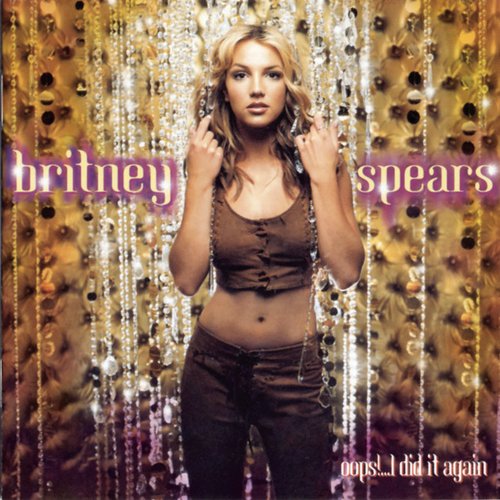
5. Oops!... I Did It Again

Release Date: 3rd May, 2000

Label: Jive

Producers: Timmy Allen/Larry ‘Rock’ Campbell/Barry J. Eastmond/Jake/Robert ‘Esmail’ Jazayeri/Rodney Jerkins/David Kreuger/Robert John ‘Mutt’ Lange/Kristian Lundin/Steve Lunt/Per Magnusson/Max Martin/Rami/Paul Umbach/Eric Foster White

Standout Songs: Stronger/Don't Let Me Be the Last to Know/Lucky

Review:

Given the phenomenal success of Britney Spears' debut, ...Baby One More Time, it should come as no surprise that its sequel offers more of the same. After all, she gives away the plot with the ingenious title of her second album, Oops!...I Did It Again, essentially admitting that the record is more of the same. It has the same combination of sweetly sentimental ballads and endearingly gaudy dance-pop that made One More Time. Fortunately, she and her production team not only have a stronger overall set of songs this time, but they also occasionally get carried away with the same bewildering magpie aesthetic that made the first album's "Sodapop" -- a combination of bubblegum, urban soul, and raga -- a gonzo teen pop classic. It doesn't happen all that often -- the clenched-funk revision of the Stones' deathless "Satisfaction" is the most obvious example -- but it helps give the album character apart from the well-crafted dance-pop and ballads that serve as its heart. In the end, it's what makes this an entertaining, satisfying listen” – AllMusic

Key Cut: Oops!... I Did It Again

4. Femme Fatale

Release Date: 25th March, 2011

Label: Jive

Producers: Ammo/Billboard/Benny Blanco/Bloodshy/Cirkut/Dr. Luke/Rodney ‘Darkchild’ Jerkins/JMike/Henrik Jonback/Magnus/Max Martin/Oligee/Fraser T Smith/Sandy Vee/Shellback/Stargate/will.i.am

Standout Songs: Till the World Ends/I Wanna Go/Criminal

Review:

Femme Fatale? The title of Britney's seventh album suggests a mystique redolent of cigarette holders and smouldering glances across cocktail parties. A more accurate title might be "In Season". For these are 12 all-out mating calls, issued on an endlessly pulsating dancefloor, in which Spears dispenses with any other subject matter save her unquenchable lust.

Spears went big with this predatory insatiability around the time of 2007's Blackout, released concurrently with what appeared to be a nervous breakdown. It was a little weird at the time, how she conducted herself like a Duracell sexbot in song, while her children were being removed and her affairs handed over to her father.

But the idea of dead-eyed female lubriciousness is now a Britney staple, and this album is better at it than most. Femme Fatale's first two singles – "Hold It Against Me" and "Till The World Ends" – have garnered praise, despite being two of the less arresting songs on the album. The standard is high. The cringe-making "Criminal" aside, there are no noisome ballads cluttering up the steady throb of Auto-Tuned solicitation.

There is, moreover, one copper-bottomed work of pop finery on this album. "How I Roll" is a thrilling digital workout penned mainly by Bloodshy & Avant (they did "Toxic" and "Piece of Me") which you could describe as ghetto-Nordic, via MIA. It sounds like a sweet come hither soundtracked by a shop full of digital toys, until the line "You could be my fuck tonight" reaffirms the thematic status quo.

Dancing has rarely been a more obvious referent for sex standing up than on Femme Fatale. "I Wanna Go" is all hi-NRG booty calling, with a possible reference to New Order's "Blue Monday" thrown in. But it's not just Britney with her hands in the air. American pop seems to have caught a wholesale case of European rave pox. For the past decade, Stateside pop has more or less equated with mass-market R&B, tweaked by frequently Scandinavian auteurs employing hip-hop production techniques.

Of late, though, the steady tish-tish of continental dance music – inaugurated, arguably, by Madonna's Confessions on a Dancefloor (2005) – has turned into an all-out all-nighter.

Synth stabs, techno builds, house pianos and Ibizan dynamics have conjoined with high-end digital production to create a new hybrid pop. The Black Eyed Peas have been movers in the field, linking up with French dance producer David Guetta on various tracks. Curiously enough, though, the token will.i.am track on Femme Fatale is the most old-school work here, a deeply silly chant-along in which Britney declares she "could be the trouble" and "you could be the bass" ("Big Fat Bass"). Do you see what they did there? The bass, of course, grows ever more tumescent.

"Gasoline", meanwhile, offers an extended petrol metaphor for desire in which the line "my heart only runs on supreme" should be commended. It would be tempting at this point to say that Britney is on fire, having turned in the "fierce dance record" she promised. But let's just say: she's hot to trot” – The Observer

Key Cut: Hold It Against Me

3. ...Baby One More Time

Release Date: 12th January, 1999

Label: Jive

Producers: Jörgen Elofsson/David Kreuger/Kristian Lundin/Per Magnusson/Max Martin/Rami

Standout Songs: (You Drive Me) Crazy/Sometimes/Born to Make You Happy

Review:

The song that sparked the beginning of the pop princess herself, Britney Spears, as well as years of iconic Halloween costumes, started back in 1997, when Spears first tried to join girl group Innosense, and instead was singed to her own record label with Max Martin, where she was given the demo for “Hit Me Baby One More Time” (originally rejected by girl group TLC).

It was shortened later to “…Baby One More Time” because producers were worried it held connotations of domestic abuse. The song “…Baby One More Time” featured on Spears’s debut studio album of the same name, which released in January 1999. But the pop song of the century released in October 1998, and it reached number 1 in every country it charted in.

Before Spears got her record deal she was already an American sweetheart, having performed on Disney’s Mickey Mouse Club, and it was here that she was discovered as a star. She worked alongside Justin Timberlake, Christina Aguilera and Ryan Gosling, all of whom became stars in their own right.

But this album marked Britney’s ongoing success. Opening with “…Baby One More Time”, the album introduces a poppy up-beat style, and “makes its presence known in exactly one second”. It’s a great way to grab a listener’s attention for a debut album. The next track, “(You Drive Me) Crazy”, might sound like an unfamiliar version if you listen back. The track was made more popular with “The Stop Remix”, and was used for the music video, giving it more substance a second time round.

As we move into “Sometimes”, we get an airy, romantic-comedy type song. It’s everything associated with a young Britney, with slow, relaxing vocals, accompanied by delicate percussion and soft backup vocals. The song, also a single, made it to her singles collection album, entitled Britney: The Singles Collection, which features 4 other singles from her 1999 album, including “…Baby One More Time”, “Autumn Goodbye”, “(You Drive Me) Crazy [The Stop Remix]”, and “Born To Make You Happy”.

The next song, “Soda Pop”, shows Spears revisiting her countrified vocals a little more, and stepping away from the iconic voice she moulded for herself so carefully. The singer channels her friend Christina Aguilera (XTina), and also her old-self, when she performed alongside Justin Timberlake on the Mickey Mouse Club. With such strong, deep vocals, it was astounding to see that she’d changed her singing style, but thanks to doing so, she stood out.

And so did “…Baby One More Time”’s music video. The schoolgirl singing in the halls became Britney’s most iconic look (after the “Oops!… I Did It Again” red latex suit), and it skyrocketed her career. With her look and voice complete, her first album paved the way for this sweet, innocent new star. But Britney had other plans for her future…

“Born To Make You Happy” was a record that fitted well with “Sometimes”. It was airy and light, with low piano notes playing throughout. However, unlike “Sometimes” and “Soda Pop”, this track used flats and sharps to create a more sorrowful sound. Worried that she’ll lose her love, the song explores this emotion and plays on it, with the song progressing to a happier ending as the tune switches octaves towards the end. Uplifting and reassuring, it’s a love song for the ages.

Surprisingly, upbeat “I Will Be There” and ballad “E-mail My Heart” were never singles, but they were favourites for many from the album. The latter explored a more emotional side of the album, depicting a softer vocal-d Spears, professing her love. It was warm and soothing, perfect for her teen girl audience at the time” – We Plug Good Music

Key Cut: ...Baby One More Time

2. In the Zone

Release Date: 12th November, 2003

Label: Jive

Producers: Bloodshy & Avant/Brian and Josh/Roy ‘Royalty’ Hamilton/Jimmy Harry/Penelope Magnet/Moby/The Matrix/R. Kelly/Rishi Rich/Guy Sigsworth/Shep Soloman/Mark Taylor/Trixster

Standout Songs: Me Against the Music (feat. Madonna)/Outrageous/Brand New Girl

Review:

For the most part, In The Zone is a big, fat, thumping love letter to the dancefloor, which makes Madonna’s involvement (on lead single “Me Against The Music,” arguably one of Britney’s finest moments and one of her mentor’s worst) even more appropriate. Britney’s unabashed devotion to dance-pop is, perhaps, the one thing that truly links her to the big M, as she presses her body “up against the speaker” the way Madonna did back in the early ‘80s. Tracks like the Southern-fried, banjo-infused “(I Got That) Boom Boom,” which features Atlanta party rap duo Ying Yang Twins, and the string-laden, Bollywood-style “Toxic” find Britney dabbling in hip-hop, but it’s clear her heart lies in the clubs. Britney beckons to an anonymous dance partner on the ambient-techno number “Breathe On Me,” exploring (perhaps for the first time in her career) the eroticism of restraint: “We don’t need to touch/Just breathe on me.” Curiously, the sexy thump of the song is briefly interrupted when Britney simultaneously channels George Michael (“Monogamy is the way to go,” she whispers) and Lauren Bacall by way of Madonna (“Just put your lips together and blow!”).

After a night at the club (and, interestingly, little actual physical contact), she passes out on a couch in the “Early Mornin’” (with hypnotic beats, bass loop and synth flute courtesy of Moby) and finds some self-gratification on the Middle Eastern-hued ode to masturbation “Touch Of My Hand.” The only hint of pure pop is the retro Euro-dance/pop number “Brave New Girl” (yes, we’re assuming Britney actually had the chutzpah to evoke the Aldous Huxley classic without having read the book). “Outrageous,” a collaboration with R. Kelly, includes a telling parallel that reveals a lot about one of music’s biggest—as Alanis Morissette would put it—treadmill capitalists: she sings “my sex drive” and “my shopping spree” with the same dripping gusto. For a girl who’s always seemed too sexed-up for her age, In The Zone finds Britney finally filling her britches, so-to-speak. Her little girl coquettishness actually works now—maybe because, at 21, she’s finally a woman. And she’s a self-referential one, at that: “Am I too hot for you?/Did you check out my video?” she asks a prospective boy-toy on “Showdown.” Yes, Britney, we all have. And that’s the way you like it” – SLANT

Key Cut: Toxic

1. Glory

Release Date: 26th October, 2016

Label: RCA

Producers: BloodPop/Burns/Cashmere Cat/DJ Mustard/Jason Evigan/Oak Felder/Andrew Goldstein/Oscar Görres/Ian Kirkpatrick/Mattman & Robin/Nick Monson/Alex Nice/Robopop/Lance Eric Shipp/Twice as Nice/Tramaine Winfrey

Standout Songs: Private Show/Do You Wanna Come Over?/Clumsy

Review:

The soft commercial performance of 2013's Britney Jean made it clear that it was time for Britney Spears to shake up her recording career -- a move made somewhat less urgent due to the success of Britney: Piece of Me, the residency show she launched at Las Vegas' Planet Hollywood a few months after the release of Britney Jean. Sin City's influence can be heard within the splashiness of the arrangements of certain portions of Glory, the 2016 album designed to be Britney's return to the Top 40. To that end, Glory downplays the show biz glitz of Vegas in favor of modern dance-pop, one with EDM undercurrents and hip-hop overtones. Sometimes echoes of other stars can be heard -- Justin Bieber's Purpose appears to a primary text -- but despite this contemporary gloss, the album usually relies on sounds of Spears' past, trading heavily on the cloistered dance of Blackout and the shimmering neon of Femme Fatale. Glory is much lighter than either album, a reflection of Britney's maturation -- the softer nocturnal numbers make a play for Ellie Goulding territory, but they could slide onto adult contemporary -- and her willingness to be goofy. Some of the highlights are the silliest songs: the swinging "Clumsy," the overheated flamenco chorus of "Do You Wanna Come Over?," and "Private Show" and "Slumber Party," a pair of heavy-breathing come-ons that never manage to seem sexy despite the flood of innuendo. Such moments accentuate Britney's playfulness, an aspect of her persona that's been in hibernation for nearly a decade, and it's a welcome return, as is Glory as a whole: it feels as fun and frivolous as her earliest music while retaining the freshness of her best mature work” - AllMusic

Key Cut: Slumber Party (ft. Tinashe)

FEATURE: Inspired By… Part Fifty-Seven: Betty Wright

FEATURE:


Inspired By…

Part Fifty-Seven: Betty Wright

___________

ONE of the saddest music losses…

of the past few years happened on 10th May, 2020. The legendary and hugely influential Betty Wright died aged only sixty-six (she died from cancer). Mentoring artists and providing a catalogue that has been sampled through R&B, Pop and beyond, she is someone who has left her mark and will continue to inspire new artists for many years to come. I will come to a playlist of songs from artists who have either been mentored by her or are natural successors. Before getting to that, here is some biography and background about the superb and missed Betty Wright:

Betty Wright is a soul and R&B singer with deep gospel roots. She influenced a generation of female singer-songwriters and continues to influence the world of hip hop, who sample some of her more famous material.

Born singing gospel with the family group, the Echoes of Joy, Wright began experimenting with R&B music in 1965 when she was only 11. In 1968, she released her first album, My First Time Around, by the age of 14, and scored her first national hit, "Girls Can't Do What Guys Can Do". But it was not until the end of 1971 that Wright's most successful phase of her career began to take place. The song, "Clean Up Woman", became a Top 5 pop and #2 R&B hit, and would later influence a remix of Mary J. Blige's "Real Love" single with the sample of its guitar riffs; R&B girl group trio SWV's "I'm So Into You" also featured a sample from "Clean Up Woman," as did Afrika Bambaataa's song "Zulu War Chant", and Sublime's "Get Out!" remix. In 1974, Wright scored big with the songs "Tonight is the Night" (about a real-life love affair that happened with Wright when she was a teenager) and "Where is the Love" (which won her a GRAMMY for Best R&B Song).

After experiencing the Alston labels apparent dissolution in late '79, she rebounded founding her own record label, Ms. B Records in 1985. In1988, Wright made music history by being the first woman to have a gold record on her own label, (self written, arranged, produced, and published). With the release of Mother Wit, which featured two of her biggest hits in years, "No Pain No Gain" and the "After The Pain." On both songs, Wright displays her powerful upper register capabilities and seven-octave range.

By 2001 a compilation album The Very Best of Betty Wright was released, along with her first studio album in several years, Fit for a King. After co-producing the first two Joss Stone albums, (2003, 2004) multiple GRAMMY nominations, Vocal production on Diddy and Keyshia Cole’ Last Night (#1),a Vocal Coaching spot on Making the Band 3, which spawned the group Danity Kane, Wright managed to squeeze in an amazing collab with her dear friend Ms Angie Stone which garnered them a GRAMMY nomination in Best duets category. Ms. B is also vocal coach to Lil Wayne, who she declares has the memory of a space alien: a phenomenon. Wright also co-produced the critically acclaimed Bible Belt, the freshman presentation of Diane Birch, who came to Ms B "s writing camp and got more than she bargained for...the hook-up...which is why they call her Mama.

This Mother of 5 ( Aisha, Patrice, Patrick*, Chaka, and Asher, (*deceased due to gun violence Dec 25, 2005.)) still manages to mentor several young singer/songwriters in a home-based camp called The MOST, which is an acronym for Mountain Of Songs Today, Wright has been instrumental in the careers of hundreds of artists (vocal coaching, production, song writing, backing vocalist and co-ordinator, music consultancy, etc)The likes of Beyonce, Gloria Estefan, Jennifer Lopez, Joss Stone, Mia X, Trick Daddy, Flo Rida, DJ Khaled, Michael Jackson, Stevie Wonder, Chaka Khan, Alice Cooper, Bill Wyman(Rolling Stones) and on and on til the break of dawn.....!”.

To honour and recognise the influence and important of Betty, here are songs from artists who owe her a debt. Whether she has coached and supported them, or one can hear an artist taking their lead from Wright, there is compassion, respect and affection for an artist who we will never see the likes of again. This Inspired By… is about the powerful, influential, timeless and…

TRULY stunning Betty Wright.

FEATURE: Paul McCartney at Eighty: Nineteen: Seven of the Master’s Underrated Solo Albums

FEATURE:


Paul McCartney at Eighty

PHOTO CREDIT: Paul McCartney

Nineteen: Seven of the Master’s Underrated Solo Albums

___________

AS part of a run of features…

 IN THIS PHOTO: Paul McCartney in 1993

ahead of Paul McCartney’s eightieth birthday in June, I have already recommended his five best solo albums. Having released eighteen solo albums, there are a few that are heralded as classics. I do think that there are albums of his that have been overlooked or not got as much respect as they warrant! To rectify that, I have selected seven of his albums that have more than their share of great material. From his work in the 1980s to some more modern albums, Macca has put out some real crackers! Here are seven Paul McCartney albums that I feel…

 IN THIS PHOTO: A shot of Macca from The Paul McCartney World Tour (1989-1990) programme/PHOTO CREDIT: Paul McCartney

DESERVE new love.

____________

McCartney II

Release Date: 16th May, 1980

Labels: Parlophone (U.K.)/Columbia (U.S.)

Producer: Paul McCartney

Buy: https://www.roughtrade.com/gb/paul-mccartney/mccartney-2-044f06cd-859d-48e0-be17-639a60635786/lp

Standout Tracks: Temporary Secretary/Waterfalls/Darkroom

Review:

Entitled McCartney II because its one-man band approach mirrors that of his first solo album, Paul McCartney's first record since the breakup of Wings was greeted upon its release as a return to form, especially since its synth-heavy arrangements seemed to represent his acceptance of new wave. In retrospect, the record is muddled and confused, nowhere more so than on the frazzled sequencing of "Temporary Secretary," where McCartney spits out ridiculous lyrics with a self-consciously atonal melody over gurgling synths. Things rarely get worse than that, and occasionally, as in the effortless hooks of "Coming Up," the record is quite enjoyable. Nevertheless, the majority of McCartney II is forced, and its lack of memorable melodies is accentuated by the stiff electronics, which were not innovative at the time and are even more awkward in the present. At least McCartney II finds Paul in an adventurous state of mind, which is a relief after years of formulaic pop. In some ways, the fact that he was trying was more relevant than the fact that the experiments failed” – AllMusic

Key Cut: Coming Up

Pipes of Peace

Release Date: 31st October, 1983

Labels: Parlophone (U.K.)/Columbia (U.S.)

Producer: George Martin

Buy: https://www.discogs.com/sell/list?master_id=92548&ev=mb

Standout Tracks: Pipes of Peace/So Bad/Tug of Peace

Review:

Styled as a conspicuous companion piece to Tug of War, Pipes of Peace mirrors its 1982 cousin in many ways: its title track holds up a mirror to its forefather -- and, if that weren't enough, Paul McCartney serves up the knowing "Tug of Peace," an almost-electro collage that twists the songs into McCartney II territory -- it serves up two showcases for duets with a former Motown star along with a cameo from fusion superstar Stanley Clarke and, most importantly, it is also produced by former Fab Four ringleader George Martin. Some of that production occurred during the sessions for Tug of War, with roughly half of the record culled from outtakes from that album, but Pipes of Peace has a distinctly different feel than its predecessor, seeming fleet, adventurous, and modern, almost as an accidental riposte to the consciously classical Tug of War. Sometimes that whimsy slides right into silliness -- witness "Average Person," a music hall showstopper inexplicably shoehorned into the middle of the second side -- but that lightness allows McCartney to indulge in an instrumental funk collaboration with Clarke ("Hey Hey"), a super-slick bit of yacht pop with Jackson ("The Man"), a bit of confession disguised as a synthesized soft rock lark ("The Other Me"), and a galloping revision of Red Rose Speedway with "Keep Under Cover." If McCartney gets a little sticky on the ballad "So Bad," his melody saves him and the album's other two hits have aged exceptionally well: "Say Say Say" hits hard, sounding as funky as anything on Thriller, and "Pipes of Peace" achieves an earned grace. Perhaps Pipes of Peace doesn't have the gravitas of Tug of War but it offers something equally valuable: a portrait of an impeccable craftsman at play” – AllMusic

Key Cut: Say Say Say (ft. Michael Jackson)

Off the Ground

Release Date: 2nd February, 1993

Labels: Parlophone (U.K.)/Capitol (U.S.)

Producers: Paul McCartney/Julian Mendelsohn

Buy: https://www.discogs.com/sell/list?master_id=93701&ev=mb

Standout Tracks: Off the Ground/Biker Like an Icon/C’Mon People

Review:

Paul McCartney lights on a surprising variety of topics on his new album, "Off the Ground." There is an angry broadside against vivisection, a bit of populist utopianism, a starry-eyed paean to nature's beauty, a couple of Elvis Costello collaborations that peek at the dark side of romance and, as one expects from a McCartney album, a few ballads celebrating naive, untroubled love.

If there is a unifying undercurrent, it is McCartney's determination to have his work reconsidered. It's no secret that he was disappointed by the failure of his last studio outing, "Flowers in the Dirt" in 1989, to reach the top of the charts, despite critical enthusiasm and a world tour that broke attendance records. Many of his fans wanted only to bask in Beatles and Wings hits and were hardly tempted by the new material.

That McCartney hopes to turn this situation around is implicit in the energy that propels "Off the Ground" (Capitol 80362; CD and cassette). The album's title song, with its bouncy chorus, slithering electric slide guitar and layered vocals, suggests more explicitly the direction McCartney wants his recording career to go (that is, up) and lays out his strategy: namely, to reach back to the 1960's to reclaim the inventive spark that made his music irresistible. The message is most telling in "C'mon People," a grand "people power" anthem in which McCartney sings of his eagerness to "get it right this time," adding: "I must admit I may have made a few mistakes.

Although "Off the Ground" is, over all, one of the most consistently enjoyable albums McCartney has made, there are a few missteps here. The album's defect is McCartney's lazy lyric writing: wonderful imagery -- in "Winedark Open Sea" and "I Owe It All to You," for example -- often melts into syrup. It is as if he reaches an impasse, reflexively fills in "I love you," or a variant, and forgets to replace the phrase with something more thoughtful” – The New York Times

Key Cut: Hope of Deliverance

Chaos and Creation in the Backyard

Release Date: 12th September, 2005

Labels: Parlophone (U.K.)/Capitol (U.S.)/Capitol Records/Universal Music Enterprises (2018 reissue)

Producer: Nigel Godrich

Buy: https://www.discogs.com/sell/release/12003535?ev=rb

Standout Tracks: Fine Line/English Tea/This Never Happened Before

Review:

The largely one-man-band results resemble the more ramshackle albums from the first decade of McCartney's post-Beatles career: McCartney, Ram, 1980's McCartney II. But those albums were sunlit, quirky and marked by a daffy, occasionally grating sense of humour. Chaos and Creation in the Backyard is muted and crepuscular. Godrich's measured, dry production means that even the love songs seem strangely downbeat: the chirpy Promise to You Girl sounds as out of place here as a burst of Ob-La-Di-Ob-La-Da at a funeral.

Some of the sessions' tension has seeped into the songs, with surprising results. At the Mercy sounds bewildered and despairing. Riding to Vanity Fair is notable not only for a glorious chorus that rises from the song's murky strings and minor chords in a way that is so inimitably, ridiculously McCartney-esque, you can virtually feel your thumbs involuntarily twitching aloft, but also because it offers a previously unheard noise: Paul McCartney sounding bitter. It's an emotion he has previously avoided, presumably because he spent his golden years collaborating with a songwriter who could do vicious, sneering, bug-eyed bitterness better than anyone. Even when Lennon turned his sights on him - on How Do You Sleep?, an early draft of which tactfully labelled McCartney a "cunt" - he never responded in kind, preferring the bemused, disappointed shrug of Dear Friend and Let Me Roll It. But someone has clearly riled him in a way that Lennon could not. Peppered with withering "apparently"s and "I wouldn't dare to presume"s, Riding to Vanity Fare takes McCartney, emotionally at least, into new territory. It's all rather bracing.

Not all the album's pleasures are so unexpected. It does a brisk and highly enjoyable trade in Beatles references. English Tea offers a string arrangement that is one part Eleanor Rigby to two parts Martha My Dear and a witty lyrical nod to the author's saccharine public image ("very twee," he notes, "very me"). Friends to Go has a distinct Two of Us swing. A charming bit of Latin-inflected fluff called A Certain Softness recalls Step Inside Love, the charming bit of Latin-inflected fluff he wrote for Cilla Black in the mid-1960s. The delightful Jenny Wren could no more obviously signpost its links to The White Album's Blackbird if it were called Listen to This, It Sounds a Bit Like Blackbird off The White Album.

For all the nods to the past, not a note of Chaos and Creation in the Back Yard comes close to Beatle standards: it's an intriguing diversion rather than a major addition to the canon. What it has is a sense of purpose, lovely tunes in abundance, and charm. It mints an unassuming and idiosyncratic style with which McCartney could see out his career. At last, it seems he's found an answer to the previously imponderable question: now what?” – The Guardian

Key Cut: Jenny Wren

Memory Almost Full

Release Date: 4th June, 2007

Label: Hear Music

Producer: David Kahne

Buy: https://www.discogs.com/sell/list?master_id=93713&ev=mb

Standout Tracks: Dance Tonight/Mr. Bellamy/The End of the End

Review:

Paul McCartney isn’t about to let a little thing like a contentious divorce send him on a bleak confessional bender. He opens Memory Almost Full, his 21st solo album, in fancy-free fashion, pulling out the mandolin and inviting pals over to ”Dance Tonight” (an alternative gala to Dancing With the Stars?). Still, now that he’s 64, even rock’s most sanguine superstar is ultimately drifting toward weightier thoughts on mortality and the passing of time. Many of these Memory pieces have Macca taking stock of a pretty cool life that ”went by in a flash” or, in ”End of the End,” serenely anticipating his own final curtain. It’s his version of Bob Dylan’s Time Out of Mind…if Time Out of Mind had cutthroat pop instincts and whistling solos.

Any Starbucks employee who’ll be forced to spin this nonstop — since Memory‘s the flagship release on the chain’s new label — should take heart: McCartney’s ruminating has somehow inspired his zestiest music in eons. ”If fate decreed that all of this would make a lifetime, who am I to disagree?” he yowls in ”That Was Me.” The lyrics are nostalgic, but the music avoids the self-consciously Beatlesque touches of his other recent discs, freeing him up to make the equivalent of a great Wings album (a quality you’ll recognize as soon as you hear ”Only Mama Knows,” a rocker with a distinctly ”Jet” engine). His best record since 1989’s Flowers in the Dirt, Memory is beautifully elegiac and surprisingly caffeinated” – Entertainment Weekly

Key Cut: Ever Present Tense

Kisses on the Bottom (Covers Album)

Release Date: 6th February, 2012

Label: Hear Music

Producer: Tommy LiPuma

Buy: https://www.discogs.com/sell/list?master_id=407115&ev=mb

Standout Tracks: I'm Gonna Sit Right Down and Write Myself a Letter/The Glory of Love/Get Yourself Another Fool

Review:

You are the world’s most successful songwriter; you have written the most-covered song in the history of popular music; and changed the world by the age of 24: you are Paul McCartney. So if you want to record an album of neglected dishes from the great banquet of American popular music, you are fully entitled to do so.

There is much pleasure to be gained from Kisses on the Bottom: the jazzy piano of Diana Krall, for one. There’s some sensitive acoustic playing, and the lush arrangements help to swell familiar titles such as It’s Only a Paper Moon, The Glory of Love and Bye Bye Blackbird.

An equal bonus, because all he’s chosen to do is sing, is that there’s a vulnerability to McCartney’s vocals here, a sensitivity in his handling of these all-time classics. Get Yourself Another Fool and Irving Berlin’s Always remind you just what a good singer the rocking knight can be. And after years of personal and professional earnestness, he sounds like he’s having fun.

To his credit, McCartney hasn’t gone for an obvious selection of tracks – it’s doubtful that Frank Loesser’s The Inch Worm would make it onto many desert islands. Ironically, though, it is this one track (with its glutinous children’s choir) which represents the album’s low point.

Of course there’s a history here which transcends these songs; this, after all, is an album from a man whose band effectively blew this style of popular music right out of the water half a century ago. But Paul’s music-loving dad Jim would have known these songs, and while thrashing through Hamburg all-nighters or lunchtimes at the Cavern, The Beatles often found room for songs from this showbiz pantheon.

Cynics may cast a jaundiced eye over Kisses on the Bottom – only two new songs out of 14? (Although My Valentine stands as a breathtakingly good McCartney original.) And hasn’t Rod Stewart taken a scythe through the Great American Songbook? But what McCartney accomplishes here, in the best possible sense, is an album ideally made for Easy Listening” – BBC

Key Cut: My Valentine

NEW

Release Date: 11th October, 2013

Labels: MPL/Hear Music/Universal

Producers: Giles Martin/Paul Epworth/Mark Ronson/Ethan Johns

Buy: https://www.discogs.com/sell/list?master_id=607607&ev=mb

Standout Tracks: Save Us/Early Days/New

Review:

He’s found some enthusiastic partners in this in the album’s four producers, each of whom approaches the collaborative challenge from a different angle. Adele and Florence and the Machine producer Paul Epworth revives the taut, nervy postpunk sound of his early work with Bloc Party for the album-opening “Save Us", and injects the single “Queenie Eye” with aggressively punchy compression and generous splashes of noise. Trad-rock specialist Ethan Johns gives two of the album’s acoustic moments, “Early Days” and Hosanna" an intimacy that’s almost painfully raw. “Alligator” and “New", the two tracks produced by Mark Ronson, are the ones that most closely resemble McCartney’s classic work (late-era Beatles and early Wings, respectively) but he’s given them a modern-sounding density. (He also proves his reputation as an expert vocal producer by stacking McCartney’s voice into a multitracked nod to Pet Sounds at the end of “New.”)

Overseeing the whole project is Giles Martin, son of George, who executive produced the album and directly produced half of the songs. Martin, who was responsible for much of the work on the catalog-spanning Beatles remix project Love, has a natural sense for finding the right balance between McCartney’s sonic ambitions and his established musical identity. As a result, the drum loops and computer-altered electronic sounds and other modern touches that they’ve brought to the table fit comfortably in settings that have over the years become Sir Paul’s trademarks: the jauntily psychedelic faux-classical jingle, the pastoral landscape story-song, the occasional acerbic ripper that he uses to remind us that he’s not all tea and crumpets and quaintly eccentric British aristocrats.

A lot has been made about how busy McCartney’s been keeping himself well past retirement age, and much should be: it’s gratifying and inspiring to see the pop musician who arguably most deserves to rest on his laurels steadfastly refuse to do so. But even more remarkable than his work ethic is the fact that he’s still trying to improve himself as an artist. While the songs on New don’t have the historical import or epic ambition of his best-known work, they also don’t have the same kind of flaws. He’s far less sentimental than he used to be, far less prone to letting his whimsical side carry a song off to cloud cuckoo land, and a much, much better self-editor than he was during the peak of his career. His fellow Boomer musicians could learn a lot from him. As a matter of fact, a lot of the ones from subsequent generations could, too” – Pitchfork

Key Cut: Queenie Eye

FEATURE: Paul McCartney at Eighty: Paul McCartney and Me: The Interviews: Pete Paphides

FEATURE:


Paul McCartney at Eighty

 IN THIS PHOTO: Paul McCartney in 1964/PHOTO CREDIT: RA/Lebrecht Music & Arts

Paul McCartney and Me: The Interviews: Pete Paphides

___________

IT has been really enjoyable, revealing and enlightening…

PHOTO CREDIT: Pete Paphides

interviewing people about their love of Paul McCartney and their experiences with his music. In a run of forty features ahead of McCartney’s birthday in June, I wanted to hear from artists, fans, broadcasters and journalists about when they discovered Paul McCartney’s music - whether that was his work with The Beatles, Wings or solo. Now, I have been speaking with the magnificent Pete Paphides. A journalist, writer, author and broadcaster, I am a big fan of his. I also really love his prize-winning and hugely acclaimed 2020 coming-of-age story/memoir, Broken Greek. Pete is also the founder of the excellent record label, Needle Mythology (their next two releases are You Had a Kind Face, an anthology by Scottish indiepop group, Butcher Boy (April 15), and Altitude by ALT, a reissue of a 1995 album by an ad hoc group made up of Andy White, Tim Finn and Liam O’Maonlaí (May 6). Pete discusses why the video for Wings’ Mull of Kintyre was so affecting to him as a child, why Band on the Run (by Wings) is an album he holds a lot of love for, what it was like interviewing Paul McCartney, and what present he would get the legend for his eightieth birthday. Sit back and read Pete Paphides’ illuminating and fascinating words about the music, magic and importance of…

 IN THIS PHOTO: Paul McCartney hitches a ride (or is just giving a thumbs up?) in Toronto, Canada in 1989/PHOTO CREDIT: Timothy White

THE iconic Paul McCartney.

____________

Hi Pete. In the lead-up to Paul McCartney’s eightieth birthday on 18th June, I am interviewing different people about their love of his music and when they first discovered the work of a genius. Can you remember when you first heard the work of Paul McCartney? How did if affect you?

The first Paul McCartney song I knowingly heard was Mull of Kintyre. I wanted him to be my dad. I wanted to climb into the video and be part of what was happening in that song, in that video. Paul and Linda just looked like the grooviest mum and dad in the world. I figured I could fit right in there and be no trouble at all. I loved everything about Mull of Kintyre. Even the bagpipes. In fact, especially the bagpipes.

You couldn’t watch Blue Peter for more than a few weeks without some fully-kilted fusilier walking into the studio and doing a turn on the pipes. So it didn’t seem that weird to me that there were bagpipes on Mull of Kintyre. They turned a very pretty song into a somewhat emotional one. But then, that’s the point of bagpipes isn’t it? That’s why they’re so loud. They’re designed to remind Scottish people all over the world to come back home once in a while.

In your 2020 memoir, Broken Greek, you wrote how songs like Leo Sayer’s When I Need You, and the work of ABBA can be projected onto your life and has deeper meaning. Did the music of Paul McCartney have a similarly impactful role on you as a child – or has it become more meaningful as you grew into adulthood?

Well, Mull of Kintyre definitely had an element of that going on in it. Later on, I would also get it with Penny Lane, a song whose meaning and emotional effect seemed to change with every time you played it. Penny Lane captures the elusive nature of time and consciousness as well as pretty much any song I’ve ever heard.

As millions have been, you must have been engrossed by The Beatles: Get Back on Disney+. How did it change your impression of The Beatles at that time, and specifically Paul McCartney’s role and influence on the rest of the band?

Like everyone who watched it, I was just floored by the emotional intelligence displayed by Paul. He realised more acutely than anyone else what an enormous and probably impossible job it would be to keep the band together. Because the very thing it would take would be for him to assume leadership of the band – which was also the thing that George and John found annoying and sometimes threatening. And he knew that. He knew what it was about him that irritated the others.

But what were the alternatives? His relentless creativity is an attempt to singlehandedly inject some urgency and momentum into a project that will die without it. It’s a superhuman effort. And it’s sometimes heartbreaking to watch because we know how this story ends.

He realised more acutely than anyone else what an enormous and probably impossible job it would be to keep the band together”.

In 2021, we also received McCartney 3,2,1. It was interesting hearing just Paul McCartney and (super-producer) Rick Rubin exploring some of his best-known songs. He made scant mention to McCartney III (2020) or his more recent work. Why do you think this is?

I don’t know. It seems to run contrary to what Paul spends so much of his time trying to do – which is to draw attention to the fact that he’s still creating new music. Having said that, he was clearly responsive to Rick. And I thought that Rick was wonderful in the programmes. He established a lot of eye contact, which if you watch how Paul operates, seems to be central to establishing a bond with him. And he allowed him to develop his answers without interrupting too much. Often, there didn’t even need to be a question. He just pushed up the faders on a song and waited for Paul’s response.

I could have watched those moments all day.

 Like me, you have a love for Wings’ Band on the Run. I think this is my favourite non-Beatles McCartney album. Why is this album special to you?

It’s Paul playing a blinder when the odds are stacked against him. It’s not dissimilar in that regard to Get Back. Two members of the band have left at almost no notice. They’re off to Lagos, to work in a studio that isn’t really fit for purpose. But again, as with Get Back, Paul’s sheer force of will wins the day. And he does it with a bunch of songs which set out his existential stall. Paul is defaulting to what he knows, especially on songs like Mamunia

“So the next time you see rain it ain't bad/Don’t complain, it rains for you/The next time you see L.A. rainclouds/Don’t complain, it rains for you and me

…and Mrs Vanderbilt

What’s the use in worrying?

…and Bluebird

Touch your lips with a magic kiss/And you'll be a bluebird too/And you'll know what love can do”.

Even on Band on the Run and Nineteen Hundred and Eighty-Five, there’s an irresistible life-force at the heart of these songs that you can’t ignore. It’s like he’s saying, “You trusted me enough to fly halfway across the world to make an album in the most insalubrious of conditions and I’m going to lead us through this”.

It’s funny that Fela Kuti came to see him in order to make sure he wasn’t engaging in any sort of cultural appropriation, because what Paul has at moments like this isn’t dissimilar to what Fela Kuti displays.

You can’t hate someone as much as John sometimes hated Paul without loving him”.

This overwhelming charisma in which you want to be a participant. You want some of what he’s on. The Wingspan documentary shows that in abundance. Compare the vibe around Paul in the early-‘70s to the vibe around John in the Gimme Some Truth documentary. Poor John is lost. I think he always knew it was going to be difficult without Paul – and his resentment for him is inextricably intertwined with that. You can’t hate someone as much as John sometimes hated Paul without loving him.

I know you have interviewed Paul McCartney. In 2018, you wrote on Twitter how, when you spoke, you noted how the best songs stay alive and assume new relevance though time. What was it like interviewing McCartney and talking about his songs’ importance?

If you see footage of Paul out and about being stopped by fans who want to tell him how much they love him, you’ll notice that he never stops. He’ll engage, sure, but he wants to keep moving. And interviewing him is a bit like that. If you stop to dwell on the importance of his songs or his contribution to music in general, you risk having him go into ‘auto-Paul’ mode. Reeling off stories or memories or observations that you’ve heard several times in other interviews. So the challenge is to keep him stimulated.

I was happy that he engaged with this idea about Penny Lane and When I’m Sixty Four having this slow-release of melancholy built into them. He talked about I Do Like to Be Beside The Seaside also having that quality. Which, of course, is true. It’s impossible to sing that song in your head without a procession of Victorian ghosts emerging out of your unconscious mind.

Songs like ‘That Day Is Done’ and ‘So Like Candy’ in the raw are so hair-raisingly good”.

I feel Paul McCartney, in spite of his genius, is still underrated. Are there any albums of his (or with Wings) that you feel are worthy of greater appreciation that have, perhaps, been overlooked or dismissed?

I’ve been hugely enjoying the McCartney Archive Collection series of expanded reissues for the way they reactivate and bring extra context to existing records – in particular the Flaming Pie demos and the Flowers in the Dirt demos. Like a lot of people, I wish he’d finished what he started with Elvis Costello. Songs like That Day Is Done and So Like Candy in the raw are so hair-raisingly good.

Maybe an impossible question, but what does Paul McCartney, as a human and songwriting icon, personally mean to you?

He created a new brand new archetype for male rock stars. Every male musician who chose “that life” over the responsibilities of being a good husband and parent must feel a bit uncomfortable when they ponder the fact that Paul invented a way to be great at both. For me, that’s an achievement comparable to what he did in The Beatles. And at the time, he got ridiculed for it.

If you had the chance to interview Paul McCartney now and ask him any one question, what would that be?

Here’s £2 to spend in a corner shop. What are you going to buy?

If you could get a single gift for McCartney for his eightieth birthday, what would you get him?

A tray of my mum’s spanakopita or a tin of Attiki Greek honey. Something simple he might enjoy. Deep, meaningful or symbolic presents aren’t going to cut it with him. We have to keep it light!

I’d also give him an original copy of The Vipers’ No Other Baby – because I seem to recall that his version of the song on Run Devil Run was recorded from memory, and that he hadn’t heard the actual song since its release in 1958. Perhaps he hasn’t got around to getting himself an original copy.

To end, I will round off the interview with a Macca song. It can be anything he has written or contributed to. Which song should I end with?

On the Wings of a Nightingale, the song he wrote for The Everly Brothers.

FEATURE: The Lockdown Playlist: Umbrella at Fifteen: The Best of Rihanna

FEATURE:


The Lockdown Playlist

Umbrella at Fifteen: The Best of Rihanna

___________

ON 29th March…

 PHOTO CREDIT: Vogue Italia

it will be fifteen years since Rihanna’s super-hit, Umbrella, was released. Co-written by and featuring JAY-Z, Umbrella is one of the greatest songs of the ‘00s. The opening track of Rihanna’s 2007 album, Good Girl Gone Bad, I wanted to not only mark the anniversary of the song. Rihanna will soon be a mother, and there are rumours that a ninth studio album might arrive quite soon. One of the most innovative and incredible R&B artists of her generation, I will use Umbrella as a starting point -  but there are so many other terrific songs in her cannon. I have covered Rihanna before and looked at various albums and songs. Before getting there, I want to drop in AllMusic’s biography of the Barbadian superstar:

Rihanna established her pop credentials in 2005 with "Pon de Replay," a boisterous debut single that narrowly missed the top of the Billboard Hot 100 and fast-tracked her to becoming one of the most popular, acclaimed, and dynamic artists in postmillennial contemporary music. Mixing and matching pop, dancehall, R&B, EDM, and adult contemporary material, Rihanna has been a near-constant presence in the upper reaches of the pop chart. Through 2017, she headlined 11 number one hits, some of which -- "Umbrella" and "Only Girl (In the World)" among them -- led to her eight Grammy Awards. And more than just a singles artist, Rihanna has continually pushed ahead stylistically with her LPs, highlighted by the bold Good Girl Gone Bad (2007), steely Rated R (2009), and composed Anti (2016), all of which confounded expectations and placed within the Top Ten of the Billboard 200 with eventual multi-platinum certifications. Her secondary discography as a featured artist is impressive as well, with major crossover pop hits headlined by the likes of Jay-Z ("Run This Town"), Eminem ("Love the Way You Lie," "The Monster"), and Kendrick Lamar ("LOYALTY.").

Born Robyn Rihanna Fenty in Saint Michael, Barbados, Rihanna exhibited star quality as a child, often winning beauty and talent contests. Because she lived on a fairly remote island in the West Indies, however, she didn't foresee the global stardom she later attained. Her break came courtesy of a fateful meeting with Evan Rogers, writer and producer of pop hits for such big names as *NSYNC, Christina Aguilera, Jessica Simpson, and Rod Stewart. The New Yorker was vacationing in Barbados with his wife, an island native, when he was introduced to an aspiring singing group that featured Rihanna. The trio performed for Rogers, who was then eager to work with Rihanna as a solo artist. After the fledgling singer recorded material with Rogers in the U.S. and signed with SRP (Syndicated Rhythm Productions), operated by Rogers and partner Carl Sturken, she sparked the interest of the Carter Administration -- that is, the newly appointed Def Jam president Shawn "Jay-Z" Carter. Following an audition, Rihanna accepted an on-the-spot offer to sign with the major label.

Come May 2005, Def Jam rolled out "Pon de Replay," Rihanna's first single and the lively introduction to the full-length Music of the Sun. Produced almost entirely by Rogers and Sturken, the song synthesized Caribbean rhythms with pop-R&B songwriting. "Pon de Replay" caught fire almost immediately and peaked at number two on the Billboard Hot 100, denied the top spot by Mariah Carey's "We Belong Together." Music of the Sun, released that August, spawned a Top 40 placement with "If It's Lovin' That You Want" and ranged stylistically from a remake of Dawn Penn's rocksteady-styled crossover hit "You Don't Love Me (No, No, No)" (featuring dancehall star Vybz Kartel) to the Beyoncé-like "Let Me" (co-produced by emergent duo Stargate). Music of the Sun was only eight months old when Rihanna followed up in April 2006 with A Girl Like Me. It showed that the singer wasn't a fluke success and could also stretch out, laced with three dissimilar hits. "SOS," high-gloss dance-pop with a sample of Soft Cell's version of "Tainted Love," topped the Hot 100. "Unfaithful," her first big ballad, and "Break It Off," an electro-dancehall hybrid (with Sean Paul), became her third and fourth Top Ten pop singles.

Superstar status was attained with Good Girl Gone Bad, an album that built on Rihanna's commercial momentum and developed into a blockbuster. Released in May 2007 and "reloaded" with additional material the following June, its lengthy promotional campaign yielded several chart-topping singles and boasted collaborations with A-listers such as Jay-Z, Ne-Yo, Timbaland, and Justin Timberlake. Lead single "Umbrella," co-written by the-Dream and Christopher "Tricky" Stewart, sounded like nothing else on the airwaves and shot to number one, as did "Take a Bow" and "Disturbia," while "Hate That I Love You" and "Don't Stop the Music" added to the tally of Top Ten entries. "Umbrella" gave Rihanna her first Grammy win for Best Rap/Sung Collaboration. The album was on its way to triple platinum status by October 2009, when Rihanna set the dark and provocative tone for fourth album Rated R with "Russian Roulette," another Ne-Yo collaboration and Top Ten single. Abused lover, dominatrix, and murderer were among the perspectives Rihanna offered throughout the album, released that November. Even the additional Top Ten hits "Hard" and "Rude Boy" -- the latter her fifth number one -- were stern in demeanor, making the early hits sound like the work of a significantly more complex artist. While Rated R was riding high, Jay-Z's "Run This Town," with Rihanna on the intro and hook, won Grammys for Best Rap Song and Best Rap/Sung Collaboration.

Annual studio albums, each one with a November release date and a broad range of light and dark material covering EDM, contemporary R&B, adult contemporary, dancehall, and straight-up pop, continued well into the following decade. In 2010, just after Eminem featured her on the diamond platinum "Love the Way You Lie," there was Loud. Led by the Stargate-produced "Only Girl (In the World)," eventually a Grammy winner for Best Dance Recording, it was sustained with additional Hot 100 toppers "What's My Name?" (featuring Drake) and "S&M." Talk That Talk was heralded in 2011 with Rihanna's most triumphant single, "We Found Love," on which she collaborated with Calvin Harris. After she nabbed yet another Best Rap/Sung Collaboration Grammy, this time for her role on Kanye West's "All of the Lights," the streak concluded, and culminated, with the 2012 set Unapologetic. Her first LP to top the Billboard 200 (after all of the previous six had gone Top Ten), it also became her first to win a Grammy for Best Urban Contemporary Album. "Diamonds," the anthemic and inspirational standout among some of Rihanna's brashest moments, became her tenth number one pop hit and 18th to peak within the Top Ten.

Within a span of three years, Rihanna had released her fourth through seventh albums. An equal amount of time passed prior to the release of her eighth full-length. In 2013, she lengthened her list of chart accolades as a featured artist with an assist on Eminem's "The Monster," which became her 25th Top Ten hit as a lead or featured artist, went to number one, and led to her fourth Best Rap/Sung Collaboration Grammy. No longer with Def Jam -- a deal had been signed with Roc Nation via Jay-Z, who left Def Jam several years earlier -- Rihanna released non-album singles throughout 2015, beginning with the unembellished "FourFiveSeconds," an unlikely matchup with Paul McCartney and Kanye West that reached number four. "American Oxygen" didn't flourish as much from a commercial standpoint but upon release became one of her most remarkable recordings, a dignified ballad with a personal, pro-immigration theme.

Album eight, the strikingly composed Anti, became Rihanna's second consecutive number one album following its January 2016 arrival. She partnered again with Drake, resulting in another number one hit with "Work." "Needed Me," a buzzing slow jam cooked up with a production team including DJ Mustard and Kuk Harrell, and "Love on the Brain," a throwback soul belter involving Harrell and Fred Ball, entered the Top Ten as well. Those who missed the comparative lack of high-spirited exuberance in Anti were placated across 2016 and 2017 with Rihanna's guest appearances on Calvin Harris' "This Is What You Came For" and N.E.R.D.'s "Lemon." Meanwhile, Drake, Future, DJ Khaled, and Kendrick Lamar likewise profited from Rihanna's featured spots. Lamar's "LOYALTY." made Rihanna a five-time winner of the Grammy for Best Rap/Sung Collaboration, setting a record for women artists in that category”.

Having inspired the likes of Charli XCX, Mabel, Rico Nasty, Tinashe and Selena Gomez, Rihanna is an artist whose phenomenal music has cast a wide net! A respected and successful businesswoman and actor, there will be a lot more from the Barbados-born artist in the future. To celebrate her best-known song turning fifteen, the playlist below is a selection of awesome tracks from…

A queen of modern music.

FEATURE: The Beatles’ Cover for Sgt. Pepper’s Lonely Hearts Club Band at Fifty-Five: A Playlist of Songs from Albums with Iconic Covers

FEATURE:


The Beatles’ Cover for Sgt. Pepper’s Lonely Hearts Club Band at Fifty-Five

A Playlist of Songs from Albums with Iconic Covers

___________

I have written a couple of features…

 PHOTO CREDIT: Peter Blake

relating to the fifty-fifth anniversary of The Beatles’ Sgt. Pepper’s Lonely Hearts Club Band. The legendary album marks its anniversary on 26th May. I wanted to put one out now, as the cover for the album was shot on 30th March, 1967. Fifty-five years since one of the most iconic album covers was shot, it still resonates and reverberates. To celebrate and remember one of the most important moments for The Beatles and album art, I have put together a playlist of songs from albums with timeless and hugely memorable covers. Before I get to that, the Beatles Bible provide us with some information about the cover shoot for Sgt. Pepper’s Lonely Hearts Club Band:

"Prior to a late night recording session at Abbey Road, The Beatles visited Michael Cooper’s London photographic studio where the cover photographs for Sgt Pepper’s Lonely Hearts Club Band were taken.

The shoot took place at 4 Chelsea Manor Studios, 1-11 Flood Street, just off King’s Road in Chelsea. The studios opened in 1902, and Cooper established his studio from 22 July 1966.

The Beatles arrived in the late afternoon. The soon-to-be-famous collage, designed by Peter Blake and his wife Jann Haworth, had been assembled in the studio during the preceding eight days.

The Beatles during the Sgt Pepper cover shoot, 30 March 1967The Beatles during the Sgt Pepper cover shoot, 30 March 1967The Beatles during the Sgt Pepper cover shoot, 30 March 1967

Ringo Starr, Mal Evans and John Lennon during the Sgt Pepper cover shoot, 30 March 1967Mal Evans, Paul McCartney and Michael Cooper during the Sgt Pepper cover shoot, 30 March 1967

A contract dated 14 April 1967 described the various fees for the session, including a misspelling of the album title:

In addition to the front cover shot, The Beatles also posed for the images used on the back cover and the gatefold sleeve.

The Beatles in Sgt Pepper uniforms, 1967The Beatles in Sgt Pepper uniforms, 1967The Beatles in Sgt Pepper uniforms, 1967

The cover had come about after Paul McCartney came up with the album title. He took some ideas to his art dealer friend Robert Fraser, who suggested they use Blake, Haworth and Cooper to realise the concept.

We had an original meeting with all four Beatles, Robert Fraser and Brian Epstein; most of the subsequent talking was done with Paul at his house and with John there sometimes.

Peter Blake

McCartney’s initial idea was to stage a presentation featuring a mayor and a corporation, with a floral clock and a selection of photographs of famous faces on the wall behind The Beatles.

He asked the others to list their choices for the photographs; the original list, complete with misspellings, was given to Fraser and Blake:

Yoga’s; Marquis de Sade; Hitler; Neitch; Lenny Bruce; Lord Buckley; Alistair Crowley; Dylan Thomas; James Joyce; Oscar Wilde; William Burroughs; Robert Peel; Stockhausen; Auldus Huxley; H.G. Wells; Izis Bon; Einstein; Carl Jung; Beardsley; Alfred Jarry; Tom Mix; Johnny Weissmuller; Magritte; Tyrone Power; Carl Marx; Richard Crompton; Tommy Hanley; Albert Stubbins; Fred Astaire.

McCartney took the list and sketches to Peter Blake, who developed the concept further. Further names were added and others fell by the wayside.

Jesus and Hitler were among John Lennon’s choices, but they were left off the final list. Gandhi, meanwhile, was disallowed by Sir Joseph Lockwood, the head of EMI, after he told them they would have problems having the sleeve printed in India”.

Because we are about to mark fifty-five years since a remarkable and hugely fascinating album cover was shot, I was interested in other albums who have striking covers. Including a couple of tracks from Sgt. Pepper’s Lonely Hearts Club Band, the below is a selection of songs from albums whose covers are…

AMONG the greatest ever.

FEATURE: Spotlight: Folly Group

FEATURE:


Spotlight

PHOTO CREDIT: Alex Waespi

Folly Group

___________

ANOTHER act…

I have discovered through BBC Radio 6 Music – who recently turned twenty -, Folly Group are an interesting and very strong proposition. I have to be a bit careful when sourcing interviews, as Folly Group have added a couple of new members since their inception (their formation has changed, so apologies if there are songs included that is part of the old line-up!). I have made the mistake of including old interviews and photos of bands without the new member or with one that has since left! I am sourcing pretty recent interview. The promotion is sort of cantered around their 2021 E.P., Awake and Hungry. I shall get to a review at the end. In preparation for that, I want to bring in a few interviews with the guys. The Line of Best Fit covered the rising group back in July about their formation and growth:

Formed out of drunken enthusiasm on a late-night tube journey, housemates Sean Harper, Louis Milburn and Tom Doherty would frequently play shows at venues such as The Old Blue Last and The Windmill in South London, before finally recruiting percussionist Kai Akinde-Hummel into the fold. He claims that at one point in his life, he was “the only drummer in Camden”. Naturally, this meant that he was involved with many different projects at the same time. “I went to go see them and thought they were terrible. I asked them, do you know what you should do…” Hummel jokes as the other members give conflicting stories of what actually happened.

In reality, Hummel was brought along to a rehearsal having been close friends with the members for years, and became the missing piece of the puzzle. His rhythmic contributions on tracks such as “Fashionista” and “Four Wheel Drive” are hard to miss, adding to the unconventional nature of their music. “We had a show the following Wednesday and he was right – it was way better!” Milburn shouts.

With Kai now in the fold, the group got to work over last summer, fleshing out demos that would become Awake and Hungry. Not every idea they had always stuck, especially with intensive writing sessions, sometimes up to 10-12 hours a day. However, they feel like has paid off. “We recorded it whilst me Louis and Tom were sharing a house in a tiny bedroom, with a mattress shoved against the wall. Thankfully our deaf neighbour was cool with it and we couldn’t have done it without him!” exclaims Harper. “It feels sentimental and almost like a sonic footprint of the experimental energy we had at that time.”

Despite being lumped in with the post-punk label like many of the South London DIY bands associated with The Windmill venue such as Squid, Black Midi and Goat Girl, Folly Group’s members are more in touch with their electronic and dance influences than anything else. That being said, Folly Group aren’t afraid of shying away from the label either. As Harper says: “It’s so much easier to explain that we’re a post-punk band when someone asks you at the pub than getting bogged down in subgenres. At the end of the day, what we make has so many other random influences. In terms of the EP we wanted to make something that was broad enough that whatever we decide to do in the future isn’t some U-turn.”

Harper says that he grew up engaged in the world of dance music from an early age – particularly material that was dark and heavy. It is hard to miss this influence in all of Folly Group’s music with the EP’s constant ambient layers amongst the other frantic instrumentation. The idea of being in a straightforward rock band isn’t appealing to him. “All those things seep into Folly Group, the most obvious one being incorporating such a complex rhythm section for a group of four people,” he explains. “I think the idea was that we wanted audiences to have the same lucid, bodily reaction they would get from a DJ”.

The lockdowns and pandemic wouldn’t have been great for a band who were changing and trying to make their next moves. Tom, Kai, Louis and Sean were recording remotely and trying to acclimatise to the changing and strange situation. WAX spoke to the band back in the summer and asked how they were faring in this new reality:

I am very excited to interview you all and meet you virtually. How is the state of the world and the limitations affecting your creativity?

Sean: Kind of positively, in new ways that we hadn’t anticipated. I think that being pushed into these boxes has meant that we have bent into very weird shapes that we would have never foreseen before all of this. Tom and Louis are in one place, I’m in one place and Kai is in another. We have become pretty efficient at remote collaboration which was made a lot easier by the fact we have always recorded and made music at home ourselves. It is almost like running a small business at the moment; we all really enjoy fiddling with it, remixing, doing 16 bars, stemming it, passing it on to the group and then someone else will reinterpret it.

Tom: I’ve quite enjoyed doing things that way as well.  You can kind of do it in your own time, see what comes back. If you’re together, they’re more gradual changes, but the stuff I send to Sean will come back and it’s gone fucking west and vice versa.

Sean: To hear another member of the band’s work when you haven’t been privy to the process they have undertaken in order to change it, you end up totally repurposing that piece of work. When we’re not all in the same room collaborating, brand new doors for this gestating piece of music are opened. You’re being made to hear something that you started in a completely new way, which for me has been brilliant.

PHOTO CREDIT: Holly Whittaker 

Has the recording process changed during the lockdowns, as opposed to – for example – your debut track ‘Butt No Rifle’?

Kai: The only real difference was that I wouldn’t go to their house and record the production parts. I would do it at home and would send it over.

Sean: Kai’s been sending a lot of agogô bells and woodblock stems over email. Everything we have put out and are sitting on so far was recorded in Louis’ bedroom in Leyton. We don’t really have a set rule for writing. We chose ‘Butt No Rifle’ to be the first track that we put online as we felt it’s a perfect example of how each of us do 25% of the work; it felt like a good mission statement. ‘Fashionista’, however, was almost exclusively Tom. We fleshed it out together but it hasn’t deviated very much from the logic demo that Tom put together.

Tom: [laughs] I did listen back to that original demo the other day and it’s horrible! It’s a lot more refined now but, no, our original strategy hasn’t really changed at all.

I feel like your sound is very eclectic, drawing on loads of different influences, yet still giving the impression of unity and a shared experience. Could you perhaps tell me a bit about your individual musical backgrounds and how you came to form Folly Group.

Tom: We have all known each other in some shape or form for a very long time. Sean, Louis and I have played in projects beforehand and all three of us used to live together. Kai used to play in a band with some friends of ours. The biggest shift was moving in together, it was just like “why are we not doing this?”

Kai: My situation is a bit different. Me and Louis were in separate bands, but we toured quite a lot together. We’d always be at the same shows together around Europe or wherever. I’ve known that guy for crazy long. I just realised how long it’s actually been that I have known him, it’s a stupid amount of time. I think I first met him when I was still a teenager! We never got the chance to properly work together so it’s kind of cool to join up with these guys now.

Louis: I feel like there was one fatal tube trip where we all looked at each other talking about music and we were like “well this is pointless, we should definetly be in a band together.”

Sean: I think we were railed as well, where were we coming back from?

Louis: I feel like that was around Kai’s birthday and before we had ever considered being in a band together. We’ve known each other for a long time; this isn’t our first try.

I really love the electronic, punky, genre-bending sound you have – could you speak to me a little bit about your influences as individuals, as well as a band?

Sean: I have always loved guitar music – for lack of a better phrase – and electronic dance music as much as each other, for as long as I can remember. I’ve always tried to exist in both worlds. We are all massive fans of a lot of electronic music, and I have quite an extensive background in making it. I think you can hear that in the way we treat samples as instruments, and we flip the originals of our own tracks. Some of that comes from my love of Sheffield 90s bleak techno and old Warp Records releases. Everyone’s got a USP in this project which is kind of what keeps it really exciting to be in.

Tom: I’ve had a lot more of a guitar background. I’ve enjoyed electronic music my whole life but in a less educated way. Since hanging out with Sean I have learned so much more about it. I have started enjoying it in a different way, really thinking about how I can use it. But really, I just loved guitars as a kid

Kai: I know it’s a bit of a cliché when people say “I listen to everything” but growing up in London you are exposed to many different subcultures and groups. I’ve been playing from really early; the only drummer in my school – I was in every flipping band! But it opened my ears and my eyes to music that a lot of people wouldn’t expect me to like, and I shock myself sometimes. Similar to Tom, the latest music influence for me was more traditional electronic music – I’m not talking about anything that is produced on the computer. Techno was just like ‘what the hell?’ for a long time. But then, hanging different groups of people, going away to different countries, to Uni and stuff, you just get exposed to so much”.

I want to include a bit of an interview from DORK from back in July. The band appear self-deprecating and funny, but there is a sense it was quite tough getting their music together whilst they were all isolated. It was a struggle to record and create as they would have been used to before the pandemic took hold:

Still, at the end of the day, we’re all here for the music, and the boys know that. Folly Group are post-punk in the true sense of the word, drawing on a whole range of influences from outside of the world of big riffs and bass licks. Or, in Sean’s words: “We make weird hybrid guitar music that is 100% just the sum of various influences.” “Right yeah,” continues Louis. “We’re a kind of four-limbed vessel for turning lots of complicated ideas into one idea that’s not really the sum of its parts.”

Self-deprecation aside, their new EP is a scorcher. For Folly Group, it’s both the closing of an early chapter (“A fond farewell to the formative period,” as Sean describes it) and a product of their recording environment. Sean, Louis and Tom were hunkered down in one house while Kai radioed in his contributions, explains Louis: “It was the three of us locked in a really, really small house — way too cramped for three fully-grown blokes in such a small, decaying—” “Shithole,” butts in Tom. “We were helped enormously by the fact that we had an extremely kind and an extremely deaf next-door neighbour called Roger, so big up Roger,” adds Sean with a cheesy grin. “Not one complaint.”

But how about contributing from outside of the makeshift bedroom studio? The band had already been playing together for six months before the first lockdown, so the dynamic was well in place, but there were definitely complications for Kai. “It was just a lot of recording percussion in my bedroom and pissing off my flatmates. I didn’t have such a lucky setup as these guys. We were all inside constantly, so having me banging away on like agogô bells and woodblocks wasn’t ideal. I have all these files on my laptop, and I’ll be like, ‘Oh, what’s that?’ and it’ll just be silence and then really loud cowbells. What was I thinking?”

In 2021, the realities of being cooped up in a shithole are pretty universal, even for those of us not recording flatmate-troubling belters. That’s something the band have definitely been thinking about, as Louis explains. “It’s quite interesting, the prominence of guitar-based music at the moment, because I always think — well, it’s not mending any broken hearts, is it? It’s a very kind of active energetic genre, there’s always a transference of energy. And it’s interesting: how are people who are locked down listening to this music? Someone just sat in a room like, ‘Yeah, I’m gonna listen to some loud shit now’. But maybe that’s why it’s important now because people don’t have a way to bring that energy into their lives so much. Maybe that’s why people are liking it again.”

PHOTO CREDIT: Alex Waespi 

When we suggest that listeners might be coming to Folly Group to live out their future live music fantasies, it’s met by another round of guffaws. “I don’t want to use the word escapism in an interview because I fucking hate it, but there’s definitely an element of living vicariously,” says Louis, before Sean juts in. “I mean, if we’ve made anyone look forward to anything, then job done.” It’s a strong mission statement, and one that reflects the prospect of the summer ahead. If nothing else, we can all look forward to drunkenly slurring “…band?” and ambling to a gig together”.

Their Awake and Hungry debut E.P. is tremendous. The title almost seems like the band declaring that, after time in isolation and unable to unleash their music, they are now ‘awake’ and very hungry to get going! As I said, they have been played on BBC Radio 6 Music, but their appeal and promise stretches far and wide. They are a band who are going to go far. With some gigs in the diary, I think they will ascend to festival stages before too long. If you have not discovered the band, then go and follow them on social media (I cannot find a Twitter account for them) and check out their music. It may still be early days for Folly Group, but to bet against them or overlook their music would be…

FOOLISH indeed.

____________

Follow Folly Group

FEATURE: Groovelines: Richard Marx - Hazard

FEATURE:


Groovelines

Richard Marx - Hazard

___________

BACK on 28th January…

Richard Marx’s classic song, Hazard, turned thirty. Many might know him best for Right Here Waiting, though I particularly love Hazard. Released as a single from his third studio album, Rush Street (1991), it is brilliant storytelling. You do not get many songs today that have this narrative. Something that is like a murder mystery. The song is about a woman named Mary who mysteriously disappears, and the lead (Marx) is accused of orchestrating Mary's disappearance. He claims his innocence. There is intrigue, twists and suspects in a song about the death of a pure and loved woman. If that were not intriguing and arresting all by itself, the beautiful vocal harmonies in the chorus and the instantly memorable melody hooks you and stays in the head! In April 1992, Hazard peaked at nine on the US Billboard Hot 100. It went on to top the Billboard Adult Contemporary chart, becoming Marx's third number-one single on that chart. I want to bring in a couple of features about the beautiful and haunted Hazard. You wonder what inspired the song and where why Hazard, Nebraska was chosen as the setting. The Prompt wrote about how Richard Marx’s Hazard was a rare songwriting addition to the true crime genre. It remains quite an underrated song. Marx himself, to me, is one of the most original and compelling songwriters ever:

The song is a brooding meditation on the murder of a young woman named Mary. The crime takes place in the town of Hazard, Nebraska. The protagonist/singer and Mary are friends, possibly more, who often take walks along the river that runs through the town. When Mary goes missing one night, our protagonist finds himself a suspect. This is not surprising, since we learn from the opening stanza how the townspeople had always regarded him with suspicion.

My mother came to Hazard when I was just seven

Even then the folks in town said with prejudiced eyes

That boy’s not right…

The lyrics are admittedly a bit vague. Almost generic. But that is part of the appeal. Mary is any and every victim. Hazard is any and every small town that ever found itself the stage for a murder. It’s Holcomb, Saxtown, and Manitowoc County.

It’s also an underappreciated link in the evolution of the True Crime genre that starts with Truman Capote and runs through to our present time in podcasts like Serial and documentaries like The Keepers.

Well, technically speaking it’s not “True” Crime. There is, to be sure, a real town in Nebraska called Hazard*.

*The story of how Richard Marx picked the name is a fascinating subplot.  As he explained in an interview with Songfact:

“That’s the funniest part of the whole song. Because the song was all written except for those two syllables. So I had the opening two lines of ‘My mother came to duh-duh,’ and the rest of the song was finished except for the Nebraska line. And then the Nebraska line actually came because the syllables of it and the sound of it sang so well: ‘and leave this old Nebraska town.’ They sang so well to me that I was like, OK, I’m sold on Nebraska. This is way before the Internet, so what I did was I called the Nebraska Chamber of Commerce and got some very nice woman on the phone and I said, ‘here’s my fax number.’ I was in Los Angeles, and I said, ‘Can you fax me a list of every town and city and municipality in the state of Nebraska?’ So all of a sudden just page after page after page is coming through my fax machine. And I took the pages, I think there were 16, 17 pages worth of tons of names on each page. And I threw them up in the air and picked a random sheet and literally put my finger on the page, and it was Hazard”.

The lyrics do offer this mystery. I do wonder why Marx’s hero would ever be suspected of a crime like murder. I always had the sheriff pegged as the culprit – jealous as he was by Mary’s affections towards someone else. The black-and-white video for Hazard is beautifully shot and told. This Wikipedia article provides further details:

The music video opens with the protagonist cutting his hair by the side of a creek. Suddenly the ghost of a woman is seen hovering over the creek, accompanying the haunting synths and melodies of the music. Several older men are then seen teasing the protagonist as a child with his mother in the background; the description of his character as "not right" may imply slight mental illness or simply being different. The video then shows Mary, who is depicted as having features very similar to those of the protagonist's mother. Various scenes in this sequence can cause the viewer to become unsure about the nature of their relationship. As the story continues, the town's sheriff is shown taking photographs of the couple and following one or both of them in his vehicle.

It is implied that the protagonist goes to see Mary but catches her making love to an unidentified person as the police car arrives on the scene. Again, the video flashes back to his childhood, where he sees his mother committing adultery. In present time, the sheriff arrives and sees the protagonist, who then flees, leaving his scarf behind on the branch of a bush. He returns home and weeps about Mary.

Mary is then shown alone near the river spoken of in the song. She turns to face the camera, with a look of surprise on her face, and it is then made to look as if she is lying in water. The next morning (as the song states), several people assist in arresting the male character in connection with her disappearance.

While in the interrogation room, the protagonist is shown a white cloth, which the sheriff identifies as the item used to strangle Mary. He then denies that he and Mary were romantically involved, and the sheriff asks if Marx was jealous. At this point, the video reveals a larger picture of the protagonist's childhood: that after his mother's affair, his father leaves her for another woman. He is then shown as a child running out of a burning house, although it is unclear whose it is or if he actually set the fire alight.

Locals are shown vandalizing the male character's home, breaking its windows and setting fire to it. It is implied that he cannot be proved guilty when the sheriff drops him off at his ruined home. As the video ends, a woman walking by covers her young son's eyes, again implying he is an outcast or implicated in her disappearance. The video ends with the protagonist leaving the town once and for all by hitchhiking.

The final scene shows the male character remembering the girl saying to him: "You know, everyone says that I should be afraid of you. But I am not”.

One of those songs that, once heard, keeps coming to mind and you cannot help but playing! I am not sure whether Marx has ever revealed who was the killer in the song and how much of the song’s setting, characters and lyrics were based (albeit loosely) around personal events. Not the murder part, but the attraction to Mary (whether she was based around a crush or young love). A beautifully told and performed song released as a single from 1992, Hazard is a song that everyone should approach and embrace…

WITHOUT caution.

FEATURE: The Kate Bush Interview Archive: 1989: Janice Long (Greater London Radio)

FEATURE:


The Kate Bush Interview Archive

1989: Janice Long (Greater London Radio)

___________

I might wind down…

this Interview Archive series, but I am indebted to resources like this that store interviews Bush has conducted through the years. Whilst the majority are print interviews, there are some radio chats that have been transcribed that are fascinating. I have been writing a bit about her 1989 album, The Sensual World, a bit lately. Bush did a lot of promotion for The Sensual World, including some radio conversations. On the twelfth and thirteenth October, 1989, Janice Long broadcast her two-part interview with Kate Bush during her morning shows on Greater London Radio. The interview took place at Bush own studio in Welling. In is a really interesting and relaxed interview, we get some nice exchanges between the two. I have selected various parts of the interview that caught my eye:

Why is there such long gaps <sic> between albums being released?

"I think the problem is, too, that there seems to be a longer gap between each album progressively--which is a bit frightening for me, too. All I can say is that after each album is finished and the promotion is done, I can't just start an album straight away, because otherwise it's just a continuation of that last album. And the whole thing about writing an album is that you want to find something new to say, and at the same time, try to find out who you are at that point in time. You know, what you want to do. What direction you want to move in. So it's very much a self-exploratory process as well."

Now, the thing is, people wait with bated breath for the next Kate Bush album, and they get very excited about it. How do you feel about it? How do you feel about that--knowing that people are still excited about you?

"I think that's quite hard for me to take in, really. I just feel so lucky that I can spend as much time as I need to to make an album, and that people are actually still waiting to hear what I do. It's very exciting for me, and I think sometimes it feels like a big responsibility. It is really important that I put as much as I can into each album, so that it is, hopefully, worth waiting for. It's not something I'm terribly aware of. It's almost too much for me to think about, really--that there are people who want to hear it after such a long time."

So what happens? Do EMI breathe down your neck and say, 'Come on, Kate, the punters are waiting!' Or do you wind down after one album and then just get into it gradually yourself?

"Well, I think the record company know me well enough by now to know that really they just have to leave me to it. I'd really like to be able to make an album quicker. I dream of making an album in eight weeks, but if I did, it would be something that I wouldn't be happy with. Unfortunately, it's just a very slow process for me, and I think they realize this. And they know there's not really much they can do about it, because I couldn't possibly give them an album until it was written and finished."

What sort of influences do you have when you're making an album? Particularly other music?

"My normal way of working is not to listen to other music when I'm making albums. I tend to listen to music after I've finished. A good example of that is after I finished the Hounds of Love album. My brother Paddy played me a tape of The Trio Bulgarka, and I'd never heard anything like it. <This is a slight distortion of the facts. Paddy had in fact been an enthusiast of Bulgarian vocal folkmusic since the late 1960s, when he discovered the genre through an album by the Pennywhistlers. Since Kate was heavily influenced by her brothers' musical tastes at that period, it is unlikely that she didn't get at least some preliminary exposure to Bulgarian music at an early age--IED> I was devastated, like everyone is when they hear it. And by hearing it then, it gave me a lot of time to listen to them and gradually think that maybe we could work together. Bearing them in mind, I actually wrote a track, and then it eventually evolved into the process of working together. But it was probably three years before I actually got around to doing something about it. It just shows you how slow the whole evolving process is."

You don't follow trends at all, do you? <For those thinking that the Bulgarian music influence was a trendy one, remember that Kate's involvement with the Trio Bulgarka actually pre-dated the first re-release of Marcel Cellier's recording of Le Mystere on 4AD by several months. Neither she nor Paddy could have had any idea that Bulgarian vocal music would become chic in the West.>

"I think again, Janice, that it's just as well I don't, because if I did, by the time the album was out it would be three years out of date! I don't stand much chance of being hip--unless it comes right round again, that is."

To many, you're something of an enigma.

"I don't know about enigmas or anything. I just take a long time to make an album."

Do you always write in the studio?

"Yes, I do now. I play around with ideas at home, but most of the writing goes on in here, and that's important, too. Because years ago I'd make demos, and there would be things that I wanted to keep, but of course you can't, because it's a demo. It's the eternal problem. By having your own studio, you can get around that. You can actually make the demos the master, and keep all those little bits that are interesting, but then make the rest sound much better. I work very closely with Del (Palmer), who engineers for me. So most of the time it's just the two of us in there. He works a lot on the rhythms and things, so at least I'm not totally alone in there. Once the song feels good enough to work on, then you bring musicians in and just sort of layer upon layer. You sort of create the picture, as it were, and just build up the sounds that seem to work for what the song is saying. It feels as though songs have personalities. You can try something on a song and it will just reject it. It doesn't want it. And yet you can tray that on another song and it will work so perfectly. They're all so individual."

What about the tense atmosphere when the album is in its final preparation stage? Do tempers begin to flare?

"Yes. I think healthy argument is a very important part of the process, really. Creative or otherwise. Because it can be very constructive. The problem is actually having a strong enough direction, knowing what you want to do."

How important is it to you that te person listening to your record understands what's going through your mind? Or do you mind if they have their own interpretations?

"I think it's wonderful if they have their own interpretations. I think that's really important, although it matters to me that the lyrics are saying something, and I spend a lot of time on lyrics. They're very difficult. I think a lot of the power of lyrics is the sounds. The whole thing is just a combination of sounds and textures, and definitely different words have a different feeling that go with them. The way consonants mark things. It's a very percussive instrument, in a way, words. And I think that's what's very important, that they feel and sound right."

I read somewhere before that you were into Irish music. Is it traditional stuff, or what?

"Yes, it is that. I just love Irish music. It's so emotional, and passionate. It's very, very happy, and it can be very, very sad. It just does something to me. I guess it's because it's in my blood, as well. My mother's Irish, and as soon as I hear the pipes, you know, I feel my blood surging through my veins. And I think the Bulgarian music has...it moves you. The sense of melody and everything. It feels like very old music, stuff we're not in touch with any more. Probably when music was music, and men were men (laughing), and the women were very lonely!"

About "Deeper Understanding": On the way here, the driver kept leaping because he though his VodaPhone was going.

"It's very interesting that you should say that because so many people have. If they'd have that track on, people would be talking away and then they hear the computer sound, they're completely distracted. And I think it reinforces in a way what the whole song is about, which is rather nice. It's almost like people respond more to a machine talking to them than to a human. It's like we're all keyed into mechanical information".

Following on from the hugely successful and acclaimed Hounds of Love in 1985, one could feel and sense a change in Kate Bush’s music and outlook. Entering her thirties (she turned thirty on 30th July, 1988), the 1989 album seems more personal, reflective and futured-looking. Although there is great sensuousness and beauty throughout The Sensual World, I get the sense of Bush thinking more about a future where she is more settled and has different priorities. Maybe not thinking only of work and music, there is this incredible depth and potency that enriches the songs; weaving through the notes like a tapestry. Because of this, I am really interested in the interviews Bush documented to promote the album. Her chat with the much-missed Janice Long (who died on Christmas Day last year) is wonderful! It seems playful but professional. There is a warmth, yet Bush is asked questions that provoke something quite revealing and serious at times. It is another wonderful interview with…

THE inspiring Kate Bush.

TRACK REVIEW: Nova Twins - Cleopatra

TRACK REVIEW:


Nova Twins

PHOTO CREDIT: Arthur René Walwin 

Cleopatra


9.8/10


The track, Cleopatra, is available from:

https://www.youtube.com/watch?v=BfqaPLU_epQ

ORIGIN:

London, U.K.

GENRES:

Alternative/Rock/Punk/Grunge

RELEASE DATE:

16th March, 2022

The album, Supernova, is available from 17th June. Pre-order here:

https://novatwins.ochre.store/supernova

__________

HERE is a duo…

that I have included on my blog before. One of the most interesting, powerful, inspirational and important acts in music, Nova Twins prepare to release their second album, Supernova, on 17th June. It follows the brilliant Who Are the Girls? of 2020. That album came out mere weeks before the pandemic reached us in the U.K. It was one of the worst times to put out a debut. Such a mighty and stunning album needed to be played live. Amy Love (lead vocals, guitar) and Georgia South (bass guitar, keyboards, backing vocals) did get to play the album live, though it must have been weird having this debut out and it being overshadowed fairly soon. Now, ahead of their second album, they are in a much better position when it comes to being able to play it live. Singles Antagonist and K.M.B. have already arrived. I am going to get to reviewing the current single, Cleopatra, soon. I am going to work my way towards that track. I want to cover off a few things before I get there. It is worth learning about how Nova Twins met, and what music they listened to when growing up. In this NME interview from last year, we discover how Love and South met:

Friends since childhood in Essex and London respectively, Love and South’s rise to alt-rock prominence has come from years of gigging around the punk circuit, taking in the Camden Barfly, Lewisham’s Fox & Firkin and The Dome at Tufnell Park. Though they each started out in different small bands and projects, they would take care to get booked onto the same line-ups, cheering each other on before decamping to South’s parent’s house to debrief. When they eventually decided to work together, initially under the name Braats, friends and family encouraged them to avoid conforming or imitating the influence of others. Instead they set about writing songs that felt like them, establishing the blueprint for the individuality that makes Nova Twins so arresting today.

PHOTO CREDIT: Emma Viola Lilja

“I think at the beginning, we were just having fun with it,” says South. “It was just us being best friends, writing a song and thinking, ‘Actually, this is really good – let’s write some more’. So I think that kind of natural energy formed the kind of sound of Nova Twins. And then obviously we had different influences growing up. I loved N.E.R.D, anything Pharrell did, Timbaland productions; all of those electronic aspects of music.”

Love jumps in: “On the flipside, I was listening to a mixture of things, growing up in Essex. At first it was a lot of UK garage and soul, but then at college at 16 I was discovering people like New York Dolls and MC5 and got quite obsessive.” She shouts out British hard rockers Deep Purple and funk and soul singer Betty Davis, whom she describes as “just bringing that energy”, adding: “The first Nova Twins song was written on just bass and top line, then we had some drum beats, and then eventually we got a play-in drummer and that was it. We just kept going and going and going.”

Having found in each other what Love describes as “sisters of the soul”, the pair’s loving dynamic has clearly been the driving force in Nova Twins’ defiant journey through potentially hostile industry waters. Their music might be in-your-face, but the endearing politeness they hold for one another creates an humourous contrast, each waiting patiently for each other to finish talking before adding their own thoughts.

“We’ve definitely gone through a lot with each other,” nods Love. “We love music, but to the core of things, people are what’s important. We’ve gone from girls to women together; it’s really nice to have genuine family around to do this stuff with”.

 PHOTO CREDIT: Emma Viola Lilja

I think one of the most distinct things about Nova Twins is their sound. A tremendous blend of Rock and Alternative with other sounds and shades in the mix, there is nobody like them in modern music. This Music Radar interview from September posed the question regarding the sound of Nova Twins:

We have spoke before but this is the first time we have had you on the site. For the benefit of those unfamiliar with your sound, how would you describe it? Because there is the culture clash of hip-hop and grime with rock and punk, and you really do play around with sound.

Georgia South: “When we record in the studio, we want everything to be played live. With the first album, that was our manifesto. Every riff, every sound, it has to be able to be portrayed live – so no backing tracks or synths, extra keys, MIDI tracks triggering it all. We want to just do it all, tap-dancing onstage, very manually.

“And for our new music, we are following that same kind of ethos, of using sounds only from our pedalboards and our guitars, just because we want to keep it raw and something different.

“A lot of bands, it’s amazing what they are doing, but we thought it was a cool element to just have the pedals and stick with that for this next album. I’m not saying that we won’t change in the future, but for now we are loving experimenting with pedals, and being in our pedal lab!”

There’s also something really traditional and old-school about how you play this new-school sound.

GS: “Yeah, definitely. The way we approach it is very old-school but we love it. We started off that way, playing tons of punk shows…  for years and years and years, just doing it that way as a three-piece, and we just have to…

Amy Love: “Stick to our roots!”.

PHOTO CREDIT: Nathan Roach

How important is volume to your sound? It’s something we don’t talk enough about but it can be so exhilarating.

GS: “Yeah, volume is everything! [Laughs] The other day, we had in-ears for the first time, and the volume wasn’t there. I couldn’t feel the bass, and I couldn’t feel the drums, ‘cos everything was quieter. I am used to having all the sound onstage being super loud. But, it’s obviously better for your ears and your hearing, but it was a harder show because you have got to work harder to be in the music, and when you feel like you are naturally just playing, you’re in that pocket, but when you don’t feel that natural thing, it is a whole different thing.”

AL: “Yeah, and I think live, something we like to play with is dynamics and volume. You can really create a moment by giving the track a bit of space and emptying it out to the point where you can come back and hit it hard for a chorus or something like that. We definitely play with dynamics, with volume, to give the audience more of a journey. And we are writing more music with that in mind. It is important. I think dynamics are key to any band, to be able to take the audience on a journey so it doesn’t get too boring”.

 PHOTO CREDIT: Corinne Cumming

I might get a bit guitar-nerdy for a bit! The guitar and bass are so integral to the sound and impact of Nova Twins. Going back to the Music Radar interview, Nova Twins discussed their set-up and how they get that unique and potent sound:

That’s a consideration we don’t talk about enough, how the guitar works with the pedals. We talk about amps taking pedals well but it’s the same deal for guitar and how the pickups work with it.

GS: “The pickups are the main thing. I don’t tend to use active basses that much. I use it on the passive setting. Sometimes it sounds cool with the glitches but other times the pedals are like, ‘Noooo, I don’t want to!’ [Laughs]”

AL: “I think when we started playing, we always stuck to our one guitar, but you don’t really realise how the guitar reacts almost like a pedal, and like the difference between a DI and an amp, and how that sounds with a P-Bass to a Westone, from a Mustang to a Strat. As you start playing different guitars, you use it as another sonic texture to write with. Because, even your fretless…”

GS: “Yeah, I have a fretless Fender. I got that in lockdown and wrote a verse on that, so it’s cool for the verse to go from all super slinky and then into a different bass for the chorus. I don’t know how I am going to do that live. [Laughs] I’m going to have to try do that on one bass.”

AL: “But I love how you just used it in a different way, because everyone just sees it as a jazz bass, and you use it in a different way, man!”

GS: “Yeah, when Fender gave us the fretless people were like, ‘Why? Why did you get a fretless?’ But you’ve just got to use it in a different way.”

Definitely. And there are possibilities with the fretless. You can use it to emulate a synth.

GS: “Yeah! It sounds super synth-y, it sounds cool”.

 PHOTO CREDIT: Arthur René Walwin

As artists of colour, Nova Twins have faced prejudice. Not purely a Rock act, many would consider this an area of music dominated by white artists. White men. Maybe things are improving regarding representation, but this idea that guitar music should be for white men or a certain demographic meant Georgia South and Amy Love have had to deal with some horrible remarks and judgements. Coming back to the NME interview from earlier, we learn what it was like for them in the early days:

Though the pair gigged and worked relentlessly, the barriers of racial stereotype did come into play. Both recall feeling overlooked or discriminated against as a new band, and dismissed by those who couldn’t seem to understand why they weren’t performing straight hip-hop or R&B.

“We really noticed that when we first came on the scene there was this whole new wave of feminist punk,” says Love. “A lot of magazines were picking and choosing. NME actually did cover us when we first came out, but even though we were playing the same shows as a lot of our peers, we weren’t getting included or seen as riot grrrls. It was really strange. I’m not gonna mention names, but certain magazines would cover a full event day stage and they still wouldn’t write about us. It was almost like they couldn’t comprehend that two Black women could be seen as riot grrrls, you know? Or maybe the type of music we were doing was a little bit different”.

Sticking on the theme, and maybe there was this attack and judgment because Rock fans were stubborn when it came to accepting evolution and something different. In this interview from the Evening Standard earlier this month, the sense of fearlessness displayed on their 2020 debut showed they were doing something fresh with the genre of Rock:

That fearlessness paid off, with the duo’s acclaimed debut album Who Are the Girls? earning them critical acclaim and a legion of new fans – including some famous ones too, like Rage Against The Machine’s Tom Morello and Bring Me The Horizon, the latter with whom they collaborated recently. Bands as varied as Wolf Alice, Sleaford Mods, Enter Shikari and Yungblud have all invited them to be tour supports, showing just how many different fan-bases their music can reach. Earlier this year they got two nominations at the NME Awards, for Best UK Band and Best Band in the World. Rock finally seems to have caught up too, with more willingness to take a chance on bands doing something genuinely new and exciting with the genre.

“The only reason people were saying rock was dead because it wasn’t as inclusive, as diversified, so it was getting the same, stale repetitive stuff,” Love says of the scene that was rolling out similar headliners at festivals year after year. “Rock isn’t dead. There are so many women driving it forward now and it’s the freshest sounding stuff we’ve heard in f***ing years... We played our hearts out on those stages every time: we left an impression that rock doesn’t have to be for the boys. Now, it’s finally starting to push through”.

Two young Black women in Rock, their additions of Hip-Hop and Grime have opened the door for other artists. It has been a struggle for Nova Twins to gain acceptance. Many embraced them from the start, though there have been quarters that have written them off or discriminated against them. In an Alternative Press interview, Nova Twins recounted how they were seen as odd because, being Black women, they were entering this Rock world. I think, in 2022, there is still this preconceived notion of what Rock should be and who should play it:

We’re two young Black women in rock music, [so] all the odds are stacked against us,” Love says. “It’s predominantly white male, and it has been for a very long time, and therefore it was a lot harder for us to find a space to exist. We had to really create our own bubble of ignoring what everyone told us and be reliant on looking to each other for support because we thought we were going mad when we were first a band. People just weren’t accepting of it. They weren’t getting it. They just didn’t understand why we [were] doing this kind of music in the first place.”

The absurd notion that people of color have no place in punk rock can be easily dispelled in just two words: Bad Brains. In 1987, when the African-American quartet from Washington, D.C. arrived in London for a concert at the Clarendon club, in Hammersmith, the streets outside were packed with many hundreds, if not thousands, of people unable to gain entry. So no problem there, then.

 Back in the 1980s, racism in wider British society was easily identifiable; it was monkey noises on the soccer terraces or a primetime television show in which light-entertainers donned blackface and sang calypso. But in the 21st century, a new vocabulary has emerged by which base emotions are given cover by dog-whistle terminology. People talk of “social cohesion,” “taking back control of our borders” and the “anglosphere.”

By way of response, London groups such as Nova Twins and Bob Vylan have emerged with a compelling anti-racist counterview that, for the first time in quite a while, manages to reclaim punk’s radical edge. Make no mistake: Good music is emerging from this exhausting battle royal. But what really sets Love and South apart is that the pair are kicking against the pricks on two fronts.

“Being women and women of color is two separate entities,” Love says. “Do you know what I mean? If you turn up on rock bills, or at a festival, as women, that’s already an assumption that you’re going to be shit. Just because you’re a woman. And if you’re good, that’s such a surprise. Like, [feel free to imagine an intelligent young woman mimicking the most patronizing voice you’ve ever heard] ‘Wow, you’re really talented!’ We get that a lot. Why? Because we’re women. But we’re also Black women.”

After concerts, audience members would approach Nova Twins to congratulate them on their dance moves — “We’re like, ‘We’re not dancers,’” Love says — while magazines would omit them from reviews of festivals in which every other band were given coverage. “People would say to us, ‘We don’t see you as rock,’” South says. “They would ask, ‘How can you fit in? Surely you’re more hip-hop.’ If we were silhouettes, if you couldn’t see what we looked like, we’d be rock. But because [people were] confused by our image, they were like, ‘Ooh, how is this going to fit in?’ They don’t really understand what kind of category we’re supposed to be. There were lots of things like that”.

Nova Twins are not solely responsible for bringing about change and carrying the torch. They are in a position where they have captured huge critical acclaim and focus. With their second album arriving soon, it will help to bring about change and awareness. In February, Nova Twins spoke with Kerrang!. It does seem that change is beginning to happen:

It’s also their turn, they realise, to carry the baton for those who’ve come before and dedicated their lives to enacting real change – for women, for people of colour, for women of colour. Because while the duo undoubtedly march to the beat of their own drum, they do so accompanied by ‘the sound of the dead choir’s roar’, as Antagonist puts it. “In my head, I was seeing the people who have been and have passed on,” says Amy. “But they’re still chanting, our ancestors, the people who have fought for civil rights and fought for women’s rights, which has passed on to us, so we keep fighting for what we think is right.”

Real change is, thankfully, taking place when it comes to representation in rock. The day before this interview, Ho99o9, a POC duo taking their art in less accessible, more incendiary directions, are revealed as the stars of K!’s Cover Story. Meet Me @ The Altar, who graced the cover last summer, are changing the traditionally white, male face of pop-punk. Meanwhile, on this side of the Atlantic the likes of Big Joanie, The Tuts, SPEW, Handle and Best Praxis provide us with not just reassurance of a more diverse and inclusive scene, but viable role models for a new generation of aspiring stars.

“When we see kids like that, we literally look at each other and say, ‘We need to go mental today,’” grins Georgia of the prospect of playing in front of young individuals of colour, who may be seeing people who look like them performing in a rock context for the first time. “It might be the one chance they get to see themselves in a punky setting.”

Nova Twins have led by example on this front too, having curated a bill for their UK and Ireland headline tour (starting this week) featuring DJ/On Wednesdays We Wear Black podcast co-host Alyx Holcombe, Irish/Ivorian rapper Celavied Mai, singer-songwriter Connie Constance, and rapper Kid Bookie. Many of these artists featured on Nova Twins’ Voices Of The Unheard, a project started as a platform for underrepresented artists, initially as a vinyl release, and later as a continually updated Spotify playlist”.

 PHOTO CREDIT: Esmé Surfleet

Staying with this Kerrang! interview, and the connection South and Love has is incredible. They are almost like sisters! This affection and understanding is pivotal regarding their incredible music and how they are almost telekinetic. Their live shows prove how in tune they are with one another:

When Antagonist was first released, Georgia described the single as “the sound of both of our energies coming together”. That’s a statement of fact, of course, given that Georgia and Amy worked on early versions of the song while separated by lockdown restrictions, before eventually convening at Marshall Studios in Milton Keynes to flesh it out. But it’s also the case that Nova Twins are two unique individuals whose combined efforts produce something equally. But what does each bring to the party? What are their separate energies?

To an outsider, the differences between the two seem obvious. Georgia almost always speaks first, which is unusual given that she appears the more cautious, her answers peppered with nervous laughter. Amy, on the other hand, seems to relish the spotlight to a greater degree, whether that’s treating a tricky subject to an irreverent spin, or commanding the attention of 20,000 people at London’s The O2, supporting Bring Me The Horizon, as Nova Twins did last September.

As it turns out, K!’s impressions aren’t entirely wide of the mark; according to the women themselves, if they were to sum up their unofficial roles in the band, then Amy is the witch and Georgia is the scientist. “If she’s got a good feeling that something is going to happen, literally an hour later we’ll get big news,” Georgia says of Amy’s near-supernatural gift for premonition, particularly when it comes to sensing good fortune for the band. “And she’s got very good gut instincts about things, especially around the crazier ideas.” Creatively speaking, those ‘crazier ideas’ tend to begin with Georgia, whose gift for sonic manipulation frequently leaves her bandmate unsure quite what to expect next. “Her ideas may initially seem mental and wacky,” says Amy, “but they’re presented in a way that means they make total sense”.

Before getting to their latest single, it is worth spending some time exploring Supernova. Going back to that Evening Standard interview, Nova Twins discussed some of the songs on Supernova. They talked about how Cleopatra came together:

New album Supernova is filled with plenty of similarly empowering messages for women, like on fiery gothic standout ‘K.M.B.’ where the patriarchy gets a reckoning and electro-anthem Cleopatra – a bold call to action that sees Love declare she’s a “boss bitch”, a “warrior” and a “fighter”. Puzzles too sees them smash taboos on a track where women talk about enjoying sex. “We just thought why not make a heavy sexy song? It’s about not shaming other people,” Love says of the track. “If we cover up, people are like ‘Oh, you’re good girls’ and we were both like ‘Hang on a minute!’ If we want to wear a bralette or a skirt or anything then we will. If we want to talk about sex, then we will do that too!”

Cleopatra was written under lockdown after the Black Lives Matter protests. The song, like so many on the album, interrogates race alongside gender, with the pair saying that the protests made them challenge discriminatory behaviours more determinedly. Opening track Antagonist is perhaps the most vociferous and sees Love declare “I’m feeling like a riot / If it’s a cure to the cause” over South’s thundering bass.

“The Black Lives Matter [protests] were a big part of these [songs],” Love says. “It was also just us opening a big can of worms having many discoveries too. Some of the things that we didn’t even notice like micro-aggressions – things we’ve always been told are just the way the world is, we started to look at them and go: ‘Hang on, that’s not okay.’ You do have to call it out. People used to look at us and be like ‘They’re moaning, they’re being angry black women’”, she explains, saying whenever they would challenge the status quo, they were met with such oppositional, prejudiced comments. “Black Lives Matter made people take things like this a lot more seriously”.

One of the most cutting, sharp and hard-hitting Rock acts, they are a blend of futuristic and classic. I don’t think there are many Rock groups that have the same punch and riffs as the legends. The genre has broadened and almost softened. That is not to say artists are ignoring big issues or coming across as forgettable. Nova Twins are discussing and raising important themes and have this powerful set of lyrics. They also match it with compositions that are catchy, tough and innovative. With elements of Disco, Grunge and Rock blended into this fiery and fist-pumping introduction (that reminds me of Rage Against the Machine), you are instantly hooked on this wonderful song! Twenty seconds of grit, swagger and a sonic declaration of intent leads to Amy Love stepping to the microphone. With this Hip-Hop bounce and attitude, she is backed by snarly and middle-finger-pointing bass and drums. The opening verse is incredible: “I’m the type of girl who likes taking the lead/I don’t give a fuck what they say about me/They say I’m scary, I’m not ladylike, I act like a queen/And I’ll be wearing the crown whilst I’ll be kissing my teeth, yeah/Blacker than the leather, that’s holding our boots together/If you rock a different shade, we come under the same umbrella/Pharaohs and empresses, our bones made out of treasure/I’ll be twirling on swords, watch me slit and slice and sever”. Insightful, clever and vivid, the combination of South and Love on vocals adds so much charge and unity to a song that is among the most potent and stunning Nova Twins have released. At a time when bands like Queens of the Stone Age have retreated and long-stays like Muse are sort of repeating themselves, Nova Twins are among a small selection (included are The Mysterines) of artist who are diversifying Rock and are doing something interesting and compelling. Maybe a reaction to how Nova Twins are perceived by some. Being Black women in Rock, do they have a place and should they stand aside? I can only imagine the type of attitudes and comments they have had to face. Cleopatra seems like this mission statement and fuc*-you to those who have doubted Nova Twins or pushed them aside.

The pre-chorus is more sensual and smooth. It is slinky, but there is this ongoing buzz, neon punch and groove: “At night, we ride/We come alive/You can’t run or hide/At night, we ride/We live, never die/It’s in our bloodlines”. There is some distortion to the vocals that gives it even more edge and power. From start to finish, Cleopatra never lets off the brakes. The chorus is this statement of intent: Nova Twins are definitely not ones to mess with: “I’m a samurai, samurai, samurai, dancer/Warrior, warrior, warrior, fighter/Ahh/I’m a boss bitch/Ahh/I’m Cleopatra/I’m a samurai, samurai, samurai, dancer/Warrior, warrior, warrior, fighter/Ahh/I’m a boss bitch/Ahh/I’m Cleopatra”. I love the sheer rush and wave that Nova Twins bring! The vocals have a slight touch of Gwen Stefani at her coolest and toughest. Funky, filled with spit and this undeniable swagger, there is this Punk attitude that gets under the skin. The song’s questions and lines about identity, race and finding acceptance are especially moving, memorable and important: “When I was a kid they always called me a freak/And now them little bitches want to look like me/They’ll be injecting, imperfecting till it starts to weep /You can buy your looks, but you can’t change your genes/I’m a straight talker/Fucking say what you mean/Want to know where I am from/And where the hell I’ve been/From Persia to Nigeria, London to Jamaica/Our ancestors were sailors/Crossed over the equator”. Cleopatra then returns to the pre-chorus and chorus. There is this feeling that they would not want to be anyone but themselves. Having faced so much crap and hate during their lives, they are proud Black women who are queens! “Ahh/Ahh/Wouldn’t wanna be/Wouldn’t wanna be/Wouldn’t wanna be/Anyone but me/Wouldn’t wanna be/Wouldn’t wanna be/Wouldn’t wanna be/I’m the fucking queen”. Taking their lead from the mighty Cleopatra (she was queen of the Ptolemaic Kingdom of Egypt from 51 to 30 B.C.), this song is the finest and most astonishing release from Supernova yet. It is my favourite track of the year so far!

I am going to finish off with one more point and interview. Going back to the Alt Press interview from earlier on, Love and South talked about the Rock and harder sounds played on the radio:

On the radio [in the U.K.], what I’m hearing is Frank Carter, IDLES, Royal Blood,” South says. “I don’t really hear any heavy women. [Male artists] dominate. Biffy Clyro. Machine Gun Kelly. Travis Barker.” This is what the pair are up against, you see. This is what they know they’re up against, too. So with their basket of French fries — they call them chips over there — long since emptied, and the hour at which soundcheck will begin at Asylum, in Hull, fast approaching, Alternative Press has time for just one more question.

We cover a lot of bands who believe that their operation is built to last. More often than not, it’s anything but. So what exactly makes Nova Twins tougher than the rest?

“Because we’re not seeking anyone’s approval,” Love answers. Probably by now, you didn’t need to be told that she didn’t miss a beat. “And there’s no other option for us, really. This is it. We’ll make it work one way or another, as we have done for the last eight years — and as we’ll do for the next eight years. In spite of all the challenges we’ve had, it didn’t break us. There’s not been one moment when we’ve thought, ‘We’re not going to do this anymore.’ Not one. Even when it got to the point where we thought, ‘Fuck, how are we going to make an album? Where’s the money coming from? How are we going to do this?’ We never thought of giving up. We were like, ‘Fuck it, we’ll get a bank loan. Let’s fucking do this”.

Nova Twins will definitely bring about change. Although bands like The Mysterines are led by women (in their case, the incredible Lia Metcalfe), they are in the minority. Outside of Hip-Hop, there are not many Black women being represented in Rock. Radio is still playing men and male bands, even though there are a lot of all-female or female-led Rock/Punk groups (from Wolf Alice to YONAKA). I feel Supernova will help to bring about change – change that is sorely needed! It is going to be one of this year’s best and most important albums. On the evidence of Cleopatra, Supernova is an album that you…

YOU will not want to miss out on.

___________

Follow Nova Twins

FEATURE: Career Opportunities: The Clash’s Eponymous Debut Album at Forty-Five

FEATURE:


Career Opportunities

The Clash’s Eponymous Debut Album at Forty-Five

___________

ON 8th April…

 IN THIS PHOTO: The Clash photographed in New York City in 1978/PHOTO CREDIT: Michael Putland/Getty Images

one of the most important debut albums ever turns forty-five. It is hard to really state how important The Clash is as an album. The Clash -  Joe Strummer, Mick Jones, Paul Simonon and Topper Headon -  released their astonishing debut album through CBS Records. Written and recorded over three weeks in February 1977 for £4,000, it is undeniably one of the greatest and most influential Punk albums ever. The Clash themselves would never been as Punk again. If future albums found them widening their sound somewhat, their eponymous debut is about as Punk as it gets! Strummer and Jones wrote an album that was urgent and resonated in 1977. Subsequently, it has managed to ensure and inspire so many people. Its themes and subjects are relevant to this very day. With Clash classics like I'm So Bored with the U.S.A. and White Riot, The Clash is an album that will never lose its significance and brilliance. I will come to a couple of reviews of the album Prior to that, Billboard wrote about The Clash in 2017. They make an interesting observation about the London band: they do not want to tear things down and cause damage: they wanted progress and betterment in the world:

Compared to the Sex Pistols, their chief rivals in the early days of U.K. punk, The Clash are seen as righteous and idealistic. They wanted progress, not anarchy. Much of The Clash supports this view. “London’s Burning” is a great example. As guitarist Mick Jones replaces punk’s usual power chords with the type of inverted reggae stabs he’d later use on “London Calling,” frontman Joe Strummer seeks to rouse a numbed city. Strummer used to be disgusted, now he’s enthused. You don’t yell “Dial 99999!” — two digits more than it takes to summon British emergency responders — if you’re happy to see your city burn.

Strummer’s works himself up even more on “White Riot,” the most controversial song The Clash ever did. It was written in response to the Notting Hill Carnival of 1976, where black revelers squared off against white police officers in a bloody street battle. Strummer and Clash bassist Paul Simonon tried to get involved by torching a car but couldn’t get the fire started. The incendiary song that resulted, “White Riot,” is curiously not a show of solidarity with oppressed blacks. It’s a call to white folks who feel similarly unhappy to take action.

“Black man got a lot of problems, but they don’t mind throwing a brick,” Strummer sings. “White people go to school, where they teach you how to be thick.”

Strummer’s heart was undoubtedly in the right place. The Clash were avowedly anti-fascist, and in 1978, they played “White Riot” to thousands of people at a Rock Against Racism festival in London’s Victoria Park. And yet Strummer’s inability to recognize his own privilege — again in the parlance of our times — threatens to undercut his point. The group was better off risking cries of cultural appropriation with their terrifically spiky cover of “Police and Thieves,” a then-current reggae hit by Junior Murvin. Later on, The Clash would learn to play reggae properly — here, they chop away and trust their passion to see them through.

One song nobody was going to get mad at was “I’m So Bored With the USA.” It began life as a Mick Jones love song called “I’m So Bored With You” and transformed into a Strummer diss track aimed at America, the “dictator of the world.” Foreshadowing the international reportage The Clash would offer on 1980’s Sandinista! — named for leftist Nicaraguan revolutionaries — Strummer opens with lyrics about Vietnam vets grappling with heroin addictions they picked up fighting in Cambodia. Joe proceeds to get in a couple digs about Watergate and America’s fondness for TV, violence, and TV shows about violence. This one was almost too easy

The political song that probably resonated most with young Clash fans at the time was “Career Opportunities.” Strummer, Jones, and Simonon lacked what you might call marketable skills, and that was OK, because in late ’70s England, there weren’t many decent jobs to be had. When Strummer sneers, “I won’t open letter bombs for you,” he’s referring to an actual gig Jones had with the Benefits Office. As the low man on the totem, Mick would handle all incoming mail — a dangerous assignment in the days of IRA mail bombings. Jobs that wouldn’t kill you, like the Army or the Royal Air Force, would only make you duller. The Clash can’t decide what’s worse on this stomping sing-along.

“Career Opportunities” speaks to the sort of restless working-class British teens and 20-somethings that Strummer portrays in “Cheat” and “48 Hours” — companion ragers about prowling around for kicks. Jones takes the lead on “Protex Blue,” named for a brand of condom the narrator has no intention of using in the company of another human being: “I don’t need no skin flicks / I wanna be alone.”

These songs of alienation are angrier versions of what fellow U.K. punks Buzzcocks would start blasting out in friendlier form around the same time. The Clash go even darker on “What’s My Name,” where Mick’s howling guitar intro sets up a chilling hooligan’s tale told in 1:41. Strummer stars as an acne-plagued kid with an abusive dad and zero outlets for his energy. When he can’t even get into the local ping-pong club, he resorts to street fighting, then turns up at a house late at night with a “celluloid strip” for picking locks”.

Managing to be inspirational, aspirational, angry and composed at the same time, there is more depth, nuance and meaning in The Clash then most other Punk albums released. In 1977, it seemed like a revelation and revolution. I want to source a couple of reviews for a masterpiece. This is what Louder Sound said in their assessment:

The holy trinity of punk were so perfectly formed that it’s hard to imagine the scene without any one of them. The Pistols: searing and sneering, nihilistic and iconic (the artwork, the clothes). The Damned: the court jesters. Daft, tough, Tiswas-anarchic, a British Stooges/MC5. And The Clash: the guttersnipes and street punks, the voice you could relate to, and without whom it’s hard to imagine The Jam, Stiff Little Fingers, Sham 69 or Generation X, let alone Green Day, Rancid, or maybe even U2.

The Clash articulated the frustrations of working class kids in a way that the chin-stroking protest pop of previous generations couldn’t hope to, in a way that was more inclusive than the fury of the Pistols or the Damned’s goth theatre. (And, yeah genius, we know the irony: Joe Strummer went to a private boarding school and his father was a top diplomat. Hate to break it to you but David Bowie wasn’t really a spaceman, Tom Waits wasn’t a hobo and Ice-T didn’t really kill cops.)

The Clash was hurriedly-written and recorded and it’s a messy and thrilling snapshot of two creative forces gelling for the first time. From their vocals (Strummer’s yobbish bark balanced by Jones’s boyish sensitivity) to their lyrics (famously, Strummer changed Jones’s track I’m So Bored With You to I’m So Bored With The USA), and even their guitar-playing (Joe’s choppy rhythm guitar versus Mick’s slightly weedy-but-melodic lead), the album is a true Strummer/Jones production. Both men were classic rock’n’roll dreamers. To find themselves in the right time and right place with the perfect partners must have been a buzz and, amid the anger and the outrage, the album captures that rock’n’roll woah perfectly.

Mostly The Clash talks about people in boring jobs, with annoying bosses, in a world going to shit. A London burning with boredom, where everyone sits around watching television. Where the TV is full of American cop shows, because killers in America work seven days a week. Where you get hassled in the street by cops and pressured to take a shit job down the Job Centre. Where ‘hate and war’ has replaced ‘peace and love’ and the world is full of cheats and junkies.

Sounds joyless? It’s only half the picture – a bit like describing Trainspotting as a movie about heroin addicts in Edinburgh. The Clash is full of defiance and dark humour and plenty of cheap thrills. Short adrenaline bursts like 48 Hours and Protex Blue (a stupidly laddish ode to the top condom brand of the time: ‘I don’t think it’ll fit my PD drill’) add levity to darker tracks like Deny and Cheat, while Janie Jones, Career Opportunities, London’s Burning and Garageland do all the heavy lifting – full of righteous anger, great one liners and gleeful humour. (Garageland, the witty riposte to Charles Shaar Murray’s earlier line that The Clash were a garage band “who should be left in the garage with the engine running”, isn’t bitter or spiteful but a warm salute to everyone who’s ever been in a dodgy band with ‘five guitar players, one microphone’ and an old bag of a neighbour who calls the police”.

I will end with a review from Rolling Stone. This is what they said in their review of 2002. They observe how much variation there is in terms of the themes The Clash expressed throughout their debut:

Nobody fused clamor with conviction like the Clash. Their choppy riffs and shouted choruses touched on rockabilly and reggae, but their insistence was pure punk. When the group's import debut hit the United States in summer 1977, it offered not only raw, hot news from the roiling British underground but the last fantasy of a rock band that could change history with caustic social observations and fanatic faith in guitars. Joe Strummer snarled his lyrics through snag teeth while lead guitarist Mick Jones contributed most of the dense music that never stopped sprinting, even as it lashed out. The most sure and supple rhythms of early punk came from the dub-savvy bass of Paul Simonon and the hammer-on-concrete drums of Terry Chimes (here renamed "Tory Crimes"). With fourteen songs recorded in just three weekends and all of a piece, The Clash rewarded feverish grass-roots anticipation and moved 100,000 copies -- the best-selling import of that time.

<center><iframe style="border-radius:12px" src="https://open.spotify.com/embed/episode/4ArPzBKW91z81LJOPcYdor?utm_source=generator" width="50%" height="232" frameBorder="0" allowfullscreen="" allow="autoplay; clipboard-write; encrypted-media; fullscreen; picture-in-picture"></iframe>

The band's first single, "White Riot," slapped New York Dolls guitar screech over Ramones speed-beats and announced that the Clash played rock not to escape problems but to confront them. Starting from the viewpoint of young roughnecks with few resources and fewer options, Jones and Strummer declared that guys felt jilted by power structures more than girlfriends. The Clash excoriated dead-end "Career Opportunities," the omnipresence of "Hate and War," and both "Police and Thieves" in a landmark reggae remake. They celebrated their no-account origins in "Garageland" or just threw out the still-disturbing roar "I'm So Bored With the U.S.A."(with its ameliorative refrain, "but what can I do-oo?")”.

As pop protest drained from rock into rap, the Clash's rhetorical ambitions became a target for detractors even as fans insisted the songs worked as gutter-perspective dramas. Heard now, The Clash works as party and protest. Saucier and more cinematic than activist-rock competition from the MC5 to Rage Against the Machine, the album lays down a guide to exile and cunning. The tunes still detonate as the group still insists justice must prevail, no matter how the world just ended”.

A magnificent and timeless debut that turns forty-five on 8th April, here is to the sensational The Clash. If the band’s third studio album, London Calling (1979), is seen as their most successful and, perhaps, greatest album, I feel their eponymous debut is their most important. Even though there were other Punk artists putting out tremendous work in 1977, I think that The Clash were…

WITHOUT equals.

FEATURE: Reel-to-Real: Spike Jonze: Wax – California (1995)

FEATURE:


Reel-to-Real

Spike Jonze: Wax – California (1995)

___________

THIS is a feature where…

 IN THIS PHOTO: Spike Jonze

I take a deeper look at classic music videos. There are so many to choose from. I am selecting ones that are meaningful to me. In the first edition, I talked about one of Michel Gondry’s greatest videos. The French director is one of the most innovative and visually-arresting music video directors. In terms of icons of the form, Spike Jonze is definitely among the very best. Although the band were active until 2009, that was more of a reunion year. Their first period of activity was from 1991-1995. Wax are a Californian band whose second studio album, 13 Unlucky Numbers (1995), contains California. There is always something standout when it comes to Spike Jonze’s music videos. For California, it is the man seen on fire on the sidewalk. Maybe today someone being set on fire would be no biggie. In a video in 1995, that imagery was quite unexpected and new! It is quite controversial, but it is also filmic and cinematic. Of course, Jonze would go on to work on music videos for Daft Punk, Björk and many others. A celebrated film director, this was his very early career. Wanting to make an impression and stand out, he definitely created something that eclipses the song in terms of its memorability and timelessness. I think, when we think of Wax’s California, the video comes to mind more readily than the song. The 1990s were a time when these soon-to-be-legendary music video directors were starting out and honing their craft. Jonze’s take on California is so different to what any other director would have done!

California is one of those videos where the concept and storyline comes together when you have that central idea: a man walking and jogging down a street on fire. This is what everyone is going to be looking at. Visualising something scary, horrific yet oddly calm and safe, you are transfixed by that central character. Consequence wrote about the video for Wax’s best-known song in 2008:

Fifteen years ago, the early 90’s was a time when four turtles with ninja skills and New York accents took on Shredder & the Foot Clan, Whoopi Goldberg had a career, and the United States economy was a little bit more stable, music videos were starting to come into their own. Music videos began to break away from the incredibly bland, florescent 80s trends and established a cinematic essence to give itself some artistic merit. One of these videos aired in 1995 during MTV’s golden age of Buzz Bin cutting edge videos was San Jose’s very own Wax, with their only hit “California” which featured an up-and-coming director named Spike Jonze.

For the times, the video heavily stirred the controversy Kool-Aid. After a daytime showing on MTV, it was spike Ridiculously Awesome Music Videos: Wax’s California immediately banned because for the entire video, a man calmly ran down a California street on fire. The camera shows the man jogging past city dwellers and occasionally checking his watch while the whole time he is on fire. During the end, he passes a school bus to where the camera shifts views to a little girl sitting in a station wagon calmly watching the fire follow the man’s trail”.

I can see why California created a bit of a stir when it came out in 1995. I often think the song’s video could have opened a film. Such is the perfection fusion of the music and the images; it could be followed by a scene that introduces the protagonists. I saw California on MTV in the 1990s. I was fascinated by it, as I had never seen a music video like it. Spike Jonze’s direction is wonderful. Before 1995, he had quite a few videos under his belt! Compare his comical video for Beastie Boys’ Sabotage and Weezer’s Buddy Holly and what he did for Wax! The fact he had directed two iconic videos the year before definitely helped when it came to pushing things and trying to top what came before. This article explores the various stages of Jonze’s video direction and how he evolved through the years. Before finishing off, I want to bring in What Culture’s opinions about Wax’s California and Spike Jonze’s direction. They ranked it sixth in their top ten of Jonze’s best:

There's music videos with a simple premise and then there is Wax's "California" which takes the very concept of "simple" and spins it right on its head. It does not get any more basic than this, folks. Perhaps I am more easily amused than I'd like to admit, but this video makes me laugh harder each time I watch it. It's filmed in one long unbroken take, starting with a close-up of a man's feet which are engulfed in flames. We eventually see that the man's entire body is on fire and he's running down the street. Why does he run down the street? Is it because he's on fire? Is he looking for someone to put him out? Is he running to the hospital? No, he's trying to catch a bus before it drives away. Again, another deceptively simple music video. What's brilliant about it is that it actually coincides with the song perfectly. It's not until the very end of the video when you realize that this all from the point of view of a little girl sitting in the backseat of a car. The narrator in the song is exactly in sync with her perspective. This is the kind of town where a man, who's been lit on fire, is more concerned with catching a bus. Why did I move here?! You could also see the man on fire as being a metaphor. Perhaps we put too much emphasis on the mundane while ignoring our most basic needs in life? Maybe that's looking too deep into it. Nevertheless, this video perfectly represents what Spike Jonze is all about. It explores the beauty of simplicity”.

A magnificent video that ranks alongside the best of all time, it was another iconic and hugely original thing from the majestic Spike Jonze. The New York-born director, prior to 1995, had some awesome videos under his belt. He directed perhaps his best-known video, Daft Punk’s Da Funk, in 1997. Such a brilliant and varied career from a true visionary. When it comes to videos that stay in the mind long after you have seen them, they do not come much more vivid and unforgettable than…

THE spellbinding video for Wax’s California.

FEATURE: A Buyer's Guide: Part Ninety-Six: Garbage

FEATURE:


A Buyer's Guide

Part Ninety-Six: Garbage

___________

WHEREAS most artists require…

at least eight studio albums to gain entry into A Buyer’s Guide, I am making an exception for Garbage. Such an important band and significant one to me, the British-American group are led by the incredible and peerless Shirley Manson. Their most-recent album, No Gods No Masters, was released last year. It is among their best work. Before getting to the albums you need to own from them, an underrated one and their most recent album, here is some biography about the iconic Garbage:

Headed by iconic frontwoman Shirley Manson, alternative quartet Garbage debuted in the '90s with a guitar-based, electronic-washed sound that built upon the sonic landscapes of My Bloody Valentine, Curve, and Sonic Youth, adding a distinct sense of accessible pop songcraft that would help push them beyond cult fandom into the international sphere through multi-platinum releases Garbage (1995) and the Grammy-nominated Version 2.0 (1998). After a brief stylistic shift on the pop-influenced Beautiful Garbage in 2001, the band hit a chart peak with 2005's no-frills Bleed Like Me. Despite an extended hiatus that threatened to end the band, they returned in the 2010s, settling into established veteran roles with the self-released, rock-focused efforts Not Your Kind of People (2012) and Strange Little Birds (2016). In 2021, they kicked off another decade together with their seventh set, No Gods No Masters.

Garbage was the brainchild of producers Butch Vig, Duke Erikson, and Steve Marker. A native of Viroqua, Wisconsin, Vig learned to play piano as a child and drums as a teenager. After leaving college, he met future bandmate Erikson in the band Spooner. One of that band's fans turned out to be Marker, who approached the group and remained in touch over the years. While each one went on to pursue their own careers -- Vig became an in-demand producer, best known for helming Nirvana's breakthrough, Nevermind -- they wouldn't reunite until 1993, when they officially formed Garbage.

In search of a lead singer, the trio caught wind of Scottish vocalist Shirley Manson. Influenced by pioneering female rock vocalists Siouxsie Sioux, Patti Smith, Chrissie Hynde, and Debbie Harry, Manson kicked off her music career at a young age, joining rock band Goodbye Mr. MacKenzie while just a teenager, playing keyboards and singing backing vocals from 1984 until the band's breakup in 1993. Along with three former MacKenzie bandmates, Manson formed alt-rock foursome Angelfish, which released a single, eponymous album in 1994. Back in the U.S., Marker saw a video for Angelfish's single "Suffocate Me." He contacted Manson and, after a couple auditions, she formally joined Garbage as their lead singer in August 1994.

Late that year and into early 1995, Garbage holed up in their Wisconsin studio to record their debut album. That eponymous first effort arrived in August on Almo Sounds. After receiving support from radio and MTV, the album began to climb the charts toward the end of 1995, peaking at number 20 on the Billboard 200. By the summer of 1996, Garbage had gone gold in the United States, and shortly afterward it achieved platinum status, supported by radio hits "Queer," "Only Happy When It Rains," and "Stupid Girl." Garbage was eventually certified multi-platinum and nominated for a pair of Grammy Awards in 1997. The band closed the era with a standout inclusion on the Romeo + Juliet film soundtrack, "#1 Crush," which topped the Billboard alternative chart in early 1997.

That summer, Garbage began work on their second album. The record, Version 2.0, was released in May 1998. Topping the U.K. chart and peaking at number 13 in the U.S., Version 2.0 produced six singles, three of which ("Push It," "I Think I'm Paranoid," and "When I Grow Up") were U.K. top ten hits. In the midst of an international headlining tour, Garbage received a pair of Grammy nominations for Album of the Year and Best Rock Album. At the tail-end of the album cycle, they contributed another hit song to a movie soundtrack, this time for the 19th James Bond flick, The World Is Not Enough.

For their third album, Beautiful Garbage, the band veered in a new direction, incorporating the sounds of hip-hop, R&B, and early-'60s girl groups. The first single, "Androgyny," became a moderate radio hit, but momentum stalled due to decreased promotion following 9/11. Three additional singles, including the electronic-pop "Cherry Lips (Go Baby Go!)," kept the band on international charts into 2002. They promptly returned to the studio for a follow-up, but health issues and rising tension marred the recording process. The resulting album, Bleed Like Me, arrived in 2005 on A&E/Geffen. Their first Top Five showing on the Billboard 200, the straightforward rock set featured production by John King (Dust Brothers) and additional drumming from Dave Grohl. "Why Do You Love Me" became their highest-charting U.S. single since 1998's "Special," and subsequent selections "Sex Is Not the Enemy" and "Run Baby Run" charted internationally. Despite being a return to form after Beautiful Garbage, Bleed Like Me hit a terminal road block when the supporting tour was canceled and the band announced it was going on an indefinite hiatus. During this time, Vig busied himself with various production projects, including nabbing a Grammy for Green Day's 2009 album 21st Century Breakdown. Also otherwise engaged, Manson recorded solo material and made her acting debut on the Fox television show Terminator: The Sarah Connor Chronicles. A greatest-hits set, Absolute Garbage, kept fans hopeful for an eventual return, which wouldn't happen until 2012.

After years of studio work, Garbage released their fifth album, Not Your Kind of People, in 2012. The first album of all-new material since 2005's Bleed Like Me, Not Your Kind of People was also their first independent release. Self-released on their own Stunvolume label, it included the lead single "Blood for Poppies" and peaked at number 13 on the Billboard 200. An international tour kept them on the road until 2013. That year, Garbage teamed with Screaming Females for the Record Store Day single "Because the Night." In 2014, they commemorated Record Store Day with the Brody Dalle-assisted "Girls Talk" b/w "Time Will Destroy Everything." The stand-alone single "The Chemicals" was released for 2015's Record Store Day and featured a guest appearance from Silversun Pickups' Brian Aubert. A deluxe double-disc remaster of Garbage arrived at the end of the year, accompanied by the 20 Years Queer tour.

Garbage's sixth album, Strange Little Birds, was issued in 2016. Again self-released, it was a back-to-basics record, recorded in Vig's basement. Their least-produced album to date, it featured little of the obsessive studio tinkering that had characterized their earlier work, showcased by the raw, soulful single "Empty." Strange Little Birds topped the U.S. Independent, Top Alternative, and Top Rock charts, peaking at number 14 on the Billboard 200.

For the 20th anniversary of Garbage's sophomore effort, Version 2.0 in 2018, the band embarked on a tour and released a deluxe reissue that collected B-sides and rarities from the era. Their seventh studio album, No Gods No Masters, arrived in 2021, with its placement in their discography becoming a major theme for the record; they used the lens of the seven sins, sorrows, and virtues to explore chaos and injustice around the world”.

To celebrate the tremendous Garbage, below are my suggestions with regards their albums that you need to own. Such a strong and varied back catalogue, it has been tough selecting the best four from their seven studio albums. Let’s hope that the band keep on releasing great music for years to come. They are most definitely…

ONE of my favourite bands.

_______________

The Four Essential Albums


Garbage

Release Date: 15th August, 1995

Label: Almo

Producers: Garbage

Standout Tracks: Supervixen/Only Happy When It Rains/Stupid Girl

Buy: https://www.roughtrade.com/gb/garbage/garbage/lp-x2

Stream: https://open.spotify.com/album/6J6VzS5nLEzIdAynrYzqfk?si=F4WnSuJtRdeig1C2Y1Guyg

Review:

Although they formed in Wisconsin and three-quarters of their line-up is American, coverage of Garbage around their MTV Award-winning debut album – best breakthrough artist, 1996 – was dominated by feisty Scottish front-gal Shirley Manson.

Manson had been a member of Bathgate-based 80s alt-rockers Goodbye Mr MacKenzie, and was also involved in the band’s splinter group, Angelfish. The latter’s 1993 single, Suffocate Me, attracted the attention of American producer Steve Marker, who was after a vocalist to front his new band. The rest, as ‘they’ so often say, is history – although Garbage’s career hasn’t since hit the heights it did with this eponymous effort, which has to date shifted over four million copies.

From second album, the terribly titled Version 2.0, onwards, Garbage’s star has dimmed. A disbanding in 2003 and subsequent reformation for 2005’s Bleed Like Me rekindled interest; but the record itself, their fourth overall, was a critical flop. Newcomers are therefore advised to begin with this debut, and be done with it unless particularly taken by what is, today, some pretty formulaic, albeit arena-sized, pop-rock, lent an edge purely because of the paralysing presence of Manson.

The vocalist holds court from the outset, opener Supervixen painting a picture of a dominatrix-style paramour who’s perfectly aware of their grip on their significant other. “Bow down to me,” comes her instruction, and it’s not just the suggested subject of her attention that obeys – the world, for a year or so, fell at the feet of an opinionated female artist who talked the column-filling talk without missing a beat. Queer is similarly pitched, Manson the antagonist ready to “strip away your hard veneer”. She was both alluring and wholly intimidating, a snarl in her voice but equally capable of a purr to melt away any resistance. 

Garbage were as interested in their visual representation as their sound on record, so videos became vitally important. This album was followed by Garbage Video, collecting five official promos for Queer, Vow, Only Happy When It Rains, Stupid Girl and the set-closing Milk, a trip hop-indebted number that’d be remixed by Tricky. Although it expresses weakness, vocally, there’s a paradoxical aspect to the lyrics: she cries, but her tears are power, bringing “you home”. So even at her most vulnerable, Manson maintains her controlling condition” – BBC

Choice Cut: Queer

Version 2.0

Release Date: 11th May, 1998

Labels: Mushroom/Almo (North America)

Producers: Garbage

Standout Tracks: When I Grow Up/Push It/The Trick Is to Keep Breathing

Buy: https://www.roughtrade.com/gb/garbage/version-2-0-remastered

Stream: https://open.spotify.com/album/0vQQr2bJVVd6vqKprAIhum?si=_SNtz1rnRoqc4sG4XVJBXA

Review:

Unveiling the new model of a machine that made its debut three years prior, alternative rock outfit Garbage polished the raw grind of their hazy first album with the sparkling digital sheen of 1998 sophomore effort Version 2.0. Emerging from the eerie trip-hop and bleak grunge of the critically acclaimed, multi-platinum Garbage, the quartet expanded their vision, going into overdrive with a futuristic sound that blended their inspirations both classic (the Beach Boys, the Beatles, and the Pretenders) and contemporary (Björk, Portishead, and the Prodigy). While Garbage retained the sleaze and effortless cool of their debut -- hinted on early tracks "As Heaven Is Wide" and "A Stroke of Luck" -- they infused Version 2.0 with deeper electronic layering, improved hooks, and an intimate lyrical focus courtesy of iconic vocalist Shirley Manson, who seized her place as the face and voice of the band with authority and confidence. On the propulsive "When I Grow Up" and the bittersweet "Special," Garbage took cues from '60s girl groups with "sha-la-la"s and stacked vocal harmonies, grounding them with a delivery inspired by Chrissie Hynde. Elsewhere, the hard techno edges of Curve and Björk cut through the frustrated "Dumb" and the lusty "Sleep Together," while Depeche Mode's Wild West years received tribute on the stomping "Wicked Ways." Beyond the blistering hit singles "I Think I'm Paranoid" and "Push It," Version 2.0 is also home to Garbage's most tender and heartbreaking moments, from the pensive "Medication" to the trip-hop-indebted "The Trick Is to Keep Breathing" and "You Look So Fine." Balanced and taut, Version 2.0 is a greatest-hits collection packaged as a regular album, not only a peak in Garbage's catalog, but one of the definitive releases of the late '90s” – AllMusic

Choice Cut: I Think I’m Paranoid

Beautiful Garbage

Release Date: 1st October, 2001

Labels: Mushroom/Interscope (North America)

Producers: Garbage

Standout Tracks: Shut Your Mouth/Cherry Lips (Go Baby Go!)/Breaking Up the Girl

Buy: https://www.roughtrade.com/gb/garbage/beautiful-garbage/lp-plus-x2

Stream: https://open.spotify.com/album/4qm3Qamjfbv5sgw2qDSrup?si=boIFATyXRfahzVeALW0aTg

Review:

Funny what a difference a few years make. Back in 1995, Garbage frontwoman Shirley Manson was pop’s potent new female voice, and the band, despite the membership of Nirvana producer Butch Vig, created an electro-rock sound—alt-metal with so much sheen that models could walk down runways to it—that was miles removed from grunge. Now, in the era of Christina and Britney, Garbage face two challenges: to make Manson seem like something other than Spears’ bitter old sister and to keep evolving.

In both regards, the band’s third album, beautifulgarbage, succeeds in modest ways. Manson still revels in the aggressive bite of previous Garbage records, and the band backs it up with throbbing tracks like ”Till the Day I Die” and ”Shut Your Mouth.” But she also reveals more tender aspects, singing softer and sweeter on ”Cup of Coffee,” a breakup song with heartfelt detail, and on the subdued ”So Like a Rose,” where she comes off like a dissolute Dido.

Garbage’s experiments with sonic expansion yield more mixed results. They thaw their sound by adding elements of trip-hop, which works for ”Cup of Coffee” and the first single, ”Androgyny,” in which Manson advocates switching sexual orientation as a cure for personal malaise. But on a record that’s more self-consciously varied than 1998’s Version 2.0, other attempts are gimmicky and less successful, like the girl-group opulence of the cloying ”Can’t Cry These Tears” and the dated, ’80s-new-wave bounce of ”Parade.” (Granted, the lyrics of the latter—”So let’s pray for something/To feel good in the morning”—take on a new relevance now.) If you didn’t know better, you’d think you were listening to a compilation, not a band album. Still, there’s just enough to salvage from beautifulgarbage. B” – Entertainment Weekly

Choice Cut: Androgyny

Strange Little Birds

Release Date: 10th June, 2016

Label: Stunvolume

Producers: Garbage/Steve Marker/Billy Bush

Standout Tracks: Blackout/Magnetized/So We Can Stay Alive

Buy: https://www.discogs.com/sell/list?master_id=1012760&ev=mb

Stream: https://open.spotify.com/album/0EBQyjl6kq9iPYMWM7eLWN?si=EQRDZ9rNRXmSJU5gKZlv3w

Review:

“Vocalist Shirley Manson says Garbage’s sixth studio album, Strange Little Birds, is “less fussed over” than any of the quartet’s records to date. This isn’t a code word for sloppy—that would never fly with the band members’ production and mixing backgrounds—but her assessment does describe the record’s airy arrangements and light sonic touches. Unlike 2012’s Not Your Kind Of People, which was all sharp angles and a marbled sheen, Strange Little Birds is atmospheric and meditative.

Minimalist ’90s electro inspires the languid “If I Lost You,” a deeply romantic song with flickering funk blips and oscillating effects which resemble drags on a cigarette. “Night Drive Loneliness” drips with intermingled seduction and regret, which fits its spy movie-theme vibe. The cobweb-coated, smoldering “Even Though Our Love Is Doomed,” meanwhile, boils over into a grinding, droning denouement where Manson repeats the song’s title with increasing agony. And “Teaching Little Fingers To Play” is soft-glow synthpop with a blue-black gothic tint.

Strange Little Birds isn’t all downtempo or dirge-like, though. “Blackout” sounds like an outtake from The Cure circa Pornography, between its rumbling bass and Manson’s creepy-witch singing. Highlight “Empty” is a compact slice of jagged electro-rock, while both “Magnetized” and “We Never Tell” boast bustling electronic programming, slashing guitars, and soaring vocals. Strange Little Birds’ closest sonic kin within Garbage’s catalog is 1998’s Version 2.0, another album whose aggressive songs also have room to breathe.

Most notably, however, the album gives Manson room to stretch out and draw power from vulnerability as well as ferocity. Her voice is at the front of the mix, unsullied by distorting effects, which leads to striking performances. Despite its tender declarations, “If I Lost You” has uncertain, unsettled undertones, while the ominous opener “Sometimes” explores emotional polarity—forgiveness vs. destruction, jealousy vs. insecurity—and the strength that’s often needed for resiliency.

Garbage’s sound has always been futuristic—it’s what’s helped the band endure and stay relevant. But 20-plus years after forming, each band member is still fired up to mine new sounds and approaches for inspiration. That willingness to be uncomfortable and look beneath the surface makes Strange Little Birds a rousing success” – The A.V. Club

Choice Cut: Empty

The Underrated Gem


Bleed Like Me

Release Date: 11th April, 2005

Label: Geffen

Producers: Garbage/John King

Standout Tracks: Run Baby Run/Bleed Like Me/Sex Is Not the Enemy

Buy: https://www.discogs.com/sell/list?master_id=26107&ev=mb

Stream: https://open.spotify.com/album/6EtLmXBiSjkRmMTttJFNo2?si=L-RLYg_fT1OiGkf0G5KIDw

Review:

“After losing themselves under the weight of second hand identities on their last album, Garbage have spent four years finding their way back to the grungy guitars, girl-group melodies and adolescent angst that made them famous. But Shirley Manson and her misunderstood-bad-girl persona remain unscathed. Falling somewhere between boy-baiting Madonna and the Boy's-Own style of Chrissie Hynde, she entices and discards with equal disdain. "I'm no Barbie doll, I'm not your baby girl," she sings in Why Do You Love Me, like a bra-burning Ronnie Spector. Yet she bemoans the feminist cause on the campaigning Sex Is Not the Enemy, in which she advocates free love through a loudspeaker yet vocally sounds at her most weak. Boys Wanna Fight equates world politics with a Saturday night punch-up - which might be merely a simplification, if Manson didn't sound like a stocking-wearing schoolmarm glorying in the masculinity of the fight. She is equally voyeuristic on Bleed Like Me, coldly observing self-imposed starvation, self-harming and sexual confusion. However, while Manson's changeling vocals are always worth listening to, Garbage's songs often aren't” – AllMusic

Choice Cut: Why Do You Love Me

The Latest Album


No Gods No Masters

Release Date: 11th June, 2021

Labels: Stunvolume/Infectious Music

Producers: Garbage/Billy Bush

Standout Tracks: The Men Who Rule the World/The Creeps/Wolves

Buy: https://store.hmv.com/store/music/vinyl/no-gods-no-masters-neon-green-vinyl

Stream: https://open.spotify.com/album/0Pr4iEMou8CPCeeN53DxGP?si=vnHZE39pSwWznLdLT_UAwA

Review:

Bona-fide grunge goddess Shirley Manson and her group of accomplished Wisconsinites are back with their seventh studio album, ‘No Gods No Masters’, unabatedly plunging into political territories not yet traversed by the band in previous years.

Greed is excoriated in ‘The Men Who Rule The World’, as the album's dynamic opening sounds are punctuated by slot machines and hyper-techno samples. Lyrics are peppered with tales allegorising The #MeToo movement, as Manson bites "The king is in the counting house / He’s the chairman of the board / The women who crowd the courtrooms are accused of being whores" then proceeds to demand an end to climate change. For a track with such technical and lyrical dexterity to be delegated as the album opener puts the remaining tracks on an anticipatory pedestal; one that refuses to falter.

‘Waiting For God’ show’s Garbage at their peak vulnerability, possessing elements of Nick Cave’s hyper-literacy and transcendental broodings, whilst maintaining a solid grounding in today’s socio-political realities, as Manson cracks "Smiling at fireworks that light all our skies up / while Black boys get shot in the back". Through this melancholia, Garbage signal a protest of cataclysmic, unchecked racism in its most beastly guise. Draped in industrial synth and driven by Manson’s soul-stirring vocals, ‘Waiting For God’ is the record’s defining track, and signposts the album's proclivity towards darker textures in its second half.

Enter the pulsating ‘A Woman Destroyed’ as Manson delivers a shrill stiletto jab to The Man, reeling "I guess I will be taking my revenge". It would not lay amiss on the soundtrack for Emerald Fennell’s Promising Young Woman, jostling with themes of sexual violence and fear amidst a backdrop of doom-laded bell-tolls and synths. In contrast, The eponymous ‘No Gods No Masters’ is the most radio friendly of the cohort, driven by its dynamic chorus hook, yet still rings with an urgency propelled by a torrent of crunchy electronic guitar riffs. It is a lamentation of frustrations, as the band are simply trying to make sense of the world. The non-linear structure of closer ‘This City Will Kill You’ succeeds in laying bare cinematic undertones that drive the album in its entirety, with suave keyboard plinks and dreamy narratives.

"This is the record I was supposed to make," Manson shared in a recent press note, and this rings true throughout ‘No Gods No Masters’, as it screams quintessential Garbage, maturing into the political elder sister of their 1995 debut. Listening to ‘No Gods No Masters’ feels like listening to Garbage again for the very first time, which is a terrifically thrilling prospect” – CLASH

Choice Cut: No Gods No Masters

FEATURE: Aretha Franklin at Eighty: A Testament to the Queen of Soul: Her Greatest Tracks

FEATURE:


Aretha Franklin at Eighty

IN THIS PHOTO: Aretha Franklin performing in Los Angeles on 16th May, 1975/PHOTO CREDIT: Getty Images 

A Testament to the Queen of Soul: Her Greatest Tracks

___________

MAYBE I have put together…

 IN THIS PHOTO: Aretha Franklin in 1968

an Aretha Franklin playlist a couple of times before but, as the Queen of Soul would have been eighty on 25th March, I couldn’t pass that by without revisiting her work. We lost the icon on 16th August, 2018. It is almost too difficult to write about the influence and legacy of Aretha Franklin. In terms of the artists who are influenced by her and how successful she became. It would take a lot of words to properly and truthfully discuss why Aretha Franklin was so special. Others might mark her eightieth birthday by looking at her accolades or the way her career developed. Some might talk about her best solo albums. I wanted to put together a career-spanning playlist but, more than that, say something else about Franklin. When I think about her, I think about her songs and their incredible power. I think about her as a Soul singer and how she started singing as a child at church and rose to become this icon. I think one of the most defining aspects of her career and legacy is her voice during the civil rights movement. As Far Out Magazine wrote in their article exploring the legacy of Aretha Franklin, she was a champion and supporter of the African-American people (especially strong women) at a time of riots and division:

The most defining point of her career, however, arrived in 1967 when she released ‘Respect’. The song became an anthem for the civil rights and feminist movements, a legacy that still endures today. In her 1999 autobiography, Aretha remembered how the song captured the essence of the era: “It (reflected) the need of a nation, the need of the average man and woman in the street, the businessman, the mother, the fireman, the teacher—everyone wanted respect.” She characterised the song as “one of the battle cries of the civil rights movement,” she said, before adding: “The song took on monumental significance.”

Substantiating her stance and support for strong African-American women, Franklin weighed in on the arrest of popular activist and philosopher Angela Davis in 1970, stating: “Angela Davis must go free … Black people will be free. I’ve been locked up (for disturbing the peace in Detroit) and I know you got to disturb the peace when you can’t get no peace. Jail is hell to be in. I’m going to see her free if there is any justice in our courts, not because I believe in communism, but because she’s a Black woman and she wants freedom for Black people.” She didn’t stop there and, in her next move, Franklin would end up funding the bail for Davis.

The singer didn’t limit her activism to solely African-American/feminist issues, however. Throughout her life, albeit less explicitly, she was a supporter of a vast array of movements that supported the plight of the Native American’s and other indigenous peoples worldwide. A leading light in bringing the attention to the downtrodden, Franklin would continue with this attitude right up until her death in 2018. Her final act came in 2017 when she, along with other American icons, declined to perform at the inauguration of then-President Donald Trump. The Queen of Soul abhorred his politics and remarked that “no amount of money” could persuade her to take the stage.

Shifting from one President to another, in 2015, then-incumbent Barack Obama wrote of Franklin: “Nobody embodies more fully the connection between the African-American spiritual, the blues, R. & B., rock and roll—the way that hardship and sorrow were transformed into something full of beauty and vitality and hope. American history wells up when Aretha sings.”

He tactfully captured her importance, adding: “That’s why, when she sits down at a piano and sings ‘A Natural Woman,’ she can move me to tears—the same way that Ray Charles’s version of ‘America the Beautiful’ will always be in my view the most patriotic piece of music ever performed—because it captures the fullness of the American experience, the view from the bottom as well as the top, the good and the bad, and the possibility of synthesis, reconciliation, transcendence.”

We couldn’t have said it better ourselves. Aretha Franklin‘s legacy will continue to endure, as in life and music she captured the most important elements of American society. Not afraid of discussion and protest, she helped to drag America out of the past and into the future. For this, she will never be forgotten”.

It is Aretha Franklin’s spectacular and unsurpassed catalogue that will endure for centuries and be talked about by fans, historians and people all around the world. A stunningly expressive, soulful and electrifying singer who has inspired so many people and is one of the most successful artists ever, I wanted to mark her upcoming eightieth birthday with a selection of her songs (with some classic cover versions included). This is my tribute and salute to…

THE Queen of Soul.

FEATURE: Paul McCartney at Eighty: Seventeen: Maybe We’re Amazed: A Playlist of Songs from Artists Inspired by the Icon

FEATURE:


Paul McCartney at Eighty

IN THIS PHOTO: Paul McCartney in 2012/PHOTO CREDIT: Mary McCartney 

Seventeen: Maybe We’re Amazed: A Playlist of Songs from Artists Inspired by the Icon

___________

RATHER than…

do a new part of my feature, Inspired By… - where I compile a playlists of songs from artists influenced by a legend -, I wanted to do something separate. Paul McCartney is eighty in June. I will examine his career and legacy in various different features. Today, I wanted to highlight artists who have been inspired by the legendary Macca. I will end with a playlist containing great artists who have cited him as an inspiration. That, or one can tell Paul McCartney has definitely influenced them in some way. As I include biography about the featured artist in my Inspired By… features, I will do so with Paul McCartney for this feature. For that, I come to AllMusic:

Out of all the former Beatles, Paul McCartney by far had the most successful solo career, maintaining a constant presence in the British and American charts during the 1970s and '80s. In America alone, he had nine number one singles and seven number one albums during the first 12 years of his solo career, and in his native United Kingdom, his record was nearly as impressive. McCartney's hot streak began in 1970, when he became the first Beatle to leave the group. A little more than a year after the Beatles' breakup, McCartney formed Wings with his wife Linda and Moody Blues guitarist Denny Laine, and the group remained active for the next ten years, racking up a string of hit albums, singles, and tours in the meantime. Wings disbanded in 1980, but McCartney stayed near the top of the charts over the next five years, thanks in part to a couple big duets with Michael Jackson. McCartney revived his solo career in 1989 via Flowers in the Dirt and its accompanying international tour, setting a template he would follow into the new millennium, when he'd support his records by playing concerts around the world. Between these massive endeavors, McCartney pursued other projects, including classical compositions, an electronica outfit with Youth called the Fireman, and overseeing archival projects such as the Beatles' Anthology series. As the 21st century rolled on, McCartney continued to take risks, including recording an album of standards from the Great American Songbook and collaborating with rapper Kanye West, proving that there was no area of popular music he couldn't touch.

Like John Lennon and George Harrison, McCartney began exploring creative avenues outside the Beatles during the late '60s, but where his bandmates released their own experimental records, McCartney confined himself to writing and producing for other artists, with the exception of his 1966 soundtrack to The Family Way. Following his marriage to Linda Eastman on March 12, 1969, McCartney began working at his home studio on his first solo album. He released McCartney in April 1970, two weeks before the Beatles' Let It Be was scheduled to hit the stores. Prior to the album's release, he'd announced that the Beatles were breaking up, against the wishes of the other members. As a result, the tensions between him and the other three members, particularly Harrison and Lennon, increased and he earned the ill will of many critics. Nevertheless, McCartney became a hit, spending three weeks at the top of the American charts. Early in 1971, he returned with "Another Day," which became his first hit single as a solo artist. It was followed several months later by Ram, another homemade collection, this time featuring the contributions of his wife, Linda.

By the end of 1971, the McCartneys had formed Wings, which was intended to be a full-fledged recording and touring band. Former Moody Blues guitarist Denny Laine and drummer Denny Seiwell became the group's other members, and Wings released their first album, Wild Life, in December 1971. Wild Life was greeted with poor reviews and was a relative flop. McCartney and Wings, which now featured former Grease Band guitarist Henry McCullough, spent 1972 as a working band, releasing three singles -- the protest "Give Ireland Back to the Irish," the reggae-fied "Mary Had a Little Lamb," and the rocking "Hi Hi Hi." Red Rose Speedway followed in the spring of 1973, and while it received weak reviews, it became his second American number one album. Later in 1973, Wings embarked on their first British tour, at the conclusion of which McCullough and Seiwell left the band. Prior to their departure, McCartney's theme to the James Bond movie Live and Let Die became a Top Ten hit in the U.S. and U.K. That summer, the remaining Wings proceeded to record a new album in Nigeria. Released late in 1973, Band on the Run was simultaneously McCartney's best-reviewed album and his most successful, spending four weeks at the top of the U.S. charts and eventually going triple-platinum.

Following the success of Band on the Run, McCartney formed a new version of Wings with guitarist Jimmy McCulloch and drummer Geoff Britton. The new lineup was showcased on the 1974 British single "Junior's Farm" and the 1975 hit album Venus and Mars. At the Speed of Sound followed in 1976; it was the first Wings record to feature songwriting contributions by the other bandmembers. Nevertheless, the album became a monster success on the basis of two McCartney songs, "Silly Love Songs" and "Let 'Em In." Wings supported the album with their first international tour, which broke many attendance records and was captured on the live triple-album Wings Over America (1976). After the tour was completed, Wings rested a bit during 1977, as McCartney released an instrumental version of Ram under the name Thrillington, and produced Denny Laine's solo album Holly Days. Later that year, Wings released "Mull of Kintyre," which became the biggest-selling British single of all time, selling over two million copies. Wings followed "Mull of Kintyre" with London Town in 1978, which became another platinum record. After its release, McCulloch left the band to join the re-formed Small Faces, and Wings released Back to the Egg in 1979. Though the record went platinum, it failed to produce any big hits. Early in 1980, McCartney was arrested for marijuana possession at the beginning of a Japanese tour; he was imprisoned for ten days and then released, without any charges being pressed.

Wings effectively broke up in the wake of McCartney's Japanese bust, although its official dissolution was not announced until April 27, 1981, when Denny Laine left the band. Back in England, McCartney recorded McCartney II, which was a one-man band effort like his solo debut. Ironically, the hit single associated with the album was a live take of the song "Coming Up" that had been recorded in Glasgow with Wings in December 1979 and was intended to be the B-side of the 45, with the solo studio recording as the A-side. DJs preferred the live version, however, and it went on to hit number one. Later in 1980, McCartney entered the studio with Beatles producer George Martin to make Tug of War.

Released in the spring of 1982, Tug of War received the best reviews of any McCartney record since Band on the Run and spawned the number one single with "Ebony and Ivory," a duet with Stevie Wonder that became McCartney's biggest American hit. In 1983, McCartney sang on "The Girl Is Mine," the first single from Michael Jackson's blockbuster album Thriller. In return, Jackson duetted with McCartney on "Say Say Say," the first single from McCartney's 1983 album Pipes of Peace and the last number one single of his career. The relationship between Jackson and McCartney soured considerably when Jackson bought the publishing rights to the Beatles' songs out from underneath McCartney in 1985.

McCartney directed his first feature film in 1984 with Give My Regards to Broad Street. While the soundtrack, which featured new songs and re-recorded Beatles tunes, was a hit, generating the hit single "No More Lonely Nights," the film was a flop, earning terrible reviews. The following year, he had his last American Top Ten with the theme to the Chevy Chase/Dan Aykroyd comedy Spies Like Us. Press to Play (1986) received some strong reviews but was another flop. In 1988, he recorded a collection of rock & roll oldies called Choba B CCCP for release in the U.S.S.R.; it was given official release in the U.S. and U.K. in 1991. For 1989's Flowers in the Dirt, McCartney co-wrote several songs with Elvis Costello; the pair also wrote songs for Costello's Spike, including the hit "Veronica." Flowers in the Dirt received the strongest reviews of any McCartney release since Tug of War, and was supported by an extensive international tour, which was captured on the live double-album Tripping the Live Fantastic (1990). For the tour, McCartney hired guitarist Robbie McIntosh and bassist Hamish Stuart, who would form the core of his band through the remainder of the '90s.

Early in 1991, McCartney released another live album in the form of Unplugged, which was taken from his appearance on MTV's acoustic concert program of the same name; it was the first Unplugged album to be released. Later that year, he unveiled Liverpool Oratorio, his first classical work. Another pop album, Off the Ground, followed in 1993, but failed to generate any big hits, despite McCartney's successful supporting tour. Following the completion of the New World tour, he released another live album, Paul Is Live, in December 1993. In 1994, he released an ambient techno album under the pseudonym the Fireman. McCartney premiered his second classical piece, The Leaf, early in 1995 and then began hosting a Westwood One radio series called Oobu Joobu. But his primary activity in 1995, as well as 1996, was the Beatles' Anthology, which encompassed a lengthy video documentary of the band and the multi-volume release of Beatles outtakes and rarities. After Anthology was completed, he released Flaming Pie in summer 1997. A low-key, largely acoustic affair that had some of the same charm of his debut, Flaming Pie was given the strongest reviews McCartney had received in years and was a modest commercial success, debuting at number two on the U.S. and U.K. charts; it was his highest American chart placing since he left the Beatles. Flaming Pie certainly benefited from the success of Anthology, as did McCartney himself -- only a few months before the release of the album in 1997, he received a Knighthood.

On April 17, 1998, Linda McCartney died after a three-year struggle with breast cancer. A grieving Paul kept a low profile in the months to follow, but finally returned in fall 1999 with Run Devil Run, a collection that primarily included cover songs. The electronica-based Liverpool Sound Collage followed a year later, and the pop album Driving Rain -- a successor, of sorts, to Flaming Pie -- came a year after that. The live album Back in the U.S. appeared in America in 2002 with the slightly different international edition, Back in the World, following soon after.

McCartney's next studio project included sessions with super-producer Nigel Godrich, the results of which appeared on the mellow Chaos and Creation in the Back Yard, released in late 2005. The album reached the Top Ten in more than a dozen countries, including the U.S. and U.K. McCartney performed every instrument (not including the strings) on 2007's David Kahne-produced Memory Almost Full, a bold but whimsical collection of new songs, some of which had been recorded before the Chaos and Creation in the Back Yard sessions. It too reached the Top Ten across the world. A live CD/DVD set, Good Evening New York City, appeared in 2009. The following year, McCartney kicked off an extensive reissue campaign with a box set of Band on the Run, and he supported the reissue with an American tour in the summer of 2011.

Later in 2011, McCartney released his first ballet, Ocean's Kingdom, and less than a year later followed with another first -- his first collection of pre-WWII standards. The latter work, titled Kisses on the Bottom, topped the U.S. jazz charts and reached the Top Five in seven different countries. His busy year continued during the summer, when he ended the opening ceremony of London's 2012 Olympics with a set that included a customary extended version of "Hey Jude." A surprising cap to 2012 came that December when he appeared on-stage with the surviving ex-members of Nirvana as part of a benefit concert for victims of Hurricane Sandy.

The year 2013 brought recording sessions with four of McCartney's favorite producers: Paul Epworth, Ethan Johns, Giles Martin, and Mark Ronson. His initial intention had been to hold trial sessions with each producer, aiming to select one of them to oversee the whole of his next album. However, each of them had a hand in producing New, his first album of original material in six years, which appeared that October. New debuted in the Top Ten in more than a dozen countries and McCartney supported the album over the next two years with a series of international tours. In 2015, he continued his ongoing Paul McCartney Archive Collection with deluxe reissues of Tug of War and Pipes of Peace. The next summer, he released Pure McCartney, a personally curated overview of his solo career available in two separate incarnations: a double-disc set and a four-disc box. Flowers in the Dirt arrived in early 2017 as part of the singer's Archive Collection. In September 2018, he delivered the Greg Kurstin-produced Egypt Station, his 17th solo album; it was preceded by the singles "I Don't Know," "Come on to Me," and "Fuh You." Egypt Station became McCartney's first number one album in the U.S. since Tug of War; in the U.K. it debuted at three.

A couple of non-LP tracks from the Egypt Station sessions appeared in 2019, then McCartney released an Archive edition of Flaming Pie in July 2020. The bigger news for 2020 was the recording and release of McCartney III, an album McCartney wrote and recorded on his own during the global lockdown of 2020. McCartney III appeared on December 18, 2020, giving McCartney his first number one album in the U.K. since Flowers in the Dirt; it debuted at two in the U.S. and spawned a 2021 album of "reinterpretations, remixes, and covers" called McCartney III Imagined”.

In this part of a run of features that celebrates the iconic Paul McCartney ahead of his eightieth birthday in June, below is a playlist of tracks from some of the awesome artists who have been moved by or inspired by him. In the next feature, I might talk about some of McCartney’s underrated albums. Now, here are songs from artists who count the genius McCartney as…

AN idol and guide.