FEATURE: Inside Kate Bush’s The Dreaming at Forty: Track Four: Suspended in Gaffa

FEATURE:


Inside Kate Bush’s The Dreaming at Forty

Track Four: Suspended in Gaffa

__________

BECAUSE Kate Bush’s…

underrated and excellent fourth studio album, The Dreaming, is forty in September, I am going to write many features about it. One run is a track-by-track look. I am at the fourth track and the mighty Suspended in Gaffa. A song I feel should have been released as a single in the U.K.,  it was released as a single in Europe. Here, There Goes a Tenner was released. One of the most musically-rich songs on The Dreaming, I love the video especially. It is very uncomplicated. Bush was keen to keep it that way, so that there are minimal effects and extras. In fact, her mother is the only extra (as shown in the photo above). It is a beautiful video where we concentrate on Bush’s dancing and her entrancing performance. On an album that is quite complex and layered, the video for Suspended in Gaffa is much barer and more direct. I will nod to the lyrics in a minute. After three very different songs, Suspended in Gaffa reminds me, rhythmically, of There Goes a Tenner (the track is follows). Each of the ten tracks on The Dreaming has a distinct sound and origin. The Kate Bush Encyclopaedia collated interviews where Bush discussed the origin of the song:

I could explain some of it, if you want me to: Suspended in Gaffa is reasonably autobiographical, which most of my songs aren’t.  It’s about seeing something that you want–on any level–and not being able to get that thing unless you work hard and in the right way towards it. When I do that I become aware of so many obstacles, and then I want the thing without the work. And then when you achieve it you enter…a different level–everything will slightly change. It’s like going into a time warp which otherwise wouldn’t have existed. (Richard Cook, 'My music sophisticated?...'. NME (UK), October 1982)

‘Suspended In Gaffa' is, I suppose, similar in some ways to 'Sat In Your Lap' - the idea of someone seeking something, wanting something. I was brought up as a Roman Catholic and had the imagery of purgatory and of the idea that when you were taken there that you would be given a glimpse of God and then you wouldn't see him again until you were let into heaven. And we were told that in Hell it was even worse because you got to see God but then you knew that you would never see him again. And it's sorta using that as the parallel. And the idea of seeing something incredibly beautiful, having a religious experience as such, but not being able to get back there. And it was playing musically with the idea of the verses being sorta real time and someone happily jumping through life [Makes happy motion with head] and then you hit the chorus and it like everything sorta goes into slow mo and they're reaching [Makes slow reaching motion with arm] for that thing that they want and they can't get there. [Laughs] (Interview for MTV, November 1985)”.

A stunning song that should have been a single here, it is one of the strongest cuts from The Dreaming. In every Kate Bush track, there is a verse or lines that jump out and blow the mind. Suspended in Gaffa is no exception! My favourite section is: “That girl in the mirror/Between you and me/She don't stand a chance of getting anywhere at all/Not anywhere at all/No, not a thing/She can't have it all/"Mother, where are the angels? I'm scared of the changes". There are other songs on The Dreaming where Bush references and alludes to God and that search for deeper truth and meaning. I think that Suspended in Gaffa is one of the most personal songs on the album. One can definitely feel something revealing and emotional from Bush. Even though the tempo and sound of the song is quite springy and jaunty, you only need to read the lyrics and hear her sing to realise that something heavier and deeper is at work. A remarkable song from an album that, ahead of its fortieth in September, warrants more love, Suspended in Gaffa hits you pretty much from the first note! Another track where Bush’s production talent and instinct means that the potency and brilliance of every aspect – vocals, composition and performance – comes to life and resonates. The fourth track on The Dreaming, Suspended in Gaffa is a magnificent diamond from…

A classic album.

FEATURE: Woman in Love: Barbra Streisand at Eighty: Her Finest Cuts

FEATURE:


Woman in Love

PHOTO CREDIT: Snap/Shutterstock 

Barbra Streisand at Eighty: Her Finest Cuts

__________

AN artist I have not included on my site before…

I couldn’t overlook the upcoming eightieth birthday of Barbra Streisand. She turns eighty on 24th April. Because of that, I have compiled a playlist featuring some of her best and best-known songs. Before I come to them, AllMusic provide some detailed biography about an icon and superstar:

With her highly resonant and sophisticated vocal prowess, charismatic personality, and strongly independent spirit, Barbra Streisand rose to fame as one of the most creatively and commercially successful performers of her lifetime. As a singer, Streisand's rise was remarkable not only because her popularity was achieved in the face of a dominant musical trend -- rock & roll -- which she did not follow, but also because she used her vocal skills as a stepping stone to other careers, as a stage and film actress and as a film director. From the start, she was a lauded performer, earning a Tony nomination and New York Drama Critic's prize for Best Supporting Actress for her Broadway debut in the 1962 musical comedy I Can Get It for You Wholesale. Multiple Grammy and Academy Awards followed, including winning two Grammys for her 1963 debut album The Barbra Streisand Album, a best actress Oscar for her film debut in 1968's Funny Girl, and Grammy and Oscar for her work in 1976's A Star Is Born. Her film work has had an equal cultural impact, and includes classics like the aforementioned Funny Girl, 1972's What's Up, Doc?, and 1973's The Way We Were with Robert Redford. She is also the first woman to win best director at the Golden Globes for 1984's Yentl, in which she also starred and supplied the soundtrack. Nonetheless, her singing remains dominant, with 11 number one albums, the most for any woman, including for 1964's People, 1980's Guilty with Barry Gibb, 1997's Higher Ground, and 2014's Partners. She returned to the Top 20 with 2018's Walls and has showcased rare and unreleased material from throughout her career on her Release Me and Release Me 2 collections. Among her other accolades are five Emmy Awards, a Kennedy Center Honors prize, four Peabody Awards, the Presidential Medal of Freedom, and nine Golden Globes. Away from performing, Streisand is an outspoken civil rights and environmental activist and created the Streisand Foundation.

Born in 1942 and raised in Brooklyn, New York, she struggled briefly as an actress and nightclub singer in New York during the early '60s before landing her first part in a Broadway show, I Can Get It for You Wholesale, in 1962. The cast album for that show, as well as a subsequent appearance on a studio revival of Pins and Needles, were her first recordings. Signed to Columbia Records, she released her first album, The Barbra Streisand Album, in 1963. It became a Top Ten, gold-selling record, thus paving the way for Streisand's status as one of the best-selling recording artists of the early '60s.

But despite three successful albums by early 1964, Streisand turned her back on potentially lucrative concert bookings in favor of a starring role in the Broadway show Funny Girl, in which she appeared for more than two years. The song "People" from that show became her first Top Ten single, and the People album her first chart-topping LP. She turned to television in 1965 with My Name Is Barbra, the first of five network specials. In 1967, Streisand went to Hollywood to film Funny Girl, for which she would win an Academy Award. But by 1970, with her second and third films flopping and her recording career flagging in the face of rock, she seemed consigned to Las Vegas before turning 30. Instead, she returned to hitmaking with a Top Ten cover of Laura Nyro's "Stoney End" and a successful non-singing performance in the comedy The Owl and the Pussycat.

In the '70s, Streisand successfully combined her musical and film acting interests, first in The Way We Were, a hit film with a theme song that became her first number one single, and then with A Star Is Born, which featured her second number one single, "Evergreen," a song she co-wrote. From that point on, every album she released sold at least a million copies. In the late '70s, she found recording success in collaboration: her duet with Neil Diamond, "You Don't Bring Me Flowers," hit number one, as did "No More Tears (Enough Is Enough)," a dance record sung with Donna Summer. She had her biggest-selling album in 1980 with Guilty, which was written and produced by Barry Gibb of the Bee Gees and contained the number one hit "Woman in Love." In 1983, Streisand's first directorial effort, Yentl, became a successful film with a Top Ten soundtrack album. In 1985, The Broadway Album returned her to the top of the charts. The year 1991 saw the release of Just for the Record..., a box set retrospective, and her second film as a director, The Prince of Tides. Streisand returned to the concert stage in 1994, resulting in the Top Ten, million-selling album The Concert. In 1996, she directed her third film, The Mirror Has Two Faces, and in 1999 she released A Love Like Ours.

Timeless: Live in Concert, which was recorded at her Las Vegas show on New Year's Eve 1999, was released on both CD and DVD in 2000. A year later, the new holiday album Christmas Memories arrived, followed in 2003 by a sequel to The Broadway Album entitled The Movie Album. A deluxe CD/DVD reissue of the original Guilty appeared in 2005 and was followed a month later by Guilty Pleasures, a new album that reunited Streisand with Gibb. She returned to the concert stage in 2006, a move that was documented in the 2007 Sony release Live in Concert. For her final release of the decade, Streisand turned her attention to jazz standards, and Love Is the Answer found her singing such songs as "Here's to Life" and "In the Wee Small Hours." Released in 2011, What Matters Most: Barbra Streisand Sings the Lyrics of Alan and Marilyn Bergman, featured ten Bergman tracks that the singer had never tackled, including "The Windmills of Your Mind" and "So Many Stars."

In 2012, a collection of previously unreleased material came to light, featuring tracks collated from hundreds of hours of '60s acetates and 48-track tapes by Streisand and co-producer Jay Landers. Titled Release Me, the compilation includes recordings from 1967-2011 that provide a wonderful representation of her varied career. Streisand toured heavily in support of the release. One of the biggest dates on the tour was her first-ever show on her home turf, at the Barclays Center in Brooklyn, which featured guest appearances from trumpeter Chris Botti and poperatic trio Il Volo. The show was recorded, and released in 2013 as the double live album Back to Brooklyn.

In 2014, Streisand returned with the Kenneth "Babyface" Edmonds-produced duets album Partners, featuring such guest artists as Michael Bublé, Andrea Bocelli, Lionel Richie, and John Mayer. Two years later, she followed up with Encore: Movie Partners Sing Broadway, which found her duetting on classic Broadway musical numbers alongside Alec Baldwin, Anne Hathaway, Hugh Jackman, and others. Both releases topped the Billboard 200. Streisand launched a concert tour in support of the Encore: Movie Partners Sing Broadway release, with the star performing 16 shows in 14 cities between August 2016 and May 2017. Streisand's December 5, 2016 performance in Miami was documented on both audio and video; an album, The Music... The Mem'ries... The Magic!, was released in December 2017, while an accompanying concert video debuted on Netflix on November 22, 2017. The following year, she issued the Grammy-nominated Walls, a politically minded, socially conscious album borne out of her concerns over the state of the world and American democracy. It hit number six in the U.K. and reached number 12 on the Billboard 200. Her second volume of rare and previously unreleased material, Release Me 2, arrived in August 2021”.

To celebrate and salute a hugely influential and loved artist and actor, the playlist below is a selection of Barbra Streisand classics and newer cuts. As she approaches her ninth decade of life, I am sure we will hear a lot more from her. Even though I have neglected her music up until this point, there is no denying…

WHAT an impressive catalogue she has!

FEATURE: Revisiting... Camila Cabello - Romance

FEATURE:


Revisiting...

Camila Cabello - Romance

__________

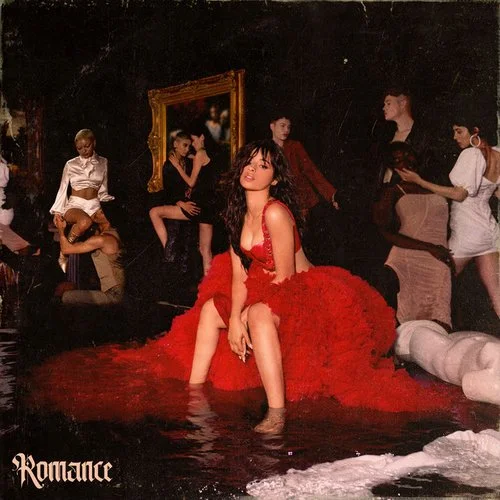
AS her excellent…

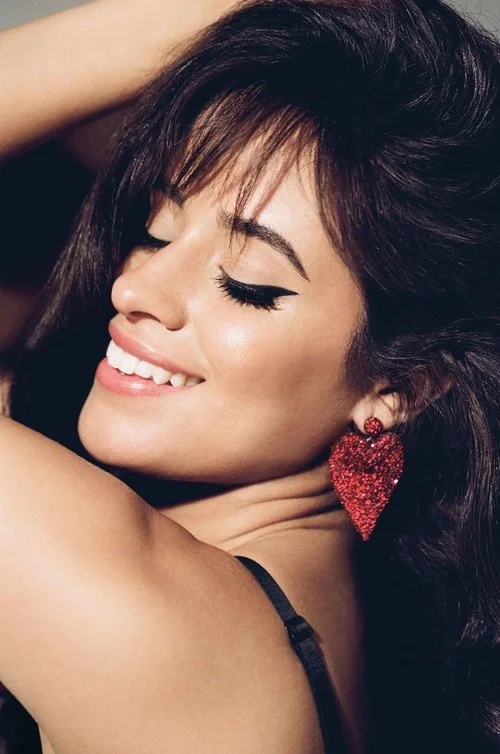
 PHOTO CREDIT: Christine Hahn

new album, Familia, is out and has won lots of acclaim, I wanted to revisit her previous studio album, Romance. Released on 6th December, 2019, it is a terrific album that I don’t think got as much praise as it should have. Though many critics did provide it a positive review, there were others who were less excited and positive. In any case, it is an album that we need to hear more from. Reaching number three in the U.S. and boasting seven excellent singles, a lot of the album was inspired by her relationship with Shawn Mendes. It is a wonderful album that I would recommend everyone checks out. Not purely Pop, there is Rock, R&B and Latin vibes running throughout. Although there are quite a lot of producers and writers credited, it is a case of the artist themselves being the dominant force. Camila Cabello has such presence and gravitas that she makes every song her own. Familia is much more about family rather than Mendes. I think the two have parted ways, so one can understand why her third album takes on a different lyrical direction. In any case, Romance is engrossing and satisfying listen. As Forbes wrote in 2020, Cabello discussed themes and influences on Romance as a part of her whirlwind promotional duties:

1- Her relationship with Shawn Mendes inspired much of the album

While Cabello never called him out by name or outrightly talked about her real-life romance with fellow pop royalty Shawn Mendes, she alluded to being in love throughout the evening – and especially how it helped her songwriting.

“Now I just have pages and pages of notes in my phone about details of what I’m experiencing, which is so much easier to write about because it’s an almost endless well,” she said. “When you don’t have a person to write about that you’re not experience fully, it’s all in your imagination or you’re writing about a feeling as opposed to the calluses on your fingers.”

2- Her sophomore album is more genuine

After releasing three studio albums from 2015 to 2017 as part of Fifth Harmony, Cabello made her solo album debut (titled Camila) on January 12, 2018, with this second Romance one being released December 6, 2019 — and even she can feel the difference in the song-making process.

“On the first album, I just really wanted to impress the people I was collaborating with,” she admitted. “I feel like this time around, I really got to bond with the people that I was collaborating with because I wasn’t trying to impress anyone anymore.”

Also, many of the songs are now rooted in what she’s experienced the since that last album. “You can’t make that stuff up, you have to live it. That just came from real experience,” she said of the emotions of the album. “I think that’s what I enjoy the most.”

3- Emotions drive her best songs

While some have hypothesized that “First Man” may be about Mendes, during this session, she said it stemmed from her relationship with her father, Alejandro Cabello.

“I’m realizing as I get older just how many things in life are paradoxical,” the Cuban-born singer started off. “If I sat down to write down a song with the intension of touching dads and daughters’ hearts, it would never happen. My best songs have just come out when the memory itself I’m talking about is more important than the act of writing the song. And for me, I was just thinking about my dad — that’s the strongest emotion, love for my family.

That ended up being the first song she wrote from the album, as she headed in with one goal: “My intension going into the studio is always: How can I be the most authentic version of myself? How can I be the most true to what I’m experiencing right now?”

Unfortunately, the song was leaked and she didn’t get to reveal the song to her father herself, but says his reaction was just as powerful: “I never saw my dad cry before.”

4- She still aspires to be “Shameless”

Despite being a picture of confidence and assuredness on stage, Cabello says she started the album off with “Shameless” since it’s a vibe she’s still trying to achieve.

“I want to be the embodiment of the song,” she said. “That song is like, I don’t give a f*ck. It’s just so fearless. I’m putting myself on the line. I want to be like that song. I want to be that song. I’m still ‘Dream of You’ Pisces energy though. I’m still used to this frickin’ Pisces sensitive energy.”

5- Some of the tracks have been years in the making

The jealousy of an ex moving on faster comes to life in “Cry For You” — but she clarifies that experience from a time in the past.

“I love being petty on this song. That was actually from an idea I had when I was way younger,” Cabello said. “That’s not something really something that happened in my life this time around.”

When she was 16, she did write a song with the same mentality — which she sang a few lines of to the audience with the lyrics: “I’m pissed off, you’re happy.”

“It was so stupid,” she said. “’Cry For Me’ is way older, petty big sister.”

6- She wants people to fall in love

She also mused throughout the evening about what makes relationships so special.

“I honestly just think that those quirks and those details about people are what makes you fall in love with them,” the singer said. “Those things that are imperfect, really specific details of a person, especially the imperfections are what makes you fall for them.”

And she hopes to spread that feeling to those listening to her songs. “I get excited from tweets of people who are like, this album makes me want to fall in love,” Cabello said. “I just wanted to inspire people to dare to feel something and dare to put yourself out there fully and love boldly”.

I am going to end with a couple of reviews for the brilliant Romance. This is what AllMusic wrote in their review. This is an album that is not only for fans of Camila Cabello:

Is there a name for the opposite of a break-up album? Because that's what Camila Cabello's sophomore effort Romance feels like: a record as bursting with ecstatic emotion and erotic desire as the exuberant delirium of having just fallen in love. It's a palpable vibe she put on display during her blush-inducing performance of the single "Señorita" with her duet partner (and boyfriend at the time) Shawn Mendes at the 2019 American Music Awards. The performance ended with Cabello and Mendes teasing a kiss, a bold move that left the audience excited for what the rest of Romance would hold. What Cabello does reveal on Romance is an artist continuing to refine her distinctive pop persona as she happens to be deep in the sway of love. Working with a respectable cadre of songwriters and producers including Andrew Watt, Finneas O'Connell, Justin Tranter, and others, Cabello digs deeper into her Cuban heritage with songs like the aforementioned "Señorita," the horn-accented "Liar," and the yearning "Used to This," that display her growing sense of maturity, balancing pop, reggae, and R&B flourishes with even more Latin embellishments.

If 2018's Camila was about striking out on her own after leaving her former group Fifth Harmony, then Romance is about Cabello defining herself in the pop landscape and setting herself apart from contemporaries like Ariana Grande, Dua Lipa, and Taylor Swift. Consequently, the album feels bigger in scope with a slicker pop production aesthetic than her charmingly pared down debut. There is one break-up song on the album in "Should've Said It," a defiantly steamy anthem in which Cabello reclaims her independence from a former flame against the backdrop of a Santana-esque guitar hook. She strikes an equally swaggering, rock-inflected stance elsewhere, leaning into her throaty, scritch-scratch vocals on "Shameless" and showcasing her knack for soaring falsetto balladry on "Living Proof." Along with catchy hooks, what makes Romance particularly compelling is Cabello's candor and willingness to share her experiences and emotions in striking detail. On "Easy" she sings, "I never like my crooked teeth/You tell me they're your favorite thing/Anything else?/The stretch marks all around my thighs/Kiss 'em 'till I change my mind about everything else." If Romance is an album about Cabello feeling loved and seen by someone else, it's just as much about her seeing and understanding herself as an artist”.

The last thing I want to source is the review from Rolling Stone. A more confident and rounded album than her debut, Camila (2018), Romance won a lot of love. This is what Rolling Stone had to offer:

 “On her 2018 self-titled debut, Camila Cabello was a sultry pop singer who didn’t mind looking inward in her music, exploring an emo intimacy with a classic-feeling soulfulness. On Romance, she’s just as much of an open book. This past year the singer ended one relationship and then found herself in a new one — coupled up with Canadian crooner Shawn Mendes — and she uses that narrative as a backdrop to sharpen her writing and deepen her sound.

Cabello explores romance in all its forms: love, lust, and, in her most adventurous moments, the toxicity that can come from it all. She pushes her voice to new places on the opening track, “Shameless,” an explosive pop-rock standout where she piercingly sings about submitting to a consuming obsession: “My emotions are naked, they’re taking me out of my mind.” On the vengeful “Cry For Me,” she snaps and wishes an ex all the worst over Eighties-huge guitar shredding. “Why won’t you cry?” Cabello wails in desperation.

Like her friend Taylor Swift, Cabello has mastered the art of playing fleeting relationship moments for maximum dramatic impact. She finds vulnerability in her pen game on the doo-wop ballad “This Love,” hitting her stride while trying to free herself from an “It’s Complicated” affair. “You know how to fuck me up, then make it okay,” she belts, then adds, “Get out of my veins,” a line that brings to mind the way she likened a crush to shooting heroin on her hit, “Never Be the Same.” Billie Eilish’s brother Finneas drops in to produce and co-write “Used to This,” a hot and haunting ode to her latest relationship. Camilla’s writing is confessional and rich as she breathily sings, “The calluses on your fingers I admire them from a distance/Now they’re on my cheek.”

With “Havana” hit-maker Frank Dukes back onboard, Cabello continues to explore Latin-influenced sounds that reflect her Cuban-Mexican roots. Curiously, “My Oh My” is a digital-only track — maybe it wasn’t completed in time for the hard copy? But it’s the juiciest moment here — a “Havana” sequel where Cabello indulges in an epic, after-hours fling. “He’s only here for one thing, but so am I” she slyly admits. DaBaby’s fresh feature makes it a certified banger. Latina Camila also thrives on the brassy and sassy “Liar.”

Romance includes her smash Mendes collaboration “Señorita,” which fetishizes her own Latinidad as the two sing about a night of ooh la la‘s and dancing amid a “tequila sunrise.” It may be their biggest hit to date, but that cliched lovers’ story feels out of place within an otherwise revelatory album, where she discovers new ways to give her artistry a new edge”.

I shall end up there, only to say that people should check out and spend time with one of the best albums of 2019. Familia is an even stronger album; signs that Cabello is growing all of the time as an artist. Romance did get a few mixed reviews, and I don’t think its tracks are played as much now as they should be. One listen of Romance is enough to make you…

FALL for it hard.

FEATURE: Spotlight: Miraa May

FEATURE:


Spotlight

Miraa May

__________

ANOTHER artist who…

has been around for a little while but is making their biggest and most important moves now, I wanted to highlight Miraa May. As her debut album, Tales of a Miracle, is out on 27th May, it is a great time to spotlight a phenomenal British artist. She was planning to put out an album before now, but the pandemic has shelved any plans. There will be other interviews and features closer to the release of the album. At the moment, I could only see some from 2020 and last year. I want to bring in a couple that are pretty interesting. I will finish up with some details about Tales of a Miracle. It is an album that has been in the works a while, but it is looking like it will be among the best of this year. CLASH spotlighted and highlighted the incredible Miraa May in 2020:

North London has inspired Miraa May’s music so much that you have to look for a point where it didn’t. “Think about who’s from Tottenham, it’s such a musically enriched place to be from,” she explains. “If you’re musically inclined and you grew up in Tottenham, that inclination is only going to come out even more.’

Born in Algeria but raised in the ends, Miraa May is the name on everybody’s lips, even across the pond. With soulful remedies and head boppers enlisted upon her Soundcloud since 2014, her claim to full-fledged acknowledgement is seemingly earned. Rather than sticking to the usual conventions of R&B, her North London influence is evident especially on her most recent EP, ‘Care Package’. That EP’s cover features a manga-fied Miraa May, reflection the inspiration she draws from female-empowered narratives of animes such as Sailor Moon.

But this narrative isn’t the basis of her music. Miraa’s music, she says if fuelled by emotional instinct: whatever you feel is up to you. “Anything,” she confirms. “Whatever you want to feel. If you want to be pissed off, good. Feel something. I would hate for my music to be background noise.”

Describing the music industry as a journey of ups and downs, as the ascendant star reviews her progress so far, the 23-year-old relays a message to her old self: “Take time, relax and it’s not that deep. I would like to give my old self a whole paragraph of advice.”

With this just being the genesis in her music adventure, there are large goals in Miraa’s foresight. “I see myself in a very big house with my friends in close distance. I see my music out there, doing what it does, penetrating the minds of young people”.

I hope that there are more new interviews with Miraa May soon. Since 2019/2020, her profile and stock has risen! She is going to go on to become one of our biggest artists and most celebrated names. PAUSE her met Miraa May in October 2020. The recent birth of her son, clearly, affected how she was writing. Her perspective altered:

Tomi: You’re releasing your debut album this year in the middle of a pandemic. Does this add or take away pressure from the release?

Miraa: No I’m not releasing an album.

T: Oh?

M: I would have loved to release an album this year but obviously I had a baby so I need to take time to look after my child because he’s only going to be small like this for a short time. Also we’re in a pandemic so you can’t really go and push the album. Personally I don’t think there’s a point when you’re a newer artist like me and you haven’t done big numbers before. I think it’s best to wait for when the world gets back to normal.

T: Congratulations on the birth of your son! Your single ‘Baby’ is an ode to him. What has motherhood taught you about yourself and how has this then influenced or changed your artistry, if at all?

M: Motherhood has taught me that I can do it all and that there’s no limit to my ability to do it all. It’s also taught me more than ever that I’m human because there’s this specific image of being a mother and what you’re supposed to do. Artists such as Cardi B and Kehlani have proved against that certain image and that you can just be yourself even with a child. Your mothers are humans too with their own hopes and dreams.

T: What’s your favourite part of process when it comes to making a new song?

M: Listening to the demo, it doesn’t get old. You get this thing called demoitis, it’s when you’ve made a demo and it sounds very different from the first listen to when it’s actually released. Sometimes you’re stuck with the way it sounds at the demo stage and you obviously can’t release it like that but sometimes you feel like you should”.

I would recommend people pre-order Miraa May’s Tales of a Miracle. It is out on 27th and it is going to be one of the biggest albums of 2022. A wonderful artists whose music is absolutely remarkable:

One of the most prodigiously talented artists in the UK, Miraa May releases her much-anticipated debut album Tales of a Miracle. Already having co-written for the likes of Jorja Smith on her single ‘Be Honest’, Mahalia on her single ‘Jealous’ and Little Simz for her short film ‘I Love You, I Hate You’, the Algerian born singer has enlisted a female dominated team to deliver this exquisite body of work. The project is a personal ode to her childhood adversities, and intimately describes her survival as the miracle that rose from them. 'Wild Things' embodies all that Miraa has to offer as an artist: honesty, strength, vulnerability, humour and passion. Much like the three singles before it ('Go Girl' with pop heavyweight RAYE, 'In My Feelings' and 'Big Woman' featuring powerhouse Stefflon Don); 'Wild Things' appears to have the makings of an instant smash hit and parades the magic of Miraa May effortlessly. In a career first for Miraa the track has secured a first play as Radio 1’s Hottest Record In The World. The unstoppable graft of the young singer has enabled her to capture the hearts and ears of over 920k monthly listeners. A noticeable feat by Spotify, who have made her the current face of their flagship female playlist 'EQUAL'. With love, integrity and energetic female energy woven into each track - This compelling debut is sure to make long lasting impressions within the industry, cementing Miraa May as one of the best singer/songwriters to come out of the UK”.

I wanted to spotlight Miraa May, as she is an incredible artist who has already released so many terrific tracks. With an album due very soon, so many more people are going to turn onto her music. I think that she will get demand around the world, and there will be big festivals and U.S. dates before too long. The forthcoming Tales of a Miracle is a stunning album from a young artist who…

SHOULD be celebrated.

___________

Spotlight Miraa May

FEATURE: Spotlight: Panic Shack

FEATURE:


Spotlight

Panic Shack

__________

I am putting a run of Spotlight features out…

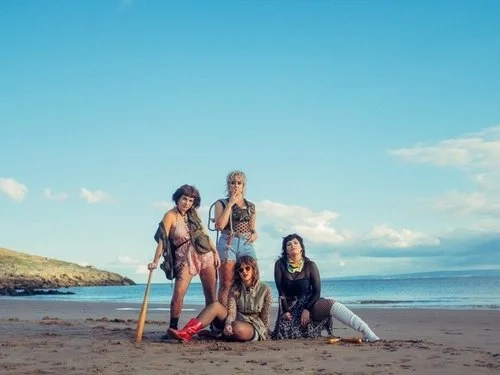
as there are exciting artists who are either embarking on big tour dates or have put our an E.P. or album. In the case of the remarkable Panic Shack, both can apply. They have some great dates coming up, and they released their debut E.P., Baby Shack, earlier in the month. I will get to a review of that at the end. Before that, there are a few interviews online where we discover more about the amazing group. The Cardiff group - Sarah Harvey (vocals), Meg Fretwell (guitar/backing vocals), Romi Lawrence (guitar/backing vocals), Em Smith (bass) - formed in 2018 and, since then, they have made big strides. Courting attention from stations like BBC Radio 6 Music and being tipped as ones to watch closely this year, everyone needs to get behind them! The band’s line-up has changed a little, whereas they have had different drummers playing with them. I am focusing on the ‘core members’ of Harvey, Fretwell, Lawrence, and Smith. Apologies if there are any snippets of interviews with former band members. I am keeping a close eye because, as is the way with bands who have been around for a little while, the line-up does change. In any case, I will start out with an interview that discusses their 2018 formation (as a quintet), but they are, to me, a quartet. Apologies if that contradicts how they see Panic Shack…

I am getting hung up on numbers and formation! I shall plough in to interviews! PRS for Music introduced the band in their feature from April 2021:

Who?

Panic Shack

From where?

Cardiff

What’s the Story?

Formed in 2018, DIY punk outfit Panic Shack have been capturing the mood of the nation through the charged and pointed subject matter of their releases. Dissatisfied with the male dominated music industry, most of the members of Panic Shack began to learn their instruments from scratch when starting the band, intent on carving out a space within the local Cardiff scene and beyond.

Releasing through independent Welsh label Clwb Creative Records, Panic Shack have already garnered considerable airplay, as well as securing bookings at taste-making festivals, such as Focus Wales. Although only three official singles have been shared so far, a considerable buzz around the band is on-going, with the indie music press at large taking note of their every move.

Most recent single, I Don’t Really Like It, takes aim at the issues surrounding toxic masculinity and predatory male behaviour, accompanied by driving riffs and a melodic sensibility that elevates the band from being pigeonholed as simply ‘punk’.

The poignancy and relatability of their music is matched with a sardonic wit and often jocular approach to word-play: ‘I do jiu-jitsu, I’m gonna jiu-jits you,’ for example.

Sounds like?

An exciting and modern take on the classic punk sound, with notes of Amyl and the Sniffers, that points towards a musical ambition superseding the confines of the genre.

Predicted to?

As soon as gigs are back up and running, expect to find Panic Shack in venue near you. This is music to be fully appreciated in a live setting”.

There are a couple of other interviews that attracted me. I found one from Guitar from the end of 2020 (sorry to screw with the chronology!), where Panic Shack reject their ‘Punk’ label – and they very much flying the flag for working-class women in music:

What first inspired you to pick up a guitar?

“We’re actually pretty new to guitar playing. Emily has played bass in another band for a few years so she’s our ‘real’ musician. As for myself and Meg, we are really new to it. We’ve basically been teaching ourselves to play ever since we decided we were going to properly form this band – so a little over a year. I guess it just came down to being fed up of complaining that there aren’t enough female guitarists and putting our money where our mouth is. Meg said it was School of Rock for her.”

Tell us about your main guitar and pedal setup…

“I play a Squier Tele through a distortion pedal and Blues Driver, and Dave’s [drummer] old guitar amp. Meg uses a Squier Strat, distortion pedal, chorus pedal and again, you’ve guessed it, a borrowed amp. Emily plays a Fender Precision (borrowed from her dad, because her Squier wasn’t quite cutting the mustard), a fuzz pedal, and whatever amp she can get someone to lend her. This set up is, of course, all temporary until we get our Fender endorsement!”

 You say you formed the band to counter the growing feeling of music becoming even more elitist and closed off to working-class people – how do you hope to inspire that change?

 “Just pushing as hard as we can to exist in this sphere, we hope, will inspire more girls especially those from working-class backgrounds, to have a crack at it. When we were younger all you saw were men in guitar bands, so it didn’t cross our minds that it could be something, we, as girls, could ever do. If us being a band that other girls can look to and be inspired to pick up an instrument by or write a song, then our job is done. Also in terms of guitar playing it can be super intimidating to put yourself out there when you don’t necessarily feel like a ‘guitarist’ especially when you’re backstage with a load of guys who are amazing guitar players – what we’ve learned over the past year is that music is just about conveying a message and making sound. Music is subjective and you don’t need to be shredding solos until your fingers bleed to write an amazing song – look at The Slits!”

Where do you see yourself in ten years’ time?

“After countless world tours we probably would’ve settled into our Hollywood mansions. Panic Shack remain at the top of every chart worldwide and we eat caviar for every meal. Meg is running for president, Sarah and Harry Styles are expecting their third child, Emily resides in her cat sanctuary, I’m back in rehab and Dave’s playing in a Beatles cover band. We haven’t really given it much thought to be honest.”

Finally, tell us something interesting about yourself that has nothing to do with guitar…

“As well as writing music together, we’re all part of Cardiff’s first mixed sex synchronised swimming team. Crazy but true!”.

I am going to end with a review for the amazing and instantly memorable Baby Shack soon. Before that, God is in the TV featured Panic Shack last month. They are, undeniably, a group with a very bright and busy future:

Welcome Panic Shack!  Good to meet you.  Can you tell us a little about how you got together?

Sooo we all became friends through living and working in Cardiff but the catalyst for starting Panic Shack was Greenman 2018.  We’d spoken about starting a band a lot over the previous year but after going to the festival and watching all the other artists on stage it just made us feel like we had to be up there too.  We had our first practice in megs spare room the month after we got back with a bunch of shitty acoustic guitars and it all went from there really.

Congratulations on ‘Mannequin Man’.  I love its frenetic energy and even though the video was produced during lockdown its perfect for the song.  I believe it was filmed back in March 2021.  Has it been a frustrating couple of years, or have you been able to be keep creative?

Correct!  It’s been frustrating having to sit on something for so long when you just want to release it into the world but every band around the globe I’m sure feels the same way.  I think at the start when we didn’t realise we had another two long years ahead of us we were quite positive and creative, trying to make the best of a bad situation though as time went on that dwindled slightly.  BUT now that gigs are going ahead and we’re allowed back out into the world those creative juices are flowing and we got loads of bangerz ready and lined up for ya.

The debut EP Baby Shack is set for release 8 April on Brace Yourself Records.   What is your song-writing process and what do you take inspiration from? 

So our songs normally start from a silly remark that one of us might make or from a situation where one of us is pissed off, then we all kind of hype each other up and start shouting shit into a voice memo on our phones.  The inspiration for our songs can come from anywhere and everywhere so be nice to us or we’ll be writing one about you next.

What gigs have you planned for 2022?   Am I right in saying you formed towards the end of 2018, so did you play gigs before the pandemic?

We only played a handful of gigs before the pandemic so we FEEL like a new band but in actuality we’re old hags now haha.  So far 2022 is looking like a lot of fun gig wise, we’re going on tour with Buzzard Buzzard Buzzard and we’re also playing Radio 6’s music festival which is being held in Cardiff this year.  You’ll have plenty of other chances to see us too but you’ll have to wait to find out.

If I looked in your fridge right now what would I find.

My fridge is pretty dire at the minute, I’ve got a mouldy cucumber in the salad drawer, half a litre of oat milk and enough condiments to sink a ship – Em

I’ve got Covid at the minute so there’s nothing in my fridge except some mouldy salad and 5 half empty bottles of mayo – Rom

My fridge contents are basically the same just condiments and questionable veg – Saz

Can’t get hold of Meg to find out what’s in her fridge but you can always guarantee she’s got some buds in there. Peace out love The Shack xxx”.

Let’s round off with a couple of things. I would compel everyone to check out and follow Panic Shack now. Go and listen to the Baby Shack E.P. and, if you are in a position to, go and catch them live near you. An irresistible and truly astonishing live band, they are head and shoulders above so many of their peers! This is what Punktastic wrote in their review for Panic Shack’s glorious debut E.P., Baby Shack:

Attitude can get you a long way. If punk was a reaction to glam, Panic Shack are a reaction to groups of cocksure lads clogging up the Cardiff music scene. They embody the ethos perfectly; anyone can be in a band, everyone has something to say and these five, fiery upstarts have been tearing up the local scene with their accessible, lo-fi tunes. Their debut EP ‘Baby Shack’ collects six unruly songs, each reinforcing the idea that being in a band is like hanging with your mates, and you won’t be able to resist its easy charms.

While some bands describe themselves as ‘artists’ and delight in throwing around exotic guitar scales, Panic Shack are proud of their limited ability and freely admit that upon forming back in 2018 they could barely play. Guitarist Romi Lawrence even says that when writing the songs they would just “chuck a few notes together”.  It’s a direct and honest statement, reflected in the music here, which might be simple and straight-up but is also very satisfying. Whether it’s the easy strums of ‘Who’s Got My Lighter?‘ or the slicing chord riffs of ‘Ju Jits You’ it’s all urgent, bright and effortlessly catchy.

Five of the songs here are already available, so in many ways ‘Baby Shack’ plays like a compilation but that’s no bad thing, especially as it is structured to some degree with the almost experimental ‘I Don’t Really Like It’ opening things up. Beginning slowly and powered by a simple drum beat the song almost feels like a Meg-led White Stripes until it explodes into the jaunty guitar sound that defines the rest of their work. It’s a biting sound for sure, without being jangly, making for a lively weighty tone that distances them from indie-rock. It’s definitely not pop-punk polished or lacquered and there’s a layer of reality to their work that more abstract bands lack.

The band’s defining feature is Sarah Harvey’s spoken word vocals, which have the advantage of being both fun to follow and easy on the ear. She throws out some great statements on ‘Ju Jits You’ and there is something undeniably brilliant about a song that builds up momentum only to collide with the opening phrase of ‘Umm…’.

In many ways, the EP has a lot in common with the Arctic Monkeys’ first album only with a feminine zest, and the songs play out as conversations between friends. It’s not quite as brash musically but it’s a fair comparison as the two bands feel very similar, their work crammed with observations and clever lyrics. Where the Arctic Monkeys record depicted a lads nights out in Sheffield, here the stories are more specific, focusing more on people encountered in daily life, be it the strange living statue of ‘Mannequin Man’ or the woman assuming maternal instincts on ‘Baby’. Only ‘The Ick’ directly addresses romance and even then it plays out like a discussion amongst friends, albeit using a coffin nail as both a metaphor and a slick pre-chorus. While not being explicitly feminist, songs like ‘Baby’ challenge traditional gender assumptions and are wryly humorous. The best example being the line “Kids are not for everyone so ask before you give me one” which is a throwaway hook, a statement of intent and a cheeky swing at male listeners.

Tom Rees of Buzzard Buzzard Buzzard has guided the band’s career so far and as producer has really captured their vibe. This is important as Panic Shack’s whole schtick is their personal chemistry. This is explicit on the outro to ‘Ju Jits You’ which descends into a high energy-chant, but is threaded through all their work. It’s difficult to think of a record that is such a joyous celebration of friendship and this gives the record its strength. Similarly ‘Who’s Got My Lighter’ coasts on an uncomfortable verse as the words are close enough to a rhyme that they feel awkward every time they’re repeated. Luckily the song retains the band’s breezy energy and there’s a hook in the chorus to hold it together, making for a surprising hit.

Bubbling with undeniable chemistry ‘Baby Shack’ is an exciting, witty debut EP collecting the band’s work so far. Keenly crafted, with a simple sense of fun and a tonne of great observations it makes for a great listen”.

Even though I have not yet seen Panic Shack play – one of the great band names btw! -,l I have read reviews of their sets and fully intend to see them very soon on a London date. It is still sort of early days. I talked about how there have been different musicians in the fold, though it is that core and solid four-piece that have an indelible and unbreakable bond. The affection and respect they have for one another translates to their music. In turn, their fans have an enormous amount of love and respect for them. It is impossible not to bow down to the power and brilliance of…

THE amazing Panic Shack!

____________

Follow Panic Shack

FEATURE: Spotlight: Deyah

FEATURE:


Spotlight

PHOTO CREDIT: Shot By Nee

Deyah

__________

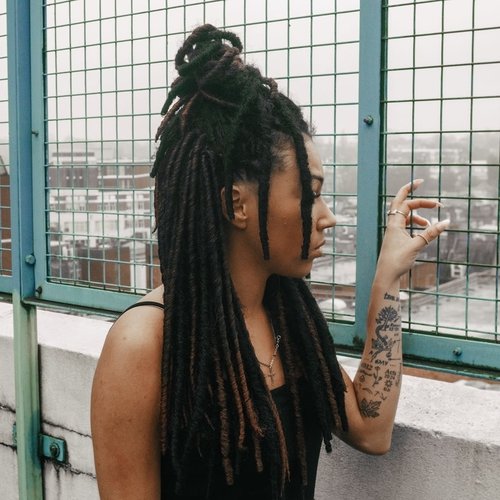
ALTHOUGH the amazing Deyah

has brought out other work since her prize-winning album, Care City, a lot of the interviews online were taken from that time (2020). In November of 2020, the Welsh rapper won the Welsh Music Prize for her phenomenal album. Last year, she put out the amazing Exit the Dance E.P. I feel like there is more to come this year in terms of an album or mixtape. She did recently put out the amazing HeART-Break NoTEL (THE FREESTYLES). A hugely prolific and talented artist, Deyah is someone everyone should have on their radars! I want to bring in a couple of reviews, in addition to a short feature about the Exit the Dance E.P. Huck spoke with an incredible talent back in 2020. Someone forging their own path:

Deyah has covered more ground than the average 25 year old. Childhood trauma, pain, suffering. Addiction, loneliness, and more addiction. She has found God, nearly lost God, and lost a community of friends. She’s spiralled, spent time in rehab (again). And then, recovered. Renewed faith. She’s healing, giving, and growing. There’s health, there’s love, there’s optimism. You don’t need to speak with her to know this. It’s right there, in her music.

‘Deyah’ means ‘I’m there’. According to another source, it also means ‘from God’. It isn’t her real name, but it’s apt. “I’m a person of faith,” she says. In her Twitter bio, Deyah calls herself a disciple. “My purpose is to serve and do good by people, by sharing whatever it is I’ve learned,” she says. Deyah serves on the daily. Musically, through vivid bars, and in her 9 to 5 as a support work advocate: “I work with people who have learning disabilities and mental health illnesses.”

PHOTO CREDIT: Ben McConnachie 

We’re speaking because Deyah recently won the Welsh Music Prize for her eight-track LP Care City, released last April. Despite being in its tenth year, she’s the first artist that isn’t loosely folk or indie to win the prize, one of two hip-hop/alternative RnB artists to ever be nominated, the only to be nominated twice, and the first non-white artist to win.

The musical education came from her dad, who would play music constantly – “but literally, like all through the night, it was sometimes annoying” – and school her on rap groups, sounds, samples, subgenres and anything else. The writing came partly from rhyming games her mum devised to cure boredom, and partly because, she explains: “My childhood was a bit mashed up. So, a lot of the time I would write stuff down to deal with it instead of going around punching other kids.”

"

“I failed all music classes up to GCSE,” she says with a nervous laugh. Deyah didn’t study music at all from there, instead studying theology, including Greek and Hebrew, with the intent of becoming a preacher or a minister. She studied at Newbold College of Higher Education in Bracknell, where she still lives today. At the time of writing, the university offers five courses all within biblical, theological and pastoral education. These are just some of the events that have shaped her.

“I think being unique is a blessing. It works very well for me: my music stands out. There were no other mixed-race women rappers in the area.” Standing out might have helped, but it’s Deyah’s ability that secured a spot on the radio.

The catharsis in Deyah’s writing never left. You can hear the refinement in how she speaks, too. Her tone is always warm yet matter-of-fact. The words are candid yet polished, full of reflection and core-hitting emotion, the result of someone who has spent a lot of time working out who they are. Along with preaching in church, her writing process also helps: “I usually know I have something I want to say, so I’ll listen through my beats until one compliments it. I’ll put it on surround sound, then I’ll walk around the flat getting lyrics off my head for an hour or so. Then I’ll sit and write.”

Care City is just the latest manifestation of this. It’s an album which encompasses many of themes explored on her previous record, Lover Loner, and  ‘Therapy Sessions 77’ – an 18-track album she uploaded to SoundCloud in 2017 under a former moniker, NONAMEDISCIPLE”.

Also from 2020, The Lowdown were keen to know more about the sensational Deyah. Such a busy and amazingly versatile and confident artist, it was clear that Care City was going to be hugely successful and lauded:

Following up 2019’s Lover Loner EP, Deyah’s new project, Care City is an extensive blueprint for a tumultuous few months, the darkest period of her life so far. Passionate and wholeheartedly to the point, it embodies a journey to the murky depths and back again, her mental state meticulously documented and relayed with brute and asserting honesty. A conceptual masterpiece,Care City searches for light in the eternal gloom.

The video to her new single, ‘Venthouse Suite’ is out now, addressing the torment of being judged and mistreated by others, together finding forgiveness in anguish and despair.

Few artists are able to replicate the raw, unashamed candour of Berkshire-based rapper, Deyah. A gripping open book, her confessional lyrics are articulate and unapologetically frank. An opposing blend of rousing narration behind lethargic, lo-fi beats, she excavates her deepest insecurities, probing and scrutinising the essence of her innermost vulnerabilities. Unconstrained by self-interest and armed with purposeful integrity, Deyah is free to pursue her own unique vision.

She was nominated for the 2019 Welsh Music Prize and has performed at notable festivals such as Reading & Leeds, Boomtown, Outlook and BBC’s Biggest weekend.

Hi Deyah, welcome to The Lowdown! Let’s get you introduced to our readers. Tell us who are you and what it is that you do?

"Lowdown! wagwan.. ok so i’m a chilled out non-cussing rapper/singer/song writer who lives my life wanting to serve others…"

How long have you been making music?

"I’ve been making music since i was 16 but it was only last year that i actually took it seriously."

How many releases have you had?

"I’ve just recently released my fourth EP."

What made you fall in love with hip-hop music?

"I grew up listening to hiphop material from early, everything about it is a vibe to me; i don’t just hear the music, i feel it."

How would you describe your music in one sentence?

"Chill and truthful."

How do you want your listeners to feel when they listen to your music?

"I’d like it if the listeners felt an openness, the ability to relate, a safe space, freedom, lack of judgement, faith and authenticity through the music."

Your most recent project is your ‘Care City’ EP. Can you tell us a little bit about its content?

"Care City is purely documentation of a very dark season i endured. During that time, I learnt so many life lessons that i transferred over into my methods of creating. There’s such a freedom within this new project. I’m no longer controlled by the expectations of others or their wants regarding the music i create, I create what i want to create. Care City is me being me."

Do you feel like ‘Care City’ is a significant milestone in your career so far?

"I’d say the creation of Care City is a landmark in my personal life as well as my music career. It is for sure a significant milestone. It’s the first time I’m genuinely proud of a body of work I’ve created”.

I am not sure what this year holds in store for Deyah in terms of E.P.s or albums - as she has already put out a freestyles release a month ago. She is a sensational and unstoppable artist who is helping put Welsh Hip-Hop on the map. It is shameful there is still a lot of ignorance when it comes to Welsh music. With amazing artists like her, Adwaith, The Anchoress and their contemporaries producing simply amazing music, more eyes need to be trained on artists based in or coming out of Wales! TRENCH covered the amazing Exit the Dance E.P. last year:

It was only June this year that Deyah put out her debut project THAT WorLD. tapes, but the Cardiff-hailing rapper is already back with a new EP, Exit The Dance. She's been priming listeners for the drop for a few months now, sharing one of the EP's singles, "Shoreditch" as well as other clips and tidbits on her Instagram.

Exit The Dance sees the rapper weave elements of her native roots into her rap style, enhancing the overall storytelling and delivery. Project opener "Wahala" features Dutch-Nigerian artist Loshh and is the only feature across the EP, allowing Deyah to centre her lyrical abilities and melodic flow in every track. "Native Ego" follows next, where she explores a slightly sinister soundscape with trappy hi-hats and a pounding bass to sit beneath her effortless flows as she spits her truth.

The production of the project is handled by Ten Billion Dreams, who is the mastermind behind the production on a large portion of Ghetts' Mercury-nominated album Conflict Of Interest. Exit The Dance is the work of an artist rising from strength to strength with each new release. Get familiar with it below”.

Get acquainted with the spectacular Deyah! An artist who is going from strength to strength, she is a definite future legend of Hip-Hop. Forging her own path and producing consistently strong work, go and follow her on social media. Even though she has been on the scene for a bit, her career and success story has…

ONLY just begun.

____________

Spotlight Deyah

FEATURE: Inside Kate Bush’s The Dreaming at Forty: Track Three: Pull Out the Pin

FEATURE:


Inside Kate Bush’s The Dreaming at Forty

Track Three: Pull Out the Pin

__________

THE fortieth anniversary…

is in September, but I am interested in Kate Bush’s The Dreaming, as it is an album that gets overlooked or seen as a bit weird and experimental. Gaining more acclaim and love than it did back in 1982 – though it was a commercial success and there were some positive reviews -, I am going through each of the ten tracks on the album. I have reached the third track, Pull Out the Pin. Not that Sat in Your Lap and There Goes a Tenner are conventional, though Pull Out the Pin is the first sign that this is not a conventional album! I love all of the tracks on The Dreaming; Pull Out the Pin really demonstrates how far Kate Bush had travelled from her first few albums. Incredible layers of sound, epic production (by Bush) and one of her best vocal performances on the album, the lyrics are also phenomenal. I will come to them soon and highlight a few choice passages. Before that, and as I am leaning on the Kate Bush Encyclopaedia for information regarding the songs on The Dreaming, here is Bush discussing the inspiration behind Pull Out the Pin:

We sat in front of the speakers trying to focus on the picture - a green forest, humid and pulsating with life. We are looking at the Americans from the Vietnamese point of view and, almost like a camera, we start in wide shot. Right in the distance you can see the trees moving, smoke and sounds drifting our way... sounds like a radio. Closer in with the camera, and you can catch glimpses of their pink skin. We can smell them for miles with their sickly cologne, American tobacco and stale sweat.

Take the camera in even closer, and we find a solitary soldier, perhaps the one I have singled out. Sometimes a Vietnamese would track a soldier for days and follow him, until he eventually took him. This soldier is under a tree, dozing with a faint smile and a radio by his side. It's a small transistor radio out of which cries an electric guitar. I'd swear it was being played by Brian Bath, but how could that be, way out here on our stereo screen. I pop the silver Buddha that I wear around my neck into my mouth, securing my lips around his little metal body. I move towards the sleeping man. A helicopter soars overhead, he wakes up, and as he looks me in the eyes I relate to him as I would to a helpless stranger. Has he a family and a lady waiting for him at home, somewhere beyond the Chinese drums and the double bass that stalks like a wild cat through bamboo? The moving pictures freeze-frame and fade - someone stopped the multi-track, there's more overdubs to do. (Kate Bush Club newsletter, October 1982)

I saw this incredible documentary by this Australian cameraman who went on the front line in Vietnam, filming from the Vietnamese point of view, so it was very biased against the Americans. He said it really changed him, because until you live on their level like that, when it's complete survival, you don't know what it's about. He's never been the same since, because it's so devastating, people dying all the time.

The way he portrayed the Vietnamese was as this really crafted, beautiful race. The Americans were these big, fat, pink, smelly things who the Vietnamese could smell coming for miles because of the tobacco and cologne. It was devastating, because you got the impression that the Americans were so heavy and awkward, and the Vietnamese were so beautiful and all getting wiped out. They wore a little silver Buddha on a chain around their neck and when they went into action they'd pop it into their mouth, so if they died they'd have Buddha on their lips. I wanted to write a song that could somehow convey the whole thing, so we set it in the jungle and had helicopters, crickets and little Balinese frogs. (Kris Needs, 'Dream Time In The Bush'. Zigzag (UK), November 1982)”.

 PHOTO CREDIT: Pierre Terrasson

Featuring backing vocals by her mentor, David Gilmour, and drums by Preston Heyman, string bass by Danny Thompson, piano by Kate Bush and electric guitar from Brian Bath, the band on Pull Out the Pin are incredible! One of the most original and thought-provoking lyricists ever, Kate Bush always distinguishes her songs. I am not sure how she comes up with some of the words and lines she puts into her tracks! Pull Out the Pin boasts really striking and stirring images. One of my favourite verses is this: “You learn to ride the Earth/When you're living on your belly and the enemy are city-births/Who need radar? We use scent/They stink of the west, stink of sweat/Stink of cologne and baccy, and all their Yankee hash”. There is a mixture of the cryptic and direct in Pull Out the Pin. You need to listen to it a few times through before you can absorb all of the notes and ideas. Another fantastic verse is this: “I've seen the coat for me/I'll track him 'til he drops/Then I'll pop him one he won't see/He's big and pink, and not like me/He sees no light/He sees no reason for the fighting”. It is important to salute the variety of wonderful tracks on The Dreaming. It turns forty in September, and I hope a lot of people come to the album and spend a lot of time with it. Stunning production, writing and performing from Bush throughout, this is an album that was ahead of its time. With ten wonderful and individual tracks on the album, Pull Out the Pin is one of…

ITS brightest and most bewitching gems.

FEATURE: Supergrass’ In It for the Money at Twenty-Five: One of the Most Important Albums of the 1990s

FEATURE:


Supergrass’ In It for the Money at Twenty-Five

One of the Most Important Albums of the 1990s

__________

I have already written one feature…

 PHOTO CREDIT: Paul Natkin/Getty Images

about the upcoming twenty-fifth anniversary of Supergrass’ second studio album (on 21st April), In it for the Money. An album that everyone needs to own, I think that it is among the most important and best albums of the 1990. Whilst Supergrass’ 1995 debut, I Should Coco, is a remarkable album, In it for the Money is an even stronger and more varied follow-up. Released in a year when Britpop was starting to wane, there is a combination of the celebratory and experimental on In it for the Money. Jubilant sounds and infectiousness mixes with acoustic moments and the Oxford band venturing into new territory. Recorded at Sawmills Studio in Cornwall, there is still a lot of the fun and vibrancy Supergrass displayed on their debut. I feel that In it for the Money is a more textured and deeper album in terms of its sounds and lyrics. I feel the first seven tracks have a lot in common with what is on I Should Coco. In it for the Money took Supergrasss to a new level and confirmed they as a band to watch. If some felt their debut was a fluke or novelty, or Supergrass would not be able to match it on their sophomore album, they were proven wrong. Capitalising on momentum but also not rush-releasing a follow-up, In it for the Money is a defining album of the ‘90s. Twenty-five years after its release, the songs still seem so fresh!

Rather than the songs being of a decade and not able to resonate and impact years down the line, In it for the Money still explodes with life and meaning! It is an album that cemented the reputation and promise of a remarkable young band. Led by her charismatic and hugely talented Gaz Coombes, there is so much presence and range on the album. From the snarling Richard III to the Beatle-esque Going Out, through to the gorgeous and hypnotic It’s Not Me, In it for the Money covers a lot of music ground but retains consistency and identity. The reception for In it for the Money has been largely positive. In 1997, many were seeing the album in the context of what else was around and what Supergrass promised on their debut. With retrospective reviews, it is about how In it for the Money has stood up. A lot of albums from 1997 have been lost or not stood up. In it for the Money is as engrossing and will sound so important for decades to come. Pitchfork reviewed an expanded edition of In it for the Money last year:

In It for the Money isn’t so much a departure from I Should Coco as a progression. Often, it feels as if Supergrass are attempting to offer a crash course in the history of British rock, cramming in elements borrowed from the swinging 1960s and 1970s classic rock, then filtering these well-known sounds through the irreverence of punk. They still sound vigorous—witness the rampaging single “Richard III”—but they lack the exuberance that fueled their first album. The shift was necessary for their long-term survival. “Alright” threatened to pigeonhole Supergrass as loveable teenage imps, a role they played to the hilt in the song’s supremely silly video. (They played their part so well that Steven Spielberg believed Supergrass would be ideal candidates for a gen-X spin on the Monkees.)

Supergrass turned down Spielberg, choosing instead to do the things normal rock’n’roll bands do: play an enormous amount of shows before hunkering down in the studio to make another record. It helped that Supergrass had arrived just as the Britpop wave crested, its rising tide not only lifting the shaggy group into the Top Ten but putting them squarely within a happening scene. They shared space on charts and festival bills with the amiably straightforward likes of Cast, Sleeper, the Bluetones, and Ash, yet they were qualitatively different, possessing punk-pop smarts to rival Elastica, a brawnier musicality than Oasis, and a self-evident sense of humor.

All of this comes to a head on In It for the Money, an album where the riffs and jokes are wrapped in woolly psychedelia, blaring horns, and splashes of sweet melancholy. Where I Should Coco blew by at a breakneck pace, In It for the Money unfolds with a deliberate sense of drama, slowly coming into focus with the menacing swirl of the title track and proceeding to ebb and flow across its 12 songs. The record feels so unified that it’s remarkable to realize they entered the studio in 1996 with only two completed songs in tow, forcing them to write the bulk of the album during the recording sessions. Along for the ride was Rob Coombes, a keyboardist who was the brother of Supergrass frontman Gaz. He’d been on the band’s periphery for a while, hammering out the piano to “Alright” and playing woozy organ on “Going Out,” the stopgap 1996 single Supergrass released between their first and second albums, but he’s an integral part of In It for the Money, earning writing credits on all 12 songs and adding distinctive color throughout. (Rob Coombes would officially become a member of Supergrass in 2002.)

Listen closely—or spend some time with the clutch of monitor mixes and rough versions that fill the second disc of the new 3xCD deluxe reissue of the 1997 album—and it’s apparent that Supergrass did indeed write In It for the Money in the studio. Many of the songs are rooted in vamps that blossom into full songs: The slinky funk that propels the verses of “Cheapskate,” the circular stomp on “G-Song,” the lazy, shambling gait of “Hollow Little Reign” all bear telltale signs of compositions that began as group jams. None of these songs sound tossed off, though, littered as they are with overdubs, backwards guitars, and sound effects. Supergrass couldn’t resist any bit of studio trickery when they were making In It for the Money, yet they retained their sense of concise craft. The record feels vibrant, not overstuffed.

The triple-disc reissue of In It for the Money can dampen some of the album’s energy. Some fine B-sides, such as the tuneful neo-music-hall ramble “Melanie Davis,” are buried among the alternate mixes and working versions on the second disc, a collection of ephemera that plays better as individual tracks than as an album. The disc of live recordings is another story. Anchored by a full show from January 1998, a concert given nearly a year after the release of In It for the Money, the live disc shows Supergrass at full roar, turning these studio creations into breakneck rockers.

The title of In It for the Money is a nod toward Frank Zappa’s anti-hippie classic We’re Only In It for the Money. Supergrass may not sound anything like the Mothers of Invention, but their choice reflects the extent to which they were steeped in rock history. Supergrass never attempted to be innovators. They were magpies who busied themselves with figuring out how to assemble pieces of glam, psychedelia, punk, and pop in fresh, surprising ways. They would continue to hone their craft, making sleeker albums than In It for the Money, yet the group’s enthusiasm and imagination are at a peak here. They sound delighted to discover their full potential, and that giddiness remains infectious decades later”.

Twenty-five on 21st April, In it for the Money is a remarkably important album. One of the key releases of the 1990s, I wanted to revisit an album that has some classic Supergrass in it. From the anthemic Tonight to Sun Hits the Sky, all of the tracks are absolute gold! The majestical In it for the Money, twenty-five years after its release remains…

A spellbinding album.

FEATURE: One for the Record Collection! Essential May Releases

FEATURE:


One for the Record Collection!

IN THIS PHOTO: The cover for Harry Styles’ forthcoming album, Harry’s House 

Essential May Releases

__________

MAY is fast approaching…

 IN THIS PHOTO: Zola Jesus

so I wanted to look ahead to albums due for release then. As I always say, these albums are confirmed as of the time of writing this feature (11th April), so things could change between now and then. That said, I am keen to explore those slated for release. The week ending 6th May has quite a few golden albums worth pre-ordering. The first is Arcade Fire’ WE. The legendary Canadian band follow up 2017’s Everything Now with their sixth studio album. This is one that you definitely need to pre-order:

Produced by Nigel Godrich, Win and Régine, and recorded in multiple locales including New Orleans, El Paso and Mount Desert Island, WE paradoxically distills “the longest we’ve ever spent writing, uninterrupted, probably ever" (per the band’s Win Butler) into a concise 40 minute epic – one as much about the forces that threaten to pull us away from the people we love, as it is inspired by the urgent need to overcome them. WE’s cathartic journey follows a definable arc from darkness into light over the course of seven songs divided into two distinct sides - Side “I” channeling the fear and loneliness of isolation, and Side “WE” expressing the joy and power of reconnection. On the album’s cover, a photograph of a human eye by the artist JR evokes Sagittarius A*, the supermassive black hole at the center of the galaxy. This stunning image - embellished by the distinctive airbrush color tinting of Terry Pastor (utilizing the same physical technique he employed on David Bowie’s iconic Hunky Dory and Ziggy Stardust covers) – is the visual expression of WE”.

Another marvellous album due on 6th May is Rolling Blackouts Coastal Fever’s Endless Rooms. An album that I would urge everyone to pre-order, it is shaping up to be among this year’s most promising albums:

Rolling Blackouts Coastal Fever return in 2022 with Endless Rooms, the Melbourne quintet's third album proper. Described by the band – comprised of Fran Keaney, Joe White, Marcel Tussie and brothers Tom Russo and Joe Russo – as them “Doing what we do best: chasing down songs in a room together”, Endless Rooms stands as a testament to the collaborative spirit and live power of RBCF.

While initial ideas were traded online during long spells spent separated by lockdowns, the album was truly born during small windows of freedom in which the band would decamp to a mud-brick house in the bush around 2hrs north of Melbourne built by the extended Russo family in the 1970s.

There, its 12 tracks took shape, informed to such an extent by the acoustics and ambience of the rambling lakeside house that they decided to record the album there. The house also features on the album cover. For the first time, the band self-produced the record (alongside engineer, collaborator and old friend, Matt Duffy), creating their most naturalistic and expansive document yet. The result is a collection of songs permeated by the spirit of the place; punctuated by field recordings of rain, fire, birds, and wind.

“It's almost an anti-concept album,” say the band. “The ‘endless rooms’ of the title reflects our love of creating worlds in our songs. We treat each of them as a bare room to be built up with infinite possibilities”.

There are another three albums due on 6th May that you need to order. Sharon Van Etten’s We've Been Going About This All Wrong is an essential purchase. Available on a range of physical formats, Sharon Van Etten is one of the greatest songwriters and artists in the world:

Sharon Van Etten has always been the kind of artist who helps people make sense of the world around them, and her sixth album, We’ve Been Going About This All Wrong, concerns itself with how we feel, mourn, and reclaim our agency when we think the world - or at least, our world - might be falling apart. How do we protect the things most precious to us from destructive forces beyond our control? How do we salvage something worthwhile when it seems all is lost? And if we can’t, or we don’t, have we loved as well as we could in the meantime? Did we try hard enough? In considering these questions and her own vulnerability in the face of them, Van Etten creates a stunning meditation on how life’s changes can be both terrifying and transformative. We’ve Been Going About This All Wrong articulates the beauty and power that can be rescued from our wreckages.

We’ve Been Going About This All Wrong is as much a reflection on how we manage the ending of metaphorical worlds as we do the ending of actual ones: the twin flames of terror and unrelenting love that light up with motherhood; navigating the demands of partnership when your responsibilities have changed; the loss of center and safety that can come with leaving home; how the ghosts of our past can appear without warning in our present; feeling helpless with the violence and racism in the world; and yes, what it means when a global viral outbreak forces us to relinquish control of the things that have always made us feel so human, and seek new forms of connection to replace them.

PHOTO CREDIT: Michael Schmelling 

We’ve Been Going About This All Wrong is intensely personal, exploring themes like motherhood, love, fear, what we can and can’t control, and what it means to be human in a world that is wracked by so much trauma. The track “Home To Me,” written about Van Etten’s son, uses the trademark “dark drums” of her previous work to invoke the sonic impression of a heartbeat. Synths grow in intensity, evoking the passing of time and the terror of what it means to have your child move inevitably toward independence, wanting to hold on to them tightly enough to protect them forever. In contrast, “Come Back” reflects on the desire to reconnect with a partner. Recalling all the optimism of love felt in its infancy, Van Etten begins with the plain beauty of just her voice and a guitar, building the arrangement alongside the call to “come back” to anyone who has lost their way, be it from another person or from themselves. Hovering between darkness and light, “Born” is an exploration of the self that exists when all other labels - mother, partner, friend - are stripped back.

The ten tracks on We’ve Been Going About This All Wrong are designed to be listened to in order, all at once, so that a much larger story of hope, loss, longing and resilience can be told. This is, in itself, a subtle act of control, but in sharing these songs it remains an optimistic and generous one. There is darkness here but there is light too, and all of it is held together by Van Etten’s uncanny ability to both pierce the hearts of her listeners and make them whole again. Things are not dark, she reminds us, only darkish”.

The penultimate album from 6th May you want to snap up is Sunflower Bean’s Headful of Sugar. Again, available on a range of formats, the New York band are putting out an album that everyone should get a copy of:

New York trio Sunflower Bean - vocalist and bassist Julia Cumming (she/her), guitarist and vocalist Nick Kivlen (he/him), and drummer Olive Faber (she/they) – release their long-awaited third album Headful of Sugar via Lucky Number.

A psychedelic headrush, fuelled by the agony and ecstasy of contemporary American life, Headful of Sugar is about outsiders disillusioned with the modern world who, despite their alienation, refuse to be subdued; buoyed by the relief found in interpersonal relationships that counteract the daily barrage of cheap entertainment and convenience.

If their acclaimed second album Twentytwo in Blue, released in 2018, was a self-described “ode to the fleeting innocence of youth,” then Headful of Sugar shoves the listener into a new, dangerous world, one that is less safe but also less suffocating. “Tomorrow is not promised, no tour is promised, no popularity is promised, no health or money is promised,” bassist/vocalist Julia Cumming says. “Why not make what you want to make on your own terms? Why not make a record that makes you want to dance? Why not make a record that makes you want to scream?”

Headful of Sugar was produced and mixed by UMO’s Jacob Portrait, co-engineered by Olive Faber and Portrait, and recorded between Electric Lady and Sunflower Bean Studios”.

The final album due on 6th May you need to invest in is Warpaint’s Radiate Like This. This is an album that I am very excited about and will be checking out. If you have some spare pennies, then go and pre-order a copy:

Radiate Like This - Warpaint’s much anticipated new record, not to mention their first in almost 6 years - arrives with its own very modern mythology intact, continuing the strange, brilliant, beautiful story of the band and quite neatly picking up where Heads Up left off. If the previous album was the coming of age, Radiate Like This presents Warpaint mk II in all their glory, a luminous coalescence of sound and vision which stubbornly belies its genesis, with the quartet of Kokal, Theresa Wayman, Stella Mozgawa and Jenny Lee Lindberg all recording their parts separately in various cities. “It’s the first time we’ve ever made an album like that, but in a weird way, it made us take our time with everything”, muses Kokal. “The process felt more meditative, less rushed”. This new sense of quiet confidence can be heard all through the album, in the hushed, slow build of first single “Champion” the beguiling push pull of “Proof”, the delicate intricacy and complexity of tracks like “Melting” and the winking “Send Nudes”. It’s an album that pulsates with ideas, energy and- most crucially – gorgeous melodies. Listen on in wonder”.

Florence and the Machine’s fifth studio album, Dance Fever, is out on 13th May. An artist (Florence Welch) who is always supernatural and otherworldly, the new album is going to be one you will need to pre-order:

Florence releases her 5th studio album Dance Fever via Polydor Records.

Dance Fever was recorded predominately in London over the course of the pandemic in anticipation of the world’s reopening. It conjures up what Florence missed most in the midst of lockdown -clubs, dancing at festivals, being in the whirl of movement and togetherness -and the hope of reunions to come. It’s the album that brings back the very best of Florence – the festival headlining Boudicca, wielding anthems like a flaming sword.

Just before the pandemic Florence had become fascinated by choreomania, a Renaissance phenomenon in which groups of people - sometimes thousands - danced wildly to the point of exhaustion, collapse and death. The imagery resonated with Florence, who had been touring nonstop for more than a decade, and in lockdown felt oddly prescient.

The image and concept of dance, and choreomania, remained central as Florence wove her own experiences of dance - a discipline she turned to in the early days of sobriety - with the folkloric elements of a moral panic from the Middle Ages. In recent times of torpor and confinement, dance offered propulsion, energy and a way of looking at music more choreographically.

PHOTO CREDIT: Autumn De Wilde

Starting, as ever, armed with a notebook of poems and ideas, Florence had just arrived in New York in March 2020 to begin recording the record with Jack Antonoff when Covid-19 forced a retreat to London. Holed up at home, the songs began to transform, with nods to dance, folk, ‘70s Iggy Pop, longing-for-the-road folk tracks a la Lucinda Williams or Emmylou Harris and more.

Once back in London, ‘My Love’ was one particular track that shapeshifted from one entity to another with the help of Dave Bayley from Glass Animals. Welch had written the song in her kitchen as a “sad little poem”, and when she recorded it acoustically it just didn’t seem to work. Bayley suggested using synths and it soon expanded with floor-filling, chest-thumping energy.

With Dave’s love of synths and Florence’s fascination with all things gothic and creepy a kind of “Nick Cave at the club” sound started to emerge to shape the record. Lyrically, she took inspiration from the tragic heroines of pre-Raphaelite art, the gothic fiction of Carmen Maria Machado and Julia Armfield, the visceral wave of folk horror film from The Wicker Man and The Witch to Midsommar.

Dance Fever is an album that sees Florence at the peak of her powers, coming into a fully realised self-knowledge, poking sly fun at her own self-created persona, playing with ideas of identity, masculine and feminine, redemptive, celebratory, stepping fully into her place in the iconic pantheon”.

I would also advise people to pre-order Mandy Moore’s In Real Life. Due on 13th May, it is a great album that you will want to investigate further:

On her new album In Real Life, Mandy Moore shares a window into her world and all that illuminates it: the quiet heartaches and ineffable joys, crushing setbacks and life-changing leaps of faith. The Los Angeles-based artist’s seventh full-length brings a new level of self-possession to her songwriting, imbuing each track with both detailed storytelling and lucid self-reflection”.

Although there are not a lot of other details online about it, the title track alone proves that In Real Life is going to be fantastic. Mandy Moore is one of the more underrated artists around. I hope that her new album will change that.

Let’s skip ahead to the albums out on 20th May that are definitely worth your money. The first, Everything Everything’s Raw Data Feel is going to be sensational! The Manchester band always release such original and captivating music. They are promising something special and must-listen with Raw Data Feel. Make sure you pre-order the album:

Twice Mercury Prize nominated, 5 time Ivor Novello nominated and critically acclaimed, Everything Everything release their new studio album Raw Data Feel.

On Raw Data Feel, Everything Everything set about revolutionising modern pop music, with Higgs abandoning his own brain and letting technology do at least some of the thinking: feeding LinkedIn T&Cs, Beowulf, 4Chan forum text and the teachings of Confucius into A.I. automation processes and using its responses as a basis for the record's lyrics, song titles and artworking.

Produced by Everything Everything guitarist Alex Robertshaw and production partner Tom Fuller (aka Kaines and Tom A.D). This new phase is a rapturous return and - staying true to form - sees the band continue to push the ribbon on melody and rhythm with a heavy helping of electronic exploration”.

One of the most anticipated and hyped albums of this year is Harry Styles’ Harry's House. Although I am not a massive fan, there is no doubt that this album is one that should be checked out. From the album’s excellent cover to the fact there are some excellent collaborators in the mix. Styles’ album is one I want to point people in the direction of. I am looking forward to hearing what he has to offer:  

Harry’s House is the third solo studio album from Grammy award-winning global superstar Harry Styles. The 13-track full-length album was recorded in multiple locations across the UK, Los Angeles and Tokyo from 2020 to 2021. It was written by Harry alongside frequent collaborators Kid Harpoon, Tyler Johnson, and Mitch Rowland”.

Porridge Radio’s Waterslide, Diving Board, Ladder to the Sky is going to be huge! A truly tremendous band, make sure you do not miss out on an album that is guaranteed to stay in your head long after you have heard it!

When Porridge Radio’s Dana Margolin, one of the most vital new voices in rock, began to consider the themes of her new album, three vivid words began to emerge: joy, fear and endlessness. The artwork of the band’s third full-length, Waterslide, Diving Board, Ladder To The Sky, is a surreal image that evokes the ducks and dives, slippery slopes and existential angst of life in recent times. “To me, the feelings of joy, fear and endlesses coexist together,” says Dana. “You’re never just happy or unhappy.” Following Every Bad’s release in 2020, Margolin was quickly becoming regarded as one of the most magnetic band leaders around. But if Every Bad established Dana’s bravery in laying herself bare, her band’s third record takes that to anthemic new heights. While there are moments of guttural release, she also finds soft power on songs. “I used to think I had to be loud to be heard,” she admits, “but now I’m definitely less afraid of being gentle.”

The band’s first new single, Back To The Radio, sets out their stall, a lurching call to arms that contrasts Dana’s lyrics of panic and closing herself off. This song is just one of example in WDBLTTS that explores something that has long been an important part of Porridge Radio’s process: playfulness. “I think the album needed to have that balance,” Dana explains. Balance: that’s the word the album seems to be eternally striving for – joy, fear and endlessness in harmony but also self-acceptance. Dana is more aware of how she’s creating a persona as her star continues to rise, and how she’s singing personal songs that now belong to other people which gives her purpose. She says, “I wrote these songs for myself, but I think everyone wants to feel like what they’re doing is useful in some way. I’m ready to embrace it all now, whatever happens”.

SOAK’s If I never know you like this again is going to be truly awesome and must-buy. Their album is one I am pumped for and would urge people to pre-order and add to their May collection:

With their new album, If I Never Know You Like This Again, Soak has finally shaken the hangover of their starry debut Before We Forgot How To Dream, and the pressures that came with it, hiding in the wings of their ambitious follow up album, Grim Town. Having come up through BBC introducing at the tender age of 15 before signing to Rough Trade Records as well as winning the RTE Choice Music Prize, The Northern Irish Music Prize and the youngest ever Mercury Prize nominee, Soak has again and again been described as ‘the voice of a generation.’

Showing from a young age an intensely artistic awareness of the poetry of memory, Bridie Monds-Watson, aka SOAK, would incessantly photograph and video everything, documenting and organising the material so it was always there for them to revisit. ”I always want to remember exactly how I felt at a certain moment.” Now, at 25, Soak’s third album If I Never Know You Like This Again, is naturally made up of what Bridie intimately calls “song-memories”.

Working closely with Tommy McLaughlin (Villagers), with whom Bridie has been collaborating with since the age of 15, and armed with influences from Pavement, to Radiohead to Broken Social Scene, they wrote most of the album together before recording it with the rest of the band in Attica Studios, Donegal. Throughout the album Soak pushes and pulls at melodies, but never milks their brilliance. Bridie masterfully glides their vocal melody slightly off-kilter above excitable compressed high hats and flourishing guitar lines. With the new direction of a grungier, more lo-fi production the swooning guitars are given a contemporary pop-edge, reflected in the rich and robust musicality of songs like ‘Bleach’, ‘Last July’ and ‘Pretzel’. There’s a constant pulsating beat at the album’s centre, propelling it towards a kind of dewy happiness, like the end credits of a 90s coming-of-age film. Bridie’s lyrics move through the songs almost as effortlessly and they sing them, and the songs when read, read like poetry. With this album Bridie is, as the title suggests, freezing time in the pursuit of truth: capturing their life into existence.

In the world of If I Never Know You Like This Again, a life is lived only because it's remembered”.

Prior to moving onto 27th May, there is one more from 20th May you need to reserve some money for. Zola Jesus’ ARKHON is one to pre-order, as it is a wonderful release that will entrance and enrapture you. Here is an artist like no other; creating music of the highest order:

There is a way a voice can cut through the fascia of reality, cleaving through habit into the raw nerve of experience. Nika Roza Danilova, the singer, songwriter, and producer who since 2009 has released music as Zola Jesus, wields a voice that does that. When you hear it, it is like you are being summoned to a place that’s already wrapped inside you but obscured from conscious experience. This place has been buried because it tends to hold pain, but it’s also a gift, because once it’s opened, once you’re inside of it, it can show you the truth. Zola Jesus’s new album, Arkhon, finds new ways of loosing this submerged, stalled pain.

On previous albums, Danilova had largely played the role of auteur, meticulously crafting every aspect of Zola Jesus’s sound and look. This time, she realized that her habitual need for control was sealing her out of her art. Arkhon sees Zola Jesus’s first collaboration with producer Randall Dunn (Sunn O))), Earth, Mandy soundtrack, Candyman soundtrack) and with drummer and percussionist Matt Chamberlain, whose prior work appears on albums by Fiona Apple, Bob Dylan, and David Bowie

Arkhon runs the spectrum from songs whose weight lies in their bare simplicity, like “Desire,” an elegiac piano composition about the end of a relationship that was recorded acoustically in a single take, to towering, groove-oriented tracks like “The Fall” and the tight, interlocking percussion and samples of a Slovenian folk choir in “Lost,” which propel narratives of collective despair and mutual comfort in kind. Through these turns, Arkhon reveals itself as an album whose power derives from abandon. Both its turmoils and its pleasures take root in the body, letting individual consciousness dissolve into the thick of the beat. Despite the darkness curled inside reality, there is power, too, in surrendering to what can’t be pinned down, to the wild unfurling of the world in all its unforeseeable motion. That letting go is the crux of Arkhon, which marks a new way of moving and making for Zola Jesus”.

I will end with a few albums from 27th May that you need to look out for. Miraa May’s Tales of a Miracle is an incredible album from one of this country’s greatest talents. You absolutely need to pre-order an album from a sensational songwriter who is going to go very far:

One of the most prodigiously talented artists in the UK, Miraa May releases her much-anticipated debut album Tales of a Miracle. Already having co-written for the likes of Jorja Smith on her single ‘Be Honest’, Mahalia on her single ‘Jealous’ and Little Simz for her short film ‘I Love You, I Hate You’, the Algerian born singer has enlisted a female dominated team to deliver this exquisite body of work. The project is a personal ode to her childhood adversities, and intimately describes her survival as the miracle that rose from them. 'Wild Things' embodies all that Miraa has to offer as an artist: honesty, strength, vulnerability, humour and passion. Much like the three singles before it ('Go Girl' with pop heavyweight RAYE, 'In My Feelings' and 'Big Woman' featuring powerhouse Stefflon Don); 'Wild Things' appears to have the makings of an instant smash hit and parades the magic of Miraa May effortlessly. In a career first for Miraa the track has secured a first play as Radio 1’s Hottest Record In The World. The unstoppable graft of the young singer has enabled her to capture the hearts and ears of over 920k monthly listeners. A noticeable feat by Spotify, who have made her the current face of their flagship female playlist 'EQUAL'. With love, integrity and energetic female energy woven into each track - This compelling debut is sure to make long lasting impressions within the industry, cementing Miraa May as one of the best singer/songwriters to come out of the UK”.

Wallis Bird is an artist that I really admire. Her forthcoming album, Hands, should not be ignored. Make sure that you pre-order this album from a remarkable and incredibly impressive artist. I cannot wait to discover what Hands holds in store, as Bird is a sensation:

If 2019’s exceptional Woman represented an ambitious state of the world address, Hands – also known as Nine and a Half Songs For Nine and a Half Fingers – finds Bird turning the spotlight onto herself, raising issues that are sometimes far harder to confront, only to emerge optimistic and whole. Among these are issues of trust, alcohol abuse, stagnation, self-censorship and self-improvement, some addressed through personal recollections of crucial moments accumulated over the last two years. Each, however, is delivered by a voice uncommonly blessed with joy, ingenuity and empathy.

Where its predecesor was bathed in soul music, Hands adapts sounds from Birds’s early childhood. Barring the intimately confessional ‘I’ll Never Hide My Love Away’, its songs are flushed with bright colours, many familiar from the 1980s and ‘90s. Its bookends are ‘Go’, whose smooth R&B inflections provide a neat bridge from the album’s forerunner, and ‘Pretty Lies’, its euphoric conclusion powered by forty chunky chord progressions. In-between, Hands rarely pauses. The jubilant ‘What’s Wrong With Changing’ appropriates the rhythmic discipline of Janet Jackson’s Control, Rhythm Nation 1814 and janet., and ‘I Lose Myself Completely’ revels in Trevor Horn’s work, while the grinning ‘No Pants Dance’, written after witnessing neighbours celebrating lockdown’s end, would have delighted Prince, and ‘Dreamwriting’ – “a reminder to myself of one of my most favourite memories in recent years” – is full of warmth, lyrically and musically. ‘Aquarius’ dreamy chord changes and unexpected pedal steel, meanwhile, help unleash some of the prettiest instrumental sections 2022’s likely to enjoy, and there are pensive moments, too, not least ‘The Dive’, which describes a gesture Bird treasures as “one of the most brave and romantic memories I own” and which wields a muted trumpet and Mediterranean guitars while its melody skips along dreamily as though through a summer meadow. If the sonic palette is different, then, Hands is still defiantly, happily Wallis Bird”.

I will finish up by recommending Alfie Templeman’s Mellow Moon. Pre-order this gem. This is the debut album from an artist who has been building traction since 2018. This is an album that you definitely will want to investigate:

Mellow Moon is the debut album from Alfie Templeman - an album that "feels like something of a miracle, landing somewhere between an otherworldly trip and a joy-filled ode to life back on earth". Like all journeys, the change in mood is palpable throughout Mellow Moon, with songs like the nostalgic '3D Feelings' or 'Broken', which is about "all the little wobbles of being a teen and figuring yourself out,” that bristle with the energy of a life being lived again.

There’s nuance in there, too. Candyfloss suggests that life can sometimes appear too good to be true, something Alfie has felt since was a kid. “There’s always a downside to the cool shit,” he says. “Candyfloss is what it all appears to be until you get deeper into it.”

The result is an easily accessible comfort place. Across 14 tracks Alfie closes his eyes and imagines another world, one where he’s at ease and not distracted by life’s many challenges. Inspired by modern influences like Steve Lacy, Khruangbin and Leon Bridges, as well as Alfie’s constant cosmic guide Todd Rundgren, Mellow Moon flows with an ease that belies its difficult creation. "It’s a moment in my life that I want to remember forever. I’ve put so much effort into this and it’s a real experience to listen to.”

Acting as both an intimate diary entry and a communal call to arms, Mellow Moon is Alfie’s most complete work to date and a platform from which he will surely use to propel himself further into the stratosphere. If ever proof were needed that music is a salvation or a transportative force, this is it”.

If you need guidance as to which albums to save some money for next month, I hope that my suggestions were of some assistance. There are many other great ones that you could look out for but, to me, the above are the very best. It is a busy and diverse month that promises something for everyone. There are plenty of brilliant albums that you can…

ADD to your list.

FEATURE: Produced or Engineered By… The Legendary Eddie Kramer at Eighty

FEATURE:


Produced or Engineered By…

The Legendary Eddie Kramer at Eighty

__________

A truly legendary and hugely respected…

producer and engineer, the brilliant Eddie Kramer turns eighty on 19th April. Having worked with some of the biggest artists in history, there are few in all of music who are as skilled in their field. I thought I would mark his upcoming eightieth birthday with a playlist featuring songs from albums where he has a producer or engineering credit. Before that, this AllMusic biography tells us more about the sensational Eddie Kramer:

Unquestionably, one of the most renowned and well-respected producers/engineers in all of rock history is Eddie Kramer. The amount of legendary rock artists he has worked with over his long and illustrious career is staggering -- the Beatles, Jimi Hendrix, Led Zeppelin, and Kiss lead his long list of credits, as well as the original Woodstock soundtrack. Born in South Africa, Kramer studied classical piano, cello, and violin as a child, eventually attending the South African College of Music, and moving to England at the age of 19. Shortly after his arrival in England, Kramer recorded local jazz groups in a home-based studio, plus installed hi-fi equipment as a hobby. By 1964, Kramer was hired by Pye Studios and was immediately assigned to work with such esteemed artists as Sammy Davis Jr., Petula Clark, and the Kinks.

During the mid- to late '60s, Kramer made a name for himself with the rock crowd by engineering classic recordings by Traffic, Small Faces, the Rolling Stones (Beggars Banquet), and the Beatles (their singles "All You Need Is Love" and "Baby You're a Rich Man"), becoming a much in-demand studio man in the process -- leading to his fruitful association with Jimi Hendrix. Kramer engineered all four of Hendrix's groundbreaking albums the guitarist issued during his brief career -- 1967's Are You Experienced? and Axis: Bold As Love, 1968's double album Electric Ladyland, and 1970's Band of Gypsys. Along with his production/engineering duties, Kramer also helped Hendrix create and design a custom-built recording studio in New York City, Electric Lady. Although Hendrix wouldn't live to see its completion in the early '70s, Electric Lady almost automatically became one of the world's most popular recording studios.

In addition to his work with Electric Lady, Kramer continued to man the boards for other projects, including the best-selling Woodstock soundtrack, which made Kramer one of the most in-demand producers of live albums by rock artists of the era. He worked on live recordings by Led Zeppelin, Jimi Hendrix, Kiss, John Mayall, the Rolling Stones, Peter Frampton, Joe Cocker, Curtis Mayfield, Santana, David Bowie, and Derek & the Dominoes. Add to it several of Led Zeppelin's most enduring albums (Led Zeppelin II, Houses of the Holy, Physical Graffiti, and the motion picture soundtrack The Song Remains the Same), as well as overseeing several posthumous Hendrix collections throughout the remainder of the decade (Cry of Love, Hendrix in the West, War Heroes, among others), and you'd think Kramer's plate was full. But this proved not to be the case.

In 1973, two unknown musicians were owed money from Electric Lady from session work they'd done for the studio. But instead of asking for the money, the duo (Gene Simmons and Paul Stanley) asked if Kramer would be interested in producing their new group's demo tape. Kramer accepted, touching off a relationship with theatrical heavy metallists Kiss that would last throughout the '70s -- resulting in such hard rock classics as their breakthrough Alive, plus Rock and Roll Over, Love Gun, Alive II, Double Platinum, and Ace Frehley's 1978 solo album (in a strange twist of fate, Kramer chose to work on Kiss' Alive release instead of on the debut of another up-and-coming rock outfit, Boston).

Kramer spent the '80s producing and engineering primarily heavy metal acts (Fastway, Anthrax, Alcatrazz, Raven, Loudness, Triumph, Whitesnake, Ace Frehley's post-Kiss solo outfit, Frehley's Comet, etc.), with varying degrees of success. But the '90s saw Kramer once again getting involved with Kiss for their Alive III set, as well as numerous Hendrix projects (once Hendrix's family got the rights back to his music, Kramer was put back in control of overseeing subsequent releases) -- including the tribute albums Stone Free and In From the Storm, plus such further archival releases as First Rays of the New Rising Sun, Live at the Fillmore East, Live at Woodstock, BBC Sessions, and the four-disc box set, The Jimi Hendrix Experience. During this time, Kramer also co-authored the Hendrix-related books Hendrix: Setting the Record Straight and Jimi Hendrix Sessions.

Eddie Kramer continues to engineer/produce artists (including Buddy Guy's Grammy-winning 1995 release, Slippin' In) Kramer has also issued a three and a half hour instructional video, titled Adventures in Modern Recording, and appeared in the 1997 Hendrix documentary The Making of Electric Ladyland”.

To mark the approaching eightieth birthday of the decades-revered engineer and producer, the playlist below are songs from albums that he has a credit on. The songs below show why Eddie Kramer is one of the greatest engineers and producers ever. The music he has had a hand in ranks alongside…

THE greatest we will ever hear.

FEATURE: Groovelines: TLC - Waterfalls

FEATURE:


Groovelines

TLC - Waterfalls

__________

I am currently writing…

features about Paul McCartney, as it is his eightieth birthday in June. As part of this run, I looked at his album, McCartney II (1980). One of the best songs on that album, Waterfalls, inspired one of the best songs of the 1990s. TLC’s Waterfalls, whilst not a cover of the McCartney song, does definitely nod to his track. The line “Don’t go chasing waterfalls” is directly taken from Macca’s song. Written by Marqueze Etheridge and Organized Noize with a verse by TLC's Lisa ‘Left Eye’ Lopes, it was TLC’s third single from their second album, CrazySexyCool (1994). One of the definite anthems and iconic tracks from a phenomenal album, I wanted to spend more time looking inside Waterfalls. It addresses the illegal drug trade and HIV/AIDS. One of the first number-one song to refer to AIDS in one of its verses, Waterfalls is a very important and historic song. So much more than a mere Pop song, it makes you think and sing along. It is also sad that one of its writers, Lisa ‘Left Eye’ Lopes, is not with us to see the song’s success. We sadly lost in her in April 2002. Twenty years after her passing, I know she would be proud to see how Waterfalls has taken off and become such an iconic track! I will end with a bit concerning the critical reception to the TLC smash. Before that, The Guardian spoke with TLC’s two surviving and current members, Tionne ‘T-Boz’ Watkins and Rozonda ‘Chilli’ Thomas about Waterfalls back in 2018:

Rozonda ‘Chilli’ Thomas, singer

Anything that’s self-destructive, that’s chasing a waterfall. We wanted to make a song with a strong message – about unprotected sex, being promiscuous, and hanging out in the wrong crowd. The messages in Waterfalls hit home. I think that’s why it’s our biggest hit to date.

When it first went to radio, nobody got it. They didn’t understand what we were talking about. It needed the video to bring the words to life. Even I don’t think I really fell in love with the song until I saw it. The moment I did, I knew it would be a hit.

The timing was perfect. Organized Noize produced the track. They’d been working with Outkast and Goodie Mob and that funky, soulful sound that was their signature. CeeLo Green sang backing vocals – way before he was a big star. P Diddy did some interludes on the album, CrazySexyCool, too. But obviously, once our voices got on there, it became a TLC record.

The song made us much more relevant – not just a fun girl group. We were bringing awareness to subjects people were nervous talking about. It was groundbreaking for us: from then on, we were seen as the real deal.

We definitely wanted to be role models. We felt like a lot of females didn’t have other females pulling for them – so every song we put out was a girl-power song. We told it from a woman’s point of view. Women liked that and men respected it.

Aids is still out there. You still have bullying. You still have drugs. But you have to continue to bring awareness so that people can become more responsible and want to do the right things. You can never have too many records like Waterfalls.

Tionne ‘T-Boz’ Watkins, singer

I always loved what you’d call alternative music. Nirvana, Kurt Cobain, Duran Duran, Billy Idol. Bennie and the Jets by Elton John was my thing. I was born in Iowa and moved to Atlanta when I was a child. Every time I tell people I’m from Iowa, they go: “There’s black people there?” I actually have a T-shirt that says: “Yes, there are black people in Iowa.”

I wanted Waterfalls to be our version of alternative music. When I heard an early version, I thought: “My god, this is perfect.” It was so left of what we’d done on our first album. It was amazeballs. When we had finished recording it, we played it for Clive Davies, the big kahuna at the label. He was the boss of Arista, which distributed our label La Face. He didn’t like it. He said it was too deep. He didn’t think people would bump up the street to it.

So went to LA Reid, who ran LaFace. We bought a giant poster and wrote on it: “Please believe in us, we’ll make the best video ever.” He went against Clive and put up the money. We called in  to direct the video. The first time he showed us the concept – which showed a kid getting killed selling drugs and a guy contracting HIV – we started crying. Aids was an epidemic at the time. Not long after the song came out, I was doing a book-signing and a man came up to me and held my hand. “I didn’t kill myself because of you,” he said. “I felt like nobody understood. But I felt like you guys understood how people can end up in my situation.”

We filmed the video in the lake where they shot Jaws. I was so worried about falling in

The day before recording, I’d been in a car with Lisa [“Left Eye” Lopes, who was killed in a car accident in 2002]. We saw a beautiful rainbow. That’s how her rap starts: “I seen a rainbow yesterday.” She’d been through a lot with the house burning down, she’d been locked up in the centre for drug and alcohol treatment. That was serious, what she said was real. It was for herself and everyone else who had been down the wrong path, chased the wrong things. And she really did see that rainbow – and it made her feel good about life and remember how precious it is. That song still has meaning 25 years on.

I will never forget the day we filmed that video. I can’t swim. It was 6am and I’m on this little plastic thing in the middle of 80,000 tonnes of water, in the lake where they shot Jaws at Universal Studios. That’s why my feet are planted. I do not move. I was so worried about falling in.

When we showed the video to Clive, he was like: “I knew it would be great!” And we were looking at him like: “What? Hush up!” We eventually fired people and got out of our deal. We were so underpaid. We made a lot of people wealthy. Being a black woman in the industry means you have so much going against you.

I’m not fearful about anything. If I believe in something and want to to talk about it, then that’s what we’re doing. I’m just happy that we were able to succeed in what we set out to do – make a difference”.

Before wrapping up, it is worth noting what critics thought of Waterfalls. Today, undoubtedly, it is one of the greatest songs ever, Its endurance, legacy and popularity is undeniable! This Wikipedia article collates critical reception and reaction to Waterfalls:

Waterfalls" received critical acclaim from music critics. Bill Lamb from About.com stated that "slinky, gently insistent backing horns and guitar combine with smooth, languid vocals to create an instant R&B classic." Lamb noted that the song is "a disturbing commentary on street violence and its impact on the lives of young black men." Daryl McIntosh from Albumism said it is "a rare example of perfect production, poignant songwriting, and flawless vocal delivery." McIntosh added, "The lyrics offer cautionary tales of the allure of street life and uncontrolled sexual exploration. Interwoven by the melodic chorus". Christine Werthman from Complex wrote that "Waterfalls" "is drenched in water-droplet synth notes, live drums, rising horns, and a bass line that walks wherever it pleases." She noted that "it's a heavy song, but the warnings in the verses are buoyed by a rich, singable chorus, which certainly helped it get radio play." Entertainment Weekly described it as a "Prince-inspired ballad" that "hint[s] at the artistic greatness TLC might achieve if freed from commercial concerns." Music Week gave it four out of five, calling it "yet another radio-friendly hit", adding that "TLC swap wackiness for a more mature affair". James Hamilton from the magazine's RM Dance Update deemed it a "slinkily croaking and coing girls' US smash rolling slow sombrely worded message song". Nigel Butler of Sputnikmusic compared it to esteemed artists such as Sly and the Family Stone, Ray Charles and Stevie Wonder. Butler wrote, "The arrangement and instrumentation is absolutely fantastic - if a bunch of great melodies had an orgy, the result would something a little like this - and the lyrics are the best on an album that maintains a shockingly high standard of songwriting. Left-Eye drops the album's best rap on this track too."

The song was nominated for two Grammys at the 1996 Grammy Awards: Record of the Year and Best Pop Performance by a Duo or Group with Vocal. Billboard named it No. 11 on their list of 100 Greatest Girl Group Songs of All Time. It was also ranked 13th in VH1's 100 Greatest Songs of the Past 25 Years and 8th on VH1's 100 Greatest Songs of the 1990s. In 2010, Billboard awarded the song the top position of summer songs in 1995”.

One of those tracks that is not just a relic of the 1990s, Waterfalls is a timeless work that will continue to be discussed and loved generations from now. Even though it has its origins in a Paul McCartney song from his 1980 album, McCartney II, it is very much TLC’s baby. There is no doubt that the awesome Waterfalls is…

A true masterpiece.

FEATURE: Spotlight: Gracie Abrams

FEATURE:


Spotlight

Gracie Abrams

__________

ONE of the most talented and important…

 PHOTO CREDIT: Meg Young for CLASH

young artists in music today, I thought it was time to include the amazing Gracie Abrams in Spotlight. The twenty-two-year-old Pop artist from Los Angeles is a sensational songwriter and artist. Her debut E.P., Minor, was released on in July 2020. Her second E.P., This Is What It Feels Like, was released on 12th November, 2021. I wanted to include a few interviews conducted around the release of that sensational E.P. I am also going to include a review of it. CLASH spoke with Abrams back in November:

The daughter of producer J.J. Abrams and producer Katie McGrath, Abrams grew up in a creative household. But the inklings of a music career really began with journaling, where her barebones thoughts would fill her pages. At eight, her parents enlisted her in drum lessons. While those didn’t take, she pursued piano and guitar. In-between, she found kindred spirits in artists like Elliott Smith and Joni Mitchell. “Growing up my parents would play [Coldplay’s] ‘Yellow’ in the house, and that kind of production is nuts,” Abrams laughs. “And it definitely made me feel like I could imagine different things, sonically.”

When the singer-songwriter started making her own music, she shared it privately at first, but later on SoundCloud and Instagram where she began garnering a following of her own. By 2019, she signed to Interscope. And even now, her parents’ involvement has remained non-existent — aside from support. “I love them, but I definitely would also love to be able to not be associated with what they do for work when it comes to what I do for work,” Abrams notes. Still, she’s “grateful and so aware of the privilege of being a part of this family,” she adds.

Despite releasing ‘Minor’ last year, Abrams has barely slowed down. In March, she teamed up with Benny Blanco for the stripped-down single ‘Unlearn’, and by May, she shared the downtempo pop anthem ‘Mess It Up’ rife with insecurities. “I felt like I was finding myself in situations where I would get really close to something being great and somehow find creative ways to break it all down,” she says of the track.

While Abrams doesn’t have concrete plans for a new release following ‘Mess It Up’, she’s continued to write and knows her music will be a departure from what fans heard on ‘Minor’. That, she says, came from “a more urgent confessional standpoint where I just like had the first real breakup of my life.” Now that she’s emerged from that transitional state, her work is coming from a different place. “I've been considering how to introduce myself more personally through this music,” Abrams says. “Not that it wasn't a reflection of me with ‘Minor’, because it so literally was, but it felt like a breakup record.”

Shifting her vision has also been a gift — it’s given — the pop singer the space to dream about future collaborations. For Abrams, she’s most intrigued by the prospect of teaming up with James Blake. “I just feel like watching him produce would be the craziest experience of all time,” she says. “Every time he puts anything out, it's raging jealousy that I feel. So, to be in the same space as him, I would love that more than anything.”

But right now, connecting with fans in person is something Abrams is really fantasizing about — something she couldn’t say a few months ago. “I've never heard anybody sing my songs back at me before,” the singer says. The thought makes her emotional: “I don't know what that's going to feel like, but I can imagine”.

 PHOTO CREDIT: Meg Young for CLASH

I would advise everyone to listen to This Is What It Feels Like, Mature, nuanced and utterly engrossing, Gracie Abrams’ second E.P. is a remarkable release. Having released her debut E.P. during a pandemic, it would have been strange and hard to make an impression. Her second E.P. confirms her as one of the finest Pop artists in the world. The Forty-Five talked with Abrams about her (at the time) forthcoming and anticipated E.P. She has a remarkably level and wise head:

Releasing her debut EP into the thick of the pandemic netted Gracie a unique duality in her musical success – an explosively popular and resonant project, but whose feverish reception played out entirely virtually, almost on “mute”. She has played to fans on “bedroom tour” for the last year, and made her Jimmy Fallon debut with a live-streamed performance from the foot of her childhood bed. The view from the front rows of her Sydney and Berlin “shows” looked the same, from the crumpled bedsheets in the corner to the glow of the desk lamp beside her.

This autumn, Gracie performed her album for a live audience for the first time. Watching her onstage at the London Omeara on her last night of tour, the palpability of the experience is contagious. She physically takes in the room, her eyes peering from corner to corner full of wonder as fans address her with familiarity and endearment in their hollers and cries. She peppers her performance with little waves and outstretched arms, directed at specific members of the audience each time as if she recognises each person from somewhere in particular. “This is literally crazy,” she beams in disbelief. 

The foundation of her musical craft, writing is also what gives Gracie the methodology and discipline to work on herself and keep growing. A lifelong and rigorous journaller, Gracie shares that almost all of her songs began as diary entries. She practices journaling almost like a science, using it as a grounding point and a way of working through things. Through this process, she has felt ready to shift her songwriting focus away from the minutiae of the Gracie Abrams relationship universe onto other themes. “As I grow up, I’m interested in being less self-centred, if you know what I mean. It’s so easy when we’re little to truly believe that we are the centre of our own universe, which is true, but of course only to a degree. I don’t want to be consumed by the relationships in my life and every detail of them. There is so much more that I’m inspired by that isn’t just the romantic relationship I’m in, or my immediate friendships. I’m looking to hold up less of a mirror to myself.”

As I grow up, I’m interested in being less self-centred, if you know what I mean. It’s so easy when we’re little to truly believe that we are the centre of our own universe, which is true, but of course only to a degree.

In music today, though, making everything about you is almost the name of the game. Gracie knows this, but wants to try fighting it anyway. “Joni Mitchell did not have Instagram. She did not have people telling her to post photos of her face all the time. I know we work in totally different times with different audiences, but I care much more about writing than the ‘artist’ stuff that’s all about me. I’ve always just loved how writing makes me feel.” She is begrudging about the trappings of streaming, algorithms fuelled by pictures of yourself, and the apparent necessity of all these ingredients for a viable music career. “In this job where my name and face are on everything I do, not only do I not recognise that person all the time, but I refuse to allow that to be everything about me.”

Her forthcoming project, ‘This Is What It Feels Like’, is an opportunity to channel this new perspective. It features her latest single, ‘Rockland’, which she wrote with The National’s Aaron Dessner, one of her heroes, at Long Pond Studios in upstate New York. Gracie is intentional and excited about this next chapter of her music. “I allowed myself a different kind of patience in making this project. I’m happy it isn’t ‘minor’ again, as this feels like more of an introduction to who I am as an individual instead of in relation to another person.”

The process of writing ‘Rockland’ alone was already different from how she made ‘minor’. “When you’re out at Long Pond, it feels like the place writes the song for you.” Creating the song with Dessner was effortless. “Aaron was in the booth layering a guitar riff. He was being a perfectionist, fine-tuning it a thousand times. I was outside the booth listening to him, and he couldn’t hear me. I went into a trance listening to him and ended up writing the whole song that way. When he came out of the booth, I had the full song ready. That was the whole process. It was bizarre, an almost 50-50 collaboration. We made it on the second day we met”.

There are a few more things that I want to include. I will get to a review of This Is What It Feels Like. NME featured Gracie Abrams last year and asked her about an E.P. that is more multi-layered and stronger than her debut:

Abrams’ 2020 EP ‘Minor’ might have taken us into her very personal stories of heartache and break-ups, but she sees her more multi-faceted new project ‘This Is What It Feels Like’ as being a better introduction to who she is. “I took lots of months of failing, being unable to write and then just got very honest with myself,” she says. “When I wrote ‘Minor’ it was definitely in the middle of a break-up and feeling like it was what I needed to write about. I felt a weight was lifted when I put it out, but I feel like I had more patience with myself making this project and got a lot more honest with myself about my relationship with me versus my relationship with others.”

Writing and recording at Long Pond also gave her the space to dig deeper in her subject matter and tackle things she’s “never really addressed in songs” before. “It felt super necessary and I will carry it with me forever,” she explains.

Gracie’s generation pushes her to do her best work, in music and beyond

Gen Z are often spoken about as the generation that will save us all and for Abrams her peers are a constant source of inspiration to do better – whether that’s in music or other parts of her life. During the 2020 US election, the singer-songwriter worked as a poll worker in her area – something she says she was “inspired by friends to get involved with”.

“Unfortunately, for a really long time younger people had assumed we would be OK in the hand of the older generation, but clearly we can’t rely on them to shape the future that we want to see,” she notes.

“Being involved really mattered to me, but also when I think about songwriting, for example, and where I pull inspiration from, it’s not just other music or relationships in my life. It’s seeing people that are passionate about whatever it is they’re passionate about. I feel so compelled to do my best work when I see young people absolutely kicking ass – whether it’s political or from a writing standpoint, or at school or working in their local communities”.

Prior to getting to a final interview, there were a collection of really positive reviews for This Is What It Feels Like. Ones to Watch had their say about a remarkable E.P. that everyone needs to listen to:

All throughout This Is What It Feels Like, Gracie Abrams brings her raw introspection to the most intimate of emotional experiences, including self-betrayal, insecurity, and painfully failed attempts at connection. True to her DIY roots, the 12-track record finds her taking a more significant role in the production process, working with The National’s Aaron Dessner, Joel Little, and her frequent collaborator Blake Slatkin to dream up each track’s minimalistic yet kaleidoscopic sound. Abrams also left her hometown of LA to write and record in such serene settings as the woods of Maine and Dessner’s Long Pond Studio in the Hudson Valley - a move that quickly brought greater clarity to her creative vision.

This Is What It Feels Like continues to explore the sonic and emotional territory heard on her previous project minor. The tone throughout is primarily cynical, but the vibe isn’t all negative. For example, the opener “Feels Like” finds Abrams in the throes of love and expresses that she “would do whatever you wanted/We don’t have to leave the apartment.” Listeners also can see Abrams broadening and slightly experimenting with a more rustic sound on “Rockland.” The track oozes with folky flavors that morph and blend with her gentle vocals and intricate guitar-picking, courtesy of Dessner.

Other tracks of note are the bright yet bleak, Haim-esque “The Bottom,” which examines Abrams’ self-awareness and self-loathing. She puts up her walls and warns the person trying to get close to her, “I’m going to drag you right down to the bottom” and “I’m happier when I’m sad.” Meanwhile, the poppy, “dance while you cry”-inducing, “For Real This Time,” and the soft, acoustic “Augusta” are also great examples of the aural growth and range Abrams has developed since minor.

Abrams is a name that has been popping up everywhere over the last year, and it’s easy to see why. Her smooth and soft vocals have a colorful, dreamy, imaginative element to them, making it a voice you can easily get lost in. In addition, her music elevates her organic, narrative-driven songwriting and passionate relatability”.

Rounding off, I wanted to include a quick-fire interview from Office Magazine. It is a good round-up and overview of when the inspiring Gracie Abrams got into music; a few of her inspirations and earliest memories:  

When did you first get into music? 

My first instrument was the drums when I was 8. 

How did you discover your sound? 

I feel like everything I’ve ever been exposed to has informed my sound and I hope it only continues to develop as I live and breathe and all that. I loved musicals growing up so maybe that’s partly where I fell in love with storytelling in songs. 

Where do you find inspiration for your songs? 

People and my relationships with them. It’s such a joke because I’ve written some of my favorite ones based on literal minute-long interactions with people I know nothing about. I think I’m just a very romantic person, unfortunately.


How have the past two years been for you creatively?

Two years ago it was tough and as of November I’ve felt like myself again. I feel back in my body and I think therefore I actually connect to the words I’m writing. It’s a relief in a way I can’t even describe to you. 

You’re going on tour with Olivia Rodrigo, that’s so exciting! What are you doing to get ready for tour? 

I know, it’s gonna feel like a month long slumber party. Or like sleep away camp. We were talking about it this morning, being like, “thank god…” It’ll just be nice having each other on the road, I think. Touring is bizarre and incredible but also sometimes just disorienting schedule wise, so to get ready for it I’ve just been reminding myself that I’ve got her there with me.

 What is your favorite part of touring and performing in general? 

Oh my god. I mean, it’s all of it. Half of it is confronting the fear of performing I grew up with and then the other half is just being in such disbelief I get to meet new people every single night and feeling so immediately connected to all of them. Every show feels like a family reunion. And then it’s the joy of being in cities I’ve never gone to before, exploring when we have time off, all that. 

How does it feel to be prepping to be back on stage after this pandemic? 

Touring is obviously a complete 180 from our lives in quarantine. It’s daunting, but I’m constantly pinching myself because it’s such a dream to get to do it. 

What is going to be next for you after the tour is over 

Writing always”.

Go and follow Gracie Abrams and listen to her latest E.P. I know that she will be putting out more music soon. Her latest single, Block me out, came out a week ago. I wonder whether she is planning an album or another E.P. Whatever comes from her, it is going to be phenomenal. I am excited to see where Abrams heads. The Californian is…

SUCH a wonderful artist.

____________

Follow Gracie Abrams

FEATURE: Good for the Blood Circulation, Good for Releasing the Tension: Kate Bush’s Sublime and Extraordinary Symphony in Blue

FEATURE:


Good for the Blood Circulation, Good for Releasing the Tension

Kate Bush’s Sublime and Extraordinary Symphony in Blue

__________

WHILST I have mentioned the song…

on a few occasions, I don’t think I have spotlighted and gone into detail about Symphony in Blue. The opening track from Kate Bush’s second studio album, Lionheart (1978), it was one of a few new tracks she wrote for the album. With the remainder of Lionheart’s songs coming from her archives, Symphony in Blue is a song that may reflect a sense of where Bush’s head was at the time. As Lionheart was the second album she put out in 1978, there was this hectic schedule and sense of her feet never touching the ground. Along with the other newly-written songs, Coffee Homeground and Full House, there is a sense of unhappiness, reflection, paranoia and anxiety running throughout. Whereas the latter two are quite edgy and have dread in their bones, there is something elegant, sumptuous and beautiful about Symphony in Blue. One of Kate Bush’s best songs, one hardly hears it played on the radio (if ever at all). Although she did move away from the piano-and-vocal dynamic of The Kick Inside and Lionheart by the time Never for Ever came along in 1980 (not entirely, though her musical palette was broader), Symphony in Blue is a remarkably sensuous, hypnotising and accomplished song. Still only twenty when Lionheart came out, it is remarkable reading the lyrics of Symphony in Blue. It is believed that the lyric of the song is an attempt at describing Bush’s  belief system. The descriptions of God, sex and the colour blue seem to be inspired by reading about Wilhelm Reich's theory in A Book of Dreams.

I am going to get to the lyrics soon enough. With terrific accompaniment from her band (drums and percussion: Stuart Elliott, bass: David Paton, electric guitars: Ian Bairnson and Fender Rhodes: Duncan Mackay), Symphony in Blue is an overlooked masterpiece. Bush’s voice is angelic, feminine and swooping, though it also has so much character, emotion and maturity running throughout. An extraordinary performance and one of her finest set of lyrics, Lionheart opens wonderfully strong! I think the album as a whole is terrific and gets undue criticism. At ten tracks, it is quite lean and focused, and yet there is diversity in terms of sound and themes (perhaps more so than her debut album). With sex, death, life and so many deep subjects gracefully and poetically written by Bush, there is not a wasted word in Symphony in Blue. The song is structured so there is a verse about the colour blue, and thoughts/emotions associated with it. The following verse expands on that before getting to the chorus. The second half does the same with the colour red. I love the opening verse: “I spent a lot of my time looking at blue/The colour of my room and my mood: Blue on the walls, blue out of my mouth; The sort of blue between clouds, when the sun comes out/The sort of blue in those eyes you get hung up about”. Maybe it is about depression or a feeling or resignation. The idea of a blue mood, blue language and someone’s blue eyes nods to lust and anger and defeat. It is a rich and complex verse that is followed superbly: “When that feeling of meaninglessness sets in/Go blowing my mind on God: The light in the dark, with the neon arms/The meek He seeks, the beast He calms/The head of the good soul department”.

That idea of the power of faith and the notion that God provides light amidst the darkness. I love that last line and the concept of a ‘good soul department’! Bush’s incredible way with words means she can write verses that are unique and complex, and yet they have universal sentiments so that everyone can relate in some way. The vocal and intensity rises slightly as the verse comes in. Almost like the sun poking through the clouds, one hears a sense of energy and rush coming: “I see myself suddenly/On the piano, as a melody/My terrible fear of dying/No longer plays with me/for now I know that I'm needed/For the symphony”. Whether this refers to Bush finding purpose through music or she is using the piano as a metaphor for something larger in life, I am not too sure. Bush’s voice flows and twists through the verse so that all of the words come to life. The ‘blue’ half of the song seems to be about philosophical, religious and spiritual depth. The ‘red’ half is much more physical. Sex and passion come more to the fore: “I associate love with red/The colour of my heart when she's dead; Red in my mind when the jealousy flies/Red in my eyes from emotional ties/Manipulation, the danger signs”. It starts with blood and danger. That colour red being associated with forms of jealousy and fear, again, is very powerful and memorable! I think that Symphony in Blue contains some of Bush’s finest lyrics.

Before the verse comes in, Bush uses the colour red more to do with blood rushing to the head and the cheeks: “The more I think about sex, the better it gets/Here we have a purpose in life: Good for the blood circulation/Good for releasing the tension/The root of our reincarnations”. Other artists have used the colours red and blue to contrast one another. I was thinking about The Beautiful South’s Old Red Eyes Is Back (“Blue is a street without an end/Red is the colour of my hell/Blue is a greeting from a friend/Red is the colour of farewell”). Covering sex, rage, God, low mood and jealousy, you get so many visions and scenes racing through the mind as the song plays! Symphony in Blue was released as a single in Canada and Japan. I think that it could have been a successful single in the U.K. I would have loved to have seen a video made for the song! Bush performed Symphony in Blue during 1979’s The Tour of Life. The song also appeared in the 1979 Christmas special. A track that a lot of people do not know about, I feel we need to hear the majestic and utterly stunning Symphony in Blue played a lot more. A gorgeous composition, astonishing vocals and some of Kate Bush’s most remarkable lyrics, few of her albums have opened as strongly as Lionheart! If ever you need convincing that the album is well worth diving into, then Symphony in Blue should convince! A beautiful deep cut that does not get fair recognition, Symphony in Blue is a wonderful song that…

BLOWS the senses.

FEATURE: The Lockdown Playlist: Cracking Easter Songs

FEATURE:


The Lockdown Playlist

PHOTO CREDIT: @jeshoots/Unsplash

Cracking Easter Songs

__________

BECAUSE it is Easter Sunday…

 PHOTO CREDIT: Victor Larracuente/Unsplash

I thought it would be appropriate to put together a playlist of Easter-related songs. Maybe they refer to chocolate or Easter themselves, or have Easter in the title. In any case, they are related to the day. It is a time of year that I look forward to myself. In terms of holidays, it is less represented than, say, Christmas or Hallowe’en. Even so, there are songs out there one can apply to Easter. A day for togetherness, celebration and treats, the Lockdown Playlist below is a selection of songs that have an Easter theme or are related to the holiday. I hope that these songs help to…

 PHOTO CREDIT: @tonicuenca/Unsplash

LIFT your mood.

FEATURE: Levitating: Dua Lipa: A Modern-Day Pop Icon

FEATURE:


Levitating

PHOTO CREDIT: Dua Lipa 

Dua Lipa: A Modern-Day Pop Icon

__________

SOME people find the term ‘icon’…

 PHOTO CREDIT: Cameron McCool for Vogue

a bit premature and exaggerated when describing a modern artist. Surely, to obtain that sort of status, they need to have put in the hard graft and spent years or decades in the business. I think an icon can be applied to someone who has a raw and undeniable talent and has made a big difference in music so far. Someone who this applies to and can go on to become as big as the all-time best Pop artists is Dua Lipa. I am going to focus on a couple of interviews and reviews for her latest album, Future Nostalgia, in a minute. She has just started a U.K. tour. It has been two years in the making, so the sense of relief and excitement (from her and her fans) is palpable. I will start with a review of her gig in Manchester. There are so many promising artists emerging at the moment. Pop artists are taking the genre in different directions. The scene is as fertile and varied as it has ever been. The reasons why Dua Lipa is such a modern icon is because her music is very much her own, and yet she has this sort of flair for the 1980s. Not that she is entirety swayed by the decade, yet her best music reminds me of the Pop of the ‘80s. She has a great sense of style and her own identity, a range of interviews that show her as very intelligent, open, vulnerable, impassioned, ambitious and assured.

Someone who is grounded yet complex, there is as much to admire about her as a person and as an artist. A great songwriter, dancer and a very strong role model – for artists and fans alike -, Lipa is the full package! Future Nostalgia’s incredible reception and amazing range of songs confirmed her as one of the greatest Pop artists of her generation! I think that her subsequent live performances and interviews have cemented this. Whilst we may never see a Pop artists that has the same sort of legacy and potency as Madonna in terms of the changes of character and evolution, in addition to the way she dominated Pop culture for decades and did it on her own terms, Dua Lipa is someone who is an icon for sure. She is also a remarkable live performer. The Guardian were in attendance when Dua Lipa played in Manchester last night (15th April):

She isn’t the kind of powerhouse singer who decorates her vocals with elaborate curlicues and tracery – her voice’s strength is its hint of husky intimacy, which vanishes live – nor is her show the kind of eye-popping spectacle that dazzles you into submission, inflatable lobster notwithstanding.

There’s some fantastic staging, particularly when she and her dancers take to a smaller stage in the centre of the crowd and a square lighting rig descends: hemmed in by its beams, they effectively conjure up the atmosphere of a nightclub dancefloor.

PHOTO CREDIT: Samir Hussein/WireImage 

Equally, there are points where it can seem a little low-wattage. A balloon drop during One Kiss looks like it’s been subject to the cost-of-living crisis: there really aren’t that many balloons. She looks fantastic in a sparkly catsuit, but hers is not a career founded on bewitching charisma or outsized personality. In an era where the key to pop success is supposed to be relatability, she exudes a kind of cool, well-spoken distance: “Like modern architecture,” she sings during Future Nostalgia’s title track, “John Lautner coming your way”.

But a huge star she undoubtedly is, complete with an arena full of fans going nuts at whatever she does, even when what she does is the stuff pop starlets playing arenas invariably do: a dance routine that involves sitting backwards on a chair, a moment where she’s hoisted aloft by her dancers and carried prone around the stage, still singing.

And the gig also provides an answer to why, albeit a prosaic one. What Dua Lipa has, and has in profusion, is a noticeably better class of song than any of her British pop peers. It was a state of affairs noticeable on her debut album, as underlined by the night’s performance of New Rules, a confection made entirely of earworms and memorable lines (“if you’re under him, you’re not getting over him”), and one that becomes unignorable when the set draws on Future Nostalgia.

Tonight, songs that appeared potentiated by the privations of lockdown feel even more potent ripped from the context of the kitchen disco and rattled out at a breathless pace: Love Again’s canny reworking of the old Al Bowlly sample first used on White Town’s 1997 hit Your Woman; Break My Heart, with its knowing echo of INXS’s Need You Tonight.

An artist with a plethora of hits, she’s smart enough not to deviate from the script with anything unexpected – like a house DJ’s set, the tempo is more-or-less fixed throughout; the mid-paced beats of Cool are about as slow as her set gets – and she keeps the interludes between anthems as brief as possible. Indeed, occasionally the interludes are non-existent: a version of Hallucinate elides into a take on Cold Heart, her collaboration with Elton John, the latter appearing in video form.

Rather than outsize personality or powerhouse vocals, this is exactly what people want at this precise moment in history: a live show that delivers on Future Nostalgia’s lockdown promise of uncomplicated good times and seamless big tunes”.

There are a couple of interviews with Dua Lipa that caught me. I am fascinated by her background and how she has transitioned into one of the world’s biggest and most important artists. Vanity Fair spoke with Dua Lipa last year:

Lipa was born in London in 1995, about three years after her parents, Dukagjin and Anesa, emigrated from Pristina, a midsize city in Kosovo, then still part of Yugoslavia. Though the war that would make Kosovo a matter of global concern wouldn’t begin until 1998, Pristina in 1995 was already a difficult place to live for its ethnic Albanian majority. Dua’s grandfather, Seit Lipa, was head of the Institute for the History of Kosovo when it was targeted for closure by Serbian law in 1992, a move that a special rapporteur for the United Nations later called a sign of burgeoning human rights violations.

In London, where the family joined a growing exodus from Kosovo, Lipa’s parents spoke Albanian and raised her with an awareness of their culture. Dukagjin is a musician, and Lipa remembers a house full of music. In December, Anesa told CBS Sunday Morning that her daughter seemed destined to be a performer early on, and when I asked Lipa about it, she said, “Probably the amount of times I annoyingly interrupted her dinners at home with friends and was like, I’m going to put on a show now.”

PHOTO CREDIT: Venetia Scott

“Everything was Albanian at home, and English was my school life,” Lipa said. “I had so much family in Kosovo, but also because of the situation and not being able to go back, I had never really met my family.” Because she was young during the open conflict that lasted until the summer of 1999, Lipa didn’t know much about it. “I guess my parents also didn’t want to upset me at such a young age,” she said. “After the war, my dad’s father passed away and my dad couldn’t make it back in time, because obviously all the borders were closed, but it was just one of those things they didn’t tell me until a little bit later on.”

Still, Lipa always had a sense that she had another place to return to and was excited when the family, which by then included her younger siblings, Rina and Gjin, moved back when she was 11. “I was returning to a place where I almost already felt I belonged,” she said. “It was really exciting for me to get to go to a place where also I felt, in some way, I would be more normal.”

In Pristina, she became an amateur anthropologist of a culture she was already a part of. It started with the larger things, like realizing that her Albanian wasn’t yet up to snuff for academic work and struggling through a few years of bad grades. She also started to learn, via her friends, more about the region’s conflict. “These stories, they stay with you forever,” she said. “The people that they’d lost during the war, and the amount of friends I had that had lost their fathers or their uncles or brothers, or how people were violently taken away from their homes.”

PHOTO CREDIT: Venetia Scott 

She made friends and watched the way teenagers in the city coalesced in Mother Teresa Square. In the mid-aughts, a few prominent businessmen realized that bringing international artists to the country could help reassure the world that Kosovo was safe. Because hip-hop was easily the most popular genre there, 50 Cent became the first major star to perform in Pristina’s stadium in 2007. That show’s success led to more, and Lipa saw a pretty impressive list of American rappers such as Method Man and Redman and Snoop Dogg in concert before the age of 15. It was an early exposure to what it means when music functions as a universal language.

Lipa credits her time in Pristina with instilling her with political convictions. Though her music isn’t explicit on the topic and her persona as a pop star is slick and playful, she’s always been willing to take a side, even when it could spark controversy. Those who watch her closely will have noticed her full-throated support for Black Lives Matter, her enthusiasm for voting Labour in 2019, and her persistence in celebrating her Albanian identity despite occasional negative reactions to the symbology she’s used to express it.

“It mainly came because of my roots in Kosovo, and wanting to take a stand on that and talk about that and the refugee situation. And then slowly starting to understand how, you know, the politics of war, how that all happens, why so many children are displaced,” she said. “Things stemmed from a personal experience into then wanting to learn more and trying to also be a voice for lots of other people.”

It’s also a matter of using the platform she regards as a privilege: “As my profile is growing, especially online, I feel like I need to use that to do something better than, you know, posting cute pictures or whatever.”

Lipa’s sense of what will work on the dance floor—and her ability to translate that around the world—is reminiscent of Kylie Minogue, the Australian artist whose long career has made her the doyenne of dance-forward pop songs. So it’s only natural that Minogue took an interest in Lipa once she encountered her music. Eventually the two met and were able to collaborate in a distinctly 21st-century way, in a busy frenzy of remixes and Minogue’s guest appearance on Studio 2054, a livestream concert that attracted 5 million viewers in November.

“I think it works with how so many people hear music now,” Minogue told Vanity Fair of the circumstances that led her to work with Lipa. “She’s delivering quality all the way and I totally appreciate that even though she is making it look easy, it takes a lot of hard work and devotion.”

As Mawson pointed out, Lipa and her team were lucky to release the album at a time when other pop stars had decided to wait things out. Still, something about Future Nostalgia seems tailor-made for a moment when traditional sources of fun have shut down but you still need joy as a lifeline. Lipa lights up when she reminisces about the impromptu gatherings she’s seen coalesce around her: those teenage hangs in Mother Teresa Square, watching the 2014 World Cup broadcast in London. Before the pandemic, she would throw dinner parties and turn her apartment into a dance floor. “My flat is quite small. So it’s always quite fun when you just fill it up,” she said with a laugh. “It just gets fun and sweaty.” It might be why she was a perfect ambassador to a new way to party—“Club Living Room,” as her songwriting partner Coffee put it.

Over the course of the spring—in between writing and recording songs for another album, which Lipa has already given a title, currently known by only a few collaborators—she left the flat behind for a while and went on a victory lap befitting a global star, with blockbuster performances at the Grammys and the Brit Awards, and a performance at Elton John’s Oscar livestream that included two different high-collared Balenciaga gowns.

For an artist, something on the level of Future Nostalgia could represent the pinnacle of a pop career. It brought Lipa the respect she had been hoping for while giving her plenty of opportunities to have fun despite the difficulties of 2020. Now she’s in uncharted waters, and it’s up to her to find a place in pop’s pantheon”.

Prior to rounding with a couple of reviews for Future Nostalgia that help explain why Dua Lipa is a modern-day phenomenon, there is a Vogue interview. It explores (among other things), Lipa’s relationship with the Internet, and how she remains unchanged and rooted in spite of her celebrity and status:

Calculated in sheer numbers (more than two billion YouTube views for her 2017 single “New Rules” alone), Lipa’s career might seem almost clinically successful, yet her real secret is an emotional one: the ability to connect. The “smile through the pain” ennui of Gen Z is her speciality, and she describes her oeuvre as “dance-crying” music or “dark pop”. On this album, however – and its thrilling new additional tracks – “dance” and “pop” take precedence. “I had to fight inner demons,” she tells me. “I wanted to write songs that were more sad, more about heartbreak, because I thought that writing happy songs would turn into cheesy songs. I had to fight that because I was like, ‘I am happy. I deserve to be happy.’ I should be able to write about that without the fear of feeling like I’m compromising my authenticity because I’m not crying about something or someone.”

Indeed she is not. She has been with Anwar for more than a year and a half, and last summer adopted a rescue puppy called Dexter. Her sizeable smile widens at the mention of Anwar, a guarded giddiness. Being highly visible yourself is one thing, being half of a highly visible couple another entirely. How does she navigate it? “We have all these incredible memories and experiences, and if there’s something that we want to share together, then OK, that’s fun,” she says of posting couple moments on Instagram. “But at the same time, we’re quite private – we’ll only show you as much as we want you to see. It’s a little bit of give and take, trying to find the right balance of being so excited and being in love, and wanting to share that with the people around me, but at the same time not wanting to put too much out there. I want to be able to just be happy in this relationship without having other people’s opinions.”

PHOTO CREDIT: Emma Summerton

Like many, Lipa has a complicated relationship with the internet. Yes, it has been integral to her rise – it was where she made her name, and continues to do so. The #dualipachallenge, set to “Don’t Start Now”, lent itself to one of summer’s biggest TikTok routines. (“You know that song your kid listened to, like, 5,000 times trying to perfect a dance on TikTok?” she said on Jimmy Kimmel Live! “That was me. You’re welcome.”) But she has struggled with social media, highlighting its adverse effects on women in her 2019 Cambridge Union speech.

Last year, #dualipaisoverparty trended on Twitter, after a video of her in a strip club surfaced. Then there was the time she trended for a bad dance routine and, while she is willing to laugh at herself – she retweeted the most savage memes – her management now runs her account. Twitter was the first social media platform she had. She used it to connect with fans she’d meet post-shows, which now sounds absurd. “I would go into interviews and people would say, ‘How do you deal with hate?’And I’m like, ‘Hate? I don’t get hate, what are you talking about?’ It was so early on that people didn’t even care to try and say something mean.” As her star rose, however, things “got really hectic”. Despite her better judgement, she started endlessly scrolling hateful comments about herself. “I would get anxiety,” she says. “And I was like, ‘This shouldn’t be the way that I’m experiencing this once-in-a-lifetime experience.’ It was messing with my confidence. I’d be super-nervous, wondering what everyone’s gonna say.”

While life in the public eye can take its toll, Dua asserts that much has remained unchanged. “My home life is really normal,” she says. “The people I surround myself with have known me for the longest time. My job doesn’t define my circle, and that makes a world of difference”.

Future Nostalgia is one of the best-reviewed albums of 2020. She is working on her third album at the moment, and it will be interesting to see how this worldwide Pop icon follows up such a celebrated album. The Line of Best Fit observed the following when they reviewed Future Nostalgia:

Future Nostalgia is Dua Lipa cementing her status. She’s already created this decade’s perfect workout song (complete with workout video) with “Physical” and single-handedly brought back the woodblock (“Don’t Start Now”), but each song here is so meticulously crafted that any could’ve been the lead single.

The likes of Prince, Moloko and Chic have their fingerprints all over these 11 songs. It’s peak disco-revivalism, with “Levitating” feeling right at home in a roller disco. But it never feels like she’s copying other people’s homework. Even when she’s sampling INXS on “Break My Heart” or White Town on “Love Again”, her creative voice is always at the forefront, building fantastic bangers.

“Pretty Please” is a stripped-back slow burner that lets the thumping bass and shimmering guitars take you to a dancefloor right before the lights come up. “Hallucinate”, meanwhile, is a blissful early ‘00s club floor-filler. The kind that gets limbs and sweat flying everywhere with abandon. “Cool” is the only real misstep. It lacks that Dua Lipa personality; as though you could quite easily paste someone else’s vocals in and it’d still be a perfectly fine summer bop.

It’s the kind of unabashed frankness of tunes like “Good In Bed”, featuring a line about getting the “good pipe in the moonlight”, that drives a great Dua Lipa song. From the title track's “I know you ain’t used to a female alpha” to the dismantling of the patriarchy on “Boys Will Be Boys”, it’s this approach that makes her tunes more than just club bangers. Even when she swings to socio-political issues, it fits seamlessly.

Bores argue that all pop music is copy-paste manufactured, but if that’s true, then why doesn't all pop music sound this incredible? Future Nostalgia is an artist in total control. It’s built on such an addictive carefree spirit that it’s hard not to let loose and go with it. The greatest pop star of this generation? That’s for you to decide. But Future Nostalgia makes a very convincing argument that Dua Lipa just might be”.

An album that accrued so much applause and huge appreciation, it was the moment when Dua Lipa was confirmed as the most talented Pop artists of our time. I think this will only solidify and intensify as she prepares her third studio album. DIY were definitely overwhelmed and stunned by Future Nostalgia:

In times of increasing uncertainty and worry, we could all use a little something to uplift us - and Dua Lipa has stepped up to the plate. Releasing hotly-anticipated second album ‘Future Nostalgia’ a week early due to the ongoing COVID-19 pandemic, she took to Instagram to explain her reasoning: “I hope it brings you some happiness, and I hope it makes you smile, and I hope it makes you dance. I hope I make you proud.” And, well, ‘Future Nostalgia’ delivers on this and then some. A sassy and euphoric offering, ‘Future Nostalgia’ sees the superstar embracing her firm position amongst the pop greats.

Across its 11-track run, it’s a non-stop party, from the punchy titular opener that channels Prince grooves, to the dancefloor-ready ‘Levitating’, to the goosebump-inducing sample of White Town’s ‘Your Woman’ on ‘Love Again’, and the penultimate ‘Good In Bed’ with lyrics Lily Allen is going to wish she thought of first. By the time closer ‘Boys Will Be Boys’ hits, Dua’s already smashed it out the park, and the euphoric ballad cutting down inequality with her impassioned chorus of “boys will be boys but girls will be women” only further cements what this album has proved: Dua will be going down in pop history as one of the best”.

As she plays some big U.K. dates and prepares for a busy year of gigs and promotion, there will be so many new fans going to see her after the success of Future Nostalgia. A grounded and relatable Pop artist who is huge is hard to find. With songs that will endure for years and influence artists coming through, there is no doubt Dua Lipa is a Pop icon! Although there are some incredible established and new Pop artists making inventive and fascinating music, there is nobody doing things like Dua Lipa. Her peers and contemporaries should…

FOLLOW her lead.

FEATURE: Paul McCartney at Eighty: Twenty-Nine: Here, There and Everywhere: His Greatest Beatles Track?

FEATURE:


Paul McCartney at Eighty

Twenty-Nine: Here, There and Everywhere: His Greatest Beatles Track?

__________

IT is a subjective question…

but, if you had to narrow down the best Paul McCartney song, which would you choose? My personal favourite of his from The Beatles is Paperback Writer. In terms of Wings, it would have to be Band on the Run. I think my favourite solo McCartney would be Coming Up. Although my favourite Beatles song he wrote is Paperback Writer, I don’t necessarily think it is the best. I would say that McCartney’s own favourite of his Beatles compositions is from 1966’s Revolver. Here, There and Everywhere is a masterful love song from a man who has written more than his fair share of classic love songs! There is something about the purity, beautiful and sentiment of the song that means it has endured for over fifty-five years. Before continuing on, the Beatles Bible provides details regarding one of Paul McCartney’s greatest moments as a songwriter:

Paul McCartney’s favourite among his own compositions, ‘Here, There And Everywhere’ is often cited as his finest love song.

It was written alongside John Lennon’s swimming pool in Weybridge, while McCartney waited for Lennon to wake up.

I sat out by the pool on one of the sun chairs with my guitar and started strumming in E, and soon had a few chords, and I think by the time he’d woken up, I had pretty much written the song, so we took it indoors and finished it up.

Paul McCartney
Many Years From Now, Barry Mile

Paul McCartney’s favourite among his own compositions, ‘Here, There And Everywhere’ is often cited as his finest love song.

It was written alongside John Lennon’s swimming pool in Weybridge, while McCartney waited for Lennon to wake up.

I sat out by the pool on one of the sun chairs with my guitar and started strumming in E, and soon had a few chords, and I think by the time he’d woken up, I had pretty much written the song, so we took it indoors and finished it up.

Paul McCartney
Many Years From Now, Barry Miles

‘Here, There And Everywhere’ was particularly highly regarded by Lennon.

Paul’s song completely, I believe. And one of my favourite songs of The Beatles.

John Lennon
All We Are Saying, David Sheff

Interestingly, McCartney claims to have had a demo version in March 1965, while The Beatles filmed Help! in Obertauern, Austria.

John and I shared a room and we were taking off our heavy ski boots after a day’s filming, ready to have a shower and get ready for the nice bit, the evening meal and the drinks. We were playing a cassette of our new recordings and my song ‘Here, There And Everywhere’ was on. And I remember John saying, ‘You know, I probably like that better than any of my songs on the tape.’ Coming from John, that was high praise indeed.

Paul McCartney
Anthology

While the song was written with Jane Asher in mind, McCartney found inspiration for his vocals from a less likely source.

When I sang it in the studio I remember thinking, I’ll sing it like Marianne Faithfull; something no one would ever know… So that was a little voice, I used an almost falsetto voice and double-tracked it. My Marianne Faithfull impression.

In the studio

Recording for ‘Here, There And Everywhere’ took place over three days. On 14 June 1966 The Beatles recorded four takes, only the final one of which was complete and with vocals. The group overdubbed the first of the harmony vocals that would be so important to the final sound.

The harmonies were performed by Paul McCartneyJohn Lennon, and George Harrison, and were arranged by George Martin, who was somewhat modest about his contribution.

The harmonies on that are very simple, just basic triads which the boys hummed behind and found very easy to do. There’s nothing very clever, no counterpoint, just moving block harmonies. Very simple to do… but very effective.

George Martin
The Complete Beatles Recording Sessions, Mark Lewisohn

On 16 June they recorded takes 5-13 of the rhythm track, the last of which was deemed to be the best. Onto this they overdubbed more harmony vocals along with McCartney’s lead vocals and bass guitar. The following day McCartney double-tracked his lead vocals, and the song was complete”.

Because Paul McCartney is eighty in June, I wanted to spend some time exploring various songs and albums. Before rounding up the forty features, I will cover other songs he wrote for The Beatles. Here, There and Everywhere is important, as McCartney himself regards it so highly. His vocal is sublime. The maturity and sense of realisation is there from the first lines: “To lead a better life/I need my love to be here”. Without a wasted syllable or note, it is a short and gorgeous love song straight from the heart. The poetry in the track is evident and moving: “Everywhere/Knowing that love is to share/Each one believing that love never dies/Watching her eyes and hoping I'm always there”. Such a remarkable song that will mean something to everyone, I wonder whether McCartney has written a better love song!? It proves how sensitive, tender and intuitive it is when articulating this undying love, devotion and compassion. Maybe he will change his mind in years to come, though McCartney has highlighted Here, There and Everywhere as his favourite Beatles song. Among a fine and varied catalogue, picking one song is pretty tricky! The more you listen to Here, There and Everywhere, the more you can see why…

THE song means so much to him.

FEATURE: Inside Kate Bush’s The Dreaming at Forty: Track Two: There Goes a Tenner

FEATURE:


Inside Kate Bush’s The Dreaming at Forty

Track Two: There Goes a Tenner

__________

BEFORE Kate Bush’s The Dreaming

 IN THIS PHOTO: Kate Bush and an extra during the shoot/rehearsals for the There Goes a Tenner video in 1982/PHOTO CREDIT: John Carder Bush (from the book, KATE: Inside the Rainbow)

turns forty in September, I am writing a few features about it. One run I am doing is a track-by-track guide. I have reached the second track on the album, There Goes a Tenner. To many, it is the worst track on the album. One of the reasons people think that is because the track was released as a single and only reached ninety-three. Released in November 1982, maybe people had heard the album and felt it was not necessary to buy the single. The Dreaming is more of an album that you need to listen to in full. It is not something that has many ready singles you can separate from the rest Bush corrected that with 1985’s Hounds of Love. I actually like the fact The Dreaming is an album that you need to treat as a single work. Because of that, maybe There Goes a Tenner gets overlooked. It is a fun song where Bush adopts a cockney accent. Playing a robber during a heist, I feel it is an underrated song that people should listen to. Before I continue with my thoughts on the track, the Kate Bush Encyclopaedia collates a couple of interviews where Bush discussed There Goes a Tenner:

It's about amateur robbers who have only done small things, and this is quite a big robbery that they've been planning for months, and when it actually starts happening, they start freaking out. They're really scared, and they're so aware of the fact that something could go wrong that they just freaked out, and paranoid and want to go home. (...) It's sort of all the films I've seen with robberies in, the crooks have always been incredibly in control and calm, and I always thought that if I ever did a robbery, I'd be really scared, you know, I'd be really worried. So I thought I'm sure that's a much more human point of view. (The Dreaming interview, CBAK 4011 CD)

That was written on the piano. I had an idea for the tune and just knocked out the chords for the first verse. The words and everything just came together. It was quite a struggle from there on to try to keep things together. The lyrics are quite difficult on that one, because there are a lot of words in quite a short space of time. They had to be phrased right and everything. That was very difficult. Actually the writing went hand-in-hand with the CS-80. (John Diliberto, Interview. Keyboard/Totally Wired/Songwriter (USA), 1985)”.

I think that each track on The Dreaming has its place. The fact is that, until this point, the album was the most diverse Bush had delivered. With each song completely different and with its own style, I can understand why the singles did not fare so well (apart from the first, Sat in Your Lap). There Goes a Tenner is a song that warrants more acclaim. As with all songs on The Dreaming, the lyrics are great. There are plenty of lines on There Goes a Tenner that grab you. My favourite sections are “I've been here all day/A star in strange ways/Apart from a photograph/They'll get nothing from me/Not until they let me see my solicitor/Ooh, I remember/That rich, windy weather/When you would carry me/Pockets floating/In the breeze”. Even though the accent is not everyone’s favourite part of the track, the fact Bush adopts this persona and accent is great. She commits to the part and the video, which I think is one of her most interesting, was a plea from EMI. The video for The Dreaming’s title track was less conventional and cinematic in terms of its shots and feel. That single did not do too well and, not helped by the video, there was this demand to make There Goes a Tenner’s video more conventional and less complex/expensive. Even though the Paul Henry-directed video was not shown a lot, I think that it is really great. An underrated song from The Dreaming, I think that it should get more airplay and attention! There Goes a Tenner is one of ten wonderful tracks from…

A spectacular album.

FEATURE: Spotlight: Dana Gavanski

FEATURE:


Spotlight

PHOTO CREDIT: Clementine Schneidermann 

Dana Gavanski

__________

IT is a timely moment…

to spotlight the wonderful Dana Gavanski. The London-based Canadian singer-songwriter released her fantastic debut album, Yesterday Is Gone, in 2020. On 29th April, she prepares to release When It Comes. It is an album that you need to pre-order:

There’s something mesmerising about the fingertips of Dana Gavanski. Conducting each note with a light gracefulness, they appear to dance whilst aiding their owner in expressing the stories behind each of her lighter-than-air tones. Stories which, on her new album When It Comes, may never have been heard if not for healing ‘lost’ vocal cords and a lesson in taking the rough with the smooth.

“In many ways this record feels like it is my first,” Dana tells. “When I could use my voice, I had to focus so there is an urgency and greater emotional trajectory than before… it’s very connected to vocal presence, which extended into an existential questioning of my connection to music. It felt like a battle at times, which I frequently lost.”

Arriving where introversion and extroversion meet, When It Comes is Dana’s most vulnerable record to date. A Canadian-Serbian artist unafraid of extremes, she seamlessly blends her love of music from the 50s-70s with mythology. Led by instinct in its purest form, Dana’s latest chapter is an ode to the voice as an instrument – its power, and how intricately it can deliver words to tug at, and tie knots in, every heartstring. “Words can be taken quite literally, but to me, a lot of the time, they are pivots. They point in a direction but don’t necessarily stay there,” she says.

Recorded in London, the original ideas for the record were played out on Dana’s toy Casiotone. Returning to Capitol K’s Total Refreshment Centre (TRC) with partner James Howard, the pair co-produced the songs together and felt very much at home. “James has an effortless musicality and we work together so well. The TRC is a special place, like a community centre,” she recalls. “It’s very understated but important to the people who come through it. It’s a rehearsal space, a recording studio, and there are a handful of music studios.”

Opening with music box sweetness, ‘I Kiss The Night’s twinkling piano melody paves the way for the baroque Wurlitzer-like nursery rhyme of ‘Bend and Fall’ and mystical lullaby ‘Under The Sky.’ Alongside humour and caricature (‘The Reaper’), mythological romance and spirituality (‘Knowing to Trust’) and idiosyncratic carnival arpeggio grooves (‘Indigo Highway’), the squelchy staccato and subtle jazzy flecks of ‘The Day Unfolds’ and tension release of ‘Letting Go’ dazzle like bokeh in a Nick Drake haze. The autumnal hymnal of ‘Lisa’ meanwhile, was one of the first, more fictional tracks written for the record, from the viewpoint of the sea, watching the protagonist pass by day after day, offering a metaphorical reflection on the natural world around us. “We don’t realize we are surrounded by all this beauty; we’re shut up inside, rushing to get to work, buying books online without ever leaving home. It’s about focus, recognising what’s in front of you”.

I am going to come to a fairly recent interview that she gave. Before that, and if you have not followed or know about the amazing Dana Gavanski, you need to spend time with When It Comes. It is going to be one of this year’s most impressive albums:

Arriving where introversion and extroversion meet, When It Comes is Dana’s most vulnerable record to date. A Canadian-Serbian artist unafraid of extremes, she seamlessly blends her love of music from the 50s-70s with mythology. Led by instinct in its purest form, Dana’s latest chapter is an ode to the voice as an instrument – its power, and how intricately it can deliver words to tug at, and tie knots in, every heartstring. “Words can be taken quite literally, but to me, a lot of the time, they are pivots. They point in a direction but don’t necessarily stay there,” she says.

Just as Dana’s debut Yesterday Is Gone and her covers EP Wind Songs were lauded for their intimacy captured through an innate sense of melody to convey a mood, they traced a timeline of Dana’s teenage years in Vancouver, a move to Montreal and visiting family homes for kitchen talks with her “Baka” (grandma) in Belgrade / Serbia. Her latest was started in Montreal before ending in Belgrade and whilst expressive with French Yé-yé flourishes – offers something altogether more atmospheric and widescreen.

“Yesterday Is Gone consisted of straightforward pop songs, this album is about searching for something to excite me back into songwriting,” Dana reveals. “It’s about finding the origins of my connection to music, that tenuous but stubborn and strong link - why it draws me and what if anything, I can learn from it. The album title has a heaviness to it but also a lightness, depending on your frame of mind. It’s about being open, and letting it come whatever it is, without judgement.”

Recorded in London, the original ideas for the record were played out on Dana’s toy Casiotone. Returning to Capitol K’s Total Refreshment Centre (TRC) with partner James Howard, the pair co-produced the songs together and felt very much at home. “James has an effortless musicality and we work together so well. The TRC is a special place, like a community centre,” she recalls. “It’s very understated but important to the people who come through it. It’s a rehearsal space, a recording studio, and there are a handful of music studios.”

Opening with music box sweetness, ‘I Kiss The Night’s twinkling piano melody paves the way for the baroque Wurlitzer-like nursery rhyme of ‘Bend & Fall’ and mystical lullaby ‘Under The Sky.’ Alongside humour and caricature (‘The Reaper’), mythological romance and spirituality (‘Knowing to Trust’) and idiosyncratic carnival arpeggio grooves (‘Indigo Highway’), the squelchy staccato and subtle jazzy flecks of ‘The Day Unfolds’ and tension release of ‘Letting Go’ dazzle like bokeh in a Nick Drake haze. The autumnal hymnal of ‘Lisa’ meanwhile, was one of the first, more fictional tracks written for the record, from the viewpoint of the sea, watching the protagonist pass by day after day, offering a metaphorical reflection on the natural world around us. “We don’t realize we are surrounded by all this beauty; we’re shut up inside, rushing to get to work, buying books online without ever leaving home. It’s about focus, recognising what’s in front of you.”

Now planning her headline tour with an expanded 5-piece line-up and taking to the stage for the first time since touring with Porridge Radio, Damian Jurado and Chris Cohen, Dana is currently perfecting her live performance by practising a voice ever more elaborate, and perfecting those subtle hand gestures to match. “I’m so inspired by David Bowie’s performances and discovered he practised mime with Lindsay Kemp early on in his career,” she says of seeking inspiration. “I’ve done some mime classes since and it’s become good practice to go deeper into the body and be less controlled by the humility of the mind”.

Back in February, writewyattuk had a detailed chat with Dana Gavanski. Such a compelling artist, she is equally fascinating when it comes to interviews. I would suggest you read the entire thing. I have selected a few sections that caught my eye:  

When talented singer-songwriter but self-confessed introvert Dana Gavanski lost her voice at a key stage of her fledgling career, it was a wonder that self-doubt didn’t conspire to sink her rise to indie fame. But like the Croatian sea organ heard on a life-affirming soundscape composition she recently made for national radio, it’s clear that Dana is made of sterner stuff than she suggests.

What’s more, this South London-based Canadian-Serb clearly has good people around her, near and far, seeing her through a stop-start couple of years due to the pandemic (she was holidaying in Serbia with partner and musical co-worker James Howard when the country closed its airports, leaving them unable to return at first) and big life moves.

Dana reveals of aptly-named second album, When It Comes, out on April 29th via Full Time Hobby (and set to be released in the US via Ba Da Bing Records and Flemish Eye in Canada), “In many ways this record feels like it is my first”.

She added, “When I could use my voice, I had to focus, so there is an urgency and greater emotional trajectory than before… it’s very connected to vocal presence, which extended into an existential questioning of my connection to music. It felt like a battle at times, which I frequently lost.”

Accordingly, Dana’s most vulnerable record to date is, “an ode to the voice as an instrument – its power, and how intricately it can deliver words to tug at, and tie knots in, every heartstring”.

I hear that, but feel the instrumentation, not least the LP’s electronic touches, adds something else again, carrying on where she recently left off.

Dana’s debut LP, 2020’s Yesterday Is Gone, and that year’s covers EP, Wind Songs (her cracking interpretation of King Crimson’s ‘I Talk to the Wind’ accompanied by Chic, Tim Hardin and Judee Sill covers, and a Macedonian folk song) were lauded for their intimacy, the first record tracing a timeline of her teenage years in Vancouver, a move to Montreal and visiting family homes for kitchen talks with her ‘Baka’ (grandma) in Serbia.

But while this LP started coming together in Montreal and was completed in Belgrade, it’s more of a London creation, while at the same time – as her label put it – ‘something altogether more atmospheric and widescreen’.

Dana explained, “Yesterday Is Gone consisted of straightforward pop songs, this album is about searching for something to excite me back into songwriting. It’s about finding the origins of my connection to music, that tenuous but stubborn and strong link – why it draws me and what if anything, I can learn from it”.

A simply amazing artist who I hope more people tune into, I have been a fan of Dan Gavanski for years. Although she has been making music a while, maybe not everyone knows about her. With the upcoming arrival of When It Comes, that will all change. It is a sensational album that will mean a lot more ears and eyes…

TURN in her direction.

______________

Follow Dana Gavanski

FEATURE: Live and (Just About) Kicking… The Worry for Artists and Their Physical and Mental Health Whilst Touring

FEATURE:


Live and (Just About) Kicking…

PHOTO CREDIT: @rkok/Unsplash 

The Worry for Artists and Their Physical and Mental Health Whilst Touring

__________

ONE exciting thing that is happening…

 PHOTO CREDIT: @yrss/Unsplash

is that venues are open again and gigs are back in full swing! Although the pandemic is not over, things are open and there is great accessibility to live music. I wonder how long it will last and whether there will be further lockdowns in the future. It is unfortunate that there were lockdowns, as many venues had to close permanently because of the loss of trade. I hope the Government properly subsidise venues and ensure they are covered if we do return to lockdown. Festivals are going ahead through the summer, and it will be the first time many have been to a festival for over two years. Although it is great for punters and music fans that have been deprived of seeing live music in the flesh for a long time, I do wonder what it is like for the artists. It is great that they are performing and are resuming life as it was before 2020. I have seen quite a few posts from artists who are catching COVID-19 because they are in close contact with so many people. I guess this is an issue that could affect a lot of gigs this year. Already many are being cancelled or rescheduled because of this. The other problem I see is exhaustion and stress from touring. As a lot of artists are now trying to reduce their carbon footprint, many are using public transport rather than planes or cars. Things have had to change in that respect. The life of a touring artist is tougher now than ever. Having missed out on gigs for so long, so many are performing flat-out for the rest of the year.

 PHOTO CREDIT: @sebastianervi/Unsplash

It’s wonderful that they have enthusiasm and want to see as many fans as possible. I do worry whether this will have an impact on their general mental health afterwards. Not only is there that ever-present danger of catching COVID-19 and having to be derailed for a little bit. This sense of making up for lost time means they are pushing themselves the limit! Cramming in more gigs this year then they would at any other time, so many artists are competing for spaces and slots. Many venues were fully booked up a while ago, whereas others are struggling to accommodate demand. For those artists who have been playing at venues, they are getting back into the routine. Sort of like retraining themselves or working muscles that have been atrophied for a long time, I am reading social media posts from some who are already feeling quite strained. The overall impression and reaction from artists is positive. They are pumped to be back on the road and doing something that was not possible until fairly recently. Relying on gigs for income, there are a mass of artists who are probably working harder than ever. Sleeping less and not getting as much rest as they should, I do have a concern of what all this intense performance – after quite a time away from the circuit – will do shortly.

 PHOTO CREDIT: @abbiebernet/Unsplash

I guess there is no real way of being able to recoup lost earnings and only perform at select venues and times. So many artists are in the same storm. That desire and love of being back touring, but there is also that risk of their health being jeopardised. Not only is it the physical demands of going back to gigs; there is also that fatigue and the stress of packing so much. As the pandemic still looms large and can affect any artist at any time, it is a time that is both strange and a relief. I do hope that artists will be okay but, as there is this sense of catch-up and relishing a return to near-normality, a lot of the impact and effects of rigorous performance might not be felt right away, or it is being supressed. It is wonderful live music has made a big return. There are great charities like Music Minds Matter that provide support to anyone who is struggling or finding their mental health has taken a hit. Musicians are a sensible bunch, though they also want to please their fans. I can only imagine how fantastic it is for them to be back on stage making that direct connection! There are many who are already finding things quite hard and tiring. Conflicted as they want to gig and deliver to the fans, many are not giving themselves room to breathe and time to relax. I hope that they do. It is a moment when the pandemic is calming slightly in one sense, but also making a big return in another. It is fairly precarious, meaning it is hard for artists to know what to do when it comes to their schedule and how many gigs they take on. Although it is so important to make sure fans are happy and get to see gigs, it is even more important that artists and touring crews…

 PHOTO CREDIT: Dan Burton/Unsplash

FIND time to look after themselves!

FEATURE: Getting Their Priorities Right… Why Self Esteem’s Hugely Acclaimed Second Studio Album Should Win This Year’s Mercury Prize

FEATURE:


Getting Their Priorities Right…

Why Self Esteem’s Hugely Acclaimed Second Studio Album Should Win This Year’s Mercury Prize

__________

ALTHOUGH awards are not everything

 PHOTO CREDIT: Suzie Howell for The New York Times

and the true mark of a successful and worthy artist, I do think that there is a discrepancy when it comes to Self Esteem (Rebecca Lucy Taylor). I shall come to it soon, but her latest studio album, Prioritise Pleasure, was released in October. One of the most acclaimed and remarkable albums of the past decade, it has won a slew of five-star reviews. She and her group have a busy spring and summer ahead as they head to various festivals and venues. One of Rotherham’s proudest and most amazing daughters, Rebecca Lucy Taylor released the best album of last year. Although, on stage and on record, others help bring her music together, it is very much her central and blinding talent that has blown people away. A queer artist who composed a warts-and-all album that will stand the test of time. It was disappointing to see that she missed out on receiving BRIT honours and any gongs from NME. In the case of NME, one would have thought they would have given her some due credit! As I said, awards are not everything, but Prioritise Pleasure is an album that should be picking them up left, right and centre! After her debut album, Compliments Please (2019), missed out on a Mercury nod, there is no way her second album can be ignored. There will be stiff competition from the likes of Little Simz and her album, Sometimes I Might Be Introvert. Surely the other frontrunner, I do think that Prioritise Pleasure should be given the gong. For one, it would go to an artist born outside of London. Come September, I would expect to see Self Esteem rocking up to the Eventim Apollo pretty much assured that she will win the prize.

The dozen shortlisted albums are not announced until 28th July, but there is this split between the overwhelmingly positive reviews (I have literally not read a review that is anything less than hugely effusive!), the ecstatic and passionate audiences that have witnessed these electric and timeless live shows and the seeming absence of awards. Many people think awards shows are pointless and they have no meaning. I think that they do acknowledge excellence, and it is a huge incentive for artists. In the case of the Mercury Prize, it is literally about the best album of the year from a British or Irish artist. Drilling down to the importance of a single album, there is that desire to recognise a great upcoming artist, but also not have that be the main focus. Self Esteem is a relatively new artist. As her first studio album was a few years ago, it is not the case of this very long-running and established artist being given the prize. Like I said, Rebecca Lucy Taylor is from Rotherham (born to a steelworker dad and secretary mum). The last few years and more have been dominated by London artists taking away the prize. It is very boring and seems to suggest that being from the capital is the main criteria for the winner! Not to take anything away from Little Simz (who was born in Islington), but I would be disappointed if the Mercury went to a London artist again this year. It would show no imagination, and it would solidify claims that the prize is Londoncentric.

I am going to finish with a few interview samples, where Rebecca Lucy Taylor has talked about her work and inspirations behind Prioritise Pleasure. Like any valid award show, the Mercury Prize should award the best album of that year. More than eligible for inclusion, you only need to read a couple of sample reviews to understand that Prioritise Pleasure is more than an amazing album – it seems like a watershed moment and something that will inspire so many other artists! Funny, honest, open, powerful, varied and impossible to dislike, Prioritise Pleasure is almost like Rebecca Lucy Taylor has done a Madonna in the 1980s: going from the budding Queen of Pop in 1986 with True Blue and having it confirmed on 1989 with Like a Prayer. Not to make too many Madge comparisons, but I hear shades of several Madonna albums in Pritotise Pleasure (Erotica, Like a Prayer, Ray of Light and Confessions on a Dance Floor among them). A modern-day icon and heroine whose third album will be the most anticipated of this age, there is no doubt in my mind that Prioritise Pleasure should walk away with the Mercury Prize. I have seen the release schedule for albums due that could challenge. From those released already from the likes of Little Simz, Yard Act, IDLES, Wet Leg and Adele, to upcoming promise from Florence + the Machine and Kelly Lee Owens, I still think that this is (finally) Self Esteem’s year!

This is what DIY said in their hugely positive and fulsome  review for Prioritise Pleasure. So many other reviews are as rapturous and adoring:

On her 2019 solo debut ‘Compliments Please’, Rebecca Lucy Taylor set out the stall for her project Self Esteem as an assertive but nuanced pop star. It’s with ‘Prioritise Pleasure’ that she’s upped the ante considerably. A powerful and potent look at - quite simply - the experience of being a woman in the present day, this is an album that encapsulates the fear, anger, dread and exhaustion that has become so commonplace in so many female lives. And yet, it’s a record that still offers comfort and levity; there’s a wittiness and dark humour that traverses the likes of ‘Moody’ - its opening line being the iconic “Sexting you at the mental health talk seems counter-productive” - and ‘Fucking Wizardry’, all the while remaining honest and raw, but free of judgement. When the record’s opener ‘I’m Fine’ closes with a voice note of a woman in her early twenties explaining that - if approached by a group of men - her friends’ reaction is to begin barking like a dog - because “there is nothing that terrifies a man more than a woman who appears completely deranged” - Rebecca’s response is to begin howling herself.

It’s also an album that sees Rebecca continually pushing herself to explore new sonic avenues; eclectic instrumentation and bold sonics are the backbone of the record, with tracks switching from spoken-word manifestos (‘I Do This All The Time’) through to more traditional R&B pop formats (‘Still Reigning’) via gigantic gospel-backed offerings (‘Prioritise Pleasure’), and back again. Most importantly, though, this is a record that doesn’t compromise. An uncomfortable and unnerving listen at times - as any album dealing in this level of openness arguably should be - it’s also an absolutely necessary one. Through her own personal stories - and those of others - ‘Prioritise Pleasure’ manages to challenge accepted norms and help to exorcise long-buried demons; it’s powerful to the last drop”.

Prior to coming to some reviews and rounding off, I wanted to include The Line of Best Fit’s review. They gave Prioritise Pleasure a full ten of ten, and they were not holding back on the praise:

It’s in this pursuit of pleasure that Taylor snatches the opportunity to embrace emotion in abundance. “Don’t be embarrassed that all you’ve had is fun” she preaches on gripping centrepiece “I Do This All The Time”, her vocals backed by a choir. The inclusion of these choral outbursts throughout the album help to reinstate Taylor’s messages of unity, with the sea of vocals welcoming washes of sonic euphoria.

The thunderous outcries of “How Can I Help You'' convey a retaliation against societal norms and the unrelenting standards that women are expected to yield to. “But I don’t know shit, do I?” she snarls, supported by tribal rhythms and a cavernous bass drum beat that simply demands you realise your own self worth. Similarly across the title track, Taylor’s rhythmic flourishes allow the powerful chorus to explode into the importance of prioritising yourself. Elsewhere, “Moody” - a highlight of the record - not only contains a funk-pop pre-chorus that’ll make Dua Lipa green with envy but also the wickedly witty line “Sexting you at the mental health talk seems counterproductive”.

In between those intense flashes of emotion though, Prioritise Pleasure also makes space for contemplation and quiet vulnerability. In “Still Reigning” for example, we see her step back from the flag-waving hedonist into a more empathic, nurturing role. “The love you need is gentle, the love you need is kind” she muses, like a warm hug from the big sister you never had. Although perhaps the most stark and goosebump inducing moment on the record is during opener “I’m Fine”. In a spoken word snippet taken from a National Youth Theatre workshop on the topic of consent, we hear an unnamed woman recount that “There is nothing that terrifies a man more than a woman who appears completely deranged” - a bleak reminder of the fear of male violence shared by countless women and the normalisation of it in our society.

Commanding, assertive, and powerful, Prioritise Pleasure is everything pop music should be. Wholly unafraid to tackle difficult subjects with ease, in Rebecca Taylor we also have the makings of a serious pop behemoth”.

In August, Self Esteem spoke with NME ahead of the release of an album that would soon announce her as one of the most important and extraordinary artists of her generation:

There was a lot of promotion around the release of Prioritise Pleasure. As one can imagine, for such a quality album, there was a lot of demand and requests from the press. I wanted to source a couple of interviews (segments from them), just to give a more personal sense of what Prioritise Pleasure means and where Self Esteem is in her career now.

“Though Self Esteem’s 2019 debut album ‘Compliments Please’ won Taylor plenty of fans with its barbed take on pop music, ‘I Do This All The Time’ represents her breakthrough moment ahead of ‘Prioritise Pleasure’. Her June rendition of the song on Later… with Jools Holland was one of the most powerful television performances of this year; as the lights burst into technicolour, Taylor throws her head back and beams with pure, undiluted glee. Though she initially set out to build a discography rather than one huge moment, she’s grateful for the steam it has gathered all the same.

“Mostly, I’m excited that the song isn’t a poppy sure-fire breakthrough,” she points out. “I still love that song; I think it’s the best thing I’ve ever made in my whole career.”

PHOTO CREDIT: Eva Pentel

Many of ‘I Do This All The Time’’s lyrics refer to Taylor’s own experiences – the voice creepily calling her a “sturdy girl” is based on a real-life tour manager, while many of the reassurances – “don’t be intimidated by all the babies they have / Don’t be embarrassed that all you’ve had is fun” – answer to the pressures that Taylor still feels.

“I was born in the ’80s, in Rotherham,” she says. “There was no way I wasn’t going to grow up thinking this is all well and good, but when I’m married and I have my children then I’m sorted. I still have that wiring. I start dating someone, and I’m like, ‘is this it?’ I have to go, hang on, is this what?’” Gradually undoing that same wiring, she says, has led her to some positive realisations – around the idea of a chosen family, for example. “I have a family and they’re not just people I’m related to,” Taylor says. “Humanity and connection and love doesn’t just have to be sexual. It’s all hard work, isn’t it?”

The advice-dispensing, spoken-word track has won understandable comparisons to Baz Luhrmann’s 1997 single ‘Everybody’s Free To Wear Sunscreen’, a spoken-word song that issues sage nuggets of wisdom over woozy, lounge music. The sheer volume of comparisons eventually led Taylor to tweet about hypothetical male mourners who might crowd around her open casket following her death in order to whisper: “It’s like a Baz Luhrmann for women”.

PHOTO CREDIT: Eva Pentel

And, true to its title, ‘Prioritise Pleasure’ as a whole is an album that champions putting yourself first – even if it makes certain people uncomfortable. “I’ve done years of therapy, done plenty of work on myself, and read every fucking book you can fucking read about it, and it comes back down to true self-acceptance and self-love,” Taylor says. “It’s the answer to everything, but it’s still something that you’re meant to not do. I go down this road a lot, and I get quite upset. But then I think, no – just keep in my little part of the world, my group, accepting myself, loving myself, and then make my little silly songs and do my little silly dances. And if someone can learn from that and pass it forward, at least I’m doing something?”

This same boldness is also evident in ‘Prioritise Pleasure’’s sound, which often springs up from a particular kind of steamy, slower-burning pop, and warps it – and for every chipper nu-disco bass-line, there’s a left-field touch of abrasiveness. “Sexting you at the mental health talk feels counter-productive,” Self Esteem belts out on ‘Moody’, her sheer honesty jarring with a snappy alphabet-chant chorus.

On the thumping title track, she reflects on the freedom she feels both as a solo artist and a woman as stuttering synths assemble into a gigantic grinding wall. “Prioritise pleasuring me, no need to wait for bended knee,” she demands, “I’m free.” Though she doesn’t view herself as a pop star, Taylor enjoys inhabiting that world anyway – and has little time for snobby attitudes towards pop music”.

 PHOTO CREDIT: Eva Pentel

I am going to finish off with an interview from The Guardian. They (among many others) named Prioritise Pleasure as their album of 2021. It is an album that is very important to Rebecca Lucy Taylor as it is to those who have listened to it:

Prioritise Pleasure is the Guardian’s album of the year. How do you feel?

It’s fucking cool, innit [laughs loudly]. My PR told me at my gig in Manchester and then just walked off, like the ultimate mic drop. Also, I’ve done the double as well, with the single of the year. Amazing.

Did you expect the album to break through in the way it has?

No. I’d absolutely made my peace with being told I’m underrated. But I also don’t feel like things have massively changed – I still feel like I will be fighting for ever. But I get my own Travelodge room [on tour] now and – I’m not joking – that’s bliss to me. Before I was always sharing.

Why do you think the album connected in the way it did?

I keep doing this joke that everyone’s as depressed as me now because of the pandemic, so maybe it’s that. I used to feel very alone and I couldn’t understand why I found everything so difficult. On this album I’m starting to feel like, certainly for women, or for people who struggle not to live the perfect 2.4 children dream, it’s society that’s caused it to be shit for us. I think a lot of people are realising that as well, and maybe I’m vaguely eloquent enough to make sense of it all.

A few months after your debut Compliments Please came out, you were worried about whether or not you even could make a second album.

It had been a risk to do [Self Esteem], and I felt so accomplished, actually, on that first record. Then I was hearing “Hmm, but it didn’t really sell and no money was made” from the label. Are you kidding? All this work hasn’t been enough? That feeling of “maybe I’ll get dropped” was horrible but it managed to thicken my skin and I realised I wanted to do this regardless. I was prepped and ready to do [a second album] anyway, but then I didn’t get dropped.

When did you start writing it?

I did How Can I Help You at the end of 2019. Then I wrote a lot of it at the start of 2020 and spent the whole pandemic listening to the demos just ready to make it. I had to just sit and think about it longer than usual.

Was it important to have the lyrics be pretty plain-speaking and direct?

I think so. I was in an indie band [Slow Club] for so long and I remember wanting to say really simple things I felt, but to get it OK’d I would have to deploy a metaphor or think about how Bob Dylan would say it [laughs]. So my lyrics sound like they do now because I’m not having to get it through someone else’s lens any more. When I was younger I’d get my disposable cameras developed and none of my pictures would be of the scenery or any cool things I saw, it was all just my friends. All I care about are people and the things they do. I’m interested in horrible life, and lyrics are the horrible life bit for me.

There’s a black humour to some of the songs – is comedy an inspiration when it comes to lyric writing

No, not really. I’ve definitely curated a kind of [does a goofy voice] “I’m funny” thing to survive being a woman, and it seeps into who I am. It also is who I am. But it’s sort of the last level for me when it comes to things I need to stop doing. Gaga doesn’t have to do jokes! It naturally comes out of me because that’s just me, but I think it’s when I feel like people expect it that it pisses me off.

Your moniker was sort of about wish-fulfilment – if I put it out there in the world it will happen. Do you think you’re getting there now?

It comes in and out. These past six months I have been very emotional. I’m really used to knowing why but I don’t know why this time. I think it might be that something is happening in me where I think I might love myself, finally. And that just makes me cry loads, but in a beautiful way. It just feels like there’s no going back now, and life will throw all sorts of shit but I finally feel like I’m on an even playing field with people who don’t suffer with this bullshit. I feel limitless”.

Although there is a way to go before we learn which dozen albums are in contention for this year’s Mercury Prize, there is no doubt Self Esteem’s Prioritise Pleasure will be among them. I also feel that Wet Leg, Little Simz, Yard Act, IDLES, Adele, Florence and the Machine, Black Country, New Road, Charli XCX, and Pillow Queens will be in the running.

PHOTO CREDIT: Suzie Howell for The New York Times

Having won so much acclaim, and being named as one of the defining albums of last year by some (and the absolute best album by many others), the sheer momentum and importance of Prioritise Pleasure means it should finally win a big award! The incredible and enormously memorable gigs that have been performed after the album’s release, and the fact Self Esteem is now a bigger name in the U.S., leads me to believe it will walk away with the Mercury. Even if Self Esteem is not brand new, giving it to an artist from Yorkshire who is still early on in her career and has put her heart and soul into every song means that it would be a welcomed break from the slew of London artists who have won in recent years. An album that is still reverberating and stunning to listen to, it is a great shame that it has not been garlanded with much-deserved awards. Rarely has an album that has amassed such critical acclaim and sold so well (Prioritise Pleasure reached number eleven in the U.K.) been overlooked when it comes to awards. A modern-day queer icon and hugely honest and down-to-earth artist who is writing with so much wit, revelation, depth and maturity, there is so much to recommend. The videos for the singles are so well-shot and choreographed; the live performances have won so much love, and Rebecca Lucy Taylor herself is so fascinating to listen being interviewed. Such a real and respected woman, it will be fascinating to see where she goes next. Prioritise Pleasure, for many reasons, needs to get the Mercury Prize come September. To me and so many others it is…

THE very least it deserves!