FEATURE: Reel-to-Real: Damian Kulash and Trish Sie: OK Go – Here It Goes Again (2006)

FEATURE:


Reel-to-Real

Damian Kulash and Trish Sie: OK Go – Here It Goes Again (2006)

__________

REGARDED by some

to be one of the best videos ever, I have a very soft spot for OK Go’s Here It Goes Again. The song is wonderful, though it pales in comparison to the video. The one-take video is amazing to see! I have a fondness for one-take videos, as they take so much patience and concentration. Literally, if something is messed up a few seconds before the end, then they have to start again! I kicked off this feature with Michel Gondry’s one-take video for Lucas with the Lid Off (1994). I will return to the French master soon enough. Now, I want to take a closer look at the 2006 video for the fifth single of the band’s second studio album, Oh No (2005). OK Go were formed in Los Angeles, California. The band is composed of Damian Kulash (lead vocals, guitar), Tim Nordwind (bass guitar and vocals), Dan Konopka (drums and percussion), and Andy Ross (guitar, keyboards and vocals), who joined them in 2005. Before getting to a couple of articles about one of the all-time great videos, Wikipedia provide some background to the stunning Here It Goes Again clip:

The music video of the song is an elaborate performance of the band dancing on eight treadmills, arranged in two rows of four and in alternating opposite directions, in a single continuous take. Choreographed and co-directed by the band and lead singer Damian Kulash's sister Trish Sie, it took a total of seventeen attempts to complete the video.[12] As in the band's video for "A Million Ways", Tim Nordwind lip-syncs the lead vocals instead of Damian Kulash, following the format from the dance choreographed for the song "C-C-C-Cinnamon Lips", which Tim sings. The video debuted on YouTube on July 31, 2006, and has been viewed over 53 million times. It premiered on VH1's Top 20 Countdown that same day. OK Go performed the dance routine live at the 2006 MTV Video Music Awards.

The music video won the 2007 Grammy Award for Best Short Form Music Video and the 2006 YouTube awards for Most Creative Video.

In "The Must List" on the August 18, 2006, issue of Entertainment Weekly, the video was ranked number nine: "The votes have been tallied, and this year's award for Best Use of Treadmills in an Alt-Pop Music Video goes to... http://okgo.net/news.aspx". In July 2011, the music video was named one of "The 30 All-TIME Best Music Videos" by Time Magazine”.

I can understand why artists tend not to do one-take videos. They can prove time-consuming and expensive. They take a lot of rehearsal and, in some cases, people cheat and use invisible cuts and editing to masquerade as a pure one-take. I can only imagine how tiring it got for OK Go to execute and perfect the video on treadmills! Directed by Trish Sie and band member Damian Kulash, it is amazing how it all choregraphs and flows seemingly seamlessly! Consequence looked at the video in 2016 and paid tribute to its innovation ten years after its release:

We were like, ‘Look, if we can do that by accident, then we should do it on purpose,’” Kulash says. “So I called my sister, and we tried to think up a new, more ridiculous dance. That’s when we came up with the treadmill idea.”

The plan was surprisingly sparse. They just figured they’d get eight treadmills in a room and then figure it out. As history has proven, it worked. They stowed themselves away in Sie’s Florida home for 10 days. They didn’t tell their label or their manager what they were doing for fear they’d shut it down, meaning they recorded the whole thing without a budget.

“I remember when we put up the tarp behind us, we were like, ‘It’s okay that it looks shitty. We don’t want anyone to mistake this for a real, high-budget music video,” Kulash says. Still, the band sat on the video for almost nine months with worries that it’d be too similar to the “A Million Ways” video. It eventually dropped when the band was playing a festival in Russia. Without their knowing, the label posted the video to StupidVideos.com, with the band’s guitar tech breaking the news to them.

IN THIS PHOTO: Trish Sie 

“We were like, ‘Really?! What the fuck!’” Kulash recalls.

They decided to just go with it and asked the label to take it down and repost it to a new, up-and-coming site called YouTube. They’d anticipated getting the same 300,000 views they’d gotten on iFilm, maybe in a shorter time frame. Instead, it hit 900,000 views within a day.

“We honestly thought there was a decimal place wrong,” Kulash says. “It was like, holy shit. Obviously it blew up, and it was a big deal, and all of the sudden our label remembered our name and turned on the promotion machine and all that.”

The video would go on to become a pop culture phenomenon. They’d perform the treadmill dance on the MTV Video Music Awards and won a Grammy the next year for Best Short Form Music Video. It wasn’t the last the world would see of OK Go and certainly not the last video they’d make that would capture the imagination of the internet. They’d create an intricate Rube Goldberg Machine for their song “This Too Shall Pass”, choreograph a video with dogs and buckets for “White Knuckles”, and perform a routine on motorized unicycles for “I Won’t Let You Down”. The video for “Needing/Getting” required the band to personally tune 57 pianos, each string to the same single note, in a warehouse for three days.

“It’s like a runaway train, these videos,” Kulash says. “Most bands spend maybe two days on a video. It’s been a long time since we’ve only spent two months on one”.

There is another piece that is worth bringing in to highlight the genius – and genius direction – of OK Go’s video for Here It Goes Again. Stack listed some facts (perhaps unknown to many) about the vide. I have chosen a few:

That’s correct, chums: it’s been 15 years since LA-via-Chicago four-piece OK Go released the video that injected them right into the cockles of pop culture’s heart: Here It Goes Again.

Since then, the group have become renown for their nutty clips; they’ve defied gravity, activated an elaborate Rube Goldberg machine, stretched four chaotic seconds into four beautiful minutes, and more. But right now, we’re taking it back to the low-budget beginnings, with five things you may not know about the superb clip for 2006 hit Here It Goes Again.

The dancing started as a live thing

In their early days when performing live around Chicago, OK Go would often spend their encores doing little choreographed dance routines instead of actually, y’know, playing songs. “We wanted something… so ridiculous that people couldn’t forget that they had seen it,” frontman Damian Kulash told NPR in 2005. “My sister is the person who is so ridiculous that no one can forget that they’ve seen her, so we thought we’d call her in and see what she could do.”

There was another viral one-shot video before this one

Call in his sis Damian did, and Trish Sie – who herself is a professional choreographer and former championship ballroom dancer – was instantly into it. “Everybody on the planet likes to watch men dance, especially men who don’t dance for a living,” she’s said. “There’s just something kinda wrong about it. People love that.” In 2005 Trish filmed the boys practising in Kulash’s backyard, so they could watch the video back and see their own progress. The group uploaded the delightfully dorky footage to YouTube as the clip for their song A Million Ways, and rabid public interest did the rest.

The choreography was created espesh for these treadmills

The treadmills in the clip are are Vision Fitness T9600 and T9700 models, which Trish rented and set up in her spare room. She then choreographed the dance specifically for these models. “They have the circular arms which are perfect for jumping on and off, we can slide through them easily… now,” Kulash has said.

Of 21 attempts, they got through it perfectly three times

Eight treadmills, arranged in two rows of four, and going in alternating-opposite directions. Someone’s going to be mucking something up at some point, right? And yet the band managed to get it spot-on three whole times. Bravo!”.

I shall leave it there. OK Go and have done a few ambitious and brilliant videos, but none quite as memorable and unmatched as Here It Goes Again! I really love the video and, if you are looking to do something different and eye-catching, why not do a one-take/shot?! Maybe it does take more time and luck, but it is rewarding looking back at a single shot, knowing there have not been so many cuts, camera angles and post-production editing. With full commitment from OK Go and superb direction from Damian Kulash and Trish Sie, this 2006 diamond is…

A video masterpiece.

FEATURE: Army of Me: The Captivating Power, Innovation and Legacy of Björk

FEATURE:


Army of Me

 IN THIS PHOTO: Björk with Beck in 1998

The Captivating Power, Innovation and Legacy of Björk

__________

I was watching…

IN THIS PHOTO: Björk in 2015/PHOTO CREDIT: Alasdair McLellan for The Gentlewoman

an episode of Top of the Pops where they were playing the biggest hits of 1995. Among them was Björk performing It’s Oh So Quiet. It got me thinking about her as an artist, and the fact that there is nobody like her. I cannot do full justice in terms of an album-by-album guide or anything deeper. I will end with a playlist containing some of her best songs. I was compelled to write, as she is someone who continues to amaze me. There is rumour that a tenth studio album is due. There are few artists as consistent as her. All of her nine studio albums are exceptional and different. I still hold a very soft spot for her 1993 introduction, Debut. Of course, prior to her solo career, she was the lead of The Sugarcubes. Displaying her extraordinary vocals, it was clear that she was going to go solo. Her debut album is thirty next year. I think there should be some sort of celebration, such as boxsets of her albums or reissues with demos. Despite her being such a singular artist, there has not been much in the way of covers albums. There are so many other artists that are clearly inspired by Björk. It would be great to see one of those come to light. I also think that Björk would be brilliant collaborating with others. Maybe Björk herself tackling other people’s songs. Such is the range of her voice, she can express so many emotions and reinvent any song. As a live performer, she is so compelling and has this rare power and gravity!

I first heard the music of Björk in the 1990s. It might not have been as early as her debut album; maybe 1995’s Post was when I came in. I had not experienced another artist like her until that point! It was not just the fact that this Icelandic singer was performing with a distinct accent. A lot of other artists in the 1990s were putting on an American accent. The way she pronounced words and elongated certain words definitely came across as unusual. I don’t think there were many European artists making it to the mainstream like Björk did in the 1990s. I was compelled to follow her music. It was the videos and interviews that also stood out. Looking and projecting herself like nobody in the industry, you got the sense she was not vying for fame or being a Pop star. Instead, Björk was about artistic vision and individuality. Such a remarkably creative and versatile artist, 2017’s Utopia shows that she is still as remarkable and unique as she has always been. Although the Icelandic legend is beyond comparison and has his own voice, I feel her influence is wide. Modern Pop would not be the same without her. There are some albums that have clearly been impacted and shaped by Björk. I will wrap up with this article that states that, although Björk’s music is perhaps less accessible to all ears and it might take some time to  resonate with everyone, her appeal and legacy is wide and spans multiple genres:

Björk's music, while perhaps less immediately accessible to the general public, is vastly influential to the entire sphere of Western popular music. Since her debut solo album, Debut (1993), she continues to innovate and evolve her sound, altering the course of pop music with every release. It's difficult, then, to describe her legacy in concrete terms. Still an active artist, her legacy continues to evolve as she continues to create. Björk has inspired multiple generations of artists—and has been inspired by those artists in return. It's hard to imagine where we'd be without her.

Björk's most influential body of work thus far is indubitably her third studio album, Homogenic. Released in 1997, this album marked a sharp left turn for her sound and career. Her first two albums, Debut and Post, were created with a broad sonic palate, drawing from a wide variety of influences. They utilized an immense range of genres: the industrial rock–inspired "Army of Me" and the bubblegum pop of "Hyperballad" hardly feel like they belong to the same artist, much less the same album.

Homogenic, on the other hand, feels like "one flavor." It's a frigid, cold album, with a soundscape meant to evoke images of Björk's home, Iceland. Electronic drum programming propels the majority of it, especially evident on cuts like the hard–hitting "Pluto" and album opener "Hunter." At the same time, string arrangements—both synth and acoustic—provide an icy melodic backbone. One endlessly fascinating characteristic of Björk's work is her ability to create grand, gorgeous hooks within unfamiliar and experimental environments. This skill shines through again and again throughout Homogenic. "Jóga," for example, is set against bizarre, inaccessible drum patterns, but opens up completely in the chorus with a haunting melody and brilliant string countermelody.

Homogenic's influence doesn't necessarily lie in its technical innovations to electronica. In 1996, the year before Homogenic was released, English artist Aphex Twin produced the wildly innovative Richard D. James Album. "4," the opening track from the album, could slot easily into Homogenic. Synth strings provide the melody, with an electronic breakbeat propelling the song forward. It's impossible to imagine Homogenic without Aphex Twin, just as it's impossible to imagine pop music without Björk.

Her pivot from the genre–fluid influences behind Debut and Post to the singular, entirely electronic sounds of Homogenic provided the blueprint for numerous artists to undergo similarly comprehensive transformations. Thom Yorke, Radiohead's frontman, has pointed to Homogenic's "Unravel" as his favorite song of all time. It's no coincidence, then, that Radiohead made the famously controversial move from the alt–rock sound of OK Computer to the highly experimental electronica of Kid A. In a 2001 interview, Radiohead's Ed O'Brien stated, "I think we've all been envious about the way Björk has been able to reinvent music."

Without Björk, Radiohead's pivot probably would not have happened in the same capacity, and Kid A, one of the greatest albums of all time, would not exist. Kanye West, too, made an eerily similar transition when he released 808s & Heartbreak (2008). Had Radiohead and Björk never laid the groundwork for this turn nearly a decade before, Kanye may not have had the ability to do so.

Beyond Homogenic, Björk's music still innovates and inspires. Vespertine (2001) was one of the first albums created with the intent to be consumed from the Internet. Her extensive use of "microbeats" aimed to minimize any compression that would occur when downloading the album through services like Napster. Biophilia (2011) was released alongside an app meant to enhance the listening experience and meld visual, technological, and auditory arts into one cohesive package. Vulnicura (2015) and Utopia (2017) were the result of an extensive collaboration with visionary electronic artist Arca, who was the one of the main creative forces behind Kanye West's Yeezus, FKA Twigs' EP2 and LP1, and Kelela's Take Me Apart.

Without Björk, pop music—especially electronica—would not exist in its current capacity. From her ability to constantly and often radically change her sound and appearance, her phenomenal production work, and her lengthy list of collaborators and those influenced by her music, Björk has proven time and time again, over nearly three decades, that she is an unstoppable force of pure, unbridled creativity”.

An artist that amazes and stuns me more than most, I think we will see new music from Björk this year. She is one of the most remarkable and important artists the world will ever see. Go and explore all of her albums and videos – as I only could include a small portion here. The mighty and jaw-dropping Björk is…

AN icon and titanic talent.

FEATURE: Inside Kate Bush’s The Dreaming at Forty: Track Six: The Dreaming

FEATURE:


Inside Kate Bush’s The Dreaming at Forty

Track Six: The Dreaming

__________

OVER the halfway point…

 PHOTO CREDIT: Guido Harari

through a run of features that looks inside each of the ten tracks on Kate Bush’s The Dreaming, I have reached the title track. Her incredible fourth studio album is forty in September, so I wanted to spend some time beforehand looking at an album that, although loved, is still underrated. The Dreaming is a track from the album that I have written about before. It was the second single from the album, arriving thirteen months after Sat in Your Lap. Like quite a few tracks on The Dreaming, the title cut is underappreciated and definitely worthy of more love. Before getting to archived interviews where Bush talked about the inspiration behind the song, this Wikipedia article gives some information about the B-side of The Dreaming:

An alternative version of "The Dreaming", entitled "Dreamtime", was used as the UK single B-side. It is usually referred to as an instrumental version of "The Dreaming". This is not strictly true, in that while the track omits all the sung lead vocal lyrics, it still retains most of the backing vocals, such as the stretched dreamtime harmonies heard during the chorus. It is also of note that "Dreamtime" contains both an extended intro and outro. It starts with approximately 4 bars of double-tracked didgeridoo drone before the original arrangement comes in and finishes with approximately 30 seconds of the same following a breakdown of the original arrangement. At the very end, Harris can be heard saying "...and stuff like that".

I will come to some of the lyrical highlights from the song. Although it does have a black mark in the sense that Rolf Harris features playing didgeridoo, I don’t think this should tarnish a remarkable track that raises important concerns and has big messages. The Kate Bush Encyclopaedia collates interviews where Bush revealed inspiration behind The Dreaming. I have picked a couple:

We started with the drums, working to a basic Linn drum machine pattern, making them sound as tribal and deep as possible. This song had to try and convey the wide open bush, the Aborigines - it had to roll around in mud and dirt, try to become a part of the earth. "Earthy" was the word used most to explain the sounds. There was a flood of imagery sitting waiting to be painted into the song. The Aborigines move away as the digging machines move in, mining for ore and plutonium. Their sacred grounds are destroyed and their beliefs in Dreamtime grow blurred through the influence of civilization and alcohol. Beautiful people from a most ancient race are found lying in the roads and gutters. Thank God the young Australians can see what's happening.

The piano plays sparse chords, just to mark every few bars and the chord changes. With the help of one of Nick Launay's magic sounds, the piano became wide and deep, effected to the point of becoming voices in a choir. The wide open space is painted on the tape, and it's time to paint the sound that connects the humans to the earth, the dijeridu. The dijeridu took the place of the bass guitar and formed a constant drone, a hypnotic sound that seems to travel in circles.

None of us had met Rolf (Harris) before and we were very excited at the idea of working with him. He arrived with his daughter, a friend and an armful of dijeridus. He is a very warm man, full of smiles and interesting stories. I explained the subject matter of the song and we sat down and listened to the basic track a couple of times to get the feel. He picked up a dijeridu, placing one end of it right next to my ear and the other at his lips, and began to play.

I've never experienced a sound quite like it before. It was like a swarm of tiny velvet bees circling down the shaft of the dijeridu and dancing around in my ear. It made me laugh, but there was something very strange about it, something of an age a long, long time ago.

Women are never supposed to play a dijeridu, according to Aboriginal laws; in fact there is a dijeridu used for special ceremonies, and if this was ever looked upon by a woman before the ceremony could take place, she was taken away and killed, so it's not surprising that the laws were rarely disobeyed. After the ceremony, the instrument became worthless, its purpose over. (Kate Bush Club newsletter, October 1982)

Well, years ago my brother bought 'Sun Arise' [by Rolf Harris] and I loved it, it was such a beautiful song. And ever since then I've wanted to create something which had that feel of Australia within it. I loved the sound of the traditional aboriginal instruments, and as I grew older, I became much more aware of the actual situation which existed in Australia between the white Australian and the aborigines, who were being wiped out by man's greed for uranium. Digging up their sacred grounds, just to get plutonium, and eventually make weapons out of it. And I just feel that it's so wrong: this beautiful culture being destroyed just so that we can build weapons which maybe one day will destroy everything, including us. We should be learning from the aborigines, they're such a fascinating race. And Australia - there's something very beautiful about that country. ('The Dreaming'. Poppix (UK), Summer 1982)”.

Many don’t associate Kate Bush with political or being socially conscious. She has always has this side to her. Concerned about the plight of the Aborigines, it is a very honest and authentic. This was not Bush jumping on a bandwagon or trying to exploit a particular wave. I love the lyrics throughout The Dreaming. The most striking verse is this: “The civilised keep alive/The territorial war/"See the light ram through the gaps in the land"/Erase the race that claim the place/And say we dig for ore/Or dangle devils in a bottle/And push them from the Pull of the Bush/"See the light ram through the gaps in the land"/You find them in the road/"See the light bounce off the rocks to the sand"/In the road”. In terms of the vocals and composition, it is one of the most fascinating examples on The Dreaming. From the piano and Fairlight from Bush to the animal noises by Percy Edwards; the bullroarer by Paddy Bush and the crowd noise by Gosfield Goers, The Dreaming is a track that jumps out of the speakers! There are so many remarkable lines performed by Bush. I even think the Australian accent she adopts is good and never sounds too jarring. Another of my favourite passages is this: “Ma-ma-many an Aborigine's mistaken for a tree/("La, la, oo-ooh!")/"See the light ram through the gaps in the land"/You near him on the motorway/And the tree begin to breathe/Erase the race that claim the place/And say we dig for ore/"See the light ram through the gaps in the land"/Dangle devils in a bottle/And push them from the Pull of the Bush/"See the sun set in the hand of the man". I shall leave it here. I can sort of see why, as a single, The Dreaming did not fare too well. More of an album track, it is spectacular and has this sense of importance and weight. The title track from Kate Bush’s fourth studio album proved that she is…

SUCH a remarkable songwriter.

FEATURE: Eternal Grace: Remembering the Iconic Jeff Buckley

FEATURE:


Eternal Grace

Remembering the Iconic Jeff Buckley

__________

I have written about…

IN THIS PHOTO: Jeff Buckley in Miami in 1994/PHOTO CREDIT: Meri Cyr

the legendary and much-missed Jeff Buckley quite a lot through the years. A big reason why I am revisiting his music and legacy is because, on 29th May, it will be twenty-five years since he died. Aged only thirty, Buckley accidentally drowned. One of the most heartbreaking losses in music ever, he was on the cusp of something extortionary. Even though his debut (and sole) album, Grace, did not get a lot of coverage when it was released in 1994, it has gone on to be one of the most celebrated albums ever. An artist that was perhaps not truly appreciated in his lifetime, I think that it is tragic that Buckley left us without knowing the full extent of how his music would resonate and influence through the years. Certainly, in terms of influence, he is an artist who continues to inspire people. From Radiohead to Anna Calvi, he is an extraordinary and unmatched artist who is sorely missed. Although 1994’s Grace is the only album completed in his lifetime, there are live albums and other tracks that show different sides to him. A posthumous album, Sketches for My Sweetheart the Drunk, was released in 1998. There are some promising songs on the album, though you get the feeling Buckley would have nixed the songs and started again. When he died, he was in Memphis working on demos and songs that were hopefully going to be part of a second album. One wonders what direction the album would have taken. Perhaps slightly heavier and more experimental than Grace, it is one of those great unanswered questions.

I have been a fan of Jeff Buckley since I was young. As a musician, after a decade as a session guitarist in Los Angeles, he started to grab attention and appear on the radar in the early-1990s by playing cover songs at venues in Manhattan's East Village such as Sin-é. Eventually, he signed with Columbia, recruited a band, and recorded Grace. There have been projects and documentaries about Buckley in the years since his death, though I can hear his influence now more than ever. As an artist who will be celebrated and played for generations more, it is time to put together something where people discuss what he means to them. Artists new and established could pay tribute to an icon. For me, it is his musicianship and feel that gets me. The way he can take a song to new heights or make someone else’s track his own. A wonderful guitar player and heavenly vocalist, to see him live must have been mind-blowing! I never got that chance, and yet I feel like I had some connection with him. Listening to a Jeff Buckley live performance is like being in the audience. He has a way of drawing people in! One is powerfulness to resist the magic of his voice. Grace is a staggering debut album that hinted at this incredibly interesting and long future. If he were here today, he would be a fifty-four-year-old artist, I suspect, stepping back slightly and maybe producing for other artists. I think that he would have released several studio albums and collaborated with a range of artists. He would definitely be amazed at how many people his touched!

I might put out another feature before 29th May. It will be a very sad day remembering an artist who should be with us today. Rather than mourn, it is opportunity to celebrate everything he achieved. Go and dig as much as Buckley’s music as you can. There are rare songs, B-sides and live performances you may not have heard before. Revisit Grace too. I simply like listening to interviews with him, as he had this soothing speaking voice that was so full of wisdom, warmth and wit. Vulnerable yet seemingly superhuman in his talents, Jeff Buckley was someone who you felt an affinity for. Like you knew him somehow. That seems strange, but he was so relatable and grounded. I would have loved to have hung out with him in New York or gone to see him play an intimate gig back in 1993. Since his death in 1997, so many other artists owe him a debt. His music has been the soundtrack to so many people’s lives, and we will remember him forever. A singular and supernova talent who was possessed of a golden voice and such ability, 29th May is a chance for Jeff Buckley fans around the world to remember him and pay tribute. I will definitely do that. Play loud the incredible and stunning music of…

A truly wonderful human.

FEATURE: Paul McCartney at Eighty: Paul McCartney and Me: The Interviews: Chris Shaw

FEATURE:


Paul McCartney at Eighty

IN THIS PHOTO: Paul McCartney in 1964/PHOTO CREDIT: RA/Lebrecht Music & Arts 

Paul McCartney and Me: The Interviews: Chris Shaw

______________

AS I continue my run of features…

 IN THIS PHOTO: Chris Shaw (right) with the world’s leading authority/historian of The Beatles’ work, Mark Lewisohn (he appeared on I am the EggPod in 2019)/PHOTO CREDIT: Chris Shaw/I am the EggPod

to celebrate the eightieth birthday of Paul McCartney in June, I am publishing interviews with fans of his work. For this interview, I am featuring the brilliant Chris Shaw. He runs the amazing podcast, I am the EggPod. On his podcast – which recently reached the one-hundred episodes mark -, Chris chats with a selection of guests about Beatles and solo Beatles albums. Through the years, he has discussed many Paul McCartney solo, Wings and Beatles albums. There are few better qualified people to chat with when it comes to Paul McCartney! Here, Chris reveals when he discovered McCartney, what he thought about the recent The Beatles: Get Back three-part documentary, what songs Macca might play during his much-anticipated Glastonbury headline set in June (only a few days after his eightieth birthday), and what it is like watching the icon perform live. It has been fascinating discovering what Chris had to say about Paul McCartney, and what his music means to him. Macca is, to Chris, to me, and to so many people, someone who has a very special place…

 IN THIS PHOTO: Paul McCartney in Scotland in 1971/PHOTO CREDIT: Linda McCartney

IN our hearts.

______________

Hi Chris. In the lead-up to Paul McCartney’s eightieth birthday on 18th June, I am interviewing different people about their love of his music and when they first discovered the work of a genius. When did you first discover Paul McCartney’s music? Was it a Beatles, Wings or solo album that lit that fuse?

They were always just *there*…so it was a gradual process - osmosis. I definitely remember singing Wings’ Mary Had a Little Lamb, so I’d have been two. But the Beatles 1976 mass singles reissue (not technically a reissue!) meant they were on the radio a lot. It must have been around then that I had the Dorothy-lands-in-Oz moment.

It took a while to try and get my head round the fact that Paul McCartney, who was always in the charts, was in fact Beatle Paul from all those years ago. A key moment was when I saw the Coming Up video with the multiple Maccas. There he is! Beatle Paul! It’s the same Paul! And he wrote those songs as well!

Like me, you must have been engrossed by The Beatles: Get Back on Disney+. How did it change your impression of The Beatles at that time, and specifically Paul McCartney’s role and influence on the rest of the band? Did you have any favourite moments from the three-part documentary?

Having heard the Nagras, I was aware that the mood was a lot lighter than had been reported. But to actually see the smiles and laughter was the best fun. With all this footage, certain audio moments finally made sense - for example, when John and Paul are having a (semi) mock argument in front of a microphone, it sounded brutal. However, now we know they’re playing up to the camera. Another highlight was to see the ‘supporting cast’.

Historically, Paul was cited as being pushy and overbearing - which is just a negative way of saying he was the driving force. He was vital in keeping the band going. Without Paul’s ambition, I doubt we’d have even got the Abbey Road album.

Doing the EggPods has certainly reinforced my love of Paul’s music, and I hope it’s encouraged listeners to explore albums they may have not bothered with before”.

As you run I Am the EggPod (where guests discuss Beatles and solo Beatles albums), you have greater knowledge and experience of McCartney’s work than most. Has doing the podcast strengthened your appreciation of Paul McCartney or taught you anything new about him?

The main thing it’s taught me is that Beatles fans are rarely casual fans. Every guest has clearly been moved by the music, the story and the people - to the point where their knowledge and insight is often astounding. Doing the EggPods has certainly reinforced my love of Paul’s music, and I hope it’s encouraged listeners to explore albums they may have not bothered with before. I remember disliking a particular album when I was 14, and it was only recently I thought: “Why am I trusting the opinion of 14-year-old me?” - I played it, played it again, and fell in love.

Stupid 14-year-old me.

Are there any albums of his, either with Wings or solo, that you have come to love that you were previously indifferent to or unfamiliar with?

Definitely The Fireman’s Rushes album. Context is everything, and author John Higgs brought that one alive for me. What I once considered to be little more than boring trance, I now realise is a heartbreaking epitaph for Linda - we experience Paul’s grieving process and it’s incredibly moving.

My formative years were spent being ‘Team John’, especially after reading Ray Coleman’s Lennon biography. I also lost my mum at an early age, and my father was never around. So the story of John’s childhood always held a deep resonance for me.

It was the hope, positivity and joy that burst from his songs that appealed so much”.

Now, looking back, I realise that it was actually Paul’s music that I listened to more. It was the hope, positivity and joy that burst from his songs that appealed so much. And now, I fully appreciate that positivity that’s been Paul’s trademark from day one. The loss of his mother will have torn him to shreds, but he took the decision to be positive - and it is a decision.

With Palo Verde from the Rushes album, Paul is suffering the raw loss of his soulmate, Linda. It’s a eulogy, but it’s in real-time. He is actually going through the mourning process as we listen - her voice whispering just out of reach, the ethereal sound of horses hooves, and Paul’s repeated refrain: “Let me love you always.” Paul shared this with the world (albeit under a pseudonym) and, despite the subject matter, we know that after this tragedy Paul moved on. We know he found happiness, and it was because he made that decision to be positive. It’s not easy - and easy to mock -, but it’s straight out of Romans for me: “Suffering produces perseverance; perseverance, character; and character, hope.”

If you had to select your favourite Beatles, Wings and McCartney albums (one each), which would they be and why?

Beatles - impossible (it changes daily), but Paul & Linda’s Ram is my absolute favourite of any solo Fab album. It’s a masterclass in music, and for me stands alongside any Beatles album.

Paul McCartney, as a songwriter, means different things to different people. Do you think he is the greatest songwriter there has ever been?

By virtue of McCartney’s legacy so far, you cannot simply compare him with the best songwriters from his own lifetime - i.e. Brian Wilson, Goffin/King etc. You must include Gershwin, Mozart, Beethoven et al. And, as Stuart Maconie recently pointed out, his diversity far exceeds any of them. Music is by its very nature subjective, but if you list what Paul has achieved, there is nothing that comes remotely close.

So, yes. I do believe Paul McCartney is the greatest songwriter there has ever been.

You have seen McCartney live before. What is it like hearing his music in the flesh?

Oddly, of all the songs he played, the one that moved me and so many others around us was All My Loving. I guess it’s that realisation that the man on that stage actually wrote this historic song that has not only been part of the soundscape of your life, but helped define music.

“…I think it would be a powerful statement to play ‘Pipes of Peace’ - which he’s never played live before”.

McCartney is confirmed for Glastonbury as a headliner this year. I feel it will be one of the most uplifting and important gigs ever. What do you think we might expect from his Saturday night slot?

We mentioned it in a recent podcast, but I think it would be a powerful statement to play Pipes of Peace - which he’s never played live before. Now would be the perfect time.

Of course, we all love to see Beatles reissues and anniversary releases. Do you think we will see any in 2022? Any albums of theirs you would love to see get the Giles Martin treatment?

Give everything to Peter Jackson!

If you could get a single gift for McCartney for his eightieth birthday, what would you get him?

A framed photo of John.

Were you to have the chance to interview Paul McCartney, what is the one question you would ask him?

I’m left-handed. Can I have one of your guitars, please?

To end, I will round off the interview with a Macca song. It can be anything he has written or contributed to. Which song should I end with?

You Know My Name (Look up the Number). He once stated it was his favourite, as it conjured so many memories. That’s good enough reason!

FEATURE: Spotlight: lau.ra

FEATURE:


Spotlight

lau.ra

__________

THE moniker of…

the remarkable and super-talented Laura Bettinson, lau.ra is also known by her stage name, FEMME. She is also a member of Ultraísta with Radiohead producer Nigel Godrich. She a Warwickshire-born songwriter, producer and D.J. who is hugely inspiring. I love everything she has ever done! She started writing music at sixteen, gigging around the Midlands area before moving to London to study Bmus Popular Music at Goldsmiths, University of London. Whilst I am going to spotlight Bettinson as lau.ra as one to follow and investigate, there are a few interviews I am bringing in that, understandably, are more about Laura Bettinson as an artist and creative. I have put some links at the bottom of this feature so that you can follow lau.ra, and there will be songs of hers here and there. One of the most innovative artists there is, I have been a fan of lau.ra for a long time. This is good timing in terms of a feature, as her debut mixtape, Vol 1: The Collection, is out tomorrow. Here is a link and some information about the hot release:

Boundary pushing electronic artist, lau.ra, delivers her debut mixtape Vol. 1 - The Collection, on Needwant - an imprint that’s developed artists such as Kim Ann Foxman, Ejeca, Kiwi, Meg Ward, Rein, and Paris Green. Vol. 1 is a diverse collection of bass driven records which are instantly recognisable as lau.ra’s own developed and unique style.

The downtempo, overdriven banger ‘Sideways’ kicks off the LP, Featuring self-taught star Secaina on vocals, wonky drum grooves, blasts of grizzly bass and warped rubber synths that add up to a fantastically fat and wobbly groove that straddles multiple genres at once. ‘Get Creative’ draws parallels with ’Sideways’ with it’s four to the floor beat and entrancing vocal from East London singer-songwriter Nova, also known as Nova Newland, a performer with a distinctive, gender defying voice.

Frequent collaborator, Eliza Legzdina, features on two of the LP’s tracks; ‘Blow’ and ‘Wicked’. The lead single, ‘Blow’, is laden with crunchy percussion, heavy bass and lau.ra’s signature synth style with Eliza Legzdina’s vocal confidently powering the progression. It is in your face and impossible to ignore. ‘Wicked’ instantly gets you warmed up with a blast of saturated bass before Eliza’s enticing vocal draws you deeper into the tracks hard and bare groove.

‘Chengdu’ is a laidback eastern jam which is driven by a soft flute motif that carries you softly into a field of scattered percussion, skipping beats and an unforgiving bassline which contrasts perfectly with its mellow surroundings. The track is reminiscent of the underground UKG scene with its swung beats and a withdrawn, reverb soaked vocal sample drawing parallels with Burial’s earlier work. ‘Don’t Waste My Time’ shares in the underground UKG vibe and features a hard and direct vocal delivery from Kiwi artist JessB. Model Man delivers a stripped and euphoric back remix of ‘Don’t Waste My Time’ as the album’s final track”.

I am going to work backwards and bring together a few interviews. If you are new to lau.ra or have not heard her magic music and production, then these will provide some depth and explanation. Minimal Mag chatted about her incredibly eclectic sonic reach – Lau.ra looked ahead to this year and stated what we might expect (now that we know she has a mixtape out):

You have a unique take on electronic dance music sprinkled with many UK flavours, seamlessly taking elements from a range of genres.  Are there any artists or styles you’re particularly influenced by at the moment?

I look up to producers like Chris Lake, Chris Lorenzo, Justin Martin, Four Tet, and also take a lot of influence from old school UKG. I’m also a big fan of a great vocal hook, a vocal can make or break a tune and I have a good ear for lines that’ll stick in your head forever.

You’ve stated more than once we’re not seeing the return of Femme. I’ve definitely noticed elements present in tracks under your old moniker in your current work. Do you feel like lau.ra is its own project entirely or rather the logical evolution of Femme?

My last two releases as FEMME were already moving in a dancier/more electronic direction but were still rooted in song-writing structures. With lau.ra I really wanted to break free of those restraints and be able to use vocals more as samples and instruments in the arrangement rather than having to write an entire song every time. lau.ra is likely a natural evolution of FEMME but I wanted to launch a new project as unlike in FEMME, I am no longer singing on every track. In fact I very rarely sing on any lau.ra tunes, it’s my opportunity to work with other vocalists and just be producer and editor.

As lau.ra we’ve seen you work with countless other artists, both by lending your voice to other acts for their productions or working with other vocalists in your own arrangements. Can you give us any hints on who you’re working with next, or perhaps some dream collaborations you’d love to do?

There’s a big track in the bag which I’m hoping will be on what will inevitably be a massive album in electronic music and i’m waiting to see if that will all go ahead and other than that I have my own EP coming out very soon followed by a vinyl physical release of all my singles and some new stuff so far in 2022. I’m always vocaling bits for the big names in dance music so alongside those and my own releases that are planned I think 2022 will be fairly large”.

There are other interviews that caught my eye that I want to share. WODJ Magazine spoke with lau.ra during the worst part of the pandemic to ask how she has been faring:

What has music meant to you during this unusual time?

I actually haven’t listened to a lot of music because I’ve been making so much of my own. I’m lucky that my studio is in my house so it’s been a fairly productive time for me and unusual to have such a long stretch of undisturbed time to concentrate on creating. It’s kept me focussed and motivated. Although some weeks have been more fruitful than others.

What’s the song that would define you the most and why?

In many ways the song that defines me most is the Four Tet remix of the song ‘Small Talk’ by Ultraísta that I sing on. That remix opened a lot of doors for me and was really my introduction into dance and electronic music. After it was released I realized that my voice could be quite strong and unique in that space and it led to many more successful collaborations for me. Four Tet is also a huge inspiration in terms of artistry, career and approach to production so to have him work on a song that we’d made was pretty thrilling.

Where is the place you would love to play your song as the last track of the night?

I feel like this song would go off as the closer down in the basement of Dalston Superstore. Or an iconic gay club in NYC. People voguing and hooking up everywhere. It would be kind of perfect wouldn’t it really. Let’s hope we all get to go out again soon.

Your top 5 favorite tracks, to give us an insight in your musical tastes?

All Night Long – Mary Jane Girls (Ardalan Edit)
Don’t Go – Justin Martin
Essence – Cassius Select
I’m Not Dancing – Tirzah, Micachu
Baby I Need Your Loving – The Four Tops

What’s your biggest dream and how do you go about achieving it?

Play more! Make more! Learn more! Earn more! Every year I feel like a stronger version of myself. I hope that I can inspire some young women to enter the music industry as music producers. Growing up in a small town in the middle of England I wasn’t even aware of technical roles in the music industry. The only women I saw in music were pop stars, so I naturally entered the music industry as an artist and it wasn’t until I was frustrated with the creative ‘co-writing’ process in pop music that I started to teach myself music production. I didn’t want to wait around for someone to fit me into his schedule to enable me to create stuff and get shit done. I’ve never looked back. I feel like I’m right where I need to be but I remain open to all and any adventures”.

I am going to round off soon. There are two more interviews that I want to get in there. There were some terrific answers and reveals from the Fifteen Questions interview. It is one of the most interesting out there. Go and check it out in full:

When did you start writing producing music? And what are who we are early passions and influences? What is it about music and or sound that drew you to it?

I started writing and producing my own songs when I was about 16. Before that, I'd always been a singer from from a very young age about five, my parents telling me I would be singing all the time. I would learn to sing through imitating other artists pop pop stars, and some of my favorite songs on the radio. That's how I kind of trained my pitch and and strengthened my voice.

But I didn't start writing my own songs until I was about 16. And that was initially on the piano. And then I moved to London when I was 18 and realized that I couldn't take a piano to any shows because stage pianos are really heavy. And I was a student and didn't have any money to pay for taxis. So I started to work with electronics and getting, again, all my gear that I needed into a suitcase. So instead I started messing around with loop stations and samplers. From that experience of going out live and playing these songs with really basic, programmed beats, I then took that into the studio context and started to teach myself how to produce and program.

What is it about music and or sound that drew you to it?

I'm not sure. I think, really, how I ended up here is because I have a very strong desire to create. And to create, I mean, it could be music, it could be video, it could be art, could be fashion, I have an interest in all those things. It just so happened that music was the one that stuck. I got some early successes through the door, which meant I kind of was hurtling down this path. So it wasn't intentional. I just wanted to make stuff. Before I moved to London as an 18 year old to study music I was doing my a levels in art. And I had the intention of going to study art in London, rather than music, but it didn't work out that way. I ended up jumping on music first. And and here I am still making music. So it wasn't a kind of predetermine decision.

 What were your main compositional and production challenges in the beginning? And how have they changed over time?

Well, when I first started writing and producing my own music, like I mentioned, I was making pop music. And at the time, I was really, really influenced by that Phil Spector wall of sound. When I grew up, I obviously was a child of the 90s. So it was a lot of Spice Girls, and Destiny's Child and all states and things like that. But my parents and my grandparents and also me and a lot of my friends, we would love to listen to Motown Records, old soul and then as a kind of tangent off that a lot of the 60s girl groups. So when I first started making pop music, I was very, very influenced by that sound. But obviously, when you've never really produced any records before, creating something that dense is really hard, because you have no idea how to mix anything. So that was probably my greatest challenge.

When I first started producing my own music was I had aspirations beyond my skill set in terms of a mixer. Now, 10 years into making music and producing my own records, I've gone from strength to strength and that really is just practice. I say that to a lot of young producers and an upcoming artists: You've got to put the hours in. I certainly have and I feel like in the last 18 months with the music I've been making, I've just completely made some really huge leap forwards in terms of my skill set as a mix engineer, mainly because I've found the set of sounds and the right world. For me, that makes the mixing process a lot easier. I found the right place, I found a great sonic identity for myself.

Could you describe your creative process on the basis of a piece or album that's particularly dear to you? Where did the ideas come from? How were they transformed in your mind? What did you start with?

One piece of music of my own that I am very proud of, is a song called "Wicked", featuring Eliza Legzdina. For me, that really sums up my creative process.
When I'm making a new song, I always aspire to create a banging piece of music that's gonna make people dance without using too many musical elements. I want to make the most filthy, outrageously banging tune, but not have 150 tracks in my session. I really felt like I achieved that with "Wicked". I had programmed this and I had written that baseline, and I put the whole thing together as an instrument. And I was like: Yes, this is really working. And it did really work as an instrumental. But then I met Eliza, who came in to my studio in South London for about an hour, maybe an hour and a half. And she just wrote some kind of extended verses back to back and her voice was perfect for the track, had the right amount of edge and kind of sass and had a unique quality to it, which I loved. And always with my music, when I'm producing a new song for myself, I'm trying to capture a personality. So when Eliza came in, she banged down a few verses back to back, we had a coffee and then we said goodbye. She really wasn't in my studio for very long. She went home.

And then I spent the next few hours chopping up those vocals that she left me, sculpting and crafting the hooks out of it, which then became the finished song. By the evening of that day, by 6pm or something I kind of had it finished. I love tracks that come together that quickly. It's usually a really good sign for me if I if a song comes together quickly, it's a it's you've made the right, strong decisions from day one you're not doubting yourself. That definitely sums up my creative process”.

I am going to finish off with this Music Radar interview that helps give a larger picture of lau.ra and Laura Bettinson. She is a hugely inspiring artist and innovator who, I feel, will continue to break ground and win hearts around the world:

Turning to the tech side of things, what gear would you say is the cornerstone of your work in the guise of lau.ra?

“To be honest, I can make a banging tune with very little equipment. A laptop and a USB keyboard, with a set of headphones is all I need to get working. I’ve never been that hung up on getting loads of gear.

“I have a little Yamaha CS-5 which I use for bass sounds quite a lot, that I couldn’t live without. I have a little Korg Minilogue synth here too which is perfect for me as it’s small and fits nicely on my desk!

“I really don’t like faff, actually, so I have a few choice vocal mics that I’ve been enjoying and use a lot. Aston mics are really affordable and high quality. I don’t really get a lot of the elitism that comes with gear a lot of the time. I’ve never had that much of a budget to spend, and I’ve never really lusted after gear, because my restrictions of the gear that I used informed the sound that I was making.

Laura is hopeful that the imminent re-opening of live venues can level the playing field.

“I actually think we have a unique opportunity to support more home-grown talent, especially in dance music,” she tells us. “Over the last five years, the same names were on every club line-up in three different countries every weekend. There really wasn’t much room for anyone new to come through. I think now with the travel restrictions, it presents a unique opportunity, once venues re-open, to have a bit of space to come through. Especially for women and black DJs, and queer artists. I hope we don’t go too quickly back to the same 12 white guys, who are on every single line-up every weekend.”

“Don’t get me wrong - given the time and the money, there’s a long list of synths that I would love. With the kinds of basslines that I write, like the one in Wicked, for example, you need to be doing those on analogue synths really. It’s not quite the same to do it all in software. There’s definitely more punch with the real deal. But I’m happy to live within my restrictions – I actually think that it makes me more creative, to have less stuff.

“I work in Logic. When I first started producing music about ten years ago, I used Cubase on a pretty crap PC laptop. I think I was only using that for about half a year before I moved over to Logic. I’ve been using it ever since then.”

How about synths; do you have an extensive collection of soft synths?

“I’ve not used it for a while but NI’s Reaktor in Kontakt is something that I quite enjoy using. It was always my go-to for bass sounds.

"Recently I’ve been enjoying the Arturia Analog Lab. It’s got some amazing emulations of Prophets and classic analogue synths. I’ve been enjoying using their stuff. I will also still occasionally use Massive. There’s one sound in particular in there, the B-Low 2 preset, which adds quite an effective 808 sound.”

Is there anything else you want to complete your setup?

“I do collect a lot of plugins and sample packs and keep refreshing that side of things more than hardware. Most of my work is chopping up audio. I work with drum samples and chopped-up bass loops that I’ve found, or bass performances that I’ve recorded in someone else’s studio.

“In terms of actual hardware, I’m not all that interested really. I should be more, especially now I have a new studio space. I need some new monitors and a new compressor.

"I use Focal CMS65 monitors, which I love. I’ve also got a pair of NS10s that I use for reference”.

If you have not check out lau.ra and ordered her new mixtape, Vol 1: The Collection, then go and do that now. A simply amazing artist, producer, D.J. and writer. Long may she reign! Go and investigate the astonishing work of…

THE mighty lau.ra.

____________

Follow lau.ra

FEATURE: Modern Heroines: Part Eighty-Nine: Adwaith

FEATURE:


Modern Heroines

Part Eighty-Nine: Adwaith

__________

A tremendous band…

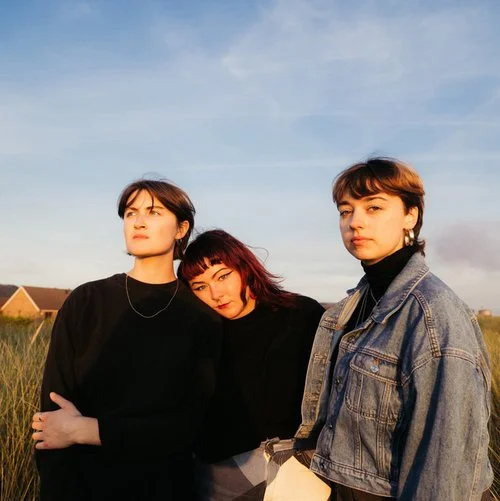
who are one of the finest and most promising names in all of music, Adwaith are from Carmarthen in West Wales. Formed in 2015, they consist of Hollie Singer (vocals, guitar), Gwenllian Anthony (bass, keys, mandolin), and Heledd Owen (drums). The band are signed to Libertino Records. They are a group that I have covered before. I think that they are going to keep going for years and become icons. I make proclamations in this feature when it comes to fascinating women – whether they are solo, in a duo or a group. With so much new momentum behind Adwaith, there is no doubt they are primed for greatness. It is exciting that they are going to be releasing their second studio album soon. The Welsh Music Prize winners will release Bato Mato on 1st July. After their debut scoped the prestigious Welsh Music Prize, there were a lot more eyes on them. There will be much more promotion and interviews closer to the release of Bato Mato. I am going to end with a playlist containing some of their best tracks soon. Before that, it is worth sourcing a couple of interviews with Adwaith, just to give a sense of who they are. There might be people reading this who do not know them or are vaguely familiar. They will, as I suggest, become a huge group and inspire so many others very soon. PRS for Music spoke with Adwaith in 2020. They asked them about their Welsh Music Prize win and plans for the future:

How does the songwriting process work between the three of you?

Hollie: It varies to be honest, it can start with a riff or a drum beat, then sometimes we write stuff individually and bring stuff to the group. It really depends. We all share the writing responsibilities and we all produce stuff.

Gwenllian: The lyrics are quite collaborative. Sometimes we have a full song with lyrics written by one of us, but some of it we just have a discussion and write it between us.

Did you ever worry that singing primarily in Welsh might hinder you career?

Gwenllian: When we first started making music we just saw it as something we did for fun, but it’s all progressed really amazingly. I don’t think a career is something that we thought about. A few years later and its all kicking off.

I think a lot of what makes it stand out, especially outside Wales, is the fact that we sing in Welsh, our mother tongue. It’s never something that we thought about really. We often get asked, ‘when are you going to do English songs?’ We have released some English songs, but that’s not us as a band, I don’t think.

Do you see it very much as part of your identity as a band?

Hollie: Yes, very much. That’s what a lot of people love about us as a band. We’re definitely keeping it Welsh, forever.

Do you ever find that it acts as a barrier for some non-Welsh speakers or have people generally embraced it?

Hollie: I feel like when we play outside of Wales the response is great. When we played in London last some guy came up to us and said, ‘you’ve really inspired me to learn Welsh.’ The reaction to it, surprisingly, is amazing.

Gwenllian: I think we get a better reaction out side of Wales a lot of the time. I don’t know if that’s because people are kind of used to the Welsh language in Wales. A lot of people were brought up thinking that it wasn’t cool to speak Welsh. I guess some people have that mentality and feel like they don’t understand it. People outside of Wales don’t have that relationship with the language. We definitely get a nicer reaction outside of Wales.

In recent years acts like Cate Le Bon, Gwenno and Gruff Rhys, among others, have paved the foundations for a strong Welsh language music scene. Does it feel to you like the tide is turning?

Gwenllian: I think over the last few decades it’s been difficult to push Welsh language music outside of Wales. We have Super Furry Animals, obviously, and Gorky’s (Zygotic Mynci), but it is sometimes still a struggle. But Gruff Rhys did open up the door to all the other bands in Wales, which was amazing.

Is it important to you to promote the Welsh language with your music?

Gwenllian: Not necessarily the Welsh language, but definitely the culture and Wales as a whole. Obviously, we’re very proud to be Welsh and I think Wales is the underdog. I really like promoting the culture and Wales in general, but not specifically the language.

I think Welsh artists are overlooked and I don’t feel like their subscribing to a scene. We get a lot of different genres and different experimental music. People in Wales are creating the kind of music they want to.

Hollie: What’s great about Welsh musicians is how experimental they are.

Gwenllian: They don’t feel like they need to be a certain way. Everyone’s very spread out and quite individual, which is cool.

Last year you followed in Gwenno and Gruff’s footsteps and picked up the Welsh Music prize – what did it mean to be recognised like that?

Hollie: It felt really crazy to be honest.

Gwenllian: Yeah, we wrote some of those songs when we were like 16, 17 and we didn’t play them live bit revisited them for the album. It’s mad to think that people connected with them so much. We never thought they would have that kind of reach, but it’s been great.

What was the process of recording your debut like and what was the thinking behind it?

Gwenllian: We recorded most of it in a week in mid-Wales, but we also had some singles that we recorded before that we popped in there as well. The album is all about growing up, finding your way as people and growing up. so I guess the album is a reflection of our journey as people.

Hollie: We worked with producer Steffan Pringle – he’s great – he’s produced all of our stuff from the start and still does today. He completely gets our sound and helped massively with the album.

As a band do you think you’re most at home in the studio or playing live?

Hollie: I feel like in the studio. We love playing live, it’s so much fun, but in the studio you can do so much more. You can play around with different sounds, but with just three of us, there’s only so much you can do onstage”.

I am excited to hear what is coming with Bato Mato. One of the most inspiring and fascinating aspects of Adwaith’s music is their Welsh-language lyrics. It is quite rare to hear artists perform in Welsh. I am sure that we will hear more of this in their much-anticipated second studio album. For the Rabbits highlighted the Welsh band last year. Even though they have success and a big fanbase, they are worried that music is not a viable career and future. There is no doubt in my mind they will endure for many years to come:

Although the band’s initial musical love came with the folk-tinged sounds of bands like The Staves and Fleet Foxes, they’ve constantly shown themselves to be unafraid of experimentation, Melyn showcasing everything from perfect post-punk to ethereal soundscapes and swampy blasts of ravey psychedelia. Adwaith’s sound is a distinctly modern one, the sort of music made by artists who’ve grown up with the world of sounds that the internet now gives us all, one-minute dipping into the baggy sound of the Happy Monday’s, the next finding like-minded Welsh-language inspiration from the likes of Datblygu or Gwenno.

With plans already in place for a brand new record, and hitting the road, Adwaith’s next step looks like cementing their place at the forefront of creative alternative music and bringing Welsh music to the world at large. Recently I spoke to the band about the pressure success brings, future plans and their influences that go from, “folk to hip-hop to Turkish psychedelic music”.

FTR: Somehow it’s three years since you released Melyn, were you pleased with the reaction that album got?

We were more than pleased! We wrote some of those songs when we were 16/17 so to know that people connected to the album is incredible.

FTR: Has that success changed how you’re approaching recording new music? Is there a pressure to follow-up on that record?

I think we did feel a bit of pressure but as soon as we got into the studio, we felt the weight lifting off. The songs sound huge and we’re really happy how they’ve turned out.

PHOTO CREDIT: Siân Adler

FTR: There’s a lot of very creative music coming out of Wales at the moment, so it must have been a real honour to win the Welsh music prize. How has that changed things for you as a band?

I don’t think it’s changed us much. If anything, I think it’s given us confidence in what we’re doing! It took us a while for it to sink in though.

FTR: Who are the influences on Adwaith’s music? Have these changed since you started making music?

Our first influences were definitely more folk orientated. We were really into The Staves and Fleet Foxes. Now, we’re into lots of different music. From folk to hip-hop to Turkish psychedelic music.

FTR: Why do you make music?

That’s a difficult question to answer! I think it’s always something we’ve done, it’s a way of expressing emotion. It’s a way of dealing with feelings you might not want to deal with! And it’s a lot of fun jamming with your friends.

FTR: What are your ambitions for Adwaith? Is music still a viable career?

It’s hard to see it as a viable career at the moment. It’s such an expensive job to be a musician. With recording, mastering, PR, travel, gear, music videos and photos costing thousands of pounds, there’s no money to pay ourselves. But hopefully we can in the future. That’s the Dream!”.

If you have not discovered Adwaith or are new to their music, spend more time with them. From being named Music Venue Trust patrons last year to a new album coming out in summer, the group are growing stronger and reaching new people. I feel they are going to continue to rise, release more albums, tour internationally, and go on to become modern-day icons. A superb group who make such tremendous music, go and check Adwaith out on social media and listen to as much of their stuff as possible. I have been a fan of theirs for years, and the music they are releasing at the moment is among their absolute strongest. There is no doubt that the mighty band are going to be…

FUTURE legends.

FEATURE: The King Is Dead, Long Live the Queen: Kate Bush and Her Backing Vocals on Other Artists’ Songs

FEATURE:


The King Is Dead, Long Live the Queen

IN THIS PHOTO: Kate Bush circa 1980 

Kate Bush and Her Backing Vocals on Other Artists’ Songs

__________

I have sort of mentioned this before…

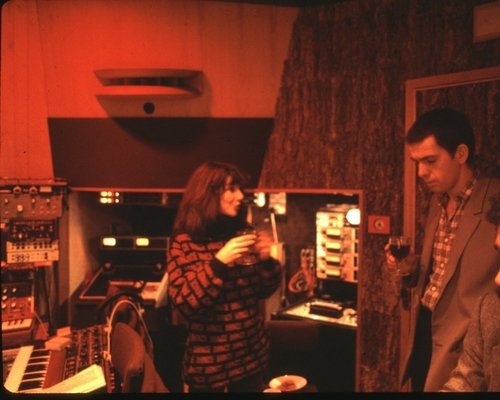
 IN THIS PHOTO: Kate Bush with Peter Gabriel in 1980 at The Townhouse in London/PHOTO CREDIT: Peter Gabriel

but Kate Bush is not just known for her great lead vocals. Her own music is brilliant, but she has appeared on other artists’ songs. I was compelled to write this, as I saw a recent Top of the Pops show that featured Go West’s song, The King Is Dead. Released in 1987, it is an otherwise pleasant and unremarkable song elevated by Kate Bush’s distinct and striking vocal. While recording the song in Denmark, Go West felt it would benefit from the addition of backing vocals reminiscent of Bush's style. Their guitarist Alan Murphy, who had worked with Bush in the past, offered to contact her. Bush agreed to provide vocals, but rather than travel to Denmark due to her fear of flying, she recorded her part in her home studio. I can understand why Go West felt that their song would benefit from Kate Bush appearing on it. I am trying to think what the earliest examples are of Bush appearing on other artists’ music. I think the one that comes to mind is Peter Gabriel. Bush was on the songs, No Self Control and Games Without Frontiers. That was in 1980, in a year when Bush released her third studio album, Never for Ever. Bush would later appear on Don’t Give Up from his 1986 album, So. That was more of a duet.

I imagine she would have got so many different requests for backing vocals and collaborating with other artists. As one of the most distinct artists and phenomenal singers, she brought something incredible and unmatched on the songs she was a backing vocalist on. I love what she does with The King Is Dead. It is a powerful and beautiful vocal performance. Although her French vocal on Games Without Frontiers are quite brief (in terms of word count), it is the perfect injection of her vocal magic! On No Self Control, she provides this breathy rush; quite sparse and subtle vocals, never really stealing too much focus, but definitely adding something astonishing to the Peter Gabriel songs. There was this thing in the earliest days of Bush’s career where people had misconceptions about Bush and her voice. They labelled her as kooky or high-pitched, so maybe some artists avoided working with her because they thought they would get a very singular vocal. In actuality, she was a remarkably versatile singer from the start. The songs she does appear on in the earliest years showcase that. A lot of her guests features happened in the 1980s. In 1986, she appeared on Big Country’s track, The Seer. Taking from the album of the same name, she worked with lead singer and lyricist Stuart Adamson. It is again, akin to a duet, but an occasion where Bush is not the lead artist. Prince appeared on Bush’s 1993 album, The Red Shoes, on the track, Why Should I Love You? Bush featured on Prince’s My Computer. Like so many songs that she appeared on, she recorded from her home studio (due to time commitments and her fear of flying). That was on his 1996 album, Emancipation. Every backing vocal Bush has provided during her career has been different and added so much to the song!

I love the fact Bush has reciprocated vocals. Some artists have appeared on her tracks, so she then appears on them. You get this happening today, but it is great Bush found time to work with other artists, as she rarely has much free time. One case is when she provided backing vocals on Roy Harper’s You (The Game Part II). Taken from his 1980 album, The Unknown Soldier, Harper can be heard providing backing on Breathing. That song was from Bush’s 1980 album, Never for Ever. 1980 was a year when Bush was featured on at least three other songs that were not hers. Her career is definitely not over and, as I have written before, there is rumour that she is going to feature on a song from Big Boi. That has been doing the rounds for a bit, but I would not be surprised if a song from him with Bush’s voice in the mix appears at some point. She is remarkably memorable singing lead and doing her own songs, though she can bring something unique to other artists’ tracks. In 1992, she featured on Sam Lowry's 1st Dream/Brazil (providing vocals with Michael Kamen and The National Philharmonic Orchestra of London); in 1993 she featured on Alan Stivell’s album, Again (on the track, Kimiad). I would be interested to know if there are other songs she has provided background vocals to that I have missed. Whichever artist she works with, her vocals are always perfect and leave their mark. They most certainly…

ALWAYS makes an impression.

FEATURE: Groovelines: Foo Fighters – Monkey Wrench

FEATURE:


Groovelines

Foo Fighters – Monkey Wrench

__________

I featured Foo Fighters…

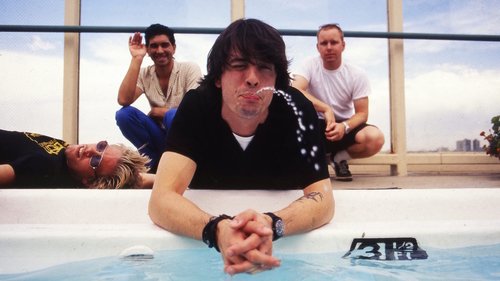
 PHOTO CREDIT: Martyn Goodacre/Getty

in Second Spin last month, as the band’s beloved drummer Taylor Hawkins unexpectedly died. I felt compelled to write about them because there was so much shock in the air. Listening back to their albums, I was struck by the quality and consistency – perhaps something I had neglected before. One of the band’s best albums, The Colour and the Shape, turns twenty-five next month. Even though Hawkins was part of the band around the time of The Colour and the Shape, it was Dave Grohl who was taking care of drumming duties. It was not until 1999’s There Is Nothing Left to Lose when Hawkins stepped in full-time to drum. Even so, I wanted to mark the twenty-fifth anniversary of one of The Colour and the Shape’s mightiest tracks, Monkey Wrench. That was released as a single on 28th April, 1997. One of Foo Fighters’ signature songs, it is time to get a bit deep with the song. The music video for the song was the first to feature Hawkins on drums, although the actual drum track is performed by Grohl. I shall come to the wonderful and acclaimed video for Monkey Wrench soon. Produced by Gil Norton and written by the band (Dave Grohl, Nate Mendel and Pat Smear), Monkey Wrench helped take Foo Fighters from this side project of Dave Grohl to a bona fide group who meant serious business and were their own entity.

Not that there should have been doubt or scepticism before 1997. The eponymous Foo Fighters album of 1995 was a debut essentially of Dave Grohl. As Monkey Wrench pre-dates the release of The Colour and the Shape, I guess there was still a feeling that this was Dave Grohl mucking around or figuring out a new project. Monkey Wrench really helped establish Foo Fighters as a terrific band who made this enormous impact in 1997. I will get to the music video and why that is so special. Prior to that, Louder ran a feature in 2016 about the importance and impact of Monkey Wrench:

In 1997, as Britpop crumbled, Radiohead went even more miserable with OK Computer and drum ’n’ bass 12”s were top of every teenager’s shopping list, it was hard to work out exactly what Monkey Wrench was. It wasn’t punk. It wasn’t grunge. It wasn’t metal. It wasn’t pop.

In fact, it was all those things and more. It was three minutes and 51 seconds of driving guitars, pop melodies, and a soft-then-loud dynamic that culminates in a bridge full of shouty metal-inflected vocals. Sound familiar?

The lead single off 1997’s The Colour And the Shape album, the song was born out of difficulty. Grohl knew that this album had to answer their critics. “I knew it had to be good,” he says. “I knew it had to solidify the band as a legitimate band. It couldn’t be just another six days in the studio. It couldn’t be a basement demo.”

Grohl’s songs became more ambitious. They got in producer Gil Norton – a guy who had produced indie’s superleague: Sugarcubes, Pixies, Echo And The Bunnymen – and a renowned perfectionist. “Gil is awesome in that he fucking wrings you out,” says Grohl. “He wants every last drop of performance and song. It was intense.”

Dave Grohl’s private life was pretty intense too. “I was going through a divorce. I was falling in love with someone else. I was living out of my duffel bag on this cat-piss-stained mattress in my friend’s back room with 12 people in the house. It was fucking awful.”

With the recording almost finished, the band realised that their grand vision wasn’t really coming across. Drummer William Goldsmith was unhappy and ‘wasn’t really gelling’ so Grohl started re-recording some of the songs himself, adding his own drum tracks. Impressed, producer Norton urged him to come into the studio to record those versions. Left on the subs bench, drummer Goldsmith left the band. Now a three-piece, Grohl – recently voted rock’s greatest living drummer by Classic Rock magazine (second only to his hero, the late John Bonham of Led Zeppelin, in a poll to find rock’s greatest drummers) – played the drums as the band re-recorded almost the entire album.

Seen in this context, Monkey Wrench’s lyrics about not wanting to be a spanner in the works, could be seen to be as much about Goldsmith’s departure as Grohl’s divorce, with Dave singing from Goldsmith’s/the spurned lover’s perspective. A bitter kiss-off to someone, lines like “I’d rather leave than suffer this” and “one last thing before I quit” sound more like the ending of a working relationship than a romantic one.

 If the lyrics are downbeat, the music is anything but. Kicking off with a slamming, punk-pop guitar riff, there’s a spectacular moshpit-confusing stop-start before the verse begins. Performed live or heard down your local rock club, the pause completely wrong-foots you: all you can do is jump, headbang or attempt some air-drumming. Either way, from that moment on it’s got you. From then on it just builds and builds, propelled by some spectacular drum fills, the emo-like shouty bit in the bridge, and the anthemic “fall in, fall out” backing vocals.

Even old-fella-of-rock, Queen’s Brian May, thinks it’s a classic. In 2002, Brian compiled an album called The Best Air Guitar Album In The World… Ever and included Monkey Wrench alongside classics like Smoke On The Water, The Boys Are Back In Town and Paranoid. “The number one criterion was, if you hear the song you have to jump up and do something,” explained the curly one. “Preferably in the first 10 seconds. To me, the Foo Fighters are totally at the cutting edge of what rock music’s about today. Monkey Wrench wasn’t as big a hit as it ought to have been, but I think it had a big effect on all bands in general.

“[With Taylor] you’ve got two of the greatest drummers in the world in that band,” says May. “And one of them plays incredible guitar, sings incredibly well and writes incredible songs. So, Dave Grohl, thank you very much and I hate you”.

American Songwriter ranked Monkey Wrench as the seventh-best Foo Fighters song in a rundown late last year. Considered to be one of the defining tracks from the band, the fact it was the lead single from the band that were, now, more than Dave Grohl makes is so important. The assimilation of Taylor Hawkins on the next album solidified the band further and brought their music to a new level. I like the fact that he is in the video. What makes it so awesome is that is was directed by Grohl. Foo Fighters had this sort of independent and D.I.Y. spirit where they were not relying too much on other people and creatives. Wikipedia write about the stunning Monkey Wrench video:

The music video was directed by the band's lead singer/songwriter, Dave Grohl. In the video, Grohl arrives at his apartment with groceries in hand, but finds the door secured from inside by the chain latch when he tries to open it. Looking through the peephole, he finds black-clad duplicates of the band members playing the song. The rest of the band soon joins him at the door, peeking in through its mail slot, and eventually start trying to force their way in as the duplicate Grohl taunts them and spits on the peephole. He holds the door shut against the band's efforts for a while, but they eventually break in only to find the apartment suddenly empty. They look out the window and see the duplicates fleeing on foot through a courtyard, then close the door and finish the song using the abandoned instruments. As the video ends, a third set of bandmates is listening at the door outside, creating a recursive situation.

When Grohl is in the elevator heading up to his apartment, a muzak version of the Foo Fighters song "Big Me," performed by The Moog Cookbook, can be heard”.

It has been just over a month since Taylor Hawkins died (he died on 25th March whilst Foo Fighters were on tour in Colombia). It is bittersweet celebrating the twenty-fifth anniversary of a song that introduced many people to him. He would soon come into the band and blow the world away! Monkey Wrench is an anthemic song that remains a fan favourite and has touched so many people. A happy twenty-fifth anniversary to Monkey Wrench. It is a mighty jam from…

AN iconic band.

FEATURE: Revisiting… Doja Cat – Planet Her

FEATURE:


Revisiting…

Doja Cat – Planet Her

__________

THIS feature is me…

looking back at albums from the past five years that should be played more. The incredible Doja Cat’s (Amala Dlamini) third studio album, Planet Her, was released in June last year. It is a recent album, though I feel the songs from it should be played more. One of the finest Hip-Hop artists of her generation, she is a stunning talent that I really love. I wanted to get to a couple of reviews for the album. It got positivity when it was released, but there were a few more mixed reviews that I think are unfair. To me, it is one of the best albums from last year. So many of her best songs – Kiss Me More and Woman – are on Planet Her. If you have not heard the album before, then go and check it out. It is one that everyone needs to study – whether they like Hip-Hop and Pop or not. Before coming to reviews, there is an interview from COMPLEX where Doja Cat was asked about Planet Her and the positive reaction to it (she was interviewed in September):

You recently mentioned in your chat with Missy Elliott that you wanted Planet Her to have a “collage of sounds.” A lot of albums come together when all the tracks follow a specific sound, but what criteria did it take for a song to be worthy of being on Planet Her?

I feel like I’m kind of not destined—or, maybe a little cursed. I tend to do this on every album, where I do something different with every song. And I really do appreciate consistency as an artist. Those are the albums that I play the most in my own personal life. I’m able to kind of just listen to things that sound very consistent. I can’t really play albums that switch up too much, which is kind of strange. You’d think that I’d be making albums that way if that’s my favorite thing. But I think I just need to really be happy about what I’m making, and sometimes that means I have to change my entire direction in the studio when I’m making each song individually. Because I get very bored very quickly, I think. In the future, I’m going to try more to kind of shoot for more conceptual things that feel consistent, but I don’t know. As of now, and in the past, I’ve just never really felt like I wanted to follow anything.

You also mentioned something about the album being a little weirder. What makes a song too weird? And I’ve heard you use that word before, too. Are you glad that the word “weird” can be used in such a positive context?

I think when I say “weird,” it’s more just things that stick out like a sore thumb. So with Hot Pink, that wasn’t the issue for me. That wasn’t something I wanted to avoid. I liked it being all over the place. And I felt like it gave it a vibrant touch to the album to have those stick-out-like-sore-thumb moments. But for this album, I worked with one producer, Y2K, who has a very specific style. He’s good at classic pop, but he does add hip-hop elements into them more often than not, and I wanted to stay true to that. I worked with other producers on this project, but I wanted it to feel more sparkly and pretty and high-energy, and less like a circus. I don’t know how to really describe it. But I mean, when you listen, it’s just very clean. I wanted everything to be very clean. I had songs that maybe sounded too Prince or a little too hip-hop or something. The thing is, “Ain’t Shit” is the one stick-out record on the album. I feel like I was OK with that, because that song meant so much to my fans and meant so much to me. So that one gets a pass. But yeah, that’s kind of how I feel about the weird, weird tracks.

This year, you dabbled in acting with Dave. Are there any other mediums that you’ve yet to explore that are on your radar?

My big thing that I really want to do in the future is acting, and I don’t know how to get in there. You know, people have offered some things in the past. And it’s always been that I need four months at a time to do those things. But I don’t, because I’ll have an album coming out. During Hot Pink, that whole rollout sort of got in the way of other things. I mean, in the future, I’m definitely trying to see if I can send out my schedule for stuff like that, because I really do love improv and I’m really into the idea of getting into acting. People told me I should act, too, so I might as well try.

What do you think the positive reception of Planet Her—whether it be the awards or the crowd feedback last weekend—has taught you about what you’ve been able to do with the project?

It taught me a lot of things as far as strength. More specifically, vocal strength. Like, I’ve pushed myself for this project. And to be on stage during the songs, I felt a lot more comfortable. I definitely was out of breath at certain points. And it hurts when I watch those moments, but I’ve grown a lot, just in the physical realm as far as the vocals and dancing. These songs are made for that. The songs are made for dance. The songs are made for further expression in that way, so I’m excited to do that in the future”.

An album that reached number two in the U.S. and three in the U.K., Planet Her was a big commercial success. It also received mostly positive reviews. That said, I would love to hear the album played more on the radio. There were a few mixed reviews that missed the point or did not listen to Planet Her that hard. A supreme artist with whose production and songwriting throughout the album is amazing, everyone needs to take a moment out and listen to Planet Her. This is what NME said in their review of Doja Cat’s third studio album:

Perhaps more than any other pop star, Doja Cat seems to reflect our current, rather fractious era of social media. It’s not just the way she’s conquered TikTok – her glistening disco bop ‘Say So’ topped the Billboard Hot 100 in 2019 after inspiring a viral dance trend – but also her steady stream of online controversies.

These include but aren’t limited to: dismissing coronavirus as “a flu” in early 2020, hanging out in chat rooms that allegedly propagated alt-right sentiments before she was famous and initially trying to defend her past use of a homophobic slur before backtracking with an apology. At this stage, a certain amount of messiness is almost baked into her persona, but she’s alway managed to bat away any real threat of being ‘cancelled’.

Then there’s the perpetual elephant in the room: the 25-year-old’s association with Lukasz “Dr. Luke” Gottwald. This previously prolific songwriter-producer became a music industry pariah in 2014 after being accused of emotional abuse and sexual assault by Kesha (he has always denied the allegations and in 2020 won a defamation case against the star). He produced ‘Say So’ under the pseudonym Tyson Trax, and the song’s enormous chart success effectively sealed his comeback last year. So it’s not too surprising that he contributes to three tracks here – including the hit single ‘Kiss Me More’, a funky, sun-kissed collaboration with SZA, and ‘You Right’, a dreamy duet with The Weeknd. Tellingly, he’s now credited as Dr. Luke once more.

Whether you want to listen to Doja Cat bops produced by Dr. Luke is a matter of personal conscience. Less debatable are her obvious skills as a performer. Throughout this intoxicating third album, the artist born Amala Ratna Zandile Dlamini pivots effortlessly between deceptively sweet singing – deceptive because her lyrics are generally anything but – and fierce, filter-free rapping. “Eat it like I need an apron on /  Eat it ’til I need to change my thong,” she purrs on the grinding sex jam ‘Need to Know’. Sex and regret are recurring themes here, sometimes coalescing on the same song. She’s said on Twitter the wistful R&B ballad ‘Love to Dream’ deals with “fantasising and reminiscing about an ex”, a relatable jumble of emotions that the song conveys perfectly.

It’s also difficult to argue with her knack for naggingly catchy, TikTok-ready melodies. If ‘Planet Her’ sounds precision-tooled for chilled summer listening, its choruses tend to linger like a Sangria buzz. Musically, it’s a breezy affair – 14 tracks fly by in under 45 minutes – that gives Doja ample opportunity to show off her range. Whether she’s celebrating her feminine power over an afrobeats rhythm on ‘Woman’ – “I could be the CEO, just like a Robyn Fenty,” she brags – or duetting with Ariana Grande on the featherlight R&B glide ‘I Don’t Do Drugs’, she’s an agile and consistently compelling presence. On the spacey breakup song ‘Alone’, she sings and raps so slickly that she almost comes off like a one-woman, Gen-Z TLC.

‘Planet Her’ is also an album that brims with the confidence of an artist embracing her imperial phase. You don’t hire David LaChapelle to create your cover art – as Doja does here with stunning, space-themed results – unless you’re really feeling yourself. On the lascivious sex jam ‘Get Into It (Yuh)’, she’s brazen enough to namecheck Ed Sheeran and thank Nicki Minaj, who co-signed Doja by jumping on a ‘Say So’ remix last year

Unlike Minaj, Doja’s lyrics don’t always dazzle with wit and wordplay, but they definitely possess a plain-speaking power. “Left on read and can’t give head / Buddy, you ain’t shit, need a laxative,” she tells an inadequate male on ‘Ain’t Shit’. Sometimes, it’s not so much what she says, but the way that she says is. When she adopts a childlike voice for one of the track’s later putdowns – “You should have paid my rent / Go get a fuckin’ job” – it really heightens the sting.

Though she works with a dozen or so producers including Jay-Z associate Al Shux and Drake collaborator Rogét Chahayed, ‘Planet Her’ is almost entirely mid-tempo and defined by a certain lightness of touch. This means that ‘Kiss Me More’ is probably the only track that matches ‘Say So’ for pure, unassailable pop appeal, but also that the downbeat, dirge-like ‘Been Like This’ is the record’s only dull moment. It all adds up to a job well done with more than enough bops to drown out her next social media controversy”.

Prior to wrapping up, there is another review that is worth bringing in. AllMusic were among the many who had some very positive things to say about a remarkable album:

Pop polymath Doja Cat crossed completely over to the mainstream after her 2019 release Hot Pink. Third album Planet Her puts the emphasis on her versatility and anything-goes stylistic blend, applying even slicker production values to her already radio-friendly sound. The record swings wildly, tackling different sounds almost song to song. Album opener "Woman" is a sultry and bass-heavy track that pulses with a psuedo-Caribbean groove before throwing in the curveball of a Kendrick Lamar-esque rap flow halfway in. The gears switch quickly to hooky rap-singing on the melodic Young Thug-assisted earworm "Payday," slick cosmic R&B on "You Right," featuring a cameo verse from the Weeknd, vaporous indie-adjacent electronic sounds on "Been Like This," and sugary balladry meeting booming bass thumps on the lovestruck yearning of "I Don't Do Drugs" featuring Ariana Grande. All of Doja Cat's various creative wanderings are held together seamlessly by incredibly clean and detail-rich production. Each of her unexpected left turns and potentially clashing marriages of styles are guided into easy landings with expertly placed rhythmic dropouts, ear-catching synth flourishes, and inventive instrumental moves that fill any space that could be awkward or uneven in less-skilled hands. Planet Her's dazzling construction is matched by Doja Cat's controlled performances and a personality that can deliver hypersexualized brags and expressions of tenderness and fragility with the same power. Some of the album's best moments hold space for both, like the lewd yet sweet drift of "Love to Dream," and the pitch-perfect summer anthem "Kiss Me More," which closes out its celebration of lust and the giddy excitement of brand-new love with a verse from SZA. Doja Cat tries something new with almost every orbit on Planet Her. When the production magic keeps up with her boundless spirit, the songs reach a unique hotspot of fun and infectiousness that makes all of Doja Cat's disparate impulses gel into an exhilarating whole”.

I love Planet Her and everything Doja Cat does. A terrific album from last year, it still sounds great when I play it now. I look forward to hearing and seeing what is next for Doja Cat. Her latest album clearly highlights the fact that she is…

ONE of the world’s best artists.

FEATURE: An Incredible Array of Talent… The Great Escape 2022 Playlist: Part Three

FEATURE:


An Incredible Array of Talent…

The Great Escape 2022 Playlist: Part Three

__________

THE full line-up…

IN THIS PHOTO: The Crab Apples

for this year’s bonanza, The Great Escape have been announced. Because of that, I am putting out playlists of the artists included. There are a lot to get through, so I have divided it into playlists. Covering the terrific talent that will be play in May, it is a tantalising and wonderful collection of songs. This third feature covers the last batch of artists scheduled to play. Here are some awesome artists who will head to Brighton to wow the crowds…

 IN THIS PHOTO: Willow Kayne

NEXT month.

FEATURE: Supernova: Remembering the Great Lisa ‘Left Eye’ Lopes

FEATURE:


Supernova

IN THIS PHOTO: Lisa ‘Left Eye’ Lopes in 1999/PHOTO CREDIT: Jeffrey Mayer/WireImage 

Remembering the Great Lisa ‘Left Eye’ Lopes

__________

BORN on 27th May, 1971…

 IN THIS PHOTO: TLC in 1994

there was nobody like Lisa ‘Left Eye’ Lopes in music! On 25th April, 2002, the world lost her. Twenty years later, I wanted to include some music from her, and take a look at a great article written in 2019 that highlights what an incredible person she was. After dying at the tragically young age of thirty, there is no telling what she could have achieved. Her amazing solo album, Supernova, was released in 2001. I predict Lopes would have released a lot of albums, in addition to setting up charities and doing some amazing work. Most people know Lopes best as a third of TLC. Alongside alongside Tionne ‘T-Boz’ Watkins and Rozonda ‘Chilli’ Thomas, the group achieved fame and huge acclaim with albums like Ooooooohhh... On the TLC Tip (their 1992 debut) and CrazySexyCool (1994). Not only was Lisa ‘Left Eye’ Lopes an amazing rapper. She was an incredible writer who contributed a lot to TLC’s cannon. Co-writing incredible songs like Ain't 2 Proud 2 Beg, she was this versatile writer whose rapping and flow was like nobody else’s. She also contributed to songs from other artists. Duetting with Melanie C on 2000’s Never Be the Same Again, she was also on Donnell Jones’ U Know What's Up in 1999. I will include both of those songs, in addition to a couple of TLC classics, before wrapping up. I know that the world will remember a much-missed talent on 25th April on the twentieth anniversary of her death. Before concluding, I wanted to source from an amazing article from Red Bull. In 2019, they provided a detailed history about Lisa ‘Left Eye’ Lopes, and what she achieved in her life:  

In 2002, Lisa ‘Left Eye’ Lopes, the hip-hop innovator of TLC, began production on a documentary intended to chronicle her time spent in Honduras. Filmed from March 30, until her death on April 25, Lopes takes fans on an intimate journey of introspection while freely running naked through waterfalls as she began building a youth camp for children.

Accompanied by her team, sister Reigndrop Lopes, and Egypt, the R&B group she was mentoring at the time, they set out to the forest to film for 30 days. “That's the plan,” Lopes says prophetically. “I say that’s the plan because things always change.” Filming ended on day 27, after a tragic car accident that took Lopes’ life. In posthumously sutured tapes, the Lauren Lazin directed film, The Last Days Of Left Eye, ominously follows the final days of the effervescent star and her struggles with art, mortality and unrelenting dark premonitions.

This year marks the 20th anniversary of TLC’s FanMail, the final album released with Lopes. Today, she would be 48 years old.

From TLC’s beginnings in 1990, Lopes’ larger-than-life attitude propelled the group forward. Her instant chemistry with Tionne "T-Boz" Watkins was akin to a sisterly bond, the two egging each other on to create aesthetics that were sometimes strange, often new yet always exciting. A dancer for Damian Dame, Rozonda Thomas completed the trio after their previous third member and founder, Crystal Jones was booted out of the group. Lopes affectionately nicknamed Thomas ‘Chilli’, who would in earnest preserve the ‘C’ in TLC.

In 1992, their debut single, Ain't 2 Proud 2 Beg, a refreshing amalgam of new jack swing and R&B punctuated sexual liberation with a smirk. Dominated by the playful exuberance of Lopes who dons cartoonish neon hats, billowing parachute pants and a pair of glasses, with one lens replaced by a condom, their introduction to the world was brash but exhilarating. Delivering lines about consensual and protected sex was a strong part of the TLC package – inspired by the AIDs crisis. Unabashed pleas for pleasure were made by the seductive T’Boz with her uniquely gravelly vocals, Chilli’s sweet lilt, and Lopes’ skittish yet sharp rhymes. “2 inches or a yard rock hard or if it's saggin',”, she quips, “I ain't 2 proud 2 beg (no).”

Lopes’ vivacity is immortalised in these early moments. Whether she was dancing in the background, folding laundry or delivering the poetic equivalent of “size doesn’t matter” her presence was mesmerising.

Record label executive, L.A. Reid, who worked closely with Left Eye with LaFace Records, sees the late rapper’s resemblance in some of today’s musicians, especially in Nicki Minaj. "I see a little Left Eye in there,” he mused to The Hollywood Reporter.

The legacy continues from generation to generation: It's there on Side To Side, Ariana Grande’s collaboration with Minaj who gesticulates their Soul-Cycle inspired message, and with Rihanna refusing to mince words on S&M.

Left Eye’s goofy light-heartedness co-existed alongside her raunchy rhymes and cybergoth fashion sensibilities. She was funny, but never veered into parody. Everything about Lopes was sincere, and her ability to embody contradictory traits came down to one thing — “I’m a Gemini,” she says smiling at the camera.

“She was determined to be something in life,” Atlanta Rapper, Jermaine Dupri told MTV in 2002. “She was a true rock star. She didn’t care about no press. She was the one that would curse on TV. She had tattoos. You could expect the unexpected. When you see Lisa, you could expect something from her. That’s the gift she carried”.

"Energy never dies... it just transforms,” was Left Eye’s spiritual motto. Since her death in 2002, her inimitable mystique has endured taking on an immortal presence in pop culture. "There is a track called A New Star Is Born," Lopes told MTV in 2002, describing a forthcoming song on her solo album, Supernova. "It's saying that there is no such thing as death. I don't care what happens or what people think about death, it doesn't matter. We all share the same space." Just months after making these comments, the animated star tragically passed away.

Everything about Left Eye was larger than life and distinctly profound. Always dressing for excess, she braided her hair into colossal hoops that demanded attention and donned the wildest ensembles with all sincerity. She was the embodiment of CrazySexyCool, the futurism in FanMail and the excitement of ‘Ooooooohhh... On the TLC Tip’.

A supernova is “a star that suddenly increases greatly in brightness because of a catastrophic explosion that ejects most of its mass”. It can outshine entire galaxies, and radiate more energy than the sun ever can in one lifetime. Lisa ‘Left Eye’ Lopes lives on in TLC. Everything that made her who she was, from the contradictions and controversy to championing the truth, continues to shine, radiating more energy than some stars ever will in one lifetime”.

A documentary showing the final twenty-seven days of Lopes' life, The Last Days of Left Eye, premiered in April 2007. Most of the footage was shot with a handheld camera, often in the form of diary entries filmed by Lopes while on a thirty-day spiritual retreat in Honduras (where she died in a car crash) with sister Reigndrop, brother Ronald and members of the R&B group, Egypt. The Rock star and biggest personality in TLC, I think she helped define their sound; responsible for their huge popularity and endurance. Of course, it was not all about Lopes, but she had this charisma, controversy and enormous talent that set her out as a future icon. A posthumous album, Eye Legacy, was release din 2009, though it is one of those albums, like so many posthumous releases, that seems poorly cobbled together and does not do full justice to the artist. It is best to remember Lisa ‘Left Eye’ Lopes as a tremendous artist who, at the time of her death, was in the process of setting up two educational centers for Honduran children. She would have recorded solo music and looked ahead to a new chapter. It would be nice to think that, as TLC are still around as a duo, Lopes could have joined them for a special gig or there would have been a reunion. It makes Lopes’ death that bit more tragic when we consider what could have been. Ahead of the twentieth anniversary of her death, I wanted to include some of her music. She accomplished a lot in her life, but she was destined for so much success. Remembering the great Lisa ‘Left Eye’ Lopes, the music world is…

NOT the same without her.

FEATURE: Inside Kate Bush’s The Dreaming at Forty: Track Five: Leave It Open

FEATURE:


Inside Kate Bush’s The Dreaming at Forty

Track Five: Leave It Open

__________

AS a premature celebration…

 PHOTO CREDIT: Anton Corbijn

of The Dreaming ahead of its fortieth anniversary in September, I am going through each of the ten tracks. The reason for doing this is because they are all very different and excellent. Whereas one or two tracks from The Dreaming are played on the radio, the remainder are not. I am leaning, once more, on the Kate Bush Encyclopaedia when it comes to information about the stunning fifth track on The Dreaming, Leave It Open. I am going to get to looking at some of the lyrics and going deeper into the track. I especially like the bass work by Jimmy Bain, the percussion from Preston Heyman, and Kate Bush’s processed and exceptional vocals. There is a demo available that has the vocal less processed and more raw. It is interesting seeing the streaming figures for the ten tracks on The Dreaming. Sat in Your Lap, Suspended in Gaffa and The Dreaming have larger figures, but the rest of the tracks have between one and two million streams. There is almost this equal popularity between the seven. Behind All the Love, Leave It Open has the lowest number of streams. It is a phenomenal song that warrants more attention. Bush has spoken about Leave It Open and where it came from. The Kate Bush Encyclopaedia has sourced some interviews for us:

Like cups, we are filled up and emptied with feelings, emotions - vessels breathing in, breathing out. This song is about being open and shut to stimuli at the right times. Often we have closed minds and open mouths when perhaps we should have open minds and shut mouths.


This was the first demo to be recorded, and we used a Revox and the few effects such as a guitar chorus pedal and an analogue delay system. We tried to give the track an Eastern flavour and the finished demo certainly had a distinctive mood.

There are lots of different vocal parts, each portraying a separate character and therefore each demanding an individual sound. When a lot of vocals are being used in contrast rather than "as one", more emphasis has to go on distinguishing between the different voices, especially if the vocals are coming from one person.

To help the separation we used the effects we had. When we mastered the track, a lot more electronic effects and different kinds of echoes were used, helping to place the vocals and give a greater sense of perspective. Every person who came into the studio was given the "end backing vocals test" to guess what is being sung at the end of the song.

"How many words is it?"

"Five."

"Does it begin with a 'W'?"

It is very difficult to guess, but it can be done, especially when you know what the song is about.

I would love to know your answers. (Kate Bush Club newsletter, October 1982)

'Leave It Open' is the idea of human beings being like cups - like receptive vessels. We open and shut ourselves at different times. It's very easy to let you ego go "nag nag nag" when you should shut it. Or when you're very narrow-minded and you should be open. Finally you should be able to control your levels of receptivity to a productive end. (Richard Cook, 'My Music Sophisticated? I'd Rather You Said That Than Turdlike!'. NME (UK), October 1982)”.


Like every track on The Dreaming, Leave It Open has some awesome lyrics. One of the greatest lyricists ever, so many of the words stand out. My favourite two verses/segments are: “Wide eyes would clean and dust/Things that decay, things that rust/(But now I've started learning how,)/I keep 'em shut./I keep 'em shut” and “I kept it in a cage/Watched it weeping, but I made it stay/(But now I've started learning how.)/I leave it open/I leave it open”. Quite trippy, psychedelic and weird, I love how this song is so far detached from Bush’s earliest work. Almost Progressive Rock in its tone and sound, it is another highlight from the album. Similar to Sat in Your Lap, in the sense that the percussion is high in the mix and one of the dominant sounds, it is a heavy track that I can imagine must have taken a while to record. Quite layered and detailed, it is amazing hearing the song. In terms of sequencing, it is perfectly placed. Coming after the lighter and springier Suspended in Gaffa, Leave It Open closes the first half. The Dreaming then opens the second half. If you have not heard the song, then go and listen to it now. It is a highlight from the brilliant The Dreaming. Leave It Open is mesmerising jewel from such a rich album. It is a magnificent song and…

A brilliant midway point.

FEATURE: Spotlight: Loose Articles

FEATURE:


Spotlight

Loose Articles

__________

ON many people’s radars…

since 2019, the mighty Loose Articles are a group that everyone should follow, listen to and see live! I have yet to see them live, though I will rectify this at some point soon. Natalie Wardle, Tree Nah, Erin Caine and Louise Rivett comprise the Manchester band. Post-Punk queens who have released so much prime and golden music so far – including their 2019 E.P., Orchid Lounge -, maybe I am a little late extolling their virtues! To be fair, I have been a fan for a while now, though I wanted to wait a bit longer to include them in this feature. I am going to finish with some recent news and developments, as the band announced details of a new E.P., Chaos, and they have shared the title track. The E.P. is due on 1st July. The band also recently signed with the excellent stable, Alcopop! It is a busy and prosperous time for one of my favourite new bands. They are going to festival staples very soon. Go and see them perform if you can. I think they could whip up a lot of love in the U.S. or Australia. They definitely have potential to be worldwide treasures! Before getting to some recent words, I want to head back and start with a couple of interviews from early in their careers. NME chatted with Loose Articles in 2020 and asked them some cool questions:

What’s your band called, mate?

Loose Articles

What do you sound like?

We’re a melodic post-punk quartet. Specialising in discord, repetition and radical politics.

Are you any good (honestly)?

100% … We’re Feminine & Threatening, Working & Class.

What’s your best song?

All of them are bangers if we say so ourselves. We’ll let you guys be the judge of our best tune.

What’s been your most memorable gig?

Ooer thats a tough one as we’ve had a fair few really mint ones. Probs playing Manchester O2 Ritz for Socialist Sunday – Manchester for a Labour Government. It was a mega gig with a massive line up and all for a mint cause to try get as many people to vote for Labour.

Tell us something really interesting about you, that isn’t to do with music.

Tree has had her debut TV appearance on Sunday Politics.

Louise used to live in Germany and designed footy kits.

Erin once had her sights set on Muay Thai Boxing world domination.

Natalie lived in a naturist park in Canada a few years back.

What is your karaoke song?

Erin dominates Blondie’s ‘Hanging On The Telephone’.

Natalie is all about Robbie Williams, ‘Rock DJ’

Tree’s is a toss up between Shania Twain’s ‘Man! I Feel Like A Woman’ and Dizzee Rascal, ‘Bonkers’

Louise would boss New Order – ‘World in Motion’

Scenario: We’ve given you a shit load of money to make a big budget video – what do you do

Big video shoot at a packed out Wembley football stadium. All the England team are our backing dancers and the whole day is sponsored with unlimited Stella Artois… obviously

What do you want to achieve with your music?

Ideally getting invited to play at Peter Andre’s birthday party… but if failing that playing Glastonbury will do.

If your tour bus was hanging over the edge of a cliff and you needed to throw out one band member as ballast, which member would it be and why?

Thats a well tight question that… none of us we’ll sacrifice the driver instead, soz.

Fill in the blanks: When you listen to our music it feels like this gang of northern lasses is boozing and shouting in your brain”.

A truly wonderful band who were epic and original from the start, but have only grown better and more promising, I think the rest of this year will see Loose Articles ascend to new heights. The Culture Slice spoke with the band in 2019. Fairly fresh out of the block, it is fascinating reading what they had to say:

Ruminate on the term ‘girl band’ - memories conjure up of the Riot Grrrl movement, the existential nihilism of Hole and the tenacity of lyrics such as we’re Bikini Kill and we want Revolution Girl-style now! The notion that an emerging female band in 2019 can be groundbreaking and subversive is elusive, right? We stand corrected, a caveat has been served!

Loose Articles are, in my opinion revolutionising the sovereign state of punk rock – a genre arguably putrefying, as dreamy vocals and pop infused licks saturate the UK scene. A melting pot of vehement social commentary, snake-thumping bass-lines and unprecedented demeanour emancipate these women from their predecessors. The band’s narrative – a commix of politically charged poetry and tongue-in-cheek melodic bluesy vocals – acts as a culturally relevant tribute to a nation unhinged.

Airing genuine camaraderie, whilst remaining somewhat nonchalant, Erin, Tree and Natalie of Loose Articles gather at the plushly decorated Deaf Institute in Manchester. Salutes have to be made to the group’s effortlessly distinct style – draped in sunset brogues, an 80s boiler suit and emerald velvet denoting their enigmatic personalities. From the get-go it is clear that these women have a keen intuition for what works well, and DIY culture is ingrained in their DNA!  As they gear up for their first support slot, aligning with their comrades Afghan Sand Gang, I seized the opportunity to catch up with them.

 PHOTO CREDIT: Joe Roper

Having the honour of securing your first interview, it would be remiss of me to not scope out the backstory on how the band formed…

Tree: Basically I was pestering Nat and Erin at parties… and every time there were various boys that we knew in bands, we were like ‘we could fucking do that.’ So yeah, just after a bit of pestering we had a practice and thought this is alright.

That leads me onto the subject of you being female quartette There is a plethora of women at the moment, flying the flag for women in music, such as Anna Calvi and Sharon Van Etten. Did you gain any inspiration from this?

Natalie: What was our inspiration? I guess it was a gap in the market and, as Tree said, looking at a lot of our mates who are in bands, who are all guys and being like ‘oh well, we can do that’. Also, there is a lot of women who are in bands but none of them are from the north – there’s a few but not as many… it’s taken over by the London scene, there’s borderline who are northern working-class.

What I really like about you is that you have brought this tongue-in-cheek humour, during a period of trepidation, in relation to the current political climate. Is there something at the epicentre relating to struggle that has sparked your creativity?

Tree: Yeah I suppose in politics and in life things are a bit… shit. So that’s what we talk about.

Erin: I think that you’ve always got to talk about things that you know and things that are personal to you. Especially within music and art, you can only express things that you know really.

Tree: You might as well make it funny I suppose. It’s one of them things…

Erin: If you don’t laugh then you’ll cry. It’s not that bad but you know (laughs).

Natalie: That’s the thing – like a lot of stuff that I’ve always created anyway has always been tongue-in-cheeky kind of things (looks at Erin). Like your artwork as well.

Erin: Underlying sarcasm… because I think that’s a good way to get your point across to people.

Natalie: Make them laugh before they listen to you, that’s the best way to do it. If people laugh first, then they’ll start to listen to what you are saying. That’s how it will grab them, rather than just preaching in people’s faces about stuff… they won’t listen if you do that, they’ll think 'shut up!'

Erin: And I don’t think that’s necessarily because we are in an all female band either, because that could be seen as… when you look at for instance some female comedians mocking men. I don’t see it as a gender-based thing.

You delve into the issue of toxic masculinity in your song Lethal Weapon. One lyric quotes you misogynistic clown. Does this use of satire contain an undertone derived from personal experience?

Natalie: We’ve been in a band before, we’ve been DJ's… things like that in the music industry. Myself, the other person I DJ with, we’ve felt very much like we get talked down a lot of the time. We've had hilarious things of guys who aren’t DJ’s, just punters, coming up to us saying things like “Oh, are they your Dad’s records?” Then the worst thing was somebody asked us “Are they your boyfriend’s records?” It’s as though they think that we don’t know what we are doing with our music. We’re just two pretty faces… well I say I’m pretty. It’s as though two women are Deejaying so it must be a gimmick. That’s one of the experiences. Other experiences just being in everyday life – work, getting cat-called in the street.

Tree: Especially the work-related stuff, it is something that most women will relate to.

Erin: I work in design and technology and I went in the shop to ask for some varnish, and the shop assistant said “Oh, nail varnish?” He looked at me like I was asking for blood or something.

Natalie: It’s just normalised… the sort of language men use to speak to women. It’s been formed in a way that that’s how it is and it just needs to change from the word go! There’s so many other women doing what we are doing as well, that it’ll become normalised that women can do it.

Erin: It’s a society problem. We live in a bubble though don’t we? I suppose all our male mates are not like that. They’re just like us.

Tree: Then you go to work, or in public…

Erin: In the big world...

Tree: Yeah, you hear about when people talk about ‘the classic man at the office’. You’d say something and then the man in the room repeats it. You think surely nobody does that? My Dad would never do that. Then someone goes, “Oh! What about this?” And you think to yourself ‘I’ve literally just said that!’

I’ve been away from Manchester for a while now. Albeit from an outside perspective, it seems that currently there is some sort of magic in the air…

Erin: I feel that there’s a bit of magic in the air – yeah, definitely!

Natalie: Northern power again isn’t it?

Erin: There’s a lot bands in the north – especially with us in Manchester, we all tend to kind of back each other a bit and help each other out, which is nice.

Natalie: It’s nice as well because for quite a while there was nothing coming out of Manchester at all! Now there’s been quite a few bands that have actually started to do really well. It sort of makes you think 'hang on a minute…well if they can do well we can do well too!’ People are looking in Manchester for up and coming talent.

Tree: As well, as we were saying before – a lot of the female bands were coming from London and it feels that now it’s Manchester’s turn.

Erin: The north will rise again”.

Moving into last year, Wax Music reflected on a year where the band took new steps and released, to that point, some of their strongest music:

Their debut Orchid Lounge EP was released in homage to Manchester’s China Town late night karaoke bar, which is frequented by many characters of the city at all hours. Continuing this slight hedonist theme, they followed up with the single ‘Up The Disco’, which kind of does what it says on the tin. There are dancehall tinged elements, like the brilliant scale-climbing chorus – but it still lies heavily within their post-punk comfort zone. It was also the track which caused an increase in their airplay when it was premiered by Steve Lamacq on BBC 6 Music.

2021 has seen two Loose Articles releases so far. The first of which was ‘Buses’, which is quite simply a vocal assault towards catching the bus. The local myth that Manchester’s Oxford Street is the busiest bus route in Europe means many listeners can relate. ‘Kick Like A Girl’ is their most recent release, which alongside it saw a stroke of marketing genius – custom made ‘LAFC’ football tops.

Their catalogue so far has caught the attention of many; including national radio stations, the prestigious Manchester International Festival, and also a certain Dave Grohl, who has invited them to open up for Foo Fighters at Manchester’s Etihad Stadium in 2022. No booking agent in sight.

You tend to use humour as a weapon for getting your message across.

Erin: If you don’t laugh, you’ll cry.

Natalie: You need to get people in with the funniness and then they might listen to you more.

Erin: The current political climate is a bit dire, so you have got to take the piss a bit, otherwise what’s the point?

Louise: We don’t take ourselves too seriously. We should probably take ourselves more seriously. We were two hours late for our own soundcheck a couple weeks ago. We live fifteen minutes down the road.

Erin: It was ‘cos it was Parklife and Ronaldo’s first game at Old Trafford, so getting a taxi was a fuckin’ nightmare. Some people from a sewing machine factory in Brunswick Mill, where we practice, ended up giving us a lift with all of our gear.

Louise: We hitchhiked to our own gig.

We can’t not talk about that certain support slot at the Etihad Stadium for Foo Fighters. How did it come about?

Erin: So basically we got asked by The Foo Fighters to support them.

Natalie: I’ve got the email from SJM. They basically say, “Hi, The Foo Fighters have requested if you’re free to open for them?”

Erin: We were like “I think I’m busy actually.”

Natalie: You said no at first because you love Nirvana! I was like “fuck off Erin”!

Erin: Yeah, I thought about it and realised we couldn’t really turn that down.

Louise: I don’t know that many Foo Fighters songs, and someone had them on at work. I asked who it was and they were like “It’s Foo Fighters, you’re supporting them!”

Erin: It’s funny how many people have come out of the woodwork saying “You’ve made it now.” It’s not this life affirming experience.

It’s pretty big though considering you’ve no booking agent either

Louise: I don’t know if it’s true but Dave Grohl hand picks all the bands to support him.

Erin: He’s supposed to be one of the nicest men in music. I guess we’ll find out. If he can take us to Glastonbury then I’ll believe that.

Have you done anything different to prepare for a stadium show?

Erin: I’m gonna borrow my mate’s amp. I’ve got this 11kg Orange amp because I like to travel light. So I’ve arranged to borrow a Fender Hot Rod and my mate’s gonna carry it. So that’s how I’ve prepared, don’t know about you two?

Natalie: I’m going to try and learn how to play bass, and maybe get some singing lessons.

Louise: I’m gonna get a drum kit that’s not £50. Also we need to get sponsored.

Erin: If Fender wanna sponsor us for a Hot Rod amp that would be great. And also a person to carry it for me, cos I’ve not got time to go to the gym.

As things are snowballing, what’s lined up release wise for Loose Articles?

Erin: We’re just waiting for a multimillion pound record deal. D’you know anyone?

Natalie: Someone just needs to like us enough.

Erin: We’ve got all the songs there, and we’ve done loads of recording, we’re just waiting for the right moment to pounce. We’ve gotta do it proper. We’re just waiting for the right person to come along who believes in us as much as we believe in them”.

 PHOTO CREDIT: Piran Aston

Prior to wrapping things up, it is worth coming up to date. Loose Articles are putting out a new E.P. in July. Maximum Volume Music reported some exciting news about one of the most exciting releases of this year:

Manchester punk quartet Loose Articles are delighted to announce that they have signed to Alcopop! Records for their second EP, titled Chaos and set for release on 1st July 2022.

To celebrate the news, the band have revealed the EP’s title track and lead single ‘Chaos’ which is released on 23rd February 2022 via all good digital service providers.

The four piece have already announced a string of headline dates and festival appearances  for 2022 including Gold Sounds Festival and Stockton Calling, and also have the pleasure of supporting Dave Grohl’s rock legends Foo Fighters at Old Trafford Cricket Ground, Manchester on 25th June 2022

Commenting on the title track, the band say: “The tune was inspired by a particularly warm winter, when we were sitting around in beer gardens way too early in the year and all feeling a bit guilty for enjoying ourselves in the knowledge that the weird weather was definitely due to man made climate change and not some kindly weather god giving us northerners a well deserved break from the cold & rain.”

Specialising in discordant, hypnotic repetition, tales of boozy nights out, and radical politics, Loose Articles are a punk quartet with plenty to say. Their music speaks to all those determined to get through the age of austerity with tongue in cheek, pint in hand, and two feet firmly on the dance floor. Plying repetition (repetition, repetition…) with ragged edges and a sardonic, sarcastic drawl delivered with fierce, in your face, punk-fuelled attitude, both feminine & threatening, Loose Articles are here to make a point.

The band released their debut EP Orchid Lounge in 2019, following up with a string of standalone singles during the pandemic including ‘Up The Disco (2020), ‘Buses’ (2021) and ‘Kick Like A Girl’ (2021).

Loose Articles describe their forthcoming second EP Chaos as: “a satirical examination of the hazards of modern life—keyboard warriors, the death of the independent pub, sexist footy fans, and the hopelessness that the woman in the street often feels in the face of impending doom. Whilst politicians fly their private jets to climate change conferences only to sit around scratching their collective heads as to why it’s so warm in February, all that’s left to do is head to the nearest beer garden and watch the world burn.”

Already heavily championed by Steve Lamacq at BBC 6music (where they’ve also seen strong support from Chris Hawkins, Tom Robinson and Amy Lamé) the band have also picked up love from John Kennedy at Radio X, and appeared on Spotify’s The Punk List.

Elsewhere they’ve been covered by NME as one of The NME 100 list, endorsed by punk-friendly fashion labels Fred Perry Subculture and Underground England, named as one of Under The Radar Magazine‘s 22 for 2022, and have appeared on BBC One’s Football Focus as keen amateur pundits and fans of the beautiful game”.

If you are unaware about the brilliance of Loose Articles, then get involved and investigate! The terrific Manchester band have crafted their own sound and are picking up fans all around the world. As I said, I would not be surprised if they were touring right around the world very soon. With such a connection and chemistry between them, you can feel and sense how important it is to them that their music connects with people. You only need to take one listen to any of their songs until they are lodged in the head. Long may Loose Articles continue to reign. They are one of this country’s…

VERY best groups.

____________

Follow Loose Articles

FEATURE: Paul McCartney at Eighty: Thirty: With a Little Help from My Friend: Paul and Ringo: A Great and Lasting Bond

FEATURE:


Paul McCartney at Eighty

IN THIS PHOTO: Ringo Starr and Paul McCartney premiere of Ron Howard’s Beatles movie, The Beatles: Eight Days a Week - The Touring Years, in London on 15th September, 2016/PHOTO CREDIT: AP.

Thirty: With a Little Help from My Friend: Paul and Ringo: A Great and Lasting Bond

__________

THERE is something bittersweet…

 PHOTO CREDIT: Mike Coppola/Getty Images

about there being two surviving Beatles. Paul McCartney and Ringo Starr are the last members of the greatest band ever. In this feature as part of a run of forty ahead of Paul McCartney’s eightieth birthday in June, I wanted to discuss McCartney’s friendship with Starr. I have already discussed his bond with John Lennon. I might explore that more closely to June. Now, as there is recent news that McCartney and Starr met, I wanted to go into more depth:

Get back to where you once belonged! Paul McCartney, 79, and Ringo Starr, 81, were spotted having a good ol’ time together last week in Los Angeles, sharing a low-key dinner with their wives, Nancy Shevell, 62, and Barbara Bach, 74. The duo, who worked together on such beloved Beatles hits like “Help!”, “Eleanor Rigby”, and “Let It Be”, both wore casual black looks for the outing and were spotted chit-chatting after the meal and also sharing a tender hug before heading off.

For Beatles heads, it’s nice to see the guys coming together again and enjoying life! Since the inception of their groundbreaking pop rock group that hit it big in the 1960s (and sadly parted ways in 1970), Paul and Ringo have remained good friends — and apparently their wives have, as well. The pair also seem to be keeping each other great company since the other two members of their group, John Lennon and George Harrison, passed away in 1980 and 2001, respectively”.

The two have worked together post-Beatles. McCartney has appeared on Starr’s music, and that has been reciprocated (both McCartney’s solo work and with Wings). It is great that they remained so close when the band broke up in 1970. Starr has already turned eighty, and you know he will be among the first to wish his mate a happy eightieth on 18th June! Although one feels the biggest bond in The Beatles would have been between McCartney and Lennon, the bass (McCartney) and percussion (Starr) link was immense. They had such an understanding and respect for each other. Although there were tensions at times – Starr famously left the band when McCartney suggested his tom tom playing on Back in the U.S.S.R. (from 1968’s The Beatles) was not up to scratch -, there has been this decades-long love that has remained to this day. They may not catch up as often as they should – as they live in different parts of the world -, but you know the conversations they have are must-hear! The natural chemistry and brotherhood they share means that they will collaborate with one another for years. I do hope that we hear them appear on one another’s albums in the coming years. Flaming Pie turns twenty-five next month. It is one of McCartney’s best albums, and it features Ringo Starr. I feel that the next album Macca puts out will feature the drumming brilliance of his pal. The two have performed on stage together. Unannounced, they would be on stage together and fans would get this real treat! As both are excellent drummers, they could play for one another, or both be in the spotlight and sing alongside each other.

Because McCartney is headlining Glastonbury in June, it would be amazing for the two to appear and perform a couple of songs. McCartney is current in the U.S. as part of his Got Back tour, and there might be a surprise appearance from Ringo Starr before long! I feel there is something special about Glasto that means them appearing together would be iconic. Maybe singing a Starr-led Beatles song like With a Little Help from My Friends, or Starr drumming for McCartney. There have been no announcements but, when it comes to these two, you never know! I always got the sense that, when The Beatles were splitting and there was division between McCartney and the other three, Starr was a peace-keeper and was a lot fairer to McCartney. There has been this musical and personal bond between them that is unlike any other in music. It would have been both weird and emotional for both of them to watch the recent Peter Jackson documentary, The Beatles: Get Back. You can see throughout that how there was this friendship between the two. One of my favourite moments of all was when Starr was watching McCartney play piano and you could see this genuine respect and love. He said how he could watch his bandmate play for hours – and you knew that he was being genuine!

These two amazing and legendary musicians have, with their two friends, changed the world. They had to face a strange split in 1970, where you didn’t know whether they would work together and how their friendship would fare. I am so glad that they hang out and there is this genuine desire to see one another. Their collaborations on record post-Beatles have been great. Let’s hope that this continues for a lot longer. One feels that it is inevitable that something that will happen between them at Glastonbury. I look back at both of their music through the years, and you just know they were in touch when an album came out to see how the other was doing. The two chat online a lot, and see each other when they can. It is inspiring to all of us! Although both are incredible solo artists, there is that extra touch of magic when they are working together. We will see it again for sure. Before Paul McCartney turned eighty in June, I wanted to explore his career and life from a number of different angles. I have dropped in a couple of songs where the two have played alongside one another. It is so wonderful to hear and feel Paul McCartney and Ringo Starr’s music being gifted with the touch of friendship. It is mindblowing realising that these two incredible people have been making music and bonded together…

FOR sixty years.

FEATURE: An Incredible Array of Talent… The Great Escape 2022 Playlist: Part Two

FEATURE:


An Incredible Array of Talent…

The Great Escape 2022 Playlist: Part Two

__________

THE full line-up…

 IN THIS PHOTO: Katy J Pearson

for this year’s bonanza, The Great Escape have been announced. Because of that, I am putting out playlists of the artists included. There are a lot to get through, so I have divided it into playlists. Covering the terrific talent that will be play in May, it is a tantalising and wonderful collection of songs. This second feature covers most of the second half of the line-up. I will do another section that covers the rest. Here are some awesome artists who will head to Brighton to wow the crowds…

 IN THIS PHOTO: Sinead O’Brien

NEXT month.

FEATURE: Groovelines: Billie Eilish - all the good girls go to hell

FEATURE:


Groovelines

Billie Eilish - all the good girls go to hell

__________

BECAUSE Billie Eilish is headlining Glastonbury…

 PHOTO CREDIT: Lars Crommelinck Photography

very soon, I wanted to use this opportunity to focus on one of her songs for Groovelines. From her debut album, WHEN WE ALL FALL ASLEEP, WHERE DO WE GO?, all the good girls go to hell is a truly terrific song. A remarkable debut from the Californian artist, it was remarkable to hear her come through in 2019. As the album has not long celebrated its third anniversary (back in March), this Groovelines is about one of the best cuts from her debut. Last year’s Happier Than Ever was another tremendous album from Eilish - and, if anything, stronger than her debut. One reason why I love all the good girls go to hell is because it is a clear highlight from WHEN WE ALL FALL ASLEEP, WHERE DO WE GO?. The track was written by Eilish and her brother, Finneas O'Connell; O’Connell produced the song. Released as the sixth single from the album, all the good girls go to hell is a song that looks at climate change and take the point-of-view of the Devil and God. They antagonise the human race for destroying the earth. Before coming to some critical reaction to all the good girls go to hell, Seventeen took a look at the song’s remarkable and hugely memorable video:

Billie Eilish's new video for "All the Good Girls Go to Hell" is her creepiest one yet, and that's saying a lot. The vid is Billie at her finest: crooning to a great beat, slinking around, and attempting to change the world all at once.

This content is imported from poll. You may be able to find the same content in another format, or you may be able to find more information, at their web site.

While at first, the concept seems like a random, hellish landscape that came to Billie and exemplified the lyrics of the song, but there's actually a lot more to it. It's part of a bigger message about climate change, timed with the UN's 2019 Global Action Summit, which will take place later this month. Billie's music video alludes heavily to climate change in an extremely simplistic and artistic way.

While in the beginning, Billie is a creature with beautiful white wings, she quickly becomes covered in oil, a phenomenon that, unfortunately, affects many animals living in oil-contaminated areas. You see how the oil affects Billie, slowing her down and inhibiting her abilities. Meanwhile, the world is burning around her, most likely signifying global warming and the burning of the Amazon rainforest.

This content is imported from youTube. You may be able to find the same content in another format, or you may be able to find more information, at their web site.

Of course, filming this video wasn't easy. The stylist on the video revealed in an Instagram post that Billie "suffered greatly for this beauty, hanging off a crane and dragging 25 foot long wings saturated in black slime weighing much more than her in agonizingly long takes." She also added that Billie envisioned the concept and put in the effort to fully realize it.

"Right now there are millions of people all over the world begging our leaders for attention," she wrote. "Our earth is warming up at an unprecedented rate, ice caps are melting, our oceans are rising, our wildlife is being poisoned and our forests are burning." She also shared info about the UN Climate Action Summit, as well as two strikes that will occur on September 20th and September 27th, when "millions of us will walk out of our workplaces and homes to join young climate strikers on the streets and demand an end to the age of fossil fuels," according to the Global Climate Strike's website. You can learn more about their initiative here”.

I am going to finish off with some reaction to a remarkable song from Billie Eilish. One of the finest artists of her generation, it is exciting thinking how far she can go! She has just headlined Coachella, and she will do the same at Glastonbury in the summer. From her exceptional debut album, all the good girls go to hell received praise from critics:

All the Good Girls Go to Hell" has received mainly positive reviews from music critics. Madeline Roth of MTV described the song as a "jaunty, stuttering gem". Jon Pareles from The New York Times viewed the song as a "mocking, music-hall" track. Kenneth Womack of Salon magazine labeled the track as "playful". Christopher Thiessen from Consequence of Sound named "All the Good Girls Go to Hell" one of the essential tracks on When We All Fall Asleep, Where Do We Go? and called it a "banger". Roisin O'Connor, in his review for The Independent, had negative thoughts for the album's first four tracks, saying it "takes until track five – 'All the Good Girls Go to Hell' – for the album to gather any kind of momentum". In Clash, Yasmin Cowan described the song's title as "misleading" and "genius". musicOMH writer John Murphy stated that Eilish's track "Xanny" has an "appropriately narcotic haze [that] makes you yearn for the party anthems like 'All The Good Girls Go To Hell'". In 2020, The New York Times listed the song in their top 10 list of songs about climate change.

Writing for NME, Thomas Smith commended the song's chorus, saying it proves to be a "sparkling gem with jaunty piano and stuttering beats". David Opie of Highsnobiety wrote that "All the Good Girls Go to Hell" is "full of subversive lyrics that slither across the beat". Sean Ward, for The Line of Best Fit, compared the song to the Spice Girls "Say You'll Be There" (1996), and interpreted it as being a "haunted" version of the latter. He further noted Eilish's distorted vocals "whispering the ungodly hook of 'my Lucifer is lonely'" and that she "flips so effortlessly between religious metaphor and relationship disputes, using the two to enhance the track's overall narrative".

Insider's Libby Torres described it as an "absolute gem", saying that "Eilish's invitation to come and join her and her friends in hell sounds pretty damn appealing". Jules LeFevre, writing Junkee magazine, placed the song at number 16 on her Every Billie Eilish Song Ranked From Worst To Best list, saying the "dark Christian imagery fits Eilish's aesthetic like a black glove" while commenting that the song is "let down slightly by the lack of differentiation in rhythm and melody", leaving you "hoping that something would lift it off the ground, but it never happens".

A tremendous song that has an important message and boasts a video that is hard to forget, all the good girls go to hell is one of the many gems from Billie Eilish’s 2019 debut album, WHEN WE ALL FALL ASLEEP, WHERE DO WE GO?. An artist who is going to go down as one of the all-time greats, the twenty-year-old goes from strength to strength. The music world is so…

FORTUNATE to have her

FEATURE: Reel-to-Real: Jonathan Glazer: Radiohead – Karma Police (1997)

FEATURE:


Reel-to-Real

Jonathan Glazer: Radiohead – Karma Police (1997)

__________

ONE of the biggest albums…

ever released, Radiohead’s OK Computer turns twenty-five next month. It is such a seminal and important release. After twenty-five years, the band’s third studio album remains so inventive and vital. One of the greatest and best-known songs from OK Computer is Karma Police. Released as a single on 25th August, it is one of Radiohead’s very songs. I especially love the video for Karma Police. Directed by the  hugely acclaimed and talented Jonathan Glazer (who, in addition, has directed the video for Jamiroquai’s Virtual Insanity), I wanted to go into more depth about one of my favourite videos. Spectrum Culture looked inside a music video that is so innovative and memorable:

The music video for Radiohead’s “Karma Police,” directed by Jonathan Glazer, is futuristically, undeniably tactile. The inflexible metal of a Chrysler car, the automobile’s velvety interior, the bruising ruggedness of the asphalt road, the soft heat of the headlight glow, the eventual alchemical transformation of this glow into the fuller blaze of fire—these seem to make contact with us directly. Even the texture of Thom Yorke’s head gently presents itself to our grasping fingers.

For those not familiar with the video, its basic premise goes something like this: a car drives forward in the night, while Thom Yorke slinks down and listlessly lip syncs in its backseat. Its headlights discover a man who runs and runs, presumably fleeing the vehicle. But when the car stops, it suddenly becomes clear that this man has sinister plans for the petrol that the auto has pissed out onto the asphalt. Behind his back, he lights a match and lets it fall onto the gas-soaked ground to create a blaze that moves towards the car. The tables have turned. The vehicle reverses to avoid the flames, but, in the end, it cannot elude them. It’s set ablaze, but somehow the camera contorts to reveal that Yorke has disappeared from the backseat.

It’s a simple scenario that feels somehow both constructed and real: it’s a parable but a palpable one. The song’s lyrics reinforce this. “This is what you’ll get/ When you mess with us,” goes its notorious refrain. Stated Jesus-style, the message might say, “Blessed are those who don’t fuck with others, for they shall avoid getting fucked over themselves.” It helps that flames of terror are involved—the driver of the car has hell to pay for the initial pursuit. And what a frightening hell this is, where the sheer panic felt in response to approaching fire lasts an eternity, only to lead to a second eternity of actual burning. “For a minute there, I lost myself,” Yorke wails. This too plays out in the video, but the line is both blessing and curse: the disappearance at the end is mysterious bliss but temporary. When the minute’s up, deathly tortures will undoubtedly rain down.

It’s actually sort of amazing that the song’s content and its video match up so nicely. Story goes that Jonathan Glazer, the video’s director, initially pitched the idea to Marilyn Manson for a different song entirely. Manson rejected him, so the concept ended up in the video for “Karma Police.” It’s as if some kind of supernatural, freely associating force led to this result. Every police needs a car; every key change needs some ignition. The song’s transition is haunting, sudden and brutal, and we can certainly say the same for the video’s literal shifting of gears.

One might be tempted to see all of this as just pouring out more praise in favor of a rather obvious choice for the best music video ever. Peter Tabakis wrote in his piece about the best band ever that it’s really not very much fun to choose as “the best” what people already expect. The “Karma Police” video has plenty of accolades already: see this oral history on Pitchfork or the video’s appearance on myriad “Best Music Videos of the ‘90s” lists (this or this, for example). Furthermore, to be shamefacedly self-critical for a second, it’s easy (and right) to criticize my choice as yet another example of a white male critic choosing white male objects as the best or greatest of all time. And this for a medium that, when it’s working on all cylinders, tends to celebrate multicultural realities and camp sensibilities.

But part of the pleasure of “Karma Police” à la Glazer involves tracking its inspirational bloodline to a coterie of diverse artists, videos and films. On the paler side of the pavement, there’s the Cillian Murphy-starring video for Fionn Regan’s “The Meetings of the Waters” or Glazer’s own Under the Skin, both of which rely heavily on the mystery of driving while shrouded in darkness. (See also the vids for Angel Olsen’s “Shut Up Kiss Me” and Chelsea Jade’s “Laugh It Off” for ludic takes on a similar phenomenon.)”. 

One of the very best music video directors, I feel Karma Police is among the very best that Jonathan Glazer ever directed. A song as wonderful as Karma Police needed a video that good! That said, how many other directors would have thought of the concept he did? Pitchfork provided a detailed look at the video back in 2017. They spoke with, among others, director Jonathan Glazer about a mind-blowing video:

Making its debut on MTV’s “120 Minutes” on September 21, 1997, the “Karma Police” video came along in an era when vanguard bands and directors were encouraging each other to push at the format’s limits on a regular basis. (An influx of industry cash thanks to the CD boom did not hurt—the clip’s budget was around $200,000 at the time, a generally unheard-of sum for a video nowadays.) And Glazer was among a generation of music video auteurs, including Spike Jonze, Michel Gondry, and Mark Romanek, who helped to turn an inherently craven medium into something genuinely inventive.

MATT PINFIELD [former MTV VJ and host of “120 Minutes”]: When I was at MTV, the industry was trying to write off the band as a one-hit wonder with “Creep,” but I absolutely loved The Bends as well. We would get heat from other record companies, they would say to us, “Our record sold 20,000 more than Radiohead this week, why do you keep promoting their record?” And we said, “Because it’s great!” We stood our ground, and it was something that the band really appreciated.

When Thom handed me a gold record for The Bends, he was actually in tears. He said, “I know you guys took a lot of shit for standing behind this album and these videos and the band, and I just want to tell you how much I appreciate it.” That’s what this is really all about. And of course, we were right there with OK Computer as well. I’m very proud of having a gold record for OK Computer and for The Bends. It’s not just about material things, I believe in the records and the band so much.

IN THIS PHOTO: Jonathan Glazer/PHOTO CREDIT: Camilla Morandi/REX/Shutterstock 

JONATHAN GLAZER: I was flown over to New York to see a private screening of David Lynch’s then new film Lost Highway because Mr. Manson wanted the video to relate to it somehow. Anyway, all I remember from that screening were the opening credits of a rushing road beneath the camera. Next thing I knew it was the closing credits—I’d had a big night, no sleep, and nodded off. So yes, that scene must have entered my subconscious, and the idea for “Karma Police” came out of it. It’s the only time I’ve written something for one artist and ended up making it for another.

RANDY SOSIN [former video commissioner at A&M and Interscope]: I remember having dinner with Manson’s manager right as the “Karma Police” video came out, and he told me that Jonathan Glazer had pitched a similar idea for a video with Manson for his song “Long Hard Road Out of Hell,” which would make sense with the car on fire at the end and everything. I had a similar thing happen once, when Michel Gondry pitched an idea for Soundgarden’s “Burden in My Hand” that later became a Cibo Matto video called “Sugar Water.”

As far as why Manson passed, I just feel like he didn’t necessarily want to be a piece of another artist’s work. I don’t remember him ever saying, “Oh, why didn’t I make that video?” It’s just that music video directors in particular tend to have a very specific vision and they see which artists are willing to go there.

SEAN BROUGHTON [“Karma Police” visual effects supervisor]:: Jon wanted to have the fire chase the car at the end of the video, and as effects supervisor, I had to figure out a way for that to happen. We couldn’t really have a quarter mile of fire chasing this car because you’d light one end and it would burn the full distance in a few seconds and probably set fire to the car and blow it up.

So we actually shot the fire in a dark shed with a locked-off camera during the shoot, about a half mile away from where Thom was. Then we had to actually track that fire into the shot. We had about 100 cones that were covered with a reflective tape, and we put two down on each side of the road for a quarter of a mile. The angle of the cones were such that when the car headlights shone onto them, the tape would glow, and we used those cones in order to track each section of fire into the roadway. There were people looking at us like we were mad: “Why are there people struggling to carry 30 boxes of cones into the countryside? What the hell are you doing? Why can’t you do it another way?”

We worked all night on it. At about one o’clock in the morning, Jon turned up, having not seen any part of the fire, and sat there in silence and watched it for the first time. He just went, “Nailed it.” That was it. It was a good feeling”.

A music video that will always rank alongside the very best, I felt it was necessary and important to highlight Jonathan Glazer’s sterling efforts on Karma Police. Because OK Computer is twenty-five next month, people will pour over songs like Karma Police and its amazing video. All these years later, it still moves me…

EACH time I watch the video.

FEATURE: An Incredible Array of Talent… The Great Escape 2022 Playlist: Part One

FEATURE:


An Incredible Array of Talent…

The Great Escape 2022 Playlist: Part One

__________

THE full line-up…

IN THIS PHOTO: Abby Roberts

for this year’s bonanza, The Great Escape have been announced. Because of that, I am putting out playlists of the artists included. There are a lot to get through, so I have divided it into playlists. Covering the terrific talent that will be play in May, it is a tantalising and wonderful collection of songs. This first feature covers the first half or so of names. I will do another two sections that covers the rest. Here are some awesome artists who will head to Brighton to wow the crowds…

 IN THIS PHOTO: Jelani Blackman

NEXT month.

FEATURE: Inspired By… Part Sixty-One: Donna Summer

FEATURE:


Inspired By…

Part Sixty-One: Donna Summer

__________

AN artist that I really love…

PHOTO CREDIT: Harry Langdon/Estate of Donna Summer Sudano

the sensational Donna Summer definitely stands as hugely influential. Though she died in 2012, she has gone on to inspire artists to this day. A phenomenal talent and legend of music, this Inspired By… ends with a playlist of songs from artists who are either similar to Summer or they have a bit of her about them. Prior to that, AllMusic provide some biography about the iconic Donna Summer: 

Donna Summer's title as the "Queen of Disco" wasn't mere hype. Like many of her contemporaries, she was a talented vocalist trained as a powerful gospel belter, but she set herself apart with her songwriting ability, magnetic stage presence, and shrewd choice of studio collaborators, all of which resulted in sustained success. During the '70s alone, she topped the Billboard club chart 11 times with high-quality, often high-concept material that included the rapturous "Love to Love You Baby" (1975), the innovative "I Feel Love" (1977), a radically transformed "MacArthur Park" (1978), and one of her five Grammy-winning recordings, "Hot Stuff" (1979). These crossover hits embodied the disco era with audacious musicality and uninhibited eroticism. After her subgenre was declared dead, Summer was very much part of the evolution of dance music. Through the feminist anthem "She Works Hard for the Money" (1983), she became an MTV star, and she continued to top the club chart with disco-rooted house singles through 2010, 35 years after her breakthrough. Summer died from cancer in 2012 and was inducted into the Rock and Roll Hall of Fame the next year.

Summer was born LaDonna Andre Gaines on December 31, 1948, and grew up in Boston's Mission Hill section. Part of a religious family, she first sang in her church's gospel choir, and as a teenager performed with a rock group called the Crow. After high school, she moved to New York to sing and act in stage productions, and soon landed a role in a German production of Hair. She moved to Europe around 1968/1969, and spent a year in the German cast, after which she became part of the Hair company in Vienna. She joined the Viennese Folk Opera, and later returned to Germany, where she settled in Munich and met and married Helmut Sommer, adopting an Anglicized version of his last name. Summer performed in various stage musicals and worked as a studio vocalist in Munich, recording demos and background vocals. Her first solo recording was 1971's "Sally Go 'Round the Roses," but success would not come until 1974, when she met producers/songwriters Giorgio Moroder and Pete Bellotte while working on a Three Dog Night record. The three teamed up for the single "The Hostage," which became a hit around Western Europe, and Summer released her first album, Lady of the Night, in Europe only. In 1975, the trio recorded "Love to Love You Baby," inspired by Serge Gainsbourg and Jane Birkin's lush, heavy-breathing opus "Je T'aime...Moi Non Plus." Powered by Summer's graphic moans, "Love to Love You Baby" became a massive hit in Europe, and drew the attention of Casablanca Records, which put the track out in America. A 17-minute, side-long epic on the LP of the same name, its single version topped the Billboard club chart and climbed to number two on the Hot 100.

In the wake of "Love to Love You Baby," albums (as opposed to just singles) became an important forum for Summer and her producers. The 1976 follow-up Love Trilogy contained another side-long suite in "Try Me (I Know We Can Make It Work)," and demonstrated Moroder and Bellotte's growing sophistication as arrangers with its lush, sweeping strings. Four Seasons of Love, released later in the year, was a concept album with one track dedicated to each season, and 1977's I Remember Yesterday featured a variety of genre exercises. Despite the album's title, it produced the most forward-looking single in Summer and Moroder's catalog, the monumental "I Feel Love." Eschewing the strings and typical disco excess, "I Feel Love" was the first major pop hit recorded with an entirely synthesized backing track; its lean, sleek arrangement and driving, hypnotic pulse laid the groundwork not only for countless Euro-dance imitators, but also for the techno revolution of the '80s and '90s. It became Summer's second Top Ten hit in the U.S., and she followed it with Once Upon a Time, another concept album, this one retelling the story of Cinderella for the disco era.

Summer's albums were selling well, bolstered by her popularity in the dance clubs, and she was poised to become a major pop hitmaker as well. Her acting turn in the 1978 disco-themed comedy Thank God It's Friday produced another hit in "Last Dance," which won her a Grammy for Best Female R&B Vocal (as well as an Oscar for songwriter Paul Jabara). Doubtlessly benefiting from the added exposure, the double-LP set Live and More became Summer's first number one album later that year. It featured one side of new studio material, including a disco cover of the psychedelic pop epic "MacArthur Park" that became her first number one pop single early the next year. Her 1979 double-LP Bad Girls featured more of her songwriting contributions than ever, and went straight to number one, as did the lusty singles "Bad Girls" -- co-written with husband Bruce Sudano -- and "Hot Stuff," which made Summer the first female artist ever to score three number one singles in the same calendar year. ("Hot Stuff" also won that year's Grammy for Best Rock Vocal Performance, Female.) Her greatest-hits package On the Radio topped the Billboard 200, the first time any artist had ever hit number one with three consecutive double LPs; the newly recorded title track became another hit, and Summer's duet with Barbra Streisand, "No More Tears (Enough Is Enough)," became her fourth number one single.

At the peak of her success, Summer decided to leave Casablanca, and became the first artist signed to the new Geffen label. Sensing that the disco era was coming to a close, Summer modified her style to include more R&B and pop/rock on her first Geffen album, 1980's The Wanderer; the album and its title track were both hits. Not wanting to alienate her core audience, Summer returned to pure dance music on an attempted follow-up; however, Geffen deemed I'm a Rainbow not worthy of release (it was finally issued in 1996). Instead, Summer ended her collaboration with Moroder and Bellotte and teamed up with Quincy Jones for 1982's Donna Summer. "Love Is in Control (Finger on the Trigger)" was a significant hit. With producer Michael Omartian, Summer moved back into post-disco dance music and contemporary R&B with 1983's She Works Hard for the Money. Its title track was another crossover smash, given an extra boost by its highly choreographed video, and was nominated for multiple MTV Video Awards. At the same time, Summer had success with faith-based material; "He's a Rebel," also off She Works Hard for the Money, and "Forgive Me," off 1984's Cats Without Claws, made Summer a back-to-back winner of the Grammy award for Best Inspirational Performance.

After the 1987 effort All Systems Go, Summer hired the British production team of Stock, Aitken & Waterman and scored her last major mainstream hit with the 1989 Top Ten single "This Time I Know It's for Real," from the album Another Place & Time. She released only one proper album the following decade, 1991's Mistaken Identity, but she did make some noise in clubs with "Melody of Love," from the 1994 retrospective Endless Summer, and reunited with Moroder for the 1997 non-LP single "Carry On," which won the inaugural Grammy for Best Dance Recording.

Summer subsequently signed a deal with Sony, which primed her for re-establishment with 1999's VH1 Presents: Live and More Encore!, a recording that featured the new song "I Will Go with You (Con Te Partiro)," another number one club hit. After a couple additional non-album singles, she released the energetic and eclectic Crayons. Four of its singles scaled to the top of the dance chart. Summer remained intermittently active with concert and TV appearances during the next several years, and released "To Paris with Love," her final chart-topping single, in 2010. Summer died from lung cancer on May 17, 2012. The following April, she was inducted into the Rock and Roll Hall of Fame”.

To show the influence and legacy of Donna Summer, the playlist at the bottom contains artists who have definitely been inspired by her. It is an impressive roster of artists that are carrying her spirit with them. One of music’s all-time greats, there will never be another artist…

QUITE like Donna Summer again.