TRACK REVIEW: Pip Millett - Downright

TRACK REVIEW:


Pip Millett

Downright


9.5/10


The track, Downright, is available from:

https://www.youtube.com/watch?v=p23E0O3WKJs

ORIGIN:

Manchester, U.K.

GENRES:

R&B/Soul/Trip-Hop

RELEASE DATE:

5th May, 2022

__________

THIS review…

 PHOTO CREDIT: Hayleigh Longman

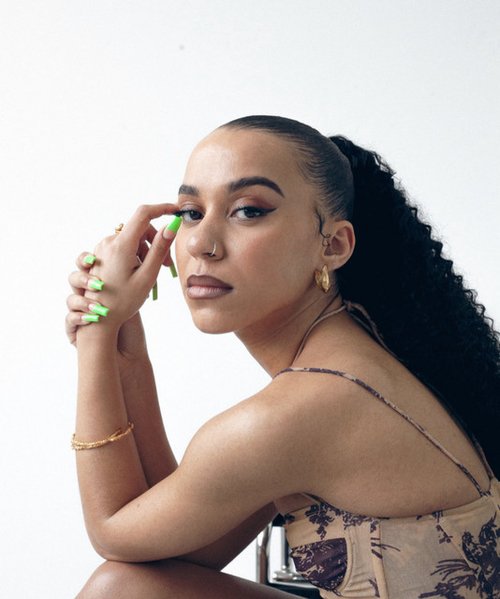
concerns an artist who is a major young talent. Pip Millett is someone I have known about for a while - and the music she is releasing now is phenomenal. An artist who is going to go major and last fir years, Millett plays The Great Escape on 13th; she is playing in Amsterdam tomorrow. I am going to come to her latest song, Downright, in a minute. Before that, I want to look back at a couple of older interviews, to provide an introduction to Pip Millett, and to show where she has come from musically. Her Motion Sick E.P. of last year was phenomenal. It helped bring her music to a wider audience, and established her as an amazing and original artist. I will start with the Music Week. The Manchester-born artist was calling for more recognition of Black talent:

The 22-year-old neo-soul singer is calling Music Week from her recently redecorated childhood bedroom, having relocated back to Manchester from London. The move home has left her in a state of reflection, and with the growing power of the Black Lives Matter movement, she’s been thinking back to her own experiences of racism growing up in the “very white area” of Stockport. Her mum is from the Wirral while her dad, who passed away a few years ago, was from Jamaica.

“It’s strange to think back to times when I felt uncomfortable and didn’t really know why,” she says. “It’s weird but, being mixed race, I guess I don’t feel the full brunt of it. I want to be able to be even louder than maybe some black people might feel like they can be, because we’re rocking the boat right now.”

Through frequent posting on social media Millett is doing just that, but now she’s calling for real change. While she hasn’t felt discrimination in the industry so far, the issue does throw up several questions. “I don’t want to feel too white for a black audience or too black for a white audience,” she says. “I’m kind of in-between.”
 While such feelings could be disheartening for a young artist, Millett is focused on the bigger picture, calling for more black talent to be celebrated. “There’s a lot of white people doing soul and R&B that get pushed a lot, but there definitely needs to be more of a push for those that are black, as it’s where this music actually came from,” she says. “There needs to be more money put into black artists.”

One of Millett’s early champions was Jorja Smith, who added her debut track Make Me Cry to her Spotify playlist. It now has more than seven million streams. “It feels really nice to have a young mixed-race girl supporting another young mixed-race girl,” she says.

In 2019, Millett released her debut Do Well EP and, into the early storm of lockdown, came follow-up Lost In June. Its uplifting sound has been something of a remedy to her fans, but Millett is as humble as can be. “I’m very grateful,” she smiles. “But it may have got even more attention because people were on their phones bored to shit!”

The project spawned from a university assignment to create a concept album (“My concept is my life, what else is there?”) and so featured narration from her family about their lives. The result is a masterful blend of soulful ballads and tantalising R&B, a beautifully candid statement on youth, family and love. It’s a lush, stylish peek into Millett’s musical life, which began as a solitary project with her bass guitar aged 13. Brought up on Joni Mitchell, Bobby Womack and Lauryn Hill CDs in her parents’ car, she says her family has influenced her sound exponentially.

“My mum would have my auntie and uncle round and get me to do the music,” she remembers. “She’d tell me certain things to put on and then I’d click on the YouTube links and I found more of my style that way. Friday night would be the parents drinking and me just playing tunes from a desktop computer! [Laughs]”

Millett’s way with raw emotion has helped sell out her two headline gigs so far. “They sang along to all the songs and I was like, ‘What the fuck?’ That was cool, a real emotional point,” she says.

With touring on ice for now, Millett is dreaming about the future and working on new music. “There’s a lot to think about, which means there’s a lot to write about,” she says. “I’m figuring out how I’m feeling and where I want to be after this...”.

This interview from NOTION is one that interested me, as it concerns a few of Pip Millet’s 'firsts’. It is especially interesting realising when she decided that she wanted to become an artist:

First song you ever made?

Technically it would’ve been a song I wrote when I was super young and it was likely pretty awful.

First song you released officially?

“Make Me Cry”.

First CD or record you owned?

I’m too young for that! I remember cd’s being given as gifts but I had an iPod nano in primary school and before that an MP3 player with Paolo Nutini and Kings of Leon on it.

First time you realised you wanted to be an artist?

From a young age, I loved the idea of it but felt like it was out of my reach. I was super shy and everyone told me it was a really difficult career path but I went for it anyway and I guess probably over the past few years it’s gradually become more real.

First gig and first festival you went to? And the first festival you performed at?

First gig was either Rihanna or Paolo Nutini – both a great first gig. First festival I went to was either Camp Bestival or Solfest when I was about 11/12 – both were the same year.  The first festival I performed at was Manchester International this year for myself – however, I did perform at Boardmasters a few years ago with Franc Moody”.

Before getting to the review, there are a few more interviews I want to source. This one from PAUSE Her is more recent. There is one I will get to that is a bit older. PAUSE Her discussed her songwriting process and when her love of music began:

Hey Pip, welcome back to PAUSE. I hear you’re gearing up for yet another release. Without giving away too much, what can we expect?

Hey! Yes I’ve got quite a few songs and I’m putting an album together which is pretty exciting! I’ve got songs with producers I’ve worked with a lot before as well as some newbies… it’s going to be really good. There’s a few different vibes.

Looking at your last project, it was a declaration of love to yourself. What role does music play in grounding you to inner peace and mental clarity in such an unsteady world?

My music helps me get things out and process things which is really helpful. Listening to other peoples music can help me relax, or can be a nice distraction to the weird times we live in. I’ve been listening to my Motion Sick EP recently, it’s nice to hear myself getting those feelings out of my head.

Would you be so kind in sharing your process of making a song?

It varies to be honest, but my favourite songs have usually started at home on guitar and then been taken to a producer.

As you often delve into your past through lyricism, tell us about how your love of music began.

I always loved listening to music. Who doesn’t? I just remember going on car journeys so that I could listen to a CD on the way to wherever my mum was going.

You received guitar lessons as a present from your mother. Was that a mother’s instinct or premonition? What was it about the guitar?

I’d asked for a bass guitar one year and I think the next year it made sense to then get lessons so it was a natural step up I think”.
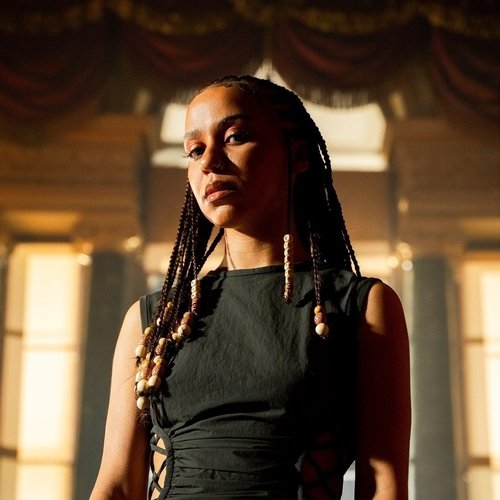
I want to go back to the beginning, as it were. CLASH chatted with Pip Millett last year. They spotlighted a wonderful artist on the rise. Among other things, she mentioned some artists who were inspiring and moving her:

I mean, I’ve never heard anyone refer to their music as gravy so that’s a first! I would love to go back to the beginning with you! Talk me through your upbringing and your introduction to music from a younger age?

My introduction to music was from my parents and siblings. There was always music playing in the car and around the house, I remember getting my first MP3 player and eventually moved up to an iPod Nano, this was in Primary school! I had artists like Kings Of Leon, and Bob Marley on it, but I loved it! It was a relatively little introduction, but a large part of my memory was me waking up, walking downstairs in the morning, and seeing my brother dancing around to the music channel in his dressing gown to Beyoncé and Sean Paul! (laughs)

That is such a big mood! (laughs) What about in regard to when you started singing?

I was really shy, I started singing a bit when I was around 13 years old, but before that I didn’t really sing unless it was along to something. Something changed, I started playing bass guitar which bought me out my shell a little bit and then I moved to actual guitar, and it was just a gradual process from there really.

Are there any artists that have helped shape your sound recently?

I’ve been listening to Nas’ ‘King’s Disease’ album a lot, I love it! I think that’s probably come through somewhere. Other than that, I discover a lot of stuff through Spotify. I listen to a lot of Sabrina Claudio and Snoh Aalegra – I always listen to Snoh Aalegra, I’m obsessed with her to be honest! (laughs) She is an older female but she’s killing it! She makes me feel less pressured because sometimes – I mean, maybe I’ve given this to myself – it’s now or never, but in fact I’m looking at all these artists that are in there 30’s and I’m 23! I can calm down a bit”.
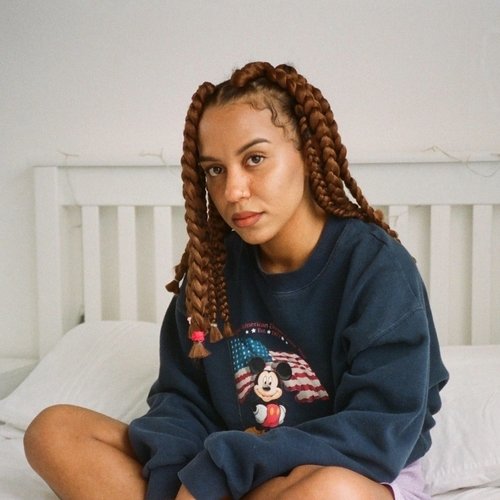
I will come to the new track soon. Before that, I will go back to the CLASH interview. They asked Millett about the Motion Sick E.P. (2021). It is a magnificent E.P. that you need to check out. If you have not followed and investigated the work of Pip Millett, then do so now:

Sonically, this EP has a more old-school feel. Was this something you wanted to encapsulate throughout?

It was definitely something I wanted to do! We had ‘Hard Life’ recorded and written for years and that had an older feel to it, and I wanted to keep that throughout the whole project. Most of the songs apart from one do use samples, I wanted to keep that old, warm, and crackly feeling. We finished all the songs and sent them across to Josh Crocker, a producer in Leeds, that put his own little spin on them. It was cool to hear his input!

This project differs a lot in comparison to ‘Lost In June’. Do you think you’ve grown a lot since then?

I’m never sure if its growth or if it’s just a new phase! I still listen back to some of those songs and wish I could re-write some of them. This EP does sound so different to ‘Lost In June’ and I don’t think they could be compared in any way. I know some people say, “Oh, you’ve grown so much, you sound so much better” and I’m thinking, is this meant to be a compliment? (laughs) For me personally, they are two very different projects and its good to be able to go from zone to zone. It’s a new part of my music! The next project will be a new chapter!

You said earlier that you were quite worried about dropping ‘Deeper Dark’ because you did it on our own. Are you more comfortable now with being as vulnerable in your songs?

It's always going to be a little bit scary because you just never know what people are going to say about it! Even when people are being nice to you, they can say some shadey things. I think people think it’s a compliment to say things like “Oh, I like this one but this one is way better” and I’m thinking, I’ve put so much work into both, so shush! (laughs)

I wasn’t as nervous this time to release the project because I was so desperate to have it out and the nerves had gone, but when you release the first single from any project it can be a bit scary! Each time I go to release, my audience has grown a little bit more! When I dropped ‘Make Me Cry’, I didn’t know who was going to listen to that, I didn’t have a following back then!

What’s your favourite track from the EP and why?

I don’t have a favourite favourite, but my favourites are ‘Running’ and ‘Braid It Back’. With ‘Running’, the journey to make it was it was really gradual, I could go back to it with ease, and it felt naturally formed, it didn’t feel like an effort or a chore! ‘Braid It Back’ is so weird, there isn’t really a chorus, and it feels cooky from most songs, but I like that it is its own thing, it’s warm and soulful”.

I love the KC Locke-directed video for Downright. It is the perfect accompaniment to the song. The introduction is beautiful! Rolling percussion and soulful, arresting guitars, there is a combination of R&B and Trip-Hop in the first moments. It is a wonderful introduction that gets you invested in the song right away. The song is an exploration of her mental-health and struggles. It is also about conflict within a relationship. An honest and open song, the video sees Millett washing her skin and looking in the mirror. It is almost cinematic in its beauty! The lyrics are Millett at her finest: “I was so alone, I was, I was in a sea of it/I wasn't sailin' through, I guess we both should beg/But it's okay now 'cause I'm with you/And I'm okay now/Do you plan on stayin' longer?” There is so much character, emotion and nuance in Millett’s voice. She is such a passionate, soulful and mesmeric singer. Able to bring so much from her lyrics, you immerse yourself in her world. The pre-chorus is the heroine looking for answers and resolution: “I want it to be better/Can't we both be separate pieces?/We can share the same sea/Settin' up on different beaches”. The video sees Millett lying on the floor with another woman, who looks quite blank. It is a tender but striking moment when you wonder what has happened; what has provoked and influenced the song. Millett is seen, through the song, looking out to the water and trying to find some solace. The chorus is the most stirring and memorable part of the song: “I know you still need me when I'm down/But down is just downright/Get the fuck out of my head/And I know you still need me when I'm down/But down is just downright/Sleepin' when I don't feel all right, all right”.

 PHOTO CREDIT: Wendy Huynh

One of the great modern voices, Pip Millett is someone who can carry you away in her songs. Even though it is quite personal and has this real relevance to her, every listen is made to feel something and reflect when listening to a song like Downright. The way she phrases these words in the pre-chorus adds so much more weight and depth to a song that is already so striking: “When I don't/When I don't, all-all-all, all right/When I don't/All right”. I really love the composition. That rifling percussion remains. It is almost like nerves racing and a heartbeat going really fast. Although it projects some anxiety, there is this other aspect. The beat adds to the momentum and it has this sort of soothing quality too – whether that was intended or not. I do really admire the layers and all the separate elements of Downright. A song that I keep exploring and really admire.

I love the imagery in the video and what is conveyed. Millett is a natural actor, and you feel for in every moment! The second verse is her at her most bare-naked: “What's happening? You can't be wrong/Yet we're sitting here reluctantly in our broken home/You made the call, I picked it up/That doesn't mean I didn't hurt”. Showing arguments and Millett looking strained and upset, you will come back to the video time and time again. The song itself holds enormous power! I have listened to it a few times, and I get something new each time. Millett’s voice is filled with greys, blacks, and darker hues when it comes to the emotional content. She has this honeyed and silky voice that adds to that spectrum; so many different contours and shades that make the song one that will stay in the head. Downright is one of the best songs of this year! I wonder whether Pip Millett will follow it with an E.P. or album. There are a lot of eyes on her, and rightly so! The Manchester-born artist is primed for some very great things. She is without doubt…

ONE of this country’s finest artists.

___________

Follow Pip Millett

FEATURE: Vinyl Corner: The Go-Betweens - 16 Lovers Lane

FEATURE:


Vinyl Corner

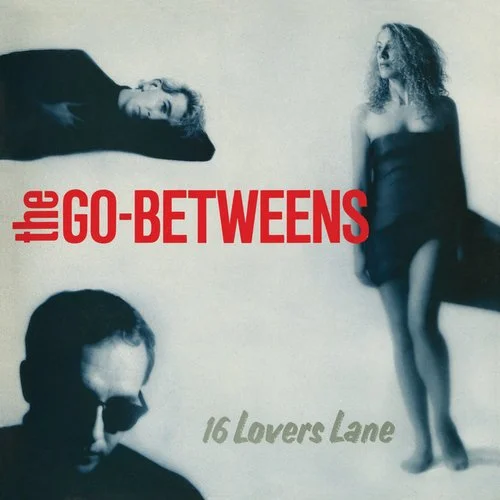
The Go-Betweens - 16 Lovers Lane

__________

FOR this next…

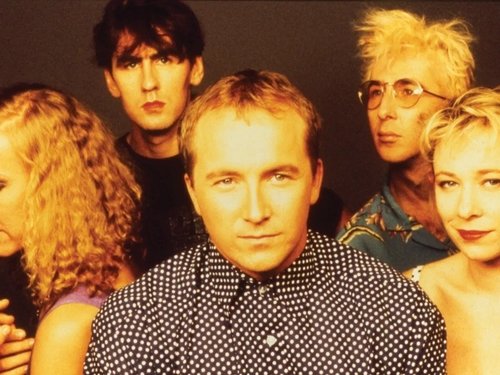
 IN THIS PHOTO: Lindy Morrison, Robert Forster, Grant McLennan, John Willsteed and Amanda Brown of The Go-Betweens/PHOTO CREDIT: EMI

Vinyl Corner, I am recommending an album that is fairly expensive on vinyl, though it is worth investment. 16 Lovers Lane is the sixth album by the Australian group, The Go-Betweens. It was released in 1988. Prior to the recording of the album, longtime bassist Robert Vickers left the band after the other group members decided to return to Australia after having spent several years in London. He was replaced by John Willsteed. I would urge people to seek out 16 Lovers Lane on vinyl. Prior to coming to a review of the album, there is a fascinating feature that provides some background and legacy about the phenomenal album:

CONTEXT

Having been based in London for the vast majority of their career, The Go-Betweens decided to re-locate to Sydney, necessitating a line-up change with original bassist Robert Vickers quitting the group and being replaced by John Willsteed. There was much greater and more significant disquiet within the camp, though, aside from surface-level personnel changes. Robert Forster and drummer Lindy Morrison had split up, with Morrison rapidly falling out of love with the band lifestyle. At the same time, though Forster’s songwriting colleague Grant McLennan was becoming romantically involved with violinist and multi-instrumentalist Amanda Brown. On top of that, Morrison butted heads with English producer Mark Wallis in the studio – perhaps understandably, as Wallis replaced her with a drum machine on half of the album’s ten tracks.

Despite the divisions within the camp on a personal level, in professional terms 16 Lovers Lane was a comparatively efficient and harmonious process. Both Forster and McLennan attributed this to the change of location and being back in their native Australia. “We’d spent five years in London – blackness, darkness, greyness and poverty – and suddenly for some reason we seemed to have more money in Sydney, and we all had places to live and being in a city where after five years we can go to the beach in ten minutes,” McLennan reflected in 1996. Forster agreed, saying it brought on “a burst of energy, a burst of songs”.

SUBSTANCE

The different dynamics affecting Forster and McLennan during the creative process makes 16 Lovers Lane a very schizophrenic album in terms of writing and tone, but surprisingly consistent and coherent its sound and execution – an example of how solid and durable the creative bonds within The Go-Betweens were, despite the emotional upheavals happening in their personal lives. Where previous Go-Betweens records sometimes felt like two solo records meshed together, because of their differing styles, 16 Lovers Lane is a two-headed hydra, with both McLennan and Forster borrowing elements of the other’s style and incorporating it into theirs. Furthermore, the occasionally angular production was now smoothed out with acoustic guitars and string arrangements, making it all primed for mainstream success, to potentially make them actually popular, rather than perennial critics’ favourites.

Therefore, it’s hard to distinguish who exactly has written what, particularly as all ten tracks are credited attributed to the pair of them. McLennan’s songs tend to be more unabashedly romantic, with greater melodicism and a wide-eyed delivery. The spry, furiously strummed opener ‘Love Goes On!’ with its cheery “ba-ba-ba” backing vocals, is a typical example, the energy counterpointed with a resigned, comparatively bleak lyric about the nature of love and relationships, or, more specifically, about waiting for them (“I know a thing about darkness / darkness ain’t my friend”). The passionate ‘Quiet Heart’ sees beautiful interplay between melody and harmony in its arrangement as, creating a gauzy atmosphere with yet more philosophical lyrics on commitment (“It doesn’t matter how far you’ve come / you’ve always got further to go”).

Where McLennan’s writing is raw, Robert Forster’s songs are more poised and painterly, rendered in greater detail. While his bandmate’s songs vibrate with the kind of woozy energy that comes from having fallen in love, Forster’s have a sighing, resigned quality to reflect his recent heartbreak and self-reflection. ‘Love Is A Sign’ is almost baroque in its construction, powered by mandolins and a string orchestra, and he also helms the shatteringly sad closer ‘Dive For Your Memory’. Best of all from Forster’s pen is ‘Clouds’, an absolute heartbreaker whose upbeat, gentle rhythm and brightly-lit guitar tones contrasting with great poignancy with his crestfallen vocals.

The best-known moment of 16 Lovers Lane strikes the listener as a melding of McLennan’s and Forster’s styles. ‘Streets Of Your Town’, receiving heavy radio play in the US and UK and still, somehow, not furnishing The Go-Betweens with an actual hit, is as good an indie-pop song as the the 1980s ever produced. Full of small-town drama, both fascinated and bored with the low-key life of suburbia, McLennan’s downcast, almost muttered observations are beautifully set off against Amanda Brown’s bright, cooing backing vocals.

LEGACY

The Go-Betweens split up shortly after the sessions for 16 Lovers Lane, dismayed and disheartened by the almost complete lack of public response to their magnum opus. Forster and McLennan reformed the band with a different line-up more than a decade later, releasing three more albums from 2000 to 2005 before parting ways once more. To this day, they remain one of the most scandalously overlooked bands of their era.

But, even if the royalty cheques don’t roll in for Robert Forster and Grant McLennan in the way they should, their legacy is still tangible. Everybody who’s since dealt in literate, emotional guitar-pop owes a debt to The Go-Betweens. From bands who emerged at the start of the Nineties, like Teenage Fanclub, later going into Belle & Sebastian’s ‘twee’ aesthetic, the chamber-pop of Alex Turner’s side-project The Last Shadow Puppets and the sonorous, ringing guitars that power Real Estate, 16 Lovers Lane continues to be a keystone.

Sensitive, poetic and written with the kind of wide-eyed generosity that doesn’t really exist in a post-sincerity music scene, 16 Lovers Lane is one of the great lost classics of popular music. Forster and McLennan wrote about love in a strikingly original way, and one that no other bands have really done since. Halfway between the giddy headspin of newfound love and the total, crushing dejection of heartbreak, it’s an album for all fans of indie music that deals with affairs of the heart”.

To round things off, I want to source a review for the stunning sixth studio album from The Go-Betweens. The band’s final album, Oceans Apart, was released in 2005. I think they are a band that everyone should familiarise themselves with and investigate. This is what AllMusic said about one of their very best albums:

 “Arguably Australia's greatest pop group ever, The Go-Betweens seemed to save the best for last when they split in 1989. (They reunited in 1999, and have issued two more studio recordings since that time). 16 Lovers Lane is simply breathtaking; it is a deeply moving, aurally sensual collection of songs about relationships and the broken side of love that never lapses into cheap sentimentality or cynicism. Songwriters Robert Forster and Grant McLennan had always been visionary when it came to charting personal and relational melancholy and heartbreak, but here, their resolve focused on charting the depths of the romantic's soul when it has been disillusioned or crestfallen, is simply and convincingly taut. While it's true that the group was going through its own version of a soap opera-styled romantic saga, that emotional quagmire seemingly fueled its energies and focus, resulting in an album so texturally rich, lyrically sharp, and musically honest, its effect is nothing less than searing on an any listener who doesn't have sawdust instead of blood in his or her veins.

Opening with McLennan's "Love Goes On," the stage is set for a kind of refined yet primal emotional transference that pop music is rarely capable of revealing. As he sings: "There are times when I want you/I want you so much I could bust/I know a thing about lovers/Lovers lie down in trust/The people next door they got problems/They got things they can't name/I know about things about lovers/ Lovers don't feel any shame/Late not night when the light's down low/The candle burns to the end/I know a thing about darkness/Darkness ain't my friend/Love goes on anyway," the doorway to the heart and its secrets opens. In the grain of his voice lie the flowers in the dustbin whose names are desperation and affirmation. With its hyperactive acoustic guitars, Amanda Brown's cooing string arrangements, and the deftly layered, subtly played brass instruments, the tune becomes a gauzy anthem; it celebrates the ravaged heart as a beacon of strained hope in the entryway to a hall of bewilderment. He follows it with "Quiet Heart," a song whose opening was admittedly influenced in structure by U2's "With Or Without You," but blows it away lyrically and with its subtly shifting melody and harmony between the guitars. Brown's multi-layered strings actually stride the backbeat's pulse. His protagonist speaks to an absent lover. His ache offers a view of his own weakness, desperation, and an all-consuming tenderness: "I tried to tell you/But I can only say when we're apart/How I miss your quiet, quiet heart."

Forster seems to underline McLennan' s raw emotionalism with his painterly, nearly baroque, "Love Is A Sign," where images from visual art, remembered scenarios, and real life brokenness intermingle effortlessly with the elegance of mandolins, a string orchestra, and a shimmering bassline. With "Streets Of Your Town," the Go-Betweens scored a minor hit in the U.K., and even got played on American radio for a moment, but despite the fact that it has the most memorable hook on a record filled with them, it merely underscores how constant the quality is on the record. Evidenced further by "The Devil's Eye," and the shattering closer "Dive For Your Memory," 16 Lovers Lane is melancholy and somber in theme, but gloriously and romantically presented. Despite the fact that band has but a cult following, even in the 21st century, the Go-Betweens have nonetheless given us a far more literate, magnificently written, performed, and produced slab of pop classicism, than Fleetwood Mac's wonderfully coked out, love as co-dependency fest, Rumours”.

If you can get the album on vinyl, I would suggest spending a bit extra than you might otherwise do. There is always the option to stream the album. With incredible musicianship from the band (Amanda Brown – violin, oboe, guitar, vocals, tambourine; Robert Forster – vocals, rhythm guitar, harmonica; Grant McLennan – vocals, lead guitar; Lindy Morrison – drums; John Willsteed – bass guitar, guitar, Hammond organ, piano), and some of The Go-Betweens’ best songs, it is an album that you need to have in your life! If the Australian band are new to you, then 16 Lovers Lane is a…

GREAT place to start.  

FEATURE: Spotlight: Bob Vylan

FEATURE:


Spotlight

Bob Vylan

__________

A tremendous duo…

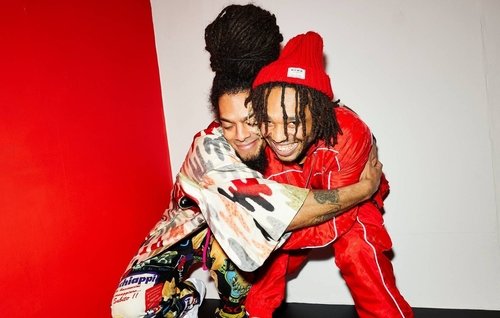
 IN THIS PHOTO: Bob Vylan at the BandLab NME Awards 2022/PHOTO CREDIT: Zoe McConnell

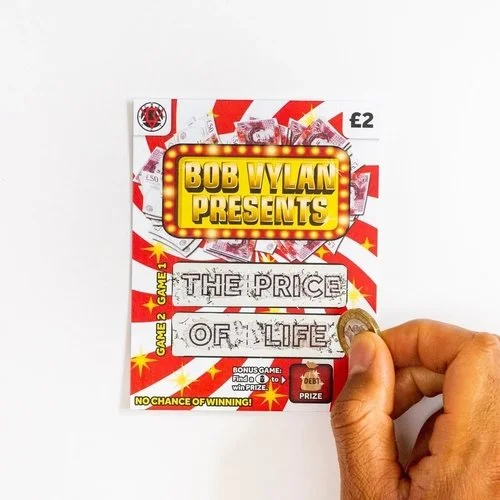
who have just released one of this year’s best and most important albums, Bob Vylan Presents: The Price of Life, Bob Vylan should be on everyone’s radar. A London duo who I am very excited about, they have been around for a little while, though they are starting to get a lot of credit and buzz right now. I wanted to feature them today. I am going to end with a review for their new album. Before that, there are a few interviews I am including. It gives us a greater impression of Bob Vylan and who they are about. Kerrang! spoke with the duo back in December:

 “If the true purpose of political music is to say things that comfortable people don’t want to hear – and to a large degree, it certainly is – Bob Vylan are hitting the mark every time. The highest compliment that can be paid to the group’s music is that it possesses the power to put at least some of its listeners ill at ease. 'Neighbours called me n*****, told me to go back to my own country,' they sing on We Live Here. 'White folks love quoting Martin Luther [King]… but don’t forget, white folks still killed him,' are just two of the lines from the recently released Pretty Songs. For generations of listeners too young to remember punk rock in its original form – Johnny Rotten announcing 'I am an antichrist', a band called Millions Of Dead Cops – Bob Vylan are here to revivify, and to relitigate, the movement’s mission statement of shock and awe.

PHOTO CREDIT: Esmé Surfleet

“It’s that thing of not caring [about what people think], to a degree,” says the drummer. “The ends justify the means. Whoever feels insulted about what we’ve said, well it’s got to be done because we’ve got to have [them] understand this thing we’re saying that they might not want us to say.”

rom top to bottom, Bob Vylan appear to be examining everything, flipping it upside down, and turning it around in a search for hidden dangers. In a fleeting but resonantly evocative moment on Take That, from The Price Of Life, they speak of a society that is 'killing off kids with two pound chicken and chips'. Knowing of what he writes, the singer goes onto say that he was 'raised off that but I gave it back – why? – because the body gets sick of that shit, get rid of that shit, wreaks havoc on the heart and liver, and we can’t fight if we’re fighting our ticker'. Once upon a time punk rock was often associated with songs such as Chinese Rocks, Dee Dee Ramone’s (predictably thrilling) paean to dangerously potent heroin. Now, without missing a beat or losing an edge, a young band from London has found the vocabulary required to sing about the virtues of eating a healthy diet. Beat that for progress.

It’s as if the pair have studied a map marked with things that might slow them down, or trip them up, or cause them harm; and, learning from the costly mistakes of others, have used it to plot a safer course to wherever it is they’d like to go. (“Maybe we’ll open up a soup kitchen or something,” says the singer. “Who knows what we might end up doing.”) Whether at home and out on the road – a working environment in which intoxicants are easier to come by than food, healthy or otherwise – the pair abstain from drugs and alcohol. Four decades after Ian MacKaye, from Minor Threat and then Fugazi, sang about being straight-edge – a valiant attempt at providing an alternative commentary to punk’s innumerable songs and stories of routine ruination - here, as elsewhere, Bob Vylan remain wide awake to a perilous past and their own future.

PHOTO CREDIT: Esmé Surfleet 

“Having so much life outside of this, and understanding that people are tripping over this stuff all the time, drugs and drink is what knocks people over so much,” says the drummer. “It’s an obstacle people don’t overcome, so why not just not have it there? And also, you’re saving money, it’s better for you, [and] you remember your fucking choices. It’s a no-brainer after that. Why would you do that? Every time you make those kind of decisions [to abstain], it’s one less thing that can become a disruptive force in a band. Especially in this scene. I’ve seen too many people just get way too caught up in doing too much of this stuff. I’ve seen people struggle to try and recover. It seems that, for what it is, it’s just not worth it.”

It’s not worth it because, more than merely earning their burgeoning success, Bob Vylan have built the very infrastructure upon which it grows. Everything here is on their terms. Given this, it stands to reason that, should they come, they will also own their failures, too. As if with this in mind, onstage at Wembley Arena, the singer trips himself up only once. After inviting the crowd to complete the punk aphorism “the only good pig…”, a lone voice from the crowd shouts, “is a dead pig”. Hearing this, the frontman amplifies the words for the benefit of the people at the back. “I’m not saying it,” he says, “I’m just repeating it.” Really, though, if you’re planning to go this far out on a limb, if you’re determined the push this hard against the boundaries, you should at least own it”.

NME have been championing Bob Vylan for a while now and spoke with them recently about their new album and rise. Their latest album is the most personal and urgent they have put out:

Let’s get this on record,” starts Bobby Vylan with a sense of urgency. “In 2020, there was a year of protests around police abuse, racism and inequality. We, Bob Vylan, released an album [‘We Live Here’] that dealt with that political and social climate. That’s a finger on the pulse.”

Two years later, the grime-punk duo are back with ‘Bob Vylan Presents: The Price Of Life’, a concept album about money, tackling the economy’s impact on your family, your community and you as an individual. “Look at the news. This is the most important and relevant record to be released this year,” Bobby continues, joking that it must look like they are pulling the strings as a cost of living crisis grips the UK. His bandmate Bobbie Vylan adds that “people need this album”.

Continuing their mission, ‘The Price Of Life’ is the spiritual successor to ‘We Live Here’, a record once deemed “too extreme” for release, but there’s more to Bob Vylan’s second album than repeated fury.

“It’s a lot more fun, for a start,” explains Bobby. Tracks like ‘Turn Off The Radio’ and ‘Bait The Bear’ knowingly hit back at their critics while the record expands the duo’s punk/grime sound to include ’90s hip-hop, grunge, dance and reggae. “It wears its influences on its sleeve.”

According to Bobby, ‘We Live Here’ was a “very heavy album, full of personal stories. I was working out a lot of things and the subjects I was speaking about obviously weren’t the easiest to relive.” It meant the record needed to have an urgency and intensity. “After such a serious album, though, it was important to show other sides to the band because we are more than that,” explains Bobbie, neither one of them wanting to be boxed in as just the grime/punk duo constantly screaming about social issues.

That’s not to say ‘The Price Of Life’ is any less vulnerable or hard-hitting. Sure, there are bolshie calls to “eat the rich”, “wage war against the state” and pull down statues of Churchill, but ‘Wicked & Bad’ draws carefully constructed lines between the political landscape of the country, and how it affects people on the ground. Elsewhere ‘Big Man’ is a “very personal song that talks about this pursuit of money through means that aren’t necessarily productive. I’m talking to my younger self on that track,” says Bobby. “But I hope people who are in a similar position know that that doesn’t have to be your whole life.

“These are all true stories,” he continues before describing the process of writing these songs as “therapy through art. I feel very emotional when I listen back to this record because it’s been rough and it just seems to be getting rougher. With this album, we just wanted to detail that”.

In March, Alternative Press spoke with Bob Vylan. Although their sound is individual and their own, it was interesting discovering some of their influences - and how they have developed and built their sound over time:

How did you end up with the sound you have now?

I think it just came from blending those two things. Growing up and listening to a lot of rap music and a lot of grime music but also listening to rock music and indie music. Once I learned to play the guitar, I knew I wanted to use the guitar to make music, but I didn’t want it to be so straightforward, like this is a rock band or a punk band or an indie band. I wanted to put all my influences together and make something that I felt was missing in my music catalog.

I was and continue to make music for myself, and as a band, that’s what we do. We just make the music that we want to listen to, and that we want to hear and that we don’t feel is being made. It came quite naturally, just wanting to use the guitar, but also not being a virtuoso at the guitar. I can play punk chords, and I can then put that together with a producer’s background that I have and make beats over the top of it.

What were some of those influences that you wanted to pull from or combine?

Definitely things from grime music. Some of the production techniques that they use and even when it comes to the tempo, the BPM of 140, which is a standard grime tempo. The lyrical aspect of that music as well, I still think, is way more complicated than a lot of rock and punk music. I think the cadence, the flow, the wordplay is a lot more interesting. So I knew that I wanted to take the lyrical aspect of that because, to me, what always drew me into that genre of music was the lyrics and what they were talking about and how they were doing it.

The social commentary, the political aspect of punk music, especially because I think that’s lacking from so much contemporary music, but also, I think it’s lacking in punk music… I think just seeing that die and become more mainstream was like, “Where is this music going?” I wanted to take that anger from that music and the political direction of that and blend those things together.

I don’t see [current punk music] as being very challenging to listen to. I almost feel like punk music should make you feel somewhat uncomfortable because the topics that are being discussed in a lot of it. They’re serious issues. But it just seems like they’re being discussed, if at all, in a very happy-go-lucky way. I just didn’t want to do that. So we wanted to make it as confrontational as possible, as confrontational as it was when it first started.

Your music touches on so many important issues. For you, has music been a helpful way to learn?

For me, listening to other people’s music is the way that I’ve been introduced to so many different ways of thinking — some ways that I agree with and some ways that I don’t agree with — and I’m sure our music does a similar thing for other people. But in terms of creating the music, we find inspiration, and the topics or the themes, through lived experience. There’s so many things that have happened in our lives that we could talk about on these records. Some of them, we do. Some of them, we haven’t even really scratched the surface on. But the message is in the music because it’s something that we already live by”.

Before getting to a review and rounding off, there is another interview that I want to source. Upset featured one of the country’s most important and inspiring acts last month. It is clear that Bob Vylan Presents: The Price of Life is a revelation and an album that everyone needs to hear:

'The Price Of Life' picks up where 2020's 'We Live Here' left off. Driven by the duo's experiences of racism, that record felt like an awakening and 'The Price Of Life' doubles down on this, exploring everything from weaponising health to waging war on the working class. It's an album they couldn't have made a couple of years ago, yet it's the one they've been working towards. Just like Public Enemy couldn't have made 'Fear Of A Black Planet' without first making 'It Takes A Nation Of Millions To Hold Us Back', Bob Vylan needed 'We Live Here' to fully realise 'The Price Of Life'.

"I think it's more empowering. There was a lot of stuff that I was working out personally on 'We Live Here'. There was a lot of frustration and anger from across my lifetime that I was getting out in a very incendiary way," reflects Bobby, who takes his time to carefully curate his answers, like a philosopher pondering his next thesis.

"'We Live Here' was our way of establishing the issues. People have been talking about them for years, but it allowed us to establish ourselves as a band. The personal experiences that we put into 'We Live Here' have helped people get to know who we are, where we come from, why our worldview is what it is, how it is what it is, and why we are the way we are. And then this album lets us show a fuller, rounded view of our personality. We're able to have a little more fun with it because we don't have to be so serious with everything."

'The Price Of Life' peels back the curtain on Britain to show the country's true colours. Whether waging war on former leaders like Churchill and Thatcher, deconstructing the upper class's ideologies, or exploring socio-economic problems, they leave no stone unturned. They've worked up an interconnected multiverse, too. Like a conceptual social commentary, a single line in one song leads to the next one building an entire track around it. Take 'Health Is Wealth', which connects every concept the album captures in two and a half minutes and wraps it up with satirical wit

Whatever your world opinion, Bob Vylan know there's a long way to go, but it won't stop them - they'll keep fighting, one song at a time.

"We don't kid ourselves; it's crazy for us to expect things to all be done. Especially over the last few years where people have got ahead of themselves, they think everything's changed because we put the black square up and had a march, so everything's fine now," asserts Bobbie. "But this is generational; if it's been that long and things aren't fixed, the last two years aren't going to fix anything. We're under no illusion of how big a job it is to resolve a lot of these issues”.

To finish, it is worth dropping in a review of Bob Vylan’s new album. It has accrued a host of positive reviews and love from the press. NME gave their take on an album that, once heard, definitely remains with you and makes you think:

The brooding, electro thrash of ‘Bait The Bear’ is a swaggering clap-back at all the hate Bob Vylan have faced for getting political, before they double down (“Wage war against the state / It’s a fascist regime”) while the rave-ready ‘Take That’ is a deliberately antagonistic anthem designed to make the “gammons feel sick now”.

There are no answers on ‘The Price Of Life’, just a passionate call for change and a desire to break the long-standing cycle of abuse. Yes, sometimes the references are a little dated (Churchill, Thatcher and Elvis all get a kicking) and the band aren’t exactly subtle – but they never claimed to be, either.

Elsewhere ‘Big Man’ and ‘Wicked And Bad’ might sound like your typical abrasive punk tracks on the surface, but underneath they tell true, vulnerable stories of trauma, survival and life or death decisions that people face everyday. The acoustic guitar-led ‘He Sold Guns’ takes it one step further, with the band taking influence from Pixies, Jamie T and The Verve to create something dangerously close to a ballad.

In every way, ‘Bob Vylan Presents: The Price Of Life’ is a far more eclectic record than anything the duo have released before. Their alt-rock tracks about inequality will speak to a wider audience but the band never soften their edges or pull their punches in a bid for accessibility. At times, it is extreme – just like the world we’re living in right now”.

Go and follow Bob Vylan and check out their music. A duo who will keep putting out such essential and thought-provoking music, they are among my favourite new/rising acts (even if they have been out there for a bit). With an acclaimed album under their belt this year, they will be hitting the road and bringing their amazing music to the people. If you do not know about Bob Vylan, then make their part of…

YOUR music rotation.

______________

Follow Bob Vylan

FEATURE: Spotlight: Cassyette

FEATURE:


Spotlight

Cassyette

__________

HERE is an inspiring, compelling and…

incredibly talented artist who I think is going to be a future icon. The magnificent Cassy Brooking is known professionally as Cassyette. Born in Chelmsford, Essex, her debut single, Jean, was released in September 2019. As she is about to play Brighton’s The Great Escape and there is momentum behind her and buzz around her, I wanted to highlight one of our most fascinating and strongest young artists. I will come to a recent interview that Cassyette had with NME. Before that, there are a couple of older interviews that are worth sourcing. Upset chatted with the Essex-born artist in June last year:

Cassyette has been busy redefining herself. Dripping in 90s goth aesthetic - blonde mullet and all - she's rapidly gaining attention via where else but TikTok. After putting her impressively powerful, gale-force howls on the likes of Olivia Rodrigo's super-smash hit 'Drivers License' and Billie Eilish's 'Bad Guy', she's here to beat some life into that old dog, rock 'n' roll.

Her music, engrained within the realms of empowerment - or more precisely, using it to kick a few teeth in - is also centred around personal tragedy. After losing her dad at the beginning of last year, the pressure release value holding all that raw emotion in needed turning.

Naturally, Cassyette blew the whole thing clean off. And appearing through the dissipating steam was a cataclysmic merging of rock with her teen years of genre exploration of pop, techno and everything in between.

"I got a lot angrier," she reckons on her move into this raucously alternative-centred world. "Obviously, after something like that happening - and then living through lockdown and being so isolated…a lot of stuff happened in my personal life [too]. The music is a reflection of that. I stopped giving a fuck about everything!" she cackles.

"It didn't just come out of nowhere - I was a bit of a shithead as a kid. I've done a lot of stuff that my mum's had to get me through. Bless her, she's a saint!"

Raised on a diet of classic staples - yer Motley Crüe's, Guns N' Roses, Sex Pistols etc. - it's no wonder the roads finally merged to this point. On a deeper level, though, the adoration for her beloved genre is all born from finding rock to be "the most emotive style of music."

"It's the darkest, most aggressive, and emotional," she continues. "I mean, that's my personal opinion, but I think you really feel something with it; even if you hate it, it makes you feel something."

Remembering the feeling washing over her for the first time coming when hearing 'Playing God', from Paramore's third album, 'Brand New Eyes': "I remember seeing Hayley Williams and thinking she's such a bad bitch!" She says, still smiling with awe. "The way that she speaks, and her lyrics are incredible."

"I also loved Katy Perry 'I Kissed A Girl', that was probably the first time I was like, oh my god, I can be okay with my sexuality," Cassyette recalls. "I'd never heard anything other than like Tatu 'All The Things She Said', I'd never heard another woman in pop music speaking about another woman like that. It was a massive moment for me…" Another raucously loud laugh surfaces. "I went to an all-girls Catholic school, so you can imagine!"

If ever there were a reason to grab your chain wallet, spike your hair, and kick a door in, then Cassyette has found it. The carefree nurturing of herself has been just as important to learn as it was discovering that raw, untethered howl of hers.

Still, with her debut album to come, after she's sifted through "about two years worth of music," the promise to keep on rattling cages and dismantling centuries-old systems remains front and centre. Keeping an ever keen eye on everything as she plots out her moves - everything from merch designs to video shoots, including for her current single 'Prison Purse' - it's all in the name of exorcising those demons, and making them work for her.

"For me, even if it's a really fucking sad song, I'll still enjoy writing it because you're still getting something off your chest," Cassyette explains”.

I have only been following the music of Cassyette for a few months, but I honestly believe she will be a massive artist. There are a lot of interesting artists that are making great music, in addition to utilising platforms like TikTok to bring their music and talent to a wider audience. That is definitely the case with Cassyette. I think a debut album – whenever that is due – will get her on the worldwide map and lead to international gigs. The amazing UNDERGROUND spotlighted and chatted with Cassyette last year:

After your dad passed away in early 2020, how did this affect your tonal shift into darker music with heavier topics? Are these topics that you would not have covered otherwise?

Totally, like I’m very conversational with my music so everything’s exposed, like I just don’t really hold anything back from it and everything is really relative, all the songs I write are completely relative to what’s going on in my life, either past or present. That was obviously a huge thing that happened, so it completely changed what I was writing about. Still though, the only song I’ve written really that’s partially about my dad is ‘Petrichor’ so far. I haven’t really written much about him because I haven’t even found the words to do that. I think it’s going to take me a long time to be able to write about that experience and him. It’s literally changed the tone because after you lose someone, I feel like you just always have a heavy heart so [you’ve got to] live with it. So, it’s definitely changed the emotion through the music.

I noticed when listening to ‘Petrichor’ there was themes about your dad, and you became a god mother too, can you describe the juxtaposition between the light and the dark that you wrote about on the song?

Just that my best friend whose daughter I became a god mother of, she was just there for me throughout the whole thing, and she has always been such a rock to me. You go through this part of you when you are grieving where you are bargaining with yourself, and humans are so good at adapting to different emotional situations and you have to bargain with yourself to get to a place where you can grow and be happy because being sad all the time is really bad for you! (laughs) I feel like I am trailing off a bit on this question…. It’s hard to explain but I think that what I am trying to say is it was a beautiful thing having my goddaughter being born after I had just lost my dad and it’s just a nice reminder to have perspective on things and to remember to just look forward because you can’t control certain things.

As someone with anxiety and ADHD, has this been something that has been a hurdle within starting your music career?

(Laughs)… It’s a hurdle in life! It just affects me in life, but I am making a special effort to try and do things that work for me, I can’t sit there and write an essay. My attention span is really bad, I forget things, I try and write things down all the time to try and remind me. I guess one of those things, it’s difficult because I’ve learnt so much about myself and about ADHD and the condition – and for me the worst thing is I have big crashes. So, if I am overstimulated for too long, I will just completely crash and I think it’s called an autistic meltdown, and it is literally what it says on the tin, it is a meltdown. So that I find really hard, and that’s probably something as things have gotten busier for me. And I am trying to do a million things at once all the time, that is quite hard because I can crash, I’m lucky I’ve got a good team around me, so that everyone helps.

PHOTO CREDIT: Jessie Rose

Does that change the way you go into a studio, some artists can go in and write song after song, when you go into the studio is it something that you have to break from?

No. I will sit in a studio longer than anyone (laughs) it is crazy because that is the only time where I am hyper-focused. For me writing a song is a formulaic process as well as a cathartic process. The two producers that I have been working with for years now [are amazing], Tylr has ADHD as well, he is more high functioning than me, and Olly is amazing at overseeing the room, so he will navigate how we do a session. It’s not something we talk about, it just happens naturally, so we just have this process where I am able to hyper-focus for hours and feel comfortable doing this. I do sometimes have a nap (laughs) because if you’re using your brain that intensely for that amount of time obviously then that’s when the meltdowns occur – so that is something I need occasionally.

When approaching the creation of music, you said you wanted to “rip up the rulebook” when it came to making music, how challenging do you feel it is being individualistic in a time where it feels like modern music cannot be completely original?

I think that’s a really special thing and I don’t think that that’s necessarily true because I think that since forever the way that you get new ideas is from old ideas, and you take parts of many different things that you like.  And just because it seems like there’s so many genres out there already and there can’t possibly be any new genres – that’s bullshit! Taking from ideas and building new things out of old ideas, that is making something new, and trust me watch it, new fashion will come out of that, and I think it’s just about people being ballsy enough to take it to the next level, whatever that is. And people have just been playing it safe for so long. I look at the rock scene that is happening in America they’re just fucking ripping off blink 182 – what’s that about! Come on, it’s silly! But you look at what’s happening in the UK and it’s totally different, look at bands like Bring Me the Horizon, they are literally like the front line of it right now and I don’t know if you saw their show the other day, but it was incredible and it just shows how Oli Sykes has ripped up the rulebook too. He’s literally crossing over so many genres but still remaining metal as fuck, and he is just taking metal into the future”.

I am going to round up with a that interview from NME this month. It is clear that, in Cassyette, we have an artist with the talent, passion and popularity to be remembered decades from now:

She wants her take on rock music to be progressive and forward-thinking, “but you need people to be able to relate. It’s so important to me that every song is about something real, that people can connect with.” Cassyette is offering that with their string of eclectic, hard-hitting singles, her TikTok covers of pop and rock classics (over 20 million likes and counting) and her Discord community. 

With a new project close to being wrapped up (“bigger than an EP, smaller than an album”), and a string of huge shows locked in for this summer, NME spoke to Cassyette about finding their sound, wanting to empower others through her music, and how TikTok encouraged her to be unapologetically herself.

Do you feel like you’ve found your voice as an artist now?

“It took me a long time to get to this point, but yes, I know what Cassyette is now. I want to push rock music into the future. I had to write a lot of songs to find the exact spot where it feels right for me, though; I’m such an old school rock fan, but I love futuristic, modern music as well. I do think it’s important that, in order to discover yourself, you need to try lots of different things. I’m always extreme with it as well; if I want to do something, I’ll fully do it. I never do anything half-arsed.”

 You grew up listening to bands like Green DayParamore, and Bring Me The Horizon. Who’s inspiring you now?

“I like people that stick solidly to their identity. Artists that don’t look around at what other people are doing. I’m inspired by 100 Gecs, they’re fucking sick and doing really innovative stuff, and so are Sad Night DynamiteSlipknot are a big deal to me, plus Evanescence and The Prodigy – artists that have created their own space. I’m always trying to do that. It’s never about recreating [music], though. I believe you truly have to be yourself to make the best music you possibly can.”

There’s so much raw emotion in your songs. Are you surprised by the reaction to your music?

“Massively. My music is such a personal expression that anytime someone says they connect to it, it blows my mind. That’s why I put songs out though, so people feel connected to something. If you’re going through grief or depression, it’s so easy to feel like you’re on your own. I know that feeling all too well and it fucking sucks. I hope my music helps people feel like they’re not alone, because that’s what I get from other people’s music and it’s amazing when it happens. The reaction just makes me want to share more of myself.”

You’re part of a new wave of guitar heroes like WargasmYungblud and Nova Twins who make music that’s vulnerable but has a real anger to it. Is that a reaction to the world we’re living in right now?

“Definitely. I’m a passionate person and a massive empath. It feels like the world is on fucking fire at the moment. It’s not the easiest time for people to be alive. So many people are going through hardship right now, it’s unavoidable. You look at what’s happening in Ukraine and it’s fucking heartbreaking. It definitely does inspire angrier, harder music.”

Do you want to show that heavy music can be made by anyone, regardless of gender?

“I am a massive feminist and I’m also queer, so I want to be a voice for people like me or others who aren’t used to seeing themselves in these spaces. I don’t think we’ve passed the need for more representation because people are still dickheads online who will go out of their way to be horrible. Unfortunately, I don’t think that will ever go away, but I believe it’s important to be empowering and show people that these things are accessible for everybody.

What are your ambitions for the future?

“I’m still an independent artist and when things are moving as fast as they have been, you feel like you could drop the ball at any moment. It could go anywhere though. I just don’t want to stop and I want to keep having fun with music. What’s the point of doing something if you’re not enjoying it?”.

If you have not followed Cassyette yet, then make sure that you do that now. With such an amazing and potent sound that is impossible to ignore, I am excited to see what else is planned for this year. After some gigs, I guess there will be eyes on her concerning an album or E.P.  So early in her career, Cassyette has proved that she is…

SUCH a terrific artist.

______________

Follow Cassyette

FEATURE: Kate Bush’s The Dreaming at Forty: Track Nine: Houdini

FEATURE:


Kate Bush’s The Dreaming at Forty

Track Nine: Houdini

__________

I almost at the end…

 PHOTO CREDIT: John Carder Bush

of a run of Kate Bush features where I look at each of the ten tracks from her 1982 album, The Dreaming. The penultimate track is also my favourite of hers: the bewitching and beautiful Houdini. One reason why I love the song is because is ticks all the boxes when it comes to Kate Bush. Her vocal performance is sublime! From a gorgeous and soft sound one moment to a guttural the next. The composition is also fantastic. I especially love the strings used on the song (written and arranged by Dave Lawson and Andrew Powell). With brilliant production from Bush and some wonderful musical elements – a heavy percussive beat and some excellent bass -, it is a supreme song. Before the epic closer that is Get Out of My House, Houdini offers some of Bush’s best lyrics. The Dreaming is filled with wonderful lines but, in terms of visuals and image possibilities, there are no other tracks on the album as vivid and thrilling as Houdini I don’t think. The song appeared as the B-side of the single, Night of the Swallow. That single was released in Ireland only. On an album of absolute pearls, it is my favourite song and a standout. Before delving into the lyrics a bit more, the Kate Bush Encyclopaedia collects interviews where Bush talked about the story of Houdini:

The side most people know of Houdini is that of the escapologist, but he spent many years of his life exposing mediums and seances as frauds. His mother had died, and in trying to make contact through such spiritual people, he realized how much pain was being inflicted on people already in sorrow, people who would part with money just for the chance of a few words from a past loved one. I feel he must have believed in the possibility of contact after death, and perhaps in his own way, by weeding out the frauds, he hoped to find just one that could not be proven to be a fake. He and his wife made a decision that if one of them should die and try to make contact, the other would know it was truly them through a code that only the two of them knew.

His wife would often help him with his escapes. Before he was bound up and sealed away inside a tank or some dark box, she would give him a parting kiss, and as their lips met, she would pass him the key which he would later use to unlock the padlocks that chained him. After he died, Mrs. Houdini did visit many mediums, and tried to make contact for years, with no luck - until one day a medium called Mr. Ford informed her that Houdini had come through. She visited him and he told her that he had a message for her from Houdini, and he spoke the only words that meant for her the proof of her husband's presence. She was so convinced that she released an official statement to the fact that he had made contact with her through the medium, Ford.

It is such a beautiful and strange story that I thought I had very little to do, other than tell it like it was. But in fact it proved to be the most difficult lyric of all the songs and the most emotionally demanding. I was so aware of trying to do justice to the beauty of the subject, and trying to understand what it must have been like to have been in love with such an extraordinary man, and to have been loved by him. I worked for two or three nights just to find one line that was right. There were so many alternatives, but only a few were right for the song. Gradually it grew and began to piece together, and I found myself wrapped up in the feelings of the song - almost pining for Houdini. Singing the lead vocal was a matter of conjuring up that feeling again and as the clock whirrs and the song flashes back in time to when she watched him through the glass, he's on the other side under water, and she hangs on to his every breath. We both wait. (Kate Bush Club newsletter, October 1982)

During his incredible lifetime Houdini took it upon himself to expose the whole spiritualist thing - you know, seances and mediums. And he found a lot them to be phoney, but before he died Houdini and his wife worked out a code, so that if he came back after his death his wife would know it was him by the code. So after his death his wife made several attempts to contact her dead husband, and on one occasion he did come through to her. I thought that was so beautiful - the idea that this man who had spent his life escaping from chains and ropes had actually managed to contact his wife. The image was so beautiful that I just had to write a song about it. ('The Dreaming'. Poppix (UK), Summer 1982)”.

Houdini is a remarkable song that once more shows the range of sounds and ideas Bush had for The Dreaming. Her talent as a producer is evident when it comes to the sound and ambition behind songs like this. I want to end by quoting a few lyrics. Given its story and how evocative Houdini is, it is no surprise there are some standout verses. The sexiness, love, trust and sense of drama and tension that you get from these lines is evident: “With a kiss/I'd pass the key/And feel your tongue/Teasing and receiving./With your spit/Still on my lip/You hit the water”. I love the way Bush delivers the lines and creates this scenery and set-up. You imagine you are there as part of a crowd watching Houdini about to do a trick and trying to escape! Like so many tracks on The Dreaming, Houdini went through various forms and takes. I particularly like the isolated vocal for this song that is available online. I would have loved to have seen a video for Houdini, as I can imagine Bush being phenomenal. Del Palmer would have played Houdini (her long-time friend and band member, he also engineered several of her albums; he appears as Houdini on the cover for The Dreaming). The best lyrics, to me, come close to the end: “Through the glass/I'd watch you breathe/("Not even eternity--")/Bound and drowned/And paler than you've ever been/("--will hold Houdini!")/With your life/The only thing in my mind--/We pull you from the water!”. I have one more track to go in my track-by-track of The Dreaming, ahead of its fortieth anniversary in September. Go and listen to the album and revel in songs like Houdini. It is a magnificent, and almost-sultry song that draws you in and casts its spell. It is another incredible cut from…

THE amazing Kate Bush.

FEATURE: Paul McCartney at Eighty: Thirty-Four: Deep McCartney

FEATURE:


Paul McCartney at Eighty

PHOTO CREDIT: Linda McCartney

Thirty-Four: Deep McCartney

__________

FOR this feature about Paul McCartney…

 PHOTO CREDIT: Mary McCartney

ahead of his eightieth birthday in June, I am going to concentrate on his deeper cuts (some of the Wings inclusions were co-written by Linda McCartney). Covering his work with The Beatles, Wings and solo, these are the songs that were not singles and are worth another spin. Some of the songs are better-known, whereas others are a little more obscure. Not that every Paul McCartney song is great; there are a load that people do not hear too much or are not given too much light because they are not singles or among his ‘best’. Such a varied, deep and original songwriter, there is so much range and quality. Even his lesser songs are amazing and have memorable moments. The playlist below is a selection of deeper McCartney: those tracks that are not as famous as his big songs but have their merits. I wonder how many albums more Paul McCartney will release as, with everything he does release, there are some stunners and gems. Here is a collection of some terrific…

 PHOTO CREDIT: Mary McCartney

MACCA deeper cuts.  

FEATURE: Second Spin: Jorja Smith - Be Right Back (E.P.)

FEATURE:


Second Spin

Jorja Smith - Be Right Back (E.P.)

__________

AN artists I have loved…

and been a big fan of her since her debut album, 2018’s Lost & Found, Jorja Smith is one of our finest artists. The Walsall-born artist put out the E.P./mini-album, Be Right Back, last year. Rather than it being a bridge, transition or music gap like some have said, it is a wonderful work that didn’t quite get the amount of buzz and attention as it should. I usually feature older work and concentrate on albums. I wanted to make an exception for Smith’s incredible E.P. from last year. I want to bring in a couple of reviews. One is a little more mixed, whereas the other is positive. There is a quick interview that I am going to bring in first. ELLE spoke with Jorja Smith last year and, among other things, wondered why we need to hear Be Right Back:

Be Right Back is a must-listen because...

I hope it gives people a moment to escape to a safe place. I wrote these songs over the last two years because I needed to clear my head and feel better about certain situations. You’re never alone and music is so wonderful at letting people feel like they aren’t. This project is like a waiting room to my second album, I haven’t written it yet but I miss my fans and performing so I just wanted to give them something whilst I work on this next chapter. I’m 23 now, and my debut album featured songs I wrote around the ages of 16-18. I’ve matured and I’m evolving constantly and with this project I think you will hear the change.

What I’ve been listening to recently...

I mostly listen to music while I’m driving at the start of my day; when the sun is coming up and the roads aren’t too busy. I’ve been listening to Bellah's 'Evil Eye' COLORS performance a lot, it's incredible. She starts the song saying, ‘Say a prayer for me, I’m surrounded by some people that need prayer mommy’. Every line is just too honest. Then also the flows on Amaarae's 'Sad Gurlz Luv Money ft. Moily' are so hard and I’ve had Estelle ‘Wait A Minute’ and ‘Break My Heart’ on repeat too.

I will come to an interview from a few years go, as there are some interesting questions and answers that caught my eye. Before that, I shall come to reviews for Be Right Back. This is what NME noted when they sat down with the 2021 E.P./mini-album:

In the past year, two-time Brit Award-winner and Midlands representative Jorja Smith has been flying under the radar. She featured on the Tiktok hit ‘Peng Black Girls’ by rising star Enny, put out the dancehall-infused ‘Come Over’ with Jamaican superstar Popcaan and dropped her own songs – the sticky ‘Addicted’ and the plaintive ‘Gone’ – yet has herself been staying out of the limelight. But it’s all for good reason: the 23-year-old is releasing her next album very soon. To tide us over until that day comes, she has given us ‘Be Right Back’, a so-called sonic ‘waiting room’ for all her fans to jam out in.

The eight-track record opens with ‘Addicted’, an opportunity for the Walsall R&B star to show off her sugary vocals. The first big comeback song after acclaimed 2018 debut album ‘Lost & Found’ sets clashing live sounds against ethereal ambience. And Jorja’s just getting you pumped for what seems like an earnest follow-up.

‘Be Right Back’ also sees the 23-year-old dabble in the afroswing sound that defined her first British top 10 hit, 2019’s ‘Be Honest’. She and the self-proclaimed ‘Queen of The South’ Shaybo explores the luxurious lifestyle an artist, which still doesn’t fix the feeling of being used. Here we see a different side of Shaybo – who is known for her aggressive, cocksure rhymes and delivery – as she slows it down with an emotionally intelligent breakdown of the juxtaposition between fame and happiness: “Even with drip, I feel drained / It’s getting long just like braids”.

‘Weekend’ showcases the operatic side of Smith, who goes up into her higher register on the chorus, singing: “I stand out there where it always came alive / Wasting pennies in the night”. Hitting these hit notes, she evokes the alternative stylings of Willow, moving away from her traditional soulful and garage sounds. This minimalist, streak is exciting and refreshing – especially in an R&B world that seems to be rushing back to more traditional and ‘00s-referencing sounds.

As Jorja Smith takes her time to release a second album that lives up to the hype, the steadily sombre ‘Be Right Back’ is a perfect prelude to her next chapter. Experimenting with different vocal registers and taking advantage of how harmoniously her voice goes with live instruments, she’s shared a collection that should leave you itching for her next step. If these are loosies, it’s proof of how top-notch her craft is”.

In a slightly more positive assessment, CLASH held praise and respect for an artist who is going to be an icon. A terrific R&B artist whose yet-to-be-announced second album will be hugely anticipated, Be Right Back signals that we may not have to wait too long until we get that album:

Jorja Smith nailed down her velvet-tinged neo-soul persona on debut album ‘Lost & Found’, a wildly successful record that thrives on intimacy and nuanced, with its subdued tone reliant on her sublime vocal control. There’s a fair argument, however, that this isn’t Jorja in her full 360 – often her most thrilling music comes in a more up tempo sphere, placing her voice against club tropes. With that in mind, Jorja’s ongoing post-album song cycle has brought some of her most thrilling music – the spicy Popcaan collaboration ‘Come Over’, the powerful ‘By Any Means’, or her Ezra Collective enabled take on the Blue Note classic ‘Rose Rouge’.

‘Be Right Back’ – a project, not an album – builds on this energy, expanding on the luxurious modern soul of her hugely successful debut while adding a few nods to the underground in there, too. It’s a thrilling listen – upping the pulse while refusing to sacrifice her innate sense of control, it arguably contains of her best music to date.

‘Addicted’ is a sensational opener, Jorja’s vocal laden down with regret on top of those endlessly undulating drums. ‘Gone’ taps back in her UK roots for the production, with 2-step spectres interwoven around her half-spoken lyric. ‘Time’ – one word titles are a hallmark of her newfound directness, it seems – is a downbeat piece of acoustic reflection, while ‘Burn’ is carried along by those jazz impulses, a kind of London-centric Soulquarian vibe.

Largely shorn of guests, ‘Be Right Back’ does make room for Shaybo on summer-ready bouncer ‘Bussdown’; a truly addictive piece of songwriting, it’s almost tailor made for those festival sets – should they get the go ahead from authorities, of course.

Closing with Jorja’s wonderfully organic paean to freedom, ‘Weekend’ finds her vocal pirouetting into the upper register before surging down to those crisp, carefully articulates expressions of empowerment. It’s a tour de force in her abilities, but it works mainly due to its emotional pull, a heart-heavy heft that aspects of her debut lacked.

A project of persona evolution, ‘Be Right Back’ finds Jorja Smith in motion – she’s opening out her sound, and finessing her approach. The results are immaculate – and she’s only just getting started”.

As mentioned, there is another interview that is worth drawing in. SSENSE spotlighted the remarkable Jorja Smith a few years back. It is great reading interviews with her, as she is very straight and honest with her answers. Whereas some artists are reserved or put on a façade with interviews, Smith is always herself:

How has your life changed?

Lack of privacy. Everyone wants to know what you’re doing. Everyone already knows what you’re doing. Everyone has an opinion on what you’re doing. Did you see the photo I posted in the red dress and everyone commented that I look pregnant? I get it, I don’t have the flattest tummy. What I don’t understand is why people would choose to spend three minutes of their day making someone else feel like shit. I try not to pay too much attention to it because you can get really sad and it’s not real, none of it is real.

When was the last time you were scared?

I’m not really scared of anything. I’m quite confident. If anything I scare myself, like I’ll have a headache and then I’ll worry something really serious is wrong with me—I’m the worst. So is my boyfriend. We’re the worst. Imagine. It’s awful because I’ll be like, “Stop telling me there’s something wrong with you.” Then I’ll be like “I’m going to the doctor’s because I think there’s something wrong with my head.”

PHOTO CREDIT: Sylvia Austin 

What would be your perfect day?

The perfect day would start with me waking up and understanding that Joel might sleep in. I’m horrible, usually if I’m awake that means he has to be awake. I’ll make myself a cup of tea, let him sleep and not freak out and think he’s dead—that’s happened before. Once he’s up, we’ll make some music together and then go for a long walk. I like walking, if it’s the perfect day then nobody will stop us for a photo because he always has to take it and I feel bad. I’m really conscious of time, so I would try my best to be patient and go with the flow, but I would know exactly what time we’d be going for food. I’d get dressed up and we’d go out for lots of food, with all the courses and more. I love sushi and he likes lobster. Then we’d go for a night walk and run around central London. That’s what we do sometimes, or he runs off”.

I am not sure what this year holds for Jorja Smith. I suspect that we will get an album from her soon enough but, as she put out Be Right Back fairly recently, there is this new music out there that we can enjoy. I don’t feel the release got as much love and airplay as it could have done. I normally do concentrate on albums of the past for this feature, but I wanted to separate this from my Revisiting… feature (where I look back at albums of the last five years that is worth another listen), as Be Right Back is genuinely underrated and should be played more. With such a terrific voice and an incredible songwriting talent, Jorja Smith is…

A stunning artist.

FEATURE: Inspired By… Part Sixty-Two: Curtis Mayfield

FEATURE:


Inspired By…

Part Sixty-Two: Curtis Mayfield

__________

A true music legend and titan…

for this part of Inspired By…, I am looking at the influence of the one and only Curtis Mayfield. Although he died in 1999, his influence still remains. In June, he would have turned eighty. A remarkably inspiring artist musicians behind Soul and politically conscious African-American music, I will end with a playlist of songs from artists influenced by Mayfield. Before that, AllMusic provide a biography of the icon:

Perhaps because he didn't cross over to the pop audience as heavily as Motown's stars, it may be that the scope of Curtis Mayfield's talents and contributions have yet to be fully recognized. Judged merely by his records alone, the man's legacy is enormous. As the leader of the Impressions, he recorded some of the finest soul vocal group music of the 1960s. As a solo artist in the 1970s, he helped pioneer funk and helped introduce hard-hitting urban commentary into soul music. "Gypsy Woman," "It's All Right," "People Get Ready," "Freddie's Dead," and "Super Fly" are merely the most famous of his many hit records.

But Curtis Mayfield wasn't just a singer. He wrote most of his material at a time when that was not the norm for soul performers. He was among the first -- if not the very first -- to speak openly about African-American pride and community struggle in his compositions. As a songwriter and a producer, he was a key architect of Chicago soul, penning material and working on sessions by notable Windy City soulsters like Gene Chandler, Jerry Butler, Major Lance, and Billy Butler. In this sense, he can be compared to Smokey Robinson, who also managed to find time to write and produce many classics for other soul stars. Mayfield was also an excellent guitarist, and his rolling, Latin-influenced lines were highlights of the Impressions' recordings in the '60s. During the next decade, he would toughen up his guitar work and production, incorporating some of the best features of psychedelic rock and funk.

Mayfield began his career as an associate of Jerry Butler, with whom he formed the Impressions in the late '50s. After the Impressions had a big hit in 1958 with "For Your Precious Love," Butler, who had sung lead on the record, split to start a solo career. Mayfield, while keeping the Impressions together, continued to write for and tour with Butler before the Impressions got their first Top 20 hit in 1961, "Gypsy Woman."

Mayfield was heavily steeped in gospel music before he entered the pop arena, and gospel, as well as doo wop, influences would figure prominently in most of his '60s work. Mayfield wasn't a staunch traditionalist, however. He and the Impressions may have often worked the call-and-response gospel style, but his songs (romantic and otherwise) were often veiled or unveiled messages of Black pride, reflecting the increased confidence and self-determination of the African-American community. Musically he was an innovator as well, using arrangements that employed the punchy, blaring horns and Latin-influenced rhythms that came to be trademark flourishes of Chicago soul. As the staff producer for the OKeh label, Mayfield was also instrumental in lending his talents to the work of other Chi-town soul singers who went on to national success. With Mayfield singing lead and playing guitar, the Impressions had 14 Top 40 hits in the 1960s (five made the Top 20 in 1964 alone), and released some above-average albums during that period as well.

Given Mayfield's prodigious talents, it was perhaps inevitable that he would eventually leave the Impressions to begin a solo career, as he did in 1970. His first few singles boasted a harder, more funk-driven sound; singles like "(Don't Worry) If There's a Hell Below, We're All Gonna Go" found him confronting ghetto life with a realism that had rarely been heard on record. He really didn't hit his artistic or commercial stride as a solo artist, though, until Super Fly, his soundtrack to a 1972 blaxploitation film. Drug deals, ghetto shootings, the death of young Black men before their time: all were described in penetrating detail. Yet Mayfield's irrepressible falsetto vocals, uplifting melodies, and fabulous funk pop arrangements gave the oft-moralizing material a graceful strength that few others could have achieved. For all the glory of his past work, Superfly stands as his crowning achievement, not to mention a much-needed counterpoint to the sensationalistic portrayals of the film itself.

At this point Mayfield, along with Stevie Wonder and Marvin Gaye, was the foremost exponent of a new level of compelling auteurism in soul. His failure to maintain the standards of Super Fly qualifies as one of the great disappointments in the history of Black popular music. Perhaps he'd simply reached his peak after a long climb, but the rest of his '70s work didn't match the musical brilliance and lyrical subtleties of Super Fly, although he had a few large R&B hits in a much more conventional vein, such as "Kung Fu," "So in Love," and "Only You Babe."

Mayfield had a couple of hits in the early '80s, but the decade generally found his commercial fortunes in a steady downward spiral, despite some intermittent albums. On August 14, 1990, he became paralyzed from the neck down when a lighting rig fell on top of him at a concert in Brooklyn, NY. In the mid-'90s, a couple of tribute albums consisting of Mayfield covers appeared, with contributions by such superstars as Eric Clapton, Bruce Springsteen, and Gladys Knight. Though no substitute for the man himself, these tributes served as an indication of the enormous regard in which Mayfield was still held by his peers. He died December 26, 1999 at the age of 57”.

To salute and pay tribute to a truly great artist and political voice, I am finishing with a varied and quality-stacked playlist with songs from artists who have been influenced by Curtis Mayfield. Truly, he was one of the greatest and most powerful artists…

WHO ever lived.

FEATURE: A Magical Kick… The Thrill of Discovering Kate Bush’s Music

FEATURE:


A Magical Kick…

The Thrill of Discovering Kate Bush’s Music

__________

I have been thinking about…

how Kate Bush is still being discovered by people. Whilst not as ubiquitous and well-known as some of the biggest artists ever, she is pretty famous. Not just confined to younger listener, I know of adults who were not aware of her music and have latched onto it. I don’t think it is the case that it is only new artists we discover when we become older. There are established artists who will have evaded us that come onto the radar. When it comes to Kate Bush, she was one of the first artists I found. I think I was about three or four when I saw a copy of the VHS greatest hits collection, The Whole Story. That came out in 1986; I may have seen it the following year. Compared to, say, The Beatles or another artist I found very young, there was this different thrill and sensation with Bush. I am taking things back to 1978 for this feature. I am currently writing about her 1982 album, The Dreaming, and will get back to that soon. Today, I wanted to spend a bit more time with her debut album, The Kick Inside. In fact, this is a more general appreciation of her. The first song I heard was Wuthering Heights. Her debut single, the unusualness and ghostly nature of the song meant that it hit me very hard as a child.

Not conventional or like anything else, it was a real pivotal moment! All my love and admiration for Kate Bush’s career can be traced back to that moment when I saw the video for Wuthering Heights. It would be a little while longer until I delved deeper into her catalogue. I am trying to think why Bush had a much bigger effect on me than other artists. Sure, the immense beauty of her and her music was alluring and striking. I think it is the flow and gymnastics of her voice; the beautiful composition and beguiling video for Wuthering Heights. After that, I heard The Kick Inside and found more of the same gorgeous and stunning music. Whilst the other twelve tracks on The Kick Inside do not have the same vocal styles and sounds as Wuthering Heights, it was definitely so unusual to me that it really lingered. Bush’s other albums have a similar impact. I am thinking about people who are finding Kate Bush now and what draws them in. With so much music out there, Kate Bush still stands out and sounds like nobody else. Everyone has a different reason for loving Kate Bush the first time they hear her, but there is this common response of real delight, surprise and excitement. An artist that has this depth, nuance and beauty that is almost impossible to define and explain, I can remember what I was feeling when I heard her music the first time back in around 1987. You get this sort of tingling and shiver that runs through you. Whereas other artists I heard around the time were great and I liked, Kate Bush’s songs (and especially Wuthering Heights) really compelled me to follow her closely.

In the summer, it will be forty-five years since she went into the studio to start recording the remaining songs for The Kick Inside (The Saxophone Song and The Man with the Child in His Eyes was recorded in 1975). As someone who writes a lot of features about Kate Bush, I think I have helped a few people find her music and connect more widely with it. More than that, so many people have found or reconnected with songs that they overlooked or have not heard for a while. As it has been a few years since I started writing about Bush, I wanted to think back to those early experiences and the sense of revelation. It stays with me still. I know there are very young people around the world not yet conscious of Bush’s music. I have said how I worry whether it is easy now to find her. I discovered her music through a physical format. That was cemented by radio. Now, are people handing down vinyl and is the discovery process the same in families as it was in decades past? However children and new listeners are finding Kate Bush, I know that the feeling they receive and how it makes them feel is similar to how I and people my age did years ago. It is the inexplicable and divine brilliance of Kate Bush that is unlike anything else! One of the most important moments in my music-discovering life, it came to mind recently, and I felt I had to write about it. It also makes me look to the future; not only in terms of how far her music will spread and the artists coming through who are influenced by her, but for Kate Bush herself. There are no definite plans for any albums, but I do hope that this is not it. As I say many times, one can never predict her or say what she will do next! If you know someone who has not heard Kate Bush before – whether they are a child or have somehow avoided her -, then spend some time introduction them to her wonder. There is no doubt that it…

WILL change their lives.

FEATURE: Spotlight: Bow Anderson

FEATURE:


Spotlight

Bow Anderson

__________

A fantastic and prolific young artist…

who is a rising star, Bow Anderson is someone making big moves and is going to be an enormous name soon enough. She came onto a lot of people’s radars during the start of the pandemic and lockdown. I am going to bring in a few interviews with the Scottish-born artist. She has put out some great singles this year already. There was a lot of attention around her 2021 E.P., New Wave. I will come to that. Prior to this, in 2020, DORK spoke with her. It turns out that a childhood accident has a big impact on her life and outlook:

Bow Anderson wasn’t always destined to be a pop star. When she was 13, it appeared that her life was set to go down an altogether different path as she did competitive trampolining and was really rather good at it. In fact, she was a part of Team GB and was flying high and setting her sights for sporting success. Sadly though, a freak accident resulted in a longterm injury that forced her to give up the sporting path and look to change course. What once seemed like a disaster instead turned into a golden opportunity for Bow to blossom into a performer and realise those hidden talents into something glorious.

“It’s made me a much stronger person,” explains Bow of the adversity that started her journey to soon to be mega pop star. “I was 13 when I injured myself. I couldn’t walk, I had to do physio. I couldn’t hang out with my friends. It was a very rough and dark time. It made me grow up really fast. It kind of put life into perspective and showed me how short life is, and you have to go for what you want and be ambitious. I think everything happens for a reason and I wouldn’t be where I am today if that hadn’t happened.”

That ambition has been the driving force that saw Bow move down from her home in Edinburgh to London when she was 19. “I came to London and didn’t know anyone, but I never got homesick as I knew that was what I wanted to do,” she says.

The realisation that what she really wanted to do was sing and make music came while she was recuperating from her trampolining injury and was unable to dance at her performance school. “They encouraged me to try to sing,” she said of her teachers. “I enjoyed it, but I never thought I was good enough,” confesses Bow. “Over time I got really into it though. I saw the film Dreamgirls, and that was my first introduction to a lot of Motown and soul music, and I fell in love with it. I went back and listened to classics like Etta James, Al Green and Otis Redding. I fell in love with music that comes from the heart. Music that’s believable and real. I worked hard and got to the point where I was like, yeah, I am good enough why not try to make this a career.”

The self-belief that she discovered in those early days as a singer comes out in the series of singles she’s released this year that highlight her vibrant pop twist on classic sounds. “‘Sweater’ is the first song I wrote that was Bow Anderson,” she explains. “The first song that was the blueprint, where everything made sense. ‘Sweater’ was trying to create that soul sound but make it more up to date and do something fresh that hasn’t been done. I love Amy Winehouse, and I love all the classics like Donny Hathaway and Aretha Franklin, but that’s been done, so it was about trying to put that into something fresh.”

“It’s about a break-up and not being able to get over someone,” she continues. “The idea that your friends try and pick you up and make you feel better, but at the end of the day, it’s not enough, and you just feel lonely. It’s really relatable. That’s why everyone writes about love and heartbreak”.

Apologies if I mess with the chronology a bit! At the start of last year, The Au Review.com chatted with the remarkable Anderson. Even in her early career and with a couple of releases under her belt, she was a hugely intriguing and amazing artist who was courting attention:

Bow Anderson is the next biggest thing to come out of Scotland – you could say she’s the New Wave. At twenty three, she’s already familiar with hard work and setbacks, after her semi-professional trampolining career crumbled from a leg injury.

It was through rehab that she found her passion (and talent) in music, singing with her father late at night while he comforted her. Since her recovery, she’s gained fans such as Sir Elton John and Cyndi Lauper for her 60s soul influenced pop, and inked a global record deal with EMI.

Her first release, “Sweater”, saw her team up with Jamie Scott (Ed Sheeran, Major Lazer) and Jonny Coffer (the man behind Beyonce’s “Freedom”), now boasts 3.85M streams on Spotify. This partnership produced Bow’s debut EP New Wave, a six-track collection that we sat down to discuss while Bow was stuck in London’s interminable lockdown.

Bow Anderson, where are you right now?

I am in London, currently. I was in Scotland like a month ago for Christmas time, and then I came back.

How long have you been living in London for?

Oh, I sound like an old lady. I’m like, “Oh, way back in my day.” Five and a half years now. Been here awhile, moved down when I was, I’d just turned 19, so it’s been a while. I’d love to come to Australia. I’ve never been. So I’d really like to come out when things get back to normal.

Yeah, I would recommend it! Now, congrats on your new EP, New Wave. I wanted to ask you about the producers you worked with on this one, because you worked with an insane crew. Was this all across Zoom during lockdown? Or was this a pre lockdown thing?

So New Wave was actually written before lockdown. I’ve actually had a lot of my songs for quite a while. I feel like songs always exist for a while before they actually get out in the world. The main guys that I work with are Jonny Coffer and Jamie Scott.

And, Jonny came in with an idea that he originally had written with a guy called Corey Sanders, and Emily Burns. And he kind of brought this production idea in, and we were like, “Oh, this is sick.” And we were all, “Right, let’s write it. Let’s see what happens.”

I love working with those guys. Everything just always falls into place and everyone’s on the same page and everyone gets each other and yeah, I think I’ve definitely found some good eggs to write with. So yeah, “New Wave” was written before lockdown and there was some adjustments to it. We would always come back to it and adjust things and change bits. And then we’d forget about it… Not forget about it, but we’d work on other stuff. And then we’d come back and we were always going to finish it, because it was a great song, but yeah.

“New Wave” is your title track of your EP. Why did you feel like that track was encompassing of the body of work enough to name it after it?

I think “New Wave”, because it came out in January, it’s a new year. It was quite relevant. Not that we brought it out for that purpose. But, I think the songs that I had released, so I’d released “Sweater” and “Heavy”, which are heartbreak songs. And they are about being in not a great place and trying to find yourself and pick yourself back up. And then “Island” is you’re kind of re-finding yourself and trying to find that power in you and that kind of confidence. Then “New Wave” just sums it all up because it’s like: “I’m good. I’m on a new wave. I know what I deserve. I know that I’m amazing and I’m still on that journey of trying to learn to love myself,” and all that kind of thing. But I think “New Wave” just sums up that story of like, “Yes, there are bad times and things can be rough, but you will find yourself and when bad things happen, it always gets better”.

There are a couple of other interviews that I want to bring in. The Perfect Tempo chatted with Bow Anderson in 2020. I wanted to highlight an earlier interview, as it shows that she was forging these incredible songs and growing as an artist:

We’re speaking ahead of the launch of her third single ‘Island’ which came out last summer. A track I’d describe as a fantastic, empowering late summer anthem. I asked Anderson how the inspiration for the track came about. “The idea behind Island is that it’s that point, for me anyway in a relationship when you break up with someone and you feel absolutely miserable, and you feel very lonely but then you get to this stage where you’re like ‘I feel good and I deserve better than that!’ you feel on top of the worlds and it’s about having that power and strength in yourself to not let someone bring you down, for me that was from a romantic relationship but for the listener that could be someone’s friend that’s not being nice or someone negative in your life, a bully… It’s a pick me up song, to let people know that you’re strong and amazing.” Those values blend over into the video itself, a stylistic and fun beachside scene recently shot in Margate “It was so fun to film, it’s about being confident, knowing your worth, having fun and letting go. We’ve got synchronized swimmers, I’m buried in the sand and there’s just a fun but strong sass to it all.”

I point out to Anderson whether it’s ‘Heavy’, ‘Sweater’ or ‘Island’ there is a distinct personal theme through her music and lyrics and there’s a significant difference between singing a song and writing one, I enquired whether she found it hard or perhaps cathartic to tell her story through song, bringing back those difficult memories. “Yeah, do you know what, song writing is like my therapy because I’m not very good at showing my emotions through like talking about things, I’m still working on that but music and song writing is a way for me to put down how I’m feeling and by putting it out into the world it’s kind of a way to lift the weight off my shoulders, also I feel it helps other people listening as well, makes them feel less lonely.”

Anderson’s passion for music shines bright during our conversation. It’s that drive and ambition that took her from Edinburgh to London for university in the first place “I think I just was so determined to do music because it was what I was good at” Anderson tells me. A lot of students starting their first terms at university right now will be reassured that despite her self-belief and confidence Anderson can more than relate to those first week nerves “you’ve got to be ambitious and ballsy and just be confident that you’re good enough to be heard kind of thing. So yeah, I think I’ve always known I was coming to London. I was a bit nervous, like when my mum and dad left I was like, all right, like, I don’t know anyone, I’m living with two randoms, Uni doesn’t start for another two weeks, and I was a bit like, What do I do? But I’ve had a ball like, Oh, like I love London. There’s just like, so much going on. I’ve met amazing people, I’m so glad to have done that”.

To end, 1883 Magazine interviewed Bow Anderson. This year is going to be an important one in terms of getting her name out there. Gigs and new songs means she will get a much larger follower. Her new tracks are her strongest yet:

Fast-rising artist Bow Anderson is making an impact.

The Scottish singer-songwriter is undoubtedly making a name for herself thanks to her repertoire of honest and relatable tunes. Inspired by the likes of pop, R&B and soul, the Edinburgh-born musician has already gained fans in Elton John and Cyndi Lauper, won ‘Best Pop Act’ at the Scottish Music Awards, and gone viral on TikTok. So, we really meant it when we say that Bow Anderson is making an impact. The songstress’s latest slice of pop goodness is offered up in the form of the vibrant and fun single, 20s, a track all about the pressures one can face throughout their early adult years.

In discussion with 1883 Magazine, Bow Anderson discusses the viral track, 20s, her biggest ‘I can’t believe this is happening’ moment so far, and the albums that have inspired her artistry.

Hi Bow, thanks for chatting with 1883 Magazine. Let’s talk about your latest single 20s. You mentioned on social media that you never actually intended to put the track out as your next single. Why was this and what inspired your change of heart?

I wrote 20s more as a way of venting my own feelings of the stresses and pressure in my own personal life. I put a lot of demos on TikTok to see what people think and 20s seemed to really resonate with people! So I felt it was only right to release it.

For anyone who doesn’t know, in your early teen years you were originally on track to represent GB for trampolining in the olympics but had an accident. Can you tell us how this led you to getting into music instead?

When I was injured I couldn’t train. I went to a performance school for dancing, acting and singing (I went mainly for the dancing as that was my passion growing up) but because I couldn’t dance they encouraged me to sing. That was my healing and my therapy. I fell in love with music and writing songs and it ended up being my main focus.

There has been a lot of great milestones in your music career so far, you’ve found fans in Elton John and Cyndi Lauper, played a run of sold-out headline shows, picked up a ‘new artist’ award at the Scottish Music Awards, and the demo for ’20s’ went viral on TikTok.  What would you say has been the biggest ‘I can’t believe this is happening’ moment for yourself so far?

Probably recognition from Sir Elton John. He’s someone I really look up to. He’s an incredible songwriter and all round legend. This industry isn’t all plain sailing and can be really challenging at times but when you over come these hurdles it really does make it worth while. I’m so grateful for the opportunities I have had!

Touring with both Mimi Webb and Ella Eyre last year must have been such an interesting experience…

It was incredible! I had soo much fun! Both Ella and Mimi are so so lovely and supportive. And masters at what they do! Their energy on stage is just amazing and really inspiring. Doing these shows made me excited for when I do my own tours!

When people think of big contemporary artists from Scotland, a lot of people may think of Lewis Capaldi, Nina Nesbitt or a band like Biffy Clyro. Are there any smaller Scottish acts that you are really into that you would like to recommend to our readers?

There’s an artist who supported me on my shows called Tamzene. Her voice is stunning and so pure. You should definitely check her out!

Soul, Motown, and pop are three genres that have really influenced your sound since the start. Are there any particular records that have had a major influence on your artistry/life in general? If so, which albums and why have they had such an impact?

I’d say the main artists and albums that have influenced me are Lauryn Hill, Bruno Mars 24k magic, Beyoncé lemonade, Aretha Franklin, Kanye, Kendrick Lamar, Chance the Rapper, Jackson 5, Amy Winehouse. These artists are a mix of bold emotional honest lyrics, with fresh production. They inspire me because they aren’t afraid to do what they want and love. And make it their own”.

I am excited to see where Bow Anderson heads and how far her career will go. A bright and constantly evolving artist who is crafting her own sound and standing out from the crowd, she is someone to watch very closely. I am a recently new convert, but Anderson is someone who instantly gets inside the head. If you have not heard her music, then make sure that…

YOU do now.

_______________

Follow Bow Anderson

FEATURE: Loving Arms: Celebrating a Masterful Songwriter: Paul Heaton at Sixty

FEATURE:


Loving Arms

PHOTO CREDIT: Shirlaine Forrest

Celebrating a Masterful Songwriter: Paul Heaton at Sixty

__________

ONE of the greatest songwriters ever…

 IN THIS PHOTO: Paul Heaton with The Beautiful South

the mighty Paul Heaton turns sixty on 9th May. From his work with The Housemartins, The Beautiful South, solo and with Jacqui Abbott, he is a masterful and compelling songwriter. His wit, observations and consistency are amazing. I am going to celebrate his upcoming sixtieth birthday with a playlist of some of his best tracks through the years. AllMusic provide a biography about one of the very best songwriters and artists:

The mellifluous voice of Paul Heaton has often masked the jagged satirical content of his lyrics. Stamping all of his projects with not only wry wit but a flair for infectious melodies, Heaton was known as leader of popular but short-lived U.K. college rock group the Housemartins in the mid-'80s before forming the Beautiful South in 1988. Contrasting Heaton's lyrics with a sophisticated, jazzy pop sound, that band released ten albums between the late '80s and the mid-2000s, reaching number one with their 1990 single "A Little Time" and the U.K. Top 15 with every single album. After they disbanded in 2007, Heaton focused on his solo career, issuing three records on his own before partnering with onetime Beautiful South vocalist Jacqui Abbott for 2014's What Have We Become? With nods to Motown soul and early rock & roll, the collaboration was a hit, and they went all the way to number one in the U.K. with their fourth LP, 2020's Manchester Calling.

Born in Bromborough in Merseyside, England in 1962, Paul David Heaton was raised in Sheffield from age four until the family moved to Surrey when he was in his early teens. It was there that he and his older brother Adrian formed their first band, Tools Down. At the time, he was still splitting his time between music and football, which he went on to play outside of school at the amateur level.

By his early twenties, he was based in Hull, where he formed the Housemartins with guitarist Stan Cullimore, bass player Ted Key, and drummer Chris Lang in 1984. A demo got them a record deal with Go! Discs. They released their first song, "Flag Day," in 1985 before Norman Cook (later known as Fatboy Slim) replaced Key on bass, and Hugh Whitaker of the Gargoyles briefly filled in for Lang until Dave Hemingway took over on drums. In 1986, the group made it to number three on the U.K. singles chart with their third single, "Happy Hour." Issued that October, their album London 0 Hull 4 also reached number three and hit the Top Ten in Norway and Sweden. Like contemporaries the Smiths, the Housemartins were college radio stars in the U.S., where their jangly riffs and brainy, humorous songs landed in the bottom half of the Billboard 200 with help from MTV airplay. The band's second album, 1987's The People Who Grinned Themselves to Death also reached the U.K. Top Ten and the lower tier of U.S. album chart.

After the Housemartins disbanded in 1988, Heaton and Hemingway formed the Beautiful South. The Beautiful South expanded Heaton's musical canvas, exploring jazz and even country influences with former Anthill Runaways vocalist Briana Corrigan, bassist Sean Welch, drummer David Stead (formerly a Housemartins roadie), and guitarist David Rotheray, who became Heaton's new songwriting collaborator. While many critics and student-run radio stations in the U.S. continued to laud Heaton's talent, the Beautiful South became far more successful in England. In the summer of 1989, they released their first single, "Song for Whoever," on the Housemartins' old record label, Go! "Song for Whoever" climbed to number two, while its follow-up, "You Keep It All In," peaked at number eight in September 1989. A month later, the group's debut, Welcome to the Beautiful South, was released and went to number two, eventually going platinum. The band's only number one single, "A Little Time," helped 1990's Choke replicate both sales feats, and their third LP, 0898, reached the Top Five behind three Top 30 singles. Following the release of 0898, Corrigan left the group and was replaced with Jacqui Abbott, who made her first appearance on the band's fourth straight Top Ten album, 1994's Miaow. It was followed at the end of the year by the greatest-hits collection Carry on Up the Charts, which entered the charts at number one. It stayed there for several months, going platinum many times over and, in the process, becoming one of the most popular albums in British history. The album wasn't released in America until late 1995, after it broke several U.K. records.

Two multi-platinum number one albums followed in the form of 1996's Blue Is the Colour and 1998's Quench before 2000's Painting It Red peaked at number two. Heaton issued a solo album under the alias Biscuit Boy (aka Crackerman) in 2001 that barely cracked the Top 100 before rejoining his band for 2003's Gaze. It didn't fare as well by their standards, though it still reached the U.K. Top 15. After a move to Sony, 2004's Golddiggas, Headnodders & Pholk Songs hit number 11 with a set consisting mostly of covers. The Beautiful South's final album, Superbi, arrived in 2006, and while it reached number six on the album chart, it was their first to not be represented in the Top 40 of the singles chart.

The group called it quits in 2007, having sold more than 15 million records worldwide, and Heaton shifted his focus to his solo career. He released 2008's The Cross Eyed Rambler under his own name. Two years later, Heaton returned with Acid Country, which he helped to promote with a bicycle-led U.K. pub tour. The year 2012 saw the release of Presents the 8th, a stage play that boasted a single conceptual song told in eight chapters, dealing with the seven deadly sins, and featuring guest vocalists. In 2014, he released What Have We Become?, a collaborative album recorded with the Beautiful South's Jacqui Abbott. After the warm reception of that effort, which catapulted to number three on the U.K. albums chart, the duo regrouped for 2015's Wisdom, Laughter and Lines. The success of their renewed partnership was also reflected in an extensive and well-received set of live dates, culminating in a sold-out homecoming gig to a crowd of 20,000 in Hull in 2017. That same year, Heaton and Abbott released their third record as a duo, Crooked Calypso, which was produced by longtime collaborator John Williams (Cocteau Twins, Alison Moyet). The year 2018 brought the career-spanning The Last King of Pop, a 23-track collection representing both of Heaton's beloved bands, solo material, and his partnership with Abbott. It peaked at number ten on the album chart. The pair returned with the Williams-produced Manchester Calling in March 2020. Conceived as a double album in the fashion of the Clash's London Calling, the slightly abbreviated 16-track set topped the album chart in the U.K.”.

To show what a remarkable and unique songwriter is, the playlist below is a raft of wonderful songs from the magnificent Paul Heaton (in terms of lyrics; the music is often a co-write). He remains underrated when we consider the great songwriters. A lyricist who has been responsible for so many classic and timeless songs, let’s hope that he and Jacqui Abbott continue to record together for a long time. Before the rest of the media and music world reacts to Paul Heaton’s sixtieth birthday, I wanted to show my appreciation of…

A legendary songwriter.

I think it's sad how we forget to tell people we love that we do love them. Often we think about these things when it's too late or when an extreme situation forces us to show those little things we're normally too shy or too lazy to reveal. One of the ideas for the song sparked when I came home from the studio late one night. I was using an answering machine to take the day's messages and it had been going wrong a lot, gradually growing worse with time. It would speed people's voices up beyond recognition, and I just used to hope they would ring back again one day at normal speed.

This particular night, I started to play back the tape, and the machine had neatly edited half a dozen messages together to leave "Goodbye", "See you!", "Cheers", "See you soon" .. It was a strange thing to sit and listen to your friends ringing up apparently just to say goodbye. I had several cassettes of peoples' messages all ending with authentic farewells, and by copying them onto 1/4'' tape and re-arranging the order, we managed to synchronize the 'callers' with the last verse of the song.

There are still quite a few of my friends who have not heard the album or who have not recognised themselves and are still wondering how they managed to appear in the album credits when they didn't even set foot into the studio. (Kate Bush Club newsletter, October 1982)”.

One of Kate Bush’s albums that has gained a lot of respect but still is not as devoured and dissected as the much-discussed and adored Hounds of Love (1985), her fourth studio album is ripe and overflowing with genius. All the Love, like all the songs on The Dreaming, contains some truly beautiful lyrics! Featuring Richard Thornton as a choirboy, there is an etherealness and sense of the heavenly with All the Love. Definitely some skin to the spiritual. I love the real sense of meaning and power in Bush’s vocals. She embodies the song and makes every word stick! There are a few sections of the track that are even more powerful because of the lyrics. The first few lines, in fact, are up there with the best Bush has ever written: “The first time I died/Was in the arms of good friends of mine/They kiss me with tears/They hadn't been near me for years”. Whether there is a nod to her professional development and people thinking she was odd/too experimental, or whether there is a feeling of wanting to be alone and not have to rely on other people, these lines always get to me: “The next time I dedicate/My life's work to the friends I make/I give them what they want to hear/They think I'm up to something weird/And up rears the head of fear in me/So now when they ring/I get my machine to let them in/ "We needed you/To love me too/We wait for your move". All the Love is a spectacular song, and, to me, it is perfectly placed before the final two tracks – the stunning Houdini and the epic finale, Get Out of My House. Another blissful showcase of Kate Bush’s incredible production talents and her peerless songwriting, All the Love is one of my favourite songs from her. It is one that needs to be heard by more people and played on the radio more than it is (which is practically never!). I hold all the love…

FOR this sublime song.

FEATURE: Spotlight: Suki Waterhouse

FEATURE:


Spotlight

PHOTO CREDIT: Suki Waterhouse

Suki Waterhouse

__________

THERE are a couple of interviews…

that I want to bring in, as I am spotlighting the amazing Suki Waterhouse. Before that, and as her album comes out on Friday, let’s get to that first. The London-born artist, actor and model is releasing her debut for Sub Pop, I Can’t Let Go. It is a gorgeous album that is already trending and earning success, even before it has been physically released! This is what Rough Trade write about Waterhouse’s upcoming album:

Nowadays, voice memos, videos, and pictures chronicle our lives in real-time. We trace where we’ve been and reveal where we’re going. However, Suki Waterhouse catalogs the most intimate, formative, and significant moments of her life through songs. You might recognize her name or her work as singer, songwriter, actress but you’ll really get to know the multi-faceted artist through her music. Memories of unrequited love, fits of longing, instances of anxiety, and unfiltered snapshots interlock like puzzle pieces into a mosaic of well-worn country, ‘90s-style alternative, and unassuming pop. She writes the kind of tunes meant to be grafted onto dusty old vinyl from your favorite vintage record store, yet perfect for a sun-soaked festival stage. Her first album for Sub Pop, I Can’t Let Go, is a testament to her powers as a singer and songwriter.

In Suki’s words: “The album is called I Can’t Let Go because for years it felt like I was wearing heavy moments on my sleeve and it just didn’t make sense to do so anymore. There’s so much that I’ve never spoken about. Writing music has always been where it felt safe to do so. Every song for the record was a necessity. In many ways, I’ve been observing my life as an outsider, even when I’ve been on the inside. It’s like I was a visitor watching things happen.”

Growing up in London, Suki gravitated towards music’s magnetic pull. She listened to the likes of Alanis Morissette and Fiona Apple, and Oasis held a special place in her heart. She initially teased out this facet of her creativity with a series of singles, generating nearly 20 million total streams independently. Nylon hailed her debut track, “Brutally,” as “what a Lana Del Rey deep cut mixed with Joni Mitchell’s ‘Both Sides, Now’ would sound like.” In addition to raves from Garage, Vice and Lemonade Magazine, DUJOR put it best: “Suki Waterhouse’s music has swagger.” Suki is constantly consuming artists of all stripes, and, in the lead-up to making I Can’t Let Go, she was particularly drawn to the work of Sharon Van Etten, Valerie June, Garbage, Frazey Ford, Lou Doillon, and Lucinda Williams. After falling in love with Hiss Golden Messenger’s Terms of Surrender, she reached out to its producer Brad Cook (Bon Iver, War On Drugs, Snail Mail, Waxahatchee) to help define the sound of I Can’t Let Go. On I Can’t Let Go, Suki not only catalogs her life up to this point, but she also fulfills a lifelong ambition.

“When I’ve been stuck or feel out of touch with a sense of inner meaning and outer purpose, I’ve found both through searching my memories and finding those events buried in the shadowy areas of the psyche where they were ignored,” she says. “So many times of change in my life have required return visits—especially at the transitions through to the next stages. The album is an exploration of those moments when there is nothing left to lose. What is left and can’t be thrown away is the self”.

Make sure that you go and order this remarkable L.P. It is going to be one of the most impressive and lauded debuts of this year. I am going to source a couple of recent interviews from the remarkable Suki Waterhouse. With a successful acting career, I think that Waterhouse brings her skills, talent and experience into her music. Not to say that her songs are cinematic and dramatic. I feel her songs are more nuanced and stronger because she has disciplines other artists do not. I am looking forward to reading reviews for I Can’t Let Go this week. An artist I would really love to interview one day, The Guardian spoke with Waterhouse recently. It is interesting reading how I Can’t Let Go came together:

This is not a golden era for women writing love songs about men. With the exception of Lana Del Rey, the last decade of female-fronted pop has been defined by revenge anthems and breakup bangers, with “dump him” a common refrain. But Suki Waterhouse isn’t sold.

“I find the whole ‘dump him’ thing very toxic,” she whispers into her oat milk latte in a quiet nook of Notting Hill’s Electric cinema in west London. “I get it, but it’s important not to underestimate how incredible it is to be with somebody. And also how yummy and wonderful masculinity can be when it’s the good kind, when it’s warm and protecting … ” She pauses, smiling knowingly. “Anyway, let’s not go on that tangent!”

It is hard not to feel that this latest addition to her pop-cultural portfolio is a little … low stakes? “I’m really aware that it’s like: ‘Oh, you’ve done modelling, you’ve done acting, and now you’re gonna give me this album.’ I’m really wary of people just being like: ‘Fuck off!’” she admits. “I totally get it.”

Rather than manifesting a sudden burst of confidence, I Can’t Let Go came together like a photo album: snapshots of different times, places and people. The breathy acoustic track Slip was written during a trip to Montreal, where she went to work with a chef-cum-musician on the recommendation of someone she met on a night out; the reverb-heavy ballad My Mind was written during the pandemic in her west London flat, where building work meant the windows were blacked out for months; Melrose Meltdown was inspired not by the trip she took with a friend to Bhutan (“We were drinking too much and feeling a bit shit”), but by a text she read on the plane home. “She was showing me some messages and I was moved by her alcoholic ex-boyfriend, who’s really quite a good poet in a way.”

The album has a rose-tinted energy, with restrained backdrops that marry 60s girl-group sentiments with dreamy modern pop and lyrics that would be at home on early 2010s Tumblr – there’s plenty of “crying on your milk-white sheets” and getting “faded into oblivion”. It’s very two drinks into an evening, when emotions are generous and arise as if out of nowhere.

“I definitely approached it thinking quite cinematically,” she says, citing Thelma & Louise and Fruits of My Labor by the country singer Lucinda Williams as inspirations for her goal of making something that “sounds good in the middle of the desert”. Fittingly for the subject matter, the space they were meant to record in fell through and they ended up in a wedding hall, with Cook and members of Bon Iver bringing Waterhouse’s demos to life in a bridesmaids’ room crowded with makeup lights and “Live, Laugh, Love” cushions”.

Just before wrapping up, I want to bring in The Line of Best Fit’s feature. They are tipping Suki Waterhouse for big success; a name that everyone needs to know about. A huge talent who is a sensational artist, they tell us more about how Waterhouse came to prominence:

After being plucked from obscurity as a teenager from a London clothes shop, at a whiplash-inducing speed, Waterhouse became synonymous with the last decade of British fashion – the epoch of the ‘it’ girl – where she, alongside the likes of Cara Delavigne and Alexa Chung, crafted narratives of cool. She became a poster girl for the likes of Burberry and Tommy Hilfiger, gracing global covers of Vogue and just about every glossy surface in between. The camera has proven to be her greatest ally: her film debut in 2012 felt like a natural pivot, having since appeared in the likes of Love Rosie (2014) and Assassination Nation (2018), with an upcoming role in the Amazon Studios adaptation of Taylor Jenkins Reid’s bestselling novel, Daisy Jones and The Six.

But this is not a bolt from the blue, not the product of careful strategy calculated at a boardroom table. Her love affair with music predates anything else. I Can’t Let Go came from a youth spent caught between airport terminals, rare moments of suspension where she could breathe, for a moment, amidst the chaos.

IN THIS PHOTO: Parri Thomas for The Line of Best Fit 

Waterhouse is 30-year-old now, with as many notebooks for as the years she has lived, their pages heavy with the details of experience. She has been penning lyrics in departure lounges since the age of 17, when the first, tentative foundations of I Can’t Let Go were laid. “My favourite thing is to be in an airport with a gross orange juice, staring at everybody in this weird, in-between space, dreaming of what it’s going to be like when I get there and thinking of everything I’ve left behind,” she tells me after the shoot has wrapped, pulling on a hoodie and swapping her boots for trainers, deconstructing the image as quickly as she created it. “I had a bad habit of just blowing my life up right before I had to get on a plane, quickly leaving people behind.”

I Can’t Let Go began as one of the few aspects of her life that was truly her own. Waterhouse has often been forced to shrink into the shadow of the man she loves; her own accomplishments were treated as merely incidental among the surgical dissections of her personal life in the press, particularly surrounding her high-profile relationship with Bradley Cooper, and her current partner, Robert Pattinson. It’s a reality which had been echoed in the Gossip Girl reboot, when a character said: “When are you going to get it? As far as the press is concerned, he’s R-Patz and you’re Suki nobody.”

IN THIS PHOTO: Parri Thomas for The Line of Best Fit 

So true to life are Waterhouse’s lyrics that each of the ten songs of I Can’t Let Go are perfect crystallisations of the moments they’re drawn from, like bubbles of air from a different era preserved in ice. She says, “Everything was moving so fast throughout my twenties that the songs I wrote had to be about the something – or the somebody – that imprinted that time. When I listen to it, I know exactly where I was, how I fell in love, and how I tried to fill a lot of those voids. I can connect all of that through my songs: how I destructed, or came together, at different points. They serve as memory cornerstones for times that would maybe otherwise be quite blurry.”

It would be easy to assume that Waterhouse’s lyrics are the product of rose-tinted fantasy and poetic embellishment in the vein of Lana Del Rey, but she insists, “The details are always way crazier than I would say.” One of her first songs, unattached to a project and released only to build her confidence as an artist, was “Valentine”. Crafted in the image of her idol Aimee Mann with its ethereal, feather-light acoustics, almost every aspect of the lyrics, as well as its artwork, carried reverberations of reality. “’Valentine’ was made from a Valentine’s Day poem that I’d been sent, and was sending back,” she explains. “The artwork was the card that it was sent on to the hotel. I was taking it one song at a time, so it was incredibly detailed. The lyrics have fantasy vibes, but it was actually what was happening.” On the track, she sings: “If only you could be here sometimes / Then I could control my symptoms / You could drive from Malibu out to LAX / Take me out for dinner, put me straight back on the jet.”

IN THIS PHOTO: Parri Thomas for The Line of Best Fit 

Every musical and artistic choice of I Can’t Let Go serves an emotion. In the music she loves, she says, “I always want to feel heartbroken for someone I’ve never met.” Waterhouse finds this quality mirrored in scorched, summer doldrums of Lucinda Williams’ “Fruit of My Labour”, and Mazzy Star’s otherworldly “Fade Into You”. But she also finds it in the poetry of Ariana Reines; Duncan Hannah’s tales of the near-mythic summer of love in 20th Century Boys, and Natasha Stagg’s novel Surveys, about a relationship straining under the glare of fame and social media. “I’ve written so many songs that I love but don’t make it to their final formation, after chipping away, chipping away, chipping away,” she tells me. “But the ones that really excite you stick around like an old friend, and you keep giving energy to them.”

Though people may expect Waterhouse’s grip on the past to loosen through making the record, the true realisation she has had is better than that: there is no shame in old wounds. “I think it can be kind of alienating, in some ways, when you appear as though you’ve moved on from something when you’re still working through it. Even if a long time has passed and your perceptions have widened, there’s still not a completely closed door. There was a frustration and restlessness with myself for not being able to truly let go of things that had shaped me. It was all about healing myself and moving out of a place that I’d been stuck in for a long time,” she tells me. “I’m excited for the part where it feels like I won’t own it anymore”.

I will leave things there. I am a big fan of Suki Waterhouse, and I can see from her social media how excited she is about I Can’t Let Go coming out on Friday – and how excited her fans are in turn! Released a few days before my birthday, I am going to check the album out and get myself an early gift! Suki Waterhouse is a wonderful artist. She is so compelling to hear and read in interviews. I will try and catch her live if she plays London soon. Where does she go from here? I think she is based most of the time in Los Angeles, so getting back to the U.K. might not be that easy. We will get more albums from Waterhouse; her acting career will continue to grow, and I am sure there will be other irons in the fire. One can tell that music is a true love. Rather than her being a model and actor ‘giving music a go’, Suki Waterhouse seems to have come to one of her biggest passions late. I actually think that she has the maturity of hindsight now to be able to release an album that is mature and richer than what she might have released in her twenties. Even though her earliest music came out back in 2016/2017, I feel what she is releasing now is her strongest work yet. I cannot wait to see where she heads next. The amazing, inspiring, intoxicating and gigantically talented Suki Waterhouse is…

A jewel in our musical crown.

____________

Follow Suki Waterhouse

FEATURE: Suffragette City: David Bowie’s The Rise and Fall of Ziggy Stardust and the Spiders from Mars at Fifty

FEATURE:


Suffragette City

David Bowie’s The Rise and Fall of Ziggy Stardust and the Spiders from Mars at Fifty

__________

ON 6th June…

a classic album from a much-missed musical genius turns fifty. David Bowie’s The Rise and Fall of Ziggy Stardust and the Spiders from Mars must rank near the top of the master’s best albums. From the early-late-1970s, he put out some of the best albums ever. I would put The Rise and Fall of Ziggy Stardust and the Spiders from Mars in the top three objectively. So iconic and strong as it is, I don’t think people can rank it lower! A masterpiece that is considered to be one of the most important Rock albums ever, it contains prime Bowie cuts like Five Years, Moonage Daydream, Starman, Suffragette City, and Rock ‘n’ Roll Suicide. Bowie adopted various personas and looks throughout his career. Ziggy is, perhaps, his most iconic creation. The album concerns Bowie's titular alter ego, a fictional androgynous and bisexual Rock star who is sent to Earth as a saviour before an impending apocalyptic disaster. In its story, Ziggy wins the hearts of fans but suffers a fall from grace after succumbing to his own ego. Even in terms of fashion and looks, The Rise and Fall of Ziggy Stardust and the Spiders from Mars has inspired so many artists and continues to do so to this day (I would say Lady Gaga and YUNGBLUD are particular fans of the album). It is an essential album that everyone needs to own.

Rough Trade have it in stock…so there is no excuse to avoid an album that celebrates its fiftieth anniverssary in June:

Originally released through RCA Victor on 6th June 1972, 'Ziggy Stardust' was David Bowie's fifth album, co-produced by Bowie and Ken Scott. Incredibly, the album was written whilst Bowie was recording 1971's 'Hunky Dory' album, with recording beginning a couple of months before that album's release. It was recorded at Trident Studios, London between 8th November 1971 and 4th February 1972, with the line up: Mick Ronson (guitar, piano, backing vocals, string arrangements), Trevor Bolder (bass), Mick Woodmansey (drums), Rick Wakeman (keyboards) and backing vocals on 'It Ain't Easy' by Dana Gillespie. as well as performing vocals, Bowie also played acoustic guitar, saxophone and harpsichord on the album and was involved in the arrangements too. The album eventually peaked at number 5 on the UK album chart on 22nd July having entered the chart at number 15 on 1st July.

Key to the album's rise in the UK were the two tv performances of 'Starman' on Granada TV's lift off with Ayshea and nationally on the BBC's Top of the Pops. The album's influence is immeasurable - it converted legions of fans, becoming the zeitgeist and a major influence on the next generation, particular those who were involved in the punk movement - musicians, artists, designers - and the subsequent re-birth of rock and pop.

Famously Bowie killed Ziggy at his peak at London's Hammersmith Odeon, on July 3rd, 1973, though Ziggy Stardust's influence was to redefine popular culture forever: pop music was never the same again”.

I realise that I am a little early marking the fiftieth anniversary of The Rise and Fall of Ziggy Stardust and the Spiders from Mars but, in five weeks or so, there will be so much attention paid to David Bowie’s fifth studio album. This was the start of his golden run. In 1971, he released the phenomenal Hunky Dory. Completely transformed in terms of sound and aesthetic, the follow-up is a very different beast altogether! I am going to finish with a couple of reviews for The Rise and Fall of Ziggy Stardust and the Spiders from Mars. Before that, I wanted to source from a Classic Album Sundays feature, where they discuss the Ziggy origins, in addition to the importance of the 1972 album:

Ziggy Inspirations

Bowie had studied with mime artist/dancer/performance artist Lindsay Kemp and was adept at role-playing. He felt the need to write a theatrical piece and initially aspired to writing a musical. However, he did not feel he had the necessary skills, so instead created a character as the central figure for an album.

Bowie began to develop the persona Ziggy Stardust who was partially based upon the country-western cult figure, The Legendary Stardust Cowboy, an “outsider” musician who was on the same label as Bowie. Another influence was Vince Taylor of whom another rock luminary, Joe Strummer of The Clash, remarked, “Vince Taylor was the beginning of British rock’n’roll. Before him there was nothing.” After massive success the previous decade, by the mid-sixties Taylor was indulging in heavy drug use and subsequently announced he was the new Jesus. Bowie did meet ‘the leper messiah’ in 1966 by which time Taylor was immersed in an alternative reality.

There is one more possible influence on the Ziggy character (and the name may be a hint): Iggy Pop. With his band The Stooges, Iggy’s wild, outrageous and sometimes self-destructive behaviour was as equally powerful as The Stooges’ proto-punk sound. Due to all-round messy conduct, The Stooges were dropped from their label and Bowie brought Iggy to London, helped him get signed to Columbia Records and then he produced the new Stooges record, ‘Raw Power’.

Rock’s  Iconic Alien

‘The Rise and Fall of Ziggy Stardust and The Spiders from Mars’ was released on the 6th of june, 1972 and a month later performed ‘Starman’ dressed as an alien rock star on Top of the Pops, an event that changed many future musicians’ lives. Opinion was divided. The freaks loved him and the traditionalists dared not decipher the alien in their living rooms. But any PR is good PR and this performance helped spur Ziggy to become the most significant mythological rock icon.

As a great vocal dramatist and with his cross dressing and gender bending, Bowie knew how to cull a personality. Around this time he announced he was bisexual while married to his wife Angela and drew a line between himself and the very hetero male rockers of the early seventies. The lines between the real person and his contrived character began to blur. Davy Jones became David Bowie who became Ziggy Stardust, his alter ego. He became obsessed with his creation and started to introduce himself as Ziggy Stardust on tour and in interviews.

Pop as Performance Art

Ziggy Stardust, The Stooges, Lou Reed and Roxy Music’s debut helped signal the end of the sixties and the hippy movement and marked the musical and stylistic transition into glam rock and punk. However, just like ‘Flower Power’, even Ziggy had to come to an end. After the band’s final show of the tour at London’s Hammersmith Odeon on the 3rd of July, 1973, much to the dismay of his audience and his band, Bowie, or Ziggy, announced that it was the last show that they would ever do.

With Ziggy Stardust, David Bowie had succeeded in turning a popular art form, pop music, into high performance art. He lived and breathed the character of his own construction until it nearly consumed him. He had to retire the character and “break up the band” for his own piece of mind and his own sanity. However, did still refused to expose his “real” self to his fans but instead, as a maestro of artifice, created another character, Aladdin Sane, who Bowie described as “Ziggy goes to America”.

Because he related to those on the fringes of society and helped fortify the pop institution of performance art and role-play, Ziggy’s resonance is still felt today throughout music and pop culture. Although Bowie killed off his alien rocker via a rock n’roll suicide, Ziggy Stardust lives in the hearts of society’s outcasts encouraging them to march to the sound of their own drum”.

I am going to finish with two detailed reviews that provide different slants and angles. This is what Rolling Stone had to say when they reviewed The Rise and Fall of Ziggy Stardust and the Spiders from Mars:

Upon the release of David Bowie’s most thematically ambitious, musically coherent album to date, the record in which he unites the major strengths of his previous work and comfortably reconciles himself to some apparently inevitable problems, we should all say a brief prayer that his fortunes are not made to rise and fall with the fate of the “drag-rock” syndrome — that thing that’s manifesting itself in the self-conscious quest for decadence which is all the rage at the moment in trendy Hollywood, in the more contrived area of Alice Cooper’s presentation, and, way down in the pits, in such grotesqueries as Queen, Nick St. Nicholas’ trio of feathered, sequined Barbie dolls. And which is bound to get worse.

For although Lady Stardust himself has probably had more to do with androgony’s current fashionableness in rock than any other individual, he has never made his sexuality anything more than a completely natural and integral part of his public self, refusing to lower it to the level of gimmick but never excluding it from his image and craft. To do either would involve an artistically fatal degree of compromise.

Which is not to say that he hasn’t had a great time with it. Flamboyance and outrageousness are inseparable from that campy image of his, both in the Bacall and Garbo stages and in his new butch, street-crawler appearance that has him looking like something out of the darker pages of City of Night. It’s all tied up with the one aspect of David Bowie that sets him apart from both the exploiters of transvestitism and writer/performers of comparable tallent — his theatricality.

The news here is that he’s managed to get that sensibility down on vinyl, not with an attempt at pseudo-visualism (which, as Mr. Cooper has shown, just doesn’t cut it), but through employment of broadly mannered styles and deliveries, a boggling variety of vocal nuances that provide the program with the necessary depth, a verbal acumen that is now more economic and no longer clouded by storms of psychotic, frenzied music, and, finally, a thorough command of the elements of rock & roll. It emerges as a series of concise vignettes designed strictly for the ear.

Side two is the soul of the album, a kind of psychological equivalent of Lola vs. Powerman that delves deep into a matter close to David’s heart: What’s it all about to be a rock & roll star? It begins with the slow, fluid “Lady Stardust,” a song in which currents of frustration and triumph merge in an overriding desolation. For though “He was alright, the band was altogether” (sic), still “People stared at the makeup on his face/Laughed at his long black hair, his animal grace.” The pervading bittersweet melancholy that wells out of the contradictions and that Bowie beautifully captures with one of the album’s more direct vocals conjures the picture of a painted harlequin under the spot-light of a deserted theater in the darkest hour of the night.

“Star” springs along handsomely as he confidently tells us that “I could make it all worthwhile as a rock & roll star.” Here Bowie outlines the dazzling side of the coin: “So inviting — so enticing to play the part.” His singing is a delight, full of mocking intonations and backed way down in the mix with excessive, marvelously designed “Ooooohh la la la”‘s and such that are both a joy to listen to and part of the parodic undercurrent that runs through the entire album.

“Hang on to Yourself” is both a kind warning and an irresistible erotic rocker (especially the handclapping chorus), and apparently Bowie has decided that since he just can’t avoid cramming too many syllables into his lines, he’ll simply master the rapid-fire, tongue-twisting phrasing that his failing requires. “Ziggy Stardust” has a faint ring of The Man Who Sold the World to it — stately, measured, fuzzily electric. A tale of intragroup jealousies, it features some of Bowie’s more adventuresome imagery, some of which is really the nazz: “So we bitched about his fans and should we crush his sweet hands?”

David Bowie’s supreme moment as a rock & roller is “Suffragette City,” a relentless, spirited Velvet Underground-styled rush of chomping guitars. When that second layer of guitar roars in on the second verse you’re bound to be a goner, and that priceless little break at the end — a sudden cut to silence from a mighty crescendo, Bowie’s voice oozing out as a brittle, charged “Oooohh Wham Bam Thank you Ma’am!” followed hard by two raspy guitar bursts that suck you back into the surging meat of the chorus — will surely make your tum do somersaults. And as for our Star, well, now “There’s only room for one and here she comes, here she comes.”

But the price of playing the part must be paid, and we’re precipitously tumbled into the quietly terrifying despair of “Rock & Roll Suicide.” The broken singer drones: “Time takes a cigarette, puts it in your mouth/Then you pull on your finger, then another finger, then your cigarette.” But there is a way out of the bleakness, and it’s realized with Bowie’s Lennon-like scream: “You’re not alone, gimme your hands/You’re wonderful, gimme your hands.” It rolls on to a tumultuous, impassioned climax, and though the mood isn’t exactly sunny, a desperate, possessed optimism asserts itself as genuine, and a new point from which to climb is firmly established.

Side one is certainly less challenging, but no less enjoyable from a musical standpoint. Bowie’s favorite themes — Mortality (“Five Years,” “Soul Love”), the necessity of reconciling oneself to Pain (those two and “It Ain’t Easy”), the New Order vs. the Old in sci-figarments (“Starman”) — are presented with a consistency, a confidence, and a strength in both style and technique that were never fully realized in the lashing The Man Who Sold the World or the uneven and too often stringy Hunky Dory.

Bowie initiates “Moonage Daydream” on side one with a riveting bellow of “I’m an alligator” that’s delightful in itself but which also has a lot to do with what Rise and Fall … is all about. Because in it there’s the perfect touch of selfmockery, a lusty but forlorn bravado that is the first hint of the central duality and of the rather spine-tingling questions that rise from it: Just how big and tough is your rock & roll star? How much of him is bluff and how much inside is very frightened and helpless? And is this what comes of our happily dubbing someone as “bigger than life”?

David Bowie has pulled off his complex task with consummate style, with some great rock & roll (the Spiders are Mick Ronson on guitar and piano, Mick Woodmansey on drums and Trevor Bolder on bass; they’re good), with all the wit and passion required to give it sufficient dimension and with a deep sense of humanity that regularly emerges from behind the Star facade. The important thing is that despite the formidable nature of the undertaking, he hasn’t sacrificed a bit of entertainment value for the sake of message.

I’d give it at least a 99”.

I shall wrap up with the BBC’s 2002 take on one of the greatest albums of all time. I know that there will be new reviews and features written about The Rise and Fall of Ziggy Stardust and the Spiders from Mars before 6th June:

It sounds like a cliché, but to an entire generation this album has become a yardstick by which to measure all others. Why the hyperbole? Because the strength of Ziggy lies in its completeness. Not a track is out of place, in fact not a NOTE is out of place, and at just over 38 minutes it is (and this has been scientifically proven, boys and girls) the perfect length. Every R&B and Hip Hop artist in the universe take note. So, does it still stand up after 30 years? Is it a major strand in rock's rich tapestry, with its gender bending bravado and melodramatic sweep; or just an ephemeral piece of fluff about a bisexual pop star living through the apocalyptic countdown?

With its so-called classic status written in stone, a perverse logic makes you want to reassess the album in a negative light. It can't be as good as all that can it? But remember, there's a reason why all those bands have dined out on this sonic template (step forward Suede, Supergrass and countless others). Within two short years Bowie had transformed himself from fey folk wannabe into a glam icon, via a brief flirtation with heavy metal. In doing this, lest we forget, he forged the template for the truly modern pop star that has yet to be broken. How this was achieved had a lot to do with two factors.

One was his adoption of three lads from Hull as his backing band, renaming them the Spiders From Mars and thus making the wild Les Paul stylings of guitarist Mick Ronson an essential element of his sound. The second was young David''s choice of producer. Most people associate Tony Visconti (the man who gave Bolan his glam sheen and who had played on and produced the aforementioned metal album The Man Who Sold The World) with this period. It was, in fact, with his previous album Hunky Dory that DB found the perfect studio partner for this phase in his mercurial career. The pairing of Bowie with Ken Scott at Trident studios allowed him to finally nail a simple format of guitar, bass, drums and piano into the place where the New York nihilism of the Velvet Underground met a quintessentially English way with a tune and a vocal. Ziggy represents the peak of their achievement.

Having perfected the format Bowie took his greatest leap forward by taking a cycle of songs and moulding it into a loose story of the nominal Ziggy and his Christ-like rise and fall at the hands of adoring fans. It allowed Bowie to take the central role onstage, hiding behind a mask of glamorous decadence that some would say hes yet to renounce. The songs weren't bad either. The part sci fi, part demi-monde narrative unfolds via the sophisticated use of shifting perspectives, beginning with "Five Years" and its tale of despairing humanity at the brink of destruction. Ziggy is observed through the eyes of one besotted fan who, following the star's death, takes their own life in the thrilling climax of "Rock 'n' Roll Suicide". From piano-led sumptuousness ("Lady Stardust") to plain old dirty riffage ("Suffragette City") Dave was on a creative roll that would catapult him to the heights of success but ultimately lead him to destroy the Frankenstein's monster that had him and his audience confusing fantasy and reality.

So here it is, with the obligatory second disc featuring early versions by fake band Arnold Corns, demos, outtakes that most bands would kill to have as prime material (including "Velvet Goldmine": yes, the film was named after it), b-sides and one of Bowie's greatest singles, "John I'm Only Dancing". It's a worthy treatment of such an aural treasure and one can only hope that generations to come will come to love it as much as their peers. Ultimately, what Ziggy really represents is an artist who was in the right place, with the right people and the right songs at the right time. The future held plenty more surprises; but for millions this will always be the place where the world's most famous Martian truly fell to earth”.

Ahead of its fiftieth anniversary on 6th June, I wanted to spend some time with a landmark David Bowie release. Perhaps his finest album to that point, it remains a work of wonder that, to many, was his absolute best. With so many notable and timeless songs and deep cuts that are just as satisfying and strong, there is no denying the fact that The Rise and Fall of Ziggy Stardust and the Spiders from Mars is a masterpiece. A grand and hugely captivating album, it is going to be one that people look back on decades from now and marvel at. Even though its creator is no longer with us, like all of his music, The Rise and Fall of Ziggy Stardust and the Spiders from Mars will live forever. This stunning album truly is…

A work of art.

FEATURE: Paul McCartney at Eighty: Paul McCartney and Me: The Interviews: Shaun Keaveny

FEATURE:


Paul McCartney at Eighty

 IN THIS PHOTO: Paul McCartney in 1964/PHOTO CREDIT: RA/Lebrecht Music & Arts 

Paul McCartney and Me: The Interviews: Shaun Keaveny

____________

FOLLOWING the interview I published…

with his friend Matt Everitt, I have been hearing from the fantastic Shaun Keaveny about his love of Paul McCartney and what his music means to him. Before coming to his interview, make sure you check out his incredible projects and podcasts. His podcast, The Line-Up, is one that I would thoroughly recommend. Here, guests are invited to choose their fantasy festival line-up. His Community Garden Radio is a radio revolution that you will want to listen to (go and support Shaun on his Patreon page). He also hosts the BBC Radio 4 series, Your Place or Mine. There are some really interesting interviews out there, where Shaun has talked about his new ventures and projects. It is inspiring to read! Check out his interview with the Financial Times, his chat with Steve Chamberlain for The Observer, and his talk with The Times. It has already been a busy and exciting year for Shaun! To distract him and get his mind onto all things Paul McCartney, Shaun reveals when he first heard the music of Paul and The Beatles; what he made of the recent three-part documentary, The Beatles: Get Back, and why he thinks McCartney is so loved and adored after all of these years. It has been great (insert Paul McCartney impression here) learning about Shaun’s love and experiences with the music of…

PHOTO CREDIT: MJ KIM/MPL Communications

A musician without equals.

_____________

Hi Shaun. In the lead-up to Paul McCartney’s eightieth birthday on 18th June, I am interviewing different people about their love of his music and when they first discovered the work of a genius. When did you first discover Paul McCartney’s music? Was it a Beatles, Wings or solo album that lit that fuse?

I’d say I was about 6. Kensington Drive, Leigh. At my grandparents’ house. My best friend was my uncle Martin, who was 2 years older than me (northern families). His older brothers, my uncles, listened to all the good stuff. We got access to the Red and Blue compilations, and it was the cultural water we swam in from there on. The high watermark, that we didn’t realise at the time, would never be surpassed! What an incredible impact those comps had. Totally ubiquitous and essential.

What an incredible gift it must have been for him and Ringo to watch that film”.

Like me, you must have been engrossed by The Beatles: Get Back on Disney+. How did it change your impression of The Beatles at that time, and specifically Paul McCartney’s role and influence on the rest of the band? Did you have any favourite moments from the three-part documentary?

The issue that I have here is time. I could probably give you a 20-page response. I think the man himself said it best. That it wasn’t until he himself watched back the footage that he realised what an erroneous narrative he had bought along with us all. That at this point the band didn’t get on. They hated each other and didn’t speak except through lawyers. What an incredible gift it must have been for him and Ringo to watch that film. And for us.

I’ve said it before but, to me, The Beatles are an extension of my family. Uncles I have not really met. I actually love them. That’s seems silly, but it’s true! As for favourite moments, all the times that John makes Paul piss himself laughing. The time George laughs when John gets the words wrong in Don’t Let Me Down. The bit where John says “It’s like we’re lovers or something” to Paul. Ringo’s total, gnomic, BUDDAH-like calmness and selflessness…I mean...have you got a spare hour??

I also loved the McCartney 3, 2, 1 series he did with Rick Rubin. Did you catch that at all, and did you learn anything from that you didn’t know before about McCartney?

I watched a fair few. It was nice. But poor old Rick is just like me: he’s totally fanboyed; he cannot ask a critical question; he’s just like “Yea, that was so cool too!”. Which is what I’d be like. My main takeaway was that, although Paul is one of the best bass players ever, he can’t play air bass at all well.

If you had to select your favourite Beatles, Wings and McCartney albums (one each), which would they be and why?

I’m going to confess: I’m more Beatles and less solo Macca. Beatles-wise it’s impossible, but I would say Abbey Road. As for Macca, the one with No More Lonely Nights in (1984’s Give My Regards to Broad Street). And Wings: Band on the Run!

There were more problematic legacies I am sure, but it was mostly delivered perfectly from a place of great kindness”.

Maybe an impossible question, but what does Paul McCartney, as a human and songwriting icon, personally mean to you?

He, along with the other Beatles, heralded an unprecedented level of freedom, creativity, self-expression, curiosity…but mostly, love acceptance and inclusivity. These are all hallmarks of what McCartney and The Beatles left behind. There were more problematic legacies I am sure, but it was mostly delivered perfectly from a place of great kindness. I’m seeing it through rosé-tinted spectacles I am sure!

Of course, McCartney’s music will live longer than any of us. It has inspired millions of people around the world. Why do you think he is so enduring and beloved? Is there that single element that sets him aside from everyone else?

Like Mozart or Hendrix or Lennon or Nina Simone or Miles Davis, what sets him or them apart is a quirk of fate and DNA. Pure luck really. A confluence of environmental factors and innate talent that burps out a total fucking genius every so often. Thank God it does, or the world would be so boring.

I think that McCartney is an artist both reverted and underrated. A lot of his albums and songs have been ignored or slated unfairly. Is there a Macca song or album that you would urge people to investigate – one that is perhaps a little less adored?

I look forward to seeing the answers to this and educating myself, as I am guilty as many of undervaluing much of his output. Teach me! I would say something daft like Mull of Kintyre was so ubiquitous and derided, but it’s fucking incredible.

As we know, Paul McCartney will headline Glastonbury on Saturday, 25th June (mere days after his eightieth birthday). What do you think he might play in terms of songs/his set? Do you think he might bring out any special guests?

l saw him in 2004. I can’t remember granular detail FOR SOME REASON. However, I remember it was a bonanza of bangers, and then there were a shit load of fireworks after Live and Let Die…so I would expect more of the same! I would hope there might be a couple of very special guests. And to that point, I should point out Paul, if you’re reading this - which you surely are -, I WILL BE AT GLASTONBURY THIS YEAR, and will happily help you bang out a number or two.

I know you have interviewed McCartney before but, if you had the chance to interview him now and ask him any one question, what would that be?

Have you got any gear?

If you could get a single gift for McCartney for his eightieth birthday, what would you get him?

An hour of total fucking peace with nobody asking him anything or wanting him to do anything!

To end, I will round off the interview with a Macca song. It can be anything he has written or contributed to. Which song should I end with?

Sorry, but it would probably be Here, There and Everywhere.

FEATURE: Paul McCartney at Eighty: Paul McCartney and Me: The Interviews: Matt Everitt

FEATURE:


Paul McCartney at Eighty

IN THIS PHOTO: Paul McCartney in 1964/PHOTO CREDIT: RA/Lebrecht Music & Arts 

Paul McCartney and Me: The Interviews: Matt Everitt


____________

THIS interview is going to take a slightly…

IN THIS PHOTO: Matt Everitt with Paul McCartney/PHOTO CREDIT: Matt Everitt/BBC Radio 6 Music 

different form to previous ones I have conducted. These interviews are part of a run of forty features I am publishing before the genius Paul McCartney turns eighty in June. Most of the interviews I have conducted take the form of email exchange. I send the questions off, then the guest answers and sends them back. The first couple of questions were answered by the brilliant Matt Everitt by email but, awesomely, he recorded the rest of the answers on microphone (in the form of him reading the questions and giving the answers). Take a listen to his fascinating and personal thoughts about the music of Pauli McCartney below - and read his great answers to the first couple of questions soon. I am going to end with a great Paul McCartney solo song (as I ask all guests, at the end of the interview, to select a song McCartney has written or recorded that means a lot to them). I will also come on to highlighting why Matt was perfect to speak with when it comes to Paul McCartney - though, as you will hear, the fact he has interviewed the great man a few times is reason enough! I am very jealous of Matt because, not only has he interviewed the one human I want to speak to more than ever, Kate Bush (in a superb interview from 2016); he has met Paul McCartney and has got to be within inches of one of my music heroes!

Before getting to the interview, I wanted to mention a couple of Matt-related things. As a broadcaster and journalist for BBC Radio 6 Music, check out his New Album Fix series - where he take a deeper look at great albums released that week and gets words from the artists themselves. His The First Time with… series is also a must-listen. I just featured I am the EggPod’s Chris Shaw. He provided a very personal and interesting interview. Matt has appeared on Chris’s podcast a number of times. Most recently, he talked about day 20 of The Beatles: Get Back - where Chris talked to a range of guests and explored each day featured on the recent three-part documentary - and provided his thoughts. Matt also chatted with Chris about Paul McCartney’s latest album, McCartney III, in December 2020. He also talked about The Beatles’ ‘blue album’. His 2019 conversation about The Beatles’ Rubber Soul is also well worth a listen! Before wrapping up, I shall turn to Matt and his really great answers. Read his thoughts about the first two questions…

_______________

Hi Matt. In the lead-up to Paul McCartney’s eightieth birthday on 18th June, I am interviewing different people about their love of his music and when they first discovered the work of a genius. When did you first discover Paul McCartney’s music? Was it a Beatles, Wings or solo album that lit that fuse?

It was hearing Yesterday – as I think I’ve spoken about before. I would’ve been about 4 or 5, round a neighbour’s house and it was on the radio. I was playing hide and seek with their kid and I was crouched behind the sofa, then that song came on and I was almost paralysed with melancholy. Why did she go away? Why wouldn’t she say? For all its familiarity, it can still impact on me that song. That loneliness. I’ve always preferred downbeat music to upbeat songs – maybe that’s where it started?

Like every Beatles fan, you must have been affected by The Beatles: Get Back on Disney+. How did it change your impression of The Beatles at that time, and specifically Paul McCartney’s role and influence on the rest of the band?

Ahhh. I think it reinforced what I knew. He’s a genius. I know Paul Gambaccini a bit – lovely man, amazing music historian, fan and broadcaster – and he’s interviewed all The Beatles face to face. He says, whenever he finished a chat with Paul, he thinks “There goes Mozart”. And I feel the same way. His innate ability to create melody – totally instinctively - is nothing short of genius. I also loved how he and John still looked up to/and at each other for approval when it came to their work and performances. 

__________________

This SoundCloud link (I have also included the audio right at the bottom) sees him take up the remaining questions. Thanks so much to Matt Everitt for giving his time and chatting about Paul McCartney and what his music means to him. In the next interview, I am chatting with Matt’s friend and erstwhile BBC Radio 6 Music colleague, Shaun Keaveny. I would love to watch an interview with Matt and McCartney sat together, similar to the one that he (Macca) did with Idris Elba in December 2020. It would be wonderful bringing the two together for a long-form interview. Listening to and reading Matt’s answers has made me revisit The Beatles: Get Back for a third time (let’s hope there is an extended cut of it soon), and especially Paul’s role and best moments. I shall leave things there. As you heard in the interview, Matt wanted to, at first, end with Maybe I’m Amazed (included on McCartney’s finest eponymous album of 1970), but he plumped for a gorgeous song from a McCartney solo album that turns twenty-five on Thursday (5th May). It is a song that, maybe, McCartney might play during his Glastonbury headline set in June. To hear him play this gem, days after his eightieth birthday, to thousands of fans in Somerset would be…

A memorable and amazing moment!

Ever since I heard my first Irish pipe music it has been under my skin, and every time I hear the pipes, it's like someone tossing a stone in my emotional well, sending ripples down my spine. I've wanted to work with Irish music for years, but my writing has never really given me the opportunity of doing so until now. As soon as the song was written, I felt that a ceilidh band would be perfect for the choruses. The verses are about a lady who's trying to keep her man from accepting what seems to be an illegal job. He is a pilot and has been hired to fly some people into another country. No questions are to be asked, and she gets a bad feeling from the situation. But for him, the challenge is almost more exciting than the job itself, and he wants to fly away. As the fiddles, pipes and whistles start up in the choruses, he is explaining how it will be all right. He'll hide the plane high up in the clouds on a night with no moon, and he'll swoop over the water like a swallow.

Bill Whelan is the keyboard player with Planxty, and ever since Jay played me an album of theirs I have been a fan. I rang Bill and he tuned into the idea of the arrangement straight away. We sent him a cassette, and a few days later he phoned the studio and said, "Would you like to hear the arrangement I've written?"

I said I'd love to, but how?

"Well, Liam is with me now, and we could play it over the phone."

I thought how wonderful he was, and I heard him put down the phone and walk away. The cassette player started up. As the chorus began, so did this beautiful music - through the wonder of telephones it was coming live from Ireland, and it was very moving. We arranged that I would travel to Ireland with Jay and the multi-track tape, and that we would record in Windmill Lane Studios, Dublin. As the choruses began to grow, the evening drew on and the glasses of Guiness, slowly dropping in level, became like sand glasses to tell the passing of time. We missed our plane and worked through the night. By eight o'clock the next morning we were driving to the airport to return to London. I had a very precious tape tucked under my arm, and just as we were stepping onto the plane, I looked up into the sky and there were three swallows diving and chasing the flies. (Kate Bush Club newsletter, October 1982)”.

IN THIS PHOTO: Kate Bush in 1982

Some songs on The Dreaming have few lyrics and it is more to do with sound or repetition. Others are wordier and have quite a lot of different thoughts. Night of the Swallow falls in the latter camp. It is a track that you immerse yourself in and follow along. If proof were needed that Kate Bush is one of the greatest storytellers and most original lyricists of her age, then Night of the Swallow provides proof: “It's funny how, even now/You're miles away/I won't let you do it/I won't let you do it/I won't let you go through with it/"Meet them over at Dover/I'll just pilot the motor/Take them over the water/"With a hired plane/And no names mentioned/Tonight's the night of the flight/Before you know/I'll be over the water/Like a swallow/There's no risk/I'll whisk them up in no moonlight/And though pigs can fly/They'll never find us/Posing as the night/And I'm home before the morning”. I do wonder how Bush writes songs like this. Whether she writes a song like a poem and puts the music over the top, or whether she has a composition and melody in mind and the words go on top. Such a fantastical and detailed set of lyrics, Night of the Swallow is definitely one of the most interesting song from The Dreaming. There is another passage that really caught my eye: “With a hired plane/And no names mentioned/Tonight's the night of the flight/Before you know/I'll be over the water/Like a swallow/There's no risk/I'll whisk them up in no moonlight/And though pigs can fly/They'll never find us/Posing as the night/And I'm home before the morning”. One big reason for spotlighting the ten tracks on The Dreaming is that they are all different and incredibly strong. Maybe not the most radio-play-accessible of Bush’s albums, there is so much diversity and brilliance through the 1982 album. The fabulous Night of the Swallow is a Kate Bush gem that I…

NEVER tire of.

FEATURE: Groovelines: Lisa Loeb & Nine Stories - Stay (I Missed You)

FEATURE:


Groovelines

Lisa Loeb & Nine Stories - Stay (I Missed You)

__________

ONE of the defining songs…

of the 1990s, everyone can recognise Lisa Loeb & Nine Stories’ Stay (I Missed You). Released in May 1994 as the lead single from the original movie soundtrack, Reality Bites (1994), it was written and composed by Loeb. Originally, Stay (I Missed You) was originally conceived in 1990, though Loeb deciding to use the song herself. It is said that Loeb's neighbour and friend, actor Ethan Hawke, heard the song and passed it to Ben Stiller for use in the film he was directing, Reality Bites. The song plays over the film's closing credits. It is a marvellous song that has one of the best choruses of any written I think. I am going to end with critical reaction to Stay (I Missed You). In one of the best years for music (1994), Lisa Loeb & Nine Stories’ classic stands out as one of the greatest of that year. It went to number-one on the Billboard Hot 100 chart. One of the great things is that she was the first artist to top the U.S. chart before being signed to any record label. That happens today, but it was extremely rare in the 1990s. Stereogum run a feature where they examine number one songs and give the background and their opinions on them. They covered Stay (I Missed You) in March. I have chosen a few sections from the extensive feature (American Songwriter have also written wonderfully about the song):

Lisa Loeb started to write “Stay (I Missed You)” when she was still at Berklee. She’d just gotten into a bad fight with her producer and long-term boyfriend Juan Patiño. As she continued to work on the song, Loeb learned that Daryl Hall, a guy who’s been in this column a bunch of times, was looking for songs for a solo project. Loeb usually wrote strummy, folky songs, but she tried to tailor “Stay (I Missed You)” to Hall’s sensibilities. Years later, Loeb told Genius, “I was trying to come up with something that was a little bit R&B, but good for [Hall’s] voice. So I came up with that guitar… It’s not a riff. It was just chord changes, and it felt kind of R&B groovy-ish, for me, at the time.” Loeb never got the chance to play “Stay (I Missed You)” for Daryl Hall. (Loeb met Hall after “Stay” has already been a hit, and she got to tell him that she wrote it for him. He never had any idea.)

Lisa Loeb kept “Stay” for herself, and she noticed that people liked it when she played the song at her own shows. When she was living in New York, Loeb was friendly with Ethan Hawke, the young movie star who’d broken out in 1989’s Dead Poets Society. Loeb and Hawke had mutual friends, and they lived across the street from each other in Manhattan. Hawke’s character in Reality Bites has a go-nowhere band called Hey, That’s My Bike, and the script called for him to sing a song called “I’m Nuthin’.” Hawke asked Loeb to write “I’m Nuthin’,” and she did, but her version didn’t make it into Reality Bites. Instead, David Baerwald, formerly half of the duo David & David, wrote the “I’m Nuthin'” that Hawke sang in the movie. (David & David’s only charting single, 1986’s “Welcome To The Boomtown,” peaked at #37.)

But Ethan Hawke still wanted Lisa Loeb to be a part of Reality Bites. A few days after Loeb’s “I’m Nuthin'” got rejected, Hawke went to see Loeb play live, and he liked “Stay (I Missed You).” Hawke sent a cassette copy of the song to Ben Stiller and to music supervisor Karyn Rachtman, and they liked it enough to make it the film’s end-credits song.

Originally, the song was just called “Stay,” but the soundtrack people changed the title. In Fred Bronson’s Billboard Book Of Number 1 Hits, Loeb addresses the issue of awkward song-title parentheses head-on: “We decided to add ‘I Missed You’ as a parenthetical, which I vowed I would never do because I always see the parentheticals in the Beatles’ songbooks and I never understand how they picked that parenthetical as a parenthetical.” Shout out to dorked-out English majors making #1 hit songs. It doesn’t happen often, but today, we are represented.

The Reality Bites soundtrack is mostly a nice little collection of ’80s pop nuggets and mid-’90s alt-rock jams. When the soundtrack came out, RCA didn’t pick any particular single to push; they just sent the whole thing to radio stations. A few of the songs ended up getting some traction, though it varied from station to station. Ben Stiller himself directed the video for the Juliana Hatfield Three’s “Spin The Bottle,” which became a minor alt-rock radio hit.

Reality Bites also gave nice little bumps to the Knack’s “My Sharona” and Squeeze’s “Tempted.” Unfortunately, it also made a hit out of Big Mountain’s shitty reggae-pop cover of Peter Frampton’s “Baby, I Love Your Way.” (The Big Mountain cover peaked at #6. It’s a 3.) But “Stay (I Missed You)” became the song from Reality Bites. The video had a lot to do with that.

Ethan Hawke, who’d only ever directed a short called Straight To One, helmed the “Stay (I Miss You)” video himself. The cat in the video is Hawke’s cat, though the empty apartment is not Hawke’s empty apartment. The whole thing is one extended camera shot, with Lisa Loeb running through the apartment and singing directly to the camera. The idea was that the clip would re-create the argument from the song, putting you, the viewer, in the shoes of the boyfriend. That’s not really what happened, though. Loeb never seems angry in the “Stay” video. Instead, she comes off dewy and romantic. She’s also super fucking hot, and she’s a kind of super fucking hot that was pretty rare in the circa-’94 pop-culture mainstream. A whole lot of people bought cat’s-eye glasses after the “Stay” video came out, and Loeb eventually started her own line of spectacles. The light in the video is a kind of light that only exists in the films of the mid-’90s. That video a beautiful piece of work, and it stood out boldly on MTV and VH1.

The song itself stood out, too. Lyrically, “Stay” is a little bit scattered, which makes sense; most couples’ arguments are scattered. It’s not clear whether Loeb’s narrator is about to break up with this guy. (Loeb and Juan Patiño did stay together for a while. Patiño produced “Stay” and a bunch of Loeb’s later records.) The issue seems to be these two people’s respective images of each other not lining up. He says she only hears what she wants to. She doesn’t listen hard, and she doesn’t pay attention to the distance that he’s running or to anyone, anywhere. She thinks that she’s throwing, but she’s thrown. He says that she’s naïve, but she thought that she was strong. They can’t make sense of the dissonance”.

A lot of songs from the 1990s have not aged well and have lost their spark. Brilliantly written by Loeb and with excellent production from Juan Patiño, Stay (I Missed You) is a timeless classic that will live for decades. Wikipedia collated reaction and critical reception to a beautiful song:

"Stay (I Missed You)" was well received by music critics. Larry Flick of Billboard wrote: "Harmonic rock ballad from New York-based upstarts perfectly balances on the fine line between modern rock, AC, and top 40 pop sensibilities. With a vulnerable, determined delivery, Loeb's vocals recall the sweetness of the Sundays' Harriet Wheeler and the brashness of Edie Brickell." In the UK, Alan Jones from Music Week stated that "its pleasing amalgam of semi-acoustic stumming and sublime vocals is attractive enough to do rather well." Mark Surtherland in Smash Hits predicted UK chart success akin to that on the US charts, calling it "a rather touching acoustic ballad thingy in its own right. Just right for when you're feeling a bit angstful, and could be just as big here. In his retrospective review of the album Tails, Stephen Thomas Erlewine from AllMusic said: "Tails delivers on the promise of 'Stay'. While the basic folk-rock elements of the song are present, much of the material on the record doesn't sound like her breakthrough hit; there are some distorted guitars here and there, and she even rocks out a little bit. Nothing on Tails is as good as 'Stay'." In 2005, Erlewine wrote of the song in a review of The Very Best of Lisa Loeb. He said "'Stay (I Missed You)' took her from obscurity to minor celebrity when it was included on the soundtrack of Reality Bites [...] While Loeb never strayed very far from the sweet, gentle template she laid down with 'Stay (I Missed You),' she always was friendly, melodic, and rather ingratiating."

Almost twenty years after the release of Reality Bites, Jim Beviglia from American Songwriter wrote: "What [Reality Bites] did yield was a song that not only succinctly summed up that era but also managed to transcend it [...] Lisa Loeb's 'Stay (I Missed You)' is not just the relic of a specific era. It still resonates with anyone who ever loved someone not mature enough to properly reciprocate.” Rhik Samadder from The Guardian centered the song in an "Old Music" article, praising the song saying: "Listening to the song now is like looking into a crystal ball backwards, seeing myself looking into it forwards. For that convoluted and dubious reason, whenever I hear Stay, I always turn the radio up".

I love the story behind Stay (I Missed You) and how a film helped bring it to the fore and make Lisa Loeb a big name. The song did appear on her 1995 albums, Tails. Whilst not one of her best albums, she has gone on to release some magnificent albums. 2020’s A Simple Trick to Happiness is one of her most personal and best. I wonder whether she has an opinion on her best-known song. It is played heavily today and has this simplicity and charm that means it will continue to resonate and influence musicians for years to come. It is one of my favourite songs from the 1990s, and it is one I play to this day. It is a simply brilliant track from…

A magnificent songwriter.

FEATURE: Revisiting… Maggie Rogers - Heard It in a Past Life

FEATURE:


Revisiting…

Maggie Rogers - Heard It in a Past Life

__________

AS she has a new album, Surrender

coming out on 29th July, I thought I would include Maggie Rogers’ excellent debut, Heard It in a Past Life, in this Revisiting… I have been a fan of the Maryland-born artist for a long time now. Her debut came out in 2019. With the first single from the album, Alaska, released in 2016, there was this build-up to the album. Although it is not unusual for artists to leave a gap between the first single and the album release, there was a lot of anticipation and excitement when Heard It in a Past Life arrived at the start of 2019. I think it is an album that should be played and shared more on the radio. One that was a remarkable debut, but also quite underrated at the same time. I am going to come to a couple of positive reviews for it in a minute. Prior to that, there were some great interviews with Rogers from 2019. She spoke with DIY and discussed how she has transcended the popularity of Alaska and released an album that is astonishing:  

Heard It In A Past Life’ is an album that charts Maggie’s “overwhelming” range of emotions since her 2016 breakthrough when, then a student at New York University, she played her song ‘Alaska’ for a visibly moved Pharrell Williams during a class group discussion. The video went viral and, with it, transported Maggie from recent graduate to upcoming pop sensation in a matter of months. A packed touring schedule followed, quickly followed by an EP, 2017’s ‘Now That The Light Is Fading’, and a career in music that she wasn’t always completely sure was for her.

“I had to learn how to do press and how to talk to reporters and have my photo taken and how to be on the road, but I feel like it’s anyone in a new job, there’s a lot to learn really quickly… I mean that’s the craziest thing, you’re absolutely fucking exhausted,” she admits. “It’s not a natural thing to move every day. That’s why it was so traumatising. I was really tired and there were a lot of people, I dunno, waiting for me to say some dumb shit about Pharrell. I don’t know, you’re going to use that as a quote…” She pauses. “Touring is really tiring. Some people love it, some people don’t. I’m still figuring it out.”

Millions may have watched the video of a then 22-year-old Maggie and the superproducer, but with ‘Heard It In A Past Life’ she’s keen to make her name on her own terms. Possessing an uncompromising direction of creative vision, she names time constraints as the most difficult part of making the album, being under more pressure than ever before to deliver. Her label, she explains, “very much wanted me to have a radio hit or me to go in and write with all these top [producers]. They saw my potential to be a pop star, sort of wanted to pressure me into that and it’s not who I am. I feel proud of the work that I’ve done and I also feel really proud of the lack of compromise that exists on the record.”

She may possess a huge sense of pride in her music now, but Maggie’s future as a performer and producer hasn’t always been a given. She arrived at music via a detour in journalism, interning at Elle and Spin and working as an assistant editor on Lizzy Goodman’s book Meet Me In The Bathroom, a 2001-2011 oral history of rock ‘n’ roll in New York. “I’ve done a fair amount of these!” she says, referring to our interview. “From your side and from mine. It’s interesting, I went through this really long period of writer’s block and I sort of realised that instead of telling my story I could just tell other people’s and that was interesting enough for me for a little while, but I never felt completely fulfilled by it or like there’s a story that I have to tell. And the work I make in music, it’s for me.”

PHOTO CREDIT: Jenn Five 

This awareness of both sides shows - both in the way she pushes for more specificity in the questions she’s asked and seems sensitive to how her words will be portrayed. She’d rather not talk about how she sees her music career expanding over the next few years (“I mean I could bullshit my way through that answer but I think I’d rather not. Leave the future to unfold for itself…”) and, despite having worked with huge pop producers Greg Kurstin, Rostam and Ricky Reid on the album, she’s reluctant to talk about it as a pop record, explaining “I inevitably just believe genre exists to sell music, not to make music…”

She is, however, often refreshingly open about her own struggles, both personally and as a performer. On the day of our interview, it’s not long after her set at last summer’s Reading Festival, where someone accidentally unplugged some of her and her band’s gear, meaning they arrived on stage late and had to cut their set to just a handful of songs. “It’s kind of just how it goes. It’s not worth panicking cause then you can’t really think about it clearly,” she shrugs. “I feel like the only thing to do is be like ‘OK, what’s within my control, and what’s not within my control’.” Not only that, but being scheduled to play at the same time as Post Malone on the main stage meant the crowd was sparser than expected. “[It] was a bummer… If I wanted to make music I thought people were going to like, I would be Cardi B and I’m clearly not. I think she’s so authentic to her, but you know there’s a reason people went to Post Malone’s set and not to mine and that’s ok.”

It’s been a strange few years for Maggie and ‘Heard It In A Past Life’ catalogues that. On it, there’s ecstatic highs but also the sense of fear and isolation that comes with being given an incredible opportunity and finding out it doesn’t necessarily mean everything in your life just falls into place.

“I made the EP so I could try out making pop or making dance music and then actually sort of ended up missing some more human elements,” she says. “So the record is about this crazy time in my life where everything changed and I fell in love and fell out of love and fell in and out of love with music too. I mean, there was a time when I didn’t know if I was really going to do this.

“But I think the record is about me really powerfully and poignantly choosing this and deciding that this is what I love and this is what I wanna do,” she adds, “instead of having the internet really beautifully choose for me”.

I am going to wrap up with a couple of positive critical reviews. Heard It in a Past Life, I suspect, will be a very different album compared to Rogers’ Surrender. A lot has changed in her career and music since 2019. I am really looking forward to what she releases. AllMusic had this to say when they listened to Heard It in a Past Life:

After she released the Now That the Light Is Fading EP, Maggie Rogers issued a string of singles that hinted she was moving in a poppier direction. However, her debut album Heard It in a Past Life offers a more complete picture of her music that gives equal time to her electronic leanings as well as her folky roots, both of which she combined brilliantly on her breakthrough single "Alaska." That song also appears here, and its effortless blend of styles and Rogers' guileless singing still sparkles. On the rest of Heard It in a Past Life, she finds different ways to forge her own bright, assured version of pop. Working with Rostam and Greg Kurstin among other producers, Rogers fills the album with clever production twists and heartfelt performances. At times, her skill at transforming big emotions into hook-laden songs calls to mind frequent Kurstin collaborator Sia, particularly on "Give a Little"'s call for unity (Rogers was inspired to write the song after a nationwide school walkout in protest of American gun violence) and "Overnight," where she ponders over how her relationships could change in the wake of her viral success. Even if nothing else here sounds quite like "Alaska," Heard It in a Past Life's best songs have as much confidence and originality as the track that introduced her. The album's second half allows Rogers more range, spanning the sensual sway of "Say It" and "On + Off" (another standout that also appeared on Now That the Light Is Fading) as well as the empowering ballads "Light On" and "Fallingwater," an impressionistic collaboration with Rostam that flows and swells like its namesake. While it sometimes feels like Rogers could be even bolder than she is on Heard It in a Past Life, it's a strong debut that shows how well she's growing into her fame as well as all the dimensions of her music”.

To end, I wanted to bring in the review from CLASH. They highlight how there could be cynicism around an artist who went big quite quick. As it is, she is a genuine and incredibly talented artist making music in her own way; her own sound is very much to the fore:

In a world in which cynicism appears to be everyone’s default setting, it would be easy to write off Maggie Rogers as an industry plant - an artist who seemingly came from nothing, went viral, landed a record contract and the rest is history.

It’s a story we’ve seen countless times before and an argument, used by many, to delegitimise the work of the individual for whom this criticism is often unfounded. However, as is proven on Rogers’ debut release she is, and always has been, more than just the doe-eyed girl that flawed Pharrell Williams in a viral video a few years ago.

The pop sensibilities of the of the now 24-year-old Rogers are so broadly distributed throughout her first full-length LP that the truth is now incontrovertible. Maggie Rogers is in it for the long hall. We first heard evidence of her wizardry in the form of her 2017 EP 'Now That The Light Is Fading', featuring some of Rogers’ best work such as 'On + Off', 'Alaska' and 'Dog Years'.

In the 18 or so months since, she has cultivated a small but indiscreet following, with many comparing her to Florence Welch, Lana Del Rey or early years Laura Marling. Whilst it’s easy to see where these comparisons come from, they don’t really do any of the parties involved justice.

Sure, they all fit under the umbrella of “pretty girls singing folksy tunes” but as any fan of any of those four artists will tell you, there is evidently more to them than that. Rogers proves this throughout 'Heard It In A Past Life', most notably on the runaway stand out track 'Light On' where infectious energy and choppy beats are enough to bob Rogers’ characteristically peppy vocals over some of the prettiest melody you are likely to hear this year.

Other notable cuts include 'Overnight' and 'Retrograde', the latter of which I was praying was a James Blake cover but is, in fact just another of Rogers’ would-be classics. Increasing in familiarity and its endearing nature upon repeated listening, Rogers has released a fantastically spritely and fluid debut album, one that shows off her various talents without doing any of them a disservice.

It sticks in the mind for a good while after and just keeps bringing you back in with fantastic production, brilliant pop songwriting and a central personality as easy to like and support as any on the current music scene.

8/10”.

If you have not heard Maggie Rogers or Heard It in a Past Life, then go and check it out. Building from a stunning debut, Rogers is an artist who should be on everyone’s radars. Heard It in a Past Life is a remarkable debut that I have been listening to since 2019. That is why I wanted to spotlight it here. Go and spend some time with a wonderful album from the…

UNIQUE and amazing Maggie Rogers.