FEATURE: Expanding the Work of a Genius: Kate Bush and the Cassette Market

FEATURE:


Expanding the Work of a Genius:

Kate Bush and the Cassette Market

__________

MAYBE this is a little tenuous…

but I have been thinking about Kate Bush’s work and how it is great her albums are on vinyl. There was a time when one could not get everything from her on vinyl. Maybe because of lower demand or production, that was remedied in 2018. On her Fish People label, fans could enjoy the studio albums on their true form. I am not against digital at all, but the sound quality is definitely not as good on this form. Some may debate that claim, though there is a sensational and tangible excitement you get when listening to vinyl. Bush’s albums are on CD - but I think fewer people are buying them compared to vinyl. One of the great things about Bush’s music is how it can go wherever you do. There is this aspect and quality that gets her music into the blood. I think portability of music is an important thing, and Kate Bush’s music definitely takes on new relevance and resonance when you listen on the go. Again, streaming and the digital allows this, but I think that people tend to skip through tracks or do not investigate entire albums. Over the years, devices like the Sony Discman and Walkman have fallen out of favour somewhat. That said, the cassette is making a real comeback. So many new artists put out their albums on tape. Rathe than it being a nostalgic thing, this is the artist using the relevance of physical music to connect with fans. I keep saying how there needs to be a new Walkman to accommodate the rise of cassette sales and the fact so many artists are releasing them.

Maybe, if an artist like Bush released her catalogue on cassette, it might promote the invention of a portable device for cassettes. There is definitely a market for Bush’s albums on cassette. I have her albums on CD and vinyl. But CDs are for the car, and vinyl is for the home. I yearn to hear Bush’s music on the move and in a variety of locations, without having to stream her music. A slightly warmer sound comes from the physical. The fact, too, that you cannot skip tracks and have to listen to albums through means that there is something special about cassettes. One can buy some of her albums on cassette, yet they are not widely available. It makes me think about record shops in general. Whilst CDs and vinyl sit alongside one another, cassettes are not stocked at all. Maybe second-hand record shops have them in, although it is rare. Whereas artists now are selling cassettes mainly online, there should be a move to bring them to shops. Coming back to Kate Bush, and I would love to see her albums put onto cassette. Whereas she remastered and re-released her studio albums on vinyl in 2018, 2022 or next year would be a perfect time to consider it. Some may argue that, in general, the demand for cassette is much lower than vinyl, so that it would be a gamble to put albums out on cassette. I would disagree. It would not only be Kate Bush fans that would buy the cassettes.

Having all ten studios on cassette would be a treasure for fans, but it would also bring new ears in. I would especially love The Kick Inside on cassette; Hounds of Love would be awesome too! In fact, each album would. The compact nature of a cassette means that it is very handy and portable. There is something about them that makes the artwork shine. It is hard to explain, but it would complete the physical set. Aside from the ones you can get on sites like Discogs, having a range available on other websites and in chains like HMV would be great. In terms of retail price, they can be stocked for under £10 each - making them more affordable than CDs and vinyl. A couple drawbacks with cassettes relate to their fragility. They can become unspooled and they are a bit more delicate than vinyl. If they are treated well, they can be listened to and enjoyed decades from now! Kate Bush is one of the most treasured artists ever…and having each of her studio albums on cassette in a new series would seem like completion. It would, let’s hope, encourage the manufacturing on a modern-day Sony Walkman. Kate Bush still records to tape (in addition to digital), so it is only fitting that a music queen gets acknowledged this way! The new releases would definitely get her…

SEAL of approval.

FEATURE: So Much Things to Say: Bob Marley & The Wailers’ Exodus at Forty-Five

FEATURE:


So Much Things to Say

Bob Marley & The Wailers’ Exodus at Forty-Five

__________

NOT only one of the most influential…

 IN THIS PHOTO: Bob Marley and the Wailers at the Rainbow Rehearsals, Basing Street Studios, London in 1977

Reggae albums of all time, Bob Marley & The Wailers’ Exodus is considered to be one of the greatest albums ever. Released on 3rd June, 1977, I wanted to mark the forty-fifth anniversary of a classic. As it turns forty-five next month, I would encourage people to buy the album. On 3rd December, 1976, Bob Marley survived an assassination attempt in which his chest was grazed, and his arm was struck with a bullet, but he survived. After this harrowing incident, Marley left Jamaica and was exiled to London, where Exodus was recorded. Containing some of the group’s best work – including Waiting in Vain, Jamming, Exodus, and Three Little BirdsExodus is an immaculate collection! Perhaps not as urgent and political as some of Bob Marley & The Wailers’ other work, Exodus is more accessible…though it is full of important songs and phenomenal performances. Before coming to a couple of glowing reviews for Exodus, there are articles that explain the story behind the album. The first feature, from udiscovermusic.com, looks back at Bob Marley’s role as a political and spiritual figure:

A key figure of power and political influence”

Even before Exodus, Marley had become one of the best-known figures in the Third World. As Timothy White noted in Catch A Fire: The Life Of Bob Marley, the reggae star was “quoted as a poet, heralded as the West Indian Bob Dylan, even the Jamaican Jomo Kenyatta [Prime Minister and founding father of post-colonial Kenya].” This made Marley a key figure of power and political influence, whether he liked it or not. On returning to Jamaica after the Rastaman Vibration tour in 1976, he soon found himself caught up in events leading up to the general election of December 15.

The standing Prime Minister Michael Manley cajoled Marley into agreeing to perform at a free concert called Smile Jamaica, sponsored by the Ministry of Culture, to be staged ten days before the election. Manley reasoned that this “Jamaican Woodstock” would help to defuse tensions on the street before the election, while no doubt hoping it would deliver him a significant propaganda coup into the bargain. Tensions, however, remained anything but defused when, just after sunset on December 3, two cars drove through the front gate of Marley’s home at 56 Hope Road and unloaded several armed men who attacked the house where the Wailers were rehearsing.

Marley was hit by a bullet that creased his breast below his heart and lodged in his left arm. His wife Rita’s skull was grazed by a bullet that left her miraculously unharmed, while Marley’s manager, Don Taylor, was hit by five bullets in his lower body, which also somehow failed to kill him. The Smile Jamaica Concert went ahead at the National Heroes Park, Kingston two days later on 5 December. With the bullet still lodged in his arm, Marley demonstrated exactly why his street name was Tuff Gong, as he and the Wailers courageously put on a 90-minute performance in front of an audience of 80,000 fans, which mercifully passed off without incident. The next morning, Marley flew out of Jamaica and would not return for more than a year.

Shared punk’s outsider perspective of society

While his music had little in common with the abrasive, adrenaline-rush sound of punk rock, Marley shared punk’s outsider perspective of society as part of an established order that needed to change. After the Clash included Junior Murvin’s “Police And Thieves” on their first album, Marley wrote “Punky Reggae Party,” a song with a guest list that made his own allegiances abundantly clear. “New wave, new craze/The Jam, the Damned, the Clash/Wailers still be there/Dr Feelgood too,” he sang. The number was released as the B-side to “Jamming,” which reached No.9 in the UK singles chart, confirming Marley as a key figure in forging the unlikely but enduring alliance between UK punk and reggae.

The brush with death in Jamaica and the ensuing change of scene seemed to galvanize Marley creatively. “After the shooting, me never want to just think about shooting,” Marley told Vivien Goldman of Sounds. “So me just ease up me mind and go in a different bag. What me stand for me always stand for. Jah [God] is my strength.” The “different bag” was, in truth, not so different from previous albums, but Marley was now tapping into the motherlode with new confidence and urgency. There were two distinct sides to Exodus – literally so in its original vinyl format.

On Side One, the fire and brimstone was brought from simmering to boiling point as Marley offered a fiercely religious and politicized prescription for solving the ills of the world in a series of songs – “Natural Mystic,” “So Much Things To Say,” “Guiltiness,” “The Heathen” – each more messianic than the last. The side closed with the title track, a rippling, surging, seven-minute call to arms for a nation of displaced souls on the march to a new spiritual homeland. “We know where we’re going/We know where we’re from/We’re leaving Babylon,” Marley sang against a cyclical riff that was turned, like clay on a potter’s wheel, to perfection.

Sermon over, the party kicked off on Side Two with “Jamming,” the song which would later inspire Stevie Wonder’s ode to Marley “Masterblaster.” “Waiting In Vain” was a yearning expression of unrequited love that emphasized Marley’s often-overlooked skill and sense of humor as a lyric writer: “It’s been three years since I’m knocking on your door/And I still can knock some more/Ooh girl, is it feasible?” he pleaded. After the simple expression of optimism encapsulated in “Three Little Birds” (“Every little thing gonna be all right”), the album ended with a reprise of the Wailers 1965 single “One Love” an inspirational message of faith, harmony, and solidarity now spliced to the Curtis Mayfield tune of “People Get Ready”.

Classic Album Sundays is a magnificent album that has influenced and inspired so many people since 1977. It is a record that will go down as one of the all-time greats. The mixture of beauty and power makes it such a broad and appealing album that appeals to Reggae diehards and those who are not huge fans of the genre:

Released in the summer of 1977, Bob Marley and The Wailers’ ‘Exodus’ is considered one of the most important reggae albums of all time. It spawned five hit singles: ‘Exodus’, ‘Waiting In Vain’, ‘Jamming’, ‘Three Little Birds’ and ‘One Love / People Get Ready’, peaked at Number 20 on the Billboard Pop Chart and was coined ‘the best album of the 20th century’ by Time magazine in 1999. It propelled Bob Marley into international stardom and set the stage for his most memorable performance at the One Love Peace Concert where he joined the hands of opposing party members Michael Manley of the People’s National Party and Edward Seaga of the Jamaican Labor Party.

The album is Marley’s most political and religious work but it also features beautiful, vivacious and downright funky and sexy jams. As a committed Rastafarian, Marley would often quote from The Bible, so it was no surprise that he chose to name his album after The Old Testament’s second book which portrays the exodus of the Israelites. However, there is another reason for the title choice as ‘Exodus’ also portrays a man experiencing his own personal exodus.

Marley and his wife Rita were shot in 1976 during an invasion into their own home two days before they were to play at the Smile Jamaica concert which was primarily an election rally for Michael Manley who was Jamaican Prime Minister at the time. They were both seriously wounded but despite the assassination attempt, Marley played the show and afterward he and his crew promptly left for London.

London was not only the other home of Island boss Chris Blackwell, but also the home of thousands of Jamaicans who had their own distinct community within the city. ‘Exodus’ was recorded at Blackwell’s Basing Street Studios in London in West London which was one heart of the Jamaican community. There in the Ladbroke Grove area is where Notting Hill Carnival started and clubs like the Metro Youth Club featured sounds like Dennis Bovell’s Sufferer Hi-Fi who played dub plates from Marley’s work in progress”.

To properly mark the approaching forty-fifth anniversary of Exodus, it is worth uniting a couple of reviews. AllMusic gave their thoughts on a mighty and enormously important album;

After the success of 1974's Natty Dread and 1976's Rastaman Vibration, Bob Marley was not only the most successful reggae musician in the world, he was one of the most powerful men in Jamaica. Powerful enough, in fact, that he was shot by gunmen who broke into his home in December 1976, days before he was to play a massive free concert intended to ease tensions days before a contentious election for Jamaican Prime Minister. In the wake of the assassination attempt, Marley and his band left Jamaica and settled in London for two years, where he recorded 1977's Exodus. Thematically, Exodus represented a subtle but significant shift for Marley; while he continued to speak out against political corruption and for freedom and equality for Third World people, his lyrics dealt less with specifics and more with generalities and the need for peace and love (though "So Much Things to Say," "Guiltiness," and "The Heathen" demonstrate the bullets had taken only so much sting out of Marley's lyrics).

And while songs like "Exodus" and "One Love/People Get Ready" were anthemic, they also had less to say than the more pointed material from Marley's earlier albums. However, if Marley had become more wary in his point of view (and not without good cause), his skill as a songwriter was as strong as ever, and Exodus boasted more than a few classics, including the title song, "Three Little Birds," "Waiting in Vain," and "Turn Your Lights Down Low," tunes that defined Marley's gift for sounding laid-back and incisive at once. His gifts as a vocalist were near their peak on these sessions, bringing a broad range of emotional color to his performances, and this lineup of the Wailers -- anchored by bassist Aston "Family Man" Barrett, drummer Carlton Barrett, and guitarist Julian "Junior" Murvin -- is superb, effortlessly in the pocket throughout. Exodus was recorded at a time when Bob Marley was learning about the unexpected costs of international stardom, but it hadn't yet sapped his creative strengths, and this is one of the finest albums in his stellar catalog”.

I am going to wrap things up with another review. This one comes from the BBC. They argued how Exodus should be ranked alongside the very best work from Bob Marley & The Wailers – maybe sitting at the top spot:  

Widely considered to be his best work, no other album has as many tracks featured on Legend; the biggest selling reggae record of all time. Exodus was also recorded between two key events in the Marley story; the assassination attempt and the One Love Peace Concert, marking his transformation from rebel to superstar in the eyes of the world.

Fittingly, it’s an album of two halves; opening with the slow fade-up of ''Natural Mystic'', followed by the exuberant ''So Much Things To Say''; with Bob’s reggae-scat on the final verse mimicking the ‘nonsense talk’ all around him. ''Guiltiness'' and ''The Heathen'' explore darker territory, before the glorious primordial shuffle of the title track.

''Jamming'' signals the change in tone, followed by ''Waiting In Vain'' (how to write the perfect love song using a few deft strokes) and the Clapton-esque ''Turn Your Lights Down Low'' (how not to). The album closes with the uplifting ''Three Little Birds'', and Curtis Mayfield adaptation ''One Love''.

Exodus was book-ended by the less well-received Rastaman Vibration and Kaya, which, oddly, both possess the one thing Exodus doesn’t; a sense of unity across the tracks. While the earlier songs could easily have ended up on Kaya (the sessions overlapped) the later ones sound like they came from a different session altogether”.

I know people will talk about Exodus on the forty-fifth anniversary on 3rd June. During a glorious run of albums from Bob Marley & The Wailers, Exodus arrived in the world. It must have been amazing hearing it for the first time! Forty-five years later, the album still sounds glorious and really like nothing else that has been recorded! Split over two halves – the more political compared with songs that are slower in tempo -, the amazing Exodus is…

A world-class album.

FEATURE: Paul McCartney at Eighty Paul McCartney and Me: The Interviews: Robert Lane

FEATURE:


Paul McCartney at Eighty

IN THIS PHOTO: Paul McCartney in 1964/PHOTO CREDIT: RA/Lebrecht Music & Arts

Paul McCartney and Me: The Interviews: Robert Lane

____________

I am almost at the end...

 PHOTO CREDIT: Richard Shakespeare

of my forty-feature run ahead of Paul McCartney’s eightieth birthday next month. In fact, this is the thirty-seventh piece. I have a final one planned for the week before his birthday, so there might be a bit of a gap after the next feature before the final two! This is an interview with musician and Macca fan Robert Lane. An incredible musician that I have following for years, he has provided his experiences and words about what Paul McCartney’s music means to him. It has been fascinating discovery the impact McCartney’s music has made on Robert. It is clear that the icon is...

 PHOTO CREDIT: Alamy

A musician that the world adores. 

________

Hi Robert. In the lead-up to Paul McCartney’s eightieth birthday on 18th June, I am interviewing different people about their love of his music and when they first discovered the work of a genius. When did you first discover Paul McCartney’s music? Was it a Beatles, Wings or solo album that lit that fuse?

When I was very small, I was cast as Sgt Pepper in the school Christmas show, The Christmas Postman. So my first exposure to McCartney was singing and marching along to the title track, with a moustache painted on my face, and some other less enthusiastic children behind me as ‘my band’.

In order to practice for the play, Mum bought the album on cassette, and I remember the first sound that came out of the tape deck was the weird backwards-party noise at the end of the album.

We also had some Beatles ‘learn keyboard’ books in the house, and I can remember looking at the titles and wondering what the songs like You Won’t See Me might be about…

It confirmed my suspicions about Paul: amazing musician, songs pouring out of him, but also micromanaging to the extreme”.

Like me, you must have been engrossed by The Beatles: Get Back on Disney+. How did it change your impression of The Beatles at that time, and specifically Paul McCartney’s role and influence on the rest of the band? Did you have any favourite moments from the three-part documentary?

I absorbed it like it was air!

It was fascinating (and sort of reassuring) to see that, like most people trying to make creative things happen, they often just bashed away at a fragment until it went somewhere. It’s easy to imagine their songs just fell out fully-formed and everyone knew what they were going to do next; as if they were as familiar with the songs then as we are now.

It confirmed my suspicions about Paul: amazing musician, songs pouring out of him, but also micromanaging to the extreme. My biggest takeaway was why didn’t they just have some time off after The White Album (The Beatles, 1968) and hang out together for a bit, rather than decide to do a T.V. show featuring all new songs!

That’s the beauty of The Beatles of course - always pushing on to the next thing.

If you had to select your favourite Beatles, Wings and McCartney albums (one each), which would they be and why?

Revolver

Wonderful experimentation, great mix of styles. Most importantly, fantastic songs.

McCartney

A couple of the best solo Macca tunes. Love the homemade vibe.

Wings Over America

Mainly for the vocal on Call Me Back Again.

What must that have felt like to an artist who, up until then, had been met with complete success in his recording career? His response: keep making music. Keep writing songs. Very inspiring”.

As a songwriter yourself, how important has Paul McCartney been? What is it about his talent and innovation that resonates with you?

This is a hard question to answer, because it would be like trying to explain how important cellular respiration has been in my life. I’ll try and give a less obvious example I was thinking about recently. After The Beatles split, the first several albums Paul put out were not massively successful, with one even being restructured after rejection by the record label. What must that have felt like to an artist who, up until then, had been met with complete success in his recording career? His response: keep making music. Keep writing songs. Very inspiring.

Have you covered one of McCartney’s songs before? Is there one from him, Wings or his Beatles cannon that you are keen to interpret?

I’ve played loads of Paul songs. Almost all of them have something about that them that makes them challenging to play or sing…but it’s always rewarding getting into the nitty-gritty of how they work. During lockdown, I was asked to cover a Beatles song for a project and I chose Things We Said Today. It was a lot of fun getting very obsessed about things, like when the vocal was a double-tracked melody or doing a harmony etc.

 I feel that McCartney is a celebrated songwriter, but he remains undervalued in ways. A few of his albums do not get proper acclaim. What do you feel about this?

With such a large and groundbreaking back catalogue, it would be impossible for everything to get equal attention. Take the song For No One on Revolver. If that was by anybody else it would be a their most famous song, but as a Beatles tune it’s ‘just’ an album track. Then there’s albums like Ram, which I understand was met with a bit of a whimper when it was released, but it has gone on to become a very influential record. 

Do you have a lyric or line of his that means more than the rest or is particularly personal?

Hundreds! Possibly She’s Leaving Home is the best.

There will be a lot of eyes on him when he headlines Saturday night at Glastonbury on 25th June. What do you think we might get from that set in terms of the energy and songs choices?

It’s not always easy being a McCartney fan, and familiarity breeds contempt. So I guess he’ll do Hey Jude and split the audience into boys and girls to sing “Na na na nananana”.

I’m sure there will be a lot of love flowing from the crowd to Paul and back again. And, whatever he plays, it’s a privilege to exist at the same time as him.

”... there’s a small group that go beyond music into something approaching a way of life…”

Maybe an impossible question, but what does Paul McCartney, as a human and songwriting icon, personally mean to you?

I like…no, love, a lot of music and musicians. Amongst that, there’s a small group that go beyond music into something approaching a way of life. And at the top of the pile is McCartney and his friends from Liverpool.

If you could get a single gift for McCartney for his eightieth birthday, what would you get him?

I’d give him the original Beatles bass: the Hofner that was stolen at some point in 1969. The one he still owns and plays on stage today is a Beatles bass: a ’63 model he ordered as a replacement for the original ’61 he bought in Hamburg. Both can be seen in the Get Back doc, but the older one went missing just after that.

The man can buy himself almost anything. But not that, because no-one knows where it is!

Were you to have the chance to interview Paul McCartney, what is the one question you would ask him?

I genuinely think I would be unable to speak. Trying to think of something interesting that he hasn’t heard a million times before would probably make me very stressed…

Should I try and tell you that I would ask something worthy and deep about the creative process, or be a fanboy and ask something silly about The Beatles?

Paul, where can I get a woolly jumper like the ones you wear in the Magical Mystery Tour film and the video for Waterfalls?”

To end, I will round off the interview with a Macca song. It can be anything he has written or contributed to. Which song should I end with?

Every Night.

FEATURE: The Lockdown Playlist: The Incredible Women of the 1990s

FEATURE:


The Lockdown Playlist

IN THIS PHOTO: Tori Amos 

The Incredible Women of the 1990s

__________

I have been watching Top of the Pops

 IN THIS PHOTO: Björk

on Saturday evenings, where they provide a rundown of a particular year and the biggest songs. At the moment, they are covering the 1990s. 1998 has just been covered and, thinking back, one of the things that defines the decade is the incredible women. Whether it is the bands led by amazing women or solo artists/duos that captivated us, one of the reasons music of the ‘90s struck me and has stayed with me is because of female artists (whether they started their careers in the ‘90s or helped make the decade stronger). Trailblazers and hugely influential artists defined a glorious decade that influences so many artists today. I could not include all the phenomenal women of the decade but, for this playlist, I have assembled a selection of tracks from some of the strongest and most important. This is a ‘90s playlist of sensational songs…

 IN THIS PHOTO: En Vogue

FROM powerful and brilliant women.

FEATURE: Revisiting… Dua Lipa – Dua Lipa

FEATURE:


Revisiting…

Dua Lipa – Dua Lipa

__________

BECAUSE it turns five on 2nd June…

I thought I would feature Dua Lipa’s eponymous in this Revisiting… An album that introduced us to one of the world’s greatest and most accomplished Pop artists, the past few years have seen her grow from a promising and hugely exciting artist to someone who is commanding respect like few of her peers! With recent gigs cementing her as a modern Pop artist who can rival the all-time great idols, it will be exciting watching Lipa thrill on her third album. 2020’s Future Nostalgia is one of the great Pop albums of the past decade. I will come to a couple of reviews for Dua Lipa. I think that Lipa’s debut album is underrated. It received a lot of positive reviews, but there were others more cautious and reserved. Maybe there will be reappraisal ahead of the fifth anniversary of Dua Lipa next month. Before coming to a couple of positive reviews, I will source an interview with Lipa from 2017. Born in London, Dua Lipa is the eldest child of Kosovo-Albanian parents Anesa and Dukagjin Lipa from Pristina, FR Yugoslavia (present-day Kosovo). The rising Pop artist spoke with NME shortly before the release of her debut album:

When people used to ask what I wanted to be I’d always say a singer, but I never thought it was a real job. I thought it was as far-fetched as cartoon characters on TV,” she says. Born in London to Albanian parents who left Kosovo in the ’90s, Lipa can remember making up dance routines in the playground to Jamelia’s ‘Superstar’ and Ciara’s ‘1, 2 Step’. Her dream seemed even more unlikely after her family returned to Kosovo when she was 11, calling time on Saturday classes at Sylvia Young Theatre School, where Amy Winehouse and Rita Ora – herself an immigrant from Kosovo – also started out. “Music there was so different,” Lipa says. “It just didn’t compare to the pop stars I’d see on TV, like Britney Spears and Destiny’s Child.”

Because Kosovo felt so constraining, a 15-year-old Lipa persuaded her parents she should return to London alone, so she could study full-time at Sylvia Young. “There was an older girl from Kosovo moving to London at the same time and my parents knew her parents, so they said I could live with her. Like a kind of guardian.” The two girls ended up sharing a flat in Kilburn, but the guardian thing never happened – Lipa had to go at it alone. “She was super-busy with her boyfriend and stressed with her studies. So I’d have lots of friends over all the time and I’d always be on FaceTime with my parents.”

At 15, music was Lipa’s biggest focus, and she was already learning life skills most of us don’t think about until university. “The cooking and the cleaning… that was tough,” she says with a self-deprecating laugh. “I mean, the realisation that no one was going to clean up after me was tough! But stuff like that really made me grow up before my time. It helped me mature, I guess, and made me who I am today. I’m really grateful for it, but I do remember it being a struggle. My mum came to visit once, opened my wardrobe and said, ‘What are all these clothes?’ I was like, ‘Those are all the dirty clothes that I’ve never washed!’”

The hustle paid off and at 18 she signed a record deal. But that wasn’t the end goal. Since then, she’s stayed in firm control of how she’s portrayed, who she works with and how she manages her ascent to stardom. She’s scored big hits with Sean Paul (‘No Lie’) and EDM star Martin Garrix (‘Scared To Be Lonely’), but she’s rejected other features because they didn’t feel right. “I knew there was a possibility they could push me to a larger audience, but I think when features aren’t done correctly they don’t represent who you are as an artist and you get a bit lost.”

Lipa co-wrote most of her album, but breakthrough banger ‘Be The One’ was given to her by songwriters Lucy Taylor and Nicholas James Gale. “As much as I loved the song, at first I wasn’t sure I wanted to record it because I hadn’t written it,” she recalls. “It was a pride thing, but it was also like, ‘I can’t take a song I haven’t written because then no one will believe I write any of my own stuff.’ But I just had to get over it. And now that song has helped me to get the stuff that I did write out there.”

The hard work doesn’t stop with a hit-packed, chart-ready debut album. She’s now preparing for a massive Glastonbury performance of her own and a whole summer of festivals. Everything revolves around building brand Lipa. “It’s like when you hear a voice on the radio and think, ‘Well, that’s Ed Sheeran.’ I want people to hear my voice, or my name, and think, ‘That’s the girl who sings ‘Hotter Than Hell’. That’s the girl who sings ‘Be The One’”.

I will come to some positive feedback for an album that, looking back, is an outstanding debut. Even though Dua Lipa would reach wider and higher for 2020’s Future Nostalgia, she was twenty-one when her debut arrived. CLASH had their say when they sat down with her album:

Dua Lipa — who doesn’t require a stage name because her birth one is so striking — has made it very clear in press releases and interviews that this album is, well, her. It’s not a performance but a set of songs that reflect her life and the fact we all “go through the same fucking shit”. The question is: do we believe her?

When artists write about themselves, they’re expected to really bare their souls. It’s probably time this idea was disregarded, thrown to the wayside. Good music doesn’t have to have the tortured soul of an artist lurking beneath it. On Dua Lipa’s self-titled debut the London-born, Kosovo-raised artist gets personal. But she does so without resorting to bombast — at least for the most part. Dua Lipa isn’t baring her tortured innermost self, she’s singing songs about her life, her ups and her downs. This balance is undoubtedly refreshing.

Lipa, who made her name via Youtube at the age of 16, is only 21 but her music belies the confidence of someone older. She mentions J. Cole, Nelly Furtado and Christina Aguilera as influences, no surprise there given her sound. More surprising, however, are her references to the Stereophonics and Robbie Williams.

On first listen, what’s most striking about the twelve-song album is how Lipa manages to keep things texturally interesting. Of course, throughout the album there are increases and decreases in intensity. But Dua Lipa never relies on these to keep the listener hooked — that’s where the detailed percussion and satisfyingly complex melodies come in.

Slowburner ‘Genesis’ kicks off the album but ‘Hotter Than Hell’ is the first track to up the ante. Although it’s well produced, ‘Hotter Than Hell’ lacks a little of the genuine energy of Lipa’s other singles. ‘Be The One’, which follows, sparkles with that missing zeal. It’s a track to rival the best efforts of Lipa’s big-name pop contemporaries: a slinking baseline and vibrant, layered melodies.

The amusingly named ‘IDGAF’ takes crisp, almost militaristic drums and combines them with some of Lipa’s most cutting lyrics. When she sings: “You say you're sorry / But it's too late now / So save it, get gone, shut up / 'Cause if you think I care about you now / Well, boy, I don't give a fuck”, it’s easy to believe she means it. The touch of MNEK on production is notable — ‘IDGAF’ is likely the best track off the album.

Dua Lipa does encounter some minor pitfalls. On ‘Garden’, she succumbs to overproduced drums and lacklustre lyrics. When she sings: “Are we leaving this garden of Eden? / Now I know what I know / But it’s hard to find the meaning,” the dramatism falls somewhat flat. ‘New Rules’ brings things back on track, with pattering drums leading into a scorching chorus as elements of bashment, tropical house and glitchy horn-laced pop vie for attention. Tracks like ‘New Rules’ demonstrate exactly why critics picked Lipa out as one to watch last year.

The final result is a debut album brimming with confidence, confidence not only in Lipa’s own voice and her eye for a chorus, but in the emotive quality of her lyrics. When Dua Lipa reaches for the personal, she sounds like she's doing so because that’s where her best music emerges from, not because she think that’s what authentic artists do”.

If you not heard Dua Lipa in a while or want to go back ahead of its fifth anniversary, now would be a good time. It still sounds pretty fresh. Not losing any of its momentum and personality, it bears repeated plays after five years. AllMusic had their say about the incredible Dua Lipa:

With the confidence and determination of a seasoned vet, English-Albanian singer/songwriter Dua Lipa crafted a delightful collection of catchy pop gems where the songs only serve to highlight her vocal prowess. Lithe enough to avoid production overkill and containing just enough substance to nourish, Dua Lipa arrived after years of studio time and six big singles (three of which became U.K. Top 40 hits). The album is front-loaded with those highlights, creating a rush of dancefloor intensity with "Hotter Than Hell," "Be the One," "Blow Your Mind (Mwah)," and the duet with Miguel, "Lost in Your Light." The second half of the LP shines an extra spotlight on Lipa's voice, which, to some extent, can echo the control and power of Adele and Sia. "Garden" is a sweeping, soulful number that does just that, combining the dramatics of a slow-burning Sia ballad with Adele's delivery. "No Goodbyes" is another emotional journey, one of the handful of absolutely yearning and pained confessions from Lipa's broken heart. The acoustic R&B "Thinking 'Bout You" smolders, a lovelorn lament that finds Lipa exhausting her chemical outlets in an attempt to forget a past romance.

In a similar vein, "New Rules" is all house-inflected shine, a cautionary list that cleverly warns "if you're under him, you're not over him." In addition to Miguel, a pair of other guests contribute additional highlights. The MNEK-produced kiss-off "IDGAF" is a cheeky, Ed Sheeran-esque singalong that provides a perfect anthem for anyone who has ever been burned by love. "Homesick" -- written by Chris Martin -- could be a direct sequel to Coldplay's 2016 single "Everglow." The delicate ballad reveals Lipa's vulnerability and softness, the defenses of studio production stripped away, leaving only Lipa, Martin, and a twinkling piano. Such exposure isn't found elsewhere on the rest of the album, which is mostly concerned with self-empowerment and Lipa's refreshingly defiant attitude. It's moments like this one that strike such a satisfying balance on Dua Lipa, an excellent first effort from a budding pop star”.

This series is about looking back at albums from the past five years that are worth another spin. I have extended the parameter by a few weeks, as Dua Lipa is coming up for its fifth anniversary. Few, despite their faith, would have guest how she would have progressed and grown as an artist from 2017 to now! Still in her twenties, she will continue to evolve as an artist. With Pop pearls like New Rules, IDGAF and Hotter Than Hell, Dua Lipa is…

A mighty debut album.  

FEATURE: Paul McCartney at Eighty: Thirty-Six: His Best Basslines

FEATURE:


Paul McCartney at Eighty

PHOTO CREDIT: Express/Getty Images 

Thirty-Six: His Best Basslines

__________

THERE are so many different…

facets and sides to Paul McCartney. From his incredible and timeless songwriting gift to his amazing consistency and endurance, there is so much to admire about the former Beatle. Today, I am going to put out a playlist containing some of McCartney’s best basslines. We all associate McCartney with his musicianship and versatility. Even though he is a master of so many instruments, I feel bass is his true love and what people associate him with. Many might debate the playlist but, below, we have the finest bass work from the incredible Paul McCartney. Ahead of his eightieth birthday in June, I am putting out forty features to celebrate the milestone. I don’t think there are any bass players quite like Macca. He has a talented and range that is staggering! Here are great basslines from…

 PHOTO CREDIT: Ullstein Bild/Getty Images

THE virtuosic Paul McCartney.  

FEATURE: Hello Earth! When Will We Properly Celebrate Kate Bush’s Legacy and Importance?

FEATURE:


Hello Earth!

When Will We Properly Celebrate Kate Bush’s Legacy and Importance?

__________

THERE will always be…

articles written about Kate Bush. She is always relevant, so there is something to write about all of the time. That is great. I have mentioned it before, but there is far less out there when it comes to documentaries and podcasts. In terms of the podcast markets, aside from fan-led ones that are broadcast every few months or so, there is nothing bigger in terms of guest calibre and scope. I have been meaning to launch a podcast myself but, due to a lack of recording space, it is harder to get off of he ground. The documentary side of things is far quieter. There has been some discussion, as a new documentary on YouTube, Running Up That Hill: How Kate Bush Became Queen of Alt-Pop | New British Canon, explores the icon. You can watch it here, and it is described thus:

The mid-80s was make-or-break time for Kate Bush. Since her breakthrough in 1978, she’d been gradually alienating her fans with successive ambitious but non-commercial left turns. As such, her label EMI was seriously concerned for her future as a pop artist.

However, that all changed in 1985. She returned after 18 months at her farmhouse recording studio with her weirdness intact and a song about Faustian-deals, body swapping and the power of love. And it saved her career. This is New British Canon and this is the story of “Running Up That Hill (A Deal with God)”.

Although the documentary is quite short, it does cover quite a lot and is definitely made with passion. It is made with plenty of affection, but at about half an hour, it is not going to go into too much depth. I think that it is the issue when it comes to documentaries and podcasts about Kate Bush. They come about so rarely, and when they are do, they are brief. Questions are always asked about these podcasts/documentaries, as to whether they do Bush full justice. The answer is almost always ‘no’. For forty-five years, Kate Bush has wowed the world and stood out as one of the most astonishing and individual artists ever. Maybe there will be more coverage and exploration as we get to the fortieth anniversary of The Dreaming in September. Perhaps there is not going to be anything as expensive as a multi-part documentary, but there might be a podcast or two and some articles. Recently, several artists were inducted into the Rock & Roll Hall of Fame, including Duran Duran. Kate Bush, nominated for a third time, was denied entry! I feel it is the American audience and market that is less familiar and adoring of her that means, even though she is worthy of being in such esteemed company, will never get there.

An alien in outer space looking down on Earth can see how important Kate Bush is and why she is so special. Every day, as I have explained, there are tweets and endless thoughts about her music and brilliance. More than almost every other artist, there is this passion and dedication that has remained and seems to increase. Looking back through the archives, there is not anything that has adequately and properly dug to the core of Kate Bush. Something that goes from childhood and the earliest days through to now, sure, would take a long time to cover, but it would be proper tribute to an iconic artist. Kate Bush turns sixty-five next year, so maybe that is the time to launch something like that. Not that we can complain too much. If there are documentaries, videos and podcasts, then that is a good thing. They add to the conversation about Kate Bush, and they provide opportunity for people to discover her music fresh, or think about it in a different way. There does need to be something that is more than a question answered or an album explored. Such a long and important career deserves sufficient length and coverage! There was a lot of negative reaction around the fact Bush was excluded from the Rock & Roll Hall of Fame. It shows there is this justification that she is incredibly influential and worthy of the highest honours.

What is the solution going forward? I do think that there could be a website that collates all the documentaries and podcasts made about Kate Bush. Though there have been a few through the decades, it shows there is a gap for an all-conquering and definitive study of an artist who cannot be labelled or limited. From her influence on various communities to her production work, through to her varied catalogue and the way she has changed the face of music, so many people would like to have their say about Kate Bush. This is something that I keep bringing up but, more and more, there is this desire for something proper and lengthy! This is not to take away anything from people who have put out podcasts and documentaries. They are all great and need to be out there. I just feel these things skim the surface and do not go deep enough. Maybe there will be a solution and answer to that problem soon. It has been a fairly quiet last few years from Kate Bush in terms of news and releases. That has not dented the sense of excitement and buzz about her work. If anything, she has only grown in stature and importance! Recognising this impact and legacy is something that needs to happen sooner rather than later. A series of podcasts or an immersive and three/four-part documentary about the peerless Kate Bush would be more than earned. There is no doubt that she has changed the lives of…

MILLIONS of people.

FEATURE: No Need to Re-Make/Re-Model! The Extraordinary Roxy Music at Fifty

FEATURE:


No Need to Re-Make/Re-Model!

The Extraordinary Roxy Music at Fifty

__________

THERE are a couple of articles and reviews…

 IN THIS PHOTO: Roxy Music in July 1972/PHOTO CREDIT: Brian Cooke/Redferns

that I want to bring in, as Roxy Music’s sensational eponymous debut album is fifty on 16th June. Produced by Peter Sinfield and featuring a collection of incredible tracks by the band’s lead, Bryan Ferry, the band – also featuring Phil Manzanera and Brian Eno -, delivered this remarkable debut. Although Ferry might say Roxy Music recorded better and more representative albums, there is something very special about their eponymous debut. There is a lot to love and discuss when it comes to Roxy Music. Bryan Ferry has just brought out a book of lyrics, as it is almost fifty years since this classic debut arrived. Why I love Roxy Music is because it is so different to anything that was around in 1972, expect for maybe David Bowie. Opening with Re-Make/Re-Model and Ladytron, Roxy Music kicks off supremely! The U.S. release of the album featured the classic Virginia Plain. Ahead of its fiftieth anniversary next month, I wanted to highlight the remarkable Roxy Music. First, this interesting June 2021 feature from udiscovermusic.com took a detailed look at Roxy’s introduction. There are a few parts of the feature that I wanted to include:

Still astoundingly modern today, Roxy Music remains not only one of the finest debut albums in history, but rock music’s first true postmodern masterpiece. What follows is an attempt to trace the influences and pop culture references in an album that continues to go beyond all expectations – not only of what a rock group can do, but what a true work of art can accomplish.

 “Hollywood’s Golden Age

“I’ve always been star-struck, basically. Hollywood has always been Mecca,” Bryan Ferry told Rock Scene magazine in 1973. In the same interview, he also revealed the list of vintage cinema names he’d once considered for the band: Roxy, Ritz, Granada, Odeon, Regal, Astoria. Roxy Music the name, then, harks back to the glamour of the original movie theatres – most specifically New York’s Roxy Theatre, which opened on March 11, 1927, with the promise of offering cinemagoers a luxurious viewing experience.

Looking at it, “Chance Meeting” could almost have been titled “Brief Encounter,” after the 1945 Noël Coward-written film. Then there’s “Virginia Plain,” Roxy Music’s debut single, littered with references to movies from Hollywood’s Golden Age: the 1962 Bette Davis and Joan Crawford classic, Whatever Happened To Baby Jane? (“Baby Jane’s in Acapulco…”); Flying Down To Rio, the 1932 movie that first paired Fred Astaire and Ginger Rogers on the silver screen (“… We are flying down to Rio”); the Oscar-winning The Last Picture Show, a 1971 film whose title recalls old Hollywood (“Last picture shows down the drive-in”); and Teenage Rebel (“… of the week”), a 1956 movie that not only also features Ginger Rogers, but whose title would, to listeners in 1972, have evoked the original teenage rebel, James Dean.

For Bryan Ferry, however, there was no Hollywood icon greater than…

Humphrey Bogart

Speaking today, guitarist Phil Manzanera recalls “sitting down with Bryan at the first audition and talking about Humphrey Bogart and all the films we loved.” For later solo albums and Roxy Music appearances, Ferry would adopt the image of Bogart as Rick Blaine in Casablanca, suave in a white dinner jacket. On Roxy Music, Bogart is homaged in “2HB,” the lyrics directly quoting his Casablanca catchphrase: “Here’s looking at you, kid.”

Former art student Ferry, however, could not have been unaware of the song title’s other connotations. Speaking to Michael Bracewell for the latter’s scholarly study of the group’s early years, Re-Make/Re-Model: Becoming Roxy Music, Ferry recalled telling fellow art student – and a future artist in his own right – Mark Lancaster about the song. “He said, ‘Oh that’s so great – writing a song about a pencil,’” Ferry recalled, adding, “Which is a very Pop Art concept, really – except that I was writing a song about Humphrey Bogart.”

Breaking Down Virginia Plain

Even while paying homage to their own heroes, Roxy Music ensured their own legend was being written. “We’ve been around a long time/Trying, just trying, just trying to make the big time,” Ferry declares in ‘Virginia Plain,’ a song originally released as a non-album A-side. Neatly, his allusion to the year-and-a-half that had passed since he started to form the group came in the very song – their debut single – that would take them into the big time when it hit No.4 in the UK charts.

Roxy Music themselves weren’t the only ones entering history with “Virginia Plain”: “Make me a deal and make it straight/All signed and sealed, I’ll take it/To Robert E Lee I’ll show it,” Ferry sings at the start, directly name-checking his lawyer. As with “2HB” – and almost everything Roxy Music did – the reference is doubled: Robert E Lee was also a Confederate Soldier in the American Civil War – fittingly, in command of the Army Of Northern Virginia.

The title “Virginia Plain” itself was a reference to an earlier work of Ferry’s: a painting that he made in 1964 as a first-year art student in the Fine Art department of Newcastle University. Influenced by British pop art pioneer Richard Hamilton – one of Ferry’s Newcastle tutors, and the man behind The Beatles’ “White Album” artwork – Ferry described the piece to Michael Bracewell as “a surreal drawing of a giant cigarette packet, with a pin-up girl on it, as a monument on this huge Dalíesque plain.”

But that wasn’t the only meaning behind the song’s title…

Tobacco

As alluded to in Ferry’s painting of the same name, “Virginia Plain” didn’t only conjure up a landscape, it was also a variety of cigarette tobacco, as well as being…

Fashion Models

… A fictional girl’s name. But while Ferry might not have known an actual Virginia Plain, the song nodded to the real-life model Jane Holzer, a Warhol girl (known also as Baby Jane Holzer – there’s that film reference again) who appeared in a number of the artist’s 60s movies, among them Couch and Camp.

Fashion models would be a recurring fascination for Ferry and the group, beginning with the album cover’s depiction of Kari-Ann Muller, a former Bond girl who had starred in the 1969 George Lazenby 007 flick On Her Majesty’s Secret Service. Startling both in its simplicity and in the way it cut against the grain for rock and pop albums of the early 70s, the Roxy Music album cover came across more as a fashion shoot than a sleeve for a vinyl disc. Simultaneously glamorous (in the old Hollywood sense) and “glam” (in the dressed-up-for-the-70s sense), the image set the tone for all Roxy Music albums to follow, while also drawing on the group’s own connections with the fashion world.

A Car License Plate

Not content with throwing music’s past and near-future into its heady mix, “Re-Make/Re-Model” also, by way of its title, alludes to a 1962 painting, Re-Think/Re-Entry, by British Pop artist Derek Boshier, and a one-that-got-away romantic “what if?” for Bryan Ferry – albeit in a typically oblique fashion.

Chanted throughout by Eno and Mackay, CPL 593H is actually a car license plate. Ferry recalls attending Reading Festival on his own and seeing a girl he liked in the crowd. “When I was driving back to London there was a car in front of me and it had the same girl in it,” he says today. “I memorized the number. It was a Mini of some sort, and I think it was red. I know where she lived because I saw the car again a few times.”

Ferry had an eye for cars, and the mystery girl’s Mini is not the only automobile referenced in the album. In “Virginia Plain,” Ferry looks “Far beyond the pale horizon/Somewhere near the desert strand/Where my Studebaker takes me/That’s where I’ll make my stand,” referencing the classic American 1957 Studebaker Champion that he bought while a student – a decision made more on the strength of the car’s design than on its performance ability. “I blew my university grant on that one,” Ferry later admitted, adding, “It cost me £65 and it was amazing. It was very sleek and very restrained with beautiful lines”.

I am going to end with a review from Louder Sound. They listened to the Super Deluxe Edition of the album 2018. I do feel Roxy Music is an underrated album. Not as celebrated as other albums in their cannon, the 2018 release helped to recontextualise and reframe the album:

The early 70s were a golden age for prog, pop, glam, proto-metal and art rock, and Roxy Music somehow fitted in all of those categories. Or rather they didn’t actually fit in any.

Considering their original guitarist, Davy O’List, was in The Nice, frontman Bryan Ferry had auditioned for King Crimson, they shared management and Crimson’s lyricist Pete Sinfield was their producer, you would imagine Roxy had most in common with the prog fraternity, and indeed there are examples of sectional songwriting – notably the six-part The Bob (Medley) – and far-out spacey noodling on their self-titled debut that are very prog indeed. Then again, their first single, Virginia Plain, was a succinct concoction that reached No.4 in the UK, placing them immediately in a pop context. They certainly dressed glam, but theirs was a cooler, more fashion-forward image than the bacofoil yobbery of The Sweet et al. They could do Sabbath-heavy bombast, yet they could contrive a memorable melody and were made for Top Of The Pops.

If anything they belonged with those other artful outfits that didn’t belong: 10cc and Sparks, who like Roxy were also busy in 1972 formulating a new kind of patchwork pop out of the remnants of not just rock’s recent past but almost all of 20th-century music.

There was obviously something in the air. David Bowie released Ziggy Stardust And The Spiders From Mars in June 1972, just two weeks before Roxy’s debut. Now here was a visitation from an unheralded future by another bunch of alien insect-humans in gaudy, shiny finery.

Roxy Music’s debut appearance on TOTP performing Virginia Plain was as abrasively, thrillingly strange as Bowie doing Starman. That was where the great British public got their first glimpse of the heavy-lidded Ferry, Brian Eno grinning impishly behind his synth, sax-mad Andy Mackay in sparkly yellow and green, louche, long-limbed bassist Rik Kenton, guitarist Phil Manzanera, all beard and outsize shades, and drummer Paul Thompson, his leopardskin off-the-shoulder number notwithstanding, the sole concession to normal blokedom. Individually odd, they just about cohered as a unit.

Their self-titled debut album was an equally gobsmacking clash of styles and sonics. Track one Re-Make/Re-Model – the greatest song ever to have a chorus based on a car number plate – opens with the hubbub of guests mingling at an art gallery, Roxy’s natural milieu. Thereafter it is barely controlled chaos, all sax squawks, honky-tonk piano, snarling guitar and Eno’s synth disturbance: where 50s rock’n’roll meets avant-garde sound collage. Or, considering its arch provocation, think punk five years ahead of schedule. ‘I can talk, talk, talk, talk, talk myself to death,’ Ferry sneers. Ladytron finds the singer revisiting pop-romance tropes (‘You’ve got me girl on the runaround, runaround’), but the sci-fi/tomorrow’s world title evinces the distance travelled since The Beatles’ Love Me Do”.

I think that Roxy Music sounds timeless. It is one you can play to someone who does not know about the band and they will take something from it. Maybe some of the Glam does date it a bit, but I actually feel the songwriting and performances are so incredible and unique that it elevates Roxy Music. There will be new discussion about the album as we close in on its anniversary on 16th June. The sublime Roxy Music is in no need of a remake or remodel: it is absolutely…

PERFECT as it is!

FEATURE: Kiss of Life: The Ultimate Sade Playlist

FEATURE:


Kiss of Life

The Ultimate Sade Playlist

__________

FOR no other reason…

 PHOTO CREDIT: Paul Natkin/Getty Images

than I thought it would be a good time to put together a collection of classics, I wanted to explore the amazing Sade’s catalogue. One of the finest voices there has ever been, she has released stunning albums like Diamond Life (1984) and Love Deluxe (1992). There are some gems that people will know, but I have also put in deeper cuts that people might not be aware of. Like I have done before, I am going to get to a biography of Sade from AllMusic:

Since debuting with the Top Ten U.K. hit "Your Love Is King" (1984), Sade have remained, across four ensuing decades of intermittent activity, shrewd synthesists of classic jazz, cutting-edge R&B, and mature pop. Although they're known most for stylishly seductive ballads, including the international hits "Smooth Operator" (1984), "The Sweetest Taboo" (1985), "No Ordinary Love" (1992), and "By Your Side" (2000), they've also recorded poignant songs regarding slavery, immigration, parenthood out of wedlock, and everyday struggles, often through Sade Adu's third-person narratives. From Diamond Life (1984) through Soldier of Love (2010), breaks between Sade albums have increased in duration from a year-and-a-half to a decade, but each return has been warmly greeted. All six of Sade's albums have entered the U.K. Top 20, placed within the U.S. Top Ten, and in both countries have achieved platinum status. Additionally, Sade are four-time Grammy winners, having invalidated the Best New Artist curse with subsequent wins for "No Ordinary Love," Lovers Rock, and "Soldier of Love." Seven years after the latter took the award for Best R&B Performance, they returned with contributions to the soundtracks of A Wrinkle in Time and Widows.

Sade are named after singer and songwriter Helen Folasade Adu. Born in Ibadan, Oyo State, Nigeria, Adu moved with her mother and brother to southeast England outside Colchester at the age of four. A lover of early-'70s soul, Adu tentatively became involved with music after enrolling at Saint Martin's School of Art to study fashion, when friends asked her to help with their group's vocals. After she finished her course work in 1981, she joined the band Pride and into 1983 toured the U.K. with the act. Their gigs eventually featured a mini-set during which Adu was granted the spotlight, backed by some of her bandmates on intimate jazz-inspired material. These segments, specifically "Smooth Operator" -- composed by Adu and the band's Ray St. John -- drew attention from label representatives. Adu was pursued as a solo act, but she signed with Epic after demanding to bring along some of her partners in Pride: bassist Paul S. Denman, keyboardist Andrew Hale, and saxophonist and guitarist Stuart Matthewman.

The London-based quartet made their recorded debut in February 1984 with the controlled yet expressive ballad "Your Love Is King," which soon entered the U.K. singles chart and the following month peaked at number six. Another single, the down-but-not-out soul anthem "When Am I Going to Make a Living," preceded the July release of the full-length Diamond Life. Produced by Robin Millar, the album was written primarily by Adu and Matthewman in tandem, finished off with a cover of Timmy Thomas' 1972 hit "Why Can't We Live Together." Reinforced with the number 19 U.K. single "Smooth Operator," Diamond Life -- itself falling just short of the top spot on the U.K. albums chart -- became one of the biggest mid-'80s debuts. In the U.S., it was issued on Epic subsidiary Portrait in early 1985 and reached number five that June, with "Smooth Operator" doing most of the heavy lifting as a crossover smash that climbed to number five on the pop and R&B charts and topped the adult contemporary chart. Diamond Life eventually went quadruple platinum in the U.K. and U.S. and earned sales certifications in several other territories.

Sade continued to gradually refine and expand their cosmopolitan mix of jazz, R&B, and pop, and continuously decelerated their writing and recording process. Working again with Robin Millar, they started recording their second album around the time Diamond Life was distributed in the U.S., issuing it internationally that November as Promise. On its way to international multi-platinum success, Promise topped the U.K. and U.S. pop charts, led by "The Sweetest Taboo," which went Top 40 U.K. and peaked at number five in the U.S. the week after the band won Best New Artist at the 28th Annual Grammy Awards. Shortly thereafter, "Never as Good as the First Time" strengthened their hold on urban and adult contemporary radio.

Despite a gap of nearly two-and-a-half years between full-lengths, Sade remained a major commercial force with third album Stronger Than Pride. This time, production was handled by the band with help from Mike Pela and Ben Rogan, established Sade associates who played comparatively minor roles beforehand. Carrying some of the band's airiest arrangements and deepest rhythms -- exemplified respectively by the title song and "Paradise," two of its four singles -- the album climbed to the third spot on the U.K. and U.S. charts. A longer studio-release break ensued and was broken in October 1992 with Love Deluxe, produced by the band with Pela. More electronic and atmospheric than the band's previous albums, it entered the Top Ten in the U.K. and missed the top of the U.S. chart by two slots. "Feel No Pain," "Kiss of Life," and the pulsing trip-hop precursor "Cherish the Day" all charted, but the LP's biggest single was easily its first, "No Ordinary Love" -- it hit number 14 in the U.K. and U.S. and won another Grammy award, this time for Best R&B Performance by a Duo or Group with Vocal. The song had a lingering effect strong enough to keep the parent release on the Billboard 200 for almost two years.

The band responded in kind with their longest hiatus to that point. In 1996, Matthewman resurfaced as a co-writer and co-producer on Maxwell's Urban Hang Suite, thereby beginning a lasting close association with the album's maverick namesake. Later that year, Matthewman, Denman, and Hale released Sweetback, titled after the name of their new side project. Maxwell, Amel Larrieux, and Bahamadia were among the guests on the album, a stylistic successor to Love Deluxe that went a little farther out with no concern for hitmaking. Toward the end of the decade, Sade reconvened to record their fifth album, Lovers Rock. Distinguished by some dubwise rhythms and a greater emphasis on Matthewman's acoustic guitar, the LP cracked the U.K. Top 20 and was yet another number three U.S. hit upon its November 2000 arrival, supported with "By Your Side" (number 17 U.K. pop, number 75 U.S. pop). The Recording Academy awarded it Best Pop Vocal Album at the 44th Annual Grammy Awards. Following a customary album-promoting tour, the band appeased fans in February 2002 with Lovers Live. A second project from Sweetback, Stage [2], followed two years later.

In December 2009, "Soldier of Love" ended a period of silence during which Adu raised her daughter and was honored with an OBE (Order of the British Empire). The song's stark, swaggering theatricality made it feel like more of an event more than any other Sade re-entry. An album of the same title was released the following February, entering the U.K. chart at number four and the U.S. chart at the top. The song made the band Grammy winners for a fourth time, again taking the award for Best R&B Performance by a Duo or Group with Vocal. A 2011 catalog release, The Ultimate Collection, summarized the band's discography and included a handful of previously unreleased songs. Seven years passed before Sade released new recordings, both of which were made for soundtracks: "Flower of the Universe" for Disney's A Wrinkle in Time, and "The Big Unknown" for Widows”.

One of the most mesmerising and remarkable artists that the music world has ever seen, I don’t know if there will be any more music from Sade. I have been thinking about her albums, as I feel she is an artist who still remains a bit underrated and under-explored. Hopefully the playlist below will give ammunition and inspiration to dive deeper and spend more time with the music of Sade. Her music and songwriting is phenomenal! She has inspired so many artists and provided the soundtrack to the lives of many fans. It is evident that…

HER love is queen.

FEATURE: Sympathy in Blue: Kate Bush and How Her Music Can Help People Through Grief

FEATURE:


Sympathy in Blue

IN THIS PHOTO: Kate Bush in a promotional image for 2011’s Director’s Cut

Kate Bush and How Her Music Can Help People Through Grief

__________

I may have mentioned this before…

but Kate Bush’s music has this enormously comforting and therapeutic quality. It can come in various forms. Whether a song of hers that is meaningful plays at a time when you need a lift, or there is this mood, lyric or essence in a track that makes you feel something, it is as rich, evocative and transformative as any music catalogue ever! I mention this, as journalist and author Jude Rogers recently wrote about how Kate Bush helped her at a low point in her life. Inspired and revived somewhat by Bush’s residency in Hammersmith in 2014, it is amazing how music in general can elevate and resuscitate! One can say that every artist, in some way, has the power and potential to lift someone and get them through grief. I think that the depth and beauty of Kate Bush’s music means it can dig deeper and prove much more medicinal and inspiring than her peers. The lyrics and story do not need to have a personal relevance. Jude Rogers has her experiences and reasons for finding Kate Bush’s music a vital lifeline. I have heard so many tales and tweets where people have said how they have literally been saved and kept alive by Kate Bush’s music. There is this sense that there is something in the music that does go into the heart and soul. I have not had the same experiences as others, where Bush’s music has pulled me back from the edge. I know Elton John – who she collaborated with on her 2011 album, 50 Words for Snow -, said how Bush’s music saved his life when he was addicted to drugs. Songs like Don’t Give Up (her 1986 duet with Peter Gabriel that appeared on his album, So), is one that literally beckons you to not throw in the towel!

In terms of her own songs, it is the sheer passion and beauty of her singing that can prove such comfort and resilience. For me, her music has kept me going and focused. There have been times when grief has struck – whether it is a particular tragedy or a general low period – and I have needed something from music that can keep me level. Even when things have been very black, I have managed to listen to Kate Bush’s music and get something from it that I have not before. Whether it is the entrancing gorgeousness of her debut album, The Kick Inside, or the suite on Hounds of Love, The Ninth Wave. That concept suite is about a woman adrift at sea who gets rescued when all looks lost and bleak. Bush herself puts messages in her songs and albums about keeping going and finding strength. I think listeners feel like they have a bond with her and she, in turn, is speaking directly to us. The warmth and sense of intimacy she can create – even in her most epic and widescreen songs – is a major reason why she is so useful and essential when you are feeing bad. Although a particular artist may not be able to pull someone out of grief and make them happy in an instance, they can spark something and provide a glimmer and glimpse of light that starts this recovery and transition to health and stability.

I will wrap up soon, but it was interesting reading what Jude Rogers said, and, during an especially tough spell, Kate Bush made a difference. It got me thinking about other people who have similarly been aided and given strength by Kate Bush. I don’t think there is one particular reason or element that means her music has that sort of pull and power that other musicians do not. Consciously or not, she creates these songs that can be personal to her, but I think they are designed to make people feel. To help them and provide a blend of comfort, wisdom and strength. Because of that, so many people around the world through the years have had Kate Bush to thank for being pulled out of a pit of despair; helped through grief or a very rough time. If that is her only legacy, then it is a mighty good one! Of course, Bush has so much more to her than that, though it is hugely impressive that she resonates with people and writes music that is so sympathetic, rousing and comforting! Like Jude Rogers, it might just be seeing her perform live or watching an interview she has given that gets through and connects. My experiences are very different to anyone else’s. For decades and generations to come, people everywhere will turn to Kate Bush’s music in times when they need healing and helped. This warm embrace that is so precious and important is one you can get from Kate Bush’s music. I am sure that there are many fans out there who will…

AGREE with me.

FEATURE: Radiohead’s OK Computer at Twenty-Five: Ranking the Twelve Tracks

FEATURE:


Radiohead’s OK Computer at Twenty-Five

Ranking the Twelve Tracks

__________

ONE of the greatest albums ever…

 IN THIS PHOTO: Radiohead in N.Y.C. in 1997/PHOTO CREDIT: Mike Diver

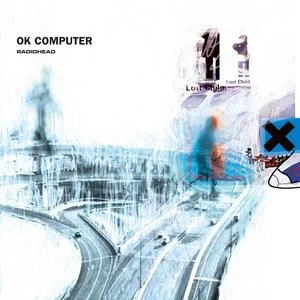
Radiohead’s OK Computer was released in Japan on 21st May, 1997 (it was released in the U.K. in June). To mark its twenty-fifth anniversary, I am going to rank the twelve tracks from the album. It is a hard job, as all of the tracks are superb. I definitely think there is a batch of superior songs that are slightly better than the others. I will end with a ‘reimagined’ OK Computer, ranking the tracks from best to the merely astonishing. Before getting to it, I want to quote a critical review for OK Computer. An album that was not as adored and acclaimed in 1997 as it is now, there will be a lot of celebration around the world to mark a quarter-century of Radiohead’s remarkable third studio album. This is what SLANT had to say about the mighty and incredible OK Computer:

Each generation of rock fans invariably believe that everything that can be done in the genre has already been achieved, but Radiohead’s 1997 album OK Computer helped prove otherwise. The album took guitar rock (and make no mistake—despite its amalgam of analog and digital technologies, that’s what the album is) to places it had never gone before.

Infusing rock with electronic music was a trail blazed by other bands—most notably U2, whose Pop was released earlier that year but was tepidly received. But OK Computer was more in line with Achtung Baby, incorporating all sorts of textures and electronic elements without losing its “rock” sound. In other words, it’s the difference between synthesizers buzzing (see basically everything R.E.M. has done post-1997) and synthesizers rocking. Chilling choir voices are preprogrammed like synths on the acoustic ballad “Exit Music (For a Film)” (the titular film being William Shakespeare’s Romeo + Juilet), but the electronics are constructed around the songs, not the other way around. OK Computer built on 1995’s stellar The Bends by focusing on songcraft and good old-fashioned rock music.

OK Computer is propelled by contrast, a point illustrated by its songs’ dueling guitars and synths, as well as the first few notes of the album: the sound of sleigh bells and an ominous electric chord progression. Even when the music is expansive, the lyrics are stifling: “Let Down,” which sparkles with the electro-pop sheen expected from an act like Erasure and features a climactic vocal arrangement that’s quite beautiful (not a word typically assigned to Thom Yorke’s voice—at least not in the traditional sense), likens those afflicted with the mass-transit doldrums of going monotonously to and from work to squashed bugs. The lullaby-ish quality of “No Surprises” is juxtaposed with lyrics about suicide (“A handshake, some carbon monoxide”) and background vocals that continually plead, “Get me outta here, get me outta here.” Conversely, the very next track, “Lucky,” features a darker milieu and lines such as “It’s gonna be a glorious day!”

Contrast between two dissimilar styles or tones, however, isn’t the only binary thread that strings OK Computer together. Yorke has always been interested in the human condition (and its deterioration), but this album finds the singer examining the duality of the material and nonmaterial worlds and the effects of technology—specifically that of the modern corporate workplace—on the human spirit. “Up above aliens hover, making home movies for the folks back home/Of all these weird creatures who lock up their spirits, drill holes in themselves and live for their secrets,” he sings atop spacey guitars on “Subterranean Homesick Alien.” References to office work, payrolls, corporate ladders, fast German cars, and the privileged jet set abound: “Ambition makes you look very ugly/Kicking, squealing Gucci little piggy,” Yorke sneers on “Paranoid Android,” the multipart anti-yuppie anthem whose ambition is anything but ugly.

A decade after its release, OK Computer’s influence can be heard in countless acts on both sides of pond. The album still packs a disturbing, electrifying wallop, and its subversive nihilism and paranoia are more relevant today than they were 10 years ago. The lack of obvious, conventional hooks doesn’t prevent songs like “Karma Police,” which is essentially a power ballad, from becoming engrained in your head as easily as “I Want to Hold Your Hand.” The songs are so well written they can withstand as many layers of electronic tomfoolery as the band, along with producer Nigel Godrich, felt like heaping on—which has not been the case with their subsequent output”.

To mark its twenty-fifth anniversary later this month, I have ranked the twelve tracks from OK Computer in order of their greatness and impact. Many others will have their own opinions as to the very best of the best from the Oxford band’s masterpiece, but this is my view as to…

WHICH tracks go where.

____________

12. Fitter Happier

Position on the album: 7

11. Electioneering

Position on the album: 8

10. Airbag

Position on the album: 1

9. Climbing Up the Walls

Position on the album: 9

8. Subterranean Homesick Alien

Position on the album: 3

7. Let Down

Position on the album: 5

6. Lucky

Position on the album: 11

5. Exit Music (For a Film)

Position on the album: 4

4. Karma Police

Position on the album: 6

3. No Surprises

Position on the album: 10

2. The Tourist

Position on the album: 12

1. Paranoid Android

Position on the album: 2

FEATURE: Groovelines: Kanye West - Stronger

FEATURE:


Groovelines

Kanye West - Stronger

__________

RELEASED on 31st July, 2007…

this iconic song by Kanye West turns fifteen soon. Taken from his third studio album, Graduation, Stronger is a masterpiece. Produced by Kanye West and Mike Dean, and written by Kanye West, Thomas Bangalter, Guy-Manuel de Homem-Christo and Edwin Birdsong, it is a song with an interesting history. I will come to the critical reception of Stronger soon. Genuinely one of the greatest tracks of the past couple of decades, it is a huge and emphatically confident anthem that you cannot help be inspired by. A standout from one of West’s defining albums, Stronger went to number one in several countries (including the U.S. and U.K.). Before coming to some critical feedback about Stronger, udiscovermusic provide some history about a titanic song:

Stronger” is a motivating anthem, interpolating German philosopher Friedrich Nietzsche’s famous dictum: “What does not kill me makes me stronger.” It took a small army to perfect the track: West gathered eight audio engineers, 11 mixing engineers, and producer Timbaland to reportedly mix over 75 versions in studios across New York, Los Angeles, and Tokyo.

What makes “Stronger” a standout record – aside from the video inspired by 1988’s anime film Akira – is the heart-racing production built around Daft Punk’s 2001 Grammy-winning “Harder, Better, Faster, Stronger” single.

“We had used a sample from Edwin Birdsong’s [1979] ‘Cola Bottle Baby,’ and [West] then sampled the a cappella we used,” the French dance duo’s Thomas Bangalter told Variety in 2007. “It’s quite symptomatic of this circle of sampling and being sampled and passing it along to the next producer … We’ve always been very open-minded and excited about unexpected connections.”

The single introduced Daft Punk to a new cadre of fans, later leading to a surprise appearance (their first televised performance at the time) with West to perform “Stronger” at the 2008 Grammy Awards.

Speaking of Grammys, West took home a gramophone for Best Rap Solo Performance that night. “Stronger” was also a chart favorite: it was West’s first No. 1 on the UK charts, as well as his third No. 1 on the Billboard Hot 100 following 2004’s “Slow Jamz” alongside Twista and Jamie Foxx and 2005’s “Gold Digger” with Foxx. “Stronger” also entered pop culture, soundtracking television series and films like Entourage, The Hangover Part II, and Girls.

As might be expected from the sampled vocals, it’s become a beloved anthem for sports teams around the world. It’s served as an introductory song for the Toronto Raptors and New York Giants and dominated gym playlists. Lastly, Kanye West’s “Stronger” joined the new wave of club-rap that came to prominence in the late 00s alongside Timbaland’s “The Way I Are” in 2007, Lil Wayne’s “Lollipop,” and Kid Cudi’s “Day ‘n’ Nite” in 2008, as well as the Black Eyed Peas’ EDM-driven The E.N.D. album.

Since its release, West has continued his reign as one of music’s most controversial and gifted figures. Following Graduation, he’s dropped ten chart-ruling solo and collaborative albums, became a father to four children, ran an independent presidential campaign, and expanded his brand to take over the fashion and sneaker industries with his Yeezy collections”.

There is no denying the quality and importance of Stronger! I am not the biggest Kanye West fan, though I can recognise how good Stronger is. Unsurprisingly, critics reacted warmly to the track. This Wikipedia collated some positive reaction to the huge Stronger:

The track was well received by music critics. Ann Powers of the Los Angeles Times praised West's performance: "On 'Stronger,' he pushes himself like a runner on a treadmill, always on the verge of losing his breath." Although Louis Pattison of NME criticized what he viewed as "brazen theft" from Daft Punk, he called the song "a silicone-hearted vocoder serenade, beefed up with hoover-like synthesisers." Anna Pickard of The Guardian praised it for the Daft Punk sample, viewing the track as opening with "the immediate familiarity of a Daft Punk sample" and the sample as "working well over this thumping beat".

"Stronger" appeared in numerous year-end lists; Spin named "Stronger" the best song of 2007, The Village Voice ranked "Stronger" at number seven on their annual year-end critics' poll Pazz & Jop. Rockdelux named it the second best foreign song of 2007. Blitz listed it the ninth best song of 2007. MTV named "Stronger" the sixth best song of 2007. Thought Catalog listed the song as the eleventh best Pop song of 2007. Consequence of Sound named it the 17th best song of 2007. "Stronger" was placed 20th in Australia's annual Triple J Hottest 100. Rolling Stone named it the eleventh best song of 2007, elsewhere in the magazine's decade-end readers' poll the song was named the sixth best single of the 2000s. Furthermore, a 2013 Rolling Stone reader's poll ranked "Stronger" as West's eighth best song to that point”.

I am going to end with a feature NME put out in 2017 to mark ten years of Kanye West’s Stronger. It is a song that not only stood out as one of his very best tracks – it is also one that altered the sound and face of Rap and Hip-Hop:

Not only did Kanye change the course of rap with ‘Stronger’, but the track also dictated the meandering road he has since taken. If the ‘Old Kanye’ was more true to the star’s personal roots and tastes, post-’Stronger’ has seen the rapper constantly shape-shifting. 2008’s ‘808s & Heartbreak’ made it acceptable for rappers to be open and vulnerable – without it, there would be no Drake. 2010’s ‘My Beautiful Dark Twisted Fantasy’, widely considered as Kanye’s best, helped propel pop music into the realms of high art. Since, ‘Yeezus’ saw West purposely retreat from his own success, while ‘The Life Of Pablo’ has changed how we listen to albums in this modern age, with Kanye constantly drafting and tinkering with the release.

It could have all been so different though, as Kanye apparently hadn’t even heard of Daft Punk just 12 months prior to the release of ‘Stronger’. Producer A-Trak has explained how the sample came about: “It sort of happened because Swizz Beats sampled ‘Technologic’ for that Busta Rhymes record, ‘Touch It’. We were on tour in Europe in 2006, spending a lot of hours on the bus listening to the radio. Kanye heard ‘Touch It’ and thought that beat was cool. I said, ‘He just swooped up Daft Punk’. And Ye said, ‘Who?’. I just couldn’t believe that Kanye had never heard Daft Punk.”

A-Trak continued to say of Kanye: “When something falls in his lap, he knows if it’s dope, and knows when to make a beat out of it.” And good thing that he did, for Kanye’s output, and rap music overall, has been better (as well as faster and stronger) for it”.

I shall end up there. Surely one of the best songs of the first decade of this century, Stronger will stand the test of time and be regarded as one of the great Hip-Hop moments decades from now. A remarkable offering from a hugely innovative and influential artist, it has been great listening back to it! If you have not spun Stronger in a while, then go and make sure you…

DO so now.

FEATURE: Paul McCartney at Eighty: Thirty-Five: When Paul Met Linda...

FEATURE:


Paul McCartney at Eighty

PHOTO CREDIT: John Pratt/Hulton Archive/Getty Images 

Thirty-Five: When Paul Met Linda…

__________

ON 15th May, 1967…

 IN THIS PHOTO: Linda takes pictures of Paul McCartney at the press launch for The Beatles’ Sgt. Pepper’s Lonely Hearts Club Band; held at Brian Epstein’s house at 24 Chapel Street, London, on 19th May, 1967

Paul McCartney met Linda Eastman. A historic and hugely important day in his life: meeting a woman that became his soulmate. Although the night they met was then met with a gap of absence soon after, one cannot underestimate the importance of that night in 1967. Ahead of the fifty-fifth anniversary of a meeting that would change the life of Paul McCartney – and would impact his songwriting -, I wanted to source a couple of articles that explore that meeting in London; they chart the course of events soon after. I wonder whether McCartney and Eastman knew they would end up together when they first saw one another! Ultimate Classic Rock wrote about the event on its fiftieth anniversary in 2017:

It was just another night out in London for Paul McCartney. After attending Brian Epstein’s dinner party to celebrate the completion of Sgt. Pepper’s Lonely Hearts Club Band, the Beatles' bassist hit the town with some buddies. McCartney headed to Soho’s Bag O’Nails club, where he was a regular with his own table. That night, May 15, 1967, Georgie Fame and the Blue Flames were playing.

A little before McCartney showed up, a young photographer by the name of Linda Eastman had been taken to the Bag O’Nails by some of her friends, members of British rockers the Animals. She had become acquainted with rock royalty, such as the Animals, through her work as a shutterbug. What could be loosely described as a career began when she shot the Rolling Stones, followed by her role as the unofficial photographer at New York’s Fillmore East. She would capture rock icons including Jimi Hendrix, the Who, Aretha Franklin, Janis Joplin and many others.

But in May 1967, Eastman was in the U.K. because of an assignment to shoot photos for a book titled Rock and Other Four-Letter Words. The American was also there to enjoy the height of swinging London, with its mind-bending substances and free love. As one of the London scene’s pillars, McCartney was enjoying himself too.

During Georgie Fame’s set that night, McCartney remembers that he caught Eastman’s eye. He’s said that he was attracted to her smile.

“The band had finished and [Linda and the Animals] got up to either leave or go for a drink or a pee or something, and she passed our table,” McCartney told Barry Miles in Paul McCartney: Many Years From Now. “I was near the edge and stood up just as she was passing, blocking her exit. And so I said, ‘Oh, sorry. Hi. How are you? How’re you doing?’ I introduced myself, and said, ‘We’re going on to another club after this, would you like to join us?’ That was my big pulling line! Well, I’d never used it before, of course, but it worked this time! It was a fairly slim chance but it worked.”

Down the road, after becoming a family man, McCartney would often make fun of his corniness when telling the story. Apparently being a Beatle in 1967 didn’t require one to be too slick with pickup lines. As McCartney said, his line worked and they moved on to the next location, the Speakeasy. Eastman remembered the night not just for meeting her future husband, but for hearing a certain song for the first time.

“I remember everybody at the table heard ‘A Whiter Shade of Pale’ that night for the first time and we all thought, ‘Who is that? Stevie Winwood?’ We all said Stevie,” she told Miles. “The minute that record came out, you just knew you loved it. That’s when we actually met.”

Years later, the McCartneys would consider Procol Harum’s “A Whiter Shade of Pale” to be their song, because of their musical memory. But the night didn’t end at the Speakeasy. McCartney, soon to be 25, welcomed Eastman, soon to turn 26, back to his place under the auspices of showing the photographer his original paintings by the surrealist Rene Magritte. The Beatle was impressed that Eastman was also a fan of the Belgian painter. Memories are hazy as to if the pair impressed each other in any other ways that evening.

McCartney and Eastman would meet again a few days later at Epstein’s house in London. Eastman sought to shoot photos of the Beatles for her book and the Beatles manager agreed for her to come to a press party for Sgt. Pepper on May 19. She took more than a few famous shots of the boys, but also had her photo taken – the first picture of the future Mr. and Mrs. McCartney”.

I can only imagine what the atmosphere was like in the Bag O’Nails club in May 1967! At that time, The Beatles had completed work on Sgt. Pepper’s Lonely Hearts Club Band. That was released in June. A high and hugely important time for the band, there would have been so many eyes on McCartney. On an album where he took creative control and was debatably replacing John Lennon as the band’s leader, McCartney was probably looking to unwind and not be hassled after a busy day - though he was also looking for a bit of fun too. What he found on 15th May, 1967 was an event that would change the course of his life! To reiterate and expand on what has already been sourced, here is some more detail about the meeting between McCartney and Eastman – and how their first interaction was undeniably passionate and pure:

The night I met Linda I was in the Bag O’Nails watching Georgie Fame and the Blue Flames play a great set. Speedy was banging away. She was there with the Animals, who she knew from photographing them in New York. They were sitting a couple of alcoves down, near the stage. The band had finished and they got up to either leave or go for a drink or a pee or something, and she passed our table. I was near the edge and stood up just as she was passing, blocking her exit. And so I said, ‘Oh, sorry. Hi. How are you? How’re you doing?’ I introduced myself, and said, ‘We’re going on to another club after this, would you like to join us?’

That was my big pulling line! Well, I’d never used it before, of course, but it worked this time! It was a fairly slim chance but it worked. She said, ‘Yes, okay, we’ll go on. How shall we do it?’ I forget how we did it. ‘You come in our car’ or whatever, and we all went on, the people I was with and the Animals, we went on to the Speakeasy.

Paul McCartney – from “Paul McCartney: Many Years From Now”, Barry Miles

[…] When I came to London in 1967, The Beatles and Stevie Winwood were the two acts I was determined to photograph. Having already taken the first pictures of Traffic in Berkshire, that left only The Beatles.

I took my portfolio over to Brian Epstein’s office and left it with his assistant, Peter Brown. While I was waiting for his response I happened to meet Paul at a club called the Bag O’Nails in Kingly Street, London where I had gone with Eric Burdon and some other friends to see Georgie Fame and the Blue Flames.

Paul walked in after we had arrived and came and sat at the table right next to us. It was one of those “our eyes met” situations. As I was about to leave Paul came over and invited me to go with him to The Speakeasy which was not too far away in Margaret Street. That was where we all heard “Whiter Shade Of Pale” for the first time and fell in love with it; we all thought it must be Stevie Winwood, but it turned out to be Procol Harum. […]

Linda McCartney – from “Linda McCartney’s Sixties“, 1992

We flirted a bit, and then it was time for me to go back with them and Paul said, ‘Well, we’re going to another club. You want to come?’ I remember everybody at the table heard A Whiter Shade Of Pale that night for the first time and we all thought, Who is that? Stevie Winwood? We all said Stevie. The minute that record came out, you just knew you loved it. That’s when we actually met. Then we went back to his house. We were in the Mini with I think Lulu and Dudley Edwards, who painted Paul’s piano; Paul was giving him a lift home. I was impressed to see his Magrittes.

Linda McCartney – from “Paul McCartney: Many Years From Now”, Barry Miles”.

Fans of The Beatles and Paul McCartney will mark 15th May as a very special one. Fifty-five years ago, he would encounter a woman who would change his life! As part of a run of features ahead of his eightieth birthday next month, I just had to include something about a fateful and magical night in Soho in 1967. In a feature soon, I will mark fifty-five years of Sgt. Pepper’s Lonely Hearts Club Band. It still makes my spine tingle to imagine what it was like for people around Paul McCartney when he locked eyes with Linda Eastman: his Wings band member and...

THE love of his life.

FEATURE: Inspired By… Part Sixty-Three: Daft Punk

FEATURE:


Inspired By…

Part Sixty-Three: Daft Punk

__________

FOR this Inspired By…

it is to a duo who sadly called it quits fairly recently. The iconic and brilliant Daft Punk consist Thomas Bangalter and Guy-Manuel de Homem-Christo. Considered to be one of the most influential Dance acts ever, it is time to bring them into this feature! Before getting to a playlist of songs from artists influenced by Daft Punk, here is some biography about the Paris-formed geniuses:

As they evolved from '90s French house pioneers to 2000s dance tastemakers to mainstream heroes in the 2010s, Daft Punk remained one of dance music's most iconic acts. With their early singles and 1997's instant-classic debut album Homework, Guy-Manuel de Homem-Christo and Thomas Bangalter quickly won acclaim for their skill at blending their beloved Chicago house and Detroit techno with pop, funk, indie rock, and hip-hop into nostalgic yet futuristic forms. Not content to just widen electronic music's popularity, on 2001's Discovery they reinvented the then-unfashionable sounds of mid-'80s soft rock and R&B into stylish tracks that also had a childlike wonder. Despite their sizable popularity, Daft Punk were never afraid to challenge their listeners, which they did with 2005's cold and dystopic Human After All. Even when they polarized their audience, there was never any doubt that they staged groundbreaking concerts, and the tour captured on Alive 2007 helped pave the way for arena-sized EDM, particularly in the U.S. With 2013's Random Access Memories, the duo once again looked to the past to create the future, borrowing from prog, disco, and a laid-back West Coast vibe that bucked the predominant trends in electronic music but still resonated with a wide audience. Daft Punk's influence reached further into the mainstream through collaborations with Kanye West and the Weeknd, and the duo's music was sampled by artists ranging from Missy Elliott to the Fall. Though they reinvented themselves continually, wherever Daft Punk went, the rest of pop music followed.

After meeting in 1987 as students at Paris' Lycée Carnot secondary school, Bangalter and de Homem-Christo became friends and soon started making music together. In 1992, they formed the band Darlin'. Named after a Beach Boys song, the group featured Bangalter on bass, de Homem-Christo on guitar, and additional guitarist Laurent Brancowitz. Darlin's career was brief: The trio recorded a cover of their namesake song that appeared, along with an original song, on a various artists EP released by Stereolab's label Duophonic (the band also invited Darlin' to play some U.K. shows with them). Following a Melody Maker review that described Darlin's music as "a daft punky thrash," the band broke up. Bangalter and de Homem-Christo began experimenting with electronic music, taking their new project's name from that review and drawing inspiration from pioneers such as Todd Edwards, Juan Atkins, Kraftwerk, Frankie Knuckles, and many more.

By September 1993, Daft Punk had readied a demo tape, which they gave to Soma co-founder Stuart MacMillan at a rave at EuroDisney. The label released the duo's debut single, "The New Wave," in April 1994. Instantly hailed by the dance music press as the work of a new breed of house innovators, it was followed by May 1995's "Da Funk," the band's first true hit (the record sold 30,000 copies worldwide and saw thorough rinsings by everyone from Kris Needs to the Chemical Brothers). In 1996, the buzz around Daft Punk led them to sign with Virgin, and the label released the single "Da Funk"/"Musique" that year. Recorded and mixed at the duo's Paris studio Daft House, January 1997's debut album Homework -- named for Daft Punk's D.I.Y. aesthetic -- was a critical and commercial success. The album reached number three in France and stayed on the chart for over a year, while the singles "Da Funk," "Around the World," "Burnin'," and "Revolution 909" charted in France, the U.K., the U.S., and Australia. The duo supported the record with the Daftendirekt tour, while the Homework video collection D.A.F.T.: A Story about Dogs, Androids, Firemen and Tomatoes followed in 1999 and featured clips directed by Roman Coppola, Michel Gondry, and Spike Jonze.

To follow their breakthrough debut album, de Homem-Christo and Bangalter reached back to their childhoods in the '70s and '80s and sought to fuse technology with humanity. Once again recorded at Daft House, March 2001's Discovery incorporated disco and synth pop as well as house, garage, and R&B into a sleek, retro-futuristic sound that matched the robotic helmets and gloves the duo introduced with the release of the album. Featuring contributions from heroes such as Romanthony, Edwards, and DJ Sneak, Discovery was an even bigger hit than its predecessor. The album peaked at number two in France and the U.K., while the singles "One More Time," "Digital Love," "Harder, Faster, Better, Stronger," and "Face to Face" also charted in the U.K. and the U.S. That November saw the release of Alive 1997, an edit of the duo's Birmingham, England stop on the Daftendirekt tour. Daft Punk capped the Discovery era in 2003 with Interstella 5555: The 5tory of the 5ecret 5tar 5ystem, an animated film they produced with anime and manga creator Leiji Matsumoto that used the album as its soundtrack.

For Daft Punk's third album, the duo took a drastically different approach. Created in six weeks -- as opposed to the two years they spent making Discovery -- with a handful of gear that included an eight-track machine, March 2005's Human After All was a deliberately raw, stark set of songs inspired by George Orwell's Nineteen Eighty-Four. Though its cold, repetitive feel drew polarized reactions, the album fared well commercially: Human After All reached number three in France, was a Top Ten hit in the U.K., and hit number one on the Billboard Top Dance/Electronic Albums chart in the U.S. The set was also nominated for Best Electronic/Dance Album at the 2006 Grammy Awards. Shortly after its release, Human After All [Remixes] collected reworkings by Soulwax, Digitalism, and Erol Alkan among others.

April 2006 saw the arrival of Musique, Vol. 1: 1993-2005, a compilation of the duo's best-known songs and remixes accompanied by the videos for Human After All's singles. That May, Daft Punk premiered their film Electroma at the Director's Fortnight at that year's Cannes Film Festival. An experimental sci-fi film about a pair of robots seeking to become human, it began as the video for Human After All's title track before expanding into a feature film (unlike Interstella 5555, the movie did not feature any of Daft Punk's music). Initially earning mixed reviews, over time Electroma won a cult audience. That year, the duo embarked on the Alive tour, which lasted through 2007 and featured some of Daft Punk's most ambitiously staged live sets. Appearing in November 2007, Alive 2007 documented the tour. Early in 2009, the album and its single "Harder, Better, Faster, Stronger" won Grammy Awards.
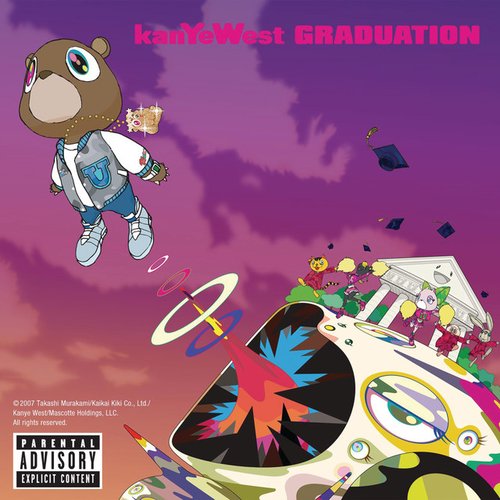
Daft Punk returned with new music in November 2010 in the form of the score to Joseph Kosinski's feature film Tron: Legacy. A collaboration with Joseph Trapanese, who arranged and orchestrated the pair's compositions, it featured an 85-piece orchestra as well as Daft Punk's signature electronics. Bangalter and de Homem-Christo also appeared in the film in a brief cameo. The soundtrack eventually reached number four on the Billboard 200 Albums chart in the U.S. and was nominated for a Best Score Soundtrack Album for Visual Media Grammy Award. Also in 2010, the duo were admitted into the Ordre des Arts et des Lettres, with de Homem-Christo and Bangalter each receiving the rank of Chevalier. The following year saw the April release of the remix album Tron: Legacy Reconfigured, while that September's compilation Soma Records: 20 Years featured the track "Drive," an early recording that was believed to be lost.

For their fourth album, Daft Punk once again took a different creative tack. Seeking a breezy feel informed by Fleetwood Mac, the Eagles, and Jean Michel Jarre, the duo emphasized live instrumentation and collaborated with artists including Nile Rodgers, Paul Williams, Giorgio Moroder, and Panda Bear. Pharrell Williams appeared on the single "Get Lucky," which preceded the release of the full-length Random Access Memories in May 2013. Recorded in California, New York City, and Paris and spanning disco, prog, and indie influences, the album became one of Daft Punk's biggest successes. It topped the charts in over 20 countries including the U.S., where it became the duo's first number one album and was eventually certified platinum. It also won Grammy Awards for Best Dance/Electronica Album, Album of the Year, and Best Engineered Album, Non-Classical. "Get Lucky" hit number one in over 30 countries and earned Grammys for Best Pop Duo/Group Performance and Record of the Year. That year, Daft Punk also co-produced Kanye West's critically acclaimed album Yeezus, and worked on tracks including the single "Black Skinhead." In 2014, the duo appeared on Pharrell's album G I R L and collaborated with Jay-Z on the song "Computerized." A 2015 documentary titled Daft Punk Unchained charted their history from the '90s into the 2010s, featuring interviews with Rodgers, Pharrell, and West, among others. In turn, the duo appeared in that year's Rodgers documentary Nile Rodgers: From Disco to Daft Punk.

During the latter half of the 2010s, Daft Punk remained active. They teamed up with the Weeknd's Abel Tesfaye on a pair of songs from his 2016 album Starboy, including the chart-topping title track. The following year, the duo performed with the Weeknd at the 59th Annual Grammy Awards; later in 2017, they co-wrote and produced Parcels' "Overnight." During this time, Daft Punk's members also worked on separate projects. Bangalter co-produced Arcade Fire's 2017 album Everything Now and contributed pieces to the soundtrack to Gaspar Noé's 2018 film Climax, while de Homem-Christo co-wrote and produced tracks for Charlotte Gainsbourg's 2017 album Rest and the Weeknd's 2018 EP My Dear Melancholy,. In 2019, Daft Punk were featured in the Philharmonie de Paris' exhibition Electro, which traced the history of electronic music and its influence on visual arts. In February 2021, the duo disbanded, spreading the news with a YouTube video that featured scenes from the end of Electroma”.

In order to show how far and wide the influence of Daft Punk has spread since their formation in 1993, the songs in the playlist at the bottom are from artists who are definitely inspired and moved by them. Even though they have split, their legacy will endure. A phenomenal duo who changed the world of music, we will never see anyone as…

MAGICAL as Daft Punk again.  

FEATURE: Better the Second Time Around? A Return to Kate Bush’s Director’s Cut

FEATURE:


Better the Second Time Around?

A Return to Kate Bush’s Director’s Cut

__________

ON 16th May…

 PHOTO CREDIT: John Carder Bush

Kate Bush’s ninth studio album, Director’s Cut, turns eleven. I wanted to return to this work, as it was her follow-up to 2005’s double album, Aerial. She released a second album late in 2011, 50 Words for Snow. As we look ahead to see if she will release another album, I am going to nod back to an incredible album. Something that she had never done before. Released on her Fish People label, it is made up of songs from her earlier albums, The Sensual World (1989) and The Red Shoes (1993), which have been remixed and restructured; three of which were re-recorded completely. Bush re-recorded all of the lead vocals and some of the backing vocals. The drum tracks were also re-recorded. Bush was not entirely happy with the sound and production of the songs she selected. Thinking of Director’s Cut as a new album, the songs blend seamlessly. It is not like she has shoved old tracks together to make them fit. She approached the project like a new album and, as such, there is this unity, flow and consistency where one can view the known tracks in a new light. I was eager to mark the eleventh anniversary of an album that, I think, is underrated. Some felt that Director’s Cut didn’t need to exist – in the sense the original tracks are better, and we can enjoy them on The Sensual World and The Red Shoes. Featuring musicians like her brother, Paddy, the late Gary Brooker of Procol Harum, and her other half, Dan McIntosh, Director’s Cut sounds incredible! An album well worth grabbing on vinyl, go and listen to the wonderful re-imagining of songs that you may have initially heard decades ago.

Although there was a bit of publicity, Bush provided many more interviews for 50 Words for Snow. Maybe, knowing that another album was coming, it meant that she wanted to pace herself. I guess there is not a lot to say about an album where we know about the songs. People have heard the originals, so she cannot discuss the origins and stuff like that. Instead, I want to mention a couple of reviews. First, Dig! revisited Director’s Cut last year. There are some segments from their piece that I wanted to drop in here:

I just kind of felt like there were songs on those two albums that were quite interesting but that they could really benefit from having new life breathed into them,” she told Dimitri Ehrlich for Interview magazine. “There was generally a bit of an edgy sound to it, which was mainly due to the digital equipment that we were using, which was state-of-the-art at the time – and I think everyone felt pressured to be working that way. But I still remain a huge fan of [analogue]. There were elements of the production that I felt were either a little bit dated or a bit cluttered. So, what I wanted to do was empty them out and let the songs breathe more.”

RICHLY REWARDING, EMOTIONALLY OVERWHELMING

Three of the songs (This Woman’s Work, Moments Of Pleasure, Rubberband Girl) were re-recorded completely for Director’s Cut, while the drums on all of the tracks were replaced by studio ace Steve Gadd (Aretha Franklin, Paul Simon, Frank Sinatra, Steely Dan). Danny Thompson was brought in on bass, and new backing vocals were provided by Mica Paris, Jacob Thorn and Kate’s son, Bertie McIntosh. Most importantly, Bush herself re-recorded her lead vocals for each of the song. Taken together, the overhauls give a new perspective on the material – the studio sheen associated with the late 80s and early 90s is stripped back, and the songs feel warmer and more welcoming. What’s more, they better suit Bush’s more mature, less dramatic vocals, bringing out new meaning in her lyrics.

PHOTO CREDIT: John Carder Bush

The only song with “new” lyrics was Flower Of The Mountain (originally recorded as The Sensual World’s title track), which, in place of her original lyrics, now used an extract from James Joyce’s Ulysses – just as Bush has originally conceived the song. While the writer’s estate had blocked her from using his text back in 1989, come the recording of Director’s Cut, she was finally granted permission. Joyce’s words – drawn from the novel’s closing soliloquy by Molly Bloom – helped transform the track from a glossy, radio-friendly single into something more considered and languid. A similar effect was achieved on much of the rest of Director’s Cut, notably with a moving take on Moments Of Pleasure which, once an ecstatic celebration of friends and family who had passed away, had been transformed into a hushed elegy.

Meanwhile, Bush saved the most radical reinvention for one of her most-loved songs, This Woman’s Work. Recast as an ethereal ambient ballad, with Bush’s lower vocal range and thoughtful delivery lending it an air of tangible vulnerability, the re-recording also demonstrated Bush’s artistic confidence – at this point in her career, she was free to follow her muse without considering a song’s hit potential. The results led to some glorious music.

Released on 16 May 2011, Director’s Cut may at first have seemed like a curio, but a closer listen reveals a richly rewarding, often emotionally overwhelming set that emphasises how creative and headstrong Bush remained as a writer, musician and producer at the top of her game”.

I am going to conclude with a couple of positive reviews. Though there were one or two mixed reviews, the overall reception was positive. It was brave tackle some much-loved tracks and release an album of this nature. Giving fresh life and meaning to songs like Top of the City and Lily, Director’s Cut is an essential album – not only for Kate Bush fans, but for everyone. The Guardian had this to say about Bush’s 2011 release:

In the solitary phone interview she gave to promote her first album in six years, Kate Bush offered these TV appearances to explain why she was only giving a solitary phone interview to promote her first album in six years. Under the circumstances, she suggested, wouldn't you push off to the land of do-as-you-please as soon as possible? Nothing, it seems, inspires inscrutable behaviour quite like the bloke off That's Life! quizzing you about your pimples.

In 2011, with the whole nonpareil musical genius/dippy woman who says "wow" issue firmly sorted out in most people's minds, her behaviour seems to grow more inscrutable still. Her new album, which admittedly took only half as long to make as its predecessor, isn't actually a new album, despite Bush's insistence to the contrary: it consists entirely of new versions of songs from 1989's The Sensual World and 1993's The Red Shoes. In fairness, you can see why she's chosen to point them up. They tend to be overlooked in her oeuvre, more because they separate her twin masterpieces Hounds of Love and Aerial than because of their content, although The Red Shoes is perhaps more muddled than you might expect, given her legendary perfectionism. Nevertheless, the decision seems to have bamboozled even her diehard fans, whose trepidation was not much mollified by the single Deeper Understanding. Again, you can see why she wants to point it up: its lyric about abandoning social interaction in order to hunch over a computer seems very prescient in the age of Facebook and Twitter. But the new version's decision to overwhelm the haunting vocals of Trio Bulgarka with Kate Bush doing one of her patented Funny Voices through an Auto-Tune unit seems questionable at best.

In fact, it's the only moment when you can honestly say the rerecording pales next to the original. At worst, they sound as good as their predecessors, which leaves you wondering what the point is, even as you succumb to their manifold charms. It was obviously a bind that the Joyce estate refused permission to use Molly Bloom's concluding soliloquy from Ulysses as the lyrics to The Sensual World, but whether it's a vastly better song for finally having them in place of Bush's facsimile is rather a moot point. Song of Solomon, on which Bush finally abandoned her apparently bottomless store of metaphors for female sexuality in favour of a direct demand for a shag – "Don't want your bullshit," she cries, "I'll come in a hurricane for you" – is a fantastic song whether the rhythm track features pattering tom-toms or a lightly brushed snare. Occasionally, the changes genuinely add something, usually by taking things away. The force of The Red Shoes' depiction of Bush's troubled relationship with the creative impulse was always a little blunted by its presentation as a kind of perky Irish jig: with the Celtic pipes shifted to the background, it sounds sinister and more urgent. Moments of Pleasure's rumination on death is more introverted and affecting stripped of its dramatic orchestration, while This Woman's Work – the rerecording of which caused the most unease among fans – is amazing: emptier, darker and quieter than before, it's even more heart-rending. Given that the original was heart-rending enough to soundtrack a charity campaign against child abuse, that's no mean feat.

Is it worth spending six years making an emotionally wrenching song slightly more emotionally wrenching? Hmm. If Director's Cut really was a new album, if you were hearing these songs for the first time, then it probably would be considered among Kate Bush's masterpieces: certainly, the sheer quality of the songwriting makes every recent female artist who has been compared to her look pretty wan by comparison. But you're not, which means the Director's Cut ultimately amounts to faffing about, albeit faffing about of the most exquisite kind. Still, as anyone who's watched her putting up with Richard Stilgoe will tell you, Kate Bush has earned the right to do whatever she wants”.

The BBC were impressed and overwhelmed when they sat down with the wonderful Director’s Cut. It is an album that I keep listening to and get something different from every time I dive in:

“When Deeper Understanding emerged as the first evidence of Kate Bush’s new album of revisions, the instant reaction was surprise tinged with anger. How dare she play with our memories? How dare she use Auto-Tune on the chorus vocal? "Butchered" and "almost unforgivable" cried the fansites. But as Bon Iver and Sufjan Stevens have already shown, Auto-Tune – a pitch-shifting tool typically used to mask defects – can also be used for beauty. It’s not as if Bush’s own vocal was altered. Instead, it’s just the song’s computer voice, which now resembles 2001: A Space Odyssey’s HAL 9000 rather than a demo on a kid’s Casio. A bonus two-minute coda of Talk Talk-style folk-jazz floatiness extends the mood of blissful angst. Butchered? More like reborn.

The problem is less that Bush’s new album consists of old songs than the fact she’s only released one album of new ones in 18 years. She’s had the urge to tinker before, sprucing up Wuthering Heights for her 1986 greatest hits, The Whole Story. All the vocals and drums on Director’s Cut – totalling four tracks from 1989’s The Sensual World, seven from 1993’s The Red Shoes – are new; if such a term existed, you could say the overall execution has been to ‘de-80s-fy’ the originals. Gone are the gated drums, the keyboard presets, the Synclavier washes; in comes a softer, golden glow. Minus the choc-box orchestra (plus subtly altered lyrics), the rest of Moments of Pleasure emerges into the light, shaded by a solemn choir. Rubberband Girl, which in context sounds like a knees-up down her local boozer, comes over like the work of a totally different band (weirdly, that band is now The Rolling Stones).

The Sensual World’s title-track, now re-named Flower of the Mountain and borrowing Molly Bloom’s soliloquy from James Joyce’s novel Ulysses as Bush intended (she was originally denied permission), is another major alteration. Yet, musically, it’s rather more cosmetic. Just as Bush sounds in great voice – richer, bolder, brighter, wiser – so the re-cast Lily and The Red Shoes’ title-track follow suit, but they’re hardly re-inventions. As much as it’s fascinating to hear Bush the Elder look back at Bush the Younger, is the tinkering worth a full album? Yes, because it’s a sign Bush the Artist is still alive (she’s working on new songs too) and Director’s Cut (a less prosaic title would have been nice) is a gorgeous body of work. No, because it’s writer’s block by any other name. No, because it’s not radical enough a move. But if Deeper Understanding raised hackles, imagine if Kate had gone dubstep or collaborated with Odd Future. World wars have broken out over less”.

On 16th May, it will be eleven years since Bush put out Director’s Cut. Although one or two of the songs she reimagines do not exceed the originals (Deeper Understanding among them), I do love the fact that she revitalises a few tracks that might have been overlooked first time around. Few people would have imagined that Kate Bush would release another album…

ONLY six months later.

FEATURE: Second Spin: Queen – The Works

FEATURE:


Second Spin

Queen – The Works

__________

QUEEN are one of these bands…

who are well-known and popular, yet the reviews for their studio albums have been mixed. Apart from classics in their cannon – such as 1975’s A Night at the Opera -, there has been this division. Many U.S. critics have never for behind the band (Rolling Stone are top of the list!). One of their albums that I think is undervalued and should have scored better reviews is 1984’s The Works. I am going to bring together a couple of contrasting reviews for the album. One of Queen’s most varied and diverse albums, their eleventh was the band's first studio album to be released by Capitol Records in the United States. Following the synth-led Hot Space (1982), The Works has a harder Rock sound, yet it still include Mercury’s love of electronic and synth sounds. It was an album that showed and explored the band’s wide range of sounds and sonic loves. If John Deacon was leaning towards New York futuristic sound; Mercury wanted to keep some of Hot Space’s sounds, whilst Brian May and Roger Taylor were eager to return to the Rock sound of their earlier albums, The Works was a pleasing compromise. Recorded at the Record Plant Studios in Los Angeles and Musicland Studios in Munich from August 1983 to January 1984, the title is very fitting! It is appropriate that I mention Hot Space, as that album is forty on 21st May.

At nine tracks – none of which exceed six minutes -, The Works manages to be quite focused, yet the spread and variety of genres and sounds makes it feel expansive. I am not sure why there were negative and mixed reviews for the album! Roger Taylor’s Radio Ga Ga, Freddie Mercury’s It’s a Hard Life, and John Deacon’s I Want to Break Free are all classics! Throw in Brian May’s Hammer to Fall, and it shows that there are four extraordinary and different songwriters in the band. The Works was a case of it being all Freddie Mercury and Brian May! Reaching number two in the U.K. in 1984 and twenty-three in the U.S., The Works was a commercial success. 1986’s A Kind of Magic, again, is an album that is packed with great music but got mixed reaction. I am going to come to a couple of reviews now. I mentioned Rolling Stone earlier. Although not one of their more negative reviews for a Queen album, their take on The Works holds a lot of positives:

Radio Gaga,” the single that opens up the new Queen album, is another instant jewel in Queen’s Top Forty crown. It’s one more anthemic lament to that overfamiliar icon, sung and played with Queenly overkill in “Deutschland Uber Alles” style by a group that did its share to corrupt the airwaves in the Seventies. This slab of false pomp aside, the rest of The Works — surprise, surprise — ain’t half bad.

Disregarding a best-of, a soundtrack, one single made with David Bowie and the obligatory solo projects, this is the glitter-rock band’s first real album in some time. And rather than move in ever-widening spirals of bombast, they’ve trimmed a lot of the excess — mainly, the fat vibrato of Brian May’s multitracked guitars and Freddie Mercury’s overdubbed tabernacle choir of vocal effects. What’s left is a lean hard-rock sound, making The Works perhaps the first record to refute the maxim that the words Queen and listenable are, of necessity, mutually exclusive.

Granted, the messages have all been heard before and practically cancel each other out: love is all you need; let’s get physical; machines have feelings, too; be an individual, stand your ground. Instead, the revelations are in the music. For the carnivorous, rewards are to be found in the thundering Led Zeppelinisms of “Tear It Up” and “Hammer to Fall”; for the doubters, the surprises are in the comely melody and (relative) restraint of “Keep Passing the Open Windows” and the straight-up Fifties rocking of “Man on the Prowl.” And try this one our on the atheists: “Is This the World We Created…?” is an acoustic meditation on hunger and hate and generational responsibility, sung with conviction by Mercury.

This unanticipated humanitarianism is the perfect grace note to the preceding thrash-fest. The Works is a royal feast of hard rock without that awful metallic aftertaste; as such, it might turn out to be the Led Zeppelin II of the Eighties. Not so depressing a prospect at that”.

In their review, Redbrick explained why 1984’s The Works is one of Queen’s most realised and best work. In my opinion, it ranks alongside their classic albums from the 1970s:

I find it very difficult to pick just one essential album from Queen, but their eleventh album, The Works, is easily one of their most underrated albums. With the amount of huge hits and pure classics produced over their career, it’s hardly surprising that this album is anything less than brilliant. Yet, in my opinion, this is my favourite album created by Queen. Admittedly, Anyone who knows me, is aware that I have a deep love of Queen, so my view that they are one of the best rock bands to have existed comes as no surprise. However, The Works showcases their ability to bring out classic Rock sounds whilst also combining it with some other styles like funk, delivering some of the band’s biggest hits.

The aim of this album was to reignite Queen and lead them back to their rock roots after their previous album Hot Space flopped. The opening track ‘Radio Ga Ga’ showcased Queen’s return to their original sound. The lyricism of this song written by Roger Taylor is something to be in awe of. Making references to various events that happened on the radio like Winston Churchill’s 1940 “This was their finest hour” address and the hugely influential War of the Worlds broadcast, it is a crafted tribute to the radio formate as well as an iconic track. ‘Radio Ga Ga’ still remains one of Queen’s most listened to singles and was famously used in Queen’s Live Aid performance. Queen’s sound in this song is made monumental thanks Roger Taylor’s drumming to the Freddie Mercury’s vocals. What is clear from the start of this album is that Queen are a band that can never be replaced or replicated.

Queen are the classic household name of rock music with many children having grown up on a steady diet of their music. Especially since the release of the hugely successful rock-opera, ‘Bohemian Rhapsody’ in 2018, our nostalgic love the band has seemingly been reignited. The Works has many tracks which have touched lives from ‘I Want To Break Free’, written by John Deacon, which has a power to it and can have many meanings to different people, and ‘Hammer to Fall’ which is infectiously catchy with Brian May’s guitar riffs and chorus. These two singles are a force to be reckoned with as they stand out as some of the most played songs by Queen and show why they are one of their era.

There is a mixing of rock and other influences like funk and more experimental sounds that Queen would pursue in the later album Innuendo in 1991, foreshadowed on The Works. ‘Is This the World We Created…?’ is an ode to the fear of the world that we all live in now, written after witnessing poverty abroad, this song still has a meaningful resonance with listeners today. This song thrives on the simplicity of Brian May’s acoustic guitar skills and touching lyrics arranged by Freddie Mercury. Their ability to deliver emotional moments as classic rock can be heard through this song and can similarly be seen in the album A Night at the Opera with ‘Love of My Life’.

Songs such as ‘Tear It Up’ and ‘I Go Crazy’ lean more towards the heavier rock that Queen were known for. These songs are a nod to their past and also have fantastic guitar solos and drumbeats from Roger Taylor. ‘Tear It Up’ has an ode back to ‘We Will Rock You’ from the album News of the World with the stomping drum beats and guitar riffs.

Queen’s The Works is one of the best albums from start to finish for me. From their endeavours to revive their old sound, to their simplicity, The Works captures some of the best of Queen’s artistry. It’s sound is one of the reasons why I love Queen. It is an essential album for its rich and full sound, the artistry that Queen are renowned for is present throughout this album in its spectrum of sounds. The Works is and always will be one of my favourite albums that I revisit all the time, however I’m feeling”.

An album that should be talked about more and seen as a terrific release, The Works is a creative peak for Queen. I know the band have always been divisive, yet one cannot deny there are some true gems in the running. Radio Ga Ga and I Want to Break Free are considered to be two of Queen’s crowning achievements. If you have not heard The Works or have given it short shrift, go and listen to it again and give it more time. It is an album that, because of its breadth and spread, will please the senses and can appeal to a wider audience. Rather than The Works being average or containing some weak tracks, it is truly…

ONE of Queen’s very best.  

FEATURE: Revisiting… Flo Milli - Ho, why is you here ?

FEATURE:


Revisiting…

Flo Milli - Ho, why is you here ?

__________

MIXTAPES and E.P.s tend not to get the same attention…

 PHOTO CREDIT: Munachi Osegbu for COMPLEX

as albums when it comes to reviews and sales. Although it got to seventy-eight in the Billboard  200 in the U.S., there were some great reviews for Flo Milli’s 2020 mixtape, Ho, why is you here ?. I previously featured the Alabama rapper last year for my Spotlight feature. An incredible artist (real name Tamia Carter), I think we might see an album or further mixtape at some point this year. Her incredible mixtape featured high on the best album of the year lists from various publications. COMPLEX, The New York Times, NPR, and Rolling Stone all put it in their top twenty of 2020. This is a mixtape that requires people to check back in and play it without interruption. A fantastic work of innovation, power and intent from one of the greatest young rappers in the world, I am going to get to a couple of positive reviews. Prior to that, COMPLEX spoke with Flo Milli in 2020, where they asked her about the reception and popularity of Ho, why is you here ?, and how she would describe her sound:

On July 24, Alabama's brightest new star dropped her debut project, Ho, Why Is You Here? She hoped all her hard work would pay off, but the response to the tape exceeded expectations. Hours after it hit streaming services, Flo Milli’s name was trending on Twitter, garnering overwhelmingly positive reactions from fans, as well as fellow artists like Kehlani, Janelle Monae, City Girls, and more. But Flo Milli tells Complex that she was most shaken by Missy Elliott's display of support.

"That gave me shivers," she recalls. "I think I was cooking when she did that. I had to do a double take."

Fans are raving over Flo Milli’s effortlessly fun and confident delivery on songs like "Weak," "May I," and "Send the Addy." The 20-year-old rapper, whose breakout song "Beef FloMix" went viral on TikTok, says she is guided by a philosophy to always do what she wants. Now she wants her listeners to feel the confidence to do the same. "I just like to make people feel confident and hot," she notes. "I want to raise their vibe. That's why I make fun music. So when people are sort of down, they could just listen to it and turn up."

The last few years have been pivotal for women in rap, as more acts have found commercial success and praise. In addition to bringing a "youthful" energy to the table, Flo Milli says she is representing for Black women of a darker complexion. And as her platform grows larger, she wants to inspire women to feel more confident in their own skin.

With the successful release of Ho, Why Is You Here? under her belt, Flo Milli is already focused on what's next. She is thinking about her follow-up project and eyeing potential collaborations from southern artists like DaBaby, Lil Baby, Mulatto, and Rico Nasty. Complex caught up with her to talk about Ho, Why Is You Here?, what "Flo Milli shit" really means, and her long term goals in rap. The interview, lightly edited for clarity, is below.

PHOTO CREDIT: Munachi Osegbu for COMPLEX 

How did it feel to wake up and see that you were trending because of Ho, Why Is You Here?

It felt so good. Honestly, it's starting to hit me now. I wanted to know how it really feels to actually be reaping the rewards for your hard work, because I've worked so hard on that mixtape. People don't even know what happened behind the scenes. But I really learned how it is to be a full-blown artist, and it's not easy. But that's what makes it beautiful, just being able to go through the good and the bad and then have the outcome be beautiful.

Who was the most surprising artist who reached out to you and reacted to your project?

Most definitely, Missy Elliot. That was crazy. I love her so much, and I’ve been listening to her since I was younger. That gave me shivers. I think I was cooking when she did that. I had to do a double take. I didn't believe it at first, but that one really made me and my mom proud.

How would you describe your sound for someone who isn’t familiar with Flo Milli?

I would describe my sound as sassy, fun, and kind of poppy, but it still has that way of trap rap to it. I would say playful nursery rhymes. I guess you would say trap music, but it's a mixture of a lot of different things. I just like to make people feel confident and hot. I want to raise their vibe. That's why I make fun music. So, when people are sort of down, they could just listen to it and turn up.

What was the writing and recording process like? 

It was hard. People have to realize artists have regular day-to-day lives. So, we go through things. We're not robots. We don't just get a free pass in life. But going through the things that I did go through, I learned a lot of lessons, and I would say that helped me expand my writing. So I would say it was extremely hard at times, and then sometimes it was really easy. It just depends on how much work you're willing to put in. And I guess it taught me that I don't give up, and I'm very strong and determined when I want something.

What's your favorite track on the project? 

I don't know. I'm kind of arguing with "Pussycat Doll" or "Send the Addy." "Send the Addy" is my vibe when I'm chilling or driving. I like "Send the Addy," but then I kept listening to "Pussycat Doll." It's kind of hard to choose, but I'm going to have to go with "Send The Addy."

People don't talk about Alabama's music culture enough. Can you describe what the Alabama sound is?

Well, to give you an idea, Doe B is from Alabama. And then Gucci Mane is from Alabama. And Rich Boy. So, if you really pay attention to the pattern, it used to be a very trappy sound. I would say the way Gucci raps, but kind of similar to Atlanta. Because you know, we're so close to Atlanta. But then you might find certain people who are extremely different. So, some people pick up sounds from other places. But I would say for the most part, it’s very Southern trappy. But I'm the first female coming out of Alabama. I kind of set the tone and I set the bar very high, because it's not any female rappers that ever came out of Alabama. So, maybe it's the wave that’s about to be starting”.

I think it is a good point to source a couple of reviews for the incredible Ho, why is you here ?. A sensational mixtape that should have charted higher and should be played more today, I hope people do revisit it. This is what AllMusic remarked in their review:

Alabama rapper Flo Milli broke through to mainstream success when her 2018 single "Beef Flomix" went viral. The song's mix of bouncy instrumental hooks and relentless, attitude-heavy lyrics put Flo Milli in the same camp as other brash, confident rap superstars like Cardi B, City Girls, and Megan Thee Stallion. The response was enough to give successive singles tens of millions of streams as well. Flo Milli's debut mixtape Ho, Why Is You Here? collects the best of her standout singles -- "Weak," "In the Party," "Like That Bitch," and the anthem that started it all, "Beef Flomix" -- as well as several previously unreleased tracks for a brief but powerful explosion of swagger and intensity. The singles already established as hits are unsurprisingly some of the best material on the project, with "Weak" standing out as one of the more inventive tunes. The song samples the SWV song of the same name as Flo Milli lists off all the men pursuing her romantically and shrugs them off with a smirk. The R&B-informed instrumental and front-and-center vocals are a nice detour from the rest of the mixtape's nonstop flexing over trappy pop beats, but it's just one of the many infectious moments that make Ho, Why Is You Here? so engaging and so fun”.

I want to end with Pitchfork’s opinions about the staggering and hugely impressive 2020 mixtape from Flo Milli. If you have not heard it, then you really need to seek it out now:

“Ho, why is you here ? hews closely to the formula that made Flo Milli a viral star. She likes snappy, bass-heavy beats that give her ample space to fire off reams of insults and flexes. “Beef FloMix,” which began as a freestyle snippet on Instagram and was later boosted into a TikTok hit through a dance challenge, is her standard mode. She tends to frame disses as me/you comparisons (“I do what I please and you do what I ask/He love my confidence and that’s what you lack”) that snowball into larger-than-life boasts. In the song’s single verse she shouts out tween group OMG Girlz, likens her cash-filled pockets to K. Michele’s ass, and claims she’s guarded like an Obama. It’s not surprising that her music lends itself to dances and videos; she’s a visual speaker.

Over and over, Flo Milli turns heads when she enters the room and mows down an inexhaustible horde of haters. She opens “In the Party” with a perfect line: “Dicks up when I step up in the party.” On “19,” her entrance lowers the self-esteem of those around her; elsewhere her shine leaves necks near-broken. All this attention breeds contempt, but Flo Milli will gladly be the villain. “Slap a bitch in her face if she askin’ for it,” she says on “Send the Addy.” “Like That Bitch” features a moment where she discovers and ends a tiff in the same breath. “Actin like we got beef/I didn’t know that you exist!” she yelps, elongating the vowel in “know.” The conflicts are all so definitively petty, which is what makes this record so fun.

Her constant barbs are bolstered by her subtly spry cadences. Her flows are conversational and loose despite being strictly metered. The record is largely devoid of melody, but Flo Milli doesn’t need to sing to emote. She has an intuitive sense of when to throttle flows for emphasis, as on “Pussycat Doll,” which is full of tiny pauses that set up her punchlines. “Make a nigga blow a check on me/Save his number under ‘We gon see,’” she jokes. Her performance on “Weak,” a J White Did It production, is fleet and buoyant, flipping SWV’s “Weak” on its head yet preserving the song’s warmth. “These niggas weak/They been texting me all week/Just let me be,” Flo Milli huffs with exasperation.

The production isn’t always as spirited as Flo Milli’s performances. “Scuse Me” is an outright dud; it sounds like a parody of a JetsonMade beat and Flo Milli’s hook is uncharacteristically strained. Otherwise, a current of self-discovery runs through the beats. “Like That Bitch” and “Not Friendly” embrace the minimalism of snap music, which has long been a testing ground for experimenting with flows without sacrificing bounce. (Incidentally, “Not Friendly” interpolates Soulja Boy’s “Gucci Bandana.”) And the bouncy bass and bright keys on “In The Party” and “Send the Addy” evoke the charm of bubblegum trap, which tapped into the joy of a subgenre often characterized by stress and struggle.

There’s certainly a disparity between Flo Mill the cocksure persona and Flo Milli the budding artist, but even when Flo Milli is spitballing ideas trying to see what sticks, she’s a force of nature. She once described her catchphrase “Flo Milli shit” as the mantra for “My alter ego, which is what I am most of the time,” and Ho, why is you here ? sells that odd dynamic. She’s still figuring out her music, but she knows exactly what she wants it to be”.

I am excited to see where Flo Milli’s career heads, as she is a sensational and hugely promising artist who is among a group of incredible women redefining and owning Rap and Hip-Hop. It is wonderful to see. Let’s hope that there is more investigation of her 2020 diamond, Ho, why is you here ?. If you are not aware of her or the mixtape, then you need to spend a few moments…

RECTIFYING this oversight.  

FEATURE: Inside Kate Bush’s The Dreaming at Forty: Track Ten: Get Out of My House

FEATURE:


Inside Kate Bush’s The Dreaming at Forty

Track Ten: Get Out of My House

__________

THE tenth and final…

part of this run where I look at the tracks on Kate Bush’s The Dreaming takes me to Get Out of My House. An epic finale from an album turning forty in September, it is one of her most layered, scary and physical tracks ever! There is a lot to unpack and unpick with regards the song. In terms of production and performance, this is Bush at her absolute best. As confident, compelling and stunning as anything on Hounds of Love’s The Ninth Wave (the conceptual suite from The Dreaming’s 1985 follow-up), this is a song that would have been a great single – and just imagine what she would have done with the video! Like every other song I have featured in this run, I will finish by discussing a few choice lyrics. First, as I have also been doing (and many thanks to their invaluable resources!), the Kate Bush Encyclopaedia provides interviews where Kate Bush reveals why the Stephen King novel, The Shining, was the inspiration for Get Out of My House:

“The Shining' is the only book I've read that has frightened me. While reading it I swamped around in its snowy imagery and avoided visiting certain floors of the big, cold hotel, empty for the winter. As in 'Alien', the central characters are isolated, miles (or light years) away from anyone or anything, but there is something in the place with them. They're not sure what, but it isn't very nice.

The setting for this song continues the theme - the house which is really a human being, has been shut up - locked and bolted, to stop any outside forces from entering. The person has been hurt and has decided to keep everybody out. They plant a 'concierge' at the front door to stop any determined callers from passing, but the thing has got into the house upstairs. It's descending in the lift, and now it approaches the door of the room that you're hiding in. You're cornered, there's no way out, so you turn into a bird and fly away, but the thing changes shape, too. You change, it changes; you can't escape, so you turn around and face it, scare it away. (Kate Bush Club newsletter, October 1982).

The song is called 'Get Out Of My House', and it's all about the human as a house. The idea is that as more experiences actually get to you, you start learning how to defend yourself from them. The human can be seen as a house where you start putting up shutters at the windows and locking the doors - not letting in certain things. I think a lot of people are like this - they don't hear what they don't want to hear, don't see what they don't want to see. It is like a house, where the windows are the eyes and the ears, and you don't let people in. That's sad because as they grow older people should open up more. But they do the opposite because, I suppose, they do get bruised and cluttered. Which brings me back to myself; yes, I have had to decide what I will let in and what I'll have to exclude. (Rosie Boycott, 'The Discreet Charm Of Kate Bush'. Company (UK), 1982)”.

I think that people would have been shocked hearing Get Out of My House back in 1982. Heavier and more intense than anything she had recorded to that point; it is a spectacular way to end The Dreaming! To put it anywhere else on the album would have been a mistake – given that it takes a bit out of you and is a hard act to follow! I said how a video of this would have been great. Featuring Bush as a spectral figure or someone possessed and scared in a house as the walls talk and ghosts swirl, she kind of nodded to some of those visual possibilities when she directed the video for her single, Experiment IV (that appeared on her 1986 greatest hits collection, The Whole Story).

 IN THIS PHOTO: Kate Bush attends a record signing at Virgin Megastore on Oxford Street in London on 14th September, 1982 for her album, The Dreaming

I am going to end by selecting a few verses and passages that I particularly love. On an album filled with choice and standout lines, Get Out of My House has more than its fair share! Filled with vibrantly frightening and anxious possibilities, the images Bush conveys suck you into the song. “No stranger's feet/Will enter me/(Get out of my house!)/I wash the panes/(Get out of my house!)/I clean the stains away/(Get out of my house!)” makes the mind race. It is the possessed house warding off any intruders and strangers! A maddened and delirious heroine – whether Bush imagines herself as Jack in The Shining or is casting herself in his role -, you get a bit of a glimpse into some of the stress and strain Bush was feeling when making the album: “This house is full of m-m-my mess/(Slamming)/This house is full of m-m-mistakes/(Slamming)/This house is full of m-m-madness/(Slamming)/This house is full of, full of, full of fight!/(Slam it)”.

IN THIS PHOTO: Kate Bush at Abbey Road Studio 2 on 10th May, 1982/PHOTO CREDIT: Steve Rapport/Getty Images; Olja Merker

The final lines build up the tension and we descend further into this delirious and chaotic whirlwind that is raging through the house: “I will not let you in!/Don't you bring back the reveries/I turn into a bird/Carry further than the word is heard/"Woman let me in!/I turn into the wind/I blow you a cold kiss/Stronger than the song's hit"/I will not let you in/I face towards the wind/I change into the Mule/"I change into the Mule". With incredible support – including "Eeyore" from Paul Hardiman, and percussion from Preston Heyman -, Get Out of My House is an appropriately huge and memorable way to end one of Kate Bush’s greatest albums. Three years later, she would release her commercial and critical masterpiece, Hounds of Love. I wanted to isolated the ten tracks on The Dreaming, as they are all individual and have huge merit. An album that I still feel is not as regarded and explored as it should be, I will do more features on it between now and September. With songs like Get Out of My House, and an album as ambitious, strong and textured as The Dreaming, it was clear that Kate Bush, as a producer, artist, musician and songwriter was…

VERY much in charge.

FEATURE: Modern Heroines: Part Ninety: Kehlani

FEATURE:


Modern Heroines

Part Ninety: Kehlani

__________

AN artist who has…

 PHOTO CREDIT: Jonathan Weiner for NME

just released a triumphant and stunning third studio album, Kehlani is a phenomenal talent who, I feel, will go down as an icon. I will end with a playlist featuring many of their best songs. The Oakland-born artist  achieved initial fame as a member of the teen group Poplyfe in 2011. They released their mixtape, Cloud 19, in 2014. Kehlani released their debut studio album, SweetSexySavage, in 2017. They released their second studio album, It Was Good Until It Wasn't, in 2020. Their latest album, Blue Water Road, is one of the best of this year. It is a remarkable release from a sensational artist who, it seems, is in a much happier space. I want to bring in some segments from a recent deep NME interview, where we get to learn more about Kehlani and their thoughts about Blue Water Road:

Since the release of their last album, 2020’s ‘It Was Good Until It Wasn’t’, Kehlani has been through a big transformation. It’s not something you might necessarily notice just by looking at them, but speaking with them or listening to their new album ‘Blue Water Road’ reveals a person who seems much more at peace with life, and passionate to be in the thick of things.

From September 2020, the Oakland, California native (full name Kehlani Parrish) spent 12 months undertaking a “ceremony process” in their spiritual practice, which she (the artist’s preferred pronouns are she/they) declines to put a name on. As part of the year-long ritual cleanse, she embraced sobriety, only went out for work-related reasons, covered their hair and more. It altered their entire mental attitude.


“I [was] definitely stuck in this toxic, very dark, hypersexual pocket of songwriting, which was cool for the time that I was in,” Kehlani assesses. “That’s really where I was at, but I think my music is always going to be deeply affected by whatever mindset change I’m going through.”

n the past, Kehlani’s records have focused mostly on one subject: love. ‘Blue Water Road’ still centres around romance in places, but this time they’re opening themself up to other topics too. On the dappled funk glow of ‘Altar’, she shares a story about continuing your relationship with your loved ones even after they’ve left this mortal coil. It’s an idea that she’s been putting into practice of late and stems from their beliefs.

“My spiritual practice is heavily based on ancestor veneration,” she says, explaining that the word ‘ancestors’ doesn’t necessarily have to refer to people who died generations ago. “They might have passed recently or maybe they were friends, or just spirits around you that you didn’t even know at first. Maybe you never knew them as physical people.”

PHOTO CREDIT: Jonathan Weiner for NME 

Kehlani has been on a journey with the evolution of their identity and it wouldn’t be surprising if she wanted to shy away from self-assigning one particular label after the public reaction to past personal revelations. But rather than viewing the terms we use to describe ourselves as the issue, she says the problem is the pressure we put on ourselves and each other to have who we are figured out.

“It’s hard when people are asking you what you are and you fall into that pressure to share it,” she begins. “Then it’s confirmed and people are referring to you as one thing but you might feel a different way next week. But I’m glad that so many people do speak about these things and do come to terms with these identities so that we all can study each other and really help each other out.”

Since figuring out their sexual identity, the musician says she’s now “absolutely” at peace. “Not understanding my sexuality had created inner turmoil and a bad dynamic with my emotions,” she explains. “It’s like a war going on internally with yourself that sometimes you cannot place because you don’t have the verbiage or understanding yet”.

I am keen to get to a playlist, but I want to finish with a couple of reviews for Kehlani’s remarkable third studio album. It will be interesting to see where they go from here and what the next album will sound like. The New York Times wrote the following about Blue Water Road:

Blue Water Road” instead radiates delicate warmth. In a creamy, full-throated voice, Kehlani exudes a tenderness not felt since their 2017 studio album, “SweetSexySavage.” There’s still a reverence for the past: “Up at Night,” featuring Justin Bieber, interpolates Soul II Soul and Rose Windross’s 1989 track “Fairplay,” while “Wish I Never” warps the drums of Slick Rick’s classic “Children’s Story.” But there’s a fresh, imagistic aura to the production on “Blue Water Road,” rendered in part by the executive producer Andrew “Pop” Wansel. Nearly every song includes hushed acoustic guitar textures, or swelling string crescendos that revel in high drama. Echoes of wind, cresting waves and bird calls are sprinkled throughout, sketching an aural landscape that is plush and comforting, like the caress of a lover who’s been gone for too long.

This is the ideal backdrop for Kehlani’s diaristic, bleeding-heart lyricism. “Little Story” harnesses a novelistic metaphor to chronicle a romance that never fully bloomed: “I want you to pick up the pen/And write me into your story,” Kehlani sings. The lead single “Altar” is a gorgeous elegy for friends lost to addiction, and the ancestors who have offered Kehlani spiritual grounding. But rather than becoming immersed in sorrow, Kehlani salutes the dearly departed with a small act of service, and reminds us their memories will never really fade: “If I set a flame and I call your name/I’ll fix you a plate, we can go to dinner/We can share a meal your way/And I’ll play the songs that you used to play.

 But it’s Kehlani’s candid ruminations on queer desire and estrangement that resonate the deepest here. On the breathy slow burner “Get Me Started,” Kehlani and the R&B artist Syd lament a disconnection that threatens to end a relationship: “You need something else/Well, maybe she can do it better.” On the velvety serenade “Melt,” Kehlani cherishes the small, perfect joy of finding a home in a lover: “Wish I could build me a cute apartment/One bedroom right where your heart is.” It’s sensual but loving, capturing both the devoted affection and the erotic pleasure that make a partnership feel full.

Serenity, personal growth and felicity may not be seductive topics for a contemporary R&B record. But other artists might let these motifs land with mawkish sentimentality. For Kehlani, the path to healing isn’t a straightforward journey with a beginning, middle and end, where life can finally begin after reaching some abstract, enlightened state. “Blue Water Road” is a reminder that healing is open, unfinished and everlasting”.

I am going to end with a review from The Line of Best Fit. They provided one of the most positive and impassioned assessment of an album that has won universal acclaim:  

Beginning at "Little Story" – a vulnerable, acoustic guitar-led moment – the singer paints an intimate picture of an imperfect but loving relationship and of people “working on being softer” for each other. Kehlani sings “I want you to pick up the pen and write me into your story / You know I love a story, only when you’re the author”, a quiet but certain expression of the desire to build a life together. It’s a beautiful antidote to the more cynical love songs of late and a testament to the singer’s lucid storytelling, both through their lyrics and their voice.

Collaborations are peppered throughout the record, starting with "Any Given Sunday" with blxst. It’s a classic Kehlani track that makes you wish it was so much longer than the 2 minutes 45 seconds it plays for. "Up At Night" with Justin Bieber is the least inspiring offering, though the chorus is somewhat hypnotic. Thankfully, this is followed up with the sublime "Get Me Started", which features Syd of The Internet. The two singer’s vocals complement each other gorgeously and at times blend into one, giving the song a dreamlike quality that sits with you through the album’s interlude.

The production on the album is very lowkey, allowing for Kehlani’s extraordinary vocals and vivid lyricism to take centre stage. The exception to this is lead single "Altar", a gorgeous tribute to loved ones who have passed and their continued presence in the singer’s life. It is one of the most emotionally charged moments on the album, reflected by the swooping build and strong drum beats, but it is expressed with lightness too. It’s an emotional nuance that few artists know how to lean into, but, naturally, one that Kehlani embraces with ease.

Moving deftly from spiritually to sensuality, the following tracks – "Melt" and "Tangerine" – are vivid portraits of nights with a lover. In the former, the singer wonders where they end and the other woman begins and yet muses that “being this close isn’t close enough”. It’s dizzying with desire, Kehlani delivering a deliciously sinful vocal performance throughout. The latter likens the other woman to honey, a nod to their past hit, amongst other sweet things. It’s a song that drips and oozes sexuality as she sings of “starting a garden” and pollinating “my love with yours”, and once again proves Kehlani as a true artist of both words and voice.

Blue Water Road closes out with "Wondering/Wandering", a twirling, dreamy song with a strong beat to root the listener to the present moment. It sees the singer arrive at the blue water, their young daughter Adeya pointing it out in the final moments. But in true Kehlani style, even as we have reached the destination – a place of light, as they describe it – there are still questions, still wondering and wandering to be done”.

A hugely important artist who, in the next few years, will solidify their sound and embark on new avenues and possibilities, everyone needs to hear Kehlani and embrace their wonderful music. There is no doubt in my mind that we are witnessing the rise, blossoming and incredible path of…

A future icon of music.

FEATURE: Don't Go for Second Best, Baby… Madonna’s Express Yourself at Thirty-Three: Her Greatest Ever Single?

FEATURE:


Don't Go for Second Best, Baby…

Madonna’s Express Yourself at Thirty-Three: Her Greatest Ever Single?

__________

ANY Madonna fan…

will tell you how hard it is to rank her singles. Like some artists, I don’t think there is one song that definitively tops the list when it comes to deciding the best one. Maybe Vogue (featured on her 1990 greatest hits collection, The Immaculate Collection), and Ray of Light (from the 1998 album of the same name) comes close – they are both iconic in their own ways. My favourite song of hers is Take a Bow (from 1994’s Bedtime Stories). The one I first heard was Material Girl (from 1984’s Like a Virgin). Everyone has unique experiences with her music. As her 1989 single, Express Yourself, celebrates its anniversary on 9th May, I wanted to spend time with it. To many, this magnificent single is the very best thing that she did. The second single from the Like a Prayer album (1989), it went to number two in America. I always thought this song should be number one! Written with Stephen Bray, it is the second track on Like a Prayer (after the title track). An important song released in a year when there was no Pop artist bigger and more important than Madonna, I do feel that more people should examine and spotlight the importance of Express Yourself. An inspiring and timeless cut that has an equally iconic video – which I shall come to soon -, one gets a real blast of positivity from this single!

I was only six when the single came out (in fact, my birthday is 9th May!), so my early memories of Express Yourself are quite dim. During childhood, certainly, the song became more played and clearer in my mind. I think that the Like a Prayer album is one of her very best (second only to Ray of Light), and its array of themes and sounds is astonishing! A definite expansion and step up from 1986’s excellent True Blue, this was a confident, commanding and loved artist reaching new heights! As Express Yourself is about to turn thirty-three, I thought I would go a bit deeper I want to look at some of the lyrics, as they are quite standout and empowering. Before that, there are a couple of features that are worth mentioning. The first was written in 2019. It suggests that the incredible video for Express Yourself is as relevant now as it was in 1989:

In an almost forty-year career, 1989 remains one of Madonna’s most controversial.

Her 1986 album, True Blue, had been dedicated to and largely inspired by then-husband Sean Penn. But by 1989, the artist had filed for divorce from the actor, starred in more than one poorly-received film, and turned 30—the age at which her mother had died when she was a child. There was a lot going on, and so Madonna channelled the lot of it into Like a Prayer, an album that traded largely in familial trauma and Catholic guilt.

In March of that year, she kicked off the album with its title track, a gospel-infused rock song that was accompanied by one of the most controversial videos in pop music history. It was protested by a number of religious and family groups, which led to Pepsi pulling a commercial that she was featured in. Her Blond Ambition World Tour would later be denounced by none other than the Pope himself, who called on the people of Italy to boycott the star. “Like a Prayer” wasn’t the first time that Madonna had scandalized the public; as The New York Times put it, she was already known to “[stir] up just enough controversy to advance her career without tipping the balance of public opinion against her.” Still, the drama demanded that everyone pay attention to whatever she had planned for the rest of the album.

The follow-up single to “Like a Prayer” was “Express Yourself,” a clubby empowerment anthem in which Madonna advised listeners not to “go for second best” in their relationships, to find a man who “[makes them] feel like a queen on a throne.” Fair enough for a summer pop song, but its visual accompaniment complicated the message somewhat.

David Fincher’s video for “Express Yourself” made its MTV debut 30 years ago today. It was only the first of Fincher’s Madonna videos (out of four in total) but would remain his most high-concept project for the star. It was the most expensive music video ever made at that point (and, in 2019, ranks only in third place, behind another Madonna video). As Raza Syed wrote for Vice, “Two notoriously exacting talents—the ingénue, the wunderkind—seized on each other’s velocity at precisely the right moment.”

Inspired by Fritz Lang’s 1927 film Metropolis, “Express Yourself” depicts Madonna as the wife of a factory overseer; a balding, stern-looking man who wears a suit and monocle. In a green evening gown, she and her pet cat gaze out of a penthouse and down at the sweaty, muscly men who work for her husband. The camera pays special attention to one of these workers (played by model Cameron Alborzian), careful to highlight that he’s the hotter of the video’s male leads. Two things then happen in tandem. One is that Madonna’s cat escapes the penthouse, eventually ending up in Alborzian’s care. The second is that she changes out of her evening wear and into a suit and monocle, à la her husband. She shows up on the factory floor in said outfit and performs the song’s now-famous choreography, which she’d more or less stick to for live performances from then on (including on the tour, where her iconic cone bra made its first appearance). In the context of the video, the dance summons Alborzian (still holding the cat) up the elevator and to her bedroom, where the two have sex. It ends with her husband noticing his employee’s absence, and, presumably, putting two and two together.

So, what did it all mean? Depends who you ask. For her part, Madonna told a BBC interviewer that “pussy rules the world” when asked about the video’s cat fixation. The sequence where she crawls on the floor and laps up milk out of a bowl—which Britney Spears would later nod to in “Slumber Party”—was one of its most discussed, as was the one where she’s quite literally chained to her bed. When an ABC anchor asked her to explain herself to the people “upset by that,” she was visibly annoyed: “There wasn’t a man that put that chain on me, I did it myself. […] I crawled under my own table, you know, there wasn’t a man standing there making me do it. I do everything by my own volition. I’m in charge, okay?”

IN THIS PHOTO: Madonna in New York in 1989/PHOTO CREDIT: Larry Busacca/WireImage 

Regardless of how one feels about the video’s specifics, most behind-the-scenes anecdotes back up Madonna’s claim that she ran much of the show. "I oversaw everything—the building of the sets, everyone's costumes, I had meetings with make-up and hair and the cinematographer, everybody,” she told author Mick St. Michael. She’d made memorable videos before, having already been one of MTV’s biggest stars for half a decade, but “Express Yourself” set a new bar for music artists who were equally serious about their videos. It wasn’t uncommon in the 1980s for performers like Michael Jackson and David Bowie to splurge on ones that they had major creative control over, but Madonna was really the first woman in pop to see herself as an auteur. The business and creative strategies that we now expect from artists like Beyoncé and Lady Gaga once had to be broken in by Madonna.

As with many Madonna videos, “Express Yourself” is iconic largely for its costumes. The “gender-bending” pantsuit that she chose for her big dance number was another hot topic upon the video’s release. Combined with the crotch-grabbing in the choreography, critics wondered whether she was arguing for “gender fluidity as a road to gender equality.” Her outfit is probably the video’s most visible legacy: Updated takes on it have appeared in everything from Lady Gaga’s “Alejandro” to Beyoncé’s “Haunted.” Christina Aguilera overtly referenced the look—monocle and all—in “Not Myself Tonight,” a Madonna tribute that references some of the most sexually explicit moments from the latter’s career. As Erica Russell wrote for MTV News, “[Madonna’s] music, imagery, and confrontational boldness may not seem so revolutionary today in the age of modern feminism, but that’s because she made it so”.

A remarkably fresh and compelling song that does not sound dated – even with the 1980s production -, Express Yourself is an anthem that was taken to heart by many. Wikipedia have an article that collates critical reception of the song. The line, “Don't go for second best, baby”, underlines the fact that Madonna’s single (which she co-produced with Stephen Bray, and has inspired the likes of Spice Girls, Lady Gaga and Christina Aguilera) is a feminist anthem:

Express Yourself" received mainly positive reviews from critics. J. Randy Taraborrelli, author of Madonna: An Intimate Biography called the song a "funky dance anthem" and reacted positively to its message of a "female call-to-arms in communication and self-respect." Stephen Holden of The New York Times observed that Madonna repudiated the philosophy of her previous single "Material Girl" (1985) in "Express Yourself", which he described as "a 30-year-old's view of life unshadowed by rebellion and lingering lapsed Catholic pain." In another article from the same newspaper, Carn James declared it as one of her most exuberant songs. Santiago Fouz-Hernández and Freya Jarman-Ivens, authors of Madonna's Drowned Worlds, complimented the lyrics of the song, and added that it apparently espouses "gender fluidity as a road to gender equality.” In his book Madonna As Postmodern Myth, journalist Georges Claude Guilbert described "Express Yourself" as a hymn to freedom, "an encouragement for all women and all oppressed minorities to resist, to express their ideas and their strength faced with tyranny."

IN THIS PHOTO: Lady Gaga (whose 2011 song, Born This Way (from the album of the same name), shares similarities with Madonna’s Express Yourself 

Biographer Mary Cross noted in her book Madonna: A Biography, how the song paved the way for its music video and became a testament to freedom. Authors Allen Metz and Carol Benson noted in their essays on Madonna, how she decimated "patriarchal, racist and capitalist constructions", by the way she pronounced the word "self" in "Express Yourself". They added that the opening line "Don't go for second best, baby" transformed the song into a postmodernist anthem. Scholar Sheila Whiteley noted in her book Women and Popular Music: Sexuality, Identity, and Subjectivity, that Madonna's acknowledgment of the pastiche and of being capable of imitating musical style was interesting to her, but given Madonna's ability to manipulate image, the musical exuberance of "Express Yourself" did not appear surprising. Mark Bego, author of Madonna: Blond Ambition declared that "the song that most reflected the Madonna everyone had come to know and be shocked by was 'Express Yourself'." O'Brien was impressed with the song, and gave a detailed review.

"Express Yourself" is a feminist call to arms, complete with muscular brass-playing and soulful voice. Here Madonna is the anti-materialism girl, exhorting her audience to respect themselves. That means having a man who loves your head and your heart. If he doesn't treat you right (and here's the revolutionary rhetoric) you're better off on your own. Like a female preacher, Madonna emphasizes each word of the chorus, invoking God and the power of orgasm. In parts Cosmo-woman, girl-talk, and swinging dance track, it presages the deliciously declarative stance of "Vogue" and shows Madonna moving from introspective to survivalist mode.

IN THIS PHOTO: Madonna in 1989 

Professor Maury Dean wrote in his book Rock 'n' Roll Gold Rush: A Singles Un-Cyclopedia, that the main appeal of "Express Yourself" lay in its teen appeal, although he understood that at its core, it was addressing a very important issue of female liberation. Kevin Phinney from Austin American-Statesman commented that with "Express Yourself", Madonna struck out her "Material Girl" persona, there by demonstrating once more that no image of hers is concrete. Based on the lyrics of the song, Ken Blakely of Philadelphia Daily News declared the song as a rare example of good taste and good advice from Like a Prayer. Andy Goldberg from The Jerusalem Post was impressed with Madonna's vocals on the song, complimenting the soul inlfluences. Rolling Stone's J. D. Considine called "Express Yourself" an unabashed groove tune and felt that it seemed "smart and sassy, right down to Madonna's soul-style testimony on the intro: 'Come on, girls, do you believe in love?" Don McCleese from Chicago Sun-Times declared the song as one of the highlights of the album, feeling that it would become anthemic. Sal Cinquemani from Slant Magazine while reviewing Like a Prayer, announced "Express Yourself" as the "most soulful performance" of Madonna's career. He added that the song "turned Madonna's 'Material Girl' image on its head, denouncing material things for a little r-e-s-p-e-c-t." Stephen Thomas Erlewine from Allmusic wrote that the song consisted of "deep funk" music”.

A song that will remain one of Madonna’s best-loved and most important songs because of its strong messages and incredible sound, she truly commits to every line and syllable! Perhaps retorting when it comes to her famous single, Material Girl – where it was more about wealth, excess and money -, Express Yourself is a more mature and wiser Madonna talking about real worth and personal value: “You don't need diamond rings or eighteen karat gold/Fancy cars that go very fast, you know they never last, no, no/What you need is a big strong hand/To lift you to your higher ground/Make you feel like a queen on a throne/Make him love you 'til you can't come down”. I do feel Like a Prayer was an album moved away from the themes and sound of her first few albums. Although songs like Cherish and Express Yourself have a bubblier, lighter and joyous sound, they are definitely deep and inspiring. Express Yourself is a very important song in Madonna’s catalogue. A song that eschews anything material and empty, it is no wonder Express Yourself made a huge impression and showed Madonna to be this artist with proper substance and power (though this was evident prior to Express Yourself): “Long stem roses are the way to your heart, but/He needs to start with your head/Satin sheets are very romantic/What happens when you're not in bed?/You deserve the best in life/So if the time isn't right, then move on/Second best is never enough/You'll do much better, baby, on your own”. On the thirty-third anniversary of Express Yourself, there will be a lot of new love and appreciation of one of Madonna’s…

DEFINING songs.