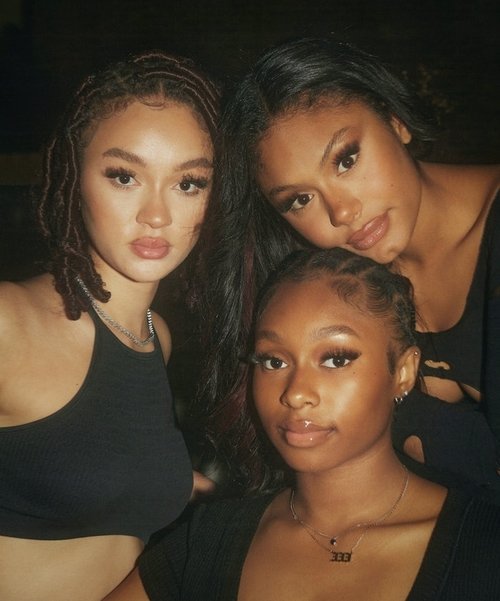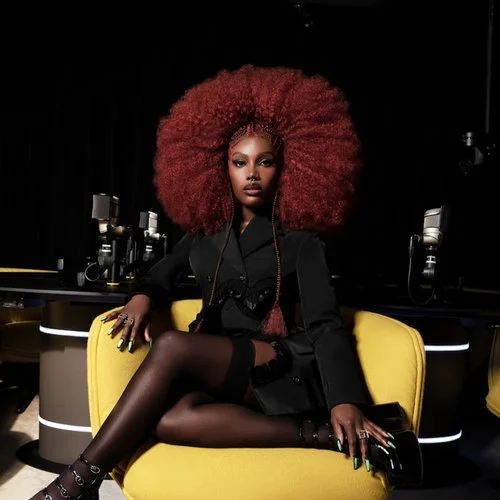
FEATURE: Spotlight: Doechii

FEATURE:


Spotlight

Doechii

 __________

ONE of the hottest and most incredible…
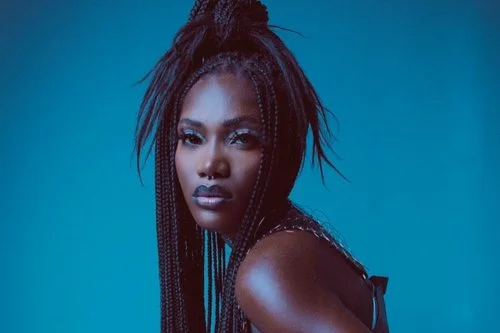
artists coming through right now, the spellbinding and hugely powerful Doechii is someone that should be known to all. Regardless of whether you like Rap and Hip-Hop, her music is not confined or defined by genre. A definite icon of the future, I want to combine some interviews with the Florida-born artist. Last August, XXL introduced a breakthrough artist who was definitely turning heads and dropping jaws:

A talented Tampa, Fla. kid who grew up in the arts—ballet, tap dancing and acting—and sports—cheerleading and gymnastics—Doechii always had varied interests and different routes of self-expression. While in performing arts school and on track to go to college for classical choral singing, she learned about SoundCloud and the DIY music scene from one of her friends in 2015. Utilizing that same friend's home studio, a then-11th-grade Doechii started cutting school to make music. She dropped her first song, "Girls," online in 2016 under the former moniker Iamdoechii. The track starts out almost like a Ciara deep cut, refashioned into a rap song, but the second half highlights her skills as a rapper. Doechii possesses a clarity and control of flows that illustrates she can fit into any lane she wants.

After a stretch of writer's block, that she cured by reading Julia Cameron's The Artist's Way, Doechii decided to stop limiting herself in her music. The multihyphenate was committed to showcasing how she truly felt with her lyrics. In 2019, she delivered the project Coven Music Session, Vol. 1 Her breakthrough moment came last year, when she dropped "Yucky Blucky Fruitcake" on her EP, Oh The Places You'll Go. The song starts off lightly, then takes a turn as Doechii raps frankly about her childhood, from poverty, emotional anguish, issues with other students and more. "Doechii is a dick, I never fit in/Overly cocky, I'm hyper-ambitious/Me, me, me, me/Bitch, I'm narcinassistic/I am a Black girl who beat the statistics/Fuck the opinions and all the logistics," she raps, switching up her flow mutliple times.

Doechii's true-to-herself lyrics and flair resonated both on TikTok and DSPs. "Yucky Blucky Fruitcake" sits at 24 million-plus Spotify streams and nearly 2 million YouTube views now, convincing the young artist that she really had fans and support. This year, she released the five-track Bra-Less EP including "Girls," the song that started it all.

Nowadays, she's courting record label attention and just dropped a scene-stealing verse—she submitted three—on Isaiah Rashad's Kal Banx-assisted track "What U Sed," featured on the TDE rhymer's The House Is Burning album.

Her recent momentum almost feels like it's blindsiding rap, but she's put many years of hard work and time into this; it's simply preparation meeting opportunity. Check out her story in this week's The Break.

Age: 23

Hometown: Tampa, Fla.

I grew up listening to: "A lotta Lauryn Hill, lotta Kanye WestPharrellOutKast, my god. When I got a little bit older, Nicki Minaj, for sure. Lauryn Hill, she showed me that I could rap and sing. Lauryn really raps, but she also really, really sings. So, just seeing her be that brave in her music and that vulnerability inspired me to be vulnerable and brave and not really limit myself on my talent. So, I don't have to just be a rapper or a singer, I can do whatever”.

This year has already been busy and productive one for the wonderful Doechii. This is somebody who is going to join the legends of Rap in years to come. Female Rap Room interviewed Doechii earlier this year and highlighted her awesome new single (at the time), Crazy:

After signing to TDE, she dropped the promotional single “Persuasive” the same day, a laid-back song detailing her love for marijuana. She effortlessly raps over the chilled beat, to create a perfect song for late night partying, comparable to the works of icon Missy Elliot. The track has amassed over 1.4 million streams on Spotify and over 430,000 views on its official YouTube video.

On April 8, she released her official major label debut single “Crazy”, an explosive declaration of confidence. Reminiscent of works by rappers such as Rico Nasty and Azealia Banks, Doechii manages to both embody styles of some of the industry’s strongest players and carve out her own spot. It has already collected over 1 million streams on Spotify and 450,000 views on its official YouTube video, despite being banned from trending on YouTube due to its nudity and violence.

These two songs, as well as her other previously released material, show her wide range of musical versatility and refusal to fit inside any one box or subgenre. Her songs range widely in sound, from the R&B-tinged “Girls” to the early Nicki Minaj-esque “Spookie Coochie”. Despite this wide variety in style, her charisma and delivery link her songs as uniquely Doechii.

Doechii displays an impressive eye for visuals, between the dance breakdowns in “Persuasive” and the high concept, artistic nature of “Crazy”. Her songs also often feature flow changes both between different songs and internally, with “Yucky Blucky Fruitcake” featuring numerous different switch-ups. However, no matter which style she embodies, Doechii has yet to truly falter.

The Female Rap Room had the privilege of hosting an interview with Doechii on April 15. The interview can be read below.

Let’s talk about your powerful new single “Crazy.” What does it personally mean to you? Did you feel any pressure with the release?

- Recently I’ve allowed myself to perform at my maximum potential and I like the results. “Crazy” is my debut single and I wanted to make a powerful entrance. The message in “Crazy” is clear; sonically and visually I will not be contained, limited or defined. I felt the most pressure I’ve EVER felt with this release because everything has to PERFECTLY embody the feelings of the single. So I was very anal about this process.

What was the recording process like?

- It was suuupppeerrrr fun! A lot of screaming and stomping on tables lol

How does it feel to be the first female rapper to join the TDE family?

- Pressure. I know I’m not here for no reason and I know that I have a lot of growing to do as a business woman and a writer. But I’m here and my brothers are supporting my journey. I believe I have a chance of impacting hip hop in a very positive way.. like Kendrick, Jay rock, Isaiah etc. But I have to open doors they haven’t yet.

How do you view your journey from where you started to where you’re at now in your career?

- I view it in a very positive way. Along side my music is my instinctual need to teach, I’m really transparent about where I come from and what I’ve learned.

How important is it to support other women in music?

- Its important. When you verbalize your support for other women it makes the space/community more inviting and fun. If you support another woman, tell her 🤎”.

I want to end with the recent interview and profile from NME. Not only has Doechii captivated and ignited passionate following in her native U.S. She is also being noticed and appreciated here in the U.K. You only need to listen to her music for a few minutes to know she will be a big festival headliner very soon:

Doechii is “meant to blow up like the white things and soda rockets”, to quote the dexterous wordplay at the heart of her breakthrough single, ‘Yucky Blucky Fruitcake’. Released two years ago as part of a fantastical, Dr Seuss-inspired EP titled ‘Oh The Places You’ll Go’, it caught the ear of Top Dawg Entertainment; the label that discovered Kendrick Lamar, and is currently home to Schoolboy Q, Jay Rock and SZA.

After signing to the influential rap label in March this year, the artist appeared on stage with Isaiah Rashad during his set at this year’s Coachella. “I was really nervous,” she says, speaking from LA (raised in Tampa, Florida, Doechii relocated to the West Coast last year). “I did two performances and I feel like I harshly critiqued myself about the first one, so I made sure that when I came back for that second one, I ate it up. It’s less often that I get nervous, but when I do, I get really, really nervous: [with] gas and shit,” she adds nonchalantly. “It gets real ugly, girl.“

She also ended up hitting the road with another of her labelmates. “SZA has this sacredness about her which is so freaking cool,” says Doechii. “I love mysterious women who have this sacred feeling about them, because I’m just not that girl. I could never be mysterious,” she laughs. “I talk too much”.

 “You grew up in Tampa. Florida as a whole seems to be in a really strong place at the moment, musically – Mellow Rackz, Nico Sweet, and They Hate Change are three other newer acts heading in really interesting directions right now…

“My experience growing up in Tampa was really colourful, and being from the South, there’s a lot of culture. I think Florida is really evolving [musically] after kind of being at a standstill. Kodak Black was kind of carrying hip-hop in Florida for a long time, but now the sound is starting to evolve, and a lot of artists are finally breaking through. People are really starting to take notice of all the different sounds, which is really beautiful.”

How did signing to TDE come about?

“I had just dropped ‘Oh The Places You’ll Go’ and I was just pushing it by myself, and it got the attention of [the person who would become] my manager – me and her decided to move to New York and follow our dreams, y’know, shit like that. I was sleeping on my dad’s sofa, and got this random call. My manager was like, ‘Bitch: TDE wants to fly us out.’ I went out there [to California], and I told myself, ‘I’m not going home without being signed.’”

“I always thought I would be independent my entire life, but if I was ever gonna sign to a label, it needed to be TDE. That’s what happened. I spent the first night with TDE making ‘Crazy’. It was that type of energy, I was hungry, and I still am. I did end up leaving because they signed me within the week. I’d never even yelled on a track before I did ‘Crazy’, so when I recorded that, it’s a reflection of pure fearlessness. I was like, ‘Fuck that shit, I’m gonna go stupid.’ Now I’ve shown myself I can make a song called ‘Crazy’, I can do anything.”

When people don’t understand something, the knee-jerk reaction is to call it ‘crazy’, and that’s perhaps something that particularly gets angled at women – was that in your head at all?

“100%. I was thinking about and channelling everything that somebody might’ve made me feel crazy about. I realised that everything people made me feel crazy for doing or saying or wearing or whatever was the very thing that freed me, or propelled me. Then I was like, ‘Woah, I am fucking crazy. That’s why I’m here, and you’re still watching me, calling me crazy, you feel me?’”

What does the future look like for Doechii?

“This is my last month to finish my album, so I’m really tunnel vision on that. The album is in an interesting place right now: I’m in this space where I have great songs, and I could put an album out right now, but in my heart I don’t feel like it’s done yet. I’m still writing new music simultaneously, while tightening up the songs I already have. I’m putting a stop on it at the end of May. I’m like, ‘No, girl, whatever you have by the end of May, that’s the fucking album”.

I shall round off now. An artist and incredible human that is making steps and building her empire, I have only recently discovered the music of Doechii. She is a titanic talent and someone who is going to go incredibly far. Do make sure that you go and follow the Florida-born sensation. There is little doubt in my mind that Doechii is primed for…

WORLDWIDE success.

______________

Follow Doechii
FEATURE: Just Like His Wife When She Was Beautiful: Why Kate Bush’s Babooshka Reveals New Layers with Every Listen

FEATURE:


Just Like His Wife When She Was Beautiful

PHOTO CREDIT: John Carder Bush

Why Kate Bush’s Babooshka Reveals New Layers with Every Listen

__________

EVEN though I have recently…

written about Babooshka, I am coming back to it again, as it is a song that continues to draw me in and reveal new layers. On 27th June, the song is forty-two. I am going to repeat some of what I wrote last time in terms of the song’s origins and Kate Bush’s interpretations. I am going to finish by discussing why the song is so alluring, nuanced and special. Before that, and returning to the Kate Bush Encyclopaedia:

It was really a theme that has fascinated me for some time. It's based on a theme that is often used in folk songs, which is where the wife of the husband begins to feel that perhaps he's not faithful. And there's no real strength in her feelings, it's just more or less paranoia suspicions, and so she starts thinking that she's going to test him, just to see if he's faithful. So what she does is she gets herself a pseudonym, which happens to be Babooshka, and she sends him a letter. And he responds very well to the letter, because as he reads it, he recognises the wife that he had a couple of years ago, who was happy, in the letter. And so he likes it, and she decides to take it even further and get a meeting together to see how he reacts to this Babooshka lady instead of her. When he meets her, again because she is so similar to his wife, the one that he loves, he's very attracted to her. Of course she is very annoyed and the break in the song is just throwing the restaurant at him...  (...) The whole idea of the song is really the futility and the stupidness of humans and how by our own thinking, spinning around in our own ideas we come up with completely paranoid facts. So in her situation she was in fact suspicious of a man who was doing nothing wrong, he loved her very much indeed. Through her own suspicions and evil thoughts she's really ruining the relationship. (Countdown Australia, 1980)”.

There are three different reasons and ways in which Babooshka entrances me. The song, its video and the production combine beautifully. The ambiguity and sense of mystery in the song is something everyone pictures. I listen to the song and have my own visions about what Bush is singing. The video has this incredible power and allure that blows the mind! It is much more than the sexiness of the video. It is a remarkable piece of film (directed by Keef) that stands as one of Bush’s finest videos. Dreams of Orgonon discusses the amazing video, in addition to the depth and layers of the song:

Observe the extraordinary video Bush produced for “Babooshka.” Simply staged, with Bush performing against a black background, the video relies on its costuming and lighting to provide spectacle. As Bush sings the verses, she is clad in a black bodysuit and veil as she dances with a double bass. She meticulously poses with it, making short, clipped motions, like a prim aristocrat at a royal ball. Placing her hands up and down the bass and spinning it, one gets the impression that this bass is her partner, a sexualized personification of her music. The bass guitar also plays a significant part in the song — Peter Gabriel’s collaborator John Giblin provides the song’s marvelous bassline, the song’s low-mixed backbone. The double bass is as much a part of the dance as her balalaika is — a sturdy, inexpressive partner. She frequently throttles it, ending some performances with a crazed gurn as she strangles its neck. The verse is the restrained part of the song, where Babooshka quietly schemes beneath her veil and lashes out at the bass with small cruel gestures. As Bush screams “ALL YOURS/ BABOOSHKA/ BABOOSHKA/ BABOOSHKA/ YA-YA” while swinging a sword and wearing the tight golden garb of a warrior princess from a fantasy novel (a few Bush aficionados will know that the source of the costume is illustrator Chris Achilleos’ cover for a 1978 sword-and-sorcery novel called Raven: Swordmistress of Chaos, and yes, we’re going down the rabbit hole of kinks for this song), she’s moved into an entirely new dimension from “Wuthering Heights” and The Kick Inside, one where the depravity and glory of the human imagination can do its best and worst. It’s a spectacle of fantastical madness, engaging glam and punk’s raging excess while taking it in oddly classicist directions. It’s almost like Babooshka’s costume is an expression of her true self: a raving madwoman better suited to pulp cover-art than a human relationship.

That Babooshka is something of a madwoman is expressed by the song, and particularly its video. Certainly Kate Bush considers Babooshka a pathetic (if pitiful and tragic) villain who hurts her husband. In an interview, she described Babooshka’s motivations as “paranoia [and] suspicions,” and ascribes the husband’s desire to meet his pen pal to her similarity to “his wife, the one that he loves.” Her perspective of the song is damning of Babooshka and de facto absolves her husband. The story is ultimately one of Babooshka’s downfall, where her preoccupation with retaining control of her life costs her the marriage.

Of course, the song’s moral ambiguity is its most interesting aspect. While there’s an almost reactionary slant to the way “Babooshka” perceives relationships, particularly in the way it treats gender along binary and determinist lines, Bush does push against the grain. She often demonstrates a willingness to interrogate the internal experiences of her characters, particularly women characters. Exploring the ramifications of jealousy is crucial to imbuing her characters with interiority. Bush has Babooshka’s husband failing similarly, even if she doesn’t realize it. Most texts are buzzing with suggestions their authors haven’t considered. In the case of “Babooshka,” Bush enacts a complex meditation on how gendered expectations can poison relationships. Babooshka lets her suspicions and preoccupation with re-becoming young and glamorous overcome her life, and her husband lets his treacherous predilections towards young beauty lead him astray. No party comes out morally in the clear, and yet neither is entirely unsympathetic. They’re trapped in an ugly binary where people are programmed to perform in ways incompatible with human psychology. If there’s a way to use the framework of folklore in a thoughtful and modern way, this is it.

As such, “Babooshka” makes the case that Kate Bush’s songwriting can be multiple things at once and create a conflicting hive of meaning, and that Bush’s love for the archaic is hardly blinded by a nostalgic haze. She demonstrates a consistent willingness to interrogate how stories like these work, how human beings act when plugged into myth and folklore, and the ways in which these situations are incompatible with humanity. Some of the most complex women in fiction are characters in Kate Bush songs. Never for Ever’s status as the first studio album by a female artist to reach #1 in the UK remains significant for a number of reasons. If Dreams of Orgonon has a thesis, it’s that Kate Bush is a traditionally-minded person who can’t stop herself from writing feminist songs. Break the glass. Howl “Babooshka, ya-ya!” The 1980s are here, and there’s a new swordmistress of chaos to herald them”.

 PHOTO CREDIT: Adrian Boot

I love the production by Kate Bush and Jon Kelly. Both light and dense with sound, the instrumental of Babooshka alone is bewitching! Bush’s vocal has this two-prong quality. In the choruses, it seems almost seductive and ripe with intrigue. The rawness and explosion she unleashes on the chorus is so incredibly stunning. I often wonder where Bush was when she wrote particular songs. It would have been amazing watching her think about Babooshka and put it together. The song itself (on Never for Ever, 1980) gives you one view. The video provides another. I find myself listening again and again to Babooshka as, despite articles being written about it, its real truth and power alludes me. Maybe it is a song that has a sense of mystery and something held back. One of Bush’s greatest vocal performances, there is so much to unpick and unpack when it comes to the song. Ahead of its forty-second anniversary next month, I wanted to revisit it once more. On an album as fascinating and strong as Never for Ever, Babooshka stands out. It is one of Bush’s more commercial songs, though it is still so much more original and individual than anything people would have been listening to in 1980! A beguiling and dazzling jewel from Kate Bush, Babooshka is absolutely…

ONE of most spectacular tracks.

FEATURE: Bill of Rights: Why Is There Still Huge Imbalance and Inequality When it Comes to Booking Women and Non-Binary Artists as Festival Headliners?

FEATURE:


Bill of Rights

IMAGE CREDIT: Reading Festival 

Why Is There Still Huge Imbalance and Inequality When it Comes to Booking Women and Non-Binary Artists as Festival Headliners?

 __________

ONE of the most alarming aspects…

 IMAGE CREDIT: Glastonbury Festival

of modern live music is how there is a gender disparity when it comes to festival headliners. Apart from Glastonbury and a few other festivals, the news is still the same: male artists are dominating and taking the majority of the headline slots. There are festivals with gender-balanced line-ups, but there are very few that are providing headline slots to female and non-binary acts. Glastonbury’s booking of Billie Eilish is a seeming island in a sea of male headliners. There is the classic argument that people lean towards when it comes to explaining this sort of imbalance and oversight. They will say that the men are male acts are booked because they are most successful and profitable. I would disagree. Look at the quality of music being put out by women over the past few years. It is not the case that festivals are only booking stadium act. From Little Simz and Taylor Swift, through to Halsey, FKA twigs, Charli XCX, and Wolf Alice, there are so many female artists/female-led artists who are deserving of a headline opportunity! I know there is another issue that many women are defined by their gender and want to be referred to as an ‘artist’ rather than a ‘female artist’. Not to be defined or labelled. Another argument people make is that, if it isn’t broke, don’t fix it. People are going to festivals and not boycotting them because of a lack of women headlining.

There are so many weak and tired arguments as to why the status quo remains. At a time when so many festivals are not doing due diligence and the line-ups are skewed in favour of male artists, there are no excuses! There are plenty of women and non-binary artists who are commercial and can attract punters. When it comes to quality and variation, every festival has options. From marvellous bands led by women to the solo acts, duos and trios who could easily helm a festival, what is holding organisers back!? I could list dozens of artists who could be added to festival bills as headliners this year! Even though there are some female/non-binary artists headlining this summer, there are not many. Those few dozen names are newer acts. Toss in legends and established artists, and there is a veritable database and banquet of waiting artists. Logistically, financially and artistically, no festival can put up barriers and keep booking men as headliners. It seems almost redundant to call on festivals to change their ways, as they seem invulnerable to rationale and the obvious! Although there has been some improvement in terms of the gender balance across festivals in general, there is still a gulf when it comes to headline slots. Some might say that, so long as the gender balance is closer to 50/50, then why would it matter much if men were the headliners. Complete Music Update respond to a new BBC study that shows just how bad the situation is:

A new study by the BBC has found that just 13% of headliners booked to play UK festivals this summer are a female solo artist or an all-female band.

Critics say that, despite efforts to shift the gender balance of festival line-ups in recent years, this shows that promoters are still not taking the issue seriously enough. Others argue that much has actually changed, especially when it comes to full festival line-ups, even if there is more to be done, especially when it comes to headliners.

 According to the BBC, a study of the UK’s biggest music festivals found that 149 headline acts – or 74.5% – are male solo acts or all-male bands. Meanwhile, 24 headliners – or 12% – are bands featuring a mix of male and female musicians, with just one headline act identifying as non-binary.

It was partly in response to another BBC study in 2017 – which showed that 80% of festival headliners in the UK were male – that the PRS Foundation launched its Keychange initiative.

Since then, more than 300 festivals have signed a Keychange pledge to achieve a 50/50 gender balance on their line-ups by this summer. And while some have now reached that target – or are moving towards it – others still lag behind. And, clearly, any positive moves occurring lower down the festival line-ups are not really being reflected at the top.

In part, this is down to wider systemic issues in the music industry, Keychange Project Manager Francine Gorman tells the BBC: “Women and gender minorities have had access to far fewer opportunities than their male counterparts over the years, and therefore it does take a little bit of time to build artists to the status that they’d be able to take a headline spot”.

 “I think the progress that has been made over the last couple of years is going to pay off”, she adds. “We are going to start seeing a lot more women and gender minority headliners across stages in the future. There does seem to be some myth flying around the live music industry that women artists don’t sell tickets, but I’m yet to see any evidence to support this. In fact, the evidence that I have seen is quite the contrary”.

One festival to meet the Keychange target is Standon Calling, although three of its four main headliners this year are all-male acts.

“When we signed up to Keychange back in 2018, we pledged that we would commit to ensuring 50/50 gender balance on our line-up by 2022”, says Standon Calling founder Alex Trenchard. “At the time this felt like a huge challenge, but we’re delighted to say that we’re on track to exceed that figure with 54% of acts on our 2022 line-up identifying as female or non-binary”.

“Our line-ups are stronger and more diverse than ever”, he adds. “We’re delighted to be leading the way amongst the industry, showing that gender balance in festivals in 2022 is both possible and a key component of curating an exciting line up”.

Responding to the latest BBC study, Paul Reed, CEO of the Association Of Independent Festivals, says: “While gender inequality in music is often easiest to see on festival line-up posters, this is a problem that exists right across the talent development pipeline, with festival main stages at the very end of that process”.

There is not a simple explanation as to why festivals resist women and non-binary artists as headliners – nor is there a simple solution. I would say festivals needs to address things and understand that there is ample quality and range when it comes to non-male headliners. These acts can bring in huge crowds. Even if festivals are always balanced with regards gender, headline slots are important. They are a big reason so many people go to festivals. They recognise excellence. Changes and steps being made (slowly) in terms of a gender equality across festivals, but it is clear that there arer big problems still that should have been tackled and have not yet been. It is simple to book women and non-binary artists to headline. There does not need to be a vote held or any sort of process. It is as easy as inviting them to play. Unless I am missing something obvious?! For all the supposed progress, there is huge ignorance and a wave of tiring and illogical questions and excuses barring equality that could happen very quickly. The lack of women and non-binary artists headlining festivals is shameful! It is entirely the faulty of the industry – and not the artists themselves. Equality needs to happen very soon, as it is perfectly clear that…

IT is long overdue.

FEATURE: Take a Chance on Me: After ABBA Voyage: A Groundbreaking Event Many Artists Are Destined to Copy

FEATURE:


Take a Chance on Me

After ABBA Voyage: A Groundbreaking Event Many Artists Are Destined to Copy

 __________

THIS week…

 IN THIS PHOTO: Benny Andersson, Agnetha Fältskog, Anni-Frid Lyngstad and Björn Ulvaeus of ABBA/PHOTO CREDIT: Dave J Hogan

the much-anticipated ABBA Voyage opened in London at the ABBA Arena. Some were sceptical that avatars of ABBA would not be as good as the real thing. Maybe a bit of an odd experience that would be jarring. The reviews that have come in so far have all agreed that the show was a sensation! I wanted to write about it because, in a few reviews, people asked whether many other acts would follow suit. I think there is something ghoulish when it comes to deceased artists being ‘brought alive’ with avatars and these concerts. Because ABBA are with us, they can give approval, have their say and, importantly, ensure that their representations are as realistic as possible. The buzz and acclaim for ABBA Voyage is still going strong! Of course, fans want to see the real thing perform. That said, there is this debate about the environment and carbon footprints. If it is harder for artists to fly around the world because of their carbon footprint, then a virtual concert like ABBA’s could solve the issue. I also think that avatars gives slightly older artists a chance to be seen. It might be quite demanding for them to perform a long show around the world. This might be a solution. Before carrying on, I want to source The Guardian’s review of ABBA’s Voyage premiere on 26th May:

The band’s most famously publicity-shy member, Agnetha Fältskog, is in attendance – but it’s one accompanied by a genuine sense of mystery. If the mystery isn’t as all-encompassing as that which surrounded the first night of Kate Bush’s return to live performance in 2014 – you at least have a pretty good idea in advance of what songs will be involved, which certainly wasn’t the case then – the question of precisely how Abba will be brought back to life almost 40 years after their last public performance remains veiled in secrecy.

We’ve all seen the band’s eerily de-aged digital avatars – or Abbatars, as they persist in calling them – but what form they take has remained classified: the only solid clue was that they weren’t holograms, which hasn’t stopped the British media doggedly referring to them as holograms ever since.Whatever they are, the effect is genuinely jaw-dropping. Watching the four figures on the stage, it’s almost impossible to tell you’re not watching human beings: occasionally, there’s a hint of video game uncanny valley about the projections on the giant screens either side of the stage, but your attention is continually drawn to the human-sized avatars.

They gaze sadly into each other’s eyes during The Winner Takes It All, deliver cheesy speeches between songs – “I wasn’t married at the time,” says the figure representing Björn Ulvaeus, explaining the genesis of Does Your Mother Know [that you’re out?], “or was I?” – and protest at the British judges giving them nul points during the 1974 Eurovision song contest. There are even lulls in the performance, just as there are at a “real” gig, usually when the action shifts from the avatars to more straightforward footage: a lengthy animation shown during Eagle providing an opportunity to visit the bar.

Aside from an opening salvo involving 1982’s darkly powerful The Visitors and Hole In Your Soul, a track from 1978’s Abba The Album, the setlist largely sticks to crowd-pleasing greatest hits – Waterloo, SOS, Knowing Me Knowing You – rather than scouring Abba’s oeuvre for deep cuts. This is both smart commercial sense – this is a show designed to run and run, potentially in several countries at once, something you’re never going to achieve if diehard fans are your target market – and probably for the best, given what a treacherous business scouring Abba’s oeuvre for deep cuts is.

You’re as likely to encounter something like Put On Your White Sombrero or King Kong Song – “can’t you hear the beating of the monkey tom-tom?” – as you are anything approaching the sublimity of Lay All Your Love On Me or The Winner Takes It All. Just as the Dolce & Gabbana-designed costumes rework the band’s 70s wardrobe in a tasteful way – evincing a restraint that Abba themselves seldom deployed in their heyday – so the music, performed by a live band, is occasionally faintly tweaked from the recorded versions the vocals are taken from: Voulez-Vous feels punchier and more raw.

By the time the show hits its finale with Thank You For The Music followed by Dancing Queen, any lingering sense that you’re not actually in the presence of Abba has dissolved. It’s so successful that it’s hard not to imagine other artists following suit – you strongly suspect the surviving members of Queen will be on the blower to Industrial Light & Magic before the week’s out.

However, Ulvaeus has already issued a warning to anyone planning on following Abba’s path to resurrect a deceased star: “It is better to do it with someone who is alive because … the measurements in the cranium are the same.” It’s a warning that’s going to go unheeded: access to cranial measurements or not, Voyage is the kind of triumph that’s destined not merely to run and run but be repeatedly copied”.

Maybe the sense of anticipation and that remarkable catalogue means that there is huge excitement and that extra bit of electricity around ABBA putting some avatars on stage. I think that, if an artist like Kylie Minogue or a band such as Radiohead wanted to do their own version of ABBA Voyage, it would prove popular and intriguing. I don’t think it is feasible or wise for virtual concerts to be the new normal or replace the proper live experience. ABBA have shown that they could delight the fans without being on stage themselves! It was a risk. It was one that paid off! I can see a wave of artists designing their own concert experience based on the huge reaction ABBA Voyage has been afforded. At a time when artists need to be mindful of their mental health, the environment and cost, perhaps this does afford them an alternative that means they can deliver a show to the fans and not have to travel a lot. In terms of sheer energy, playing stadium gigs is exhausting. In any case, the ABBA Voyage residency has already been a triumph – and it will continue to be so.! I am not sure what is next for ABBA. After releasing a studio album, Voyage, last year, maybe that will be the end. You can never say never with them. It has been great reading and hearing all this love for ABBA Voyage. It will inspire so many other artists. This revolutionary and enormously successful residency is going to open doors and new worlds for artists. That can only be…

A good thing!

FEATURE: Revisiting… Lizzo - Cuz I Love You

FEATURE:


Revisiting…

Lizzo - Cuz I Love You

__________

FOR this outing of Revisiting…

PHOTO CREDIT: Luke Gilford

I am thinking about Lizzo’s major label debut album, Cuz I Love You. One reason for doing so is because her fourth studio album, Special, is out in July. Her current album is one that everyone needs to hear. A sensational album from the Detroit-born rapper, songs from it are still played - though I don’t think that it gets all the credit that it deserves. I am going to bring a couple of reviews in for it soon. Before that, there is an interview from Vogue from 2019 that caught my eye. It provides more detail about an album that was released to critical acclaim. Lizzo, as an artist, might not have been familiar to many. It is a great insight into a phenomenal talent:

 “Her debut album, Cuz I Love You, out now, is one of the summer’s most-anticipated with standout tracks “Juice” and the one the album takes its name from already proving radio favourites. Listen, sing, dance along – just don’t pigeonhole Lizzo as one kind of artist.

“I didn’t ascribe to a genre for a long time,” she began. “Now, because I remained so true to myself, I finally am getting my time in the sun. I just hope that when people listen to my music, they get the tone of the celebration and conversation.”

The way that we consume music today has impacted the way that musicians now claim genres, Lizzo believes. Spotify Discover proving most influential. “I think it’s almost impossible to say that you’re one type of sound now - streaming and the internet has made music a super accessible thing so for me to claim a genre would be a lie.”

PHOTO CREDIT: Luke Gilford 

Lizzo's debut album isn’t her first foray into music. A classically trained flautist, who has been in rap bands since high school, this star has been waiting for the moment to go from rising to the megastar for some time.

“I’m the most discoverable new artist, always,” she laughs. “I’ve been that artist that someone 'just discovered' since 2012. I’m a new idea to people. I’m not the cookie cutter that you expect from a mainstream pop artist. I’m always going to be a novel idea to people, but that’s what makes me, me and that’s my story and I’m sticking to it.”

And she’s right. When was mainstream music last blessed with the arrival of an artist like Lizzo? A tall, plus-sized black woman who believes that one of life’s “great honours” is being photographed in a diamond thong. She’s fabulous, and not afraid to live it either.

Confidence is a word you could be quick to align with her, but it wasn’t always that way. “[Growing up], I had a lot of confidence in myself as a musician. I wasn’t body confident; I wasn’t confident in my social skills; I wasn’t confident in a lot of things, but I was super confident in the fact that I was good at music,” she explains. “I knew to an extent that there would be some boxes that would have to be checked [to be a musical success] but it was almost impossible for me to check them. I’m not a thin white woman. So how could I be Britney Spears? How could I be a popstar? So, the fact that I didn’t even have access to those prerequisites, I knew I’d have to make my own lane.”

“I didn’t have enough women to look up to and they weren’t given enough space in the industry to carve out a lane for big girls that are brown and black and want to sing and dance without getting shit talked and body shamed. I’m out here and I set my mind to it. I want to be a sex symbol and music goddess and I’m out here trying to make that happen for myself. I’m here for the fantasy but I want to be a part of that fantasy. I’m just as fine as those girls.”

It’s often said that to be a popstar you need to have the full package. And boy does Lizzo have it. In recruiting “the greatest minds” to work besides her on the visuals from fashion to art direction: “We call it playing in the playground,” she laughs. “So, even my look today is playing in the playground.”

“I always thought that everybody was as micromanagey as I am, but it turned out that when I got signed to Atlantic Records, that is not the case,” she explains. “I came with a creative team and a strong vision, and that can be a pain in the ass sometimes because it’s like let’s just get the job done but I’m there on the phone at six o’clock in the morning saying it’s not ready yet.”

The perfectionist in her has released music videos that look to the medium through vintage-tinted glasses: old-school aerobics videos, sacrilegious Madonna-like visuals and major beauty moments that are calling for Lizzo to secure a campaign any moment”.

 An amazing album that everyone needs to dig and spend time with Cuz I Love You is full of incredible tracks! From righteous and undeniable bangers to more emotive and soulful offerings, this is Lizzo’s most complete, varied and focused album. As a songwriter, Melissa Jefferson (Lizzo) is so individual and inspiring. An artist who will go down as one of the greats, there is no wonder Cuz I Love You scooped plenty of praise. This is what AllMusic wrote in their review:

Since her indie days, Lizzo has been a distinctive and multi-talented artist capable of blending rap, soul, pop, and her classical training with positive messages and a sharp sense of humor. On her major-label debut Cuz I Love You, she takes all of these strengths to the next level, and the results are her most consistent, and consistently joyous, set of songs yet. Working with a creative team that includes producer Ricky Reed -- with whom Lizzo connected shortly after releasing her second album, Big Grrrl Small World -- she continues to embrace her gospel roots and the full power of her voice. It's a journey she began on that album and 2016's Coconut Oil EP, both of which feel like dress rehearsals for what she unleashes on Cuz I Love You. Lizzo wastes no time in showing off her range: The title track kicks off the album with stunning high notes and powerful vocalizing that add new dimensions to her music and lyrics ("I thought I was love-impaired") that prove she's as witty as ever.

As hinted by its other lead singles, Cuz I Love You's musical range is almost as wide as Lizzo's vocal one. The sexy roller disco of "Juice" and "Tempo"'s sleekly rumbling shout-out to thick girls -- which makes equal time for a Missy Elliott cameo and a flute solo -- are wildly different, but share Lizzo's effortless charisma. That charisma also unites all the other twists and turns she throws at her audience over the course of Cuz I Love You. She's unapologetically funky on "Cry Baby," while "Jerome"'s fusion of gospel, soul, and trap is another example of how cleverly Lizzo blends traditional sounds into her songs about love and lust in the late 2010s. She manages the unlikely feat of being raunchy and uplifting at the same time on "Better in Color," and serves up seduction with a wink on the standout closing track "Lingerie," which boasts one of her sultriest vocals as well as the singular double entendre "you make me crescendo." More importantly, when she sings the praises of singlehood on "Soulmate," it sounds like it's the best choice, not second choice. Elsewhere, Lizzo's empowering messages extend to "Like a Girl"'s celebration of powerful women and the importance of being true to your feelings -- whatever they may be -- on the Gucci Mane collaboration "Exactly How I Feel." Fueled by megawatt energy that never lets up, Cuz I Love You is a triumphant showcase for every part of Lizzo's talent, physicality, and sexuality”.

I will end with a review from Rolling Stone. They were stunned and impressed by the talent and conviction evident right throughout the incredible Cuz I Love You:

Be eternal.” That’s the advice Lizzo got from one of her first high-profile fans, Prince. And she lives up to the Purple One’s words on her legend-making Cuz I Love You, the breakthrough album where she finally claims her baby-I’m-a-star crown as a mega-pop queen. Melissa Jefferson can do it all: she sings, she raps, she plays the flute, she speaks her mind, always ready to dedicate an R.I.P to the memory of her last fuck. Lizzo’s the perfect star for right now — but she also aims for the timeless. Like the lady says: “Ho and flute are life.”

Born in Houston, nurtured in Minneapolis, Lizzo drops Cuz I Love You on the edge of turning 31. (She was born just a few days after Prince dropped “Alphabet Street,” which may help explain her superhuman levels of Paisley Park-dom.) It’s a flawless major-label debut, after she grabbed ears with her indie gems Lizzobangers and Big Grrrl Small World. No filler here—just 33 minutes of twerk-core, hip-hop self-love anthems, torchy soul ballads, plus the occasional moment where she busts out her inner Tull to play flute hero. Lizzo’s woodwind muse, Sasha Flute, has its own Instagram, becoming the most iconic axe to rock the hit parade since guitars like B.B. King’s Lucille or Neil Young’s Old Black.

Cuz I Love You is all about Lizzo’s quest to embrace her inner strength, learning to be her own “Soulmate” (“Bad bitch in the mirror like ‘Yeah, I’m in love’”) and flex feminist body positivity (“If you feel like a girl, then you real like a girl”). She isn’t hung up on her past anymore — as she declares, “Only exes that I care about are in my fucking chromosomes.” In “Lingerie,” she makes lounging around in her underwear sound like a revolutionary act.

Cuz I Love You follows through on the legend she’s been steadily building over the past few years. She’s a punk rocker at heart, like her mentors Sleater-Kinney — many Lizzo fans first heard her as the opening act on the riot-grrrl legends’ 2015 reunion tour. If you watched Someone Great on Netflix this weekend (like most of us), you got blown away by the pivotal scene when Rolling Stone music critic Gina Rodriguez has a self-care moment listening to Lizzo declare, “I just took a DNA test / Turns out I’m 100 per cent that bitch.”

She’s got a sly sense of music history, which is how she can reach so far on Cuz I Love You, mixing it up with producers Ricky Reed, Oak and X Ambassadors. The single “Juice” has the classic Eighties R&B glide of Jimmy Jam and Terry Lewis. (Any basic can imitate Janet Jackson — but it takes nerve to nail the precise vibe of Cherrelle circa High Priority.) “Cry Baby” dips into Prince slow-love mode, though her attitude is more like if Apollonia took over the Morris Day role in Purple Rain. As Lizzo sneers, “A lot of girls have time for this shit.

Honestly, I don’t.”

Lizzo sure does love the hell out of a nice juicy old-school soul weeper, the kind that Etta James, Ruth Brown or Ann Peebles liked to rip apart with their bare hands. Lizzo can do that while simultaneously serving a flute lewk. Case in point: the title track, which begins with a startling soul holler, or “Jerome,” where she tells a lovesick boy-child, “Two a.m. photos with smileys and hearts / Ain’t the way to my juicy parts.”

“Tempo” begins with a snippet of “When Doves Cry”-style guitar, then takes off into a club blast with a manifesto for a chorus: “Slow songs, they for skinny hoes / Can’t move all this here to one of those / I’m a thick bitch, I need tempo.” Guest goddess Missy Elliott sends it through the roof. “Heaven Help Me” is her Aretha tribute, full of gospel piano. And just when you think the song can’t get any bigger? Lizzo moves over and lets Sasha Flute take over.

Lizzo turned heads with the pithy question she once asked in “Truth Hurts”: “Why are men great until they gotta be great?” But it’s not a question she wastes much time on here. When she belts “Cuz I Love You,” it’s obvious her “you” is the star she sees in the mirror. As she testifies all over the album, it was difficult work for Lizzo to learn that she’s her own hero. But it just takes listening to Cuz I Love You to make her yours”.

Go and listen to Cuz I Love You, as I feel it is an album that has not quite got as much attention and play the past year or so that it warrants. Lizzo is preparing a new album for July, so let’s hope that stations revisit Cuz I Love You and play it quite extensively. Three years after its release, it still sounds…

ABSOLUTELY amazing.

FEATURE: Spotlight: MUNA

FEATURE:


Spotlight

MUNA

 __________

A group I have featured before…

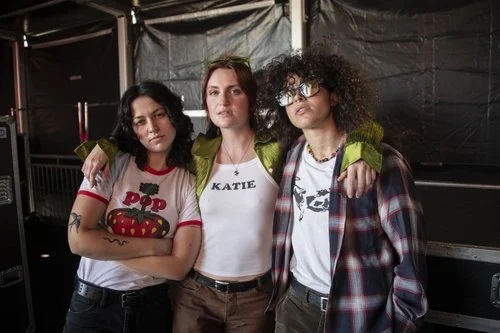
but not put them in my Spotlight feature, MUNA are an act that everyone should know about and get behind. The Los Angeles band consists of Katie Gavin, Josette Maskin and Naomi McPherson. They have released two incredible studio albums with RCA Records, About U (2017) and Saves the World (2019). They are now signed to Phoebe Bridgers’ independent label, Saddest Factory Records. The MUNA album is due for release on 24th June, 2022. That album is going to be one of the best and most important of this year. MUNA are going to go stratospheric very soon. It is the perfect time to feature them here. To properly salute them, there are a few interviews that I want to bring in. I will end with some information about their upcoming eponymous studio album. I am going to start with a DIY interview from last year. Given the fact the pandemic was in full flight last year, it was a pretty unsure time for a group who have such incredible and must-hear music in their locker:

As for many artists - and the general population - 2021 has been a rollercoaster for the LA trio. While the majority of the pandemic was incredibly tough for the band (“Yeah, there have been many days where we have just cried,” guitarist Josette Maskin says, “and many days where we were like, ‘I don’t know if we can keep going’, but we managed to”), this year also marked the start of a new chapter for them: they became the second artists to sign to Phoebe’s new label, Saddest Factory Records.

“I think that it just worked out in terms of timing in a way that felt like it was very meant to be,” explains Katie of how the relationship came to fruition. “In the pandemic, we got dropped by our last label - we were signed to a major - and we were having that important time where we were like, ‘What are we? Why do we do this? Why do we wanna keep going?’ At the same time, [Phoebe] made it clear that she wanted to work with us and it just made a lot of sense for a lot of different reasons. We respect her a lot and thought it would be cool to have her be our boss, so we signed and it’s been pretty fucking great so far!”

“I think the other thing that we find really affirming is to work with someone who is also of a marginalised gender,” adds Josette, of working with not just a peer but someone of the LGBTQ+ community. “I think that makes this experience really validating. To have someone that understands us in that way and isn’t going to pressure us in any way; we just feel very understood and supported and we couldn’t really be happier.”

For their first foray with Saddest Factory, the band have just released effervescent pop gem ‘Silk Chiffon’: “a song,” as guitarist Naomi McPherson describes it, “for kids to have their first gay kiss to.” “I think this is the first time we’ve put out a song where I didn’t feel very worried!” Josette laughs.

An addictive, bubblegum offering that celebrates the queer experience and those heady early days of a crush, it’s little wonder the track’s already been met with so much love. “There was just a moment of levity after finishing ‘Saves The World’ because that record was super heavy,” Katie offers up. “I got to work through a lot of stuff with that record.”

After completing that 2019 second album, a fresh burst of creativity soon followed, and the first steps of ‘Silk Chiffon’ were made. “I came back from a concert and the pre-chorus was the first thing I wrote; I just thought it was really funny, kinda like writing ‘Number One Fan’,” recalls Katie. “It feels like a joy that’s not necessarily hard-earned, but it definitely feels like a new choice to just be at a point in life where I’m choosing to have fun and experience some levity and have that queer joy represented in music. You know, ‘That girl thinks I’m cute, yeeeeah!’”

As for their next move, the trio are still keeping things a little vague (“We’re not ready to reveal all of our cards yet,” nods Naomi), but the sense of joy from their recent single is set to find its way in. “There was a point when we were working on this next project, where I was a little worried because people know us and love us - to a certain extent - for the pain that we put into pop music,” Katie laughs. “I was like, ‘Is it too joyful?!’

“There’s stuff on this next record that’s in that realm of experiencing love and experiencing joy, and also just being comfortable with your own desires, whether that’s in a relationship, or a desire for freedom,” she continues. “But we’re also doing the very typical MUNA thing… It’s not a bunch of songs that sound the same, it’s a lot of different styles because that’s what’s fun for us”.

A sensation and close trio that you have to respect and admire, I would not be shocked to see them headlining huge festivals in the next few years. Under a great label, they are going to have the freedom, leadership and resources that can take their music to new heights. This i-D interview reveals that the sensational MUNA almost called it quits fairly recently:

There was a moment, in the long timeline of MUNA’s influential lifespan, when the Californian band toyed with the idea of giving up. It came more recently than you might think, in a strange moment of silence, mid-pandemic. At the start of 2020, the group had formally wrapped work on their second record Saves The World, a major critical success. Like their 2017 debut About U, it had spawned songs that captured the miraculous, morose and mentally ill experience of what it means to be queer today. They were, at that time, like a lifeline for their listeners.

As the music industry waded through the pandemic, and pursestrings tightened, the call came from their then-label RCA Records (home to Britney Spears, Brockhampton and Doja Cat) in early 2021, delivering a harsh blow: they’d been dropped, rendered homeless release-wise, and were left with the early parts of a third album that may, in theory, have never seen the light of day.

PHOTO CREDIT: Jheyda McGarrell

They’re up front about how they reacted to it. “Hell yeah we wanted to quit, baby!” the band’s guitarist-slash-producer Josette Maskin says. The three band members are speaking over Zoom on a Wednesday morning, “shredded” by a full-on stint at SXSW the week prior.

Katie Gavin, the band’s lead singer and songwriter, is reflecting upon how they got here. “We were just babies, you know?” she says, looking back to MUNA’s early days, as a band whose ability to crystallise the beauty of queer pain and euphoria into perfect pop music earned them respect in spaces they hadn’t expected. “It can take people — particularly queer people — a long time to figure out what works for them and how they want to represent themselves, especially when you’re in a situation where there’s a lot of voices coming from other directions. People try to fit you into something that is the closest approximation to what your identity is. ”

“Or the closest approximation of what a consumable version of your identity is at that point in time,” Naomi McPherson, self-professed “mixed black genius dyke” and the group’s guitarist-slash-producer says. This isn’t a read of their old label; they understand that machine fully and recognise both their position as outliers within it, and those that supported them through it all. What they learned there, working briefly with Grammy-winning producers and touring with fellow Sony signees, like Harry Styles, were valuable parts of their narrative. What they released was still as magical as the early material that had been made in their college bedrooms pre-signing: heartbreak songs written under their desks (“If U Love Me Now”); massive ‘fuck you’ anthems mastered during their college finals (“Loudspeaker”).

They’ve spent the past year readjusting to life on an indie label — Phoebe Bridgers’ Saddest Factory Records — where the opportunity to return to their roots meant they could make an album how they wanted to. No MOs, no label-led masterplans, no interventions — just pure, unbridled MUNA.

When we talk, they’re still in the “zooming out” period of the record. It was finished in December 2021, after a furious few months spent in the basement studio of Josette’s place, working like they did before fame and fans found them. “I’ve been joking with friends that I don't really know what we made!” Katie says, knowing only that what they’ve made makes them feel intensely vulnerable. “We’ll know more when we have a bit more space from it.”

If the sound-bite understanding of what MUNA’s self-titled third album means to them is still forming, they do appear to have a grasp on what it sounds and feels like on a macro scale. “We joke about [this album] having dyke boyband energy,” Katie says, admitting it’s their most pop endeavour to date, like their major label detachment has made them lean into the sounds most associated with that set up. “There’s something fun about playing into that while we have the freedom of an indie label. It’s a more indie record than Saves the World, in the sense that we really did it on our own with our friends. There’s nobody telling us what to do now.”

PHOTO CREDIT: Jheyda McGarrell

There is an unhinged energy to MUNA’s forthcoming record: restless, massive and undeterred. To pin down its sonic hallmarks is an impossible task, because it’s encyclopaedic: sing-a-long stadium pop segues into floor-filling dance into ruminative Shania Twain-esque country into songs with “90s songwriter chilled makeout” energy. “Part of the process of making the record sonically was having bold moments and making brash contradictions,” Naomi says. “There are songs that lyrically contradict the song before it. I think we were throwing everything at the wall.”

Josette recalls a question they asked themselves a lot in the studio: “What is a song supposed to sound like?” they recall. “That’s what our decisions are based on. That’s been the guiding principle of MUNA.” And in many ways, it makes perfect sense. Katie’s songwriting (she is “very easily one of the best that is alive doing it currently”, Naomi says), and the way it meets the production of her bandmates, feels primal and intuitive, which is perhaps why — despite those sprawling inspirations — pop feels like the most natural label for what they make.

Katie starts crying down the phone line; it’s early, she’s emotional. “I just think that the songs that somebody listens to can change their lives,” she says. “I just wanna help people if they wanna make better choices, but I also wanna help the girlies that just wanna have fun!”.

Busy with a tour of North America this year, let’s hope MUNA have chance to tour Europe soon enough (they did play in the U.K. recently). I am going to end with a link to where you can buy the MUNA album. Before that, there is an interview from Rolling Stone that once more reiterates how MUNA have overcome obstacles and doubts and stood strong and focused. They have been together since 2013 - so the fact they remain together and have this determination and togetherness is awesome to see:

Muna was stuck. In 2019, the band — lead songwriter and vocalist Katie Gavin, 29, and multi-instrumentalists and producers Naomi McPherson, 29, and Josette Maskin, 28 — was at a rare co-writing session with their new friend Mitski, who was helping them refine an unfinished tune called “No Idea.”

At the time, it consisted only of a verse, a chorus, and a vague, half-joking concept: “It was going to be our dyke boy-band song,” says Gavin,  with her (and the band’s) trademark wit.

Mitski liked the idea, encouraging the trio to home in on Y2K-era Max Martin keyboard sounds and helping them write a second verse, but “No Idea” was still far from complete. Muna cycled through different iterations of the song: disco, funk, electronic. They obsessed over the bass sound, which felt “trapped in a certain groove,” in McPherson’s words.

Eventually, with the help of a few select reference points (LCD Soundsystem’s “Oh Baby,” Charlotte Gainesbourg’s “Deadly Valentine”) and a new, arpeggiated synth riff, Muna arrived at a finished product for “No Idea,” which sounds like a cross between vintage Daft Punk and the Backstreet Boys circa “Larger Than Life,” with a dash of the Ghostbusters theme song — and not quite like anything Muna have released before.

“No Idea” is just a small slice of the freewheeling experimentation and deliberate genre-hopping on Muna, the band’s forthcoming third album, due June 24. The record features a more pronounced and polished display of the mix of textured dance music, moody synth-rock, Janet Jackson-inspired pop-R&B and Shania Twain-indebted anthemic country that the band explored on 2019’s Saves the World. “The sound of this record explodes in a ton of different directions,” Gavin says.

Nearly a decade after forming in 2013, Muna is rapidly shifting from their long-running status as relatively unknown “Los Angeles musicians’ favorite musicians” to a crossover pop phenomenon in their own right. Over the past several years, the band has opened for Harry Styles, appeared on Taylor Swift’s playlists, and earned fans like Tegan and Sara and Demi Lovato.

That rise kicked into overdrive last year, when the band followed its 2020 one-off dance single “Bodies” — which quickly became their second-most played song on Spotify — by signing with Phoebe Bridgers’ indie imprint and releasing “Silk Chiffon,” the even catchier song that kicks off Muna. Due in part to its Bridgers feature, the latter single exposed Muna to entirely new fanbases, giving them their first ever alternative radio hit.

The trio recently wrapped up an arena tour opening up for Kacey Musgraves, where they were received with an enthusiasm and energy typically reserved for headliners. “Half the place was singing along to ‘Silk Chiffon,’” says Musgraves songwriter Ian Fitchuk, who helped craft the Muna single’s chorus with songwriting partner Daniel Tashian. “I was like, ‘How did this happen?’”

Muna have plenty to say about how it all happened: about how their production chops and songwriting prowess has been slowly improving with each album; about how getting dropped from a major-label deal with RCA in 2020 forced a necessary existential reflection; about how briefly shedding their “sad sack” reputation for a pop-sugar rush like “Silk Chiffon” has changed their lives.

When Gavin first brought the rough sketch of “Silk Chiffon” to Fitchuck and Tashian in Nashville in early 2020, she had written the song’s pre-chorus and verses, but wasn’t sure where to go from there.

“She started singing ‘Life’s so fun,’ and I’m thinking, ‘What an odd thing, to sing about rollerskates,’” says Fitchuk, who did not, at that point, know that Gavin is, indeed, an avid roller skater.

When Tashian suggested that the song’s chorus could start by shouting the word “Silk!” followed by a pause, Gavin was thrown at first.

“So I just leaned into it, and that seems to be the case for a lot of the record — we just leaned…” Gavin says, before interrupting herself. “Oh wait, I actually don’t want to use that phrase. ‘Leaning in’ is a girl boss phrase.”

“Yahoo CEO vibes,” says McPherson.

“I’m here for the Muna Inc. era,” says Maskin.

“That should have been the name of the album,” says Gavin.

The origin story of Muna, who met at USC, has been told enough times that Maskin can summarize it in one sentence. “Katie saw me from across the room, said ‘Gay,’ and then we started to play music together,” says Maskin, who grew up in L.A. playing in a series of early bands (Grape Ape, Blue Thunder) before eventually forming a group with Gavin called Cuddleslut.

That band never released any music and performed just one show, at which Maskin wasn’t actually present — she’d fled to attend Coachella, and was replaced by their mutual friend McPherson, who grew up in a family of jazz musicians and spent most of their adolescence resisting the urge to make a life out of music. “You deny the call as much as you can,” says McPherson. “But at a certain point, you realize that the thing you’re best at is maybe the best you should do.”

By the time Cuddleslut played its one and only show, Gavin had already lived out a short-lived solo musical career of her own. After growing up in the Chicago suburbs, she experienced a small rush of fame when, at 17, her 2010 cover of Willow Smith’s “Whip My Hair” went viral on YouTube.

Today, Gavin reflects on that period with a mix of grace and gratitude for the lessons it taught her. “‘Whip My Hair’ was my first experience of having a reckoning with my white privilege, because a couple people called me in about the politics of a white girl with long brown hair doing a cover of a song that Willow Smith made as a child to celebrate Black women’s hair, ” she says. “I had been writing songs for a long time and had wanted a platform, but it was this moment of realizing, ‘Oh, I don’t actually know shit about shit”.

You need to go and pre-order MUNA, because it is going to be one of the albums of this year. A brilliant live act and studio band, the future looks bright and filled with success and new opportunities. Their third album looks like it will be a cannot-miss release:

Muna is magic. What other band could have stamped the forsaken year of 2021 with spangles and pom-poms, could have made you sing (and maybe even believe) that “Life’s so fun, life’s so fun,” during what may well have been the most uneasy stretch of your life? “Silk Chiffon,” Muna’s instant-classic cult smash, featuring the band’s new label head Phoebe Bridgers, hit the gray skies of the pandemic’s year-and-a-half mark like a double rainbow. Since Muna — lead singer/songwriter Katie Gavin, guitarist/producer Naomi McPherson, guitarist Josette Maskin — began making music together in college, at USC, they’d always embraced pain as a bedrock of longing, a part of growing up, and an inherent factor of marginalized experience: the band’s members belong to queer and minority communities, and play for these fellow-travelers above all. But sometimes, for Muna, after nearly a decade of friendship and a long stretch of pandemic-induced self-reckoning, the most radical note possible is that of bliss.

Muna, the band’s self-titled third album, is a landmark — the forceful, deliberate, dimensional output of a band who has nothing to prove to anyone except themselves. The synth on “What I Want” scintillates like a Robyn dance-floor anthem; “Anything But Me,” galloping in 12/8, gives off Shania Twain in eighties neon; “Kind of Girl,” with its soaring, plaintive The Chicks chorus, begs to be sung at max volume with your best friends. It’s marked by a newfound creative assurance and technical ability, both in terms of McPherson and Maskin’s arrangements and production as well as Gavin’s songwriting, which is as propulsive as ever, but here opens up into new moments of perspective and grace. Here, more than ever, Muna musters their unique powers to break through the existential muck and transport you, suddenly, into a room where everything is possible — a place where the disco ball’s never stopped throwing sparkles on the walls, where you can sweat and cry and lie down on the floor and make out with whoever, where vulnerability in the presence of those who love you can make you feel momentarily bulletproof, and self- consciousness only sharpens the swell of joy”.

Go and follow MUNA and enjoy the joys and depths of their extraordinary music. Even though they have been together a fair while, I think the singing to Saddest Factory Record will bring them to a larger audience. The music they are making now is their absolute best, though you know they can go even further! You do not want to miss out on MUNA, as they are, in every possible way, such a…

REMARKABLE group.

____________

Follow MUNA

FEATURE: I Hear Him, Before I Go to Sleep: Kate Bush’s The Man with the Child in His Eyes at Forty-Four

FEATURE:


I Hear Him, Before I Go to Sleep

Kate Bush’s The Man with the Child in His Eyes at Forty-Four

 __________

WHEN it comes to Kate Bush’s…

biggest songs, I try and mark their anniversaries each year. Tomorrow (26th May), The Man with the Child in His Eyes turns forty-four. Her second U.K. single, it is the fifth track from her debut album, The Kick Inside. One reason why I am concentrating on the anniverssary as, in August, it will be forty-five years since Bush finished recording The Kick Inside. After the success of her debut single, Wuthering Heights (which reached number one), Bush’s second single was always going to do well. Although it did not chart quite as highly (it reached six in the U.K. and three in Ireland), it remains one of her most-loved and covered songs. So many other artists have put their spin on a Kate Bush song that is utterly beautiful. A mesmeric vocal performance from someone who was sixteen at the time – though most of The Kick Inside was recorded in the summer of 1977, The Man with the Child in His Eyes and The Saxophone Song was recorded in June 1975 -, it is amazing to think that this song has been out in the world for forty-four years. Its anniversary, I hope, will provoke new play and interpretation. There is still debate and mystery around the song. Before providing my view, the Kate Bush Encyclopaedia collects Bush interviews where she has talked about the song’s origin. It is fascinating reading how Bush describes the song and what it means.

The inspiration for 'The Man With the Child in His Eyes' was really just a particular thing that happened when I went to the piano. The piano just started speaking to me. It was a theory that I had had for a while that I just observed in most of the men that I know: the fact that they just are little boys inside and how wonderful it is that they manage to retain this magic. I, myself, am attracted to older men, I guess, but I think that's the same with every female. I think it's a very natural, basic instinct that you look continually for your father for the rest of your life, as do men continually look for their mother in the women that they meet. I don't think we're all aware of it, but I think it is basically true. You look for that security that the opposite sex in your parenthood gave you as a child. (Self Portrait, 1978)

I just noticed that men retain a capacity to enjoy childish games throughout their lives, and women don't seem to be able to do that. ('Bird In The Bush', Ritz (UK), September 1978)

Oh, well it's something that I feel about men generally. [Looks around at cameramen] Sorry about this folks. [Cameramen laugh] That a lot of men have got a child inside them, you know I think they are more or less just grown up kids. And that it's a... [Cameramen laugh] No, no, it's a very good quality, it's really good, because a lot of women go out and get far too responsible. And it's really nice to keep that delight in wonderful things that children have. And that's what I was trying to say. That this man could communicate with a younger girl, because he's on the same level. (Swap Shop, 1979)”.

I am going to round up with my thoughts about The Man with the Child in His Eyes. It would be remiss to overlook an excellent essay from Dreams of Orgonon and their views and thoughts on one of Kate Bush’s finest songs! I have highlighted some parts of the essay that are particularly insightful:

The Man with the Child in His Eyes” resembles little else Kate ever produced in its content or historical context. It’s one of only three songs in the earliest years of Kate’s career to be professionally recorded, and one of two that wound up as an album track. “Saxophone Song,” the other Kick Inside song whose recording predates 1977, has a straightforward legacy as a non-single album track—a well-liked one, but “Saxophone Song” is rarely hailed as a classic Kate Bush song. “The Man with the Child in His Eyes” is in the tricky follow-up position of being the second follow-up single to “Wuthering Heights,” (the first follow-up being “Moving”). Audiences who’d listened to the album were already familiar with the song. Having been composed much earlier than the other songs as well as already being an established album track, “The Man with the Child in His Eyes” shrugs off the role of “unheard new” single and focuses on being a quiet standalone work, deliberately working on a small, intimate scale. Releasing a polar opposite her smash hit first single was a counterintuitive yet strangely savvy move. And yet it paid off. A song that’s basically another Cathy demo won an Ivor Novello Award for its lyric, peaked at #6 on the UK charts, and spawned decades of covers. Bush is doing strange things, but they’re worth listening to.

So what we’re given with “Child” is that ever-so-rare thing in pop music: a young person’s vision of the world, undiluted by executive interference. In it Kate sings about a strange, wonderful man, older than herself but with an adolescent spirit that’s not unlike hers. The song is somewhat impenetrable, like any artistic work by a young person beginning to navigate the world, and it’s accessible and applicable and gorgeous. It’s rare for artists to pull this off successfully so early on, which may account for the limited amount of in-depth analysis on “Child”—Ron Moy finds little to say on the song in his book Kate Bush and Hounds of Love, and Deborah M. Withers’ classic Bushology text Adventures in Kate Bush and Theory skips the song altogether (frankly the best reading of the song hails from this Tumblr post). The most useful critical take comes from Graeme Thomson’s seminal biography Under the Ivy:

“[Kate] is surely unique among female songwriters in that her canon contains not a single song that puts down, castigates, or generally gives men the brush off. She has never been feminist in the bluntest sense — she wants to preserve and embrace the differences between the sexes and understand the male of the species. Many songs display a desire to experience fully what it is to be a man; she invests them with power,  beauty, and a kind of mystical attraction which is incredibly generous.”

And the singer is at that transition point where the storyteller becomes as much of a point of interest as the story. In part, “The Man with the Child in His Eyes” is about someone learning what it’s like to have a person to themselves for the first time. They’re experiencing that magical feeling of being with someone who understands and who makes sense to them. It’s not clear what their relationship is—there’s an adolescent ambiguity to the song. “Maybe he doesn’t love me/I just took a trip on my love for him,” sings an almost-certainly-stoned 16-year-old in her award-winning lyric. But despite her lack of sure-footedness, there’s no danger here, no exploitative or sexual dimension to this relationship—it’s a mature but innocent dynamic, and a genuine, human, unmanufactured one.

PHOTO CREDIT: Gered Mankowitz 

Musically, MWCIHE is Kate’s most significant accomplishment to date. It’s easy to see why Dave Gilmour wanted it released. It’s the first Kate song to really work melodically—it’s cleanly structured, gorgeous, organic, and uncanny. She manages to balance ethereality and hummable melodies while keeping her more experimental drive. She finally develops a memorable hook, an arpeggiated E minor chord (B-G-E-E). The song continues by displaying Kate’s propensity for unorthodox key changes. The first part of the verse (“I hear him before I go to sleep” through “when I turn the light off and turn over”) in E minor with a progression of i-III-VI-III-iv (E minor-G-C-A minor). The second half of the verse moves to E minor’s dominant key, B minor, before shifting to Bb major, doing some things in G, and shifting to a chorus in C. The song is not static—it’s organic, it breathes like a person.

Andrew Powell’s often hit-or-miss production works here. Usually he’s at his best when he takes a hands-off, simple approach, and that’s what he utilizes on this song. He arranges the orchestra himself, and no instruments are heard outside it apart from Kate’s piano, which leads the way (as it does in all her best early songs). For all Kate’s admitted terror at playing with an orchestra, she shines here, sounding perfectly confident and even outshining the gentle ensemble of strings accompanying her song”.

The penultimate song on the first side of The Kick Inside, The Man with the Child in His Eyes then leads to Wuthering Heights. Such a remarkable and mature song, there is no one ‘man’ that Bush is referring to in the song – in spite of rumours that it was about her former boyfriend, Steve Blacknell (who was six years older than Bush). I think it Bush talking about a type of older man who has this child-like fascination and spirit within them. The way she discusses falling asleep with him as this spirit or thought, rather than him actually being there (“I hear him, before I go to sleep/And focus on the day that's been/I realise he's there/When I turn the light off and turn over”). There is this feeling of a man being in her thoughts and heart, but someone she is not necessarily involved with or can see. This is like a heroine in a novel, thinking about the horizon and sea. This mythical and lost man, maybe (“He's very understanding/And he's so aware of all my situations/When I stay up late/He's always waiting, but I feel him hesitate”). With lyrics that have this literary and poetic quality to them, it makes it more amazing realising she wrote the song when she was thirteen! Such a grasp on the English language, it has been fifty years or so since she wrote it. Yet The Man with the Child in His Eyes endures and continues to be played and covered. It is a shame that the track did not do slightly better as a single here, as it is definitely worthy of a top-five place. It is impossible to listen to The Man with the Child in His Eyes too much! Such a knee-buckling work of art, Kate Bush’s second U.K. single is…

A sublime and spinetingling song.

FEATURE: One for the Record Collection! Essential June Releases

FEATURE:


One for the Record Collection!

IN THIS PHOTO: Regina Spektor 

Essential June Releases

 __________

IT is that time of the month…

 IN THIS PHOTO: Violet Skies/PHOTO CREDIT: Red Light Management

where I look ahead and select the albums that you need to pre-order. There are some great albums out next month. Starting with 3rd June, and there is one album that you need to check out. Angel Olsen’s Big Time is going to be terrific. Go and pre-order this album from one of the most extraordinary artists in the world:

Fresh grief, like fresh love, has a way of sharpening our vision and bringing on painful clarifications. No matter how temporary we know these states to be, the vulnerability and transformation they demand can overpower the strongest among us. Then there are the rare, fertile moments when both occur, when mourning and limerence heighten, complicate and explain each other; the songs that comprise Angel Olsen’s Big Time were forged in such a whiplash.

Big Time is an album about the expansive power of new love, but this brightness and optimism is tempered by a profound and layered sense of loss. During Olsen’s process of coming to terms with her queerness and confronting the traumas that had been keeping her from fully accepting herself, she felt it was time to come out to her parents, a hurdle she’d been avoiding for some time. “Finally, at the ripe age of 34, I was free to be me,” she said. Three days later, her father died and shortly after her mother passed away. The shards of this grief—the shortening of her chance to finally be seen more fully by her parents— are scattered throughout the album.

Three weeks after her mother’s funeral she was in the studio, recording this incredibly wise and tender new album. Loss has long been a subject of Olsen’s elegiac songs, but few can write elegies with quite the reckless energy as she. If that bursting-at-the-seams, running downhill energy has come to seem intractable to her work, this album proves Olsen is now writing from a more rooted place of clarity. She’s working with an elastic, expansive mastery of her voice—both sonically and artistically. These are songs not just about transformational mourning, but of finding freedom and joy in the privations as they come”.

Skipping to 10th June, and there is a great album that I would point you in the direction of. The first is Kelly Lee Owens’ LP.8. It has already been released digitally, but the physical version is the one I want people to pre-order, as the vinyl is going to be terrific:

After releasing her sophomore album Inner Song in the midst of the pandemic, Kelly Lee Owens was faced with the sudden realisation that her world tour could no longer go ahead. Keen to make use of this untapped creative energy, she made the spontaneous decision to go to Oslo instead. There was no overarching plan, it was simply a change of scenery and a chance for some undisturbed studio time. It just so happened that her flight from London was the last before borders were closed once again. The blank page project was underway.

Arriving to snowglobe conditions and sub-zero temperatures, she began spending time in the studio with Lasse Marhaug. An esteemed avant-noise artist, Marhaug envisioned making music that would fall loosely in line with Throbbing Gristle. Kelly, on the other hand, had planned to create something inspired by Enya, an artist who has had an enduring impact on her creative being. They met each other halfway, pairing tough, industrial sounds with ethereal celtic mysticism, and creating music that ebbs and flows between tension and release.

One month later, Kelly called her label to tell them she had created something of an outlier, her ‘eighth album’”.

June is pretty quiet in terms of big new releases. If course, things could change between here and the next few weeks. On 17th June, Foals’ Life Is Yours is released. A change of direction for the band, this is an album that you need to add to your shopping list:

Foals take a fresh, thrilling new direction on with their latest album Life Is Yours. Life Is Yours is the follow-up to the triumphant, two-part Everything Not Saved Will Be Lost, which proved to be a pivotal pinnacle in the band’s story. Not only did it result in the band’s first ever UK #1 album, but the ambitious scale of the Mercury-nominated album saw Foals win their first BRIT Award for Best Group.

Life Is Yours feels like a natural evolution for Foals, its disco-tinged guitars, tight syncopated rhythms and punchy, insistent hooks echoing their roots as purveyors of rambunctious house party chaos. Thematically, it’s escapist, transportive and in rapture at life’s endless possibilities. It’s a record that’s perfectly in tune with the prevailing atmosphere of this moment in time – a life-affirming celebration as the world is reunited

‘Life Is Yours’ immediately establishes its tone with the bright beam of optimism provided by its title track, its ambience and exuberance showing no sign of slowing down as it is followed by the two recent singles. There’s a unity to the sound, whether Foals are bouncing into the Balearic beats of ‘Looking High’, experimenting with West African guitar grooves on ‘Flutter’, or simply savouring the prospect of playing live together again within the dance dynamics of ‘The Sound’.

It’s also a consistently transportive experience, at times conjuring images of the Pacific Northwest or St. Lucia, at others directly set in the peppy nostalgia of the recent past. It all comes full circle with ‘Wild Green’, which simultaneously celebrates the rebirth of summer with an existential tinge that all beautiful moments are inevitably fleeting”.

Perfume Genius’ new project, Ugly Season, is a fascinating one. Go and pre-order the album. It may not be for everyone, but I think that people need to hear this. I am definitely going to keep an ear open on 17th June:

Perfume Genius (Mike Hadreas) with his new album, Ugly Season, and announced via a clip by artist and director Jacolby Satterwhite. The clip is taken from a short film featuring Hadreas and music from Ugly Season that is a visual companion to the project. Satterwhite is known for his immersive multidisciplinary technique that fuses live video, 3-D animation, drawing and print-making. His work has appeared at MoMa, The Smithsonian, The Whitney and the Studio Museum of Harlem.

The music of Ugly Season was written for Perfume Genius and choreographer Kate Wallich’s immersive dance piece, The Sun Still Burns Here. The work was commissioned by the Seattle Theatre Group and Mass MoCA and was performed via residencies in Seattle, Minneapolis, New York City and Boston throughout 2019. During this time, Perfume Genius shared two of the dance project’s compositions – ‘Pop Song’ and ‘Eye in the Wall’. “It’s the sound of dancefloor euphoria,” said Pitchfork. “The colour of lights flashing as you move through a crowd, the touch of skin damp and warm against everyone else’s.” Now the entirety of the project’s original music can be heard in Ugly Season. The album was produced by Perfume Genius and producer, and long-time collaborator Blake Mills, and was created in collaboration with Hadreas’ long-time partner Alan Wyffels”.

IN THIS PHOTO: Perfume Genius/PHOTO CREDIT: Camille Vivier 

Prior to moving to a few albums from 24th June that are worth some pennies, there is one more from 17th. TV Priest’s My Other People is shaping up to be an album that everyone needs to hear. Go and pre-order this gem from a band that have put so much into this album:

Without a brutal evaluation of their own becoming, TV Priest might have never made their second album. Heralded as the next big thing in post-punk, they were established as a bolshy, sharp-witted outfit, the kind that starts movements with their political ire. There was of course truth in that, but it was a suit that quickly felt heavy on its wearer’s shoulders, leaving little room for true vulnerability. “A lot of it did feel like I was being really careful and a bit at arm's length,” says vocalist Charlie Drinkwater. “I think maybe I was not fully aware of the role I was taking. I had to take a step back and realize that what we were presenting was quite far away from the opinion of myself that I had. Now, I just want to be honest.”

My Other People maintains a strong sense of earth-rooted emotion, taking advantage of the opportunity to physically connect. Using “Saintless” (the closing song from Uppers) as something of a starting point, Drinkwater set about crafting lyrics that allowed him to articulate a deeper sense of personal truth, using music as a vessel to communicate with his bandmates about his depleting mental health. “Speaking very candidly, it was written at a time and a place where I was not, I would say, particularly well,” he says. “There was a lot of things that had happened to myself and my family that were quite troubling moments.Despite that I do think the record has our most hopeful moments too; a lot of me trying to set myself reminders for living, just everyday sentiments to try and get myself out of the space I was in.”

“It was a bit of a moment for all of us where we realised that we can make something that, to us at least, feels truly beautiful,” agrees Bueth. “Brutality and frustration are only a part of that puzzle, and despite a lot of us feeling quite disconnected at the time, overwhelmingly beautiful things were also still happening.”

This tension between existential fear born from the constant uncertainties of life, and an affirmative, cathartic urge to seize the moment, is central to My Other People, a record that heals by providing space for recognition, a ground zero in which you’re welcome to stay awhile but which ultimately only leads up and out. For TV Priest, it is a follow-up that feels truly, properly them; free of bravado, unnecessary bluster or any audience pressure to commit solely to their original sound”.

There is actually one more album from 17th June; among the most anticipated releases of 2022. Nova Twins’ second album, Supernova, is one that people definitely need to pre-order. There is some great information and insight about Supernova and Nova Twins in this Kerrang! interview from February:

It’s also their turn, they realise, to carry the baton for those who’ve come before and dedicated their lives to enacting real change – for women, for people of colour, for women of colour. Because while the duo undoubtedly march to the beat of their own drum, they do so accompanied by ‘the sound of the dead choir’s roar’, as Antagonist puts it. “In my head, I was seeing the people who have been and have passed on,” says Amy. “But they’re still chanting, our ancestors, the people who have fought for civil rights and fought for women’s rights, which has passed on to us, so we keep fighting for what we think is right.”

Real change is, thankfully, taking place when it comes to representation in rock. The day before this interview, Ho99o9, a POC duo taking their art in less accessible, more incendiary directions, are revealed as the stars of K!’s Cover Story. Meet Me @ The Altar, who graced the cover last summer, are changing the traditionally white, male face of pop-punk. Meanwhile, on this side of the Atlantic the likes of Big Joanie, The Tuts, SPEW, Handle and Best Praxis provide us with not just reassurance of a more diverse and inclusive scene, but viable role models for a new generation of aspiring stars.

“When we see kids like that, we literally look at each other and say, ‘We need to go mental today,’” grins Georgia of the prospect of playing in front of young individuals of colour, who may be seeing people who look like them performing in a rock context for the first time. “It might be the one chance they get to see themselves in a punky setting.”

PHOTO CREDIT: Esmé Surfleet 

Nova Twins have led by example on this front too, having curated a bill for their UK and Ireland headline tour (starting this week) featuring DJ/On Wednesdays We Wear Black podcast co-host Alyx Holcombe, Irish/Ivorian rapper Celavied Mai, singer-songwriter Connie Constance, and rapper Kid Bookie. Many of these artists featured on Nova Twins’ Voices Of The Unheard, a project started as a platform for underrepresented artists, initially as a vinyl release, and later as a continually updated Spotify playlist.

Ask the headliners what they think of representation in 2022, however, and they cast their minds back to standing backstage at rock festivals pre-pandemic, while suggesting the need for change to be reflected in all areas of the site. After all, people of colour don’t just want to be in bands; they want to manage them, broadcast about them, book them, write about them, take their photos – the list goes on. “It’s about seeing a real mixed bag of people,” suggests Georgia. “So many times we’d literally be the only people of colour [at a festival], unless there was a security guard too. You want to be able to see yourself everywhere, including in the audience.

“We’ve been doing the rap rock-infused melting pot for a while,” says Amy of the real way to tell if the dial is moving in the right direction. “And now we can see it’s become ‘trendy’. So when that trend starts to move away, I want to see what’s left. Can these artists still exist in this space? Can they still have a career? Can they still move forward? Arctic Monkeys can be on the indie scene and carry on being Arctic Monkeys and it’s fine, but with all these amazing [POC] artists coming through, I want it to be more than just a trend. I think there’s enough of us now to make it happen, but that’s the real test.”

And the real test for Supernova? “I hope it gets into the right hands,” suggests Amy. “The album will only go so far, we’re not the biggest band in the world, but I hope it reaches the young alt. kids who don’t fit in, just like us. Even if they don’t like it, I just hope they get to hear it”.

Before moving to a new week, there is another album. Violet Skies’ debut album, If I Saw You Again, is out on 17th June. The vinyl is not available until later in the year – because of high demand and some shipping issues -, but the C.D. is available to pre-order with some nice bundles. A fascinating Welsh artist who I interviewed five years ago, I have been following her progress ever since. I cannot find any pretty recent interviews, but The Taragraph spoke with her in 2020:

Firstly, for those who are new to you, how would you describe the music you typically create?

Honest — always — perhaps a little too honest. I’m drawn to ballads and story telling, and often my songs are sad. But no apologies there, I like sad songs.

This is probably something that you’re very frequently asked, but how did you come to choose the stage name Violet Skies?

Haha always. Violet is my great grandmother’s name. And Skies was my Mam’s idea, I think? It just felt like me.

You’ve written a lot of music for other artists like Mabel and have co-written with big singer-songwriters like Finneas, but when did you first start writing music?

When I was 13 or so, and then really understood songs and finished them when I was about 16/17.

Where do you get your inspiration from when writing new music? Do you have a process or is it just a sort of natural flow of things?

My process is always different (always!!) but I will more often than not, start with chords and melodies often follow. I tend to have an idea or concept in mind when I start singing and that guides the mood. When I write for artists though, I let them lead or prompt them, it’s their vision and I’m there to facilitate that”.

Onto 24th June, POLIÇA’s Madness is available on vinyl. One that you definitely need to get, this album arrives ten years after their debut. It sounds like Madness is going to be among 2022’s very best and most impactful releases – that nobody should be without:

Madness is Polica's 7th release since 2012’s ground breaking debut LP Give You The Ghost. It's an album that's dark, emotionally raw with floating yet intense songs. It's absolutely wonderful and demands repeat listens. Recorded mostly from 2020 - 2021 in Ryan Olson’s Minneapolis studio with lyrics written and recorded by Channy Leaneagh in her room, Madness is an experimental expansion of the 4 piece family band of Chris Bierden (bass), Drew Christopherson and Ben Ivascu ( drums) to include the anthropomorphic production tool “ AllOvers(c) ”, designed by Olson and fellow producer and sound - artist Seth Rosetter. This latest release continues within the collaborative enclave in which Polica resides and includes co - production by Dustin Zahn (“Alive” and “Away”), Alex Ridha and Alex Nutter (“Violence” )”.

Before coming to the final three albums due on 24th June that you need to pre-order, I would point people in the direction of Hollie Cook’s Happy Hour. With her own style and an incredible talent, there is no doubt that Happy Hour is an album that you need to pre-order. Cook is an incredible artist who is creating a sound that is impossible to ignore or dislike. She is a phenomenal talent for sure:

With Happy Hour, her ravishing new LP, Hollie Cook matures into the queen of modern-day “lovers rock”—the lush girly harmony reggae style beloved in Britain since the 1970s. Evolution rings from the bittersweet opening title track; tender yet assertive, Hollie’s voice caresses evocative lyrics through the arrangement’s tumbling changes. Hollie dares to invite listeners into her true personality through these alluring songs, which she co-produced with her General Roots band members Ben Mckone and Luke Allwood, and executive producer Youth”.

MUNA’s MUNA is an album that I am excited about. An incredible group whose debut needs to be pre-ordered, if you do not know about them, then make sure you rectify that now and seek out their stunning forthcoming album:

Muna is magic. What other band could have stamped the forsaken year of 2021 with spangles and pom-poms, could have made you sing (and maybe even believe) that “Life’s so fun, life’s so fun,” during what may well have been the most uneasy stretch of your life? “Silk Chiffon,” Muna’s instant-classic cult smash, featuring the band’s new label head Phoebe Bridgers, hit the gray skies of the pandemic’s year-and-a-half mark like a double rainbow. Since Muna — lead singer/songwriter Katie Gavin, guitarist/producer Naomi McPherson, guitarist Josette Maskin — began making music together in college, at USC, they’d always embraced pain as a bedrock of longing, a part of growing up, and an inherent factor of marginalized experience: the band’s members belong to queer and minority communities, and play for these fellow-travelers above all. But sometimes, for Muna, after nearly a decade of friendship and a long stretch of pandemic-induced self-reckoning, the most radical note possible is that of bliss.

Muna, the band’s self-titled third album, is a landmark — the forceful, deliberate, dimensional output of a band who has nothing to prove to anyone except themselves. The synth on “What I Want” scintillates like a Robyn dance-floor anthem; “Anything But Me,” galloping in 12/8, gives off Shania Twain in eighties neon; “Kind of Girl,” with its soaring, plaintive The Chicks chorus, begs to be sung at max volume with your best friends. It’s marked by a newfound creative assurance and technical ability, both in terms of McPherson and Maskin’s arrangements and production as well as Gavin’s songwriting, which is as propulsive as ever, but here opens up into new moments of perspective and grace. Here, more than ever, Muna musters their unique powers to break through the existential muck and transport you, suddenly, into a room where everything is possible — a place where the disco ball’s never stopped throwing sparkles on the walls, where you can sweat and cry and lie down on the floor and make out with whoever, where vulnerability in the presence of those who love you can make you feel momentarily bulletproof, and self- consciousness only sharpens the swell of joy”.

The penultimate album that I want to highlight is Regina Spektor’s Home, Before and After. I cannot find a link for a vinyl edition of the album, but you can get it on C.D. One of the most remarkable voices in all of music, this new album is an essential one that you need to order and enjoy when it arrives:

Regina Spektor releases her highly anticipated eight studio album Home, Before and After on Warner Records. Home, Before and After is Spektor at her most inspired and opens with the recently released ‘Becoming All Alone’, a surrealist ballad with a majestically swelling arrangement that comes alive. The album possesses her most palpable New York atmosphere in years, which is fitting as it was recorded in upstate New York, where it was produced by John Congleton and co-produced by Spektor”.

The final June-due album that people need to pre-order is Soccer Mommy’s Sometimes, Forever. American songwriter Sophie Allison is gifting us a gem in the form of her third studio album. It follows the celebrated and acclaimed color theory of 2020. Make sure you pre-order your copy of Sometimes, Forever:

Sometimes, Forever refers to the idea that the good and bad are both temporary and always returning. Feelings of sorrow and emptiness will pass but they will always come back around, as will feelings of joy. This album explores many ups and downs. It moves from the high of love to hopelessness and disconnect. A frustrated loss of control over life and a disconnect from the self reoccur throughout the record, only to circle back to a willingness to let go and be free, whether through love (shotgun, with u) or blissful ignorance (don’t ask me). It’s a coexistence of light and dark, not only lyrically but tonally. Dan once called it the angels and demons record lol”.

Those are the albums out next month that are well worth pre-ordering. There are other albums that you might be interested in and will want to order - but I feel the ones above are the essential releases. If you need some guidance as to which albums you should seek out next month, the above recommendations mean you have…

PLENTY to get your teeth into.

FEATURE: Don't Be Told About What You Want: Sex Pistols’ God Save the Queen at Forty-Five

FEATURE:


Don't Be Told About What You Want

Sex Pistols’ God Save the Queen at Forty-Five

__________

THERE is a sense of symmetry and history…

 PHOTO CREDIT: London Features

with the Sex Pistols’ anthem, God Save the Queen. One of the most iconic and important Punk songs ever written, it was the second single from the band’s only studio album, Never Mind the Bollocks, Here's the Sex Pistols. The song was released during Queen Elizabeth II's Silver Jubilee in 1977. On 27th May, it will be forty-five years since this incredible track was released. I am not anti-royalist, so I cannot abide by all of the sentiment and intention behind the song. Reaching number 1 in the NME chart here; it reached two on the official chart. There was debate as to whether the BBC – who felt God Save the Queen was too controversial – fixed things so that the song could not get to the top of the charts. Before getting to an article exploring why God Save the Queen was so provocative, the band’s official website discusses a song that challenged the idea of place of royalty in the United Kingdom:

"John Rotten’s alternative National Anthem. The Sex Pistols second 7″ single, and their first for Virgin Records, released on May 27th 1977. Sid Vicious had replaced Glen Matlock on bass prior to recording but does not play on the final track.

Despite popular belief, release of ‘GSTQ’ was not pre-planned to coincide with the Queen’s Silver Jubilee celebrations in June. Originally titled ‘No Future’ the track was written in 1976 and would actually have been released in March 1977 had A&M Records not sacked the Pistols after only 10 days. Some advance copies of the A&M single were pressed and are now worth a small fortune.

There are not many songs – written over baked beans at the breakfast table – that went onto divide a nation and force a change in popular culture. No one had ever dared question the Monarchy so publicly; and it wasn’t without its repercussions. Members of the band were attacked in the streets; and Government Members of Parliament even called for the Pistols to be hung at London’s Traitors’ Gate!

Even though it was banned from radio and TV – and the Pistols were branded public enemy #1 – ‘GSTQ’ stormed to the top of the charts. It technically out-sold the Number 1 record of the week (The First Cut is the Deepest by Rod Stewart) but peaked at Number 2. The powers-that-be refused to acknowledge it but the Sex Pistols were Number 1. This wasn’t a conspiracy theory, this was for real”.

On 31st May, 1977, the BBC banned God Save the Queen. As this article explores, the backlash and negative press the Sex Pistols’ single garnered was just what helped them to become so popular. It is a song that still resonates and sounds groundbreaking to this day:

Thirty years after its release, John Lydon—better known as Johnny Rotten—offered this assessment of the song that made the Sex Pistols the most reviled and revered figures in England in the spring of 1977: “There are not many songs written over baked beans at the breakfast table that went on to divide a nation and force a change in popular culture.” Timed with typical Sex Pistols flair to coincide with Queen Elizabeth II’s Silver Jubilee, the release of “God Save The Queen” was greeted by precisely the torrent of negative press that Sex Pistols manager Malcolm McLaren had hoped. On May 31, 1977, the song earned a total ban on radio airplay from the BBC—a kiss of death for a normal pop single, but a powerful endorsement for an anti-establishment rant like “God Save The Queen.”

While some in the tabloid press accused the Sex Pistols of treason and called for their public hanging, the BBC was more moderate in its condemnation. In response to lyrics like “God Save The Queen/She ain’t no human being,” the BBC labeled the record an example of “gross bad taste”—a difficult charge to argue, and one the Sex Pistols wouldn’t have wanted to dispute. Even with the radio ban in place, however, and with major retailers like Woolworth refusing to sell the controversial single, “God Save The Queen” flew off the shelves of the stores that did carry it, selling up to 150,000 copies a day in late May and early June. With sales figures like that, it seems implausible that “God Save The Queen” really stalled at #2 on the official UK pop charts, yet that is where it appeared, as a blank entry below “I Don’t Want to Talk About It” by Rod Stewart, the ultimate anti-punk. Like every other effort to suppress the song, refusing even to print its name in the official pop charts played right into the Sex Pistols’ hands”.

Before closing up a feature marking forty-five years of God Save the Queen kicking down doors and changing culture, The Guardian explain how the song is, appropriately, being reissued to coincide with the Queen’s Platinum Jubilee:

Sex Pistols’ God Save the Queen, arguably the most iconic single in punk rock history, is to be reissued to mark Elizabeth II’s upcoming platinum jubilee.

The band’s second single after Anarchy in the UK, it was released in 1977 alongside the Queen’s silver jubilee with a decidedly anti-royalist bent, comparing the monarchy to a “fascist regime … She ain’t no human being / and there’s no future / and England’s dreaming”.

Despite being banned from BBC radio and television, the song reached No 2 – held off the top by Rod Stewart – though rumours have persisted ever since that the charts were manipulated to keep the song away from the No 1 spot. In its listing on the charts, it was blanked out so as not to offend the Queen.

Now, the song has another chance to reach the top, as thousands of physical copies are repressed for release on 27 May. Four thousand copies of the version released on Virgin Records will be released, with Did You No Wrong on the B-side. Another 1,977 copies of the single’s original version on A&M Records will also be released, with its own original B-side, No Feeling.

The original A&M version is one of the most sought-after releases in rock history. The band had signed to the label in a ceremony outside Buckingham Palace in March 1977, but after a couple of incidents – including a friend of A&M’s director being threatened by a hanger-on of the band – they were dropped six days later, and nearly all of the 25,000 pressed copies of God Save the Queen were destroyed. Copies of the A&M version have since been sold for up to $22,155 (£17,700).

Pistols drummer Paul Cook later said that God Save the Queen wasn’t written to mark the silver jubilee: “We weren’t aware of it at the time. It wasn’t a contrived effort to go out and shock everyone.” Originally titled No Future, it had been performed on tour in 1976.

Nevertheless, under the aegis of manager Malcolm McLaren, the band renamed it God Save the Queen, and embraced the potential for provocation. They performed a concert on the jubilee itself on a boat called the Queen Elizabeth, sailing on the Thames – various members of the boat party were swiftly arrested when they docked.

Lyricist John Lydon, AKA Johnny Rotten, later brushed off the idea that it was a sustained, angry attack on the monarchy. “God Save the Queen – it’s kinda camp in a way. You certainly don’t think it’s gonna be taken as a declaration of civil war,” he said. But the band members were subjected to physical attacks by offended listeners in the wake of the song’s release, including with razor blades and iron bars”.

A song that shook the establishment and gained so much press when it was released in May 1977, the forty-fifth anniversary of God Save the Queen on 27th May will see new angles and thoughts written. Maybe John Lydon has mellowed regarding his position on the Queen and royalty…but it will be great to hear what he has to say when God Save the Queen turns forty-five. A terrific and hugely important song and a adored monarch…

LONG may they both reign!

FEATURE: Stage Fright: Why Isn’t Kate Bush’s The Tour of Life Given More Affection and Credit?

FEATURE:


Stage Fright

IN THIS PHOTO: Kate Bush during The Tour of Life in 1979/PHOTO CREDIT: Getty Images/EMI

Why Isn’t Kate Bush’s The Tour of Life Given More Affection and Credit?

__________

PERHAPS people think that…

Kate Bush’s The Tour of Life (originally known as the Lionheart Tour, and also officially referred to as the Kate Bush Tour, and by outside sources as the Kate Bush Show, and Kate Bush: On Tour) is regarded highly enough and has a great reputation. Undeniably, it gained a lot of positivity when she embarked upon it in 1979. I am thinking about it, as the last date – at the Hammersmith Odeon – occurred on 14th May. After touring the U.K. and Europe, Bush and her band delivered a triumphant final show. Critics raved and there was so much love from the adoring crowds! Whereas it was definitely groundbreaking at the time, I do feel that The Tour of Life is not as discussed now as it should be. In terms of its influence, it broke ground and changed what a Pop concert could be. From the use of mime, theatre, dance and theatre to the invention and use of the hands-free head mic, The Tour of Life should go down as one of the greatest and most important tours ever. Before carrying with my line of thought, the Kate Bush Encyclopaedia gives some details about The Tour of Life and the musicians involved:

The Tour of Life, also known as the Lionheart Tour or even the Kate Bush Tour, was Kate Bush's first, and until recently only, series of live concerts. The name, 'Tour of Life', was not coined until after its completion, with all promotional material referring to it simply as the Kate Bush Tour.

Consisting of 24 performances from Bush's first two studio albums The Kick Inside and Lionheart, it was acclaimed for its incorporation of mime, magic, and readings during costume changes. The simple staging also involved rear-screen projection and the accompaniment of two male dancers. The tour was a critical and commercial success, with most dates selling out and additional shows being added due to high demand. Members of the Kate Bush Club were provided with a guaranteed ticket.

Rehearsals

The tour was to become not only a concert, but also incorporating dance, poetry, mime, burlesque, magic and theatre. The dance element was co-ordinated by Bush in conjunction with Anthony Van Laast – who later choreographed the Mamma Mia! movie and several West End smashes – and two young dancers, Stewart Avon Arnold and Gary Hurst. They held morning rehearsals for the tour at The Place in Euston, after which Bush spent afternoons in Greenwich drilling her band. Off stage, she was calling the shots on everything from the set design to the programme art.

Band

The band playing with Kate Bush on stage consisted of Preston Heyman (drums), Paddy Bush (mandolin. various strange instruments and vocal harmonies), Del Palmer (bass), Brian Bath (electric guitar, acoustic mandolin and vocal harmonies), Kevin McAlea (piano, keyboards, saxophone, 12 string guitar), Ben Barson (synthesizer and acoustic guitar), Al Murphy (electric guitar and whistles) and backing vocalists Liz Pearson and Glenys Groves”.

Over the course of six weeks, Bush and her touring band and crew produced this wonderful spectacle. Today, huge artists have taken the live experience to new heights. From Madonna through to Dua Lipa through to Muse, the use of video screens, props, lighting and set design has helped create these vivid, unique and awe-inspiring worlds. In 1979, there was not really anyone like Kate Bush doing what she was doing. Even a pioneer like David Bowie was still not quite as ambitious as Bush. It was not only Kate Bush that made everything come together, but she did have a vested interest in every aspect. Determined to create a live show that was very much true to her vision and free from interference and record label hands, what was presented to the world resonates today. When The Tour of Life is mentioned, it usually comes with a sense of disappointment. By that, it is Bush’s only tour; one that people feel she should have followed up on. Rather than celebrate The Tour of Life and examine its influence and individual aspects, it is almost a footnote. The lack of retrospection and releases shows that there is not enough affection and realisation about the weight and relevance of The Tour of Life. In a previous feature, I argued how there should be a Blu-Ray of one of the concerts, in addition to a vinyl edition of a set.

That would be fitting respect for a tour that was a revelation and revolution at the time. Although Kate Bush was well-known and was getting acclaim from some corners of the press, it was not the case that she was universally acclaimed and had the same reputation as she does not. There were plenty who found her too shrill or a novelty artist. Someone who was too weird and was short-lived. The Tour of Life showed that Bush was a remarkable live presence (something that was not hugely evident in the limitations of T.V. appearances). As a dancer, physical performer and a majestic singer, Bush was captivating every night. The success of The Tour of Life – in terms of reviews and audience figures – gave Bush the impetus and drive to release Never for Ever in 1980. Growing in scope and confidence, The Tour of Life was more than a transition and stepping stone. It is a magical live experience that a lot of people do not know about – but they really should do! Many speak of the classic Kate Bush albums like Hounds of Love, but I feel more people should immerse themselves in the extraordinary 1979 tour. Her sole tour, it was a rare chance for people in Europe to see Kate Bush perform live on such a large scale. One where she was creating different characters and scenes over the course of a stunning evening. I am jealous of those who were in one of the audiences and were witness to a moment of history. They will carry these precious memories…

FOR the rest of their lives.

FEATURE: After the Ellipses… Looking Ahead to the Tenth Anniversary of Fiona Apple’s The Idler Wheel…

FEATURE:


After the Ellipses…

Looking Ahead to the Tenth Anniversary of Fiona Apple’s The Idler Wheel

 __________

ALTHOUGH its full title is…

 PHOTO CREDIT: Marilyn Minter for Vulture

The Idler Wheel Is Wiser Than the Driver of the Screw and Whipping Cords Will Serve You More Than Ropes Will Ever Do, I abridged it for the sake of the title! You can get the album on vinyl, though it is pricey. I hope that it is reissued and more affordable ahead of its tenth anniversary on 18th June. It would be eight years since she followed this album with the extraordinary Fetch the Bolt Cutters. I think that her fourth studio album is among her best. An artist who has not dropped a step or released any albums anything less than spectacular, The Idler Wheel… is one that everyone needs to hear. I will come to a couple of reviews later on. Produced with Charley Drayton, it is a magnificent album! I want to bring in some interviews from 2012. Apple was asked about her much-anticipated new album. Following from 2005’s Extraordinary Machine, there was a lot of interest around The Idler WheelThe New York Times spoke with Fiona Apple in June 2012:

 “The Idler Wheel” is counting on the devotion of Ms. Apple’s fans. Before she appeared at South by Southwest her manager, Andy Slater, said he told Epic Records: “ ‘I want you to do nothing.’ I said: ‘Don’t make any posters. Don’t make any cards. Don’t put out a single. Just don’t say anything. Let her play the show. It’s been a few years. Let kids go to the show, film the thing, put it on their blogs, and you don’t need to do anything.’ ” Almost immediately after her set amateur video clips were on YouTube.

Ms. Apple’s new songs are proudly skeletal. “I wanted to make everything as stark as possible, so you could hear everything,” she said. While her previous albums have relied on studio bands and orchestral arrangements, “The Idler Wheel” is almost entirely a collaboration between Ms. Apple and the percussionist Charley Drayton. “I felt we could take the same risk with sound as the songs were taking,” Mr. Drayton said by e-mail.

PHOTO CREDIT: Béatrice de Géa for The New York Times 

The album’s minimal personnel reflects Ms. Apple’s isolation. By her account, she spends nearly all of her time alone. Her occasional hangout has been the Los Angeles club Largo, where many collaborators — including her past producer Jon Brion and members of Nickel Creek — perform regularly, and she has sometimes been coaxed to sit in. “The only place I go is Largo, and I’m not exaggerating,” she said. “I walk my dog at dawn because I don’t like people to be around.”

Ms. Apple and Mr. Drayton produced the new album together, making music largely from her piano and other keyboards, his drums and sounds they collected. At the apartment of one of Ms. Apple’s ex-boyfriends, the magician David Blaine, “we threw pebbles down his garbage chute,” she said. “We threw a big huge water bottle down the spiral staircase. We hit the big water tank he uses to drown in.” Elsewhere Ms. Apple recorded the machinery at a plastic bottle factory and the screams of children playing.

Yet the whimsicality of the recording belies songs in which Ms. Apple wars with her lovers and, often, herself. “Every Single Night” starts the album with the plink of a celeste and a lilting vocal, but Ms. Apple soon declares, “Every single night’s a fight with my brain” and makes a proclamation: “I just want to feel everything.” In “Daredevil,” after percussive thigh slapping introduces a track full of brisk cross-rhythms, she sings, “I don’t feel anything until I smash it up,” adding, “Don’t let me ruin me.” She wrote that song, she said, when “I was crying out to somebody who didn’t quite get the message.”

On these songs, she said: “I really let everything just get spit out. I would not second guess anything.” At times her lyrics anticipated her life. “There were songs I would write about breaking up with somebody before I broke up with them, months and months before I broke up with them,” she said. “And I’d go back to that song, and now it makes sense why I wrote that.” A restlessly dissonant new song, “Jonathan,” was named for the author Jonathan Ames, from whom she only recently parted ways; she calls him “a great, great guy.” When she wrote the piano part, she said, she told him the music — switching between “doomy” and “happy” — was like his personality, and he immediately asked, “Is my name in it?”

In Ms. Apple’s new songs she is no longer a self-righteous victim. “A lot of my earlier songs are blaming other people and never thinking that I ever did anything wrong, because I was always trying to be completely loyal and honest and pure,” she said. “It’s so nice to come to a place where you can see how you absolutely enabled all these things to happen. It makes you stop being angry at people. It makes you start being more empathetic”.

There is another great interview that is worth bringing in. Vulture featured the remarkable and genius Fiona Apple in promotion of The Idler Wheel… She is one of the most compelling and interesting artists we will ever see:

There is a very strong argument to be made that Fiona Apple, 34, is the greatest popular musician of her generation. This, on its face, might seem like something of a misnomer, since Apple moves paltry numbers of “units” and is the antithesis of prolific. She also happens to be a longtime critic of the record industry, specifically her employer, Sony Records. (Strictly for comparison purposes, in the six-year span between Apple’s second and third albums, Britney Spears released five CDs, including both her debut and “greatest hits.”) Apple wrote the majority of her first album, Tidal, during adolescence; released in 1996, when she was 18, it was nominated for three Grammys. Her next two — When the Pawn … and Extraordinary Machine, released in 1999 and 2005, respectively—were similarly nominated and appeared atop virtually every top critic’s list of the best albums of the year (Kanye West has said Extraordinary Machine made him want to be the “hip-hop Fiona Apple”). But it is her latest—a stripped-down rhythmical and confessional tour de force—which, in its restraint alone, stands as her strongest work yet.

Her unique musical DNA—fusing jazz and the old standards with a dose of post-sixties singer-songwriter — seems inextricable from her biological one, a line of workman American performers steeped in vaudeville, big band, theater, and cable television. So that, in “Every Single Night,” the lines “Little wings of white-flamed / Butterflies in my brain” come with a slight fluttering; there is a quickening, a crescendo through “Swarm the belly, swelling to a blaze”; until, by the time “That’s when the pain comes in,” her contralto rings, erupting to accent when in an E-flat that, taken out of context, could be Callas’s, not to mention the almost diabolical use of robato to construct a chorus out of “brain,” stretched into ten notes, ten slurring syllables, in what it occurs to me very early one morning later in her living room in California, the two of us altered to the precipice of poisoning, green stars orbiting above us, her extraordinary voice ricocheting across space: musical onomatopoeia.

First, though, she had to come downstairs and meet me.

“How are you?”

We were at the hotel bar, and Apple said she’d been anticipating that question, simple as it was. It had played some part in precipitating her mood. She told me about her morning so far. She’d chosen the table in the farthest corner of the room, beside a window overlooking Grand Street. For a long time, following her lead, we made almost no eye contact. She was simultaneously shy and outgoing. “I really didn’t know how I am,” she explained. “I couldn’t figure out what the fuck was going on with my brain.”

Ten minutes ago, though, “in the nick of time, upstairs, I found the answer. All of a sudden, I thought, Mirror neurons! And I was like—”

Here she gasped. She said she’d felt like “Sherlock Holmes, finding the clue.”

She pulled out the piece of hotel stationery “that’s gonna make me look crazy.” She hesitated and said she couldn’t understand why she was so nervous. I interrupted to say I was nervous too. For the first time, she looked at me. Her eyes were huge and green, like mint chocolate chip when it melts. “That’s very” — she laughed — “mirror neuronal of you.” I asked what mirror neurons were. She said they’re what “make you feel empathy.” Here, she began reading rapidly, furiously, from the small piece of paper:

Mirror neurons Audrey Hepburn eyes drawing Funny Face empathy blind for a day Andrei’s mom yesterday quote friend naturally then again bad therapy rehash rehash retell details no! distract with laughter —

She explained: She does not typically watch TV at home. As soon as she gets to a hotel, though, she puts it on, usually TCM, with the sound off. This morning, when she woke up, the movie A Nun’s Story was on, which was funny, because yesterday, at the photo shoot for this story, she’d been thinking about Audrey Hepburn, because the photographer kept saying something to her like Big eyes! Big eyes! Huge eyes! and that made her remember that when she was a kid, she’d had this fear that she had unusually tiny eyes, and one day when she was home from school (she’d always pretend she was sick), she’d seen the movie Funny Face with Audrey Hepburn — she was afraid it was beginning to seem like she was obsessed with Audrey Hepburn, which she’s not — and she started drawing Audrey Hepburn’s portrait, over and over again, with insanely, distortedly huge eyes. Anyway, Funny Face was this silly romantic comedy, but she’d remembered this moment in it, she was like 10 years old, and Audrey Hepburn’s character starts talking about empathicism, or something”.

I am going to conclude with some reviews. Entertainment Weekly had their say about one of the best albums of 2012. The Idler Wheel… still sounds completely Fiona Apple and unlike anything else around:

You can’t half-listen to a Fiona Apple album. You really have to work at it, analyzing the elliptical lyrics, carefully following piano runs that zig when you think they’ll zag. Her fourth full-length, which is called (deep breath!) The Idler Wheel Is Wiser Than the Driver of the Screw and Whipping Cords Will Serve You More Than Ropes Will Ever Do, is no exception. It took Apple seven years to make, and even understanding the title requires you to spend some time with Wikipedia. (An idler wheel is the part of an engine that’s connected to all the other parts but doesn’t propel anything — a metaphor, Apple has said, for people like her, who look as if they’re doing nothing when they’re actually feeling everything at once.) Delving into classical music, jazz, art-rock, and show tunes, this is an album that will make you stay up late, playing each song over and over, trying to answer the questions it stirs up. Like, what does Apple mean when she sings that? she’s ”a neon zebra, shaking rain off her stripes”? What’s making that strange crunching noise at the end of ”Periphery”? What is a ”truck stomper,” and why is it listed as an instrument in the credits?

All of this might make The Idler Wheel sound like more trouble than it’s worth. That’s definitely not the case. Like Apple herself, it’s highly confessional and creative and temperamental, and will probably make you fall crazy in love. She and her co-producer Charley Drayton have mostly stripped down the arrangements to piano and percussion — the clever ”beats” include field recordings of machines at a plastic-bottle factory and pebbles thrown down a garbage chute — so there’s room to hear her parakeet heart beating wildly, feeling every emotion. Swinging between minor-key gloom and Broadway bombast, she hollers over children’s giddy screams on ”Werewolf,” threatens her ex on the menacing ”Valentine,” and delivers a furious Native American warrior cry on ”Every Single Night,” which finds her admitting, ”Every single night’s/A fight with my brain.”

There’s so much struggle here that when the one happy song arrives, near the end, she’s earned it. From the moment the pots-and-pans intro begins on ”Anything We Want,” Apple manages to re-create the rush of a first crush, singing about loving something the way she did when she was 8. Listening to her, you’ll know exactly what she means. You have to give yourself over to The Idler Wheel in a way you probably haven’t done since you were a kid, before jobs and other adult responsibilities claimed the long hours you spent curled up by your stereo speakers. It isn’t easy listening. But it’s worth it. A”.

Let’s round off with one more review. There was nothing less than elation and support for Fiona Apple’s The Idler WheelPitchfork scored the album highly when they sat down to listen to it. After ten years, I am still discovering new layers to the brilliant The Idler Wheel… Everyone needs to check it out:

 “This is the most distilled Fiona Apple album yet. While her celebrated previous work was marked by eclectic musical flourishes courtesy of producers including Jon Brion and Mike Elizondo, The Idler Wheel is fearlessly austere in comparison. She worked with touring drummer Charley Drayton on the album, and his touches are light and incisive. Speaking of the record's signature clattering percussion-- including thigh slaps, truck stomps, and "pillow," according to the credits-- Apple associated the homemade sounds with an increased freedom: "I just like that feeling of: 'I'm in charge, I can do whatever I want.'" And this musique concrète approach is not random. Every single waveform is pierced with purpose, from the muted heartbeat thumping through "Valentine" to the childlike plinks popping around the uncharacteristically optimistic "Anything We Want" to the chugging factory sounds that give "Jonathan" its uneasy rhythm. On the oddly life-affirming "Werewolf", a banjo shows up, plucks exactly four notes, and then dips out, never to return. "You made an island of me," she belts on that song, and The Idler Wheel's spareness does lend it an insular loneliness, one that's divorced from the outside world while also being intimately in-tune with its basic realities. As Fiona's self-drawn album cover suggests, the inner workings of her mind can be scary, ugly, and head-splinteringly vivid.

"Werewolf" also features the album's most jarring and powerful found-sound moment: just as the self-conscious ballad climaxes, the roar of children screaming on a playground enters, adding an uncanny mix of dread and wistfulness. The fact that Apple was inspired to insert the yells by a classic-movie battle scene that was running when she first played the song only adds to the sample's ambiguity as well as its spontaneity. Much of the album involves Apple's constant struggle between naivety and cynicism; on opener "Every Single Night", she sings, "I just wanna feel everything" and "every single night's a fight with my brain." The saga can turn into lacerating theater, as on "Regret", which, with its mechanical beat and ominous, monk-like ambience, could nearly pass for a track on Nine Inch Nails' The Downward Spiral. The song also features the most brutal hook of Apple's career: "I ran out of white doves' feathers to soak up the hot piss that comes from your mouth every time you address me," she bellows, tearing her throat apart in the name of pure vengeance. And while she's undoubtedly one of our foremost talents at the art of the kiss-off, the blame for Apple's woes is a bit more spread out now. "How can I ask anyone to love me," she offers, "when all I do is beg to be left alone."

"Left Alone" is nothing short of a vocal masterclass. It has the singer going from the verses' rap-like cadence to the hook's curlicue jazz stylings to the operatic long notes of the bridge-- notes that slowly curdle underneath their own exasperated weariness. This makes sense considering Apple is a child of Billie Holiday, Ella Fitzgerald, and hip-hop, a songwriter who's spiking the Great American Songbook with today's mirror-upon-mirror confessionalism. She's able to convey more with a quick, original turn of phrase-- "my woes are granular," for one-- or an in-the-moment scrunch of the face than many pop stars are able to muster with 100-foot screens and volcano pyrotechnics.

It's an old-school approach, though it rises well above mere sepia Instagrams. Instead of being far-off and dreamy, her throwback moves are the opposite-- intrusive, corporeal. This is not background music. It demands attention. "Look at! Look at! Look at! Look at me!" she pleads on "Daredevil", a knowing admission of her self-destructive tendencies. But even after being thrown into the media spotlight at a young age, and having to deal with crippling doubt, Fiona Apple didn't go boom. She's still here, brave enough to indulge in raw emotion and smart enough to make those feelings carry”.

A staggering album from the always-amazing Fiona Apple, The Idler Wheel Is Wiser Than the Driver of the Screw and Whipping Cords Will Serve You More Than Ropes Will Ever Do is a masterpiece. It turns ten on 18th June. I wanted to spotlight and highlight it ahead of time. Go and check out an album that should get a lot of new love…

AHEAD of its tenth anniversary next month.

FEATURE: Paul McCartney at Eighty: Thirty-Eight: How Should the World Celebrate His Milestone Birthday?

FEATURE:


Paul McCartney at Eighty

PHOTO CREDIT: Jon Kopaloff/FilmMagic

Thirty-Eight: How Should the World Celebrate His Milestone Birthday?

__________

THIS is more of a general feature…

 IN THIS PHOTO: Paul McCartney in 1965/PHOTO CREDIT: Harry Goodwin

asking how, on 18th June, the world will mark the eightieth birthday of Paul McCartney. On the day itself, there will be articles and a lot of social media love. I have not heard about any documentaries planned. And that is really what is on my mind. There have been interviews and bits with Macca over the past few years. The Beatles: Get Back was a chance to see Paul McCartney’s role in the band’s later days in a new light. It would be fascinating, as the iconic and unsurpassed artist is approaching his ninth decade of life, to see something that is a combination of archive footage/interviews/performances with some newly-recorded interviews. Of course, there will be a mass of affection for McCartney next month! I don’t think there has been anything really deep about McCartney in years. A multi-part documentary where Macca discusses his work and experiences would be fascinating. From his time in The Beatles, though to his Wings days and solo material, his music alone has helped revolutionise modern culture. He is so much more than a songwriter. As a musician, innovator and pioneer, he has influenced millions. Paul McCartney is also an activist, author and human that has no equals! Macca plays his headline Glastonbury set a few days after his eightieth, so there will be a lot of people there who will show their affection for a legend. I feel it may be a year or two before a new album - but there will be a young generation discovering Paul McCartney now. As he heads towards his eightieth birthday, maybe many will not have access to the physical albums of The Beatles, Wings, and Paul McCartney. It is quite a chore sifting through the videos and songs online to really get a sense of who McCartney is.

I think the BBC might repeat their tribute to him that was shown last year. I have not seen too many announcements regarding celebrations, but it would be touching if, on 18th June, BBC radio stations spent a day marking McCartney. Clearing their schedules for his music alone, maybe they could blend that with songs from artists influenced by him. I have sort of covered this before, but Paul McCartney’s eightieth is monumental. I wanted to build on a previous feature speculating what the world will do when McCartney turns eighty. No doubt there will be books about him. I feel the most powerful projects are going to be more audible. Radio stations could dedicate a day to him, and it will be humbling seeing the outpouring of love for the man on 18th June. I also feel artists will put Macca covers online. I have been thinking about a covers or tribute album to him. This has sort of been done before, but a new and expansive album where artists tackle a McCartney song – whether one he wrote in Wings and The Beatles or a solo effort -, would be amazing. Also, although many of his albums are available on vinyl, maybe box-sets of his solo studio albums would prove popular. I have heard nothing about any Beatles albums being remastered and reissued this year. Let It Be has already been remastered, so Giles Martin (son of Beatles producer George Martin) might have to go back to the start with 1963’s Please Please Me – not that much spare material is available! -, or come to an album like Rubber Soul (1965).

Many might say that it is overkill to do so much for a musician turning eighty. There was a lot of focus on Dylan when he turned eighty last year. Books were written, and there was a tonne of new words written about him. I did feel something was lacking in terms of anything televisual or any new podcasts etc. For me, McCartney is even more important and influential than Bob Dylan. Will there be podcasts about Paul McCartney? A biopic that concentrates on his time with The Beatles or his life with Linda McCartney would be intriguing. There are so many possibilities and avenues that could be explored. It is the least the world can do for a man who has helped transform the lives of millions through the past sixty years or so. He will, let’s hope, continue to record brilliant music and leave his legacy. 18th June will be a historic day. I am not sure just how wide and impassioned the dedications, tributes and features will be, but we are about to celebrate the eightieth birthdays of the most musical person who has ever lived. There is doubtless going to be a tsunami of new creativity from artists; a wave of projects planned to properly celebrate Paul McCartney and what he means to me and so many people. There are no finer and more important artists in the world…

THAN the incredible Macca.

FEATURE: Heads We’re Singing: Kate Bush and the Modern Artists Who Could Contribute to a New Album or Remixes, Reworkings and Covers

FEATURE:


Heads We’re Singing

IN THIS PHOTO: Kate Bush in a Running Up That Hill (A Deal with God) single outtake in 1985/PHOTO CREDIT: John Carder Bush

Kate Bush and the Modern Artists Who Could Contribute to a New Album or Remixes, Reworkings and Covers

__________

WHILST it is great to see…

 IN THIS PHOTO: Artist and producer The Anchoress (Catherine Anne Davies)

so many young Pop artists come through that are innovative and have huge potential, I kind of think about the established artists and legends that are, in part, responsible for their sound and success. Bigger artists today like Phoebe Bridgers and St. Vincent, whilst not new, definitely have an element of Kate Bush. I kind of think, in a way, Pop acts like Dua Lipa and Rina Sawayama have elements of Kate Bush. The Anchoress (Catherine Anne Davies) would be another artist who could collaborate with Bush – and she is a big fan of the icon’s work. I have said before how a cover’s album would be long-overdue. We have not really had a covers or tribute album with huge artists and newcomers alongside one another, marking the work of Kate Bush and giving it plenty of love. In terms of duets and collaborations, Bush has been particular in the past. She has worked with Peter Gabriel, Elton John, Mica Paris, The Trio Bulgarka and others, but most are older artists and ones that have been going for a while. I do not think that she has too much of an ear on her successors and those young and popular artists who have been compared to her. I still think it would be wonderful to hear the voices of tremendous artists such as Rufus Wainright, Guy Garvey, Neil Hannon, Anna Calvi, The Anchoress, Solange and many others blended with Kate Bush.

 IN THIS PHOTO: Guy Garvey (of Elbow)/PHOTO CREDIT: Paul Husband Photography

Maybe the best compromise and solution would be to have a remix album. Maybe Kate Bush would refuse permission but, maybe as I have said before, adding a new touch to her songs would be great! Maybe artists need not sing on the tracks. They could remix a song and give it their own angle. Others could sing on the track alongside the original vocals from Bush. This would be amazing. It would shine new light on her classic tracks, though it would also give attention and weight to songs that many have not heard and those that are not really played and widely considered. You do get Kate Bush remixes here and there, but I have not really heard any recently. Not from bigger artists. There are so many artists around today that are indebted to Kate Bush. From Georgia to Florence Welch all the way to Big Boi, Fiona Apple and Little Boots, it would be a really interesting project. I am seeing new acts like Fable moved by Kate Bush and her music. Whilst any artist can cover her songs, many fans would be intrigued hearing their voices blended with Bush’s. Maybe an artist would deconstruct a track and re-record it. They could all be approached and then decide what they want to do with each song. It would be their choice but, naturally, Kate Bush would have to give her blessing. There has been so much talk about Kate Bush appearing on a Big Boi track…and I am not if that will happen and if it will be released.

 IN THIS PHOTO: Florence Welch (Florence + The Machine)/PHOTO CREDIT: Autumn de Wilde for Vogue

The more I look out to music now and see artists who have Kate Bush D.N.A. within them, the more I wonder whether a project can come about. Maybe a covers album could occur, though I feel like giving artists free reign regarding what they do with a song would be a lot easier and more varied. I do not know what the album would be called. It could be tied to an anniversary. Next year, Bush turns sixty-five. It would only be fitting for a range of projects to come about that marks this important birthday. There will be articles and books out I am sure, but you could have albums and podcasts to go alongside them. I cannot see any more ambitious album where there are loads of artists new and older that take a song each and add their stamp to it. Covering her catalogue, B-sides and rarer cuts, I do not know where you’d have to draw the line in terms of tracklisting. Maybe up to twenty-five tracks? Perhaps some fresh activity and love towards Kate Bush would show her how popular and influential she is. Not that it would tip her to record an eleventh studio album, but I see no reason why she would object to an album or refuse permission. With such an amazing catalogue and legacy, it would be fascinating hearing these interpretations of Kate Bush songs. Many would want to hear this in 2022, though 2023 is when Kate Bush turns sixty-five. It would help cement Bush’s reputation as a genius and pioneer; it would also bring her fantastic music…

TO a whole new audience.

FEATURE: Revisiting… St. Vincent – Daddy’s Home

FEATURE:


Revisiting…

St. Vincent – Daddy’s Home

__________

AN album that turned one…

quite recently, I wanted to include St. Vincent’s (Annie Clark) Daddy’s Home in this Revisiting… Her incredible sixth studio album was co-produced with Jack Antonoff. Although it got some positive reviews, some did not give it as positive a take as they should. There was love around for St. Vincent’s amazing album, although it is not as shared and discussed now as it should be. I am going to come to a couple of reviews for Daddy’s Home soon. There are also a couple of good interviews with St. Vincent – one from this month; the other from 2021. I am going to start with The Forty-Five’s chat with her (they refer to her by her real name). I have selected a few passages that caught my eye:

On ‘Daddy’s Home’, Clark writes about a past derelict New York; a place Los Angeles would suffocate in. “The idea of New York, the art that came out of it, and my living there,” she says. “I’ve not given up my card. I don’t feel in any way ready to renounce my New York citizenship. I bought an apartment so I didn’t have to.” Her down-and-out New York is one a true masochist would love, and it’s sleazy in excess. Sleaze is usually the thing men flaunt at a woman’s expense. In 2021, the proverbial Daddy in the title is Clark. But there’s also a literal Daddy. He came home in the winter of 2019. 

On the title track, Clark sings about “inmate 502”: her father. He was sentenced to 12 years in prison for his involvement in a $43m stock fraud scheme. He went away in May 2010. Clark reacted by writing her third breakthrough album ‘Strange Mercy’ in 2011; inspired not just by her father’s imprisonment but the effects it had on her life.“I mean it was rough stuff,” she says. “It was a fuck show. Absolutely terrible. Gut-wrenching. Like so many times in life, music saved me from all kinds of personal peril. I was angry. I was devastated. There’s a sort of dullness to incarceration where you don’t have any control. It’s like a thud at the basement of your being. So I wrote all about it,” she says.

Back then, she was aloof about meaning. In an interview we did that year, she called from a hotel rooftop in Phoenix and was fried from analytical questions. She excused her lack of desire to talk about ‘Strange Mercy’ as a means of protecting fans who could interpret it at will. Really she was protecting an audience closer to home. It’s clear now that the title track is about her father’s imprisonment (“Our father in exile/ For God only knows how many years”). Clark’s parents divorced when she was a child, and they have eight children in their mixed family, some of whom were very young when ‘Strange Mercy’ came out. She explains this discretion now as her method of sheltering them.

“I am protective of my family,” she says. “It didn’t feel safe to me. I disliked the fact that it was taken as malicious obfuscations. No.” Clark wanted to deal with the family drama in art but not in press. She managed to remain tight-lipped until she became the subject of a different intrusion. As St. Vincent’s star continued to rocket, Clark found herself in a relationship with British model Cara Delevingne from 2014 to 2016, and attracted celebrity tabloid attention. Details of her family’s past were exposed. The Daily Mail came knocking on her sister’s door in Texas, where Clark is from.

“Luckily I’m super tight with my family and the Daily Mail didn’t find anybody who was gonna sell me out,” she says. “They were looking for it. Clark girls are a fucking impenetrable force. We will cut a bitch.”

Luckily I’m super tight with my family and the Daily Mail didn’t find anybody who was gonna sell me out. Clark girls are a fucking impenetrable force. We will cut a bitch.

Four years later, Clark gets to own the narrative herself in the medium that’s most apt: music. “The story has evolved. I’ve evolved. People have grown up. I would rather be the one to tell my story,” she says, ruminating on the misfortune that this was robbed from her: a story that writes itself. “My father’s release from prison is a great starting point, right?” Between tours and whenever she could manage, Clark would go and visit him in prison and would be signing autographs in the visitation room for the inmates, who all followed her success with every album release, press clipping and late night TV spot. She joked to her sisters that she’d become the belle of the ball there. “I don’t have to make that up,” she says.

There’s an ease to Clark’s interview manner that hasn’t existed before. She seems ready not just to discuss her father’s story, but to own certain elements of herself. “Hell where can you run when the outlaw’s inside you,” she sings on the title track, alluding to her common traits with her father. “I’ve always had a relationship with my dad and a good one. We’re very similar,” she says. “The movies we like, the books, he liked fashion. He’s really funny, he’s a good time.” Her father’s release gave Clark and her brothers and sisters permission to joke. “The title, ‘Daddy’s Home’ makes me laugh. It sounds fucking pervy as hell. But it’s about a real father ten years later. I’m Daddy now!”

The question of who’s fathering who is a serious one, but it’s also not serious. Clark wears the idea of Daddy as a costume. She likes to play. She joins today’s Zoom in a pair of sunglasses wider than her face and a silk scarf framing her head. The sunglasses come off, and the scarf is a tool for distraction. She ties it above her forehead, attempts a neckerchief, eventually tosses it aside. Clark can only be earnest for so long before she seeks some mischief. She doesn’t like to stay in reality for extensive periods. “I like to create a world and then I get to live in it and be somebody new every two or three years,” she says. “Who wants to be themselves all the time?”

‘Daddy’s Home‘ began in New York at Electric Lady studios before COVID hit and was finished in her studio in LA. She worked on it with “my friend Jack” [Jack Antonoff, producer for Lana Del Rey, Lorde, Taylor Swift]. Antonoff and Clark worked on ‘Masseduction’ and found a winning formula, pushing Clark’s guitar-orientated electronic universe to its poppiest maximum, without compromising her idiosyncrasies. “We’re simpatico. He’s a dream,” she says. “He played the hell outta instruments on this record. He’s crushing it on drums, crushing it on Wurlitzer.” The pair let loose. They began with ‘The Holiday Party’, one of the warmest tracks Clark’s ever written. It’s as inviting as a winter fireplace, stoked by soulful horns, acoustic guitar and backing singers. “Every time they sang something I’d say, ‘Yeah but can you do it sleazier? Make your voice sound like you’ve been up for three days.” Clark speaks of an unspoken understanding with Antonoff as regards the vibe: “Familiar sounds. The opposite of my hands coming out of the speaker to choke you till you like it. This is not submission. Just inviting. I can tell a story in a different way”.

One of the very best albums of 2021, Daddy’s Home sounds even stronger and richer than it did last year! People need to revisit it and give it another spin. Featuring some of the best songwriting from St. Vincent, it is awash with incredible compositions. One immerses themselves in the album! This is what The Guardian wrote in their review:

Only the title track concerns her father’s imprisonment and release, although his presence lurks over the album in more subtle ways. Its sound was apparently inspired by his record collection, which evidently majored in the early 70s. The whole album is liberally dressed with a synthesised sitar sound that cropped up on dozens of the era’s soul singles, from Freda Payne’s Band of Gold to the Stylistics’ You Are Everything. There are dabblings in the fingerpicked acoustic style of the era’s confessional singer-songwriters, the mock-showtune stylings of Harry Nilsson and Randy Newman and the electric piano-driven funk of Donny Hathaway or Stevie Wonder. Anyone with a passing acquaintance with Pink Floyd’s most successful album can’t fail to notice the influence of its more languid moments on Live in the Dream, which comes complete with the none-more-Floydian lyric, “Welcome child, you’re free of the cage / Trying to seem sane makes you seem so strange”.

But these don’t sound like lovingly crafted homages to the past. They seem more like parodies, of varying degrees of knowing grotesqueness. So Live in the Dream starts off not unlike Pink Floyd’s Us and Them, but gradually becomes more discordant and ramshackle: the squeak of fingers on guitar strings is louder than the actual guitar, the massed backing vocals clash with Clark’s voice and the sound of the track surges in a way that doesn’t sound stirring so much as sickly. The acoustic guitar figure of Somebody Like Me is pushed along a little too urgently by the tempo of the drums – it feels discomfiting, rather than warm and earthy – synthesiser tones wail, strings weave in and out of the mix. And, on the title track, the electric piano and syncopated drums sound gloopy and disconnected – funk you couldn’t possibly dance to – while the song’s theatrical affectations feel wilfully overblown and cartoonish: cooing the track’s title, the backing vocals have an eerie, mocking tone to them.

 It’s all hugely impressive and striking, the familiar made subtly unfamiliar, Clark’s famously incendiary guitar playing spinning off at unexpected and occasionally atonal tangents, its effect simultaneously heady and disturbing. The implication seems to be that if Clark has been rifling through her father’s albums, they don’t sound the same to her as they once did: for whatever reason, the contents of his collection have taken on a warped, twisted quality.

The lyrics sound similarly unsettled, about everything from the prospect of parenthood – My Baby Wants a Baby wittily reworks the chorus of 9 to 5, Sheena Easton’s unironic 1980 paean to the pleasures of housewifery, slowing it to an agonised crawl in order to wrestle with the proverbial pram in the hall – to the very business of being St Vincent. For a decade now, Clark has invented a persona to inhabit on each new album: the “near-future cult leader” seated on a throne on the cover of 2014’s St Vincent, a latex-clad “dominatrix at a mental institution” for 2017’s Masseduction. There’s another on the cover of Daddy’s Home, in a blonde wig and stockings, the “benzo beauty queen” mentioned in the lyrics, who exudes such sleazy energy that, on opener Pay Your Way in Pain, parents feel impelled to shield their children from her (“the mothers saw my heels and they said I wasn’t welcome”).

But elsewhere, Clark seems conflicted about the whole business of playing with identity, flipping between songs projecting a character and songs that are clearly personal: not just the title track, but The Laughing Man’s eulogy for a late friend. On The Melting of the Sun, she lists a succession of soul-baring singer-songwriters and some of their most personal work – Tori Amos’s harrowing depiction of her rape, Me and a Gun; Nina Simone’s livid Mississippi Goddam; Joni Mitchell’s self-baiting exploration of musical “authenticity” Furry Sings the Blues – and finds herself wanting in their company: “Who am I trying to be? … I never cried / To tell the truth, I lied”.

It makes me wonder where St. Vincent will go next with her seventh studio album. Having mined a particular sound and sonic palette on Daddy’s Home, it will be fascinating hearing what she comes up with next. Daddy’s Home ranks alongside St. Vincent’s greatest albums. This is AllMusic’s take on as masterful work:

Starting with St. Vincent's self-titled 2014 album, Annie Clark's artistic progression could be best described as a sharpening: Her sounds grew crisper and more angular, her lyrics ever more pointed. This approach peaked on MASSEDUCTION, which reflected a white-knuckle grip on image and identity in its high-definition pop. Control, or lack of it, is also a vital element on Daddy's Home. Using her father's return from jail for white-collar crime as a jumping-off point, Clark explores moral grey areas on songs that are as diffuse as her past few albums were taut. Her musical world-building remains as impressive as ever: Drawing on early-'70s sounds introduced to her by her father, she pays homage to a more permissive time as she traces the best and worst things carried through the generations. Clark's version of the '70s is filled with so many allusions it should have footnotes; alongside the bubbling Wurlitzers and Mellotrons, she name-drops John Cassavetes and Candy Darling. While the swaggering single "Pay Your Way in Pain" pays homage to David Bowie's "Fame" and "Live in the Dream" is a swirling tribute to Pink Floyd, not all the references are cooler than cool. On "My Baby Wants a Baby," which finds the song's protagonist admitting they want creative accomplishment more than a child, Clark borrows the melody from Sheena Easton's "9 to 5 (Morning Train)" (another song about the obligations of relationships) and a spangly sitar-mimicking guitar last heard on a B.J. Thomas single.

Hearing Clark try on the album's bell bottoms and leather vest vibe is entertaining, but though the musical lineage of Daddy's Home may be clearer than on any of her previous work, the same can't be said of its lyrics. With the notable exception of "Somebody Like Me"'s vulnerability, Clark's songwriting remains emotion-adjacent instead of directly confessional. She delivers the album's tenderest songs in the second person ("...At the Holiday Party'') or to long-gone icons ("Candy Darling"). On the wry title track, she brings a little levity to the situation while pondering its deeper ramifications ("Where can you run when the outlaw's inside you?"), continuing the concealing and revealing at which she's always excelled. Clark also revisits her own artistic past as well as her musical and familial influences. She's not mellowing with age -- "Down"'s brittle revenge-funk proves otherwise -- but the album is defined by its introspective tracks like "The Melting of the Sun"'s slow-motion tribute to female truth-tellers like Joan Didion, Marilyn Monroe, Nina Simone, and Tori Amos that also features some of Clark's most inspired guitar playing, and "The Laughing Man," a sardonic ballad that recalls Actor's Disneyfied dystopian reveries. Like the albums of the era it was inspired by, Daddy's Home takes time to unfold in listeners' imaginations. It's much more of a mood than anything else in her body of work, but its hazy reconciliation of the good and bad of the past makes it as an uncompromising statement from her as ever”.

I am going to finish with a recent interview between St. Vincent and CLASH . In addition to talking about politics and dealing with criticism, she nodded back to her sensational 2021 album:

That journey has led her up to 2021’s ‘Daddy’s Home’, an album that once again found the artist embracing serious subject matter – namely, the release from prison of her father the previous year, following a nine-year stretch as part of a stock manipulation scheme – alongside “black humour,” apparently without fear of contradiction. Alongside all that, there was a shiny new St. Vincent persona inspired by Candy Darling, Cassavetes heroines, and a general love of early ’70s New York chic. But that wasn’t necessarily what drew critics’ fascination.

When I speak to Clark, it’s the day before the album’s first birthday. I wonder if she’s still bothered by how the world – and particularly the music press – received it. “The only thing in the reaction to it that I found quizzical, shall we say, was this idea that all art needs to be educational, and appropriate, and non-fiction,” she says. “Like, it either needs to be a blood-letting, or you need to be solving the prison industrial complex. It’s just some music!”

It's another issue that Clark sees as a representative of a more general malaise in society, a perceived ideology that refuses to allow art to exist in shades of grey. “Everything in the world is being viewed through that prism right now. But you know, that’ll pass. I think if there was anything in the criticism of it that had me scratching my head, it was just this idea that it needed to solve something.”

A slight pause. “It’s a record, my love.”

As an artist, she’s made mistakes, apologised to journalists for being a “royal dick”, grappled with the best use of her platform to leave the world a little better than she found it. But she’s not necessarily looking for validation from any of it. To paraphrase the narcotic lyricism of one of the more grandiose tracks on ‘Daddy’s Home’, Clark doesn’t live in the dream the world has painted around her; the dream lives in her.

“I guess what matters to me more is actually still mystery: going through the entire process of deconstructing everything, and still not having the answer. And I think it’s fine to not have the answer. Some days I think I have the answer, and other days I’m completely in the wilderness. And that’s okay. That’s okay with me, it really is,” she insists. “One thing that makes me feel good about what I do is that, at the end of the day, it’s music. It’s not exploitative. My highest aspiration is that it’s Beautiful with a capital B. But the rest is, like, shoulder shrug.

“And at the end of the day, it maybe makes some people’s lives better. So that’s great,” she says softly, almost to herself. “That’s great”.

If you have not heard St. Vincent’s Daddy’s Home, then I would advise you to do so. It is such a stunning album from an artist who keeps evolving and changing. A supreme producer, songwriter and musician, we are going to hear even more amazing albums from the incomparable St. Vincent. There is so much to enjoy through Daddy’s Home! If you are not aware of the album or have not heard it for a while, I would say that it worth…

SPENDING some time with.  

FEATURE: Now That the iPod Is Gone… Is This the End of Physical Music-Playing Devices?

FEATURE:


Now That the iPod Is Gone…

 Is This the End of Physical Music-Playing Devices?

__________

A subject I have written about before…

 ILLUSTRATION CREDIT: Jack Royle

I have been provoked to look again at physical devices because the iPod is coming to an end. Launched in 2001, it was revolutionary at the time! Able to store so many tracks without the need to carry around CDs and cassettes, it grew through the years and, in a way, was the precursor to streaming. Even if the medium it helped spawned has led to its death, it is a very sad time! It seems that, despite physical music having a place and purpose, devices are dying out. Everything seems to be listened to on a laptop or phone – unless it is vinyl or CD, then people can play on record players and in cars. The days of listening to music on the move and having actual albums you can carry with you are bygone. The Guardian reacted to the end of the iPod in a feature from last week. I have selected a couple of segments:

Yet the iPod still has advantages over streaming, and not just the fact that it won’t pay a podcaster millions of dollars to talk nonsense about vaccines. Everybody has their own Spotify experience but we’re all drawing from the same pool of music, which is vast but limited. My iPod contains many songs that streaming does not acknowledge: forgotten B-sides culled from old CD singles, bootleg remixes plucked from filesharing platforms, sundry rarities downloaded from now defunct websites, albums snarled up in copyright issues, the catalogues of Spotify exiles Neil Young and Joni Mitchell. It is a unique collection of music, curated over many years, in which each song represents an active choice. It’s mine alone.

Still, I’m well aware that I’m not the typical music consumer, and it would be hard to argue that the world’s most valuable company should continue to cater for collectors who simply must own the Chemical Brothers remix of Spiritualized or MIA’s debut mixtape. Like the turntable decades earlier, the iPod has gone from being a mass-market device for anyone who loves music to a niche product for the hardcore. Apple is not in the niche business.

Now that the agile upstart has become a knackered warhorse, laden with nostalgia, it’s worth remembering that the iPod was contentious when it was launched back in October 2001, holding a then-remarkable 1,000 songs. What the author Stephen Witt calls “the most ubiquitous gadget in the history of stuff” did more for Apple – paving the way for the iPhone and iPad – than it did for the music industry. While the arrival of the iTunes store 18 months later helped to stem illegal filesharing, the iPod still allowed users to unbundle individual tracks from albums; download sales never came close to making up for collapsing CD revenue during the music business’s lost decade. I was initially grumpy about the iPod, complaining that it devalued music and drove a bulldozer through the concept of the album. A shuffle function? Barbarians! Eventually, of course, I bought one and loved it.

As we now know, the album survived as an artistic entity. Whenever I read an article declaring the death of something, I’m pretty sure that it’s not really dead: vinyl made a comeback, and even clunky, fallible cassettes are enjoying a modest revival for reasons that I don’t entirely understand. Yet the iPod, as opposed to the broader concept of the digital music player, relies on one company, so it is as dead as something can be, devoured by the very revolution it launched”.

 IN THIS PHOTO: A vintage Sony Walkman, FM-AM stereo cassette player, model WM-F77, made In Japan, circa 1986

I can understand the appeal of streamlining things so you can listen to music digitally. Also, even though CDs and cassettes are still a thing and being bought, maybe the production of new devices would rely on a bigger boom in terms of numbers. The iPod was a way for people to listen to music without physical accessory or inconvenience, so we do have phones that do the same job. I like the fact that the iPod was a device separate from anything just for your music. Look at the market now and what is there dedicated to music playing? It is a disappearing field, and one that marks an end of as glorious period. Not all devices were great, but they allowed for accessibility and ease. In an ultra-convenient age, maybe a Walkman, Discman or iPod seems cumbersome or an annoyance. For me and millions, they were our way into music. There will be a day when music – apart from vinyl – is played on phones or laptops. That idea of taking out an iPod as you walk so you can listen to music might seem a relic, but it means you are not distracted by your phone and get to have a library of music with you! A Walkman or Discman was a social tool, where you could share music and swap CDs and cassettes. It seems sad that there is not really a market for devices only for music. I guess, if one were to include video so that you could watch YouTube, Disney + and Netflix etc., then that would have greater utility and purpose. Even then, people will argue that we have that option already. I will miss the iPod, as it is the end of an era! An end to music devices designed to allow us to listen on the go. I do not like the idea that everything now will be funnelled and channelled into digital avenues and phones. Maybe that is why the vinyl revival remains strong: people rebelling against digitisation and the lack of warmth and physicality from digital music. Even if some are pleased to see the back of music-playing devices, I and many other people around the world will…

LOOK back fondly.

FEATURE: Spotlight: FLO

FEATURE:


Spotlight

FLO

 __________

IN August…

Sugarbabes’ brilliant second studio album, Angels with Dirty Faces, turns twenty. Their finest album I feel, it contains hits like Freak Like Me and Round Round. A new group that reminds me of them, FLO are primed for bigger things. We are in a period where there are not many established and long-lasting girl groups. Though the terms has fallen out of favour and seems to be a little archaic and old-fashioned, it does represent a style of music and identity that we can link with legends like Spice Girls, TLC, Destiny’s Child and All Saints. Reminding me of a blend of the classic British girl groups and some of the U.S. best, it will be interesting to see how FLO move. Their debut single, Cardboard Box, is one of intent and huge memorability. I wonder whether we will ever recapture the glory days of girl groups in the 1990s and early-’00s. I want to bring in a couple of pieces about FLO, that should give you a better guide and bigger picture of a very promising young group. The Line of Best Fit introduced us to them through their incredible debut single:

Made up of 19-and-20-year-olds Renée, Stella, and Jorja, FLO’s story began when Stella and Renée met in school and bonded over their shared love of music and singing. Renée and Stella, the latter who spent her early years in Mozambique before moving to the UK aged five, first recognised Jorja from social media, but it wasn’t until the three met by chance at an audition that they realised they were onto something special. “I saw the girls and we screamed across the room,” Jorja recalls of the time. “I knew from that moment we were about to start something big.”

For the past two years, the trio has been hard at work perfecting their sound with the likes of producers such as LOXE (NAO), KABBA, Aston Rudi (Mahalia), newcomer Jamal Woon, Hannah Yadi, and female producer Lauren Faith. “Cardboard Box” was one of the first tracks the band ever worked on and was produced by one of their production heroes MNEK (Little Mix, Dua Lipa, Mabel). Blending luscious R&B vocals with dazzling pop melodies and chorus, it’s a demonstration in creating punchy pop perfection and a reminder of the legacy of girl bands that came before.

With lyrics inspired by cheating partners, FLO comments, “Cardboard Box is one of the first songs we wrote as a group and during the process we opened up about relationship struggles and experiences of moving on from an ex,” the band explained of the track. “It was a special bonding moment and feels fitting that it’s our debut single! We are over the moon about our first child entering the world and we want people to feel refreshed and empowered - like it’s okay to close a bad chapter of your life!”

The buzz for FLO is growing daily via a growing community of fans on TikTok and more music on the way. Determined to tell the story of life as 21st-century women - the ups and the downs and the hardships along the way - FLO are ready to make you cry on the dancefloor. Stella, Renée and Jorja are building something beautiful with FLO and “Cardboard Box”, released on Island Records (fittingly the home of the Sugababes), is the perfect evolution of the modern girl band”.

I want to also bring in NME’s interview with the amazing FLO. They asked about the real lack of strong girl groups in the current scene. Maybe a nervous time for FLO to start put and gain traction. They talked about their upcoming E.P. too:

NME: There’s a lack of major girl groups at the moment, particularly as Little Mix are currently on their farewell tour. How does it feel to be starting out without many peers?

Renée: “We kind of stay in our lane, we wouldn’t say there’s competition because that’s not for us to look at. We want to focus on bettering ourselves and being the best we can be.”

Stella: “I’m glad we’ve had each other and not been on our own. It’s a relief to see the single doing so well, especially since it’s our breakout song. We’re so happy with the reception it’s had.”

Jorja: “There’s a lack of girl groups I guess because it’s hard putting girls together as the chemistry is not easy to find. We haven’t had to sell our friendship or force it to come across authentically, as for us it comes so naturally.”

You worked with MNEK on ‘Cardboard Box’, who has previously teamed up with huge pop stars such as Dua Lipa. What was that experience like?

Stella: “It was more about watching him do his craft and taking it in. He wanted us to be our best, melody and writing wise. He’s Jorja’s biggest inspiration as well!”

Jorja: “I look up to him as he’s so talented and humble. Some writers have taken control of sessions and taken things in their direction, but he doesn’t. He gives us creative reign over the music. He’ll ask us what we think of something and we’re like, ‘Duh! It’s great’”.

The EP notably pulls inspiration from the sounds of ‘90s and early 2000s R&B. What connects you to that era?

Renée: “My mum would play really good music in the car or when cleaning on Sundays, you know, the sounds of that era were all around us when we were young. I’ve grown up around [that music], it was one of my first loves. My uncle is also a producer and rapper, and he motivates me as someone who’s been in this industry for the long run.”

What was the writing process for your forthcoming EP like?

Renée: “This was our first time away, writing and working with people we love on a whole catalogue of songs and just making really good music. We loved it – we want to do a writing camp at least twice a year.”

Jorja: “It’s nice to be away from everyday life and be in the zone of making feel good music. You get into the rhythm of it, it’s amazing.”

Stella: “Each song is like a moment in our lives, each song represents something different. Some are on par with each other but none are the same.”

Navigating the music industry both as newcomers and an all-Black girl group must be daunting. How have you developed the confidence to stick to your vision?

Renée: “As three young Black women, one thing that’s important when you get signed to a label and have to do what people say, is to remember to be strong. We’re not going to be pushed over or go with someone else’s decision without believing in it ourselves. Know that you can say no and do what you genuinely believe in – and it will be successful. That’s something I really believe in with my whole heart.”

Stella: “There were some decisions that we really had to push for with the EP and it paid off – the reception so far has been great. It’s all about trusting your instinct, and [making music] is an experience, and we’re learning a lot.”

 How important is it for you to promote female empowerment through your music?

Stella: “We all grew up with strong women in our lives, and were surrounded by music with that sense of female empowerment, so we want to bring that to a new generation of young women. It’s important to bring it back.”

Jorja: “We also pull inspiration from each other. Since working with each other more, I think, ‘What would Renée do? What would Stella do?’ We’re always writing songs for ourselves, so it’s important for it to come from each of our experiences.”

How do you deal with rising tensions in the group? What keeps you all grounded?

Jorja: “We’ve had no big arguments; we’re mature, and we understand people’s emotions and how to communicate even when our views are different. We talk about it if something comes up but if it does, it’s normally a creative difference. We are gentle with each other since most issues can be out of our hands. We might have discrepancies but it’s never towards each other.”

What can we expect from FLO in the future?

Renée: “Since girl groups are basically non-existent right now, we have a chance to really make music that people can feel and relate to and bring back that sound. We want to sell out arenas and just completely take over!”.

Go and follow FLO on social media. They are going to establish themselves as one of the premier girl groups in the U.K. As Little Mix have sort of stepped back and we are not sure whether they will continue, there is an absence and gulf right now! Even though they are taking their first steps at the moment, they will be a big name…

IN a year or two.

____________

Follow FLO

FEATURE: Celebrating One of the Ultimate Songwriters: Kate Bush and the Ivor Novello Awards

FEATURE:


Celebrating One of the Ultimate Songwriters

IN THIS PHOTO: Kate Bush with her Ivor Novello award in 2002 

Kate Bush and the Ivor Novello Awards

__________

SHE has been honoured twice…

 IN THIS PHOTO: Kate Bush with broadcaster Paul Gambicini at the 2002 Ivors

by the Ivor Novello Awards/Ivors Academy. This year’s ceremony took place on Thursday (19th May). Winners on then night included Laura Mvula and Shakira. The awards are among the most prestigious and important when it comes to recognising great songwriting:

For 66 years The Ivors Academy has celebrated excellence in songwriting and composing. Our awards shine a light on the creative talent of music creators, raising their profile and celebrating their craft.

Recognised as a pinnacle of achievement since they were first presented in 1956, The Ivors Academy presents Ivor Novello Awards for exceptional songwriting and composing. Each Ivor is unique as it represents peer recognition with categories judged by award-winning songwriters and composers from across the Academy’s membership. Ivor Novello Awards are presented twice a year to honour and celebrate exceptional songwriting and composing.

The Ivors with Apple Music is when Ivor Novello Awards are presented to celebrate creative excellence in British and Irish songwriting and screen composition.

The Ivors Composer Awards is when Ivor Novello Awards are presented to celebrate creative excellence in UK classical, jazz and sound arts”.

Kate Bush has been honoured twice, as I started by saying. With a double nod of glory and salute from the Ivors Academy, there are few that deserve it more. I will come to her 2020 honour very soon. Not only is it the righty time to talk about the Ivor Novello Awards and what they mean; it is almost twenty years to the day since Kate Bush won. On 23rd May, 2002, as Kate Bush News wrote, she was recognised as being such an important and inspirational songwriter - winning an Ivor for her Outstanding Contribution to British Music:

The BBC have just reported that Kate is among the musicians honoured at today’s prestigious Ivor Novello Awards ceremony in London. The awards, now in its 47th year,  honour the contribution of songwriters, composers and music publishers to the industry in 2001, selected by the British Academy of Composers and Songwriters.

On receiving her award Kate said: “It’s so special to be thought of as a songwriter. This means so much to me, I’ll really treasure this.”

From the BBC News report: “Dido, Kate Bush and the team behind Kylie Minogue’s recent smash hit (incl Cathy Dennis) have won Ivor Novello songwriting awards, marking a success for women songwriters….veteran singer-songwriter Kate Bush completed the successes for women with her award for heroutstanding contribution to British music.” The ceremony this afternoon was at the Grosvenor House hotel in London’s Park Lane.

Update 24th May 2002: Ben on the guestbook writes: ”BBC Radio 2 gave excellent coverage to Kate last night. They played Kate’s very emotional acceptance speech. Stated that she is probably the most respected British female of the last 3 decades and for many her appearance was the highlight of the awards. They then played pieces of SIX of Kate’s songs including Moments and The Dreaming. She sounded amazingly touched by the accolade and it was a real delight to hear her..” (thanks Ben). The man pictured here who presented Kate with her award is broadcaster Paul Gambicini”.

Kate Bush’s award in 2002 came almost twenty-five years after her debut album, The Kick Inside (1978). Someone who was in a league of her own then, and has gone on to compel and influence countless overs in the twenty years since, it is a shame there is not another huge honour from the Ivors Academy that she can have bestowed upon her. It was a long-overdue recognition, as it was not the first time she was in contention for an Ivor. She had won one prior to 2002. Bush won the Ivor Novello award for Outstanding British Lyric for The Man With the Child In His Eyes in 1979. She was also nominated for Best Pop Song and Best Song Musically and Lyrically for Wuthering Heights, but lost out to Gerry Rafferty's 'Baker Street' in both categories. In 1981, her song Babooshka was nominated for Best Song Musically and Lyrically, but lost out to Woman in Love, written by Barry and Robin Gibb for Barbra Streisand. In 1983, The Dreaming was nominated for Outstanding British Lyric, but lost to the Dire Straits' Private Investigations. In 1986, Running Up That Hill was nominated for Best Contemporary Song, but lost to Tina Turner's We Don't Need Another Hero. In 2020 she was made a Fellow. This is an unbelievably high honour for someone who, without any doubt, is among the greatest and most original songwriters the music world will ever see:

British songwriter Kate Bush has been made a Fellow of The Ivors Academy, in recognition of her peerless and enduring achievements in music. The announcement was made today, 23 September, and is the highest honour that The Ivors Academy bestows. The Academy exists to represent and champion music creators in the UK and Ireland.

Fellowship of the Academy recognises excellence and impact in the art and craft of music creation. This is only the twentieth Fellowship that the Academy has awarded in its 76-year history. Kate Bush joins a roster of songwriter greats including Annie Lennox OBE, Sir Paul McCartney and Sir Elton John. The most recent music creator to receive Fellowship before Kate Bush was Joan Armatrading MBE.

As well as life-time membership of the Academy, Kate Bush receives a dedicated Ivor Novello Award, depicting Euterpe, the ancient Greek Muse of lyric poetry.

Kate Bush said, “I feel really honoured to be given this fellowship by The Ivors Academy. It means so very much to me. Thank you to all my family and friends and to everyone who has been there for me over the years. I’ll treasure this statue of Euterpe always and ask her to sit on my shoulder while I work.”

Commenting on Kate’s honour, Annie Lennox, who was made a Fellow of the Academy in 2015, said, “I’m delighted beyond words that Kate Bush is being recognised and honoured with an Ivors Academy Fellowship. I cannot think of anyone more deserving than the uniquely innovative singer songwriter, performer, producer and remarkable artist that she is. She is visionary and iconic and has made her own magical stamp upon the zeitgeist of the British cultural landscape.”

Long-term Kate Bush fan Big Boi said, “Creative wise, she has been an influence on my life and my music. The depths of the production and lyricism of her music are unmatched, and I am very proud to be able to consider her to be my buddy. Love her!”

Joan Armatrading said, “Kate Bush is undoubtedly one of Britain’s best loved legendary singer/songwriters, an inspiration to many and deserving of the Fellowship. This is the highest award The Ivors Academy can bestow on any artist. I’m delighted that she takes her place of recognition and I send my hearty congratulations.”

Elton John, who became a Fellow of The Ivors Academy in 2004, described Kate Bush as “A truly inspirational, innovative British songwriter and artist. A legacy full of classic works.”

Fellow of the Academy David Arnold said, “I’ve not met an artist in the 30 years of working in music who doesn’t love Kate Bush. Since she emerged, seemingly fully formed as an artist in the 1970s, she immediately claimed a place in the arts as a true original with a raw, pure, visionary talent.

“A writer who pushed the boundaries of what songwriting could be, a producer showing us how exciting and challenging the sound of a record could be and a performer who mesmerised, enchanted and drew her audience in to the worlds she had so beautifully and fully created.

“The fact she is still such an influence on so many established and emerging artists tells you all you need to know about how very precious and appreciated she is.

“I am thankful for her work and her kindness and it’s very right and proper that she has been named as a Fellow of our Academy, we are lucky to have her.”

Crispin Hunt, Chair of The Ivors Academy, said, “As a music creator it is unnerving when you know that your words will fall short, but this is one of those times. Kate’s talent is incalculable, her achievements are peerless and artistry leaves you breathless. Countless songwriters and composers have referenced how Kate has informed their musical development. On behalf of all songwriters and composers, The Ivors Academy is giving Kate the highest honour we can bestow as a heartfelt expression of our love and admiration.”

Kate Bush’s extraordinary contribution to music is both impossible to pigeonhole and capture. Kate has created a truly unique career based around retaining creative autonomy and demonstrating mastery of the music production process, powerful vocals and captivating performances. She has forged her own path ever since her debut single Wuthering Heights was the first time a woman achieved a number one with a self-written song.

Kate Bush has influenced generations of music creators and has been nominated six times for an Ivor Novello Award. She won her first Ivor in 1979 for Outstanding British Lyric of The Man With The Child In His Eyes and she was awarded her second Ivor Novello in 2002 becoming the recipient of the Outstanding Contribution to British Music award”.

It was great seeing the winners of this year’s Ivor Novello Awards. Paul Heaton was honoured for his songwriting body. Having just turned sixty, he is a songwriter who has amassed so many classics and important tracks through his varied career. Even though there has not been original material from Kate Bush for over a decade, her incredible lyrics and compositions have stood the test of time, inspired generations and made a huge difference to so many people. Since the 1970s, she has been this phenomenal songwriting force that has no equals. The lyrics can be personal and cut deep, or they can be quite fantastical or impersonal. With every song, you get this impact and resonance that is so magical and moving! Her composing and production is staggering. Combine all of this with her remarkable voice, and there aren’t any songwriters who can really compete! Twenty years ago, Bush was honoured (quite rightly) for her contributions to music. The fact that she was so touched proved how much it meant and how much she valued songwriting. Reading about the Ivors this week and the great songwriters who won, it got me looking back at the two times Kate Bush has been recognised. To be made a Fellow in 2020 was almost like a musical damehood! Bush remains one the finest songwriters because of how successful and extraordinary her career has been, in addition to the way it has influenced so many songwriters. She can tap into emotions, open minds and move the soul…

LIKE no other human being.

FEATURE: Heaven Is Here: The Best of Florence + The Machine

FEATURE:


Heaven Is Here

PHOTO CREDIT: Autumn de Wilde for Vogue 

The Best of Florence + The Machine

__________

BECAUSE they have a new album out…

 ARTWORK CREDIT: Autumn de Wilde

which has scored some huge reviews and gone to number one, I wanted to collect together the best tracks from Florence + The Machine. Dance Fever, their fifth studio album, is one that you need to buy. Formed in London in 2007, Florence + The Machine consists  Florence Welch, keyboardist Isabella Summers, guitarist Rob Ackroyd, harpist Tom Monger, and a collaboration of other musicians. Before coming to a playlist, AllMusic provide biography about a group who are fifteen – and among the best in the world:

South London's Florence + the Machine blend Baroque pop, pastoral folk, and artful alternative rock to create a rousing sound which they debuted on 2009's Lungs. Led by namesakes Florence Welch and Isabella "Machine" Summers, the group broke into the mainstream on the strength of their platinum singles "Dog Days Are Over," "You've Got the Love," and "Shake It Out," which were elevated by Welch's powerhouse vocals. As their first three releases topped U.K. charts, they made a steady climb in the U.S., hitting number six on the Billboard 200 with 2011's Ceremonials. In 2015, they secured their first Billboard number one with How Big, How Blue, How Beautiful, which became a worldwide smash. That same year they headlined the Glastonbury Festival and returned to the top five of the global album charts with 2018's High as Hope. Following non-album singles like 2019's "Jenny of Oldstones" and 2020's "Light of Love," Welch heralded the band's fifth album with 2022's "King."

Formed in 2007 by vocalist Welch and keyboardist Summers, Florence + the Machine released their debut single, "Kiss with a Fist," on the Moshi Moshi label in June 2008. Once a full band was recruited, they signed with Island Records in November. Their critically acclaimed debut album, Lungs, followed in July 2009 and quickly became one of the year's most popular releases in the U.K., where Florence charted four Top 40 singles in less than 12 months. The songs gathered steam in other parts of the world, too, particularly in America, where the anthemic "Dog Days Are Over" peaked at number 21 and went platinum. Lungs was reissued the following year in a two-disc package entitled Between Two Lungs, adding a bonus 12-track disc that featured live versions, remixes by the Horrors and Yeasayer, and Twilight soundtrack inclusion "Heavy in Your Arms."

In 2010, Florence + the Machine returned to the studio with producer Paul Epworth (Bloc Party, Adele) to begin work on their second full-length outing. The resulting Ceremonials, which successfully expanded on the group's already huge sound, arrived on Halloween in 2011. In addition to the lead single "Shake It Out," the chart-topping set also included "No Light, No Light" and the Australian multi-platinum Top Three hit "Never Let Me Go."

The following year saw the release of CD and DVD versions of MTV Unplugged, an 11-track set filmed before a small studio audience that featured fan favorites along with a pair of covers, including "Try a Little Tenderness" and the Johnny Cash/June Carter classic "Jackson," the latter of which featured guest vocals by Queens of the Stone Age frontman Josh Homme. That same year, Welch announced an upcoming period of inactivity, during which time the band crafted its next record and Welch scored a chart-topping dance hit, "Sweet Nothing," with Scottish producer Calvin Harris.

Her third studio long-player, the Markus Dravs-produced How Big, How Blue, How Beautiful, arrived in May 2015. Nominated for five Grammy Awards, it was the band's third consecutive number one U.K. album, topping charts in Australia, the U.S., and across Europe. A yearlong international tour and short film The Odyssey extended How Big's promotional cycle into 2016.

Their fourth effort, High as Hope, followed in 2018. Featuring production by Welch and Emile Haynie, the album included the singles "Sky Full of Song," "Big God," and "Hunger." Upon release, it entered the Top Three across the globe. While on the road promoting the effort, Welch issued the singles "Moderation" and "Jenny of Oldstones." The latter track appeared on the final season of television series Game of Thrones and became a modest chart hit.

Another single, "Light of Love," arrived in April 2020 as charity song released in response to the COVID-19 pandemic with proceeds going to Britain's Intensive Care Society. Welch also contributed the song "Call Me Cruella" to the soundtrack to Disney's live-action 2021 film Cruella. The Jack Antonoff co-produced "King" appeared in February 2022 as the first single released off the band's fifth studio album”.

Starting in September, the Dance Fever Tour will support the album and bring it around the world. One of the best albums from Florence + The Machine, it was a good time to unite some of their very best tracks. Led by the extraordinary Florence Welch, I would urge people to check out interviews with her in promotion of the album. The songs below prove that Florence + The Machine are…

A captivating force.

FEATURE: No Exit? What Is the Future of the Iconic Blondie?

FEATURE:


No Exit?

What Is the Future of the Iconic Blondie?

__________

IT is always sad…

 IN THIS PHOTO: Debbie Harry of Blondie in concert at the OVO Hydro, Glasgow/PHOTO CREDIT: Stuart Westwood/Shutterstock

when a legendary band calls time! A lot of them do so because they have been together for a while and have reached the end of the road. Blondie have been together for over forty-five years. Their most-recent album, Pollinator, was released in 2017. The band have been touring recently and proving just what a formidable force they are. Led by the sensational Debbie Harry, it has been a treat seeing the New York band reign and thrill the crowds. Before coming to my thoughts about their future, NME reviewed them earlier this month:  

Before singing Blondie’s imperious 2010 single ‘Mother’, frontwoman Debbie Harry – whose band took home the NME Godlike Genius gong in 2014 – surveys the baying Manchester AO Arena crowd. “Well, it’s a holiday weekend – you can really destroy yourself tonight if you like!,” she jokes, before wistfully adding: “We were just saying, ‘Wow… it’s really been two years since I’ve done any singing.’ That’s really weird.’”

The deity’s latest tour is, with characteristic wry humour, called Against The Odds – and it’s increasingly lived up to its name. Announced during COVID, dates were rescheduled due to pandemic restrictions, with original support act Garbage replaced by hometown hero Johnny Marr. Then co-founder and guitarist Chris Stein announced he couldn’t tour because of health reasons, with Andee Blacksugar filling in for him. With the pleasing addition of former Sex Pistol Glen Matlock on bass, the group more than make up for lost time.

 Given that they share their name with a comic book character and are fronted by someone Iggy Pop once described as “Barbarella on speed”, it’s perhaps fitting the night begins with arresting graphic novel visuals of the band, as Harry delivers the impassive spoken-word opening of their 1976 bubblegum-punk debut single ‘X Offender’. At 76, she still looks (and sounds) every inch the exemplar of New York cool, like a living cartoon in a green leather outfit, shades and a halo of peroxide.

Marr expertly warms up the crowd with slam-dunk Smiths classics ‘Panic’, ‘This Charming Man’ and ‘There Is A Light That Never Goes Out’. And then Blondie arrive to pack in the future-nostalgic hits tighter than carbon molecules in a diamond: a hyper-aggressive ‘Hanging on the Telephone’, the irresistibly sweet ‘Sunday Girl’, the yearning ‘Picture This’ and a transcendent ‘Heart of Glass’ (the latter mixed in with a coda of Donna Summer’s disco touchstone ‘I Feel Love’). Having reformed in 1997, Blondie 2.0 have lasted longer than they did the first time around. Their more recent material duly shines: take 2017’s evocative ‘Long Time’ and the muscular ‘My Monster’, which featured on their last album ‘Pollinator’ and – fittingly – was written by Marr.

Clem Burke’s powerhouse drumming is always a thing of wonder, while guitarist Tommy Kessler is brought to the fore for showboating solos during ‘Atomic’. If the songs haven’t dated, neither has the band’s forward-thinking attitude. Introducing their 1999 comeback chart-topper ‘Maria’, Harry gives a subtle shout-out to trans rights: “I usually say that this is for the girls, but we’re living in a different world now, so anybody who feels like they want to be a girl – go right ahead.”

As the ominous organ music of Bach’s Toccata in D Minor kicks in, Blondie start the encore with the fan service curio ‘No Exit’, a one-woman version of their 1999 gangster-rap team-up with Coolio, Mobb Deep and Wu-Tang Clan. Then comes sprawling ‘Pollinator’ cut ‘Fragments’, before the classics ‘Call Me’ and ‘One Way Or Another’ elicit a predictably rowdy reaction. In 1979, Blondie’s first ever NME cover proclaimed “The revolution will be peroxide” – and tonight’s stellar performance showed a storied band unwilling to rest on their victory”.

I don’t think there has been any decision regarding Blondie’s future. I have been a fan since childhood, but I remember when they came back with 1999’s No Exit. Few would have expected the band to continue after 1982’s The Hunter (which is forty very soon). I have asked before whether we would get as Blondie biopic or one focused on Debbie Harry. Certainly, there is demand and a gap to fill. I realise there have been releases recently. A Sunday Girl E.P. came out, and I hear there are plans for a box-set soon enough. There are a lot of Blondie projects that could come about. In terms of books and documentaries, I think it is time to bring things up to date. I hope that there is another album. Maybe the band are thinking more in terms of gigs as opposed recording. Pollinator showed there is more than enough life left in the band. One of their very best, there is something evergreen and impressive about Blondie, as they surprise you. A big reason why I hope Blondie continue to make music is Debbie Harry. Although she is seventy-six, recent live performances show that she has this magnetism and vitality that has been there since the start! I am not sure whether Blondie have plans to slow down gigs, because the demand is there, and they have this amazing catalogue to get out there. Over forty-five years since they came onto the scene, the band are inspiring younger artists.

Their music remains hugely popular, and I know that we will be talking about the band for decades more. Not that it needs to be tied to an anniversary, but there is case for new Blondie love, in the form of books and documentaries. That biopic definitely needs to happen – if it is not already in the works -, and everyone hopes that we do get music in the future. Although Jimmy Destri is no longer in the fold, Harry, Clem Burke and Chris Stein remain from that classic line-up. Still holding a lot of love for each other, maybe only time itself will determine when Blondie stop. With a span of generations in their fanbase, it will be a sad day for so many people when Blondie stop! This year and next, it will be interesting to see what happens with them and where they go. I can imagine some songs have been bubbling, and Debbie Harry herself has said in the past how she would be open to a biopic – whether that is about her or Blondie. So inspiring to see a band like Blondie, who have been around for decades, still play big gigs and have that connection with the fans! There could also be a collection of Blondie deeper cut, as most of the collections concern the hits. Whatever is planned, nobody wants the phenomenal Blondie to call it quits. It seems evident that the band have…

SO much more to say.

FEATURE: The Haçienda at Forty: The Days and Decline of the Legendary Club

FEATURE:


The Haçienda at Forty

IN THIS PHOTO: The Haçienda in 1988 (Happy Mondays’ Bez can be seen second from the left)/PHOTO CREDIT: Getty Images

The Days and Decline of the Legendary Club

__________

I guess one of the reasons…

 IN THIS PHOTO: The Haçienda in 1988/PHOTO CREDIT: Peter J Walsh/PYMCA/Avalon/Univeral Images Group via Getty

why legendary clubs eventually have to end is a combination of changing musical scenes, controversy and bad publicity, and a lack of financial viability. We have not long marked Studio 54’s forty-fifth anniversary. The legendary New York Disco club was a non-judgemental and all-inclusive club where people could be together. The glamour, excess, excitement and energy of the place must have been intoxicating. We do not really have clubs as iconic and steeped in history now. A club that is, in ways similar just poles away from Studio 54 is The Haçienda. On Saturday (21st), an iconic and much-missed music venue in Manchester turns forty. In fact, next month is twenty-five years since it lost its license. Fifteen years is not too bad a run for a club. One cannot say that The Haçienda was all for good. When it opened in 1982, it unleashed the Manchester House and Rave scene. Originally conceived by Rob Gretton, it was largely financed by the record label Factory Records and the band New Order along with label boss Tony Wilson. I am going to come to an article from 2020 that looked at the history and legacy of the club. One cannot say it was either a massive success or failure. The controversy, bad press and troubles that occurred creates a black mark…and yet The Haçienda was a haven and space for so many people to express themselves. VICE spoke with a few key players and people in 2020 about their experiences, recollections and memories of The Haçienda. It is interesting reading about its start:

THE FOUNDATIONS

Peter Saville (Factory Records partner/graphic designer): In 1978, all the venues for the punk groups had systematically been closed by the authorities. On behalf of the youth culture of the city and, to some extent, as an ambassador of punk and new wave, Tony Wilson [Factory records partner/TV presenter] took it upon himself to find a venue, which he did, at the Russell Club, to start the Factory nights, which then turned into the label. When [Joy Division singer] Ian Curtis died, there was this unprecedented and unexpectedly enormous influx of money. Tony thought it would be a good idea to give the money back to Manchester.

Martin Moscrop (trumpeter, guitarist, A Certain Ratio): ACR went to New York with Tony to record our album. We spent a lot of time going out to these amazing clubs, like The Ritz, Tier 3 and the Danceteria. New Order did the same when they were out there. We used to talk about the clubs all the time. The more we spoke about it, the more the idea became reality.

Peter Saville: I was invited to look at this former boat showroom. It was a phenomenal but daunting space. It’s important to know, in whatever occupation you have, when something is beyond you. I knew it was not something I was able to do. But I knew a man that could: Ben Kelly.

Ben Kelly (architect/designer of the Haçienda): We did a big tour of this huge, cavernous, empty, dirty, scruffy building, which was amazing. Tony looked at me and said, “Well, do you want the job?” I said, “Of course I want the fucking job.”

Peter Hook (bassist, New Order): Tony and Rob Gretton [New Order manager/Factory partner] started the Haçienda for people like us - punks who had nowhere to go. It wasn't about making money, it was about housing oddballs.

Ben Kelly: They had never commissioned a nightclub, and I'd never designed one before. There was an awful lot of naivety, but I see that as a very positive strength, as there were no strings attached and no preconceptions. I went about the design as a journey. You arrive at the building to a very minimal sign, then, in the entrance, you pass through doors that had 5 and 1 cut out of them [FAC51 was the catalogue number given to the club by the label], with glass set into those two numbers, then to the bar around the dance floor.

IN THIS PHOTO: Clubbers in 1989/PHOTO CREDIT: Peter J Walsh/PYMCA/Avalon/Univeral Images Group via Getty 

The dance floor was one step raised off the floor, which was possibly a trip hazard, so I came up with the idea of roadside bollards. I set cat’s eyes in the floor in line with the bollards, thinking the light would shine on them and it was like a road – a journey. There was a narrative integrated into my design.

Peter Saville: It’s probably his opus work. It’s the only nightclub space that I've ever been in that looked better in daylight. It was spectacularly beautiful in the daylight.

Jon DaSilva (resident DJ): It wasn't your greasy, beer-stained 1970s club, it was a slice of New York in Manchester.

Peter Hook: The initial budget was around £70,000, but it cost £344,000 to build in 1981. That's equivalent to about £3 million now. Joy Division/New Order put in £100,000. Somebody once asked me who I thought was responsible for the ultimate demise of the Haçienda. The answer at the time was Ben Kelly. These days, of course, I realise that none of us were blameless.

Ben Kelly: It caused all sorts of frictions with New Order, with them being like, “Fucking Ben Kelly, he spent all the fucking money.” I think it went up their noses, mostly”.

I suppose that drugs, for better or worse, seemed to define The Haçienda at a certain point. Although the club had a sad and, to be fair, inevitable end by 1997, its peak and explosion will go down in history. There is no doubting the fact The Haçienda was a Mecca for the masses. To think of a club like that existing today is both exciting and also far-fetched. VICE also looked at an era and period when the sound and vibe of The Haçienda turned:

ACID HOUSE, ECSTASY AND THE SUMMER OF LOVE

Aniff Akinola: Acid house was being played as early as 1984, but just not all the time. The earliest footage of acid house in the UK is from the 8411 Centre, Moss Side Precinct [Manchester] in 1986. It’s a 40-minute acid house set, and those kids are having it large. This was a staple for Black kids before it took off.

Hewan Clarke: They borrowed my records for that set.

Dave Haslam: I saw a gradual shift. The music was an evolution, not a revolution. The revolution was when ecstasy arrived. The dance floor dynamics really changed with that. On New Year's Eve, 1987, I played “Disco Inferno” and it sounded fantastic. Within probably three months the music policies of most nights all shifted to Detroit and Chicago house, because the drug use had changed.

Martin Moscrop: I remember being offered my first E by Bez in there. There were about 20 of us on it. The next week, 40 of us, the following week, 80, and then within a few months the whole club was on it. The music was already happening before the drugs, but E just made it explode.

Graeme Park: Mike Pickering asked me to cover for him when he was on holiday, but said, “You have to come up and check out Friday night first – things have changed, they are completely different.” And oh my god, he was right. Everyone had this mad look in their eyes and they dressed differently. My crowd in Nottingham looked like they’d stepped out of the pages of i-D or The Face, very designer and cool. At the Haçienda, it was dungarees, baggy shirts, the smiley face everywhere, bandanas. Everyone was wild. Mike opened up the DJ box to let me in, and he had that wild look in his eyes too. I was like, ‘What the hell?’ Then about 30 minutes later I got it.

Peter Hook: As Tony Wilson once said, ecstasy made white men dance. It also stopped everybody drinking alcohol, so club owners were profiting from overpriced bottles of water. Rob thought bottled water was the work of the devil, he wouldn’t stock it, insisting we give everybody free water if they ask for it. It was Suzanne in the kitchen that cottoned on and started selling the bottles in direct competition with the bar. Rob knew but didn’t care.

Anton Razak: In 1988, I went away for six weeks and I came back and everything had changed. Everyone is going “aciiid”, there’s yellow smiley faces everywhere. It was really weird. I didn't have a clue how somewhere could transform so much in such a short period of time.

Martin Moscrop: It was like punk all over again. It was a whole new movement, which was a godsend. It was a massive period for me.

Graeme Park: The combination of acid house, ecstasy and the fact that Haçienda was owned by Factory and New Order. All these things aligned and it just went mental.

Jon DaSilva: I left the DJ box one night and I was literally terrified because it was so exhilarating. The change of atmosphere and the way people were just losing it. This was at like 10PM.

Rowetta (singer, Happy Mondays): It did feel like a really hippy, happy time. Walking in to tunes I was singing on was really special. I didn’t realise my voice had been sampled on other tracks, I used to think I was hallucinating.

Fiona Allen: It was a vibrant creative period of time that I’d never seen in that city before. It was the most exciting club in the country”.

On Saturday, when The Haçienda turns forty, there will be memories and mixed reactions. I am going to wrap up soon but, as such a detailed and informative article about The Haçienda is out there, I wanted to source one more section from it. We know about the history of the club, in addition to the way it developed. Inevitable that there would be drug and violence issues with such a club, I don’t think that should define The Haçienda. In fact, the music, magic and togetherness that was felt in that space for fifteen years cannot be discounted! I think the closure of The Haçienda in 1997 almost marked the end of iconic clubs and that scene. We have music venues and nightclubs now and, whilst some have the giddiness and atmosphere of The Haçienda, I don’t think any could truly exist in the same way today – which is good in some ways. The VICE article talked about the club’s legacy:

THE CLUB’S LEGACY

Dave Haslam: I remember Tony saying that he was OK with it closing. I think he understood that it achieved what it needed to achieve, in the same way as Jimi Hendrix or James Dean dying. Sometimes the legend lives on.

Bez: The best thing that ever happened to the Haçienda was it closing down. Had it carried on to the death, it wouldn’t have the legendary status.

DJ Paulette: I think it's good that it went when it did, because it managed to retain this special atmosphere – that's a very rare thing. Plus, the myth persists because there’s hardly any films or clips on YouTube. You have all these great memories but no footage.

Graeme Park: It bugs me that people talk about Haçienda as if, when it closed in ‘97, that was it. We've done loads of club nights, along with the Haçienda Classical. It’s still a club, it just doesn’t have a building.


Peter Hook: The wonderful thing about the Haçienda Classical is that you're promoting what the Haçienda achieved, instead of its mistakes.

Martin Moscrop: Mancunians are the worst offenders for holding onto things and always talking about the Haçienda. The nostalgia goes a bit far at times. We'll be having the “Haçienda On Ice” next. It was great times, but some people need to move on, really. It's not only the Haçienda, it's all the fucking idiots who like Oasis, or The Smiths fans who defend Morrissey's racism.

Peter Saville: Unquestionably, Ben's work with the Haçienda is the foundation stone of the idea of the regeneration of the city – it is the first project. It’s a rather unfortunate and ironic oversight of the public sector that the Haçienda was allowed to go. Sadly, the city council didn't get it at the beginning, and they didn't get it at the end.

Ben Kelly: There isn't a bloody day that goes by where I don't get somebody bothering me about it. For years, it pissed me off. It was the monkey on my back, because it just wouldn't go away, and people thought that's all I ever did. But I don’t complain anymore. It's amazing. It goes on and on, and it's incredible. The Haçienda never dies – it's embedded into our cultural history.

Ang Matthews: I'm stunned that people are still interested in it. I’m so proud of that time.

Whether you were there are not, so many people can relate to The Haçienda and what it represented. Its history, legacy and reputation is clear. On Saturday, it will be forty years since the club opened. Even if it was blighted by problems for some of its life, it gave so much to so many people. People are still talking about the club. I think that will continue for decades more! Definitely a unique moment in history, when it comes to The Haçienda, I don’t think that we will…

EVER see its like again.