FEATURE: Let’s Start with The Red Shoes… Might We See More Kate Bush Merchandise After Her Chart Success and Records?

FEATURE:


Let’s Start with The Red Shoes…

IMAGE CREDIT: Drew Kessel 

Might We See More Kate Bush Merchandise After Her Chart Success and Records?

__________

FANS was of Kate Bush…

have been treated to quite a few words from her over the past month. Not only did she give her first radio interview in six years to Woman’s Hour. Bush has also provided updates to fans based around the ongoing chart success of Running Up That Hill (A Deal with God). That song, after featuring on Stranger Things, has opened her music to so many new young fans. Bush recently said the below about the song’s chart records and success. She also mentioned something about merchandise:

Whoooo Hoooo everybody!  I just can’t believe it  -  No. 1 for the third week. We’re all so excited!  In fact it’s all starting to feel a bit surreal.

I’ve just watched the last two episodes of Stranger Things and they’re just through the roof. No spoilers here, I promise. I'd only seen the scenes that directly involved the use of the track and so I didn’t know how the story would evolve or build. I was so delighted that the Duffer Brothers wanted to use RUTH for Max’s totem but now having seen the whole of this last series, I feel deeply honoured that the song was chosen to become a part of their roller coaster journey. I can’t imagine the amount of hard work that’s gone into making something on this scale. I am in awe. They’ve made something really spectacular.

I want to let you know about the amount of unofficial merchandise that’s out there. I haven’t seen it myself but I keep getting reports that there’s a huge amount: T-shirts, etc -  some of which is very poor quality, some of which is pretty good and could be mistaken for being official. The only official merchandise is the already existing material that's available through the official websites.

We hope you understand that we want to honour the energy that’s being generated by the audiences right now. An energy that feels very special, unique and quite frankly, bloody moving.

Thanks very much everyone,

Kate”.

I know there is a lot of unofficial merchandise and products that have not been endorsed by Kate Bush. That is the nature of the industry. I think, in the wake of Running Up That Hill (A Deal with God), that problem will become more obvious. Retailers and websites will be marketing stuff off that bears Bush’s name or that of the song. I guess the chances of a new edition of Hounds of Love being released are slim. Not only does it feature Running Up That Hill (A Deal with God), but there is a chance to include a great B-side like Under the Ivy (which was the B-side to this song in the U.K.). It would ne nice to think we may get something like a T-shirt range and clothing. Maybe it would feature Bush in 1985 or lettering for Running Up That Hill (A Deal with God). There would be cool for merchandise of this nature, in addition to posters and totes. Rather than exploiting the song’s success and Kate Bush’s new resurgence, it would update the merchandise already out there. Of course, it would be sold through her website, and all authorised by Bush. I think that there could also be more general T-shirts, bags and posters that would feature Kate Bush through the years. Maybe posters or framed pictures of her album covers. Although there have been books released and various bits, I am sure there is demand and room in the market for new apparel and merchandise. Maybe she will consider it following her post about the unauthorised and fake merchandise she has been told about. Some well-designed and selective merchandise that gets the Kate Bus seal of approval would be…

SNAPPED up!

FEATURE: Who’s That Girl? The Madonna Film and Soundtrack Collection Playlist

FEATURE:


Who’s That Girl?

The Madonna Film and Soundtrack Collection Playlist

__________

ON 21st July…

 IN THIS PHOTO: Madonna in 1987

it will be thirty-five years since the soundtrack for Who’s That Girl was released. Although Madonna only performed four of the nine songs, it is credited as one of her albums. She featured in the Who’s That Girl film in a performance that is quite underrated. Through her career, she has acted in a lot of films. The soundtracks have provided us with some terrific songs. Maybe the most famous is Vogue. That was from the I'm Breathless: Music from and Inspired by the Film Dick Tracy soundtrack of 1990. Through the years, she had delivered some great film performances and incredible songs for the soundtracks. To honour the upcoming thirty-fifth anniversary of the Who’s That Girl soundtrack, I have compiled a playlist featuring some of her best soundtrack songs. I have included some songs that were used in films but not included on the soundtrack (such as A League of Their Own’s This Used to Be My Playground). Although not all of her film roles and soundtrack contributions have been excellent, there are some real highlights. Here are some of her best from…

ACROSS her career.

FEATURE: Dreaming of You: The Coral at Twenty

FEATURE:


Dreaming of You

The Coral at Twenty

__________

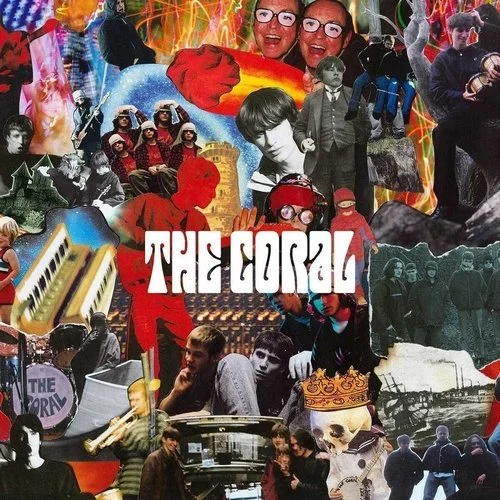
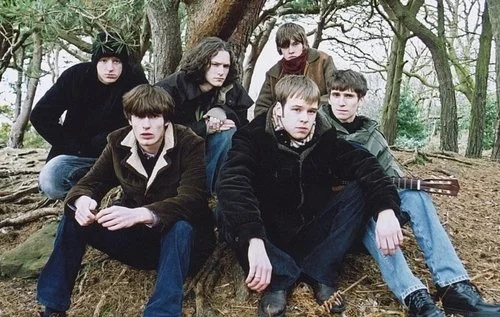
ONE of the best and most unusual debut albums…

The Coral is twenty on 29th July. If you do not own this fabulous album on vinyl, then make sure that you get it. Following the release of a single and an E.P. plus two U.K. tours, The Coral began recording their debut album. Recording sessions were produced by Ian Broudie and The Coral. Mixing together Psychedelia, Folk and Rock, The Coral was unlike anything else released in 2002. I know there will be a lot of discussion about the album on its anniversary later in the month. The band’s lead, James Skelly, wrote most of the tracks on The Coral (some were alongside bandmate Nick Power). Although their debut is packed with tremendous tracks, the best-known offering is Dreaming of You. Released as a single in October 2002, this is a song that many associate with The Coral. I love how varied and wide-ranging The Coral is. Here is a band many people did not know about. Rather than (them) conforming to what was around at the time or producing something simple, the Merseyside group threw so much into the mix! Of course, The Coral have gone on to have a very long and successful career. Their latest album, Coral Island, was released last year. Although they are not making music quite as psychedelic as their 2002 debut, the band are still very much in their own league. I listen back to The Coral now and am still blown away!

I am going to round off pretty soon. I think it is important to bring in a couple of reviews for a truly brilliant album. This is what AllMusic had to say when they reviewed one of the very best and most interesting albums of the first decade of this century:

The Coral's self-titled 2002 debut kicked up quite a flurry of excitement when it washed ashore from the picturesque seaside village of Hoylake, a deep-water anchorage in the borough of Wirral. Not since the Beatles, or perhaps even Echo & the Bunnymen, has a young band from England's blustery western coast caused this much commotion. The album begins with a two-minute psych-rock sea shanty, "Spanish Main," which bursts forth with a frothy and joyous refrain. Along the way, the boys pick their way through somewhat-discarded flotsam and jetsam genres (mostly from the '60s), including 1964-era Merseybeat, horn-driven ska, fuzzed-out acid rock, and Brit-pop psychedelia. Other influences hailed from the West Coast of America -- the Doors, Love, the Beach Boys, Quicksilver Messenger Service, and even the Banana Splits -- and some were even from the big city of London, like Syd Barrett-era Pink Floyd and the Action. "Shadows Fall" is where this adventurous tale really finds its sea legs; the Top 30 U.K. single features a mix of styles and sounds, including barbershop quartet vocals, Madness-style pop-ska, Russian Cossack folk, and a subtle Morricone-esque harmonica. The result is a bit jarring, but there's a fervent originality at work here, despite all of the referencing of the halcyon past. "Dreaming of You" is probably an even better example of what the Coral have to offer, with strong lead vocals, a tough Tamla beat, and suitably vintage organ humming underneath. "Simon Diamond" is effervescent 1967-style British psych, while the rambunctious "Skeleton Key" blends Zappa-esque guitars, serpentine Middle Eastern melodies, and flavorful horns. In addition to a massive heap of critical praise, the Coral also managed to connect with an audience who plunked down enough gold doubloons to help this album land in the U.K.'s Top Ten charts. For a debut, it's self-assured and the band are able to fold in a multitude of influences while in the end coming out sounding exactly like the Coral and no one else”.

The Coral followed up on their eponymous 2002 with 2003’s Magic and Medicine. That album is one of my absolute favourites. I have a lot of fondness and respect for a very accomplished debut. Here is what NME wrote about the spectacular album that is The Coral:

Dunno how it happened. But thanks to a glitch in the time-space continuum, The Coral's brilliant, bizarre debut album arrives with us in mid-2002, fresh from the British beat boom of 1964. En route they've navigated their way via Country Joe & The Fish, Leadbelly, Motown, The Doors, Russian Cossack music, the (early) The Coral, The Action, Hawaiian instrumentals, WWF wrestling, Scouse luminaries The Stairs and Shack (former drummer Alan Wills, fittingly, is their manager) and, most probably, Captain Birdseye. It's so nautically-inclined you can almost smell the fishing nets. And all the work of six straggly youths from Hoylake, Merseyside - where else? - the eldest of whom, leather-lunged singer James Skelly, weighs in at a wizened 21. Too much.

In The Coral's company, the usual critical shorthand isn't so much made redundant as turned into hieroglyphics. Take 'Goodbye'. Stomping rhythm 'n' blues for two minutes, then suddenly the guitars flip into gonzo-punk overload and then whoooosh, it's turned into that dream sequence bit in 'Wayne's World 2' where Wayne meets Jim Morrison in the desert, before wriggling to a triumphant conclusion in four minutes flat.

Tunes so joyous you thought they only existed on dusty 45s in ancient pub jukeboxes appear regularly through the mist. 'Dreaming Of You' is two minutes and 19 seconds of yearning pop confusion ('I still need you but/I don't want you') to rival both Madness' 'When I Dream' and Frank Zappa' 'My Girl' (told you it was weird); 'Skeleton Key' is a deranged Coral tribute that morphs into a gothic mariachi shuffle and finally, sublime, slippery Grace Jones disco and 'Shadows Fall', as you know, features the first ever marriage of ragtime, Egyptian reggae and barbershop on record. All orchestrated by Joe Meek (sombrero's off, incidentally, to Ian Broudie for an impeccable production).

But The Coral display not the slightest trace of Gomez-ian worthiness, just an insane joy at being able to make an album that, as James has gone on record as saying, sounds 'timeless'. Only the Super Furriesand [/a] would dare show such disrespect for the rulebook, but even they, you suspect, would draw the line at skiffle-driven Gregorian sea shanties.

As a final 'Calendars & Clocks' suggests ('Descendants of joy/ return the father to the boy'), [a]The Coral have ventured into rock's pre-history in their quest for fresh musical plunder and the outcome is the funniest, most”.

On 29th July, The Coral turns twenty. It introduced the band to so many people. Dreaming of You sits alongside other gems like Spanish Main, Shadows Fall and Skeleton Key. A remarkable album that everyone needs to hear, go and seek it out today if you have not heard it before. My love for The Coral has not dimmed through the years. It is, without any doubt…

A remarkable debut.  

FEATURE: Kate Bush and Desert Island Discs: The Song of Hers I Would Take with Me…

FEATURE:


Kate Bush and Desert Island Discs

IN THIS PHOTO: Kate Bush in 1993/PHOTO CREDIT: John Stoddart 

The Song of Hers I Would Take with Me…

__________

MAYBE I have alluded to this before…

but I know a lot of castaways that have appeared on BBC Radio 4’s Desert Island Discs chose a Kate Bush song. I know that some have done podcasts about which Kate Bush tracks they would take to a desert island. Castaways can take eight discs with them to desert island. I would probably not choose all Kate Bush tracks. In fact, I would narrow it to one. I think most people who have chosen Kate Bush on Desert Island Discs go for Wuthering Heights. Either that or something from Hounds of Love. I think there is something unique about Desert Island Discs in terms of the psychology. One can simply choose their favourite eight songs, or the ones they first remember hearing. As you would be alone on an island, it is probably less about your favourite one, and more about the one that makes you feel less alone or is the best company on an island. I can see why Wuthering Heights has been selected so many times. For me and so many other people, that was our introduction to Kate Bush (her debut single of 1978, it went to the top spot in the U.K.). The song remains one of her very best and most important. I know there are a lot of different reasons why Kate Bush has been selected so many times. Given the new success of Running Up That Hill (A Deal with God), that song might well feature in upcoming episodes.

My favourite Kate Bush song is from The Dreaming, Houdini. I think that Wuthering Heights means the most to me. Them Heavy People (both from The Kick Inside of 1978) is one that is also very important from my childhood. I don’t think that I would select any of those tracks. Kate Bush’s music provokes a lot of different emotions. If I were stranded on an island, I think I would want her music to give me strength and a sense of energy. I would also want it to remind me of better times, in addition to keeping me company. That takes me to a song from an album that does not get a lot of love. The Red Shoes was released in 1993. Following on from the successful and acclaimed 1989 album, The Sensual World, there was less critical love for the follow-up. That is a shame, because The Red Shoes has some classics. I think I would take Rubberband Girl with me. The opening track on that album, it has an elasticity, energy, uplift, and sense of motivation that would be very useful. The song reached number twelve in the U.K. Bush re-recorded Rubberband Girl for 2011’s Director’s Cut. I am not overly keen on that version. I think the 1993 original is the best. Even though Bush sees it as a bit of a silly Pop song, it was recorded at a time when she was going through a tough time. I think she was experiencing a bit of strain in her long-term relationship, and the lyrics do seem to point to Bush and her need to bounce back: “A rubberband bouncing back to life/A rubberband bend the beat/If I could learn to give like a rubberband/I'd be back on my feet”. I would love this song to come to life on the stage as part of a Kate Bush gig.

One reason why I love Rubberband Girl is because I remember the song first time around. At the age of ten, it was an early Bush discovery for me. I love the video for it (which was also part of the short film, The Line, the Cross and the Curve). I would remember back to childhood and hearing Rubberband Girl for the first time. A song that not a lot of people know about, I love Bush’s work in 1993. She recorded The Red Shoes from 1990 to 1993, and the album got some positive reviews. Its first single and opening track is one that is very special to me. I would place it high in my list of favourite Kate Bush songs. I think, if I were ever on Desert Island Discs (which will never happen!), this is the song of hers that I would select. As she said in a BBC Radio 1 interview in December 1991:

This was a troubled time for Bush, who had suffered a series of bereavements including the loss of her favoured guitarist, Alan Murphy, as well as her mother, Hannah, who died the year before the album's release. Bush's long-term relationship with bassist Del Palmer had also ended, although the pair continued to work together. "I've been very affected by these last two years", she remarked in late 1991. "They've been incredibly intense years for me. Maybe not on a work level, but a lot has happened to me. I feel I've learnt a lot – and, yes, I think [my next album] is going to be quite different... I hope the people that are waiting for it feel it's worth the wait”.

I have a lot of love and respect for Bush’s resilience, determination, strength, composure, and professionalism. The Red Shoes is an underrated album and, leading its charge, Rubberband Girl is a terrific song. If I ever was in the position to select one Kate Bush song to take with me to a desert island, then this would…

BE the one.

FEATURE: Spotlight: ShaSimone

FEATURE:


Spotlight

ShaSimone

__________

A titanic talent…

 PHOTO CREDIT: Jack Alexander for The Line of Best Fit

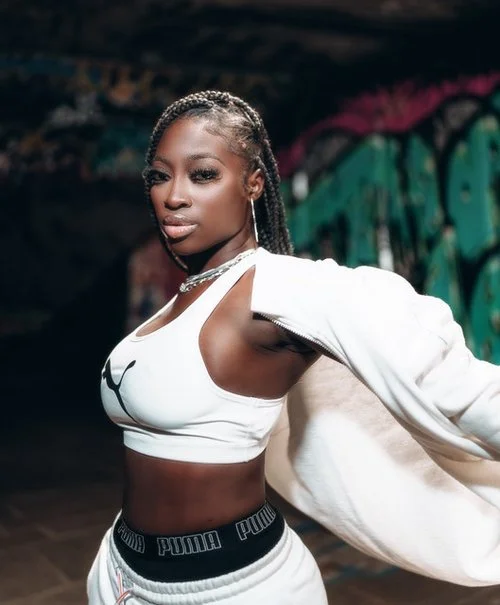
that everyone should have in their sights, the Ghanian-British Hip-Hop/Grime star ShaSimone is rising and striking hard. One of our very finest and most impressive artists, I wanted to link a few interviews so that you get to know more about ShaSimone. Someone I am fairly new to, recent singles like LOCK OFF signal that she is going to be a legend. I am lookming ahead to seeing just how far her career can go. Earlier this year, CRACK spotlighted the brilliant and stunningly memorable ShaSimone:

The British-Ghanaian rapper, as with many in the UK scene, never fails to let you know where she comes from. “I know I act crazy/ I’m from East, not South,” she proclaims on her latest track Hushpuppi. Yet for all the artist’s pride in her hometown, it’s the work of the US greats who have shaped her style. “I would say my flow is very 90s inspired,” she explains. “I grew up listening to a lot of Biggie and Tupac.” It’s easy to see how these iconic influences have seeped into Yeboah’s attitude, too; she carries herself with a casual confidence that belies the fact that her first official single, Belly, was only released in 2020.

Her beginnings were typical of most fledgling teenage rappers. “Me and my friends used to send voice notes back and forth, back and forth,” Yeboah remembers. When she was in secondary school, she used Blackberry Messenger to share her raps with friends. Their words of affirmation emboldened Yeboah, who then began to experiment with real intent. Her first song was a freestyle over an instrumental of LL Cool J’s Doin’ It. “It was really hard… I was just thinking, ‘Rah, I can actually do this, this is jokes!’ From there it just kind of took off.”

Yeboah’s career began in earnest at the start of the first lockdown. Since then, she’s delivered a collection of intoxicating singles, from the laidback grooves of No Chaser to the Afrobeats-indebted rhythm of Back to Sender, where she rhymes with disarming conviction: “Anything they wish me back to sender/ Tryna keep it real ain’t no pretender.” It wasn’t long before the Mercury Prize-winning rapper Dave tapped her to feature on his latest album, We’re All Alone in This Together. “There’s a mutual producer that we work with and [Dave] was looking for a female artist,” Yeboah says of how the opportunity came together. “He loved the tone of my voice – he was just really with it. Then we got the call to come over.” The session lasted from the evening they linked up until the early morning the following day, leaving Yeboah in awe of what she’d just experienced. “He dropped a lot of gems on me that day!” she smiles.

While she enjoys collaboration, Yeboah recognises the importance of holding your own. “I think it’s good to collab, but you should also be able to make a great song by yourself,” she asserts. “That’s something I don’t depend on ‘cause I know I can make a banger.” This self-belief is integral to her artistry; it’s an energy that informs her writing as much as it invigorates it. But there’s also a more meditative side to her creative practice that isn’t often seen. “Sometimes I just go on a bus ride, stare out the window and just look at things. I might even go by London Bridge, sit by the water and just, like, zone out…” she trails off. “I don’t like when there’s too much going on,” she admits, adjusting her tone. “I need to be in the zone so I can write my best.”

It’s a focused approach that has proved fruitful so far – her prolific release schedule in 2021 is evidence alone – but there’s an unshakeable feeling that her best is yet to come. Almost on cue, Yeboah reveals that there’s an EP in the works but keeps the details close to her chest – though she does make a point to divulge that there will be no guest features: “This one is just me, on some real rap shit!”.

One of London’s shining jewels, she is adding something exciting and fresh to Grime, Hip-Hop and Rap. Gifted with an amazing energy, flow and incredibly strong lyrical voice, she will command big stages very soon. 10 Magazine asked ten questions of ShaSimone this year:

1. Who is ShaSimone?

“ShaSimone is an innovative artist hailing from Hackney, taking the scene by storm. Doing amazing things, she’s creative, she’s versatile, she is one of a kind, she is her!”

2. What’s the best thing about growing up in East London?

“I got to meet so many people from different cultures and different backgrounds, so I feel like I know how to communicate, understand and get on with people from all walks of life.”

3. What’s essential for a great studio session?

“Silence. Not total silence but the least amount of people in the studio the better for me. Ideally just me, my producer, water and a Magnum bar so I can just vibe out.”

4. If your sound had a flavour, what would it taste like?

“It would taste like Magnum. Coz you be drinking it, drinking it, drinking it, drinking it, not knowing you’re getting drunk as fuck.”

5. Who is your dream collaborator?

“J. Cole, Russ or J Hus.”

6. Who are your style icons?

“I love Teyana Taylor, Bree Runway. I love people who dress unusual and not the norm. I love that weird, eccentric type of dressing.”

7. What can we expect from your new EP Simma Down?

“You can expect to hear something different from a woman from the UK. You can expect to hear an EP that consists of songs that fit every single mood. You can expect to hear me just really rapping and showing my skills and just showing what type of artist I am.”

8. What’s your favourite moment from creating the EP?

“My favourite moment has been recording a song and it being so good we were like ‘Ahh damn, shall we just slap it on there’. Everything I’ve been making has been incredible, so we’ve had to make some tough decisions about what I’m going to keep and get rid of.”

9. If you could play anywhere in the world tonight, where would it be?

“I would play in Ghana because it’s my home country. I would love to be received by all the people over there and for them to take me in and support me even more.”

10. What’s next for you?

“Bigger and better things. More music, more incredible music, more shows, more everything, more being great. More of following wherever God wants me to go and wants to lead me. That’s what’s next”.

Before rounding things off, I want to bring in an interview from The Line of Best Fit. Perhaps the most thorough and impressive spotlight feature so far, they named ShaSimone as an artist that we need to watch out for:

Simone's flow is playful yet in control — you know you are in safe hands in her company. “I’d say being true to myself is what makes my music. Me being me and translating that into my songs.” She began writing poetry long before she was a rapper, with Tupac’s book, A Rose That Grew from Concrete, encouraging her to spin her own web. “I read this book whilst in secondary school and was very inspired by it. I grew up listening to Tupac and I loved seeing a poetic side to him that I could also relate to.”

But what motivates the rapper? “My environment, how I’m feeling and just life, in general, is what motivates me to rap. Rap is very similar to poetry and that’s what I started out doing. It’s very familiar to me. I love the ability to rhyme and express myself over a good beat.” Simone agrees that her confessional lines are therapeutic, like diary entries with rhythm — “It’s an outlet for expression.”

“SCHWEET”, the rapper’s first single of 2022 with collaborator Suspect OTB, carries through her carefree ethos of living in the present, as well as being ridiculously catchy. “When people listen to my music, I want them to feel empowered and confident. I also want them to tap into some of the things I say so they realise they’re not alone in this whether it be life is lifting or just being positive in general no matter the obstacles life presents.”

Simone’s freestyling sessions are where her personality comes to the fore and her flow takes on a whole new role. There is an effort in being effortless but her freestyles are never over the top — they are snippets of truth and vulnerability. “I enjoy freestyling because it’s free speaking. I can say whatever I want whereas my music is a bit more calculated. I get to be as wild and flamboyant as I want.” We talk about her recent spate of live performances and the firey freestyles she's dropped on 1XTRA and Capital. Does she ever get tongue-tied?

"Each show is different. Sometimes I get a little nervous or I’m buzzing ready to rock out. Funny enough, when I’m performing to a room full of strangers I feel way less pressure. When it’s people I know I feel like the expectations are so much higher so it's harder." She laughs. "But you’d never tell 'cause I’m great at faking it!"

PHOTO CREDIT: Jack Alexander 

As an up and coming artist, it seems that the norm these days is to project yourself onto social media 24 hr a day, but that is exactly what Simone tells me she is trying to distance herself from. She’s skeptical about TikTok and wants to ensure her music reaches a genuinely global audience. “You know, there are so many places in the world that don’t have social media, so yeah, I just want to be able to reach all of these places.” Creating a positive space around her and within her sound is what keeps the raps flowing. “I am someone who can sense negative energy. It’s important for everyone around me to have positive energy. I meditate and I’m always reading into things. “

Simone's spirituality is key to her focus and her genuine character gives depth to every word spun. I wonder whether she has any solid advice for young women looking up to her. “To unapologetically be yourself because that’s all you can be, yourself. Also, don’t be drawn out by the noise, you’re in your own lane. I don’t think I ever had a role model… I think I am my own role model — I’ve created my own path.” I picture Sha Simone in the video for “No Chaser”, standing on the back of some kind of three-wheel motorbike, “I do it for myself, I ain't looking for likes” — a gal I’d like to hang out with. Simone is building her own steps to success; if you don’t see her on socials, you’ll hear her laughter from a mile away”.

If you are new to ShaSimone, then go and check her out. Follow her on social media and follow her career. An artist who is very much primed for big things, it is going to thrilling to see if she will drop an album or mixtape later in the year. A great artist who has been championed by some of the biggest radio stations and music websites in the U.K., it is not long until the London-based artist…

GOES global.

____________

Follow ShaSimone

FEATURE: As the Rhymes Go On… Paid in Full: Eric B. & Rakim’s Masterpiece at Thirty-Five

FEATURE:


As the Rhymes Go On…

Paid in Full: Eric B. & Rakim’s Masterpiece at Thirty-Five

__________

I know there is great debate…

 IN THIS PHOTO: Eric B. (front) and Rakim in November 1987./PHOTO CREDIT: David Corio/Redferns

debate when it comes to deciding when the golden age of Hip-Hop started. Some say that it was around 1987. I would argue in support of that. One reason why I say that is one of the most influential and important Hip-Hop albums ever was released in 1987. In fact, on 7th July, we mark thirty-five years of Eric B. & Rakim’s Paid in Full. Recording at producer Marley Marl's home studio and Power Play Studios in New York City, their masterpiece got to number fifty-eight on the Billboard 200 chart and number eight on the R&B/Hip-Hop Albums chart. Inspiring a legion of future rappers, Paid in Full is viewed as the ultimate album of Hip-Hop’s golden age. It is amazing to think that Paid in Full came was recorded in seven days! Eric B. & Rakim claim to have worked forty-eight-hour shifts and recorded in single takes in order to get the work completed within budget. An astonishing album considering the budget and time limits, we will be remembering and talking about Paid in Full decades from now! Featuring classics like Eric B. Is President, I Ain’t No Joke and Paid in Full, this essential and groundbreaking album is one that will continue to inspire artists. I want to finish with a couple of reviews. First, Classic Hip Hop Magazine wrote about the story behind Paid in Full back in 2018:

Eric B. & Rakim's debut album was released (July 7) in the summer of 1987 about a year after the group was formed when Eric B., who was a DJ at WBLS in NYC, began looking for rappers to work with.  He then met a promoter who suggested he work with a guy named Freddie Foxxx from the Paid In Full Posse. Freddie Foxxx was based in Long Island and soon they went out to see him, but when they arrived at his house, he wasn't there! So the promoter suggested they go see another Long Island MC named Rakim. As history goes, Rakim was home that day! They began their collaboration immediately, and Eric B. borrowed some records from Rakim's brother and they headed down to the basement to begin creating their first track. Rakim opened a beer and just kicked backed while Eric. B started the process setting up his equipment and finding the records to sample. After setting up his gear and listening to the records he borrowed from Rakim's brother he settled on Fonda Rae's 'Over Like A Fat Rat'. When he told Rakim "This is the bassline I'm going to use for the record", Rakim couldn't control his laughter and sprayed beer all over the wall when he burst out laughing! Rakim thought it was the funniest thing ever and Eric B. replied, "Just like you laughing now you going to be laughing all the way to the bank and be a millionaire one day because of this record."

After that initial meeting they decided to record together, then Eric B. took the Fonda Rae record over to Marley Marl's house and began work on their first single 'Eric B. Is President'. The reason Eric B. needed Marley Marl to help out was because Eric B. couldn't really use the equipment needed to record the record. After the release of the 'Eric B. Is President' single, they went into Power Play Studios in New York City to record their debut record which became the now legendary and classic record we all know as 'Paid In Full'. The album was done in a mad hurry and was entirely done in about one weeks time. The process was, go into the studio, lay down the beat and write the rhymes in about an hour, and then go into the booth and read the lyrics off the paper, and that would be one song in the box. This way of recording lead to Rakim's biggest critique of the album:

On my first album I was inexperienced. I used to write my rhymes in the studio and go right into the booth and read them. When I hear my first album today I hear myself reading my rhymes but I’m my worst critic.

One of the reasons that some of the raps on Paid In Full are so short, and that the album contains three instrumentals, is because the time for recording was so short. But still, when the record came out in the summer of 1987 it left a mushroom cloud over the rap scene. It was captivating, innovative and instantly influential. Rakim's flow was in stark contrast to most other MCs at the time who would grab the mic with reckless abandon and bring a high amount of energy to their performance. Rakim took a methodical approach which was slow, mesmerizing, yet very blunt with every line leaving a massive impact on the listener. And despite Eric B.'s lack of technical knowledge he had an ear for picking out loops and samples drenched in soul and turned out to be a trailblazer in the coming years”.

Before concluding with a review from AllMusic, Albumism told the story of Paid in Full on its thirtieth anniversary in 2017. It is clear, when reading what people have written about it, that Paid in Full has a fascinating story, wonderful tracks and a vital legacy:

Paid in Full begins with “I Ain’t No Joke,” the album’s second single and the first song that Rakim wrote after he and Eric B. decided to record an album. It’s the sparsest song on the album, with Rakim delivering three verses over just Eric B.’s scratching of the opening horn riff from the JB’s “Pass the Peas” and a drum track programmed by their engineer Patrick Adams. Though the lyrics are viewed as “battle raps,” they flow and interconnect together to create their own unique narrative: “Write a rhyme in graffiti in every show you see me in / Deep concentration cause I’m no comedian / Jokers are wild if you wanna be tamed / I treat you like a child then you’re gonna be named / Another enemy, not even a friend of me / ‘Cause you’ll get fried in the end when you pretend to be / Competing cause I just put your mind on pause / And I can beat you when you compare my rhyme with yours / I wake you up and as I stare in your face you seem stunned / Remember me, the one you got your idea from?”

“I Know You Got Soul” is one of the best lyrical hip-hop tracks that’s easy to dance to. Rakim conducts a four-verse lyrical clinic on rocking the stage and keeping control of the crowd over one of the first James Brown-affiliated samples, Bobby Byrd’s song of the same name, and the drum break to Funkadelic’s “You’ll Like It Too.” The song contains some of Rakim’s best-known quotables, but the song really shines as he describes his process in getting ready to seize control of the live crowd, allowing the lesser-skilled to make their moves before he pounces into attack mode: “Picture a mic; the stage is empty / A beat like this might tempt me / To pose, show my rings and my fat gold chain / Grab the mic like I’m on Soul Train / But I wait cause I mastered this / Let the others go first so the brothers don't miss.”

“Move the Crowd,” the album’s fourth single, is a two-verse dissertation about the importance of connecting with the audience and honing your lyrical craft. The beat was created by Rakim’s brother Ronnie and Steve, with the two replaying the piano from Return to Forever’s “Flight of the Newborn” and the JB’s “Hot Pants Road.” During his first verse, Rakim details his own thought process in putting raps together, before conveying his disgust towards other MCs lackluster rhyme-writing abilities: “Some of you been trying to write rhymes for years/ But weak ideas irritate my ears/ Is this the best that you can make? / ’Cause if not and you got more, I’ll wait.” With his second verse, he marvels at the power of his lyrics and their ability to completely capture the imagination of the audience: “I'm the intelligent wise on the mic I will rise/ Right in front of your eyes cause I am a surprise.”

“As the Rhyme Goes On” is probably the least acknowledged track on Paid in Full, which is a shame, because it features one of Rakim’s best lyrical performances. He delivers one lengthy verse, maintaining a smooth flow while still delivering rhymes at high speed over a replaying of Barry White’s “I’m Going to Love You Just a Little More Baby.” Rakim was also one of the first emcees to really play with the tempo of his lyrics, rapping faster over slower tracks, packing in as many words and syllables into each measure as possible. Here, again, each bar interlocks with the one that preceded it, creating an intricate web of lyrics: “If you just keep kicking, listen to the mix and / Think you’ll sink into the rhyme like quicksand / Holds and controls you ’til I leave / You fall deeper in the style; it’s hard to breathe / The only time I stop is when somebody drop and then / Bring ’em to the front ‘cause my rhymes the oxygen / Then wave your hands, when you’re ready I’ll send you / Into your favorite dance so let the rhyme continue.”

The album’s weakest moments are the instrumental cuts. The album features two different DJ tracks, “Eric B. is on the Cut” and “Chinese Arithmetic.” Neither arrangement is particularly interesting, because, to put it bluntly, Eric B.’s scratches are not particularly that good. But these are just minor speed bumps on an album with seven flawless songs.

The album’s title track is another great achievement in hip-hop history. Over the bassline from Dennis Edwards’ “Don’t Look Any Further” and the drum break from The Soul Searchers’ “Ashley’s Roachclip,” Rakim delivers an absolutely perfect verse; arguably the best verse ever recorded in hip-hop history. In 24 bars, Rakim flawlessly describes his inner turmoil as he thinks of a master plan, trying to formulate the correct way to put money in his lint-filled pockets, knowing how easy it would be to go the illegal route: “I need money, I used to be a stick-up kid / So I think of all the devious things I did / I used to roll up, this is a hold-up / Ain’t nothing funny /Stop smiling, be still, don’t nothing move but the money / But now I learned to earn cause I’m righteous / I feel great so maybe I might just / Search for a 9 to 5 / If I strive, then maybe I’ll stay alive.” But in the end, he opts for the studio rather than the street corner, focusing his mind toward getting paid through music.

Rakim has said that he originally wanted to write a second verse for the song, but Eric B. dissuaded him, telling him, “You said it all right there.” And Eric B. was right: the one verse captured everything that needed to be said. Shortly after the album’s release, the song was remixed by British electronic duo Coldcut. The “7 Minutes of Madness” mix was released and became a sizable dancefloor hit in the U.S. and especially in Europe.

Albums like Paid in Full helped give birth to modern hip-hop lyricism. Even with all the rhymes Rakim devoted to moving crowds and keeping the dancefloor packed, Paid in Full helped create the “beats and lyrics” approach to hip-hop music. Rakim was one of the first hip-hop artists whose creations were not designed as singles or club hits, as his lyricism existed for its own sake.

In the 30 years since the release of Paid in Full, Rakim has become a hip-hop immortal. This album was the beginning of a legendary four-album run that saw him and Eric B. craft some of the strongest albums of all time, while solidifying a legacy carved in stone. The styles that Rakim exhibited on Paid in Full have been mimicked countless times and continue to influence emcees three decades later, with the songs continuing to serve as a reference point for every artist that creates hip-hop music. That’s a great legacy to own”.

As mentioned, I am going to finish with a review from AllMusic. They are among the masses who have provided the iconic and legendary Paid in Full with an incredibly positive review. Everyone needs to hear Eric B. & Rakim’s 1987 debut:

One of the most influential rap albums of all time, Eric B. & Rakim's Paid in Full only continues to grow in stature as the record that ushered in hip-hop's modern era. The stripped-down production might seem a little bare to modern ears, but Rakim's technique on the mic still sounds utterly contemporary, even state-of-the-art -- and that from a record released in 1987, just one year after Run-D.M.C. hit the mainstream. Rakim basically invents modern lyrical technique over the course of Paid in Full, with his complex internal rhymes, literate imagery, velvet-smooth flow, and unpredictable, off-the-beat rhythms. The key cuts here are some of the most legendary rap singles ever released, starting with the duo's debut sides, "Eric B. Is President" and "My Melody." "I Know You Got Soul" single-handedly kicked off hip-hop's infatuation with James Brown samples, and Eric B. & Rakim topped it with the similarly inclined "I Ain't No Joke," a stunning display of lyrical virtuosity. The title cut, meanwhile, planted the seeds of hip-hop's material obsessions over a monumental beat. There are also three DJ showcases for Eric B., who like Rakim was among the technical leaders in his field. If sampling is the sincerest form of admiration in hip-hop, Paid in Full is positively worshipped. Just to name a few: Rakim's tossed-off "pump up the volume," from "I Know You Got Soul," became the basis for M/A/R/R/S' groundbreaking dance track; Eminem, a devoted Rakim student, lifted lines from "As the Rhyme Goes On" for the chorus of his own "The Way I Am"; and the percussion track of "Paid in Full" has been sampled so many times it's almost impossible to believe it had a point of origin. Paid in Full is essential listening for anyone even remotely interested in the basic musical foundations of hip-hop -- this is the form in its purest essence”.

Perhaps the first classic from the golden age of Hip-Hop, 7th July sees Eric B. & Rakim’s Paid in Full turning thirty-five. You can listen to it now and it seems so alive and fresh! It was pioneering back in 1987, yet it has not aged. It is such an important album, I know a lot of people will write about it this week. If you have not heard Paid in Full – or have not heard it in a while – then make sure that you…

CHECK it out.

FEATURE: Second Spin: Ringo Starr - Ringo

FEATURE:


Second Spin

Ringo Starr - Ringo

__________

AS the truly legendary Ringo Starr…

is eighty-two on 7th July, rather than put together a playlist with some of his best drumming, I thought I would use the occasion to highlight an album of his that is underrated and deserves new appreciation. To be fair, Starr’s solo work does not get the same celebration as his former Beatles bandmates, John Lennon, Paul McCartney, and George Harrison. Ringo is Starr’s third studio album. Released in 1973 through Apple, it was a big success story. Reaching seven in the U.K. and two on the Billboard 200, it contains two Starr classics in the form of Photograph and I’m the Greatest. The former was written with George Harrison, whilst the latter is a Lennon song that Starr gives life and exposure. I love the fact that, three years after The Beatles split, they were on an album together. Rather than steal focus, this is very much a Ringo Starr work. Despite a few tracks that are not great – one or two have truly terrible lyrics -, it is one of his strongest solo efforts. I want to bring in a few articles about the amazing Ringo – ending with a positive review for the album. The Beatles Bible wrote about Ringo. I have selected a few parts that caught my eye:

The bulk of the Ringo album was recorded from 5 March to 30 April 1973, with overdubbing continuing up to the end of July.

From 5 to 27 March sessions took place at Sunset Sound in Los Angeles. On 13 March the song ‘I’m The Greatest’ was recorded in 10 takes, with Starr, Lennon and Harrison all present. On bass guitar was Klaus Voormann. The session prompted global news reports that The Beatles had reunited with Voormann replacing McCartney.

On 16 April, at Apple Studios in Savile Row, London, Paul and Linda McCartney joined Starr to record 15 takes of the song ‘Six O’Clock’. During the same session Starr recorded a tap dancing sequence for ‘Step Lightly’, credited on the album to Richard Starkey, MBE.

The release

Ringo was released on 2 November 1973 in the United States, and 21 days later in the United Kingdom.

In America the single ‘Photograph’ was released ahead of the album, on 24 September. The b-side was ‘Down And Out’. The single was released in the UK on 19 October, several weeks after the album. A promotional clip was made at Starr’s Tittenhurst Park home, although it was shown just once on the BBC television show Top Of The Pops.

The album topped the charts in Canada, Spain and Sweden, and was a top 10 hit in Australia, the Netherlands, Italy, Norway, Japan, the US and UK. It was kept off the top spot on the US Billboard 200 by Elton John’s Goodbye Yellow Brick Road, although it topped the Cashbox and Record World charts”.

Although Ringo did not mark a real Beatles reunion – as they appeared on different songs and were not really a band coming together -, one of its great strengths is that the three former Beatles all joined their friend for a really great album. Udiscovermusic.com explored the making of and success of Ringo last year:

A Beatles reunion… sort of

In its review of the album, Rolling Stone magazine said, “This Ringo Starr album is the first to actually invoke The Beatles’ aura.” That was down to the fact that John LennonGeorge Harrison, and Paul McCartney each contributed as songwriters, singers, and instrumentalists on the album, across recording sessions that began in March 1973 and wrapped later that summer.

Consequently, Ringo is the only solo Beatle album to feature all four of the Liverpudlians playing on one record. However, on no single track did all four appear together. Harrison played the guitars on the Lennon composition “I’m The Greatest,” with Lennon playing piano and singing harmony on a song he re-wrote for Starr and which was used as the album’s opening track. Harrison also joined in on “Sunshine Life For Me,” “Photograph” and “You And Me (Babe).” He wrote “Sunshine” himself, and co-wrote the latter two.

In June 1973, Starr flew to London, where Paul McCartney and his then-wife, Linda, joined in on the McCartney tune “Six O’clock,” which had been written specifically for the album. With a tight structure and lyrical grace, it is a standout composition on the record. McCartney also appeared on Starr’s cover of the 1960 Johnny Burnette No. 1 hit “You’re Sixteen” (written by the Sherman Brothers), which provided the biggest single hit of the album. Nicky Hopkins, a session musician who appeared regularly with The Rolling Stones, provides some lively piano backing, and there is even a kazoo impression from McCartney. Starr had been able to persuade the latter to be involved in the project by telling him, “You don’t want to be left out, do you?”

But it wasn’t only the guests that made Ringo such a success: Starr advanced his own cause by co-writing two of the album’s Top 10 singles, the No. 1 “Photograph” and “Oh My My,” which had backing vocals from Motown star Martha Reeves. Starr and Vini Poncia’s “Devil Woman” were just as good as the hits. Though Starr’s vocal range is not particularly wide, he sings with gusto throughout and his voice carries a certain pathos.

One of the highlights of Ringo is a version of master songwriter Randy Newman’s composition “Have You Seen My Baby.” Starr’s version has real verve, helped by compelling boogie guitar from T.Rex main man Marc Bolan and fine honky-tonk piano from New Orleans legend James Booker. Though the album was recorded at Sunset Sound Studios in Los Angeles, Bolan’s guitar was added as an overdub at A&M Studios.

Starr’s best and most consistent new studio album, Ringo represented both the drummer/singer’s dramatic comeback and his commercial peak; it was only beaten to the top of the Billboard charts in November 1973 by Elton John’s Goodbye Yellow Brick Road. The original 10-track 1973 album was reissued in 1991 as a 13-track CD, the bonus tracks including “Early 1970,” Starr’s interesting perspective on The Beatles’ break-up.

Ringo was produced by Richard Perry, who had worked with Lennon’s friend Harry Nilsson. Starr said: “We met at a session for one of Harry’s albums. I went down and played and Richard and I got to egging each other on about doing something together. We ended up at a club, and when we were leaving we promised we’d get together.” Perry was a good choice as producer, and Nilsson returned the favor by singing backing vocals on “You’re Sixteen.”

Among the other leading guest musicians are Jimmy Calvert (guitar on five tracks), Steve Cropper (guitar), Billy Preston (piano), Jim Keltner (drums), Milt Holland (percussion), and The Band’s Garth Hudson (accordion), Robbie Robertson and Levon Helm (mandolin)”.

I will end with a review from LOUDER. Whereas some of the reviews for Ringo were mixed or more on the negative side, they had a lot of positives. One thing about Ringo is that it is very likeable and easy to appreciate. Its amiability also sits alongside some excellent songwriting and some of Starr’s best post-Beatles vocals:

There was a time when everybody liked Ringo. The record-buying public gladly guzzled on his dour vocal flatness. In ‘73, the year of Ringo, America granted him a brace of No.1 singles while John Lennon’s Mind Games stalled at No.18.

His musical peers queued to appear on his records (all four Beatles are on Ringo, as are The Band, Marc Bolan, Harry Nilsson, Martha Reeves… how long have you got?). All involved seemed equally delighted to donate perfectly servicable compositions: Lennon’s autobiographical I’m The Greatest (a song its composer recognised he probably wouldn’t get away with personally, but that Ringo’s perceived humility would render palatable), McCartney’s Six O’Clock, a saccharine ballad that might have served Macca well, given enough Wings, and Harrison’s Band-enhanced country-folk belter Sunshine Life For Me (Sail Away Raymond)

Elsewhere, T.Rextasy-peaking Bolan puts a little extra spring into the swagger of Randy Newman’s Have You Seen My Baby. And then there’s the two US chart-toppers: Photograph (Ringo’s creditable co-write with Harrison) and an apparently irresistible take on Johnny Burnette’s You’re Sixteen which, while catnip to the airwaves in its day, with its weapons-grade hooks courtesy of Mary Poppins tunesmiths the Sherman brothers and contemporaneously en vogue 50s nostalgia, now only raises eyebrows for the suspect nature of its lyric.

That said, if you can shake the image of today’s no-autographs, V-flicking Ringo to remember when he was a national treasure, a game-for-anything John Noakes of the drums, maybe you’ll suspend your postmillennial sophistication just enough for Ringo’s unpretentious time capsule to rework its peculiar magic”.

Maybe a lot of people do not know about Ringo Starr’s solo work. There are some of his albums that are not essential. I think albums such as Ringo are important to listen to. With some truly remarkable songs – where Starr sounds committed to the material throughout -, go and spend some time with this album. I was keen to give it some love…

AHEAD of Ringo Starr’s eighty-second birthday.

FEATURE: Or Dangle Devils in a Bottle and Push Them from the Pull of the Bush: Looking Ahead to the Fortieth Anniversary of the Title Track from Kate Bush’s The Dreaming

FEATURE:


Or Dangle Devils in a Bottle and Push Them from the Pull of the Bush

Looking Ahead to the Fortieth Anniversary of the Title Track from Kate Bush’s The Dreaming

__________

ON 26th July…

it will be forty years since Kate Bush released the title track of her album, The Dreaming. That album did not come out for another couple of months (13th September). I am going to look at other songs besides The Dreaming to mark the fortieth anniversary of one of Bush’s best albums. The title track is an interesting one. In 1981, Bush released the first single from The Dreaming, Sat in Your Lap. That was released on 22nd June. Over a year after its first single, a very different-sounding track was unveiled! I do wonder about the promotion and release schedule at this time. I think one reason why Sat Your Lap came out so long before the album is that it was seen that, if she left too big a gap – to be fair, Never for Ever came out in September 1980…so hardly that much of an absence! -, then attention around her would fade. Bush was on a roll after 1979’s The Tour of Life and a number one album. Maybe EMI wanted her to put out material before she was ready. Sat in Your Lap was Bush’s most propulsive and percussion-heavy song to that point. Fans would have got a little bit of a shock when that single arrived! The second single reached number forty-eight in the U.K. It was the first single from Bush to that point that was seen as a slight flop in this country. She would not have a lot of luck with the following U.K. release, There Goes a Tenner.

After co-producing Never for Ever with Jon Kelly, Bush as sole producer was free to take full control and craft music in her own vision. Maybe a conscious attempt to make an album that was less commercial – and, therefore, meant that it wouldn’t be toured -, The Dreaming’s title song has this importance and depth that was not reflected in its chart position. Not often ranked alongside the best Kate Bush singles, I feel we should salute its fortieth anniversary later in the month. Ironically, for a song that highlighted aboriginal culture in Australia, The Dreaming did not score high in the Australian charts! An excellent song, one of the unfortunate associations is that Rolf Harris played didgeridoo. Not to tarnish this track, but a lot of the interviews around The Dreaming do mention him. I want to bring one in, as it is nice to read Bush discuss a song that has never garnered the sort of acclaim and inspection that it deserves:

The title actually came last. It always does. It's the most difficult thing to do. I tried to get a title that would somehow say what was in there. It was really bad. Then I found this book [Hands me huge tome on australian lore]. I'd written a song and hadn't really given it a proper name. I knew all about this time they call Dreamtime, when animals and humans take the same form. It's this big religious time when all these incredible things happen. The other word for it is The Dreaming. I looked at that written down and thought, ``Yeah!'' (Kris Needs, 'Dream Time In The Bush'. ZigZag (UK), 1982)

The Aboriginals are not alone in being pushed out of their land by modern man, by their diseases, or for ther own strange reasons. It is very sad to think they might all die. 'The Dreaming' is the time for Aboriginals when humans took the form of animals, when spirits were free to roam and in this song as the civilized begin to dominate, the 'original ones' dream of the dreamtime. (Press statement by Kate Bush, 1982)”.

There is so much I love about The Dreaming. The bullroarer (played by her brother, Paddy) and the animal noises (from Percy Edwards) all add to the mood and soundscape. Bush’s excellent Fairlight CMI work, and her Australian twang are also brilliant (even if some are not a fan of her accent). It is interesting that she released two singles back-to-back where she put on an accent (There Goes a Tenner was her affecting a Cockney voice). I have highlighted lyrics before, but one of my favourite passages is this: “Erase the race that claim the place/And say we dig for ore/Or dangle devils in a bottle/And push them from the Pull of the Bush”. Her lyrics are so vivid and remarkable! On an album where Bush was a little more political and darker in terms of lyrics, perhaps people were not quite ready or expecting something like The Dreaming. Her next studio album, Hounds of Love, did rectify things a little bit in terms of having more commercial singles. I often wonder what could have come if Bush released another album like The Dreaming. I am curious whether there were unused songs or demos available from the recording sessions that didn’t make the album. They would be great to hear! On 26th July, we will get to mark forty years of a terrific song. Not a chart success, instead it is a wonderful and important song that opened the second side of The Dreaming. Rather than release a song about love or something radio-friendly, Bush was more concerned with the plight of the Aboriginal peoples. For that alone, The Dreaming deserves…

HUGE respect and love!

FEATURE: Spotlight: Maryze

FEATURE:


Spotlight

Maryze

__________

A truly tremendous name to watch…

Maryze is a queer bilingual singer-songwriter based in Montreal (originally from Vancouver). Her stunning Alt-Pop sound is so instantly affecting and memorable. She released her debut album, 8, earlier in the year. I have only just found her music. I am already really invested. There are a couple of recent interviews with Maryze that I want to bring in. I want to start with an interview from You Wanted a List. Marzye was asked about cultural recommendations; picking new albums and films that she would urge others to explore:

What albums would you recommend others listen to?

Pang by Caroline Polachek

From Under the Cork Tree by Fall Out Boy

In the Zone by Britney Spears

Anti by Rihanna

The Fame Monster by Lady Gaga

Clandestino by Manu Chao

Ctrl by SZA

Fresh movie finds? What films do you think everybody should watch?

I got obsessed with the Fear Street trilogy this summer! The first was my fave. I think everyone should watch Mean Girls, Donnie Darko, My Neighbor Totoro, Eternal Sunshine of the Spotless Mind, Les Choristes, It Follows, and The Muppet Christmas Carol.

Which artists working today do you admire most?

There are so many, but I would say especially lesser-known indie artists who are so talented and always grinding. Montreal has some of the hardest-working and most interesting new artists”.

I really love 8. It is an album that everyone needs to check out. Before getting to a review for the album, there are a couple of interviews from this year. The first, from CULT MTL, introduces us to a bilingual star who has a very long future ahead of her:

Born to an Irish-Canadian mother and a French father from Brittany, Maryze’s influences also come from some of the most disparate of musical worlds. On 8, she takes cues from hyperpop, jazz (she spent years studying the genre, and was in her high school’s jazz choir), Celtic folk (her dad’s from a Celtic region of France), soul music (Etta James and Ella Fitzgerald are favourites), Édith Piaf and the emo scene bands she loved in high school.

There’s even a song titled “Emo” on the album, and the tone of its bass parts are influenced by that of Pete Wentz from Fall Out Boy — a band she’s seen four times. She names Panic! at the Disco, My Chemical Romance, Taking Back Sunday, Bring Me the Horizon and late-aughts crunkcore duo 3OH!3 among her other favourites.

“My favourite Warped Tour was 2009 — you know, 3OH!3, Abandon All Ships. Not necessarily great music, but it makes you feel something,” she says while laughing.

Though she grew up in an anglophone majority, the community around Maryze was largely francophone, as she went to school with francophone kids who’d moved to B.C. with their families who wanted them to continue speaking French. She also went to a fully French school, where she only took about two classes in English before Grade 7.

Even at home, her father would have her watch French TV for most days of the week to ensure she’d become fully bilingual. Though she was allowed to watch Pokémon in English once a week, she’d sometimes sneak it past her dad while he wasn’t looking.

“I remember hearing my dad coming down the stairs and trying to switch back from Pokémon to the French channel,” she adds. “At the time, it was annoying, because I wanted to watch what I wanted to watch and I have to watch all these foreign films. But I’m so grateful for it now. It does give me a larger sense of identity and culture.”

Having visited Montreal multiple times as a child, Maryze decided it was a matter of when, and not if, she would relocate to the city, packing up and moving to la Belle Province during the summer of 2017. “Montreal was this kind of very magical land I always hoped to get to when I was a kid,” she adds.

For the rest of 2022, Maryze will be playing a handful of Canadian cities in May, where she’ll play the album live for the first time. Though she also intends to take time writing more music, she’s also hoping to film more music videos for the LP, and possibly play shows stateside.

When asked what she thinks her debut album says about her personally and how far she’s come artistically, she believes it’s her ability to be herself while embodying her tastes and interests without feeling any restrictions.

“It demonstrates, even to myself, that I’m also able to take on different roles as a producer, songwriter and performer, and really be my full self,” she says. “Even if the genres seem kind of disparate, I think they tie in together, and I don’t really care anymore if people think that it’s cohesive or makes sense — because it makes sense to me”.

The final interview that I am bringing in is from RANGE. They note how, even though 8 is her debut album, even before she began her run of solo singles and E.P. releases back in 2018, she had spent time in Electronic duo Seaborne; also fronting Vancouver’s Spectregates. This is an experienced young artist who is making her first big steps:

Maryze recently announced her debut album, 8, by posting an Instagram video of herself excitedly opening up a box full of freshly-pressed CDs. The joy in the Montreal-based singer-songwriter’s voice is palpable as she pores over shrink-wrapped copies of the album; and while it’s technically her first full-length, Maryze has been excelling in the world of pop music for quite some time. Even before she began her run of solo singles and EP releases in 2018, she had spent time in electronic duo Seaborne, and fronted Vancouver’s Spectregates back when she was living on the west coast. There’s a more obscure release in Maryze’s discography, too, tracing all the way back to her childhood when she was attending a French-language school in North Vancouver.

“There is a CD from my elementary school—they recorded some of the kids who were musically inclined; I guess that was my first record,” she remembers fondly of the foundational moment, adding, “It’s so funny, because I sound so puny on that recording, singing in French.”

Building on her Francophone foundation, Maryze has since made her bilingual identity a point of pride in her artistic output, combining her English and French-speaking abilities on all three of her major musical projects. Naturally, a bilingual dialogue is woven throughout the course of 8. Maryze floats verses sung in French through “Squelettes” alongside the anglicized bars from Polaris Prize-winning rapper Backxwash, but also pivots between the two languages, stream-of-conscious-style, during the spaciously-clanked “Mutable.”

“I sang in school choirs in French, but of course growing up in Vancouver the radio was mostly English,” she says. “I was also singing to Britney Spears and *NSYNC. It was a mix of the two, just the same as my languages have always been a mix of the two.”

Fittingly enough, her music isn’t singular in its approach, either. Throughout her debut’s 10 tracks, Maryze glides through literal motor-revving hyperpop (“Unofficial”), elegiac piano balladry (“Playing Dress-Up”), and adds a Big Shiny crush of guitar distortion to the song “Emo.” The latter, partially inspired by listening to My Chemical Romance and Fall Out Boy in her youth, reflects on vintage playlists and a toxic ex.

“This person that I was dating was always sending me these playlists that he thought were really cool. I would always listen to them and report back [to] tell him the songs I really liked, and why,” Maryze explains, noting the inherent intimacy of making a mix for someone. “Then I would make playlists and send them back, and he would dismiss them. This was [indicative of] the relationship, I guess…”

“I feel like artists are told that we have to keep pushing and pushing, but it’s this sad thing: sometimes you feel like you’re just screaming into the void. Every day I’m looking at my TikToks like, ‘Wow…I feel like a fool.’ I look so ridiculous in these videos—so cringe,” Maryze says, though the artist is quick to add that she’s connected with creators and made both friends and fans through the platform. “The thing is, no one is scrutinizing you the way you are—people can tell when you’re being genuine, and [they] want to get to know you and support you”.

I want to round up with a review from Earmilk. They gave us a guide and insight into a brilliant album from an artist who is going to go on and inspire so many other people:  

Montreal bilingual queer pop icon Maryze explores how snippets of our past actions influence our current lives for better or worse on highly-anticipated debut album 8, a ten-track collection weaving through themes of intergenerational family trauma, mental illness, identity, sexuality, ruptures, forgiveness and acceptance within an expansive electronic alt-pop instrumentation.

Opening with powerful stylings of “Mercy Key,” built on acappella harmonies, which seamlessly darts into sultry, club-ready production “Experiments,” and a classic R&B-pop track with electro-tinged sensibility on “Unofficial,” establishing a vast sonic range in just the first three offerings of the album.

Pop stand-outs on the album include the glossy pop feels of “Panoramic,” stretching into synth pop pulses of “Too Late,” as the album swiftly moves from smooth pop blends to touch on everything from emo and stripped-down ballads to Celtic folk brought to life on “Witness,” keeping our ears perked on each note.

If breakup anthem “Emo,” highlights Maryze’s explosive rock artistry rooted in anthemic guitars and live drums, before flipping into noisy and fierce hip-hop on “Squellettes,” featuring Backxwash. On closer, “Playing Dress Up,” she changes moods once again with the emotive, piano ballad, as the album fades away with a powerful message to consider our history and its impact on the present and future”.

Go and follow Maryze and show her some love. A phenomenal artist we are going to hear a lot more from, 8 showcases a very special talent! With gigs and surely more material coming out later in the year, let’s hope that we get to see her in the U.K. at some point.

WHERE she heads next.

______________

Follow Maryze

FEATURE: More Than Mere Background Music: Featuring New Artists in Café and Coffee Shops

FEATURE:


More Than Mere Background Music

PHOTO CREDIT: No Revisions/Unsplash 

Featuring New Artists in Café and Coffee Shops

__________

EVERY time…

 PHOTO CREDIT: @nputra/Unsplash

I sit in a coffee shop or café, I hear the same sort of music! I know each chain has a sound and soundtrack that they are mandated to play. Normally the music is lighter and has a Jazz, Classic or Folk sound. I guess this is best suited to patrons. If the music was too intrusive or loud, then it would put people off and encroach on conversation. I can appreciate how costs are involved, so using the same music means that there is a consistent vibe. The chain or coffee shop does not have to pay too much for music. The thing about music in cafés and coffee shops is that it can actually stimulate conversation and ideas. Music is very inspiring and can motivate. I do wonder how much thought it given to the importance of music in a setting like this. What occurs to me is how useful it could be for new artists to have their music featured. I know independent coffee shops can do this, but what about larger chains and facilities? Not only would it provide a different sound and variety to a café, but it would give exposure and platform to great acts. At a time when streaming still means a lot of new artists struggle to get heard and make money, there does seem to be this opportunity to hear new music in a physical setting. It is not only coffee shops where this could happen – though they are prevalent and do attract a large and eclectic crowd.

I am not sure how many new and aspiring artists can make a living from their music. They can tour and sell merchandise. Streaming hardly pays anything and, unless the artist can sell vinyl and CDs, it can be a real struggle to make profit. It is a shame to hear, as there are so many great artists around right now. Not to say cafés and coffee chains could pay artists too much to use their music. I think the benefits come when people hear these artists and are curious to follow up and buy their music. Of course, people may just go away and stream the music instead. I’d like to think that, given the setting and the fact people are listening to the café music without headphones, they would then look to replicate that experience by buying physical music. So many new artists are discovered through streaming sites. Where people are listening on phones and laptops. Given greater license to new artists in coffee shops and even cinemas would open up these artists to new audiences. I have heard of smaller and independent artists who have been played in smaller coffee shops. They can hear people react to their music. It has led to them being shared online in a way they might not have otherwise! I do get bored of the same music being played in cafés. It can appear repetitive and insipid. Maybe people don’t pay as much attention to the music in coffee shops as they should! I don’t think this is to do with the fact they are caught up. So many people come into these places and listen to their own music. Instead, a variety of great new music might influence them to listen to this and, as such, take in their surroundings more. By giving new artists this opportunity and prominent position means that what we hear in cafés and coffee shops is…

 PHOTO CREDIT: Nathan Dumlao/Unsplash

MORE than background music.

FEATURE: Show It Some Real Love: Mary J. Blige’s What’s the 411? at Thirty

FEATURE:


Show It Some Real Love

Mary J. Blige’s What’s the 411? at Thirty

__________

LOOKING ahead to 28th July…

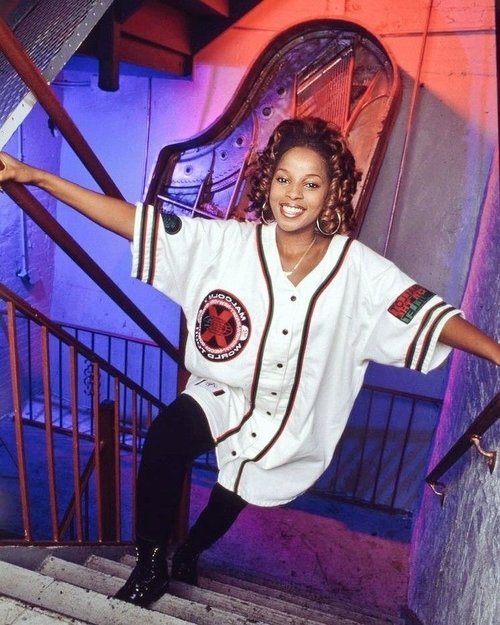
and Mary J. Blige’s stunning album, What’s the 411?, turns thirty. A remarkable and hugely impressive debut, Blige began working on the album with producer Sean ‘Puff Daddy’ Combs after signing a record deal. Other producers came on board and, together, this important and masterful album was created. Upon its release in 1992, What’s the 411? Was met with positive reviews and acclaim. Even though some were a little hesitant to proclaim its excellence, retrospection has framed What’s the 411? as an album that helped change music. Blige’s combination of Soul and Hip-Hop saw her crowned as the Queen of Hip-Hop Soul. This is an album that deserves so much praise. The range and diversity of producers actually works to the album’s credit. There is a variety of sounds at work, yet Blige pulls them all together and is seamless throughout. Successful singles such as Real Love and Sweet Thing helped to make What’s the 411? a chart success. Reaching number six in the U.S., it has gone on to become a three-times platinum album. An amazing album that is among the best of the 1990s, it is such an expressive, huge and confident debut from an artist who has gone onto become a legend and enormously influential voice. I will end the feature with a positive review for What’s the 411? First, Albuism revisited this epic 1992 debut album in a feature from 2017:

Rapidly gaining everyone’s attention heading into the summer of 1992 was a then 21-year-old Mary J. Blige. Signed to Uptown Records, which was quickly becoming Generation X’s Motown, her debut single “You Remind Me” immediately captured the attention of fans and critics alike, amassing enough TV and radio support to generate sizable buzz for her forthcoming freshman album. Blige’s debut LP What’s the 411? was overseen by the label’s ambitious A&R executive Sean Combs, who had recently overseen Jodeci’s big breakthrough.

Exceeding all expectations and driving her fledgling career even higher into the ascendant, Blige hit a home run with the album’s second single “Real Love.” Co-written and produced by the Fat Boys’ Prince Markie Dee, the sped-up baseline of Audio Two’s “Top Billin” provided the perfect head-nodding cadence for Blige’s soulful exploration of her Mr. Right.

As her success skyrocketed on the strength of her first two singles, every inner city girl under 25 began the process of turning into Mary J., with the “do it yourself kit” that included nose piercing, hair dye, baseball jersey, and snap-back Starter hat. Generation X had now found their voice, one profoundly influenced by the attitudes and styles of hip-hop culture. Indeed, as with the tradition of Aretha Franklin in the early ‘70s and Chaka Khan later in the decade, Blige began to grow into the archetype of her generation.

It was amidst this groundswell of support and expansion of her fan base that Mary released her third offering “Reminisce.” The song followed what seemed to be Combs’ formula for the Yonkers, NY songstress, by revolving around another ‘80s hip-hop sample, this time from Audio Two’s close associate and femcee rhyme titan MC Lyte’s “Stop, Look, and Listen.”

As arguably the first songstress to fully embody hip-hop culture, which coincidently was born just a few miles south of her own stomping grounds, sampling and recreating the soul music she was raised on during her adolescence was another major part of her repertoire. Blige’s savory rendition of “Sweet Thing” helped provide depth to her groundbreaking album, and appeared to be a sincere homage to the Queen of Funk, Chaka Khan, who released the original version 17 years earlier as a member of the legendary band Rufus. Released a month after “Sweet Thing” in May 1993, What’s the 411?’s final single was the emotional love ballad “Love No Limit,” which reinforced Blige’s versatility and ability to deliver in the more traditional R&B format”.

I know that there will be a lot of people discovering Mary J. Blige’s What’s the 411? on its thirtieth anniversary later this month. To me, it is one of those debut albums that not only introduced an iconic artist; it also ranks alongside the very best debuts. This is what AllMusic said in their review for the unforgettable and truly remarkable What’s the 411?:

With this cutting-edge debut, Mary J. Blige became the reigning queen of her own hybrid category: hip-hop soul. The eloquence and evocativeness that comes through in her voice, could be neither borrowed nor fabricated, making What's the 411? one of the decade's most explosive, coming-out displays of pure singing prowess. "Real Love" and the gospel-thrusted "Sweet Thing" (the primary reason for all her Chaka Kahn comparisons) are and will remain timeless slices of soul even after their trendiness has worn off, and "You Remind Me" and the duet with Jodeci's K-Ci ("I Don't Want to Do Anything") are nearly as affecting in their own right. It's nevertheless unclear how much of the hip-hop swagger in her soul was a genuine expression of Blige's own vision or that of her admittedly fine collaborators (Svengali Sean "Puffy" Combs, R&B producers Dave Hall and DeVante Swing, rap beatsmith Tony Dofat, rapper Grand Puba). Certainly the singer comes across as street-savvy and tough -- "real," in the lingo of the day -- and even tries her hand at rhyming on the title track, but never again would her records lean this heavily on the sonic tricks of the rap trade.

In retrospect, it is easier to place the album into the context of her career and, as such, to pinpoint the occasions when it runs wide of the rails. For instance, the synthesizer-heavy backdrops ("Reminisce," "Love No Limit") are sometimes flatter or more plastic than either the songs or Blige's passionate performances deserve, while the answering-machine skits, much-copied in the wake of What's the 411?, haven't worn well as either stand-alone tracks or conceptual segues. In fact, those who prefer their soul more stirring, heart-on-sleeve, or close to the bone would likely find her fluid, powerfully vulnerable next recording (My Life) or one of the consistently strong subsequent efforts that followed it more to their liking. For broad appeal and historical importance, though, What's the 411? is an inarguably paramount and trailblazing achievement”.

On 28th July, fans of Mary J. Blige will celebrate her debut album. Her most-recent album, Good Morning Gorgeous, was released earlier this year to critical acclaim. I know that Blige will continue to amaze the world with her music. It will be interesting how she remembers her debut album on its thirtieth anniversary. What’s the 411? is simply magnificent and timeless. It is an album…

WITHOUT flaws or equals.

FEATURE: The Private Life of a Music Icon: Kate Bush and a Hope of More Interviews Soon

FEATURE:


The Private Life of a Music Icon

PHOTO CREDIT: Brian Aris 

Kate Bush and a Hope of More Interviews Soon

__________

LAST month…

 PHOTO CREDIT: Trinity Mirror/Mirrorpix/Alamy

there was a lot of excitement and buzz because Kate Bush gave an interview to Woman’s Hour. It was her first interview since 2016. I guess, unless you have new music or a project to promote, then it is unlikely an artist is going to speak. Today, artists go through this long promotional trail and have to keep active on social media all of the time. I think we take for granted a certain privacy and limitation. Kate Bush has gone through the hectic years of her career when she was being interviewed a lot and being dragged all around the place. Now sixty-three, she is not going to have to go through what she did when she was a teen or in her twenties. As I have written before, Bush does lead a private and normal life. In fact, I came across an article last week from the Oxford Mail where one of Bush’s neighbours talked about his interactions with her:

In 2005, she said: "I suppose I do think I go out of my way to be a very normal person and I just find it frustrating that people think that I'm some kind of weirdo reclusive that never comes out into the world.

"Y'know, I'm a very strong person and I think that's why actually I find it really infuriating when I read, 'She had a nervous breakdown' or 'She's not very mentally stable, just a weak, frail little creature'",' she added.

Speaking to Radio France in 2005, the singer said: 'I'm not reclusive, but just try to live a normal life. And I try to just try to be... a normal person, rather than live the life of someone in the industry.

"I don't think I am weird. I just have a great sense of injustice about that because... I just work.

"I have simply chosen against the lifestyle of the music industry or the world of show-business. Excessive egos, greed for power, greed for money, neuroses, psychoses, sarcasm, cynicism ," she told a German newspaper.

Speaking to the Daily Mail more recently, postman Colin Mildenhall, 67 who delivers to Ms Bush's home almost every day said: "We talk about the garden, the weather and other normal things. She never speaks about her work and I never ask her about it.

"You would never think that she's a big star and she doesn't strike me as the sort of person who's interested in that sort of stuff. She's a very quiet person, she hardly ever leaves her home and I've never seen her walking around. She goes out to check on some of her neighbours and that's about it."

Pensioner Mr Mildenhall, who lives in a cottage opposite the main entrance to Ms Bush's house with his wife Pam, said: "She's always popping over for a chat and to see how Pam's doing, because she's not been well lately. Kate is a lovely person and completely normal. I know her music is becoming popular again, but I've never spoken to her about it or asked anything about her career. To us, she's just a delightful and kind friend and neighbour”.

It is no surprise that Bush is fondly talked about by her neighbours. I guess at the stage in her life, Bush is much more concerned with living a quiet and settled life. Bush has lived in London and been in a busier, bustling environment. Especially since having her son, Bertie (in 1998), she has lived in a more family-friendly and quieter setting. I think that it suits her. I am not sure whether new music is planned. I know that she did look around Radiohead’s studio in 2016 after she saw them on tour. That was in a period where they released A Moon Shaped Pool. It is interesting to guess whether Bush was especially impacted by this album and might be thinking about that sort of sound and direction. I guess I am going off on a tangent. I am thinking about whether we will hear from Kate Bush again. Not only did the Woman’s Hour interview delight existing fans and give us a chance to hear from someone who has been mainly communicating with fans online the past few years. Young and new listeners also got a window into her life and got a sense of what Kate Bush was like in an interview setting. Maybe, unless there is new music, she will not give an interview. She seemed genuinely comfortable and happy when talking with Woman’s Hour.  It has given fans a desire to hear more from Bush. Maybe not only in music terms: just hearing her speak. It is about time that a special programme or interview is given over to the Hounds of Love (1985) classic, Running Up That Hill (A Deal with God). After it topped charts following an appearance on Stranger Things, so many new artists have covered the song. That would provide an opportunity for Bush to be interviewed about the song. So many of her songs and albums have found new chart life. After a new resurgence and sense of relevance, I think a longer interview where Bush talks about this year and what comes next would be must-hear. It may well happen. Even though she is private and does not do interviews often, she is grateful for her fans and her recent success. More words from Kate Bush is a tantalising thought! Until it does happen, we all wait…

WITH bated breath.

FEATURE: A 100% Masterpiece: Sonic Youth’s Dirty at Thirty

FEATURE:


A 100% Masterpiece

Sonic Youth’s Dirty at Thirty

__________

ON 21st July…

one of the great albums of the 1990s turns thirty. From the mighty and legendary Sonic Youth, Dirty scored a number six on the U.K. chart. Although it only got to eighty-three on the US Billboard 200, Dirty has been retrospectively seen as a masterpiece and one of the greatest albums ever. Produced by Sonic Youth and Butch Vig, there is a mix of Grunge and Rock. In 1991, Nirvana’s Nevermind set the music world alight. It is unsurprising that many bands were influenced by Grunge after the explosion and popularity of Nevermind. To mark the upcoming thirtieth anniversary of one of the all-time best albums, I wanted to combine some reviews and a feature. Udiscovermusic.com marked twenty-nine years of Dirty last July:

In the wake of Nirvana’s all-conquering success with Nevermind, Sonic Youth’s decision to work with producer Butch Vig seemed at first a calculated attempt to court similar mainstream ears. One listen to the album that became Dirty, however, blows all such notions out of the water.

True, the album is notable for being their first to rely largely on songs that clock in at a radio-friendly three or four minutes, and Vig’s production certainly gave the group’s abrasive guitars additional punch, but these were perhaps the only concessions towards crafting anything remotely approaching a “unit shifter.” For one, the newfound brevity in song length (an unintelligible cover of proto-hardcore DC outfit The Untouchables’ “Nic Fit” doesn’t even scrape past a minute) didn’t extend to the album as a whole, making Dirty feel sometimes like an hour-long barrage from, on one side, Thurston Moore and Lee Ranaldo’s coruscating guitars, and, from the other, Kim Gordon’s alternately breathy and scratched vocals. With hardcore icon Ian MacKaye drafted in to add extra bite to “Youth Against Fascism,” it’s clear that the group, despite releasing that song as a single (where it beat the odds the group had stacked against themselves and No.52 in the UK), were making it as difficult as possible for newcomers to see Dirty as a gateway album.

Such was the brilliance of Sonic Youth at this time. Seven albums and a decades’ worth of experimental music-making behind them, Moore and co were able to condense their more outré instincts into short, sharp attacks, seemingly piggy-backing grunge’s ascendancy without, really, compromising at all.

Undoubtedly, however, the Seattle scene’s success certainly led some to expect more of the same from Nirvana’s labelmates: released on July 21, 1992, Dirty remains their highest-charting album in the UK, reaching a remarkably successful No.6, while also making it to No.83 in the US – their best Stateside showing up to that point. However, what the uninitiated made of the likes of “Swimsuit Issue’”s frank address of sexual harassment in the workplace (coupled with a somber roll call of some of the titular magazine’s models), or the closing “Crème Brûlèe,” which was partially built around the sound of Thurston Moore trying to turn his equipment on (and features Gordon’s couplet, “Last night I dreamt I kissed Neil Young/If I was a boy I guess it would be fun”) is anyone’s guess.

What’s obvious, however, is that Sonic Youth reveled in the opportunity to hijack the grunge mainstream with some patented NYC avant-garde hijinks – and that Dirty remains a high point in a singular career”.

There may be some who are not familiar with Sonic Youth. Others might be more aware of earlier albums like 1990’s Goo. It is amazing that the band were so strong and inspired on their seventh studio album. A work that took them more to the mainstream, Dirty is an album that influenced so many other bands. This is what AllMusic said in their review of a 1992 classic:

When DGC Records signed Nirvana in 1991, one of DGC's A&R reps expressed the opinion that, with plenty of touring and the right promotion, the new act might sell as well as its labelmate and touring partner Sonic Youth. The surprise success of Nevermind upended previous commercial expectations for Sonic Youth (among other established alternative rock bands), and when Dirty was released in 1992, it was seen by many as the band's big move toward the grunge market. Which doesn't make a lot of sense if you actually listen to the album; while Butch Vig's clean but full-bodied production certainly gave Thurston Moore and Lee Ranaldo's guitars greater punch and presence than they had in the past, and many of the songs move in the increasingly tuneful direction the band had been traveling with Daydream Nation and Goo, most of Dirty is good bit more jagged and purposefully discordant than its immediate precursors, lacking the same hallucinatory grace as Daydream Nation or the hard rock sheen of Goo. If anything, Dirty finds Sonic Youth revisiting the territory the band mapped out on Sister -- merging the propulsive structures of rock (both punk and otherwise) with the gorgeous chaos of their approach to the electric guitar -- and it shows how much better they'd gotten at it in the past five years, from the curiously beautiful "Wish Fulfillment" and "Theresa's Sound World" to the brutal "Drunken Butterfly" and "Purr." Dirty was also Sonic Youth's most overtly political album, railing against the abuses of the Reagan/Bush era on "Youth Against Fascism," "Swimsuit Issue," and "Chapel Hill," a surprising move from a band so often in love with cryptic irony. Heard today, Dirty doesn't sound like a masterpiece (like Daydream Nation) or a gesture toward the mainstream audience (like Goo) -- it just sounds like a damn good rock album, and on those terms it ranks with Sonic Youth's best work”.

To round things off, there is another review that I want to source. Rolling Stone had their say about Sonic Youth’s Dirty back in 1997. They make some interesting and valid observations:

Rock has never seen a band quite like Sonic Youth, even if you discount the group’s innovative guitar tunings and unique slant on pop culture. For eleven years now, Sonic Youth — singer-guitarist Thurston Moore, singer-bassist Kim Gordon, guitarist Lee Ranaldo and drummer Steve Shelley — have surefootedly made their way from the New York noise-rock underground and indie labels to their present contract with Geffen, continually advancing but in increments and always retaining complete artistic control. Each album has been better recorded than the last, has further refined the band’s songwriting craft and chops, has expanded its range. Through it all, like Bob Dylan’s John Wesley Harding, they were “never known to make a foolish move.”

The Youth were early, enthusiastic supporters of Nirvana and of the whole Seattle-centered guitar-grunge scene, so it’s not surprising to find the band working with producer Butch Vig and mixer Andy Wallace of Nevermind fame on Dirty. It’s the first time the band has used an outside producer, and it works, giving this eighth SY album added richness, clarity, punch and amp-static snarl as needed. It’s more focused and harder hitting than Goo (1990), the band’s last album and its Geffen debut, but the disc-to-disc development is well within previous SY parameters, not even as radical a jump as the one from Daydream Nation (1988) to Goo.

Oh, by the way, Dirty is a great Sonic Youth disc, easily ranking with Daydream Nation and Sister (1987) among the band’s most unified and unforgettable recorded works. The aural “dirt” is one element that pulls the album together. Another is the thematic move away from the cyberpunk allegory of recent discs and squarely into a confrontation with life in America during a particularly scary election year. Sentiments along the lines of “I believe Anita Hill/The judge’ll rot in hell” and “Yeah, the president sucks,” from the coruscating “Youth Against Fascism,” dovetail with the sexual-harassment issue addressed in the skronking head-clanger “Swimsuit Issue” and with the melodically haunting, ideologically devastating “Chapel Hill,” a sharp retort to the geriatric politics of Jesse Helms and his ilk. The aura of insurgency provides a charged context for the disc’s more personal songs, upping the intensity and the emotional stakes and fusing a collection of diverse tracks into a scorched and scorching whole. Dirty is a burner”.

A masterful and hugely important album, Sonic Youth’s Dirty warrants a lot of new respect and writing ahead of its thirty anniversary on 21st July. I do not know whether the band are marking it with an anniversary release or re-release. I hope that something comes about. Even if you were not around in 1992, you can put the album on and be affected by it. It still sounds so vital and like nothing else…

THIRTY years on.


FEATURE: As One BBC Radio 2 Legend Says Goodbye… The End of Steve Wright’s Afternoon Show and the Presenters I Would Like to Hear on the Station

FEATURE:


As One BBC Radio 2 Legend Says Goodbye…

The End of Steve Wright’s Afternoon Show and the Presenters I Would Like to Hear on the Station

__________

THERE was a lot of reaction online…

 IN THIS PHOTO: Steve Wright at BBC Radio 1

to the news that BBC Radio 2’s Steve Wright will leave his afternoon show after over two decades. I can’t remember the first time I heard his show. It must have been in the late-1990s, not long after it started (in 1999). Wright is embarking on other projects, but he will remain on radio and take on fresh challenges. He will be replaced in his afternoon slot by BBC Radio 1’s Scott Mills. BBC reported on the news that one of their longest-serving broadcasters is departing his much-loved afternoon slot:

BBC Radio 2 DJ Steve Wright has announced his weekday afternoon show is to end after more than 20 years.

Wright said Radio 2's boss had told him she wanted to do "something different" with his mid-afternoon slot.

He will be replaced by Scott Mills, who currently hosts afternoons on Radio 1, in a shake-up of the daytime schedule.

The new afternoon show, hosted by Mills, will be cut by an hour, while Sara Cox's drivetime show will be extended by an hour and start at 16:00.

Wright described Mills as a "brilliant and versatile" presenter.

As a result of the shake-up, Mills will leave Radio 1, which has been his home since 1998, and will also no longer present his Saturday morning show on Radio 5 Live.

Wright, who will leave afternoons in September, is not leaving the BBC completely and will continue to present Steve Wright's Sunday Love Songs on Radio 2.

IN THIS PHOTO: Scott Mills 

"At the beginning of this year, my friend and boss Helen Thomas, head of Radio 2, said she wanted to do something different in the afternoons," he explained to listeners on Friday.

"Now, I've been doing this programme for 24 years at Radio 2, and so how can I possibly complain? The support and creative freedom that I'm given is fantastic at Radio 2 and really I can't hog the slot forever, so let's give somebody else a go."

In a statement, Wright added that he was developing other projects with the corporation, including a BBC Sounds spin-off called Serious Jockin' as well as "exciting new digital programmes and podcasts, which will feature elements of the afternoon show".

"We're not done yet. Afternoons will finish in September, we'll move onto new programmes and projects in October, and Love Songs will continue every Sunday morning."

Wright made his name on Radio 1 with the original incarnation of Steve Wright in the Afternoon from 1981, bringing energy, comedy and his trusty posse - and pioneering the "zoo" format on the UK airwaves.

He moved from afternoons to the breakfast slot from 1994 to 95 before joining Radio 2 the following year, initially on Saturday mornings before resurrecting Steve Wright in the Afternoon in 1999.

Those commenting on his departure on Twitter included presenter and writer Dominik Diamond, who said Wright was "the reason I work in radio" and called him an "inspiration and legend".

IN THIS PHOTO: Sara Cox/PHOTO CREDIT: Alex Lake/The Observer 

Broadcaster Jamie East said Wright was "an absolute master", while BBC political editor Chris Mason said he was "radio royalty, a craftsman of the trade, one of our greatest broadcasters, a radio genius".

Speaking about his own move, Mills said: "Time actually does fly when you're having fun, and that's certainly been the case over the past 24 years at my beloved Radio 1.

"I really cannot believe I'm going to be calling Radio 2 my new home! I'm beyond excited to be joining the team and working alongside my radio idols and friends at the legendary Wogan House."

He described Wright as "one of the finest broadcasters in the world and someone whom I look up to so much".

Mills has worked as a cover presenter on Radio 2 in recent years, often standing in for Ken Bruce and Rylan Clark.

His popular features on Radio 1 over the years have included Laura's Diary, Flirt Divert, Badly Bleeped TV, Stupid Street, Innuendo Bingo and Oh! What's Occurring.

His departure from Radio 1 means his co-host Chris Stark will also leave the station.

Cox, who has hosted the drivetime show since 2019, said: "It's been an absolute honour following Steve Wright's Big Show and I'd like to thank him for all his support and kindness since I started Teatime."

She added: "I'm beyond chuffed to have three whole hours to hang out and have a laugh with the listeners whilst playing some of the best tunes in the world”.

 IN THIS PHOTO: Angela Scanlon

It is also great that the marvellous Sara Cox is getting more time on her show. She is one of the very best broadcasters around. I love her show. A legend who is going to stay at the station (we hope) for decades more, I look forward to seeing where her show goes and how it progresses. It must be sad for Cox to say goodbye to Steve Wright later in the year, as her show follows her during the week. I have been thinking about Steve Wright and how he has affected me. I listen more to BBC Radio 6 Music, but I also tune into BBC Radio 2 a lot for the brilliance of Zoe Ball, Sara Cox, Ken Bruce and Steve Wright. He is a consummate professional who is going to very missed. I wonder what is planned for his final show. Although there have been changes and new presenters on BBC Radio 2, there are a few names that I would love to hear more from. Shaun Keaveny (formerly of BBC Radio 6 Music) has stood in for Liza Tarbuck on her show. He is a sensational broadcaster and someone who proved very popular when standing in for Tarbuck. Whether there are more cover shifts planned I am not sure, but a more regular slot would definitely prove a popular option. He is someone that I would love to hear on a Saturday evening, say. Maybe a later Saturday slot or a couple of hours in the morning.

 IN THIS PHOTO: Cat Deeley

Two other broadcasters who have appeared on BBC Radio 2 but are not permanent fixtures are Cat Deeley and Angela Scanlon. Not that either would step into Steve Wright/Scott Mills’ position but, as there is this big change (and Sara Cox has her show extended), I do wonder whether there are plans for new additions. I love Cat Deeley and Angela Scanlon. Both were a breath of fresh air when they presented for the station. Deeley is someone I remember first seeing on television decades ago. She is such a respected and loved figure, her energy and passion is clear when she was on BBC Radio 2. The same is true of Angela Scanlon. Maybe not permanent shows, there must be room in the schedule to hear these two brilliant women back on BBC Radio 2 soon. Maybe they may feature to cover for other broadcasters on the station this year but, after hearing Deeley and Scanlon when they were last on the station, their shows and words are still in my mind! I think the current schedule and line-up at BBC Radio 2 is great but, like every station, there is always room and opportunity to broaden and change. We shall see what happens in the coming years in regards other broadcaster joining the fold.

Whilst I have been thinking about other remarkable broadcasters and how they could add to BBC Radio 2, it remains to wish Steve Wright all the very best of luck! He has a lot of other things in the pipeline, but afternoons on the station will not quite be the same. Scott Mills will do an excellent job. Sara Cox’s show is being lengthened. There was a lot of love for her on social media yesterday when we heard Steve Wright was departing his afternoon slot. Even before his BBC Radio 2 show, I was aware of Steve Wright. From his presenting on Top of the Pops to his stint on BBC Radio 1, he is a legend who has influenced so many other broadcasters! I have so much respect for those who can do the same show for so many years. Radio is a wonderful medium but putting together a three-hour show and sustaining that energy is so difficult! We will bid farewell to a master in September. It will be the end of an era but, as Steve Wright is still on the station and will be doing other things, there is that excitement of listening to him do something new. Thinking about Steve Wright, and it is not sadness and loss I (and many others) feel. It is thanks and admiration for all that he has given to us through the decades. There is no doubt that he is…

ONE of the broadcasting greats.

FEATURE: Deserving of a Full House! Why Kate Bush’s Lionheart Warrants a Long Podcast

FEATURE:


Deserving of a Full House!

Why Kate Bush’s Lionheart Warrants a Long Podcast

__________

AN album that I have had to defend before…

 PHOTO CREDIT: Gered Mankowitz

it seems odd and wrong to have to do that. If people are not familiar, Lionheart was Kate Bush’s second album. Released in 1978, mere months after her debut, The Kick Inside, it is an album that did not get the same great reviews. When people rank Bush’s ten studio albums, they often put Lionheart in the bottom three. I have seen it placed higher but, normally, it is down there with The Red Shoes (1993), Director’s Cut (2011) and The Sensual World (1989). Maybe some were expecting something like The Kick Inside, or they felt that Lionheart sounded a bit too like that album. As I have said before when featuring Lionheart, Bush was put in an awkward position by EMI. Her debut was a success and took her all around the world. Rather than let he rest or spend time writing new material, there was this expectation of a new album. That would not happen today! Only able to write a few new songs (including the remarkable Symphony in Blue), Bush had to use older songs for her second album – ones that might have been considered in some form for The Kick Inside. I am not sure how comfortable and assured Bush was releasing a quick follow-up to The Kick Inside. Recording at Super Bear Studios in Berre-les-Alpes, France, Bush assisted with production alongside The Kick Inside’s producer, Andrew Powell. I think that she managed to help create an album that is varied and different (compared to The Kick Inside).

There have been some positive reviews for Lionheart but, in the main, they are mixed. Running at ten tracks, it is concise and has very little weakness. The single, Wow, is the third track. Symphony in Blue opens the album. Tracks like Kashka from Baghdad are among Bush’s best tracks. Whilst she would produce a stronger and more accomplished album with 1980’s Never for Ever, Lionheart definitely deserves to be given its dues. Mixing in slightly unusual elements on songs such as Coffee Homeground and Full House, Bush did expand her sound. Full House has this sense of dread and anxiety. Coffee Homeground has an almost fairground/carnival vibe to it. In the Warm Room could have fitted on The Kick Inside, whilst Don’t Push Your Foot on the Heartbrake is a rockier song that shares vocals share similarities with Babooshka (Never for Ever). There is a lot to love on Lionheart. Bush’s voice is extraordinary and, using most of the personnel from The Kick Inside, there is a consistency and link between the albums. Released in November 1978, I hope that its forty-fifth anniversary next year gets people reassessing an album that is actually a lot stronger than it has been given credit for. Maybe releasing Hammer Horror as the first single was an error. I think that Kashka from Baghdad or Oh England My Lionheart would have been more successful. That said, the song is very strong, and it featured a particularly memorable music video! Lionheart did get to number six here in the U.K. It can be seen as a success but, if Bush was given more time, it could have been more of what she wanted.

Before moving along, I want to source the Kate Bush Encyclopaedia. They collated some great interviews where Bush talked about the album (and we discover her views). It is interesting reading what she had to say about Lionheart:

Maybe I'm a bit too close to it at the moment, but I find it much more adventurous than the last one. I'm much more happier with the songs and the arrangements and the backing tracks. I was getting a bit worried about labels from that last album; everything being in the high register, everything being soft, and airy-fairy. That was great for the time but it's not really what I want to do now, or what I want to do, say, in the next year. I guess I want to get basically heavier in the sound sense... and I think that's on the way, which makes me really happy.

I don't really think there are any songs on the album that are as close to Wuthering Heights as there were on the last one. I mean, there's lots of songs people could draw comparisons with. I want the first single that comes out from this album to be reasonably up-tempo. That's the first thing I'm concerned with, because I want to break away from what has previously gone. I'm not pleased with being associated with such soft, romantic vibes, not for the first single anyway. If that happens again, that's what I will be to everyone. (Harry Doherty, Kate: Enigma Variations. Melody Maker, November 1978).

[Recording in France] was an amazing experience. I mean it's the first time I've ever recorded out of the country. And the environment was really quite phenomenal, I mean it was just so beautiful, it was so unlike anything I'd seen for a long while. And I think there was so many advantages to it, but there were a couple of disadvantages - the fact that it was so beautiful, you couldn't help but keep drifting off to the sun out there, you know, that sort of thing. But you just didn't feel like you needed a break, because the vibes and the weather and everyone around was just so good, you know, you didn't feel like you were working. It was really, really fun. (Lionheart Promo Cassette, EMI Canada, 1978)

It was a difficult situation because there was very little time around and I felt very squashed in by the lack of time and that's what I don't like, especially if it's concerning something as important for me as my songs are, they're really important to me. But it all seemed to come together and it was really nicely guided by something, it just happened great. And there were quite a few old songs that I managed to get the time to re-write. It's a much lighter level of work when you re-write a song because the basic inspiration is there, you just perfect upon it and that's great. And they're about four new songs so they all came together, it was great. In fact, we ended up with more then we needed again, which is fantastic. (Lionheart Promo Cassette, EMI Canada, 1978)”.

Although there have been Kate Bush podcasts, not many of them (if any) have spent time with Lionheart. 1978 was a busy and eventful year for Kate Bush. To hear about her getting Lionheart together and entering a new studio would be fascinating. I know there are fans of the album, and it would be great to hear about their thoughts and feelings. The cover’s photo (shot by Gered Mankowitz) is brilliant! I love the variety of sounds on the album - and, although it is not her finest, there is more than enough to discuss and unpick. Recorded between July and September 1978, it amazes me that she started recorded her second album only five months after her debut arrived! Given such a tight deadline, Lionheart is an amazing album with so many interesting songs. Bush was not resting after Lionheart’s release. The Tour of Life took up a lot of 1979. In 1980, she released her next album, Never for Ever. Maybe a slight track rearrangement would create an even stronger listening experience. I think a lot of people got too hung up on comparing Lionheart with The Kick Inside. If you take it on its own merits as a new album that was not trying to repeat The Kick Inside, then you will find a lot to appreciate. The 1978 gem is a fascinating album from…

A brilliant artist. 

FEATURE: Spotlight: Jesse Jo Stark

FEATURE:


Spotlight

PHOTO CREDIT: Sophia French for The Forty-Five

Jesse Jo Stark

__________

ONE of the most impressive young artists around…

 PHOTO CREDIT: Tom Pallant

Jesse Jo Stark should be on everybody’s minds. The thirty-one-year-old American singer-songwriter, fashion designer and artist bring so much character, beauty, rebellion, personality, and brilliance to her music. On 21st September, her album, DOOMED, is out. It is going to be one of this year’s best albums. I have only recently discovered Jesse Jo Stark, but I have been really struck and mesmerised by her music. She is fascinating to read and see interviewed. There are quite a few interviews available online. I have selected a few that give you a good idea of who Stark is. Her debut E.P., Dandelion, came out in 2018. Vogue spoke with her in 2018. She is someone who could not avoid music and its draw. In return, she has already given the world so much:

Jesse Jo Stark was born to be a rock'n'roll star. "I believe that it has always been inside of me. I took different steps in order to water that need and experiment with it," she explained to Miss Vogue. Fresh from her first ever NYC gigs supporting The Vaccines, the LA native is hitting her musical stride with a sound and aesthetic entirely her own.

"I think the last four years have been really important in my life and I finally feel like I’m making songs that represent me and that I want to share. They've been really important to me as a musician."

This week marks the launch of a new video, Wish I Was Dead. Set against perfectly seasonal Halloween-inspired backdrop, the video is the signifier of a new era for Jesse Jo's "horrific hillbilly" sound.

It's undeniably sexy, which was a conscious choice mirroring with the way the musician has come to feel about her own body as she enters her late 20s. "I’ve been embracing the body lately and wanted the video to have a sexy element. I was a lot more hidden when I was younger. I didn’t always have so much skin out. I’m embracing my body more now and am getting a bit flirtier with what I wear. It was about recreating small movie-inspired clips of these women dancing." There's also a monster, dramatic eye make-up and a lot of skulls.

Being a young woman in the industry, Jesse Jo feels like she's come up against the challenges that that can bring but she's moving forward, much like the industry itself.

"Now, when I go into the studio I make sure that I’m saying what I want, what I don’t like and not having any fear behind that, but I think all of that comes with being able to voice it. So, the guys that I work with and the women they respect my opinion and they know that I’m not there to really just take theirs, it’s a collaborative effort. We are in a cool time where people are trying. Being on tour with the Vaccines has taught me a lot. They’re super respectful and they have my back and they’re very open”.

Her excellent E.P., A Pretty Place to Fall Apart, came out last year. In a year when the pandemic was getting in the way of promotion, maybe Jesse Jo Stark was a little restricted. For an artist who is so mobile, physical, and expressive, she must have been longing to get onto the stage. She did get to do promotion for the E.P. The Forty-Five spoke with the incredible and truly stunning Stark:

She lived between grandparents and family friends in the LA area, but often joined her parents on their travels. Growing up in this nomadic tradition, she looked beyond the Malibu bubble from an early age and knew there was so much else to see. “It gave me such an appreciation for the world. And I love touring as a musician. You know, being on the bus, squeezing into the tight spaces,” she shares. “But at the same time, being grounded is so important to me. Even when I’m in a hotel room for a day, I have my blanket, my crystals, my little monster puppet. I’m always telling the boys in my band, ‘We need to go and stick our feet in the grass!’ They tell me I’m so weird for saying that, but I grew up by the beach and just want to feel rooted, no matter where I am.”

How did her early years shape Jesse Jo’s worldview? “There is actually something juvenile about the way I exist,” she admits, grinning at the realisation. “As a kid, I was around adults all the time; it made things feel so serious. Now, play is such a big thing for me. I really have a relationship with my inner child.” Indeed, it can feel like Jesse Jo is playing (and winning) when it comes to the art she makes. Her music dances effortlessly across genres, criss-crossing from the dreamy and ethereal ‘Tangerine’, to the dramatic and gothic ‘Die Young’, to the Bangles-inspired beach hut texture of ‘Breakfast with Lou’. Created around her song by the same name, her ‘Deadly Doll’ clothing line builds vintage comic book imagery and Liechtenstein-esque pop art motifs around a mythical, vampiric femme fatale character of her description. For Chrome Hearts, she has designed fan favourite go-go boots in every colour, from shimmering pink to leopard print. If this is recess, you get the impression that Jesse Jo is playing with every toy in the box.

PHOTO CREDIT: Sophia French for The Forty-Five 

Hearkening to old-world balladeering about haunting love and times gone by, her music sounds flung out of space, entirely unplaceable in today’s modern listening context. But Jesse Jo isn’t concerned about keeping to a timeline. “I don’t want to put out songs to catch a moment or a trend. I’ve always taken the long road with everything I do, whether it’s my music or my clothes.” Indeed, the release of Stark’s signature Sugar Jones go-go boots was contingent upon getting it all perfect, from the heel to the silhouette; on her ‘Deadly Doll’ white T-shirts (ostensibly, plain white tees), she agonised for a year over the cut, fit and fabric. She considers the gravity of each micro-interaction with what she shares with the world; how a snippet of a song or the cut of a t-shirt can change a moment, a week, a month, a life. “A young woman approached me at my boyfriend’s show recently,” she recalls. “She told me she had been inspired by a YouTube video of mine from years ago, called ‘Silver Kiss’. I was entirely shocked to hear this, as no one has seen it! But it empowered me so much. It reminded me that our craft is worth it; that spending our lives putting in effort and honing our work is worth it because of who might end up listening to it, and how it could change something for them.”

Jesse Jo keeps her family and friends close. Her relationships are deep, trusting and involved, and that extends to her collaborators. “I wanted to create a family with my band. It really changed my life when I found the right people, put together this band and had them join me on my journey. That was the point at which my music really started to evolve.” To this day, her guitar player Thomas Hunter is one of her closest collaborators. A co-writer, co-producer and co-performer on her recent releases (spanning the ‘Dandelion’ EP (2018), her last pre-quarantine projects ‘Tangerine’ and ‘Die Young’ (2020) and now her newest single ‘A Pretty Place to Fall Apart’), he is as much a part of Jesse Jo Stark’s music as she is, appearing alongside her in music videos and touring the world together”.

I want to finish up with an interview from a week ago. There is a lot of new attention around Jesse Jo Stark because of her new music. The incredible modern love and so bad are signs of an already-wonderful artist growing and producing some of her most confident and brilliant music. CLASH spoke with Stark earlier this month about an artist that everybody needs to follow and be aware of:

Let’s chat about the latest single - ‘so bad’ is gorgeous! Can you tell me a little bit about why this ended up being selected as a single - what makes it a stand-out to you?

‘so bad’ felt like the perfect introduction to ‘DOOMED’ and the end part is one of my favourite moments on the album. This was also the first song Jesse and I ever worked on together. It felt like the start of something special.

You’re hands on in every aspect - with your own record label and involvement in promo, it’s a shock you ever find time to rest! Again, do you feel like that involvement helps you connect and feel more pride in what you’re creating?

I think everyone should feel proud whether they have a big record label behind them or not but I’m definitely taking a longer, more complex route in my artistry. Nothing I put out is because someone else told me too! I want my art to have longevity and always be an extension of who I really am. There’s just no other option…. and… I’ll sleep when I’m dead.

So, your debut ‘DOOMED’ is around the corner - why now? What made you decide that it was finally time to go all out for a full-length release?

Honey!… it was fucking time x

You’ve mentioned that ‘DOOMED’ feels like your most personal release - how has music allowed you to find yourself? How does the Jesse Jo Stark reading this right now compare to the ‘Dandelion’ Jesse Jo Stark?

Music has always allowed me to say what I haven’t been able to. It’s extremely vulnerable to be that naked when writing songs. She’s proud because she had to exist for me to be where I am right now”.

I am going to wrap up soon. It is clear that Jesse Jo Stark has progressed a lot as an artist since 2018. She was amazing then, but her music has turned into something different since then. With a series of gigs coming up in her native U.S., I hope that she does come to the U.K. and beyond soon enough. There is a fanbase here, so any live dates will sell out pretty quickly. I am looking forward to seeing what DOOMED offers in September. It is going to be a remarkable album from an artist who…

IS growing stronger by the year. 

______________

Follow Jesse Jo Stark

FEATURE: I Turn to My Computer…. Kate Bush: A Mix of the Modern and Traditional

FEATURE:


I Turn to My Computer….

IN THIS PHOTO: Kate Bush at a Fairlight CMI demonstration 

Kate Bush: A Mix of the Modern and Traditional

__________

AFTER hearing…

 IN THIS PHOTO: Kate Bush in 1979/PHOTO CREDIT: Trinity Mirror/Mirrorpix/Alamy Stock Photo

Kate Bush interviewed by Emma Barnett on Woman’s Hour, it got me thinking about a subject that I have explored before. Bush is this wonderful mix of qualities and people. On the one hand, she is grounded and relatable and very human. Someone that is like us and has this love of home and family. On the other, she is an extraordinary talent who has enjoyed an enormously successful career. When it comes to her music, she fused the otherworldly and heavenly with something rooted in the heart. Quite rightly, Bush is seen as a technological innovator. She was not only exploring new territory and subjects with her lyrics from her debut album, The Kick Inside (1978); Bush was also quick to embrace new technology and use it to stunning effect. At a time when the Fairlight CMI was reserved to a privileged few, she saw the benefits and possibilities of an amazing thing that could offer a world of choice. She could record basic sounds and put them into the Fairlight CMI and utilise it in the music. From the sound of breaking glass in Babooshka (Never for Ever, 1980), to a range of sounds throughout Hounds of Love (1985), this provided her music new levels and layers. Her sense of innovation and forward-thinking extended to her liver work. The Tour of Life in 1979 and 2014’s Before the Dawn were groundbreaking in terms of their concept, scope and how they incorporated so many different elements. Especially in 1979, Pop and Rock concerts were quite basic and similar. Bush brought in mime, magic, theatre, and dance into an experience that was more like a film or theatrical show.

It was wonderful hearing Bush speak to Woman’s Hour about technology. She was recognised as an innovator. Bush talked about the Fairlight CMI and how that helped her. Even though she has a laptop and uses streaming for T.V. (as she binge-watched Stranger Things), she also admitted to having an ancient mobile phone. She was speaking to Emma Barnett on a landline. If her music is renowned for being forward-pushing and innovative, there is something more traditional and oldskool when it comes to the domestic Kate Bush! Maybe it is a generational thing. Bush is not someone who lures after the latest Smartphone and checks it all the time. Wanting to detach and disconnect from technology and constant demand when she is out and about, she is someone who can cope fine with less technology in her pocket. As she observed in her song, Deeper Understanding (first appearing in 1989’s The Sensual World, it was re-recorded for 2011’s Director’s Cut), we are transfixed and obsessed by computers. Almost like friends. In 1989, at a point in history when the Internet was not a thing and computers were basic, Bush was seeing into the future. She knew how they were taking over our lives! It is not a surprise, given that observation and wariness, that she is not a technology nut. Although Deeper Understanding looks at the heroine greeting her computer and staying on it too long, Bush has said in interviews how she is not online a lot and notes how we are too obsessed with computers and social media.

One could say that Bush’s albums post-Hounds of Love were not as innovative as her earlier ones. As a producer, she has always looked at new sounds and ways of recording. Bush is a very experienced, knowing and confident producer who has this warmth and bond with her musicians. She also knows what she wants and has this way of finding possibilities and sounds others would not. A big part of this is her use of the studio and technology. There is that divide between Bush’s curiosity when it comes to technology in music and an apathy and lack of affection when it comes to modern technology (phones, social media etc.). She is not on Twitter or TikTok. One suspects she has an old-version Smartphone, and she is not someone who embraces that side of modern living. If anything, that makes it more appealing, lovable, and mysterious. Because of this, she is not overexposed. There is this constant speculation around new music because Bush is away from social media and works privately at home. Even if she has this very casual relationship with modern technology, she is still someone pushing boundaries. Even when recording to tape (which she prefers to get a warmer sound), one can listen to her albums and marvel at the way she arranges and producers her songs. From the innovative early use of the Fairlight CMI in 1980, through to the awes-inspiring Hounds of Love, the conceptual suite on the double album, Aerial (2005), her embrace of the different, technological, and original has defined her work. This sits alongside someone who would eschew modern technology for communication and remain more rooted in an older way of life. In her homelife, Bush is much more comfortable not having distraction or leaning on technology. Because of that, she is…

A magnificent contradiction!

FEATURE: Too Cool to Spool? Returning to the Sony Walkman: Why Has the Classic Device Not Been Resurrected?

FEATURE:


Too Cool to Spool?

Returning to the Sony Walkman: Why Has the Classic Device Not Been Resurrected?

__________

HAVING watched Stranger Things

and, as it is set in the 1980s, seeing the Walkman feature, once more I am thinking about the classic device. It seems like this throwback to the 1980s and 1990s when there were limited options for listening to music on the move. Now, anyone with a smartphone can hear music when they want. The sheer excitement of being able to play a cassette or C.D. (with a Discman) when moving around cannot be overstated. It was a way to share music and make it mobile. Some may say that, because we do not really use cassettes anymore, the Walkman should stay extinct. The thing is that, not only are people digging up old cassettes. New artists release music to cassette. It is a way to appeal to a wider demographic. I don’t think it is a novelty. Many people will want to listen to an album in a physical form on the move, rather than streaming it. That is perfectly understandable and respectable. C.D.s are great, yet there is something about a cassette that cannot be beaten. They can be a less expensive option when it comes to buying albums. One of the drawbacks is that you cannot skip between tracks and have the same accessibility and ease you get with C.D.s or streaming. That is a minor complaint. The fact that there are more cassettes being produced and people are buying them means there is a need to produce technology they can be played on. I have asked before whether it might be possible to revive an old Sony Walkman design for the modern age.

In terms of profitability and popularity, I think having access to a Walkman (or other device) would help spur and increase cassette sales. I am sure that some people do have means of playing cassettes, though most of us do not. I have been looking online and seeing people discuss how they miss the Walkman and the process of loading in a tape. I am aware, as I have written before, how there are disadvantages. Tapes can become unspooled and come undone in the device. There are a lot of pluses. Having something compact where you can look at the linear notes and details is wonderfully exciting. I also like the fact that cassettes are quite tough and robust in terms of their design. Even though Walkmans were expensive when they were first released, they could be revived with a lower cost. I don’t see why they cannot be sold for less than, say, £70. That may sound expensive but, when you consider the fact they will last many years, it is a great investment. I don’t think we should assume modern music is about the digital and necessarily making things easier and less physical. The boom in vinyl sales shows there is a desire for tangible music. Whilst cassette sales are modest compared to vinyl, they are going to stay steady. Because there is not really anything to play them on, many people are buying them and essentially using them as art. If we want to encourage physical formats like cassettes to survive and remain, we need to make sure people can play them!

I think that getting the Discman going again might be flawed. People can play C.D.s more readily. Many can play them in cars and, if you have an old C.D. player, they work. Many laptops can accommodate compact discs. That is not true when it comes to cassettes. A sleek and durable version of the Sony Walkman – maybe the model that came out in 1986 – in a range of colours with a mixture of classic and modern functionality (the play, pause, stop, rewind, forward, volume functions etc., combined with a digital interface) would prove popular I feel. Given a slight resurgence in cassette sales, perhaps the profit margin would be very thin. I guess that there would need to be a vinyl-like boom to facilitate anything like a new Walkman. If there was a device already, then sales would naturally increase. It is over to manufacturers to recognise that cassettes still have a place and there is a demand. If people are struggling to play them, then they will be confined to the status of artefact or decoration. That is not something we want with cassettes or vinyl. Artists release cassettes now so that people have the option to play them. I will not labour the point too much. I am aware I have discussed this a few times already. It seems a shame that there is not really impetus from any corners to put out a 2022 version of the Sony Walkman. Hopefully series like Stranger Things (set in the 1980s), combined with a revival of the format, will make people act. It would be good to see a cassette-playing device back on the market…

AS soon as possible.

FEATURE: Paradise City: Guns N’ Roses’ Appetite for Destruction at Thirty-Five

FEATURE:


Paradise City

Guns N’ Roses’ Appetite for Destruction at Thirty-Five

__________

A monster of an album…

that topped charts, sold huge numbers and is considered one of the best ever, the initial reviews for Guns N’ Roses’ debut, Appetite for Destruction, were not all glowing. A sort of Hair Metal, Rock and Glam mixture from a band led by Axl Rose must have been an unexpected and hard-to-appreciate-at-the-time combination in 1987! Released on 21st July that year, I wanted to spotlight an album that is celebrating a big anniversary soon. Featuring iconic songs like Welcome to the Jungle, Paradise City, and Sweet Child o' Mine, I think that most Guns N’ Roses fans would put Appetite for Destruction at the top of their list. It is a wonderful album that has gone through reappraisal. At the time, some objected to Appetite for Destruction. Whether they felt Guns N’ Roses were a combination of other bands or were a bit cliched, it did take a while for the album to get this huge acclaim. Now seen as a watershed moment and one of the very best albums ever, Appetite for Destruction has won many more positive critical reviews since its initial batch in 1987. In a spectacular year for music – classics from Prince, Michael Jackson, Eric B. & Rakim, INXS, and U2 among them -, Guns N’ Roses debut was quite unlike anything else. I think that one reason why Appetite for Destruction remains so intriguing, durable, and popular is the fact it does not sound dated. Thanks to the varied songwrtiting from the band and excellent production from Mike Clink, here is an album that will be discovered, played and treasured for decades to come.

Like I do with album anniversary features, I am going to end with a couple of reviews of Appetite for Destruction. It is interesting reading all of the reviews for the album, as everybody has their own take on a truly awesome album. Before getting to that, Loudwire wrote about the story of Appetite of Destruction in July 2021. I have highlighted a few parts that are particularly illuminating and helpful:

In an era of bad-boy rockers who weren’t terribly bad and wrote music that sounded too good, Guns N’ Roses were the genuine article. Their songs echoed with the love for rock and roll and the spirit of rebellion. When Geffen Records A&R man Tom Zutaut signed the band he had no idea what he had gotten into. No one else wanted GN’R because they were viewed as a liability, a band as likely to miss the show as perform a gangbuster set. Yet what Zutaut heard from vocalist Axl Rose, guitarists Slash and Izzy Stradlin, bassist Duff McKagan and drummer Steven Adler was inspiring and seemed to have the potential to be a profitable signing if they didn’t all die in an alcohol or drug related mishap.

“There are some bands that just can’t be stopped and you can sense it,” Zutaut says. “No amount of alcohol or drugs will slow them down. Guns N’ Roses were able to consume those things, yet, deliver at a live show and deliver in the studio. I don’t know if that makes them like gorilla glass on a cell phone or what, but there are plenty of bands that probably did less heroin than Guns N’ Roses and drank less alcohol, but imploded. For every Guns N’ Roses or Motley Crue that delivers, there’s probably 10 bands that are great but fall apart before they even become successful.”

Impressed by Guns N’ Roses’ ability to endure under adverse conditions, Zutaut paid producer Spencer Proffer $15,000 to record “Nightrain” and “Sweet Child of Mine,” as a test and if the chemistry was good he would stay on for the debut. He also agreed to record a few extra songs with the band for the EP Live Like a Suicide, which Geffen released in England under a different label to pique interest in the band before they toured there.

“Proffer didn’t produce those songs, his engineer just recorded them,” Canter says. “GN’R recorded those songs in two or three weeks at a time when they were totally out of control. Even Axl wasn’t in the best shape, and he was the cleanest out of all of them. But he was fooling around with whatever they were doing. Once he saw that they were totally spun out, he just stopped. But nobody showed up on time. They’d throw up or pass out in the studio. But they got the songs done. They recorded nine songs in that studio including 'Heartbreak Hotel,' 'Don’t Cry' and 'Welcome to the Jungle.' But they only used those four. And then they used 'Shadow of Your Love' as a b-side.”

The writing sessions for Appetite for Destruction were brief and frantic, largely because they band was aching to get into the studio again and record their first album, but also because they wrote many of the songs on their debut before the band got signed. McKagan had “It’s So Easy,” Stradlin presented “Think About You,” “Anything Goes" was a Hollywood Rose tune and Slash, McKagan and Adler had started “Rocket Queen” when they were in the band Road Crew. “Mr. Brownstone,” a warning of sorts about the allure of heroin, came quickly to Slash and Stradlin, largely because they wrote from experience.

“Slash once told me, ‘You know, you do heroin once and it’s such a high, that you want to do it again,” says the band’s former European publicist Arlett Vereecke. “The problem with that is, the minute you do it a second time, you’re addicted to it. Axl wasn’t really doing drugs because of the medication he was on. He was not a big drinker either. People have a misconception about that, but he was the clean and mostly sober one, really. He wanted to preserve his voice, and he was serious about it”.

I can imagine being a teen in the mid/late-1980s and getting these phenomenal albums out. It must have been exciting learning about a band like Gun N’ Roses arriving with Appetite for Destruction. It is such a confident album; it is impossible to not be affected by it. Even if it was knocked by some in 1987, critics have come around. Even if there is this sense of the lurid and overly-macho on many songs, Appetite for Destruction is more sophisticated and nuanced than it being a low and knuckle-headed album. This is what Pitchfork observed in their review back in 2017 (when the album turned thirty):

From their grimy photo shoots that became Metal Edge pinups to their candid discussions of how they survived before hitting it big (“Strippers were our main source of income. They’d pay for booze, sometimes you could eat...” Slash told Rolling Stone), Guns N’ Roses were often portrayed as a clouded mass of debauchery with insatiable needs to simultaneously consume and destroy. “We are just being ourselves, but at the same time, these ’bad boy’ images tend to sell,” Axl told SPIN in 1988. Slash told Melody Maker something similar that same year: “We’re not mean, we’re not nasty, we’re decent people. We’re just out for a good time, like five teenagers on the loose.”

The Parents Music Resource Center panic that took hold in the mid-’80s helped fuel GNR’s reputation as “bad boys.” The band were open about their vices on record and in interviews, but their wide-ranging appeal, despite the cluck-clucking of reactionary critics, wasn’t merely the result of them wearing their indulgences on their sleeves. They had shrewd ears and wide-ranging influences, resulting in a sound that used bouncing-ball grooves with punk’s economy that vibrated with paranoia and antipathy yet could (very occasionally) settle into romantic bliss. Bassist Duff McKagan came from the Seattle punk scene, drumming for the legendary hyper-power-poppers Fastbacks; he and drummer Steven Adler would hone their rhythm-section camaraderie by listening to Cameo and Prince LPs. Slash, the London-born son of a costumer who designed for Bowie, decided to pick up the guitar when he heard Aerosmith’s 1975 opus Rocks, telling Guitar World that the album’s “drunken, chemically induced powerhouse sound just sold me and changed me forever.” Izzy Stradlin, the band’s chief songwriter who’d escaped Indiana with Axl, had a Charlie Watts air about him, being the coolest guy in the room while he laid down riffs from which Slash’s solos could take flight.

“Welcome to the Jungle,” the album’s opener, is followed by “It’s So Easy”—one of the greatest one-two punches in rock history. A snarling chronicle of the void at the center of any Dionysian orgy, it’s powered by Adler’s butterfly-bee drumming and riffs that sound like they’ve been turned into pistons. The lessons in funk taken by Adler and McKagan make the album’s most harrowing moments roll out of the speakers all throughout—the shimmying that underlies the rancid takedown of a cleaned-up bad girl on “My Michelle,” the musical portrayal of the “West Coast struttin’” by the blotto protagonist of “Nightrain.” Axl’s scorched-earth upper register is at key times doubled not just by his bandmates, but by a low-pitched version of his own voice—detailing that adds another edge to the group’s dystopian reveries.

Even with Appetite’s thick layers of grime, its path to mainstream success was shoved along by songs that reflected a bit of Southern California sunshine. “Sweet Child O’Mine” was the album’s big hit, a mushy love song set aloft by Slash’s thick arpeggiating (which, as he told Rolling Stone, was a “goofy personal exercise” overheard by Axl, who decided to write lyrics to it ) and Axl’s doe-eyed lyrics. It’s not all light-hearted—his initially muttered, eventually yelped, “Where do we go? Where do we go now?” that peppers the bridge reveals his ever-present search for more as the song resolves in a minor key.

The album’s most triumphant moment is the Jock-Jam-in-waiting “Paradise City,” a fever-dream anthem where green grass and lovely women abound, where everyone’s so cheerful that no one will give you shit if you add a synthesizer to the mix. The main riff is one of those so-simple-it’s-criminal melodies that get arenas shaking; when it double-times at the song’s end, with Slash freaking out on a solo and Axl pleading to be taken haaaawwoooooommmmeeee, it’s an invitation to exhume the toxins of the mean streets and the meaner drugs and the even meaner people and to just thrash away their residue”.

Another review I want to highlight is from Louder Sound. Packed with so many great songs and a band (Axl Rose, Slash, Izzy Stradlin, Duff ‘Rose’ McKagan and Steven Adler) so connected and electrifying, I think Appetite for Destruction is an album that will continue to find fans, influence bands, and remain high in the polls of the greatest albums of all-time:

But at the heart of the album was a core of truly great songs: In many ways, Welcome To The Jungle is the definitive Guns N’ Roses song, and an album opener which – from Axl’s opening words, ‘Oh my God’ – warns the listener in no uncertain terms that they better buckle up tight for the road ahead. Detailing Indiana boy Rose’s first wide-eyed, open-mouthed impressions of Los Angeles, this was the first song Slash and Axl ever wrote together, and it remains the ultimate statement of Guns’ fearless, reckless, last-gang-in-town swagger.

It’s So Easy was Guns’ first UK single, a snarling, seething introduction which double-dared you to get closer to these obnoxious, aggressive, misogynist shitbags. It’s hardly the band’s most sophisticated tune, but no other early Guns song carries such bad-boy menace.

And if much of Appetite declares that Los Angeles is a dirty, depraved, dangerous shithole, Paradise City is the album’s kicker – an admission that Guns N’ Roses wouldn’t want to be anywhere else. The quintet’s first UK Top 10 single, its simplistic singalong melody is arguably a little too eager to please, though the song may have had less global appeal had the band not changed its original lyric: ‘Take me down to the paradise city, where the girls are fat and they got big titties’. Slash’s guitar playing, meanwhile, transforms the whole thing into a sleaze-rock Born To Run, all marauding riffs and elegiac solos.

Mr. Brownstone, You’re Crazy, Out Ta Get Me: the album oozes bad attitude and is littered with great lines (‘I used to do a little, but a little wouldn’t do, so the little got more and more’, ‘Some people got a chip on their shoulder/An’ some would say it was me’, ‘Welcome to the jungle it gets worse here everyday/You learn to live like an animal in the jungle where we play’). And in Sweet Child O’ Mine, Guns N’ Roses had a secret weapon: a beautiful rock ballad inspired by Southern rock icons Lynyrd Skynyrd. Slash didn’t much care for the song at first, dismissing it as “sappy” and his own lead guitar melody as “this stupid little riff”. But it topped the US chart for two weeks in September 1988, regularly tops polls to find the greatest guitar solo or riff, and it remains the best-loved song of Guns N’ Roses’ career.

Appetite For Destruction arrived at the height of the hair metal era and was born of the LA rock scene, but its roots lay in the great rock music of the 70s – in Aerosmith, Led Zeppelin, AC/DC and the Sex Pistols. It’s the newest album in the top 10 and understandably so – has anybody made a better rock’n’roll record since its release?”.

On 21st July, Appetite for Destruction turns thirty-five. I was only four when it came out, so I am not sure how people reacted. I know that, through the years, it has been afforded so much praise. It is a mighty album that has (in my view) never been bettered by the band. One of the greatest debut albums, Appetite for Destruction came fully-formed and fierce from…

THE amazing Guns N’ Roses.

FEATURE: The Kate Bush Interview Archive: Maria Montgomery Sarnoff: Option (1990)

FEATURE:


The Kate Bush Interview Archive

Maria Montgomery Sarnoff: OPTION (1990)

__________

ONE of the last parts…

 IN THIS PHOTO: Kate Bush in 1989/PHOTO CREDIT: Guido Harari

of The Kate Bush Interview Archive run, I wanted to look at another one around the release of The Sensual World (1989). The reason it is another one from this period is because that album is not as highly regarded as it should be. In a month or so, I am concentrating on The Kick Inside (her debut album) to mark forty-five years since it was recorded. Now, I wanted to bring in a great interview that Maria Montgomery Sarnoff conducted for OPTION in 1990. The start of a new decade for Kate Bush, there would have been this sense of pride at what she had achieved, in addition to curiosity as to what she would do next. Of course, The Red Shoes arrived in 1993. I think that The Sensual World is an album that was a maturing woman taking a different course. Perhaps more personal and sensual than 1985’s Hounds of Love, it is fascinating hearing how she shifted and changed in the space of a few years. Maybe there was this sense of ensuring The Sensual World was as good and refined as it could be. I have selected a few segments from the interview that caught my eye:

I don't know about being a perfectionist," says Kate Bush, describing her attitude towards creating her unique brand of baroque pop music. Coming from one whose recordings demonstrate utmost control and an immaculate sense of detail, the remark seems practically modest.

Though she might not call herself a prefectionist, Kate Bush's music has achieved, over the course of her career, an unparalleled type of musical chiaroscuro - especially in her latest release, The Sensual World. As her musical development progresses, Kate Bush has found many voices beside the ethereal one featured on her initial hit,"Wuthering Heights." Her first two albums, The Kick Inside and Lionheart, were dominated by Bush's trademark soprano voice set amid finely-crafted, effervescent songs. Since then, her voice has acquired an earthy, sybaritic quality that she exploits in such new songs as "Walk Strait Down the Middle," in which she trills in Brazilian, as she alternately hums and growls to create a more sumptuous aural atmoshpere. Her lyrics are set in richly ornate musical settings which upon first listen can be almost too much to consume. But like other rich comestibles, her work is seductive in its luxuriant excess.

"It's a layered procedure. I take a lot of time writing, and thinking." She emphasizes the latter as she sits back on the couch, describing the process by which she produces her musical strata. "The actual performances from people are got very quickly. So hopefully, there's a tremendous amount of spontaneity performance-wise. But I have taken a lot of time between to change bits of the songs.

"You'll do something with people that works out really well," Bush explains. "And it works out so well it starts taking you somewhere else. You think, `I wish that worked so well that I could do THIS with the song.' Some-times I do that - take the song away and make it become something better. Working with other musicians is often the key. What worries me is that although the process is very spontaneous, I always feel that it sounds com-plicated."

It's a chilly day in Manhattan, so cold that the ice statues by the Plaza are still in their pristime state. The threat of snow hangs in the air. Kate Bush snuggles deeply into her forest green blazer as she looks out into gray sky, soaking in her wintry surrounding. Even from the comfort of the indoors, Bush is one evidently immersed in the world around her. She ponders a question as to whether she is trying to create an aural environment with her densely textured songs.

"Yes," Bush answers. "That's kind of what it feels like and I'd hate that to sound pretentious, because it could. It's like trying to paint a picture. Each song is like a little picture, and you've got to have the hill there, at the right proportion." Her hand motions toward an imaginary landscape. "When you look at a painting, even a simple painting, it's still got to have the proportions and everything that goes with that. Some songs will be so quick and easy to write. Some lyrics will be so quick. And yet on other songs they won't. They are all individual, and each one has a tricky bit.

"I suppose from a production point of view, the main thing I work toward is a sense of texture. When a song starts, you probably want it to be just sometimes quite small. And then you want it to get very big here so that there's a real sense of climax, and then bring it down again or keep it building. All these thing have shape and texture," she continues, as if visualizing her music in front of her. "I suppose that's just how I work. It's like trying to give the song the right proportions so that when it's big, it's really big and not too big and not to small. Instruments, different sounds and flavors, really affect all that.

"I think the voice is very much an instrument. Especially with backing vocals, because you don't have to have the emphasis on trying to carry the whole story. You can really treat it like an instrument. It's fun just experimenting with different sounds and shapes."

Perhaps it is Bush's preoccupation with experimentation which has kept her from breaking through to a mass audience in this country. Fame, on the scale which the English singer and composer has experienced in the United Kingdom and Europe, has so far eluded her here in the states. Despite this, there exists a huge cult following that fosters Kate Bush fan clubs and fanzines, both here and abroad. Her first two albums, The Kick Inside and Lionheart (both 1978), are filled with piano-dominated songs that hold the promise of things to come. On those early works she was already using her voice for unusual effects in the overdubbed backing vocals. Unusual instru-ments such as mandolins, beer bottles, mandocello, and panpipes were being integrated into her songwriting.

Never For Ever (1980), her third album, is in many ways a transitional one for Bush. On that LP she was introduced to the Fairlight synthesizer, which has since become integral to her compositions and arrangments. "The Fairlight was incredibly important," she relates, "because it was really what I had been looking for but had never thought possible. I used to play the piano, and the only instruments I had to work with from that were the piano and my voice. So I used to put a lot of emphasis on backing vocals and arrangements on the piano, because they were - in a way - trying to be violins and trumpets, and my voice was trying to be strings. That's all I had to work with. I was into the CS-80, but I really didn't like synthesizers as such, because they weren't natural sounds, and that's what I really loved. Discovering the Fairlight gave me a whole new writing tool as well as an arranging tool, like the difference between writing a song on a piano or on a guitar. With a Fairlight you've got everything, a tremendous range of things. It completely opened me up to sounds and textures. And I could experiment with these in a way I could never have done without it. It would have cost too much money. The Fairlight gave me a very private experimental instrument."

As an example of Bush's adventurous arrangements, the title track of Bush's latest release, The Sensual World, has a unique blending of both celtic and middle eastern sounds. The song was adapted from a traditional Macedonian piece sent to Bush by a fan, Jan Libbenga. "It was so beautiful that I was completely taken by it. So we used that piece and adapted it." The celtic flourishes are provided by uillean pipes, which Kate has also used on her previous albums The Dreaming (1982) and Hounds of Love (1985).

The text for "The Sensual World" was inspired by a completely different source: the Molly Bloom speech at the end of James Joyce's Ulysses. The lyrics were at first supposed to have been derived directly from the original; when Bush petitioned the Joyce estate, they denied permission. But this road-block, she explains, helped more than hindered the composition. "What was interesting was the fact that through their lack of cooperation, that they wouldn't let me use the lyric, the original piece, the song actually became something else. So I think in many ways them not helping us out turned the song into what it is. The song grew and changed into something more inter-esting. Certainly not lyrically, but as a piece of music."

The album, The Sensual World, is the first time Bush has worked with other female vocalists. Listeners who are surprised by her adaptation of Bulgarian harmonies into her own songs really shouldn't be. On Hounds of Love, the song "The Morning Fog" incorporates a piece of Russian choral music that was featured in the plague scene of Werner Herzog's film Nosferatu. As with "The Morning Fog," Bush is able to adapt and use ethnic music without making the result sound like a pastiche. "Rocket's Tail," on the new album, unites the acclaimed Trio Bulgarka with Bush and audaciously sends them off with a searing David Gilmour guitar solo.

"I think the hardest thing about working with the Trio Bulgarka was just having enough courage to go ahead and do it," says Bush, with charactestically self-effacing bashfulness. "Once I actually did that and I met them I and worked together, it was heaven. It was so easy, we had fantastic communi-cation. You know what the language problem is like. But in terms of music it was no problem. We just communicated emotionally and just kind of cuddled each other and sang to each other. It was just the most incredible experience to meet them as people as well as musicians, and to work with women like that - on a creative level. The whole thing was very exciting.

One of the more unusual aspects of Kate Bush's career is the degree of devotion that some of her fans have for her. "They'd drink her bath water!" was a comment by one record retailer after the release of Hounds of Love. In America and Great Britain, Bush fanzines discuss such probing issues as whether or not the song "Rocket's Tail" is dedicated to her pet cat. There are also testimonials of sorts, letters describing just how Bush has changed someone's life. And it goes far beyond that. In 1985 came the first Kate Bush convention, called a Bushcon. Her fans celebrate her birthday, calling it "Katemas," and spending the day immersed in her recordings, videotapes, and the company of other loyal followers. It's a bit twisted; such fiercely religious devotion might put off a lot of artists, especially in light of the threats that many celebrities receive from deranged fans. But Bush is comp-limented rather than concerned over her rabid following.

"My contact with them has been fantastic," she says, "I get letters, a lot of nice ones. When I'm in the middle of an album and I'm worried because it's taking so long, I'll get a letter that says, `I don't care how long it takes, I just hope you're happy with it.' They're very supportive and enthusi-astic. I'm impressed with them as people. They seem very intelligent and respectful of my privacy. I can't thank them enough for that."

"You do get the odd one or two," quipps Palmer. "But they're usually very discreet. They just want a picture or an autograph. And they're quite patient to wait almost five years for an album with no complaints!"

Privacy is something that is very important to Bush, and it is an aspect of her personality that has found its way into a few of the unauthorized bio-graphies that have come out of England. She is said to be squeamish about interviews because of her private nature, but Bush explains that her lack of interest in interviews has more to do with the manner in which the interview is held than anything else. "In England over the years, I've had alot of trouble with the interviews I've done because they haven't wanted to talk about my music. That's what I don't like. I feel that interviews should talk about my music and not me, not my life. The other thing is that I don't want to publicize myself personally. This is not why I do it. I want to publicize my work and my music. There is a fine line anyway, because obviously a person's work is an expression of what they are as a person. But I don't know if it matters what the person is like. (When I read an interview of an artist,) I don't want to know what they do on weekends, I want to hear and see their work."

Upon meeting Kate Bush, she does not seem as inordinately private so much as she strikes one as fully autonomous in her career. Few major label artists enjoy the measure of creative freedom that she does. Albums come out two to four years apart. From videos to photo shoots, Bush controls all visual images of herself. She refuses to become a star based on an acquired persona, pre-ferring her music to be the focus of her public perception. For someone who had fame thrust upon her at such a young age (she was 20 when "Wuthering Heights" became a hit), she could easily have had her career managed by others. Instead, she has worked steadily and intensely for many years in order to creat music in the manner she wishes, without compromising herself or her work. It's an unusual situation, and she knows it.

"Yeah, I'm tremendously lucky," Bush says. "The amount of creative freedom I have is extraordinary. And yet, it's still not enough. Because I don't think you can ever have enough time to create. You can be creating all the time. But just the way our lives work, the way the system works, there continually have to be big breaks in creating. Do you know what I mean? I would like to be spending even more time than I am just creating music".

I know that is quite a lot of the interview! It is an extensive and fascinating chat that I have to thank this website for archiving and publishing. From 1990, Bush would work on The Red Shoes. There were some song releases between 1989 and 1993 but, like she did after Hounds of Love, it would be four years before Bush released her seventh studio album. That album would be her last before 2005’s double album, Aerial. I think that 1989’s The Sensual World is an underrated Kate Bush album. This 1990 interview for OPTION is illuminating and revealing. It arrived during…

A brilliant period of her career.