FEATURE:
Dancing Queens

IN THIS PHOTO: RAYE is an artist who has scored her biggest hits as the featured vocalist on a song by a male producer (such as Jax Jones), rather than on her own merit
Why a Beloved Genre Needs to Address Its Gender Imbalance
__________
THERE is a bit of an odd split…

IN THIS PHOTO: Madonna recently provided a terrific remix for Beyoncé song, BREAK MY SOUL/PHOTO CREDIT: Madonna
happening in Dance music at the moment concerning women. On the one hand, Dance is offering women over the age of forty an opportunity to enter the charts. I will come to it more in a while but, if you look at artists like Madonna and Beyoncé and D.J.s like Honey Dijon, they are getting their work onto ‘younger’ stations because of the genre. Whether it is an original song or a remix, artists who might otherwise have been ignore by stations are being played. I am not sure what the situation is like in the U.S. and other countries. Here, stations such as BBC Radio 1 have an age demographic. They play Pop, Dance, and other styles, but most of their playlist consists of artists under the age of forty. It is different for BBC Radio 2 and BBC Radio 6 Music but, even then, they can be strict regarding genre – I think this is more common with BBC Radio 2. With a lot of young listeners tuned into BBC Radio 1, they are only really hearing from artists their age. Whilst some may feel that Dance music is for the young and, therefore, artists of their age are easier to identify with, this is not the case. I am going to come to an issue when it comes to featuring female Dance acts on radio. Maybe the news is a couple of weeks old, but I wanted to cover it now…
I find it frustrating that there is an age limit that specifically seems to apply to women and non-binary artists! It does not only apply to Dance. If you have a Folk or Pop artist releasing a new track, how much airplay are they going to receive if they are over the age of forty!? Maybe the age limit is lower than that! When I think back to my childhood, the most evocative and memorable music was Dance. I was not at the clubs (obviously), but songs from the likes of Snap!, Urban Cookie Collective, and N-Trance were led by women. It was their impassioned performances that brought these songs to life! If there is ageism happening when it comes to other genres, maybe there is more flexibility when it comes to Dance. Perhaps it is a genre not beholden to algorithms and demographic. I still think Pop is a younger genre – the same with Hip-Hop and Grime -, whereas Folk and similar sounds are traditionally seen as for slightly more mature audiences (though this is not necessarily true today, radio stations do not play this genre as much as they should!). Music bound for the clubs is designed to be embraced by all. I think, because of that, age is not such a massive issue. A recent Billboard article attests to the fact that Dance music is not beholden to the rules and age limits of the charts and the Pop market. That is giving new possibility and airplay to legendary female artists who are otherwise finding it harder to get mainstream and wider airplay:
“Break My Soul,” the lead single from Renaissance, commenced the music icon’s latest reinvention. A raucously blissful ode to building a “new foundation,” “Break My Soul,” situated Beyoncé in a rather intriguing pop music lineage. From Aretha Franklin and Eartha Kitt to Madonna – and now, Beyoncé – once female pop stars hit 40, they seem to always deliver an undeniable anthem rooted in dance music. These songs simultaneously innovate each artist’s core sounds and use the queer history of dance music and the genre’s unique avenues of consumption to catalyze commercial success – in the face of ageism in the music industry and pop culture, at large.
Ageism in pop music is hardly a new phenomenon. A look at Billboard’s 2021 Year-End Radio Songs chart, which ranks the 75 most played songs on radio for that year, reveals a stark age cutoff for female artists vying to get a record in regular radio rotation. Just one song, Taylor Swift’s “Willow” (No. 45), sung by a woman over 30 landed on the 2021 chart. As for the 2021 Year-End Pop Airplay chart, just one woman over 30 appears on the 50-spot ranking: SZA, as a featured artist on Doja Cat’s “Kiss Me More” (No. 4). Nevertheless, plenty of male artists and acts over 30 – including Bruno Mars, Anderson .Paak, Travis Scott, The Weeknd, Charlie Puth, Masked Wolf, Maroon 5, Machine Gun Kelly, Blackbear, Chris Brown, and Ed Sheeran – all had songs make the Year-End list.
In 2015, perennial pop titan Madonna, who recently blessed “Break My Soul” with her appearance on the song’s “Queens Remix,” took on BBC Radio 1 after a programmer refused to play her Rebel Heart lead single “Living for Love” in an effort to lower the age of the station’s demographic. “My manager said to me, ‘If you’re not in your twenties, it’s hard. You might get your record played in your thirties. There’s a handful of people who do – Pharrell got lucky. But if you’re in your fifties, you can forget it,’” Madonna said. “I was like, ‘Wait a second. Shouldn’t it have to do with whether you wrote a good, catchy pop song?’”
In a 2017 New York Times interview, P!nk expressed similar sentiments. The “Just Give Me A Reason” singer said that she was told, “Just be prepared, they don’t play girls over 35 on top 40 radio. There are exceptions, but they’re songs, not artists — unless you’re Beyoncé.” But even that last exception wasn’t necessarily warranted: “Break My Soul,” which as of press time, has peaked at No. 4 on Billboard‘s Radio Songs chart, is the first song from a Beyoncé album to hit the chart’s top 10 since her self-titled set’s “Drunk In Love” rose to No. 6 in 2014. “Soul” is also Beyoncé’s first solo song to hit the top 10 on the Pop Airplay listing since “Sweet Dreams” in 2009.
The beauty of dance music, in terms of general consumption, is that while the genre has had its mainstream periods – particularly in the ‘90s diva house era “Soul” calls back to – it is not inherently reliant on the politics of radio. Dance music pulses and percolates in nightclubs, raves, and balls that stretch into the twinkling wee hours of the morning. From the underground queer subcultures that informed the disco movement to house music’s foundation of chosen families, dance music has always thrived outside of the mainstream. (Dance also had an undeniable top 40 moment at the beginning of the 2010s, with the commercial dominance of dubstep and progressive house, but it was a phenomenon that largely sanitized the history of dance music and prioritized straight white male artists and voices over the genre’s queer Black roots.)
The left-of-mainstream legacy has evolved in the digital age, with queer pop music fans often finding community in the fan bases of their favorite artists. These are often the most devoted and dedicated fans these artists have, so forays into a genre that is inextricably tied to queerness is an understandable move – as these artists’ commercial success becomes increasingly dictated by their core audience as opposed to the fleeting adoration of the general public.
DJ and music scholar Lynée Denise writes of the late 1980s club scene in cities like Chicago and Detroit, “DJs and house music producers, some queer and some straight, were calling on witnesses of the AIDS crisis to grieve and groove.” These were records that didn’t have to rely on massive radio conglomerates and callout scores to determine success. Instead, these records relied on their ability to bring people to the dancefloor and enrapture a crowd. In the same way, when pop divas turn to dance for late-career musical shifts, the songs are now reliant on both club play and radio. Sometimes, their dominance in the club scene can transcend any tepid reaction from traditional radio. (Many of the biggest stars also regularly rely on dance remixes of their hits from popular DJs to continue to get even their non-floor-ready hits club play, a practice established in the ‘90s by the likes of Mariah Carey, Janet Jackson, and Madonna.)”.
If there is a bit of light peeking through that means women over the age of forty in Dance are being heard more, it does raise questions. Why do other genres not have the same opportunities and flexibility? Why, in 2022, is age such an issue? One only needs to look at the recent resurgence of Kate Bush’s Running Up That Hill (A Deal with God) to know that a good song, regardless of the artist’s age (Bush is sixty-four) is a great song! It does not matter how old the artist is. It is still a problem that applies to women and non-binary artists. I feel that male artists and D.J.s do not have the same struggle. There does need to be quick change, because so many incredible artists and D.J.s are being overlooked and defined by their age. If Dance music is providing more established artists over the age of forty exposure they might not have got in other genres, there is a problem with Dance music as a whole. A recent report (as the BBC report) found that female Dance acts/D.J.s are largely being ignored by radio. I have said how, in the 1980s, 1990s and early/mid-2000s how Dance music led by female voices was very much embraced. It was so important to me. These women were responsible for some of the most memorable music ever! Now, when you think that stations would offer a wider spectrum and voices to women and non-binary Dance acts, it seems like there is a rigidness that is causing damage to the scene. The new report, which covered the years 2020-2021, was conducted by the Jaguar Foundation (the brainchild of Radio 1 DJ Jaguar Bingham).

IN THIS PHOTO: Jaguar
She wrote for The Guardian earlier this month about how Dance music is out of step when it comes to women and non-binary D.J.s:
“In the 1970s and 80s, dance music was born from minorities – the LGBTQ+ communities and Black and Brown people in Chicago, New York and Detroit – as a means of escapism and freedom from a world that was not built for them. The disfranchised created a microcosm to express themselves and feel safe. If you look at top-tier DJs and festival lineups in the UK in 2022, however, this doesn’t add up. Calvin Harris, Fatboy Slim, David Guetta – white men dominate the modern electronic scene, mirroring the world we live in, and those not part of the canon face many challenges.
My report, Progressing Gender Representation in UK Dance Music, is a deep dive into the gender disparity among artists within the UK electronic music scene. The seeds of the report were sown during the pandemic, when I became a DJ with no gigs. In a period of reflection, inspired by the Black Lives Matter protests, I questioned what I really wanted from my career.
I found my purpose. On my BBC Radio 1 shows, championing minorities was already a priority, but I wanted to do more to make UK dance music a more equal place for the next generation. In 2020, I launched Future1000 with Virtuoso, a free, online initiative where women, trans and non-binary people aged 12 to 18 can learn to DJ, in an accessible way. While researching the report I couldn’t find many official resources with data about gender in dance music, so the Jaguar Foundation was born and we decided to create our own research and provide solutions to gender inequality.
Through interviews with UK dance music artists, industry heavyweights, and those already lobbying for change in this area, we put together a strong narrative around what the challenges are, and what we can do to accelerate existing progress. This was backed up by plenty of data analysis, looking at festival lineups, radio airplay and the gender of ticket buyers at club nights.
There are other challenges for women and non-binary people too, such as the added pressure of how they look. Too often I’ve read comments referring to the success of some women DJs being down to their attractiveness. I have friends who dress androgynously when they DJ – or do anything front-facing – because they’re afraid to oversexualise themselves and be judged. During a DJ live stream my friend didn’t wear a bra and all the comments were about her nipples, rather than her performance. It negatively affected her mental health and confidence. It’s exhausting to have to battle through all this every day. When I did my first Boiler Room session this year, I was so nervous – not about the gig, but about what trolls were going to say in the comments”.
Whereas female and non-binary Dance artists might appear as featured artists and find a chart route that way, how many Dance tracks now do you hear played and rule the charts with women at the front!? Maybe mainstream artists like Dua Lipa are an exception, but I would consider her to be more Pop-based. I keep drawing a comparison between past decades. One can argue that a lot of the classic Dance tracks did feature female voices at the front, but the act themselves were male. Also, when it came to credit, do we remember the names of the women who sung the song, or is it still only about the acts they performed for? Maybe there is some truth in that but, from Lady Miss Kier’s memorable and timeless vocal for Deee-Lite’s Groove Is in the Heart to Heather Small’s vocal on Black Box’s Ride on Time, right through to Sophie Ellis-Bextor’s performance on Spiller’s Groovejet (If This Ain’t Love), we have examples of songs that will inspire for generations – led by amazing women and non-binary artists. In Dance and Electronica, there are so many superb women and non-binary artists who are not getting fair due and equality. This is a moment when ageism against women and non-binary artists is less of an issue in Dance compared with other genres. On the flipside, the genre as a whole is championing male artists. Radio playlists are still being dominated by them. It is baffling! There are so many incredible and varied women and non-binary Dance artists and D.J.s that warrant a platform and parity. Gender inequality continues to rear its head! Dance music should be ageless; for all genders, peoples and walks of life. It is music that has never judged; one that opens its heart and doors and welcomes people in. That’s how it should be anyway! When it comes to women and non-binary artists, stations who should be featuring more Dance music from them…
KEEP putting them second.
FEATURE: Madonna at Sixty-Four: The Artists She Has Inspired: A Playlist
FEATURE:
Madonna at Sixty-Four

The Artists She Has Inspired: A Playlist
__________
AHEAD of Madonna’s sixty-fourth birthday…

on 16th August, I have written a few features about her. The final one is about the artists that she has influenced. The best way to represent this wide-ranging influence is through a playlist. I will end with songs from those who have followed Madonna’s lead. Recently, she hooked up with Beyonce for Break My Soul (The Queens Remix). This article from Variety explains more:
“Beyoncé’s critically acclaimed “Renaissance” album has only been out a week, but the pop titan is already gifting fans with more to dance to.
On Wednesday, the singer released an EP of “Break My Soul” remixes by Will.I.Am, Terry Hunter, Honey Dijon and Nita Aviance. Today, Beyoncé dropped yet another spin on the disco-inspired single, featuring none other than Madonna. However, it appears that Madonna did not record anything new for the remix beyond (possibly) a few spoken words, but rather had snippets of previously released, decades-old songs, particularly “Vogue,” dropped in.
As of now, “Break My Soul (The Queens Remix)” is only available on Bey’s online shop for $1.29. The song will land in fans’ emails in upon purchase. There is no current indication whether the remix will hit streaming services.
This marks the first official collaboration between the two queens of pop. Emulating Madonna’s classic spoken-word section of “Vogue,” Bey name-drops iconic Black women in music, from Aaliyah to Nina Simone to her sister, Solange Knowles. Of course, Beyoncé also shouts out Madonna, who doesn’t seem to appear on the track other than in the form of a “Vogue” sample.
“Queen Mother Madonna, Aaliyah, Rosetta Tharpe, Santigold, Bessie Smith, Nina Simone, Betty Davis, Solange Knowles,” Beyoncé sings. “Lauryn Hill, Roberta Flack, Toni, Janet, Tierra Whack. Missy, Diana, Grace Jones, Aretha, Anita, Grace Jones.”
In Variety’s review of “Renaissance,” Ilana Kaplan described “Break My Soul” as “a necessary balm and ‘hot girl summer’ anthem to usher in this new era. But it was also an ideal track to showcase the experimental, retro-futuristic terrain bursting from the album’s 16 tracks. You can hear the influence of ‘70s and early ‘80s disco as it melds with trap, soul, Afrobeats, soul-funk, thotty rap, hyperpop, dancehall”.
There is no doubting the fact that Madonna has had a huge cultural impact. She has also made an enormous impact on so many other artists. There is a lists here that gives you a sense of those who follow Madonna. Prior to her sixty-fourth birthday on 16th August, I wanted to end a run of features with a playlist of great songs from artists who nod to…
THE Queen of Pop.
FEATURE: The Lockdown Playlist: Question Songs
FEATURE:
The Lockdown Playlist


PHOTO CREDIT: Emily Morter
or without (which really bugs me), many songs have asked questions. To be fair, some of those without question marks that starts with a ‘what’, ‘why’ or ‘when’ are debatably statements more than questions. Even so, I wanted to compile a playlist of songs where the title asks a question. There are a few classics I might have missed but, even if they are one-word questions or queries, I have included them. It has been interesting doing a bit of research and discovering the songs that I might not have otherwise considered. For a bit of fun, enjoy the songs before that do ponder a question…whether they have a question mark…

PHOTO CREDIT: @jontyson
OR not.
FEATURE: Another Part of Me: Following The Mighty Thriller: Michael Jackson’s Bad at Thirty-Five
FEATURE:
Another Part of Me

Following The Mighty Thriller: Michael Jackson’s Bad at Thirty-Five
__________
IT might be controversial…

IN THIS PHOTO: Michael Jackson performs during his Bad world tour at Madison Square Garden in New York in March 1988/PHOTO CREDIT: Kevin Mazur/WireImage
covering Michael Jackson’s albums now but, as one classic (Thriller) is forty later in the year, many people will. On 31st August, 1987, Jackson released his seventh studio album, Bad. I wanted to mark its upcoming thirty-fifth anniversary. If you do not own this classic on vinyl, go and get a copy. Released almost five years after the historic and peerless Thriller (1982), there was this sense of expectation. Many hoping for an album just as good. Maybe an impossible task, Bad is an album that comes mighty close. Written and recorded between January 1985 and July 1987, Bad was the third and final collaboration between Jackson and producer Quincy Jones. Bad is an edgier and harder album than Thriller. Jackson wanted to evolve and change things up. Although there aren’t the Disco and R&B touches that defined some of the best songs from Thriller and 1979’s Off the Wall, I think the sound of Bad is incredible. Tackling the media, paranoia, racial profiling, self-improvement, and the state of the world, Bad is an important album where the personal mix with the bigger issues in society. The album featured fantastic appearances from Siedah Garrett and Stevie Wonder. I can only imagine how much excitement there was in the air in 1987. After releasing Thriller, the expectation and anticipation would have been beyond compare! Bad reached number one on the Billboard Top Pop Albums chart. It sold ion excess of 2.25 million copies in its first week alone in the United States! A huge chart monster around the world, Bad also spawned five number one singles :I Just Can't Stop Loving You, Bad, The Way You Make Me Feel, Man in the Mirror and Dirty Diana.
There is a fascinating feature and a couple of reviews that I want to bring in to contextualise and celebrate one of the biggest albums of Michael Jackson’s career. Michael Jackson’s official website provides some background to the amazing Bad:
“‘Bad’ is Michael Jackson’s third solo album on Epic Records, released on August 31st, 1987. Nominated for six Grammy Awards (winner of two), and selling an estimated 45 million copies worldwide, it is cited as one of the best-selling albums of all time, and was hailed by Time Magazine as “A state-of-the-art dance record”.
‘Bad’ is the first album in the history of recorded music to have five of its singles consecutively peak at #1 on the Billboard Hot 100 chart: “I Just Can’t Stop Loving You”, “Bad”, “The Way You Make Me Feel”, “Man in the Mirror” and “Dirty Diana” – all charted at #1.
The final 11-song tracklist contained 9 compositions written solely by Michael, and Michael served as co-producer for the album with Quincy Jones, who served as producer. This was the last of Michael’s albums which Quincy worked on.
In all, ‘Bad’ took more than a year to record. The album earned Michael the first-ever Video Vanguard Award at the MTV VMA awards.
Michael Jackson: “For two and a half years, I devoted most of my time to recording the follow-up to ‘Thriller’, the album that came to be titled Bad. Why did it take so long to make Bad? The answer is that Quincy and I decided that this album should be as close to perfect as humanly possible. A perfectionist has to take his time; he shapes and he molds and he sculpts that thing until it’s perfect. He can’t let it go before he’s satisfied; he can’t. We worked on ‘Bad’ for a long time. Years. In the end, it was worth it because we were satisfied with what we had achieved, but it was difficult too. There was a lot of tension because we felt we were competing with ourselves. It’s very hard to create something when you feel like you’re in competition with yourself because no matter how you look at it, people are always going to compare ‘Bad’ to ‘Thriller’….I think I have a slight advantage in all of this because I always do my best work under pressure.” – Michael Jackson, 1988.
Michael Jackson Estate Co-Executor John Branca: “Michael was very involved creatively with ‘Off The Wall’ and ‘Thriller’, but he was even more involved on ‘Bad’. He did write nine of the 11 songs. Michael would create demos in his studio at Hayvenurst. That would be the model for what was on the album. He was the architect of the album in every sense of the word.”.
Keyboardist Greg Phillinganes: “[‘Bad’] was arguably the most transitional point in establishing his musical independence. And the songs speak for themselves. It was just a well-rounded collection of great songs”.
There is so much to explore when it comes to the recording and legacy of Bad. In 2012, to mark the twenty-fifth anniversary of the album and a new release, TIME spoke to some people who worked on Bad. It makes me enlightening and insightful reading
“On Aug. 31, 1987, almost exactly 25 years ago, Michael Jackson released the album Bad. It had been five years since Thriller, the album that had arguably established the well-known pop star as a visionary—and that would go on to set the record for the most copies sold of a single album.
The quest to match Thriller would be a hard one. But despite (or perhaps because of) that burden, Jackson was more involved than ever in Bad‘s artistic process. “When you would work with him you could just see the way his mind worked,” says Matt Forger, who engineered the record. “He knew exactly what he was looking for.” Under the shadow of Thriller, and despite the backlash against his personal eccentricities that came to light around that time, Bad set records of its own. It was the first album to ever send five consecutive singles to the top of the Billboard charts, and it held that record until 2011.
Bad’s quarter-century milestone will be marked with due pomp. Jackson’s estate and Epic/Legacy Recordings are collaborating on a three-CD release (BAD25, out Sept. 18), which includes the remastered original album, plus an album of additional tracks, including demos and remixes, and a live album. The package also includes a DVD of never-before-seen concert footage—Jackson’s own review copy of a July 16, 1988 concert at Wembley Stadium. In addition, a Spike-Lee-helmed documentary about the album, the similarly-titled Bad25, will debut Aug. 31 at the Venice Film Festival. And starting this spring, Jackson has even found his way onto 1 billion Bad-themed Pepsi cans.
“In honor of the seminal album’s anniversary, TIME spoke (in separate interviews, with the exception of Phillinganes and Forger) to people who were there and people living out the album’s legacy:
Greg Phillinganes, a musician who worked on the record and music-directed the Bad tour
Matt Forger, a music engineer and producer who worked on Bad
Spike Lee, who directed Bad25 as well as Jackson’s short film for the song “They Don’t Care About Us”
John Branca, Jackson’s lawyer and co-executor of his estate
Nick van der Wall, a.k.a Afrojack , the DJ who remixed a new version of “Bad” for the anniversary release.
Bad was crafted at Westlake Studio in Los Angeles and at Michael Jackson’s personal studio, Hayvenhurst. The formal recording process began at Westlake on Jan. 5, 1987.
Forger: After the experience of Thriller, I think that was something that really reinforced Michael’s confidence. He had written four of the songs off the Thriller album, and those songs turned into hit songs. Michael knew he was on the right track. By the time Bad came around it was just ready for him to step up and take a much larger role because it was his time. He was ready.
Branca: I remember having a conversation with him, we were in Hong Kong, and I was kind of kidding, and I said, “Michael, maybe for the next album, instead of trying to top yourself and compete with yourself, maybe you should go a little left of center and think about something a little different, like making an album of the songs that inspired you to become an artist. Songs by James Brown, Sly and the Family Stone, and others.” He looked at me like I was from Mars. He was intent on topping himself and he put a lot of pressure on himself to do that.
Lee: The greatest people, the greatest artists, whatever you want to call that category, they work at their craft for years and years and years. So often we think it comes, we don’t see the hard work that goes into all that. We see the creation, we see the beauty of the hard work but we don’t see the hard work, the blood, sweat and tears.
Phillinganes: There was the pressure mostly on Michael. We just were happy to know that we’d be in the studio all together again to have more fun. It’s not like we sat around like “We’ve got to do better!” It wasn’t that cinematic, “we’ve got to do one more for the Gipper” kind of thing. Just like with Thriller it was all predicated on getting the best songs possible.
Forger: We knew we were in the studio and we were going to have fun because that was the vibe, especially working with Michael and working with Quincy [Jones, who produced the album], too. You’ve got to realize that when you devote your life to making records you do it because you love being there. You love the experience. It’s one of those things where you get in the studio and [you think], “Oh my gosh, where did the last eight hours go?”
Phillinganes: We had family pet day, where he brought down Muscles the Boa and Bubbles the Chimp and we took pictures. There’s a group picture I have a couple shots of, it’s Studio D of Westlake and we’re all standing in a long row to accommodate Muscles. How long was he?
Forger: Well, he grew. I first met Muscles on Thriller and he was probably about 10 or 12 feet long, so he must have been at least 16 feet by the time Bad rolled around. He was a very nice snake.
Phillinganes: And during some downtime in the studio—there was a technical problem so we couldn’t go on until that was sorted out—Mike was getting restless and he asked me if I felt like going across the street to do a little shopping. What was across the street was a major, major, huge shopping mall called the Beverly Center. He puts on this wig and dark sunglasses and crooked teeth and we come out of the studio, just the two of us, no security no cops nobody, on La Cienega Boulevard and I remember thinking that time as we were crossing, “I’m crossing La Cienega with Michael Jackson and nobody knows.” We went all over the place and did a bit of shopping and he had slightly puzzled looks from cashiers. He looked like Sly Stone on crack and then he gets out the credit card and they go, “No!”
Forger: When you were with Michael you always had this sense of enjoyment, of energy and whatever it is Michael wanted to do he wanted to enjoy himself when he was doing it.
Branca: Michael was very involved creatively with Off the Wall and Thriller but he was even more involved on Bad. He did write nine of the 11 songs. Michael would create demos in his studio at Hayvenhurst. That would be the model for what was on the album. He was the architect of the album in every sense of the word.
Forger: Michael said “We’re going to start some new songs.” I never knew when we were going to do a song what the song was for, but the first song I started on with Michael was Dirty Diana. We started on Dirty Diana at Westlake Studios and then his home studio was completed, which was the Hayvenhurst studio, then we went into Al Capone, which transitioned later into Smooth Criminal and the next song after that I think was Hot Fever, which became The Way You Make Me Feel.
Phillinganes: By the time we were working on Bad, Mike’s ideas became stronger and clearer. Songs like Al Capone, titles like that, even as working titles, show that Mike had a tremendous cinematic approach to the making of his music.
Forger: Michael always wanted to be a storyteller. He wanted a beginning, a middle and an end, and he wanted it to be a story and it could be translated not only into a song but a terrific—what Michael always called “film shorts,” as opposed to “music videos.”
Afrojack: The sonic professionalism on the original Bad album was just next level. Nowadays they do it a lot but back then this was the newest of the newest, like crazy stereo effects, on a technical level of engineering and music production.
Lee: When it came to work, he was a perfectionist. He had a tremendous work ethic. He’s not going to say, “I’m tired,” he’s not going to say anything. Until it’s done, he’s like, “Let’s go, let’s get it done, let’s do the best we can, let’s not cut any corners.” Whether it’s creatively or financially, he was not cutting any corners.
Afrojack: You have a lot of music coming out and if you want to be the best everything has to be the best, including the technical production and the technical aspects of music production.
Forger: It wouldn’t be uncommon that a track would be recorded several times, either the tempo or the key or the arrangement, until you absolutely got the exact right thing. When you’re working with people of this caliber and you’re adjusting these parameters and when you get the right one it just feels like that’s it. Everyone understands right away when you’ve got the right formula”.
Nine months and two weeks after the album’s release, five songs from Bad—”I Just Can’t Stop Loving You” (with Siedah Garrett), “Bad,” “The Way You Make Me Feel,” Man in the Mirror” and “Dirty Diana”— had reached the top of the Billboard Hot 100, for a collective seven weeks at the top, setting a new world record.
Lee: The legacy of the album is you have two legacies. It has something that Thriller doesn’t have: five No. 1 consecutive singles. But, number two is that it was the album that followed up Thriller, the biggest-selling album of all time.
Branca: Bad was an enormously influential album. It had an enormous impact on many of today’s biggest artists, stars, who point to that album and those videos as being influential in their careers.
Afrojack: All music has always been inspired by the next level of producing. This is a long time later. It’s fun to see how it’s still inspiring.

PHOTO CREDIT: Hulton Archive/Getty Images
Branca: Like I said, I remember that conversation with Michael where I tried to take the pressure off of him and he said no, he put the pressure right back on his shoulders. I just remember how driven he was. I think he had a great time on the Bad tour. When you see that footage you can see that he’s having a really good time. He stepped out on his own; he was completely in control. I think it was a great time in Michael’s life.
Phillinganes: It was a wild ride. I do remember [the concerts at] Wembley. Princess Di showed up and Michael, that lucky dog, got to be in the receiving line. We could see her pretty well in her bright yellow dress, sitting in her box. Tons of people showed up. Naomi Campbell. Buddies of mine that I had toured with showed up. Eric Clapton. Phil Collins. Barry Gibb. They were all there. We did three at Wembley, and it’s Wembley Stadium, not arena, so that’s like at least 70,000 people. You can never imagine the feeling of watching 70,000 people light torches during “Man in the Mirror.”
Branca: [The concert footage on the BAD25 DVD is] one concert start to finish. There are no edits and piecing together of different concerts. It’s one concert, Michael Jackson at Wembley Stadium in the presence of Prince Charles and Lady Diana. He actually refers to them at the beginning and at the end of the show. We had high-quality footage of other concerts, but the audio wasn’t very good. For Wembley we had great audio but all we had visually was Michael’s VHS copy of the monitor feed.
Phillinganes: I wasn’t with him when he [watched the VHS tapes of his shows], but it was always to improve. He was very meticulous about every aspect of the show, particularly choreography, lighting. He just always strived to maintain that basis that he set for himself.
Forger: For me, it really was that point in time when Michael took the reins of his solo career and you could understand Michael’s personality musically. It’s not that you couldn’t before that, it’s just that in his solo career now he had taken all the encouragement that Quincy [Jones] had given him, and it was just that extension. This was it happening.
Phillinganes: It was arguably the most transitional point in establishing his musical independence. And the songs speak for themselves. It was just a well-rounded collection of great songs.
Forger: To me what I come away with from the Bad album is, ironically, one of the songs that Michael did not write, and that’s Man in the Mirror. Man in the Mirror to me totally represents that place that Michael started directing his energy to. You start to really see where Michael’s heart is, where his soul is, what his intent was for what he would like to accomplish with his music, and that’s a thing that in much later material is clearly evident, and this is the time when you see that coming to the forefront I think, so strongly.
Branca: Clearly Michael is an artist whose popularity will live on for generations. It’s funny, I was talking to Spike Lee about this, some artists are great singers but they don’t write their songs, and some artists are great songwriters but they’re not excellent vocalists or they can’t dance. You look at Michael, and he could write the songs, he could produce them, he could sing them, he could get out and perform and dance them, and then his sense of style sort of changed fashion trends. He’s a unique artist in that respect.
Lee: To be honest, over the years, Bad has grown in stature… Sometimes you don’t get s–t when it comes out right away. We cannot overemphasize: Bad was a follow-up to the greatest single selling album in the history of human civilization. You cannot overemphasize that”.
I am going to end with a couple of reviews. The first, from Roiling Stone is from 1987. I think that there was an expectation that we’d get a second Thriller. Although some might have been disappointed that Bad is a different beast, there was a lot of respect and praise for an artist who was doing what was true to him. Blossoming and growing as a songwriter and artist, Bad is a stunning album:
“Bad is the work of a gifted singer-songwriter with his own skewed aesthetic agenda and the technical prowess to pursue it. Let the paid Encinologists comb through the small print for clues to understanding Jackson’s complicated world. Does “God, I need you” in the carnal duet “I Just Can’t Stop Loving You” constitute blasphemy in the wake of his departure from the Witnesses? Is the liner note to “Mother & Joseph Jackson” a tea leaf of familial discord or a casual term of address? Does anyone really care?
Nor should it matter to anyone but the beneficiaries of its anticipated sales whether Bad moves 4 or 12 or 50 million units. Comparisons with Thriller are unimportant, except this one: even without a milestone recording like “Billie Jean,” Bad is a better record. The filler — “Speed Demon,” “Dirty Diana,” arguably “Liberian Girl” — is Michael’s filler, which makes it richer, sexier, better than Thriller‘s forgettables: “Baby Be Mine,” “P.Y.T. (Pretty Young Thing),” “Lady in My Life.”
Leaving the muddy banks of conjecture — as to sales, as to facial surgery, as to religion, as to, Is he getting it, and if so, from whom or what? — we can soar into the heart of a nifty piece of work. Bad offers two songs, its title cut and “Man in the Mirror,” that stand among the half dozen best things Jackson has done. A third, “The Way You Make Me Feel,” is nearly as good. The only mediocrity is “Just Good Friends” (one of two songs not written by M.J.), a Stevie Wonder pairing that starts well but devolves into a chin-bobbing cheerfulness that is unforced but also, sadly, unearned.
Churls may bemoan “I Just Can’t Stop Loving You,” Jackson’s duet with the often indistinguishable Siedah Garrett, as a second unworthy entry. Without descending to musical McCarthyism and questioning the honor of anyone who can fault a record with both finger snaps and timpani, it need only be asked, Who, having heard the song at least twice, can fail to remember that chorus?
Bad is not only product but also a cohesive anthology of its maker’s perceptions. Where “Lady in My Life” was as believable as Abba’s phonetic re-recording of its hits in Spanish, “I Just Can’t Stop Loving You” quivers with the kind of desire that makes men walk bent at the waist. “Liberian Girl” glistens with gratitude for the existence of a loved one.
Once again, Jackson has written songs as dreams, and once again he has the unselfconsciousness to present them without interpretation. “Speed Demon,” the car song, is a fun little power tale, in which Jackson’s superego gives his id a ticket; “Smooth Criminal” may be the result of retiring too soon after a Brian de Palma picture. It’s gory, but almost in the popcorn-chomping manner of “Thriller.” As in his best songs, Jackson’s free-form language keeps us aware that we are on the edge of several realities: the film, the dream it inspires, the waking world it illuminates.
If these songs — even “Smooth Criminal,” with its incessant “Annie, are you okay?” — seem less threatening than previous dream songs, like “Heartbreak Hotel” and “Wanna Be Startin’ Somethin’,” it’s because Jackson’s perspective has changed. He is no longer the victim, the vegetable they want to eat up, but a concerned observer or a participant with power. For example, “Dirty Diana,” the wisp of a song about a sexual predator, does not aim for the darkness of “Billie Jean”; instead, Jackson sounds equally intrigued by and apprehensive of a sexual challenge, but he feels free to accept or resist it. As on many of the sketchier songs, producer Quincy Jones marshals his most flamboyant strokes — crowd noise, Steve Stevens guitar and John Barnes string arrangement — to make a substantial recording out of an insubstantial melody.
“Bad” needs no defense. Jackson revives the “Hit the Road, Jack” progression and proves (with a lyric beginning with “Your butt is mine” and ending with the answered question “Who’s bad?”) that he can outfunk anybody any time. When Jackson declares that “the whole world has to answer right now,” he is not boasting but making a statement of fact regarding his extraordinary stardom. If anything, he is scorning the self-coronation of lesser funk royals and inviting his fickle public to spurn him if it dare. Not since the “Is it good, ya?” of Godfather Brown has a more rhetorical question been posed in funk.
Michael Jackson deserves the rewards due to those who tell their truth, who admit complexity when simplifications are at hand and who can funk in the valley of the gods. On “Man in the Mirror,” a song he did not write, Jackson goes a step further and offers a straightforward homily of personal commitment: “I’m starting with the man in the mirror/I’m asking him to change his ways/And no message could have been clearer/If you wanna make the world a better place/Take a look at yourself and then make a change.”
Snipers have dismissed this as a solipsistic, Eighties view of political engagement, but no one since Dylan has written an anthem of community action that has moved so many as Michael’s (and Lionel’s) “We Are the World.” And no such grandiose plans can succeed without the first, private steps that Jackson describes here.
The best way to view Bad is not as the sequel to Thriller. Rather, imagine an album made up of “Style of Life,” “Blues Away,” “Bless His Soul,” “Shake Your Body (Down to the Ground),” “That’s What You Get (for Being Polite),” “Heartbreak Hotel” and “Can You Feel It,” from the Jacksons’ LPs, and “Don’t Stop ‘Til You Get Enough,” “Working Day and Night,” “Billie Jean,” “Beat It” and “Wanna Be Startin’ Somethin’,” from Michael’s solo records. View that phenomenal album’s worth of music as the opening statement of Michael Jackson the autonomous”.
The final thing I want to reference is AllMusic’s review. More current than Rolling Stone’s review, it is interesting to see how perception of Bad and Michael Jackson has altered through the years:
“The downside to a success like Thriller is that it's nearly impossible to follow, but Michael Jackson approached Bad much the same way he approached Thriller -- take the basic formula of the predecessor, expand it slightly, and move it outward. This meant that he moved deeper into hard rock, deeper into schmaltzy adult contemporary, deeper into hard dance -- essentially taking each portion of Thriller to an extreme, while increasing the quotient of immaculate studiocraft. He wound up with a sleeker, slicker Thriller, which isn't a bad thing, but it's not a rousing success, either. For one thing, the material just isn't as good. Look at the singles: only three can stand alongside album tracks from its predecessor ("Bad," "The Way You Make Me Feel," "I Just Can't Stop Loving You"), another is simply OK ("Smooth Criminal"), with the other two showcasing Jackson at his worst (the saccharine "Man in the Mirror," the misogynistic "Dirty Diana"). Then, there are the album tracks themselves, something that virtually didn't exist on Thriller but bog down Bad not just because they're bad, but because they reveal that Jackson's state of the art is not hip. And they constitute a near-fatal dead spot on the record -- songs three through six, from "Speed Demon" to "Another Part of Me," a sequence that's utterly faceless, lacking memorable hooks and melodies, even when Stevie Wonder steps in for "Just Good Friends," relying on nothing but studiocraft. Part of the joy of Off the Wall and Thriller was that craft was enhanced with tremendous songs, performances, and fresh, vivacious beats. For this dreadful stretch, everything is mechanical, and while the album rebounds with songs that prove mechanical can be tolerable if delivered with hooks and panache, it still makes Bad feel like an artifact of its time instead a piece of music that transcends it”.
On 31st August, we mark thirty-five years of Bad. I know Jackson has a more complex legacy and reputation today. In light of allegations of abuse, many are conflicted as to how they approach his music – and whether they listen at all. Many have blacklisted and banished his name. Radio stations still play his songs. It is a complex ethical issue. I wanted to cover Bad because it was the album that introduced me to Michael Jackson. I was born in 1983, and I must have heard Bad for the first time at the end of the 1980s. It instantly hit me! The songs are catchy and memorable, but there is so much variety. The production by Quincey Jones (and Jackson) is reliably brilliant, whilst Michael Jackson’s songwriting and vocals are more varied and nuanced than on Thriller I think (though songs her wrote for that album, including Billie Jean and Beat It, are among his very best). I can understand people who want to steer clear of Michael Jackson, but he is an artist who has inspired so many people. Albums like Bad, Thriller and Off the Wall are classics from an iconic Pop superstar. From the urgent and thrilling title track to the accusatory and angered Leave Me Alone, Bad is a masterpiece. I think that the album is…
AMONG the very best ever released.
FEATURE: A Deal with God: Kate Bush: Will She Be Nominated for a Grammy This Year, or Is There Another Opportunity Out There?
FEATURE:
A Deal with God

Kate Bush: Will She Be Nominated for a Grammy This Year, or Is There Another Opportunity Out There?
__________
I have written about Kate Bush…

and the fact that she has not really been recognised fully in America. After her song, Running Up That Hill (A Deal with God), was used on Stranger Things and reached number one around the world, she is being discovered by a young generation. The U.S. Netflix show has helped get her more acclaim and awareness in the U.S. Things are better now than they were in the 1970s and 1980s. So many other artists and fans have discussed Bush through the years, so you can’t exactly say she is unknown ore underground in America. It is true they do not understand her like they should or hold her in the same esteem as the U.K. and other nations. The Rock and Roll Hall of Fame has nominated Bush three times (including this year), and she has not made it in. There are no genre limits when it comes to entry. It is shocking and strange that Bush has been overlooked. Some say the reason why is because she has not really gained the same popularity in America. Maybe not enough people are aware of her work. I think that this is hard to believe. Now, with the Stranger Things exposure, there are n real excuses. The Grammy Awards announce the nominees in November. A Billboard article asked the question whether Bush will be nominated:
“Kate Bush’s “Running Up That Hill (A Deal With God)” is one of the biggest hits of the summer. It holds at No. 3 on the Billboard Hot 100, just behind monster hits by Lizzo and Harry Styles.
Fans want to know if there’s any way it could get some attention when the nominations for the 65th Annual Grammy Awards are announced on Nov. 15. In addition to being a major hit, “Running Up That Hill” is the kind of record that Grammy voters often respond to – both classy and accessible.
Bush first released the recording in 1985, so it won’t be eligible for record of the year, though a live or alternate recording of it could be. The Recording Academy’s current Grammy rule book explains: “A song…must have been released on a recording for the first time, or achieved prominence for the first time, during the current eligibility year.”
How did the song fare with Grammy voters in 1985? It wasn’t even nominated, though it came out fairly late in the eligibility year (on Aug. 5, 1985, less than two months before the eligibility year closed on Sept. 30). It peaked at No. 30 on the Hot 100 on Nov. 30. That’s not bad, but it’s below the level that a record generally needed back then for a nomination in a marquee category.
All five of the 1985 nominees for record of the year were top 10 hits on the Hot 100; three of them were No. 1 hits. Four of the five nominees that year for best pop vocal performance, female were top five hits on the Hot 100. (Long-time Grammy favorite Linda Ronstadt rounded out the category with Lush Life, her follow-up to her smash album What’s New.)
Bush has never been a Grammy favorite. She has received just three nominations and has never won. Moreover, just one of her nominations was for a recording. The other two were for music videos.
Of her 10 studio albums, the only one to receive a Grammy nomination was her sixth album, The Sensual World, which received a 1990 nod for best alternative music performance. In that, the first year of that category, Bush lost to Sinéad O’Connor for I Do Not Want What I Haven’t Got.
Bush’s other two nominations were for music videos. “The Whole Story” was nominated for best concept music video (1987), but lost to Genesis’ “Land of Confusion.” “The Line, The Cross & The Curve” was nominated for best music video, long-form (1995), but lost to Peter Gabriel’s Secret World Live”.
Billboard noted how the categories that would include Bush relate to the Stranger Things soundtrack. She herself would not win a Grammy if there was success for Stranger Things. I do feel like there should be some aware recognition after all the success she has had this year. Maybe the Recording Academy will give her a lifetime achievement award. I have speculated how NME could create a category or give her a new lifetime achievement award. She has won quite a few awards through her career, but there needs to be some coming her way in 2002 or 2023. A category could be created for her. It is right that America recognises her this way, as she someone who is an icon and has affected so many people there. At this year’s Billboard Music Awards, Mary J. Blige won the Icon Award. I feel it should go to Kate Bush next year. The chances of her turning up are non-existent, but that is not to say she should be excluded. What about beyond the U.S.? There is plenty of opportunity at the BRIT Awards and the NME Awards. Being recognised at one of those ceremonies with an Icon nod or similar category might see Bush turn up to collect the award! That would be her first public appearance in years. Although awards are not everything, recognising the massive success of Running Up That Hill (A Deal with God) this year and Bush’s continuing and vital legacy warrants an award. Whether she is dubbed an icon or Hounds of Love wins an award, both the U.S. and U.K. have chances to salute one of the most important artists in the world. Bush herself would not object to an award. Recognising such a legend would put her music into the hands of new fans (in the same way Stranger Things has done recently). To be honest, it is…
WHAT the fans really want.
FEATURE: Madonna at Sixty-Four: The Legacy of the Pop Icon
FEATURE:
Madonna at Sixty-Four

PHOTO CREDIT: The Life Picture Collection/Getty Images
The Legacy of the Pop Icon
__________
AS 16th August…

PHOTO CREDIT: Patrick Demarchelier
marks Madonna’s sixty-fourth birthday, I have decided to put together a few features that explore her work. In this one, I am thinking about her legacy. At the moment, she is finding new ways to introduce her work to the new generation. In fact, before getting to an article where she spoke about that, this New York Times feature from 2018 (when Madonna turned sixty) lists sixty ways she has changed the world and culture. Recently, it was reported that Madonna wants to keep their rights to her music. Whereas many artists (including Bob Dylan) have sold theirs, Madonna wants to keep control and ensure that her music and legacy is protected:
“Madonna remains staunch on the importance of owning the rights to her own music, saying in a new interview that she has no plans to sell her sprawling back catalogue.
Speaking to Variety, the pop superstar vouched for claims made by her longtime manager Guy Oseary that Madonna would never sell her stake in the rights to her lengthy discography.
When asked why she wouldn’t consider offloading the rights – as the likes of Justin Timberlake, Sting, Julian Casablancas of The Strokes and the estate of David Bowie have done in recent months – she responded bluntly: “Because they’re my songs. Ownership is everything isn’t it? I mean, that’s why [Oseary is] buying apes.” That last line refers to the NFT company Bored Ape Yacht Club, for whom Oseary signed on to represent last year.
Though she still retains ownership over her catalogue, Madonna did sign a new publishing deal with the Warner Music Group last August. Announcing the news, the singer asserted that Warner had been “amazing partners”, and confirmed that she would have an executive say in what sorts of ways her older material would be reissued.
Keeping in theme with her adamancy on retaining ownership of her art, Madonna said last week that she had decided to make her own biopic in order to stop “misogynistic men” from taking over the project.
As announced back in 2020, Madonna is directing and co-writing the film – which is yet to receive a title or release window – with Juno screenwriter Diablo Cody. In June, it was reported that Ozark actor Julia Garner had been offered the lead role, after she “emerged the favourite” from over a dozen candidates.
Madonna’s last studio album was her 14th, ‘Madame X’, which arrived in June of 2019 and earned a four-star review from NME. Last December, she teased that new music could be released in 2022, sharing a photo of herself recording vocals in a studio. “So great to be back in the studio making Music again,” she captioned a post on social media, promising “suprises [sic] in the New Year”.
On what to expect from her future releases, Madonna told Variety this week that she’s “just looking for interesting, fun ways to rerelease my catalog and introduce my music to a new generation”.
So, what is Madonna’s legacy? There are some who say she is an artist of the 1980s and has been irrelevant since. Others see her as someone who merely changed music. Her legacy and influence stretches far and wide. I am going to share some thoughts. Prior to Madonna releasing Madame X in 2019, MTV discussed Madonna’s legacy:
“Through the countless albums that followed, Madonna has maintained her status as one of the prototypical inventors of pop reinvention, refusing to, as one might say, stay in her lane. On 1992’s sexually-charged Erotica, she introduced Mistress Dita, her dominating alter ego, while embracing the club-friendly new jack swing and house music of the time. Six years later, she emerged as an enlightened earth mother amid the effervescent trip-hop of Ray of Light. In 2005, she ventured back into the glare of the discotheque lights on her critically acclaimed electronic opus, Confessions on a Dance Floor. Every album released between and since has seen Madonna wholly transform herself.
Over the span of her game-changing career, Madonna has both defined and redefined what it means to be a pop star, a performer, and an icon. She topped charts, broke records, and, most importantly, railed against the rules previously set for female mainstream musicians in the industry, voraciously fighting for control over her production and image while simultaneously ushering in new norms for women’s self-empowered sexual exhibition in music, injecting the pop machine with a much-necessary punk spirit. She set a revolutionary precedent that nearly every pop artist who has emerged since has acknowledged, whether overtly or subtly within their own art. Even in 2019, nearly 40 years after her debut, contemporary pop’s biggest players are still taking notes.
Madonna’s continued acts of public reinvention, for example, both within her art and her persona, have left a lasting mark on the culture of pop music, normalizing it for artists to reinvent their image, sound, and creative themes upon each new “era,” or album release. In the 2010s, Miley Cyrus twerked her way from the post-Disney dance-pop of Can’t Be Tamed to the controversial hip-hop of Bangerz, before switching things up again with the sunny country-tinged pop-rock of Younger Now. Similarly, across her albums, Katy Perry transformed from rebellious pin-up girl next door to electro-pop teenage dream to prismatic princess of love and light, among other personas. Stars like Taylor Swift, Rihanna, Justin Timberlake, and Gwen Stefani have all reinvented themselves. And Britney Spears, Madonna protégé and pop heir, is similarly no stranger to reinvention — or dutiful homage, for that matter. (Just compare Spears’ performance of “Breathe On Me” during her 2004 Onyx Hotel Tour to Madonna’s “Like a Virgin” performance from the 1990 Blond Ambition Tour.)
On a broader scale, Madonna also helped shape the way pop artists release music. After the decline of the rock-oriented concept album in the 1980s — thanks in part to the rise of MTV and the increased focus on singles-driven music video releases — Madonna helped reignite interest in the art of the concept album within mainstream pop with thematic albums like Erotica and American Life. Her blueprint can be seen all over modern popular albums, from Halsey’s Hopeless Fountain Kingdom to Marina and the Diamonds’ Electra Heart; Janelle Monáe’s The ArchAndroid to Lorde’s Melodrama.
Of course, it would be heresy to wax on Madonna’s legacy without addressing her penchant for flirting with all manner of controversy, a skill she elevated to an impressive art form. From sharing a steamy kiss with Spears at the 2003 VMAs to dangling from a disco ball crucifix during her 2006 Confessions Tour — not to mention the burning crosses featured in her “Like a Prayer” music video, which was at one point banned from MTV — Madonna has scandalized and titillated in equal measure, pushing the boundaries with her signature embracement of hyper-sexual and religious themes.
Without her early pioneering in unapologetic pop provocation, Christina Aguilera may never have gotten quite so “Dirrty,” Lady Gaga may not have danced with “Judas,” and Rihanna may not have dabbled in “S&M.” Madonna’s assertive omnipresence can be felt in the work of provocative artists like Billie Eilish, Lauren Jauregui, Grimes, and Lana Del Rey, to name a few. Even Beyoncé has cited her as an influence.
“Is Madonna still relevant?” From misogynistic critiques to ageist diatribes as to why she’s supposedly “too old” to express herself in the way she wants to, a quick Google search yields an aggravating insight into why her presence is necessary. So no, Madonna’s relevancy doesn’t hinge on the success of her albums, or whether or not she still quite shocks the public as she did back in 1984, or if her new music is sonically groundbreaking. Rather, she remains relevant because, quite frankly, she’s still here; still uncompromising and still reinventing; still flipping off a culture that seeks to push her out. And still breaking new ground for the artists who came after her”.

I am thinking about Madonna’s music ahead of her birthday on 16th August. I was born the same year (1983) her debut album came out, and I must have heard it first when I was about four or five. It was exciting following Madonna’s work and evolutions. In terms of music, it is almost impossible to say what her true legacy is. The artists she has influenced is immense! From Britney Spears to Lady Gaga, one can hear her genius and importance in so many other artists. An icon who gave voice and place to so many communities and people, she is one of the most important cultural figures ever. The strength of her music alone means she will endure and influence for generations more. I am going to squeeze in a bit of Wikipedia information about her legacy – and then I will conclude this feature:
“Spin writer Bianca Gracie stated that "the 'Queen of Pop' isn't enough to describe Madonna—she is Pop. [She] formulated the blueprint of what a pop star should be." According to Sclafani, "It's worth noting that before Madonna, most music mega-stars were guy rockers; after her, almost all would be female singers ... When the Beatles hit America, they changed the paradigm of performer from solo act to band. Madonna changed it back—with an emphasis on the female." Howard Kramer, curatorial director of the Rock and Roll Hall of Fame, asserted that "Madonna and the career she carved out for herself made possible virtually every other female pop singer to follow ... She certainly raised the standards of all of them ... She redefined what the parameters were for female performers." Andy Bennett and Steve Waksman, authors of The SAGE Handbook of Popular Music (2014), noted that "almost all female pop stars of recent years—Britney Spears, Beyoncé, Rihanna, Katy Perry, Lady Gaga, and others—acknowledge the important influence of Madonna on their own careers." Madonna has also influenced male artists, inspiring rock frontmen Liam Gallagher of Oasis and Chester Bennington of Linkin Park to become musicians.
Madonna's use of sexual imagery has benefited her career and catalyzed public discourse on sexuality and feminism. As Roger Chapman documents in Culture Wars: An Encyclopedia of Issues, Viewpoints, and Voices, Volume 1 (2010), she has drawn frequent condemnation from religious organizations, social conservatives, and parental watchdog groups for her use of explicit, sexual imagery and lyrics, religious symbolism, and otherwise "irreverent" behavior in her live performances. The Times wrote that she had "started a revolution amongst women in music ... Her attitudes and opinions on sex, nudity, style, and sexuality forced the public to sit up and take notice." Professor John Fiske noted that the sense of empowerment that Madonna offers is inextricably connected with the pleasure of exerting some control over the meanings of self, of sexuality, and of one's social relations. In Doing Gender in Media, Art and Culture (2009), the authors noted that Madonna, as a female celebrity, performer, and pop icon, can unsettle standing feminist reflections and debates. According to lesbian feminist Sheila Jeffreys, Madonna represents woman's occupancy of what Monique Wittig calls the category of sex, as powerful, and appears to gleefully embrace the performance of the sexual corvée allotted to women. Professor Sut Jhally has referred to Madonna as "an almost sacred feminist icon."
Madonna has consistently been a staunch advocate for the LGBT community throughout her career. She has given multiple surprise performances at the Stonewall Inn in Greenwich Village, Manhattan, the birthplace of the modern gay rights movement. At NYC Pride 2022, Madonna stated metaphorically that New York City was "the best place in the world because of the queer people here. Let me tell you something, if you can make it here, then you must be queer".
There are some important Madonna anniversaries this year. Erotica is thirty in October. Her debut single, Everybody, is forty in the same month. Although there have been no announcements about a new album or tour, you know she will be putting something into the world soon. As someone who is active on Instagram and Twitter, Madonna has that connection with her fans. She is one of the most acclaimed artists ever. An inspiration to businesswomen, Madonna has been the subject of scholarly studies! A phenomenon who has transcended the boundaries of music, she will be discussed and dissected forever. Her music is timeless. I have no time for those who write her off or feel she was only important during the 1980s. She is as relevant and important today than ever. I know that there will be a lot of new love headed the way of Madonna on her birthday on 16th August. It is interesting to think what comes next and how long her recorded career will last. She has already produced one of the most essential, varied, and admired catalogues in all of Pop. To label her as a Pop artist ignores the range and innovation of her music. It is not just her look that evolves with each album. She embraces new sonic territory too. From her music to the videos, through to the groundbreaking tours, the fashion and how she has lifted and spoken for the L.G.B.T.Q.I.A.+ community, there are so many sides to Madonna! A producer, actor, director, businesswoman, innovator, exceptional songwriter, and cultural icon, I wish her the happiest sixty-fourth birthday for 16th August. The world has not seen anyone quite like her. This is a fact that is…
NEVER going to change.
FEATURE: Revisiting... Lady Blackbird – Black Acid Soul
FEATURE:
Revisiting...

Lady Blackbird – Black Acid Soul
__________
PERHAPS an artist…

most people do not know about, Lady Blackbird has already been compared with legendary Soul and Jazz singers like Nina Simone. Her debut album, Black Acid Soul, was released last year. You can get it here…but I wanted to introduce the incredible moniker of Marley Munroe. One of the best albums of last year, I feel many people have not heard it. Black Acid Soul definitely did not get a great deal of coverage from big music magazines and websites. The reviews that there are available are hugely positive! The conviction and command of Lady Blackbird’s voice makes every song seem so powerful and urgent. You will be struck and moved by Black Acid Soul the first time you hear it. When you come back, you will still be transfixed and stunned. Jazz Revelations interviewed Lady Blackbird in October 2020:
“If you haven’t already heard of Lady Blackbird, you’ll know her name soon. The LA-based vocalist is making the jazz and music community turn their collective heads with her distinguisably powerful and raw vocals. Thinking about the success and attention she’s had so far, Lady Blackbird (Marley Munroe) jubilantly exclaims “It’s been amazing! It’s been such a long road and process”.
There’s been some pretty remarkable influences and parallels drawn to Lady Blackbird, with Gilles Peterson labelling her “the Grace Jones of Jazz” and others pointing towards Amy Winehouse as well as many more timeless vocalists. Hearing these names and comparisons, she pensively comments that “they shock me ever time. They make me so happy…some of these people are my biggest influences. So, it’s your fantasy and dream to be like them. To have my name with theirs in the same sentence is remarkable”.
Before starting her career as Lady Blackbird, Marley Munroe trod an utterly different musical path. The vocalist's past career saw her exploring the realms of alt-rock and alternative music before finding her new jazz-tinged calling as Lady Blackbird. Reminiscing about this period, she muses that “I’ve gone through different phases and styles…I don’t ever think I’ll move away from anything because it’s all in me. It’s all music. I’m a true lover of music. All these different genres shape who I am as an artist”.
It’s difficult not to compare these two very different musical incarnations, but this latest project has had the oversight of Grammy-nominated producer Chris Seefried to help guide her journey into becoming Lady Blackbird. Tracing this transition, Lady Blackbird tells me that “With this record, the idea my producer and I had was just to strip everything down, making a vulnerable, raw album. The album was designed to really showcase my voice…[So] right now, Lady Blackbird is here to stay.”
The heightened critical attention surrounding Lady Blackbird has been present ever since she dropped her debut single ‘Blackbird’ back in May, a soul-stirring song written by Nina Simone which sketches the struggles of being a black woman. Nina’s songs are notoriously difficult to cover, but Lady Blackbird's rendition is sublime. It's impossible not to be intoxicated by the vocalist's dark tones which are met with trickling keys and understated strings. Recalling her draw to the song, she tells me “I’ve known this song for years, I always knew that something needed to be done, that I wanted to do with it. But, the moment just showed itself”.
By some twist of fate, the song happened to drop two days after George Floyd’s murder and the reactionary rise of the Black Lives Matter movement, giving it even more meaning in our contemporary context. “It’s disgusting” that those lyrics ring "so true about the current state,” she tells me. “Unfortunately, lyrically and what the song is about, it rolls onto everything that still goes on today. It didn’t start with recording it anything like that. It’s a beautiful piece of work that has really, always, tapped at me”.
Building up to the release of her debut album Black Acid Soul, Lady Blackbird has released a creative reimagining of the Leroy Hutson and Curtis Mayfield produced tune ‘Wanted Dead or Alive’ by The Krystal Generation. “When we approached the song, I knew I liked it, but we thought… ‘what are we going to do with it?’ How are we going to turn it into what we need?’” she tells me. “We started transforming this whole song. We slowed it completely down, we changed gender. We kind of did our own take on it”. The result of this experimentation was ‘Beware the Stranger’, another tender song which crescendos and builds throughout, climaxing with a bold choir-inspired outro”.
It is exciting to see what comes next from an American artist with limitless potential. Possessing a voice that astonishing and experienced, I think she will continue to wow fans and critics alike. I hope more people pick this album up. This is what The Guardian observed in their review:
“From the title, you might think you know what to expect from LA musician Marley Munroe’s debut album as Lady Blackbird. It conjures up thoughts of Hendrix-ish guitars, P-Funk grandiloquence, Afrofuturism. But the old one about judging a book by its cover remains as true as ever.
There are moments of intensity here: rumbling drums and cinematic strings underpin her version of the James Gang’s Collage; the title track, a self-styled “Jackson Pollock jam”, is certainly atmospheric, closing the record with mantric massed vocals, lo-fi organ and an echoing percussive clatter that faintly recalls the sound of Dr John’s Gris-Gris.
But for the most part, Black Acid Soul is musically understated, stark and rooted in jazz: bass, piano or guitar, occasional drums and Munroe’s extraordinary voice, devoid of affectation, filled with ease and growling power. It’s all you need: whether she’s essaying an impossibly beautiful version of Tim Hardin’s It’ll Never Happen Again, performing producer Chris Seefried’s ballad Nobody’s Sweetheart or turning the Voices of East Harlem’s exuberant funk track Wanted Dead or Alive on its head – reworking it as a sparse, eerie ballad called Beware the Stranger – the results are utterly haunting.
Before she became Lady Blackbird, Munroe tried her hand at alt-rock and R&B: listening to Black Acid Soul, you’re struck by the sense of an artist who’s finally found her calling. It takes serious cojones to take on Nina Simone’s Blackbird, but her version is raw and sublime. Maybe the “acid” in the title makes perfect sense after all: these are songs and performances that burn deep into you”.
I will finish off with Loud and Quiet’s take on an album that deserves to be heard by as many people as is possible. It announced an artist who is primed to become a legend. Lady Blackbird already sounds like a legend. Just watcher grow and fly:
“There is very little about Black Acid Soul that is identifiably 2021, nor any other year. Marley Munroe, the woman behind the Lady Blackbird moniker, announces her arrival with a debut album that is difficult to believe is not the culmination of a six-decade career, such is the depth of wisdom, expression and control in her voice.
Coming nominally from a jazz background, this album does not belong to a genre, but to a singer with the scope to oversee where different genres meet. She takes a set of eleven tracks – seven of them cover versions – and finds truths that apply to her, so that in turn they may apply to us too. ‘Beware the Stranger’ is a version of a 1973 track by The Voices of East Harlem, and while Munroe’s version channels just a taste of the song’s gospel funk roots with its choral backing, all accompaniment is powerless in the shadow of Lady Blackbird’s towering vocal. ‘Collage’, meanwhile, is a track with a rock history (penned in 1969 by the James Gang) and yes, there is a driving momentum to this arrangement that points to where Munroe could move in the future should such conventions be of interest to her, but what is clear is she will not be knocked off course before she has even begun.
It is not just that Munroe has a powerful vocal, or that she can convey great, centuries-old pain and struggle, but that she can eke out nuance from every turn of phrase; it is often possible to read her delivery of a single word in multiple ways, she layers such meaning into her performance. Munroe realises that there is more to be said by someone who can tear the house down with ease, when they choose not to”.
If you have not heard of Lady Blackbird or Black Acid Soul, then you really need to do so. Her debut album gained widespread acclaim, but it was still not given all of the exposure and love that it should have. It is an album that I can thoroughly recommend and suggest everyone…
LISTENS to.
FEATURE: The Big Blue Sky: The Summer of ’83 and Kate Bush’s Hounds of Love
FEATURE:
The Big Blue Sky

The Summer of ’83 and Kate Bush’s Hounds of Love
__________
THE October edition…

IN THIS PHOTO: Kate Bush in the studio in October 1983/PHOTO CREDIT: Alamy
of MOJO takes a deep dive into Kate Bush’s Hounds of Love. Because of Stranger Things putting the album back in the spotlight, they have taken a closer look at the recording and legacy of the album. I would strongly recommend that everyone grabs a hold of MOJO if you have even a passing interest in Kate Bush ad Hounds of Love. Before coming to a particular time around the recording of the album, I want to come to some quotes from Bush about Hounds of Love. Thanks to the Kate Bush Encyclopedia for their resources:
“Many hours were spent on tiny vocal ideas that perhaps only last half a minute. Many hours went on writing lyrics - one of the most difficult parts in the process for me, in that it's so time-consuming and so frustrating, and it just always seems to take far too long for something that seems as though it should come so naturally. One of the difficult things about the lyrics is that when I initially write the song, perhaps half of the lyrics come with it but it's almost more difficult fitting in the other half to make it match than it would be perhaps to start from scratch, where, for instance, you might have just hummed the tune; or where, in some cases, I wrote them as instrumentals, and then the tunes were written over the top of this. Many times I ring up Paddy and ask him to come over to the studio immediately, to bring in that string-driven thing - to hit that note and let it float.

IN THIS PHOTO: Kate Bush in 1983/PHOTO CREDIT: Brian Griffin
One of the most positive things is now having our own recording studio where we can experiment freely, and it's definitely one of the best decisions I've made since I've been recording albums. We've put a lot of hard work into this album, so we've been waiting for it to be finished and ready, and I know you've been waiting. I hope that after this time, and after all the snippets of information we've been giving you, you don't find it disappointing, but that you enjoy it, and that you enjoy listening to it in different ways again and again.
This album could never have happened without some very special people. Many thanks to Julian Mendelsohn, and especially Haydn Bendall and Brian Tench, who put a lot of hard work into this project, to all the musicians, who are a constant inspiration, to Ma who helps with every little thing, to Paddy and Jay for all their inspiration and influences, and again to Del for all those moments we've captured on tape together. (Kate Bush Club newsletter, 1985)
On this album I wanted to get away from the energy of the last one - at the time I was very unhappy, I felt that mankind was really screwing things up. Having expressed all that, I wanted this album to be different - a positive album, just as personal but more about the good things. A lot depends on how you feel at any given time - it all comes out in the music. (James Marck, 'Kate Bush Breaks Out: Bush's Bridges'. Now - Toronto Weekly, 28 November 1985)
The first in my own studio. Another step closer to getting the work as direct as possible. You cut all the crap, don't have all these people around and don't have expensive studio time mounting up. A clean way of working. ('Love, Trust and Hitler'. Tracks (UK), November 1989)
I never was so pleased to finish anything if my life. There were times I never thought it would be finished. It was just such a lot of work, all of it was so much work, you know, the lyrics, trying to piece the thing together. But I did love it, I did enjoy it and everyone that worked on the album was wonderful. And it was really, in some ways, I think, the happiest I've been when I'd been writing and making an album. And I know there's a big theory that goes 'round that you must suffer for your art, you know, ``it's not real art unless you suffer.'' And I don't believe this, because I think in some ways this is the most complete work that I've done, in some ways it is the best and I was the happiest that I'd been compared to making other albums. ('Classic Albums interview: Hounds Of Love, with Richard Skinner. BBC Radio 1 (UK), 26 January 1992)”.
Things started to happen in the summer of 1983. After spending so long recording and perfecting 1982’s The Dreaming, Bush was wiped out. With so much promotion too, she was due a rest! I think she previously liked working at various studios (as she did on The Dreaming), but things had to change. Moving away from the tight and confined spaces and endless days she was working before, she needed more countryside, family, and space. She did record at Windmill Lane (Dublin) and Abbey Road (London), but most of the album was completed at Wickham Farm Home Studio (Welling, England). Five years after her debut album, The Kick Inside, was released, Bush returned home. I think the previous years were pretty intense. I am not sure how long after The Dreaming Bush had the idea for Hounds of Love and its sound. You can hear so much of the landscape and home in the album, from the water and wild of its conceptual suite, The Ninth Wave, to The Big Sky, Cloudbusting and Running Up That Hill (A Deal with God). Despite some tenser and darker moments, Hounds of Love is a warmer album compared to The Dreaming. It was not a case of jumping straight into building a home studio and getting right down the work. After suffering stress and nervous exhaustion because of The Dreaming, Bush did take some time to go to the cinema, hang out with her boyfriend, so some gardening and just be normal. Whilst she was having the studio built to her specifications, preliminary work did start on Hounds of Love. Rather than re-record music, Bush took original recordings and built upon them during the sessions. That started in November 1983.
Before carrying on, this brilliant article from 2020 tells the story of Hounds of Love. It does include a section about the summer of 1983 and what Bush was working on. It may sound expensive but, compared to the financial pressure associated with The Dreaming – long hours and a lot of busy days mixing and getting the album to sound just right -, building a home-built studio eased pressures and also gave Bush freedom in terms of time constraints and schedule:
“In 1983 Kate Bush was in need of a change in her personal and professional life. Her last album, The Dreaming, released in September the previous year, took a heavy toll and considerable amounts of energy to complete. Ensconced within the confines of a recording studio for hours on end during the many months it took to complete the record, the result was what many saw as an experimental and difficult album. Bush said of that album: “It was very dark and about pain and negativity and the way people treat each other badly. It was a sort of cry really.” While the album climbed to #3 in the UK album charts, it did not do that well in sales numbers, and the singles it produced did not fare well either. A change was in order, and it took a three-pronged approach: new house, new studio, new dance teacher. All three contributed to her next album in varied ways, and the result was the classic, fantastic and timeless album Hounds of Love.
Kate Bush experienced a period of deep fatigue after the release of The Dreaming: “I was just a complete wreck, physically and mentally. I’d wake up in the morning and find I couldn’t move.” Taking a U turn from the hustle and bustle of promotion activities, photo shoots, interviews and life in the media, she purchased a house in Kent and retired to domestic bliss in the country. Song writing became a very different experience: “The stimulus of the countryside is fantastic. I sit at my piano and watch skies moving and trees blowing and that’s far more exciting than buildings and roads and millions of people.”
Musically, the most important contribution of the new house on her next album was a newly built recording studio. Her style of work, ever experimental and in seek of unique ways of expression, was tough on the wallet when using commercial studios. At £90, the going rate for one hour of recording at Abbey Road, The Dreaming cost her and EMI an arm and a leg. Her wish to self-produce her albums and control her artistic destiny with no compromise was another reason for the new studio. In an interview at the time she talked enthusiastically and quite proficiently about her new recording space: “We have a Soundcraft mixing deck, a Studer A-80 tape machine, lots of outboard gear, and Q-lock. We normally use 48 tracks now, even if it’s for a vocal idea or something. 24 tracks doesn’t seem to go anywhere with me. And the Fairlight, of course. We have a room simulator called a Quantec, which is my favorite. It would be lovely to be able to draw the sort of room you wanted your voice to be in. I think that’s the next step.”

IN THIS PHOTO: Kate Bush with Eberhard Weber (who played double bass on Mother Stands for Comfort and Hello Earth)
That Fairlight she mentioned was possibly the most important piece of gear in that studio. Developed in Sydney, Australia, the Fairlight CMI was an innovative synthesizer, sampler and a digital audio workstation that once released in 1979 was famously adopted by Peter Gabriel. Bush first used it on the album Never for Ever, making it world-famous with the sound of breaking glass on the single Babooshka. During the work on The Dreaming she used the instrument a lot more, and by 1983 she decided to purchase one of her own and make it her go-to tool for music writing: “Most of the songs were written on Fairlight and synths and not piano, which was moving away really from the earlier albums, where all my material was written on piano. And there is something about the character of a sound – you hear a sound and it has a whole quality of its own, that it can be sad or happy or… And that immediately conjures up images, which can of course help you to think of ideas that lead you on to a song.”
One of the first songs Kate Bush worked on in her studio was Deal With God, the title she intended to give that song. The lyrics propose the idea of a man and a woman swapping roles in a relationship, the result a greater understanding between them: “And really the only way I could think it could be done was either… you know, I thought a deal with the devil, you know. And I thought, ‘well, no, why not a deal with God!'” But a deal with God proved to be too daring a title, God forbid: “We were told that if we kept this title that it wouldn’t be played in any of the religious countries, Italy wouldn’t play it, France wouldn’t play it, and Australia wouldn’t play it! Ireland wouldn’t play it.” The compromise was to release it as Running Up That Hill in the single version, and Running Up That Hill (A Deal with God) on the album”.

IN THIS PHOTO: Kate Bush in an outtake from the Hounds of Love cover session/PHOTO CREDIT: John Carder Bush
We talk about Hounds of Love in terms of its reception, resurgence, and legacy. Many of the songs are well-known and help define who Kate Bush is as an artist. I don’t think we go back to the roots. MOJO do in their latest edition. It was nice to trace the timeline back to when Bush had impetus for a new album, but she knew that she could not carry on as she did before. I can appreciate why Bush worked the way she did for The Dreaming. Because of the eclectic and varied themes, sounds and production styles, she needed to use various studios. She liked that method, and I think it was conducive to creativity and a useful learning experience. Because she was producing solo, she did drive herself hard and did not have a lot of free time. Knowing that she had to work in a different way, moving home and building her own studio was a great idea. You can feel that environment and setting infuse the album and affect and influence every track. It accounts for how freer Bush sounds. A more relaxed and inspired artist, she had that room and warmth around her to make something truly special. I love The Dreaming to death, but one does worry about Bush and sympathise with how tired and stressed she was at times. Of course, there were difficult moments during Hounds of Love. Certain songs and sections came together slowly. There were long days and some disagreements, but things were a lot different to The Dreaming’s recording.
I was born in May 1983, and I like the idea of being so small when, not that far away from where I lived at the time, Kate Bush was putting together the blueprints and beginning the foundations for Hounds of Love. Many people are not aware of summer 1983 and that this is when she started work on the album. I know she would have written songs and ideas before then but, as she was constructing a home studio, sketches and basic versions of tracks came together. Sessions then started in November 1983; the final touches for this album were put in place in June 1985. It was a fairly long process but, when you consider the quality and ambition that goes into the album, that isn’t long at all. I guess EMI might have been a bit concerned that Hounds of Love would cost too much. They were not sure what to expect after The Dreaming. The album did well, but it was not as big a commercial success as was hoped. Bush’s instinct to relocate and create her own studio helped her realise a follow-up album that nobody could have predicted. It is fascinating studying the shift in her music and personal life between 1982 and 1985. That short period between The Dreaming coming out on 13th September, 1982 and Bush beginning the bones of Hounds of Love the following summer is such a revival and wonderful resurrection! I don’t know of many artists who have managed to make such two very different albums back-to-back. In the summer of 1983, something wonderful was starting to happen. Did Bush and the outside world realise that two years later, this album we are talking about to this day…
WOULD launch into the world!?
FEATURE: Madonna at Sixty-Four: My Favourite Track from the Queen of Pop: The Majestic Take a Bow
FEATURE:
Madonna at Sixty-Four

My Favourite Track from the Queen of Pop: The Majestic Take a Bow
__________
I didn’t intent…

to do a series of features about Madonna ahead of her sixty-fourth birthday on 16th August. I am not doing many, but there were a few things I wanted to explore. One of them is my favourite song of hers. From the 1994 album, Bedtime Stories – one that isn’t considered her best or most essential -, Take a Bow is a sophisticated, emotional, and accomplished song from an artist sounding a million miles away from what we heard in 1992’s Erotica. Many feel her 1994 album was an apology to people after the more explicit and sexual Erotica and the book, Sex. Not that she needed to apologise to anyone. There was a need to create a more commercial album that had hits and was less evocative and provocative than its predecessor. It would take until the follow-up album, 1998’s Ray of Light, until Madonna released something both challenging, deep and true to who she was. Not that Bedtime Stories is a compromise or an album where we do not hear the Queen of Pop shine. It contains some of her best material. My favourite song closes the album. A stunning swansong, Take a Bow is only really marred by its video (where Madonna, looking like a prototype for Eva Perón (who she would play in the 1996 film Evita) is involved in a rough break-up with a bullfighter). I am not sure whether the video was meant to depict Madonna like a bull: something being played with and teased before being tortured and killed. I am a bit uncomfortable that a real bull was used, but the song itself is beyond fault. Stunning songwriting from Madonna and Babyface (who also provides vocals and co-produced with Madonna) has turned Take a Bow into an ageless and sublime song.
Although Stereogum did not rate Take a Bow among Madonna’s best songs when they covered it for their The Number Ones (the single, released in December 1994, went to number one for seven weeks) feature earlier this year, they did provide some interesting context:
“Madonna could tell which way the wind was blowing. For the longest time, this was her superpower. Part of the reason that Madonna maintained her place near the top of the hierarchy for so long was that she could recognize shifts in fashion and aesthetic. She could see those changes coming in real time, and she could adjust her style to meet those changes. Often, Madonna made those adjustments artfully. Sometimes, though, you just need to go out and get yourself a hit. That’s what Madonna did when she made “Take A Bow.”
Bedtime Stories, the album that Madonna released in 1994, was Madonna’s version of a clear, unambiguous commercial move, a blatant attempt to get back in the good graces of the American record-buying public. In the years before Bedtime Stories, Madonna had tested our collective patience. After she reached #1 with the soundtrack ballad “This Used To Be My Playground,” Madonna’s next few artistic statements — the Erotica album, the Sex book, the movie Body Of Evidence — all came off as try-hard attempts to be risqué. Erotica is a pretty good album, but that didn’t really matter at the time. Erotica sold half as much as Like A Prayer, Madonna’s previous album, and it yielded no chart-topping singles. That’s not a career-killing reception, but it’s not great, either.
But the big hit from Bedtime Stories was the one that Madonna made with Babyface, who was the final boss of the Hot 100 in 1994. That’s when Babyface wrote and produced Boyz II Men’s “I’ll Make Love To You,” an absolute monster record that happened to be sitting comfortably at #1 when Bedtime Stories came out. That year was also when Babyface reached his peak as a solo artist, getting to #4 with his tender ballad “When Can I See You.” (It’s an 8.) Madonna loved that song.
When Babyface got the call to meet with Madonna, he was surprised to find that she was a relatively low-key presence with no big entourage. Madonna and Babyface were both pros, and they had a relatively easy time working together. Maybe that was a mutual-respect thing. Madonna had made a lot of songs with a lot of collaborators, but she hadn’t worked with a superstar producer on a #1 hit since she and Nile Rodgers made “Like A Virgin” together a decade earlier. Madonna drove to Babyface’s house, and they wrote a couple of songs together.
Madonna wrote most of the “Take A Bow” lyrics to a track that Babyface had already written. The song is all about an affair with an actor who blows a relationship by taking Madonna’s narrator for granted: “All the world is a stage/ And everyone has their part/ But how was I to know which way the story’d go?/ How was I to know you’d break my heart?” The whole actor bit isn’t necessarily literal; it could be a metaphor for a partner who’s way too concerned with personal image. But given Madonna’s own dating history, there’s always been speculation that the song is about a particular movie star.
Specifically, rumor has it that “Take A Bow” is a song for Madonna’s ex Warren Beatty. At least in theory, this could mean that Beatty directly inspired two #1 hits that came out decades apart from each other, “Take A Bow” and Carly Simon’s “You’re So Vain.” That’s a pretty wild swing for one man. Of course, by the time “Take A Bow” came out, Madonna’s dating life had taken its own twists and turns; she’d already had public flings with Dennis Rodman and future Number Ones artist Tupac Shakur. That’s some serious range. Madonna ain’t got no type.
Although Take a Bow only reached sixteen in the U.K., the chart success she experienced in the U.S. and around the world turned her into a record-breaking artist. Why I love Take a Bow is that it is a different sound. A sweeping and mature ballad with Madonna’s voice near its peak, this was a perfect response to anyone who had written her off, condemned her as being too explicit and controversial or felt that she was too attention-seeking. Showing her heart and soul throughout Take a Bow, it ended an album that deserves more praise. Indeed, the next studio album (four years later) opened with Drowned World/Substitute for Love. Both are bookends that have this sort of core of Madonna embracing and wanting love rather than fame and attention. An artist who was not to be taken for granted or written off. I want to end with a Wikipedia article that combined critical reaction to Take a Bow. Her strongest single since, arguably, Like a Prayer in 1989, Take a Bow was met with a lot of respect:
“Upon release, "Take a Bow" received general acclaim from critics. Peter Calvin from The Advocate praised the lyrical flow of the song, saying that the "effect is truly heartbreaking. The song... shows that ultimately Madonna... is just like you and me". Stephen Thomas Erlewine of AllMusic referred to "Take a Bow" as "tremendous", listing it as one of the best songs from Bedtime Stories and stating that it "slowly works its melodies into the subconscious as the bass pulses". He goes on to say that it "offer[s] an antidote to Erotica, which was filled with deep but cold grooves". Louis Virtel, from TheBacklot.com, placed "Take a Bow" at number 27 of his list "The 100 Greatest Madonna Songs".
He wrote; "Madonna's most successful single to date is a melancholic evisceration of a lover's artifice, and its hopeless plain-spokenness makes it one of the finest examples of 90s balladry". J. D. Considine of The Baltimore Sun stated that the song, about "innocent romance" has a "gently cascading melody". In his review of Bedtime Stories, Billboard's Paul Verna called it a "holiday feast for Top 40, rhythm crossover, and AC". Reviewing the single, Billboard gave the single a particularly positive review; "The follow-up to the top five smash 'Secret' [...] is as perfect as top 40 fare gets. This single has a delightful, immediately memorable melody and chorus, engaging romance-novel lyrics and a lead vocal that is both sweet and quietly soulful. A lovely way for [Madonna] to kick out '95".

PHOTO CREDIT: Patrick Demarchelier
In his 2011 review of Bedtime Stories, Brett Callwood of the Detroit Metro Times called the song "spectacular". Writing for Entertainment Weekly, Chuck Arnold called it "one of the most elegant, most un-Madonna-sounding things she’s ever done". While ranking Madonna's singles in honor of her 60th birthday, Jude Rogers from The Guardian placed the track at number 38, calling it a "compellingly cinematic orchestral drama". Matthew Jacobs, from The Huffington Post, placed it at number 19 of his list "The Definitive Ranking Of Madonna Singles", calling it her "most poetic ballad". Bianca Gracie from Idolator noted it as a "timeless ballad", adding that it "has warm strings and soaring harmonies with a hint of tragedy from Madonna’s somber vocals, which makes the end result all the more beautiful."
Music writer James Masterton said it is "arguably one of Madonna's best records for ages". Pan-European magazine Music & Media deemed it "an elegant ballad, a perfect alternative to prosaic lullabies." They added, "The intro could be mistaken for jingle bells and fits in well with the season." A reviewer from Music Week gave it five out of five, calling it "an old-fashioned ballad, full of sweeping violin and vaguely oriental sounds. A natural single for Christmas." John Kilgo from The Network Forty described it as "sexy and smooth”. NME's Alex Needham, opined it was a "gorgeously constructed song by any standards". NPR Multimedia senior producer Keith Jenkins gave a positive review of the song, stating that it "washes over you and gets your blood boiling. You may not walk on water after hearing it, but you may want to get your focus back by walking on broken glass".
Ahead of her sixty-fourth birthday on 16th August, I wanted to feature Madonna in a few pieces. Take a Bow, released in 1994, arrived in the world when Britpop was raging here, and orchestral Pop/R&B was perhaps not as dominant as other genres. A lot of people did not expect a song like this to come from an artist who, a couple of years previously, was stirring up a lot of attention because of more sexually challenging and risqué songs. It is the mark of a true great that she weathered undue criticism and judgement and reacted with a song as beautiful as this (from an album that more than holds its own). Bedtime Stories has many highlights. I don’t think there is a finer song than Take a Bow. A song whose title could very much apply to Madonna. Such a gorgeous and heartbreaking gem, Take a Bow is a song that always elicits a reaction from me. It is a phenomenal Madonna track that proves…
WHAT talent she has!
FEATURE: Revisiting… Jenevieve - Division
FEATURE:
Revisiting…

Jenevieve - Division
__________
AN album…

PHOTO CREDIT: Universal Music Group
that passed a lot of people by, Jenevieve’s debut album, Division, is well worth another spin. Released on 3rd September last year, it is an album that signals a promising and bright new artist. The Miami artist has an incredible sound that fuses R&B and Soul. Although she has a diverse range of influences, her music and sound is very much her own. I am going to end with a review of Division. Before that, okayplayer. spoke with Jenevieve last year about her amazing debut album:
“In 2020, the LA-based rising artist garnered traction when she dropped her first single “Medallion,” an emo cut that prepared new listeners for the expansive sound that was set to come. A month after dropping her debut single she shared “Baby Powder,” a track that showcased the singer’s knack for crafting catchy choruses. Both tracks reveal Jenevieve’s fixation with creating music that relies on themes. She isn’t afraid to address past relationships, lost love, gun violence, and other moments of her life through her music. For that reason, her fanbase remains loyal and unwavering.
After spending some time adjusting to a new record deal with Universal, Jenevieve unleashed Division on Friday. Executive produced by her frequent collaborator Jean Benz, the 11-track album has a retrospective feel throughout. It’s also majorly influenced by neo-soul, a genre of music Jenevieve has an affinity for.
Her taste in music stems directly from her mother, who constantly played artists like Erykah Badu, India Arie, Joe, and Zhane in their home during Jenevieve’s younger years.
“Watching their videos and seeing how cool they looked, and the catchy melodies and sound always made me feel good,” she shared in an email. “Their vibe alone was so cool to me and that inspired me as a child.”
Division, her first full-length, derives from her creative partnership with Jean Benz. The two met in 2019 after she picked up her life and moved to Los Angeles. She shared that the duo started creating music for fun upon meeting and that their chemistry was instant, so much so that not even a hot summer day working in a tiny room with no AC could deter them”.
Jenevieve is hopeful that fans leave their listening experience of Division feeling encouraged.
“I hope people find joy in the music,” she said. “If it inspires or motivates someone to follow their dreams or do good, then that would be my most rewarding feeling. I just want to make music that people can connect with and make them feel good.”
Division is an impressive debut, and if Jenevieve continues staying true to herself, the sky is the limit for the singer”.
I am new to Jenevieve, but I am impressed and hooked on Division. I am looking ahead to see what comes next. She has released music recently, so it does seem like we may get another album before too long. It is a shame that her debut album did not get more focus and reviews. Maybe people do not know about her in the U.K. Her music definitely warrants more exposure here. SPIN chatted with Jenevieve early this year about the reaction to her album and how things were getting on:
“I’ve heard my songs enough in stores, just shopping. There was somebody driving and then they were playing it,” she recalls. “But you know, just the fact that people are listening, that’s great. But radio’s like, you know, that’s like a whole other thing.”
Radio may very well become the next home for Jenevieve’s vast musical IQ, which is thanks in part due to her childhood roots and early love for dance, in no time. As she’s shared, she began dancing the moment she could walk and credits much of her music taste–which began with a draw to acts like Sade–to those formative years surrounded by everything from flamenco to hip-hop.
“There was a lot of Cuban music around me growing up,” Jenevieve says. “So it was like the live music and feeling of music with dance as well. It was just a mixture of like, you know, hip-hop, Britney Spears, or like Michael Jackson. And then like, I’ll go to salsa class, or just hear the instrumental flamenco music.”
As for the Jacksons, the comparisons have certainly been tossed around over the last couple of years. Some of the poppier cuts off Division have seen nods to Michael or Janet, and Jenevieve’s music video for “No Sympathy” has a similar pop-arty animated flair as Jackson’s 1987 track “Leave Me Alone.” She credits Al Jarreau for inspiring that visual in particular, too, and says plenty of what you see on the screen is also a reflection of her admiration of cinema.
“A movie definitely has inspired me to get emotional to write a song. Or, like, sometimes a song will remind me of a movie,” she says. “And I’m trapped in the feeling that maybe that movie reminded me of something in my life or like. If I’m watching a movie, and I’m feeling a certain way, maybe I’d want to put that feeling that I felt in a song.”
Visuals aside, Jenevieve’s future is looking bright in the months ahead. Not just in terms of her upcoming headlining gigs, but for her own artistic growth following the release of her debut. Division may have established her as a hidden gem of sorts for some fans this past year, but for her, it’s time for more listeners to discover that box in the park.
“I still feel like I have more to show,” she says. “So it is a good introduction. But I still feel like I
have more to introduce”.
Before wrapping up, I would say that people need to check out Jenevieve’s Division. One of the best debut albums of last year, go and check it out! Pitchfork were among the few who had their say. Although they hinted at some minor flaws, they were positive about Division:
“Division, her debut album, plays out like a tribute to her parents’ collection of burned CD mixes, time-traveling through decades of music with carefully selected references filtered through producer Jean Benz, who also serves as Jenevieve’s songwriting partner. “Medallion” is a slinky hip-hop soul vow of protection; the walking bass of the swooning “No Sympathy” recalls an ’80s Whitney Houston; the aqueous “Exit Wounds” might sound indebted to Miguel or Marvin Gaye depending on the age of whoever’s listening. Rather than aesthetic-scraping gestures, these songs come off as modernized interpretations of the music the Miami singer grew up idolizing. R&B artists continue to mine the late ’90s and early 2000s for inspiration when they aren’t making smoky Trap&B or sliding on slick Soulection-inspired production. Division doesn’t completely escape those trappings, but by looking beyond that timespan, Jenevieve finds a set of sonic textures that shake things up.
Jenevieve learned how to talk about love from the past, but she finds ways to add modern flourishes to her songs and tweak established formulas. On the swaying post-chorus of “No Sympathy,” flashes of Doja Cat appear when she coos “Don’t cry.” When she cuts herself off from rhyming “over” with “Rover” on “Nxwhere,” it’s done with a rapper’s mischievous smirk—she doesn’t want her writing to be that predictable. Mainly, her vocal tone is reminiscent of Syd’s untempered cool. The album opens in the middle of a misty daydream where she sings of a sky on fire, riding into Atlantis, and eternal love. Then the grooving bassline of “Midnight Charm” breaks that dream sequence to talk about something more realistic, like “celestial vibes.”
Jenevieve moves through her satisfyingly consistent debut album with a sense of self-assurance that doesn’t allow her to look into the rearview at missteps. Following up a song as arresting as “Baby Powder” has to be a little intimidating, but Jenevieve doesn’t seem to be fazed by it. Her whimsical songwriting isn’t as interested in replicating that moment as it is in creating new ones. She sees doves in bright black skies, soulless souls, and mellow eyes that hypnotize, not exes she’s lovesick over. “I have emotions/I can’t describe,” she laments on the lullaby-like closing track, which functions as a sort of ode to the misunderstood and ignored. “It’s hard to see it through these eyes.” Jenevieve spends much of Division lost in her own mind, writing about emotions she’s experiencing at the same time she’s processing them. When given enough time to wipe her eyes, Jenevieve leaves no room for misinterpretation”.
If you have not heard Division, I would say Jenevieve is an artist that is well worth backing and getting invested in. I love her debut album, and it is one that I have spun a few times lately. An artist with a long future ahead, let’s hope more critical eyes and ears turn her way for album number two. Jenevieve is someone that…
EVERYONE should get behind.
FEATURE: Madonna at Sixty-Four: Celebrating the Queen of Pop: The Ultimate Playlist
FEATURE:
Madonna at Sixty-Four
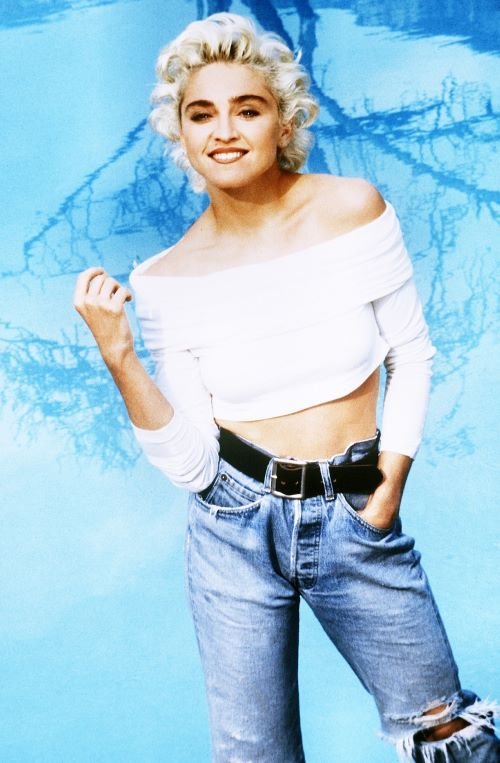
IN THIS PHOTO: Madonna in 1987
Celebrating the Queen of Pop: The Ultimate Playlist
__________
ONE of the most influential artists ever…

PHOTO CREDIT: Madonna
who changed the face of Pop music, this year marks forty since Madonna was signed (to Sire Records). Forty years since her debut, Everybody, was released. On 16th August, Madonna turns sixty-four. Many other people will write about her to celebrate that fact. I am going to cheat a bit and put out an ultimate playlist. I also have a few other Madonna features coming out before her birthday. I don’t think there has been a greatest hits collection released for a while. I have assembled a playlist with hits and deeper cuts. Before I get to that, I wanted to source AllMusic’s biography of the Queen of Pop:
“Madonna changed the trajectory of popular music not long after "Borderline" became her first Top Ten hit in 1984. Fusing post-disco dance with effervescent pop, "Borderline" seemed unexpected and fresh, a trick that soon became her signature. Over a career that lasted for decades, Madonna ushered underground sounds into the mainstream, specializing in trends percolating in dance clubs. As she arrived at the dawn of the MTV era, she seized the possibilities of music videos, creating a series of sexy, stylish clips that earned her the reputation of a provocateur while also establishing the network as the bastion for hip culture in the 1980s. Madonna recorded many of the pop anthems that defined that decade -- "Like a Virgin," "Material Girl," "Live to Tell," "Papa Don't Preach," "Open Your Heart," "Like a Prayer," "Express Yourself" -- and, in the process, she created the archetype of a modern pop star: one whose music was inextricably tied with its visual representation, and one who was loathe to trade upon past glories. As Madonna entered her second decade of stardom, she continued to take artistic risks; she delved into modern R&B for 1994's Bedtime Stories and electronica for 1998's Ray of Light. During the 2000s and 2010s, Madonna continued to be driven by that restless artistic spirit, a move that may not have resulted in as many hits, but helped put the entirety of her body of work into perspective, emphasizing the common threads and consistency that run throughout her music.
She moved from her native Michigan to New York in 1977 with dreams of becoming a ballet dancer. She studied with choreographer Alvin Ailey and modeled. In 1979, she became part of the Patrick Hernandez Revue, a disco outfit that had the hit "Born to Be Alive." She traveled to Paris with Hernandez, and it was there that she met Dan Gilroy, who would soon become her boyfriend. Upon returning to New York, the pair formed the Breakfast Club, a pop/dance group. Madonna originally played drums for the band, but she soon became the lead singer. In 1980, she left the band and formed Emmy with her former boyfriend, drummer Stephen Bray. Soon, Bray and Madonna broke off from the group and began working on some dance/disco-oriented tracks. A demo tape of these tracks worked its way to Mark Kamins, a New York-based DJ/producer. Kamins directed the tape to Sire Records, which signed the singer in 1982.
Kamins produced Madonna's first single, "Everybody," which became a club and dance hit at the end of 1982; her second single, 1983's "Physical Attraction," was another club hit. In June of 1983, she had her third club hit with the bubbly "Holiday," which was produced by Jellybean Benitez. Madonna's self-titled debut album was released in September of 1983; "Holiday" became her first Top 40 hit the following month. "Borderline" became her first Top Ten hit in March of 1984, beginning a remarkable string of 17 consecutive Top Ten hits. While "Lucky Star" was climbing to number four, Madonna began working on her first starring role in a feature film, Susan Seidelman's Desperately Seeking Susan.
Madonna's second album, the Nile Rodgers-produced Like a Virgin, was released at the end of 1984. The title track hit number one in December, staying at the top of the charts for six weeks; it was the start of a whirlwind year for the singer. During 1985, Madonna became an international celebrity, selling millions of records on the strength of her stylish, sexy videos and forceful personality. After "Material Girl" became a number two hit in March, Madonna began her first tour, supported by the Beastie Boys. "Crazy for You" became her second number one single in May. Desperately Seeking Susan was released in July, becoming a box office hit; it also prompted a planned video release of A Certain Sacrifice, a low-budget erotic drama she filmed in 1979. A Certain Sacrifice wasn't the only embarrassing skeleton in the closet dragged into the light during the summer of 1985 -- both Playboy and Penthouse published nude photos of Madonna that she'd posed for in 1977. Nevertheless, her popularity continued unabated, with thousands of teenage girls adopting her sexy appearance, being dubbed "Madonna wannabes." In August, she married actor Sean Penn.
Madonna began collaborating with Patrick Leonard at the beginning of 1986; Leonard would co-write most of her biggest hits in the '80s, including "Live to Tell," which hit number one in June of 1986. A more ambitious and accomplished record than her two previous albums, True Blue was released the following month, to both more massive commercial success (it was a number one in both the U.S. and the U.K., selling over five million copies in America alone) and critical acclaim. "Papa Don't Preach" became her fourth number one hit in the U.S. While her musical career was thriving, her film career took a savage hit with the November release of Shanghai Surprise. Starring Madonna and Penn, the comedy received terrible reviews, which translated into disastrous box office returns.
At the beginning of 1987, she had her fifth number one single with "Open Your Heart," the third number one from True Blue alone. The title cut from the soundtrack of her third feature film, Who's That Girl?, was another chart-topping hit, although the film itself was another box office bomb. The year 1988 was relatively quiet for Madonna as she spent the first half of the year acting in David Mamet's Speed the Plow on Broadway. In the meantime, she released the remix album You Can Dance. After withdrawing the divorce papers she filed at the beginning of 1988, she divorced Penn at the beginning of 1989.
Like a Prayer, released in the spring of 1989, was her most ambitious and far-reaching album, incorporating elements of pop, rock, and dance. It was another number one hit and launched the number one title track as well as "Express Yourself," "Cherish," and "Keep It Together," three more Top Ten hits. In April 1990, she began her massive Blonde Ambition tour, which ran throughout the entire year. "Vogue" became a number one hit in May, setting the stage for her co-starring role in Warren Beatty's Dick Tracy; it was her most successful film appearance since Desperately Seeking Susan. Madonna released a greatest-hits album, The Immaculate Collection, at the end of the year. It featured two new songs, including the number one single "Justify My Love," which sparked another controversy with its sexy video; the second new song, "Rescue Me," became the highest-debuting single by a female artist in U.S. chart history, entering the charts at number 15. Truth or Dare, a documentary of the Blonde Ambition tour, was released to positive reviews and strong ticket sales in the spring of 1991.
Madonna returned to the charts in the summer of 1992 with the number one "This Used to Be My Playground," a single featured in the film A League of Their Own, which featured the singer in a small part. Later that year, Madonna released Sex, an expensive, steel-bound soft-core pornographic book that featured hundreds of erotic photographs of herself, several models, and other celebrities -- including Isabella Rossellini, Big Daddy Kane, Naomi Campbell, and Vanilla Ice -- as well as selected prose. Sex received scathing reviews and enormous negative publicity, yet that didn't stop the accompanying album, Erotica, from selling over two million copies. Bedtime Stories, released two years later, was a more subdued affair than Erotica. Initially, it didn't chart as impressively, prompting some critics to label her a has-been, yet the album spawned her biggest hit, "Take a Bow," which spent seven weeks at number one. It also featured the Björk-penned "Bedtime Stories," which became her first single not to make the Top 40; its follow-up, "Human Nature," also failed to crack the Top 40. Nevertheless, Bedtime Stories marked her seventh album to go multi-platinum.
Beginning in 1995, Madonna began one of her most subtle image makeovers as she lobbied for the title role in the film adaptation of Andrew Lloyd Webber's Evita. Backing away from the overt sexuality of Erotica and Bedtime Stories, Madonna recast herself as an upscale sophisticate, and the compilation Something to Remember fit into the plan nicely. Released in the fall of 1995, around the same time she won the coveted role of Evita Peron, the album was comprised entirely of ballads, designed to appeal to the mature audience that would also be the target of Evita. As the filming was completed, Madonna announced she was pregnant and her daughter, Lourdes, was born late in 1996, just as Evita was scheduled for release. The movie was greeted with generally positive reviews and Madonna began a campaign for an Oscar nomination that resulted in her winning the Golden Globe for Best Actress (Musical or Comedy), but not the coveted Academy Award nomination. The soundtrack for Evita, however, was a modest hit, with a dance remix of "Don't Cry for Me Argentina" and the newly written "You Must Love Me" both becoming hits.
During 1997, she worked with producer William Orbit on her first album of new material since 1994's Bedtime Stories. The resulting release, Ray of Light, was heavily influenced by electronica, techno, and trip-hop, thereby updating her classic dance-pop sound for the late '90s. Ray of Light received uniformly excellent reviews upon its March 1998 release and debuted at number two on the charts. Within a month, the record was shaping up to be her biggest album since Like a Prayer. Two years later she returned with Music, which reunited her with Orbit and also featured production work from Mark "Spike" Stent and Mirwais, a French electropop producer/musician in the vein of Daft Punk and Air.
The year 2000 also saw the birth of Madonna's second child, Rocco, whom she had with filmmaker Guy Ritchie; the two married at the very end of the year. With Ritchie as director and Madonna as star, the pair released a remake of the film Swept Away in 2002; the movie didn't fare well with critics or at the box office. Her sober 2003 album, American Life, debuted at number one on the Billboard charts but it didn't generate any hit singles in America; it did produce two hit singles in the U.K., "Nothing Fails" and "Love Profusion." That same year also saw the release of Madonna's successful children's book, The English Roses, which was followed by several more novels in future years.
Confessions on a Dance Floor marked her return to music, specifically to the dance-oriented material that had made her a star. Released in late 2005, the album topped the Billboard 200 chart and was accompanied by a worldwide tour in 2006, the same year that I'm Going to Tell You a Secret, a CD/DVD made during her Re-Invention Tour, came out. In 2007, Madonna released another CD/DVD set, The Confessions Tour, this time chronicling her tour of the same name.
She inched closer to the completion of her Warner Bros. contract with 2008's Hard Candy, featuring collaborations with the Neptunes and Timbaland. As poorly received as it was, the bold album boasted a Top Five hit in "4 Minutes," and it was supported with the Sticky & Sweet Tour, which concluded in September 2009 (a month prior to her filing for divorce from Ritchie) and produced yet another CD/DVD package, released in 2010. It was her final Warner Bros. release and set the stage for her long-term recording deal with Live Nation.
Madonna began work on her 12th album midway through 2011, with the goal of releasing it early in 2012. The subsequent full-length, MDNA, featured production from French electronic musician and DJ Martin Solveig, as well as longtime collaborator Orbit. The album's title, an abbreviation of Madonna's name, appeared on the heels of her performance at the 2012 Super Bowl. Preceded by the Top Ten single "Give Me All Your Luvin'" (featuring Nicki Minaj and M.I.A.), MDNA debuted at number one across the world, including the U.S. and U.K. Her MDNA Tour took up the rest of the year, as she performed in Europe, the Middle East, North America, and South America. She filmed a concert special, and also released the live album MDNA World Tour in September 2013. At the beginning of 2014, Madonna announced that she was starting work on her 13th studio album. Taking to social media to capture the process, she revealed that recording sessions with the likes of Avicii, Diplo, and Kanye West had taken place. Excerpts from the sessions leaked toward the end of 2014, forcing Madonna to release a digital teaser EP by the end of the year. The full release of Rebel Heart came in March 2015; the album peaked at number two in the U.S. and U.K. She toured from the fall of 2015 to the spring of 2016, playing more than 75 dates in North America, Europe, and Asia.
In April 2019, Madonna began to issue singles leading up to the June release of her 14th album, Madame X, starting with "Medellín," a collaboration with Colombian reggaeton singer Maluma. The album featured co-production by Mirwais, Mike Dean, Diplo, and Jason Evigan, as well as collaborations with guest artists including Brazilian singer Anitta and rappers Swae Lee and Quavo.
Upon its June 14, 2019 release, Madame X debuted at number one in the U.S. and number two in the U.K.”.
Sill without peers when it comes to Pop music and sheer innovation in the field, let’s hope there are more albums from Madonna. Her most-recent, 2019’s Madame X, ranks alongside one of her best latter-day efforts. Maybe it is unlikely she will perform big tours like she has done before, but we will hear more music from her for sure. An icon who has inspired countless artists through the decades, there is a biopic in the works (Madonna is directing and Julia Garner plays her). Who knows what comes next. All I do know is that Madonna has given the world…
A stunning body of work.
FEATURE: I Traded Fame for Love Without a Second Thought… Madonna’s Drowned World / Substitute for Love at Twenty-Four: Ray of Light’s Perfect Opening Track
FEATURE:
I Traded Fame for Love Without a Second Thought…

Madonna’s Drowned World / Substitute for Love at Twenty-Four: Ray of Light’s Perfect Opening Track
__________
WHEN I feature…
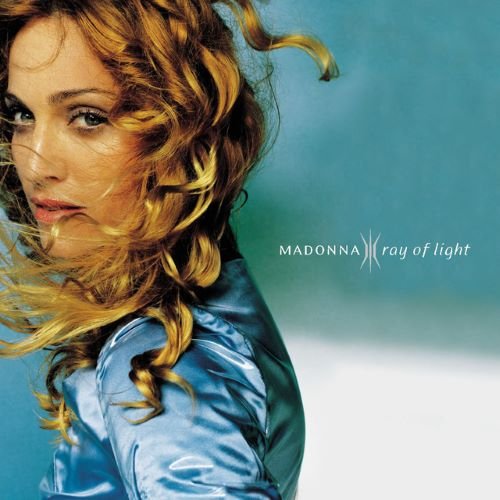
a Madonna song or album, it is usually on a big anniversary. There are a few smaller anniversaries in August. One of them, on 24th, is the twenty-fourth anniversary of Ray of Light’s opening track, Drowned World / Substitute for Love. Written by Madonna, William Orbit, Rod McKuen, Anita Kerr and David Collins, it is one of Madonna’s best opening tracks. It is the perfect way to introduce Ray of Light – an album that stunned critics and saw a huge evolution (after 1994’s Bedtime Stories, the Electronica and Trip-Hop was unexpected!). On 16th August, it will be Madonna’s sixty-fourth birthday. I am writing other features around that. I wanted to do a sort of double bill and mark the anniversary of this track – one that many might not be aware of. I am going to come to some Wikipedia information about its critical reception. Drowned World / Substitute for Love was the third single from Ray of Light. It reached number ten in the U.K. It is a fantastic song but maybe a surprise single. I love the video for the song, where Madonna is seen running from the paparazzi until she gets home. Maybe referencing her fame and how she can get no privacy or respect, maybe it is about running from an old way of life and embracing motherhood and spirituality. Since 1996, Madonna’s life changed hugely. She gave birth to her daughter Lourdes, invested herself in Eastern mysticism and Kabbalah, and was enlisted for the title role on the film adaptation of the musical, Evita (1996). It is only natural that she would want the opening song of this new album – which was a huge return and massive change of direction – to reflect her spirituality and new life. Drowned World / Substitute for Love was produced by Madonna and William Orbit. Madonna had been a fan of Orbit's work for a while. It is an inspired hook-up. You can hear Orbit’s magic touch throughout Ray of Light.
Frozen was the first song released from Ray of Light. That came out in January 1998, a month before Ray of Light. Rather than this being an upbeat or Pop-orientated opening track that we may have seen on earlier Madonna albums, it is clear that there was a lot of re-evaluation and growth following albums like Erotica (1992) and Bedtime Stories. The former courted attention from the press because of its sexual nature. The book, Sex, was released with the album and raised more than a few eyebrows. Whilst Bedtime Stories was not a reversal or a retreat into a safer sound and set of lyrics, Ray of Light was a rebirth and redirection. More positive, spiritual, and less sex/relationship-based than previous albums, this was a Pop queen who was a mother, embracing something different. Mixing something deeper with a real rush and sense of occasion, Drowned World / Substitute for Love earned positive press. Wikipedia collated some of the response:
“Kenneth Bielen, author of The Lyrics of Civility declared the record as a "slice of Madonna's autobiography", praising the lyrics for forecasting what the singer's life could become. Allen Metz wrote in the book, The Madonna Companion, that the lyrics did not give an impression of "sophisticated wordplay", but was commendable for telling the truth about Madonna's life and career. Stephen Thomas Erlewine from AllMusic labelled the song as a "swirling" and "meditative opener". David Browne from Entertainment Weekly described the track, along with "Frozen" from the album, as "breathtaking", complimenting its beats. Sal Cinquemani from Slant Magazine found Madonna's belting to be the most "emotionally candid" she has been since Like a Prayer (1989).
Other critics complimented the different nature of the song and its production. Reviewing the album for The Michigan Daily, Lark said, "['Drowned World/Substitute for Love'] [creates] a brilliant, ecstatic pop catharsis that all but eclipses every mistake she's ever made, including the virginal writhing, gold-tooth sporting and naked hitchhiking of her sordid past", the last part referring to Madonna's antics during her fifth studio album, Erotica (1992) era. Rob Sheffield from Rolling Stone found it to be the "perfect opener" for Ray of Light and its various contradiction filled tracks. Noting the different musical elements, including drum loops, strings, computer bleeping as well as jungle snares, Sheffield compared them to a person's shopping experience and unpacking of the bags after the activity ends. The reviewer ended by saying that the track came off as "loud, tacky and ridiculous", but still exuded emotion in the music. In a review of Madonna's hits album GHV2 (2001), Charlotte Robinson from PopMatters commended Orbit's production work on the track along with others from Ray of Light. She added that the songs are "a testament to his ability to use gadgets and electronic wizardry not to alienate listeners, but to draw them in".
'Substitute for Love', Stuart Maconie wrote in a Q review of Ray of Light, "emerges languorously from a fog of enigmatic samples and the low-key burbling that are Orbit's forte… prayer bells tinkle and snare fills skim the surface tension of the song in a nod to drum 'n' bass." In 2003, fans voted for their top 20 Madonna singles in Q, and awarded "Drowned World/Substitute for Love" the number 17 spot. In a retrospective review of Ray of Light, Idolator's Stephen Sears described the track as "the first chapter of a great novel" setting the tone for rest of the record. Rolling Stone placed the track at number 20, on their ranking of Madonna's 50 Greatest Song in 2016, describing it as "a ballad exploring epiphanies about fame and family". While ranking Madonna's singles in honor of her 60th birthday, The Guardian's Jude Rogers placed the song at number 12, calling it "majestic, reflective and sung in a subdued style for Madonna [...] this meditation on fame with a Ballardian reference in its title soars quietly and gorgeously".
A brilliant song from Madonna, I was eager to explore ahead of its anniversary on 24th August, Drowned World / Substitute for Love opened one of her finest and most important albums. It announced an artist who was not only back, but one who was near the peak of her creative powers! Not talked about as much as other Ray of Light songs like Frozen, Ray of Light, The Power of Good-Bye and Nothing Really Matters, the majestic, uplifting, and evocative Drowned World / Substitute for Love is...
A masterful song.
FEATURE: Kate Bush’s The Kick Inside at Forty-Five: An Album That Deserves Much Greater Respect and Retrospection
FEATURE:
Kate Bush’s The Kick Inside at Forty-Five
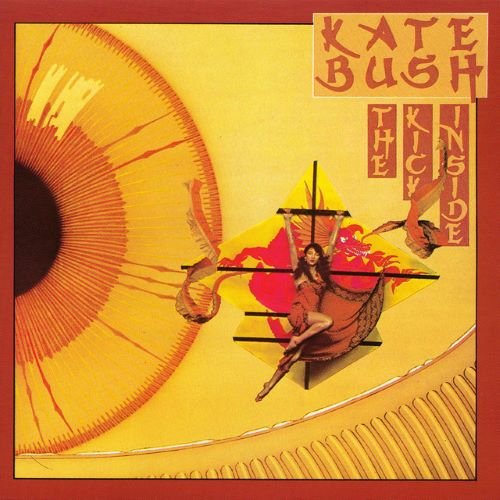
An Album That Deserves Much Greater Respect and Retrospection
__________
EVEN though…

IN THIS PHOTO: Kate Bush in 1978/PHOTO CREDIT: Chris Walter—WireImage/Getty Images
I have covered this topic before, because Kate Bush’s The Kick Inside was completed in August 1977, I am using the opportunity to mark its forty-fifth anniversary. The subject I am referring to is the fact that Kate Bush’s 1978 debut album is underrated and sort of overlooked in favour of others. I will produce other features about the album but, if you have not heard The Kick Inside, then make sure that you do! I have been thinking why Bush might have felt a little disappointed by the album in years since its release. She would probably have preferred to choose her own band and have more of a say in how the songs were produced and performed. The sheer quality and originality of the songwriting makes it an essential listen. It is where it all started for one of the most remarkable artists the world has ever seen. I am going to bring in a couple of reviews for The Kick Inside, to try and get people who don’t like it much to rethink. When it comes to ranking Bush’s albums, whilst The Kick Inside is often placed high, I still think it does not get the credit it deserves. Before moving on, the Kate Bush Encyclopedia sourced interviews where Bush spoke about The Kick Inside. I have chosen a couple:
“Hello everyone. This is Kate Bush and I'm here with my new album The Kick Inside and I hope you enjoy it. The album is something that has not just suddenly happened. It's been years of work because since I was a kid, I've always been writing songs and it was really just collecting together all the best songs that I had and putting them on the album, really years of preparation and inspiration that got it together. As a girl, really, I've always been into words as a form of communication. And even at school I was really into poetry and English and it just seemed to turn into music with the lyrics, that you can make poetry go with music so well. That it can actually become something more than just words; it can become something special. (Self Portrait, 1978)
There are thirteen tracks on this album. When we were getting it together, one of the most important things that was on all our mind was, that because there were so many, we wanted to try and get as much variation as we could. To a certain extent, the actual songs allowed this because of the tempo changes, but there were certain songs that had to have a funky rhythm and there were others that had to be very subtle. I was very greatly helped by my producer and arranger Andrew Powell, who really is quite incredible at tuning in to my songs. We made sure that there was one of the tracks, just me and the piano, to, again, give the variation. We've got a rock 'n' roll number in there, which again was important. And all the others there are just really the moods of the songs set with instruments, which for me is the most important thing, because you can so often get a beautiful song, but the arrangements can completely spoil it - they have to really work together. (Self Portrait, 1978)
I think it was probably the least experimental of all the albums. I'd written, say, two hundred songs from which we chose the thirteen songs that went on that. And it was recorded very quickly, there was very little time for experimentation. It was something that had a lot of forethought gone into it. (Profile 6, 1985)”.
What doesn’t help is how the media perceived her back in 1978. People focused on her image and sexuality. Perhaps trying to define her by Wuthering Heights. The feeling that she was witch-like, high-pitched or someone trying to be strange. In truth, this was just a song and the way she needed to express it. Although this NME interview from March 1978 has a lot of positives, there is this fixation on her looks:
“On the posters it's a coy, soft-focused Kate showing enough breast to--well, at least titillate the passing passengers. Face to face Kate Bush is an impish hippy girl who belies her much touted nineteen years.
Her debut "Top of the Pops" appearance gave rise to Kate being described as "a dark-haired Lyndsay De Paul," but she is neither doll-like nor petite, though hardly tall. Her faded jeans are mostly concealed under a pair of sheepskin-lined thigh-high reddish suede boots, and are in marked contrast to her very feminine fringed top.
Without much time to scurry home to the South East London house she shares with her two brothers to wash her carefully dishevelled hair for an appearance on BBC's "Tonight," Kate's in a hurry. Still, she remains charming and unflustered.
For a girl still in her teens, she's exceptionally self-possessed--especially since in recent weeks she's shot from nowhere to becoming a household name, courtesy of "Wuthering Heights", her first single. The song was inspired by Emily Bronte's romantic novel of the same name and is sung in a voice not unlike that of a newly-neutered cat letting the world know of his predicament.
To compound her mercurial success, her first album "The Kick Inside" is also high on the chart. Kate is amazed at the way things gone. "If you think of it in terms of people and not the money--'cause that's not relevant--it makes me feel very humble," she squeaks in her sing-song voice.
She was signed to EMI three years ago, given a 3,000-Pound advance and a four-year contract with options after the second and third years; i.e., if EMI wanted to drop Kate after either two or three years they could. Last year they re-signed her and it seems certain the company will retain her throughout this year too.
Amongst the credits on "The Kick Inside" is the Floyd's guitarist Dave Gilmour. It was, she says, largely because of Gilmour that she got a record deal. Kate had played piano since she was eleven, starting to write her own songs shortly after. A friend of the Bushes had offered to take some home-made tapes she'd recorded during her early teens round the record companies, but his endeavours were abortive--until he contacted Gilmour, an old friend from Cambridge.
<Note: Each of these tapes are described by Peter FitzGerald-Morris as containing "thirty songs." The friend was Ricky Hopper.>
Gilmour liked what he heard and offered to finance the recording of some professional demo tapes. It was also Gilmour who introduced Kate to arranger Andrew Powell (known for his work with Alan Parsons), who subsequently produced "The Kick Inside". The Gilmour-sponsored tapes received a warm welcome at EMI's A&R department. <This was after an earlier (second) demo tape, recorded at Gilmour's house, was submitted to EMI without success.>
Things couldn't have worked out more perfectly for the sixteen-year-old doctor's daughter. Fresh out of school with an armful of O levels, 3,000 Pounds in her bin and with no immediate pressures from EMI, Kate was free to pursue her ambition to dance. She applied to an ad in London's "Time Out" magazine and enrolled at Lindsay Kemp's mime school.
So why did EMI keep you under covers for so long?
"They were worried about me not being able to cope with things. And I was worried 'cause I didn't feel capable of coping with it either."
So Kate spent her days at Kemp's school with barely an interruption from her record company. "Oh, it was great," chirps Kate."I really got into the discipline. I had so much time and I could use it. For an artist that's such a delightful situation to be in.
"I came in to EMI on a friendly basis and that was good for me, because it meant that I could meet people there as people, and not as a big vulture business where they're all coming in and pulling your arm out. Also, I could learn about the business, which is so important, because it *is* a business."
The daily lessons with Kemp--50p a throw--were very informal. "He taught me that you can express with your body--and when your body is awake so is your mind. He'd put you into emotional situations, some of them very heavy. Like he'd say, 'Right, you're all now going to become sailors drowning, and there are waves curling up around you.' And everyone would just start screaming.
"Or maybe he'd turn you into a little piece of flame..."
Waiting for EMI to click its fingers did have its drawbacks, though. "Artistically, I was getting so frustrated at not being able to get my art to people."
Kate says that EMI did have a go at image-building and at persuading her to write more commercial songs ("Not so heavy--more hook lines"), but when Kate finally went into the studio last summer with half of Pilot and half of Cockney Rebel as her backing band, it was on her own terms. "Wuthering Heights" was originally scheduled for release last November, but was shelved at the very last moment because of--according to her--delays with artwork. By the time everything was right, the Christmas rush was on so Kate's debut was stalled a second time.
EMI had, however, already mailed out some copies of the single, one of which reached Capital Radio's Tony Myatt. Despite EMI's requests to the contrary, Myatt played the record before it was actually on sale. Ironically, Kate feels that Capital's championing "Wuthering Heights" is the key reason for its success.
So is it natural to sing that high, Kate?
"Actually, it is. I've always enjoyed reaching notes that I can't quite reach. A week later you'll be on top of that note and trying to reach the one above it.
"I always feel that you can continually expand your senses if you try. The voice is like an instrument. The reason I sang that song so high is 'cause I felt it called for it. The book has a mood of mystery and I wanted the song to reflect that."
That she sings in different voices on her album is not, claims Kate, due to an identity crisis--to evoke each song's particular mood she has to alter her pitch.
Kate insists that she isn't exploiting her sexuality: "That's a very obvious image. I suppose the poster is reasonably sexy just 'cause you can see my tits, but I think the vibe from the face is there. The main thing about a picture is that it should create a vibe. Often you get pictures of females showing their legs with a very plastic face. I think that poster projects a mood”.
I don’t think The Kick Inside got the true respect and love it was due. It got to three in the U.K. and was a chart success around the world. Although America did not take to Kate Bush or understand her, I think that there was this split between fans and critics. The album was a success and made her a star. It seems a pity that Bush herself created some distance from The Kick Inside. That media perception of Bush did not change for many years. I feel, as such, many people know The Kick Inside for a couple of songs and nothing else. Forty-five years after the album was recorded, there needs to be this celebration. I want to source a couple of positive reviews. The Young Folks wrote this on the album’s fortieth anniversary (2018):
“That primitive quality to her music is foreshadowed in the first few seconds of the album, which feature a selection of whale song. The song that follows, “Moving,” is written in tribute to the emotion and freedom Bush felt through her interpretive dance and mime lessons with Lindsay Kemp. As Bush described in a 1980 Sounds magazine interview, Kemp “fills people up, you’re an empty glass and glug, glug, glug, he’s filled you with champagne.” In the same interview Bush explained her reasoning for including the whale song, claiming that whales “say everything about ‘moving’… [they] are pure movement and pure sound, calling for something, so lonely and sad.” The song works as a good introduction to the rest of her album, and to Bush as an artist that we’re getting to know on her debut album. Here her voice cuts above the surprisingly bold piano and drums, while moving in a way that feels flexible and rhythmic.
The follow-up track, “Saxophone Song,” is simple but in a way that indicates Bush knows how to efficiently communicate an idea without meandering unnecessarily. It’s a song from a fan of a musician – who plays the titular instrument –singing about how she is moved by his music. This track, as well as “Moving” and several others illustrate how Bush can write about things in her life, that are true to her young experience such as taking dance lessons, reading Brontë, and being an awed fan of a musician, and she can turn them into songs that feel adult and general enough to appeal to a listener of any age, as well as stand the test of time.
The next track “Strange Phenomena,” ponders the odd coincidences and synchronicities of life that make you feel connected to something larger and part of a powerful intuitive system. It’s an introduction to Bush’s tendency to write about relatively intellectual subjects, which comes up a few times on this album alone.
Bush’s most conventional tracks are “Kite” and “James and the Cold Gun.” They’re the most pop-rock and boisterous sounding of the 13 songs, and relatively conventional in their lyrics and delivery. Sandwiched between those two songs, however, are the first two singles and two of Bush’s biggest hits, “The Man with the Child in His Eyes” and “Wuthering Heights.” The former song was written by Bush at age 13, and recorded at age 16. The music on the track is straightforward, and Bush’s vocals are the most clear and unaffected here, allowing us to hear every word. The “child” in the title can simultaneously be applied to who the man is looking at and, as Bush has said, the “little boy within” most men. It’s an astonishingly mature song to imagine a 13-year-old writing, which adds a sort of haunted quality to it. The single made it to #6 in the UK, and won Bush the 1979 Ivor Novello Award for Outstanding British Lyric.
“Wuthering Heights,” the album’s first single at Bush’s insistence, went to #1 on the UK charts, making it the first time a female singer-songwriter topped the charts with a self-penned song – and it remains Bush’s only number one single. The song was written at age 18 after Bush watched a mini-series adapted from the Emily Brontë novel of the same name. In the song she sings from the dead character Cathy’s perspective as a ghost, begging to be let inside and back into her love Heathcliff’s arms, perfectly capturing the wild and uncontainable emotions depicted in the novel. This song and its videos also brought to a wider audience Bush’s incorporation of movement to her performances. The UK video features Bush in a white dress surrounded by white mist and other dancing projections of herself. The more well-known video was made for the US and has Bush in a bright red dress, dancing among the woods and hills.
The second half of the album features a trilogy of songs about sex and sensuality – “Feel It,” “Oh to Be in Love” and “L’Amour Looks Something Like You.” They’re great examples of Bush’s ability to evoke mood and imagery through her voice, such as when her voice soars in the second half of the phrase “oh to be in love – and never get out again” to mimic the euphoric mindset the singer is in.
The final songs return to the more intellectual and metaphysical inspirations. “Them Heavy People” is about Bush enjoying the opportunity to learn as much as possible to expand her mind, extolling the pains and joys of pushing yourself and “opening doors you thought shut for good” to become the best version of yourself and find the “heaven inside.” “Room for Life,” is an appreciation of the power of women. Bush sings “like it or not, we keep bouncing back, because we’re woman.” The final track “The Kick Inside,” is similar to “Wuthering Heights,” in that it’s an adaptation of an existing work – in this case a “murder ballad” called Lizie Wan – and sung from the perspective of the female character. In this case, however, it’s a girl who is impregnated by her brother who then kills her because of it. It’s a bitterly ironic song to come after “Room for the Life,” which celebrates how woman has “room for a life… in your womb.” It’s a dark end to a strange album, but it’s a fitting end. It underlines that Bush is a fresh talent who is interested in plumbing the depths of human experience and psychology in her music and is not afraid of any source of inspiration”.
The BBC shared their thoughts about Kate Bush’s The Kick Inside in 2008. It does seem odd that The Kick Inside is not talked about more and ranked alongside Bush’s best work. Forty-five years later and it still sounds like nothing else in the world:
“The tale's been oft-told, but bears repeating: Discovered by a mutual friend of the Bush family as well as Pink Floyd's David Gilmour, Bush was signed on Gilmour's advice to EMI at 16. Given a large advance and three years, The Kick Inside was her extraordinary debut. To this day (unless you count the less palatable warblings of Tori Amos) nothing sounds like it.
Using mainly session musicians, The Kick Inside was the result of a record company actually allowing a young talent to blossom. Some of these songs were written when she was 13! Helmed by Gilmour's friend, Andrew Powell, it's a lush blend of piano grandiosity, vaguely uncomfortable reggae and intricate, intelligent, wonderful songs. All delivered in a voice that had no precedents. Even so, EMI wanted the dullest, most conventional track, James And The Cold Gun as the lead single, but Kate was no push over. At 19 she knew that the startling whoops and Bronte-influenced narrative of Wuthering Heights would be her make or break moment. Luckily she was allowed her head.
Of course not only did Wuthering Heights give her the first self-written number one by a female artist in the UK, (a stereotype-busting fact of huge proportions, sadly undermined by EMI's subsequent decision to market Bush as lycra-clad cheesecake), but it represented a level of articulacy, or at least literacy, that was unknown to the charts up until then. In fact, the whole album reads like a the product of a young, liberally-educated mind, trying to cram as much esoterica in as possible. Them Heavy People, the album's second hit may be a bouncy, reggae-lite confection, but it still manages to mention new age philosopher and teacher G I Gurdjieff. In interviews she was already dropping names like Kafka and Joyce, while she peppered her act with dance moves taught by Linsdsay Kemp. Showaddywaddy, this was not.
And this isn't to mention the sexual content. Ignoring the album's title itself, we have the full on expression of erotic joy in Feel It and L'Amour Looks Something Like You. Only in France had 19-year olds got away with this kind of stuff. A true child of the 60s vanguard in feminism, Strange Phenomena even concerns menstruation: Another first. Of course such density was decidedly English and middle class. Only the mushy, orchestral Man With The Child In His Eyes, was to make a mark in the US, but like all true artists, you always felt that Bush didn't really care about the commercial rewards. She was soon to abandon touring completely and steer her own fabulous course into rock history”.
Forty-five years since it was recorded, I feel The Kick Inside has yet to find a massive audience. It resonated and was a success in 1978 but, in the years since, it has not gained the sort of traction as Hounds of Love (1985) or other albums from her. On the forty-fifth anniversary of its release in February, more people will be become aware of The Kick Inside. I hope that this month, some forty-five years since Kate Bush and her band completed recording of the album, that is talked about more. The Kick Inside is loved by many, but many others have not really embraced it. I hope that more exposure and attention of The Kick Inside…
RECTIFIES that.
FEATURE: Vinyl Corner: Dusty Springfield – Dusty in Memphis
FEATURE:
Vinyl Corner

Dusty Springfield – Dusty in Memphis
__________
AS I say…

PHOTO CREDIT: Redferns
on a few of these Vinyl Corner features, there are some albums that will cost a little bit more on the format. You can buy it more cheaply but, if you are a fan of Dusty Springfield, then I would urge you to get her classic album, Dusty in Memphis, on vinyl. It is an all-time great album that sounds as astonishing and moving now as it always has. It is hard to believe that an album as timeless and astonishing as Dusty in Memphis only reached ninety-nine in the U.S. Springfield’s fifth studio album, the early sessions were recorded at American Sound Studio in Memphis; Springfield's final vocals and the album's orchestral parts were recorded at Atlantic Records' New York City studios. Even though the album did feature one of her best cuts, Son of a Preacher Man, Dusty in Memphis sold poorly. In 2020, the album was selected by the Library of Congress for preservation in the National Recording Registry for being culturally, historically, or aesthetically significant. It is a case of an album growing over time and getting recognition long after it was released. It was released on 18th January, 1969. I am not sure why record buyers did not show Dusty in Memphis more love. It is an album that everyone needs to own and, if you can get it on vinyl, then it is well worth the money! There are a couple of reviews that I want to highlight.
First, back in March, Udiscovermusic.com told the strange story of an undeniable classic album that has been ranked as one of the best albums ever by so many different sources. It has not aged a day since it was released:
“The record that’s widely held to be the greatest album in the distinguished catalog of Dusty Springfield – in fact, for many, one of the greatest albums, period – was released on March 31, 1969. Despite being surprisingly unsuccessful at the time, Dusty In Memphis has thankfully become a monument to the unique soulfulness of one of Britain’s finest-ever voices.
The album was Dusty’s fifth, some five years into her hitmaking career. It marked a new era, as it was the first time that she had recorded an LP outside the UK. Masterfully overseen by three of the all-time giants of American soul and rock music production, Jerry Wexler, Arif Mardin, and Tom Dowd, it had a famously difficult birth. Happily, what endures is the brilliant quality of the songs and performances.
After massive international success for Dusty in 1966 with “You Don’t Have To Say You Love Me,” and despite her beloved status with her audience, the following year produced a blank in terms of UK Top 10 singles or albums. Dusty had been known for years as a vociferous UK champion of soul music, and of Wexler’s work at Atlantic in particular. Now she and her friend and future manager, Vicki Wickham, agreed that the time was right for a change of direction, both creatively and geographically.
And so to Memphis
Dusty remained on on Philips in the UK, but signed her dream deal for the US with Atlantic, and travelled to “Chips” Moman’s American Studios in Memphis. This was one of the two southern locations that Atlantic had been using, along with Muscle Shoals, in its great soul output of the day.
With Dusty’s usual meticulous attention to detail, a bespoke song list was drawn up. It included material from such A-list songwriters as Barry Mann & Cynthia Weil (“Just A Little Lovin’”), Randy Newman (“Just One Smile”), Burt Bacharach & Hal David (“In The Land Of Make Believe”), and no fewer than four songs by Gerry Goffin & Carole King (“So Much Love,” “Don’t Forget About Me,” “No Easy Way Down,” and “I Can’t Make It Alone”).
Recordings got under way with Wexler, Dowd and Mardin all in the control room at American. The great session players known collectively as the Memphis Cats added their studio expertise. But for all her vocal greatness, Springfield’s insecurities (and a certain uneasiness in these new surroundings) made the Memphis sessions difficult for all concerned. Notwithstanding the authentic Southern flavour of the tracks, the album’s title belied the fact that Dusty’s final vocals for it were recorded at later sessions in New York.
The upcoming LP release appeared to be given a great early boost by the release in November 1968 of the first single “Son Of A Preacher Man.” The fine lyric and memorable melody of writers John Hurley and Ronnie Wilkins were matched by a great, slow-burning groove and suitably sensual vocals by Dusty. The result was a Top 10 single on both sides of the Atlantic.
An inexplicable anti-climax
Then came the album release — and a huge anti-climax. Dusty In Memphis struggled to No.99 on the US chart and, almost unimaginably, didn’t make the bestsellers back in her own country at all. One of its subsequent American singles, “The Windmills Of Your Mind,” did become a US Top 3 adult contemporary hit, but Noel Harrison had already bagged the UK glory with his version of this theme from the movie The Thomas Crown Affair the year before”.
I want to bring in Rolling Stone’s review of Dusty in Memphis. The reviewed the album in November 1969. It must have been quite an experience hearing the album fresh in a year that didn’t really have anything else like this:
“Dusty started out with a nice little rocker called “I Only Want to Dance With You,” her first hit, riding in on the heels of Beatle boots in 1964, and then scored with, some of us anyway, a monster, “Wishin’ and Hopin.'” As opposed to Leslie Gore’s great single, “You Don’t Own Me,” Dusty’s song was the ultimate anti-Women’s Liberation ballad: “Wear your hair, just for him …” We used to turn it up loud on double-dates. Dusty had this way with words, a soft, sensual box (voice) that allowed her to combine syllables until they turned into pure cream. “AnIvrything’inboutH’greeeaaate true love is …” And then a couple of years later she hit the top with “The Look of Love” and seemed destined to join that crowd of big-bosomed, low-necked lady singers that play what Lenny Bruce called “the class rooms” and always encore with “Born Free.”
It didn’t happen, and Dusty in Memphis is the reason why. This album was constructed with the help of some of the best musicians in Memphis and with the use of superb material written by, among others, Jerry Goffin & Carol King, Randy Newman, and Barry Mann & Cynthia Weil. Now Dusty is not a soul singer, and she makes no effort to “sound black” — rather she is singing songs that ordinarily would have been offered by their writers to black vocalists. Most of the songs, then, have a great deal of depth while presenting extremely direct and simple statements about love. Unlike Aretha, who takes possession of whatever she does, Dusty sings around her material, creating music that’s evocative rather than overwhelming. Listening to this album will not change your life, but it’ll add to it.
There are three hits on this LP, and they are representative of the rest of it. “Son of a Preacher Man” is as down-home as Dusty gets; it has an intro that’s funky, a vocal that’s almost dirty. The bass gives the song presence and Dusty doesn’t have to strain to carry it off. No one has topped her version of this yet and no one’s likely to. “Don’t Forget About Me” is to my ears the best cut here — it opens with a counterpoint between bass and vibrating guitar that’s tremendously exciting, and then Dusty enters, her voice almost like another instrument. The song picks up Gene Chrisman’s woodblock and the Sweet Inspirations and it’s a fast race home. Piano cues Reggie Young’s sizzling guitar (and it’s a crime that Atlantic mixed Young down from the version used on the single) toward the end, and it’s his show from then on. Better musicianship is not to be found, and I include Dusty as one of those musicians.
Finally, there’s “The Windmills of Your Mind,” a slick song that served as the soundtrack for the slickest movie of recent years, The Thomas Crown Affair. The rest of the album falls somewhere in between this cut and the other hits, but not to be missed are superb versions of “No Easy Way Down,” “So Much Love,” and “Just a Little Lovin”.
I will round off with the BBC’s take on an album with very few equals. Even if you are not a fan of her work or know too much about it, then Dusty in Memphis will still wow you. It is such a strong album that one cannot help but be affected and stunned by it:
“Despite its status as a classic record, Dusty in Memphis had less than auspicious beginnings. By 1968 La Springfield had scored a string of chart successes with what she called 'big ballady things' and her decision to make an album in Memphis, home of hard edged R 'n' B grooves, was viewed with puzzlement by many.
Teaming up with the crack production/arrangement team of Jerry Wexler, Tom Dowd and Arif Mardin (responsible for Aretha Franklin's Atlantic classics) also proved a bit much initially for Springfield, whose confidence in her vocal abilities was never very high. Worried that the session musicians would think she was a sham and unnerved by singing in the same vocal booth as used by Wilson Pickett, Dusty's relationship with her producers became strained, with Wexler claiming he never got a note out of her during the initial sessions in Memphis.
You'd never know this from the recorded evidence though. Springfield unsurprisingly resists any temptation to do an Aretha, instead relying on understatement, timing and delivery rather than vocal firepower. The songs (all by Brill building denizens) are all top notch, and Springfield's interpretation of them is peerless, almost to the point that it's tempting to slap a preservation order on them to stop any attempts at future covers from the likes of Sharleen Spiteri. Likewise Mardin's sensitive blend of Bacharach poise and Memphis funk provides the perfect frame for Dusty's blue eyed soul.
'Son of A Preacher Man' and 'Breakfast in Bed' hum with a potent mix of vulnerability and knowing desire; though both songs are pretty much ingrained in the psyche of anyone of a certain age, they still retain a hefty emotional charge. On the other hand, Randy Newman's 'I Don't Want to Hear It Anymore' and 'I Can't Make It Alone' must rank amongst the finest ballad performances you're likely to hear, and Springfield even makes the cod psychedelic inanities of Michel Legrand's 'The Windmills of Your Mind" seem almost meaningful.
The cover boasts a sticker proclaiming that this record made it into Rolling Stone's Coolest records of All Time Top 10. Don't let that put you off; if you have ears, you need this album…”.
I hope that younger generations know about Dusty Springfield and albums like Dusty in Memphis. It is an essential purchase that everyone should have. If you are not familiar with the album or only listen via streaming, consider spending some money and getting this 1969 diamond release on vinyl! From start to finish, it is…
A breathtaking listen!
FEATURE: Inspired By… Part Seventy-Three: Sam Cooke
FEATURE:
Inspired By…
Part Seventy-Three: Sam Cooke
__________
AN artist…

that I have overlooked in Inspired…, few artists are as influential and important as Sam Cooke. If we talk about Soul music, its forefather and pioneer, I feel, is Cooke. He is definitely one of the most important Soul artists ever. I am going to end with a playlist of songs from artists that are inspired by Sam Cooke or they have been compared with him. Before then, AllMusic provide a deep and detailed biography of the iconic Cooke:
“Sam Cooke was the most important soul singer in history, its primary inventor, and its most popular and beloved performer in both the Black and white communities. Equally important, he was among the first Black performers and composers to attend to the business side of the music business, founding both a record label and a publishing company as an extension of his careers as a singer and composer. Still, business interests never prevented him from engaging in topical issues, including the struggle over civil rights. The pitch and intensity of that battle followed an arc which paralleled Cooke's emergence as a star; his career bridged gaps between Black and white audiences that few had tried to surmount, much less succeeded at doing. Much like Chuck Berry or Little Richard bringin Black and white teenagers together, James Brown selling records to white teenagers and Black listeners of all ages, and Muddy Waters getting young white folkies and older Black transplants from the South onto the same page, Cooke appealed to all of the above, and the parents of those white teenagers as well -- yet he never lost his credibility with his core Black audience. In a sense, his appeal anticipated that of the Beatles, in breadth and depth.
He was born Sam Cook in Clarksdale, Mississippi, on January 22, 1931, one of eight children of a Baptist minister and his wife. Even as a young boy, he showed an extraordinary voice and frequently sang in the choir in his father's church. During the middle of the decade, the Cook family moved to Chicago's South Side, where the Reverend Charles Cook quickly established himself as a major figure in the religious community. Sam and three of his siblings also formed a group of their own, the Singing Children, in the 1930s. Although his own singing was confined to gospel music, he was aware and appreciative of the popular music of the period, particularly the melodious, harmony-based sounds of the Ink Spots, whose influence was later heard in songs such as "You Send Me" and "For Sentimental Reasons." As a teenager, he was a member of the Teen Highway QCs, a gospel group that performed in churches and at religious gatherings. His membership in that group led to his introduction to the Soul Stirrers, one of the top gospel groups in the country, and in 1950 he joined them.
If Cooke had never recorded a note of music on his own, he would still be remembered today in gospel circles for his work with the Soul Stirrers. Over the next six years, his role within the group and his prominence in the Black community rose to the point where he became a star, possessing his own fiercely admiring and devoted audience, through his performances on "Touch the Hem of His Garment," "Nearer to Thee," and "That's Heaven to Me." The group was one of the top acts on Art Rupe's Specialty Records label, and he might have gone on for years as their most popular singer, but Cooke's goal was to reach audiences beyond the religious community, and beyond the Black population, with his voice. This was a tall order at the time, as the mere act of recording a popular song could alienate the gospel listenership in an instant. Singing for God was regarded in those circles as a gift and a responsibility, while popular music, rock & roll, and R&B were to be abhorred, at least coming from the mouth of a gospel singer. (The gap was so great that when blues singer Blind Gary Davis became "sanctified" -- that is, found religion -- as the Rev. Gary Davis, he had to devise new words for his old blues melodies, and never sang the blues words again.).
He tested the waters of popular music in 1956 with the single "Lovable," produced by Bumps Blackwell and credited under the name Dale Cooke so as not to attract too much attention from his existing audience. It was enough, however, to get Cooke dropped by the Soul Stirrers and their record label. Granted, that freed him to record under his real name. The result was one of the biggest selling singles of the 1950s, a Cooke original entitled "You Send Me," which sold over two million copies on the tiny Keen Records label and hit number one on both the pop and R&B charts. Although it seems like a tame record today, "You Send Me" was a pioneering soul record in its time, melding elements of R&B, gospel, and pop into a sound that was new and still coalescing at the time.
Cooke was with Keen for the next two years, a period in which he delivered some of the prettiest romantic ballads and teen pop singles of the era, including "For Sentimental Reasons," "Everybody Loves to Cha Cha Cha," "Only Sixteen," and "(What A) Wonderful World." These were extraordinarily beautiful records, and in between the singles came some early album efforts, most notably Tribute to the Lady, his album of songs associated with Billie Holiday. He was unhappy, however, with both the business arrangement that he had with Keen and the limitations inherent with recording for a small label. Equally to the point, major labels were knocking on Cooke's door, including Atlantic and RCA Records. Atlantic was the top R&B-oriented label in the country, and Cooke could have signed there and found a happy home, except they wanted his publishing, and Cooke was well aware of the importance of owning his copyrights.
Thus, he signed with RCA Records, then one of the three biggest labels in the world (the others being Columbia and Decca), even as he organized his own publishing company (Kags Music) and a record label (SAR), through which he would produce other artists' records. Among those signed to SAR were the Soul Stirrers, Bobby Womack (late of the Valentinos, who were also signed to the label), former Soul Stirrers member Johnny Taylor, Billy Preston, Johnnie Morisette, and the Sims Twins.
Cooke's RCA sides were a schizophrenic body of work, at least for the first two years. He broke new ground in pop and soul with the single "Chain Gang," a mix of sweet melodies and gritty, sweaty sensibilities that also introduced something of a social conscience to his work. A number two hit on both the pop and R&B charts, it was his biggest hit since "You Send Me" and heralded a bolder phase in his career. Singles like the bluesy, romantic "Sad Mood"; the idyllic romantic soul of "Cupid"; the straight-ahead dance tune "Twistin' the Night Away" (a pop Top Ten and a number one R&B hit); and "Bring It on Home to Me" all lived up to this promise, and also sold in huge numbers. But the first two albums that RCA had him do, Hits of the Fifties and Cooke's Tour, were among the lamest LPs ever recorded by any soul or R&B singer, comprised of washed-out pop tunes in arrangements that showed almost none of Cooke's gifts to their advantage.
In 1962, Cooke issued Twistin' the Night Away, a somewhat belated "twist" album that became one of his biggest-selling LPs. He didn't really hit his stride as an LP artist, however, until 1963 with the release of Night Beat, a beautifully self-contained, dark, moody assembly of blues-oriented songs that were among the best and most challenging numbers that Cooke had recorded up to that time. By the time of its release, he was mostly identified through his singles, which were among the best work of their era, and had developed two separate audiences, among white teen and post-teen listeners and Black audiences of all ages. It was Cooke's hope to cross over to the white audience more thoroughly, and open up doors for Black performers that, up to that time, had mostly been closed. He had tried playing The Copa in New York as early as 1957 and failed at the time, mostly owing to his inexperience, but in 1964 he returned to the club in triumph, an event that also yielded one of the most finely recorded live performances of its period. The problem with The Copa performance was that it didn't really represent what Sam Cooke was about in full; it was Cooke at his most genial and non-confrontational, doing his safest repertory for a largely middle-aged, middle-class white audience. They responded enthusiastically, to be sure, but only to Cooke's tamest persona.
In mid-1963, however, Cooke had done a show at The Harlem Square Club in Miami that had been recorded. Working in front of a Black audience and doing his real show, he delivered a sweaty, spellbinding performance built on the same elements found in his singles and his best album tracks, combining achingly beautiful melodies and gritty soul sensibilities. The two live albums sum up the split in Cooke's career and the sheer range of his talent, the rewards of which he'd finally begun to realize more fully in 1963 and 1964.
The drowning death of his infant son in mid-1963 had made it impossible for Cooke to work in the studio until the end of that year. During that time, however, with Allen Klein now managing his business affairs, Cooke did achieve the financial and creative independence that he'd wanted, including more money than any Black performer had ever been advanced before, and the eventual ownership of his recordings beginning in November of 1963; he had achieved creative control of his recordings as well, and seemed poised for a breakthrough. It came when he resumed making records, amid the musical ferment of the early '60s. Cooke was keenly aware of the music around him, and was particularly entranced by Bob Dylan's song "Blowin' in the Wind," its treatment of the plight of Black Americans and other politically oppressed minorities, and its success in the hands of Peter, Paul & Mary. All of these factors convinced him that the time was right for songs that dealt with more than twisting the night away.
The result was "A Change Is Gonna Come," perhaps the greatest song to come out of the civil rights struggle, and one that seemed to close and seal the gap between the two directions of Cooke's career, from gospel to pop. Arguably his greatest and his most important song, it was an artistic apotheosis for Cooke. During this same period, he had also devised a newer, more advanced dance-oriented soul sound in the form of the song "Shake." These two recordings heralded a new era for Cooke and a new phase of his career, with seemingly the whole world open to him.
None of it was to be. Early in the day on December 11, 1964, while in Los Angeles, Cooke became involved in an altercation at a motel, with a female guest and the motel's night manager, and he was shot to death while allegedly trying to attack the manager. The case is still shrouded in doubt and mystery, and was never investigated the way the murder of a star of his stature would be today. Cooke's death shocked the Black community and reverberated far beyond; his single "Shake" was a posthumous Top Ten hit, as were "A Change Is Gonna Come" and the At the Copa album, released in 1965. Otis Redding, Al Green, and Solomon Burke, among others, picked up key parts of Cooke's repertory, as did white performers including the Animals and the Rolling Stones. Even the Supremes recorded a memorial album of his songs, which later became one of the most sought-after of their original recordings.
His reputation survived, at least among those who were smart enough to look behind the songs, to hear Redding's performance of "Shake" at The Monterey Pop Festival, for example, and see where it came from. Cooke's own records were a little tougher to appreciate, however. Listeners who heard those first two RCA albums, Hits of the Fifties and Cooke's Tour, could only wonder what the big deal was about, and several of the albums that followed were uneven enough to give potential fans pause. Meanwhile, the contractual situation surrounding Cooke's recordings greatly complicated the reissue of his work. Cooke's business manager, Allen Klein, exerted a good deal of control, especially over the songs cut during that last year of the singer's life. By the 1970s, there were some fairly poor, mostly budget-priced compilations available, consisting of the hits up through early 1963, and for a time there was even a television compilation, but that was it. The movie National Lampoon's Animal House made use of a pair of Cooke songs, "(What A) Wonderful World" and "Twistin' the Night Away," which greatly raised his profile among college students and younger baby-boomers, and Southside Johnny & the Asbury Jukes made almost a mini-career out of reviving Cooke's songs (most notably "Having a Party," and even part of "A Change Is Gonna Come") in concert. In 1986, The Man and His Music went some way to correcting the absence of all but the early hits in a career-spanning compilation, but during the mid-'90s, Cooke's final year's worth of releases were separated from the earlier RCA and Keen material, and was in the hands of Klein's ABKCO label. Finally, in the late '90s and beyond, RCA, ABKCO, and even Specialty (which still owns Cooke's gospel sides with the Soul Stirrers) issued combined and comprehensive collections of their portions of Cooke's catalog”.
In order to show how influential Sam Cooke is, I am finishing up with a long playlist of tracks from artists who have been linked with him. A Soul master who has made such an impact on generations of artists, he will always be remembered as one of the all-time greats. This playlist certainly shows just how many great artists…
OWE a lot to Sam Cooke.
FEATURE: Greatest Love of All: Remembering an Icon: Whitney Houston at Fifty-Nine
FEATURE:
Greatest Love of All: Remembering an Icon

Whitney Houston at Fifty-Nine
__________
ON 9th August…
PHOTO CREDIT: Paul Drinkwater/NBCU Photo Bank/NBCUniversal via Getty Images
it will be Whitney Houston’s fifty-ninth birthday. We lost the legend in 2012. I have written about her before but, as she is someone whose music I love and deserves to be marked, I wanted to showcase her amazing work. I am going to finish with a playlist of some of her best tracks. Before, and as I have done before, AllMusic give a fulsome biography of a musical icon:
“Whitney Houston was inarguably one of the biggest pop stars of all time. Her accomplishments as a hitmaker were extraordinary. Just to scratch the surface, the mezzo-soprano powerhouse became the first artist to have seven consecutive singles hit number one, from "Saving All My Love for You" (1985) through "Where Do Broken Hearts Go" (1988). Her version of Dolly Parton's "I Will Always Love You" (1992) became nothing less than the biggest hit single in rock history. Whitney Houston and Whitney, her first two albums, each went diamond platinum, followed by a string of additional multi-platinum LPs including the likewise diamond-earning soundtrack for The Bodyguard. Houston was able to handle big adult contemporary ballads, effervescent, stylish dance-pop, and slick contemporary R&B with equal dexterity. The result was an across-the-board appeal that was matched by few artists of her era, and helped her become one of the first Black artists to find success on MTV in Michael Jackson's wake. Like many of the original soul singers, Houston was trained in gospel before moving into secular music. Over time, she developed a virtuosic singing style given over to swooping, flashy melodic embellishments. The shadow of Houston's prodigious technique still looms large over nearly every pop and R&B diva who has followed. A six-time Grammy winner, Houston was inducted into the Rock and Roll Hall of Fame in 2020, eight years after her tragic death.
Whitney Elizabeth Houston was born in Newark, New Jersey, on August 9, 1963. Her mother was gospel/R&B singer Cissy Houston, and her cousin was Dionne Warwick. By age 11, Houston was performing as a soloist in the junior gospel choir at her Baptist church; as a teenager, she began accompanying her mother in concert (as well as on the 1978 album Think It Over), and went on to back artists like Lou Rawls and Chaka Khan. Houston also pursued modeling and acting, appearing on the sitcoms Gimme a Break and Silver Spoons. Somewhat bizarrely, Houston's first recording as a featured vocalist was with Bill Laswell's experimental jazz-funk ensemble Material; the ballad "Memories," from the group's 1982 album One Down, placed Houston alongside Archie Shepp. The following year, Arista president Clive Davis heard Houston singing at a nightclub and offered her a recording contract. Her first single appearance was a duet with Teddy Pendergrass, "Hold Me," which reached number five on the R&B chart in 1984.
Houston's debut album, Whitney Houston, was released in February 1985. "You Give Good Love," its second single, became Houston's first hit, topping the R&B chart and hitting number three on the Hot 100. Houston's next three singles -- the Grammy-winning romantic ballad "Saving All My Love for You," the brightly danceable "How Will I Know," and the inspirational "The Greatest Love of All" -- all topped the Hot 100, and a year to the month after its release, Whitney Houston hit number one on the Billboard 200. It eventually sold over 13 million copies in the U.S., making it the best-selling debut ever by a female artist. Houston cemented her superstar status on her next album, Whitney. It became the first album by a female artist to debut at number one, and sold over ten million copies in the U.S. Its first four singles -- "I Wanna Dance with Somebody (Who Loves Me)" (another Grammy winner), "Didn't We Almost Have It All," "So Emotional," and "Where Do Broken Hearts Go" -- all hit number one, an amazing, record-setting run of seven straight. In late 1988, Houston scored a Top Five hit with the non-LP single "One Moment in Time," recorded for an Olympics-themed compilation album.
Houston returned with her third album, I'm Your Baby Tonight, in 1990. A more R&B-oriented record, it immediately spun off two number one hits in the title track and "All the Man That I Need" and sold over four million copies. Houston remained so popular that she could even take a recording of "The Star Spangled Banner" (performed at the Super Bowl) into the Top 20 -- though, of course, the Gulf War patriotism had something to do with that. Appeal across mediums fueled Houston as she began focus on an acting career, which she hadn't pursued since her teenage years. Her first feature film, a romance with Kevin Costner called The Bodyguard, was released in late 1992, just after she married singer Bobby Brown. It performed well at the box office, helped by an ad campaign that seemingly centered around the climactic key change in Houston's soundtrack recording of the Dolly Parton-penned "I Will Always Love You." In fact, the ad campaign undoubtedly helped "I Will Always Love You" become one the biggest singles in pop music history. It set new records for sales (nearly five million copies) and spent weeks at number one (14), later broken by Elton John's "Candle in the Wind 1997" and Mariah Carey and Boyz II Men's "One Sweet Day," respectively. Meanwhile, the soundtrack eventually sold an astounding 18 million copies, and also won a Grammy for Album of the Year. "I Will Always Love You" itself won Grammys for Record of the Year and Best Pop Vocal Performance, Female.
Once Houston had stopped raking in awards and touring the world, she prepared her next theatrical release, the ensemble drama Waiting to Exhale. A few months before its release at the end of 1995, it was announced that she and Brown had split up; however, they called off the split just a couple months later, and rumors about their tempestuous relationship filled the tabloids for years to come. Waiting to Exhale was released toward the end of the year, and the first single from the soundtrack, "Exhale (Shoop Shoop)," topped the charts. The album sold over seven million copies. For her next project, Houston decided to return to her gospel roots. The soundtrack to the 1996 film The Preacher's Wife, which naturally featured Houston in the title role, was loaded with traditional and contemporary gospel songs, plus guest appearances by Houston's mother, as well as Shirley Caesar and the Georgia Mass Choir.
In 1998, Houston finally issued a new full-length album, My Love Is Your Love, her first in eight years. Houston worked with pop/smooth soul mainstays like Babyface and David Foster, but also recruited hip-hop stars like Missy Elliott, Wyclef Jean, Lauryn Hill, and Q-Tip. The album went quadruple platinum and received Houston's most enthusiastic reviews in quite some time. Moreover, it produced one of her biggest R&B chart hits (seven weeks at number one) in the trio number "Heartbreak Hotel," done with Faith Evans and Kelly Price. Additionally, it yielded the Grammy-winning "It's Not Right But It's Okay." She also duetted with Mariah Carey on "When You Believe," a song from the animated film The Prince of Egypt.
Arista released the two-disc compilation Greatest Hits, a multi-platinum anthology that featured one disc of hits and one of remixes and included new duets with Enrique Iglesias, George Michael, and Deborah Cox, in 2000. It was also announced that year that Houston had signed a new deal with Arista worth $100 million, requiring six albums from the singer. The self-styled comeback album Just Whitney arrived in 2002, followed by One Wish: The Holiday Album in November of the following year. Two years later, her private life became more public through the 2005 reality television series Being Bobby Brown. She eventually divorced her husband and went into intense rehabilitation for drug addiction.
An album of new material was initially set for release by the end of 2007, but delays pushed it -- titled I Look to You, featuring collaborations with Alicia Keys and Swizz Beatz, R. Kelly, Akon, and Diane Warren -- back to September 2009. It became Houston's first number one album since the Bodyguard soundtrack. She toured the world in 2010, and talked about beginning recording for her next album, but entered outpatient rehab in the summer of 2011 for continuing drug and alcohol problems. That fall, Houston filmed a role in a remake of the 1976 musical film Sparkle, starring alongside Jordin Sparks. In early 2012, rumors swirled that Simon Cowell was courting Houston for a mentor spot on The X Factor, but before anything came of it, tragedy occurred. On February 11, the day before the 2012 Grammys, Houston was found dead in her bathroom at the Beverly Hills Hilton. The cause of death was found to be accidental drowning caused by heart disease and cocaine intoxication. The Grammy ceremony paid tribute to her life with a Jennifer Hudson performance of "I Will Always Love You." Houston was posthumously inducted into the Rock and Roll Hall of Fame in 2020”.
On what would have been her fifty-ninth birthday (on 9th August), the music world will think about the great Whitney Houston. Even though she is not with us anymore, her legacy and huge influence lives on! To celebrate her incredible power and importance, the below is a selection of…
HER best tracks.
FEATURE: Spotlight: Dylan
FEATURE:
Spotlight

Dylan
__________
WHEN it comes to young artists…

PHOTO CREDIT: Phoebe Cowley for NOTION
who deserve a load of success and a long career, Dylan is right up there. She has been putting out music for a few years now, but I think her work post-pandemic (if this is what you can call it?!) is lifting her to new heights. The No Romeo EP and latest single, Girl of Your Dreams, show that Dylan is releasing some of her best material this year. I know there will be a lot of talk and interest around a studio album. I have seen on her Twitter feed how she has been noticed in America and her music is making waves there. An international success story who is going to go on to be a legend, I wanted to use this opportunity to spotlight Dylan. To do that, it is worth sourcing a few interviews. Most of them are from a couple of years ago (as I cannot see any recent ones). It gives us a chance to know more about a sensational artist. F WORD introduced Dylan in an extensive chat. I have chosen a few questions and answers that caught my eye:
“R.E Hey Dylan! Is your real name Dylan? D: No it’s Tash - Dylan is what my parents were going to call me if I was a boy... and I really didn’t want to be called Tash! They still call me Tash but everyone in the industry calls me Dyl or Dylan. I’m so used to having two names now!
RE: How did you get here today? D: I drove miles to get here!
R.E: Where’s home? D: Suffolk. I was in London last year but I moved home just because it was getting a bit expensive and there’s no real reason for staying in London if no work is going on!
R.E: How has it been? D: It’s been really good - I’m not angry at the whole corona thing because it’s given me so much time to find my real sound and discover what really feels like me. I’m so happy with how it’s all sounding and where it’s going and the music that’s about to come out!
R.E: What would you say the biggest lesson you’ve learned since being in the industry is?
D: Don’t expect anything to happen overnight! I used to think that all of the people who were doing well at the moment were just overnight successes but after getting to know a lot of them I realised that they’ve been doing it for years.
R.E: Do your family listen to your music in the house a lot? D: Oh yeah, we have listening parties with wine! I stand on the table and perform - lipsyncing my own songs! It’s so embarrassing because I like this music so much that I will just sit and listen to it”.
I am going to move onto an interview from NOTION. In 2020 (when the interview took place), we were at the start of the pandemic. Dylan, a relatively fresh artist then, was in the position so many others were: charged with promoting herself and getting music out without being able to play gigs or see people. Despite that, she was gaining success and adulation:
“The 20-year-old musician from Suffolk in England notes AC/DC and Guns N’ Roses as some of her musical heroes, as well as Flume. With her sights set on a Wembley show in the future, DYLAN isn’t afraid of putting in the work to get results. It’s an approach that’s obviously paid off as she’s just been selected as one of Virgin Money’s Emerging Stars.
As part of Virgin Money’s exciting programme, DYLAN joins a number of up-and-coming artists heading for the stars. The music initiative, supported by ambassador Laura Whitmore, aims to identify, encourage and amplify the best emerging talent in the UK.
Thanks to the programme, DYLAN will be putting her Virgin Money bursary development fund back into recording new music and playing live shows. “I think those are the two most important things for me because they’re my favourite parts of the job and they’re what I really want to develop, and where we’ve been slightly saving before so definitely going to progress the live show,” she explained.
DYLAN’s already been getting airtime on BBC Radio 1 and has had gigs at legendary venues such as London’s Electrowerkz. Her performance at the venue has become a treasured memory “because it was the first time that I heard anyone sing my songs back to me.”

PHOTO CREDIT: Phoebe Cowley
How does it feel to be one of the first Virgin Money Emerging Stars?
It’s crazy to me because Virgin Money is quite a big company and I’m a very small artist so having them believe in me is insane.
What is the highlight of your career so far?
Maybe “Sour Milk” getting BBC Radio 1’s track of the week because it was my second single ever and something like that was slightly ridiculous and out of reach at that point, but it happened.
If you could be on the line up with any two artists in history?
Tough one, I’ve got to say Flume because I’m obsessed with him. And then maybe Nina Simone as she was a massive part of my upbringing.
What is the best thing about being in the music industry?
That you’re allowed to do what you love, and no one tries to change you for it. It’s being able to write for a living, like writing is just the thing I love most in the world and for it to be a job is insane.
How has music helped you get through lockdown – have you been listening to and/or creating/writing/producing more music than you typically would have before lockdown?
Definitely writing more, despite having a massive lack of inspiration. I’ve been writing a lot more and almost going further into my problems that I’d written about before than I ever had – getting deep into them and writing more emotional, more vulnerable songs than I normally would.
But then also I’ve been going into writing happy songs which has never happened. I’ve written my first happy song that I actually like”.
Before coming to something more recent, Wonderland. chatted with one of the finest artists in this country. There is no doubt that Dylan is going to be a major artist and make a lot of tremendous albums. If you have not discovered her, then go and follow her now:
“What was the moment you realised you wanted to go into music?
I don’t remember ever not wanting to do it. It’s been the only real constant in my life. I think if I had to pinpoint a moment it would be playing on stage for the first time. I was 11, in a band called Clueless, and we wrote all our own songs cause none of us could read music. Looking back at it now, we sounded horrific, but it was the biggest adrenaline rush. And the feeling hasn’t been any less than what it was since.
Who did you listen to growing up?
I was introduced to a weird mix of music as a kid. Mum loved jazz and musicals, and Dad was obsessed with rock’n’roll. I very quickly became a wannabe rock god and listened to a lot of AC/DC, Guns and Roses, and Aerosmith. I spent most of my childhood on the kitchen table singing stupidly loudly practising the air guitar.
At this time of uncertainty why do you think music is important – and how do you think your music is playing a part in the dialogue?
Music ties everyone together. It’s the only thing we’ve got right now so I think continuing is incredibly important. It’s certainly not going to stop me; weirdly because we’ve all been shut inside I’ve been more productive than ever. If this is going to last a while then at least I’ll be playing a part in giving people something new to listen to.
What’s next for you/what are you excited about?
Everything and anything to keep me entertained. I’m working on my master plan to take over the world”.
Girl of Your Dreams is an amazing new song from Dylan. It is among her best songs to date. When the Horn Blows featured it recently. I love the new track and I cannot wait to see what comes next from the magnificent Dylan:
“The Suffolk-born singer-songwriter released her first song ‘Sour Milk’ in 2019. Since then, DYLAN has brought out 3 EPs, with the latest being her ‘No Romeo EP’, which features the hit track ‘Nineteen’, and has gained over 40 million Spotify streams. With recognitions from Dork, Clash, and Notion, the 22-year-old has received support from a variety of music platforms. This year alone, DYLAN has toured with Bastille, Tate McRae, and recently Ed Sheeran, where she has been playing her new single ‘Girl Of Your Dreams’ in stadiums across the UK.
The much-awaited track gained widespread attention even before its release, after a clip of the song went viral on TikTok and amassed over 1 million views. DYLAN describes how the concept for ‘Girl Of Your Dreams’ came from the frustration of wanting someone to like her back, as she pitches herself as the ideal girlfriend. The song combines catchy guitar hooks and steady drum beats with DYLAN’s impressive vocal range, to create a feel-good summer anthem that is perfect for festival season. The studio version of Girl Of Your Dreams was premiered on BBC Radio 1 on 13th July, just ahead of its release, after being selected as Jack Saunders’ ‘Power Play’.
With various festival appearances over the summer, her sold-out UK tour in November, and a headline show scheduled for 20th February 2023 at Shepherd’s Bush Empire, it seems that DYLAN has a lot of plans for the coming months”.
Someone primed for the big time, Dylan is an original and seriously impressive talent who is her forging her own path and making her music. I think that the next year r two will see her play big stages and get big recognition. She is already known in the U.S., but I feel like there are no limits when it comes to her music. Some artists have limits and they are restricted. When it comes to Dylan, you just know that she will go…
ALL the way.
_____________
Follow Dylan

FEATURE: Feel Your Feet Start Kissing the Ground: The Title Track of Kate Bush’s The Red Shoes
FEATURE:
Feel Your Feet Start Kissing the Ground

The Title Track of Kate Bush’s The Red Shoes
__________
I am going to focus on a track…

that does not get a lot of love. There are a few reasons why I am concentrating on The Red Shoes. From the 1993 album of the same name, the single was released on 5th April, 1994. It was one of the first Kate Bush songs that I remember hearing when I was at school. Ten at the time, it definitely caught me unaware! The lead track of the movie The Line, The Cross and the Curve, the film premiered on the same day as the single’s release. Reaching twenty-one in the U.K., many people are divided. The short film scored mostly negative reviews. A feeling that it was a missed opportunity and just not that good, Bush distanced herself from the project soon enough. I do love a lot of The Line, The Cross and the Curve, and I think The Red Shoes and its video is excellent. The Red Shoes as an album is very strong and remains underrated. Maybe it is a little top-heavy when it comes to the best songs but, opening the second side, the title track really strikes you! One of Bush’s best vocal performances on the album, I also really love the lyrics. About a girl who puts on a pair of enchanted ballet slippers and can't stop dancing until she breaks the spell, it was inspired by a character in the Michael Powell and Emeric Pressburger film, The Red Shoes. The whole album needs to be reappraised. The first album where Bush did not appear on the cover, it is a pair of feet in the red shoes. A shot taken by her brother, John Carder Bush, there is a sense of mystery and romance I feel. Bush re-recorded some of the songs from The Red Shoes for 2011’s Director’s Cut. Included was The Red Shoes. I think I prefer the original.
I cannot find any interviews where Bush goes into depth about that song. I can vaguely remember The Red Shoes being released as a single. It was exciting. The Red Shoes was released in the U.K. as a 7" single, a cassette single and two different C.D. singles. On the B-side for the 7" single and cassette was the excellent You Want Alchemy. C.D. single one had on it Cloudbusting (Video Mix) and This Woman's Work. I really dig the composition. The Red Shoes sees mandola, whistles, musical bow and vocals by Paddy Bush (Kate’s brother), valiha by Justin Vali, and a brilliant performance by the rest of the band. Kate Bush draws you into the world of the song instantly! With this huge energy and excitement, one cannot help but resist The Red Shoes. The opening verse sets out the stall: “Oh she move like the Diva do/I said "I'd love to dance like you."/She said "just take off my red shoes/Put them on and your dream'll come true/With no words, with no song/You can dance the dream with your body on/And this curve, is your smile/And this cross, is your heart/And this line, is your path”. Without a real or distinct chorus, instead the story flows and you get this development. Bush, as the dancer/narrator, puts on the shoes. This once-dream is now really happening. There is something child-like about putting on a pair of red shoes and having this magic flow through your feet. It is like a fairy-tale. In some ways, The Line, the Cross and the Curve affords the story a more gothic twist.
It does seem like the shoes are possessed and sort of lure you in: “She gotta dance, she gotta dance/And she can't stop 'till them shoes come off/These shoes do, a kind of voodoo/They're gonna make her dance 'till her legs fall off”. The way Kate Bush thinks and writes is like nobody else. On tracks such as The Red Shoes, there is something filmic and theatrical. Rather than her writing an ordinary song about love, we get this captivating tale of a woman (Bush or a heroine) putting on these coveted and magical red shoes and dancing almost to her feet fall off. It is a reason why I think more people need to hear and love this song. The track never really lets the energy and sense of sensation fade. Beguiling to the very end, Bush ensures that the listener is deeply involved in the story: “Feel your hair come tumbling down/Feel your feet start kissing the ground/Feel your arms are opening out/And see your eyes are lifted to God/With no words, with no song/I'm gonna dance the dream/And make the dream come true/I'm gonna dance the dream/And make the dream come true”. As someone who trained as a dance before she released her debut album, it is only natural that she would keep it close to her heart. Some of Kate Bush’s greatest and most moving moments have come about where dance is very much at the centre. I am thinking of the video for Running Up That Hill (A Deal with God). The way she moves and tells a story is like nobody else! Even if some do not like 1993’s The Red Shoes, its brilliant 1994 single…
IS well worth your time.
FEATURE: Second Spin: N-Dubz - Love.Live.Life
FEATURE:
Second Spin

N-Dubz - Love.Live.Life
__________
AS N-Dubz are back…

and experiencing this resurgence, I wanted to include their latest studio album in Second Spin. Back in May, they released their first single after eleven years. There is a reunion tour and, who knows, they may be back in the studio. An album I first heard when it came out on 29th November, 2010, Love.Live.Life received a lot of positive reviews from critics. There were also some mixed ones in the pack. Maybe not as revered as 2009’s Against All Odds, Love.Live.Life is n album that has its strengths. I have listened to it again recently and it is far finer than most critics gave it credit for. After Against All Odds became such a success, N-Dubz embarked on a trip to the United States in an attempt to secure a record deal for themselves there. That was hindered because of Visa issues. Eventually, they got a five-album, deal with Island Records. I guess the group will be back with a new album and a new label. In August 2011, it was reported N-Dubz parted ways with Island, feeling unhappy about the way the label was trying to change them for the worse (in their view). In addition, Tulisa was a judge for season eight of The X Factor. Dappy released a solo single, No Regrets, and an N-Dubz gig on 18th September, 2011 was their last before this hiatus. Some reunions have been talked about for as long time. That is the case with N-Dubz. Now, in 2022, it has happened!
There were some positive reviews for Love.Live.Life. I want to highlight one from AllMusic that, whilst constructive in some criticisms, also had some good things to say about N-Dubz’s third studio album. This is an album that I think more people should hear – even if they are not aware of Tulisa, Dappy and Fazer:
“Whereas U.K hip-hop artists previously struggled to compete with their American counterparts, the last few years has seen the likes of Tinie Tempah, Dizzee Rascal, and Tinchy Stryder more than hold their own. While they may not be able to match the glamor, super-expensive videos, and star-studded collaborations of Jay-Z, Kanye West, or Eminem, their unique home-grown sound has resonated with audiences able to relate to their tales of everyday British life. Three-piece R&B/rap trio N-Dubz have enjoyed a transformation in their fortunes perhaps more than anyone else, after breaking out of their underground London-centric roots to become one of the biggest and most controversial urban acts in the U.K., scoring several platinum albums, Top Ten singles, and MOBO Awards in the process. But following their slow-burning debut, Uncle B, and their breakthrough second album, Against All Odds, which included the aptly named chart-topper "Number One" and a track written by pop maestro Gary Barlow, 2010 has reversed their steady rise toward commercial and critical respectability, thanks to several tabloid scandals involving drugs, paintball guns, and a death threat sent to a radio listener by outspoken member Dappy.
Their third album in three years, Love.Live.Life, therefore, is their opportunity to wisely let the music do the talking. Having secured a five-album deal with influential label Def Jam, it's no surprise that several of its 15 tracks have one eye firmly on the U.S. market, with songs co-produced and co-penned with the likes of Jim Jonsin (Usher), Soundz (Ciara), and Salaam Remi (Nas). It's certainly their most polished offering to date, thanks to the likes of "Took It All Away," based around a Michael Jackson-esque rock guitar solo, their reworking of Compton rapper YG's "Toot It and Boot It," and the military-styled dancehall of "Love Sick." However, despite the slick production, much of Love.Live.Life is still quintessentially British. "Scream My Name" is a synth-led slice of grime which harks back to their street beginnings, "Skit" is a frenetic jargon-filled tale which is surely unintelligible by anyone outside their native North London, while "So Alive" is a squelchy, bass-driven collaboration with former Boy Better Know MC, Skepta. Thankfully, the unintentionally comedic Dappy doesn't dominate proceedings as much as he did on their previous two albums. His irritating "Na Na Niii" catch phrase is still ubiquitous throughout, but instead it's Tulisa, an undeniably gifted singer who's more than a match for any X-Factor warbler, who shines, particularly on the techno, dancefloor-filler title track and the bouncy, Dr. Dre-inspired "Living for the Moment." Of course, with their macho bravado, immature lyrical content, and occasional early-'90s console-game-soundtrack instrumentation (particularly on the dreadful "Girls"), Love.Live.Life is still undoubtedly an acquired taste, and despite its slightly more commercial leanings, it's difficult to see how it can possibly translate outside the U.K.. But its unrelenting upbeat and infectious nature, several potential hit singles, and uncompromising attitude make it impossible, however begrudgingly, not to admire”.
I leave N-Dubz in the midst of the private airfield in France. They clamber on and off the jet they've hired for this scene, in line with the director's instructions, hefting the Louis Vuitton luggage, singing the hook to "Best Behaviour". They wave me off and thank me for coming; they are a fantastically courteous bunch of celebrities, perhaps the most civil I've met. "You've got to be polite, in't you darling?" Dappy told me, back in London. "You've got to have manners."
You have, Dappy, I thought at the time. You really have. Now, I think: you wouldn't necessarily turn to N-Dubz first for life lessons. And yet N-Dubz are grafters and also dedicated, loyal, authentic, unspoiled by success, ingenuous, unexpectedly kind, inadvertently funny and, yes, really very polite. All in all, you could do a lot worse”.
I think we will see more albums from N-Dubz. Whether you are new to the group or have been a fan for a while, I would advise you spend a moment with 2010’s Love.Live.Life. I like the group’s performances throughout, but I always feel that Tulisa is the standout in terms of her talent and sheer command and strength. She released a solo album, The Female Boss, in 2012. It wasn’t overly well-received, and I feel she deserved more! There were a lot of collaborators and producers, muddling an overcrowding the album. Let’s hope she comes back with an album that is much more hers; one where she talks about her world now and the decade since her last solo album. Both a new Tulisa album and one from N-Dubz would be interesting! In the meantime, go and check out the London trio’s…
UNDERRATED Love.Live.Life.
FEATURE: Only You: Yazoo’s Upstairs at Eric’s at Forty
FEATURE:
Only You

Yazoo’s Upstairs at Eric’s at Forty
__________
WHEN a classic album…
comes up to a big anniversary, I do like to write about it. In the case of Yazoo’s amazing debut, Upstairs at Eric, it is forty on 20th August (23rd in the U.S.). Vincent Clarke and Alison Moyet created something truly timeless and breathtakingly beautiful. Know for the two huge hits, Only You and Don’t Go, Upstairs at Eric’s succeeds and endures because all its consistency. Most of the songs were written by Clarke. But a couple of the highlights, Bring Your Love Down (Didn't I) and Midnight, were written by Moyet. With Clarke’s innovative and remarkable instrumentation and songwriting alongside Moyet’s staggering and uniquely brilliant vocals (and her amazing songwriting), Yazoo’s debut sounds like nothing else that was released in 1982. The fact that Only You and Don’t Go sound completely different yet both sound completely natural on Upstairs at Eric’s is testament to its genius. From the iconic and perfect cover to the fact the album never drops a step, a lot of people will discuss Upstairs at Eric’s ahead of its fortieth anniversary. I want to highlight a couple of reviews in order to give you a critic’s-eye view of a 1982 diamond. In their feature from 2012, The Quietus took a look back at an undeniable classic. I have selected parts from the feature that especially caught my eye:
“In 1982, at my rundown grammar school in a grey suburb of Manchester, musical battle lines had been drawn - you either liked Japan or The Human League. You couldn't like both and had to display an allegiance. It was akin to Bloods versus Crips or Montagues versus Capulets but with a penchant for Roland synths and lots of floppy hair. I loved both bands but in an early display of shameful social fence-sitting, I hid this decadent truth and publicly sided with Japan.
Very little united us: Soft Cell were a tad too edgy and The Smiths were still a few months away. As pre-pubescent 12-year-old boys, we defended our choices with a bullish swagger and a vast ocean of ignorance. Then, in the springtime, a single was released that comfortably straddled the great divide. Every last one of us loved 'Only You' by Yazoo. While the electronics were familiar, the stark ballad offered something very different – soul.
Yazoo were a duo from Basildon, comprising of synth-king Vince Clarke and singer Alison Moyet. They quickly followed 'Only You' with a storming second single – 'Don't Go' was a belting synth-pop anthem which showcased a bouncing Clarke melody and Moyet's rich and glorious voice. Then, in August of 1982, the pair released their debut album Upstairs At Eric's; a record that married a number of strikingly simple melodies to dark lyrics and Moyet's extraordinary vocal range.
In 1982, we already knew about Vince Clarke. He'd been in Depeche Mode when they'd released the singles 'New Life' and 'Just Can't Get Enough'. The tough Human League lads at school thought Depeche Mode were too weedy but I (again) quietly liked them. In November 1981, Clarke had quit the Mode citing a combination of touring boredom and a disdain for pop stars' goldfish bowl existence. However, he'd written a new song and wanted to find someone to record the vocals.
Weeks later, Clarke responded to a Melody Maker advert looking for someone to form a "rootsy blues band”. The ad had been placed by fellow Basildon resident Alison Moyet, who he knew from the local post-punk pub circuit. The new song was 'Only You' and when the pair agreed to meet up, Moyet instantly nailed the vocal and Yazoo were up and running. They quickly wrote a batch of songs and recorded them on the first floor of Blackwing Studios in London with engineer Eric Radcliffe – hence the album title Upstairs At Eric's.
Three decades on, Upstairs At Eric's remains a fascinating listen. Packaged in Joe Lyon's iconic cover photography, there is a simplicity in the compositions – perhaps born out of Clarke and Moyet's technical naivety at that time – which swathes the record in an uncluttered charm.
What were your first impressions of Alison?
Vince Clarke: By the time Alison and I started working together I did kind of know her. I'd seen her perform in a couple of local R&B bands and a punk band [The Vandals], so I knew she had a great voice. When I finally got to meet her I found her to be incredibly shy, which was opposite to her personality in this particular punk band.
What was it about Alison that made you want to work with her?
VC: Well, I only had one song, 'Only You', which I wanted to demo and that was the sole purpose of hooking up in the first place. I knew that she could sing with a lot of emotion and this particular track was a love ballad. I was looking for someone who could put that across.
What's your favourite song on Upstairs At Eric's?
VC: It's probably 'Only You' just because it was the first song that was written and I remember the song coming together really easily. Other than that, my favourite would be 'Midnight', a song that Alison wrote. She had it already and at the time I thought it was a real challenge to orchestrate and write music for. I didn't appreciate it at the time, and I certainly didn't appreciate her vocal performance on that track. Now I do.
Do you think Upstairs At Eric's has aged well?
VC: The sound of the album has stood up well, even if some songs have aged better than others. When we did the recent [2008] tour, I hadn't played that stuff for 20 years or even listened to it. When I started analysing the tracks I was amazed at how simple they were and how straightforward the arrangements were. There wasn't anything complicated going on; it was just the singing and the tune”.
Seen as one of the best albums of 1982 and one of the finest from the decade, Upstairs at Eric’s reached number two in the U.K. Although Yazoo’s second and final studio album, You and Me Both, was released a year later and hit number one in the U.K., I still feel their debut is their peak and crowning glory. I knew about Yazoo as a child and, as a fan of theirs, I was especially interested in Alison Moyet’s solo career. There is nobody in music quite like her. The same goes for Vincent Clarke. An amazing duo who released a wonderous debut album, it is no wonder so many critics lined up to give it praise at the time. Since its release, Upstairs at Eric’s has gained a lot of respect and inspection. This is what AllMusic said in their assessment:
“Vince Clarke can claim involvement in two stunning debuts in only two years: Depeche Mode's Speak and Spell and Yaz's Upstairs at Eric's. While Speak and Spell is, by far, the more consistent record, Upstairs at Eric's is wholly more satisfying, beating the Depeche record on substance and ambition, and is light years ahead in emotion. "Don't Go" and "Situation" are absolutely killer with Clarke's bubbling synth and singer Alison Moyet's bluesy and powerful delivery. They're both rightful dance floor staples, and have since undergone numerous remixes, both official and bootleg. "Bring Your Love Down (Didn't I)" is just as good a thumper, adding a wonderful mumbled bridge that shows how much Clarke enjoyed messing with pop music. The softer "Only You" would have sounded silly and robotic if it had appeared on Speak and Spell, but Moyet's vocals makes it bittersweet and engaging. The clumsier experimental tracks make most people head for the hits collection, but to do so would be to miss the album's great twist. The loony tape loop of "I Before E Except After C," the skeletal "Winter Kills," and a disruptive phone call in the middle of the naïve "Bad Connection" offer up more complex and intimate moments. Like its curious cover, Upstairs at Eric's presents a fractured, well-lit, and paranoid urban landscape”.
I am going to end by sourcing Sputnikmusic’s impassioned take on Upstairs at Eric’s. They labelled it a classic in their review from back in 2011:
“Vince Clarke was never one for remaining static for very long, shifting from immediate success with Depeche Mode's first album (Speak & Spell) in 1981, to Yazoo (or 'Yaz' as the duo is known in the US, due to legal reasons), to a short lived project called 'The Assembly', before ultimately settling with Andy Bell to form 'Erasure' in 1985. Whichever formation garners the most pleasure from listeners is a matter of subjectivity, but when regarding objectivity, i.e. which of his projects, in hindsight, has produced the highest level of innovation and influence, Yazoo's debut (Upstairs at Eric's, 1982) makes for a very strong contender.
The Basildon boy with an obsession for analogue synthesisers made important groundwork with innovating Depeche singles like 'Just Can't Get Enough' and 'New Life', but for the most part 'Speak & Spell' sounded like a clumsy sonic experiment, ending in mixed results. Clarke's early toying around with synths finally came into full fruition on 'Upstairs at Eric's', and he managed to grow from rather awkward, misguided efforts like 'Boys Say Go!', into touching and observed, synth-pop ballads like 'Only You'.
'Only You' is a perfect summation of why 'Upstairs at Eric's' remains so acclaimed and adored, as it showcases the curious blend of danceable synth-pop and powerful, bluesy vocals the duo is remembered for. Alison Moyet's consistently sublime purr gives Clarke's robotic beats and rhythms a human touch, providing listeners with songs that are as equally danceable as they are heartfelt. On paper it doesn’t work, but in reality it's most definitely satisfying. Take, for example, the iconic opener 'Don't Go', beginning with what has to be one of the most memorable and infectious synth riffs of all time, it finds its sprightly electronic melody getting warmed up by Moyet's aggressive, emotional delivery.
There's an abundance of other concise, synth-pop classics on the album, including (on most versions) 'Situation' with its low, bubbling melody and 'Bad Connection' with its undeniably cheesy, but utterly charming chorus, "Can you hear me? Can you hear me at all? Gotta get the operator, make a telephone call" - it's just one of several instances of pure, synth-pop perfection to be heard on 'Upstairs at Eric's'. Clarke's love of experimenting with early synth technology finds it's home on the instrumental 'I Before E Except After C', whose 4 minutes and 43 seconds length is comprised of a repeated loop of a voice reading out the same 3 or 4 sentences, spliced with scarce blips and beeps in the background. 'Winter Kills' (one of Moyet's few lyrical efforts, the others being; the soulful 'Midnight', the energetic 'Goodbye 70's', and the anthem that should’ve been, 'Bring Your Love Down (Didn't I)') changes the flavour, with an icy cold piano melody and airy wailing, floating behind Moyet's deliberate vocals.
Yazoo have influenced many in the years subsequent their 1983 break-up, evidenced by the astonishing amount of times tracks like 'Don’t Go' and 'Situation' have been remixed or referenced as an influence. After listening to 'Upstairs at Eric's' it's not difficult to understand why. Each track just nailed what it needed to achieve, producing songs that were perfectly accessible and hooky, whilst simultaneously managing to be contemporaneously groundbreaking and innovating. Yazoo would sadly call it a day a year later, and although it's expected (seeing as the restless Vince Clarke was at the helm) it's part of what makes this record so special. If Yaz carried on they'd inevitably become tiresome, but the point is they didn't. The duo only released 2 albums so they never had a chance to lose momentum, and Clarke's ideas and energy didn't get a chance to rest and become stale, leaving fans with an immediate blast of uncluttered and catchy synth-pop classics”.
On 20th August, Upstairs at Eric’s turns forty. A classic 1980s record, it has this amazing legacy and stands alongside some of the greatest albums ever! I know that there will be a lot of love for this album on its anniversary. There is no doubt that Upstairs at Eric’s affected me greatly when I first heard it as a child. There is also no doubt that is…
MOVES me still.