FEATURE: Oh, Here I Go, Don't Let Me Go… Hounds of Love’s Bewitching and Fascinating Title Track

FEATURE:


Oh, Here I Go, Don't Let Me Go…
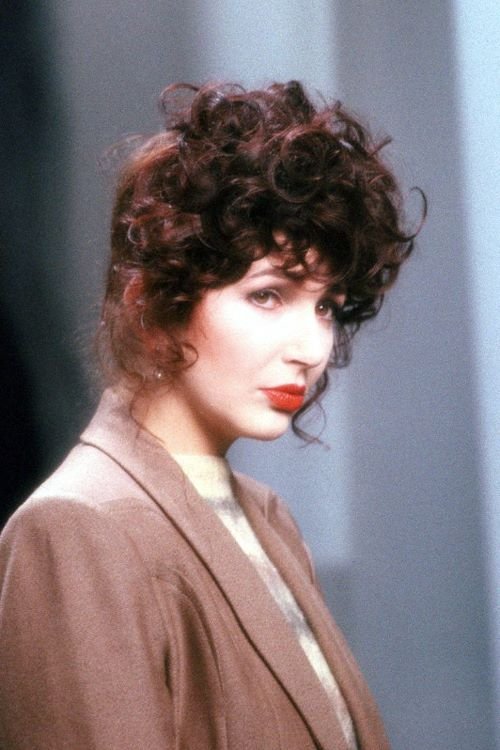
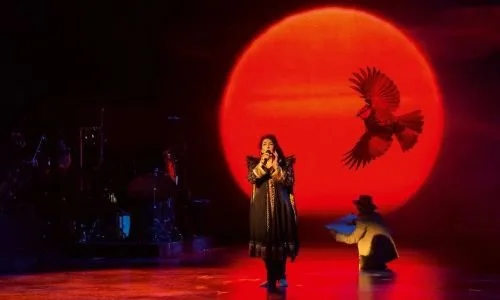
IN THIS PHOTO: Kate Bush in the video for Hounds of Love/PHOTO CREDIT: John Carder Bush 

Hounds of Love’s Bewitching and Fascinating Title Track

__________

IN this part…


of four new features I am writing about Kate Bush’s Hounds of Love (after MOJO recently dived into the album for their new edition), I am coming back to the stunning title track. To many, Hounds of Love is the finest track from the album of the same name. Maybe The Ninth Wave (the conceptual second side of the album) is more accomplished and impressive; many feel Running Up That Hill (A Deal with God) is better (and more successful). To me, Hounds of Love is one of the very best song Kate Bush ever released. Her was the first video that she directed too, and I love what she did with it! Coming to the MOJO feature on Hounds of Love, and they talk about songs like the title cut as being Pop…but not as we know it. I am going to expand on something writer Andrew Male observed about the incredible Hounds of Love. Before getting there, let’s read some interviews from Kate Bush where she discussed the origins of the spectacular title track:

“['Hounds Of Love'] is really about someone who is afraid of being caught by the hounds that are chasing him. I wonder if everyone is perhaps ruled by fear, and afraid of getting into relationships on some level or another. They can involve pain, confusion and responsibilities, and I think a lot of people are particularly scared of responsibility. Maybe the being involved isn't as horrific as your imagination can build it up to being - perhaps these baying hounds are really friendly. (Kate Bush Club newsletter, 1985)

The ideas for 'Hounds Of Love', the title track, are very much to do with love itself and people being afraid of it, the idea of wanting to run away from love, not to let love catch them, and trap them, in case th hounds might want to tear them to pieces and it's very much using the imagery of love as something coming to get you and you've got to run away from it or you won't survive. (Conversation Disc Series, ABCD012, 1985)

When I was writing the song I sorta started coming across this line about hounds and I thought 'Hounds Of Love' and the whole idea of being chasing by this love that actually gonna... when it get you it just going to rip you to pieces, (Raises voice) you know, and have your guts all over the floor! So this very sort of... being hunted by love, I liked the imagery, I thought it was really good. (Richard Skinner, 'Classic Albums interview: Hounds Of Love'. BBC Radio 1 (UK), 26 January 1992)”.

Lyrically, as Andrew Male observes, Hounds of Love starts out like a short story. “Told in the first person, about a child convinced she is being hunted by dogs who, like an image from a medieval bestiary, embody the imagined pain and responsibility of romantic love”. I love how Bush was seen by many as a Pop artist in 1985, yet her music is complex and cannot be easily defined. What I love most about songs like Hounds of Love is how they are accessible and easy-to-love, but they are also detailed, intelligent and can be interpreted in different ways. It is Pop, I guess, as the song is popular. Compare Hounds of Love’s title track with anything else that was being released at the time. Released as a single on 24th February, 1986, Bush’s contemporaries were not doing what she was! It reached number eight in the U.K. and featured drums by Charlie Morgan and Stuart Elliott and cello from Jonathan Williams. It is addition of instruments like the cello that lends this unique edge and sophistication. Many define 1980s Pop with being about synthesisers and drum machines. Bush was using this too, but she could elevate and distinguish her songs with something more elegant, classical, and unexpected. Andrew Male, for MOJO, looked at the different phrases and lyrical references. The fact that she opened with dialogue from the 1957 horror film, Night of the Demon (directed by Jacques Tourneur), shows that this is a more cinematic song.

Male asserted that Bush recontextualised this ghostly and urgent piece of film dialogue as she saw love (through this song) as a “runic malediction”.  She was fleeing from these hounds of love. One can almost imagine physical beings! Although the video does not show a monster or animals chasing Bush and her lover, you feel that something lurks in the dark. Bush’s own dogs, Bonnie and Clyde, can be seen on the cover of Hounds of Love (the album). I always think of them when hearing the title track though, in the photograph, they are asleep as Bush gives a relaxed look to camera. In the song, she imagines something far more sinister. In the lyrics, Bush does employ violence and harrowing images to enforce this message: “I found a fox caught by dogs/He let me take him in my hands/His little heart, it beats so fast/And I'm ashamed of running away”. Bush sings about being a coward and never knowing what’s good for her. We get these images of something coming through the trees, chasing Bush. Among the hounds of love, whether physical or mental, Bush/the heroine feels safe arms around her. The listener can see Hounds of Love as a horror setting or drama where Bush, as a young woman, is being hounded by dogs and chased by spirits and something demonic. Throughout Hounds of Love, you get songs that reference horror and dark psychology. Maybe you picture this woman wrestling with anxiety, doubts, fears, and past experiences of love.

In the MOJO feature, Andrew Male continues: “Gradually, subtly, these two strands, the childlike fear and the feral invocation, begin to merge…”. I like how there is this childlike aspect together with something more grown-up and relatable (to me). It is spellbinding Pop music. Bush’s vocals change from terrified to erotic. She sort of submits to love and passion. We almost feel her grow through the song. From a child scared by visions and things racing through the trees and coming at her in the night; then, this fleeing and stepping into the water. Maybe a baptism, rebirth or unshackling of her fears and psychological terrors, what emerges is this more lustful and braver woman who seems like the heroine on the album cover: someone more relaxed, passionate, and comfortable. Of course, there is no correlation between Bush’s cover and the title track’s hounds. I just get that connection in my head. I never really thought to think about Hounds of Love as this artistic and deep Pop song that had all these different interpretations and possibilities. It is so catchy and easy to hear, you do not necessarily dig deep or stop and unpick it – so thanks to MOJO for opening that particular avenue! That is the beauty of Kate Bush. Songs reveal new layers and possibilities all of these years later! A brilliant title track that I feel should have been a number one, it also boasts a phenomenal video. Bush’s direction and presentation of the track is fascinating. It is like you are watching something pulled from the big screen. I first heard Hounds of Love as a child, and I have loved the song ever since. It is one of the reasons I have pursued and adored her music since. It is clear that there are…

NO songwriters quite like her.

FEATURE: Step On: Shaun Ryder at Sixty: The Best of Happy Mondays and Black Grape

FEATURE:


Step On

Shaun Ryder at Sixty: The Best of Happy Mondays and Black Grape

__________

A music legend…

who has led Happy Mondays and Black Grape, Shaun Ryder turns sixty on 23rd August. He is a terrific songwriter and singer who was one of the pioneers and key voices of the Madchester scene during the late-1980s and early-1990s. To mark his upcoming sixtieth, I wanted to put together a playlist featuring the best songs from Happy Mondays and Black Grape. Before getting there, AllMusic have some biography about the great man:

Shaun Ryder was the poster boy for rock & roll excess in the late '80s and early '90s, at least in the U.K. As the potty-mouthed, drug-using leader of the Happy Mondays, Ryder was voted most likely to become an international star as well as the next rock & roll casualty in pre-Brit-pop Great Britain. Ryder was born in Manchester, England, on August 23, 1962. In 1982, Ryder formed the Happy Mondays, drawing upon '60s psychedelia, '70s funk, and '80s house music. The group released its debut LP, Squirrel and G-Man Twenty Four Hour Party People Plastic Face Carnt Smile (White Out), in 1987, but it didn't have the impact of its follow-up, Bummed, appearing a year later. Bummed thrust the Happy Mondays into the open arms of indie purists who once choked on anything on the dance charts. Ryder's sleazy, rap-influenced vocal style was more punk than funk, reflecting the street talk of club-hopping Manchester youths.

However, it didn't translate well in America, as the band's third full-length, 1990's Pills 'n' Thrills and Bellyaches reached the country on a wave of hype that sank once commercial radio refused to bite. While "Step On" received some attention on alternative stations -- then only a handful -- the Happy Mondays' real audience was in England, as Pills 'n' Thrills and Bellyaches hit number one on the U.K. charts and Ryder's love of narcotics provided fodder for the tabloids. Ryder's heroin addiction and the lackluster sales of 1992's critically roasted Yes, Please tore the band apart. In 1993, Ryder formed Black Grape, further developing the Happy Mondays' party-all-the-time sound with a greater emphasis on rap and funk. Black Grape's first album, 1995's It's Great When You're Straight...Yeah, debuted at number one in England.

Another Black Grape album, Stupid, Stupid, Stupid, followed in 1997 but the band fell apart the next year. Ryder quickly returned to a reunited Happy Mondays, which toured through 2000. Next up, Ryder released the solo album Amateur Night in the Big Top in 2003, but this venture proved short-lived. He returned to another incarnation of the Happy Mondays -- one that only featured himself, Bez, and Gaz Whelan -- in 2004 and after some live shows, including festival dates in 2005, the group released the "Playground Superstar" single in 2006.

The full-length Uncle Dysfunktional followed in the summer of 2007, and the group toured the record throughout the year. This version of the Happy Mondays splintered in 2010, after which Ryder appeared on the tenth series of the reality show I'm a Celebrity...Get Me Out of Here! An autobiography called Twisting My Melon arrived in 2011 and, over the next few years, he was a regular fixture on U.K. television, even scoring his own program, Shaun Ryder on UFOs, in 2013.

The original lineup of the Happy Mondays reunited in 2012 for a tour and they continued to tour into 2013, teasing the possibility of an album of new material. Before that materialized, the Mondays celebrated the 25th anniversary of Pills 'n' Thrills and Bellyaches with a tour in 2015 and, afterward, Ryder switched gears and reunited Black Grape for a tour commemorating the 20th anniversary of It's Great When You're Straight...Yeah. Black Grape leapfrogged the Happy Mondays in Ryder's priorities, with the reunited band releasing Pop Voodoo in the summer of 2017”.

I hope that a lot of Shaun Ryder’s music gets played on 23rd August. Happy Mondays have suffered some tragedy recently (Ryder’s brother died; bandmate Bez’s dad also died), so I do hope things improve for them and they can tour far and wide. With nobody quite like him in the music industry, we need to cherish…

THE magnificent Shaun Ryder.

FEATURE: I Want Alchemy: Why I Want to Own an Expensive Purchase or Prized Item Relating to Kate Bush

FEATURE:


I Want Alchemy

Why I Want to Own an Expensive Purchase or Prized Item Relating to Kate Bush

__________

I wanted to ask a question…

for this Kate Bush feature. If we had a few hundred pounds set aside for a rare Kate Bush piece of memorabilia or item, what would that be? I got to thinking about it after looking at an old lot that advertised some early handwritten lyrics. Included were the original lyrics for The Man with the Child in His Eyes. For anyone who knows anything about Kate Bush, this is something of a treat! She wrote this song at the age of thirteen. That might explain why it is in pink felt tip. I like to think that she was at school at the time and was daydreaming! Her first real love, Steve Blacknell, claims the song was about him. I believe he was the one who may have allowed it to be put back up for auction (as I understand he did have the lyrics in his possession). I would not let them go! It is an incredibly mature song, and I love the fact that The Man with the Child in His Eyes was written in hot pink felt tip, complete with Bush’s putting little circles where the dots should be for the letter ‘I’. I think handwritten lyrics would be very hard to come by now. If you are a fan, it is worth looking on 991.com to see what comes up. I am not sure whether there are many original lyrics circulating. I know Bush has written fan letters that go to auction sites, but there is something more precious about handwritten lyrics. To frame those and have them for the rest of your life would be something amazing! Not that I necessarily have hundreds to spend on a Kate Bush item, but I recently asked about merchandise and offering a new range for fans.

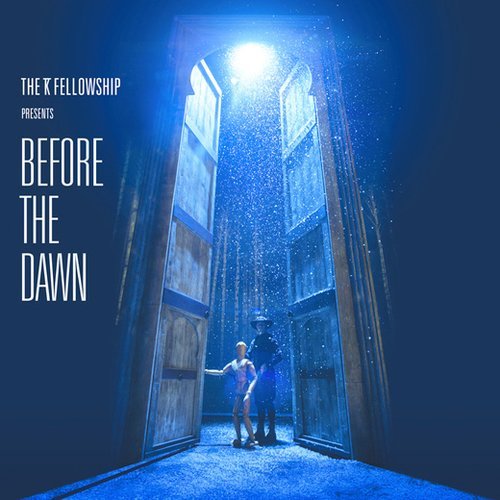
It would be great to have this special memorabilia or piece that you could preserve and show off to people. I know there are coffee table photobooks that retail for quite a lot. They are pretty great. I guess what I mean is something rare. I have written features about Before the Dawn, as the residency is eight next week (the first date of twenty-two was 26th August, 2014). Having a piece of the set or something from that residency would be awesome! I think maybe having a prototype or early design of the poster or programme would be a must-have for fans. That takes my mind to 1979’s The Tour of Life. There must be rare memorabilia from that time, in the form of posters, programmes and that sort. I think there are websites where you can buy these, but I wonder if there is something a little rarer from that time that people might not know about. I wonder how many outfits from that tour are available and have not been discarded. I know that she had quite a few costume changes. To own the outfit that she wore for James and the Cold Gun or Wuthering Heights. The clothing side of things is interesting. Consider all the videos and live performances. It would seem foolhardy to bin all of these, and one suspects Kate Bush herself does not own many of these. I guess costume designers and friends might have these but, as a piece of Kate Bush history, having something she actually wore would be very exclusive. Not in any weird way either. This is not about fetishising or being sexual. It is a connection with an artist who made this ground-breaking tour. You would keep it somewhere specials. I don’t know. I am not sure how much there is in the way of anything more extensive than handwritten lyrics such as journals or Bush’s writing. I feel some demos on cassette would also be must-own.

Bush’s early recordings from 1975 and before would be a prized possession. I know The Cathy Demos were bootlegged and you can hear them on YouTube. I wonder what happened to the tapes that she recorded on at East Wickham Farm as a child and young teen? I can imagine that many are still in the family, but you can only imagine how much has been collected through the years. Album cover designs and early tracklistings would also be really great. I think that rare (non-personal) photos would be treasured by fans. There have been photobooks – including her brother John Carder Bush’s essential KATE: Inside the Rainbow -, but there will be others that have never seen the light of day or the right project. From a personal level, any polaroid or early photo of Bush at her home whilst composing songs for The Kick Inside would be near the top of my list. Though you’d think they’ll be in her hands at the moment. All of this got me thinking what that one item would be. The one that you’d pay good money for and ensure that it never left your possession. I would love anything related to The Tour of Life or Before the Dawn, whether that is reissued merchandise, drawings, private sketches, outfits, or anything Bush has handwritten (stage directions or any drafts or scripts). My favourite album is The Kick Inside, so the very first copy of that would be gold dust I mean the very first copy of the album that was made for vinyl.

Although the handwritten lyrics for The Man with the Child in His Eyes is right near the top of my list, Wuthering Heights is a song that endlessly fascinates me. I am not sure what memorabilia would be available for it. I know the song was recorded quickly, so there aren’t going to be demos or various takes floating on tape. Although Bush wrote the song one summer’s night at her piano whilst looking out of the window, you have to image there are lyrics somewhere. Anything in the way of studio notes or anything handwritten relating to that song. I would pay pretty much anything for that! The fact Wuthering Heights is her debut single makes it very rare and treasured. Something jotted down even from Kate Bush regarding the song. We will never get video or audio of the conversations happening when she recorded and oversaw the mix late into the night. It is great that we have memorabilia and there are auction sites where fans can purchase something lesser-known and hard-to-find. One wonders just what is in the archives, Bush’s collection and somewhere in the world. I think every Kate Bush fan has an idea of what they would want to own if there was something rare available. I would like nothing more than to own a rare sketch, early cover or tour set design or, as I said, handwritten lyrics for a classic song. If your chosen Kate Bush items was available for purchase…

WHAT would you go for?

FEATURE: Spotlight: Camden Cox

FEATURE:


Spotlight

Camden Cox

 __________

HERE is an artist…

 PHOTO CREDIT: Amelia Walker for 1883 Magazine

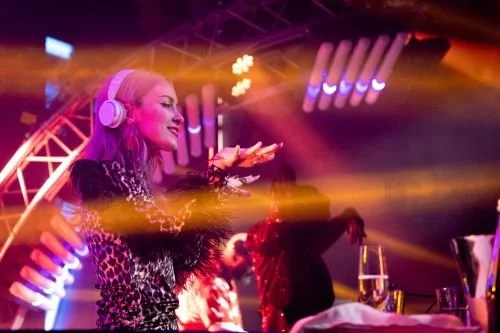
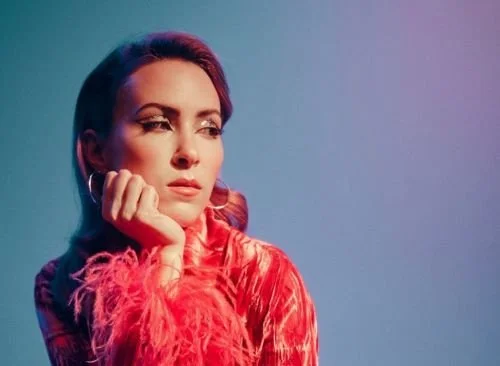
that I featured on my blog back in 2017. She has forged a wonderful career and has accrued a loyal and loving fanbase. I wanted to push her music to more people. Someone who I think is going to be a big name, she is an amazing songwriter and D.J. If you have not heard of the wonderful Camden Cox, then do make sure that you check her out. It has been a very busy past few years for the incredible Cox. I think that she will continue to put out music that you just have to listen to. Earlier this month, she released her phenomenal new song, Elevated. I will come to an interview that is based around that. Before that, here is an interview from 2020. VENTS MAGAZINE spoke to Camden Cox about her recent success, in addition to what she had coming up for the rest of that year:

With the major recognition you got last year – do you feel increased pressure with your new material?

Not at all, if anything it’s just inspired me and my project! I have so much cool stuff in the making so it’s given me a bit of a platform to get my own music out there! I’m feeling proper motivated, especially since I released ‘Healing’ a few weeks ago and it’s doing pretty well, I can’t wait to show more.

What other music do you have coming up over the coming months?

Another exciting collab, plus my next single!! 2020 is looking good!

Any plans to hit the road?

Not immediately, but it’s definitely a dream of mine so watch this space…

What else is happening next in Camden Cox’s world?

You’ll be hearing a lot more of my songwriting! I have co-writes coming out that I’ve done for other artists so I’m really buzzing about that because songwriting is a huge part of what I do, and I’m proud of everything that I’m a part of”.

Camden Cox is a respected and inspiring D.J. As an artist, she may be new to you. I am not sure whether there is an album coming later in the year, but you definitely need to have her on your radar. Someone who I have a lot of respect and admiration for, Camden Cox is one of Britain’s finest voices and talents. I hope that the music and interviews I have dropped in here give you a greater impression and understanding of Cox. Next, I want to draw from 1883 Magazine’s interview with her:

You have been in the dance world for such a long time but I think it shows a lot about how seriously people take their artistry when they are interested in exploring other areas. From a listener’s perspective, artists who get involved in the production and have input show that they care about their art in all aspects of it.

Yeah, I think, to be honest, I always want to go bigger and better. That’s just always been who I am. I’m always trying to aim higher. I think what made me believe that I could expand my skills that was during lockdown I learned vocal produce and learn and understand all of the ins and outs of vocal production. I never used to record my vocals. I used to just be the singer and the writer and when I added that to my toolkit, I started to think that I could probably lean into a bit of production. Then I thought maybe I could start DJing because it’s all about waveforms and knowing the sequences of the bars, the keys to the songs and the BPMs. It’s like a jigsaw that you can bring together.

How do you think this has changed you as an artist?

I think seeing the crowd’s reactions and what makes them tick was just really inspiring. Although I was concentrating because I didn’t want to make any mistakes, I was keeping an eye on what the crowd was loving and when they moved away and went to get a drink, or when they all started to dance. I got some amazing tips from MistaJam as well because the music that I make is quite euphoric and emotional.

The tips that MistaJam had given me were “you don’t have to stick to the dark, emotional euphoric vibes because people are going to want to party, pick your songs wisely.” He let me have freedom of what I played, but he gave some great words of advice to help the crowd not to switch off. I know that it can differ for each venue and time slots and the vibe of the night, I just thought you know what, this is a great opportunity to just pay a lot of my songs. So the set ended up being 80% of my songs. I wouldn’t have done that if he hadn’t given me those tips. I think that’s why I was so so chuffed with how it went down as well. because knowing that it was a lot of my songs that people were dancing to, and there was one that maybe people didn’t realize I’d written in there as well. Seeing people sing along to them was just… Well, it was a massive eye-opener for me that I’ve come a long way. So it’s an amazing feeling.

Do you think now you’ve seen a different perspective of your music that writing will be different for you?

I think it will be. it’s helped me to understand what crowds want and what they want to dance to and when to drop the more emo moments. When to make them cry and when to pick them back up again. I think it just helps you understand the dynamics of dance music.

I’m just curious, how different is it to be able to play your music to people and watch them react to it compared to singing it live and watching them react then? It must be different.

It’s weird, it’s so different because when I’m singing, I’m so lost in my world in my head and thinking about getting the vocals perfect. I don’t have a chance to see what the crowd is even doing. Evert time I come offstage, it’s sad because I don’t even remember half of it because it is so overwhelming. Whereas with this, the concentration and my world in my head are there when I mix a song but then I’ve got two minutes of the song to play out and I can channel it into the room. It’s like being in a different dimension. When I’m DJing, I have two different dimensions and I can nip in and then nip back out whereas with singing, I feel like I’m just in that one dimension and I don’t even see the crowd’s reaction, I get so lost in the moment when I’m singing. My lyrics are quite raw, I think I delve deep into the emotion when I’m singing them. This gave me a whole new perspective where I could be present in the room at the same time”.

Prior to winding things up, I will quote from an interesting House of Solo interview. Elevated is a blinding new track from the sensational Camden Cox. As an interviewee, artist, and D.J., she is so compelling and impressive. I am going to look with interest to see what comes next from her. Everything Camden Cox has a hand in is magnificent:

Over’ is your first release since signing with RCA, tell us more about the concept and meaning behind the single?

The song is about that crazy transition after you’ve broken up but you’re both still hanging around – unable to let go! Feelings are all mixed up and you’re questioning whether it’s actually the end.

To coincide with the release you’ve also shared the music video, how was the filming process? The video captures the essence of the song.

Ahhh I loved helping out the concept together for the video, I knew exactly what I wanted it to portray, as I basically wanted to recreate the exact moment I went through it. The house we filmed in was so cold! I think my lips may have even turned blue under my lipstick but it was absolutely worth it, the crew smashed it!

MistaJam called you “one of the most prolific songwriters in the dance music world”. What is your creative process when writing music and how do you get into the zone whilst writing?

I always start with melodies, once the producer has laid down some lush chords I just start doing my thing without thinking about it too much. It’s usually the first idea that turns out to be the best! Sometimes I just improvise on the mic and find the vibe, then I add the lyrics to it! I absolutely love it.

What have been some of your favourite tracks to write to date?

Kx5 feat. Hayla – Escape! I’ve been a huge fan of kaskade and deadmaus, heavily influenced by them, so to have written one of their tunes was another pinch me moment! I’ve actually written my next single with Hayla as well, so you can expect some of the same vibes – it’s another of my faves!

I’ve read that you’ve done sessions with Gorgon City, 220 Kid, LP Giobbi, Anabel Englund and Meduza. How was that experience and what did you learn whilst in sessions with them?

All of the above are absolute icons so to be honest, surreal! We all have the same taste in music so it’s a nice process with all of them. I gain confidence working with these kinds of artists because the talent is incredible, so to collaborate is an honour!

Having made some great dance driven music, what are some of your earliest music memories of dance music and what inspired you to pursue making within the dance genre?

My mum promoted drum and bass nights in Lincoln and Birmingham when I was super young so I grew up with her mixtapes! My voice suits heavy beats as well so it was kind of a no brainer for me to fall into dance music. I love anthemic music so that’s all I’ve ever wanted to make!

What are some of your goals for the rest of the year?

I have my first festival booking which is so exciting – so if I can get more of those I’ll be happy! I love performing live so getting back on stage is the main thing, I also can’t wait to release some of this new music I’ve been working on! I’m so ready”.

If you get a chance to see her play or perform near you, then definitely do go! Keep an eye out on her official website and social media channels. Someone who is primed and ready for the major stages and big leagues, Camden Cox is a sensation! If you have not heard her or she is new to you, then make sure that you go and…

SHOW her some love.

___________

Follow Camden Cox

FEATURE: The One I Love: R.E.M.’s Document at Thirty-Five

FEATURE:


The One I Love

R.E.M.’s Document at Thirty-Five

 __________

AN album that took R.E.M. to the mainstream…

 IN THIS PHOTO: Peter Buck, Mike Mills, Bill Berry, and Michael Stipe in Athens, Georgia, on 8th April, 1985/PHOTO CREDIT: Paul Natkin/Getty Images

Document is less mainstream than many of their albums. As articles like this explain, R.E.M. were trying to reflect the reality of the world in 1987, rather than release an album that was radio-friendly or followed their past work. Released on 31st August, 1987, I wanted to mark the upcoming thirty-fifth anniversary of R.E.M.’s fifth studio album. In my mind, one of their very best works, Document is an album that did not necessarily win over all critics. Perhaps less celebrated than Automatic for the People (which is thirty in October), it is a remarkable album that features a few of their best songs. My standout is the single, It's the End of the World as We Know It (And I Feel Fine). Before coming to a couple of reviews for Document, there is a great article from Udiscovermusic.com from last year that revisits R.E.M.’s fifth studio album. The legends from Athens, Georgia were about to put College Rock to mainstream audiences:

For R.E.M., 1986 had been a pivotal year. The band’s fourth album, the brash, yet highly accessible Lifes Rich Pageant had rewarded them with their first gold disc, while their extensive Pageantry tour of the US had garnered considerable critical acclaim. As 1987 rolled around, confidence was at a high within the R.E.M. camp. The Athens, Georgia, quartet had already worked up a clutch of promising new songs for what would become their fifth album, Document, and they had completed a successful initial studio session with new producer Scott Litt prior to Christmas ’86.

Litt had already assembled an impressive CV. He began his career as a studio engineer during the late 70s, working on recordings by artists as diverse as Carly Simon and Mott The Hoople’s Ian Hunter. He debuted as a producer in 1982 with The dB’s Repercussion album, a record R.E.M. was already familiar with, having shared stages with the band. In fact, the two groups’ histories would continue to intertwine when The dB’s co-frontman, Peter Holsapple, later joined R.E.M. as their fifth member on the Green tour and then played on Out Of Time.

R.E.M. and Litt began their fruitful, decade-long partnership with the successful recording of the quirky “Romance.” Though intended for the soundtrack of the film Made In Heaven, the song also later featured on the rarities compilation Eponymous. Litt reconvened with the band at their regular demo studio – John Keane in Athens – for an extensive demo session, before R.E.M. took a break and briefly embarked on extracurricular activities, including some studio contributions to Warren Zevon’s Sentimental Hygiene album.

The band was back in the harness with their new producer at the end of March, with all of April ’87 given over to the recording of Document at Sound Emporium Studios in Nashville, Tennessee. Several of the songs had already been worked up onstage, and the band’s keen pre-production work paid dividends: for Document, R.E.M and Scott Litt captured the sound of a rock band at the absolute top of their game, capable of taking on all comers.

The accessibility that seeped from Lifes Rich Pageant’s every pore was again apparent, but this time around the band had taken things up a gear. Indeed, the R.E.M. of Document was a sinewy, muscular rock beast, primed and ready to dominate the airwaves. Peter Buck’s distinctive jangle and chime were still apparent on “Disturbance At The Heron House” and “Welcome To The Occupation,” but, for the most part, his guitar playing took on a sharp, steely quality. Accordingly, he turned in some of his most memorable recorded performances: launching “Finest Worksong” with urgent, metallic riffs; embroidering the swampy funk of “Lightnin’ Hopkins” with Andy Gill-esque tension and atonality; and punctuating the band’s supercharged cover of Wire’s “Strange” with a neat, Nuggets-style psych-pop solo.

Meanwhile, the newfound confidence and vocal clarity Michael Stipe proffered on Lifes Rich Pageant continued apace, and on Document he summoned up a clutch of startling performances: bending and twisting his voice like an old time preacher around “Lightnin’ Hopkins” and rattling off a rapid-fire alternate history of the 20th Century on the exhilarating “It’s The End Of The World As We Know It (And I Feel Fine).”

Lyrically, the socio-political concerns Stipe addressed on Lifes Rich Pageant again loomed large. Featuring barbed observations such as “Listen to the Congress where we propagate confusion/Primitive and wild, fire on the hemisphere below,” “Welcome To The Occupation” was widely reputed to be a commentary on American intervention in South America. The deceptively infectious “Exhuming McCarthy” also delved into political hypocrisy, drawing a parallel between the communist-baiting of the Joe McCarthy era of 50s American politics and the recent Iran-Contra affair during which senior politicians under President Ronald Reagan had secretly facilitated the sales of arms to Iran: a country which was then under an arms embargo.

Sonically, Document also afforded the band the chance to further broaden their palette. Special guest, Los Lobos’ Steve Berlin, added his distinctive saxophone skills to “Fireplace,” while lap steel and dulcimer colored the hypnotic, raga-like “King Of Birds.” From their earliest days recording Murmur with Don Dixon and Mitch Easter, R.E.M. had always relished the opportunity to try out different sounds and textures – and experimental approach that would continue through Green and Out Of Time, wherein the band members often swapped instruments and fashioned new songs from riffs and melodies worked up on acoustic instruments such as mandolins and accordions”.

Maybe some R.E.M. fans have not heard Document. I would advise them to ahead of its thirty-fifth anniversary in 1987. Before rounding off, I want to highlight a couple of positive reviews for an amazing album. Pitchfork reviewed Document back in 2012:

Released in September 1987, R.E.M.'s fifth album, Document, contained something no one ever expected to hear from the Athens band. It wasn't the Wire cover or Steve Berlin's saxophone skronking through "Fireplace". It wasn't Michael Stipe singing what purported to be a love song, which he had sworn at one point never to do. The record packed an even bigger surprise: an actual radio hit. Before the year was over, "The One I Love" had peaked at No. 9 on the Billboard singles chart, and this was back when that meant something. It was R.E.M.'s first foray into a mainstream crowded with hair metal bands, mall-pop acts, and AOR interchangeables. Few of these acts would survive the decade, but this unlikely smash signaled only the start of the group's prolonged ascent.

How did this Southern rock band, who had more in common with Wire than with then-popular Peach Staters Georgia Satellites, find a spot in the public consciousness alongside U2, Guns N' Roses, and George Michael, who all more or less owned 1987? R.E.M. cultivated an air of mystery that extended from their music (the obscure lyrics, the refusal to lip sync in videos) to the packaging (mismatched tracklists, head-scratching instructions to "File Under Fire").

And "The One I Love" was an odd choice for a hit: Peter Buck's guitar possesses a rich, strange grain that charges the song with vague menace, especially when he unspools that psych-rock solo, and the mosaic hook itself is split between Stipe shouting "Fire!" in an empty theater and Mike Mills adding a descending countermelody. Lyrically, the song is one contradiction twisting into another: "This one goes out to the one I love/ A simple prop to occupy my time." Twenty-five years later, it remains nearly impossible to parse the implications of that particular couplet; on the other hand, 25 years later, it's still worth trying, as the latest in Capitol Records' reissue series proves.

If 1985's Fables of the Reconstruction was their most self-consciously Southern record to date and 1986's Lifes Rich Pageant their most overtly political, Document maintained both their regional self-definition as well as their indirect social engagement, even going so far as to sample Joseph Welch reprimanding Joseph McCarthy. ("At long last, have you left no sense of decency?") The album is a prolonged meditation on the idea of labor, opening with "Finest Worksong" before teasing out the implications on "Welcome to the Occupation". The defiantly chipper "Exhuming McCarthy" opens with the clack of Stipe's typewriter, connecting the work of the band with that of the journalist, and even "Fireplace" is less about the dance party than the preparations for it: "Hang up your chairs to better sweep, clear the floor to dance," Stipe sings, twisting his lines with each repetition until the entire building has been dismantled in an act of constructive destruction”.

I want to end with the BBC’s take on Document. Often ranked alongside R.E.M.’s best albums, I think that it sound relevant to this day. Reaching number ten on the U.S. Billboard 200 chart, Document is one of the best albums of the 1980s. If they hit a peak in the early-1990s, I think that albums like Document are hugely important because of the firepower, melodies and incredible performances from Bill Berry, Peter Buck, Mike Mills and Michael Stipe:

Back in 1987 R.E.M. were the darlings of college radio and their quirky alternative act had not yet registered on the global stage.

Document was to change all that by being so bloody marvellous that even the mainstream listening audience took the Athens, Georgia-based four-piece to their hearts and propelled them on the road to international superstardom.

Containing their first top 10 hit in the States, The One I Love, and also providing the band with their first platinum album, Document showcases a band at the top of their game and hints at more stunning work still to come.

Featuring Michael Stipe’s increasingly political lyrics and distinctive vocals, combined with Peter Buck's elegantly twisted guitar lines and the superb rhythm section of Mike Mills and Bill Berry, Document doesn’t lose a trick and is a complete rock album from start to finish.

The second single off the album, It’s the End of the World as We Know It (and I Feel Fine), cracks along at a scintillating pace and, whilst it didn’t make a big impression on the mainstream charts, is a firm favourite with fans at live shows.

R.E.M. display a wonderful versatility in their songwriting here, and are not content to pen tracks aimed simply for radio play. Other highlights include the wonderfully feedback laden intro to Oddfellows Local 151, the catchy Exhuming McCarthy and Finest Worksong which gives us the cue that this is definitely their finest hour”.

Thirty-five on 31st August, it is one of two R.E.M. albums – the other being Automatic for the People – that have big anniversaries this year. Document is a fantastic album with some of R.E.M.’s deepest and most important material. If you have not spun the record in a while, go and check out the wonderful Document. There is no denying that this phenomenal work is…

ONE of the very best.

FEATURE: Kate Bush’s Running Up That Hill (A Deal with God): Hounds of Love’s Remarkable Catalyst

FEATURE:


Kate Bush’s Running Up That Hill (A Deal with God)

IN THIS PHOTO: Kate Bush and Michael (Misha) Hervieu 

Hounds of Love’s Remarkable Catalyst

__________

I did say…

that I wasn’t going to feature Kate Bush’s Running Up That Hill (A Deal with God) before but, as I just got the latest copy of MOJO, I have been inspired by their Kate Bush spread. Of course, as I have said a few times, we are talking about Running Up That Hill (A Deal with God) again because it was used in Stranger Things. I will drop in the moment in featured, but I wanted to look at other aspects of the song. I didn’t think of this before, but this track was a catalyst in many ways. Hounds of Love’s best-known song, it was released as the first single on 5th August, 1985. With its B-side, Under the Ivy, this was a remarkably strong start to the album! Bush clearly had a lot of confidence in the song, not only to put it out as the introduction single for Hounds of Love. The song also opens the album. Although it wasn’t the very first thing that she wrote for Hounds of Love, I do think it opened the door and made the rest of the writing process flow more naturally. MOJO made an observation about the song that I want to mention. Before that, and in case you don’t know the story behind Running Up That Hill (A Deal with God), then here is some information and detail:

'Running Up That Hill' was one of the first songs that I wrote for the album. It was very nice for me that it was the first single released, I'd always hoped that would be the way. It's very much about a relationship between a man and a woman who are deeply in love and they're so concerned that things could go wrong - they have great insecurity, great fear of the relationship itself. It's really saying if there's a possibility of being able to swap places with each other that they'd understand how the other one felt, that when they were saying things that weren't meant to hurt, that they weren't meant sincerely, that they were just misunderstood. In some ways, I suppose the basic difference between men and women, where if we could swap places in a relationship, we'd understand each other better, but this, of course, is all theoretical anyway. (Open Interview, 1985)

It seems that the more you get to know a person, the greater the scope there is for misunderstanding. Sometimes you can hurt somebody purely accidentally or be afraid to tell them something because you think they might be hurt when really they'll understand. So what that song is about is making a deal with God to let two people swap place so they'll be able to see things from one another's perspective. (Mike Nicholls, 'The Girl Who Reached Wuthering Heights'. The London Times, 27 August 1985)”.

Moving out of London and setting up operations outside of Sevenoaks, Kent, in 1983, Bush constructed a songwriting room centred around her piano, her Fairlight CMI and an 8-track recorder. She began building a studio at East Wickham Farm (her family home) in 1983, and she moved operations there at the start of 1984. This was her family home where her parents lived, so it provided that security, peace, and inspiration. Demoing a song first called A Deal with God – it was later changed to Running Up That Hill as to not offend conservative countries and territories because of potential blasphemy -, the band arrived to add their parts. Bush’s brother, Paddy, provided some wonderful and essential balalaika part; Del Palmer (one of her engineerd and boyfriend) delivered a pulsating bassline, whilst Alan Murphy’s guitar and drummer Stuart Elliott percussion completed the cocktail. By all accounts, the recording of the song sounded like a lot of fun. I think the mood, the combination of the band and the layers of the song really did provide push and fuel for Kate Bush. Running Up That Hill (A Deal with God) is a song that has so many twists and different sounds. In terms of the vocals, there is this intoxicating choir call (“Yeah, yeah yo…”) alongside a myriad of emotions.  As MOJO noted, there is an urgency to the delivery of “Come on darling, let’s exchange the experience!”. It is a conversational song whose composition is just as multifarious, nuanced and changing.

It is small wonder the song has endured and hits people all these decades later. Bush’s vocals and lyrics are superb and relate. You can understand what she is saying and why. With such a fascinating and textured vocal, complete with a composition that matches the scale, wonder, and changes the song throws up, it is all topped off with her exceptional production skill and instinct. Running Up That Hill (A Deal with God) did provide this catalyst. A clear winner of a song, Bush did say later that the album process steadily rolled after that. It is a shame there was trouble regarding the title. In the past, Bush may have fought her corner to keep the title A Deal with God. Maybe feeling this was a battle she could afford to lose, she compromised and changed it to Running Up That Hill – adding A Deal with God in parenthesis. The rest, I guess, is history! Before finishing off, is an accompanying interview and recollection from the person who danced with Kate Bush in the video for Running Up That Hill (A Deal with God). Misha (then Michael) Hervieu was the lucky sole who will go down in Kate Bush history. When it came to videos, Bush felt that they did a disservice to dance. Flashy and haphazard images were not what she wanted to do. From Wuthering Heights’ video (her debut single) onward, Bush wanted to bring dance and movement into her work. In 1985, Hervieu was working full-time at  West End circus spectacle, Barnum. Arriving for an audition at the London dance studio, Pineapple, she didn’t know it was for a Kate Bush song at first. “She was hiding a bit”, she recalled to MOJO.

I love the fact that there was this sense of the low-key. Hervieu recalls how there were some issues. At 5”10 – with Bush being more petite -, the choreography meant they didn’t instantly slot in rhythm. Even so, Hervieu noted how Bush could wrap around her like a snake; she could lift Bush high up. Choreographer Diane Gray provided instructions regarding movement and expression. It was a long process more akin to a film than a traditional video. The rehearsals at Bush’s home with arduous and intense. The part where they rugby tackle one another caused Bush to bruise or crack a rib. Hervieu was told to go for it and, complying, it did result in a bit of trouble for Bush! Hervieu now modestly claims how she was “just the dancer” but, as part of a historic and hugely important song, she should be very proud! Now, the song has taken on new life and is seen as this history-making work. In a 2005 MOJO interview, Bush was asked by Tom Doyle – who wrote the new feature about Running Up That Hill (A Deal with God) – whether she consciously wrote more melodic and hooky songs following the more experimental and less commercial The Dreaming (1982). Bush did admit there was an element of that. It definitely paid off! The first of four hits singles from Hounds of Love – the others being Cloudbusting, Hounds of Love and The Big Sky -, this year found Bush break Guinness world records: the oldest female artist to reach number one (aged sixty-three); the longest time for a track to reach the top spot (thirty-seven years); the biggest gap between numbers ones (1978’s Wuthering Heights was her first). Think back to 1983 when Running Up That Hill (A Deal with God) – just called A Deal with God – was in its embryonic form. It kickstarted Kate Bush’s acclaimed and adored fifth studio album. I wonder whether, in 1983 in that rural home near Sevenoaks and back at her family home in 1984, she knew that this wonderful song would still be discussed and storming the charts…

ALL these years later.

FEATURE: Watching Them Without Her: Merchandise, Streaming and Footage: Kate Bush’s Before the Dawn at Eight

FEATURE:


Watching Them Without Her

PHOTO CREDIT: Ken McKay/Rex Features

Merchandise, Streaming and Footage: Kate Bush’s Before the Dawn at Eight

__________

THIS is the second feature…

PHOTO CREDIT: Trevor Leighton

I am writing about Kate Bush’s live residency, Before the Dawn. The first night at the Eventim Apollo was on 26th August, 2014. I want to mark eight years since Bush came back to the big stage after twenty-five years away. If she experienced nerves every night, audiences and critics did not detect that. By every account, this was a masterful artist delivering a theatrical and immersive experience that will stay with people forever. I have a few questions and points to make regarding Before the Dawn. Before that and, if you do not know about Kate Bush’s Before the Dawn, here is some information from Wikipedia:

Before the Dawn was a concert residency by the English singer-songwriter Kate Bush in 2014 at the Hammersmith Apollo in London. The residency consisted of 22 dates; it was Bush's first series of live shows since The Tour of Life 1979, which finished with three performances at the same venue. A live recording of the same name was released in physical and digital formats in November 2016.

On 21 March 2014, Bush announced via her website her plans to perform live. Pre-sale tickets were on sale for fans who had signed up to her website and an additional seven dates were added to the original 15, due to the high demand. Tickets were on sale to the general public on 28 March and were sold out within 15 minutes.

With the program, Bush won the Editor's Award at the Evening Standard Theatre Awards;[3] and was subsequently nominated for two Q Awards in 2014: Best Act in the World Today[4] and Best Live Act but did not win either award.

Before the Dawn was presented as a multi-media performance involving standard rock music performance, dancers, puppets, shadows, maskwork, conceptual staging, 3D animation and an illusionist. Bush spent three days in a flotation tank for filmed scenes that were played during the performance, and featured dialogue written by novelist David Mitchell. Also involved with the production were Adrian Noble, former artistic director and chief executive of the Royal Shakespeare Company, costume designer Brigitte Reiffenstuel, lighting designer Mark Henderson and Italian Shadows Theatre company Controluce Teatro d'Ombre. The illusionist was Paul Kieve, the puppeteer Basil Twist, the movement director Sian Williams and the designer Dick Bird. The video and projection design was by Jon Driscoll”.

The reaction to Kate Bush bringing Before the Dawn to the people was amazing. I remember hearing the news and the sort of electricity there was. I love the live album of the residency. It is almost like you are there when you listen to it! Bush spent a lot of time mixing and producing the album. It is available on vinyl and, if you can find a copy then go and get it. This is what Pitchfork observed in their review:

Live albums are meant to capture performers at their rawest and least inhibited, which doesn’t really apply to Before the Dawn. Bush is a noted perfectionist best known for her synthesizer experiments and love of obscure Bulgarian choirs, but her recent work has skewed towards traditional setups that reunite her with the prog community that fostered her early career. With marks to hit and tableaux to paint, the 2014 shows were more War of the Worlds (or an extension of 2011’s Director’s Cut) than Live at Leeds. But never mind balls-out revamps of Bush’s best known songs; with the exception of tracks from Hounds of Love, none of the rest of the setlist had ever been done live—not even on TV, which became Bush’s primary stage after she initially retired from touring. These songs weren’t written to be performed, but internalized. Occupying Bush’s imagination for an hour, and letting it fuse with your own, formed the entirety of the experience. Hearing this aspic-preserved material come to life feels like going to sleep and waking up decades later to see how the world has changed.

“Jig of Life” is the midpoint of Before the Dawn, and its crux. It forms the part in “The Ninth Wave” where Bush’s character is exhausted of fighting against drowning, and decides to succumb to death. A vision of her future self appears, and convinces her to stay alive. “Now is the place where the crossroads meet,” she chants, just as her (then) 56-year-old voice channels her 27-year-old one. Despite her alleged taste for burning one, Bush’s voice has gained in power rather than faded with age. It’s deeper now, and some of the songs’ keys shift to match, but it’s alive and incalculably moving, still capable of agile whoops and tender eroticism, and possesses a newfound authority. When she roars lustily through opener “Lily” and its declaration that “life has blown a great big hole through me,” she sets up the stakes of Before the Dawn’s quest for peace. In Act One, she’s running from the prospect of love on “Hounds of Love” and “Never Be Mine,” and from fame on “King of the Mountain,” where she searches for Elvis with sensual anticipation. She asks for Joan of Arc’s protection on “Joanni,” matching the French visionary’s fearlessness with her own funky diva roar, and sounds as if she could raze the world as she looks down from “Top of the City.”

 Rather than deliver a copper-bottomed greatest hits set, Bush reckons with her legacy through what might initially seem like an obscure choice of material. Both Acts Two and Three take place in transcendent thresholds: “The Ninth Wave”’s drowning woman is beset by anxiety and untold pressures, with no idea of where to turn, mirroring the limbo that Bush experienced after 1982’s The Dreaming. That suite’s last song, the cheery “The Morning Fog,” transitions into Aerial’s “Prelude,” all beatific bird call and dawn-light piano. The euphoric, tender “A Sky of Honey” is meant to represent a perfect day from start to finish, filled with family and beautiful imperfections. “Somewhere in Between” finds them atop “the highest hill,” looking out onto a stilling view, and Bush’s eerie jazz ensemble anticipates the liminal peace of Bowie’s Blackstar. “Not one of us would dare to break the silence,” she sings. “Oh how we have longed for something that would make us feel so… somewhere in between.”

Purgatory has become heaven, and in the narrative Bush constructs through her setlist, “A Sky of Honey” represents the grown-up, domestic happiness that staves off the youthful fears explored on Hounds of Love. For her final song, she closes with a rendition of “Cloudbusting,” a song about living with the memory of a forbidden love, which is even more glorious for all the hope that it’s accumulated in the past 30-odd years. Bush’s recent life as a “reclusive” mother is often used to undermine her, to “prove” she was the kook that sexist critics had pegged her as all along. These performances and this record are a generous reveal of why she’s chosen to retreat, where Bush shows she won’t disturb her hard-won peace to sustain the myth of the troubled artistic genius. Between the dangerous waters of “The Ninth Wave” and the celestial heavens of “A Sky of Honey,” Before the Dawn demystifies what we’ve fetishized in her absence. Without draining her magic, it lets Bush exist back down on Earth”.

 PHOTO CREDIT: Ken McKay/Rex Features

At the moment, you can get a copy, but it is quite expensive. I know there four vinyl albums in there to cover everything but, even if the price can be knocked down to £50 or lower, it would make it more affordable and accessible to fans and those new to Kate Bush. You can stream Before the Dawn on Apple Music. I have asked whether it will come to Spotify or Amazon. I guess Bush wants people to buy the album if they are streaming so, with Apple Music, you can only preview songs for free – there is that possibility in Spotify to stream it all with no charge. I would love to see, if humanly possible, a cassette release of the live album. Maybe it would need to be on four cassettes, but even a triple cassette release would be great. This sort of brings me to merchandise. You can get stuff on eBay, and there is a lot of great merchandise from Before the Dawn. It occurs that there must be programmes, merchandise or other bits either unsold or in new condition. For those people (like myself) who did not see one of the twenty-two dates, it would be wonderful to get merchandise. I would love a programme and poster at a reasonable price. Maybe they could be reprinted. In a couple of years, Before the Dawn turns ten. It is as important as any Kate Bush album. It begs the wider question when we might get merchandise from Kate Bush related to her albums – either in the form of posters or T-shirts and other things like that. Rather than being overly commercial or Bush milking her work, there is a whole new generation of fans who would snap up merchandise. This is true of anything relates to Before the Dawn.

I want to finish, before I get to part of a review for Before the Dawn, to thinking about footage. There was a camera in the venue to film it (though only one or two nights I think). Bush has that footage, but she wanted people to experience the album and not be distracted by a DVD. I think, as it was professionally filmed, there is this demand. I can see what she means though. If you were there, it was a unique experience. It seems like a pale comparison trying to experience the show through your screens. If she does not release the whole performance, maybe official videos would be an idea. Releasing a few tracks on her official YouTube channel would be a treat for fans. I also wonder whether there was any behind the scenes footage of The KT Fellowship rehearsing. Again, if it was a small clip, having some footage from Before the Dawn would be really interesting. It as this special and incredible event that should be treasured. There were many who did not get a chance to see her perform. I am going to round off with a bit of the review from The Guardian:

Over the course of nearly three hours, Kate Bush's first gig for 35 years variously features dancers in lifejackets attacking the stage with axes and chainsaws; a giant machine that hovers above the auditorium, belching out dry ice and shining spotlights on the audience; giant paper aeroplanes; a surprisingly lengthy rumination on sausages, vast billowing sheets manipulated to represent waves, Bush's 16-year-old son Bertie - clad as a 19th-century artist – telling a wooden mannequin to "piss off" and the singer herself being borne through the audience by dancers clad in costumes based on fish skeletons.

PHOTO CREDIT: Ken McKay/Rex Features

The concert-goer who desires a stripped down rock and roll experience, devoid of theatrical folderol, is thus advised that Before the Dawn is probably not the show for them, but it is perhaps worth noting that even before Bush takes the stage with her dancers and props, a curious sense of unreality hangs over the crowd. It's an atmosphere noticeably different than at any other concert, but then again, this is a gig unlike any other, and not merely because the very idea of Bush returning to live performance was pretty unimaginable 12 months ago.

There have been a lot of improbable returns to the stage by mythic artists over the last few years, from Led Zeppelin to Leonard Cohen, but at least the crowd who bought tickets to see them knew roughly what songs to expect. Tonight, almost uniquely in rock history, the vast majority of the audience has virtually no idea what's going to happen before it does.

Backed by a band of musicians capable of navigating the endless twists and turns of her songwriting – from funk to folk to pastoral prog rock - the performances of Running Up That Hill and King of the Mountain sound almost identical to their recorded versions - but letting rip during a version of Top of the City, she sounds flatly incredible.

You suspect that even if she hadn't, the audience would have lapped it up. Audibly delighted to be in the same room as her, they spend the first part of the show clapping everything she does: no gesture is too insignificant to warrant a round of applause. It would be cloying, but for the fact that Bush genuinely gives them something to cheer about.

For someone who's spent the vast majority of her career shunning the stage, she's a hugely engaging live performer, confident enough to shun the hits that made her famous in the first place: she plays nothing from her first four albums.

The staging might look excessive on paper, but onstage it works to astonishing effect, bolstering rather than overwhelming the emotional impact of the songs. The Ninth Wave is disturbing, funny and so immersive that the crowd temporarily forget to applaud everything Bush does. As each scene bleeds into another, they seem genuinely rapt: at the show's interval, people look a little stunned. A Sky of Honey is less obviously dramatic – nothing much happens over the course of its nine tracks – but the live performance underlines how beautiful the actual music is.

Already widely acclaimed as the most influential and respected British female artist of the past 40 years, shrouded in the kind of endlessly intriguing mystique that is almost impossible to conjure in an internet age, Bush theoretically had a lot to lose by returning to the stage. Clearly, given how tightly she has controlled her own career since the early 80s, she would only have bothered because she felt she had something spectacular to offer. She was right: Before The Dawn is another remarkable achievement”.

It may be unlikely a DVD of Before the Dawn will come about but, in terms of lowering the vinyl price, bringing it to cassette, and making it accessible on streaming, that would put it in new ears and minds. Merchandise from the residency will be in demand now. You can get some, but it is pretty expensive. Also, thinking about how amazing the twenty-two shows were, maybe a few clips from Before the Dawn would be a compromise between what we have now and releasing a full concert to DVD. For fans like me, it would be awesome to…

RELIVE some of that wonder and genius.

FEATURE: Inspired By… Part Seventy-Four: Janis Joplin

FEATURE:


Inspired By…

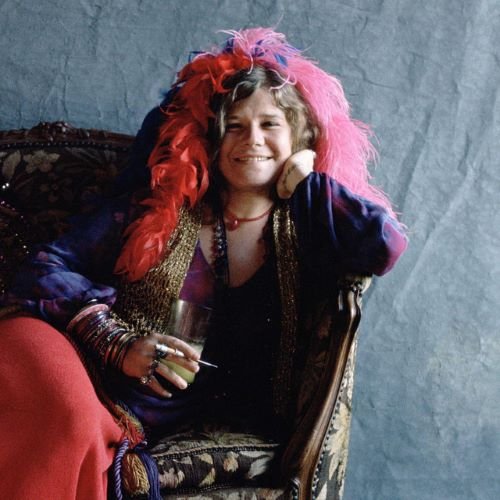
IN THIS PHOTO: Janis Joplin in 1967/PHOTO CREDIT: Jim Marshall

Part Seventy-Four: Janis Joplin

__________

ONE of the most influential and successful…

female Rock artists of her era, I wanted to include the magnificent Janis Joplin in this feature. With one of the rawest and most powerful voices ever, she has inspired many other artists. In spite of the fact that she died in 1970 at the age of twenty-seven, her legacy remains strong. I am going to come to a playlist of songs from artists who are either influenced by Joplin or they have been compared with her – thus, subconsciously, they have still been inspired by her. Prior to coming to that, AllMusic provide a biography about the amazing and legendary Janis Joplin:

As well as being one of the finest rock singers of the 1960s, Janis Joplin was also a great blues singer, making her material her own with her wailing, raspy, supercharged emotional delivery. First rising to stardom as the frontwoman for San Francisco psychedelic band Big Brother & the Holding Company, she left the group in the late '60s for a brief and uneven (though commercially successful) career as a solo artist. Although she wasn't always supplied with the best material or most sympathetic musicians, her best recordings, with both Big Brother and on her own, are some of the most exciting performances of the era. She also did much to redefine the role of women in rock with her assertive, sexually forthright persona and raunchy, electrifying on-stage presence.

Joplin was raised in the small town of Port Arthur, Texas, and much of her subsequent personal difficulties and unhappiness have been attributed to her inability to fit in with the expectations of the conservative community. She'd been singing blues and folk music since her teens, playing on occasion with future Jefferson Airplane guitarist Jorma Kaukonen in the '60s. There are a few live pre-Big Brother recordings (not issued until after her death), reflecting the inspiration of early blues singers like Bessie Smith, that demonstrate she was well on her way to developing a personal style before hooking up with the band. She had already been to California before moving there permanently in 1966, when she joined the struggling San Francisco psychedelic group Big Brother & the Holding Company. Although their loose, occasionally sloppy brand of bluesy psychedelia had some charm, there can be no doubt that Joplin -- who initially didn't even sing lead on all of the material -- was primarily responsible for lifting them out of the ranks of the ordinary. She made them a hit at the 1967 Monterey Pop Festival, where her stunning version of "Ball and Chain" (perhaps her very best performance) was captured on film. After a debut on the Mainstream label, Big Brother signed a management deal with Albert Grossman and moved to Columbia. Their second album, Cheap Thrills, topped the charts in 1968, but Joplin left the band shortly afterward, enticed by the prospects of stardom as a solo act.

Joplin's first album, I Got Dem Ol' Kozmic Blues Again Mama!, was recorded with the Kozmic Blues Band, a unit that included horns and retained just one of the musicians that had played with her in Big Brother (guitarist Sam Andrew). Although it was a hit, it wasn't her best work; the new group, though more polished musically, weren't the sympathetic accompanists that Big Brother were, purveying a soul-rock groove that could sound forced. That's not to say the album was totally unsuccessful, boasting one of her signature tunes in "Try (Just a Little Bit Harder)."

For years, Joplin's life had been a roller coaster of drug addiction, alcoholism, and volatile personal relationships, documented in several biographies. Musically, however, things were on the upswing shortly before her death, as she assembled a better, more versatile backing outfit, the Full Tilt Boogie Band, for her final album Pearl (ably produced by Paul Rothchild). Pearl was solid evidence of her growth into a mature, diverse stylist who could handle blues, soul, and folk-rock. "Mercedes Benz," "Get It While You Can," and Kris Kristofferson's "Me and Bobby McGee" are some of her very best tracks. Tragically, she died before the album's release, overdosing on heroin in a Hollywood hotel room in October 1970. "Me and Bobby McGee" became a posthumous number one single in 1971, and thus the song with which she is most frequently identified”.

To show how inspiring Janis Joplin is, I am finishing with a playlist of tracks from artists who definitely follow in her footsteps. A voice and artist who will never be equalled or replicated, she was a one-of-a-kind sensation. If you have not heard her two solo albums and two with Big Brother and the Holding Company, then I would advise you to…

CHECK them out.

FEATURE: Spotlight: Shygirl

FEATURE:


Spotlight

Shygirl

__________

AS she…

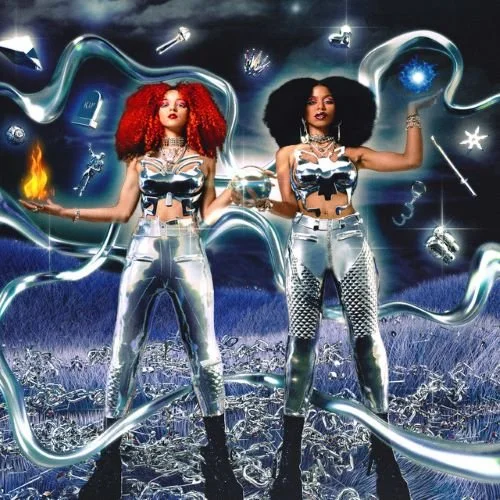
releases her debut album, Nymph, next month, I wanted to include Shygirl in this Spotlight feature. The London-based artist is hard to definer and categorise. I have heard some call her a Grime artist; others feel she is more of a Pop artist – albeit one that is more experimental. I will come to that album at the end of this feature. I want to bring in a selection of interviews from through the years that give us more depth and story about Shygirl. Although she has been on the scene for a few years now, this is a year when she will become known to a wider audience. In 2018, COEVAL profiled and spoke with the incredible Shygirl:

South East London born and raised, Shygirl (or Blane Muise to the government) is a 25-year-old musician and DJ. She’s not too different to mere mortals, - she’s been avidly collecting precious stones and crystals since she was 10 years old, and her day in 3 words – ‘Uber Uber everywhere.’

But Shygirl is best known for her spygirl antics – she is a Jekyll and Hyde. With her trusty fan in hand, she is allusive. But she isn’t cocky or in-your-face, she’s the intentional dark horse because as she puts it, ‘I like to be underestimated.’

A self-proclaimed mashup of garage, grime and general ´club vibes', Shygirl’s sound has definitely provided many of London’s (and my own) club moments. But if PDA is anything to go by - what is a club night and what is a genre ? Shygirl is not defined by any normative label - she is shy, she is rude, she is bossy, she is herself an ‘acquired taste’ and works by no one else's standard.

Her music is the hard-core energy fuelled rollercoaster that leaves you reeling with joy and rage – you want to let loose but her relatable lyrics trigger you to bitch. It’s a wonderfully bitter experience where Shygirl’s ‘pep talks’ become the power anthems we all need to ‘gas ourselves up’. Here, she shares an exclusive editorial shot with friends in her ‘playtime’ and explains the scenarios behind her music - and me being her ‘good time gal’ got to listen to a sneaky bit of her debut EP, Cruel Practice.

Who is Shygirl?

Aspects of my personality but she definitely has a life of her own.

And is Shygirl really shy? Or does she just not like small talk?

She’s not down for small talk, time is precious.

What genre would you say you fit into, or do you even fit anywhere?

It’s more of an amalgamation of genres born in the club but not tied completely to it.

Who are your long-time musical influences?

Moloko, Faithless, Massive Attack are the old school ones but also a lot of grime and UK drill.

Who are you currently obsessed with?

Currently obsessed with this guy Loski and his song mummy’s kitchen, I play it every day.

So, when did Shygirl's magical journey/ spiral start?

I think maybe two years ago the beginnings of Shy started to appear when I started to try some stuff with Sega Bodega but really came through with the first single, ‘Want More’”.

I have been following Shygirl a short time, and it has been interesting reading back at older interviews and checking out her earlier music. An artist who has definitely grown since 2018 (and before), she is going to continue to grow and take her music to the masses. I think Nymph will take her t new heights. Last year, Rolling Stone spoke with Shygirl. It was at a time when things were starting to open up during the pandemic:

As the world re-opens and live music and nightlife return, you can sense a significant shift of energy in the air. A fluctuation in the cultural mood. More people are returning to the summer parties and club nights that once cemented us in the present moment and reified our participation in living amongst other people. The artist and DJ Shygirl has emerged as the soundtrack to the moment. The 28-year-old musician has seen a steady rise in the U.K. Grime and queer club scenes and is known for her unique synthesis of the two. At one moment, she’s rapping over industrial house beats and at another, she’s floating on internet-y pop beats (SOPHIE was a prominent collaborator of hers, alongside Sega Bodega and Arca). Shygirl utilizes her deep vibrato and smutty lyricism to generate energy that’s raunchy and infectious. Naturally, her sharp and danceable sound has found an audience on Tiktok, where it’s rising in popularity in the same way that nightlife — and specifically, the underground club world — is experiencing its own kind of renaissance.

Shygirl’s upcoming live experience, Blu, is a short film that she conceived of and directed. It uses tracks from her critically-acclaimed 2020 EP Alias, as well as the debut of a new single, “BDE,” featuring the rapper Slowthai. Shygirl’s sound is a gift to our inner hot girls this summer, something we can all get down to in a time that we should use to celebrate being alive.

Shygirl talked to Rolling Stone about her inspirations, defying genre, the power of the dancefloor, and being a woman who doesn’t shy away from knowing what she wants.

PHOTO CREDIT: Trinity Ellis 

How has the club scene influenced your approach to making music?

I’d been working at a modeling agency for three years, and I started DJing whilst I was there. I had links to fashion parties. I didn’t know what the fuck I was doing. Like, I literally just started learning on the job. It was fun. In that respect, it influenced me, because the way I approach music is [similar to DJing] in terms of how I’m selecting sounds and how the development of the track goes like I’m mixing within the track. When I first started making music, I didn’t have any technical terms. I was talking about energies and I was referencing soundtracks or beats. I’m still painting this picture of the club that I imagined long before I ever started being in them, you know? It’s what we chase when we go to the club, this idea I had when I was listening to club music when I was 12 or 13. You imagine this space where you’re free to completely be in tune with your body, the music, and just lose yourself. That is what I’m still trying to bring forth.

Maybe more important is my core friendship group [that I’ve met] in that club space. We’ll always have that connection of finding each other in that space, especially when you’re in the queer community. I sometimes think of the queer community as this elite group who managed to forge themselves through the flames of the club, you know? Something where people often associate loose morals and fast friends, but we’ve actually found family.

Have you met a lot of the producers through that scene, or more through the internet and social media?

I’m a really sociable person. [When I was still at] uni, I was interning at this design agency as a creative consultant, and one of the things we were doing was rebranding club entities. So through that, I wrote a blog and I ended up interviewing Sega Bodega at this gig, and then we just became friends. We’ve [now] been friends for over 10… Oh, I don’t even know. It feels like a long, long time, through our formative years and adulthood. When I first met him I was finding my feet. I’d just started clubbing and doing things by myself. I think I’d said to myself that year, “I just want to meet people.” And I met so many people when I was in that mood, you know? I would always say yes to things. That’s before I was making music. And then, in 2016 when I did start making music, those same friends were like, “Okay, do you wanna try something out? Like, call us.”

When I first started making music I felt so lucky to be around some people like SOPHIE, who I’d known for a long time; and then to gain their respect [in music], which is something I never thought I would have. I think sometimes you’re probably more self-conscious when you’re in proximity to so many talented people. I thought I was encroaching on their space. They didn’t [think that], and it’s still a constant surprise to me when someone reaches out, new or old, and respects what I’m doing.

How has your mindset changed with making music since when you first started in 2016?

I have more ambition for things, sonically. Once you start doing anything you’re constantly testing your limitations and boundaries. The edges start to form of what you think you can or can’t do, and what you haven’t done yet, and what you want to do more of. When I first started making music I felt so reactionary, like I was treading the shallow end of this huge pool that was available to me. Especially with Alias, it felt way more directional. I had this feeling that I was following. With songs like “Slime,” where I was working with Sega and SOPHIE, at one point everyone was saying,”That’s done, sounds good,” and I was like, “It’s not done.” I know what I’m trying to make. I can’t explain it, but I know what I’m trying to do, you know? I had an inkling of it in the first EP, with “Asher Wolf”. I had to really push Sega to work on it ’cause he was like, “I don’t think this is good,” and I was like, “No, I know what it needs. It should sound like this”.

Before coming to a more recent interview, there is another from 2021 that I was to highlight. Shygirl has made a name for herself here in the U.K., but her music has also reached American audiences. She is someone who is primed for long-term success. Pitchfork sat down with the amazing Shygirl last August:

Growing up, her parents encouraged matching a wide-eyed approach to the world with pragmatic, stability-first ambition: “They really encouraged me to be studious,” Shygirl explains. “They said, ‘Go get a job that has holiday pay and sick pay.’ I was such a goody-goody. I listened to my parents, because I really respect them. Then I was like, ‘Okay. Now I’m going to do some shit for myself.’” In her early 20s, after leaving home to study practical photography at university, she bloomed, finding asylum in London’s expansive creative community. She worked at a modeling agency during the day, DJed at night, and built a network of like-minded friends. Her music career was a happy accident borne of those friendships. “When people take in the work that I’m making, I didn’t just sit in my room alone and make all that stuff,” she says. “It takes a village. It really does.”

When her pal, the producer Sega Bodega, asked her to hop on a track in 2016, she gave it a go. The result, a trippy industrial banger aptly called “Want More,” was spectacular. In a tone equally disaffected and at ease, she narrates her terms for a sexual encounter: “You wanna go slow, I ain’t into it; you wanna talk shit, I ain’t into it; you want more, I ain’t into it.” Through that expression of desire and control, Shygirl had found her voice, and herself. But where her articulation of the corporeal brought her both delight and existential peace, others saw holy terror. “In my everyday life, me and my friends kiki about sex all the time and we’re healthier for it—because if something fucked does happen, we’re talking about that as well,” she says. “A lot of my process has been writing about stuff that wasn’t very fun for me and giving it a new context, something that is touched by bliss or happiness.”

Over the next few years, Shygirl continued to experiment, racking up releases with Sega and a couple of other friend-collaborators, with whom she co-founded the label and collective NUXXE. Her 2018 debut Cruel Practice, a five-track EP that excavates the contradictory grit and gloss of London youth culture, yielded global attention. When she pranced all over the Sega-produced 2019 single “UCKERS,” cooly challenging a partner to be “the one to turn [her] out,” Shygirl arguably broke through. Her music had already been synced in Fenty ads and runway shows, but soon there were gigs in Asia, link-ups with Arca, and a slot alongside Kendall Jenner and FKA twigs in a Burberry campaign—all inroads to a uniquely sovereign career.

You have a background in creative agency work. Has that helped you navigate the music world?

For the most part, creative stuff is still difficult in this industry. There’s a lot of misogyny. I went on a [Shygirl] video shoot the other day. It was a three-day shoot that I was directing. I tend to take co-direction credits or work with another director because I don’t really like to work with the film crews because a lot of them are hella misogynistic. They don’t listen to female directors anyway, let alone someone wearing two hats as the artist and the director.
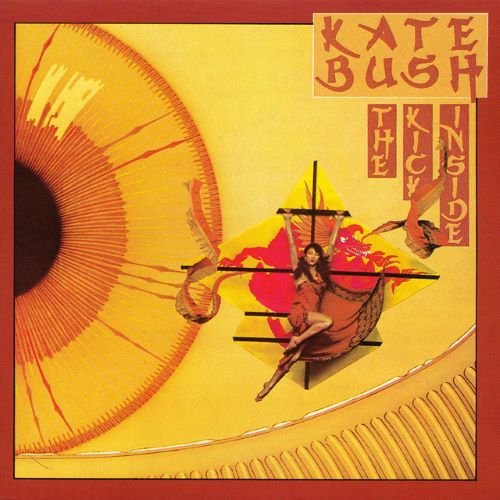
But this one in particular, I was like, “If I work with another director, that’s kind of rude because right now I just don’t have the space for someone else’s ideas.” We were in pre-production [for months]. I felt like we had a really, really good team. And then on the day, the [director of photography] was so misogynistic, not listening to anything. Because I’m in the edit process now, I’m seeing where that attitude affected the shots. And one of the guys who was operating the crane for the camera, he ended up being really racist. I was like, “If it comes to between cutting the shot and this guy, I’m going to cut the guy and [lose] the shot. I can’t have a rogue racist on set.”

In my experience it’s often Black women who are put in the position of having to stick our necks out for everyone else.

I think it’s really important for someone like myself who is intersectional in these spaces to speak up, because there’s lots of people who can’t. They’re not supported. And I do feel like [ignoring bad behavior] is a gateway to other things like misogyny, racism, sexual assault. They keep finding people doing those things and exposing them, but then not exposing the industry that supports it. I think we do really have to tackle this antiquated idea of how the system runs. I want to make sure that when I’m working with people, they know that they’re entering into a safe space.

A lot of people say things like, “Oh, you’re being too sensitive.” I would rather be sensitive. I don’t think it’s a badge of honor to be stoic. It’s something in the last year that I’ve really kind of taken on board, especially after BLM was being spoken about so much. I really realized that there were a lot of behaviors that I had normalized and in turn had made space for. And I made a promise to myself in order to remove that behavior, I am speaking out more and I have less of a tolerance for it. And I want anyone else I’m working with or who wants to work with me to know that. I don’t want to put up with bullshit at work. I don’t want it anywhere”.

 PHOTO CREDIT: Richard Burbridge

The final interview that I am keen to reference is from this year. V MAGAZINE spotlighted a genre-bending artist who is entering a new era with her highly anticipated debut album, Nymph. She is someone that everyone needs to be aware of. She is definitely one of the best and brightest young British artists:

V: What would you say the conceptualization process for the album was like, what was the recording process like for you?

SG: There's definitely some songs that stay true to what they were in their inception. But a lot of the music I recorded earlier that appears on the album went through a process to become what they are. There's songs like “Nike” that I made in the middle of lockdown around the same time that I made “Tasty” on the second EP (ALIAS) but we changed the production on the song to bring it up to where I'm at currently as an artist and in life. There are some things on the album that have a journey like that. Ultimately I do feel like you're saying a lot of things to yourself subconsciously when [conceptualizing] and recording a [project]—or at least I do anyway. When I'm making music, I start to see or read into the patterns in the messages of the lyrics. When I had everything in front of me and the more music I made, the more I realized what I was, and what kind of environment I was trying to build for myself sonically.

V: That’s interesting that the creation process for you has been more of a natural or organic process. When I think of the beats that your vocals are nestled in, I don’t think organic. When did you know you were done, what was the process like of getting to that place?

SG: It was around December (of 2021) when I probably had a bulk of the album and that's when I started to pull in little things that I'd already made, like maybe two years before that. But I felt I had the same messaging as what I was making currently. Like [the song] “Come For Me” was probably the beginning of this more sensitive side, I was like reaching out, almost like a siren song. I feel like there's a lot of this, siren-like, mythology within how I'm calling out to people to listen to how I feel, you know? Like that's what I identify with the most, a kind of fantasy of that almost. I feel like that ethos seeped into the importance of how I deliver my message and where I kind feel grounded. It is a weird thing to feel grounded in something that's much larger than me. This becomes an idea rather than the reality, but I think that's what I like most about it. We always methodized things like we have this idea of a grand of self-importance. And as soon as you start writing a song, you are sending up an emotion to the highest degree, you are making it important enough to write a whole song about. So I think there should be some mythology around it. And that's kind of how I came to Nymph being the backbone of the album’s energy. I wanted to almost look back on this and see myself encapsulated beyond the reality of me.

V: Leaning into the consumption of your art, we are a few months away from the release of this debut album that has been a labor of love for you, how are you feeling? You are more vulnerable than ever, you take the people who consume your music into a different realm of Shygirl this time around. Is that daunting for you? You just said how the world does affect you, so how does all of that play into how you are feeling ahead of this release?

SG: I hope people have space to consider this side of me, you know, without being blocked so much by their expectations. But I have always really pushed against what people expect of me because I don't understand how people can be so comfortable in their expectations when I don't even know what to expect from myself. I'm constantly trying to surprise myself and I am surprised by what I'm able to accomplish. So when other people have such clear expectations of me, I'm like, “Whoa, like why?” And if I can do anything to assuage those expectations, I would definitely endeavor to do that. But, yes, it is daunting because you're basically putting yourself up for public opinion. What daunts me more is I want to be affected by the space that I put the music out, but I also don't wanna lose sight of the things that bring me pleasure and bring me joy. I want to make sure that I'm always able to decipher what it is that I need from myself through that conversation”.

I am going to wrap things up in a second. Before that, I would advise people to pre-order Nymph. It is going to be one of the most important and best debut albums of this year. It is going to be really interesting seeing what comes in her future. She is an artist who can go very far indeed:

Experimental pop artist Shygirl releases her debut full-length album Nymph via Because Music. The 12-track album was created with a close-knit group of friends and previous collaborators including Mura Masa, Sega Bodega, Karma Kid, Arca and Cosha along with the producers Noah Goldstein, Danny L Harle, BloodPop, Vegyn and Kingdom. Nymph reveals Shygirl’s inner self-reflection in experimental vocal tones and deconstructed dance melodies and exhibits a new level of intimacy and emotional depth in her songwriting. Simultaneously asserting her power and freedom and yet still longing for love, she delivers us lyrical harmonies and catchy hooks telling stories of relationships, sexual desires and romantic frustrations. Over lush production, Shygirl brings us on the journey of what intimacy is like for a woman who’s seen as ‘too hot to handle’, someone sought after and overlooked at the same time. Shygirl’s melodies intertwine with the sounds of bassline, garage, dancehall and hip hop, all seamlessly flowing together like an artful ribbon dance”.

Go and follow Shygirl and get her amazing debut album. A talent impossible to easily define or pigeonhole, her music is always evolving and being shaped. Even though it is still early days when it comes to her career, Shygirl is standing aside from her peers. You only need to spin one song from her to realise that she is…

A tremendous talent.

___________

Follow Shygirl

FEATURE: In My Place: Coldplay's A Rush of Blood to the Head at Twenty

FEATURE:


In My Place

Coldplay's A Rush of Blood to the Head at Twenty

 __________

ALTHOUGH I have not really…

listened to Coldplay’s albums since A Rush of Blood to the Head in 2002, this album particularly is one that I love a lot. Released on 26th August, 2002, I wanted to feature the brilliant second album from the band. Following the celebrated debut, Parachutes, in 2000, there was a lot of critical focus and expectation in their direction. They sort of came out of nowhere and released this stunning debut. Maybe A Rush of Blood to the Head does not garner the same acclaim, reputation and stature as its predecessor, but it is a terrific album that arrived at a very strange time. Less than a year after the terror attacks in the U.S. that shook the world, music was still reacting and adapting. There was still celebratory music, but there seemed to be this brief hiatus as artists created more serious or reflective work. I think that some of the best albums of the decade arrived in 2002. That is definitely the case with A Rush of Blood to the Head. It is an album you can get on vinyl. Go and grab a copy of you can. As I do with album anniversary features, I am going to finish with a couple of reviews. There are features that provide a bit of background about the album.

Albumism looked back at A Rush of Blood to the Head in 2017. They talked about (among other things) how it took Coldplay to a new level and saw their work opened up to a wider audience. It was true that they were a major band by the time their 2002 album was revealed to the world:

When Coldplay announced their arrival with their debut LP Parachutes (2000) they got what every band starting out hopes for: a critically acclaimed and commercially loved album that saw their appeal spread from their homeland of Britain to every corner of the world. With each passing month and new single release, the band transitioned from playing small intimate clubs to midsize theatres as their popularity around the world grew on the heels of breakthrough hit “Yellow” and follow up singles “Trouble” and “Don’t Panic.” Seeing them live during their debut world tour, you got a sense of a band daring to reach for more than the venues they were caged in. A band wanting to further conquer the musical landscape and ascend to the heights of arena and stadium shows. A band with the desire to be “one of the best bands in the world.”

So it was with this destination in mind that they set about recording their follow up, A Rush Of Blood to the Head. As the title suggests, the album was recorded with a heady sense of haste as if they didn’t want the opportunity to build on their debut’s success to slip through their fingers. The result of initial recordings, however, saw them flounder under both their ambitions and expectations with the album shaping up to be a small evolution from—and in some parts a carbon copy of—the sound of Parachutes, rather than a bold step forward.

At a musical fork in the road they faced a hard decision: build on the momentum gained with a quick release or start afresh and record an album that better reflected who they wanted to be. Thankfully for us, with a release date looming, they decided to put a halt to recordings and push through the growing pains of reaching beyond their comfort zone. In the process they scuttled many of the songs already slated for release and got to work on new material.

As album opener “Politik” attests, the new material grew out of the ambition to cross the threshold of playing small to midsized venues and step into the world of arena rock, moving in on territory usually reserved for the likes of U2. With its slow build and pounding drums, “Politik” announces their intent fittingly, kicking off with an energy akin to a coda. Set to reverberate through stadiums, “Politik” encapsulates a sense of post-9/11 isolation and desperation pitted against a desire to connect and a dare to hope. It’s a more epic sounding, dramatic Coldplay being presented here. One ready for a wider stage.

In fact, it’s possible to view the entirety of A Rush of Blood to the Head as a live show. Perhaps weary of the more intimate moments of Parachutes, A Rush of Blood is Coldplay amped up. The addition of heavier sounding guitars and the greater prominence of piano not only hint at their development and surety as musicians, but also injects their songs with a broader scope.

Upon its release in late August 2002, A Rush of Blood to the Head was lauded by critics and the public alike. It self-fulfilled the prophecy that envisaged Coldplay growing in stature and appeal, conquering a bigger world stage and picking up Grammy awards along the way. It remains Coldplay’s best-selling album to date.

And 15 years after its release, A Rush of Blood to the Head remains a vibrant, relevant, urgent album. None of its lustre has been lost over the years and it remains Coldplay’s defining moment. It has rightfully become the album that the band’s subsequent releases are measured against. For in this perfect storm of ambition and focused follow-through, Coldplay rightfully took their place as “one of the best”.

Also in 2017, The Young Folks spotlighted and revisiting the wonderful second studio album from Coldplay. They note how, like some artists (though relatively few), their lead Chris Martin was unafraid to challenge a post-9/11 world:

Some records are historical for their unique sound, and some are just important to the society for the time. Coldplay’s A Rush of Blood to the Head falls into both categories.  With the horrendous 9/11 attacks still fresh in the minds of everyone, the American people were looking for anything to get the terrible tragedy off of their minds.

Enter in the revolutionary English rock band lead by Chris Martin to help relieve people from grief.  With a perfect blend of love ballads, anthems, and memorable instrumentals, it’s safe to say that Coldplay avoided the so-called “sophomore slump” with their second album.

The sense of urgency to create this record was evident through the production style and songwriting.  Martin said it himself in an interview that although the band didn’t exactly know how to approach this project, they still knew that a hopeful tone would be their backbone.

Coldplay has shown throughout their discography how stunning but subtle music can be, while being just as impactful.  You wouldn’t think that a band from Britain could make a political statement about America without sounding uneducated, but Coldplay found that balance on A Rush of Blood to the Head of saying something significant while making it a fantastic listen as well.

By using the first official single on the record “In My Place” as a stepping stone for the rest of the tracks, Martin figured out what direction him and his bandmates wanted to go.  The song “Politik” is where we really got a sense of the different underlying themes riddled throughout the album.  Martin solidified himself as an important voice in the music industry right off of the bat with this track, and he wasn’t afraid of challenging the state of our world following 9/11.

Martin also doesn’t shy away from going back to their vintage sound that helped Coldplay get heard on Parachutes.  “Warning Sign,” the eighth song on the record is a perfect representation of that.  That idea is immediately thrown out the window however on “A Whisper” where the track becomes dizzying and daunting, and the lyrics found the band diving headfirst back into the importance of time and how it can be overwhelming for people”.

I am going to wrap things up with a couple of reviews. As I so often do, I will bring in AllMusic, because their take on A Rush of Blood to the Head is one that made me think deeper about an album that cemented Coldplay as a British band who were going to conquer the world:

In 2002, the members of Coldplay were still in the midst of their ascent, riding the breakthrough success of their sleepy debut, which established wide-eyed vulnerability and earnestness as an indelible part of their image. Soft and soothing, the precious Parachutes set them up for a lifetime of inaccurate comparisons to Radiohead, even though the similarities started and ended with The Bends. And just like Radiohead, they quickly evolved into another beast altogether: plugging in the guitars, amplifying the bombast, tattooing their hearts on their sleeves, and shooting for the arena rafters in a fashion more similar to U2. Their sophomore effort, A Rush of Blood to the Head, made the message clear within the first seconds of the intense opener "Politik." As Will Champion's drums crash, Jonny Buckland's guitar swells, and Guy Berryman's bass churns, frontman Chris Martin bursts through the Wall of Sound, jolting listeners awake with the desperate cry, "Open up your eyes!" Angsty and urgent, songs like "Politik" and the title track introduced fresh elements into the Coldplay repertoire, expanding their emotional palette and showing critics that they could really rock when they wanted to. This was the sound of a new Coldplay, one that developed confidence, a voice, and a budding imagination to separate themselves from the Travises and Elbows of the world. The aggressive wallop of "God Put a Smile upon Your Face" -- a live staple and fan-favorite single -- typified the trademark sound of the era, combining Champion and Berryman's groove with Buckland's outer-space noodling, a style that they'd blast into the stratosphere on the follow-up effort, X&Y. Along with "Daylight" and "A Whisper," the track helped establish Coldplay as an arena rock presence, pulling them out of the indie-dwelling bedroom and onto the big stage. From that platform, Coldplay also delivered three of their most enduring and beloved singles: the sparkling "In My Place," the weepy ballad "The Scientist," and the piano-kissed showstopper "Clocks." With A Rush of Blood to the Head, Coldplay pulled back the curtains to reveal a robust and energized unit, one that would soon conquer the mainstream with a steady evolution into the world of pop. At this moment -- before issuing the two highest-selling albums in the world in 2005 and 2008 and becoming an international stadium sell-out presence -- Coldplay were coming to grips with their music's power and possibility, a young band hungry, bright-eyed, and primed for stardom”.

I will complete things by quoting Entertainment Weekly. They gave A Rush of Blood to the Head an ‘A’ when they sat down with the album in September 2002. Though some gave the album a mixed review, there was more than enough backing, love and kudos for Coldplay in 2002. A Rush of Blood to the Head has earned plenty of applause since then:

The dramatization of the old Manchester indie rock and rave scene in ”24 Hour Party People” is an occasionally enlightening slice of alt-rock nostalgia. It also offers a few educational lessons on England’s newest hitmakers. Back then, as the movie demonstrates, the throbbing, intense sonics of the bands mattered. But so did the personalities, be they Joy Division’s pale-rider frontman, Ian Curtis, or Happy Mondays’ own 24-hour party animal, Shaun Ryder. They may have been ”new wave,” or whatever phrase we used at the time, but they were also rock stars in the old-fashioned, attention-getting sense.

Manchester’s days as a hugely influential music community may be over, but guitar-wielding U.K. bands aren’t; in the last few years, one boat after another loaded with musicians has docked on our shores. But as striking as some of that music has been, from the ingenious quirks of Clinic to the six-string symphonics of Doves, you’d be hard-pressed to name a single band member or picture one of their faces. Call it Oasis Syndrome: Act like an overbearing, entitled pop star, and you risk alienating as many people as you attract, so best to keep a low profile. The current, post-Oasis bands, taking a cue from the Gallagher brothers’ ascent and crash, seem to purposefully refrain from putting themselves out there. They’d much prefer to hide behind waves of enveloping sound, thank you very much, as if the idea of rock conquering all were just a distant, baffling memory.

Coldplay appeared to be part of this trend when ”Parachutes” arrived two years back. Sober, mildly rocking university types with a singer who was a sucker for his own falsetto, they were immediately labeled Radiohead Lite, and with good reason. But didn’t their ”Yellow” and ”Trouble” age better than most of Radiohead’s meandering ”Amnesiac”? Wasn’t Coldplay’s lead singer, Chris Martin, in some ways a cut above his peers in the charisma department, a sort of rock Rupert Everett? And could Coldplay actually have more to offer than some of their competitors?

The answer to all three questions is yes, and the proof lies in A Rush of Blood to the Head. Second albums are problematic, never more so than when their predecessors are sleeper sensations. But as sophomore discs go, ”A Rush of Blood” is strikingly wonderful, if not immediately striking. If one were to choose a ”Parachutes” track as a starting point, it wouldn’t be the blaring riff from ”Yellow” but the mel-ancholic vibe of ”Trouble.” The songs are built on gentle, stately pianos and elementary guitar patterns. Even when tempos accelerate, as in the tribal stomp of ”Politik,” a dewy-eyed appeal to some higher power to save us, the music remains restrained and mournful.

And for once, there’s nothing wrong with that. Displaying a cohesion rarely heard in albums these days, ”A Rush of Blood” bobs from one majestic little high to another. Songs like ”In My Place” and ”Warning Sign” marry lyrics imbued with deep regret and mistakes (”…You were an island / And I passed you by” in the touching latter song) with lyrical melodies and guitar hooks that twinkle and sparkle. (Momentary sunniness is provided by the fairly jaunty ”Green Eyes,” about a relationship that actually seems to have stuck.) At a time when so many bands, Brit or American, are intent on cramming as many genres as possible into each song, it’s a relief to hear music that revels in the joys of a simple, graceful melody. The overall effect is tuneful and hypnotic — ambitious, but in the sneakiest, quietest way.

Using his falsetto to sublime effect, Martin never overdoes it or turns cloying, an accomplishment in itself. Much like ”Parachutes,” the new album still has plenty of outside reference points: ”Clocks” has a rushing-waterfall piano straight off a Moby album, while ”A Whisper” delves into a space-rock artiness reminiscent of a ’60s hippie-flick soundtrack. But Coldplay manage to pull off an even grander gambit: In their hands, the new low-profile Brit rock actually has a profile”.

Upon its release, A Rush of Blood to the Head went to number one in the U.K. The album spawned the hit singles In My Place, The Scientist, and Clocks. Coldplay received three Grammy Awards for A Rush of Blood to the Head: the 2003 Grammy for Best Alternative Album, which was the band's second win in a row; the 2003 Grammy for Best Rock Performance with the song In My Place, and the 2004 Grammy for Record of the Year with the song, Clocks. Ahead of its twentieth anniversary on 26th August, I wanted to spend time exploring Coldplay’s A Rush of Blood to the Head. The band followed 2000’s Parachutes with an album that took them…

TO new levels.

FEATURE: My Favourite Singles of 2022 (So Far): One: Iraina Mancini – Undo the Blue

FEATURE:


My Favourite Singles of 2022 (So Far)

One: Iraina Mancini – Undo the Blue

__________

I am doing this the wrong way around…

 PHOTO CREDIT: Anthony Peyper

as I am writing about my favourite singles in the year and starting with the number one choice. Usually, you build up to the best song after writing about the rest. I am doing things the other way around. Last year, Iraina Mancini released the stunning single, Do It (You Stole the Rhythm). That was one of my favourite songs of last year. This year, back in April, she put out the utterly sublime and beautiful Undo the Blue. This is how the song is described on her Bandcamp page: “Undo the blue is a dreamy soundscape inspired by the pastoral and psychedelic soul from the mid 70’s, building into a climax laced with sweeping strings, heavenly harmonies and lush brass”. There are multiple reasons why I love Undo the Blue and think that it surpasses anything else from this year. This year has seen so many incredible singles released. Iraina Mancini’s Undo the Blue gets into my heart and head. The production from Jagz Kooner (Sabres of Paradise, Primal Scream) is brilliant. I have a few things to cover off in this feature. Before then, if you do not know about Iraina Mancini, here is some biography from her official website:

Iraina Mancini has been writing her own songs and fronting bands from a young age. Whilst on the road with these bands, she began digging into the vaults of Northern Soul, Funk, Rhythm and Blues, 60’s Garage and Disco’s rich musical history. Inspired by and building on her father’s 45’s that she had enthused over as a child, she began her passion to DJ and bring back the spirit of these often forgotten but golden musical era’s to dance floors across the globe.

Iraina has travelled the world DJ’ing and hosting at major film and fashion events such as Cannes Lion, NME Awards, Toronto Film Festival, and key music festivals; Glastonbury, Wilderness, Secret Garden Party, Bestival and for iconic brands such as GQ, Dunhill, Swarovski, Temperley, Film4 and Pretty Green.

Iraina also presents her own popular cult radio show every Tuesday on the legendary Soho Radio in London, where she teases a taster of her live DJ sets, interviews her favourite bands and serves up a music history lesson and homage to her love of Northern Soul, Funk, vintage R&B, Ska and Garage Rock. Recent guests on the show have included Ecca Vandall, Mike Chapman (Blondie, The Knack), Lee Fields, YAK, PP Arnold, Garret Shider (Parliament, Funkadelic), Babyshambles and Daddy Long Legs.

Inspired by the music she collects and DJ’s, a new solo project has started to form. Collaborating and writing with legendary producer Jagz Kooner (Primal Scream/Oasis) and featuring a stable of the UK’s most talented musicians, Iraina has now put together her live band and is hitting the road in 2022. Her sound is influenced by her favourite music from the 60’s and 70s, French Pop, Psychedelia, Soul, Ye-Ye Girls, Serge Gainsbourg and vintage cinema.

Muse to influential fashion designers, brands and artists due to her striking vintage style and inspired by Francoise Hardy, Bridgette Bardot and Jane Birkin, Iraina is the contemporary reflection of an iconic retro era that can be re-discovered and celebrated through her style and music”.

I am a big fan of Mancini’s Soho Radio show. She can play her favourite bands and artists, but the show is described thus: “Iraina is also a singer/songwriter heavily influenced by her favourite music from the 60’s and 70s, French Pop, Psychedelia, Ye-Ye Girls and Vintage cinema”. There is definitely cinema and French Pop sounds on Undo the Blue. I get a sense of classic cinema and music from the 1960s and 1970s. I am going to go off on a brief tangent. Iraina Mancini is a great broadcaster, D.J. and music reporter/journalist. She is a fantastic artist, but she is also a model. Mancini has acted too, but she seems like someone who should star in a drama or short film. Someone primed for the spotlight. I have various ideas but, as someone who has very little money and resources, there is not a lot I can do! She has this star quality and multi-talented nature that I can see translating to the small and big screen. A phenomenal actor in the offing. Also, I would love to hear playlists and soundtrack albums where she collates her favourite songs (I can find this one from a few years back); a bit of a YouTube video where we see inside her vinyl create/box (apologies if there is one already!). As an artist, Iraina Mancini is primed for big stages and festivals. I think that her work as a D.J. and huge music fan feeds into her own work. Her videos are always memorable and have their own worlds. So visually stunning and captivating, Undo the Blue is the latest example. Kudos to director Marc Swadel! Before rounding off, Right Chord Music gave their thoughts about my favourite track of this year:

It’s easy to get swept up in the future, it’s bright, shiny and exciting. But for all the gloss and glamour it can also feel a little scary at times.  Sometimes there is nothing better than looking back, there is comfort and safety in what we know and have previously loved.

I get this feeling whenever I hear music from Iraina Mancini, her music transports me. And her new single Undo The Blue continues with this trend. It’s supported by a music video that immediately draws you in with its delicious retro stylings.

PHOTO CREDIT: Etienne Gilfillan 

I’d file it alongside music videos like Blondie’s ‘Heart of Glass’ or The Strokes ‘Last Nite’, where the colour balance feels wonderfully wonky to the point that you can’t take your eyes off it.

Undo The Blue has a softer, more reflective feel than previous releases. At moments it recalls Felt Mountain era Goldfrapp. The single provides the perfect showcase for Iraina’s vocal range as she soars above sweeping strings and lush brass.

Undo The Blues sees Iraina continue to collaborate with producer Jagz Kooner (Sabres Of Paradise, Primal Scream) and introduces a new alliance with multi-instrumentalists Sunglasses for Jaws.

The single is a dreamy soundscape inspired by the pastoral and psychedelic soul from the mid-’70s with a gentle nod to bands like Rotary Connection and Aphrodite’s Child: orchestral and cinematic but with a modern twist.

Iraina Mancini says of the single:

“ I wrote this song about reinvention and fresh starts. Leaving the bad behind and seeing a bright shiny new you. “

The music video was directed by the award-winning Marc Swadel (Thurston Moore and Duran Duran). Filmed at Glass Factory Studio in Leigh on Sea it references the golden age of studio performances from the late 60s and early 70s.

About Iraina Mancini

Iraina Mancini first appeared on our radar during lockdown when her single ‘Shotgun’ has us dreaming of escapism. This was quickly followed by the joyous romp which was ‘Deep End’ and ‘Do It’ (You Stole The Rhythm) which we described as a post-lock-down reconnection anthem for music lovers everywhere.

It wasn’t just us that was paying attention. Her previous three singles have all been playlisted by BBC6 Music and picked up strong support from BBC Radio 2 and BBC London.

Iraina has been championed by Lauren Laverne and Jo Whiley as well as hotly tipped in The Times and Sunday Times “The Best New Music” section.

Iraina is also an in-demand DJ and hosts her own show on Soho Radio. During the lockdown, Iraina focussed on writing and producing music and promoting it on her own. Without any management, radio pluggers or PR support, she achieved the impossible of being playlisted by BBC6 Music”.

I hope that the wonderful Iraina Mancini has plans for an album. Her songs have this magic and nostalgia that reminds one of better days and classic sounds. You get something cinematic and staggeringly beautiful! There is a physicality and drama that entwines with elements, colours and tones that are sensuous and  dreamy. A wonderful vocalist and writer, Iraina Mancini should be on everyone’s radars. Her 2020 release, 1AM in Paris / The War, is wonderful. I love everything she does and, as I know her radio work and have seen and heard her interviews, I feel confident in predicting very big things. This year, like every recent year, new music has been dominated by women. My favourite albums of the year are from women. 2022 is no different. So many amazing and original artists are offering something irresistible and incredible. Undo the Blue is a song that moved me the first time I heard it. I had to play it over and over, as it is so atmospheric and engaging. You get sucked into song! Thanks to Jagz Kooner’s production and Iraina Mancini’s wonderful performance, Undo the Blue will stay in your head for ages. It bodes well for an artist who grows stronger with every song she puts out. Maybe a song will come along this year that I favour over the head-spinning and soul-nourishing Undo the Blue. But, quite frankly, I seriously…

DON’T think it will.

FEATURE: Spotlight: Olivia O’Brien

FEATURE:


Spotlight

Olivia O’Brien

__________

WHILST she is a rising artist…

 PHOTO CREDIT: Jones Crow for EUPHORIA.

who already has a big backing and fanbase, I wanted to spotlight Olivia O’Brien, as she is someone who is going to be a major artist soon. I have tried to be quite eclectic when it comes to artists I include in this feature. This year, I have included a few young Pop artists. O’Brien, whilst maybe primed more for the mainstream and stations like BBC Radio 1 in the U.K., has the potential to win over an even broader demographic. Even though her debut E.P., It’s Not That Deep, came out in 2017, the last year or so have been the busiest. Whilst we wait for a second studio album, we can enjoy and hear 2021’s Episodes: Season 1. I am not sure when we might get a follow-up to that E.P. It is an exciting and busy time for her. Prior to getting to some interviews, AllMusic provide some biography. Although it is not up to date, it does show where O’Brien started and how her career has grown:

California's Olivia O'Brien is a vocalist with a bent toward dance-oriented electronic pop and emotive balladry. O'Brien made her breakthrough in the late 2010s on her collaboration with gnash, "i hate u, i love u," which peaked in the Top Ten of the Hot 100. This paved the way for her debut album, 2019's Was It Even Real?, as well as EPs like 2020's The Results of My Poor Judgement and 2021's Episodes: Season 1.

Born in Thousand Oaks, California, in 1999, O'Brien grew up singing from a young age and taught herself to play guitar and piano. By her teens she was writing her own songs, as well as posting covers online. Eventually, she caught the ear of Los Angeles-based singer/rapper/producer gnash, whose song "Disposable" she had covered. He requested to hear her original material, and they began collaborating. In 2015, they posted their version of her song "i hate u, i love you" online. The following year, gnash included the song on his debut EP, us, and released it commercially as a single. It immediately caught on, hitting number one in Australia and landing in the Top Ten in the U.S.

In August of 2016, O'Brien released her debut solo single, "Trust Issues." Several more singles followed, including "Root Beer Float" featuring Blackbear, "Find What You're Looking For," "Empty," and "RIP." The latter two tracks appeared on her 2017 EP It's Not That Deep (Island). The following year, she hopped onto "Beg" with Jack & Jack, later recruiting G-Eazy and Drew Love for a remix of "RIP."

Late 2018 saw the arrival of the singles "UDK," "I Don't Exist," and "I Care More" ahead of the release of her first full-length effort, Was It Even Real?, which arrived in spring 2019. In 2020, O'Brien stayed busy releasing a handful of EPs, including The Results of My Poor Judgement, Josslyn, and Hope That It Was Worth It. During the early months of 2021, she delivered several singles including "Better Than Feeling Lonely" and "Sociopath," the latter of which was included on her fourth EP, Episodes: Season 1, along with the song "No More Friends" featuring Oliver Sykes of Bring Me the Horizon”.

I think Olivia O’Brien has the potential to be a major artist. Someone who could also transfer her talents to the small or big screen, we will see her flourish and expand her C.V. very soon. Last year’s terrific E.P., Episodes: Season 1, suggests a series of E.P.s from the twenty-two-year-old. EUPHORIA. spoke with her last year about that E.P. and what the future holds. I have chosen a few parts of that interview that are especially interesting:

Episode 3: Tuning Into Episodes: Season 1

Olivia O’Brien has always been the main character, and the post-pandemic creative surge on the horizon in 2021 certainly won’t allow her to step away from the role. In a letter to fans and, really, herself on Instagram, O’Brien asks the question: “If I were to erase an episode from the story of my life, the plot would no longer make sense. Right?”

The answer comes in the form of a no-holds-barred, two-part storytime, and Episodes: Season 1 is a brilliant reflection of O’Brien’s acknowledgement that being the main character isn’t always a happy-go-lucky success story.

“You have the power to be so dumb and do dumb things and make your life into a movie,” O’Brien explains. “Also, if you’re really sad and horrible things are happening to you, that’s also like a movie. The main characters always have horrible shit happening to them. That’s always what happens. You can be the main character of a fucking sad movie. You’re still the main character. What’s the point of being here if you’re going to fucking die one day and you’re not taking advantage of the time that you have here?”

On Episodes, O’Brien unpacks the layers of being center stage in her own life, beginning with upbeat pop-horror crossover hit “Sociopath.” The track explores the aftermath of falling in love with someone who seems incapable of emotion as O’Brien sings, “Got an empty expression / Blood on your hands / You should feel something / But maybe you can’t.” In alignment with its visual, it takes a vintage horror approach to sound, using classic slasher film sound effects in its bridge to soundtrack the damage done by the song’s antagonist.

The second song on the track list, “Call Mom,” takes on a different kind of heartbreak: loneliness. “I’m too young to feel like my life’s already over,” O’Brien performs, using the writing as a therapeutic approach to unpacking the pressure that comes with life in the spotlight.

It’s O’Brien’s version of tapping her heels together three times to be taken back to where she was happiest in her youth, as well as a subtle love song for her mom whose voice is featured in voicemails throughout the track. With its rawness and dripping sadness in the recording, it feels hard to believe that the song was written two years ago for its 2021 release.

“I still feel all the emotions that I felt when I wrote that song,” O’Brien says. “Even though I wrote it so long ago, I still am able to connect with it because it is really emotional, versus if I’m writing about a guy, then I probably am fucking over that by two years later. I don’t care anymore.”

But “Call Mom” is evidence of Episodes replay value; the moment doesn’t need to be fresh to be impactful, a parallel that stays true to the real-life implications of being a main character. Much like the flow of human emotion — particularly in the way O’Brien experiences it — Episodes moves effortlessly through a stream of consciousness, even hitting on a touch of nihilism with “We’re All Gonna Die” and the big question of what’s next with “What Happens Now.”

That final track, O’Brien explains, acts as a cliffhanger between the seasons of Episodes; what will appear next in her cinematic universe?

“‘What Happens Now’ is the cinematic kind of song, and for me, it represents the ending credits. It’s very Breakfast Club, where the guy has his arm in the air and he’s walking off to the edge like, ‘What’s going to happen after this?’ That’s what it represents to me.”

It isn’t the first time that O’Brien has kept fans waiting, but the following iteration is always worth the pause — and if the visual promotion for the album is any indicator, there won’t be any shortage of O’Brien as the main character throughout the break.

Episode 4: Epilogue (and Coming Full Circle)

The cliffhanger of Episodes: Season 1, in this case, also marks the beginning of the epilogue while kick-starting a new era of Olivia O’Brien’s artistry. She gets to be front and center, all the time, through the most literal definition of introspective thick and thin.

The first major step in this era is adjusting to “the new normal” post-pandemic, which may be the catalyst for newfound creativity and motivation for her art. Right now, though, the prospect feels rather daunting after more than a year of decreased inspiration.

“I’m going to be able to do stuff again and feel like a normal fucking person again, and I think that’s going to really contribute to my creativity,” O’Brien says. “Because everything is based off of my own life, and nothing was happening for me. I was so fucking bored. Like, what am I supposed to write about? And I would try to write about other people and things but, if I’m not connecting to it, I’m not going to want to put it out even if it is kind of good.”

Part of the transition back to life as usual for the musician is live shows. Having just announced her rescheduled shows on The Olivia O’Brien Show tour, she is looking to the horizon for an in-person reminder that people are listening.

Here’s a spoiler: they are.

“You forget that people give a fuck about you,” O’Brien says. “Even if you see it on the internet, it’s a lot different than being there in person and seeing people in front of you and people coming up to you and crying. That really reminds you, ‘Okay, people give a fuck about me.’”

Live and within the bounds of the album, Episodes: Season 1 is a reflective piece of work; while it does mirror who O’Brien is as an artist in the present day, it also dives into flashbacks of a musician who doesn’t need to be a role model to find strife, but who still battles with meeting her own expectations for herself (and those that others impose) without burning out.

And recognizing that part of herself is just one piece of the puzzle that adds up to O’Brien becoming the artist she wants to be. “I just want to be able to make whatever I want, whenever I want, [and] be confident in it,” O’Brien explains. “To me, it’s all about confidence. I was so insecure for most of my life.”

Today’s O’Brien, though, was shaped by that insecurity, the aforementioned growing pains that raised her from making covers in her bedroom to writing songs about some of her most sensitive and sentimental experiences.

Perhaps it is those years of baring it all and finding herself on her own that make her idolize the “before times,” when she was a blithe, airy kid who just wanted to be a “triple-threat singer, actor, dancer… fashion designer” who was definitely going to marry Justin Bieber.

That version of O’Brien, frankly, didn’t “give a fuck.”

“You grow up and you meet all these fucking people that just tell you what you can and can’t do, especially in high school. Everyone’s shitty,” O’Brien explains. “Your confidence gets kind of knocked down. You have to be a special kind of person to not get affected by all that shit, and I am not that person. I will go home and cry. So, I’m trying to get back to like how I felt about myself as a kid and just not giving a fuck about things [and] just doing whatever I want to do.”

O’Brien continues, “And not in a selfish way. I mean, maybe it’s a little selfish, but I don’t think it’s a bad thing to be a little bit selfish.”

Episodes: Season 1 allows O’Brien to do just that: she gets to set the scene, choose the stories, and create a “show” that feels authentic to who she is and who she strives to be. It resembles both a television show and a photo album, and what better time to start from the beginning than after finishing the season?”.

Bringing things up to date, she recently collaborated with FLETCHER on Bitch Back. It is a combination and instant chemistry of two ambitious and incredibly popular artists who have a friendship and respect for one another. I get the impression, if there is a second studio album coming soon, there will be quite a few collaborations. INSIDER spoke with Olivia O’Brien about working on the song with FLETCHER:

When O'Brien was only a freshman in high school, she posted a cover of a Gnash song on SoundCloud, which miraculously made its way to him. After they connected, she sent him an original song that he asked to produce and include on his next EP. The next thing she knew, "I Hate U, I Love U" was a top-10 hit on the Billboard Hot 100.

"It just randomly blew up," O'Brien said. "It was the first song I ever put out. So then I was like, 'Oh, OK. I guess I do music now.'"

The transition to Hollywood "wasn't that bad," O'Brien added. "I really was ready to leave Napa. No one was very nice to me, especially after I started doing music."

Now 22, with a debut album and hundreds of millions of Spotify streams under her belt, O'Brien continues to take everything in stride. Her new single "Bitch Back," featuring FLETCHER, is an ode to being untethered, carefree, and maybe a little reckless — especially with her newly single best friend riding shotgun.

She opened up to Insider about dealing with breakups, writing songs for "my girlies and my gays," and learning to separate beauty from self-worth.

PHOTO CREDIT: Island Records

How did that friendship turn into a song?

I had this song that I originally wrote myself, and it was just for me. And then I was like, I just really think this song would be cool with a female feature because it's about having your friend come back from a relationship and being single and going out.

I just figured FLETCHER would be the perfect feature. We have similar fan bases. I really like her as a person. I'm obsessed with her music. I think she's super talented and it just made sense. So I asked her if she would be down.

She came to the studio and we rewrote the second verse for her. Well, she mainly wrote it, but we had to fit it into the song, right? So it ended up being her version of what I originally wrote, which I think is really cool.

While you two were in the studio, where did you imagine people listening to the song? What's the ideal environment for it to be played?

When I think of it, I think of best friends in a car jamming out. Maybe one of their friends is sad from a breakup and the other friends are like, "Let's fucking rage. Let's go have a good night." And they put it on and it just brightens the mood, or they're pregaming to go out. Something like that.

I just hope that it brings people a little bit of happiness and bad-bitch energy.

Similar to MARINA, female camaraderie and empowerment are really important themes in your music. When you sit down to write a song, do you begin with that intention or does it come through naturally?

It kind of depends on what I'm feeling that day. Sometimes I'm writing… not necessarily love songs, but I'll be writing songs about boys, and I still sneak in a "men suck, women are awesome" lyric. [Laughs]. Pretty much all of my songs are like that. I think that's just my energy all the time.

I wouldn't say that I am a man-hater. I have lots of guy friends and whatever, but at the end of the day, my loyalty lies with my girlies. My girlies and my gays. That's just my personality. And because I write all my own songs, it kind of comes out, no matter what I'm writing about.

You wrote a thread on Twitter recently about women being objectified by men and you described "the way we look" as "unimportant." I thought that was a really interesting word choice, especially since social media plays such a huge role in pop culture and the music industry in particular. Could you elaborate a bit more on what you meant by appearance is "unimportant" in this context?

Being a young woman in Hollywood, I've always felt like I notice the most insanely tiny minuscule flaws in myself and it causes huge insecurity. Things I feel like I should edit out of photos. 

Like when I was 16, I had my nose done because I was constantly bullied from like sixth grade, when my nose hump first developed, I think I was like 9 or 10. And that was the No. 1 thing that I wanted to change about myself. It was an insecurity. I looked in the mirror every single day. Even when I was just walking around, I was like, "Oh my god, everyone's looking in my nose. It's so big and it's so horrible." And it sucks that a child has to think about that.

That is just the standard that society puts on women. I am very pro-plastic surgery — I've gotten things done, I'm very open and honest about that — if it is going to improve your quality of life and make you feel better about yourself”.

I am going to wrap things up there. Olivia O’Brien has grown a lot as an artist since her debut. Not just in terms of her sound, but her confidence and fanbase. She is someone who is not confined to Pop stations or a younger audience. Her music has a depth, relevance and range that means it can touch and resonate with a large audience. Check her out if you have not heard her music. She will be a huge name before too long! These are still early days for O’Brien, but she has kicked off her career…

WITH a huge bang.

______________

Follow Olivia O’Brien

FEATURE: Kate Bush’s The Kick Inside at Forty-Five: The Case of James and the Cold Gun

FEATURE:


Kate Bush’s The Kick Inside at Forty-Five

IN THIS PHOTO: Kate Bush performs James and the Cold Gun during 1979’s The Tour of Life 

The Case of James and the Cold Gun

 __________

THIS is the final feature…

I am going to do about Kate Bush’s The Kick Inside. Well, the final one that marks forty-five years since it was recorded. I may well come back to it later this year in preparation for the actual forty-fifth anniversary (which happens in February). What I wanted to focus on now is the song that was suggested as the first single from the album. James and the Cold Gun was the song EMI felt would best introduce Bush’s debut album to the world. Given the fact they knew what The Kick Inside sounded like and that it was not a conventional or commercial album, perhaps choosing the most conventional song on it as the first single might have been a bad idea. From a record company’s perspective, it would have done well in the charts and would guarantee some fame. From Bush’s perspective, she wanted to put out a song that was truer to her own artistic visions. Maybe a track that was more unusual and less obvious. When it comes to unusual and less obviously commercial, Wuthering Heights is pretty much unbeatable. EMI would not have seen the reason why Wuthering Heights is the best debut single. From their view, it was a risk that could have sunk The Kick Inside and Kate Bush. There were heated words that almost escalated into something bigger. When Bush was with the label and in a meeting, someone popped their head around the door and said something to the effect that they loved Wuthering Heights and that should be the single. That sort of silenced the argument. As it was, Wuthering Heights went to  number one in the U.K. That was her only U.K. number one until Running Up That Hill (A Deal with God) this year.

I wanted to raise a particular question. Was James and the Cold Gun a song that was put away and not considered after Bush won her fight to have Wuthering Heights released as a single? With one other U.K. single, The Man with the Child in His Eyes, two Japanese ones (Moving and Them Heavy People) and, for no apparent reason, one in Brazil (Strange Phenomena), James and the Cold Gun did not appear as a B-side. In another feature, I asked what her career would have been if James and the Cold Gun was released as the first single. It is a song that Bush played live as part of the KT Bush Band prior to recording her album in July and August 1977. If you do not know about James and the Cold Gun, then the Kate Bush Encyclopedia provides some guidance:

Song written by Kate Bush in the first half of the Seventies and it became one of the songs performed by the KT Bush Band during their performances in the pub circuit in 1977. Brian Bath, member of the band, recalled later: " Rob got a dry ice machine from somewhere. We used that on stage for 'James And The Cold Gun' and it looked great. We had a bit of a show going! Kate did a costume change, she'd put on a bloomin' Western cowgirl dress for the second set! The theatrical thing was starting to get there." Del Palmer recalled: "She was just brilliant, she used to wear this big long white robe with coloured ribbons on or a long black dress with big flowers in her hair. She did the whole thing with the gun and [the audience] just loved it. She'd go around shooting people."

The song was recorded in the studio in 1977 and released on her debut album The Kick Inside. When she embarked on the Tour of Life in 1979, the live performance of 'James And The Cold Gun' used and enhanced elements of those original performances from 1977”.

Actually, reading back at my feature from January, and I didn’t go into too much depth as to what would have been if James and the Cold Gun were the lead single. As The Kick Inside was recorded forty-five years ago this month, it has got me thinking. A song that Bush performed live more than a few times, perhaps it is at its best in that forum. Even so, I feel it would have gone to number one in the U.K. Not as captivating as Wuthering Heights, there is a space for James and the Cold Gun. Maybe a third U.K. single after The Man with the Child in His Eyes, we could have seen that song enter the charts. I think it was a song that spoke to the logical part of the record label’s brain. It is a great track that has a rush and a bit of an edge to it. Definitely with a radio-friendly vibe, Bush would have had a hit on her hand. Even so, it is arguable whether she would have made such an impact with this song compared with Wuthering Heights. I do not really hear James and the Cold Gun played on the radio all that much (or at all). Whilst people know about Wuthering Heights and The Man with the Child in His Eyes, not many know much about the other eleven. James and the Cold Gun opens the second side of The Kick Inside with style! It is a pity that there is this sort of ‘what-if’ with Kate Bush. What if EMI had won and James and the Cold Gun was her debut number one?! As it is, it is seen as a good-not-great song by many critics. Fans regard it with greater esteem. I don’t think that this fine song should be seen as…

JUST another album track.

FEATURE: Oasis’ Be Here Now at Twenty-Five: Fade In-Out: A 1997 'Classic'; a Modern-Day ‘What-If’…

FEATURE:


Oasis’ Be Here Now at Twenty-Five

Fade In-Out: A 1997 ‘Classic’; a Modern-Day ‘What-If’…

__________

I have written one feature…

about Oasis’ third studio album, Be Here Now. One might think it is odd to wrote another, as the album is not as regarded as their first two. Definitely Maybe is their iconic debut of 1994; (What’s the Story) Morning Glory? came out in 1995. On 21st August, 1997, Be Here Now dropped into the world. A huge seller that went to number one in the U.K. and two in the U.S., there is no doubt Be Here Now was a monster success! The album actually features a couple of Oasis’ best songs. I especially like Stand By Me. Noel Gallagher’s songwriting still shows shades and glimmers of what he produced for the band’s first two albums. Liam Gallagher’s vocals do what they need to do, and the band are committed to the material. I think the problems come when you consider the length of the album: 71:33! Throw into the mix the sheer hype around in 1997, and it had all the hallmarks of a disaster. I was fourteen when the album came out. More of a Blur fan (if we are choosing Britpop clans), I was still excited by Be Here Now. You could not help but be caught up in the mania and expectations! Before coming to a 1997 review that bigged the album up, Wikipedia provide some information about the making of and recording of the biggest album of 1997:

Recording began on 7 October 1996 at EMI's Abbey Road Studios in London. Morris described the first week as "fucking awful", and suggested to Noel that they abandon the session: "He just shrugged and said it would be all right. So on we went." Liam was under heavy tabloid focus at the time, and on 9 November 1996 was arrested and cautioned for cocaine possession at the Q Awards. A media frenzy ensued, and the band's management made the decision to move to a studio less readily accessible to paparazzi. Sun showbiz editor Dominic Mohan recalled: "We had quite a few Oasis contacts on the payroll. I don't know whether any were drug dealers, but there was always a few dodgy characters about."

Oasis's official photographer Jill Furmanovsky felt the media's focus, and was preyed upon by tabloid journalists living in the flat upstairs from her: "They thought I had the band hiding in my flat." In paranoia, Oasis cut themselves off from their wider circle. According to Johnny Hopkins, the publicist of Oasis's label Creation Records, "People were being edged out of the circle around Oasis. People who knew them before they were famous rather than because they were famous." Hopkins likened the situation to a medieval court, complete with kings, courtiers and jesters, and said: "Once you're in that situation you lose sight of reality."

On 11 November 1996, Oasis relocated to the rural Ridge Farm Studio in Surrey. Though they reconvened with more energy, the early recordings were compromised by the drug intake of all involved. Morris recalled that "in the first week, someone tried to score an ounce of weed, but instead got an ounce of cocaine. Which kind of summed it up." Noel was not present during any of Liam's vocal track recordings. Morris thought that the new material was weak, but when he voiced his opinion to Noel he was cut down: "[So] I just carried on shovelling drugs up my nose." Morris had initially wanted to just transfer the Mustique demo recordings and overdub drums, vocals, and rhythm guitar, but the 8-track mixer he had employed required him to bounce tracks for overdubs, leaving him unable to remove the drum machine from the recordings.

Noel, wanting to make the album as dense and "colossal" feeling as possible, layered multiple guitar tracks on several songs. In many instances he dubbed ten channels with identical guitar parts, in an effort to create a sonic volume. Creation's owner Alan McGee visited the studio during the mixing stage; he said, "I used to go down to the studio, and there was so much cocaine getting done at that point ... Owen was out of control, and he was the one in charge of it. The music was just fucking loud." Morris responded: "Alan McGee was the head of the record company. Why didn’t he do something about the 'out of control' record producer"? Obviously, the one not in control was the head of the record company." He said that he and the band had been dealing with personal difficulties the day and night before McGee visited the studio”.

It is only right that critics and fans would expect a masterpiece from Oasis after (What’s the Story) Morning Glory? The band played two nights at Knebworth in 1996. They were on top of the world prior to 1997. There was no band bigger in the world than Oasis. There was also no other band with such weight on their shoulders. Not wanting to repeat themselves, maybe the success and momentum of 1996 made quality control and editing a low priority. There are anthems on Be Here Now, but many run too long, meaning they are distilled. That said, there was a lot of loyally positive press for the Manchester legends. This is what NME wrote in 1997:

THE STORY, part one: so there's this geezer, right, and he walks into a cab office in Finsbury Park. At 4am, it's a strange enough place to be, anyway, a near-silent Jim Jarmusch film set replete with flickering TV screen, shadowy (fat) controller and requisite empty, darkened streets outside. The geezer isn't about to make it any saner.

Because this geezer is a) a not entirely sex-tastic wobble bottom, b) very much a late 30-something and c) extremely wankered. And he has just staggered over to the kiosk and asked the controller for a cab down to Olympia so he can "buy one of them there Oasis tickets, like".

The story, part two: a seething yellow fanzine crash-lands in the NME office, rocketing straight outta Hampshire. In a mini-rant subtitled 'Music Con Of The Year' the authors acknowledge that Oasis gigged with U2 in America. Then they describe them by screeching, "Commercial pop for those of us who don't think, but just do as they're told by the music press and garbage tabloids. Conservative, safe, dribbly, plastic pop for mummies (sic) boys who don't like getting their hands dirty. Boring unoriginal poo stick."

Nice!

Somewhere in between this brace of profound tales, obviously, is where you find the huddled critics. Can't wait for the gigs, but itching to give 'Be Here Now' a kicking; to smear their byline in blood beneath a (5) or (oh, if dreams could only come true if we wanted them to!) a (2), if only to somehow redress the amazing - and therefore entirely unjust - imbalance between Oasis' record sales and those of anyone else who can play guitar; if only to eradicate that jaw-jutting Liam pose from our minds forever; if only to undermine the utterly ridiculous concept of having to sign a legal document before being 'privileged' to receive an advance cassette; if only to be f--ing different. Yeah, we are a sadder breed than you could ever imagine. It is to his eternal credit that Noel Gallagher has helped our cause tremendously. Because 'Be Here Now', the third Oasis album, is one of the daftest records ever made. Like, on a scale of one to comical, this really is Terry F--wit climbing into the cage to stroke the furry tigers. It is tacky. It is grotesquely over-the-top. It features the same old guitar runs, the same old drawled lyrical doodlings, the same pub-tastic, pint-mungous rhythms... In fact, if there is a single plangent note in these 11 tracks that has never been heard before in the past 30 years of rock, I will eat my grandma's cat. And I haven't even got a grandma.

Yeah! Yeah! Yeah! This is The Great Rock'n'Roll Dwindle! Noel may have mixed it up with The Chemical Brothers not so long ago, but he's stubbornly neglected to bring any new electronica vibes along to 'Be Here Now'. This remains strictly whiter-than-white boy guitar territory, a funk-free zone, a cod-psychedelic festival of old-school sensibilities with another heaving sack of numblingly blatant Beatles references. It's trad, dad - about as subtle as a Frenchie with Mike Tyson, and so utterly reliant on the same-old-same-old cheeky chirpy chappy Oasis formula you can scarcely believe they've even dared to release this record in the same decade as Radiohead, Prodigy, Spiritualized, et al, let alone the same sodding year. "Boring, unoriginal poo stick" indeed.

And then? And then, halfway through the epic ablutions of 'All Around The World', you realise that every single hair on your arms and neck is standing erect. And you think, defiantly, but very, very quietly, "Bugger".

Rewind, then. Reconsider, then. Rebel rebel, your face is a mess, then... After the somewhat crummy statements of 'Champagne Supernova' (see the super-snooty declaration, "Where were you when we were getting high?") 'Be Here Now' is our open invitation to the Oasis party, a gilt-edged card saying, "Hey, you may have seen us having a laugh with Tony Blair on the front of your newspaper, and you might have have glanced at the crafty papara

8/10”.

Few albums have been subject to so much radical retrospection and re-evaluation. I think that the world of 1997 was very different to the one Oasis entered years before. Tastes had changed and, with Electronic and other genres taking hold, they had to get bigger and bolder. I don’t know whether Oasis planned an album that was shorter and similar to their first two. There is that great sense of ‘what-if’ with them. A couple of the tracks – I am thinking I Hope, I Think, I Know and The Girl in the Dirty Shirt – could have been taken out. You are left with ten tracks. Shorten most of them down, and already you have a stronger album! Opening Be Here Now with a 7:42 track (D’You Know What I Mean?) is not the sort of quick and instant classic you want. It is not even an epic. It seems almost a chore to get through the first track - even if it has a lot of strengths and a great chorus. Maybe longer meant better to Oasis in 1997. Many of the tracks are great, yet they would be a lot better if they were shorter. Be Here Now does feature some crackers. But, again, they are too long. All Around the World is 9:20 for instance! You could cut that song in half and it would be much more engaging. There are too many aimless solos and instrumental passages; far too much repetition and filler. The band had it them to release an album that is a lot more focused. I am going to round up soon and offer something positive. After all, Be Here Now is a very important album. In spite of some weaknesses, it has sold enormous units and topped charts around the world. Marking its twenty-fifth anniversary is only right! Before getting there, Drowned In Sound reviewed the Chasing the Sun Edition of Be Here Now in 2017:

A lot has been said - not least by Oasis themselves - about why the Mancunian titans' third album Be Here Now went so 'wrong'.

It is, for sure, a less good album than Definitely Maybe and (What's the Story) Morning Glory, being in large part the sound of a band who'd made their name writing three-to-four-minute-long indie rock songs now trying to write seven-to-nine-minute-long indie rock songs, with indie-rock not being a genre especially supportive of that sort of length, especially from a group that were hardly virtuoso musicians. It also mostly lacks the aspirational rock'n'roll swagger that had defined their early work.

The obvious exception to both these rules was the awesome lead single 'D'You Know What I Mean?', on which the gargantuan running time was justified by the fantastically bombastic deployment of FX - morse code! Backwards vocals! - and lyrics that (insofar as they meant anything) seemed to exist as monument to the scale of the band's success ("all my people right here right now, d'you know what I mean?" - millions of people did). But it's the peak of the album by a long shot, and the generally accepted wisdom is that fame and its attendant drugs had buggered up songwriter Noel Gallagher’s muse.

But in many ways the absolute last thing that you should really blame Be Here Now's 'failure' on is the efforts of the musicians involved. Essentially Oasis turned in a third album less good than their first two albums. It may have been a disappointment, but if they hadn’t been so outlandishly massive it wouldn’t have been that a big deal. But Oasis had sold 5m copies of Morning Glory, and a substantial enough portion of the nation felt so invested in a third Oasis record being good that it convinced itself it was a masterpiece. Pretty much everyone was complicit: in the pre-digital era, music hacks who'd had weeks to listen to the record bestowed top marks upon it, almost across the board. When the 'D'You Know What I Mean?' single arrived at Radio One, it wasn't just played hourly - its B-sides were played hourly. National newspapers ran endless articles on the band, earnestly attempting to 'decode' the cover art as if there was some great hidden meaning. And while the public may or may not have been been given helping push into making it the fastest-selling album of all time (until last year), from what I observed of school friends' reactions, people seemed to love the record for a good few weeks, maybe months, before they realised they might not be playing it quite as much as its predecessors. Eventually the backlash emerged and the record was written off, but it gave people genuine pleasure for a summer, at least.

Though they would continue for another 12 years, Be Here Now essentially broke Oasis. While Pulp and Blur ran away from their Britpop-era success, Oasis never stopped trying to appease the multitudes that had bought their first two records. Though they would continue to be a big band, they would effectively become a nostalgia act from this point on - at their last ever gig, 12 of the 19 songs played were from the first two records and accompanying b-sides.

Nowadays this all feels like a distant tale from another age, and it should be easier to listen to the record with something like objectivity. But the truth is that it's hard to imagine it being made by a band not in their weird, impossible position. 'D'You Know What I Mean?' opens it in bombastically brilliant fashion. 'All Around the World' closes it interminably, a Beatles-y plodder far far far too enamoured of its expensive, cokey orchestra. In between there are definite moments, but the preponderance of very long songs makes it a slog to this day. That all accepted, it’s not like Noel had totally lost it: if you liked the early stuff, there’s no real reason why you’d have a problem with ‘Stand By Me’, ‘Don’t Go Away’, ‘The Girl in the Dirty Shirt’ et al, they just lack the romance of the early stuff”.

Actually, before offering my take, this article discusses the legacy of Be Here Now. To be a teen in 1997 and witness the circus and show around the release of Be Here Now id indescribable! Could Oasis ever live up to anything like that realistically?!

It takes an understanding of just how big Oasis was in the mid to late '90s to see how the media’s fear of being on the wrong side of history in part influenced initial critical response to Be Here Now. But journalists weren’t the only ones still under Oasis’ spell circa 1997; Be Here Now burned straight to the top of the UK charts, selling over 400,000 copies in its first day alone, making it the fastest-selling record in the history of the British charts. But as the hype cooled down, so too did public perception of the record. It’s a common tale for bands left to follow up on massive success. Morning Glory set Oasis’ third act up pretty nicely for success, but while the honeymoon was good, it would have been almost impossible for such a willfully cranky and boisterous record to hang on to the mantle for the long haul. The commercial momentum behind Be Here Now was not to be sustained, as it fell down the charts almost as fast as it climbed them.

Critical praise for the record also waned in the years since its release. The media, operating now outside of the bubble of adoration that once shrouded the band, began walking back some of the record’s acclaim. In his review of the deluxe reissue of Be Here Now for Drowned In Sound in July 2016, Andrzeg Lukowski described the record as the one that “essentially broke Oasis”, noting the band’s failure to reclaim its critical and commercial peak. Pitchfork sized up the record retrospectively as “bloated and indulgent.” Even Oasis’ beloved admirers over at Q Magazine failed to stand behind their initial five star review 19 years later. But perhaps no one more bluntly spelled out just how out of favor Be Here Now had fallen than Rob Sheffield in his 2016 reevaluation for Rolling Stone.

“There will never again be a rock bomb like Be Here Now, and as such its memory should be honored,” he wrote backhandedly.

Twenty years out, Oasis’ third record sounds neither like the fantastic work it was first proclaimed to be nor the misguided noise fest it’s since been painted as. Maybe it’s easier to just call Be Here Now what it is: A record with the unfortunate luck of having to follow two modern rock classics. It would have taken a superhuman effort to one-up a record like Morning Glory, especially circa 1997. Perhaps sensing as much, Oasis opted instead to follow a different, more adventurous path. “An extraordinary guy can never have an ugly day,” Noel sings on “Magic Pie,” as if he could see the inevitable backlash coming far around the bend.

What Be Here Now might be is the record that best sums how the world looks at Oasis. You love them or hate them, but very few people abstain from having an opinion about them. Oasis has always been stellar at stirring up fans’ and critics’ thoughts and feelings, and no one of their records accomplished that the way Be Here Now has. Everything else falls into neat categorization. Definitely Maybe and Morning Glory are the proven classics, Standing on the Shoulder of Giants and Heathen Chemistry are the relative flops, while many true believers see late entries Don’t Believe the Truth and Dig Out Your Soul as comebacks.

But Be Here Now’s fate hasn’t yet been completely sealed. Unlike other Oasis records, there may still be some room for it to evolve in stature. For all of the talk about the volume, length, and extracurricular distractions that continue to hang over any discussion of the record, Be Here Now isn’t without its bright spots. “D’You Know What I Mean” is surprisingly catchy in spite of its bloat. “My Big Mouth” and “It’s Getting’ Better (Man!!)”, meanwhile, are scorchers that support the record’s overarching thesis that bigger is actually better. And what would happen if those early demos were to be released that stuck a little closer to Oasis’ bread and butter? All of this suggests that while Be Here Now has thus far led a complicated life, but like many of its bloated track times, has yet to truly die”.

Near the end of the magical summer of 1997, there was a lot of change in the British music scene. Oasis arrived just prior to Britpop starting. They were one of the major acts of the movement, alongside Blur. Whereas Blur, in 1997, released their exceptional eponymous album – where they embraced U.S. sound and bands like Pavement -, Oasis did not take the same evolution. Their music did not change sound of direction. Instead, it got fatter and more confident (if not focused). The brilliance of their first two albums is that the tracks are anthemic and short enough so they leave you wanting more. There is nothing like this on Be Here Now. I do admire the sheer bold-faced bravado of the band. And, yes, there are more than a few gems. I guess getting the mood right for listening is important. Be Here Now is an album you can’t really have in the background. You need to clear some time and really immersive yourself! The guys are clearly having fun throughout. Even if both Gallaghers have had different retrospective takes on the album, Be Here Now was met with a flood of praise and celebration! Maybe critics were a bit rash proclaiming it. But it still holds up twenty-five years later. I hope there will be a future version where things are tightened and shortened. Maybe shifting the tracks around (Stand By Me should be the final track; All Around the World needs to be around about track five or six). Regardless of current opinion of Oasis’ third studio album, there is going to be a lot of new inspection on 21st August. Go and get the new anniversary release if you are a fan of the album. A bold and cocaine-confident declaration from a band who had ever right to strut and swagger, Be Here Now is a messy album that could have been a masterpiece! It  is that sense of what could have been. It is sad to realise that we…

WILL never know.

FEATURE: Oh Thou, Who Givest Sustenance to the Universe: Kate Bush’s Before the Dawn at Eight

FEATURE:


Oh Thou, Who Givest Sustenance to the Universe

IN THIS PHOTO: Kate Bush during the shooting of the video for And Dream of Sheep, a song that is part of her suite, The Ninth Wave/PHOTO CREDIT: Trevor Leighton

Kate Bush’s Before the Dawn at Eight

__________

ON 26th August, 2014…

Kate Bush performed the first night of a twenty-two-date run at the Evetim Apollo. Before the Dawn was Bush’s most extensive set of live dates since 1979’s The Tour of Life. I was not lucky enough to get a ticket to see her, but I have a vinyl copy of the residency. I don’t think people had an inkling Bush was returning to the stage. I know, in an interview long before she announced the news, Peter Gabriel almost let slip that something of this sort was happening. Bush announced her plans to perform via her website on 21st March, 2014. One can only imagine the nerves and excitement in her bones just before she came out on that first night to an adoring and anticipating audience on 26th August! I am going to come to a review of Before the Dawn. I will also give my thoughts about the residency, and whether Bush will ever do anything live again. Before that, the Kate Bush Encyclopedia provided some details about the band, dates and setlist:

Band

The band playing with Kate Bush on stage consisted of David Rhodes (guitar), Friðrik Karlsson (guitar, bouzouki, charango), John Giblin (bass guitar, double bass), Jon Carin (keyboards, guitar, vocals, programming), Kevin McAlea (keyboards, accordion, uilleann pipes). Omar Hakim (drums), Mino Cinélu (percussion). Backing vocalists were Sandra Marvin, Jacqui DuBois, Jo Servi, Bob Harms and Albert McIntosh. Some actors were involved as well: Ben Thompson played Lord of the Waves, Stuart Angell played Lord of the Waves and the painter's apprentice, Christian Jenner played the blackbird's spirit, Jo Servi played witchfinder and Albert McIntosh appeared as painter. Supporting actors were Sean Myatt, Richard Booth, Emily Cooper, Lane Paul Stewart and Charlotte Williams.

Act 2

A Sky Of Honey
Prelude
Prologue
An Architect's Dream
The Painter's Link
Sunset
Aerial Tal
Somewhere In Between
Tawny Moon (lead vocals by Albert McIntosh)
Nocturn
Aerial

Encore

Among Angels
Cloudbusting

Dates

26 August 2014 (Before The DawnBefore The Dawn From Apollo)
27 August 2014 (
Before The DawnBefore The Dawn From Apollo)
29 August 2014 (
Before The Dawn From Apollo III)
30 August 2014
2 September 2014
3 September 2014
5 September 2014
6 September 20149
9 September 2014
10 September 2014
12 September 2014 (
Before The Dawn From Apollo XI)
13 September 2014 (
London Eventim Apollo, 2014-09-13)
16 September 2014
17 September 2014
19 September 2014
20 September 2014 (
The Sixteenth Wave)
23 September 2014
24 September 2014
26 September 2014
27 September 2014
30 September 2014
1 October 2014 (
Before The Dawn Live On Stage)

Attending celebrities

During the run of the show, several celebrities were spotted in the audience, while others took to social media to confirm they saw the show. Some of the names of celebrities that have seen the live show are Lily Allen, Marc Almond, Gemma Arterton, Bjork, Peter GabrielDave GilmourGuido Harari, Holly Johnson, Lauren Laverne, Annie Lennox, Paul McCartney, Caitlin Moran, Frank Skinner and Ricky Wilde.

Recordings

While Kate requested there was to be no photographing or filming during the evenings, many members of the audience have recorded the sound of the concert instead. Sound recordings from the audience exist from 10 of the 22 dates. On September 16 and 17, some seats were moved in order "to film the show for a DVD release", according to an e-mail to some fans who had bought tickets for these two shows. In 2016, the album Before The Dawn was released, with live recordings from the shows”.

It is amazing that it is only eight years since Kate Bush came back to the stage for Before the Dawn. By all accounts, there was huge excitement and celebration on the first night. With famous actors, musicians and fans pouring in to see their idol on stage, this was a concept and show that would never be repeated or bettered. Before concluding, the review I want to bring in is from D.J., author, label boss and writer, Pete Paphides. He writes beautifully about his feelings when he saw Kate Bush wow a Hammersmith crowd:

So this is where epiphanies happen, and few people are better placed to tell you about that than Kate Bush. On July 3rd 1973, she came here, to the Hammersmith Odeon, with her brothers to see David Bowie declare on stage that Ziggy was about to die and he was taking The Spiders From Mars with him. In that moment, she cried (as she later recalled, “it looked like he was crying too”) and the dramatic expiry of one pop star acted as the catalyst for another. Six years later, Bush concluded her Tour Of Life in Hammersmith. Between Ziggy’s swan song and what for the longest time people imagined to be her own live swan song, punk had happened, leaving seemingly little impression on Kate Bush. In truth, it had nothing to offer her.

In the foyer of the Hammersmith Odeon before the third of Kate Bush’s first shows in 35 years, it’s hard to make generalisations. But I’ll allow myself this one about the guy next to me who, despite never having met me, keeps passing his binoculars to me so I can see what he’s seeing. And the male twentysomething fan who will brave the tube home dressed in a white cotton tunic, black tights, face painted in white and silver, his hair wreathed by leaves and twigs. And the woman who has gone to the trouble of having a dress made just like the one festooned with clouds on the sleeve of Never For Ever. And the woman who rushes from her seat during the encore of Cloudbusting to hand a bouquet of lilies to Bush (who, in turn, receives it between bows). “Too much” is why we came. There’s nothing more antithetical to Kate Bush’s music than sensory temperance. For three hours, it’s like finding out there was a Dolby switch pressed on your consciousness. The moment that Bush, draped in black and barefoot, marches in a soft, shuffling procession, flanked by her five backing singers, you turn it off. You might need it for the journey to work on Monday, but it’s of no use to you now.

PHOTO CREDIT: Ken McKay/Rex Features

She smiles beatifically throughout Lily — the invocation to guardian angels which originally appeared on The Red Shoes and, in 2011, The Director’s Cut — apart from when attacking the top notes, which she does with the phlegm-rattling zeal of a seasoned soul singer. The love in the room is unlike anything I’ve seen at a live show. Given free rein, it would surely result in an instant surge to the stage, but it’s tempered by a deference which extends to uniform acceptance of Bush’s stated no-cameras request. As a consequence, the first three songs are bookended by a total of six standing ovations. Hounds Of Love is exactly what it should be given the passage of three decades: drummer Omar Hakim and perma-grining percussion talisman Mino Cinelu hold back the rhythmic landslide, creating space for a vocal pitched closer to resignation than combativeness. Eighteen months ago, when Bush’s son Bertie McIntosh (then 15) finally persuaded her to return to live performance, the first two people she pencilled in for the project were the lighting designer Mark Henderson and Hakim. Within the opening section, it isn’t hard to see why Bush wanted to assemble her band around Hakim. Running Up That Hill is every bit as unyielding and startling as it was the very first time you heard it: doubly so for the incoming storm whipped up from the back of the stage. On King Of The Mountain, he reprises the freestyling pyrotechnics of his turn on Daft Punk’s Giorgio By Moroder. Everything about King Of The Mountain, in fact, is astonishing. Bush navigates her way around the song’s rising sense of portent with a mixture of fear and fascination that puts you in mind of professional storm chasers. When they’re not singing, her backing vocalists dance as if goading some unholy denouement into action, before finally Cinelu steps into a misty spotlight. On the end of a rope which he demonically twirls ever faster is some sort of primitive wooden cyclone simulator.

Perhaps the most remarkable thing of all is that this — King Of The Mountain and the preceding songs — is a preamble to the first act. In 1985, as Hounds Of Love was being readied for release, Kate Bush sketched out a putative film script for The Ninth Wave — the 30 minute suite of songs, which shared its title with Ivan Aivanovsky’s 1850 painting of a group castaways clinging to floating debris as dawn approaches. But, as she writes in the programme, “In many ways, it lends itself better to the medium of stage.” She’s referring to the conceit at the heart of The Ninth Wave and, yes, she’s right. What would have been impossibly confusing on film is only occasionally confusing when played out on stage. On a screen, we see the stranded protagonist in her lifejacket in palpable distress, relying on scenes from her past and future to keep her from slipping under. On stage we see those feverish visions played out before us. If Bush’s distress looks unsettlingly convincing on the screen, that might be because the 20ft deep tank at Pinewood Studios in which she had to be immersed for several hours pushed her to method actor extremes: singing live whilst gradually succumbing to a fever which was later diagnosed by her GP as “mild hypothermia.”

At times you imagine every prog-rock star who reluctantly had their wings clipped by punk feeling a sense of unalloyed vindication at the scenes being played out here. After the release of 2011’s 50 Words For Snow, I interviewed Kate Bush and asked her about recent musical inspirations. I figured that someone must surely have played her Joanna Newsom’s Ys whilst exclaiming, “Look! A kindred spirit!” (they hadn’t) But actually, she probably has no need of new input. It’s increasingly apparent that Bush’s musical hard drive was full by the time she made her first record. As Watching You Without Me modulates into Jig Of Life, I try and pin the musical sense of deja vu to an actual memory. Finally it comes to me. This sort of spectral somnambulant ceilidh was precisely the sort of thing which arty stoners in the early 70s — arty stoners such as Bush’s older brothers — would have sought out in the albums of Harvest Records outliers Third Ear Band. Except, of course, the one thing that Third Ear Band lacked was a cosmically attuned sensualist to act as a smiling Trojan horse to her own avant-garde sensibilities. And so, here we are. A generation of pop fans suckered by Wuthering Heights, Wow and Babooshka. And we’re watching four people in fish heads wheel in a floating bit of rig illuminated by red flares. In a moment, she will climb aboard before the fish people claim her, carrying her aloft away from the sea, and among us through the aisle before, finally, The Morning Fog. This is perhaps as beautiful as anything we have seen up to this point. Dancers and singers take their partners. and, bathed in golden light, Bush exchanges glances with her fellow players. Everything you have seen in the preceding hour is the result of more than a year of drilled, deliberate meticulous planning. And yet, on the back of such vertiginous terrain, Bush gazes at her fellow performers with the relieved air of a trainee pilot who had to land a Boeing Airbus after the rest of the cabin crew had passed out.

It could end there. It really could. That was a whole show, right there. But on the other side of the intermission, it’s all change once again. Comprising the second half of 2005’s Aerial, A Sky Of Honey emerged from Bush’s fascination with the connection between light and birdsong and then, as she puts it: “Us, observing nature. Us, being there.” Without realising it, with those last three words, Bush may have propelled us to the essence of our connection with much of her most affecting music (The Sensual World, Breathing, Snowflake). The Ninth Wave is really about the miraculous, ungraspable nature of human consciousness. And, if the subtext — intended or otherwise — of that piece is that only we humans can reflect upon what it means to die, then the subtext of A Sky Of Honey is that only we humans can reflect upon what a gazillion-to-one miracle it is to be alive. Us, observing nature. Us, being there.

Few musicians are more adept at conveying a sense that something good is going to happen than Kate Bush. We know what Nocturn sounds like on record, so a certain sense of expectation is unavoidable. On either side of the stage, we see arrows fired from bows into the firmament, where they turn into birds. For reasons I couldn’t honestly fathom, we see the painter’s model sacrificing a seagull to no discernible end. Over a rising funk that defies physical resistance, Bush makes a break for transcendence and effectively brings us with her: “We stand in the Atlantic/We become panoramic,” she sings, with arms aloft. Like the rest of the band, guitarist David Rhodes has donned bird mask. As Bush is presented with vast black wings, she and Rhodes circle elegantly around each other, before finally, briefly, she takes flight.

Just two songs by way of an encore — which, after what has preceded them, seems generous: Among Angels from 2011’s Fifty Words For Snow is performed solo at the piano, before the entire band return for Cloudbusting. Once again, we’re reminded that, almost uniquely among her peers, Kate Bush goes to extraordinary lengths in search of subjects that hold up that magic of living up to the light for just long enough to think that we can reach it. But, like the beaming 56 year-old mother singing, “The sun’s coming out”, that too dissipates into memory. And, after another 19 performances, what will happen? In another 35 years, Kate Bush will be 91. Even if she’s still here, we might not be. Perhaps that’s why tonight, she gave us everything she had. And somehow, either in spite or because of that, we still didn’t want to let her go”.

Many ask whether Kate Bush will ever do another stage show. I don’t see that happening. At sixty-four, perhaps the physicality of performing such a demanding show for so many nights would be too much. Also, as Bush has explained, which songs would she perform!? A residency now would need a theme and arc like Before the Dawn. You can read Pete Paphides’ words. It was such a personal and powerful show that touched everyone in attendance. Bush would not come back and put together a greatest hits package. In terms of albums that have either never been played live or have only had the odd song played, it would leave Never for Ever (1980), The Dreaming (1982), The Sensual World (1989), The Red Shoes (1993), and 50 Words for Snow (2011). Some of those albums have had some material featured, but it would be hard to pair albums into concepts.

PHOTO CREDIT: Ken McKay/Rex Features

I was thinking that, if ever see did do something live, it would be more intimate. I asked whether a stripped-back concert at Abbey Road Studios would work. Maybe her at the piano, it would almost return her to her roots. Even if, early in her career, Bush was asked about performing live at a piano and she said that it would have little point and not give much value to fans (as she had much grander ambitions and knew that small-scale would not be a good option), it seems like a more suitable decision today. Bush has enjoyed such a long and successful career, one feels her attitudes are different now. In any case, it seems that new music is much more likely than live work. Above all, fans hope that we have not heard the last from Kate Bush. I thought Before the Dawn was this bridge between the 2011 50 Words for Snow album and another album. It has been eight years since the first night of Before the Dawn, so you do wonder whether anything will follow it. Rather than speculate, let’s look back – and buy the album if you do not own it – at an event few thought would ever happen. To have been there at one of the twenty-two nights must have been otherworldly! It was clear that there was…

SUCH magic in the air.

FEATURE: One for the Record Collection! Essential September Releases

FEATURE:


One for the Record Collection!

IN THIS PHOTO: Rina Sawayama

Essential September Releases

 __________

LOOKING ahead to September…

 IN THIS PHOTO: Sampa the Great

and there are a load of great albums due out. Starting with the week ending 2nd September, and there is a cracker coming. It is YUNGBLUD by YUNGBLUD. Go and pre-order it if you can, as Dominic Harrison is an amazing artist with a very bright future. NME conducted an extensive interview with him back in June. We learn more about the recording of YUNGBLUD:

When it came to recording ‘Yungblud’, the commercial success of ‘Weird!’ – which has been certified Silver in the UK – afforded Harrison with the opportunity to “get in any studio, with any writers I could have wanted”. But when he started the album in LA last summer, the pressure of being surrounded by a big team quickly got to him; he instead chose to decamp to his London apartment, and work on the record with close collaborators Chris Greatti and Jordan Gable.

The album was eventually recorded at the capital’s legendary Eastcote Studios, which have been used by The 1975 and Arctic Monkeys in the past. It was here where Harrison teamed up with a fellow Gen Z icon, groundbreaking artist and actress Willow Smith – daughter of actors Will Smith and Jada Pinkett Smith – to work on collaborative single, ‘Memories’, which sees their soaring vocals blaze through industrial riffs. “She’s a wildfire spirit,” he says of his friend. “We couldn’t contain our energy together – it was bonkers, but we made a perfect match.” What were they doing to cause such chaos in the studio? Running laps around the vocal booth, naturally.

Working with Willow also enlightened Harrison to a similarity between the pair. “We started to realise that growing up in the public eye, like she and I did, is absolutely crazy,” he says. “But Willow is totally defiant. People need to realise that she hasn’t had it easy [in life], either. Yet she’s grown into a brilliant musician; I think she speaks completely from the heart, but she’s naughty, too. She’s got a bit of bite about her.”

Harrison is keen to explain how he has recently befriended other musicians that he has idolised for years. During lockdown, he was texting Grian Chatten – yet he understands that the reaction from the public towards his friendship with the Fontaines D.C. frontman will be one of surprise.

“All the BBC Radio 6 dads that hate me won’t like the fact that I’m in touch [with Fontaines D.C.]. But I think they are phenomenal. They’re very refreshing and are making exactly the type of music we need to be hearing now,” he says. “People wouldn’t expect us to know each other as we are completely different types of artists; it’s the same with me and Wolf Alice, too. There’s no tension between us – there’s conflict in fandoms instead.”

It’s almost a wonder that Harrison had time to record ‘Yungblud’, as he has been working on a bevy of extra-curricular projects over the past year. At the MTV EMAs last November, he acknowledged rumours that he’d auditioned to play Boy George in an upcoming Culture Club biopic named after the band’s 1983 hit, ‘Karma Chameleon’. Today, he won’t be pushed on details, but with a knowing grin, he hints that said film is “in the works”.

Looking at the week ending 9th September, The Amazons’ How Will I Know If Heaven Will Find Me? is an album that I would recommend you pre-order. A terrific band indeed, I am interested to see what their upcoming album will offer. If you have not caught onto The Amazons’ sound, I would suggest you pick up their forthcoming album:

Following two huge Top 10 records and sold out shows across the globe, one of the UK’s most exciting bands, The Amazons, release their stratospheric, anthem-packed new album How Will I Know If Heaven Will Find Me? - on Fiction Records.

The third record is both a love letter and a rallying cry. Expansive, uplifting, sun-drenched singalongs produced by Jim Abbiss (Arcade Fire, Arctic Monkeys, Adele), and featuring co-writing collaborations with the likes of Maggie Rogers and Jamie Hartmann, find the Reading 4-piece emerging from the darkness of 2019’s Future Dust full of lust for life and post-pandemic hope”.

An album that might not get as much attention as it deserves, George Riley’s Running in Waves is one that you need to pre-order. Riley is an amazing London-based talent who I predict is going to be very big soon enough. There is something about her music that touches you deep. Last month, DJ announced news of Riley’s new project:

George Riley has announced a new project, 'Running In Waves', and shared the first single, 'Time'.

Due to be released on 9th September via PLZ Make It Ruins, the full eight-track outing sees Riley once again working with Frank Ocean and Kali Uchis collaborator Vegyn.

The song 'Time' arrived this week, and comes with an accompanying visual directed by interdisciplinary artist Siam Coy. Check it out below.

This marks the latest in a fast stream of work by Riley. Earlier this year, her tracks 'Jealousy' and 'Sacrifice', which also feature Vegyn, landed to critical acclaim, building on the momentum of last year's breakout mix, 'interest rates, a tape' and her appearance on Anz's Ninja Tune anthem, 'You Could Be'”.

There are quite a few other albums due on 9th September that I want to direct people towards. One is Jockstrap’s I Love You Jennifer B. Go and pre-order this gem from one of this country’s most individual and experimental duos:

London-based duo Jockstrap (Georgia Ellery and Taylor Skye) release their hotly-anticipated debut full-length record I Love You Jennifer B via Rough Trade Records.

Jockstrap previously hinted at I Love You Jennifer B’s impending release with their previous singles ‘50/50’ and ‘Concrete Over Water’. Both of which were playlisted by BBC Radio 6 Music and were subject of universal acclaim at national and international press. The cosmic accompanying video for ‘Concrete Over Water’ was premiered at an exclusive screening at The Castle Cinema, Hackney, followed by another of Jockstrap’s iconic parties at The Glove That Fits.

Commenting on the impending album release, Jockstrap’s Georgia Ellery and Taylor Skye said: “I Love You Jennifer B is a collection of Jockstrap tracks that have been 3 years in the making. Everything on it is pretty singular sounding so we hope there is a track on there for everyone and something that speaks to you and says ‘I’m a banger.’” Skye added of ‘Glasgow’ (their new single): “‘Glasgow’ is our coming of age, moving forward, long-distance, travelling, beautiful bosk, wonderful thicket song.” And Ellery said of the song’s subject: “Glasgow is a great city, perhaps my favourite in the UK! Only downside is that it’s so damn cold all the time.”

When Georgia Ellery and Taylor Skye make music as Jockstrap, the process and result has one definition: pure modern pop alchemy. With their debut album I Love You Jennifer B, Jockstrap will cement themselves as one of the most vital young groups to emerge from London’s melting pot of musical cultures in years”.

Another terrific album out this week is Oliver Sims’ Hideous Bastard. A member of The xx, Sims is a wonderful solo artist whose music needs to be experienced by all. His debut solo album is guaranteed to win a lot of very positive and favourable reviews. If you can afford it, I would encourage you to grab a copy on vinyl:

The debut solo album from Oliver Sim - vocalist and bassist of The xx, Hideous Bastard is a deeply self-confessional journey of fear and shame inspired by the queer horror films he loves. Oliver is joined by Jamie xx, who produces Hideous Bastard with an elegant touch, and Jimmy Somerville (Bronski Beat/Communards), an angel, who takes us to the heavens. Full of surreal pop sounds that escape into the ether and break free, Hideous Bastard is a bold and ambitious debut that sees Oliver explore his voice and his capacity to evoke emotion, melding masculinity and tenderness, beauty with a baritone”.

There are there more 9th September-due albums that I am going to highlight. All three albums are from amazing acts beginning with the letter S. Santigold’s Spirituals is an album that you definitely need to get behind and order:

Spirituals is Santigold’s first full-length album since 2016’s 99¢, and was mostly recorded during the 2020 lockdown. “All of a sudden there I was with three small children out of school—just-turned-two-year-old twins and a six-year-old—I was cooking, cleaning, doing laundry and changing diapers from morning to night, with three little kids coming in and out of my bed throughout each night like musical chairs. I was losing touch with the artist me, stuck in a part of myself that was too small. I felt the other parts of me were shrinking, disappearing.”

Santigold struggled but succeeded in defining a space in which she could center herself and collaborate virtually with producers and contributors: Rostam, Boys Noize, Dre Skull, P2J, Nick Zinner, SBTRKT, JakeOne, Illangelo, Doc McKinney, Psymun, Ricky Blaze, Lido, Ray Brady, and Ryan Olson. “Recording this album was a way back to myself after being stuck in survival mode. It wasn’t until I made the space to create that I realized I wasn’t only creating music but a lifeline,” she says. California was on fire, we were hiding from a plague, the social justice protests were unfolding. “I’d never written lyrics faster in my life. After having total writer’s block, they started pouring out. I decided to create the future, to look towards where we are going, to create beauty and pull towards that beauty. I need that for myself, but it’s also there for whoever else needs it”.

The second of the trio comes from the amazing Sampa the Great. As Above, So Below is among this year’s most exciting and exceptional releases. If you can pre-order it, then you will definitely find much to love in this incredible album:

The latest masterpiece is a celebration of family and heritage, taking inspiration from Zamrock, Zambia's fusion genre.

Relocating home to Zambia during the pandemic, Sampa sought to reconnect with a different side of herself, a side that is freer and closer in resemblance to the younger artistry she cultivated growing up in Africa. This process of discovery would become the gateway to revealing her highest version of self. Choosing to collaborate with creatives Rochelle Nembhard and Imraan Christian from South Africa, As Above, So Below introduces us to a 360 Sampa, unveiling her many sides for the first time. From the funny to the serious to the sensual, As Above is Sampa outside’s self, and So Below, is the Sampa within, together uniting to reveal the most authentic version of Sampa, without a mask, or role to play.

As Above, So Below is anchored by spoken word in Bemba. The record delves into Sampa’s memories of Africa, Africa’s relationship to the world and what womanhood in Africa means to the world. We are also introduced to the persona of Eve, the highest version of Sampa that speaks to all facets of her womanhood.

The musical styles of As Above, So Below reflect the hybridity of Sampa’s upbringing. Raised in Botswana (a different country to her birthplace in Zambia), and then going on to attend school in different countries again, Sampa picked up varied musical influences along the way. Each style has attached itself to her own musical encyclopedia, and finds a new mode for expression throughout the record”.

Rounding off 9th September is Sudan Archives’ Brown Prom Queen. An artist I have a lot of love and respect for, I can recommend this album. She is a simply stunning force in music. There is not much information about the album. This is what Rough Trade say about it:

Natural Brown Prom Queen is Sudan Archives’ second album following her widely celebrated 2019 debut Athena. Over its 18 epic and ambitious tracks, Natural Brown Prom Queen shows a new side to Sudan Archives: Brittney Parks or Britt, the girl-next-door. On this album, Sudan explores themes of race, womanhood and family. Natural Brown Prom Queen features the singles “Home Maker” and “Selfish Soul”.

Let’s move onto the week ending 16th September, as this week boasts a few albums that you will want to investigate. One album that you will want to pre-order is Jesca Hoop’s Order of Romance. The creator of such gorgeous music, do not miss this one:

Jesca Hoop returns with her sixth album, Order of Romance, a record that fortifies her position as one of the most striking and original voices in contemporary music. Order of Romance is Hoop's most intricate and finely balanced album to date, one that draws on classic song writing, recalling anything from Gershwin to Paul Simon, but creating something that is unmistakably, indelibly Jesca Hoop. It is a deep dive into craft.

In the summer of 2021, Hoop once again ventured south from her adopted home of Manchester to Bristol to team up with producer John Parish (PJ Harvey, Aldous Harding), her collaborator for 2019’s Stonechild. This time additional assistance came from in Jess Vernon (This is the Kit) to arrange for a four-piece horn and woodwind quintet. Legendary drummer Seb Rochford lent his skills, John Thorne plays the bass and Chloe Foy and Rachel Rimmer were enlisted to deliver Hoop’s signature vocal arrangements. The result is a fruitful marriage of song craft and arrangement, brimming with a cinematic charm and lyrical wit that signify a new chapter full of new life for an artist who knows her mind, her heart and voice well enough to trust them in uncharted territory.

Order of Romance then is a complete work that demands close attention, an active listen, a filagree that’s apparent lightness of touch belies a serious intent. Themes of empathy and friendship, intertwine with a clear eyed and moralistic poetry on subjects such as gun control, religious and political cults, and climate change.

Order of Romance is perhaps ultimately an exploration of the endless balance act of being a ‘Human Being’, an approach and examination of some of the biggest theme and issues of our time through the doorway of the personal, a way finding meaning and some kind of faith in a world where so much is disconnected and discordant”.

Although some sites are giving pre-order dates of 2nd September, it seems the biggest album of the month comes out on 16th September. It arrives in the form of Rina Sawayama’s Hold the Girl. This is an album that everyone needs to pre-order. Sawayama is one of our finest and most innovative artists. Her second album is looking like it will equal or top the mighty SAWAYAMA of 2020. This is what Rough Trade write:

Following on from her critically acclaimed debut SAWAYAMA, Rina Sawayama’s highly anticipated new record Hold The Girl sees Rina once again juxtapose intimate storytelling with arena-sized songs, creating another ambitious and original album to excite fans and critics alike.

Written and recorded over the last ​​year and a half, Rina once again teamed up with longterm collaborators Clarence Clarity and Lauren Aquilina as well as enlisting help from the likes of the legendary Paul Epworth (Adele, Florence and the Machine), Stuart Price (Dua Lipa, The Killers, Madonna) and Marcus Andersson (Demi Lovato, Ashnikko) for their magic touch.

The product of Rina and these collective minds coming together is an album which melds influences from across the pop spectrum and is a bold and honest statement of Rina’s personal evolution; coming to terms with her own past and the jubilation of turning to the future”.

Although they are a band more under the radar, The Beths’ Expert in a Dying Field is an album that you need to have in your life! Go and pre-order it, as this is going to be a very special album indeed from the New Zealand band:

On The Beths’ new album Expert In A Dying Field, Elizabeth Stokes’ songwriting positions her somewhere between being a novelist and a documentarian. The songs collected here are autobiographical, but they’re also character sketches of relationships – platonic, familial, romantic – and more importantly, their aftermaths. The shapes and ghosts left in absences. The question that hangs in the air: what do you do with how intimately versed you’ve become in a person, once they’re gone from your life?

The third LP from the New Zealand quartet houses 12 jewels of tight, guitar-heavy songs that worm their way into your head, an incandescent collision of power-pop and skuzz. With Expert, The Beths wanted to make an album meant to be experienced live, for both the listeners and themselves. They wanted it to be fun - to hear, to play - in spite of the prickling anxiety throughout the lyrics, the fear of change and struggle to cope.

Most of Expert was recorded at guitarist Jonathan Pearce’s studio on Karangahape Road in Tāmaki Makaurau, Aotearoa (Auckland, New Zealand) - and sometimes in the building's cavernous stairwell at 1am - toward the end of 2021, until they were interrupted by a four-month national lockdown. They traded notes remotely for months, songwriting from afar and fleshing out the arrangements alone, the first time they’d written together in such a way. The following February, The Beths left the country for the first time in more than two years to tour across the US, and simultaneously finish mixing the album on the road. That latter half felt more collaborative, with everyone on-hand to trade notes in real time, until it all culminated in a chaotic three-day studio mad-dash in Los Angeles. There, Expert finally became the record they were hearing in their heads.

Expert is an extension of the same skuzzy palette the band has built across their catalog, pop hooks embedded in incisive indie rock. The album’s title track “Expert In A Dying Field” introduces the thesis for the record: “How does it feel to be an expert in a dying field? How do you know it’s over when you can’t let go?” Stokes asks. “Love is learned over time ‘til you’re an expert in a dying field.”

The rest is a capsule of The Beths’ most electrifying and exciting output, a sonic spectrum: “Your Side” is a forlorn and sincere love song, emotive; while “Silence is Golden,” with its propulsive drum line and stop-start staccato of a guitar line winding up and down, is one of the band’s sharpest and most driving. “When You Know You Know” skews a bit groovier, pure pop and a natural addition to the band’s live set. “Knees Deep” was written last minute, but yields one of the best guitar lines on Expert. There’s a certain chaos across the 12 tracks, the palpable joy of playing music with long-time friends colliding with the raw nerves of pain.

Stokes strings it all together through her singular songwriting lens, earnest and self-effacing, zeroing in on the granules of doubt and how they snowball. Did I do the wrong thing? Or did you? And are we still good people at the end of it? She isn’t interested in villains, but instead interested in just telling the story. That insecurity and thoughtfulness, translated into universality and understanding, has been the guiding light of The Beths’ output since 2016. In the face of pain, there’s no dwelling on internal anguish - instead, through The Beths’ music, our shortcomings are met with acceptance. And Expert In A Dying Field is the most tactile that tenderness has been”.

The penultimate album from this week I want to point you in the direction of is Whitney’s Spark. You may not be conscious of Whitney, but they are an act that you need to follow. Spark is an album that should be in your mind to pre-order:

Julien Ehrlich and Max Kakacek could hear the staggering differences in the songs they were writing for their third album as Whitney, Spark —the buoyant drum loops, the effortless falsetto hooks, the coruscant keyboard lines. They suddenly sounded like a band reimagined, their once-ramshackle folk-pop now brimming with unprecedented gusto and sheen. But could they see it, too?

So in the ad hoc studio the Chicago duo built in the living room of their rented Portland bungalow, a shared 2020 escape hatch amid breakups and lockdowns, Julien and Max decided to find out. Somewhere between midnight and dawn every night, their brains refracted by the late hour and light psychedelics, they’d play their latest creations while a hardware store disco ball spun overhead and slowed-down music videos from megastars spooled silently on YouTube. Did their own pop songs—so much more immediate and modern than their hazy origins—fit such big-budget reels? “We’d come to the conclusion we weren’t going to be filming Super 8 videos to this stuff anymore,” Julien remembers with a grin. “How about something more hi-fi, cinematic?” When the footage and the tunes linked, Julien and Max knew they had done it, that they’d finally found Whitney’s sound.

Spark reintroduces Whitney as a contemporary syndicate of classic pop, its dozen imaginative and endearing tracks wrapping fetching melodies around paisley-print Dilla beats and luxuriant electronics. What’s more, Whitney reduces three years of extreme emotional highs and lows into 38 brisk but deep minutes, each of these 12 tracks a singable lesson in what it is they (and, really, we) have all survived. The recalcitrant ennui of opener “Nothing Remains,” the devastating loss of “Terminal,” the sun-streaked renewal of “Real Love”: However surprising it may sound, Spark is less a radical reinvention for Whitney than an honest accounting of how it feels when you move out of your past and into your present, when you take the next steps of your lives and careers at once and without apology. Spark maintains the warmth and ease of Whitney’s early work; these songs glow with the newness of now.

Listen closely, and you’ll notice frequent references to smoke and fire throughout Spark, itself a double entendre for inspiring something new or burning down the old. Max and Julien were indeed in Portland for the Fall of 2020, when smoke from nearby fires choked the city at record levels. It was terrifying and tragic, but they pressed on. “We found a way to live while the world was burning/Real life was caving in,” Julien sings almost merrily during “Back Then,” an anthem for finding out what’s on the other side of hardship.

In these dire days, scientists speak increasingly of serotiny, an evolutionary miracle that causes some trees to release seeds only amid a season of fire. That is how Spark often feels— Whitney’s circumstances were so fraught on so many levels that they hung “the past...out to dry” and began again, finding a fresh version of themselves, their relationship, and their band after the blaze. Max and Julien are back in Chicago now, sharing a cozy walkup with a little studio, where they’re already building songs for the next Whitney album. They’re both in happy romances, too. Now that they let the past burn, everything is new for Max and Julien. Spark is not only Whitney’s best album; it is an inspiring testament to perseverance and renewal, to best friends trusting each another enough to carry one another to the other side of this season of woe”.

Let’s round off the week ending 16th September with Suede’s Autofiction. Boasting a great title and cover, the ninth album from the legendary band is going to be a must-hear. Even if you are not a major fan of theirs, go and pre-order this mighty work:

Suede return with their ninth studio album Autofiction. As Suede began work on the songs that would become Autofiction, they decided to go back to basics. In a move that recalled their most formative days, Brett Anderson, Mat Osman, Simon Gilbert, Richard Oakes and Neil Codling schlepped to a rehearsal studio in deserted Kings Cross to collect a key, hump their own gear, set up and start playing.

Speaking about it, Brett Anderson said: "Autofiction is our punk record. No whistles and bells. Just the five of us in a room with all the glitches and fuck-ups revealed; the band themselves exposed in all their primal mess." First single ‘She Still Leads Me On’ is the track that reconfigured what the album could be. A beautiful song written from Brett to his late mother. As its title suggests, Autofiction is one of Anderson’s most personal records yet. Reflecting on the process of writing acclaimed works of memoir Coal Black Mornings and Afternoons With The Blinds Drawn helped Brett get a newfound perspective on himself as a performer and singer in the public eye, much of which has bled into the lyricism of Autofiction”.

Let’s move to the week ending 23rd September. There are a selection from this week that I want to underline. The first, Beth Orton’s Weather Alive, is an album that you certainly will want to pre-order and make part of your September collection:

Through the writing of these songs and the making of this music, I found my way back to the world around me – a way to reach nature and the people I love and care about. This record is a sensory exploration that allowed for a connection to a consciousness that I was searching for. Through the resonance of sound and a beaten up old piano I bought in Camden Market while living in a city I had no intention of staying in, I found acceptance and a way of healing.” - Beth Orton

Many musicians turn inward when the world around them seems chaotic and unreliable. Reframing one’s perception of self can often reveal new personal truths both uncomfortable and profound, and for Beth Orton, music re-emerged in the past several years as a tethering force even when her own life felt more tumultuous than ever. Indeed, the foundations of the songs on Orton’s stunning new album, Weather Alive, are nothing more than her voice and a “cheap, crappy” upright piano installed in a shed in her garden, conjuring a deeply meditative atmosphere that remains long after the final note has evaporated.

“I am known as a collaborator and I’m very good at it. I’m very open to it. Sometimes, I’ve been obscured by it,” says Orton, who rose to prominence through ‘90s-era collaborations with William Orbit, Red Snapper and The Chemical Brothers before striking out on her own with a series of acclaimed, award-winning solo releases. “I think what’s happened with this record is that through being cornered by life, I got to reveal myself to myself and to collaborate with myself, actually”.

There are four more from this week I want to mention. One album that we do not have a load of information about is Christine and the Queens’ Redcar les adorables étoiles. We do know a lot about the new album. He is a sensational and always-evolving artist. This new album is one you should not let slip you by, as it is guaranteed not to disappoint:

Redcar is only the beginning. This is all an opera. It will take some time to unveil, the same way it is unveiling to Redcar, as he acknowledges his crazy freedom. Angels and stars, the sovereign verb, the heart at its centre. Redcar is not really there to affirm anything but the need to say who we are and what we pray for every day”.

A few more worth checking out. Go and pre-order Maya Hawke’s MOSS. The upcoming album from the incredible actor and songwriter is one you will want in your collection. I could not find too much information about it, but Wikipedia do provide some details:

Moss is the upcoming second studio album by American singer-songwriter and actress Maya Hawke, set to be released on September 23, 2022. It is the follow up to her positively received debut album Blush (2020).

On June 29, 2022, Hawke announced Moss alongside the release of the first single "Thérèse". "Thérèse" was inspired by a Balthus painting at the Metropolitan Museum of Art called "Thérèse Dreaming". Hawke has identified with the girl in the "Thérèse Dreaming" painting "who in my head is me" in the track. Hawke cited Taylor Swift's album Folklore (2020) as an inspiration for the sound of Moss.

According to a press release from Mom + Pop, Moss serves as "Hawke’s meditation on rebirth and acceptance".

Release

Moss is set to be released on September 23, 2022, in digital download, streaming, CD and vinyl LP formats. An exclusive release of Moss will be available from Urban Outfitters as a translucent pink vinyl LP. A translucent orange LP is available from Maya Hawke's official website”.

The penultimate album due on 23rd September is Tim Burgess’ Typical Music. Burgess always releases such interesting music, so you will want to pre-order. It is going to be quite the listen:

Has there been a busier musician over the last two years? A more prolific artist? More creative? More heroic?

Tim Burgess – as self-effacing a band leader, solo star, label runner, repeat memoirist and all-round caffeinated can-do kid as you’ll find – would certainly shrink from the latter accolade. “A hero??” he’d likely mutter with a shake of his boyish mop. “For playing some records?” Yes, Tim, we would say that. And not just because with the May 2020, mid-lockdown appearance of I Love The New Sky, his fifth solo album, he undauntedly pushed on with releasing an album that brought much-needed sunshine to a world enveloped in gloom.

Over the course of the first year of the pandemic, Tim’s Twitter Listening Parties were a lifeline to many. At a time when the world shut down, we all retreated indoors, alone, and cancelled gigs were the least of our worries, the North Country Boy’s idea of utilising social media to unite us round a digital turntable was inspired. Meanwhile, Burgess was writing. And writing. And writing. From September 2020 to summer 2021, ideas poured out of Burgess. He’d been encouraged by Simon Raymonde, boss of his record label Bella Union ¬– and, of course, a former Cocteau Twin. He applied a musician’s logic: if you can’t tour your last album, write a new one. Then, when you can tour again, you’ll have two albums’ worth of songs to play.

Well, now, arguably, Burgess has three albums’ worth of songs to perform live. Typical Music is a 22-track double, a blockbuster set of songs that are as expansive and diverse as they are rich. As fun as they are funky. That embrace heartache and love. That run the gamut, from ABBA (in the shape of guest vocalist Pearl Charles, whose own brilliant Magic Mirror album is the sound of the magic Swedes doin' disco) to Zappa (free-form studio experimentation is go!)”.

Let’s finish off this week with WILLOW’s COPINGMECHANISM. It is hard to believe that this will be her sixth studio album! An artist that a lot of people still do not know about, go and rectify this by pre-ordering her new album. She is a wonderful artist who is so prolific and consistent:

Willow returns with her sixth album. The new album follows swiftly on from last year's lately I feel EVERYTHING. That album blended a resurgent '00s emo and pop-punk sound with Willow's alt-RnB and hip hop roots, but CopingMechanism is more focused on the heavier side of her sound”.

There are a couple of albums due on 30th September worth your pennies. Pixies’ Doggerel might share the title with a recent Fontaines D.C. album (which I would have thought they’d have wanted to avoid!), but it is going to be very different indeed. I would encourage people to go and pre-order a gem from an iconic band:

The iconic Pixies forged an influential path for alt-rock during their first era, while their post 2004 reunion has seen them alchemize more sophisticated dark arts - a return which has them add another three UK Top 10 albums to the three they achieved on their first run. Now as fired up as ever before, Pixies release their eighth studio album Doggerel via BMG, including lead single ‘There’s a Moon On’.

Doggerel is a mature yet visceral record of gruesome folk, ballroom pop and brutal rock, haunted by the ghosts of affairs and indulgences, driven wild by cosmic forces and envisioning digital afterlives where no God has provided one. And all the while, right there on the news, another distant storm approaches”.

The final album I am going to suggest you is Shygirl’s Nymph. One of the most amazing artists you will hear, go and pre-order an album that is sure to leave its impression on you! She is going to release a lot of albums through her career:

Experimental pop artist Shygirl releases her debut full-length album Nymph via Because Music. The 12-track album was created with a close-knit group of friends and previous collaborators including Mura Masa, Sega Bodega, Karma Kid, Arca and Cosha along with the producers Noah Goldstein, Danny L Harle, BloodPop, Vegyn and Kingdom. Nymph reveals Shygirl’s inner self-reflection in experimental vocal tones and deconstructed dance melodies and exhibits a new level of intimacy and emotional depth in her songwriting. Simultaneously asserting her power and freedom and yet still longing for love, she delivers us lyrical harmonies and catchy hooks telling stories of relationships, sexual desires and romantic frustrations. Over lush production, Shygirl brings us on the journey of what intimacy is like for a woman who’s seen as ‘too hot to handle’, someone sought after and overlooked at the same time. Shygirl’s melodies intertwine with the sounds of bassline, garage, dancehall and hip hop, all seamlessly flowing together like an artful ribbon dance”.

There are other albums you might want to get in September. I have chosen those albums that I particularly like and think will satisfy your tastes. I hope that they do. It is clear that there are many wonderful albums coming out during…

SUCH a busy month.

FEATURE: Spotlight: Honey Dijon

FEATURE:


Spotlight

Honey Dijon

__________

A world-class and iconic…

 PHOTO CREDIT: Louie Banks for GQ

D.J., producer, artist, and fashion queen, many may already be aware of Honey Dijon. The New York legend is someone who I wanted to spotlight today. Her incredible work should be known by everyone. Having recently remixed for Beyoncé, the undeniable gifts and talents of Honey Dijon are coming to a wider audience. I am going to reach a couple of recent interviews with her, because there is a lot of fascination and interest around her – and singles like Love Is a State of Mind are awesome and signal we may get an album or E.P. soon. Before coming to that, I want to start by dropping in some biography about the amazing Honey Dijon:

Honey Dijon (formerly known as Miss Honey Dijon, legal name: Honey Redmond), is an American DJ, producer, electronic musician, and fashion icon. She was born in Chicago and is based out of New York City. She has performed at clubs, art fairs, galleries and fashion events worldwide. Renowned for not adhering to any particular genre, Honey Dijon is known for curating cross-genre sets.

Miss Honey Dijon grew up on the south side of Chicago, in a family that she describes as very musical. She began clubbing during her mid-teens with her parents’ acceptance as long as her academics did not suffer. During her time in Chicago she met and was mentored by DJs and producers such as Derrick Carter, Mark Farina and Greenskeepers. Later on, Honey Dijon moved to New York, where she was introduced to Maxi Records and Danny Tenaglia. Honey Dijon is transgender. She has been a vocal advocate for trans rights and awareness, speaking from her experience as a black trans woman DJ in dance music. She has been interviewed by the British television channel Channel4 on the issue of trans visibility, and she has participated in an extensive roundtable discussion with DJ Sprinkles / Terre Thaemlitz on ‘remixing gender’ in electronic music”.

Just prior to getting to some interviews, Rolling Stone were among those who covered Beyoncé’s decision to release an E.P. featuring remixes of the RENAISSANCE single, BREAK MY SOUL. Honey Dijon was among those selected:

Beyoncé tapped Will.i.am, Honey Dijon, and more to remix her Renaissance single “Break My Soul” for a new EP.

Beyoncé dropped the the four remixes digitally Tuesday night, Aug. 2. Along with Will.i.am and Honey Dijon, there are contributions from Chicago house great Terry Hunter and the multitalented DJ/producer/percussionist/singer Nita Aviance.

On Twitter, Nita celebrated the new remix, writing, “anyone comin @Beyonce for this moment not bein bout real house music, CATCH, they got ya girl involved! this one is for the queens, dancefloor divas & all the late-night revelers. see u at the club.”

Honey Dijon — who also helped produce two Renaissance tracks, “Cozy” and “Alien Superstar” — previously spoke about getting to work with Beyoncé on her new album, writing, “Your elegance, beauty, talent, work ethic, and vision is truly inspirational. To share my Chicago house music roots and black queer and trans culture with you and the world is profound and emotional. I am honored, humbled, delirious with joy, and proud.”

Renaissance, which dropped last Friday, July 29, marks Beyoncé’s first proper solo album since 2016’s Lemonade. In between she released a collaborative album with Jay-Z, Everything Is Love, and spearheaded the soundtrack album, The Lion King: The Gift”.

There are a couple of great and insightful interviews from earlier in the year where we get a look inside Honey Dijon’s world. An extraordinary talent who everyone should know about and connect with, SSENSE chatted with her recently. It is an extraordinary interview that everyone should read in full:

Born in Chicago, Honey has been DJing since she was a child. “My parents were pretty young when they had me,” she explains, “and I would play music at their parties before I had to go to bed. I get excited about sharing music with people—it’s just how I was wired.” Honey began going out in her early teens and came of age in the clubs that birthed house music, which gives her an important perspective on the genre’s oft-ignored origins: “This is a 30-year-old subculture that’s now above ground, and I try to convey that music from where I come from—queer, black culture. This music was started by queer people of color.”

Honey moved to New York City in the late-90s, and it was there that her career as a DJ took off. Her style is powered by a borderless intuition. She slides smoothly between disco, house, and techno, and she is as comfortable playing Berlin club mecca Panorama Bar, where she’s a regular, as she is at Art Basel or a Rick Owens afterparty.

Her work behind the decks carried her into the world of fashion, attracting figures like Nicolas Ghesquière, Riccardo Tisci, the aforementioned Owens, and Kim Jones, whose admiration gave way to collaborative friendships. For the past six years, Honey has worked with Jones to develop the soundtracks for Louis Vuitton’s men’s shows. The most recent one made waves with a brand new Drake tune written just for Jones (Drake actually offered two originals, Honey later tells me over email). She has also found time to take on speaking engagements, sharing her experiences via lectures at MoMA PS1 and King’s College London. Her calendar full as it is, she reckons things are about to get even more intense—she’ll soon release her debut full-length on Classic, the label started by her mentor and OG house legend Derrick Carter.

Over tequila cocktails and french fries, Honey and I discuss the changing demographics of dance music, dissociating in the DJ booth, fashion’s appropriation of trans culture, and the records that changed her life. Later, in Berlin—her second home—Benjamin Huseby styled and photographed her in clothes from GmBH, the label he designs with his partner Serhat Isik.

PHOTO CREDIT: Benjamin Huseby

Given that you’re playing constantly, how do you challenge yourself and keep it fresh?

I’m still excited about the music! I approach DJing as an art form or craft. For me it’s like someone painting a picture, or writing music, or designing something. The hard part is that it’s not every day I have something to say as an artist. You can’t force inspiration, and when you play so much, it’s not like you get as many great records as you do gigs. So it’s about reshuffling these records that I’ve been hearing for the last three weeks over and over again so that I’m still excited. Frankie Knuckles always said the moment you become more important than the music, you’re done. And I live by that.

In house music’s early days, the DJ was not necessarily the focal point of the party, and at some point that changed. Is that something that you consider when you’re playing? Are you thinking about how you look while you’re performing?

Yes. And I relate that back to bands—the look is important. I’ve always had a relationship to style. When I discovered the first musicians that I loved, I would sit and look at what they wore and what the album cover credits were—who took their picture, who did their hair. I love the whole idea of approaching DJing and music as a cohesive project, as an art thing. This isn’t anything new, it’s just that now DJ culture is more visible than it was before. DJing and DJ culture is becoming a lifestyle thing, whereas before it was really just a subculture.

Do you feel like the culture of dance music has shifted towards consumption?

No one is bringing anything to the party! You go to the club and no one’s wearing color, no one’s bringing attitude. They’re all standing there, wearing these bland clothes, looking at the DJ—who gives a fuck? I remember when I started going out I actually had to have a look or an attitude to get into the party. I was there because I was creating part of the atmosphere, not taking something away from it. I wanted to contribute to this music and I wanted to contribute to this culture. I come from that school of thought where art, music, fashion, clubbing, all of it was a cultural center. This was where people—I have a saying: meet, mate, and create.

And a record that changed your life?

There are so many—you can’t do that! “Bostich" by Yello. “Join in the Chant” by Nitzer Ebb. “Mesopotamia” by The B-52s. Oh my god, like, “Relax” by Frankie Goes To Hollywood. “Brighter Days” by Cajmere. “One More Round” by Kasso. “Cherry Pie” by Sade. A Seat at the Table, the entire album by Solange—that album is a masterpiece. Marvin Gaye’s “After the Dance.” Are you kidding me? Like, fuck. “A City That Never Sleeps,” The Eurythmics. “Julia,” The Eurythmics. I could go on, and on, and on, and on. “White Boy” by Culture Club. Kissing to Be Clever is one of my favorite albums. That changed my life. I’ll tell you a funny story—I never talk about this. I remember when I was a kid, before I knew what trans was, I went to the mall and I saw Kissing to be Clever, and I just kept staring at it, and staring at it, and staring at it. I didn’t know why I was staring at it, because, like everyone, when I first saw Boy George I thought he was a girl. Something inside me was like, “There’s something different.” I couldn’t put my hand on it because I didn’t have the language to define it. For many years, I thought I was androgynous, until I started to find out more about that. So, that album cover was probably what changed my life. Crazy”.

Prior to wrapping up, I want to bring in an interview from NOTION. If some have not experienced Honey Dijon’s work or know much about her, there are many more who hold her in the highest esteem. One gets a sense of this when reading NOTION’s thoughts:

The word ‘icon’ gets thrown around a lot these days, but no one wears the title better than Honey Dijon.

A DJ, producer, and musician, Honey Dijon has left an indelible mark on the electronic music scene after decades of spinning house, disco, techno, and other feasts for the ears. Born in Chicago, Honey started her disc jockey career spinning tunes at her parents’ basement parties, regularly scouring for tracks in the city’s record stores. In one such store, she met DJ and record producer, Derrick Carter, who introduced her to the underground Chicago club scene, where she was exposed to jacking house and Detroit techno.

Honey later moved to New York City, where she now splits her time with electronic music mecca, Berlin. To date, Honey has played some of the biggest and most legendary clubs around the world, from Space in Ibiza to Panorama Bar in Berlin, Sub Club in Glasgow, The Block in Tel Aviv, Output in NYC, The Warehouse Project in Manchester, and Smart Bar in Chicago, as well as tons of festivals. Later this month, Honey Dijon brings her signature sound to London.

Notion caught up with Honey ahead of her Pandora’s Box show at the newly refurbished KOKO on 19th May to hear about her insatiable love for books, the rising DJs she’s excited about, and what she wants her legacy to be.

Many would call you an icon of the dance and electronic music circuit, but how do you define success and quantify it on your own terms?

I would define my success as just being a working artist. I don’t get too caught in compliments, be it positive or negative. Of course, it’s nice to hear nice things about my work, but I just focus on bringing joy to people through my music, DJing and being good at my craft. Also just surviving in the world as a trans woman of colour in music, fashion, and on a daily basis, is a success within itself.

 You’re set to play an immersive show called Pandora’s Box at the renovated London venue KOKO on 19th May. How did the show all come together? What can people expect?

I love London! It’s a place where I can express myself fully. When I found out KOKO had been refurbished, I loved the thought of combining its legendary reputation with the journey into the unknown within a new venue.

We love to see Pxssy Palace on the line-up. What is your relationship like with the collective? How did you come across them?

I love what they are doing. This is the second time we’ve worked together. House music has always been deeply sexual but less so nowadays. I admire what Pxssy Palace brings to the party and the inclusive community they have built.

Having played sets around the world at some of the most renowned clubs, can you tell us about a show that will always stand out for you?

I am a proponent of joy, so it’s not so much the venue but the people inside of it. Clubs have always been a place for people to lose their inhibitions and leave their troubles at the door even if it’s for a couple of hours. If I am a facilitator of celebration and happiness through music then that’s what always stands out for me. I am so lucky to have this as a career”.

With stunning new music out, I am excited to see whether an album will come later in the year. I have not heard anything at the moment. An established and hugely respected DJ and producer,  wanted to use this opportunity to highlight Honey Dijon to anyone who may not know about her. One hit of her incredible work and you…

WILL be a confirmed fan.

______________

Follow Honey Dijon

FEATURE: A Wonderful Year for Music… My Ten Favourite Albums of 2022 (So Far)

FEATURE:


A Wonderful Year for Music…

IN THIS PHOTO: Beyoncé/PHOTO CREDIT: Mason Poole for Parkwood Entertainment

My Ten Favourite Albums of 2022 (So Far)

__________

WE are over eight months…

IN THIS PHOTO: Kendrick Lamar

into 2022. It has already been a great year for music. With some amazing albums due before the end of the year, I wanted to use this opportunity to reveal my ten favourite of the year so far. Spanning a range of different genres, I have been really impressed by what 2022 has had to offer! From some lesser-known artists putting out great albums to some mainstream acts delivering some of their best work, there has been plenty of variation and surprise. You might disagree with my choices but here are the ten albums that I consider to be..

 IN THIS PHOTO: Gwenno/PHOTO CREDIT: Phil Sharp for Loud and Quiet

THE best of the year.

_____________

FableShame

Release Date: 29th July, 2022

Label: Naim Records

Standout Tracks: Guilt of the Act/Shame/Swarm

Review:

Holly Cosgrove, known as Fable is an English musician and singer born in Paignton, Devon, and is best known for her work with Archive and Paul Hartnoll from Orbital. Fable is now based in Brighton and releases her debut album `Shame` this month.

The album opens with `Fall Away` with initially piano keys and the singer`s expansive vocals before some orchestrated strings add a fairly cinematic texture to the number. The song is a gentle dreamy  introduction to this artist and closes with a piano refrain as it fades. We have in `Womb` a song talks about cycles of emotional states, the repetitive highs and lows that the singer experiences throughout the month. Musically it`s a trippy affair that reminded me of Morcheeba with a quite atmospheric soundscape in the latter section where it really erupts.

`Guilt Of The Act` has a deep bass line and tapped drum skin that lead us along this more breezy pop like offering  with harmonies adding to the vocal approach. A track that flourishes and becomes more challenging but not aggressive. The gentle vocals on `Sandcastle` have at times an echoey feel and with the addition of the accompanying backing harmonies become quite mesmeric.

`Heal Yourself` is fairly stripped back which allows Fable to reveal a rich and quite spellbinding vocal range on this initial ethereal offering which bursts into life in the last couple of minutes and takes on a kind of drum and bass sensibility. The title track `Shame` has a rolling groovy soulful openness while the lyrics I read laments the state of the world and the uphill battle this generation faces,

`Orbiting` has that trip-hop, neo soul vibe of bands like Portishead with an almost vulnerability running throughout the vocals. A composition that had a constant back beat with brushed drum cymbals and shuffled along quite dreamily. The number mourns the outward disconnection and isolation of our modern society. A sound similar to wind chimes introduces us to `The Reaper` with vocals that are deep and enticing and leads us along on a journey that you feel is going to explode but doesn`t. The orchestrated strings and aural soundscapes throughout give it a quite futuristic sense and wouldn`t have been out of place in a sci-fi film such as Bladerunner.

`Thirsty`  is about taking the beauty of life for granted and begins quietly before emerging into a erratic pop-rock questioning belligerent submission which wouldn`t have been out of place in an Alanis Morrissette set back in her heyday. We have a similar sentiment shared on `Unequal` but with an added disco rhythm, where the  lyrical content is shared rapidly and almost robotically.

`Swarm` has a strummed guitar with vocals that evolves with strings and a steady beat joining on this voyage that ebbs and flows as it progresses. The final track `Onion Brain` is more of a jazzy offering with piano, drum and breathy vocals. A gentle number to ease us out with

Fable has a rich and varied vocal range and `Shame` allows her a platform to highlight what she can offer across a variety of tracks that would be classed as trip-hop neo soul. This is a delightful submission for a debut release and it`ll be interesting to follow this artist`s future development” – Maximum Volume Music

Key Cut: Thirsty

Suki WaterhouseI Can’t Let Go

Release Date: 6th May, 2022

Label: Sub Pop

Standout Tracks: Melrose Meltdown/My Mind/Blessed

Review:

Every vignette Waterhouse shares is simultaneously stripped-back and sumptuously deep, stunningly put together to focus on the storytelling. Each track is a tale in the same mode as the likes of Lana Del Rey’s Hollywood visions – an easy, seemingly obvious comparison, given the poetry of Waterhouse’s lyrics and the familiar, immersive sprawl of her musicality. It’s there in “Melrose Meltdown”’s polaroid moment of Malibu dreams in a metaphorical getaway car, “Wild Side”’s almost-but-not-quite idealism of a relationship’s moments of turmoil, “Put Me Through It”’s wistful stratospheric beauty.

But hone in closer, looking for specific points to draw comparison between Waterhouse and her contemporaries, the red threads fray a little – this is diaristic and personal on every level, and though comparisons are inevitable, they find themselves feeling defunct in the fact of the humanity that saturates I Can’t Let Go. Because as personal and sometimes painful as it is, it’s also really playful. Waterhouse explores her internal world with a wry smile here and there (“Bullshit On The Internet” is as self-awarely self-indulgent as you can get, and excellently, dreamily so), and isn’t really bothered if people are following, or enraptured, or enchanted. As striking and silky as the lyricism is, Waterhouse isn’t seeking poetic accolades for it, she’s just weaving her words to vocalise a state of being, and then the music to set it to.

Each moment deftly distinguishes itself from what came before, on an album that when you’re not listening to it, shimmers into a continuous ride of smooth, hazy undulations. There’s just enough of a line between cohesion and repetition that leaves I Can’t Let Go feeling like a world of its own without losing precision. “Devil I Know” is a standout, an early moment of sultry punctuation in basslines and hooks; “Slip” closes the album off like a segue into a synthy sunshine-pop, Jack Antonoff-esque production. Waterhouse isn’t just playful with her themes, she’s playful with her communication too.

If I Can’t Let Go does anything, it proves that Waterhouse deserves a spot in the romantic, Tumblr it-girl canon she firmly occupies as a model and an actress, as a musician. Her lyrics are snippets of beauty, her voice is intoxicating, her songwriting is immaculate. But, begrudgingly, I Can’t Let Go proves that Waterhouse may have no inclination to take up her spot in that canon, because this album isn’t for us to dissect and project – it’s a personal soundtrack, a mixtape of years that straddles the gorgeous and the gloomy sides” – The Line of Best Fit

Key Cut: Moves

Beyoncé - RENAISSANCE

Release Date: 29th July

Labels: Parkwood/Columbia

Standout Tracks: ALIEN SUPERSTAR/CHURCH GIRL/AMERICA HAS A PROBLEM

Review:

"Break My Soul" offered much to dissect as the preliminary single off Renaissance, Beyoncé's first solo studio album since Lemonade and part one of a promised three-act project. Integrating a flashback to early-'90s crossover house hit "Show Me Love," the resilience anthem -- reinforced with an echoing gospel choir and sampled Big Freedia exhortations -- came across like a nostalgic dance remix preceding the original version. Instead, it slid neatly into place on the parent LP not only as an accurate representation but also as a foreshock to an hour-long housequake filled with irrepressible exuberance in celebration of self and sisterhood. Among those to whom Beyoncé dedicates Renaissance is her late gay cousin and godmother, Uncle Jonny, credited for introducing her "to a lot of the music and culture that serve as inspiration for this album." The multitude of dancefloor sounds cultivated and celebrated since the late '60s in underground clubs by liberation-seeking gay, Black, and Latino dancers has been a natural ingredient in Beyoncé's recordings since the birth of Destiny's Child (take the use of the Love Unlimited Orchestra's proto-disco exemplar "Strange Games & Things" in "No, No, No, Pt. 2"), but it is the basis of Renaissance. The LP is top-to-bottom danceable and sequenced with each track setting up the next, through the ecstatic finale, where Beyoncé most potently mixes sensuality and aggression, claiming her man with nods to Donna Summer, Giorgio Moroder, Patrick Cowley, and Larry Heard. "Cuff It" is a disco-funk burner with Nile Rodgers' inimitable rhythm guitar and a slick quote from Teena Marie's biggest ballad, though it has all the vigor of Lady T's uptempo classics. The more relaxed "Virgo's Groove" is designed for circling the rink with its delectably plump bassline and handclaps, and moves to a private room where Beyoncé commands, in one of the set's many memorable turns of phrase, "Motorboat, baby, spin around." Renaissance pulls from the more recent and present sonic developments with equal guile. Dancehall-derived dembow is stretched out for the strutting opener "I'm That Girl." "Heated" works a chugging Afrobeats rhythm, and is keenly trailed by the swollen dubstep pulsations of "Thique." The most exciting moments fearlessly blend and switch eras. "Pure/Honey" alternates between a duly vulgar ballroom brush-off and pop-funk rapture, and "Church Girl," a rousing gospel-bounce marvel, weaves the Clark Sisters with the decidedly less-reverent DJ Jimi and the Showboys. Beyoncé is vocally up to the challenge of juggling the almost-innumerable quantity of styles and references, sighing, purring, beaming, belting, and spitting fire with all the required conviction and attitude. Her congregation of fellow writers, producers, and vocalists is a formidable assembly of close collaborators (the-Dream, Tricky Stewart, Mike Dean, NOVA Wav), younger trailblazers (Honey Dijon, Kelman Duran, Tems), and legends (Grace Jones, Raphael Saadiq). Act II will presumably have at least one ballad. They're not missed here” – AllMusic

Key Cut: I’M THAT GIRL

Kelly Lee Owens - LP.8

Release Date: 29th April

Label: Smalltown Supersound

Standout Tracks: Release/Voice/Sonic 8

Review:

"Kelly Lee Owens has called her third album an “outlier”, reflecting ‘LP. 8’s sonic shift towards bracing, industrial sounds. In contrast, her second album, the magnificent ‘Inner Song’, offered club-ready techno-pop for the head and heart and was created after the artist experienced a period of personal loss.

Having travelled to Oslo in the winter of 2020 when her world tour was cancelled by the COVID-19 pandemic, the Welsh singer, producer and songwriter got in the studio with Norwegian avant-noise artist Lasse Marhaug (known for her work with drone metal band Sunn O)))). The pair envisioned making music somewhere in between Throbbing Gristle and Enya and, with the record’s tougher moments further sharpened by studio heads Cherif Hashizume (who’s worked with Jon Hopkins) and Beau Thomas (Aphex Twin), they created an album both beautiful and challenging.

Techno-leaning opener ‘Release’ gradually builds tension with metronomic pounding and Owens’ repeated instruction to “release” as she exhales heavily over shivery whispers. It all adds up to an ethereal, slightly unsettling five minutes – a fitting introduction to the ominous, nine-track record. ‘Voice’, meanwhile, sees Owens’ faint voice float across an intricate soundscape of mystic, celestial noise and hippie-twangs, conjuring a psychedelic trip.

Time and again, Owens creates intricate and emotive world-building through patient instrumental layering. Built on fire-like crackles and a buzzing synth, ‘S.O (2)’ sees Owens’ heavenly choral-style vocal really take flight, soaring over beautiful chords, while the intimate ‘Nana Piano’ strips things back to five-and-a-half minutes of moving piano keys.

‘LP. 8’s final three tracks carry a strong message: the desperate need to take action on climate change. At first built on static fuzzes and a distorted vocal, ‘Quickening’ sees Owens deliver a typically thought-provoking spoken-word call to arms: “Your business is to keep it yours, clearly, and directly / To keep the channel open,” before letting out a pained cry that could be interpreted as Earth’s final gasp for breath” – NME

Key Cut: Quickening

Nova TwinsSupernova

Release Date: 17th June

Label: Marshall Records

Standout Tracks: Antagonist/Puzzles/Choose Your Fighter

Review:

"Nova Twins’ 2020 debut Who Are The Girls? was something of a noisy origin story. A cataclysmic fusion of punk swagger and attitude, Amy Love and Georgia South emerged as sonic-shifting future rock stars. Now, on their second record , they are no longer the fringe bad bitch baddies hoping to be heard – they’re ready to be worshipped.

There’s plenty of spirit in Supernova. Intro track Power is a punchy precursor to the record. Kitted out with gut-thumping drums and slick harmonies, it’s a beefed-up forewarning of what’s to come: ‘Welcome to the end / And your new beginning.’ It’s clear from the get-go that Nova Twins mean business. Frontrunner Antagonist is a polished maximalist rap-rock anthem, while Cleopatra crashes in oozing confidence and attitude. It’s a statement of due worth, and rightfully so. The Twins transform into boot-stomping monarchs soundtracked against glitchy punk electronica and guitars backed by a mantra of inclusivity: ‘Blacker than the leather, that’s holding our boots together,’ Amy raps, with razor-sharp flow. ‘If you rock a different shade, we come under the same umbrella.’

Elsewhere, Nova Twins have notably finessed their textured, joyously unkept sound, but it’s amongst the punkish mayhem they really thrive. Kicking off with an Eminem-style mischievous intro, K.M.B (Kill My Boyfriend) is a Disney-esque dark-rap fantasy that would easily please the Brothers Grimm. Splattered with pitched vocals and Jennifer’s Body-inspired storytelling it’s a quirky, playful song showcasing their range for more than a monster beat.

Latter tracks Enemy, Toolbox and Choose Your Fighter are ferociously tied together as the duo survey their prey and get ready to strike. A Dark Place For Something Beautiful digs deep into the talent of Amy and Georgia’s songwriting. Briefly, we see the duo armourless and letting their guard down as vulnerability washes. ‘Sink or swim there’s no peace of mind / Promise I’ll be stronger next time,’ Amy sings.

It’s the final puzzle piece that supports Supernova’s flow as a fully-fledged emotional portrait of the Twins. Closeout track Sleep Paralysis snuffs out the noise as we drift off into a menacing electronica lullaby. Straddling between daydreams and nightmares, they pull off a convincing otherworldly exit track.

Aptly titled, Supernova sees Nova Twins burning brighter than ever with their gloriously self-made sound. It’s no surprise that the English duo have supported fellow trailblazers Bring Me The Horizon and Little Simz during their reign as one of the UK’s most ingenious new rock bands. Supernova basks in its own raw originality and kicks any naysayers to the curb with its unforgettable impact” – KERRANG!

Key Cut: Cleopatra

Wet LegWet Leg

Release Date: 8th April

Label: Domino

Standout Tracks: Chaise Longue/Wet Dream/Supermarket

Review:

"‘Chaise Longue’ kicked it all off, and it remains as riveting, perplexing, and addictive as the first time we heard it. The half-spoken lyrics tumble out of the stereo – “excuse me?” – leading to post-punk comparison points, with Wet Leg often aligned against groups such as Yard Act, say. Taken a whole, however, their debut album proves this to be reductive – they’ve got more in common with Jarvis Cocker and Franz Ferdinand – or the songwriting, but not the actual sound, of Pet Shop Boys – sitting in that vein of artful British pop, renewing older ideas by viewing them from fresh perspectives.

Indeed, album highlight ‘Anjelica’ isn’t a post-punk song at all – the nagging guitar riff nods towards vibrant ’67 psych-pop, while the oh-so-cute vocal could sit on a Sarah Records 45. As mystifying as some of the in-jokes can be, the album is often staggeringly blunt – witness the rubbish boyfriend diss ‘Ur Mum’ or the self-explanatory ‘Piece Of Shit’, which blends Breeders-esque guitar pop with the hazy glow of 2k22 production.

A staggering effective 12 shot volley, Wet Leg’s debut album scarcely lets the pace drop. ‘Wet Dream’ teases out the psychology behind a “just thinking of you…” text, while ‘Loving You’ drops the angular guitars and the neat lyrical about-turns for something rather more heart-on-sleeve, but no less effective. An album that often wraps it emotions in self-effacing humour and oblique reference points, Wet Leg end their debut with the sparkling ‘Too Late Now’, in which spacious production – if anything it’s more Explosions In The Sky post-rock than the dry intensity of post-punk – blends with endless self-questioning, each spark of introversion piled up on the next. To cite another psychedelic reference, it’s akin to the implosion of Syd Barrett on the Pink Floyd’s ‘Jugband Blues; “I’m not sure if this the kind of life that I see myself leading…”

Refreshing and totally natural, it’s been curious to watch a nascent backlash form against Wet Leg. TikTok – a hub for cynicism and trolls – has dubbed them an ‘industry plant’, and this framework has begun to seep into the music press. Looking online, some question the duo’s standout styling, as if wearing half-decent clothes was such a character flaw. Yes, their rise has been sudden, but some groups really are that good. Put aside your cynicism, and dial into the fireworks: ‘Wet Leg’ is an exceptional debut album. 9/10” – CLASH

Key Cut: Angelica

Kendrick LamarMr. Morale & the Big Steppers

Release Date: 13th May

Labels: PGLang/TDE/Aftermath/Interscope

Standout Tracks: N95/We Cry Together (with Taylour Paige)/Mr. Morale (with Tanna Leone)

Review:

"There are various reasons why Kendrick Lamar has established himself as the best rapper of the 21st century: the ultra-smooth flow, the ability to be challenging yet accessible, the political engagement, the social conscience that led him to becoming a key voice of the Black Lives Matter movement. There is also the feeling that he’s trying to do something bigger than himself, compounded on his latest album by quotes from the German spiritual teacher Eckhart Tolle popping up here and there. There is another reason that doesn’t get talked about so much, however: the quality of the music.

Rap is primarily a word form driven by rhythm, but the music Lamar engages with is so rich and varied, so exploratory yet also filled with hooks and melodies, that even people who thought they hated rap can get pulled in. Take Mother I Sober, a plaintive piano ballad featuring a woman rarely associated with the tough world of hip-hop: Beth Gibbons of the Bristol trip-hop pioneers Portishead. After Lamar raps in sombre tones about sexual abuse, making mistakes, his relationship with Christianity and the need for ego death in the face of fame, Gibbons provides the most delicate vocal delivery ever found on a rap album, ever. It’s beautiful.

Lamar broke through to the world stage with 2015’s To Pimp a Butterfly, an album that embraced a new generation of jazz musicians blossoming in America. The hard-hitting Damn followed in 2017, and became the first nonclassical or jazz album to win a Pulitzer prize. Mr Morale . . . is more reflective and troubled than both, with the personal becoming the political as Lamar faces up to himself and weighs the cost of becoming a public figure on both his family and his psychology. We Cry Together features a furious (and filthy) argument between his wife (played by the actress Taylour Paige) against a discordant piano, with Paige screaming, “You love a pity party!” before ending up blaming him for Donald Trump, Harvey Weinstein and pretty much every other ill of modern America.

The profane goes up against the spiritual throughout. United in Grief puts a frantic, skittering beat against soaring strings for a tale of Lamar wondering what on earth his material success is for — “I bought infinity pools I never swimmed in” — in the face of the violent deaths of people from his old neighbourhood. Worldwide Steppers even puts a new-found interest in reincarnation, past-life regression and praying “to the flowers and trees” against memories of sleeping with wealthy white women and wondering if the simmering resentment and self-hatred it brought was a product of his own racism. Given that Lamar is a huge name and a soon-to-be Glastonbury headliner, this is uncompromising, brave material: Purple Hearts — with Summer Walker and Ghostface Killah — even goes into psychedelic jazz territory. When a radio hit of sorts, Die Hard, comes along, complete with a sugary R&B vocal spot from Amanda Reifer, it sticks out as the least interesting song on here.

The main feeling you get from Mr Morale & the Big Steppers, beyond its musical adventurousness, is that Kendrick Lamar is constantly checking himself. Any seeming boast comes with a caveat; every statement of aggression is turned on its head. This is a masterpiece, but a complicated, troubled one. (Top Dawg)” – The Sunday Times

Key Cut: Mother I Sober (featuring Beth Gibbons)

Florence + The Machine Dance Fever

Release Date: 13th May

Label: Polydor

Standout Tracks: Free/Back in Town/Prayer Factory

Review:

"It’s very easy to pick at Florence + The Machine’s trademark dynamics. Witchy, earthy, fairytale vibes delivered with a voice that could level a city block, being iconic should never be seen as a bad thing.

Opener ‘King’ sees Welch putting it all on the table, like the forced restraint of pandemic era lockdowns has left her with an excess of raw power to expel at the first possible opportunity. Follow up ‘Free’ runs like a jackhammer, pounding at the walls as it smashes through to open fields. Though working with two ‘name’ producers – the now ubiquitous Jack Antonoff and Glass Animals’ Dave Bayley – there’s no doubt as to who is in control here. Both get the opportunity to add flourish or guide the path, but Welch is the one with her foot on the accelerator.

That’s not to say everything is all the way up to eleven. ‘Choreomania’ builds to its climax, questioning “you said rock and roll is dead, but is that just because it has not been resurrected in your image?” as it ascends into near-religious euphoria. ‘Back In Town’ and ‘Girls Against God’ take a more serene route, but even they yearn for escape – the former based around a post-pandemic trip to New York, the latter promising “if they ever left me out, I’m gonna really let it out”. Even those quieter moments yearn for the bigger ones. Proof that absence can make the heart grow fonder, ‘Dance Fever’ is an album straining at its leash, dreaming of the freedom of the dancefloor. Now it’s here, there’s no holding back” – DORK

Key Cut: King

Gwenno Tresor

Release Date: 1st July

Label: Heavenly

Standout Tracks: Anima/N.Y.C.A.W./Kan Me

Review:

"Gwenno Saunders’ new album Tresor is her second record sung almost entirely in Cornish, a Celtic language that bloomed around 600 C.E., and which the mothers of Cornwall passed down to their daughters for over a thousand years before the English more or less forced them to stop. Dolly Pentreath, purportedly the last fluent native speaker, died in 1777. But in 2010, the United Nations upgraded the status of Cornish from “extinct” to merely “critically endangered,” reflecting the work of the Cornish Language Partnership in standardizing written and spoken grammar for a community of about 300 speakers. The CLP also contributed to the opening of a Cornish-language nursery school, where, according to a news report, toddlers learn “to share their tegennow and play nicely in the polltewas.” Tresor, says Gwenno, is a record about her experience of becoming a mother, as well as a follow-up to her 2018 LP Le Kov, lauded for bringing Cornish to wider attention. It’s as though, having turned to face the public and taught them all she knows of this new-old language, she is relishing the opportunity once denied to Dolly Pentreath: to pass her linguistic heritage to her child.

The daughter of a Welsh mother and a Cornish father, Gwenno rose from the ashes of the retro-pop girl group the Pipettes to become an esoteric experimentalist. Every lyric on her solo albums, even the ones that cite Jung or obscure science fiction authors, is written in Cornish or Welsh. She records with close friends in rustic seaside cottages, and her artistic and activist goals are one: “Nid yw Cymru ar werth,” she sings, which translates as “Wales is not for sale.”

But Gwenno is in the business of pop artistry, not broccoli-boiling, so Tresor’s touch is light and breezy, even as its songs dive into analytical psychology, the patriarchy, the colonizer lurking up and to the right. Her richly layered instrumentation in “Anima” calls to mind Cate Le Bon, with a few more chimes and woodwinds, and a bit more space for Gwenno’s ghostly backing vocal to linger behind her melody. The riffs of “N.Y.C.A.W.” would be at home on U2’s October, as would the righteous insistence of its militant chanting.

Other moments are gentler, and more tender. The beautiful, ethereal opener “An Stevel Nowydh” begins with Gwenno welcoming listeners into her home, and singing, in Cornish: “Welcome, sit down/Fancy a cuppa?/How are you?” What a rare thing, to be welcomed so warmly into a world one knows little about, and to be won over. “When will you hear me?” Gwenno sings, in “Ardamm,” in a language spoken by, at most, a few hundred people. “When will you understand me?” In technical terms, very few listeners can understand her—but on some more vital, human level, anyone who spends time with Tresor will require no translation at all” – Pitchfork

Key Cut: Tresor

Jessie Buckley & Bernard ButlerFor All Our Days That Tear the Heart

Release Date: 10th June

Label: EMI Records

Standout Tracks: The Eagle & the Dove/Footnotes on the Map/I Cried Your Tears

Review:

"Is pain the most valuable of all feelings? This is a question that underpins Jessie Buckley and Bernard Butler’s collaboration. Both artists have come to this record with singular histories — Buckley as an Oscar-nominated actor, and Butler, formerly of Suede, then a solo star — yet there is a cogent sensibility.

Part of this collaboration is down to Butler’s manager, who introduced the pair, feeling that there might be a sympathy. It is perhaps to be found in the Irish connection, but also a shared love of artists from Nina Simone to Pentangle to Talk Talk. They have previously spoken of wanting people to discover the record “as if they have tripped across a box of photographs in the back of their closet”, and there is certainly something mysterious and fundamental at work.

The Eagle and the Dove opens with fierce intention, a work that seems to dance on a kind of musical tension, with Buckley’s impressive vocal sweeping and soaring, interrogating darkly lit corners, and Butler’s playing at once complex and understated. The album folds in so many elements — elevated folk, classical, blues and rock — and there are lovely moments everywhere. From the lonely-sounding trumpet and piano melody in For All Our Days That Tear the Heart that frames Buckley’s assertion that “we want to be things we’re not”, it is all orchestral intimacy. The sea-shanty folk of 20 Years A-Growing (inspired by Maurice O’Sullivan’s 1933 memoir) mirrors the elegant sadness of Shallow the Water, and The beautiful Seven Red Rose Tattoos is built upon a sense of contradiction, where “sunbathing in the rain” is posited as a natural state of affairs.

Contradiction is everywhere, going back to that central question about the value of pain. How do we know if it has been worth it? Babylon Days tries to answer, as Buckley’s supple voice flies optimistically around Butler’s evocative guitar, and the softness of the reedy fiddle on Footnotes on the Map complements its strident male choir. A bluesy sway adorns We’ve Run the Distance and I Cried Your Tears, and Beautiful Regret shows the range of Buckley’s voice, where she is reminiscent of Karen Carpenter, or on We Haven’t Spoken About the Weather, where perhaps Feist fronts Kings of Convenience. But the doleful vocal intelligence is all her own.

Catch the Dust is an affectingly wheezing prayer to “catch the dust of a memory from a photograph”, that dust evocative of a time once-lived, that life is a precious, fleeting gift, and even amid pain, still remains compelling” – The Irish Times

Key Cut: For All Our Days That Tear the Heart

FEATURE: Madonna at Sixty-Four: Future Lovers: An Upcoming Biopic and Two Big Anniversaries

FEATURE:


Madonna at Sixty-Four

PHOTO CREDIT: Ilya S. Savenok/Getty Images for A+E 

Future Lovers: An Upcoming Biopic and Two Big Anniversaries

__________

I keep adding…

 IN THIS PHOTO: Julia Garner

different features to this run about Madonna. I have finished now, but there is always something happening in her world! With various bits of news around her remixing Beyoncé’s BREAK MY SOUL, and the Finally Enough Love: 50 Number Ones album, there is no stopping the Queen of Pop. I am not a superfan, though I am fascinated by her work, legacy and how she has earned respect and success on her terms. I wanted to nod to the rest of the year. There is a biopic in the works. Julia Garner has been cast to play Madonna. As it will be helmed and directed by Madonna, she is in control of the narrative. Bustle explain more in this article:

When you think of women who are unapologetically themselves, Madonna’s name comes straight to mind. The 63-year-old’s career spans decades, and she still very much on top. In fact, just recently, Madonna and Beyoncé collaborated on a remix of the latter’s new single, “Break My Soul.” Up next for the Queen of Pop is a biopic on her life. And it just so happens that she’ll be at the helm of the project.

In a recent interview, Madonna told Variety: “I’ve had an extraordinary life, I must make an extraordinary film. It was also a preemptive strike because a lot of people were trying to make movies about me. Mostly misogynistic men. So I put my foot in the door and said, ‘No one’s going to tell my story, but me.’”

Madonna announced the biopic on her website back in 2020, where she said: “I want to convey the incredible journey that life has taken me on as an artist, a musician, a dancer, and a human being trying to make her way in this world.” Relaying her plans, she continued: “The focus of this film will always be music. Music has kept me going and art has kept me alive.”

In 2021, Madonna addressed the story of her life once more during a chat with talkshow host Jimmy Fallon. She exclaimed: “The reason I’m doing it is because a bunch of people have tried to write movies about me, but they’re always men.”

“I read that Universal was doing a script… they wanted my blessing, and I read it. It was the most hideous, superficial crap I’ve ever read. This [has] happened a couple of times. So, finally, I just threw down the gauntlet.”

Madonna has been hands-on throughout the casting process for her biopic, too. She reportedly had actors Julia Garner and Florence Pugh go through an 11-hour choreography boot camp during a lengthy audition process, before giving the role to Inventing Anna actor Garner”.

I am not sure what the biopic is called. Maybe Blond Ambition (that was the name of her hugely successful 1990 tour). Now that an actress has been chosen to play her, it seems like it will be a close working relationship between Madonna and Julia Garner. There have been attempts to put Madonna’s life on the screen, but never that truthful or with the right narrative. It is risky Madonna directing the biopic, as there is a lack of subjectivity and editorial interference. It may be a little self-serving, but one hopes it is candid and is truthful. In terms of periods of her career, Garner is the spitting image of Madonna around 1986/1987! Maybe there will be a focus on the 1980s. Whatever she decides to do, it is going to be one of the most scrutinised biopics ever. It is shaping up to be very interesting indeed! As she approaches her sixty-fourth birthday, it is clear that there is nobody else in the music world like Madonna! Rather than the biopic signalling the end of her career, it is a long-overdue filmic representation of one of the most influential artists ever. It does beg the question as to whether it will spur her to record new material or do another tour. So many eyes will train Madonna’s way after the biopic is released. What might we get from a future fifteenth studio album?

Two anniversaries this year look back at very different points of her career. On 20th October, 1992, Madonna released Erotica. Her fifth studio album, it courted an amount of controversy because of its subject matter. The album was released simultaneously with Madonna's first book publication, Sex. It is a coffee table book containing explicit photographs featuring the singer. Maybe there was a feeling that there was an overload of explicitness and flesh. I guess Erotica is a bit chillier than previous Madonna albums, but it is a classic that contains some of her best material. The thirtieth anniversary is one that should be marked. I am not sure whether a thirtieth anniversary edition is planned. I would love it if there was and, on the same day, the Sex book was reissued! Also celebrating a big anniversary is Madonna’s debut single, Everybody. That turns forty on 6th August. A couple of weeks before Erotica’s thirtieth, we look back to 1982. That moment when a future Pop icon put her debut single into the world. Again, I am not sure whether there is an anniversary vinyl release or anything tied around Everybody’s fortieth. It is a great single that maybe a lot of people have not heard. I know Madonna will post something about both anniversaries closer to the time. On 16th  August she turns sixty-four. Just under forty years since her debut single came out, Madonna is still going strong and there are so many possibilities for the future. The biopic will introduce her music to a new generation. I hope there is another greatest hits collection and maybe a new book or autobiography coming along. A maverick idol and icon, there is no doubt that the brilliant Madonna is…

A truly unique artist.

FEATURE Kate Bush’s The Kick Inside at Forty-Five: Selections from Three Great Promotional Interviews

FEATURE:


Kate Bush’s The Kick Inside at Forty-Five

IN THIS PHOTO: Kate Bush in 1978/PHOTO CREDIT: Chris Moorhouse/Evening Standard/Hulton Archive/Getty Images

Selections from Three Great Promotional Interviews

 __________

I may have used these…

as part of my Kate Bush Interview Archive series but, as her debut album The Kick Inside was completed in August 1977, I am using this opportunity to celebrate forty-five years since it was laid to tape. It would come out in February 1978, but the final song was recorded forty-five years ago this month. One of the most astonishing and original debut albums in music history, there was a massive amount of interest around Kate Bush. With the number one success of Wuthering Heights (her debut single) catapulting her into the public consciousness, Bush found herself traveling around the world performing and promoting. It must have bee tiring to undertake so much at a young age (she was still a teenager when the album came out!). Rather than drop in three entire interviews, I have chosen portions of three that are especially interesting. There is a mass of print, radio and T.V. interviews from 1978 where Bush was charged with promoting herself and her debut album. Always composed, professional and charming, it is incredibly mature and impressive of Bush to be able to not show any frayed nerves or fatigue! Below are portion of three interviews where the world wanted to know more about the stunning Kate Bush and her remarkable debut album, The Kick Inside.

The first, from New Musical Express in March 1978, was conducted by Steve Clarke. Kate Bush is very open and honest throughout the interview. I don’t think anyone in the media had met or experienced anyone like her before:

The Kate Bush sitting opposite me bears scant resemblance to the doe-eyed female currently plastered all over London in poster form.

She looks out from the top of double-decker buses, peers at the weary commuter from in-between the tube ads for "Close Encounters of the Third Kind" and "Dalton's Weekly"--omnipresent, Kate Bush certainly is.

On the posters it's a coy, soft-focused Kate showing enough breast to--well, at least titillate the passing passengers. Face to face Kate Bush is an impish hippy girl who belies her much touted nineteen years.

Her debut "Top of the Pops" appearance gave rise to Kate being described as "a dark-haired Lyndsay De Paul," but she is neither doll-like nor petite, though hardly tall. Her faded jeans are mostly concealed under a pair of sheepskin-lined thigh-high reddish suede boots, and are in marked contrast to her very feminine fringed top.

Without much time to scurry home to the South East London house she shares with her two brothers to wash her carefully dishevelled hair for an appearance on BBC's "Tonight," Kate's in a hurry. Still, she remains charming and unflustered.

For a girl still in her teens, she's exceptionally self-possessed--especially since in recent weeks she's shot from nowhere to becoming a household name, courtesy of "Wuthering Heights", her first single. The song was inspired by Emily Bronte's romantic novel of the same name and is sung in a voice not unlike that of a newly-neutered cat letting the world know of his predicament.

To compound her mercurial success, her first album "The Kick Inside" is also high on the chart. Kate is amazed at the way things gone. "If you think of it in terms of people and not the money--'cause that's not relevant--it makes me feel very humble," she squeaks in her sing-song voice.

She was signed to EMI three years ago, given a 3,000-Pound advance and a four-year contract with options after the second and third years; i.e., if EMI wanted to drop Kate after either two or three years they could. Last year they re-signed her and it seems certain the company will retain her throughout this year too.

Amongst the credits on "The Kick Inside" is the Floyd's guitarist Dave Gilmour. It was, she says, largely because of Gilmour that she got a record deal. Kate had played piano since she was eleven, starting to write her own songs shortly after. A friend of the Bushes had offered to take some home-made tapes she'd recorded during her early teens round the record companies, but his endeavours were abortive--until he contacted Gilmour, an old friend from Cambridge.

Gilmour liked what he heard and offered to finance the recording of some professional demo tapes. It was also Gilmour who introduced Kate to arranger Andrew Powell (known for his work with Alan Parsons), who subsequently produced "The Kick Inside". The Gilmour-sponsored tapes received a warm welcome at EMI's A&R department. <This was after an earlier (second) demo tape, recorded at Gilmour's house, was submitted to EMI without success.>

Things couldn't have worked out more perfectly for the sixteen-year-old doctor's daughter. Fresh out of school with an armful of O levels, 3,000 Pounds in her bin and with no immediate pressures from EMI, Kate was free to pursue her ambition to dance. She applied to an ad in London's "Time Out" magazine and enrolled at Lindsay Kemp's mime school.

So why did EMI keep you under covers for so long?

"They were worried about me not being able to cope with things. And I was worried 'cause I didn't feel capable of coping with it either."

So Kate spent her days at Kemp's school with barely an interruption from her record company. "Oh, it was great," chirps Kate."I really got into the discipline. I had so much time and I could use it. For an artist that's such a delightful situation to be in.

"I came in to EMI on a friendly basis and that was good for me, because it meant that I could meet people there as people, and not as a big vulture business where they're all coming in and pulling your arm out. Also, I could learn about the business, which is so important, because it *is* a business."

The daily lessons with Kemp--50p a throw--were very informal. "He taught me that you can express with your body--and when your body is awake so is your mind. He'd put you into emotional situations, some of them very heavy. Like he'd say, 'Right, you're all now going to become sailors drowning, and there are waves curling up around you.' And everyone would just start screaming.

"Or maybe he'd turn you into a little piece of flame..."

Waiting for EMI to click its fingers did have its drawbacks, though. "Artistically, I was getting so frustrated at not being able to get my art to people."

Kate says that EMI did have a go at image-building and at persuading her to write more commercial songs ("Not so heavy--more hook lines"), but when Kate finally went into the studio last summer with half of Pilot and half of Cockney Rebel as her backing band, it was on her own terms. "Wuthering Heights" was originally scheduled for release last November, but was shelved at the very last moment because of--according to her--delays with artwork. By the time everything was right, the Christmas rush was on so Kate's debut was stalled a second time.

EMI had, however, already mailed out some copies of the single, one of which reached Capital Radio's Tony Myatt. Despite EMI's requests to the contrary, Myatt played the record before it was actually on sale. Ironically, Kate feels that Capital's championing "Wuthering Heights" is the key reason for its success.

So is it natural to sing that high, Kate?

"Actually, it is. I've always enjoyed reaching notes that I can't quite reach. A week later you'll be on top of that note and trying to reach the one above it.

"I always feel that you can continually expand your senses if you try. The voice is like an instrument. The reason I sang that song so high is 'cause I felt it called for it. The book has a mood of mystery and I wanted the song to reflect that."

That she sings in different voices on her album is not, claims Kate, due to an identity crisis--to evoke each song's particular mood she has to alter her pitch.

Kate insists that she isn't exploiting her sexuality: "That's a very obvious image. I suppose the poster is reasonably sexy just 'cause you can see my tits, but I think the vibe from the face is there. The main thing about a picture is that it should create a vibe. Often you get pictures of females showing their legs with a very plastic face. I think that poster projects a mood”.

The second interview I want to drop in here is from Melody Marker. Harry Doherty spoke with Kate Bush in June 1978. The first passage I have snipped concerns Bush’s determination when it came to single releases. We all know EMI wanted James and the Cold Gun to be the first single. She opted for Wuthering Heights and, as they say, the rest is history. There was contention when EMI considered what the second single should be. Bush also discussed working on her second album (Lionheart, 1978):

EMI had wanted to go with another track, "James and the Cold Gun," a more traditional rock'n'roll song. But Kate was reluctant, just as they were with the new single, "The Man With the Child In His Eyes," which, musically, is a complete contrast to her first hit. The record company would have opted for a more obvious follow-up in "Them Heavy People."

"I so want "The Man With the Child In His Eyes" to do well. I'd like people to listen to it as a songwriting song, as opposed to something weird, which was the reaction to 'Wuthering Heights.' That's why it's important. If the next song had been similar, straight away I would have been labeled, and that's something I really don't want. As soon as you've got a label, you can't do anything. I prefer to take a risk."

The relationship with EMI has been good. Kate has been astonished that they've allowed her so much say. But she was very insistent that she should be involved in every facet of her career, to the point where, at such a young age, she had almost been self-managed, with help from friends and family.

"I've always had an attitude about managers. Unless they're really needed, they just confuse matters. They obviously have their own impressions of a direction and an image that is theirs, and surely it should come from within the actual structure rather than from outside. I often think that generally they're more of a hindrance than a help."

Ideally, she would like to exert control over every area to ensure that she is projected as she wants to be. Strangely, very strangely, the pressure and frightening newness of the music business hasn't upset her at all, and she reveals shyly that she somehow feels she has been through it all before. "I wonder if it has to do with the concept of time in some way, in that everything you do, you've done before." (Refer to "Strange Phenomena," on "The Kick Inside.")

For her, there is an unreal aspect to all that's happened. That she has had a number one single, a gold album, television appearances, interviews, attention . She has held a reasonable balance throughout and generally got through all the hub-bub as she would have liked. Disasters were her first television appearances in Germany and England, on Top of the Pops. "It was like watching myself...die. It was a bloody awful performance."

I remember watching with some shock when she appeared on Saturday Night at the Mill, hardly the most inspiring rock programme, and thinking those people didn't have a clue what she was about. To them she was a curvey little girl who contorted her figure erotically to a song they didn't give a damn about. Another weird programme to do was Tonight. Both, Kate points out, were at peak viewing time.

She doesn't know how ended up on them. They probably phoned EMI, but there was no way she would be averse to appearing on programmes like that.

"I was reaching an audience that was a little wider-spread, and that's incredible. That's what I'm really into. I'm into reaching more than the ordinary market because I think it's very...not snobby, but something similar, when you're choosing your public, and I think your public should choose you and you should get to as many people as you can, so that as many people as possible can choose you.

"I'm reaching people that have maybe had a totally different life from me and are well ahead of me in many standards, but yet they're accepting me. A lot of older people won't listen to pop music because they have a biased idea of what it is, and that's wrong because a lot of them would really get into some of the music that's around. It's not all punk, and if you can get music to them that they like, then you're achieving something. You're getting into people's homes who have been shut off from that sort of music for years. They're into their Bach...'Bach is wonderful, but I don't like that pop music.'

"Maybe they do, but they're never given the option. They're always given the music that people might think they like. But I think they're really into exploring."

She would, then, like to be more than just a young people's musician?

"I'd really like to think that there is no age barrier because that's a shame, and I'd like to think that there's a message in my music for everyone. That's the greatest reward I could get -- to get different people getting into different tracks.

"It really means a lot to think that I'm not just hitting on an area that may be just identified with me, that people are actually identifying with what the songs are about. I'm really not sure where my music is hitting, although I think it is mainly hitting younger people."

All of this involvement -- she'd also like to learn to produce -- mounts up. At times, the pressure must be unbearable, especially as all Kate's successes have come so fast. But no, she assures me again, the pressures don't come from the hits. She feels more pressure from the future, the fact that she has another album to do and there is so much to live up to.

"It's a great challenge. There's always something good in whatever pressure is around. There's an incredible challenge, and if you can do it and if you come out the other side and even if you lose, you've done it. I think that makes you stronger.

"The songs for the first album were written over a two-to-three year period, and now I've got a two-to-three month period for this one. It's ridiculous, and my admiration for people like David Bowie and Elton John, and Queen -- although I'm not into their music -- grows all the time. It's incredible how they do it. They do it all. They record and tour and promote.

"That's awesome to me. Incredibly so. I mean, I'm on a little level compared to that. It amazes me that they can keep their brains in a logical order without their speech getting all tangled because there's so much going on."

So what happens when you reach that situation? (There are plans to tour next year.)

"I don't know how I'll cope, but when you're in the situation it's very different. I would have thought it impossible to do what I'm doing now a few years ago, but now I'm here, it doesn't seem that amazing because, really, it's just doing your work on whichever level it is, and I'm really lucky for all the work I've been given."

But you've not had to struggle?

"Yeah, that's true, and it's a little frightening. There was only a struggle within myself. But even if your work is so important to you, it's not actually your life. It's only part of your life, so if your work goes, you're still a human being. You're still living. You can always get a job in Woolworth's or something.

"I suppose I would find it very hard to let go because for me it's the only thing that I'm here to do. I don't really know what else I could do that I would be particularly good at. I could take a typing course, loads of things, but I wouldn't actually feel that I'd be giving anything.

"I think you can kid yourself into destiny. I have never done another job. It's a little frightening, because it's the only thing I've really explored, but then again, so many things are similar. They all tie in. I really feel that what I'm doing is what everyone else is doing in their jobs.

"It's really sad that pressures are put on some musicians. It's essential for them to be human beings, because that's where all the creativity comes from, and if it's taken away from them and everybody starts kneeling and kissing their feet and that, they're gonna grow in the wrong areas”.

The final interview takes us to Trouser Press. They featured Kate Bush in July 1978. The Kick Inside had been out for five months. She was known around the world, but many only knew about Wuthering Heights and what everyone else was reporting. Many were curious about her upbringing and tastes. They correctly observed how Bush clearly had a lot of staying power and promise:

Enough ranting. When Kate Bush sat down to talk, I was curious to know her roots.

Born in Kent in 1958, she said she'd started out taking violin lessons, but "couldn't get on with being taught it." So the rebellious 11-year-old began fooling around with the family piano, writing songs. That turned out much better.

"Every night for a couple of hours I'd sing and play. When I was 15 my family thought it would be a good idea to maybe meet some people in the music business and see if I could get some response from my songs... I think they were pleased to see I had something I could release myself in. They neither encouraged me or discouraged me, they just let me be myself, which is something I'll always thank them for."

Sounds like progressive parents to me. Enter Kate's brother, who "had a friend who'd been in the record business for a couple of years. He came around to listen to me. I put twenty to thirty of my songs on a tape and he'd take it to record companies. Of course there was no response; you wouldn't be able to hear a thing, just this little girl with a piano going 'yaaaa yaaaa' for hours on end... [The songs] weren't that good. They were OK, but..."

Usually the only musicians who will disparage themselves are the vets who have had the time to acquire sufficient self-confidence. I wondered how the artiste of the early days differed from the current one.

"I could sing in key but there was nothing there. It was awful noise, it was really something terrible. My tunes were more morbid and more negative. That was a lot of people's comment: they were too heavy. But then a lot of people are saying that about my current songs. The old ones were quite different musically, vocally, and lyrically. You're younger and you get into murders..."

Rejection was merely a small delay, though. Along came David Gilmour of Pink Floyd. "Dave was doing his guardian angel bit and scouting for talent. He'd already found a band called Unicorn in a pub and was helping them. He came along to see me and he was great, such a human, kind person - and genuine. He said, 'It looks as if the only way you can do it is to put at most three songs on a tape and we'll get them properly arranged.' He put up the money for me to do that, which is amazing. No way could I have afforded to do anything like that. EMI heard it and I got the contract."

Indeed, so good were the Gilmour demos cut in 1975 that two of them ended up unchanged on the LP. Remember that in '75 Kate Bush was 17.

The Kick Inside was produced by Andrew Powell in the summer of 1977, showcasing really hot-slick playing from some then Cockney Rebels and Pilots. The rest is chart history; chart history that would seem to have happened a little too quickly. In response to a question about future plans, Kate sounded weary: "I'm actually pretty heavily committed until late autumn. The trouble is that the records moved so quickly and I don't think anyone expected it. I found there are commitments already that are going on and on." Or, when asked about her reception here in the US: "The only people I can talk about are the people in the company and the interviewers. They're all great. I figured they would be anyway, because when you're talking to someone about themself you're usually nice." Jaundiced so early on?

The last three songs on Kick seem the most personal. "Room for the Life" comes across as a sort of "I Am Woman" glorifying childbirth. She feels women have a much stronger survival unit then men," since they can bear children, and thus should use their advantage to help men rather then play games with them. I don't really understand what she's talking about, but it can be dismissed as a Heavy Philosophical Matter, since she admitted to being in no hurry for a baby herself.

When we turned to spiritual matter, she seemed to be on firmer ground. "Strange Phenomena" suggest that she believes in Other forces.

"Oh yes, I do. The thing about us humans is that we consider ourselves it, that we know everything. I think we're abusing our power and are guided by things we don't know about that are much stronger then us. But you can't label them if you don't know what they are. Also, it tends to sound a bit trendy like 'the cosmic forces' and it's cruel to do that because most religions have been exploited. As long as they're not misinterpreted they're good because they give the individual something to hold onto."

A cynical view of faith for someone who regards herself as a believer. Later she would make a similar response when describing Gurdjieff as "the only religion I've been able to relate to" and then quickly ending her sketchy account with, "I don't really want to say much because I don't really have the knowledge to say it." At no time did she feel the need to justify herself to anyone else; she must get enough moral support from her own instincts.

The last song on the album is the title cut, which contains opaque lines like "Your sister I was born - you must lose me/Like an arrow shot into the killer storm." Que pasa, KB?

"That's inspired by an old traditional song called 'Lucy Wan.' It's about a young girl and her brother who fall desperately in love. It's an incredibly taboo thing. She becomes pregnant by her brother and it's completely against all morals. She doesn't want him to be hurt, she doesn't want her family to be ashamed or disgusted, so she kills herself. The song is a suicide note. She says to her brother, 'Don't worry. I'm doing it for you.'"

One of the best ways to look silly is to make predictions. Still, I suspect Kate Bush will have a lot of staying power. Her LP is so fully realized, and so distinctive that if her music progresses at all, she may well come to be one of those creative voices that everyone, pro and con, must take into account. Her unapologetic self-assurance never wanes and looks like the thing that will allow continued exploration

Musicians can reveal a lot about themselves when giving their opinion of the new wave, but Kate Bush did so intentionally. Professing an admiration for the Stranglers and Pistols, and the way the status quo had been shaken up, she went on to say:

"Maybe it's ironic, but I think punk has actually done a lot for me in England. People were waiting for something new to come out - something with feeling. If you've got something to tell people, you should lay it on them”.

Kate Bush is a fascinating artist who was thrust into the limelight and had to tackle so many different interviews and promotional duties. I was keen to include three interesting 1978 interviews published in promotion of The Kick Inside. That incredible debut is forty-five in February. I am running anniversary features to mark forty-five years since it was recorded. Although many interviews could see a future for Kate Bush, I am sure nobody could have any idea she would be hugely popular and talked about…

ALMOST forty-five years later!