FEATURE: Groovelines: Betty Boo – Where Are You Baby?

FEATURE:


Groovelines
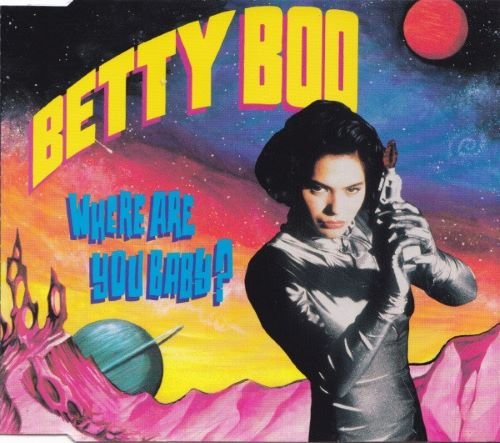
Betty Boo – Where Are You Baby?

__________

I wanted to include in Groovelines…

one of my favourite songs from my childhood. The amazing Betty Boo (Alison Clarkson) releases her new album, Boomerang, on 14th October. It arrives thirty years after her second studio album, Grrr! It's Betty Boo. I am going to come to the superb and hypnotic Betty Boo song, Where Are You Baby?, soon. It is taken from Betty Boo’s debut album of 1990, Boomania. The single peaked at number three in the U.K., earning a Silver certification from the British Phonographic Industry The song features a prominent sample of The Velvelettes song He Was Really Sayin' Somethin'. Betty Boo is back on the scene (also, go and book tickets to see her live if you can). It is a very welcomed return from an artist who I was entranced by when I was younger. If her new album title suggests someone bouncing back after being away, she needn’t be worried. There are many who have been playing her music and keeping her close. There is an infectiousness and catchiness to songs from Boomania. The excellent rapping and songwriting from Betty Boo/Clarkson not only meant she stood out among the wave of brilliant women in the 1980s and 1990s. There is anticipation around her upcoming album, as we know what she can offer and how good she is. Before digging into a song that I love a lot, I want to bring in a recent interview from The Guardian. Jude Rogers spoke with the amazing Betty Boo back in March:

Alison Clarkson, AKA Betty Boo, 52, grew up in west London with her Scottish mother, Malaysian father and brother. At 17, she ran away to New York with her rap trio, the She Rockers, and by 21 she had three Top 10 singles and a platinum debut album, Boomania. At 24, Madonna offered to sign her to her label, Maverick Records, but Clarkson quit performing instead. Later, she co-wrote Hear’Say’s Pure and Simple and worked with Girls Aloud, Sophie Ellis-Bextor and Blur’s Alex James. Now living in Wiltshire with film producer husband, Paul Toogood, she has just released her first solo single in 29 years, Get Me to the Weekend. An album follows this summer. 

The Boo is back. Why now?

It suddenly dawned on me a few years ago that I was going to be 50 and deep down I always wanted to make another Betty Boo record. Getting into middle age, you also start to feel invisible and I didn’t want that to happen. If it’s OK for Mick Jagger or Rick Astley to keep going, why not me?

So you started writing again?

Yes, in the supermarket car park in the first lockdown. My husband would do the shopping and I’d park facing a wall, playing tracks, so no one could see me singing along [laughs]. It was great to enjoy it again because I’ve had times when I didn’t even listen to music through the years. It made me too sad. Now I think I’ve made the record I should have made when I was 25.

What made you give up your pop career at the end of the 90s?

My mother got very ill, then she died, then my aunt died 10 months after my mum. My dad had died before that. To be a pop star, you have to be full-whack all the time and I just melted. I didn’t want to be that other person any more. I went into survival mode looking after my granny and family. But I didn’t feel like I’d missed out, because when I launched my solo career, I’d taken control of everything – written my music, produced it, had the freedom to look the way I wanted to look. A major label would have reined me in, told me what to do. Not me! 

Is it different being a woman in pop now?

As an older woman, I find the first thing people say is “what does she look like now?”. A few years ago, I went to the premiere of Everybody’s Talking About Jamie, as I helped the writer, Dan Gillespie Sells, on a rap section when it was in development. A photographer spotted me outside the 7/11 in Piccadilly and took a picture of me from below, up my nose, and that’s the one online the next day, with the writer saying: oh, she looks so different to how she used to. Of course I did, because that was 30 years ago! I talked to Bananarama about it – it drives us all mad.

The name Betty Boo was inspired not only by Betty Boop, but also by your grandmother, Betty Clarkson, a leftwing activist. Was politics around in your childhood?

Yes. I worked for the Fabian Society in the school and summer holidays and my granny dragged me along to all kinds of meetings. She also set up a drop-in centre for older people in White City and was always campaigning for people, such as a man wrongly accused of stabbing someone at the Notting Hill carnival; she campaigned to have him released from prison. She had amazing energy and was so well respected that she had her retirement party at the House of Lords. I remember meeting Arthur Scargill and a young Tony Blair – all the up-and-coming New Labour politicians were in awe of her. I have so much to thank her for.

IN THIS PHOTO: Betty Boo in 1990/PHOTO CREDIT: DPA Picture Alliance/Alamy

You broke through as a rapper with the Beatmasters in 1989, with your take on Martha Reeves and the Vandellas’ I Can’t Dance to That Music You’re Playing. What drew you to rap?

It wasn’t just rap: it was all of hip-hop culture, the music, the creativity. Some musicians learn the Beatles songbook – I learned Big Daddy Kane’s raps. I loved playing with language and humour, changing my voice, recording myself with my microphone plugged into my hi-fi. It was accessible, like punk. Then I studied sound engineering after I left school – I wanted to be a vet, but the careers adviser said I should be a secretary. I made all these songs in my bedroom instead.

There’s a pre-fame clip online of you rapping with members of Public Enemy in the Shepherd’s Bush McDonald’s. How did that happen?

It was November 1987 – they’d just played this big Def Jam night at the Hammersmith Odeon with the Beastie Boys, LL Cool J and Run-DMC. On our walk home, we saw them through the window of McDonald’s – we’d seen them on stage doing all these military kind of routines, with Uzis – how on earth we went up to them and weren’t scared, I don’t know. I had my hi-tops and my nan’s cardigan on as I had a cold, and they filmed us rapping. Then we got invited to New York and I didn’t tell my mum where I was going. It was really naughty. Then my brother heard a DJ on BBC Radio London talking about this girl he’d seen rapping in Harlem. “Mum! I know exactly where Alison is!”

Your retro space age look became a template for 1990s fashion. Indeed, when the Spice Girls were being put together, the original manager, Chris Herbert, put out an advert looking for “five Betty Boos”…

I worked with Chris on his new band, Girl Thing, a few years later and he told me about the advert. At first I was, “Oh, thanks for nicking all my ideas!” But it’s amazing what they achieved. The look came from my love of glam rock and Ziggy Stardust as a tiny kid watching Top of the Pops, wanting to do fancy dress every day in silver pants and big boots”.

<

I am not sure if I had a copy of Boomania on cassette when it came out. I do remember Where Are You Baby? and its video. The other huge single from that album, Doin’ the Do, reached number seven in the U.K. Where Are You Baby? opens Boomania in style! I love the fact the video has this kooky, space-age quality. I wonder whether there will be a mastered version of the video on Betty Boo’s YouTube channel, as the only one I could find is from a fan who has uploaded a pretty low-quality version. Where Are You Baby? has this wonderful chorus that lodges in your head. Betty Boo is amazing throughout, mixing rapping with more conventional Pop vocals. Such an incredible artist who put out this wonderful debut album, there was a time when she was ruling the charts. Showing herself to be one of the most distinct and naturally talented songwriters of her time, Where Are You Baby? mixes in Motown and classic girl groups of the 1960s and 1970s. Boomania is an album that does not get as much credit and talk as it should. 24 Hours and Don’t Know What to Do are great deep cuts, but singles like Doin’ the Do and Hey DJ / I Can't Dance (To That Music You're Playing) are also phenomenal. I wanted to spotlight and revisit Where Are You Baby? as Betty Boo’s third studio album is out in the autumn. 1990’s summer smash, Where Are You Baby?, is a unique and…

ADDICTIVE classic.

FEATURE: Inspired By… Part Seventy-Five: ABBA

FEATURE:


Inspired By…

Part Seventy-Five: ABBA

__________

I have featured ABBA

IN THIS PHOTO: ABBA members (from left to right) Benny Andersson, Anni-Frid Lyngstad, Agnetha Fältskog and Björn Ulvaeus/PHOTO CREDIT: Olle Lindeborg/AFP via Getty Images

quite a few times on my site through the years. But, as they released a new album, Voyage, last year and the unique stage show is gaining rave reviews, it is a good time to feature them in this Inspired By… No doubt a hugely inspiring act, I don’t feel we have heard the last of Agnetha Fältskog, Björn Ulvaeus, Benny Andersson and Anni-Frid Lyngstad in musical form. The greatest hits collection, ABBA Gold: Greatest Hits, is thirty next month. That will be cause for celebration, as it is one of the absolute best greatest hits collection ever. I am going to finish this feature with a playlist of songs from artists influenced by the mighty ABBA. Before that, AllMusic provide a detailed biography about the legends:

The most commercially successful pop group of the 1970s, ABBA put Sweden on the map as a music mecca and influenced the sound of pop for decades to come. With their flamboyant fashion sense and two-couple membership, the quartet also became pop culture icons. However, it was their distinctive harmonies and intricate production (combining folk, pop, rock, and even classical) introduced on songs from their 1973 debut album, Ring Ring, that won them countless fans. It's a sound that garnered the first Swedish win at Eurovision in 1974 with "Waterloo," the title track from their second album and a song that topped the charts across Europe while reaching the U.S. Top Ten. ABBA went to number one in the States with 1976's "Dancing Queen," another worldwide smash. The hits kept coming through the early '80s, including 1978's "Take a Chance on Me" and the dramatic 1980 ballad "The Winner Takes It All." Though ABBA disbanded in 1982, they remained in the pop culture consciousness for decades to follow thanks to popular compilations, licensing, and the success of Mamma Mia!, the Tony-nominated 1999 jukebox musical that was adapted for the big screen in 2008. As both a stage and film production, Mamma Mia! was a massive hit -- the movie spawned a sequel, Mamma Mia! Here We Go Again -- attracting new audiences who were born long after the group's split. ABBA unexpectedly returned to activity in the late 2000s, a comeback that culminated with the 2021 release of Voyage, their first album in 40 years.

The origins of ABBA date back to 1966, when keyboardist and vocalist Benny Andersson, a onetime member of the popular beat outfit the Hep Stars, first teamed with guitarist and vocalist Bjorn Ulvaeus, the leader of the folk-rock unit the Hootenanny Singers. The two performers began composing songs together and handling session and production work for Polar Music/Union Songs, a publishing company owned by Stig Anderson, himself a prolific songwriter throughout the '50s and '60s. At the same time, both Andersson and Ulvaeus worked on projects with their respective girlfriends: Ulvaeus had become involved with vocalist Agnetha Faltskog, a performer with a recent number one Swedish hit, "I Was So in Love," under her belt, while Andersson began seeing Anni-Frid Lyngstad, a one-time jazz singer who rose to fame by winning a national talent contest.

In 1971, Faltskog ventured into theatrical work, accepting the role of Mary Magdalene in a Swedish production of Andrew Lloyd Webber's Jesus Christ Superstar; her cover of the musical's "Don't Know How to Love Him" became a significant hit. The following year, the duo of Andersson and Ulvaeus scored a massive international hit with "People Need Love," which featured Faltskog and Lyngstad on backing vocals. The record's success earned them an invitation to enter the Swedish leg of the 1973 Eurovision song contest, where, under the unwieldy name of Bjorn, Benny, Agnetha & Frida, they submitted "Ring Ring," which proved extremely popular with audiences but placed only third in the judges' ballots.

The next year, rechristened ABBA (a suggestion from Stig Anderson and an acronym of the members' first names), the quartet submitted the single "Waterloo," and became the first Swedish act to win the Eurovision competition. The record proved to be the first of many international hits, although the group hit a slump after their initial success as subsequent singles failed to chart. In 1975, however, ABBA issued "S.O.S.," a smash not only in America and Britain but also in non-English speaking countries such as Spain, Germany and the Benelux nations, where the group's success was fairly unprecedented. A string of hits followed, including "Mamma Mia," "Fernando," and "Dancing Queen" (ABBA's sole U.S. chart-topper), further honing their lush, buoyant sound; by the spring of 1976, they were already in position to issue their first Greatest Hits collection.

ABBA's popularity continued in 1977, when both "Knowing Me, Knowing You" and "The Name of the Game" dominated airwaves. The group also starred in the feature film ABBA: The Movie, which was released in 1978. That year Andersson and Lyngstad married, as had Ulvaeus and Faltskog in 1971, although the latter couple separated a few months later; in fact, romantic suffering was the subject of many songs on the quartet's next LP, 1979's Voulez-Vous. Shortly after the release of 1980s Super Trouper, Andersson and Lyngstad divorced as well, further straining the group dynamic. The Visitors, issued the following year, was the final LP of new ABBA material of that era, and the foursome officially disbanded after the December 1982 release of their single "Under Attack."

Although all of the group's members soon embarked on new projects -- both Lyngstad and Faltskog issued solo LPs, while Andersson and Ulvaeus collaborated with Tim Rice on the musical Chess -- none proved as successful as the group's earlier work, largely because throughout much of the world, especially Europe and Australia, the ABBA phenomenon never went away. Repackaged hits compilations and live collections continued hitting the charts long after the group's demise, and new artists regularly pointed to the quartet's inspiration: while the British dance duo Erasure released a covers collection, ABBA-esque, an Australian group called Bjorn Again found success as ABBA impersonators. In 1993, "Dancing Queen" became a staple of U2's "Zoo TV" tour -- Andersson and Ulvaeus even joined the Irish superstars on-stage in Stockholm -- while the 1995 feature Muriel's Wedding, which won acclaim for its depiction of a lonely Australian girl who seeks refuge in ABBA's music, helped bring the group's work to the attention of a new generation of moviegoers and music fans.

In 1997, theater producer Judy Craymer commissioned playwright/screenwriter Catherine Johnson to write a musical-theater showcase for ABBA's songs. Members of the band were involved in the development of Mamma Mia!, which opened on the West End in April 1999. A year later, it was nominated for an Olivier Award for Best New Musical. The Broadway premiere followed in October 2001, leading to five Tony nominations, including best musical, best book for Johnson, and best orchestrations for Andersson, Ulvaeus, and Martin Koch. A film version starring, among others, Amanda Seyfried and Meryl Streep hit movie theaters in mid-2008, and its accompanying soundtrack reached number one in over a dozen countries, including the U.S., Canada, and Australia. In 2010, ABBA were inducted into the Rock and Roll Hall of Fame by Barry and Robin Gibb.

After a nearly 14-year run, the original Broadway production of Mamma Mia! closed in September 2015. The following January, all four members of ABBA attended Mamma Mia! The Party in Stockholm. That June marked the 50th anniversary of Andersson and Ulvaeus' first meeting. Returning with most of the same cast from the 2008 film, a sequel, Mamma Mia! Here We Go Again, saw a worldwide release in 2018. Its soundtrack went to number three on the Billboard 200, topping the album charts in places as far-spread as the U.K., Australia, and Greece. Around that time, a reunited ABBA returned to the studio to begin work on their first material in over 30 years. In late August 2021, the band launched a website and social media accounts for Voyage, a new studio album and "avatar concert" residency in London involving motion-capture digital avatars of the quartet alongside a ten-piece band. The lead singles "I Still Have Faith in You" and "Don't Shut Me Down" were released simultaneously in September; the latter song took the band to the top of Sweden's singles chart for the first time since 1978. Stateside, "Don't Shut Me Down" landed on Billboard's Digital Song Sales chart (number 32) alongside renewed interest in "Dancing Queen" (number 19), while "I Still Have Faith in You" was nominated for a Grammy Award for Record of the Year. The Voyage LP followed on Capitol in November 2021”.

With a lot of artists influenced by ABBA and struck by their sound and brilliance, I wanted to show that with a playlist below. I think that ABBA will release another album, but it may not be for a while yet. Still one of the greatest groups ever, they will continue to inspire people for generations more. Their music is among the most memorable, uplifting, important and moving ever. Their wonderful music is

A gift to the world.

FEATURE: Kate Bush’s The Dreaming at Forty: The Gorgeous Night of the Swallow: A Song That Should Have Been a U.K. Single

FEATURE:


Kate Bush’s The Dreaming at Forty

The Gorgeous Night of the Swallow: A Song That Should Have Been a U.K. Single

__________

AS part of a run of features…

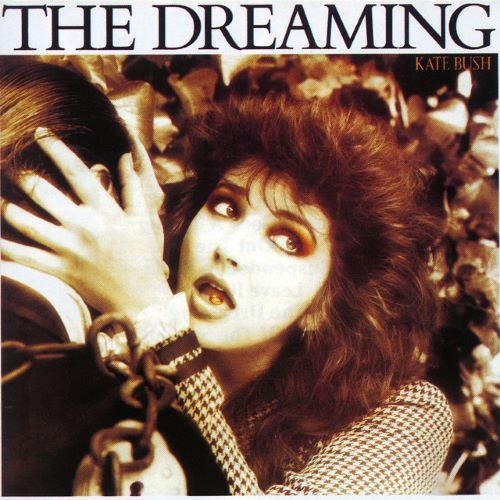
marking the approaching fortieth anniversary of The Dreaming, I am looking at various songs from Kate Bush’s masterpiece fourth studio album. The Dreaming was released on 13th September, 1982. I think a lot of critics had an idea of what the album would sound like – maybe similar to 1980’s Never for Ever (her third studio album) -, whereas others were approaching Kate Bush new and felt The Dreaming was too dense, odd, and inaccessible. There has been retrospection, but there was some confusion in 1982. Bush was doing something fresh and producing an album that she wanted to make. Rather than follow another producer or do what the record label necessarily wanted, she was determined to make something more authentic and in her own mould. Quite artistic, deep, and serious in places, I get the feeling The Dreaming was a very deliberate statement from Bush to establish herself as a ‘serious’ artist. Maybe still being mocked for being the girl who sang Wuthering Heights or lacking any political seriousness – though Army Dreamers and Breathing from Never for Ever did address that -, The Dreaming was an emphatic statement that she was serious and capable and making an album that was both deep yet it had playful moments. Even though she was doing what a lot of people wanted, they were still not happy!

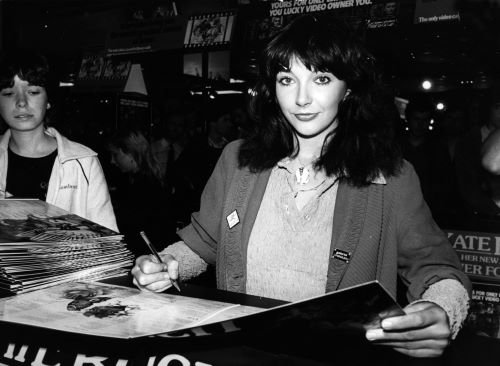
 IN THIS PHOTO: Kate Bush signing copies of The Dreaming at the Virgin Megastore, Oxford Street, London on 14th September, 1982 in London/PHOTO CREDIT: Pete Still/Redferns

I have written about it before, but the singles released from The Dreaming were a little strange. Bush released the song I am about to discuss in Ireland only. The brilliant Suspended In Gaffa was released in mainland Europe, whereas the weaker (but excellent) There Goes a Tenner was released in the U.K. The Dreaming’s title track was released as a single, as was Sat in Your Lap. Half of the album’s tracks were released as singles but, of the five tracks remaining, at least three of them would have made stronger and more successful releases. I feel All the Love, Houdini and Get Out of My House would have charted well and helped boost the album. Not that the singles were a failure or a bad representation of the amazing album. I think The Dreaming is more of a piece that needs to be heard as a whole. It is not really designed with singles in mind. Before coming to one of my favourite songs from The Dreaming, I want to bring in some more general thoughts from Kate Bush concerning The Dreaming:

After the last album, 'Never For Ever', I started writing some new songs. They were very different from anything I'd ever written before - they were much more rhythmic, and in a way, a completely new side to my music. I was using different instruments, and everything was changing; and I felt that really the best thing to do would be to make this album a real departure - make it completely different. And the only way to achieve this was to sever all the links I had had with the older stuff. The main link was engineer Jon Kelly. Everytime I was in the studio Jon was there helping me, so I felt that in order to make the stuff different enough I would have to stop working with Jon. He really wanted to keep working with me, but we discussed it and realised that it was for the best. ('The Dreaming'. Poppix (UK), Summer 1982)

Yes, it's very important for me to change. In fact, as soon as the songs began to be written, I knew that the album was going to be quite different. I'd hate it, especially now, if my albums became similar, because so much happens to me between each album - my views change quite drastically. What's nice about this album is that it's what I've always wanted to do. For instance, the Australian thing: well, I wanted to do that on the last album, but there was no time. There are quite a few ideas and things that I've had whizzing around in my head that just haven't been put down. I've always wanted to use more traditional influences and instruments, especially the Irish ones. I suppose subconsciously I've wanted to do all this for quite some time, but I've never really had the time until now. ('The Dreaming'. Poppix (UK), Summer 1982)”.

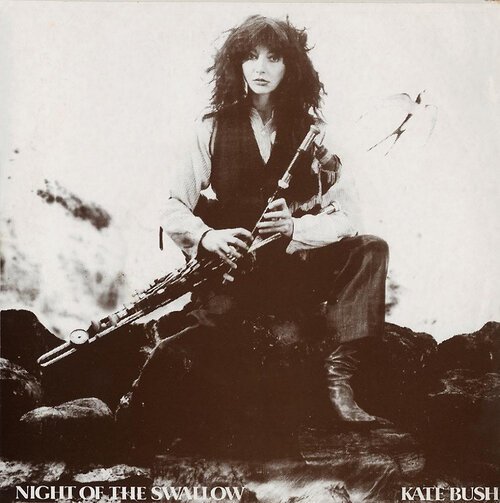
The final single released from The Dreaming, Night of the Swallow, was released two years and five months after the first single from the album, Sat in Your Lap! It is amazing to think of the huge amount of time between that first and last single! Maybe as a last fling of the dice or a way of keeping The Dreaming in people’s thoughts, this excellent song was released in Ireland only. In November 1983, Bush was already working on her new album, Hounds of Love. In fact, she was recording demos and starting to give some iconic songs shape when Night of the Swallow came out. I guess it was invariable the final single would not sell well, seeing as The Dreaming came out a year before. Initially, a thousand copies were made with a picture sleeve; the vinyl 7" was pressed. More vinyl was produced than sleeves. And, because the single did not sell well, by the time the next shipment of 7" singles was in transit, the single had already flopped. This was a period when Bush was not having much luck with singles. That would be corrected by the time Hounds of Love came out. This was an album where I feel Bush wanted to make something more commercial, yet it was ambitious and something that she wanted to do. If The Dreaming is a more claustrophobic and darker listen, Hounds of Love embraces the nature and openness of her surroundings at the time. It is warmer in general but, even when the songs are darker, you get a very different production sound. I love The Dreaming, and I feel Night of the Swallow was too good to be released as an afterthought or attempt to appeal to Irish audiences. I love the Irish musicians on Night of the Swallow. With Bill Whelan (bagpipes, string arrangement), Liam O'Flynn (uilleann pipes, penny whistle), Seán Keane (fiddle) and Dónal Lunny (bouzouki) adding magic and such passion to the song, I hope a lot of people listen to Night of the Swallow ahead of the fortieth anniversary of The Dreaming.

 PHOTO CREDIT: Pierre Terrasson

So, what is Night of the Swallow about? Thanks to the Kate Bush Encyclopedia for providing interviews where Bush spoke about the song. The below is a very detailed and interesting account. It does make me wonder how Night of the Swallow would have fared had it came out in 1982 and been released worldwide. I think it would have earned quite a high chart position:

Unfortunately a lot of men do begin to feel very trapped in their relationships and I think, in some situations, it is because the female is so scared, perhaps of her insecurity, that she needs to hang onto him completely. In this song she wants to control him and because he wants to do something that she doesn't want him to she feels that he is going away. It's almost on a parallel with the mother and son relationship where there is the same female feeling of not wanting the young child to move away from the nest. Of course, from the guys point of view, because she doesn't want him to go, the urge to go is even stronger. For him, it's not so much a job as a challenge; a chance to do something risky and exciting. But although that woman's very much a stereotype I think she still exists today. (Paul Simper, 'Dreamtime Is Over'. Melody Maker (UK), 16 October 1982)

IN THIS PHOTO: Kate Bush at Abbey Road Studios on 15th October, 1982/PHOTO CREDIT: Steve Rapport/GI 

Ever since I heard my first Irish pipe music it has been under my skin, and every time I hear the pipes, it's like someone tossing a stone in my emotional well, sending ripples down my spine. I've wanted to work with Irish music for years, but my writing has never really given me the opportunity of doing so until now. As soon as the song was written, I felt that a ceilidh band would be perfect for the choruses. The verses are about a lady who's trying to keep her man from accepting what seems to be an illegal job. He is a pilot and has been hired to fly some people into another country. No questions are to be asked, and she gets a bad feeling from the situation. But for him, the challenge is almost more exciting than the job itself, and he wants to fly away. As the fiddles, pipes and whistles start up in the choruses, he is explaining how it will be all right. He'll hide the plane high up in the clouds on a night with no moon, and he'll swoop over the water like a swallow.

Bill Whelan is the keyboard player with Planxty, and ever since Jay played me an album of theirs I have been a fan. I rang Bill and he tuned into the idea of the arrangement straight away. We sent him a cassette, and a few days later he phoned the studio and said, "Would you like to hear the arrangement I've written?"

I said I'd love to, but how?

"Well, Liam is with me now, and we could play it over the phone."

PHOTO CREDIT: John Carder Bush

I thought how wonderful he was, and I heard him put down the phone and walk away. The cassette player started up. As the chorus began, so did this beautiful music - through the wonder of telephones it was coming live from Ireland, and it was very moving. We arranged that I would travel to Ireland with Jay and the multi-track tape, and that we would record in Windmill Lane Studios, Dublin. As the choruses began to grow, the evening drew on and the glasses of Guiness, slowly dropping in level, became like sand glasses to tell the passing of time. We missed our plane and worked through the night. By eight o'clock the next morning we were driving to the airport to return to London. I had a very precious tape tucked under my arm, and just as we were stepping onto the plane, I looked up into the sky and there were three swallows diving and chasing the flies. (Kate Bush Club newsletter, October 1982)”.

It is clear that Kate Bush loved Night of the Swallow. It sounds like it was a great and happy recording experience. I think it was just timing that meant the song didn’t really do anything. The Irish sounds would be heard on future songs like Jig of Life (Hounds of Love) and The Sensual World (from the 1989 album of the same name). It is an area that Bush was comfortable in – as her mother was Irish and she knew the music and culture well -, so I did want to shine a spotlight on a terrific track that deserved more. The seventh track on the album, it then leads to that remarkable and very different run of three: All the Love, Houdini, and Get Out of My House. There is no denying the fact that Night of the Swallow is…

SUCH a beautiful song.

FEATURE: Take Me I’m Yours: The Genius Glenn Tilbrook at Sixty-Five: The Very Best of Squeeze

FEATURE:


Take Me I’m Yours

The Genius Glenn Tilbrook at Sixty-Five: The Very Best of Squeeze

__________

ON 31st August…

 IN THIS PHOTO: Squeeze reunited in 2007 and released The Knowledge in 2017/PHOTO CREDIT: Danny Clifford

one of my favourite songwriters ever turns sixty-five. Glenn Tilbrook is one-half of the legendary Squeeze. Alongside lyricist Chris Difford, Tilbrook has had a hand in composing some of the greatest songs of all-time. I don’t think this partnership gets the same acclaim and respect as John Lennon and Paul McCartney. Although The Beatles’ lead songwriters are more successful, there is no denying how influential and accomplished the music of Tilbrook and Difford is. I am going to mark the upcoming sixty-fifth birthday of Glenn Tilbrook with a playlist featuring some of the very best Squeeze songs. Before that, AllMusic have some biography about the Squeeze legend:

Singer/composer Glenn Tilbrook teamed with lyricist/guitarist Chris Difford to lead Squeeze, one of the most acclaimed and longest-lived bands to emerge from the new wave era. Often regarded as the Lennon and McCartney of their generation, the duo's smart, sophisticated brand of pop never achieved commercial success commensurate with their critical favor, although singles like "Pulling Mussels (From the Shell)," "Tempted," and "Black Coffee in Bed" remain timeless cult classics. Born August 31, 1957, in London, Tilbrook studied guitar and piano from age six onward and at 13, he made his public debut at a local talent show. He began writing and performing with Difford in 1973 and the following year, they formed Squeeze; the group's self-titled, John Cale-produced debut LP followed in 1978, yielding the minor hit "Take Me, I'm Yours." 1979's Cool for Cats was Squeeze's U.K. chart breakthrough, generating a pair of number two singles, "Up the Junction" and the title track. The follow-up, Argybargy, yielded the lesser hits "Another Nail in My Heart" and "Pulling Mussels (From the Shell)," but solidified the group's critical standing on the strength of Difford's wry, literate wordplay and Tilbrook's crisp, clever melodies.

Squeeze's masterpiece, East Side Story, followed in 1981, scoring the band's biggest U.S. hit to date with the memorable "Tempted"; though 1982's Sweets from a Stranger cracked the U.S. Top 40, buoyed by the single "Black Coffee in Bed," creative exhaustion forced the band's breakup soon after. A 1983 hits collection, Singles 45's and Under, ultimately went platinum. Tilbrook immediately resumed his collaboration with Difford, however, composing songs for fellow Squeeze alum Jools Holland, as well as Paul Young, Billy Bremner, and Helen Shapiro. The duo also mounted Labelled with Love, a short-lived 1983 stage musical adapted from their songs. A self-titled 1984 album credited simply to Difford and Tilbrook also appeared, but the following year they reunited Squeeze to release Cosi Fan Tutti Frutti; 1987's Babylon and On was their biggest U.S. hit, notching a pair of Top 40 singles in "Hourglass" and "853-5937," but subsequent efforts appealed almost exclusively to their devoted cult following.

The '90s found Tilbrook guesting on albums by artists including Aimee Mann and the Soft Boys' Kimberley Rew. He officially kicked off a solo career with the release of the single Parallel World on his own Quixotic Records in late 2000. The following year brought the release of another single, This Is Where You Ain't, and his first full-length album, The Incomplete Glenn Tilbrook, which included songs co-written with Aimee Mann ("Observatory") and Ron Sexsmith ("You See Me"). The documentary/concert DVD Glenn Tilbrook: One for the Road (issued in 2006) followed the man on his 2001 North American tour. 2007 proved to be a busy year indeed, with a short Squeeze reunion/tour (their third) as well as the release of the first two volumes (of a proposed five-volume set) of remastered demo recordings, The Past Has Been Bottled and In the Sky Above. In 2008, Tilbrook began working with a new group of musicians and released the four-track teaser Binga Bong!, which was filed under Glenn Tilbrook & the Fluffers. The first full-length from the new group, Pandemonium Ensues, was issued in March of 2009 and featured cameos by Johnny Depp and Vanessa Paradis (the couple did not appear on the same song, however).

Tilbrook reunited with Difford in 2010, recording new versions of Squeeze's greatest hits (cheekily calling the album Spot the Difference) and mounting a reunion tour. In 2011, Tilbrook collaborated with Nine Below Zero on an album called The Co-Operative. Over the next couple years, he and Difford worked on new Squeeze material while Tilbrook continued to pursue a solo career, writing and recording Happy Ending, which appeared in April 2014”.

To mark the upcoming sixty-fifth birthday of one of the true great composers and songwriters, I have compiled a playlist of some prime Squeeze cuts. A magnificent band with that phenomenal chemistry between Tilbrook and Difford, I hope that they come together at some point and release another album. The most-recent Squeeze album, The Knowledge, was released in 2017. I think the world can do with the musical brilliance and lyrical wit and wisdom of Squeeze. The band are embarking on their Food for Thought tour this year. One of the main reasons for their success is the limitless talent of…

THE wonderful Glenn Tilbrook.

FEATURE: Kate Bush: Mistress of Suspense: Mother Stands for Comfort and Hounds of Love’s Darker Side

FEATURE:


Kate Bush: Mistress of Suspense

IN THIS PHOTO: Kate Bush pictured in 1985, around the release of Hounds of Love/PHOTO CREDIT: Dave Hogan via Getty Images

Mother Stands for Comfort and Hounds of Love’s Darker Side

__________

I was going to do five features…

based around MOJO’s recent investigation and dive back into Kate Bush’s classic 1985 album, Hounds of Love. I want to combine two threads I was going to separate. One concerns the terror and darker elements of Hounds of Love. I will discuss it more soon, but I wonder how many people think of the album and the fact that it is quite frightening and psychologically disturbing in places. Fear is present throughout the album. From the gripping and dramatic suite, The Ninth Wave, where a heroine is adrift at sea, unsure whether she will be rescued, through to the terror of love’s hounds chasing Bush in the title track, and the anxiety and suspense of Cloudbusting (As the Kate Bush Encyclopedia write: “The song is about the very close relationship between psychologist and philosopher Wilhelm Reich and his young son, Peter, told from the point of view of the son. It describes the boy's memories of his life with Reich on their family farm, called Orgonon where the two spent time "cloudbusting", a rain-making process which involved pointing at the sky a machine designed and built by Reich, called a cloudbuster. The lyric further describes Wilhelm Reich's abrupt arrest and imprisonment, the pain of loss the young Peter felt, and his helplessness at being unable to protect his father”). There are various shades of black. One does get redemption, happiness, and relief. The Big Sky is joyful and childlike in its wonder, whereas Running Up That Hill (A Deal with God) does provide this big ask as to what it would be like if God put men and women in each other’s shoes so that they could better understand one another. Sandwiched between two fuller and lighter/more positive songs on Hounds of Love, The Big Sky and Cloudbusting, is the skeletal and eerie Mother Stands for Comfort. Before continuing, here is Bush discussing the story behind the song:

Well, the personality that sings this track is very unfeeling in a way. And the cold qualities of synths and machines were appropriate here. There are many different kinds of love and the track's really talking about the love of a mother, and in this case she's the mother of a murderer, in that she's basically prepared to protect her son against anything. 'Cause in a way it's also suggesting that the son is using the mother, as much as the mother is protecting him. It's a bit of a strange matter, isn't it really? [laughs] (Richard Skinner, 'Classic Albums Interview: Hounds Of Love'. BBC Radio 1 (UK), 26 January 1992)”.

The only song from the first half of Hounds of Love not released as a single, it does stand out somewhat! I never hear this song played on the radio and, when it comes to the album as a whole, not many people isolate the track and discuss it. Look at articles where the songs from Hounds of Love are ranked, and Mother Stands for Comfort comes near the bottom. I think it remarkable, and it neatly ties into a bigger arc and theme that runs through Hounds of Love: fear, loss, and terror. If The Big Sky and Cloudbusting both relate to children and the child-like in some way (The Big Sky is almost a child-like Bush staring at the shapes clouds make; Cloudbusting is about the relationship between Peter and Wilhelm Reich as this rain-making machine is created at their farm), Mother Stands for Comfort is more about the mum protecting a child. It would be interesting writing about these three songs and their relationship to children and parents. Victoria Segal writes about Mother Stands for Comfort in the new MOJO. I want to highlight a few of her observations. She started by revealing how Bush has discussed and covered motherhood and maternal bonds since the start of her career. From The Kick Inside’s Room for the Life to Never for Ever’s Breathing, she has explored this topic. Mother Stands for Comfort is different because it seems to relate more to an older child. Maybe someone who is a teenager or young man. His age is never revealed, but this mother has to decide whether to protect her son or not. He has done something unspeakable. Segal asks: “How far do apron strings stretch before somebody chokes?”. In the context of the song, that question could be literal. The evil, murderous son could throttle his mother with her own apron strings. Some weird irony or poetry in there!

Bush has said how it is a strange matter. Maybe one of her darkest and least conventional songs, you can see why it was not chosen as a single! It raises this interesting conflict. The man/boy is clearly disturbed and has murdered. If you were a strange or not a blood relation, you would turn them in and disown them. This mother, perhaps wrestling between what is right and protecting her son, stands firm and says she will not betray him. Segal notes how the composition and vocals let you know that this is a song about violence and darkness of the soul. She also states how, on The Dreaming’s Get Out of My House, the sense of the possessed has shifted from a haunted house to the once innocent and sweet boy who has maybe inherited that house’s ghosts and schizophrenic voices. This child, “hollowed out, colonised” as Segal notes, has no redemption or remorse. His mother may fear for her life or, if she tells police, then he will be left with nobody. Segal also makes another interesting point. Hounds of Love’s title track sees something possessed coming from the trees to the heroine. Now, the threat is inside the house. Did Bush create these links and narrative joins between five songs that seem disconnected?! The son realises that he has an alibi: “She knows that I've been doing something wrong/But she won't say anything/She thinks that I was with my friends yesterday/But she won't mind me lying/Because/Mother stands for comfort/Mother will hide the murderer”. The uncaring and cold narrative is the son wondering if he is going to do something horrid to his mother. The roles are changing: “To her the hunted, not the hunter”. It is a fascinating, suspenseful, and compelling song! You can only imagine what a music video for this would have looked like!

I will quickly conclude by linking another piece that was in MOJO that one can link to Mother Stands for Comfort. Dorian Lynskey writes how there is horror references throughout Hounds of Love. The voice that we hear at the start of the title track that declares “It’s in the trees! It’s coming!” is from the film, Night of the Demon. The Kate Bush Encyclopedia explains more: “Night of the Demon is a 1957 British horror film directed by Jacques Tourneur, starring Dana Andrews, Peggy Cummins and Niall MacGinnis. It is adapted from the M. R. James story 'Casting the Runes' (1911). The plot revolves around an American psychologist who tries to combat an evil cult leader who can sentence his enemies to death through the use of a runic scroll, given to his victims without their knowledge”. Hounds of Love might be about fear itself being the enemy. Although something is chasing Bush/the heroine through the trees, maybe she is running from something that is trying to enrich or comfort her. Hounds of love are following her - though she may be running from commitment and love itself. In a separate feature, I interpreted Hounds of Love as being terrifying and about someone running from ghouls and spectral visions. In fact, you could see it as someone fleeing her own mind and fears. Maybe all the horror is in her head! Mother Stands for Comfort is similar, in the fact we get a glimpse into someone’s mind. If Hounds of Love is a heroine having anxiety and doubts swirling her mind, the man/son in Mother Stands for Comfort has other voices and psychosis in his. It is fascinating comparing and contrasting these songs! Very different in terms of their sound, both are linked by suspense and horror. Lynskey wrote how there is suspense and the ghostly throughout Bush’s cannon. From the spirit of Cathy from Wuthering Heights (from the song of the same name) trying to get through Heathcliff’s window, to the spirit that haunts the mansion in Get Out of My House, we can see ghosts, demons, and spirits. 50 Words for Snow (2011) also possesses them, as does Hammer Horror (from 1978’s Lionheart) – though this is more about an actor who gets thrust into the lead role of The Hunchback of Notre Dame after the original actor dies in an accident on the film set. Bush has always been fascinated with the supernatural. Whether she took guidance from The Innocence, The Shining, Wuthering Heights, or Night of the Demon, almost every one of her albums has featured some form of the supernatural or fear-drenched. Running Up That Hill (A Deal with God) is about understanding and changing places so men and women can better relate. The Big Sky is about simple pleasures enjoyed as a child, such as watching clouds, no longer as accessible to Bush as an adult. The other three songs deal with darker themes and fear/paranoia/terror.

Dorian Lynskey also expands and highlights how The Ninth Wave’s story of a woman trying to find rescue after being lost at sea. We are not sure how she got there (I assume that she fell overboard), but her hopes of survival fade as the suite goes on. Luckily, she is rescued at the end, though we do not know where she ends up. Many of the songs feature terror and the supernatural. Watching You Without Me is about the heroine almost appearing as a ghost watching her loved ones watching for her to return. Under Ice is teeming with nightmares and fears of the heroine being trapped and drowning under the ice. Waking the Witch has echoes of the 1968 Vincent Price freakout, The Witchfinder General. There are Gothic choirs and vocals on Hello Earth. In the same way there are a couple of lighter songs on the first half of Hounds of Love, Jig of Life and The Morning Fog do offer something more redemptive and calm. It is interesting how, arguably, six or seven of the twelve tracks contain fear, ghosts, terror, and horror at their heart. Perhaps the most stark and disturbing representation is Mother Stands for Comfort. Given the ethical conflict and the undying loyalty from the mother protecting her insidious and killer son, it is a song that both warms the heart and…

CHILLS the blood.

FEATURE: Vinyl Corner: Thin Lizzy - Jailbreak

FEATURE:


Vinyl Corner

Thin Lizzy - Jailbreak

__________

MANY people will know…

the classic song, The Boys Are Back in Town, but they may not be away of the album it comes from. The mighty Jailbreak is the sixth studio album from Thin Lizzy. Released on 26th March, 1976, it was the biggest U.S. success for the Irish band. The album that broke them there. It is small wonder when you hear songs like The Boys Are Back in Town and Jailbreak! Classics from a band finding new spark and commercial endeavour, their lead, Phil Lynott, was in inspired form. I would recommend people seek out a copy of Jailbreak on vinyl. It is one of those albums where you might recognise some of the songs, but you may not have heard them all. Even if you are not too familiar with Thin Lizzy, go and check out the amazing Jailbreak. It is a true classic. I will come to a couple of positive reviews for an album that not only marked a breakthrough for the band; it also stands as one of the best albums of the ‘70s. Ultimate Classic Rock published a feature in 2016 that told the story of the superb Jailbreak:

It was make or break time for Thin Lizzy when they entered London's Ramport Studios in December 1975 to make their next album. Five previous records didn't really sell, and none of them managed to even crack Billboard's Top 200 albums chart.

Understandably, the Irish band's label was getting antsy for some kind of hit.

Up until this point, they hadn't made much of a dent anywhere. Only the previous album, Fighting, slipped onto the U.K. charts, and was somewhat of a reinvention for Thin Lizzy, who'd lost a couple of guitarists and their record company since their self-titled 1971 debut. But no one was expecting something like Jailbreak from the band. Not even the members of Thin Lizzy.

The album marked a turning point. The quartet – led by singer, songwriter and bassist Phil Lynott – focused its approach, and, with producer John Alcock guiding them, sharpened both their playing and the way the songs were structured. Sessions were completed in early 1976, and by the middle of March, Jailbreak was ready for release.

And from the very first song, the title track, Thin Lizzy sound like a new and revitalized band. The stuttering guitars dance and duel in the background as Lynott struts in as a confident storyteller for the first time. His singing is more focused too, deliberate in its phrasing and casually forceful all at the same time.

Critics and fans at the time noted the influence of Bruce Springsteen's Born to Run from the previous year as an influence on the group's new direction on Jailbreak. And it's not hard to hear the similarities between the two albums, especially the sweeping narratives in cuts like the fatal-lovers tale "Romeo and the Lonely Girl" and "Cowboy Song," which comes with its own lonesome antihero.

But it's "The Boys Are Back in Town" that truly sealed Jailbreak's legacy as Thin Lizzy's best album. Like the rest of the LP, the twin-guitar harmony leads power the song, which became the band's first and biggest hit in the States, just missing the Top 10. But there's so much more to it, including one of Lynott's most soulful vocals, his greatest hook and guitarists Scott Gorham and Brian Robertson's most complementary work together.

Jailbreak finally broke Thin Lizzy. The album reached No. 18 in the U.S., their all-time biggest seller. Seven months later, they followed it up with Johnny the Fox, but the band slowly began falling part by then. Lynott came down with hepatitis during the tour in support of Jailbreak and had to cancel part of the tour”.

I am going to continue with a review from Pitchfork. Jailbreak is an album that has gained praise and celebration from both sides of the Atlantic. Although Thin Lizzy released other brilliant albums, I think they were at their peak here. It still sounds utterly irresistible today:

Primed by the experience of Fighting and ready to record again, Lynott honed in on the core of what he was experiencing on stage, where he found himself in command of huge crowds of teenage boys who were ready to rumble at his command. He had always composed songs about dashing loners scheming on the outskirts of society, but he was now making a conscious effort to dress his characters in black leather and chains. “When you reach the age of 14 or 18, you suddenly find strength that you’ve never had before,” he explained to an interviewer. The lifelong devotee of Van Morrison and Jimi Hendrix was now in search of something to do with the power he received on stage, something greasier than his idols, something less transcendent and more connected to the crusty highway life Steppenwolf touted in “Born to Be Wild.”

Despite his efforts and the atomic thrust of Gorham and Robertson, Lynott never quite gets there on Jailbreak, to the album’s tremendous benefit. The band is simply too happy, too taken by how much they enjoy what they’re doing—both the music they were making and the way it allowed them to see themselves—for the power and aggression of these songs to come across as truly dangerous or liberating. When the band added Gorham and Robertson and changed their direction, Thomson writes, “[there] was a tenderness, a starry-eyed innocence and adventurism that did not wholly survive.” This is true, but what did survive of that original sweetness makes Jailbreak a hard rock album like no other. In effect, it turned the band into something like professional wrestlers working the circuit—the muscles they flex are real, the fights themselves aren’t, and they can still feel the humming in their bodies for days afterward.

They knew how to use this to their artistic advantage. On its surface, the title track serves as a warning shot, the cry before the battle: “Tonight there’s gonna be trouble,” Lynott promises. It’s tough-guy shit, but it’s impossible to believe. All four of them are strutting, making a show of how easily they can control their power. This swagger—the knowingness of it, how plainly they telegraph their pleasure—is absurd; escaping prison has never sounded less risky. The original Thin Lizzy played with David Bowie and Slade, and Lynott’s experience observing expert showmen up close, as well as the band’s own connection with their audience, let them embrace the absurdity of living one’s life as a rock star. It’s a trait they shared with ZZ Top, and it’s what makes Lynott as irresistible on “Jailbreak” as Billy Gibbons is on “La Grange.” He’s clearly having a ball, savoring the posture of the chorus as he leans deep into the words “Don’t you be around,” practically cooing for the listener in a way that is anything but threatening. He obviously wants you to be around”.

I will finish off with a review from AllMusic. Even though 1975’s Fighting gained strong reviews, it was not a chart success. Jailbreak definitely rectified things! With brilliant dual-leads guitars and so much energy and fun throughout, Jailbreak is an album that will be played and loved for decades more. It is superb. Even if the vinyl copy does cost a little bit, this is an album you can pass through the generations:

Thin Lizzy found their trademark twin-guitar sound on 1975's Fighting, but it was on its 1976 successor, Jailbreak, where the band truly took flight. Unlike the leap between Night Life and Fighting, there is not a great distance between Jailbreak and its predecessor. If anything, the album was more of a culmination of everything that came before, as Phil Lynott hit a peak as a songwriter just as guitarists Scott Gorham and Brian Robertson pioneered an intertwined, dual-lead guitar interplay that was one of the most distinctive sounds of '70s rock, and one of the most influential. Lynott no longer let Gorham and Robertson contribute individual songs -- they co-wrote, but had no individual credits -- which helps tighten up the album, giving it a cohesive personality, namely Lynott's rough rebel with a heart of a poet. Lynott loves turning the commonplace into legend -- or bringing myth into the modern world, as he does on "Cowboy Song" or, to a lesser extent, "Romeo and the Lonely Girl" -- and this myth-making is married to an exceptional eye for details; when the boys are back in town, they don't just come back to a local bar, they're down at Dino's, picking up girls and driving the old men crazy. This gives his lovingly florid songs, crammed with specifics and overflowing with life, a universality that's hammered home by the vicious, primal, and precise attack of the band. Thin Lizzy is tough as rhino skin and as brutal as bandits, but it's leavened by Lynott's light touch as a singer, which is almost seductive in its croon. This gives Jailbreak a dimension of richness that sustains, but there's such kinetic energy to the band that it still sounds immediate no matter how many times it's played. Either one would make it a classic, but both qualities in one record makes it a truly exceptional album”.

Go and get a copy of the sublime Jailbreak on vinyl. I heard songs like The Boys Are Back in Town as a child, and I was transfixed by it. Thin Lizzy are a great band that do not get talked about as much as they should. Even though Phil Lynott died in 1986, there have been reincarnations and reformations since the band split. As I said, I feel Jailbreak is their glorious peak. Go and get the album and you will…

FIND out for yourself.

FEATURE: The Greatest Line-Up in Their History? The Iconic 1992 Reading Festival at Thirty

FEATURE:


The Greatest Line-Up in Their History?

The Iconic 1992 Reading Festival at Thirty

__________

WHEN we think about…

 IN THIS PHOTO: PJ Harvey

the classic British festival line-ups, everyone will have their own opinions. Looking at the bill for Reading in 1992 makes for eye-watering reading! Whilst I am going to spend time looking at Nirvana’s headline appearance on 30th August, 1992, the festival started two days earlier. I wanted to mark thirty years of one of the best bills in festival history. The Friday found The Charlatans and PJ Harvey play. Saturday had Public Enemy and Manic Street Preachers on the bill whilst, on Sunday, Nick Cave and Pavement joined Nirvana. Although there was not a great deal of diversity when it came to gender and sound, the quality cannot be faulted. Some of the biggest artists of the 1990s were on that 1992 bill. Not that festivals like Reading and Leeds lack that clout now but, imagine having to choose between those three days?! Which would you go for? Nirvana’s set is especially memorable, but I think that three-day weekend is iconic. As we look to its thirtieth anniversary, I wanted to spend some time looking at Nirvana’s Sunday headline set, in addition to the other acts on that bill. I have put together a playlist at the end featuring many of the headline/main acts and songs from around the time of Reading 1992 (maybe a bit earlier in some cases; a tad later in others). I was a bit too young when Reading 1992 happened (I was nine). I would have loved to have been an adult then and gone and seen some tremendous artists.

I can only imagine the atmosphere in the crowd across those three days. Although some Glastonbury bills have thrown up some impossible-to-beat acts, I think Nirvana’s appearance at Reading on 30th August, 1992 lent something extra and historic to things. Louder Sound told the crazy and eventful story of Nirvana’s Reading set. Rumours they would be a no-show must have kept people tense up until the moment they showed up. As it turns out, the actual set itself was more chaotic and electric that any tension around an absentee band. I have chosen a few sections from an extensive and fascinating read from July:

As punters gathered for the annual Reading festival on the August Bank Holiday in 1992, the loudest and most urgent whisper doing the rounds was that Sunday night headliners Nirvana were in fact not going to appear. And it kind of made sense. Evidence that all was not entirely rosy in the grunge giants’ garden had been gathering for the previous six months or so.

Music press stories alluding heavily to (if not explicitly revealing) Kurt Cobain’s heroin use and that of his pregnant new bride, Hole frontwoman Courtney Love provoked a steady stream of stories about collapses, emergency hospital visits (on both Kurt and Courtney’s parts) and fragile intra-band relations.

An NME cover story days before the show had revealed a major source of tension to be the new Mrs Cobain herself. Kurt was, one inside told journalist Keith Cameron “A nice guy BC (before Courtney)”, while among other members of the Nirvana camp, he wrote, “she seems almost universally disliked”.

Kurt felt bewildered by the negativity displayed towards the woman he loved, and that turned to blind rage when a profile on Courtney Love appeared in US Vanity Fair just two weeks before the Reading show. In an article by Lynn Herschberg whose intro asked if Kurt and Courtney were “the grunge John and Yoko or the next Sid and Nancy”, it quoted Courtney as casually mentioning that she used heroin at a time when she would have been several months pregnant with the couple’s daughter Frances Bean.

Meanwhile, tensions had risen further due to Kurt renegotiating the songwriting royalties for the band. According to band biographer Michael Azerrad, the previously even split was changed to a 75% share for the frontman and main songwriter, with the arrangement applied retrospectively to include royalties from Nevermind. Ouch.

So going into that Reading Show, the mood was tense. Drummer Dave Grohl later told The Scotsman, “I really thought, this will be a disaster, this will be the end of our career for sure. Kurt had been in and out of rehab, communication in the band was beginning to be strained. Kurt was living in LA, Krist [Novoselic] and I were in Seattle. People weren't even sure if we were going to show up. We rehearsed once, the night before, and it wasn't good.”

The weather did its worst to further dampen spirits with rain, flooded tents and mudbaths throughout the site.

But when the time came for the headline act, they took a leaf out of James Brown’s showbiz manual. But whereas the Godfather of Soul had a regular trick where he would collapse and be escorted from the spotlight, seemingly exhausted, then burst free to start the next number, Kurt had something else up his sleeve.

As the lights went down, a figure in a long blond wig was pushed onto the stage in a wheelchair, clad in a hospital gown. Krist Novoselic solemnly addressed the crowd. “I can’t… it’s too painful, it’s too painful… With the help of his friends and family, he's gonna make it."

The stricken Cobain (for it, obviously, was he) reached for the mic stand and tried to haul himself up. He began to croak out the opening lines of Bette Midler’s The Rose, a movie about a rock singer who died of a drug overdose. “Some say love, it is a river,” he crooned before he flopped theatrically onto his back the stage.

And sure enough, up he leapt and calmly picked up his guitar and launched into a splenetically brilliant Breed”.

Thirty years since one of the most amazing line-up in Reading’s history was announced and unfolded, I wanted to look back. Maybe it was Nirvana’s set that defined that year, but there were other great acts that helped add so much weight to a spectacular year. We have had some great line-ups at Reading since 1992, but I think the cast from thirty years ago is…

IMPOSSIBLE to top.

FEATURE: Kate Bush’s The Dreaming at Forty: Things That Decay, Things That Rust: In Support of Leave It Open

FEATURE:


Kate Bush’s The Dreaming at Forty

IN THIS PHOTO: Kate Bush in 1981/PHOTO CREDIT: Anton Corbijn 

Things That Decay, Things That Rust: In Support of Leave It Open

__________

IF you look through the ten tracks…

of Kate Bush’s The Dreaming, which are the ones that you call highlights and which would you avoid? With every truly great album, there are songs that might not be as great as your favourites. On 13th September, The Dreaming turns forty. Once was the time when it was not that highly regarded an album. Critics were slow to praise any of the tracks and, if they did, you got this overall sense of confusion or disappointment. In years since, there has been this retrospection which has cast The Dreaming in a new light. What are the songs that are seen as the very best? The first single, Sat in Your Lap, is definitely up there. Houdini and Get Out of My House are a brilliant last two tracks. I think most of the album now gets its share of acclaim. Maybe there are one or two songs that are still not as acclaimed and loved as they should be. There Goes a Tenner was the third single from the album, and it was a chart disaster. The Dreaming’s wonderful second track, I really like There Goes a Tenner. Though many others disagree. I have read so many reviews for The Dreaming in preparation for a run of features I am doing ahead of its fortieth on 13th September. Looking at so many reviews, and there is a song that either does not get mention or rated that highly. That is Leave It Open.

The song that ends the first side of The Dreaming, a lot of fans I know do not think too much of the song. Maybe it is the effects and themes that alienate them. Perhaps it is a little less tangible or interesting as others. Whatever it is, Leave It Open is, ironically, a song that many would like left shut. I really love the song! I think Leave It Open is fairly similar to Pull Out the Pin in some ways. Both are songs that are quite heavy and layered. There is so much to appreciate when it comes to Leave It Open. Looking at a couple of interviews that the Kate Bush Encyclopedia has found, it is interesting reading what Bush says about the song:

Like cups, we are filled up and emptied with feelings, emotions - vessels breathing in, breathing out. This song is about being open and shut to stimuli at the right times. Often we have closed minds and open mouths when perhaps we should have open minds and shut mouths.

This was the first demo to be recorded, and we used a Revox and the few effects such as a guitar chorus pedal and an analogue delay system. We tried to give the track an Eastern flavour and the finished demo certainly had a distinctive mood.

There are lots of different vocal parts, each portraying a separate character and therefore each demanding an individual sound. When a lot of vocals are being used in contrast rather than "as one", more emphasis has to go on distinguishing between the different voices, especially if the vocals are coming from one person.

To help the separation we used the effects we had. When we mastered the track, a lot more electronic effects and different kinds of echoes were used, helping to place the vocals and give a greater sense of perspective. Every person who came into the studio was given the "end backing vocals test" to guess what is being sung at the end of the song.

"How many words is it?"

"Five."

"Does it begin with a 'W'?"

It is very difficult to guess, but it can be done, especially when you know what the song is about.

I would love to know your answers. (Kate Bush Club newsletter, October 1982)

'Leave It Open' is the idea of human beings being like cups - like receptive vessels. We open and shut ourselves at different times. It's very easy to let you ego go "nag nag nag" when you should shut it. Or when you're very narrow-minded and you should be open. Finally you should be able to control your levels of receptivity to a productive end. (Richard Cook, 'My Music Sophisticated? I'd Rather You Said That Than Turdlike!'. NME (UK), October 1982)”.

 IN THIS PHOTO: Kate Bush in 1982 

If Pull Out the Pin is about actual war and a very physical stench and shock of something quite hot, intense, and dangerous, Leave It Open is similarly evocative, but it is more in a psychological and intellectual sense. I see this as a bedfellow to The Kick Inside’s Them Heavy People. That song is about absorbing philosophical and religious teachings and learning as much as possible whilst young. Keeping the mind open to these influences. I feel that Leave It Open, whilst sonically vastly different, takes some of those lessons to heart. More complex, vocally busy, and layered and intense, Leave It Open is extraordinary! With some of Bush’s best lyrics on the album, Leave It Open is a perfect closer for the first side – and then we open the second with the title track (which, intellectually, is just as profound and challenging). I want to bring in a few of my favourite lyrical sections. The first is sublime: “Wide eyes would clean and dust/Things that decay, things that rust./(But now I've started learning how,)/I keep 'em shut/I keep 'em shut/Harm is in us/Harm is in us, but power to arm/Harm is in us/Harm in us, but power to arm/Harm is in us/("Leave it open!")/Harm is in us, but power to arm”. I think there is one line – that becomes a mantra at the end of the song – that stands out as a key lyric on The Dreaming: “We let the weirdness in”.

Bush said in interviews after the album’s release how many might see this as an album where she went mad. She kind of felt that to an extent. There is a lot of weirdness and wild on The Dreaming. There is also a tonne of fun, genius, and hugely impressive songs. The weirdness is part of what makes The Dreaming so brilliant! I have a lot of love for Leave It Open, but I don’t think it necessarily ranks high when it comes to fans and critics’ views of the best from 1982’s The Dreaming. As we look to the fortieth anniversary of one of Kate Bush’s greatest albums, I am going to highlight some truly astonishing tracks that might already get a bit of love. Leave It Open is a song I do not hear played and, if we are honest, people might feel intimidated or unusual when first they hear it. It is a song that melts the mind and gets into the blood. The more that you hear it, the more Leave It Open makes sense and leaves its mark. I think that it should be seen as one of the very best songs from The Dreaming. Bush’s production on this song is simply phenomenal! I love the decisions she makes in terms of the different vocal parts and the sound that she adopts for the track. With an amazing band performance (drums: Preston Heyman; bass: Jimmy Bain; electric guitar: Alan Murphy; acoustic guitar: Ian Bairnson; piano, Fairlight: Kate Bush) and lyrics that could only come from Kate Bush, Leave It Open is a song that you should definitely…

OPEN your minds to.

FEATURE: The Lockdown Playlist: A Genre-Straddling, Uplifting 1990s Mix

FEATURE:


The Lockdown Playlist

PHOTO CREDIT: Joel Muniz/Unsplash

A Genre-Straddling, Uplifting 1990s Mix

__________

EVERY week…

 IN THIS PHOTO: Fearne Cotton

I listen in to Fearne Cotton’s Sounds of the 90s on BBC Radio 2. Vernon Kaye also presents the best Dance of the decade, whilst Dermot O’Leary gives us the best alternative sounds of the '90s. I thought I would put together a 1990s playlist that unites songs that the three broadcasters included in recent shows. I am also expanding it out and mixing Dance, Pop, Rock, Hip-Hop and multiple genres into a playlist that promotes good vibes. It has been a hard year so far and, with the hot weather and everything happening in the news, we all need a lift! As the 1990s was such a golden and eclectic decade, it is easy to select a long playlist of songs that will make you dance and sing. If you do need a bit of a boost right now, I hope that this playlist…

 PHOTO CREDIT: @ethanrobertson/Unsplash

DOES the job.

FEATURE: The First Time with… The Legendary Matt Everitt at Fifty

FEATURE:


The First Time with…

The Legendary Matt Everitt at Fifty

__________

WHEN his former BBC Radio 6 Music colleague…

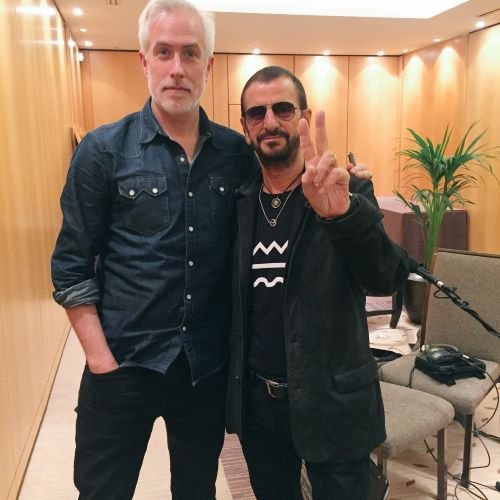
 IN THIS PHOTO: Matt Everitt with Ringo Starr in 2017/PHOTO CREDIT: Matt Everitt

Shaun Keaveny turned fifty earlier this year, I wrote a feature about his amazing work. Now, I want to turn my focus to Matt Everitt. He is fifty on 13th September. I am going to cover a number of things when it comes to him. Let’s get some promotion out of the way. He is on BBC Radio 6 Music with his long-running The First Time with… series. He interviews music figures about their first gigs and experiences. It is fascinating hearing the artists’ memories and the tracks played that soundtrack their unique firsts. I am going to come to a review and overview of the excellent book that came out in 2018 to accompany the series. As he is a Glastonbury Festival superfan, I would also recommend you buy The World's Greatest Music Festival Challenge: A Rockin' Seek and Find. I am going to go off on all kinds of tangents before I even discuss Everitt’s interviews, music and Beatles love! I do wonder whether a second volume of a The First Time with… book is planned. Maybe fitting that in around a busy career and family would be demanding, but his 2018 book was so popular and brilliant. A remarkable author in addition to broadcaster, I also think that there is a book in him about The Beatles. Everitt has (several times) interviewed Paul McCartney and Ringo Starr (separately). I predict that he has a wonderful book about them; his undeniable and infectious love of The Beatles is just waiting to get out. I recently featured Everitt as part of my forty-run feature marking Paul McCartney’s eightieth birthday. That milestone birthday happened in June, and it got me wondering whether Everitt will interview Paul McCartney again. He last chatted to him when the Peter Jackson Beatles documentary, The Beatles: Get Back, had its premiere last year. Let’s hope - for the Beatles fans’ sanity and satisfaction - there is an extended cut put out soon! I know Peter Jackson (who directed the recent documentary) is fighting for that. We know, and hope, if that dream does come to fruition, that Matt Everitt will have some part - whether it is interviewing McCartney/Starr or chatting with Peter Jackson.

Before drilling to specifics and such…why mark Matt Everitt’s fiftieth birthday!? Not to taunt the fact that the man is half way through his life. Hell, I am hitting forty next year and have achieved far, far less than he has! You just know that he has a couple more decades (at least) in him. Many more years of his wonderful broadcasting, journalism and producing. Well, as a broadcaster, Everitt (I am going to refer to him by his surname, as I think ‘Matt’ might be a bit informal) is hugely influential to me. I have met him a couple of times, and he has offered me assistance, kindness, support, and advice. A very accommodating and lovely fella, he also presents the New Album Fix for BBC Radio 6 Music (also worth checking out 2016’s The Business of Music with Matt Everitt; a really nice appearance on Fortunately…with Fi and Jane alongside Shaun Keaveny from 2017). A legend and cornerstone of the station, it is a shame that he no longer does music news for Shaun Keaveny’s show (as Keaveny left the station last year). It is clear that Matt Everitt is a very versatile and incredible talent:

Matt is an integral part of the BBC 6 Music, researching, writing and presenting The New Music Fix. He has been at 6 Music since 2007, and he presents its major series, The First Time, which he also devised and produces, interviewing major artists such as Kate Bush (her first interview for 5 years), Ringo Starr and Quentin Tarantino. Matt regularly crops up on Radios 1, 2 & 4 and on BBC News/Sky/MTV and he has become the go to interviewer for music related live events. He has a book deal with Laurence King Publishing and so far he has written and published The First Time and Where's My Welly. Prior to joining 6 Music, Matt worked at Xfm and was a music journalist. Before all this, he was the drummer in Menswear”.

Before I move on to music and broadcasting, I want to track back to his The First Time with… book. It is one that every music fan needs to own. Recollections and transcripts of interviews some true heavyweights, icons and future legends. Not only is it a fascinating insight into the careers and experiences of artists that we know and love. The interaction between Everitt and his guests is beautiful and engrossing. This is a nice write-up about the book:

Originally, a semi-regular documentary series on BBC Radio 6 Music, also hosted by Matt Everitt, within this new book release, Everitt interviews 40 stars about those seminal First Time moments in their lives such as their first gigs, first musical memories and the like.

Curated and interviewed by Everitt, the book is organised and laid out in a simple yet efficient fashion. Let’s take ex-Orange Juice lead singer and successful singer-songwriter, Edywn Collins as an example.

Each section begins with a specially commissioned piece of art featuring the interviewee set within a piece of colourful graphic art. After that is a brief introduction of a page or so and then there’s six or so pages of simple Q&A. Actually, there’s a bit less than that. Around half of the final page is occupied with that interviewee’s playlist, available on Spotify, of “songs that are discussed in the interviews.” Well, that’s not strictly true but it provides a flavour of the interviewee’s work and the music that person enjoys.

These lists can, in themselves, be enlightening. John Lydon’s includes tracks from Can, Miles Davis and Roxy Music but also Kenny Rogers, Hawkwind and Abba.

What is nice is the array of small vignettes that accompany each answer. So, Collins’ first remembered awareness of music was Donovan’s single Jennifer Juniper. A small picture image of the sleeve can then be seen adjacent, in the margin, adding a minor visual treat. The sleeve art is a regular visitor to each interview. Collins has 16 of them, Kelis has 13, Michael Stipe has 12 but each offers an insight into the interviewee.

But back to Collins, questions include: What was your first emotional connection in music, your first band, did you enjoy your first single success, first musical influence and the like (Answers: Bowie’s Ziggy Stardust, Onyx, yes and Creedence Clearwater Revival.)

So, as you can see, the questions don’t necessary fall into the practical, they plug into the emotional too and, because of that, the Matt Everitt textual style can often be a free-form and haphazard reportage.

For example Debbie Harry talked about her band’s first trip to London, “It was sort of traumatic but it was great. We were opening for Television actually and we got a great response. Television got a great response. It wasn’t like we were going out as brothers for the cause. It was a little bit too competitive. We had some really terrible reviews first off – I think after the first trip I stayed in bed for a couple of weeks with the covers over my head from some scathing review – but it turned around.”

Possibly my favourite is Ex-Specials/Fun Boy Three man, Terry Hall and his dry humour. As a child, his departing sister left him her record player and collection of David Cassidy and David Essex records, “…you can never go wrong with a David,” he said. Although Hall first immersed himself in Bowie, “…another David but different to David Cassidy. I remember reading an interview with David Cassidy in Blue Jeans or Jackie and refused to do a photo session because he had a spot. I thought that sounded a brilliant job. It’s like, ‘How do you get to do a job where you can refuse because you’ve got a spot?”

Oh, and the Matt Everitt interviews that got anyway? Nick Cave (“…looms in my nightmares”), Prince (“wouldn’t let me record our conversation.”) and Amy Winehouse (“every interview…cancelled at the last moment. Until she ran out of moments.”)”.

Many people like me might recognise Matt Everitt first and foremost as the drummer with Menswear and The Montrose Avenue (more on that later). Whilst he may be self-deprecating about his drumming talents, he is a brilliant musician (even when sort of self-deprecating; not sure about his crooning or how good he looks as Brian May!). As a little side-divert or thoughts, do go and check out as many snippets of Matt Everitt: My Mixtape on YouTube, as that is really interesting. Getting back to things. I know that he once played drums in front of Paul McCartney. As Macca is a superb drummer himself, I can only imagine how nervous Everitt must have been! As additional listening, I would also point people in the direction of the I Am the Eggpod podcast. Run by the sensational genius that is Chris Shaw, Everitt has appeared on it several times. I have dropped one episode in, but you can hear him chatting about Rubber Soul, The Beatles / 1967-1970 (part two), McCartney III, and The Beatles: Get Back (day 20). Not to hark on too much about The Beatles, but Matt Everitt brings their music, legacy and layers to life so beautifully and passionately. As part of researching for this feature, I have been listening back to those podcasts and smiling! I get a feeling that there is going to be a Revolver reissue, helmed by Giles Martin (son of The Beatles’ late producer Sir George Martin, he has remastered several of their other albums). There is no official news, but I suspect it will be similar to the reissues of Sgt. Pepper’s Lonely Hearts Club Band, The Beatles, Abbey Road and Let It Be. I hope that this provides an opportunity for Matt Everitt to come back and talk to Chris Shaw. I am not done mentioning The Beatles - though I had that Revolver thought and wanted to include it!

I would legitimately highly recommend people go out and get the vinyl for Menswear’s Nuisance. The twenty-fifth anniversary edition of their 1995 debut is a fantastic listen. Matt Everitt definitely adds to the brilliance and brew. I sort of envy him in a way! I was twelve in 1995, so I was quite young when Britpop sort of exploded and became a thing. Maybe people look at that time with rose-tinted glasses on, though it must have been wonderful hanging out with bands and making music then. There are a couple of interviews I have found when Everitt chatted about Menswear and Britpop. In 2010, Paul Morley spoke with him for The Guardian. There is an interesting video interview that goes with it:

Matt Everitt is exactly what you would hope the former drummer in Britpop failures Menswear to be like now that he is a confident, articulate presenter for BBC 6music. The fact that he was the temporary drummer in what he now calls "a third rate Britpop band with no fixed ability" gives him just the right sense of having enough experience of what its like to make it, and what its like to plunge into obscurity. It makes his new role as self-deprecating but sure and confident observer of pop's enduring quirks and wonders the perfect punchline to his capering rock star adventures. He lived the life for a moment or two as though he was part of a group that would become a new Beatles, a new Jam, perhaps a new Tears for Fears, and lived to see the time, because it didn't take long, when they would become the Britpop Northside, a £1,000 question on Who Wants To Be A Millionaire, a minor joke, the Spinal Tap of the Blur/Oasis era, the missing link between the Rutles and Sigue Sigue Sputnik.

Somehow, the fact that he is such a sincere Radiohead head, and I happen to think that These New Puritans are actually the better example of post-synth, anglo-brooding transformative sorcery, doesn't hamper an animated chat about the role, point and danger of these self-fulfilling new polls announcing what it is that we will all be listening to in the coming months. The fact that, because he was born in 1972, and I was born 15 years earlier earlier, he comes at the history of pop in a very different way than I do – him from the Britpop isles and a sense of starting to listen to pop in 1980, me from deep post-punk space and a sense of starting to listen to pop in 1970 – doesn't mean we speak completely different languages. I introduce him to Sound of 2010 Ellie Goulding and the way he shakes her hand with very formal correctness reminds me of a politician.

Once, he was set up to be a part of the sound of some year or another. The fact that it didn't happen has left him with no discernible sense of bitterness or humiliation, just a basic appreciation of how nothing is for sure, and a cheery, practical sense of enjoying pop music for what it is. That means not using words like "transformative sorcery”.

In 2020, Matt Everitt was interviewed by the Ham & High podcast about twenty-five years of Britpop. As someone who holds a lot of love and fond memories from the time, the fact Menswear are still hugely popular and in-demand today speaks volumes about their quality and Matt Everitt’s role:

It is 25 years since the musical scene known as ‘Britpop’ mounted an assault on the charts. For this week’s Ham&High Podcast, André Langlois speaks to Matt Everitt, who not only drummed for one of the defining bands of the era, Menswear, but through his role as journalist for 6 Music has seen the key figures emerge from the whirlwind that was Camden in the mid-90s.

On Monday August 14, 1995, when staff at HMV, Our Price, Tower Records, Virgin Megastore and hundreds of independent record shops were stocking the shelves with CD and cassette singles, there were only two releases anybody was talking about.

Whoever was the true driving force behind Blur and Oasis going head to head with the releases of Country House and Roll With It, as a publicity stunt it was a masterstroke. Blur won the battle, hitting the top spot, but both went on to even greater stardom.

Though not from north London originally, the bands, like many before and since, had gravitated towards Camden’s venues, pubs and indie discos.

BBC 6 Music’s Matt Everitt was one such musical migrant. From the Midlands originally, he arrived in London shortly after the 1993 release of Blur’s Modern Life Is Rubbish – a record that almost destroyed the band but instead set a template for much of what was to come.

Matt would go on to play in front of audiences of thousands with Menswear, but initially, he says, he just wanted to be part of Camden’s indie scene.

“It’s where everybody drank, as has always been thus and probably will always be to a greater or lesser extent,” he says. “Everybody went to certain pubs. You went to the Falcon, which is now gone, because that’s where you saw bands play; you went to The Water Rats, which is still there; and you drank in The Good Mixer because that’s where you could spot Madness and Morrissey...

“It was an interconnected chain of pubs where hopefully you could maybe see somebody from Chapterhouse and that was an incredibly big deal at the time. Wow, the bass player from Chapterhouse! Crikey.

“It felt approachable because you could just go to a pub and see people there. Traditionally, with bands you saw on Top Of the Pops, you never see them in the pub. You’d never see Wham! in a pub”.

I have something else coming up in audio form that I am going to share nearer to Matt Everitt’s fiftieth birthday. As I say, I am going to be involved in all things Kate Bush/The Dreaming on 13th September. I can imagine that the rest of his year is quite busy. He will have plenty to do with BBC Radio 6 Music in terms of reporting, shows and various bits. I started writing this feature a couple of weeks ago (and have had it sitting too publish now), but there have been developments since then. He is speaking with the legendary Graham Cox (Blur) about his autobiography, Verse, Chorus, Monster!, as part of a run of shows. If you can get a ticket, then definitely do! The Montrose Avenue’s 1998 album, Thirty Days Out, is going to get a new vinyl release in September. Everitt wrote beautifully on Twitter about his time in the band (short-lived but memorable by all accounts). One of the busiest man in broadcasting, I haven’t been able to include everything I wanted to in this one feature. As I say, I have something else planned in the coming couple of weeks. As I have a busy next couple of weeks - moving to a new part of London and having to get all that organised; lots of Kate Bush features coming up -, it has been a pleasure listening to podcasts he has been involved with and reading his tweets. I have a tonne of respect for Matt Everitt, and I have also just re-listened to his 2016 interview with Kate Bush (below), as I am writing a feature about the live album for Before the Dawn. Sorry if I have rambled a bit (also, connecting Kate Bush and The Beatles, Bush has covered She’s Leaving Home (originally from Sgt. Pepper’s Lonely Hearts Club Band), .Come Together (originally from Abbey Road), The Long and Winding Road (originally from Let It Be), and Let It Be (from the same album), here, here and here). Apologies if I repeat myself a bit here!

I shall wrap things up. I wanted to drop in a bit about his radio work, Menswear, and his take on Britpop. In wrapping up, why does he mean a lot to me? As a musician and someone who has spoken to countless great artists, he is full of great and memorable experiences. As I just mentioned, he has chatted with the one human above all that I want to interview: the one and only Kate Bush. He has spoken with the two surviving Beatles, Debbie Harry, Brian Wilson, and Radiohead. Not that turns fifty is a momentous thing but, as it is a big birthday, I wanted to use the opportunity to pay tribute and salute him (and I suspect he might be morbidly hungover after his actual birthday celebrations!). A great champion of independent music venues, fan of a ‘certain band’, Glasto fan, author, and general legend, I felt it only write to salute and pay tribute to someone who has made a big difference to so many people. In terms of podcasts and bits I have not included so far, I would recommend that you check this 2020 Everitt interview was involved with regarding Menswear; this recent chat about fifty years of Glastonbury).

IN THIS PHOTO: Matt Everitt with Shaun Keaveny/PHOTO CREDIT: BBC

One of BBC Radio 6 Music’s most important broadcasters and presenters, I hope that he gets more opportunities and airtime. Make sure you listen to Sunday’s (28th) episode of The First Time with… I also hope he and Shaun Keaveny join forces again. I do reckon that they have an idea in them that could see a much-needed reunion and renewed partnership. As the Director of Cup & Nuzzle Productions, Matt Everitt’s company produces Keaveny’s excellent series, The Line-Up. I hope that Everitt appears on the podcast soon! He is an amazing creator and producer. Someone who has these ideas and visions. I think the coming years will see him not only help bring terrific podcasts to life. He may even front a few of his own. I said it earlier, but Matt Everitt is a huge inspiration. His workrate, talent and passion for music and people is compelling. It has motivated me so much. He is one big reason why I am in music journalism and, when I can find the money and time, why I am keen to put out a Kate Bush podcast or two!

I think there will be another book, some T.V. stuff, and lots more broadcasting for BBC Radio 6 Music. I hope he gets to chat with Ringo Star and Paul McCartney again! I also would be excited if he gets to do a lot more across radio and T.V. Whether that is a Beatles thing or something on his music heroes or the ‘90s music scene, we will be seeing and hearing a lot more. He presents coverage of the Mercury Prize, and he is also a great roving reporter. I love early videos of him at Glastonbury! The man lives and breathes music and adores his job. In turn, people show a lot of love for Matt Everitt! Go and follow him on Twitter and Instagram. It only leaves me to wish him a very happy birthday for 13th September. I will raise a glass to him on the day, through that is the day Kate Bush’s album, The Dreaming, turns forty. I am hoping to run a listening party on Twitter for it that night. I am sure I will see him again soon, as I work (in Soho) just down the road from BBC Radio 6 Music. A huge influence and inspiration to me, I want to wish and say to Matt Everitt, congratulations, thanks and…

LOADS of peace and love!

FEATURE: This Is No Trick of Hers, This Is Your Magic… Kate Bush's The Dreaming at Forty: Human Behaviour, Change, and Proving Critics Wrong

FEATURE:


This Is No Trick of Hers, This Is Your Magic…

IN THIS PHOTO: Kate Bush in 1982

Kate Bush's The Dreaming at Forty: Human Behaviour, Change, and Proving Critics Wrong

 __________

IN marking the fortieth anniversary…

of Kate Bush’s The Dreaming, there are a few areas I want to explore. Her fans will come together on 13th September to celebrate a big and important anniversary. Before coming to specific features about production, songs, and its legacy, there is a great section of information from the Kate Bush Encyclopedia, where they have sourced interviews she conducted where she spoke about her fourth studio album. She spoke about the concept and themes of The Dreaming. Whereas Hounds of Love (the album that followed The Dreaming) has a conceptual second side suite, The Ninth Wave, and one can look at albums like The Kick Inside (her 1978) and see themes there, The Dreaming seems more scattershot and harder to pin down. That said, human behaviour does seem to be a central core to each of the songs. Bush definitely made it clear in interviews that she was changing between albums. Keen to push and evolve her sound, I think many people just expected her to do the same thing. The fact The Dreaming divides people is because there was this expectation Bush would repeat herself and stay in a very convenient and neat box. It is interesting hearing Bush talk about this remarkable album through the years:

Yes, it's very important for me to change. In fact, as soon as the songs began to be written, I knew that the album was going to be quite different. I'd hate it, especially now, if my albums became similar, because so much happens to me between each album - my views change quite drastically. What's nice about this album is that it's what I've always wanted to do. For instance, the Australian thing: well, I wanted to do that on the last album, but there was no time. There are quite a few ideas and things that I've had whizzing around in my head that just haven't been put down. I've always wanted to use more traditional influences and instruments, especially the Irish ones. I suppose subconsciously I've wanted to do all this for quite some time, but I've never really had the time until now. ('The Dreaming'. Poppix (UK), Summer 1982)

It is interesting what she says about being bored. Disappointed if all her albums were the same. One of Kate Bush’s greatest assets is that she can make albums these very different and new things; we are always invested and engrossed. The Dreaming is Bush proving what a remarkable accomplished, versatile and deep songwriter she was. Still trying to throw off ideas that she was a novelty act or was this singer who was a bit one-note and lightweight, The Dreaming is Kate Bush not only establishing herself as one of the most pioneering and compelling songwriters of her era. She also showed what a truly staggering producer she is. If The Dreaming seems like quite a heavy or negative listen, as Bush said in a couple of different interviews, she was trying to be positive and also put herself and true being into every note and song:  

I think [The Dreaming] is about trying to cope...to get through all the shit. I think it was positive: showing how certain people approach all these negative things - war, crime, etc. I don't think I'm actually an aggressive person, but I can be. But I release that energy in work. I think it's wrong to get angry. If people get angry, it kind of freaks everybody out and they can't concentrate on what they're doing. (Jane Solanas, 'The Barmy Dreamer'. NME (UK), 1983).

I have no doubt that those who buy singles because they like my hits, are completely mystified upon hearing the albums. But if it comes to that, they should listen to it loudly! If a single theme linked The Dreaming, which is quite varied, it would be human relationships and emotional problems. Every being responds principally to emotions. Some people are very cool, but they are silenced by their emotions, whatever they might be. To write a song, it's necessary that I be completely steeped in my environment, in my subject. Sometimes the original idea is maintained, but as it takes form, it possesses me. One of the best examples would be this song that I wrote on 'Houdini': I knew every one of the things that I wanted to say, and it was necessary that I find new ways that would allow me to say them; the hardest thing, is when you have so many things to fit into so short a space of time. You have to be concise and at the same time not remain vague, or obscure. The Dreaming was a decisive album for me. I hadn't recorded in a very long time until I undertook it, and that was the first time that I'd had such liberty. It was intoxicating and frightening at the same time. I could fail at everything and ruin my career at one fell swoop. All this energy, my frustrations, my fears, my wish to succeed, all that went into the record. That's the principle of music: to liberate all the tensions that exist inside you. I tried to give free rein to all my fantasies. Although all of the songs do not talk about me, they represent all the facets of my personality, all my different attitudes in relation to the world. In growing older, I see more and more clearly that I am crippled in facing the things that really count, and that I can do nothing about it, just as most people can do nothing. Making an album is insignificant in comparison with that, but it's my only defense. (Yves Bigot, 'Englishwoman is crossing the continents'. Guitares et Claviers (France), February 1986)”.

 IN THIS PHOTO: Kate Bush in 1982/PHOTO CREDIT: Pierre Terrasson

Kate Bush has also said in interviews how critics said The Dreaming was a commercial disaster. The album got to number three in the U.K. and sold well. There is no doubt that The Dreaming was a massive success. Some saw it as a little underwhelming because it didn’t do as well as 1980’s Never for Ever. That reached number one in the U.K. It is good that The critical standing of the album has improved vastly in recent decades. In 1982, there was mixed reaction. In a poll conducted by NPR, they ranked The Dreaming as the twenty-fourth-greatest album ever made by a female artist. SLANT named it as the seventy-first-best album on its list of the Best Albums of the 1980s. I can understand why some did not understand or fully absorb The Dreaming upon its release. It is a lot to take! In 2016, Drowned in Sound showed The Dreaming some real love. There are a few parts that I want to bring in:

The Dreaming is therefore tirelessly imaginative, asking the listener to submerge themselves in a wealth of illusory and semi-fictional realms. But it’s also remarkable for what happened behind the scenes as well. Bush had made steps into production before, on the EP On Stage and on Never For Ever, where she was aided by engineer Jon Kelly. Here though, she took the bold step to produce the entirety of the album alone. While she did collaborate to some extent with a few engineers (such as Nick Launay, who had previously worked with Public Image Ltd and Phil Collins), the control that Bush had on the record is plain to hear at every twist and turn. She extensively made use of the Fairlight CMI – one of the earliest workstations with an embedded digital sampling synthesiser – and a number of other state-of-the-art machines when recording.

She didn’t look back. In 1983 she built her own 48-track studio in the barn behind her family home, using it to start demoing and producing what is often considered to be her magnum opus, Hounds Of Love. There, she would occasionally channel some of the experimental spirit that defined The Dreaming (especially on its conceptual latter half), but it was far and away more commercially and critically successful, often being hailed as Bush’s best record. Hounds Of Love was nominated for four gongs at the 1986 BRIT Awards: Best Album, Best Female Artist, Best Single (for ‘Running Up That Hill’) and, perhaps most significantly, Best Producer.

The Dreaming, by contrast, remains the overlooked jewel in her canon. But while it may be challenging and uncompromising, it’s almost hard to imagine what Kate Bush would be like today if she hadn’t released it. A staggeringly bold step forward for her as a singer, songwriter and producer, The Dreaming was a milestone both for Bush herself and the wider world of music”.

That is a very relevant thing to end with. What would her career have been like if she hadn’t released The Dreaming?! In the same way The Kick Inside is not a merely promising debut but a fully-formed and incredible introduction, The Dreaming is not a bridge or stepping stone to Hounds of Love. Rather, it is a misunderstood and now-reassessed album that stunned the world and has inspired so many artists since its release. A producer, songwriter and artist who overtook her peers and released an album so ahead of its time people are only recently starting to appreciate its real worth and beauty, I can appreciate why Bush spent so much time and energy getting it to her specifications. Maybe she did go slightly mad making it but, without The Dreaming, the music world would be…

SO much poorer.

FEATURE: Spotlight: Peach PRC

FEATURE:


Spotlight

Peach PRC

__________

THERE is so much terrific young talent…

emerging right now, that it is hard to keep track. Platforms like TikTok are proving very effective in terms of promotion and awareness. I discovered Peach PRC recently through Twitter. Real name Shaylee Curnow, the Adelaide-based songwriter and artist is an incredible talent. I think there is a generation of young Pop artists who are not only releasing incredibly impressive and original music. They are also discussing and highlighting themes that need to be addressed. Perhaps – if they are an L.G.B.T.Q.I.A.+ artist – more easily able to express their sexuality through their music, we are witnessing so many frank and relatable artists who are earning a wide audience through social media. Before getting to some interviews with Peach PRC (I shall refer to her by her artist name), here is some biotrophy regarding the incredibly influential and amazing Australian artist:

The Australian singer and songwriter packs an often unbelievable journey from writing and recording in her bedroom to social media phenomenon into smart, slick, and sweet songs with a bold bite. Equally funny and sensitive, she holds nothing back when it comes to life’s ups and downs, mental health, and everything in between.

After building an audience of 1.2 million-plus followers, generating over 10 million streams, and attracting acclaim from BuzzFeed and more, she formally introduces herself with new music under her recently signed deal with Republic Records and Island Records Australia.

Growing up in Adelaide, she always wanted to sing and begged mom and dad to allow her to audition for Australia’s Got Talent to no avail. “They said I was too young, sensitive, and it would hurt my feelings,” she laughs. In between listening to Avril Lavigne, Ke$ha, Katy Perry, Britney Spears, and Shakira, she wrote songs on her own and attended talent school where she honed her vocal and performance chops. During high school, she found solace in music.

“For a long time, I didn’t have many friends, or anyone really close to me,” she admits. “When I needed to vent about things, I’d start writing. My songwriting is essentially what I’d say to a friend.”

After dropping out of school, she penned music during her free time and worked as a stripper at night for a short spell before launching a Tik Tok page in 2019. She had danced under the name “Peach Porcelain”—an homage to the Super Mario character Princess Peach. Since “Peach” was taken, she joined the platform as Peach PRC. She organically attracted an audience by posting everything from funny moments to self-care advice and, of course, music. A snippet of her first single “Blondes” played over the background of a video where she discussed the track’s meaning, and it went viral. The full version eventually amassed 4 million Spotify streams as she maintained this momentum with the follow-up “Colourblind” (both produced by a long-distance ex-boyfriend and producer), racking up another 1.5 million Spotify streams. Along the way, she carefully cultivated an undeniable style.

“It’s girly hyper-pop,” she explains. “I’m drawing on the early 00’s and mid-2010’s, but adding my own twist.”

That twist defines the 2021 single “Josh.” Originally previewed as a fan favorite snippet on Tik Tok, the track puts an ex on blast in a clever and hypnotic fashion. With warm vocal delivery, she teases, “Does your mum still buy your clothes?” Meanwhile, 808 claps, distorted guitar, piano, and a ticking clock entwine as she confesses, “I thought you were blocked. Fuck off, stop calling me, Josh.”

“Josh and I dated for ages,” she recalls. ““When we broke up he would always try to get back with me- which I found to be so annoying!  One day, I was writing in the worst mood, and he messaged me. I was like, ‘Go away!’ I was so aggravated he tried to reach out after I finally cut him off. I made a bit of the song and posted it on my Tik Tok spam account with the caption, ‘I’ll probably delete this’. Everyone told me not to delete it! I’m glad I kept it.”

In addition to music, Peach PRC also takes every chance to uplift as a mental health advocate. She’ll post candid videos such as “cleaning my room with you in real time (for people with depression/ADHD)” and “folding my laundry with you in real time (for people with depression/ADHD),” enlightening her audience and reminding them they’re not alone.

“I know it can be really hard to take care of your basic needs when you’re having a hard time,” she says. “So, I try to speak up and help when I can.”

In the end, Peach PRC makes a real connection much like a friend would.

“I just want everybody to feel heard,” she leaves off. “To me, there’s nothing better than when somebody puts how you feel into words”.

It is important to feature some interviews with Peach PRC. I want to start with Rolling Stone Australia’s chat from last year. It is fascinating learning where Peach PRC came from and how she has become this incredible artist who looks set to have a very promising and busy future:  

Peach began working as a stripper when she was 19 and kept it up for four years. Now that she’s removed from the profession, she’s wary of stigmatising it, but she reserves little fondness for that time in her life.

“I stopped doing music for a bit because I was just in such a low place,” she says. “I thought, ‘What’s the point? It’s not going anywhere.’”

Peach had previously turned to music as a vital form of self-expression. Even in her teen years, songwriting had an explicitly cathartic function for her. But by the time she reached 21, she hadn’t written anything in years and her life was in pieces. She hated her job. She felt financially strangled. And her mental health was unravelling.

“I was like, ‘I need something to bring me out of this really dark, sad place,’” says Peach.

In this state, Peach dug her guitar out of the cupboard. Before long, she had the bones of ‘King Size Bed’ – the first song she’d written in years. “Writing that gave me such a euphoric rush of, like, ‘That’s right, I can express this sadness. I can put it into something,’” she says.

After uploading an unfiltered video of herself performing ‘King Size Bed’ to Instagram – which “got like 20 comments” and had Peach “losing [her] mind with excitement” – ideas for songs started tumbling out of her.

Curnow had chosen the stage name Peach Porcelain when she started dancing. Encouraged by the relative anonymity it offered, she decided to use it as her musical alias too. As for the contraction, “PRC”, that didn’t come about until she joined TikTok. In fact, everything in Peach’s world started to shift once she joined TikTok.

Although she’d been urged to join the platform by her younger sister, Peach was initially sceptical. “I was like, ‘What is this?’” she says. But after browsing its users and finding people who were being “so hilarious and so cool and entertaining” she wanted in on the fun.

Peach has a natural flair for content creation. Her early posts ranged from intimate stories about her daily life to rants about players and mansplainers. There were also snippets of new songs she’d written and covers of current pop tunes filmed with early collaborator and fellow TikTok bigshot, Jeris Johnson.

“Every part of my personality that I would give to my friends in real life, I would just put on the internet in little short form videos,” she says”.

“Josh” came out at the end of February. Peach PRC’s enormous TikTok following has translated into huge streaming figures for “Josh”, including more than seven million Spotify streams and more than a million views of the song’s official video. Peach’s sphere of influence now also extends well beyond social media, with “Josh” debuting at #7 in the ARIA Top 20 Australian Singles chart”.

Billboard spoke with Peach PRC earlier in the year. I think a lot of the attention and acclaim aimed at her stems from the incredible track, God Is a Freak. A remarkable song that has gained a lot of positive reaction, many fans have reacted to it with videos of their own:

Even with her experience in rapid success, Curnow says that the instant attention given to “God Is A Freak” still blows her away — in the month since she “leaked” her chorus, her original video has received over 2 million views and 400,000 likes, while the sound has been used over 7,000 times by other app users. Even pop mega-producer Finneas recognized the potential of her song, commenting on one of her videos, “This song is so so so good.” 

“When he commented that I was over the moon,” Curnow says, grinning. “It definitely made me feel better about everything, especially when there’s some people being like ‘this sucks,’ it’s like, ‘Well, Finneas said he likes the song.'”

One part of the song’s viral success that Curnow did not expect was a series of extremely moving videos that would go on to be posted using her sound, in which LGBTQ individuals spoke candidly about how they had been made to feel unworthy or less-than by Christian churches around the world. Users quickly began taking the second part of the song’s chorus, in which she sings, “What’s the fixation/ On hating the way he creates/ So why would I spend my eternity/ With God when he’s a freak,” and using it as a means of translating their own trauma.

“It was meant to be this silly song making fun of the ridiculous concept that it is to me. But to see so many people share these vulnerable stories, talk about their religious trauma and the way they’ve overcome — that has been so moving,” she says. “There was one video that made me cry the other day … someone talked about being rejected for being trans, and how they sold their purity ring to pay for testosterone. It was so powerful.”

Curnow says that she spent the last few years identifying as bisexual, until she had a few tough conversations with herself about identity. When she saw the massive response her song was having with her LGBTQ fans, Curnow decided that there was no better time to tell the people about herself. “Eventually, it just got to a point where I said, ‘I need to stop trying to swerve around this and accept it for what it is,'” she says. “[‘God Is A Freak’] became a thing where it was like, ‘Okay, this seems like a good time for me to also drop a line”.

Also putting a spotlight onto God Is a Freak, Consequence interviewed a very modern and captivating Pop artist. Although she is perfectly suited for a TikTok generation, there is so much depth to her music and character that means she will transcend social media and carve out her own space. Here is somebody who can go very far in music:

At nearly 2 million followers on TikTok, Peach PRC is gaining traction in both her native Australia and elsewhere, but she’s one that’s suited for the new decade through and through. Though Peach maintains a very particular aesthetic (the color pink being a prominent through line), there isn’t a great deal of content on her page that is heavily produced, doctored, or micromanaged by a marketing team.

In fact, it is Peach’s authenticity and humor, her ability to turn the camera on and speak her mind, and her approachable and relatable ideas about humanity, relationships, trauma, and self-care that has captured so many people’s attention.

Naturally, this attitude spills over into her music, and songs like “God Is A Freak” and her breakout single “Josh” (which she wrote about her ex, who would not stop calling her) boast a similar kind of authenticity and hilarity. But this also points to a larger trend in music, from the bombastic online personality of Doja Cat to Ariana Grande’s grounded, personal approach to social media: artists are finding new ways to subvert traditional expectations about what a “pop star” should be, and they’re doing so with an emphasis on authentic expression, online humor, and with the camera always on.

Peach PRC already exists as a different kind of pop star — one where there’s a true hybrid between your TikTok presence and musical one. That comes with a lot of pressure. How have you been handling it throughout the last year? What steps do you take to protect your mental health?

Oh, gosh, I don’t know! It is full-on sometimes, but I think for me, TikTok is just an outlet. It’s something that I do enjoy doing and I love connecting with people that way. So my space away is TikTok, that’s how I kind of relax. But that’s kind of it — there’s nothing that I do, self care-wise, that isn’t already online.

“God Is A Freak” has a real 2000s-y vibe. What are your musical influences? Which albums from the last 10 years have you really connected with?

Yeah, I really love early 2000s pop, or even 2010 pop. I love Kesha and Katy Perry and Lady Gaga and all of those people. And I try to put as much of that in my music as I can — that kind of sound. I really look up to them and am definitely inspired by them.

What’s next for Peach PRC?

I have so many demos that I’ve been making over the last year, and just so many songs that I want to put all together into an album release. I don’t know which ones it will be yet, but I’m really passionate about all of them. So I hope I can put out as many as I can! In terms of when, I don’t really know — I’m just scatterbrained all the time and I didn’t really know what I’m doing until I’m doing it. But I am really excited about everything I have coming up this year!”.

I have included mainly interview text in this feature, as it is more important to learn about Peach PRC and hear her music. I love what she is doing. There were years when I sort of went off of Pop music and felt it was either too generic, lacklustre, or overly processed. In the past few years, there has been this wave of Pop that has a complexity and importance to it. Able to produce fun and accessible music with lyrics that are personal and yet speak to her audience, the phenomenal Peach PCR needs to be…

IN your life.

___________

Follow Peach PRC

FEATURE: All My Barriers Are Going… Record-Breaking and Underrated: Kate Bush’s Never for Ever at Forty-Two

FEATURE:


All My Barriers Are Going…

IN THIS PHOTO: Kate Bush in 1980 signing a copy of Never for Ever

Record-Breaking and Underrated: Kate Bush’s Never for Ever at Forty-Two

 __________

BECAUSE Kate Bush’s…

third studio album, Never for Ever, turns forty-two on 8th September, I am revisiting it. I have already written a feature about its shortest track, Night Scented Stock. This is a bridge between two other songs, The Infant Kiss and Army Dreamers. For this feature, I am going to bring in a number of things. I want to mention three tracks that were not singles but I think deserve wider airplay and investigation. I am also going to source a couple of reviews. The reason for that is because I feel Never for Ever is underrated. Bush’s sound and production – she co-produced Never for Ever with Jon Kelly – changed dramatically when she solo-produced The Dreaming (1982). When people consider the best Kate Bush albums, Never for Ever sort of comes in the middle of the pack. Consider the fact singles like Babooshka and Breathing are among her greatest work, there are also terrific deeper cuts like Blow Away (For Bill), All We Ever Look For and Violin. More political-minded songs like Breathing and Army Dreamers (also a single) sat alongside some of her most exceptional vocal performances and most intriguing songs. I think, up until Hounds of Love, Never for Ever contains the strongest set of Kate Bush singles. The Dreaming sort of had poor fortunes in that market but, with its first and third singles (Breathing and Army Dreamers) hitting sixteen and Babooshka reaching number five, this was a solid outing. Also, in Babooshka, Bush created one of her finest and most spectacular opening tracks. Not only is the song one of her most catchy, powerful and interesting. Its video sees her practically unleashed into a warrior in the chorus. It is most certainty eye-catching!

Never for Ever was Bush’s first number one album. It was also the first album by a British female solo artist to top the U.K. album chart, as well as being the first album by any female solo artist to enter the chart at number one. Before coming to a couple of reviews concerning Never for Ever, a trusted source in the Kate Bush Encyclopedia allows me to include interviews where Kate Bush talked about the exceptional Never for Ever:

Now, after all this waiting it is here. It's strange when I think back to the first album. I thought it would never feel as new or as special again. This one has proved me wrong. It's been the most exciting. Its name is Never For Ever, and I've called it this because I've tried to make it reflective of all that happens to you and me. Life, love, hate, we are all transient. All things pass, neither good [n]or evil lasts. So we must tell our hearts that it is "never for ever", and be happy that it's like that!

The album cover has been beautifully created by Nick Price (you may remember that he designed the front of the Tour programme). On the cover of Never For Ever Nick takes us on an intricate journey of our emotions: inside gets outside, as we flood people and things with our desires and problems. These black and white thoughts, these bats and doves, freeze-framed in flight, swoop into the album and out of your hi-fis. Then it's for you to bring them to life. (Kate Bush Club newsletter, September 1980)

IN THIS PHOTO: Kate Bush signs an autograph in 1980/PHOTO CREDIT: Mirrorpix/Getty Images 

Each song has a very different personality, and so much of the production was allowing the songs to speak with their own voices - not for them to be used purely as objects to decorate with "buttons and bows". Choosing sounds is so like trying to be psychic, seeing into the future, looking in the "crystal ball of arrangements", "scattering a little bit of stardust", to quote the immortal words of the Troggs. Every time a musical vision comes true, it's like having my feet tickled. When it works, it helps me to feel a bit braver. Of course, it doesn't always work, but experiments and ideas in a studio are never wasted; they will always find a place sometime.

I never really felt like a producer, I just felt closer to my loves - felt good, free, although a little raw, and sometimes paranoia would pop up. But when working with emotion, which is what music is, really, it can be so unpredictable - the human element, that fire. But all my friends, the Jons, and now you will make all the pieces of the Never For Ever jigsaw slot together, and It will be born and It will begin Breathing. (Kate Bush Club newsletter, September 1980)”.

I do genuinely think Never for Ever is underrated. Consider the fact it is filled with variety and wonderful production. Although the Fairlight CMI (a relatively new technology Bush was introduced to by her friend Peter Gabriel) was only part of the album process late on, it adds to songs like Babooshka (the breaking glass sound) and Army Dreamers (the gun cocking). There are three gems (among the many) from the album I want to highlight for particular consideration. Whilst there is a lot of half-arsed praise and three-star reviews for an album that warrants so much more, others have provided greater depth and appreciation of a 1980 classic. Although PopMatters gave an excellent write-up of Never for Ever on its fortieth in 2020, there is a little too much ‘what was to come’ about it: like this was a stepping stone. Although Bush’s work would become more adventurous and ambitious, Never for Ever is the sound of a remarkable artist who co-produced something masterful. Consider the fact she was only twenty-two when Never for Ever was released on 8th September, 1980:

It is on these songs, in particular, that listeners catch a glimpse of what’s to come. Tracks like “Delius”, with its dreamy and capacious soundscapes, are intermixed with tracks like “The Wedding List”, a sort of companion piece to “Babooshka”. With its dastardly narrative building to a dramatic chorus, “The Wedding List” is a showy vaudevillian number. But it relies on the conventional instruments and string arrangements of Bush’s earlier LPs and would have been at home on either one.

“Blow Away” and “All We Ever Look For” are sweet, sentimental songs that could also fit in the pre-Fairlight era. I particularly enjoy Kate’s voice on the latter, but the Fairlight samples of a door opening, Hare Krishna chanting, and footsteps seem to have been an afterthought. The samples add a narrative layer to the song, but the sounds are not integral to the arrangement.

“The Infant Kiss” is one of the highlights of the album, though it, too, is more of a throwback to earlier compositions. The eerie song was inspired by the film The Innocents, which was in turn based on the Henry James novella The Turn of the Screw. Lyrically, the song is similar to the title track of The Kick Inside and “The Man With the Child in His Eyes” in its dealing with taboo sexuality. The song’s narrator is a governess torn between the love of an adult man and child who inhabit the same body. Or, as one critic called it, “the child with the man in his eyes.”

What sets this song apart is Bush’s production. Instead of overwrought orchestral arrangements of the earlier albums, Bush relies on restrained, baroque instrumentation to convey the song’s conflicted emotions. With Bush behind the boards, she begins to use the studio as an instrument unto itself. Her growing technical facility, combined with the expansive possibilities of the Fairlight and other synthesizers, allowed her to express her feelings through sound more fully

The penultimate “Army Dreamers” is a lamentation in the form of a waltz, sung from the viewpoint of a mother who’s lost her son in military maneuvers. Here, the samples of gun cocks add a percussive and forbidding element to the arrangement. The sound is restrained but menacing when coupled with the shouts of a commander in the background. Plus, “Army Dreamers” is one of the more political songs in Bush’s repertoire, though situating it inside a personal narrative keeps it from becoming polemical.

The album’s closer, “Breathing”, is a more overtly political song. It was Bush’s crowning achievement at the time, a realization of everything that had led her to this point. The song is told from a fetus’s perspective terrified of being born into a post-apocalyptic world: “I’ve been out before / But this time, it’s much safer in”. Bush plays on the words “fallout” and the rhythmic repetition of breathing—“out-in, out-in”—throughout.

Synthesizer pads and a fretless bass build to a middle section in which sonic textures take precedence over lyrical content, as Bush’s vocals fade to a false ending at the halfway mark. Ominous, atmospheric tones play over a spoken-word middle section describing the flash of a nuclear bomb. The male voice is chilling in its dispassionate delivery, and the bass comes to the foreground once again in a slow march to the finish as the song reaches its final dramatic crescendo. Here, Bush’s vocals, which admittedly can be grating at times, perfectly match the desperation of the lyrics. “Oh, leave me something to breathe!” she cries, in a terrifying contrast to Roy Harper’s monotone backing vocals (“What are we going to do without / We are all going to die without”).

“Breathing” is a full opera in five-and-a-half minutes, written, scored, arranged, and performed by an artist growing into herself and beginning to realize her full potential. It’s a fitting ending for Never for Ever, an album that sees Bush, only 23 years old at the time, leaving behind her ’70s juvenilia. At the turn of the 1980s, she was poised to scale new heights with her music, some of which would define the decade to come”.

Before moving to three gems I have a very soft spot for, I wanted to bring in a few segments from The Quietus’ fortieth anniversary celebration of Never for Ever (many sources say the album came out on 7th September, 1980; Bush’s official website says 8th September, so that is the one I am going with!).

Never For Ever would change all that. Draining as it was, Bush’s gruelling Tour Of Life gave her the chance to co-produce 1979’s On Stage EP with engineer Jon Kelly, convincing her they could handle a full album together. She ousted Powell and combined the session hands with her band members, swapping them in and out like rolling subs and making them record take after take. Another Bush biographer, Rob Jovanovic, estimates she spent an unprecedented five months writing and demoing at Abbey Road, honing new and old ideas alike, while keyboardist Max Middleton told Thomson the sessions were so exacting because of her obsession with finding “something nebulous that was hard to pinpoint”. For Bush the autonomy was worth savouring, no matter how painstaking the process. “It was the first step I’d really taken in controlling the sounds,” she said, “and being pleased with what was coming back.”

Listen now and you can still hear that fundamental shift Bush spoke of, the birth of some new, peculiar magic. It starts with ‘Babooshka’, in which a paranoid wife impersonates a younger woman to test her husband’s roving eye, and ends up destroying her marriage. It’s a wonderfully wicked premise: Bush based it on the cross-dressing, happy-ever-after hijinks of the traditional English folk ditty ‘Sovay’, but her revamp is less a cheeky romp than a surreal, bitter farce, pitched somewhere between Who’s Afraid Of Virginia Woolf? and Tales Of The Unexpected. Most startling, though, is the way it sounds, like unearthly Russian folk music: there’s something both archaic and futuristic about its echoey keys, eerie synths and the ethereal strings of her brother Paddy’s balalaika, as uncanny as a Cossack band playing on the Mir space station. Bush sings like two different people, flitting from coy trills to operatic shrieks, and eventually her world comes crashing down in a crescendo of squalling guitars and the Fairlight’s splintering glass.

Then, before the debris has cleared, she drifts into the wispy beauty of ‘Delius (Song Of Summer)’, which recounts how Frederic Delius’s amanuensis, Eric Fenby, took down his idol’s compositions from dictation after he was waylaid by syphilis. All the same, if “moody old man” Delius was difficult, there’s no rancour in its shimmering reverie of hazy sitar and bubbling percussion: it hums with the heady buzz of the olde British countryside, and Bush’s vocal has the crisp, bucolic freshness of dandelion and burdock. Both tracks size up the album’s big themes – the push-and-pull of thorny relationships, the constant churn of emotions – but one bursts into thunder, and the other floats on the breeze.

Never For Ever is a starting point, not a zenith, and those miraculous opening six minutes aren’t as groundbreaking as her later innovations. But it is, I’d argue, the first of her LPs that’s genuinely experimental. Paddy’s greater involvement brought weird new instruments – zithers, kotos, musical saws – although Peter Gabriel introduced Bush to the Fairlight, the sonic equivalent of a Jedi being handed their first lightsaber; there were only three in the UK, and while she wouldn’t master it until later, her instant obsession speaks to how determined she was to bend her ornate style into bizarre new shapes. ‘All We Ever Look For’, her happy-go-lucky reflection on knotty parent-child relationships, mutates into several different forms by itself: it jumps between lurching, whistling synths, the koto’s fluttering strings, and a mishmash of Foley-style noises including chirping birds and hurried footsteps. “The whims that we’re weeping for/ Our parents would be beaten for,” sings Bush over its jaunty, oddball din, like the ringmaster at a baroque big top”.

I will do another feature or two before Never for Ever’s forty-second anniversary on 8th September. There are three cuts from the eleven that, whilst not singles and songs that are played on the radio much (if at all!), they definitely warrant your attention. I shall be back with you to round up afterwards. For this, again, I am quoting from the invaluable treasure trove that is the Kate Bush Encyclopedia.

So there's comfort for the guy in my band, as when he dies, he'll go "Hi, Jimi!" It's very tongue-in-cheek, but it's a great thought that if a musician dies, his soul will join all the other musicians and a poet will join all the Dylan Thomases and all that.

None of those people [who have had near-death experiences] are frightened by death anymore. It's almost something they're looking forward to. All of us have such a deep fear of death. It's the ultimate unknown, at the same time it's our ultimate purpose. That's what we're here for. So I thought this thing about the death-fear. I like to think I'm coming to terms with it, and other people are too. The song was really written after someone very special died.

Although the song had been formulating before and had to be written as a comfort to those people who are afraid of dying, there was also this idea of the music, energies in us that aren't physical: art, the love in people. It can't die, because where does it go? It seems really that music could carry on in radio form, radio waves... There are people who swear they can pick up symphonies from Chopin, Schubert. We're really transient, everything to do with us is transient, except for these non-physical things that we don't even control... (Kris Needs, 'Lassie'. Zigzag (UK), November 1985)”.

“‘The Wedding List' is about the powerful force of revenge. An unhealthy energy which in this song proves to be a "killer". (Kate Bush Club newsletter, September 1980)

Revenge is so powerful and futile in the situation in the song. Instead of just one person being killed, it's three: her husband, the guy who did it - who was right on top of the wedding list with the silver plates - and her, because when she's done it, there's nothing left. All her ambition and purpose has all gone into that one guy. She's dead, there's nothing there. (Kris Needs, 'Fire in the Bush'. Zigzag, 1980)

Revenge is a terrible power, and the idea is to show that it's so strong that even at such a tragic time it's all she can think about. I find the whole aggression of human beings fascinating - how we are suddenly whipped up to such an extent that we can't see anything except that. Did you see the film Deathwish, and the way the audience reacted every time a mugger got shot? Terrible - though I cheered, myself. (Mike Nicholls, 'Among The Bushes'. Record Mirror, 1980)”.

Song written by Kate Bush. It was inspired by the gothic horror movie The Innocents, which in turn was inspired by Henry James' novel 'The Turn Of The Screw'. The story is about a governess who believes the ghost of her predecessor's dead lover is trying to possess the bodies of the children she is looking after. The song was released on the album Never For Ever.

Versions

There are two versions of this song: the original album version and a French version, entitled Un Baiser d'Enfant, released two years later.

Music video

American Kate Bush fan Chris WIlliams made a video for 'The Infant Kiss' using scenes from the movie 'The Innocents'. According to Kate, who contacted him after she saw the video, he'd chosen the exact scenes that were in her head upon writing the song.

Cover versions

'The Infant Kiss' was covered by Kat Devlin.

Kate about 'The Infant Kiss'

'The Infant Kiss' is about a governess. She is torn between the love of an adult man and child who are within the same body. (Kate Bush Club newsletter, September 1980)”.

On 8th September, Kate Bush’s marvellous third studio album, Never for Ever, is forty-two. Although September (specifically 13th) is all about The Dreaming on its fortieth anniversary, one cannot overlook the magnificent Never for Ever. September is a busy month in general for Kate Bush album anniversaries, as Hounds of Love is third-seven on 16th. I wanted to use this opportunity to praise and show proper respect to a…

VERY special album.

FEATURE: Groovelines: The Beatles – Love Me Do

FEATURE:


Groovelines

The Beatles – Love Me Do

__________

I am going to write about this song again…

 PHOTO CREDIT: Harry Hammond/V&A Images/Getty Images

in October, as it turns sixty then. On 5th October, 1962, The Beatles’ debut single, Love Me Do, was released. Although it was not a number one in the U.K. in 1962 (it got to seventeen), it did reach number one in the U.S. when it came out there in 1964. I will explore the significance of Love Me Do that anniversary feature. Today, I want to give more of an overview of it. For that, I am going to turn to Beatles Bible. Of course, as Love Me Do is one of the most important songs in music history, you could talk about for ages! I am going to be a bit briefer than that. It is interesting how it came together. Although the percussion is not a major part of the track, a Beatles track without Ringo Starr featuring prominently is hard to get your head around:

“Love Me Do’, The Beatles’ debut single, was released in the UK on 5 October 1962.

The song was an early Lennon-McCartney composition from 1958, although it wasn’t recorded by the group for another four years.

Paul wrote the main structure of this when he was 16, or even earlier. I think I had something to do with the middle.

John Lennon, 1972

Lennon spoke again of the song in an interview conducted shortly before his death.

‘Love Me Do’ is Paul’s song. He wrote it when he was a teenager. Let me think. I might have helped on the middle eight, but I couldn’t swear to it. I do know he had the song around, in Hamburg, even, way, way before we were songwriters.

John Lennon, 1980

All We Are Saying, David Sheff

Despite this, McCartney remembers ‘Love Me Do’ as a joint effort between the two of them, and that it came out of their early songwriting experiments.

‘Love Me Do’ was completely co-written. It might have been my original idea but some of them really were 50-50s, and I think that one was. It was just Lennon and McCartney sitting down without either of us having a particularly original idea.

We loved doing it, it was a very interesting thing to try and learn to do, to become songwriters. I think why we eventually got so strong was we wrote so much through our formative period. ‘Love Me Do’ was our first hit, which ironically is one of the two songs that we control, because when we first signed to EMI they had a publishing company called Ardmore and Beechwood which took the two songs, ‘Love Me Do’ and ‘PS I Love You’, and in doing a deal somewhere along the way we were able to get them back.

Paul McCartney

Many Years From Now, Barry Miles

Although The Beatles started out by performing cover versions, as Lennon and McCartney grew as songwriters they began introducing their own compositions into their live shows.

Introducing our own numbers started round Liverpool and Hamburg. ‘Love Me Do’, one of the first ones we wrote, Paul started when he must have been about 15. It was the first one we dared to do of our own. This was quite a traumatic thing because we were doing such great numbers of other people’s, of Ray Charles and [Little] Richard and all of them.

It was quite hard to come in singing ‘Love Me Do’. We thought our numbers were a bit wet. But we gradually broke that down and decided to try them.

John Lennon

Anthology

As well as being their debut single, the band also recorded ‘Love Me Do’ eight times for the BBC. A version from 10 July 1963, recorded for the Pop Go The Beatles programme, is available on Live At The BBC.

In 1976, Ringo Starr described how ‘Love Me Do’ was a turning point for the group:

For me that was more important than anything else. That first piece of plastic. You can’t believe how great that was. It was so wonderful. We were on a record!

Paul McCartney confirmed that the song was the point at which The Beatles knew they were becoming successful.

In Hamburg we clicked. At the Cavern we clicked. But if you want to know when we ‘knew’ we’d arrived, it was getting in the charts with ‘Love Me Do’. That was the one. It gave us somewhere to go”.

Chart success

The Beatles recorded ‘Love Me Do’ over three sessions. The first was at their EMI audition on 6 June 1962, featuring Pete Best on drums.

They returned to the song during the 4 September session, where it was considered for release along with ‘How Do You Do It’. The group tackled it again on 11 September, after which it was deemed good enough for release as a single.

Although Ringo Starr had played drums on 4 September, George Martin brought in a session drummer, Andy White, for the subsequent recording, and Starr was relegated to tambourine.

On my first visit in September we just ran through some tracks for George Martin. We even did ‘Please Please Me’. I remember that, because while we were recording it I was playing the bass drum with a maraca in one hand and a tambourine in the other. I think it’s because of that that George Martin used Andy White, the ‘professional’, when we went down a week later to record ‘Love Me Do’. The guy was previously booked, anyway, because of Pete Best. George didn’t want to take any more chances and I was caught in the middle.

I was devastated that George Martin had his doubts about me. I came down ready to roll and heard, ‘We’ve got a professional drummer.’ He has apologised several times since, has old George, but it was devastating – I hated the bugger for years; I still don’t let him off the hook!

Ringo Starr

Anthology

The presence of the tambourine is the easiest way to distinguish the two recordings. Initial copies of the single had Starr on drums, though the Andy White version became the preferred version from the release of the Beatles Hits EP on 6 September 1963. To consolidate the decision EMI destroyed the master tapes of the 4 September recording.

It is White’s version which appears on the Please Please Me album, though Starr’s drumming can be heard on Past Masters. The recording featuring Pete Best appeared on Anthology 1 in 1995.

George got his way and Ringo didn’t drum on the first single. He only played tambourine.

I don’t think Ringo ever got over that. He had to go back up to Liverpool and everyone asked, ‘How did it go in the Smoke?’ We’d say, ‘B-side’s good,’ but Ringo couldn’t admit to liking the a-side, not being on it.

Paul McCartney

Anthology

The relegation of Starr wasn’t the only change made by George Martin to the song.

George Martin said, ‘Can anyone play harmonica? It would be rather nice. Couldn’t think of some sort of bluesy thing, could you, John?’ John played a chromatic harmonica, not a Sonny Boy Williamson blues harmonica, more Max Geldray from the Goon Show…

The lyrics crossed over the harmonica solo so I suddenly got thrown the big open line, ‘Love me do’, where everything stopped. Until that session John had always done it; I didn’t even know how to sing it. I’d never done it before. George Martin just said, ‘You take that line, John take the harmonica, you cross over, we’ll do it live’…

I can still hear the nervousness in my voice! We were downstairs in number two studio and I remember looking up to the big window afterwards and George Martin was saying, ‘Jolly good.’

Paul McCartney

Many Years From Now, Barry Miles

Chart success

The ‘Love Me Do’ single reached number 17 in the UK charts, with sales mainly concentrated in and around Liverpool.

Love Me Do single - United KingdomLove Me Do single artwork - USALove Me Do single artwork - Norway

There were enough fans of The Beatles around because we were playing all over the Wirral, Cheshire, Manchester and Liverpool. We were quite popular, so the sales were real.

First hearing ‘Love Me Do’ on the radio sent me shivery all over. It was the best buzz of all time. We knew it was going to be on Radio Luxembourg at something like 7.30 on Thursday night. I was in my house in Speke and we all listened in. That was great, but after having got to 17, I don’t recall what happened to it. It probably went away and died, but what it meant was that the next time we went to EMI, they were more friendly: ‘Oh, hello lads. Come in.’

George Harrison

Anthology

There were persistent rumours that Brian Epstein had bulk-bought around 10,000 copies to increase its chart ranking, but these remain unproven.

The best thing was it came into the charts in two days and everybody thought it was a fiddle, because our manager’s stores sent in these returns and everybody down south though, ‘Ah-ha, he’s buying them himself or he’s just fiddling the charts.’ But he wasn’t.

John Lennon, 1963

Anthology”.

There is something thrilling and wonderfully raw about Love Me Do. Although not considered the band’s best song, its significance cannot be understated. I can only imagine the hysteria that was in the air in the U.K. when The Beatles released their debut single. Despite its low chart position, it lit a fuse and introduced the world’s greatest band to the masses. The band’s follow-up U.K. single, Please Please Me, reached number two. Word of mouth and radio play meant that they were a sensation in no time at all. This interesting article discusses the legacy and importance of the amazing Love Me Do:

The Beatles performed "Love Me Do" on British television four other times in 1962. Another appearance on "People And Places" was taped on October 29th and broadcast on November 2nd, this time featuring John Lennon sitting without an instrument as a lead singer would do while the other Beatles stood (Ringo included). Then on December 3rd, they mimed the song on the live program "Discs A Gogo," as well as another mimed live performance the following day, December 4th, on the London-area children's show "Tuesday Rendevzous." Finally, on December 17th, they returned once again for another live performance on "People And Places," their third appearance on this program within a two month period.

Since the song was their first national British hit, it became part of their permanent set list throughout the rest of 1962, both in their home performances and during their Hamburg visits at the end of the year. It also became a prerequisite for their national tours with Helen Shapiro, Tommy Roe/Chris Montez and then Roy Orbison throughout 1963. The last concert appearance of the song appears to have been on June 30th, 1964 at the ABC Cinema in Norfolk. British television saw the song performed in a Beatles medley on the show “Around The Beatles,” which was recorded at IBC studios on April 19th, 1964 for lip-syncing purposes, but broadcast on May 6th and then again on June 8th, 1964. This appears to be the only (albeit partial) performance of “Love Me Do” in 1964, seeing as their catalog of hit songs had progressed quite far by that time.

Paul McCartney also sporadically performed the song, in the above mentioned configuration “P.S. Love Me Do,” during his "World Tour," which ran from July 26th, 1989 (London, England) to July 29th, 1990 (Chicago, Illinois). He then finally decided to include the original version of "Love Me Do" in his set list during his "One On One" tour, which ran from April 13th, 2016 (Fresno, California) to December 16th, 2017 (Aukland, New Zealand). He did the same for his "Freshen Up" tour, which began on September 17th, 2018 (Quebec City, Canada) and ended on July 13th, 2019 (Los Angeles, California).

Paul also performed the song on June 9th, 2018 at the Philharmonic Pub in Liverpool for a special segment on "The Late Late Show with James Corden." A truncated version of this performance was aired on CBS television on June 21st of that year, followed by a prime-time special entitled "When Corden Met McCartney, Live From Liverpool," which was broadcast of August 20th.

Oddly enough, since Ringo had also recorded "Love Me Do" for his album "Vertical Man," he also performed it live with his "All Starr Band" from 1998 through 2000.

Conclusion

“Love Me Do,” understandably, was a pivotal point in The Beatles' career, as well as a milestone that affected them collectively and individually. George Harrison, for instance, felt his father's wrath when he was awoken by George’s screaming when the song was played late at night on Radio Luxembourg. Ringo, after being thoroughly disillusioned by the record industry, felt vindicated when the initial pressing of the record in Britain contained the version with him on the drums. All pressings thereafter contained the Andy White version. For the song's composers, it had an even greater impact. McCartney recalls that the song was evidence to him and John that they had “arrived,” and that it gave The Beatles “somewhere to go.”

The excitement of having a popular national hit song was a dream come true for the band. To be counted among their musical heroes currently on the radio waves, such as The Everly Brothers, Smokey Robinson, and The Shirelles, was an indescribable experience for them. Brain Epstein would call them with the precise times that the song would be played on the radio so they could stop what they were doing and listen. They would even celebrate every time the song moved up on the British charts.  

It's impact in America was immediate, even without any promotion behind it. The Beatles never performed the song in any American concert or television appearances. They didn't need to.

They may have felt that they had pressed on so much further in their career by mid 1964 that they didn’t sense a need to promote their first British single in the states. The irresistible harmonica hook, the all-too-familiar harmonies, and the captivating melody line were enough to stick in the minds of American youth and skyrocket the song to the top of the US charts. "Love Me Do" has to this day become one of the most identifiable trademark recordings in The Beatles catalog”.

A monumentally important song in the history of popular music, The Beatles’ Love Me Do is sixty in October. A song which contains some exceptional harmonica work from John Lennon and great harmonies, its simple message has meant it resonates and hits people to this day. We will be playing this song for decades and generations more. Even if The Beatles’ debut single did not light the charts up in the U.K. upon its release, nowadays, it is very much considered…

A classic.

FEATURE: Pulling Out the Pin: Kate Bush's The Dreaming at Forty: Three Great Promotional Interviews

FEATURE:


Pulling Out the Pin

Kate Bush's The Dreaming at Forty: Three Great Promotional Interviews

 __________

I recently…

 IN THIS PHOTO: Kate Bush signing copies of The Dreaming for fans at the Virgin Megastore, Oxford Street, London on 14th September, 1982/PHOTO CREDIT: Pete Still/Redferns

did this for Kate Bush The Kick Inside. That was recorded forty-five years ago this month. I united a few promotional interviews from around the time of the album’s release (1978). It is a nice way to see what the press were saying about the album, in addition to how Bush herself reacted to its perception and various questions. In all interviews, she is fascinating and composed. I am marking the upcoming fortieth anniversary of The Dreaming. That is forty on 13th September. In future features, I will explore various songs, aspects of her production, critical reception of the album, and how it compared to her other studio albums. Two years after Never for Ever, Bush released her first album as a solo producer. It was a very different-sounding album. More experimental, layered and denser than its predecessor, you could tell how intensely Bush had worked on The Dreaming. Not that Never for Ever was a particularly commercial album, but songs like Babooshka and Army Dreamers have an accessibility to them. There is something altogether more important, atmospheric and beguiling about The Dreaming. Bush was more interested in her own vision and producing something deeper than before. Maybe intentionally moving away from writing anything radio-friendly, The Dreaming has been ignored by some because they think it is too out-there and strange.

I want to bring together three interviews from 1982. Hearing Bush discuss the album in different ways. The first was published by Poppix in the summer of 1982. I particularly love how Bush talks about The Dreaming’s title track:

The multi-talented skills of one of Britain's finest female performers, Kate Bush, are to be found on her new album. Entitled The Dreaming, the album is a departure in style from Kate's three previous albums, but in quality it remains at its usual high standard.

The album pulls no punches. It's as mysterious as its name, as striking as its cover picture and as powerful as its first track, Sat In Your Lap.

However, probably the most interesting song on the album is its title track and first single, The Dreaming. [Actually, Sat In Your Lap, though preceding the album by nearly a year, was really the first single from The Dreaming. ] Unfortunately, it wasn't a great commercial success, as it wasn't really picked up on by the radio stations, but it certainly warranted genuine critical acclaim for being one of the more original singles of 1982. [Most English reviews were in fact quite hostile.] I asked Kate what the single was about and why she decided to record it.

"Well, years ago my brother bought Sun Arise and I loved it, it was such a beautiful song. [An early single by Australian musician Rolf Harris.] And ever since then I've wanted to create something which had that feel of Australia within it. I loved the sound of the traditional aboriginal instruments, and as I grew older, I became much more aware of the actual situation which existed in Australia between the white Australian and the aborigines, who were being wiped out by man's greed for uranium. Digging up their sacred grounds, just to get plutonium, and eventually make weapons out of it. And I just feel that it's so wrong: this beautiful culture being destroyed just so that we can build weapons which maybe one day will destroy everything, including us. We should be learning from the aborigines, they're such a fascinating race. And Australian--there's something very beautiful about that country."

The title The Dreaming is a haunting name for a song, but what does it mean?

"The song was originally going to be called Dreamtime, which is the name the Aborigines gave to a magic time before man was man as he is today--when man was an animal and could change shape. This magical time was also known as the Dreaming to the Aborigines, so I thought it would be an ideal title for the song. The Dreaming is such a strong title, too: 'dreaming' on its own means little, but with 'the' in front of it it takes on a whole new meaning."

The album is entirely produced by Kate Bush, something she has never done before, her previous albums being co-produced by her and Jon Kelly. [Actually the first album was produced by Andrew Powell, and the second by Powell with the assistance of Kate.] So why did she decide to do the production of the album herself?

"After the last album, Never For Ever, I started writing some new songs. They were very different from anything I'd ever written before--they were much more rhythmic, and in a way, a completely new side to my music. I was using different instruments, and everything was changing; and I felt that really the best thing to do would be to make this album a real departure--make it completely different. And the only way to achieve this was to sever all the links I had had with the older stuff. The main link was engineer Jon Kelly. Everytime I was in the studio Jon was there to helping me, so I felt that in order to make the stuff different enough I would have to stop working with Jon. He really wanted to keep working with me, but we discussed it and realised that it was for the best." [Phrased with typical Bush delicacy.]

IN THIS PHOTO: Kate Bush in a single cover outtake for Sat In Your Lap/PHOTO CREDIT: John Carder Bush

Sat In Your Lap, Kate's last major hit in the British charts, is also included on the album.

"We weren't going to put it on initially, because we thought it had been a single such a long time ago, but a lot of people used to ask me if we were putting Sat In Your Lap on the album and I'd say no, and they would say 'Oh why not?' and they'd be quite disappointed. So, as the album's completion date got nearer and nearer, I eventually relented. I re-mixed the track and we put it on. I'm so glad I did now, because it says so much about side one, with its up-tempo beat and heavy drum rhythms--it's perfect for the opening track."

You mentioned earlier that you wanted the album to be different, to be a change. Is that aspect of change particularly refreshing to you? Is it important for you to keep changing?

"Yes, it's very important for me to change. In fact, as soon as the songs began to be written, I knew that the album was going to be quite different. I'd hate it, especially now, if my albums became similar, because so much happens to me between each album--my views change quite drastically. What's nice about this album is that it's what I've always wanted to do. For instance, the Australian thing: well, I wanted to do that on the last album, but there was no time. There are quite a few ideas and things that I've had whizzing around in my head that just haven't been put down. I've always wanted to use more traditional influences and instruments, especially the Irish ones. I suppose subconsciously I've wanted to do all this for quite some time, but I've never really had the time until now."

Your songs are nearly always based around a story of sorts. Is it important for you to have a meaning behind your songs?

"Oh yes, I think it gets more and more so, because although on the first two albums the songs were always based on something, they weren't all that strong; but now I get more involved with the ideas behind a song, and I do my best to make the concept as vivid and as solid as I can. On the new album, for instance, there is a track about the legendary ecapologist Houdini. During his incredible lifetime Houdini took it upon himself to expose the whole spiritualist thing--you know, seances and mediums. And he found a lot them to be phoney, but before he died Houdini and his wife worked out a code, so that if he came back after his death his wife would know it was him by the code. So after his death his wife made several attempts to contact her dead husband, and on one occasion he did come through to her. I thought that was so beautiful--the idea that this man who had spent his life escaping from chains and ropes had actually managed to contact his wife. The image was so beautiful that I just had to write a song about it." [The full story is quite complicated, but Mrs. Houdini later stated that no such contact was ever made. Kate has indicated in other interviews--conducted presumably a bit later than this one--that she was aware of the dubious aspects of the story, but that the beauty of the concept and imagery were no less true for that.]

"Now that the album is completed, it doesn't mean that my work has ended. There are so many things that I want to do connected with music, and I want to do them as soon as possible. In fact, I see myself being pretty well committed for the next couple of years. I'd like to do a show with both this and the last album, and there are a few videos as well, but I just don't know if or when I'll get the time”.

I think the immediate reaction from a lot of the media – and perhaps Bush herself – was that this very unusual and dense album would take a while to be appreciated. Would that nuance and need for dedicated listening drive fans away? In an interview for Kerrang!, Bush answered the question as to whether she was worried about alienating some fans and risk putting barriers up to potential new followers:

Maybe the album is more difficult for people than I meant it to be. It isn't intended to be complicated, but it obviously is, for some. A lot of it is to do with the fact that the songs are very involved--there's lots of different layers.

"Hopefully the next one will be simpler, but each time it gets harder, because I'm getting more involved. I'm trying to do something better all the time."

Do you worry about losing fans?

"Yeah, I do, because obviously from a purely financial point of view I depend on money to make albums, and if they're not successful it's quite likely I won't have the scope to do what I want on the next one.

"But, I'd rather go artistically the way I want to than hang onto an audience, because you have to keep doing what you feel. It's just luck if you can hang onto the people, as well."

The time and cost of The Dreaming has already been fairly well documented--did you intend to spend that long recording it?

"No, not at all. But I find that a lot of things I do now take so much longer than I thought they would."

What is it that takes the time? Translating your ideas onto record?

"Yeah, that's what's really hard. In so many cases you need to be in the studio to get the sounds, and it can maybe take a couple of days just to get one idea across. Sometimes you wonder if you should just leave them."

How do you feel about your early records now?

"I don't really like them. A lot of the stuff on the first two albums I wasn't at all happy with. I think I'm still fond of a lot of the songs, but I was unhappy about the way they came across on record.

"Also, until this album I'd never really enjoyed the sound of my own voice. It' always been very difficult for me, because I've wanted to hear the songs in a different way."

Why didn't you like it?

"I think a lot of people don't like the sound of their own voices. It's like you have to keep working towards something you eventually do like. It was very satisfying for me on this album, because for the first time I can sit and listen to the vocals and think, 'Yeah, that's actually quite good.'"

Were you pushing it more to create different sounds?

"In a way. But I probably used to push it more in other ways. I went through a phase of trying to leap up and down a lot when I was writing songs. I used to try to push it almost acrobatically. Now I'm trying more to get the song across, and I have more control. When I'm trying to think up the character is when it needs a bit of push."

Do you always try to put yourself in the role of a character, then?

"Yeah, normally, because the song is always about something, and always from a particular viewpoint. There's normally a personality that runs along with it.

"Sometimes I really have to work at it to get in the right frame of mind, because it's maybe the opposite of how I'm feeling, but other times it feels almost like an extension of me, which it is, in some ways."

You have been accused in the past of living in some kind of fantasy world. Would you say you refuse to face up to reality?

"Now. I think I do, actually, although there are certain parts of me that definitely don't want to look at reality. Generally speaking, though, I'm quite realistic, but perhaps the songs on the first two albums created some kind of fantasy image, so people presumed that I lived in that kind of world."

Where do you get the ideas for songs from?

"Anywhere, really. They're two or three tracks that I had the ideas for on the last album but never got together. Others come from films, books or stories from people I know. That kind of thing."

What about Pull Out the Pin, a song about VietNam? Was that something you'd always wanted to write about?

"No, I didn't think I'd ever want to write about it until I saw this documentary on television which moved me so much I thought I just had to."

The title track concerns the abuse of Aborigines by so-called civilised man. Where did that interest come from?

"That's something that's been growing for years. It started when I was tiny, and my brother bought Sun Arise [a hit of the early 1960s by Rolf Harris.]. We thought it was brilliant--to me, that's a classic record. I started to become aware of the whole thing--that it's almost an instinctive thing in white man to wipe out a race that actually owns the land. It's happening all around the world."

Do you hope to change people's opinions by what you write?

"No. Because I don't think a song can ever do that. If people have strong opinions, then they're so deep-rooted that you'll never be able to do much. Even if you can change the way a few people think, you'll never be able to change the situation anyway.

"I don't ever write politically, because I know nothing about politics. To me they seem more destructive than helpful. I think I write from an emotional point of view, because even though a situation may be political, there's always some emotional element, and that's what gets to me."

The thoughts and ideas are expressed through a variety of sounds, an adventurous use of instruments and people--from Rolf Harris on dijeridu to Percy Edwards on animal impressions! Kate has also discovered the Fairlight, a computerised synthesiser.

IN THIS PHOTO: Kate Bush in 1982/PHOTO CREDIT: Pierre Terrasson 

"It's given me a completely different perspective on sounds," she enthuses. "You can put any sound you want onto the keyboard, so if you go 'Ugh!', you can play 'Ugh!' all the way up the keyboard. Theoretically, any sound that exists, you can play.

"I think it's surprising that with all the gear around at the moment, people aren't experimenting more."

Whatever you may think of Kate Bush, you could never say that she's not been prepared to take risks. In the four years that have passed since her startling first single Wuthering Heights, she has grown increasingly adventurous and ambitious, creating music that she hopes will last longer than much of today's transient pop.

Of The Dreaming she says: "I wanted it to be a long-lasting album, because my favourite records are the ones that grow on you--that you play lots of times because each time you hear something different."

Never particularly a public fave, her last live shows were three years ago, and although she plans to do some in the future, they'll take at least six months to prepare. [Try six years and counting.]

She admits that she found her initial success hard to cope with at times.

"I still find some things frightening. I've adjusted a hell of a lot, but it still scares me. There are so many aspects that if you start thinking about are terrifying. The best thing to do is not even to think about them. Just try to sail through”.

The final interview takes me to NME. Bush made it clear during the interview that, with The Dreaming, she was not interesting in making songs as singles. This was more about the entire album and creating a whole, as opposed a series of singles that one could pick from the pack. At the age of twenty-four, this was a very mature and brave artist risking a certain commercial loss to pursue something deeper and richer:

You have no regard for those instantaneous qualities of the single? A rocket going up brilliantly for a moment?

"Each album is like a rocket. I build it up as much as I can, and see how high it goes. I'm never aware of any commercial value. I never sit down to write a single. Whenever I write, I'm challenging myself in some area. Everyone who creates something considers themself an artist in some way, don't they?

I wonder whether you really want to do music--whether you'd rather do poetry or theatre or dance or...

"I'm doing that as well, really, aren't I? Maybe it's wrong to see me as a pop personality. You're going to keep changing-- Wuthering Heights was a story with music and dancing, but I've changed so much since then. The things that the media most remember about me are those things. Some people see that I am changing, but...oh, not as many as the people who hang onto those singles. But I am beginning to be seen as an albums artist."

What's an albums artist?

"It's not being a pop personality or whatever it was you called me. I'm not interested in making singles. Maybe I will make some 'singles' one day... 

Pull Out the Pin

The Dreaming is an ornate, billowing record. Its songs are peculiarly ambitious: their grand design all but drives out the spirit of lowly pop music.

The ghosts of famous men pace their dark corridors; great tunnels of sound emulate mighty and multi-levelled conceptions. Songs are sung in a multitude of voices, like a chittering, half-heard spirit-world. Bush's operatic entreaties are finally matched to music of a similar size and shape. At any one moment

It's already a huge success. Despite the failure of the title song in single form--there are surely no singles on the record--Bush has found that her admirers have not gone away. I suggest to her some of the things it seems to be about, like the struggle between public and private faces, and the ability to disappear inside a recording; she is scarcely drawn. Not suspicious--simply not interested in the ambiguity and anatomy of music so intensely organised. <The meaning of this statement is unclear to IED.> Kate Bush is a dedicated artist.

Is she there?

The Dreaming

"Primitive? I'm not sure about that word...Perhaps. There are traditional roots in it. Basic forms of music."

I think it's extremely sophisticated.

"Do you? Sophisticated? Well, I'd rather you say that than turdlike.

"I could explain some of it, if you want me to: Suspended in Gaffa is reasonably autobiographical, which most of my songs aren't. <Doug Alan is loving this. IED can just see him chortling with glee.> It's about seeing something that you want--on any level--and not being able to get that thing unless you work hard and in the right way towards it. When I do that I become aware of so many obstacles, and then I want the thing without the work. And then when you achieve it you enter...a different level--everything will slightly change. It's like going into a time warp which otherwise wouldn't have existed.

"Oh, yes, quite a few people have surmised that from listening to the song. But when you explain it like this it doesn't sound like anything. The idea is much more valuable within the song than it is in my telling you about it. When you analyse it, it seems silly.

" Leave It Open is the idea of human beings being like cups--like receptive vessels. We open and shut ourselves at different times. It's very easy to let your ego go " nag nag nag " when you should shut it. Or when you're very narrow-minded and you should be open. Finally you should be able to control your levels of receptivity to a productive end.

"The Dreaming is very different from my first two records. Each time I do an LP it feels like the last one was years and years before. The essence of what I'm playing has been there from the start; it's just that the expression has been changing. What I'm doing now is what I was trying to do four years ago. If I do a show, it will only be music from the last two albums.

"I wish I had a five-year plan, but I never plan too far ahead. I get into trouble because I always take longer to do things than I expect. That's why I knew I had to wait for another two albums' worth of material before doing another show.

"I suppose I'd count myself an old-fashioned person. I like to think I'm open-minded, but when it comes down to basic codes, I am old-fashioned. Everyone has vices. I have vices, but I don't think I've got any...glaring ones--is that what they're called?

"It would really worry me if I thought my art was being untruthful. Being true to something is the closest way to express things. But then in another way, the whole thing is untruthful--I'm being someone I'm not; I'm writing about situations I'll probably never be in. Behind it there has to be sincerity. Insincerity doesn't ring right; it has a nasty taste.

"The worst thing? The pressures, I suppose. They come in from so many different levels--from so many people--that they feel destructive towards me as a human being. Although it happens very rarely. And I have so little time to do things I want to."

Are you ever worried that you are absent from your art?

"Oh, no. I am expressing myself, but it's also something else--it's something that's coming through me. My intentions are to put across situations that aren't that close to me but which are more interesting.

"It scares me that I work too hard. I can be so tired and involved in work that I'm not living on another level. It's a reality of the situation. I have to do things I don't want to, so that I can do what I want the rest of the time. It's that I don't seem to have time to myself.

Still breathing

"I want to do a show next. It'll take at least six months to prepare, because there'll be so many levels to it. The musical challenge will be the hardest I've set myself..." <This show never materialised, of course.>

A lot of people would like to see you just sitting at a piano and singing a set of your songs.

"Not nearly as many. It would be too easy, as if I couldn't be bothered to prepare a proper show. It wouldn't do anything for the blend of movement and music. That is what I really want to do. Music and movement together in a modern sense. People like it that you're not taking the easy way out”.
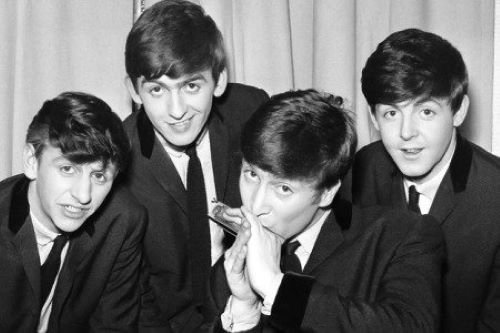
On 13th September, The Dreaming turns forty. I am keen to explore it from a number of different sides. It is such an important album. Bush’s first solo producer step, The Dreaming was followed by 1985’s Hounds of Love. Whilst that album gets a massive amount of love, its predecessor is not as dissected and celebrated. Maybe that is because it is very different in terms of it sound, structure and its singles. I know there will be a lot of new consideration and inspection of The Dreaming before 13th September. If you have never heard the album, then go and listen to it now and…

LOSE yourself in its brilliance.

FEATURE: The First Cut Is the Deepest? Why Even Mediocre Songs from My Young Years Hold Up Today

FEATURE:


The First Cut Is the Deepest?

PHOTO CREDIT: Bruno Guerrero/Unsplash

Why Even Mediocre Songs from My Young Years Hold Up Today

 __________

I have written before…

 PHOTO CREDIT: Pixabay

how nostalgic reminiscence can be a dangerous thing. That is what people say. Especially if you indulge in it too much. In the coming weeks, I might venture into writing about the current weather and how environmental destruction and global warming might not only effect how musicians’ travel plans, but it also may impact vinyl production and shipping. I think we will see artists play less often abroad. Many others will do fewer gigs. In terms of production of C.D.s, vinyl and physical music, that is sure to be effected by climate change. It is all very worrying and grim but necessary. These things need to be discussed, as artists, venues and manufactures will need to adapt and rethink. In the current year, I don’t think there is anything wrong succumbing to the lure of nostalgia and escapism. It is impossible to lock away and ignore the issues swirling around us. In order to detach and offer some form of relief and stability, music from my past has been more and more important. I think most people, when they listen back to music from their past, take everything from their youngest years up to the age of eighteen, perhaps. That is what I am doing. Right now, I am exploring and reacquainting myself with music from high school. I entered high school at age eleven in 1994 and left five years later. It was a magnificent time for music. One of the things I noticed, not only about my high school favourites but songs from earlier than that, is that a lot of them are a bit naff. That might be a subjective call, but they are either one-hit wonders, tracks from great artists that do not stand up again their best work, songs that are not seen as brilliant, or others that are obviously quite shocking. I am not going to drop them in here in case of offending those artists, but the first album I bought with my own money was Now That’s What I Call Music! 24. That came out in 1993 - I was about nine or ten when I bought it. There are a few tracks from that album that are not exactly awesome.

 PHOTO CREDIT: @mohammadmetri/Unsplash

I guess there are psychological reasons why we latch onto particular tracks. Some might be quite child-like or catchy (but lack any real depth). Others might hit us at a very difficult time and offer comfort, whereas there might be a part of brain that has a soft spot for particularly mediocre songs. I have been feeling a bit conflicted listening back to songs form my childhood and teenage years that other people dislike. Should I feel embarrassed liking a song that is clearly not that good or credible?! There are some that are important because they were released at a challenging or exciting time in life. Others have something about them that appeals to a sense of compassion – maybe adopting these songs that others do not. In any case, I have found that these nostalgic songs have not faded in the years since! I have not really revisited many and decided that, at the time, I was foolish for liking them. Many other people feel the same. If we heard these so-so songs now for the first time, our opinions might be very different. I don’t think there is any such thing as a guilty pleasure song. Everything has its place. I am proud to play loud songs that would make others cringe or be seen as uncool and dated. Maybe the reason people like me still love these sort of records is because they are unmovable and intrinsic part of our growing up. Formative days that are defined by music, whether good or bad.

 PHOTO CREDIT: @rocinante_11/Unsplash

The more I wrap myself inside the warm cocoon of nostalgia and better years, the more I am rediscovering and enjoying some of the more questionable tracks in my collection. One might argue that, if I love these songs so many years later, then it must mean they are great. There are many songs that, undoubtably, are just plain bad or dated. I think that all music, good or bad, resonates at a point in our life either because we need them at the time and they go deep, the soundtracks of our young and teenagers lives mirror our own. I treasure great memories from those days, but I also think that others, whether they are hard, tragic, boring or just plain dumb, are just as important. I would not want to get rid of them. In the case of the songs, I owe these tracks a debt. They have widened my tastes and appreciation of music. Each have played their part and scored some great memories. There is a great comfort in hearing these older tracks and realising that, for better or worse, they keep me looking forward. These mediocre songs have not waned or lost significance. I feel uncomfortable and plain wrong subjugating or erasing a song from my memory because I am grown up and it seems embarrassing to like particular music. Without these songs, I think I would be a different person. Genuinely. They have made a difference when I needed them. They have provided a few smiles. They have lodged in my head when I needed them most. More than anything, I still love these tracks today and, when playing them, I am transported back to an easier time. Of course, we cannot live in the past and pretend we can go back! Though it is nice that we can escape. If only for a brief time. If you have been uneasy spinning tunes from your past that you would not embrace easily, get over that and understand how important this music is. They meant something to you then, so why bother about whether they are cool tracks or they are not among the best?! This music asked nothing of you and, for one reason or another, they made an impression on you. And for that alone, you should be…

 PHOTO CREDIT: @floschmaezz/Unsplash

VERY grateful indeed!

FEATURE: A Never for Ever Jewel… The Brief Majesty of Kate Bush’s Night Scented Stock

FEATURE:


A Never for Ever Jewel…

PHOTO CREDIT: Clive Arrowsmith

The Brief Majesty of Kate Bush’s Night Scented Stock

__________

THIS is going to be a short Kate Bush feature…

which is kind of fitting, as the song that I am covering is very short. The shortest song on any Kate Bush album. Whereas Aerial’s (2005) Aerial Tal is 1:02, Night Scented Stock runs in at a mere fifty-two seconds! Not to be confused with the flower of the same name, Night Scented Stock is an instrumental song consisting entirely of layered, wordless vocals. It is a series of breathy and gorgeous sounds. There are a few reasons why I am writing about this song. I am thinking more and more about Bush’s catalogue, and the fact that very few of her songs are played. I was among those to congratulate her on Running Up That Hill (A Deal with God) going to number one after being featured on Stranger Things. It is a marvellous song but, since then, I feel radio stations have been playing it more than any other. Hounds of Love (the album it is from) is featured more than any of Bush album. I feel this rather narrow radio worldview of her music will remain rigid because songs like Running Up That Hill (A Deal with God) are successful and commercial. Think about 1980’s Never for Ever and how under-explored that is. Aside from Babooshka, not a lot else is played. Maybe Army Dreamers and Breathing, but you never get the deeper cuts played. I have also been thinking about song length and how an album like 50 Words for Snow is a more expansive work that allows songs to unfold and unfurl more gradually.

I love the fact that Bush, on her most recent studio album (2011), pushed so far away from the radio-friendly and immediate sound that many artists write. Whereas it takes guts to write longer songs and engage and keep people hooked, it might be even more difficult to write very short tracks and make them work. There are a few short songs/links on Aerial’s second side, a Sky of Honey. Up until Never for Ever, Bush had not written anything as brief as Night Scented Stock. If Bush had meant it as a sorbet or bridge between the beautiful and swooning The Infant Kiss and the haunting and affecting Army Dreamers, it is much more than that. I think, if she jumped from The Infant Kiss to Army Dreamers, it might have been a little jarring. The songs are very different in tone and sound, so you need a little bit of a transition. Consider the fact Breathing follows Army Dreamers, it is wise having this moment of heavenly escape and something almost otherworldly before we get there. To me, it is like being out at night and smelling the jasmine or perfume of flowers. Maybe a song that you could see sung at church or used as this sort of hymn. I am not sure whether Bush had this song intended as something longer with lyrics, or whether it was a late addition to Never for Ever that she couldn’t add to another song but did not want to scrap.

 IN THIS PHOTO: Kate Bush in 1980/PHOTO CREDIT: Andy Phillips

I love her vocals on this track. Consisting of ‘ahs’ and ‘ooos’ for the most part, it coos and seduces! You get the impression of multiple voices twirling and tangling with one another. Everyone will imagine their own visuals and what the song is about. It is a fascinating standout in her discography as there are no lyrics. Bush has not really discussed its origins. Not the only instrumental she has written, it is so different to anything on Never for Ever. It shows how productive and varied her songwriting was around the time. Producing Never for Ever with Jon Kelly, Bush had a lot more freedom regarding what type of sound and songs could feature on her albums. This wouldn’t have been the case with The Kick Inside and Lionheart (both 1978). Although Night Scented Stock sandwiches between The Infant Kiss and Army Dreamers, it could also easily fit between The Wedding List and Violin (which would have allowed some brief calm before the rush and raw energy of Violin). It is this mobile and utilitarian song that you can use to bridge two very different numbers. I feel Night Scented Stock should be known more widely. Maybe it is too short for a radio spin, but it is under a minute long, so it could perfectly slip into the playlist without too much fuss. I feel people would be intrigued by it. It is a song that not many non-Kate Bush fans have heard. The more I think about Night Scented Stock, the more thoughts come to me. This feature has actually turned out…

LONGER than I thought!

FEATURE: Revisiting… The Raconteurs – Help Us Stranger

FEATURE:


Revisiting…

The Raconteurs – Help Us Stranger

__________

ALTHOUGH they are a popular band…

 PHOTO CREDIT: David James Swanson

and can be considered a supergroup – consisting of Jack White (vocals, guitar), Brendan Benson (vocals, guitar), Jack Lawrence (bass guitar), and Patrick Keeler (drums) -, their third studio album, Help Us Stranger, does not get as much play and attention as their previous two. Released on 21st June, 2019, I wanted to spend time with it. I wonder whether the band will release a fourth studio album. Jack White put out two albums this year, so you have to think he has been too busy to think of working with The Raconteurs. I hope they do have more work in them. Help Us Stranger is a fantastic album that went to number one ion the U.S. and scored positive reviews across the board. It may be their best-received and successful album to date. With Brendan Benson and Jack White proving what an incredible songwriting partnership they are, Help Us Stranger is a triumphant album. Few expected The Raconteurs to put out a third album. their first studio album in eleven years since Consolers of the Lonely (2008), Help Us Stranger was recorded at Third Man Studio in Nashville, Tennessee. I am going to come to a couple (of the many) positive reviews for a tremendous album. Prior to that, Entertainment Weekly featured an interview with Jack White and Brendan Benson in promotion of Help Us Stranger:

There have been numerous (in)famous pairings throughout music history: Mick and Keith. Sonny and Cher. Metallica and Lou Reed. So how to characterize Jack White and Brendan Benson, of rock quartet the Raconteurs? Well, according to White, they might just be the oddest of the bunch.

“We both really inspire each other, but we both think each other is the strangest person,” says White. “Brendan’ll say to me, ‘You are just the weirdest guy I know.’ It’s so funny, every time he says that, I wanna say it back to him, but I don’t wanna argue with him! Most of the people I’ve loved and admired — mentors I’ve had — are people I’ve found to be odd. Not at first glance, but maybe as time goes on. I find an appeal to their eccentricities.”

Their collaboration proved wondrous rather than strange on Help Us Stranger, the new, long-time-coming Raconteurs record. The band’s 2005 debut, Broken Boy Soldiers – along with lead single, “Steady As She Goes” — were nominated for Grammys. And in the 11 years since their second album, Consolers of the Lonely, fans and critics alike have been eager for more of the lineup’s driving, precise, and clever melodies.

“It was just timing, we never broke up or anything,” explains Benson of the group’s decade-long absence. “There wasn’t some epiphany. I was busy producing and writing, Jack was busy with his solo career, and Patrick [Keeler, drummer] moved to Los Angeles. So when Patrick came to visit Nashville recently we got together and jammed; it was really fun and I think we actually recorded some stuff.” (Bassist Jack Lawrence, who also plays in the Dead Weather with White, is the fourth full-time member.)

The first song the group tracked was a cover that appears on the album, a lesser-known Donovan song called ‘Hey Gyp (Dig the Slowness).” “Right from the get-go it was like, ‘Press record, let’s go, we’re doing this.’ Not much discussion, not much planning — as is often the case with the Raconteurs,” says Benson, laughing.

However, there was a method to their madness. “The morning we recorded [“Hey Gyp”] I heard [the Donovan original] on the radio in my car,” says White. “It was this trick I’ve used over the years, which is to record someone else’s song — any song will do — just to get our brains working on the first day back in the studio. Then we’ll move on to our own stuff. It’s an icebreaker; like if you’re at a party, and you just bring up the weather.” The only issue? “This trick usually backfires, and we end up falling in love with the song and having to put it on the record. I did that on [Little Willie John’s] ‘I’m Shakin’ on my solo record and with Bob Dylan’s ‘New Pony’ on the Dead Weather’s first album.”

That spiritual intuition comes through in the dozen tracks off Help Us Stranger. Like the previous two Raconteurs releases, the album title is the plural version of a song on the record (“Help Me, Stranger”). “It’s one of those things that the band thinks is funnier than it actually is in real life,” says White, laughing.

Given White’s fame, he admits he’s a stranger to very few, though anonymity is one of his fondest wishes: “My favorite thing is to be at the airport and not be recognized and be able to just talk to people. That’s a blessing. Once they recognize me, the conversation’s over, basically. It’s a shame, because they’re coming with preconceptions, so it’s kind of ruined.”

With the exception of “Hey Gyp,” White and Benson wrote all of Help Us Stranger. Though the duo generally work separately on the lyrics, Benson explains, “we might help each other out on a few words now and then; if somebody gets stuck on something, it’s always great to have another brain.” White, an encyclopedic musical obsessive, adds, “It’s nice to have that much songwriting history that has come before you, because it gives you a lot of places to say, ‘Oh well, that’s been done,’ or ‘Don’t go there; someone’s tried that, and it didn’t work.’ It gives you places to aim for and places to stay away from, to be knowledgeable of that history.” White even harkens back to the Bard for inspiration. “William Shakespeare, whether it’s a comedy or his love sonnets — I think those are, of course, the most incredible work. It’s almost like written by God herself.”

The release of Help Us Stranger also finds the duo dissecting their music and process in the press, which wasn’t done with their last release. Consolers of the Lonely dropped almost as a surprise in 2008. (Per White, “Years later, you saw Beyoncé doing it, and everyone was flipping out. ‘Oh, it’s amazing! The record just came out of nowhere.’ We were like, ‘Wait a minute, we did that like eight years ago,’ which clearly wasn’t the right time to try it.”)

“I think all artists would probably rather create and not talk about it, in a perfect world. It would be as hard for a painter to describe a painting,” adds White. “But at the same time, you’re putting it on a record store shelf, you’re going onstage, you’re trying to share it with people. You’re trying to see if there’s anybody out there who can dig it, and if they do, you keep going with it. That could be a hundred people. You never know what’s gonna happen. You’ve just gotta go with your gut”.

Before I wrap things up, I want to source some reviews. There is so much to enjoy when it comes to Help Us Stranger. Even if you do not know about the band, you will be instantly interested and won over by their chemistry and amazing songwriting. This is what AllMusic wrote about their 2019 album:

Reconvening after a decade's absence, the Raconteurs resemble nothing less than a guild of craftsman united by taste and work ethic on their third album, Help Us Stranger. Ever since their debut, the quartet displayed a shared love for the rock and pop made before the advent of MTV, and while they've never abandoned an aesthetic steeped in FM radio, they've gotten livelier with each passing LP. Which isn't to say Help Us Stranger is a slack, loose affair. One of its considerable pleasures is how Brendan Benson encourages Jack White to stick to a strict outline and color within the lines, trends the latter largely abandoned on his willfully obtuse 2018 album Boarding House Reach. There are jokes and asides peppered throughout Help Us Stranger -- the best of these is an intentional skip at the start of the title track, the kind of thing that will drive vinyl freaks batty upon the initial listen -- but the album is distinguished by its velocity, a momentum delivered as much through writing as it is through performance. Whether they're stitching together individual ideas or writing in tandem, Benson and White are full collaborators, honing their hooks and melodies so they're gleamingly lean, then they dress up these handsome bones with squalls of guitar, vintage synths, campfire acoustics, ghostly piano, gypsy violin, and thundering rhythms. On the surface, the sound may seem as retro as the record's tight 42-minute running time, but that's where the Raconteurs' dedication to craft comes into play. The group intentionally works with old tools so they can fit within an album-rock tradition, yet they have little interest in re-creating the past. Apart from a hypercharged cover of Donovan's "Hey Gyp (Dig the Slowness)," none of the songs bear hallmarks of another time; the tunes teem with modern-day ennui, right down to White's gripes about cell phones. Despite this contemporary flair, what keeps Help Us Stranger lively is how the Raconteurs blend and mix barbed pop and blues skronk so their classicism seems fresh, not stale”.

I shall leave things with an excellent and glowing review from DIY. They had some very kind words to say about one of the very best albums from 2019. Help Us Stranger proved that the band lost none of their excellence and stride eleven years after their second studio album:

11 years since the release of second LP ‘Consolers of the Lonely’, it seemed unlikely that we’d ever be staring down the barrel of a new Raconteurs record. Having quietly gone on hiatus at the turn of the decade, co-frontman Brendan Benson then declared a few years later that the hiatus was actually more of a split, and talk of the supergroup that he, Jack White, Jack Lawrence and Patrick Keeler had first unleashed back in 2005 soon dwindled away. In the interim, Brendan released a couple more solo records, and Jack L and Patrick continued playing in various projects – most notably those connected to Big Jacky W, who… well, safe to say the prolific star hasn’t exactly been lazy since.

First teasing their return last year, the advent of a new album proper should yield the obvious question that’s floored so many bands attempting a second spin of the wheel: coming back to a musical landscape that’s changed immeasurably in the interim, where do they fit in 2019? And yet, now as ever, The Raconteurs don’t really fit anywhere. Theirs is a union as progressive as a tin can on a piece of string, as zeitgeist-chasing as an old man playing shuffleboard; the beauty of The Raconteurs is in the timeless joy of hearing two world-class songwriters, cut from two very different sides of a similar cloth, come together to make something if not greater, then at least as good as the sum of their considerable parts. And in that sense, ‘Help Us Stranger’ succeeds, and then some.

If Jack White has always been the bigger star pull in this operation, then on the band’s third, the two frontmen stand perhaps on more equal footing. Of course, it’s the White Stripes legend who underpins the likes of ‘Live A Lie’ and ‘Only Child’ with fizzing fretwork and strange piano inserts, but it’s Brendan whose more major-key driven, simple melodies bring something fresh to the table. The sassy kiss-off of the Jack-led ‘What’s Yours Is Mine’ or the histrionic, wild-eyed fire of ‘Don’t Bother Me’ are classic White and make for easy highlights, but they’re also more familiar; having released solidly for years, we know what Jack can do. But it’s when the pair truly come together, on the stadium stomp of opener ‘Bored and Razed’ or the lighters-aloft ‘Now That You’re Gone’ that The Raconteurs remind exactly why there’s a place that still remains for them as a unit. Whether they continue ablaze or leave it another 10 years, it’s a place always worth returning to”.

I will round up soon. If you have not heard Help Us Stranger, then go and listen to it now. I am surprised that songs from it are not really played on the radio. With no filler or any weaknesses, this is a work that needs to be picked back up and shared. Take some time with Help Us Stranger and…

LISTEN to it now.

FEATURE: And Feel Your Arms Around Me: A Truly Original Visionary: My Five Favourite Kate Bush-Directed Videos

FEATURE:


And Feel Your Arms Around Me

IN THIS PHOTO: Kate Bush in a promotional image for 2011’s Director’s Cut/PHOTO CREDIT: John Carder Bush

A Truly Original Visionary: My Five Favourite Kate Bush-Directed Videos

__________

I have been thinking about…

 IN THIS PHOTO: Kate Bush directing the Hounds of Love video/PHOTO CREDIT: John Carder Bush

Hounds of Love, as the album was featured in the latest edition of MOJO. They explored its creation and importance because so many new fans have discovered it. That is no small part because of Stranger Things’ use of Running Up That Hill (A Deal with God). After that single and video was released, Kate Bush started to direct her music videos. I suspect that she was keen to direct during The Dreaming. I know she was quite involved when it came to the concept and look of the title track’s video. Hounds of Love’s title track came out on 24th February, 1986. That was the first video that Bush directed solo. She directed two further videos in 1986: one for The Big Sky (from Hounds of Love) and one for Experiment IV (from the greatest hits collection, The Whole Story). Bush has directed videos on and off after that. The latest one she directed was Kate Bush: Eider Falls at Lake Tahoe. Alongside videos, she also directed the 1993 short film, The Line, the Cross and the Curve. I think she is a very accomplished and visionary director with her own style. Although she is influenced by directors like Alfred Hitchcock (which you can definitely see in Hounds of Love’s video), I really admire her concepts, colour palettes and ideas. To celebrate that, I wanted to present the five videos that Kate Bush directed. In previous features, I have selected my five favourite music videos of hers. This one is specifically about the videos she directed. It is a hard decision ranking them, as she has directed some incredible videos! Maybe you have different opinions, or there are great videos that I have missed out. Regardless, this is my ranking of the best five music videos…

THAT Kate Bush directed.

____________

1: The Big Sky

Single Release Date: 28th April, 1986

Producer: Kate Bush

From the Album: Hounds of Love (1985)

Background:

The Big Sky' was a song that changed a lot between the first version of it on the demo and the end product on the master tapes. As I mentioned in the earlier magazine, the demos are the masters, in that we now work straight in the 24-track studio when I'm writing the songs; but the structure of this song changed quite a lot. I wanted to steam along, and with the help of musicians such as Alan Murphy on guitar and Youth on bass, we accomplished quite a rock-and-roll feel for the track. Although this song did undergo two different drafts and the aforementioned players changed their arrangements dramatically, this is unusual in the case of most of the songs. (Kate Bush Club newsletter, Issue 18, 1985)

'The Big Sky' gave me terrible trouble, really, just as a song. I mean, you definitely do have relationships with some songs, and we had a lot of trouble getting on together and it was just one of those songs that kept changing - at one point every week - and, um...It was just a matter of trying to pin it down. Because it's not often that I've written a song like that: when you come up with something that can literally take you to so many different tangents, so many different forms of the same song, that you just end up not knowing where you are with it. And, um...I just had to pin it down eventually, and that was a very strange beast. (Tony Myatt Interview, November 1985)” – The Kate Bush Encyclopedia

2: Experiment IV

Single Release Date: 27th October, 1986

Producer: Kate Bush

From the Album: The Whole Story (1986)

Background:

This was written as an extra track for the compilation album The Whole Story and was released as the single. I was excited at the opportunity of directing the video and not having to appear in it other than in a minor role, especially as this song told a story that could be challenging to tell visually. I chose to film it in a very handsome old military hospital that was derelict at the time. It was a huge, labyrinthine hospital with incredibly long corridors, which was one reason for choosing it. Florence Nightingale had been involved in the design of the hospital. Not something she is well known for but she actually had a huge impact on hospital design that was pioneering and changed the way hospitals were designed from then on.

The video was an intense project and not a comfortable shoot, as you can imagine - a giant of a building, damp and full of shadows with no lighting or heating but it was like a dream to work with such a talented crew and cast with Dawn French, Hugh Laurie, Peter Vaughn and Richard Vernon in the starring roles. It was a strange and eerie feeling bringing parts of the hospital to life again. Not long after our work there it was converted into luxury apartments. I can imagine that some of those glamorous rooms have uninvited soldiers and nurses dropping by for a cup of tea and a Hobnob.

We had to create a recording studio for the video, so tape machines and outboard gear were recruited from my recording studio and the mixing console was very kindly lent to us by Abbey Road Studios. It was the desk the Beatles had used - me too, when we’d made the album Never For Ever in Studio Two. It was such a characterful desk that would’ve looked right at home in any vintage aircraft. Although it was a tough shoot it was a lot of fun and everyone worked so hard for such long hours. I was really pleased with the result. (KateBush.com, February 2019)” – The Kate Bush Encyclopedia

3: Hounds of Love

Single Release Date: 24th February, 1986

Producer: Kate Bush

From the Album: Hounds of Love (1985)

Background:

When I was writing the song I sorta started coming across this line about hounds and I thought 'Hounds Of Love' and the whole idea of being chasing by this love that actually gonna... when it get you it just going to rip you to pieces, (Raises voice) you know, and have your guts all over the floor! So this very sort of... being hunted by love, I liked the imagery, I thought it was really good. (Richard Skinner, 'Classic Albums interview: Hounds Of Love'. BBC Radio 1 (UK), 26 January 1992)

In the song 'Hounds Of Love', what do you mean by the line 'I'll be two steps on the water', other than a way of throwing off the scent of hounds, or whatever, by running through water. But why 'two' steps?

Because two steps is a progression. One step could possibly mean you go forward and then you come back again. I think "two steps" suggests that you intend to go forward.

But why not "three steps"?

It could have been three steps - it could have been ten, but "two steps" sounds better, I thought, when I wrote the song. Okay. (Doug Alan interview, 20 November 1985)” – The Kate Bush Encyclopedia

4: Rocket Man

Single Release Date: 2nd December, 1991

Producer: Kate Bush

From the Album: Two Rooms: Celebrating the Songs of Elton John & Bernie Taupin (1991)

Background:

I was really knocked out to be asked to be involved with this project, because I was such a big fan of Elton's when I was little. I really loved his stuff. It's like he's my biggest hero, really. And when I was just starting to write songs, he was the only songwriter I knew of that played the piano and sang and wrote songs. So he was very much my idol, and one of my favourite songs of his was 'Rocket Man'. Now, if I had known then that I would have been asked to be involved in this project, I would have just died… They basically said, 'Would we like to be involved?' I could choose which track I wanted… 'Rocket Man' was my favourite. And I hoped it hadn't gone, actually – I hoped no one else was going to do it… I actually haven't heard the original for a very long time. 'A long, long time' (laughs). It was just that I wanted to do it differently. I do think that if you cover records, you should try and make them different. It's like remaking movies: you've got to try and give it something that makes it worth re-releasing. And the reggae treatment just seemed to happen, really. I just tried to put the chords together on the piano, and it just seemed to want to take off in the choruses. So we gave it the reggae treatment. It's even more extraordinary (that the song was a hit) because we actually recorded the track over two years ago. Probably just after my last telly appearance. We were quite astounded when they wanted to release it as a single just recently. (BBC Radio 1 interview, 14 December 1991)

I remember buying this when it came out as a single by Elton John. I couldn’t stop playing it - I loved it so much. Most artists in the mid seventies played guitar but Elton played piano and I dreamed of being able to play like him. Years later in 1989, Elton and Bernie Taupin were putting together an album called Two Rooms, which was a collection of cover versions of their songs, each featuring a different singer. To my delight they asked me to be involved and I chose Rocket Man. They gave me complete creative control and although it was a bit daunting to be let loose on one of my favourite tracks ever, it was really exciting. I wanted to make it different from the original and thought it could be fun to turn it into a reggae version. It meant a great deal to me that they chose it to be the first single release from the album.

That meant I also had the chance to direct the video which I loved doing - making it a performance video, shot on black and white film, featuring all the musicians and... the Moon!

Alan Murphy played guitars on the track. He was a truly special musician and a very dear friend. Tragically, he died just before we made the video so he wasn’t able to be there with us but you’ll see his guitar was placed on an empty chair to show he was there in spirit. (KateBush.com, February 2019)” – The Kate Bush Encyclopedia

5: The Sensual World (with Peter Richardson)

Single Release Date: 18th September, 1989

Producer: Kate Bush

From the Album: The Sensual World (1989)

Background:

Because I couldn't get permission to use a piece of Joyce it gradually turned into the song about Molly Bloom the character stepping out of the book, into the real world and the impressions of sensuality. Rather than being in this two-dimensional world, she's free, let loose to touch things, feel the ground under her feet, the sunsets, just how incredibly sensual a world it is. (...) In the original piece, it's just 'Yes' - a very interesting way of leading you in. It pulls you into the piece by the continual acceptance of all these sensual things: 'Ooh wonderful!' I was thinking I'd never write anything as obviously sensual as the original piece, but when I had to rewrite the words, I was trapped. How could you recreate that mood without going into that level of sensuality? So there I was writing stuff that months before I'd said I'd never write. I have to think of it in terms of pastiche, and not that it's me so much. (Len Brown, 'In The Realm Of The Senses'. NME (UK), 7 October 1989)

The song is about someone from a book who steps out from this very black and white 2-D world into the real world. The immediate impressions was the sensuality of this world - the fact that you can touch things, that is so sensual - you know... the colours of trees, the feel of the grass on the feet, the touch of this in the hand - the fact that it is such a sensual world. I think for me that's an incredibly important thing about this planet, that we are surrounded by such sensuality and yet we tend not to see it like that. But I'm sure for someone who had never experienced it before it would be quite a devastating thing. (...) I love the sound of church bells. I think they are extraordinary - such a sound of celebration. The bells were put there because originally the lyrics of the song were taken from the book Ulysses by James Joyce, the words at the end of the book by Molly Bloom, but we couldn't get permission to use the words. I tried for a long time - probably about a year - and they wouldn't let me use them, so I had to create something that sounded like those original word, had the same rhythm, the same kind of feel but obviously not being able to use them. It all kind of turned in to a pastiche of it and that's why the book character, Molly Bloom, then steps out into the real world and becomes one of us. (Roger Scott, Interview. Radio 1 (UK), 14 October 1989)” – The Kate Bush Encyclopedia

FEATURE: Groovelines: M.I.A. – Paper Planes

FEATURE:


Groovelines

M.I.A. – Paper Planes

__________

JUST over…

 PHOTO CREDIT: Jim Dyson/Getty Images

fourteen years ago, the fantastic M.I.A. released a track that ranks alongside her very best. The final single from her second studio album, Kala, Paper Planes is a magnificent song. In fact, Kala turned fifteen earlier this month. It is an album that I would urge everyone to hear. Paper Planes was produced and co-written by M.I.A. and Diplo. Among the notable layers of the song is the interpolation of The Clash's 1982 song, Straight to Hell. The music video for Paper Planes depicts M.I.A. as an undercover dealer and features images of paper planes flying overhead. Paper Planes was M.I.A.'s biggest commercial success to that point, entering the top twenty on the U.K. and four on the U.S.  Billboard Hot 100. It is a magnificent song from an artist who is releasing her sixth studio album, MATA, later this year. She has released the new single, Popular. It proves that she has lost none of her brilliance and consistency! There are a couple of articles about Paper Planes that I want to introduce. I was interested discovering more about the origins and success of Paper Planes. ODD MAG looked into the meaning of the song last year:

That’s amazing,” said recording artist M.I.A. in 2018 when she heard that her hit song Paper Planes earned her the Number 1 spot on NPR Music’s The 200 Greatest Songs by 21st Century Women. “I’ve never come first at anything. Like definitely a massive historical moment in my journey, to be recognized as someone who’s made this song. It’s nice because to me it’s so layered. And it did represent a time where we had the financial crisis and also the immigrant stuff, also it’s about sort of mixing genres. To me, it has a lot of memories and meaning. Yeah, people still like the song, which is kind of amazing.”

Determined to record her second album and in a move that prioritized the Global South against American imperial hegemony, M.I.A. decided to record on the road, sampling local music on the album in countries like India, Trinidad and Tobago, Liberia, Jamaica, and Japan. The result was explosive and M.I.A. further cemented her sound of multicultural mashups, described as “a pastiche of hip-hop, electro, Jamaican dancehall, reggaeton, garage rock, Brazilian baile funk, grime, Bollywood bhangra and video game soundtracks”.  Responding to accusations and describing her music in her own words, M.I.A. said, “I don’t support terrorism and never have. As a Sri Lankan that fled the war and bombings, my music is the voice of the civilian refugee.”

This voice was particularly loud on Paper Planes, a song which catapulted M.I.A. into stardom. With its catchy melody and banging baseline, the song was featured in an exhilarating montage sequence of children hustling to make money in the film Slumdog Millionaire and is perfectly matched to the raw scenes depicting courage, brotherhood and extreme poverty.

With Paper Planes, M.I.A. established herself as that rare pop artist who addresses politics and brings issues into the mainstream. Positioning herself in this way rendered her the target of a censorship campaign and being constantly badgered about her music and it’s messages. Providing further clarification about her hit song, M.I.A. said, “[it’s] about people driving cabs all day and living in a shitty apartment and appearing really threatening to society. But not being so. Because, by the time you’ve finished working a 20-hour shift, you’re so tired you just want to get home to the family. I don’t think immigrants are that threatening to society at all. They’re just happy they’ve survived some war somewhere”.

In another article, the Financial Times delved deep into one of the greatest songs of the first decade of this century. I hear Paper Planes played a lot today, and it still holds that power to really affect you. A track that helped define the Noughties, it is a shame that Paper Planes was met with some controversy upon its release (M.I.A.’s music was not being played on Sri Lankan radio or television due to government pressure as the Sinhalese–Tamil conflict in Sri Lanka dragged on). It is unquestionable now that Paper Planes is a modern classic:

Paper Planes” is not a paean to gangster life, but a mocking, coruscating attack on the pernicious, superficial assumptions people make about that which is unfamiliar, those who are “other”. Fuelled by the British-Sri Lankan rapper’s own experiences as a refugee and her personal indignation at being refused a working visa in the US due to her alleged — and denied — links to Tamil militia groups, M.I.A. (real name Mathangi Arulpragasam) set about skewering the febrile post-9/11 climate of xenophobic paranoia in which ethnic diversity became more or less synonymous with danger. As she put it in an interview at the time: “[they thought] that I might fly a plane into the Trade Center.”

And while the song’s title refers to counterfeit visa documents, it cannot help but also evoke the Maoist phrase “paper tiger” — broadly meaning something or someone whose perceived threat is entirely illusory. The wickedly sardonic implication here is that immigrants, feared to be terrorists, are in fact a threat to no one, or just “paper planes”.

The track’s musical reference points are similarly wide-ranging. Despite being labelled as a hip-hop record, the song is freighted with a pugnacious, punkish attitude that is driven by the extended sampling of the hook from a single by The Clash (who are credited as co-writers): 1982’s “Straight to Hell” — a track that likewise attacks nativism. The chorus of “All I wanna do”, meanwhile, appears to stem from new jack swing ensemble Wreckx-N-Effect’s concupiscent 1992 hit “Rump Shaker”. The line here is used as a winking response to M.I.A’s  purported criminal intentions and is later followed by the equally arch “Some I murder/some I some I let go”.

Despite boasting such a light, acerbic touch and an irrepressibly catchy melody, it wasn’t until it was featured in the trailer for the stoner comedy Pineapple Express — and, perhaps more appositely, in an exhilarating montage sequence of Indian children grifting in the Oscars-sweeping Slumdog Millionaire — that the song exploded into the mainstream, going multi-platinum in the US and reaching the top 10 in charts across the globe.

Soon enough, all the biggest names in hip-hop were queuing up to pay homage to “Paper Planes”. 50 Cent remixed it, Rihanna and Dizzee Rascal covered it at their live shows, and a rap supergroup of Jay-Z, Kanye West, Lil Wayne and T.I. built an entire song around the sample of the line “No one on the corner had swagger like us”. A heavily pregnant M.I.A. joined the rappers in a rendition of “Swagga Like Us/Paper Planes” at the 2009 Grammys — a performance so electrifying that it was named as one of the 50 key events in the history of world and folk music by The Guardian”.

I was eager to spend some time with M.I.A.’s Paper Planes. As she is preparing a new album, it is worth looking back at one of her biggest songs. If you have not heard the track – or not listened to it for a while -, then go and play the incredible Paper Planes. The 2008 track is…

AN extraordinary thing.