FEATURE: Kate Bush’s Never for Ever at Forty-Two: Give the Kid the Pick of Pips: The Extraordinary Army Dreamers

FEATURE:


Kate Bush’s Never for Ever at Forty-Two

IN THIS PHOTO: An outtake from the Army Dreamers video shoot/PHOTO CREDIT: John Carder Bush

Give the Kid the Pick of Pips: The Extraordinary Army Dreamers

__________

THERE is a lot to talk about…

when it comes to Kate Bush’s Army Dreamers.  The reason I am doing so is because the album it is from, Never for Ever, is forty-two on 8th September. Her third studio album, she produced it alongside Jon Kelly. This was the first album were Bush had that sort of production freedom and role. As such, her songwriting is broader and more ambitious. I think that, chronically, Army Dreamers is her first real political song. As the third single from the album (on 22nd September, 1980), it was sort of beaten to the punch by Breathing. Never for Ever’s epic finale, that is the first single. It concerns nuclear word as told from the perspective of a fetus. Army Dreamers is the track before Breathing. This incredible double ends Never for Ever on this potent, important, and thought-provoking note. Not that the album is dark or that serious. It has plenty of light touches, but I think Bush was more conscious of bringing something more social and political into her music. This was a moment that she could do that. Never for Ever has plenty of songs that could have been a single. I am glad she chose Army Dreamers as one, because it is a song that deserved wider release and scrutiny. Though some feel it is lightweight as a political track, I think that it is very effecting and impressive. Bush inhabits the character of a mother who sees her son go to war at such a young age. All the things he could have been, but his life is wasted doing something so futile.

The title of the song as well. Maybe this young man who thinks enrolling and fighting is a dream. The young man of the song was so young that he could not really have had much of an idea about career and his life’s path. Instead, he is thrust into this situation that is seemed to be ideal or his only option. Here, in the form of archived interviews, Kate Bush talked more about Army Dreamers:

Army Dreamers' is about a grieving mother who through the death of her soldier boy, questions her motherhood. (Kate Bush Club newsletter, September 1980)

It's the first song I've ever written in the studio. It's not specifically about Ireland, it's just putting the case of a mother in these circumstances, how incredibly sad it is for her. How she feels she should have been able to prevent it. If she'd bought him a guitar when he asked for one. (Colin Irwin, 'Paranoia And Passion Of The Kate Inside'. Melody Maker (UK), 10 October 1980)

The Irish accent was important because the treatment of the song is very traditional, and the Irish would always use their songs to tell stories, it's the traditional way. There's something about an Irish accent that's very vulnerable, very poetic, and so by singing it in an Irish accent it comes across in a different way. But the song was meant to cover areas like Germany, especially with the kids that get killed in manoeuvres, not even in action. It doesn't get brought out much, but it happens a lot. I'm not slagging off the Army, it's just so sad that there are kids who have no O-levels and nothing to do but become soldiers, and it's not really what they want. That's what frightens me. (Kris Needs, 'Fire In The Bush'. ZigZag (UK), 1980)”.

I am going to come onto the video for Army Dreamers soon. There is a lot to love about the song. The vocal has this dreamy and almost balletic sound to it. Even though the lyrics carry so much weight, Bush’s voice waltzes and twirls. She adopts an Irish accent beautifully, giving Army Dreamers this feeling of the personal. Her own mother was Irish, so I sort of envisage Bush casting herself in the song. The lyrics are fascinating. My favourite verse is this: “Our little army boy/Is coming home from B.F.P.O../I've a bunch of purple flowers/To decorate a mammy's hero”. B.F.P.O. is British Forces Post Office. This is almost a mantra. Soldiers not able to come home. Instead, there are grave notes and lost letters being sent that tells of loss or false hope. The backing vocals are terrific. Featuring Brian Bath (who was part of the KT Bush Band early in Bush’s career), Paddy Bush (her brother) and Alan Murphy. Even if the lyrics are not as powerful as some that you might hear from other songwriters, Army Dreamers is Kate Bush addressing political themes and genuinely showing her distress towards young soldiers being sent to their deaths. I am going to turn to Wikipedia for sourcing information about the stunning video:

The music video opens on a closeup of Kate Bush, dressed in dark green camouflage, holding a child. She blinks in synchronisation with the song's sampled gun cocks. The camera pulls out and shows that Bush has a white-haired child on her lap. The child walks off and returns in military combat uniform, and during the first pre-chorus, as Bush responds to her bandmates' comments, the child grows up into a 20-year-old. Bush and several soldiers (two of whom, Bush included, have "KT8" or "KTB" stencilled on the butt of their rifles: "KTB" was a monogram used by Bush early in her career) make their way through woodland, amid explosions. As the song progresses, Bush reaches out for the child soldier, but he disappears. Finally, Bush is blown up

Bush has stated that this video is one of the few examples of her work that completely satisfies her:

For me that's the closest that I've got to a little bit of film. And it was very pleasing for me to watch the ideas I'd thought of actually working beautifully. Watching it on the screen. It really was a treat, that one. I think that's the first time ever with anything I've done I can actually sit back and say "I liked that". That's the only thing. Everything else I can sit there going "Oh look at that, that's out of place". So I'm very pleased with that one, artistically”.

I think that Army Dreamers is one of Kate Bush’s finest songs. Because its parent album, Never for Ever, is forty-two on 8th September, I wanted to spend time with one of its definite standouts. The final single released from the album in September 1980, it is interesting looking at the single releases. On previous and future albums, you’d get singles a few months down the line from the album release. Only a couple of weeks after Never for Ever came out, she put out its third and final single. I wonder whether a fourth single – maybe The Wedding List or Violin – could have come out at the very end of 1980 or start of 1981. In any case, Army Dreamers is a turning point for Bush in terms of lyrical angles and bringing something more political into her music (although, to be fair, she has always been fearless and bold when it came to subject matter, honesty and writing songs no other artist would!). If the soldiers Bush sings about on Army Dreamers are gone or part of a previous era, the song itself…

WILL never age.
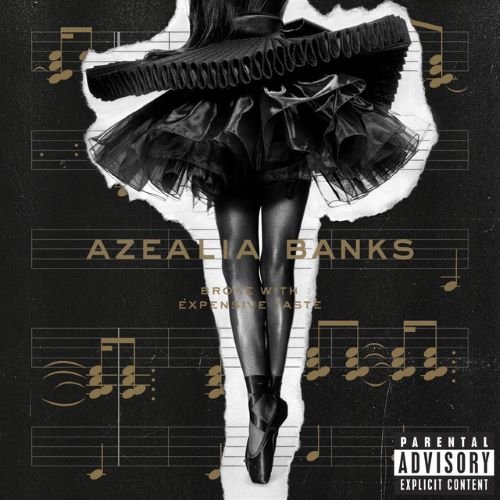
FEATURE: Second Spin: Azealia Banks - Broke with Expensive Taste

FEATURE:


Second Spin

Azealia Banks - Broke with Expensive Taste

__________

THIS is a curious case…

of a promising and amazing artist releasing an album after a lot of speculation, build and interest. That was eight years ago. Azealia Banks put out her debut album, Broke with Expensive Taste, in 2014. In 2011, Banks started working on the album despite not having signed to a record label at that time. She signed a contract with Interscope and Polydor Records to work on the album. Unfortunately, she was unhappy with the labels' representatives, so she ended the contract with them in July 2014; Banks then signed to Prospect Park. Broke with Expensive Taste arrived on 7th November, 2014. In terms of its styles and genres, the album mixes House and Dance-Pop with Hardcore Punk, Punk, Trance, Trap, R&B and U.K. garage. Many felt the album was worth the wait and definitely lived up to any hype. Recognising Banks as a huge talent with a promising future, Broke with Expensive Taste was successful in the U.S. It didn’t fare as well in the U.K. I think it is an album that is still underrated and underplayed. Maybe Azealia Banks has gained more attention for Twitter feuds and controversy rather than her brilliant music. This is a case of separating the artist from the personal, as she does have a Morrissey-like streak for controversy and unwise racial stereotypes and slurs. I am just focusing on her album and its worth – even if I am not fully on board with Banks as a person and her opinions.

I am going to get to a couple of reviews for Broke with Expensive Taste soon. One is very positive, whereas the other is a little more mixed. Before that, there is an interview from COMPELX. Azealia Banks was asked about her new album, and what life as a child was like in N.Y.C. It makes for an interesting read:

What have the last three years been like for you leading up to the release?

They’ve been really hectic. I've been doing a lot of traveling. I’ve been here, there, here, there. I’ve been more places in the last three years than I’ve been my entire life.

People kept saying you did a "Beyoncé release," but it wasn’t a Beyoncé release. You were working on this for so long, and now a lot of reviews say, “It’s surprisingly great.” 

The music has always been great. [Laughs.]

Did it feel like an "I told you so"?

It’s good to do that, but nobody wants to hear me do that. I’m obviously a very strong woman. It’s not to say that I’m at all trying to seem weak to make people like me or anything like that. I’m not going to say, “I told you so,” because you know so, and I know you know so. So we’re just going to leave it at that, and I’m going to go on and do my other things. One thing I can say, I distinctly remember what publications stuck by me and which ones shitted on me. Complex was definitely one of the ones that shitted on me.

In what way?

Just lots of ways, a lot of the times those things would happen...

—the headlines.

I feel like you guys at Complex, it’s more like it’s a boys club kind of thing. I get shitted on by Complex a lot, like a lot. Yeah, in terms of headlines and in terms of when I put stuff out, the comments have always been shady. You guys have all of these little small bloggers there that tweet really disgusting things. I almost feel like Complex is part of that group of urban media stuff that I just you know….

It’s an interesting dynamic because it's a men's hip-hop magazine.

Yeah. I feel like Complex Magazine has done a really good job in exaggerating a lot of things that are happening in the media, and Complex has played a really great hand in putting the sour taste for Azealia Banks in the public’s mouth.

What topics in rap do you think are over-sensationalized? Maybe a lot of people also really don’t know what anyone is talking about in the industry.

That’s because I feel like hip-hop isn’t really talking about anything right now.

I feel like hip-hop isn’t really talking about anything right now.

At all?

Not really. Like not really that I know of. On the mainstream, OK, Kanye, he’ll do “Black Skinhead.” That’s talking about something. I’m not even saying that I’m talking about shit. I’m not talking about shit in my music. I’m bring more styles of music, ideas, and themes to you. In terms of that whole hip-hop with a message, no one is really bringing a message right now.

No one is conscious?

Or conscious in just bringing a message. I’m consciously trying to bring you new things and new feelings and trying to move you in that way.

Well, speaking of Kanye, years ago, you guys did some work together. What happened to it? 

[Shrugs] At an earlier point in my artistry, the idea of working with someone like Kanye West, Beyonce, or Lady Gaga was very glamorous to me. It was such a glamorous idea, but once I started to delve deeper into my music it was like, “OK, this is really what it’s about.” It’s about being the best you can be and not linking up with everybody else.
Who was the first person you played the album for front to back?

The first person to actually sit and listen to the album was [my manager] Jeff Kwatinetz. This guy right here, this is the first person I actually played it for and was paying attention to what was happening. I played it for lots of people. He got it right away.

What was there to get that other people weren’t getting?

I felt like everyone I was playing it for was listening to it in a very opportunistic way. Like, "How am I going to make money off of this? What is the single?" Rather than like, “OK, just listen to the fucking music.” Like forget about me, forget about Azealia Banks, listen to "Idle Delilah," "Give Me a Chance," or "Miss Camaraderie" and see what you think about this. Can you sell this album? I didn’t ask if you can fucking sell me. Can you sell this music.

You're not supposed to do anything with it. Put it in a fucking display case. If somebody wants to buy it, they will buy it. I need you to stock the shelves. Can you stock the fucking shelves, please? Just stock the fucking shelves. Just put it out, and if people want it, they’ll take it.

I remember reading about you growing up, sneaking on the train, getting dollar slices, really just being a normal NYC kid.

Yeah! I really wanted to be so much more. I wanted like purses and shoes, and I wanted to have my own apartment. As time went on the meaning changed into something more along lines like, there's always more to learn, there’s always more to be. You’re always broke striving for more. It’s like a life motto for me now, rather than like a joke. Like, oh you’ve got champagne taste with a beer budget, it's not that. It’s kind of humbling in the sense that…not to say you’ll never see God, but you know what I mean. It makes you happy with your day-to-day existence. It makes me feel really content when I say “broke with expensive taste.” Rather than wanting, you’re happy with what you have. Of course you want to know more. I’m making it more of knowledge and wisdom thing than a material thing.

No matter how much you know there will always be more to know.

Exactly”.

It is time to come to some critical reaction to 2014’s Broke with Expensive Taste. It is an album that should be more widely heard and played. Maybe Azealia Banks’ relative retreat from the spotlight means many are not aware of the album. There are some fantastic tracks on it that need to be heard. I will come to a positive review from Pitchfork:

It’s been three years since Azealia Banks sprung up from the New York underground fully formed with "212", her confrontationally profane lead single. "212" was the seed for all of the triumph and adversity that followed—the prodigious rap skills, the casual genre-bending, and the bratty disdain for authority. In its wake, Banks charted a career path typical of a budding rap talent. She dropped the promising, beat-jacking pre-album mixtape (2012’s unrelenting Fantasea) and the compact retail EP of brash originals (2012’s nostalgia tripping 1991). She navigated through mettle-testing beef with her peers. The tiffs were negligible as long as the music was nourishing, and for a while Azealia’s war on the rap establishment was excitingly disruptive.

But as work on her Interscope Records debut commenced, Banks hit a tight spot. The deal soured as her new tracks were met with indifference from label liaisons. Her uncompromising social media demeanor landed her in quaffs both hysterical (See: her merciless ribbing of T.I. and Iggy Azalea) and injurious (that time she defended her right to call Perez Hilton a gay slur), but vocal criticism of Baauer, Pharrell, and Disclosure began to cost her profitable collaborators. Her early career goodwill nearly spent, Banks finally caught a break: Interscope let her out of her deal with the rights to all the songs she’d recorded during her tenure there. Broke With Expensive Taste arrived this month with very little fanfare, its release announced with a simple tweet. Its lengthy gestation is, of course, its chief foible. Older material accounts for roughly half the tracklist, and some of it doesn’t mesh well with the fresher, weirder stuff around it. It helps to see Broke With Expensive Taste, then, as an anthology, The Portable Azealia Banks.

Three songs in, it’s clear why Interscope didn’t know what to do with the thing. Opener "Idle Delilah" bursts in effortlessly crossing elements of house, dubstep, and Caribbean music. It’s followed by "Gimme a Chance", a bass-heavy post-disco romp that takes a hairpin turn into smooth merengue halfway through, as Banks flits from rapping and singing in English to perfect unaffected Spanish. "Desperado" borrows a beat from early 2000s UK garage whiz MJ Cole’s "Bandelero Desperado" as Banks puts on a rap clinic, flaying adversaries in a flow so neat you might miss the fact that every piece of every line rhymes. Her voice is often the sole unifying force from track to track here, and it’s easy to see a label’s trepidation about pushing this thing on listeners who haven't followed her every move. "Nude Beach a Go-Go", for instance, a late album collaboration with Ariel Pink, is every bit the what-the-fuck moment it sounds like on paper.

By the end of Broke With Expensive Taste you’ll come to see Azealia Banks as a dance pop classicist underneath the flailing. The capable but unfussy approach to melody on deep cut confections "Soda" and "Miss Camaraderie" as well as Fantasea holdover "Luxury" and the massive "Chasing Time" showcase Azealia as a singer who’s studied her Robin S. and Technotronic. Coupled with her bullish rhyme skills, Azealia’s chops as a house vocalist make for a true rapper-singer double threat. (Credit is due to Drake and Nicki Minaj, but both sound like they picked up singing on the job.) She’s an angel on the choruses, but for the verses in between, she’s a formidable spitter whose flash and flow are unmistakably Harlem.

The party line among hip-hop aficionados is that New York rap currently lacks a distinctly New York identity. There’s some truth to it. The city’s biggest success stories of late involve locals breaking out by spicing Big Apple grit with outside flavors, from A$AP Mob’s Texas screw fixation to French Montana’s trap circuit traction to Nicki Minaj’s day-glo EDM daze. But the scene in 2014 can’t look like it did in 1994 or even 2004, and it’s becoming increasingly clear that the Statlers and Waldorfs pining for a new age of rappity boom bap wouldn’t notice a new New York if it came up and offered them molly in a Brooklyn bar bathroom.

Well, Azealia Banks is it, and Broke With Expensive Taste is a reminder that the corner of Harlem that she claims is walking distance from both Washington Heights and the Bronx, where you’re as likely to hear hip-hop booming out of apartments and passing cars as freestyle, reggaeton, house, or bachata. It’s a quick subway jaunt away from the landmark clubs where ball culture persists, as well as perennial dance parties at Webster Hall and the glut of eclectic Lower Manhattan concert venues. Broke With Expensive Taste glides through all of these, just like the faithful 1 train sampled on "Desperado". Both album and the artist revel in the freedom of a New York City where divisions between these sounds and scenes have ever so slowly ceased to exist”.

I am going to finish up with an AllMusic review for Broke with Expensive Taste. One of the best albums of 2014, let’s hope that Azealia Banks has more music in her - and there is a great second album soon enough. A very talented (if controversial) figure, there will definitely be demand and an audience waiting:

Broke with Expensive Taste, the official debut album from rapper/songwriter Azealia Banks, finally appeared in late 2014, despite originally having been scheduled for a 2012 release and well after several songs showed up as singles many months and sometimes years before an album surfaced. Various delays and major-label red tape ultimately saw Banks walking out on her contract with Polydor/Interscope and independently releasing the album digitally with no press notification or promotional lead-up. This surprise-attack release followed a similar approach as Beyoncé's late-2013 self-titled album, which simply appeared online in full without notice about a year prior to Broke with Expensive Taste. Finally a reality, the strengths of Banks' debut are incredibly strong. Aforementioned long-available singles like "212," "Chasing Time," and "Yung Rapunxel" showcase aggressive production that winds together dubstep's relentless bass pounding and Banks' talents as a fluid, sometimes vicious MC as well as a serviceable R&B vocalist. Production assistance from underground dance figures like Lone, AraabMuzik, and Lil Internet, among many others, gives the album an incredibly varied feel, sometimes losing focus and spilling into confused territory.

The Spanish-sung rhymes, Latin breakdown, and funky horn sections of "Gimme a Chance" sound like a different artist when held up to the harsh minimalism of "Heavy Metal and Reflective" just a few tracks later. Likewise, the commercial rap routines and haunted trap beat of "Ice Princess" make the kitsch-heavy faux-surf nonsense of the Ariel Pink-produced "Nude Beach A Go-Go" sound even more out of place, both tunes on the same album making it harder to take either at face value. While the time-tested singles are highlights and several other tracks hit similar highs, the album ultimately goes in too many directions that feel like filler, leaving this debut coming across more like a piecemeal collection of tracks that spike and dip in terms of quality and intent”.

There has been music since 2014 from Banks. The E.P., Icy Colors Change, was released in 2018. Her long-delayed second and third studio albums, Fantasea II: The Second Wave and Business & Pleasure, still await releases. The lead singles from each respective album, Anna Wintour and Black Madonna, were released in April 2018 and June 2020 respectively. I guess we will have to see whether there is going to be more news or updates regarding Azealia Banks and a follow-up album! She is a fantastic artist who we definitely need to hear more from – in terms of music, rather than Twitter feuds and misjudged remarks! If you have not heard it before, then go and listen to Broke with Expensive Taste. It is an album that is…

WORTH another spin.

FEATURE: After the Clouds Have Been Busted… Kate Bush's Hounds of Love at Thirty-Seven: The Ninth Wave

FEATURE:


After the Clouds Have Been Busted…

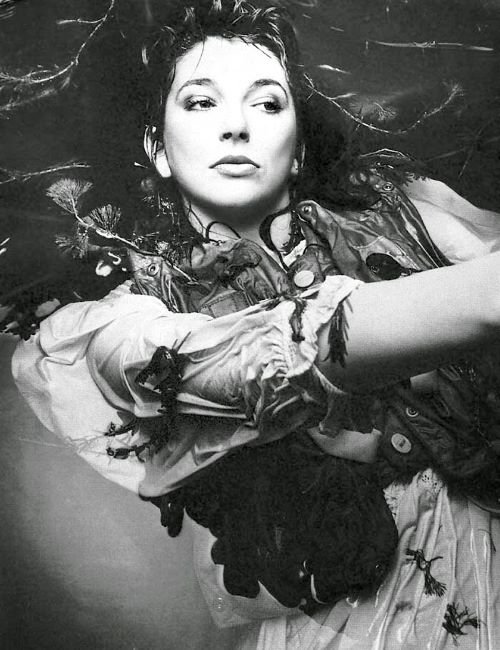
IN THIS PHOTO: Kate Bush in a promotional image for The Ninth Wave/PHOTO CREDIT: John Carder Bush

Kate Bush's Hounds of Love at Thirty-Seven: The Ninth Wave

__________

ON 16th September…

Kate Bush’s Hounds of Love turns thirty-seven. The album has long been regarded as her very best. It has acquired fresh popularity and relevance after its first single, Running Up That Hill (A Deal with God), appeared on Stranger Things. I have typed that line so many times now! It is great that the album has reached those who might have missed it before. The first half of the album is more conventional and contains the singles. Aside from Running Up That Hill (A Deal with God), there is Cloudbusting, The Big Sky and Hounds of Love. I am not sure how far into the writing process for Hounds of Love Kate Bush thought of The Ninth Wave. This is the conceptual suite that is, in my view, the best thing about the album. I wanted to revisit it ahead of the anniversary of the album. Before going into more detail, here is a snippet of Bush discussing the idea behind The Ninth Wave:

The Ninth Wave was a film, that's how I thought of it. It's the idea of this person being in the water, how they've got there, we don't know. But the idea is that they've been on a ship and they've been washed over the side so they're alone in this water. And I find that horrific imagery, the thought of being completely alone in all this water. And they've got a life jacket with a little light so that if anyone should be traveling at night they'll see the light and know they're there. And they're absolutely terrified, and they're completely alone at the mercy of their imagination, which again I personally find such a terrifying thing, the power of ones own imagination being let loose on something like that. And the idea that they've got it in their head that they mustn't fall asleep, because if you fall asleep when you're in the water, I've heard that you roll over and so you drown, so they're trying to keep themselves awake. (Richard Skinner, 'Classic Albums interview: Hounds Of Love'. BBC Radio 1, 26 January 1992)”.

In previous features, I have looked at The Ninth Wave as a film. Maybe turning it into a short film or longer piece. Of course, Bush did bring the suite to life on stage in 2014 during Before the Dawn. In interviews, when asked about The Ninth Wave, Bush said it concerned a terrifying thought. The idea of being stuck in the water and not knowing what is beneath. She feels this it the scariest thing possible. Much more terrifying than being in the air and in peril. She has also said how she heard people fall asleep when they are in the water/this situation, and they naturally roll over and drown, so her heroine needed to stay awake. It makes the first song on the suite, And Dream of Sheep, particularly tragic and ironic. That desire and almost painful need to sleep! Waking the Witch features voices telling the woman to stay awake and alive as it seems, as hope is slipping, she is getting tired and getting into danger. I keep writing about The Ninth Wave because it is so fascinating and accomplished. When Hounds of Love came out, Bush was only twenty-seven. That is such a young age for someone to write something as phenomenal and astonishing as The Ninth Wave! I almost think of Hounds of Love’s second side as a classical suite or a film that Bush tested out through music first. I guess one can think about The Ninth Suite being related to classic literature and imagery.

I get reminders and links to The Lady of Shalott by Alfred, Lord Tennyson. The heroine lives in a castle on a river and tries to escape. She ends up in a boat on a river and eventually dies. Although Bush’s figure survives and is rescued at the end of The Ninth Wave, that has never truly been confirmed. Although it seems like there is a rescuer lifting her to safety, could this be a dream? On stage, people saw Bush being rescued. She has said how The Ninth Wave does end with the woman being saved, but it is still open to interpretation. I found an interesting article where a Kate Bush fan page asked people about their general thoughts about The Ninth Wave. This response caught my eye:

Though many of you may already have taken notice of the following on your own, IED has been so taken with these ideas that he felt he just had to mention them anyway.

The whole conceit of the heroine drifting in water refers to far more than just the explicit, immediate context of The Ninth Wave. In fact, the implicit references are so deliberate that they may arguably be more important than the explicit subject-matter. Actually, at least three earlier such subjects loom in the collective English consciousness. All of them have important positions in British cultural history.

Of these the best known outside England is the story of Ophelia in Hamlet. The allusion to Ophelia's insane self-immersion is plain to see in the photo for The Ninth Wave: the flowers. These were explained away almost flippantly by (if IED remembers correctly -- Doug, will you confirm or deny, since you were there too?) John Carder Bush as being intended to show the chaos and damage on board the ship during its sinking (or whatever ultimately forced the heroine into the ocean). The idea was supposed to be that commercially cultivated flowers, perhaps in the hands of the heroine at the time of the disaster, perhaps thrown by happenstance into the water from a dining table flower arrangement during the commotion and sinking, have happened to end up floating in the very same waves in which the heroine finds herself engulfed.

This explanation has always struck IED as suspiciously superficial -- not to mention implausible. The image of a beautiful young Englishwoman floating on her back in a cold, deathly state, dressed in a white lace nightie and set adrift amid exotic and colourful flowers has, since the seventeenth-century premiere of Hamlet, been inextricably connected with the fate of Ophelia.

In fact, the image of Ophelia in the water is a relatively modern variant on the Arthurian images of both Elaine and the Lady of Shalott. These two earlier legends feature their heroines floating downstream in open boats (in which they eventually are found dead). This image, in fact, was reproduced precisely by Kate herself in what was virtually her debut on video, the so-called Eftelink films, specifically the last of the six, a setting of "The Kick Inside". The reader will begin to see the extent of the convolutions involved; see, in fact, a multitude of wheels within wheels, and all of impeccably, classically English origin.

But the images are not only associated with the word, but with English paintings, as well, and these are predominantly Victorian. The most famous of all of these pictures, and possibly the single greatest image of the Pre-Raphaelite movement, is "Ophelia", by John Everett Millais (1852). Kate is definitely very familiar with the painting; her brother confirmed as much in conversation with IED at East Wickham Farm in 1985. At the time this point made littel impression on IED, but since then it has come to take on increasing importance in his fevered brain...

IN THIS PHOTO: Kate Bush being carried off stage during the performance of Hello Earth during 2014’s Before the Dawn/PHOTO CREDIT: Ken McKay 

During that conversation IED and JCB discussed the connection of the "Lakeside" images (photographs taken by Jay of his sister sitting and stretching by the banks of the river or lake which appears in the Eftelink videos) with Pre-Raphaelite imagery. We also talked about the famous post-Pre-Raphaelite painting (in the Tate Gallery) of the Lady of Shalott, by John William Waterhouse. There are at least four other very familiar paintings of about the same date which depict episodes from the legend of the Lady of Shalott, and which were inspired by a poetic setting of the legend in...Tennyson's Idylls of the King. (More wheels ...) IED has been purposelessly musing on all of this, mulling over also Kate's own comments about the influence of Pre-Raphaelitism on her own artistic vocabulary (see quote No. 1) as well as the large painting, called "The Hogsmill Ophelia", which hangs in her studio (see quote No. 2). And the more familiar he becomes with the images and the references, the more sense it all makes. What do you think?

Quote Number 1:

NM: I'm reminded by a painting in the corner here, which is a sort of satire of a Pre-Raphaelite painting, that I always have thought that those Victorian painters, the Pre-Raphaelites, were an influence to the texture of your song writing.

KB: Yes, yes. I think that particularly in my very early teens I was very enchanted by the whole romance of it, yes. They find their way into songs, the imagery. I think that's what happens: something attracts you because of its imagery and you digest it and it comes up in a song. I think that's how artists work; they are like magpies, picking up little bits of gold and storing them away.

Quote No. 2:

At one end of the studio is a huge painting of a drowned, cracked doll floating face up past a sewer. For some reason this painting, which might be described as macabre-kitsch, seems to say a lot about its owner. Kate returns and sees me examining it.

"That's called 'The Hogsmill Ophelia'. A lot of people find it disturbing but I don't. I lived with it for ages. Looked at it every day. That picture cost me all the money I had once. Paintings are a great inspiration. One of my favourites is by Millais, 'The Huguenot'. It's of a man going off to the wars being hugged to the breast of his lover. She's holding him to her by a scarf around his arm. It's very beautiful.”.

At seven tracks, I think of The Ninth Wave as its own body of work, rather than the second side of Hounds of Love. It is remarkable how each song has its own life and sound. You know Bush composed the song with video ideas in mind. Although it has not happened yet, you wonder what she would have concocted if she ever did film The Ninth Wave. I am not going to go into detail about each song, except for its finale, The Morning Fog. From the almost ballad and lullaby-like quality of And Dream of Sheep, we then get the chillier and more haunting Under Ice. That leads to the terrifying and head-spinning Waking the Witch. Later on, we get one of the most dramatical musical switches Bush has ever put to tape when we go from Jig of Life – which is spirited and has fantastic Irish musicians playing – to Hello Earth. It is a dramatical change of sound and direction! The Morning Fog is the heroine saying she has been born again. The final words offer hope and this second chance: “I'm falling/And I'd love to hold you know/I'll kiss the ground/I'll tell my mother/I'll tell my father/I'll tell my loved one/I'll tell my brothers/How much I love them”. This is what Bush said about The Morning Fog in 1992:

Well, that's really meant to be the rescue of the whole situation, where now suddenly out of all this darkness and weight comes light. You know, the weightiness is gone and here's the morning, and it's meant to feel very positive and bright and uplifting from the rest of dense, darkness of the previous track. And although it doesn't say so, in my mind this was the song where they were rescued, where they get pulled out of the water. And it's very much a song of seeing perspective, of really, you know, of being so grateful for everything that you have, that you're never grateful of in ordinary life because you just abuse it totally. And it was also meant to be one of those kind of "thank you and goodnight" songs. You know, the little finale where everyone does a little dance and then the bow and then they leave the stage. [laughs] (Richard Skinner, 'Classic Albums interview: Hounds Of Love. Radio 1 (UK), aired 26 January 1992)”.

On 16th September, Hounds of Love will get a lot of attention. Many will discuss it in the context of Running Up That Hill (A Deal with God). I do hope that some talk about The Ninth Wave and its importance. Such a stunning and immersive suite that I am still blown away by! I can only imagine how fans reacted to it the first time in 1985. They would not have been prepared for something like this! A long-held ambition from Bush was to realise The Ninth Wave. She finally got to do this in 2014. What a treat it must have been for fans to see that across twenty-two nights. How exhausting it must have been for her! Displaying her imaginative, songwriting and production genius, The Ninth Wave is also Kate Bush at the top of her game regarding vocal performances. She puts so much emotion and character into every song! If Bush, earlier on Hounds of Love, was asking if she could do a deal with God so she could swap places with someone to better understand them, you get the sense that The Ninth Wave is when she truly needed divine intervention. If all looked lost at the start of The Ninth Wave, there is this satisfying conclusion. Though, as I have said, could that have been a dream? Did the heroine die during Waking the Witch and everything afterwards is imagined or her final thoughts? I’d like to think that, actually, it out worked okay and the ill-fated and poor woman (who we assume got into the water when she got swept from a ship) did make it…

OUT safely.

FEATURE: Kate Bush’s The Dreaming at Forty: I Must Admit, Just When I Think I'm King: Ranking the Five Singles

FEATURE:


Kate Bush’s The Dreaming at Forty

I Must Admit, Just When I Think I'm King: Ranking the Five Singles

__________

IT is great…

 IN THIS PHOTO: Kate Bush performing Suspended in Gaffa

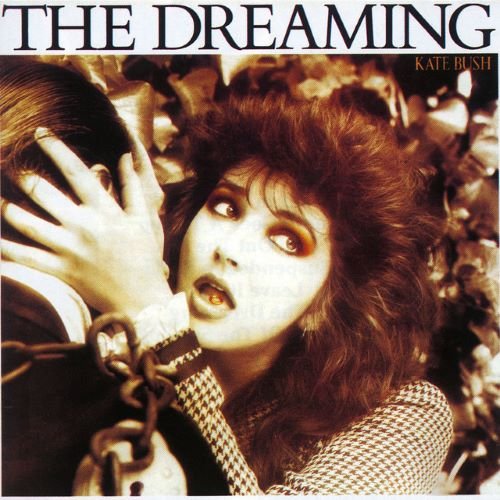
putting together a series of features for Kate Bush’s fourth studio album, The Dreaming. Released on 13th September, 1982, the fortieth anniversary is important. A lot of new features will be written and, on the day, a lot of love will be out there for an album that did not get all the praise it deserved when it was released. In all, there were five singles released from the album. Sat in Your Lap, The Dreaming, There Goes a Tenner, Suspended in Gaffa (released in mainland Europe and Australia) and Night of the Swallow (released in Ireland) are all very different and fared differently in the charts. I am going to rank those five singles and, in each case, include a bit of information about each (courtesy of the Kate Bush Encyclopedia), some of the musicians on the song, and my favourite lyrics from each. Ten amazing tracks on the album, five were put out as singles. Although there was mixed fortune in terms of chart positions (only one of the singles, Sat in Your Lap, can be seen as a success), they are brilliant songs that showed what breadth and range The Dreaming possessed. Here in my ranking of the…

FIVE brilliant singles from 1982’s The Dreaming.

_____________

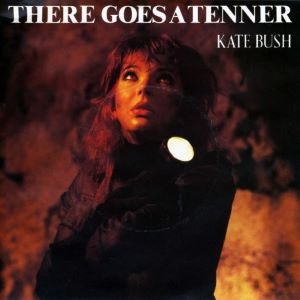
Five: There Goes a Tenner

Release Date: 2nd November, 1982

U.K. Chart Position: Did Not Chart

B-Side: Ne t'enfuis pas

Musicians:

Kate Bush – piano, Fairlight CMI, Yamaha CS-80, vocals; Del Palmer – bass guitar; Stuart Elliott – drums; Dave Lawson – synclavier

Background:

It's about amateur robbers who have only done small things, and this is quite a big robbery that they've been planning for months, and when it actually starts happening, they start freaking out. They're really scared, and they're so aware of the fact that something could go wrong that they just freaked out, and paranoid and want to go home. (...) It's sort of all the films I've seen with robberies in, the crooks have always been incredibly in control and calm, and I always thought that if I ever did a robbery, I'd be really scared, you know, I'd be really worried. So I thought I'm sure that's a much more human point of view. (The Dreaming interview, CBAK 4011 CD)

That was written on the piano. I had an idea for the tune and just knocked out the chords for the first verse. The words and everything just came together. It was quite a struggle from there on to try to keep things together. The lyrics are quite difficult on that one, because there are a lot of words in quite a short space of time. They had to be phrased right and everything. That was very difficult. Actually the writing went hand-in-hand with the CS-80. (John Diliberto, Interview. Keyboard/Totally Wired/Songwriter (USA), 1985)Kate Bush Encyclopedia

My Favourite Lyrics:I hope you remember/To treat the gelignite tenderly for me/I'm having dreams about things/Not going right/Let's leave in plenty of time tonight

Four: Night of the Swallow

Release Date: 21st November, 1983

U.K. Chart Position: Only a Single in Ireland

B-Side: Houdini

Musicians:

Kate Bush – vocals, Fairlight CMI; Stuart Elliott – drums; Del Palmer – fretless bass, 8-string bass; Bill Whelan – bagpipes, string arrangement; Liam O'Flynn – uilleann pipes, penny whistle; Seán Keane – fiddle; Dónal Lunny – bouzouki

Background:

Ever since I heard my first Irish pipe music it has been under my skin, and every time I hear the pipes, it's like someone tossing a stone in my emotional well, sending ripples down my spine. I've wanted to work with Irish music for years, but my writing has never really given me the opportunity of doing so until now. As soon as the song was written, I felt that a ceilidh band would be perfect for the choruses. The verses are about a lady who's trying to keep her man from accepting what seems to be an illegal job. He is a pilot and has been hired to fly some people into another country. No questions are to be asked, and she gets a bad feeling from the situation. But for him, the challenge is almost more exciting than the job itself, and he wants to fly away. As the fiddles, pipes and whistles start up in the choruses, he is explaining how it will be all right. He'll hide the plane high up in the clouds on a night with no moon, and he'll swoop over the water like a swallow.

Bill Whelan is the keyboard player with Planxty, and ever since Jay played me an album of theirs I have been a fan. I rang Bill and he tuned into the idea of the arrangement straight away. We sent him a cassette, and a few days later he phoned the studio and said, "Would you like to hear the arrangement I've written?"

I said I'd love to, but how?

"Well, Liam is with me now, and we could play it over the phone."

I thought how wonderful he was, and I heard him put down the phone and walk away. The cassette player started up. As the chorus began, so did this beautiful music - through the wonder of telephones it was coming live from Ireland, and it was very moving. We arranged that I would travel to Ireland with Jay and the multi-track tape, and that we would record in Windmill Lane Studios, Dublin. As the choruses began to grow, the evening drew on and the glasses of Guiness, slowly dropping in level, became like sand glasses to tell the passing of time. We missed our plane and worked through the night. By eight o'clock the next morning we were driving to the airport to return to London. I had a very precious tape tucked under my arm, and just as we were stepping onto the plane, I looked up into the sky and there were three swallows diving and chasing the flies. (Kate Bush Club newsletter, October 1982)Kate Bush Encyclopedia

My Favourite Lyrics:In Malta, catch a swallow/For all of the guilty--to set them free/Wings fill the window/And they beat and bleed/They hold the sky on the other side/Of borderlines

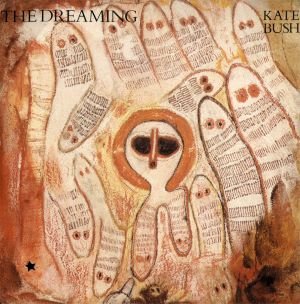
Three: The Dreaming

Release Date: 26th July, 1982

U.K. Chart Position: 48

B-Side: Dreamtime

Musicians:

Kate Bush – lead and backing vocals; piano; Fairlight CMI; Paddy Bush – bullroarer; backing vocals; Rolf Harris – didgeridoo; Stuart Elliott – drums; Percy Edwards – animal sounds; Gosfield Goers – crowd noise

Background:

Well, years ago my brother bought 'Sun Arise' [by Rolf Harris] and I loved it, it was such a beautiful song. And ever since then I've wanted to create something which had that feel of Australia within it. I loved the sound of the traditional aboriginal instruments, and as I grew older, I became much more aware of the actual situation which existed in Australia between the white Australian and the aborigines, who were being wiped out by man's greed for uranium. Digging up their sacred grounds, just to get plutonium, and eventually make weapons out of it. And I just feel that it's so wrong: this beautiful culture being destroyed just so that we can build weapons which maybe one day will destroy everything, including us. We should be learning from the aborigines, they're such a fascinating race. And Australia - there's something very beautiful about that country. ('The Dreaming'. Poppix (UK), Summer 1982)

The title actually came last. It always does. It's the most difficult thing to do. I tried to get a title that would somehow say what was in there. It was really bad. Then I found this book [Hands me huge tome on australian lore]. I'd written a song and hadn't really given it a proper name. I knew all about this time they call Dreamtime, when animals and humans take the same form. It's this big religious time when all these incredible things happen. The other word for it is The Dreaming. I looked at that written down and thought, ``Yeah!'' (Kris Needs, 'Dream Time In The Bush'. ZigZag (UK), 1982)

The Aboriginals are not alone in being pushed out of their land by modern man, by their diseases, or for ther own strange reasons. It is very sad to think they might all die. 'The Dreaming' is the time for Aboriginals when humans took the form of animals, when spirits were free to roam and in this song as the civilized begin to dominate, the 'original ones' dream of the dreamtime. (Press statement by Kate Bush, 1982)” – Kate Bush Encyclopedia

My Favourite Lyrics:The civilised keep alive/The territorial war/"See the light ram through the gaps in the land"/Erase the race that claim the place/And say we dig for ore/Or dangle devils in a bottle

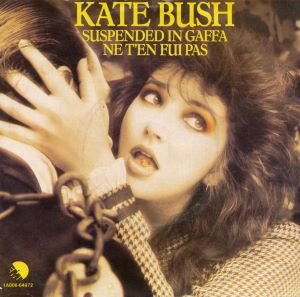
Two: Suspended in Gaffa

Release Date: 2nd November, 1982

U.K. Chart Position: Only a Single in Mainland Europe

B-Side: Ne t'enfuis pas

Musicians:

Drums, sticks: Stuart Elliott; bass: Del Palmer; piano: Kate Bush; strings: Paddy Bush, Kate Bush; mandolins: Paddy Bush; synclavier: Dave Lawson

Background:

I could explain some of it, if you want me to: Suspended in Gaffa is reasonably autobiographical, which most of my songs aren’t.  It’s about seeing something that you want–on any level–and not being able to get that thing unless you work hard and in the right way towards it. When I do that I become aware of so many obstacles, and then I want the thing without the work. And then when you achieve it you enter…a different level–everything will slightly change. It’s like going into a time warp which otherwise wouldn’t have existed. (Richard Cook, 'My music sophisticated?...'. NME (UK), October 1982)

'Suspended In Gaffa' is, I suppose, similar in some ways to 'Sat In Your Lap' - the idea of someone seeking something, wanting something. I was brought up as a Roman Catholic and had the imagery of purgatory and of the idea that when you were taken there that you would be given a glimpse of God and then you wouldn't see him again until you were let into heaven. And we were told that in Hell it was even worse because you got to see God but then you knew that you would never see him again. And it's sorta using that as the parallel. And the idea of seeing something incredibly beautiful, having a religious experience as such, but not being able to get back there. And it was playing musically with the idea of the verses being sorta real time and someone happily jumping through life [Makes happy motion with head] and then you hit the chorus and it like everything sorta goes into slow mo and they're reaching [Makes slow reaching motion with arm] for that thing that they want and they can't get there. [Laughs] (Interview for MTV, November 1985)Kate Bush Encyclopedia

My Favourite Lyrics:That girl in the mirror/Between you and me/She don't stand a chance of getting anywhere at all/Not anywhere at all/No, not a thing/She can't have it all

One: Sat in Your Lap

Release Date: 22nd June, 1981

U.K. Chart Position: 11

B-Side: Lord of the Reedy River (Donovan)

Musicians:

Kate Bush – lead and backing vocals; piano; Fairlight CMI; Paddy Bush – bamboo sticks; backing vocals; Preston Heyman – drums; bamboo sticks; Jimmy Bain – bass guitar; Geoff Downes – CMI trumpet section; Stewart Arnold – backing vocals; Ian Bairnson – backing vocals; Gary Hurst – backing vocals

Background:

I already had the piano patterns, but they didn't turn into a song until the night after I'd been to see a Stevie Wonder gig. Inspired by the feeling of his music, I set a rhythm on the Roland and worked in the piano riff to the high-hat and snare. I now had a verse and a tune to go over it but only a few lyrics like "I see the people working", "I want to be a lawyer,'' and "I want to be a scholar,'' so the rest of the lyrics became "na-na-na"' or words that happened to come into my head. I had some chords for the chorus with the idea of a vocal being ad-libbed later. The rhythm box and piano were put down, and then we recorded the backing vocals. "Some say that knowledge is...'' Next we put down the lead vocal in the verses and spent a few minutes getting some lines worked out before recording the chorus voice. I saw this vocal being sung from high on a hill on a windy day. The fool on the hill, the king of the castle... "I must admit, just when I think I'm king."

The idea of the demos was to try and put everything down as quickly as possible. Next came the brass. The CS80 is still my favourite synthesizer next to the Fairlight, and as it was all that was available at the time, I started to find a brass sound. In minutes I found a brass section starting to happen, and I worked out an arrangement. We put the brass down and we were ready to mix the demo.

I was never to get that CS80 brass to sound the same again - it's always the way. At The Townhouse the same approach was taken to record the master of the track. We put down a track of the rhythm box to be replaced by drums, recording the piano at the same time. As I was producing, I would ask the engineer to put the piano sound on tape so I could refer to that for required changes. This was the quickest of all the tracks to be completed, and was also one of the few songs to remain contained on one twenty-four track tape instead of two! (Kate Bush Club newsletter, October 1982)” – Kate Bush Encyclopedia

My Favourite Lyrics:In my dome of ivory/A home of activity/I want the answers quickly/But I don't have no energy/I hold a cup of wisdom/But there is nothing within/My cup, she never overfloweth/And 'tis I that moan- and groaneth

FEATURE: Inspired By… Part Seventy-Six: Gloria Estefan

FEATURE:


Inspired By…

Part Seventy-Six: Gloria Estefan

 __________

ON 1st September…

the legendary Gloria Estefan is sixty-five. A hugely influential artist, Estefan is a seven-time Grammy Award-winner and a Presidential Medal of Freedom recipient. She has been named one of the Top 100 greatest artists of all time by both VH1 and Billboard. Estefan's record sales exceed seventy-five million worldwide, making her the second best-selling female Latin artist in history, and one of the best-selling female singers of all-time. Not only marking her sixty-fifth birthday, I wanted to put together a playlist of songs from artists who are either influenced by Gloria Estefan or have been compared to her. Before I get there, AllMusic provide some biography about an iconic artist:

With sales of more than 100 million albums, more than three-dozen number one singles, and a shelf-full of awards, singer/songwriter Gloria Estefan is arguably the most successful crossover artist in Latin music history. Pre-dating the first global Latin pop explosion by a decade, Estefan paved the way for artists such as Ricky Martin, Jennifer Lopez, and Shakira, to name a few. Her achievements, both solo and with Miami Sound Machine (co-led with producer-multi-instrumentalist husband Emilio Estefan, Jr.) began with the release of the European club smash "Dr. Beat" in 1984. She scored at home with "Conga" in 1985, and "The Rhythm Is Gonna Get You" in 1987. These trademark Estefan jams wed slick Miami pop to polyrhythms from her native Cuba. She effortlessly moved between Latin and Anglo approaches, employing elements of cumbia, funk, son, montuno, guajira, rhumba, soul, and pop.

Estefan hit number one for the first time with 1988's polished ballad "Anything for You," and ruled the '90s charts with hit singles including "Turn the Beat Around," "Mi Tierra," and "Oye." Her platinum albums, including 1996's Destiny, did the same. Her run continued in the 21st century with the multi-platinum Alma Caribeña and 2007's gold-certified 90 Millas. 2013's Standards, her last outing before an extended recording break, registered at 20 on the Top 200. Philanthropists and humanitarians, the Estefans were the first couple to receive the Presidential Medal of Freedom, and Gloria was the first Cuban-American singer/songwriter to receive a Kennedy Center Honor. The couple have been graced with the Gershwin Prize for Popular Song by the Library of Congress. A Tony-nominated Broadway musical, On Your Feet, was based on their lives and music.

Born Gloria Fajardo in Havana on September 1, 1957, Estefan was raised primarily in Miami, Florida, after her father, a bodyguard for Cuban president Fulgencio Batista, was forced to flee the island following the 1959 coup helmed by Fidel Castro. In 1975, Fajardo and her cousin Merci Murciano auditioned for the Miami Latin Boys, a local wedding band headed by keyboardist Emilio Estefan, Jr. After they were hired, the group was re-christened Miami Sound Machine. Four years later, Fajardo and Estefan wed. As Miami Sound Machine began composing their own original material, their fusion of pop, disco, and salsa earned a devoted local following, and in 1979 the group issued their first Spanish-language LP on CBS International. Despite a growing Latino fan base, they did not cross over to non-Latin audiences until the single "Dr. Beat" topped European dance charts in 1984.

Primitive Love, issued in 1985, marked Miami Sound Machine's first English-language effort. It scored three Top Ten pop hits in the U.S. alone with the infectious "Conga," "Bad Boy," and "Words Get in the Way." For 1988's triple-platinum Let It Loose, the group was billed as Gloria Estefan & Miami Sound Machine, reeling off four Top Ten hits -- "Rhythm Is Gonna Get You," "Can't Stay Away from You," the chart-topping "Anything for You," and "1-2-3." 1989's Cuts Both Ways was credited to Estefan alone and generated her second number one hit, "Don't Wanna Lose You." While touring in support of the album, her bus was struck by a tractor trailer on March 20, 1990. She suffered a broken vertebrae that required extensive surgery and kept her off the road for over a year. Emilio Estefan and the couple's son were injured in the crash as well, but all three recovered. Estefan resurfaced in 1991 with Into the Light, again topping the charts with "Coming Out of the Dark," a single inspired by her near-fatal accident; two more cuts from the album, "Can't Forget You" and "Live for Loving You," secured her foothold on the adult contemporary charts.

With 1993's Mi Tierra, Estefan returned to her roots, recording her first Spanish-language record in close to a decade and earning a Grammy Award for Best Tropical Latin Album; on the follow-up, 1994's covers collection Hold Me Thrill Me Kiss Me, she also recalled her dance-pop origins with a rendition of the Vicki Sue Robinson disco classic "Turn the Beat Around." Another all-Spanish effort, Abriendo Puertas, earned the Grammy as well, while Destiny featured "Reach," which was named the official theme of the 1996 Summer Olympics. As Latin pop made new commercial headway thanks to the efforts of acts like Ricky Martin and Enrique Iglesias, Estefan reigned as the most successful crossover artist in Latin music history, with international record sales close to the 50 million mark. In 1999, she also made her feature film debut alongside Meryl Streep in Music of the Heart, recording the film's title song as a duet with *NSYNC and scoring both a massive pop hit and an Oscar nomination in the process.

A new Spanish-language album, Alma Caribeña, followed in the spring of 2000. Several months later, Estefan was awarded a Grammy for Best Music Video for "No Me Dehes de Querer" at the first annual Latin Grammy Awards. Her husband, Emilio, won Producer of the Year. In 2003, she released Unwrapped, an English-language effort that was met with a lukewarm reception from consumers and critics. She didn't return with another new album for several years, as stop-gap compilations such as Amor y Suerte: Exitos Romanticos (2004), The Essential Gloria Estefan (2006), and Oye Mi Canto: Los Éxitos (2006) were released from time to time. When she did return, with 90 Millas in 2007, it was with a splash. The Cuban-themed, Spanish-language effort hearkened back to Mi Tierra and was a big hit on the Latin music scene; its lead single, "No Llores," quickly scaled Billboard's Hot Latin Tracks chart, and the album itself was a chart-topper as well. Estefan returned to English-language pop with 2011's Miss Little Havana, a dance-pop album produced by Pharrell Williams of the Neptunes. Estefan went in the opposite direction for her next album, tackling the Great American Songbook on the aptly titled 2013 album The Standards.

After the supporting tour ended Estefan took a break. She had contemplated an album celebrating the ties between Cuban and Brazilian music. In late 2016, Estefan, with a host of Brazilian musicians and producers, went through her catalog. Together they rearranged and re-recorded music and vocals for 14 of her hits --including "Conga," which was retitled "Samba" -- as well as four brand-new songs. The completed set was temporarily shelved after Estefan's mother died and other life events intervened. In June the single "Cuando Hay Amor" arrived at radio and streaming. The full-length Brazil305 was released by Sony in August”.

To honour and show appreciation to a remarkable artist who has broken barriers and influenced generations of other artists, the playlist below contains songs from those who have followed in her prestigious and acclaimed footsteps. The songs below are from those who owe the remarkable Gloria Estefan…

SOME hearty thanks.

FEATURE: Kate Bush’s Never for Ever at Forty-Two: A Song That Has Become Especially Relevant to Me Lately

FEATURE:


Kate Bush’s Never for Ever at Forty-Two

IN THIS PHOTO: Kate Bush in 1980/PHOTO CREDIT: Gered Mankowitz

A Song That Has Become Especially Relevant to Me Lately

 __________

NOT that I am going to lean…

 IN THIS PHOTO: Kate Bush at a signing for Never for Ever in Glasgow on 9th September, 1980

too heavily on the Kate Bush Encyclopedia too much for this feature – though I need to use it as a guide a bit later. As the gorgeous and stunning Kate Bush album, Never for Ever, is forty-two on 8th September, I am writing a few features about it. For this one, I wanted to get specific. A song from it has come to mind and increased in its relevance. I will also flesh this feature out with a 1980 interview with Kate Bush. I have said many a time how The Wedding List – the middle track (six) on the album – is my favourite cut. It is Bush at an early peak in terms of her vocal dexterity, lyrical brilliance and production genius. I think that Babooshka is the best single (of the three) from Never for Ever. The song I am going to reference and explore has an odd position on the album. I think that the tracklisting is mostly right, though a couple of tracks could have been moved. There is an odd run from tracks three to five. Blow Away (For Bill) starts it, whilst Egypt ends it. Positioned, somewhat awkwardly, in the middle is the divine and relatively unknown All We Ever Look For. I have spotlighted this song before, but there is a personal and more emotional relevance to it now that I wanted to tie in with a more general salute to a magnificent album ahead of its forty-second anniversary.

Before concentrating on a beautiful song that has stirred me recently, I wanted to quote a bit of an interview from Smash Hits of May 1980. This was a good four months before Never for Ever came out. At that point, Bush had not long finished her The Tour of Life (1979). That took her around the U.K. and Europe in an amazing live spectacle. Breathing came out in April 1980; Babooshka would be unveiled in June 1980, so this was an interesting mid-point where the media were keen to talk with a well-known young artist whose new music was unlike anything she had done before. Just hearing Bush asked about her personal life and how she retains this normalness and grounded approach (she also talks about the single, Breathing) struck my eye:

Kate rightly points out, however, that her lyrics do go into the psychology of relationships, and analyse what lies under that superficial banner of "love", which--no matter how common a theme--is still very important to a lot of people.

Her new album, however, is exploring different avenues.

"There are a lot of different songs," she says. "There's no specific theme, but they're saying a lot about freedom, which is very important to me." Which is why Kate is also producing the album herself this time, helped by John Kelly, who produced The Kick Inside and Lionheart . <False. Andrew Powell produced The Kick Insied , and Kelly was assisted by Kate on the production of Lionheart .>

"It means I have more control over my album, which is going to make it more rounded, more complete--more me, I hope."

Her latest, fifth, single is very different from anything Kate has done before, and different from anything on the album, she says. Breathing is a dramatic statement about the very real dangers of a possible nuclear disaster in our world.

"It's about a baby still in the mother's womb, at a time of nuclear fallout, but it's more of a spiritual being," Kate explains, gesticulating with her hands, drawing a picture in the air to demonstrate.

"It has all its senses: sight, smell, touch, taste and hearing; and it knows what is going on outside the mother's womb. And yet it wants desperately to carry on living, as we all do, of course.

"Nuclear fallout is something we're all aware of, and worried about happening in our lives, and it's something we should all take time to think about. We're all innocent, none of us deserves to be blown up."

The hopelessness and pointlessness of nuclear fallout is conveyed also in the haunting, ominous melody which swirls forlornly around Kate's familiar crying vocals. The lyrics are short but to the point, while in the background an officious-sounding broadcast instructs its nation what to do.

It seems strange to hear Kate singing about politics, something I associate more with fighting, militant bands such as the Clash and the Stranglers.

Kate is so slight and demure, an extremely artistic person whose aims seem more concerned with entertaining people by taking them away from the outside world and its problems, even if only for an hour or two.

Hers seems a comfortable, almost fairytale success story. Discovered by EMI Records at the age of sixteen, she was sponsored for a couple of years, writing, during which time she continued learning to dance, perform and project herself.

"I think from the outside it does look as if it's been very easy for me--if you believe what the media say. But in fact it hasn't. Everyone thinks--knows, because it's true--that you need that lucky break, but what really counts is the determination that has to be there in the beginning.

"Basically it all comes down to personality. You have to be very strong to get where you want in this business. I mean, some people have been going ages, like Elkie Brooks. She's amazing (n.b.: the only time in an hour's conversation that Kate uses that word).

"Elkie's been knocked down so many times, and yet she always gets up and fights back. It's the same with me. Because I want to keep going, I can. I don't deny that I've been lucky, though."

The determination, just as important as the talent, has always been there, probably even before Kate learnt to play the piano at the age of eight.

"Instead of going out to play with other children I used to play the piano--it was my way of talking, of expressing myself."

Kate admits she was a fairly solitary child who didn't have many friends, and I wonder if she still is a bit of a loner. It seems rather an odd question when picturing the self-assured performer onstage--but what about offstage, away from it all? Is she much of a socialite

"No, I don't go to parties much. The last one must have been, ooh, Christmas, I suppose. When I get home I tend to sleep--especially at the moment, because I've been working too hard; or I clean up--wash-up and hoover. I find that very therapeutic. When I've got a lot on my mind I like to get away to something totally non-taxing

"I see friends whenever possible, too, and watch television, because that's something you can just switch off when you've had enough."

She laughs at having to relate such run-of-the-mill things to prove she's "normal".

"I'm not a star," she says adamantly. "My name is, but not me. I'm still just me”.

The song that has been in my thoughts and has affected me recently is All We Ever Look For. I seriously doubt people who do not know Kate Bush’s work well are aware of the song. I love the wonderful sounds through the song. Her brother Paddy plays a koto (a Japanese plucked half-tube zither instrument). There is some great timpani from Morris Pert. I particularly like the fact there are backing vocals from Preston Heyman, Paddy Bush, Andrew Bryant, Gary Hurst. Bush would bring a choir and string of other, lesser-featured vocalists on her songs from this point on. All the Love features answerphone messages from a range of people. Hounds of Love’s The Ninth Wave also has a few voices pop up through the suite. One of her greatest tracks to this point, here is some further information about All We Ever Look For:

Song written by Kate Bush. The Fairlight is used on this track to great effect, with many sound samples being played back. At one point, a group of Hare Krishna followers is singing the 'Maha Mantra', with Kate using a tiny part of a line from this mantra: "(Hare) Krishna, Hare Krishna, (Krishna Krishna, Hare Hare)", presumably to represent the chorus immediately following the sound clips: "a God", followed by birdsong ("A Drug") and then finally applause ("A Hug"). The song was released on the album Never For Ever.

“'All We Ever Look For' is about how we seek something but in the wrong way or at wrong times so it is never found. (Kate Bush Club newsletter, September 1980)

One of my new songs, 'All We Ever Look For', it's not about me. It's about family relationships generally. Our parents got beaten physically. We get beaten psychologically. The last line - "All we ever look for - but we never did score".' Well, that's the way it is - you do get faced sometimes with futile situations. But the answer's not to kill yourself. You have to accept it, you have to cope with it. (Derek Jewell, 'How To Write Songs And Influence People'. Sunday Times (UK), 5 October 1980)”.

The message of the song, as Bush explains, about seeking something at the wrong times chimes with me (particularly the lines “All they ever want for you/Are the things they didn't do/All they ever wanted, a little clue/All they ever wanted, the truth/All they ever wanted, a little bit of you/All they ever wanted/But they never did get”). I am working on projects at the moment and hoping to advance them but I think, with everything happening in the world. Not a lot will happen for a while. I am also moving flats very soon and I am trepidatious about that. There is change and, for me personally, I am looking to add things to my life that are missing at the moment. All We Ever Look For has hit me because of what it says and what it is about. Its beauty, too, has got under my skin. Maybe it is a wake-up call or a realisation (“All we're ever looking for/Is another open door”). I am searching for a lot and seeking stuff. I think, because of a variety of things, maybe I am doing it at the wrong time and in the wrong way. Even though All We Ever Look For is more general and perhaps less personal to Kate Bush, it is a song that is relevant to everyone. We can all relate to what she is saying and the message behind the song. A magical and simply beautiful song from Never for Ever, it is an ongoing shame that deep cuts like this are rarely discussed and not given the airplay they deserve. As look forward to the forty-second anniversary of Never for Ever on 8th September, I wanted to highlight a song that has…

TOUCHED me deeply.

FEATURE: My Favourite Singles of 2022 (So Far): Three: Julia Jacklin - I Was Neon

FEATURE:


My Favourite Singles of 2022 (So Far)

Three: Julia Jacklin - I Was Neon

__________

A couple of…

 PHOTO CREDIT: Nick Mckk

Julia Jacklin-related things occurred last week. For one, she released her third studio album, PRE PLEASURE, on 26th August. It was also her birthday on 30th August. The Sydney-born artist is one of my favourite songwriters, I love her music and adore her voice. Her albums are superb, and I have been following her since she released her 2016 debut, Don't Let the Kids Win. PRE PLEASURE is among her very best work. One of my favourite singles of the year is I Was Neon. She has also put out the wonderful Be Careful With Yourself, but I think I Was Neon is my favourite song from Pre Pleasure. It is classic Jacklin! Go and get Pre Pleasure as it is among the best albums of this year. It is hard narrowing down the best singles of this year. With stiff competition from Jessie Ware, Kendrick Lamar, Wet Leg, Caroline Polachek, Nova Twins, Charli XCX, Beyoncé, and others, I feel that Jacklin has released a real pearl of a song. I am going to drop in an interview that she did with The Guardian (not all of it), but NME were among those who wrote about the release of I Was Neon back in June:

Julia Jacklin has shared a new single titled ‘I Was Neon’, the second to be lifted from the singer-songwriter’s forthcoming album ‘Pre Pleasure’.

In a statement, Jacklin explained that the new song was originally written for a short-lived side project, Rattlesnake, that she played drums for in 2019.

“I rewrote it for my album in Montreal, during a time when I was desperately longing for a version of myself that I feared was gone forever,” she continued. “I was thinking of this song when I made the album cover, this song is the album cover really.”

‘I Was Neon’ arrives alongside a video directed by Jacklin herself and shot in Melbourne”.

One of Julia Jacklin’s best songs to date, I Was Neon shows what a sensational talent she is. I don’t think we embrace Australian music enough or spotlight artists from that country. Jacklin is one of the very best artists from a nation that has provided us with so many legendary artists and brilliant music. I want to move on to that interview from The Guardian and some extracts:

Her 2016 debut Don’t Let The Kids Win had been warmly received, but Crushing seemed to hit a nerve and a cultural moment. Songs such as Body, Head Alone and Pressure to Party charted a messy, cathartic arc that was part breakup album, part reclamation of personal and bodily autonomy – and they arrived amid a wave of singer-songwriters, including Phoebe Bridgers and Lucy Dacus, who were recasting folk and Americana to tap a millennial-friendly vein of love, anxiety and defiance.

Soon Jacklin was playing to bigger, younger and more enthusiastic crowds around the world and fielding Instagram messages from the likes of Lana Del Rey, who invited her on stage to duet on Crushing highlight Don’t Know How to Keep Loving You.

“I saw my crowd change before me, which was really exciting,” Jacklin says over coffee in Melbourne, where the Blue Mountains-raised singer-songwriter has lived since Crushing came out. “They got quite a lot younger and just a bit more engaged – actually engaging with it on an organic level.”

But as she began to contemplate its follow-up, she found herself drawn to the music that elicited the same organic, unguarded reaction she saw in her young fans – even if it meant sacrificing a bit of cool to do it.

PHOTO CREDIT: Nick Mckk 

“I feel like I’ve wasted a lot of energy in my life trying to be cool,” she says.

“Over the last couple of years [I’ve been] reconnecting with music that I enjoyed before I was heavily influenced by what I felt I was supposed to like. I think that’s a journey everyone goes through; you like all these things when you’re younger, and it’s so uncomplicated, and then it becomes really complicated for like 15 years,” Jacklin says. She is now 31. “You define yourself, at least I did, by your music taste: ‘I am my music taste, I don’t exist except for the things that are on my iPod.’”

Recorded in Montreal in September 2021, Pre Pleasure teases out the edges of the warm, guitar-driven template of her first two albums with hints of drum machine, piano and glossy orchestral flourishes arranged by the Canadian composer Owen Pallett. Across its 10 tracks Jacklin sings about the past and the future, family and friendships, love and loss, but even its most subdued moments have a lightness to them.

“The strings feel a lot more connected to those early days of singing as a kid, when I was obsessed with listening to a lot of Doris Day and those types of singers,” she says. “Those melodies, and the way I sing them, just feels very connected to old, old, old me in a way that I can’t really articulate yet.”

The album closes with End of a Friendship, full of cinematic strings and a big, classic rock guitar solo. “Usually with folk records, and the records I’ve made in the past, the last track is some acoustic, sad number; you kind of go out with a whimper,” she says. “But I wanted this record to go out with a kind of ‘movie magic’ moment.”

PHOTO CREDIT: Nick Mckk 

Pre Pleasure sees Jacklin look back to her youth in other ways, too. On Ignore Tenderness she sings about “stripping down / looking at my own reflection / ever since I was 13 I’ve been pulled in every direction”. Meanwhile, lead single Lydia Wears a Cross revisits her years at a Blue Mountains Catholic primary school, when singing in choirs, listening to Jesus Christ Superstar and acting in no less than two amateur productions of Joseph and the Amazing Technicolour Dreamcoat made her fall in love with performing.

“I love singing, it’s the most spiritual thing for me, because I’m not a spiritual person,” she says. “The closest I’ve felt to God was watching Jesus Christ Superstar, performing in Joseph and the Technicolour Dreamcoat. That’s where religion started to make sense to me; where it was infused with joy and love and all of the things that people say it’s about”.

It has been challenging ordering the best singles from this year so far. I am going to run down positions four and five, then do another feature for six to ten inclusive. Julia Jacklin is an artist I have a lot of respect for. She is such a magnetic talent whose songwriting is so smart and deep. The refrain and line of “Am I gonna lose myself again?” is one of the most striking and stirring. I love the verse of I was neon, I was a floodlight/Arms out reaching for everything in sight/I swear I could be it, swear I could be it”. Pre Pleasure is a fantastic album. You just know she is going to be making amazing music for years more. I cannot wait to see…

WHERE she heads next.

FEATURE: Kate Bush’s Unique and Stunning Gifts: Immense and Calming Beauty in So Many Forms

FEATURE:


Kate Bush’s Unique and Stunning Gifts

IMAGE CREDIT: Popphilosophy/ORIGINAL PHOTO CREDIT: John Carder Bush (for 1989’s The Sensual World)

Immense and Calming Beauty in So Many Forms

 __________

THAT may be a vague…

IN THIS PHOTO: Kate Bush in 1978

title that doesn’t really provide huge clarity or answers. I didn’t mean to publish this but, as I have been working hard on anniversary features, I have been getting very specific and diving into the work of Kate Bush. I am not done yet but, as September is a busy month regarding album anniversaries – Never for Ever, The Dreaming and Hounds of Love have anniversaries -, I have been unable (not that I’d want to!) to escape her music. I am not going to include specific tunes or albums. Rather, I wanted to use this feature to solidify and augment something I have suggested and covered in various forms in other features. We associate Kate Bush with being an innovate and hugely original artist who broke through with the strange and stupendously original Wuthering Heights (1978). I think one of the words that got levied at her early work is ‘pretty’. Some meant it as a compliment, but others used it as a term for ‘simple’. This beautiful and ornate music that didn’t have a great deal of depth and memorability. As much as anything, I feel Bush’s gift for writing these beautiful and utterly spellbinding songs is one of her best talents. She is simply beguiling. Her first three albums, The Kick Inside (1978), Lionheart (1978) and Never for Ever (1980), all have these gorgeous songs that showcase her immense vocal gifts. Although her albums became more layered and ambitious when she started producing solo, my favourite occasions are the ones where we get these moments that buckle the knees. Whether it is the title track of The Sensual World or the songs on the second side/disc of Aerial, A Sky of Honey, these are the sounds and emotions that affect me. Whether it is Bush’s voice that is delicate or tender or a composition and mood is summoned that puts your mind in a tranquil space, she seems to elicit something staggering and divine more easily and prolifically than any other artist.

 PHOTO CREDIT: John Carder Bush

In a recent feature, I talked about how Bush’s music has calmed me and really hit me emotionally. I find myself immersing myself in her songs when I need to escape or require answers. Whether it is a tough time or a darker period, Kate Bush’s music has a rare power. She has a maturity and wisdom that lifts me. Her astonishing voice can nourish and wrap arms around me. She can also set scenes and images that she invites the listeners to walk inside. You may notice that the odd photo in this feature is Bush with flowers in her hair or around her. I have needed a lift, and I just randomly Googled ‘Kate Bush flowers’ and got these image results. I love so many photos of Kate Bush, but ones where she has flowers around her or as part of her look are among the most remarkable! Just seeing photos of Kate Bush and flowers or a garden make me smile! She has this classic beauty and elegance that fits wonderfully with floral additions. The same can be said of her music. Some of her most immediate and soul-reaching songs are those where she takes us into the garden and among the flowers (including the B-side to Running Up That Hill (A Deal with God), Under the Ivy). Promotional photos for Hounds of Love’s second side, The Ninth Wave, see Bush in the water with flowers around her. Maybe it is a funeral touch, but it adds new possibility and meaning to the songs. Go and Google it yourself but, from shots of her in the Hammer Horror video to iconic shots of her with flowers and ivy in her hair, I have been compelled!

 IN THIS PHOTO: Kate Bush in a promotional photo for Hounds of Love’s The Ninth Wave/PHOTO CREDIT: John Carder Bush

It has been a very tough and changing year for many of us. For me, I have undergone some change and a bit of upheaval. More than at any time, I have needed to rely on music to provide me with some hope and strength. Kate Bush’s music always does that, but it is her ability to kiss the soul and soothe the senses that has been especially instrumental and important. I don’t think those who called Bush’s music pretty or juvenile in the early days understood her or got the music. Sure, some of the songs are a bit under-developed or lacking too many layers. Maybe they didn’t like her voice. In my view, Bush’s beautiful songs and the incredible femininity is one of the biggest strength. She did shift her voice from The Dreaming onwards to give it a more masculine edge, but even then her songwriting still took us into magical and strange lands - and ably and willingly managed to touch the heart. Not to get into areas around her natural beauty and looks, but seeing photos or Kate Bush also cause you to smile and feel calm. I have been looking at one connected to flowers, but there are so many shots that lift the mood or calm anxieties. Of course, there are many facets and sides to Kate Bush. Her experimentation, wonderful production talents and constant evolution is just as important as anything else.

 IN THIS PHOTO: Kate Bush in 1993

I wanted to use this feature to focus on Bush’s soulful, beautiful and warm music. Whether it is more teenage or naïve in her earlier work, or sensual and blossoming on albums like Hounds of Love or The Sensual World, or indeed maternal and older on Aerial and 50 Words for Snow, she has this inexplicable and peerless knack of being able to do something to the listener that nobody else can do in the same way. Maybe it is her extraordinary lyrics and compositions that build these words around you, or the way her voice can entrance and pull you into the music. I have been really benefiting from that of late. It is nice to escape a bit when things are a bit raw and unsure. Kate Bush’s music is so valuable and precious. I think she speaks to people in different ways. This is a sort of thanks (one, obviously, that she will never read!) to her for all that she has given and how her music can provide support and reassurance. Not that her beautiful voice and songwriting alone can make everything better, but I have been particularly engaged and inspired by the beauty she projects through her vocals and music. From the amazingly beautiful and swooping vocals on The Kick Inside, to the way an album like Aerial can evoke gardens, dawn, warmth and  calm is mesmeric! Other artists can do this, but none quite like the amazing Kate Bush. Not to be taken lightly, this is…

 IN THIS PHOTO: Kate Bush and the late Lindsay Kemp during the filming of 1993’s The Line, the Cross and the Curve

SUCH a talent to love and cherish.

FEATURE: The Lockdown Playlist: Hits That Have Debuted at No. 1 on the Billboard Hot 100

FEATURE:


The Lockdown Playlist

IN THIS PHOTO: Taylor Swift 

Hits That Have Debuted at No. 1 on the Billboard Hot 100

__________

I saw an interesting recent feature

 IN THIS PHOTO: Mariah Carey

that listed the great hits from artists who have debuted at number one on the Billboard Hot 100 in the U.S. I wanted to put together a selection of the songs. I am not going to include all one-hundred, but I have selected the ones that I like the best. From legends like Mariah Carey and Michael Jackson, through to newer artists, it is quite an honour debuting on the Billboard Hot 100. Whatever your tastes, I hope that there is something in the playlist that takes your fancy. Not that chart positions mean everything, but these are some seriously important and loved songs. Enjoy this playlist which joins together songs that debuted at the…  

 IN THIS PHOTO: Michael Jackson/PHOTO CREDIT: Getty Images

TOP of the Billboard Hot 100.

FEATURE: My Favourite Singles of 2022 (So Far): Two: Fable - Shame

FEATURE:


My Favourite Singles of 2022 (So Far)

Two: Fable - Shame

__________

I recently…

crowned her debut album, Shame, as my favourite of this year so far. The amazing Fable also scoops another honour with the title cut from that album. I am running down the five best singles of 2022 so far in my opinions. I will then put together another feature that includes tracks six to ten. Shame is the song that, I think, introduced me to Fable’s masterpiece debut album. Even though Thirsty is my favourite song from Shame, I love the title track loads. Thirsty is this song that, when reviewing the album, I compared to classic Alanis Morissette. It is one of the best songs I have heard in years. There are so many other songs on Shame that elicit the same sort of passion and fervor. In Holly Cosgrove, we have an artist who is going to have an enormous future. I would implore people to check out Shame and spend some money on it. It is an album that is so assured. Like we have an artist who has been putting out music for decades. Truly, Fable is a legend of the future. Someone who is going to play the biggest stages in the world very soon. Maybe I am a bit late to her music. She actually played Glastonbury back in 2016, and has been on the scene for a few years. I think that, like many artists, Holly Cosgrove could transition into acting (and do music at the same time), as she has this aura and command that would translate to the screen. Her videos are one big reason why I would love to see her on the screen.

I will spend a bit of time with the magnificent and beguiling title song from Shame. Before doing that, DORK shared news of this tremendous single back in March. There was a lot of love and positivity from the media when it came to Fable’s immense song:

It comes alongside a Matt Hutchings directed video, which you can check out below.

“Shame masquerades as a sleek pop song, but when you unpack the themes it’s uneasy in its skin,” Fable explains. “I wrote the synth arpeggio first and built the vocal around my beat and brought it to the studio where Jonas Persson and I turned into this sharp, melancholic pop track. It’s about the feeling of impending pressure in the modern world being met with ever increasing resistance to do anything differently.

“I think it’s really important that people take what they want from the video. Our generation needs to relate differently to our history than previous ones, as we try to reclaim our identity, separate from the one history has handed us. Working with my visual collaborator, Matt Hutchings, I wanted to broaden the scope a little more and ask some searching questions about the nature of shame and the state of society right now”.

Beautifully directed by Hutchings, every Fable video has its own skin and set. You get these mini worlds. Like huge artists such as St. Vincent (Shame reminds me a bit of Pay Your Way in Pain by the U.S. legend) Lady Gaga (there are some vocal nods to her in the song I feel) and Madonna, Fable is such a compelling person to watch. Not only is Fable an artist whose voice is so strong and has this incredible range (both technically and emotion-wise); here is a writer whose lines can move you as much as the production and composition. I have been immersing myself in older music and stuff I grew up on. In fact, the first album I bought was at the age of ten in 1993. It means that one Shame verse especially hit me: “I just wanna be in 1993 before I was a baby/'Cause everybody seemed blissfully unaware/Of the comet in the sunbeam/Vague revolution live mainstream/I'm not playing that game, the future of the Earth's insane/My generation lost to the ket cocaine/Isn't it a shame/That's all anybody seems to say”. There is that desire to travel back to a time that, whilst maybe naïve and ignorant to an extent, was definitely easier, happier, and more prosperous. That addressing of current troubles and sense of doom sits in a song that has this wooziness and compositional sound that seems like the water and skies shaking and falling. Read my recent interview with Fable, as it was really cool to find out more about her.

I am going to wrap it up now. Obviously, go and get Fable’s Shame. It is a spectacular album that I can’t stop listening to. Holly Cosgrove is one of this country’s most talented and special artists. She should be phenomenally proud of that she has given the world. I understand a vinyl version of Shame is coming out at some point. I really adore the title track. Written with Jonas Christian Persson, it is a marvel of a track! The videos are mind-blowing. Shame’s video never sits still or relents. It is a blitz of movement, colours, and different scenes. From the historical classically romantic to something scarier and more disturbed; there is comedy, drama and the quirky all combined in this lightning storm of a video. Kudos must go to a Matt Hutchings, but you also get the sense Fable has a big say in the direction and synopses of her videos. That collaboration between Hutchings and Cosgrove has led to so many striking and memorable videos. Fable has a distinct visual style and ambition that sets her aside from her peers. I want to nod to one more verse before rounding up: “It's such a shame/We make no change/I've got this pain/Just turn your heads away/It's such a shame/We make no change/Just k i ll the pain/That's all anybody ever seems to say”. What a brilliant track! Like all of the songs on Shame, the title track is not one you can predict in terms of its structure. There is this mobility and flexibility where you can hear songs evolve and move in different directions. Testament to the wonderful songwriting talents on display here. I have already named Iraina Mancini’s Undo the Blue as my favourite single of the year. There was no doubt in my mind what was going to be number two. From my favourite album of the year (Beyoncé’s RENAISSANCE was second but, to be honest, it was not even that close a contest!), Shame’s title song is a gem. A wonder. From the mind of the stunning Holly Cosgrove, as Shame, she is an icon-in-the-waiting. It is simply impossible not to…

BOW to her brilliance!

FEATURE: Got to Get You Into My Life: Why the Upcoming Deluxe Edition of The Beatles’ Revolver Is Particularly Exciting

FEATURE:


Got to Get You Into My Life

Why the Upcoming Deluxe Edition of The Beatles’ Revolver Is Particularly Exciting

 __________

FANS of The Beatles…

have been giving a treat recently with news that their 1966 masterpiece, Revolver, will get a Deluxe edition. You will be aware that Giles Martin (son of The Beatles late producer Sir George Martin) has been responsible for remastering and re-releasing Beatles albums since 2017. Sgt. Pepper’s Lonely Hearts Club Band came out to mark its fiftieth. We have worked forward to last year’s Let It Be. That coincided with the Peter Jackson documentary, The Beatles: Get Back. Now, it seems like Martin is working backwards. Variety were among those who reported the news recently:

The suspense over which album by the Beatles might be next in line to get a remix and bonus-filled boxed-set treatment is over: It’s officially “Revolver.”

Apple Corps and Universal Music have confirmed that a deluxe celebration of the 1966 release — which, like the Beatle boxes that have preceded it, will include a Giles Martin remix — is in the pipeline for this fall.

An official announcement of the project is not expected to come until some time in September, at which point details about the deluxe package’s contents and a release date will be forthcoming.

“Revolver” had been widely speculated among fans as the next in the series. Previously, the boxed sets and remixes in the series started with 1967’s “Sgt. Pepper’s Lonely Hearts Club Band” and continued chronologically with 1968’s White Album, 1969’s “Abbey Road” and, last year, 1970’s “Let It Be.” Having reached the end of the Beatles’ road as a group with that last release, it made sense that the series might go back to “Revolver,” the album before “Sgt. Pepper,” and possibly work backward in time from there — although the keepers of the Beatles’ catalog always refrain from confirming plans for future years in advance.

But, beyond any reverse-chronological planning that might be in order, it goes almost without saying that most fans were hoping “Revolver” would be next. Many consider it the Beatles’ finest work. Moreover, outtakes have not been widely bootlegged to the extent that they have with later projects like “Let It Be,” leaving enormous curiosity as to what may lie among the bonuses.

Some Beatlemaniacs had been skeptical, however, that Apple would be able to produce remixes of the pre-“Sgt. Pepper” albums that match what Martin had already done with the latter part of the band’s catalog. This was due to the fact that the albums through 1966 were recorded to more basic four-track masters, where multiple instruments or vocals were often squeezed into a single track. At a time when mono was still considered the standard, the stereo mixes prior to “Pepper” often sound bizarre to the modern ear, with key elements relegated entirely to the left or right side results, which is why many Beatles fans relish finally getting a more holistic mix of “Revolver” and the albums that preceded it (although, as always, there will be conscientious objectors among the fandom).

Giles Martin on Remixing and Expanding the Beatles’ ‘Let It Be’ — and What the Future Holds for Their Deluxe Editions

When Variety spoke with Martin in the fall of 2021 about the prospects of doing remixes for the pre-’67 albums, he made it sound like he thought the moment was nigh to tackle them, although he said he wasn’t yet underway on work on any of them.

“I think we have to do it,” Martin said at the time. “If you take something like ‘Taxman’ from ‘Revolver’ [a track often cited for its bizarre stereo separation], ‘Taxman’ is guitar, bass and drums on one track, and vocals and a sort of shaking and guitar solo (on the right). And it sounds good; they’re amazing recordings, and amazing mixes. You know, we have to look into what technology we can do to make things de-mixed and all this kind of stuff, which I’m looking into. So I’m looking for the technology to do it with, to do something really innovative with ‘Rubber Soul’ and ‘Revolver,’ as opposed to just a remastering job, because it’s been remastered already. So I think we will. I think we also will look at outtakes as well.”

He added then, “I think we’re getting there with technology. I think we are. I’m not doing it at the moment, though, I can tell you that much. But hopefully. So, yeah — watch this space.”

For those who have indeed been watching this space over the last year: Your patience has been and is soon to be even more rewarded”.

In terms of release date, at the time of me writing this feature (28th August), we have not been given a set date. It will be some time in the autumn by the look of things. I think that this Beatles reissue is the one I am most excited about. I loved Abbey Road’s Deluxe edition from 2019. I think that Revolver is the album that cemented my love and understanding of The Beatles. A big part of my childhood, songs like Got to Get You Into My Life, Good Day Sunshine, Yellow Submarine and Eleanor Rigby were ubiquitous. There has been rumour that a Beatles Deluxe might come this year, but Giles Martin has been tight-lipped. He sort of threw us off the scent earlier in the year when he said he had no plans at all. Now that the news if official, there will be a lot of expectation. Judging by these tweets from I Am the EggPod (The Beatles podcast run by Chris Shaw), we are getting various takes of tracks from the album. It seems that two tracks that were not on Revolver but were released as part of a double A-side in 1966, Paperback Writer and Rain, also are part of the package! I love the original album but, as a huge Beatles fan, I wonder how these songs started and what they ended up like they did. The studio versions are magic but, as The Beatles: Get Back highlighted, it is compelling watching the band interact and hearing these songs form. Rather than demystifying their music, reissues and Deluxe releases let the listener into the fascinating process – and, I know, new fans will discover Revolver.

In preparation of Revolver arriving, listen to the original album. I am sure there will be a vinyl issue of the new release, in the same way as there has been for the other Beatles studio albums. Whether you want to get the C.D. version or splash out a bit more on vinyl, it is going to be an early Christmas gift – presuming, of course, it arrives in time! Maybe there is not such a necessity to hear the 1966 album remastered and having a new mix, as the earlier releases are great. In fact, from that perspective, I would strip things back and prefer to hear the songs with imperfections and lacking in polish. What I am most excited about is these new recordings. I realise that some things we will get have already been included on the Anthology albums that came out in the 1990s. There was this ethos that nothing would be scrapped when it came to The Beatles. I can imagine there was even more in the vaults that could have been included in the Deluxe version of Revolver. In addition to hearing early version of classics, there might be some chatter and conversations between the band.

This was a period when they were very much a unit I think. Things did start to crack not too long after, but you feel the band pulling in the same direction for Revolver. They were at their peak and released this album without fault. The demos and alternate takes are going to be so informative and essential for those who know Revolver and have cherished it for years. As part of my growing up, this is something I cannot miss. Where does Giles Martin go from here? Of course, people will want Rubber Soul (1965), Help! (1965), and maybe A Hard Day’s Night (1964) in Deluxe form. I am not sure whether the other albums would be as beneficial in expanded editions. Maybe Magical Mystery Tour (it was released as a double E.P. in the U.K. in 1967; as an L.P. in the U.S.) will get something, but Revolver is going to be majestic! These reissued sets give us greater context and bring us closer to the band. To Giles and his team, all Beatles fans around the world…

OFFER our thanks!

FEATURE: The Wild, Wind and Water: How East Wickham Farm and a Home Studio Impacted the Nature and Natural Elements of Kate Bush’s Hounds of Love

FEATURE:


The Wild, Wind and Water

How East Wickham Farm and a Home Studio Impacted the Nature and Natural Elements of Kate Bush’s Hounds of Love

__________

I hadn’t thought about it before…

 IN THIS PHOTO: Kate Bush at her family home, East Wickham Farm

but, when reading the new MOJO, there are two separate articles. One relates to East Wickham Farm and the studio Bush had built to record Hounds of Love. The other discusses the album’s second side suite, The Ninth Wave. Jim Irvin writes how there are pearls of wisdom through the suite. It is about a woman who is lost and abandoned at sea looking for rescue. He discusses the album version of The Ninth Wave and the representation of it in 2014 during Bush’s Before the Dawn residency. The residency sees a helicopter winch Bush from the sea and to safety. The album let’s us know that the heroine is rescued. I always thought that this is a literal rescue of someone who makes it to land. Irvin suggests that, in both cases, this may be another dream or imagination. The suite is so immersive, one can have their own interpretation. The heroine wants to be in her bed and count sheep (And Dream of Sheep). She gets trapped under the ice (Under Ice) and, crucially, she imagines her loved ones waiting for her at home, as the heroine sort of floats above them (Watching You Without Me). Did the woman die during one of these songs? Did the rescue appear as a dream as she was dying? You feel and smell the water and the chill. Does everyone sort of assume that things worked out well, or are there twists and different possibilities that maybe hint at something sadder?

The range and variety of instruments, moods, songs, and vocals really do draw you into The Ninth Wave. It is something that compels and grips you from start to finish! In fact, all of Hounds of Love’s songs make you feel their elements and core. I feel nature and the natural world touches al songs. The second side is about the water, wind, and sky. The sky does come into The Big Sky and Cloudbusting. Rain also comes into that song. Running Up That Hill (A Deal with God), even though it is not literally about a hill, you do sort of imagine Bush/the heroine out in the open and conquering obstacles and the elements if she/women could swap places with the man/men. I feel the reason why the natural world elements sound so natural is because of East Wickham Farm. The idyllic and homely setting and the studio Bush had built. In MOJO, Mat Snow highlights how the experimental Pop of Hounds of Love is as natural as anything because of where it was recorded. Its sonic stamp is nature and the elements. Before I expand on that, the Kate Bush Encylcopedia has some interview archive that is helpful, where Bush discusses writing the album and having her own studio for the first time:

The first in my own studio. Another step closer to getting the work as direct as possible. You cut all the crap, don't have all these people around and don't have expensive studio time mounting up. A clean way of working. ('Love, Trust and Hitler'. Tracks (UK), November 1989)

I never was so pleased to finish anything if my life. There were times I never thought it would be finished. It was just such a lot of work, all of it was so much work, you know, the lyrics, trying to piece the thing together. But I did love it, I did enjoy it and everyone that worked on the album was wonderful. And it was really, in some ways, I think, the happiest I've been when I'd been writing and making an album. And I know there's a big theory that goes 'round that you must suffer for your art, you know, ``it's not real art unless you suffer.'' And I don't believe this, because I think in some ways this is the most complete work that I've done, in some ways it is the best and I was the happiest that I'd been compared to making other albums. ('Classic Albums interview: Hounds Of Love, with Richard Skinner. BBC Radio 1 (UK), 26 January 1992)”.

 IN THIS PHOTO: Kate Bush in 1985/PHOTO CREDIT: John Carder Bush

Recording at Abbey Road Studios (as she did for 1982’s The Dreaming), Bush could run up £90 an hour! EMI bosses would be anxious and pop their head around to see how their money was being spent. Keen to have more time and freedom to record without feeling budgeted or constrained by finances and deadlines, Bush spent a lot of money putting together a studio that would sort of pay for itself in time. Inspired by her friend Peter Gabriel having his own studio, it was only natural Bush would want to return to her childhood haven and home at East Wickham Farm. Surrounded by peace and an environment that was conducive to prolific writing and very different themes to what we heard on The Dreaming, this studio was a jewel that allowed Bush and her team to create something that was awash with the most beautiful and diverse sounds. She had the space and background not only to compel some of her very best songs. As the producer, she could spec the studio and make sure it had room for her to practice dance, get her consoles in there and, most importantly, have the space and set-up that best suited her as a musician and singer. Doves and pigeons, as Mat Snow wrote, could be found cooing around. There was natural light and this tranquillity and warmth that was not available when Bush was recording in windowless studios and surrounded by the smog and noise of London! Even though Wickham Street in Welling, Kent is not too far from the centre of London, it is a retreat and paradise that seems world away!

Even though Bush’s studio was quite far-removed from the high-tech Abbey Road Studios and London facilities, she did have more flexibility. Musicians would come and go as required, but Bush kept this small team of people she trusted for the most part. Those she could get along with. Bush, perhaps compelled and influenced by what was around her, tried to replicate nature and her surroundings in the studio. Like, she would want something that sounded like trees in the distance. A room in the dairy there “had a tiled floor for hosing down after milking which had an incredible sound”. It is wonderful to picture animals being nearby as Bush laid down these iconic songs. I wonder whether any of the livestock made it into the mix! Including Del Palmer (Bush’s boyfriend and part of her band since before The Kick Inside), various engineers had to make the commute to Welling each morning. Among those were Paul Hardiman. He had to come from Berkshire but, with other commitments, he left before Hounds of Love was finished. Rather than having thew centrality and easy-to-access links you get in London, it must have been a chore to get that far each morning. That said, the engineers were met by Bush’s Weimaraner dogs, Bonnie and Clyde, who would lovingly greet them. Hannah Bush, Kate’s mother, had breakfast ready by ten. Bush’s dad, Robert, would fetch takeaways to keep everyone fed. The hospitality makes it seem more akin to a bed and breakfast! I think that, coupled with the nature and geography around the studio goes into Hounds of Love.

The article from MOJO also brings in Brian Tench (engineer; he also mixed on all tracks bar Hounds of Love and Mother Stands for Comfort). He kind of intimated that there was weed being passed around and smoked during recording. This was no shock, as Bush had a relationship with it since her teenage years, yet it also added to that sense of relative calm and taking inspiration from various soothing ‘sources’, shall we say?! I am not sure what impact that had on her creative process and whether it was that influential, but it was definitely present! Hounds of Love is in its own world. It is amazing to listen to the sound and realise that there were no computers aiding it. Monitor faders were used to obtain a 48-track mix from a 24-track desk. There was technology, but it was nothing on the scale of the best recording studios. Instead, there was a dedicated and hard-working team based around Kate Bush and her musicians. As producer, she was constantly innovating and adding to tracks. Her voice, front and centre, was at its best! Those who were there recall how Bush could change her voice and create all these different characters and accents.

In spite of long hours, a relative lack of high-wend equipment and the pressure (in some ways) of making something more commercial and successful than The Dreaming, it was a really fun and great time. I think that the charms and comfort of East Wickham Farm definitely feeds into the music. Almost an uncredited producer and musician, this rural setting was perfect! There is a lot of nature and the literal setting of where she was in Hounds of Love. I will finish by returning to that opening idea about The Ninth Wave and what Jim Irvin wrote. I love how The Ninth Wave sort of took shape and started life after Bush wrote the third song for Hounds of Love, And Dream of Sheep. That spark of a concept and larger story starting to take shape. Irvin’s piece ends with the finale of The Ninth Wave. Hello Earth, as he says, “relocates her dream to space, watching storms over America and advising all sea-farers to do what she longs to do: “Get out of the water!”. Then, there is the hopeful The Morning Fog. Seemingly rescued from the weather and dire doom, is this just a dream? You get swept up and caught in all the eventfulness. There are many things that make Hounds of Love stand out. I think it has its own ecosystem and world because Bush incorporates so much nature, wind, and water. It has that physicality and biodiversity mixing alongside all the horror and passion. So many emotions, shades, colours and shifts of weather mean that it is almost an event listening to the album. A big reason why Hounds of Love is considered one of the greatest albums ever. As I have theorised, it is the fact that she had such a great setting and studio to record in that she could naturally translate her setting and surroundings into the music. Thanks to MOJO for providing words and inspiration for this new run of features I have written about Hounds of Love! I may return to the album before the year is done but, as The Dreaming is forty on 13th September and there are other Kate Bush things to cover, I am going to be busy! Regardless, what MOJO’s recent spread has cemented in my mind is the fact that The majestic Hounds of Love is…

AN utterly wonderful album.

FEATURE: Groovelines: Betty Boo – Where Are You Baby?

FEATURE:


Groovelines

Betty Boo – Where Are You Baby?

__________

I wanted to include in Groovelines…

one of my favourite songs from my childhood. The amazing Betty Boo (Alison Clarkson) releases her new album, Boomerang, on 14th October. It arrives thirty years after her second studio album, Grrr! It's Betty Boo. I am going to come to the superb and hypnotic Betty Boo song, Where Are You Baby?, soon. It is taken from Betty Boo’s debut album of 1990, Boomania. The single peaked at number three in the U.K., earning a Silver certification from the British Phonographic Industry The song features a prominent sample of The Velvelettes song He Was Really Sayin' Somethin'. Betty Boo is back on the scene (also, go and book tickets to see her live if you can). It is a very welcomed return from an artist who I was entranced by when I was younger. If her new album title suggests someone bouncing back after being away, she needn’t be worried. There are many who have been playing her music and keeping her close. There is an infectiousness and catchiness to songs from Boomania. The excellent rapping and songwriting from Betty Boo/Clarkson not only meant she stood out among the wave of brilliant women in the 1980s and 1990s. There is anticipation around her upcoming album, as we know what she can offer and how good she is. Before digging into a song that I love a lot, I want to bring in a recent interview from The Guardian. Jude Rogers spoke with the amazing Betty Boo back in March:

Alison Clarkson, AKA Betty Boo, 52, grew up in west London with her Scottish mother, Malaysian father and brother. At 17, she ran away to New York with her rap trio, the She Rockers, and by 21 she had three Top 10 singles and a platinum debut album, Boomania. At 24, Madonna offered to sign her to her label, Maverick Records, but Clarkson quit performing instead. Later, she co-wrote Hear’Say’s Pure and Simple and worked with Girls Aloud, Sophie Ellis-Bextor and Blur’s Alex James. Now living in Wiltshire with film producer husband, Paul Toogood, she has just released her first solo single in 29 years, Get Me to the Weekend. An album follows this summer. 

The Boo is back. Why now?

It suddenly dawned on me a few years ago that I was going to be 50 and deep down I always wanted to make another Betty Boo record. Getting into middle age, you also start to feel invisible and I didn’t want that to happen. If it’s OK for Mick Jagger or Rick Astley to keep going, why not me?

So you started writing again?

Yes, in the supermarket car park in the first lockdown. My husband would do the shopping and I’d park facing a wall, playing tracks, so no one could see me singing along [laughs]. It was great to enjoy it again because I’ve had times when I didn’t even listen to music through the years. It made me too sad. Now I think I’ve made the record I should have made when I was 25.

What made you give up your pop career at the end of the 90s?

My mother got very ill, then she died, then my aunt died 10 months after my mum. My dad had died before that. To be a pop star, you have to be full-whack all the time and I just melted. I didn’t want to be that other person any more. I went into survival mode looking after my granny and family. But I didn’t feel like I’d missed out, because when I launched my solo career, I’d taken control of everything – written my music, produced it, had the freedom to look the way I wanted to look. A major label would have reined me in, told me what to do. Not me! 

Is it different being a woman in pop now?

As an older woman, I find the first thing people say is “what does she look like now?”. A few years ago, I went to the premiere of Everybody’s Talking About Jamie, as I helped the writer, Dan Gillespie Sells, on a rap section when it was in development. A photographer spotted me outside the 7/11 in Piccadilly and took a picture of me from below, up my nose, and that’s the one online the next day, with the writer saying: oh, she looks so different to how she used to. Of course I did, because that was 30 years ago! I talked to Bananarama about it – it drives us all mad.

The name Betty Boo was inspired not only by Betty Boop, but also by your grandmother, Betty Clarkson, a leftwing activist. Was politics around in your childhood?

Yes. I worked for the Fabian Society in the school and summer holidays and my granny dragged me along to all kinds of meetings. She also set up a drop-in centre for older people in White City and was always campaigning for people, such as a man wrongly accused of stabbing someone at the Notting Hill carnival; she campaigned to have him released from prison. She had amazing energy and was so well respected that she had her retirement party at the House of Lords. I remember meeting Arthur Scargill and a young Tony Blair – all the up-and-coming New Labour politicians were in awe of her. I have so much to thank her for.

IN THIS PHOTO: Betty Boo in 1990/PHOTO CREDIT: DPA Picture Alliance/Alamy

You broke through as a rapper with the Beatmasters in 1989, with your take on Martha Reeves and the Vandellas’ I Can’t Dance to That Music You’re Playing. What drew you to rap?

It wasn’t just rap: it was all of hip-hop culture, the music, the creativity. Some musicians learn the Beatles songbook – I learned Big Daddy Kane’s raps. I loved playing with language and humour, changing my voice, recording myself with my microphone plugged into my hi-fi. It was accessible, like punk. Then I studied sound engineering after I left school – I wanted to be a vet, but the careers adviser said I should be a secretary. I made all these songs in my bedroom instead.

There’s a pre-fame clip online of you rapping with members of Public Enemy in the Shepherd’s Bush McDonald’s. How did that happen?

It was November 1987 – they’d just played this big Def Jam night at the Hammersmith Odeon with the Beastie Boys, LL Cool J and Run-DMC. On our walk home, we saw them through the window of McDonald’s – we’d seen them on stage doing all these military kind of routines, with Uzis – how on earth we went up to them and weren’t scared, I don’t know. I had my hi-tops and my nan’s cardigan on as I had a cold, and they filmed us rapping. Then we got invited to New York and I didn’t tell my mum where I was going. It was really naughty. Then my brother heard a DJ on BBC Radio London talking about this girl he’d seen rapping in Harlem. “Mum! I know exactly where Alison is!”

Your retro space age look became a template for 1990s fashion. Indeed, when the Spice Girls were being put together, the original manager, Chris Herbert, put out an advert looking for “five Betty Boos”…

I worked with Chris on his new band, Girl Thing, a few years later and he told me about the advert. At first I was, “Oh, thanks for nicking all my ideas!” But it’s amazing what they achieved. The look came from my love of glam rock and Ziggy Stardust as a tiny kid watching Top of the Pops, wanting to do fancy dress every day in silver pants and big boots”.

<

I am not sure if I had a copy of Boomania on cassette when it came out. I do remember Where Are You Baby? and its video. The other huge single from that album, Doin’ the Do, reached number seven in the U.K. Where Are You Baby? opens Boomania in style! I love the fact the video has this kooky, space-age quality. I wonder whether there will be a mastered version of the video on Betty Boo’s YouTube channel, as the only one I could find is from a fan who has uploaded a pretty low-quality version. Where Are You Baby? has this wonderful chorus that lodges in your head. Betty Boo is amazing throughout, mixing rapping with more conventional Pop vocals. Such an incredible artist who put out this wonderful debut album, there was a time when she was ruling the charts. Showing herself to be one of the most distinct and naturally talented songwriters of her time, Where Are You Baby? mixes in Motown and classic girl groups of the 1960s and 1970s. Boomania is an album that does not get as much credit and talk as it should. 24 Hours and Don’t Know What to Do are great deep cuts, but singles like Doin’ the Do and Hey DJ / I Can't Dance (To That Music You're Playing) are also phenomenal. I wanted to spotlight and revisit Where Are You Baby? as Betty Boo’s third studio album is out in the autumn. 1990’s summer smash, Where Are You Baby?, is a unique and…

ADDICTIVE classic.

FEATURE: Inspired By… Part Seventy-Five: ABBA

FEATURE:


Inspired By…

Part Seventy-Five: ABBA

__________

I have featured ABBA

IN THIS PHOTO: ABBA members (from left to right) Benny Andersson, Anni-Frid Lyngstad, Agnetha Fältskog and Björn Ulvaeus/PHOTO CREDIT: Olle Lindeborg/AFP via Getty Images

quite a few times on my site through the years. But, as they released a new album, Voyage, last year and the unique stage show is gaining rave reviews, it is a good time to feature them in this Inspired By… No doubt a hugely inspiring act, I don’t feel we have heard the last of Agnetha Fältskog, Björn Ulvaeus, Benny Andersson and Anni-Frid Lyngstad in musical form. The greatest hits collection, ABBA Gold: Greatest Hits, is thirty next month. That will be cause for celebration, as it is one of the absolute best greatest hits collection ever. I am going to finish this feature with a playlist of songs from artists influenced by the mighty ABBA. Before that, AllMusic provide a detailed biography about the legends:

The most commercially successful pop group of the 1970s, ABBA put Sweden on the map as a music mecca and influenced the sound of pop for decades to come. With their flamboyant fashion sense and two-couple membership, the quartet also became pop culture icons. However, it was their distinctive harmonies and intricate production (combining folk, pop, rock, and even classical) introduced on songs from their 1973 debut album, Ring Ring, that won them countless fans. It's a sound that garnered the first Swedish win at Eurovision in 1974 with "Waterloo," the title track from their second album and a song that topped the charts across Europe while reaching the U.S. Top Ten. ABBA went to number one in the States with 1976's "Dancing Queen," another worldwide smash. The hits kept coming through the early '80s, including 1978's "Take a Chance on Me" and the dramatic 1980 ballad "The Winner Takes It All." Though ABBA disbanded in 1982, they remained in the pop culture consciousness for decades to follow thanks to popular compilations, licensing, and the success of Mamma Mia!, the Tony-nominated 1999 jukebox musical that was adapted for the big screen in 2008. As both a stage and film production, Mamma Mia! was a massive hit -- the movie spawned a sequel, Mamma Mia! Here We Go Again -- attracting new audiences who were born long after the group's split. ABBA unexpectedly returned to activity in the late 2000s, a comeback that culminated with the 2021 release of Voyage, their first album in 40 years.

The origins of ABBA date back to 1966, when keyboardist and vocalist Benny Andersson, a onetime member of the popular beat outfit the Hep Stars, first teamed with guitarist and vocalist Bjorn Ulvaeus, the leader of the folk-rock unit the Hootenanny Singers. The two performers began composing songs together and handling session and production work for Polar Music/Union Songs, a publishing company owned by Stig Anderson, himself a prolific songwriter throughout the '50s and '60s. At the same time, both Andersson and Ulvaeus worked on projects with their respective girlfriends: Ulvaeus had become involved with vocalist Agnetha Faltskog, a performer with a recent number one Swedish hit, "I Was So in Love," under her belt, while Andersson began seeing Anni-Frid Lyngstad, a one-time jazz singer who rose to fame by winning a national talent contest.

In 1971, Faltskog ventured into theatrical work, accepting the role of Mary Magdalene in a Swedish production of Andrew Lloyd Webber's Jesus Christ Superstar; her cover of the musical's "Don't Know How to Love Him" became a significant hit. The following year, the duo of Andersson and Ulvaeus scored a massive international hit with "People Need Love," which featured Faltskog and Lyngstad on backing vocals. The record's success earned them an invitation to enter the Swedish leg of the 1973 Eurovision song contest, where, under the unwieldy name of Bjorn, Benny, Agnetha & Frida, they submitted "Ring Ring," which proved extremely popular with audiences but placed only third in the judges' ballots.

The next year, rechristened ABBA (a suggestion from Stig Anderson and an acronym of the members' first names), the quartet submitted the single "Waterloo," and became the first Swedish act to win the Eurovision competition. The record proved to be the first of many international hits, although the group hit a slump after their initial success as subsequent singles failed to chart. In 1975, however, ABBA issued "S.O.S.," a smash not only in America and Britain but also in non-English speaking countries such as Spain, Germany and the Benelux nations, where the group's success was fairly unprecedented. A string of hits followed, including "Mamma Mia," "Fernando," and "Dancing Queen" (ABBA's sole U.S. chart-topper), further honing their lush, buoyant sound; by the spring of 1976, they were already in position to issue their first Greatest Hits collection.

ABBA's popularity continued in 1977, when both "Knowing Me, Knowing You" and "The Name of the Game" dominated airwaves. The group also starred in the feature film ABBA: The Movie, which was released in 1978. That year Andersson and Lyngstad married, as had Ulvaeus and Faltskog in 1971, although the latter couple separated a few months later; in fact, romantic suffering was the subject of many songs on the quartet's next LP, 1979's Voulez-Vous. Shortly after the release of 1980s Super Trouper, Andersson and Lyngstad divorced as well, further straining the group dynamic. The Visitors, issued the following year, was the final LP of new ABBA material of that era, and the foursome officially disbanded after the December 1982 release of their single "Under Attack."

Although all of the group's members soon embarked on new projects -- both Lyngstad and Faltskog issued solo LPs, while Andersson and Ulvaeus collaborated with Tim Rice on the musical Chess -- none proved as successful as the group's earlier work, largely because throughout much of the world, especially Europe and Australia, the ABBA phenomenon never went away. Repackaged hits compilations and live collections continued hitting the charts long after the group's demise, and new artists regularly pointed to the quartet's inspiration: while the British dance duo Erasure released a covers collection, ABBA-esque, an Australian group called Bjorn Again found success as ABBA impersonators. In 1993, "Dancing Queen" became a staple of U2's "Zoo TV" tour -- Andersson and Ulvaeus even joined the Irish superstars on-stage in Stockholm -- while the 1995 feature Muriel's Wedding, which won acclaim for its depiction of a lonely Australian girl who seeks refuge in ABBA's music, helped bring the group's work to the attention of a new generation of moviegoers and music fans.

In 1997, theater producer Judy Craymer commissioned playwright/screenwriter Catherine Johnson to write a musical-theater showcase for ABBA's songs. Members of the band were involved in the development of Mamma Mia!, which opened on the West End in April 1999. A year later, it was nominated for an Olivier Award for Best New Musical. The Broadway premiere followed in October 2001, leading to five Tony nominations, including best musical, best book for Johnson, and best orchestrations for Andersson, Ulvaeus, and Martin Koch. A film version starring, among others, Amanda Seyfried and Meryl Streep hit movie theaters in mid-2008, and its accompanying soundtrack reached number one in over a dozen countries, including the U.S., Canada, and Australia. In 2010, ABBA were inducted into the Rock and Roll Hall of Fame by Barry and Robin Gibb.

After a nearly 14-year run, the original Broadway production of Mamma Mia! closed in September 2015. The following January, all four members of ABBA attended Mamma Mia! The Party in Stockholm. That June marked the 50th anniversary of Andersson and Ulvaeus' first meeting. Returning with most of the same cast from the 2008 film, a sequel, Mamma Mia! Here We Go Again, saw a worldwide release in 2018. Its soundtrack went to number three on the Billboard 200, topping the album charts in places as far-spread as the U.K., Australia, and Greece. Around that time, a reunited ABBA returned to the studio to begin work on their first material in over 30 years. In late August 2021, the band launched a website and social media accounts for Voyage, a new studio album and "avatar concert" residency in London involving motion-capture digital avatars of the quartet alongside a ten-piece band. The lead singles "I Still Have Faith in You" and "Don't Shut Me Down" were released simultaneously in September; the latter song took the band to the top of Sweden's singles chart for the first time since 1978. Stateside, "Don't Shut Me Down" landed on Billboard's Digital Song Sales chart (number 32) alongside renewed interest in "Dancing Queen" (number 19), while "I Still Have Faith in You" was nominated for a Grammy Award for Record of the Year. The Voyage LP followed on Capitol in November 2021”.

With a lot of artists influenced by ABBA and struck by their sound and brilliance, I wanted to show that with a playlist below. I think that ABBA will release another album, but it may not be for a while yet. Still one of the greatest groups ever, they will continue to inspire people for generations more. Their music is among the most memorable, uplifting, important and moving ever. Their wonderful music is

A gift to the world.

FEATURE: Kate Bush’s The Dreaming at Forty: The Gorgeous Night of the Swallow: A Song That Should Have Been a U.K. Single

FEATURE:


Kate Bush’s The Dreaming at Forty

The Gorgeous Night of the Swallow: A Song That Should Have Been a U.K. Single

__________

AS part of a run of features…

marking the approaching fortieth anniversary of The Dreaming, I am looking at various songs from Kate Bush’s masterpiece fourth studio album. The Dreaming was released on 13th September, 1982. I think a lot of critics had an idea of what the album would sound like – maybe similar to 1980’s Never for Ever (her third studio album) -, whereas others were approaching Kate Bush new and felt The Dreaming was too dense, odd, and inaccessible. There has been retrospection, but there was some confusion in 1982. Bush was doing something fresh and producing an album that she wanted to make. Rather than follow another producer or do what the record label necessarily wanted, she was determined to make something more authentic and in her own mould. Quite artistic, deep, and serious in places, I get the feeling The Dreaming was a very deliberate statement from Bush to establish herself as a ‘serious’ artist. Maybe still being mocked for being the girl who sang Wuthering Heights or lacking any political seriousness – though Army Dreamers and Breathing from Never for Ever did address that -, The Dreaming was an emphatic statement that she was serious and capable and making an album that was both deep yet it had playful moments. Even though she was doing what a lot of people wanted, they were still not happy!

 IN THIS PHOTO: Kate Bush signing copies of The Dreaming at the Virgin Megastore, Oxford Street, London on 14th September, 1982 in London/PHOTO CREDIT: Pete Still/Redferns

I have written about it before, but the singles released from The Dreaming were a little strange. Bush released the song I am about to discuss in Ireland only. The brilliant Suspended In Gaffa was released in mainland Europe, whereas the weaker (but excellent) There Goes a Tenner was released in the U.K. The Dreaming’s title track was released as a single, as was Sat in Your Lap. Half of the album’s tracks were released as singles but, of the five tracks remaining, at least three of them would have made stronger and more successful releases. I feel All the Love, Houdini and Get Out of My House would have charted well and helped boost the album. Not that the singles were a failure or a bad representation of the amazing album. I think The Dreaming is more of a piece that needs to be heard as a whole. It is not really designed with singles in mind. Before coming to one of my favourite songs from The Dreaming, I want to bring in some more general thoughts from Kate Bush concerning The Dreaming:

After the last album, 'Never For Ever', I started writing some new songs. They were very different from anything I'd ever written before - they were much more rhythmic, and in a way, a completely new side to my music. I was using different instruments, and everything was changing; and I felt that really the best thing to do would be to make this album a real departure - make it completely different. And the only way to achieve this was to sever all the links I had had with the older stuff. The main link was engineer Jon Kelly. Everytime I was in the studio Jon was there helping me, so I felt that in order to make the stuff different enough I would have to stop working with Jon. He really wanted to keep working with me, but we discussed it and realised that it was for the best. ('The Dreaming'. Poppix (UK), Summer 1982)

Yes, it's very important for me to change. In fact, as soon as the songs began to be written, I knew that the album was going to be quite different. I'd hate it, especially now, if my albums became similar, because so much happens to me between each album - my views change quite drastically. What's nice about this album is that it's what I've always wanted to do. For instance, the Australian thing: well, I wanted to do that on the last album, but there was no time. There are quite a few ideas and things that I've had whizzing around in my head that just haven't been put down. I've always wanted to use more traditional influences and instruments, especially the Irish ones. I suppose subconsciously I've wanted to do all this for quite some time, but I've never really had the time until now. ('The Dreaming'. Poppix (UK), Summer 1982)”.

The final single released from The Dreaming, Night of the Swallow, was released two years and five months after the first single from the album, Sat in Your Lap! It is amazing to think of the huge amount of time between that first and last single! Maybe as a last fling of the dice or a way of keeping The Dreaming in people’s thoughts, this excellent song was released in Ireland only. In November 1983, Bush was already working on her new album, Hounds of Love. In fact, she was recording demos and starting to give some iconic songs shape when Night of the Swallow came out. I guess it was invariable the final single would not sell well, seeing as The Dreaming came out a year before. Initially, a thousand copies were made with a picture sleeve; the vinyl 7" was pressed. More vinyl was produced than sleeves. And, because the single did not sell well, by the time the next shipment of 7" singles was in transit, the single had already flopped. This was a period when Bush was not having much luck with singles. That would be corrected by the time Hounds of Love came out. This was an album where I feel Bush wanted to make something more commercial, yet it was ambitious and something that she wanted to do. If The Dreaming is a more claustrophobic and darker listen, Hounds of Love embraces the nature and openness of her surroundings at the time. It is warmer in general but, even when the songs are darker, you get a very different production sound. I love The Dreaming, and I feel Night of the Swallow was too good to be released as an afterthought or attempt to appeal to Irish audiences. I love the Irish musicians on Night of the Swallow. With Bill Whelan (bagpipes, string arrangement), Liam O'Flynn (uilleann pipes, penny whistle), Seán Keane (fiddle) and Dónal Lunny (bouzouki) adding magic and such passion to the song, I hope a lot of people listen to Night of the Swallow ahead of the fortieth anniversary of The Dreaming.

 PHOTO CREDIT: Pierre Terrasson

So, what is Night of the Swallow about? Thanks to the Kate Bush Encyclopedia for providing interviews where Bush spoke about the song. The below is a very detailed and interesting account. It does make me wonder how Night of the Swallow would have fared had it came out in 1982 and been released worldwide. I think it would have earned quite a high chart position:

Unfortunately a lot of men do begin to feel very trapped in their relationships and I think, in some situations, it is because the female is so scared, perhaps of her insecurity, that she needs to hang onto him completely. In this song she wants to control him and because he wants to do something that she doesn't want him to she feels that he is going away. It's almost on a parallel with the mother and son relationship where there is the same female feeling of not wanting the young child to move away from the nest. Of course, from the guys point of view, because she doesn't want him to go, the urge to go is even stronger. For him, it's not so much a job as a challenge; a chance to do something risky and exciting. But although that woman's very much a stereotype I think she still exists today. (Paul Simper, 'Dreamtime Is Over'. Melody Maker (UK), 16 October 1982)

IN THIS PHOTO: Kate Bush at Abbey Road Studios on 15th October, 1982/PHOTO CREDIT: Steve Rapport/GI 

Ever since I heard my first Irish pipe music it has been under my skin, and every time I hear the pipes, it's like someone tossing a stone in my emotional well, sending ripples down my spine. I've wanted to work with Irish music for years, but my writing has never really given me the opportunity of doing so until now. As soon as the song was written, I felt that a ceilidh band would be perfect for the choruses. The verses are about a lady who's trying to keep her man from accepting what seems to be an illegal job. He is a pilot and has been hired to fly some people into another country. No questions are to be asked, and she gets a bad feeling from the situation. But for him, the challenge is almost more exciting than the job itself, and he wants to fly away. As the fiddles, pipes and whistles start up in the choruses, he is explaining how it will be all right. He'll hide the plane high up in the clouds on a night with no moon, and he'll swoop over the water like a swallow.

Bill Whelan is the keyboard player with Planxty, and ever since Jay played me an album of theirs I have been a fan. I rang Bill and he tuned into the idea of the arrangement straight away. We sent him a cassette, and a few days later he phoned the studio and said, "Would you like to hear the arrangement I've written?"

I said I'd love to, but how?

"Well, Liam is with me now, and we could play it over the phone."

PHOTO CREDIT: John Carder Bush

I thought how wonderful he was, and I heard him put down the phone and walk away. The cassette player started up. As the chorus began, so did this beautiful music - through the wonder of telephones it was coming live from Ireland, and it was very moving. We arranged that I would travel to Ireland with Jay and the multi-track tape, and that we would record in Windmill Lane Studios, Dublin. As the choruses began to grow, the evening drew on and the glasses of Guiness, slowly dropping in level, became like sand glasses to tell the passing of time. We missed our plane and worked through the night. By eight o'clock the next morning we were driving to the airport to return to London. I had a very precious tape tucked under my arm, and just as we were stepping onto the plane, I looked up into the sky and there were three swallows diving and chasing the flies. (Kate Bush Club newsletter, October 1982)”.

It is clear that Kate Bush loved Night of the Swallow. It sounds like it was a great and happy recording experience. I think it was just timing that meant the song didn’t really do anything. The Irish sounds would be heard on future songs like Jig of Life (Hounds of Love) and The Sensual World (from the 1989 album of the same name). It is an area that Bush was comfortable in – as her mother was Irish and she knew the music and culture well -, so I did want to shine a spotlight on a terrific track that deserved more. The seventh track on the album, it then leads to that remarkable and very different run of three: All the Love, Houdini, and Get Out of My House. There is no denying the fact that Night of the Swallow is…

SUCH a beautiful song.

FEATURE: Take Me I’m Yours: The Genius Glenn Tilbrook at Sixty-Five: The Very Best of Squeeze

FEATURE:


Take Me I’m Yours

The Genius Glenn Tilbrook at Sixty-Five: The Very Best of Squeeze

__________

ON 31st August…

 IN THIS PHOTO: Squeeze reunited in 2007 and released The Knowledge in 2017/PHOTO CREDIT: Danny Clifford

one of my favourite songwriters ever turns sixty-five. Glenn Tilbrook is one-half of the legendary Squeeze. Alongside lyricist Chris Difford, Tilbrook has had a hand in composing some of the greatest songs of all-time. I don’t think this partnership gets the same acclaim and respect as John Lennon and Paul McCartney. Although The Beatles’ lead songwriters are more successful, there is no denying how influential and accomplished the music of Tilbrook and Difford is. I am going to mark the upcoming sixty-fifth birthday of Glenn Tilbrook with a playlist featuring some of the very best Squeeze songs. Before that, AllMusic have some biography about the Squeeze legend:

Singer/composer Glenn Tilbrook teamed with lyricist/guitarist Chris Difford to lead Squeeze, one of the most acclaimed and longest-lived bands to emerge from the new wave era. Often regarded as the Lennon and McCartney of their generation, the duo's smart, sophisticated brand of pop never achieved commercial success commensurate with their critical favor, although singles like "Pulling Mussels (From the Shell)," "Tempted," and "Black Coffee in Bed" remain timeless cult classics. Born August 31, 1957, in London, Tilbrook studied guitar and piano from age six onward and at 13, he made his public debut at a local talent show. He began writing and performing with Difford in 1973 and the following year, they formed Squeeze; the group's self-titled, John Cale-produced debut LP followed in 1978, yielding the minor hit "Take Me, I'm Yours." 1979's Cool for Cats was Squeeze's U.K. chart breakthrough, generating a pair of number two singles, "Up the Junction" and the title track. The follow-up, Argybargy, yielded the lesser hits "Another Nail in My Heart" and "Pulling Mussels (From the Shell)," but solidified the group's critical standing on the strength of Difford's wry, literate wordplay and Tilbrook's crisp, clever melodies.

Squeeze's masterpiece, East Side Story, followed in 1981, scoring the band's biggest U.S. hit to date with the memorable "Tempted"; though 1982's Sweets from a Stranger cracked the U.S. Top 40, buoyed by the single "Black Coffee in Bed," creative exhaustion forced the band's breakup soon after. A 1983 hits collection, Singles 45's and Under, ultimately went platinum. Tilbrook immediately resumed his collaboration with Difford, however, composing songs for fellow Squeeze alum Jools Holland, as well as Paul Young, Billy Bremner, and Helen Shapiro. The duo also mounted Labelled with Love, a short-lived 1983 stage musical adapted from their songs. A self-titled 1984 album credited simply to Difford and Tilbrook also appeared, but the following year they reunited Squeeze to release Cosi Fan Tutti Frutti; 1987's Babylon and On was their biggest U.S. hit, notching a pair of Top 40 singles in "Hourglass" and "853-5937," but subsequent efforts appealed almost exclusively to their devoted cult following.

The '90s found Tilbrook guesting on albums by artists including Aimee Mann and the Soft Boys' Kimberley Rew. He officially kicked off a solo career with the release of the single Parallel World on his own Quixotic Records in late 2000. The following year brought the release of another single, This Is Where You Ain't, and his first full-length album, The Incomplete Glenn Tilbrook, which included songs co-written with Aimee Mann ("Observatory") and Ron Sexsmith ("You See Me"). The documentary/concert DVD Glenn Tilbrook: One for the Road (issued in 2006) followed the man on his 2001 North American tour. 2007 proved to be a busy year indeed, with a short Squeeze reunion/tour (their third) as well as the release of the first two volumes (of a proposed five-volume set) of remastered demo recordings, The Past Has Been Bottled and In the Sky Above. In 2008, Tilbrook began working with a new group of musicians and released the four-track teaser Binga Bong!, which was filed under Glenn Tilbrook & the Fluffers. The first full-length from the new group, Pandemonium Ensues, was issued in March of 2009 and featured cameos by Johnny Depp and Vanessa Paradis (the couple did not appear on the same song, however).

Tilbrook reunited with Difford in 2010, recording new versions of Squeeze's greatest hits (cheekily calling the album Spot the Difference) and mounting a reunion tour. In 2011, Tilbrook collaborated with Nine Below Zero on an album called The Co-Operative. Over the next couple years, he and Difford worked on new Squeeze material while Tilbrook continued to pursue a solo career, writing and recording Happy Ending, which appeared in April 2014”.

To mark the upcoming sixty-fifth birthday of one of the true great composers and songwriters, I have compiled a playlist of some prime Squeeze cuts. A magnificent band with that phenomenal chemistry between Tilbrook and Difford, I hope that they come together at some point and release another album. The most-recent Squeeze album, The Knowledge, was released in 2017. I think the world can do with the musical brilliance and lyrical wit and wisdom of Squeeze. The band are embarking on their Food for Thought tour this year. One of the main reasons for their success is the limitless talent of…

THE wonderful Glenn Tilbrook.

FEATURE: Kate Bush: Mistress of Suspense: Mother Stands for Comfort and Hounds of Love’s Darker Side

FEATURE:


Kate Bush: Mistress of Suspense

IN THIS PHOTO: Kate Bush pictured in 1985, around the release of Hounds of Love/PHOTO CREDIT: Dave Hogan via Getty Images

Mother Stands for Comfort and Hounds of Love’s Darker Side

__________

I was going to do five features…

based around MOJO’s recent investigation and dive back into Kate Bush’s classic 1985 album, Hounds of Love. I want to combine two threads I was going to separate. One concerns the terror and darker elements of Hounds of Love. I will discuss it more soon, but I wonder how many people think of the album and the fact that it is quite frightening and psychologically disturbing in places. Fear is present throughout the album. From the gripping and dramatic suite, The Ninth Wave, where a heroine is adrift at sea, unsure whether she will be rescued, through to the terror of love’s hounds chasing Bush in the title track, and the anxiety and suspense of Cloudbusting (As the Kate Bush Encyclopedia write: “The song is about the very close relationship between psychologist and philosopher Wilhelm Reich and his young son, Peter, told from the point of view of the son. It describes the boy's memories of his life with Reich on their family farm, called Orgonon where the two spent time "cloudbusting", a rain-making process which involved pointing at the sky a machine designed and built by Reich, called a cloudbuster. The lyric further describes Wilhelm Reich's abrupt arrest and imprisonment, the pain of loss the young Peter felt, and his helplessness at being unable to protect his father”). There are various shades of black. One does get redemption, happiness, and relief. The Big Sky is joyful and childlike in its wonder, whereas Running Up That Hill (A Deal with God) does provide this big ask as to what it would be like if God put men and women in each other’s shoes so that they could better understand one another. Sandwiched between two fuller and lighter/more positive songs on Hounds of Love, The Big Sky and Cloudbusting, is the skeletal and eerie Mother Stands for Comfort. Before continuing, here is Bush discussing the story behind the song:

Well, the personality that sings this track is very unfeeling in a way. And the cold qualities of synths and machines were appropriate here. There are many different kinds of love and the track's really talking about the love of a mother, and in this case she's the mother of a murderer, in that she's basically prepared to protect her son against anything. 'Cause in a way it's also suggesting that the son is using the mother, as much as the mother is protecting him. It's a bit of a strange matter, isn't it really? [laughs] (Richard Skinner, 'Classic Albums Interview: Hounds Of Love'. BBC Radio 1 (UK), 26 January 1992)”.

The only song from the first half of Hounds of Love not released as a single, it does stand out somewhat! I never hear this song played on the radio and, when it comes to the album as a whole, not many people isolate the track and discuss it. Look at articles where the songs from Hounds of Love are ranked, and Mother Stands for Comfort comes near the bottom. I think it remarkable, and it neatly ties into a bigger arc and theme that runs through Hounds of Love: fear, loss, and terror. If The Big Sky and Cloudbusting both relate to children and the child-like in some way (The Big Sky is almost a child-like Bush staring at the shapes clouds make; Cloudbusting is about the relationship between Peter and Wilhelm Reich as this rain-making machine is created at their farm), Mother Stands for Comfort is more about the mum protecting a child. It would be interesting writing about these three songs and their relationship to children and parents. Victoria Segal writes about Mother Stands for Comfort in the new MOJO. I want to highlight a few of her observations. She started by revealing how Bush has discussed and covered motherhood and maternal bonds since the start of her career. From The Kick Inside’s Room for the Life to Never for Ever’s Breathing, she has explored this topic. Mother Stands for Comfort is different because it seems to relate more to an older child. Maybe someone who is a teenager or young man. His age is never revealed, but this mother has to decide whether to protect her son or not. He has done something unspeakable. Segal asks: “How far do apron strings stretch before somebody chokes?”. In the context of the song, that question could be literal. The evil, murderous son could throttle his mother with her own apron strings. Some weird irony or poetry in there!

Bush has said how it is a strange matter. Maybe one of her darkest and least conventional songs, you can see why it was not chosen as a single! It raises this interesting conflict. The man/boy is clearly disturbed and has murdered. If you were a strange or not a blood relation, you would turn them in and disown them. This mother, perhaps wrestling between what is right and protecting her son, stands firm and says she will not betray him. Segal notes how the composition and vocals let you know that this is a song about violence and darkness of the soul. She also states how, on The Dreaming’s Get Out of My House, the sense of the possessed has shifted from a haunted house to the once innocent and sweet boy who has maybe inherited that house’s ghosts and schizophrenic voices. This child, “hollowed out, colonised” as Segal notes, has no redemption or remorse. His mother may fear for her life or, if she tells police, then he will be left with nobody. Segal also makes another interesting point. Hounds of Love’s title track sees something possessed coming from the trees to the heroine. Now, the threat is inside the house. Did Bush create these links and narrative joins between five songs that seem disconnected?! The son realises that he has an alibi: “She knows that I've been doing something wrong/But she won't say anything/She thinks that I was with my friends yesterday/But she won't mind me lying/Because/Mother stands for comfort/Mother will hide the murderer”. The uncaring and cold narrative is the son wondering if he is going to do something horrid to his mother. The roles are changing: “To her the hunted, not the hunter”. It is a fascinating, suspenseful, and compelling song! You can only imagine what a music video for this would have looked like!

I will quickly conclude by linking another piece that was in MOJO that one can link to Mother Stands for Comfort. Dorian Lynskey writes how there is horror references throughout Hounds of Love. The voice that we hear at the start of the title track that declares “It’s in the trees! It’s coming!” is from the film, Night of the Demon. The Kate Bush Encyclopedia explains more: “Night of the Demon is a 1957 British horror film directed by Jacques Tourneur, starring Dana Andrews, Peggy Cummins and Niall MacGinnis. It is adapted from the M. R. James story 'Casting the Runes' (1911). The plot revolves around an American psychologist who tries to combat an evil cult leader who can sentence his enemies to death through the use of a runic scroll, given to his victims without their knowledge”. Hounds of Love might be about fear itself being the enemy. Although something is chasing Bush/the heroine through the trees, maybe she is running from something that is trying to enrich or comfort her. Hounds of love are following her - though she may be running from commitment and love itself. In a separate feature, I interpreted Hounds of Love as being terrifying and about someone running from ghouls and spectral visions. In fact, you could see it as someone fleeing her own mind and fears. Maybe all the horror is in her head! Mother Stands for Comfort is similar, in the fact we get a glimpse into someone’s mind. If Hounds of Love is a heroine having anxiety and doubts swirling her mind, the man/son in Mother Stands for Comfort has other voices and psychosis in his. It is fascinating comparing and contrasting these songs! Very different in terms of their sound, both are linked by suspense and horror. Lynskey wrote how there is suspense and the ghostly throughout Bush’s cannon. From the spirit of Cathy from Wuthering Heights (from the song of the same name) trying to get through Heathcliff’s window, to the spirit that haunts the mansion in Get Out of My House, we can see ghosts, demons, and spirits. 50 Words for Snow (2011) also possesses them, as does Hammer Horror (from 1978’s Lionheart) – though this is more about an actor who gets thrust into the lead role of The Hunchback of Notre Dame after the original actor dies in an accident on the film set. Bush has always been fascinated with the supernatural. Whether she took guidance from The Innocence, The Shining, Wuthering Heights, or Night of the Demon, almost every one of her albums has featured some form of the supernatural or fear-drenched. Running Up That Hill (A Deal with God) is about understanding and changing places so men and women can better relate. The Big Sky is about simple pleasures enjoyed as a child, such as watching clouds, no longer as accessible to Bush as an adult. The other three songs deal with darker themes and fear/paranoia/terror.

Dorian Lynskey also expands and highlights how The Ninth Wave’s story of a woman trying to find rescue after being lost at sea. We are not sure how she got there (I assume that she fell overboard), but her hopes of survival fade as the suite goes on. Luckily, she is rescued at the end, though we do not know where she ends up. Many of the songs feature terror and the supernatural. Watching You Without Me is about the heroine almost appearing as a ghost watching her loved ones watching for her to return. Under Ice is teeming with nightmares and fears of the heroine being trapped and drowning under the ice. Waking the Witch has echoes of the 1968 Vincent Price freakout, The Witchfinder General. There are Gothic choirs and vocals on Hello Earth. In the same way there are a couple of lighter songs on the first half of Hounds of Love, Jig of Life and The Morning Fog do offer something more redemptive and calm. It is interesting how, arguably, six or seven of the twelve tracks contain fear, ghosts, terror, and horror at their heart. Perhaps the most stark and disturbing representation is Mother Stands for Comfort. Given the ethical conflict and the undying loyalty from the mother protecting her insidious and killer son, it is a song that both warms the heart and…

CHILLS the blood.

FEATURE: Vinyl Corner: Thin Lizzy - Jailbreak

FEATURE:


Vinyl Corner

Thin Lizzy - Jailbreak

__________

MANY people will know…

the classic song, The Boys Are Back in Town, but they may not be away of the album it comes from. The mighty Jailbreak is the sixth studio album from Thin Lizzy. Released on 26th March, 1976, it was the biggest U.S. success for the Irish band. The album that broke them there. It is small wonder when you hear songs like The Boys Are Back in Town and Jailbreak! Classics from a band finding new spark and commercial endeavour, their lead, Phil Lynott, was in inspired form. I would recommend people seek out a copy of Jailbreak on vinyl. It is one of those albums where you might recognise some of the songs, but you may not have heard them all. Even if you are not too familiar with Thin Lizzy, go and check out the amazing Jailbreak. It is a true classic. I will come to a couple of positive reviews for an album that not only marked a breakthrough for the band; it also stands as one of the best albums of the ‘70s. Ultimate Classic Rock published a feature in 2016 that told the story of the superb Jailbreak:

It was make or break time for Thin Lizzy when they entered London's Ramport Studios in December 1975 to make their next album. Five previous records didn't really sell, and none of them managed to even crack Billboard's Top 200 albums chart.

Understandably, the Irish band's label was getting antsy for some kind of hit.

Up until this point, they hadn't made much of a dent anywhere. Only the previous album, Fighting, slipped onto the U.K. charts, and was somewhat of a reinvention for Thin Lizzy, who'd lost a couple of guitarists and their record company since their self-titled 1971 debut. But no one was expecting something like Jailbreak from the band. Not even the members of Thin Lizzy.

The album marked a turning point. The quartet – led by singer, songwriter and bassist Phil Lynott – focused its approach, and, with producer John Alcock guiding them, sharpened both their playing and the way the songs were structured. Sessions were completed in early 1976, and by the middle of March, Jailbreak was ready for release.

And from the very first song, the title track, Thin Lizzy sound like a new and revitalized band. The stuttering guitars dance and duel in the background as Lynott struts in as a confident storyteller for the first time. His singing is more focused too, deliberate in its phrasing and casually forceful all at the same time.

Critics and fans at the time noted the influence of Bruce Springsteen's Born to Run from the previous year as an influence on the group's new direction on Jailbreak. And it's not hard to hear the similarities between the two albums, especially the sweeping narratives in cuts like the fatal-lovers tale "Romeo and the Lonely Girl" and "Cowboy Song," which comes with its own lonesome antihero.

But it's "The Boys Are Back in Town" that truly sealed Jailbreak's legacy as Thin Lizzy's best album. Like the rest of the LP, the twin-guitar harmony leads power the song, which became the band's first and biggest hit in the States, just missing the Top 10. But there's so much more to it, including one of Lynott's most soulful vocals, his greatest hook and guitarists Scott Gorham and Brian Robertson's most complementary work together.

Jailbreak finally broke Thin Lizzy. The album reached No. 18 in the U.S., their all-time biggest seller. Seven months later, they followed it up with Johnny the Fox, but the band slowly began falling part by then. Lynott came down with hepatitis during the tour in support of Jailbreak and had to cancel part of the tour”.

I am going to continue with a review from Pitchfork. Jailbreak is an album that has gained praise and celebration from both sides of the Atlantic. Although Thin Lizzy released other brilliant albums, I think they were at their peak here. It still sounds utterly irresistible today:

Primed by the experience of Fighting and ready to record again, Lynott honed in on the core of what he was experiencing on stage, where he found himself in command of huge crowds of teenage boys who were ready to rumble at his command. He had always composed songs about dashing loners scheming on the outskirts of society, but he was now making a conscious effort to dress his characters in black leather and chains. “When you reach the age of 14 or 18, you suddenly find strength that you’ve never had before,” he explained to an interviewer. The lifelong devotee of Van Morrison and Jimi Hendrix was now in search of something to do with the power he received on stage, something greasier than his idols, something less transcendent and more connected to the crusty highway life Steppenwolf touted in “Born to Be Wild.”

Despite his efforts and the atomic thrust of Gorham and Robertson, Lynott never quite gets there on Jailbreak, to the album’s tremendous benefit. The band is simply too happy, too taken by how much they enjoy what they’re doing—both the music they were making and the way it allowed them to see themselves—for the power and aggression of these songs to come across as truly dangerous or liberating. When the band added Gorham and Robertson and changed their direction, Thomson writes, “[there] was a tenderness, a starry-eyed innocence and adventurism that did not wholly survive.” This is true, but what did survive of that original sweetness makes Jailbreak a hard rock album like no other. In effect, it turned the band into something like professional wrestlers working the circuit—the muscles they flex are real, the fights themselves aren’t, and they can still feel the humming in their bodies for days afterward.

They knew how to use this to their artistic advantage. On its surface, the title track serves as a warning shot, the cry before the battle: “Tonight there’s gonna be trouble,” Lynott promises. It’s tough-guy shit, but it’s impossible to believe. All four of them are strutting, making a show of how easily they can control their power. This swagger—the knowingness of it, how plainly they telegraph their pleasure—is absurd; escaping prison has never sounded less risky. The original Thin Lizzy played with David Bowie and Slade, and Lynott’s experience observing expert showmen up close, as well as the band’s own connection with their audience, let them embrace the absurdity of living one’s life as a rock star. It’s a trait they shared with ZZ Top, and it’s what makes Lynott as irresistible on “Jailbreak” as Billy Gibbons is on “La Grange.” He’s clearly having a ball, savoring the posture of the chorus as he leans deep into the words “Don’t you be around,” practically cooing for the listener in a way that is anything but threatening. He obviously wants you to be around”.

I will finish off with a review from AllMusic. Even though 1975’s Fighting gained strong reviews, it was not a chart success. Jailbreak definitely rectified things! With brilliant dual-leads guitars and so much energy and fun throughout, Jailbreak is an album that will be played and loved for decades more. It is superb. Even if the vinyl copy does cost a little bit, this is an album you can pass through the generations:

Thin Lizzy found their trademark twin-guitar sound on 1975's Fighting, but it was on its 1976 successor, Jailbreak, where the band truly took flight. Unlike the leap between Night Life and Fighting, there is not a great distance between Jailbreak and its predecessor. If anything, the album was more of a culmination of everything that came before, as Phil Lynott hit a peak as a songwriter just as guitarists Scott Gorham and Brian Robertson pioneered an intertwined, dual-lead guitar interplay that was one of the most distinctive sounds of '70s rock, and one of the most influential. Lynott no longer let Gorham and Robertson contribute individual songs -- they co-wrote, but had no individual credits -- which helps tighten up the album, giving it a cohesive personality, namely Lynott's rough rebel with a heart of a poet. Lynott loves turning the commonplace into legend -- or bringing myth into the modern world, as he does on "Cowboy Song" or, to a lesser extent, "Romeo and the Lonely Girl" -- and this myth-making is married to an exceptional eye for details; when the boys are back in town, they don't just come back to a local bar, they're down at Dino's, picking up girls and driving the old men crazy. This gives his lovingly florid songs, crammed with specifics and overflowing with life, a universality that's hammered home by the vicious, primal, and precise attack of the band. Thin Lizzy is tough as rhino skin and as brutal as bandits, but it's leavened by Lynott's light touch as a singer, which is almost seductive in its croon. This gives Jailbreak a dimension of richness that sustains, but there's such kinetic energy to the band that it still sounds immediate no matter how many times it's played. Either one would make it a classic, but both qualities in one record makes it a truly exceptional album”.

Go and get a copy of the sublime Jailbreak on vinyl. I heard songs like The Boys Are Back in Town as a child, and I was transfixed by it. Thin Lizzy are a great band that do not get talked about as much as they should. Even though Phil Lynott died in 1986, there have been reincarnations and reformations since the band split. As I said, I feel Jailbreak is their glorious peak. Go and get the album and you will…

FIND out for yourself.

FEATURE: The Greatest Line-Up in Their History? The Iconic 1992 Reading Festival at Thirty

FEATURE:


The Greatest Line-Up in Their History?

The Iconic 1992 Reading Festival at Thirty

__________

WHEN we think about…

 IN THIS PHOTO: PJ Harvey

the classic British festival line-ups, everyone will have their own opinions. Looking at the bill for Reading in 1992 makes for eye-watering reading! Whilst I am going to spend time looking at Nirvana’s headline appearance on 30th August, 1992, the festival started two days earlier. I wanted to mark thirty years of one of the best bills in festival history. The Friday found The Charlatans and PJ Harvey play. Saturday had Public Enemy and Manic Street Preachers on the bill whilst, on Sunday, Nick Cave and Pavement joined Nirvana. Although there was not a great deal of diversity when it came to gender and sound, the quality cannot be faulted. Some of the biggest artists of the 1990s were on that 1992 bill. Not that festivals like Reading and Leeds lack that clout now but, imagine having to choose between those three days?! Which would you go for? Nirvana’s set is especially memorable, but I think that three-day weekend is iconic. As we look to its thirtieth anniversary, I wanted to spend some time looking at Nirvana’s Sunday headline set, in addition to the other acts on that bill. I have put together a playlist at the end featuring many of the headline/main acts and songs from around the time of Reading 1992 (maybe a bit earlier in some cases; a tad later in others). I was a bit too young when Reading 1992 happened (I was nine). I would have loved to have been an adult then and gone and seen some tremendous artists.

I can only imagine the atmosphere in the crowd across those three days. Although some Glastonbury bills have thrown up some impossible-to-beat acts, I think Nirvana’s appearance at Reading on 30th August, 1992 lent something extra and historic to things. Louder Sound told the crazy and eventful story of Nirvana’s Reading set. Rumours they would be a no-show must have kept people tense up until the moment they showed up. As it turns out, the actual set itself was more chaotic and electric that any tension around an absentee band. I have chosen a few sections from an extensive and fascinating read from July:

As punters gathered for the annual Reading festival on the August Bank Holiday in 1992, the loudest and most urgent whisper doing the rounds was that Sunday night headliners Nirvana were in fact not going to appear. And it kind of made sense. Evidence that all was not entirely rosy in the grunge giants’ garden had been gathering for the previous six months or so.

Music press stories alluding heavily to (if not explicitly revealing) Kurt Cobain’s heroin use and that of his pregnant new bride, Hole frontwoman Courtney Love provoked a steady stream of stories about collapses, emergency hospital visits (on both Kurt and Courtney’s parts) and fragile intra-band relations.

An NME cover story days before the show had revealed a major source of tension to be the new Mrs Cobain herself. Kurt was, one inside told journalist Keith Cameron “A nice guy BC (before Courtney)”, while among other members of the Nirvana camp, he wrote, “she seems almost universally disliked”.

Kurt felt bewildered by the negativity displayed towards the woman he loved, and that turned to blind rage when a profile on Courtney Love appeared in US Vanity Fair just two weeks before the Reading show. In an article by Lynn Herschberg whose intro asked if Kurt and Courtney were “the grunge John and Yoko or the next Sid and Nancy”, it quoted Courtney as casually mentioning that she used heroin at a time when she would have been several months pregnant with the couple’s daughter Frances Bean.

Meanwhile, tensions had risen further due to Kurt renegotiating the songwriting royalties for the band. According to band biographer Michael Azerrad, the previously even split was changed to a 75% share for the frontman and main songwriter, with the arrangement applied retrospectively to include royalties from Nevermind. Ouch.

So going into that Reading Show, the mood was tense. Drummer Dave Grohl later told The Scotsman, “I really thought, this will be a disaster, this will be the end of our career for sure. Kurt had been in and out of rehab, communication in the band was beginning to be strained. Kurt was living in LA, Krist [Novoselic] and I were in Seattle. People weren't even sure if we were going to show up. We rehearsed once, the night before, and it wasn't good.”

The weather did its worst to further dampen spirits with rain, flooded tents and mudbaths throughout the site.

But when the time came for the headline act, they took a leaf out of James Brown’s showbiz manual. But whereas the Godfather of Soul had a regular trick where he would collapse and be escorted from the spotlight, seemingly exhausted, then burst free to start the next number, Kurt had something else up his sleeve.

As the lights went down, a figure in a long blond wig was pushed onto the stage in a wheelchair, clad in a hospital gown. Krist Novoselic solemnly addressed the crowd. “I can’t… it’s too painful, it’s too painful… With the help of his friends and family, he's gonna make it."

The stricken Cobain (for it, obviously, was he) reached for the mic stand and tried to haul himself up. He began to croak out the opening lines of Bette Midler’s The Rose, a movie about a rock singer who died of a drug overdose. “Some say love, it is a river,” he crooned before he flopped theatrically onto his back the stage.

And sure enough, up he leapt and calmly picked up his guitar and launched into a splenetically brilliant Breed”.

Thirty years since one of the most amazing line-up in Reading’s history was announced and unfolded, I wanted to look back. Maybe it was Nirvana’s set that defined that year, but there were other great acts that helped add so much weight to a spectacular year. We have had some great line-ups at Reading since 1992, but I think the cast from thirty years ago is…

IMPOSSIBLE to top.

FEATURE: Kate Bush’s The Dreaming at Forty: Things That Decay, Things That Rust: In Support of Leave It Open

FEATURE:


Kate Bush’s The Dreaming at Forty

IN THIS PHOTO: Kate Bush in 1981/PHOTO CREDIT: Anton Corbijn 

Things That Decay, Things That Rust: In Support of Leave It Open

__________

IF you look through the ten tracks…

of Kate Bush’s The Dreaming, which are the ones that you call highlights and which would you avoid? With every truly great album, there are songs that might not be as great as your favourites. On 13th September, The Dreaming turns forty. Once was the time when it was not that highly regarded an album. Critics were slow to praise any of the tracks and, if they did, you got this overall sense of confusion or disappointment. In years since, there has been this retrospection which has cast The Dreaming in a new light. What are the songs that are seen as the very best? The first single, Sat in Your Lap, is definitely up there. Houdini and Get Out of My House are a brilliant last two tracks. I think most of the album now gets its share of acclaim. Maybe there are one or two songs that are still not as acclaimed and loved as they should be. There Goes a Tenner was the third single from the album, and it was a chart disaster. The Dreaming’s wonderful second track, I really like There Goes a Tenner. Though many others disagree. I have read so many reviews for The Dreaming in preparation for a run of features I am doing ahead of its fortieth on 13th September. Looking at so many reviews, and there is a song that either does not get mention or rated that highly. That is Leave It Open.

The song that ends the first side of The Dreaming, a lot of fans I know do not think too much of the song. Maybe it is the effects and themes that alienate them. Perhaps it is a little less tangible or interesting as others. Whatever it is, Leave It Open is, ironically, a song that many would like left shut. I really love the song! I think Leave It Open is fairly similar to Pull Out the Pin in some ways. Both are songs that are quite heavy and layered. There is so much to appreciate when it comes to Leave It Open. Looking at a couple of interviews that the Kate Bush Encyclopedia has found, it is interesting reading what Bush says about the song:

Like cups, we are filled up and emptied with feelings, emotions - vessels breathing in, breathing out. This song is about being open and shut to stimuli at the right times. Often we have closed minds and open mouths when perhaps we should have open minds and shut mouths.

This was the first demo to be recorded, and we used a Revox and the few effects such as a guitar chorus pedal and an analogue delay system. We tried to give the track an Eastern flavour and the finished demo certainly had a distinctive mood.

There are lots of different vocal parts, each portraying a separate character and therefore each demanding an individual sound. When a lot of vocals are being used in contrast rather than "as one", more emphasis has to go on distinguishing between the different voices, especially if the vocals are coming from one person.

To help the separation we used the effects we had. When we mastered the track, a lot more electronic effects and different kinds of echoes were used, helping to place the vocals and give a greater sense of perspective. Every person who came into the studio was given the "end backing vocals test" to guess what is being sung at the end of the song.

"How many words is it?"

"Five."

"Does it begin with a 'W'?"

It is very difficult to guess, but it can be done, especially when you know what the song is about.

I would love to know your answers. (Kate Bush Club newsletter, October 1982)

'Leave It Open' is the idea of human beings being like cups - like receptive vessels. We open and shut ourselves at different times. It's very easy to let you ego go "nag nag nag" when you should shut it. Or when you're very narrow-minded and you should be open. Finally you should be able to control your levels of receptivity to a productive end. (Richard Cook, 'My Music Sophisticated? I'd Rather You Said That Than Turdlike!'. NME (UK), October 1982)”.

 IN THIS PHOTO: Kate Bush in 1982 

If Pull Out the Pin is about actual war and a very physical stench and shock of something quite hot, intense, and dangerous, Leave It Open is similarly evocative, but it is more in a psychological and intellectual sense. I see this as a bedfellow to The Kick Inside’s Them Heavy People. That song is about absorbing philosophical and religious teachings and learning as much as possible whilst young. Keeping the mind open to these influences. I feel that Leave It Open, whilst sonically vastly different, takes some of those lessons to heart. More complex, vocally busy, and layered and intense, Leave It Open is extraordinary! With some of Bush’s best lyrics on the album, Leave It Open is a perfect closer for the first side – and then we open the second with the title track (which, intellectually, is just as profound and challenging). I want to bring in a few of my favourite lyrical sections. The first is sublime: “Wide eyes would clean and dust/Things that decay, things that rust./(But now I've started learning how,)/I keep 'em shut/I keep 'em shut/Harm is in us/Harm is in us, but power to arm/Harm is in us/Harm in us, but power to arm/Harm is in us/("Leave it open!")/Harm is in us, but power to arm”. I think there is one line – that becomes a mantra at the end of the song – that stands out as a key lyric on The Dreaming: “We let the weirdness in”.

Bush said in interviews after the album’s release how many might see this as an album where she went mad. She kind of felt that to an extent. There is a lot of weirdness and wild on The Dreaming. There is also a tonne of fun, genius, and hugely impressive songs. The weirdness is part of what makes The Dreaming so brilliant! I have a lot of love for Leave It Open, but I don’t think it necessarily ranks high when it comes to fans and critics’ views of the best from 1982’s The Dreaming. As we look to the fortieth anniversary of one of Kate Bush’s greatest albums, I am going to highlight some truly astonishing tracks that might already get a bit of love. Leave It Open is a song I do not hear played and, if we are honest, people might feel intimidated or unusual when first they hear it. It is a song that melts the mind and gets into the blood. The more that you hear it, the more Leave It Open makes sense and leaves its mark. I think that it should be seen as one of the very best songs from The Dreaming. Bush’s production on this song is simply phenomenal! I love the decisions she makes in terms of the different vocal parts and the sound that she adopts for the track. With an amazing band performance (drums: Preston Heyman; bass: Jimmy Bain; electric guitar: Alan Murphy; acoustic guitar: Ian Bairnson; piano, Fairlight: Kate Bush) and lyrics that could only come from Kate Bush, Leave It Open is a song that you should definitely…

OPEN your minds to.