FEATURE: Spotlight: Rachel Mae Hannon

FEATURE:


Spotlight

PHOTO CREDIT: Guy Boggan

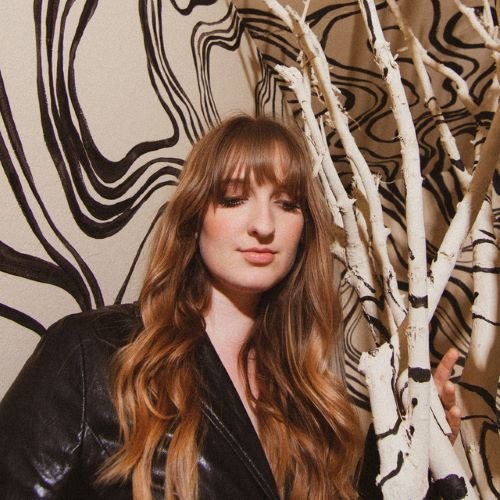
Rachel Mae Hannon

__________

HAVING released…

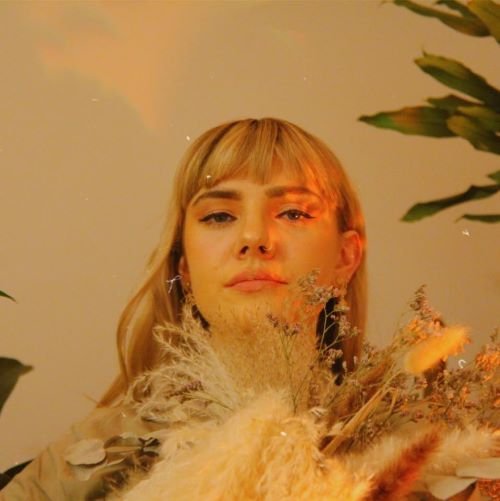
her new single, Breathe, yesterday (23rd), I am more and more in love with Rachel Mae Hannon’s music! The stunning Irish musician (hailing from Monaghan, she is now living in Dublin) has one of the most soulful and expressible voices I have heard! A beautiful, chocolate-rich and passionate blend. In terms of a colour palette, there are purples, blues and reds mixing with some warmer oranges and pinks. Sorry if that sounds a bit pretentious but, when it comes to sounds an artist’s voice, I imagine colours and shades coming from their mouths. Hannon’s voice and projection is extraordinary and from the soul. I am not sure whether she has an album coming later in the year or other singles, but everything she releases is sensational! Before continuing, Breaking Tunes (from earlier in the year) give us some details about the amazing Hannon:

Rachel Mae Hannon is a soulful vocalist, multi-instrumentalist, songwriter and producer from Ireland. Her sound can be described as where pop meets neo-soul. The low range of her vocals and her eloquent use of harmonies as well as instrumentation gives her a distinctive soul pop sound.

Rachel has supported HAIM at the Trinity Summer Series, Tom Odell in The 3Olympia, and Eloise in The Sugar Club. She has also played the main stage at Sea Sessions 2022, Kaleidoscope 2022, and is set to play Indiependence 2022.

Her new single with video 'Work It Out' was released on the 6th of May.

PRESS:

"Vivid in its scale and scope, Rachel Mae Hannon’s lush sounding new single ‘Closer’ has an instantly attention grabbing vibe." - The Last Mixed Tape

“Rachel Mae Hannon is one to watch and the perfect soundtrack to a sunny day.” - Tara Kumar, RTÉ 2FM

"As calming as a sheet of morning mist over a lake, Rachel Mae Harmon's debut EP is sophisticated jazz/pop of the highest quality." - Tony Clayton-Lea Irish Times/Business Post)

‘You can hear strident heart-on-sleeve tones and sentiment on ‘Be In Love’. - Nialler9”.

I do adore her music and think that she could be a major star of the future. There is so much amazing and varied talent in Ireland right now. A remarkable nation that fosters unique and incredible potent artists, Rachel Mae Hannon is primed for glory. I think that her voice and talent is so dexterous, she could release a Jazz-tinged album or something soulful or smoky (in places, Hannon reminds me of Amy Winehouse, Lianne La Havas, Jorja Smith and Gemma Hayes). Someone who I could see interpreting some of her favourite songs or vintage classics in her own way, there is no telling just how far she can go! Breathe is a typically amazing cut from an artist who is growing in confidence and popularity. I am going to bring in some interviews that give us greater insight into the fabulous Rachel Mae Hannon. The first interview is quite ‘local’. IMAGE, chatted to her about her music, but also about her experiences in and around the beautiful and picturesque areas around Monaghan town. I have chosen some interesting sections:

Home is … Killyvane, just outside Monaghan town. They say home is where the heart is – which I agree with – but home for me is also where you can make as many cups of tea as you want, take your shoes off when you feel like it, talk nonsense with your family, meet long term friends for walks, sing as loud as you can in the shower, and where you can write music in peace.

Where was your first home outside of your childhood home

My first home outside of my childhood home was student accommodation in UCD. I remember I was at the debs the night before my big move to Dublin, which did not help the nerves! I went to college without any of my close friends from school which I found so daunting at the time. But I can safely say that in this first year of living in Dublin, I made friends for life.

What was your first job?

My first job was as a face painter when I was in 3rd year of secondary school! After this, I worked in a newsagents in Monaghan called McConnon’s, then I worked in Roberto’s Coffee Shop, and more recently at the start of college, I was a piano teacher.

What’s your first/favourite memory in Monaghan?

One of my first and favourite memories of being in Monaghan is walking around Rossmore Park with my family. Even though I was that child that wanted to be carried absolutely everywhere, we used to have so much fun there – rolling down hills, having races (I never won), climbing trees, skimming stones, seeing calves being born and just generally exploring.

Where do you go to let your hair down?

In Monaghan, there are different bars where you can go out and have a pint and chats which I love doing when I go home. If I’m going for a pint with my family, we would usually go to Terry’s Bar. For gigs it is usually McKenna’s bar, and if I am going for a cocktail with a friend, I would go to the DV lounge. There is one nightclub in Monaghan town called Spy which I usually go to at Christmas time when I am home. The best thing about only having one club is that you know absolutely everyone will be there (some people think this is the worst thing about it!)

But besides going out and drinking, there are other places I go to let my hair down. The cinema, to one of the many coffee shops, for a walk around one of the local lakes. My favourite place of all is my piano room in my family home. This is where I can truly let my hair down, play piano, sing and write comfortably.

If you could buy any building in Monaghan, which would it be?

There are two buildings I would buy – Aviemore house in Monaghan town or Castle Leslie in Glaslough. Aviemore has a Victorian architecture feel to it that I love, it has a prominent hillside position with lights shining on it which I always admire when I drive past”.

I hope that Rachel Mae Hannon comes and plays in the U.K. I think there is a sizable chunk or love for her in London! Venues that would definitely house her. I could see her playing in Manchester, and maybe a Brighton gig. Perhaps it is a bit expensive to do a mini tour at the moment, though she has an impressive and highlight memorable collection of songs under her belt that can wow the crowds (the brilliant Hannon delivers an incredible set with her Neo-Soul/R&B gems). To that end, I want to flip to an interview from late last year from Last Mixed Tape. This was not too long after lockdown and the worst of the pandemic. She was asked how she got through the lockdowns and what it was like releasing her phenomenal E.P., Like It Is:

What artist or album has gotten you through lockdown the most?

Tom Misch – Geography. I feel as though this album had a song for a lot of the emotions I was going through during lockdown. It had songs with the positive affirmation that you needed to pick yourself up when feeling low. For example,  ‘Disco Yes’ and ‘It Runs Through Me’ were perfect on the days that felt hopeless and monotonous. It also had slow-reflective songs like ‘Movie’ and ‘We’ve Come So Far’. As well as that, the album gave me such production and instrumentation inspiration while writing my own songs.

What’s influencing your music right now?

There are so many things influencing my music right now. I think live performance coming back into our lives is certainly one. Music has changed from 2D to 3D for me. At the beginning of lockdown, I thought only about writing and creating sounds in order to have an end result – a song to listen to. But since I have started back gigging, I see the music I create in a new light. It makes me think of how the songs can be altered or shaped into something completely new in a live setting – all while basing them off their original constructs. It showed me that each step of the process is just as important as the next. You can always add to the building blocks to develop a work – but it is up to you to know when to stop.

I also think social media is heavily influencing my music right now. Seeing other like-minded (or unlike-minded) artists broadens your horizons when it comes to listening, creating and performing.

As well as this, I think re-experiencing things for the first time in a while since restrictions have eased has influenced how I view myself and the wider world, and therefore how I create my music. Lockdown was a great time to be retrospective on life, and this inevitably influenced me and my taste and composition of music.

Tell us about your new E.P., Like It Is, what was the inspiration behind the record?

My debut EP Like It Is is all about understanding my own emotions and the importance of communicating these with others. The EP explores a journey of being true to myself, of opening up, and saying it ‘like it is’.

I wanted the EP to have a dream-like quality in its sound, to express the passing thoughts I had throughout making it. I also wanted to create a work that I enjoyed performing and listening to myself, and have it as something that I will always look back on and be proud of.

Each of the tracks on the EP are my emotional responses to certain situations caught in time –  I see the work as a mini time capsule of my life.

For example, the first track that was released from the EP was ‘Alright’. I wrote this song at a time of losing someone important in my life. Therefore the track focuses on our individual experiences of recovery, moving on, and our constant ability to rediscover ourselves.

The second single from the EP was ‘Closer’, and this is about the frustration of not being able to have physical contact with people (especially during lockdown). It is about the longing to get closer to people, yet the uncertainty of where people’s boundaries lie.

The unreleased tracks from the EP include ‘Tell Me’ and ‘Road’ (out on October 8th). These tracks explore the ideas of looking for reassurance in relationships and celebrating how we are somewhat sculpted by those we surround ourselves with”.

The scene is particular busy with young Pop, R&B, Soul and Indie artists. Each has their own sound and, though many stand out and have a clear future, I think others will struggle because they are not distinct enough or have the requisite edge or unique selling point. It is not their fault at all: the scene is so busy and bustling, it is very tough to nestle free from the rabble and acquire your own territory. There are some really promising artists who, sadly, fade away. There is no denying that Rachel Mae Hannon has a bright future. Songs like Breathe, Work It Out and Be in Love are all so interesting and rich. In the same way artists like Nadine Shah are moving into acting, I also think there is something about Hannon that means that she could move into acting (I forgot to mention that St. Vincent, Halsey and Alana Haim also act!). Her voice has a sultriness and soulfulness, but there is a youthful energy and spark coupled with something more vulnerable and emotive. Many new artists are too limited when it comes to their subject matter and their vocals. You listen to Rachel Mae Hannon, and you get the sense of someone who had many years of experience inside of her.

I feel Hannon has this breadth and versatility that means she has very few limits when it comes to her sound and where she might head. At the moment, I can detect a few of her influences on her sleeve, but there is also that deeply personal element to her music. As she plays more stages, releases more music and explores new territory, the sensational Irish artist will get international requests, festival dates and huge plaudits. As I say, I wonder if an album is in her mind. Maybe that will be something for next year, because there is definitely a lot of love from the press and fans right now! The fact Breathe is already acquiring so much applause and commendation shows that she is a name to watch. Both vibrant and beautiful, open yet with an air of mystery, go and follow Rachel Mae Hannon’s music now. Support her on social media and, if there are future live dates near you, do go and see her play. These are the early days, but all the signs point towards the wonderful Rachel Mae Hannon enjoying…


MANY wonderful years in music.

______________

Follow Rachel Mae Hannon
FEATURE: Turn That Heartbeat Over Again: Steely Dan's Can't Buy a Thrill at Fifty, and Putting the Legendary Band’s Music Back on Vinyl

FEATURE:


Turn That Heartbeat Over Again

 Steely Dan's Can't Buy a Thrill at Fifty, and Putting the Legendary Band’s Music Back on Vinyl

__________

IT was only a matter of…

 IN THIS PHOTO: Steely Dan circa 1972 (Donald Fagen can be seen at the top right, Walter Becker at the bottom far right)

a couple of weeks ago that I was bemoaning the lack of Steely Dan on vinyl. The group, led by Donald Fagen and Walter Becker, demand their music be played on that format. They haven’t literally said that but, as the musicianship is so extraordinary and precise and there is so much attention paid to the sound and production, this is the way their albums need to be heard. Until recently, you could get 1977’s Aja and one or two others new on vinyl. You could dig around Discogs or get a second-hand copy of their other albums, but it is a bit baffling the other studio albums have not been reissued. Whist there are not new editions with demos, outtakes, and extras on them, finally there is light at the end of the tunnel for those hoping for Steely Dan vinyl reissues. Starting with their phenomenal debut album, Can’t Buy a Thrill. I was never sure when this album was released in November 1972. In terms of the release date, I would assume the 4th, as this is when the fiftieth anniversary edition is out. You can pre-order is from Resident or Amazon.co.uk. It seems that, as I had hoped for all this time, the studio albums not freely available on vinyl (pretty much Aja and maybe their last two studio albums, Two Against Nature and Everything Must Go) are going to be reissued through this and next year. This article explains more:

Steely Dan’s acclaimed debut album, Can’t Buy A Thrill is set to be reissued on vinyl through Geffen/UMe on November 4. The album has been remastered from the original tapes and will be available on 180-gram black vinyl.

Led by the songwriting and virtuoso musical duo of Walter Becker and Donald Fagen, Steely Dan released an extraordinary run of seven albums on ABC Records and MCA Records from 1972 through 1980. Filled with topline musicianship, clever and subversive wordplay, ironic humor, genius arrangements, and pop hits that outshone the Top 40 of its day, their records, which were as sophisticated and cerebral as they were inscrutable, were stylistically diverse, melding their love of jazz with rock, blues, and impeccable pop songcraft.

Steely Dan’s classic ABC and MCA Records catalog is now set to return to vinyl with an extensive yearlong reissue program of the band’s first seven records, which is being personally overseen by founding member Donald Fagen. The LPs, most of which haven’t been widely available since their original release, will be available on 33 1/3 RPM 180-gram black vinyl via Geffen/UMe, and as a limited-edition premium 45 RPM version on Ultra High-Quality Vinyl (UHQR) from Analogue Productions, the audiophile in-house reissue label of Acoustic Sounds. Analogue Productions will also release this series of titles on Super Audio CD (SACD).

The series will kick off on November 4 with the album that started it all, the band’s legendary 1972 debut LP, Can’t Buy A Thrill, now in its 50th anniversary year, featuring the band’s breakthrough hits, “Do It Again,” “Reelin’ in the Years,” and the recently viral “Dirty Work,” with original lead vocalist David Palmer.

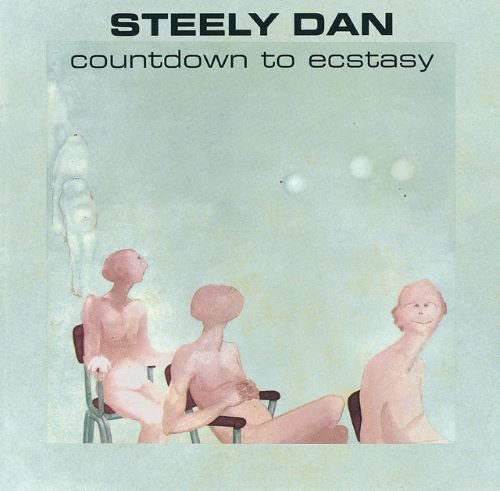
Additional albums will roll out periodically throughout 2022 and 2023 and will include the band’s sprawling 1973 sophomore LP, Countdown to Ecstasy, with such standouts as “Bodhisattva,” “Show Biz Kids” and “My Old School,” sung by Donald Fagen who took over as lead vocalist; 1974’s jazzy Pretzel Logic, their first Top 10 album with the massive hit, “Rikki Don’t Lose That Number;” 1975’s swing-pop perfection Katy Lied, with highlights “Black Friday,” “Bad Sneakers” and “Doctor Wu,” and the addition of Michael McDonald on vocals; 1976’s guitar-driven The Royal Scam, featuring “Kid Charlemagne” and “The Fez;” 1977’s platinum-selling jazz-rock masterwork Aja, which includes the three hit singles – “Deacon Blues,” Peg” and “Josie” – and the elegant title cut; and their final album for MCA, and last for 20 years, 1980’s brilliant Gaucho, with “Hey Nineteen,” and “Time Out Of Mind,” featuring Mark Knopfler on guitar.

All albums are being meticulously remastered by Bernie Grundman from the original analog tapes except for Aja, which will be mastered from an analog, non-EQ’d, tape copy, and Gaucho, which will be sourced from a 1980 analog tape copy originally EQ’d by Bob Ludwig. (There’s no evidence the original tapes containing the flat mixes of Aja and Gaucho were delivered to the record label and it’s presumed the tapes no longer exist.) Lacquers for UMe’s standard 33 1/3 RPM 180-gram version will be cut by Alex Abrash at his renowned AA Mastering studio from high-resolution digital files of Grundman’s new masters and pressed at Precision. They will be housed in reproductions of the original artwork.

The 45 RPM UHQR version will be pressed at Analogue Productions’ Quality Record Pressings on 200-gram Clarity Vinyl, packaged in a deluxe box, and will include a booklet detailing the entire process of making a UHQR along with a certificate of inspection. Each UHQR is pressed, using hand-selected vinyl, with attention paid to every single detail of every single record. All of the innovations introduced by QRP that have been generating such incredible critical acclaim are applied to each UHQR. The 200-gram records feature the same flat profile that helped to make the original UHQR so desirable.

The Steely Dan vinyl reissue program follows last year’s release of Steely Dan’s Northeast Corridor: Steely Dan Live! and a live version of Donald Fagen’s acclaimed solo album, The Nightfly Live, which were both released via UMe on 180-gram vinyl, CD, and digital. The first live Steely Dan album in more than 25 years, Northeast Corridor: Steely Dan Live! was recorded across tour dates at New York City’s Beacon Theatre, The Met Philadelphia, and more, and showcases selections from Steely Dan’s extraordinary catalog of slinky grooves, sleek subversive lyrics, and infectious hits. Fagen’s The Nightfly Live was performed live by The Steely Dan Band”.

I will talk more about their other albums but, when it comes to important debuts, I think that Can’t Buy a Thrill is underrated. Of course, Aja is the classic Steely Dan album. Their third, Pretzel Logic, was released in 1974. This is when the group sounded like they were really in their stride. Although there are some flaws on their 1972 debut – too little of Donald Fagen singing (David Palmer led several songs as Fagen did not like the sound of his voice or felt it was a frontman) and the fact the album is a bit top-heavy -, Can’t Buy a Thrill is a classic. Dirty Work, Midnite Cruiser, Reelin’ in the Years, Do It Again and Turn That Heartbeat Over Again are songs I grew up with. Genuinely one of the greatest albums ever, this is what Pitchfork wrote in their 2019 review:

After graduating, Fagen and Becker shopped their demos around various record labels, most of which laughed them out of their offices. Producer Gary Katz landed them a job as staff songwriters at the L.A. label ABC Dunhill, known for putting out records by North American rock bands like Steppenwolf and Three Dog Night. The work was steady but boring, and Katz soon encouraged the two musicians to form their own band. Fueled more by a distaste for the early ’70s rock milieu than anything, Becker and Fagen ganged up as Steely Dan, a band named for a rubber strap-on in William S. Burroughs’ surrealist novel Naked Lunch.

They must have had some idea of what they were about to become. “The newly formed amalgam [of Steely Dan] threatens to undermine the foundations of the rock power elite,” Fagen wrote under the pseudonym Tristan Fabriani in the liner notes to the band’s 1972 debut, Can’t Buy a Thrill (they got the title from Bob Dylan, one of the few contemporaneous American musicians they could stand). “Amalgam” is right; rather than adhere to a standard rock formula, Steely Dan overloaded their sessions with players who could do Latin jazz or hot electric solos. They were a band who wanted more of everything: more guitarists, more drummers, more singers, spiraling out in a fever dream of excess. Fagen and Becker were the only writers in the room, but the credits for Thrill number a dozen musicians on instruments as far-flung as electric sitar and flugelhorn. Having escaped the sterile confines of commercial pop songwriting, Steely Dan were hell-bent on making a mess.

On paper, Thrill sounds as thorny as Italian prog, the product of a bunch of noodlers fiercely guarding their niche. But the record’s core hums with Fagen and Becker’s meticulous admiration for everything that makes pop tick. Bitter-mouthed contrarians in interviews, they wrote songs every bit as charming and delectable to the ear as the peers they claimed to despise. The members of Steely Dan appeared to take themselves as seriously as long-suffering jazz purists in a world drunk on three-chord ditties, and then they shot up the pop charts with sunny, flippant ear candy-like “Reelin’ in the Years.”

As badly as they felt the need to differentiate themselves from mainstream rock’n’roll, it was always a part of Steely Dan. They claimed the Rolling Stones, the Beatles, and Dylan as influences before doing so became an outrageous cliché. Echoes of Zombies’ psychedelia and Beach Boys’ sunshine also waft through Thrill. Fagen and Becker stockpiled their debut with hooks aimed straight at your dopamine receptors, with vocal harmonies and gleaming guitar lines braided tight. The weird was there, embryonic, waiting to unfurl on later, more adventurous albums. But it curled itself up in service of pleasure.

Take “Dirty Work,” basically an Eagles song, or the “na-na-nas” of the post-hippie strutter “Change of the Guard”: No matter how detached they felt from it, Steely Dan put out pop music. They tried to make a ruckus and ended up polishing gems for broad consumption. “We’re a strange band y’know. The music is all WRONG,” Fagen told Melody Maker in 1974. “Our songwriting process is not unlike the creation of junk sculpture.” If they identified with the gritty combines of mid-century artist Robert Rauschenberg, the songs they turned out were more like the sardonic baubles of Jeff Koons: fun, often hilarious, easy on the senses, and full of an unwavering disregard for the concept of authenticity.

Decades into their career, Fagen and Becker would claim the early hits as Trojan horses for complex musical ideas. “It was better to have our songs pass as pop songs and then have whatever else we wanted in them afterwards,” Becker said in 1995, as if the shimmering surface of Thrill were merely an excuse to smuggle their real musical passions into the mainstream. But the cresting harmonies and the guitar solos on “Reelin’” don’t sound like a front. They sound like a blast, like a group of young and insecure jazz dweebs egging each other on until they’ve made something so absurd even they can’t deny its allure.

Steely Dan crouched behind irony for much of their early career, and their popular legacy remains steeped in it. The hits from Thrill, “Do It Again” and “Reelin’ in the Years,” blare out from classic rock stations right next to Black Sabbath, Yes, and all the other peers they shit-talked at the time. Their flair for melodrama, humor, and quick compositional turns got sucked right up into the most vapid (and delightful) of late ’70s hair metal hits, like Journey’s “Wheel in the Sky” and Styx’s “Renegade.” They were so skeptical of rock music they ended up gilding it, breaking it down, and piecing it back together strangely enough for it to approach perfection”.

I am glad that we are getting a fiftieth anniversary release of Can’t Buy a Thrill. It is a shame that, like with The Beatles’ albums, there are not some alternate takes and a larger release, but the fact that we can now get Can’t Buy a Thrill on vinyl is a treat we have been denied for a while! Also getting the other studio albums on vinyl is going to be something every fan can support. Many might have the vinyl copies from years ago, but I did worry that a lack of vinyl albums might mean many are missing out. Introducing that incredible music to new listeners is so vital. Vinyl is the best format for Steely Dan’s music, as you can keep those L.P.s and pass them down through the generations. I have been longing to have Can’t Buy a Thrill on vinyl. It is a relief that this will now happen and, through the next year and a bit, the remainder of the catalogue not widely available on vinyl is going to be coming out. A wonderful group (or duo if you feel it is Donald Fagen and Walter Becker with a rotating collection of musicians), Steely Dan are among the most important significant artists ever. Their 1972 debut still sounds phenomenal to this day! Steely Dan fans around the world are happy that, on 4th November, Can’t Buy a Thrill will be available on vinyl…

AFTER all of this time.

FEATURE: From Blackburn to London… Celebrating Fifty-Five Year of BBC Radio 1

FEATURE:


From Blackburn to London…

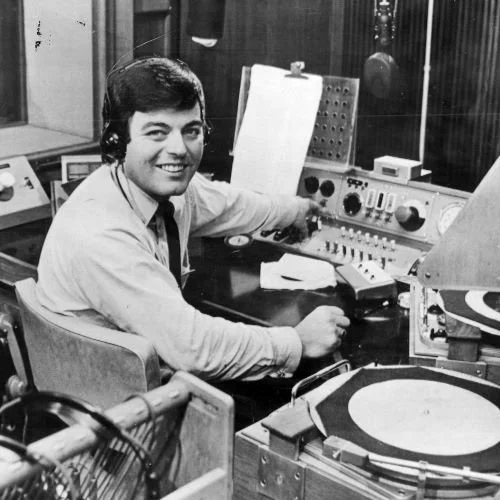
IN THIS PHOTO: Tony Blackburn at the BBC in 1967 

Celebrating Fifty-Five Year of BBC Radio 1

__________

I wanted to mark an important anniversary…

 IN THIS PHOTO: One of BBC Radio 1’s finest current broadcasters, Clara Amfo/PHOTO CREDIT: Harper’s Bazaar

that I hope the BBC will mark. Of course, on 18th October, the BBC turns one hundred. Before that, one of the BBC’s cornerstones turns fifty-five. I am referring to BBC Radio 1, 2, 3 and 4. They came to air on 30th September, 1967. What a wonderful period in history to air your first broadcast! The likes of The Beatles were releasing some of the world’s best music, and it was just after the first Summer of Love (that took place in Haight-Ashbury in San Francisco). It was a time of political unrest and protest. Many in the U.S. objecting to the war in Vietnam. In the U.K., things were a little less turbulent. Queen Elizabeth II was on the throne. Labour’s Harold Wilson was re-elected Prime Minister in 1966. That same year, England lifted the World Cup for the only time. It was a contrasting time, but one of the excitement in Britain. To launch these different radio stations on 30th September must have been hugely exciting! They have all grown through the years but, in terms of inception, BBC Radio 1 was the biggest talking point. In terms of rebranding and launching, this is what happened on 30th September, 1967:

·       BBC Radio 1 was launched as a pop music station, initially on a part-time basis.

·       The BBC Light Programme (launched 29 July 1945) was renamed BBC Radio 2 and broadcast easy listening music, folk, jazz, light entertainment and sport.

·       The evening BBC Third Programme (launched 29 September 1946) and daytime BBC Music Programme (launched 22 March 1965) were merged under the heading of BBC Radio 3, although the Third Programme kept its separate title until 3 April 1970.

·       The BBC Home Service (launched 1 September 1939) became BBC Radio 4”.

Whilst it important to mark the name change and formation of four of the BBC’s radio stations (5 Live was founded in the 1990s; BBC Radio 6 Music in 2002), BBC Radio 1 was the one that started its life in 1967. It is interesting looking at a photo with the original line-up of presenters (“This is the original DJ's and Presenters of Radio 1 from the 30th September 1967 . First on the air with The Breakfast show Tony Blackburn top left next to Jimmy Young and Kenny Everett. A few others I recognize are middle row Terry Wogan. Bottom Row left to right Pete Murray, Ed Stewart . Middle Mike Raven and on the end John Peel. Directly above him, I think is Bob Holness”). On that morning of 30th September, 1967, Tony Blackburn broadcast the first BBC Radio 1 breakfast show from London. You can see a photo of Blackburn launching that show, and you can hear that broadcast below. Not knowing whether the station would continue into 1968 must have been quite strange. Fifty-five years later, and the station is still going strong! In terms of popularity, it is the third most-listened-to BBC station behind BBC Radio 2 and BBC Radio 4. I wonder if Tony Blackburn and his colleagues think back to 30th September, 1967 and what was to come! A hugely interesting time in British cultural history, I can only imagine what the broadcaster and listeners alike were thinking! It is strangely emotional listening to Tony Blackburn deliver his opening link. Of course, he is still with the station and works at BBC Radio 2 and BBC Radio London.

Given that a lot of focus will be on the BBC’s centenary next month, I wonder whether the BBC Radio networks, especially BBC Radio 1, will mark the fifty-fifth anniversary. Not only did this new station make its steps into the world., but the renaming of the stations is also crucial. That sense of unity and consistency. Each station has (and still does) have its own identity, but that has only increased in the years since. As music has diversified so much since 1967, it means that BBC Radio 1, 2, 3 and 4 have their own schedule and demographic. For BBC Radio 1, I think it broadly similar to 1967, in the sense they focus on the best Pop music of the day. Taking in EDM and other genres, it is a station primed more for a younger audience. In terms of groundbreakers, aside from that original line-up, I think Annie Nightingale really opened doors. She still works for the station amazingly, but she joined BBC Radio 1 in February 1970. Nightingale became the first ever female D.J. on BBC Radio 1 when she joined the station. A pioneer, I think that she is responsible for changes (although slow) happening on stations that were largely male-dominated. Now, I think some of the most important, interesting and talented voices on BBC Radio 1 are women. From Sian Eleri through to Arielle Free, Clara Amfo, Adele Roberts, Charlie Tee, and Nat O’Leary, this incredible talent, diversity and strength is, in part, because of Annie Nightingale! Of course, every broadcaster and producer at BBC Radio 1 is equal and special, but I wanted to nod to the incredible women at the station.

 IN THIS PHOTO: Sian Eleri/PHOTO CREDIT: Insanity Group

Of course, BBC Radio 1 now has sister stations. IXtra (with great broadcasters like Nadia Jae) sits alongside Radio 1 Dance and Radio 1 Relax. The past few weeks have been very different for the stations due to the death of The Queen. Having to adopt a more respectful, relaxed and chilled soundtrack, things are starting to go back to normal. I have been listening to BBC Radio 1 since the 1990s, and I discovered so much great new music through broadcaster such as Annie Nightingale and Annie Mac (who now occasionally works at BBC Radio 6 Music). As part of the BBC marking its one hundredth anniversary, it has provided a timeline of BBC Radio 1. That 30th September first show has gone down in history:

Tony Blackburn opened Radio 1 on 30 September 1967 at 7.00am, with Robin Scott, then Controller Radio 1, standing over him! The station set out with a blank sheet of paper to create a new style of radio, a 'DJ style', by that time heard only on the pirate radio stations, which had recently been forced to close”.

Blackburn played "Flowers in the Rain" by The Move as the first track. On air next was Leslie Crowther of Crackerjack fame, then a five minute quiz with Duncan Johnson. The next big music show of the morning was a lively mix of tracks with Keith Skues, who can still be heard on air, late night on local radio”.

Annie Nightingale was the first woman on the station in 1970. In 1984, The Ranking Miss P (a.k.a. Margaret Anderson) was the first Black female DJ on Radio 1. By 1995, Radio 1 was the first to go digital, launching on DAB that autumn. The 1990s, it seemed, marked the biggest shift for BBC Radio 1:

Matthew Bannister Radio 1 Controller from 93-98, was famous for attracting a completely new audience to the station.

Bannister arrived with a remit to radically shake up Radio 1. The station had kept its loyal audience since the 1960s, but by 1993, the output was thought to sound old, tired and worn out. Bannister terminated the contracts of 8 of the longest serving DJ’s and banned any music recorded before 1990 from being played. New DJ’s were added, and the station started to attract a newer younger audience, but the shift to a new order was painful. The DJ’s in jokes were out, as the cool 90s progressed.

April 1995 was Chris Evan’s debut on Radio 1. Sitting in the Breakfast Show hot seat, he turned the programme upside down.

His early morning slot was packed with innuendo which for many critics went too far. He encouraged two female guests to perform a strip show live on the programme, and humiliated some of his team on air, two examples from a list of edgy items. After a tasteless joke about holocaust victim Anne Frank, a string of complaints followed. In January 1997 he asked for a four day week, sparing Fridays to work on his Channel 4 TV show. BBC management rejected this and he left the station”.

From the modern crop of brilliant broadcasters such as Greg James, Arielle Free, Sian Eleri, Vick and Jordan, Matt and Mollie, Sarah Story and beyond, there is such a diverse and hugely talented line-up on the station now. On 18th October, the BBC turns one hundred. I wanted to mark another big anniversary before then. One of its most popular radio stations started life fifty-five years ago on 30th September. Led by the legendary Tony Blackburn, BBC Radio 1 has grown through the years. I hope that something happens for their birthday – even if things have been muted as of late out of respect for The Queen. Still a go-to when it comes to incredible live performances, the hottest new artists and the best modern tracks around, there has been evolution. Offering a wider remit of music and a more diverse line-up of D.J.s – and, as I said, one where women are very much at the front -, I know that the station will make it to its one hundredth birthday. That is quite a scary thought! Now, it is a slick and huge station that has a big crew ensuring that the schedule runs smoothly. Back in 1967, things were not quite like that! On that morning of 30th September, 1967, Tony Blackburn ushered in a new era for the BBC. With such professionalism and passion – qualities that he exhibits, maintains, and augments to this very day -, the world said hello to BBC Radio 1. Despite some problems, the listening figures were huge. Launched to meet the demand for music generated by pirate radio stations, when the average age of the U.K. population was twenty-seven, it is fascinating to see how the empire has grown in terms of its demographic and mandate! A truly remarkable station that made its way into homes on 30th September, 1967, I wanted to wish the station…

A very happy fifty-fifth anniversary.

FEATURE: Before Today: The Remarkable Tracey Thorn at Sixty

FEATURE:


Before Today

 The Remarkable Tracey Thorn at Sixty

__________

ONE of my favourite artists ever…

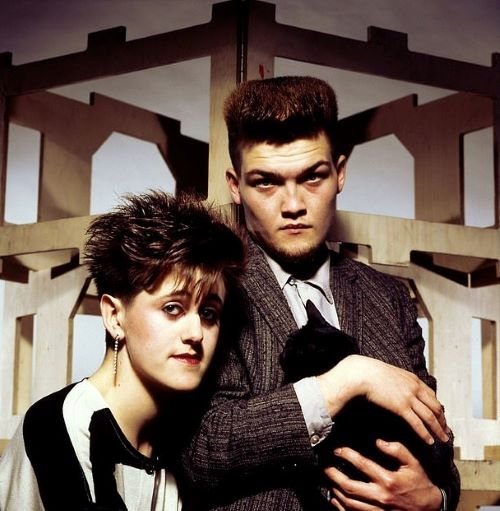
 IN THIS PHOTO: Tracey Thorn with Ben Watt as Everything But the Girl in 1984/PHOTO CREDIT: PA/LFI

the iconic, fantastic, and inspiring Tracey Thorn is sixty on 26th September. One half of Everything But the Girl (with Ben Watt), I wanted to mark her upcoming birthday with a playlist featuring some of her wonderful songwriting and vocals as part of that duo, in addition to some of her solo material. A wonderful producer and talent, I would recommend people buy this year’s My Rock ‘n’ Roll Friend:

The indie pop icon and bestselling author of Bedsit Disco Queen and Another Planet gifts the reader with a window into her friendship with Go-Betweens drummer Lindy Morrison in this characteristically witty and affectionate volume.

In 1983, backstage at the Lyceum in London, Tracey Thorn and Lindy Morrison first met. Tracey's music career was just beginning, while Lindy, drummer for The Go-Betweens, was ten years her senior. They became confidantes, comrades and best friends, a relationship cemented by gossip and feminism, books and gigs and rock 'n' roll love affairs.

Morrison - a headstrong heroine blazing her way through a male-dominated industry - came to be a kind of mentor to Thorn. They shared the joy and the struggle of being women in a band, trying to outwit and face down a chauvinist music media.

In My Rock 'n' Roll Friend Thorn takes stock of thirty-seven years of friendship, teasing out the details of connection and affection between two women who seem to be either complete opposites or mirror images of each other. This important book asks what people see, who does the looking, and ultimately who writes women out of - and back into – history”.

Before coming to a playlist with some of the very best Everything But the Girl and solo cuts, AllMusic provide some biography about one of our very best and most important artists and writers. I hope that Thorn gets a load of love on 26th September:

One of the most enduring English singer/songwriters, Tracey Thorn began making music with Stern Bops and then, more notably, Marine Girls, a minimalist pop group that released a pair of albums inspired by Young Marble Giants and the Raincoats. While Marine Girls were active, Thorn released A Distant Shore, a relatively moody, if similarly skeletal solo album, on Cherry Red in 1982. Around that time, she met Ben Watt -- who was also signed to Cherry Red -- and formed a partnership as Everything But the Girl. From 1984 through 1999, Thorn and Watt released ten albums that shifted from indie pop to slick sophisti-pop to downtempo club music. Additionally, Thorn appeared on recordings by the likes of the Style Council, the Go-Betweens, and Massive Attack. Shortly after having twin daughters together, she and Watt put EBtG on ice, as Watt DJ'ed and operated his Buzzin' Fly label while Thorn stayed home with the children. They had a third child, a boy, in 2001.

After several years away from music, Thorn began writing again and recorded her second solo album, Out of the Woods, which was released in early 2007. Instead of working with Watt, she collaborated with a number of producers, including Ewan Pearson, Charles Webster, Cagedbaby, Sasse, and Martin Wheeler.

A year later, Thorn and Watt married. Pearson returned as sole producer of Thorn's 2010 effort Love and Its Opposite, released in the U.K. by Watt's Strange Feeling label. In 2012, Thorn released Tinsel and Lights, a holiday album featuring songs by contemporary composers. A well-received memoir, Bedsit Disco Queen: How I Grew Up and Tried to Be a Pop Star, was published in 2013. Following that were a couple low-key releases, including the two-song Molly Drake Songs (recorded with Watt for a BBC 4 documentary about the mother of Nick Drake) and "Under the Ivy" (a Kate Bush cover). Thorn was sought out by screenwriter and director Carol Morley to provide the soundtrack for The Falling, a drama that debuted at the BFI London Film Festival in 2014. Just prior to the film's wider release the following April, Thorn's contribution -- eight short songs -- was issued as Songs from the Falling.

Thorn's career as a writer kept going strong. In 2014, she started writing a column for The New Statesman and in 2015 published Naked at the Albert Hall, a book delving into the art of singing. Her own voice was heard again later that year on a compilation of her work as a solo artist: Solo: Songs and Collaborations 1982-2015. She also appeared as a guest vocalist on John Grant's album Grey Tickles, Black Pressure. She stayed quiet on the musical front for the next few years, only appearing on Jens Lekman's 2017 album Life Will See You Now. She had begun writing songs for another album in 2016, however, and in 2017, began recording them with producer Ewan Pearson, bassist Jenny Lee, and drummer Stella Mozgawa (both of whom play in Warpaint). Along the way, vocalists Shura and Corinne Bailey Rae stopped by to add contributions. The record, simply titled Record, was issued in March of 2018 by Merge in North America and by Unmade Road everywhere else”.

To salute Tracey Thorn ahead of her sixtieth birthday, I wanted to highlight her brilliance. One of the most distinct and remarkable voices the music world has ever produced, I do hope that Thorn releases some more music in the future. It only leaves me to wish her…

MANY happy returns!

FEATURE: Through the Fog: Kate Bush’s Magnificent and Ethereal The Sensual World

FEATURE:


Through the Fog

Kate Bush’s Magnificent and Ethereal The Sensual World

__________

AS Kate Bush’s…

 IN THIS PHOTO: Kate Bush in 1989/PHOTO CREDIT: John Carder Bush

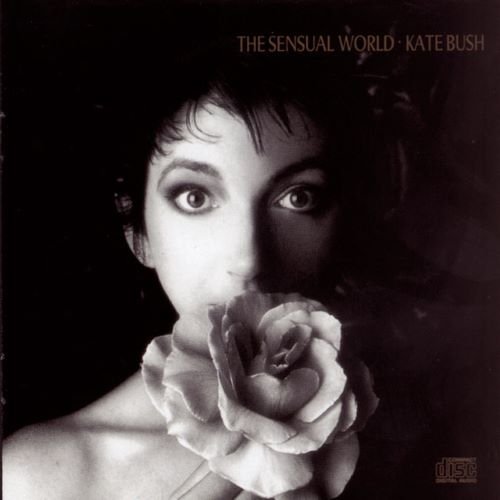
sixth studio, The Sensual World, is thirty-three on 17th October, I am going to do a run of features about it. November is busy with album anniversaries, and the only studio album marking its birthday in October is The Sensual World. To start, I want to do a general feature. A couple promotional interviews Bush conducted around the release of The Sensual World in 1989, a look at where critics and music publications rank the album (compared to the rest of her catalogue), and a rounding up from me. Before that, a little bit of detail about its chart position – and some words from Kate Bush about The Sensual World. Reaching number two in the U.K., this album features three tracks on the album feature backing vocals by the Trio Bulgarka. I think they add so much. It was the first time that Bush had worked with the Bulgarian vocal ensemble. She would do so again for 1993’s The Red Shoes. After releasing her most successful and popular album, Hounds of Love, in 1985, there would have been this huge anticipation and excitement four years later. The Sensual World’s title track came out in September, so the public got a taste of the album and Bush’s new direction before the album arrived. Recording largely at her home studio (the same one that was used for Hounds of Love), there was also some recording at Windmill Lane (Dublin, Ireland). I love the fact Bush kept at home – and, as she travelled to Ireland to record bits of Hounds of Love – and did not rely too much on machines and technology this time.

Perhaps less busy and layered in terms of compositions, Bush felt a bit overwhelmed by the machines around her and she wanted to focus more on the songs. The Sensual World was originally released on L.P., C.D., tape, and MiniDisc. In 2011, the album was released on the Fish People label. I do hope that The Sensual World comes back out on cassette. I have it on vinyl, and I think it is one of these albums I will keep forever. I might pop in a review of the album when rounding up. Here is how Kate Bush felt about the album when asked in a couple of different interviews:

Other people have said to me that they think this album is very dark, although for me I think it's my happiest album really. I find some of the tracks quite funny where other people say they find them scary. Although I have a dark sense of humour, maybe it is a subconscious thing that just goes into my music, because I think when I was writing this album that was perhaps something I was feeling a little - a sense of being a bit scared. Maybe it comes out in the music. I do think it's a very big self- therapy thing now - the more I work on an album the more I think it's almost a process for me to try and heal myself, have a look at myself.

 Do you know what I mean? Actually a very selfish thing in a way, but I think art is. I do think what artistic people are trying to do is work through their problems through their art - look at themselves, confront all these things. (...) It's not that the album is written about me, not that it is autobiographical, but it is the most direct process I've used for an album. It's in my own studio and I had a lot of time so as not to be under pressure by outside forces. I've recorded the whole album with Del so it's just myself and Del in a very close relationship working together very intensely and it was hard for me to write this album. To actually write the songs was very difficult, and for the first time really, I went through a patch where I just couldn't write - I didn't know what I wanted to say. (...) Everything seemed like rubbish - you know? It seemed to have no meaning whatsoever. Somehow I managed to get a sense of some meaningfulness, and that's why (...) to me now, albums are perhaps a way of helping myself, but maybe helping other people too. To work through my problems maybe will help other people too. To work through my problems maybe will help other people to work through their problems. Maybe the meaningfulness of art is that once you've got over your selfish work within it, you can give it to other people and hopefully it might at least make them smile or something. (Roger Scott, Interview. Radio 1 (UK), 14 October 1989)

I think this album for me, unlike the last album, say, Hounds of Love, where I saw that as two sides - one side being conceptual - this album is very much like short stories for me. Ten short stories that are just saying something different in each one and it was a bit like trying to paint the pictures accordingly. Each song has a different personality and so they each a need little bit of something here, a little bit of that there - just like people, you know, some people you can't walk up to because you know they're a bit edgy first thing in the morning. So you have to come up sideways to them, you know, and it's kind of like how the songs are too. They have their own little personalities, and if it doesn't want you to do it, it won't let you. (The VH-1 interview, January 1990)”.

I won’t say too much before each interview, other than to say there were a few things from each that I loved. The first, from Melody Maker in October 1989, is great. Bush spoke with Steve Sutherland. I have selected some parts of the interview that I found especially interesting:

It took Kate Bush four years to make The Sensual World, and we've been given an hour to talk about it. Great.

I think about telling Kate how surprised I am she's so small, or how shocked I am she smokes, but time is not on my side so I decide, instead, to tell her how delighted I am that she's come to the conclusion that the past and the future aren't beyond changing. The album sounds so optimistic in an era when absolutely everything appears to be falling apart.

<Kate naturally loves this interpretation, but the fact is that the album is certainly as loaded with dark and pessimistic images and ideas as it is with optimistic ones. In IED's opinion Sutherland has swotted up on what Kate has been saying recently, and is now rephrasing a lot of her own preferences in conversation with her, as though they were his own ideas rather than borrowed ones, precisely in order to ingratiate Kate. It works, and it may even be a good idea, since the other methods of engaging her in conversation have seldom produced great publishable material.>

"Oh, thank you! Thank you so much! That's really how I wanted it to be but, talking to a lot of friends and that, they feel it's a dark album."

I didn't think that at all...

"Oh, great."

...I thought some of the situations were dark, but the way they're resolved is optimistic. <What about the way Heads, We're Dancing is "resolved"? What about the way Deeper Understanding is "resolved"? What about the way Never Be Mine is "resolved"?>

"Oh, that's great. Thank you. Yes. That's really great. I'm so pleased you heard it like that. You see, for a lot of people it's so complicated to listen to, and that worries me, because I like the idea of people being able to listen to it easily and...uh...I don't want to confuse people but, for some people, it's very hard for them to even take it in, let alone sort of get anything out of it.

"I do think art should be simple, you see. It shouldn't be complicated, and I think, in some ways, this has come across a bit complicated." <This is one of Kate's "new" ideas--opinions which she has not really made prior to 1989, but which she has been repeating in multiple interviews since the release of the new album. IED finds it highly intriguing, because it is so vague and so patently at odds with the way her own art has always been--and continues to be--made.>

Maybe that's because, for me, the album's about relationships--the relationship between language and emotion, the relationship between language and music, the relationship between emotion and music and how all this expresses, or more crucially fails to express, the relationship between people. And relationships, as we all know, are never ever easy.

"How interesting. Could you give me an example?"

Well, in Love and Anger you say, "It's so deep I don't think that I can speak about it," as if language betrays your aims, and then you go on to say, "We could be like two strings beating/Speaking in sympathy," which suggests that music, rather than language, comes closest to expressing our emotions.

"Yeah! Actually, Love and Anger was an incredibly difficult song for me to write and, when people ask me what it's about, I have to say I don't know because it's not really a thought-out thing. It was so difficult for me to write that: in some ways, I think, <it's> about the process of writing the song: I can't find the words; I don't know what to say. This thing of a big, blank page, you know: it's so big...It's like it doesn't have edges around it, you could just start anywhere."

She studies her socks for a moment.

"Yes...um...I don't think I was consious of it, but it's something I'm aware of when writing songs. <Has IED missed something here, or did Kate just contradict the first half of this sentence in the second half?> There's such a lot you need to say through words. And it's a beautiful thing, language: actually being able to put words together and say something...maybe say two things in one line. But, like you say, it misses the mark so often."

You created your own language, too, don't you? It seems when you're at your most sexual, your most emotional, you emit...the only word I can find for it is noises, but that sounds too crude. Your "Mmh yes" on The Sensual World (the most heavenly sound ever on Top of the Pops ) and your "Do-do-do-do-do" in Heads, We're Dancing are like cries that language has deserted you or, more positively, an attempt on your behalf to merge words and music, to create a new emotional language from a combination of meaning and sound. I remember you used to go "Wow!" when words failed you. It shivers me. It's thrilling.

"Well, I think that's a lovely thing to say...Yes, often words are sounds for me. I get a sound and I throw it in a song and I can't turn it into a word later because it's actually stated itself too strongly as a sound. Like, in Love and Anger, the bit that goes 'Mmh, mmh, mmh' was there instantly and, in itself, it's really about not being able to express it differently. Do you know what I mean?"

Indeed I do. Liz of the Cocteau Twins does it all the time. She never sings a lyric as such, it's all noises. <Actually this is not true. Fraser has admitted that she picks real words and names from dictionaries, but simply throws them together without a narrative foundation.> But somehow, the way you burst language, the tension that leads to the victory of sound over sense whips your music into another dimension. It's the frustration that gives your songs dynamic, and the way you remedy it that makes them attractive. Most of the Sensual World LP seems to be saying, " This can be worked out ." <IED does not agree. Fully half the songs on the album simply do not bear this claim out.>

Between a Man and a Woman is almost a soap opera situation, with you trying to drive off any external interference which might ruin the chances of a relationship's natural growth. It's like you're saying we live in a fast culture--fast food, fast-edit TV, disposable pop, disposable sex--and, if we don't get instant gratification, we're not interested. You seem angry and determined.

"Well, that's nice, because when people ask me about this song, in terms of having to talk about it, it's rubbish. But yes, I think you're right, it is perhaps about how you actually have that choice sometimes, whether to interfere or not. <This was not Sutherland's idea at all, but Kate's.> You know, there's this tendency to want to leap in and take over and control: 'Oh, I know best!'; when I think a relationship is a very delicate balance: it's very easily tipped, and then needs to be refound again”.

I will round up with an interview for an album that many fans (though not critics) to be outside of her top five. A different album to Hounds of Love when it comes to sound and lyrics, maybe some fans wanted something more similar to Hounds of Love. The Sensual World is magnificent. Bush spoke with Q’s Phil Sutcliffe in November 1989. Here are some extracts:

This time round, apart from dancing and running, the panacea was the garden at the house she and Del moved into three years ago in Eltham, Southeast London (brother Jay and family live next door; her parents' home still only half an hour away). "I sometimes I think I might as well just be a brain and a big pair of ears on legs, stuck in front of a mixing desk," she says. "But when I took that break from The Sensual World I really got into gardening. I mean, it's literally a very down-to-earth thing, isn't it? Real air. Away from the artificial light. Very therapeutic."

Another renewable source of inspiration has been exotic instrumentation, usually provided by a visit to Dublin and various members of the staunchly traditional folk troupe, The Chieftains, or by turning to brother Paddy (who specialised in making medieval instruments at the London College of Furniture and will knock out the odd koto or strumento de porco as and when). But for The Sensual World she's leavened the Celtic skirl with a bit of Balkan. She first heard the Trio Bulgarka in '86 and was suitably astonished. A year later it dawned on her that their full-throated harmonies might suit her songs. Connections were made through Joe Boyd of Hannibal Records, their UK label, and Kate flew out to Sofia for an entrancing experience of world music.

"They couldn't speak a word of English and I couldn't speak a word of Bulgarian," she says. "Everything went through translators and it didn't matter at all. Lovely working with women, and especially them, they're very affectionate. We tended to communicate through cuddles rather than words. In fact, we could get on perfectly well without the translators. At one point we were talking away in the studio when the translator walked in and we all shut up because she'd suddenly made us self-conscious about what we were doing." The Trio can be heard on three tracks, including the strikingly unlikely setting of Deeper Understanding, a very modern-world song about an alienated woman and her relationship with her computer.

"This is definitely my most personal, honest album," she says. "And I think it's my most *feminine* album, in that I feel maybe I'm not trying to prove something in terms of a woman in a man's world -- God, here we go!" She seems to be wary of provoking a heavy debate about feminism. "On The Dreaming and Hounds Of Love, particularly from a production standpoint, I wanted to get a lot more weight and power, which I felt was a very male attitude. In some cases it worked very well, but.. . perhaps this time I felt braver as a woman, not trying to do the things that men do in music."

The Fog is a brave song. It co-stars Kate's dad on spoken vocals intoning with fatherly/doctorly reassurance, "Just put your feet down child/'Cos you're all grown-up now".

"I started with the idea of a relationship in deep water and thought I could parallel that with learning to swim, the moment of letting go," she says. "When my dad was teaching me to swim he'd hold both my hands, then say, Now, let go. So I would, then he'd take two paces back and say, Right, swim to me, and I'd be, Oo-er, blub, blub, blerb. But I though it was such a beautiful image of the father and child, all wrapped up in the idea of really loving someone, but letting them go, because that's a part of real love, don't you think, the letting go?"

 IN THIS PHOTO: Kate Bush in 1989/PHOTO CREDIT: John Carder Bush

So it's personal about Kate and her father then. It sounds as though it might be personal about her and Del too.

"Yes, it does, doesn't it?" She laughs, really amused by her professionally evasive reply. "Have you ever watched Woody Allen being interviewed? Obviously his films are very personal and when the interviewer asks him the 'Has this happened to you then?' question, he's all.. ." She cowers back into her chair, crosses and uncrosses her legs, thrashes about like a speared fish. "Then he'll say, Uh, well, no, I'm just acting out a role. It's ironic, but it's much easier to speak about very personal things to lots of people through a song, a poem or a film than it is to confront the world with them through someone asking questions. Maybe you worry because it's going to be indirectly reported."

Kate Bush leads a quiet, fairly limited life so her options on subject matter my be relatively restricted. Although she has ventured into political issues with Breathing (nuclear war) and The Dreaming (Aborigine rights), she generally declares her own ignorance and refrains from writing songs that would only prove it. But she will often borrow a story and make it her own -- from books (Wuthering Heights, obviously, and Cloudbusting, from Peter Reich's memoir of his father called A Book Of Dreams), TV (Pull Out The Pin was inspired by a documentary about the Viet Cong), or films (the idea for Get Out Of My House came from The Shining).

However, it was a story told by an older friend that sowed the seeds for Heads We're Dancing, a near-disco piece about a night out with Hitler. "Years ago this friend of mine went to a dinner and spent the whole evening chatting to this fascinating guy, incredibly charming, witty, well-read, but never found out his name," she says. "The next day he asked someone else who'd been there who it was. 'Oh, didn't you know? That's Oppenheimer, the man who invented the atomic bomb.' My friend was horrified because he thought he should have given the guy hell, attacked him, he didn't know what.

"But the point was one moment this person is charming, then when you find out who he is, he's completely different. So I thought, Who's the worst person you could possibly meet in those circumstances? Hitler! And the story developed. A woman at a dance before the war and this guy comes up to her tossing a coin with this cocky chat-up line, Heads we're dancing. She doesn't recognise him until she sees his face in the paper later on and then she's devastated. She thinks that if she'd known she might have been able to *get* him and change the course of history. But he was a person who fooled a tremendous number of people and I don't think they can be blamed. It worries me a bit that this song could be received wrongly, though."

It could well be that the musically extended family and extended home of Kate Bush even embrace her feelings for her songs themselves. She has an intimacy with them, a distinctive candour about sensuality and sexuality to which her present album title track is something of a natural conclusion.

It passed more or less unnoticed in her early days that she was casually breaking taboos in every other song. Tricky items on her agenda included incest (brother and sister in The Kick Inside, woman and young boy in The Infant Kiss), homosexuality (Wow, Kashka From Baghdad) and period pains (Strange Phenomena, Kites [sic]). Her sympathetic, non-judgmental approach was probably one of the less obvious reasons why she appealed so strongly to both sexes, but she would occasionally remark that she was grateful the tabloids didn't read lyric sheets. Otherwise she could have been up to her neck in bishops and Mrs. Whitehouse demanding that the nation's children be protected from this filth.

In fact, the moment anyone other than a fan thinks they've spotted a hint of sex in her songs she becomes very hesitant. Once, when she was working on Breathing, an EMI executive walked in to be greeted by the hypnotic "out-in, out-in, out-in" chant. Taking a firm hold on the wrong end of the stick, he asked her how she could even dream of releasing this pornography. The possibility of such gross misunderstandings shakes her faith in the "purity" -- a favourite word -- of what she's doing. But not enough to make her back off.

"Don't you think Art is a tremendous sensual-sexual expression? I feel that energy often.. . the driving force is probably not the right way to put it," she says, still trying to skirt the fnaarr-fnaarr potential of the topic.

Whether or not her speculation about the nature of Art is on the money, she made her own experience of the creative process quite clear with the cover of Never For Ever. A cornucopia of fantastic and real, beautiful and vile creatures -- the products of her imagination -- is shown swirling our from beneath her skirt. At the time, thinking about this and the steamy, masturbatory atmosphere of many of the songs she wrote in her teens such as The Man With The Child In His Eyes and Saxophone Song, she said: "It's not such an open thing for women to be physically attracted to the male body and fantasise about it. I can't understand that because to me the male body is absolutely beautiful.. . Physical masturbation, it's a feeling so bottled up you have to relieve it, as if you were crying."

The Sensual World is a song that translates the old ache to a different level -- with the invaluable help of James Joyce. "I had a rhythm idea with a synth line I took home to work on one night," she says. "While I was playing it this repeated *Yes* came to me and made me think of Molly Bloom's speech right at the end of Ulysses -- which I *have* actually read all through! I went downstairs and read it again, this unending sentence punctuated with 'yeses', fantastic stuff, and it was uncanny, it fitted the rhythm of my song." (The last lines of Molly Bloom's great stream of consciousness read: "then he asked me would I yes to say yes my mountain flower and first I put my arms around him yes and drew him down to me so he could feel my breasts all perfume yes and his heart was going like mad and yes I said yes I will Yes.")

Although to Kate "it felt like it was meant to happen", when she applied through "official channels" (presumably the Joyce estate) for permission to use it, she was refused. But she wasn't to be deflected. "I tried to write it like Joyce," she says, smiling in self-mockery. "The rhythm at least I wanted to keep. Obviously I couldn't do his style. It became a song about Molly Bloom, the character, stepping out of the page -- black and white, two-dimensional, you see -- and into the real world, the sensual world. Touching things." She declaims exaggeratedly. "The grass underfoot! The mountain air! I know it sounds corny, but it's about the whole sensual experience, this wonderfully human thing. . ."

And lines like "his spark took life in my hand"?

"Yes, it is rather saucy. But not nearly as sexy as James Joyce." She looks concerned again. "I'd be really worried -- there's nothing I can do about it now because it's all part of the process -- but I would be worried if people felt this ambiguity between sensual and sexual.

"I definitely *became* a person when I left school and suddenly took control of my life," she says. "I felt like that was the first time I'd really been there. Do you.. .? It was the beginning of my life really.

"Now I think I get a tremendous amount of security from my work, through being able to write songs. Though perhaps I'm very insecure except when I'm working. There again I work so much.. . I'll have to think about this. I'll be thinking about it all day now. What I'm looking out for is to let go of being so damned obesessive about work that I just get sucked into it. It's important for me now for there to be some kind of, er, *lightness* about it.

"You know, it's only an album. That is what I keep saying to myself”.

SPIN actually ranked The Sensual World fourth in their feature from earlier in the year. NME placed it third in 2019. Although most critics would place The Sensual World in the top three or four Kate Bush albums, I have seen many fans online place it lower – feeling it is inferior to her very best work. It is a shame a lot of the reviews published in 1989 have not been archived or are unavailable to view. Most critics were very much on board with The Sensual World. Not repeating herself, Bush roved herself to be in a different league (as David Quantick wrote for NME in 1989: “A strange and remarkable record which has very little to do with anything else musical, a fair bit to do with the real world of sex, love, and introversion, and everything to do with uniqueness. Kate Bush remains alone, ahead, and a genius”). This is what AllMusic said in their review in 2011:

An enchanting songstress, Kate Bush reflects the most heavenly views of love on the aptly titled The Sensual World. The follow-up to Hounds of Love features Bush unafraid to be a temptress, vocally and lyrically. She's a romantic, frolicking over lust and love, but also a lover of life and its spirituality. The album's title track exudes the most sensually abrasive side of Bush, but she is also one to remain emotionally intact with her heart and head. The majority of The Sensual World beams with a carefree spirit of strength and independence. "Love and Anger," which features blistering riffs by Bush's mentor and cohort David Gilmour, thrives on self-analysis -- typically cathartic of Bush. Michael Nyman's delicate string arrangements allow the melodic "Reaching Out" to simply arrive, freely floating with Bush's lush declaration ("reaching out for the star/reaching out for the star that explodes") for she's always searching for a common peace, a commonality to make comfort.

What makes this artist so intriguing is her look toward the future -- she appears to look beyond what's present and find a peculiar celestial atmosphere in which human beings do exist. She's conscious of technology on "Deeper Understanding" and of a greater life on the glam rock experimental "Rocket's Tail (For Rocket)," yet she's still intrinsic to the reality of an individual's heart. "Between a Man and a Woman" depicts pressure and heartbreak, but it's the beauty of "This Woman's Work" that makes The Sensual World the outstanding piece of work that it is. She possesses maternal warmth that's surely inviting, and it's something that's made her one of the most prolific female singer/songwriters to emerge during the 1980s. She's never belonged to a core scene. Bush's intelligence, both as an artist and as a woman, undoubtedly casts her in a league of her own”.

In future features, I will explore particular songs. I want to talk about the videos for the singles, The Sensual World, This Woman’s Work and Love and Anger. With some incredible direction from Bush on the videos, The Sensual World was less singles-packed as was the case with Hounds of Love’s first side. Regardless, the title track reached twelve in the U.K. This Woman’s Work reached twenty-five here, whereas Love and Anger reached thirty-eight. Ahead of its thirty-third anniversary next month, I am keen to spend time with The Sensual World. Following up Hounds of Love is daunting for any artist. Bush showed no need to top it or release something similar. Instead, what we have is a remarkable album that stands on its own and ended her incredible 1980s output with one of her best works. I first heard The Sensual World when I was a child in the 1990s. All these years later and I am…

HELPLESSLY seduced by it.

FEATURE: Second Spin: Beck - Sea Change

FEATURE:


Second Spin

Beck - Sea Change

__________

IT may seem odd…

 PHOTO CREDIT: Wendy Redfern/Redferns

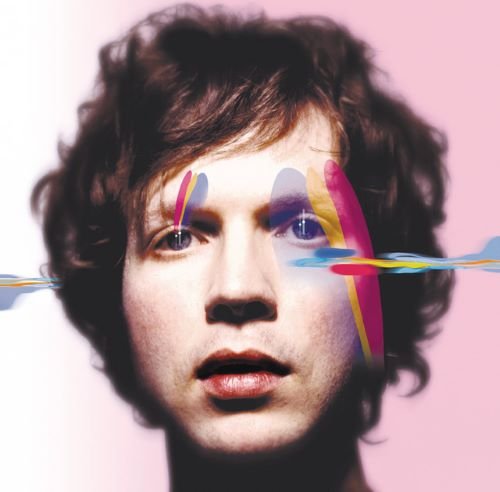
to include a Beck album in Second Spin. This feature highlights albums that are underrated or under-played. In terms of the latter, I don’t think Sea Change gets as much airplay as albums like Odelay (1996) or Midnite Vultures (1999). There are a couple of other reasons why I wanted to spotlight Sea Change. I think that it was underrated upon its release. Most reviews were positive, but there were a few more mixed. Such a stunning and personal album, Sea Change deserved even more than it got. I don’t think many people know Sea Change that well. Maybe they do not know beyond singles like Guess I’m Doing Fine. The final reason I am spending time with Seas Change is the fact it is twenty on 24th September. Many will mark the twentieth anniversary of one of Beck’s most important and best albums. If you look at Beck’s discography, Sea Change arrives sandwiched between two quite vibrant and eclectic albums. Sea Change’s title is quite apt, as Midnite Vultures is a full of different sounds and textures. You only need to look at the strange and neon front cover to know that this album was going to be quite wild, strange, bright and hypnotic! Similarly, Guero has that mix of sounds and styles. With a more composed and less bright cover, it was released three years after Sea Change. Similar to Odelay in the way it fused varied genres, Beck clearly needed to be more personal and deeper with his eighth studio album, yet he returned to something a little more experimental and bolder on Guero.

Interestingly, 2014’s Morning Phase sort of mirrored a lot of the emotions and themes from Sea Change (Beck felt that Morning Phase was a companion piece to Sea Change). Maybe critics who were not sold on Beck’s 2002 album were reacting to his past work and how much of a departure this was. Tackling themes of heartbreak and desolation, solitude, and loneliness, this was the freewheelin’ sonic maverick actually creating something more mature, soul-bearing and personal. I think there was confusion and a bit of disappointment from some. Even though Sea Change did get a lot of love, it is disappointing that some were a bit cold. I am going to end with a couple of the positive reviews, in the hope of convincing those who have not heard Sea Change to listen to it. There are a couple of features I want to highlight. The first, from Guitar.com, is a fascinating 2021 article that discusses the genius of 2002’s Sea Change:

As musical swerves go, the one Beck made between 1999’s Midnite Vultures – a tongue-in-cheek day-glo mashup of soul, funk and Prince – and 2002’s Sea Change – a collection of introspective, heartbroken acoustic-guitar songs – takes some beating. Yet the detour wasn’t entirely without signposting; Beck had revealed a more subdued, traditional-folk side to his songwriting on 1998’s Mutations and glimpses of it before that, saying in an interview at the time of Sea Change’s release: “There are threads of what I’ve done before. If you listen to my earlier B-sides, you’ll hear this record. I have been wanting to make this record for years.”

While some critics had become increasingly irritated by Beck’s eclecticism, there was to be no burying of his singer-songwriter aspirations beneath layers of genre-hopping sonic trickery with Sea Change. The record links its songs together into one coherent sonic atmosphere throughout – quite an achievement, considering it was masterminded by an artist who rarely sounds the same for two bars, let alone 12 songs. The album’s consistency was helped by Beck’s reliance on a trusted core band of musicians including bassist Justin Meldal-Johnsen, drummers James Gatson and Joey Waronker, keys player Roger Joseph Manning Jr and guitarist Smokey Hormel, with the basis for many of the tracks being recorded live in LA’s Ocean Way studios.

Americana Godrich

As well as producing Mutations, producer Nigel Godrich had recently overseen Radiohead’s transition from guitar-centric alt-rock to expansive, electro-influenced art-rock between 1997’s OK Computer and 2000’s Kid A. For Sea Change, he was entrusted with taking Beck’s sound in the opposite direction: away from the futuristic kaleidoscope of electronic influences that collided on Midnite Vultures, to focus Beck’s manic imagination on crafting sonic details around a bedrock of more traditional, performance-based instruments.

The sound of the room, the production and engineering decisions, the quality of the playing and the obvious work that went into the arrangements all play their part in making Sea Change an incredible-sounding record. From the majestic strummed acoustic that opens the record onwards, it’s often cited as a benchmark hi-fi recording, with huge dynamic range between its punchy low end and warm and ethereal reverbs. Throughout, the nuances of Beck’s bitter, lovelorn vocal performances in particular are captured perfectly, making him seem to whisper confessionally in your ear.

While the songs are intentionally simple and direct, the orchestration of instruments and effects is anything but. This is probably why Sea Change was compared on its release to artists with very little in common aside from their mastery of melancholy, with critics drawing comparisons to Nick Drake, Syd Barrett, Serge Gainsbourg, Bob Dylan, Joni Mitchell and Neil Young, among others.

Strumming the heartstrings

We’re here to talk guitars, of course, and Sea Change uses the six-string to its fullest to create atmosphere and intensify the emotional charge of the songs, employing everything from clean acoustic picking to effects-lathered experiments to convey the message.

Opener The Golden Age defines the soundscape: naked strummed guitars contrast with ghostly vocal reverbs courtesy of Ocean Way’s studio plates, while pedal-steel-esque licks, glockenspiel and flickering washes of effects, organ and gritty country-electric lines flare up and drift away into the distance”.

In 2020, Udioscovermusic.com observed how Sea Change was Beck finding new maturity for the new millennium. Rather than continue with the lyrical and sonic persona many knew him for, this was a real break that took many by surprise:

A new openness in Beck’s lyrical approach was certainly in plain sight, largely devoid of the whip-smart irony that had been his trademark. From the acoustic opener “The Golden Age” onwards, it was matched by an affecting simplicity and directness in the song constructions themselves, sometimes elegantly illustrated with lush strings.

Beck’s album contained such titles as “Lonesome Tears,” “Lost Cause” and “Already Dead,” as well as the reflective “Guess I’m Doing Fine.” It was far removed from the rambunctious verve of “Where It’s At” or “Sexx Laws.” “Forlorn folk,” The Guardian called it. But when he spoke to writer Paul Lester for that newspaper, he typically chose not to show his hand about the album’s emotional motivation.

“I don’t talk too much about my personal life,” he said. “You’ll get a thousand times more of me from my music than anything I could say in an interview. When you start opening yourself up in that way, it cheapens your life.”

The album was introduced by the engaging lead promo track “Lost Cause,” followed as a single by “Guess I’m Doing Fine,” which had a video directed by Spike Jonze. Sea Change was every bit of the gear shift that its title implied, but many of Beck’s admirers were eager to make the leap of maturity with him.

The long player peaked at No.8 in the US, made the top ten in his stronghold of Scandinavia and was a Top 20 success in the UK, Australia and elsewhere. It went on to sit comfortably inside the Top 20 of Rolling Stone’s list of the best albums of the 2000s.

Playful on tour

After some shows early in 2002 and an appearance in the spring at the Coachella Festival, Beck teed up the LP release with an August tour of the US. There was certainly no trace of glum introspection when he arrived at the Michigan Theater in Ann Arbor, as MTV reported.

“Beck’s two-hour acoustic performance had a playful vibe throughout,” wrote Christina Fuoco. “He filled the show with sly remarks, showing a different side to his flashy, leisure-suit-wearing self. The concert was a free-for-all, with fans shouting out names of songs in hopes that Beck would perform them.

“Sporting jeans, a white button-down shirt, Converse sneakers, dishevelled hair and rosy red cheeks, Beck cracked jokes the minute he hit the stage, which looked like an unkempt music classroom.” The show featured a guest appearance by Jack White, who joined Beck on “Cold Brains” and a version of “Last Fair Deal Gone Down,” by their mutual inspiration Robert Johnson.

Laughing and joking with the audience and cracking up as he attempted to play “Sissyneck,” Beck eschewed most of his more beat-driven hip-hop flavors. “I’ve been trying to figure out how to do the hip-hop thing live,” he said. “I’ve been studying LL Cool J’s Unplugged for 15 hours straight. I have not figured [it out]. It’ll come to me.”

A song every two days

Beck told Record Collector that the Sea Change sessions resembled those with Godrich for Mutations. “It turned into a song every two days,” he said. “Mutations we recorded and mixed in two weeks, this was probably three and a half but we got a little more ambitious I think, because we had orchestral arrangements and different musicians coming and going.”

The sessions took place at Ocean Way Studios in Los Angeles. “It was a reunion of sorts,” he said. “It was something we’d been planning for four years, talking about. 9/11 happened and then people weren’t working as much, I think we originally wanted to do this record a year and a half ago, but it took a while for people to line up.”

The record repaid that perseverance, just as it continues to reward repeated listens. Beck followed its release with another North American tour in the autumn that included two nights at the Beacon Theatre in New York and another at the Universal Amphitheatre in LA. The album went gold in America in 2005; the sea change had been completed to great effect”.

Let’s end with two positive reviews for the incredible Sea Change. As it is twenty on 24th September, it is a perfect time to reassess and re-explore a masterful work from one of music’s innovators and most remarkable artists. AllMusic had a lot of love reserved for Beck’s Sea Change when they reviewed it:

Beck has always been known for his ever-changing moods -- particularly since they often arrived one after another on one album, sometimes within one song -- yet the shift between the neon glitz of Midnite Vultures and the lush, somber Sea Change is startling, and not just because it finds him in full-on singer/songwriter mode, abandoning all of the postmodern pranksterism of its predecessor. What's startling about Sea Change is how it brings everything that's run beneath the surface of Beck's music to the forefront, as if he's unafraid to not just reveal emotions, but to elliptically examine them in this wonderfully melancholy song cycle. If, on most albums prior to this, Beck's music was a sonic kaleidoscope -- each song shifting familiar and forgotten sounds into colorful, unpredictable combinations -- this discards genre-hopping in favor of focus, and the concentration pays off gloriously, resulting in not just his best album, but one of the greatest late-night, brokenhearted albums in pop. This, as many reviews and promotional interviews have noted, is indeed a breakup album, but it's not a bitter listen; it has a wearily beautiful sound, a comforting, consoling sadness. His words are often evocative, but not nearly as evocative as the music itself, which is rooted equally in country-rock (not alt-country), early-'70s singer/songwriterism, and baroque British psychedelia. With producer Nigel Godrich, Beck has created a warm, enveloping sound, with his acoustic guitar supported by grand string arrangements straight out of Paul Buckmaster, eerie harmonies, and gentle keyboards among other subtler touches that give this record a richness that unveils more with each listen. Surely, some may bemoan the absence of the careening, free-form experimentalism of Odelay, but Beck's gifts as a songwriter, singer, and musician have never been as brilliant as they are here. As Sea Change is playing, it feels as if Beck singing to you alone, revealing painful, intimate secrets that mirror your own. It's a genuine masterpiece in an era with too damn few of them”.

In 2002, Rolling Stone gave Sea Change five stars. Listening to the album now, and it still has that ability to get under the skin and really provoke emotions! Such a brave release from an artist who was very much expected to repeat Odelay and Midnight Vultures, Sea Change was a much-needed shift from Beck:

In 1994, Beck Hansen released his first major-label album. He called it Mellow Gold, and we all laughed at the irony: slacker caricature and coffeehouse hip-hop billed like a K-tel makeout platter. But Sea Change, his eighth album, is the real thing — a perfect treasure of soft, spangled woe sung with a heavy open heart.

It’s the best album Beck has ever made, and it sounds like he’s paid dearly for the achievement. He reportedly wrote these twelve wine-dark songs after breaking up with his longtime girlfriend. Significantly, two of Beck’s finest songs of the last decade were also pristine love-sucks blues: “Asshole,” on his ’94 garage-folk detour, One Foot in the Grave, and the raga moan “Nobody’s Fault but My Own,” on 1998’s Mutations. Sea Change, gleaming with twang and heartbroken strings, is an entire album of spectacular suffering.

This kind of candor does not come easily even to great record makers, and Beck, one of our sharpest, has never had much cause for such direct reflection. The satirical impatience and throbbing collage of his most commercial work — Mellow Gold, 1996’s Odelay, the ’99 pillow-talk pastiche Midnite Vultures — has always been more exhilarating than touching, a triumph of guarded magnificence. But you can clearly hear Beck banging between bravado and paralysis all over Sea Change. He gives his departing other a grand send-off at the start of the album, in “The Golden Age” (“Put your hands on the wheel/Let the golden age begin”), then fills the rest of the song with his own fear of going nowhere fast: “These days I barely get by/I don’t even try.” Compared to other titles here, such as “Lost Cause” and “Already Dead,” “Guess I’m Doing Fine” is happy talk. In fact, Beck is doing anything but; the low, slow way he sings on his way to the song’s punch line — “It’s only tears that I’m crying/It’s only you that I’m losing/Guess I’m doing fine” — is a powerful admission of failure.

The clarity of his crisis has a lot to do with the naked strength of Beck’s singing. For someone who started out as a teenage folk hobo — just voice and strum — Beck has rarely walked this far out in front of the music on his own records. And considering his eternal-high-school looks, he possesses a surprisingly manly tenor, a clean, deep instrument of lust and worry. It fills the big spaces in Nigel Godrich’s haunted production — the backward-tape buzz in “Lost Cause”; the desert-Bach air of the keyboards in “Nothing I Haven’t Seen” — with the combined pathos of Nick Drake, the solo, freaked-out Syd Barrett and the John Lennon of Plastic Ono Band. When Beck and Godrich pour on the Indo-Beatles chaos in “Sunday Sun” — ghostly pounding piano and not-so-unison guitar; a meltdown coda of drums and distortion — you can still hear Beck’s resignation and unsteady resurrection inside the song.

The Drake and Barrett comparisons are not idle flattery. Just as Mutations was Beck’s homage to Tropicalia — Brazil’s late-1960s revolution in art, sound and romanticism — Sea Change suggests that Beck has been studying the British early-1970s school of psychedelic-comedown melancholy. The coal-gray cry of string arrangements by Beck’s father, David Campbell, in “Lonesome Tears” and “Round the Bend” recall Robert Kirby’s exquisite orchestrations on Drake’s 1969 album Five Leaves Left. Godrich, who as a producer and engineer helped put the Pink Floyd in Radiohead, shows the same flair here for shadows and suspense. Beck made this record with a full band, including guitarist Smokey Hormel, keyboard player Roger Manning and drummer Joey Waronker. Yet on every song, it sounds like Beck is the only one in the room, alone with his questions and stumped for answers.

When Beck recently performed at New York’s Lincoln Center, he mixed some of these new songs with breathtaking covers of “No Expectations,” by the Rolling Stones,” Big Star’s “Kangaroo,” the Zombies’ “Beechwood Park” and “Sunday Morning,” by the Velvet Underground. It was a perfect fit — songs about commitment and loss, written and sung by the wounded. Beck didn’t play any Dylan, but he didn’t have to. As a young folk singer at the turn of the Nineties, Beck set out to be his own Dylan. With Sea Change, he has made it the hard way, creating an impeccable album of truth and light from the end of love. This is his Blood on the Tracks”.

Twenty years after this masterpiece album was release, and I am reading reviews that are quite middling or not that convinced. Maybe there should be some retrospective assessment as Sea Change has been frequently voted as one of Beck’s defining albums. I think that the brilliant, beautiful and successful Sea Change (which reached the top twenty in the U.S. and U.K.) is fully worthy of a new take and wave of affection. This is an album undervalued by some that really does deserve…

MUCH more love.

FEATURE: Is This the Right Thing to Do? Inside Kate Bush’s Hammer Horror

FEATURE:


Is This the Right Thing to Do?

IN THIS PHOTO: Kate Bush in 1978 in a Lionheart album outtake (different expression), shot by Gered Mankowitz at his photo studio on Great Windmill Street in Soho, London around September/October

Inside Kate Bush’s Hammer Horror

__________

I have been doing quite a few features…

around three Kate Bush albums: Never for Ever, The Dreaming and Hounds of Love. All celebrating anniversaries this month, it has been important to write about them. When thinking about Never for Ever and how it pushed Bush’s music and ambitions on from her first two albums, The Kick Inside (1978) and Lionheart (1978), it got me thinking about one of the songs from the latter. I have mentioned Hammer Horror in other features, but I have not spotlighted it and dug deep at all. One reason for this is that it has often been viewed as one of her weaker tracks. Maybe a lesser song from an album that is not among the essential releases. I have almost had to defend Lionheart on many occasions! Far from it being this disappointing follow-up to The Kick Inside, it is a fantastic album with many highlights. Wonderful songs like Wow and Symphony in Blue show what a mature, varied, and exceptional songwriter and creative mind Bush was. There are a couple of unusual things associated with Hammer Horror. For a start, it did not stand out as a lead-off single. One would think Wow was a more obvious choice. That song is the third on Lionheart. Hammer Horror is at the very end. Also, in terms of its sound and energy, maybe it would have been better as a second or third single. I am surprised only two singles were released from the album.

Sure, Symphony in Blue was put out in Canada and Japan, but I think it could have been put out in the U.K. and the rest of the world. Also, Kashka from Baghdad suggests itself as a single. EMI pushed a second album so soon after The Kick Inside (Lionheart came out nine months later), so why only two singles? That was the same story with the debut but, trying to increase Bush’s profile and keep momentum rolling, a third single would have been possible. Hammer Horror got to number forty-four in the U.K., but it did reach seventeen in Australia, ten in Ireland and twenty-five in Netherlands. It is quite cruel how some reacted to the first single from Bush’s second studio album. The Kate Bush Encyclopedia unites some of the less kind opinions about Hammer Horror:

On Radio 1's Round Table on October 27, 1978 the single was reviewed by DJ's John Peel ("I didn't like the album at all and I'm not too enthused with this either") and Paul Gambaccini ("It doesn't grab me immediately as The Man With The Child In His Eyes"). Record Mirror's Ronnie Gurr opined: "Kate keeps up the formula and doesn't upset the fans... sounds like Joni Mitchell popping tabs with the LSO." In NME, Tony Parsons wrote: "Ominous post ELO orchestration with the unrequited lust of a broken affair viewed as living dead love-bites-back as in classic 50's British celluloid, a real nail biter, hypnotic and disconcerting”.

 IMAGE CREDIT: iniminiemoo

I really like Hammer Horror. It is a song I was not always hot about. It came out as a single on 27th October, 1978. The more I have written about Lionheart and its worth, the more I like it final track. In terms of themes, this was not new territory for Kate Bush:

The song is not about, as many think, Hammer Horror films. It is about an actor and his friend. His friend is playing the lead in a production of The Hunchback of Notre Dame, a part he's been reading all his life, waiting for the chance to play it. He's finally got the big break he's always wanted, and he is the star. After many rehearsals he dies accidentally, and the friend is asked to take the role over, which, because his own career is at stake, he does. The dead man comes back to haunt him because he doesn't want him to have the part, believing he's taken away the only chance he ever wanted in life. And the actor is saying, "Leave me alone, because it wasn't my fault - I have to take this part, but I'm wondering if it's the right thing to do because the ghost is not going to leave me alone and is really freaking me out. Every time I look round a corner he's there, he never disappears."

The song was inspired by seeing James Cagney playing the part of Lon Chaney playing the hunchback - he was an actor in an actor in an actor, rather like Chinese boxes, and that's what I was trying to create. (Kate Bush Club Newsletter, November 1979)”.

Wow is about actors and the stage. The themes of horror and suspense carried on through Bush’s career. There was enough of it through Lionheart. Think about songs like Coffee Homeground (Hammer Horror’s B-side), and Full House. There is anxiety and something eerie in those songs. I do like the fact Bush performed Hammer Horror live a before it featured during 1979’s The Tour of Life (along with most of the songs from The Kick Inside and Lionheart). Bush performed Hammer Horror in various places all over the world. She performed it on Countdown in Australia on 12th October, 1978 (for its world premiere), and at the San Remo festival in Italy in 1979. This was an old song of hers that dates back to its demo in 1977.

I like the fact that, in terms of its rhythms and sounds, it is different to anything on The Kick Inside. Even as soon as Lionheart, Bush was looking to keep fresh and move forward. I love Bush’s performance on Hammer Horror. I also love the lyrics. Right from the off, you know this track could not come from anyone else: “You stood in the belltower/But now you're gone/So who knows all the sights/Of Notre Dame?”. Some of my favourite lyrics from Lionheart can be found on Hammer Horror. This is a particularly pleasing and interesting passage: “Rehearsing in your things/I feel guilty/And retracing all the scenes/Of your big hit/Oh, God, you needed the leading role/It wasn't me who made you go, though/Now all I want to do is forget/You, friend”. Features like this one not only rank Hammer Horror quite low when it comes to her best singles. It also reveals that she was not a great fan of Lionheart and making it. Maybe feeling too rushed and unable to have much say and time to make the music she wanted to, it is a shame. Last year, Classic Pop did rank it fairly high up their list. I think that Lionheart should be reappraised and re-released with any extras and demos available. Not many of Bush’s lesser-heard singles get airplay. I feel Hammer Horror is worthy of a lot more respect than it received. Much more than a weaker single or something that it not up there with her best work, I think Hammer Horror is…

A great song.

FEATURE: When All Is Said and Done: The Burnout and Exhaustion of Touring

FEATURE:


When All Is Said and Done

IN THIS PHOTO: Arlo Parks 

The Burnout and Exhaustion of Touring

__________

NOT that it is an epidemic…

but, over the past couple of weeks, three high-profile artists have shared news they are cancelling tour dates because of exhaustion and mental health concerns. I am exhausted typing this and I am not even a musician! The toil and general fatigue of modern life is hard on us all, so I can hardly imagine what it is like for artists who are touring and putting on these big shows. You may think, therefore, it is not surprising or unusual that you’d get artists declaring they need some time out to recoup and rest. This is true, though the fact that three acts have said similar things in fairly quick succession is more of a cause for concern. Will we see more artists follow suit? I think that the timing is interesting. Many artists are catching up after the pandemic and packing in so many shows. Festival season has sort of just come to an end, so this combined weight and busyness has meant casualties and drained artists. It is a coincidence that the three artists impacted are Mercury Prize nominees. Two, Sam Fender and Wet Leg are nominated this year. The third, Arlo Parks, won the award last year for her debut album, Collapsed in Sunbeams. We are talking about three superb and beloved British acts who have made the decision to pull some shows to focus on their mental health.

Sam Fender took to social media recently to say that he needed to cancel some shows. He has had such a hectic and busy year, so I think everything has taken its toll and caused him to rethink things and prioritise his health. The BBC reported the story:

Sam Fender has announced he is to take a short break from touring to look after his mental health.

The star took to social media to tell fans he and his band were "burnt out".

"My friends and colleagues have been worried about me for a while and it's not going to get better unless I take the time to do so," he wrote.

Fender's upcoming US headline shows will be cancelled, as well as gigs with Florence and the Machine and the Life is Beautiful Festival.

His rescheduled appearances at UK record stores are also affected.

Fender will play at St James' Park in Newcastle in June, fulfilling a "childhood dream"

However, the North Shields star said he was "super excited" for Australia in late November and "everything to come in 2023", including June's homecoming gigs at Newcastle United's St James' Park, for which tickets sold out within minutes.

"It seems completely hypocritical of me to advocate discussion on mental health and write songs about it, if I don't take the time to look after my own mental health," his statement read.

"I've neglected myself for over a year now and haven't dealt with things that have deeply affected me.

"It's impossible to do this work on myself while on the road, and it's exhausting feigning happiness and wellness for the sake of business."

Fender has won two Brit awards, both of which have been turned into beer hand pulls at the Low Lights Tavern in North Shields, where he worked and was discovered at the age of 18.

Both his albums, 2019's Hypersonic Missiles and 2021's Seventeen Going Under topped the UK charts, with the latter shortlisted for the Mercury music prize”.

Wet Leg, nominated for a Mercury for their eponymous debut album, are among the most popular and exciting new acts in the world. They have been performing international dates and I think there has been this combination of expectation and genuine passion for performance. Having released such a revered and acclaimed album, packing in tour dates and taking their music far and wide seemed a natural move. Also, Rhian Teasdale and Hester Chambers are new and want to deliver to their passionate and faithful fans. They also want to cut their teeth, hone their craft and build up their fanbase and reputation as a sensational live act. Like Sam Fender, there has been this breaking point where have said how things need to change. NME take up the story:

Wet Leg have updated fans on why they didn’t perform two of their recent US tour dates, citing “mental and physical health” concerns.

The duo have been touring their “instant classic” debut album across the States, and were due to play Abiquiú, New Mexico and the Westword Music Showcase in Denver, Colorado on September 9 and 10 respectively. After returning to the UK for a few days, however, it was announced that those dates would not go ahead.

 Posting on social media today (September 13), the band wrote: “Hey everyone! just wanted to say sorry for missing you Denver and New Mexico. And no it wasn’t because of covid! truth is that it all got a bit on top of us and we just couldn’t quite manage to get back on that plane.

“It’s been an amazing year playing our music all over the world but our busy touring schedule finally got the better of us this time. I just want you guys to know that it wasn’t an easy decision at all and I’m sorry I didn’t post anything about it sooner. Our mental and physical health are such easy things to overlook when everything is so exciting and so busy, you barely have a moment to check in with yourself.”

The statement concluded with a confirmation that forthcoming dates would still go ahead, adding: “Anyway after many big ugly cries and lots of good sleep, we’re back and ready to rumble. That means Salt Lake City, Phoenix, Life is Beautiful fest, New York and Sea Hear Now fest we are coming 4 u”.

The most recent case of a rising/bigger artist cramming in so many dates and now having to step back is the sensational Arlo Parks. I guess all artists are susceptible, but September has been a month where summer gigs have concluded and there have been extra dates in the diary, in part holdovers from the pandemic shows that were cancelled, combined with additional ones because of their popularity. I can understand why artists like Parks want to please their fans and travel as far as possible to reach people. The Guardian reported on Parks’ mental health struggles and decline:

Singer Arlo Parks, winner of the Mercury prize and Brit awards, has cancelled a string of concerts, saying her mental health has “deteriorated to a debilitating place”.

Parks announced on social media that she had decided to scrap some of her US tour dates and fly home to London for a period of rest and recovery.

It comes days after fellow Brit award winner Sam Fender also cancelled a series of upcoming shows to look after his mental health after becoming “burnt out”.

Parks’s profile has grown exponentially since the debut of her first EP, Super Sad Generation, in April 2019.

Last year was the 22-year-old singer’s breakout year, during which she released a critically acclaimed debut album, Collapsed in Sunbeams, and took home both the Mercury prize and the award for best new artist at the Brits.

Archie Bland and Nimo Omer take you through the top stories and what they mean, free every weekday morning

She also embarked on an international tour, opening for acts such as Harry Styles and Billie Eilish.

Addressing her fans, Parks wrote: “I’ve been on the road on and off for the last 18 months, filling every spare second in between and working myself to the bone.

“The people around me started to get worried but I was anxious to deliver and afraid to disappoint my fans and myself. I pushed myself unhealthily, further and harder than I should’ve.”

Announcing the cancellation of several upcoming shows, she added: “I don’t take decisions like this lightly but I am broken and I really need to step out, go home and take care of myself.

“I will do everything I can to make this up to you – for now you can get refunds at your point of purchase.

“I’m forever thankful to everyone who continues to show up for me, what a dream to have fans like you guys – I’ll be back – love AP.”

She said she intends to restart her tour at the Crystal Ballroom venue in Portland, Oregon on 26 September”.

I like how artists can open up and there is this wave of love and support from fans. Rather than push themselves past breaking point, Sam Fender, Wet Leg and Arlo Parks are stepping away from live dates for varying lengths of time. I hope that they can all recharge and come back when they are ready. It makes me wonder whether there is pressure on musicians to perform too much or to hide their mental health issues and statuses. They all love performing for their fans but, between traveling and the energy needed to get through each gig, things have come to a head. A physical injury that forces an artist to postpone gigs is one thing, but when someone like Arlo Parks says that their mental health has left them debilitated is another thing altogether. It makes me think that we are going to see many other artists also having to cancel gigs because they are either mentally exhausted or drained because of demand and the physicality of performing. Is there a solution? As I said, I think it is a bad time because the pandemic has meant many artists are touring a lot more now than they would have. Many might feel guilty or anxious about cancelling gigs through fear of letting fans down, so they plough on and there is a day when they cannot continue and need to step away. Because streaming services do not pay artists much, touring is one of the only revenue sources for many.!

From Rina Sawayama and Charli XCX through to Dua Lipa and Yard Act, I hope we do not see too many of our great artists suffer from mental exhaustion. I have mentioned how many of us cannot conceive of the realities of a touring artist’s life and reality. You wonder how many acts are pushing through the pain and exhaustion and what impact that is having. I know it is part of the reality and downside to the music industry, but it is devastating to learn that an artist is going through a terrible time. They must feel gutted to have to cancel shows and affect fans, but they also need to protect themselves and preserve their mental health. In light of Sam Fender, Wet Leg and Arlo Parks announcing their mental health has been impacted so severely that they need to take a break, I hope questions are asked, things change, and there are some protective barriers in place. In a larger sense, it should ignite the debate as to whether artists are burning out because streaming sites pay so little. It is a bit of a sad state of affairs. After a tough two years for all artists, there has been this explosion of gigs around the world. Inevitably, it has caused damage and downsides, but it is upsetting that Sam Fender, Wet Leg and Arlo Parks have been so severely hit. I hope that they will be okay, and I wish them…

ALL the very best.

FEATURE: Go Deep: Inside Janet Jackson’s The Velvet Rope at Twenty-Five

FEATURE:


Go Deep

Inside Janet Jackson’s The Velvet Rope at Twenty-Five

__________

PERHAPS the most mature…

and ambitious album of her career to this point, Janet Jackson’s The Velvet Rope came out on 7th October, 1997. I have seen a lot of great reviews for it, though some have given it a more mixed reception. There were high hopes before the release. 1993’s janet. is a phenomenal album. Prior to the release of The Velvet Rope, Jackson renegotiated her contract with Virgin for U.S.$80 million, the largest recording contract in history at that time. Between the release of her 1993 album and The Velvet Rope, Jackson experienced emotional breakdown and stress. The Velvet Rope is a more introspective and harder-hitting album than its predecessor. Jackson discussed her personal struggles throughout, in addition to domestic abuse, sexuality, same-sex relationships and social issues. It is a very important and deep album that has never quite received all the acclaim it deserves. Many highlighted the racier elements of The Velvet Rope, rather than the range and nuance of the music, the more serious themes Jackson addresses, plus how honest and open she is throughout. I think there has been fairer retrospection. Considered to be one of Jackson’s darker, most personal, and intimate albums, The Velvet Rope has influenced artists like Rihanna and Kelly Rowland. It is an incredible album coming up to its twenty-fifth anniversary. Reaching number one in the U.S. and spawning incredible and successful singles like Together Again, there is no doubting the fact The Velvet Rope is iconic and hugely important.

Because of that, I want to mix some reviews for the album with features that go deep and explore its making and legacy. The first, from Udiscovermusic.com, is from earlier this year. They highlight the timeless intimacy of the phenomenal The Velvet Rope:

Janet Jackson’s longevity and versatility as an artist is largely credited to her ability to shapeshift between albums, exuding power one moment and vulnerability the next. She was already iconic, having several successful albums under her belt and a reputation for passion and precision on stage. Each of Janet’s previous albums was layered with radio hits and seemed to carve out a specific narrative: superstar. In the midst of battling a deep depression, Janet chose to get more raw and confessional with her art. On The Velvet Rope, Janet experimented with displaying heartache, loneliness, and sensuality for all to see – forcing us to delve deeper into wondering who she was as a person, and as an artist.

While Janet is indirect about specifics pertaining to the album, one theme is clear: pain. When pressed for more details explaining the lyrics for “What About,” she told Rolling Stone. “Singing these songs has meant digging up pain that I buried a long time ago. It’s been hard and sometimes confusing. But I’ve had to do it. I’ve been burying pain my whole life. It’s like kicking dirt under the carpet. At some point, there’s so much dirt you start to choke. Well, I’ve been choking. My therapy came in writing these songs. Then I had to find the courage to sing them or else suffer the consequences – a permanent case of the blues.”

Vulnerability in art is nothing new, but Janet contorts through her pain like a trapeze artist; swinging over the crowd and performing for us, catching herself and swinging to keep from plummeting, both eyes fixed on the rope in front of her. She used The Velvet Rope as divergence from her previous understandings and measurements of success, noting that she previously stifled her feelings and just performed for the sake of success rather than out of passion or a deep yearning to do so. By the time Janet made Velvet Rope, she’d opened up feelings of past trauma to explore herself as a woman and artist. She got tattoos and piercings – physical markings of emotional pain.

Despite the overwhelming theme of pain with a tinge of emotional anguish, Janet insists that the symbol of the rope is not meant to be one of harshness but one of mystery. “The music is sensual, not brutal. The feeling of The Velvet Rope is soft, not severe,” she told Rolling Stone. After living through celebrity from childhood, with her life fully on display for consumption, Janet said she never was asked if she wanted to be a performer. But she performed. After leaving her feelings of distress and isolation unaddressed through adolescence and early adulthood, Janet chose to wield the inner torment of fame and its underlying stressors as a weapon against hiding. This album isn’t just about sex. It’s about growth into adulthood and the pain that comes along with being alive.

Although Janet’s elaborate conceptual theme was constantly questioned by critics, listeners seemed to understand. Velvet Rope went multi-platinum and was Janet’s fourth album to chart on the Billboard 200. The album has sold over 10 million copies worldwide, being certified triple Platinum in Canada, double Platinum in Australia, and Platinum in Japan, Europe and France. The album navigates topics of bisexuality, queer positivity, and S&M, cementing Janet as a gay icon. She was awarded the ‘Outstanding Music’ award by GLAAD Media – Janet has since been honored with a Vanguard award by GLAAD.

The Velvet Rope influence isn’t strictly relegated to musical artists. Activist Janet Mock named herself after Janet Jackson, and cites the sexual fluidity and sexual autonomy on Velvet Rope for being an album that paralleled her own life at the time. Psychologist Alan Downs’ book Velvet Rage illustrates growing up gay in a world that largely caters to heterosexuals. Artists across genres and platforms have cited the influence and significance of this album in their own work, attempting to mold their own pain and self-discovery into a risky, autobiographical element. Janet’s impact is still being heard in other artists’ work, decades later, cementing her status as an icon and permanently defining the parameters – or lack thereof – needed for a raw, intimate, mature pop album”.

I like the idea of The Velvet Rope’s title referring to this sense of emotions being kept behind a rope or at bay. Maybe a sense of happiness or strength slightly out of bounds. Although The Velvet Rope is very personal, it is accessible and has a lot of joy throughout. In 2017, Albumism celebrated twenty years of a supreme and rich album that continues to inspire artists today:

Importantly, there was a new ingredient at play here: neo-soul. This R&B sub-genre was to bring artistic relief to a black music scene soon to become rife with super producers and manufactured talent as the 1980s closed. Starting in 1991 with Omar, the sub-genre grew each subsequent year with efforts from Caron Wheeler, Meshell Ndegeocello, D’Angelo and Maxwell. This movement influenced the imaginations of black artists far and wide. Jackson is no exception, as neo-soul carried the Blaxploitation/freestyle merger of “Free Xone” and the bare-faced piano preciousness of “Every Time.” Neo-soul also touched Jackson’s visual aesthetic for The Velvet Rope. Two of its partnering music videos directed by Mark Romanek (“Got ‘Til It’s Gone”) and Seb Janiak (“Together Again”) were celluloid encomiums to Afrocentrism.

But while The Velvet Rope brought Jackson back to her rhythm and blues homebase, the LP did not engage in total R&B isolationism. She tied in bits and pieces of alternative rock and electronic influences too, as heard on the squally title track and “Empty.”

Quite the musical meal when served up on October 7, 1997, The Velvet Rope asked for patience while unmasking its treasures. The set’s singles―“Got ‘Til It’s Gone” (featuring Q-Tip), “Together Again,” “I Get Lonely,” “Go Deep,” “You,” and “Every Time”―were fantastic lures for what awaited listeners on The Velvet Rope en masse.

Jackson’s sixth LP marked a new pinnacle for her, both critically and creatively. Since then, only Damita Jo (2004) has been able to enter The Velvet Rope’s orbit as her secondary masterpiece. By granting temporary access to the “spiritual garden” of Janet Jackson on The Velvet Rope, audiences can experience and celebrate the complexities of this woman, great and small”.

I shall round off with a couple of reviews. The first, from Random J Pop is really glowing and positive. It made me think about Janet Jackson’s award-winning sixth studio album in a new light. There is no doubting the fact The Velvet Rope is such an important and stunning album:

There didn't seem to be any rules when it came to putting this thing together. Janet and her partners in crime, Jimmy Jam and Terry Lewis, really pull from the edges for The Velvet Rope to make songs whatever they want them to be. The album casually swings from Electro Pop, to Rock, to Funk, to R&B, to Dance music, to Pop, and then back again. Sometimes with fusions. Sometimes with a different twist. No two songs on this album sound the same, and half of it is unlike anything Janet had done before. An album like this could easily be alienating. But the anchor is the familiarity of Janet's voice, and the feelings she conveys through these songs.

Whilst Rhythm Nation tried its damnest to make commentaries on capitalism, violence and social constructs, it was easy for these songs to get lost in how bouncy they were (i.e "State of the World") or the sequencing. An absolute banger of a song about feeling good and free-spirited coming after a song which touches on children having to grow up into a broken world kinda robs the focus. The Velvet Rope has a far better flow to it. Everything about the album feels more fluid and presents a narrative which flows from song to song. Starting with feeling lost ("The Velvet Rope"), to experiencing loss ("Together Again"), to loneliness ("Empty" and "I Get Lonely"), to being open to being loved ("Anything"), to then finding your place in the world ("Special").

The theme of The Velvet Rope is loss and a lack of belonging. But there's still some joy to be found in the songs, even if it doesn't shout it from the rooftops. The "Tubular Bells" sampling "Velvet Rope" is about those who hurt others being truly seen. Acknowledging that sometimes people who hurt others do so because of their own hurt. And that whilst many wouldn't give them the time of day, showing enough compassion to allow them to love others and love themselves is how we all win. "Together Again" was written following Janet losing a friend to AIDS. But the song is not about the anguish at the loss. It's about that person's everlasting memory, and the notion of there being an existence where Janet will get to see them again. "Together Again" is known for its Dance, House influenced sound, but it was originally written as a ballad, and it's not hard to hear it. "Free Xone" is a 5 minute spoken-word funky get-down, with a message which is basically 'People be gay' before it became a meme featuring Quinta Brunson. "Go Deep" is about being so tired of life that you're like 'Fuck it, I'mma go out, drink, maybe fuck around a little'.

But not every song has a silver lining, as is true to life. "Got 'til It's Gone" is what it says on the tin. Realising what you've lost, that you'll never get it back, and continually being tormented by the wonder of what could have been. "Empty" is about being your truest self online, and connecting with somebody who understands you in ways that nobody in your offline life does, and raising the question of how 'real' a relationship is that you've built with somebody online. "Empty" has aged like the finest of wines given where the world is now in an age of social media, dating / hook-up apps and online gaming. It honestly makes more sense to me now than it did when I first heard it way back.

The Velvet Rope's charm is in how relatable its songs are. Some songs may not even click with you at first, and you'll only appreciate them because of the production. But then, you really listen to what Janet is saying, and then you find yourself like 'Oh, shit. That's me!' And it's not to shame or make anybody feel bad. It's simply to make you feel. The acknowledgment that you aren't as alone as you may have thought you were. And that as vast as this universe is, there will always be at least one other person out there who gets it and gets you for who you truly are. You may not ever meet that person, but they are out there. This is what The Velvet Rope represents. Belonging and the championing of acceptance.

Pop owes an everlasting debt to Janet Jackson. Janet's impact on music seemed to have been wiped off the table all because her left titty guest featured in her Super Bowl performance, but there's no escaping that pop would not be what it is without Janet Jackson. But I also feel that the impact that The Velvet Rope specifically had on Pop music gets overlooked. We may not have had Janelle Monáe's Dirty Computer, Rihanna's Loud, Beyoncé's Lemonade or Kelela's Take Me Apart (which even share similar visual colour palettes) if it wasn't for this album. Janet not only made it okay for women in Pop to lay their feelings and insecurities bare in a song, but she normalised Black women in Pop being able to do what was largely only done within Soul, Blues and R&B - as though these are the only genres in which Black woman can extricate their pain.

The Velvet Rope wasn't just an affirmation of belonging for people who felt they were different. It was for Black girls who wanted to be boundless Pop stars. That reinvention, drastic image changes, controversy, and living your best Pop star life weren't exclusive to Madonna. That you ain't gotta be white to be able to do any of this shit. Black girls can do all of these things too, because Janet was doing it too”.

The final review that I am going to include is from SLANT. Although they note that there is a lot of sexual openness and frankness, something more compelling and emotive lies beneath the surface of a terrific album:

If Janet Jackson made much ado of janet. being the Let’s Get It On to Rhythm Nation’s What’s Going On, then 1997’s The Velvet Rope is clearly her I Want You, respectively Jackson’s and Gaye’s best and least-heralded albums. (Both incidentally recognized at the end of their creators’ respective marriages.) The chief difference between The Velvet Rope, the least “perfect” album of Janet’s increasingly careful career and the one that most threatens to collapse at each turn, and all the albums that Janet has released since is that all the subsequent albums have been cheery, forcedly carefree collections of would-be singles without any cohesiveness behind them; they’re kiddie cocktails by someone old enough to know better. The reason none of them sound particularly convincing—like Jane Adams’s Joy from Happiness gamely grinning “I’m doing good” seconds before peeling into miserable, anti-cathartic tears—is because of The Velvet Rope, an album by a still very inexperienced person attempting to convey maturity and worldliness.

In every conceivable way the most “adult” album of Janet’s career, The Velvet Rope is also the most naïve. Its vitality owes almost nothing to its stabs at sexual frankness. Because, truthfully, a lot of the “naughty” material doesn’t exactly seem that much more convincing than the Prozac-fuelled aphorisms of the follow-ups, nor is it more politically intriguing than her advocacy of color-blindness in Rhythm Nation.

The bisexuality of her cover of Rod Stewart’s “Tonight’s the Night” never manages to convince that Miss Jackson has ever been so nasty as to even consider loosening pretty French gowns. “Rope Burn” isn’t so ribald that Janet doesn’t have to remind listeners that they’re supposed to take off her clothes first, though producers Jimmy Jam and Terry Lewis’s Chinese water torture beat does approximate sonic bondage. It’s hardly surprising that when Janet uses the word “fuck” in “What About,” she’s not talking about it happening to her. For a sex album that also seems to aim at giving fans an unparalleled glance behind the fetish mask (literally, in the concert tour performance of “You”), Janet’s probably never been more cagey.

But behind the sex is something even more compelling, because it gradually dawns on you that Janet’s use of sexuality is an evasive tactic. That it’s easier for her to sing about cybersex (on the galvanizing drum n’ bass “Empty,” one of Jam and Lewis’s very finest moments, maybe even their last excepting Jordan Knight’s “Give It to You”) and to fret about her coochie falling apart than it is to admit that it’s her psyche and soul that are in greater danger of fracturing. Soul sister to Madonna’s Erotica (which, in turn, was her most daring performance), The Velvet Rope is a richly dark masterwork that illustrates that, amid the whips and chains, there is nothing sexier than emotional nakedness”.

On 7th October, The Velvet Rope celebrates twenty-five years. It would be four years until Janet Jackson followed this masterpiece with All for You. A less consistent album in my view, I was eager to explore and highlight the brilliance of The Velvet Rope. It is an album that everyone should know and listen to – so, if you have not done so for a while then make sure that you do. The Velvet Rope was confirmation (as if it was needed) that Janet Jackson is a hugely important, influential and…

LEGENDARY artist.

FEATURE: Wired for Sound: Reconnecting with the Joy, Comfort and Evocativeness of Physical Music

FEATURE:


Wired for Sound

ART CREDIT: Pascal Campion

Reconnecting with the Joy, Comfort and Evocativeness of Physical Music

__________

IN future features…

 PHOTO CREDIT: Mishaal Zahed

I am going to discuss some more upsetting and darker aspects of the music industry. Music over the past couple of years has been a source of comfort and strength as we moved through the pandemic. Indeed, as we all struggle with recent things in the news and the fact that economically we will all be worse off, it is avenues and warm recesses like music and nostalgia that are providing needed distraction and reassurance. I have been leaning too heavily on streaming and digital music over the past few months or so. I guess you need to have a tighter budget now when it comes to getting vinyl and physical music. As I have noted in previous features, there is something about physical music that is evocative and moving. Maybe a warmer listening experience, there is a connection you get from listening to vinyl C.D.s and cassettes that you don’t get from listening to digital music through earbuds. I have been exploring vinyl a lot recently, not only to get that richness and physicality that is so important. I am also being transported back to my younger days. Before the Internet and the streaming boom, physical music was what we were listening to. Maybe it is a type of escape but, psychologically, there is this sense of companionship clinging to a vinyl or connecting with an album in a way that you really can’t through the Internet.

 PHOTO CREDIT: Daniel Fontenele

Physical music will always be popular and have its place because music fans want that connection. The actual process of owning something physical and keeping it. As I have also noted, there is a transient and ephemeral aspect of digital music. The overly malleable and skippable nature of a digital album means people (me included) dip in and out and do not really invest the time and focus we should. I like the sense of having a physical album and being sort of wired in and spending time with it. I have been debating on Twitter the merits of cassettes. Many maintain they are a bit rubbish and flawed, but I have been dreaming on reviving the legendary Sony Walkman, ordering a stack of cassettes and walking around playing album after album! There is something almost romantic and unusual about having a Walkman with you and a case or carrier to store old-style cassettes! Many might find it weird, but true music lovers know there is something from these formats and experiences that you don’t really get from your smartphones or streaming services. Never will I knock them, but I like the unique pleasures you get from listening to a vinyl album or walking around with a cassette in your ears. Vinyl listening allows you to sit or lay in a room with just you and an album. Even socially sharing the music, dropping the needle and letting a record play out is much more evocative and bonding than playing it through a smart speaker or a phone.

 ILLUSTRATION CREDIT: Dribbble via Pinterest

Indeed, even listening to a C.D. in a car or playing a cassette (whether on a player or, if you are lucky to have one, a Walkman) is such a treat and sensational experience. The music seems deeper, warmer, more special and intimate. There is that link between physical music and our childhoods. The memories that can be unlocked when we play an album on a physical format. Whether reminiscing about mixtapes at school, the first album you bought, the sadly lost and long-gone days of singles on C.D.s, or the way we used to share music in this way, physical music, to me, is the way people should be introduced to albums and artists. I am determined to see if there is an original Walkman in a good condition so that I can buy cassettes. I also like the idea of the Sony Discman (faults and all!) and, even though it is more expensive, vinyl is really starting to play its part. I am hunting out rare versions of classic albums and, if budget and common sense allows, owning some of the albums I loved in my young years that I only hear digitally now. It is expensive to reconnect and properly explore music this way, but the mental and physical benefits you get are clear. That is not talked about much. Of course, music not only can help with memory and recollection, but it can calm the senses and boost your mental wellbeing. I think there is another level when it comes to physical music, because it unlocks layers and levels in music not there digitally.

 PHOTO CREDIT: Ervo Rocks

I would say, as there is nothing retro or regressive about making mixtapes and buying cassettes – many artists now release their albums on cassettes as part of a bundle or on their own -, manufacturers need to react and adapt. There are cassettes and C.D.s around and being bought, and yet a small percentage are regularly played due to a lack of devices on which to play them. I also think that music is not shared and discussed as it once was. In my youth, you could bond over music much more easily because you shared it and would pass albums around. I think that, if albums on cassettes, vinyl and C.D. were more affordable and could be more easily played, it would cause ripples that could lead to social, physical and psychological benefits. In any case, I have been thinking about physical music and how it is back in my mind. I think the way we can appreciate and dissect albums on these formats connects you more deeply to the music. That is so rewarding. I am thinking back to mixtapes and the modest joys of the humble cassettes. The way I got pleasure out of buying  C.D. single, or the ongoing wonder of vinyl shopping and holding something in your hands that seems like a work of art! All around the world, physical music means something different to each person. They have their own reasons why they love it and their own memories attached. Immersing yourself in physical music evokes memories, unlocks sensations, provokes emotions and sparks the mind in…

 ILLUSTRATION CREDIT: CSA Images Art

SUCH special and fantastic ways.

FEATURE: To Where the Water and the Earth Caress: Kate Bush’s The Sensual World at Thirty-Three

FEATURE:


To Where the Water and the Earth Caress

IN THIS PHOTO: Kate Bush in the cover photo from The Sensual World’s single/PHOTO CREDIT: John Carder Bush 

Kate Bush’s The Sensual World at Thirty-Three

__________

ONE of Kate Bush’s…

absolute best and most enduring singles, The Sensual World was released on 18th September, 1989. The album of the same name came out the following month. The first single from her sixth studio album, The Sensual World featured Walk Straight Down the Middle as the B-side. Also included as a bonus track on the tape and C.D. versions of the album, the song was based on an old backing track, originally intended as a B-side. Bush quickly wrote the lyrics and recorded the synth overdubs and vocals in a single day, using the next day for final overdubs and mixing. It was the last track to be finished for the album, created in just over twenty-four hours. Whilst I prefer the ‘original’ final track on The Sensual World, This Woman’s Work, it is good to have a bonus track. It is a nice song, and one that is different to everything else on The Sensual World. This incredible single has an interesting history. I have written about it before, but it was re-recorded and included on Bush’s 2011 album, Director’s Cut. The reason for this is because the Joyce (James) estate granted permission for her to use words from his book, Ulysses. I like the fact the 2011 version keeps the backing track of the 1989 version, so we hear musicians who appeared on the very first Kate Bush’s albums in 1978. Paddy Bush (her brother) and Del Palmer (her engineer and close friend) remain on Flower of the Mountain.

Let’s go back to the original The Sensual World. It must have been disappointing for Bush to have this idea of using Molly Bloom’s famous and beautiful soliloquy in the song, only for her to struggle to get permission from the Joyce estate. As it was, she approached the lyrics in the spirit of Ulysses and James Joyce. Not what she ideally wanted, but the song is still very powerful and gorgeous. Here we read Bush discussing the 1989 and how it came together:

The song is about someone from a book who steps out from this very black and white 2-D world into the real world. The immediate impressions was the sensuality of this world - the fact that you can touch things, that is so sensual - you know... the colours of trees, the feel of the grass on the feet, the touch of this in the hand - the fact that it is such a sensual world. I think for me that's an incredibly important thing about this planet, that we are surrounded by such sensuality and yet we tend not to see it like that. But I'm sure for someone who had never experienced it before it would be quite a devastating thing. (...) I love the sound of church bells. I think they are extraordinary - such a sound of celebration. The bells were put there because originally the lyrics of the song were taken from the book Ulysses by James Joyce, the words at the end of the book by Molly Bloom, but we couldn't get permission to use the words. I tried for a long time - probably about a year - and they wouldn't let me use them, so I had to create something that sounded like those original word, had the same rhythm, the same kind of feel but obviously not being able to use them. It all kind of turned in to a pastiche of it and that's why the book character, Molly Bloom, then steps out into the real world and becomes one of us. (Roger Scott, Interview. Radio 1 (UK), 14 October 1989)

There's a few songs that have been difficult to write. I think the most frustrating and difficult to write was the song, 'The Sensual World'. Uh, you've probably heard some of the story, that originally it was written to the lyrics at the end of 'Ulysses', and uh, I just couldn't believe how the whole thing came together, it was so... It was just like it was meant to be. We had this sort of instrumental piece, and uh, I had this idea for like a rhythmic melody, and I just thought of the book, and went and got it, and the words fitted - they just fitted, the whole thing fitted, it was ridiculous. You know the song was saying, 'Yes! Yes!'. And when I asked for permission, you know, they said, 'No! No!' That was one of the hardest things for me to swallow. I can't tell you how annoyed I was that, um, I wasn't allowed to have access to this great piece of work that I thought was public. And in fact I really didn't think you had to get permission but that you would just pay a royalty. So I was really, really frustrated about it. And, um... kind of rewrote the words, trying to keep the same - same rhythm and sounds. And, um, eventually, through rewriting the words we also changed the piece of music that now happens in the choruses, so if they hadn't obstructed the song, it would have been a very different song. So, to look at it positively, although it was very difficult, in the end, I think it was, it was probably worth all the trouble. Thank you very much. (Kate Bush Con, 1990)”.

I can imagine there was a bit of adjustment needed for Kate Bush fans in 1989. Her previous album – not including the greatest hits collection, The Whole Story (1986) – came out in 1985. Hounds of Love’s singles had a certain sound to them. They were a certain rhythm and feel to them that is very different to The Sensual World. More sensual, brooding, romantic and slower to unfurl, the single did get to number twelve. That was her most successful single since 1985’s Running Up That Hill (A Deal with God). Happily, The Sensual World got to six in Ireland. Given the fact that James Joyce was Irish and musicians like Davy Spillane (uillean pipes), Donal Lunny (bouzouki) and John Sheahan (fiddle) provide this stunning Irish soul and flavour, you’d hope it would resonate in the country. That was not the case with another single with an Irish feel, Night of the Swallow. From 1982’s The Dreaming, it did nothing there. Giving Bush her joint-highest chart position of any country for this single (alongside the American Alternative Airplay (Billboard), it fared even better than the remarkable and heartbreaking This Woman’s Work (the next single from The Sensual World, it reached twenty-five in the U.K. and twenty in Ireland). I do love the fact that the Irish market gave The Sensual World’s singles more love than her native U.K. The album reached two in the U.K., and I think The Sensual World ranks alongside her best and most important singles. The video includes some of Bush’s best direction. She directed it with The Comic Strip co-creator, Peter Richardson.

I thought it was important to revisit The Sensual World ahead of its thirty-third anniversary. Whether you prefer this version of 2011’s Flower of the Mountain, it is clearly an important song for Kate Bush. Even though The Sensual World doesn’t feature James Joyce’s words, there is something poetic and absolutely beautiful. Here is an example: “To where the water and the earth caress/And the down of a peach says mmh, yes/Do I look for those millionaires/Like a Machiavellian girl would/When I could wear a sunset? mmh, yes”. Bush’s vocal delivery extracts ever drop of sensuality, passion and desire from the lyrics. I like how there is an instrumental version of The Sensual World. The 12" vinyl release of the single had a double-grooved A-side, so that either the song or an instrumental would be played depending on where the needle was placed. That’s quite cool! The sublime opening track from The Sensual World, here is a song that will be played and discovered for decades more. I think a lot of people overlooked The Sensual World as an album or they feel it is not nearly as strong as Hounds of Love. There are some wonderful songs on The Sensual World. Alongside the title track and This Woman’s Work, there is Love and Anger (the third and final single), The Fog, Reaching Out, Deeper Understanding (a song that should have been a single first time around, but it was the single from Director’s Cut, where the song was reworked) and Between a Man and a Woman, I will explore the album more ahead of its anniversary next month. If you have not listened to this magical song for a while then take some to step…

IN THIS PHOTO: Kate Bush in an outtake from The Sensual World’s album cover shoot/PHOTO CREDIT: John Carder Bush

INTO The Sensual World.

FEATURE: Inspired By... Part Seventy-Eight: Eminem

FEATURE:


Inspired By...

Part Seventy-Eight: Eminem

__________

SOMEONE I should have included…

 IN THIS PHOTO: Eminem in 2000/PHOTO CREDIT: Ron Wolfson/Wireimage

a while back, I am rectifying that by putting Eminem in this Inspired By… A hugely influential and accomplished Hip-Hop icon, I am featuring Eminem again soon, as he is fifty in October. His latest studio album, Music to Be Murdered By (2020), is one of his best for years. In my view, 2000’s The Marshall Mathers LP is his finest album. With such an impressive body of work under his belt, it is no surprise he has inspired so many other artists. AllMusic provide this biography about the master:

Eminem is one of the best-selling artists in music history, and easily one of rap's biggest crossover successes. He was the first white rapper since the Beastie Boys to garner both sales and critical respect, but his impact has exceeded this confining distinction. On sheer technical skills, Eminem is one of the greatest MCs of his generation: rapid, fluid, dexterous, and unpredictable, capable of pulling off long-form narratives or withering asides. And thanks to his mentor Dr. Dre, he's had music to match: thick, muscular loops evoking the terror and paranoia conjured by his lyrics. To be certain, a great deal of the controversy Eminem courted -- during the turn of the millennium, there was no greater pop culture bogeyman than Marshall Mathers -- came through in how his violent fantasias, often directed at his mother or his wife, intertwined with flights of absurdity that appealed to listeners too young to absorb the psychodramas Eminem explored on his hit albums The Slim Shady LP and The Marshall Mathers LP. With hits "My Name Is" and "The Real Slim Shady," he ruled the airwaves, but it wasn't long before some detractors acknowledged his depth, helped in part by singles like the mournful "Stan," written from the perspective of an obsessed fan. Eminem's commercial peak came around the time of his 2002 album The Eminem Show (which went platinum 27 times over) and with his crossover onto the big screen that same year with 8 Mile, a film that earned him acclaim for his performance and an Oscar for the film's anthem, "Lose Yourself." A number of demons have led him to withdraw periodically, but he's always returned with mid-career rejuvenations like 2009's Relapse or 2020's Music to Be Murdered By.

Born Marshall Mathers in the Kansas City, Missouri suburb of St. Joseph, Eminem spent his childhood between Missouri and Michigan, settling in Detroit in his teens. At the age of 14, he began rapping with a high school friend, the two adopting the names "Manix" and "M&M," which soon morphed into Eminem. Under this name, Mathers entered battle rapping, a struggle dramatized in the fictionalized 8 Mile. Initially, the predominantly Black audience didn't embrace him, but soon his skills gained him a reputation, and he was recruited to join several rap groups. The first of these was the New Jacks, and after they disbanded, he joined Soul Intent, who released a single in 1995. This track also featured Proof, and the two rappers broke off on their own to form D-12, a six-member crew that functioned more as a Wu-Tang-styled collective than a regularly performing group.

As he was struggling to establish his career, Eminem and his girlfriend Kim had a daughter, Hailey, forcing him to spend less time rapping and more time providing for his family. He assembled his first album, Infinite, which received some underground attention in 1996, not all of it positive. After its release, Eminem developed his Slim Shady alter ego, a persona that freed him to dig deep into his dark id, something he needed as he faced a number of personal upheavals, beginning with a bad split with Kim, which led him to move in with his mother and increase his use of drugs and alcohol, capped off by an unsuccessful suicide attempt. All this sturm und drang was channeled into The Slim Shady EP, which is where he first demonstrated many of the quirks that became his trademark, including his twitchy, nasal rhyming and disturbingly violent imagery.

The Slim Shady EP opened many doors, the most notable being a contract with Interscope Records. After Eminem came in second at the 1997 Rap Olympics MC Battle in Los Angeles, Interscope head Jimmy Iovine sought him out, giving the EP to Dr. Dre, who proved eager to work with Eminem. They quickly cut Em's Interscope debut in the fall of 1998 -- during which time Marshall reconciled with Kim and married her -- and The Slim Shady LP appeared early in 1999, preceded by the single "My Name Is." Both were instant blockbusters and Eminem became a lightning rod for attention, earning praise and disdain for his violent, satirical fantasias.

Eminem quickly followed The Slim Shady LP with The Marshall Mathers LP in the summer of 2000. By this point, there was little doubt that Eminem was one of the biggest stars in pop music: the album sold almost two million copies within the first two weeks of release, but Mathers felt compelled to tweak other celebrities, provoking pop stars in his lyrics, and Insane Clown Posse's entourage in person, providing endless fodder for the tabloids. This gossip blended with growing criticism about his violent and homophobic lyrics, and under this fire, he reunited his old crew, D-12, releasing an album in 2001, then touring with the group.

During this furor, he had his biggest hit in the form of the moody ballad "Stan." Performed at the Grammys as a duet with Elton John, thereby undercutting some accusations of homophobia, the song helped Eminem to cross over to a middlebrow audience, setting the stage for the ultimate crossover of 2001's 8 Mile. Directed by Curtis Hanson, best known as the Oscar-nominated director of L.A. Confidential, the gritty drama fictionalized Eminem's pre-fame Detroit days and earned considerable praise, culminating in one of his biggest hits with the theme "Lose Yourself," which won Mathers an Oscar.

After all this, he retreated from the spotlight to record his third album, The Eminem Show. Preceded by the single "Without Me," it turned into another huge hit, albeit not quite as strong as its predecessor, and there were some criticisms suggesting that Eminem wasn't expanding his horizons much. Encore, released late in 2004, did reach into more mature territory, notably on the anti-George W. Bush "Mosh," but most of the controversy generated by the album was for behind-the-scenes events: a bus crash followed by canceled dates and a stint in rehab. Rumors of retirement flew, and the 2005 appearance of Curtain Call: The Hits did nothing to dampen them, nor did the turmoil of 2006, a year that saw Mathers remarrying and divorcing Kim within a matter of four months, as well as the shooting death of Proof at a Detroit club.

During all this, Em did some minor studio work, but he soon dropped off the radar completely, retreating to his Detroit home. He popped up here and there, most notably debuting the hip-hop channel Shade 45 for Sirius Satellite Radio in September 2008, but it wasn't until early 2009 that he mounted a comeback with Relapse, an album whose very title alluded to some of Mathers' struggles with prescription drugs, but it also announced that after an extended absence, Slim Shady was back. While not quite a blockbuster, the album went platinum, and Eminem followed it at the end of the year with an expanded version of Relapse (dubbed Relapse: Refill) that added outtakes and new recordings. Recovery, initially titled Relapse 2, was issued in June 2010. The album debuted on top of the Billboard 200 chart, where it remained for five consecutive weeks, while its leadoff single, "Not Afraid," debuted on top of the magazine's Hot 100 singles chart.

The year 2010 also brought Eminem back together with Royce da 5'9" under the Bad Meets Evil moniker. In turn, June 2011's Hell: The Sequel marked the release of their first EP as a duo (barring the previous month's release of key EP track "Fastlane" as a single) and was their first batch of new material since a 1999 double A-side. After an intense period of recording, Eminem announced in August 2013 that his next solo album would be a nostalgically themed set of new material entitled The Marshall Mathers LP 2, which landed in early November. The album featured the singles "Berzerk," "Rap God," and "Survival," plus the chart-topping hit "The Monster" with Rihanna. In 2014, new tracks landed on the double-disc set Shady XV, which celebrated the Shady label's 15th birthday. The singles "Phenomenal" and "Kings Never Die" featuring Gwen Stefani arrived a year later, both taken from the Southpaw soundtrack.

Eminem resurfaced in October 2017 with a freestyle anti-Trump rap. The track didn't appear on Revival, the December 2017 album that was filled with cameos, including appearances by Beyoncé ("Walk on Water"), Ed Sheeran ("River"), and P!nk ("Need Me"). His seventh straight chart-topper, it ultimately failed to match the sales heights of past efforts, despite the international success of the "River" single. The next year, without warning, Eminem issued his surprise tenth album, Kamikaze. The set featured appearances by Joyner Lucas, Royce da 5'9", and Jessie Reyez, as well as "Venom," from the film of the same name. In January 2020, he repeated this surprise-release approach with 11th studio album Music to Be Murdered By. The album featured production from Dr. Dre and cameos from the now-usual host of special guests, this time featuring Q-Tip, Ed Sheeran, Anderson .Paak, and the late Juice Wrld, among many others. The set debuted at number one on the Billboard charts and was re-released in expanded form in December under the title Music to Be Murdered By: Side B. In 2021, Eminem appeared on the Skylar Grey song "Last One Standing" along with Polo G and Mozzy. The track was featured on the soundtrack for the film Venom: Let There Be Carnage and cracked the Top 100 of the Billboard charts. 2021 also saw Eminem opening a spaghetti restaurant in Detroit, named Mom's Spaghetti after a line from "Lose Yourself."

In February 2022, he performed alongside Dr. Dre, Mary J. Blige, Kendrick Lamar, and others at the halftime show of Super Bowl LVI. That June, Eminem released "The King and I," a track he recorded with CeeLo Green for the soundtrack of Baz Luhrmann's Elvis Presley biopic, Elvis. "The King and I" was one of three new songs on Curtain Call 2, a July 2022 compilation covering the singles Eminem had released since Curtain Call: The Hits. "From the D to the LBC," a collaboration with Snoop Dogg, was also featured on Curtain Call 2”.

Without doubt one of the most influential artists of his generation, we mark Eminem’s fiftieth birthday on 17th October. His wordplay, flow and the way he translates and projects his music is no nothing else! Such an incredible talent, I do hope we get more studio albums from him. The playlist below contains songs from artists that are influenced by Eminem. He is well and truly…

A titanic force.

FEATURE: Spotlight: Madison Cunningham

FEATURE:


Spotlight

Madison Cunningham

__________

ONE cannot call…

Madison Cunningham a new artist, as she released her debut album, Authenticity, in 2014. I wanted to spotlight her, because she is someone a lot of people might not know about. Her new album, Revealer, came out earlier this month. The Californian artist and guitarist takes West Coast Folk and injects Jazz, Classical, electric guitars and Alt-Rock to create something new and interesting. I think she is an artist that more people should know about. Revealer is a fantastic artist. I want to come to a couple of interviews that revolve around her new album. Before that, here is some information and background to an incredible new work from an amazing artist:

As its title suggests, Revealer—the new album by Madison Cunningham—is full of confessions, intimations, and hard truths the Los Angeles singer-songwriter-guitarist might rather have kept to herself. It’s a warts-and-all self-portrait of a young artist who is full of doubt and uncertainty, yet bursting with exciting ideas about music and life, who has numerous Grammy nominations but still feels like she has far to go, who turns those misgivings into songs that are confident in their idiosyncrasies. It’s also a rumination on music as a vehicle for such revelations, what’s gained and what’s lost when you put words to your innermost feelings. “There’s a sense of conflict about revealing anything about yourself—not just what to reveal, but whether you should reveal anything at all,” she says. “When you have to vouch for yourself and present a true picture of who you are, that can get confusing very quickly. This record is a product of me trying to find myself and my interests again. I felt like somewhere along the way I had lost the big picture of my own life.”

Reassembling that picture resulted in songs full of odd turns of phrase, skewed imagery, and witty asides; Cunningham writes to figure things out, and she doesn’t settle for easy answers or pat platitudes. Instead, more often than not she pulls the rug out from under herself, playing both straight man and comic relief. “I’m not immune to a piece of bad news, I just do what I must to move on,” she sings on the percolating opener “All I’ve Ever Known.” If it sounds like a cry of determination and fortitude, Cunningham immediately undercuts herself: “Give me truth but put me under so I don’t feel a thing.”

These are dark, funny songs for dark, not-so-funny times. “I wanted this work to reflect how I was taking in the world at that moment, and I promised myself I wouldn’t withhold the good or the bad from this self-portrait. I couldn’t have planned for the startling range of emotions a pandemic would bring on — sorrow, depression, anger, anxiety, fear, apathy. Much less writing during one. While I could take some comfort in knowing other people were experiencing those very things, I had yet to understand how many conflicting emotions a person could carry at once.” The confusion she shared with the rest of the world, however, was compounded and complicated when her grandmother died unexpectedly. Suddenly, the pain became unbearably personal. Revealer became a way for her to work through all of those overwhelming emotions. With rich strings eddying around her measured guitar strums, “Life According to Raechel” is a catalog of missed opportunities and lost time, all the visits she never made to her beloved grandmother, all the important details that make up a life. “There’s always something left unsaid,” Cunningham sings. “Were your eyes green? Were they blue? What was it that I forgot to ask you?”

She offers no resolution, no closure, no comfort at all—which is exactly what makes the song so honest about grief. “You’ve got this wound that’s never really going to heal,” she says, “because you’re going to feel the absence of that person for the rest of your life. It’s never going to be resolved. When I realized that, I turned a corner I knew I wouldn’t come back from. When I was able to finally be honest about what it felt like to grieve her, I was able to properly grieve the state of the world and the other things I had lost. Like earning your first gray hair. You could pluck it, but it would just keep growing back.”

The rest of Revealer didn’t come easily, but the songs did come. “Songwriting wasn’t this romantic outlet. It was not fun. It was a constant reflection of how poorly I was doing as a human being. I didn’t want it to be true, because it’s such a humbling thing to admit to needing help.” To capture the rawness of those emotions and the urgency of these new songs, Cunningham recorded as she wrote, finishing a song and then taking it to the studio within a matter of days. She worked once again with Tyler Chester, her longtime producer and collaborator, who manned her debut, 2019’s Who Are You Now and her 2020 covers EP Wednesday, and she also brought in producers Mike Elizondo (Fiona Apple, Regina Spektor, Mastodon) and Tucker Martine (Neko Case, Sufjan Stevens).

Cunningham has already proved herself to be a deft and imaginative guitar player, but Revealer foregrounds her spry staccato playing so that it becomes a musical signature. “I’ve always been interested in different ways of approaching the guitar that challenges the way I think I should play it. I tried to explore that more fully and intentionally on this record. I pulled some inspiration from non-Western styles, like Afropop and South American music. I wanted to make the guitar sound more integral to the song structure and less like, ‘now here comes Mr. Electric Guitar.’”

While experimenting in the studio, Cunningham found ways to make familiar instruments sound unusual and unsettling. On the hard-driving “Your Hate Could Power a Train”—which directs its most withering observations inward rather than outward—she transforms a simple ukulele into something dark and menacing, drawing out the song’s darker undercurrents. “I plugged it in and detuned it an octave with a pedal, so it has this wild, undefinable sound. I used that as the main instrument on that song because I wanted it to feel out of control, frantic, and angry. There were so many moments like that, when I felt liberated to stop and take a deep dive and explore sounds. I used to think there’s no use in messing around. But actually there’s only use in messing around. You have to explore, because the best ideas come from childlike curiosity.”

Eventually she emerged with a set of songs prickly with emotions and revelations, an album full of contradictions that somehow speak to a unified truth. Revealer reckons with her recent past, but also defines her future. Hoping that she would be singing these songs for many years to come, she planted secret messages to her future self: promises and reminders that she believes might continue to reinforce the lessons she learned during the writing process. “No one’s holding you back now!” she exclaims on “In From Japan,” which she recorded with Martine. “That statement wasn’t true when I wrote it or when I sang it, but I chose to keep that line. That’s a very beautiful part of the songwriting process: Sometimes you write things for your future self to grab onto. You write some idea or sentiment that you hope you can eventually find meaning in.”

As Cunningham learned while making this album, the songwriting process is just as open-ended as the grieving process. That idea is at the heart of Revealer, which is more than simply a document of a dark time in her life. It’s a survival guide, a chronicle of growth and change written by the artist who finds joy in the process and beauty in the mistakes. “Doesn’t it feel strange when you say it out loud?” she asks on “Who Are You Now.” “Time to act your age, no one’s gonna show you how”.

The first interview, from Tidal highlighted a remarkable songwriter, singer and guitarist. Madison Cunningham discussed her Christian faith and wrestling with depression. It is clear that Revealer is a very honest album. One that everyone needs to listen to:

Cunningham did hew to one sturdy rock ’n’ roll tradition: She grew up singing in church, in her case an evangelical congregation in her hometown of Costa Mesa, Calif. A prodigy on multiple fronts, she was playing guitar and writing songs at 7, experimenting with alternate guitar tunings at 15 (she rarely plays in standard tuning) and directing her church choir at 17 (which didn’t always sit well with choristers three times her age).

Her new album, Revealer, bristles with spiky, crunchy guitar riffs that stick in your brain. It also showcases a voice that, over time, reveals unexpected textures and shadings and runs the full emotional gamut, from tenderness to exasperation. Revealer’s predecessors, Who Are You Now (2019) and Wednesday (2020), were both Grammy-nominated, for best Americana and folk album, respectively. To the extent that genre means anything, I would reach back to a ’70s rubric attached to the likes of Elvis Costello, Nick Lowe and Todd Rundgren, and call Cunningham’s sound power pop. And for all her individuality, Cunningham is becoming an in-demand accompanist; her tasteful playing and singing have popped up on recent albums by Sara Bareilles, Andrew Bird and the Watkins Family Hour.

PHOTO CREDIT: Claire Marie Vogel 

You worked on Revealer with some high-profile producers: Chester, Mike Elizondo, Tucker Martine. How has Chester’s influence changed your craft?

Tyler pushed me to record live, singing and playing at the same time. On Who Are You Now, we recorded everything live, the whole band, and put in some overdubs later. I’d say 80 percent of that album is live. Maybe 90. That’s how I record. It makes you a better performer, too, obviously.

Does Revealer have a central set of concerns?

It does. To me, the word “revealer” is neither positive nor negative; it means unveiling truth. It was really hard making this record. There was a deadline, but there were also things happening in me that I was having trouble expressing. It needed to reach a fever pitch. These songs are me going, “Alright, fuck it. I’m not going to hide the truth, no matter how ugly.”

A lot of it deals with depression and anxiety. I do struggle with depression. The more I talk to people, I see that it’s not a novel thing, that everyone struggles with it to different degrees. And the more I talk about it, the more liberated from it I feel.

What impact has your Christianity had on your music?

There’s so much that I’m still sorting through. I think the impact is that, singing in front of a congregation, there’s this sense of singing through something higher than yourself. I’ve carried that into my own music. You’re putting yourself and your instrument in the service of something bigger than your ego. For me today, that’s the song, or playing to the moment or to the audience: something that takes you outside of yourself. I really try to stay grounded in that mindset, because I think it’s the breeding ground for beautiful music. You’re the conduit, just letting it pass through you”.

I am going to round off with a great interview from Guitar.com. One of the most obvious and remarkable aspects and assets of Madison Cunningham’s music is his guitar work. An amazing player, this comes through on Revealer:

The buzz surrounding Madison Cunningham is getting increasingly harder to avoid. Hot off the heels from a European tour, a debut appearance on NPR’s critically acclaimed Tiny Desk, and a punchy performance on The Late Show with Steven Colbert, comes her new sophomore album, Revealer – showcasing her rapid and startling development as both musician and songwriter.

We last spoke to Cunningham at the very start of the pandemic, when it felt like the momentum generated from her first Grammy nod in 2020 (for debut album Who Are You Now) might be lost amid a year of cancelled tours and industry uncertainty, but the 25-year-old has shown no signs of slowing down.

Earlier this year she received a second Grammy nod, for her EP Wednesday – a record derived from the weekly covers she uploaded to her YouTube page during lockdown. It’s a record that displays not only her impeccable taste in music, with renditions of Radiohead’s No Surprises and The Beatles’ In My Life, to name a few, but also a steely drive to keep going.

And all the while, in the background, a her second LP was percolating, waiting for the right moment to arrive into the world.

“I worked on this new record for two years and there is this part of me that feels relief in thinking about it being out into the world,” Cunningham explains as she sits in her Michigan hotel room in early August, “but there’s another part of me that tenses up and gets nervous about people hearing new music”.

“It’s such a weird sensation when you only listen to the music you and your immediate team, and then its just available for the world. I think I’m a little bit split, and have nerves around it a little bit, like I always do.

“I’m not going to start to say to people, ‘Hey guys, check out my shit, it’s cool’. I do still and hopefully always will think that there’s a necessary piece to staying humble.”

PHOTO CREDIT: Noah Torralba 

Taking grief by the horns

Cool, that shit undoubtedly is, however – Revealer showcases a confidence that betrays not a hint of the dreaded second album syndrome. In reality though, she admits that the experience of making album number two was “daunting”, while the well-trodden superstitions surrounding a sophomore record resulted in a lot of pressure from the people around her, and especially herself – not an ideal situation to mix with the stress and pressure of a global pandemic and the world shutting down.

“I just felt paralysed for a long time under those circumstances,” she confesses. “There wasn’t anything true or anything I wanted to talk about, and I just felt stuck in the state of the world and our city at the time. The last thing I wanted to do was write a song. I truly felt that way”.

The passing of her grandmother in mid-2020 was what allowed Cunningham to find the clarity she needed to fuel her writing. “It’s not the case that when something hard is happening I’m not usually able to internalise it and process it and write a song about it at the same time, and this time for whatever reason, it made a way for it to happen,” Cunningham reveals. “That’s when I started to get back into the writing cycle again, after her passing. It felt like there was a lot of perspective that I had to write with.

“Grief, I think is the impetus. I think grief is shining this light on everything else that’s living underneath. In this modern age we can all create this perfect distorted image of ourselves, and we have the tools to actually make people fall for that believe that and hitch their wagon to that. I wanted to challenge myself to give the honest portrait of myself, no matter how ugly it was going to be. Writing the record was hard for that reason because it was me grappling with those things about myself in real time, and it wasn’t fun.”

Colouring outside the lines

Cunningham has always been a guitarist first and foremost, with a dextrous and angular style that sets her apart from the singer-songwriter set, but taking on some of the production duties on Revealer pushed her into thinking more outside of just the guitar in a way she found hugely rewarding.

“It was so fun to be able to put on the producer hat and be in that position,” she explains. “It just felt liberating to know that I didn’t have to think about just guitar on every single song and I can actually colour outside of the lines a little bit. It’s good to take risks on your second record as it sets a precedent of what you’re trying to do and where you’re trying to go. I don’t want to just be the guitar player that writes guitar player songs, I want to be the songwriter that involves the instruments that it calls for.”

Extending her guitar capabilities is still at the front of Cunningham’s mind, however. The percussive fingerpicking that made guitarists take notice on her statement single, Pin It Down is still present and correct on Revealer, but there’s new textures and moods, such as the swirling guitar journey undertaken on newest single In From Japan.

“It’s exciting to flip it on its head, and to know It’s not rooted in any tradition, it just sounds cool,” the guitarist gleefully states. “There were a lot of records I was listening to at the time that was very experimental and that was my favourite thing to do and to just use whatever walks across my path and feels great. I will use it and run with it and not think, ‘Am I using my Jazzmaster, is this me?’ I want to expand what is possible for the guitar, I don’t want it to just sound like a guitar all the time”.

A truly amazing artist that is growing in popularity, go and follow Madison Cunningham. I am looking forward to seeing what comes next and where she heads. Having released the sensational Revealer, there is a big future ahead for her. If you do not know about Madison Cunningham, then I would urge you to check out…

THIS incredible artist.

______________

Follow Madison Cunningham

FEATURE: Bad Seeds and Wild Roses: Nick Cave at Sixty-Five: The Ultimate Playlist

FEATURE:


Bad Seeds and Wild Roses

PHOTO CREDIT: Anton Corbijn for GQ 

Nick Cave at Sixty-Five: The Ultimate Playlist

__________

IT is almost impossible…

to narrow down all the brilliant songs that Nick Cave has recorded with The Bad Seeds and other projects. He is one of the most consistently brilliant songwriters there has ever been. As he turns sixty-five on 22nd September, I felt it only right to include some of his best songs in a playlist. Having lost two of his sons and experienced so much tragedy, Cave recently said how his fans have saved him. The Australian-born legend is a real treasure that has been responsible for some of the all-time greatest songs and albums. Before coming to a playlist celebrating his long career, AllMusic provide us with some detailed biographical information:

Since the late '70s, Australian singer and songwriter Nick Cave has proved to be one of the most enduring talents to emerge from the post-punk era. In addition to being a remarkably consistent recording artist, his songs have been covered by everyone from Josh Groban, PJ Harvey, and Johnny Cash to Arctic Monkeys, Metallica, and Chelsea Wolfe, to name a few. However, his often dramatic, romantic, and/or harrowing tomes sound best on his own recordings. Accompanied by his ubiquitous backing band the Bad Seeds, Cave's style is inimitable as it ranges across a spectrum that includes noisy, clattering, but extremely musical rock -- equal parts mutant rockabilly, garage, indie, post-punk, and cabaret -- as well as striking romantic balladry and broken blues, sometimes all on the same recording (1986's Your Funeral, My Trial). Other early albums, in particular 1985's The Firstborn Is Dead, melded John Lee Hooker-esque stomp blues to unhinged, menacing post-punk. Later dates, including 1990's The Good Son, 1996's Murder Ballads, and 2013's Push the Sky Away tempered his ferocity in favor of moody soundscapes for his bent yet resonant storytelling. Still others, including 1997's The Boatman's Call, found him focusing his considerable talent on love songs. And 2019's Ghosteen was a minimalist but emotionally devastating meditation on grief and loss. Cave and his longtime colleague Warren Ellis (musical director the Bad Seeds) are also award-winning film composers with more than a dozen scores to their credit, and collaborated on 2021's sparse and atmospheric studio album Carnage.

After goth pioneers the Birthday Party called it quits in 1983, singer/songwriter Nick Cave assembled the Bad Seeds, a post-punk supergroup featuring former Birthday Party guitarist Mick Harvey on drums, ex-Magazine bassist Barry Adamson, and Einstürzende Neubauten guitarist Blixa Bargeld. With the Bad Seeds, Cave continued to explore his obsessions with religion, death, love, America, and violence with a bizarre, sometimes self-consciously eclectic hybrid of blues, gospel, rock, and arty post-punk, although in a more subdued fashion than his work with the Birthday Party. Cave also allowed his literary aspirations to come to the forefront; the lyrics are narrative prose, heavy on literary allusions and myth-making, and take some inspiration from Leonard Cohen. Cave's gloomy lyrics, dark musical arrangements, and deep baritone voice recall the albums of Scott Walker, which also obsess over death and love with a frightening passion. However, Cave brings a hefty amount of post-punk experimentalism to Walker's epic dark pop.

Cave released his first album with the Bad Seeds, From Her to Eternity, in 1984, which contained a noteworthy cover of Elvis Presley's "In the Ghetto," foreshadowing much of Cave's style and subject matter on the follow-up The Firstborn Is Dead. Kicking Against the Pricks, an all-covers album, broke the band in England with the help of "The Singer," which hit number one on the U.K. independent charts. The album also strengthened Cave's reputation as an original interpreter and a vocal stylist of note. Following 1986's Your Funeral...My Trial, Cave took a two-year hiatus from recording -- partially to appear in Wim Wenders' 1987 film Wings of Desire -- and then returned with Tender Prey, which featured Cramps guitarist Kid Congo Powers and Cave's strongest vocal performance up to that point.

Cave's productivity picked up immensely over the next two years after he kicked a heroin habit. He had two books (1988's King Ink, a collection of lyrics, plays, and prose, and 1989's And the Ass Saw the Angel, a novel) published; appeared in the 1989 Australian film Ghosts...Of the Civil Dead as a prisoner; recorded a soundtrack to the film with Harvey and Bargeld; and released 1990's The Good Son, his most relaxed, quiet album. Cave received his due as one of the leading figures in alternative rock when he was invited to perform on 1994's Lollapalooza tour to promote his Let Love In album. Early in 1996, he released Murder Ballads, a collection of songs about murder. Murder Ballads became Cave's most commercially successful album to date, and, with typical perversity, he followed it with the introspective and personal The Boatman's Call in early 1997. A spoken word release, Secret Life of the Love Song followed in 1999.

Two years later, a rejuvenated Cave teamed up with the Bad Seeds once again for the piano-laden No More Shall We Part. Nocturama was released in 2003, and the double-album Abattoir Blues/The Lyre of Orpheus followed at the end of 2004. After touring in support of the album throughout 2005, Cave embarked on a new project called Grinderman with Bad Seeds members Warren Ellis, Martyn Casey, and Jim Sclavunos. The group's self-titled debut was released in 2007, the same year Cave was inducted into Australia's ARIA Hall of Fame. In 2008, Nick Cave & the Bad Seeds released Dig!!! Lazarus Dig!!! It was followed by a second Grinderman recording -- entitled Grinderman II -- followed by a world tour and the band's breakup, announced by Cave on-stage in December of 2011. Cave penned the screenplay for director John Hillcoat's 2012 bootlegging film Lawless, which also featured a score composed by Cave and Warren Ellis. The duo had previously collaborated on scores for The Proposition, The Road, The Assassination of Jesse James by the Coward Robert Ford, and Days of Grace. In February of 2013, Cave and a streamlined Bad Seeds broke their five-year silence with the release of Push the Sky Away.


Cave and Ellis scored French director David Oelhoffen's 2014 feature Loin des Hommes (Far from Men). The soundtrack was issued a year later when the film achieved a wider release. In mid-2016, it was announced that Cave and the Bad Seeds would release a new album in September 2016, Skeleton Tree. A documentary about Cave and the making of Skeleton Tree, One More Time with Feeling, was scheduled for theatrical release the same week as the album. In May 2017, Mute Records issued Lovely Creatures: The Best of Nick Cave and the Bad Seeds, a three-CD/one-DVD set that collected Cave's career highlights from 1984 to 2014. Cave and the Bad Seeds returned in 2019 with Ghosteen, a double-album that closed out the group's trilogy with Push the Sky Away and Skeleton Tree. In 2020, as the COVID-19 pandemic forced Cave and the Bad Seeds to cancel their scheduled touring, Cave staged a concert in an empty hall, with him performing a career-spanning set accompanied only by his own piano. The performance was filmed and recorded, and the album Idiot Prayer: Nick Cave Alone at Alexandra Palace was released in November 2020. Two weeks later, Decca Records brought out L.I.T.A.N.I.E.S., the premiere recording of an operatic piece by composer Nicholas Lens with lyrics by Cave. In 2021, Cave and Ellis collaborated on the Grammy-nominated studio album Carnage, a spare and brooding set that relied on cinematic atmospheres and Cave's always intense lyrical presence”.

A truly remarkable and strong human, Nick Cave’s The Red Hand Files are essential reading, as is his Stranger Than Kindness autobiography/memoirs. One of the most beloved artists of his generation who has inspired so many others, below is merely a selection of songs that showcase his genius. Prior to his sixty-fifth birthday on 22nd September, here is my salute to…

THE remarkable Nick Cave.

FEATURE: Kate Bush: The Deep Cuts: Kashka from Baghdad

FEATURE:


Kate Bush: The Deep Cuts

IN THIS PHOTO: Kate Bush in an outtake from the Lionheart album cover shoot/PHOTO CREDIT: Gered Mankowitz

Kashka from Baghdad

__________

THIS is a new (short) run of features…

where I explore the deeper cuts from Kate Bush. One might say that most of her songs are deep cuts. That is quite true. With all but her most obvious and successful singles widely known and played by radio stations, I have long-campaigned for deeper investigation and exposure of Bush’s music. That would provided truer representation of an artist whose deep cuts are as compelling and interesting as singles like Running Up That Hill (A Deal with God). Not that there is anything wrong with the big hitters, but I do wonder how many people are conscious of songs like Kashka from Baghdad. It is no surprise that a song like this has not been heard. Whereas Bush’s debut album, The Kick Inside, is well-known and was better reviewed, Lionheart also came out in 1978. It was quite a rushed album in many ways, so Bush could not dedicate too much time to writing new songs – especially as she was promoting The Kick Inside all around the world. I am thanking the Kate Bush Encyclopedia ahead of time, as I am going to be using them when it comes to some references and interview archives around the songs I highlight. Let’s start off with Kate Bush explaining where Kashka from Baghdad came from:

That actually came from a very strange American Detective series that I caught a couple of years ago, and there was a musical theme that they kept putting in. And they had an old house, in this particular thing, and it was just a very moody, pretty awful serious thing. And it just inspired the idea of this old house somewhere in Canada or America with two people in it that no-one knew anything about. And being a sorta small town, everybody wanted to know what everybody what else was up to. And these particular people in this house had a very private thing happening. (Personal Call, BBC Radio 1, 1979)”.

In future editions, I will explore cuts from her albums that, whilst excellent and worthy of widespread love, are either unknown, underrated, should have been singles, or are tracks that are unconventional or not exactly the most obvious radio hits – which, to be fair, could apply to most of Kate Bush’s catalogue! I love Kashka from Baghdad because of its inspiration and unusualness. Not only is the title quite intriguing; the fact that the song is really about two homosexual lovers. It is a bold and wonderfully original song that also has a beautiful composition. Right from the start, we are taken into a song with an unusual scenery, scent and situation: “Kashka from Baghdad/Lives in sin, they say/With another man/But no one knows who/Old friends never call there/Some wonder if life's/Inside at all/If there's life inside at all”. Giving the song an exotic flavour, Paddy Bush (Kate’s brother) supplies strumento da porco, mandocello and panpipes. Andrew Powell (who produced Lionheart) plays joanna strumentum. I guess Wow (which was released as a single) is the song people associate with Lionheart. Some of the remaining nine tracks are known, but I have not heard Kashka from Baghdad played that much. It is a beautiful song that Bush performed live a couple of times.

 IN THIS PHOTO: Kate Bush in the ‘Hollywood’ shot/PHOTO CREDIT: Gered Mankowitz

Another point of these features, aside from illuminating songs that are either not known or rarely talked about, is to showcase and demonstrate the sheer breadth and depth of Kate Bush’s talent and creative imagination. On her second studio album, she included Kashka from Baghdad. This was not one of the new tracks she wrote especially for the album, so this one dates back quite a bit. I think 1976. Amazing to think that, aged eighteen or nineteen, Bush was writing music that nobody else around her was. A singularly spectacular songwriter who created her own universe, it is a shame that there is not more awareness of her deeper cuts. I am only assuming, but I do feel there is a tendency for people to gravitate towards big songs from albums like Hounds of Love. I hope, through this series, to direct people to great songs they may not have known about and, in the process, acquire a deeper knowledge and appreciation of Kate Bush. Lofty aspirations, but we can but hope! Kicking off this deeper cuts feature with a brilliant song from the underrated Lionheart album, Kashka from Baghdad is a remarkable track. Lines through the song demonstrate Bush’s almost poetic approach to songwriting: “They never go for walks/Maybe it's because/The moon's not bright enough/There's light in love, you see”. If you have not heard the beautiful Kashka from Baghdad, then I would recommend that you do. It is a song that is…

WELL worth your time.

FEATURE: Celebrating a Remarkable Debut Single: Madonna’s Everybody at Forty

FEATURE:


Celebrating a Remarkable Debut Single

Madonna’s Everybody at Forty

__________

I have looked at this before…

 IN THIS PHOTO: Madonna in a Lower East Side apartment, New York City, 1982/PHOTO CREDIT: Richard Corman

but, as Madonna’s debut single Everybody, was released on 6th October, 1982, I wanted to mark forty years of a hugely important song. For many, this was their introduction to the Queen of Pop. Taken from Madonna’s eponymous album of 1983, Everybody is a one of the great debut singles. Written by Madonna and produced by Mark Kamins, I love the fact that Madonna had this songwriting talent right from the start of her career! She would develop her lyrical voice and musical visions but, on her debut single, we hear that promise and potential. An infectious and fun song that fitted nicely on her accomplished and underrated debut album, Everybody’s fortieth, I am sure, will be marked by Madonna herself. Whilst the song would have been heard and played before 6th October, the official release as a single as an important event. In 2020, Australian Rolling Stone ranked Everybody as the forty-third best debut singles of all time:

The obvious standout from a four-song demo that the extremely ambitious young singer was shopping around in 1982, “Everybody” caught the ear of a DJ friend, who slipped into his sets at New York’s famed Danceteria. She’d quickly go on to bigger things, and sharper material, but the song patterned the ebullient electro-pop sound of her early classic hits, eventually landing in the Top Five of the Billboard dance charts after Sire Records put it out as her debut single. As Sire founder and President Seymour Stein later recalled, “I would’ve gone down to the bank and withdrawn my own money to sign her if I had too.” J.D.”.

With its quite basic and budget-friendly video, I wonder whether anyone had an inkling of who Madonna would become and how she would grow as an artist! A phenomenal talent who would soon go on to become one of the biggest Pop artists of her generation, her debut should be studied and enjoyed. I am going to round off in a minute. Even though not all critics are fans appreciated it, Everybody is definitely one of Madonna’s most interesting and catchy songs I feel:

Author Rikky Rooksby, in his book The Complete Guide to the Music of Madonna, noted that the song closed the Madonna album on a flat note. He called the music artificial, repetitive and uninspired. Don Shewey from Rolling Stone commented that "At first, it ["Everybody"] doesn't sound like much at all. Then you notice its one distinguishing feature, a girlish hiccup that the singer uses over and over until it's irritating as hell. Finally, you get hooked, and you start looking forward to that silly little catch in her voice." Author J. Randy Taraborrelli in his biography on Madonna commented that the song was a rhythmic call to party.

Author Santiago Fouz-Hernández in his book Madonna's Drowned Worlds, complimented the chorus of the song, saying that "Everybody" and "Music" are the two Madonna singles which define her artistic credo – that music has the power to overcome divisions of race, gender, and sexuality. Matthew Lindsay of The Quietus praised the song, calling it "spectacular" and "hard to resist." Lindsay added "with its breathy spoken word passages and invitation to dance, Madonna's debut single was a template that would be revisited throughout her career." In 2012 Louis Virtel of The Backlot listed "Everybody" at number two on his list of "100 Greatest Madonna Songs," commenting that the song is an example of Madonna's undeniable talents. Virtel goes on to say through the song Madonna shows she is "a commander, the Baryshnikov of pop chutzpah, and a rightful disco empress." In 2006, Slant Magazine ranked as the 18th greatest dance song of all time”.

Some debut singles are forgettable or are the start of a pretty short career. In the case of Everybody, it launched Madonna into people’s lives. She would soon grow as a talent and become a huge artist. Her 1983 debut is one of the best albums of the 1980s. Everybody reached three on the US Dance Club Songs (Billboard) chart. It is a simple and universal song that implores people to come together and dance. Future Madonna singles like Music and Into the Groove would use dance or music metaphors and images as a call for togetherness and passion. The lyrics and pictures Madonna paints definitely takes you inside the song: “Let the music take control/Find a groove and let yourself go/When the room begins to sway/You know what I'm trying to say/Come on take a chance/Get up and start to dance/Let the DJ shake you/Let the music take you”. On 6th October, Madonna fans around the world will mark forty years of an amazing debut. Burning Up was the next single from Madonna. That was released on 9th March, 1983. Everybody, to me, is certainty part of music history. The fact that the single sleeve does not include Madonna caused confusion. Some believed that she was a Black artist (also due to the R&B sound of the song) when the single was released. An artist that would become the face of the ‘80s, there is a sense of mystery when you look at the Everybody sleeve. Listening now, there is no mistaking this is a Madonna song! Even though Madonna would release stronger and more popular singles, the incredible and hugely impressive Everybody is…

A spectacular start.

FEATURE: The Kate Bush Interview Archive: 1994: David Sinclair (Rolling Stone)

FEATURE:

The Kate Bush Interview Archive

IN THIS PHOTO: Kate Bush in 1992/PHOTO CREDIT: Phil Dent

1994: David Sinclair (Rolling Stone)

__________

I dip in and out of this feature…

IN THIS PHOTO: Kate Bush in 1993/PHOTO CREDIT: John Stoddart

where I highlight great interviews Kate Bush has been involved with through her career. The reason I am returning to this is that I found on via Gaffweb and their excellent resource of archived interviews. The one I am featuring is with David Sinclair of Rolling Stone. It was published in February, and it is entitled Dear Diary: The Secret World of Kate Bush. Bush released The Red Shoes in 1993 alongside the short film, The Line, the Cross and the Curve. Neither were particularly well received, but the film especially was subject to some unkind feedback. To be fair, Bush herself dismissed it soon after it was released. I never associate Bush and the year 1994. My favourite year for music, she was still active on the scene, though it would be 2005 when she came back with another studio album. Reading interviews from 1993 and 1994 is fascinating. I will include a 1993 one perhaps when I write an anniversary feature about The Red Shoes too. That was released in November 1993. Although not among Bush’s best albums, it is fantastic and very underrated. I want to drop in this interesting interview from 1994. Of course, like so many interviewers Bush has had to face, she has been misperceived and labelled. Calling her a “control freak” is not really what we associate with Bush. The chat is more of a career-spanning look back, rather than focusing on The Red Shoes. Regardless, it is interesting reading how Bush addresses subjects like touring and her past work:

A control freak who was already overruling her record company's decisions when Madonna was still playing drums in her first group, Bush writes and produces her albums, has her own publishing company and recording studio and is self-managed. Right down to the post-production tasks of editing and sound dubbing her movie, she maintains a strict hands-on policy. The effect can be draining.

"I don't have enough hours in the day," Bush readily concedes. "I don't do everything myself. I have people working with me who are wonderful. But I've managed for so long without a manager, I'm not sure there are a lot of things I'd want a manager for. I suppose I feel that at least the decisions I make are coming from me, and I'm not put into a situation that I wouldn't want to be in."

But another, unspoken reason why Bush subjects herself to interviews so rarely is her singularly English reluctance to dwell publicly on herself or her private affairs. Gracious but guarded, she will cheerfully burble on about her artistic motivations. But try to pin her down on a matter of emotional substance and her expression goes blank, a shutter descends -- clunk! --and that's the end of that.

"Albums are like diaries," Bush says. "You go through phases, technically and emotionally, and they reflect the state that you're in at the time. This album has been a very big transition point for me. Right from the beginning of writing there was a different energy coming out. It probably sounds a bit silly. But I do believe that the people who are in the studio exude an energy into the tape which is very much to do with what they feel. It's a very emotional process, really. And when you get these close working relationships with people, you start to get this weird communication."

Apart from Bush, the person who has contributed most to the album has been bassist and studio engineer Del Palmer, her partner both musically and romantically since the earliest days. But despite his continuing involvement on a professional level, is it true that they are no longer a couple?

"We have an extremely good working relationship," says Bush, "and I'd like to think that the album reflects that. I tend not to talk about my relationships, really. That's quite a personal thing." Clunk!

The Red Shoes also features an unusual array of high-profile guest musicians: Eric Clapton on the smoldering, bluesy "And So Is Love"; Jeff Beck on a stately ballad called "You're the One"; and Prince, who contributes guitar, keyboards, backing vocals and a very Princely arrangement to "Why Should I Love You?"

"If started off as a bit of a laugh, a game that turned into reality," Bush says of those star turns. "The sort of people that I would have dearly loved to have played on the album, I actually got up the nerve to ring them up and ask them if they would like to come and play on the track. I don't feel they've been used for their names. I'd be very unhappy to think that they weren't being shown off properly. But I do feel honored that all of these people were so responsive."

Bush's surprise at finding such luminaries so willing to participate (even the famously negotiable "fee-paid-will-play" Beck) may not be false modesty. She has collaborated with one or two close friends in the past, notably Peter Gabriel on "Games Without Frontiers" and the affecting "Don't Give Up." But Bush hasn't spent much time fraternizing with the rock community since the whirlwind success of her debut single, "Wuthering Heights," which topped the U.K. chart for four weeks in 1978.

In many ways, Kate Bush has had a privileged -- some would say cosseted --ride, having been elevated from an early age above the general rough and tumble of rock & roll. She was still a schoolgirl when Ricky Hopper, a family friend and wanna-be talent scout, financed a demo tape of her songs, which he passed on to David Gilmour, a guitarist with Pink Floyd (who, she says, neither sought nor received any financial reward for his efforts), Bush was signed to EMI Records in Britain in 1974 at the tender age of 16.

Supported financially, but otherwise left to her own devices, she spent the next three years honing her talents and developing material at her own speed. It's a habit that has yielded diminishing commercial returns in later years as gaps between albums have grown steadily longer. "Wuthering Heights" is still her biggest single worldwide. In America, 1985's Hounds of Love is her only album to have even dented the Top 40, although The Red Shoes has become a current college-radio favorite.

Bush has toured only once, a multi-costume-changing, singing and dancing extravaganza that played for 28 dates in Europe in 1979. It was a trailblazing show, so much so that it was Bush's sound engineers who first hit on the idea of the microphone headset, developing a prototype made out of a wire coat hanger, which she used in the early shows.

"I did enjoy it," Bush says of her touring experienced, "but I was really physically exhausted. Eventually, I got nervous about performing live again, because I hadn't done it for so long, and I think I actually started losing a lot of confidence as a performer. I felt that I'd become a writer in a very isolated situation, just working with a small group of people.

"The more I got into presenting things to the world, the further it was taking me away from what I was," Bush says, "which was someone who just used to sit quietly at a piano and sing and play. It became very important to me not to lose sight of that. I didn't want my feet to come off the ground."

Does she worry that she is missing out, that she is, to use her own word, in danger of becoming too isolated?

"Touring is an incredibly isolated situation," Bush argues. "I don't know how people tour for years on end. You find a lot of people who can't stop touring, and it's because they don't know how to come back into life. It's sort of unreal."

For Bush, the trick seems to be shutting out as much of the background blare as possible. She rarely reads the papers or listens to the radio or goes to see shows or buys albums. She claims no knowledge of the notoriously Bushlike singer Tori Amos -- "I heard one track and I thought it was very ... uhh, nice" -- and cites as her own primary influences the English and Irish traditional music that her piano-playing father, her singing mother and her older brothers played and sang in the house when she was growing up”.

After a very busy 1993, Bush was still being interviewed and featured in the press. After that, there would be a fair gap before she was back in it. I am also marking Aerial’s seventeenth anniversary in November, so I will include more about that nearer the time. Keeping this run of features alive, it has been illuminating spotlighting David Sinclair’s interview with Kate for Rolling Stone. Even if The Red Shoes was not he most successful or best-reviewed albums, there was still a load of interest around her. It goes to show that, when it comes to the incredible and beloved Kate Bush, she is someone who could…

NEVER fall out of favour or fashion.

FEATURE: D’You Know What I Mean? The Legendary Liam Gallagher at Fifty: The Ultimate Playlist

FEATURE:


D’You Know What I Mean?

PHOTO CREDIT: Greg Williams 

The Legendary Liam Gallagher at Fifty: The Ultimate Playlist

__________

AS I tend to do…

 IN THIS PHOTO: Liam Gallagher with Oasis in 1994/PHOTO CREDIT: Photofest

when it comes to writing features about artists who have big birthdays coming up, I am going to turn to AllMusic. They have great details and biography about the brilliant Liam Gallagher. On 21st September, he marks his fiftieth birthday. The former lead of Oasis (and Beady Eye), he is now enjoying a fruitful solo career. His latest album, C'mon You Know, is up there with his best work! An amazing artist, lead, and songwriter, I wanted to show his talent through a playlist. These are songs he has either song and/or written/co-written. Prior to getting there, here is some detailed biography about the Manchester-born legend:

Liam Gallagher achieved both fame and notoriety as the lead singer of Oasis, the band who defined Brit-pop in the 1990s. By the early 2000s, Gallagher began stepping out of the shadow of his brother Noel (the songwriter who penned most of Oasis' hits), contributing original tunes to the band starting with the 2003 single "Songbird." The siblings split in 2009, leading Liam to take the remaining members of Oasis to form Beady Eye. Once that group ran its course, Gallagher launched a solo career in 2017 with As You Were, a number one hit in the U.K. Gallagher remained at the top of the British charts with 2019's Why Me? Why Not (along with its accompanying 2020 MTV Unplugged set) and 2022's C'Mon You Know, records that found him collaborating with a wide range of musicians including Greg Kurstin, Ariel Rechtshaid, Vampire Weekend's Ezra Koenig and Dave Grohl.

Gallagher was born in Burnage, Manchester, in 1972 to Irish parents Thomas and Peggy Gallagher. Liam, the youngest of three, had two older brothers, Noel and Paul. Having suffered abuse at the hands of their father, both Liam and Noel went on to have troubled teenage years. Although Liam displayed little interest in music early on, in his late teens he began listening to the Beatles, the Who, the Stone Roses, and the Kinks. It was at this time that his lifelong admiration for John Lennon developed (he later named his son Lennon as a tribute to the late Beatle).

Gallagher joined his school friend Paul McGuigan's band the Rain as the lead singer, along with guitarist Paul Arthurs. Meanwhile, Liam's brother Noel had been touring the U.S with Inspiral Carpets as their roadie, and upon his return, he guided Liam's fledgling band toward a more successful future. Featuring Noel as chief guitarist and songwriter, the newly renamed Oasis went on to secure a record deal and make their debut album, Definitely Maybe, in 1994. Upon its release, it became the fastest-selling debut album in Britain to date. As the band's music began to make headlines, so did Liam, as the tabloid press speculated about his drug use and volatile behavior, which included seemingly endless spats with his brother. Just a year later, the band released (What's the Story) Morning Glory?, which eclipsed their debut's staggering popularity. That same year, Oasis went head to head with fellow Brit-poppers Blur when both bands released singles on the same day. Blur emerged victorious with "Country House" while Oasis' "Roll with It" languished in second place. The chart war, along with the tabloid press, fueled the rivalry between the groups, pitching them as opposing forces within the Brit-pop scene -- working-class northerners Oasis versus middle-class southerners Blur.

All the while, Liam continued to dominate the press on his own, which included an assault charge while on tour in Australia. Oasis' fourth record, 2000's Standing on the Shoulder of Giants, would feature Gallagher's songwriting debut. "Little James" was an ode to his then-wife Patsy Kensit's son with Simple Minds frontman Jim Kerr. It was a trend that would continue, as over the band's final three albums -- 2002's Heathen Chemistry, 2005's Don't Believe the Truth, and 2008's Dig Out Your Soul -- Gallagher emerged from his brother's songwriting shadow to contribute more of his own compositions, like "Songbird" and "I'm Outta Time." Along with an increased input to the band's records, Liam continued to make headlines with his extracurricular activities, including a 2002 fight in a Munich bar that left him with several broken teeth. Relations between Liam and Noel continued to be fractious, and in 2008 they reached a nadir that resulted in Noel leaving the band.

The following year, Gallagher announced he had formed a new group with former members of Oasis. He also launched his own clothing brand, Pretty Green, named after a track by the Jam, and featuring the by-then-classic Gallagher getup of parkas and desert boots. By 2010, the brand had its own flagship store on London's celebrated Carnaby Street. In 2011, Beady Eye's debut record, Different Gear, Still Speeding, was released. The band headlined a Japan tsunami relief concert at London's Brixton Academy, and also supported the Stone Roses in 2012. Beady Eye presented their second record, BE, in 2013 and toured in support of the album, but by 2014 Gallagher had announced via Twitter that the group had disbanded. In the interim, he very publicly pursued the ongoing feud with his brother by trashing Noel's High Flying Birds project, making an Oasis reunion ever more unlikely.

Having previously dismissed any suggestion of a solo career via his Twitter account, Gallagher made a U-turn in 2016 and announced he would in fact be releasing a solo record. "Wall of Glass," the first single from the album, arrived in May 2017. Following the terrorist bombing at an Ariana Grande concert in Manchester, the singer organized a benefit concert at Old Trafford Cricket Ground and Gallagher made a surprise appearance, playing Oasis classics "Live Forever" and "Rock 'n' Roll Star" alongside Coldplay's Chris Martin and Jonny Buckland. Gallagher continued an intensive promotional campaign leading up to the October release of his first solo full-length, As You Were. The album debuted at number one in the U.K. and hit the Top 30 on the Billboard 200. In June 2019, Gallagher returned with "Shockwave," the first single off his sophomore follow-up, Why Me? Why Not., which was released that September. Three other singles -- "Once," "One of Us," and "Now That I've Found You" -- were pulled from the album, and during its promotional tour, Gallagher recorded an MTV Unplugged, which wound up getting released in June 2020. That November, he issued "All You're Dreaming Of," a Lennon-inspired, piano-driven ballad as a stand-alone single. It became the biggest-selling vinyl single of the year in the U.K., with all profits going to the charity, Action for Children.

For much of 2021, Gallagher stepped away from public view, only rearing his head on an October duet with Richard Ashcroft: a reworked take on the former Verve frontman's solo track, "C'mon People (We're Making it Now)." However, in February 2022 he returned with "Everything's Electric," co-written with Dave Grohl & Greg Kurstin. The Foo Fighters frontman also drummed on the track, which reached the U.K. Top 20, becoming Gallagher's highest-charting single to date. It was the first material to be issued from his third studio LP, C'mon You Know, which appeared that year alongside Down by the River Thames, a December 2020 live set recorded on a London barge. Featuring contributions by Vampire Weekend's Ezra Koenig, Ariel Rechtshaid, and Andrew Wyatt, C'mon You Know debuted at the top of the British charts upon its release”.

An artist that I first heard as a child when Oasis came through with their seismic debut, Definitely Maybe, in 1994, I have followed his career ever since. A remarkable and electric frontman who has been a part of these historic and timeless songs. There is nobody like Liam Gallagher! Such a compelling, honest, and funny person who has a legion of fans behind him. I know they will all wish him a very happy half-century on the big day on 21st September. One of the true Rock stars and genuine figures, it is clear that they…

DON’T make them like him anymore!

FEATURE: Your Sister I Was Born… A Love Letter to Paddy Bush

FEATURE:


Your Sister I Was Born…

IN THIS PHOTO: Paddy and Kate Bush during a live performance of Army Dreamers (from 1980’s Never for Ever

A Love Letter to Paddy Bush

__________

IN December…

 IN THIS PHOTO: Kate and Paddy Bush alongside Peter Gabriel during Bush’s 1979 Christmas special/PHOTO CREDIT: Getty Images

Kate Bush’s brother, Paddy, turns seventy. She has two brothers. Her other, John, is her eldest brother. Kate Bush is the youngest of the three children. I have written about the bond between Paddy and Kate before. They go way back in terms of their music simpatico. Obviously, as brother and sister, they had this closeness from a very young age. Paddy Bush was five when his little sister came into the world. As I have observed before, Paddy was responsible for fostering his sister’s passions. He would help her hide when she tried to get out of violin lessons. He would also have been the member of the family who she felt closest to in terms of her particular musical tastes, ambitions and curiosity. Of course, her entire family did and gave so much when it came to the loved Kate Bush. From her dad, Robert’s endless encouragement, patience and piano (one gets the sense that her watching her father play the piano gave her the bug), to her mother’s music tastes, eccentricity and legendary hospitality, and John’s poetry and photography, all of this combined into Kate Bush’s unique and stunning brew.

I think it is Paddy who has had the most direct and obvious impact when it comes to her albums. The sheer breadth of his talent is outstanding! It is amazing hearing all of the textures and sounds he put into Kate’s music. Before carrying on, here is some biography and information about the amazing Paddy Bush:

Paddy Bush was born on 9 December 1952. He is an English musician, instrument maker, music critic, producer and artist. He is also the older brother of Kate. His best-known works are his collaborations with her on all of her studio albums up to the 2005 release Aerial. He wrote many contributions to the Kate Bush Club newsletter during the 1980's. Bush often plays standard instruments such as the guitar, mandolin, and harmonica, along with more exotic and unusual instruments, such as the balalaika, sitar, koto, and digeridoo. Bush is the sole European musician who has mastered playing - and making of - the Marovany, a traditional Malagasy instrument related to the Valiha. He undertook a number of extensive trips to Madagascar for filming and radio recording purposes. On one of these, Bush presented the widely screened television documentary 'Like A God When He Plays' which also features popular Malagasy musician Justin Vali. Bush was an original member of the KT Bush Band. In 1993, Bush collaborated with Colin Lloyd-Tucker to form the band Bushtucker”.

Close to Paddy Bush’s seventieth birthday, I will do another feature. I am ending this one with a playlist featuring songs he has appeared on through his sister’s long career (when it comes to the songs he plays on, you may need to check Wikipedia to see exactly which instrument(s) he featured and where his vocals crop up). I think I said before, but I hope the two play together again. He did not appear on her most recent album, 50 Words for Snow (though he does feature through 2011’s Director’s Cut, as these are re-worked songs from The Sensual World (1989) and The Red Shoes (1993) where some backing tracks have been kept from the original tracks). Whether plucking, crooning, or playing some unusual instrument, he has always been there! I am going to save some quotes from Graeme Thomson’s biography, Kate Bush: Under the Ivy. In it, he talks about their relationship and how Paddy played this huge role. Such an admirer of his sister’s talent and passion for music. Last year’s feature was more about Paddy’s instrumental and musical input. There are interviews with Paddy Bush, though there is not a lot of information and stuff online. I would urge you to read this, because he is a fascinating musician and innovator. I feel that, were it not for him, Kate Bush might not have broadened her musical palette in the way she did so early.

IN THIS PHOTO: Paddy Bush very much in the zone in 2017/PHOTO CREDIT: Forum Schlossplatz/Nadine Schneider

Definitely, it was Paddy’s natural affinity for unconventional instruments that influenced his sister. As a huge music lover, I can imagine him coming to his sister with a record and getting her to listen! A rock and constant support through her early albums, 1979’s Tour of Life, right through to now (he also can be heard briefly on Waking the Witch during the 2014 Before the Dawn residency), Paddy is a crucial part of the Kate Bush story. I love listening to his backing vocals and his playing on Kate Bush songs. The rare interviews there are with him – I will drop in the full Nationwide documentary that was made around the time of The Tour of Life, as Paddy can be seen in that – are truly fascinating. In fact, before concluding, this article actually started with a quote from the Nationwide documentary from way back. We get some more snippets and archive interview bits where Paddy discussed his time as an artist and aiding and supporting his sister:

You're kate's brother aren't you.

Paddy: [Smiles] yeah, afraid so.

Is it a sort of a bit of a family business, really?

Paddy: Um, well yes and no. I mean like, kate and I have been making music together for years and years, on different levels, you know. But I mean, there's always been music in our family. My older brother john, he played. And I was in a band with him when I was about thirteen or fourteen. (1979, Kate Bush on Tour)

On different album tracks you've featured not only irish musicians but also an array of other ethnic sounds. Does this betray a lot of your own listening? Are you listening to a lot of pretty far-out stuff, music for example of aboriginal, oriental, or comparable ethnic origin, and deliberately seeking to integrate that into your own music?

No, I don't think I am really. There was a period when I used to listen to certain ethnic music. But I don't think I was ever really an avid listener. Paddy is much more of an avid listener to ethnic stuff, he listens to it nearly all the time.

Paddy: Yes, I take ethnic music very seriously and collect the instruments and the music.

And is it then you who's responsible when you add one of those instruments to one of kate's tracks, is it you who's conceived of what is possible there?

Paddy: Normally, yes, when it comes to unusual or ethnic instruments. Because that is what I am interested in. I come in with the suggestion for such and such an instrument. Kate then listens to it in the context of the track and if she likes it, it stays; If she doesn't I try and find something different.

Paddy, maybe you'd give a quick sketch of your career as a musician prior to your involvement with your sister.

Paddy: Well, I suppose it all started off initially because there's always been so much music in our family. Our mother comes from a very musical family, all her brothers, I.e. Our uncles, played on accordians and fiddles and stuff. So music was something we were always exposed to as young kids and we were always hearing irish dance music, which has been very special to me ever since. But my initial involvement in music came when I used to play for an english morris dance team. I used to play the concertina, and the anglo-chromatic concertina. I did that for a very long time and worked for the english folk dance and song society. The society's image is one of lady dance-teachers sat at pianos with children prancing about. But, basically, at that time, it was the only source of broad-spectrum information concerning folk music.

 So I used to play for their morris dance team, not a very big nor a very popular team really, but that was where my earliest experience of performing came from. We used to work a lot in folk clubs and, at that particular time in the sixties, the folk revival was happening in england and out of it came several thousand lps that are almost all unavailable and forgotten by now, but some of the stuff was just incredible, and that was our source material until I started getting involved in irish dance music. It's crazy! I happened to go to school, here in england, with a guy called kevin burke, who's considered the best fiddler in ireland. I was just walking past this classroom one day, and there was this geezer in there doing this absolutely incredible sligo fiddle playing. I'd never heard anything like it, I mean, it was a delirious kind of music! And then, from all that, my interest in musical instruments just grew and grew to the point where I tried to seek an apprenticeship with a musical instrument maker, actually with a harp maker at that particular time, 'cause I was interested in learning how to play all the things. So I looked for an apprenticeship for nearly two years - that would have been when I was between about eighteen and twenty - but I couldn't find anybody at all interested in taking me on. But then eventually, towards the mid-1970s, I discovered a place in london that was offering a course in musical instrument technology, not just on one instrument, but on everything. I mean literally, piano tuning, violin making, harpsichord building, keyboards, ethnic musicology with jean jenkings, and so on. And it seemed too good an opportunity to miss. So I went and studied at this college, the london college of furniture in shoreditch, for three years and became a musical instrument technologist specializing in mediaeval musical instruments.

And you were still playing around folk clubs during those years?

Paddy: Oh, yes, certainly. Folk music - it's very, very hard to give any sort of adequate description of what folk music can mean to you if you're not yourself completely involved in it. It's more like a way of life. It can't stop. It's like swimming, once you've learned the art you can't go and forget how to do it. You know, somebody goes ``dum-dee-diddle-dee-dum-dee-da'' (paddy breaks into an irish jig) and you're off! It instantly makes sense! If you're born into a tradition of playing some particular kind of music, you can branch out into all kinds of other music. But the tradition is something that's always there and just never, never falls apart. So, in my case, the folk tradition was constantly there. but my major interest in broad-spectrum musical instruments just grew and grew and grew. And being at that college was the perfect place to pursue it...

So then you came out of that into helping kate?

Paddy: Well, I struggled by myself for a time as an artist, an artist of weirdness. I had a couple of exhibitions of some things that I'd made during that time. You see, towards the end, my course in musical instrument making became very curious and strange, I started making instruments with arms and legs and out of very unorthodox materials; And instruments that didn't play and which demonstrated other sorts of principles. I had an exhibition at the whitechapel art gallery and sold a couple of things, there was a great deal of interest, but not much success! Then one day kate said, ``do you want to join the band?'' (1985, Musician)

Even from your lionheart album days there's been a noticeable interest in unusual instruments: Panpipes, mandocello, strumento da porco, sitar, koto, balalaika, harmonica, recorders, and musical saw.

Yes, that's because Paddy Bush, who has played on my albums, has made a lot of instruments since he studied at the London College of Furniture, specializing in mediaeval instruments. Whenever he finds an instrument that doesn't appear to exist that he likes - he'll make one, and learn to play it. Consequently, it ends up on one of my tracks!

Sounds are very important to me, and I think there are a lot of standard instruments that don't actually sound that emotional or that interesting, which is why it's really nice to have the flavours of these other instruments. In so many cases they are not used any more, and that means people don't recognize them, giving an air of mystery to the music. (1982, Electronics Music Maker)”.

I think there will be something posted on Kate Bush News in December to mark Paddy Bush’s seventieth birthday. It is a big occasion. John Carder Bush was born in 1944, but I am not sure of his exact birth month. Luckily, we know when Paddy’s birthday is! I am going to wrap up now. Finishing with a collection of songs Paddy appeared on, you can tell what a difference he has made! From his advice and musical exploration to his playing and singing on Kate Bush albums, through to performing live with her through T.V. appearances and during The Tour of Life, he has been a constant rock, companion and supporter of his sister. I will write again in December before his seventieth birthday. Kate Bush may be the star and one we all know, but her brother Paddy is a big reason why she followed the musical path she did. You can hear, feel and sense their…

VITAL love and connection.

FEATURE: Find the River: R.E.M.’s Automatic for the People at Thirty

FEATURE:


Find the River

R.E.M.’s Automatic for the People at Thirty

__________

THE eighth studio album…

 PHOTO CREDIT: Getty Images

from R.E.M. was released on 5th October, 1992. Earning huge reviews upon its release, the staggering and iconic Automatic for the People has sold more than eighteen million copies worldwide. I wanted to mark the upcoming thirtieth anniversary of one of the greatest albums ever. The band from Athens, Georgia were not exactly shy when it came to putting out phenomenal albums. Fans might have their own ordering but, in general, I think the feeling is that Automatic for the People is at the top of the tree. A year after they released Out of Time, the band went in a different direction. Not as guitar-driven and with the same pace and spirit, Automatic for the People is slower, has string arrangements from John Paul Jones and focuses on themes such as mortality, loss, mourning and nostalgia. I am going to round up this feature with a couple of reviews for the stunning Automatic for the People. Before then, Classic Albums Sundays told the fascinating story of Automatic for the People. I have chosen some highlights from the feature:

Their fifth album, 1987’s Document was a real turning point for the band as it featured their biggest mainstream hit yet, ‘The One I Love’. Like many indie rock heads, my younger self grappled with our own prejudices of the us against them nature – the non-commercial vs commercial music and radio formats. Looking back that was a bit unfair as the song is damn good and the remainder of the album included many deeply socio-political songs like ‘Welcome to the Occupation’ and ‘Exhuming McCarthy’ which made explicit parallels with then president Ronald Reagan.

And then the following year, R.E.M. did the unthinkable – they signed to a major label, Warner Brothers. I can’t even being to explain what a big deal this was indie-die-hards. Were R.E.M. selling out? Again, looking back it was unfair to think that way as now this incredible Georgian quartet had more infrastructure and money to get their music out to a wider audience. And the band remained steadfastly political, choosing the American release date to coincide with the 1988 presidential election, and using their increased profile to criticise Republican candidate George H. W. Bush. So ‘Green’ still had underground appeal with the highest accolade of Nirvana’s Kurt Cobain naming it as one of his top 50 favourite albums.

Their next record didn’t feature political commentary as Michael Stipe explained to Spin Magazine, “You can only go so far writing songs like that and get away with it. I can’t do it all the time, and I don’t want to pigeonhole myself into being a political folk singer in a rock band. Every song on this record is a love song.”  Out of Time became their big breakthrough and topped both the US and UK charts and garnered a worldwide hit with ‘Losing my Religion’. And it won R.E.M. seven Grammy nominations – more than any other artist that year. They eventually won three including Best Alternative Music Album.

The ‘Alternative Music’ labelling was significant. It was around this time when Dinosaur Jr., Sonic Youth and most famously Nirvana left their independent label homes and migrated to the major labels. Simultaneously, commercial radio formats were beginning to catch up with college radio where these bands had germinated. But you couldn’t call it ‘indie’ anymore and hence, the label ‘Alternative Music’ was born.

Again, this development was mirroring my own career. My first proper job after university was as a host/programmer/writer and sound engineer for an interview-based radio show called Music View that was syndicated on over 200 college radio stations throughout the country. Once Nirvana’s ‘Nevermind’ broke to the mainstream, commercial radio stations began adopting the Alternative Music format and I started producing another interview-based radio show called New Music Exclusives that went out on 50 commercial radio stations who had just changed their format.

With regards to R.E.M., it was possible that the pressures of becoming an arena-playing band and the added scrutiny that comes with being in the public eye, as they decided not to tour after releasing Out of Time, their highest selling album to date. Instead, Buck, Miles and Berry headed to the studio without Stipe as they found it worked better when they presented him with more solid instrumental backing tracks before he started adding lyrics.

They enlisted Scott Litt who had been producing their albums since Document, and produced some of the new record in Athens and then in various places throughout the country and the resulting album, Automatic for the People, became a career highpoint, selling 15 million albums, topped US and UK charts and produced three hit singles: ‘Drive’, ‘Man on the Moon’ and ‘Everybody Hurts’.

Initially, the band intended to have a harder rocking sound for the album, but it turned out quite different the overall the record had a much more sombre feel. They did enlisted legendary Led Zeppelin bassist John Paul Jones, but not for his heavy rock skills – instead he was brought in for string arrangements and they are beautiful – majestic and melancholic.

The opening song Drive sets the reflective tone for the album Drive seemed to be aimed at the young telling them to take charge of their own lives.

‘Everybody Hurts’ direct lyrics were aimed for teenagers and perhaps this is why it’s one of their most popular singles. It was mostly written by drummer Bill Berry (although the band always equally split song-writing credit) and the band tried to approach it using a Stax / Otis Redding ‘Pain in My Heart ‘ vibe which you can hear if you listen closely. And you may also hear the 10cc ‘I’m Not In Love’ influence in ‘Star Me Kitten’.

‘Man on the Moon’ was about controversial comedian Andy Kaufman. In an interview with Mat Snow in Q, (accessed via Rocks Back Pages) Buck revealed,  “It’s a funny little song about two people who are dead but are supposed to be alive: Elvis, and Andy Kaufman, a comic who tested the boundaries. One of his routines was to read from The Great Gatsby for 45 minutes while the audience threw things at him. A lot of people think he’s still alive.”

The song does have one stand-out rocker and the only politically driven song on the record, ‘Ignoreland’ of which Buck said,  “We live in America: look around – we’re pretty much able to ignore reality. We have this great ability to pretend there’s nothing wrong, that we’re still a superpower and it doesn’t matter if we kill a couple of hundred thousand people. Oh, and Reagan lowered taxes. In fact, taxes were raised 12 times during his reign. He lowered rich people’s taxes – he and George Bush made me rich, but my mom’s taxes went up. She’s a secretary. Most people are able to ignore all that and vote overwhelmingly for these guys who just out and out lie to you.”

In retrospect, Automatic for the People was a strange album to release in 1992. R.E.M. were no longer the darlings of college radio but arguably the biggest and most important band in America, yet they still didn’t quite fit in. Here was an album that was full of introspective ruminations on mortality, an album that wore its vulnerability on its sleeve, but was also empowering – connecting with people who felt they were on the outside”.

I am excited to see how the world reacts to the thirtieth anniversary of Automatic for the People. I remember the album coming out in 1992 and, as a fan of R.E.M., I was interested to hear it. Singles like The Sidewinder Sleeps Tonight and Everybody Hurts are songs that became part of the soundtrack of my life from that point. Bill Berry, Peter Buck, Mike Mills and Michael Stipe created a masterpiece with Automatic for the People. In 2017, NME spoke with Mike Mills about the legacy of R.E.M.’s eighth studio album:

To celebrate the 25th anniversary of REM‘s seminal ‘Automatic For The People’, we sat down with bassist Mike Mills to talk about the album’s legacy, politics and the chances of the band ever getting back together. Watch our full ‘In Conversation’ interview above.

Last week saw the release of the 25th anniversary edition of the art-rock veterans’ classic 1992 record – featuring the likes of ‘Man On The Moon’, ‘Drive’ ‘Everybody Hurts’, ‘The Sidewinder Sleeps Tonight’ and ‘Nightswimming’. Speaking to NME about what made the record stand out and stand the test of time, Mills said that it was created ‘in their own little space’ while ‘not trying to sell a tonne of records’. The band were uncertain as to whether anyone would even listen – let alone like it.

IN THIS PHOTO: R.E.M. at the 1992 GRAMMYs 

“I think it had a consistency,” Mills told NME. “When we made records, we always saw them as a journey. You’re inviting the listener to go on a 40-45 minute trip with you. If a mood is sustained for that trip, unless you’re trying to jerk from one place to the next which is fine, but if you’re trying to achieve a flow, then this record has that – in a way that I don’t think that any of our records other than maybe ‘Murmur’ or ‘Collapse Into Now’ had.

“As someone who loves the format of an album, who loves going somewhere with an artist or musician for a length of time, then this record succeeds in that way much more so than any of our own records or anyone else’s records. You have to go to Miles Davis or Joni Mitchell – they’re just two out of a million I’m sure, but the fact that this one maintains some kind of continuity for the entire trip of the journey is really important to us.”

Speaking of the political overtones of the record, particularly on ‘Ignoreland’, Mills said that he never foresaw such themes ringing even more true today some 25 years later. However, he said that this sadly appears to be the case in the wake of the election of President Donald Trump and the Brexit referendum”.

I will round off with a couple of reviews. Pitchfork reviewed Automatic for the People in 2017 and looked at its twenty-fifth anniversary reissue. They make some really interesting observations about the direction the band took in 1992 and how Automatic for the People fitted with what else was happening around them in the music scene:

With the release of Automatic for the People, R.E.M. firmly entered their elder-statesmen phase, just as the next wave of alternative rock was cresting. R.E.M.’s career up to that point had represented the platonic ideal of a left-of-center rock band infiltrating the mainstream—a step-by-step process that saw the band turn bolder and its audience get bigger with each album, culminating in the multi-platinum, MTV-saturating success of Out of Time. Ironically, Automatic for the People arrived in a post-Nevermind world where all that careful groundwork was being razed by overzealous major labels desperately seeking the next Nirvana. At the same time, the amped-up, aggressive nature of grunge threatened to make R.E.M.’s increasingly refined, mandolin-plucked pop seem, well, out of time.

The knee-jerk response would’ve been to let Peter Buck pounce on the distortion pedal and reassert the band’s post-punk bona fides (a back-to-basics strategy they hinted at during the Out of Time press cycle), but R.E.M. wisely opted to step aside and let the flannel-clad kids have their moment. Rather than attempt to compete in a world where teen angst was all the rage, R.E.M. set about crafting a rueful response to the onset of middle age—and remind us that life goes on even after your slam-dancing days are over. (If Kurt Cobain had survived into middle age, he probably would’ve wound up making a record that sounded like this.) The video for the album’s haunting acoustic opener, “Drive,” gamely adopts Seattle-scene aesthetics—a never-ending mosh pit rendered in flickering black-and-white—like a Charles Peterson photograph come to life. But when Stipe crowd-surfs atop a sea of hands belonging to fans several years his junior, he’s not trying to ride a trend, but starkly illustrate just far from the alt-rock zeitgeist R.E.M. had drifted in the Year of Grunge. When he sings, “Hey kids, where are you?/Nobody tells you what to do,” it’s with a combination of awe and envy.

“Drive” doesn’t just establish Automatic for the People’s patient pace and nocturnal atmosphere (spun off from Out of Time’s hazy highlight “Country Feedback”); it sets its emotional tenor as well. This is an album fixated on the past, but its nostalgia is stripped of all sentimentality. “Drive” quotes both Bill Haley’s “Rock Around the Clock” and David Essex’s glam-era hit “Rock On,” but Stipe’s stern, menacing delivery seems to mock their calls for carefree kicks in a time of national turmoil. Automatic for the People came out a month before Bill Clinton won his first presidency, but it bears the weight and scars of what came before it: namely, 12 years of Republican neglect concerning AIDS, poverty, and the environment.

Automatic for the People contains only one explicitly political song—the Crazy Horse-cranked “Ignoreland,” the most seething, spiteful track R.E.M. ever produced. But the whole album feels as though it’s in recovery from, or preparing for, some great trauma: “Sweetness Follows” renders its funereal scene of family dysfunction with church-organ sounds clashing against dissonant drones; the gentle sea-shanty sway of “Try Not to Breathe” frames an ailing elderly person’s desperate pleas for a quick death. Even the album’s karaoke-ready sing-alongs cast dark shadows: The traffic-stopping soul ballad “Everybody Hurts” is either the most depressing song ever about trying to stay optimistic or the most sanguine song about coping with depression. And the luminous country-rock reverie “Man on the Moon” centers on a subtly subversive chorus line—“If you believe they put a man on the moon”—that effectively presents conspiracy theory as fact and truth as a matter of opinion, an unwittingly ominous harbinger of the info wars that would eventually be waged in U.S. politics.

“Man on the Moon” has since become the official theme song for the Andy Kaufman enigma-cultivation industry, but the late comedian is just one participant in a parade of icons that includes Mott the Hoople and 1960s wrestling star “Classy” Freddie Blassie; elsewhere on the record, we hear an elegy for 1950s screen heartthrob Montgomery Clift cross-wired with allusions to “Let’s Make a Deal” host Monty Hall (“Monty Got a Raw Deal”), and Dr. Seuss turns up in a spin on “The Lion Sleeps Tonight” (i.e., “The Sidewinder Sleeps Tonight,” a tune that threatens to join “Stand” and “Shiny Happy People” in the R.E.M. silly-song sweepstakes, but manages to stay on just the right side of the charming/cloying divide). They’re the sort of references that, back in 1992, seemed as adorably antiquated as a “Dragon’s Lair” scene does on “Stranger Things” today—but rather than simply deploy old pop-cultural artifacts as a means to activate our pleasure centers, Stipe uses them as decayed, dust-covered totems to gauge the distance between an idealized idea of America and the turbulent reality that colored the album’s creation. That critical sensibility bleeds right into the cover art. The phrase “automatic for the people” is the satisfaction-guaranteed slogan posted at a popular diner in the band’s native Athens; it also speaks to the pressures of a band that had just sold 10 million albums and needed to serve up more hits. And that striking cover photo is actually a close-up of a star ornament found on an old motel in Miami, but, rendered in brutalist grey, it appears as fierce and fearsome as a medieval cudgel. The image bluntly reinforces the notion that while Automatic for the People isn’t a loud album, it’s certainly a heavy one.

Automatic for the People arrived a mere 18 months after Out of Time—a swift turnaround time for a sequel to a blockbuster album that still seemed ubiquitous well into 1992. But then the early 1990s were to R.E.M. what the late ‘60s were to the Beatles—a period where the band took a break from touring to immerse itself in the possibilities of the studio, breaking down traditional instrumental roles in the process. The star-lit lullaby “Nightswimming”—essentially a demo embellished by John Paul Jones’ wondrous string arrangements—features Stipe accompanied only by bassist Mike Mills on piano; “Everybody Hurts,” a song largely without traditional percussion, was crafted by drummer Bill Berry. Even as Stipe’s celebrity skyrocketed in the wake of “Losing My Religion” getting played nonstop on MTV, R.E.M. remained an intensely democratic unit, a quality that’s emphasized in the outtakes on this 25th-anniversary reissue. Many of them reveal that Stipe’s melodies and lyrics were often the final pieces of the puzzle to be set into place, as he hems and hums his way through otherwise structurally sound versions of “Find the River” (once known as “10K Minimal”) and “Ignoreland” (née “Howler Monkey”). They also reveal that the sessions for R.E.M.’s darkest album did yield moments of playful release, like the self-explanatory “Mike Pop’s Song” (which could’ve been the sunny flipside to Mills’ Out of Time standout “Texarkana”) and “Devil Rides Backwards” (a would-be companion to “Man on the Moon,” had Stipe ever finished writing its lyrics), not to mention an early draft of “Sweetness Follows” bearing the Gulf War-aftershocked title, “Cello Scud”.

I will end with a 1992 review of Automatic for the People from Rolling Stone. They note how, in spite of the fact the album deals with darker themes and big subjects, the music and compositions adds this beauty, spirit and range that means it is a classic all of these years later:

R.E.M. has never made music more gorgeous than “Nightswimming and “Find the River,” the ballads that close Automatic for the People and sum up its twilit, soulful intensity. A swirl of images natural and technological – midnight car rides and undertow, old photographs and headlong tides – the songs grapple, through a unifying metaphor of “the recklessness of water,” with the interior world of memory, loss and yearning. This is the members of R.E.M. delving deeper than ever; grown sadder and wiser, the Athens subversives reveal a darker vision that shimmers with new, complex beauty.

Despite its difficult concerns, most of Automatic is musically irresistible. Still present, if at a slower tempo, is the tunefulness that without compromising the band’s highly personal message, made these Georgia misfits platinum sellers. Since “The One I Love,” its Top Forty hit from 1987, R.E.M. has conquered by means of artful videos, surer hooks and fatter production and by expanding thematically to embrace the doomsday politics of Document, the eco-utopianism of Green and the sweet rush of Out of Time. Brilliantly, the new album both questions and clinches that outreaching progress; having won the mainstream’s ear, R.E.M. murmurs in voices of experience – from the heart, one on one.

In a minor key, “Drive” opens Automatic with Michael Stipe singing: “Hey kids/Where are you?/Nobody tells you what to do,” a chorus that wryly echoes David Essex’s glam-rock anthem “Rock On.” In its imagining of youth apocalypse, “Drive” upsets the pat assumption that the members of R.E.M. might still see themselves as generational spokesmen. The group then further trashes anyone’s expectation of a nice pop record with “Try Not to Breathe.” Alluding presumably to “suicide doctor” Jack Kevorkian (“I will try not to breathe/This decision is mine/I have lived a full life/These are the eyes I want you to remember”), the song ushers in a series of meditations on mortality that makes Automatic as haunted at times as Lou Reed‘s Magic and Loss. Relief comes in the form of whimsical instrumentation (such low-tech keyboards as piano, clavinet, accordion); political satire (“Ignoreland”) that suggests a revved-up Buffalo Springfield; and, on the catchy “Sidewinder Sleeps Tonight,” some of Stipe’s niftier faux nursery rhymes (“A can of beans/Of black-eyed peas/Some Nescafe and ice/A candy bar/A falling star/Or a reading from Dr. Seuss”). Yet, without a single “Shiny Happy People” among its twelve songs, Automatic is assuredly an album edged in black.

Famous ghosts are tenderly remembered. The calypsolike “Man on the Moon” fantasizes holy-fool comedian Andy Kaufman in hip heaven (“Andy, are you goofing on Elvis?”), and a paean to Montgomery Clift, “Monty Got a Raw Deal,” exhorts Hollywood’s wrecked Adonis to “just let go.” Hard grief inspires “Sweetness Follows” (“Readying to bury your father and your mother”), yet compassion wins out: The sorrows that make us “lost in our little lives,” the song says, end in an inscrutable sweetness.

A homespun ditty, “New Orleans Instrumental No. 1,” and the woozy jazz of “Star Me Kitten” (featuring the weirdest love lyrics imaginable: “I’m your possession/So fuck me, kitten”) lighten Automatic somewhat, but the darker songs boast the stronger playing. Guitarist Peter Buck dazzles, not only with the finger picking that launched a thousand college bands but with feedback embellishments and sitarlike touches. As always, the rhythm section of bassist Mike Mills and drummer Bill Berry kicks; on about half the numbers, Led Zeppelin bassist John Paul Jones crafts string arrangements that recall, in their Moorish sweep, his orchestral work for the Rolling Stones’ Their Satanic Majesties Request.

If “Nightswimming” and “Find the River” are R.E.M. at its most evocative, “Everybody Hurts,” the album’s third masterpiece, finds the band gaining a startling emotional directness. Spare triplets on electric piano carry a melody as sturdy as a Roy Orbison lament, and Stipe’s voice rises to a keening power. “When you’re sure you’ve had too much of this life, well, hang on,” he entreats, asserting that in the face of the tough truths Automatic for the People explores, hope is, more than ever, essential”.

On 5th October, we look back thirty years to the release of the legendary Automatic for the People. In 1994, R.E.M. followed the album with Monster. Featuring loud, distorted guitar tones and simpler arrangements, it was a shift from the more lush and softer Automatic for the People. Michael Stipe's lyrics at times concerned the nature of celebrity, and some are sung from the viewpoint of a character. Whether you are a fan of R.E.M. or not, you will be familiar with songs from Automatic for the People. In some way, they are part of your life. Drive, Nightswimming, Man on the Moon. All classics from a band who broke up in 2011. Age has not dulled or dented the beauty and arresting wonder of Automatic for the People. In my opinion it is…

A perfect album.