FEATURE: Spotlight: Rachel Chinouriri

FEATURE:


Spotlight


Rachel Chinouriri

_________

CONTINUING with my…

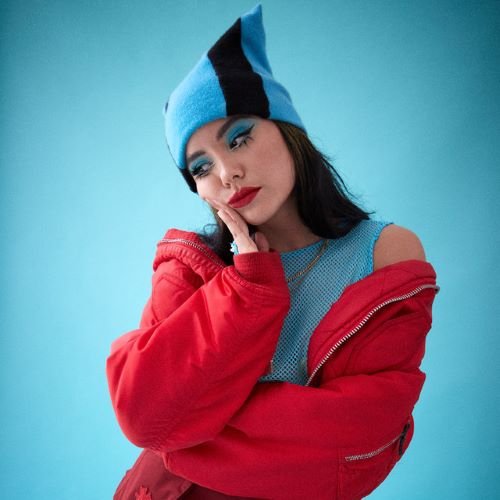
 PHOTO CREDIT: Dean Ryan McDaid for Rolling Stone

features highlighting artists who will be big in 2023, and that takes me to someone I thought I had already covered! The amazing Rachel Chinouriri is the Croydon-born artist who has been tipped by many to be among the best and brightest of 2023. I am new to her work, but Chinouriri released her E.P., Mama's Boy, in 2019. She signed to Parlophone, with whom she released her debut mini-album, Four° In Winter, in 2021. The amazing E.P., Better Off Without, came out last year. I will get to a review of that E.P. There are interviews that I want to come to. They are from last year. The first is actually from 2021. Already a very promising artist, The Forty-Five spotlighted this amazing talent who was clearly going to go on to better things. It was clear in 2021 that Chinouriri had this gift:

You studied musical theatre at BRIT School to help you overcome your fear of performing. How did this help your development?

It helped me a lot because I was actually quite shy before I started BRIT School. I cried after the first time I had to sing in front of anyone – it was so uncomfortable! But I knew that if I wanted to be a singer I had to get over it. I chose musical theatre because you learn how to sing, dance and act, and how to put on a show, and you learn how to turn into a new character and perform to people. I knew that as a singer, I needed to learn at least the basic skills, so musical theatre really helped me transform into who I am today.

I knew that I had to get a grip and get over myself, otherwise I would end up doing a job that I didn’t want; it took a lot of crying, but I just had to get over it. And then at one point in my second year of BRIT, it just kind of all clicked. I was comfortable at that point, as I realised that no one’s actually judging you even if you hit a funny note; people wanted to be helpful and supportive.

Was there anyone else in your life that encouraged you to pursue music?

My mum, for sure. When I started doing music, she was like: ‘Oh no, you have to go to University, you need a backup plan!’. I guess she just wanted to make sure that I had a plan in place, because she’s an immigrant, and she came here for [her children] to go to university and get good jobs. She has got over it now and understands it, but I think she was more fearful of what would happen.

There was a moment where I was like: “Fuck it, why don’t I just go for it.” And also, my Mum went to uni when she was 34. So I was just like: “Why are you telling me I have to go to uni now? You went to uni in your 30s, and you’ve turned out perfectly fine and have a successful business!”. You just have to go for it and hope for the best.

What would you say you’ve learned about yourself on this journey?

I feel like I’m stronger than what I think I am, and I should believe in myself a little bit more. Sometimes I have looked at myself and thought, “Oh, I’m not doing as well as other people”, but you should never, ever compare yourself to other people. When I was 14, I didn’t even see myself being able to pay my bills. I didn’t even see myself ever having a VEVO channel, or the small things like being on a poster, making my own music videos, and having Spotify pay me – and now I’m here with almost 200,000 monthly listeners! I didn’t think I was going to be able to do this, but I am able to do what I put my mind to, I guess.

Let’s talk about your new EP, ‘Four° In Winter’. How did it come together?

I wanted to show people what I actually want to do. I’ve always been into dark, depressing, sad songs, and electronic sounds. I also want to show my creativity; I want to showcase dance and all the things I’ve learned, and show people what I am capable of. But some of these songs are really old! ‘Plain Jane’ is like three years old, potentially. I just picked the songs which were closer to this dark, melancholic vibe and world that I want to be in.

Where do things go from here? Are you looking to make an album?

I’m just trying to write as much as possible and work on myself as a performer so that when the world finally goes back to normal, I’m ready. People are going to be like, “Look at this girl!”. I want to make sure I’m at my best in all creative realms, and I can’t wait to see what my first album will be like. I’m very intrigued”.

Last one was a busy and exciting one for Rachel Chinouriri. Building on momentum form the year previous, she released the incredible E.P., Better Off Without, in May. It is an extraordinary work that gained lots of love and acclaim. The Line of Best Fit scored it eighty of ten in their review of a truly magnificent work:

It says a lot then that I feel confident about the prospects of Croydon’s Rachel Chinouriri, an indie-pop singer who released her first single to Soundcloud in 2018 and was swiftly signed to Parlophone by 2020. Her career so far has spanned genres from warm bedroom pop to music with an electronic palette and a colder, more ethereal mood.

BEST FIT named her an artist On The Rise last year, following her Four° In Winter EP, a spacey collection of songs and a statement that her music was not to defined by the more direct approach of her breakout songs. As if to defy expectations again, the single which immediately followed, "If Only", was a sunny and delicate song about domesticity and a childhood lived in first-world poverty. It’s this sound that Better Off Without seems to follow on from, and the EP continues Chinouriri's hot-streak.

Rather than domesticity and family, these four new songs focus on the end of a relationship, but even in this, Chinouriri avoids the pedestrian. Rather than ruminating on the immediate anguish which follows a breakup, they feel like they were written in the wave of vexation and defiance which eventually emerges; sometimes days, sometimes years later. Lead single "All I Ever Asked" is the finest example - it begins with some fairly familiar guitar strumming, but Chinouriri’s voice rises in power and tempo across the course of four minutes where she asks of an ex-lover: "just a little more time, was it really that hard to do? / It was all I ever asked of you", as if she’s snapping out of a dream in real time. The breezy melody she provides as her own accompaniment is infectious and bright, and the moment when the song’s instrumentation pares back only for Chinouriri to emerge multi-tracked for the songs final chorus, like a choir of her own, is one of the most blissful moments in music this year.

There’s a pleasing sonic striking unity across the four songs here, yet each song feels distinct in sentiment and approach."Happy Ending" is a softer yet slightly more pained moment, which similarly amps in tempo across the track’s runtime - "do I owe it to you?" she asks, "I never got my happy ending." "Fall Right Out of Love" surges forward with lolloping guitar, only to be swallowed whole by swirling washes of synth, while the title track posses a wholly more melancholic state of mind, marked by some child-like keys and Chinouriri singing so close to the mic that it sounds like she’s whispering in your ear. It’s a song of regret which goes another direction that the title might suggest: "I care a little too much for someone / Who didn't care much for me / You’re better off without me." For three years now Rachel Chinouriri has been releasing songs like these which are welcoming, intimate and distinct, and with bonafides like those, it’s hard to imagine things going wrong from here".

I want to come to a couple of fairly recent interviews with Chinouriri. As an artist primed for been grander things this year, it is no surprise so many have been keen to talk with her. Rolling Stone (U.K.) featured Chinouriri and asked her about the new E.P., and how she feels about wrong being labelled as an R&B artist:

The 24-year-old singer-songwriter and Brit school alumnus used to find herself going viral for “really dumb reasons”. But in December last year, Chinouriri’s innate aptitude for social media virality paid off when an acoustic version of her single ‘So My Darling’ started gaining traction on TikTok. At the time of writing, the track has soundtracked over 134,000 videos. “I’d seen so many different artists have this moment, and it hit me [that it was happening to me] and I started to panic,” Chinouriri recalls. “I hit up my label two days before Christmas, like, ‘We need to release this song now, I don’t know what’s happening!’ That moment was a little bit terrifying.”

Terrifying though it may have been, it was also transformative. Not because it kicked off her career — Chinouriri has been signed to Parlophone since 2018, with whom she released her critically-acclaimed debut EP, Mama’s Boy, in 2019 and its follow-up, Four° in Winter, in 2021 — but because it showed her what she wanted from it.

Chinouriri is an indie artist who has been writing songs since she was a teenager, but thanks to the industry’s perception of the genre as, Chinouriri says, “quote-unquote white music”, she’s often felt the need to adapt her work in order to fit into a particular box. This feeling was particularly strong when she was making Four° in Winter, an electronic-infused EP on which Chinouriri experiments with “wonky” production techniques. It’s an impressive, immersive record, filled with soulful vocals and atmospheric melodies, but does mark a shift from the softer, sunnier indie of Mama’s Boy.

“I started to be like, ‘Well, OK, if I’m not going to be accepted in indie, then maybe let me try other elements which I like and see if that will work out’,” continues Chinouriri. “Then ‘So My Darling’ blew up and I was like, ‘Oh, nah, I have to go back to what I love’.”

Armed with a refound assurance in her craft, Chinouriri’s 2022 EP, Better Off Without — a bright, captivating record about heartbreak, written at the end of a five-year relationship — is distinctly indie, with plucky guitars, silky, sing-song vocals, and a catchy hook. And, as cemented by her glittering follow-up single, ‘I’m Not Perfect (But I’m Trying)’, Chinouriri has, as she recently declared on TikTok, undoubtedly returned to her indie-pop era.

This era is proving particularly fruitful for Chinouriri, who’s spent the summer playing gigs and festivals, supporting the likes of Sam Fender and Bloc Party, and basking in the glory of Better Off Without, the opening track of which, ‘All I Ever Asked’, was declared one of Radio 1’s Hottest Records in the World.

Amid touring and making viral TikToks and indie bangers, Chinouriri found time to sit shoot for Rolling Stone UK’s shoot with THOMAS SABO, and reflected on where her love of music came from, how her time at Brit School (and walking the same corridors as Adele) has influenced her today, and the importance of Black artists refusing to compromise their craft just to appease the industry. 

You recently released your new single ‘I’m Not Perfect (But I’m Trying)’. What’s the story behind the track?

Rachel Chinouriri: It’s about being perfectly imperfect, and the indecisiveness that people can have sometimes. As a person, I’ve learned to just go for things no matter what, and when I haven’t gone for things, I hate the idea of ‘what ifs’. So it’s being like, ‘I’m not perfect, but I’m trying, and if I’m going to do something, I’m going to go with it wholeheartedly’. I’ll dive in and just really prove myself more than my doubts, because sometimes that little voice in your head can really be the killer of something which could be so beautiful.

In a teaser video on TikTok, you used the song as an example of being in your indie pop year, also exemplified by Better Off Without. Do you feel you strayed away from indie pop with Four in Winter? If so, why do you think that was?

Rachel Chinouriri: Yeah, I definitely did, and there were a lot of factors. I’ve spoken about being a Black artist in genres that aren’t seen as stereotypically Black. I’ve never tried to water down my Blackness or my heritage, but when, for example, I use my African surname and keep in my braids, for some reason it’s hard for some people to translate that you can be as African, as Croydon, and as proud of where you’re from, but also still enjoy indie music or quote-unquote white music. And you can also want to write that music and be involved in it. Putting race to music, to me and to many people, seems so dumb. But I think, beforehand, there was so much confusion about where to place me that I started to try and adapt to be like, ‘Well, OK, if I’m not going to be accepted in indie, then maybe let me try other elements which I like and see if that will work out’. Then the acoustic version of ‘So My Darling’ blew up on TikTok, and I was like, ‘Oh, nah, I have to go back to what I love’.

You’ve talked a lot about this and your frustration with being wrongly labelled an R&B artist. Has it felt vulnerable speaking out?

Rachel Chinouriri: 100 per cent. I used to get told before, ‘If you speak up about it, what if you lose support, or what if people think you’re ungrateful?’ And then, over time, as much as I used to be scared about those things, I started thinking, ‘Okay, I’m no longer happy with what I’m doing or how disingenuous I’m being’. And the whole point of my music is to be as honest as possible. I’d much rather get the backlash of people not liking me for being honest. But, from speaking up about it, the response actually shocked me. The amount of people who were just like, ‘We’ve known this for years. This is a thing that’s always been happening.’ And I’m like, ‘Oh, so it’s not just me!’ Everyone’s just been waiting for the conversation to begin.

It’s a shame to think that people can’t express themselves musically how they want because they fear not being able to fit in or get into a certain space. When the BLM protests happened, all the labels put black squares up, that was an invitation for conversations to happen. And if the labels are promising to listen to Black artists, they’ll get more backlash if they don’t. This is our time to speak up and get more involved. So, it’s been scary in ways, but it’s actually been a bigger relief because it feels like I’ve said what everyone’s been thinking this whole time.

Your latest EP is about heartbreak — do you find songwriting to be a cathartic experience that helps you process your emotions?

Rachel Chinouriri: Songwriting is my first therapy. I’m not a very good talker, so even when I was younger and I couldn’t express how I was feeling, I’d write it in a poem or a song. That’s just how my brain copes with things. Then I’ll sing it out and be like, ‘Oh, I feel fine’. This year, there’s been moments where it’s been so hard, and I’ve sat with my therapist and cried, but the last month, where I’ve only focused on writing, has been the most therapeutic time ever. I’ve unpacked so much stuff by myself, and when I sent it out to my managers, I felt a lot of relief. I’ve realised that I don’t want to do music, I need to do it for the sake of my sanity!”.

 PHOTO CREDIT: MOAL

I will finish with a recent feature from DIY. They inducted Chinouriri into their Class of 2023: the artists who they feel are going to break through and dominate this year. It is clear that there is this huge faith in the wonderful music of Rachel Chinouriri. She is someone incredibly special indeed. I think that we are going to hear Chinouriri’s music for years more:

If 2023 is set to be Rachel Chinouriri’s defining year so far, the timing could not be better. The Croydon singer-songwriter has been amassing a formidable head of steam with her esoteric, leftfield indie pop music for the last few years, but she admits that only now does she feel ready to take the next step. “I feel like if this was happening to me when I was two or three years younger, it would’ve gone really wrong,” she says.

After weathering a turbulent period in her personal life, Rachel spent 2022 putting her instincts first. The results - including last summer’s ‘Better Off Without’ EP - have been resounding. “This is the year when I’ve doubted myself the least and said no to a lot of different things,” she explains. “In return, it’s been my most well-received year and the music has been the closest to what I want it to actually sound like.

“I feel really excited,” she continues, eager to look towards the year ahead. “It is a slightly anxious feeling, but more because you want to prove yourself because you’ve been given the platform and space to deliver the music you want to make. There are a million and one people that would love to be in this position, so the fact that I’ve been granted it, it just makes me excited to show what I’ve got and prove to people that I can be an indie pop artist.”

The genesis of her newfound self-assuredness can be traced back to the start of 2022. She posted an Instagram message in January, outlining her frustration at being mis-categorised as an R&B or neo-soul artist, despite her records bearing none of those traits. “In my early days, to be put into genres I never grew up listening to was so bizarre to me, then it clicked it was because of my skin,” she wrote. The post became widely shared and prompted supportive messages from her peers, including Arlo Parks and Connie Constance.

The experience coincided with a difficult break-up and, as she emerged from that period, Rachel redoubled her efforts to make the type of art that she felt was the truest expression of her identity - something she realised she had previously allowed herself to be distracted from. “I did try to change my sound, and accommodate certain things, and look a certain way,” she reflects. “And as much as I loved that music and that sound, it was not entirely who I was.

“I would literally be sitting in the studio and be like, ‘Black artists that do well in the UK, what do they sound like?’,” she recalls. “I started shifting the way I would think in a creative space. As someone who has been writing things since I was six, seven years old, I’ve always written things for myself. So the fact that, entering the industry, I had started to think, ‘What will people say? What will the press say?’, that was the first time I’d ever done that and it really messed up the process for me a bit”.

A truly wonderful artist who is definitely among the elite that are going to direct this year’s music, go and follow her and listen to the amazing music she has put out so far. There are so many artists coming through who will amaze through this year but, in the case of Rachel Chinouriri, she is…

SETTING the bar incredibly high.

_______________

Follow Rachel Chinouriri
FEATURE: Spotlight: THE BLSSM
FEATURE:


Spotlight


THE BLSSM

_________

I am quite new…

PHOTO CREDIT: Jesse Lizotte

to the brilliant music of THE BLSSM (Lily Lizotte). The Sydney-born, Los Angeles-based non-binary artist is one that everyone needs to know about. Their music is instantly punchy, anthemic and memorable. With elements of ‘90s Rock/Indie and snapshots and elements of various cities and cultures, it is an eclectic mix that means THE BLSSM has been talked about as an artist who is going to explode this year. I love their previous E.P.s PURE ENERGY. The songs and E.P.s are capitalised. It conveys this urgency and energy that is evident throughout. Making this very potent and memorable music, here is some background about THE BLSSM and their amazing recent E.P. It is one everyone needs to check out:

My favorite word is "BLISS," says THE BLSSM. The artist -- colorful, and endearingly vibrant -- demands the listener's attention almost immediately, capitalizing and enthralling each letter in their song titles. This kind of intention -- and attention-to-detail -- has served as a guiding force for the effervescent spirit, Lily Lizotte (non-binary & favoring they/them pronouns) carries and more presently, their all-new EP, PURE ENERGY.

THE BLSSM recently changed their name from "THE BLOSSOM" to its current stylization, stating "I wanted to shorten it to something more abstract and less literal," they said. "And I like that it sounds like it has the word BLISS in it."

Splitting time between New York City, Los Angeles, and Sydney, Australia, THE BLSSM is well traveled. And their music reflects it. The singer-songwriter's ability to feel voyeuristic while remaining rooted in self-imposed reality is only upended by their desire to rip off the band-aid and show off a whole new world of emotions. Encouraged to explore their natural inclination for self-expression by family members early on -- their father Mark Lizotte, who assists on guitar arrangements across the new EP, and their brother, who's responsible for playing N.E.R.D. around their artist residency, were instrumental -- during adolescent years. And THE BLSSM immersed themselves into it, in as many ways as possible, from taking up fashion design and crafting visuals to match their soundscape sensibilities, to carving out room for a tribe of like-minded DIY Internet dreamers to find their seat at the table.

The BLSSM proves it's possible to be an anomaly and an amalgamation all at once. A product of their influences and experiences, THE BLSSM opted out of formal education, and found struggles to blend in the more traditional spaces they occupied, in search of fertile ground to plant new seeds for their symbiotic art to grow. Writing in their bedroom, often alone, THE BLSSM explored hip-hop, grunge, shoegaze and alternative pop, laying the framework for their eclectic range of sounds that meld seamlessly, reminiscent of a young, brazen Amy Winehouse to that degree. From a generation of Kanye [Ye] disciples, THE BLSSM defies structure, instead using their energy and intention as a compass for their growing music discography, that's now given them a community of collaborators alike -- Brockhampton's Kevin Abstract, Matt Champion, Romil Hemnani (who notably met on popular forum KanyeToThe) and producer, TK.

But if you let them tell it, THE BLSSM has lived a whirlwind life and with that, comes a whiplash of truths and a visceral tide of ups-and-downs, anxiety and depression, things that thrill doesn't tell you that you're left to cope with. And that's where many of the songs' thematic paths begin -- not linear, but rather the bed of rocks at the foot of the ocean, constantly being brushed upon and absorbing energy, and then redirecting it in the best possible direction -- oftentimes back into the ocean, where it can be free and unimpeded. "To express myself, I've learned how to jump off a million cliffs when it comes to taking risks," THE BLSSM explains. "My project [PURE ENERGY] is about feeling everything at once and looking like a bit of everything, too."

Overcoming these transgressions with a vulnerable yet celebratory project, THE BLSSM activates the maximum version of themselves to explore difficult subject matters as overtly and as self-aware as possible on PURE ENERGY. "Maximalism at its core, I hate minimalism! I'm a maximalist," THE BLSSM declares. The thing about THE BLSSM is, they are pensive as they are instinctual, and the music ebbs and flows with a similar ethos. THE BLSSM may operate on the fringes, but one peak inside, and it's quite intoxicating. Take a song like, "LITTLE KING," that feels idly but is a strong-suit, creating the kind of inexplicable connective tissue, similar to what Young Thug's prodigy, Yung Kayo, is able to do over emotional tracks. And then see "I HATE SUNDAY," which feels like early aughts popstar nostalgia and Eddie Bauer-edition fords.

On PURE ENERGY, THE BLSSM delivers a silhouette on canvas, for us -- the audience -- to paint in our own reflections and personal experiences. THE BLSSM bears their soul over head-bobbing kick drums and sweet, sprawling chords on Mark's guitar. They effortlessly weave together a body of work that is strikingly cohesive yet undeniably unique. Their songwriting hat finds soft familiarity with greats such as Elliot Smith, one of their biggest influences, and steadies as the creative undercurrent that keeps THE BLSSM at-bay, allowing them to digest themselves, like a caterpillar, and reimagine itself, through a new cell arrangement, as a butterfly.

And thus, THE BLSSM continues to evolve in their artistic journey, carrying their burdens like a charm. It's a reflection of their personality -- one where darker elements are intertwined with online humor and matter-of-fact playfulness -- and it makes for a project that cuts through, bringing together all the exciting worlds that originally inspired Lily to start this adventure. And most importantly, THE BLSSM remains unapologetic about it, "That's all my project is, it's very loud and unimpeded. This is what pop music sounds like to me. This is what I wanted to make”.

An amazing E.P. that gained a lot of love online, I wanted to bring in an interview from Cool Accidents. They spoke with THE BLSSM about the amazing PURE ENERGY. Even though I have suggested there is some ‘90s influence in the music, Cool Accidents observed there is a nod to the early-’00s in PURE ENERGY. It is an E.P. that has a retro vibe to it, yet it is made unique and fresh due to THE BLSSM’s performances and command:

Los Angeles-via-Sydney non-binary artist THE BLSSM is gearing up to release their second EP, PURE ENERGY, and judging by what we've heard so far, it's a project that you won't want to miss. Set to be released on April 29th, the EP will feature the anthemic DIZZY, as well as the recently released NOT TODAY. NOT TODAY is a track that sees THE BLSSM conveying the ups and downs of life, and they say that if they had a TV show, then this track would be the theme song. It's not hard to see why, either, as it's a song that's reminiscent of some of the most iconic TV show themes of all time.

If you've ever felt disillusioned with the paths that the world sets out for everyone, then you'll relate to NOT TODAY. To celebrate the release of their recent single, NOT TODAY, as well as the upcoming release of their new EP PURE ENERGY, we spoke to THE BLSSM about family, the music that's influenced them, and what more can be done to support LGBTQIA+ artists. The recent Fueled By Ramen signee is already having a big 2022, and PURE ENERGY is set to be their way of sharing their thoughts with the world. It's also an opportunity for people who relate to the messages in their music the chance to feel seen and heard.

Firstly, congratulations on the release of NOT TODAY! It’s a track that captures the feeling of just trying to get through the day, even when things are getting you down – I’d love to know more about how you turn a bad day into a good one?

I honestly just sink into whatever I'm feeling and allow myself to feel a bit blue for a while. I make sure I talk to my family and loved ones….listen to music really loud and get into my head to get out of my head.

The track features production from your Dad, Mark Lizotte (aka Diesel) – I’d love to get a sense of how growing up in a musical family has influenced your music, and how involved family gets when you’re writing new songs?

My Dad is a huge influence on me, he’s my biggest inspiration. He gave me the confidence to write songs and really just stick to my guns when I feel a certain way about creative decisions and intentions. He taught me that music is genre-less and to develop your own language you need to be instinctive and intuitive with how you feel and what you hear.

Listening to your music, there’s a sonic link back to the early 2000s, and you reference artists like Radiohead, N.E.R.D and Elliott Smith as influences. What is it about that era of music that resonates so strongly with you?

N.E.R.D were so ahead of their time as far as being cultural boundary-pushers, tastemakers and creating such a hybrid of all their influences. That really resonated with me to collage all of my sonic and cultural influences into my own sound and world-building.

Something that stands out in your music, both to me and many others, is your ability to give a voice to those who are figuring out their gender identity/sexuality. How important is it to you to give a voice to those that might not have it – especially given that growing up, you may not have seen yourself represented in the media you were consuming?

I mean, it's everything. All I could hope for is that others feel seen and heard through my music and my songs and whatever I make becomes theirs… like it belongs to them completely. That's all I wish for.

On that note – what do you feel can be done more to support LGBTQIA+ artists in the music industry, so that more voices are being amplified and heard from all backgrounds?

Having more conversation around how we can all elevate communities' resources and hold and make space for more LGBTQIA artists… until one day it becomes so normalized it levels out to stop being a facing diversity. There's a lot of work and change that could be done with associating genres with gender”.

Even though there is going to be plenty more music through this year, I am using PURE ENERGY as my main focus here. A stunning E.P. that introduced THE BLSSM to new people, they are among the most promising artists around. ALTERNATIVE PRESS chatted to THE BLSSM about the E.P., and they add particular focus to the amazing DIZZY. Let’s hope that there is another E.P. coming this year. Maybe THE BLSSM will release an album at some point. It will be fascinating seeing what they come up with:

If there’s one thing Lily Lizotte loves more than making fantastic pop music, it’s a good double meaning.

Planted in nearly every song by THE BLSSM — the 24-year-old’s self-described blissful pop project — is a feeling of both happiness and sadness, competing with each other through lyrics that mean one thing and a chorus that sounds like it means something else entirely. It’s hard to tell what you’re supposed to feel when listening to THE BLSSM, but Lizotte isn’t too focused on that. They’re just hopeful that you do feel.

“I want [my music] to make sense to them in whichever shape or form, and that’s really important to me, that it means something to them, whatever that might mean,” Lizotte says. “I’m not too concerned with how they interpret it, as long as it makes them feel something. That’s really all I want.”

One year removed from their debut EP, 97 BLOSSOM, Lizotte returns in April with their follow-up PURE ENERGY, which marks THE BLSSM’s first release under Fueled By Ramen. The label backing doesn’t change too much for Lizotte, who resides in Los Angeles by way of Australia, as it really only signifies some extra helping hands believing in their vision. But now the project has just enough energy (pure energy, at that) to bloom into what Lizotte has always dreamed of.

What’s the first thing you want a new listener to know about THE BLSSM?

This project is a hyperextension of my personality. It really is just like an amalgamation of all my influences and things that I love. It’s a pop project. It’s what I define as pop, to me. And it is really genreless to me. It’s really just my inspiration and the energy that I feel from all of my influences.

Your first single for the EP, “DIZZY,” arrived after some TikTok promotion. This was also a favorite on tour, too. Do those in-person reactions confirm anything for you about the music after all this time having to be super online?

Any sort of visceral reaction from anybody, I’m super hyped. [Especially] if you’re gonna hit me up and be like, “Yo, what is this song? Like, where can I hear it?” There’s so much stuff online. Online is so crowded and so overstimulated and so much saturation of stuff. I get so hyped if someone hits me up asking me about “DIZZY.” I played it in my live set, and that speaks volumes to me of someone going home and thinking about that song. It feels good when anything means something to somebody.

You’ve spoken in the past about the juxtaposition of your songs — where sometimes the melody or the sound of the song itself won’t align with the lyrics. Does “DIZZY” fall into that category?

“DIZZY” sounds like I’m singing about a significant other, like a breakup song, but it’s really just about my anxiety. I love to use nursery rhyme-type hypermelodic choruses paired with a little bit more visceral, grittier lyrics. Everyone’s like, “Oh yeah, this is my breakup.” No, it’s about my anxiety, but I love to have that double meaning. It can mean anything for anybody. I’m pretty attracted to that “happy, sad, happy, sad” [pattern]. And a lot of the feedback that I get from my community, my fans, is that a BLSSM song will make you feel everything at once”.

An artist who is connecting with a lot of people and is providing a voice and strength to so many, I hope that they get to see as many fans as possible on the road. Press sources in the U.K. are picking up on their music, in addition to the love from the U.S. I am relatively new to the wonder and sheer brilliance of THE BLSSM, but I cannot recommend them highly. Here is an artist who has made an amazing start to their career, and they look set to take that even further…

THROUGH 2023.

___________

Follow THE BLSSM

FEATURE: Introducing an Icon… Madonna’s Eponymous Debut at Forty, Anniversary Tour Dates, and a Continuing Fight Against Ageism

FEATURE:


Introducing an Icon…


Madonna’s Eponymous Debut at Forty, Anniversary Tour Dates, and a Continuing Fight Against Ageism

_________

I will do other anniversary features…

 IN THIS PHOTO: Madonna in 1983/PHOTO CREDIT: Gary Heery

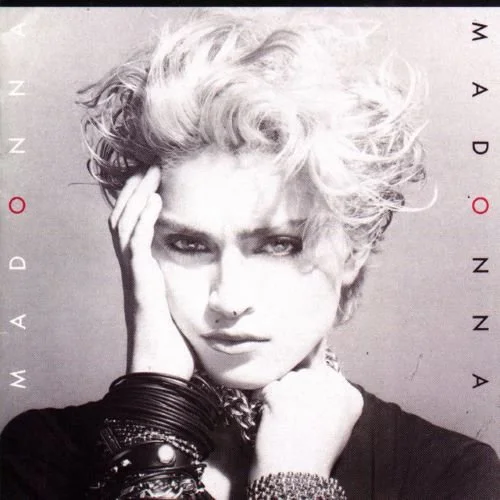
around the fortieth anniversary of Madonna’s eponymous debut album. Released on 27th July, 1983, Madonna is an album that introduced the world to someone who would fast become a global icon and superstar. I am coming in a bit early, as there are things to talk about. I might finish off by discussing Madonna and its impact. I am not sure whether there are any anniversary releases in terms of vinyl and an expanded edition of the album, but there are rumours Madonna is touring. Madonna’s latest album, Madame X, was released in 2019. I think there were some live dates after the release, but she did sustain some injuries and setbacks which delayed others. Happily, it seems like she may be back on stage to mark forty years since her debut album came out. This article explains more:

Madonna debuted with her very first album in 1983, and as Billboard reports, the Queen of Pop is planning to celebrate the milestone by embarking on a 40th anniversary tour.

The music icon is planning her as-yet-unannounced 40th anniversary tour — her first-ever live trek to serve as a career retrospective — with her longtime manager Guy Oseary. “It’s going to be the biggest tour she’s ever done,” one source told Billboard, featuring music from the entirety of her career. The tour will include both stadium and arena dates, reportedly including a multi-night run at the O2 in London.

The upcoming tour comes after Madonna re-signed to Warner Music Group and agreed to launch an “extensive, multi-year series of catalog reissues.” Still, the legendary pop star won’t be selling her catalog any time soon, explaining last year, “Because they’re my songs. Ownership is everything, isn’t it?” The same goes for a biopic about the artist that Madonna plans to co-write and direct herself. “No one’s going to tell my story, but me,” she said. Clearly, then, Madonna’s next tour will be created on her own terms.

Last year, Madonna allowed Beyoncé to sample her iconic 1990 track “Vogue” for a cross-generational pop moment in Queen Bey’s “Break My Soul (The Queens Remix).” In honor of the Material Girl’s 64th birthday, we updated our list of her Top 20 Songs”.

I am not sure whether there will be a concept around the 1983 album and whether she is prominently featuring the album. Maybe she will do a career-spanning set. Regardless, there will be a lot of demand. At sixty-four, Madonna still has no equals when it comes to her Pop music and stage shows. It is not the sentiment of most who heard the news about tours, but a headline from a recent article in The Times shocked me. Perhaps not as callous as the wording might suggest, but this feeling that, at sixty-four, Madonna back on stage might be a lumbering and embarrassing spectacle. Rather than shock, titillate, fascinate and wow as she has done through her career, is she making a mistake? I am not sure what people think she will do. Maybe fall over a lot of wet herself?! Is she going to injury herself in the first show and have to pull out. There is a suggested undertone that, in her sixties, Madonna’s sexuality and proactiveness is going to be cringe-worthy. Her sex-positive approach and stage shows might not be that appropriate for a woman of her age! I think her stage shows will be incredible, and obviously she will not try to recapture her past shows. It will be a high-energy and conceptual show, but it is premature to assume that she is going to be a disaster. It is a little sad and angering that, forty years after her debut was released (more or less), she is still facing criticism. Madonna has had to deal with ageism for decades now. Like many women in music, when they are in their thirties and especially in their forties, their music is sidelined and only played by certain radio stations.

PHOTO CREDIT: Mert Alas & Marcus Piggott

Not only does Madonna receive sexism and ageist remarks for her Instagram photos, the media in general seems to have this age line where women are has-been or too old when they get to a certain point. In a 2019 interview with Vogue the subject of ageism came up. For an artist who has given the world so much through the decades, Madonna does seem to have to fight to be heard. Fighting for so many women who are written off or seen as lesser when they grow older. These are not standards and rules that men in the industry are subjected to. It is an awful and misogynistic double standard that does not need to go away very soon. Age should have nothing to do with music. It doesn’t matter how old an artist is! To this day, Madonna is an innovator and chameleon of an artist who can go through different personas and keep her music and image fresh and fascinating:

When Decca Aitkenhead meets Madonna for the June cover interview of Vogue, she is not sure which iteration of the pop powerhouse will receive her – and the impeccable Georgian façade of her central London townhouse betrays no clue. The mother of reinvention, Madonna has variously been a singer, actor, dancer, filmmaker, activist, author and philanthropist. She has been a Kabbalah spiritualist, a punk club kid, an English country lady, a dominatrix; she has played Eva Perón and Breathless Mahoney, and channelled Marilyn Monroe. But, even now, aged 60, and with her 14th studio album, Madame X, due for release on June 14, her career still feels like a battle.

“People have always been trying to silence me for one reason or another, whether it’s that I’m not pretty enough, I don’t sing well enough, I’m not talented enough, I’m not married enough, and now it’s that I’m not young enough,” she tells Aitkenhead. “So they just keep trying to find a hook to hang their beef about me being alive on. Now I’m fighting ageism, now I’m being punished for turning 60”.

I will switch to something more positive. I will end with a couple of glowing reviews for one of the best and more underrated albums of the ‘80s. Bringing back Disco and Dance in 1983 – at a time when Pop had progressed and transformed -, there is something ground-breaking and hugely innovative about Madonna. It is an album that is inspiring artists to this day. I listen to a lot of Disco-inspired artists of today and know they are influenced by Madonna. Almost forty years since it came into the world, the Pop icon’s debut has not aged or faded. It doesn’t quite get the huge credit it deserves. We talk about the importance of albums such as Like a Virgin (1984), Like a Prayer (1989), and Ray of Light (1998), but her 1983 debut is not seen as impactful. Not as wide-ranging in terms of the sounds and themes explored, we need to give new appreciation and respect to an album that reinvented Pop. Thirty-five years after its release, CLASH discussed the legacy and importance of the mighty Madonna. I do hope that there is an album reissue, maybe with an extra vinyl of remixes. Perhaps there will be remastered versions of Madonna’s videos, or artists will cover some of the album’s best-known tracks. Forty is an important anniversary, and I do hope that a lot of exposure and investigation does the way of an album that arrived at a time when music was in transition. It was a time when various genres were in their infancy or dying out:

It's 1983. Punk is dead. Post-punk is on it's last limbs. According to those in the know, disco is dead also, although that proved not to be the case. Indie and alternative is in it's infancy and pop music seems as varied and sparse in it's tastes as it ever has done. Prince was working up to his career's pinnacle, Talking Heads were about to descend from theirs and, in that climate, it seemed that very few would enjoy more than their fifteen minutes of fame, in a sector of the industry that now felt more immediate than ever before.

Recovering from it's biggest shake up since the emergence of The Beatles in the early 1960s, pop music also felt boundless in what it now had to offer the world. MTV blew the entertainment world wide open in 1981, turning former child star Michael Jackson into The King Of Pop in the process. The industry needed a Queen to share his throne.

Step forward a 25-year-old Michigan native who now worked the restaurants of New York City, following after her move to the big apple, pursuing her dream of making a career in modern dance, fell flat on it’s face. Her name? Madonna Louise Ciccone, although the world would come to know her by only one name.

IN THIS PHOTO: Madonna in 1983/PHOTO CREDIT: Alan Ilagan

Throughout the course of ‘Madonna’, she discusses the tropes present on most pop debuts – the idea of love, loss and the struggles of early adulthood. The overriding presence of her lyrics here is her independence and her ability to challenge the preconceived ideas that others have of how she should act and the choices that she is making.

On ‘Borderline’, one of two songs on the record penned exclusively by producer and former Miles Davis band member Reggie Lucas, she pleads with the subject to "try and understand[…] I've given all I can" and that their actions are pushing her to her limits – a theme that she would revisit a few years later with the more on-the-nose and initially shocking ‘Papa Don't Preach’.

Trying to find a dud track on this record is harder than you might expect. The entire first side – comprised of the aforementioned singles ‘Lucky Star’ and ‘Borderline’ as well as ‘Burning Up’, the album's second single that was also one of Madonna's earliest solo compositions, and ‘I Know It’ – provides a well-rounded slab of early 80s pop music, rife with all of it’s trappings, yet not weighed down by any of them.

As we descend into the latter parts of the record, she doubles down on these disco-inspired traits. ‘Physical Attraction’, for all of it’s doe-eyed sensitivities, would not be out of place in any dancehall or club in the east coast. Likewise, ‘Think Of Me’ feels destined to only ever be accompanied by an awe-inspiring light show, pulsating throughout it’s near five minute run time but never feeling anywhere near uncomfortable.

Whilst nowhere near as daring sonically or visually as Madonna’s later works would prove to be, her debut album is, nonetheless, a masterpiece. Offering something for everyone without ever selling her talents short, to say it’s a tone setter for the themes that she would come to personify throughout the rest of the decade would be a huge understatement.

It’s a record of immense power and longevity that feels as impressive today as it would have done upon first release and the contrarians who say otherwise are the kind of people that you’d never really want to bump into at a party”.

On 27th July, Madonna turns forty. Its second single, Burning Up, is forty on 9th March. One of my favourite Madonna albums, and one of the most influential ever, it is a masterpiece! I have seen some mixed or three-star reviews for Madonna. It is an undeniable five-star album that is timeless! This is what AllMusic had to say about one of the greatest debut albums in music history:

Although she never left it behind, it's been easy to overlook that Madonna began her career as a disco diva in an era that didn't have disco divas. It was an era where disco was anathema to the mainstream pop, and she had a huge role in popularizing dance music as a popular music again, crashing through the door Michael Jackson opened with Thriller. Certainly, her undeniable charisma, chutzpah, and sex appeal had a lot to do with that -- it always did, throughout her career -- but she wouldn't have broken through if the music wasn't so good. And her eponymous debut isn't simply good, it set the standard for dance-pop for the next 20 years. Why did it do so? Because it cleverly incorporated great pop songs with stylish, state-of-the-art beats, and it shrewdly walked a line between being a rush of sound and a showcase for a dynamic lead singer. This is music where all of the elements may not particularly impressive on their own -- the arrangement, synth, and drum programming are fairly rudimentary; Madonna's singing isn't particularly strong; the songs, while hooky and memorable, couldn't necessarily hold up on their own without the production -- but taken together, it's utterly irresistible. And that's the hallmark of dance-pop: every element blends together into an intoxicating sound, where the hooks and rhythms are so hooky, the shallowness is something to celebrate. And there are some great songs here, whether it's the effervescent "Lucky Star," "Borderline," and "Holiday" or the darker, carnal urgency of "Burning Up" and "Physical Attraction." And if Madonna would later sing better, she illustrates here that a good voice is secondary to dance-pop. What's really necessary is personality, since that sells a song where there are no instruments that sound real. Here, Madonna is on fire, and that's the reason why it launched her career, launched dance-pop, and remains a terrific, nearly timeless, listen”.

Maybe not entirely male-dominated, Disco would have been largely imbalanced in 1983. Most of the bigger names and producers were men. Madonna was definitely a pioneer and someone who broke barriers and actually revived and repurposed a style of music that suffered a premature demise. A joyous and accomplished album released at a difficult time in the U.S., it was a call to the dancefloor at a time when it was really needed! The Quietus assessed and dove into Madonna’s debut album in 2013 – three decades after this remarkable introduction came into the world:

But it was third single 'Holiday' that was her crossover in to the mainstream charts. It got her on Dick Clark's American Bandstand for an epochal performance wherein she stated that she intended to "rule the world". 'Holiday' was an irresistible confection, bubbling with joie de vie, emphasised by its cascading synth strings, meaty Moog bass and Nile Rogers-style chicken scratch guitar, and a lyric that neatly paired it with Kool & the Gang's 'Celebration'. In the vocal department, limitation becomes virtue as Madonna imbues the song with nifty touches such as the snatch of ethereal cooing that blows through the song's second refrain.

Similarly her dancing seemed lunging and graceless compared to the eye-popping feats of Jackson (surprisingly so for such a gifted student). But like her music, it quickly proved magnetic, life-affirming. Each raised knee to the thwack of Holiday's snare, indicative of a mover as disciplined as a featherweight prize-fighter, utterly at one with their body. Like all the songs on her debut, 'Holiday' is best heard in the original album version rather than the Immaculate Collection edit. The later version omits the climactic release the song has been building towards, Zarr's elated piano break, a last minute addition at Sigma Sound, Manhattan. These originals are 'deep' cuts, full of breaks and space.

'Holiday' put her in the Billboard top twenty. 'Borderline' (No ten) and 'Lucky Star' (No four) would nudge her closer to mega-stardom, the latter beginning a record-breaking sequence of Top five American hits. Crucially, these two songs saw her mastering video. Mary Lambert's mini-movie for 'Borderline' squeezed Diana Ross's 'Mahogany' and John Hughes into a pop video, adding then taboo-busting interracial romance. She even dabbles in a bit of graffiti, a nod to the world she hailed from.

The 'Lucky Star' promo, featuring just two back-up dancers and a blank set, was a showcase for Madonna as auto-erotic magnet. It is full of belly button close-ups and narcissistic strutting, accentuated by the punchy editing. At one point, she appears to be cradled by the pure white backdrop, like Keith Haring's Radiant Baby, both wide-eyed innocent and shrewdly knowing. In the video's opening shot, she lowers her shades, coolly staring back at the viewer, alluring yet impassive. Even feminist film scholar Laura Mulvey would have to concede that the gaze of popular culture, was by now, no longer purely the province of the male spectator.

Her first album was both cutting edge and quaint by the time of its release, informed by NYC's club underground but also using technology already employed by MOR artists. Phil Collins was using similar instrumentation as was Stevie Nicks on the exquisite Prince-assisted, 'Little Red Corvette'-influenced 'Stand Back'. Madonna would continue to break ground in the mainstream just as she would always remain slightly one step behind the avant-garde, ever reliant on it for inspiration to take to the masses. Nevertheless, her first album remains one of her best works, the supposed 'lack of variety' actually giving it a consistency and focus that often eludes her later music. Madonna now possesses the crazy will of a late period Bette Davis or a Joan Crawford, all exertion bereft of inspiration. But like those two icons, her best work often transcends the cloying cage of camp. That first album, with its elastic grooves, its joyous calls to "dance and sing" remains free of such excesses. It is that great pop record: a simple soundtrack to complicated times. Hot-housed in a pre-Giulani/Carrie Bradshaw New York City, it is the last gasp of a night-life without AIDS where everyone is a star in the discotheque. Where going out itself was a work of art. Now, as much as back then, Madonna urges you to do just one thing: "Feel the beat and step inside..."

It is great Madonna might come back to some big stages to celebrate forty years of her debut album. It is a shame that there are going to be conversations about her age and whether she can recapture some of the past. I have seen a few discussions online as to whether it will be a tragic and embarrassing affair. It will not! Not only does Madonna not have to answer to these people, but she is as commanding and exceptional now as ever. A Pop icon and innovator, if you can get tickets and she is playing near you, it will be a remarkable experience. Hearing tracks from her debut album played forty years later will please older fans and also introduce the album to new fans. In July, the world will mark forty years of the mighty Madonna. Some wrote her off in 1983 or felt that she was not going to go anywhere. As it turns out, she went on to dominate Pop and is considered one of the greatest and most influential artists of all! Back in 1983, when critics and fans were listening to Madonna’s debut, there were those who knew something special had been created. In some ways, Madonna is an album that salutes and resonated with…

THOSE who were properly tuned in.

FEATURE: I’m Going to Be a Teenage Idol: Elton John’s Don't Shoot Me I'm Only the Piano Player at Fifty

FEATURE:


I’m Going to Be a Teenage Idol


Elton John’s Don't Shoot Me I'm Only the Piano Player at Fifty

__________

ON 22nd January…

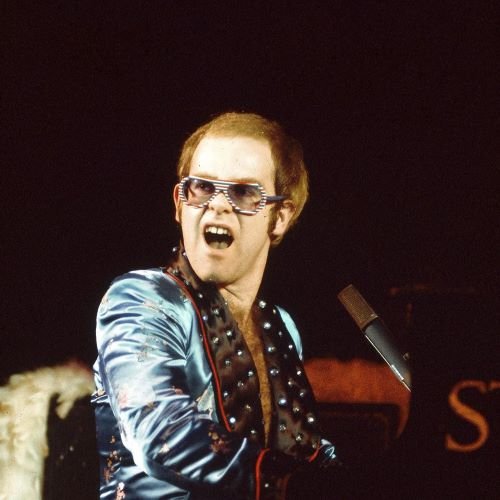
 IN THIS PHOTO: Elton John in 1973/PHOTO CREDIT: Getty Images

it will be fifty years since Elton John’s sixth studio album, Don't Shoot Me I'm Only the Piano Player, was released. It was a fertile period for Elton John. In 1972, he released the terrific Honky Château. The 1973 Don't Shoot Me I'm Only the Piano Player arrived, and John followed that with Goodbye Yellow Brick Road in October. Three wonderful albums in the space of two years is pretty impressive! Whereas some might say Don't Shoot Me I'm Only the Piano Player is the weakest of the three albums, it is still a wonderful release, and it contains several of Elton John’s best-known tracks. With Daniel and Crocodile Rock at either end of the album, Don't Shoot Me I'm Only the Piano Player has a consistency. It might not hit as hared and be as enduring as Goodbye Yellow Brick Road, but Don't Shoot Me I'm Only the Piano Player documents a remarkably talented songwriter during a golden period. Alongside Bernie Taupin, this wonderful album came into the world. Don't Shoot Me I'm Only the Piano Player  was John’s second straight number one album in the U.S. and first number one album in the U.K. The lead single, Crocodile Rock, gave John his number one single in the U.S. and Canada. I think that Don't Shoot Me I'm Only the Piano Player definitely should be thought of as one of Elton John’s best ten albums. It was a huge breakthrough and a big commercial success in the U.S. and U.K. It definitely turned him from a fantastic songwriter into an icon and superstar.

I will come to a couple of positive reviews for an album that, fifty years after its release, still sounds absolutely fantastic and full of wonder. Udiscovermusic.com provided some background and story to an album that arrived at a very busy time for Elton John. It is amazing that John had any energy or inspiration left following such a busy few years previously. The fact Don't Shoot Me I'm Only the Piano Player spent so long at number one in the U.K. proves it resonated and connected with so many people. The songwriting from Elton John and Bernie Taupin is stunning throughout:

It was the embodiment of a hard-earned victory. By the turn of 1973, Elton John had been releasing albums for several years, not to mention all the dues he had paid in obscurity as a touring and session musician from the mid-60s onwards. At times, even after his breakthrough across the Atlantic, he had felt like giving up. But finally, his sixth studio album, Don’t Shoot Me I’m Only The Piano Player, gave him a No.1 album in his own country.

Indeed, leaving aside his 1974 greatest hits collection, Don’t Shoot Me… is still the Elton John album that has spent longer at No.1 in the UK than any other. As the follow-up to Honky Château, it became his second in a row to top the charts in America. With his almost indecently prolific productivity of the day, the new album was released just eight months after its predecessor, in January 1973, and contained two more songs that would soon join his catalogue of major hits.

After the completion of Honky Château, but before it was even released, John and his band, with Dee Murray and Nigel Olsson newly augmented by Johnstone, headed out on another American tour. This kept them on the road throughout April and into mid-May, and soon afterwards they headed back, with producer Gus Dudgeon, to the Chateau D’Hérouville, the location in which Team Elton had worked so happily on the last album.

Once again, the castle proved to be a much-needed bolthole and creative haven in which Bernie Taupin would often write lyrics in his room, bring them down to breakfast and see Elton add melodies with equal mastery, sometimes having them ready to record that same day. A dozen or so songs were composed and committed to tape in this way inside just four days.

Key album tracks included “Teacher I Need You,” which became an FM radio favourite in the US; the down-home stomper “Elderberry Wine”; and “Have Mercy On The Criminal,” which Elton revived for his 1987 album Live In Australia With The Melbourne Symphony Orchestra. To emphasise the tightness of the core quartet, they played almost everything on the record, with engineer Ken Scott adding the memorable ARP synthesiser to “Daniel” and orchestrator Paul Buckmaster on hand for two more numbers.

The album spent its first six weeks at the top of the UK charts, from February 10, before giving way to Alice Cooper’s Billion Dollar Babies. It went on to spend 11 weeks in the Top 10 and 29 in the Top 40. Within weeks of “Crocodile Rock,” Don’t Shoot Me I’m Only The Piano Player had offered up a second bona fide sales and airplay smash in the form of the touching ballad “Daniel”.

I am going to wrap up with a couple of reviews. This is what Rolling Stone said in their review from March 1973. I was not alive then, but I can only imagine how exciting it must have been to see this young artist grow and release these incredible albums that would stand the test of time! I think that Don't Shoot Me I'm Only the Piano Player is a masterpiece that is going to be celebrated and talked about decades from now:

VISUALLY, MUSICALLY, AND in every other way, Don’t Shoot Me I’m Only the Piano Player is an engaging entertainment and a nice step forward in phase two of Elton John’s career, the phase that began with Honky Chateau. The essence of Elton’s personality, on record and in performance, has always been innocent exuberance, a quality intrinsic in most of the best rock ‘n’ roll of the Fifties and early Sixties. Elton’s only major problem after the success of his first album was finding the right direction for his talent, and until Honky the path chosen led up a blind alley. In Madman Across the Water, which closed phase one, Gus Dudgeon’s overly lavish production and Bernie Taupin’s often impenetrable lyrics ultimately created a barrier between Elton and his audience that severely endangered his star status. Honky Chateau was a sensational, unexpected comeback, as much a triumph of Dudgeon and Taupin’s versatile professionalism as of Elton’s musicality.

Happily, Don’t Shoot Me I’m Only the Piano Player is as good, if not better than its predecessor. The heart of the album is a sequence of American movie fantasies whose chief aim is to delight. Though there is implicit social commentary in several songs, notably “Have Mercy on the Criminal” and “Texan Love Song,” it is set forth as stereotypical movie fare, meant only to vary the emotive tension between episodes. In general, the most effective songs are the simplest excursions in fantasy-nostalgia. Typical is the irresistibly catchy and corny hit, “Crocodile Rock.” More successfully than any recent single it recaptures the spirit of late-Fifties rock ‘n’ roll, parodying styles (“At The Hop” and “Runaway”) with such affectionate high spirits that the song emerges as a genuinely fresh artifact of the Seventies. Elton’s tune and Taupin’s lyric are ideally wedded. The song has a conventional verse-chorus structure and an overall diction that is casual and idiomatic without straining for precision: “I remember when rock was young/Me and Susie had so much fun/Holding hands and skimming stones/Had an old gold Chevy and a place of my own.” Teenage fantasy, more explicit and without hindsight, is also the theme of “Teacher I Need You” and “I’m Going to Be a Teenage Idol,” both of which have the same off-the-cuff buoyancy as “Crocodile Rock” and the same playful attitude toward a semi-mythic past. In “Have Mercy on the Criminal,” the inventive eclecticism of John-Taupin is especially striking with its interposition of guitar figuration from “Layla” and a typically spacious orchestral arrangement by Paul Buckmaster.

The album’s most moving cut, however, is the opener, “Daniel.” A gem of technical virtuosity, it has Elton doubling on electric piano and “flute” mellotron and Ken Scott on synthesizer, together making as deft use of the new electronic instrumentation as I’ve heard. Elton’s melody and vocal are unusually tender and expressive, and Taupin’s lyric, in which he recalls watching a plane carrying away his older brother, is exceptionally lovely:

Daniel is traveling tonight on a plane

I can see the red tail lights heading for Spain

Oh and I can see Daniel waving goodbye

God it looks like Daniel, must be the clouds in my eyes

… Oh Daniel my brother

You are older than me

Do you still feel the pain

Of the scars that won’t heal?

Your eyes have died, but you see more than I

Daniel you’re a star in the face of the sky.

If Honky Chateau established Elton John as a leading contender for the bantamweight championship of rock & roll, Don’t Shoot Me I’m Only the Piano Player should hand him the title”.

I will end with a very interesting review from The Vinyl Distinct from 2018. Released on 22nd January, 1973 in the U.K. and four days later in the U.S., I have been spending a lot of time with Don't Shoot Me I'm Only the Piano Player recently in preparation. I am sure Elton John will share something on social media on the fiftieth anniversary of one of his best and most important albums:

As Elton John bids a bittersweet adieu to playing live with his 2018 Farewell Yellow Brick Road Tour, let us all reflect for a moment on what he has given us. Speaking just for myself, he gave me everything; Elton John was the idol of my unfortunately well-mannered youth, and his were the albums I lost myself in when the world was too much with me.

Not for nothing did my friends start calling me Elton.

And I wasn’t alone. It’s hard to imagine now, but during the mid-seventies the unprepossessing (short, plump, balding) English piano rocker was King, boss, God, and bigger than anybody.

Forget McCartney, Lennon, Frampton even; Sir Elton conquered the world (seven consecutive No. 1 U.S. albums, a heap of hit singles) and he did it his way. To listen to his songs now (and I’m including the big hit singles) is to realize how weird, wonderful, and utterly idiosyncratic they are.

I dare you to come up with another major artist who produced hits as defiantly unorthodox as “Rocket Man” (astronaut as 9-5 drudge) “Bennie and the Jets” (electric boots glam rock) and “The Bitch Is Back” (“I get high every evening sniffin’ pots of glue”). As for the non-hits, I recommend you to “Solar Prestige a Gammon” (top shelf gibberish rock), “I Think I’m Gonna Kill Myself” (teenage angst complete with tap-dance solo), and “Social Disease” (country-and-gonorrhea anyone?).

In short, the man is one of a kind, and we may never see his likes again.

When it comes to Elton’s string of chart-topping LPs, 1973’s Don’t Shoot Me I’m Only the Piano Player tends to get lost in the shuffle. In part this is due to the fact that it’s not the best of them. But some of the blame falls on Elton and his sheer prolixity; Don’t Shoot Me came hot on the heels of 1972’s wonderful Honky Chateau and was quickly followed by 1973’s brilliant Goodbye Yellow Brick Road, and the record-buying public simply didn’t have sufficient time to appreciate its merits.

That said, it produced two hit singles; “Crocodile Rock” would become John’s first top-charting U.S. single, and “Daniel” went to number two. The former is a spritely pop lightweight that played well during the rock ’n’ roll nostalgia craze; Elton’s “la la la’s” always make me happy, and I love the way he sings “Suzie went leftist for some foreign guy.” Which he doesn’t, really. But I like the song better that way.

As for “Daniel,” it’s one of the least jingoistic songs about a vet returning home from Vietnam ever recorded, and I like the twist; Daniel doesn’t split for Spain because he’s being called a baby killer–he’s simply tired of being called a goddamn hero.

Aside from them? The album boasts a couple of my faves. The piano-driven “Teacher I Need You” is the bounciest ode to teen hormonal overdrive this side of “Hot for Teacher,” and the leer quotient is lower; Elton’s not a David Lee Roth smart ass, he’s just a normal kid, and he knows his “Errol Flynn advances” won’t do him a bit of good.

“Elderberry Wine” is a classic John-Taupin cut; the horns bring the choruses to bright life, while John gets down and dirty on the verses. Sounds mean too, right down to the “Woo!” “Blues for My Baby and Me” is John the ballad master at his best; he’s young and he’s splitting for greener pastures out west with his girl via Greyhound bus, and you can practically feel that Greyhound a-swaying as he sings her into the star-tangled Texas night.

“Midnight Creeper” is a jaunty boogie number and Elton gives it all he’s got; if there’s a nightmare he’s there, and the bitch (who knows how to use a horn section) is definitely back. On “Have Mercy on the Criminal,” on the other hand, he offers up a lesson on how not to employ a horn section; the intro sounds like the theme of a bad sixties’ cop show, and the song itself is both ham-fisted and overwrought.

Similarly, “I’m Going to Be a Teenage Idol” isn’t going to make him a teenage idol; I love the plucky vocals, and Bernie Taupin’s lyrics are great, but the melody just doesn’t cut it. If John really wants to be a “motivated supersonic king of the scene,” I suggest he find himself a catchier (and more propulsive) melody.

“Texan Love Song” is a likable hillbilly oddity that would have been right at home on the oddity-filled Goodbye Yellow Brick Road; Elton declares himself a redneck and staunch anti-communist, and sings “you long hairs are sure gonna die.” It’s a hoot. Which leaves the anthemic “High Flying Bird,” which reaches for the sky but falls short; the song goes out on a lovely grace note, but this baby’s simply not as fetching a tune as Elton was wont to churn out during his Golden Age.

I’m hoping that Elton John’s retirement from touring will spur a resurgence of interest in his albums. Me, I stuck with him through 1976’s Blue Moves before moving on to different things. But he made an indelible impression on me, Elton. For all I know it’ll be one of his songs that goes through my head on my deathbed.

I’m hoping it will be “Bennie and the Jets.” Or “Someone Saved My Life Tonight.” Yeah. I’d like that.

GRADED ON A CURVE:

B+”.

If you are a big Elton John fan or not, I think there is plenty on Don't Shoot Me I'm Only the Piano Player that will get into the heart and mind. It is a terrific album that I think is also a little underrated – as not all the reviews were understanding or overly-positive. What a remarkable year 1973 was for Elton John. Releasing two major and huge acclaimed studio albums, I feel Don't Shoot Me I'm Only the Piano Player was the start of something very special. A moment when his music fully opened up to and was embraced by the whole world. Alongside classics Daniel and Crocodile Rock are great deeper cuts like Midnight Creeper, and I’m Going to Be a Teenage Idol. Aged twenty-five when Don't Shoot Me I'm Only the Piano Player came out, it is a remarkably accomplished and assured album. Maybe John would release even better albums after 1973, but there is no denying the fact that the classic Don't Shoot Me I'm Only the Piano Player

TOOK this genius’s music to new heights.

FEATURE: Spotlight: Madeline the Person

FEATURE:


Spotlight


Madeline the Person

_________

BACK in July…

 PHOTO CREDIT: Lissyelle Laricchia

the terrific Madeline the Person released her E.P., CHAPTER 3: The Burning. One of my favourite E.P.s of last year, I wanted to spend some time with the Houston artist. I will come to an interview where she breaks down the songs on her latest E.P. First, Houston Press spotlighted and celebrated Madeline the Person in 2021 ahead of the release of her E.P., CHAPTER 1: The Longing. I only discovered Madeline the Person last year, so it is interesting reading press from before then. She has definitely broken through and captured the imagination of press and music fans alike in the past couple of years. Someone primed and tipped for amazing things this year:

Whenever a recording artist signs a major label deal, it’s big news. If the artist is from Houston, there’s some hometown pride added to the celebration. But, the recent signing of Houston’s own Madeline The Person by Warner Records isn’t just exciting, it’s also an indication of how the music industry is adapting to a market changed by social media apps and affected by the pandemic to bring new, enthralling music to listeners.

The 19-year old singer/songwriter from Bellaire is a music phenom, despite having played only a pair of live shows in her burgeoning career. One was at the Houston Women’s March and the second, she said, was for a handful of music industry pros with the label, which she signed to last year, via Zoom, from the comfort of her own home. She was "discovered" by a Warner Records A&R executive who saw her on TikTok, performing original tunes and covers for her hundreds of thousands of followers. No exhaustive tours playing in dimly lit clubs for sparse crowds or toiling away on Bandcamp. Her debut EP, Chapter 1: The Longing, released last Friday.

“It’s funny because I expected it to be the way you described, going out, doing shows and making a name for myself. I was pretty prepared to do that and I was going to go to Berklee College of Music this year. In a few months I was supposed to go, but then I got my deal. Everything changed,” she said.

“And, it really did start with Instagram and TikTok, which is so cool. It’s seriously the power of social media, plus the situation we were in with COVID. There wasn’t a way for me to do shows or go out and meet people and market myself that way,” she said. “So, it was seriously all on the Internet which I think is so cool. I don’t think a lot of people can say that about their journey.”

Madeline’s music journey started early. She began playing piano at age 4 and took up guitar shortly thereafter. As a child, she attended Emery/Weiner School in southwest Houston, as well as West University’s Xavier Educational Academy. She graduated last year, the same year she opened her TikTok account. That was February and before long, she said, she had a healthy following. Her fans now include some notables, like Billie Eilish, Lizzo and Olivia Rodrigo.

“It was really quick, like the blink of an eye, crazy quick. Nothing has ever happened to me that quick ever,” she said with a chuckle, a hint that she’s still in awe of how it all unfolded. “It was wild. That app is a force to be reckoned with. It’s insane, the amount of people you can reach in such a short amount of time. Things go viral so quickly and so randomly, it seems. But yeah, I happened to thrive there, which is super cool, that I found a place that I can connect with people there.”

Maybe Marshall McLuhan was right about the medium being the message, but the messengers on TikTok are abundant. It’s easy to get lost in the mix of virtual content creators. But, Warner executives saw something special in Madeline amidst the deep sea of faces and voices, a complete package that made signing her a no-brainer. For instance, she’s designed her own vibrant, colorful aesthetic, a rainbow world that seems at odds with the achingly introspective songs she’s written. Those songs are delivered by a hauntingly expressive voice, “actually the most beautiful thing I have ever heard,” according to at least one of her nearly 500,000 TikTok fans.

Because she’s the architect of her own distinct art, including her multi-colored wardrobe, we asked if her home life sparked her creativity.

“I don’t think I have anyone in my life growing up that was like me in the way of creative things. My mom is a doctor and my dad was an engineer and my brother is a math major. But, my mom and brother also have a really creative side. But I think I’m way more openly crazy than them,” she laughed. “As a little kid, I always loved coloring, drawing, colors, making a mess, and I’ve just never gotten rid of that. Just like the regular kids’ stuff, where you just want to finger paint all the time, I just never grew out of it”.

There are not a load of interviews out there with Madeline the Person. There are a couple from last year connected to the new E.P. In terms of her best tracks and moments from 2022, I think that MEAN! might have been my favourite. I would recommend all of Madeline the Person’s music, but there is something about MEAN! that really struck me. Colour Vision Mag asked her about the song, and they were also curious about which tracks Madeline the Person felt was her best so far:

Your style within and outside of your music is so colorful, bright, and happy. Has this always been the energy you’ve carried with you, or is it more of an artistic choice?

I’ve definitely always had a colorful and bright energy, but throughout middle school and parts of high school, I spent a lot of my time conforming and hiding. Only after my dad passed away did I realize that life is really fragile and I don’t have time to be a person I’m not. Then began the best part of my life in which I got to fully be myself. Rainbows, flaws, and all.

Your projects are set up in "Chapters" which I feel like is a really unique way to tell your story. What does that look like for you? Do the chapters connect with eachother or is each more of a standalone work? Anything you're able to share on the forthcoming Chapter 3?

My chapters were something I decided on before I even signed with a label because I am so passionate about my story being told similarly to a storybook. I like to set up these chapters because my songs are directly about my experiences and emotions, and I like to process all of these big feelings in bitesize pieces. It’s easier for me to compartmentalize my life thus far into a storybook layout so that I remind myself what I have survived and that there is so much more to come.

Can you tell me more about your newest track “MEAN!”? What was the inspiration behind the track?

My song “MEAN!” is a song I wrote after being insulted at a party and just feeling so tiny from that moment on. Afterwards, I realized how grateful I am that I would never say something to make someone feel bad. There is a beautiful power in being kind. It’s hard to find meaning in such painful experiences, but this song helps me remember that some people just say mean things and that has nothing to do with me.

I noticed you toured last year with The Aces, what was that experience like? Do you have any plans to tour soon?

Touring with The Aces was one of the most beautiful and exciting experiences of my life. Since everything for me started online, I genuinely didn’t know if people would show up in person for me, but they did. It was just the loveliest thing to meet the people who listen to my music. I’m hoping to open for someone else soon! But in the meantime, I’m playing a few festivals this summer.

What’s your favorite track you’ve released to date and why?

My song “As A Child” will always hold such a tender and special place in my heart because it showed me the power that comes from sharing your trauma. Once I spoke up about my grief through the song, I was flooded by stories and support and understanding. That song created a safe space for feelings of loss, and that’s one of the most special things that I have ever made”.

I am going to round off in a second. There is an interview from Sweety High where Madeline the Person took us through the remarkable songs on CHAPTER 3: The Burning. I have already featured MEAN!, so the rest of the songs are explored. The E.P. is a great starting place if you are a new fan but, to be honest, go back to the start and see how her music has changed and evolved:

'Why I Broke Up With You'

Madeline The Person: I had written the first verse and the chorus a couple of months before I came into the session, but I knew that Andrew Jackson could help me get my story fully out in a beautiful way. Chris Loco sat with us while we were writing, completely absorbed the vibe of the song, and produced it absolutely perfectly.

"Why I Broke Up With You" is my way of dealing with trauma from my past and how it affected my relationship. I realized that there was still an unhealed wound I needed to tend to.

My favorite line is: "I lived so long with someone so uncomfortable in their mind, they fed themselves a little poison every day to survive." I feel that the lyric perfectly describes how I tried to rationalize addiction as a kid. Some things don't make sense until you are close enough to them that you are forced to understand.

‘You Step On Flowers'

Madeline The Person: When I was around 16, I wrote a poem including the line, "You step on flowers like they are the grass," and I had always wanted to make it into a song. Finally, in a session, with Annika Bennett and Andy Seltzer, I brought in the poem and we reconstructed and expanded upon it. Annika played the chords for the chorus, starting with F minor, and we were all in love. It sounded just how the feeling felt.

"Step On Flowers" is how I coped with feeling unappreciated romantically. I felt like I was giving this person everything beautiful within me, and it was disregarded. It felt like an important feeling to set in stone.

My favorite lyric from the song is, "I stuck around the morning after till the sky was your light blue," because it references a song that the person showed me, called "Say Yes" by Elliott Smith.

'Stupid Dog'

Madeline The Person: I came into a session with SIBA, Andrew Jackson and Gracey, having already written the chorus. I remember the session was so quick but it all just fell together so easily. I love when that happens. Andrew and Gracey helped me with the verses and the chords, and SIBA produced it to perfection.

"You put your hands all over me, you know I'll follow at your feet," is my favorite line because it reminded me that I was literally treated like a pet. I was just expected to go along and follow behind just like a dog does.

'Not Sorry'

Madeline The Person: "Not Sorry" was made during a beautiful writing session with Captian Cuts and Grant Averill. I just spilled open my brain's frustration about all of the fake apologies I've received and we started writing. Ryan from Captain Cuts came into the session with the chord progression, I loved it, and we built from there.

I love how simply this song expresses my hatred for s***ty apologies. It reminds me to take responsibility when I've done things wrong, and I hope it brings comfort to those who haven't gotten the true apology they've needed.

"If you're so full of empathy, then why won't it stretch to me," is my favorite line because it describes how sad it is when someone you love and trust won't put away their pride for a few moments just to give you a real apology. Especially if you know the person to be kind and empathetic, it feels even worse when they refuse to take responsibility for their actions.

'Baby Boy'

Madeline The Person: "Baby Boy" was birthed from a fun little session with Scott Harris and Jonah Shy in New York. I told them that this boy was acting like a baby and Scott started playing this awesome bass line. The vibe felt different from anything I've ever done before, so I just rode the wave.

This song is a silly one about how annoying guys can be when they act macho but also are too scared to hold hands in public. To me, it's a fun song I can sing to get my frustration out when a guy does something upsetting.

"Dropped my hand right when your friends walked in, didn't know I was that embarrassing," really describes how bad it felt to be ignored in public when I knew that it would change immediately when we were alone together. It's exhausting to feel like a burden in that way. I hope the song can reach people that have felt like an embarrassment in a relationship before, so we can sing this song together and feel loved again”.

An amazing artist who is going to be one to watch this year, I hope that Madeline the Person is able to come to the U.K. at some point. I love her music, and the fact her fanbase is rising shows there is a lot of love for her. So infectious and astonishing, I love what this incredible artist is doing! Long may she reign. Somebody I would recommend to everyone, go and follow…

THE remarkable Madeline the Person.

___________

Follow Madeline the Person

FEATURE: An Icon from the Very Start… Kate Bush and Some Standout Early Images

FEATURE:


An Icon from the Very Start…

IN THIS PHOTO: Kate Bush in London on 27th September, 1979/PHOTO CREDIT: Bill Kennedy/Mirrorpix/Getty Images


Kate Bush and Some Standout Early Images

__________

ONE thing I have been arguing for…

 IN THIS PHOTO: Kate Bush in Tokyo in 1978/PHOTO CREDIT: Koh Hasebe/Shinko Music/Getty Images

when it comes to Kate Bush is more photograph books. There have been a few through the years but, as I think that her photos and images are among the most iconic and original. There are a lot of good press photos, in addition to collections and unique shoots that she worked on with various photographers. From her brother, John, to Gered Mankowitz and Guido Harari, so many awesome photos of Kate Bush are out there! I think some of the most interesting looks and photos came in the first few years of her career. Consider 1978 through to 1980, and Bush explored so many different looks and styles. As a relatively new artists, she would have been new to professional shoots. Whereas a lot of artists dislike photoshoots and do not throw themselves into them, Bush has always been very cooperative and willing. Someone who loves visuals and would have wanted to give photographers something great, this definitely comes through. I have revisited this theme because Vogue recently ran a feature where they highlighted some of the best early Kate Bush shots. Apart from the odd factual inaccuracy in the introduction (Bush is sixty-four, not sixty-three), the selection of images chosen is great:

Kate Bush can thank the Stranger Things series for propelling her back to the top of the charts. Her legendary hit Running Up That Hill is #1 worldwide, 37 years after its release, while Twitter and TikTok have made it their favorite background music, gathering new fans among the Gen Z generation. This is all thanks to season 4 of Stranger Things on Netflix, where the character Max, played by the brilliant actress Sadie Sink, listens to this Kate Bush song over and over again as a way to keep Vecna from taking her soul.

We didn't need to wait for Stranger Things to recognize the talent of the British artist and her bewitching voice. How could we forget her 1978 hit Wuthering Heights? The sublime piano ballad in referencing Emily Brontë propelled her to the top of the British charts for four weeks at just 19 years old, making her the first female singer-songwriter to top the charts in her country. Her always ultra sleek videos in which she shows off her contemporary dancing skills are just as memorable. Kate Bush, known as the "witch of sound" who sang about the love of a gay couple living in secret in her building in Kashka From Baghdad in 1978, is an LGBT icon. However, the star is discreet and TV appearances an interviews becoming more and more rare on television and in her videos until she completely disappeared from the radar in recent years.

As the new generation falls in love with her legendary aesthetic and oeuvre through the Stranger Things series, but also multiple remixes as the young French DJ Boris Way did during the festival of the Plages électroniques in Cannes this summer, Vogue has compiled the coolest shots captured in the 1970s-1980s of the artist who, at 63 years old, continues to expand her fan base”.

 IN THIS PHOTO: Kate Bush in London in 1978/PHOTO CREDIT: George Wilkes/Hulton Archive/Getty Images

As Kate Bush’s debut album, The Kick Inside, is forty-five in February, it gets me thinking about that time (in 1978) and some of the photos. Apart from working with Gered Mankowitz, there were a lot of press shoots. Whilst the music is phenomenal, a lot of the promotion of the album and music comes from the press in the form of interviews and photos. Looking at the Vogue feature, and there are three 1978 photos in particular that catch my eye and linger in the mind. I love the randomness of Bush on a boat of some sort in London. I am not sure why the idea was floated, but she looks so happy in the photo! It shows a more carefree side to an artist that many might have seen as flighty, serious or overfly-eccentric in 1978. Maybe from the same day, as Bush looks to be wearing the same top, Bush looks girl-next-door but very mature in a photo shot by Anwar Hussein. Bush always had this ability to give a look to camera that is so powerful, potent and enduring. I love the Koh Hasebe photos from Bush’s trip[ to Japan, but the one of her holding a fan and giving a little grin to camera is particularly heart-melting. Especially in 1978, Bush was being shifted to and fro. She visited Japan as part of a whirlwind year. It must have been exhausting for her!

 IN THIS PHOTO: Kate Bush in Tokyo in 1978/PHOTO CREDIT: Koh Hasebe/Shinko Music/Getty Images

She did wear a kimono and Japanese wear in several photos (both in Japan and back in the U.K.), but she looks at her best when she is more natural and herself. If you think about some of her photoshoots when she is wearing elegant dresses and more elaborate clothing, her in jeans and a high street top projects a more modest and grounded look. Bush looks iconic and jaw-dropping when dressed in street clothing or when trying something more conceptual. She has this innate ability to give something to the camera that others cannot! It is a look and a pose that ensures the photo absolutely pops. Look to those 1979 images. Again, there are three ones Vogue have selected that are so standout and  wonderful. Bush being quintessentially English sipping tea but also looking classic and elegant. Taken in Copenhagen (presumingly during The Tour of Life, when she was doing interviews between gigs), I love that composition! Bush taking a sip of her tea whilst being asked a question perhaps. Everything comes from her eyes in that photo. A 1979 image at an unspecified location credited to Jean-Louis URLI/Gamma-Rapho is another that I adore. Bush is not smiling, but shge gives a look that is has a playfulness to it, but Bush also has a steeliness and serioiusness that makes you think and want to dig deep. I wonder what she was thinking when the image was taken? It is another shot where minimal instruction would have been given, but Bush’s expression says a thousands words!

 IN THIS PHOTO: Kate Bush in 1979/PHOTO CREDIT: Jean-Louis URLI/Gamma-Rapho via Getty Images

The other 1979 photo I love is one of the best from that year. I have chosen it as the main image for this feature, as I love the lighting, the composition, the clothing and the look Bush gives. Taken by Bill Kennedy, I am not sure if it was tied to an interview or a standalone shoot. There are other photos from that shoot, but it was when Bush was in London on 27th September. Less than a couple of months before Bush released her second studio album, Lionheart, she looks different to what we see in photos from 1978. A lot of the photos from 1978 were taken when Bush was nineteen. Still a teen, there are some more high-concept photos from that year, but there is this youthful vibe we get from many of the shots. That September 1979 photo is when Bush was twenty-one. Maybe more experienced and feeling a need to project a more grown-up look, the contrasts in such a short time are remarkable! There are some other great shots Vogue has highlighted. You cannot help but smile at the 1980 shots by Angelo Deligio. Bush’s hair is curlier and fuller, and the purple eye make-up, again, is a world away from her looks and image in 1978. In the space of a couple of years, you can see and feel this evolution and sense of reinvention. I don’t think people credit Bush with being this great visual reinventor. Madonna is synonymous with this but, if you think about Bush’s photoshoots and how radically different her images are, this is also reflected in the albums. I think that iconic artists like Madonna definitely looked to Kate Bush or were inspired by her in some way.

 IN THIS PHOTO: Kate Bush in 1980/PHOTO CREDIT: Angelo Deligio/Mondadori via Getty Images

Perhaps the most beautiful and awe-inspiring photo from that Vogue feature is by Gered Mankowitz. During the Lionheart period, it is a 1978 image that is a world away from the more relaxed and ‘teenage’ (for want of a better word) images. Almost this Hollywood goddess, the lighting and Bush’s look are so impactful! Mankowitz is someone who brought out a different side to Kate Bush. Consider his ‘Hollywood’ shot from 1979. They are such captivating photographs. Almost alluring and sensual, Bush’s range is phenomenal. So many artists would not differ in a particular year. Even from 1978, you get so many layers and looks that are from this one amazing artist. Credit to the photographers themselves, but it is testament to the fact Bush wanted to explore visuals and was perhaps more ambitious and innovative in her photoshoots than the studio. This would change by 1980, but listen to albums like The Kick Inside and Lionheart and then compare the photos from 1978 and you would think you were not listening to the same person! It would be great to have a photobook of the early years (1978-1980) where we get this great selection of photos of Bush. I love the ones Gered Mankowitz and John Carder Bush took, but there are so many more. From press shots of Bush at award ceremonies or performing live, to promotional shoots, there are some wonderful, phenomenal images – in each, Bush’s expression and incredible lure and magnetism defines them! Look back at the earliest photos from 1978 and you can see that Kate Bush was…

 IN THIS PHOTO: Kate Bush in 1978/PHOTO CREDIT: Gered Mankowitz

AN icon already.

FEATURE: Spotlight: SVN

FEATURE:


Spotlight


SVN

_________

I feel this year…

is one where a wave of new girl groups will establish themselves and bring about a revival. There have been some great and inspiring girl groups over the past decade or so. Little Mix are the most prominent and acclaimed. Now that they are on hiatus, there is a new breed emerging, each offering their own values and sound. FLO have been especially celebrated, and they were crowned the BBC’s winner of the Sound of for this year. They were also awarded the BRITs’ Rising Star. Predicted to do great things this year, there is a lot of attention and love their way. I think they are leading the girl group market at the moment. Not far behind are the amazing SVN. Another group keeping their name short and uppercase, I wonder why there is a lack of American girl groups – whilst there are a few in the U.K. that are coming through and have the talent to last for years. Coming from a background in theatre, the London seven-piece consists of Aimie Atkinson, Alexia Mcintosh, Grace Mouat, Jarneia Richard-Noel, Maiya Quansah-Breed, Millie O'Connell and Natalie May Paris. I am going to reference a few interviews with the group. I have there are more this year. CELEB MIX sat down with SVN last year. It is clear that they have come into the industry with real intent and a desire to change things:

If you like girl groups then you’re going to love SVN. Made up of seven badass queens, this new girlband on the block will slay you with their stunning vocals, sassy attitude and a powerful message of self-love.

Who are SVN?

SVN are a seven-piece vocal harmony girl group made up of: Millie O’Connell, Aimee Atkinson, Natalie Paris, Grace Mouat, Maiya Quansah-Breed, Jarneia Richard-Noel and Alexia Mcintosh. The embodiment of female empowerment, this diverse girl group strives to show their fans that they can achieve anything if they put their minds to it. Highlighting a unique friendship, this fierce girlband is all about self-love and kindness, all while showcasing their sensational vocals.

Why do they look familiar?

Once upon a time, these rockin’ chicks were a part of a royally different girl group. Making up the original West End cast of Six the Musical, the girls enjoyed great success as part of the worldwide phenomenon and were nominated for Best Supporting Actresses at the Laurence Olivier Awards in 2019. Since then, Millie, Grace, Aimie, Natalie, Alexia, Maiya, and Jarneia have gone on to achieve individual success in shows including &Juliet, Pretty Woman, Be More Chill and RENT”.

 PHOTO CREDIT: Danny Kaan

Before getting to a final interview, there is a particularly illuminating one from The Big Issue from April. Rather than being manufactured to be commercial and fit into a market, SVN have that closeness, shared ideal and connection that means the music seems much more powerful, natural and personal. SVN are a group that want to affect change and use their platform and voices for good:

Seven women with powerhouse vocals, celebrating women via their pop and soul sound, they are on a mission to shed light on topics that are close to their hearts and help others find their voice.

All seven members of SVN sat down to talk to The Big Issue about their views on gender, parenthood and the pressures and expectations facing women through history and today.

The Big Issue: At the end of Six, the queen characters decide to form a band. How did that lead to you doing that for real?

Maiya: So, Lexi from day one has been like, ‘we should make a girl band, we should make a girl band’ and we were all like, ‘yeah, whatever, Lexi’.

Lexi: Yes!

Maiya: And then in 2020, Aimie made a group and messaged us all and was like, ‘girls, let’s get together and do a show!’ And for some reason, the stars aligned. We were all free and that was the birth of SVN. So, that’s our SVN story from start to finish. Not finished, we ain’t finished yet. Watch out world!

The final song of the show contains the lyrics: ‘One of a kind, no category’… but how would you categorise yourselves?

Millie: It was really important for us as seven women from different backgrounds and lifestyles to make sure there is something cohesive in our sound. We have a lot of influences. Imagine seven different women’s playlists and break down each of their favourite songs and you’re left with SVN.

So SVN is a new genre?

All: Absolutely!

What does girl power mean in 2022?

Jaye’J: Girl power is about connection, saying exactly what we want and being exactly who we want to be. Standing together and having a voice together, not just on our own. And uplift each other. Building empires with women and knowing that we can shine bright all together.

You’ve talked about using your platform to change the world. What big issues would you like to tackle and how would you do it?

Maiya: Gender equality within work. Whatever you identify as and whoever you want to be, equality within the workplace is very important. Putting women at the top of the food chain. I honestly think things would run so much better if we were in charge.

Lexi: I’m a single parent and I think it’s important that they’re represented, whether you’re a man or a woman. We work really hard and we have dreams. I want to be a voice within the group for parents. Just to say, you can still live your dreams. For me to be a single parent from Birmingham, to being in a West End show with all these beautiful women is amazing.

Millie: I want to reach out to the queer community. It’s really important to us. We want to represent women, queer women, trans women, Black women, POC women. In all our tracks, pretty much, we don’t use gender-fied language. Our pronoun choices are ‘they’, ‘you’, ‘us’, ‘I’. So every single person can listen to SVN are going to feel seen, held and heard.

What do you think is the best part of being a woman in 2022?

Lexi: That’s the money question right there!

Aimie: I think friendship with other women is so powerful. The sisterhood, when you get it, which we have after been part of this experience together for years now, we’re like sisters. That bond between women is like nothing else.

Natalie: There’s that quote, ‘when women come together, incredible things happen’. I feel that not only what we’ve done, but other women, incredible, inspirational women in whatever field it is, when they come together they create incredible things that’s so powerful and empowering too.

Lexi: One of the great things about being a woman is being able to birth a child. It’s such an amazing experience.  A sperm and an egg, coming together…nine months later a big-headed baby, gates of fire opening and there you go. We do that!

Jaye’J: I think how different we all are is beautiful. As a woman who loves women, you can look at other women and say ‘that’s so beautiful about you’. We are all so individual. You’re not necessarily exactly the same as someone else but there is something you can relate to.

Millie: Having the capability to have unconditional love for women is something which we have actually experienced first-hand. And that’s the word, unconditional. Learning from other women is another one. I have learned life-long lessons from these six people”.

I am going to go back a bit further and an article from Official Charts. As they were part of the cast of Six the Musical, there is that familiarity and experience. Seamlessly translating to the music industry, songs like Free announce them as a girl group to watch closely. They are certainly going to be among the most fascinating and important groups of this year. If you have not heard their music already, then make sure that you check out the magnificent SVN:

SVN, hello! We're huge fans of SIX The Musical and love the concept of this group. Whose idea was it to form a girl band?

Maiya: It's was Alexia!

Aimie: Years ago, when we opened the musical in Edinburgh, Alexia said 'we need to be a girl band, we need to do this for real.' We were like 'yeah, whatever Lexie!'

Maiya: She said it constantly, she'd keep pushing for it. Then, in lockdown, Aimee messaged us and we were all free for the first time ever. Aimee got us in a group chat together and asked how we'd feel about doing a show. We managed to put it together with a live, socially distanced audience and live streamed it.

Aimie: It was mad, it was the first time we'd done something together outside of SIX. It was so cool, and so overwhelming to know people wanted to see us as us, not just characters. We had the best time!

What do you stand for as a group?

Aimie: We're not writing songs about chasing after love, our songs are about loving yourself. The message is to love yourself; just be yourself.

Your latest track Free is the epitome of self-love, too...

Aimie: We wanted to write a song that said 'be whoever you want.' That's a message that's deep within us as a group. When we first got together, we didn't even know if we could write songs, but the process just worked.

Natalie: We've always said that we wanted to write empowering, uplifting songs that reached out to so many different communities. That's so important to us. The writing came organically and we really hope we can inspire everyone.

Grace: With Free, it's not just girl power. We absolutely love all of our followers from the LGBTQIA+ community, too. All of our non-binary and trans fans. We wanted to keep them in everything that we do. We're inspired by anybody living as their authentic self; there's nothing more beautiful than that. Being you is the best thing. Being you is enough.

Who are your absolute dream artists to collab with?

Grace: I was recently in the musical & Juliet, which is written by and based on the music of [Swedish pop producer] Max Martin. He's an absolute icon, and also the loveliest human in the world. Max, if you're reading this, we want to do a song with you! If we got to collaborate with him, that'd be so cool”.

A phenomenal force for good, SVN are going to build on their promise and success from last year. I feel they will be busy touring this year, and let’s hope an album is coming too. Alongside FLO, SVN are reviving and redefining girl groups. If you are looking around for a wonderful group who will be around for years and last long in the mind, then make sure that you let SVN…

INTO your life.  

____________

Follow SVN

FEATURE: 2023: A Year for Change and Promise? When Will Gender Equality Occur at Award Ceremonies and Festivals?

FEATURE:


2023: A Year for Change and Promise?

 IN THIS PHOTO: Florence + The Machine’s Florence Welch/PHOTO CREDIT: Lillie Eiger

When Will Gender Equality Occur at Award Ceremonies and Festivals?

_________

THAT sounds like a pretty big question…

 IN THIS PHOTO: Jaz Karis/PHOTO CREDIT: narcography

and wonder what might not have an easy answer. I recently wrote about the BRIT Awards and how there was rightful uproar and bafflement considering at gender imbalance. Not only were the majority of nominees male but there was one category, Artist of the Year, where every nominee was male. It is bad enough that there was a single category that lumped Pop and R&B together and did not nominate any R&B acts, but this all-male approach to excellence provoked rage. Thinking about the R&B argument, and artists like Jaz Karis and Kara Marni – two excellent British artists who are superb R&B talents – voiced their disgust and dismay at the genre being patronised and frozen out. I think that both artists are sensational and could have been nominated. In terms of gender, a high-profile award ceremony like that should be setting a better example. I am not going to repeat too much of what I said last week, but there are few excuses in the modern age. I am going to come to a BBC article that explores why there were few female nominees in the running. In terms of quality and visibility, one does not need to strain their eyes and ears too much. I think that the past five or six years have been dominated by women. In terms of British talent, people highlighted how Adele, Florence + The Machine, Little Simz, Becky Hill, and Self Esteem could easily have been included in the Artist category. Having released important and brilliant music last year, why were they not considered?!

In terms of albums as well, there was more than enough choice so that it was not male-heavy. It would be easy to say that this is lazy sexism, but I fear that there is number-crunching and something icily corporate going into the tabulating. Artists that have had more streams, sold more albums or enjoyed bigger tours. Nothing against artists like George Ezra (who was one of the five men in the Artist of the Year. In terms of quality, I think that there are many female artists stronger. I think the fact sales and streams of Ezra’s music was so strong last year meant that this was the defining criteria. Maybe certain labels putting up their artists. In any case, one cannot say there is an absence of female talent. It seems so business-related and flawed. Whereas award ceremonies like the Mercury Prize seem more balanced, they are in the minority. There is still a huge issue across the board when it comes to recognising women. I want to bring in the BBC article by Ian Youngs. In it, the questions was asked as to why no women were nominated as the best artist. Excluding artists such as Rina Sawayama, Charli XCX, Florence + The Machine, and Mabel, it seems like the qualification guidelines are flawed and need an overhaul (“To be eligible, an artist must have achieved at least one top 40 album or two top 20 singles that were released between 10 December 2021 and 9 December 2022”). Maybe a lack of fresh music from big artists accounts for this absence, but I have mentioned several women who have released albums and/or singles.

Why are the BRITs dragging their feet and stuck in a dangerous rut? Is it as simple as sexism? I think that it is a little less simplistic than that, though it is cleat changes need to be made this year. The article did give some insights and explanations:

Part of the reason for this year's showing is that fewer major female stars like Adele and Dua Lipa put out new music in the last 12 months.

In 2022, there was just one British female solo artist with a new album among the top 100 best-sellers - Florence and the Machine, at number 89. In comparison, there were seven men in the top 100.

And women are represented in other Brits categories - female duo Wet Leg have four nominations, the joint highest with Styles; while Taylor Swift, Beyonce and Lizzo outnumber the men on the best international artist shortlist.

The Brits spokesperson said: "While it's disappointing there are no nominations in the artist of the year category, we also have to recognise that 2022 saw fewer high profile women artists in cycle with major releases, as was the case in 2021.

"These trends based around the release schedule are a feature of the music industry, but if, over time, a pattern emerges, then this puts the onus on the industry to deal with this important issue."

They added that music industry body the BPI is "already carrying out a major study to identify barriers that may inhibit more women becoming successful in music, so that there can be solutions that result in meaningful change".

 IN THIS PHOTO: Dua Lipa/PHOTO CREDIT: Venetia Scott for Vanity Fair

It is an interesting read, and it follows loads of tweets over the past couple of days that have called for change. I am going to come to look at festivals and ask whether, at award ceremonies, there will be change and fresh commitment following the debacle and shame from the BRITs’ nominees. Mark Savage offered more explanation as to why no women were nominated for Best Artist:

What the best artist shortlist reveals is a wider systemic issue. Only 20% of the artists signed to a major UK record label are female, so they're already at a disadvantage.

And, with a few notable exceptions, it still feels like labels don't know how to develop female acts once they reach a certain level. How did Mabel go from best female in 2020 to zero nominations in 2022? Her album was good, but badly promoted. No wonder she quit to work with Dua Lipa's former managers a month after it was released.

The sad fact is that voters have a very small pool of female artists to choose from, and in a year when big stars like Adele and Dua Lipa were busy on tour, they went for male acts instead. (The Brits don't regularly reveal the make-up of the voting academy but in 2017, they said 48% of the 1,200 members were women)”.

IN THIS PHOTO: Brix Smith

For years, Vick Bain has been campaigned for gender equality, diversity and inclusion. Her f-list is a comprehensive directory of U.K./U.K.-based female artists. It is in invaluable resource for festivals when it comes to booking artists. Every year it gets fuller and broader, so you do wonder why we are still having to ask why women are being overlooked. Bain, in the BBC article, raised an interesting point when it came to the Best Artist award at the BRITs. Far fewer women are signed to big labels compared to male artists:

Music executive and researcher Vick Bain isn't sitting back. In 2019, she found that despite big-hitters like Adele and Dua, less than 20% of acts signed by labels overall are female.

In total, 34% of the artists nominated for this year's Brits are women, she has calculated - which is in line with the average over the last decade.

"So the good news story is that women are consistently overperforming," she says.

"Artist of the year is seen as the most prestigious [award] so it's a shame that there are no women in there, of course. And of course, I'd love to see 50% of nominees being women.

"But the reality of the music industry is, women are only one in five signed artists. That's the disgraceful thing."

There are numerous barriers that make it more difficult for female acts, she explains.

"It's the stereotypes from A&Rs and record labels. It's more problematic for women to go on tour in those early years in their career. Women at some point tend to have responsibility for looking after family, and that totally scuppers touring and the ability to focus on music”.

It does seem that the problem goes down to label level and the roots. Whether female artists want to remain independent or not, it does seem that, to be seen and recognised, you need to be signed to a bigger label. Questions need to be asked as to why labels are male-heavy and why women are not being signed. Artists like RAYE have spoken out against their struggles and horrible relationships with labels. Others feel like they need to be independent to make the music they want and market themselves in a way that is not overly-sexualised. In many cases, labels are not entering the discussion when it comes to gender inequality.

The excuses that have been put forward to explain gender inequality at festivals is always wafer-thin and laughable. Female artists being unavailable or not headline-ready. Others that do not have a big fanbase and would not be profitable. Some festivals are rigid when it comes to booking only bands or a certain genre. Apart from smaller festival, Glastonbury is one of the only major festivals in the country that has committed to a gender-equal line-up. It has been a struggle to get there, but they have shown it is possible. They have not compromised in terms of quality and, actually, they are helping to change the narrative. Why can other festivals not follow suit?! I feel the BRITs will need to make big changes for next year. They got rid of gendered categories but, in the process, they have alienated women! I don’t think the situation is great for most award bodies, but the BRITs is one of the biggest and most prestigious. Labels are not marketing their female artists properly, or they find it much harder to do so (for some/no logical reason). I think female artists are broader and more diverse, whereas I tend to find music from male artists more generic and predictable. That may sound like a massive generalisation, but there is some truth in it. Because of this, there are tonnes of talented women worthy or festivals slots and award nominations, but labels are mishandling them, meaning there is a smaller selection to choose from.

Also, if it were not bad enough to compete with metrics and labels’ expectations, women are also subjected to higher standards when it comes to how they look. Still, so many are being marketed in terms of their sexuality, rather than their music and what they have to say. So many women in the industry have been the victim of assault or harassment and that can have a devastating impact. Many are leaving the industry and, for new artists coming through, it is a landmine! Having to navigate so many hurdles. Whilst many (including label bosses) say decision around award nominees and festival acts is based on merit and popularity rather than anything political or sexist, very few are buying that. This is a ridiculous and insulting! I know it is a complicated situation, and it does rely a lot on label signings, visibility, marketing and so many other factors. At the end of the day, these are not problems caused by female artists – they are the unfortunate victims of this. It is clear that, after so many years of fighting and the same sexism and issues arising, affirmative and decisive action needs to be taken. The BRITs fiasco is, sadly, just the start of inequalities we will see this year. I think the summer’s festival line-ups will be a familiar and depression male-heavy affair. So many incredible women are either being side-lined or leaving the industry because it is impossible to get recognised. They have, as I have said, been responsible for the best music of the past few years. They are worthy of so much more than they have been given. This year, the music industry needs to commit to proclamations and promises. They really do need to…

PUT women first.  

FEATURE: The Digital Mixtape: To the BRIT Awards: Incredible U.K. R&B Talent

FEATURE:


The Digital Mixtape

IN THIS PHOTO: Jaz Karis/PHOTO CREDIT: narcography 


To the BRIT Awards: Incredible U.K. R&B Talent

_________

FOR the wrong reasons…

 IN THIS PHOTO: Shaé Universe

this year’s BRIT Awards have been making conversation. I am going to publish a feature tomorrow that highlights gender inequality that pervades and rages through every sinew of the music industry. More specifically, after the BRITs deemed there were no women worthy of making the Best Artist category this year (all five shortlisted were men!), I ask whether this is plain sexism or whether the labels are to blame for this incredible and insulting oversight. Of course, there is sexism at heart, but I think that there is a systemic reluctance to change. An inability to market female artists adequately. This is resulting in year-in-year-out omissions across award ceremonies and festivals. Not only did the BRITs drop the ball massively when it came to gender equality and fair representation. They also confusingly combined Pop and R&B into a single category. Pop alone is strong enough that it needs to stand alone! Even if it had only five names shortlisted, you’d be overlooking so many great artists. It suggests that R&B is an afterthought that can be tact on to another genre. Because of that, unsurprisingly, the BRITs forgot to do one really important thing in regards that category: they didn’t actually nominate any R&B artists. Of the five names that appear in that category - Cat Burns, Charli XCX,  Dua Lipa, Harry Styles, and Sam Smith – I guess Cat Burns has R&B elements in her work. The other four names are most assuredly Pop acts! It is a middle finger to R&B and the amazing British artists in it!

Because of that, I wanted to react to a lot of anger and dismay that has bubbled on Twitter the last couple of day. I have been especially been moved by the tweets of Jaz Karis and Kara Marni. Two incredible British R&B artists, they have been overlooked! From mainstream artists like RAYE and Jorja Smith to incredible rising artists like Karis and Marni, there was ample choice and variation to choose from. We are glad that, in  terms of gender, the Pop/R&B category is favouring women. It is no good having a category including R&B when you are not featuring R&B artists! I wanted to redress that by featuring some incredible British R&B artists. They have all either released material in 2022 or 2021. I think they would all be eligible for inclusion alongside the great Sam Smith and Charli XCX. I feel that there are so many incredible British R&B artists that are not being heard or have an award ceremony that recognises their contributions to music. It is a crying shame! These are incredible artists releasing music in possibly the greatest music genre of them all. Such phenomenal talent needs to be represented, and not squashed alongside Pop and then ignored. Apologises if I have missed any notable British R&B artists. Also if I have classed an artist as ‘R&B’ and they see themselves as Pop or genre-fluid. I am going by my judgement, other music websites and, in a lot of  cases, Spotify playlists! In any case, I think these artists below prove that British R&B is in rude health and deserves some proper respect. Let’s hope that the BRIT Awards rectifies its errors this year and, in 2024, gives the glorious R&B genre…

A fair shout!

FEATURE: Spotlight: Alewya

FEATURE:


Spotlight


Alewya

_________

I want to bring in…

 PHOTO CREDIT: Hendrik Schneider

a few interviews relating to the magnificent Alewya. Here is a stunning artist who was tipped for greatness last year, and she has definitely. In terms of artists to keep a close eye on this year, Alewya needs to be in your mind. Her 2021 E.P., Panther in Mode, was one of the best of that year. I predict we will see another E.P. from Alewya very soon. Her most recent single, Let Go, ranks alongside her best work. I think that 2023 is a year where Alewya will go worldwide and get her music right across America. The first interview I want to bring in is from The Line of Best Fit. At the end of 2021, they marked her as an artist on the rise. With some high-profile collaborations under her belt to that point (including with Little Simz), there was a lot of interest around her:

Alewya, aka Alewya Demmisse, is a born and bred Londoner. Her creative work embodies her African heritage to the full - from the tribal motifs which feature in her music videos to the percussive vocal music she references in her arrangements. But it was in the rave scene where Alewya first connected with music on a deeply spiritual level.

“Pre-18, I was a raver,” says Alewya. “I would go to clubs and stuff, I loved dancing. However, I lost my love for it as I got older. I’m 27 now, but I think when phones became a thing, something changed.”

Gen Z would be hard pushed to remember a gig without a phone clenched in a spectator’s hand - every second captured, but not always felt. Alewya feels the distance between artist and performer created by phones has gone on to directly affect her musical output. “I don’t think people tune in as much as they used to, which is probably why I make my own energetic dance music,” she ponders. “I really want to reignite that feeling of being present in a club and dancing till 7am. Non-stop, barely going out for a cigarette break, just tuned in. I want to leave [the UK] and go to Portugal, Brazil or Ghana because I know people there really go for it with music and really dance.”

PHOTO CREDIT: Hendrik Schneider 

She may not have left for the music of a foreign country just yet, but four pivotal years of Alewya’s life were spent in New York whilst working as a model. Spotted by Cara Delevingne at Notting Hill Carnival, Alewya tells us that she encountered “a lot of good things and a lot of really shit things” while in the US, but that these have all added to her depth of characteral. “In modelling, there’s so many characters you have to be for different casting directors, brands and people,” Alewya explains. “It’s just exhausting. I didn’t have the greatest time or the greatest modelling career, [but it] worked in my favour. Who I am now and what I do, everything aligns and feels right. I just bring Alewya… so, I guess that’s a good thing that came out of that soul destroying four years.”

Alewya began learning guitar in her early twenties. However, her creativity stems from inherently visual realms. She tells me that her music wouldn’t exist the way it does without her making physical drawings and paintings as part of the creative process. “My paintings and my drawings are the root of everything for me,” Alewya explains. “It’s important for me to marry the sound to what I see visually in my head. That’s how I know a song is going to get finished.” Without live performances during lockdown, music videos have provided the canvas for Alewya to express her visual ideas. Single “Jagna” which was directed by the artist and Tom Ringsby, shows her running through eerie darkness out into the desolate expanse of a desert. Newsest release "Play” provides the perfect counterpoint with its sensual low-lit visuals and a club inspired aura.

Alewya’s art has also helped anchor her work with other creatives. Her collaboration with Moses Boyd on “The Code” earlier this year opened up possibilities for her to communicate in a “different language.” She explains: “I’ve always had this idea of wanting to collaborate with an instrumentalist. I play instruments too, but it’s just a different language compared to working with an outright artist… you know when something’s working or if it’s not, you can’t lie to each other. Moses was the person that came to mind because he’s just so talented. I wanted to create live in this space that we were in. I’d paint the paintings for the background, get the lighting right and marry the visuals together with the music to [showcase] the world that I exist in. I started playing the guitar riff, Moses jumped in on the drums and I’m kidding you not, I just started singing the melody. It all happened within the space of half an hour. If you can make music that seamlessly with someone, you’re on the right path.”

Alewya’s releases to date have shown diverse sides to her personality: sensuality, rawness and infectious energy. But given that her biggest single, the sultry, club-fuelled “Sweeting”, landed during lockdown, she says her visibility has been slow to build. “My success has existed on the internet. Now I can see the reality of how things are really catching on. My sound is evolving. [I feel like] the public are going to be quite late in understanding and receiving my music. I’m just on a different planet”.

CLASH honoured Alewya in March last year. If she put out more solo material in 2021 than last year, I think 2023 is going to be a time when she is at her most productive and ambitious. It is clear right now that she is one of our very best artists. Her 2021 debut E.P. definitely announced her as a major talent who was going to have a long career:

So when her debut EP ‘Panther In Mode’ arrived towards the end of last year, there was no question of its potential to position Alewya as one of the UK’s most intriguing new talents – a huge achievement for any artist, let alone one that only became known to most a year earlier. The EP’s first two singles, ‘Spirit_X’ and ‘Play’, were less about hinting at what to expect from ‘Panther In Mode’ and more to do with Alewya’s statement of intent as an artist, and of her desire to emphasise her independent spirit.

“Every choice that has been made in terms of what songs come out has really been quite instinctive,” she explains. “I wanted to establish my freedom as an artist before anyone thinks that they can expect anything from me. As artists, we deserve to have our freedom to explore and do whatever the fuck we want.”

Alewya’s music overflows with the sounds of her upbringing and many disparate influences. On the one hand, you can hear Arabic and Ethiopian motifs and melodies and on the other, the gritty sounds of the west London underground; her commanding vocals and lyrics always remaining front and centre. This is perhaps most evident on ‘Ethiopia’, the track chosen for her recent COLORS debut.

“The song is so special, because number one, it was produced by Shy FX [who is also Alewya’s manager] and also because my mum helped me write the Amharic bits. I know my roots and they're here to be honoured. If I'm going to claim any country, it's going to be my mother's land. It's going to be the land that I come from and the land that all this creative blood comes from.”

This amalgamation of influences comes pretty naturally to Alewya, but as a multimedia artist, so too does the idea of taking listeners on a creative journey, from start to finish. As she explains, aesthetics and visuals are a significant part of her overall artistry. – “I think as humans, we are so sensory. There's a picture being painted that I really want to get across and I don't want to just make it 2D; I want to make it 3D. By doing this, I can understand more of who I am and the process becomes the best bit for me”.

One of the big honours of Alewya’s 2022 was being handpicked by Grace Jones for the Meltdown Festival. Alewya and Jones share D.N.A. for sure. Artists with singular and extraordinary artistic visions, Alewya said in this interview with NME how she respects the huge impact Jones has. That uniqueness is something Alewya aspires to. We will get more interviews with her this year, but this is an interesting one from May that I wanted to highlight. Getting that nod and salute from Grace Jones confirms the fact Alewya is an artist on her way up to icon status:

This level of hard-won self-confidence comes after four or five years making music “super privately” as a hobby and never indenting to make a career out of it. “Exploring music and production and learning instruments helped me find something that I could put so much love and attention into, which is something I never had before,” Alewya says. Doing it all by herself and for herself, she says, “laid the foundations”.

Alewya’s breakthrough was propelled forward in 2018, when Little Simz showed up at one of her early intimate gigs. “She was super early and came through a friend,” Alewya recalls. The pair started chatting afterwards and formed an instant connection: “She’s a human, and it’s easy to talk if you’re human as well.” From then, their friendship was born and they would spend time at each other’s house, which led to the creation of their 2020 collaboration ‘where’s my lighter’, which appeared on Simz’s lockdown EP, ‘Drop 6’.

Joining Simz on her UK tour a year later was a huge deal for Alewya. “For me, that was the crème de la crème of tours to go on, in terms of me being a new artist in the industry and seeing the levels.” Looking back, she describes it as “a beautiful education that I’m really grateful for. Simz is truly amazing and does give me tips. She’s got years of experience under her belt, so it’s beautiful to have that.”

Much like Simz, representing her heritage in her artistry is something that is “innate” within Alewya. She was born in Saudi Arabia and raised in Sudan by Ethiopian and Egyptian parents, before moving to London and Alewya’s sound is heavily influenced by her African and Arab roots. “I know what I resonate with, and I know what I’m made of,” she says, “and that’s naturally going to find its way out of me into whatever I touch”. Although she sees it as more of a subconscious thing, she says “in terms of how I choose to express myself, my head is there anyway”. That’s not to say there haven’t been bumps along the way, though: “sometimes I get insecure, but these are all things that add to the colours to paint the art with anyways”.

Alewya has a similar ethos when it comes to performing live, describing her shows as like a journey and “a time for me to free up and tap into my rawest emotions and dance. I give my 110% at every gig,” she says, adding that she actually thrives off “challenging audiences”. Rather than letting it demotivate her, it has the opposite effect. “It’s like exercise for me. I lose more inhibitions, because where is there to go? Not that she’s worried about that when it comes to Meltdown; “I have a feeling the crowd isn’t going to be like that. Judging by the line-up and Grace, it’s going to attract some really open people and I’m looking forward to that”.

Another huge artists primed for success and acclaim this year, there are so many people watching with excitement to see what Alewya delivers next. The London-based artist is a sensation whose solo material and collaborations are all wonderful. Go and follow Alewya and check out her music, as I think that 2023 is…

GOING to be her year.

___________

Follow Alewya

FEATURE: The Digital Mixtape: Destiny’s Child: Twenty Prime Cuts

FEATURE:


The Digital Mixtape

IN THIS PHOTO: Destiny’s Child (Kelly Rowland, Beyoncé and Michelle Williams) backstage in the summer of 2001/PHOTO CREDIT: Gillian Laub 

Destiny’s Child: Twenty Prime Cuts

_________

I have this feature…

 IN THIS PHOTO: Destiny's Child in 1999/PHOTO CREDIT: Nicky J. Sims/Redferns

where I can do playlists on anything really. I started it off with a collection of tracks released in 1993. Gems that are turning thirty this year. One of my hopes for this year is that Destiny’s Child get back together. With Beyoncé, Kelly Rowland and Michelle Williams forming the classic line-up, I think we would all love to see them get back together. I have written about the U.S. trio before, but I have been getting back into them. Their latest album together, Destiny Fulfilled, was released in 2004. I am convinced we have not heard the end of them. My favourite girl group of all-time, their songs are remarkable. I love the conviction, connection, passion and wonderful vocal talents. So powerful, soulful and hypnotic, they have been responsible for some of the most memorable music of their generation. You can tell that modern girl groups like FLO have been influenced by Destiny’s Child. To showcase their legacy and amazing talent, I have selected twenty essential Destiny’s Child cuts. The group has seen some line-up change. LaTavia Roberson, LeToya Luckett and Farrah Franklin were part of the earliest line-up. Beyoncé is the only member who has been there from the very start. Comprising their biggest singles and a few deeper cuts, this is a Digital Mixtape that you will want to keep close to you at all times. If you need music that will get the blood running and the mood lifted, then these diamond tracks from Destiny’s Child…

WILL do the trick.

FEATURE: Spotlight: Ethel Cain

FEATURE:


Spotlight


Ethel Cain

__________

IN terms of sound, image and story…

 PHOTO CREDIT: High Snobiety/Justine Paquette

there are few artists more compelling, arresting and fascinating than Ethel Cain. The stage name of Hayden Silas Anhedönia, I will end with a review for the debut Ethel Cain album, Preacher’s Daughter. Released back in May, it is one of 2022’s most hypotonic and revelatory albums. Ethel Cian has already been tipped as one to watch this year. An artist who released such a distinct and phenomenal debut album, it is small wonder there is so much intrigue around her. I will come to that. There are a few interviews that I want to bring in. Apologies if it is a bit fragmented, but there is a lot to unpack and investigating regarding Ethel Cain and Anhedönia. High Snobiety about the remarkable and unforgettable Preacher’s Daughter:

In a single word, the songs of Ethel Cain are melodrama: heightened emotions, all-consuming sound, and stories filled with tragedy and trauma. The promo photos for her album Preacher’s Daughter cast Cain as evocative and beguiling, one half a penitent woman conforming to the rigid patriarchal rule of the Southern United States, the other half a wayward pin-up girl with an air of doomed mystery – it’s no surprise the artist made her New York and Paris Fashion Week debuts this year walking for Eckhaus Latta and Miu Miu, respectively.

For all the intensity of the character she embodies, the woman behind Ethel Cain (real name Hayden Anhedönia) is almost disarmingly down-to-earth, as much of a girl next door as her stage persona is a girl gone bad. Born in Florida but now residing in Alabama, the native Southerner listens and observes as much as she acts, like a child in her room passing time by making up ghost stories. The restless creativity that drives her quickly shows itself, and her endless enthusiasm for creation itself, regardless of medium, bubbles up — she’s currently in the process of charting out the larger Cain family tree, not just as future albums but as an entire multimedia cycle which includes a novel and film. “Every project, whether it’s film or photography or music or a novel, it all starts with a story and a place and a setting and a character,” she explains. “It’s that seed that grows into different things. All these different mediums begin with a time and a smell and a temperature. I just close my eyes and imagine myself here, present in this world.”

Though Preacher’s Daughter exhibits a natural gift for catchy hooks and direct storytelling, Cain approaches her musical work like a sound designer, with layers of audio that unpeel with repeat listens. “It’s going back to that place where I’m like, let me immerse myself in this world. Let me close my eyes, and I’m like, ‘What can I smell? What can I see? What can I feel? What do I hear?’ I always think about everything through the lens of film, so if you were in a film, you would hear the soundtrack playing in the background, but you would still have natural sounds of what you're watching on the screen.”

The yarns she’s spun are fictional, but the sensory experience of Ethel Cain is almost tangible, with immense texture to every track; the warbles of the natural world, the incessant buzzing of cicadas and the wind rustling through the kudzu vines, all become a ghostly choral accompaniment to her tall tales and twangy yearning. “I spend a lot of time outside, and sometimes I have to close my eyes and feel the wind on my skin and hear the cicadas and feel the grass on my toes. I love ASMR too. There's so much more that you can get out of music than just listening to a song”.

I am really fascinated by how the persona and embodiment of Ethel Cain came about. Creating this almost literary and historical character, all this comes through in Preacher’s Daughter. I love reading interviews where Anhedönia is asked about Ethel Cain. It is almost like she has been possessed by this spirit. Vogue spoke with Hayden Silas Anhedönia about Ethel Cain and her upbringing:

One night in 2018, Hayden Silas Anhedönia found herself possessed by a woman named Ethel Cain. As the story goes – charted chronologically across the singer-songwriter’s debut album Preacher’s Daughter – Cain escapes the strictures of her religious upbringing only to fall into a doomed romance. The listener is then drawn into her downward spiral of kidnapping, drug addiction, prostitution, and eventually Cain’s murder and cannibalisation at the hands of her lover (like any good pop album, then).

The parallels between Anhedönia and her alter ego begin with the former’s upbringing in a tight-knit Southern Baptist community in the Florida panhandle, where she was homeschooled by her father, a deacon. On Preacher’s Daughter, we meet Cain for the first time in 1991, a decade after the death of her own father, the town preacher. From then on, their paths diverge – Anhedönia and her dad are both very much alive, let it be known – but given the heady, horrifying trajectory of her protagonist, where does Cain begin and Anhedönia end? “We inhabit the same space, at least visually, but I’m very different from her,” Anhedönia says, before deadpanning: “I love to laugh, and Ethel’s dead.”

PHOTO CREDIT: Courtesy of Givenchy

Cain might be dead, but her fate – and that of her ancestry – now feels inextricably linked with Anhedönia’s own. Growing up in a deeply religious, conservative family, Anhedönia always felt like an outsider. At 16, she came out to her mother as gay, sending shock waves through their town. She found catharsis for her inner turmoil in Christian choirs and high school theatre programs – “I was always singing as a kid,” she remembers, “I was really annoying” – and began honing her abilities as a musician after decamping to Tallahassee, Florida. There, she experimented with hard drugs and even harder electronic music before experiencing an epiphany of sorts and coming out as trans. She realised that it was time to break away and stake her own place in the world. “I knew then that I wanted to be an artist of some kind,” she says. “I didn’t really care if that was film or music or writing or whatever.”

That’s something Anhedönia is not only aware of but has actively attempted to harness. Her sentimental attachment to the culture of her upbringing is a potent force, even as she gently satirises its motifs of hymns, American flags, and crucifixes. Raised on a diet of Christian music and Gregorian chants – punctuated occasionally by the strains of Lynyrd Skynyrd when it was just her and her father in his car – Anhedönia’s only glimpses of the world outside came through peering between the slats of her grandparents’ staircase as they watched horror movies or true-crime documentaries in the evening.

This breezy blend of the sacred and the profane has come to define both Anhedönia’s music and her razor-sharp eye for fashion. Even over Zoom, she has the air of one of Shirley Jackson’s troubled heroines by way of Sissy Spacek in Badlands, with a touch of Picnic at Hanging Rock’s austere femininity thrown in for good measure. A cross necklace might be paired with a thrash-metal-band tee, or a floaty Gunne Sax dress given a more dangerous edge by the delicate tattoos that line her hairline and hands – including one of her most beloved lyrics, “God loves you, but not enough to save you”.

Before getting to a review for Preacher’s Daughter, The Line of Best Fit interviewed Hayden Silas Anhedönia about Ethel Cain and what is next for that alter ego. It has been a transformative and important year (2022). Coming from a poorer working-class family, life has definitely changed for her. One of the most discussed artists of the moment, Anhedönia has left her Alabama home behind, formed a friendship with her idol, Florence Welch, and is now primed for musical greatness:

Her designs for Ethel Cain’s story can’t be contained to music alone. Her ambition always expanded far beyond that, with an intention to not only write a series of novels but direct and star in an accompanying movie. She started on a shoestring, but now, with every passing project, she feels that she has the resources to execute her vision to the fullest: “The feeling that I get from drawing this story out into the world in a tangible form such as music, literature or film – it’s a feeling I can’t even describe that I hope everyone in gets to feel at least once in their lives, because it’s what keeps me going. Even though it’s so taxing on my body, soul and spirit, it’s so rewarding that I feel that it’s worth it to be consumed.”

The lore surrounding Ethel Cain rewards a patient listener. Part of the thrill of Preacher’s Daughter its subversive method of storytelling: the way that a particular sound is as transportive as prose. But despite many of its songs stretching towards an indulgent ten minutes to evoke the story’s subtleties, there was too much that Anhedönia felt unsaid. “I’ve actually had to stop reading interpretations because they make me so crazy,” she laughs. “I’ve had to learn to ignore whenever they get the lot wrong. I’m like, ‘Let me put the book out, and then you’ll understand what’s gone on.'"

Her first novel will expand on Cain’s world, and she is our narrator. It begins while she’s in high school: “She’s this formal, very nerdy little girl who has this disturbing mean streak,” Anhedönia explains. “But she’s very proper, raised to be very well-spoken and educated by her mother and grandmother. A good girl. But then she has this interest in the darker things of the world, and she starts getting into trouble when no one is looking. She becomes a rebel but does it in a way that’s very guarded because she has it drilled into her from a young age that she has a reputation to uphold. She’s observant, doesn’t really have a lot of friends… a lonely, kooky little girl growing up in the world. I was very much that way when I was a child.”

The book delves into Ethel’s story, but she is merely the conduit for a larger anthology about intergenerational trauma that made her fate inevitable: a young woman hunted, drugged and cannibalised – a ‘freezer bride’.

But before her second record, Preacher’s Wife, which Anhedönia envisions will take a few years to execute, we can expect a new EP on the horizon. Connected still to the Preacher’s Daughter branch of the story, it serves as a prequel: teenage Ethel falling in love with Willoughby, the man who “House in Nebraska” was written about. It begins with her meeting him and unfolds the events of their relationship before he skips town. The book, she tells me, opens with the events of this EP. “It’s been really sad working on it, you know, writing about a sixteen-year-old girl who has fallen in love with a boy knowing what’s down the line.”

Of the sound, she details: “It’s still very slowcore, because it’s still technically tied to Preacher’s Daughter, but it has a Christian rock edge because it takes place in the late eighties. When I was her age, pining over love and whatnot, I was listening to The Fray and Switchfoot, all of these things. But there’s always going to be a dream pop element, because that’s the core foundation of all my music. It’s gonna be really pretty and really sad; an honest look at the part of her life where she experiences gut-wrenching first love”.

I’ll end up with a positive review from CLASH. They were blown away by a records that they say is filled with revelatory insight and emotion. Preacher’s Daughter is definitely one of the best albums from last year – and Ethel Cain is an artist that is going onto huge things through this year. Everyone needs to hear the unbelievable Preacher’s Daughter:

A preacher's voice echos out a muffled sermon, before giving way to Ethel Cain’s ethereal and hypnotic murmurs, sounding out like a soft battle cry. Cain (aka Hayden Anhedönia) returns with her debut album ‘Preacher's Daughter’, a sonic journey in which the character of Ethel Cain simultaneously embodies and rejects the role of the archetypal All-American Girl. Following the ‘Inbred’ EP and marking a stark growth of stylistic confidence, the record weaves ideas of trans-generational trauma, cultist Christianity and toxic relationships in a queer matrimony with epic soundscapes, Cain’s prodigious voice repeatedly and ruthlessly demanding the emotional response of the listener.

Permeated with a wave-like ebb and flow, the tracks move through Ethel’s soft laments of lost childhood, to ‘Western Nights’ dark obsessive love, to the cannibalistic climax of ‘Strangers’, her voice circling haunting piano’s, grunge guitars and muddy sound worlds of production in a swarm of energetic chaos.

Clear standouts such as ‘American Teenager’ hold the ferocious energy of youth, epic synths and booming drums drive the powerful hooks as Cain sings with an infectious abandon, painting a picture of the American teen that is tinged with a certain darkness.

Hayden found her voice early in life singing in her church's choir and here it echoes out across ‘A House In Nebraska’ in fittingly angelic melodies, layers of reverb twisting around each other with dizzying clarity.

Influences from Hayden’s life are prevalent thematically and sonically throughout, with her appreciation for Gregorian chants finding a place in ‘Ptolemaea’, a song that structurally falls far from the more classic pop form of ‘American Teenager’ and summons flashes of the Florida landscape with its buzzing flies, gradual chanting build and muddy, doom metal guitars, peaking mid-song with a goosebump conjuring scream. Her love of horror movies is also not lost on the sound with the words “I am no good nor evil, simply I am” spat out by a demon-like voice over rasping strums of guitar.

‘Gibson Girl’ drips with an American-gothic eroticism, with stylistic echoes of Lana Del Rey that instead show the raw truths of a failed American dream rather than bedazzling it with glamour.

Similarly, Cain‘s exploration of religion pushes listeners to confront what is seen as good and pure, stripping back the layers and exposing just how nuanced faith can be. Lyrics such as “And Jesus, if you're there, why do I feel alone in this room with you.” Present a profound loneliness while “Give myself up to him in offering, let him make a woman out of me” arguably marries Christian themes with the re-inventional nature of trans-ness.

Hayden Anhedönia’s own musical journey and her longtime DIY approach to writing, recording and producing her projects reaches a new height with ‘A Preacher’s Daughter’, a truly realised culmination of style and composition.

In this exploration of Ethel Cain’s world, pieces of that world are transformed as she diverts for better or worse from norms of faith, gender and relationships and in turn creates new pathways. A heart-wrenching collection of songs that urges the listener to give themselves over to this album as much as Ethel Cain gives herself over to you.

9/10”.

One of the most essential and phenomenal new artists, Ethel Cain is an incredible songwriter. Her seventy-five-minute debut album is a work of brilliance that marks her out as a future legend! The Florida-born Hayden Silas Anhedönia is simply mesmeric! You can see why so many websites and people are marking Ethel Cain out…

FOR huge success and longevity.

____________

Follow Ethel Cain

FEATURE: Kate Bush’s Wuthering Heights at Forty-Five: Will There Be a 2023 Revival and ‘Big Moment’ for the Iconic Debut Single?

FEATURE:


Kate Bush’s Wuthering Heights at Forty-Five


Will There Be a 2023 Revival and ‘Big Moment’ for the Iconic Debut Single?

_________

I will do more…

 PHOTO CREDIT: Gered Mankowitz

anniversary features about Kate Bush’s debut single, Wuthering Heights, which turns forty-five on 20th January. In February, her debut album, The Kick Inside, has the same anniversary. It is a busy couple of months, so I was keen to explore one of the most startling and original debut singles ever. There is something I wonder about the song. Before then, here is some information about Bush’s 1978 debut single from the Kate Bush Encyclopedia:

Originally, record company EMI's Bob Mercer had chosen another track, James And The Cold Gun as the lead single, but Kate Bush was determined that ‘Wuthering Heights’ would be her first release.  She won out eventually in a surprising show of determination for a young musician against a major record company, and this would not be the only time she took a stand against them to control her career.

The release date for the single was initially scheduled to be 4 November 1977. However, Bush was unhappy with the picture being used for the single's cover and insisted it be replaced. Some copies of the single had already been sent out to radio stations, but EMI relented and put back the single's launch until the New Year. Ultimately, this proved to be a wise choice, as the earlier release would have had to compete with Wings' latest release, ‘Mull of Kintyre’, which became the biggest-selling single in UK history up to this point in December 1977.

‘Wuthering Heights’ was finally released on 20 January 1978, was immediately playlisted by Capital Radio and entered their chart at no. 39 on 27 January. It crept into the national Top 50 in week ending 11 February at No.42. The following week it rose to No.27 and Bush made her first appearance on Top of the Pops ("It was like watching myself die", recalls Bush), The song was finally added to Radio One's playlist the following week and became one of the most played records on radio. When the song reached number 1, it was the first UK number 1 written and performed by a female artist.

When I first read Wuthering Heights I thought the story was so strong. This young girl in an era when the female role was so inferior and she was coming out with this passionate, heavy stuff. Great subject matter for a song.

I loved writing it. It was a real challenge to precis the whole mood of a book into such a short piece of prose. Also when I was a child I was always called Cathy not Kate and I just found myself able to relate to her as a character. It's so important to put yourself in the role of the person in a song. There's no half measures. When I sing that song I am Cathy.

(Her face collapses back into smiles.) Gosh I sound so intense. Wuthering Heights is so important to me. It had to be the single. To me it was the only one. I had to fight off a few other people's opinions but in the end they agreed with me. I was amazed at the response though, truly overwhelmed.

Kate’s Fairy Tale, Record Mirror (UK), February 1978”.

I was thrilled that Bush’s Running Up That Hill (A Deal with God) got to number one last year and has enjoyed this success. Bush has very much been back in the spotlight, and I do hope that there is a lot more Kate Bush love this year. Who knows what will be offered up. Stranger Things helped get the Hounds of Love song to number one. I have raised this before, but will Wuthering Heights provide another ‘Kate Bush moment’. Other T.V. shows are using older songs in incredible scenes, partly to give the artist credit and new exposure, but also to be original and fresh. The Netflix series, Wednesday, used The Cramps’ Goo Goo Muck in a scene involving Jenna Ortega as the titular character. I do not want every Kate Bush hit used in shows, but Wuthering Heights is a song I think needs revival and new purpose. It does not necessarily require the track on a big American series, but Wuthering Heights is so vivid and extraordinary, it would be remarkable if it gained new life. The original videos are great. The ‘white dress’ version and the ‘red dress’ version are appropriately spellbinding, but I have always imagined the song scoring something beguiling. Whether it is a gothic scene similar to the one from Wednesday or a dream sequence, my wish is Wuthering Heights gets picked up and makes it onto the small or big screen.

I feel there is a tendency for producers and filmmakers to go for something from Hounds of Love, as that is the most popular and recognisable album. Maybe the singles are more commercial and accessible, so they are flexible and better suit themselves to the screen. The amazing production (by Bush) definitely sounds less dated than the production of Wuthering Heights by Andrew Powell. Even so, I do fear that Wuthering Heights get a bit overlooked in terms of radio plays and any wider exposure. That said, it is the second-most-streamed Bush song on Spotify. I wonder whether a lot of the new generation who are discovering her work are aware of Wuthering Heights or have spent time with it. In future anniversary features, I will explore other sides to Wuthering Heights, including its huge importance and legacy. A song that is incomparable and has this power and beauty, it is definitely primed for spotlighting on the screen. Maybe Kate Bush has not been solely responsible for this phenomenon of classic songs working their way onto modern series, but she has definitely lit a fuse. More will definitely come about this year. Seeing Wuthering Heights scoring a big scene would get the song to new people and prove what an important release it is. Forty-five years after its release, I have not heard anything like it. I know that there will be new perspectives and articles written about the single very soon. Forty-five years later, Kate Bush’s number one debut single remains…

ONE of her greatest moments.

FEATURE: Spotlight: MJ Nebreda

FEATURE:


Spotlight

PHOTO CREDIT: Gabriel Duque


MJ Nebreda

_________

WHEN thinking of the artists…

who will shape the direction of this year, MJ Nebreda spring to mind. For most of my Spotlight features, I have featured English-speaking artists. Music that is sung in the English language. I have neglected other languages. A wonderful Spanish-language artist based in Miami, María-José Nebreda’s incredible music and production stands her out as someone to watch closely. Born in Venezuela and currently Miami-based but raised mostly between London and a handful of other cities, this is a worldly talent who is influenced by Electronic and House. Her new E.P., inspired by the Raptor House genre that originated in Venezuela, is Amor en Los Tiempos de Odio. There are some interviews that I want to bring in. CLASH featured an amazing artist who is reaching those far beyond the Spanish-speaking world. Music that is instantly connecting with such a wide and admiring audience:

A generation of incipient stars are sidestepping big label attempts to commodify the worldwide Latin takeover. Take Sandungueo, also known as Perreo, a ceremonial style of dance synonymous with reggaeton, adopted en masse by fans even beyond the Spanish-speaking world. MJ Nebreda, a singer, DJ and producer based in Miami, is much more than a proponent of Perreo, but a scholar honouring its roots.

“There’s a big difference with what Perreo means depending where you are,” MJ explains. “Perreo in Miami is different from in Perreo in Spain, but it comes from Puerto Rico and draws inspiration from artists like Plan B, DJ Nelson and Jowell y Randy. It’s one of my biggest passions as a DJ and where I do most of my research.”

With a background in A&R, MJ developed an acuity as a tastemaker within the Latin urbano and pop worlds, but her own latent ability as a producer bubbled to the surface during the pandemic. “I was working in the background of the music business for 4 years but once I started producing during quarantine I simply couldn’t stop. I was singing on top of the tracks from the start and I guess somewhere in that process, I realised I was making songs that I needed the world to hear,” she shares.

MJ soaked up her influences moving between Latin America, London and her current base in the US, and the impact of those scenes and subcultures is an implicit marker of her creative DNA. “I let my music explain that part of my story but being multicultural is of course a part of my identity. I was an 11-year-old dancing to reggaeton songs in a Minteca and also a 15-year-old obsessed with Frank Ocean, Grimes, and Odd Future in London. Both parts heavily influence how I approach any song that I create,” MJ continues.

Still, a sense of being tethered to one place has brought with it a sense of ownership and belonging. The place she calls home is Miami; its embrace of cross-cultural experiments in dance enriching her fluid process as a budding beatmaker: “I’ve always loved Miami because it’s the first city I lived in that makes me feel like I’m from here. Miami is the city I chose to be my home. The scene is so inspiring. I’ve had the chance to work with club scene artists like Coffintexts, Bitter Babe and Danny Daze. Look out for my track ‘Arquitecto’ in the Homecore! Miami All-Stars EP with all your faves coming out in December!”

MJ’s ‘Sin Pensar’ EP, released earlier this year, is a patchwork creation of buoyant 90s house tropes and dembow dirges – a soft precursor to the darker, hybrid feel of her new collaborative EP, ‘Amor En Los Tiempos Ds Odio’. The latter was created with Nick Leòn, affiliated with innovative Mexico City imprint and talent incubator NAAFI. Together they shift between honouring and destabilising the essence of raptor house, which came to prominence in the 00s as not just a genre but a municipal lifestyle born in the capital city of Venezuela. There are of course core conventions to adhere to. “To me, it’s about the fast-paced drums, vibrant synths and dance melodies,” MJ explains. “There is a heavy cultural meaning behind it and I think we have to keep pushing it out so that more people support the growth of the genre and continue to elevate its pioneers”.

There are not that many interviews available with MJ Nebreda online. I think that will change this year as her music spreads worldwide and she gets more exposure. Back in September, in one of the best interviews with Nebreda, Remezcla spoke with an incredible producer and artist who was bringing Raptor House back. Many might not know of the genres and sound. It means Nebreda is even more essential and important. It is going to open so many people’s eyes to something new or undiscovered. It is no wonder she is already acquiring a healthy and growing fanbase:

Now embarking on a new side of the industry, she has new avenues to express herself she didn’t have access to before — something she uses to full effect in Amor en Los Tiempos de Odio. The four-track EP is inspired by the Raptor house genre that originated in Venezuela and even features the style’s originator, DJ Babatr, on her first single, “Frida Kahlo.” The project was made alongside fellow producer Nick León and, as a whole, the four songs encompass a different manifestation of expressing love.

As MJ approached them, “Bubalú” is love towards a partner in the romantic sense, while “Ahora Empezó” is more carnal love and passion. “Rottweiler,” in turn, is about the complicated love between family members and neighbors. The track was inspired by a recent trip to Peru, where half of her family is from, to bury her late grandmother. “I was there, and my whole family was just being so anxious and dramatic and loving each other but also fighting each other, and I was actually inspired,” she shares. “We all have so many [inner battles], and all I could think is, ‘This is my tribe — we’re all anxious, but look at us all still here, meeting up.’” Finally, “Frida Kahlo” is an ode to oneself and an endorsement of what you can accomplish when you bet on your talent and drive. MJ hopes the song’s cheeky chorus isn’t taken the wrong way and interpreted as an insult to the celebrated Mexican painter, instead intending it as “move aside Frida, I’m also a badass.”

As for her next steps, she’s already in the planning stages for a few more EP releases she wants to stagger across 2023, including a concept album/opera following an alter ego of her own creation named Fiona. She tours as a DJ and performer as well, with an upcoming show in Puerto Rico, Isla del Terror Soundsystem, MC’d by fellow singer-producer Enyel C, whom she collaborated with on his song “Nuestra Canción.”

Her innate smarts and natural intuitiveness have made her well aware that she’ll have to scale uphill to succeed — and she is already running into some of the many sexist speed bumps other female artists have long spoken about. “It’s become so much more obvious how many more things I need to do to be seen as respectable as a man at my same level,” she says. “Even though this guy is doing something, and it’s dope, as a woman, I feel like I have to do three times as much. You have to prove yourself way more.”

Hand-in-hand with the business acumen and creative wherewithal she gained working in the industry, she also saw some ugly truths that she’s now facing head-on, including body shaming. “The Latinx music industry is super sexist — it just is. And things are changing; people are finally into [queer and Black artists] and beyond,” she remarks. “At first, it was just like, ‘You’re not anorexic-looking enough, you’re not polishing yourself enough to look presentable to men,’ and shit like that. I’m not doing that, and you’re going to take me less seriously? Because I’m not getting work done on my face, or not doing the things that you think that a female artist should do? [It] doesn’t mean I’m less good.”

Having finally found her calling, MJ is determined to add her voice to a genre sorely lacking it — and isn’t going to allow those who underestimate her to disillusion her. “I’m just not gonna put myself in rooms where, as [an artist], I’m not feeling welcome,” she declares. “I know what I’m doing, and I’m focusing on that”.

I am going to wrap it up with an interview from Glamcult. They spotlighted an artist who was firmly putting sound of Venezuela on the map. Many people might not be aware of the music culture and sounds of the nations, so it is wonderful that MJ Nebreda is such a wonderful and passionate proponent. She is someone who is going to have a remarkable and successful future:

Hello – great to be in touch – how are you today?

I’m doing amazing thank you!

Your new work, Amor En Los Tiempos De Odio is dedicated to Venezuelan music culture. Can you talk me through the significance of  Changa Tuki (aka Raptor House) to yourself as an artist, and the ways it is hailed through your sound?

When I started releasing my music my family back in Venezuela first reaction to hearing it was to tell me that I was doing raptor house. I didn’t know what it was but the second I started to learn about it I just saw myself so identified with the hyper-ness of it all. I think that it’s a genre that hasn’t had the chance to popularise itself because of the crisis Venezuela has been in for the past twenty years. It could be for Venezuela what Dembow is for Dominican Republic and Reggaeton is for Puerto Rico. To me, it’s something that I feel connected to naturally.

Within this, however, there is a futurism – love songs beyond the ballads or slow-emotive betas – what inspired this take?

In the raptor house genre in general, there hasn’t been much exploration into what that genre can look like with lyricists on top. I wanted to just push myself to go there which ultimately also made the EP give its own take on it.

The visuals are also beautiful, the red veil with the bodysuit. How important is visual identity to your artistry?

Thank you! I’m exciting to keep working on my visual identity as I progress sometimes it can be a little overwhelming as I really like to keep most of my focus on being better at making music and DJing. This being said, I like to use a lot of symbolism in my imagery usually something that can get a message across without having to do too much.

There is also a level of humour in some of your work that feels somewhat reminiscent of the early work of Doja Cat. Is this an important element of your practice?

The early work of Doja Cat is amazing. I have been tuned into what she was doing since those days so that’s a huge compliment! I’ve noticed it is, I like to be real and have fun and find that the silliest things can hold so much meaning to me.

I can’t wait to see what is on the horizon for you – any goals for the coming year?

I’m excited to just keep releasing music and keep discovering things as a producer, a writer and a DJ. My goal is to release my three projects by the end of next year, so basically I will be working non-stop until 2024!”.

It does genuinely seem like MJ Nebreda has this drive and tireless work ethic that will see her tour the world and bring her music to people through this year. I do hope she gets to rest at some point but, with a recent E.P. under her belt, there is a demand for her to tour. I am a recent convert to her music, but I am already so compelled and fascinated. The phenomenal MJ Nebreda is among those who are going to make this year…

AN amazing one for music.

____________

Follow MJ Nebreda

FEATURE: Categorially Wrong: Why Have the BRITs Largely Overlooked Women and Non-Binary Artists?

FEATURE:


Categorially Wrong

IN THIS PHOTO: The hugely successful Becky Hill is a notable omission from the BRIT Awards list this year/PHOTO CREDIT: Bartek Szmigulski for Wonderland. 


Why Have the BRITs Largely Overlooked Women and Non-Binary Artists?

_________

NOT that award shows are everything…

 IN THIS PHOTO: Wet Leg are one of very few British females/female acts nominated this year/PHOTO CREDIT: Elizabeth Weinberg for The New York Times

but it is a chance to recognise artists and their achievements. I posted a feature yesterday that reacted to the news that the nominees for this year’s BRIT Awards has been revealed. The ceremony takes place next month and, whilst I have stated the field is very strong and there is a lot of musical diversity, there are some talking points that need expanding on. Even though categories like Best New Artist has diversity when it comes to gender, other categories do not. One of the biggest reactions to the nominees yesterday was the fact it was male-heavy. At a time when women are dominating music and, in my view, posting some of the best sounds we will hear for years, they are not being recognised. Sure, Best New Artist is female-heavy and has a good field, I think it is the only category that sort of got the tone right. Look at the Album category and only one is by a woman/female act! That is Wet Leg’s eponymous debut. Considering Rina Sawayama’s Rina Sawayama Hold the Girl and Nova Twins’ Supernova should have been included, it does seem baffling that women are not being recognised. Sawayama herself has had to fight to be included in the BRITs, as she was seen as ineligible in the past because she was not born in this country (in spite of the fact she has been here since she was a toddler). There are so many established and rising female artists who have been snubbed!

 IN THIS PHOTO: Little Simz/PHOTO CREDIT: Kosmas Pavlos for Rolling Stone

It seems such a shame that the same debates need to be raised every year. Award ceremonies always struggle to effect equality and parity, but I think the BRITs is especially culpable and hesitant. Whilst this year’s shortlists are strong and recognise some brilliant artists, where are women and non-binary artists. Aside from Sam Smith, there is a shocking lack of representation for non-binary artists! I would have thought Kae Tempest would have been a shoo-in for their album, The Line Is a Curve. In terms of women and recognition this year, here is what The Guardian observed:

Women-led acts made up 33% of the overall nominations. Following Wet Leg, the only other female artists to receive multiple nods are producer Eliza Rose, whose collaboration with Interplanetary Criminal, Baddest of Them All, was a smash hit in summer 2022, and saw her nominated for song of the year and best dance act; and rock duo Nova Twins, nominated for group of the year and best alternative/rock act.

Last year, Little Simz won the best new artist prize, despite having released her debut album six years prior; however, she only became eligible for the award after her 2021 album Sometimes I Might Be Introvert became her first to place in the UK albums chart, reaching No 4. This year, the rapper Kojey Radical appears in a similar position: he has been active since 2014, but his 2022 album Reasons to Smile was his first chart placing, reaching No 11.

The best new artist category is also notable for the inclusion of British-Japanese pop star Rina Sawayama. In 2020, she highlighted that she would be ineligible for the Brit awards and the Mercury prize, both run by the British Phonographic Industry (BPI): born in Japan and raised in the UK since the age of four, she does not hold a British passport but has indefinite leave to remain. In February 2021, the BPI changed the rules to stipulate that artists who have been permanently resident in the UK for five years will qualify for British categories. Sawayama was previously nominated for the 2021 Rising Star award”.

 IMAGE CREDIT: The BRITs

The biggest blowback against the BRITs comes with regards the Artist of the Year category. I am not going to argue against the fact there are some great names there. Why is Central Cee and Fred Again… in contention!? I don’t think they are artists who have realistically achieved a great deal. Alongside Stormzy, Harry Styles and George Ezra could have come some women or non-binary artists. Sam Smith deserved to be there for their incredible work and impact. What about women like Self Esteem, Little Simz, Becky Hill, PinkPanthress, Charli XCX or countless others? It is glaring that women are missing from the Album category and there is ample choice for some terrific albums by female artists. I also think that an all-male category sends out a bad message. In the past, there were separate categories for female and male artists. That has been merged, and that has come at the expense of women. Think about representation too. Non-binary artists are not recognised. I have heard suggestions Smith should be included, also artists like RAYE. She is someone who has earned a nomination. What about Becky Hill? One could easily reel off a few dozen names that are more worthy than some who have been nominated. Look right across the BRITs award list, and there are very few categories where women are properly acknowledged. Just a little tangent, but another argument came from the Best Pop/R&B Act. In terms of representation and equality, this should have transplanted the Artist of the Year.

 IN THIS PHOTO: Sam Smith

Sam Smith, Cat Burns, Dua Lipa, Charli XCX and Harry Styles are in there. That would have been a fair Artist of the Year category! It represents women, and a prominent non-binary artist is in there too. The trouble is that the tact-on ‘R&B’ seems cheap! The artists nominated, maybe aside from Cat Burns, are Pop. There is no R&B in there! It takes away from R&B acts who are not included and recognised. Seemingly realised that R&B needs to get in somewhere, it has been merged into a category but not actually represented! It is another misfire from the BRITs! Coming back to inclusion, and what has been revealed once more is award shows being tone-deaf to change and what is front of them. It is bad enough with festivals. I feel this year will see imbalanced line-ups and few committing to a 50-50 gender split. Award ceremonies are not everything but, as I say, they do champion great work from the year. By leaving out non-binary artists and women, it is saying they are not worthy or have been struggling to produce quality. That couldn’t be further from the truth! Women are right at the forefront, and we could easily have had a 60/70-40/30 split where women were leading the charge. For every Mercury Prize – where the gender balance is good -, there is a BRITs! It is a prestigious ceremony that should be setting an example. Maybe the international categories have done a better job including women, but that is saying British female talent is falling behind. With very few non-binary talent in the pack, women are also struggling to get heard and seen after producing truly remarkable music last year. Let us hope that the reaction to a lack of women and non-binary artists in the running this year shows there is a continuing problem that needs to be addressed. The BRITs (and all other award shows) need to commit to evolution and change. Recognising how insanely discriminatory and short-sighted their nominations are. This is a change that…

 IN THIS PHOTO: RAYE/PHOTO CREDIT: Hanifah Mohammad for BRICKS

HAS to happen right now.

FEATURE: Let Me Reintroduce Myself: A Complex Debate: Cultural Appropriate vs. Appreciation in Music

FEATURE:


Let Me Reintroduce Myself

IN THIS PHOTO: Gwen Stefani 


A Complex Debate: Cultural Appropriate vs. Appreciation in Music

_________

I love Gwen Stefani…

 PHOTO CREDIT: Gwen Stefani via Instagram

and I have nothing but respect for her. From fronting No Doubt and being responsible for some of the most important songs of my childhood, through to her amazing solo career, she is someone that I am in we of her. She can do no wrong in my eyes. That said, she caused a stir this week following an interview with Allure. In it – when she was promoting beauty/perfume brand -, she claimed that she was Japanese. Some have seen this as her coming out as Japanese, or at least saying she identifies with their culture. It has provoked an argument as to whether her comments were cultural appropriation or appreciation. Not saying that she is a Japanese person, Stefani did suggest that she felt Japanese. Maybe her choice of words was not wise, but it did make me wonder whether artists should be cautious when it comes to potential cultural appropriation:

GXVE isn’t Stefani’s first beauty brand, though. Before that, there was Harajuku Lovers. The fragrance line launched in 2008, four years after the release of her solo album Love.Angel.Music.Baby., which took inspiration from Japan’s Harajuku subculture for its visuals and marketing (and subsequently Stefani’s own personal style). The fragrance collection included five scents and each was housed in a bottle shaped like a doll caricatured to look like Stefani and her four "Harajuku Girls," the Japanese and Japanese American backup dancers she employed and named Love, Angel, Music, and Baby for the promotion of her album. The perfumes gained industry recognition, winning The Fragrance Foundation’s Fragrance of the Year Award in 2009, and spawned generations of flankers. Magazines (Allure included) covered them extensively. Meanwhile, I, a first-generation Filipina American teen in New Jersey, starving for Asian representation in pop culture, begged my mom for the "Love" fragrance. She consistently responded with a hard no, always pointing to its price tag: $45 for one ounce of perfume at Macy’s.

I desperately wanted that little perfume bottle on my dresser because it made me feel seen in a way that I never did in fashion or beauty or really any mainstream media or marketing. I honestly didn't question, or even really register, that the woman behind this Asian representation was white. As an adult, however, I have come to examine Stefani's Harajuku era — and I have not been alone.

In recent years, the "L.A.M.B" universe, along with some of Stefani’s other projects, has been the subject of many conversations surrounding cultural appropriation. So when I recently sat down to interview Stefani at an event celebrating GXVE’s latest collection, I asked her about her new brand’s mission — "I wanted to create a community of makeup lovers like me" — and what went into its newest products, which include lipsticks that are a departure from her signature red: "We all have different color skin and all have different things that we wear different colors for." But I also included a question about what she felt she may have learned from Harajuku Lovers — considering its praise, backlash, and everything in between. She responded by telling me a story she’s shared with the press before about her father’s job at Yamaha, which had him traveling between their home in California and Japan for 18 years.

Like Stefani, I am not Japanese. But I am an Asian woman living in America, which comes with sobering realities during a time of heightened Asian American and Pacific Islander (AAPI) hate. I am a woman who has been called racial slurs because of her appearance, feared for her father’s safety as he traveled with her on New York City subways, and boiled with anger as grandparents were being attacked and killed because they were Asian. I envy anyone who can claim to be part of this vibrant, creative community but avoid the part of the narrative that can be painful or scary.

I spent 32 minutes in conversation with Stefani, many of them devoted to her lengthy answer to my question about Harajuku Lovers. In that time, she said more than once that she is Japanese. Allure’s social media associate (who is Asian and Latina) was also present for the interview and we were left questioning what we had heard. Maybe she misspoke? Again and again? During our interview, Stefani asserted twice that she was Japanese and once that she was "a little bit of an Orange County girl, a little bit of a Japanese girl, a little bit of an English girl." Surely, she didn’t mean it literally or she didn’t know what she was saying? (A representative for Stefani reached out the next day, indicating that I had misunderstood what Stefani was trying to convey. Allure later asked Stefani’s team for an on-the-record comment or clarification of these remarks and they declined to provide a statement or participate in a follow-up interview.)

I don’t believe Stefani was trying to be malicious or hurtful in making these statements. But words don’t have to be hostile in their intent in order to potentially cause harm, and my colleague and I walked away from that half hour unsettled. I wanted to better understand why.

Stefani told me she identifies not just with Japan’s culture, but also with the Hispanic and Latinx communities of Anaheim, California, where she grew up. "The music, the way the girls wore their makeup, the clothes they wore, that was my identity," she said. "Even though I'm an Italian American — Irish or whatever mutt that I am — that's who I became because those were my people, right?" I asked Fariha I. Khan, Ph.D., codirector of the Asian American Studies Program at the University of Pennsylvania, to help clarify the line between inspiration or appreciation and appropriation. "Simply put, cultural appropriation is the use of one group’s customs, material culture, or oral traditions by another group," she said, and raises two important factors to consider: commodification and an unequal power relationship”.

This is not a new thing. Cultural appropriation has always existed in music. Artists blurring the lines between appropriation and appreciation. Even Kate Bush, someone who I obviously adore, has been accused in the past when she visited Japan in the 1970s. I know artists want to show they are fitting in and love a particular culture, but there is a line between saying that she admired Japanese culture and identifying herself as Japanese. Things can be taken out of context, but I think there will be a larger discussion following this Gwen Stefani interview regarding what artists say in terms of other cultures and countries. ThoughtCo. explored cultural appropriation in the music industry back in 2020. They mentioned a few artists (Gwen Stefani included) who have been highlighted as possibly being guilty of appropriation:

Cultural appropriation is nothing new. For years prominent White people have been accused of borrowing the fashions, music, and art forms of various cultural groups and popularizing them as their own. The music industry has been particularly hard hit by this practice. The 1991 film “The Five Heartbeats,” for example, which was based on the experiences of real Black bands, depicts how music executives took the works of Black musicians and repackaged them as the product of white artists. Due to cultural appropriation, Elvis Presley is widely regarded as being the “King of Rock and Roll,” despite the fact that his music was heavily influenced by Black artists who never received credit for their contributions to the art form. In the early 1990s, White rapper Vanilla Ice topped the Billboard music charts when rappers as a whole remained on the fringes of popular culture. This piece explores how musicians with wide appeal today, such as Madonna, Gwen Stefani, Miley Cyrus, and Kreayshawn have been accused of cultural appropriation, borrowing heavily from Black, Native American, and Asian traditions.

The Italian American superstar has been accused of borrowing from a host of cultures to sell her music, including gay culture, Black culture, Indian culture, and Latin American cultures. Madonna may be the biggest culture vulture yet. In “Madonna: A Critical Analysis,” author JBNYC points out how the pop star wore Indian saris, bindis, and clothing during a 1998 photo shoot for Rolling Stone magazine and the following year participated in a geisha-inspired photo spread for Harper’s Bazaar magazine. Prior to this, Madonna borrowed from Latin American culture for her 1986 video “La Isla Bonita” and from gay, Black, and Latino culture for her 1990 video “Vogue.”

“Although one can argue that by taking on the personas of otherwise underrepresented cultures and giving them exposure to the masses, she is doing to world cultures like India, Japan, and Latin America, what she has done for feminism and gay culture,” JBNYC writes. “However, she made political statements about feminism, female sexuality, and homosexuality about their ideological representations in the media. In the case of her Indian, Japanese, and Latino looks, she has made no political or cultural statements. Her use of these cultural artifacts is superficial and the consequence is great. She has further perpetuated the narrow and stereotypical representations of minorities in the media.”

Singer Gwen Stefani faced criticism in 2005 and 2006 for appearing with a silent group of Asian American women who accompanied her to promotional appearances and other events. Stefani called the women “Harajuku Girls” after the women she encountered in the Harajuku district of Tokyo. During an interview with Entertainment Weekly, Stefani called the “Harajuku Girls” an art project and said, “The truth is that I basically was saying how great that culture is.” Actress and comedienne Margaret Cho felt differently, calling the foursome a “minstrel show.” Salon writer Mihi Ahn agreed, criticizing Gwen Stefani for her cultural appropriation of Harajuku culture.

Ahn wrote in 2005: “Stefani fawns over Harajuku style in her lyrics, but her appropriation of this subculture makes about as much sense as the Gap selling Anarchy T-shirts; she’s swallowed a subversive youth culture in Japan and barfed up another image of submissive giggling Asian women. While aping a style that’s supposed to be about individuality and personal expression, Stefani ends up being the only one who stands out.”

In 2012, Stefani and her band No Doubt would face a backlash for their stereotypical cowboys and Indians video for their single “Looking Hot.” In the late 1990s, Stefani also routinely sported a bindi, a symbol Indian women wear, in her appearances with No Doubt”.

I have a couple of other articles to get to that have written about cultural appropriation and artists. It is a complex and decades-running debate and issue that needs highlighting. Also in 2020, Pitchfork wrote about wokeness and cultural appropriation. Whether it is a sound, culture or race, they note how music has always been the site of cultural shifts; a medium that is ripe and receptive for discourse about the intersections of race and power. I am borrowing quite heavily from their article, as it does provide some fascinating insights and angles:

The registry of celebrity missteps, like life itself, is long and often horrifying. Some things linger, many fade away. On the collectively-forgotten end of the scale is whatever Lily Allen was doing in 2013. The British singer-songwriter had come to fame a few years before, in her early 20s. With a studied irreverence and a MySpace origin story, she presented as a kind of acceptable agitator—rougher around the edges than some of her pop-star peers but not so much that she precluded tabloid appeal. (Her family, which includes an actor father and Oscar-nominated film producer mother, certainly fueled the press’ interest.) A few years into her career, the erstwhile outsider had become an insider, and Allen made an attempt to reckon with the patriarchal structures of the music industry. The result, her third album Sheezus, wasn’t exactly a success. Not only was its first single, the satirical “Hard Out Here,” a flop, it was widely considered a racist flop.

The song’s primary conceit—that it’s “hard out here for a bitch”—borrows heavily from a Black colloquialism; its lyrics, at points delivered in AutoTune almost to the point of absurdity, further suggest who she may be critiquing: “I won’t be braggin’ ’bout my cars or talkin’ ’bout my chains/Don’t need to shake my ass for you ’cause I’ve got a brain.” The references are not subtle. In the video, a caricature of a manager-type, ostensibly a stand-in for the music industry at large, encourages Allen to receive cosmetic surgery and later to twerk her way towards success. And yet that is not who gets the brunt of her critique; instead, it’s the Black women who surround her, backs bent and butts jiggling. She both blames and uses them as props for her own clunky purposes.

Critics swarmed to accuse Allen of cultural appropriation, and worse. “The return of Lily Allen, an artist whose career encapsulates the concept of white privilege, with a video that encapsulates [a] clumsy fascination with and liberal disdain for black music, feels apt,” wrote Alex Macpherson in The Quietus, pointing to the video as “ugly race/class caricaturing.” Allen defended her work and her intention to take on the “objectification of women within modern pop culture,” and deflected blame onto her label for the quality of her music. Just a few years earlier, though, she might not have even needed to. Not because there weren’t people who, for example, objected to Gwen Stefani's flirtation with Indian, Jamaican, and Japanese cultures during the 1990s and 2000s, but because those objections were not given much airtime then. That is to say, cultural appropriation hadn’t yet been appropriated.

In academia, the ethics of appropriation have been debated for years, covering issues that include archaeological artifacts, indigenous spiritual practices, and, yes, music. But its leap into the zeitgeist over the past decade was large. The Google Trends graph for the phrase “cultural appropriation” between 2010 and 2020 looks like a cityscape. Among its first peaks—that is, periods of time during which searches for the phrase shot up—were in April 2010 and October 2011. The first corresponds with the publication of a pointed, F.A.Q.-style post by scholar Adrienne Keene explaining why it’s damaging for non-native people to wear indigenous headdresses or similar sacred items as costumes. She’d run Native Appropriations, a blog exploring issues of appropriation as they relate to indigenous people, for a while. But April and October account for Coachella and Halloween, holidays for people who casually wear indigenous headdresses.

The idea had traction, and a platform, elsewhere too. By then, Tumblr had emerged as a home base for social justice-minded young people, and a repository for growing networks of stan bases. They overlapped in the form of blogs like Your Fave Is Problematic, offering a taxonomy of offending celebrities, and a simple, effective framework through which to consider morality in pop culture. Concepts like intersectionality, rape culture, toxic masculinity, and safe spaces joined appropriation to puncture mainstream language around race, gender, sexuality, and beyond. Such terms, once the domain of academics, theorists, organizers, and nonprofit professionals, popped up everywhere. So much so that their meanings became slightly obscured; any bad male behavior could be described as toxic masculinity, Audre Lorde’s radical practice of self-care was reduced to signify personal indulgence, and intersectionality went from being a legal theoretical framework to a buzzword vaguely gesturing at progressive gender politics. Ironically, the effects of appropriation—what happens when something is removed from its original context—happened to the language itself.

This was the world into which Allen had released “Hard Out Here”: People knew what they were not to do, even if they didn’t seem to understand why. Writing in Grantland in 2013, Rembert Browne declared cultural appropriation the winner of the year. “People were existing with an almost reckless abandon, with discussions previously too taboo to breach exploding everywhere,” he said by way of diagnosis.

IN THIS PHOTO: Robin Thicke/PHOTO CREDIT: Matthew Takes

It’s true that in 2013, the decades-long norm of white artists making ‘Black music’ seemed to have reached a new apex. The year’s farthest-reaching songs included takes on R&B by Robin Thicke, Justins Bieber and Timberlake, and Ariana Grande. Macklemore had a breakout arrival. Pop culture seemed to reflect the philosophy that undergirded centuries of American life: We want the fruits of Blackness, but not Black people. That this followed a string of widely publicized events involving racist police, the vigilante murders of Black people, and the inception of the Black Lives Matter movement, was crucial context. It was the simple act of loudly and proudly listening to Black music, after all, that made teenager Jordan Davis a target for murder in a Florida parking lot in 2012. These connections lingered, even if they weren’t always articulated.

Still, music has long been the site of cultural shifts, and it continued as a potent venue for discourse about the intersections of race and power. The visibility of artists offered an accessible entry point through which to understand discrepancies mitigated by the parameters of race. Around 2013, and for the two or three years that followed, race and raceplay became increasingly common lenses through which to digest and discuss pop music. Segments of the public watched, named, and critiqued, for example, Miley Cyrus’ Bangerz-era racial performance, how she was profiting from Black women while rendering them invisible. What was disparagingly dismissed as ‘outrage culture’ could have more generously been understood as a collective grappling with concepts that weren’t new but were newly front-and-center. During that time, I thought often, with a kind of esprit d’escalier, about an argument I’d had with a white friend at a bar; I regretted that, just a few years earlier, I didn’t have the language to explain to him why I bristled at his casual use of Black slang and why that bristling was valid.

Also during that time, I joined many others in projecting my own experiences of the world onto artists whose work, or words, validated me in the right way, or challenged me but only enough that it felt comfortable. The neoliberal obsession with individualism crystallized, and focused growing social justice discourse on celebrities and eventually, to the burgeoning class of influencers made in their image. In 2013, that meant taking the parts of Kanye that aligned with my values and conveniently discarding those that didn’t. In the absence of real-world progress, I saw his defenses of Beyoncé and of his own ambitions as a mirror.

Representation had been elevated as the solution to centuries of structural, systemic, and interpersonal racism. For every Katy Perry dressed as a geisha and every Macklemore being Macklemore, some semblance of balance could be achieved by focusing on the identity markers of their counterparts from marginalized backgrounds. Representation is objectively good. But in the absence of critical thought, heralded as the end all and be all, it can be a flattening. The public began to equate identity with morality, erasing the complex relationships between people and the powerful structures that govern our world. Identity was enshrined as a weapon for some, and a shield for others.

Within the chaos of wokeness as a litmus test, urgent considerations were rendered secondary. Instead of, “Who is problematic?” we should have been asking, “What is the harm being done, and to whom? How can it be repaired, and by whom?”

A recent tweet sums up the frustrating paradigm: “Millennials love to say ‘problematic’ without understanding the problem.” One widely understood objection to cultural appropriation is that white or non-Black people of color benefit from Blackness while Black people go unrewarded or even stigmatized for our cultures. But there are even more insidious effects. As rap officially became recognized as the most dominant music genre in the U.S., its whitening has had dire consequences for certain groups. Police and prosecutors across the country have increased their use of lyrics to criminalize Black and Brown people”.

I am going to finish in a minute. This 2019 article discusses how to distinguish between cultural appropriation and appreciation. I guess this is the main point. In most cases, I think artists are trying to show appreciation, but it comes across as appropriation. Maybe crossing and blurring lines, it is admirable that artists do want to embrace and embody other cultures. What is the solution going forward?

Artists are crossing cultural lines with music, as evidenced by recent Billboard Hot 100 hits like Post Malone’s “Wow.,” Ariana Grande’s “7 rings” and Cardi B and Bruno Mars’ “Please Me.”

But when they break these boundaries and take on genres from other cultures, some fans wonder if artists are practicing cultural appreciation or cultural appropriation.

Cultural appropriation is when a person takes elements from another culture without paying tribute to their authenticity and value, said Timothy Welbeck, an Africology and African American Studies instructor.

Post Malone, Ariana Grande, Bruno Mars and Iggy Azalea, all non-Black artists, are known for performing music like R&B and hip-hop influenced by Black people and culture.

Azalea’s performances, particularly the voice she uses while rapping, is an example of appropriation, Welbeck said. Azalea uses a “blaccent,” an imitation of a Black accent by a non-Black person, while rapping, he added.

“When she raps, she sounded like a poor imitation of a Black woman who lived in an urban area in America,” Welbeck said. “But then when she spoke, she spoke in a dignified Australian accent.”

When an artist tries to profit from the music style without showing respect to the culture, they also demonstrate cultural appropriation, said Gabriella Duran, a freshman global studies and political science major.

Justin Bieber’s inclusion on the remix of “Despacito” stood out to Duran as a bilingual track that disrespected Spanish culture and helped Bieber profit.

“Music is an art form, and we can learn so much from it when it’s done correctly,” Duran said.

But distinguishing between cultural appreciation and appropriation in music isn’t always easy to define. Fans of Bruno Mars debated whether or not the artist respectfully represented Black culture in his music last March, Vice reported.

Mars was accused of cultural appropriation by Seren Sensei, a writer and activist, but Black celebrities defended him on Twitter.

Sensei accused Mars of using “his racial ambiguity to cross genres.” In response, celebrities tweeted he has paid homage to Black culture and helped bring back certain aspects of the culture’s sound.

Mars, whose father is Puerto Rican and Jewish and mother is Filipina, often credits Michael Jackson and other Black musicians as inspirations.

“The situation is complicated, but the point is that there is a lot of misunderstandings and not enough conversation,” said Dynas Johnson, a junior English major”.

Gwen Stefani’s recent comments (where she identifies as Japanese) will reignite the discussion as to how artists discuss other cultures through interviews, their music and other avenues. The distinction between cultural appreciation and appropriation has been active for many years now, and it does need to continue. Stefani meant no offence with what she said, but it has received backlash. As the article I have just sourced says: the situation around cultural appropriation is complicated, so there needs to be fewer misunderstandings and…

MUCH more conversation.

FEATURE: My Skin: The Issue of Sizeism and Fat Shaming in Music

FEATURE:


My Skin

IN THIS PHOTO: Self Esteem (Rebecca Lucy Taylor)/PHOTO CREDIT: Olivia Richardson


The Issue of Sizeism and Fat Shaming in Music

_________

THERE are a couple of things that…

 PHOTO CREDIT: Suzie Howell for The New York Times

I saw recently that open up a wider discussion, and they raise concerns and fatigue at the same time. Self Esteem (Rebecca Lucy Taylor) posted to her Twitter account recently that some American fans/listeners had seen her perform. She heads to America in March, and it will be the biggest gigs of her career I think. She has conquered the U.K. and won hearts here, but the U.S. is also loving her music. No wonder! Although Self Esteem did not give details regarding the context of the comments she faced – and whether these remarks came from people watching her on T.V. -, it got me thinking about sizeism and the standards women are held to in music. I am going to come onto another issue that has reared its ugly head. In terms of Rebecca Lucy Taylor, she is not the only woman who has had to face people mentioning her size. As Self Esteem, we have this hugely inspiring and confident artist who is speaking to a whole generation. An extremely beautiful and sexy woman, it is upsetting to think that she is having to read cruel or nasty comments about her weight. I am not in a position myself to be able to personally relate, but there is a lot of expectation towards women anyway. There has always been this ‘ideal’ in terms of looks and size. Maybe things have changed in the modern day, but this sense that women should be thinner.

Unhealthy and sexist, there are not the same expectations on men. Self Esteem, in every sense, is amazing. Her body should never be the topic of mockery or any sort of offensive comment! Self Esteem posted how Americans were calling her fat on the Internet. She has struggled with disordered eating, and she said that it makes life a lot less lovely sometime if you are really thin. It shouldn’t be, as she correctly said, a talking point. I think women with fuller and real figures should be celebrated and highlighted! Self Esteem is a positive role model to so many people who might have been told they need to be super-thin or follow other people’s ideals and expectations. A healthy and happier artist than she has ever been, it does seem to be this immense and horrible setback when you read about the comments received. One would think there would be more understanding and less toxicity towards women and body image now. Maybe I am being naïve, but embracing and celebrating all body types and sizes should be paramount.

This narrative that women should be thin and that is what makes them desirable. I recently compiled a playlist of body-positive songs. Women celebrating their body and size. From Lizzo to Billie Eilish, through to Self Esteeem and Andra Day, these are powerful tracks that embrace the body. The fact they do not have to be perfect and flawless – or at least according to the rules and standards placed on them by society. I know there is a tonne of love out there for Self Esteem and, when she posted her reaction to getting called fat by American fans, it was met with a wave of support, reassurance and love! She is visiting the country soon, and I hope the fans and media are far kinder than the horrible few that have recently posted what they did.

 IN THIS PHOTO: Billie Eilish featured in Vogue in May 2021/PHOTO CREDIT: Craig McDean

It would be wonderful to think that women can embrace their bodies and feel comfortable in their skin without having to receive abuse and misogynistic comments. Callous, sizeist and hugely harmful, I am not sure people realise the effect their words have! American sensation Billie Eilish is someone who has struggled with body image and her feelings towards her own body. Last year, Cosmopolitan reacted to an interview from The Sunday Times, where Eilish stated how she has hated her body since she was a child. Here is another woman with an incredible and healthy body, but she has been the recipient of jibes and comments about her figure. I remember when she was snapped last year walking near her home and revealing her figure. So many comments that homed in on her figure; stating she was overweight or looked horrible. She didn’t! The sort of devastation that must have caused. The impact that would have had on her self-confidence and mental health:

Speaking to The Sunday Times the 20-year-old (who will this week become the youngest ever headliner at Glastonbury Festival) revealed that she's "hated" her body since she was a child, noting that she previously self-harmed "because of my body".

"Nowhere good," she replies when asked where her relationship with her body is at currently. "My relationship with my body has been a truly horrible, terrible thing since I was 11."

Billie went on: "I love that my body is mine and that it’s with me everywhere I go. I kind of think of my body as my friend. My ugly friend! It’s complicated. But what are you gonna do?

PHOTO CREDIT: Mason Poole

"I honestly don’t feel desired, ever. I do have this worry that I felt so undesirable that I may have occasionally tried too hard to be desirable. It makes me sad to think about."

On the topic of why she struggles with her body image, the singer explained that extended periods of alone time during the pandemic left her spiralling over her appearance. "COVID made me go right back down into the spiral of, who am I?" she said. "There was nothing happening and I remember thinking, I need to figure out who I am right now. Then halfway through COVID I felt as if I was starting to have an identity again, let’s do different things, let’s have different experiences. And then it [another identity crisis] happened again."

Billie continued: "Being known for the whole start of your career for one thing — 'she wears baggy clothes and she sings like this' — it was driving me mad." The thought triggered her to overhaul the look she'd previously been known for, appearing on the cover of British Vogue in a pink silk corset and later channeling Old Hollywood Glam at the Met Gala.

But, she says with the praise came criticism, too. "No matter what you do, it's wrong and right," the singer said. "Wearing baggy clothes, nobody is attracted to me, I feel incredibly unlovable and unsexy and not beautiful, and people shame you for not being feminine enough.

"Then you wear something more revealing and they’re, like, 'you’re such a fat cow whore'. I’m a slut and I’m a sell-out and I’m just like every other celebrity selling their bodies, and woah! What the f*** do you want? It’s a crazy world for women”.

It is interesting what Eilish said about what to wear and that desirability. If she dresses casually in baggy clothes, she is seen as uncouth and unattractive. If she is more revealing, she then gets jabs about weight and size. It is an impossible situation and reality that women should not have to face! Body positivity is such an important thing. There is this curse when you look at platforms like Instagram. So many photos posted by famous women and models. The fact that, still, a certain body type is popular and considered sexy. It extends to music. I think, especially in the mainstream, artists are watched closely and judged if they are not thin or put on any weight. It is about women feeling confident and comfortable in their own skins. That, in turn, inspires young women (and men), who will also feel the same. Lizzo is an artist who has faced fat shaming and remarks about her weight. She is someone who is defiantly proud of who she is and her body. As this article from 2019 highlights, Lizzo is someone who says the only thing that matters is what she thinks of herself and her own body:

A few days later Lizzo explained her journey from diet obsessed, self-doubting young woman to tour-de-force performer.

Speaking to Jameela Jamil on her I Weigh programme on Instagram, Lizzo revealed insecurities about her size, shape and colour plagued her early years. As a result, her first forays in music were always as a member of group.

“I would be in these groups with people who I thought were prettier and cooler than me,” she said. “I thought they deserved the spotlight. I was like no one wants to hear what I have to say. No one wants to just look at me. Making solo music was so hard for me.”

The turning point came when she was 20 and excessive dieting meant she was thinner than ever but, according to her boyfriend at the time, not thin enough.

“I realised it doesn’t matter how small or big I am, or how I look, no one is going to be completely happy about it. I’m not going to be able to please everybody with my outward appearance. What matters is what I think about it.”

This realisation granted her the freedom to express herself how she wished, and her career blossomed. Go Lizzo”.

I guess the common factor is that it shouldn’t be up to others to judge and comment. Women in music need to feel comfortable in their own skin and be happy with themselves. I know, again, I do not have that personal relatability, but fans and the industry should embrace women to be who they want and actively ensure that there is no fat shaming or sizeism. Celebrating all figures and sizes, I don’t think there is this inclusiveness and acceptance that there should be. I know Self Esteem, Lizzo and Billie Eilish are not the only women in recent years who have highlighted their negative experiences when it comes to their bodies and how they have been perceived. I hope that, very soon, things change and there is not this problem where women are receiving shaming or abuse because of their size. Artists like Self Esteem are such positive role models! Although it is the minority who are responsible for fat shaming and sizeist comments, it does open up a wider conversation and question. Are women in music still expected to look a certain way and be a particular size?! For decades, the mainstream has been filled with women who are thinner. The feeling that this is sexier and more commercially appealing. It seems that this still pervades. Not only should size not be an issue, but women should be made to feel accepted and comfortable in their own bodies! Taking focus away from the music and their talent, there is so much toxicity and judgement levelled at women. I am writing a separate feature on Madonna, as she is touring soon to celebrate forty years since her debut album. There have been articles wondering whether she’ll embarrass herself because she is in her sixties – and maybe it will be awkward watching her truing to reclaim her past. It is heartbreaking and depressing to see how women are treated. They should not be judged and face such sexism and abuse. Instead, they should be…

EMBRACED and accepted.

FEATURE: BRIT Awards 2023 Nominees: The Playlist

FEATURE:


BRIT Awards 2023 Nominees

IN THIS PHOTO: Cat Burns/PHOTO CREDIT: Reuben Bastienne-Lewis


The Playlist

_________

THE nominees are in…

IN THIS PHOTO: Arctic Monkeys

for this year’s BRIT Awards. The ceremony will take place on 11th February. Mo Gilligan is returning as host. There is some awesome talented shortlisted for awards. I think it is one of the strongest fields in years, but the shortlists are quite male-dominated, which will raise a lot of debate and questions. I have put together a playlist of songs from artists that have been nominated. It is an incredible list of tracks from some of the best artists around the world. If you have not seen all the action and nominations, then take a look at the Twitter page for the BRIT Awards. One of the most prestigious music award ceremonies in the world, I think we will see a mix of shocks and deserved wins. Below is a list of songs from some amazing artists. I am not sure who will win in each category, but it is sure to be a…

 IN THIS PHOTO: Taylor Swift/PHOTO CREDIT: Beth Garrabrant

TRULY memorable night!

FEATURE: Spotlight: Blondshell

FEATURE:


Spotlight

PHOTO CREDIT: Olivia Brissett for The Line of Best Fit


Blondshell

_________

I could have sworn…

 PHOTO CREDIT: Daniel Topete for DAZED

I had included the magnificent Blondshell in a Spotlight feature before. I love the string of singles she released last year. Each with incredible cover art (largely in black-and-white), the New York artist is stunning. These are early days for her but, in such a short time, she has been tipped by so many people to be among the elite artists who will rule and strike hard throughout this year. The amazing artist (Sabrina Teitelbaum) was interviewed through last year. I will bring in a few of those, as I hope it will help you geta wider and bigger picture of her music and background. Based in Los Angeles, I think that Blondshell is going to be this solo incarnation that lasts for many years. I know that Blondshell is touring very soon. Supporting the brilliant Suki Waterhouse, she had dates around North America. Happily, she comes to the U.K. in May. She plays Brighton’s Great Escape Festival., and she heads to Europe before coming back to the U.K. later in the month. You can check her dates here and go and order a ticket if she is playing near you. I want to see her play London, as it will be remarkable to witness the reception this wonderful and hugely promising young artist will receive. For this DAZED interview from December, Blondshell shares her ultimate break-up playlist…but she also talks about rage and relationships:

Sabrina Teitelbaum had no idea how angry she was before she began writing as Blondshell. An exercise in uninhibited creativity initiated during lockdown, the NYC-raised alt-rock artist suddenly found herself accessing all the ugly, inconvenient truths she’d suppressed in previous musical projects.

“Before that I had always thought I was being personal,” the 25-year-old singer-songwriter says of the transition today, speaking over Zoom from her apartment in LA. “But it takes a certain amount of confidence and desperation to write about really personal things. So I was like, these are just gonna be my diary songs that nobody’s gonna hear.”

Unrepentant candour has quickly become Teitelbaum’s calling card. Launching Blondshell back in June, the slow smoulder of “Olympus” detailed a romantic infatuation exacerbated by substance abuse, and arrived prefaced by the weary assertion, “I’d still kill for you.” Follow-up “Kiss City” saw her demanding intimacy in lines like, “Just look me in the eye when I’m about to finish.” Better still was “Sepsis”’ jaded opening gambit, “I’m going back to him / I know my therapist’s pissed,” which set up the barbed kiss-off, “We both know he’s a dick.”

“That was a thing that happened,” Teitelbaum chuckles, offering a glimpse of the self-lacerating humour that so often bleeds into her songwriting. “Like, therapists typically don’t share those kinds of opinions, but it was just so obvious she hated him. And I don’t think I would have been able to write these songs had I not been having these discussions every week with my therapist.”

Teitelbaum had been performing for more than a decade before her creative breakthrough. Growing up in Midtown Manhattan, songwriting had always been her default mode of expression – a passion fostered in early childhood after being introduced to the work of David Bowie, The Beatles and The Rolling Stones by her father, and later nurtured via artists like Feist, PJ Harvey and Adele. During high school she was in and out of a succession of bands (including one with classmate Blu DeTiger), using a fake ID to play open mic nights on the Lower East Side.

Looking back on the period now, she experiences little to no nostalgia. “I had a hard time in high school and music was my hideaway,” she shrugs. “And the energy is so heightened in New York – there’s just, like, this tunnel vision.” Seeking some respite, she uprooted her life to LA at the age of 18, majoring in Songwriting at USC. By the time she dropped out in her sophomore year, Teitelbaum had found her musical tribe: a tight-knit community of like-minded queer artists, also featuring fellow Partisan-signee NoSo.

There were solo outings before Blondshell – most notably BAUM, which sat somewhere on the soul-pop spectrum – but it’s through this project that Teitelbaum has finally learned to consolidate all facets of her personality. She recalls, “I started showing the songs to my friends, and everybody just responded being like, ‘Oh, now this is you as a person.”

On her forthcoming full-length debut, Teitelbaum spares nobody, least of all herself. Recorded in and around LA with her long-time collaborator Yves Rothman (Yves Tumor, Sunflower Bean), with reference points including The Cure, Interpol, Hole’s Live Through This and Butch Vig’s production on Siamese Dream, subject matter includes heartbreak, grief, addiction and social anxiety. Though she’s not keen on revealing the specific context behind some of the songs, she concedes to being floored by the fury the songs illuminated”.

Having been responsible for a couple of my favourite tracks from last year, I have been intrigued reading about Blondshell and her music. Whereas Sabrina Teitelbaum has made music in the past and been quite active, Blondshell is this new phase and sense of revelation. Able to make the music she has always wanted, songs like Sepsis and Veronica Mars are enormously powerful and pure. This is an artist whose lyrics make you think – and they provoke so many different emotions. We get a sense of this when The Line of Best Fit chatted with Blondshell in December:

I’m going back to him / I know my therapist’s pissed,” she plainly declares on her song “Sepsis”, an admission of defeat. The treatment she accepts in a relationship spreads through her self-worth like rot as she tries to untangle the riddle of herself through the lens of someone else. “And I think I believe in getting saved,” she sighs in a streak of masochism, “Not by Jesus, validation in some dude’s gaze / And I think I believe in getting saved / Holy water pull my hair right from the base.” But there came a point where Teitelbaum couldn’t force herself to swallow this long-brewed resentment. She’s spitting it out.

Blondshell, the alias of her latest project, is a vehicle for female rage. When she wiped the slate clean and announced her debut single, “Olympus”, the caption of her Instagram post read: “It’s the music I’ve always wanted to make but was too scared to”. But what is fear when there are scores to settle?

The story takes place in the Californian hills of Mount Olympus, named for the Greek home of the gods. It’s a love story with a death drive, careening towards oblivion. The relationship is defined by toxins: the dizzying highs and the cold-sweat lows, where the lines between the enabler and the addiction itself are blurred. The guitars are slow-burning, almost laconic, like the West Coast summers of your imagination – and so is her voice, until it cracks wide open with a human ache: “Baby wanna erase this / You’re not shameless / I’m afraid of your description that I’m fitting when I’m faded”. But this is not a song about them; it’s a song about Teitelbaum running into the blaze to safe herself.

PHOTO CREDIT: Olivia Brissett for The Line of Best Fit

“It was a painful era,” she reflects. “That era was really chaotic.” Her life had no direction, the days beginning and ending with no definable middle. It was only until she disentangled herself from that unhealthy relationship that she had the clarity to write about it. “There’s so much more to a relationship than you’re able to say in three minutes,” she explains. “I think, growing up, I was always kind of hesitant to express my emotions. Except in music. The music became the place where I would get all my emotions out. That’s why people have described my music as ‘intense’, ‘heavy’… stuff like that. I think that makes sense, because so much gets channelled to that space, for me.”

There is an old trope of New York City that its people are harsh, direct – unafraid to say exactly what they mean. Teitelbaum is the first to admit that as far as she’s concerned, it’s true. I ask if her music is always rooted in reality: “Yes”. So Blondshell doesn’t represent a persona? “No.” Her lyrics are unambiguous. “I was never able to write figuratively,” she admits. “That concept is so hard, like, people who write metaphors in their music. I think it’s awesome, but it’s just not my skillset. My songs are all pretty literal.”

Before writing “Olympus”, she was still tethered to her previous project, Baum, which she started as a teenager. She came of age in the era of bedroom demos, cutting her teeth by uploading covers of 1975 tracks to SoundCloud. “I just didn’t really know who I was,” she recollects. “I think I was figuring a lot out – and I still am. It just got to the point where I lost sight of the music I grew up listening to.” When the COVID-19 pandemic splintered her momentum as Baum, she was forced to confront realities about herself that she could’ve otherwise ignored. That sound, something far more pop-driven, felt two sizes too small – so she picked up her guitar. The time she spent with it led her back to the beginning: the albums that ignited the spark that took her this far in the first place.

It was the unbridled rage of Hole, in all their violent contradiction; the measured wit of Fiona Apple and the torn-at-the-edges rock of PJ Harvey, who had the greatest influence on Blondshell. “They were young women figuring out who they are. And they were angry. They sang about it in a way that still has a sense of humour, despite how dark things are,” Teitelbaum explains. “Because things are fucking dark and hard sometimes when you don’t know who you are yet. I can’t wait to be, like, fifty. I can’t wait – because why not? Everyone looks so much calmer, happier and more confident. I think it’s scarier to really show who you are in your music instead of trying to be somebody else.”

Blondshell was about daring to embrace the rage her progenitors embodied in their music, which to a male ear, has historically equated to a kind of madness. With “Sepsis”, in particular, she says, “I was fucking pissed.” She begins to explain that, “With ‘Kiss City’, there’s this vulnerability which was so scary for me, like, ‘I’m going to take this step and say this thing that’s embarrassing and necessary’, and then there’s the other side of it, which is like, ‘I’m so fucking mad, and I did not get what I deserved - and I’m going to scream about it for the first time”.

There will be a load of interviews with Blondshell this year. Seeing as she is touring very soon and there will be more music, there will be this extra material, fascination and another step. Before an album, many more fans will come the way of the New York-raised artist. It seems songs such as Kiss City and Sepsis were an act of catharsis and emotional exorcism for Teitelbaum. Explaining to THE FACE that she didn’t expect people to hear them, she wrote them alone in her apartment. I think that so many people will be deeply excited about the thought of a potential debut Blondshell album:

This week, the 25-year-old known as Blondshell released her new single, Veronica Mars, a simmering, guitar-laden rebuke to how films and TV shows can condition kids to grow up too fast. ​“Veronica Mars /​2004 /​I am disturbed /​Gimme shelter,” she sings languidly, before the song erupts into a full-blown rock ballad.

It turns out Teitelbaum is quite the student of satisfying sonic build-ups. Before Veronica Mars came out – the first track she’s released under Partisan Records, also home to IDLES and Fontaines D.C. – she self-released three anthemic tracks, all of which start off slow before crescendoing into powerful vocals and scuzzy guitar riffs.

All of this bodes well for a potential debut album, we say. For now, Teitelbaum’s been booked to play next year’s Primavera Sound festival in Madrid and Barcelona, and she’ll support model and musician Suki Waterhouse on the US leg of her tour before heading out for a string of solo shows across the UK and Europe next spring.

10% Where were you born, where were you raised and where are you now based?

I was born and raised in New York. I’ve been living in LA for the last six years.

20% What kinds of emotions and experiences influence your work?

A lot of the heaviest, most intense things I feel are what show up in my music. That can be any emotion: anger, sadness, feeling overwhelmed. What doesn’t come up a lot is happiness. I’ve always thought of music as a therapeutic outlet. If I’m feeling great about something, I don’t feel any urgency to write about that, because I’m busy living it. Also it ends up being cheesy.

30% If you could travel back in time to see an iconic music act perform, who would it be?

The Cranberries in ​’95, when their first two albums were out”.

100% What can artists do to help save the world?

I think artists have the power to make people feel like it’s OK to feel really big feelings and express them. It takes the shame out of really big emotions, which is so important. That’s what music did for me”.

Undoubtably an artist that is going to grow and keep releasing such incredibly important music, this is someone who bares their soul. In return, there is so much affection and respect for Sabrina Teitelbaum. As Blondshell, she is a name that everyone should follow and cherish. I am excited to see what comes from her this year. Touring North America and Europe, we will get to see her in the U.K. soon. There are so many wonderful and enormously talented emerging artists coming through right now. There is no doubt that Blondshell is…

AMONG my absolute favourites.

____________

Follow Blondshell

FEATURE: Spotlight: Jennifer Loveless

FEATURE:


Spotlight


Jennifer Loveless

_________

ALTHOUGH she is an artist in her own right…

Jennifer Loveless is better known as a D.J. and producer. I have known about her work for a couple of years now but, last year, I got even more into her music. Her sounds and the way she puts them together is entrancing, intoxicating and utterly fresh! She is someone who is going to be in the sights of many as we head through this year. I have dropped some songs in, but I would advise people to do some deeper diving and check out Jennifer Loveless’ stuff on Spotify and Bandcamp. She is a remarkable! I shall come to a few interviews, leading with one from 2020. First, and to give us some biography, here is what you need to know about Loveless:

The Toronto-born Australian-resident, and now London-based queer artist is a diverse selector who found her love of club music through its most fundamental element; dance.

In recent years she’s headlined Australia’s biggest festivals including Pitch Music & Arts Festival and Gaytimes Festival. Panorama Bar, Maricas Mxricas, Boiler Room, Body Movements are just a few of the notable gigs she’s already played during her short time in Europe. Jennifer has supported international heavyweights including DJ Sprinkles, Ben UFO, Steffi and Midland. In North America she’s performed alongside artists-to-watch Ambien Baby, D.Tiffany and Korea Town Acid. Her set at iconic festival YinYang took place on the Great Wall of China.

Jennifer’s mixes are notable, featuring on Crack Mag, Daisychain, Trushmix and C-. Her work has been broadcast on Rinse FM, Noods Radio and Balami. On Skylab Radio she hosted her own show 'Weatherall'.

Since 2020 Jennifer has been prolific in her production releases. She’s released on Pure Space, Sex Tags UFO, Planet Euphorique, Body Verse, Butter Sessions and contributed a track to Jayda G’s critically acclaimed DJ Kicks compilation. Her releases have received praise from Laurent Garnier, Bill Brewster, Extrawelt, Bandcamp and RA, whose Music Editor Andrew Ryce described her sophomore EP 'Water' as “the kind of career-making EP that most artists could only hope for their second-ever record to sound like.” She returns this summer 2022 with her latest EP titled ‘Around the World’ out on Butter Sessions, a womping 6-tracker featuring the already classic single as reviewed by Pitchfork, ‘Muzik’.

Jennifer’s live performances are experimental, fluid, and charged with emotion. Her narratives weave a love of the ocean, a love for her community, an ear for details and concern for the climate. She’s performed live in support of Ciel and Hakobune. Alongside these projects, Jennifer also writes for screen for clients including: Nike, Timberland, Posmos and more”.

An influential and hugely impressive artist, D.J. and producer. In her elements behind the decks, I wanted to stray away from more conventional artists to focus on Jennifer Loveless. Here is someone forging a very golden and bright path. Stamp the Wax interviewed her back in 2020. It is unsurprising to learn that she was born to a very musical family. No doubt her talents were spotted pretty early on:

A core part of Australia’s thriving dance music scene, Jennifer Loveless’ influence and has spread far and wide through her indisputable talents behind the decks, her transmissions on the Skylab radio waves and her work within the community.

Having cemented her position as one of the country’s foremost selectors – with sets for Australia’s Discwoman Showcase Boiler Room and tours across North America and Asia – she’s focusing on her own productions, with her debut outing, the emotive and nostalgic Hard/Soft, coming out on Andy Garvey’s Pure Space imprint.

She describes her Self-Portrait mix as “a bit of Internet ADHD, a bit of introspection and a tinge of commerce”, characteristics she says could apply to herself personally. Alongside the original material mix, we chat to Jenn about her musical background and her production process…

Let’s start with an ice breaker, what’s your earliest musical memory?

Hmm, I think there are a few that come to mind. Playing piano, performing with my brothers, my old purple and silver RCA stereo system, where I would listen to cassettes and stay up to record new tracks from my favourite radio shows.

Did you have a particularly musical upbringing?

Yes, me and my whole family did. We were all classically trained in piano from a young age, but we really lived for doing renditions of pop and r&b songs together. I have to give it up to my father who put in his savings and time, and pushed us to perform at every opportunity. He often mentioned that he wished for us to be a version of the Jackson 5… Definitely a pipe dream but his obsession made for an interesting upbringing.

What led you into music production?

Natural progression I guess, I started writing poetry as a form of expression and therapy from a young age and music provided a similar outlet for me.

Are there any producers or artists who have inspired your production?

It’s hard to put inspiration down to just producers and artists. I think experience is a large source of inspiration, as are stories both fiction and non. The tracks in this mix have been written over a large span of time, so to that, there have been many.

Are there any particular rituals you go through before you head into the studio?

The studio is my bedroom, so I wake up here and I fall asleep here. I am often anxious about time and there not being a lot of it. When I’m in that head space I can’t seem to write anything – I need to feel like time is infinite. To remedy that, I try to set aside whole days where I can be in my room without being disturbed or scheduled for anything.

Do you come in with a destination in mind before starting a jam?

Not at all.

Are you the type of producer to work on a track until it’s perfect, or are you more of an impulsive creator, happy with first takes and sketches?

A bit of both. I like to only do one take of whatever I’m recording in analog into my DAW, and from there I rearrange, warp, and mix. Only recently have I started going back and re-recording drum tracks in separately because my girlfriend wouldn’t leave it alone, and she has a point”.

There are a couple of other interviews I want to get to before finishing. Mixdown Mag spoke with her in April last year. As a D.J. and Electronic Dance producer, there is no doubting that she is a fast-rising star with a big future. I think that 2023 may be the biggest year yet. It is exciting to see what is going to come next from the incomparable Jennifer Loveless:

Raised in Toronto, Jennifer came from a musical family. At the age of three she started to learn piano and by the age of 15 had completed her eighth grading, which despite her protestations to the contrary, is an incredible achievement at any age, let alone a teenager! During childhood, there was a lot of familial pressure to perform together with her siblings at school and community events. Jennifer jokes that they were being raised to be the next Jackson Five by her father. The constant pressure to practise and perform took its toll and Jennifer decided to give up on piano altogether later in adolescence.

Some years later, in an effort to connect with her Chinese heritage, Jennifer left Toronto to explore her family’s home in Guangzhou. It was there she discovered Ableton Live and started to learn music production. As an artist, now, she is grateful for the time she spent with music as a child which provided her a strong foundation as a producer and DJ. “It’s amazing to have all that knowledge in my back pocket. It’s in my body so much that it becomes intuitive,” she says.

PHOTO CREDIT: Alan Weedon

Her diverse cultural background manifests in her music as it morphs effortlessly through mood and timbre. That said, her sound is unashamedly dance-focused and devoid of world music tropes. Rather, it blends huge beats, derived from acoustic samples, with a dense tapestry of synth-driven basslines, chords, and melodies to realise textures simultaneously organic and electronic.

Her most recent release, Water, was inspired by David Attenborough’s Blue Planet documentary series. She explains, “I became obsessed with underwater life and the cultures and behaviours of the different fish and marine life”. In terms of terrestrial influences, she cites DJ Koze, Moodymann, Matthew Herbert, and K-Hand.

When producing, Jennifer employs a unique workflow. Her DAW of choice is Ableton and interestingly, she combines old school MPC beatboxes with hardware synths, preferring to capture performances as audio, rather than sequencing in MIDI. Personal hardware favourites include the legendary Teenage Engineering OP-1, Yamaha TX81z, and the Akai MPC 1000. This preference to work with hardware sequencers like the MPCs, rather than sequencing MIDI directly in Ableton, sees Jennifer writing beats on the MPCs then recording them into a beat-matched Ableton Live session as audio. Once these beats are recorded, Loveless spends time writing basslines, chords, and melodies on her hardware synths, before committing these sounds and performances directly to disk.

For her, the endless options presented by software synths and plugins, impedes the creative process. Rather than searching through endless software instruments and presets for “that sound” in her head, Jennifer looks to hardware synths to create sounds and as soon as she hits on something workable, hits record to ensure the inspiration keeps flowing. “Even it wasn’t exactly the sound I was thinking of, as long as it’s close enough, I’m like, ‘oh! This is the character now. I can’t go back and change it.’ Otherwise, I end up in this self-hating mode, pathetically looking for this “thing” and after a while I can barely recall what I was looking for.

“Then, if I do another take it will be missing this little swing or something that I did the first time. So, unless I’ve recorded it too hot, I’ll use EQ to make the sound work and use Ableton’s warp to bring a few stray notes into time and make the take work. For me, that’s the nicest on my brain. So, it’s largely hardware sound design with sample packs for the beats via the MPCs. I want to work quickly.”

On her latest release, the first track is driven by an infectious bassline coupled with a huge beat. The bottom end is seriously impressive. When asked about the genesis and development of the track, Jennifer offered the following: “On my latest release, the first track ‘Out/Under’ was mostly just me, building up a beat without a computer, on the MPC. From there I jammed along with a bassline and once I was happy with it, I started up Ableton, record-enabled all the tracks and went for it.”

As an artist these days, the number of hats to be worn can be dizzying. Songwriter, performer, producer, mixer, mastering engineer, the list goes on. Jennifer is comfortable drawing on collaborators to assist as required so she can focus on the writing and production. The mix for ‘Out/Under’ is fantastic and the balance between the huge kicks and bassline, perfectly executed”.

That previous interview was from an Australian publication. MixMag Asia spoke with Jennifer Loveless in September, around the release of her E.P., Around the World. Even though she is based in London, as she says near the end of the interview, she is very proud of the neighbourhoods and sounds of Melbourne. It is clearly somewhere very dear to her heart. An important part of her life:

Fluid, hypnotic and sun-soaked atmospherics would be a quick way to introduce the sonic repertoire of Jennifer Loveless.

A follow up to her globally acclaimed 'Water' EP, her latest output titled 'Around The World' dropped last week on Butter Sessions, and it comes loaded with the intention of keeping a Summer anthem-fuelled dance floor gyrating into Autumn. It’s not a seasonal album per se, but it’s loaded with all the ripe ingredients. Mildly put, it’s a full of beans before breakfast-kind-of affair and that’s just how we like to be in the wee hours.

We speak to the sapphic heiress about her movements from Toronto to Melbourne, and how she's now settled in London, whilst diving into her 'Around The World' EP.

Hi Jennifer, thank you for taking the time to speak to Mixmag Asia in your busy schedule.

You were born in Toronto, but your musical roots are heavily weighted in Melbourne, and now you’re in London. How did these shifts around the world happen?

I moved to Melbourne (Naarm) in 2012 for what was only supposed to be a short stint. I was going on exchange and I chose Melbourne because I had heard about its amazing music scene and chose Australia in general due to its proximity to the ocean. I stayed for 10 years after that because of the music scene and the people and the place. I think it’s pretty common knowledge now that there is a thriving electronic scene in Australia, I mean Roza Terenzi, Sleep D, Tornado Wallace to name a few who have been doing it for a while and have crossed over. And it’s only getting more abundant! Moving overseas was something my partner and me started talking about seriously during lockdown. I wanted to grow as an artist and of course that involves being in the largest electronic music hub EU/UK.

Jayda G was actually a bit integral to the choice of London; she’s been living there for a minute, and during a conversation one evening in the depths of lockdown she convinced me it was time to start putting the plans in place and here we are. I’ve not said goodbye to Australia at all, just having a bit of a poke around for a bit elsewhere. After two years of lockdown it’s nice to be plunged into a completely different environment.

A reigning theme across your releases would quite easily be ‘dance’. Tell us your story from the floor to the booth.

Yes, Toronto and Markham were pivotal to my relationship with dance. From elementary school days, me and my friends were always learning the latest dance routines from r'n'b and hip hop music videos. We’d also throw soca and dancehall parties in my basement and sneak off to community centre dances. Our lives were so rich in this way, we had so many cultures around us and that was absolutely essential to my taste and relationship to dance.

Later in life, around the age I went to uni, me and my parents moved to a one bedroom apartment in Toronto and I was exposed to the electronic music (it was first dubstep), the after hours culture in Toronto, and the DJs there. Deep house, soul, disco, boogie, minimal, acid house, tech house were what reigned supreme at the time, at least in the circles I was running in.

What’s the first gig you ever played?

My first gig outside of my bedroom was in Melbourne at this bar called GoG Bar. I brought and used my Vestax controller for the first few months before switching over to burning CDs and playing on the CDJs there.

Your sophomore EP ‘Water’ accelerated the awareness of the Jennifer Loveless brand — how did it feel to get a warm reception early in your production career?

I felt good about the EP and I still do. I by no means think it’s perfect, but it was true to me then and it holds now. The warm reception was I guess a cherry on top. It’s really nice to shout into the abyss and have something come back.

What would you say has changed about your production techniques from ‘Water’ to ‘Around The World’?

I’d like to think I’ve gotten better at mixing. Finding the line between too many elements and just enough to get the sound I want across. I’m still a bit stubborn about things and probably will continue to try to jam too many elements into one”.

A brilliant creative force who I am sure will be taking her music and D.J. brilliance around the world this year, I hope there are some U.K. dates and appearances. Having released the remarkable Around the World in September, I am sure we will get another E.P. or album later this year. Keep your eyes peeled for someone who is among the most remarkable D.J.s and producers there is. I think that 2023 is going to be the year where things really take it off. Having released so much amazing music, it is…

SO richly deserved.

____________

Follow Jennifer Loveless