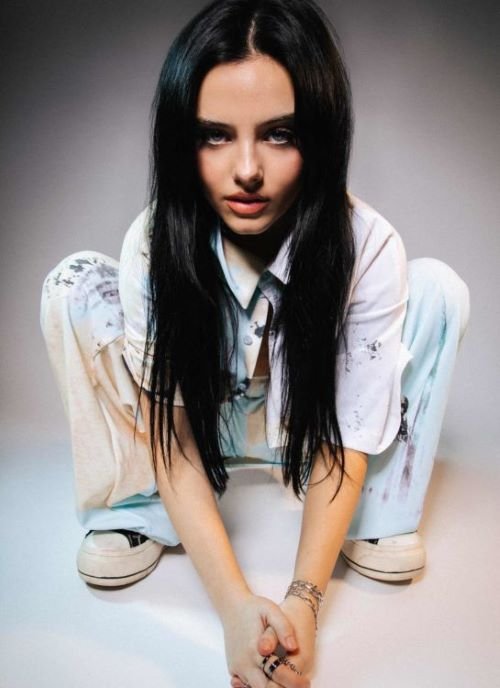
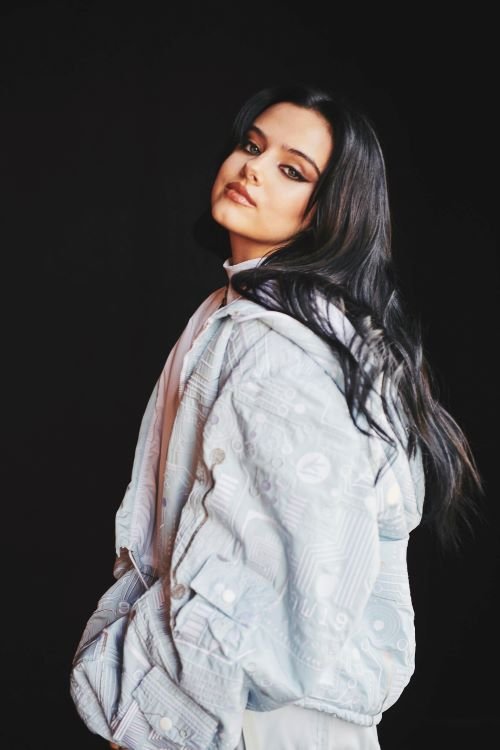
INTERVIEW: Eliza May

INTERVIEW:


Eliza May

_________

IN this interview…

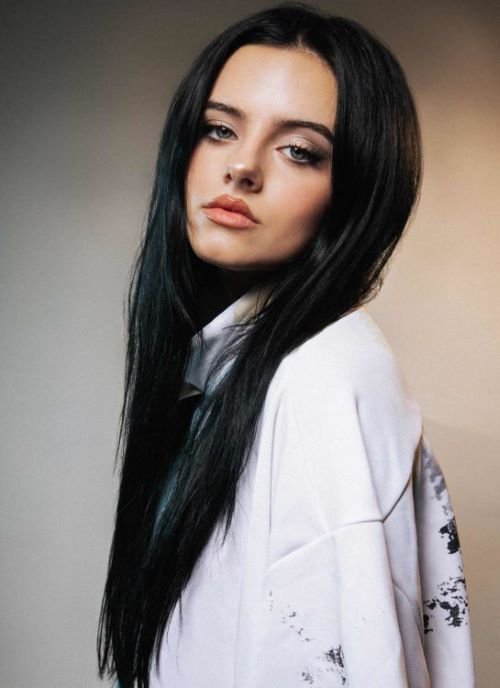
I have been speaking with the simply incredible Eliza May. I have ben speaking with her about the stunning new E.P., Candy Heart. She discusses the inspiration and concept behind the E.P., some of the artists and sounds that have influenced her, and what the rest of this year holds. A wonderful and multi-talented emerging artist, everyone needs to follow and watch Eliza May. She tells me about some important gigs coming up, which other new artists we need to keep an eye out for, how important it is to know that people are connecting with Candy Heart, and whether there is going to be anymore music coming through 2023. Somebody I am tipping for big things and a long future, spend some time today listening to Candy Heart and the music of Eliza May. She is someone that we will be hearing music from for…

A long time to come.

__________

Hi Eliza May. How are you? How has your 2023 been like so far?

Hi Sam. I’m doing well, thank you! 2023 has been amazing so far. My new E.P., Candy Heart, has just come out, and currently people seem to be enjoying it, which is so nice to see! My band and I also independently held our own E.P. launch too, which was such a magical evening. I couldn’t have asked for a better start to the year! I hope your 2023 has been a good one so far too…

Take me back to the start. When did music come into your life? Which artists do you remember falling for at a young age?

To be honest, music has always been in my life. Ever since I was a child, my family always surrounded me with music, and when I was growing up I was always singing and trying to play every instrument I could get my hands on. I started singing when I was about three years old and fell in love with performing and singing instantly. I think the first artist that I loved musically was Avril Lavigne. I remember seeing her music video for Sk8r Boy on MTV and the more I heard her music, the more I loved her Rock-Pop sound and how fun her songs were to sing. I also loved a bit of S Club 7, but who didn’t at that age?

You have an original and personal sound, but are there any other artists that have influenced your music?

Thank you so much! For me, I’m quite heavily influenced by artists such as Paramore, The Wombats, Fickle Friends, and Olivia Dean. When I was a teenager, I loved Paramore and that love for their style of music has always stayed with me. I think that Hayley Williams’ music ability and vocals are unparallel with any other artist out there; she’s always been a big inspiration of mine. I’m also obsessed with Olivia Dean’s soulful Pop sound and the chord progressions she uses. I think that’s started seeping into the way I currently write music too, which is leading me towards a new sound.

I’ve learnt that sometimes the best songs come from the most painful experiences though, and they’re just as important to share

Your new E.P., Candy Heart, tells the story of a classic relationship cycle: starting off full of romance, originally tasting sugar sweet but over time, things turn sour as the relationship ends. How did you come to decide on that particular concept and arc for the E.P.?

At first, I didn’t really have a theme for this E.P., as all the songs were written separately over quite a few years. When I was listening back to them, I realised they all had a classic theme in common – love and heartbreak. I also loved the name and concept of my song Candy Heart, and liked the idea of comparing sweet treats to how we view modern-day relationships. Having a few sweet treats at first is great, but if you have too many, over time the taste starts to become sickly. As soon as I sat all the songs down together, I knew that the phrase “Candy Heart” would perfectly capture the whole concept for the E.P., and visually I knew we’d be able to have a lot of fun with it too.

You wrote these songs over the course of six years. Documenting various relationships, was it difficult revisiting some more painful moments for various songs?

Surprisingly not as painful as I thought it would be. But I think that’s mainly because I’m now in a very happy and healthy relationship, and have been for over four years. Whilst I was experiencing my previous relationships, I was writing each song pretty much in the moment, so the songwriting process for songs like Foolish, Edge of This and Empty Dreams for example were much harder to go through emotionally than songs like Green Light and Candy Heart. I’ve learnt that sometimes the best songs come from the most painful experiences though, and they’re just as important to share.

Do you have a personal standout track from the E.P. at all?

Even though I love all of the tracks on Candy Heart, for me Green Light is my personal favourite. It was the first song I ever wrote about my relationship with my current boyfriend - and it reminds me of the original feeling I had where everything seemed too good to be true. Part of me wasn’t sure if I was just seeing things with rose-tinted glasses or if everything genuinely was perfect. I was waiting for there to be a sign, signal or a green light to let me know it was as good as it seemed. I’m particularly in love with the middle eight section of this song when the harmony wall comes in; the lead guitar riff pans from ear to ear, and the keys dance effortlessly in and out of the rest of the instrumentation. Green Light always brings me joy, and it is a lot of fun to play live too!

Although you have just put out an E.P., what do you have your sights set on this year in terms of musical direction?

This year, I’d love to play some more gigs outside of my hometown, specifically in areas like Manchester, Liverpool, Brighton, and London. Last year, my band and I were lucky enough to play in Derbyshire at Y Not? Festival, in Hereford for Hereford Indie Food Festival, and we played a few gigs in London too. But I’d love to play in more new places and spread my music even further. I’m also hoping to record a couple more singles later this year, so keep an eye out for that!

To see people smiling, dancing, and singing along at gigs makes all the hard work 100000% worth it

The E.P. seems like it will be readymade for the stage. Quite cathartic for so many people. How important is it knowing that many of your audience will be able to identify with Candy Heart and feel empowered?

It’s so important to me, and it’s one of the main reasons why I started making music in the first place. My main goal is to make myself and other people happy through music, and I feel like this E.P. has done exactly that. My band and I have been playing some of the songs from Candy Heart for quite a while now, and we’ve seen first-hand the positive impact and relatability these songs have for people. To see people smiling, dancing, and singing along at gigs makes all the hard work 100000% worth it. It’s what I make music for, and if I can make at least one person smile, feel heard, or like they’re not alone, then I’m doing my job right.

 Where can we see you play this year? Do you have some upcoming gigs lined up?

So, we have a couple of really big gigs coming up that I’m extremely excited about. The first one my band and I are playing is at The Sunflower Lounge on 3rd March for the Isle of Wight Festival New Blood competition alongside four other amazing Birmingham-based bands. I’m also opening for the incredible Jennifer Owens at The Sunflower Lounge on Friday 10th March. We’re playing a few festivals later this year too, but we’re keeping those quiet at the moment as we can’t announce those just yet. Definitely keep an eye on my socials or my website to find out more though. We can’t wait to announce more gig and festivals soon.

There are so many great new artists out there. Apart from yourself, who else should we be checking out?

There are three artists in particular that you should definitely be checking out. First up is Izzii Grace. She’s a Queer Indie Pop artist from London who has the most catchy songs. Her vocals are lush, and her latest song, Hoodies, is absolutely incredible. Next is Naomi Dawes, who’s a singer, songwriter, and producer from Birmingham. She’s just dropped a brand-new E.P. called Siren, and it it’s an incredible listen from start to finish. If you like Florence + The Machine, then you’ll probably like Naomi. Then, finally, I highly recommend the amazing Amelia Wallace. Amelia is a very close friend of mine, and she actually sings harmonies and backing vocals in my band. But alongside that she writes her own music. Her vocals are mesmerizing, and everything she writes is always stuck in my head for days. If you like alternative, soulful Pop music, then Amelia’s music is definitely for you. All three artist’s music can be found on YouTube, Spotify, and other online platforms.

Finally, and for being a good sport, you can choose a song (from another artist) and I will put it here.

Thank you so much! I’d have to go for Hoodies by Izzii Grace! I constantly have it on repeat at the moment!

___________

Follow Eliza May

FEATURE: Spotlight: The Paranoyds

FEATURE:


Spotlight


The Paranoyds

_________

A group I discovered recently…

 PHOTO CREDIT: James Juarez

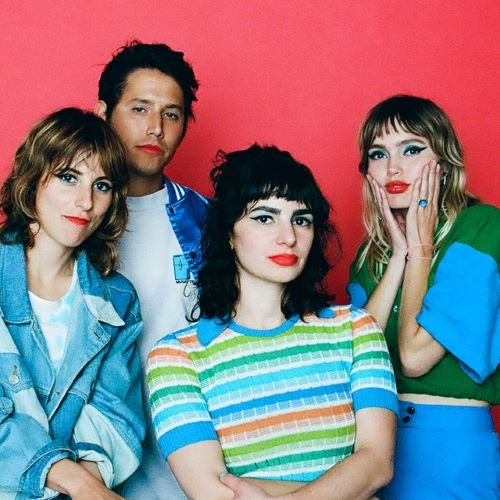
I have become hooked on The Paranoyds. They have a name and aesthetic that harks to the past, but they are a very modern-sounding force. Based out of Los Angeles, they released the incredible album, Talk Talk Talk, last year. Signed to Jack White’s Third Man Records, they are a sensational band who are primed for greatness. Even though they have been together a little while, the release of their second studio album (following 2019’s Carnage Bargain) has put them firmly on the map. There are interviews with them that I want to source. Before that, here is some background regarding the incredible The Paranoyds:

Your phone, your TV, your computer – who (or what) is watching you? It’s an oft-asked question in the digital age and one that The Paranoyds echoed when it comes to the origins of their name. Part of a generation immersed in oversharing and ease of surveillance, The Paranoyds know better than anyone, it’s scary out there. But the band’s fearless pursuit of a good time won’t stop them from crafting the kind of gritty, Southern California garage rock that refuses to hide. The Paranoyds’ debut release on Suicide Squeeze offers a taste of what The Paranoyds have been crafting.

The Los Angeles four-piece of Laila Hashemi (keyboardist-vocals), Lexi Funston (guitars/vocals), Staz Lindes (bass/vocals), and David Ruiz (drums, vocals) share a mission to craft songs with the gritty spunk and dark playfulness of a cult-classic splatter film. “Hungry Sam” is a binge-worthy feast of chugging guitars and belly-rounded drums. B-side “Trade Our Sins” is a cautionary slow dance fit for the end of the night or the end of the world. Their self-described “sister vocal act” shares the snarling, over-it-but-totally-into-it vocals throughout their songs, moving from dirty surf-pop guitar jams to power-packed garage rock”.

I will start by taking things back to 2020. The year after their debut album came out, The Paranoyds were getting quite a bit of attention and love! ADHOC chatted with vocalists Staz Lindes (who also plays bass) and Lexi Funston.

AdHoc: You started off writing silly songs and putting them on Myspace. What made you decide to go further than that?

Staz Lindes: Time. When I was putting stuff on Myspace, I was 14 to 17. I was alone and acoustic, and I had horrific stage fright. We didn’t properly form the band until much later. I guess over the years—just building confidence, finding your bandmates, starting playing shows. I just didn’t have that right away.

The press release said that you’re called the Paranoyds because of the lack of privacy in the age of digital surveillance. How has being a band during this digital age either helped you or harmed you?

Lexi: It’s hard to imagine what else it would be, just because it is the only way to do it presently.  Whether or not you even take part in social media, the venue that you’re playing at has it, your promoter for the show has it. Even if you’re trying to stay off the grid, it’s really hard to do that. I don’t know how it treats us specifically, but I think it’s awesome that maybe because of it we can reach a further fanbase. We like Spotify, even though that’s why we’re never gonna have a rock & roll private jet [laughs]. But also looking at our top-of-the-year stuff, we just found out that our music was streamed in 77 countries, which is crazy.

Staz: If that’s true, that’s insane.

Lexi: I don’t know if without [Spotify] we necessarily would’ve been able to have that big of a reach. It’s complicated, I guess. You can’t really have idols anymore because everyone is so accessible and there’s no mystery and you can know what keto meal they cooked for dinner last night. At the same time, it gives people a voice, and it gives us a chance to show our super silly side. You can hear a band from L.A. and build a pretentious storyline for us. [Then] you see our Instagram and see us airskating to Tony Hawk [laughs]. It’s pretty amazing that you can build your own brand so easily and you don’t need managers. We haven’t had a manager before, and we still don’t.

The song “Girlfriend Degree” is a very direct jab at misogyny, especially in the music scene. How do you usually handle those situations—someone assuming you’re a groupie or girlfriend rather than an actual band member?

Staz: I am a girlfriend and a groupie sometimes [laughs]. No one’s ever been like, “Hey, what are you doing here!?” Luckily, I think we’re in a space in L.A. where everyone’s pretty open to a lot of things. Everybody’s seen everything, and no one’s really been that big of an asshole. I know I’ve read things about other girl bands that constantly get interviewed about it, and they’re only having to talk about that. For us, I don’t think anyone’s ever doubted us. Everybody’s been pretty supportive.

The song basically came from the idea of: Hey, if you like music, you don’t just have to listen to guy bands. You, too, can start a band and do it. Hopefully, somebody out there is listening in one of those 77 countries, and one person gets excited about that idea.

Lexi: My friend ended up kind of relating to the song. She was dating a musician in a successful band, and she was like, “I don’t want to be so-and-so’s girlfriend.” Like, “Oh, you know Lisa, she’s so-and-so’s girlfriend”—that becomes your identity. You’re just associated with this male musician. It’s like, why don’t you create your own identity and not just be someone’s girlfriend? Be known for you”.

Before coming to the final interview, FAR OUT spoke with the quartet. It is clear that they have a wide range of influences and sonic inspirations. What is also clear is that you cannot compare them with anyone else. With various shades and colours in the blend, the music of The Paranoyds is something that everybody needs to hear:

This swirl of inspiration has always been apparent in their sound, and that comes down to the unique constitution of its formation. The friendship among the band is palpable, and friends are never really that much alike. “It’s very different for everybody in the band,” Laila Hashemi says of the music tastes that everybody brings to the table. “I grew up listening to a lot of what my parents listened to. Just the classics like The Beatles and the Rolling Stones. That was what really inspired me. Then in middle school, I started listening to Radiohead and that really inspired me.”

With that in mind, The Paranoyds are unafraid to forage out a niche of their own weird making. “It’s also for better or for worse we want to play stuff that is fun. What is fun to us – how we found our group – is not playing song after song that sounds like similar,” Funston adds. “It’s not something we talk about strictly like ‘this song needs to sound different to that last song’. It’s just something that naturally happens.”

Explaining: “I think that is due in part to the way David likes jazz and hip hop and metal music, and I like stoner metal and pop punk and pop music, and Staz likes country music. There’s no limits. Everybody likes what they like, and they bring the best of that to the band. Then, it’s a lot of fun. It’s like being a mad scientist putting it together.”

This has always been part of their sound. The elements swirl into something that makes comparisons nearly redundant. You might mumble a few things about a heavier Blondie or a B-52s and Pavement lovechild as you recommend them, but ultimately, you’ll just say, ‘Ah, you’ve just got to give them a listen’. That’s even more apparent with their latest album, Talk Talk Talk. “What sets this record apart is we were able to be more melodic,” Funston confirms. “For me, it sounds like were we very 70s proto-punk and now we’ve moved into this 80s new wave punk which is very exciting.”

This music is pitched on the pointed edge of modern living explored with absurdity. They don’t want to get dragged into the dismal, but some things you can’t avoid which is why fun and deliberation coincide. “I think the pandemic forced you to look within. It caused a lot of time for inner reflection. For me, ‘Single Origin Experience’ came from a time just being really embarrassed of being American.”

“Sometimes it’s so cool, we’re in LA and we get all these cool opportunities, and we’re so lucky, but sometimes it’s a bit embarrassing being from America. I guess Trump was still president too so that obviously played into it and we were just thinking, ‘God, how is this happening’. I do think that we were able to reflect a little bit more which made for an interesting record,” Funston says”.

PHOTO CREDIT: David Perlman

Looking forward to a future with Third Man, ALTERNATIVE PRESS talked with The Paranoyds. Released at the end of last year, the band talked about how they were feeling about touring with Jack White. It is clear that, having won the ear of White and his label, that confirms that The Paranoyds are going to explode and release many albums to come:

So tell me about the process. Since we're on songs, how do they get written in the band?

DAVID RUIZ: First there were ideas, and we were just jamming them out.  Now they're a bit more fleshed out, and they just expand as we all play together. I have this progression. And we're like, “I have these lyrics!” Then we all just get together and expand on them.

FUNSTON: During the pandemic, we were trying to do the GarageBand vibe, which was really different for us. A lot of these songs were fully written, and then we all had to add our parts.

Which artists have influenced you the most? Not necessarily bands that sound like you but they're just a powerful influence.

FUNSTON: I listen to a lot of old country like Hank Williams, Roy Orbison and the Everly Brothers. And a lot of Motown like Smokey Robinson and Sam Cooke. We’re trying to reference basslines to those really nice, old, soulful ones, too. I think probably country music's pretty far from us. But that's a huge influence on me, especially lyrically.

You’re opening for Jack White in several cities. What are your feelings about that?

FUNSTON: He was formative for me, and pretty much everyone in our generation. You knew who the White Stripes were and that they were causing a whole transition, whether people were aware of it or not. He was really cool. The fact that he asked us felt super validating.

I was reading through your materials, and it sounds like you had a challenging experience up in San Francisco a couple of years ago when you were at a studio there trying to demo songs.

RUIZ: It was awesome. We just had one tiny cellphone, and our friend Spencer Hartling was engineering. I guess it maybe sounded tough. We were sleeping on the floor living in the studio.

FUNSTON: It was tough times. We thought the world was ending. It was right in the middle of George Floyd dying. We all got tested before we even got in the car with each other. We’re all thinking, “Should we take off our masks?” It felt like we were gonna get into trouble. Bands were getting canceled from playing shows. People would comment like, “You guys aren't six feet apart.” It was insane.

RUIZ: Those demos sealed the deal with our label Third Man Records”.

If you do not have The Paranoyds in your sights, do make sure that you redress that and explore their work. Talk Talk Talk is their most accomplished album so far, and it hints at a very bright future! I am really excited to see where they go. Keep an eye on their social media channels to see what is happening and where they are going. They are going to make some big waves…

THROUGH 2023.

____________

Follow The Paranoyds

FEATURE: Take My Shoes Off, And Throw Them in the Lake: Kate Bush’s Hounds of Love Title Track at Thirty-Seven

FEATURE:


Take My Shoes Off, And Throw Them in the Lake

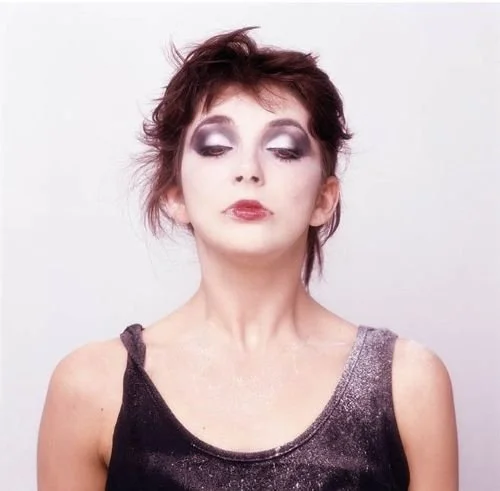
IN THIS PHOTO: Kate Bush in 1985/PHOTO CREDIT: Guido Harari


Kate Bush’s Hounds of Love Title Track at Thirty-Seven

_________


ALTHOUGH not a big anniversary…

there is one coming up that I needed to mark. The Hounds of Love album has been getting love since it was released in 1985. One of the best albums ever, there is no doubting its place in music history. Its amazing title track saw Kate Bush directing her first video. I know she assisted and would say she’d co-directed videos before then (including Sat in Your Lap from The Dreaming, in addition to the album’s title track), but this was her vision. Released on 24th February, 1986, I wanted to mark thirty-seven years of a masterful song that does not get the same attention and play as Running Up That Hill (A Deal with God). That said, Hounds of Love is still cherished and played. That said, when selecting Bush’s fifty best songs, MOJO placed Hounds of Love at one. This is what they said:

No matter how refined the circumstances of its creation – built at leisure in Bush’s new 48-track studio – or how newfangled its production – still tangible in the hi-tech stabs and pads of Fairlight, and the crispness of Jonathan Williams’ cello – Hounds Of Love is red in tooth and claw, its breathless, atavistic fear of capture mixed with almost supernatural rapture. Love is thundering through the psychosexual woods, hunting down somebody terrified of what it means to surrender to another person. The song opens with a quote from British horror film Night Of The Demon but that’s the only moment it feels like theatre. From then on, Hounds Of Love maintains a dizzying emotional velocity, the relentless double drumming of Charlie Morgan and Stuart Elliott stamping down on the accelerator. Bush’s voice might dip and soften, but those drums are merciless, while the strident backing vocals, like a hunting horn call, goad her on if introspection threatens to slow her down. It never lets up, every line heightening the pitch, closing the distance between song and listener. It ends with a suddenness that makes it seem like she’s hit the ground and you’ve hit it with her, breathlessly waiting for an answer to the question: “Do you know what I really need?” The uncertainty, however, is not reflected in the confidence – the perfect, dazzling completeness – of the song’s execution. On Hounds Of Love, Kate Bush is going at full pelt, chasing the horizon, running her vision to ground. Not really the hunted, but the hunter all along”.

The idea of love being like you’re chased by a pack of hounds, it talks about lust, fear, timidity and bravery. It is a track that can be interpreted a few different ways. The third single released from the album, Hounds of Love is one of Bush’s best songs. I love how, for Bush’s first sol music video directing, she went for something quite ambitious and filmic. Inspired by Alfred Hitchcock's The 39 Steps, it is shot beautifully and looks wonderful! I love the colour palette and the storyline. It is definitely one of her greatest videos. Subsequent videos she directed have their own style, but they are all fantastic and ones you keep coming back to.

Before continuing on, it is worth hearing what Bush herself had to say about Hounds of Love. An iconic song without any doubt, you are pulled into this incredibly powerful world. I always immerse myself in the song. Because of Bush’s incredible production, you feel every word and note to its fullest. I always thought hat Hounds of Love deserved to chart higher than eighteen (in the U.K.) as a single. It is such a strong and memorable track, it warrants a place in the top ten. Thanks to the Kate Bush Encyclopaedia for sourcing interviews where Bush discussed the meaning behind the title track to the majestic Hounds of Love:

The ideas for 'Hounds Of Love', the title track, are very much to do with love itself and people being afraid of it, the idea of wanting to run away from love, not to let love catch them, and trap them, in case the hounds might want to tear them to pieces and it's very much using the imagery of love as something coming to get you and you've got to run away from it or you won't survive. (Conversation Disc Series, ABCD012, 1985)

When I was writing the song I sorta started coming across this line about hounds and I thought 'Hounds Of Love' and the whole idea of being chasing by this love that actually gonna... when it get you it just going to rip you to pieces, (Raises voice) you know, and have your guts all over the floor! So this very sort of... being hunted by love, I liked the imagery, I thought it was really good. (Richard Skinner, 'Classic Albums interview: Hounds Of Love'. BBC Radio 1 (UK), 26 January 1992)

In the song 'Hounds Of Love', what do you mean by the line 'I'll be two steps on the water', other than a way of throwing off the scent of hounds, or whatever, by running through water. But why 'two' steps?

Because two steps is a progression. One step could possibly mean you go forward and then you come back again. I think "two steps" suggests that you intend to go forward.

But why not "three steps"?

It could have been three steps - it could have been ten, but "two steps" sounds better, I thought, when I wrote the song. Okay. (Doug Alan interview, 20 November 1985)”.

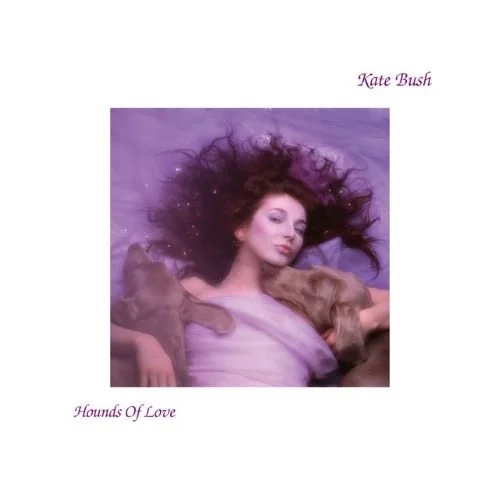
On 24th February, it will be thirty-seven years since Hounds of Love came out as a single. Even though I am not a big fan of a lot of the Kate Bush covers out there, The Futureheads’ 2005 cover did get into the top ten - and no doubt introduced a lot of people to the song. The lyrics are fascinating throughout. There is this hesitation and fear. Bush actually admits that she has always been a coward. “When I was a child: Running in the night/Afraid of what might be”. Looking back at childhood fears, but also relating them to now. The fact that there is something she is afraid of. A sense she is still running or not willing to confront something. Of course, the hounds in the song seem to be more emotions and not anything physical. Bush did put two hounds, her dogs Bonnie and Clyde, on the Hounds of Love album cover. There is that duality. Hounds she embraces and gets comfort from, and the chasing pack who are ripping out her heart. There are all sorts of obstacles and vivid scenes that provoke the imagination. “Take my shoes off/And throw them in the lake/And I'll be/Two steps on the water” are lines that are so powerful and clever. Bush sees a fox that was caught by dogs. With its heart beating fast, she confesses to being afraid of running away. Again, here is something that seems physical and this wild and scary scene. Maybe just a metaphor for courage or her younger self being chased or defeated. This need to confront fears and the need to run away. Just embracing love. Bush brought the song to the stage for 2014’s Before the Dawn residency. A truly remarkable and important song in Kate Bush’ catalogue, I think that it perfectly showcases her talents as a producer, singer, songwriter and director. A complete and magnificent musical moment, Hounds of Love is most certainly…

ONE of her very best.

FEATURE: Head of the Love Club: Returning to the Brilliant Gretel Hänlyn

FEATURE:


Head of the Love Club

PHOTO CREDIT: Jasper Cable-Alexander


Returning to the Brilliant Gretel Hänlyn

_________


A while ago…

I featured the magnificent Gretel Hänlyn in my Spotlight feature. There is someone you should follow on Twitter and Instagram. She is such a hugely impressive artist. She released the magnificent Slugeye album last year. There is an E.P. on the way very soon. I shall come to that. I do feel like this year is going to be the one where one of our very best young artists is going to get her music heard across the world. I feel she is someone who could get international tour dates. American audiences and eyes will welcome her very soon. Real name Maddy Haenlein, Gretel Hänlyn is a twenty-year-old artist from West London. In a musical and creative household, she was raised on artists like Nick Cave. It is not a shock she picked up a guitar and began writing her own gothic and fascinating songs. Picking up other influences as she grew and began songwriting, one can hear elements of the likes of Nirvana and Tim Buckley in her music. Even though there are particular artists who have driven and inspired Hänlyn, she very much has this original and strongly personal voice. I am looking forward to hearing more music from this incredible artist. Before getting to news about her forthcoming E.P., Gretel Hänlyn was interviewed by NOTION. In a sea of artists being tipped and celebrated, here is someone who could well eclipse them all and announce herself as a future icon and songwriting great. She definitely has the passion and talent to go on for years and possibly decades:

Hey Gretel! Your new single “Wiggy” has been out in the world for a few days – how are you feeling about the release? And can you tell me a bit about the track?

It’s always a manic anticlimax for me when I release a song. I think I’ve lived with the song for so long that I expect some massive reception and celebration when I do release it, but in reality no amount of praise will ever make you feel like you’ve succeeded or ‘completed’ the release. It’s a funny one, I’m still navigating how to keep myself content and grounded with releasing music, but I’m getting there quickly. Wiggy is about my beloved boy feline, Wiggins, named after Bradley Wiggins (he’d just won the Tour de France when we got him). I’m always envious of how easy cats have it, it must so lovely to be a cat. So I wrote a song about it, which started out as a joke but I quickly realised it’s actually a good concept and something people will respond well to. I don’t think me admiring the feline lifestyle is in any way exclusive to me – who wouldn’t want to lie on a bed and get massaged all day?

PHOTO CREDIT: Jasper Cable-Alexander

Has your new music been a long time in the making? What was the creative process like?

For me, I write in spells and my dry spells can last for months so I never know when a surge of songs is incoming. I wrote the demos for my upcoming EP over the span of about five months, but didn’t commit them to a body of work until I collated all the demos together and saw a lot of running themes in many of my best demos

Then the EP came together in just under a week when I went away to Hastings with the producers Mura Masa, Jadu Heart and Lloyd Wayne. It’s funny, I hadn’t much faith in many of the demos until I showed them to the boys, and they were like ‘how fucking long have you been silently sitting on these songs?’.

Did you always know you wanted to do music? Do you a remember a moment where it became a career that seemed a viable reality?

I’ve always loved playing and writing music, and always dreamed about making it my job. I’ve been playing guitar and writing songs since I was 11, so at 20 I feel like I’ve put enough hours in to not be a total fraud. ‘Succeeding’ in music wasn’t something I ever thought would happen, the chances are slim and I know how competitive it is, but when I met my manager I saw a clearer route to getting my songs out and playing shows. That must have been when I believed it might be possible for me.

What era is 2023 ushering in for you? What are your hopes for the year ahead?

Well, I got the bug for gigging when I was touring last year and I feel I know what I’m doing as a musician now, so this year I’d like to do as many headlines and festivals as possible, whilst also writing a debut album. I also do hope that I get something from my new EP. I adore each of these songs individually and even more as one body. I’m so proud of it, so the main job is done, but I’m not one of those people who says they don’t care if people like it or not. I want it to resonate with people and I want people to listen. If a tree falls in a forest and no one’s around to hear it, does it make a sound? I’ve had my catharsis from it already, so now I just want other people to have the same and recognise the emotion and perspective in it”.

Gretel Hänlyn is an artist who I was seduced by from the very first song I heard. There is something about her songwriting and voice that goes so deep and draws you in. An artist who is going to be playing huge stages very soon, I would not be surprised to see her at festivals like Glastonbury in the summer. She is a sensation! I would welcome and encouraged people to explore her music. She did announce the 16th March release date and tracklist on her Twitter page recently. CLASH were among those who excitedly reacted to the news of a new Gretel Hänlyn coming into the world:

Gretel Hänlyn has laid out plans for her new ‘Head Of The Love Club’ EP.

The alt-pop riser caught attention with her debut EP ‘Slugeye’, largely sculpted when she was just 18 years old. Pushed into the public gaze, she quickly learned to express herself, these ambitions come to the fore on her new work.

Emphatic lead single ‘Wiggy’ is out now, alongside a video directed by Ben Brook. On March 16th you can expect to tune into Gretel’s new EP, with ‘Head Of The Love Club’ boasting a plethora of pop thrills.

Introducing the EP, Gretel Hänlyn talks about the changes she’s undergone since sharing her debut material…

When I wrote my first EP, ‘Slugeye’, I hadn’t done any live shows, I was 18 and learning as I went and you can hear that on the record which is what I love about it. But with ‘Head Of The Love Club’, I had a vision of what I knew I wanted to hear from myself, I wrote it as I’d want to hear it as a listener and audience member.

I always crave that moment when an artist says something, no matter how simple, that kicks you in the tummy because you completely understand it. The new approach was difficult because it coincided with a time where my heart was very heavy – I was outraged and ended up having some of the most cathartic moments of my life upon listening back and finishing the record. It feels so gothic and kinda frightening at times, and then so funny and tongue in cheek the next moment – the full spectrum of the emotions of a 20 year old woman.

I was inspired by a lot of PJ Harvey’s brutally feminine lyrics but instead of writing from an empowered female perspective, I often leant into the narrative of a naive young girl, infatuated with ‘the head of the love club’, a figure that seems so above her. That’s sort of how I felt at the time… the fantasies I created in some of the songs were definitely inspired by how I felt in my relationships when writing this.

Exciting times. Catch Gretel on the road in April, hitting London’s Moth Club on April 4th, Manchester’s YES Basement on April 6th, and Bristol’s Exchange on April 8th.

I feel a lot has happened since I last featured Gretel Hänlyn. I would love to interview her one day and, when the Head of the Love Club E.P. arrives next month, I am definitely going to review one of the songs. She is a wonderful artist with a very long and bright future ahead, so I was keen to write a bit more in the hope it will prompt people to support and follow her. You just know this extraordinary artist is going to go a long way. She has achieved so much already, but this is just the start of things. A lot of love and attention is coming her way, and it is so…

EXCITING to see.

FEATURE: Groovelines: Kylie Minogue – Confide in Me

FEATURE:


Groovelines


Kylie Minogue – Confide in Me

_________


THERE is a few Kylie Minogue…

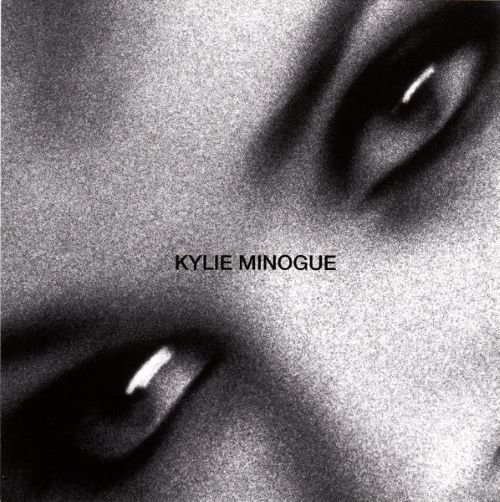
albums that are classic and full of brilliance, yet they have never got the credit and respect they deserved. Two of those albums came next to one another. 1997’s Impossible Princess is a complex, magnificent and eclectic album that was a departure for Minogue. More Electronic and perhaps darker than anything previously, it was a clear move away from the Pop sound of the 1980s and early-’90s. In fact, 1991’s Let’s Get to It was one of her final albums that was more traditional Pop. Many people hailed 2000’s Light Years as this sort of comeback. Feeling that the albums before were a bit light or not really her sound, you can respect the fact that Light Years is a great album with some of Kylie Minogue’s best material. The first real departure and step forward in terms of her sound came on the 1994 Kylie Minogue album. A terrific release, the reviews were mixed. It got to number four in the U.K., but worldwide success was moderate. There are some great tracks on Kylie Minogue. Where Is the Feeling? and Falling are terrific. In fact, there is a consistency that is impressive and should be re-evaluated. By far the strongest cut opens the album. It is the perfect album. It was the first single from Kylie Minogue. Nobody had heard Minogue do anything like Confide in Me.

With strings and elements of Trip-Hop, this was a Pop icon-in-the-making stepping in a new direction. Embracing the moving landscape of music and very much looking ahead to what was to come, Confide in Me is considered one of her greatest songs. In fact, it was one of the best songs of the 1990s. I am going to come to some Wikipedia information, where they collated critical response, and also discussed the legacy of this incredible song. Swooning, dark, orchestral, sexy, daring and innovative, there is no denying the legacy of Confide in Me. Written by Steve Anderson, Dave Seaman and Owain Barton, it was produced by Brothers in Rhythm (Dave Seaman, Steve Anderson and Alan Bremner). There are some wonderful Kylie Minogue videos. In fact, most of them are pretty amazing! Confide in Me, directed by Paul Boyd in Los Angeles during July 1994, is a standout in her cannon. Up there with her best videos, we see colourful and kaleidoscopic representations of Minogue. Different female stereotypes, it is a hypnotic and stunning video that you could have seen the likes of Michel Gondry helming (he would later direct the video for Come Into My World). A stunning video that almost tops the song itself, this was clearly an artist entering a new phase. The fact her 1994 album is eponymous perhaps indicates someone who wanted to be taken more seriously. Something more personal. Embrace a more modern and mature direction. Even though she was twenty-six when Confide in Me came out on 29th August, 1994, this is a massive leap. A video that takes the breath, and a song that takes in Eastern music, Dance, Trip-Hop and Pop, it is a masterpiece of a track! I am going on a slight tangent before bringing in some critical response and legacy details.

Number one in Australia, two in the U.K., and hugely successful around the world, Confide in Me was a huge moment for Kylie Minogue. Her vocals are better and more assured than ever. In terms of the tones, emotions and layers she brings to the song, this was a singer being utilised to her full potential. The lyrics are engaging and thought-provoking, and I really love the composition. I often feel that the strings or beats from the song could be sampled and used in a modern Hip-Hop song. In fact, Minogue’s breathy and elongated chorus vocals of “confide in me” would be a perfect sample. It is a shame there would be copyright and huge fees to pay, as it would open the Kylie Minogue album to people. It would be an incredible and compelling sample to drop in a song. Recorded in London and featured in various Kylie Minogue tours, Confide in Me is not played nearly enough! I love her early Pop oeuvre, but I think that her work on Kylie Minogue and Impossible Princess is fascinating. I want to drop in some Wikipedia information about how Confide in Me was received, and how it has endured and gained huge respect and love:

"Confide in Me" received critical acclaim from music critics. Sean Smith labelled the track a "classic" to Minogue's discography, as similar to how William Baker viewed it. Larry Flick from Billboard complimented "the gorgeously atmospheric, downtempo album cut". Nick Levine from Digital Spy selected it as the standout, and commented "How can we plump for anything other than 'Confide in Me'? Fifteen years on, this sumptuous, string-swathed dance-pop epic still caresses the ears like a flirty hair stylist." Caroline Sullivan from The Guardian noted that it "has a classical violin overture that unfolds into a snake-charming Eastern melody.

 Kylie sounds delightfully woebegone." Mike Wass from Idolator wrote that "the Brothers In Rhythm-produced gem was the stepping stone that took her from the glorious pop of "Better The Devil You Know" to collaborating with Nick Cave on "Where The Wild Roses Grow"." He added that it was "a vehicle to showcase a then-hugely-underrated voice." Music writer James Masterton deemed it a "exotic, string-laden single". Alan Jones from Music Week gave it five out of five, noting that "a widescreen string-driven shuffle which allows her to deliver a soft and polished vocal." Tim Jeffery from the magazine's RM Dance Update said, "Very Madonna-ish, in fact, even down to the giggly chuckle thrown in occasionally. Huge." Another editor, James Hamilton deemed it a "Madonna-ishly moaned and muttered Brothers In Rhythm creation". Quentin Harrison from PopMatters highlighted the track from the parent album, and said "Minogue's international perspective lent her canvas precision, not iciness as witnessed with 'Confide in Me'. The cut played like a lost spy film accompaniment, its grandiose strings and rumbling groove enthralled. 'Confide in Me' let Minogue become the vocalist cynics sneered she'd never be ...". British author and critic Adrian Denning enjoyed the track and called it "truly timeless and absolutely wonderful."

He declared the track "Arguably still her finest musical moment to this date," and found the production and lyrical delivery "classy". Billboard's Jason Lipshutz wrote of the track:

Deeply flirtatious and as knowingly dramatic as a James Bond theme song, "Confide in Me" continued Minogue on her path away from simplistic pop atop a swath of strings and Middle Eastern influences. The deadpanned bridge -- "Stick or twist, the choice is yours/Hit or miss, what's mine is yours" -- is delivered in a murmur that yearns for a Serious Artiste label.

“Since its release, "Confide in Me" has been noted by critics and publications as one of the most iconic and innovative singles from the 1990s era, and Minogue's singles history, and has been recognised by authors as an important period of Minogue's career and musical "re-inventions". According to Lee Barron, who wrote the book Social Theory in Popular Culture, he felt the image of the music video was an example and opening of "Indie Kylie"; an image that later progressed through the work of her 1997 album Impossible Princess. Jude Rogers from The Guardian listed the track on her "10 of the Best Kylie Minogue Songs" in June 2016; Rogers complimented the production and said "The effect is utterly mesmerising, and Kylie is in total control from the off, telling you she "can keep a secret / And throw away the key". Later she turns the middle eight into a particularly pervy-sounding card game ("Stick or twist / The choice is yours"), and also plays with the idea of her fame ("Hit or miss / The choice is yours")." She also said the track was her "greatest, strangest hit". Brittany Porter from AXS.com listed the lyric "'I stand in the distance/I view from afar/Should I offer some assistance/Should it matter who you are?'" as some of her best lyrical performances to date”.

One of my favourite songs from the 1990s, a daring and bold move forward from Kylie Minogue was Confide in Me. Leading the eponymous 1994 album from the Pop legend, this was her entering new territory and creating something truly wonderous and timeless. The song still sounds fresh to this date. From its colourful, stunning and terrific video, through to Minogue delivering one of her finest vocal performances, this sublime song should be played and discussed a lot more. Put the track on, close your eyes and…

LET it take you away.

FEATURE: The Digital Mixtape: Saturday Night Jams
FEATURE:


The Digital Mixtape

PHOTO CREDIT: Michael Discenza/Unsplash


Saturday Night Jams

_________

FOR this Digital Mixtape…

 PHOTO CREDIT: Fred Moon/Unsplash

I have slung together a selection of Saturday night jams. Whether staying in an dancing at home or getting ready to go out, the songs in the playlist should provide a worthy and energisiing soundtrack. I do not spend my Saturday evenings out, but I definitely like a good playlist to get me through to Sunday. There are many that do like to hit the town on a Saturday so, if you need some motivation and stimulation, then there should be enough bangers, anthems and cool jams to ensure the mood is right. As the weather gets warmer (relatively speaking) and we look ahead to spring, I think there is that need and desire to get and get together. In that spirit, the songs below should provide plenty of heat and sunshine as we head towards spring. If you need some Saturday night gold, then I think you should be…

 PHOTO CREDIT: Josh Olalde/Unsplash

WELL catered for.

FEATURE: Lift Me Up: Rihanna at Thirty-Five: An Ultimate Playlist

FEATURE:


Lift Me Up


Rihanna at Thirty-Five: An Ultimate Playlist

_________

IT has been a busy and exciting time…

 PHOTO CREDIT: Samir Hussein

for Rihanna recently. In addition to confirming at her Superbowl performance that she is expecting her second child with A$AP Rocky, there is talks about a new album. Her last, 2016’s ANTI, is among her best. Rihanna herself hopes to get an album out this year but, with motherhood very much taking priority, it may be delayed. I wanted to get to a playlist of her best work, as Rihanna is thirty-five on 20th February. I have done a Rihanna playlist before but, as she has this big birthday coming up, I want to do another one. Before that, British Vogue recently interviewed Rihanna. The talk turned to the subject of a new album:

With dawn still an hour away, now seems as good a time as any to face the moment all interviewers must face. The moment you ask Rihanna about her plans to release a new album. Anti, her last, came out in 2016, and in the years since she has fluctuated between blind optimism and borderline anger in the face of incessant fan and media questioning. But I’ve never seen her so up for it. “You can ask!” she says when I broach the subject.

She’s been thinking a lot about her process lately. “When you come off of an album like Anti…” she begins cautiously, then visibly decides to just spit it out. “In hindsight, it really is my most brilliant album. I say that because in the moment, I didn’t realise it. But it always felt like the most cohesive album I’ve ever made. When you break it down and you realise this album goes from ‘Work’ to ‘Kiss It Better’ to ‘Needed Me’ to ‘Love on the Brain’ to ‘Sex with Me’ to ‘Desperado’.” She beams. “And somehow it all fits and not for a second did you glitch?”

PHOTO CREDIT: Inez & Vinoodh

The variety is exquisite. “Right? It’s like a DJ’s worst nightmare,” she says. “But there’s this pressure that I put on myself. That if it’s not better than that then it is not even worth it.” That’s such a toxic pressure. “It is toxic. You’re right. It’s not the right way to look at music because music is an outlet and a space to create, and you can create whatever. It doesn’t have to even be on any scale. It just has to be something that feels good. It could just be a song that I like. It literally could be that simple.”

Image may contain: Face, Human, Person, Blonde, Teen, Kid, Child, Rihanna, Grass, Plant, Smile, Hair, and Dimples

She sits up tall. “So I realised that if I keep waiting until this feels right and perfect and better, maybe it’s going to keep taking forever and maybe it’ll never come out and no, I’m not down to that. So I want to play. And by play, I mean I have my ideas in my head, but I can’t say them out loud yet.”

Rihanna never stopped recording. The past years are littered with songs she’s fallen in and out of love with. She says that listening back to an unreleased song is “almost like trying to dress like you used to dress. It’s like, ‘Ew, no. I would never wear those again.’ Your taste changes, your vibe changes.” But all being well, I venture, a new album this year?

“I want it to be this year,” she says, at this stage very much unaware she is pregnant again. “Like, honestly, it’d be ridiculous if it’s not this year. But I just want to have fun. I just want to make music and make videos.” She misses the visuals almost more than music. “And I need the right background music with the visuals. I can’t just go shoot a video to me talking,” she says, laughing once again.

You seem very happy, I marvel, taking her in: cosy, comfortable, fully relaxed now. The night is still as inky black as when we sat down but we’ve both enjoyed being lit up by her diamonds. “I am very happy!” she says. Do you think you’ll want more children? “Well…” she says. Well, indeed. In a few short weeks, pregnant and oh so powerful, her bump encased in cardinal red Loewe, a futuristic empress in a sweeping Alaïa cloak, she will float on a glass-effect platform high above State Farm Stadium in Arizona, letting close to 120 million live television viewers know in unison that baby number two is on the way. Only Rihanna.

And why stop at two? You told this magazine in 2020 that… “Wait, what did I say?” she squeals, faux panicking. That you wanted three or four. “Oh shit,” she says, laughing. “You really gotta be careful with your mouth.”

“Listen, I’m down for whatever. My wish would be I would like to have more kids but whatever God wants for me, I’m here.” I guess now Rocky’s got his son, you can have whatever you like next? “I’m open,” she says. “Girl, boy. Whatever.” And with that, she beams once more”.

To celebrate a possible new Rihanna album this year, mark her recent Superbowl Half Time performance and also, crucially, pay tribute to her ahead of her thirty-fifth birthday, below are some hits and deeper cuts that showcase her amazing music through the years. There is no confirmed date of a ninth studio album – although it is likely to come later in the year. As artists go, there are few that can match Rihanna. It is clear that she is…

A true legend.

FEATURE: Kate Bush: The Deep Cuts: Flower of the Mountain

FEATURE:


Kate Bush: The Deep Cuts


Flower of the Mountain

_________

THERE is not a whole lot…

of background information regarding this song, as it sort of came from another. 2011’s Director’s Cut was Kate Bush taking songs from 1989’s The Sensual World and 1993’s The Red Shoes and revising them. Replacing the vocals and given the production more space and room to move, the album did divide critics. I think that many preferred the original albums and feel the songs did not need to be messed with. There were others who liked the fact Bush was in the studio and provided a new angle. There is one track that is particularly important. Flower of the Mountain was a reworking and updating or The Sensual World’s title track. In that, Bush wanted to use Molly Bloom’s soliloquy from Ulysses. She could not get the permission that time around. The James Joyce estate granted her permission to use the words for Director’s Cut. Bush fought hard in the '80s to get permission from the Joyce estate, but when she did have clearance, that allowed her to reapproach the words to The Sensual World. The backing track remains, but it is almost a new track in terms of how Bush approached it. It is obviously different to the rest of the songs on Director’s Cut. Whereas they were re-approached because of the production or sound, Flower of the Mountain seemed like the end of a quest. For over twenty years, she had tried to get permission to these powerful and classic words. Whilst you hear some radio stations play The Sensual World, I am not sure whether I have ever heard Flower of the Mountain.

I am not including other tracks from Director’s Cut in this feature run, as they are pretty much the original songs, so I cannot class them as new. Flower of the Mountain is so different, so I see it as a separate entity. Maybe it is a moot point comparing Flower of the Mountain to The Sensual World, but I think it is important that Kate Bush finally used the text that she always wanted. In terms of which version is best, I would still say the original. I feel Flower of the Mountain is exceptional and deserves to be heard more. It will draw people to Director’s Cut. That is an album that does not get too much love or focus, so it is important that people find their way to it. I am going to wrap up by bringing in part of an interview from Pitchfork. Bush spoke with them in 2011 in promotion of Director’s Cut. Of course, Flower of the Mountain came up:

Pitchfork: You got permission to use part of James Joyce's Ulysses for the new version of "The Sensual World". What's your relationship with that book?

KB: I've only read it once-- it was a really long time ago, and it took me a really long time to read it. [laughs] The original idea for the song was to use part of the soliloquy at the end of the book, but I couldn't get permission. It was always a bit of a compromise to me when I had to go and write my own lyrics, which were OK but nowhere near as interesting as the original idea. So when I was putting the ideas together for this project, I though it was worth a shot to ask again-- they could only say no again. And, to my great surprise and delight, I was given permission. To actually be able to fulfill that original idea was fantastic.

"The original vocals had an awful lot of work put into them at the time, and I wasn't really sure that I could better them-- I don't know if I have bettered them."

Pitchfork: Did you take that green light as a sign that you were on the right track with this entire project?

KB: [laughs] No. When I started this project, I thought it was going to be really easy, simple, and quick. Then, quite early on, I just thought: "It's not going to work." I couldn't find my way in. For instance, the original vocals had an awful lot of work put into them at the time, and I wasn't really sure that I could better them-- I don't know if I have bettered them. But what I found was by lowering the key of most of the tracks, I could suddenly approach them in a different way. That was one of the first turning points.

Also, working with Steve Gadd, who did all the drums on the tracks that have a rhythm section, was a great experience because I've been a fan of his work for a long time, and his interpretation of music is quite extraordinary. He has a great subtlety in his approach, and he's someone who isn't afraid to leave stuff out.

Pitchfork: We were talking about Ulysses before, and it's wild to think how James Joyce wrote such an incredibly dense work without all this technology we take for granted now. It seems even more super-human.

KB: Maybe we don't realize how crafted a lot of these people were; maybe there was this element of realization. There are some extraordinary human beings who have worked in the arts who did it all by themselves. Mozart didn't have Pro Tools, but he did a pretty good job”.

A definite deep cut that does not really get played much, I think a lot of people are not aware of Flower of the Mountain. A brilliant moment from an album of reworked songs, go and listen to it and the Director’s Cut album. I have seen people rank the tracks from Director’s Cut in terms of their quality. Whilst some tracks are better on the original albums, there are others that surpass the originals or the new versions are interesting. I think that Flower of the Mountain is…

ONE of the album’s best.

FEATURE: Spotlight: Zulu

FEATURE:


Spotlight


Zulu

_________

CONTUINING Spotlight features strong…

 PHOTO CREDIT: Nick Santana

there are names that have come to my ears that I am sort of catching up with. New recommendations are coming from music websites and various sources, which compels me to seek these artists out and then share them here. One group that are definitely ones to watch this year are the amazing Zulu. The incredible Powerviolence Los Angeles crew are splicing R&B samples into Hardcore sounds. They are, as REVOLVER write “rounded out by guitarists Dez Yusuf and Braxton Marcellous, bassist Satchel Brown and drummer Christine Cadette — have taken the next step of working on a debut full-length record. During his call with Revolver, Lei is vague on specifics but palpably excited. "There are going to be entirely new realms explored musically," he says. "I didn't want it to be typical. I didn't wanna do just any record. I didn't get to even include everything I wanted to, but I got to include a lot of elements. It was tough, a lot of work. … [But] getting to experiment with all the things I wanted to was an amazing experience”. I want to give you more information and insight into Zulu through a few interviews. Their amazing singer Anaiah Lei spoke with Kerrang! back in May:

Anaiah grew up in Los Angeles, picking up a guitar for the first time aged four or five. The instrument didn’t stick at first, but the drums absolutely did. He first encountered punk and hardcore from his father, who’d come up with the city’s first waves decades earlier. “My dad grew up out here,” he says. “A lot of the early stuff that I was intro'd to as a little kid was early ’80s hardcore and the Orange County punk bands, like TSOL, Adolescents and stuff like that.

PHOTO CREDIT: Austin Durant, Kanu Egungbemi

“That was my early years, being into the old school, like the old-old-school, and going to see those bands out in Hollywood, because they still play. All those old LA, Orange County bands still play to this day, which is crazy. That’s really what it was like for me as a young teenager, and then there was the progression of getting into later ’80s stuff like Youth Of Today. From there it was about finding other bands, but it was easy because I already had a starting point.”

These days the Los Angeles scene is vibrant, stylistically varied and churning out new bands at a crazy rate. “Right now there’s a whole lot of bands. There’s a lot, a lot, a lot, a lot of bands,” Anaiah says. “I don’t want to say it’s almost too many, but there’s so many bands that pop up that I haven’t even heard that I’m like, ‘Man, it’s almost hard to keep up.’ But it’s a solid scene, it’s probably the most solid it’s been a minute, and it is kind of all over the place. I will say that.

“Within one scene, there’s so many different scenes, and it’s such a big place. There’s grindcore kids, there’s beatdown music, there’s kids that are still into Youth Crew and stuff. They don’t all go to the same shows. It’s not the most unified, I’ll admit, but if you want to get into a scene, there’s something for everyone”.

It is great when you come across a group that you were unaware of but are getting buzz. I have latched onto Zulu fairly recently, and they are getting quite a bit of love here in the U.K. I don’t think they are well-known as in the U.S., but that could well change this year. With new material like Where I’m From showing just how incredible they are, the group mix a groove of Hardcore and a direct message on matters of race in the United States and the wider world. Here is a group who want to open up Hardcore for all. New Noise Magazine spoke with Anaiah Lei. It is fascinating reading how the band came together. With Lei being the figurehead and lead, it is hard to recruit a large amount of Black artists who want to play Hardcore and Powerviolence:

Zulu is a powerviolence band out of L.A. who have captured the attention of people across the country with their savagely groovy style of hardcore and straightforward message on matters of race in the United States (and beyond). They aim to open up the scene and make it a space for anyone who loves the music, and not just for people who fit a particular demographic profile.

The band are lead by vocalist Anaiah Lei, and while Anaiah puts a lot of himself into each and every track, it is very much a collaborative effort. They’re currently in the process of working on a new record following their signing to Flatspot Records earlier this year.

To get a sense of where the band are as they put together their first full-length, we touched base with Anaiah in the waning days of summer for a short phone conversation. You can check out want Anaiah had to say about the band, their latest video for “Straight from Da Tribe of Tha Moon,” and recent “controversies” regarding their merch below.

So the first thing I wanted to know is: what is the status of the band Zulu? As I understand, the band started out as sort of a personal project. It was pretty much just you, writing and performing a lot of the instrumentation. But in recent press, the band has been referred to as a collective. So I’m wondering what that transition has been like if there has been a transition in the status or the makeup of the band, and what the band looks like now.

Oh, yeah, it’s currently just members that play the music live. Those are the members of the band, and they are part of it just as much as I am. But, you know, I still write the majority of the music, and it is pretty much still my baby. But the band helps see my vision through. We write together, but I still write a lot on my own. That’s the vibe right now.

As I understand, it was kind of difficult putting together your current band. You had conceived of Zulu as an all-Black hardcore band, but then it took a little bit of time for you to put together a lineup that represented that vision.

Yeah, it was tough because there aren’t that many Black musicians that want to play this kind of music. The scene is mainly just white people-dominated. And it’s kind of intimidating to play in a space like that. So I get why there are not as many musicians like me in the scene who are doing what I’m doing.

I’ve heard that you try to write mostly in your own voice when you’re writing for the band. How do you constrain what you want to say to fit within a power violence format? I feel like the stuff that you are talking about is really important and touches on issues that you ruminate on a lot, so condense those ideas and those feelings into short three to four-word verses.

That is the toughest thing. I am still having trouble getting that right, to this day. But I figured what I’m talking about is already very obvious, and stuff that people should already know about. So, I’m just doing a really dumbed-down version of all that stuff. And I don’t want to say a whole lot on these topics either. I’m not a teacher. I’m not an educator. I’m literally just a person trying to make music and talk about some real-life stuff. So I keep it short and sweet. I don’t have a whole lot to say on it already. I just want to get the main point across.

I’ve noticed that about your lyrics. They’re very direct.

Yeah, I’m not abstract. I’m not trying to be poetic with it. And that’s because that’s not how I am. I’m not like abstract or poetic in my regular life. So if I’m going to write lyrics, I’m going to do it very straightforward. That’s just what I do. I’m not stepping out of my boundaries when it comes to my lyrics, necessarily”.

I am going to end with an interview from Alternative Press. They spoke with Anaiah Lei. It is clear that the group want to make Hardcore more open and accessible. There is a sense of restlessness and ambition that means you are never going to get the same thing twice from the L.A. group. There are some sections from the interview that I wanted to highlight. There is new material out but, as we await an album, I would recommend people check out everything Zulu have released to date:

Was it an adjustment to switch to fronting a band vocally as opposed to being a drummer? Did it take you a while to develop your vocal style?

It absolutely was an adjustment. I was not used to singing and only really sang backup vocals for previous projects that I was in. When I did the first recordings, I wanted to emulate the vocal styles that I liked, which were in much higher ranges, and I realized that I couldn’t really do it. I had to be mindful of how I could do this long-term. I learned more about my range, talked to other vocalists and eventually learned my voice works better in a lower register. Playing shows helped me learn a lot as well, but it’s definitely been a journey. I’m now at a point where I like how I sound, but I am always wanting to learn how to do it better, but for now, it works.

How did you end up linking with Flatspot Records?

I actually knew Ricky [Singh] from the label for several years. He hit me up randomly and told me he would love to put out our EP on 12-inch vinyl. When it comes to hardcore labels, I’m a little bit wary, but we knew each other, and I respect what they do. They have a really sick lineup, and the bands that they have are crushing it. We’re all just doing our own thing, all at the same time and in our own respective areas just going for it. When you hear about labels that really blew up and had a moment, it really feels like that in real-time.

Undoubtedly, modern hardcore is looking so much more diverse, and artists are pushing the genre forward both lyrically and sonically more than ever. What do you make of the new scene? What is working about it, and what needs to change?

While it’s doing really well and getting better with more diversity, it still is very white-dominated. Younger generations are coming out, and it is more inclusive, but it still can feel exclusive and judgmental. It’s getting there, but there’s still a lot of work to be done. It’s up to everyone to change that.

What does the immediate future look like for Zulu?

I have no time frame for the album yet, but I’m aiming for either the end of this year or early next year. We are heading to Canada soon to do some shows with Knocked Loose, and then we have a European tour in midsummer. It’s just been so amazing to see where we’ve gone, and I’m ready for whatever comes”.

Even if you are not a Hardcore fan or have had much exposure to it, I would still guide you the way of the brilliant Zulu. Music that you will bond with and appreciate, they are a musical force primed for big things this year. They definitely have the power, ambition, ammunition and passion to…

TRANSFORM the genre.

____________

Follow Zulu

FEATURE: Spotlight: Coi Leray

FEATURE:


Spotlight


 Coi Leray

_________

SOMEONE who is going to…

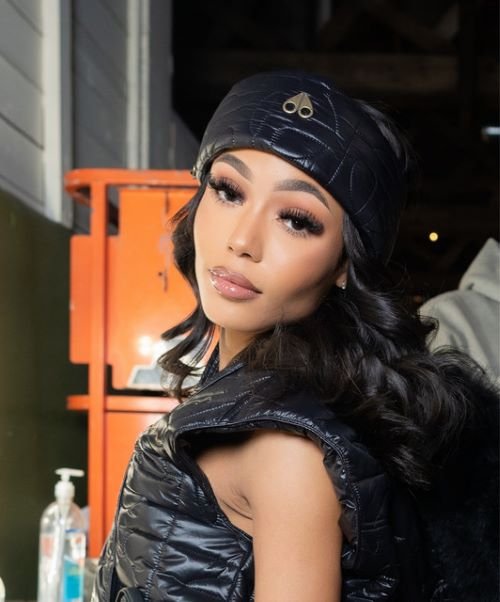
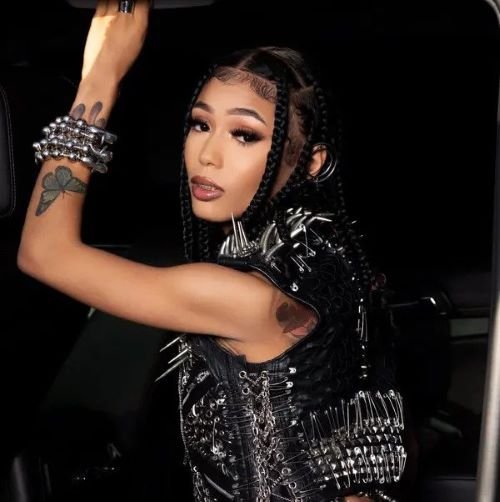
be a huge name and has already taking massive strides, Coi Leray (Coi Leray Collins) began posting music to SoundCloud and released her single Huddy along with her debut mixtape Everythingcoz in 2018. Born in Boston, Massachusetts, and raised in Hackensack, New Jersey, Lerya is the daughter of rapper and media mogul Benzino. I want as many people who do not know about Coi Leroy about her. To do this, there are some interviews and features that are worth bringing in. Her amazing debut album, Trendsetter, was released last year. I think a lot of people were down on the album as it didn’t chart too high. Maybe equating commercial success with worth, it is actually a superb album that did not get the credit it deserved! Perhaps there were too many collaborations. Coi Leroy is a strong artist who is at her best when out front. I think her future music will be her strongest yet. It is clear she is a phenomenal artist with a massive future. I want to start off with something recent from Billboard. Speaking with her last month, it is a shame that articles and press labels her debut as a disappointment or failure. It wasn’t. It just didn’t chart high – which does not mean the material on the album is inferior:

Last year, Coi Leray’s confidence level was low after her first album, Trendsetter, debuted at No. 89 on the Billboard 200. With a rough opening week, a residue of doubt seeped into her career and caused the affable star to hit the pause button. Despite her dismal debut, acts such as 50 Cent and Nicki Minaj lent support and encouraged her to stay positive, because they knew success was near. Fast forward nine months later, and Leray is smiling again, thanks to the success of her blistering Hot 100 hit “Players.”

“I’m 25, and sometimes you don’t know everything,” Leray says inside the Billboard LA offices on a balmy Friday afternoon. “I look at constructive criticism, even in a negative way. I try to figure out how to learn from it — just taking it and bringing it back even better. You don’t know everything. I learned the power of listening is key.” Leray’s bounce-back is a testament to her assiduous work ethic. Upon completing her Billboard interview earlier this January, she zipped to France for Paris Fashion Week, where she glowed in her see-through ensemble at the Yves Saint Laurent fashion show. Then, she hit the studio to work on new music with Pharrell.

Leray’s resurgence comes via her Grandmaster Flash-sampling single “Players,” a modern-day spin on the 1982 seminal hit “The Message.” Leray’s sing-songy hook and clever quips (“Applebottom make em’ wanna bite”) are TikTok gold, and blasted the record from social media sensation into Hot 100 territory. “Players” also received a jolt from a few remixes, including DJ Saige’s mashup of Busta Rhymes’ 1997 classic “Put Your Hands Where My Eyes Can See” and DJ Smallz’s Jersey Club remix. Thanks to the bevy of remixes, “Players” sits comfortably at No. 54 on the Hot 100 this week, a new peak for the hit record.

“This lifestyle is so unexpected,” says Coi while petting her dog Brixx, who accompanied her to the interview. “Being in the industry, it’s so unexpected. You never know what you’re going to wake up and do tomorrow. I have paranoia like, “F–k, what’s next?” You gotta think positively. If I had positive paranoia, it would be good.”

You put out Trendsetter last year and it had some hits. Looking back on it, what grade would it get and why?

I would give Trendsetter like an 8.5. I think the project was amazing, honestly, because “Blick Blick” was such a big moment for me. I feel like we put the focus on that song, and I really wish we could’ve catered to other songs — because there were so many other amazing features and songs on the project that I think are amazing.

I’ve been recording music for three years now, and a lot of those songs were scattered within that time with me being ready to drop. Me being so versatile and doing so many things, I don’t want to take the focus off the music — so I always thought it was important for me to drop so, people don’t get lost in the sex appeal or the dancing or the cooking or whatever it is.

Do you still have that competitive fire?

I don’t have competitive fire. I don’t compete with them, because you just can’t. At the end of the day, I do know that it’s a competition. If I ran track, I’m trying to get first place. I don’t give a f–k if we go to the same school or are on the same team in the same jersey. If they said, “Yo race Coi down the street!” You don’t think I’m not about to try to dust her? This is my sister! Girls with the same energy, it’s like, “Oh you fire? I’m fire and I’ll see you at the top.”

The best thing about this industry, there’s room for everybody. That’s why it’s no competition. B–ch, I could be here and you could be here right with me. At the end of the day, even if we at the top of the mountain, I’ma be Coi and you gonna be you, and we could trade places or I could become someone else. I’m gonna determine my greatness, my destiny, and my future. What’s for you is for you, while we’re at the top together. Steel sharpens steel.

Some of my favorite female artists out right now that I truly love — like, GloRilla is my favorite. I like Ice Spice, I like Cardi and I think Nicki [Minaj] is one of the greatest artists of all-time. I like Meg and I think Doja [Cat] is one of the biggest artists and best female artists as well. Flo Milli too. Lola Brooke is fire. I love her cadence, voice, and energy. There’s so many fire women out there to the point where I love it.

I hope everybody continues to get their flowers. When I’m focused, I’m focused on me and when we run into each other, hopefully we collab and make a lot of girls come together and show unity. What’s the thing where Miley Cyrus was singing with Rihanna? You remember when they was all on stage? It was like Beyoncé, Shakira, Rihanna, Fergie, Miley Cyrus. It was one of the best moments in female history. It was just unity. All the fire top b–ches on stage singing at the time same time. I’ve never seen that in the past eight years”.

In October, COMPLEX featured the sensational Coi Leray. Maybe, after some low album sales for her debut, many might have written her off. It is clear from Trendsetter that she is someone who is going to have a very long and successful career. For anyone who has not heard Trendsetter, do go and spend some time with an incredible artist from a truly original artist.

Coi Leray wants respect put on her name.

During an appearance on Amazon Music’s Bars and Nuggets podcast, Leray addressed the criticism she faced over her debut studio album Trendsetter. Though it delivered multiple viral hits, the star-studded record underperformed on the charts, as it entered the Billboard 200 at the No. 89 slot with 11,500 album equivalent units earned in its first week.

Despite the low figures, the 25-year-old is confident Trendsetter is still the “best album of 2022.”

“They try to shit on my album. My album’s about to be gold. Let it be gold and you got to let them know,” she told host Bimma, the Storytella at the 50:50 mark above. “You got to champion you. They said the first week it sold 11,000 sales. It’s so crazy, because out of all the albums that drop, nobody like, goes viral like that, like…but of course, Coi Leray is perfect [for] headlines. It’s like, cool. I keep their lights on, they keep my lights on. I don’t mind the blogs doing whatever they gotta do, right? But y’all gonna respect me. Y’all gonna appreciate me.”

Leray argued that an album’s success isn’t strictly based on pure sales, as platforms like TikTok and YouTube can turn records into major hits. She also highlighted everything she’s achieved over the past two years, most notably securing big-name features—like Nicki Minaj, Lil Durk, G Herbo, and Fivio Foreign—for her first full-length. “I have some of the most hottest artists in the world on that project that I got organically, myself, just being myself,” she said at the 51:30 mark. “Shout out to everybody that is on my project. All those features is, each and every single last one of them, people believed in me and they see my talent for what it is.”

She went on to point out that she had hit Billboard charts before Trendsetter’s release, and has since earned multiple platinum certifications and award nominations. “Obviously, the music was good,” she said before addressing her haters. “They try to knock you down and really try to poke you and poke you and poke you. And it’s better when you poke at them.”

Leray said her main focus is being there for her family, rather than paying attention to her critics. “You think I care about what people like? I can fucking take care of my family,” she explained. “I’m the big dog now. I fuckin’ wear the pants. I take care of family. And that’s what God put me here to do. I’m going to continue to do that.”

Coi also touched on her rocky relationship with her father, Benzino, whom she’s called out several times over social media. Though she declined to get into details about the “internet shit,” she admitted there are many things she appreciates about her dad, specifically his approach to music-making.

“At one point my dad was doing music and I’ll be like, ‘Damn, like, he’s always at the studio,’ and I was like, ‘Yo, you doing this music, like, are you are you OK with the fact that it’s not on the radio?’ He said, ‘Yo, I do this for me. I don’t do this for them or them. I get in the studio and I make my music because this is what I want to do.’”

Elsewhere in the interview, Leray opened up about being body-shamed and how she has since learned to love herself more. She recalled reading comments criticizing her physique and the toll it took on her confidence.

“The skinny stuff did bother me just a little bit, just a little bit, because I’m such a good person, and I really look in the mirror and don’t think there’s nothing wrong with me. I don’t know why. I just don’t fuckin’ think so,” she said at 30:00. “I just look in the mirror, be like, ‘Damn, girl.’ I feel like everybody should do that. Like, you got it. And of course, I’m a girl, of course I want a bigger butt. But I also like the big butt I got now. It’s a little cute big butt. I shake that shit…I go crazy”.

I would urge everyone to check out the music of Coi Leray. I reckon that this year will be a pretty busy and active one for her. After a debut which, although it sold low, promised a lot, I think will see her step on and release a fairly quick follow-up. It is clear there is a lot of passion and determination in her heart. Leray is someone everyone should keep an eye out for. V Magazine featured her and underground rap legend and D.J. Angie Martinez in October. They spoke with one another about their early inspirations, come up in the genre, and hopes for the future of Hip-Hop:

A rising force in the rap game, Leray connects with underground rap legend and DJ Angie Martinez as the pair speak on their early inspirations, come up in the genre, and hopes for the future of Hip Hop

CL: I’ve always just been a hustler and was inspired to just make music. I mean, in my lyrics I always write through experience and all my music is [inspired by] experience and just my life. And I'm able to really use [music] as not only a journal, but a place to really escape and give my fans something that they can also listen to and relate to as well and help them get through what they're going through. Do you feel like New York influenced your sound coming up?

AM: Oh, definitely. Absolutely, you create what you know. And I was really influenced by New York rap artists, especially of the '80s and early '90s. By the time I had started playing around as an artist and in the studio working on my first album, all of those influences started to come up—I was inspired by all of what was happening in New York and also just what was happening in the city. We made a song called "Live at Jimmy's." Jimmy's was the popping spot back then. Even the artists that I featured on the album and the sound of the beats and all of that is definitely influenced by this city.

CL: I read somewhere that you kind of came up with Lil' Kim and were both nominated for a Grammy together?

AM: Yes, we were nominated for a Grammy for "Ladies Night," which is so crazy to me because literally that might have been the second or third song I'd ever been on. My first one was with KRS-One and Redman. Imagine your first song ever is with KRS-One and Redman—mine was! And then later they had been doing this "Ladies Night" song, Un Rivera was putting it together. And he called and asked if I would do it because they had just heard me rap on this other song—I think this was maybe just the second song I was ever on. So yeah, they called and I got to be on set with Lil' Kim, Da Brat, Missy Elliot, and Left Eye and just have this wonderful experience that would stay with me for a lifetime, man. I mean, it wasn't just the girls on the song—the girls that showed up for the video, Mary J. Blige, TLC—it just was such a dope representation of all the women in the industry, and we had a great time together.

She’s amazing, she of course is an icon. I have so much respect for her. I literally can remember the first time Biggie told me on the radio that he had this girl and she could rap, she rapped like a dude, but she was sexy—he was describing her in such a way like nothing we'd ever seen before. And when Lil' Kim finally did come out, obviously, she didn't disappoint. She superseded anything, but Big always had that vision for her. I really remember him being on the radio and describing what type of artist she was and telling New York that they should be excited about her, and it's just crazy to see how she over-delivered. Now I’m curious, you’ve been so successful recently, have you had to face any obstacles? Especially as a female in this industry?

CL: Entering the industry, as a young Black female artist, I really didn't worry about too much. I guess that was because I didn't know so much and I really wasn't so deeply in it in the beginning. I really didn't overthink anything, I didn't think about anything. I just knew that I wanted to be a good person, I knew I wanted the world to see me. I knew I had to apply pressure, I knew there's so much competition out there, so no matter what, you just gotta keep going. I kept that [spirit] and stuck that with me. And I kept my team with me, I’ve had the same people since day one and it ended up turning out really, really good.

AM: I definitely agree with you, I didn’t really think about it coming up. When I was getting into the business, nah, there were definitely not a lot of women. But I just never thought about it. When I was starting Hip Hop, radio was starting at the same time, so I was in this new genre of radio. When I was starting, commercial Hip Hop radio was really just beginning, so I was just happy to be part of launching that. And in New York, I just loved what I was doing so much. I did it with blinders on and I was probably naive to maybe if I was being treated differently because I was a woman or if there were things that were going on around me. I worked so hard, I just had blinders on. I didn't pay attention to the noise. But, you know, I had to develop ways to just be around guys all the time.

AM: So what would you say your goal is with the music you create? How do you want your listeners to feel?

CL: I feel like the goal that I have when I make my music is just for the shit to be fire and obviously get off what I need to say. I’ve actually been in the studio non-stop for the past 60 days straight, working on amazing music back to back to back to back, coming up with so many amazing things. And sometimes as an artist, my goal here—I'm trying to be here forever and it's a lot of strategy and trusting, it's a process to that super stardom longevity and I feel like I'm just slowly taking my time. I'm in the right place and I just can't wait till people hear this new music because it's amazing. And when I make my music, it's for me, but it's also for everybody. I don't get in the studio and be like, “Yo, I'm about to make a song, how can I make people like me tomorrow?" Like no, I get in there and I just be myself always, 10 toes, and just create and whatever goes from there leaves the room. Whether it's a hit, whether it's a single, doesn't matter what it is, I'm proud of it”.

One of the big names people need to keep abreast of, the phenomenal Coi Leray is primed for major stardom. Even if some discount her stunning debut album, she will build up stronger. Already inspiring so many other people, this year is set to be a big one. If you are not aware of her music and wonder, then go and check her out…

RIGHT now.

_________

Follow Coi Leray

FEATURE: Second Spin: De La Soul – 3 Feet High and Rising

FEATURE:


Second Spin


De La Soul – 3 Feet High and Rising

_________


THIS is me jumping the gun a bit…

 IN THIS PHOTO: De La Soul, circa 1990/PHOTO CREDIT: Michael Ochs Archives/Getty Images

as De La Soul’s debut album, 3 Feet High and Rising, will be available on streaming services from next month. I am unable to include it in full at the moment. There are a few reasons why I am including this 1989 classic in Second Spin. I normally reserve this feature for albums that are under-appreciated or were ignored the first time around. Instead, this is an album that has always been a gem, but it should be listened to by those who have not heard it. Also, sadly, one of Del La Soul’s founding members, David Jude Jolicoeur (a.k.a. Trugoy the Dove), died last weekend. It was gut-wrenching and unexpected news. Aged fifty-four, it was a Hip-Hop legend leaving us too soon. A final reason to investigate 3 Feet High and Rising is that the album is being re-issued on physical formats on its thirty-fourth anniversary. I will come to some features/reviews for an album that defines the Daisy Age of Hip-Hop. In 1989, at a time when a lot of Hip-Hop was more political and angered, De La Soul beckoned in something different. Hugely innovative and intelligent, there was more emphasis on togetherness, humour and peace. Whilst some fans and artists found this against what Hip-Hop was about, the influence and importance of De La Soul’s masterpiece debut has been recognised. Starting an alternative Hip-Hop movement which would expand in the 1990s, even though the Daisy Age did not last too long – De La Soul’s second album, 1991’s De La Soul Is Dead was emphatically the death of that (as you can see from the album cover!) -, the sampling, spirit and brilliance of 3 Feet High and Rising impacted so many others and was very important.

For anyone who is a fan of De La Soul and this majestic album, here is where you can pre-order an album that should be part of everybody’s record collection. I cannot overstate how important and brilliant 3 Feet High and Rising is. For anyone a little unsure, it will only take a few seconds before it captures you completely:

3 Feet High and Rising is the debut studio album by American hip hop trio De La Soul. It was released on March 3, 1989, by Tommy Boy. It marked the first of three full-length collaborations with producer Prince Paul, which would become the critical and commercial peak of both parties. Critically, as well as commercially, the album was a success. It contains the singles, Me Myself and I, The Magic Number, Buddy, and Eye Know. The album title came from the Johnny Cash song Five Feet High and Rising.

It is listed on Rolling Stone’s 200 Essential Rock Records and The Source’s 100 Best Rap Albums (both of which are unordered). When Village Voice held its annual Pazz & Jop Critics Poll for 1989, 3 Feet High and Rising was ranked at #1, outdistancing its nearest opponent (Neil Young's Freedom) by 21 votes and 260 points. It was also listed on the Rolling Stone’s The 500 Greatest Albums of All Time. Released amid the 1989 boom in gangsta rap, which gravitated towards hardcore, confrontational, violent lyrics, De La Soul's uniquely positive style made them an oddity beginning with the first single, Me, Myself and I. Their positivity meant many observers labeled them a “hippie” group, based on their declaration of the “D.A.I.S.Y. Age” (da inner sound, y'all). Sampling artists as diverse as Hall & Oates, Steely Dan and The Turtles, 3 Feet High and Rising is often viewed as the stylistic beginning of 1990s alternative hip hop (and especially jazz rap)”.

There is a lot to cover when it comes to 3 Feet High and Rising. Because of contract situations and issues with clearing samples, it has been unavailable on streaming services. It has also been hard to get a copy on vinyl for a reasonable price. Such a relief and liberation that this pioneering album is now coming out on a range of physical formats and streaming. It makes it accessible to a new generation and wider audience. I remember when the album came out first time. I was a small child, but I was instantly struck by tracks such as The Magic Number and Eye Know. The Quietus told the story of 3 Feet High and Rising in 2019 for its thirtieth anniversary. They spoke with people connected to the album, including its producer, Prince Paul, and group member Posdnuos. I have selected some sections that caught my eye:

De La Soul's early moves were fortuitous. Alongside a friend they knew through school - the Stetsasonic member and DJ, Prince Paul - the trio (Posdnous, Maseo and Trugoy the Dove, who later changed his performing moniker to Dave) almost fell in to a way of making music that was an extension of their friendship and lifestyle. That they were immediately embraced and celebrated by their peers was not despite their different sound and style, but because that out-of-nowhere individuality fitted perfectly into hip hop's Golden Era, when the key ingredient that every artist had to have was a singular vision and an unassailable belief in the unlimited possibilities the music could afford them.

Chuck D (Public Enemy): "Among the great innovators of the classic era, somebody who just decides to say, 'You know man, fuck it. If they're there, then we're gonna totally be on this other side', was De La Soul and Prince Paul. And Prince Paul also comes from the understanding of the most under-rated group of the classic era, and possibly of all time - Stetsasonic. The first hip hop band: the band that made The Roots understand the way they could go in the 90s. In Stet you had minds like Deelite and Daddy-O, and also Prince Paul, whose ideas manifested into De La Soul, these young innovators from Long Island. And when you see a record like that, you go 'What the fuck? These guys is crazier than we are!' That was the beauty of that era: everybody had to carve out their own private Idaho."

Posdnous: "We were the same kids who had every Kool G Rap album, every Rakim song, all the early Juice Crew stuff. We loved Run DMC, knew every lyric to [Boogie Down Productions' debut] Criminal Minded. We were just fans of the music. Whatever was out at that time, that's what we were on, hardcore or not. But regardless of what we were into, we always were all about what we were gonna do when we ever got the chance to get out there. It wasn't like we thought to ourselves, 'We're gonna try our best and make sure we come out as different as possible from what's out,' it's just that it was the natural way how we were. We had the funk and soul from Mase's side, the calypso and soul from Dave's side, and my father's jazz and blues and soul and gospel side, and we just put that all together with our own influences."

The making of 3 Feet High And Rising starred half of the rappers in New York and the occasional random bloke turning up in the studio for no readily apparent reason. As a natural outgrowth of the fraternal and collaborative vibe of the sessions, the Native Tongues collective formed around De La, their friends and like-minded artists the Jungle Brothers the other anchoring point of the unit. Quietly, almost accidentally - certainly without any deliberate attempt at it - this extended family changed the way rap records were made, and altered the industry around them forever.

(Prince) Paul: "That was a very quick record. We did that in two, two-and-a-half months, and the reason it even took that long is 'cos I was still with Stet and I had to go on tour in between us recording, so there was some time taken off until I came back so I could finish the album. And that was a pretty low budget. I think we got about $25,000 in total. Everything came out of that: the recording, and we all got paid out of that."

Pos: "Myself and Dave were in our first year of college, and Mase was still in high school. We were just blown away by everything. We were living out our dreams. A lot of the songs was all stuff that was out of our parents' collections, we would put it together, and Paul would add the spice to it, the recipes that make it right. He would help arrange it with us. It was such a great time."

Paul: "I think the main vibe this time was, 'Yo, wow! I'm in control! And people listen to me! And not only do people listen to me, they respect me!' Which, you know, made me... I wouldn't say 'cocky,' but it was so nice to have people say, 'Yo Paul, what do you think?' Or, 'Whatever Paul says.' And that was amazing. The environment was fun, because Calliope was like a penthouse studio. Acoustically it was horrible but it had so much space. It was so comfortable."

Guru (Gang Starr): "In [Calliope], the main things that were there were a turntable, with a mixer, for sampling and also for scratching. Premier used to bring his [SP] 12 with him, and the disks. We used to do 8-hour lockouts whenever we could get 'em, 'cos that was a busy studio at that time."

Paul: "We'd just all be sitting around listening to stuff. They had a turntable set up and a mixer, and we all had stacks of records. 'OK, play the beat on the main speakers, play it loud... Alright!' And then we'd have something playing, thinking about whatever was on the record... 'Yeah! That'll work, but can we pitch-shift it so it'll fit in key? Yeah, that's good. Oh, yeah! That's hot!' It was just... whatever popped into mind. And I think it almost made me a madman because I had so much control - I wasn't used to that. Every little idea, every little fantasy of wanting to do stuff, I was able to do. And they [De La] were great. Those guys are very artistic, and I learned a lot from them during that time. So it was a good trade-off”.

I want to come to an interesting retrospective feature from Albumism. They wrote about 3 Feet High and Rising in 2019. Thirty years after its release, it was still compelling people to write and explain why it means so much. That will be the case next year when it turns thirty-five. As the album is being reissued and is having this roll-out, I wanted to reference this phenomenal work from Posdnuos, Trugoy, and Maseo:

It’s hard to oversell how 3 Feet High and Rising was borderline alien compared to anything that had been released before it. There had been other crews that were left of center, like Ultramagnetic MCs and the Jungle Brothers, (more on them in a sec), but De La Soul were positively indecipherable. Pos, Dove, and Mase, along with producer “Prince” Paul Huston came together to craft the definitive oddball hip-hop album that created the lane for others who wanted to “try something different.” And while making the album, Prince Paul encouraged De La to experiment as much possible, try new things, and not be afraid to make mistakes. It’s this wide-eyed and liberated attitude that give 3 Feet High and Rising a lot of its charm.

It made sense that they came together with the aforementioned Jungle Brothers and the fledgling group A Tribe Called Quest to form the groundbreaking Native Tongues clique. The crew became synonymous with outside-of-the-box thinking in regards to hip-hop music, and 3 Feet High and Rising is the foundation for their movement.

When I first heard 3 Feet High and Rising, I didn’t quite get “it.” I was 13, and the album was a bit too odd for me at the time. The group used obscure slang and their lyrics and skits seemed to be filled with in-jokes that were inscrutable except to those in their immediate crew.  A classmate had to explain to me that “Potholes In My Lawn” was about people stealing their rhymes; I would have had no idea otherwise. Still, I’d dug the singles, especially the “Buddy” remix, which I’d gotten to know through its low-budget but madcap video. What a difference a couple of years made, as I revisited 3 Feet High right around the time that its successor De La Soul Is Dead (1991) surfaced, now more open to its idiosyncrasies and bizarre moments.

Much of the attention of 3 Feet High centers on its production, handled by Prince Paul. Specifically, it centers on the sample sources for the album. A lot of hip-hop artists mainly subsisted on samples from James Brown and Ultimate Beats and Breaks Records. De La Soul and Prince Paul were one of the first groups to utilize records from eclectic sources as the bricks and the mortar for their tracks. They sampled songs from relatively obscure artists like the Mad Lads and Cymande, and untouched musical ground like Steely Dan and Liberace. The album’s title is taken from a line in an early Johnny Cash song. The type of creativity that De La used on this album is functionally infeasible for a major label hip-hop release in 2019, due to the massive costs associated with the sample clearances. It’s one of the biggest reasons why Tommy Boy Records only recently worked out a deal to get the album onto streaming services.

As mentioned earlier, the album’s subject matter can be hard to decipher, but the group spends the album positioning themselves as rejecting the traditional definition of what it means to be a rapper. “Me Myself and I” remains the group’s anthem in that sense, expressing the importance of substance above traditional style, and how if the music dope, their dress doesn’t really matter. The point was hammered home in the video for the song, which was about rejecting the ultra-machismo driven image of what many associated with being a rapper. The group came to dislike the track, and for years prefaced live performances of it with chants of “We hate this song. We hate this song. We hate this song, but you love this song.”

3 Feet High still holds up as a towering artistic achievement for the group and hip-hop in general. It’s an extremely influential album, and it’s hard to imagine the evolution of abstract or even underground hip-hop without its existence. As mentioned above, De La came out of their experience with the album far less easy going and much more disillusioned. As a result, they followed it up with De La Soul is Dead, their explicit rejection of their “D.A.I.S.Y.”-centered image.

Even though De La Soul have been determined to prevent 3 Feet High and Rising from narrowly defining them as artists, the album is an essential component of their legacy, and the album that connected the most with their fans and other artists. Thirty years later, De La remain one of the best beloved groups in hip-hop music, with an unflinchingly loyal fanbase that follows them across the globe and supports their music whenever they choose to release an album. If this is the fruit that this album bore, then perhaps daisies really aren’t so bad”.

Before ending with a couple of reviews, Billboard marked twenty-five years of a classic in 2014. They did a track-by-track review of 3 Feet High and Rising. I have selected reviews of my favourite songs from the album:

The Magic Number”

Sets forth the De La Soul agenda and affirms the group as a trio. “Fly rhymes are stored on a D.A.I.S.Y. production/ It stands for ‘Da Inner Sound Y’all’ and y’all can bet/ That the action’s not a trick, but showing the function,” Pos spits, spelling out the acronym, D.A.I.S.Y. Perhaps because of daisies and their symbolic affiliation with sixties counterculture, De La would go on to be labeled as the first hip-hop hippies. Rappers with open minds. A novel concept.

“Ghetto Thang”

One of the rare moments on the album that deals with issues of poverty, “Ghetto Thang” explores the seedier side of hood life. “Infested are the halls, also the brains/ Daddy’s broken down from ghetto pains/ Mommy’s flying high, the truth is shown/ The kids are all alone,” Trugoy spits. In a sense, it’s De La’s attempt at explaining something they can’t ignore. They may look outside their surroundings for inspiration, but that doesn’t mean they aren’t aware of what’s going on.

“Eye Know”

The opening guitar riff from the Mad Lads’ “Make This Young Lady Mine” provides the cheerful backing track for Pos and Trugoy to kick something in the ear of the ladies they’re mackin’ on. Again, more references to the D.A.I.S.Y. age. And who wouldn’t want to get with these easy-going casanovas?

“Potholes In My Lawn”

A song ostensibly about other rappers stealing De La’s rhymes, “Potholes In My Lawn” was the group’s second single and only a minor hit, reaching No. 22 on Billboard’s Hot Rap Singles chart. Reverence for the cut has certainly grown since then. In 2004, via NASA rover, it became the first rap song to be played on Mars. Maybe it wasn’t a big hit here, but on other planets, hey…

“Buddy”

The original version featured the Jungle Brothers and Q-Tip, and while it’s a solid record, the remix, which sees De La recruiting Queen Latifah and Monie Love, is a certified hip-hop classic. Although the remix isn’t on “3 Feet High and Rising,” it’s difficult not to acknowledge its legacy as one of the greatest posse cuts of all time. It’s popularity, reaching No. 2 on the Rap Singles chart, effectively announced the Native Tongues as a formidable rap crew.

“Me, Myself and I”

The song that put De La Soul on the map, reaching No. 1 on the Hot Rap Singles chart and the Hot R&B/Hip-Hop Songs chart. “Me, Myself And I” is built on a sample of “(Not Just) Knee Deep” by Funkadelic, and finds the group firing back at critics in the scene, who had issues with their hippie swag. “Now you tease my Plug One style, and my Plug One spectacles/ You say Plug One and Two are hippies, no we’re not, thats pure plug bull,” Pos rhymes. The tune has been a rallying cry for people who just want to do their own thing and not be judged ever since”.

Of course, there have been impassioned reviews of 3 Feet High and Rising through the years. There are a couple that I want to refer to. AllMusic provided some interesting details and notes in their five-star assessment of the mighty 3 Feet High and Rising. An album that not only is one of the best of 1989 – it is one of the greatest albums in music history:

The most inventive, assured, and playful debut in hip-hop history, 3 Feet High and Rising not only proved that rappers didn't have to talk about the streets to succeed, but also expanded the palette of sampling material with a kaleidoscope of sounds and references culled from pop, soul, disco, and even country music. Weaving clever wordplay and deft rhymes across two dozen tracks loosely organized around a game-show theme, De La Soul broke down boundaries all over the LP, moving easily from the groovy my-philosophy intro "The Magic Number" to an intelligent, caring inner-city vignette named "Ghetto Thang" to the freewheeling end-of-innocence tale "Jenifa Taught Me (Derwin's Revenge)." Rappers Posdnuos and Trugoy the Dove talked about anything they wanted (up to and including body odor), playing fast and loose on the mic like Biz Markie. Thinly disguised under a layer of humor, their lyrical themes ranged from true love ("Eye Know") to the destructive power of drugs ("Say No Go") to Daisy Age philosophy ("Tread Water") to sex ("Buddy"). Prince Paul (from Stetsasonic) and DJ Pasemaster Mase led the way on the production end, with dozens of samples from all sorts of left-field artists -- including Johnny Cash, the Mad Lads, Steely Dan, Public Enemy, Hall & Oates, and the Turtles. The pair didn't just use those samples as hooks or drumbreaks -- like most hip-hop producers had in the past -- but as split-second fills and in-jokes that made some tracks sound more like DJ records. Even "Potholes on My Lawn," which samples a mouth harp and yodeling (for the chorus, no less), became a big R&B hit. If it was easy to believe the revolution was here from listening to the rapping and production on Public Enemy's It Takes a Nation of Millions to Hold Us Back, with De La Soul the Daisy Age seemed to promise a new era of positivity in hip-hop”.

I will end with part of Pitchfork’s extensive review. One of the main talking points about 3 Feet High and Rising is the use of samples. A facet that got the album into trouble and meant that it was denied to so many for many years, it is also one of the defining aspects. Fusing together left-field and eclectic artists into these brilliant songs, it should reignite the question as to whether sampling laws and copyright issues are too stringent. It is potentially denying us of something very special. Artists will have the ability to introduce people to music they might not have otherwise have heard:

De La Soul were making a point about the power of culture to mobilize people to action or immobilize them with fear. It was an idea they explored more explicitly on their fable, “Tread Water.” There were animals, squeaky organs, friendly humming—at the time, journalist Harry Allen called it the most African song he’d heard in hip-hop—but “Tread Water” also offered perhaps the most ambitious hope on the record, that De La’s music might help us all elevate our heads above the water. In this polar-cap-melting, politically disastrous age, the song feels prophetic.

Today’s debate over sampling is mostly mind-numbingly narrow, shaped largely by big-money concerns that are ahistorical, anti-cultural, and anti-creative. The current regime rewards the least creative class—lawyers and capitalists—while destroying cultural practices of passing on. Post-hip-hop intellectual property law rests on racialized ideas of originality, and preserves the vampire profits of publishing outfits like Bridgeport Music, that sue sampling producers while preventing artists like George Clinton from sharing their music with next-generation musicians, and large corporations like Warner Brothers that continue to disenfranchise Black genius.

By contrast, the processes of sampling and layering on 3 Feet High and Rising and other hip-hop classics of that era demonstrate the opposite: expansively, giddily democratic—Delacratic, even—values.

Pos’s production on “Eye Know” put Steely Dan into conversation with Otis Redding and the Mad Lads, his work on “Say No Go” Hall and Oates with the Detroit Emeralds. The musical chorus of “Potholes in My Lawn” pointed not only to Parliament’s 1970 debut Osmium, but to the African American roots of country and western music.

Together, the sampled sounds of the Jarmels, the Blackbyrds, the New Birth, and even white artists like Led Zeppelin, Bob Dorough, and Billy Joel, make a strong case that all of American pop is African-American pop, from which everyone has been borrowing. Sampling—De La Soul sampling Parliament, Obama sampling Lincoln, Melania sampling Michelle—is nothing less than the American pastime, the creative reuse of history amid the tension between erasure and emergence that is central to the struggle for the republic. No one can ever do it as big as De La Soul did”.

Available to stream and buy from 3rd March, that is also the date De La Soul’s entire catalogue is coming out. It means that you can witness and buy their phenomenal debut album, but you can also hear how the group evolved and changed. Even if they denying their Daisy Age roots and wanted to distance themselves from being seen as hippies or a bit soft, they should be very proud of what they released in 1989. It is so sad that Trugoy the Dove will not be with us to see the reaction to the reissue of 3 Feet High and Rising. He was instrumental in getting it made and ensuring that it is a wonderful album that influenced so many others. As a tribute to the great man, I wanted to show my love for De La Soul’s…

TIMELESS and genius debut album.

FEATURE: We Have to Let It Linger: The Cranberries’ Everybody Else Is Doing It, So Why Can't We? at Thirty

FEATURE:


We Have to Let It Linger


The Cranberries’ Everybody Else Is Doing It, So Why Can't We? at Thirty

_________

ON 1st March, 1993…

the Irish group, The Cranberries, released their stunning debut album, Everybody Else Is Doing It, So Why Can't We? One of the best debuts of the 1990s, it was written entirely by the band's lead singer Dolores O'Riordan and guitarist Noel Hogan. The much-missed O’Riordan is the band and album’s strongest point I think. Her voice makes every song sound so essential and moving. Upon its release, Everybody Else Is Doing It, So Why Can't We? reached one in the U.K. and Ireland. Amazingly, The album spent a total of eighty-six weeks on the U.K. chart! A twenty-fifth anniversary edition of the album came out in 2018. Even though we lost O’Riordan in January 2018, her incredible talent and influence still resounds and resonates. The Cranberries’ debut album is her at her absolute best. Co-writing the songs with guitarist Noel Hogan, Everybody Else Is Doing It, So Why Can't We?, what a talent O’Riordan was! I want to get to a few reviews for the simply divine and timeless debut from The Cranberries. In Pitchfork’s review from 2021, they give us some introduction as to how Dolores O'Riordan joined the band. It is so compelling that it makes me wonder whether we should get a biopic about The Cranberries so that we can see this story come to life!

O’Riordan grew up about 10 miles outside Limerick in the rural townland of Ballybricken. The youngest of seven children, and one of two girls, O’Riordan learned early on that her voice would set herself apart: She was the precocious student that was asked to sing in Gaelic in front of the class, the tiny niece uncles brought around local pubs to entertain sloshed patrons. On her first day of secondary school, O’Riordan declared that she was going to be a rockstar before launching into a Patsy Cline song. She would go on to sing with a school choir that would frequently sweep the boards at Slogadh, an Irish youth arts festival. A devout Catholic, O’Riordan would later credit the church where she played the organ as the place that helped her envision music as a potential career. In 1992, she contextualized her band’s success as a kind of religious karma: “I could be just superstitious, but I think what’s happening now is a kind of a reward.”

After the audition, as O’Riordan headed out the door, the band handed her a tape with a loose sketch of a song—maybe she could think of some lyrics? The track consisted of four simple chords but, as O’Riordan remarked a few years later, “I took them home and I just wrote about me.” One week later she returned with a song that would change the foursome’s lives. Inspired by O’Riordan’s first kiss and the swift sting of rejection, “Linger” condenses every stage of heartache into four-and-a-half minutes of pop perfection with a few humble tools: an acoustic guitar riff, O’Riordan’s wistful humming, Lawler’s rolling drumbeat, and swooning orchestrals that aim for visions of grandeur far beyond the cheap synthesizer that produced them. The problem, as O’Riordan tells it, is that she gave her heart to someone, they stomped on it, and now she’s left holding the pieces. “But I’m in so deep/You know I’m such a fool for you/You got me wrapped around your finger,” she sings, her Irish brogue warming the edges of every syllable. All she wants is a little compassion moving forward: “Do you have to let it linger?”

As if galvanized by their new member, the band quickly began writing and performing with a newfound intensity. As O’Riordan later recounted, she initially assumed that people would find the cards-on-the-table emotion of songs like “Linger” too “girlie girlie.” “The music was so emotional I found that I could only write about personal things….I was sure that it would be considered soppy teenage crap, especially in Limerick, because most bands are really young (men), and their lyrics are humorous or mad. They don’t go pouring their hearts out,” she said. But the appreciation of O’Riordan’s vulnerability proved a point: everybody’s got a heart that breaks.

Once relegated to brief mentions in the local newspaper, by the summer of 1991, the band—now blessedly called the Cranberries—were British indie media darlings, especially after they signed a reported six-figure deal with Island. The press was especially charmed with O’Riordan, who was initially as unguarded in interviews as she was in song. Despite her shy nature and tendency to sometimes perform with her back to the audience, O’Riordan became the band’s mouthpiece, offering soundbites about her unfamiliarity with basic music equipment and passionate endorsement of the Catholic church.

That fall, Melody Maker visited the O’Riordan home in the Ballybricken and spotlighted the family’s soon-to-be-slaughtered Christmas turkeys, a kitschy Jesus clock, and supposed “gallons and gallons of Lourdes holy water.” “The Cranberries in general, and Dolores in particular, bring new meaning to words like innocence and naivete,” an Irish magazine quipped. (“Just because every second word isn’t ‘fuck’ and every song isn’t about sexual intercourse, people think it’s innocent,” O’Riordan retorted in 1992.) O’Riordan’s songwriting was vulnerable and her origins were certainly humble. But more often than not, these details played into sexist attitudes that align emotional awareness with fragility rather than a certain strength.

In March of 1993, after extensive soul-searching and some behind-the-scenes managerial drama, the Cranberries released their debut, Everybody Else Is Doing It, So Why Can’t We? If the band’s initial ascent to fame had exploited O’Riordan’s sensitivity as an oddity, Everybody Else bears no evidence that her heart was hardened as a result. “Linger” reappears and ascends to “Be My Baby”-levels of yearning thanks to the grandiose handiwork of producer Stephen Street, who had worked with the band’s beloved Smiths on albums like Meat Is Murder and The Queen Is Dead. “Dreams,” which articulates how falling in love is thrilling and terrifying all at once, achieves similar heights. From the first words out of O’Riordan’s mouth—“Oh my life/Is changing every day/In every possible way”—“Dreams” embraces the uncertain adventure ahead. With every new line, the band seems to breathe in fresh new air, constantly revitalizing themselves in real-time; at one point, O’Riordan lets out a defiant yodel, a vocal tradition that she was taught by her father.

Everybody Else is an album about relationships and the ways that a pair of people can love and hurt each other with equal intensity. Unfortunately, O’Riordan is consistently the one whose heart is getting broken. (“I was always one for the tears,” she once said.) Across 12 songs, the wind that once swept O’Riordan up into a gust of romantic euphoria has disappeared, leaving her desperate to understand where she—or her lover—faltered and everything fell apart. “Sunday” examines the dissolution from both sides, beginning with the other person’s unhurried romantic indecision, which is conveyed atop a gentle string arrangement. As if to express how destabilizing this waffling makes her feel, when it’s O’Riordan’s turn to vocalize her own perspective, the song shifts into a tighter, more upbeat melody. “You’re spinning me around/My feet are off the ground/I don’t know where I stand/Do you have to hold my hand?,” she tells her aloof lover. “You mystify me.”

While only “Dreams,” “Linger,” and “Sunday” channel swirling bliss, every song on Everybody Else blazes a path towards catharsis. Sometimes the exact conflict O’Riordan is trying to process can be difficult to pinpoint—“Still can’t recognize the way I feel,” she sings at one point—but this is an album that sinks into the idea that simply feeling can be enough. When O’Riordan is conflicted about a breakup, as on opener “I Still Do,” the band kicks up a grungy squall around her. Meanwhile, the seething betrayal of “How” boils over into a flood of rage, urged on by a blistering guitar riff, which Noel Hogan delivers as if he were trying to outrun the fire set by O’Riordan’s anguish. The Cranberries sound ridiculously tight as a unit, but their most expressive asset is always O’Riordan’s voice. In the band’s early days, she was often compared to Sinéad O’Connor; a feeble observation rooted in the fact that they were both Irish. But on the Cranberries’ heavier songs, O’Riordan moved into a class of her own: Every syllable becomes a tussle in miniature, either ripped from her mouth in protest, spat out in disgust, or bursting forth in delicious victory. On “Not Sorry,” you can hear her lips curl around each word: “Cause you lied, lied/And I cried/Yes, I cried, yes I cry, I cry, I try again,” she bellows, channeling the Gregorian chants that captivated her as a child”.

I can’t find too many features about how the album was made. There is this interview from 1993 that is worth checking out. I would advise people buy Everybody Else Is Doing It So Why Can't We? on vinyl if they can. It is a breattaking album that still sounds as fantastic all these years later. It turns thirty on 1st March. On its twenty-fifth anniversary, Albumism paid tribute to the remarkable work of The Cranberries. An album without any weak moments, Everybody Else Is Doing It So Why Can't We? Is a huge treat:

Comprised of twelve meticulously crafted, compact songs with an average run time of 3:20, Everybody Else Is Doing It is wholly devoid of filler and packs a melodic, melancholic punch very much in the vein of The Smiths’ most beloved fare, albeit without their infamous frontman’s caustic swagger and sneer. And while the soaring, evocative soundscapes constructed by the Hogan brothers and Lawler warrant plenty of praise, it is unequivocally O’Riordan’s versatile vocals and introspective lyrics that command the most rapt attention.

Just 21 years old at the time of the album’s arrival, O’Riordan invites the listener on an autobiographical journey from adolescence to adulthood, the vicissitudes of young love providing the central thematic focus from beginning to end. "I know exactly what every song on that album was about," O'Riordan explained to Rolling Stone in 1995. "And I know exactly what night I wrote it on and why I wrote it. And I'm kind of proud of them because they do elaborate very much how I felt at that time."

Somewhat surprisingly considering the album’s critical and commercial success, first stateside and subsequently in the UK, only two official singles were released. But each of these songs is damn near flawless. Unveiled five months before the album launch, lead single “Dreams” is an uplifting love song that finds O’Riordan reveling in new love, her sweet—yet never saccharine—vocals gliding seamlessly atop the lush, propulsive arrangement.

Even more revelatory is “Linger,” the ode to fading love that catapulted The Cranberries’ profile when MTV latched on to the black and white, Jean-Luc Godard inspired video, with radio stations across the U.S. following suit shortly thereafter. Replete with sweeping, string-laden orchestration coupled with O’Riordan’s yearning, lilting vocals, it’s a perfect specimen of pop ballad grandeur, a timeless tune that remains just as fresh and inspired today as it was twenty-five years ago.

Non-single standouts abound across the expanse of the album, the theme of reconciling love and loss pervasive throughout all of them. The haunting album opener “I Still Do” finds O’Riordan grappling with her conflicted feelings toward her lover. The same disposition resurfaces later on “Sunday” and “Wanted,” each propelled by jangly guitar work reminiscent of The Smiths and The Sundays’ most transcendent moments.

The music and O’Riordan’s lyrics assume a noticeably more sullen tone on the brooding “Pretty,” in which she takes a condescending lover to task, and “I Will Always,” a lovelorn, lullaby-like lament about setting her partner free to explore his independence.

Not all is weighed down by doom and gloom, however, as the percussive “How” unfurls as a seething kiss-off to a wayward lover, while “Not Sorry” serves as an anthem of redemption, with an empowered O’Riordan reclaiming her sense of self in the wake of an abusive relationship. Sonically, “Not Sorry” contains early signs of the band’s penchant for juxtaposing soft, ethereal melodies with more abrasive, thrashing guitar work, the latter of which would become more prominent in their ensuing repertoire, as best evidenced by subsequent singles such as “Zombie” and “Salvation.”

Once dubbed by Rolling Stone as “Ireland’s biggest musical export since U2,” The Cranberries were initially overlooked in the UK, largely overshadowed during the much ballyhooed yet ultimately ephemeral mid ‘90s Britpop movement that saw the likes of Oasis, Blur, Suede and Pulp, most notably, rise to stratospheric heights of stardom. But while the vast majority of Britpop bands—with the exception of the Gallagher brothers’ outfit—stalled in their quest to penetrate the North American market in a meaningful way, the unassuming quartet from Limerick was able to secure a rather fruitful niche in the U.S., and one that endured with their next pair of releases, 1994’s No Need to Argue and 1996’s To the Faithful Departed.

A quarter-century on, Everybody Else Is Doing It, So Why Can’t We? remains an indispensable artifact of the band’s early career, their innocence and ambition on full display, before critical and commercial acclaim deservedly greeted them. And for those of us who continue to grieve for the late Dolores O’Riordan, the dozen songs contained therein offer at least some solace that while she is no longer with us, her inimitable voice, words and spirit are eternal”.

I am going to finish with a review from AllMusic. I wonder if the surviving members of The Cranberries (Noel and Mike Horgan and Fergal Lawler) are planning anything for the thirtieth anniversary of their debut. I hope that there is celebration. Of course, it will be bittersweet, as Dolores O'Riordan will not be with us to mark it. Fans around the world will mark thirty years of The Cranberries’ debut on 1st March:

Title aside, what the Cranberries were doing wasn't that common at the time, at least in mainstream pop terms; grunge and G-funk had done their respective big splashes via Nirvana and Dr. Dre when Everybody came out first in the U.K. and then in America some months later. Lead guitarist Noel Hogan is in many ways the true center of the band at this point, co-writing all but three songs with O'Riordan and showing an amazing economy in his playing, and having longtime Smiths/Morrissey producer Stephen Street behind the boards meant that the right blend of projection and delicacy still held sway. One can tell he likes Johnny Marr and his ability to do the job just right: check out the quick strums and blasts on "Pretty" or the concluding part of the lovely "Waltzing Back." O'Riordan herself offers up a number of romantic ponderings and considerations lyrically (as well as playing perfectly fine acoustic guitar), and her undisputed vocal ability suits the material perfectly. The two best cuts were the deserved smashes: "Dreams," a brisk, charging number combining low-key tension and full-on rock, and the melancholic, string-swept break-up song "Linger." If Everybody is in the end a derivative pleasure -- and O'Riordan's vocal acrobatics would never again be so relatively calm in comparison -- a pleasure it remains nonetheless, the work of a young band creating a fine little synthesis”.

I am such a huge fan of The Cranberries’ Everybody Else Is Doing It, So Why Can't We? In turns potent and powerful before revealing romance, vulnerability and passion, it is an album with so many layers and depths! It is no wonder it is still discussed and cherished today. When it turns thirty on 1st March, I think that this classic album will reach new fans. That is a great tribute to the faultless debut from the…

LIMERICK band.

FEATURE: The Final Note: Kate Bush’s The Kick Inside at Forty-Five

FEATURE:


The Final Note


Kate Bush’s The Kick Inside at Forty-Five

__________

BECAUSE Kate Bush’s…

debut album, The Kick Inside, turns forty-five on 17th February, I haven’t got much more time to discuss it before the anniversary. The final anniversary feature about The Kick Inside concerns its title track. I have written about it several times before, but I am compelled to come back. There are certain tracks on Bush’s 1978 debut album that could not be anywhere else. Moving really does happen to open The Kick Inside, as it begins with whale song, and the lyrics are about a young woman coming out of herself and blossoming in confidence. It is the perfect way to open a debut album. Also, Wuthering Heights ends the first side. Again, it is perfect, as it keeps the listener hooked and provides this mighty half-way point. Another track that could not be anywhere else is The Kick Inside. One of her most remarkable moments, it is typically unconventional! One reason why Bush’s debut album is so respected and loved is because she was challenging and hugely original right from the start. When it came to the common subject of love, she was still breaking away from the predictable and describing lust and desire in such interesting and different ways. The Kick Inside’s title track is one of the most fascinating entries in Bush’s catalogue. It is a song that perfectly ends The Kick Inside.

Inspired by so many different sources, the songs that form The Kick Inside are so varied. Almost a tapestry in terms of the different threads the teenage Bush weaves, the sublime and sad title track is the perfect swansong. I will come to the very final note and embers of the title track and album. That is a major reason why I love the album so much. You listen to it and are affected and moved. The Kate Bush Encyclopedia has combined a couple of interview snippets where Bush discussed The Kick Inside. It is a fascinating background and story:

The song The Kick Inside, the title track, was inspired by a traditional folk song and it was an area that I wanted to explore because it's one that is really untouched and that is one of incest. There are so many songs about love, but they are always on such an obvious level. This song is about a brother and a sister who are in love, and the sister becomes pregnant by her brother. And because it is so taboo and unheard of, she kills herself in order to preserve her brother's name in the family. The actual song is in fact the suicide note. The sister is saying 'I'm doing it for you' and 'Don't worry, I'll come back to you someday.' (Self Portrait, 1978)”.

Few artists of that generation were writing anything like The Kick Inside! In fact, it is less likely artists now would tackle anything such as incest or a song influenced by Lucy Wan. The ballad’s heroine can alternately be called Lizie, so Lizie Wan is a title many might know it by. This murder ballad/Child Ballad 51 (The Child Ballads are 305 traditional ballads from England and Scotland, anthologized by Francis James Child during the second half of the 19th century) did get referenced more directly in the second verse of an early demo where Bush sang “You and me on the bobbing knee/Welling eyes from identifying with Lizie Wan's story”. The lines that appear on the album version are “You and me on the bobbing knee/Didn't we cry at that old mythology he'd read!/I will come home again, but not until/The sun and the moon meet on yon hill”. I think they are among the most vivid and beautiful words Bush has ever written. Always compelled by the more unusual and old-fashioned in many ways, an album that came out in 1978 takes a lot from way further back. Wuthering Heights is a perfect example. Emily Brontë’s only novel came out in 1847. Almost an author or a poet, there is something classical about her songwriting. According to her Bush’s brother Paddy (who appeared on the album), she took sections from Lucy Wan and processed and used in a very unusual way.

 PHOTO CREDIT: Chris Walter/WireImage/Getty Images

The end of the song, as I have said before, is an ellipsis. Rather than a big outro or something tidy, there is a sort of trailing off and echo into the void. “Oh, by the time you read this” seems to sign off a suicide note. Maybe a letter from a sister to her brother to say that by the time he reads this she will be gone. It is utterly heartbreaking - but the way Kate Bush delivers the words keeps it from being scarring or depressing. It is almost this acceptance that this is what had to happen or she is going to be a better place. I don’t know. I have always been fascinated by the title song. An artist that signs off her debut album with a song and line like that is fearless and incredibly daring. You sort of wait and wonder what the first song of her second album would sound like. As it was, Lionheart (also released in 1978) begins with the sumptuous Symphony in Blue. The Kick Inside is forty-five on 17th February, and it is great that people who have never heard it will experience this wonderful album. All of the thirteen songs are magnificent and distinct, but there is something about the stunning title track that stops me in my tracks! One of the best vocal performances on the album, Bush fills the song with so much conviction and emotion. That final line and note. The way she holds the note and lets her voice almost wither and disappear gradually. It is a remarkable moment on one of the most important debut albums ever! The Kick Inside’s title track ended a debut album from a superb and mesmeric talent. In that moment…

A legend was born.

FEATURE: Within You Without You: George Harrison at Eighty: The Essential Playlist

FEATURE:


Within You Without You


George Harrison at Eighty: The Essential Playlist

_________


IT is always sad…

when we mark a big birthday for an artist who is no longer with us. I had to take the opportunity to look ahead to George Harrison’s eightieth birthday. 25th February is when the world marks the eightieth of one of the music world’s greatest ever artists. Harrison died in 2001 at the age of fifty-eight. Hugely influential with The Beatles, as a solo artist, and part of Traveling Wilburys, he will always be remembered. I wanted to celebrate his life and legacy with a playlist. I will come to that shortly. Here, as I am prone to do when it comes to sourcing biographies about incredible artists, is AllMusic to provide some depth and detail about the genius George Harrison:

Nicknamed "the Quiet Beatle" at the height of Beatlemania, George Harrison did indeed seem somewhat reserved compared to the other members of the Fab Four. He favored wry wit to Ringo Starr's clowning, and he never indulged in either John Lennon's penchant for controversy or Paul McCartney's crowd-pleasing antics. He preferred sly provocations to larger-than-life bravado. Harrison's measured, considered persona was reflected in his music, particularly his clean, composed lead guitar parts but also in his earliest songs for the Beatles where he didn't seem to waste a line. With the introduction of psychedelics, spirituality, and Indian music in the mid-'60s, George's horizons expanded considerably and he started to come into his own as a musician, releasing a pair of experimental albums on Apple's Zapple offshoot before settling into a songwriting style that spliced Dylanesque introspection with his natural pop grace, while also developing a unique slide guitar technique that owed nothing to the blues. Later Beatles albums hinted at this flowering of talent; The Beatles and Abbey Road contained some of his strongest work, with the latter including the standard "Something," a song Frank Sinatra called "the greatest love song of the past 50 years."

Still, it wasn't until the 1970 release of All Things Must Pass, the post-Beatles triple album that was effectively his solo debut, that the general audience appreciated the depth of his talents. All Things Must Pass and its smash single "My Sweet Lord" -- a single that topped the charts around the world -- also cemented Harrison's image as a mystic seeker, a reputation underscored by his 1971 superstar charity event The Concert for Bangladesh and 1973's Living in the Material World, back-to-back hits that established him as a superstar outside of the Beatles. His winning streak hit some rough spots in the mid-'70s, with his last two albums for Apple -- 1974's Dark Horse and 1975's Extra Texture (Read All About It) -- slowing his momentum, leading him to a respectable plateau where he stayed after establishing his Dark Horse label in 1976 with the release of Thirty Three & 1/3. Over the next six years, Harrison recorded fairly steadily and racked up some hits, but he didn't have a full-fledged comeback until 1987's Jeff Lynne-produced Cloud Nine. Thanks to the singles "Got My Mind Set on You" and "When We Was Fab," the album became a Top Ten hit around the world and Harrison followed the record quickly with the supergroup the Traveling Wilburys, whose 1988 album Traveling Wilburys, Vol. 1 grew out of solo sessions for a Harrison B-side. The Wilburys turned out to be George's last hurrah. After their final album in 1990, Harrison turned toward the Beatles Anthology reunion, and then maintained a low profile as he battled two types of cancer, succumbing to lung cancer in 2001. By that point, his legacy as one of the most influential musicians of the 20th century was secure.

George Harrison was born in Liverpool on February 25, 1943, the last of the four children Harold and Louise Harrison had. He fell in love with music at an early age, sketching pictures of guitars in his school notebooks before he acquired his first guitar in 1956. Like many British teenagers, he was equally inspired by rock & roll and skiffle, the variation of folk popularized by Lonnie Donegan. He played in a skiffle group called the Rebels prior to meeting an older fellow schoolmate named Paul McCartney. This set George on the path of joining a different skiffle outfit -- one McCartney had with John Lennon -- when he was just 15. Named the Quarrymen, the group would turn into the Beatles, with that group's lineup solidifying in 1962 when Ringo Starr replaced original drummer Pete Best.

Harrison sang the lead vocal on "Do You Want to Know a Secret" on the group's 1963 debut Please Please Me, and his first original song came later that year when "Don't Bother Me" showed up on With the Beatles. Over the next few years, he'd sing lead on songs either written by Lennon & McCartney or by one of his idols -- on 1964's Beatles for Sale, he sang Carl Perkins' "Everybody's Trying to Be My Baby" -- but generally gained attention for his nimble guitar, which alternately rang and stung. He started to emerge as a writing force in 1965 with songs on Help! and Rubber Soul -- the latter contained two noteworthy compositions in the sneering "Think for Yourself" and "If I Needed Someone" -- but in 1966 he made a forceful impression with Revolver's barbed "Taxman" and "Love You To," the latter indicating his newfound love for Indian music and culture and Eastern spirituality. Soon, the Beatles followed his lead on a pilgrimage to India in 1967, during which their manager Brian Epstein died, thereby setting the group off on a path toward its eventual dissolution. Harrison's increased artistic growth during this period certainly fueled the breakup. Upon returning from India, George entered a purple patch of creativity, producing more songs than he was allowed to feature for the band's 1968 double album The Beatles. Tensions between the group members reached a boiling point during the sessions for Get Back, a project that was shelved and turned into Let It Be in early 1970, but the band got together for one last album, Abbey Road, a 1969 effort bolstered by "Something," a Harrison ballad that turned into a modern standard almost immediately upon release.

"Something" provided a launching pad for Harrison's solo career, but he'd already been dabbling in solo projects since 1968. That year, the Beatles launched their Apple Corps collective of businesses, one of their enterprises being an experimental label called Zapple. George released Wonderwall Music that year, becoming the first Beatle to release a solo album, and this collection of Indian music was followed in 1969 by Electronic Sound, an album where Harrison experimented with synthesizers. A better indication of the sound George chose to follow once he officially went solo in 1970 came with his on-stage cameos during Delaney & Bonnie's 1969 British tour. Along with Bob Dylan and the Band, these American blues-rockers had an influence on All Things Must Pass, a sprawling triple album produced by Phil Spector that functioned as a spectacular introduction to George Harrison the solo artist. Bolstered by "My Sweet Lord," a single that hit number one throughout the world, and the Top Ten "What Is Life," All Things Must Pass topped the charts in the U.S. and U.K., elevating George above John, Paul, and Ringo's stardom. His rise was not without controversy -- Bright Tunes Publishing sued Harrison for copyright infringement in 1971, claiming "My Sweet Lord" plagiarized the Chiffons' 1963 "He's So Fine"; George lost the case but, in a byzantine turn of events, he wound up with the publishing to both songs after his then-manager Allen Klein purchased the rights to "He's So Fine" -- but there was no question Harrison came into his own.

George followed All Things Must Pass with something equally grand: a benefit concert for the refugees of war-torn Bangladesh. Upon the urging of his friend Ravi Shankar, Harrison arranged a star-studded benefit held at Madison Square Garden on August 1, 1971, enlisting his friends Starr, Dylan, Eric Clapton, and Billy Preston to play; it was the first all-star charity show, setting the template for those to follow. Although there were problems dispersing funds, the concert was a success, as was the album, which went gold in the U.S. and won the 1973 Grammy for Album of the Year. Also in 1973, Harrison released Living in the Material World, his second studio album and his second number one, assisted by the single "Give Me Love (Give Me Peace on Earth)," a number one hit in the U.S. that topped out at eight in the U.K. He supported the record with an extensive series of North American concerts, the first tour launched by a Beatle. Upon its conclusion, he released his next album, Dark Horse (his tour shared the same title), a record greeted with mixed reviews and softening sales; it failed to chart in Britain, although it did peak at four in the U.S., where the title track went to number 15.

Harrison closed out his contract with EMI and Apple in 1975 with Extra Texture (Read All About It), an album that fared better in the U.K. and performed respectably in the U.S., due to the single "You." He quickly launched his own Dark Horse label in 1976, inaugurating the imprint that November with Thirty Three & 1/3. (Apple released The Best of George Harrison, containing solo and Beatles cuts, almost simultaneously.) Supported by the modest hits "This Song" and "Crackerbox Palace," the slightly slicker Thirty Three & 1/3 wound up a bigger hit than its two predecessors, thereby starting Harrison's Dark Horse years off on a slight rebound. This continued through 1979's eponymous album, a record highlighted by the soft rock hit "Blow Away," a single that peaked at number 16 in the U.S. but went no further than 51 in the U.K.

Harrison rebounded with 1981's Somewhere in England, thanks in no small part to the hit "All Those Years Ago," a song fashioned as a tribute to the murdered John Lennon and featuring contributions from Ringo Starr and Paul and Linda McCartney. Despite this hit -- which went to two in the U.S. and 13 in the U.K. -- the record failed to go gold in either America or Britain, and Gone Troppo, released just a year later, sank from view quickly. George slid into a relatively quiet phase, concentrating on raising his son Dhani -- he was born in 1978, the first and only son of George and Olivia Harrison, who also married in 1978. Harrison concentrated on his film company HandMade Films, a company started in 1978 with the intent of financing Monty Python's silver-screen debut Life of Brian but gained momentum in the early '80s thanks to the release of 1980's Bob Hoskins gangster drama The Long Good Friday and Terry Gilliam's 1981 fantasy Time Bandits; the company would also release the acclaimed Mona Lisa (1986) and Withnail and I (1987), before becoming mired in money problems surrounding the runaway production of the 1986 Sean Penn and Madonna vehicle Shanghai Surprise. George stayed involved in music largely through live guest appearances, popping up at charity concerts and tributes, but he also appeared on Dave Edmunds' oldies-inspired soundtrack for 1985's Porky's Revenge.

Eventually, Harrison began work on his ninth studio album, hiring Jeff Lynne of Electric Light Orchestra as co-producer. Lynne brought a lush, glossy sheen to 1987's Cloud Nine, a sound that was instrumental to the record's success. Preceded by a bouncy rendition of James Ray's forgotten chestnut "Got My Mind Set on You," a single that turned into a number one hit in the U.S. and reached two in the U.K., Cloud Nine was an undeniable comeback, reaching the Top Ten on both sides of the Atlantic and earning a platinum certification in the U.S., assisted in part by its second single, "When We Was Fab." In the wake of its success, Harrison and Lynne returned to the studio to record a B-side with the assistance of Bob Dylan, Roy Orbison, and Tom Petty. This session turned into a full album with the superstars calling themselves the Traveling Wilburys. Accompanied by the single "Handle with Care," their record, The Traveling Wilburys, Vol. 1, appeared in October 1988 and it was selling well prior to the December death of Orbison. Its second single, "End of the Line," helped cement its success and it wound up being certified platinum three times in the U.S., reaching a peak of three; it wound up in the Top Ten in every major country around the world, save the U.K., where it topped out at number 16. The Traveling Wilburys released a second album, Traveling Wilburys, Vol. 3, in the fall of 1990. While it didn't sell as well as its predecessor, the record nevertheless went to number 11 in the U.S., where it also went platinum.

Following the 1992 release of Live in Japan and some live appearances that year, Harrison once again receded from the spotlight, reuniting with the surviving Beatles to assemble their 1994 archival Anthology project, an effort that also included working two existing Lennon demos into a finished project with the assistance of Lynne. After Anthology wrapped, Harrison produced Ravi Shankar's 1997 album Chants of India, but his output slowed further following a 1997 diagnosis of throat cancer. Over the next few years, Harrison dealt with several different health issues (he also suffered a serious knife attack by an intruder in 1999), and in 2001 his lung cancer spread to his brain. On November 29, 2001, Harrison passed away from lung cancer.

After his death, his son Dhani and Jeff Lynne completed Harrison's unreleased recordings and they were released as Brainwashed in 2002. George was inducted into the Rock and Roll Hall of Fame in 2004 and, over the next decade, there were several archival projects, including a 2004 box set of his Dark Horse recordings and the 2009 compilation Let It Roll. In 2011, his life was the subject of a documentary film from Martin Scorsese called George Harrison: Living in the Material World; it was accompanied by a collection of rarities called Early Takes: Vol. 1. George's Apple recordings were remastered and released in 2014 as a box set called The Apple Years 1968-75. A hefty, handsome collection of LP reissues -- aptly titled "The 50th Anniversary Edition" -- of All Things Must Pass was commemorated by a series of deluxe reissues of the landmark album, each featuring a new mix supervised by Dhani Harrison and Paul Hicks. The Super Deluxe editions also contained a wealth of demos and outtakes”.

To mark what would have been George Harrison’s eightieth birthday on 25th February, below is a playlist collating his best tracks from his time in The Beatles, Traveling Wilburys, and his amazing solo career. It is a fulsome tribute to a masterful songwriter. He is someone who has written some of my favourite songs ever. So sad that the brilliant George Harrison is no longer with us. That said, because of his timeless and brilliant music, he will…

ALWAYS be with us.

FEATURE: Spotlight: Jessie Murph

FEATURE:


Spotlight


Jessie Murph

_________

IN December…

 PHOTO CREDIT: Talie Eigeland for NOTION

the incredible Drunk in the Bathtub was released. The work of the amazing Jessie Murph, one can watch stunning music videos of songs from the mixtape/album. It is a looking like a very promising year for the teen sensation. I am fascinated by artists and their relationship with TikTok. It is a platform that Murph received some backlash on, but she has also found a huge and supportive audience. As someone who grew up in Alabama, it is quite a conservative part of the U.S. Maybe not seen as a traditional career or something she should pursue. She has had to fight back against misogyny, criticism and bullying. A multi-instrumentalist with an incredible voice and music that has this power and sense of real purpose, it is no wonder she has connected with so many young listeners. After overcoming some real hurdles and growing up in a part of America where musical opportunity and exposure is less obvious and harder to get, it is encouraging to see Jessie Murph triumphant and look forward. I think that she is going to have her best year yet. After putting out an incredible mixtape last year, there are eyes on her. I wonder what will come next. I think there is so much respect out there for an artist who is going to have a long career. When you read about Jessie Murph and hear her story, you will her to succeed and prosper. She deserves acclaim and respect. I want to draw in a few interviews with the amazing Jessie Murph. Before getting to them, here is some brief biography from First Avenue:

Underneath a unique blend of modern production with echoes of distant guitar and evocative vocals, Jessie Murph tells the kinds of stories we all relate to, but we might be too uncomfortable to disclose to the world at large. Thankfully, she’s not shy in her songs. The 18-year-old Alabama singer, songwriter, and multi-instrumentalist gushes emotion through the cracks of her dominant, yet lilting croon, staring down heartbreak, anxiety, and darkness without filter or any fucks given.

This open-hearted honesty has endeared her to a following of nearly 10 million across platforms and asserted her as a critically acclaimed force. The stress of a fractured family, bullying in school, outdated expectations for women, and latent backwoods misogyny pushed Jessie to cling tightly to music and never let go. She listened to everyone from Adele and Lady A to 6lack and Lil Baby, learning piano, ukulele, and guitar and writing songs of her own.

After a taste of viral popularity on YouTube, she launched her TikTok during 2020. Beyond popular covers, she gained traction and connected with audiences by way of originals such as “Upgrade,” “Look Who’s Cryin Now,” and “Sobriety.” However, “Always Been You” affirmed her as a powerful presence. It gathered north of 115 million global streams, while Stereogum pegged it as one of “2022’s Potential Pop Hits.”

Between praise from OnesToWatch, Flaunt Magazine, Hits, and more, she tallied over 100 million streams with “Pray,” “I Would’ve,” “While You’re At It,” and “How Could You.” However, she opens up once again on her 2023 debut mixtape, Drowning [Columbia Records], and more to come”.

It is no surprise to read that there is no Plan B for Jessie Murph. Someone for whom music is such an important portal to communicate with others and also tell her story, you can hear the authenticity of her songs. They come from someone who wants people to hear her words. Not chasing success or trying to fit into markets and follow others, this is a young songwriter on a mission. NOTION featured Jessie Murph back in May. She underlined how music is very much her path;

Jessie Murph seems wise beyond her age. Courageous in her ability to tap into viscerally raw emotions for her art, Jessie’s lyrical matter is unflinching in its vulnerability and honesty. Touching on everything from heartbreak, her own struggles with mental health to her strained relationship with family, Jessie’s uniquely powerful vocals deliver an emotion that suggests a life lived beyond her seventeen years.

Although she was signed at only sixteen, Jessie is far from naïve. As a young woman in the industry, Jessie already possesses an air of gravity when it comes to which direction she envisages taking her sound. However, her love affair with music goes back long before she signed her name on a contract. Coming from a musical family in Alabama, Jessie has been penning tracks and playing multiple instruments since she was a child. It seems for her, music has always been the only option.

After moving cities and facing criticism for posting TikToks in a closeminded community, Jessie pushed forward, ignoring the noise and staying adamant in trusting her process. With over seven million followers on the platform to date, there has to be something serendipitous about proving her doubters wrong.

PHOTO CREDIT: Talie Eigeland

You have such a strong fan base on TikTok and YouTube. What kind of message are you hoping to portray to them through your music?

I mean honestly, I’m not trying to portray a message other than just be yourself.  I feel like I’ve been through so much in my life where people didn’t approve of what I wore or what I said or what I posted so I know first hand how shitty that feels and I just never want anybody else to have to go through that.  Even if it seems like you’re alone or nobody around you supports you for who you are, I just want my fans to know that there are people out there who love them for who they are. Like I literally love all of my fans so much.

You can play guitar, piano and the ukulele. What are some of your first memories of making music? Did you always know you wanted to be a musical artist?

I always knew I wanted to do it from a very little age. I grew up, especially when I was younger, I grew up in a chaotic household. There was a lot going on. And I just remember using music to kind of get me out of that craziness. And yeah, I think that’s kind of how it started. And I was like, wow, I actually want to do this as a career. I knew that from about six or seven.

You got signed as such a young age at 16. Being such a young woman in the industry, how do you make sure your voice and creative vision is really heard and honoured?

Honestly, TikTok plays a huge role in it. Because me being like, ‘I have a vision. This is what I want to sound like, this is what I want to write about.’ Being able to put it on TikTok, and so many people resonating with it, kind of is all the validation people need to be like, ‘Oh, shit, this works. And people like this and people resonate.’ You’ve got to prove yourself a little bit. But yeah, it’s been pretty good so far”.

Mixing Hip-Hop, Country and Pop together to create this intoxicating and heady cocktail, there is no doubt Jessie Murph’s music stands out. She is someone who has had to react to people telling her she couldn’t say certain things or do that. So many women in the industry are held back, underestimated, treated badly and seen as inferior. Coming into Country and Hip-Hop – genres that are still largely populated by men -, Women in Pop wanted to know more about the amazing Jessie Murph:

Both country and hip hop are heavily, heavily male dominated genres, obviously there are women in there, but it's very much divided, shall we say. You're going at it as a young woman, and anyone who's young going into this, but in a very male saturated industry and genre, I imagine there must have been a certain amount of second guessing. Can you talk me a little through your approach to music?
I grew up in a really small town, and everybody was like, ‘you need to act like a lady, you need to not say that’ about the things I was saying in my songs. With hip hop and country being male dominated, I love that about those genres, that's what almost draws me to it. Because I'm not a dude, but I can say the same shit they can. That really motivated me to be more angstful in my songs.

With the music you do, and I guess the superhuman that you channel into it, what is ‘being a lady’ to you’? What does that mean?
You know, I really hate that phrase, because I heard it a lot growing up.

It's it awful?!

It’s awful! I'm like, what the fuck does that mean? I really don't think it means shit, you should be who you want to be.

I think that’s greatest answer. ‘I don't think it means shit! I read that you had a less than ideal youth in quite a conservative town with incredibly conservative values, and that comes into your music. Can you talk to me a little bit about your history within that element of society and how it affected you as the artist that you are today?

Yes, of course. As I was saying earlier, people were very against the things I was saying in songs. I started on TikTok, so everybody would watch my TikToks and send them around, and the parents more so than anybody were just not having it, because of the things I was saying. And them telling me ‘you can't say that, you need to act like a lady’ made me like, ‘okay, I'm gonna say it more’. I feel you can hear in my earlier songs that they're a little bit more explicit and that's why, because I was so like, ‘oh, I can't? I'm gonna do it the most I can now!’

Do you think there's something incredibly empowering about being joyously spiteful?!

That's one of my favourite emotions!

As a young female solo artist, In the time that you've been within this industry, have you've ever felt you've needed to push harder or be louder or be better or stronger to be taken seriously within the industry with regards to creative decisions?

Not necessarily. I have an amazing team around me but there are times where I have to stand my ground and I have like a little voice in my head that's ‘trust your gut’. Most of the time that comes into play with certain lyrics or production elements, but overall, it's been pretty great so far”.

I am going to end with an interview from Ones to Watch. It is going back to 2021. It is interesting to see, even in just over a year, how much Jessie Murph has progressed – and seeing the fanbase and admiration she has built. You know that, in years to come, she will establish herself as one of the biggest artists around! I wanted to finish with this interview, as Murph is asked about her home state and mother. The importance of where she come from and those around her:

Ones To Watch: There's a quote from Oscar Wilde: "Be yourself, everyone else is taken." When did you realize that it's okay to be different?

Jessie Murph: I love that quote - probably the beginning of my sophomore year of high school I'd say. I was on the cheer team and did competitive figure skating - everyone around me kind of looked/acted/dressed very similar to each other. I definitely tried to fit in for a while. Looking at old pictures of myself, I was super blonde and dressed how I was expected to dress. Eventually, I just realized that I was spending more energy and trying way harder to be someone I wasn't rather than just being myself... and it was f**king exhausting!

What happens when you go on tour and play in Alabama? Do you think their perception of you will be different now?

Oh, definitely I think. I feel like they used to kind of judge me for wanting to take risks and pursue this crazy dream but now that it's actually happening, they're able to be more supportive. It also obviously wasn't every single person that was critical - there were people who had my back from the beginning. When it was actually going down though, it felt like the critics and haters were way louder than the supporters.

Your mom has always been one of your biggest supporters. How important was this relationship growing up?

My mom has always been very supportive of me. No other moms in the small town where I grew up would've let their daughters express themselves in the way that I was. It was so cool of her to allow me to just be myself. I'm eternally grateful because I really don't know how I could've done any of this without her.

You originally blew up thanks to the help of social media platforms like TikTok and YouTube. What's next for you as an artist?

I hope to show people all different sides of myself honestly. I'm so excited to get on the road and start playing some shows later this year. I've never even been to a concert before let alone actually performed at one, so my first ever concert experience is going to be my own which is wild! But, I'm just really excited to get in front of fans and start meeting people in person especially because I talk to so many of them in my DMs. Also, I think releasing a lot more music, cool music videos and visuals will continue to showcase who I am and where I'm headed as an artist”.

Go and follow Jessie Murph, listen to Drunk in the Bathtub, and read up about her. Definitely an artist who is among the most promising of this year, I hope that her music gets more attention in the U.K. and beyond. I think Murph is still better-known and played in the U.S. That is something that hopefully will change soon enough. Keep your eyes on the terrific Jessie Murph, as there is…

A lot more to come.

____________

Follow Jessie Murph

FEATURE: Shortlists: Creating a Single, All-Inclusive Music Award Show in the U.K.

FEATURE:


Shortlists

IN THIS PHOTO: Wet Leg, who won the Breakthrough Artist, and British Group awards at the recent BRITs/PHOTO CREDIT: Diana King for Billboard


Creating a Single, All-Inclusive Music Award Show in the U.K.

_________


I will cast my mind…

 IN THIS PHOTO: Charli XCX/PHOTO CREDIT: Getty Images

back a couple of weeks or so. This month has seen big award ceremonies in the U.S. and U.K. The GRAMMYs in America, and the BRITs here celebrated the best and brightest in music. A couple of things were highlighted at the BRITs. Whilst the GRAMMYs were more diverse and gender-equal than previous years, the BRITs struggled to respond to criticism that their Artist of the Year category featured no women. Also, being held on a Saturday night, it did not pull enough younger viewers away from other options. A lot shorter than the GRAMMYs, I think it lacks the authority of the U.S. ceremony. In terms of the number of categories and the general pull of the event, the BRITs seems less important. I want to suggest a move when it comes to combining the music award shows we have in the U.K. Writing in The Guardian Alexis Petridis discussed Harry Styles’ triumphant night. He also made a point that, as a lot of his audience are teens, they were probably not tuned in to the BRITs and watching him scoop four awards:

Without wishing to sound hopelessly unpatriotic, the Brits is an awards ceremony that exists in the shadow of the Grammys. It almost invariably takes place a week or so after the US Recording Academy doles out its gongs in a ceremony that’s bigger, more star-studded and with more impact than the Brits can ever hope for, not least because the public seem to have rather more investment in who wins. Declining interest in the Brits is something you suspect even its organisers are aware of: you can detect an urge to drum up more attention in this year’s decision to shift the ceremony from midweek to a Saturday for the first time.

And sometimes, the US awards just foreshadow what’s going to happen at the Brits: from the moment Harry Styles snatched the album of the year Grammy from under Beyoncé’s nose, you somehow knew he was going to sweep the board in London. And so it proved.

He went home with virtually everything bar the onstage Autocue: best artist, best album, best song and best pop/R&B act. For good measure, his chief collaborator Kid Harpoon got best songwriter: there was always the chance the British Phonographic Industry gave it to him for his work on acclaimed US singer-songwriter Maggie Rogers’ second album rather than the multimillion-selling, No 1-in-27-countries Harry’s House, but you wouldn’t bank on it.

How moving the Brits to a Saturday was supposed to lure its target market away from social media and on-demand streaming – or indeed just going out with their mates – is an intriguing question. You rather got the feeling that most of this years’ viewers might have been old enough to remember the days when the Brits seemed to give Annie Lennox an award every year, and that they might have spent the evening asking “who’s that?” whenever 2023’s stars appeared. Which can’t possibly be the Brits’ desired effect”.

I disagree with those who say that award ceremonies are pointless. There is merit in recognising merit. I don’t think ceremonies are corporate or they only recognise the most commercial artists. Saluting brilliant artists, albums and songs is important. I think a problem here is that we have a few on the calendar that could be rolled into one. One reason why the GRAMMYS succeeds is because it has a lot of categories. You are covering the spread and, by and large, there are not too many notable omissions. The BRITs have been criticised for having a category that lumps in Pop and R&B without including R&B. The Mercury Prize solely salutes the best album from a U.K. or Irish artist from the past year. I guess it is good to have award ceremonies like that, and NME’s annual bash. I just feel like there could be one that covers everything. Including most genres, several album prizes (including best debut), E.P., film soundtrack, music video, breakthrough artist, icon, best live tour, and so forth. It would rival the GRAMMYs in terms of its completeness and, hopefully, be more inclusive when it comes to gender and genre. I know each award ceremony has their own identity and vibe, but there is scope to have a one-stop British award night that recognises all the best and brightest. Maybe it is hard to completely win teen audiences, but something can be worked out.

I get the feeling the likes of the BRITs will continue to slip when it comes to things like gender equality and recognising genres like R&B. So many artists get missed from award ceremonies, so broadening the categories in terms of the number shortlisted would be a god idea. Rather than five or so artists being shortlisted, having seven-nine in each category would mean less exclusion. When it comes to albums, there is too much to choose from to be quite narrow and stingy! I think that, if you have a genderless category like Artist of the year, widening that to seven or eight shortlisted and ensuring that there are women included eliminates the problem the BRITs created. As much as anything, it would allow for musical performances and a night to rival the GRAMMYS. It is a shame that there is backlash against any award ceremony, because they are meant to be celebrations. Maybe one held in the spring at the Eventim Apollo that is longer and more inclusive than the likes of the BRITs, NME, and other award ceremonies would solve a lot of issues. It would be interesting to see! Whatever the solution, criticisms and genuine concerns need to be taken on board. Ensuring women are not excluded, that genres are not lumped together as an afterthought, and having a diverse range of categories is essential. Let’s hope that one way or another, next year’s award ceremonies here…

ARE free from exclusion.

FEATURE: To Have and to Hold: Madonna’s Ray of Light at Twenty-Five

FEATURE:


To Have and to Hold


Madonna’s Ray of Light at Twenty-Five

_________


EVEN though I have written about Madonna…

 PHOTO CREDIT: Frank Micelotta/Getty Images

a few times through the last month or so, it is worth coming back to her music, as there is a very special album that turns twenty-five soon. In fact, that anniversary occurs on 22nd February. The seventh studio album by Madonna, Ray of Light was a departure in terms of sound and aesthetic. 1994’s Bedtime Stories had House and Club elements, but Ray of Light was much more radical in terms of its reinventions and evolutions. More Techno-Pop at heart than anything she had done before, it also brought in Ambient, Trip-Hop, Psychedelic music, and Middle Eastern influences. In terms of her vocal performances and range, this was at its peak. Mysticism and spirituality were big themes and guides throughout due to Madonna embracing Kabbalah, whilst also studying Hinduism and Buddhism. There was a different direction planned for Madonna’s album. She started work with producers Babyface and Patrick Leonard (who she had collaborated before). Seeking something different and fresh, she hooked up with William Orbit. Even though the recording sessions were the longest she had experienced and there were hardware issues – because Orbit’s tech was breaking down quite a bit -, the collaboration was perfect. Orbit helped bring something to Madonna’s music that had never been there before. I am going to get to a couple of reviews for Ray of Light. There are plenty of features that have been written about this incredible work. Forward-thinking and career-redeeming in a way (as many had written Madonna off or felt Bedtime Stories was not up to standard), this was the Queen of Pop proving why she had that title.

I remember getting the album when it reached the U.K. in March (the 22nd February first release was in Japan). I was – and still am – a huge Madonna fan, and I had heard singles such as Frozen before I bought the album. Such a rewarding listen, Ray of Light had echoes of her earlier work, but this was an album that very much fitted into 1998. Madonna couldn’t very well repeat what she did before and stay fresh and typically original. Ray of Light, to me, is her most important work. Remarkable that, fifteen years after her eponymous debut, Madonna was reaching these amazing highs. It is not only the bigger songs like Ray of Light and Frozen that linger in the memory. There is plenty of intrigue, magic and wonder in Drowned World / Substitute for Love, Skin, and To Have and Not to Hold. It is an album that, twenty-five years after its release, still sounds utterly vibrant, vital and relevant. As Madonna is going on tour very soon, let’s hope that there are songs from Ray of Light included in her set! I want to start by taking some bits of a feature from The Quietus. Lucy O'Brien wrote about Ray of Light for its twentieth anniversary in 2018:

In February 1998 Madonna’s new album was literally a ray of light in stodgy UK charts made moribund by the Britpop comedown (Oasis’ Be Here Now, Stereophonics et al), and industry hits like the Titanic soundtrack. In the US it wasn’t much better, with Celine Dion and Garth Brooks at the top. The only other women on the album chart were Spice Girls, All Saints and Aqua, so unsurprisingly Madonna saw off the competition with aplomb. With its icy electronica and pulsing beats, Ray Of Light appeared as the pick-me-up for rave generation. It marked Madonna’s maturity as an artist, brought the MOJO demographic on board, and signalled to the world that a so-called pop bimbo can break down the barriers of that pop/rock divide.

However, it hadn’t been an easy journey, and despite its sunny title the album is a voyage into the darkness and terror of grief. Like Dark Side Of The Moon, it is an elegiac study of ego, mental disintegration and the fear of death. Pink Floyd’s epic drew on ‘70s psychoanalysis, R D Laing and the divided self, while Ray Of Light captures the 90s zeitgeist with its references to Kabbalah and the subconscious. Dark Side uses the sun and moon as symbols of life and death, while Ray Of Light revolves around the duality of sea and sky. Both albums require the listener to go the whole journey to get the full effect.

The album came at a crucial time for Madonna. After the high octane success of the 1980s, her 1990s were testing and difficult. Slut-shamed over her Sex book and the Erotica album, Madonna engaged in angry attention-seeking exercises like saying “fuck” 13 times on Late Show with David Letterman. She had lost confidence, and the tentative R&B of 1994’s Bedtime Stories felt like marking time. Veering off into musical theatre with the Evita project took her into safe MOR territory, but, ironically, rather than turning her into a 1980s pop has-been, those strenuous theatrical songs sung with a full orchestra gave her voice depth and tone. By then Madonna was in her late 30s and re-evaluating life, casting around for answers in study of Yogic philosophy. The birth of her daughter Lourdes in 1996 knocked out some of that infamous ego, so that when she returned to the studio in 1997 for the Ray Of Light sessions she had discovered a more intense, personal voice than the so-called “Minnie Mouse on helium” of earlier years.

Ray Of Light was created in old school prog rock fashion – with mainly one producer, over a period of months, in an intensively collaborative process. “She produced me producing her,” said William Orbit. Recorded in a modest studio in an unfashionable part of LA, the album was intentionally un-industry. Early sessions with Babyface were shelved, and Madonna’s longtime producer arranger Pat Leonard was sidelined in favour of an awkward English eccentric whose hardware kept breaking down. Although Orbit’s perceived amateurism made her nervous, Madonna knew from his dancefloor remix of 1990’s ‘Justify My Love’ that he could create the futuristic tone she craved. With Bass-O-Matic’s Set The Controls For The Heart Of The Bass (named after a Pink Floyd album), and the rave anthem ‘In The Realm Of The Senses’, Orbit had already declared an interest. Kabbalah and new motherhood opened Madonna’s mind, but it was the alchemy between her and Orbit – his trippy underground vibe and her willingness to experiment, that triggered her transformation of consciousness. With Ray Of Light they created the sonic space and musical textures for the sparse poetry that’s embedded in her songwriting. Previous hit-driven albums, with the exception of moments on Like A Prayer and Erotica, hadn’t allowed room for that potential to emerge. For the first time she could express herself in-depth.

Madonna did her background reading – everything from JG Ballard to Anne Sexton to Shakespeare’s sonnets were inspirations here – and did lengthy songwriting sessions with Leonard and Rick Nowells (“her lyric writing was poetic and intelligent,” the latter says, “she knows how to channel a song”) before she set foot in the studio. Once there, little Lourdes was installed in a playroom, and Madonna focused on the tracks that would eventually piece together a story. “I traded fame for love/ Some things cannot be bought… Now I find/ I’ve changed my mind,” she sang on opening track ‘Drowned World/Subsitute for Love’. The apocalyptic dreamscape of JG Ballard’s Drowned Worlds sets the tone. From there she moves into ‘Swim’, a low-slung electro song where Madonna delves into the religious themes of her pop past as the Sin-eater, carrying “these sins on my back”. ‘Ray of Light’ then provides a giddy moment of reawakening, with Orbit pushing her to sing a semitone higher than her comfort zone in order to stretch out that sense of hedonist abandon. This is the song, with its accompanying Jonas Akerlund video – all speeding lights, winking urbanscapes and fast motion skies – that relaunched her career, that married techno beats to cranked-up oscillators and wall-of-sound pop, and begged the question, did Madonna neck a zesty pinger?”.

I will move on to a feature from Rolling Stone. Rob Sheffield looked at Ray of Light twenty years down the line. Although he hints at some minor flaws, this album was hugely important in terms of Madonna’s career and the wider music world. It remains so enormously influential to this date. You know so many artists who have taken the album to heart:

By all rights, Ray of Light should have been a pretentious disaster. Yet it turned out to be a new peak, setting Ms. Ciccone off on a glorious four-year run: the 1999 single “Beautiful Stranger,” the 2000 album Music, the 2001 Drowned World Tour. If you’re the kind of fan who reveres her as a musician first, not a celebrity, this was the hot streak of her life. You could compare it to Elvis Presley’s mature phase with the ’68 Comeback Special and From Elvis in Memphis. Except at 42, Elvis was dead, while Madonna was just gearing up for her next phase, where she discovered Kabbalah, converted to Judaism and started asking people to call her “Esther.” Never say she isn’t ecumenical.

Ray of Light is easily the most intense pop album ever made by a 39-year-old – Madonna spends these songs celebrating her newborn daughter, mourning her long-lost mother and reckoning with her messed-up adult self. She also contemplates her newfound Lilith Fair–era consciousness, going off about karma and yoga. As she explained in Billboard, “I feel like I’ve been enlightened, and that it’s my responsibility to share what I’ve learned so far with the world.” Ominous words from any pop star, let alone this one. But she made it feel mighty real. (Like another album we all loved in 1998: Hello Nasty, a spiritual manifesto from the opening act on her first tour, the Beastie Boys.) Even those of us who’d devoted our lives to worshipping Madonna weren’t prepared for an album this great.

Strange as it seems now, people back then were mildly obsessive about the idea of Madonna being “over.” Predicting the end of her career was a weirdly popular Nineties fad, like swing dancing or psychic hotlines. The semi-monthly “is she finally done?” debate kicked up every time she did something ridiculous, which she did all the damn time, from her poetic musings in the Sex book (“My pussy is the temple of learning”) to her erotic thriller Body of Evidence, where she played a serial killer who specialized in humping men to death. The U.K. music mag Melody Maker, for its 1992 year-in-review issue, polled experts on the year’s big question: Has Madonna turned into a pathetic exhibitionist? The wisest answer came from (of all people) Right Said Fred’s lead singer: “Being an exhibitionist is only pathetic when nobody’s watching you”.

The goth power ballad “Frozen” was the first hit, but “Ray of Light” was the one that really summed up the new Madonna in one big kundalini disco rush. It came from the same place as the Talking Heads’ similarly titled Remain in Light, about how the world moves on a woman’s hips. The album’s premise was trip-hop, as we called it then – the moody electro-funk sound perfected by Massive Attack, whose mind-freak opus Mezzanine dropped around the same time. (She’d worked with them in 1995 – a bluer-than-blue cover of Marvin Gaye’s “I Want You.”) I interviewed Massive Attack in March 1998, right after Ray came out, and naively asked if they’d noticed how much it sounded like them. Yes, in fact, they noticed. As Daddy G cheerfully told me, “I put on that first track and said, ‘Here we go again”.

I will round off with a couple of reviews. SLANT discussed a bit of background. It is amazing what was happening in Madonna’s life leading up to the release of Ray of Light. Few people would have expected anything like they heard in 1998! It was a revelation of an album. With masterpieces on it that ranked alongside her career-best, I don’t think there have been many other albums like it since. Ray of Light is enormously influential, yet Madonna seems to have hit a peak:

Madonna’s Ray of Light marked the singer’s return to pop music after a four-year detour that took her from Argentina to motherhood to spiritual reawakening. After reuniting with longtime songwriting partner Patrick Leonard—who played a key role in many of Madonna’s biggest hits in the 1980s and whose contributions to this, her eighth album, are often overlooked—Madonna called on U.K. electronica whiz William Orbit to assemble a batch of songs that nimbly married electronic music with pop.

With “Frozen,” the album’s first single, Madonna, Leonard, and Orbit crafted a pop masterpiece on the level of “Like a Prayer.” The lyrics are uncomplicated but the statement is profound in its clarity: “You only see what your eyes want to see.” Madonna and Leonard’s bewitching melody and cinematic string arrangement is pumped up by Orbit’s expressive drum fills and pulsating electronic effects. Tracks like the frenetic “Skin” and “Shanti/Ashtangi,” a Yoga techno prayer only Madonna could pull off, are similarly lacquered with a bubbly electronic sheen.

For all the studio gimmicks, however, live guitars and percussion play a prominent role throughout. Orbit’s cycles of analog synths and electric guitar licks perfectly supplement the elasticity of Madonna’s then-newly-trained vocal cords. The title track finds the singer in a celebratory tech-frenzy. Whether it was an epiphany of the spiritual or sonic kind (Ray of Light marked a dance-rooted homecoming for the pop star), her elation was unmistakable: “Quicker than a ray of light, I’m flying…And I feel like I just got home!”

Though she’s made an entire career out of revealing herself, Madonna hadn’t been this emotionally candid since Like a Prayer. Layered with vocal samples and buoyant drum n’ bass beats, “Drowned World,” the title of which was inspired by J. G. Ballard’s apocalyptic novel of the same name, sums up much of Madonna’s personal tribulations with fame: “I got exactly what I asked for/Running, rushing back for more…And now I find, I’ve changed my mind.” “Mer Girl,” the album’s final track, is a surreal meditation on mortality and the death of the newly dubbed Ethereal Girl’s mother: “The earth took me in her arms/Leaves covered my face/Ants marched across my back.” Ray of Light was a rebirth, the sound of a queen, sitting on her throne, taking inventory of her icy, empty fortress—and not liking what she saw one bit”.

I’ll end with part of the review from Pitchfork. I have been reading various reviews for Ray of Light. Everyone highlights different aspects of the album and Madonna when they heap praise. I love the fact that Ray of Light connects me to my teenage self – when I first heard the album -, but it also sounds so great and striking today. I am learning so much about the album twenty-five years later:

Orbit’s work throughout gives Ray of Light a unified tonal consistency, a kind of cohesion that masterworks are made of. He has a light touch with techno textures, both relaxed (flashes of acoustic guitar ground some of the most digitized moments) and danceable—after all, it can’t be a Madonna album if it can’t work in the club. “Drowned World/Substitute for Love” opens the album with bleary sound effects that pulse like the sound of sonar. This submerged quality of sound will become the bleary canvas for the album’s philosophical manifesto, as clear a declaration as can be imagined of the new Madonna that we will meet on the album. Here, she not just embodies her reinvention, as she had done with previous creative shifts, but goes ahead and describes it in full detail. There is no missing the point.

In the hangover from the hedonism that was her early ’90s era, Madonna gave birth to her first child, Lourdes and had begun to embrace yoga and the Jewish mystical practice of Kabbalah. Gone is the wry kinkiness and, at least according to her, the addiction to the spotlight, replaced with wisdom and patience and a powerful maternal instinct. “I traveled ’round the world, looking for a home/I found myself in crowded rooms, feeling so alone,” she sings on “Drowned World.” “Now I find I’ve changed my mind/This is my religion.” It is a moving song, arguably the album’s best. In the music video, as she says these last words, she is seen smiling and hugging a toddler who has her back to the camera, a girl we assume to be Lourdes. Maybe those pulsating beats that open the album evoke not so much a world under the sea, but a child’s heartbeat heard through amniotic fluid, or even the sound of this new version of Madonna being gestated. Whatever they mean to you, Madonna, once more likely to embrace a near-naked man in one of her clips, manifests as a publically doting mother right before our eyes.

PHOTO CREDIT: Mario Testino

Reinvention, thanks to the template that Madonna set, is almost a cliché ritual in pop, like a motion that must be gone through for every star who needs a hook upon which to hang their new album. So too is self-discovery: How many times have you heard an artist claim that this album, the newest one, is her or his “most personal one yet”? But on Ray of Light, Madonna is so all-in committed to her metamorphosis that it’s hard not to believe her. “Nothing Really Matters” is a Buddhist-lite song about living in the moment and discarding the selfish motives of stardom. Even the notable love songs on the album, like the transcendent “The Power of Good-Bye,” are about turning away from the chaotic romantic entanglements that once characterized her public life and lyrics. “You were my lesson I had to learn,” she sings, as if all the turmoil she sang of on past albums had just melted away.

With what’s happened to the culture since, it’s easy to bemoan Madonna opening up the floodgates of this airy, sacred lifestyle: Ray of Light has to be in some ways to blame for Goop and the countless other millionaire celebrities—everyone from Jessica Alba to Dr. Oz—who preach the gospel of wholeness and wellness, sanctimonious and Instagram spirituality. And yet, on Ray of Light, Madonna sounds so confident and alluringly in control of her powers, you might be able to overlook the more dubious moments, like “Shanti/Ashtangi,” in which she recites a hymn in Sanskrit over a techno-pop beat.

Madonna had recently taken voice lessons for her role in the musical Evita and, as she put it about her work prior to improving her technique, “There was a whole piece of my voice I wasn’t using. And I was going to make the most of it.” Her newly trained voice explodes out of the speakers on the title track, the character of her upper register suddenly like crystal. Though “Ray of Light” is “a mystical look at the universe and how small we are,” it’s also just one of the strangest songs in history to ever become a radio smash, a sugar-high piece of acid-club psychedelia. She also exposes a certain vulnerability that had not been on display in the heady days of Erotica. “Mer Girl,” which closes the album, is a tender psalm about the death of her mom. It ends the album on a remarkably reflective and unresolved note, while also pointing to the reason Madonna has needed to be so many different people across her life to begin with: “I ran and I ran,” she sings. “I’m still running away.”

Madonna played a large role in reopening mainstream American music to the club sounds of Europe in ways that have reverberated since. You can hear Ray of Light in artists as disparate as Britney, who worked with Orbit years after Madonna on “Alien,” to the adventurous producer and vocalist Grimes, who called Ray of Light a “masterpiece.” It is important, in 2017, to reveal something serious about yourself and the world through your work if you are a pop artist, and much of this can be traced back to Ray of Light, not to mention Janet Jackson and George Michael, who in the years before also made ambitious and weighty records”.

One of the best albums of the 1990s, it is also one of the most important in Madonna’s career. On 22nd February, Ray of Light is twenty-five. Fans around the world will celebrate and remember an album that refreshed a music scene that was being dominated by predictable Pop. Sure, there were innovative albums outside of that but, as someone seen as a Pop artist, Madonna shook things up. Ray of Light is credited for bringing Electronica music into global pop culture. Another typical revolution from…

A music maverick.

FEATURE: Revisiting… Charli XCX - CRASH

FEATURE:


Revisiting…


Charli XCX - CRASH

_________


IN the last of my Revisiting…

 PHOTO CREDIT: Emily Lipson

features that nods to great albums from last year, I want to mention Charli XCX’s amazing CRASH. Released in March, it was the fifth album from the Pop pioneer. Whilst it got some great reviews, there were some that were more mixed. CRASH should have been nominated for more awards. It has been decidedly missing from nominations and further kudos. One of the absolute best albums from last year, CRASH is a stunning work from an artist who keeps on growing stronger. Songs such as Baby and Good Ones are among the best of Charli XCX. In fact, the whole album is remarkable. I will get to a couple of the positive reviews for the stunning CRASH. There are interviews worth bringing in. There are a couple of interviews that I want to bring in first. Rolling Stone spotlighted and spoke with the amazing Charli XCX early last year:

A strong narrative around Charli XCX has been that she’s too forward-thinking to win, something of an underdog. The fact that hyperpop crystallised as a genre during the pandemic is partly why the world finally caught up to her. She’s considered the figurehead of this sound of the 2020s. “I think hyper-pop becoming this word that people can umbrella a lot of artists under is definitely a familiarisation of a certain type of sound, which before was seen as quite uncontainable,” Aitchison explains. “You couldn’t put these artists on a playlist because they didn’t really sound like anything and now with that genre title, it makes certain sounds and artists easier to digest for people who maybe weren’t accessing that kind of sound on their own without the guidance of a Spotify playlist. I think that makes certain things about my project a bit easier to understand.”

The messaging of that project alienated a proportion of potential listeners, too. Her lyrics are about partying until oblivion and loving and hating yourself in violent doses; medicating your stress with hedonism. It has, at times, elevated the superficial and sybaritic to an art form, which is why it’s beloved by so many. She made music for people who liked to have a nihilistic laugh, who embraced working hard and playing harder during the grind of late-capitalism. If you can’t beat them, join them and be the best, says Charli XCX (a Leo, if astrology means anything to you). In other words, it’s just not that deep.

Her persona, like her sense of humour, is at turns flat, sexy and dissociative. But her uneasy lyrics draw red circles around her own flaws: she is frequently hardest on herself. In an age of empowerment feminism, this brash self-adoration and self-loathing wasn’t easily digestible. She was too dominant, multi-faceted and flippant to be your typical British female mainstream pop star or to be universally loved by the masses. At a moment in which “dissociative feminism” is being discussed as a trend on the internet, celebrity is having a deranged avant-garde moment with artful staged paparazzi shoots, performative love and unhinged interviews, and shitposting online is the norm, it would seem that the culture is in step with Charli XCX.

Aitchison herself is against the idea that celebrities should be accessible and “real”, the mode of celebrity culture in the 2010s, crucially in full force while she was navigating the bulk of her pop career. “I enjoy that early-2000s era of celebrity where Paris Hilton and Lindsay Lohan are just being iconic and being these otherworldly figures,” she says. “It’s the same with musicians, to be honest. I want my favourite musicians to shock and surprise me and annoy me and completely flip my brain. I don’t want to feel safe with the work that they provide me. I want to be constantly kept on my toes and not be able to see what’s coming next from them.” For her, that’s Kanye West, Yung Lean, Tommy Cash and her collaborator Caroline Polachek. “I think that’s what makes a great public figure, celebrity, artist, musician, performer, whatever: to not be able to predict what happens next. That’s the fun of celebrity, I suppose.”

“It’s hard for me to not sit on this call with you and destroy everything I’ve built because I’m feeling really reckless. It’s actually really a challenge in self-control, press, at the moment”

For Aitchison to enjoy her new album, she had to surprise herself. The insular, fast-paced construction of how i’m feeling now informed its follow-up: “I knew I had to turn it up to high-octane, ten, pop-star level for it to feel fresh for myself.” Crash should have existed first: ‘New Shapes’, ‘Good Ones’, ‘Every Rule’ and ‘Twice’ were written, at least in part, before the previous album began but the pandemic halted it. She knew she wanted to put her own money into this big, impressive pop album and not being able to travel to collaborate with pop producers or put on her biggest tour yet made the entire venture redundant.

By September or October 2020, a few months after how i’m feeling now was finished and released, Crash became her focus. “This album was originally going to be called Sorry If I Hurt You and I liked that title because that sentence is both past, present and future,” she says. “You can say that sentence to someone as if you hurt them in the past or as if you’re going to hurt them or if you’re about to do it right there and then.”

Of all tenses, the album is most indebted to the past. While making it, she listened to Control by Janet Jackson and songs by Cameo (though generally doesn’t consume music while in creation mode because it is a distraction). Inspiration for her retro bombshell look came from watching live performance videos of Madonna, 80s interior design and movies like Faster, Pussycat! Kill! Kill!. You can see the research in the campiness of her humping her own gravestone in the video for ‘Good Ones’ or the bouffant hair with deadness between the eyes on the single covers: the visuals are equally indebted to sexploitation films, Elvira and Pat Benatar”.

Even though CRASH reached number one in the U.K. and was voted as one of the best albums of 2022 by many sites and publications, I still don’t think it got all the credit it deserved. Such a remarkably strong and accomplished album. In October, NME spoke with an artist who was reflecting on her most successful album to date. She had also ended a five-album deal with Atlantic Records. It seems, very much so, that her future is firmly in her hands:

Compared with her previous releases, this year’s ‘Crash’ – her first Number One album in the UK – marked a tonal shift for an artist who has simultaneously rejected and courted the mainstream over the course of her decade-plus career. As Charli notes to NME: “I don’t feel like I’ve had a very traditional trajectory…”

As a teenager, the Essex-raised artist took out a loan from her parents to fund the recording of her unreleased promo debut ‘14’, which remains a fun, scrappy listen. Her debut album proper, 2013’s ‘True Romance’, combined a clear love of clean pop melody with an eclectic ear for subversion, sampling the likes of Gold Panda and Blood Orange. Just when mainstream stardom seemed as if it could be beckoning, she veered the other way with the uneven, pop-punk influenced ‘Sucker’ in 2015. Here, Rita Ora guest spots and mega-hits like ‘Boom Clap’ jostled side-by-side with yé-yé songs about wanking (‘Body of My Own’).

Instead, recalling the cartoonish, mechanicised funk production of Janet Jackson’s 1986 classic ‘Control’, and touching on themes of creative independence along the way, ‘Crash’ ended up feeling like the quintessential Charli album. “What you want, I ain’t got it,” she sang on ‘New Shapes’, seeming to briefly allude to her non-traditional career trajectory alongside Christine and the Queens and Caroline Polachek; two similiar artists who interchangeably infiltrate and move away from mainstream pop.

PHOTO CREDIT: Terrence O’Connor 

On the chart-bothering ‘Used To Know Me’, which heavily samples from Robin S’s ‘90s house hit ‘Show Me Love’ Charli meshes together her undeniable ear for a pop banger with more complicated musings that seem to hint at the space she now occupies as an artist. “You say I’m turning evil, I say I’m turning pure.” Why does she think this internal creative grappling stems from? “There’s this subconscious resistance that I just can’t undo,” she replies. “I just can’t fully let go of the reins.”

Charli offers up the theory that her music contains an integral sense of “push and pull”, continually tugging her between two distinct worlds. As well as striving to be “the mainstream Pop Girl,” there’s also an impulse pulling her towards the “deep end, and doing something a bit more left. I think that’s always going to be a battle that I have,” she points out, “but I also think that it’s that tension that makes me make the music that I make.”

“I like playing games with pop music. Pop music has never just been as simple as being a pop star and releasing music. In a way I would love it – if it was just that for me – but then I think I would be a more boring artist who will probably be forgotten. I enjoy the nuances of this fucked up industry and game-playing and all of these strings that happen behind the scenes… I’m enjoying that element of pop music. I enjoy poking fun at it, I enjoy buying into it, believing it, rejecting it, being a mess, and the chaos within it”.

I am going to wrap up with a couple of reviews for the magnificent CRASH. DIY had their say in an excellent and insightful review. Even though Charli XCX is a very modern and innovative artist, her final album with Atlantic was her looking back in some ways. Playing with expectations and the formats of Pop. As a result, I think that CRASH should get a tonne of respect. So many people are going to be intrigued to see where the mighty Charli XCX goes next. Her sixth album is going to the most speculated of her career:

It’s a bold move to tease an album’s release with an image of your own gravestone on Instagram, but then again not every pop star is like Charli XCX. From her breakthrough in the early ’10s and hits ‘I Love It’ and ‘Break The Rules’, to her influential hyper-pop innovation and love for experimentation in projects like ‘Pop 2’ right through to her landmark lockdown album ‘how i’m feeling now’, Charli’s been a pioneering tour-de-force of the pop world for nearly a decade. Now her fifth full-length ‘CRASH’ arrives, and Charli is ready to add to her legacy of boundary-pushing records.

For album number 5, Charli has placed a tongue-in-cheek emphasis on this record being the end of an era in her career, as well as a new beginning. The aforementioned gravestone was part of a winking nod to ‘CRASH’ being “the fifth and final album in my record deal…”. She’s been filling her social media with lighthearted ‘tips’ for new artists (“tip for new artists: it only gets worse” one reads, “tip for new artists: suffer in silence” states another),and has been embracing a deal-with-the-devil motif. “I’m exploring what it means to be a pop star on a major label in a not very current way,” she’s previously explained. “And that’s really fun to me.” Welcoming us to her “new chapter [that] embraces all that my life has to offer in today’s world - fame, glamour, inner demons and global hits”, this may be her final record in her contract, but Charli was never not going to go out with a bang, opting for yet another album that delivers something exciting and unexpected. Moving away from the hyper-pop that has characterised her most recent releases, ‘CRASH’ delivers a sublime slice of punchy power-pop helmed by an all-star lineup of producers including AG Cook, The 1975’s George Daniel, and Ariel Reichstaid (the latter having previously worked on the singer’s debut ‘True Romance’). ‘CRASH’ is glistening with influences ranging from Janet Jackson to Cyndi Lauper, and fist-pumping power-pop tropes that shone throughout the best of the ‘80s.

The record kicks in with thumping drums as Charli sings how it “ended all so legendary” over twinkling synths on the opening title track. The nostalgic pop influences quickly seep in, further highlighted by its guitar-solo finale. Elsewhere, previously released singles, such as the iconic Caroline Polachek and Christine and the Queens featuring ‘New Shapes’ and the ‘September’-sampling Rina Sawayama collab ‘Beg For You’, shine brightly, while the pounding and anthemic ‘Good Ones’ stands as one of the best from Charli’s back-catalogue. But at no time does Charli lose her forward-thinking pop flair either.

The dramatic ‘Move Me’ and ‘Lightning’ reinvent what pop and dance ballads should be, while ‘Constant Repeat’ is a refreshing slice of pure pop that shimmers as Charli sings about a relationship that could’ve been (“you could’ve had a bad girl by your side”). Dynamic strings open up the sleek, sexy bop ‘Baby’, and ‘Every Rule’ explores falling in love under tricky circumstances over dreamy synths. ‘Used To Know Me’ is a dance-floor ready club-pop number, while infectious ear worm ‘Yuck’ sings about simping hard (“that boy’s so mushy, sending me flowers, I’m just trying to get lucky”). ‘Twice’, which Charli originally premiered in a livestream concert back in March 2021, brings a close to the 12-track record on a shimmering note as she sings about living in the moment (“All the things I love are gonna leave me, one day you’re never gonna be there / I tell myself to take it easy, don’t think twice about it”).

‘CRASH’ may be closing a chapter for Charli but it is in no way a swan song. Instead, she once again explores new ventures, crafting a pop album that celebrates the old classics as well as the new, and cements her status as a true pop trailblazer”.

I will finish off with the review from The Line of Best Fit. Such a varied, confident, fascinating album that pleased existing fans but brought new ones onboard, CRASH really should have got a lot more love from some that it did. That is the nature of music, I guess. Some will miss out on the true strength of an album. In any case, CRASH is one of the best from 2022. One that people should take some time and revisit:

Fearlessly tackling a spectrum of gritty, experimental instrumentals, the Cambridge-born singer has grown accustomed to having her vocals warped, skewered and scattered over everything from trilled hi-hats and ricocheting breakbeats to ghoulish harsh noise, with no sounds off-limits. Sure, her relationship with commercial music has coexisted alongside these leftfield explorations, but it’s her outings alongside the likes of PC Music head honcho A. G. Cook, cult favourites 100 gecs, and the late, great SOPHIE which have come to define her catalogue of late. Going back to basics for her fifth album was therefore something which few envisaged, but the decision makes perfect sense – Crash is nothing short of a victory lap.

Every bit as effervescent as its pandemic-induced predecessor, how i’m feeling now, Crash is the culmination of several years of work. Recorded partially pre-COVID, its lyrics span multiple relationships, and its personnel includes Oneohtrix Point Never – whose contributions here predate his record-breaking work on The Weeknd’s Dawn FM – as well as True Romance producers Ariel Rechtshaid and Justin Raisen. Elsewhere, chart mainstay Digital Farm Animals, most notable for his recent work with YouTuber-turned-popstar KSI, injects some good old-fashioned UKG flavour into the Rina Sawayama-assisted “Beg for You”, and Cook resurfaces on the atypically mellow offering “Every Rule”, in which Charli achingly grapples with the moral dilemma of breaking off an existing relationship in order to pursue somebody new.

Nods to the sounds of yesteryear crop up a few times over the course of the LP: the bubbly duet “Beg for You” manages to stitch together elements of throwback songs by September and Milk Inc. and simultaneously play to its two singers’ strengths, while “Used to Know Me” finds Charli celebrating her independence over a reworked version of Robin S’s evergreen floorfiller “Show Me Love”. Having recently revisited Stromae’s “Alors On Danse” on the Saweetie-assisted mega-hit “OUT OUT” with Jax Jones and Joel Corry, she’s clearly got the bug for Eurodance, and has no problem repurposing these universally familiar melodies for a 2022 audience; a challenging task which she recently described as striking a balance between “nostalgia” and “pure futurism”.

At the same time, she’s just as comfortable dabbling in the kind of cheeky, funk-inflected earworm primed for TikTok; the hilarious “Yuck” finds her aghast at a love interest’s cringeworthy displays of affection, however well-intentioned they may be, and the recent single “Baby” is a vibrant assertion of her sexuality, decorated with fast-paced guitar licks. With live instruments present throughout, these arrangements stand in stark contrast to how i’m feeling now’s electronics – here, the meandering electric guitar lines at the end of title track “Crash” and the flamenco-esque flourishes on the late entry “Lightning” are a real treat, crossing over into a hybrid soundscape entirely absent from her last album. Where that was detached and synthetic, this is connected and organic; a celebration of hope, love and spontaneity as both her catalogue and the world at large inch closer to some semblance of their old ways”.

A wonderful album from one of our very finest artists, there is nobody in music like Charli XCX. After the success of CRASH, it will be curious seeing what direction she takes. I think she could appear in films and broaden her career. When it comes to album six, maybe something more stripped-back, or she may explore new genres. Whatever she does, it will be fantastic! If you have not experienced CRASH, then go and check it out…

AS soon as you can.

FEATURE: The Digital Mixtape: Yoko Ono at Ninety: A Selection of Her Great Work

FEATURE:


The Digital Mixtape


Yoko Ono at Ninety: A Selection of Her Great Work

_________


I think that Yoko Ono

 IN THIS PHOTO: Yoko Ono with John Lennon

is one of the truly great artists. I apply that to music and her actual art. Such a truly important and pioneering human, she turns ninety on 18th February. Not only is she crucial in the story of The Beatles but, as part of the Plastic Ono Band (with John Lennon), she is an amazing talent. A peace activist and someone who has worked tirelessly to preserve the memory of John Lennon, she is someone we should all cherish. A spectacular person, I wanted to mark her upcoming ninetieth birthday with a playlist of some of her great work. These are either songs she has written or features her on vocals. Before getting there, AllMusic provide biography about the great Yoko Ono:

Throughout her lengthy career as a multimedia artist, singer, songwriter, and peace activist, Yoko Ono remained a visionary. Before her romantic and creative partnership with John Lennon, she was an established figure in the world of avant-garde art and music. A classically trained vocalist and pianist, Ono worked with John Cage and LaMonte Young in the early '60s and had connections to the Fluxus art movement. When she and Lennon began making music together in the late '60s, she challenged him to become a more experimental and autobiographical artist. Meanwhile, her music blended rock, jazz, and the avant-garde with the same boundary-breaking attitude of her work in other art forms, ranging from the free jazz influences of 1970's Yoko Ono/Plastic Ono Band to 1971's more structured Fly to the subversively feminist use of glam, funk, and pop on 1973's Feeling the Space and Approximately Infinite Universe. Her '80s output spanned 1981's Season of Glass, her brilliantly harrowing response to Lennon's murder, to 1985's idealistic Starpeace. During the '80s and '90s, the importance of Ono's work as a forward-thinking musician was increasingly realized. Artists such as Elvis Costello, the B-52's, and Sonic Youth covered her songs, while 1992's Onobox made her music more widely available. In later years, Ono refused to rest on her laurels, and 1995's Rising was just as confrontational as her earlier music. Along with her success as a dance artist in the 2000s and 2010s, she collaborated with younger musicians such as tUnE-yArDs, ?uestlove, and her son Sean Lennon on albums like Take Me to the Land of Hell. Ono also continued to be a tireless advocate for peace and the environment, and helped keep Lennon's memory alive with memorials includeng Strawberry Fields and the Imagine Peace Tower.

Yoko Ono was born February 18, 1933, into a wealthy Japanese family in Tokyo. Her childhood was somewhat lonely and isolated; her father, a banker and onetime classical pianist, was transferred to San Francisco a few weeks before she was born, and her socialite mother was often busy throwing elaborate parties. She didn't meet her father until age two, when the family moved to San Francisco. However, they returned to Tokyo three years later to avoid the anti-Japanese backlash that was beginning in the United States in response to Japan's growing military expansionism. Ono was educated at the Gakushuin School, the most exclusive private school in Japan (the Emperor's sons were her classmates). She began classical piano lessons at age four, and began lessons in lieder singing at 14.

In 1945, her mother took the family to the countryside to escape Tokyo, in time to survive the massive Allied bombing of the city; however, rich city dwellers were unwelcome, and the Ono children were often forced to beg for food.

After the war, Ono's family moved to Scarsdale, New York. She remained in Tokyo and became the first woman to enroll in Gakushuin's philosophy department, but dropped out after a couple of semesters. Ono joined her family in the States in 1952, where she attended Sarah Lawrence College. While studying music with André Singer, she became fascinated with the work of 12-tone composers such as Arnold Schoenberg and Alban Berg. When Ono wanted to go further afield with her music, Singer familiarized her with the work of avant-garde artists like Henry Cowell and John Cage. During this time, she also began dating Juilliard student Toshi Ichiyanagi, who shared her interests and became her husband in 1956. The couple moved to Manhattan in 1957, and Ono made ends meet by teaching Japanese art and music at the Japan Society, among other sporadic jobs (she'd rejected her parents' wealth and the attendant lifestyle). The couple's Chambers Street loft soon became a hot spot in the nascent downtown New York art scene. From December 1960 to June 1961, Ono frequently staged "happenings" (sometimes in partnership with minimalist composer LaMonte Young) that featured music, poetry, and other performance, and John Cage used the loft space to teach classes in experimental composition. During this time, Ono debuted interactive, conceptual pieces such as Painting to Be Stepped On, a blank canvas that became a finished work of art once viewers walked on it. This work was included in her first solo show, which was held at George Maciunas' AG Gallery in July 1961. That November, Ono performed at the Carnegie Recital Hall, an event that featured a miked-up toilet flushing at various points throughout the show. Following her separation from Ichiyanagi that year, in March 1962 Ono returned to Japan, where the couple divorced. After a brief institutionalization for depression, in November 1962 she married American jazz musician and film producer Anthony Cox.

Once the couple returned to New York, Ono resumed her art career to considerable attention from the avant-garde community. By this time, Maciunas had become the leader of the Fluxus art movement, whose philosophies were compatible with (and influenced by) Ono's, prizing abstraction and audience interaction. Though Maciunas invited her to be a part of the Fluxus group, Ono preferred to remain independent. In 1964, she published Grapefruit, a collection of creative prompts and instructional pieces that was hailed as a landmark in conceptual art. That year, she also debuted Cut Piece, in which Ono invited audience members to cut off pieces of her clothing, at Kyoto, Japan's Yamaichi Concert Hall. She later performed the piece at the Carnegie Recital Hall in early 1965 and again at the following year's Destruction in Art Symposium in London, an event at which she was the only female artist to perform and one of two female speakers.

Cut Piece helped make her a sensation in the London art world, and in November 1966, she staged an exhibition at the famed Indica Gallery, which was ardently patronized by John Lennon. Lennon was impressed by her work, particularly a piece where the viewer was required to climb a ladder and hold up a magnifying glass to read a small inscription on the ceiling that said "Yes!" The two read each other's writings, and Lennon financed an exhibition in which Ono painted various everyday objects white and cut them in half. In the meantime, Ono and Cox had begun making experimental films, usually centered on the repetition of simple movements; their fourth effort, Bottoms, consisted of 365 close-ups of nude buttocks. Ono also sang in concert with pioneering free jazz saxophonist Ornette Coleman at the Royal Albert Hall. Ono and Lennon began their relationship early in 1967, and recorded the highly experimental Unfinished Music No. 1: Two Virgins -- which was released in late 1968 -- soon after.

Ono and Cox divorced on February 2, 1969, and she married John Lennon in Gibraltar on March 20, 1969. The couple used the publicity surrounding their honeymoon to hold "Bed-Ins for Peace" in Amsterdam and Montreal (the latter of which produced the single "Give Peace a Chance"). Lennon was also inspired by Ono to make more personal music such as "The Ballad of John and Yoko," and the pair formed the Plastic Ono Band. The group's debut album, Live Peace in Toronto 1969, was recorded at the Toronto Rock and Roll Revival festival and included performances by Eric Clapton and Klaus Voorman on a collection of rock standards and avant-garde pieces featuring Ono's freeform vocalizations. The second Lennon/Ono album, Unfinished Music No. 2: Life with the Lions, appeared not long after their wedding; it spotlighted Ono's cathartic vocals and addressed her first of several miscarriages. It was quickly followed by The Wedding Album, one side of which featured more Ono improv, the other of which consisted of couple calling each other's names. Over the next few years, Lennon and Ono continued their peace activism, and entered primal-scream therapy with Dr. Arthur Janov, which influenced both of their individual careers. In 1970, they each recorded an album backed by the Plastic Ono Band; Yoko Ono/Plastic Ono Band was the more experimental of the two, incorporating free jazz elements as well as performances from Ornette Coleman and Ringo Starr. Ono followed it in 1971 with the double-LP Fly, which mixed boundary-pushing tracks with more conventionally structured songs. The album included the song "Don't Worry, Kyoko (Mummy's Only Looking for Her Hand in the Snow)," a tribute to her daughter Kyoko, of whom Cox had won custody and disappeared with in 1971 (Ono did not see Kyoko again until 1998). In September 1971, Ono and Lennon moved to New York City. Inspired by their involvement with activists such as Abbie Hoffman and Jerry Rubin, the pair released the protest-song album Some Time in New York City in 1972; at the time, it was roasted for the simplicity of its sentiments. Ono returned in 1973 with two of her strongest solo statements, the intense, explicitly feminist Feeling the Space and the more varied Approximately Infinite Universe, both of which featured less musical involvement from Lennon. Exhausted by their constant time together and their battles with U.S. immigration over Lennon's threatened deportation, the couple split up for a year and a half toward the end of 1973. Ono recorded a more accessible album, A Story, in 1974, but it was shelved and remained unavailable for two decades. Ono and Lennon reunited in early 1975, and their son Sean Taro Ono Lennon was born on John's birthday, October 9. Lennon dropped out of show business for several years to raise his son, while Ono took charge of his business affairs.

Although she contributed some of her most accessible songs to Lennon's 1980 comeback album, Double Fantasy, she did not return to solo recording until after his assassination on December 8, 1980. The harrowing, grief-stricken Season of Glass was released the following year to highly complimentary reviews, while the single "Walking on Thin Ice (For John)" became her first charting hit, reaching number 58 on the Billboard Hot 100 in April 1981. Ono followed it in 1982 with the more hopeful, pop-oriented It's Alright (I See Rainbows), and had some airplay with the single "Never Say Goodbye." In 1984, Milk and Honey, her final album with Lennon, was released, and balanced her more polished studio work with his demos and rehearsal recordings. With 1985's Starpeace, Ono responded to President Ronald Reagan's "Star Wars" missile defense system. Working with producer Bill Laswell and other downtown New York scenesters, Ono scored another charting hit with "Hell in Paradise," which peaked at number 26 on the Billboard Hot 100. That year also saw the dedication of the Strawberry Fields memorial to Lennon in Manhattan's Central Park, the construction and maintenance of which Ono funded.

In the '90s, Ono returned to visual art, creating installations and also exploring photography. Meanwhile, interest in her previous work led to several retrospectives over the course of the decade. Her reputation as a musician capable of bridging the pop and experimental worlds also began to grow, thanks to an interview with writer Mark Kemp for the magazine Option as well as the 1992 release of Onobox, a remastered box set of Ono's albums as well as 1974's lost album A Story. In 1994, her off-Broadway musical New York Rock, which was inspired by her life with Lennon and revisited many of her songs, premiered. Ono reworked several of the show's new songs for 1995's Rising, a harsh, experimental album featuring her son Sean and Ima, her band at the time. The following year's Rising Mixes EP included contributions from Cibo Matto, Ween, and Thurston Moore.

In 2001, Blueprint for a Sunrise, which echoed the feminist concepts of Feeling the Space and included other remixes of songs from Rising, arrived. In 2003, Ono began working with dance artists on remixes of her best-known songs, a move that brought her some of her greatest chart success. That April, she scored her first number one with "Walking on Thin Ice (Remixes)," which featured interpretations of the song by Pet Shop Boys, Danny Tenaglia, and Felix da Housecat and reached number one on Billboard's Dance/Club Play chart. She repeated this feat with singles such as 2004's "Everyman ... Everywoman …," 2008's "No No No," and the following year's "I'm Not Getting Enough," racking up five number ones during the decade. Along with reissues of several of her albums courtesy of V2, in 2007 Ono released Yes, I'm a Witch Too, a collection of her songs reimagined by collaborators including Cat Power, the Flaming Lips, DJ Spooky, Jason Pierce, and many others. In 2009, Ono re-formed the Plastic Ono Band with Sean and added collaborators such as Yuka Honda from Cibo Matto and members of Cornelius; she released the album Between My Head and the Sky on Sean's Chimera imprint. That year, she also created the exhibit "John Lennon: The New York City Years," which included music, photographs, and personal items, for the N.Y.C. Rock & Roll Hall of Fame Annex. During the 2000s, Ono was also involved with founding several Lennon memorials, including the John Lennon Museum in Saitama, Saitama, Japan and the Imagine Peace Tower, which projects a beam of light into the sky from an island outside of Reykjavik, Iceland each year from October 9 to December 8.

In the 2010s, Ono was busier than ever with music and visual arts projects. She continued to chart as a dance artist with 2011's "Move on Fast," 2012's "Hold Me (Featuring Dave Audé) and 2014's "Angel" among her number one hits on Billboard's Dance Club Songs chart. For 2012's improvisatory YOKOKIMTHURSTON, she teamed with Sonic Youth's Kim Gordon and Thurston Moore. That year, she also founded the environmental activism group Artists Against Fracking. In 2013 -- the year of Ono's 80th birthday -- she published Acorn, a sequel to Grapefruit's collection of conceptual prompts, and launched Half-a-Wind Show, a career-spanning retrospective, at Schirn Kunsthalle Frankfurt. She also released Take Me to the Land of Hell, which featured production by Sean Lennon as well as cameos by tUnE-yArDs, ?uestlove, and the Beastie Boys' Ad-Rock and Mike D. Yes, I'm a Witch Too appeared in 2016 and included covers and remixes by Sparks, Ebony Bones, Death Cab for Cutie, and Danny Tenaglia, among others. That year, "Skylanding," Ono's first permanent art installation in the United States, was installed in Chicago's Jackson Park. In 2017, Ono received a songwriting credit for her work on Lennon's "Imagine" from the National Music Publishers Association. She included a new version of "Imagine" on her 2018 album Warzone, a collection of stripped-down reinterpretations of songs from her entire body of work”.

Looking ahead to an important birthday for someone who has helped change music and the world, I hope that people come together and mark her ninetieth on 18th February. For years, she was blamed for breaking up The Beatles – and she received the most hateful abuse. She did no such thing. She was an inspiring and essential presence who actually inspired some iconic songs. I think that the legendary Yoko Ono should get…

ALL the love she deserves.


FEATURE: Kate Bush’s The Kick Inside at Forty-Five: Imagining a 1978 Version of the Icon on the Screen

FEATURE:


Kate Bush’s The Kick Inside at Forty-Five

PHOTO CREDIT: Gered Mankowitz 


Imagining a 1978 Version of the Icon on the Screen

_________

THIS may be an odd tie-in…

 PHOTO CREDIT: Gered Mankowitz

and it is something I have asked before, but I keep thinking about bringing Kate Bush to the small or big screen. Whilst there will never be a biopic – as I don’t think she would allow it -, I have been thinking about Kate Bush in 1978 and the music scene she entered. In a year when there was Punk sitting alongside Pop and Disco, there was a lot of great stuff around. Her debut album, The Kick Inside, came out on 17th February, 1978. Forty-five years after the album was released, and we do not really know quite what it was like in the studio (AIR, London), and the scenes and sights between the musicians and Bush. I don’t think any photos exist of Bush in the studio or anything where we get to hear or so the creation of The Kick Inside. That is a real shame! What we do have is the interviews and promotion from 1978. Her debut album is a magnificent beauty that reveals new layers every time you hear it. I am curious what it was like for Kate Bush when The Kick Inside came out. Maybe rubbing shoulders with other artists. Traveling around the world and experiencing something hugely moving and exciting. As far as I know, there has never been a representation of Kate Bush on T.V. or film. In my mind, it would be a filmic representation. Not a biopic or anything specifically about Kate Bush, having a 1978-set film where Bush ‘appears’ would be a bit of a dream.

It would be a compromise where Bush would not have her life and story told and be up there for all to see, but it would give people a chance to experience what it was like in 1978. Around the time of the release of The Kick Inside, Kate Bush was a new commodity in music. Her name and music would explode very soon. She performed on shows like Top of the Pops, went to countries such as Japan, and she was promoting her music far and wide. Bush would be hesitant really to have someone play her or having her story told in a false way. As there has really been no filmic interpretation of her brought to life, there is a definite demand. An actress would play her and do the speaking voice but, for live performances, it would be Bush’s original vocal. It need only be a brief ‘cameo’, but I think about bands like Blondie being around at the same time. Whether a true version of events where Bush appears as a small part of a film centered around 1978 or something fictionalised where there is more fantasy and creative license, the possibilities are tantalising. Having such a great sense of humour, Bush would be up for it. So long as it is respectful. We have heard Bush’s music in films, and there has been the odd documentary made about her through the years. In terms of anything that leans towards a biopic, perhaps that has been shot down firmly. I am not sure. I am guessing filmmakers have raised the ideas, but Bush might find it weird to see someone else play her for a full film.

The Kick Inside is the album that started things. It introduced Kate Bush to the world. I feel it would be interesting to have some sort of filmic representation of Bush. I don’t know if we will ever see her on film again, in terms of music videos. Whether we will ever get another documentary has yet to be seen. Given the increase in her fanbase and the fact a younger generation have discovered her music, there is that need to make people aware of Bush’s entire oeuvre. Going back to The Kick Inside is essential. Forty-five on 17th, it will be a moment to celebrate. Such a remarkable and stunning debut, it still has this incredible pull. Like nothing else I have ever heard, I often think about Kate Bush and 1978. It was such a hectic year for her. She was promoting all over the world and barely had a moment to rest. Though we have photographs and T.V. performances, in terms of images and audio from the recording of The Kick Inside, that is something that alludes us. Thinking about her in the studio or back at her family home at East Wickham Farm. Maybe backstage at a T.V. performance or interaction with fellow musicians, there is this world that is fascinating but has yet to be brought to life. As the world prepares to mark forty-five years of Kate Bush’s debut, I hope that there are plans in the future to bring that time…

ONTO the small or big screen.