FEATURE: Please Please Us… The Beatles' Debut Album at Sixty, and the Idea of an Anniversary Event

FEATURE:


Please Please Us…


The Beatles' Debut Album at Sixty, and the Idea of an Anniversary Event

_________

WHILST few fans of The Beatles…

PHOTO CREDIT: CBS Photo Archive/Getty Images

would put their 1963 debut, Please Please Me, at the top of the pile, it is undoubtably one of the most important and revolutionary albums in history. I actually love Please Please Me and, as it is sixty on 22nd March, I have been wondering how the world will mark it. Go and buy it on vinyl, because it is as terrific album that captures the energy, excitement and promise of this young band who would soon change the trajectory and sound of Pop music. Most of the songs on the albums were captured during a single session on 11th February, 1963. I love how it was recorded a month before its release. With such urgency and efficiency, this amazing debut is more like a live album compared to a studio one. Studio albums find artists working weeks and months to put their songs together, do overdubs and different takes. Here, there is the feeling and sound of a band getting songs down quickly in order to capture a simplicity and electricity that was necessary. The Beatles would experiment and push the studio to the limit soon enough, but their debut is a terrific album that makes you feel like you are watching the band in concert!

I want to get to an idea or hope. Hoping that people celebrate this huge anniversary of an album that changed music. I will start with an article and a couple of reviews for the stunning Please Please Me. Far Out Magazine wrote a feature a year ago that collates the words of The Beatles band members. Their thoughts and recollections of a debut album that would thrust them into the limelight:

This album was one of the most revolutionary moments in music. It set pop music on course for the golden horizons yonder and shaped rock ‘n’ roll for decades to come. That’s because, with Please, Please Me, an album jam-packed with The Beatles own compositions, the Fab Four confirmed that things would never be the same again. While there are endless reviews and revised reports of this landmark moment in music, we think it’s best to hear about the album in the words of those who helped create it. So, below, we’re looking back at The Beatles’ debut album through the words of John Lennon, Paul McCartney, George Harrison and Ringo Starr.

The record was revolutionary for two main reasons. Firstly, the album contained, by and large, songs that The Beatles themselves had composed which was, at the time, a more than unusual occurrence — pop groups were expected to ‘play the hits’. Equally as innovative was George Martin’s employment and his desire to ensure that the album sounded like attending a Beatles concert.

The Fab Four had made a name for themselves on the stage. Not only in their native Liverpool and the hallowed Cavern Club but across the channel in mainland Europe too, where they had a particularly interesting residency along with the great and good of the music scene in the unlikely pop mecca of Hamburg. As well as their songwriting, the band’s incredible live shows had been a huge part of why they were signed and given the opportunity at a live album in the first place.

Lennon remembered the album back in 1976 as a true to life occurrence. “That record tried to capture us live,” the bespectacled Beatle recalled, “And was the nearest thing to what we might have sounded like to the audiences in Hamburg and Liverpool. You don’t get that live atmosphere of the crowd stomping on the beat with you, but it’s the nearest you can get to knowing what we sounded like before we became the ‘clever’ Beatles.” The album captures the band’s intensity in their salad days, with all the sweat and joy of performing live pouring out of the LP with every rotation.

The reason George Martin was able to capture so much of that visceral showmanship was that the band had reacted well to the arduous conditions for recording. Unlike most artists today, the group were shovelled into the studios for a searing day of sessions. “The whole album only took a day… so it was amazingly cheap, no-messing, just a massive effort from us. But we were game,” remembered McCartney in 1988 of the experience. “We’d been to Hamburg for Christ’s sake, we’d stayed up all night, it was no big deal. We started at ten in the morning and finished at ten at night… it sounded like a working day to us! And at the end of the day, you had your album.”

Adding: “There’s many a person now who would love to be able to say that. Me included.”

While the thrill of making an album emboldened the band, that didn’t mean they let their artistry slip away. In 1963, Lennon recalled the experience: “We sang for twelve hours nonstop. Waiting to hear the LP played back was one of our most worrying experiences. We’re perfectionists. If it had come out any old way we’d have wanted to do it all over again. As it happens we’re very happy with the result.” Considering the songs on offer, we’re not surprised that Lennon was sated.

Largely buoyed by Lennon-McCartney’s powerhouse partnership, The Beatles revolutionised pop music by writing and performing their own songs. At the time, it was a partnership that seemed as steadfast as it was successful. Lennon could see the value of his partnership from the very beginning, speaking in 1963: “All the better songs that we have written — the ones that anybody wants to hear — those were co-written. Sometimes half the words are written by me, and he’ll finish them off. We go along a word each, practically.”

There are some serious songs on the album too. The record’s opener, ‘I Saw Her Standing There’, is one of the Fab Four’s most beloved songs. A track which came out of the duo ditching school, “We sagged off school and wrote it on guitars,” remembered McCartney in 1988. “I remember I had the lyrics, ‘Just seventeen/Never been a beauty queen,’ which John… it was one of the first times he ever went, ‘What? Must change that!’ And it became, ‘you know what I mean.'” Starting with a bang, the songs only go further to showcase the talent at hand.

Next on the record was ‘Misery’, a song originally written for Helen Shapiro; it now works as a perfect representation of a John Lennon pop song, Lennon himself telling David Sheff: “It was kind of a John song.” Another track that was Lennon’s song “completely” was the title track from the record ‘Please, Please Me’. Though it was an original composition, the song was heavily inspired by one rocker: “It was my attempt at writing a Roy Orbison song, would you believe it? I wrote it in the bedroom in my house at Menlove Avenue, which was my auntie’s place. I heard Roy Orbison doing ‘Only The Lonely’ or something. That’s where that came from.”

The next track on the album also showed the band’s promise, as ‘Love Me Do’ remains a seminal moment for the entire band, including McCartney, who recalled in 1982: “In Hamburg, we clicked… At the Cavern, we clicked.. but if you want to know when we ‘knew’ we’d arrived, it was getting in the charts with ‘Love Me Do.’ That was the one. It gave us somewhere to go.” Coming to the studio to lay down the tracks for ‘Love Me Do’, The Beatles approached their first real recording session, “I was very nervous, I remember,” said McCartney some years later. “John was supposed to sing the lead, but they changed their minds and asked me to sing lead at the last minute, because they wanted John to play harmonica. Until then, we hadn’t rehearsed with a harmonica; George Martin started arranging it on the spot. It was very nerve-wracking.”

‘P.S. I Love You’ may not go down in history as the best Beatles number of all time, but it did set a precedent for a songwriting trick McCartney would employ through a lot of his career: “A theme song based on a letter… It was pretty much mine. I don’t think John had much of a hand in it. There are certain themes that are easier than others to hang a song on, and a letter is one of them.” It shows that while the band weren’t relying on other people’s material exclusively, they knew how to play the commercial side of the game. One aspect of which was ensuring that each band member — who were being marketed similarly to something we’d align with a boyband — had a song to sing. ‘Do You Want To Know A Secret’ was penned for Harrison to add his vocals to, something he didn’t exactly relish: “I didn’t like the vocal on it. I didn’t know how to sing”.

I am keen to move on. A number one in the U.K., it would be a little while until The Beatles stormed America. In fact, when they first arrived in February 1964, they were met with thousands of screaming fans. It did not take long for them to conquer the planet! Their debut album, whilst not as revered as their classic work, is a historic album in its own right. It kickstarted something profound, seismic and revolutionary. This is what AllMusic had to say in their review of Please Please Me:

Once "Please Please Me" rocketed to number one, the Beatles rushed to deliver a debut album, bashing out Please Please Me in a day. Decades after its release, the album still sounds fresh, precisely because of its intense origins. As the songs rush past, it's easy to get wrapped up in the sound of the record itself without realizing how the album effectively summarizes the band's eclectic influences. Naturally, the influences shine through their covers, all of which are unconventional and illustrate the group's superior taste. There's a love of girl groups, vocal harmonies, sophisticated popcraft, schmaltz, R&B;, and hard-driving rock & roll, which is enough to make Please Please Me impressive, but what makes it astonishing is how these elements converge in the originals. "I Saw Here Standing There" is one of their best rockers, yet it has surprising harmonies and melodic progressions. "Misery" and "There's a Place" grow out of the girl group tradition without being tied to it.

A few of their originals, such as "Do You Want to Know a Secret" and the pleasantly light "P.S. I Love You," have dated slightly, but endearingly so, since they're infused with cheerful innocence and enthusiasm. And there is an innocence to Please Please Me. The Beatles may have played notoriously rough dives in Hamburg, but the only way you could tell that on their first album was how the constant gigging turned the group into a tight, professional band that could run through their set list at the drop of a hat with boundless energy. It's no surprise that Lennon had shouted himself hoarse by the end of the session, barely getting through "Twist and Shout," the most famous single take in rock history. He simply got caught up in the music, just like generations of listeners did”.

Before moving along, I want to source Pitchfork’s review of The Beatles’ 1963 debut album. I listen to it now and I still get chills and excitement. The same things I was feeling as a child decades ago. It has that power and ability to take you back to your childhood! I imagine the band recording at EMI (Abbey Road Studios as it would be renamed) and hearing the album back after a long day of recording. It must have been both tiring and thrilling! Please Please Me is such a fresh and exhilarating experience. With great original songs from John Lennon and Paul McCartney together with cover versions, it is an eclectic and huge compelling statement:

Besides, at the start they weren't so different at all. Britain in the early 1960s swarmed with rock'n'roll bands, creating local scenes like the Mersey Sound the Beatles dominated. Rock'n'roll hadn't died out, but it had become unfashionable in showbiz eyes-- a small-club dance music that thrived on local passion. It was raucous, even charming in a quaint way, but there was no money in it for the big-timers of the London music biz.

At the same time the record market was booming. The Conservative UK government of the late 1950s had deliberately stoked a consumer boom: Aping the post-war consumption of the U.S., more British households than ever owned TVs, washing machines, and record players. The number of singles sold in Britain increased eightfold between the emergence of Elvis in 1956 and the Beatles in '63. Combine this massively increased potential audience with the local popularity of rock'n'roll and some kind of crossover success seems inevitable-- the idiocy of the Decca label in turning down the Beatles isn't so much a businessman's failure to recognize genius as a businessman's failure to recognize good business.

The Beatles' life as a rock'n'roll band-- their fabled first acts in Hamburg clubs and Liverpool's Cavern-- is mostly lost to us. The party line on Please Please Me is that it's a raw, high-energy run-through of their live set, but to me this seems just a little disingenuous. It's not even that the album, by necessity, can't reflect the group's two-hour shows and the frenzy-baiting lengths they'd push setpiece songs to. It's that the disc was recorded on the back of a #1 single, and there was a big new audience to consider when selecting material. There's rawness here-- rawness they never quite captured again-- but a lot of sweetness too, particularly in Lennon-McCartney originals "P.S. I Love You" and "Do You Want to Know a Secret".

Rather than an accurate document of an evening with the pre-fame Beatles, Please Please Me works more like a DJ mix album-- a truncated, idealized teaser for their early live shows. More than any other of their records, Please Please Me is a dance music album. Almost everything on the record, even ballads like "Anna", has a swing and a kick born from the hard experience of making a small club move. And it starts and ends with "I Saw Her Standing There" and "Twist and Shout", the most kinetic, danceable tracks they ever made.

The "evening with the band" feel makes Please Please Me a more coherent experience than other cover-heavy Beatles albums: Here other peoples' songs work not just as filler, but as markers for styles and effects the band admired and might return to as songwriters. McCartney, for instance, would go on to write songs whose drama and emotional nuance would embarrass "A Taste of Honey", but for now he puts his all into its cornball melodrama, and the song fits.

Please Please Me also works as a unit because the group's vocals are so great. At least some of this is due to the remastering, which makes the Beatles' singing thrillingly up-close and immediate. I'd never really paid much attention to "Chains" and the Ringo-led "Boys", but the clearer vocals on each-- "Chains"' sarcastic snarls and the harmonies helping Ringo out-- make them far more compelling.

And as you'd imagine, making the voices more vivid means Lennon's kamikaze take on "Twist and Shout" sounds even more ferocious. Done in one cut at the session's end, it could have been an unusable wreck. Instead, it's one of the group's most famous triumphs. This sums up the Beatles for me. Rather than a band whose path to the top was ordained by their genius, they were a group with the luck to meet opportunities, the wit to recognize them, the drive to seize them, and the talent to fulfil them. Please Please Me is the sound of them doing all four”.

What is going to happen on 22nd March? I don’t think Giles Martin (son of The Beatles’ late producer George) will reissue anything or remaster the album. There can’t be anything in the vaults from that brief time the band recorded the album! Perhaps there is the odd scrap but, compared with Revolver, Sgt. Pepper’s Lonely Hearts Club Band or Abbey Road, there aren’t these alternate takes and in-studio chat. You get the sense that budget was limited and there could be no real wastage or any form of experimenting and feeling their way into the songs. This was a band who had performed a lot of the songs live enough times so that thewy felt pretty intuitive and as good as they were going to be. Maybe there are live recordings or the possibility of remastering the band’s December 1962 set at the Star-Club in Hamburg. That would be an intriguing addition! I do hope that there is a proper celebration or something happening. I have not heard whether there are new podcasts or any radio broadcasts that celebrate sixty years of Please Please Me. I know BBC Radio 6 Music do all-day celebrations like this, so maybe they will play the album in full. I love the contrasts on Please Please Me. The first and last songs see the chief songwriters take lead. On Twist and Shout Lennon, with a very sore throat, provides such a raw performance of a song done in a single take. Now considered one of the most important vocals in Rock and Roll. Please Please Me started with Paul McCartney counting “1,2,3,4!” on I Saw Her Standing There and, with it, he ignited…

A music revolution.

FEATURE: The Digital Playlist: Spring Songs to Warm the Body

FEATURE:


The Digital Playlist

PHOTO CREDIT: Vinicius Wiesehofer/Unsplash 


Spring Songs to Warm the Body

_________

WE are in…

 PHOTO CREDIT: Sam Carter/Unsplash

meteorological spring, but we have to wait a bit longer until we are in spring itself (20th March). It is very cold and bitter right now, so it doesn’t feel like we are near spring! Colder than we had hoped for March, everyone is looking forward to spring truly arriving. To hopefully get the process started and at least warm the body, below are some spring-ready songs that hopefully will help banish the cold for a little while. It has been pretty horrible weather-wise as of late, and we are all hoping that things brighten and warm up pretty soon. As spring looms and we all want to get outside and feel much cheerier, there are some tracks below that should get you in the mood. Even though it doesn’t feel spring-like at the moment, it will be here…

 PHOTO CREDIT: Sergey Shmidt/Unsplash

BEFORE you know it.

FEATURE: Living in Paradise: Elvis Costello & The Attractions’ This Year’s Model at Forty-Five

FEATURE:


Living in Paradise


Elvis Costello & The Attractions’ This Year’s Model at Forty-Five

_________

ON 17th March…

 PHOTO CREDIT: The estate of Keith Morris/Redferns/Getty Images

one of the greatest albums of the 1970s turns forty-five Elvis Costello’s This Year’s Model. Following from his 1977 debut, My Aim Is True, This Year’s Model saw Costello form The Attractions – keyboardist Steve Nieve, bassist Bruce Thomas, and drummer Pete Thomas. One of the things that amazes me about the album is how quickly it all came together. Recording at London's Eden Studios in eleven days between late-1977 and early-1978, and produced by Nick Lowe, this masterpiece seemed to form and flow with ease! Most of the songs had been written prior to recording, and they had also been played live enough so that the band could get into the studio and lay them down without too many takes and issues. With elements of New Wave and Power Pop, you get embers of bands like The Rolling Stones coming through. There is melody and depth alongside attack and power. This Year’s Model was accused of employing some misogynistic ideas when it came to Costello singing about failing relationships. It does not tar and album that has many more positives than negatives – though it can be problematic and uncomfortable listening back to some of the lyrics today. Before getting to a couple of reviews for This Year’s Model, there is a 2018 feature from Consequence I want to bring in. They celebrated the album’s fortieth anniversary, and noticed how This Year’s Model has a bit more bite and venom than My Aim Is True. The seamless blend and balance of difference sounds is what makes This Year’s Model so deep, rich, and nuanced:

That next thing was This Year’s Model, a whip-smart pop rock masterpiece that took its predecessor’s flare for cutting wit and tuneful guitar pop and injected it with a generous dash of punk rock venom. It might have been his second record overall, but This Year’s Model was Costello’s first with The Attractions, and that’s an important distinction. The band Clover might have supported Costello’s songs capably on My Aim Is True, but his debut was very much a solo record. This Year’s Model, on the other hand, was the work of a band. Costello now had what would quickly prove to be one of the best backing bands in rock history augmenting his literate lyrics and razor-sharp pop instincts, and the combination proved deadly. As such, This Year’s Model doesn’t just earn its claim as one of the best rock records of the ’70s 40 years on; it was the first in a murderer’s row of classics Costello would tear off with The Attractions during their influential eight-year run.

What makes This Year’s Model so great, even after 40 years, is the way it effortlessly balances out sound and mood. It’s a pretty-sounding pop record that’s actually anything but. The Attractions’ technical dexterity is something to marvel at, nowhere more so than on the record’s frenzied opening track “No Action”. But there’s a perfect give and take between Costello and his band that makes the record fly. While the band works its damndest to keep things musically upbeat, Costello’s lyrics are driven by a darker but equally volatile energy. “I don’t wanna kiss you/ I don’t wanna touch,” he whispers with near-palpable nervousness to start the track. “I don’t wanna see you ‘cause I don’t miss you that much.” Despite the efforts of keyboardist Steve Nieve, bassist Bruce Thomas, and drummer Pete Thomas, Costello can’t dig himself out of the mire of a toxic relationship where he’s doomed to come off as the jerk. “Every time I phone you, I just wanna put you down,” he sings with cold truth. When the band goes high, Costello more often than not goes low. But the two make perfect foils.

Nieve’s keyboard playing, in particular, gives the record a certain wistfulness, but it’s an effect designed to set listeners up only for Costello to knock them back down. More often than not, the subject of the singer’s angst is love on the rocks, and This Year’s Model is bursting at its seams with salty gems. Sometimes he’s not only comfortable, but oddly pleased being the bad guy (“No don’t ask me to apologize/ I won’t ask you to forgive me,” the singer spouts with unmistakable vengeance on “Hand in Hand”). Other times, as on the soulfully subdued “Little Triggers”, he’s equally upset to find the shoe on the other foot (“I don’t wanna be hung up, strung up, when you don’t call up”). Whether he’s playing the bully or the martyr, the end result is savagely cunning.

Costello sharpened his lyrical claws considerably from his first record to his second, but that shouldn’t overlook the leaps the singer also was making musically with The Attractions in tow. Produced and recorded in London by Costello’s early collaborator and mentor, Nick Lowe, This Year’s Model came to be in the thick of punk rock’s first wave. While it’s difficult to call the record “punk” in the classic sense, it’s undeniably informed by the genre’s angry, rebellious spirit. Costello doesn’t spit and mug it up here like Johnny Rotten or take pronounced sociopolitical stances like The Clash, but he’s just as fixated on the idea of breaking the rules in his own sophisticated way. On just his second record, Costello established himself as a musical maverick and shape-shifter. He’s not interested in committing whole-heartedly to punk, soul, or ’60s pop, but rather glomming onto the aspects of those genres that most appeal to him”.

With elegant and sharp songwriting, what makes This Year’s Model so timeless and strong is the backing of The Attractions. A remarkable musical force, it adds extra weight and brilliance to Elvis Costello’s obvious gifts. A huge influence on Punk and New Wave that followed, This Year’s Model was a commercial success around the world. Reaching number four in the U.K. upon its release, it is no wonder people still talk about this album. Often voted as one of the best ever, it must be up there with Costello’s best work. This is what AllMusic noted in their review of the phenomenal This Year’s Model:

Where My Aim Is True implied punk rock with its lyrics and stripped-down production, This Year's Model sounds like punk. Not that Elvis Costello's songwriting has changed -- This Year's Model is comprised largely of leftovers from My Aim Is True and songs written on the road. It's the music that changed. After releasing My Aim Is True, Costello assembled a backing band called the Attractions, which were considerably tougher and wilder than Clover, who played on his debut.

The Attractions were a rock & roll band, which gives This Year's Model a reckless, careening feel. It's nervous, amphetamine-fueled, nearly paranoid music -- the group sounds like they're spinning out of control as soon as they crash in on the brief opener, "No Action," and they never get completely back on track, even on the slower numbers. Costello and the Attractions speed through This Year's Model at a blinding pace, which gives his songs -- which were already meaner than the set on My Aim Is True -- a nastier edge. "Lipstick Vogue," "Pump It Up," and "(I Don't Want to Go To) Chelsea" are all underscored with sexual menace, while "Night Rally" touches on a bizarre fascination with fascism that would blossom on his next album, Armed Forces. Even the songs that sound relatively lighthearted -- "Hand in Hand," "Little Triggers," "Lip Service," "Living in Paradise" -- are all edgy, thanks to Costello's breathless vocals, Steve Nieve's carnival-esque organ riffs, and Nick Lowe's bare-bones production. Of course, the songs on This Year's Model are typically catchy and help the vicious sentiments sink into your skin, but the most remarkable thing about the album is the sound -- Costello and the Attractions never rocked this hard, or this vengefully, ever again”.

I will finish off with a review from Pitchfork. It is not often they hand out a perfect ten for an album. That is what they awarded this classic back in 2002. There is something about the album that means it is timeless. I think we will be talking about This Year’s Model for decades to come:

Anyone can whine. But as a seemingly infinite stream of cliché-obsessed singer/songwriters using misery as a thinly veiled ploy to get laid has proven, very few people can do it well. Drawing inspiration from banal personal miseries and girlfriend tragedies may indeed turn songwriting into some kind of a cleansing experience, but nobody wants to be sprayed in the face with someone else's emotional Lysol. And being preached to? That's nearly as bad. Screamy thugs recycling endless bullshit about the oppressive and destructive state of capitalism, and yet selling their records for profit-- where's the dignity in that?

Elvis Costello, more so than any other musician before or since, has managed to integrate the insight of personal music and the conviction of political music, while avoiding the self-indulgent pitfalls of both. To put it another way, Elvis Costello could sing a song about the oppressive and destructive state of his girlfriend and pull it off with wit and talent to spare.

With My Aim Is True, Costello immediately established himself as the world's foremost angry geek with something to prove. And while the songs on that album were absolutely stellar, Costello had yet to make his defining statement. Clover, who would later become the News and back up a lesser geek who never managed to prove much of anything, did a great job backing Costello's songs, but never really managed to sound like anything more than a backing band.

This, Elvis Costello's second album, marked the beginning of a long and illustrious collaboration with the Attractions, not to mention one of those glorious moments in which a musician discovers a sound that is all his own. While My Aim Is True was largely a guitar-centered album, the sonic core of This Year's Model consists almost entirely of drums, bass, and keyboards. As a result, it's not only a more complex and dynamic album, but also one that steers well clear of the retro guitar twang that marred the less interesting bits of his debut.

Indeed, songs like "Pump It Up" and "This Year's Girl" sound like they were essentially written from the rhythm section up. Pete Thomas' drumming is nothing short of perfect-- on these two songs in particular he keeps the beat deep and powerful, putting accents in all the right places without ever attempting to take the spotlight off the freak up front. With less rhythmically straightforward songs, such as the vaguely reggae-inflected "(I Don't Want To Go To) Chelsea," Thomas shifts accents faster than Miss Cleo, and with far more skill.

"(I Don't Want To Go To) Chelsea" is by far the most angular tune to be found on This Year's Model. But at the other end of the spectrum sits "Little Triggers," a piano-driven pseudo-ballad that plays host to some of Costello's best wordplay. "Thinking all about those censored sequences/ Worrying about the consequences/ Waiting until I come to my senses/ Better put it all in present tenses," is characteristic of Costello's finest lyrics-- eloquently constructed and uniquely insightful without ever being trite or obvious”.

Turning forty-five on 17th March, I wanted to salute and show appreciation for the magnificent This Year’s Model. The first album where Elvis Costello linked with The Attractions, classics like Pump It Up, This Year’s Girl and (I Don't Want to Go to) Chelsea sit alongside some brilliant deeper cuts. There is no doubting the fact that This Year’s Model will…

ALWAYS be in vogue.

FEATURE: I’ve Got Them on the Wedding List… Keeping the Idea of a Kate Bush Tribute Album Alive

FEATURE:


I’ve Got Them on the Wedding List…

PHOTO CREDIT: Guido Harari

Keeping the Idea of a Kate Bush Tribute Album Alive

_________

EVEN if I have raised and explored…

 IN THIS PHOTO: St. Vincent/PHOTO CREDIT: Andy Ford

this subject before, there is something about a possible Kate Bush tribute album that intrigues me. There would be plenty of reasons why it would be popular and necessary. Bush turns sixty-five on 30th July. It would not be done to commemorate that but, ahead of such a big birthday, it would be a fitting tribute to an artist that continues to inspire and amaze. There has never been one that unites major and rising artists. The albums that have been released have been good but, after a year or two where Bush’s music has been at the fore and reached new generations, it would be a great way to introduce her catalogues. There are other big things that would be great when it comes to Bush and celebrating her legacy. New books will come out, and I have been thinking about The Tour of Life from 1979 and how we really need a full set remastered and brought to YouTube or Blu-Ray. Together with it could be an album (on vinyl and C.D.) of one of the sets. Maybe this stuff will not happen, but it would be good if there was something coming from other musicians. In previous features relating to a possible tribute album, I have speculated who could cover what song. I heard that St. Vincent does a mean karaoke version of Wuthering Heights! Rather than a faithful rendition in terms of the vocal sound, it could give her a chance to take the song in a new direction.

I know Bush can be protective of her music, but she is always open to cover versions. Running Up That Hill (A Deal with God) has been covered a lot lately and, through the years, there have been various versions of her biggest songs. Artists such as Guy Garvey and Björk would definitely been keen. I am not sure whether I mentioned it in previous features, but the proceeds from the album could go to a charity. Crisis is a charity Bush has supported before, so it would be wonderful to have an album out in the world that could raise more money for them. There is a raft of artists coming through and established that would pay tribute to Kate Bush. The fact that nothing of this size of scope has been brought out definitely confirms there is a need for it. I know people do find some Bush covers not nearly as good as the original, but combining eleven or twelve artists together to put their spin on her songs would be terrific. It always warms the heart when a new artists come along that says they have been impacted by Kate Bush. The same goes for those who have been around a long time. It is evident that she has touched so many people. I am not sure which tracks could be included and which artists exactly would be invited. I know that incredible artists like The Anchoress (Catherine Anne Davies) are fans of Bush’s music. Having them all together would be amazing!

 PHOTO CREDIT: Nick Knight for NME

I have mentioned a few that would be right for the project. Rather than use it as a sixty-fifth birthday celebration for Kate Bush – as I suspect the album would not be out in time for 30th July -, it is a chance for artists to show their appreciation of her amazing music. Whilst Running Up That Hill (A Deal with God) has been covered quite a fair bit, there are songs that could benefit from a fresh perspective. Even well-known songs such as Wuthering Heights and Wow would take on a new life if another artists took it on. I am just putting it out there but, to this point, we have not really had anything like it. Raising money for a charity Bush cares about, and meaning her music once again reaches new fans, it seems like a win-win. It would need someone to approach her/her team and raise the concept. If it is met with a ‘no’, then that is fair enough. Any artists can cover one of her songs and put it out there. It just seems like a fundraising tribute album would be effective and a collaborative tribute to her genius. Fans around the world would delight in seeing some incredible artists included…

ONTO the wedding list.

FEATURE: International Women’s Day 2023: Modern-Day Queens: Award Nominees and Winners from 2022 and 2023

FEATURE:


International Women’s Day 2023

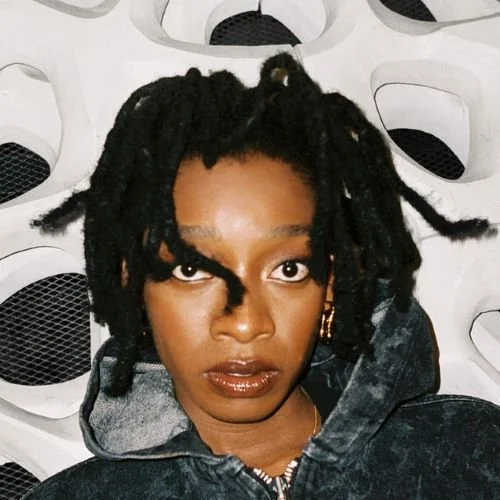
IN THIS PHOTO: Little Simz won the 2022 Mercury Prize for Sometimes I Might Be Introvert 


Modern-Day Queens: Award Nominees and Winners from 2022 and 2023

_________

WHEREAS I have covered…

 IN THIS PHOTO: Bree Runway

songs from the best albums made by women in recent years as part of a run for International Women’s Day, I wanted to acknowledge the brilliant female artists who have been nominated in award ceremonies and events the past couple of years. I am talking about the NME Awards, GRAMMYs, BRITs, Mercury Prize and beyond. One reason is because it provides a chance to highlight some seriously amazing artists. I still think women are under-represented at award shows, and there needs to be conversations especially around categories such as the BRITs’ Artist of the Year category that, whilst not gendered like in previous years, ignored women altogether! This playlist is about modern-day queens who were either shortlisted for awards last year or this one, or they actually won one (or more). In the final International Women’s Day feature, I will finish with a piece about inequality and ways that things should be addressed and redressed. In this feature is a selection of songs from award-nominated women who are among our…

 IN THIS PHOTO: Snoh Aalegra/PHOTO CREDIT: Jack McKain

ABSOLUTE finest.

FEATURE: Groovelines: Toto - Africa

FEATURE:


Groovelines


Toto - Africa

_________

A song that went to number one…

 PHOTO CREDIT: Scott Richie

in the U.S., and was a hit around the world, Toto’s Africa is perhaps the best-known song from the group. Taken from the Los Angeles band’s fourth (and best) album, Toto IV, Africa closes the album. There is some brilliant sequencing on that album. Opening with another huge hit, Rosanna, we work our way to Africa. Released in the U.S. through Columbia Records in October 1982, it was Toto IV’s third single overall and second in Europe. Written by band members David Paich and Jeff Porcaro, Africa became Toto’s only Billboard number one. It has endured and taken on a life of its own. At this time (27th February), it has amassed 1,371,925,932 streams on Spotify and over 846 million views on YouTube! It is this colossus that has grown and grown. I want to combine a couple of features about this massive track. Classic Rock wrote a feature on Africa at the end of last year. It was a song that David Paich suggested to the band, and they sort of indulged him. Just about fitting to the end of Toto IV, who knows what would have been if the band had let the song get away:

Travel broadens the mind. But vicarious travel can bless you with a hit song that's eternal. Or at least one that's still in heavy rotation forty years on.

That's the message behind one of rock's most unexpected long-term success stories, that of Toto's lovable, but cheesy 1983 single, Africa.

Recalling the initial inspiration for what he calls his “little oddball song,” keyboardist David Paich told The Guardian(opens in new tab), “As a kid, I'd always been fascinated by Africa. I loved movies about Dr. Livingstone and missionaries. I went to an all-boys Catholic school and a lot of the teachers had done missionary work in Africa. They told me how they would bless the villagers, their Bibles, their books, their crops and when it rained, they'd bless the rain. That's where the hook line – 'I bless the rains down in Africa' - came from.”

It was the early '80s TV commercials for UNICEF, showing impoverished African children, that put Paich back in the frame of mind to write about his fascination for the Mother Continent. His songwriting instincts knew that a mere travelogue wouldn't be enough. So he added the romantic drama of an old flame into the mix.

“My teachers had said that loneliness and celibacy were the hardest things about life out there,” Paich said. “Some of them never made it into the priesthood because they needed companionship. So I wrote about a person flying in to meet a lonely missionary. It's a romanticised love story about Africa, based on how I'd always imagined it.”

For musical colour, Paich used his Yamaha synthesiser to replicate a kalimba, a metal-and-wood thumb piano that's indigenous to Zimbabwe. Acting as a kind of imprint for all things African, it's the sound behind the catchy, percussive riff in the intro and turnarounds. “It was a fertile time to make music with new sounds, and that kind of defined the song,” Paich said.

Despite feeling that his new tune was touched by magic and God, Paich initially found that most of his bandmates didn't share his enthusiasm. He told Grantland(opens in new tab), “When someone writes a song that doesn't really fit into the Toto mold, the joke is, everybody says, 'Save that for your solo album.' So the band kind of indulged me and let me start working on this track for it. This one barely made it; it just got on the end of the album. It's the one that didn't get away.”

Toto's late drum wizard Jeff Porcaro saw the song's potential and responded to the groove. Inspired by his memories of hearing the “trance-inducing” beats of African pavilion drummers at the 1964 World's Fair, and National Geographic TV specials, Porcaro constructed an intricate network of drums, congas and, with his help from his jazz musician dad Joe, tape loops consisting of bottle caps and marimbas. That attention to percussive detail earned Porcaro a co-writing credit on the song.

Africa was released in October 1982, as the third single from Toto IV, accompanied by a video that almost certainly wouldn't get past the storyboard stage today. Four months later, it was number one in the U.S. and Canada (it rose to #3 in the U.K., and made the Top 10 in several other countries). A staple of oldies radio for many years, the song began its pop culture resurgence in the early 2000s, when it was included in the video game for Grand Theft Auto, then started popping up in TV shows like Family Guy, Chuck and South Park”.

I want to finish with an article from Stereogum that actually looks inside Africa and breaks down its composition and vocal. Focusing on the anatomy of the song gives you greater insight into a classic. There are a few parts of the feature that I wanted to bring in and highlight:

In 1982, Los Angeles-based supergroup Toto released their 4th studio album, fittingly named Toto IV. This month marks the 40th anniversary of the US release of the second single off the album, and the band’s best-known song, “Africa.” It’s a tune widely loved for its smooth melody and indelible hooks, but also variously reviled—for factors usually having nothing to do with music. In recent years, this pop jam has managed to reach mega-meme status, and at present it is approaching 1.3 billion streams on Spotify (making it one of the most played songs of the 20th Century). In fact, today the song may be more popular than it was in 1983 when it hit #1 on the Billboard Hot 100. For all the cultural baggage it carries, “Africa” is a truly innovative, masterfully crafted piece of music (which is saying something given that it’s not even the best song on the album!). Yet we so often see the song reduced to droll memes, or dismissed simply as a superficially dramatic (albeit catchy) pop tune. As famous as the song has become, it seems most people really don’t appreciate the brilliance of its musical architecture. But make no mistake: It is brilliant. Let’s check it out.

What’s In A Pocket?

Returning to the drums: Jeff Porcaro, who died tragically in 1992, had an uncanny ability to create grooves that feel assertive, yet laid back. You could spend years studying the thousands of records he played on to try to crack the code — and I’ve tried. A crucial component of Jeff’s pocket groove involves the way he throttled the tempo from moment to moment within a given bar of music, while keeping a steady pulse across the bar line.

When a drummer “pushes,” it means they’re playing slightly ahead to drive the pulse forward. “Pulling” means they’re playing ever so slightly behind, or late, to build tension. (Note: This is not exactly the same as “rushing” and “dragging,” which relate to increasing or decreasing the overall tempo — usually in an undesirable way.) Famously, Charlie Watts of the Rolling Stones tended to play his kick drum slightly ahead (pushing), while his snare backbeat was slightly behind (pulling), resulting in a confident groove with an incredibly slinky feel. Every drummer has a signature time feel — a tendency — that’s as distinctive to them as the shape of their face. There’s no mistaking John Bonham’s signature time feel for James Gadson’s, or Bernard Purdie’s time feel for Stewart Copeland’s. Josh Freese, Sheila E., Ringo Starr, Elvin Jones… they’re each instantly recognizable by their respective time feels — i.e., by where they choose to place beats, either slightly ahead, or slightly behind, or right on top.

One of Jeff Porcaro’s hallmarks was the time accuracy with which he chose to place notes during his fills. In Steely Dan’s “Night By Night” (off of Pretzel Logic) Jeff played 32nd notes in early parts of his fills slightly ahead of the beat (pushing), which infuses energy into the phrase, and then he slowed down slightly at the middle of each phrase (pulling), which instills a sense of weightiness (sometimes pushing again at the end). In Toto’s “Africa,” he used the inverse approach: In the early part of a given measure, he placed notes much later than you might expect, and then he made up time just before landing exactly on the downbeat.

Harmonized Melody

The part of the song most people remember is the bit where David Paich blesses the rains down in Africa. Sure, the lyrics are a little goofy (more on that later), but the interweaving vocals make for a gorgeous hook. Paich enlisted main Toto vocalist Bobby Kimball (high vocal), Timothy B. Schmit (probably best known for playing bass with the Eagles), and Steve Lukather (Toto co-founder, legendary guitarist, and musician par excellence) to stack the vocals with him in the chorus.

In big-band jazz arranging, one of the central features is the “soli” (plural for “solo”). Most often, you’ll hear a soli in the saxophone section, with the 1st alto sax playing the melody and the four other saxes (2nd alto, 1st tenor, 2nd tenor, and baritone) filling out the chord underneath, all moving together in “block voicing.” It’s an unmistakable, magnificent sound”.

An incredible song that must rank alongside the all-time best, there is something infectious and timeless about Africa. Even though it came out in June 1982, it has found generations of new fans. Over forty years since its release, there is no sign of people forgetting this track! So instantly recognisable and singalong, Africa popped into my head recently, and I realised I have not covered it for Groovelines. A band that are perhaps defined by a few songs, Toto are worth exploring in more depth and detail. There is no doubting Africa is their masterpiece and a fan favourite. As soon as that chorus kicks in…

YOU can hear why!

FEATURE: The Digital Mixtape: Martin Fry at Sixty-Five: The A-Z of ABC

FEATURE:


The Digital Mixtape


Martin Fry at Sixty-Five: The A-Z of ABC

_________

I like to celebrate…

big birthdays of popular artists. The lead of the legendary band ABC, Martin Fry is the only member of the band who has been there since the start. In fact, he is the only member of the band at all. The incredible lead is still performing and going strong. Even though we have not had an ABC album since 2016’s The Lexicon of Love II, let’s hope that we get to hear a lot more of Martin Fry on the stage. Having been responsible for co-writing/performing songs such as Tears Are Not Enough, Poison Arrow, The Look of Love, All of My Heart, That Was Then But This Is Now, and When Smokey Sings, I wanted to mark his upcoming sixty-fifth birthday with a playlist of the best ABC songs. Fry is sixty-five on 9th March. Before I get to that playlist, AllMusic provide a detailed biography about the magnificent ABC and their successful career:

One of the most popular new wave bands of the early '80s, the British group ABC built upon the detached, synthesized R&B pop of David Bowie and Roxy Music, adding a self-conscious, campy sense of theatrics and style. Under the direction of vocalist Martin Fry, the group scored several catchy, synth-driven dance-pop hits in the early '80s, including "Poison Arrow," "Look of Love," and "Be Near Me."

During the late '70s, Fry ran his own fanzine, Modern Drugs, while he attended Sheffield University. ABC formed in 1980, after Fry interviewed Vice Versa members Mark White (guitar) and Stephen Singleton (saxophone) for his fanzine. The two musicians asked Fry to join their band as a vocalist, and he soon became part of the group; the lineup also featured drummer David Robinson and bassist Mark Lickley.

Soon, Fry had taken control of the electronic band, steering them in a more pop-oriented direction and renaming the group ABC. By the fall of 1981, the band had signed a record contract with Phonogram Records, which agreed to distribute ABC's own label, Neutron. ABC released their first single, "Tears Are Not Enough," in November; it peaked at number 19 on the U.K. charts. Before they recorded their second single, Robinson left the band and was replaced by David Palmer in early 1982. Two singles, "Poison Arrow" and "The Look of Love," became British Top Ten hits in the spring, paving the way for their debut album, The Lexicon of Love, to enter the charts at number one. "All of My Heart" also became a Top Ten hit in the fall of 1982.

Toward the end of 1982, the group began concentrating on the United States. Their American success was helped greatly by the fledgling MTV network, which aired videos for "The Look of Love" and "Poison Arrow" frequently, making both singles Top 25 hits in the spring of 1983. Palmer left the band in the summer of 1983, as ABC were recording their second album. Featuring a harder, rock sound driven by guitars rather than keyboards, Beauty Stab was released late in 1983. Supported by the number 18 single "That Was Then But This Is Now," the album didn't perform as well as the debut, peaking at number 12; the record was also a commercial disappointment in the U.S. Late in 1984, ABC -- now consisting solely of Fry and White augmented by various session musicians -- released "(How to Be A) Millionaire," which failed to put a halt to their commercial slide. Following its release, the duo moved to New York, where they added David Yarritu and Eden to the group; neither member could play or sing -- they were added for the visual effect.

Released at the beginning of 1985, the light, catchy "Be Near Me" became a hit single in Britain, climbing to number 26. Due to the single's success, How to Be a...Zillionaire! became a Top 30 hit in both the U.K. and U.S. "Be Near Me" was released as a U.S. single toward the end of 1985 and it became the group's first American Top Ten hit. Even though they had a fair amount of success in 1985, ABC's subsequent singles stalled on the charts. Fry was also ill for most of the latter half of the year; he recovered in 1987 and began writing and recording with White. In the summer of 1987, ABC released "When Smokey Sings," which was a major hit, reaching number five in the U.S. and number 11 in the U.K. Alphabet City followed that fall, peaking at number seven in the U.K. and number 48 in the U.S. Two years later, they released Up, which only charted in the U.K. Absolutely, a greatest-hits collection, made it into the British Top Ten upon its release in 1990.

Following the release of Up, Fry took an extended break from the music industry, returning in 1997 with a revamped ABC and a new album, Skyscraping, which was only released in the U.K. Shortly before ABC's comeback, England experienced a short-lived new romantic revival called Romo, which increased Fry's exposure substantially, in turn helping Skyscraping to earn good reviews and respectable sales. A live album followed in 1999, and several ABC reissues appeared during the 2000s, including a double-disc deluxe offering of Lexicon of Love. The drummer from that album, David Palmer, returned to the ABC lineup in 2004, and the band released an album of original material in 2008 entitled Traffic. They continued to play concerts and festivals, and in 2009 they played the entirety of Lexicon of Love at Royal Albert Hall with the BBC Orchestra conducted by album collaborator Anne Dudley. They did the same thing in 2012 to celebrate the 30th Anniversary of the album, performing again with Dudley, only at London Theatre Royal Drury Lane instead. That night while on-stage, Fry was struck by the idea that the album needed a sequel and soon after he began to assemble the songs and players to help make it a reality. Enlisting Dudley and producer Gary Stephenson, the album captured the sound and feel of Lexicon of Love, while Fry's ageless voice and wry lyrics made it feel like nary a moment had passed since 1982. The album was titled Lexicon of Love II and released by Virgin/EMI in May of 2016”.

To celebrate the upcoming sixty-fifth birthday of the incredible Martin Fry, below are some of the best ABC tracks. There are hits and well-known songs alongside some deeper cuts. If you are a fan of the band or not, there are tracks in here that you will recognise and like. One of the greatest and most distinct singers of his generation, Lancashire-born Fry is a legend who deserves saluting! The songs below show how powerful…

HIS presence and voice is.

FEATURE: Walking Up That Hill… The Hounds of Love 33 1/3 Book, and Which Other Kate Bush Album Celebrations Should Follow

FEATURE:


Walking Up That Hill…

N THIS PHOTO: Kate Bush in an outtake for the Running Up That Hill (A Deal with God) single shoot in 1985/PHOTO CREDIT: John Carder Bush


The Hounds of Love 33 1/3 Book, and Which Other Kate Bush Album Celebrations Should Follow

_________

THE brilliant…

Leah Kardos is among the authors who will bring great albums to life through the 33 1/3 series very soon. I reacted to the news when it arrived, but I wanted to revisit it. Kardos is a brilliant writer and author, and she is definitely a Kate Bush superfan. I am surprised it has not been done sooner, but Hounds of Love is coming to the series. Maybe it is quite daunting not only trying to condense this 1985 masterpiece into a short book, but it is so well-known and popular, so it is a case of writing about it in an accessible way, but also including details that people might not know – appealing both to new Kate Bush fans and those who are new. Before moving on, I spoke with author, musician and composer Leah Kardos about the upcoming Hounds of Love book, her love of Kate Bush, and what it was like researching the 1985 album.

Congrats on being commissioned to write the 33 1/3 book for Hounds of Love! How did you react when you heard the good news? Why was Hounds of Love the album you wanted to write about?

Hey, thank you! I was overjoyed when I found out, because I’ve wanted to write a 33 1/3 for a long time now. I had submitted two unsuccessful proposals before this one. In fact, my last book, Blackstar Theory: The Last Works of David Bowie, began as a failed proposal for a 33 1/3. When I heard the news there was a very excited, quite protracted “!!!” conversation over messenger with my best friend. Just days and days of Kate GIFs.

I knew for this open call that I wanted to write about Kate’s music, the ideas for it have been brewing for years - but I couldn’t decide on which album to focus on. For a while, my heart was set on writing about Aerial (that abandoned pitch is uploaded as a draft on my academia account if anyone’s curious. But in the end, the RUTH (Running Up That Hill (A Deal with God) appeared on Netflix’s Stranger Things) moment of 2022 was too good to ignore, and there’s so much to dig into with Hounds: all the bangers on side A; The Ninth Wave is a real gift to write about. I think that intuition was correct in the end. There seems to be  a bit of special energy around Hounds of Love at the moment with the re-release coming up, the stirrings of something new with the Fish People rebranding, and the move to The state51 Conspiracy. For me, everything feels synchronous and right, even down to the Fish People logo redesign in collaboration with Barnbrook, who I interviewed and got to know with my Bowie book research, and with whom I had some long chats last year about Kate and Hounds of Love specifically. It feels like stars are aligning for this thing.

 “The challenge will be to approach something so familiar with a freshness

What has it been like writing the book? Did you learn anything new about Hounds of Love and Kate Bush when researching it?

I’m in the research phase right now. I haven’t really started properly writing it – the manuscript is due in December. For the moment, I’m just making lots of notes and doing some deep thinking on the musicological side of things, which I think (hope) will be the book’s USP. That, and situating the work in the larger cultural picture in terms of influence and legacy. One thing I’m really digging into at the moment is Kate’s Before the Dawn concert residency from 2014, where all but one of the songs from Hounds of Love were performed for the first time. I think the theatrical staging of The Ninth Wave really expands and deepens the album content, going quite a long way to illustrate the artist’s own vision of it.

How did it differ to, say, writing about David Bowie for Blackstar Theory: The Last Works of David Bowie in terms of research and approach?

The difference for me is that the Bowie book was about the last phase of his career, so in a way it was about his entire career too. The whole story of the catalogue; all the connecting threads. Also, I wrote it not long after it happened – barely five years of Bowie’s death in 2016. With this book, it will be nice to zoom in on a single album, a specific time and place, a unique season for an artist who is still around, who could still put more work out yet (I dearly hope she does!). Another difference will be that Hounds has been discussed and written about quite a lot; the late Bowie work, not so much. The challenge will be to approach something so familiar with a freshness.

 “With staggering sound design and next level songcraft, it’s an uncompromising artistic statement and a commercial success

When did Kate Bush come into your life, and what was it about her music that struck you?

My fandom has gone through some phases. As a younger music student studying piano and trying to write my first songs, I was all about the earlier albums – trying to figure out the chords and sing along to songs like Moving, Symphony in Blue, Wow. Then later, when I got into record production and music technology as a creative and academic interest, I became alive to the staggering expression and sonic daring of The Dreaming and Hounds of Love. As I’ve gotten older, I appreciate Kate’s later work more and more, especially Aerial, which I think offers a profound, life-affirming message for everyone, especially for women at a specific stage of life. Being a woman in her forties, acutely aware of my fading visibility in the world, living in England in thrall to the magic of birdsong, the long-reaching light of summertime, I feel a connection to this work on an existential level!

As a musician and composer, how important is Kate Bush and albums like Hounds of Love to you personally?

Well. Beyond loving it and everything about it, Hounds is so important to me because it’s a complete vision, fully realised. I love how Kate becomes the complete auteur here, working expressively with sound, music, text, reference and image. With staggering sound design and next level songcraft, it’s an uncompromising artistic statement and a commercial success. Immediately accessible and exquisitely deep. Blazing a trail for and setting the template for successive generations of artists – especially female, Queer and trans self-producing songwriters like Tori Amos, Björk, ANOHNI, SOPHIE, Perfume Genius, FKA twigs, Jenny Hval, and so many more.

I’ve unfortunately seen how female self-producing artists can have their authorship questioned and/or diminished…

I don’t think enough people talk about Kate Bush’s talent as a producer. Her skill and intuition through Hounds of Love is evident. Do you think she is underrated as a producer?

Absolutely. I would love it if critics and musicologists would start talking about Kate as an influential record producer more. I would put her skills and vision during this era on par with Trevor Horn, or even Prince. Line it up next to Peter Gabriel’s So, and I think Hounds sounds every bit as good – if not better, more daring and stylistically coherent in places. And Peter had Daniel Lanois’ help with production on that one. I’ve unfortunately seen how female self-producing artists can have their authorship questioned and/or diminished - Bjork’s comments to Pitchfork in 2015 about this particular phenomenon come to mind – it makes me wonder had a man produced Hounds of Love, there would probably be a lot more open celebration of the album’s fantastic and influential production values. 

My favourite song from Hounds of Love is The Big Sky, but I adore The Ninth Wave too. Do you have a standout track or aspect of the album that is a personal favourite?

This is a hard one. This week, I’m feeling the dopamine hitting hardest when Jig of Life comes on.

Ann Powers’ proposed volume on ‘The Dreaming’ would have been an excellent addition to the series” 

I am writing a feature about your upcoming book, but I also ask which other Kate Bush albums should be brought to the 33 1/3 series. Which would you say deserves to follow Hounds of Love?

Well as I said earlier, I think Aerial would be a great addition. There’s so much juicy stuff in there that I haven’t seen many people writing about yet. Ann Powers’ proposed volume on The Dreaming would have been an excellent addition to the series – I really enjoy hearing her talk about this era on Yasi Salek’s Bandsplain podcast, and you just know she would have done The Dreaming full justice. They’d probably never go for it, but I think Director’s Cut could be really interesting to write about, too.

For being a good sport, you can choose a track from Hounds of Love, and I will put it here. Which do you fancy?

Let’s have Hello Earth, since it references several songs, themes and musical motifs from the album…sewing the threads into a satisfyingly dramatic climax. You can’t fail to get swept up and away by it.

I am really pleased that there is a new book coming out about Hounds of Love! Considering what a masterpiece it is, there is little out there in terms of podcasts and books. I am not sure what date the book is coming out (as Kardos is still researching for it), but keep an eye on Kardos’ Twitter feed, and 33 1/3’s page. Given the new attention Hounds of Love has received after Stranger Things featured Running Up That Hill (A Deal with God) last year, it is going to provide more background and depth about such an important album. It sort of begs the question as to what comes next. I think we will see other Kate Bush-related books this year, but I have always said how it is important to highlight and explore her albums. 33 1/3 offers a brief-but-deep look inside great albums. I think The Dreaming was published or planned at some point. I may have said it before, but there is an album that has always been underrated that has a fascinating backstory and run-up. 1980’s Never for Ever came a year after The Tour of Life – where Bush toured her first two albums around the U.K. and Europe. Producing alongside Jon Kelly, it features some career-best tracks like Babooshka, The Wedding List, Breathing and Army Dreamers. If not Never for Ever, then I think The Sensual World is an album that is both acclaimed and not known by all. I think these two albums would be perfect for further exploration.

I am not sure whether anyone is planning those books but, when 33 1/3 pitch for new submissions, I think these albums should be options. Of course, all the other Kate Bush studio albums are worthy of inclusion, but Never for Ever is hugely underrated and a fascinating album. The Sensual World came out in 1989 and was the follow-up to Hounds of Love. It saw Bush keep the quality up, but I think it was a more personal album. Full of sensuality and beauty, it had a different tone and palette to Hounds of Love. It is great that Leah Kardos is writing about Hounds of Love. I hope it opens the door for more books about Bush’s albums. We got Tom Doyle’s brilliant biography about Bush last year, Running Up That Hill: 50 Visions of Kate Bush, so I am interested whether there will be another biography or even a photobook. Album dives and books are especially interesting, as it will open them up to new fans and listeners. So far, The Kick Inside, The Dreaming, and now Hounds of Love have had books written about them. I am not sure whether any others have. Every fan has their opinion as to which Bush albums would benefit from a 33 1/3-style representation. Whether it is 2005’s double album, Aerial, 1978’s Lionheart, or 2011’s 50 Words for Snow, there is more demand and a bigger fanbase than there has ever been! Whilst we wait to see if new Bush material will come along, there are these brilliant albums to enjoy. Knowing more about how they formed and took shape provides this insight and illumination. This is a great thing. I am looking forward to reading Leah Kardos’ writing on…

KATE Bush’s Hounds of Love.

FEATURE: Inspired By… Part Ninety-Three: A Tribe Called Quest

FEATURE:


Inspired By…

 PHOTO CREDIT: Aristos Marcopoulos/PRNewsFoto/Legacy Recordings via AP Images


Part Ninety-Three: A Tribe Called Quest

_________

SIMILAR to Cyndi Lauper…

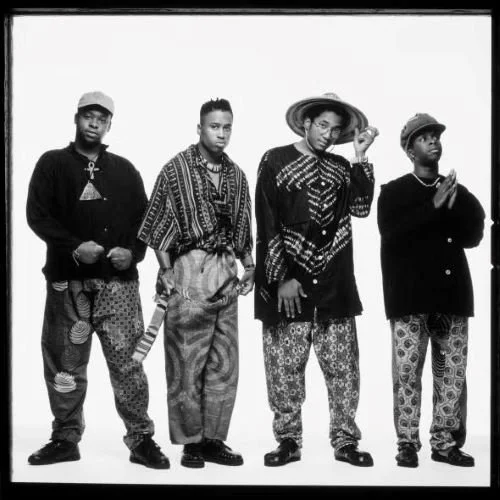
 IN THIS PHOTO: DJ/Producer Ali Shaheed Muhammad, Jarobi White and Phife Dawg (Malik Isaac Taylor) celebrate the 25th anniversary of their debut album

when I included her in Inspired By… last time, this is another Hall & Fame-related act. Both Cyndi Lauper and A Tribe Called Quest are nominated for inclusion this year. The fan vote is open, and it made me reflect on the importance and influence of A Tribe Called Quest. The Hip-Hop group formed in Queens, New York in 1985. Their 1991 album, The Low End Theory, is among the best and most important of all time. Because of that, I wanted to end with a playlist of artists who are inspired by the group. We sadly lost Malik Izaak Taylor (Phife Dawg) in 2016, so the possibility of another album from them is practically zero. Before I get to that playlist, AllMusic provide a biography of the remarkable A Tribe Called Quest:

A Tribe Called Quest were without question one of the most progressive and crucial rap groups of the 1990s. Along with their brothers and sisters in the Native Tongues -- a crew that also included the Jungle Brothers, Queen Latifah, De La Soul, Monie Love, and Black Sheep -- Tribe struck a natural balance between ruminative and carefree lyrical content, examining personal and deep societal issues without forgetting to have a good time. Just as creative and powerful as producers, Tribe helped create new paths for hip-hop with visionary and inventive sampling from previously unutilized '60s and '70s jazz recordings, among other styles ranging from bossa nova to prog rock, and even collaborated with some of the players whose names were listed in the liner notes they scoured. The group's first five albums, highlighted by the all-platinum run of The Low End Theory (1991), Midnight Marauders (1993), and Beats, Rhymes and Life (1996), added up to one of the decade's most vital artist discographies, rap or otherwise. Six years after their 1998 split, they reconvened onstage and continued to occasionally tour into the 2010s. We Got It from Here...Thank You 4 Your Service (2016), their final LP, became their second number one album months after the death of founding member Phife Dawg.

Although it wasn't until 1988 that they became known as A Tribe Called Quest -- named by peers the Jungle Brothers -- the group started to take shape three years earlier, with Queens native Q-Tip (born Jonathan Davis) and high school classmate Ali Shaheed Muhammad (a Brooklynite) recording demo material with pause-tape beats. The rapper/producer and DJ/producer duo eventually became a quartet with the addition of Q-Tip's childhood friend Phife Dawg (born Malik Taylor) and neighbor slash part-time member Jarobi (short for Jarobi White). Q-Tip was heard first on the Jungle Brothers' 1988 album Straight Out the Jungle. The next year, he was featured De La Soul's "Buddy," and a version of that track, dubbed "Buddy [Native Tongue Decision]," added Phife to the mix. The recorded debut of A Tribe Called Quest followed later in 1989 with "Description of a Fool," issued on Jive. (The group had recorded a demo for Geffen, but the major label balked on offering a contract.) The following April, Tribe released their first album, People's Instinctive Travels and the Paths of Rhythm. Much like De La Soul, Tribe looked more to jazz as well as '70s rock for their sample base; "Can I Kick It?," which followed "I Left My Wallet in El Segundo" and "Bonita Applebum" into the Top Ten of Billboard's rap chart, plundered Lou Reed's "Walk on the Wild Side" and made it viable in a hip-hop context.

No matter how solid their debut was, second album The Low End Theory, released in September 1991 (after Jarobi's departure for culinary school), exceeded all expectations and has held up as perhaps the best hip-hop LP of all time. In addition to its rich assemblage of samples, it featured jazz legend Ron Carter on double bass for "Verses from the Abstract." Like the debut, it yielded a trio of charting singles. "Check the Rhime" topped the rap chart, and "Scenario," featuring Leaders of the New School (with future solo star Busta Rhymes), went to number six. The Low End Theory included several tracks with props to hip-hop friends, and Tribe affirmed their support of the wider rap community with their third album, Midnight Marauders. The album cover and booklet insert included the faces of over 70 hip-hop luminaries, a coast-to-coast assortment that included members of De La Soul, the Jungle Brothers, and Beastie Boys, as well as Ice-T and Too $hort. The LP entered the Billboard 200 at number eight, easily the group's highest placement to that point. It offered several classics, including "Award Tour," the group's sixth Top Ten rap hit, and a sound that was harder than the first two albums. During the summer of 1994, Tribe were part of the fourth Lollapalooza lineup, and the next year were comparatively quiet, apart from several production jobs for Q-Tip. They returned in July 1996 with their fourth LP, Beats, Rhymes and Life, which prominently featured Consequence, Q-Tip's cousin, and production associate Jay Dee (of Slum Village), who had gained notice for his work on the Pharcyde's Labcabincalifornia. The album topped the Billboard 200, was nominated for a Grammy in the Best Rap Album category, and became the group's third consecutive platinum LP. The single "1nce Again" was also up for a Grammy in the rap field.

Before they released their next album, The Love Movement, the group announced it would be their final statement and that they were splitting up. After The Love Movement debuted at number three and earned the group their second Best Rap Album Grammy nomination, each member pursued solo projects to varying degrees of success, but the call of the group proved strong enough that they reunited many times over the years. They headlined the Rock the Bells concert in 2004, toured heavily in 2006, featured on the Rock the Bells tours of 2008 and 2010, and played a series of shows in 2013, including some with Kanye West in New York. They reunited again in November 2015 to play The Tonight Show in conjunction with the 25th anniversary reissue of People's Instinctive Travels and the Paths of Rhythm.

The group's performances post-Love Movement helped pay for increasing medical expenses faced by Phife. Diagnosed with diabetes in 1990, Phife eventually needed multiple kidney transplants. In March 2016, Phife died (at the age of 45) due to complications related to the condition. Later that year, Q-Tip announced that the group had completed a new album. The night of their Tonight Show appearance the previous year, the group's original four members decided to put aside their differences and start recording again. Sessions were held in Q-Tip's well-appointed home studio, and the group welcomed guests like Busta Rhymes, Elton John, Kendrick Lamar, and André 3000 to contribute. Though Phife died before the album was finished, Q-Tip was able to power through and complete it. We Got It from Here...Thank You 4 Your Service was released in November 2016 and topped the Billboard 200 on its way to gold status. Q-Tip and Ali Shaheed Muhammad continued with assorted musical pursuits. Tribe were nominated for induction into the Rock and Roll Hall of Fame in 2022”.

Ahead of what may be induction into the Rock & Roll Hall of Fame for A Tribe Called Quest, I wanted to salute them and put together a playlist featuring artists who are clearly inspired by them. Almost thirty-three years since they released their debut album, People's Instinctive Travels and the Paths of Rhythm, A Tribe Called Quest are still hugely important to artists coming through. The playlist below is features may artists who look up to…

THIS amazing musical force.

FEATURE: International Women’s Day 2023: About Damn Time: Worthy Female/Female-Led Headline Artists

FEATURE:


International Women’s Day 2023

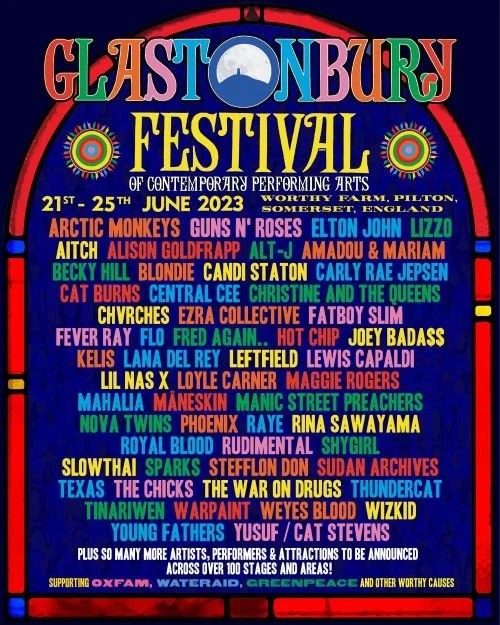
IN THIS PHOTO: Lizzo appears on Glastonbury’s bill alongside headliners Elton John, Arctic Monkeys, and Guns N’ Roses, but as a ‘support’ artist rather than a headliner herself

About Damn Time: Worthy Female/Female-Led Headline Artists

_________

NOT to labour…

 IN THIS PHOTO: Billie Eilish is one of the headline acts at this year’s Reading & Leeds Festival

a point I and many have made over the past few days, festivals like Reading & Leeds and Glastonbury have been criticised for a lack of female headliners. Even though Glastonbury have two female headliners booked for 2024 and have Lizzo and Lana Del Rey as ‘support’ for headline acts, it is an all-male lime-up. The issue is more complex than festivals not looking hard enough. Taylor Swift was originally booked, and many ask whether Lizzo could have been a headliner. There is an issue with how female artists are marketed and signed. Labels are signing the same tired male acts and, even when women are signed, they are not being handled and marketed well. Many are going independent. This means that they have to work harder to get exposure and gigs. If festival headliners are usually defined by a certain successful, popularity and experience, I don’t think that needs to be the way. When I posted my disappointment with Glastonbury’s all-male headliners, some said it would be crowbarring a female artist. Do we need to change things? If the rest of the bill is a good split in terms of gender and sound, why does it matter if the headliners are all-male? I argued that it is recognition of women at the highest level, and it shows that festivals do not believe women can command a headline slot and would prove popular. That is not the case.

 IMAGE CREDIT: Glastonbury Festival

Many American festivals have no trouble booking women. Roisin O’Connor, writing in The Independent argued that there is a problem with the U.K. music industry. It is troubling to realise that, unless there are major changes, we might not see many women headline festivals in this country:

A symptom of this, it appears, is that festival bookers are resorting to old, bad habits in a bid to lure music fans back to the events they’ve gone without for the last few years. In 2022, a YouGov survey found that only one in 10 headliners at the UK’s top festivals were women. Of 200 headline acts, just 26 were female, one identified as non-binary, 24 had a mixed line-up, and the rest (149) were either male solo artists or all-male bands.

But, as Eavis points out, the issue begins far earlier than festival line-ups. Record labels seem perfectly content to sign 100 identikit white male singer-songwriters – your Ed Sheeran, Lewis Capaldi, George Ezra and Sam Fender soundalikes – and just about every spoken-word band that stumbles out of The Windmill in Brixton. Of course, this isn’t the case for women. “There can only be one Adele, one Dua Lipa,” seems to be the argument. The UK industry is still blighted by the ludicrous view that, if you have one female pop star, it’s impossible to break another one on the same timeline. Meanwhile, in the US, they make it look effortless, with Lana Del Rey and Lizzo doing just fine alongside Lady Gaga, Olivia Rodrigo, Beyoncé, SZA, Taylor Swift, Miley Cyrus, Demi Lovato, Meghan Trainor…

IN THIS PHOTO: Taylor Swift was due to headline this year’s Glastonbury Festival, but owing to a scheduling/date conflict she was replaced/PHOTO CREDIT: Beth Garrabrant

There’s also a lack of effort to help emerging female artists achieve any kind of longevity. Labels are busy snapping up viral TikTok stars with one song and zero live experience to their name, then scratching their heads over why fans feel no sense of loyalty towards them, even as industry giants like Capaldi share memories of one of his first gigs in Scotland (he’s currently on a worldwide arena tour). Success such as his does not happen overnight. Yet even now, publications put out their lists championing 100-plus artists to watch each year then fail to mention half of them ever again. Radio stations play the same major label artists on a never-ending loop. Last year’s gender and racial disparity report into UK radio found that UK male solo artists occupied the top 100 more than three times as often as female solo artists, and were present in 80 per cent of all top 100 singles. Sheeran alone took up 10 per cent of the top 50 singles last year”.

The truth is that, even for a two-and-a-half-hour set, there are options at least for festivals when it comes to book suitable and popular women. Setting aside their cost, availability or anything else that might be a barrier – and is often used as an excuse -, the artists in the playlist below are all wonderful potential headline acts (and several of them have headlined festivals in the past). Invaluable directories like The F-List provide so many possible names. It is not as simple as festival organisers need to call these women and book them. There are attempts and efforts made but, when you consider the artists who could command a headline set, you wonder why it is men (and white men at that!) who are consistently booked. Quite boring male artists too. Ahead of International Women’s Day on Wednesday (8th), below are songs from incredible women/female-fronted acts who could…

 IN THIS PHOTO: Lana Del Rey is booked for Glastonbury this year, but not as a headliner/PHOTO CREDIT: Lia Clay Miller for Billboard

CREATE stunning headline sets.

FEATURE: Revisiting… Saint Etienne - I've Been Trying to Tell You

FEATURE:


Revisiting…


Saint Etienne - I've Been Trying to Tell You

_________

THERE are a few reasons…

 ILLUSTRATION CREDIT: Melek Zertal

why I want to feature Saint Etienne’s I've Been Trying to Tell You in this Revisiting… For one, the tenth studio album from the legendary London band is among their very best. It shows they are one of the most consistent and inventive groups of their generation. Also, this album was released on 10th September, 2021, and it did get great reviews. I don’t think it is played and talked about as much as it should be. Also, as it was released during the pandemic, maybe it denied Saint Etienne the opportunity to promote and tour it in full. An album that should not pass anyone by, I also like I’ve Been Trying to Tell You, because it makes direct reference to music of the late-’90s. In terms of its concept and act, it is an album set between the ‘optimistic’ years of 1997 and 2001. It contains samples of Pop songs from this time, alongside some field recordings. Before getting to some reviews, there are a couple of interviews that I want to bring in. The band, Sarah Cracknell, Bob Stanley and Pete Wiggs discussed the inspirations behind I’ve Been Trying to Tell You. They spoke with The Guardian in September 2021 about COVID-19, in addition to British music and culture in the ‘90s:

I’m Trying to Tell You’s hazy musical style is influenced by something unexpected: YouTube videos made by younger people Stanley became obsessed with a few years ago. “It was this warped, woozy music like chillwave or vaporwave, but it’s mostly samples of 80s American music, set against stills of abandoned shopping malls. There are virtually no records or CDs [of this music] – it’s all on YouTube and it definitely seems outside of the conventional music industry, which I find fascinating.”

Stanley is the band’s resident pop geek, publishing acclaimed books (including 2014’s whip-smart history of pop, Yeah, Yeah Yeah, and this year’s Excavate!: The Wonderful and Frightening History of the Fall, co-edited with his partner, artist and writer Tessa Norton, as well as compiling crate-digging anthologies with Wiggs. Some might accuse him of wallowing too much in the past, but he’s not having that. “I don’t think it’s nostalgic to be fascinated by the Chartists or the Bauhaus, or the Beatles for that matter. It’s about history.” It’s also about having a modernist approach to creativity, he says. “And my understanding of modernism is that it’s about borrowing the best bits of the past when you’re creating something new. That’s how you progress. ‘Che Guevara and Debussy to a disco beat’ as Neil Tennant said in Left to My Own Devices. You can’t ignore history.”

When Covid hit, the band struck on the idea of taking samples from a period currently being referred to by younger artists such as Charli XCX and AG Cook. Cracknell loves the resulting album: “It’s all hazy, late summer sounds – and it was so nice to do something like this during multiple lockdowns, and so nice to see each other, even if it was only on Zoom.” She recorded her vocals in her son’s bedroom; Wiggs worked at home, as did Stanley, but later hooked up with composer Gus Bousfield, who contributed to two tracks. They decided to look at the less well-know styles songs that were actually all over the radio in the late 1990s – styles far removed from indie and Britpop. “Because it frustrates us how history gets rewritten,” Stanley says. “That’s part of the theme of this record – it’s an attempt to reclaim memory.”

IN THIS PHOTO: Bob Stanley, Sarah Cracknell and Pete Wiggs in 1991/PHOTO CREDIT: Brian Rasic/Getty Images

The idea of reappraising our received version of the 1990s is something the band have often discussed. Stanley says he finds it odd that “Britpop people have taken over the music bits of the BBC… ex-members of various bands being presenters or whatever. That doesn’t help what we remember.” What was exciting then, he says, was rave, hardcore and breakbeat, jungle and drum and bass, music that was developing constantly. “Every couple of months there was something new. It was constantly evolving.” We discuss the famous cover of Select magazine in 1993 that first introduced Britpop as a concept: Saint Etienne were one of the bands. “It had us, Pulp, Denim, Suede and the Auteurs as well – we all sounded completely different. By the time Britpop became big, that sound was much more homogeneous and by 1997 it was quite dreary – and suddenly everyone was splintering off into different things.”

What do the band think of the argument that Britpop – and its fetishisation of Britishness – was one of the building blocks towards Brexit? Wiggs nods wearily; Cracknell offers a theatrically miserable shrug. “You can definitely see things within the stereotypes of Britpop that tie those things together,” Stanley says. “It snuck certain associations into popular culture.”

The album also explores a time where Britain last felt optimistic, they say, although it was tempered by disillusion even shortly after New Labour was elected. “We must be near the bottom of it for politics now, though,” says Stanley.

Cracknell and Wiggs have kids in their late teens who are fascinated by the 1990s (Stanley is merely an observer of this phenomenon: his son with his partner, Norton, is only five). I wonder if they cling to that period because it takes them to a mysterious world just before they were born – so close to them, in a way, but also so out of touch. “It’s a bit like us having a fascination for the 60s at a similar age, just in a different way,” Cracknell says. “I mean, for us, the 90s seems like yesterday, but for them, it seems like a really, really long time ago”.

Before getting to those reviews, there is an interview from PASTE that caught my eye. In it, the band’s superb lead Sarah Cracknell was asked about the album and living through the pandemic. There are a couple of sections of the interview that I wanted to bring in. One answer suggested that Saint Etienne might have another album coming along soon:

Paste: Your new album title I’ve Been Trying to Tell You works on several levels. For years in my writing, I’ve been quoting everything from the book Ishmael to climate-change headlines to underscore the fact that man, in thinking he’s the end product of evolution, has basically doomed himself to extinction. And there will be no safe place to run that’s free from fires, floods, tornadoes, hurricanes and coastal erosion. We’ve been trying to tell you.

Cracknell: Oh yeah. I know this woman, she’s really lovely, and she’s got younger kids. But her 14-year-old teenage boy, she found him crying his eyes out, and she was going, “What’s the matter?” And it was all about how frightened he was about the future, and about climate change and about wars and the pandemic and the government. It was horrible, and my friend said she wished she’d never had the news on. I mean, you put the news on and you think that your children are not absorbing it, but this kid was. And she felt so sorry for him, but she said, “What can I tell him?” And there was another hurricane in New Orleans, and a million people without power, and they’d only just got their shit back together, you know? It’s awful. Boy, this is really a doom-y conversation!

Paste: So you were just getting lost in bygone Britpop-era reverie on this album, basically? Back when Labour was in, Boris wasn’t.

Cracknell: Yeah, exactly. I think we were just thinking about how you can get into the idea that there was this great change, and with it brilliant things are going to happen! And some really good things did happen, but not everything we expected happened. So it’s about optimism, but optimism that’s a little bit unfounded, you know? And you kind of remember the good bits and that feeling. So the album is about sort of misremembering things.

Paste: So there’s another nearly finished Saint Etienne album in the pipeline then?

Cracknell: Yeah. And I’d say, to be realistic about it, it’s probably 2/3 of the way there. But now I think we might even get those songs and rethink how we want to approach it. Because—and this is just me talking, and I think Bob would agree with me—I don’t think it’s necessarily the right thing to do to suddenly go back to really full-formed songs again. I think some kind of segue, some kind of hybrid of the two things might be good. I don’t know—we’ll see. If we even get to do another record, that is. Who knows?

Paste: Did you come out of the whole experience cheered up? Reinvigorated?

Cracknell: Yeah, actually! Yeah! I think we did. Right around track four, I was thinking, “This is great! I love this!” And even the grumpy old manager, my husband, said, “This is great!” And he doesn’t normally say things like that, you know. And then because Alasdair was involved, after we’d done about three or four songs, he was sending us stuff that he had made to go with the songs, and it was really exciting. I mean to have someone as creative as he is, and who gets us as much as he does, sending us these beautiful images and beautiful sections of films, it was really exciting”.

I will put in a review from CLASH. I’ve Been Trying to Tell You received positive reviews across the board. From such a  remarkable band, their 2021 album ranked alongside their very best. This is what CLASH had to say in their review:

As literally nobody says: if you can remember the late 90s, then you weren’t really there. At the time, the period seemed to take on a beatific, easy-going glow in the eyes of the media – the Britpop party had ended but the confidence remained, while Labour’s history-making victory seemed to remove the Tory menace forever. Looking back, emotions are mixed: the art that emerged from the late 90s often feels flat, saccharine, lacking any kind of counter cultural edge; Labour – New Labour – failed to invoke radical change in this country, largely allowing the achievements that did emerge to rest on market forces.

‘I’ve Been Trying To Tell You’ digs into this period. It’s an odd choice – there’s nothing so strange as the recent past, and Saint Etienne choose to linger in between gilded memory and unvarnished reality, somehow invoking both across eight songs that always feel uneasy, always feel engaging, and rarely feel anything else but exemplary.

Their first sample-based record since 1993’s ‘So Tough’, the album draws on a mosaic of sounds from that pre-9/11 period of trans-Atlantic optimism. Re-adjusting sonic traits more familiar with Zero 7, All Saints bangers, and T4 idents into transportive works of art isn’t an easy feat, but the production on ‘I’ve Been Trying To Tell You’ is simply stunning. ‘Music Again’ slows down the chimes of an acoustic guitar into a grinding sense of introspection; ‘I Remember It Well’ seems to open out into a hauntological faux-90s landscape, reminiscent of Forest Swords’ hinterland dreams.

That oft-overused word ‘cinematic’ comes to mind – there’s an accompanying full-length film incoming, constructed by Alasdair McLennan – but only because Saint Etienne’s songwriting is so rich in atmosphere and suggestion. Even at its most left-field – the strange, warped trip-hop elements of ‘Pond House’ push the coffee table into the incinerator – there’s a knack for melody and accessibility that simply cannot be denied.

With a sonic palette bathed in artificiality, Saint Etienne seem to pick apart the plastic, to illuminate the flesh underneath. The slomo progression of ‘Penlop’ drags you into an aural torpor, while ‘Little K’ inverts on-hold muzak to simultaneously embody, cherish, and thoroughly pierce the sense of stasis so many have found in the Blair era.

A record that feels sharply removed from 2012’s glossy ‘Words And Music By Saint Etienne’ and the more autobiographical ‘Home Counties’ (2017), ‘I’ve Been Trying To Tell You’ reaches for the inexpressible. When words fail them – much of the record is instrumental – sounds somehow take up the taxonomy, falling mid-way between a dream state and waking. A hugely impressive achievement, ‘I’ve Been Trying To Tell You’ is technically exquisite, while remaining incredibly difficult to pin down. A project to bathe in, rather than simply enjoy.

8/10”.

The final review I want to bring in is from AllMusic. They were hugely positive and enthusiastic when it came to I’ve Been Trying to Tell You. Even though the album does lean heavily on British culture, it still did very well in other countries. I have seen American reviews that are very glowing and enthusiastic. It is an album that everyone needs to get involved with:

From the beginning of their long career, Saint Etienne have excelled at bringing together nostalgia and futurism in one stylish package that has always felt fresh, no matter how many old parts were salvaged in the creation process. Along the way, many of their most memorable moments have come about on the dancefloor, whether a glittering new wave disco or a past-its-prime Northern Soul discotheque. Looking past the shiny surfaces, it was always clear that the trio have just as much skill at crafting heartbreakingly pretty ballads that could be as epic as "Avenue", elegiac as "Teenage Winter", or painful as "Hobart Paving." After a couple of records in the 2010s that were bright and shiny examples of disco-driven pop at its best, the band have shifted gears dramatically to delve exclusively into their sadder, softer side. 2021's I've Been Trying to Tell You is a concept album that looks to extract the optimistic sound of late '90s mainstream pop and twist it into a suite of songs that feel like the half-remembered afterimages of a dream.

Built around samples of artists like Tasmin Archer, Lighthouse Family, Lightning Seeds, and Honeyz, to name a few, the band snatch little bits of acoustic guitar, strings, and keyboards, add their own instrumentation, then drape snatches of vocals over the top. The end results aren't songs as much as they are moods, or dub-like versions of songs that never existed. The circular melodies spin around like a record on a turntable, the keyboards drift and swell like ships lost at sea, and Sarah Cracknell sings like she's making up bits of songs to be sung only to herself. It's mesmerizing and peaceful, uplifting and heartbreaking all at once, especially when the revolving sounds resolve into something resembling a chorus, as on "Penlop" when all the elements of the song come together, and the melody breaks through like the sun on a cloud-filled afternoon. "Pond House," too, comes alive when the Natalie Imbruglia vocal sample shifts into a wonky synth bass breakdown, then slides back into a hazy swoon that plays on and on. There are moments like this throughout the album as the band mixes sounds like mod scientists to come up with something magical. While early albums sought a similar sample-based path that often deviated into eddies of calm despair, the band have never dived in as deeply as they do on I've Been Trying to Tell You. Fans of the group more interested in songs might feel short-changed at first, but further listens only intensify the cohesive power and pocket grandeur of the record. It's rare for a band to have a new idea after being together for five years, let alone thirty. That Saint Etienne not only had a brilliant idea but also made it come to life so fully and so beautifully is nothing short of miraculous”.

One of the best albums of 2021, I’ve Been Trying to Tell You is not played a lot. It is a magnificent album from the brilliant Saint Etienne. Mixing modern production with some samples from late-’90s tracks, I love that blend. For those who were growing up in that time in Britain, the album might resonate more and have a deeper meaning. For everyone else, you will fall in love with the always exquisite and original songwriting of the trio. The magnificent I’ve Been Trying to Tell You is an album that…

YOU should not ignore.

FEATURE: I'm Not the Same: Madonna’s Burning Up at Forty

FEATURE:


I'm Not the Same


Madonna’s Burning Up at Forty

_________

WRITTEN by Madonna…

for her debut album of the same name, Burning Up turns forty on 9th March. I am writing about Madonna quite a bit at the moment. The song was presented as an early recorded demo by Madonna to Sire Records. They gave her the green light to go after her debut single, Everybody, became a hit. Produced by Reggie Lucas, Burning Up concerns her (Madonna’s) lack of shame in declaring her passion for her lover. I am going to write about Madonna’s debut album closer to its anniversary in July. Although it was not a big chart hit in the U.S. or got major attention, it was a top twenty song in Australia. With Physical Attraction as its B-side, this is a song that has grown in importance through the years. Her first single release of 1983, and the third track off of the Madonna album, I was eager to mark the approaching fortieth anniversary of a very important song. I think Burning Up announced Madonna, not only as a terrific songwriter, but an original and confident artist. It would take a little while longer for her to become the Queen of Pop and an icon, but songs such as Burning Up show why the Madonna album is revered and seen as influential. I am glad there is a lot of information on Wikipedia regarding the song.

 IN THIS PHOTO: Madonna in 1983/PHOTO CREDIT: Marcus Leatherdale

Maybe not considered one of Madonna’s best or most famous songs, it is definitely one of her most important. When it turns forty on 9th March, I know it will get a lot of love and celebration around the world. I hope Madonna herself marks its fortieth:

Rolling Stone staff described the video as a juxtaposition of "disparate images of illuminated busts and cars driving on water with Madonna writhing in the middle of the road". The narrative shows Madonna proclaiming her passion for her lover, being portrayed as a "helpless" victim and a "stereotyped [female] portrayed in many silent movies". Though lyrics such as Do you want to see me down on my knees? portray female helplessness, the video acts as a counter-text; when this line is sung, Madonna is shown kneeling on the road in front of the advancing Amphicar, then turns her head back while exposing her throat back in a posture of submission. However, her voice tone and her look at the camera portray a hardness and defiance that contradict the submissiveness of her body posture and turn the question of the line into a challenge for her lover. At the end of the video, it is her who's driving the car, with a knowing, defiant smile on her lips. She has ditched the man, thereby giving the message that she's in charge. This theme would become recurrent throughout her career.

Author Andrew Morton, in his biography on Madonna, commented that the video was America's first introduction to Madonna's sexual politics. Author Robert Clyde Allen in his book Channels of Discourse compared the video to "Material Girl" (1985). According to him, both videos have an undermining ending, while employing a consistent series of puns and exhibiting a parodic amount of excess associated with Madonna's style. The discourses included in the video are those of sexuality and religion. Allen wrote that Madonna's image of kneeling and singing about 'burning in love' performed the traditional ideological work of using the subordination and powerlessness of women in Christianity to naturalize their equally submissive position in patriarchy. Author Georges-Claude Guilbert in his book Madonna as postmodern myth commented that the representation of the male character becomes irrelevant as Madonna destabilizes the fixing and categorization of male sexuality in the video. Her utterance of having "no shame" was interpreted by author James B. Twitchell, in his book For Shame, as an attempt to separate herself from contemporary female artists of that era”.

I don’t think people realise the sort of promotion Madonna did for singles like Burning Up. Before its March 1983 release, she performed the song around various New York clubs. She was in London and performed at clubs such as Heaven, Camden Palace, Beatroot Club. She also played it at The Haçienda in Manchester. Being a new artist and someone a lot of people were not overly aware of, the performances were not received that well. Burning Up is a song that Madonna is fond of and has performed on a few of her tours: Virgin (1985), Re-Invention (2004) and Rebel Heart (2015–2016). As she is touring later in the year, I wonder whether Burning Up will get an outing at all. Her debut album is forty in July, so it is only right a few tracks from it get a modern live performance from Madonna. I am going to end with another bit from Wikipedia. The video for her debut single, Everybody, was quite low-budget and basic. It is just Madonna dancing in a room. To be fair, her third single, Holiday (1983), was not too dissimilar. For Burning Up, there is more concept, cinema, and ambition. It is another reason why the song is important and iconic:

Author Andrew Morton, in his biography on Madonna, commented that the video was America's first introduction to Madonna's sexual politics. Author Robert Clyde Allen in his book Channels of Discourse compared the video to "Material Girl" (1985). According to him, both videos have an undermining ending, while employing a consistent series of puns and exhibiting a parodic amount of excess associated with Madonna's style. The discourses included in the video are those of sexuality and religion. Allen wrote that Madonna's image of kneeling and singing about 'burning in love' performed the traditional ideological work of using the subordination and powerlessness of women in Christianity to naturalize their equally submissive position in patriarchy.

Author Georges-Claude Guilbert in his book Madonna as postmodern myth commented that the representation of the male character becomes irrelevant as Madonna destabilizes the fixing and categorization of male sexuality in the video. Her utterance of having "no shame" was interpreted by author James B. Twitchell, in his book For Shame, as an attempt to separate herself from contemporary female artists of that era.

To the staff of Rolling Stone, it can be seen as a "great testament to the anything-goes era of early MTV". Jon Pareles, writing for The New York Times, compared Madonna's poses to those of Marilyn Monroe. Louis Virtel deemed it Madonna's 18th greatest video and wrote: "Before [Madonna] humped the stage of the MTV Video Music Awards in a wedding dress, she thrusted away at pavement in a chintzier white ensemble". It was ranked her 13th best by Eric Diaz, who went on to call it "iconic" and a "classic". He further wrote that "there is something [about 'Burning Up'] that is just so ’80s, and so Madonna - the rubber bracelets, the chains, the bleach blonde hair with the terrible roots. When girls today dress up like '80s Madonna' for Halloween, it's the look from this video they're emulating".

In their feature from 2018, Entertainment Weekly placed Burning Up 11th in their list. They commented about how it is underrated and borrowed from the Punk scene. The Guardian, in 2018 too, placed it forty-third. Parade put it at thirty-three. Everyone notes at how rocking and punky the song is. In 2016, Rolling Stone named Burning Up Madonna’s tenth-best song. It is clear how important it is, and it goes to show just how assured and compelling she was from the start. It is only right that we all celebrate Burning Up on its fortieth anniversary on 9th March. It is another big moment and anniversary for an artist who will celebrate forty years of her debut album and Holiday

LATER this year.

FEATURE: Unbelievable! Kate Bush’s Wow at Forty-Four

FEATURE:


Unbelievable!

PHOTO CREDIT: Gered Mankowitz


Kate Bush’s Wow at Forty-Four

_________


I have written about this song many times before…

 IN THIS PHOTO: Kate Bush performing during The Tour of Life in 1979/PHOTO CREDIT: Pete Still/Redferns/Getty

but, as it was released on 9th March, 1979, I wanted to look ahead to the forty-fourth anniversary. Wow was the second single from Kate Bush’s second studio album, Lionheart. Perhaps the defining track from that album, I am going to look at Wow fairly soon again, as there is another anniversary coming up. The Tour of Life (Bush’s only tour) started on 2nd April, 1979. Wow was featured in the third act/part of the set, and I think that it is one of Bush’s most important and underrated singles. I do not hear the song on the radio as much as you’d think. It did get to number fourteen in the U.K. Lionheart’s first single, Hammer Horror, only got to forty-four. I often wonder why Wow was not considered as the first single. Maybe there was a feeling Hammer Horror was a bolder departure from the songs and sounds of The Kick Inside (her debut album). Released in October 1978, Hammer Horror did sound very different. Maybe Bush and EMI wanted to send out that message and indication she was not to be easily predicted. Although Wow is an incredible track, maybe it sounds more similar to songs on The Kick Inside than Hammer Horror. There is greater accessibility to Wow. A finer chorus and a something that elevates the track beyond most others in her catalogue, the supreme Wow still sound amazing to this day. It was subjected to parody and ridicule by some – Faith Brown did so in 1980 -, but one cannot deny the hypotonic and timeless quality of this track.

Inspired by Pink Floyd, Bush wanted to write something spacey when it came to Wow. This was an older song that was written before The Kick Inside came out, and I often wonder what would have been if it was included on her debut. In terms of inspiration, the Kate Bush Encyclopedia has sourced an example where Bush spoke about the background and inspiration behind one of her most famous songs:

'Wow' is a song about the music business, not just rock music but show business in general, including acting and theatre. People say that the music business is about ripoffs, the rat race, competition, strain, people trying to cut you down, and so on, and though that's all there, there's also the magic. It was sparked off when I sat down to try and write a Pink Floyd song, something spacey; Though I'm not surprised no-one has picked that up, it's not really recognisable as that, in the same way as people haven't noticed that 'Kite' is a Bob Marley song, and 'Don't Push Your Foot On The Heartbrake' is a Patti Smith song. When I wrote it I didn't envisage performing it - the performance when it happened was an interpretation of the words I'd already written. I first made up the visuals in a hotel room in New Zealand, when I had half an hour to make up a routine and prepare for a TV show. I sat down and listened to the song through once, and the whirling seemed to fit the music. Those who were at the last concert of the tour at Hammersmith must have noticed a frogman appear through the dry ice it was one of the crew's many last night 'pranks' and was really amazing. I'd have liked to have had it in every show. (Kate Bush Club newsletter, Summer 1979)”.

Kate Bush did find some of her videos hitting issues. Experiment IV (released as a single from her 1986 greatest hits collection, The Whole Story) was banned from Top of the Pops, as it was deemed too violent for the pre-watershed slot. In Wow, the video shows Bush patting her bottom while singing "he's too busy hitting the Vaseline". Vaseline was once defined as a personal sexual lubricant, so that got the song into trouble. I love the cheekiness of the song. Bush’s vocals are superb throughout. This was a track where she did so many takes to get the vocal right. Like an actor getting the right take, Bush was quite precise when it came to this song. I am not sure why she was pretty obsessed when it came to her vocals here, but it paid off! The song has received some ribbing and fonder comedic affection – Steve Coogan performed it live as Alan Partridge -, but it is a classic! I think it is still quite underrated. When it comes to Bush songs played on the radio, Wow does not get the same exposure as others. I think it is the song many associate with Lionheart. As that album is forty-five in November, I hope Wow compels many to check out the album it came from. It is a remarkable song that turns forty-four on 9th March. So many lines stick in the mind. I love the theatrics and emotion Bush’s puts into her vocals when she sings “Ooh, yeah, you're amazing!/We think you're incredible/You say we're fantastic/But still we don't head the bill”. Performing the song through The Tour of Life (April-May 1979), and on an ABBA T.V. special in Switzerland in April 1979, one cannot listen to Wow without singing along! I love the Keef (Keith McMillan) video, and the hooky and wonderful chorus. It is another song that proves Kate Bush was and is…

A true music genius.

FEATURE: International Women’s Day 2023: 2024: A Year for True Equality and Balance Across All Festivals?

FEATURE:


International Women’s Day 2023

IN THIS PHOTO: Holly Humberstone will play the Reading & Leeds Festival this year 


2024: A Year for True Equality and Balance Across All Festivals?

_________

WHEN I think of…

 IN THIS PHOTO: Rina Sawayama is also booked to play this years Reading & Leeds/PHOTO CREDIT: Olivia Lifungula/The New York Times/Redux

International Women’s Day, I think of equality and an end to discrimination and abuse. In terms of artists, gender balance is still something that blights many festivals. As we look ahead to the summer, there are going to be plenty of festivals and events for all kinds of music lover. Even if festivals like Reading & Leeds offer a valuable and prestigious platform to some brilliant rising female artists, there is still not gender balance. I am not sure why there has not been a complete reversal of the inequality that has plagued festivals. If Reading & Leeds has improved in terms of the percentage of male artists vs. female artists (and gender non-specific artists), then it still shows there is a lot more work to do. Most of the major festivals are not defined and rigid in terms of the genres of music features. There is a breadth and flexibility that means so many kinds of artists are accommodated for. That does make selection a lot easier. I don’t think there is any room left for excuses. There will be various festival bills revealed in the coming months. With festivals offered gender equality, let’s hope that next year is going to be one where there is actual commitment and change! Baby steps are happening, but it is peculiar why things are slow in terms of parity. The past few years has seen an explosion of incredible women right across the musical map. Apologies if it sounds like I am repeating myself, but it is a subject that requires bringing back to the fore. In the same way award ceremonies like the BRITs made excuses as to why some of their major categories were male heavy, I don’t think festival organisers can really hide behind old lines.

 PHOTO CREDIT: Wendy Wei/Pexels

We are living in a time when women are ruling music. In terms of choice, originality and potential, there are so many options for every festival. Excuses in the past revolved around female artists not being available to play or busy touring; some were not commercial or popular enough; maybe not the right fit. Festivals are not defined by harder-edged bands or any particular scene. Music is as fluid and genre-free as it has ever been, and festivals’ line-ups are reflecting that. Even if Reading & Leeds’ bill features very few women in the top lines and headline slots, they have expanded their sonic roster and palette. One hopes that, by next year, they will be even closer to a fifty-fifty. I think it is poor that many festivals this year will not improve or create a gender-equal bill. Glastonbury are the leading light from the biggest festivals, and there are smaller festivals like The Great Escape in Brighton where there is equality. The same is true of Connect Music Festival in Scotland. One only needs to look at the wave of features from the end of last year that tipped so many great female artists for success. That should provide ammunition and inspiration for all festivals. The best and most enduring albums of the past year or two are by women, and the most exciting and indelible album are also from women. I am glad that incredible artists like Holly Humberstone and Billie Eilish are going to be at Reading & Leeds.

I guess we will have to wait until nearer the summer before other festivals announce their bills. It is frustrating not really knowing why festivals are slow to adopt a gender-equal billing. Glastonbury has announced its first wave of names and, astonishingly, even though there are some incredible women lower down the bill, there are NO female headliners. Whilst excuses have been made, there is no excusing a festival that should be leading the way! What about Taylor Swift for instance?! It is ridiculous that there will be all-white male trio of headliners. Maybe there are genuine problems that mean things are what they are, but one cannot deny the sheer talent and popularity of so many female artists who would be perfect on festival bills. They are no less qualified or promising than male artists. This idea that women are not festival-ready, or they would be hated on is not true. I guess it is an evolving process and improvement. Things will be better this year than last, so it stands to reason that 2024 will be a year when things improve even more. Will that mean gender equality across all festival bills? I think that is unlikely, but we will see bigger steps towards it. It is sad and frustrating that, with databases like The F-List providing a plethora of U.K. female artists, that there are is still disparity. I spoke with the President of the Independent Society of Musicians, and the founder of The F-List, Vick Bain.

PHOTO CREDIT: Vick Bain

I wanted to know what she felt about gender inequality at festivals and across the industry and, as we head to International Women’s Day, whether she felt change was happening:

Even though smaller festivals like Connect in Scotland have announced a balanced line-up in terms of gender, larger ones like Reading & Leeds are still not there. Do you think there are reasons behind this?

Yes, the pipeline is not there yet. Festivals, especially larger ones, will book from agents. Agents book from record labels. Only 20% of signed artists are female (solo-artists it’s slightly better), with the ‘harder’ genres such as heavy rock and electronic music having even less than that. So the talent development side of the industry needs to invest in more female talent to get that pipeline going.

Now more than ever, women are dominating music and producing the most original and brilliant work. How damaging is it to young female artists coming through when they see how music festivals are struggling to reflect this with their line-ups?

It’s got to have an impact. I am told time and time again by women that they struggle to get festival spots because they are unsigned (not because they are not talented but because of discrimination and stereotyping) and so they don’t get that experience to help them progress. Female musicians experience far more barriers to progression in their careers and it accounts for the astonishing fall-off rate – 46% of all music performance students graduating from UK universities were female (2013 – 2018) and yet make-up only 25% of professional musicians and 20% of signed artists and 13% of large festival headliners. As an industry not improving the retention rate means we are losing out on talent.

The F-List for Music clearly lists a huge volume of female artists who would fit onto festival bills. Are festivals out of excuses when it comes to not creating gender-balanced bills?

Indeed, one of our straplines is no more excuses. Especially with smaller/mid-size festivals. And with the brilliant examples of huge festivals like Glastonbury and Primavera leading the way…

So yes things are improving, but goodness it’s glacial

What was the reason for creating The F-List for Music? With no excuses for a lack of diversity and equality, is it frustrating to see only small steps being made?

It came out of data that I collected and analysed from my research for Counting The Music Industry, where I analysed the rosters of over 300 record labels and music publishing companies. Out of that process, I realised I had the details of a number of thousand female musicians who were signed and I made that information public via a Google spreadsheet, so festivals could find the ‘roster of rosters’ of signed women to book. Then lockdown happened about two weeks later and creating The F-List WordPress platform allowing women to create their own listings, and the non-profit organisation behind it became my lockdown project.

And yes, I wish progress was happening at a far quicker pace! We have some fantastic promoters and festivals out there (I’d like to give a big shout out to the brilliant promoters in our Doing The Right Thing network!).

I guess things have improved through the years. Do you think things have moved on and given women a bigger platform in general, or is there a long way to go?

Research and analysis allows us to measure progress and the BBC Data Unit have reported that in the few decades prior to 2017 women consisted of 6% of large festival headliners, that has increased to 13% (plus 12% ‘mixed’-sex bands) up to 2022. So yes things are improving, but goodness it’s glacial.

With so few festivals booking female artists as headliners, and very few festivals committing to a fifty-fifty gender split, what message would you give to them as we look towards the summer and a raft of festival announcements?

Use The F-List! There are over 5,700 women listed on there with all types of skills, genres and expertise. If they want help and assistance on recommendations they can drop me an email.

It is not only festivals that are lacking when it comes to balance and parity. Award ceremonies such as the BRITs are culpable. What was your reaction to the all-male line-up in the BRITs’ Artist of the Year category?

Exactly the same as what I have said about festivals: it’s an industry pipeline problem!

Female musicians are demanding it….and so are audiences, which at most festivals nowadays are now also majoritively female

How do you feel things will look next year in terms of equality and diversity at festivals and across the industry? Do you have a message to festival organisers and label bosses?

Invest in female talent just as much as you do male talent. Female musicians are demanding it….and so are audiences, which at most festivals nowadays are now also majoritively female. It’s better for your reputation, the vibe of your festival, the creativity on stage, your economic potential and risk management.

It is International Women’s Day on 8th March. To me, the voices of women in music is more important now than it has ever been. How does it make you feel to see the results of the great work you have helped create with The F-List, and should International Woman’s Day be a moment where the industry should stop and appreciate just how important female artists are?

I am thrilled that three years after lockdown we are building our momentum to make a difference and influence the industry. And YES, the industry needs to stop and appreciate just how important female artists are - and they can do that by signing more women, investing in their careers and supporting women-led initiatives such as The F-List 😊

2022 saw so many tremendous new female artists coming through, and some established names put out incredible music. Let’s hope that there are signs of equality this year at festivals. It would be the least that they can do for artists who have made such a big and important impact on the industry. It would be hugely encouraging if we got gender-balanced festivals across the board…

 PHOTO CREDIT: Rahul Pandit/Pexels

BY 2024.

FEATURE: International Women’s Day 2023: Why Glastonbury’s All-Male Headline Announcement Is Especially Angering

FEATURE:


International Women’s Day 2023

 IMAGE CREDIT: Glastonbury Festival


Why Glastonbury’s All-Male Headline Announcement Is Especially Angering

_________

I understand that Taylor Swift…

 IN THIS PHOTO: Self Esteem(Rebecca Lucy Taylor)

has touring commitments that means she could not headline Glastonbury this year. I feel that Björk, Self Esteem, Little Simz or any number of other incredible women in music could have headliners. Glastonbury have announced the first wave of names and it is an all-male, white line-up. Whereas the festival will get at least a fifty-fifty gender balance when all names have been confirmed, why are there no women headlining?! The Guardian’s Laura Sapes reported on the news:

Festivals are struggling with a dearth of viable female headliners owing to an industry “pipeline” problem, Glastonbury co-organiser Emily Eavis said as the festival announced a lineup of all-white, all-male headliners for this year’s event.

Following the news that Elton John would conclude the 2023 edition on Sunday, Eavis confirmed that Arctic Monkeys would headline Friday, their third time closing the Pyramid stage, while Guns N’ Roses would make their Worthy Farm debut on Saturday.

Guns N’ Roses were booked when a previously confirmed female headliner pulled out because she “changed her touring plans”, said Eavis. She declined to name names but said she hoped they would headline within the next five years. Fans had anticipated Taylor Swift, who was due to headline Glastonbury 2020 prior to its cancellation as a result of Covid – but the US leg of her Eras tour this summer obviated the possibility.

IN THIS PHOTO: Surely a worthy festival headliner, Little Simz

Guns N’ Roses had been discussed as prospective headliners pre-pandemic, said Eavis. “They’ll be brilliant and provide something totally different to the rest of the headliners.” Lizzo will open for the US rockers and has joint headline billing. “She could totally headline,” said Eavis, adding that the Pyramid stage often sees bigger crowds in the afternoon than at night. “Many of the artists could. But the headline slot had already been promised to someone else.”

Further down the bill, this year’s lineup includes debut performances from the Eurovision winners Måneskin, the Brit-winning girl band Flo and the US country stars the Chicks. Lil Nas X will return to play before Elton John, while Lana Del Rey will graduate from her 2014 Pyramid stage afternoon slot to headline the Other stage.

53% of the 55 names on this week’s partial lineup announcement – with many more acts still to come – are male. Eavis said she remained “entirely focused on balancing our bill. It’s not just about gender, it’s about every aspect of diversity.” 43% of those 55 names are non-white, or feature non-white members: Afrobeats star Wizkid will headline the Other stage on Friday. “We’re probably one of the only big shows that’s really focused on this.”

The music industry needs to invest in more female musicians to create future headliners, said Eavis. “We’re trying our best so the pipeline needs to be developed. This starts way back with the record companies, radio. I can shout as loud as I like but we need to get everyone on board.”

Next year’s festival should see two women headline, said Eavis – one confirmed, one close, and both of them Glastonbury first-timers. Rihanna and Madonna are among the top-billing acts who have never played the festival.

Eavis said that as a woman in the music industry she saw the matter as a personal issue, recalling the days where there was only one woman working as a live booking agent. “It’s top of our agenda, and it probably makes it a bit harder because we’ve decided to make that important to us. To be honest, sometimes it’s easier to keep your head down”.

What about moving up Blondie and replacing Guns N’ Roses?! Perhaps having a younger female act replace the band? I can understand why Elton Jon is headlining, and maybe Arctic Monkeys is a fair shout, but you NEED the third name to be female. If Taylor Swift’s busy diary means that she left Emily and Michael Eavis looking for a replacement, how is it that there are no other women free?! I know Glastonbury have already booked two female headliners for 2024, but why not this year?! Directories like The F-List are invaluable when it comes to options. Even Reading & Leeds have a headliner in the form of Billie Eilish. Why couldn’t Glastonbury book Dua Lipa, Paramore or any number of solo artists, duos or bands fronted by women?! By booking both Arctic Monkeys and Guns N’ Roses, it seems to be aiming for a very similar demographic. The band have not released new material for years, and the view from the other side of the stage is dismal. Women and upcoming artists will look at bills and know that, sure, they can make it on, but can they ever headline?! To say the ‘90s was more progressive when it came to female headliners is all you need to know! There is no ‘pipeline’ issue. In terms of female artist that are commercial and popular, there are more than enough to choose from. If legends like Guns N’ Roses are booked, why not a legend like Shania Twain or move a great artist like Lizzo to the headline slot? A younger male artist like Harry Styles would have been better. It looks very creaky and regressive on the headline slots! Another year and another festival failing to book a female act as headliner. Glastonbury showed they could do it last year as they booked Billie Eilish. There is a huge amount of female talent out there. Festivals like Glastonbury needs to lead the way and…

DO much better.

FEATURE: Love Battery: Buzzcocks’ Another Music in a Different Kitchen at Forty-Five

FEATURE:


Love Battery


Buzzcocks’ Another Music in a Different Kitchen at Forty-Five

_________

A tremendous debut from a legendary band…

 IN THIS PHOTO: John Maher, Steve Diggle, Pete Shelley and Steve Garvey of the Buzzcocks in 1978/PHOTO CREDIT: Fin Costello/Redferns

Another Music in a Different Kitchen by Buzzcocks was released on 10th March, 1978. Even though it was the debut from the band, it was the Buzzcocks’ third line-up. Guitarist Pete Shelley sings on Another Music in a Different Kitchen following the departure of the original vocalist Howard Devoto. Bass guitarist Garth Smith was also fired. You would think this would lead to some dislocation and a sense of transition. Maybe some weaknesses at the edges. Instead, the Buzzcocks’ debut is fully formed and astonishing! Even though I am not a big fan of the album’s title – as it doesn’t seem to make a lot of sense grammatically or in any other way -, you cannot quibble with the music on it! There was a 1996 reissue that included tracks like Whatever Happened To?, Orgasm Addict, and What Do I Get? The stunning original features Fast Cars, Love Battery, I Don’t Mind, and I Need. It is a classic album that turns forty-five very soon. I cannot find too many features about the album and its impact. There are reviews online concerning Another Music in a Different Kitchen, so it is only right to bring them in. Even if you are not a fan of the Buzzcocks or have not heard this album, it is well worth getting on vinyl, as there is a lot to respect and cherish. This is what Rough Trade say about the album and its vinyl release:

Buzzcocks' first album, Another Music in a Different Kitchen from 1978 is a major punk landmark and a great record to boot. it's full of fire, wit, speed, philosophical lyrics and gender explorations. Released after the departure of Howard Devoto, this is one of the truly essential punk rock albums. It's aggressive and raw but the band also had pop hooks to spare. Lovingly restored and re-mastered from the original ¼” tapes for the first time and come packaged in the original Malcolm Garrett designed sleeves with a booklet containing unseen images and extensive liner notes by famed writer, broadcaster, music journalist and cultural commentator Jon Savage”.

I will move on to a couple of reviews. In their take on Buzzcocks’ Another Music in a Different Kitchen, AllMusic mention some of the band’s influences that can be heard from an amazing debut album. It is clear that one of the seminal Punk bands of their era released something monumental back in 1978. This is an album that still resonates, inspires, and moves people:

General judgment holds the Buzzcocks' peerless singles, the definition of punk-pop at its finest, as the best expression of their work. However, while the singles showcased one particular side of the band, albums like the group's long-playing debut Another Music showcased the foursome's other influences, sometimes brilliantly. The big secret is Shelley's worship of Krautrock's obsessive focus on repetition and rhythm, which transforms what would be "simply" basic punk songs into at-times monstrous epics. The ghost of Can particular hovers even on some of the shorter songs -- unsurprising, given Shelley's worship of that band's guitarist Michael Karoli. "Moving Away From the Pulsebeat" is the best instance of this, with a rumbling Maher rhythm supporting some trancelike guitar lines. As for the sheer rush of pop craziness, Another Music is simply crammed with stellar examples. Lead-off track "Fast Cars" starts with the opening of Spiral Scratch's "Boredom"'s intentionally hilarious two-note solo intact, before ripping into a slightly bemusing critique of the objects in question. Most of the similar tracks on the album may be more distinct for their speed, but Shelley in particular always seems to sneak in at least one astonishing line per song, sometimes on his own and sometimes thanks to Devoto via older cowritten tunes redone for the record. One favorite standout: "All this slurping and sucking -- it's putting me off my food!" on "You Tear Me Up." Top all this off with any number of perfect moments -- the guitar work during the breaks on "Love Battery," the energizing yet nervous coda of "Fiction Romance," the soaring angst throughout "I Don't Mind" -- and Another Music flat out succeeds”.

I am going to wrap up soon. I want to end with David Quantick’s review for the BBC from 2010. I am not sure whether it is the case now but, in 2010, he named it his favourite album ever. He makes some great cases as to why it is such a stellar and remarkable listen. An essential album that should be in everyone’s collection, let’s hope new listeners pick up Buzzcocks’ debut ahead of its 10th March anniversary:  

Often dismissed at the time as a uniform, dull and oiky movement, punk rock threw up, sometimes almost literally, an immense variety of bands, from the 60s psychedelica of The Stranglers and the RnB of The Jam, to the icy noir of Siouxsie and the Banshees and the luminous plastic satire of X-Ray Spex. But most inventive of all were Buzzcocks, who began with the cheapo Steve Harley-esque sneer of Howard Devoto but, when he left, turned into the greatest world-weary but somehow innocent punk pop group.

The term “perfect pop” is misused to hell, because it’s mostly applied to bands that never went near the charts; but Buzzcocks were pop, in that they consistently had top 20 singles. In Pete Shelley – angelic, sexually ambiguous, eyebrow-raised – they had one of the best songwriters of the time, and in Steve Diggle – loud, mod, a bit barky – they had his perfect foil, and a man also capable of great songwriting.

Another Music in a Different Kitchen was their debut album. Everything about it – from its silver, orange-lettered sleeve to Martin Rushent’s aluminium-sheen production – is right. The songs are all brilliant pop tunes in the classic style, but with lyrics whose doomed romanticism would put John Lennon to shame, and the kind of riffs that only a Stooges and T.Rex fan could write. From I Don’t Mind’s woozy declaration that “reality’s a dream” to Sixteen’s stentorian “And I hate modern music! Disco! Boogie! Pop!”, Another Music… was as melodic as pop has ever been and as honest and real as any plaid-faced grunge act.          

Best of all, it wasn’t just a set of songs: it was an album. Upgrading and referencing the Spiral Scratch EP’s Boredom as bookends to the whole thing, Another Music… mixed Shelley’s remakes of Devoto lyrics (Fast Cars being a standout) with new brilliance like I Don’t Mind. Diggle added one of Buzzcocks’ greatest songs, the otoric genius of Autonomy. And the whole thing finales with punk’s greatest end-of-side-two track, the epic Moving Away From the Pulsebeat, which still sounds like nothing else ever recorded. It’s my favourite album ever; buy it and find out why”.

A terrific album that still sounds fresh and revealing to this day – thanks to the phenomenal songwriting and Martin Rushent’s production -, a happy forthcoming forty-fifth anniversary to Buzzcocks’ Another Music in a Different Kitchen. It started a run of genius albums. Love Bites arrived later in 1978. A Different Kind of Tension came out in 1979. Such a prolific and wonderful band, Buzzcocks were remarkable, fully formed and assured right from the start! It is sad that we lost Pete Shelley in 2018. Even though he is gone, what he helped create on A Different Kind of Tension will live and shine…

FOREVER more.

FEATURE: Marching Through 2023… Songs from the Best Albums of the Year So Far

FEATURE:


Marching Through 2023…

IN THIS PHOTO: Nina Persson and James Yorkston


Songs from the Best Albums of the Year So Far

_________

EVEN though…

 IN THIS PHOTO: Kelela/PHOTO CREDIT: Dicko Chan

we have just come out of February, there have been some tremendous albums released so far. I want to put together some playlists that document the best albums of 2023. I will do another one in the summer but, to show that this year has got off to a brilliant start, I am highlighting songs from the absolute best so far. There is a great spread of sounds and artists! You might know about many of these albums, but some may be new to you. Let’s hope that this playlist leads to some new discoveries. This year is going to be one of the best in recent memory for albums. The selection below shows you that artists are not messing around and wasting time! If you need some suggestions as to which albums from 2023 are worth getting or have been picking up great reviews, then the playlist below will…

 IN THIS PHOTO: Gaz Coombes

PROVIDE some inspiration.

FEATURE: International Women’s Day 2023: Songs from Women Who Inspired Me Growing Up

FEATURE:


International Women’s Day 2023

IN THIS PHOTO: Björk, circa 1995/PHOTO CREDIT: Enver Hirsch


Songs from Women Who Inspired Me Growing Up

_________

AS part of a run of features…

 IN THIS PHOTO: En Vogue

ahead of International Women’s Day on 8th March, I have compiled a playlist of songs from women who inspire me growing up. Charting my childhood through to teenage years, these are artists who either opened my eyes to new sounds and possibilities, or they were part of songs that have stuck in my head and are with me still. From my earliest childhood years in the 1980s, through to my high school years in the ‘90s, this is a selection of incredible women who have made a big impact. Whether in a band, solo artist, or someone fronting a Dance classic from back in the day, this is a salute to some amazing women. I will put out some other features ahead of International Women’s Day. It is an honour and pleasure celebrating these…

 IN THIS PHOTO: Madonna in 1984/PHOTO CREDIT: Brian Aris

INCREDIBLE women.

FEATURE: The Nerves…and Then Laughter: Imagining the Prospect of Speaking with Kate Bush

FEATURE:


The Nerves…and Then Laughter

IN THIS PHOTO: Kate Bush in 1980/PHOTO CREDIT: Patrick Lichfield 


Imagining the Prospect of Speaking with Kate Bush

_________

OF course…

 IMAGE CREDIT: Faber

it is not something that will happen to me, but there seems to be this common and shared experience from people who have either met or spoken with Kate Bush. Just on a little detour, I am going to write more about Kate Bush books and ideas as yet unrealised. One book that is coming out is a reissue of How to Be Invisible. Originally released back in 2018, it is coming back out with a new introduction/foreword from Bush herself. You can pre-order the new edition. It comes out in April, and it is selling fast. I like the fact Bush is revisiting and open to retrospection. There is a reissue of Hounds of Love later in the year, and I am not quite sure what is going to be included on it. She is happy to put How to Be Invisible back out there, so it might mean that she is clearing a path for new work. In the same way 2011’s Director’s Cut sort of ensured she could get something done she wanted to do for a long time – re-recording songs from 1989’s The Sensual World and 1993’s The Red Shoes – prior to starting on something brand-new. Maybe it is over-analysing, but I think that there has been a lot of looking back as of late. Of course, we saw Running Up That Hill (A Deal with God) used in Netflix’s Stranger Things, which dominated the charts in 2022. It at least introduced Bush’s music to a new generation. That Hounds of Love single took on a whole new life.

 IN THIS PHOTO: Kate Bush in a promotional photo for 2011’s Director’s Cut/PHOTO CREDIT: John Carder Bush

With a book about the album, the album being reissued, plus the lyrics book coming back out, I get the sense that something will come later in the year from Bush. That is what people hope but, as we all know, she will bring something to us when and if she is ready. A reason why I am mentioning the How to Be Invisible lyrics book is because there is a new introduction. It is going to be something established and new fans are raving about. Another reason why I am interested in it is because of the new cover. I prefer the new design. The 2019 version has the title of the book and that was about it. It looked fine, but the new illustration and design is better and more striking. Via Kate Bush News, Jim Kay discussed his experience of speaking with Kate Bush on the phone. The two worked on the cover design, and his feedback about speaking with her seems to mirror what many have said:

Jim Kay has posted a first look at the embossed cover of the paperback edition of How To Be Invisible and also a very sweet note about working with Kate on the cover design concept. The book is published April 6th. Jim writes: "A cover I did for Faber recently. I’ve just got to say, Kate Bush is the most delightful, funny, lovely person I have ever had the fortune of chatting to. I was SO nervous before the phonecall, but within 30 seconds you forget all of that, and she has you laughing. Thank you Faber for this opportunity, and thank you Kate, for everything. The cover was Kate’s concept, and it was an absolute pleasure to work for both her and Faber, it pulled me out of a pretty miserable place." Jim's Instagram page is here: https://www.instagram.com/creepy_scrawlers/”.

I can imagine how nervous one would be before calling Kate Bush. That sense of what to talk about and how it will go! Bush still uses a landline – as she explained in a great interview with Woman’s Hour last year -, and at least that would be more reliable in terms of signal and the call dropping out. What so many have said is that they feel this nervousness before speaking with Kate Bush. That is understandable. She is such a major artist and someone who has such a legacy. People get those nerves, but they are always melted really quickly. Someone with a great sense of humour who wants people to feel welcomed and warm, that hospitality comes across whether you speak with Bush on the phone or come to her house. When I spoke with author Tom Doyle last year for a podcast marking forty-five years of Wuthering Heights, he discussed meeting Bush in 2005. He was very nervous prior to arriving at her house. He also explained that, very quickly, she puts you at ease and makes you feel relaxed. This stems back to the earliest days. Bush’s mother especially was very hospitable when musicians and other people came to the family home. That seems to have rubbed off on Kate Bush. She is always very courteous and charming, and it does seem that Bush treats people like they are friends.

At the very least, there is no ego or any sort of barrier. Grounded and very much someone who has that common touch, I do like that quick shift from feeling quite fearful and nervous to be made relaxed and eased. Maybe not the case with all journalists Bush has been interviewed through her career, it seems that those that she likes and feels a connection with are made to feel very welcomed and embraced. This is not the case with many artists. You get a feeling of ego and distance with many. That is not what happens when you speak with Kate Bush. Jim Kay’s recollections are heartening to read. Bush never seems to be in a bad mood or having an off day when she is being interviewed or calling someone on the phone! The professionalism she shows at all times in one reason why she is so loved and respected. Although it will never happen for me, others will interviews and chat with Kate Bush in the years ahead. I am sure, no matter who they are, they feel nervous before speaking with her. I’m interested what Bush would open with when speaking with Jim Kay. Maybe there is small talk about weather and T.V., or she might have a particular opening. I know Paul McCartney often asks people who are interviewing him (by phone or remotely) where they are in the world so that it eats up a bit of time or puts the focus on them. Not in a rude way at all, it is just a good opening and can make people feel more relaxed. I envisage Bush having a routine or conversational route that she leads with, so that those who are clearly nervous are settled. It seems like speaking with the magnificent Kate Bush is…

A sheer delight.

FEATURE: Ideas as Opiates: Tears for Fears’ The Hurting at Forty

FEATURE:


Ideas as Opiates


Tears for Fears’ The Hurting at Forty

_________


MY first experience of Tears for Fears…

would have been when their second studio album, Songs from the Big Chair, was released in 1985. My first memory of life was a song from that album, Everybody Wants to Rule the World. I love that track so much, and I have fond and personal attachments to the album. The English band, led by Roland Orzabal and Curt Smith, released their debut, The Hurting, on 7th March, 1983. Released a couple of months before I was born, I wanted to spend some time with a remarkable debut that is forty very soon. Featuring huge songs like Change and Mad World, the album is a classic. Even if there has been some ageing regarding some of the production and compositional touches, The Hurting still sounds essential and relevant. I have been playing it a bit recently, and I love everything about it. In 1983, when it was released, there were positive reviews. There were a lot of critics who were sniffy and wrote Tears for Fears off. Feeling they were pale imitators of other synth-led groups, maybe a lot of the music was laboured. Retrospective reviews have been a lot kinder. I guess it must have been unusual hearing an album like The Hurting 1983. Maybe some did not know what to make of it. Now, we consider it to be a classic! I will come to a couple of reviews for Tears for Fears’ debut soon. Before then, Classic Pop wrote a feature in 2021 that told the story of The Hurting. Mixing lyrics of childhood traumas and pairing them with a Synth-Pop palette is an intoxicating and potent blend:

In 1983 Tears For Fears’ The Hurting introduced the world to a band that blended bleak musings on the long-term effects of childhood trauma with a razor-sharp synth-pop instinct. The result: an instant classic… By Wyndham Wallace

When Roland Orzabal was growing up – first in Portsmouth and later in Bath – his parents ran an entertainment agency for working men’s clubs. Among the guests auditioning at his home were singers, ventriloquists and strippers; even his mother was a stripper.

It was, you might say, inevitable that he’d end up on stage himself. But if this sounds like a boisterous childhood, behind the curtains things were less happy. Orzabal’s parents were at loggerheads: his father, a WW2 veteran, was far from healthy and given to fits of fury that drove his wife away after bursts of domestic violence.

But Roland was about to meet his future musical partner Curt Smith, who was also enduring a troubled childhood, growing up on a local council estate in a broken home where money was a significant problem.

“He was a lot more rebellious than I was,” Orzabal recalls, “which shocked me because I was a good boy at school and quite conservative as a character. We were out once in Bath, and a police car pulled up and said, ‘Come with me.’ Curt stole a couple of violins from the school for my birthday present. Not that I played the violin!”

Thankfully, Orzabal’s musical partnership with Smith would flourish in other ways and lead to the monumental 1983 album The Hurting.

That album – and, to a degree, 1985’s multi-million-selling follow-up, Songs From The Big Chair – were, as Smith puts it, therapeutic attempts to “find out why our backgrounds were so messed up”.

Orzabal found Smith’s recklessness as appealing as Smith found Orzabal’s intellect, but the two really gelled after Orzabal’s guitar teacher pressed a copy of The Primal Scream, by US psychotherapist Arthur Janov, into his hands. Orzabal was already buried in existentialist books by the likes of Sartre and Beckett, and this new addition to his library became his bible.

“Aged 17 or 18, I was an absolute convert to Janovian ‘primal theory’,” Orzabal says, though Smith adds that, “The fact that you’re screwed up because of your parents is hardly brain surgery. We were both slightly evangelical about it.”

Nowadays, Orzabal jokes that his pious proselytism turned him into “a primal bore”. But, as the two of them sought to make sense of their psyches, Janov’s tactics – to revisit childhood trauma – provided a framework for their lives to such an extent that it would eventually give them a name for their band.

Tears For Fears, however, was not their first musical endeavour together. They’d already experimented with friends, playing everything from folk to rock, and signed their first deal at 18 with a moddish band called Graduate, known in Spain for their radio hit Elvis Should Play Ska.

The band recorded one album, but the experience was most notable, Smith argues, for teaching them “what not to do: we learned that we weren’t made for travelling in two mini-vans. I don’t think we were comfortable in the live setting. And we don’t like being in five-person democracies where we constantly get outvoted by the others, even though we’re the only two that write songs.”

Inspired in part by Gary Numan, whose use of technology proved that you didn’t need a band to make music, they split from Graduate and set about recording as a duo.

Hooking up with local producer David Lord – who’d already co-produced The Korgis’ Everybody’s Got To Learn Sometime, and who’d soon helm Peter Gabriel’s fourth album – they demoed their first songs, including Suffer The Children, at Bath’s Crescent Studios.

A meeting at a “vegetarian disco” (in fact, the city’s enduring Moles club) with Ian Stanley – a “rich kid”, Smith says, who had his own studio and would go on to join the band on keyboards – allowed them to experiment with their sound.

Their publishing company from their Graduate days, run by Tony Hatch, composer of the Crossroads theme, helped get them signed. Only two showed interest: A&M, and Polygram’s David Bates, who recalls how he nearly let the band slip through his fingers after being played songs by the publisher’s representative, Les Burgess.

“Les’ job was to visit A&R managers and play them songs in the hope that one would be picked and used for a recording session,” says Bates. “As usual, I had no artists looking for songs. After he’d gone, I thought about one of the cassettes I’d heard. I ran after him, stopped the lift, asked for the cassette and told him I wanted to listen to it a couple of times over the week. After another play, I was sure the songwriters would be an interesting act.”

To the duo, the only surprise was that it took so long to get a deal. “We were sure of ourselves,” Smith smiles. “I remember arguing with A&R people that turned us down. I’d say, ‘Well, you’ll be sorry one day…’”

But their confidence required stamina. The deal with Polygram was only for two singles, and neither 1981’s Suffer The Children nor 1982’s Pale Shelter (produced by ex-Gong member Mike Howlett) charted.

“Normally, you’re either a critically acclaimed band that are pretty deep,” Smith elaborates of the difficulties they faced making commercial headway, “or you’re a pop band, and never the twain shall meet. But we achieved that. We had the screaming girls, which is the pop side, and we had people analysing our lyrics. College kids who were deeper thinkers appreciated us. So it was a weird mixture and people didn’t quite understand”.

I don’t think there is a fortieth anniversary release of The Hurting. I am ending with a review that assessed the thirtieth anniversary edition. Before that, AllMusic had their say about the introduction of the magnificent Tears for Fears. Its subject matter and lyrical approach, if presented and composed differently, could have alienated listeners. The compositional skills and instincts of Roland Orzabal as a songwriter ensures that the album is as embracing and accessible as it is deep and personal:

The Hurting would have been a daring debut for a pop-oriented band in any era, but it was an unexpected success in England in 1983, mostly by virtue of its makers' ability to package an unpleasant subject -- the psychologically wretched family histories of Roland Orzabal and Curt Smith -- in an attractive and sellable musical format. Not that there weren't a few predecessors, most obviously John Lennon's Plastic Ono Band album -- which was also, not coincidentally, inspired by the work of primal scream pioneer Arthur Janov. (But Lennon had the advantage of being an ex-Beatle when that meant the equivalent to having a box next to God's in the great arena of life, where Tears for Fears were just starting out.) Decades later, "Pale Shelter," "Ideas as Opiates," "Memories Fade," "Suffer the Children," "Watch Me Bleed," "Change," and "Start of the Breakdown" are powerful pieces of music, beautifully executed in an almost minimalist style. "Memories Fade" offers emotional resonances reminiscent of "Working Class Hero," while "Pale Shelter" functions on a wholly different level, an exquisite sonic painting sweeping the listener up in layers of pulsing synthesizers, acoustic guitar arpeggios, and sheets of electronic sound (and anticipating the sonic texture, if not the precise sound of their international breakthrough pop hit "Everybody Wants to Rule the World"). The work is sometimes uncomfortably personal, but musically compelling enough to bring it back across the decades”.

I will wrap up with The Line of Best Fit’s  view on The Hurting’s thirtieth anniversary release. They make some interesting observations about a classic album that was released into the world in 1983. I hope people listen to it a lot on its anniversary on 7th March:

Tears For Fears were a curio when this album was originally released. Keeping company with pastel-suited guys on boats like Duran Duran, the superficial sophistication of Spandau Ballet and the white smiles and tight white shorts of Wham, they kind of fitted in, but with a darker, more intelligent edge.

It was an edge which had them bridging the gap between Echo and The Bunnymen and grinning one hit idiots thankfully now forgotten, and whilst Simon Le Bon ponced around singing nonsense about girls called Rio, Tears For Fears imparted morose lines like “The dreams in which I’m dying are the best I’ve ever had”.

Fast forward six years and you find a band whose critical fall from grace was swift and drastic. Acid house was in, indulgent four year gaps between albums crammed with Beatles pastiches were most definitely out. Acid cleared out a lot of older established rock acts, and Tears For Fears were part of said clear out. It was a cruel twist of fate that could have been avoided if they didn’t spend the subsequent four years after their period of biggest success obsessing over hi-hat sounds for months on end.

With the benefit of several elapsed decades, their influence is now clear to see; Editors, Bombay Bicycle Club, Coldplay, in fact any band of kids playing eighties tinged indie, it all begins here. Although this, their debut, is nowhere near as fully formed as the colossal selling worldwide hit, 1985′s classic Songs From the Big Chair, it contains some of the catchiest songs about primal scream therapy techniques, broken relationships, childhood psychological issues and postnatal depression you’ll find, and despite this subject matter, it spawned hit after hit.

There’s no denying The Hurting has aged, course it has, its thirty, and being thirty means you get fretless bass, electronic drum pads, synths and sax solos alongside really bad videos. But as pop has proven to eat itself, The Hurting has remained relevant through the continuing slew of acts seeking to add poppy choruses their existential angst.

As a duo, Curt Smith was given the poppier songs to sing – “Mad World”, “Pale Shelter”, “Change” – but as principle songwriter, Roland Orzabal tackled the more brooding introspective material. It’s these tracks that really stand out now.

“Ideas as Opiates”, with its minimal electronic beat and yearning vocals, shows off a deep and artistic side that the singles didn’t indicate was there, while “Suffer The Children” and “Watch Me Bleed” are guitar based indie tracks, the lack of synths has these tracks still sounding contemporary, and the wailing saxophone solo on “Memories Fade” instantly dates the track, it still retains its side one, track five charm, the sad one before you had to get up to turn the album over”.

As it turns forty on 7th March, I wanted to pay tribute to the remarkable debut album from Tears for Fears. The Hurting was not a success in the U.S., but it did reach number one here in 1983. Forty years later, and the songs from the album are still played widely. Maybe more people associate Tears for Fears with Songs from the Big Chair, but their debut is remarkable. If you are new to the album or have not heard it in a while, then spend some time…

WITH it today.