
FEATURE:
How to Be Devisable
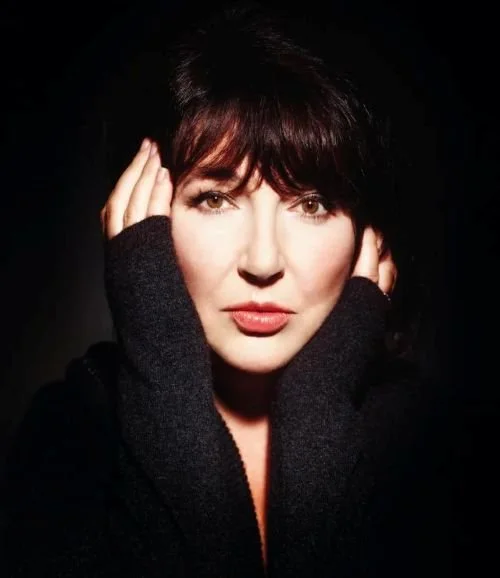
IN THIS PHOTO: Kate Bush in 2005/PHOTO CREDIT: Trevor Leighton
How Kate Bush’s Lyrics Mark Her Out As a Poet
__________
THERE is a thing with songwriters…
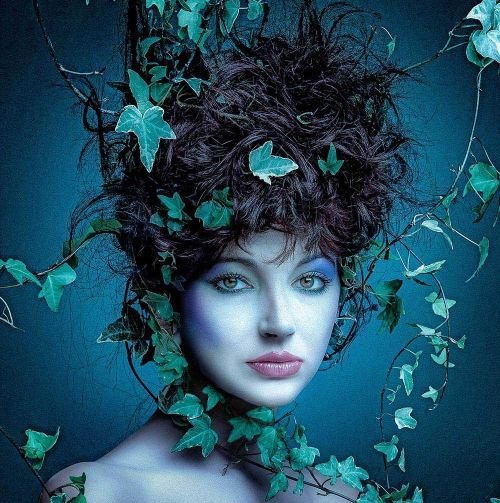
IN THIS PHOTO: Kate Bush in 1981/PHOTO CREDIT: Clive Arrowsmith
where they do not like talking about their lyrics and what they mean. I guess it is a cliché question and something that can seem reductive. The idea of songs, for many, is for the listener to get what they want from them. If you are told what the lyrics are about then it can take away the mystery. In many cases, artists do not want to reveal what the lyrics relate to, as it sort of defeats the purpose of writing songs. Having to explain what they are about. However, there are artists whose lyrics are so compelling and they write these rich and fascinating stories. Kate Bush is an artist whose lyrics are so fascinating. I was going to do an entire series where I explored the lyrics to various songs. Analysing them like poetry. Going through the lines and interpreting them. Maybe I will at a future date, though I want to frame Kate Bush as a poet. I think calling her a songwriter or artist is a disservice. In early interviews, people asked how she would like to be labelled. I think she said she was a dancer. Balking against being called an artist or a songwriter. I think of her as a director and producer. A creator and innovator. In terms of her songs, I do feel they are poems. You look at various lines and are blown away. Bush might not object to that, as her brother John wrote poetry and opened her eyes to it. Often quite dark or sexual, she was exposed to this extraordinary poetry. So advanced and powerful, she wrote poetry when she was at school. Even if some of her early attempts were not great, she definitely had a gift. That translated naturally into songwriting.
One might say that all songwriters are poets. I would disagree. There are a select few that have this ability to create these potent and tangible words. Write in such a way that you are transported into the song and the lines stay with you for so long. I feel I might expand on this, however, I have been spotlighting some of her songs in various features and am always struck by the words. You can buy her lyrics book, How to Be Invisible. This is a selection of Kate Bush’s songs, where you really get to focus on the lyrics. We do not discuss Kate Bush’s lyrics enough. The Guardian wrote a feature in 2018, where writers chose their favourite Kate Bush lyrics. There are some great examples. I love this one from Aerial’s A Coral Room: “My mother/And her little brown jug/It held her milk”. In terms of my favourite, or the one I think is most poetic, it is very hard to narrow it down. However, I have been thinking about her most recent album, 2011’s 50 Words for Snow. Seven beautiful tracks whose words are so powerful and stunning, I especially love what Bush writes on the final track, Among Angels. Going beyond the realm of songwriting and what her peers were producing, consider these lines: “And they will carry you o’er the walls/If you need us, just call/Rest your weary world in their hands/Lay your broken laugh at their feet/I can see angels around you”. My wider point is, rather than narrow down or define her, we must consider these different aspects of Kate Bush. I feel very strongly that she is a poet.
Like a truly great poet, Kate Bush touches the heart and soul. Even when she is being personal, there is something that is universal or can be understood by readers. Bring them into the poems, if that makes sense?! I have been thinking about these lines from All We Ever Look for from Never for Ever: “The whims that we’re weeping for/Our parents would be beaten for/Leave the breast/And then the rest/And then regret you ever left”. Not only do you dissect the lines and are fascinated by them. I think there is also a very strong visual hit. How you imagine scenes or images. How to Be Invisible is a wonderful book. However, there are so many examples beyond that you could examine. The final song from Aerial, the title track, is euphoric and epic. These lines are so striking: “Oh the dawn has come/And the song must be sung/And the flowers are melting/What kind of language is this?”. I am so keen to look inside the lines and explore deeper meanings. In a future feature, I am going to write why we need a podcast series where the songs and albums of Kate Bush are covered in more detail. There are one or two out there that relate to her music but, when it comes to taking apart songs, talking about events around particular songs and albums and that sort of thing, there is not too much out there. In 2018, The Guardian reacted to the news of Kate Bush releasing a book of lyrics. They argued that the songs and lyrics lose their magic and impact when written down:
“Not all of it does. The best way to test what sort of pop qualifies is to publish a book of your lyrics. Neil Tennant has a Faber volume on the way, entitled One Hundred Lyrics and a Poem. Ian Curtis had his immortalised as part of the same series. Now, Kate Bush is to join them with her own anthology: How to Be Invisible, published in December, with an introduction by David “Cloud Atlas” Mitchell.
Bush named her first hit after a school set text, which is a great way to get everyone to think you’re some kind of poet, the sort of person who reads for fun or something. She also wrote a lot of songs that need to be written down to be seen for their full oddness. Cloudbusting, don’t forget, is about a man struggling to recollect the time that his father was arrested for trying to build a rain-making machine. Yes. Breathing is written from the perspective of a foetus during nuclear war. Hounds of Love is about that picture of dogs playing poker. It isn’t, but you get the point. Even then, lines that work on record don’t always seem the same when written down. Her Mrs Bartolozzi is a deft sketch of the drudgery of the housewife, with dabs of Mrs Dalloway. But on the page, it’s hard to justify charging us £19.99 to read: “Slooshy sloshy slooshy sloshy / Get that dirty shirty clean / Slooshy sloshy slooshy sloshy”.
The difference is that once they’re presented on the page, you are forced to read the words top-to-bottom, whereas most good pop songs aren’t end-to-end pieces so much as elegant compilations of slogans”.
I would disagree with all of that. Even that slightly silly section from Mrs. Bartolozzi compels various thoughts, angles and views. You are affected by the way Kate Bush sings the lines on the record, through when you see the lyrics written down, there is this unmoving and static quality. You are seeing it as poetry rather than music. It allows you to think more widely and deeply about a song and its line. It creates this incredible power. Whereas a lot of Pop lyrics are hollow and generic, Bush is a writer who is a poet or screenwriter. Rich with characters and incredible and imaginative thoughts, Kate Bush did say in a 1980 interview how she admired Captain Beefheart and felt he was this natural poet. Something she has brought into her work. This fascinating and thought-provoking article from The Poetry Society from 2018 makes a case that Kate Bush is a poet. Or that her work feels like poetry:
“I’m going to make a rash assumption that you find the ‘are lyrics poetry’ debate as tedious as I do. In which case, that musicians P.J. Harvey and Florence Welch have both published books that feature their poetry may not have excited you all that much. Welch’s Useless Magic, published this summer, combines her lyrics and poetry with sketches and artwork. The Hollow of the Hand, a collaborative work of poems and photography by P.J. Harvey and Seamus Murphy, appeared in 2015. Now Kate Bush has published the first collection of her lyrics, How To Be Invisible. Unlike the other two books, Kate Bush’s is not explicitly positioned as poetry, though there is plenty to support the argument that that’s what it contains: list poems, blackbird song re-imagined in language, repetition and rhyme, even VisPo. My position is that lyrics need the music to reach their magic. My position is that Kate Bush has boundless magic.
How To Be Invisible takes its title from a song on Kate’s 2005 album Aerial. When the album was released, a review in the Observer described it as “an incantation to female self-effacement”, with the witches’ eye of newt speech from Macbeth rewritten as a spell for invisibility. ‘How to be Invisible’ was my spur: I took Kate’s “Stem of wallflower / Hair of doormat” lyric as the title for a woozy poem (published in The Poetry Review and in my recent collection). Kate’s incantatory lyrics became my own spell for super-heightened senses – a provocation for how you might experience the world free from a male gaze. More recently, Kate made her way into another of the poems in my book, where I found the lyric “Diving off a rock, into another moment” eking its way into the speaker of the poem’s mind. What might this “diving off a rock” be, if not a plunge into senses?
How To Be Invisible reveals the strange patterns of imagery and recurring motifs you’d notice in a poet’s collected works. One of my favourite of Kate’s lyrics, from the thrilling ‘Cloudbusting’, is: “You’re like my yo-yo / That glowed in the dark // What made it special / Made it dangerous / So I bury it and forget.” The invisible, the inexplicably arcane, is what scares, and delights, Kate most: in ‘The Ninth Wave’ sequence on Hounds of Love she’s “under ice”; on Aerial she magics herself invisible. There is the mercurial weather of her imagery: her sky and sea of honey, her fog, her thunder, her clouds busting into rain and a whole album musing on snow.
Then there is the role of colour in her songs. On the cover of Hounds of Love Kate is swathed in shades of violet (an almost glow-in-the-dark violet) which has my brain reaching for Sappho’s “violets in her lap”. The colours recall a scene from the film The Red Shoes (which inspired Kate’s 1993 album of the same name) in which ballet dancer Vicky Paige appears in a Hounds of Love-coloured jacket, her hair the deep autumn of Kate Bush’s. In one of her most tender songs, ‘A Coral Room’, Kate sings of her mother and her little brown jug: “Little brown jug, don’t I love thee?” she sings to a nursery rhyme melody. A popular poetry workshop exercise is to write a poem inspired by an object; I imagine a poem called ‘The little brown jug’. As I dream of a poet singing that line, the melody as an interruption to a poem, I feel a cascade of blood in my heart”.
Rather then me, yes, arguing tediously that music can be poetry, when it comes to Kate Bush, I am suggesting her music goes far beyond the page. Labelled as eccentric, weird and pigeonholed by so many, just listen through her studio albums and you have such a diversity of sounds and words. The way she writes lyrics is much more akin to poetry than traditional songwriting. In that you are arrested by her words and want to go deeper. When it comes to Kate Bush’s lyrics, I find them…
SO startling and spellbinding.