
FEATURE:
The Great American Songbook
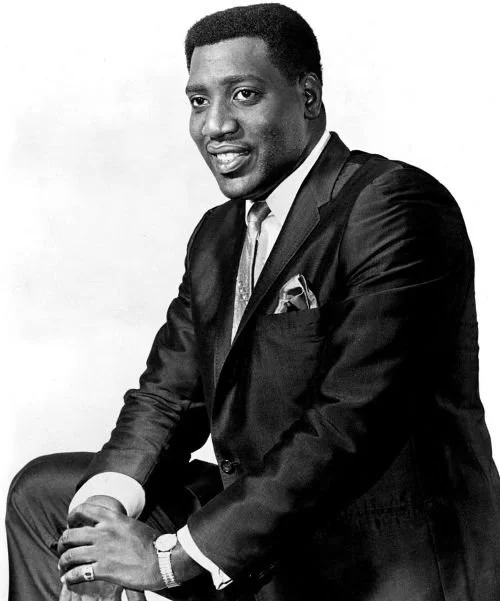
PHOTO CREDIT: The Everett Collection
Otis Redding
__________
I have written about…
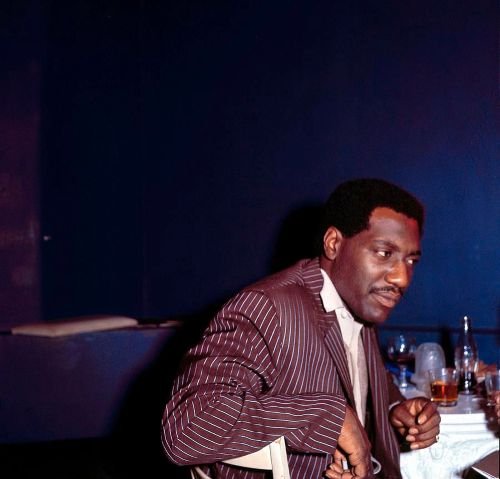
PHOTO CREDIT: Getty Images
Otis Redding before, but more in the context of specific albums. Now, I am including him in this The Great American Songbook. Before getting to a mixtape of twenty Otis Redding songs, I want to bring in an article from The New Yorker. They note how, even though he died at the age of twenty-six, Redding was beloved and regarded as one of the greatest and most important singers of his generation. He created a revolution in his brief life:
“In an age of pop culture replete with African-American superstars like Michael Jackson, Prince, Usher, Kanye West, and Jay-Z, it is hard for modern audiences to appreciate how revolutionary the self-presentations of soul singers like Otis Redding were when they first came on the scene. Prior to the mid-fifties, it had simply been taboo for a black man to perform in an overtly sexualized manner in front of a white audience in America. (Female black entertainers, by contrast, had been all but required to do so.) In the South, especially, the social psychology of the Jim Crow regime was founded on a paranoid fantasy of interracial rape that was institutionalized by the press and popular culture in the malignant stereotype of the “black brute,” which explicitly sexualized the threat posed by black men to white women and white supremacy. Born in Georgia in 1941, the same year as Emmett Till, Otis Redding grew up in a world where any “suggestive” behavior by a black male in the presence of whites was potentially suicidal.
This dire imperative began to change with the proliferation of black-oriented radio stations, in the nineteen-fifties, which enabled rhythm-and-blues singers like Fats Domino, Little Richard, and Ray Charles to sell large numbers of their records, sight unseen, to white teen-agers. Yet it was significant that these early black crossover stars were piano players, who performed behind keyboards, and whose sexuality was further qualified, in Domino’s case, by his corpulence; in Charles’s case, by his blindness; and, in Richard’s case, by the effeminacy that he deliberately played up as a way of neutering the threat of his outlandish stage presence. It was no accident that the one black crossover star of the nineteen-fifties who made no effort to qualify his sexuality, the guitarist Chuck Berry, was also the one black star to be arrested, convicted, and imprisoned, in 1960, on a trumped-up morals charge. By that time, a new contingent of black singers led by Sam Cooke and Jackie Wilson was making its mark on white listeners with a more polished style of self-presentation that became the model for Berry Gordy’s carefully choreographed Motown groups.
Otis Redding was something else again. When he came up, in 1962, he was a completely unschooled performer who stood stock still onstage as he sang the pining, courtly ballads that brought him his first success. Over time, however, as his repertoire broadened to include driving, up-tempo songs, Redding found a way to use his imposing size and presence as a foil for his heartfelt emotionality, eschewing the conventions of graceful stagecraft in favor of a raw physicality that earned him comparisons to athletes like the football star Jim Brown. Marching in place to keep pace with the beat, pumping his fists in the air, striding across stages with a long-legged gait that parodied his “down home” origins, Redding’s confident yet unaffected eroticism epitomized the African-American ideal of a “natural man.” White audiences of the time had never seen anything like it. The effect was so powerful that Bob Weir, of the Grateful Dead, said, of Redding’s performance at the Monterey Pop Festival, “I was pretty sure I’d seen God onstage.”
And then he was no more. Redding’s sudden death thrust him into the ranks of a mythic group of musical performers that included Bix Beiderbecke, Robert Johnson, Hank Williams, Charlie Parker, Buddy Holly, Patsy Cline, and Redding’s own favorite, Sam Cooke––artists whose careers ended not only before their time but in their absolute prime, when there was every reason to expect that their finest work was yet to come. (Eerily, within a few years, he would be joined in this company by two of his co-stars at Monterey, Jimi Hendrix and Janis Joplin.) Redding’s record labels, Stax and Atlantic, culled enough material from the unmixed and unfinished tracks he recorded in the fall of 1967 to release a series of singles and albums in the years ahead. Some of these records, such as the singles “Hard to Handle,” “I’ve Got Dreams to Remember” (co-written with his wife, Zelma), and “Love Man,” stood with his very best work. But, inevitably, they still only hinted at what might have been. The informality of the Stax studio had afforded Redding the freedom to function, uncredited, as the producer and arranger on the records he made there. There is no question that he would have continued in this vein, blazing a path that musical auteurs like Sly Stone, Marvin Gaye, and Stevie Wonder would follow with the self-produced albums that established them as mainstream pop stars, in the late nineteen-sixties and early seventies.
In 2007, forty years on, a panel of artists, critics, and music-business professionals assembled by Rolling Stone ranked Otis Redding eighth on a list of the “100 Greatest Singers of All Time.” This placed him in a constellation of talent that included his contemporaries Aretha Franklin, Ray Charles, Sam Cooke, Marvin Gaye, Stevie Wonder, and James Brown, who together represented the greatest generation of church-bred African-American singers in the history of popular music. What distinguished Redding in this august company was the heartbreaking brevity of his career. In his five short years as a professional entertainer, his incomparable voice and vocal persona established him as soul music’s foremost apostle of devotion, a singer who implored his listeners to “try a little tenderness” with a ferocity that defied the meaning of the word. His singular combination of strength and sensitivity, dignity and self-discipline, made him the musical embodiment of the “soul force” that Martin Luther King, Jr., extolled in his epic “I Have a Dream” speech as the African-American counterweight to generations of racist oppression. In the way he looked and the way he sang and the way he led his tragically unfinished life, this princely son of Georgia sharecroppers was a one-man repudiation of the depraved doctrine of “white supremacy,” whose dark vestiges still contaminate our world”.
Inspiring generations of artists through multiple genres, Otis Redding’s legacy is immense and unending. Most of you will probably know about Redding and his bigger hits. However, I shall bring in a couple of lesser-known songs. Even though we lost this great man nearly six decades ago, it is clear that his…
LEGEND lives on.