
FEATURE:
Leaving It Open
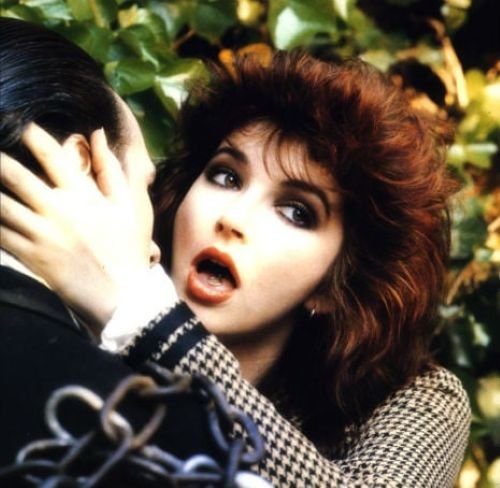
PHOTO CREDIT: John Carder Bush
Kate Bush and Technology Changing Her Voice and Opening Possibilities
__________
ALTHOUGH Kate Bush…
changed her voice naturally and did move away from the tones and styles of her earliest albums, The Dreaming is the first album where you can really feel Bush’s voice shift. I think that technology was responsible for that to an extent. In this interview from Electronics & Music Maker published in October 1982, there was this discussion about Bush’s vocal style and how technology helped shape that. I do love how there was this greater experimentation and depth. I wonder whether Bush’s greater fascination with percussion and technology such as the Fairlight CMI meant that her voice naturally lowered. Even if there are moments where her voice is higher, for the most part, you can feel a shift from 1980’s Never for Ever:
“How did you get on with rhythm machines?
It took me quite a while to get used to working with them because they seemed very limiting. I like rhythms to 'move', especially in the ballad songs where the tempo would ebb and flow with the words, stopping and slowing down as necessary. Suddenly, having to work with a very strict rhythm, I found it almost impossible at first to tie myself down to the rigid beat. Once I had got used to this, I found that I could work 'in between' the beats.
Do you work up from the root and then add the third and the fifth?
No, I never work that way — I just go for what sounds right, and never think technically about thirds and fifths, because very often I think fourths and sixths could be better. I like to use parallel movement for a more medieval feel and I also sing unrelated notes against the harmony, say dropping semitones, which help to create a lot of tension. But I do try to avoid thinking about the technical things when I'm working — it's afterwards that I like to think about those aspects.
For the male voice parts, I just sing to them what I want them to do and I tell them the particular phraseology and timing, then they go out and do it, while I oversee it in the mixing room. I'm lucky in that they're not really session singers but more friends with good voices.
Your vocal melodies are very original and there's a recognisable style of swooping pitch glissandos, acciaccatura vocal decoration plus a preference for 3rd/root jumps. Then of course you have an extremely wide pitch range.
In fact, I've stretched the pitch range over the years. What I used to do in my earlier performing was to go for notes higher than I could reach easily in the song, so by the time I'd written the song and played it for a good few days I could actually reach those notes. By making my writing more acrobatic than I was, I was stretching myself to it — it's something that's grown over the years. Definitely my voice has got stronger in the last two years, because on 'The Dreaming' I was so aware of the difference in my voice. Not only is it much stronger, but it is also more controlled
It has been frustrating for me in the past because my voice has never sounded the way I wanted it to and so whenever I was listening to the albums it was unbearable for me. It was not just the weakness but the style of it. I've always tried to get my voice the way it's starting to be now. Because the songs always controlled me, they were always tending to be in a higher range — it sounds strange but I think that when you write songs, very often you don't have control of them. You can guide them, but they have their own life force really.
My use of decorative notes probably comes from Irish music — my mother's Irish — and in my childhood my brothers were very into traditional music and we could hear it in the house all the time. The airs and inflections are beautiful and I love Irish singing. On the 'Night of the Swallows' Liam O'Flynn plays the Uillean pipes and the penny whistle, to give this track an Irish flavour.
I think my use of thirds is because in a lot of songs there are times when I want it to sound like someone actually talking rather than singing. There are things that you say that often people don't put into songs and I quite like to use those lines. Quite often when people speak they naturally use the 'third to root' pitch change in their voices — little tension marks that take it up a couple of tones.
Another interesting aspect of your singing style is the way you change your voice tone.
I purposely try to do that because I do feel that every song comes from a different person really, so this is one way of making something different about it. I like to 'create' voices — I've been trying this over the years. I often find that I do 'word painting' without realising and my singing/speech style probably comes from the Irish influence again.
Sometimes I don't think the words are important and I'll just use sound shapes, which establish the mood. The lyrics of the lead vocal are awfully important to me while the backing vocals are very often just trying to create a picture (as in 'The Dreaming', with "na na - cha chan cha cha -") I hardly ever use the Vocoder — only once for a tiny effect on 'Babooshka' (Never For Ever LP) to make the drum sound like the title.
We've been experimenting a lot with effects units — particularly the flanger, to get different textures with the voices. In several of the songs there are at least four or five layers of voices. In order to have them not sounding like one clump, we've had to try and separate them by treating them and playing them carefully in the stereo field. Some have more reverb or more echo than others too”
As producer on The Dreaming and having all this technology at her fingertips, Kate Bush did have more creative flexibility. Not just in terms of giving her voice more dynamic range and adding different textures. The interviewer noted how The Dreaming is an album with a much stronger vocal feel. Bush said how vocals have always been important, though they are more at the forefront here. Maybe it is not only her vocal range that was strengthened and widened by technology. In terms of how she could manipulate her voice and create this cast of characters. Not that Bush used the Fairlight CMI to alter her voice too much. However, she was able to manipulate, process, and layer her vocals in innovative ways, treating her voice as an instrument for experimental soundscapes and theatrical effects. Also, when thinking about the kit Bush was using and the effects available to her, it did give her music greater diversity and nuance. It was present on Never for Ever, but also strongly continued on 1985’s Hounds of Love. Technology did give Bush license to distort, loop, reverse, and reposition her vocals. Creating these new characters and conjuring all these different emotions and angles, she had a lot more freedom than on previous albums. Bush did naturally give her voice a lower and more masculine energy. Something more percussive and edgier. The Dreaming was the first album where Bush got her voice to where she wanted it to be. In that Electronics & Music Maker interview, Bush did say “It has been frustrating for me in the past because my voice has never sounded the way I wanted it to and so whenever I was listening to the albums it was unbearable for me”. The Dreaming has her largest cast of characters to date.
Rather than her pushing away from the personal, I think that Kate Bush might have been trying to affect a style on her first few albums. Even if she was younger and had a higher pitch to her voice, I do feel like Bush was maybe expected to be more feminine to fit in. Few female artists in the mainstream who had the sort of vocal tones and range we hear on The Dreaming. Being piano-based, the vocals then suited the style of the songs. However, pushing more away from the piano and utilising the options electronic technology afforded was greatly beneficial to Bush’s songwriting. In terms of what she could write. Broader and more experimental, I do feel like the vocals on The Dreaming are fascinating. Maybe technology allowed Bush to find peace in herself. Definitely when it came to her voice. As this article from, Classic Pop explains, “She even, finally, liked hearing her own voice. Often “consciously aggressive”, Bush’s themes, ever-darkening since Lionheart with their “grotesque beauty” and “sad humour,” were matched by the sound”. Bush definitely did stop working with musicians and leaned entirely on technology. Instead., she had at her fingertips this arsenal of sounds and effects. Combined with that was this determination from Bush to push her voice and break from the past. In September, Classical Music discussed The Dreaming. How Bush was more like an actor in terms of how she wrote and performed.
She inhabited all these characters and, with it, there were more accents, inflections and a broader range. It is really arresting and impressive to absorb and muse about. Consider how different Leave It Open sounds compared to Get Out of My House:
“Where her earlier albums often centred on piano-led songs embellished with lush orchestration, The Dreaming was built from snippets of manipulated sound: didgeridoos, processed percussion, donkey brays, glass smashing, and voices twisted into strange new forms. It wasn’t just music – it was sound design as pop art.
Bush’s songwriting on The Dreaming was equally audacious. Each track functions like a self-contained movie, often narrated by unusual characters. 'There Goes a Tenner' channels the wide-eyed panic of a botched bank heist. 'Pull Out the Pin' adopts the perspective of a Vietnamese soldier confronting an American invader, with the refrain “I love life” snarled against pounding drums. The title track merges Australian Aboriginal mythology with a claustrophobic sonic landscape of didgeridoo drones and samples that crash like thunder.
Bush uses her voice like an actor uses a costume, morphing from character to character: shrieking, whispering, laughing, or breaking into exaggerated accents. It’s a record less concerned with melody or polish than with total immersion”.
That idea of total immersion. I had never really considered that. How Kate Bush wanted to create a soundscape or this aural experience, rather than a traditional album. I think that Bush approached her albums like films. The Dreaming is her first huge leap. A conscious shift in her vocal tone to a lower register, technology did help facilitate this. It also meant that Bush could manipulate and bend her voice. I have spent quite a bit of tiume with The Dreaming recently. Rather than speak about the brilliance of the album, instead, I wanted to explore the technology and how Bush’s voice deepened and widened. It is a fascinating change. Maybe inspired by artists like David Bowie and Peter Gabriel for different reasons, The Dreaming was an album that established Bush as a true innovator and one of the most distinct artists of her generation. If critics were baffled by The Dreaming in 1982, in years since, there has been more love for the album. The masterpiece deserves…
ALL the love in the world.