FEATURE:
Kate Bush: Them Heavy People: The Extraordinary Characters in Her Songs
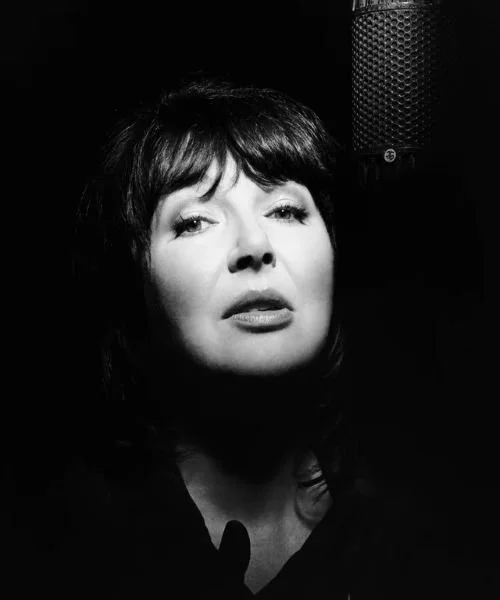
IN THIS PHOTO: Kate Bush in 2005, in a promotional image for Aerial/PHOTO CREDIT: Trevor Leighton
James (James and the Cold Gun)/Joan of Arc (Joanni)
__________
THIS series…
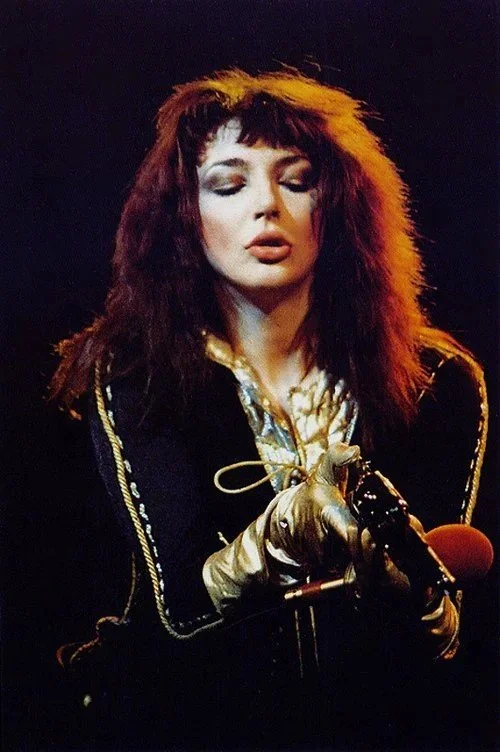
IN THIS PHOTO: Kate Bush performs James and the Cold Gun during 1979’s The Tour of Life/PHOTO CREDIT: Peter Still/Redferns
finds me exploring characters from Kate Bush’s music. In this part, I am going to 1978 and 2005. In future features, I am going to look at other albums. For now, I want to select one (of the many) character from her debut, The Kick Inside. Also, one real-life character from her 2005 double album, Aerial. I am starting out with the titular character from a song that was going to be the lead single from The Kick Inside. If EMI had their way, James and the Cold Gun would have been the debut single. I think it would have charted in the top twenty in the U.K., though it would not have been a number one like Wuthering Heights. That was Kate Bush’s choice. She fought to have Wuthering Heights as the single. However, James and the Cold Gun is significant. It is the first song from the second side of her album. Though there was no music video for it, Bush did perform it multiple times. When she was with the KT Bush band prior to completing The Kick Inside, she and her bandmates (Del Palmer, Brian Bath and Vic King) played that song. Bush camping it up and being theatrical. Imitating gunfire and shooting the audience! A standout and staple from those sets, she did also perform it for The Tour of Life in 1979. When Bush was performing around the U.K. and Europe for The Tour of Life, the set would typically be about twenty-four songs. Some occasions when there were fewer songs, though it was a mammoth set! Prior to the encore, James and the Cold Gun was performed. Originally, there was the idea of having fake blood and making it more authentic. However, staining the stage and having to clean it would have been too much. What you do get is Bush dressed in this sort of catsuit or sleek outfit and wielding a fake gun.
Perhaps problematic is an artist did that today, it was Bush being this killer. Shooting down those on the stage in this big number. A heightened and more dramatic version of what she and the KT Bush Band did in pubs and clubs. She would also wield a gun for The Wedding List. She performed that live for her 1979 Christmas special, Kate. Regarding James and the Cold Gun in that earliest incarnation, this is what the late Del Palmer said: “She was just brilliant, she used to wear this big long white robe with coloured ribbons on or a long black dress with big flowers in her hair. She did the whole thing with the gun and [the audience] just loved it. She’d go around shooting people”. This Western cowgirl. It must have been extraordinary! In terms of the live version, guitar was played by Brian Bath. Del Palmer on bass. Preston Heyman behind the kit. The studio version, which some say is weaker and lacks that punch and spectacle, has Stuart Elliott on drums, David Paton on bass and phenomenal guitar from the late Ian Bairnson. I love the album version. Even if it is not considering one of her best songs, I think it is a perfect way to open the second side of The Kick Inside. This is what Dreams of Orgonon noted in their feature:
“The song itself is a rollicking ballad, staying in B flat minor for its entirety. “James” is one of the sillier Kick Inside tracks, and ostentatiously lacks depth. This isn’t a flaw as such — it’s a perfectly serviceable explosive number. Bush sings a Western pastiche, telling of “Genie, from the casino,” who’s “still a-waiting in her big brass bed.” The song is jokey in tone, with Bush urgently warning the hero James “you’re running away from humanity/you’re running out on reality!” She describes a Western that’s been abandoned by its hero. Her strategy of putting self-awareness into genre characters has been lightly subverted. In “James and the Cold Gun” she presents a genre that’s fallen apart in the absence of a protagonist. In his absence, Bush comes to both use his genre as a playground and mourn his departure”.
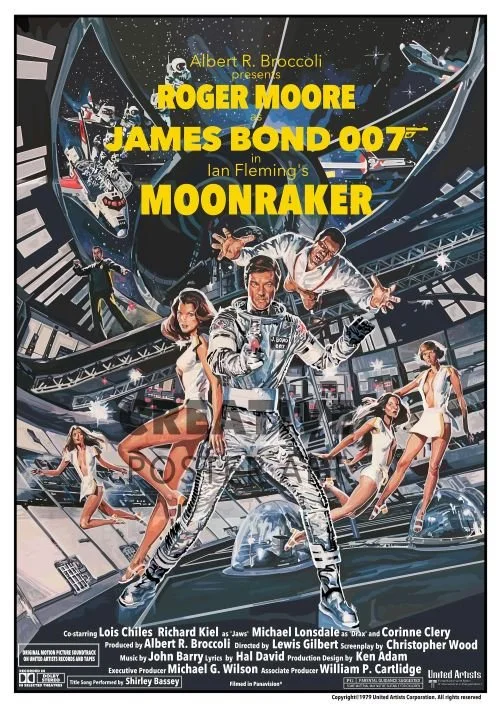
Kate Bush was approached to provide the title song for the 1979 James Bond film, Moonraker, but declined as she was busy with The Tour of Life. It would have been fascinating seeing what she did. I could have imagined an all-time great Bond theme. However, Bush has explicitly said the James in James and the Cold Gun was not James Bond. It is forgivable to read into it, as it does seem like a spy song. Bush was hugely inspired by T.V. and film from the start. Wuthering Heights influenced by her seeing a T.V. adaptation of the novel. However, James and the Cold Gun might be more fantasy that reality. “You're a coward James/You're running away from humanity/You're running out on reality/It won't be funny when they/Rat-a-tat you down”. Everyone will have their image of who the titular James is. This song was always going to be included on The Kick Inside, as it was this standout of the early live shows. Translating it into the studio was a little tricky. Vic King thought he would be playing on The Kick Inside. When there were some four-track demos laid down at De Wolfe studio in London, where James and the Cold Gun was included, Bush had a heavy cold and it gave her voice a deep or more mature sound. That notion to have the tempo slowed to half-speed at the end and then have the guitar solo was from King. Maybe there was discussion in those demo sessions that the KT Bush Band would feature on The Kick Inside. However, producer Andrew Powell went for more experienced players from bands like Pilot. Those with more studio experience. It is interesting what Graeme Thomson says in Under the Ivy: The Life and Music of Kate Bush about The Kick Inside and where it slotted. In 1978, Punk was all the rage in the U.K. Similar sounds and energy in the U.S. Disco was on its last legs and Pop was perhaps less important or relevant than it would become. Kate Bush did not really fit in with what was around in 1978. Thomson notes how Punk went Pop in 1978. The Kick Inside is a bit Sex Pistols: “a bit flared, a bit hairy, weed rather than speed, a little bit prog-rock, even, with its floating melodies, classically influenced piano, shifting time signatures, tight musicianship and poetic, occasionally cosmic lyrics”.
Thomson goes on to theorise that the “big brass bed” in James and the Cold Gun is “part of the furniture in (Bob) Dylan’s ‘Lay, Lady Lay’”. One other thing Thomson comments on is the link between The Wedding List and James and the Cold Gun. Bush’s fascination with guns, outside of their deadly purpose, and a link between death and sex. If The Wedding List is loosely inspired by François Truffaut’s 1968 film, The Bride Wore Black, James and the Cold Gun seemingly did not stem from the screen or page. Bush and her relationship with guns is perhaps underdiscussed and known. She has described them as beautiful and fantastic, though not for violent reasons. Maybe the glamour or danger. There has been more than one publicity photo of her brandishing a gun, each time taken by her brother, John Carder Bush. One at East Wickham Farm. Another where she is posing like a spy sexily holding the gun. There might be more examples, but I feel Bush’s connection with guns is more about sex than death. James and the Cold Gun is not romanticising guns or espionage even. It is almost about this confused, tortured, washed-out and cowardly spy: “Where lies your heart?/It's not there in the buckskin baby/It's not there in the gin that makes you laugh long and loud”. I have not even mentioned a heroine in the song, Genie (“Remember Genie, from the casino”), who seems to be the love interest. One who is “still a-waiting in her big brass bed”. If Bush disagreed passionately with EMI about James and the Cold Gun, I do think that it is a fantastic song. EMI thinking its commercial appeal would make it a perfect first single. Bush wanted something more personal, unusual and enduring. Not that she is against James and the Cold Gun. It is obviously a very special song for her. It was one of four songs for the 1979 On Stage E.P. Bush produced that with her co-producer on Never for Ever (1980), Jon Kelly. In terms of its subject, even if I think it is nodding to James Bond, Bush refutes this. The mystery makes it this alluring and intriguing song. The listener can picture who James is and what he looks like. What happened to him. He is cast in this film, though not one as exciting and flawless as a James Bond film in the late-1970s. Instead, this is a messy, dirty, drunk and almost anti-Bond take. It is interesting that Wuthering Heights and James and the Cold Gun are paired together on The Kick Inside. The album’s first single beautifully closes the first side, whilst EMI’s (losing) choice opens the second.
The second character I want to talk about is another ‘J’. Featuring on an album released twenty-seven years after The Kick Inside came out, Joanni is based around Joan of Arc. If James and the Cold Gun is seen as one of the less essential and impactful songs from The Kick Inside (wrongly), then Joanni has been highlighted by several critics as a forgettable cut on Aerial. Going back to Graeme Thomson and his excellent Kate Bush book. He feels Joanni struggles to engage and is not a song that would naturally be a favourite. However, if critics in 2005 dismissed Joanni, then many would eat their words in 2014 when it featured as the third song – after Lily and Hounds of Love – during Before the Dawn. Bush opening the residency sets with Lily. This prayer and mantra that would guide the audience on this ‘journey’ they were about to have. Then one of her biggest songs, Hounds of Love. Two big and epic songs that very much get the audience excited, engaged and enthralled. Joanni could have been left out or featured low down in Act II. Instead, it was the third song. A pitch and dynamic shift, its prominent position suggests Bush has love for the song and feel that perhaps it could better come to life on the stage. I was not at any of the Before the Dawn shows at Hammersmith in 2014, so I am not sure how she staged Joanni. Graeme Thomson, talking about this “middling, somewhat hesitant song” actually “gained vigour in this context”. He was there to see Bush and her band perform this song. One that has “the sampled peal of the bells of Rouen cathedral chimed as Bush hummed and declaimed in French”. Its inclusion was to showcase the power of feminine power and spirit. Aerial’s second disc, A Sky of Honey, and Hounds of Love’s conceptual second side, The Ninth Wave, were the focal points. Bush mounting both of these incredible suites on stage for the first time. Other songs from Hounds of Love and Aerial featured alongside the odd cut from The Red Shoes and even 2011’s 50 Words for Snow.
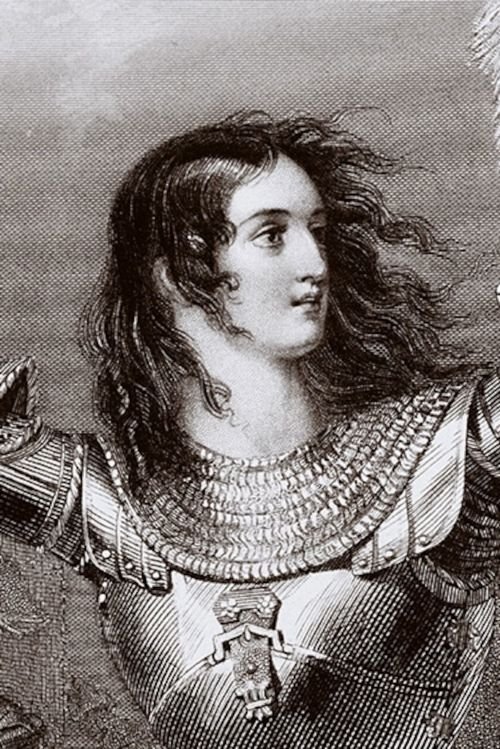
IN THIS IMAGE: Joan of Arc
However, I would have loved How to Be Invisible or A Coral Room to feature. Bush inhabiting Mrs Bartolozzi fully – a song I will focus on for another part of this feature -, and seeing that song brought to life with washing lines, clothes blowing in the wind; maybe a washing machine projected on a screen and there being this fantastical and erotic imagery (Disney fusing with French New Wave cinema). It would have been incredible, though she had to drawn the line somewhere. Joanni’s inclusion feels more important and personal. That highlighting of the strength and courage of a historical woman seems to mirror something about her. Maybe how she was overlooked and criticised a lot in her career. Mocked and subjected to misogyny. Joanni goes beyond the pages of history and seems to speak more widely. A song The Quietus paired with π – called “textural mood pieces” from Aerial -, I do think this is an underrated song. Whereas James and the Cold Gun makes one discuss Kate Bush and her love for film and how that inspired her, Joanni is more about her exploration of historic characters and older days. Many might think a lot of Kate Bush’s songs were about decades and centuries past. Wuthering Heights was written by Emily Brontë and released in 1847. Joan of Arc lived between 1412 and 1431. Burned at the stake aged nineteen for Rouen, Normandy, I think back to The Kick Inside. Bush was nineteen when that album was recorded. Early interviews were often sexist and patronising. I think Joanni also might nod to how Bush in her early career or how women are often beaten and ostracised. Subjected to misogyny and huge sexism. Seen as inferior, evil or witch-like. Joan of Arc was canonized as a saint by Pope Benedict XV on 16th May, 1920. Her canonization in 1920 officially recognised her as a saint, following a posthumous retrial that cleared her of heresy charges from her 1431 execution. Maybe Bush’s critical acceptance and wider acclaim around 1985 for Hounds of Love was her version of being canonised.
I don’t think Bush’s connection with periods of history and historical characters is discussed enough. When hearing Joanni and the time period it is inspired by, I think about Oh England My Lionheart from 1978’s Lionheart, and how it seems to be this vision of England that is perhaps romanticised and a vision of the past. Images of countryside and the open. Classic culture and historical images. A mythical, idealised past and national identity. But is also referencing Richard the Lionheart (Richard Cœur de Lion) who died in 1199. Earlier than Joan of Arc, it is interesting how Bush has woven history into some of her songs. I might feature Oh England My Lionheart in one (of the many) parts of this series. I love the evocative nature of Joanni’s lyrics: “Who is that girl? Do I know her face?/Who is that girl?/Joanni, Joanni wears a golden cross
And she looks so beautiful in her armour/Joanni, Joanni blows a kiss to God/And she never wears a ring on her finger/Joanni, Joanni, Joanni, Joanni blows a kiss to God/And she just looks beautiful in her armour/Beautiful in her armour”. The fact that she switches to French (as Joan of Arc was French). Not the first time. She sang in French for her 1983 single, Ne t'enfuis pas (Don’t Run Away); the French-language version of The Infant Kiss (from Never for Ever), Un baiser d'enfant. Let’s not forget her brief but hugely impactful “Jeux sans frontières” from Peter Gabriel’s Games Without Frontiers from 1980. I wanted to feature Joanni in this character-focused feature series, as it is a case of Bush spotlighting a real figure. A vastly significant one.
Joan of Arc is important because she was a peasant girl who, claiming divine guidance, became a teenage military leader, turning the tide for France in the Hundred Years' War by lifting the siege of Orléans and leading to King Charles VII's coronation. Making her a powerful symbol of French national identity, courage, faith, and female leadership, despite being burned as a heretic at nineteen. Her story transformed French morale and consciousness, inspiring generations and solidifying her status as a French national heroine and saint. There are reasons why the Maid of Orléans made history:
“Whether or not Joan of Arc was truly guided by angelic voices it remains utterly remarkable that a teenage peasant girl from a small town would be able to have an audience with a king – let alone convince him be allowed to lead his armies into war. Women in the 1400s could only hold power through their royal or religious standing, and with neither of these Joan of Arc required help in order to make her way into the court and onto the battlefield. Several fellow women rose to her assistance, including King Charles VII’s mother-in-law, Yolande of Aragon, who helped her to see the king. Joan of Luxembourg supported her when she was captured, and Anne of Burgundy insisted that Joan of Arc was a virgin at her trial. The first female court writer for Charles VII, Christine de Pizan (who was herself defying traditional gender roles as a court-employed widow), compared Joan of Arc to female emancipators in the Bible, and claimed she ‘had a heart greater than any man’s’. Despite Joan of Arc’s achievements, both her friends and enemies would see her powers supplied by either divine or evil forces, rather than by the equal abilities of her gender”.
If James and the Cold Gun was a song featured three songs from the end of Kate Bush’s 1979 tour and is more about fantasy and imagination but also compels deeper thought about Bush’s connection and association of guns and danger to sex. A whole psychological side that is wonderfully fascinating. Joanni was featured, conversely, three songs from the start of her 2014 residency, Before the Dawn, and I think should make us think more deeply of one of the most important women in history. Two disparate and very different characters, they featured on albums twenty-seven years apart, yet they both showcase Kate Bush’s unorthodox approach to characters and songwriting. I am not sure of many other artists who pull together such a wide-ranging cast of characters. And it is a ‘cast’. In that, with these two examples, Bush is a filmmaker and auteur. Someone who writes songs with a more filmic lens that a narrow, personal or commercial one. If James and the Cold Gun and Joanni are seen as minor works in her staggering and peerless catalogue, pick them apart and examine them, and I feel you get something richer, more substantial and layered than critics have given them credit for. I think the title character from these extraordinary songs should lead people to re-discuss the original songs…
WITH fresh eyes and ears.