FEATURE:
Life’s What You Make It
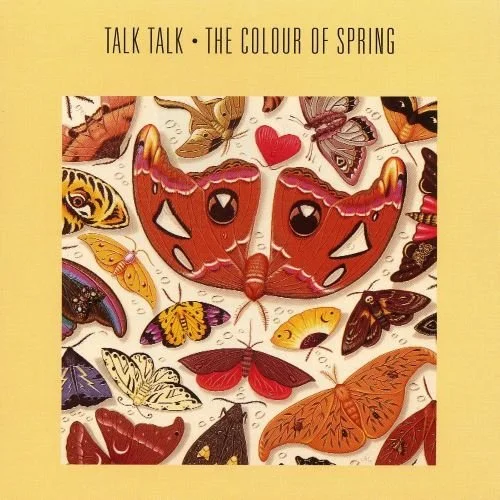
Talk Talk's The Colour of Spring at Forty
__________
IF some feel that…
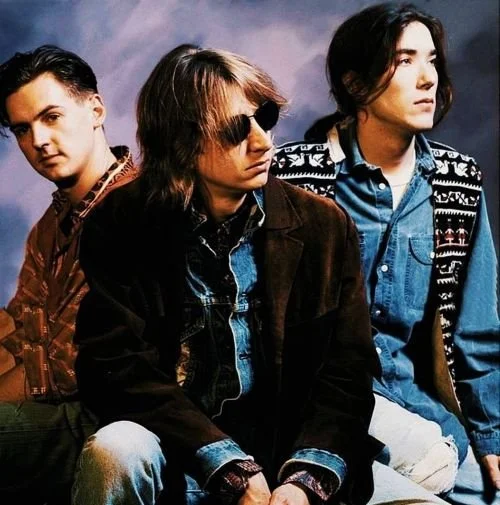
1988’s Spirit of Eden is the best and defining album from Talk Talk, I think that The Colour of Spring is their peak. Released on 17th February, 1986, it was the third studio album from the band. Led by Mark Hollis, who we sadly lost in 2019, The Colour of Spring is a masterful album that should be heard by everyone, so important and phenomenal is it. Life’s What You Make It, the lead single from The Colour of Spring, one of the all-time best Talk Talk songs. There are some features and reviews that I want to get to. I am starting out with this excellent and compressive feature from Classic Pop from last year. Even though they get the release date wrong – they say it was released in March 1986, but it was 17th February -, it is interesting reading how Talk Talk followed 1984’s It’s My Life:
“The band took a year out to record the next album and a welter of session players were drafted in, such as Steve Winwood, guitarist Robbie McIntosh, bassist Danny Thompson and harmonica player Mark Feltham. The result would be a far more organic sound, with a sonic direction that would come to dominate their music from that point on.
Hollis and Friese-Greene spent the first four months of 1985 writing the songs, with the band then joining them in the studio to start laying down parts.
“At first, we were spending 12 hours a day, six days a week in the studio,” Hollis told the Glasgow Evening Times in February 1986, “then towards the end we gave ourselves the weekends off. Trying to stay fresh is the most difficult thing on such a long project.”
During recording, Hollis was listening to music by impressionist classical composers such as Satie, Debussy and Milhaud. Bartok in particular had a profound influence on the album. “Bartok’s string quartets… I’d never imagined something so beautiful existed,” he said. “Bartok has an impact on the arrangements on The Colour Of Spring.”
Instrumentally, acoustic piano and Hammond organ would prove the mainstay of the keyboard work on the album, with the highest-profile guest musician on the album, Steve Winwood, contributing some stunningly atmospheric parts on the Hammond.
Some more obscure instruments would also feature, such as the Variophon, an electronic instrument invented in 1975 by researchers at the University of Cologne. As the band worked on the album, they employed an eclectic range of keyboard instrumentation, such as Mellotron and melodica. But they resolutely drew the line at modern synth technology.
“In terms of the first two albums and the live field, synths are simply an economic measure,” Hollis told Electronics And Music Maker magazine in 1986. “Beyond that, I absolutely hate synthesisers… if they didn’t exist, I’d be delighted.”
It was a view reinforced by Friese-Greene, who was vehement on the subject of digital music technology. “To me, the idea of MIDI’ing up a piano is just plain sick. MIDI is a four-letter word, I can’t take it seriously at all. There’s really nothing printable I can say about it.”
In the year preceding the recording of The Colour Of Spring, Talk Talk spent nine months on tour. Hollis always highlighted the enjoyment that the band got from the “immediacy and excitement” of playing live. But he stressed that recording remained paramount.
“We’re not interested in dashing off a few tracks which will be forgotten in a couple of months,” he said. “When you’re trying to achieve subtlety and depth in what you do, it takes time…”
The Colour Of Spring was released in March 1986 to widespread critical acclaim from all corners. For those who had already written the band off as bandwagon jumpers and derivative synth-pop has-beens, it was an unexpected revelation.
Here was a genuine landmark release, ethereal and enigmatic with a haunting, fragile melancholy. Powerful, spacious rhythms combined with rich instrumental textures, all topped by Hollis’s pained and deeply moving vocals.
Talk Talk had created a sound that defied genres, drawing on jazz, classical, folk and pop, yet without ever falling into one distinct style.
The Colour Of Spring went on to become the band’s biggest-selling album, reaching No.8 in the UK charts. Life’s What You Make It, with its rolling piano riff, was the album’s sublime highlight, and became an international hit, expanding the band’s global fanbase and earning Talk Talk their third US hit single.
Commercially, The Colour Of Spring would prove to be Talk Talk’s most successful album, but for all its stellar achievements, their creative peak was yet to come. They would go on to release Spirit Of Eden and Laughing Stock, critically lauded works that many regard as their finest creative achievements.
Talk Talk disbanded in 1992 and Mark Hollis retired from music, choosing instead to live quietly with his wife and family in Wimbledon. Save for a self-titled debut album and a handful of appearances over the years, that’s precisely what he did.
In an interview in 1982, Hollis remarked that: “I want to write stuff that you’ll be able to listen to in 10 years’ time”. With The Colour Of Spring, and the two albums that followed, he produced a breathtaking body of work, one that will endure for a great deal longer than that.
Like all the best artists, Mark Hollis understood instinctively that what you leave out is often far more important than what you put in. “In some ways, I like silence more than I like sound,” he said. He also recognised that technical proficiency is overrated. “To me, feel is the most important thing, not technique. Take all that soul and gospel stuff; that’s got incredible feel, but it’s not necessarily good musicianship”.
I want to move to a feature from 2019 that goes deep with Talk Talk’s The Colour of Spring. I am especially interested in the section where it discusses the legacy of this album. It is interesting hearing how Talk Talk very much took against the fashion of using synthesisers. Pretty dominant in terms of the sound of the mid-1980s, they would very much eschew that in terms of something more natural-sounding and acoustic:
“In terms of the first two albums and the live field, synths are simply an economic measure,” Hollis told Electronics And Music Maker magazine in 1986. “Beyond that, I absolutely hate synthesisers… if they didn’t exist, I’d be delighted.”
It was a view reinforced by Friese-Greene, who was vehement on the subject of digital music technology. “To me, the idea of MIDI’ing up a piano is just plain sick. MIDI is a four-letter word, I can’t take it seriously at all. There’s really nothing printable I can say about it.”
Meaningful Legacy
The Colour Of Spring was released in February 1986 to widespread critical acclaim from all corners. For those who had already written off the band as bandwagon jumpers and derivative synth-pop has-beens, it was an unexpected revelation. Here was a genuine landmark release, ethereal and enigmatic with a haunting, fragile melancholy. Powerful, spacious rhythms combined with rich instrumental textures, all topped by Hollis’s pained and deeply moving vocals.
Talk Talk had created a sound that defied genres, drawing on jazz, classical, folk and pop, yet without ever falling into one distinct style.The Colour Of Spring went on to become the band’s highest-selling album, reaching No. 8 in the UK charts. Life’s What You Make It, with its rolling piano riff, was the album’s sublime highlight, and became an international hit, expanding the band’s global fanbase and earning Talk Talk their third US hit single.
‘It gets tiring to listen to the Duran Duran comparisons’
Commercially, The Colour Of Spring would prove to be Talk Talk’s most successful album, but for all its stellar achievements, their creative peak was yet to come. They would go on to release The Spirit Of Eden and Laughing Stock, critically lauded works that many regard as their finest creative achievements.
Talk Talk disbanded in 1992 and Mark Hollis retired from music, choosing instead to live quietly with his wife and family in Wimbledon. Save for a self-titled debut album and a handful of appearances over the years, that is precisely what he did.
In an interview in 1982, Hollis remarked that, “I want to write stuff that you’ll be able to listen to in 10 years’ time”. With The Colour Of Spring, and the two albums that followed, he produced a breathtaking body of work, one that will endure for a great deal longer than that”.
I am going to end with a feature from last year that argues The Colour of Spring is the best Talk Talk album. I don’t think that it is talked about and played as widely as it should be. For anyone who has not heard the album, I would recommend that you listen to it. Talk Talk are one of the best bands ever. Mark Hollis a genius songwriter:
“Talk Talk fans often praise Spirit of Eden and Laughing Stock as the band’s masterpieces and regard The Colour of Spring as a transitional effort with signs of their later post-rock mastery.
The last two Talk Talk albums are brilliant, with moments of genius like ‘New Grass’, ‘Ascension Day’, and ‘I Believe In You’. But The Colour of Spring is an amazing record in its own right, a unique work that balances the sonic experimentation of Talk Talk’s later work with poppy song-craft.
Bands like Bark Psychosis and Godspeed You! Black Emperor have built upon the template Spirit of Eden, but I can’t think of a single record that sounds like The Colour of Spring – the blend of pop hooks, great musicianship, textural experimentation, yearning vocals, and bright 1980s production is unique.
The Colour of Spring was so strong that it spawned three excellent out-takes, released as b-sides: ‘It’s Getting Late in the Evening’ and ‘For What It’s Worth’ are sparse and beautiful, while ‘Pictures of Bernadette‘ is a pop masterpiece with a chaotic guitar solo.
Mark Hollis passed away earlier in 2019; his career wasn’t prolific, but he blessed music fans with four trail-blazing albums. While Spirit of Eden, Laughing Stock, and 1998’s solo effort Mark Hollis are all terrific, The Colour of Spring is a unique blend of pop smarts and textural experimentation”.
On 17th February, it will be forty years since The Colour of Spring was released. I wonder whether there will be any vinyl reissue or anything special around the anniversary. Let’s hope that the music press salutes forty years of a classic. New pieces that highlight why The Colour of Spring is so brilliant. I must have first heard it when I was in my twenties, though I have been listening to it a lot recently, and marvelling. Even though it is only eight tracks, they are all simply wonderful. I think, my favourite is Life’s What You Make It, though I love deeper cuts like Chameleon Day. 1986 saw so many extraordinary albums released, though few could match the heights of Talk Talk’s…
THE Colour of Spring.