
FEATURE:
So Tell Me What You Want…
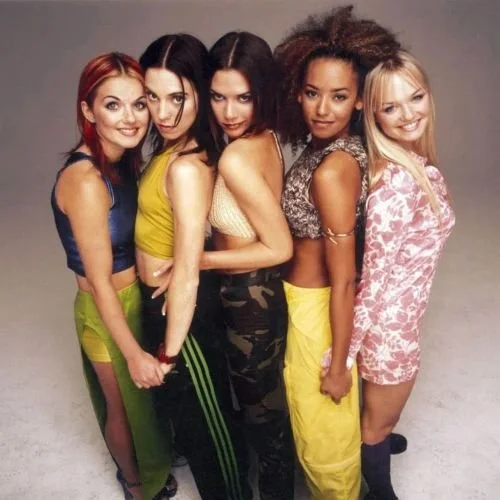
PHOTO CREDIT: Universal Music Group
The Recording of Spice Girls’ Wannabe at Thirty
__________
ON 8th July…
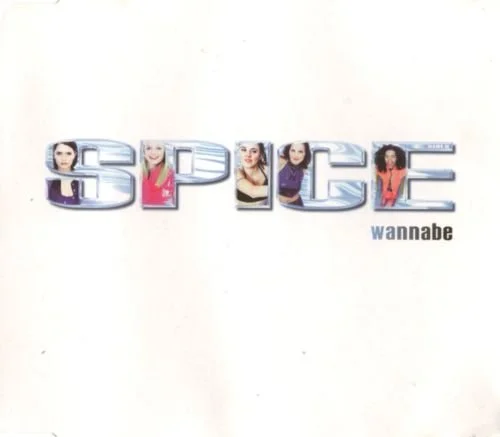
there will be massive celebrations, as that marks thirty years since Spice Girls’ Wannabe was released in the U.K. A number one single and one of the most important and successful debut singles ever, it was actually released on 26th June in Japan. However, people might not know that Wannabe was recorded in December 1995. The final version at least, I think. The earliest versions go back to earlier in 1995. I want to mark thirty years of that important moment of Pop history. Melanie C recently hinted that there might be a thirtieth anniversary tour in the summer to mark that Wannabe anniversary. It would be great to see the group together. Geri Halliwell left the group whilst they were still recording, whilst Victoria Beckham did not tour with the group in 2019. It would be great to have all five members performing together. Glastonbury is not on next year, so they will not get a chance to headline. However, some shows around the U.K. would be amazing. As it is thirty years since Spice Girls recorded Wannabe, I want to mark that seismic occasion. Closer to the thirtieth anniversary of its release, I will revisit the song. It is amazing how quickly Wannabe came together. I shall come to its incredible one-shot video and how exciting that is. Including on their debut album, Spice (1996), Wannabe’s vocals were laid down in a single day. In fact, less than an hour. So fresh, fast and alive, you can feel that energy and excitement from the studio come through on the record. The solo turns on Wannabe were divided between Melanie Brown, Emma Bunton, Melanie Chisholm and Geri Halliwell. Victoria Adams was not available so communicated with the group through a mobile phone. She reflected in her autobiography about her regret at missing out and having to give approval and opinions down the line – rather than being in the flesh with the other Spice Girls.
Although the finished version is a groundbreaking Pop song and one that introduced the world to a group who would be among the most-covered of the 1990s and are considered one of the best girl groups ever, the earlier mixes and versions were seen as weaker and lacklustre. Virgin executives dismissed them. Geri Halliwell has said how the Spice Girls were marketed as an R&B group early, perhaps to get broader appeal or stand out as being more distinct and edgier than most commercial Pop. There were Jungle and Hip-Hop mixes of Wannabe. Halliwell hated them. Simon Fuller, Spice Girls’ manager, handed the track to Mark Stent. He remixed Wannabe – which he saw as a weird Pop record – in six hours. Making it tighter and making sure the vocals popped, the rest is history! I love the fruition and background. Even if the initial vocal session was quick, it was not the case that what was bottled initially, earlier in 1995, was what we hear on record. The earliest versions with producers Matt Rowe and Richard Stannard were promising and different, though the version on Spice, I believe happened in December 1995. That is why I am marking it here. Recorded at the Strongroom Studios in London. The studios are still operating today. Let’s go deeper with this iconic Pop song. One that instantly made an impression. Going to number one in the U.K. and multiple countries, it did change Pop in the mid-'90s. Perhaps more Britpop and male-dominated, the lyrics of female solidarity and that distinct sound of Wannabe was a revelation and revolution. It helped to usher in this Spicemania era and what would become Girl Power. Whilst it seems gimmicky, it did inspire so many other women in music and created this ardent and passionate fanbase. Even if December 1995 is important because of that recording at Strongarm Studios in London, it is worth charting its progress and earliest days. The Telegraph told the story of Wannabe in 2021. The writing sessions and activity in early-1995 laid the groundwork:
“People who worked with the Spice Girls use all the same adjectives to describe them, often breathlessly, and in quick succession. Loud, full-on, vivacious, determined, energetic: five young women pushed together into a girl group with a shared ambition of being “more famous than Persil washing powder”. They went on to change pop music forever.
In the beginning of 1995, that force of oestrogen and ambition was squeezed into a small room in Shoreditch. Not yet the Spice Girls, still going by the name of Touch, they came up with a song in four hours. Unlike the output from US-influenced RnB all-female groups such as Eternal, this was a fierce, crudely constructed anthem that set out their manifesto in under three minutes.
When the Spice Girls signed to a record label, executives didn’t want to release it as a first single. Its songwriter doesn’t reckon it would even make the cut today. But it was voted the most recognisable pop song of the past six decades in 2014, and has this week been proclaimed the best-selling single in the UK by a girl band, with 1.7 million copies sold across physical, download and streaming platforms.
February 1995: The first writing session
The writing session that produced Wannabe and 2 Become 1, a future Christmas number one, happened two months after songwriter Richard “Biff” Stannard was physically dragged by Melanie “Mel B” Brown into the Spice Girls’ first showcase. It was the product of months of campaigning by Brown and her bandmates Melanie “Mel C” Chisholm, Emma Bunton, Victoria Adams and Geri Halliwell.
The girls, then aged between 17 and 21, had been kept in a house in Maidenhead by Bob and Chris Herbert, the father-and-son team behind Heart Management who had brought them together after rounds of nationwide auditions. Chris, their day-to-day manager, who at 22 was older than the girls, described the showcase as “one of the main cornerstones of my plan”. It was a chance to impress the industry’s best writers and producers, and convince them to give the group pop’s next big hit.
Herbert didn’t want to mess the opportunity up: the girls had been practicing the same four songs daily for a year. There was singing tuition and dancing lessons – essential for Halliwell, who didn’t have the stage school training of the other girls – as well as evenings spent acting out Take That dance routines, eating toast and imagining life in the fast lane. The showcase was scheduled for December 1994, but the girls, who were still unsigned by the Herberts and keen for success, were ready far sooner than that.
“Leading up to the showcase,” Herbert remembers, “Geri was very insistent that by then we should have issued the girls with management contracts.
“They had probably had that realisation: ‘Actually, we’re really quite good, and we’re not part of someone else’s experiment, we’re good in our own right now. We’re a unit. Girl Power.””
The hard work paid off: the showcase was a phenomenal success. “It was a bit of love at first sight,” Stannard recalls. “They were just fantastic straight away.”
“Pretty much all of the writer/producers came back to us and said, ‘we want to work with them, these girls have got something magic’”, Herbert recalls. “The girls put on the most amazing performance. They held court and turned it back on the writers and producers – it was as if they were auditioning them to be writing for the girls. That was a switching point – the band were becoming in charge.”
But while Herbert managed to land his “dream team” of Stannard, who had been responsible for East 17’s hit Steam, and his co-writer Matt Rowe, the band had witnessed life outside of Maidenhead. Wannabe would become the soundtrack of their fly-by-night departure from the men who made them, and into the limelight.
“About three weeks after the showcase I went back to Matt Rowe and said, ‘Oh my god, I’ve met this amazing band.’ We were complete pop freaks, and I remember saying, I think this band is really interesting.”
Stannard and Rowe were based in the pre-gentrified Curtain Road in the early Nineties. Sandwiched between electronic artists on the floor below Alexander McQueen’s studio in Strongroom Studios, they hosted Halliwell, Brown, Chisholm and Bunton – Adams couldn’t make it, and sent in contributions via SMS – in a “box room with a piano and a drum machine”.
Wannabe was written after working on a ballad called Feed Your Love, which was rejected for being too adult. The group were half-way through their three-day writing session and, after hours of effervescent chat about boys, trends and dreams, Stannard had managed to extract a theme. “I was quite intimidated by them,” Stannard recalls. “We needed to write something about that.” Brown would later call it a “sudden creative frenzy”.
“I think the only pre-planned thing with Wannabe was wanting to represent them as a band as well as the essence of what they were: that fearless, headstrong, fantastically intimidating essence. They were outspoken, right from the start.”
Amid the noise, Stannard caught the lyric, “If you wanna be my lover, you’ve gotta get with my friends”, and honed it to make a chorus that distilled the Spice Girls’ ethos of wanton independence. Brown’s rap was spun from her shouting during the session. As Halliwell later wrote in her autobiography, If Only, “we started off simply mucking about with chords and raps. Right from that moment, I think we all realised that this was something special. It happened so naturally that the song seemed to symbolise what we were about.”
The song was recorded in the same day, the only later addition being the tap of Brown’s footsteps as she ran up to the mic – a sound that Spice Girls fans will recognise as the opening of their debut album.
But Wannabe was a far cry from a traditional pop song. “It’s quite anarchic,” says Stannard. “There are a lot of critics who consider it a punk record because it’s quite wild, and the way it was recorded and written was like a punk song.
“It was in no way a contrived, crafted pop masterpiece that we sat down and specified. It was nothing like that – just a case of ‘these girls are bonkers and I love them. Let’s just record and listen and write a song and see what happens.’”
Try to unpick the lyrics of Wannabe and you’ll get stuck. The rap was stitched together to make sure each of the girls were briefly introduced; it’s a jumble of in-jokes and catchphrases, born out of living and working together for 12 months.
But read as a statement of ambition, rather than a fierce open letter to a potential lover, and Wannabe would turn out to be prescient: here were five girls from ordinary backgrounds, making the song that would define a staggering, if short-lived, career. “Now don’t go wasting my precious time / Get your act together we could be just fine,” they teased – just weeks before abandoning the men who brought them together and running off to forge their future”.
There are some other features I want to get to. Music Week ran a feature in 2020, where one of Wannabe’s songwriters, Richard ‘Biff’ Stannard recalled making the song. What is was like. It must have been so exciting working with this group who would very soon change the world and explode. Wannabe is one of the most exhilarating introductions in music history. The pairing with that infectious video, which sees the group causing trouble and ruffling feathers at the posh hotel and stuffy environment, instantly cemented this legacy. It was clear Spice Girls were something very special:
“The road to Wannabe is interesting. The song I had out at the time was Steam by East 17 and I was at a studio to see, of all people, Jason Donovan. When I got there I bumped into Chris Herbert who was the Spice Girls’ original manager. Next thing I know, Mel B was there, like, ‘Who are you?’ and she jumped on my back, and that was it! I mentioned I’d done Steam and the girls all sang it, dragged me into a room and did a three-song set just for me [Laughs]. It was love at first sight. As a gay man, too, what I saw in them wasn’t sexual, which I think was refreshing for them.
When it came to recording Wannabe, me and Matt Rowe had the backing track before they came in. At the time I was obsessing over Summer Nights from Grease and I wanted to do something like that. We were all in this tiny room with the Spice Girls sitting on the floor, and we wrote about six songs in three days – and Wannabe was the second one. With all the hits I wrote with them, the writing was really easy. All my biggest hits have taken under two hours.
I never work to a brief, but the one thing I did know beforehand was that I wanted to write about how ‘force of nature’ they were. It is quite anarchic. It was all done in one frenzy, the energy would just rise in the room whenever we did the up-tempo things. I just had to listen, observe, and help them piece it together. I heard ‘zig-a-zig-ah’ and was like, ‘Let’s put that in!’ It does mean something, but we’re never going to tell anyone what. I’ll say one thing: it’s quite rude [Laughs].
One of the myths of Wannabe – and I don’t want to knock Simon Fuller because he is a genius – is that them all being ‘individual’ was manufactured. That’s the biggest misconception about the Spice Girls. It was always there from day one, so, it was easy for me to go, ‘Well, Emma can sing the sweet bit’ and, ‘You two noisy ones do this!’ They co-wrote and sang everything. That’s where the ‘Girl Power’ thing came from – they were writing about what it was like to be five girls at that age, at that time. That’s also something I have, quite unintentionally, done throughout my career with Kylie, Marina And The Diamonds and Ellie Goulding. It’s all about empowerment because I just find that strength in women so inspiring to write about. And I always have since I was a kid, I’ve got a strong mother, so that’s where it comes from.
I don’t think the label understood Wannabe, they wanted something else as the first single but the Spice Girls’ deal meant they had creative control. That’s quite a profound bit of information that I don’t think has been mentioned an awful lot. But I always loved Wannabe. I’m always eternally proud of it, but I ended up worrying I was going to be defined by it. For a few years, I was literally having A&R people say, ‘We want Wannabe 2’ – that’s not A&R! What they meant was they wanted something unique and special.
It was life-changing on all levels. All of a sudden the whole music industry wants a piece of you. It was crazy and brilliant, but everything has a yin and yang. Obviously, for the girls it was more severe, but it’s still difficult. I was 25 or 26 at the time, which is a young age to have that happen. Suddenly you’re travelling all over the world. I started to take more risks because I could. I got drunk and started talking to Bono – his quote on Wannabe was, ‘It sounds like a night out!’ which is my favourite quote ever about the song – and I ended up working with him. I still work with all kinds of different people.
The gift Wannabe gave me was a lifetime doing what I love. It’s soppy, but true. It’s gone way beyond the money and blah blah blah. It’s about how it’s engrained in people’s lives”.
Prior to discussing the video, Stereogum spotlighted Wannabe for their The Number Ones series. There is some debate as to when we can chart Wannabe back to. Do we mark the anniversary of the writing session and the demos from earlier in 1995, or do we go to December 1995? Maybe the summer of 1996 when the song was released? I wanted to celebrate thirty years of that December recording session. I think that we will see some activity next year when Wannabe’s single release turns thirty. It would be amazing:
“The Spice Girls might've been an expertly marketed pop product, but "Wannabe" is not an especially slick song. That's its charm. The Spice Girls were dedicated to the fine art of pop-music gibberish, and "Wannabe" has plenty of that. There have been all sorts of theories about the meaning of the phrase "I really really really wanna zig-a-zig-ah," but the real correct interpretation is that it's just some goofy, fun shit to say. There's plenty of non sequitur in the "Wannabe" lyrics. The Spice Girls all howl out to slam your body down and wind it all around, and the line comes out so fast and garbled that it sounds like they're talking about bodies all around. There's also a fun little bit in the quasi-rap verse where Melanie Brown and Melanie "Sporty Spice" Chisholm indulge in the great British tradition of cheekily referencing ecstasy in pop songs: "We got G, like MC, who likes it on an..." (They cut themselves off before saying "E" -- just barely avoiding admitting that both Geri "Ginger Spice" Halliwell and Chisholm like sex on MDMA.)
But the naughtiness was beside the point. In my high school, everyone made jokes about how the "Wannabe" hook -- "If you wanna be my lover, you gotta get with my friends" -- was about some kind of reverse-gangbang situation. Maybe the Spice Girls left that implication in there intentionally, but the implication wasn't the point. The point was that the Spice Girls held their own friendship up above all, that no Spice Girl would date anyone who didn't get along with the other four Spice Girls. In pop music, that might even qualify as a message. "Wannabe" is a fun, chaotic, all-over-the-place piece of music, but it's also a statement of female solidarity.
The Spice Girls, as you doubtless already know, had a name for that female solidarity. They called it "Girl Power," and they made it a key part of their whole image. The Spice Girls didn't invent Girl Power, and the phrase had its roots in music a lot more anarchic than "Wannabe." The great American punk band Bikini Kill used "girl power" in multiple song lyrics, and Geri Halliwell first encountered the phrase when the UK duo Shampoo used "Girl Power" as the title of a 1996 single. The Spice Girls made it into a mantra, and they used Girl Power to sell a whole lot of stuff. But those commercial implications didn't make Girl Power any less potent to the kids who needed to hear about the concept.
I'm a little hesitant to speak on Girl Power as a phenomenon because I have never been a girl, but it's pretty clear that Girl Power mattered to a lot of people. I forget who, but someone has pointed out that the Spice Girls offered up an idealized version of young adulthood to the little kids who bought their records. They made it seem like all this romantic business might not be so scary if you went into it with your friends supporting you. The Spice Girls didn't exactly sing about sex or drugs, and they didn't exactly deny the appeal of sex or drugs, either. For them, friendship was the greatest state that anyone could achieve. Everything else was secondary.
Friendship is on full display in the "Wannabe" video, which is a total blast. The Spice Girls filmed the clip with Johan Camitz, a Swedish TV-commercial director who'd never made a music video. Camitz staged the clip to look like a single tracking shot, though it was really two shots spliced together. In the clip, the Spice Girls bum-rush their way into an upper-class party at a fancy hotel. They drink. They sing. They scandalize some of the older society folk and delight others. Sporty Spice does a handspring on a tabletop. Posh Spice seems like she'd ordinarily hang out at parties like this, but even she seems ecstatically out-of-place. We get a few synchronized dance steps on the staircase, but mostly, the Spice Girls work as a hurricane of happy disorder. Then, just as the cops are showing up, they flee, jumping on a bus and cackling together. The video shows exactly who the different girls are. None of them emerge as clear stars. The real star is the camaraderie that the five of them share.
Camitz, incidentally, only made one more music video: Eagle Eye Cherry's clip for his 1997 single "Say Tonight," which is also made to look like one long take. ("Say Tonight" peaked at #5. It's a 5.) In 2000, Camitz was killed when a speeding SUV hit him while he was crossing a street in New York. The SUV's driver had just been shot, and he was speeding away from his attackers. The driver died, too.
"Wannabe" came out in the UK in the summer of 1996, and it was an immediate smash. The Spice Girls' first four singles all went straight to #1 in the UK, and they were the first act ever to pull off that chart feat. When Spice came out in the UK, the album sold millions of copies, even though the UK is small enough that selling millions of records is very difficult. A British pop phenomenon might've been a hard sell in the US at the time, but the Spice Girls got a big push here, too. "Wannabe" got its US release in January of 1997, and it debuted at #11, jumping all the way to the top a few weeks later. For a few months, I heard it all over the place”.
Before discussing the original Wannabe video, in 2016, it worth highlighting this BBC article, which discussed a remake that was designed to tackle inequality for women. It was such a clever and effective idea. If the 1996 video was perhaps not as deep and was more fun and frivolous, there was a more serious and political tone to the 2016 version. Spice Girls’ members giving it their seal of approval:
“But Wannabe by the Spice Girls has been given a makeover to highlight and tackle inequality for women across the world.
It includes ending poverty, fixing climate change and tackling inequality.
The hope is that the project will catch the attention of the United Nations, which promotes international co-operation, at a meeting in September.
And it has received the seal of approval from most of the band, with Victoria Beckham calling the video "fabulous".
The new video shows female dancers from diverse communities dancing and singing along to the Spice Girls' first number one hit.
Its key messages include, "end violence against girls", "quality education for all girls", "end child marriage" and "equal pay for equal work".
Organisers say it sends out a powerful messages to girls and women everywhere and helps bring the phrase "girl power" into the 21st Century.
The video was commissioned by Global Goals, external, an organisation working to promote the UN's 17 goals, and directed by rising British talent, MJ Delaney.
The organisation has also launched hashtag #WhatIReallyWant, encouraging women to share what they hope to see achieved for women on social media.
"We've received such an overwhelming response and this is just day one," Piers Bradford, managing director of Project Everyone, tells Newsbeat.
"When world leaders gather in New York in September for the UN General Assembly, we'll be making sure they hear what people really (really) want for these goals - particularly for girls and women”.
I did not know that the initial idea for the Wannabe video was going to be set in Barcelona. Instead, it was moved to London. This article explains how there was an issue getting permission to film in Barcelona. I think it was probably a blessing, as knowing the video was shot in London gives it more of a sense of the group being at home. This British band basing their debut video in the capital. At a time when Britpop was taking off, Spice Girls offered the same euphoria and uplift, though it was distinct and different to Britpop:
“The music video for "Wannabe" was the first for director Johan Camitz. His original concept for the video was a one-take shoot of the group arriving at an exotic building in Barcelona, taking over the place, and running riot—the same way they did when they were looking for a manager and a record company. A few days before the shoot on 19 April 1996, Camitz was unable to get permission to use the building, and the shoot was relocated to the Midland Grand Hotel in St Pancras, London.
The video features the group running, singing, dancing, and creating mischief at an eccentric bohemian party. Among their antics is Chisholm's back handspring on one of the tables. Because the video needed to be taken in one shot, the group rehearsed the routine several times through the night, while a steadycam operator followed them. About the experience, Halliwell wrote: "The video I remember as being very chaotic and cold. It wasn't very controlled—we didn't want it to be. We wanted the camera to capture the madness of the Spice Girls". Virgin's executives were horrified with the final result: "the girls were freezing cold, which showed itself in various different ways", Ashley Newton recalled”.
I really love Wannabe and how it is regarded as one of the all-time great Pop songs. Even if some of the interviews with the group in 1996 were condescending and patronising, the impact the Spice Girls made on the world and especially British music was prefound. It was such an exciting time. In July 2026, when Wannabe turns thirty (in terms of the U.K. release date), there will be new celebration. I hope the group get back together and there are live dates. I wanted to mark thirty years of that recording at Strongarm Studios in London. A pivotal moment for sure. Even though the single would not be released for a while, what was recorded in December 1995 would result in a single release…
THAT changed music forever.