FEATURE:
While I Sing My Comeback Song
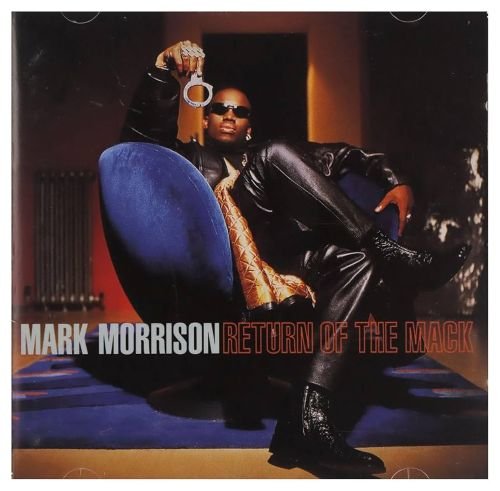
Mark Morrison’s Return of the Mack at Thirty
__________
MANY people will debate…
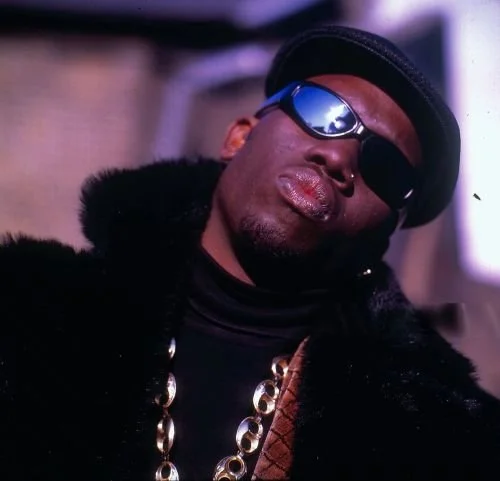
IN THIS PHOTO: Mark Morrison in 1996/PHOTO CREDIT: Des Willie/Redferns/Getty Images
which songs and singles defined the 1990s. There are so many to choose from. Breakout hits, classic anthems or one-hit wonders, there are these tracks that just endure and seem to also perfectly sum up the period they were released. In terms of endurance, popularity and brilliance, few songs of the 1990s match Mark Morrison’s Return of the Mack. Released as a single on 4th March, 1996, it is the title track from his debut studio album. Return of the Mack was a major hit single for the German-born, British-based artist. It was a number one in the U.K. and multiple countries. It also reached two on the US Billboard Hot 100. To date, it has gone three-time platinum U.K. and five-times platinum in the U.S. It is a hugely recognisable songs that I recall vividly in 1996. At a time when things were shifting in British music, it is no wonder people responded to Return of the Mack. You could see Britpop ending or dying and there was this desire for something different. Return of the Mack puts one in mind of 1980s U.S. R&B. It was definitely not traditional Pop or anything that was being heralded and proffered a year previously. 1996 was a year of transition and evolution. It would be belittling and reductive to simply say Return of the Mack is one of the best songs of the 1990s. It is one of the best songs ever. I wanted to look at the features that have been written about the track. Written by Mark Morrison and produced by Morrison, Phil Chill and Cutfather & Joe, The song's beat is sampled from the song, Genius of Love, by Tom Tom Club. It was also sampled by Mariah Carey for 1995’s Fantasy (and many other artists used the sample). Some dismiss Return of the Mack as a one-hit wonder or this overplayed song. One that is insubstantial and overrated. The fact is that this world-conquering and enormously successful song achieved so much because people responded to it. In 2025, I still hear the song played widely. Even though it is not the only hit from Mark Morrison, it is definitely the song people associate with him.
The first feature I want to drop in, unfortunately, does very much highlight Return of the Mack as a one-hit wonder. Rather than a brilliant single in its own right, it is often reduced almost to be a fantastic novelty. In any case, The Ringer told the story of Return of the Mack in a 2022 piece. I was not aware of his this song started life and how there was this quite basic and uncool original that then changed and was replaced by something awesome, layered and replete with these finely-selected samples:
“Mark Morrison started writing “Return of the Mack” in prison. In 2020 he told a Leicester newspaper, “I grew up on the St. Marks Estate. ‘Return of the Mack’ was written in Welford Road prison. I’m from here.” End quote. Mark also produced the original version of “Return of the Mack” along with a guy named Phil Legg, who’d most notably worked with Des’ree, the “You Gotta Be” lady. Love Des’ree. Two g’s in Phil Legg, just because.
That original version of “Return of the Mack” is not in the public domain. That’s the version of “Return of the Mack” that gets sent to our dear friend Cutfather and his own producing partner, Joe Belmaati. Cutfather, talking to Mel magazine, does not speak glowingly of the original “Return of the Mack.” He says, “It was very, very soft and sounded very slow. It was just very toothless. It wasn’t really catchy. The chorus was obviously catchy—the singing of it was catchy — but the chords around it actually made it less commercial. It was like pop R&B, but in a quite uncool way.” But he also says, “It was a really cool song.” Don’t you want to hear that version? The slow, soft, toothless, not-catchy, quite uncool version of “Return of the Mack”? That sounds awesome. Let’s pretend that the canonical, smash-hit Cutmaster and Joe remix of “Return of the Mack” is a song about Mark Morrison getting over the heartache of his original, quite uncool version of “Return of the Mack.”
Cutmaster and Joe got a few ideas for how to spice up “Return of the Mack.” First idea: The drums from “Genius of Love,” or drums very close to those drums. Second idea: Some new, way catchier chords from a 1992 song called “Games,” by an R&B singer named Chuckii Booker. That’s Chuckii, spelled Chuck with two i’s at the end, just because. Chuckii’s from L.A. I can confirm that this song “Games” has excellent chords.
Stupendous chords, truly. Tons of samples in this new, vastly improved, soon-to-be-colossal version of “Return of the Mack.” More drums from the French disco master Cerrone. Some noisy bits from the oft-sampled Bronx funk band ESG. Vocal fragments from the Treacherous Three, and Digital Underground, and Run-DMC. There’s a lot going on here. But there would be a lot going on here if Mark Morrison were the only thing going on here”.
Even though Return of the Mack was a number two in the U.S. in 1997, it was released in the U.K. the year before, so there was this delay. It might have been fortunate timing considering what was ruling the charts in June 1997. I think there is a little debate as to the exact U.K. date. I have seen 4th March, 1996 listed, in addition to 18th March. I am sticking with the former. However, as Stereogum wrote in their feature, Return of the Mack is an epic bounce-back song: “But the narrative is great -- that whole idea of "fuck you, I'm doing great." That's the feeling embodied by Mark Morrison's "Return Of The Mack," one of the great bounce-back songs in pop music history. "Return Of The Mack" is an ideal dumped-guy anthem. It's breezy and fun and just ridiculously catchy, and its feeling isn't stuck in the sting of betrayal. Instead, Morrison sounds transformed, confident, ready to go. Most of the song's lyrics are about betrayal, about the ex who liiiied to him, but Morrison won't let that bring him down. Instead, he's focused on his come-up, on the return of the mack. When he wails out "oh my god!," it's like he can't believe how fly he's about to become. That's beautiful”. This is an endlessly fascinating song. In terms of male R&B artists of today, I don’t think they produce anything like Return of the Mack. Rather than the song being dated, I feel artists are sleeping on a sound and dynamic that we need to see today:
“On the "Return Of The Mack" bridge, we hear a bit about the relationship that brought Morrison down in the first place. A woman's voice gets impatient with Morrison: "Ahh, Mark, stop lying about your big break. For god's sake, I need a real man." (That voice belongs to Angie Brown, a veteran session singer and the featured guest on Bizarre Inc's 1992 single "I'm Gonna Get You," which peaked at #47 in the US.) That seems to be the source of the wound. Morrison talks a big game about becoming a superstar, but she's sick of waiting around for him. That hurts, but you can understand why she might be skeptical. Mark Morrison is, after all, a British R&B singer, and British R&B singers didn't often become international stars in the late '90s.
Mark Morrison was born in West Germany, and his parents came from the Bahamas. He also lived in Miami for a while as a kid. But Morrison mostly grew up in the English city of Leicester. (When Morrison was born, the #1 single in the US was Roberta Flack's "The First Time Ever I Saw Your Face.") He started making music in 1993, but his career really started later. In 1995, Morrison spent a few months in prison after a nightclub brawl, and the experience convinced him to devote himself to music full-time. Later that year, his single "Crazy" made the UK top 20. "Crazy," like "Return Of The Mack," is a hard-strutting club track that doesn't have anything to do with the different variations on techno and house that were dominating the UK charts at the time. Instead, "Crazy" gets its juice from dancehall and from new jack swing, the kinetic and rap-adjacent form of R&B that had come out of the US in the late '80s.
I was living in London when new jack swing first came along and made its presence known, and pretty much every kid I knew went nuts for that stuff, me included. At the time, Bobby Brown, an artist who will eventually appear in The Number Ones, felt like a legit contender to Michael Jackson's top-dog status. Bobby Brown's success faded, but I love the idea that the UK was still all-in on new jack swing more than a half-decade later.
Morrison followed up "Crazy" with "Return Of The Mack" in March of 1996. Morrison wrote the song, and he co-produced it with Phil Legg, a UK producer who'd done a lot of work with the London singer Des'ree. (Des'ree's highest-charting US single, 1994's "You Gotta Be," peaked at #5. It's a 4.) The "Return Of The Mack" beat is built almost entirely out of samples. The purring electric piano comes from "Games," a 1992 single from the R&B singer Chuckii Booker. ("Games" peaked at #68. Chuckii Booker's highest-charting single, 1989's "Turned Away," peaked at 42.) The needly guitar sounds and some of the drums come from "Genius Of Love," the 1981 dance classic from Talking Heads offshoot Tom Tom Club. ("Genius Of Love" peaked at #31. Another track with a "Genius Of Love" sample will eventually appear in The Number Ones.) Other drum sounds came from "Rocket In The Pocket," a 1978 live record from the Italo-disco producer Cerrone. (Cerrone's highest-charting single, 1977's "Supernature," peaked at #70.)
There were other samples, too, like the staccato siren sounds from ESG's culty 1981 club classic "UFO." There are echoing, buried-in-the-mix scratches: "Huh hah" grunts from Treacherous Three's "Feel The Heartbeat," "Good!" from Run-DMC's "Peter Piper," "straight gangsta mack" from Digital Underground's "The Humpty Dance." ("The Humpty Dance," from 1990, peaked at #11, which is the only thing stopping me from giving it a 10.) Effectively, Morrison and Legg were doing what good rap and R&B producers did in the '90s. They took sounds that were floating around in the ether -- often, sounds that had been sampled dozens of times -- and blended them into a seamless whole that felt new.
And "Return Of The Mack" really rides. The huge drums, the itchy little guitar stabs, the tremendous strut-roll of the bassline -- it all works together. Morrison sings over all of it with a breezy nasal intensity. You can't place his accent as British or as anything else. It's just a voice in love with itself, shaking off old betrayals. When Morrison sings that you lied to him, he doesn't even sound mad. He just sounds excited that his mack is returning. He's in full-on party mode even when he's talking about his lowest moments.
The dissonance between Morrison's heartbroken lyrics and the wild exuberance of the song itself is the secret weapon of "Return Of The Mack." Morrison says that he cried, but he doesn't sound like someone who's been crying. Instead, he drips triumphant swagger all over everything. Unlike many of the other R&B singers who scored hits in the '90s, Morrison never ever slows to show off his voice. Instead, he floats on top of the groove, radiating just-set-free relief. The video reinforces all that. Director Jake Nava, whose work will eventually appear in The Number Ones, films Morrison partying his way through London, his hair immaculately angular and his chunky chain enormous. (Morrison's whole style in the video is pure late-'80s, which fits the new jack swing feel of the song perfectly.)
"Return Of The Mack" went to #1 in the UK, and Morrison released his Return Of The Mack album a month after the single came out. In the UK, the album was big enough to send five singles into the top 10. "Return Of The Mack" also hit big throughout Europe. Finally, the song slowly caught on in the US, lingering in the Hot 100 for the better part of a year and finally peaking at #2 more than a year after it had topped the UK chart.
I am not going to include the entirety of this feature from Shortlist. But I did want put in quite a bit of it, as it delves into the hidden meanings within this timeless song. Thirty years after its release and Return of the Mack is being heard and appreciated by a new generation. Not alive when it was released in 1996, it is a song that transcends time. It stands up as a terrific song no matter how old you are and when you discover it:
“In the radio edit of the song, the words ‘return of the mack’ are sung no less than twenty-four times in three-and-a-half minutes. The effect is claustrophobic. It feels like he’s desperately trying to convince himself that he is who he once was - by God, he is The fucking Mack, man - and the chorus turns into a hypnotic mantra.
Despite being more than twice as long, the extended edit, the C&J Mix with all that piano, sees the title sung only seven extra times and yet it’s so much more effective and affecting. Again the song shifts from a meaty tale of persistent funkiness guiding a man’s way to personal redemption, and into an elegiac ballad of frail masculine ego.
Take the extended edit’s chorus backing vocal. Read alone they tell a tale of self-esteem finally being understood - ‘There it is! Come on! Oh my god’, he says, jubilant at realising his returned sense of being. “Once again! Top of the world! Watch my flow!” - but then…
“Mark…” whispers a woman’s voice at 2:25. “Stop lying about your big break… I need a real man… Stop bringing me down!” WHO SAYS THIS? It comes out of nowhere. Mark Morrison barely even references what just happened, merely internalising the slight, and the tone turns darker…
Return of the Mack (there it is)
Return of the Mack (hold on)
Return of the Mack (don't you know)
You know that I'll be back, here I go
Return of the Mack (oh, little girl)
Return of the Mack (once my pearl)
Return of the Mack (up and down)
You know that I'll be back (round and round)
While in the previous chorus he is triumphant, the pain in his wails and the backing vocal now tell another story. The Mack’s The Mackness is here for now, once again, but for how long? He cannot bring himself to move on, doomed to infatuate over his - presumably adult - former lover, doomed to constantly dredge up the past. He is doomed to go round and round. The question, eternally, remains: once damaged, can anyone - you, me, The Mack - ever be quite so strong?
You think back to the mysterious woman’s voice - “Mark… Stop lying about your big break…” - and another question emerges: What if the person Mark has been hurt by is… Bloody hell. Look at the video: The woman who enters the room to deliver these lines - tall, beautiful, dressed in a long blac… FUCKING HELL SHE’S DRESSED AS MARK MORRISON. It was Mark Morrison who hurt Mark Morrison all those years ago.
It’s little wonder that the song still resonates to this day. Even besides the song’s perfect tempo - quick enough to party to and slow enough to drunkenly sway through - have such deep, personal questions ever been more en vogue? And have they ever been more catchily sung? You already know the answer.
For this song to come in March 1996 - twenty years ago, almost to the month, at the peak of gangsta rap, of tough guy posturing - is nothing short of monumental. That it packs so much into a soundtrack so funky and so, at once, of-its-time and timeless, allowing you ingest its message without realising - like a sickly dog’s pill hidden inside a blob of delicious peanut butter - is a testament to the insurmountable courage of true art and to the indomitable spirit of a dancefloor classic”.
Return of the Mack turns thirty on 4th March. An incredible anthem from a wonderful decade of music, his 1996-released chart-topper never loses its brilliance. So catchy and brilliantly performed, you feel and believe every word. Even though there is a complex legacy regarding Mark Morrison’s time in prison and the circumstances behind that, there is no getting around the fact that Return of the Mack is a work of genius. Whether you see it as a one-hit wonder or give it more respect than that, you have to give respect and salute to this…
COMEBACK song.