
FEATURE:
True Gold
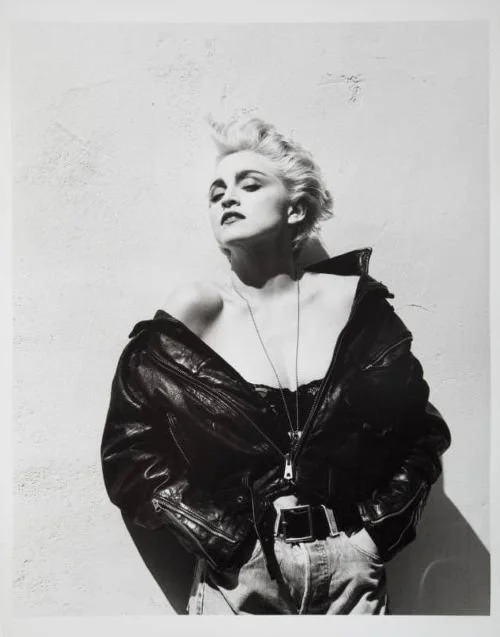
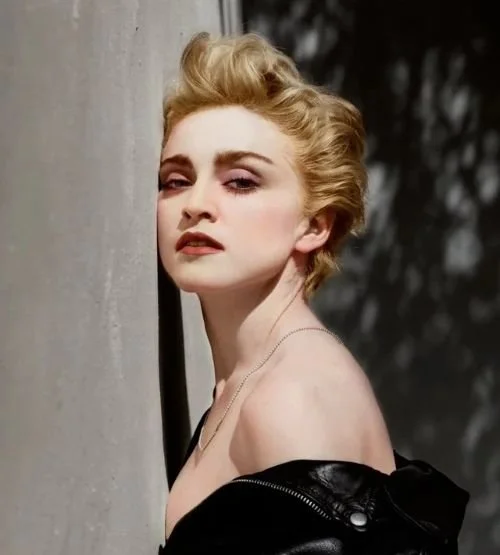
IN THIS PHOTO: Madonna in 1986/PHOTO CREDIT: Herb Ritts
1986 is one of the most interesting years in Madonna’s career. There is a big anniversary when True Blue, her third studio album, turns forty on 30th June. I do want to spend time with its lead single, Live to Tell, as that is forty on 26th March. It is clear that, at the start of 1986, Madonna was already an established Pop queen. Some would argue her first creative peaks was maybe later: 1989’s Like a Prayer cemented her as a global icon and peerless Pop artist. However, I do think that at the start of 1986, Madonna was already there. Aged twenty-seven, she had released two studio albums that were incredible. The 1983 eponymous debut and 1984’s Like a Virgin. The last single from Like a Virgin was Dress You Up. Even thought the first single from True Blue is a ballad and stirring song, it held as much power and quality as Madonna’s singles up to that point. It would be Papa Don’t Preach, the second single from True Blue that arrived in June 1986, that would take her career to another level.
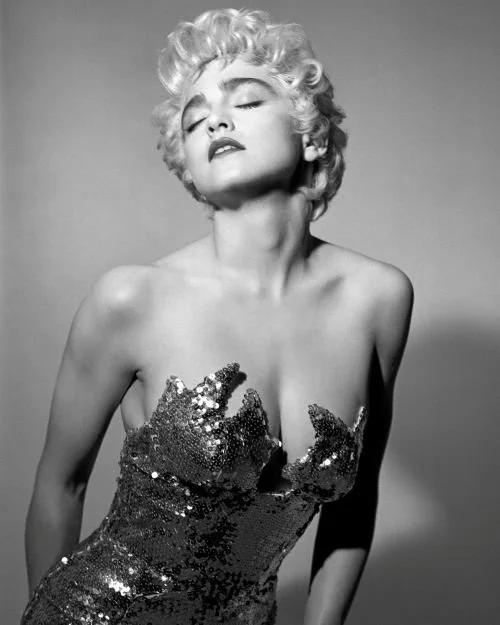
IN THIS PHOTO: Madonna in N.Y.C. in 1986/PHOTO CREDIT: Bruce Weber
That song about Madonna as a young woman getting pregnant, keeping the baby and asking her father not to preach and lecture, was a big moment in music history. Perhaps not something the 1980s scene was used to when it came to Pop artists, it is a remarkable and mature song that was a shift away from what people associated with Madonna. Maybe seeing her as playful and more conventional at that point. In the sense that the singles, whilst they were fantastic, were perhaps not as deep and sonically rich (or mature) as this. Like a Virgin’s title track is sexy and a bit provocative, but you could say that it is perhaps towards the end of a period where we would see Madonna’s music shift. True Blue is the Queen of Pop adopting a new look and direction. The cover of True Blue, and some of the videos from the album, see her dispense with the very long blonde hair to something shorter and more cropped. Some would say it made he look edgier and tougher. However, it is simply an artist staying fresh and being true to herself.
Look to 1989’s Like a Prayer and the brunette, longer hair we see in the video for the title track. I will cover True Blue in more depth before it turns forty on 30th June. Go into detail regarding Papa Don’t Preach. However, I wonder how Madonna is going to mark the fortieth anniversary of her third studio album. It is one of her best albums, and one that I feel remains underrated. We discuss Like a Prayer and 1998’s Ray of Light, though True Blue never gets quite that same level of kudos. It should. Alongside Live to Tell, which I shall come to, we have the exceptional True Blue, Open Your Heart and, perhaps the standout song from the album, La Isla Bonita. If Madonna’s first two albums were more traditional Pop/Disco and had a certain production sound, True Blue, I feel, is a deeper and richer album. More diverse musical influences and styles. The songwriting team of Patrick Leonard and Stephen Bray were instrumental. Madonna wrote Live to Tell with Leonard; True Blue written with Bray. La Isla Bonita was her writing with Leonard and Bruce Gaitch. Brian Elliot co-wrote Papa Don’t Preach with Madonna. Madonna producing True Blue with Patrick Leonard and Stephen Bray. In late-1985, Madonna and Leonard began working on her third studio album; she brought in her former boyfriend Stephen Bray, with whom she had worked with on Like a Virgin. True Blue is the record which found Madonna co-writing and co-producing for the first time in her career. It was a big step up. Like a Virgin had more people in the mix and Madonna didn’t have a writing credit on all the songs. On True Blue, things feel tighter and slimmed-down. Madonna co-writing everything on the album. A moment where she was growing as a songwriter and asserting more control on her direction. 1986 was the biggest year of her career to that point. Married to Sean Penn (which would not hold for too long) and gaining stratospheric success and acclaim from True Blue and its singles, I do think that this is one of her defining eras. That period between 1985 and 1987. You can get a sense of the big events in Madonna’s career in 1986 here. I shall throw ahead to Live to Tell. However, in January 1986, Borderline re-entered the charts. From her 1983 Madonna debut, it went back on the charts in the U.K. and the live video went to number one in the U.S. The start of this hugely busy – and largely happy – year presented Madonna as this icon. Played on MTV and talked about in the press, she was looking ahead to the launch of a new album, but also enjoying success from previous work. However, there was personal tragedy to handle at the start of 1986. She was caring for her close friend Martin Burgoyne, an artist who designed her Burning Up cover, as he battled an AIDS-related illness.
After a big end to 1985, Madonna was not resting as we entered 1986. In February, she would attend the At Close Range film festival with Sean Penn, and she filmed the Papa Don't Preach video in N.Y.C. I think that the promotional photography from 1986 is iconic. Herb Ritts collaborated with Madonna and took a lot of her publicity shots from ''86. The True Blue cover was his work. In terms of looks, I associate the short and cool blonde hair and red lipstick with Jean Harlow. A Hollywood star who died in the 1930s, she was shouted out – alongside other Hollywood legends - for 1990’s Vogue. There is also a Jean Harlow 12” mix of Vogue that is pretty banging! Stylistically, we associate 1983 with the bangles, beads, street chic and this more neon and stereotyped 1980s look. It was this accessible look that was much copied. For Like a Virgin and 1984, there was still some of this. Youthful and street chic still, we had the beads and necklaces. However, think about the Like a Virgin, Material Girl and Dress You Up videos. Long white dresses and this glamorous look. Cool, sophisticated, graceful but also tough and powerful, 1986 saw Madonna dispense with a lot of the accessories and aspects of her first three or so professional years. That was mirrored in the sound of her True Blue album. I have mentioned Madonna’s hair in 1986. It was actually between Live to Tell and Papa Don’t Preach when there was that notable change. Live to Tell, Madonna with longer blonde hair. It was more cropped for Papa Don’t Preach. Always evolving and changing, it is fascinating seeing Madonna’s career blossom through 1986! I will wrap up soon.
As mentioned, I will return to True Blue when it turns forty on 30th June. In December 2020, for their The Number Ones feature, Stereogum showed love for Live to Tell in their 9/10 assessment. Number one in the U.S. and two in the U.K., I think it is one of Madonna’s most important songs. In terms of elevating her career and developing her sound:
“Planetarium music" fits because the production of "Live To Tell" is pure head-blown '80s sci-fi awe -- the kind of wonderstruck synth music that Carl Sagan might've used to soundtrack Cosmos. The term also fits because the song sounds like Madonna staring out into the universe, contemplating her own place within it. Her lyrics are vague but portentous, and they hint at some kind of emotional apocalypse. Her voice is wounded but strong. She comes off as a person dealing with the kind of vast sadness that's hard to put into words, but she also comes off as someone determined to get through it: "The light that you could never see/ It shines inside, you can't take that from me."
In June of 1985, Madonna had just gotten done with the Virgin Tour, her first-ever arena trek. The tour, which featured the pre-Licensed To Ill Beastie Boys as openers, solidified Madonna as an A-list pop figure, and she apparently liked the experience enough that she wanted to keep working with her collaborators. The tour's musical director was Patrick Leonard, a fellow Michigan native who'd previously played keyboards in Frank Zappa's band and in the Allman Brothers Band. Before working with Madonna, Leonard had been the musical director for the Jacksons' Victory Tour. After the Virgin Tour ended, Madonna asked Leonard if he wanted to write some songs together. Leonard was into it.
At the time, Leonard was trying to get into the film-scoring world. Leonard had seen the script for Fire With Fire, a 1986 romance about a girl at a Catholic boarding school falling in love with a boy in a prison camp. He sent Paramount a song he'd written, telling the studio that he could get Madonna to write some lyrics for it. Paramount rejected Leonard's song, and they hired Howard Shore to score the movie instead. I'd never heard of Fire With Fire until I sat down to write this, but it exists. Looks pretty good, too!
At the time, Madonna was married to Sean Penn. They'd made it official on Madonna's birthday in 1985, just after she'd finished the Virgin Tour. When Madonna heard that Paramount wasn't interested in the song that Leonard had written, Madonna decided that it would be great for the movie Penn was making. Penn was starring in the drama At Close Range, playing a soulful and conflicted son in a family of criminals in rural Pennsylvania.
Madonna wrote some lyrics on the spot, coming up with a bridge and a few melodies of her own. She recorded a quick demo and then took it to Penn, who loved it. Madonna thought that she was writing the song from a male perspective and that they'd find a man to sing it. But Leonard loved the vulnerability of Madonna's version, and that demo that she recorded was the one that Madonna eventually released.
At Madonna's suggestion, At Close Range director James Foley hired Leonard to score the movie. Leonard only scored a few more films after that: The 1985 Tom Hanks mob comedy Nothing In Common, the 1991 Michael Biehn sci-fi Timebomb, the 1994 Joe Pesci/Brendan Fraser coming-of-age thing With Honors, the Sundancey 2014 drama Lullaby. Leonard's biggest film credit probably comes from a very different part of his career. Leonard was a writer and producer on Leonard Cohen's last three albums, and he co-wrote Cohen's "Nevermind," which became the theme song for the second season of True Detective. Anyway, Madonna loved working with Leonard, so he'll be in this column again as both a writer and producer.
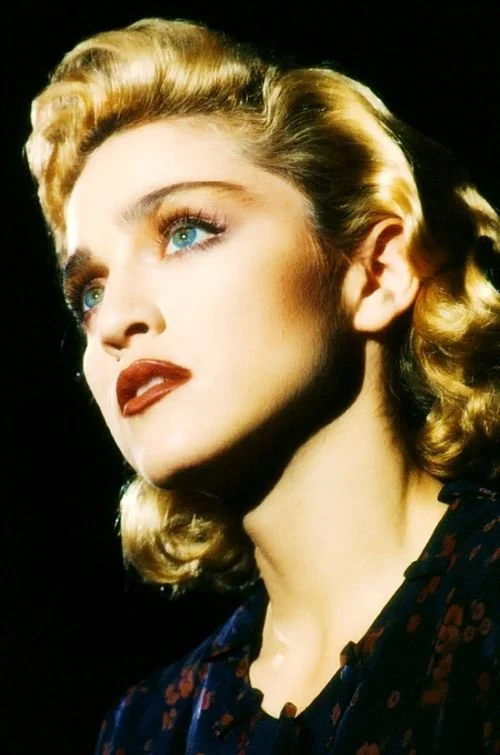
James Foley directed Madonna's "Live To Tell," video, which is mostly just scenes from At Close Range. I'd have to check through her videography again to be sure about it, but "Live To Tell" is almost certainly the only Madonna video that gives as much screen time to a mustachioed Christopher Walken as it does to Madonna herself. But the video does highlight one of Madonna's many image reinventions. Where she'd previously styled herself as a new-wave New York club kid with a whole lot of jewelry, the Madonna who sings in front of a black void in the "Live To Tell" video is more of a retro Hollywood beauty -- a very conscious decision on her part. (At Close Range was only Foley's second movie, and he went on to have a weird and occasionally-great journeyman career: Glengarry Glen Ross, Fear, 12 episodes of House Of Cards, the second and third Fifty Shades movies.)
Despite generally good reviews, At Close Range was a box-office failure -- though not as big a failure as Shanghai Surprise, the notoriously awful movie that Madonna and Penn made together later in 1986. But "Live To Tell" took off anyway. When she released "Live To Tell" as a single, Madonna was still working on her third album True Blue, which wouldn't come out until a few weeks after the song hit #1. When "Live To Tell" was at its apex, then, it wasn't available on an album. You had to buy the single.
"Live To Tell" isn't necessarily about any particular situation. Madonna once told Rolling Stone that the song is "true, but it's not necessarily autobiographical." Her lyrics are light on specifics; we don't know what secret she wants to live to tell. Instead, it's the kind of song that you feel, not the kind that you parse.
Musically, "Live To Tell" takes the sound of big mid-'80s pop and somehow makes it intimate. Madonna and Leonard produced the song together, and Leonard played the keyboards and programmed the drum machines. All the sounds -- the glowing synths, the big drum thumps, the occasional guitar-growls -- are clean but immersive. "Live To Tell" hit #1 on the Adult Contemporary charts, but it doesn't sound canned and treacly like so many other '80s adult-contempo hits. Instead, it cuts a little deeper”.
I am interested to explore the summer of 1986 and how things changed once more for Madonna. The two success for Papa Don’t Preach earlier in June, and True Blue at the end of the month. It would be a further three years before Madonna released Like a Prayer, though she was incredibly busy and she was touring, appearing in films and would once more change her sound and look. Those who felt they could predict Madonna’s 1986 at the end of 1985 might have been in for a surprise! Not the artist we associate with her previous two albums, this was a pop queen (and soon-to-be icon) whose professional and personal life was changing. Maybe the latter affecting and influencing the former in many ways. The busy, eventful and world-conquering 1986 was…
A glorious year for Madonna.