
FEATURE:
Kate Bush: Them Heavy People: The Extraordinary Characters in Her Songs
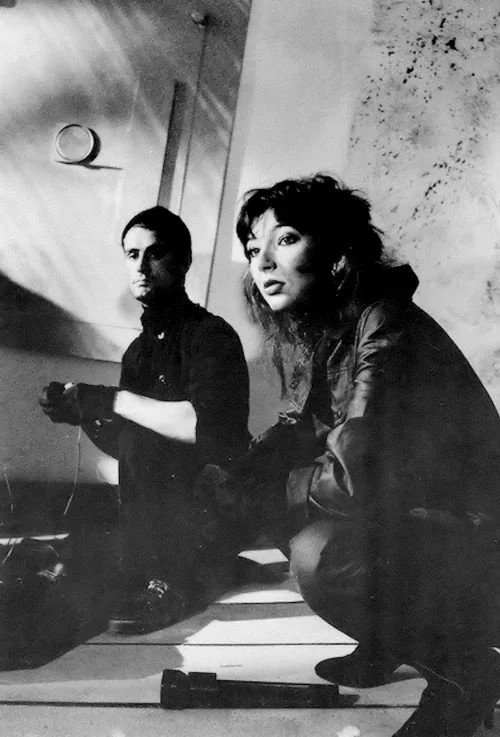
IN THIS PHOTO: Kate Bush in the There Goes a Tenner video/PHOTO CREDIT: Paul Henry
The Lookout (There Goes a Tenner)/The Father (This Woman’s Work)
__________
PAIRING a character…

IN THIS PHOTO: Kate Bush in 1989/PHOTO CREDIT: Guido Harari
from The Dreaming of 1982 and one from 1989’s The Sensual World, they are both sort of anonymous but both lead to some interesting discussions and offshoots. However, that is unfair to these characters. In terms of who portrayed them in videos, it leads to some interesting places/diversions. I want to start with The Dreaming and, interestingly, a discussion about The Beatles. I have compared before the two acts when thinking about their busiest years. I will come to the song that starts this first ‘half’. However, 1967 for The Beatles and 1978 for Kate Bush were manic years! They both crammed in so much. I think both sort of turned more to the studio at a certain point. For The Beatles, it was from 1966’s Revolver when they really started to exploit the studio, technology and pushing their sound. For Bush, the first big step was for The Dreaming. Similarly, she brought in so many different sounds and genres into her albums when she was given this access to modern technology, multiple studios and a cast of musicians. The Dreaming is an example of Bush as a producer broadening her sonic palette and pushing her voice. Deeper and perhaps more character-filled than previous albums, there are so many examples of her pushing boundaries and the studio. Inspired by artists like David Bowie and Peter Gabriel, I love tracks like Sat in Your Lap and that manic percussion. Tribal. The sublime and stirring Night of the Swallow. I think you can rank the tracks on The Dreaming and There Goes a Tenner might come in bottom of the ten. Or low down. In terms of its compositions and sounds, it is jauntier and lighter than other tracks. Perhaps people think it is less deep. However, if you listen to the textures of that song and everything happening, it is so fascinating. Following the opening track of Sat in Your Lap, percussion is very much at the heart. Bigger drums, gated percussion and a more masculine energy than 1980’s Never for Ever. I think There Goes a Tenner is one of the funnier and sillier songs on The Dreaming.
Kate Bush doing a cockney accent and it being about this job that goes wrong. Perhaps trying to break into a safe and loot this place, the blood rushes and the caper goes awry. I shall come to an article that gives us information about There Goes a Tenner and Bush discussing its influence. Although other ‘characters’ are mentioned in the song – when she talks about her bank robber partners acting like actors, these lyrics are sung: “You are Bogart/He is George Raft/That leaves Cagney and me/(What about Edward G.?)” -, I think I can weave them into discussion around filmic inspiration for There Goes a Tenner. The first character that I want to focus on is The Lookout. He is someone who “has parked the car/But kept the engine running/Three beeps means trouble's coming”. I shall come to the video, as the late great Del Palmer plays the driver in the video. We lost him at the start of 2024 and, apart from being a musician and engineer who worked with Bush for most of her career, he was her boyfriend for years. Partners in crime appropriately paired in this video about a big bank job. This robbery. There are some politics edges through The Dreaming. The scenes of war and death on Pull Out the Pin. However, Bush is an artist who sprinkled in political and social commentary rather than it being the drive of her music. At the end of There Goes a Tenner, she delivers these lines: “Oh, there goes a tenner/Hey look! There's a fiver/There's a ten-shilling note/Remember them?/That's when we used to vote for him”. Maybe looking at the politicians pictured on the notes or decrying the state of modern politics. Maybe Kate Bush reacting to events like the Falklands War. Sparked by Argentina's invasion in April, which Margaret Thatcher's government successfully resolved by sending a naval task force to retake the islands. The SDP-Liberal Alliance was rising in 1982, so it was a tense, violent and charged year. I will come to Del Palmer and his importance. Whilst he appeared in quite a few Kate Bush videos, I really like his brief inclusion in There Goes a Tenner.
In terms of the characters that feature through her albums, The Dreaming has the odd names ones – such as Houdini in the song of the same name – but there are a few fairly non-descript or minor ones. Other albums feature a larger cast of characters. However, if we think of Kate Bush’s albums like films with their own feel and cast, The Dreaming is perhaps the most intriguing and diverse. It is hard to link There Goes a Tenner with Get Out of My House, All the Love or Suspended in Gaffa. All extraordinary and different songs, it shows that Bush was keen to be seen more as a diverse and experimental artist. Perhaps the media seeing her as one think and pigeonholing her. The Dreaming was her most ambitious and layered album to that point. What also marks The Dreaming out is the relative failure of its singles. There Goes a Tenner was her worst-performing single to that point. It was released as a 7″ single in the U.K. and Ireland only. It was originally intended to be Bush’s first 12″ single, but its disappointing sales performance caused plans for the 12″ to be cancelled. Even though Hot Press provided some kindness to Sat in Your Lap, 1982 was a year when many in the press piled on Kate Bush. She would win many back for 1985’s Hounds of Love. However, I think Sat in Your Lap is symbolic and ironic maybe. Bush talking about this heavy job and trying to pull off this robbery but it not going to plan. The Dreaming as this huge album that she orchestrated and was trying to pull off. EMI almost returned the album and critics were not all on board with it. In a way, I see There Goes a Tenner as this representation as Kate Bush as a producer. Record Mirror said of There Goes a Tenner: “Blackheath beauty goes all cooey cockney-gasp in a bouncy tale of the downfall of Thatcherism and the rise of mass working class solidarity… actually it’s more trivial than that”. Record Business wrote this: “A practically formless song with odd vocal affections, and no chorus to speak of. (…) Most disappointing”. A song of these small-time players doing their first job and it going wrong. Maybe critics took relish in the fact Bush was producing alone for the first time and, in their minds, she had failed. I think of how critics viewed women in the 1980s who were experimental. If many women were following traditional Pop or were close to the mainstream, how many were producing albums like The Dreaming?! In a sexist and misogynistic landscape, I feel they were expected to be a certain thing and were criticised and dismissed if they tried anything different or unconventional.
The Dreaming is a pioneering and influential album. Songs like There Goes a Tenner do not seem so strange when you look at today’s scene. However, in a year when artists like Prince, Michael Jackson and Bruce Springsteen were at the forefront, there was far less accessibility for and visibility of female artists. Maybe Alison Moyet in Yazoo and Siouxsie And The Banshees’ Siouxsie Sioux. Madonna released her debut single in 1982 but, largely, it was a male-driven landscape. In a 1985 interview, Bush remarked the following regarding the writing of There Goes a Tenner: “They had to be phrased right and everything. That was very difficult”. However, I want to bring in this interview archive from 1982, and Kate Bush’s explanation and background on a song that is criminally underrated:
"It’s about amateur robbers who have only done small things, and this is quite a big robbery that they’ve been planning for months, and when it actually starts happening, they start freaking out. They’re really scared, and they’re so aware of the fact that something could go wrong that they just freaked out, and paranoid and want to go home. (…) It’s sort of all the films I’ve seen with robberies in, the crooks have always been incredibly in control and calm, and I always thought that if I ever did a robbery, I’d be really scared, you know, I’d be really worried. So I thought I’m sure that’s a much more human point of view.
The Dreaming interview, CBAK 4011 CD”.
I have brought in the excellent Dreams of Orgonon blog a few times for this series. They wrote about There Goes a Tenner in 2020. Though they feel it is lightweight and rudimentary rather than essential, they made interesting observations about how Kate Bush tackles class politics through a different lens for this track:
“Time for an “and yet” moment, as I have a blog post to write if I want to eat next month. Alas the “and yet” still means expounding on the flaws of “There Goes a Tenner,” but its flaws at least communicate something about a certain British attitude to class. Said attitude is toxic, problematic, and only theoretically has anything to do with poverty and the working class, but Dreams of Orgonon is fundamentally not a story of leftist or progressive values. Chronicling Kate Bush’s career entails exploring the values of the stratum of civil society which informs her work.
“There Goes a Tenner” is Bush’s most direct acknowledgement of class to date. Admittedly this isn’t saying much, since Bush adopts an offensively bad mockney accent for its duration — “OI go in/the CROIM begins.” Her evocation of a working class Londoner involves simple language, mostly descriptions of the action such as “we got the job sussed/this shop’s shut for biz-ness” and “I’m having dreams about things/not going right/let’s leave in plenty of time tonight.” A middle-class white woman equating a panto accent, simplistic articulation, and crimes with working class identity is tremendously vexed. Alongside the troubling title track and “Pull Out the Pin,” The Dreaming isn’t a great example of Bush avoiding cultural stereotypes.
Yet even with her classism, there’s some worth to her attempts here. Fundamentally, “There Goes a Tenner” channels the heist movie through a children’s panto. It treats poverty and crime with the tropes and language available to Bush through English popular culture. “Ooh, there’s a tenner/hey look, there’s a fiver” interpolates British currency onto the trope of money exploding in the middle of a robbery, as seen in such films as Butch Cassidy and the Sundance Kid. There are some hat tips to old gangster films, like when Bush observes her partners’ conduct in the middle of their robbery: “both my partners/act like actors/you are Bogart/he is George Raft/that leaves Cagney and me.” Clumsy, to be sure, but distinct in its aesthetics, and in a better song, Bush’s dive into British class politics with crime film tropes might be enlightening.
There’s something more going on here though. Bush asserted that her robbers were incompetents with limited experience: “It’s about amateur robbers who have only done small things, and this is quite a big robbery that they’ve been planning for months, and when it actually starts happening, they start freaking out.” She goes on to cite Butch Cassidy and the Sundance Kid as an example of hypercompetence in cinematic criminals, objecting to the composure of the genre’s heroes, observing “the crooks have always been incredibly in control and calm, and I always thought that if I ever did a robbery, I’d be really scared.”
Certainly the heist genre is populated by “chill” paragons of masculinity. It’s how you get lead actors like Paul Newman, Al Pacino, or George Clooney as top notch criminals. The genre offers the pleasures of breaking with the decorum of civil society while still keeping a layer of masculine authority in the mix, and its films tend to conclude with major punitive measures for the culprits (see Bonnie & Clyde, Dog Day Afternoon, etc)”.
Although there are cultural stereotypes through The Dreaming (especially on the title track), I do admire how Bush both draws on her love and knowledge of films – many of her songs by 1982 were influenced by film and T.V. -, yet turns cliches and tropes on their heads. Casting herself, a woman, as this robber, alongside these accomplices who are almost actors playing robbers rather than the real thing. Things descending into chaos rather than being smooth. How long until his screen narrative was changed? The idea of heists going well and these male actors being all suave and controlled? There Goes a Tenner is a refreshing skewering of that tired stereotype. I think of Bush as an actor in this song. Adopting a cockney accent and playing this role. I think the greatest cast member of There Goes a Tenner is a silent one.
The Lookout is the one who keeps an eye out for the cops and sounds the horn if trouble is coming. Del Palmer is the only one who could play that role in the video. Going back to that idea of Bush and Palmer as two in cahoots or being partners in crime. Recording The Dreaming, it was often Bush and Palmer spending long hours together to make sure everything was going smoothly. Her trusted personal and professional partner, I can imagine at times recording The Dreaming was as nervy and intense as robbing a bank! That feeling that things would go wrong. That trust between them was amazing. People do not talk about the importance of Del Palmer when it comes to Kate Bush’s career. Not only did he play bass on There Goes a Tenner and many other songs for Bush, he was also someone who engineered her albums. Right up until her most recent one, 2011’s 50 Words for Snow. Someone she could bounce ideas off and would often provide stability and rationale when she was perhaps buried in work and stressed, he was this lookout in her personal life. Someone who was this vital aprt of her life. When we heard Del Palmer died in 2024, it came as a huge shock. I think about all his musical contributions. His phenomenal engineering work. His varied and memorable video appearances (including Hounds of Love’s The Big Sky and The Whole Story’s Experiment IV) and what an immense contribution he made. A song like There Goes a Tenner very much would have had Del Palmer working tirelessly with Bush to make sure it sounded perfect. If it was not right as a single and many critics crapped over it, it is a wonderful song that I love. Bush referencing film heist and the idea of the unflappable male; class politics and divides; the ineptitude of this robbery and the players being like actors rather than skilled criminals. It is a fascinating song indeed.
Flipping over the vinyl and listening to This Woman’s Work. There are a few things to discuss when thinking about this song. I have featured it before and you will be familiar with its history. It was originally featured in the 1988 film, She’s Having a Baby, before it appeared on The Sensual World a year later. In terms of discussion points here, I wanted to look at film and comedic actors, the idea of maternity and motherly responsibility throughout’ albums, Bush exploring different subjects and themes on her final album of the 1980s, in addition to a comparison with a 1986 duet she was involved with. Before getting to The Father from This Woman’s Work. In She’s Having a Baby, director John Hughes used This Woman’s Work during the film’s dramatic climax, when Jake (Kevin Bacon) learns that the lives of his wife (Elizabeth McGovern) and their unborn child are in danger. If There Goes a Tenner was seen as weird and too out there and, as such, did not resonate with a sexist music press, why did the press react more positively for This Woman’s Work. A better song? More suitable for what was expected from a female artist in the 1980s? Greater critical awareness and reflection following Hounds of Love? However, there was more appreciation for a single that reached twenty-five in the U.K. in 1989. This is a song that Bush reworked and reapproached when she made Director’s Cut in 2011. An older artist who voice was different to what it was in 1989 gave the song new depth and a different meaning I think:
“A luscious, spiritually elevating showstopper ballad. How does anyone get that much cool into a voice? Ecstatic with wintry tragedy, undeniably beauteous.
Chris Roberts, Melody Maker, 25 November 1989
Is it possible through pop to truly represent the emotions of a young man stranded in the waiting room while his lover’s life is threatened by the birth of their baby? I think not. Unless you’re Kate Bush…
Len Brown, NME, 25 November 1989
Bush is at her most potent when she’s in her reflective late-evening mood. Her fragile delicate voice combines with sparse piano and spot-on orchestral arrangement.
David Giles, Music Week, 25 November 1989”.
Before moving on, it is worth considering what Kate Bush said about This Woman’s Work and its placement in She’s Having a Baby. An early case of her work being brought to the screen, in 2026, filmmakers and producers are still realising the potential of her music. Although This Woman’s Work has been used in films since 1988, the song has not received the same sort of popularity and success as Running Up That Hill (A Deal with God) and its Stranger Things inclusion:
“She gets pregnant, and it’s all still very light and child-like until she’s just about to have the baby and the nurse comes up to him and says it’s a in a breech position and they don’t know what the situation will be. So, while she’s in the operating room, he has so sit and wait in the waiting room and it’s a very powerful piece of film where he’s just sitting, thinking; and this is actually the moment in the film where he has to grow up. He has no choice. There he is, he’s not a kid any more; you can see he’s in a very grown-up situation. And he starts, in his head, going back to the times they were together. There are clips of film of them laughing together and doing up their flat and all this kind of thing. And it was such a powerful visual: it’s one of the quickest songs I’ve ever written. It was so easy to write. We had the piece of footage on video, so we plugged it up so that I could actually watch the monitor while I was sitting at the piano and I just wrote the song to these visuals. It was almost a matter of telling the story, and it was a lovely thing to do: I really enjoyed doing it.
Roger Scott Interview, BBC Radio 1 (UK), 14 October 1989”.
The Father is someone who is not just a specific film character. Bush has written about men in a very mature and loving way. The Man with the Child in His Eyes was just that: a man with a child-like innocence inside. Men being child-like (in a good way). However, here, that is a bad thing. Interesting how Bush wrote about men and responsibility. If early in her career it was more about lust, attraction and saluting the child-like qualities of men – when she was a teen and in her twenties -, now in her thirties (by 1989; though she was still in her twenties when she wrote This Woman’s Work), there was a shift. Still not negative, maybe an artist who was thinking about family or had that in mind. The Sensual World is an album she wanted to be more feminine and womanly than the more masculine sounds of Hounds of Love and The Dreaming. Bush maybe had family at the back of her mind and that desire to settle down. Considering men in a different light and how The Father of This Woman’s Work needing to be responsible and step up. If, in 1978, Bush might have seen the fatherly figure as young and someone who did not know better, now, it was a more adult take. Interesting how this is a rare case of a film geared for a film soundtrack fitting into a studio album and taking on this new life.
I love how the character of The Father, for the music video, was played by Tim McInnery. In a video directed by Kate Bush and John Alexander, he plays the distraught husband/father who is grief-stricken when his wife (played by Bush) collapses and is taken to hospital. This expectant father pacing the room and being in this impossible situation he did not envisage. Not the first time comedic actors featured in her work. A fellow Blackadder cast member, Hugh Laurie (and the excellent Dawn French) in the video for Experiment IV (1986). Not comedic necessarily, but Robbie Coltrane appeared in the 2011 video for Deeper Understand (which Bush directed). Bush performed with Rowan Atkinson (Blackadder himself!) for Comic Relief and she also worked with the late Terry Jones. He voiced Professor Need for 2011’s Deeper Understanding. Hugh Laurie’s comedy partner, Stephen Fry, was a fellow professor, Joseph Yupik for 50 Words for Snow’s title track. Bush is a big fan of comedy and this is this long and fascinating relationship with actors and comedy performers, as I have written about before. I think Tim McInnery brings this gravitas to the role of The Father. Consider his comedy work up until that point, primary in Blackadder, and many might not have associated him with drama and being able to portray this more serious side. Bush’s connecting to paternity and motherhood is interesting. The Kick Inside’s Room for the Life about women and how they can create life and there is room inside them for two. The incestuous pregnancy of The Kick Inside’s title track and it being taboo. Mother Stands for Comfort on Hounds of Love and this mother protecting a murderous son. The pregnant woman of Breathing (from Never for Ever) and this foetus being protected by the womb as nuclear war raged outside. Bush thinking about her own mother and bringing her into songs. In the video for Suspended in Gaffa and mentioned in Moments of Pleasure (1993’s The Red Shoes) and A Coral Room (2005’s Aerial). Bush became a mother in 1998, and I think motherhood very much at the heart of Mrs. Bartolozzi from Aerial. Bertie, also from Aerial, a paen to her young son. The way motherhood and maternal responsibility and complexities are examined. In This Woman’s Work, you might expect it to be all about the mother and her sacrifice.
Rather than the narrative being about the mother and her giving birth and her responsibility, I read the song as thoughts and feelings about the man: “I stand outside this woman’s work/This woman’s world/Ooh, it’s hard on the man/Now his part is over”. The idea of conception being about this ‘work’. A task. Something universal and fundamental. However, now that the ‘fun’ is over, there is this craft. This lifelong responsibility of being a father. Many interpreted the lyrics about the mother breaching and almost dying. All the regrets she had and things she never said. However, I think of it more about the father and keeping things bottled in. All the words he left inside and never said to his wife: “Of all the things I should’ve said/That I never said/All the things we should’ve done/That we never did/All the things I should’ve given/But I didn’t”. The idea of wanting to cry and release everything, but having to be strong and not let it show. When Bush sings “make it go away”, I always feel that is The Father not wishing away the pregnancy but wanting everything to be fine and his wife to pull through and give birth. The more intriguing lines, I feel, refer to Bush’s mindset and stage of life and also a perspective of a father maybe wanting to return to simpler times and happier normal: “Give me these moments back/Give them back to me/Give me that little kiss/Give me your hand”. Is this the expectant mother speaking or the dad? “I know you have a little life in you yet” both refers to the foetus inside the woman and the strength that she has. This emotional song was different to how Bush discussed relationships and womanhood. Whilst she did cover marriage and romance previously, this is a case of her addressing motherhood and the responsibilities of the father.
I think about This Woman’s Work and a tie with 1986’s Don’t Give Up. A Peter Gabriel single (from his album, So) that Bush performed on, this is about a husband who loses his job and is on the brink of suicide because he feels he has lost his identity and purpose. Bush, as the wife, telling him not to give up as he has friends and life in him yet. That idea of the man dealing with loss and a traumatic event and having to find strength and keep going. If Bush, on Don’t Give Up, is this show of strength and this angel on his shoulder, her role is more passive on This Woman’s Work. It is all on The Father and him having to be all grown up and realise that the woman sacrifices and it’s time that the man stepped up. That This Woman’s Work is Bush outlining what women deal with and how hard it is for them and how the man is often the one who avoids responsibility and does not understand or appreciate women and their roles. Maxwell’s 2002 version is an ode to womanhood and feminine power and importance. This article from 2012 makes some interesting observations about This Woman’s Work:
“I can understand how the song’s appropriation by a man might seem to diminish the very real ways in gender policing around women’s emotions not only devalues them, but also potentially undermines any kind of work, emotional or otherwise, that women perform as based in that devalued emotional sphere. This is old news. Nothing new to anyone who pays attention. But just because Ms. Bush is expressing something we should all already be aware of doesn’t make it any less powerful. In fact, since she is couching it in terms of gender, her own plea suggests the damage the traditional allocation of emotional work, as it applies to romantic relationships, does to everyone regardless of gender, expressing the potential for a form of emotional solitude even within the context of a relationship—an emotional solitude reinforced by patriarchal notions about the ways men and women express their feelings about each other and about their union”.
That idea of a man putting themselves in a woman’s shoes and there being this better understanding is an idea Bush explored in Hounds of Love’s Running Up That Hill (A Deal with God). If that was about doing a divine deal so men and women could swap places and exchange the experience, This Woman’s Work is perhaps a wake-up call to men and how fatherhood is a responsibility even before the baby is born. How they are stepping into this new life and they are committed and have to be grown up now. Whether Kevin Bacon in She’s Having a Baby or Tim McInnery in The Sensual World’s video, The Father is not a child or carefree anymore. An astonishing song that has been shown on screen several times since 1988/1989, it is one of Kate Bush’s most powerful and enduring songs. Lyrics of sacrifice, responsibility, potential loss and making hard decisions that will…
CHIME with so many people.