FEATURE:
Plastic Roses
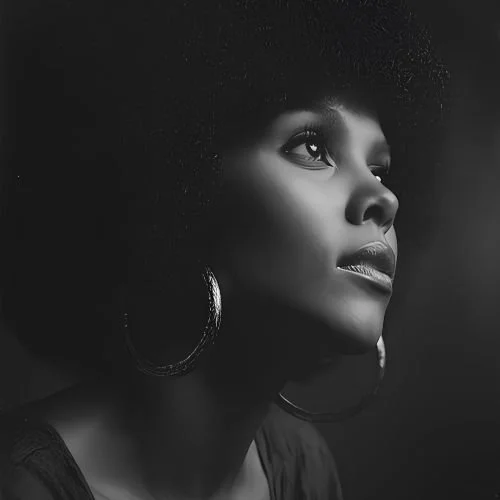
IN THIS PHOTO: Sienna Rose has been flagged as a probable A.I. artist by Deezer (many of her songs and albums are suspected to be A.I. music)
The Continuing Issue of A.I. Artists and the Problems They Cause
__________
I guess you can detect an A.I. artist…
if they do not have a lot of photos or there is little in the way of promotion. However, a lot of new artists might be in that situation. Especially on Instagram, if there are very few photos or something looks suspicious, then alarm bells would ring. I was following an A.I. artist myself and found out through a comment from an Instagram user. Rather than her being this rather fake or A.I.-sounding artist, there was a rawness and authenticity to her voice that had me – and many others – fooled. It was embarrassing but also angering. At a time when so many real artists are struggling for attention and have their music on streaming sites and hardy get paid anything, there are A.I.-generated artists that are getting more attention and payment. This brings us to the case of a fake and plastic musical flower. Sienna Rose. As Rolling Stone U.K. reveal in their article, it is more problematic than her being inauthentic and almost hoodwinking artist. A Black artist who was gaining traction and being seen as this great new R&B/Neo-Soul hope revealed to be a fake:
“These days, artists don’t even need to be real to become a sensation. At least, that seems to be the case for neo-soul “musician” Sienna Rose. This week, the “singer” became a topic of discussion as listeners and observers online debated the high possibility that Rose is, in fact, an artist created by artificial intelligence. They are likely to be correct.
In a statement to Rolling Stone, the streaming platform Deezer confirmed “that many of Sienna Rose’s albums and songs are detected and flagged as AI on Deezer.”
Sienna Rose has been the subject of this debate for about a year now. But it all got reignited after the Golden Globes awards ceremony when Selena Gomez posted an Instagram carousel from the event, using Rose’s “Where Your Warmth Begins.” (The song has since been removed from Gomez’s post.) Since then, folks on the internet have turned their attention on the musician with a critical eye.
Cannot overstate how deeply insidious this is, especially considering that we recently lost D’Angelo (a true artist who revolutionized the very genres that “Sienna Rose” is a stolen generic ass patchwork of)
“Sienna Rose” is a modern iteration in a long history of Black artists… https://t.co/T8MLKoySdZ
— Caroline (@carolinekwan) January 13, 2026
Sienna Rose’s Spotify profile was the greatest point of speculation. For starters, Rose’s biography describes her as “an anonymous neo-soul singer whose music blends the elegance of classic soul with vulnerability of modern R&B.” The operative word here being “anonymous,” a strange move for an artist in the 21st century when visibility feeds into fame. Despite Sienna Rose’s anonymity, the singer has 2.6 million monthly listeners on Spotify. On top of that, she’s also managed to get three songs (‘Into the Blue,’ ‘Safe With You,’ and ‘Where Your Warmth Begins’) on Spotify’s Viral 50 – USA playlist.
Then there’s the music of it all. Sienna Rose’s AI-generated music seems to be inspired by real artists like Olivia Dean and Alicia Keys with lush vocals and delicate pianos. But some listeners have noted the “generic” sound of the music. One X user posted about their listening experience: “Started listening to Olivia Dean (fantastic). Within two days Spotify recommended Sienna Rose, who has a similar, but more generic sound. Took me a few songs to realise she’s AI. Is this how Spotify plans to maintain leverage over artists? Cloning sound and stealing listeners?”
Another user on Threads had similar complaints. “Sienna Rose is the ultimate case study in AI music finally becoming good enough. It’s not just about the tech anymore, it’s about the fact that it can now pass the test for the average listener & Spotify algo[rithm],” they wrote, adding, “When a track is polished enough to fool someone like Selena Gomez and millions of daily listeners, the algorithm stops being a tool for discovery. It becomes a delivery system for statistically perfect sound.”
On the other hand, another X user seemed to enjoy Rose’s songs. “I just discovered Sienna Rose?! 10/10 ma’am come and get your flowers! Such beautiful music, my goodness,” they wrote. Still, one X user was skeptical about any praise on the social media platform, noting, “Don’t fall for these blue checks attempting to legitimise Sienna Rose.”
Additionally, Sienna Rose also doesn’t have a social media presence — she’s anonymous, remember? Some users on Reddit found this component suspicious. “I couldn’t find her on any socials — or just any info on Google in general,” wrote one user. “I was just thinking how soothing this sounded but then found it weird I couldn’t find this ‘artist’ on socials…I’m cooked LOL,” wrote another.
Sienna Rose is the latest artist to make listeners online and beyond debate the issue of AI-generated music and artists. Last summer, the Velvet Sundown sparked debate and extensive media coverage when they debuted on popular Spotify playlists and insisted they were not AI-generated. Finally, the band’s Spotify bio clarified that they were indeed “visualised with the support of artificial intelligence”.
If the likes of Bandcamp have banned A.I. artists from their platform, Deezer, Spotify and others have not. It does show that there is this massive issue in terms of controlling A.I. artists. They are also becoming more sophisticated in terms of being able to convince people. It is a worrying trend. Velvet Sundown another case of an artist/band who have earned a lot of conversation and there is debate as to whether they are real music and what their worth is. Although they are not a huge streaming success and there is never going to be this longevity where their music endures, it does all seem rather creepy and pointless. In terms of Sienna Rose, a lot of the backlash comes when you consider she is a Black artist and a sort of anticipation and excitement around her. In an industry where there are fewer Black artists at the forefront and there is still inequality, there is more sting and disappointment with the realisation that she is A.I.-generated. It does seem to be insulting and toxic. Part of the problem with A.I. artists is that they will get found out. They cannot tour and there will be publicity from them. Fans are unlikely to stick with an artist long-term if all they get are A.I.-generated tracks and there is nothing else. However, with more and more of them being spawned, it does make it difficult for genuine artists to stand out at times. Some A.I. artists appear authentic and gain this press, only for it to be revealed their music is not genuine. If A.I. artists cannot produce the sort of real and human emotions that defined so many of last year’s best albums, it is this thing of artist royalties and existing music being used to make A.I. music. Even if it can mean more royalties, many artist and record labels are worried. I shall come to an article that explores that. However, in December, Alexis Petridis for The Guardian argued how 2025’s best was defined by grief, loss and resilience. This is something A.I. can’t, or ever will, be able to feel and replicate:
“The most acclaimed albums of 2025 make for impressively eclectic listening. Surveying them does not reveal much in the way of obvious musical trends. There’s very little similarity between Rosalía’s heady classical approach to pop on Lux and Lily Allen’s conversational disclosures on West End Girl. You could broadly group CMAT’s Euro-Country, Bon Iver’s Sable, Fable and the Tubs’ Cotton Crown together as alternative rock but they don’t sound anything like each other. And the year’s best-of lists are sprinkled with albums that brilliantly defy classification: Blood Orange’s Essex Honey leaps from old-fashioned indie to Prince-y funk; on Black British Music, Jim Legxacy sees no reason why UK rap can’t coexist with distorted guitars, pop R&B and acoustic bedroom pop.
But it’s hard not to notice how similar they are thematically: a large swathe of the Guardian’s albums of the year seem consumed by loss. There are straightforward explorations of failed relationships: for all its religious imagery, there’s a prosaic breakup at the heart of Rosalía’s Lux, while West End Girl’s lurid detailing of the collapse of Lily Allen’s marriage kept the tabloids in headlines for weeks. There are albums about more literal grief: a mother’s death informs Blood Orange’s Essex Honey and the Tubs’ Cotton Crown; Jim Legxacy references his late sister, while the brothers in august rap duo Clipse have seldom sounded as vulnerable as they do describing the deaths of their parents on their rightly heralded comeback Let God Sort ’Em Out. Euro-Country both memorialises a close friend on Lord, Let That Tesla Crash, while its title track examines the wave of suicides provoked by the Irish financial crisis of 2008.
In September, a US label reportedly paid $3m to sign Xavia Monet, an AI-generated R&B singer; Timbaland’s latest project is AI pop star TaTa Taktumi. By November, two AI-generated tracks had topped different US charts: Breaking Rust’s Walk My Walk made No 1 on the country digital song sales chart, while the equivalent gospel chart was topped by Solomon Ray’s Find Your Rest. The UK singles chart has also fallen victim. I Run by Haven began life with an AI-generated vocal seemingly designed to mimic that of R&B star Jorja Smith. It was banned by streaming services and removed from the UK chart after a week when record industry bodies issued takedown notices, but a new version with a re-recorded vocal was No 14 in the UK Top 40 at the time of writing.
This is all clearly the thin end of the wedge: there’s evidently plenty more to come. But if AI can make a fair copy of an old disco track, or a country record or a Jorja Smith song, the one thing it can’t do is experience the kind of human emotions that power the albums above. (The notion of an AI gospel track in particular seems to spectacularly miss the point.) These were not albums that people listened to just because they sounded nice, or had catchy hooks, but because they bought into the stories behind them, or felt moved by the feelings they expressed and the evident passion that had gone into making them, or saw their own lives reflected in the lyrics”.
There will be fallout from Sienna Rose. The latest artist to be outed as A.I., I do wonder what the long-term impact will be. Will people get better at detecting A.I. artists? Even if they do, Sienna Rose is still being listened to and streamed. If a potential promising artist is revealed as a fraud, that will not stop people listening to the music. Royalties going to someone who is not a real artist. I think it is the tackiness of the visuals and music. What is the point of it all?! No A.I. artist will ever be able to enjoy any long-term success or have any sort of career. They cannot do the human part of music when it comes to tours and promotion. Will we see A.I.-generated artists streamed performing ‘live’, and will there be this fake interviews with these A.I. acts? It is a bit unsettling. Another thing is how some major labels are embracing A.I. and what this means for artists. Artists’ work being used to train A.I. In another article from The Guardian they write why there is division in the music world about the purpose and value of A.I. If it is a good or bad thing:
“But what do musicians actually think of the prospect of their work being used to train AI, and reworked by the general public? “Everybody should be selling or licensing their voice and their skills to these companies,” Dave Stewart of Eurythmics argued to me this week. “Otherwise they’re just going to take it anyway.” That view is directly countered by the major labels and AI companies, who have insisted artists and songwriters get to opt in to have their music made available, and if they do, get royalties when their music is used to train AI, or manipulated by users on platforms such as Udio, Suno and Klay.
Others take a grimmer view about how these companies might reshape the industry. Irving Azoff, legendarily forthright artist manager and founder of the Music Artists Coalition in the US, responded to the Universal/Udio deal with biting cynicism. “We’ve seen this before – everyone talks about ‘partnership,’ but artists end up on the sidelines with scraps,” he said. In the wake of the same deal, the Council of Music Makers in the UK accused the major labels of “spin” and called for a more robust set of artist-label agreements. And the European Composer and Songwriter Alliance says there is a disturbing “lack of transparency” around the deals (though more detail is likely to emerge on what users can do with any music they create, and any potential commercial uses of it).
Catherine Anne Davies, who records as the Anchoress and also sits on the board of directors at the Featured Artists Coalition (FAC), has many reservations here. “Most people don’t even want their work to be used for training AI,” she says. “I’m on the dystopian side, or maybe what I call the realist side of things. I’m interested in the way that AI can be assistive in the creative process – if it can make us more efficient, if it can streamline our processes. But generative AI for me, in terms of creative output, is a big no-no at the moment. I’m yet to be convinced.”
Musician Imogen Heap feels that AI itself is not to be feared as a tool – she uses an AI she calls Mogen to listen to every aspect of her life, with a view to it being a creative partner (as explored in a recent Guardian article). To help address some of the issues, she has created Auracles, an artist-led, non-profit platform she hopes will be the place where the rights and permissions around AI are set out. It’s not enough to say you’re happy with your music being used by AI, she says – instead, what’s needed are “permissions that grow and evolve over time”.
It is distressing that A.I. artists exist and they can seemingly get traction and a fanbase before they are rumbled. Even after that, some people have no issues supporting an A.I.-generated artist. Whilst it can never replace actual artists, I find it both creepy and damaging. The fact that there is not an actual human behind the music (well, not an artist anyway). And how I feel it has made people sceptical of new artists and whether they are real. New artists too having to compete with A.I. versions. Artists divided over whether A.I. is a useful tool and beneficial or dystopian and detrimental. The case of Sienna Rose is both shocking and disappointing. I have dropped in some of ‘her’ music to show that it is being listened to and, frankly, its popularity will wane and die. Authenticity and purity of human emotion will always resonate with listeners, but as long as A.I. artists can fool people or seem a sufficient alternative to real artists, I feel we all...
HAVE something to worry about.