
FEATURE:
Stuck Inside These Four Walls…
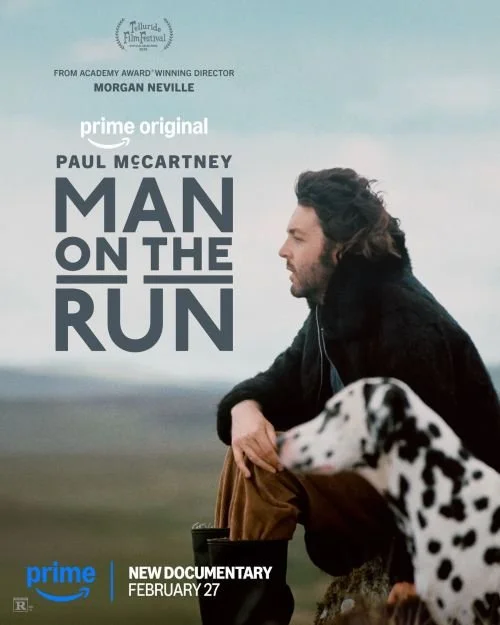
Inside the Paul McCartney: Man on the Run Documentary
__________
IT is always great when…
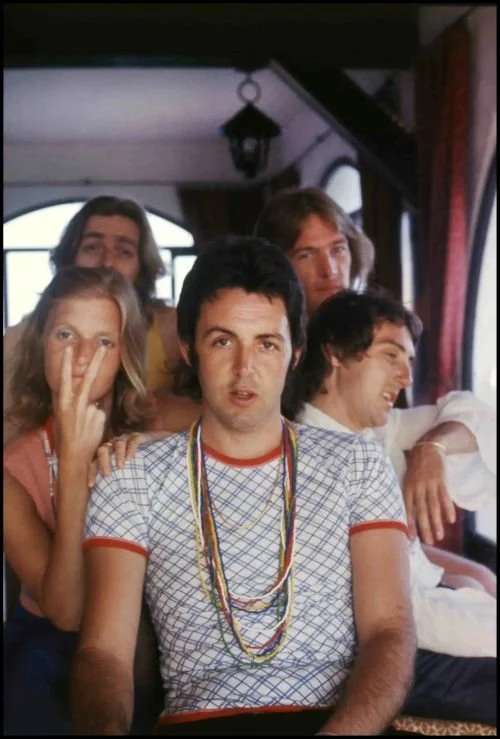
a new Paul McCartney-related project comes along. There seems to be one every year. That is a good thing. Most of the focus is on The Beatles. We have a big album anniversary later this year when the masterpiece that is Revolver turns sixty. I am sure there will be more Beatles documentaries and things from the archives released. Maybe new books and all sort of things. I feel this is going to be the case for many years to come. In terms of Paul McCartney’s solo career, there has not been a new album for five years, though you get reissues and there is always discussion. I do really hope that we see another Paul McCartney solo album at some point, as it is always a treat when he puts music out. The greatest songwriter ever always brilliant and different. However, there is probably less discussion around Wings. Forming the band must have been monumentally emotional. I think McCartney was the most dedicated and devoted to The Beatles. John Lennon perhaps a little more detached. Same with George Harrison. Ringo Starr speaks proudly about the band. However, you feel Paul McCartney is the biggest fan of the group. So going to a new group when The Beatles broke up would have been devastating and hugely challenging. On 7th December, their debut album, Wild Life, turns fifty-five. Perhaps not their most acclaimed and popular album, I think it is an amazing album. I am ending with a Wings playlist, and I will feature some songs from Wild Life. The seventh and final album was 1979’s Back to the Egg. About the same lifespan as The Beatles – in terms of their recorded output -, McCartney must have been bereft once more when the band split. However, he continued his solo career and released McCartney II in 1980.
There have not been that many documentaries and books around Wings. Most of the focus comes on The Beatles. However, the importance of Wings cannot be overstated. 1973’s Band on the Run is one of my favourite albums ever. Although the documentary premiered at the Telluride Film Festival on 30th August, 2025, Paul McCartney: Man on the Run will be released on Prime Video on 25th February with a limited theatrical release preceding it. I will come to the documentary soon. Though I would recommend people to pick up the book. Wings: The Story of a Band on the Run. You can order it here. Here’s what you need to know about a must-read for any fans of Wings and Paul McCartney:
“I’m so very happy to be transported back to the time that was Wings and relive some of our madcap adventures through this book. Starting from scratch after The Beatles felt crazy at times. There were some very difficult moments and I often questioned my decision. But as we got better I thought, ‘OK this is really good.’ We proved Wings could be a really good band. To play to huge audiences in the same way The Beatles had and have an impact in a different way. It was a huge buzz.”—Paul McCartney
As the Sixties came to a close, Paul was faced with the daunting prospect of being a solo artist for the first time. Wings’ ascension to the top of the charts with classic albums including Band on the Run, Venus and Mars and At the Speed of Sound, along with the band’s stadium-filling live shows would prove to critics and fans that not all great acts are impossible to follow. Wings:The Story of a Band on the Run is a rousing, stereophonic celebration of the songs, collaborations and performances that would shape the soundtrack of the late 20th century.
Drawn from over 500,000 words, based on dozens of hours of interviews with Paul and numerous key players in the band’s orbit, Wings: The Story of a Band on the Run weaves together the improbable trajectory of Paul McCartney and his newly formed band (featuring co-founding members Linda McCartney and Denny Laine) across the technicolor 1970s until their dissolution in 1981.
Edited by the prize-winning historian Ted Widmer and organized around nine Wings albums, the oral history sheds new light on the immediate aftermath of the seismic global impact of The Beatles’ break-up, as the musical landscape and tastes began to splinter and diverge along with societal views. The narrative follows the various incarnations of the band as they survive a mugging in Nigeria, appear unannounced at UK university halls, tour in a sheared-off school bus with their children, while producing some of the most indelible and acclaimed music of the decade, including: “Mull of Kintyre,” “Live and Let Die,” “Band on the Run,” “My Love,” “Jet,” “With a Little Luck,” “Silly Love Songs,” “Let ‘Em In,” “Junior’s Farm” and more.
With more than 100 black-and-white and color photographs, many never seen before, Wings: The Story of a Band on the Run is part of a larger reexamination and appreciation of the group and their catalog, including the 2024 theatrical release of the rare Wings live-in-studio performance film One Hand Clapping and its accompanying album; 50th anniversary editions of the Wings albums Band on the Run (released February 2024) and Venus and Mars (releasing March 2025); and a forthcoming documentary on Paul McCartney’s solo and Wings-related musical work of the 1970s from Academy Award-winning filmmaker, Morgan Neville”.
There will be a lot of new reviews when the documentary is released on 25th February. I want to move next to a review from IndieWire from last year. Though they do note it is a drawback that we do not see Paul McCartney sat down discussing the band – it is done in voiceovers -, it still manages to be for diehard fans and causals alike. It is fast-paced, informative but something that will definitely appeal to a wide spectrum of fans:
“But just as the Beatles loomed over everything McCartney did — a montage in the film features a succession of press audio snippets of “Beatles,” “The Beatles,” “Beatles” — “Man on the Run” can’t quite escape but be about the Beatles in its own way either.
We open in 1969, just five short years after the Sullivan performance, the band on the fritz, all off on their own. Speculation of a breakup is rampant but the news is not yet public. In this opening moment, McCartney’s voiceover recounts how he internalized the blame for the band’s breakup. We never see McCartney or any other contemporary interviewee onscreen as a talking head, a decision which opens up the wealth of archival footage from the era to take center stage. McCartney is seen in this footage, holed up on a remote farm in Scotland with his wife Linda and their kids along with some sheep and horses. An archival news report on the property highlights how strange a sight that one of the most famous and beloved pop stars of the ’60s now spends his days in a modest cottage with various structural elements in mild disrepair.
McCartney eventually bites the bullet and publicly acknowledges that the Beatles are in fact over. Expectedly, this leaves him with the lion’s share of the blame (“Don’t shoot the messenger” is an adage due to the frequency of prior shootings.) McCartney — who sat down for seven interviews with Neville for the film — mostly blames bandmate John Lennon as the actual instigator for the breakup, citing how Lennon privately told the bandmates in 1969 that he was leaving. However, he is clear to mention at any opportunity that he loves him as a brother, and also that when they fought, which was frequently, it was also as brothers.
The first act of “Man on the Run” takes its time laying the seeds for this breakup, a major part of which involves McCartney’s reticence about Allen Klein takin over as manager for the deceased Brian Epstein. McCartney recalls Lennon telling him that while “he is a son of a bitch, he’s our son of a bitch.”
McCartney was unmoved. Later, Lennon is seen publicly admitting on camera to press that McCartney was right about Klein all along — a clip you can’t help but sense McCartney feels vindicated is included in the final cut. But this realization came too late, and so each member embarked on their own solo musical journeys.
McCartney says he initially thought he’d never pick up a guitar again after arriving in Scotland at this moment when the future of the Beatles was in serious jeopardy. But, after a brief stint drowning his sorrows in scotch — a rare moment of darkness in the film — McCartney began noodling around on an old four-track (the lo-fi machine also makes an appearance in fellow Telluride world premiere, “Springsteen: Deliver Me From Nowhere”), recording each instrument himself. His first solo album, made in collaboration with his wife Linda, quickly follows. Linda was a photographer, not a singer, but her lack of musical training intrigued him. Her voice felt raw and real to him. But fans could only view Linda as a direct replacement of Lennon, and she was mistreated in the press and by fans, showcasing an open misogyny that calls to mind Yoko Ono’s mistreatment.
McCartney views songwriting as the “ultimate therapy,” and this first album allowed him to process his complicated feelings at the time. Festival programs often contain loose thematic throughlines, and fellow Telluride world premiere “Hamnet” also examines artmaking as therapy — in that instance it works to alleviate grief.
The limited footage shown of an unfortunate Wings TV special from 1973 is more than enough to elicit second-hand embarrassment for all involved. McCartney and Linda’s “Ram” from 1971 was initially panned by critics, including by future Springsteen manager Jon Landau, whose particularly harsh words in “Rolling Stone” are splayed across the screen. Over time, the album has been reassessed as a masterpiece, and in an ironic twist, is even now included on “Rolling Stone”’s Greatest Albums of All Time list.
Archival movie clips illustrate a stark shift from the 1960s into the harsher realities of the 1970s. The times changed and McCartney’s “conservative” demeanor, as one interviewee describes him, was simply no longer in vogue. Meanwhile, Lennon’s willingness to be political endeared him to the press throughout his career. But McCartney’s inherent uncoolness affords his discography a timelessness, which accounts for that eventual “Ram” reassessment.
The chief draw of “Man on the Run” is the copious amounts of archival footage it delivers from this era, much of it being seen for the first time. Linda was a photographer, which meant scores of beautiful 35mm photos to feature, and McCartney always seemed to be wielding a 16mm camera himself. McCartney also took his own photographs and their similarity in photographic styles is presented as evidence of their unbreakable kinship. Every big moment in McCartney’s life from this period on seems to have been captured on film: Wings’ first rehearsal, their first scrappy college tour, their final show in 1979, recording sessions in a barn with a horse milling about, and so on. Documentaries often “cheat” by using archival or movie clips from an era to fill space where no footage of actual events exist, but “Man on the Run” need not lean on this technique for the most part, because they simply have the footage.
A documentary veteran, Neville’s Best Documentary Feature Oscar win for “20 Feet from Stardom” is now over a decade in the past. In the time since, the prolific documentarian has bounced from profiling Anthony Bourdain to directing an animated Lego documentary on Pharrell Williams (which, like “Man on the Run,” also premiered at Telluride). Made over four years, “Man on the Run” is made with a patience that allowed Neville to sit down with McCartney so many times, and it also leads to a final cut that is as well-made and polished as documentaries come. This sheen and attention to detail elevates it above your traditional music biodoc.
One question a post-Beatles film must answer is how much context a viewer requires on the Beatles. Truth be told, if you find yourself watching a Wings-era Paul McCartney documentary, you’re more than likely carrying a rudimentary knowledge of preceding events. “Man on the Run” still chooses to briefly tackle their history, not in some “let’s get this out of the way” perfunctory manner, but with real verve and invention. An animated montage consisting of collage photographs takes us through the broad strokes in rapid succession: Ed Sullivan, India, Sgt. Pepper’s rebrand, Yoko, and so forth. It’s a clear highlight early in the film, promising plenty more visual flair.
“Man on the Run” works best as a linear accounting of these post-Beatles McCartney years more than it does as a portrait of McCartney. More than once — so you know it’s a theme — McCartney reiterates the unusual circumstances of his life journey, which lead him to rural Scotland with his family. After his schooling, he joins a band which quickly ascended to the top of the world, and now at 27, that band is no more. He feels lost and is forced to finally “grow up” he repeats. Yet “Man on the Run” misses out on the opportunity to interrogate deeply just how he was forced to grow up. The presentation of his relationship to his wife and kids is seen as wholesome and genuine. That heavy drinking in the early days of the breakup is briefly discussed but not lingered upon. And while Wings went through a succession of different lineups over the years, the reasoning for members leaving is touched upon but only somewhat satisfactorily.
Despite having what one assumes is the pick of the litter with A-list celebrities willing to lend their insights on McCartney, Wings and the Beatles, Neville wisely chooses to keep the outside voices to a minimum. Mick Jagger pops up and lends a few thoughts. Lennon’s son, Sean Ono Lennon, lets McCartney off the hook for a rare bad press moment in which McCartney appears nonplussed discussing Lennon’s murder to the media. Like Nick Dunne’s poorly timed smile in “Gone Girl,” one imagines McCartney now regrets wildly chomping on gum while commenting on camera on the death of his best friend and former band mate. McCartney reflects that one of the “greatest blessings” in his life was that he and Lennon made up shortly before Lennon’s murder. The details of that reconciliation are disappointedly not included. But with otherwise such strong access to McCartney alongside this wealth of archival clips, the omissions or glossed over subjects — one assumes at McCartney’s behest — while present, never feel glaring.
Music documentaries often come with the promise of salacious, tell-all revelations, a trend which might be a lingering byproduct of VH1’s influential “Behind the Music” series. But that is largely absent in “Man on the Run,” for a few possible reasons. One is that McCartney is too guarded and media savvy to ever say something to the effect of: “Yeah, I broke up the Beatles! So what?” The Beatles were always experts at managing the press, even in their early days. And the other is that by all accounts, McCartney mostly appears to be a normal guy. His family-first Scottish farm-life doesn’t appear performative. This does not seem to be a man with skeletons in his closet and those hunting for them here will leave disappointed. It does lead to a documentary lacking a certain edge, and the pacing likewise begins to drag late in the film as Wings’ albums are covered, one by one.
The central question in a musical documentary of this nature is whether it is for the real “heads,” or if a casual fan can follow along. “Man on the Run” successfully satisfies both demographics. Longtime Beatles and McCartney fans will eat up the wealth of intimate footage of McCartney and Linda’s working and domestic life, and casual fans can track his career throughout this period with a newfound curiosity, coming out better informed on McCartney’s ethos more so as a musician than as a man. But when this man is Paul McCartney, one of, if not, the greatest songwriters of all-time, it’s a compromise that will certainly do”.
It is an important year. Fifty-five years since Wings released Wild Life, this documentary takes us inside the band and their career. I keep coming back to that time after The Beatles split and when Paul McCartney was lost. Stuck inside four walls. Like a bereavement, it must have seemed impossible to record new music, let alone with a whole new band! It is why Wings’ success, however brief, is amazing. This new project that was not The Beatles and there was not the same expectation and dynamic. I don’t think that Wings get the credit and attention they deserve. It is clear that Paul McCartney: Man on the Run will be…
FASCINATING to see.