
FEATURE:
Let Me Blow Ya Mind
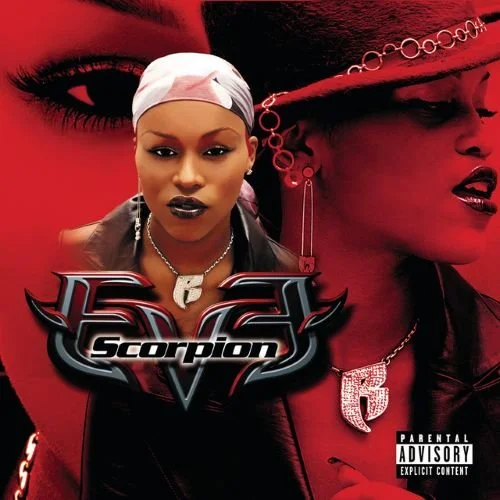
Eve's Scorpion at Twenty-Five
__________
THE second studio album…
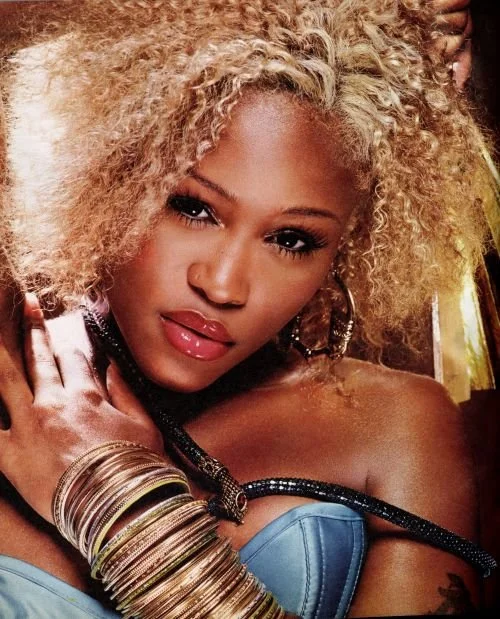
IN THIS PHOTO: Eve in 2002/PHOTO CREDIT: Interview Magazine
from the incredible Eve, Scorpion turns twenty-five on 6th March. On 5th February, its lead single, Who’s That Girl, turned twenty-five. Many might see that as her defining song. It is definitely one of her best. I want to come to some reviews for Scorpion ahead of its twenty-fifth anniversary. The other single from the album was the Gwen Stefani collaboration, Let Me Blow Ya Mind. Maybe that is my highlight from the album. However, there is so much to explore. I shall come to a feature from Stereogum, where Eve discussed her career highlights – including Let Me Blow Ya Mind. Though her 1999 debut album, Let There Be Eve...Ruff Ryders' First Lady, is incredible and acclaimed, I feel that Scorpion is a more confident album. That is what some critics noted. How it is also more muscular. Perhaps, at sixteen tracks, there are a couple of tracks not as strong as the others. However, twenty-five years after its release, and Scorpion still stands up. I will get to that Stereogum interview first of all:
“Moving into your collab with Gwen Stefani -- nowadays, cross-genre collaborations happen all the time in popular music. But when you said, “I want Gwen to sing on ‘Let Me Blow Ya Mind,’" how hard was it to convince your team that it was worth trying?
EVE: I mean, when I did that record, [Gwen] was the first person I thought of. I've always listened to all types of music and I always have felt that good music is good music, no matter what. So I was like, "She would be amazing." But when I mentioned her to some of the people that were in Ruff Ryders, some of the people that helped us put the songs together, A&R, whatever, it definitely was, "Eh, I'm not sure. I'm not sure if that will match. How people are going to feel about it."
Thankfully, Gwen was on my label, so getting her was not the hard part. It was convincing. "Well, let's just record it and if it sucks, it sucks, and we never have to put it out." I think there were equal parts "Hell no, this is not going to work" and "Hey, let's just try it." And thankfully, I mean, I'm pretty much annoying when I want something done, so I did not give up on it and thankfully it all worked out. And then once they heard it, that's when everybody came around, they were like, "Actually you know what? This might work." And thankfully, it did.
Yeah, I can't imagine that there was a ton of precedent at the time. The only thing I can really think of at the moment without doing an internet deep dive is Run-D.M.C. with Aerosmith.
EVE: Yep. Yep, exactly. That's all I think of at first, that's the first thing that popped to my head because I was even thinking just now, what else could it have been? But that is the one collaboration I would say. I'm sure it might be more, but I can't think of any right off the top of my head.
Are there many other aspects to the music industry you came up in the early 2000s that you see as being different today? Aspects that you wish you hadn’t had to contend with at the time?
EVE: I do think some of the things that have come out in the last years, whether it's collaborative, whether it's the way that songs are set up, the way that some artists were able to express themselves. Or whatever... I have had some frustrations, I'm not going to lie. I have heard people talking like, "Damn. That's something I tried to do years ago." And what was the confirmation for me was years ago, about three years ago, an A&R of mine, he called me and actually apologized and said, "You know what? I just want to tell you, I wish I would've listened to some more of your ideas back then, but I just wasn't there and I don't think we were there as an industry." And that was confirmation for me, I'm like, "Fuck, I wasn't crazy." You know what I mean?
Because I've always been the type of person... I mean, I'm like this in my life. I do not believe in limiting boxes, even back then as an artist. Yes, of course I'm a female MC, I do hip-hop, but I listen to every type of music. And like I said before, good music is good music, why can't it be a collaboration? And back then, I definitely got turned down for some of the ideas I had, but ultimately, I cannot complain. My life has been amazing and we're going into the 20-year refresh of this album [Scorpion] that is... It's a celebration. So I can't be upset, everything happens how, and when, it was supposed to. It only leaves it open for me to be able to experiment now the way I want to when I get back to music, so it's all good”.
There are a few interviews I want to get to. Before that, this article from Hot New Hip Hop in 2022 reacted to the Deluxe version of Scorpion, and an interview Eve gave, where she revealed how the album was recorded quite quickly. Also, she shared a story where her hair caught fire while preparing the release of her second studio album:
“Ruff Ryders legend Eve released her critically and commercially successful sophomore album Scorpion on March 6, 2001. Scorpion boasted singles like "Let Me Blow Ya Mind" and "Who's That Girl?" and sold approximately 162,000 copies in its first week. The album eventually went platinum and secured Eve a Grammy for Best Rap/Sung Collaboration in 2002, and today, it still remains one of the fan-favorite albums from the former Ruff Ryders femcee.
In honor of the album's 20-year anniversary, Eve has shared a deluxe version of Scorpion, complete with 12 bonus tracks, and talked with HipHopDX to discuss the album's impact and share new insights on the album's creation process.
"It’s very weird. I’m like, ‘Who pushed the speed up button?'" she tells HipHopDX, reflecting on her beloved album's 20-year milestone. "It’s amazing to look back on this because I have to say, I’m really seriously lucky that my songs are still being played in places and that people still want to hear the music and still get excited when they hear the music. So I don’t take that for granted. I really don’t."
Deeper into the interview, Eve reveals that she had a very limited amount of time to create Scorpion. For her follow-up to 1999's Let There Be Eve…Ruff Ryders’ First Lady, HipHopDX reports that she had a mere two months to get the album done. Throughout the mad dash, the "Love Is Blind" artist claims to have accidentally lit her hair on fire, leading to the iconic look seen on the album's cover artwork as well as in her music video for "Let Me Blow Ya Mind."
"That album was so fast to do,” she says, starting the story. "There were a lot of things that happened. For one, we recorded in Miami, so it was the first time I was able to take the budget and go somewhere, get a dope house and all the Ruff Ryders were there, going through the studio”.
I am going to bring in a few reviews of Scorpion before finishing off. In 2021, Pitchfork reviewed this phenomenal album twenty years after its release. It is interesting what a feminist album Scorpion is, yet Eve never really identified herself as one in 2001. Maybe that has changed now. It is such an empowering work from one of the music world’s absolute best. I recall when the album came out and instantly being transfixed by Eve:
“On her second album, recently reissued for its 20th anniversary, the lone woman of Ruff Ryders took the reins and made the loudest statement of her career.
Eve’s debut album cover emphasizes her crew’s name and her position in bold type: “Ruff Ryders’ First Lady” looms right above her paw-print chest tattoos. More than just their resident woman, though, she was easily their most versatile member, a hardcore softie adaptable enough to perform beside street cliques like Cash Money or with pop acts like Nelly and Jessica Simpson on a TRL tour. Her range made her marketable, but what Eve really offered for women in rap was proof of dimension. All she wanted for her second album was the freedom to show it.
Though in interviews at the time, Eve danced around calling herself a feminist, Scorpion is one of the most explicit pro-woman declarations in rap. “My goal is to be known as a strong independent woman who stands up for what she believes in, who stands for something other than taking your money or having you pay my bills,” she told XXL in 2001. “I’m Eve, and there’s no man in the world who can ever speak or try and write (for me).” Mass-appeal party records like “Who’s That Girl?” and “Let Me Blow Ya Mind” double and triple as power anthems and kiss-offs that affirm Eve as a multifaceted, enterprising rapper, singer, and pop star with a high emotional IQ. The cover image fittingly blends three shots of Eve: a front-facing, a profile, and a closeup of one eye gazing outward.
Within a few years of her debut, Philly’s self-professed “pitbull in a skirt” had gone double platinum and become only the third female rapper to earn a No. 1 album. She began scoring invites to fashion events like the Chanel boutique opening and invested in stock. She had enough income at then-22 to buy a house for her mom and one for herself: a lavish three-bedroom in New Jersey that was soon occupied by a live-in boyfriend, Steven “Stevie J” Jordan, a member of Bad Boy’s unstoppable Hitmen production squad who’s now better known as a sleazy reality TV player. Eve’s own real-life intersecting conflicts—her work ambitions, love spats, and efforts toward self-sufficiency—exist in equilibrium on the album.
Media celebrated Scorpion as Eve’s declaration of independence; The New York Beacon ran a review under the actual headline “You Go, Girl!” And in fairness, the first half is a total coming-out party amped up by call-and-response records like “Cowboy,” where Eve methodically lists her achievements and lays out future ones. As Swizz Beatz plays hypeman over his typically exuberant production on “Got What You Need,” Eve cautions women to demand more of aspiring ballers, ending her first verse with a shrug: “If he actin’ cheap then, fuck him, you ain’t need that.” Her flow is relentless and newly melodic across the album—she harmonizes and sings most of the hooks, and proves herself more than capable.
The album’s timeless centerpiece, lead single “Who’s That Girl?” starts with a rhythm that evokes Morse Code: nine short horn bleats, the ninth note elongated, then two quick ones, and the cycle repeats before the beat hardens into a vibrant Mardi Gras-style collision of bells and bass, all produced by Teflon. (The deluxe reissue comes with three additional remixes, the best being a dreamy, mellowed-out version by C.L.A.S.) In this one song, Eve raps enough affirmations to adorn a SheEO merch line. The lyrics might sound like empty slogans in a post-girlboss world, but in Eve’s voice, they become smooth mantras. She can fend for herself financially (“Eve want her own cash, fuck what you bought her”), that she has influence (“Power moves is made every day by this thorough bitch”), and the world is her oyster (“Bottom line, my world, my way, any questions?”). In “You Ain’t Gettin’ None,” she entertains lust for a guy while making it clear that the decision to go further is hers. “Should I give in? Ready to open my garage/And let you park in the dark,” she raps, later deciding, “Dinner was lovely, but I really gotta go.”
When Eve brags about writing her own rhymes on “Let Me Blow Ya Mind,” it’s both a boast and a reality check: this is a job, and songwriting earns her royalties. Dr. Dre’s workhorse beat pairs with breezy Scott Storch keys to produce a classic pop-rap earworm. It was Eve’s idea to collaborate with Gwen Stefani, who later said Dre was so hard on her in the studio that she cried afterward. The meta-hit about the power of a hit song somehow only peaked at No. 2 on the Billboard Hot 100 but won the Grammy’s first-ever Rap/Sung Collaboration award, solidifying Eve as a household name. The album reissue adds a summery Stargate remix that underscores how well the original beat amplifies Eve’s swagger.
As always, her music lands firmly on the side of scorned women. Stevie J appears on Scorpion as both a rose and a thorn in her life; he figured prominently in her interviews at the time. (In a Rolling Stone profile in 2001, he gauchely reveals Eve’s spending habits, claiming, “She spent a hundred grand real quick.”) The couple’s on-again, off-again tension manifests in a skit and a breakup anthem, “You Had Me, You Lost Me,” where Eve sounds legitimately fed up as she vents about the audacity of a cheating partner. “You fucked around and played around and now you’re feeling sad,” she croons in the chorus above a dub of herself singing the familiar playground taunt “na-na-na-na.” Ironically, Eve had reunited with Stevie by the time the album dropped, making the song’s heartfelt fury more relatably tragic. The song lives on as a document of her growing pains.
Scorpion’s backend is a collection of boutique collaborations meant to showcase Eve’s range: a laid-back reggae cut featuring Stephen and Damian Marley sits alongside a duet with soul legend Teena Marie about resilience. The records feel like icing on an already decadent cake, but they’re the sum of Eve’s parts that helped her step so fluidly into pop on her own terms. On the crew anthems—a staple on all her albums—labelmates DMX, Drag-On, and The Lox appear as shadows in her journey and risk eclipsing her message even as they line her path toward independence with flowers. Solidarity is nice. But at that point, she didn’t need the backup”.
A couple more reviews to get to. I want to move to NME and their 2005 take on Scorpion. Awarding it a perfect score, they make some interesting observations about it. I would urge anyone who has never heard this album to go and put it on. It is absolutely phenomenal! I would also recommend getting the memoir, Who’s That Girl from Eve and Kathy Iandoli. It is a must-read for anyone even curious about Eve:
“Scorpion’ begins with Eve declaring: “Y’all niggas think this is a fuckin’ game!!!”. She then sets about bursting the seams of the gangstress role established by her US chart-topping ‘Let There Be…’ LP, rushing a ghetto hit into your safe suburban home. With a sigh like a knife between the ribs, she seduces pop, reggae, rap and R&B, turns them to mush at her feet, enslaves them to her rhythm, then, just like that, drops ‘Who’s That Girl? (Main Pass)’, the gonna-be Riot GucciGrrrl smash hit that delivers this prophecy with the absolute confidence of fact: “Little boys hang me on their walls growing chest hair/Why you listening to the other shit?/You got the best here…”
No point in fucking around. ‘Scorpion’ is the strongest, sexiest, most determined, focused, joyful and inspirational album you’ll hear this year.
Ladies, this one’s for you.
The killer weapon in Eve’s arsenal is her sexuality. Listening to ‘Scorpion’, it’s no coincidence that she was once, for a short time, a stripper. She wears her sex so upfront it’s scary, forcefully raising – and settling – the age-old conundrum of who’s exploiting who – the voyeur or the stripper? Eve’s in control, ain’t no doubt about it. Call her a bitch, she’ll call you a dog. “All men are dogs” she once said. “I can train a dog”. And ‘Scorpion”s got ’em sniffing, barking and howling all around her back door. ‘You Had Me, You Lost Me’ dumps the traditional weepy ballad on its wimpy ass. When the dude walks out for another squeeze, this chick doesn’t dissolve into self-pity. She brags like a brat in the schoolyard: “Nah nah nah nah nah nah… you fucked around… now you’re feeling sad”.
She won’t give it up for cars or furs or jewels or fame-by-proxy. She’s seen her sisters prostitute themselves into subservient positions. ‘You Ain’t Getting None’ explores the temptations – the bit on the side, the game played out between the hard snarl of the hood gang-girl in the verses, and the melting compliant babe of the chorus.
Every song on ‘Scorpion’ is a street drama demanding high rotation radio. Eve ropes in DMX, Lox, Da Brat, Dre, even Gwen Stefani to people the scenes while Swizz Beats do for her what The Neptunes did for Kelis, creating a clean, bright, svelte, diamond-hard setting for her verbal rocks. She even gets the Marley boys Damian and Stephen in to make the dancehall classic ‘No, No, No’ into her own personal property.
Most of all, ‘Scorpion’ is a powerplay.
“Eve don’t give a fuck about you/Dat’s what it is/Eve is the hardest bitch/Dat’s what it is/But she’s gon’ stay ladylike…” So goes The Lox and Drag-On in ‘Thug In The Street’ and so goes this album. Success, respect, fame, riches, the world… all on her own terms or it don’t mean shit. Makes Madonna sound like Myleene Popstar.
As the OTT R&B gospel belter ‘Life Is So Hard’ declares, Eve riding the devotional rush with Teena Marie: “Whatever doesn’t kill me makes me stronger”. Eve set out to carve herself a role the equal of any and she has totally succeeded. And more. ‘Scorpion’ is the stuff of superheroes. It will annihilate all your preconceptions. You’d better Saddam and Eve it, boy. It is, as they say, the absolute fucking bomb”.
I am finishing on a review from 2001. Entertainment Weekly provided their thoughts on a Hip-Hop masterpiece. A lot of people may not have heard Eve’s 1999 debut, Let There Be Eve...Ruff Ryders' First Lady. Scorpion took her to the world. It was a breakthrough. I listen to the album now and am still blown away by it:
“Perhaps it was wishful thinking, but wasn’t The Miseducation of Lauryn Hill supposed to set a new standard for hip-hop, especially in the realm of female MCs? Hill isn’t the funniest or most dexterous rhymer, but the musical diversity and respect-yourself vibe of her album still put nearly every other female hip-hopper in the land to shame. Few seem even remotely interested in picking up where the former Fugee left off, leaving us to settle for the likes of Lil’ Kim and Foxy Brown, both better known for their hoochie-mama wardrobes than for music (and rightfully so, since most of their tracks have been cluttered or lackluster).
And then there’s Eve. On her first album, 1999’s Let There Be Eve … Ruff Ryders’ First Lady, the former Eve Jihan Jeffers fell somewhere in between the Hill and Kim camps. Unlike most of her peers, she radiated power, and she clearly had the verbal skills to fend for herself amid the testosterone-fueled world of the Ruff Ryders posse. Yet with her ultra-close-cropped blond Afro and Xena: Warrior Bitch wardrobe, she wasn’t above presenting herself as a rap fantasy object, and thanks to its underwhelming beats and conventional flow, Let There Be Eve … wasn’t the knockout it was hyped to be. Its follow-up, however, is another matter. More than just a dramatic improvement over its predecessor, Scorpion is the first female hip-hop project that even attempts to fill the void left by The Miseducation of Lauryn Hill.
The reasons why are immediately evident in the music. Scorpion is rooted in hardcore stomp, rhymes, boasts, and slams. But just as Hill’s album encompassed a broad range of styles, so does Scorpion; it even covers some of the same territory. The diverse array of grooves dips into reggae (a remake of Dawn Penn’s ”No, No, No,” coproduced by Bob Marley’s son Stephen) and gospel (”Life Is So Hard,” with old-school R&B queen Teena Marie exhorting along). With its stark, brooding interpolation of beats and strings, ”That’s What It Is” (one of two tracks helmed by Eve’s onetime mentor, Dr. Dre) feels like a sequel to Hill’s ”Everything Is Everything.” Throughout the album, Eve both sings and raps, much as Hill did.
Yet Scorpion whacks out its own path with a sharp machete. So much contemporary hip-hop feels sluggish and monochromatic; it’s no wonder Eminem stands out. From start to powerful finish 16 tracks later, Scorpion pumps up the volume, the rhythms, everything. Swizz Beatz, the young producer who oversaw most of Eve’s debut, is back, and his contributions — the I’ve-returned anthem ”Cowboy” and ”Got What You Need,” another back-and-forth with fellow Ruff Ryder Drag-On — are among his best, their rubbery bounce cushioning Eve’s burly, taunting machine gun of a voice. ”Who’s That Girl” and ”You Ain’t Gettin’ None” also prop up their no-scrubs-allowed sentiments with, respectively, a swaying Caribbean vibe and girl-group harmonies. Like The Marshall Mathers LP, in fact, the album hits you with one hook after another, even if Eve isn’t anywhere near as psychologically complex as Eminem.
Sometimes, of course, you wish she were; Eve’s raps are largely about her skills. On ”Be Me,” she brags about owning her own publishing rights (a first in a song lyric?), and her rough ride in the music business during the last two years (which she’s said resulted in a mild depression) is one of the album’s underlying themes. Her other principal topic is blowing off, and declaring independence from, feckless men: ”You’ll never catch me wishing on a star for some nigga to come bless me,” she announces in the self-explanatory ”You Had Me, You Lost Me.” The stance is very much part of the current trend in female pop, but it grows a little tiring. At times during Scorpion, you may find yourself longing for a little of Hill’s civics-class sermonizing. But Eve has such vocal presence (and her producers such a flair for texture) that her lyrics don’t detract from the album. Even the inevitable series of cameo appearances, including Da Brat and No Doubt’s Gwen Stefani, don’t overwhelm her.
On ”Scream Double R,” Eve gripes, ”I’m tired of the same old beats.” Thankfully, Scorpion is one hip-hop album that lives up to that lyric. On that same track, she even gets the notoriously surly and far from touchy-feely DMX to pledge his allegiance to her. When was the last time that happened?”.
A global success that won critical applause and was a massive-selling smash, I do hope that more is written about Scorpion. Its impact and the effect it had on the Hip-Hop scene. Also, Scorpion as this powerful feminist statement and mandate. A bold and essential album that does not get discussed as much as it should have. On 6th March, we celebrate twenty-five years of a classic. One of the all-time best Hip-Hop albums, you have to salute the genius of…
THE mighty Scorpion.