
FEATURE:
The Way That I Love You
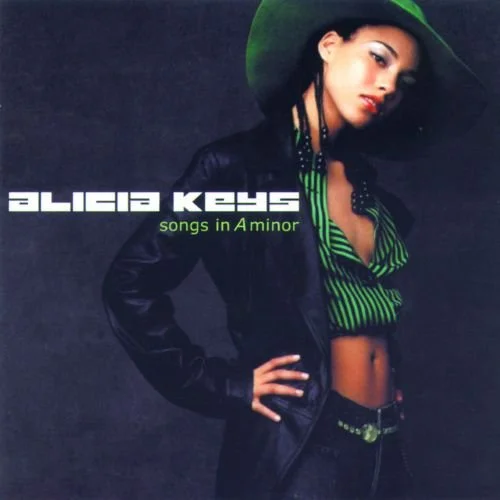
Alicia Keys’s Fallin’ at Twenty-Five
__________
THE lead single…

PHOTO CREDIT: Philippe Bialobos
from her debut album, Songs in A Minor, Fallin’ turns twenty-five on 28th March. I remember when the song came out. It was a real moment. In terms of its power. I was not aware of Alicia Keys at that point, so it was the discovery of this incredible new artist. Fallin’ reached number one on the US Billboard Hot 100 and the top ten in several countries. Written and produced by Alicia Keys, her debut album, Songs in A Minor, turns twenty-five in June. I wonder if Alicia Keys will mark the anniversary in some ways. I keep saying how 2001 is a strange year in terms of looking back. With the terrorist attacks in the U.S., you sort of reflect with that in mind. However, when Fallin’ did arrive, there was this instant reaction. One of celebration and wonder. Of course, Alicia Keys is a music legend. One of the true greats. In 2001, there were many who just discovered her. Fallin’ remains her signature song. The one people associate with her. I will explore it more ahead of its twenty-fifth anniversary. I am going to start out with a 2001 interview from FADER, where Keys reacts to the massive success of her debut album:
“Alicia Keys has a weird habit: when she curses, which she doesn't do often, her mouth makes a weird shape out of the word she wants to say, but the sound doesn't come out. It's almost as if she is already doing the job for TV and radio so they won't have to censor her bad language.
This is Keys' first interview and in the distance you can hear the distinct noise of the hype machine starting to hum and whiz. Keys is one of the first artists signed to J Records, the company founded by record industry legend and former Arista big macher Clive Davis, and you know that they can't wait to make sure you know her name. Pretty soon the rest of the glossy mags will make the rounds asking about her mentor at the performing arts school she attended [Fame!], about growing up in New York's Hells Kitchen [scary-sounding!], and about the biracial background the record company lists as one of her selling points [unconventional!]; but for now she is spending a lot of time meeting with stylists, auditioning back-up singers, doing industry showcases, and keeping herself busy with the stuff that keeps superstars-in-training busy.
In the pop-strumpet climate of modern music, however, Keys is a curious choice to be pegged as a breakout star. For one thing, she knows what she's doing, even though she's only 19. She's a classically trained pianist who can talk about Porgy and Bess, Schubert and Erykah Badu. She's already survived a go-nowhere record deal with a major label who wanted to hook her up with a male studio svengali instead of letting her produce her own records like she is currently doing (she won't tell which label when you ask her, but it was Sony.)
Keys is also surprisingly down to earth despite all the buzz going on around her. In fact, she is forthcoming about the demand she is feeling. "There are times, I'm not going to lie, when I feel a little bogged down and I want to meet all the expectations. So therefore, sometimes it can create its own pressure if I allow it, and sometimes I do." She is also wary about dealing with the individuals whose job it is to package and market her. "It's scary, because when you put yourself out there, you can only hope that you can make the person understand you in that hour or two you have with them. Are they really going to understand who am I in two hours? Can they capture it?"
Her maturity, however, is most evident when she discusses what will happen if she doesn't become an instant pop music phenomenon. "I can be satisfied with not selling 12 million records and not going on tour with N'Sync. That's okay with me. But say my album is released and I do sell 12 million records? It's almost like, what can you do after that? Can you sell another 12 million records? That's creating an even bigger hype that you then must surpass”.
There may be some who have not heard Fallin’ or cannot recall why it was so lauded. I want to bring in some features about it. Last year, Rolling Stone Australia ranked the best 250 songs of the century so far. They placed Alicia Keys’s Fallin’ at 155: “Alicia Keys’ debut single is still her signature for a reason: The soulful cut highlights Keys’ strengths as a singer, pianist, songwriter, and producer. Just 20 when the track was released, Keys sings of the emotional turbulence of being in love with someone with wisdom and pain beyond her years, with the type of emotive runs built for car sing-alongs and karaoke rooms for decades to come. The track hit Number One on the Billboard Hot 100 and won Song of the Year at the Grammy Awards. “I was going through it bad,” Keys said of the relationship that inspired the song. “But it helped me work things out.” —B.S.”. In 2024, Alicia Keys spoke with The New York Times about reimagining Fallin’ for Broadway. I am going to finish up with a feature from Stereogum from 2022. Looking inside this incredible number one single, I still think that it reverberates and resonates twenty-five years later:
“Alicia Keys seemed too good to be true. I didn’t trust her. When the 20-year-old Keys became MTV-omnipresent, it seemed like Clive Davis had figured out how to sand all the rough edges off of the woozy, psychedelic neo-soul that was making mainstream inroads at the time. Artists like D’Angelo and Erykah Badu were ultra-talented but also mercurial and unpredictable. Where mainstream R&B singers adapted rap beats and poses, D’Angelo and Badu and their contemporaries took different things from rap — the sense of rhythmic experimentation, the cut-and-paste approach to musical history. That whole Soulquarian movement was hugely exciting, and to a total outsider like me, Alicia Keys seemed like a threat to all that.
Alicia Keys wasn’t a threat because she was untalented; it was quite the opposite. Keys seemed like a record executive’s dream. She wrote and often produced her own stuff. She was a prodigy who’d been playing piano since she was barely old enough to walk. She looked like a model. She’d grown up in New York and absorbed the sound of rap music, almost through osmosis. She gave off the impression that she’d been immaculately media-trained, that she’d been grown in a record-label lab. The support of Clive Davis, who’d turned Whitney Houston into a commercial juggernaut and who wasn’t exactly known for facilitating his artists’ challenging artistic statements, seemed like another cause for suspicion. I thought of Keys as a product of the machine — one who assumed the form of a neo-soul insurgent while slinging a form of streamlined pop that wouldn’t make anyone uncomfortable.
As usual, I had it all fucked up. Alicia Keys was hugely talented at a wildly young age, and she did make a smooth and frictionless form of pop music, but those aren’t ultimately bad things. Even though she was young, Alicia Keys was already a music-business veteran who’d fought her way out of a couple of bad label situations. Clive Davis has a rep for molding artists into chart behemoths, but with Keys, he was smart enough to take a hands-off approach after other execs had tried to dictate the path of Keys’ career. “Fallin’,” Alicia Keys’ pop breakthrough and first #1 hit, was her debut single, but it was also the product of years of struggle. You might even hear that struggle in the song itself.
Alicia Augello Cook grew up Hell’s Kitchen, back in the day when that Manhattan neighborhood actually earned its name, before it was a strip of decent restaurants and off-Broadway theaters. (When Alicia was born, the #1 song in America was John Lennon’s “(Just Like) Starting Over.”) Alicia’s mother worked multiple jobs; her father wasn’t around. Alicia was an only child, and she lived with her mother in a one-bedroom apartment. Alicia started singing in school musicals when she was still in preschool, and she started playing piano at six. She studied seriously, learning the classical canon and playing for hours every day. Eventually, she dropped her exhausting slate of after-school activities to focus entirely on piano.
Alicia was 12 when she started writing songs, and she was 14 when she enrolled in New York’s Professional Performing Arts School. Her whole biography gives the impression of a classic young overachiever. Alicia moved from classical piano to jazz, and she also had big ideas about pop stardom. As a teenager, Alicia took vocal lessons in Harlem, and that’s where manager Jeff Robinson discovered her. Robinson’s brother was one of Alicia’s teachers, and she was performing at the Police Athletic League center in Harlem as part of a girl group called, appropriately enough, Ambition. Ambition never got a record deal, and they eventually broke up, but Robinson signed Alicia and convinced her to try for a solo career. Robinson is also the one who came up with the Alicia Keys stage name; the artist originally planned to call herself Alicia Wilde.
Jeff Robinson booked Alicia Keys to play some showcases, and Jermaine Dupri’s father Michael Mauldin signed her to Columbia Records in 1996, when she was 15. Columbia turned out to be a bad fit. Alicia was still in high school, though not for long. She graduated at 16, serving as her school’s valedictorian, and she started studying at Columbia University (no relation) while working with the label. The execs at Columbia tried to mold her into a pop-friendly teenage R&B singer. She wanted to write her own songs and to pursue her own aesthetic ideas, and the label wasn’t interested. The whole time that she was on Columbia, Alicia only released two songs: “Little Drummer Girl” on a Christmas compilation from Jermaine Dupri’s So So Def label and “Dah Dee Dah (Sexy Thing)” on the Men In Black soundtrack.
Alicia Keys hated working with the outside producers at Columbia, so she decided to teach herself how to produce. Alicia moved into a Harlem apartment with her much-older boyfriend Kerry “Krucial” Brothers, and they built a bedroom studio there. When she brought her tracks to Columbia, the label rejected them. In 1998, Alicia fought to get out of her Columbia contract, and Clive Davis immediately signed her to Arista, paying Columbia a pile of money for the rights to the songs that Alicia had recorded while under contract to that label. “Fallin'” was one of those songs. In retrospect, it’s crazy that a big label worked so hard to alienate the young can’t-miss prospect that they’d just signed, but that’s the record business for you. Alicia landed songs on the soundtracks of Dr. Doolittle 2 and the 2000 Shaft remake, but soon after she signed with Arista, the label pushed Clive Davis out. Davis immediately started J Records, his next label. He got distribution through BMG, and he took Alicia Keys with him.
In certain circles, Clive Davis is notorious for refusing to allow his artists any artistic freedom; Kelly Clarkson, an artist who will eventually appear in this column, spent years fuming about Clive’s assessment of her songwriting abilities. But Clive Davis let Alicia Keys do her own thing. He trusted her, and he had good reason. Clive had heard the music that Alicia was making on her own. Songs In A Minor, Keys’ 2001 debut album, features contributions from some big songwriters and producers: Brian McKnight, Jermaine Dupri, Kandi Burruss. But Alicia Keys wrote and produced much of the album herself. “Fallin’,” the first single, is all Alicia; she’s the sole writer and producer.
Alicia Keys wrote “Fallin'” in a rush, while some of her other tracks were being mixed at Columbia. She’s said that the song was inspired by a real relationship. (I would assume that she wrote the song about Kerry “Krucial” Brothers, but I don’t think she’s ever specified.) When Alicia first got to work on “Fallin’,” she was thinking that she might give the song to another Columbia artist, the extremely young R&B prodigy Kimberly Scott. In Fred Bronson’s Billboard Book Of Number 1 Hits, Alicia says, “I thought how crazy it would be for somebody young to sing this deep song about life and love and bring it across as if they lived it.” Alicia didn’t seem to consider the idea that she was also very young, but by the time she finished the track, she realized that she should keep it for herself.
“Fallin'” is a simple song, and its simplicity is what makes it stand out. The song opens with Alicia Keys’ bare voice, and for the first few melismastic syllables, she sounds wracked with pain: “I keep on fallin’ in and out of love with you.” By the time she gets to the “out of love” part, though, her voice slides into an easy, bluesy groove, her vocal cadence syncing up with her piano arpeggio. The howl turns into a sort of sigh. She’s singing about an emotionally uncertain state, and she sings in a way that mirrors that state. By the time she hits the second line, gospel-style backing vocals well up behind her, emphasizing certain lines: “Sometimes I love ya!” But those backing vocals disappear when she sings that sometimes this other person makes her feel blue. And then the drums kick in. Given that “Fallin'” was the first thing that most of us heard from Alicia Keys, that’s a remarkably self-assured intro.
I can’t separate that “Fallin'” intro from the image of Alicia Keys in the video. Director Chris Robinson, who would later make the movie ATL, films Keys in a tight close-up, her braids framing her unlined face just so. At first, she’s looking down at her piano. But when she sings the words “with you,” she looks up, making eye contact with the camera. It’s an electric moment. Again and again, she makes eye contact with you, the viewer, and it never loses its charge. Maybe that’s why I didn’t trust Alicia Keys at first. Maybe there was too much power behind those eyes.
Even at its most orchestrally grand, “Fallin'” sounds locked-in and elemental — as if the song was specifically created to cut against the grain of the bright, programmed club-thump that dominated that moment’s R&B. With all those allusions to classic soul, “Fallin'” sounded, consciously or not, like a throwback. Alicia’s delivery is slow and deliberate, and “Fallin'” has far fewer lyrics than most of the hits of that moment. One of those lyrics is constructed pretty awkwardly: “Just when I think I’ve taken more than would a fool, I start fallin’ back in love with you.” But Alicia sounds raw and graceful and confident, and she makes that line work. When Alicia and the backup singers cascade all over each other on the bridge, “Fallin'” starts to sound less like a retro exercise, more like something eternal.
Because of her allusions to older styles, some early-’00s critics overreached, comparing Alicia Keys to classic soul figures like Aretha Franklin. That kind of thing was always ridiculous. Alicia Keys has a warm, fluid voice, but she’s not a force of nature like the greats who she consciously evokes. Her delivery is a little too light, too studied. The music holds back, too, never exploding into full catharsis. But that simplicity would cut through the noise. When “Fallin'” came on the radio, it didn’t fade into the background. People noticed.
Clive Davis put his full promotional weight behind Alicia Keys and “Fallin’.” He wrote a letter to Oprah Winfrey, asking her to book Alicia Keys on her show. When Oprah heard “Fallin’,” she agreed. Alicia played the song on Oprah, using “Moonlight Sonata” as her intro, and she left a big impression. She performed on The Tonight Show, too. Songs In A Minor came out in June of 2001, and it debuted at #1 — a rare feat for a new artist’s debut album. The “Fallin'” single went gold — and then later, in the streaming era, triple platinum. After “Fallin’,” reached #1, Alicia followed it with the ballad “A Woman’s Worth,” which peaked #7. (It’s a 6.) A third single, Alicia’s cover of Prince’s 1982 B-side “How Come U Don’t Call Me,” peaked at #59, but Songs In A Minor still went platinum seven times over.
You will probably not be shocked to learn that Alicia Keys cleaned up at the Grammys in 2002. Grammy voters love few things more than a young classicist who can sell records by the pile. That night, Alicia won five awards. “Fallin'” won Song Of The Year, and Alicia took home Best New Artist, beating out Linkin Park, David Gray, India.Arie, and Nelly Furtado. (We’ll see Furtado in this column eventually.)”.
On 28th March, Fallin’ turns twenty-five. It is quite a big moment. I wonder how Alicia Keys will reflect on the song’s enduring success. The wonderful Keys was released in 2021. I wonder whether we will get more music from her this year. 2001 was this big year for me in terms of going to university and this major stage in life. The music from that year is very important. Fallin’ is a song that was a source of strength for me. Without doubt one of the most enduring and remarkable songs from the 2000s, it still has the ability move…
ALL these years later.