
FEATURE:
Core Values
Why the New Apple Music Hall Live Venue Is a Unique Boon for London
_________
ANY new venue that…
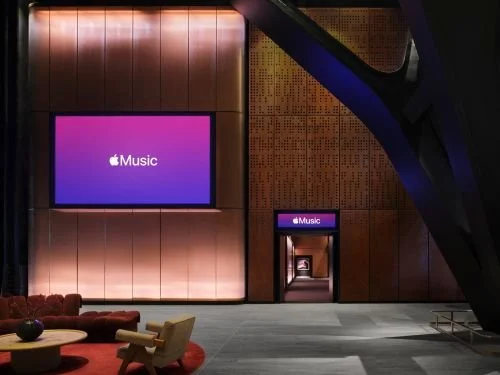
opens in London is cause for celebration. So many venues are under threat, it is always sad when we lost one. There are areas of London where there are perhaps too few venues, or we would not usually go there to see live music. I know Battersea has a few great music spaces, but there is this new and exciting venue that has caused a lot of excitement. Apple Music Hall has already hosted a few live events, and I do feel that it is a boon. Something that the city needs. It is this very modern space that is also vintage in a way. A unique style. There are also radio studios alongside it. I am going to come to why this venue is appealing to me. I feel it will attract some fantastic artists and music fans from around the world. Here is some more detail about Apple Music Hall:
“Apple has announced the opening of Apple Music Hall, a brand-new state-of-the-art live music venue in London’s storied Battersea Power Station, designed to connect artists and fans through bespoke, intimate performances unlike anywhere else.
“Apple’s deep love for music dates all the way back to the very beginning, from the launch of the iPod to the long-running iTunes Music Festival to the debut of Apple Music,” said Oliver Schusser, Apple’s vice president of Apple Music and International Content. “Today, with the opening of Apple Music Hall, we are once again taking an unprecedented step further in our commitment to artists and fans by supporting live music in ways only Apple can do.”
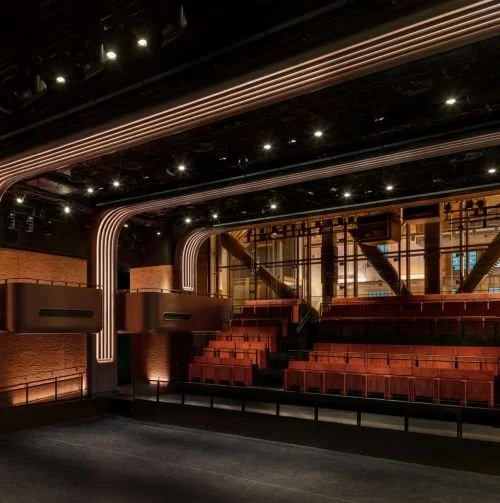
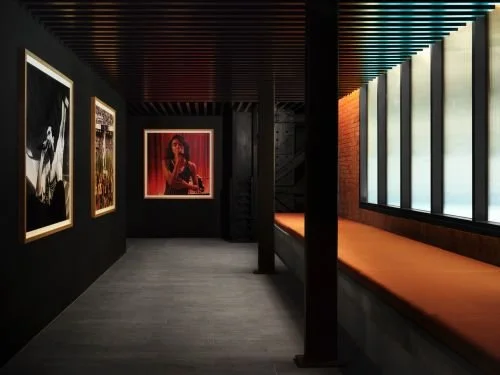
Taking inspiration from the iconic Battersea Power Station, Apple Music Hall incorporates heritage brickwork, fluted arches, and bronze balconies reminiscent of the historic oriel windows.
A Live Music Venue Unlike Any Other
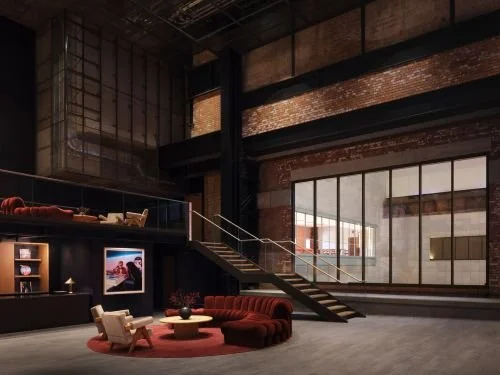
Apple Music Hall will offer artists and music fans alike an exceptional live concert experience alongside the River Thames. Taking inspiration from the iconic Battersea Power Station, the new venue incorporates heritage brickwork, fluted arches, and bronze balconies reminiscent of the historic oriel windows. A giant glass wall further enhances the visual connection with the historic building, offering a panoramic view of the concourse and the river beyond.
The 600-capacity venue is designed intentionally to close the gap between intimacy and production value and allow for an unprecedented level of creative control. Every seat feels close to the performer, yet the infrastructure offers what an artist requires for an arena tour, with a 38-foot-wide stage that can be reconfigured for traditional front-facing sets or more in-the-round experiences. Additionally, the venue is equipped with a 48-speaker spatial sound system positioned all around the audience. When an artist performs in spatial, it will enable fans to hear that performance in an immersive environment.
Behind the stage, Apple Music Hall operates as a full production facility. Two dedicated recording and mix studios are built to professional standards so that every performance can be captured as a multitrack recording and mixed in Spatial Audio, live or after the fact. The venue is also hardwired for 16 or more cameras that feed a purpose-built broadcast control room with infrastructure that supports iPhone video capture running in parallel alongside traditional broadcast cameras.
At Apple Music Hall, artists can perform an intimate live show and walk out with a finished Spatial Audio recording, a broadcast-ready mix, and multicamera video.
At Apple Music Hall, artists can perform an intimate live show and walk out with a finished Spatial Audio recording, a broadcast-ready mix, and multicamera video.
In short, an artist can perform an intimate live show for fans at Apple Music Hall and walk out with a finished Spatial Audio recording, a broadcast-ready mix, and multicamera video — all from a single show. Performances out of Apple Music Hall will also be livestreamed globally so fans outside of London can tune in to enjoy these one-time-only shows from their favourite artists.
“At Apple Music, we care deeply about music, the artists who make it, and their life stories,” said Zane Lowe, Apple Music’s global creative director and lead anchor for Apple Music 1. “We’re always looking for new opportunities to connect the artists and the fans because we are fans. What better way to celebrate this relationship than a new music venue where we get to experience amazing music in an amazing space and share it with the world. Great music and memories will be made at Apple Music Hall.”
For more information about Apple Music Hall, including how to access tickets for upcoming shows, fans can visit applemusichall.com or follow @applemusichall on Instagram and TikTok”.
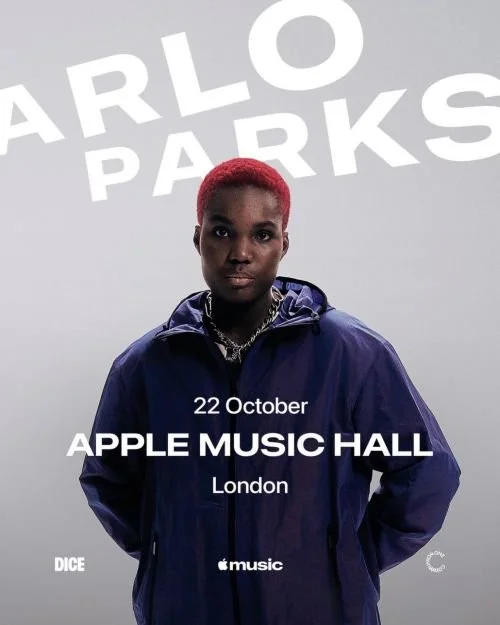
In terms of what’s in the diary, you can follow Apple Music Hall using the links above. At the moment, I am thinking of a live event for 2028. It might be expensive going to any venue, but I am attracted to Apple Music Hall. It is easy to get to. A trip down the Norther line, for those outside of London, it is quite accessible. I am not sure what they would charge for hosting an event and whether their schedule is full in January 2028, though I feel it can be more than just a traditional live space. Holding music events where you get live performances, but also this interactive space where you can project videos and use it as an interview space. In the same way Abbey Road Studios hosts live events and recordings, but you get artists like Paul McCartney speaking, and he has done an event there. Apple Music Hall has this blend of intimacy and grandeur. It looks fabulous, though there is also this sense of warmth that you might not get from more impersonal, large arenas. I do like their values and ethos. In terms of why it was built and what they are hoping to achieve. It would be amazing to host an event there. I fear they may be out of my price range. Though, with every new venue that opens in London, it does offer hope. That there is growth in this areas, whereas so many venues were under threat following the devastating impact of the COVID-19 pandemic. You can see some upcoming shows at the venue. Arlo Parks plays on 22nd October. Charli xcx will play on 2nd December. I do wonder if it is going to be reserved to music solely and larger artists. In terms of someone like me who would like to host an event that is not strictly a gig, I am curious about their policy. In any case, it is great that we have this distinct and impressive space.
It provides hope that other live venues will sprout up. It also impacts the local economy. Battersea will see benefits from those who go to the Power Station for gigs. The radio studios is also curious too. Whether they have fixed shows coming out of their or whether you can host a podcast or broadcast yourself. This new venture is very much designed for longevity. Building year on year and getting more and more people there, it is a major bonus for London. I will get along to Apple Music Hall in the coming days and check it out. In an interview with Music Week, the Vice President of Apple Music and International Content, Oliver Schusser, talked more about this exciting move. It also answers some of my questions about the radio studios and how they will operate:
“Apple's UK headquarters has been in the power station since 2023, but Schusser first queried whether it would have a music venue around the time Apple confirmed its move to Battersea in 2016. The answer was positive, but it wasn’t the right time.
A decade on, the 600-capacity Apple Music Hall has popped up seemingly out of nowhere and is set to open on September 28. Built for intimate shows with arena-level production, the venue lets artists record in Spatial Audio, walk out with a broadcast-ready mix and multicamera video, and have the performance livestreamed globally.
Music Week’s first site visit came during the hard-hat phase, with a second as the project is on the verge of completion. The room takes its cues from the power station itself, with brickwork, fluted arches and bronze balconies that reference its distinctive oriel windows. A giant glass wall opens onto the concourse and the River Thames beyond.
According to Apple, the new venue has been designed “to close the gap between intimacy and production value and allow for an unprecedented level of creative control”. Its 38ft wide stage can be reconfigured for front-facing sets or in-the-round shows, with a 48-speaker Spatial sound system positioned all around the audience. Behind it are two recording and mix studios and a broadcast control room wired for 16 or more cameras.
For Schusser, Apple Music Hall is the physical manifestation of the platform’s ethos since launch. He cites talent such as Miley Cyrus, who sat down last week with Zane Lowe, Apple Music’s global creative director and lead anchor for Apple Music 1, at the company’s Los Angeles studios ahead of the release of her new album Bass Persuades. He also brings up Elton John, whose weekly Rocket Hour show champions new acts and celebrated its 10th anniversary last year.
“It was always our vision for Apple Music to be a service for artists and to be a service for fans,” says Schusser. “If you look at the venue, it really embodies that.”
Apple has long used live music to bring its services into the real world. The company ran its iTunes Festival, later renamed the Apple Music Festival, in London from 2007 to 2016, and now has a multi-year partnership with the NFL and Roc Nation to present the Super Bowl Halftime Show. In March, its 50th anniversary celebrations featured performances from Mumford & Sons and Nia Archives outside Battersea Power Station.
Culture secretary Lisa Nandy, meanwhile, describes the new venue as “a huge vote of confidence in the UK as a global creative powerhouse”.
“When a company of Apple's scale backs British music and talent, it's a signal of just how strong our creative sectors really are,” says Nandy. “Our industrial strategy is all about making Britain one of the best places in the world to invest, and the creative industries are a key part of that. These sectors are not only a source of immense national pride, but they also deliver real economic value for the country.”
Apple Music Radio's London-based hosts and shows, relocating from Tileyard Studios, will now broadcast live out of Battersea with the opening of new radio studios, essentially making the site a one-stop shop for artists.
“We chose Tileyard because it became an incredible hub for creatives, and part of an up-and-coming part of town,” says Schusser. “And our goal with [Apple Music Hall] was to bring all of our creative teams together in one campus.”
The aim is for an artist to go on air, do an interview, handle social media and marketing, play a show and broadcast it worldwide, all within a few hours.
“It was quite natural for us to say we’re going to move radio to Battersea,” says Schusser, who would also like to see album launches at the venue. “You can't imagine how many ideas we have.”
For his part, Zane Lowe says that Apple Music Hall and Apple Music Studios “embodies everything that Apple Music has to offer for artists and creatives to express themselves”.
“We wanted to give artists a space that they can transform and adapt to match the storytelling of their artistry,” says the DJ. “That can be creating an incredible live show, having an intimate discussion on Apple Music Radio or as a place to engage with fans in real life. We’ve used our 10 years of experience working directly with artists to really think about every granular detail that they might need to showcase their creativity.”
“I can't wait to get started at our new home,” says Dotty, who also serves as lead cultural creator, Black Music. “The studios will allow us to work even more closely with the artists we love and are a dream space for the UK team to help artists tell their story, in their own way.”
Dotty describes the UK as “a leader and hub of music across the globe” and says it is “amazing to see Apple investing in its live music scene and artists, from launching new UK talent, to giving people a chance to see huge global stars in an intimate and incredible setting right in the heart of London.”
Here, with the countdown on to the venue's opening, Schusser speaks to Music Week about why he calls the venue “a love letter from Apple to music”, what the move means for the firm’s live ambitions and – yes – the AI question…
First of all, now the cat is out of the bag, can you reveal how long this project has been in the making?
“In my head, I’m thinking five years. But there were two moments for me: one is the original moment when Apple looked at the power station to become a tenant. That is more than 10 years ago now, and there was nothing there at the time. I remember asking, ‘Will there be a music venue?’ But I don't really count that. The answer at the time, by the way, was, ‘Yes, but we're not ready to talk about it. We need to build the office space first, the mall space, all these other things.’ And I think they did the right thing. This is my favourite Apple office in the world – I think it’s stunning. And then it was about five years ago when we started to figure out exactly how [the venue] would work.”
Why London, and why Battersea Power Station in particular?
“We have a rich history of live events in London. London was where we ran the iTunes Festival for 10 years. We had more than 600 bands over the 10 years, all the world's biggest superstars on stage. And we streamed all the shows worldwide – we were kind of the OGs of streaming music festivals – everyone does it now. I also believe that London is one of the greatest, if not the greatest live music city in the world. There’s such a strong interest in seeing shows, whether it’s a small show or a big stadium show like Harry Styles at Wembley. We're very committed to Battersea and to being in the UK, and there was an opportunity to take a piece of the Power Station and build a music venue that we were happy to jump on a couple of years back. I think we can contribute something to the community but also to the live scene in the UK overall, because a venue of this size is quite rare.”
Can you tell us what the venue means for Apple Music itself?
“I believe that this venue embodies everything that Apple Music stands for. When we launched Apple Music, we were obsessed with this idea of trying to make it more than just 100 million songs where people press play. We wanted to create an experience where artists can participate, so we created studios around the world. It was really artist relations for us. We wanted to make it a space where artists feel incredibly comfortable and happy – small artists and large artists – hence the pretty expansive backstage area. And we wanted it to be a really awesome space for fans: the onboarding, how you walk into the venue. There's no bad seat in the house. It's got great tech, great light, great audio – exactly what Apple Music is about.”
Which technical features are you most keen for people to know about?
“Apart from the fact that I wanted it to be very flexible, so that we can do small shows, big shows, shows in the round, shows in the corner and all these things, there are two aspects that are important to me that are relatively simple. Number one, we developed this new sound experience of Spatial audio with Dolby Atmos, which is a key part of why I think Apple Music is a more premium listening experience than any other service, and we wanted to reflect that in the space. We wanted artists to be able to record things in Spatial audio, but also to perform in Spatial audio. We try to really push the envelope. And then the second technical thing we focus on is that we want it to be possible to shoot as many things in this venue on iPhones. The beauty of iPhones is that they're small and you can put them in all sorts of places. I think that's going to allow us to do really exciting things over time.”
How would you sum up your ambitions for Apple Music Hall, and what would make a successful first year?
“I know it sounds a little fuzzy, but we want artists, in particular, but also fans just to have a great experience and tell us that. The biggest compliment at Apple is that people love the product. We're as proud of this as any of the products we've announced in the last few years, and hopefully people will like it.”
And how will the venue help artists and the wider live industry?
“Music is an incredible part of the economy in the UK, and touring is a big part of that, but smaller venues of roughly this size have been struggling, and that's a problem for artists, because you have artists that need to start to perform in a size like this, but then the venues don't exist and so they can't. So we see this as a really positive boost for the industry.”
What's your take on the live sector now, given the challenges you mentioned? And is Apple planning to get more involved?
“No, we're not in the ‘live business’ – and I'm saying that in air quotes. This is not the beginning of a strategy where we want to be in the venue business. This was an opportunity to do something incredible and wonderful, literally where we built our home in the UK, and it's a continuation of something we've actually done for a long time. But again, we're not really in the live business ourselves, so I'll leave that to the experts to discuss. We're really just here with one little venue.”
What reaction do you expect to your plans from within the industry?
“I think this is going to be a big surprise for a lot of people. I hope they will say it feels very Apple, it's very beautiful and very well done. They'll be like, ‘Wow, didn't see this coming!’ Others are about algorithms and robots and AI and so on. We're here in the music business because we love music and consider this like a love letter from Apple to music and to artists”.
It would be interesting to hear from people who have seen some live music there already and reaction from them. I guess there is stuff on social media. Earlier this week, Troye Sivan delivered a superb show there. Rolling Stone UK awarding his set five stars. I would love to go there. Perhaps Apple do want to keep their venue strictly for live sets and not really have it for other projects such as podcasts or events. In any case, it must be so evocative walking towards the Power Station and going to this venue. I am dreaming about it for a 2028 event but, alas, budget means that it is something I will miss out on. In any case, it is this huge positive for London and live music in general. With big plans for Apple Music Hall and some world-class artists playing there soon, it is going to be interesting how it expands. What gigs are planned for next year and really what people make of this venue. So far, all signs and reactions and positive. Even though Apple Music Hall is brand new, I think everyone can tell that it is going to be a fixture in the London music scene for many years more. So encouraging to see, when it comes to this fabulous venue…
LONG may they continue.