
FEATURE:
Spotlight: Revisited
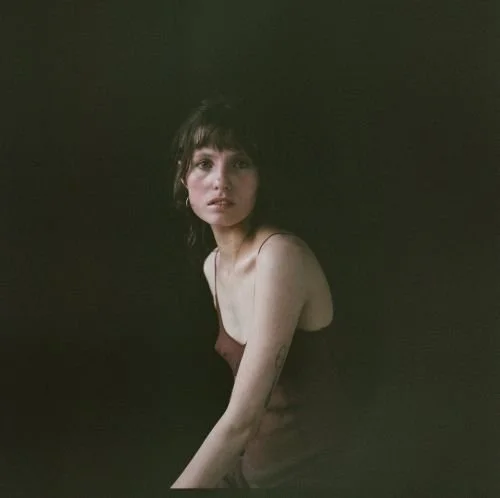
Clara Mann
_________
I spotlighted…
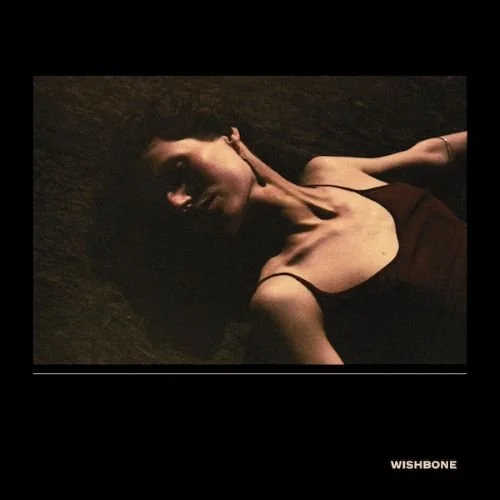
Clara Mann back in 2022, as I wanted to revisit her work now. Her new album, Wishbone, arrived on 23rd October. I am going to end with a review for the album. I will bring in a couple of 2025 interviews with her before a recent chat, just so that we can get a bit of background. Last year was when she released her debut album, Rift. It was released through state51 Conspiracy. They handle physical and digital distribution for Kate Bush’s independent label, Fish People. That is a big reason to admire Clara Mann. I wonder if she is a Kate Bush fan. I wanted to start out with this interview from The Line of Best Fit, not only because we get some background in terms of life and growing up. I think that Clara Mann’s pure and unfiltered charm comes through. Although it is an interview for her previous album, it is important to bring in here I feel:
“Having grown up in a small rural community in the south of France and a village in southwest England, nearby Cheddar Gorge, getting her first car at 17 (also a Nissan Micra, also named after a French feminist writer) was a watershed moment, pulling back the curtain on a world of open roads and tender adventure. As the daughter of two writers, Mann had travelled the world over through the books and stories she’d devoured as a kid, and having a car only fortified the independence she felt in her bones.
“I’ve always sought out freedom, sometimes to a fault,” she tells me over coffee, not far from the studio where she recorded the majority of Rift with 4AD Studio producer Fabian Prynn. “As I’ve grown up a bit, I’ve realised that freedom and independence doesn’t necessarily mean anything when you’re always on your own,” she says, explaining that she's still learning how to balance her self-direction with her desire for closeness. “I wanted to let go of the need to do everything alone all the time, but I’ve definitely struggled with that.”
Written over the course and end of a long-term relationship, there’s a lot of struggle in Rift, a lot of letting go. But don’t dare call it a breakup record. It’s a mending record, like songwriting kintsugi or an earthquake in reverse. “I think when you go through something really profound and something very fundamental in your life is changing, it does feel like being pulled apart, like something geological,” says Mann. “There’s this gap that you’re left with, and you have to figure out what to do with that emptiness. That’s why I think Rift is a hopeful record, because I imagine these songs almost like water flooding into the cracks of this dried up earth.”
What Rift also represents is Mann signing herself over fully to music and giving it the space to become the fabric of her life. Not a side quest or a scenic drive-by, but fundamental to the framework of her story. It wasn’t always a given. Though she was classically trained on piano as a child, when she pictured her future it looked a lot like the lives of her parents in academia. Then, just as she was preparing to move to London to start a degree in French and History of Art, she suddenly blanked. “I found myself asking why I was really taking that path,” she says. “Was it just because I’d grown up always thinking that’s what I wanted, because it felt set out for me, in a sense? What if I didn’t want to do that anymore?”
Part of that questioning arose from starting to immerse herself in Bristol’s DIY music scene, often bussing there from Cheddar with a friend to see whichever bands happened to be playing. Drawn to the guitar because she liked the way it hugs the body as you play, as opposed to the formal distance of a piano, she began to write her own songs and uploading simple home recordings to Bandcamp.
It was around that same time that the relationship chronicled on Rift began, with another musician whom she wound up recording her debut EP Consolations with, while isolating during Covid. A support tour with Grizzly Bear’s Daniel Rossen followed, and he later came on board to produce a track from her next EP, Stay Open, released in late 2022. “Committing to making an album felt like quite a big deal,” she says. “I had no idea how I was going to write ten songs, record them really nicely, and make them sound exactly how I want.”
As it turns out, once she had the right collaborators in place, getting the songs to sound exactly how she wanted was surprisingly easy. “All I knew was that I wanted there to be a strangeness to them, because I feel quite alienated a lot of the time,” she says. “Actually, I think that being a maker requires some degree of alienation from your surroundings otherwise how do you observe, if not from slightly on the outside of things? I wanted to get that in the recordings so I told Fab, and Tom Kellett [who recorded “Rift” and “It Only Hurts” in his living room], that I wanted the songs to feel like tiny ghosts whispering in your ear. But they’re also shouting and it’s really intense. Like you’re scared, but also you’re happy that I’m there”.
Just one more interview from last year and I will bring things up to date concerning Wishbone. The beauty and honesty within Rift resulted in some seriously impressive reviews. This is an album that was worthy of Mercury Prize nomination. Artists like Clara Mann should be nominated more. That is what the prize is set up for. In any case, don’t bet against Wishbone being in with a shout next year. I am not sure if it was released within the eligibility window, but it is deserving of award recognition. Rolling Stone UK spoke with Mann to discuss her debut last year:
“Rift is an important and representative word for the themes of the album, as well as its title – can you explain why?
The word rift struck me because it refers to an argument or falling out, but also when tectonic plates move, and the gaps that are left. I had this image of that cracking, that fragmentation, and realised that it was part of the album. It was about trying to love something in my life when it had been blown apart, or I’d blown it apart. It’s about trying to reassemble that and be like, ‘I love this in its new shape, and I accept it’. It’s like when you break a bowl and you’re like, ‘It’s never going to be the same, but that’s OK and I love it as it is now’.
The rift itself became a metaphor for this valley, which was a very dark, mostly sad, very empty place in my life where I felt like I just had nothing to hold onto. I felt completely alone, even though maybe I wasn’t – I don’t know, I can’t remember. But that feeling I remember, the feeling of, ‘There’s nothing I recognise. There’s nothing to hold onto. There’s not even anger or sadness, because those are familiar things that I could maybe hold onto. I just feel nothing.’
What is the album’s title track reflecting on through this process of struggle?
It’s about finding out that there is something in me that makes me get up and keep going every time. It’s like an insane spark of faith that we have. I think I have a lot of faith. Not necessarily religious, but I have a lot of faith, and it makes you keep moving. It’s like driving through a dark valley. I can’t see lights ahead, but I just have to keep going. I don’t have a choice. I know that if I stop, I’ll never get out, so I just have to keep going.
I don’t think there’s any song [on the album] that’s like, ‘Yes, I’m fixed’. It’s more about accepting the journey. I stopped hating the parts of myself that are dark and sad, and realised that I just have to live with this. I accept it. It’s about acceptance.
How has your time playing and listening to traditional folk music contributed to your songwriting and overall appreciation of music?
It’s really evocative music. I love the stories and this sense that you’ll hear words and lyrics put against different melodies, and you’ll think, ‘How did that happen?’ It’s because they travelled across the ocean in a boat with people 200 years ago, and then they were put against new tunes that existed on the Appalachian Mountains, and then they came all the way back, and now they’re playing in the pub in London. To me, that’s the most beautiful, mind-blowing thing.
Can it also provide a link to a more positive corner of English history, when fewer and fewer young people here – especially in the creative industries – feel proud of their heritage?
In England, we have really lost touch with the importance of those songs, because we’ve never had to fight for anything, not in hundreds of years. We’ve never had something that we felt we were going to lose. If you go over to Ireland, obviously there’s a much more palpable sense of what’s at risk culturally, but it’s not thought of as radical music here [in England]. In fact, it has much more conservative ideas around it. But actually, the music is the music, songs matter, preserving those songs and passing them down matters. It’s a beautiful community to build”.
I am surprised there are not more interviews with Clara Mann around her exceptional new album. However, Music to Blame featured her. She has some dates ahead, so do go and see her if you can. After they are complete, I guess she will want to take some time out and relax. Now, we can appreciate and absorb this fantastic album from the stunning Clara Mann. I have been following her since 2022, but I have not seen her live. I will try and correct that if she plays London next year:
“Connection comes up repeatedly. Mann has spent much of her career performing alone, and songwriting remains a similarly solitary process. Everything starts with just her and either a piano or guitar. “Everything is written by just me on my own with piano or guitar. When I know that song is strong enough that I can play it on my own and it stands up, I bring it to the studio.” There is a sense, though, that Mann is becoming more comfortable with letting people into the process — or at least what happens after a song has been written. Her sophomore album, ‘Wishbone’, is more expansive than 2021’s ‘Rift’, bringing in additional musicians. She sees this partly as a musical decision, but also as revealing something about herself. “I guess that the fact I wanted more musicians to play on this was a mark of being okay with surrendering some control and also more confidence.”
That surrender has continued on stage, ahead of a tour to support her new album. “Yeah, it's the first time I play with a band. I had played with other musicians, but never with a full band. And it is so much fun. I’m having the best time.” That doesn’t mean she’s finished with playing solo, far from it. “I definitely love playing solo still, always will. It's so different to touring with friends.”
Playing with other people has altered the experience in ways she wasn’t necessarily expecting: “Playing with friends and touring with friends is somehow a much more normal experience. You feel much less detached from your real life.” More interestingly, it also changed her relationship with the songs themselves. During rehearsals, viola player Laura began playing one of Mann’s older songs and “at the end of the song I just stopped and I was like, ‘Whoa, I’m feeling really overwhelmed actually’.” It wasn't simply the sound of the viola but “remembering how I was and who I was when I wrote that song and how it felt — her playing really brought that up in me.” Mann wonders whether playing alone had made it easier to keep some of those emotions at a distance. “Maybe I can hide those things more easily when it's all on my terms; it's just me playing.”
Some of ‘Rift’ was written when Mann was just nineteen. If that record was more questioning, ‘Wishbone’ feels more certain. The growing confidence is particularly apparent in two songs: ‘Oblivion’ and ‘Wishbone’. “For me, they are the weightier songs on the album and the more adult songs as well, in terms of writing confidence, production, and lyrics. ‘Wishbone’ in particular is a song of release and exaltation for me, and it's very uninhibited.”
There are signs that Mann may be ready to surprise herself more often. She feels that ‘Rift’ and ‘Wishbone’ belong to the same sonic world and one she is ready to move beyond: “I definitely feel ready to challenge myself writing-wise. How different that will look to everyone else versus how different it will be to me. I don't know. But I feel really excited about writing.”
For now, Mann is looking forward to releasing ‘Wishbone’ to the world and touring with her band. The puppet theatre may or may not work out, Clara Mann, though, seems ready to see where everything else takes her”.
I am finishing up with CLASH and their impressions of Wishbone. If anyone has not heard Clara Mann’s music, I would advise you to listen to Rift and then Wishbone. Even though they share a sonic space, there is development and growth between the albums. Such a prolific artist, I would not bet against an E.P. or album coming in the next year or two. One of our most gifted songwriters in full flow and bloom:
“There is something about Clara Mann that is hard to ignore. Maybe it’s her voice. The way she plays guitar. The beautiful songs she writes or the fact that she’s released two glorious albums in less than a year. They feel like they could have been recorded anytime in the last 50 years. Built on solid songwriting and not fads. New album ‘Wishbone’ picks up where 2025’s ‘Rift’ left off, but things feel more intimate and personal.
‘Go Getter’ is one of the standout tracks on the album. The piano is haunting, the guitar is glorious and the vocals are the chef’s kiss. When Mann sings “You called as soon as you heard that I was down. And I said, “Baby, didn’t you know I’m a real go-getter?”. And everything that I lose comes back around” You believe her, but you aren’t sure who she is talking to. Is it a lover? A friend or herself in a mirror? The recipient doesn’t really matter, as its such a powerful message. ‘Wishbone’ isn’t just an album of messages, but of key changes, as well as self-mantras. On the title track, there is a key change that you can feel coming, but when it hits, it HITS! After there is a lackadaisical run of notes that really make you smile before Mann’s graceful vocals deliver the knockout blow. Clever stuff.
Clara Mann is in the possession of a classic voice. She’s up there with Sandy Denny, Laura Nyro and the rest. On ‘Song For Joy’ she croons effortlessly. Barley above a whisper. Then she takes it up a notch, and a delirious lilting edge enters the performance and it’s something else totally. Then, a few phrases later, back to the original croon. Under this is picked guitars, gentle piano and way in the background a slow drum being brushed, instead of hit. It takes you back, and away, to a place where the key thing was songwriting and performance. Everything on ‘Song For Joy’ and ‘Wishbone’ is for the sake of the song, not Mann. It’s refreshing to hear.
At its heart ‘Wishbone’ is a collection of songs about love, loss, redemption and hope. It’s the hope that is the important part. ‘Wishbone’ feels like an album that is saying, “Things can get better, if you want them to”. After listening to ‘Wishbone’ you feel uplifted and positive. That’s not something you can say about a lot of albums released in 2026. Like the idea of positive thinking, ‘Wishbone’ is an album to take a chance on. Who knows. It might change your life…
8/10”.
There are few artists who have the talent and ability of Clara Mann. She is someone I am going to continue to follow, as I feel she is going to making music for a very long time to come. Make sure she is on your radar. Wishbone is a fantastic album that people need to hear. The minute you start listening to Wishbone, it is guaranteed to make…
SUCH a huge impression.
____________
Follow Clara Mann
Official:
Instagram:
https://www.instagram.com/claramannn/
TikTok:
https://www.tiktok.com/@claramannsongs/
Facebook:
https://www.facebook.com/claramannsongs/
YouTube:
https://www.youtube.com/channel/UCQJxQfm6Bzw2GfuI_p4ipaw
Spotify:
https://open.spotify.com/artist/0BcrhuzQqziiZJXLSdiJu0?si=3XTJI6_xTEiDNUgPx87nMg