
FEATURE:
Like Dylan in the Movies
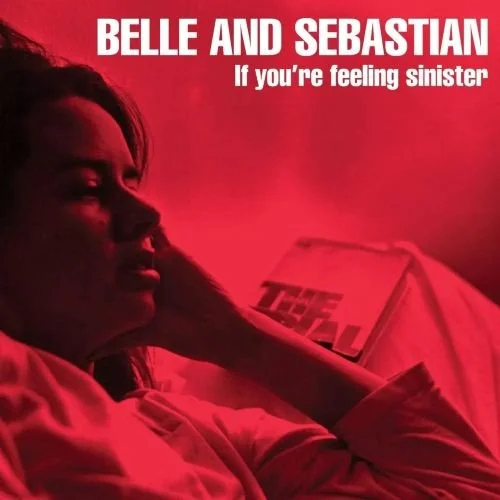
Belle and Sebastian's If You're Feeling Sinister at Thirty
_________
THIS is one of the best albums…
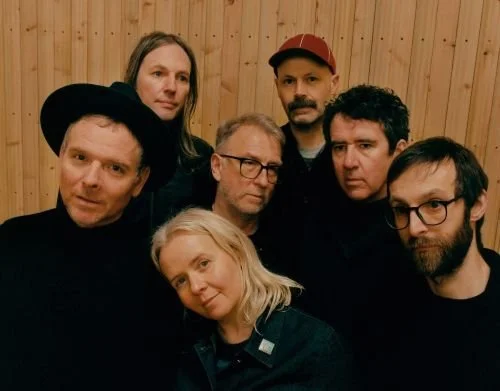
PHOTO CREDIT: Anna Crolla
from the 1990s, though I wonder whether it will get many anniversary features written about it. Belle and Sebastian’s If You're Feeling Sinister was released on 17th November, 1996. Ahead of its thirtieth anniversary, I wanted to spend some time with the album. The second studio album from the Scottish band, even though it did badly in terms of its chart position, If You’re Feeling Sinister is hugely influential. One of the most important albums from the 1990s. Some of the articles I want to bring in are paywalled, so I am using what I can to illustrate the importance and brilliance of If You’re Feeling Sinister. All the tracks were written by the band’s lead, Stuart Murdoch. It is an album that had no singles released from it and made little commercial impact. It is one whose truly brilliance and influence outweighs sales and chart positions. In 2016, Stereogum wrote about If You’re Feeling Sinister on its twentieth anniversary:
“Today, it would seem like a transparent marketing stunt. Belle And Sebastian were a group of bookish Scottish kids, playing stunningly pretty songs that happened to be radically out of step with everything happening in music at the time. They didn't play live. They didn't do interviews. They didn't let anyone take their pictures. Nobody really knew anything about them; people assumed that Isobel Campbell was Belle and that Stuart Murdoch was Sebastian. If anything like that happened now, it would come off as a strategy, and maybe an effective one. The Weeknd started off doing a variation on this act, and he ended up becoming one of the biggest pop stars in the world. If anything like that happened right now, your bullshit detectors would be going off like car alarms after an earthquake. But the world was different in 1996, and Belle And Sebastian's reticence didn't come off like an act -- mostly because it wasn't an act.
At this point, you probably already know the backstory. Stuart Murdoch spends his early-to-mid-20s suffering from chronic fatigue syndrome, taking in the world as an outsider because he never has the physical stamina to go out and experience it himself. He fills notebook after notebook with lyrics and song ideas. Eventually, he gets better, and as sort of a class project, he gets together with a bunch of other students and records Tigermilk. It's a stunning record, and only 1,000 copies are pressed. But that's enough to attract the interest of the brand-new London indie Jeepster, a label that had been formed just a year earlier. And so, a few months after Tigermilk, Murdoch and his thrown-together group return to the studio and emerge, a few days later, with a close-to-perfect album.
Of course, if you actually heard If You're Feeling Sinister within the first few years of its release, there is basically no chance that you knew any of that origin story. Belle And Sebastian self-consciously kept themselves hidden, building up a Smiths-esque mythos through things like the shadowy, classically composed photos that they used for album art, or like the floridly cryptic short stories that appeared in their liner notes. Their actual human selves remained a complete mystery. And while I suppose you could've learned about the band through the rock press, or even through Napster once that became a thing, it was much more likely that you found out about them directly, through word-of-mouth.
I'm pretty sure I'd read about Belle And Sebastian in SPIN before I actually heard Sinister, but all that did was convince me that this new band was irredeemably lame and that rock critics were irredeemably lame for liking them. (Rock critics, I'd learn after I became one, are irredeemably lame, but not because we like Belle And Sebastian.) The idea of a band who made carefully orchestrated folk-pop, who sounded like a '90s-wallflower version of Simon And Garfunkel, was about the least enticing thing I could've imagined in high school. At that time, just about every form of music that was popular -- whether in the UK or in America, whether mainstream or underground -- was defined, at least in part, by its aggression. Belle And Sebastian, by contrast, were defined by their utter and complete lack of aggression. That's a huge part of what made them special, but you actually had to hear them to understand that they were special -- and when the internet was in its infancy, when most of us were still on dial-up, hearing them wasn't so easy.
Murdoch was writing about stammering pauses and distant conversational murmurs and emotionally confusing makeout sessions and fleeting infatuations in ways that drew up a picture of a whole world -- one that sounded enormously appealing, especially when you had no real frame of reference for it. He found glamor in coyness in ways that only Morrissey had really ever discovered. "Think of it this way: You could either be successful or be us," he sang, and he made a lack of success sound like the best possible way to live. For some of us, this felt important -- a state to which we could aspire.
It might've been too influential. Before Sinister, a typical American underground rock band would've been someone like Unsane or the Jesus Lizard or Boss Hog -- bands who had come from punk and hardcore, who made gnarled and ugly and physically imposing forms of riff-driven noise. Even the quieter forces on the underground, people like Elliott Smith, were still expected to make something heavy. Belle And Sebastian weren't heavy. They were gloriously light. It took a long time for their influence to spread; it needed years to fully sink into the bloodstream of the indie rock world. But within, say, five years, people like Death Cab For Cutie had taken the band's timidity, Americanized it, and turned it into something that resonated with American college kids. A few years after that, the biggest stars in indie rock were sensitive and proudly bookish souls like Sufjan Stevens and the Decemberists -- a development that I don't think would've happened if not for Belle And Sebastian's influence”.
There are a couple of reviews that I want to bring in. Pitchfork. I can’t find any interview archive from 1996 where Belle and Sebastian discussed the album, so I am relying on retrospective feature and reviews. In any case, I think that we get a good impression of the album. Why it is so revered and influential. The sheer quality of the songwriting;
“Stuart Murdoch is a character in his own songs, largely a comedic one, and he tends to exist at a remove. A lapsed-but-simmering Presbyterian zealot, he’s always calling balls and strikes on everyone’s perversions but his own. He’s a strange anthropologist of the underground, a little overstimulated, thrilling to the milieu without quite jumping in—a beguiled wariness regarding the weird edges of town he shares with his Canadian contemporary Dan Bejar. He asks peculiar questions. “Have you and her been taking pictures of your obsessions?” he gently interrogates a young woman in a detective’s cadence on the spectacular album opener “The Stars of Track and Field.” He’d like to know, because he has definitely been taking pictures of his. The rollicking, seasick “Seeing Other People” is a piano-driven paean to bewildering bi-curious sexual confusion, resolving around a killer punchline: “You’re going to have to go with girls/You’d be better off/At least they know where to put it.”
In “Me and the Major,” a scintillating blues harp soundtracks a pointless circular disagreement with an officious Boomer as to whether the Queen’s army is where one goes to learn to be a man. Where does one go to learn to be a man? Or to learn anything, for that matter? The sins of the father are cheerfully sloughed off on the son. “All the others took drugs,” Murdoch sings of the preceding generations, turned censorious in their dotage. “They’re taking it out on us.” They still are to this day.
The album’s title track and centerpiece is a five-minute-twenty-second series of perfect, steel-guitar abetted snapshots of doomed characters adrift in spiritual crisis, seeking nourishment from religious institutions that traffic largely in corrupt predation and outdated ritual. All around there is the pre-Brexit feeling of Potemkin institutions of church and state, lost somewhere in the deafening reverberations of history, insufficient to meet the physical and psychic needs of a younger generation:
At times, critics have interpreted Murdoch’s songs as compositionally simple—a spare edifice around which to hang his stories and aphorisms, with backing crew providing their baroque but down-home orchestral support. I suspect this has something to do with their nominal relationship to the “twee” movement, a specific kind of aggressive guilelessness that ran through Scotland’s Postcard Records and Olympia, Washington’s K label. Those kinds of records—Talulah Gosh and Beat Happening—tended to the lo-fi and amateurish as a point of pride. No doubt, some of that filtered through to Murdoch, but it did not emerge in simplicity of arrangement. Indeed, the thorniest of Murdoch’s tunes here—the galvanizing keep-yourself-safe “Like Dylan in the Movies” or the passive-aggressive devotional “Mayfly”—are as delightfully and compositionally difficult as your average Todd Rundgren song.
In his late 20s at the time, Murdoch was commencing a staggering hot streak that would last roughly a decade. A couple Belle and Sebastian LPs during this stretch would suffer from the decision to delegate several songs to sundry bandmates, particularly 2000’s uneven Fold Your Hands Child, You Walk Like a Peasant, which shines on Murdoch’s material and is considerably diminished by lesser contributions by Stevie Jackson, Isobel Campbell, and Sarah Martin. Who knows the reasons for this choice—band dynamics are a psychedelic kaleidoscope of competing imperatives—but whatever the case, by 2003’s Dear Catastrophe Waitress, Murdoch had been largely restored to creative primacy, on both that record and The Life Pursuit. Such a decade-long streak is historically unusual. Sly Stone from 1967 to 1976. Joni Mitchell from 1968 to 1977. Dylan, a couple of different times. Anyway, If You’re Feeling Sinister launched the band into a rarified air from which it would not soon descend. Thirty years later, the group has evolved into the very sort of communal institution and devoted cult that Murdoch dared dream into reality.
After all of the bone-deep hooks, ribald jokes, and meticulous world-building, If You’re Feeling Sinister ends on the sort of galvanizing grace note that used to come so easily to Morrissey, before his hardwired paranoia finally overtook his vaulting compassion. With its lilting, sing-song progression and vaguely goofy brass interlude, “Judy and the Dream of Horses” is a sweet-natured mash note to a bookish teenage rebel, the sort who is equally interested in S&M and Bible studies, who maybe wants to know how and why and when and where to follow. Don’t follow, Murdoch seems to tell her: Lead”.
I will end with Treble Zine and their review of If You’re Feeling Sinister. I don’t think I heard it when it came out in 1996. It is an album that I discovered in years since. The band’s next album, The Boy with the Arab Strap, was released in 1998. They embarked on this incredible streak. No other band could match them. If you have not heard If You’re Feeling Sinister, then do make sure that you listen to it:
“It is amusing to think of the title of Belle and Sebastian‘s sophomore full-length as a postscript attached to messages inviting friends, family and arbitrarily selected strangers to listen to the album. Not that it would be unfounded. While the music is simple, acoustic guitar driven indie-pop, and Stuart Murdoch’s voice is soft and lyrical, his lyrics are barbed with a singularly (and charmingly) venomous wit. The infusion of this wit into arrangements that range from delicate and fey to exuberant and raucous, is what made Belle and Sebastian great from the beginning. It always annoys me when someone writes them off (in conversation or in writing) with a dismissive wave of the hand and a haughty assertion that they are “too precious.” I’ve heard it plenty of times, too many times to still let it get under my skin. The only revenge I have exacted is this: whenever I play The Life Pursuit at the bar where I work, someone asks, nearly without fail, who it is, and when I say “Belle and Sebastian” a confused look often takes hold of the asker’s features, a look that says, “Oh, shit…I thought I safely wrote them off years ago.”
Of course, there are myriad fans of the band, many that push head on into obsession. They are that kind of band—they polarize listeners. And then, in 2006, after a string of hit and miss material, they delivered one of the most irresistible pop albums—complete with a couple of spot-on singles—in recent memory. And that seemed to surprise people, both positively and negatively, but the truth is the seeds were there from the beginning. The uncanny sense for emotionally resonant melody (though more subtly expressed), the deft ear for instrumentation and arrangement, the capacity for expressing joy adequately and without sinister motive. Murdoch’s skill at stringing details together into a satisfying form of storytelling emerged nearly whole and, as for their penchant for the morose, for “old sad bastard music” as it was once expressed…there is no antidote without the poison.
For me the heart of If You’re Feeling Sinister has always been the title track and “Get Me Away from Here, I’m Dying,” a pair of hilarious heartbreakers, hummable and mischievous, comfortably situated beside each other at the beginning of the album’s second half. The latter is in first person and slips between Murdoch’s own experiences and those of a fictional boy from a story he read. When he sings the title line again and again toward the end of the track it is surprisingly celebratory, a fracturing, or maybe even an exorcism, of despair. The consolation of literature is there, the consolation of melancholy and a motive for making music (“Nobody writes them like they used to so it may as well be me“).
“If You’re Feeling Sinister,” in contrast, describes a few characters, vividly alive through brief description, each at a personal crossroads. It weaves a jaunty rhythm and a somber tone into something playfully moving, full of particulars that tempt one to read into them. Like the album as a whole, it is both a delightful pop song and a miniature world that draws one further and further in. Doing two things at once was already a trademark of Belle and Sebastian by this point. And the fact that If You’re Feeling Sinister continues to exude its magic so many years later is a testament to their skill at doing so, at crafting music with dimension and depth in a languidly enticing form indebted, in equal measure, to the past and their own distinct sense for creating songs that only seem to grow richer with the passing years”.
I am sure there will be some thirtieth anniversary features. I wanted to bring in one in but it is paywalled, so I have had to dip into a couple of reviews and an older feature. I do hope that it has highlighted and adequately explored the genius of Belle and Sebastian’s If You’re Feeling Sinister. It is commendable that London-based label Jeepster Records, who the band signed to, were okay with there being no promotional interviews and singles. Most labels would not have wanted that. That leap of faith paid off when we think about If You’re Feeling Sinister today. It remains this….
TRULY stunning work.